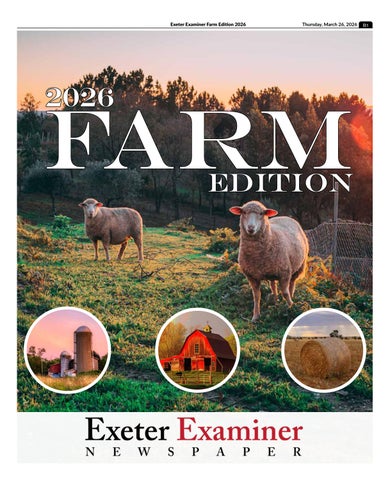
Farm Edition 2026

JOHN MINER Examiner Reporter
After dropping slightly in 2024, farmland values continued their upward climb in Huron County last year, according to the latest report by real estate appraisal firm Valco Consultants.
The report pegged average land values for Huron County at slightly more than $30,000 an acre in 2025, a 4.1 per cent increase from the year before.
At the high end, some Huron County farms sold for just shy of $50,000 an acre. At the low end, some land went for under $20,000.
The annual Valco land value report covers 11 southwestern Ontario counties - Huron, Perth, Oxford, Middlesex, Elgin, Lambton, Kent, Essex, Bruce, Grey, and Wellington.
Huron had the fourth highest average prices of the 11 counties with Oxford the highest at more than $35,000 an acre. Essex had the lowest at under $20,000 an acre on average. The overall average for the 11 counties was $27,258 an acre.
A decade ago, farmland in Huron County was selling on average for less than $15,000 an acre.
Report author Ryan Parker said livestock appeared to be a major factor in the land price difference between counties in 2025.
Beef and hog operations enjoyed very good margins in 2025 and livestock-dense areas had firm land values. But in areas southwest of London and along Lake Erie, where there are fewer livestock operations, demand was lacking.
One change in the farmland market that Parker observed is the number of listings of farm properties is up significantly from three years ago. There has also
been an increase in the number of farms put on the market that do not sell.
“As margins have tightened, especially in the crop sector, buyers have logically become more selective, which has resulted in overpriced farms not selling,” he said.
Buyers have had more time to consider a purchase, unlike a few years ago when they needed to make a snap decision if they wanted a shot at buying land.
“To me, it’s a better market. It is more sustainable,” Parker said in an interview.
He sees the trends from 2025 continuing in 2026 with crop prices flat.
Demand is likely to be higher in livestock-dense areas and further north, while it will likely be lower in southern areas with fewer livestock farms, he said.
What could swing prices would be a significant change in interest rates. Lower rates could trigger higher land prices, while a jump in rates could push farmland values down.
Another key factor to watch is the response of sellers to the slower market.
“If vendors lower their expectations, it is possible that could drag overall farmland values down.”
In the past year, the vast majority of farmland was purchased by local farmers, Parker said.
Investment funds have been less active in the market the last couple of years because land prices haven’t been climbing as fast, making land less attractive.
Parker estimates that investment fund action in the market is now at the lowest level it has been in the last 10 years.
“We actually have some pockets where investors are trying to sell right now.”


A new farm market in Lucan is looking forward to a year of expansion and growth as it aims to bring high-quality products from its own farm to the region.
The Good Food Farm Market was opened by owner Tina Gokstorp in November 2025 in the building that once housed The Hub and MJ’s Roadhouse.
Gokstorp stepped into the realm of farming in 2022 when she bought a farm in Ailsa Craig alongside her father. Since then, she’s become the sole owner of that farm.
“I don’t have a background as a farmer,” Gokstorp said. “It was a lifestyle property for us. My dad grew up on a farm in Sweden and wanted to move out into the country, and I wanted to move out into the country, so we bought it together.”
Though she doesn’t have an extensive farming background, Gokstorp said she did have some experience in small-scale chicken farming, which led to her decision to establish her farm with a focus on poultry.
“Chickens are a good entry product,” she said. “They’re a low capital cost, and they’re a pretty quick return.”
Looking to provide a wide selection for customers, Gokstorp started offering value-added products such as pre-marinated kebabs, chicken pot pie, seasoned chicken burgers and chicken noodle soup, though she has relied on renting commercial kitchen space to create those products.
“We love the products that we offer now,” said Gokstorp. “They’re working. People love them, we get a lot of repeat business, it’s unique, they’re delicious and it’s a higher-quality chicken.”
Gokstorp said she hadn’t originally planned to expand into the business of running a farm store, but when Lucan Biddulph started looking for bidders to rent the property it had acquired with the plans of one day expanding the neighbouring arena, she jumped at the

opportunity — especially as she could make use of the former restaurant’s kitchen space.
Since opening, Gokstorp has been working to refurbish the space to suit her needs. With one of her top priorities being getting the kitchen in a usable state, she said she hopes to start creating her already popular offerings there, as well as expand into other products that could be purchased both in the store and in the markets she frequents.
“This space allows us to put in a production kitchen,” she said. “Because we do a lot of markets in Toronto, the store allows us to offer our products to customers locally, and we see the potential for cottage traffic stopping in on their way to Grand Bend, Goderich and Bayfield.”
With her eyes on having a production kitchen functional by the end of May, Gokstorp said she also hopes to further expand beyond chicken, particularly as she begins exploring market farming.
Gokstorp said she also wants to begin selling baked goods made in house.
“You can’t be a self-respecting farm store without selling butter tarts,” she said. “I feel like that’s just part of the

culture.”
While she is committed to growing both her farm and the farm store, Gokstorp said she also intends to continue supporting other farms by offering their products to customers who are seeking local goods.
“We want to support other small farms who are in the same position as we were, where you can’t afford a store,” she said. “You’re not really big enough to support the large retailers, so the small farm stores are a good partner.”




For more than 25 years, chef James Eddington has built his restaurant around a simple idea: the best meals start close to home.
Long before “farm-to-table” became a popular buzzword, Eddington was already building relationships with local farmers and sourcing ingredients grown just down the road. When Eddington’s of Exeter opened in 1997, the abundance of fresh, high-quality ingredients available throughout Huron County quickly shaped the restaurant’s philosophy.
“We quickly realized the availability of fresh local quality ingredients right here on our doorstep,” Eddington said. “Building a relationship with local farmers and purveyors was a natural fit.”
Those relationships have become the foundation of the restaurant’s success.
Today, Eddington’s works with a wide range of regional producers, including Hayter’s Turkey, Metzger Meats, Firmly Rooted, Masse Fruit and Vegetables and Weth Mushrooms. For Eddington, these partnerships go far beyond sourcing ingredients.
“It’s our DNA,” he said. “These relationships are very special, and we are so proud to serve and execute these local ingredients and to truly know the farmer and their story.”
About a decade ago, Eddington took his commitment to local food even further by purchasing a 25-acre farm along the shores of Lake Huron. The property now supplies the restaurant with specialty fruits, vegetables and flowers grown specifically for the kitchen.
“We grow specialty vegetables that we can use at the restaurant, along with unique varieties of apples, quince, blood peaches, kiwis and specialty flowers,” he said.
The farm also operates through crop-sharing partnerships with local growers like Masse Fruit and Vegetables, producing crops such as sweet corn, beans, pumpkins and squash.
Having direct access to the farm allows Eddington to design menus that reflect the rhythms of the seasons.
“We plan our seasonal menus around what is fresh and available,” he explained. “We also plant specialty items that we know we’ll be using at the restaurant. It definitely is more work, but we know our patrons appreciate the quality and can taste the difference.”
That dedication to Ontario-grown food has earned Eddington’s a Feast ON certification, a designation from the Culinary Tourism Alliance that verifies restaurants are genuinely committed to sourcing local ingredients.
“Feast ON is a certification program that actually audits the books and ensures we are sourcing local and not ‘greenwashing,’” Eddington said. “It’s great to be part of such a terrific organization.”
While sourcing locally offers tremendous rewards, it also requires flexibility, skill and careful planning.
“It takes more time, planning, training, organization and chef skills to source, grow and support local,” Eddington said. “Unlike a chain restaurant that has a formula or receives food from a bag or box, sourcing and growing food and working with Mother Nature certainly has its challenges - but it is 100 per cent worth it.”
Even during the late winter months, the restaurant continues to highlight the flavours of the region using preserved and cellar-stored ingredients from the previous harvest.
Right now, diners might find dishes like butternut squash soup made from Eddington’s own field, white beans from Van Osch Farms, rutabaga from Veri Fine Produce and honey sourced

from Maitland Apiaries. A blood peach syrup made from fruit grown on the farm adds another local touch, while maple syrup season is currently underway across the region.
Looking ahead, Eddington will be sharing his passion for regional food on a larger stage. In June, he will travel to Edmonton to speak at the Taste of Place Summit, representing Feast ON and the province of Ontario.
“I hope to inspire the new generation of young chefs and industry professionals about how ‘taste of place’ is important,” he said. “I’m proud to showcase
Huron County and the surrounding area. We are truly blessed.”
After more than two decades in the kitchen, Eddington says the work still excites him.
“The fact that we are ever evolving and always learning,” he said. “It has been such a rewarding career. We’ve been blessed with great staff and the best customers.”
For a chef working in one of Ontario’s most productive agricultural regions, the inspiration is never far away—often beginning just steps from the restaurant door.


AMANDA NELSON Examiner Reporter
The 2026 Ontario Bean Growers annual general meeting was held in Stratford last month, where dry bean growers from across the region came together to discuss growing concerns around exports, particularly trade, transportation and domestic demand.
Alvin Klassen of Dry Bean World outlined current challenges as Canada continues to navigate overproduction of black beans and ongoing tariff changes that are limiting trade and creating uncertainty for growers.
“In the last five years, we’ve experienced several severe ups and downs in commercial markets related to supply and demand, with the influence of producer and dealer pricing,” said Klassen.
Despite steady global demand for dry beans, many growers are finding it harder to turn a profit.
Prices across North America have dropped sharply in recent years — in some cases by nearly half — while input costs such as fuel and fertilizer have remained high.
“Throughout North America, we are now sitting where bean prices are half of what they were three
years ago, and the cost of production hasn’t gone down at all,” said Klassen. “In fact, seed pricing hasn’t gone down, and it’s making it very difficult to sustain production.”
The issue, Klassen said, comes down to supply and demand. A strong harvest has left a surplus of beans in storage — known in the industry as “carryover” — giving buyers less incentive to pay higher prices.
At the same time, export challenges and limited processing options in Canada are making it harder for farmers to move their crops efficiently, adding further pressure to an already strained market.
Jeff English of Pulse Canada said the organization is working to increase domestic consumption through its “Love Canadian Beans” campaign, which aims to raise awareness that many beans sold in stores are grown in Canada and encourage more people to include them in their diets.
“It’s not about telling people how to eat, but showing them how beans can be incorporated into everyday foods we already know and love,” said English. “It’s about giving some familiarity to supporting what we see as a great, sustainably grown Canadian crop.”

English added that advancements in bean process -
ing technology could also help grow the domestic market.
“Now that we have companies extracting proteins and starches from pulse crops, we should have an opportunity to put more protein into different foods — not necessarily calling them beans, but using them as a high-protein ingredient,” he said.
Bill Rosenberg, parliamentary assistant to the minister of agriculture, food and agribusiness, also addressed growers, highlighting the significant role Ontario’s bean producers play in the province’s agrifood sector.
“Our agri-food sector now generates around $52 billion in annual GDP,” he said. “This is why Ontario is known around the world for safe, nutritious and delicious food.
“Eighty to 90 per cent of the beans grown here in Ontario are exported around the world, and that is something to be proud of,” he added.
Overall, the message to growers was clear: while global demand is growing, the industry must navigate trade instability, supply chain risks and the need to build stronger domestic markets to remain competitive.

flock.
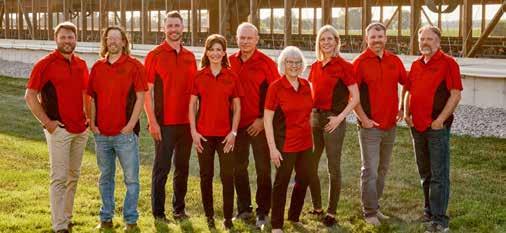
The Hayter name is one most in the region will recognize, but Canadians from coast to coast are now learning it as they find their turkey products in their grocery stores.
Founded in 1948 by Harry and Frieda Hayter, the turkey farm based in Dashwood has remained in the family’s hands ever since, with their son, Tom, serving as president of Hayter’s Turkey Farms, while their daughter, Joanne Maguire, is president of Hayter’s Turkey Products.
The family’s roots in the land they continue to operate on run deep, with Harry having been born on that very farm. For years, the 120-acre property was used for mixed farming, but things changed when a neighbour put another idea into Harry’s mind.
“It was a fluke thing that a neighbour lady decided to offer my dad some turkeys,” said Maguire. “She felt that he would be good at doing turkeys.”
Starting with a small flock of about 300 turkeys, Maguire said the first years of turkey farming proved to be challenging for her father.
“He didn’t do very well the first time, but he kept at it,” she said. “He enjoyed the turkeys.”
It wasn’t just a fondness for turkeys that led to Harry’s decision to grow his
According to Maguire, her father found that the turkey manure, which is high in nitrogen, was an excellent fertilizer on the land that was poor at that time.
“That’s why he kept going with the turkeys,” she said. “It was good for the land.”
Since those humble beginnings, the Hayter family has expanded their farm into an operation that grows as many as 70,000 turkeys at a given time. But the road to such growth was not one without challenges along the way.
For the first decades, the farm was what today is considered a “free-range” turkey farm, but when heat stroke saw them lose a flock in 1971, the operation moved indoors.
“After that, we started building our barns for them,” said Maguire. “You can regulate a lot better with fans, they’re cleaner and they’re protected from predators.”
For many years, the Hayters sold their whole turkeys locally to communities such as Goderich and Exeter, but substantial change came in 1984 when they built a provincial processing plant, the same year they opened their first retail store in Dashwood.
With the processing plant operational, they began selling not only whole turkeys, but various turkey products—a practice that has continued to grow into
the expansive selection that includes turkey bacon, sausages, turkey burgers and more.
“Something we always strived for over the years was that everybody would have the opportunity to eat turkey once a week,” said Maguire. “Not just Christmas and Thanksgiving.”
Change came again for the Hayters when their processing plant went federal in 1990, which Hayter’s Turkey Products vice-president Elaine Hayter said has only improved their products.
“You have to be more attentive to how you’re running your operation,” she said. “But then it also instills a better product in the end, too.”
As for their most popular products?
Hayter said it can be difficult to say what’s getting the most attention from customers as the popularity of products changes depending on the season.
“During the barbecue season people gravitate to our turkey steaks and fillets and our turkey burgers,” she said. “During the cold season, we’ve also provided our customers with oven-ready products like turkey lasagna, shepherds pie and chilli.”
However, Hayter said their ground turkey has continued to be a highly sought-after product.
“They use it for everything,” she said.
Today, turkey products from Hayter’s in Dashwood can be found in grocery stores across Canada—especially after
they entered a partnership with Sobeys several years ago.
With access to more markets in Canada, the Dashwood operation is in the process of expanding this year for the tenth time.
Hayter said the expansion will improve the operation’s processing, as well as add lunchroom space for their more than 150 employees, human resources space and more.
“This has been probably one of our largest expansions we’ve done at one time,” she said. “It’s actually going to be multi-purpose addition.
“It will be multi-faceted. It’s going to take a while to get exactly where we want.”
What started as a small farm may have extended its reach across Canada, but despite that growth, Maguire said it’s important that the business remains in family hands. She said the emphasis on remaining in the family goes back to her father.
“He was very family-oriented and church-oriented.” said Maguire. “We all had our jobs growing up, and it just instilled that small town farm pride.”
Now with a third generation of the family in roles spread throughout the farm, the Hayters seem set to continue their legacy of a family owned and operated farm for years to come.















A strong turnout from the local community filled the South Huron Recreation Centre on Feb. 11 for a screening of “We Lend a Hand: The Forgotten Story of Ontario Farmerettes,” a documentary rooted in Ontario history and closely connected to the Exeter area.
As attendees filed into the seats they were welcomed by a moving photo slideshow projected across the big screen — a collection of images from the lives of the Farmerettes that, according to the film’s director Colin Field, did not make the final cut of the documentary.
Paired with the slideshow was a carefully curated soundtrack: favourite songs from the 1940s and 1950s, each one personally selected by the 20 former Farmerettes featured in the film.
The documentary, based on the book “Onion Skins and Peach Fuzz: Memories of Ontario Farmerettes” by local author Bonnie Sitter and Shirleyan English, a collaborator from London, tells the story of thousands of young women who worked on Ontario farms during the Second World War, helping sustain the country’s food supply.
Since its publication, the story has evolved into a stage production and the full-length documentary that has toured communities across Ontario.
Huron-Bruce MPP Lisa Thompson ad -

dressed the audience before the screening, noting the significance of the timing as Canada approaches International Women’s Day in March and recognizes the International Year of the Woman Farmer. She also highlighted the film’s growing reach and shared aspirations to one day present it at the Juno Beach Centre in France.
Among those in attendance were South Huron Mayor George Finch and West Coast Active Living’s Maureen Cole, who helped organize the screening.
The evening sparked thoughtful discussion and lively questions from the audience, including several attendees with direct family connections to the Farmerettes.
Teri Pearson, daughter-in-law of Phyllis (Herman) Thompson, shared that her relative worked as a Farmerette in 1941 on a peach and cherry farm in Niagara.
Also present was Margaret Green, a 101-year-old Exeter resident. Though not part of an official Farmerette camp, Green spent part of the war years living with her grandmother in Exeter, working in a local canning factory before eventually joining the Royal Canadian Air Force as an air traffic controller managing flights that helped protect food convoys crossing the Atlantic Ocean.
“It was really interesting work,” said Green. “I loved it.”
For Sitter, bringing the documentary
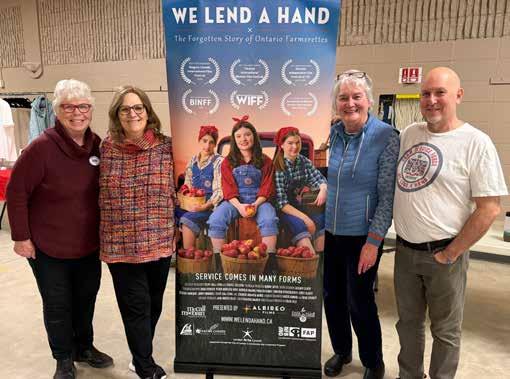
home to Exeter was especially meaningful.
“Oh my gosh, how many people get to do something like this? It’s a real blessing,” she said.
The evening event marked the second screening of the day. Earlier that after noon, about 50 students from South Hu ron District High School attended a spe
cial showing sponsored by West Coast Active Living.
For those who were unable to attend the February screenings, another showing is scheduled for May 31 at Thames Road United Church. More information





It’s been more than a week since the U.S. and Israel launched their first missiles into Iran, and that conflict has current and potential economic implications.
These remain highly uncertain and potentially very widespread – oil and liquefied natural gas refineries are shuttered with the Strait of Hormuz paralyzed, bond yields have risen in sync with inflation concerns, and exchange rates are in a state of flux. There is no shortage of economic topics to explore.
Nitrogen is a vitally important nutrient; one of three macronutrients used in primary crop production.
There are many different types of nitrogen fertilizer products, each of which requires different production facilities and importantly, access to an energy source, typically natural gas. Urea, ammonium nitrate, and anhydrous ammonia are the three most common nitrogen fertilizers produced globally.
Disruptions in major producing regions can upend global trade flows and prices. That was seen in 2022 with Russia’s war against Ukraine: the halt of cheap Russian natural gas to European production facilities, as well as sanctions on Russian exports, choked off supply and caused prices to skyrocket. Collectively, the Middle Eastern countries have an even larger say in global availability of nitrogen fertilizers than Russia: on a nutrient basis, the region has historically accounted for 12 per cent of global production and nearly 25 per cent of global trade.
It’s unlikely other suppliers will be in a position to fill this vacuum. In the European Union, a significant share of global ammonia production—a key input for urea—was lost in 2022 and a pipeline running through Ukraine has remained offline since the invasion.
Prior to the Iran strikes, the EU was still only operating at a reduced 75 per cent production capacity. The recent surge in natural gas prices could pressure European producers to further reduce that capacity. China continues to restrict fertilizer exports to meet domestic needs, with urea shipments largely paused until August this year. Before the strikes, it looked highly unlikely Beijing would reverse course on these policies before August. Now, it seems even less likely.
Markets have reacted to the potential threat to supply. After slowly creeping up all winter, U.S. urea futures shot up $130 per tonne, nearly 30 per cent, in the first two days after the start of the bombing.
While Canada is a net exporter of nitrogen, some parts of the country still depend on imports to meet their needs. And, depending on the crop and region, there are different times of the season when more fertilizer is required. Obviously, spring planting is a prime consumption period. But in the east, the spring is also a time when winter wheat is typically topdressed.
Corn typically requires more in the early summer as well. And post-harvest, producers may opt to spread fertilizer before the winter freezeup, in preparation for the next growing season.
As utilization changes month-to-month, so too does Canada’s import volumes. The timing of imports is dictated by seasonal demand, strategic planning and preparing for the upcoming growing season and weather. Fertilizer movement typically peaks in April and May to support just-in-time delivery for seeding and summer topdressing.
A survey conducted by RealAgristudies in 2022 found that, by late March, 45 per cent of producers had their spring fertilizer needs already stored on
farm. However, there was a significant regional split. More than 50 per cent of producers in the Prairies had their fertilizer on farm, but only 17 per cent of Quebec producers and 10 per cent of Ontario producers could say the same. In the Maritimes, the number was 0 per cent. On the east coast, the situation will be extremely challenging as price is frequently determined when producers pick up product on the way to the field. Pre-buying at a set price is rare. Producers in eastern Canada simply do not have the same on farm storage capabilities, making them more vulnerable to market conditions in the spring.
Now, despite the lack of on farm storage, some inventory may be sitting with wholesalers and retailers. Statistics Canada’s latest fertilizer inventory data for December provides insight into these inventory levels and here again we note a regional divergence. While urea inventories in the west are the highest levels they’ve been in a decade, in the east, they are at their lowest levels since 2017.
However, one reason stocks looked elevated is that many farmers chose not to pre-buy or apply fertilizer last fall. That meant less product was sold, leaving more fertilizer sitting in retail and wholesale storage heading into winter. It also sets up the possibility of stronger than normal demand at planting, at a time when global supply is already tight.
Any disruption to imports or shipping during this narrow window would create supply challenges and higher prices to support just-in - time delivery for seeding and summer top - dressing.
Given the aforementioned shipping bottlenecks, some fertilizer may not reach North America in time for spring planting. A shipment that would normally be loading in the Middle East today might not arrive to the farmer until May. This may force farmers to adjust application timing or reduce use.
Canadian prices mirror the trends in the U.S. futures market. Complicating matters for farmers, Canada still has a tariff on Russian fertilizer imports. These tariffs are adding approximately $100 per met-
ric tonne for Canadian producers compared to their U.S. counterparts.
Not all crops require the same amount of fertilizer. Pulses, for example, are nitrogen-fixing, meaning they do not require it. But others are more fertilizer intensive. In terms of cost for all fertilizer, not just nitrogen, and prior to this recent price movement, we estimated fertilizer would account for 20 to 25 per cent of the total cost of growing a crop in 2026.
Unlike 2022, when rising input costs were offset by strong commodity prices, 2026 is shaping up very differently. Farm Credit Canada is estimating a 40 per cent increase in the cost of nitrogen would cut average Saskatchewan margins in half, from $50 per acre to $25 per acre for an average wheat and canola rotation. It would also lower average margins in Ontario from $365 per acre to $345 per acre for an average corn and soybean rotation. These margin estimates are provincial averages and exclude the cost of land which is much higher in Ontario than in Saskatchewan.
The margin estimates only account for the shock to the nitrogen price. They do not consider potential margin compression because of other fertilizer price increases, potential yield reduction (resulting from less fertilizer being used) or higher fuel prices. A prolonged conflict could disrupt regional fertilizer production, especially if natural gas supply—critical for nitrogen fertilizer production—continues to be limited out of the Strait of Hormuz. Unless the war is resolved quickly, expect global fertilizer supplies to tighten further and put additional pressure on global food production and prices.
Communication during turbulent times such as these is crucial. Farmers may want to contact their crop input retailers to confirm they’ll have the tonnes they need this spring and work together on any backup plans which might include adjustments to crop mix, fertilizer rates and target yields. Early discussions with credit providers may be necessary as well should the need arise as seeding approaches.

DAN ROLPH Editor
Teresa Van Raay is looking ahead to three more years of advocacy on behalf of the province’s farmers.
Van Raay, a Dashwood native, was re-elected as an Ontario Federation of Agriculture (OFA) director-at-large in November 2025, beginning her third three-year term with the organization.
Before she was first elected to serve in the OFA, Van Raay was a director with Ontario Pork for 14 years— an experience she described as eye-opening as she got to hear about the issues that farmers in the industry were facing.
“I realized how many more issues there are,” she said. “When you look at taking on the diversity of concerns in all Ontario, it’s daunting.”
Van Raay said some of the most prominent issues facing farmers in Ontario include trade and land use, which she noted is vital to the future of growing food in Canada.
“Once land is asphalted or cemented over, you’re not going to grow too much,” she said. “Getting the word out about how important it is for Canadians to grow our own food, that’s one of my biggest goals.
“The decisions made today affect our futures, and our next generation of farmers,” she added.
When asked why she decided to seek a third term with the federation, Van Raay was clear that there’s still work to do when it comes to advocating on behalf of Ontario’s farmers.
“We’re not done yet,” she said. “It’s a big portfolio, but the people in our industry who are elected to do this, all the ones who I’ve met, are in the positions for the right reasons. They want to make it better for their industry and for the next generations, all because we understand the importance of growing food.”
Van Raay said she’s taking many lessons from her time as director-at-large so far as she looks ahead to at least three more years of representing farmers. She said networking remains one of the most vital parts of
the work.
“One of the things that I love to do is put the right people together,” she said. “That can make a difference.”
Stepping outside the “agricultural bubble” is also important when speaking about issues facing farmers throughout Ontario, according to Van Raay, particularly with those not in the industry who live busy lives and may not be aware of those issues until they start seeing empty grocery store shelves.
“We are such a small population that we’re not getting the news out there,” she said. “If there comes a time that there’s a shortage, then people are going to stand up and be aware. But it might be too late if we haven’t realized the importance of food security in Canada.”
Van Raay said the upcoming municipal elections scheduled for later this year are an important issue that has her attention. With OFA regularly organizing all-candidates meetings for elections, she said it’s important to present the correct questions to those who could be making decisions in council chambers in the future, ensuring they understand their communities, particularly when it comes to land use.
“We don’t want to be collateral damage because no one’s thought about how a decision might affect the farmer,” she said.
Ontario’s recent announcement about the amalgamation of conservation authorities also has Van Raay’s attention. Under the government’s plan, the province’s 36 authorities will be consolidated into nine, removing representation from lower-tier municipalities.
“That’s a big deal,” she said. “One of the things we were really pushing with OFA is to have agricultural representatives.
“From what we did see, that’s not there. That’s very important to our communities.”
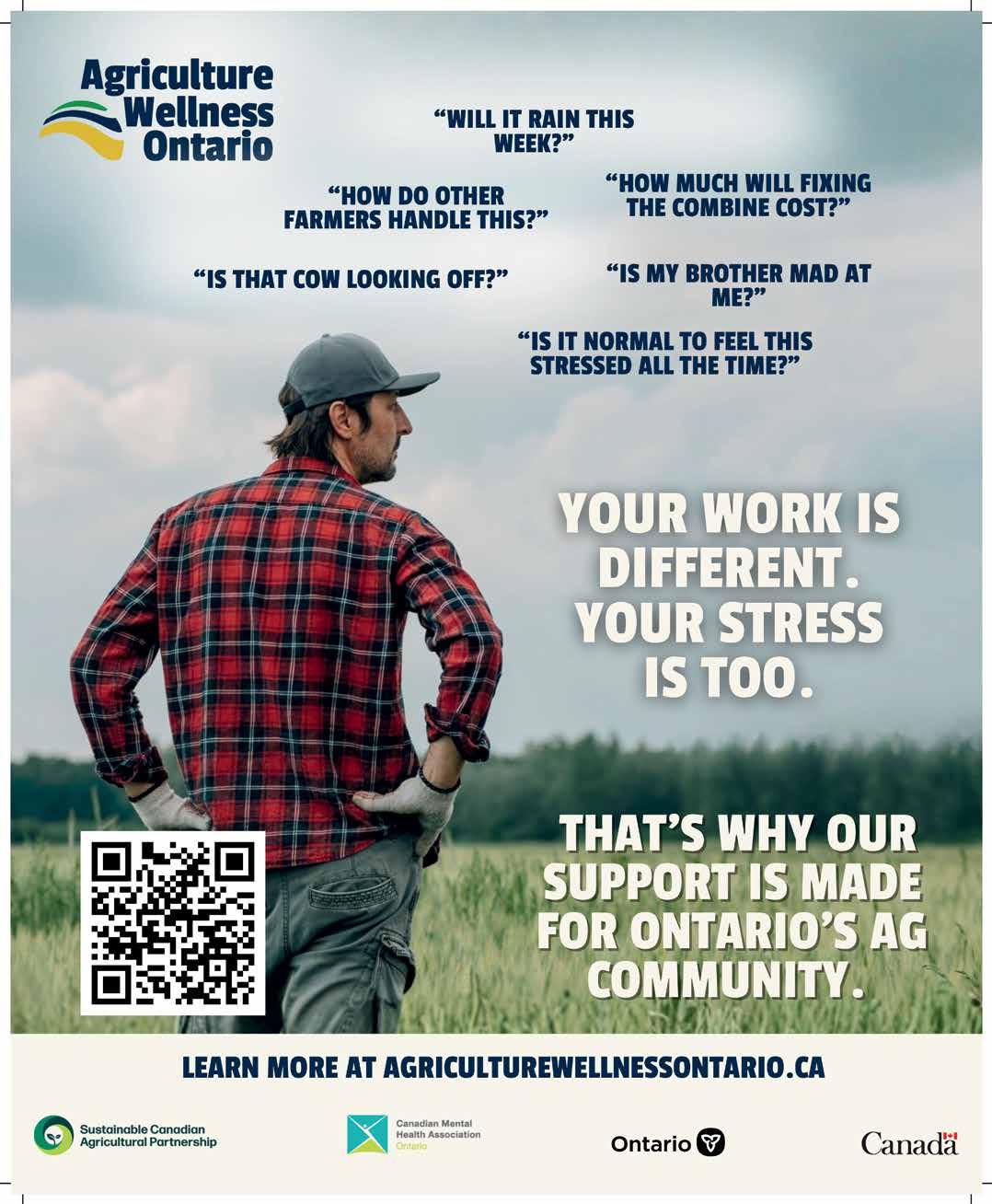
A topic that has been getting more attention, particularly after the COVID-19 pandemic, has been mental health in the agricultural community—an issue that Van Raay said is close to her heart.





“It’s just become okay in the last seven or eight years to talk about it at the farm level,” she said. “When a farmer’s having a bad day, you just can’t take a week off. The pigs still have to be fed, or the crops still have to get planted.”
Speaking to farmers who may be struggling with mental health, Van Raay said Ontario’s Farmer Wellness Initiative and the Guardian Network are programs worth highlighting. The Farmer Wellness Initiative provides mental health counselling to Ontario’s farmers, farm families and employees at no cost.
The Guardian Network is a program driven by volunteers who are trained to identify those struggling with their mental health in the agricultural community, and Van Raay said she’d personally completed the training to become a guardian in the network.
“It’s a really good program,” Van Raay said. “The more we talk about it, the more it’s okay to talk about it.”
With such a wide range of issues needing attention, Van Raay said OFA’s supporting staff have made the expansive task manageable.
“It’s a great team, and a really diversified team,” she said.
With at least another three years ahead of her where she’ll be advocating for Ontario’s farmers, Van Raay said it’s her love for her home that will keep her going.
“It’s so important to have strong rural communities,” she said. “I love where I live. I love my Ontario. But we can’t keep coasting and think that somebody else is going to take up the baton.”

Local maple syrup farms are ending the season on a high note despite inconsistent and unpredictable weather at the beginning of March.
Recent warm weather has caused the sap to flow, and temperatures dipping below freezing at night create the perfect atmosphere within the tree.
“That’s kind of what you want, but it needs to freeze — that’s important. If it doesn’t freeze then that’s the killer,” said Steven Hern of Hern Line Heritage Maple Products.
“During the season, you can go two or three days with the warm, and then it needs to freeze and the tree kind of resets and brings up more sap again.”
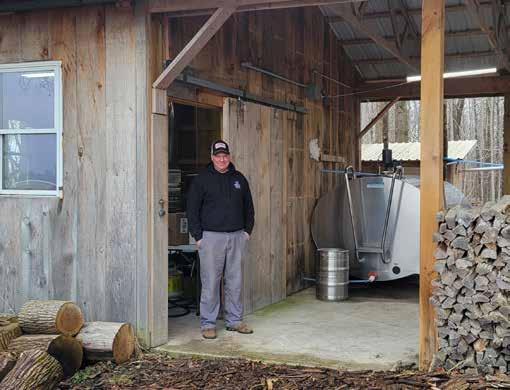
Hern lives on a century farm outside

of Exeter and has made use of a wood lot on the property to make maple syrup for the past five years. He said he taps four hundred trees on the 12-acre woodlot in mid-February to mark the beginning of the maple syrup season.
Hern said the trees haven’t let him down this year.
“So far so good,” he said. “We’re right on track I think to make a good crop so, can’t complain at all.
“I’ve only been doing it for five years, I haven’t seen a bad season, really. I’m a bit of a novice that way, as far as experience goes and long-term stuff.”
Hern Line Heritage Maple Products aims to produce 1.5 litres of maple syrup per tap. And for 400 tapped trees, that adds up to a total yield of 600 litres of syrup.
Hern said they have produced over 300

litres as of mid-March.
“I think, with the way the weather looks, we’ll get a few runs yet,” Hern said.
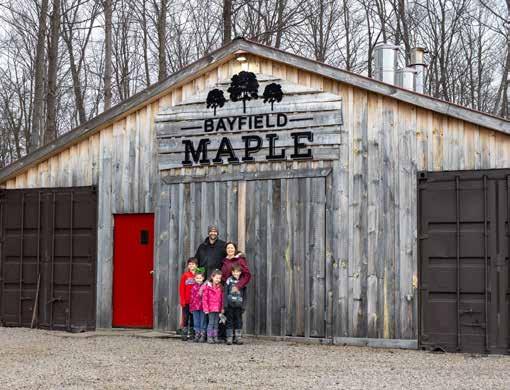
Over at Bayfield Maple, with a larger production established, they’re looking at a yield of roughly 2,650 litres for the season.
Owner Tom Genoch said his bush on Pavillion Road has about 2,800 taps.
The production trucks in sap from an additional 1,000 taps on a property owned by Genoch’s mother-in-law, Dianne Brandon, on the north side of Bayfield.
Brandon said they had an uncertain start to the season but still expect to get a good crop.
“We were really worried because it got quite warm, but it was early enough in the season that the trees didn’t start to bud,” Brandon said.

Brandon is a long-seasoned syrup producer, having made maple syrup with her husband Brian for the past 21 years.
The business has stayed within the family with Brandon’s daughter, Cathy, and her husband, Tom, now carrying on the sweet tradition.
Bayfield Maple stocks their product on the shelves of numerous local businesses, including Shop Bike Coffee, and sells wholesale to Cait’s Cafe in Goderich to be used in the cafe’s food and drinks.
Whether it’s large-scale or smallscale, making maple syrup has its ups and downs and remains entirely dependent on the weather.
In the end, a few weather hiccups weren’t enough to sour the season. Thanks to a timely turn, local producers are set to enjoy a sweet spring harvest.

“Specializing in assisting growers to maximize their ADZUKI bean crop income!”
Tel • 519-235-2755 Cell • 519-630-7112 earl.wagner45@gmail.com
7 Kingscourt Crescent, Exeter, ON N0M 1S1
Earl Wagner Ontario Manager Mervyn Erb T.Ag, CPCC, CCA 60 Mill Rd West, Brucefield, ON, N0M 1J0 Office • 519-233-7100 Cell • 519-274-2429 erb@cropadvisory.com
We still have some contracts available for 2026 Adzuki bean production. Prices are good with better returns than IP soys.

Note: please, no fields with a history of nightshade.
• Specialty Feed Products
• Vitamin and Mineral Premixes
• Specialty Pellets
• STARTline® including drySTART® (drying agent for livestock facilities)
• International Stock Food (ISF)
• SiloGuard II Forage Additive (dry and liquid)






Staff Contribution
The Huron Perth Chicken Farmers visited the Gateway Centre of Excellence in Rural Health (CERH) office Feb. 20 to present a $2,700 donation in support of the Farmers’ Safety and Well-Being program.
According to a press release from Gateway, the donation will directly support the organization’s



initiatives aimed at promoting the health, safety and well-being of farmers and agricultural workers across Huron, Perth, Bruce and Grey counties.
Gateway CERH said it sincerely appreciates the generosity of the Huron Perth Chicken Farmers as they have been a generous donor for years. Their

support plays a vital role in advancing initiatives to improve the overall well-being of residents throughout our communities.
For more information about Gateway CERH and its Farmer’s Safety and Well-Being Program initiatives, visit gatewayruralhealth.ca/shed-talks.












Women play a critical role in Canadian agriculture but also face significant participation barriers.
Lack of resources and lack of recognition lead to under-representation among farm operators and in leadership roles within agriculture businesses and organizations. The growing skills gap across the agriculture sector makes it imperative to grow gender equity and lift women’s participation in all aspects of farming.
Farm Credit Canada (FCC) estimates that achieving revenue equity—with female farm operators earning on average revenues in line with male farm operators—would add an additional $5 billion to agriculture’s GDP contribution. Achieving gender parity in the number of farm operators would magnify these economic benefits.
Recognizing the existing contributions of women could attract more women to the industry, which itself is a function of elevating the status of women’s contributions equal to men’s. FCC estimates that almost 88,000 additional female farm operators will need to be counted to achieve gender parity by 2026, 75 per cent are already farming but unrecognized as operators, and 25 per cent of which will need to be new entrants.
In the 30-year period spanning 1991 to 2021, the percentage of female farm operators in Canada increased from 25.7 per cent to 30.4 per cent. This upward trend is expected to continue, with the proportion of female farm operators expected to reach 31.1 per cent in 2026.
While encouraging, it’s important to note that this trend is largely explained by men leaving the industry, not by more women joining. Farm consolidations and an aging farm population have reduced the total number of farm operators across Canada over time, with the number of men falling faster than the number of women.
While the proportion of women farmers has been steadily on the rise, the actual number of women in farming has not been growing by much. In fact, between 2016 and 2021 the number of female farm operators grew for the first time since 1991, but only by 2.5 per cent – translating to less than 2,000 additional farm operators. Women are also still less likely than men to be the sole decision-maker on the farm.
Female farm operators face very different economic circumstances than male farm operators. Female operators tend to have smaller operations and lower farm incomes. The median farm operating revenue bracket is the same for both men and women at $50,000 to $99,999. But approximately 58.6 per cent of female farm operators work on farms that reported less than $100,000 in revenues, compared to 51.1 per cent of male farm operators, based on the most recent census data from 2021. Conversely, only 17.9 per cent of female farm op -
erators were employed on farms with revenues of $500,000 or more, compared to 21.9 per cent of their male counterparts. Women have gained some ground in recent years in high value markets for products like beef, poultry and eggs. Men continue to dominate the grains and oilseeds market.
In the fall of 2024, FCC interviewed women working in Canada’s agriculture sector to learn about their experiences. Overall, these producers felt that things are slowly changing for the better. Yet women still face barriers to full participation in farming.
The public still expects farmers to be male. Stereotypically, in many farm families the man is labelled as the farmer, while the woman is labelled a farm wife. Girls growing up in farm families may not feel encouraged from participating in the more operational aspects of farming.
This early socialization can shape how women perceive their roles on the farm, and their confidence in engaging in all aspects of farming as adults. Women also tend to be expected to take on more household and childrearing responsibilities and often provide economic stability for their families through off-farm employment, making it more difficult to engage in production work.
Women reported that they often feel like they must prove that they are as knowledgeable, skilled and capable as their male counterparts, and often feel judged to be less competent because of their gender. And that non-production roles dominated by women like accountant, or finance manager are often deemed not as important as operational roles that tend to be male dominated.
Men are more likely to inherit the farm over women, as tradition dictates that these resources be passed from fathers to sons. Women are often excluded from succession planning, and in large part are still expected to marry into farm families if they want to participate in farming.
Numerous aspects of farming were not designed with women in mind. For example, most farm equipment has been tailored to the male physique, and these design limitations can make it more difficult for women to engage in the physical side of farming.
Many women shared that their views on their own potential were shaped by what they saw represented as they grew up, which typically was men as decision makers on the farm, and women in supportive roles. A lack of representation of female leadership in agriculture can make it difficult for younger women to feel confident that they can take on leadership roles.
Women in farming are more isolated than their male counterparts and have less access to networking, mentorship and support. As agriculture continues to be a male-dominated industry, most executive and board positions within agriculture continue to be held by men.
Women generally have less access to a network of like-minded peers sharing similar struggles who they can lean on for support and advice and often have the experience of being the only woman in the room.
This can be both challenging and intimidating. Women also face barriers to attending in-person networking events, as they are often juggling childcare and off-farm work.
The labour needs of Canada’s agriculture sector are changing.
In this era of digital agriculture and data-driven decision-making, there is a growing need for highly skilled farm labour. Reflecting this need, there has been an overall upward trend in educational attainment in the agriculture labour force in recent years with a declining number of workers having no formal qualifications, and an increasing number of workers with college and university degrees.
This trend is even more pronounced for women, who are more likely to be highly educated than their male counterparts. In 2021, nearly one-quarter of female farm operators possessed at least a bachelor’s degree, compared to only 14.5 per cent of male farm operators.
The proportion of female farm operators without any formal education was only 9.3 per cent, notably lower than the 18.2 per cent observed among male farm operators.
The current gap in educational attainment between female and male farm operators is greatest for operators aged 30 to 39. Within this age cohort, 36 per cent of women have a university education, compared to only 17 per cent of men.
A high level of educational attainment makes it easier for women to take advantage of new tools and technologies of farming as they emerge. Many of these innovations are making it easier to overcome some of the physical and social barriers that women in agriculture have faced in the past.
A growing number of female farm operators are adopting new production technologies—things like automatic guidance steering and GIS. These tools can make it easier for women to achieve work-life balance. Women who are highly educated are also well positioned to be thought leaders and champions of the agriculture industry, playing a leadership role beyond the farm level.
Women working in agriculture also continue to demonstrate a strong entrepreneurial spirit, leveraging their skills and expertise to enhance the value of what they produce. Women have been driving the emerging trend of direct-to-consumer sales of farm goods, with farms run exclusively or jointly by female operators being much more likely to adopt this marketing strategy. There are also a growing number of women working on farms producing organic goods and using sustainable energy sources and technologies. Women are also carving out space for themselves in growing niche markets, like sheep and
goat production. There is a lot of work that needs to be done to achieve gender equity in Canadian agriculture. Currently the industry falls behind wholesale and retail, finance, education, health care and several other industries in terms of women’s participation. Women in agriculture today are highly educated and driven, with strong business acumen. They are well equipped to foster innovation and accelerate new methods, tools, and technologies on the farm. At a time when productivity growth in Canadian agriculture is stagnating, leveraging their skills and entrepreneurial spirit will reap significant economic benefits.
Here are some potential strategies to consider:
- Increase the visibility of women in agriculture. Recognizing the important work that women are already doing on farms and in boardrooms across Canada is critical.
- Enhance mentorship and networking opportunities. This will help to reduce isolation and build community for women navigating the agriculture and food space. Programs like AgriMentor, that pair new and established women farmers with experienced mentors, and events like Advancing Women Conferences, can foster useful connections for women, helping to address time and cost barriers women often face when engaging in networking. Virtual initiatives can also help to make networking more accessible. The National Women in Agriculture and Agri-Food Network project is one example of a growing network that connects women in farming through both in-person and virtual initiatives.
- Ensure that women have equal opportunity to take on leadership roles. This requires not only reducing gender bias in promotion and hiring, but also ensuring women are supported in stepping into leadership roles when the opportunity arises, through access to things like flexible work arrangements and childcare accommodations.
- Improve access to resources. Women have historically been excluded from succession planning and equal access to land and capital. Programs that support women in accessing the resources they need to start their farm businesses are essential moving forward. FCC’s Women Entrepreneur Program is one example of this. A broader cultural shift toward including women in succession planning is also needed to break this inter-generational cycle of exclusion. We are slowly seeing progress in this area, with more women being involved in farm transition planning.
Embracing the strengths and potential of women in agriculture can unlock billions of dollars in economic benefits for the agriculture sector. Achieving gender equity can drive innovation, improve productivity, and foster sustainability, leading to a more resilient and prosperous agricultural industry.






















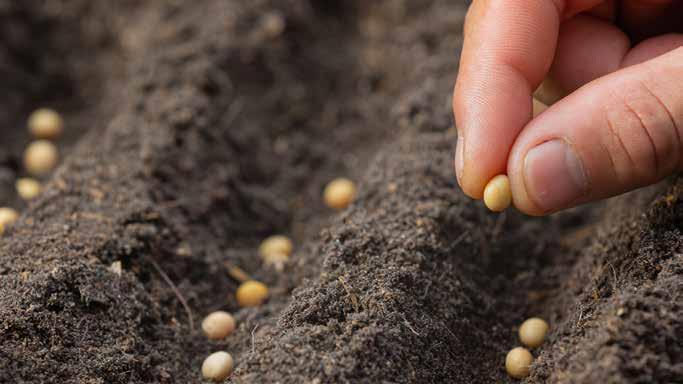
Ontario soybean farmers are watching global trade negotiations closely as uncertainty around exports — particularly to China — adds to price pressure in a market already facing strong global crop supplies.
Brazil is expected to have a record soybean harvest in 2026, a development that analysts say will weigh on prices worldwide.
“There’s forecast to be record production in Brazil, and when there’s strong production, that has downward pressure on price,” said Brian Innes, executive director of Soy Canada. “That’s the first thing to watch for prices in 2026. The second is what happens globally with geopolitics and tariffs.”
Innes said changes in trade relations between major economies — especially the United States and China — can have a direct impact on the prices Canadian farmers receive.
“Due to the Trump administration, tariffs on soybeans have changed,” he said. “One thing to watch for 2026 is how the situation between the U.S. and China evolves, and how the situation between Canada and China evolves. That can have an impact on price if tariffs change.”
More than 70 per cent of Ontario’s soybean crop is exported, with prices shaped by global demand, particularly from China. While China historically sourced much of its soybeans from the United States, it is increasingly turning

to Brazil due to generally lower prices.
The Canadian and U.S. soybean markets are also closely linked through cross-border trade and processing, which could impact prices for Canadian farmers.
“Products flow back and forth across the border,” said Innes. “For example, Ontario soybeans are shipped to Michigan, processed into soybean meal, and then shipped back into Ontario. Soybean meal and soybean oil trade back and forth across the border, and that’s why prices are very linked.”
Soybeans are priced on global benchmarks — particularly U.S. futures markets — meaning Canadian prices move in step with broader world trends.
“The price that Ontario farmers see is based on what conditions Canada faces when exporting to the world, including China,” said Innes. “In the past, the difference between Michigan and Ontario was largely tied to exchange
rates, but now, with global trade disruptions, Canada and the U.S. face different tariffs and different market conditions.”
Despite growing competition from lower-cost producers, Innes said Ontario remains well positioned as a high-quality soybean supplier.
Ontario is a global leader in identity-preserved and food-grade soybeans, a niche market that allows farmers to compete on quality rather than volume alone.
“We’re living in a time of unprecedented global uncertainty, and if market conditions change for Canadian soybean exports, that will have an impact on price,” said Innes. “But Canadian soybeans have been flowing under strong export conditions for some time, and that has meant strong demand for Ontario soybeans.”Unlike 2022, when rising input costs were offset by strong commodity prices, 2026 is shaping up

very differently. Farm Credit Canada is estimating a 40 per cent increase in the cost of nitrogen would cut average Saskatchewan margins in half, from $50 per acre to $25 per acre for an average wheat and canola rotation. It would also lower average margins in Ontario from $365 per acre to $345 per acre for an average corn and soybean rotation. These margin estimates are provincial averages and exclude the cost of land which is much higher in Ontario than in Saskatchewan.
The margin estimates only account for the shock to the nitrogen price. They do not consider potential margin compression because of other fertilizer price increases, potential yield reduction (resulting from less fertilizer being used) or higher fuel prices. A prolonged conflict could disrupt regional fertilizer production, especially if natural gas supply—critical for nitrogen fertilizer production—continues to be limited out of the Strait of Hormuz. Unless the war is resolved quickly, expect global fertilizer supplies to tighten further and put additional pressure on global food production and prices.
Communication during turbulent times such as these is crucial. Farmers may want to contact their crop input retailers to confirm they’ll have the tonnes they need this spring and work together on any backup plans which might include adjustments to crop mix, fertilizer rates and target yields. Early discussions with credit providers may be necessary as well should the need