



When the Apollo missions went to the moon, generations of people were inspired by their display of human ingenuity and perseverance.
Now, more than 50 years after humans last stepped onto the lunar surface, humanity is returning to Earth’s only natural satellite. And for the first time in history, a Canadian was part of the crew of trailblazers launching into the final frontier.
That Canadian, Jeremy Hansen, was one of four astronauts serving on the Artemis II crew that not only saw humans make their way around the moon, but sent them further into space than anyone before.
Hansen, who served as a mission specialist on the crew, spent many of his formative years in southwestern Ontario, where his early experiences helped shape the steady and grounded person he is known as today.
Born in London and raised on a farm outside Ailsa Craig, Hansen’s local roots run deep. From Kindergarten to Grade 8, Hansen attended McGillivray Central Public School, graduating from the school before he and his family moved to Ingersoll during his teenage years.
Hansen’s career in aviation began when he was just 12 years old, joining London’s 614 Royal Canadian Air Cadet Squadron. At 16, he earned his Air Cadet glider pilot wings, then his private pilot licence and



Friendly rivalries and community spirit filled the South Huron Recreation Centre as the third annual charity hockey tournament returned.
The tournament, which was held Thursday, April 9, brought together teams from Huron Tractor, Jayden’s Mechanical, Huron Motor Products, the McCann
Group, Baker Holdings Corporation and Delta Power Equipment for an evening in support of the Huron County Food Bank Distribution Centre.
By the end of the tournament, more than $15,000 and over 2,000 pounds of food were donated to the local charity that provides food and other items to food banks and agencies across the region.
This year’s event continued to play on the good-hearted jabs and rivalries that the tournament has become
wings just one year later.
His journey would take him to the Canadian Armed Forces, starting with basic training in 1994 and leading to him becoming a CF-18 fighter pilot. In 2009, Hansen successfully weathered the intense Canadian Space Agency astronaut recruitment campaign, making him one of two candidates to do so that year.
Though he has seen a lifetime of successes born from his tenacity and steadiness, one of Hansen’s teachers from his McGillivray days, Drew Robertson, said he could have never imagined one of his former students would reach such heights.
However, Robertson said the signs of the traits that would lead to his success were already there from a young age.
“Did I ever think he’d be in space? No,” said Robertson. “But I knew, regardless of what he was going to do, he was going to be successful simply because he met the challenge at hand.
“I am so exceedingly proud of him.”
Robertson described Hansen as a deeply humble and reliable individual, though he said it is difficult for him to recall how Hansen was in the classroom academically, having taught thousands of students throughout his career.
“He obviously had dreams as a young boy,” he said. “He’s realized those dreams.
“I think for anybody to have realized their dreams is a great thing. We all dream.”
It was by chance that Robertson would run into Hansen several years after he left McGillivray Central. The two crossed paths at a shopping mall in London while Hansen was an Air Cadet, already taking to the skies in gliders.
“I told him it was one of my lifelong dreams to glide,” said Robertson. “He said ‘well look, I’ll take you up.’”
Weeks later, Robertson was meeting a young Hansen in Centralia, where the pair hopped into a glider together. Though Robertson said it started as a nerve-wracking experience, he ulti-
mately came to enjoy the flight.
“Off we went, pulled up by the tow rope. It was this teenager flying me through the sky in this glider,” said Robertson. “But he was the kind of kid you could trust.
“He had my life in his hands.”
Decades later, the pair would reunite once again in Parkhill when Hansen received the North Middlesex Sesquicentennial Inspiration Award in 2018. Though decades had passed, Robertson said Hansen continued to show humility, speaking with respect to both children and adults as they asked him questions.
“Yes, he was an astronaut. Yes, he spoke about space, though it was well before his time in space. But he spoke openly, freely and humbly.”
While speaking about his thoughts as he followed Hansen’s journey into space, Robertson said it showed his steady nature as he served in the Artemis II mission alongside three other astronauts who relied on him succeeding to return home.
“He had that commitment, and he fulfilled it. That speaks so highly to him as an individual.”
Though it’s been decades since Hansen lived in the area, Robertson said the astronaut has continued to maintain connections with the tight-knit community of McGillivray.
Meanwhile, the community has shown its own lasting connection to Hansen, and to his story.
Students at McGillivray Central were able to look to Hansen as an inspiration, learning about the former student’s history at the school while following his journey to the moon.
“This experience has shifted how our students see themselves,” said McGillivray Central principal Michelle Koop.
“They’re seeing that important journeys can begin right here. Jeremy
Hansen’s story has become part of our story and has helped our students think more broadly about what’s possible.”
Robertson echoed Koop’s sentiment. He said he wonders what kind of im -
pact Hansen’s story will have on a new generation of bright young minds who may lead remarkable lives of their own with that spirit of science and adventure shown to them through Hansen’s story, much like the Apollo astronauts did.
“How many kids today may have had some seed sown in their heads because of what he’s done? He’s such an ordinary, down-to-earth and sincere person,” said Robertson. “They can say ‘if he can do it, I can do it.’ I think that’s the important part.”
Even as he stepped onto the world stage, Hansen seemed to carry himself with the same quiet humility and downto-earth sincerity that the community knows him for.
As he stood in front of a crowd along-
side his crew when they answered questions after their return to Earth, Hansen said the science of the mission was exciting. However, he said it was the human experience of Artemis II that he and the crew found most interesting. He shared the love he has for his crewmates, how they worked to find joy in their mission and how people around the world could see themselves in the four-person crew that went farther from Earth than anyone before.
“We are a mirror reflecting you,” said Hansen. “If you like what you see, then just look a little deeper. This is you.”
From a farm outside Ailsa Craig to the far side of the moon, Hansen’s journey is a reminder that big dreams can begin in small places.

EXETER EXAMINER STAFF Staff Contribution
McHappy Day, McDonald’s largest and best-known fundraiser in Canada, will return on May 6 for a day in support of Ronald McDonald House Charities. During the fundraiser, a portion of food and beverage proceeds support the charity that provides a place to rest, eat and play for the families of children being treated at nearby hospitals.
McDonald’s restaurants in Exeter, Grand Bend, Kincardine, Wingham, Goderich and Mitchell have committed to supporting the Ronald McDonald House of Southwestern Ontario.
In Exeter, the restaurant has set a fundraising goal of $14,000, aiming to top last year’s fundraiser that garnered over $13,000 in donations. The restaurant’s McHappy Day fundraiser will also include games such as crown and anchor wheel, food prizes and a large
raffle table.
Thanks to medical advances, more children are healing today than ever before, but that healing requires more treatments over long periods of time, often far from home.
According to a press release from McDonald’s, two in three Canadians live in a city or town without a children’s hospital. Travel to those hospitals can result in unexpected costs, such as transportation, accommodation, parking, food and
childcare for siblings.
A family can incur up to $20,000 in out-of-pocket expenses to remain accessible to their sick child during a onemonth hospital stay.
In addition to the heavy financial burden, parents endure significant emotional stress as their children are receiving medical treatment. They are 75 per cent more likely to have depression and 40 per cent more likely to have anxiety than parents of healthy children.

A sense of community is such an important and often underappreciated thing.
It connects us to the people who share the same home that we do, and it gives us a feeling of belonging.
But that sense of community isn’t something that appears out of thin air.
It is built, and its builders are the individuals who find time
in their busy lives to make their homes better places while expecting nothing in return.
It is built by coaches who help mold teams of young athletes into not only greater players, but greater human beings.
It is built by organized planners who tackle the impossible task of pulling together events and fundraisers that will support those less fortunate than them.
It is built by heroes who sign up to be the ones who receive a call when a young child goes missing.
And it is built by generous neighbours who share a piece of their hearts with those around them to make their community a more inclusive and welcoming place.
I think everyone reading those words will naturally have at least one person come to
Restoring small-town journalism, one community at a time!

Publisher
Stewart Grant • stew@granthaven.com
Editor
Dan Rolph • dan@granthaven.com
Graphic Design
Kyrah Smith • info@exeterexaminer.com
Business Development
Heather Dunbar • heather@granthaven.com
Billing Administrator Jen Gaetan • jen@granthaven.com
Contributors
Meg Pearson, John Miner, Samantha Lawson, Bob Heywood, Amy Wilhelm, Colin Carmichael, Paul Knowles, Judy Finkbeiner Johnson, Barry Johnson
mind. Someone who has made a difference in their own life, or the lives of those they know and love.
National Volunteer Week in Canada is from April 19 to 25 this year, making it a time to recognize the many people who contribute to their communities.
But with this year’s theme being “Ignite Volunteerism,” it is also a time to light a spark in others who may have yet to take that leap, stepping into the work of volunteering in the community.
Volunteering can take on countless forms, and in a community like ours, there’s a fit for just about anyone.
For some it may be getting involved with one of the minor sports associations. For others, it may be connecting with a group like the Lions Club or
the Optimist Club. Some may want to make a difference in a child’s life as a mentor with Big Brothers Big Sisters, or maybe they’d be interested in becoming a familiar face at Exeter Villa.
And sometimes, volunteering is as simple as checking on a neighbour who could use a helping hand.
The point isn’t that everyone needs to do everything. It’s that this community is greater if everyone can do something.
If you’ve ever thought about getting involved but weren’t sure where to start, National Volunteer Week is a good time to ask that question.
Reach out to a group you already care about. What they often need most isn’t expertise. It’s kindness and a willingness to show up.
For those who already vol-
unteer, this week is a reminder to keep inviting others in. To share the load, to mentor new helpers and to make room at the table. When volunteerism catches fire, it doesn’t just strengthen programs and events.
It turns “where we live” into “where we belong.”
In a world where news feeds are filled with stories that evoke fear and unease, I think it’s as important as ever to find solace and comfort in our communities, and to remember those who make them as incredible as they are.
In the words of the unendingly wise Fred Rogers, as he quoted his own mother, “Always look for the helpers. There will always be helpers.” It’s the helpers who make this community so special.
MEG PEARSON Examiner Reporter
For nearly 60 years, Stephen Central Public School has been more than just a place of learning. It has been a cornerstone of community life in Stephen Township. Now, that same spirit is shining through as the school launches a major fundraising effort to rebuild its playground.
Due to their age, the current playground structures are set to be removed, leaving a gap in a space that has long been central to students’ daily lives.
In response, the Stephen Central school council has set an ambitious goal, raising $150,000 by December 2027 to fund new, inclusive playground equipment, including accessible swings.
For principal Tracy Grace, the project is about far more than replacing equipment.
“We have so much pride in our amazing, supportive community and how it continues to wrap its arms around the children of Stephen Central,” she said. “This rural school is more than a school, and this play-
ground will be a hub for the community to use, not just during the school day, but on evenings and weekends as well.”
That sense of shared ownership is already evident in the growing list of supporters.
The first official contribution came from the Huron Park Volunteer Firefighters, who directed funds to the school following the closure of their operation. Among those stepping up, Straight Line Collision owner Don Stuckless has committed to making monthly donations through to December 2027, setting an encouraging example for others in the business community.
A number of other local businesses and organizations have stepped forward with donations, including Hayter’s Farm, South Huron Automotive, Hay Communications, Pinery Ridge Snowmobile Club, Exeter Lions Club and Les MacDonald Installations Home and Autoglass.
Many individuals and families have also contributed, reflecting a widespread commitment to the project.
Grace said the momentum is a powerful reminder of what makes rural communities so special.



“We operate under the premise that many hands make light work, and this fundraiser is a shining example of the community coming together to create something great with love.”
In addition to community donations, the school council will continue to pursue grants and other fundraising initiatives to help reach their goal.
All financial contributions can be made by cheque to the Avon Maitland District School Board, with “Stephen Central Playground Donation” noted in the memo. Tax receipts will be issued for donations of $25 or more.

Every contribution, big or small, will be recognized on a “giving tree” displayed at the school — a lasting symbol of the people and businesses who came together to make the new playground possible.
At its heart, the campaign is about more than swings and slides. It’s about creating a space where children can play, connect, and grow, supported by a community that continues to show up for them, time and time again.




Our Senior of the Week is Karen Dickins. A mother, a grandmother of 11, and a greatgrandmother of 11, she volunteers to help low- and moderate-income individuals and families with their taxes. She serves on the board of Hensall’s Northcrest Seniors Apartments, is the treasurer of the Riverview Estates Social Club and is part of the West Coast Active Living board. In her spare time, Karen loves to play cards and cheer on her grandchildren and greatgrandchildren in sports.
If you would like to nominate someone for Senior of the Week, contact us at info@exeterexa mi ner.com
By Judy and Barry Johnson




DAN ROLPH Editor
It’s a story with the makings of a nightmare, but local author TC Williams said what he put onto the pages of his first book is truly what he lived though.
“Resident Stalker” is the first volume of Williams’ “The Superintendent Chronicles.”
Due to the sensitive nature of the book, Williams writes under a pseudonym.
In his first book, which released at the end of 2024, Williams goes into detail about his experience as a superintendent of a condominium complex in a large city, where he became the target of a resident who began to harass and stalk him for nearly a decade.
“It was a really lonely journey,” said Williams of the experience. “It tried every aspect of my sanity along the way.
“It was literally terrifying for almost 10 years. I thought for sure I was losing my mind.”
In his book, Williams writes of an indifferent condominium board that failed to act as he dealt with the stalker, eventually leading to an attack that left him with a permanent elbow injury.
In response, Williams was terminated by that condominium board, though other residents of the complex created a group to oppose the board and its power.
The story unfolds with moments of repeated institutional failures and persistent inaction, resulting in hardship for Williams. Yet, it also reveals resilience and the enduring strength of the human spirit as he confronts a traumatic and harrowing ordeal, supported by other residents at the complex.
Williams said the process of putting words onto the pages was challenging, often feeling as if he was reliving the experience.
“While I was writing it and going back through the story, it was like I was actually there,” said Williams. “I was actually sweaty, feeling the same feeling, my heart skipping beats like it used to every day on the job. It was difficult writing some of the passages. It really affects you, because you’re going back through it again. It’s almost like you’re being traumatized twice.
“When I had completed it, I was so happy because I was free of it. The story was told.”
It’s been several years since Williams left the city for a quieter life, and he said the move has left him “as solid as a rock” and in a much better place.
“Since the day I came out to the country, there’s not a heartbeat out of whack,” he said. “I’m not stressed.”
As a first-time writer, Williams said ensuring the “essence” of his experience remained without sacrificing the strength of his story was difficult, particularly as he worked to ensure he wasn’t identifying places or individuals.
“You can tell the truth, but you’ve got to be careful not to give away too much,” he said. “You only want to give enough that it can’t be identifiable to anybody or anything. It was difficult. A lot of times I’d have to rewrite something four or five times, because there was too much in it.
“But it’s hard to get the true feeling across to the reader if you don’t include as much as you can.”
Williams said he hadn’t planned to put pen to paper and become a writer, but the urging of residents from the condominium complex who watched him live through the ordeal gave him the push to share his story with the public. He first started working on “Resident Stalker” in 2021, gathering his notes as he continued to work at the complex.
Once he’d begun the writing process proper, it took Williams about a year and a half to finish his first book.
“I didn’t even know I could write,” he said. “I just started writing. It worked out great.”
Once he’d finished “Resident Stalker,” it was another eight months for him to learn how to create a cover, lay out a book and self-publish his work.
“Everything matters, from font to page numbers to page counts,” he said. “It was a lot of fine tuning at the end to get it right. Now, I know what to do.
“It’s a lot of work.”
The process has left Williams in a stronger place as he tackles his second book, “The Cooperative,” which will be the second volume of “The Superintendent Chronicles.”

His next book will dig into his experiences as a superintendent dealing with three gangs vying for the drug sales in his building, where he said there were as much as $30,000 in sales each month.
“I really want to get that one out,” he said. “It’s a really good story.”
Williams aims to release his second book by early 2027.
“Resident Stalker” is available both as a book and an e-book through Amazon’s Kindle Books.
Daniel Regan, a councillor in Lucan Biddulph, has announced he will run for deputy mayor in the next municipal election.
Regan, who has served on the municipality’s council for two terms, said he hopes to continue building on connections and partnerships between the community and council.
“The progress made in the community with respect to services and improvements has prepared the municipality for a healthy and sound future and I want to continue with that good work,” he said.
The announcement comes after Deputy Mayor Dave Manders said he would run for mayor of the municipality as current Mayor Cathy Burghardt Jesson won’t seek a fourth term.
Regan said he decided to run for the deputy mayor position months ago with encouragement from residents, neighbours and family.
“This community is made up of people who are always there for each other, and I want to be a part of that,” said Regan. “It is a community of ever-increasing volunteers.”
During his two terms on council, Regan has been involved in or chaired several municipal committees.
“I believe the experience I have gained over this time has prepared me to be a focused and effective Deputy Mayor,” said Regan. “My theme over the last eight years has been and will be to continue connecting community with council.”
Regan said he plans to focus on responsible growth, increased safety measures and ensuring municipal and customer services and programs are ahead of the increasing demand, while fostering an ongoing and open dialogue with ratepayers.
“We need to continue with a council whose main goal was and is to responsibility, effectively and efficiently move the business of the community forward, while balancing needs with resources,”
Regan said he looks forward to engaging with taxpayers about their vision for
The Purple Hill Country Music Hall is located on the Taylor Farm on Purple Hill Road, east of Thorndale, north of Highway 2, and was built in the early 1990s.
Over the years, it has accommodated various events from auctions and community celebrations to music performances and weddings. The building is unique as it emulates the inside of an old barn, complete with large wooden beams, lofts, stage and rustic country collectibles that decorate the walls.
The Purple Hill Country Music Hall concerts, hosted by Anna and George Taylor on the first Sunday of each month with a catered roast beef dinner to follow,

are very popular. The musical performances feature a variety of headliners from the local region and beyond, along with their Purple Hill Showband.
“We have enjoyed bringing talented country musicians here every month and I am so thrilled to add a
lineup of different shows coming this spring and summer, starting with our Purple Hill Fish Fry on Saturday, April 25, with Lake Huron whitefish and entertaining live music,” George Taylor said.
“The coming months will feature more country, blues, folk and Celtic music. This wide variety of music should be of interest to many people. And the performers I booked are from this region and as far away as Ireland. Also, in August we are hosts for the fifth year – the Purple Hill Ram Rodeo – which will be a fun-packed weekend of rodeo events and country music.”
For more information and tickets on the upcoming events for the Purple Hill Country Music Hall, visit www.purplehillcountrymusichall.ca.
Elliott Park in Exeter with its RV sewage dumping facility and water refilling station will be closed for the season out of traffic safety concerns during Main Street construction.
Don Giberson, South Huron infrastructure and development general manager, told South Huron council the closure of the park was recommended because of the heavy volume of traffic that will be diverted from Main Street onto Church and William Streets during part of the construction.
The short section of William Street with the dumping facility and water refilling station will also be shut down.
“It is a safety concern for the staff,” he said.
There are other options for RV owners, including a publicly owned dumping facility in Clinton and private RV waste removal companies, Giberson said.





Coun. Ted Oke questioned whether the section of William Street with the dumping station could remain open, allowing people to back their RVs down the street. Giberson said the traffic volume would make that manoeuvre unsafe.
The plan for reconstruction of Main Street South from the Ausable River to Victoria Street is scheduled to start in April with storm sewer work downstream of the Ausable River bridge in the east end of Elliott Park.
Full road closure at Main and Church Streets is scheduled for one week starting on April 13.
When Main Street is reopened, the plan is to detour southbound traffic to Church and William Streets. A single lane of northbound traffic will be shifted to the east side of Main Street until about mid-summer.
When the west side of Main Street is finished, one lane of traffic southbound will shift to the west side of the road and northbound traffic will be detoured to Andrew Street until November.
Questioned about traffic being detoured near the Ex-

eter public pool on Andrew Street, Jeff Wolfe, transportation services manager, said the plan is to avoid traffic in that area when the pool is open. After the pool season is over the intent is to detour some traffic through that area.
“It is something we can keep an eye on,” Wolfe said. In a presentation to council, Exeter BIA manager Caroline Hill said the Main Street construction will impact foot traffic and create accessibility issues. Encouraging people to continue visiting Main Street will be a challenge.
“These major projects impact overall sales, increase costs at times and can be disruptive to day-to-day business,” Hill said.
To mitigate the situation for businesses, the BIA plans social media blasts that businesses are open and how to get to businesses and parking.
Hill said the BIA will continue events such as Touch a Truck, Sidewalk Sale and Ladies Night to draw traffic to the core and area affected.


JOHN MINER Examiner Reporter
Both renters and homeowners are being hurt by high housing costs in Huron and Perth counties with some cutting spending on essentials and others working second jobs to keep afloat, a survey has found.
Conducted by United Way Perth-Huron from January to April 2024, results for the survey were presented to South Huron council by Will Wellington, manager of social research and planning with the United Way.
The survey of 716 Huron and Perth respondents included 41 from South Huron. Most were middle-tolow income workers with children.
Wellington said 31 per cent of those surveyed reported increasing or unaffordable mortgage payments, while 21 per cent highlighted unaffordability of the rental market.
One South Huron resident quoted in the report said they lived in an overpriced two-bedroom apartment.
“I need a three-bedroom but can’t afford what I have. Living month to month is scary and there’s nothing cheaper out there.”
Another South Huron respondent said they were
stuck in their current housing because of the cost.
“I want to move out with my kids, away from my abusive partner, but the housing cost and everything else is way too much to afford. So we just put up with it.”
People are cutting both extras and essentials to afford housing, according to the survey.
Essential spending cuts, reported by 58 per cent of respondents, were primarily on food. Non-essential cuts were mainly on recreation.
A West Perth resident reported their children sometimes stay home from school because they don’t have lunch stuff for them.
“We’re going without any kind of entertainment, sports or activities for the kids.”
One-fifth of the respondents said they were trying to adapt to the situation by trying to earn more.
“I’m not eating so there’s food for my children, I’m working more hours, and I got a second job just to keep afloat. I’m literally spreading so thin. I can’t keep doing it,” a South Huron respondent is quoted in the report.
Some reported that they were forced to move in with their parents. While some expressed thankfulness for the option, none were enthusiastic, the report said.
“As a single mother, I was forced to move in with my dad. I couldn’t afford the cost of rent plus utilities and other bills even though I worked a full-time job making $25 an hour,” a Bluewater resident is quoted in the report.
Both the private sector and public officials were blamed by respondents for the situation, Wellington said.
“Local governments like big investors to come from cities, scoop up a few acres and sell a postage stamp for city prices, because they can collect tax and waste it on a statue of a white squirrel or a crosswalk,” said a survey respondent from South Huron.
Developers were described by some as greedy.
One South Huron respondent said they were unable to qualify for a mortgage due to high interest rates and stress-test rules, yet rentals cost as much or more than a mortgage.
As part of the report, the United Way Perth Huron is recommending that community housing stock be expanded.
“We call on individuals, organizations and especially governments to set ambitious regional targets for new community housing and make serious investment to achieve them.”
EXETER EXAMINER STAFF
Staff Contribution
The Exeter Saddle Club is looking for volunteers as it prepares for the upcoming summer show season.
The club needs volunteers, including student volunteers, to spend days at the Exeter show ring behind the South Huron Recreation Centre.
Show dates for the 2026 season are June 7, June 21, July 12, Aug. 2, Sept. 13 and Sept. 20.
By Joel Hackett
• 519.272.5742 • jtsquote@gmail.com
Joel Hackett is a certified Arborist residing in the St. Marys area. Currently, he spends most of the year running Joel’s Tree Service. For contact call 519.272.5742 or email jtsquote@gmail.com
Dear Arborist,
My neighbour has a big dead tree, he thinks its fine to leave it. Its been dead for an few years, its over my fence and I am concerned. What should I do. Oh, he also says its an animal habitat.
Thanks
Erin
Dear Erin
Dead trees in residential areas should always

be removed as soon as possible. Within 2 to 5 years a
dead tree becomes very hazardous and will eventually fall. The animals will survive without it. We recommend removing dead trees as soon as possible, as it is dangerous to remove them. The longer a tree is dead the more dangerous it becomes.
Sincerely, The Arborist
Rain dates are Aug. 16 and Oct. 4. Anyone interested in volunteering can email the club at exetersaddleclub@gmail.com or reach out through the Exeter Saddle Club Facebook page.


EXETER EXAMINER STAFF
Staff Contribution
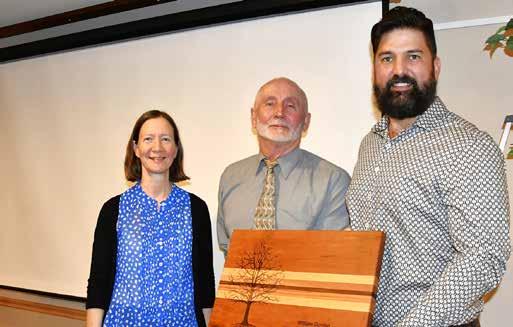
Ausable Bayfield Conservation Authority (ABCA) has honoured William Dunlop as the 2026 Conservationist of the Year.
ABCA chair Ray Chartrand presented the award to the Thedford-area landowner at the Partner Appreciation Evening at Ironwood Golf Club on Thursday, March 26. The award recognized Dunlop’s work spanning more than a decade enhancing natural areas, wetlands and forests. As the
winner, he received a locally handcrafted award made from reclaimed wood from several species of trees. ABCA also donated to a tree and plaque at a Commemorative Woods site maintained by Ausable Bayfield Conservation Foundation.
Dunlop also received scrolls of recognition from local political representatives. Over 12 years, Dunlop created six wetlands, retired 27 acres, planted more than 2,000 trees and almost 6,000 other plants and shrubs around the wetlands and a tallgrass prairie.
Dunlop’s stewardship actions help to improve water quality in creeks and riv-

• Immaculate property along the Ausable River on Ausable Line.
• Two storey home with beautiful wood trim and granite counter tops in kitchen and master bath.
• Amazing pool with pool house and bar.
• Fully automatic 50KW generator for ultimate comfort.
• Perfect heated barn for livestock with barnyard or would make great workshop.
• Livestock waterer in middle of both fields for pasturing livestock if desired.
MLS® Number: X12799904
ers by providing water storage during heavy rain events and reducing downstream flooding, erosion and loss of sediment and nutrients. His work also helps to create habitat for wildlife including species at risk that rely on that habitat. Since doing the restoration work, there have been appearances of nesting dickcissel birds, tufted ducks, a sandhill crane, painted turtles and a red eft (eastern newt). The landowner’s work has created a natural corridor between 27 restored acres and the Ravenswood Wetland Complex that buffers Jericho Creek and an environmentally significant area.
After receiving the award, Dunlop thanked his family for their support as he embarked on those projects. He also thanked ABCA staff for their help in making the projects happen.
“I have nothing but great things to say about everyone there,” he said. “This has been a wonderful experience.”
Dunlop said the projects have deepened his connections with neighbours who have shown a great interest in the wetland enhancement work.
Whether someone’s property is residential or rural, Dunlop encouraged others to consider their own restoration projects.


EXETER EXAMINER STAFF
Staff Contribution
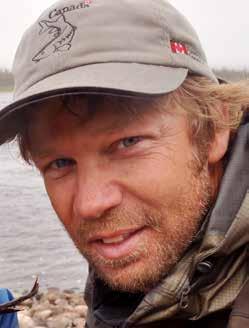
The Ausable River is “one of the richest watersheds of its size for freshwater biodiversity,” according to Shawn Staton, team leader for Ontario with the Species at Risk Program of Fisheries and Oceans Canada.
Staton spoke on Aquatic Species at Risk Recovery in the Ausable River Watershed: The Power of Partnerships at Ausable Bayfield Conservation’s Partner Appreciation Evening.
More than 110 people attended the event at Ironwood Golf Club on Thursday, March 26, 2026.
There are 85 species of fish in the Ausable River and seven of those are species at risk, while there are 27 species of freshwater mussels in the Ausable River with eight species at risk.
The Ausable River is nationally important as a home to species at risk. It has globally rare mussel species and is home to some species that are almost extinct.
Populations of some native freshwater mussel species in the Great Lakes have been wiped out by the invasive zebra mussel. Rivers like the Ausable River may be the last refuge for some aquatic species, Staton said.
Two-thirds of mussel species in Ontario are found in the Ausable River. There are 41 different species of mussels in Ontario.
“One of the cool things about them is the diversity in shapes, sizes, and colours,” said Staton, adding that mussels have very interesting and colourful names.
Mussel names include threehorn wartyback, threeridge, purple wartyback, northern riffleshell deertoe, elktoe, kidneyshell and snuffbox.
“Another cool thing about mussels, that most people don’t realize, is they’re really dependent on the fish community,” said Staton.
Mussels have a unique life cycle as they are parasitic on fish during their larval stage. Young mussels attach to the gills of appropriate fish hosts taking in nourishment for a period of time before they drop off to become free-living.
Mussels filter and clean the water in the river and remove suspended sediment.
“They can have a real measurable impact on water clarity, just to give you an idea of some of the ecosystem benefits you can get from mussels,” said Staton. One mussel can filter up to 40 litres of water per day.
Species listed under the Species at Risk Act (SARA) may be special concern, threatened, endangered or extirpated. Ontario, which includes southwestern Ontario and the Carolinian Zone, has the highest number of species at risk in Canada. In Ontario, there are 29 fishes listed under SARA and 15
freshwater mussel species.
Staton has helped to develop recovery strategies to identify ways to help with recovery of some of these species.
At Fisheries and Oceans Canada, the biologist has worked since 2003 to identify critical habitat for aquatic species at risk. Preparation and implementation of action plans, supported by funding programs, helps with species recovery.
Canada’s Habitat Stewardship Program for Species at Risk and the Canada Nature Fund for Aquatic Species at Risk have provided funding support for stewardship projects in the Ausable River watershed.
Staton was part of the creation of the former Ausable River Recovery Strategy and the current Ausable River Action Plan. The action plan identifies critical habitat for aquatic species to provide context for recovery actions.
Plan actions have been implemented to address threats. Those actions include reducing sediment and nutrient loading through best management practices and stewardship projects. Enhancements have included riparian buffers, erosion control, conservation tillage, cover crops, berms, livestock fencing, manure storage and runoff collection system and re-establishing wetlands across the watershed.
Staton praised Ausable Bayfield Conservation staff for their role in environmental monitoring of aquatic species and in their work with participating landowners to implement stewardship projects on the ground since 2004.
The slide show Staton presented documented hundreds of local projects over the years to protect and enhance habitat for aquatic species in the Ausable River watershed. These projects included restoration of hundreds of hectares of land and a quarter of a million trees planted, thousands of acres of cover crops planted and buffers established stretching the equivalent length of 38 kilometres.
Staton also shared the education and outreach conducted in the Ausable River watershed including more than 60 events for watershed landowners, where they learned about species at risk, habitat, threats and actions to protect these species. There were also more than 300 classroom education activities. More than 7,000 students learned about aquatic species and protecting them.
“That’s pretty impressive,” said Staton, adding that it is great for young people to learn about species at risk, what’s going on in the river, the significance of the river and the biodiversity.
It was also valuable, he said, that they may bring that message home to their parents and guardians.
Assisted by Fisheries and Oceans Canada funding, Ausable Bayfield Conservation staff have worked with landowners and other community partners to implement projects since 2004. Staff members have also implemented a watershed-wide mussel monitoring pro -
gram.
Staton said the results of the mussel monitoring represent “encouraging evidence of a healthy mussel community with increasing densities at most sites.”
Federal funding supported environmental monitoring of aquatic species in the Ausable River, with sampling at more than 300 fish sites and 50 mussel sites. Long-term monitoring of mussel populations provides important data on “density for individual species as well as demographics of the population, so we can really tell how healthy the populations are, how much reproduction is going on if it is going on.”
This data informs not only how conditions are changing in the river but also support national status assessments for individual species over larger areas.
“It’s very important,” said Staton. Mussel monitoring requires a high level of expertise, and he said the expertise of staff experts at ABCA, including aquatic biologist Kari Jean, is highly regarded.
It’s exciting to see increased density of some mussel populations in the Ausable River, he said, although this is not the case at all sites.
“The mussels appear to be responding to improving habitat conditions so this is what we’re really excited about,” said Staton. “We want to continue the long-term monitoring program and investigate the reasons for the declines (at one site).”
Staton said funding and strong partnerships are essential for effective species-at-risk stewardship and recovery actions. He described Ausable Bayfield Conservation’s Ausable River recovery program as “an outstanding example of the power of partnerships.”
Fisheries and Oceans Canada could not accomplish everything that has been accomplished in the Ausable River watershed, without the work of the conservation authority, local landowners and other community partners, Staton said.
“It really takes a collaborative ap -
proach and I’ve been so impressed by the passion and commitment of ABCA biologists,” he said.
Fisheries and Oceans Canada appreciates the work of the conservation authority staff in Ausable Bayfield watersheds, he said, and “so do the species.”
Staton recounted how he became interested in freshwater mussels during his presentation. Originally, he wanted to research fish, but his interest in mussels grew as he got a job where he was doing mussel population surveys that hadn’t been done in many years. He initially worked on mussel surveys in the Sydenham, Thames and Grand rivers.
“I became a huge mussel fan,” he recalled. He learned to identify the different mussels and he helped to prepare status reports on mussel species at risk.
The model of mussel surveying used in the Sydenham River was later applied to the Ausable River.
“I KNOW THE PAPER IS FREE, BUT CAN I GET A SUBSCRIPTION ANYWAYS?”
Yes. We understand that some people might like the convenience of the Exeter Examiner arriving at their home (located near or far) through Canada Post, so we do have subscriptions available for this purpose.
DAN ROLPH Editor
Two years of reconstruction is expected to cause disruptions on Exeter’s Main Street, but the Exeter Business Improvement Area (BIA) is working to help local businesses through the challenges that come with heavy roadwork.
Exeter BIA manager Caroline Hill said there are nervous feelings in the local business community as construction season kicks off. She compared the expected impacts of Main Street’s reconstruction to 2024, when the street was torn up in Exeter’s north end.
Hill said businesses around that reconstruction project saw as much as a 20 per cent drop in revenue, while businesses at the south end also took a noticeable hit.
“Regardless of how much publicity there is that businesses are open, it is a hit to the bottom line,” she said. “That’s why the BIA is really trying to encourage people to continue to navigate through those difficult situations and support local.
“Our businesses are looking at having back-to-back effects from Main Street reconstruction. It’s going to take some time to try and come out of that situation. Supporting local is more import-
ant now than ever.”
One strategy the BIA has created to combat the impacts of construction is the BIA Bucks program. Introduced in March and supported by a Community Futures Huron grant, the new program functions like gift certificates, allowing shoppers to use BIA Bucks to make purchases at more than 20 local businesses.
Hill said the new program is a way to support local businesses, and that the BIA is already working to expand the list of businesses accepting BIA Bucks.
“The response from businesses accepting them has been fabulous,” said Hill. “They make great gifts.”
BIA Bucks can be purchased at Exeter’s Libro Credit Union branch, and a full list of locations accepting BIA Bucks is available on the Exeter BIA website.
Hill said the BIA is also looking to help local businesses cope with construction through the expanded use of social media.
“It’s amazing how social media can bring people from London and from outside communities when they are looking at a place to stop,” she said. “It’s interesting to see some of the TikTok videos of seeing people just passing through South Huron.
“That is a way of generating some

new business, or also expanding online businesses as people from Sarnia or Windsor may decide to hop on a website and support a local business.”
The Exeter BIA is hosting the Hard Hats and Hashtags Breakfast on April 29 from 8 a.m. to 9:30 a.m., providing an opportunity for local businesses to learn more about expanding their social media presence.
The breakfast will begin with presentations from the Huron Business Centre and the BIA about how they plan to support businesses through the Main Street reconstruction, followed by an hourlong presentation and interactive work-
shop with Emily Baillie, a marketing strategist who focuses on AI adoption.
“It’s a great opportunity for people to see what kinds of tools are still in people’s toolbelts,” said Hill. “One of the best things to do is trying to increase social media reach, and that online presence through a website.”
Some of the topics Baillie will cover include the use of Canva and AI, social media trends of 2026 and more.
Tickets to the breakfast cost $35 and can be purchased by calling 226-4233028, or by emailing info@exeterbia. com.






NOTICE OF NOMINATION FOR OFFICE
Municipal Elections Act, 1996 (s. 32) ARE YOU INTERESTED IN RUNNING FOR MUNICIPAL OFFICE?
NOTICE TO MUNICIPAL ELECTORS OF THE COUNTY OF HURON NOMINATIONS
Nominations for the positions listed below must be made on the prescribed form available at your municipal Clerk’s Office. Nomination forms must be filed, with the prescribed declaration by at least 25 persons (excluding Howick and Morris-Turnberry), either in person or by your agent, with the Returning Officer of the appropriate municipality during that office’s normal office hours between the first business day of May in 2026 to Thursday, August 20, 2026 and between 9:00 a.m. and 2:00 p.m. on Friday, August 21, 2026 (Nomination Day).
The required filing fee for the Head of Council is $200.00 and all other offices are $100.00 (cash, debit, certified cheque or money order made payable to the appropriate municipality) must accompany the signed form. Full details on the procedures to be followed may be obtained from the appropriate Municipal Clerk.
Returning Officer – Florence Witherspoon
Township of Ashfield-Colborne-Wawanosh
82133 Council Line, RR#5 Goderich, Ontario N7A 3Y2 (519) 524-4669
www.acwtownship.ca
Returning Officer – Chandra Alexander
Municipality of Bluewater
Box 250, 14 Mill Ave.
Zurich, ON Canada N0M 2T0 (519) 236-4351 www.municipalityofbluewater.ca
Returning Officer – Meaghan McCallum
72 Main Street
Seaforth, Ontario N0K 1W0 (519) 527-0160 www.huroneast.com
Returning Officer – Andrea Fisher
Town of Goderich
57 West Street
Goderich, Ontario N7A 2K5 (519) 524-8344
www.goderich.ca
Returning Officer – Andrea Fisher
Town of Goderich
57 West Street
Goderich, Ontario N7A 2K5 (519) 524-8344 www.goderich.ca
Returning Officer – Steve Doherty
Municipality of Central Huron
23 Albert Street, Box 400 Clinton, Ontario N0M 1L0 (519) 482-3997 www.centralhuron.com
Returning Officer – Kim Johnston
Municipality of Morris-Turnberry
41342 Morris Rd
Brussels, Ontario
N0G 1H0, Canada (519) 887-6137 www.morristurnberry.ca
Returning Officer – Carson Lamb
Township of North Huron
P.O. Box 90, 274 Josephine Street Wingham, Ontario N0G 2W0 (519) 357-3550 www.northhuron.ca
Returning Officer – Alex Wolfe
Municipality of South Huron
322 Main Street South, PO Box 759
Exeter, Ontario N0M 1S6 519-235-0310 www.southhuron.ca


people can compete hard and they can be serious about their football, but it is just a game.”
Huron Perth Flag Football is returning to the field for another season of local football action, and the organization is looking for dedicated volunteers willing to lend a hand.
The league first got its start in 2024 when Dave Levinson and his wife, Melanie, decided to start a local league in the region where football options are limited. With a history of travelling to London for football, the couple decided to bring the sport closer to home, but it was their children who gave them the needed encouragement to tackle such a project.
“We’re huge football fans,” said Levinson. “It took a few years of (our children) trying to convince us to do it.”
Now moving into the league’s third year, Levinson said they have continued to see growth with each consecutive season. For the coming spring season that starts on May 2, he estimated they will have about 160 players in the co-ed league that welcomes players from ages six to 17, representing a mixture of returning players and ones who are signing up for the first time.
“Each season, we do have quite a few new players that join us,” he said. “Whether it’s word of mouth or seeing some of our posts, most of it is just organic growth.
“Football has grown substantially in Canada in terms of popularity over the last 15 years.”
In particular, Levinson said the league that plays at Exeter’s community soccer fields on Victoria Street has seen growth in the number of girls getting involved, showing the sport’s appeal across the board.
“Football’s not just a boy-dominated sport,” he said.
Levinson attributed much of the growth and success that Huron Perth Flag Football has seen to their philosophy for the league: to create a welcoming and safe atmosphere where the players can grow.
“It’s the focus on coaching, positivity and the team atmosphere,” he said. “Yes,

“That’s the important philosophy of the league. As long as people are improving as individuals and having a good time and they’re getting better, that’s what we focus on.”
That philosophy is one Levinson said has been popular with parents, who regularly speak to them about how the league has improved the lives of their children for the better.
“Those are the things that are really encouraging for us,” he said. “They show us that we’re making a huge difference for a lot of these kids. That’s the whole goal.
“The atmosphere we create, I think, is the secret sauce.”
The league’s positive approach to the sport is one that seems to not only be popular with children, but with adults as well.
Levinson said they’re hoping to launch a league for adults that will include drop-in games on Saturdays, meaning there won’t need to be long-term commitments when people are looking to fit football action into their busy schedules.
“Every season, people connect with us and ask if we’re running anything for adults,” he said.
However, the league wouldn’t be able to operate without the dedicated community who helps to bring it all together. Whether it is businesses sponsoring the league and allowing them to improve their equipment, or the volunteers who sign up to coach, referee and help with the league’s operations, Levinson said they’re vital to the operation.
“That enables us to run the league,” he said. “We’re always looking for volunteers.”
As they ramp up to their spring season, Levinson said they are still looking for coaches, referees and students who may need community service hours.
Volunteers are the backbone of the league, and anyone interested in helping make the season possible is encouraged to reach out at huronperthflagfootball@ gmail.com.







MEG PEARSON Examiner Reporter
On Saturday, May 30, the community will once again come together in support of Jessica’s House Hospice for the annual Hike for Hospice, this year with an exciting new addition designed to bring even more people into the heart of the day.
Alongside the traditional walk, organizers have introduced a community-wide scavenger hunt, inviting participants of all ages to explore Exeter in a fun, interactive way while supporting a meaningful cause.
“We introduced the community scavenger hunt as a way to grow the event and create even more opportunities for people to get involved,” said Meghan O’Rourke, co-ordinator of fund development and communications. “The scavenger hunt adds a fun, interactive element that encourages more people to participate, fundraise, and learn about Jessica’s House Hospice. It helps turn the day into a full family-friendly experience.”
The day will begin at the MacNaughton-Morrison Trail pavilion, where participants will gather for registration at 9 a.m., followed by the hike at 10 a.m. The walk,
held rain or shine, offers a chance to connect, reflect and honour loved ones while enjoying the natural beauty of the trail.
The scavenger hunt will follow, with registration from 11 a.m. to noon, and the hunt running from noon to 1 p.m. Participants will travel throughout Exeter, solving clues and visiting locations before finishing at the South Huron Recreation Centre, where the day continues with lunch, games and family-friendly activities until 4 p.m.
O’Rourke said the addition of the scavenger hunt will help extend the event beyond the trail and into the broader community.
“It helps bring more of Exeter into the event by creating opportunities to partner with local businesses and highlight different parts of the community,” she said. “It also opens the door for people who may not be interested in or able to participate in the hike. By offering a fun, flexible activity, we can welcome more attendees.”
Hike for Hospice has become a meaningful tradition for many families across the region, offering both a space to give back and an opportunity to remember.
“For us, Hike for Hospice is

At Jessica’s House Hospice, we are proud to celebrate our incredible team of over 70 volunteers this Volunteer Appreciation Week. Our volunteers are truly the heart of Jessica’s House, playing an essential role in our day-to-day operations. From caring for our lawn and gardens, to offering meaningful companionship to residents and families, to supporting special events, their impact is felt in every corner of our hospice. Since opening our doors in 2018, our volunteers have contributed more than 18,000 hours of service.
Thank you to our amazing volunteers for making Jessica’s House such a special place.
70776 London Road, Exeter, ON,N0M 1S1
(519) 235-0941
www.Jessicashousehospice.ca

incredibly inspiring,” O’Rourke said. “It’s a day where families come together not only to support Jessica’s House, but also to honour and remember their loved ones. The event creates a safe, welcoming space where people can share stories and reflect.”
Funds raised through the event play a critical role in sustaining the work of Jessica’s House Hospice, which provides end-of-life care and grief support at no cost to families.
“After government funding, Jessica’s House Hospice still needs to raise about $700,000 each year to keep our doors open,” O’Rourke explained. “Events like Hike for Hospice play a vital role in helping us reach that goal and ensure compassionate care remains accessible to everyone who needs it.”


This year’s fundraising goal is $40,000, and reaching it would directly support both hospice care and bereavement services in the community.
“Reaching, or even exceeding, our goal would have a meaningful impact on everything we do,” she said. “It means residents and their families can focus on what truly matters without the added stress of financial burden, and it ensures grief support remains available free of charge.”
Organizers are also calling on volunteers, donors and participants to help make this year’s event the most impactful yet.
“Volunteers are at the heart of making events like this a success,” said O’Rourke. “They give their time, energy, and creativity to ensure the day runs smoothly and creates a warm, welcoming experience.”
For those considering getting involved, she emphasized that no experience is needed.
“If you’ve never volunteered before, this is a great place to start,” she said. “You don’t need any special experience, just a willingness to give your time and be part of something that truly makes a difference.”
Whether you’re walking in honour of a loved one, gathering a team for the scavenger hunt, or volunteering behind the scenes, Hike for Hospice 2026 offers a meaningful way to support local families while connecting with the community.
Registration is now open, and more information can be found at jessicashousehospice.ca/hikefor-hospice.


‘It’s
DAN ROLPH Editor
In a community like South Huron, many of the things residents value most only exist because someone volunteers to make them happen. Few people embody that more clearly than Darren Kints.
Growing up with parents who were heavily involved in volunteering through sports and the Ladies’ Auxiliary, Kints said he’s always been around the realm of volunteering.
“It’s been around our family since I was little,” he said.
Today, Kints is a staple in the local athletics scene, serving both as a coach and as president in minor sports organizations, as well as with the Exeter Hawks — a natural fit for him.
“After my playing days, it was automatic,” said Kints. “Whether it was on the baseball side or the hockey side, athletics has always been something I’ve volunteered with.
“It’s just always been something that’s always been part of my blood and part of my DNA, to volunteer and give some time back to these sports.”
Volunteering to play a part in local
sports is an opportunity to help not only improve the game of local young athletes, but their lives as a whole. Kints said he finds it fulfilling to play a role in the development of the players on his teams, and that it brings him joy to hear former players still calling him “coach” years later.
“That is something that has stuck with me for many years,” he said. “Most people don’t realize the impact they can have as a coach with some of these players. It hit home with me fairly early, whether it’s U11 hockey or U18 baseball, there’s an important connection between a coach and players that’s sometimes hard to describe.
“I’ve had former players reach back out as they’re married and having kids, or reach back out when they’ve struggled in life with some things. It’s deeper than just the game of baseball or the game of hockey.”
Outside of sports, Kints has also had a lasting impact on the regional fundraising world through another cause that he said remains dear to him — the South Huron Hospital Foundation.
Having once served on the foundation’s board, Kints was proud to have been part of the team that created the

South Huron Hospital Foundation Gala. The gala, which will mark its 17th annual event this year, has continued to grow into one of the region’s most anticipated and successful fundraisers, raising hundreds of thousands of dollars each year and welcoming guests including Hayley Wickenheiser, Colin Mochrie and Rick Mercer.
“We started the hospital gala and it was, what now seems very small,” he said. “Since that point in time, the gala has grown into a staggering event. Kudos to the people of the hospital foundation who took that and ran with it.”
Kints described volunteering as the “backbone” of South Huron’s community, pointing to the many clubs and organizations that are held together by dedicated residents looking to make their home a better place. As a community without the infrastructure and tax base to offer the same experiences as a larger city, he said volunteers are vital to many parts of small-town life.
“I don’t think South Huron is anywhere near what it is today as a community without the hundreds of volunteers who spend a little bit of time or a lot of their time giving back,” he said. “It is essential for a community this size to
have these volunteers.”
While recognizing the vital role of volunteers in the community, Kints spoke directly to those who may have considered getting involved in the past but hadn’t taken that leap yet. He said for many, they often hesitate because it’s difficult to know where to begin.
“It is as simple as reaching out to whatever you’re interested in and asking the question, ‘Do you need a hand with anything?’ It is really that simple, but it’s intimidating,” he said.
Kints said despite what some may assume, volunteering doesn’t need to be a major commitment. He said there are many groups and organizations that are simply looking for an extra set of hands.
“It sounds simple, but it is truly something you walk away from with a smile when you’ve given a bit of your time,” he said. “That truly makes South Huron what it is.”
For Kints, the rewards of volunteering have never been about recognition. They’re about strengthening the relationships that make South Huron feel like home. His story is a reminder that community doesn’t happen by accident. It is built by people willing to step up and lend a hand.



Rural 213 Carling St., Exeter 519-235-0699 www.lifetimewater.ca


We enable life-changing mentoring relationships to ignite the power and potential of young people. 355 Main St. S, Exeter, ON (519) 235-1780
Southhuron@bigbrothersbigsisters.ca southhuron.bigbrothersbigsisters.ca
Bob Heywood can help you through every stage of life— first-timefindingdreamhomes,making ownership possible, and downsizingwithconfidence. A-417MainSt.,Exeter,ON CELL: 519.643.6779 Bobheywood@royallepage.ca

Realtor since 2009, contact Steve at any time so he can start making your Real Estate dreams become a reality! 385 Main St Exeter N0M 1S1 Cell: 519-317-1952 dawnflightrealty.ca stevesararas77@gmail.com

cash and food donations (M-F, 8am - 4pm) and redistributing to local food banks and Aid Agencies, within Huron County. Centralia, ON, Canada, Ontario N0M 1K0 (519) 913-2362 Info@huroncountyfoodbank.org huroncountyfoodbank.org

With heartfelt gratitude for your time, care, and compassion. You make a meaningful difference in our community every day.
566QueenSt.E.StMarys,ON
TollPhone:519-284-4348 Free: 1-866-222-4843



and more!
345 Main Street S., Exeter (519) 235-0050
www.tastybitesrestaurant.com

AtMcDonald’s,we’repassionateabout whatourfood.Wetakegreatcarethat quality,weserveeverydayissafe,great offerschoiceandisproducedina responsibleway. 261MainStreetNorth,Exeter,ON, (519)235-4227 75MainStreetEast,GrandBendON (519)238-6991 www.mcdonalds.com



Public 9-hole course with driving range and practice green.
Restored Barn serving housemade food & drinks
A course with Golf North @ golfnorthproperties 40374 Kirkton Rd, Centralia, ON (519) 235-1517
Manager.exeter@golfnorth.ca golfnorth.ca/exeter
Ont. N0M1S5

SupportingbusinessesinExeter Ontariothroughbeautification, events, and advocacy.(226)Exeter,Ontario 423-3028 Info@exeterbia.com www.exeterontario.com

Proud to be volunteer Run for over 25 years! See you in August!
@ExeterRodeo @ Exeter Rodeo!

Rotary Club of Grand Bend
Charity Registration # 747098010 RR0001 gbrotary@gmail.com www.grandbendrotary.com/singleemail/contactus autumnindulgence.com facebook.com/rotaryclubofgrandbend instagram.com/autumnindulgence





known for in the community.
The first matchup between the McCann Group and Jayden’s Mechanical started with the teams trading shots on the ice, but McCann found their stride and pulled off a solid 5-1 victory by the final buzzer.
Baker Holdings Corporation, a new addition to the roster this year, came out the other end of their game with a sizable 5-1 win over Huron Motor Products.
The tournament wrapped up with a faceoff between Huron Tractor and Delta Power Equipment. Coming off a loss in the 2025 tournament to McCann, Huron
Tractor’s players pushed even harder for a win this year, coming out ahead 5-3 against Delta.
In a social media post, Huron Tractor said the evening was about “community, coming together and showing up for something bigger than ourselves. From the players on the ice to everyone in the stands, the support for the Huron County Food Bank was incredible.”
Organizers also thanked the businesses and individuals who contributed to the fundraiser.
“Your generosity made a meaningful impact,” said Jenn Case of Huron Tractor.








Some of Exeter’s most talented skaters hit the ice April 4 for the Exeter Skating Club’s Rock of Ages carnival. This year’s annual carnival featured performances to famous rock songs and capped off the season for the club. Skaters from CanSkate Yellow performed to Girls Just Want to Have Fun. CanSkate Green was taking care of businesses in their performance.






The 1992 book “The History of Stephen Township” unlocks the mystery of that long gone pioneer hamlet.
Unofficially, it was known as “Essery’s Mills.”
There is probably no municipality across Ontario that cannot tell a story of “ghost” hamlets and villages that sprung up in the Queen’s bush during the early years of settlement. Many would disappear within a decade or two, some of which have long been forgotten. Others maintain their identity but in a very diminished way.
South Huron and Bluewater certainly were not exempt in this notoriety.
To name a few: Devon, Farquhar, Rodgerville, Whalen Corners, Sodom, Sarepta, Khiva, Fannsville, Spidertown, Dixie, Winchelsea, Chiselhurst, Blake, Hillsgreen and last but not least “Bummer’s Roost.”
That’s your homework, to report back to me the location of Bummer’s Roost. Good luck!
Claire Hoffman, now deceased, was a lifelong resident of our community and grew up on the 5th Concession of Stephen Township, the road we now know as the Ausable Line. The Ausable River which meandered its course over their farm was a favourite haunt for the local lads who would swim, fish and explore for hours during the hot summer days.
My 1879 atlas suggests Peter Hoffman (probably Claire’s grandfather) was the owner of the parcel in that bygone year. He also informed me that prior to the development of Crediton, a settlement was formed on Concession 5, 1.25 miles south of the Crediton Road and just west of the Ausable Line. Evidence of this ghost settlement were foundation pillars and large beams under the water, stretching from one side to the other, which once supported a dam and probably a mill structure of some kind.
John Essery Sr. emigrated from Hatherleigh in Devon, England in 1833 and settled on Lot 7, Concession 1, Stephen Township. In 1851 he purchased Lot 2, Concession 1 Usborne Township which is presently owned by his descendants some 170 years later. Some time after that he acquired Lots 5 and 6 on Concession 5, Stephen. The two lots were separated by the side road which was closed when the lands were expropriated to build the Royal Canadian Air Force station at Huron Park. These parcels were still largely covered by virgin forest.
Stephen’s history book explains: “Accurate information about the early buildings and activities at ‘Essery’s Mills’ is scarce as the mills ceased operation over 130 years ago. We know that a dam was constructed on the north side of the road and that the mill owners were granted the privilege of flooding Lot 8 and 2.5 acres of Lots 9 and 10 on Concession 5. By the spring of 1850, a sawmill was in operation, the first one in the township, west of the London Road. No doubt the grist mill and carding mill were soon added. Early maps indicate there were mills on both sides of the river. It is not clear whether there were three separate buildings or if two operations combined in one building. Older residents also recall a distillery which sold whiskey for $0.25 a gallon. Distilleries were often connected with grist mills. The smaller and poorer quality of grain was used for distilling. In 1858, John Coughlin who lived just south of the Essery Farm on Lot 4 was listed as an innkeeper. The Essery still was probably his source of liquor.
“The Esserys also operated a small brickyard in the early 1860’s. John Sr built a large brick house west of the river. One of his sons had a smaller house on the
east side. Some older residents also remember small houses for labourers and barns and sheds on both sides of the river. Weekly church services were held in homes in Essery’s Mills on Tuesday evenings during the 1870’s and 1880’s, conducted by the minister of the Crediton Bible Christian circuit.
“John’s son, Joseph, was a miller. He ran the family business in the early 1860’s. Then he sold them to Hugh McPhee in October 1867. McPhee received ‘the grist mill, the carding mill and the dam and everything necessary to work the mill…for the sum of $2,000.’”
By 1869, McPhee must have proved insolvent and everything was back in the hands of the Esserys.
John Sr. died in 1884 and the property went to his youngest son Henry. The older sons – Charles, Samuel, William, Thomas, Joseph and John Jr. all heeded the westward call and moved lock, stock and barrel to settle in Manitoba. Apparently, they enjoyed pioneering so well, they decided to try it again. Their sister Emma had married Thomas Greenway, who had built a store at Devon (Highway 4 at Crediton Road) and was later a merchant in Centralia, reeve in Stephen Township and became Huron South’s member of parliament as an Independent Conservative in 1875.
The Esserys’ brother-inlaw declined the nomination in 1878. Instead, he made a trip to southern Manitoba to inspect the land available for settlement. He saw a great opportunity for land speculation. On his return he travelled extensively throughout Huron County promoting settlement on cheap farmland in the new western province. Dozens of Huron County farmers, including most of the Essery Brothers, left Centralia and Essery’s Mills and moved to Crystal City, Manitoba. Emma Essery’s husband, Thomas Greenway, was destined to become the premier of Manitoba in 1888. Greenway proved a successful salesperson as his
first group of settlers filled 21 railway cars and arrived at Emmerson, Manitoba in April 1879.
Around 1900, Harry Essery sold the now defunct mills and land and also moved to the west. Essery’s Mills in Stephen Township is a good example of a small settlement started on the initiative of one family.
Rodgerville – No More
In my cherished hardbound copy of the 1869 “Sutherland’s County of Huron Gazetteer and Directory” approximately one third of a page is dedicated to the description of the growing hamlet of Rodgerville. Today, a small sign erected by the Rowcliffe family is the only reminder of this once bustling pioneer settlement located 3.5 miles north of the town of Exeter on Highway 4.
The Gazetteer depicts Rodgerville as a “post village” in the townships of Usborne and Hay and situated on the stage road leading from London to Clinton. The first settlers in the immediate area were William Elder and his family arriving in 1834. A short time later, Matthew Rodgers and his wife left London, travelling north through the thick forest. He stopped at the Elder’s farm and came to realize that he was halfway between the city of London and the important lakeport of Goderich.
He must have surmised that this would be a great site to build a respite for wayfaring pioneer travelers. In 1848 he built a large double house that served as his family’s dwelling, a store and a hotel/tavern. It was dubbed the Western Hotel. In the 1850’s, Mr. Rodgers established a brick yard on Lot 13 Hay Township at which he employed up to 22 men. A budding visionary, he also built a blacksmith shop and a carriage works. It was in 1858 when a post office was established and the village was given the name of Rodgerville. James Bonthron built a store and became postmaster by 1869. By the time the directory was printed that year, there were two stores, a tannery and two
blacksmiths, Thomas Hislop and Matthew Porter, and Will McTaggart was the resident boot and shoe maker. The Canada Presbyterian Church was pastored by Reverend John Logie, a schoolhouse had been erected and the population had risen to eighty souls.
In 1872 Dr. Henry Bogue set up a medical practice and during that decade Wm. Fanson and O. Sprague ran saddle shops. Samuel Treble came from Exeter to produce carriages and in 1881 a Mr. Weston opened a butcher shop. Later, the three Grey brothers came to Rodgerville as blacksmiths and were soon manufacturing plows. Fitted with wooden beams and handles, they may have been somewhat inferior to the Verity Plow from Exeter. However, it was said for many years the Grey Plow produced the most winners at the local plowing matches. What was destined to become the best-known enterprise was a cheese factory that opened on May 1, 1870. In 1871, it was already known as the finest cheese in Huron County. Andrew Malcolm was the cheesemaker and manager

and was soon using 14,000 pounds of local milk from 700 cows daily. An engine of five horsepower, two vats holding 4,600 pounds each and 20 presses formed the equipment which turned out twenty blocks of 70 pounds each day. A good supply of cold spring water added to the success of the factory and the quality of the product which won the “Orange Medal” and Diploma at the World’s Fair in Chicago in 1893.
When the London Huron and Bruce Railway was built in 1876, Hensall was to have the station in their village. The writing of doom was on the wall for the hamlet as new stores were built and opened in Hensall. Rodgerville quickly became a ghost town. The one thing that remains are many of the names that are found in the 1854 ledger from Matthew Rodger’s store. Bell, Dinnin, McTaggart, Moir, Elder, Strang, Stewart and Dougall. All have stood the test of time. Elgin Rowcliffe’s sign however, tells the truth. “Rodgerville 18451890.”


It was raining fairly steadily as we prepared to set off on a walking tour of the village of Siderno Superiore, in Calabria, Italy. The folks in our group were coping in a variety of ways – ponchos, umbrellas, all-weather jackets with hoods. But while the clothing options varied, we had one thing in common – a lack of smiles, as we moped about the weather.
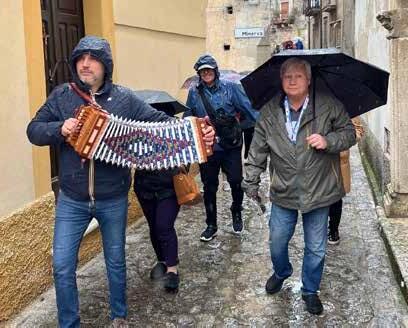
And then Massimo Diano showed up, playing a happy tune on his button accordion. The atmosphere changed immediately; suddenly, we were a jolly group following our own personal pied piper through the streets of this ancient village.
Massimo played songs in the “Tarantella” folk dance tradition of Calabria. He also played lots of other songs, including “Roll Out the Barrel” and we sang along. As he played, a window opened up, high in one of the stone houses that lined the narrow lanes. An elderly women leaned out, and Massimo stopped walking. “Paul,” he called me over. “Come here. We sing for her.”
“What are we singing?” I
asked.
“It doesn’t matter,” he laughed, and he sang, and I made possibly appropriate sounds.
When he’s not serenading elderly Italian ladies from the street below their windows, Massimo is one of the partners in a tour company in Calabria. His family business – which involves his cousin, Antonio Muia and other relatives – had been contracted to organize our Senior Discovery Tours visit to this southernmost part of Italy. They did their job extremely well, introducing us to all aspects of life in this lesser-known region of Italy. And one fundamental aspect is, music.
Everywhere we went, it seemed, there was music. One evening, a local group of four musicians gave us a concert. We listened, we sang, and we danced a cumbersome but lively version of the Tarantella.
The selection of instruments used in Calabrian music is fascinating. Small “button” accordions, of course, but so much more. Every song seems to involve enthusiastic use of tambourines, sometimes more than one. Guitars are popular – we witnessed a Palm Sunday procession in which a band of many guitar players were leading the palm-waving crowd. But as a guitar player, myself, I was intrigued that, in addition to a regular, six-string guitar, the Calabrian guitarist also use a five-string guitar, with one much shorter string acting like the drones do on bagpipes.
And speaking of bagpipes, the
Calabrians love this instrument. But theirs are built using the entire hide of a goat, turned inside out. Most continue to have a bit of goat hair hanging from the large air sack.
Other traditional instruments include a wide variety of “flutes” – some of which are very similar to what we call recorders. Sometimes, two flutes are played at the same time, by one busy musician.
And then there are the lyres, an ancient instrument played with a bow.
In sundry combinations, these instruments make beautiful, lively, joyful music, and from what we saw, the singing that accompanies them is equally enthusiastic and joyful.
And as I said, we experienced a lot of music, from Palm Sunday processions to music at a meal at a family home were welcomed into.
I have a theory: Calabria is admittedly the poorest and most isolated region of Italy. This is not sophisticated Rome or upper-class Milan. This is a place of down-home people with fewer advantages, who have relied on themselves, their families and their neighbours, to supply occasions when they can simply enjoy themselves. And nothing does that better than music.
As I said, all two dozen or so of us were welcomed into a family home for a Sunday afternoon, home-cooked meal. It was the home of Massimo’s and Antonio’s family; the wonderful meal was prepared by three women, including Massimo’s mother and Antonio’s wife.

(This hands-on, “all friends here” approach, by the way, is not usual among professional tour companies. This was entirely exceptional, and very special).
The food was amazing. I’ll be writing, another time, about food in Calabria. My mouth is watering as I recall those flavours, right now!
But what took the event to an entirely other level was – you guessed it – the music. Music that reflected the personalities and the warm welcome we encountered in Calabria.
That welcome was especially evident after a very entertaining demonstration of the various traditional instruments they use. Having left all my guitars at home, I asked Massimo if I could play his for a moment
when the presentation was done. He happily agreed.
And the next day, a guitar was delivered to me at our hotel in Siderno, mine to use for the rest of our stay. That led to a singalong with our Senior Discovery Tour group one evening – but I did not try to play anything related to a Tarantella!
The music is one reason I hope to return to Calabria, and soon. Then, of course, there are the people, the food, the history, the scenery… and you’ll hear more about all of the above in the coming months.
Paul Knowles is an author and travel writer, and Past-President of the Travel Media Association of Canada. To contact Paul about travel, his books, or speaking engagements, email pknowles@golden.net.

Want to come with me down memory lane to my one-room country school in Stephen Township? Sharon School S.S. #4 was over 2.5 kilometres (1.6 miles) north of our family farm. The schoolhouse, like our farmhouse, was built of local yellow brick, also known as yellow/white brick. It took teams of powerful draft horses to draw heavy wagonloads of the brick from Crediton. In the day, there were at least a half-dozen brickyards along the Ausable River there.
Generations of Finkbeiners and two of my brothers and I attended this one-room school, learning not only graded subjects, but how to get along with others, how to sit still for hours and how far away the school seemed some days.
The original log school from the 1850s was replaced by the brick one in 1904. It was fitted with large blackboards, a pail and dipper for water and a strap for punishment that was still there and used when I attended school. Fortunately, I did not have first-hand/palm knowledge of it.
There was no school bus. Transportation to Sharon School was by “shank’s mare.” This centuries-old British expression means walking using your own legs, no horse/mare to ride. As little kids, we walked to school and back, except for snowy and rainy days when we got a ride. As we grew tall enough to reach the pedals by standing up, we got our big Raleigh bikes. The same bike was ridden to school through to the end of Grade 8, teaching us that money didn’t
grow on trees.
A German shepherd dog who lived on a farm halfway often used my bike ride past his long lane for amusement. He waited silently, hiding in the ditch and erupted, fiercely barking, growling and nipping at my heels, making me swerve on the gravel road and occasionally fall. After his mission was accomplished, he ambled back to his yard, wagging his tail.
In Grades 7 and 8, I learned what it felt like to ride a bus on annual “field trips.”
None of us farm kids actually needed education about fields. In my family, we hoed long rows of white beans day after day, working alongside my dad in large fields. By the age of 10, we drove the Farmall A tractor while Mom and Dad loaded a wagon with loose hay. We helped harvest what we called turnips, actually rutabagas.
There was fun while we were working, teasing and laughing. With the passage of time, I became aware that our parents had great trust in us, trust that we would keep safe and not mess up or destroy the crops, part of the farm living for the year.
I went on two field trips, one to London and one to Niagara Falls. In London we visited the huge Kellogg factory, now the entertainment centre at 100 Kellogg Lane. My paternal uncle was the Kellogg transportation manager. He was a Second World War veteran who had survived being swept overboard from his station on a minesweeper in the stormy north Atlantic Ocean. In Niagara Falls we visited a soft drink bottling plant and Nabisco. When we approached the factory you could smell the aroma of the cooking wheat.
These excursions were catnip for us.
Like this past winter here, winters when I was young were

harsh. On bitterly cold days, Dad drove us to school in the Studebaker and at the corner, spun circles on the icy roads. Kids cheered his antics from the school windows. On nice days, we walked to and from school on hard ledges pushed up high on snowbanks.
One winter memory stands out in brilliant technicolour detail, like a movie scene.
A blizzard came in unexpectedly. By mid-afternoon, the other students, except for my younger brother and me, had been taken home. We talked about what fun it was going to be, probably snowed in for a week, no school. The anticipation was intoxicating.
Dad arrived by tractor because the road was almost impassable with snow drifts. He talked to our teacher, saying “You will have to come with us on the tractor, you won’t be able to drive to Exeter in this storm. You can stay at the farm with us until the roads are cleared.”
Our spirits went from soaring to plummeting, crashing faster and harder than the fabled Icarus did. The chilled evaporation of our dreams was even colder than our blustery ride home, standing on the back of the tractor.
We were snowed in for five days — five eons-long days — of living with our teacher. Meals with the teacher, dishes with the teacher, lessons with the teacher, board games in the evening with the teacher. It was only as I got older that I realized that our misery was probably only a small fraction of hers at being marooned with us.
Some days when conditions were ideal, a farmer and his wife invited us school kids to come and skate on their farm pond. We laced up the old black skates used by our dad and his brothers. With no ankle support, they tested our balance every time we wore them, especially for skating on the smooth-as-glass ice on a field near the bush at home. A handful of us went to the

pond, only a few farms away from the school. We glided, we wobbled, we fell and did it over and over again. It was fun and we weren’t sitting at a desk, cooped up. The teacher rang the big school bell (which was stolen in the 1970s) calling us to return to school. Strangely enough, none of us ever seemed to hear it. Our good hearing always vanished during skating. We didn’t admit we could hear that loud clanging for a long time. Sometimes the kind farmer hitched up his team and drove us back to the school, perched on the farm wagon.
We were soaked through and spent the rest of the afternoon drying off by the big round furnace in the school. Another glorious day, full of adventures, in that one-room country school.
Up next, it’s springtime at the one-room country schoolhouse, sugar bush and baseball stories. Then approaching the June wedding season, I plan to share wedding stories of brides and grooms over generations in the family.






What your content should actually be doing

MEG PEARSON Examiner Columnist
Let’s talk about social media. Because right now, a lot of local businesses are posting, but not really getting anywhere. A photo of a product. A quick “Happy Friday!” Maybe a pro-
mo or sale. And then, nothing. No comments. No inquiries. No leads. And it’s not because social media doesn’t work. It’s because most people are using it without a strategy. Here’s a simple shift that can change everything:
Stop posting just to post. Start posting with a purpose. Before you share anything, ask yourself: Who is this for? What is this building (for example: trust, authority, relationship)? And where am I sending someone next?
Because every piece of content should be doing something for your business; even
if it’s subtle. At its core, marketing only has three jobs: get attention, help people decide if you’re the right fit and make it feel safe and easy to choose you.
Most local content stops at step one, if that.
So what does better content actually look like? Instead of just posting a product, explain how to use it. Instead of only sharing listings or services, talk about what people don’t see behind the scenes. Instead of trying to sound polished, try being relatable (especially important these days with so much AI out there).

With National Volunteer Week upon us, I want to dedicate this week’s column to a heartfelt thank you to our volunteers. They are truly at the core of Big Brothers Big Sisters of South Huron (BBBSSH). Quite simply, without them, we would not exist.
This past year, we saw 74 dedicated individuals step forward to help bring mentoring relationships to life. We are a small but committed team, with three full-time staff supporting our mentoring programs and two part-time staff running The Little Shop. Beyond that, it’s our volunteers—their time, energy, and compassion—that make ev-
erything possible.
When people consider volunteering with BBBSSH, one question often rises to the surface: What kind of impact am I really making?
It’s a fair question, and an important one.
For those of us working behind the scenes, impact is the driving force behind everything we do. Every decision, every match, every moment of support is guided by a simple lens: How will this positively shape the life of a young person? It’s a question our volunteers naturally ask themselves, too, and the answer is both powerful and far-reaching.
Through our Theory of Change, we know that consistent, supportive developmental relationships do more than simply offer companionship. They help young people facing adversity build confidence, develop stronger social skills




Some of the most effective posts are simple:
- “What no one tells you about…”
- “POV: You’re dealing with…”
- “Here’s how this actually works…”
This kind of content builds trust, shows your expertise and helps people feel like they already know you before they walk through your door. The part most people miss is that social media isn’t the end goal. It’s the starting point. It should lead people somewhere: your website, your booking page, your store, or even just a conversation.
The goal isn’t just to be active online. It’s to be intentional. So the next time you go to post, pause for a second and ask: Is this just filling space, or is it actually building something? Because the businesses that are growing right now aren’t posting more. They’re posting smarter. Do you know a local business that is doing cool things in the digital space? I’d love to hear from you! Please send me an email at info@meghanpearson. ca or direct message me on Instagram at @coachmegpearson.
and foster a sense of belonging. The impact of volunteering shows up in meaningful, measurable ways. Young people in our programs experience growth in social and emotional competence, improved mental health and well-being and stronger engagement in school and future career pathways. And while the outcomes are significant, the moments that create them are often simple. Sharing a conversation, trying something new together or just showing up consistently. Volunteers may not always see the full extent of their influence, but it’s there in increased confidence,
in brighter outlooks and in the knowledge that someone cares.
While many people assume that volunteering with BBBSSH means being matched one-to-one with a child, that’s just one of many ways to get involved. Volunteers also play a vital role behind the scenes, supporting fundraising efforts, lending a hand at community events, assisting in The Little Shop or sharing their skills and leadership as members of our board of directors. Each role, whether front-facing or behind the scenes, contributes in a meaningful way.
Volunteering isn’t just about giving time. It’s about igniting

potential. And through that, mentors don’t just change a moment. They help change a life trajectory. If you’ve been thinking about giving back, consider becoming a volunteer with BBBSSH. You’ll be joining a community dedicated to helping young people realize their full potential. To learn more, stop by our office, send us an email, connect with us on Facebook or give us a call. We’d be happy to start the conversation.
A sincere thank you to our incredible volunteers. Your dedication is what makes BBBSSH so strong. You are what makes us #BiggerTogether.


Staring out the window at my brown and barren yard over the last few weeks, I found myself anxious, not just for spring’s eruption, but for the chance to get my hands dirty in the garden.
Conventional wisdom encourages us to wait until the Victoria Day long weekend to satisfy that itch, when warmer weather puts an end to frost warnings and the sun hangs in the sky long enough to properly fuel the growth of our seedlings. This rule of thumb, however, assumes our gardens to be full of foreign imports like tomatoes and petunias, plants that don’t tolerate the sleepy transition of Ontario’s winter to spring with much grace.
On Saturday, May 2, you’ll find me with shovel or spade in hand after my annual pilgrimage to the Native Plant Sale at the Lambton Heritage Museum, located eight kilometres south of Grand Bend on Highway 21. After a morning spent wandering amongst tables full of pot-
ted gems like prairie smoke, mayapple, purple-flowering raspberry, sky blue aster and wild ginger, an afternoon playing in the dirt is impossible to resist.
Most of our native plants, those that populated the landscape long before the first settlers arrived here, are used to our climate and weather and are hardly fussy about shorter days and the occasional nip of frost. In fact, some natives, like trillium, bloodroot and yellow trout lily, rise so early in the year they might already be in bloom.
The sale is organized by Lakeshore Eco-Network, a local not-for-profit that works to raise awareness about environmental issues and advocate for effective climate and biodiversity action.
Pat Morden, the network’s chair, has seen the sale evolve since its launch in 2015.
“Our organization started more than 10 years ago after a tornado ripped through Grand Bend, taking down thousands of trees,” he said. “Our goal was to encourage people to replant with native trees, which are adapted to thrive in our region and provide habitat for many birds, insects and other animals.
“Some of the best growers in the southwest now bring stock to our spring and fall native plant and tree sales. It’s a popular event that attracts gardeners from a wide region, and there are always lots of lively con-
versations about the benefits of planting native.”
People are drawn to the sale for a variety of reasons. Some are hoping to expand the food provided by their native garden, searching for the likes of American hazelnut, wild strawberry or paw-paw trees, whose fruit is often described as tasting like a mango crossed with a banana.
Others are there for the spring ephemerals, plants that rise, flower and go dormant all before summer arrives. There are those, of course, who simply want to find a splash of colour or a pretty flower to add some curb appeal.
But for the hardcore enthusiasts, as long-time vendor Sarah Smeekens of Thedford Native Plants puts it, it’s more profound: “There’s something deeply satisfying about planting something that does more than just please the eye. You begin to feel connected to the soil beneath your hands, to the insects that pass through, to the birds overhead. It transforms a simple act into something meaningful, grounding, and quietly important.”
The plants native to our area co-evolved with local wildlife over thousands of years, each species influenced by shared environmental pressures and one another’s behaviours. This intricate dance forged a mutual dependence that has developed generation after generation.
Planting natives fuels these
relationships in powerful and predictable ways that most exotic plant species simply can’t satisfy. Our gardens are no longer just attractive greenery but become habitat instead, shelter and sustenance for creatures both big and small, that helps to support the broader ecosystem on which all life, ours included, depends.
There’s been a very notable rise in enthusiasm for native gardening around these parts over the last several years. Commercial enterprises like Thedford Native Plants or Hemlock Grove Nursery in Grand Bend are perhaps the most obvious sign of this, but not the only ones. Take a peek on Facebook and you’ll likely discover upcoming community events from Blyth to Lucan, just like the Building Habitat and Biodiversity event held at Bethel Bible Church in Seaforth on March 23. Or consider the ongoing work at Bingham Butterfly Park (243 Blake St. W., Goderich) led by Butterflyway Goderich, part of a nationwide, citizen-led initiative that works to create habitat for pollinators. All across the province, native plant enthusiasts are gardening for nature and it’s no different here than elsewhere.
Of course, there are those who will arrive at Saturday’s sale with little idea as to how it differs from a trip to their local garden centre. To help these folks better understand the pos-
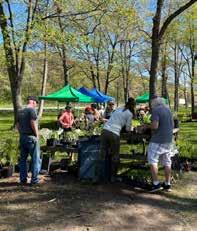
itive impacts that planting natives can have, nature education and advocacy organizations also show up in force. One such regular is Huron County Backyard Ecosystems, an organization out of Clinton that works to encourage the restoration of local biodiversity in support of pollinators and wildlife.
“Supporting native plants starts with encouragement, not criticism. One plant is all it takes to begin. When we work with people to find what fits their garden and their goals, we create lasting change that keeps growing,” said organization founder Krystal Brideau.
The spring 2026 Native Tree and Plant Sale will be held Saturday, May 2, from 9 a.m. to 11:30 a.m. at the Lambton Heritage Museum, 10035 Museum Road, Grand Bend. A similar sale will be held in autumn, likely in early October, although the exact date has not been announced.

all operate under different business models, different regulatory systems and different market realities.
I was recently invited to represent the Huron Chamber of Commerce at the Huron County Federation of Agriculture’s MP/MPP Forum, and one of the strongest takeaways was how wide the range of pressures has become across the agricultural sector.
We often talk about agriculture as though it were a single industry. In Huron County, it is anything but. Grain and oilseed producers, beef, pork, dairy, poultry, sheep and egg farmers
For grain and oilseed producers, trade uncertainty remains a major concern. These are sectors heavily exposed to export markets, global commodity prices, transportation costs and international competition. Tariffs, non-tariff barriers and foreign subsidies can affect farm income quickly, even when nothing about the local growing season has changed. Add in the rising cost of fertilizer, fuel, equipment and financing, and the margin for error becomes very thin.
Beef and pork producers face many of the same pressures, but they are also affected by processing capacity and market access in distinct ways. When domestic processing options are limited, producers can become more vulnerable to cross-border
disruptions, higher transportation costs and bottlenecks that are largely beyond their control. If Ontario wants to strengthen food resilience and keep more economic value closer to home, regional processing capacity must be part of the conversation.
For dairy, poultry and egg producers, the conversation is somewhat different, but no less important. These sectors depend heavily on the stability of supply management. That stability supports farm planning, domestic food production and investment in local operations. At the same time, producers remain concerned about concessions in international trade agreements that can gradually weaken the system. For many farm families, this is not an abstract policy debate. It goes directly to long-term confidence and succession planning. Sheep producers are dealing
with another variation of the same broader challenge. There is clear opportunity to grow domestic lamb production and meet more of the demand that is currently filled by imports, but expansion requires the right business conditions, including access to processing, reliable infrastructure and policies that make growth realistic rather than theoretical.
Across all of these sectors, there are also shared concerns.
Farmland values have risen to levels that make entry and expansion increasingly difficult, especially for younger farmers. Interest rates and borrowing costs affect capital-intensive operations in a very direct way. Rural broadband, roads, bridges and energy infrastructure all influence productivity and competitiveness. Environmental stewardship remains a priority for producers, but policy has to reflect on-farm realities and be
paired with practical program support rather than layered on as another administrative burden.
Agriculture in Huron County is highly capable, innovative and resilient, but that should not be mistaken for an endless ability to absorb rising costs, policy uncertainty and structural barriers. Producers can adapt a great deal, and they do, but there comes a point when constant pressure stops being a challenge to manage and starts becoming a constraint on growth, investment and succession.
If we want agriculture to remain strong, we need public policy at all levels of government that acknowledges the differences between sectors, while also addressing the common pressures that run across them. That is not just good for the farms that dot the landscape. It is good for every town and village across Huron County.
Spring explorations on local trails through forests, along rivers and in meadows are invitations to al fresco flower shows. Use print field guides and wildflower websites to identify and to enhance appreciation of the amazing varieties of colours, height, forms and past to present uses of these floral delights. No touching or picking, please. Take only photos.






JOHN MINER Examiner Reporter
CAO’s pay set at $189,371
Accepting the recommendation of its CAO Performance Review Committee, the annual remuneration of CAO Rebekah Msuya-Collison was set at $189,371 for the year. Additionally, council voted to continue the professional development allowance at $15,000.
In the report to council, the committee said Msuya-Collison’s performance met and exceeded the strategic priorities set for 2023 to 2026. The committee said it considers the annual remuneration equitable, particularly when compared to that of her peers as listed in the publicly available “Sunshine List.”
Trees and Me request turned down
In a split vote, a request from The Trees and Me Forest School for free use of the municipality’s kitchen this summer was rejected. The Bayfield-area-based school runs summer camps, PD day camps and before- and after-school programs.
The school plans to expand to the Exeter community and requires a certified kitchen before it can become a licensed childcare provider. The request submitted by The Trees and Me owner Hannah Field asked for free use of the kitchen for PD days on April 24 and June 5 and once a week starting July 3 until the end of the summer.
Bluewater Recycling setting new fees
The annual recycling fee for industrial, commer-

Unexpectedly, as the result of a motor vehicle accident, on Saturday, February 7, 2026, Laura Natsuko (Nakamura) Ross, of Exeter, age 38, leaving behind a legacy of love, laughter, and devotion to her family. Born on August 24, 1987, in Goderich, she was the dearly loved wife of Rob Ross. Proud and adoring mother of Colin and Ethan Ross. Forever loved daughter of the late Brian Nakamura (2013) and Linda (Haugh) Nakamura of Seaforth. Loved sister of Jason and Sarah Nakamura and their daughters Mya and Carmen of Kitchener and sister-in-law of Scott Ross of London. Lovingly remembered by her father-in-law and motherin-law Jim and Mary Ann Ross of London. Fondly remembered by her aunts, uncles, cousins and many friends. Predeceased by her grandparents Ross and Irene Haugh, Tomiye and Yujiro Nakamura. At the request of the family, cremation has taken place and interment in the family plot in Crediton Cemetery at a later date. An Open House Celebration of Laura’s Life, with refreshments, will be held at the Crediton Community Centre, 38 Victoria Avenue East, Crediton, on Saturday, May 16, 2026, from 1 to 4 p.m. T. Harry Hoffman & Sons Funeral Home, Dashwood, entrusted with the arrangements. In lieu of flowers, the family requests that donations be made to Cornerstone Montessori School in Clinton or Egmondville United Church. Go Raptors Go! and Let’s Go Blue Jays!
cial and institutional (ICI) properties will be $160 per wheelie bin starting on Jan. 1, 2027, up from $71.40. Changes in provincial regulations removed ICI recycling from the residential blue box program this year, prompting Bluewater Recycling Association to implement a dedicated ICI collection system.
In a letter to council, the association said the increased fee reflects the full cost of delivering ICI recycling services across a large and predominantly rural service area.
Access control project company selected Council gave the go ahead to hiring Canadian Security Concepts to provide access control at the town hall, South Huron Recreation Centre and future community service facilities.
A report to council said many individuals hold physical keys that provide access to multiple areas within the recreation centre and there have been instances where individuals have accessed the building without staff knowledge.
This is a serious safety concern at the recreation centre due to the presence of the refrigeration plant and ammonia system. The access control system will allow staff to monitor and control access in real time. Key fobs can be programmed with specific access levels and restricted to timeframes. Access privileges could be revoked at any time without needing to retrieve physical keys.
Stephen arena roof repair proposal approved South Huron Council approved engaging an engi-

neering firm to provide the detailed drawings and design required to complete phase two of the Stephen roof repairs.
The work will bring the roof up to 2024 building code standards and allow for additional weight to be added. The cost to complete the drawings is $22,000 and there will be additional costs for the construction work.


30 Years Ago
April 24, 1996 — Saturday night, the Exeter Hawks won the OHA Junior “D” championship with a 2-1 win over the Wellesley Applejacks in the seventh and deciding game. Sean McCann and Mark Livermore were the Exeter goal scorers. Coaches Dave Revington, Jeff Dalrymple and Barry Baynham praised goaltenders Dave Nahrgang and Darren Kints for their excellent work. Jason McBride is the captain.
Marjorie and Donald Kernick of Goderich and Joyce and Lorne Preszcator of Crediton recently received the Polish Government medal on behalf of their relative, Pilot Officer Harold Brown, who lost his life over Poland during the Second World War.
40 Years Ago
April 23, 1986 — Exeter council mem -
bers received good news this week when auditor Jerry Mills of Kime and Company reported a surplus of $102,335 on the town’s business for 1985. The comparable figure at the end of 1984 was $15,297.
The first ever Exeter Home and Garden Show on the weekend at the South Huron Rec centre was an unqualified success. Show co-ordinator was Dirk Coolman of the Exeter Optimist Club.
April 22, 1971 — A complete history of Exeter will be published to coincide with the community’s centennial in 1973. SHDHS principal J.L. Wooden has been preparing the history and Monday night Exeter council decided to take the project under their wing and have the book published.
Eight municipalities in the Bayfield River watershed have voted to join the
Ausable River Conservation Authority.
Last week, Hay Township council accepted a petition from three businesses in the municipality asking for a liquor vote.
April 21, 1961 — Five members of the junior bowling league in Exeter travelled to Sarnia Saturday and returned home with a trophy for their first-place finish in the Western Counties junior tournament. They were Marlene Harness, Darlene Snell, Helen Campbell, Sue Anne Lindenfield and Phylis Madge. Mrs. Ruth Durand is their coach.
70 Years Ago
April 22, 1956 — A farewell party was held April 20 at Sharon School to honour Mr. and Mrs. Harvey Pfaff and family, who have moved to a community
near St. Marys.
Mrs. Ted Jones was named president of Alpha Pi Chapter, Beta Sigma Phi Sorority at a dinner at the Dominion Hotel in Zurich in honour of the 25th anniversary of the organization.
Hensall Public School Board is considering several sites for the erection of a proposed $120,000 six-room school for the village.
April 21, 1946 — Rev. Harold J. Snell was named chairman of Huron Presbytery at Thursday’s meeting in Wingham.
The board of education voted to provide Exeter Public School students with textbooks, note books and pencils beginning with the fall term.

What has to be broken before you can use it? An egg.
I’m tall when I’m young, and short when I’m old. What am I? A candle.
What month of the year has 28 days? All of them.
What goes up but never comes down? Your age.
What can you catch, but not throw? A cold.
What gets wetter the more it dries? A towel.
I have hands but can’t clap. What am I? A clock.
What has a head, a tail, but no body? A coin.
What can travel around the world while staying in the same corner? A stamp.
The more you take, the more you leave behind. What are they? Footsteps.

Our pet of the Week is Kipper, a nearly one-yearold Latino Conure with a big personality. Named after a Minecraft YouTuber by his owner, six-yearold Cole, Kipper loves coming when he’s called and often joins in while Cole plays Lego.
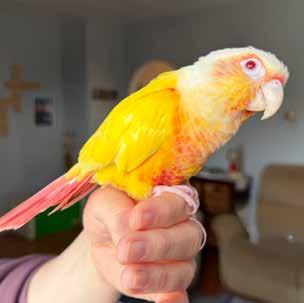
Nominate your pet to be a Featured Pet by emailing


GRAND BEND AREA COMMUNITY HEALTH CENTRE
Tues. & Thurs. until APRIL 30
“Free Income Tax Clinics” 1-5 pm Boardroom .
Please contact Mary at 647-295-8292 or email mpnorris58@gmail.com to book an appointment.
Wed. 10-11:00 am Walk & Talk Hensall Arena.
Contact Grace at gbonnett@gbchc.com . Fun social walking program with coffee and chatting to finish
Wed. 9:20-11 am
Pinery Walking Group. Meet at the Lambton Heritage Museum parking lot 9:00 am Email Lindsey lindseyashworthducharme@ gmail.com
Thursdays 9:30-12 Early On program free program for adults with children birth to 6 years.
Adult Day Wing, GBACHC earlyonchildcare.ca or 519-786-6161 x 9226.
March 31- May 5th, 10:30-12
“Powerful Tools for Caregivers” Contact Kate Mason 519-238-2362 x 241 for more information.
Wednesdays April 8-June 3rd 10:30
“Pulmonary Rehab Program” GBACHC. Contact Peter Morrisey a pmorrisey@gbchc.com or 519-238-2362 x 284 for information
Fri. April 17, 24, May 1st 10-12
“Diabetes Cooking Classes” GBACHC Community Room contact Elaine at 519238-2362 x 242
Thurs. April 30th 10-2 pm
“Spring into Wellness” Hensall Arena. Di-

abetes 101, Eating Well, Strong minds, Safe homes, dementia prevention and more. Call 519-280-0103 to register. Cost $8 and includes lunch
Saturdays 8:30-11:30 am
Walk In Medical Clinic GBACHC . Open to anyone in the communitywho needs medical attention ( Not an Urgent Care or Emergency Centre)
APRIL 25
Big Brothers Big Sisters of South Huron presents The Little Craft Show. Sat., April 25 - 9am to 3pm
SHOP LOCAL VENDORS AND BAKE SALE. South Huron Recreation Centre ~ 94 Victoria St. E - Exeter. Admission $3 at the door (12 & under free). To book a table or for more information contact Big Brothers Big Sisters of South Huron at 519-235-1780 ext. 4 or angie.steckle@bigbrothersbigsisters.ca or visit https://southhuron.bigbrothersbigsisters.ca
APRIL 25
Bring your e-waste to Lucan Guiding & Scouting’s recycling event and help keep harmful materials out of the landfills while supporting the community. 131 Market Street, Lucan. April 25 - 10am to 3pm. Accepted items include computers, cell phones, TVs, printers and more. Proceeds to Lucan Scout Guide Hall Committee.
APRIL 29
Goderich Place Retirement Residence Spring Fashion Show & Shop
11:30 a.m. - 3:00 p.m. Early Shopping 11:30 a.m. to 1:00 p.m. Fashion Show starts at 1:30 p.m.Shopping until 3:00 p.m. Admission is free. RSVP Jennifer Puckett 519-524-4243 ext 22
MAY 1 AND 2
Spring Free Store. Huron Shores United Church, 25 Main St., Grand Bend. Fri., May 1, 6-8:30pm. Sat., May 2, 9am to 2pm. Everyone is welcome to come, browse and take away what you can use, free of charge. Wide selection of Spring and Summer clothing for the entire family, small household items, books and more. For more information 226456-8134.
MAY 1 AND 3
South Huron Community Choirs present ‘We Are All Family’.
A spring concert featuring adult and kids’ choirs and handbells! May 1 at 7pm, Exeter United Church; May 3 at 3:30pm at Kingsfield- Zurich Mennonite Church. Advance tickets: $25 adult, $15 students. Tickets at door $30, free for kids under 10. Tickets available at: Exeter Animal Hospital (519235-2662); Exeter United Church (519235-0860); Hansens (519-235-6131); Zurich Pharmacy (519-236-7577); Mary Ann Walper (226-735-7843); April King (519-2802649) or any choir member.
MAY 2
Spring Tea 11am & 2pm
Good Neighbours of Bluewater 28 Goshen, St. N. Zurich, ON. $22 per person. Seating avaliable between 11am & 2pm. Call for reservations. 519-236-7081
MAY 2
Mitchell Kin Club Annual Rubber Duck Race. May 2 at 11 a.m. Stacey Brothers Park. Tickets are $5 each. Tickets available through any Kin member.
MAY 2
40th Annual Exeter Lions Club’s Trout Fishing Derby. Sat., May 2 - 8am to noon. Morrison Dam Reservoir. Sponsored by Exeter Lions Club and Ausable Bayfield Conservation Authority. Registration fee: $2 for 16 & under. $4 for 17 and over.
MAY 2
Prom 2026 Fundraiser - Car Wash & BBQ. May 2 - 12 to 3pm. Location: South Huron District High School. BBQ available. $10 wash. 100% of proceeds support Prom 2026.
FRIDAY, MAY 29 & SATURDAY, MAY 30
South Huron Hospital Auxiliary RUMMAGE SALE. South Huron Recreation Centre. 94 Victoria St. E. Exeter. Friday, May 29 from 2 to 7:30 p.m.; Saturday, May 30 from 8:30 a.m. to 12 noon. Donations accepted Thursday, May 28 - 7 a.m. to 8 p.m. at the South Huron Recreation Centre. Zamboni entrance. Proceeds going to Patient care needs. All items left over are then donated to local charities in our area.
JUNE
SUNDAY, JUNE 28 - 2-4 P.M.
Crystal Gage and Ryan St Denis, Country and Western. Zion United Church, 6 Victoria Ave W, Crediton. $25.00/person call Ruth 519-234-6035 or Joan 519-237-3806





















ORDER OF THE EASTERN STAR EXETER CHAPTER #222
Sunday, May 24, 2026
Prepared by Pineridge Barbeque Co.
Served by Exeter Eastern Star Members
Includes: homemade potato salad, creamy coleslaw, Pineridge baked beans, roll & butter, Jumbo Soft Cookies TAKE OUT ONLY - $25 PER MEAL | ADVANCE TICKETS ONLY
Pick- Up Time: 4-6 p.m.
Exeter Masonic Hall, 248 McConnell St. , Exeter, ON
FOR TICKETS CALL:
Jeanie 519 235 1588 | Cathy 519 236 4134


DATE: May 14th, 2026
TIME: 12:30pm Mealtime
COST: $20 per ticket (adult) $10 (child)
LOCATION: South Huron Rec Centre
MENU: Ham, Scallop Potato, Veg and Dessert Please call or text Pat 519.440.8838 for tickets!

2nd & 4th Thursday of the Month
Free of charge! Donations accepted.
South Huron District High School (Small Gym)
92 Gidley Street, E, Exeter
CONFIRM PRESENCE WITH ROSALYN BY RMFAST@GMAIL.COM
THIS WHITE SQUIRREL WAS SPOTTED WAITING TO GREET DRAGAN COMING HOME FROM WORK.


1 BDRM APARTMENT in House
Main Level / 5 steps from grade, 4 appliances, all inclusive utilities (Hydro, Heat / A/C, water & sewer). In very clean, well maintained older individual House. Newly renovated including new kitchen & bathroom cabinetry & fixtures. Short walk to 3 schools & downtown. ABSOLUTELY NO PETS OR SMOKING ON ENTIRE PROPERTY! 1 parking space with guest parking available. 1 year Lease with full 1st & last month in advance. Require 3 strong references (previous Landlord’s preferred; NO family or friends)
2 VERY nice 1 bdrm, all inclusive units available. Must be seen to appreciate! Great for Seniors! #1 @ $1,900/month, all inclusive. Available April 1, 2026. #2 @ $2,000/month, all inclusive. Available April 15, 2026.
EXETER Call: 519-235-4543 & ask for Mark or Leave a Message.
There was a time when small-town newspapers told the stories that mattered most: the people, the milestones, the challenges, and the triumphs of the community.
At Grant Haven Media, we’re proud to carry on that tradition. Our newspapers are built around truly local content. Written for the community, about the community, by the community. From council decisions to community events, local businesses to local achievements, we believe every town deserves a strong, independent voice.
Restoring Small-Town Journalism, One Community at a Time.


THE COMMUNITY YOU CAN TRUST! NEWS SOURCE

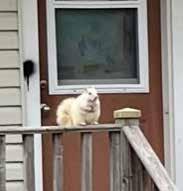
your White Squirrel sightings by emailing info@exeterexaminer.com
“The snow is gone but I’m still complaining about the weather.”


“Bobbing for 90 minutes in the Pacific Ocean after 10 days in space has to be the longest time ever.”





Hydro One will be upgrading residential hydro meters in our community in the coming weeks to prepare for growing electricity needs. In the future, these new meters are expected to provide more precise detection of outages to enable faster and more efficient power restoration. There will be no additional charges to residents for the meters or their installation and we will notify customers directly in advance of their scheduled meter replacement. For more information, please visit their website: www.hydroone.com/rates -and-billing/meters/meter-replacement
Interested in running in the next Municipal and School Board Election?
The candidate nomination period is starting soon!
The next municipal election will be held Monday, October 26, 2026. During the election, South Huron voters will be casting their votes to fill the follow Municipal & School Board offices:
• Mayor - One (1) to be elected by all voters of the Municipality
• Deputy Mayor - One (1) to be elected by all voters of the Municipality
• Local Councillors:
- Two (2) to be elected by voters in Ward One – Stephen Ward;
- Two (2) to be elected by voters in Ward Two – Exeter Ward; and,
- One (1) to be elected by voters in Ward Three – Usborne Ward.
- Trustee for Avon Maitland District School Board (representing South Huron and Bluewater) – One (1) Trustee for Huron Perth Roman Catholic Separate School Board (representing South Huron and Bluewater) – One (1) Trustee for French-Language Public School Board (representing Regional Municipality of Waterloo, County of Wellington, County of Middlesex, County of Perth and County of Huron) - One (1) Trustee for French Language Separate District School Board (representing Counties of Lambton, Huron and Bruce) – One (1)
Candidates may file a nomination form during regular business hours from May 1, 2026 through to 2:00 p.m. on Nomination Day, August 21, 2026.
Nomination Packages are now available on the Municipal Election page on southhuron.ca or at Town Hall (322 Main Street South, Exeter). For more information regarding the 2026 Municipal and School Board Election, check out the website, contact the Clerk at vote@southhuron.ca, or drop into Town Hall.
On March 16, 2026 Council gave third and final reading to By -Law #18-2026 Water and Wastewater Rates and Charges By -Law to repeal By-Law #66-2021. The charges set out in this by-Law take effect April 1, 2026.
* $1.89 per cubic metre for municipal tap water
* $1.85 per cubic metre for wastewater (sewage)
These rate changes are the result of a recent study conducted by Watson and Associates Economists Ltd. This study assessed the financial needs to sustain a cost -recovery model for these services going forward. Please see the 2025 Water and Wastewater Rate Study project webpage for background information. If you have any questions about these services, please visit our Drinking Water, Wastewater & Drainage page on SouthHuron.ca or contact the Financial Services Department at 519 -235-0310 Ext. 233.
Monday, April 20th
Regular Council Meeting 6:00 PM (EST)*
Monday, April 27th
Special Meeting 4:00 PM (EST)*
*South Huron Council meetings are open for in-person attendance and continue to be livestreamed. See our website Agendas, Minutes & Meetings page or the South Huron Youtube channel at meeting time to access the livestream video link. A recording of the meeting will be available on the municipal Youtube Channel following the meeting.
Looking to build a career in Municipal Environmental Services? We’re hiring an Operator-inTraining to gain hands on experience in water, wastewater, & landfill operations while developing practical, job-relevant skills. Applications will be accepted until 4:30PM on Fri, April 24, 2026. Learn more on our Career & Volunteer Opportunities webpage.
The Municipality of South Huron will be starting spring leaf bag collection on Mon, April 13 until Fri, April 24, for all South Huron residents. Please ensure that bags weigh no more than 23kg (50lbs). Please note that staff will not pick up overweight bags, bags that are not biodegradable paper bags, or bags that contain other waste such as garbage or animal feces. There will not be a specific day when leaf bags are picked up. Staff will pick up bagged leaves on a weekly basis throughout the time period noted above, as the weather permits. As a reminder, once the collection period has ended, staff will no longer collect any items that are set curbside. You may take your leaf and debris to the South Huron Landfill free of charge.
Our information is accessible! Contact us if you require alternative formats.
Building Services ext. 6
Services ext. 222
Roads ext. 230
& Wastewater, Landfill ext. 230
ext. 7