
Published by U.S. Livestock Genetics Export, Inc. in cooperation with the Kansas Department of Agriculture and Texas Department of Agriculture
U.S. Livestock Genetics Export, Inc.
Dr. Martin Sieber 522 Springdale St., Suite 102 Mount Horeb, WI 53572, USA uslge@uslge.org • www.uslge.org
Kansas Department of Agriculture
Suzanne Ryan-Numrich 1320 Research Park Drive Manhattan, KS 66502 Suzanne.Numrich@ks.gov www.agriculture.ks.gov
Texas Department of Agriculture
Dr. Jean Lonie 1700 Congress Ave 11 Austin, TX 78701 Jean.Lonie@TexasAgriculture.gov http://texasagriculture.gov
USLGE would like to acknowledge the content and contributions of the following organizations to create this Importer Resource Guide:
• American Embryo Transfer Association
• Illinois Department of Agriculture
• Kansas Department of Agriculture
• Kentucky Department of Agriculture
• Livestock Exporters Association
• Montana Department of Agriculture
• National Association of Animal Breeders
• New Mexico Department of Agriculture
• Texas Department of Agriculture
• USLGE Equine Committee
• Wisconsin Department of Agriculture
Around the world the livestock sector is an important part of the agriculture industry and local economies. Perhaps as important, livestock represent both the history and heritage of many communities as well as the future of a growing global population.
Every individual caring for livestock has different goals for their animals. Similarly, each region has unique characteristics, climate, and resources that must be considered when making livestock species and breed decisions. U.S. livestock and genetics can offer you a way to advance the improvement of your animals and/or provide the seedstock to grow a new opportunity in your region or country.
This guide is designed to help you understand the many resources available as you look to bring animals, embryos or semen from the United States to your country. Developed by members of U.S. Livestock Genetics Export, Inc. (USLGE), this document includes insight on the process of importing livestock and promoting the value of U.S. genetics to others in your country.
Each country has its own specific requirements for imported livestock and genetics. In addition, there are important regulations and considerations in place in the U.S. that you should be aware of before making a purchase.
The following pages provide an insight on a variety of topics, including how to select breeds for your region; the process of purchasing livestock in the U.S.; and requirements for moving animals or genetics by air, land or sea.
We hope this guide is helpful to you. We also encourage you to reach out to USLGE members as you explore how U.S. genetics can help strengthen your livestock herd. From visiting individual farms and ranches to participating in our international shows and educational events, there are many ways to explore U.S. livestock and learn more about our superior livestock genetics.

$1.109 trillion
United States agriculture, food, and related industries contributed $1.109 trillion to the U.S. gross domestic product (GDP) in 2019. According to the 2012 U.S. Department of Agriculture (USDA) Census of Agriculture, animal agriculture (livestock and poultry) comprised 46.2% of the total value of production (cash receipts) for U.S. agriculture.
Livestock production (animal agriculture excluding the equine sector) occurs in all 50 U.S. states. Texas, Iowa, California, Nebraska, and Kansas lead the country in sales value of livestock and their products (USDA Census of Agriculture, 2012).
The United States has the largest fed-cattle industry in the world and is the largest global producer of beef (USDA Economic Research Service, 2019). Beef cattle are found across the United States, however, they have higher numbers in the middle part of the country, led by Texas, Missouri, Nebraska, and Oklahoma.
California and Wisconsin accounted for more than 32.1% of dairy cows (USDA Census of Agriculture, 2017).
As of the 2017 USDA Census of Agriculture, the cattle industry had a production value of $50.2 billion. Hogs and pigs were valued at $19.2 billion. The value of milk production was near $38.6 billion.
Each sector of livestock production in the United States is unique in terms of its geographic/regional prominence, dominant and specialty breed makeup, and the objectives of the farms and ranches involved in the industry.
Livestock operations in the United States are often family-owned enterprises that range from purebred breeding operations to farms and ranches focusing
more on the consumer market – whether that is meat, milk, fiber, genetics, or other end uses.
More details on each sector are provided in the species-specific sections throughout this resource guide. Information on U.S. Livestock Genetics Export, Inc. (USLGE) member breed associations and livestock/genetics organizations and international events hosted in the United States are also included.
Although the United States has less than 10% of the world’s cattle inventory, it produces nearly 25% of the world’s beef supply.
More than 1 million beef businesses, farms and ranches operate in 50 states.
High-quality beef cattle genetics have been developed to fit climates that range from tropical to arctic.
U.S. beef producers have focused on cattle uniformity.
Good genetics are essential to operation profitability.
Bull selection is the foundation for building a profitable beef herd.
Choosing the correct sire is the most important tool in improving the genetic potential of a herd.
With its rich land resources, United States beef cattle production represents about 18 percent of total cash receipts for agricultural commodities, according to the U.S. Department of Agriculture (USDA) Economic Research Service (ERS, 2020).
The beef industry is largely separate from the U.S. dairy sector, and can be divided into seedstock (purebred) breeding herds, commercial cow-calf production, stocker and backgrounding operations, and cattle feeding.
New markets for U.S. cattle exports of beef breeding cattle and genetics have emerged in recent years around the world (ERS, 2020).
Beef cattle genetics from the U.S. are highly sought after. Live animals, semen, and embryos are in ever-increasing demand. Using the highest health standards, an excellent transportation system, and the latest technology, U.S. beef cattle genetics can be quickly and efficiently sent to any place in the world. Beef cattle genetics from the U.S. offer proven performance, functional type and profitability – all backed by solid data.
U.S. beef cattle operations are located throughout the United States and depend on range and pasture forage. The U.S. beef cattle herd offers a large population size, high selection intensity, a competitive artificial insemination (AI) industry, independent genetic evaluations and cattle that have been tested in diverse environments.
Each cattle breed offers unique characteristics, and associations that provide vast, reliable data used in genetic evaluation and selection decisions. The following are U.S. Livestock Genetics Export, Inc. (USLGE) members.

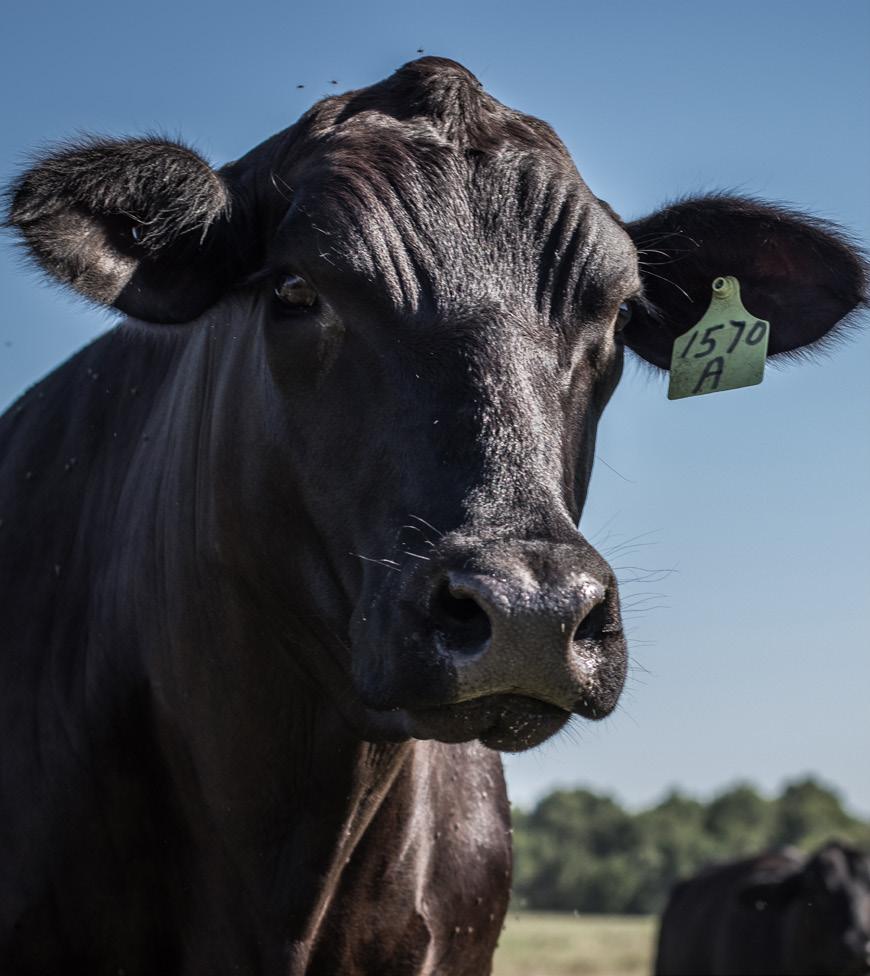
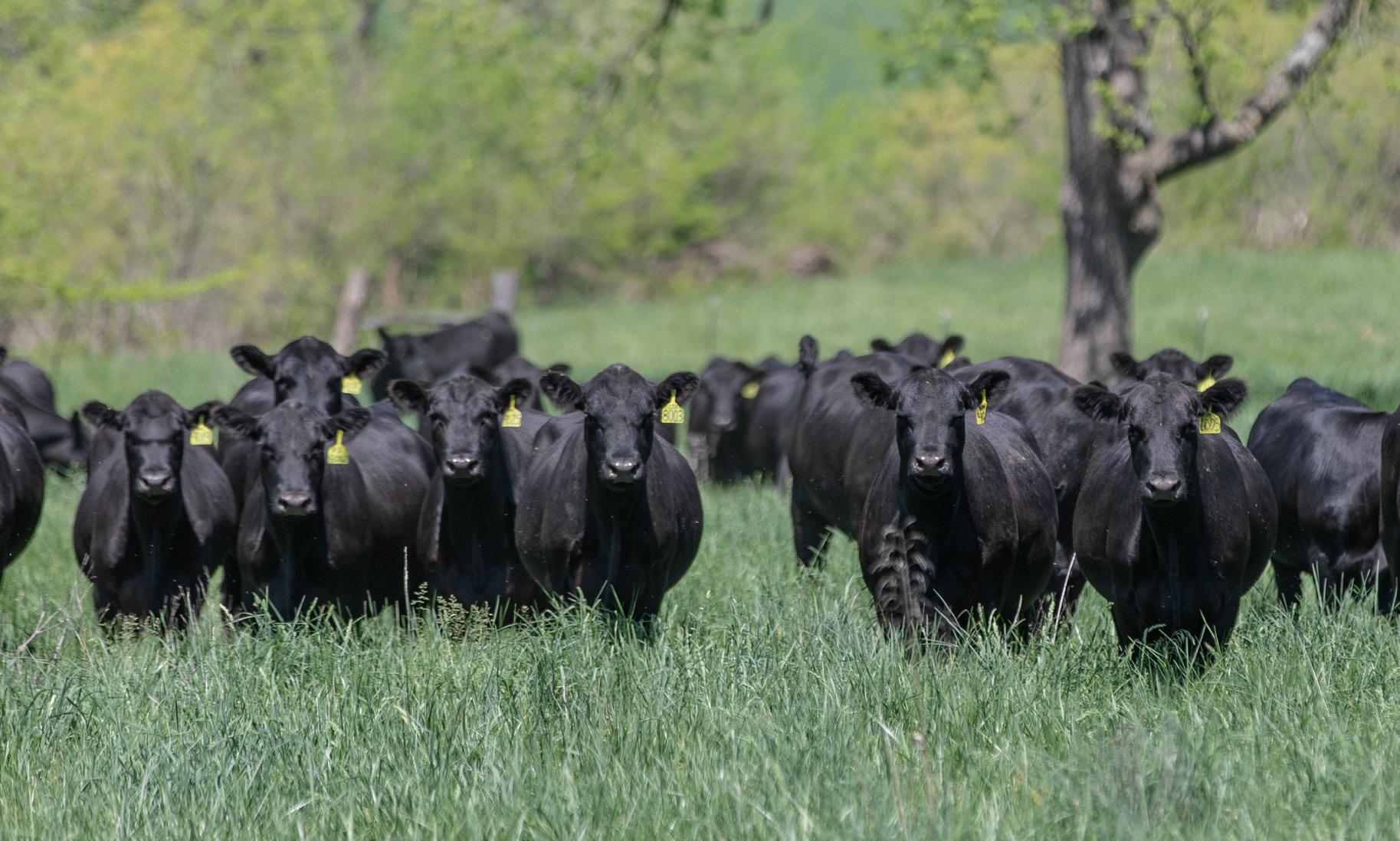
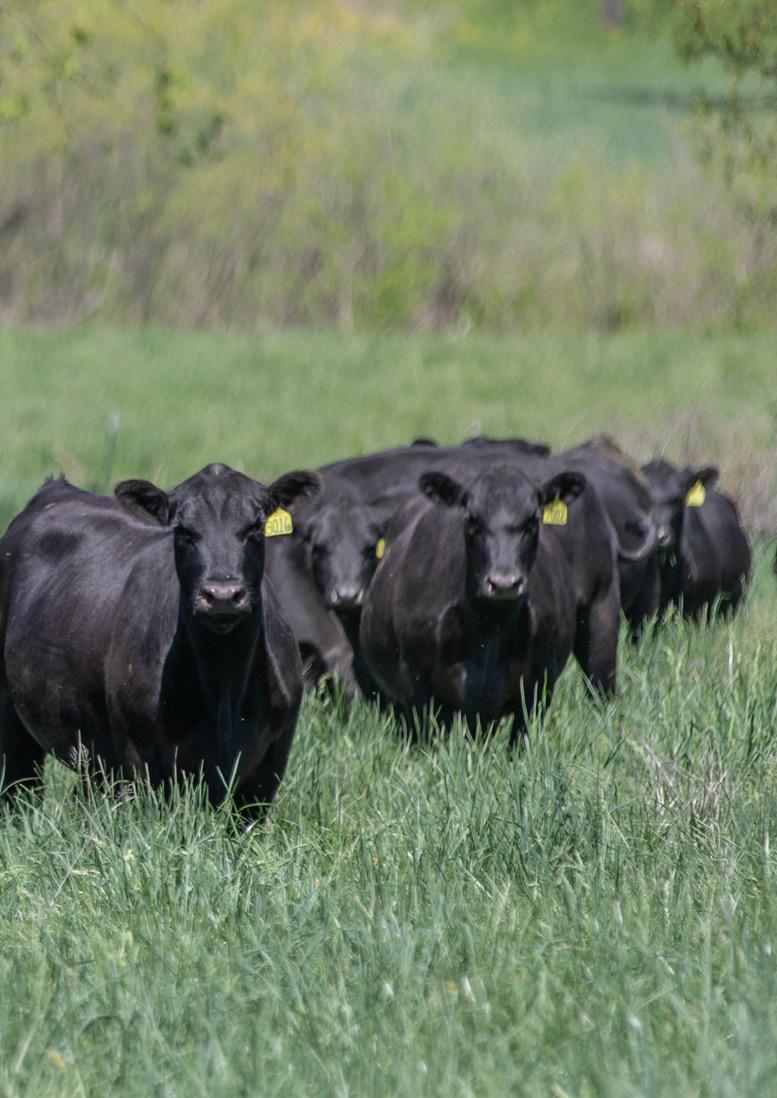
One of the most successful British breeds of beef cattle, the Angus breed was introduced into the United States in 1873 and is found in all regions of the country. The black-hided, polled breed has the largest registration numbers in the U.S. and is most widely known for calving ease and marbling ability.
www.angus.org

A Bos indicus breed, Brahman is known for heat tolerance and hybrid vigor when mated to British breeds. The breed’s ability to utilize lower-quality feed and survive in harsh environments is paired with natural disease and pest resistance. www.brahman.org

Beefmaster cattle were first developed in the 1930s by systematically crossing Hereford, Shorthorn and Brahman cattle. The typically brownish-red or black cattle were designed to be more productive and profitable in the harsh environment of South Texas.
www.beefmasters.org

The Brangus breed was developed to combine the superior traits of Angus and Brahman cattle, using a 3/8 Brahman and 5/8 Angus makeup. Brangus are black or red, polled and known for hardiness, maternal instincts and quality carcass traits.
www.gobrangus.com

The white cattle breed of French origin, Charolais offer superior growth, efficient gains and carcass value. Charolais cattle first came to the U.S. in 1934 and have since established a reputation for high performance in the feedyard and high demand at auction. www.charolaisusa.com

The Senepol breed was developed in Saint Croix by crossing N’Dama cattle from Senegal, West Africa, with Red Poll genetics. The result was a hardy, polled breed with red color, gentle disposition and heat tolerance. Senepols have been in the U.S. since 1977. www.senepolcattle.com

Santa Gertrudis cattle, named for the Spanish land grant where the King Ranch now resides, were developed by the ranch to thrive, prosper and gain weight in the harsh South Texas brush country. The rugged breed is a cross of 3/8 Brahman and 5/8 Shorthorn.
www.santagertrudis.com

Originating from the Swiss Alps, the Simmental breed has gone through tremendous changes since their import to the U.S. in 1968. The development of the American Simmental has resulted in a breed focused on balanced, progressive genetics for maternal and terminal herds.
www.simmental.org

Wagyu is a Japanese beef cattle breed originally used for draft purposes. Today, Wagyu is recognized for exceptional marbling ability and quality beef eating experience. The horned cattle are red or black in color and were first imported into the U.S. in 1975. www.wagyu.org
Source: USDA, 2017 Census of Agriculture

Dr. Matt Spangler, University of Nebraska, explains the merits of choosing U.S. beef cattle and genetics. More USLGE videos about importing U.S. livestock and genetics is available in several languages at USLGE’s YouTube channel
References
https://www.ers.usda.gov/topics/animal-products/cattle-beef/sector-at-a-glance/#cattle
https://www.uslge.org/your-one-source/beef
The United States has the second-largest dairy population in the world (9.1 million cows).
Average milk production is 9,682 kg per cow per year, significantly higher than in other countries.
U.S. dairy cattle perform in all climates: from extreme humidity and heat to extreme cold.
The U.S. dairy industry is the most experienced and advanced in the world when measuring and tracking animal performance.
Independent organizations and specialized agencies, with no commercial interest, are responsible for calculating U.S. genetic evaluations.
U.S. milk production per cow has tripled in the past half-century as a result of improved genetics and management; genetics accounted for 55 percent of the improvement since the 1980s.
Eighty to 90 percent of the herds in leading dairying nations can trace their lineage to U.S. genetics. 3x
References: USLGE.org
The United States has long been recognized as the world leader in dairy genetics — backed by years of successful performance from generations of cattle that have been bred for good health and high milk production and quality.
Producers benefit from the offspring of sires distributed across many herds, environments, and management types – in the U.S. and abroad. Producers also benefit from a selection focus on total economic merit: production, type, health and longevity.
U.S. dairy farms are largely family owned and managed, and present in all 50 states. Major dairy states in the Northeast and Midwest are known for smallerscale dairy farms, while Western dairy states typically offer larger commercial farms.
According to the Economic Research Service (ERS), the dairy industry has seen a consistent decline in the number of operations, but a rise in the number of cows per operation (ERS, 2020). In 2017, the U.S. had 54,599 farms with milk cows; 2,000 farms had herds of at least 1,000 milk cows (USDA Census of Agriculture, 2017).
Meanwhile, genetic developments and technological improvements have led to substantial increases in milk output per cow. Output has risen 70% since 1980, exceeding 99 billion total kilograms per year in 2019. See Fig. 1. (ERS, 2020).
High-performing dairy genetics from the U.S. offer proven performance, functional type and profitability –all backed by solid data.
(LEFT AXIS)
Source: USDA, Economic Reserach Service using data from USDA, National Agricultural Statistics Service, Milk Production, various
Each breed offers unique characteristics, and each breed association offers vast resources for breed information and genetic evaluation. The following are members of U.S. Livestock Genetics Export, Inc. (USLGE).

Ayrshire cattle are medium-framed dairy cattle with red and white color patterns. They reach up to 544 kg at maturity. Ayrshires are highly adaptable, efficient grazers with excellent udders and typically problem-free feet and legs. 8,697 kg milk; 3.96% fat; 3.16% protein. www.usayrshire.com

Brown Swiss cattle are among the oldest dairy breeds in the world. Brown Swiss are largeframed and very adaptable with a high level of milk production. Brown Swiss cattle can vary in color, from light silver to very dark grey or brown. 10,226 kg milk; 4.09% fat; 3.35% protein. www.brownswissusa.com

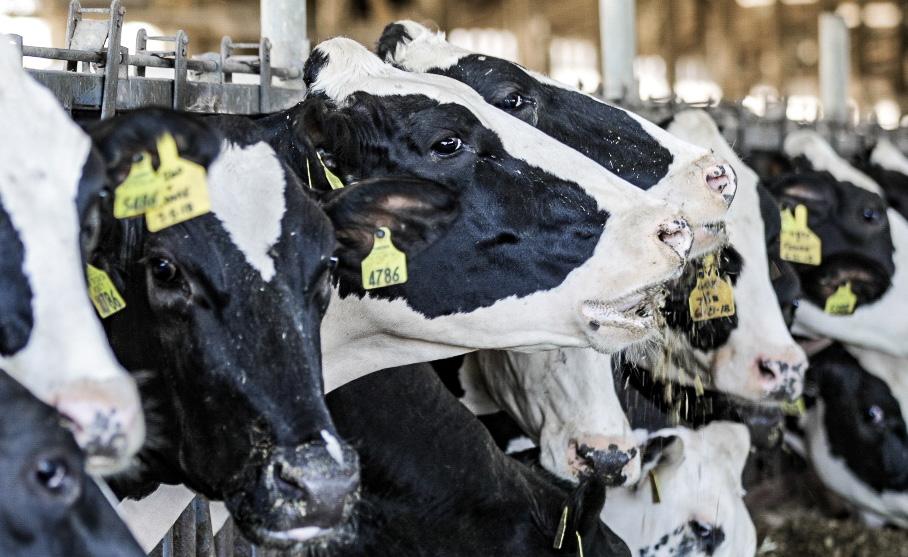
The Holstein breed is the most common of the U.S. dairy breeds and is known for her blackand-white or red-and-white color patterns and high milk production. Holsteins are large-framed and numerous; 90 percent of U.S. dairy cows are Holsteins. 12,457 kg milk; 3.86% fat; 3.11% protein. www.holsteinusa.com

Milking Shorthorns are large-framed cattle that are white, red and/or roan in color. The breed is considered dual purpose and used for milk or beef production. They are efficient grazers known for their structural soundness. 8,569 kg milk; 3.81% fat; 3.12% protein. www.milkingshorthorn.com

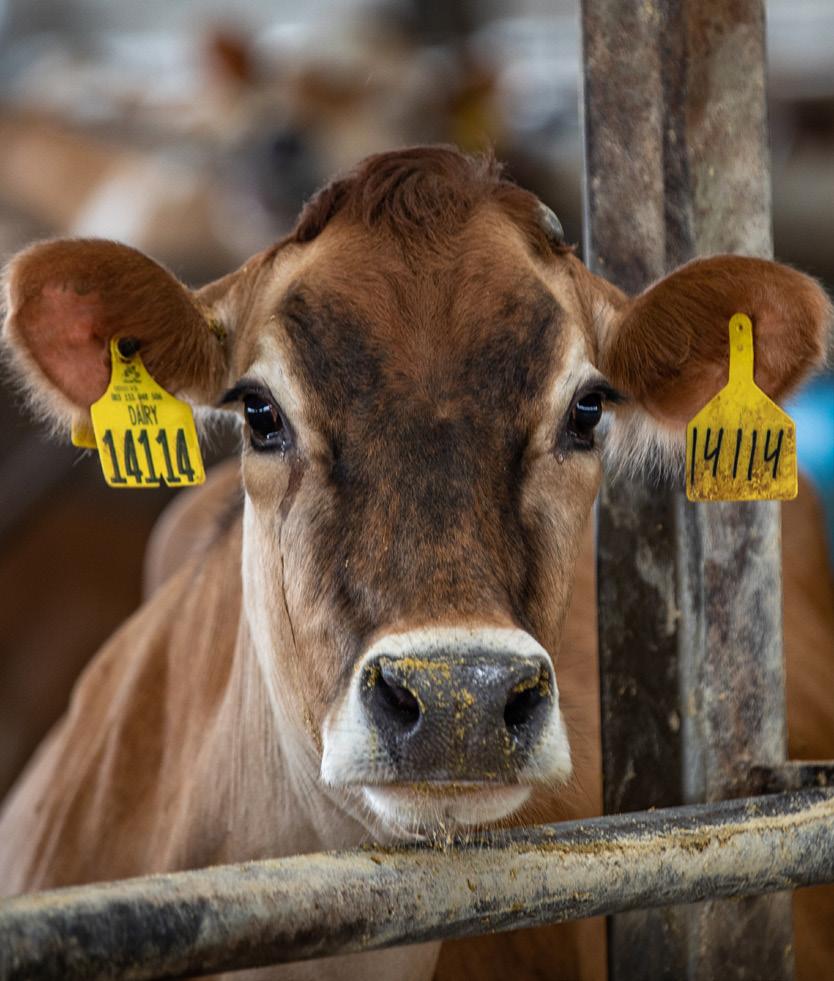
Jersey cattle have the smallest frame-size of the dairy breeds, with color ranging from light to dark brown. Jerseys are the second most common dairy breed in the United States. They produce the highest components of butterfat and protein. 9,356 kg milk; 4.83% fat; 3.68% protein. www.usjersey.com
U.S. MILK PRODUCTION One bottle equals roughly 11.3 billion kilograms
Source: USDA NASS, 2019

Dr. Matt Spangler and Kim Clark of the University of Nebraska discuss the quality of U.S. dairy genetics and a focus on health management programs.

Dr. Matt Spangler, University of Nebraska, explains the genetic selection process for U.S. dairy cattle and why U.S. germplasm is the best in the world. More USLGE videos about importing U.S. livestock and genetics is available in several languages at USLGE’s YouTube channel
References www.uslge.org • https://www.ers.usda.gov/topics/animal-products/dairy/ https://www.ers.usda.gov/webdocs/publications/98901/err%20274_summary.pdf?v=466.7
Norman, et al, State and national standardized lactation averages by breed for cows calving in 2018, CDCB Research Report, K2-18 (2-20), 2020.
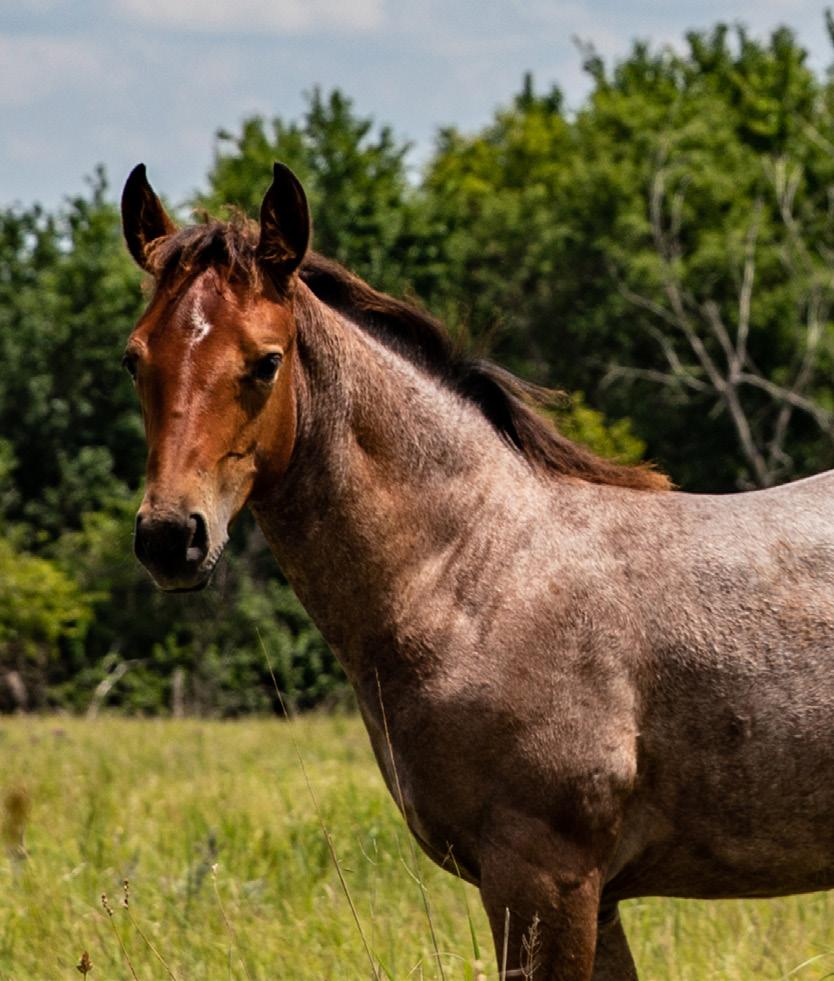
The United States has a rich tradition as a horse nation that is highly diverse and broad-based in all regions of the country. The U.S. equine industry spans a wide variety of uses and activities. From premier breeding and training facilities to racing and equine athletes (dressage, jumping, and English and Western activities), as well as farm and ranch work and recreational riding and showing, the U.S. offers something for everyone in the equine industry.
With a horse population of nearly 7 million head, the genetic diversity offered by the U.S. horse-breeding industry is unparalleled by any other country.
The offspring of horses bred in the U.S. can be seen on farms and ranches, race tracks, and in show arenas around the world.

Each equine breed offers unique characteristics, and the U.S. is the source of global excellence in equine genetics. The following are U.S. Livestock Genetics Export, Inc. (USLGE) members.

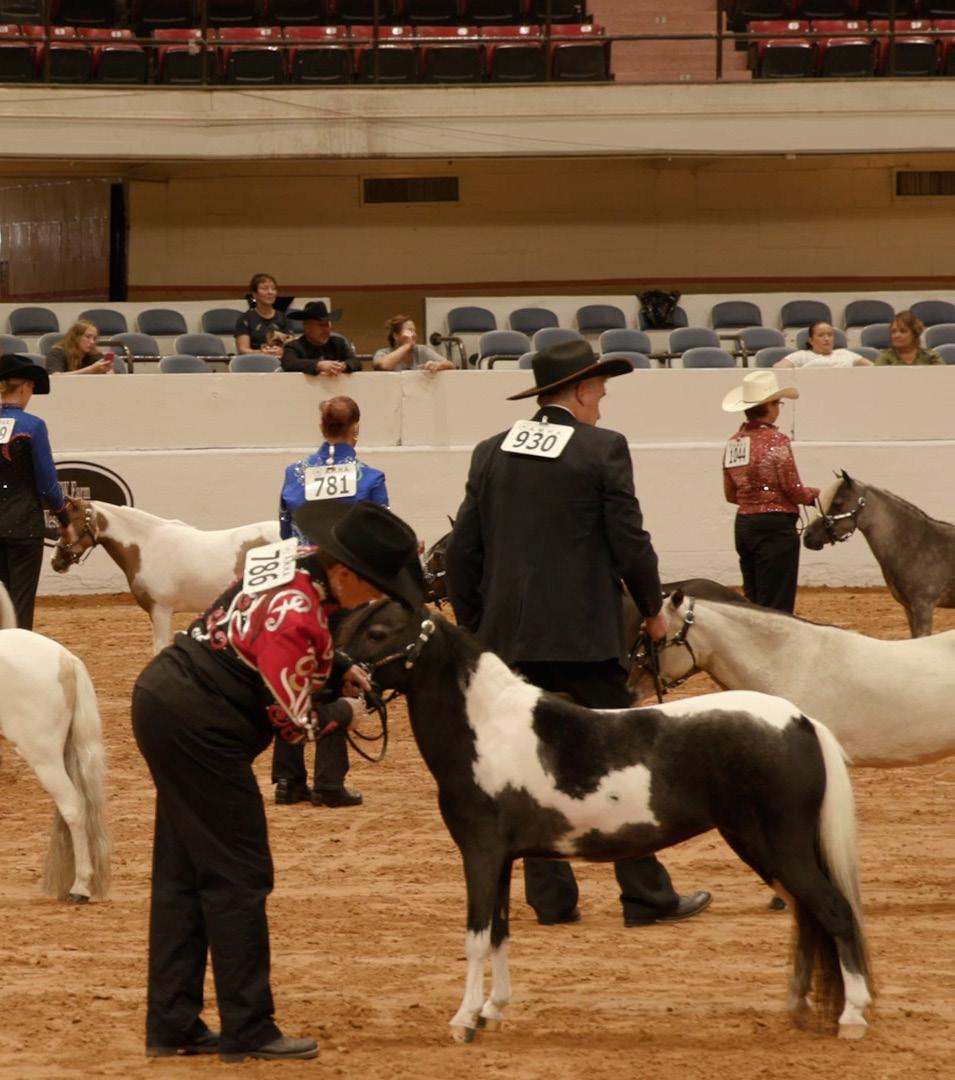
The American Miniature Horse can be found in more than 20 countries. They are known as the “large horse in a small package,” with all horses under 86.4 cm. www.amha.org

The American Quarter Horse numbers more than 5 million registered horses worldwide. The versatile, popular breed is known to excel in ranch work and thrives in the show pen and on the race track. www.aqha.com

The American Paint Horse’s combination of color and conformation has made it one of the most popular breeds in the U.S., with a colorful coat pattern and distinctive stock-horse body type. www.apha.com

Purebred Arabian horses remain largely unchanged from their roots in ancient Arabia. The breed is known for athletic talent in a variety of disciplines from English to Western, with a reputation for endurance events. www.arabianhorses.org

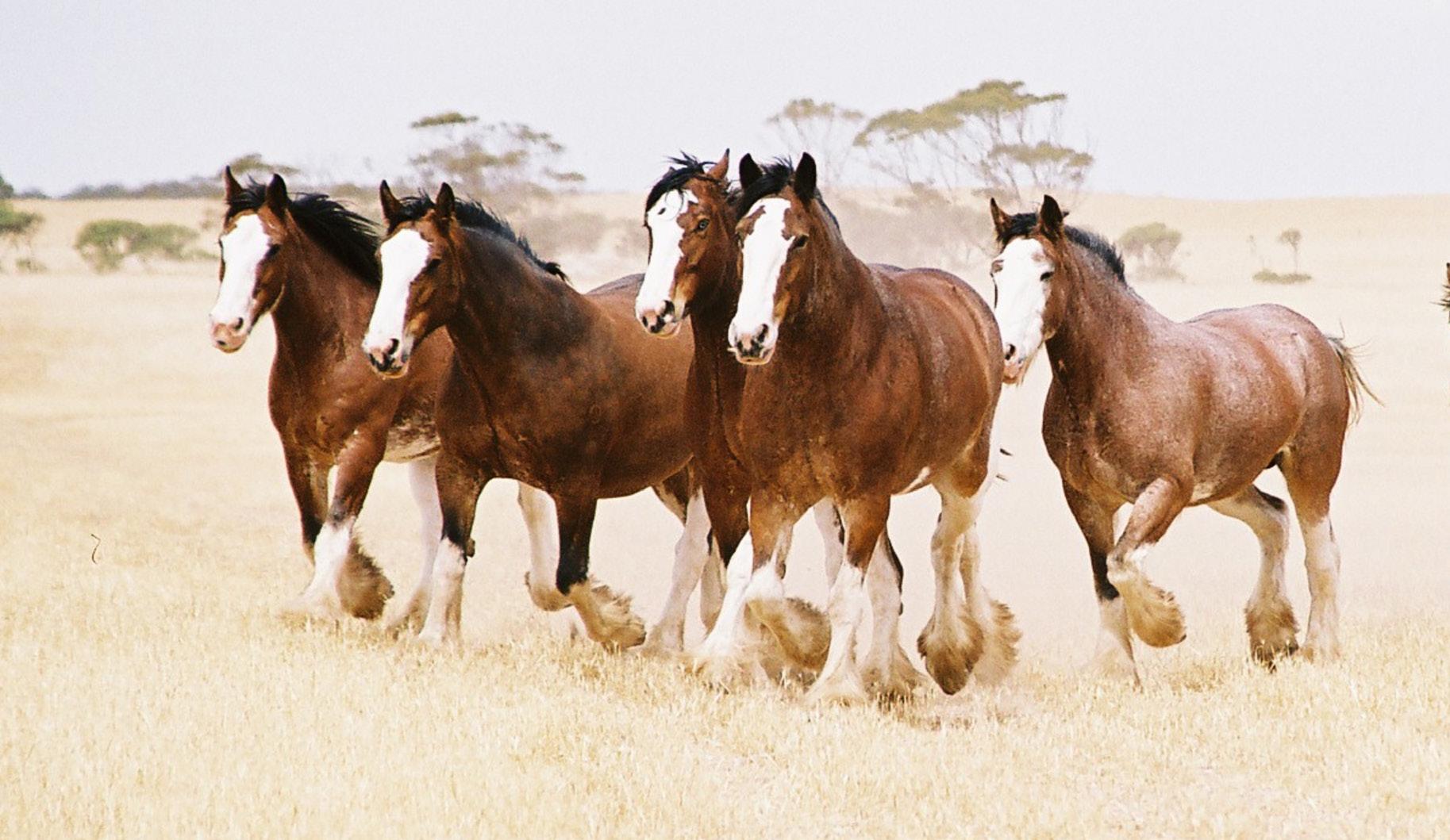
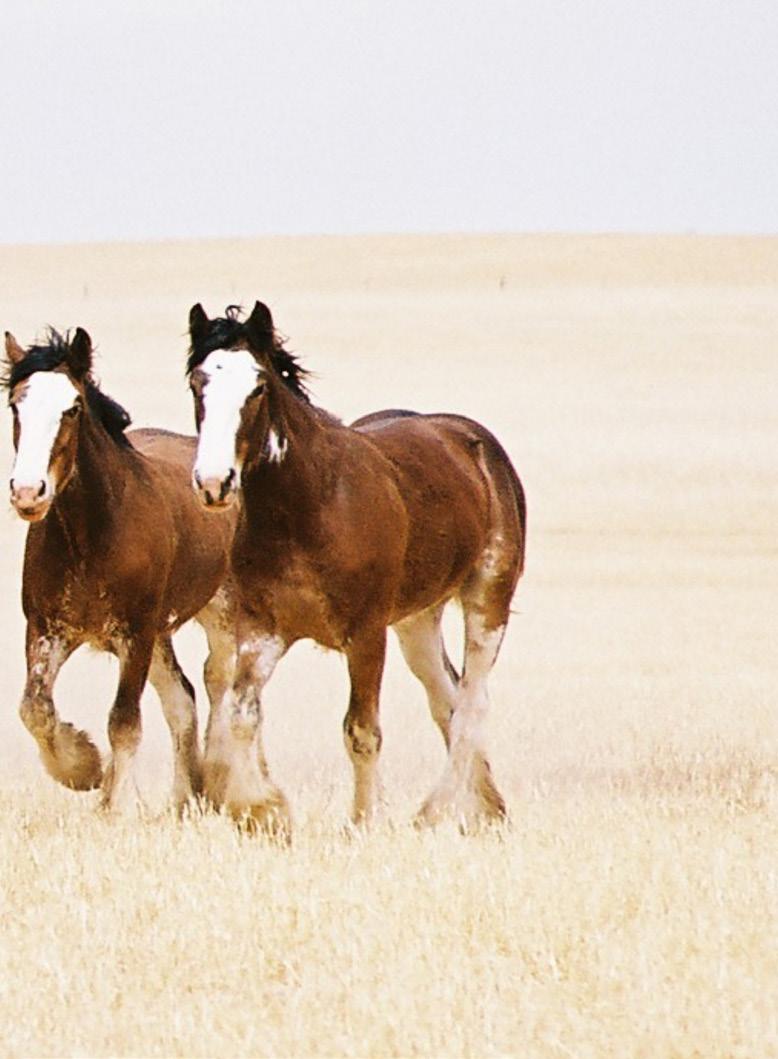
The magnificent Clydesdale horse has been registered in the United States since 1879. Top-quality Clydesdale stallions, mares and geldings are displayed at national and regional horse shows and sales.
www.clydesusa.com

The U.S. is the biggest producer of Thoroughbred race horses in the world. The state of Kentucky is the largest exporter of live horses. Today, Thoroughbred racing exists in 69 countries, with American horses dominating across six continents.
www.kentuckybred.org

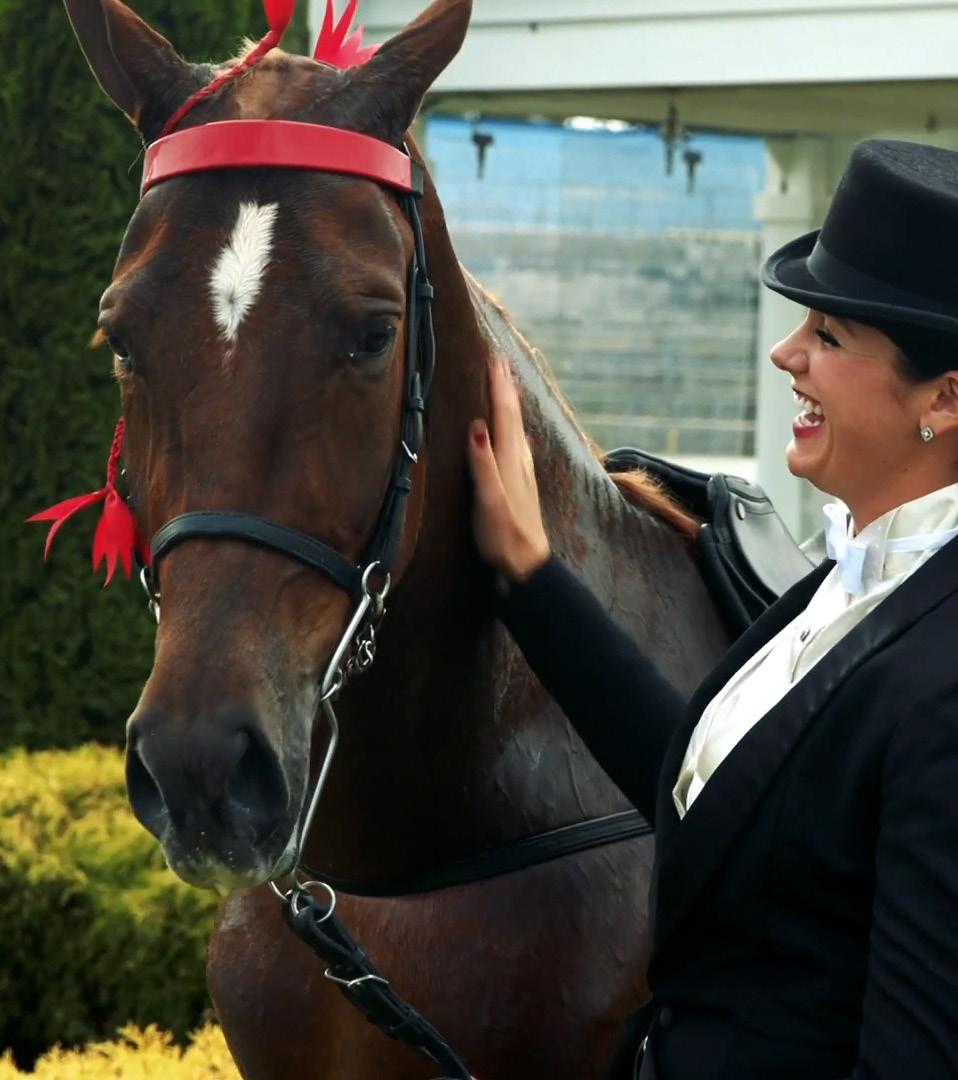
Known as a smooth-riding breed, the Tennessee Walking Horse was initially used to cover miles of ground. Today, they are desired worldwide for their calm disposition, dependability and smooth ground-covering gait. www.twhbea.com

WEEKS FROM BIRTH TO BREEDING AGE
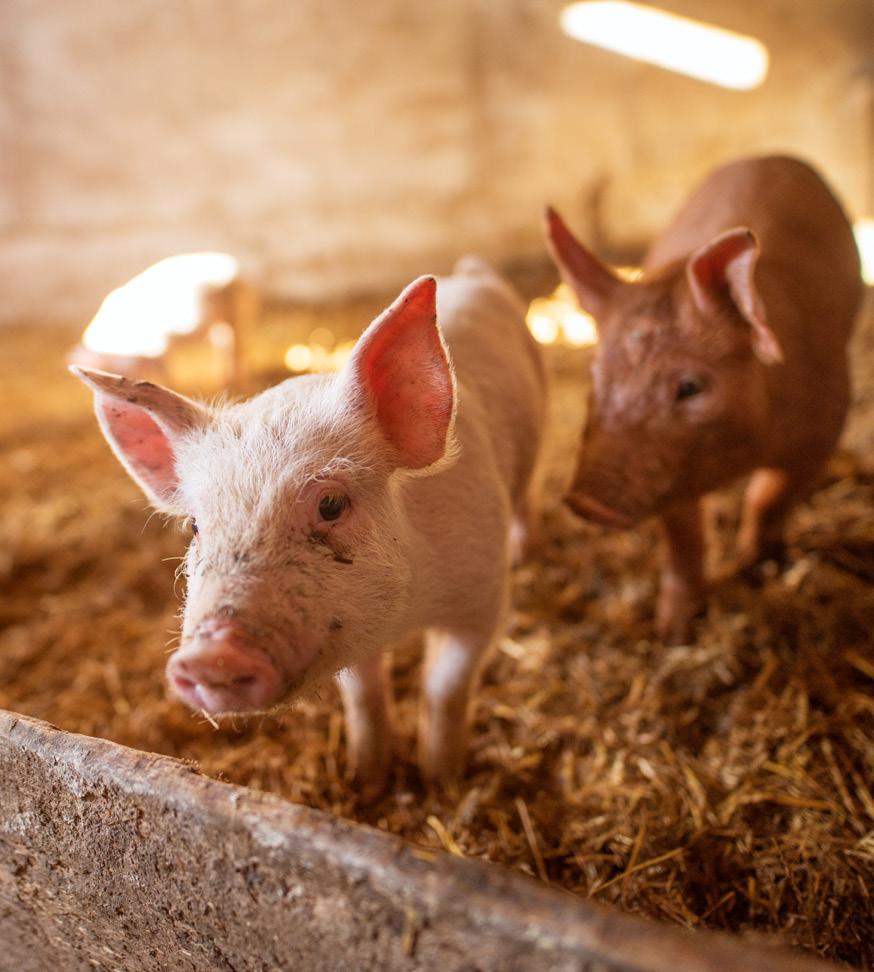
The United States is one of the world’s leading porkproducing and exporting countries, accounting for about 10% of the world’s supply. Hogs are produced in three types of specialized enterprises (ERS, 2019):
• Farrow-to-finish operations raise hogs from birth to slaughter weight, about 109-122 kilograms.
PIGLETS PER LITTER
WEEKS FROM BIRTH TO HARVEST
KILOGRAMS AT FINISH
• Feeder pig producers raise pigs from birth to about 4.5-27 kilograms, then generally sell them for finishing.
• Feeder pig finishers buy feeder pigs and grow them to slaughter weight.
U.S. swine are unique in their ability to perform consistently under a variety of weather conditions and management styles. This consistent performance is the result of years of painstaking work by geneticists, breeders, and commercial producers who were committed to true genetic progress.
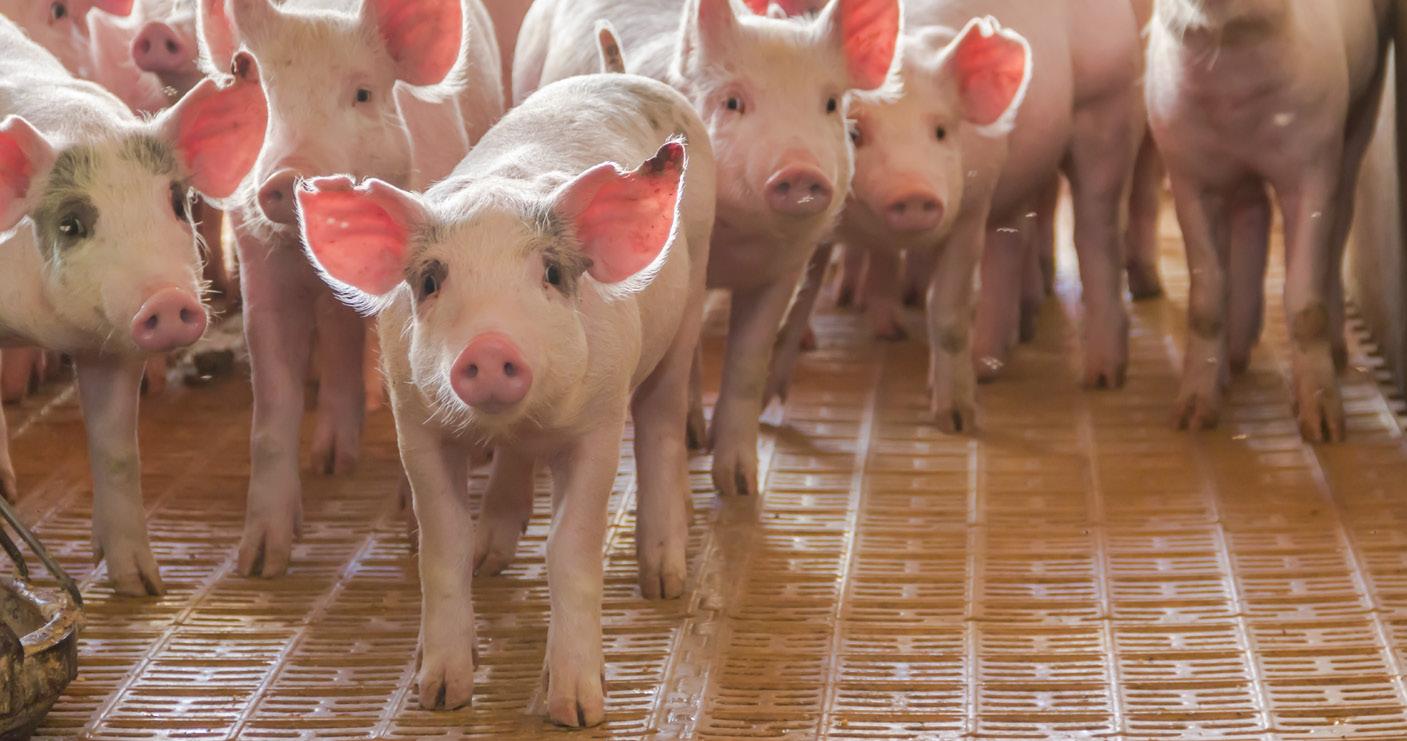
Technological change and evolving economic relationships among producers, packers and consumers has resulted in a rapid shift to fewer and larger U.S. operations (ERS, 2019). Since 1990, the number of hog farms declined by more than 70 percent, as individual enterprises have grown larger in states like Iowa, Minnesota and North Carolina, keeping hog inventories stable. As a result of these changes, the industry has gained production efficiencies and lowered production costs.
These gains allowed the U.S. to export a higher share of commercial pork, annually exporting more than 2.2 billion kilograms of pork cuts, on average, since 2010 (ERS, 2019). See Fig. 1.
Live U.S. hogs, mostly breeding animals, are exported to many countries, with the vast majority shipped to Mexico. See Fig. 2.

Source: USDA, Economic Research Service using data from U.S. Department of Commerce, Bureau of the Census and ERS.
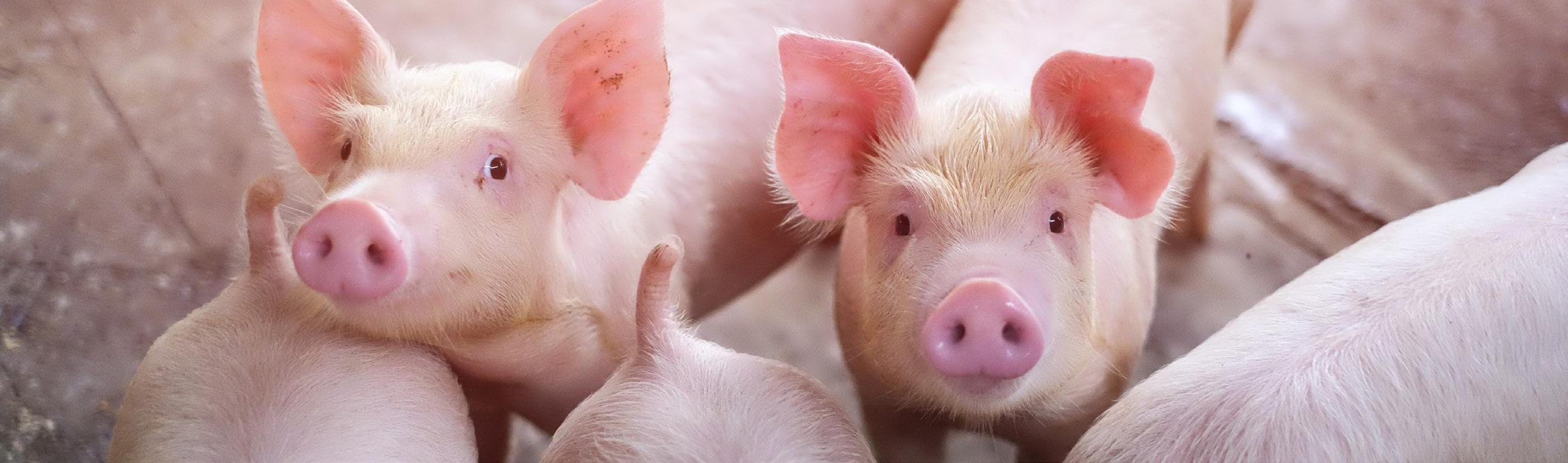
Each breed offers unique characteristics. Four breeds — Duroc, Hampshire, Landrace, and Yorkshire — form the backbone of the U.S. swine industry. They possess the most desirable carcass and production traits sought by breeders and producers the world over.
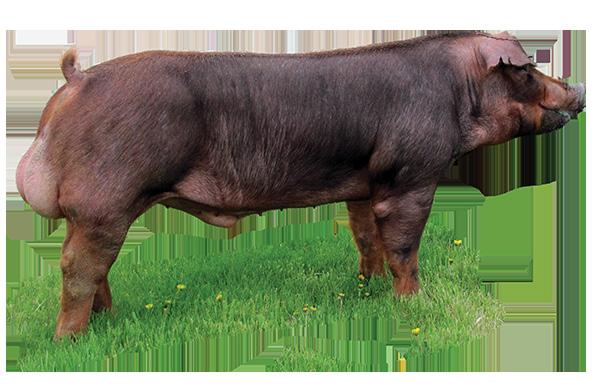
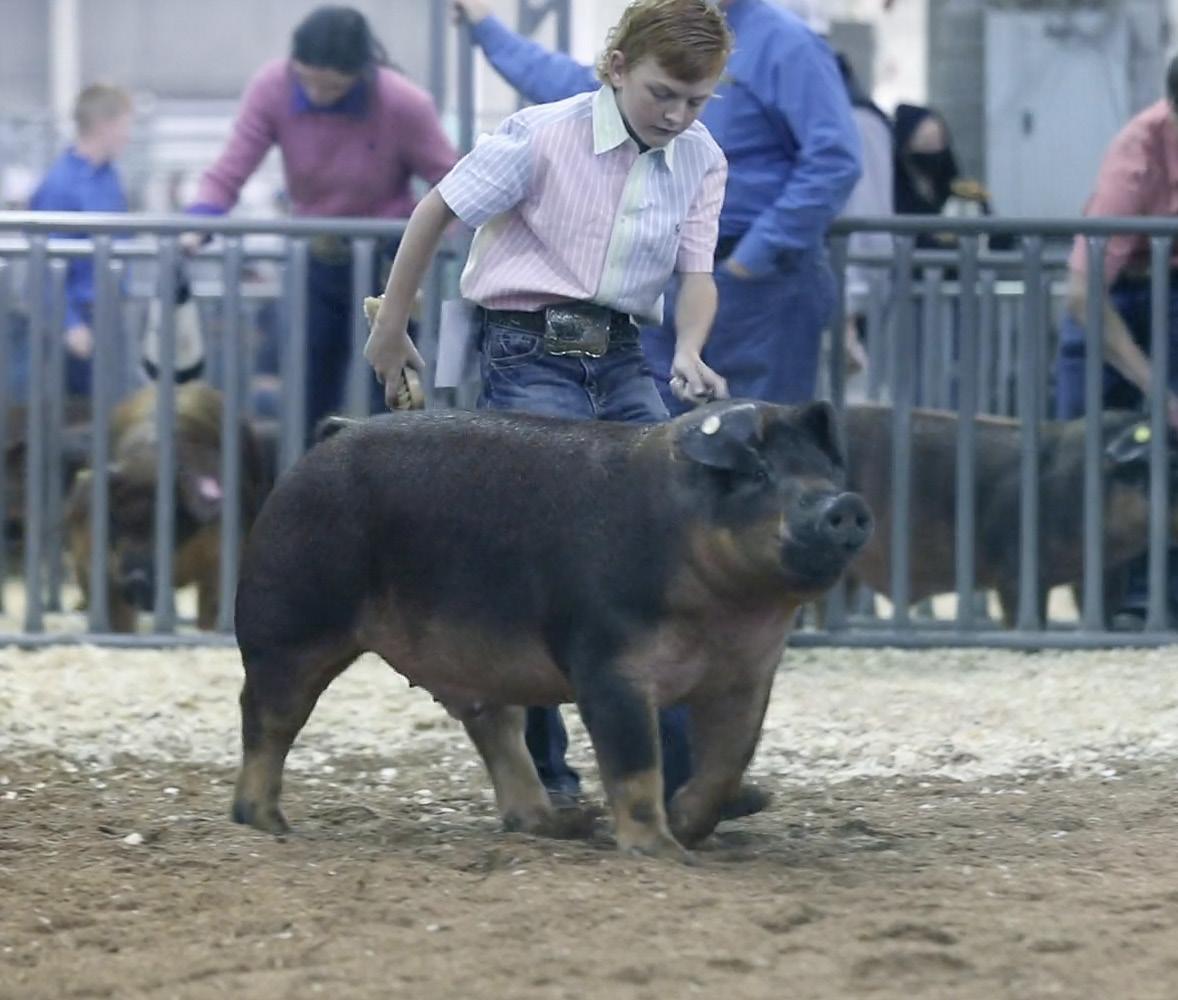
“Red Hogs” also known as Duroc are large red pigs with drooping ears. They can range in color from golden to dark red. Durocs are the second-most recorded breed in the United States and a major breed in many other countries, used as terminal sires or hybrids.
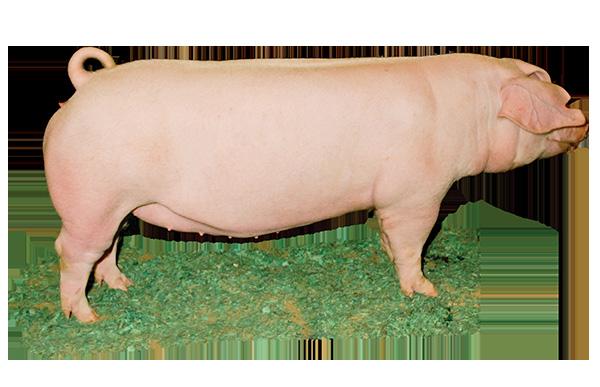
The Landrace are known for their ability to cross well with other breeds, for producing large litters, and a high percentage of carcass weight in the ham and loin. They are the fifthmost recorded breed in the United States, white with droopy ears that slant forward.
The four breed organizations are located in the central office of the National Swine Registry, where services such as registration, performance pedigrees, and national sire summaries are performed. National Swine Registry is a member of U.S. Livestock Genetics Export, Inc. (USLGE). An estimated 80% of all U.S. commercial pork producers use at least one of these four breeds, and 65% use two or more.
National Swine Registry –http://nationalswine.com
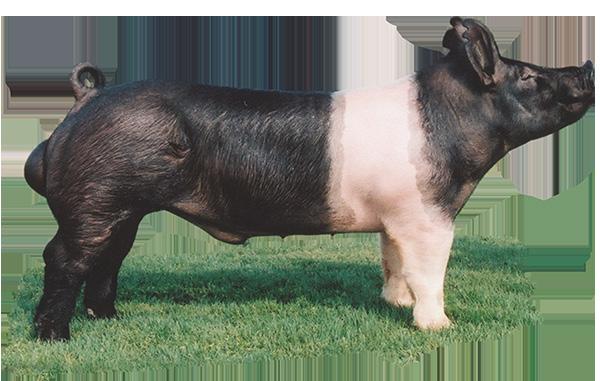
Possibly the oldest early-American breed in existence, Hampshire hogs are black with a white belt and erect ears. They are the fourthmost recorded breed in the U.S. Hampshires are a heavily muscled and lean meat breed.
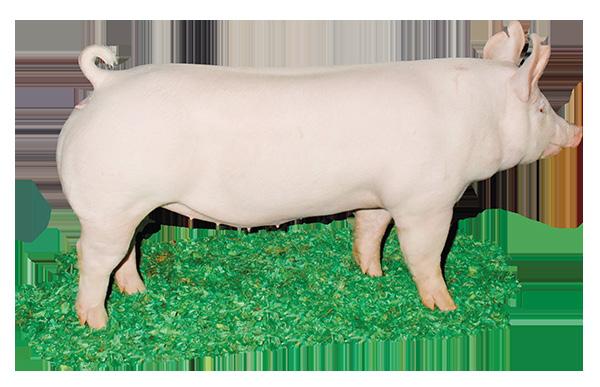
Yorkshires are very muscular and have a high proportion of lean meat and low back fat. They are white and have erect ears. Yorkshires are the most recorded breed in the U.S. They are known for being a durable, high-performance breed with longevity and carcass merit.
National Swine Registry, NSR
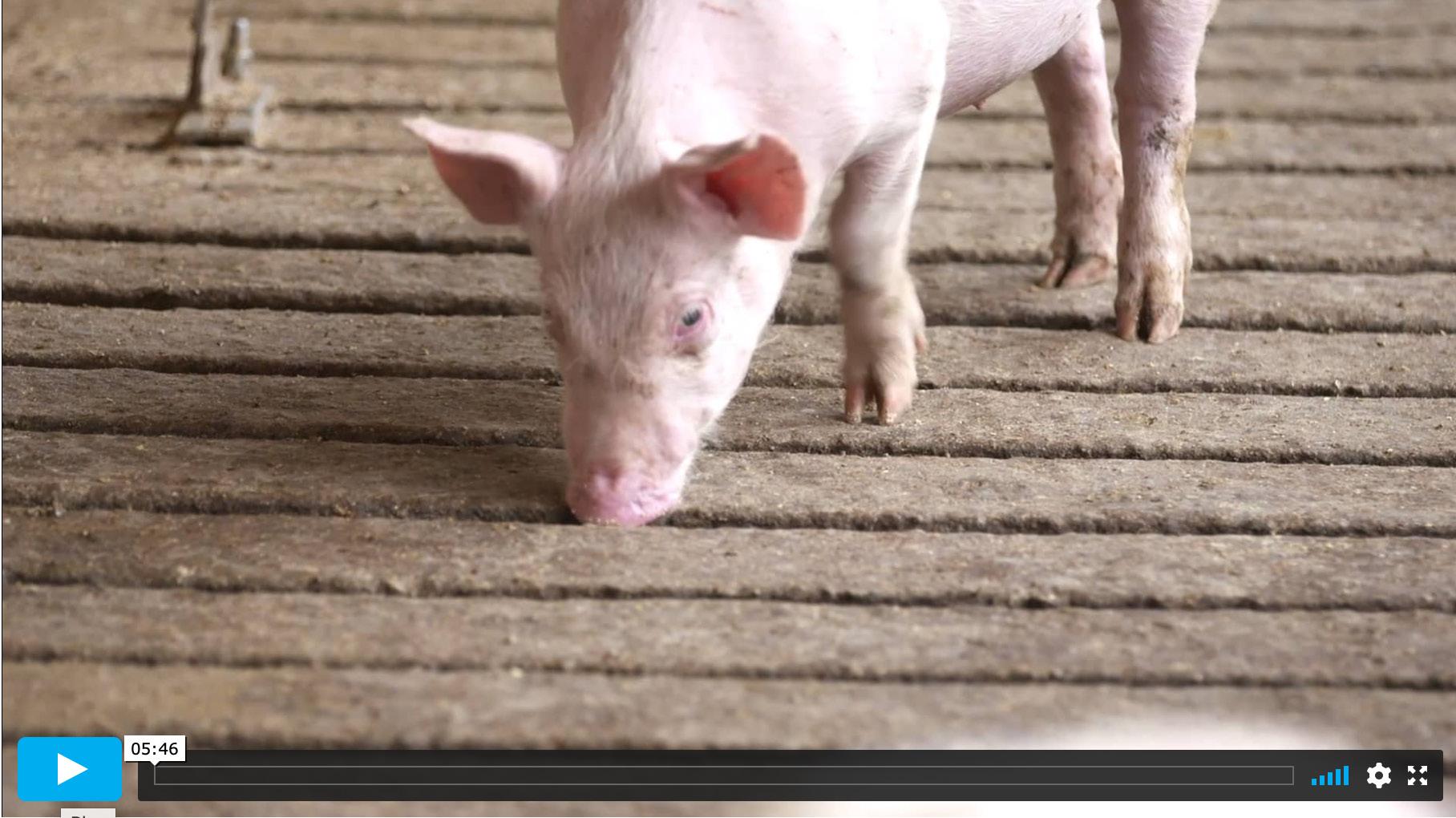
Precision equipment, coupled with genetic rating systems, allows breeders to accelerate genetic progress by assigning numerical values called Expected Progeny Differences (EPDs) to economically evaluate important genetic traits.
References
Many breeders use techniques like artificial insemination, segregated early weaning, all-in/all-out pig flow, separate-sex feeding and multisite production — protocols that enhance genetic progress.
www.ers.usda.gov/topics/animal-products/hogs-pork/sector-at-a-glance/ www.uslge.org
As a consequence of superior herd health, many purebred breeders use little, if any, antibiotics in their herds. When you invest in U.S. genetics, you’re ensuring top-rate health status for your operation.
References: USLGE.org
Goats are divided into three categories, dairy, meat and fiber. Each category has several breeds that boast specific characteristics. Those varying characteristics come into consideration when choosing a specific breed for a specific climate.
2.66 MILLION HEAD
All goats and kids inventory

In the dairy goat family, the American Dairy Goat Association is a great source of information about the dairy goat industry and offers tips for the export and import of U.S. breeding stock and genetics.
While Saanen have the richest milk and are the most popular breed for commercial goat dairies, they can be difficult to breed by artificial insemination (AI). Milk richness is based on a ratio of milk volume to fat and protein content.
5.20 MILLION HEAD
All sheep and lambs inventory
Other breeds of dairy goats include Alpine, LaMancha, Nubian, Oberhasli, Sable, Toggenburg and Nigerian Dwarf. The Nigerian Dwarf, while the smallest breed and lowest in milk production, produces the highest fat and protein content of all the breeds.
Source: USDA National Agricultural Statistics Service (NASS), 2020


The meat goat family includes Spanish, Boer, Kiko, Savannah and Myotonic (fainting goats) breeds. Specific characteristics of the Myotonic make it a good choice as a terminal sire for meat goats. The stress-blocking gene improves the quality of the meat. The Spanish breed works well in hot weather, and Kiko is suited to colder climates. Boer works in both hot and moderately cold weather.
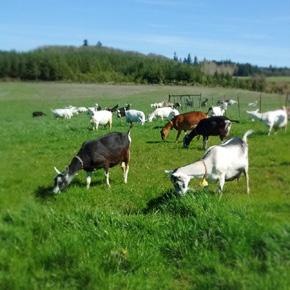
The American Dairy Goat Association posts registrations by breed and production averages on its website https://adga.org
References http://adga.org/knowledgebase/breed-averages/ https://adga.org/annual-report/ https://adga.org https://adga.org/goat-export-marketing/
A third, but smaller, category is fiber goats
The Angora has a small, but high-quality, population in the U.S. The strong elastic fiber of Angora coats creates mohair, which differs from wool primarily in its smoothness and luster.

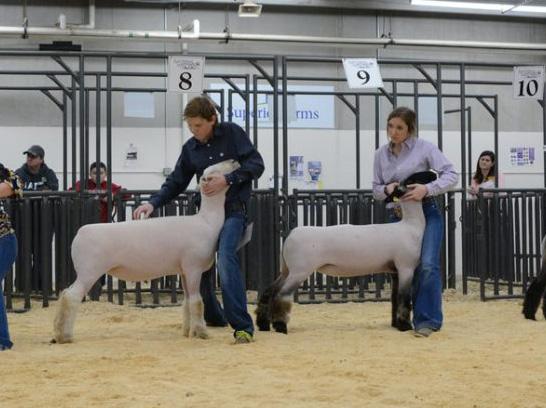
Sheep are raised in the United States for both meat and wool. The number of sheep in the United Stated has remained relatively steady the past five years. U.S. Department of Agriculture (USDA) reported 5.2 million sheep in the U.S. in 2020, with 101,000 operations in the country reported in the 2017 Census of Agriculture. More than two-thirds of U.S. sheep operations are located in the Southern Plains, Mountain and Pacific regions (USDA ERS, 2020).
Growth has occurred in the hair-sheep sector, which include Katahdin, Dorper, and Texel breeds. These sheep easily adapt to warmer, more humid conditions of the southern United


States and do not require shearing, unlike other breeds. This factor allows the U.S. to provide sheep suitable for all types of climates.
Wool breeds, such as the popular Border Leicesters, have seen sharp growth as well. With the onset of the COVID-19 pandemic, at-home spinning, weaving, and crafting has accelerated, causing a greater demand for such wool.
In addition, mainstream meat breeds are improving their product, and demand for lamb is increasing sharply through farmers markets and direct marketing. The U.S. sheep industry has many breeders who offer these breeds of sheep.
Dairy sheep are available in very small numbers in the United States.


The United States has set the standard for breeding technology through artificial insemination (AI) and embryo transfer (ET).
Importing countries set the genetic merit criteria and quality standards for livestock semen and embryos.
These standards and criteria vary by country and location.
The U.S. exports a variety of livestock genetics including bovine (cattle), porcine (pigs), ovine (sheep), caprine (goats), and equine (horses). Products that are internationally traded are tracked using Harmonized System (HS) Codes.
The Animal and Plant Health Inspection Service (APHIS) of the U.S. Department of Agriculture (USDA) regulates the exportation of live animals and animal germplasm (semen and embryos). According to USDA, bovine semen represents the largest U.S. export of livestock genetics (Foreign Agricultural Service, 2008).
For cattle, using frozen semen from superior U.S. sires in the breeding herd is a cost-effective way to improve herd genetics. AI in U.S. beef and dairy herds has been a common practice for decades and is a primary contributor to genetic progress in both industries.
A vast majority of U.S. dairy cows are bred by AI, and many seedstock beef herds use AI to accelerate herd improvement and productivity. Conception rates have improved with technological advancements, and reproductive management strategies like heat detection and synchronization have made AI a practical and reliable breeding tool.
Check with your local authority to understand the standards for your country and to ensure that imported U.S. semen and embryos meet local requirements.
The same can be said for AI use in the swine industry. By the early 1990s, the rapid adoption of AI helped to revolutionize a changing industry with fewer, larger commercial swine operations.
Collection techniques and heat detection have advanced, in similar fashion to the cattle industry, offering U.S. producers the opportunity to make significant genetic improvements across large numbers of pigs. Today, AI is used on the vast majority of all sows, with more than 200 boar studs dedicated to producing only the best swine genetics.
AI is also used frequently in equine operations across the U.S., although natural breeding, or live cover, is still common practice. In fact, live cover is required in order for foals to be registered as Thoroughbreds.
For sheep and goats, AI has made great advancements in many parts of the world, and the U.S. is no exception. AI with fresh or frozen semen has seen increased adoption – particularly in dairy goats – in order to make genetic strides while decreasing generation intervals.
Competition is exceptionally high among U.S. AI companies and breeders of U.S. seedstock of all species. This ensures intense selection pressure and exceptional attention to genomic and phenotypic data available for each individual animal.
Only the highest quality genetics from farms and ranches across the U.S. are chosen for AI purposes. For example, according to U.S. Livestock Genetics Export, Inc. (USLGE), only one in 10 progeny-tested dairy bulls enter active AI service. (See Chapter 2 for a list of USLGE members who provide top-quality germplasm to importers.)
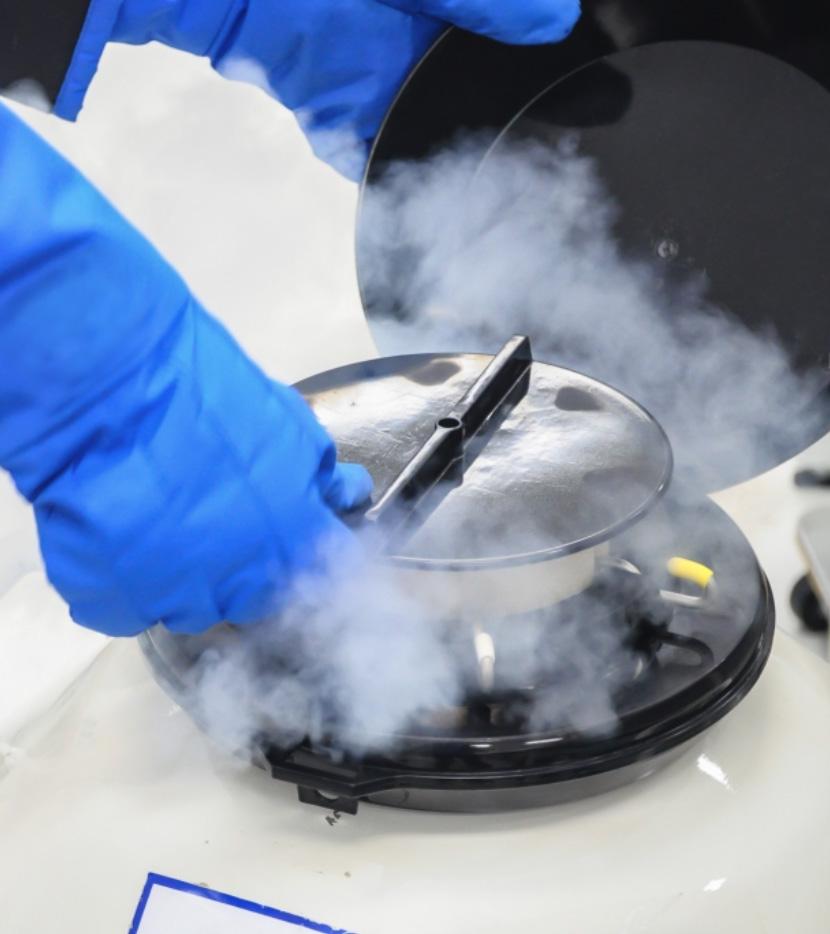
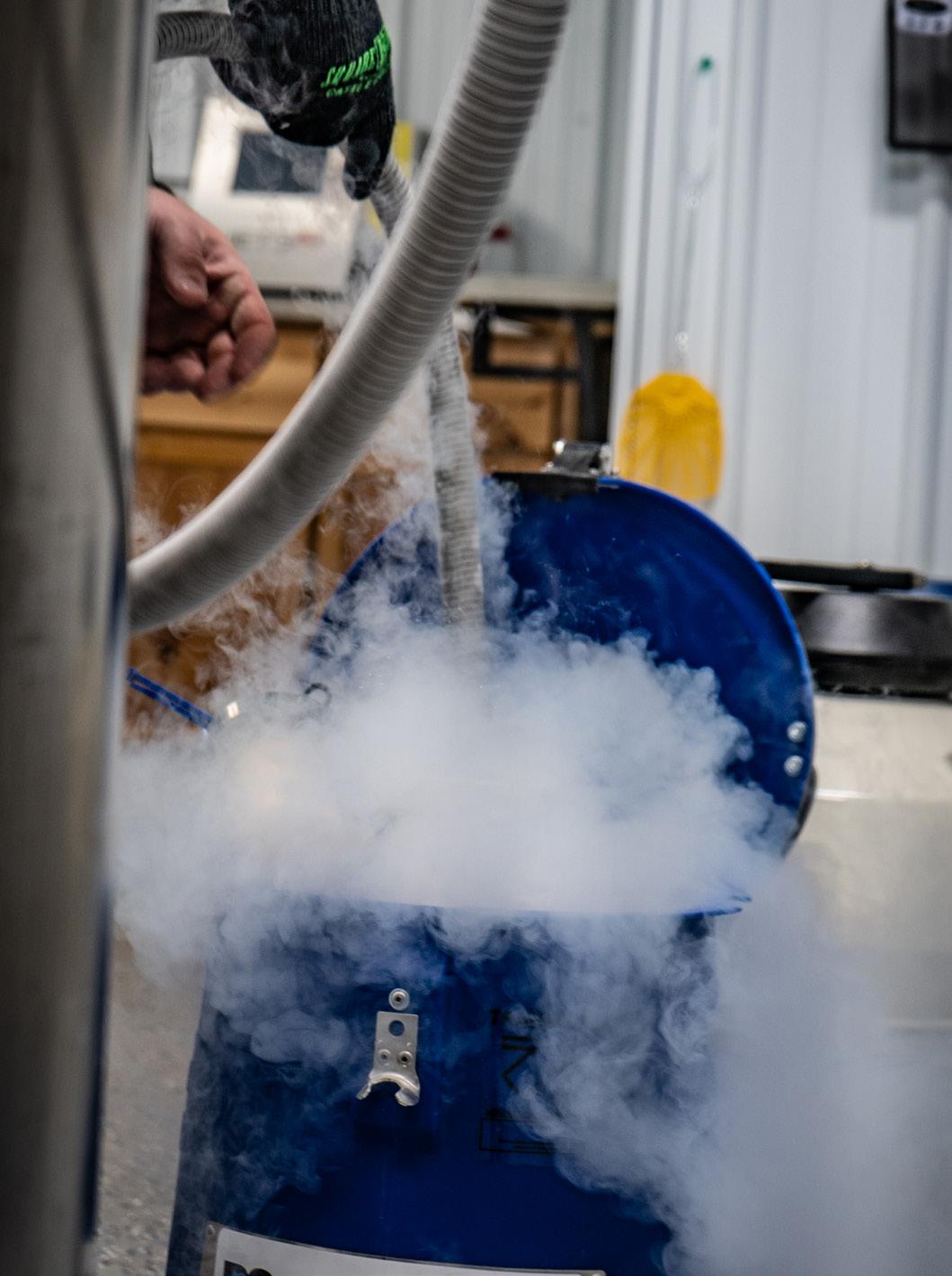
U.S. livestock semen is safely stored in plastic straws and secured in liquid nitrogen tanks for efficient transport. This is especially convenient for importers.
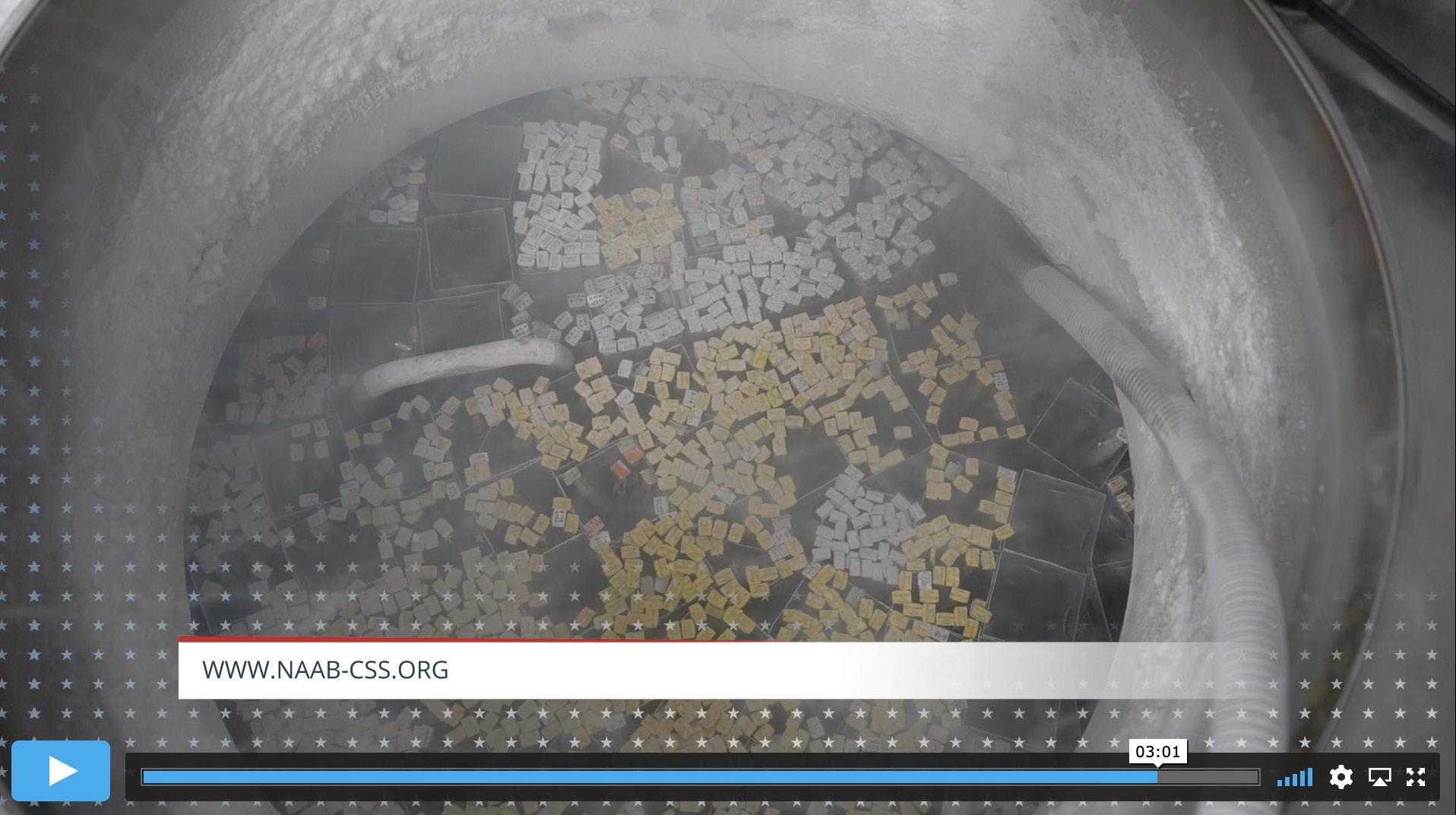
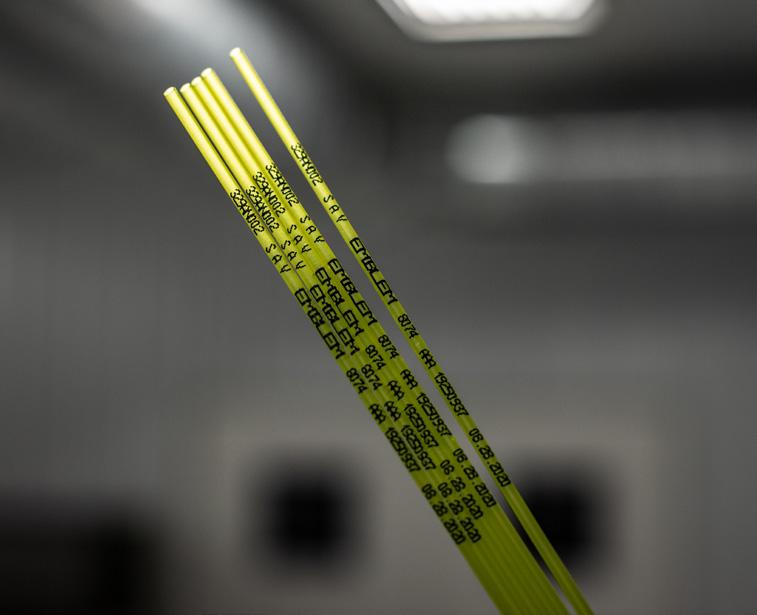
Each “cane” holds 20 straws and identifies:
• Full registered name or short name of the animal
• Registration number
• Stud code
• Breed code
• Location code
• Lot code
• And more
Know how to read a U.S. semen straw and make sure it’s certified. See Chapter 5.
The National Association of Animal Breeders (NAAB), a member of USLGE, and its subsidiary Certified Semen Services (CSS) help to ensure quality cattle semen health and identification for domestic and international users and mark each straw with important identification information. (See Chapter 5 to learn more.)
While not as prevalent as AI, embryo transfer (ET) has become a widely used practice among U.S. cattle breeders; the use of superovulation and in vitro fertilization shortens the generation interval and accelerates genetic progress.
ET is also used, but with less frequency, in other U.S. species such as horses,sheep and goats. Embryo collection and transfer in pigs is not yet done commercially or as intensively as in ruminants ( Merck Veterinary Manual, 2014).
Embryo transfer in the equine sector has been primarily used to obtain offspring from mares with restricted reproductive potential or from performance mares that must remain nonpregnant for competition purposes. With increased acceptance of ET foals by breed registries, ET is seeing increased use among equine breeders (Merck Veterinary Manual, 2014).
Genetics from males and females are available through frozen embryos and can be easily shipped anywhere in the world. Using this technique, importers can conveniently add offspring from top U.S. matings to any herd.
The American Embryo Transfer Association (AETA), a USLGE member, is recognized in the U.S. as the primary resource for embryo transfer. The organization is committed to excellence and maintains high standards of quality in its certification of ET practitioners, who practice at locations across the country.
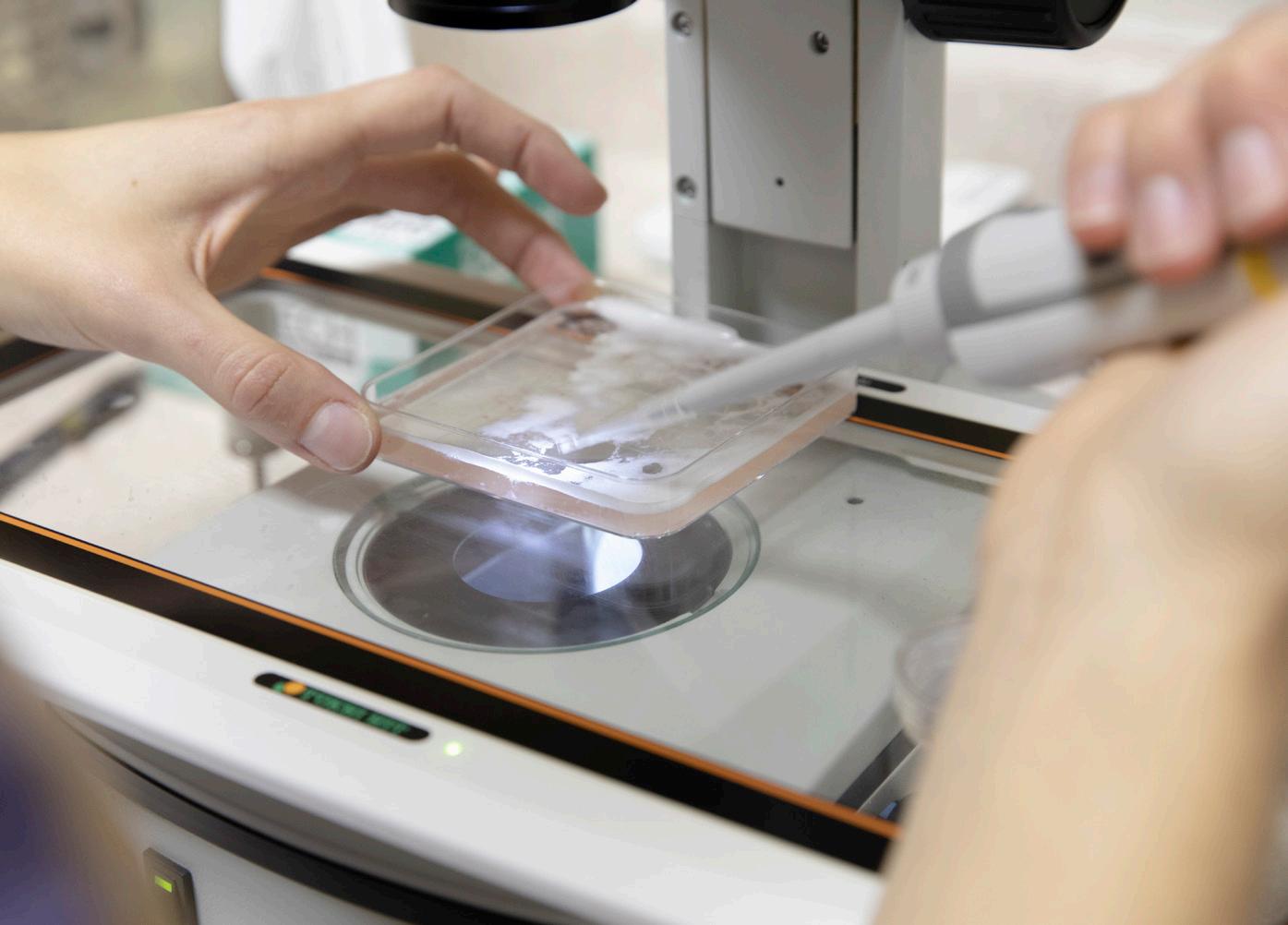
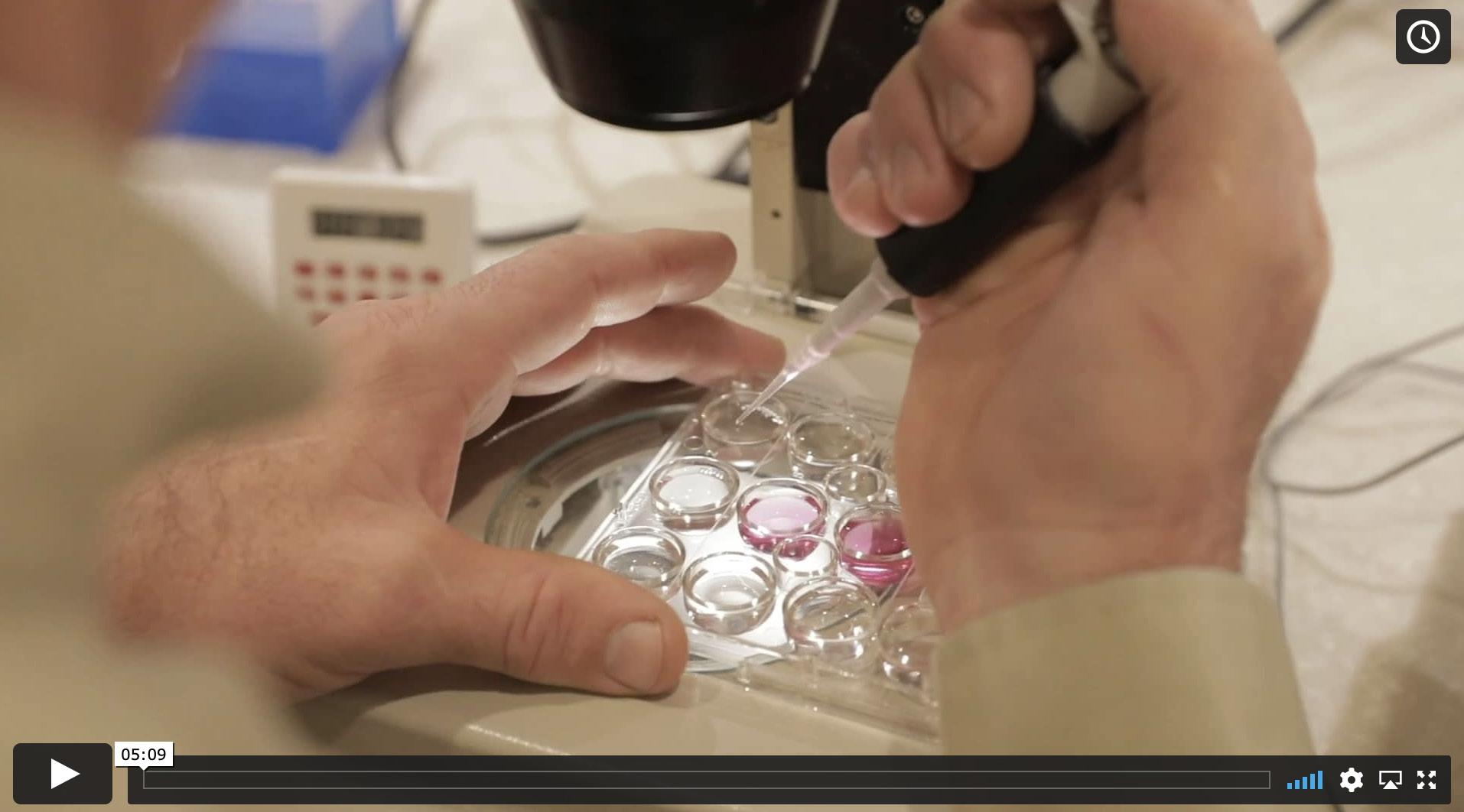
AETA also provides informational resources and updates regarding the latest ET technologies.
Embryos processed by AETA Certified Embryo Transfer Practitioners with International Embryo Technology Society (IETS) standards can be exported to most countries around the world.
In the U.S. cattle sector, AETA reports 17,585 dairy cattle embryos and 6,134 beef cattle embryos were exported in 2019. Oregon, Texas and Wisconsin, respectively, were the top states for 2019 ETs in the dairy cattle industry; Texas was the overwhelming
17,585 dairy cattle embryos
leader for ET work among beef cattle operations in 2019, followed by Nebraska.
More information about beef cattle, dairy cattle, sheep, goat and equine embryo transfer is available at: https://www.aeta.org/docs/2019_Stats.pdf
Meanwhile, markets for U.S. semen and embryos of other livestock species continue to expand. Many USLGE members are dedicated to sourcing U.S. germplasm for beef cattle, dairy cattle, goats and swine and facilitating international trade. (See Chapter 2 for a member listing.)
Source: AETA, 2019
6,134 beef cattle embryos
Overview of U.S. Livestock Genetics Export, Inc. (USLGE)
USLGE Member Listing
Livestock Exporters Association (LEA)
National Association of Animal Breeders (NAAB)
American Embryo Transfer Association (AETA)
Dr. Martin Sieber has spent his career in the livestock business and has traveled to more than 90 countries to facilitate the import and export of valuable livestock and their genetics.

As President and CEO of U.S. Livestock Genetics Export, Inc. (USLGE), Sieber says the organization is a one-stop shop for those interested in the importation of U.S. cattle (beef and dairy), equine, swine, and small ruminants as well as their germplasm.
“The advantage of USLGE is that international importers can get all the information they need for many different species,” he says. “As an interested buyer, you do not have to go to different organizations to get different information. You can get it right through us.”
USLGE, a U.S.-based nonprofit organization, is comprised of many different members representing various livestock breeds in all sectors of the business.
“USLGE provides consultation and support to ensure our U.S. genetics are working properly. We also provide follow-up and after-sale services,” Sieber explains.
“Let’s say a prospective international buyer contacts us seeking cattle that thrive in hot environments. We send this request to all of our members who are exporting cattle. If they have the right kind of animals available and are able to fulfill the health and other standards that are required, we serve as the middle man,” Sieber says. “We make sure the trade keeps flowing, all the while working with the Foreign Agricultural Service of USDA (U.S. Department of Agriculture.)”
“In our role, we are opening doors.”
U.S. Livestock Genetics Export, Inc. (USLGE) is a nonprofit, nationwide trade association that brings together a broad base of United States livestock organizations. USLGE represents the international marketing interests of dairy, beef, swine, equine and small ruminant (sheep and goats) breeding industries. Members also include embryo and semen industries, the livestock export sector, and State Departments of Agriculture.
USLGE members work to match international producers and importers with U.S. sources for genetics with superior credentials. The combined resources of USLGE members include most major species and breeds — a network that is unmatched by any other single organization. Because of this unique broad-based team and extensive connections, USLGE offers more sources for superior performanceoriented genetics than any other group in the world. USLGE works as a one-stop center to make the genetic selection process easier, more efficient and more productive.
The main goal of USLGE is to export superior U.S. livestock genetics. However, they also provide technology and services to support the investment of purchasing and importing U.S. livestock or germplasm. Through the organization’s members and partners, USLGE can direct interested importers to the breed association, export company, or government agency that offers the technology and services needed to be successful in any country.
A full list of USLGE members is available at USLGE.org, or contact us for more information.
AMERICAN ANGUS ASSOCIATION
3201 Frederick Ave. Saint Joseph, MO 64506 www.angus.org
Contact: Jerry Cassady jcassady@angus.org 816-383-5196 • 816-233-9703 – fax
AMERICAN BRAHMAN BREEDERS ASSOCIATION
1920 W Villa Maria Rd. #302 Bryan, TX 77807 https://brahman.org
Contact: Dr. Joe W. Mask jwmask@brahman.org 979-485-5528 • 979-485-2281 – fax
AMERICAN EMBRYO TRANSFER ASSOCIATION
1800 South Oak Street, Suite 100 Champaign, IL 61820 www.aeta.org
Contact: Morgan Montgomery morganm@assochq.org 217-398-2217 • 217-398-4119 – fax
AMERICAN JERSEY CATTLE ASSOCIATION
6486 East Main Street Reynoldsburg, OH 43068 www.usjersey.com

Contact: Drew Duncan dduncan@usjersey.com 614-861-3636 • 614-861-8040 – fax
AMERICAN MILKING SHORTHORN SOCIETY
50 Wyatt Rd. Middletown, RI 02842 www.milkingshorthorn.com
Contact: Kylie Preisinger luvkows@hotmail.com 765-427-6964 • 608-365-6644
AMERICAN MINIATURE HORSE ASSOCIATION
5601 South Interstate 35W Alvarado, TX 76009 http://www.amha.org
Contact: Wayne Hipsley hipsleyandassocs@aol.com 817-783-5600 • 817-783-6403 – fax
AMERICAN PAINT HORSE ASSOCIATION
P.O. Box 961023 Fort Worth, TX 76161 http://apha.com

Contact: Irene Stamatelakys irene@apha.com 817-834-2742 • 817-834-3152 – fax
AMERICAN QUARTER HORSE ASSOCIATION
1600 Quarter Horse Dr. Amarillo, TX 79104 www.aqha.com
Contact: Sierra Kane skane@aqha.org 806-378-4366 • 806-349-6408 – fax
SIMMENTAL ASSOCIATION
1 Genetics Way Bozeman, MT 59718 http://simmental.org
Contact: Luke Bowman lbowman@simmgene.com 406-587-4531 • 406-587-9301 – fax
AMERICAN WAGYU ASSOCIATION
P.O. Box 1115 Post Falls, ID 83877 https://wagyu.org
Contact: Robert Williams, PhD robert.williams@wagyu.org 208-262-8100
AMERICAN-INTERNATIONAL CHAROLAIS ASSOCIATION
11700 Northwest Plaza Circle Kansas City, MO 64153 http://charolaisusa.com
Contact: David Hobbs dhobbs@charolaisusa.com 816-464-5977 • 816-464-5759 – fax
ARABIAN HORSE ASSOCIATION
10805 East Bethany Drive Aurora, CO 80014 www.arabianhorses.org
Contact: Debbie Fuentes debbie.fuentes@arabianhorses.org 303-695-4518 • 303-696-4599 – fax
AYRSHIRE BREEDERS’ ASSOCIATION
1224 Alton Darby Creek Road, Suite B Columbus, OH 43228 www.usayrshire.com
Contact: Becky Payne bpayne@usayrshire.com 614-335-0020 • 614-335-0023 – fax
BEEFMASTER BREEDERS UNITED
118 West Bandera Road Boerne, TX 78006 www.beefmasters.org
Contact: Jon Garza jgarza@beefmasters.org 210-732-3132 • 210-732-7711 – fax
BROWN SWISS CATTLE BREEDERS’ ASSOCIATION
800 Pleasant Street Beloit, WI 53511 www.brownswissusa.com
Contact: Rebekah Bovee rbovee@brownswissusa.com 608-365-4474 • 608-365-5577 – fax
CLAYTON AGRI-MARKETING, INC. 3405 West Truman Boulevard, Suite 101 Jefferson City, MO 65109 https://claytonagri-mktg.com
Contact: Tony Clayton tony@claytonagri-mktg.com 573-659-8560 • 573-659-8548 – fax
CLYDESDALE BREEDERS OF THE USA 17346 Kelley Road Pecatonica, IL 61063 www.clydesusa.com
Contact: Kayle Grott kayle@worldofdrafthorsenetwork.com 815-247-8780 • 815-247-8337 – fax
DBL D BAR BEEFMASTER RANCH 8986 Hwy 109 Industry, TX 78944 www.dbldbar.com
Contact: M. Doyle Sanders dsanders@industryinet.com 979-357-2232
HOLSTEIN ASSOCIATION USA
1 Holstein Place Brattleboro, VT 05301 www.holsteinusa.com
Contact: Jodi Hoynoski jhoynoski@holstein.com 800-952-5200 ext. 4261 715-758-6198 – fax
IDAHO STATE DEPARTMENT OF AGRICULTURE
2270 Old Penitentiary Road
P.O. Box 790, Boise, ID 83712 https://agri.idaho.gov
Contact: Laura Johnson laura.johnson@isda.idaho.gov 208-332-8533 • 208-334-2879 – fax
ILLINOIS DEPARTMENT OF AGRICULTURE
P.O. Box 19281 801 East Sangamon Avenue Springfield, IL 62794 www2.illinois.gov/sites/agr
Contact: Bobby Dowson bobby.dowson@illinois.gov 217-782-4755 • 217-524-5960 – fax
INTERNATIONAL BRANGUS BREEDERS ASSOCIATION
P.O. Box 809 Adkins, TX 78101 https://gobrangus.com
Contact: Macee Prause mprause@gobrangus.com 210-696-8231 • 210-696-8718
KANSAS DEPARTMENT OF AGRICULTURE
1320 Research Park Drive Manhattan, KS 66502 www.agriculture.ks.gov
Contact: Suzanne Ryan-Numrich Suzanne.Numrich@ks.gov 785-564-6704 • 785-296-3376 – fax
KENTUCKY DEPARTMENT OF AGRICULTURE
105 Corporate Drive Frankfort, KY 40601 https://kyagr.com
Contact: Tim Hughes timd.hughes@ky.gov 502-782-9265 • 502-573-0046 – fax
KENTUCKY THOROUGHBRED OWNERS & BREEDERS
4079 Iron Works Parkway Lexington, KY 40511 www.kentuckybred.org
Contact: Chip McGaughey cmcgaughey@keeneland.com 859-288-4166 • 859-233-2257 – fax
LIVESTOCK EXPORTERS ASSOCIATION OF THE USA 4610 North Kenton Avenue Chicago, IL 60630 https://livestockexportusa.com

Contact: Richard Paullin rpaullin@livestockexportusa.com 773-725-1106 • 773-725-2294 – fax
MARYLAND DEPARTMENT OF AGRICULTURE
50 Harry S. Truman Parkway Annapolis, MD 21401 https://mda.maryland.gov
Contact: Theresa Brophy brophyt@maryland.gov 410-841-5781 • 410-841-5987 – fax
MISSOURI DEPARTMENT OF AGRICULTURE
P.O. Box 630, 1616 Missouri Boulevard Jefferson City, MO 65102 https://agriculture.mo.gov/
Contact: Kurt Olsen kurt.olsen@mda.mo.gov 573-291-5704 • 573-751-2868 – fax
AGRICULTURE
302 North Roberts Helena, MT 59601 https://agr.mt.gov/
Contact: Marty Earnheart mearnheart@mt.gov 406-444-9126 • 406-444-9442 – fax
NATIONAL ASSOCIATION OF ANIMAL BREEDERS
8413 Excelsior Drive, Suite 140 Madison, WI 53717 www.naab-css.org
Contact: Jay Weiker jweiker@naab-css.org 608-827-0277 • 608-827-1535 – fax
NATIONAL SWINE REGISTRY
2639 Yeager Road West Lafayette, IN 47906 https://nationalswine.com
Contact: Doug Newcom newcom@nationalswine.com 765-463-3594 • 765-427-7741 – fax
NEBRASKA DEPARTMENT OF AGRICULTURE
301 Centennial Mall South P.O. Box 94947, Lincoln, NE 68509 www.nda.nebraska.gov
Contact: Jordan Schlake jordan.schlake@nebraska.gov 402-471-2341 • 402-471-6876 – fax
NEW MEXICO DEPARTMENT OF AGRICULTURE
MSC 3189, New Mexico State University P.O. Box 30005, Las Cruces, NM 88003 www.nmda.nmsu.edu
Contact: Juan Sanchez jsanchez@nmda.nmsu.edu 575-646-7090 • 575-646-3303 – fax
INTERNATIONAL
P.O. Box 1257 Kingsville, TX 78364 www.santagertrudis.com
Contact: Webb Fields wfields@santagertrudis.com 361-592-9357 • 361-592-8572 – fax
SENEPOL CATTLE BREEDERS ASSOCIATION
P.O. Box 1131 Wilmington, NC 28402 www.senepolcattle.com
Contact: Mark Sanders president@senepolcattle.com 910-444-0234 • 704-919-5871
SIMPLOT ANIMAL SCIENCES
2405 Brogan Road Emmett, ID 83617 www.simplot.com/animalsciences
Contact: Jeremy Howard jeremy.howard@simplot.com 866-506-9488
STGENETICS
22575 State Highway 6 South Navasota, TX 77868 www.stgen.com
Contact: Jim Hiney jhiney@sexingtechnologies.com 936-870-3960 • 210-696-8718
DEPARTMENT OF AGRICULTURE
P.O. Box 40627 Nashville, TN 37204 www.tn.gov/agriculture
Contact: Wendy L. Sneed wendy.sneed@tn.gov 615-837-5309
TENNESSEE WALKING HORSE BREEDERS’ & EXHIBITORS’ ASSOCIATION
P.O. Box 286 Lewisburg, TN 37091 www.twhbea.com
Contact: Bradley Woodruff aztlanfarms@yahoo.com 931-359-0581
TEXAS DEPARTMENT OF AGRICULTURE
1700 Congress Ave. Austin, TX 78701 http://texasagriculture.gov
Contact: Jean Lonie Jean.Lonie@TexasAgriculture.gov 512-463-6098
TRANS OVA GENETICS
2938 380th Street Sioux Center, IA 51250 www.transova.com

Contact: PJ Budler mark.allan@transova.com 800-999-3586 • 712-722-3577 – fax
VIRGINIA DEPARTMENT OF AGRICULTURE & CONSUMER SERVICES
P.O. Box 1163 Richmond, VA 23218 www.vdacs.virginia.gov
Contact: Keith Long PJ.Budler@transova.com 804-371-8990 • 804-225-4434 – fax
WISCONSIN DEPARTMENT OF AGRICULTURE, TRADE & CONSUMER PROTECTION
2811 Agriculture Drive
P.O. Box 8911, Madison, WI 53718 https://datcp.wi.gov
Contact: Jennifer Lu Jennifer.Lu@wisconsin.gov 608-347-1852 • 608-224-5111
Dr. Greg Schueller of Sunshine Genetics has been involved in the embryo transfer (ET) and in vitro fertilization (IVF) business for almost two decades. His work is his passion, and he enjoys witnessing the ideal calf being born.
“I enjoy watching the full circle happen. Whether working with donors, creating offspring or having our clients see success, to see those resulting calves being made means we can celebrate,” Schueller says.

Schueller is the IVF program manager of Sunshine Genetics in southeast Wisconsin, a world-renowned provider of embryo technology for elite dairy cattle. Currently, the company houses about 200 animals, collecting oocytes from donors daily, and shipping frozen embryos to cattle breeders throughout the world. The export of valuable embryos would not be possible without U.S. Livestock Genetics Export, Inc. (USLGE), Schueller says.
Embryos gathered from U.S. livestock by AETA-certified practitioners offer a safe, reliable and efficient way of acquiring top-quality genetics.
“You’ll import an embryo and have the result of an offspring within a year’s time,” Schueller says.
For years, Schueller and other veterinarians at Sunshine Genetics have worked closely with USLGE. The relationship has allowed the business to tap into new markets and expand its customer base.
“If you’re a producer looking for genetics, whether that be live animals or embryos, then USLGE is a great avenue,” he says. “If you’re a buyer and you want a guarantee that you’ll get what you pay for, USLGE will do an awesome job of making sure that will happen. They’re keeping everyone accountable.”
Founded in 1983, the Livestock Exporters Association of the USA (LEA), a member of USLGE, is a non-profit organization created to represent the livestock industry of the United States. LEA members across the United States export animals from nearly every state to scores of countries.
The United States is globally recognized for the ability to produce high volumes of high-quality beef and dairy cattle, swine, sheep, goats, horses and other livestock. LEA members and partners make proven purebred genetics and capable production animals available to the entire world.
Important considerations for importers:
If you are planning an import shipment, there are a number of things to consider in your project planning:
• Farm price
• Inland freight expense
• Assembly, quarantine, health tests, documentation
• Insurance
• Freight – ocean/air
Other considerations for importers include:
Many LEA members support their international customers in developing their breeding programs by exporting high-quality semen and embryos, which helps continue improvement of genetic programs when imports of live animals are not an option due to the size, logistics or timing of a shipment. This service can assist the importer by making available the very best genetics from the United States to address specific genetic traits.

Most countries require livestock export certificates for live animals, animal product, semen and embryos. LEA has made arrangements with industry partners to provide a certificate that meets those needs. For further information please visit https://livestockexportusa.com/export-certifications/. (See Fig. 1 for an example dairy livestock certificate.)
Fig. 1: Livestock Export Certificate Example, Dairy
Eartag: Date of Birth: Eartag: Breed:
Official ID: 985152006434123 21110 USA
USDA issue date: PTA Milk (lbs): PTA Fat (lbs): PTA Pro (lbs): Sire ID: 12/6/2010 1234 31 33 000133067361

Service Sire
12/6/2010 93 205 199 ID Tag: 34123
Dam ID: DRY08757
USDA issue date: MF reliability: Fluid Merit $Amt: Net Merit $Amt:
Service Sire NAAB: 29H11563 Sire NAAB: 203H713
Dam/Farm/State Avg Production: USA Average Production: Service Sire ID: Date Bred:
6/12/2010 USA000133899281 22887833700
USA Paternal Gr Sire ID: 000060869180
Paternal Gr Sire NAAB: 29H11014
Paternal Gr Dam Name: 3456 USA
Paternal Gr Dam ID: 82ANT8594
Lactation 3.73.0
Dam/Farm/State Avg Production: MilkFatProtein 21110
USA Maternal Gr Sire ID: 000060470925
Maternal Gr Sire NAAB: 29H11014
Maternal Gr Dam Name: QRY02279
Maternal Gr Dam ID: 985152006438519 Lactation
Owner /Breeder: Exporter:
for Dairy Breeding Female Certificate Number: 61257 Travis Beatty Independence, IA
Dam/Farm/State Avg Production: MilkFatProtein 21110
Gribovsky Exporters 100 Someplace Rd Somewhere, MN 55413
IMPORTANT LEGAL INFORMATION - PLEASE READ: AgSource Cooperative Services (AgSource) is a certified affiliate and dairy records processing center of the United States Council on Dairy Cattle Breeding. This Certificate is provided for animals destined for export under the auspices of the Livestock Exporters Association of the USA (LEA). In preparing and/or issuing this Certificate, AgSource and LEA have relied solely and exclusively upon information provided by third parties without any verification thereof, and AgSource and LEA disclaim any obligation or duty to verify or confirm the accuracy or completeness of the information contained in the Certificate. THIS CERTIFICATE AND ALL INFORMATION CONTAINED HEREIN IS PROVIDED ON AN “AS IS” BASIS AND NEITHER AGSOURCE NOR LEA MAKE ANY WARRANTIES, REPRESENTATIONS OR GUARANTEES AS TO THE ACCURACY OR COMPLETENESS OF SUCH INFORMATION. AGSOURCE AND LEA HEREBY DISCLAIM ALL WARRANTIES REGARDING THIS CERTIFICATE AND THE INFORMATION CONTAINED HEREIN, WHETHER EXPRESS OR IMPLIED, INCLUDING ANY WARRANTIES OF PERFORMANCE, RELIABILITY, MERCHANTABILITY, OR FITNESS FOR A PARTICULAR PURPOSE. AGSOURCE AND LEA HEREBY ALSO DISCLAIM ANY AND ALL LIABILITY ARISING OUT OF OR RELATING TO THIS CERTIFICATE, THE INFORMATION SET FORTH HEREIN, OR ANY RELIANCE BY ANY THIRD PARTY UPON THIS CERTIFICATE OR ANY INFORMATION CONTAINED HEREIN. ANY PERSON RELYING UPON THIS CERTIFICATE IS ADVISED TO INDEPENDENTLY VERIFY THE ACCURACY AND COMPLETENESS OF THE INFORMATION SET FORTH IN THIS CERTIFICATE.
https://livestockexportusa.com/wp-content/uploads/2019/02/3-generation-dairy-cert.pdf
February 16, 2011
Many LEA members have relationships with highly rated insurance companies (including other LEA members) from around the world that can provide insurance coverage to importers. Insurance coverage protects the major risks of shipment. The length of the coverage can be for transit only or be extended to include: pre-shipment isolation period; post-shipment quarantine to 60 days; post-shipment farm coverage for up to 364 days after importation; some disease retests; or loss/abortion of fetus of bred animals.
• pre-shipment isolation period
• post-shipment quarantine to 60 days
• post-shipment farm coverage for up to 364 days after importation
• some disease retests
• loss/abortion of fetus of bred animals
With the economy growing and livestock markets expanding, the need for international and domestic livestock travel has increased. LEA members take the welfare of all animals very seriously, no matter how they are transported — by air, sea or land.
They developed a Livestock Welfare Audit Program in 2014 that members can take part in to assure the importer that their shipment has been exported in a humane manner that meets the highest standards of modern-day animal welfare.
LEA members are committed to making sure the process of importation meets the most stringent standards and has developed a Code of Practices that all exports should adhere to.
Code of Practices
International importers working with LEA members:
• Provide customers with sources for livestock of the highest quality meeting required health standards
• Promote a Code of Fair Practices for international marketing of live animals outlining responsibilities of buyers and sellers
• Assist with export financing by advising qualified customers of financial assistance available through various government programs
• Advise customers and members on insurance alternatives and shipping options
• Assist with order processing for faster, more efficient service
• Promote post-sale communication to ensure satisfied buyers and future sales

• Cooperate with Animal and Plant Health Inspection Service (APHIS)/Veterinary Services (VS) in developing import/export health and sanitary agreements with foreign countries; participate in import/export type seminars; provide industry input into resolving off-loading, quarantine and transit problems as the need arises, and other activities as agreed upon.
• Provide a forum to foster greater cooperation among competing firms when the common interest of all might be benefited
• Foster the growth of technology in our business by providing a forum for the exchange of new information
• Keep LEA members informed of items of mutual interest
• Eliminate unnecessary time, effort, and expense in making our products more competitive on the world market
Reference Livestock Exporters Association, https://livestockexportusa.com
The National Association of Animal Breeders (NAAB) is a non-profit organization established in 1946 and dedicated to uniting individuals and organizations engaged in the artificial insemination (AI) of cattle and other livestock. NAAB, a member of USLGE, and its subsidiary Certified Semen Services (CSS) set industry standards for semen and sire health and identification — and ensure importers of U.S. livestock and genetics can buy with confidence.
NAAB works with USDA to set and monitor quality standards, along with additional regulatory requirements that may be required at export.
The U.S. Department of Agriculture (USDA) Foreign Market Development and Market Access Programs provide funds to NAAB through U.S. Livestock Genetics Export, Inc. (USLGE) to develop international markets for bovine semen. NAAB also plays an active role in attempting to standardize semen import requirements of other countries.
NAAB’s members account for about 95 percent of the dairy cattle semen sales in the United States. These organizations, both private and farmerowned, are very competitive in the field. Under the NAAB umbrella, however, these organizations come together for the common good of the livestock industry to present a unified design for cattle improvement.
Certified Semen Services (CSS) is a wholly owned subsidiary of NAAB. Formed in 1976, CSS is an objective auditing service developed by AI industry leaders through NAAB. CSS provides industry selfregulation in the areas of semen and sire health and identification.
NAAB provides several genetic programs, including the Cross Reference Program, Calendar, the issuance of Stud Codes, the issuance of Marketing Codes and the NAAB Uniform Coding System for Identifying Semen.
NAAB conducts various marketing and promotion programs to expand the use of AI in dairy and beef herds of the U.S. The organization also offers an extensive array of other educational, informational and reference materials.
See Chapter 5 for how to read a semen straw and for more information, or visit www.naab-css.org.


AETA works closely with the U.S. Department of Agriculture Animal and Plant Health Inspection Service to qualify and meet specific protocols for export of U.S. bovine embryos to foreign markets.
The American Embryo Transfer Association (AETA) was formed to unite U.S. organizations and individuals involved in the embryo transfer (ET) industry. AETA helps to ensure the highest standards of quality for those interested in importing embryos of U.S. livestock. This affiliated federation operates under self-imposed standards of performance and conduct. Its purpose is to promote the mutual interests and ideals of AETA members, to protect the ET industry to the extent technically and ethically possible, to provide education on the capabilities of U.S. ET technologies and to encourage engagement within the industry.
The organization is dedicated to developing and maintaining the highest industry standards. Under the guidance of a self-governing Board of Directors and working committees, leadership is committed to protecting member integrity and camaraderie.


The AETA’s priority is to improve the quality of all ET practices. This objective is met by providing a direct link between research and field applications of the technology.
As the representative of organizations engaged in commercial ET practices, the AETA recognizes its responsibility to establish performance standards for the ET industry to enhance the perception of the industry and to ensure accuracy and completeness of all records pertaining to the parentage of the resulting offspring.
The AETA Certification Program, established in 1985, is a voluntary program and is not contingent upon membership in the AETA. The objective of the AETA Certification Program is to establish and maintain standards within the ET industry and to ensure the certified practitioner meet or exceeds these standards while performing procedures involved with ET practices.
To be eligible for certification a practitioner must hold either (1) a Doctor of Veterinary Medicine (DVM) or equivalent degree with a license to practice veterinary medicine in the U.S., or (2) a Ph.D. with emphasis in animal reproductive physiology. This individual must have passed the AETA Certification Exam. He/she must have the necessary equipment available, and the knowledge to properly collect, freeze and thaw embryos.
The AETA Certification Program works closely with the U.S. Department of Agriculture Animal and Plant Health Inspection Service (APHIS) to qualify and meet specific protocols for export of U.S. bovine embryos to foreign markets.
Visit www.aeta.org/certification.asp for updated certification guidelines, or contact the Cooperator Committee at aeta@assochq.org to learn more about import/export protocols or to attend AETA events.
For more information about the AETA, visit www.aeta.org
Livestock Shows and Events
USLGE Calendar Member Events
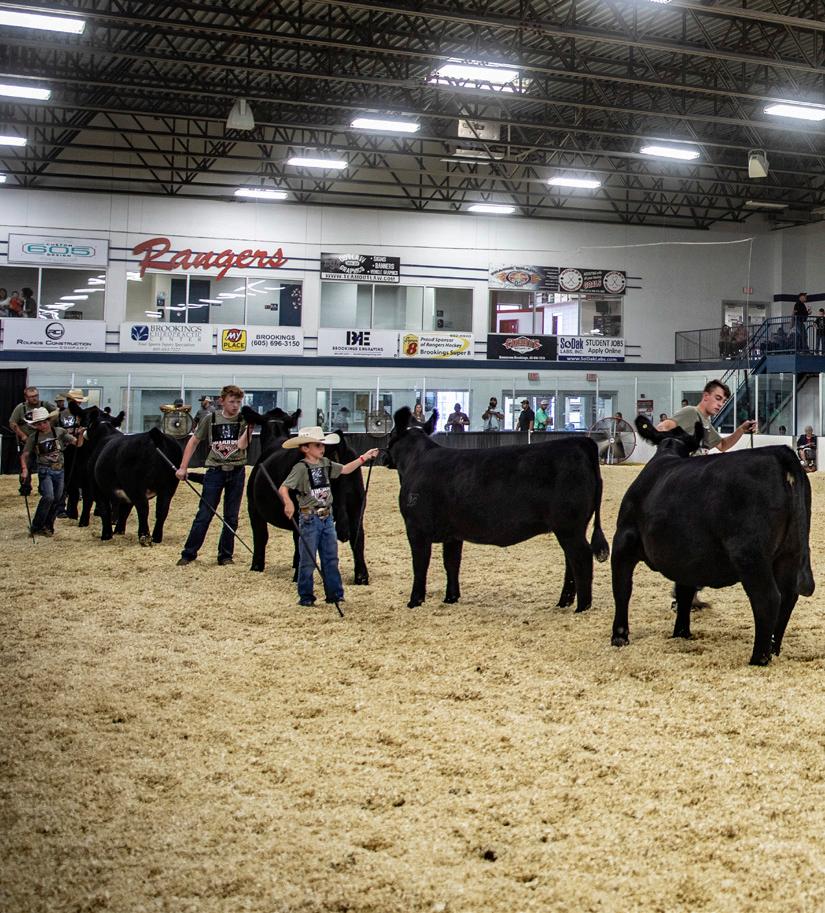
Oftentimes, the best opportunities to fully appreciate U.S. livestock and genetics is in person. U.S. Livestock Genetics Export, Inc. (USLGE) invites you to visit the United States — as time and safety allow — or to explore American animal agriculture virtually, where applicable.
Consider the many livestock-related shows, meetings and industry events, and take time to meet those who ensure U.S. livestock and genetics are of the highest quality.*
Cattleman’s Congress
Oklahoma City, OK
January 2-17, 2021 www.cattlemenscongress.com
Arizona National Phoenix, AZ
January 27-31, 2021 www.anls.org
World Ag Expo (online experience 2021) Tulare, CA
February 9-11, 2021 www.worldagexpo.com
American Society of Animal Science Annual Meeting and Trade Show
Louisville, KY
July 14-18 2021 www.asas.org/meetings
Beef FederationImprovementConference
Des Moines, IA
June 22-25, 2021 www.bifconference.com
National Association of Animal Breeders (NAAB) Annual Meeting, Virtual September 16, 2021 www.naab-css.org
American Royal Kansas City, MO
October 12-24, 2021 www.americanroyal.com
National Association of Animal Breeders (NAAB) Technical Conference on AI and Reproduction
October 27-29, 2021 www.naab-css.org
North American International Livestock Exposition (NAILE) Louisville, KY
November 2-18, 2021 www.livestockexpo.org
National Western Stock Show
Denver, CO
January 8-23, 2022 https://nationalwestern.com
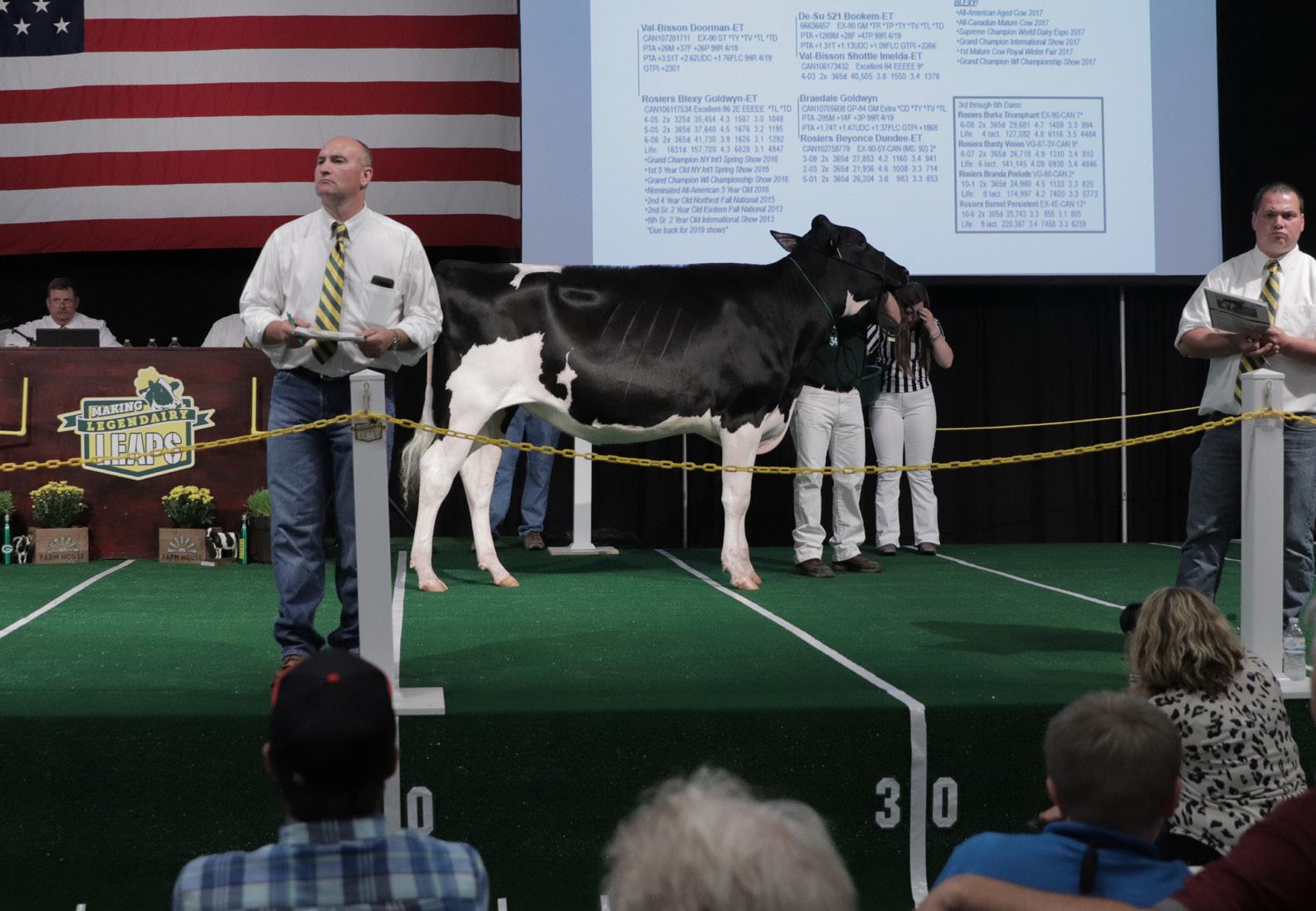
* Note: Event dates and attendance regulations are subject to change. Prospective attendees should confirm all pertinent details, including public and/or international guest access, with individual show and event entities listed.
Iowa Beef Expo
Des Moines, IA
February 14-21, 2021 www.iowabeefexpo.com
Cattle Industry Winter Reboot
Virtual Webinar hosted by National Cattleman’s Beef Association
February 23-24, 2021 www.convention.ncba.org
Chianina/Maine Anjou Junior National Heifer Show Chickasha, OK
June 19-24, 2021 www.chicattle.org
Charolais Junior National Show Perry, GA
June 20-25, 2021 www.charolaisusa.com
Shorthorn Junior National Show Louisville, KY
June 20-25, 2021 www.shorthorn.org/events/
Brahman Junior National Hattiesburg, MS
June 28-July 3, 2021 www.brahman.org
Angus Junior National Grand Island, NE
July 10-17, 2021 www.angus.org
Cattle Industry Convention and NCBA Trade Show Nashville, TN
August 10-12, 2021 www.convention.ncba.org
World Beef Expo
Milwaukee, WI
September 23-26, 2021 www.worldbeefexpo.com
Keystone International Livestock Expo Harrisburg, PA
October 1-10, 2021 www.keystoneinternational.pa.gov
2021 Angus Convention Fort Worth, TX
November 6-8, 2021 www.angusconvention.com
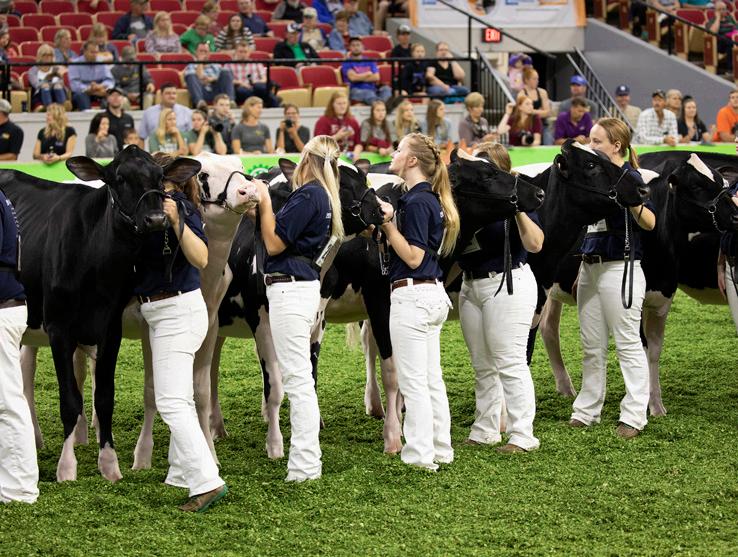
American Milking Shorthorn Society
Spring Selection Sale, online March 17-20 2021 www.milkingshorthorn.com
Kentucky Dairy National Show Louisville, KY
First week of April www.conventioncalendar.com
American Milking Shorthorn Society National Sale
Jefferson, WI
June 19, 2021 www.milkingshorthorn.com
Northwest National Western Washington Fair Puyallup, WA
August 12-21, 2021 www.nwwafair.com/events
Eastern National All-American Dairy Show Harrisburg, PA
September 18-22, 2021 www.allamericandairyshow.com
Northeast National Eastern States Exposition Springfield, IA
September 23, 2021 www.easternstatesexposition.com
World Dairy Expo Madison, WI
September 28- October 2 2021 www.worlddairyexpo.com
Southwest National Heart of America Expo Stillwater, OK
October 11-16, 2021 www.hoaexpo.org
All American Jersey Show & Sales Louisville, KY
November 6-8, 2021 www.usjerseyjournal.com
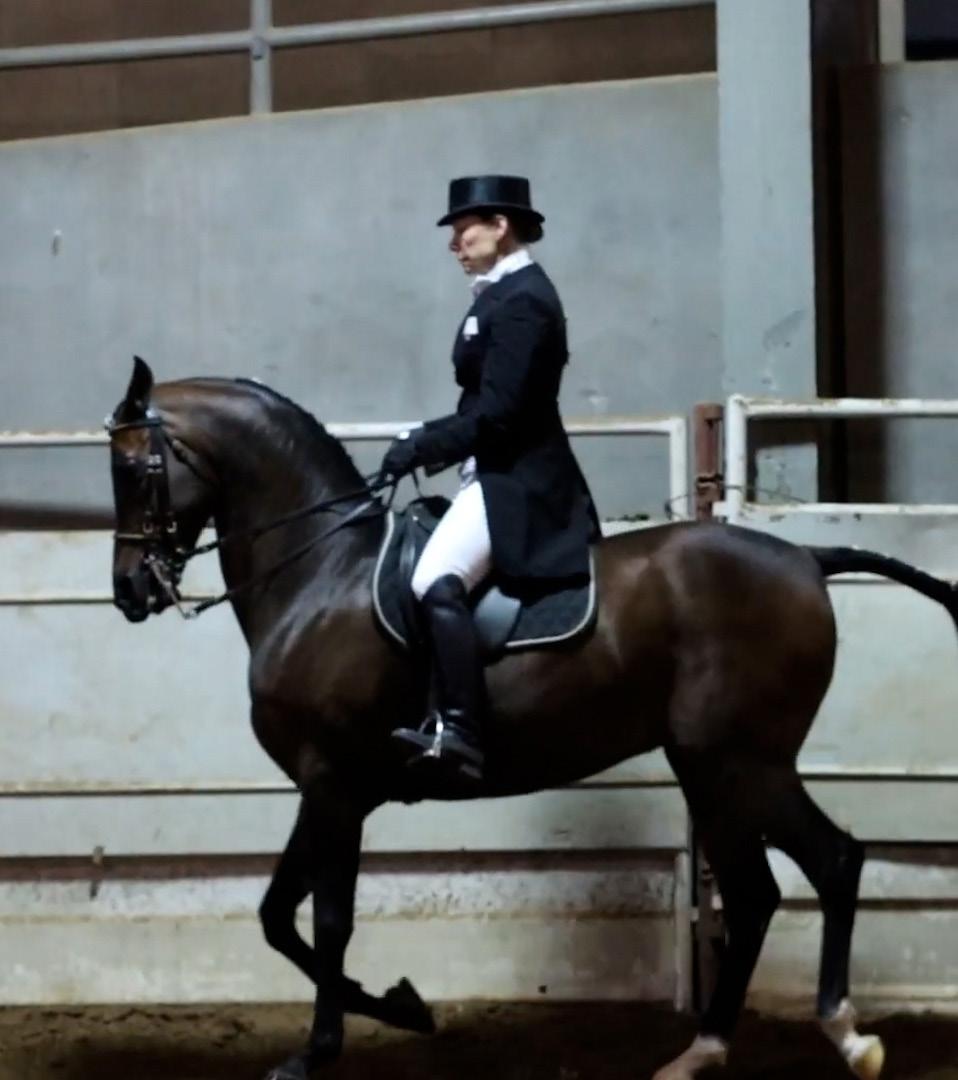
Scottsdale Arabian Horse Show
Scottsdale, AZ February 2021 www.scottsdaleshow.com
Arabian Breeders World Cup
Las Vegas, NV
April 2021 www.arabianbreedersworldcup.com
National Clydesdale Sale
Springfield, IL
April 22-24, 2021 www.clydesusa.com/events
Kentucky Oaks Louisville, KY
April 30, 2021 www.churchilldowns.com
Kentucky Derby Louisville, KY
May 1, 2021 www.churchilldowns.com
AQHA VRH World Show
Guthrie, OK
June 22-26, 2021 www.aqha.com/events
APHA World Show
Fort Worth, TX
June 25-July 11, 2021 www.apha.com
AQHYA World Show
Oklahoma City, OK
July 28-August 7, 2021 www.aqha.com/events
National Snaffle Bit Association World Show
Tulsa, OK
August 13-22, 2021 www.nsba.com
National Clydesdale Show
Des Moines, IA
August 19-22, 2021 www.clydesusa.com/events
AQHA Select World Show
Fort Worth, TX
August 30- September 4, 2021 www.aqha.com
American Miniature Horse Association World Championship Show
Fort Worth, TX
Sept. 24-Oct. 2, 2021 www.amha.org
Quarter Horse Congress Columbus, OH
September 28- October 24, 2021 www.quarterhorsecongress.com
U.S. Nationals (Arabian) Tulsa, OK October 22-30, 2021 www.arabianhorses.org
AQHA World Show
Oklahoma City, OK November 1-20, 2021 www.aqha.com/events
American Sheep Industry Association Convention Denver, CO January 27-31, 2021 www.10times.com
ABGA National Show Grand Island, NE June 2021 www.abga.org/
Midwest Stud Ram Show and Sale Sedalia, MO
June 14-19, 2021 www.midwestsale.com/schedule/
All American Junior Sheep Show Springfield, IL July 2-5, 2021 www.allamericanjuniorshow.com
19 MAR 3 JUN 13 JUL 4
Southeast Regional Perry, GA
January 19-23 2021 www.nationalswine.com
Southwest Regional Belton, TX March 3-6, 2021 www.nationalswine.com
The Exposition Show June 13-19, 2021 www.nationalswine.com
National Junior Summer Spectacular Louisville, KY
July 4-10, 2021 www.nationalswine.com
National Barrow Show Austin, MN September 12-14, 2021 www.nationalswine.com
BEEF
American Angus Association
American Brahman Breeders Association
American Simmental Association
American Wagyu Association
American International Charolais Association
Beefmaster Breeders United
International Brangus Breeders Association
Santa Gertrudis Breeders International
American Jersey Cattle Association
American Milking Shorthorn Society
Ayrshire Breeders’ Association
Brown Swiss Cattle Breeders’ Association
Holstein Association USA
EuroTier
Hannover, Germany
February 9-12, 2021 www.eurotier.com/en/
USDA Agriculture Outlook Forum February 18-19, 2021 www.usda.gov
VIV Asia
Bangkok, Thailand
March 10-12, 2021
https://vivasia.nl/
American Miniature Horse Association (International)
American Miniature Horse Association (Domestic)
American Paint Horse Association
American Quarter Horse Association
Arabian Horse Association
Clydesdales Breeders Association
Kentucky Thoroughbred Owners & Breeders
Tennessee Walking Horse Breeders’ & Exhibitors’ Association
GERMPLASM
American Embryo Transfer Association
SWINE
National Swine Registry
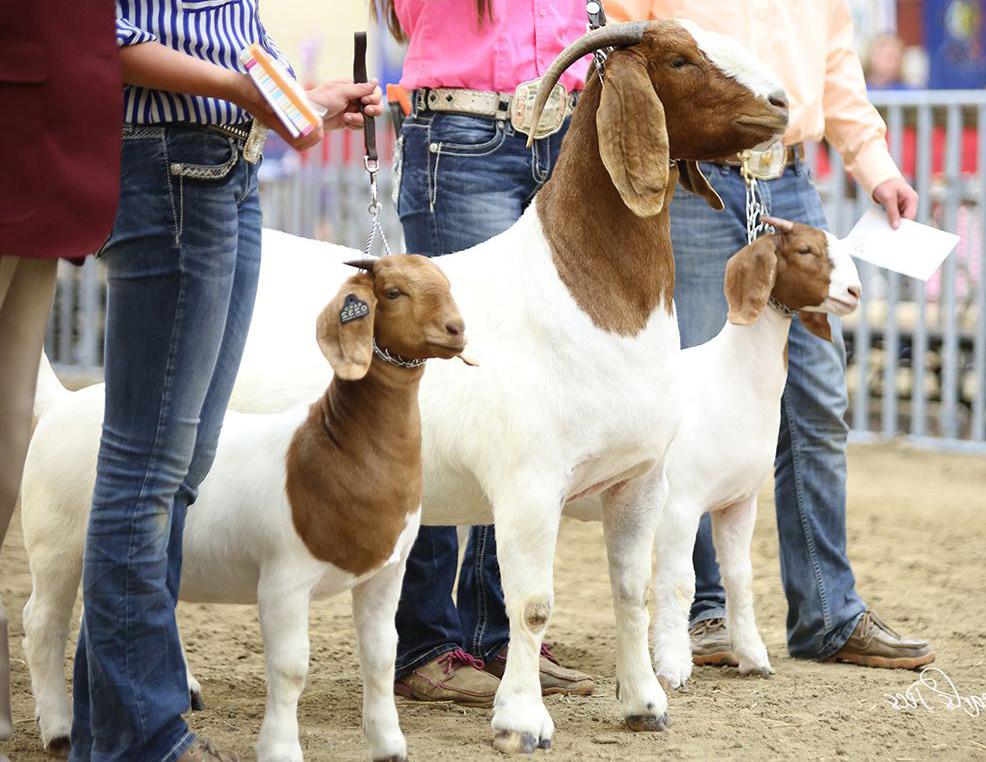
There are a lot of opportunities to purchase U.S. breeding stock, from farm/ranch auctions to sale barns and private treaty (direct sales). The key to success when purchasing these foundational animals to take back to your country is being prepared. It’s important to make an informed purchase that considers what traits are important to herd improvement. This holds true whether buying live breeding stock or investing in embryos or semen.
Before participating in sales or auctions in the U.S., it is important that buyers understand the process of purchasing animals and have the right partners in place to ensure a smooth transition of ownership and humane transportation of the animals or safe movement of germplasm. This means that international brokers are in place when required and transportation/logistics have been planned for the movement of animals, embryos or semen.
There are several ways to find livestock sales in the U.S.:
• Visit USLGE breed association member websites to see what events they are hosting, participating in, or promoting
• If attending in person, identify a region of the country that is of interest and explore sales happening there
• Work with a broker/exporter to identify herd and genetic goals and find sales that would be a fit
• View local resources such as breed association and livestock-focused magazines and newspapers to learn about online and in-person sales
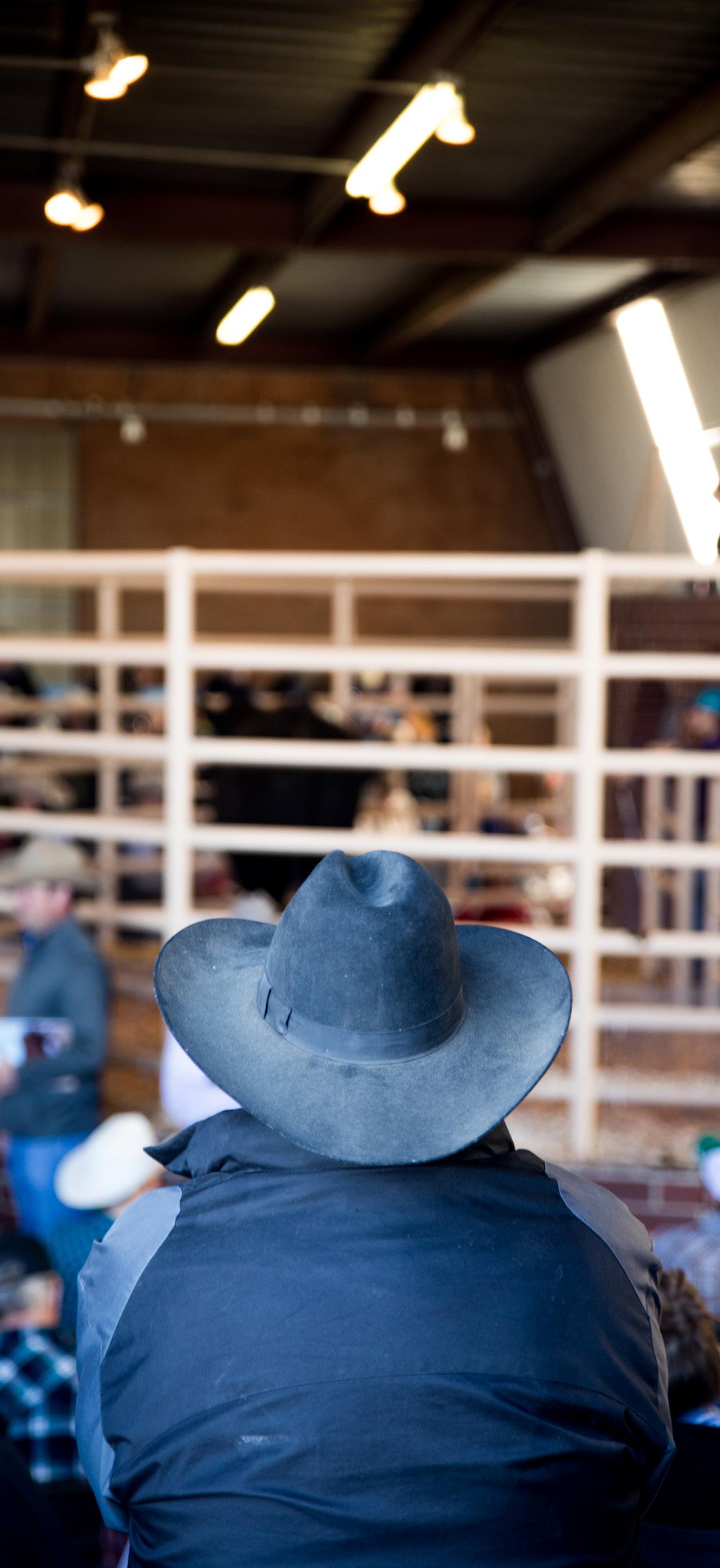
In the U.S., farms and ranches – including purebred and breeding stock operations –may host sales on-site at the farm or ranch. Most breeding stock sales hosted by individual farms or ranches are annual events, however some operations host events more than once a year.
Often, a sale catalog will be made available ahead of the event so that prospective buyers can see what breeding stock is offered and view pedigree, genetic, and pre-sale testing information. In some instances, farms and ranches also promote videos of the animals available through their website or brokers/ sales firms.
For sales that take place at the farm or ranch, attendees looking to buy animals should ask if they need to register as a bidder ahead of the event or the day of arrival. There will typically be an office or designated area to register, provide contact information, and receive a buyer number. This office or designated registration area is also likely the place where successful bidders will go after the sale to confirm the purchase and provide payment and transportation details.
Once the sale begins, animals will be moved through the ring or display area with an auctioneer calling for bids. A suggested opening price (bid) will be announced and, when the auctioneer hits the peak price for that animal, the auctioneer will announce that it is sold. Note that the auction will take place in English and move at a quick pace. If the speed of the auction is a concern, it may be practical to have help from a broker or interpreter.
A good practice ahead of sale day is to confirm the farm or ranch is willing to sell to an international buyer and understands any special requirements and regulations that need to be followed when moving animals and genetic materials into other countries.
There are virtual sale options throughout the year that provide opportunities to purchase breeding stock, embryos and semen. These virtual auctions can be found on the internet, with some also having a presence on cable or satellite television. Some auction sites require special media players (such as Flash or Java), so make sure computers or mobile devices are able to view the auction.
When participating in an online auction as a bidder, pre-registration is required. Some sites allow “Guest” registration for users who want to watch the sale but do not intend to bid. Each site has its own registration process and may request different details from prospective bidders. The registration process may have options to be entirely online; completed by faxing printed and/or signed registration forms; or take place over the phone.
Note: It is important to alert the auction company that the purchased animals or germplasm will be moving to international locations and that a plan is in place to coordinate the activities of all parties involved: buyer, seller, broker, transportation companies, export facilities, veterinarians, lenders/banks, etc.
Potential buyers will make their bids over the telephone or will use the website to click-to-bid.
• Telephone bids: For many virtual auctions this is the most common method of purchasing, as it allows participants without access to excellent, consistent high-speed internet to bid. When you register as a bidder, the auction company will provide you with a buyer number and a bid line phone number to use on sale day.
• Website click-to-bid: When made available by the auction company, high speed internet is required for this option. Once an account is created with the auction website, participants can select from all the sales they offer and sign in to register as a bidder for individual auctions. Bids will be submitted through the website with the user clicking to submit their bid.
Successful bidders who make purchases at online auctions will be contacted by the seller (farm or ranch) to provide payment details and make shipping arrangements.
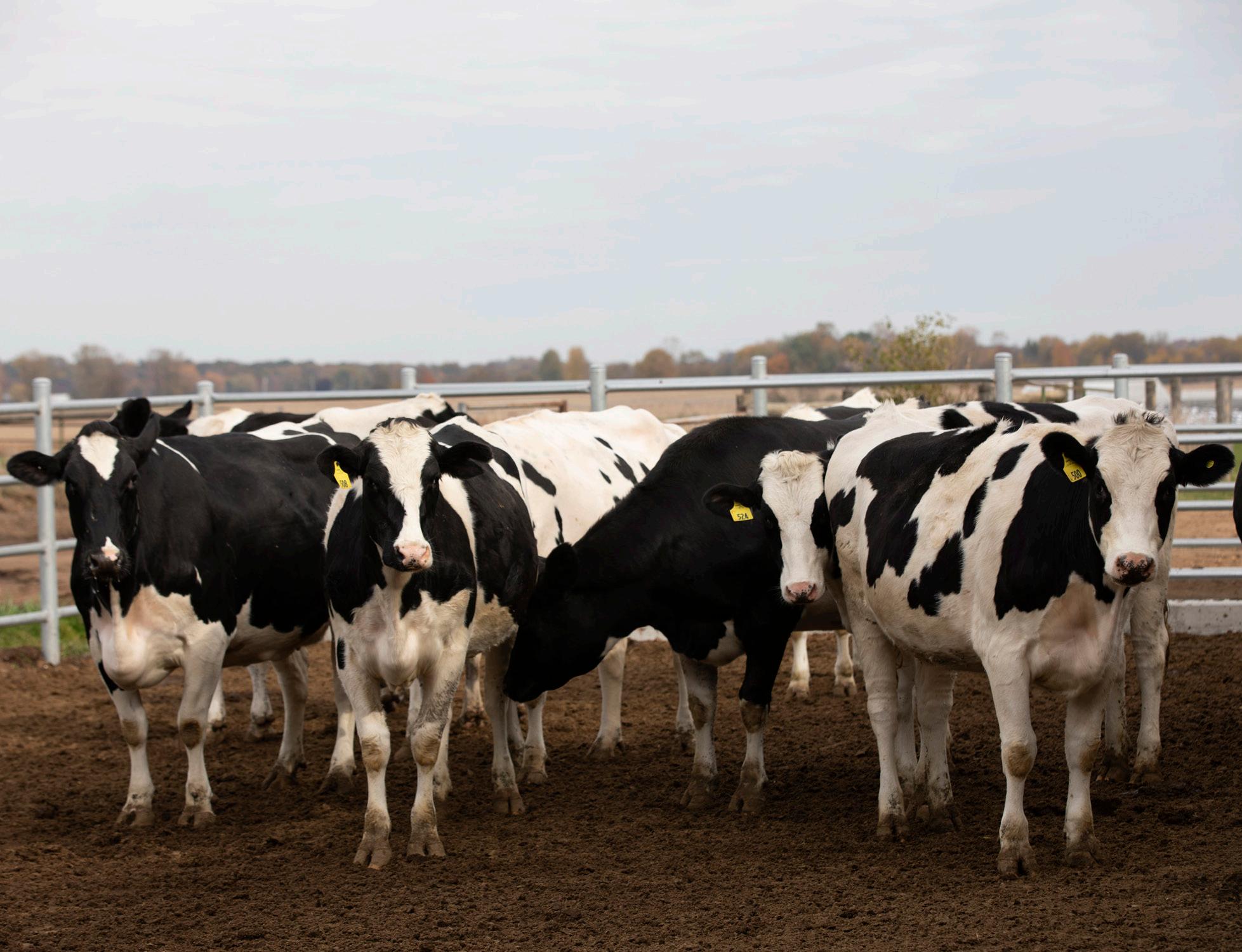
In some instances, farms and ranches may be willing or able to sell directly to international buyers. In this instance buyers (or their brokers) would be in touch with the farm, ranch or germplasm organization to select specific animals or genetic material to purchase. These types of sales often rely on a personal network or the support of an importer/exporter who knows both the U.S. market and the process of moving animals and germplasm internationally.
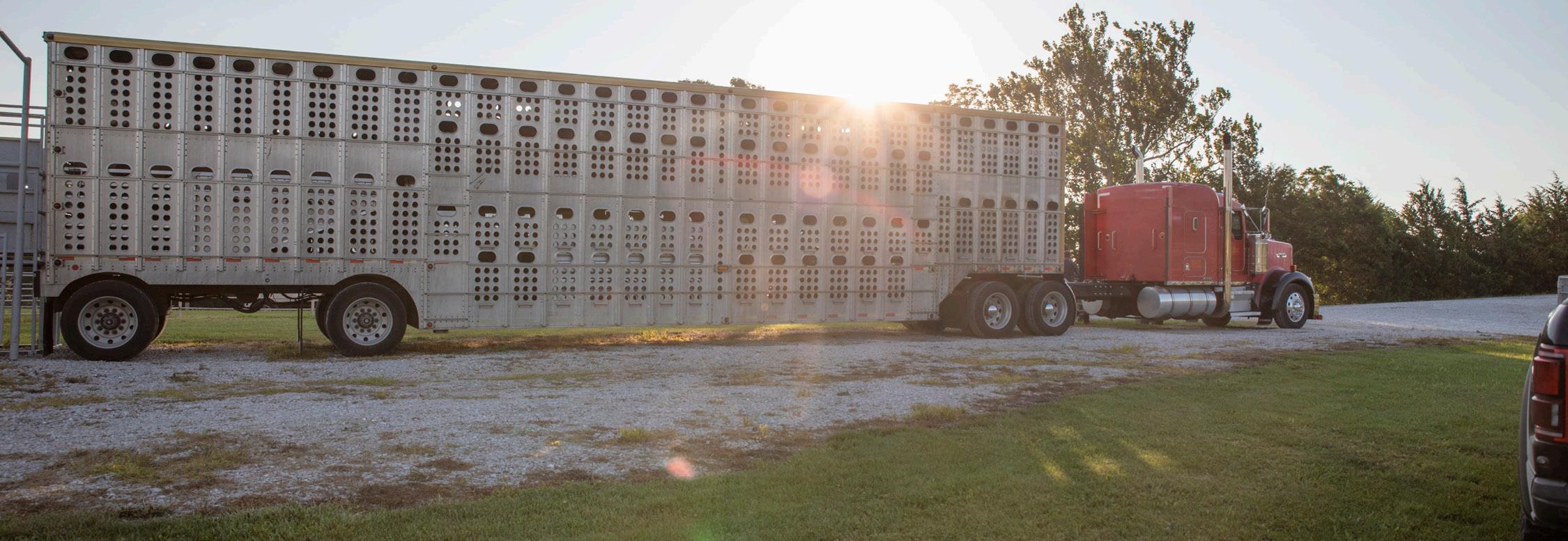
The U.S. is home to many local events where animals are sold. Locally these livestock auctions are known by a few interchangeable names: sale barns, auction barns or livestock exchanges. Regardless of the name, these are events where bidders can find a variety of species and breeds for sale. Some sale barns host specific sale days (for example selling beef cattle, dairy cattle, sheep, and goats on different days of the week), so knowing the schedule of the barn is important before you arrive. As with the auctions on-site at a farm or ranch, bidding will be fast-paced and done in English.
Contacting the sale barn ahead of time can help provide insight on how to register, bid, and what forms of payment are accepted. In addition, international buyers will need to be sure to have plans in place for the movement of animals and germplasm from the sale barn to the importing country.
When purchasing animals or germplasm from the U.S., it is important to keep a few things in mind in terms of the payment process:
• Seller comfort with international buyers. Ask the seller if they have sold to international buyers in the past and what their preferred practices are. This will help avoid issues related to money transfers, shipping costs and exchange rates.
• Consider the exchange rate. Understand which rates are in U.S. dollars ($ or USD), and be aware of the exchange rate between the buyer’s currency and USD.
• Have third-party options ready. In some instances, a third-party lender or finance partner may be required (or just helpful) to navigate the banking and exchange process. Have options in place and be prepared if this comes up.
• Understand the terms of the purchase. Be clear on what the seller agrees to or is required to do and what the buyer/ importer is responsible for. This includes knowing if the seller covers any portion of the transportation costs, veterinary examinations/certifications, export quarantines, etc.
Importing U.S. animals and germplasm requires several steps to move them - safely and legally - into a new country. In most instances, veterinary inspections, quarantines, and certifications/registration forms will be required.
Ensure the seller and any involved brokers/ partners are aware of the quarantine, testing, certification, and transportation requirements between the U.S., the destination country, and any other countries the animals may have to move through.
Be aware of requirements in place in the destination country for animals and germplasm coming from the U.S. or other countries. In addition to U.S. export requirements, there may be local veterinary, agricultural and business regulations to follow.
More information on the transportation process for importing livestock and germplasm from the U.S. can be found throughout this Guide.
Understanding a Semen Straw Animal Welfare During Transport
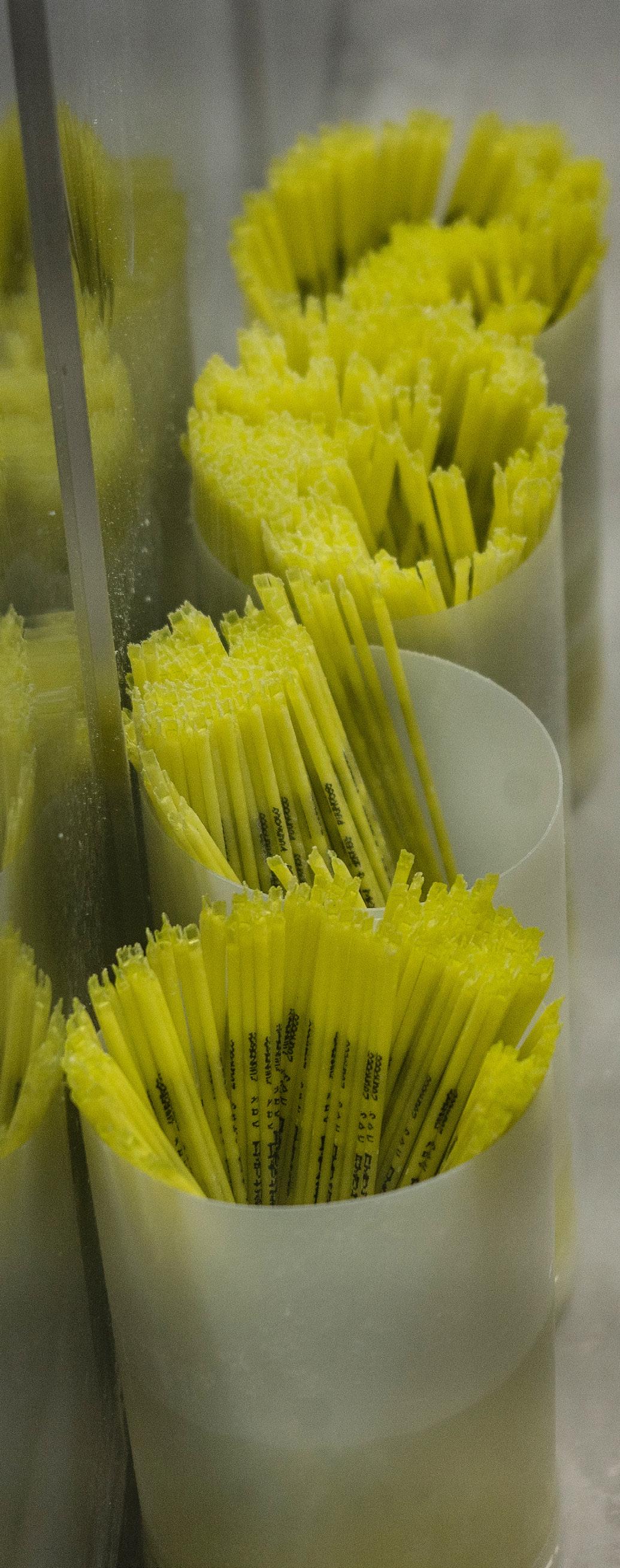
Most of the livestock semen bought and used for artificial insemination (AI) in the United States is safe and quality controlled, and a national organization monitors the quality of produced frozen semen.
For herd protection, however, it’s important to know how to read the information on a semen straw to ensure that the purchased semen is certified.
One of the major reasons why the U.S. is a world leader in AI is due to the quality of its product. Having highquality semen is essential for the business of all U.S.-based companies, and poor quality can hurt the reputation of the entire industry. In addition, the industry bears responsibility to protect customer herds and the data used in selection decisions.
There are mechanisms in place to ensure semen quality, and each purchased semen straw contains important information that indicates whether it is safe to use, checked for viability and fertility, and where and by whom the semen was produced.
Certified Semen Services, or CSS, is the organization that controls semen quality in the U.S. CSS is a wholly owned subsidiary of the National Association of Animal Breeders (NAAB). It is not a government regulatory body, but it is monitored by the U.S. Department of Agriculture (USDA).
CSS sets the minimum requirements for produced frozen semen with the goal to protect the health of the herd in which the semen is used. If it is CSS certified, it is safe to presume that the company that sold the semen is meeting and often exceeding CSS minimum requirements for animal management, semen quality control, sire health testing and safety of collection areas and laboratories. CSS also helps verify that the product displayed on the straw is also in the straw (See sidebar).
If the purchased semen is CSS certified, the straw will contain the following information (not necessarily in this order):
A. Collection code – date of semen collection (Julian or calendar date)
B. Name of bull – full registration name or short name
C. Bull registration number consisting of:
• Breed of bull
• Country of origin
• Unique herd book number
D. Stud code number – where the semen was collected
E. NAAB code of bull, which consists of:
• A marketing code (sometimes the same as the stud code) – what kind of semen is in the straw and who produced it - 3 numbers
• A breed code – breed of bull – 2 letters
• A bull unique number – 5 numbers
+ The CSS logo – for CSS certified semen.
The CSS logo is not mandatory. If a purchased semen straw does not contain a logo, it is recommended to ask the semen sales representative if the semen is CSS certified to ensure it’s controlled. The other information is mandatory under CSS regulations.
The following are a few examples of various semen straws and how to read them:

This conventional semen of the American Holstein bull 12345 (c and e), named ‘ GENOMIC-GENE BUSTER ‘ (b) with herd book number 75629829 (c) was produced on the 210th day in 2012 (a) at the collection center of GENEX in Shawano, WI (d, stud code 021) and marketed by GENEX ( e, marketing code 001).

This conventional semen of the American Holstein bull 11669 (c and e), named ‘ AltaJONAH’ (b) with herd book number 73752888 (c) was produced on the February 24th, 2017 (a) at the collection center of ALTA Genetics in Watertown, WI (d, stud code 011) and marketed by Alta Genetics (e, marketing code 011).

The sexed semen of this Dutch Holstein bull 128 (c and e), named ‘ A GOOD BULL’ (b) with herd book number 0000000 (c) is produced on the 329th day in the year 2014 (a) by Sexing Technologies Benelux in The Netherlands (d, stud code 266) and marketed by A.I. Total (e, marketing code 515).
The information on the semen straw is the most accurate representation of the product used to breed the next generation of cows. It’s listed on the straw for the purpose of traceability and allows for the identification of where, when and by whom the semen was produced.
The NAAB code listed on the straw represents the bull used for breeding. However, it also represents the type of semen used, indicated by the first 3 digits of an NAAB code, or the marketing code.
If breeding with conventional semen by Select Sires, the marketing code of this bull will likely be 007 or simply 7, for example 7HO1237, for ZAMBONI. If using sex-sorted semen of ZAMBONI, the NAAB code on the straw will be different. The marketing code for sex-sorted semen sold by Select Sires is 507. This means the NAAB code for ZAMBONI on the sexed straw will be 507HO1237. Same bull, different code.
Sex-sorted straws are often colored pink or blue for convenience. If breeding with sex-sorted semen, please pay extra attention to the NAAB code when entering breedings into farm software.
The United States has long been recognized as the world leader in dairy genetics and this is largely due to a meticulous system that measures and tracks animal performance. Several unique codes connect the AI industry to what happens on farm and to the national genetic evaluation system.
Traceable information on each straw provides information indicating whether the semen is disease free and fertile. And in return, the information on how that semen performs is fed back into the genetic evaluation system.
It has worked for decades and will work for decades more.
Source: NAAB-CSS, 2020

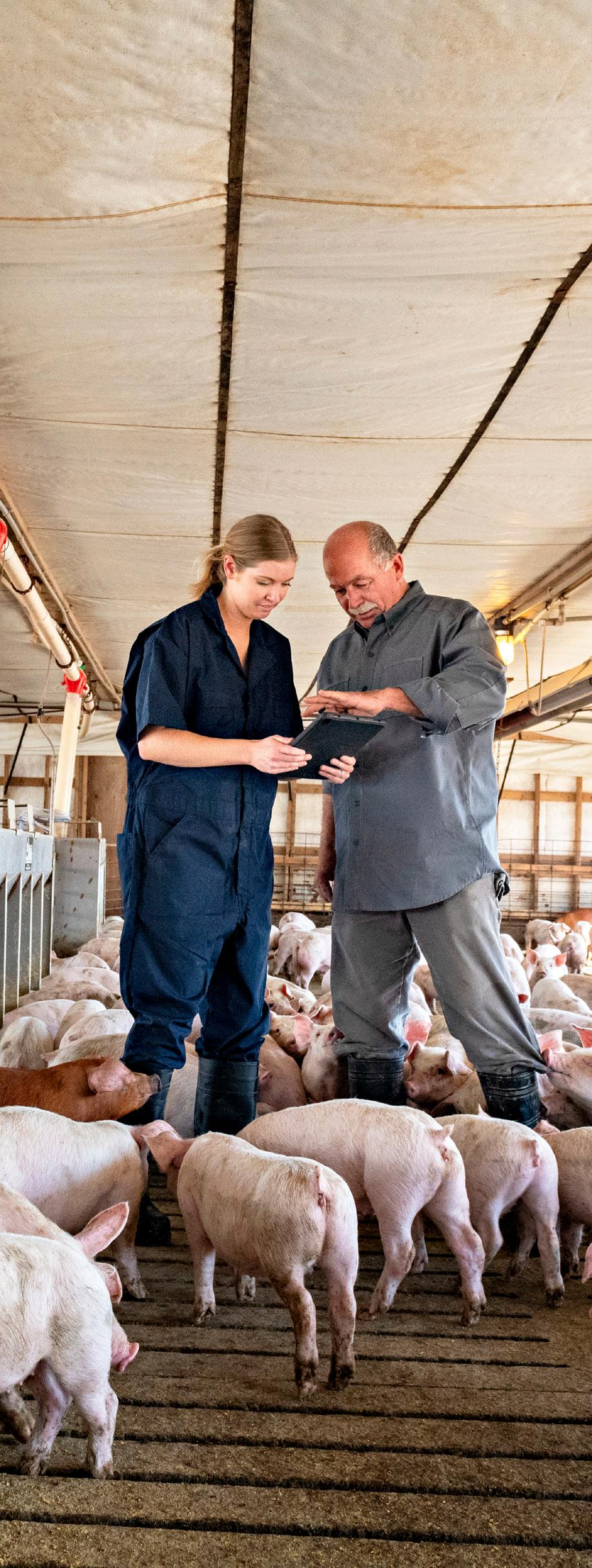
The welfare of animals being transported must be taken very seriously by all exporters and importers. Whether livestock is being moved by air, land or sea, there are standards and recommendations available to help guide the transportation process. For importers or buyers of U.S. livestock and/or genetics, Livestock Exporters Association (LEA) makes the following recommendations.
Reduce Stress — The goal of the buyer should be to reduce stress and aid in the adaption of the new environment.
Preparation — The buyer should prepare to properly receive the imported animals, including, but not limited to:
• Arrangement for a quick customs clearance into the country
• Proper unloading facilities
• Cleaned and disinfected transporting facilities
• Transport and handle humanely
• Clean and disinfected quarantine facilities with no exposure to other animals. Facility should be designed for livestock comfort
• Provide proper veterinary and preventative care as well as adequate nutrition
• Provide proper segregation by sizes, sex or whatever else is necessary
Livestock Exporters Association (LEA) developed a Livestock Welfare Audit Program in 2014 for exporting members to assure the importer that their shipment has been exported in a humane manner that meets the highest standards of modern-day animal welfare.
1. There is a written export plan developed including, but not limited to, date of export, destination, list of suppliers and key contact information, health protocol requirements, points of destination, resource needs, record requirements, timeline and instructions for timeline delays.
2. Only livestock and poultry arriving from a USDA/ APHIS Export Inspection Facility (EIF) or certified EIF supplier are eligible for export.
3. Veterinary certification and serological testing is completed in advance of the shipment to the Export Inspection Facility (EIF).
4. Only Department of Transportation/APHIS/IATA approved transporters are hired to haul livestock for export.
5. Only USDA/APHIS approved aircraft, vessels and crates are used for air and sea shipments.
6. USDA/APHIS veterinarian oversees inspection of livestock at the EIF and through the export process at the port of embarkation.
7. All trucks are sealed by the USDA/APHIS veterinarian, accredited veterinarian or USDA/ APHIS approved personnel prior to leaving the EIF.
8. Persons hired by the exporter to handle livestock or poultry during loading/unloading at the EIF or at the point of embarkation are trained and experienced.
9. Air and sea shipments are monitored and recorded on a daily basis.
10. Haulers will monitor livestock on a regular basis and during traffic delays, and shipments are validated by the exporter.
1. Each supplier has a written animal welfare policy including a statement regarding zero tolerance of animal abuse or neglect, a procedure to report incidences of animal abuse or neglect, and consequences for mistreatment or not reporting incidences of abuse or neglect.
2. The supplier provides a copy of the animal welfare policy to the exporter.
3. The supplier provides the exporter with a training record that all caretakers are trained on the animal welfare policy at least annually.
1. The supplier has a written care and handling protocol, biosecurity plan and emergency action plan. The written emergency action plan must include information on what to do in case of a transport accident, rollover, delay or nonambulatory animal.
2. There is zero tolerance for willful abuse or neglect.
3. Any mistreatment of animals is to be reported, and action must be taken to correct the situation.
4. The supplier adheres to all export requirements.
5. Swine suppliers have a current Pork Quality Assurance (PQA) Plus Site Status.
6. Drivers transporting livestock or poultry have a current Transport Quality Assurance (TQA) or similar certification/training.
1. Handlers are trained to move animals using flight zone and point of balance patterns.
2. Handlers are calm and quiet during handling and movement.
3. Handling tools and equipment are accessible and maintained in good condition to prevent injury and spread of disease.
4. Electric prod use is minimal and never used on sensitive areas such as the eyes, ears, nose, genitalia, rectum and udder.
5. Animals to be transported are ambulatory and fit in accordance to USDA/APHIS requirements.
6. Trailers used to haul livestock and poultry are maintained to prevent injury and abate heat or cold stress.
1. Handlers and/or transporters are trained on the animal welfare policy, animal handling, biosecurity and emergency action plan.
2. Training records include the date of training, training topic, trainer and signature of trainee.
1. All records are accessible, legible and retained for a minimum of two years.
2. Suppliers provide an affidavit that the trailer was cleaned and disinfected prior to loading of animals on the trailer.
3. Transporters adhere to biosecurity protocols.
1. There is a written animal welfare policy posted at the EIF. The animal welfare policy includes a statement regarding zero tolerance of animal abuse or neglect, a procedure to report incidences of animal abuse or neglect, and consequences for mistreatment or not reporting incidences of animal abuse or neglect.
2. Each caretaker signs a statement to adhere to the animal welfare policy.
3. The animal welfare policy is reviewed at least annually with all caretakers.
1. USDA/APHIS veterinarian oversees inspection of livestock at the EIF and through the port of embarkation.
2. The facility has a written plan consisting of standard operating procedures for animal care and handling, biosecurity, emergency action plan, euthanasia, mortality management including record, reason for death and disposal process; and transport requirements. The farm plan is reviewed annually and available in caretaker’s native language.
3. There is zero tolerance for willful abuse or neglect.
4. Any mistreatment of animals is to be reported.
5. The EIF adheres to all legal regulations and export requirements.
1. Livestock are fed, watered and rested for a minimum of five hours prior to export.
2. Livestock are fed daily to sustain health.
3. Clean, fresh water is available to meet or exceed the animals’ daily requirement.
4. Water mechanisms are accessible and maintained to prevent injury.
5. Feed is fresh and feed mechanisms are accessible and maintained to prevent injury.
6. The number of feeding and watering spaces allows the animals to consume their daily ration without unnecessary competition.
1. Animals located at the EIF must have required health papers.
2. Livestock are monitored at least daily by trained caretakers.
3. Export health requirements are met per export plan and approved by the USDA/APHIS veterinarian prior to shipment.
4. Livestock and poultry are inspected by the USDA/APHIS veterinarian or accredited veterinarian prior to transportation to the port of embarkation.
1. Caretakers are trained to move herding animals using flight zone and point of balance patterns. Poultry is handled to avoid tipping of containers.
2. Caretakers are calm and quiet during handling and movement.
3. Handling tools and equipment are accessible and maintained in good condition to prevent injury.
4. Electric prod use is minimal and never used on sensitive areas such as the eyes, ears, nose, genitalia, rectum or udder.
5. Animals must be ambulatory and fit in accordance to USDA/APHIS requirements in order to be transported to port of embarkation.
6. There is a protocol to take care for non-ambulatory animals including movement, feed and water access and timely euthanasia, if warranted.
1. The EIF has a current USDA/APHIS certification.
2. The EIF is maintained to prevent animal injury and disease transmission.
1. There is an emergency contact sheet consisting of key emergency contact phone numbers including, but not limited to, facility address, and address or directions to the nearest hospital.
2. The written emergency contact sheet is posted.
3. There is an emergency warning system for mechanically ventilated facilities, and the warning system is tested at least monthly and recorded.
1. Caretakers are trained in accordance with their job responsibilities for animal well-being. Training will include animal husbandry and movement including use of flight zone and point of balance, non-ambulatory movement, special needs, emergency procedures, and euthanasia.
2. The training program is reviewed annually.
3. Training records including the date of training, training topic, trainer and signature of trainee.
1. Animal health certificates are available from the supplier.
2. VS Form 17-37 and “Notice of Animals Not Shipped” records are kept.
3. Program records are accessible, legible and retained for a minimum of two years.
4. Current Export Facility Inspection certification.
5. Emergency warning system test record, if applicable.
6. Caretaker training records.
7. Animal welfare policy caretaker agreement.
1. Cows are separated from bulls.
2. Bulls are separate unless grouped prior to shipping from EIF.
3. Cattle with horns in excess of 8 centimeters are separated from non-horned cattle.
4. Cattle are penned or contained in containers that are constructed in accordance with export requirements to be strong enough to support the animals, meet space allocations, and provide air movement to allow the animals to be comfortable.
5. Pens or containers are bedded.
6. Water and feed is accessible.
7. Tools are available to mitigate heat and cold stress at the port of embarkation.
1. Swine are grouped in accordance to container size and not mixed with other swine from multiple sources.
2. Containers are constructed in accordance with export requirements to be strong enough to support the animals, meet space allocations, and provide air movement to allow the animals to be comfortable.
3. Containers are bedded.
4. Water and feed is accessible.
5. Tools are available to mitigate heat and cold stress at the port of embarkation.
1. Mares and foals are transported together.
2. Single horses are placed in single containers.
3. Multi-horse containers must have ability to separate the horses.
4. Access to the head.
5. Containers must be constructed to be strong enough to support horse, minimize noise, resist kicking, meet space allocations, and provide air movement to ensure the horses are comfortable.
6. Ramps are less than 25-degree slope when the container is on a standard 50-centimeter dolly.
7. There is no step up or step down larger than 26 centimeters.
8. There is a secure point for attaching a restraining device.
9. Containers do not allow horses to bite other horses.
10. Air – 244 centimeters on a plane and ship requirements for height restrictions (IATA or CFR does specify)
11. Water and feed is accessible.
12. Tools are available to mitigate heat and cold stress at the port of embarkation.
1. Sheep with heavy wool are loaded at lower density than those with less wool.
2. Containers are constructed to be strong enough to support the animals.
3. Water and feed is accessible.
4. Tools are available to mitigate heat and cold stress at the port of embarkation.
1. Temperature is monitored to avoid catastrophic death.
2. Extra care for poultry containers; avoid tilting.
3. Shipping containers or boxes are constructed to be strong enough and ventilated to support the birds and prevent injury.
4. Water and feed is accessible.
5. Tools are available to mitigate heat and cold stress at the port of embarkation.
1. VS Form 17-37 is completed for every export shipment.
2. USDA/APHIS veterinarian or accredited veterinarian inspects each animal for any illness, disease or injury prior to port of embarkation.
3. USDA/APHIS veterinarian verifies every animal has a permanent identification, has passed all serological test requirements and is free from illness, disease or injury that would prevent it from being shipped.
4. The number of head transported on each trailer will not exceed the legal load limit.
5. Transporter has a method to protect animals from adverse weather.
6. Transporter has a plan in case of adverse weather, rollover or other emergency that may delay arrival to respective location.
7. The trailer loaded with animals for export from the Export Inspection Facility is sealed by USDA/ APHIS veterinary services.
8. Transporters hired to haul livestock from EIF to embarkation are experienced livestock drivers (or transporters have a transport quality certification).
9. Trailers meet USDA/APHIS requirements for cleaning and disinfecting.
10. Transporters do not use electric prods except in the case of an emergency and never on sensitive areas.
11. Transporters are calm and quiet during loading and unloading.
12. Transporters adhere to biosecurity requirements including clean clothes, boots and any other requirements of the respective facility.
13. There is a euthanasia plan which includes timely euthanasia by an approved AVMA method and conducted by a trained individual. Equipment is available to carry out the approved method.
14. Animals to be carried in accordance with IATA Live Animal Regulations current at the time of shipment.
1. Visitor access is controlled.
2. Departure is planned to be conducted during the coolest time of the day when possible.
3. The animals are loaded by a trained crew using approved handling tools.
4. The load crew is calm and quiet during loading.
5. Lighting is available to assist with loading.
6. The trailer aligns with the chute to protect the animal from injury or escape.
7. Animals are loaded in containers to allow them to stand without the risk of injury or crushing.
8. Containers are loaded in order to view animals at all times.
9. USDA/APHIS Veterinary Services certifies the aircraft is clean and disinfected in accordance with export requirements.
10. USDA/APHIS Veterinary Services veterinarian certifies all removable equipment, penning and containers are clean, disinfected, and durable to support the animal.
11. Water and feed supplies are accessible to the animals.
12. Tools are available to mitigate heat and cold stress.
13. There is a euthanasia plan which includes timely euthanasia by an approved AVMA method and conducted by a trained individual.
Equipment is available to carry out the approved method.
1. Visitor access is controlled.
2. Arrival of the loads to the time of departure is within required timeline.
3. Departure is planned to be conducted during the coolest time of the day when possible.
4. Transported under the supervision of APHIS.
5. A veterinarian and/or crew are hired by the exporter to oversee stockmanship aboard the ship.
6. The animals are loaded by a trained crew using approved handling tools.
7. The load crew is calm and quiet during loading.
8. The plan indicates amount of bedding to allow for traction and comfort during the journey.
9. The plan meets the CFR and the vessel contracted has attendants available to take care of the animals during transport. For horses, must be one attendant per nine head.
10. The plan includes amount of feed during the journey to sustain minimum nutrient requirements.
11. Water in quantities sufficient to meet the minimum daily requirements of the animals is available during the journey.
12. The plan indicates the pharmaceuticals and equipment available for the shipment.
13. There is a euthanasia plan which includes timely euthanasia by an approved AVMA method and conducted by a trained individual. Equipment is available to carry out the approved method.
1. Visitor access is limited.
2. Departure is planned to be conducted during the coolest time of the day when possible.
3. The animals are loaded by a trained crew using approved handling tools.
4. The load crew is calm and quiet during loading.
5. Lighting is available to assist with loading.
6. The trailer aligns with the chute to protect the animal from injury or escape. Equipment to hold and load animals is in good condition and well-maintained.
7. Bill of lading is complete with exact number of head.
8. The trailer is sealed by accredited personnel.
9. Tools are available to mitigate heat and cold stress.
10. There is a euthanasia plan, which includes timely euthanasia by an approved AVMA method and conducted by a trained individual. Equipment is available to carry out the approved method.
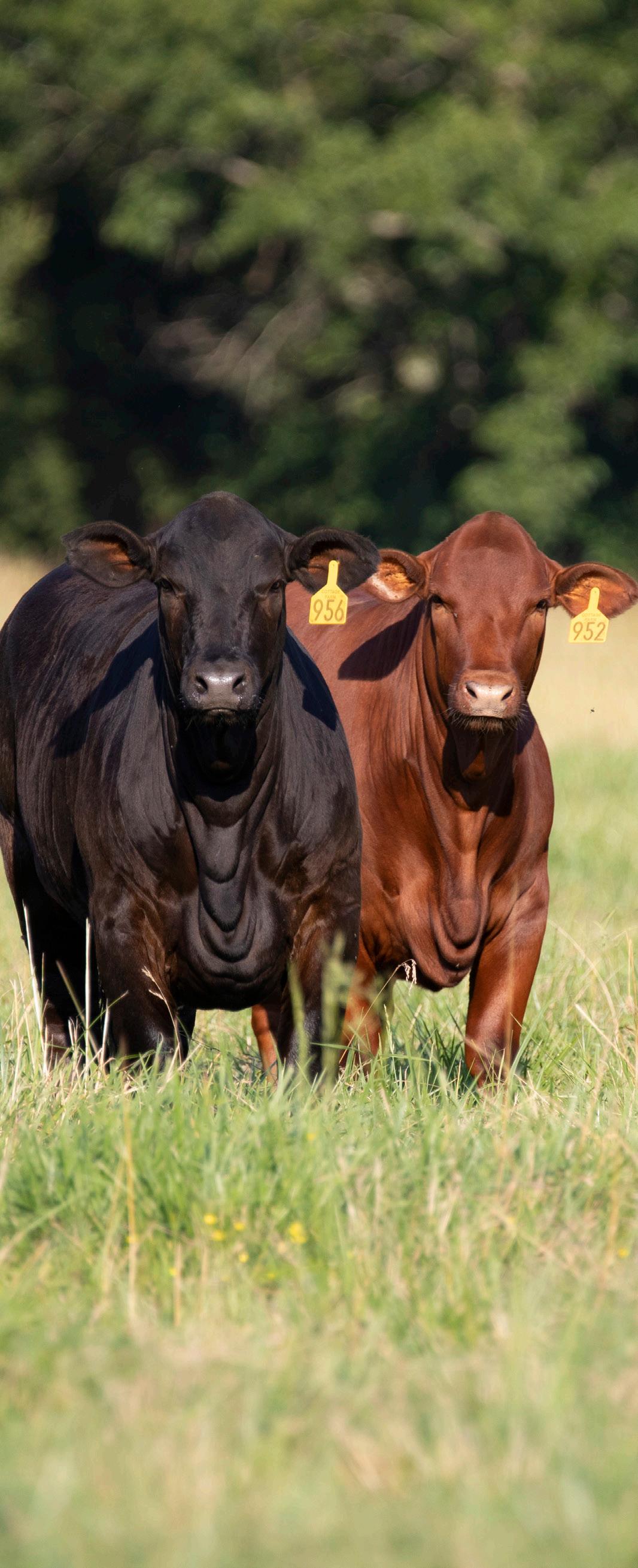
Every country has unique criteria for importing livestock or animal genetics. When importing animals into or through Mexico, it is important to understand local regulations and requirements. To ensure a smooth process in the buying, selling and transport of livestock into Mexico, the U.S. Department of Agriculture (USDA) Animal and Plant Health Inspection Service (APHIS) provides export procedures. The protocol for U.S. exporters is detailed on the APHIS web page
• The importer in Mexico (or the importer moving animals/genetics through Mexico) should contact the "Direccion General de Inspeccion Fitozoosanitaria" (DGIF) at least 30 days prior to the importation of the livestock, in order to coordinate livestock inspections and to obtain an import permit. DGIF is the organization of the federal Mexican veterinarians that will be conducting the inspections at Texas Department of Agriculture’s Export Facilities.
• Make sure you also get confirmation that "Sistema Nacional de Identificación Individual del Ganado" (SINIIGA) has been contacted and arrangements have been made to have your livestock tagged by these federal veterinarians from the state of entry into Mexico.
• The buyer is required to be registered and organized as a valid rancher/buyer through the Mexican SINIIGA program. Buyers must be registered as Importers through Mexican Customs via "Padron de Importadores."
Once the buyer has selected the animals and the selling price has been determined, the following steps will help ensure a smooth transaction:
1. It is a common practice for the buyer to provide a down payment to the seller to cover the costs of testing the animals for export.
2. Determine with the seller how and when the final payment will be made. Payments can be cash, wire transfer, check (written on a U.S. bank) that can be confirmed, or a letter of credit.
3. Determine if the animals are to be sold F.O.B. ranch or if the sale price will include delivery to the port of export. If the buyer is responsible for delivery of the animals to the border, the seller may help locate transportation.
4. Provide your name, address and telephone number, as well as the port where the animals will enter Mexico. Establish how you will be notified when the livestock are ready to be delivered. You may communicate with the seller or deal with a broker at the border. Make sure you have telephone numbers for the person or firm that will ship the animals.
5. The seller and his or her veterinarian will prepare an export health certificate for the animals. The export health certificate will be officially endorsed by the USDA. Remember, this expense is the responsibility of the exporter.
*Note: Testing and securing the export health certificate usually takes about two weeks.
6. The animals should have some type of identification number. This can be a brand, tattoo or ear tag. The animals should be identified accordingly on the health certificates. Numbered ear tags that can be read at a distance are usually best.
7. The seller will provide an invoice to the buyer. The invoice should include seller name and address, buyer name and address, number and sex of animals purchased and the price. This invoice and the export health certificate will accompany the livestock to the border.
8. It is a standard practice to provide full payment for your livestock before the animals leave the United States.
9. When the seller secures the export health certificates and prepared the invoice, the animals are ready for delivery. Work with the seller or firm shipping the animals to set a delivery date. Contact the appropriate export facility and confirm date of delivery. Normal working hours for the Texas Department of Agriculture (TDA) export facilities, for example, are 8:00 a.m. to 5:00 p.m. CST, Monday through Friday.
Importers of U.S. livestock or genetics can expect exporters to follow USDA guidance, which includes the following procedures and responsibilities.
• Exporters must understand and act on quarantine and inspection requirements at the U.S./Mexico border.
• The Texas Department of Agriculture has five Livestock Export Facilities across the state. Reservations are required in advance of animals arriving. Contacts and locations are available at www.texasagriculture.gov
• Exporters must contact a local veterinarian with USDA accreditation to issue health certificates for any/all livestock being exported into Mexico.
Important notes:
• Exporter's local veterinarian with USDA accreditation must seal all cattle trailers at "Point of Origin."
• It is the responsibility of the USDA accredited veterinarian and the exporter's shipping agent to advise the USDA Veterinary Services (VS) port veterinarian of the date of arrival of the animals. The protocol requires that the VS port veterinarian, in the presence of a "Secretaria de Agricultura, Ganadería, Desarrollo Rural, Pesca y Alimentación" (SAGARPA) approved Mexican veterinarian, breaks the seals on the trucks to unload the animals. SAGARPA has indicated that if necessary, a state or accredited veterinarian can also break the seals in the presence of the SAGARPA-approved veterinarian.
• Exporter must verify that the Mexican buyer is registered and organized as a valid rancher/ buyer through the Mexican "Sistema Nacional de Identificación Individual del Ganado" (SINIIGA) program. Buyers must be registered as Importers through Mexican Customs via the "Padron de Importadores" system, a national registry of importers and exporters. To be able to import or export most products into or from Mexico, the Mexican company that will be the importer or exporter of record must be registered to do so. They must have a legal invoice for what they wish to import.
• Broker should provide any other pertinent forms/documents needed for exportation of livestock (e.g., "NAFTA Certificate of Origin" form, which must be issued by the Exporter).