
by Philip J Vonada National Grange Communications Director
Grange Month gives us something we don’t always have the rest of the year – a chance to brag in the spotlight. Communities are more willing to engage, local officials are more responsive, and members are energized to share what the Grange is doing. That kind of visibility is valuable, but it only matters if we use it to build something that lasts beyond April.
Too often, Grange Month becomes a collection of well-intentioned events that come and go without much followthrough. An open house might draw a good crowd; a service project might get strong participation; a proclamation might get posted and shared. But if those moments in local Granges aren’t connected to a greater effort, the impact fades quickly. The real opportunity is to treat Grange Month as a starting point, not a high point.
Build strong relationships: Every person who walks through your doors during an event or program in April is a
potential future member, volunteer, or community partner. But that only happens if there’s a reason for them to come back. Inviting someone to a second event, asking them to help with a project, or simply checking in after they attend something for the first time can make the difference between a one-time visitor and someone who stays connected. Community Granges have always been strongest when they serve as gathering places, and that role depends on consistency as much as it does enthusiasm.
Think more intentionally about impact: A successful Grange Month isn’t just about how many activities you host, but what changes because of them. A food drive can be a great event, but it becomes far more meaningful if it leads to an ongoing partnership with a local pantry. A community conversation can spark new ideas, but those ideas need a path forward. This is where the work many Granges are already doing through

by Christine Hamp National Grange President
For generations, rural hospitals have been more than just places to receive medical care. They are community lifelines that provide jobs and make the difference between life and death when emergencies strike miles from the nearest city. Yet today, these essential institutions are being quietly undercut by a Medicare loophole that diverts resources meant for rural communities to large urban hospitals.
At the National Grange, we advocate for the people who feed, fuel, and sustain this country. That means speaking out when policies meant to protect rural America are instead being used to weaken it.
The issue is hospital reclassification, and its consequences are painfully real for rural patients.
Under current Medicare rules, hospitals are classified as either geographically rural or urban. Rural hospitals receive special payment protections because they serve smaller, older, and often poorer populations, and because operating in rural areas is more expensive and less efficient by nature. These protections exist to preserve access to care where market forces alone cannot.
But over time, regulatory changes and court decisions have opened the door for geographically urban hospitals to reclassify themselves as “administratively rural.” For example, any big-city hospital with more than 275 beds can become administratively rural and then be designated a Rural Referral Center – even if not a single rural patient is referred to them! Once they do that, they gain access to rural-only Medicare benefits. Then, in a second step, those same hospitals are allowed to reclassify to urban
status for wage calculations, securing higher payments typically reserved for metropolitan facilities. This two-step maneuver is known as “dual classification.”
In plain terms, some of the nation’s largest, wealthiest hospitals are claiming the benefits of being both rural and urban even when the communities they serve don’t match that description.
The growth of this practice has been dramatic. A new analysis from Magnolia Market Access shows that in just five years, the number of hospitals using dual classification ballooned from 168 in 2018 to 593 in 2023.
These are not small-town hospitals struggling to keep their doors open. The median dual-classified hospital has nearly six times as many beds as a true rural hospital and dual classified hospitals have far stronger balance sheets. In fact, these hospitals hold significantly more financial reserves per bed than either rural or standard urban hospitals. Yet they are drawing from the same pool of Medicare dollars that Congress intended to support rural care. Reclassification to rural status allows hospitals to reap benefits such as additional graduate medical education slots and more generous Medicare funding.
Meanwhile, real rural hospitals are disappearing. More than 130 rural hospitals closed between 2010 and 2021. When a rural hospital shuts down, the damage ripples outward: clinics close, mental health services disappear, jobs vanish, and patients are forced to travel farther for care. Rural Americans already face higher rates of chronic disease and lower access to providers. Losing local care only deepens those disparities.
Every dollar redirected to a dualclassified urban hospital is a dollar not available to prevent the next rural closure.
This is not about punishing urban hospitals or denying fair reimbursement.

But as it stands, bad actors are eroding the rural safety net. We must align Medicare policy with reality and ensure that rural benefits go to hospitals that are truly rural in all ways.
Policymakers can make this happen. First, Medicare should tie rural payment enhancements to geographic rurality, ensuring that hospitals located in metropolitan areas cannot access rural-only benefits simply through administrative maneuvers. Second, Congress and the Centers for Medicare & Medicaid Services (CMS) should close the dual-classification loophole, restoring the original intent of rural protections. Finally, any savings from these reforms should be reinvested directly into truly rural providers to strengthen workforce recruitment, emergency services, and long-term sustainability.
Rural Americans cannot reclassify their communities when it becomes convenient. Farmers cannot move their fields closer to hospitals. Families cannot relocate overnight when care disappears. Public policy should reflect that reality.
The National Grange believes in fairness, stewardship, and strong rural communities. Protecting rural hospitals is not a partisan issue — it is a promise to the people of rural America. It is time to keep that promise and ensure Medicare dollars support the hospitals and patients they were meant to serve.
by Bonnie Mitson & Randee Farmer
National Grange Community Service Co-Directors
Thank you to Prosperity Grange #315 (WA) for submitting the electronic SHARE YOUR PROJECT'S STORY form located at https://www.nationalgrange. org/community-service-programs/ Details of how the Grange accomplished their successful project are shared in this article.
It is our hope that by sharing a project’s story, details might be helpful suggestions to other Granges on future projects. Thank you and great work, Prosperity Grange!
Project Name: Senior Social Hour Grange: Prosperity Grange #315, Olympia, WA
Approximate Hours Expended: 3 members / 5 hours per month
Expenses: minimal
History of a good idea. Prosperity Grange has revived an older senior outreach community program which had disappeared during the pandemic lockdowns. Outreach to seniors in the area used to happen back in the late 1990s/early 2000s via a seniors “club” connected to the Grange, called the Idyll Hour Club, which had their own president and officers, and then in the 2010s a senior outreach was connected to another
community club as well. In 2025, Prosperity Grange President Barb Ramsdell spearheaded a very simple idea - open the doors, put on the coffee, bring some snacks, and invite in the seniors from the community every month to come and re-connect.
Grangers go into action. Members volunteer to make social media postings of the event. A special sandwich board with pinwheels made by President Barbara is displayed the day of event to catch passersby. Participants are invited to bring a snack to share.
Being open to change brings new growth to project. The Grange found that advertising this project first as “Seniors” had success, but was more limited. They have started calling it “Seniors and Friends” and attendance has been boosted! Prior to the change, attendance fluctuated with around 4-5 regular attendees. Now, attendance is closer to 8-10 regulars.
Congratulations! This monthly event has resulted in two new Grange members!
Editor’s note: Do you like this kind of content? If so, be sure to check out Good Day! magazine which includes a “Share Your Project’s Story” in every issue. Please also submit your story online to the National Grange Community Service Team - the more stories that are submitted, the more frequently we can feature them. We know we can feature a story in EVERY issue of Grange Today!
Project Sustenance and the Rural Life Initiative becomes so important. These efforts give structure to good intentions and help turn short-term energy into long-term solutions and partnerships.
Tell our story: The Grange has never struggled to do meaningful work, but we don’t always do a great job of communicating it in a way that resonates outside our membership. Grange Month is a natural time to improve that. Instead of simply listing events, focus on what those events mean for your community. Talk about who was helped, what problem was addressed, and why it matters; then keep telling those stories after April ends. Regular, thoughtful communication, whether it’s through social media, local newspapers, or simple word of mouth, builds awareness over time and reinforces the value of what the Grange brings to a community.
Advocate more strongly: The Grange has always been a community-focused, solutions-oriented organization, and we know that advocacy starts locally. Grange Month offers an easy opportunity to connect with local officials by inviting them to events or sharing what your Grange is working on, but those initial conversations should not be the last. Keeping those relationships active throughout the year helps ensure that when
continued from page 1
issues affecting rural and small-town communities arise, the Grange is already part of the conversation.
Maintain momentum: Grange Month naturally creates a rhythm of activities, events, outreach, and communication that happen more frequently and with more focus. The challenge is keeping that rhythm going. That doesn’t mean you have to maintain the same pace or intensity, but it does mean intentionally staying visible and engaged. Whether it’s a monthly service project, a standing community gathering or event, or a consistent online presence, those steady touchpoints build trust and keep the Grange relevant in the day-to-day life of a community.
The strength of the Grange has always come from its local roots and engaged members. What happens in individual communities nationwide shapes the entire organization. Grange Month reminds us of that by spotlighting the work being done across the country. The goal now is to carry that momentum forward, taking what worked, building on it, and continuing to show up in meaningful ways. When local Granges stay engaged beyond April, they don’t just sustain their own work; they help ensure that the Grange remains a strong, visible, and effective voice for rural and small-town America.

The National Grange joined a group of 451 national and state organizations representing a broad cross-section of the agriculture community to urge swift passage of Farm Bill 2.0 by the House. While the commodity support and crop insurance sections of the farm bill were adopted by Congress last year, the remaining sections are overdue for adoption this year. The House vote is expected by May 1. The Senate Agriculture Committee is expected to consider the farm bill later in May. At a gathering of several hundred farmers and ranchers on the White House lawn recently, President Trump signaled his support for the farm bill and urged Congress to pass it quickly.
Congressional agriculture leaders are seriously considering $15-$20 billion in additional farm aid and disaster assistance as farmers are facing rising costs and increasing bankruptcies. These funds would need to be included in a supplemental spending bill later this year.
In mid-April, the USDA broke ground at Moore Air Force Base in Edinburg, Texas, for a new sterile fly production facility. Sterile fly release in screwworm-infested areas has historically been most effective in reducing and eradicating the pest. The latest screwworm case was discovered about 80 miles south of the Texas border, and the U.S.-Mexico border remains closed to cattle trade because of the screwworm threat. However, Secretary of Agriculture Brooke Rollins says there may be a future opportunity to bring cattle through the Douglas, Arizona, port of entry because the closest case of screwworm in Mexico is 800 miles from Arizona.
Drought in the contiguous United States has reached record levels for this time of year, according to weather data. Meteorologists suggest this is a bad sign for the upcoming wildfire season, growing season, western water issues, and food prices. The government’s drought severity index hit its highest level for March since records started in 1895, and March was the third driest month recorded regardless of the time of year.
The National Grange and over 200 national and state farm, ranch, airport, pilot, and landowner groups are urging the appropriations committees on the Hill to again fully fund USDA’s Wildlife Services. Wildlife causes more than $12.8 billion in damage to agriculture, natural resources, human health and
safety, and private property. Wildlife Services works cooperatively and directly with state agencies, landowners, and producers to protect the public and reduce wildlife-related damage.
The National Grange and two dozen agricultural producer organizations are asking Secretary of State Marco Rubio to clear a backlog of ag worker applications stuck in his department. Employers must navigate a multi-agency process involving various state agencies, the Department of Labor, the Department of Homeland Security, and the Department of State. Both State and DHS have affirmed that waiving in-person interviews for returning, previously vetted H-2A workers serves the national interest. Therefore, the producer groups respectfully urge the administration to immediately authorize the use of interviewwaiver authorities for returning H-2A applicants.
Large urban hospitals and major teaching hospitals are exploiting a loophole in the Medicare 340B program to increase their bottom lines and further reduce funding for rural hospitals and clinics. The National Grange released a report on a study by Magnolia Market Analysis that shows how a growing number of primarily large urban hospitals are taking advantage of a process that allows them to “dual-classify” as rural to claim government benefits and funding without treating rural patients. Congress created 340B to help rural safety-net hospitals stretch scarce resources. Drug manufacturers are required to sell medicines to participating hospitals at steep discounts with the expectation that hospitals would use the savings to expand care for low-income and uninsured patients. But dual-classified urban hospitals can sell deeply discounted medicines to nonneedy patients at steeply marked-up prices and use the profits for financial gain. In 2023, a total of 1,265 hospitals held rural status, but only 672 were true geographically rural hospitals. The National Grange will work with patient groups and Congress to increase 340B program oversight and to tighten program eligibility so that 340B participants are truly safety-net providers serving low-income and uninsured rural patients.
An op-ed by National Grange president Chris Hamp in Washington’s RealClear Health newsletter on April 22 focused on hospital reclassification and its impact on rural patients. Rural hospitals receive special payment protections under Medicare
because they serve smaller, older, underinsured, and uninsured populations. But recently, large-geography urban hospitals have used a Medicare loophole to reclassify themselves as administratively rural to gain access to rural-only Medicare funds. “Every dollar redirected to a dual-classified urban hospital is a dollar not available to prevent the next rural closure”, said Hamp.
The National Grange released a study by the Information Technology and Innovation Foundation that examined how rural Americans face a disproportionate and growing burden from Alzheimer’s disease. This is driven by structural barriers that delay diagnosis, limit access to emerging therapies, and impose staggering costs on patients, caregivers, and rural health systems. “This report lays out both the scale of the problem and the path forward”, according to National Grange president Chris Hamp. “Geography should never determine whether anyone receives a diagnosis in time to benefit from treatment----and right now, it does.” The good news is that scalable, affordable diagnostic solutions already exist; they simply lack the federal policy framework to reach the communities that need them most. The National Grange will work with patient groups, providers, and Congress to ensure rural patients and providers can access and afford these diagnostics and treatments.
By unanimous vote in the House, the First Responder Network Authority Reauthorization Act will now move to the Senate. FirstNet is the nationwide first responder network designed by first responders and operated by AT&T under a contract with the Commerce Department. The National Grange is a strong supporter of FirstNet.
A plethora of broadband bills were adopted by the House this past week, including bills that would:
• Require stronger vetting of broadband providers participating in the Universal Service Fund (low-income, low-cost).
• Require an “interagency strike force” among all federal land management agencies to prioritize and speed permitting requests.
• Reauthorize rural telehealth grant programs through 2030.
These bills had strong support from the National Grange.
Verizon CEO Dan Schulman predicts that AI could lead to 20-30% unemployment within the next five years. Advancements in humanoid robots could disrupt manual labor jobs, which have been considered relatively safe until now. He advocates for more education and reskilling initiatives to help workers cope.
The National Grange joined the National Farmer Veteran Coalition, the American Farm Bureau, the National Farmers Union, and 29 other rural and agricultural groups to request continued funding for the Farm and Ranch Stress Assistance Network. In a letter to the appropriations committees on the Hill, the group thanked Congress for its past funding support and requested that FRSAN be funded at no less than $10 million in FY27. The group noted that FRSAN supports four region-specific centers that include telephone helplines, websites, training programs, workshops, support groups, and outreach services, all of which are rural-centric.
Deere has agreed to pay $99 million and provide equipment owners with access to “repair resources” to settle a class-action lawsuit over the company’s repair practices. Deere will make repair resources available to owners, lessors, and independent repair shops on a license or subscription basis. The settlement gives farmers the ability to diagnose and repair problems without requiring to use the services of an authorized dealer.
is written and compiled by Burton Eller
National Grange Legislative Director beller@nationalgrange.org

“Alone we can do little; together we can do much.” - Helen Keller, American author and activist
“We were born to unite with our fellow man, and to join in community with the human race.”
- Cicero, Roman statesman, philosopher, and writer
“This world of ours must avoid becoming a community of dreadful fear and hate, and be, instead, a proud confederation of mutual trust and respect.”
- Dwight D. Eisenhower, 34th President of the United States
“It’s all about being a part of something in the community, socializing with people who share interests and coming together to help improve the world we live in.”
- Zach Braff, American actor, director, and writer
by Cleo Stamatos Consumer Outreach Manager, American National Standards Institute (ANSI)
If you’ve spent time working on your own car or farm machinery or helping neighbors with repairs, there may be a volunteer opportunity where your practical knowledge can make a real difference far beyond your driveway.
The Certified Automotive Parts Association (CAPA) is an ANSI-accredited standards organization that develops quality standards for automotive crash-repair parts. These standards help ensure replacement parts fit properly, perform as expected, and support vehicle safety for consumers nationwide.
CAPA is seeking volunteers to serve on its Technical Committee, especially individuals who can represent the consumer and public interest. This opportunity is a natural fit
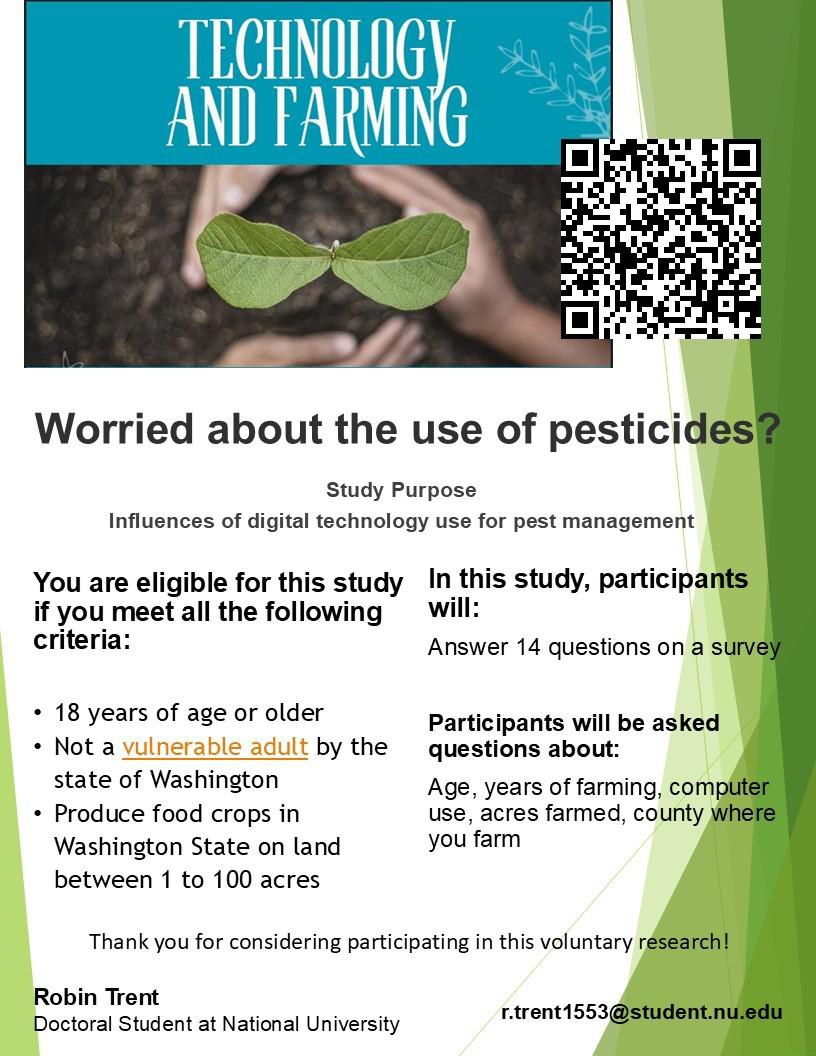
Grange members in Washington State are invited to participate in research about the influences of digital technology use for pest management.
Doctoral Student Robin Trent invites Grange members who meet the following criteria to be a part of the research:
• Age 18+
• Not considered a “vulnerable adult” by the state of Washington
• Produce food crops in Washington State on land between 1 to 100 acres
Eligible and interested people should contact Robin at r.trent1553@student.nu.edu
for National Grange members who value service, common-sense solutions, and practical experience.
Hands-on mechanical knowledge matters in standards work. Committee discussions focus on real-world repair issues—how parts fit, how repairs are performed, and whether standards reflect what actually happens in garages and shops.
Serving on CAPA’s committee allows Grange members to continue a proud tradition of volunteerism, applying skills learned over a lifetime to help protect consumers and improve quality across the automotive repair industry.
To request an application or obtain additional Technical Committee information, contact capa.info@intertek.com
For more information, please visit CAPA’s website at www. capacertified.org. Please reply by September 1, 2026.
As spring brings more time outdoors and opportunities to gather with family and friends, connection increases—and respiratory illnesses like flu, COVID-19, RSV, and pneumococcal disease can still spread.
Vaccination remains the best way to reduce the risk of serious respiratory illness, hospitalization, and illness-related complications. As respiratory viruses continue to spread, it’s not too late to get vaccinated.
Vaccination is particularly important for those ages 50 and older, who may be at increased risk of severe disease from respiratory illness due to age-related factors and chronic health issues.
Visit cveep.org to learn more about the importance of vaccination to keep you protected and enjoying everything the season has to offer.


Beginning May 1, two changes will take place in the Grange Store:
The price of Golden Sheaf, Sliver Star, and 75-year Awards, as well as 80- and 85-year letters will increase to $15.00 each plus shipping. Additionally, shipping rates - which have remained unchanged for nearly a decade - will increase as shown on the chart at right.
Thank you for understanding, and we look forward to continuing to serve you and your Grange’s needs!
courtesy of Feature Impact
Gardening is a simple way to bring families together while simultaneously teaching kids hands-on lessons about nature, responsibility and healthy living. Whether you have a backyard garden, a few containers on the patio or are looking for a starting point, getting your children involved in planting and caring for plants can spark curiosity and create lasting memories.
To get started, consider these family-friendly tips:
1. Start Small
Begin with a manageable project, such as a few containers, a small garden bed or a single planter box. This helps keep the experience fun rather than overwhelming and allows children to see progress quickly.
2. Let Kids Choose the Plants
Giving your children a say in what goes into the garden can help build excitement and a sense of ownership. Ask them to pick a few colorful fruits, vegetables or flowers that grow quickly, such as sunflowers, cherry tomatoes, mint, sugar snap peas or marigolds.
3. Give Them Their Own Space
Kids feel proud when they have something that’s their own. Consider assigning each child a small plot, container or row in the garden. Let them be responsible for watering, planting and checking on their plants.
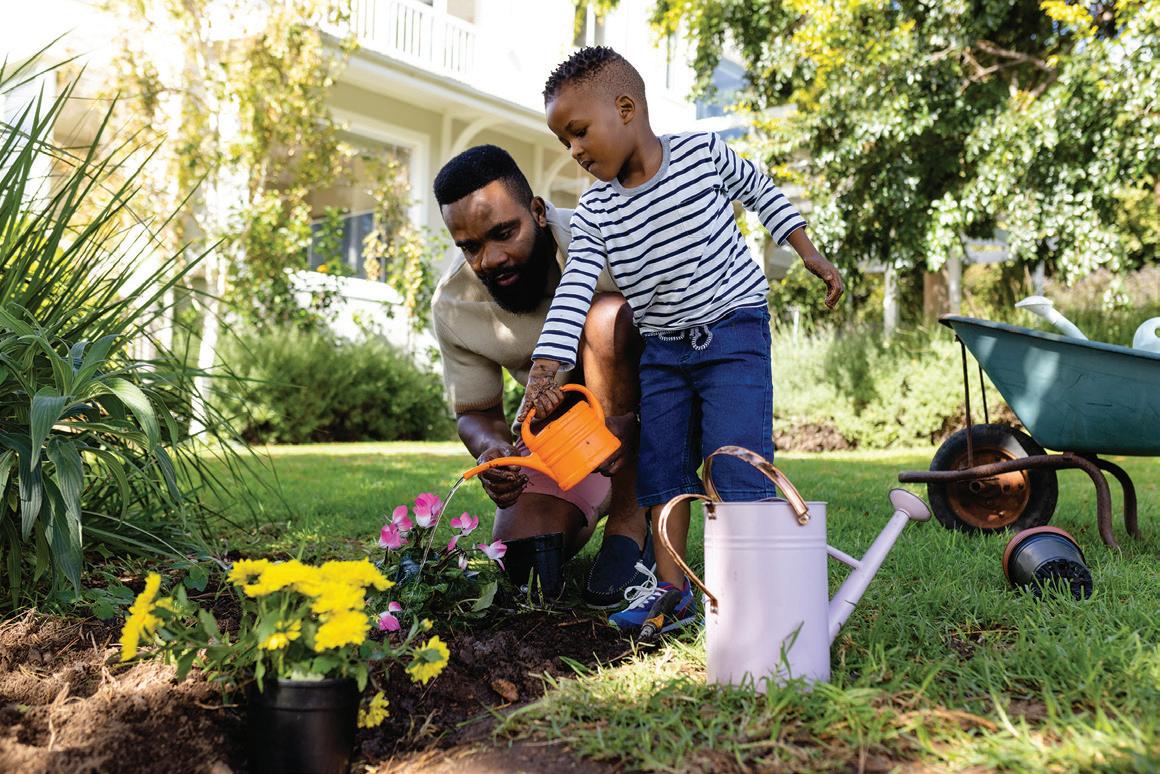
4. Use Kid-Sized Tools
Little hands typically work best with tools designed just for them. Small watering cans, lightweight trowels and childsized gloves help kids participate safely and comfortably.
5. Encourage Creativity
Gardens don’t have to be all work. Add some fun to the process by adding artistic touches. Projects such as decorating pots, painting plant markers or creating a fairy or butterfly garden can keep imaginations engaged as well.
From the first tiny sprout to the final harvest, find more familyfriendly gardening advice at eLivingtoday.com.


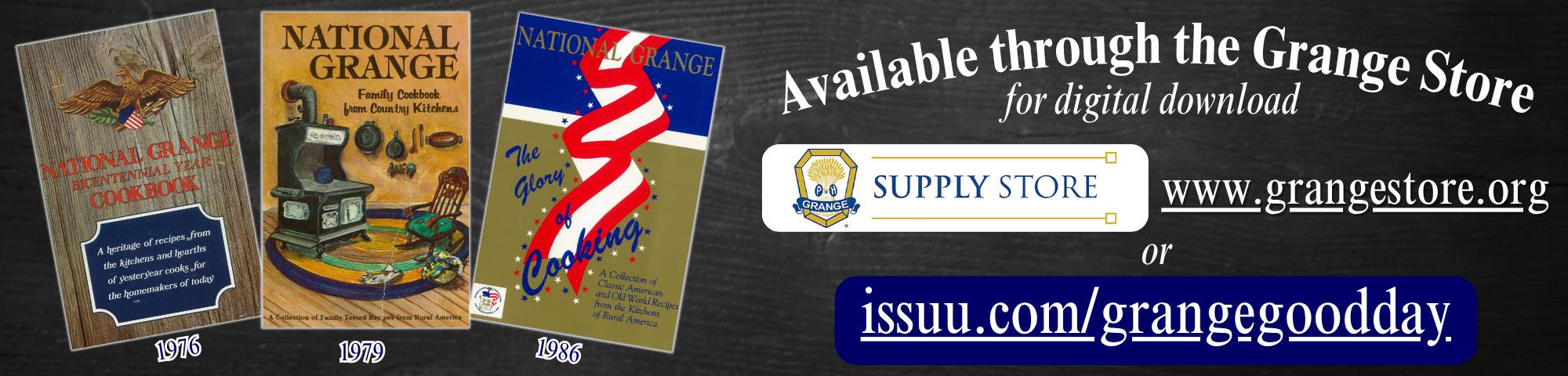
The America’s 250th Grange Workgroup is celebrating our country’s 250th Anniversary by “throwing back” to some classic recipes from Grange cookbooks. Do you have favorite recipes that evoke the American spirit which you would like to see published again? Send them to Lew Gaskill at olgaskill@comcast.net. Please include which Grange cookbook your recipes come from.
This week’s recipes are from the National Grange Bicentennial Year Cookbook, in the section “Special Recipes from Friends in the Nation’s Capitol.”
4 to 5 Pounds corned beef brisket
1/2 bay leaf
5 peppercorns
Basil to taste
Thyme to taste
Parsley to taste
6 white or yellow turnips, peeled and sliced
8 carrots, pared
4 parsnips, peeled
10 small onions, peeled
8 medium potatoes, peeled
Courtesy of Mrs. Edmund S. Muskie, Wife of Senator from Maine
1 green cabbage, cored and cut in wedges
Place beef in deep kettle; cover with cold water. Add herbs, but no salt. Bring water to a boil, skimming off fat.
Cover and simmer for 3 to 4 hours.
Add all vegetables except cabbage; cook for about 20 minutes. Add cabbage; cook for about 25 minutes longer or until all vegetables are tender. Place beef on hot platter; surround with vegetables.
The Muskie family likes New England dinner with horseradish, mustard pickle and hot buttered bread, then fresh fruit and brownies for dessert.
2 ruby red grapefruit
1 /2 can whole cranberry sauce
1 Tablespoon honey
1 /4 teaspoon cloves
1 /4 teaspoon salt
1 fryer, disjointed
3 Tablespoons butter
Courtesy of Mrs. Gerald R. Ford Wife of the United States President
Peel and section grapefruit, squeezing all juice from membranes into saucepan. Add cranberry sauce, honey, cloves and salt, mixing well, then bring to a boil.
Stir in grapefruit sections. Brown chicken in butter in frypan, then place in shallow baking dish. Baste with grapefruit sauce. Bake in 350·degree oven for about 45 minutes, basting frequently. Serve chicken with remaining grapefruit sauce.
Yield: 4 servings.
We’re helping you take a proactive step for your health.
As a valued National Grange member, you have access to convenient, painless preventive health screenings that can help detect risk for stroke and cardiovascular disease. Screenings are non-invasive, take about an hour, and results are easy to understand and share with your doctor.
Phone: 1-888-787-3294
Priority code: BHUS001
National Grange has partnered with Life Line Screening to provide convenient, preventive health screenings to help detect risk for
and cardiovascular disease at a
4 Vital Screenings for $135