
National Grange awards $40,000 to make direct community impact

by Philip J Vonada National
WASHINGTON, DC (March 27, 2026) - Today, the National Grange announced 40 Community and Pomona Granges as recipients of their latest round of Rural Life Initiative (RLI) grants. This round of grants, titled “Bridging the Gaps,” was designed for Granges to think outside the box in finding ways to make an impact in their local communities.
More than 80 applications were submitted by Community and Pomona Granges in 21 states, with projects ranging from children’s fairs to senior health fairs, food drives and distributions to agricultural events, and everything in between. Now in its third round of competitive grantmaking, the RLI team noted that Granges submitting applications are thinking more creatively and writing strong proposals.
“We are looking forward to seeing these forty projects make a direct, tangible impact in their communities,” said National Grange President Christine Hamp. “Each of these projects reflects the unique needs of the areas these Granges serve, helping address gaps that often exist due to limited resources, bureaucratic hurdles, or economic challenges. Each project is also designed to bring communities together and make them stronger through collaboration, events, service, and educational opportunities— all of which are at the core of what the Grange stands for today.”
$1,000 grants were awarded to each of the following Granges:
• Bachelor Valley #667 (CA)
• Bayneville #1810 (KS)
• Baileyville #1991 (PA)
• Beaver Falls #554 (NY)
• Butternut Valley #1533 (NY)
• Caledonia #9 (VT)
• Champion #18 (NY)
• Chester-Delaware Pomona #3 (PA)
• Columbus #58 (NJ)
• Copake #935 (NY)
• Corriher #627 (NC)
continued on page 3
Rural America’s Alzheimer’s Crisis — and the Solutions Policymakers Must Act On
More than 7 million Americans live with Alzheimer’s disease — a number projected to nearly double by 2060. Rural communities are disproportionately affected: populations are older, aging faster, and face severe shortages of specialists and diagnostic infrastructure. Meanwhile, scalable, affordable solutions already exist but lack the federal policy framework needed to reach the patients who need them most.
71% of rural physicians say there are not enough dementia specialists to meet demand — vs. 44% in urban areas
1 in 5 Medicare dollars is currently spent on Alzheimer’s and related dementias — rising to 1 in 3 by 2050
SCALABLE SOLUTIONS ALREADY EXIST
Blood-Based Biomarker Tests
The U.S. Food & Drug Administration (FDA) cleared two blood-based Alzheimer’s diagnostic tests in 2025. These tests are less invasive, less costly, and less complicated to administer than Positron Emission Tomography (PET) imaging or cerebrospinal fluid (CSF) testing — making them better suited for rural clinic settings.
WHAT WE ASK POLICYMAKERS TO DO
1 Pass the Alzheimer’s Screening and Prevention (ASAP) Act (H.R. 6130/S.3267)
Create a pathway for Medicare coverage of FDA-cleared blood tests for Alzheimer’s screening.
23% more likely: rural caregivers to face significant financial strain vs. urban caregivers
13% more likely: rural adults to receive care from an unpaid family member
Digital Cognitive Screening Tools
App-based cognitive assessments can be administered by non-specialists via telehealth, which will expand early detection where clinical staff are limited. But inconsistent American Medical Association CPT reimbursement coding prevents rural providers from reliably adopting these tools.
2 Pass the Accelerating Access to Dementia and Alzheimer’s Provider Training Act (AADAPT) Act (H.R. 3747)
Fund virtual continuing education for rural primary care providers on dementia diagnosis and long-term management.
4 Pass the Convenient Care for Caregivers Act (S. 3234)
Establish a pilot program providing rural caregivers access to counseling, peer support, and health services alongside the patients they assist.
3 Establish a CPT Code for Digital Cognitive Assessments
Create a clear, consistent reimbursement pathway and remove the uncertainty that discourages rural providers from adopting these tools.
5 Pass the Fair Funding for Rural Hospitals Act (S. 474) and Rural Hospital Support Act (S. 335)
Strengthen Medicaid funding for rural hospitals — over 48% of which operated at a loss in 2023 — to support integration of new diagnostic technologies.
Addressing the Rising Alzheimer’s Crisis in Rural America
The National Grange recently supported the release of a new report by the Information Technology and Innovation Foundation (ITIF) that examined how rural Americans face a disproportionate and growing burden from Alzheimer’s disease – driven by structural barriers that delay diagnosis, limit access to emerging therapies, and impose staggering costs on patients, caregivers, and rural health systems.
The report, Leveraging Innovation to Improve Alzheimer’s Diagnosis and Care in Rural America, highlights how rural populations – who are on average older, more medically vulnerable, and underserved by specialists and diagnostic
infrastructure – are being left behind as Alzheimer’s care rapidly advances. It also points to actions Congress and federal policymakers can take to expand Medicare coverage for emerging diagnostic and screening tools, strengthen the rural health workforce, invest in broadband and hospital infrastructure, and increase support for family caregivers.
See our press release, infographic, and read the full report at https://www.nationalgrange.org/alzheimers-crisis
Congratulations to our winners!
In December and January, we conducted a “Grange Member Perspectives” survey to help us get a better picture of current ideas and trends within local Granges, to help shape the future of the Grange. All who filled out the survey and provided their email address were entered into a drawing to win one of two $250 prizes for your local Grange, or one of ten complimentary subscriptions to Good Day! magazine for one year. And the winners are...
$250 to their Grange
James Crawford - Petaluma Grange #851 (CA)
Carol Swanson - Cawasa Grange #34 (CT)
Grants Awarded
• Durham #460 (CA)
• Eagle #1 (PA)
• Ewing #2082 (OH)
• Five Mile Prairie #905 (WA)
• Frogpond #111 (OR)
• Fruitland #999 (WA)
• Goodwill #939 (VA)
• Greenhorn Community #384 (CA)
• Harraseeket #9 (ME)
• Humboldt #501 (CA)
• Kirkland #684 (NY)
• Liberty #1780 (PA)
• Long Beach #667 (WA)
• Long Branch Community #2072 (PA)
• Lummi Island #925 (WA)
• Merced Colony #527 (CA)
• Otter Creek #1493 (KS)
• Penns Valley #158 (PA)
• Perry County Pomona #69 (PA)
• Pleasant Ridge #135 (ID)
• Pleasant View #1459 (KS)
• Prosperity #315 (WA)
• San Juan #966 (WA)
• San Poil #684 (WA)
10 Good Day! magazine subscriptions
Marah Davis (OH)
Lorell Fisher (WA)
Dianne Holbart (ID)
James Lyle (WA)
continued from page 1
• Sunbeam #2 (MN)
• Vassalboro #322 (ME)
• Warren #110 (NJ)
• Whelan-Ewartsville #114 (WA)
• Whitman County Pomona #2 (WA)
Launched in 2024, the Rural Life Initiative supports locally driven projects that strengthen rural communities, enhance quality of life, and build longterm resilience. Through community events, educational programming, and wellness resources, the Initiative helps communities address local needs, reduce disparities, and sustain a strong rural identity. Since its inception, more than $200,000 has been granted to State, Pomona, and Community Granges nationwide.
“The range of projects and events proposed through these grants shows that Granges across the country are eager to give back to their communities, helping ensure they continue to thrive
Joyce Merritt (PA)
Christie Straub (PA)
... and four other lucky winners who have received an email!
for generations to come,” said Carolyn Weems, a member of the Grange Advocacy Board of Directors. “As we read through the grant applications, our review team often found ourselves wishing we could fund every idea that was proposed. We hope those not funded in this round will still carry out their projects to help address a need in their communities, and we look forward to supporting even more ideas in the future.”
“We believe in investing in the future of rural and small-town America,” said Hamp. “We look forward to being able to accept more applications for another round soon.”
Future opportunities will be announced on the National Grange’s social media and in the Grange Today! newsletter. Additional information is available on the National Grange website at http://www. nationalgrange.org/rural-life-initiative

National Grange Policy Updates & Issue News
March 2026
Agriculture and Food
Washington Celebrates National Ag Day
American agriculture was in the spotlight on March 24 as the nation’s capital celebrated National Ag Day. An annual highlight of Ag Day is the celebration at the Department of Agriculture (USDA) headquarters. This year’s event drew the largest crowd at the USDA in many years. Participants included USDA Secretary Brooke Rollins, Health and Human Services Secretary Robert F. Kennedy, Jr., Centers for Medicare and Medicaid Services Director Dr. Mehmet Oz, EPA Administrator Lee Zeldin, and Kelly Loeffler, Administrator of the Small Business Administration. Other events included numerous meetings and receptions on Capitol Hill and around the city. Grange attendees at these gatherings included President Chris Hamp, her husband Duane, and National Grange staff.
Publicity for the Product of the USA label
During the Ag Day celebration at USDA, Secretary Rollins announced the launch of a public awareness campaign to inform meat, poultry, and egg producers of the “Product of the USA” voluntary labeling standard that went into effect in January. Under the standard, the “Product of the USA” label is reserved exclusively for meat, poultry, and egg products from animals that were born, raised, harvested, and processed in the United States.
Farm bill clears House Committee
The farm bill 2.0, or “skinny farm bill,” was adopted by the House Agriculture Committee in early March on a 34-17 bipartisan vote. Full House consideration has not yet been scheduled. The Senate Agriculture Committee is expected to take up the farm bill later this Spring. This legislation authorizes the remaining farm and rural programs not included in the One Big Beautiful Bill Act of 2025, which authorized commodity programs, crop insurance, and foreign market promotion. Corn farmers and biofuel producers lobbied hard for an amendment to ensure E15 ethanol year-round and nationwide availability was included in the farm bill. However, it was ruled that another committee, Energy and Commerce, has jurisdiction because it is a fuel additive. The farm bill legislation contains a controversial provision to invalidate California’s Proposition 12, which mandates and regulates animal husbandry practices for food products entering California from other states. There was considerable concern that the bill also moves $1 billion from the Environmental Quality Incentive Program (EQIP) to other conservation programs. EQIP is very popular with livestock farmers and ranchers as a cost-share program to install watering equipment, water crossings, stream fencing, cross fencing, manure storage facilities, and other working farm and ranch conservation practices.
Fertilizer prices test farmer patience
Soaring fertilizer prices in the wake of the war in Iran are a serious issue for farmers, who are making last-minute changes to planting plans due to higher input costs. A cutback in fertilizer applications puts crop harvests at risk, potentially squeezing world food supplies. There was volatility in the fertilizer market even before the war. Late last year, the Agriculture and Justice Departments announced a joint inquiry into high prices for fertilizer and other farm inputs. Senate Majority Leader John Thune (R-SD) is leading a bipartisan bill to provide farmers with greater transparency into fertilizer prices. The Fertilizer Transparency Act of 2026 would require the USDA to collect and publish weekly fertilizer price data from manufacturers, similar to other USDA market reports.
Support for rural stress and mental health
The National Grange and Rural Minds have been strong supporters of the USDA’s Farm and Ranch Stress Assistance Network (FRSAN). The National Grange joined the National Farmer Union, National Association of State Departments of Agriculture, and others on a strong letter of support for funding to the leadership of the Senate and House Appropriations Committees. FRSAN is a program that supports a service provider network connecting farmers, ranchers, and their families to stress assistance and mental health resources. Four regional centers are increasing access to stress resources across the country by coordinating efforts to serve the unique needs of the rural populations in each region. A FRSAN help line is staffed by farm and rural-savvy professionals.
Farm to Market gets boost
The USDA’s Agricultural Marketing Service has awarded over $26.8 million in grants for projects through the Local Agriculture Market Program. The program helps local and regional food entities develop, coordinate, and expand producer-to-consumer marketing, local and regional food markets, local food enterprises, and value-added agricultural products. Participants are required to provide a 25% cost share of the federal funds being requested.
Bill Gates gets big on farmland
Microsoft founder Bill Gates now owns one out of every 4,000 acres of U.S. agricultural land. In addition to Gates’ Microsoft stock, he owns a number of private investments that include about 20,000 acres of farmland in Nebraska alone. But why is Bill Gates investing so heavily in land? One major reason appears to be that land is a hedge against inflation, meaning that land value rises alongside inflation, with its value often rising faster than the inflation rate.
Health Care
RealClearHealth publishes Grange editorial
An op-ed by National Grange President Chris Hamp and HealthyWomen President/CEO Beth Battaglino entitled “Women’s Health Progress Must Reach Rural America” was published in Washington’s RealClearHealth this week. Hamp and Battaglino noted that women make up 60% of caregivers and guide roughly 80% of healthcare decisions for their families. They help choose providers, navigate insurance, coordinate care, and manage treatment decisions. Nearly 20% of women live in rural or non-metropolitan areas where they face higher rates of poverty and uninsurance, poorer maternal and infant outcomes, lower uptake of preventive screenings, and fewer options for obstetric and gynecological care. The authors advocated for sustained investment in access and research for women’s health issues.
Grange moves to protect rural hospitals and clinics
Access that examines how Medicare hospital reclassification policies increasingly divert resources from rural hospitals to large metropolitan health systems. This resource diversion weakens the rural health care safety net and threatens access to care for millions of rural residents. The report, “Hospital Dual Classification: How Urban Hospitals Are Capitalizing on Medicare Reclassification Policies,” documents how geographically urban hospitals reclassify as administratively rural to access rural-specific Medicare benefits while simultaneously receiving higher urban wage index payments. According to National Grange president Chris Hamp, “Rural hospitals are closing at alarming rates, and yet federal dollars meant to keep them open are being syphoned away through a regulatory loophole.” Rural-focused support, such as the 340B program and other rural-specific Medicare benefits, was designed to benefit
rural communities and should not divert scarce dollars from rural patients. The National Grange is working with rural hospitals, rural health care providers, and patient advocacy groups, calling on policymakers to close the 340B dual-classification loophole.
Grange calls attention to rural Alzheimer’s crisis
The National Grange has just rolled out a new report that examines how rural residents face a disproportionate and growing burden from Alzheimer’s disease. The report, “Leveraging Innovation to Improve Alzheimer’s Diagnosis and Care in Rural America,” was researched and written by the Information Technology and Innovation Foundation. The report highlights how rural populations, who are older, more medically vulnerable, and underserved by specialists and diagnostic infrastructure, are being left behind as Alzheimer’s care rapidly advances. Commenting on the release, National Grange President Chris Hamp said, “This report lays out both the scale of the problem and the path forward. Geography should never determine whether someone receives a diagnosis in time to benefit from treatment--and right now, for too many rural Americans, it does.” The report identifies a clear path forward to expand access and narrow rural health disparities. The National Grange is calling on Congress and federal policymakers to implement the report’s recommendations.
Court challenges recent vaccination guidelines
U.S. District Judge Brian E. Murphy (MA) has blocked Secretary of Health and Human Services Robert F. Kennedy, Jr. from implementing a series of vaccine-related decisions made over the last year. In his preliminary injunction ruling, the judge also suspended the decision-making authority of the reconstituted Advisory Committee on Immunization Practices, finding that HHS sharply departed from established procedure
continued on page 6
View from the Hill
and likely violated the Federal Advisory Committee Act. The National Grange will continue to monitor the case as it moves forward. Grange policy supports the principle that vaccine policy must be guided by science and transparency.
Research
Ag research falls behind
The United States is at risk of losing its edge in agricultural innovation to China without an uptick in research and development investments, according to the Food Security Leadership Council. The U.S. share of global public agricultural R&D spending has fallen from 20% in 1960 to 11.5% in 2011. Researchers argue that the U.S. should pursue a new national strategy to spur R&D, with the goal of achieving productivity growth to boost exports, keep food costs in check, and protect against biological threats. The National Grange has historically been very supportive of agriculture and food research and lobbies Congress annually for appropriations to benefit the USDA and Land Grant Colleges’ research and Extension.
Transportation Shipping gets a boost
The White House will temporarily suspend the requirement that goods moved between U.S. ports must be transported on U.S. vessels. This is seen as an effort to ease the burden of high oil and fertilizer prices. The Merchant Marine Act, better known as the Jones Act, is a century-old law that requires goods shipped between domestic ports to move on U.S.-built, flagged, owned, and staffed vessels. But transportation analysts and industry representatives are a bit skeptical in the short run because domestically produced fertilizer moves by rail, barge, truck, or pipeline now. Imported fertilizer generally reaches corn-growing regions through the port of New Orleans, where it is transferred to barges for delivery upstream.
Of Interest...
Data center scrutiny
Many local Granges across the country are actively engaged in community discussions and investigations into local ordinances regarding the influx of data centers into their areas. Concerns range from ag land loss to landscape views to water availability to rising electric rates and more. Data centers are huge warehouse-type buildings that use tremendous amounts of water and electricity. As data centers draw additional power from the local electric grid, many communities have experienced rising electricity bills. President Trump has announced a data center “rate payer protection pledge” for large tech companies to pledge the production energy required for their own data centers. If companies take the “pledge,” they commit to supplying on-site energy for data centers to prevent rate hikes for consumers in the communities where the centers are located.
continued from page 5
View From the Hill is written and compiled by Burton Eller National Grange Legislative Director beller@nationalgrange.org
Perspectives
“Obstacles are those frightful things you see when you tale your eyes off your goal.”
- Henry Ford, American business magnate
“Patience and perseverance have a magical effect before which difficulties disappear, and obstacles vanish.”
- John Quincy Adams, 6th U.S. President
“Success is to be measured not so much by the position that one has reached in life as by the obstacles which he has overcome.”
- Booker T. Washington, American educator
“The greater the obstacle, the more glory in overcoming it.”
- Moliere, French playwright and poet
“A hero is an ordinary individual who finds the strength to preserve and endure in spite of overwhelming obstacles.”
- Christopher Reeve, American actor and activist
Opinion: Women’s Health Progress Must Reach Rural America
Rural women experience higher disease burden and fewer healthcare options – underscoring the need for sustained investment in access and research.
by Beth Battaglino President & CEO, HealthyWomen and Christine E. Hamp President of the National Grange
Originally published in RealClearHealth
This Women’s History Month, we want to reiterate the urgent need to invest in women’s health — after all, it makes good sense! For every $1 invested in women’s health, there is an estimated $3 return in economic growth. That return extends far beyond individual patients, strengthening families, communities, and the broader economy. Recent reports by Women’s Health Access Matters and AOA Dx confirm what HealthyWomen and the National Grange have long known: investing in women’s health is an investment in a healthier nation.
Women make up more than 60% of caregivers and guide roughly 80% of healthcare decisions for their families in the United States. They help choose providers, navigate insurance, coordinate care, and manage treatment decisions. When women have access to timely, comprehensive healthcare, the ripple effects benefit everyone who depends on them — and that makes the case for investment more urgent than ever.
Yet the reality for women in the United States remains troubling. As of 2022, women here had the lowest life expectancy compared with women in other high-income countries and were more likely to experience chronic and preventable conditions such as heart disease, stroke, autoimmune disorders, diabetes, depression and certain cancers. The gap between what is possible and what women experience in our healthcare system is wide — and it is even wider for women living and working in rural America.
Nearly 23% of women in the U.S. live in rural or nonmetropolitan areas, where they face higher rates of poverty and uninsurance, poorer maternal and infant outcomes, lower uptake of preventive screenings, and fewer options for obstetric and gynecological care, often requiring long travel times. Together, these disparities reveal a healthcare system that too often fails to account for rural women’s realities and needs.
HealthyWomen has taken steps to better understand these gaps by collaborating on one of the few studies examining the menopausal experience of women in rural America. The findings were striking: rural menopausal and postmenopausal women reported higher rates of mood swings, muscle and joint
pain, and urinary problems than did their urban counterparts –yet they did not report greater use of hormone therapy. This disconnect highlights a broader lack of education, resources, and specialized care for rural women that increased research and targeted investment could help address.
And the barriers extend well beyond specialized care. Even basic preventive services remain out of reach for too many rural women. In recent years, cervical cancer rates have increased in rural communities while declining in urban areas, despite the widespread availability and coverage of Pap tests, HPV tests and HPV vaccines that can prevent nearly 93% of cervical cancers. Rural women are also more likely to die from this largely preventable disease.
This is not just devastating. It is a serious and solvable public health challenge.
In 2025, the National Grange introduced a new tool designed to help policymakers, clinicians and communities better understand healthcare in rural America. The 2025 Rural Health Report revealed a consistent underlying issue across nearly every rural health challenge: lack of access. Whether it be access to diagnostic and preventive services, full-service community hospitals, health clinics for specialized medicine or the convenience of pill-based treatments from the community pharmacy, all are equally critical to a healthier outcome for women. For an organization with deep roots in rural communities for almost 160 years, this finding reinforces what rural families have been saying for decades: access determines outcomes.
The National Grange and HealthyWomen share a long history of recognizing women as strong, resilient, and resourceful. But strength should never be mistaken for invulnerability. Rural women deserve sustained investment in research, education and healthcare access that reflects their lived experiences and addresses the systemic barriers they face.
HealthyWomen and the National Grange work every day alongside policymakers, healthcare providers, innovators, and community organizations to reimagine what women’s health can and should look like, including for those living in rural and underserved areas. We call on policymakers, healthcare systems, industry leaders, and community partners to commit to expanding access to care across the continuum — from prevention and screening to diagnosis and treatment — for women in the places where access is most limited.
Because when all women thrive, rural and urban alike, all of America thrives.
Grange Month is around the corner
Each April, Granges across the country celebrate Grange Month, a time to recognize the work of our members and the impact the Grange continues to make in communities throughout rural and small-town America.
Grange Month is an opportunity to celebrate the service, leadership, and community spirit that define the Grange. Whether hosting an event, partnering with local organizations, welcoming in community members, or simply sharing your story online, every Grange plays a role in demonstrating the strength of our organization.
Since 1867, the Grange has been rooted in the idea that strong communities are built locally. From community service projects and leadership development to agricultural advocacy and youth engagement, the work of the Grange begins at the local level and grows outward to strengthen our states and our nation.
This year, National Grange President Christine Hamp has chosen the broader theme “Growing from the Ground Up!” to highlight the power of grassroots action. Every Grange hall, every volunteer effort, and every new member contributes to building stronger communities and a stronger organization.
To help Granges celebrate throughout the month, the National Grange has created a collection of resources including a Grange Month Proclamation, social media headers, and a weekly social media campaign called #GroundUp Monday.
Together, we continue Growing From the Ground Up.
How to Participate in Grange Month
Grange Month is a great opportunity to highlight your Grange’s work in your community and invite others to learn more about the organization. Whether you plan a special event or simply share your story, every effort helps demonstrate how the Grange is Growing From the Ground Up.
Use this checklist to help your Grange take part in the celebration.
Recognize Grange Month in Your Community
a Share the Grange Month Proclamation with your mayor, county commissioners, or other local officials and ask them to recognize April as Grange Month.
a Invite local leaders or community partners to attend a Grange meeting or event during April.
Promote Grange Month Online
a Update your social media pages with the Grange Month social media headers and graphics.
a Share photos, stories, and updates about your Grange throughout April.
a Participate in #GroundUp Monday by responding to the weekly prompts from the National Grange and sharing your Grange’s activities using #GroundUpMonday and #GrangeStrong.
Highlight Your Grange’s Community Impact
a Share examples of your Grange’s service projects, partnerships, and community programs.
a Post photos or short stories that show how your Grange supports your community.
a Celebrate volunteers, leaders, and members who make your Grange strong.
a Publish a press release or submit news to a local paper.
Invite Your Community to Learn About the Grange
a Host an open meeting, community event, or informational gathering about the Grange.
a Encourage members to invite friends, neighbors, and community leaders to attend.
a Share information about what the Grange does and how people can get involved.
Celebrate the Future of the Grange
a Highlight your Junior Grange and Youth members and the leadership they bring to the organization.
a Share stories about new members or recent accomplishments.
a Talk about your Grange’s goals for the future and how you plan to continue serving your community.
Access materials at nationalgrange.org/grange-month.
Rural Minds Launches New Farmer Mental Health Resilience Program
Courtesy of Rural Minds
Ahead of this week’s National Ag Day, the nonprofit Rural Minds announced the launch of the new Farmer Mental Health Resilience Program in support of mental wellness for farmers and farm families.
This critical new initiative aims to support the agricultural community by providing farmers and the individuals who support them with confidential, online access to practical and reliable mental health resources at no cost. It is made possible through founding sponsorship by VM Agritech, a biochemistry company with a mission to protect the future of agriculture and global health.
The Rural Mental Health Crisis
Farmers face unique pressures that can increase stress, anxiety, depression, substance use and suicide risk. In fact, farmers are 3.5 times more likely to die by suicide compared to the general population.
“In the best of years, farmers face a tremendous amount of uncertainty ranging from financial uncertainty to weather volatility,” says Jeff Winton, founder and chairman of Rural Minds. “When these ongoing pressures are elevated by high input costs, trade volatility and worries about labor and immigration, stress levels can spiral out of control. And getting the help farmers need is often complicated by many factors such as limited access to mental healthcare, privacy concerns, stigma and a rural culture of self-reliance rather than asking for help.”
The Farmer Mental Health Resilience Program
In line with the mission of Rural Minds to provide educational content to promote mental wellness and confront the stigma
that can surround mental illness in rural communities, the new Farmer Mental Health Resilience Program is designed to help farmers, agricultural workers and their family and friends better understand mental health, start meaningful conversations and recognize when someone may need help.
“At our confidential and free-to-use program website, www. ruralminds.org/farmerresilience, visitors can find fact sheets about common mental health conditions that can impact farmers,” Winton says. “We also offer a free online mental health and suicide prevention course developed in partnership with Cornell University College of Veterinary Medicine, and links to resources and organizations where farmers and their families can find help and support.”
ABOUT RURAL MINDS
Rural Minds™ is a 501(c)(3) nonprofit organization with the mission to serve as the informed voice for mental health in rural America and to provide mental health information and resources. Rural Minds is the only national 501(c)(3) nonprofit focused on advocating for rural mental health equity, promoting mental wellness, and providing educational content to confront rural mental health challenges and the stigma that surrounds mental illness for the 46 million people living in farming, ranching, and agriculture communities, small towns, and isolated areas across rural America. To learn more, visit www.ruralminds.org
ABOUT VM AGRITECH
VM Agritech, based in Geneva, New York, is a biochemistry company on a mission to protect the future of agriculture and global health. We believe healthier plants lead to healthier people and a healthier planet. Our revolutionary crop protection and nutrition technologies defend plants from pathogens to help growers achieve measurable results while protecting the ecosystems that sustain them. Visit vmagritech.com.
Beginning May 1, two changes will take place in the Grange Store:
The price of Golden Sheaf, Sliver Star, and 75-year Awards, as well as 80- and 85-year letters will increase to $15.00 each plus shipping.
Additionally, shipping rates - which have remained unchanged for nearly a decade - will increase as shown on the chart at right.
Thank you for understanding, and we look forward to continuing to serve you and your Grange’s needs!
NationalApril1isWalkingDay
Walk More to Stress Less: Get Moving to Improve Well-Being
Courtesy of Feature Impact
More than 10 years ago, a mere five words frightened desk jockeys everywhere: “sitting is the new smoking.” Still, many people across the U.S. are walking less than they used to. Long days spent sitting can take a toll over time, negatively impacting bodies and minds.
Research from the American Heart Association shows 1 in 4 adults in the United States sits for longer than 8 hours each day, leading to an increased risk of cardiovascular disease, obesity, Type 2 diabetes, certain cancers and premature death.
Feeling stretched by the demands of everyday life is common. However, simply adding just 20 minutes of daily physical activity may reduce the risk of disease and improve mental health, according to research published in “JAMA Internal Medicine.” Additionally, being physically active reaps many benefits down the road. It keeps your mind sharp as you age; studies show higher levels of fitness are linked to better attention, learning, working memory and problem solving. It also slashes risk of depression and boosts an all-around sense of joy.
Research continues to show physical activity, like walking, reduces stress, boosts mood and promotes overall wellbeing. This year, in honor of National Walking Day on April 1 – created by the American Heart Association more than 10 years ago to encourage more movement throughout the day and help people live longer, healthier lives, one step at a time – consider these ideas to get your body moving to help lower stress, improve sleep, lift your mood and support both mental and physical health.
Step into the Great Outdoors
Slipping on a pair of comfortable walking shoes and heading outside is a simple way to get more movement
in your life. Walking outside has the added benefits of helping reduce stress, improving mood and boosting cardiovascular health. Sunshine also provides a boost of vitamin D and immune support.
Make It Fun
Think of movement as something you give yourself, by moving more your way. When you choose activities you enjoy, it becomes easier to make them part of your day. If you can’t find 20 minutes for a walk outside, even short bursts of movement can help. Walking in place at a brisk pace, walking up and down the stairs in your home, finding a quick dance workout online or even seated exercises and stretch breaks throughout the day can help you feel more refreshed and ready to take on everyday tasks, like cooking and running errands.
Walk with a Furry Friend
Pets can be a great motivator to get moving. Plus, taking your furry friend for a stroll can support heart health, lower
stress and boost overall happiness. In fact. a study published in the “Journal of Physical Activity and Health” shows dog owners are 34% more likely to reach their fitness goals and get the recommended amount of physical activity than those who don’t have a dog. Walking with your pet can also lead to more social connection, such as meeting neighbors or other pet owners.
Pound the Pavement with a Pal
Walking solo can be good for introspection, but bringing a friend, family member or coworker can make the time pass more quickly and add connection to your routine. Explore a greenway, waterfront or indoor mall for a fresh way to get some steps. If a loved one isn’t available to join you, make a phone call while you walk or take a meeting or conference call outdoors if your work allows it.
Every step counts. Visit Heart.org/ movemore for more tips to get moving.
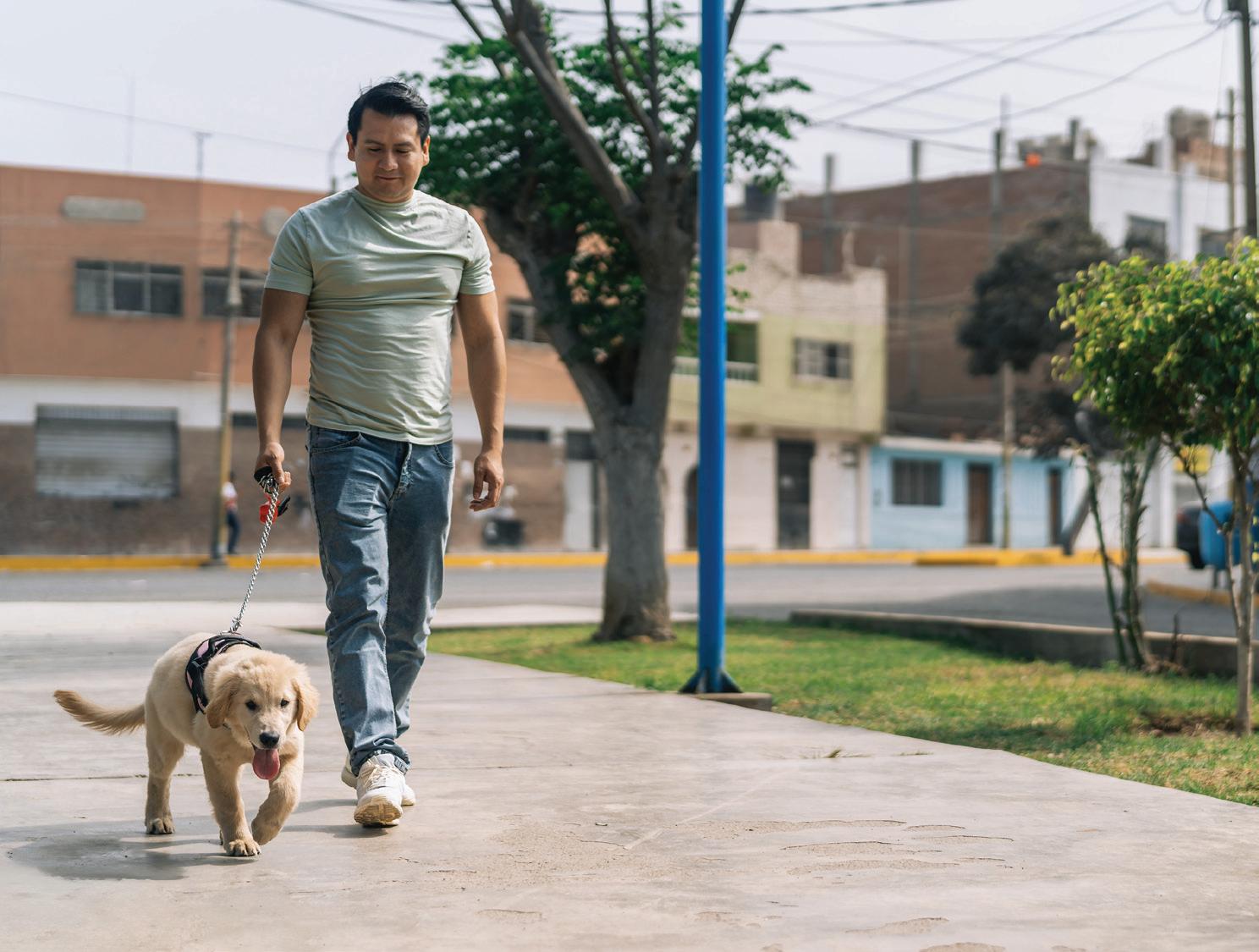
Taking your four-legged friend outdoors is one recommendation to get some extra steps in this National Walking Day. Photo courtesy of ShutterStock

The America’s 250th Grange Workgroup is celebrating our country’s 250th Anniversary by “throwing back” to some classic recipes from Grange cookbooks. Do you have favorite recipes that evoke the American spirit which you would like to see published again? Send them to Lew Gaskill at olgaskill@comcast.net. Please include which Grange cookbook your recipes come from.
American Goulash
3 slices bacon
1 pound Hamburger
1 large onion
1 can red kidney beans
1 pint tomatoes
Salt and pepper to taste
Abit More
1/4 cup butter
Courtesy of Mrs. Arthur LaMagdelaine
Williamsburg Mass. Grange #225 and Community Cookbook 1952
Cut the bacon in small pieces and cook until crisp. Remove bacon and brown the meat in the fat. Add onion, pieces of bacon, beans, and tomatoes.
Simmer until meat is tender and add salt and pepper to taste.
Courtesy of Florence Balmer Millbury Grange #107, Millbury Mass.
4 cups diced apples 1/2 cup granulated sugar
1/2 teaspoon salt
1/4 teaspoon cinnamon or nutmeg
1/2 to 1 cup broken nut meats
2 1/2 cups coarse graham cracker crumbs
1/4 cup brown sugar
1/2 cup cream or evaporated milk
Melt butter in 8x8x2-inch pan. Spread apples evenly in pan. Mix sugar, salt and apples; sprinkle over apples.
Sprinkle with nut meats and let stand. Thoroughly mix crumbs and brown sugar; moisten with cream., spread over first mixture. Bake at 400 degrees for 1/2 hour or until apples are tender; serve hot or cold with cream. Serves 8

Grange Member Benefit: ChoiCe hotels

Are you starting to plan your summer vacations? Grange members save up to 20% on best available rates at over 4,000 Comfort Inns, Comfort Suites, Quality, Sleep Inns, Clarion, MainStay Suites, EconoLodge, and Rodeway Inn and other Choice Hotels worldwide.
To receive your Choice Privileges membership and discounts, please visit choicehotels.com or call 1-800-258-2847 and provide the National Grange ID: 00211660