
Calling All Granges: Help Give Rural Women a Voice in Health Research
We are looking for 10 Granges to join a two-year project funded by PCORI, and we hope yours is one of them
For too long, the women of rural America have been overlooked by health systems built around urban centers, by research that rarely reaches their communities, and by decisions made about their care without ever asking what they actually need. The National Grange is setting out to be part of changing that.
We are proud to announce that the National Grange has received an Eugene Washington Engagement Award from the Patient-Centered Outcomes Research Institute (PCORI) to launch a new twoyear project: Rural Women Shaping Health Research that gives rural women a voice in the health research that affects their lives.
The award provides an extraordinary opportunity for rural voices to be heard. For many women aged 50 and older, a routine specialist visit means a half-day's drive, and could mean another trip just as far to pick up a prescription. These are the women who know what it means to care for a spouse, a parent, a child, or a neighbor, often while managing a chronic condition of their own. They know which services are hard to get, which questions don't get asked, and what actually matters when decisions are being made about health care.
Challenges in accessing care are exactly the kinds of experiences that health research needs to understand but doesn't always reflect. Rural women, and rural communities more broadly, have rarely been centered in this kind of work, and when they are, it's even rarer for them to have a real voice in shaping it.
This is our opportunity to change that, and Grangers are the right partners to make this happen.
PCORI funds only a small share of the applications it receives each year. Being selected says something about how seriously rural communities' perspectives are now being taken in health research. It also says something about us: the trust the Grange has built in rural communities over nearly 160 years is the kind most research institutions spend decades trying to earn from scratch.
read more on page 3

Manson Grange Honors Seeds of Service
submitted by Debbie Conwell Manson Grange #796 (WA)
Manson Grange #796 of Manson, Washington, has undergone significant changes over the past two to three years. Our goal has been to make the Grange Hall universally accessible, safe, and relevant for our community for generations to come.
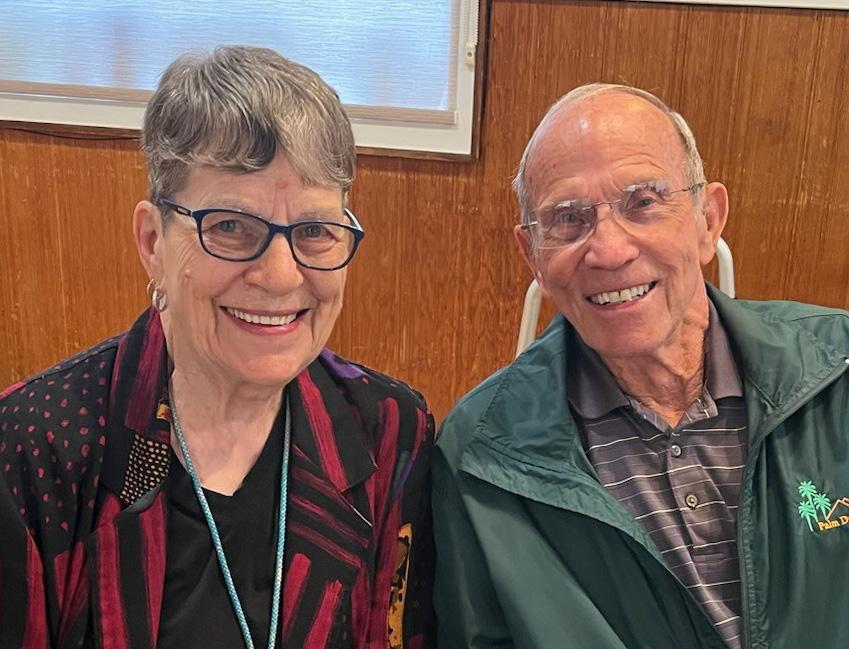
On May 28, 2026, we had the privilege of recognizing many of the individuals who have helped make these recent transformations possible, as well as our 50-year legacy members, Earl Stafford and Rosanna Detering, whose deep roots of service have helped shape the Grange for decades. The evening’s theme, “Seeds of Service,” celebrated the dedication, generosity, and servanthearted spirit that continues to help the Manson Grange grow and thrive.
We are incredibly proud of all that has been accomplished and deeply grateful for everyone—young and old— who have come together to preserve this important and iconic community space. The Manson Grange is more than
a building; it is a place that connects our past, present, and future.
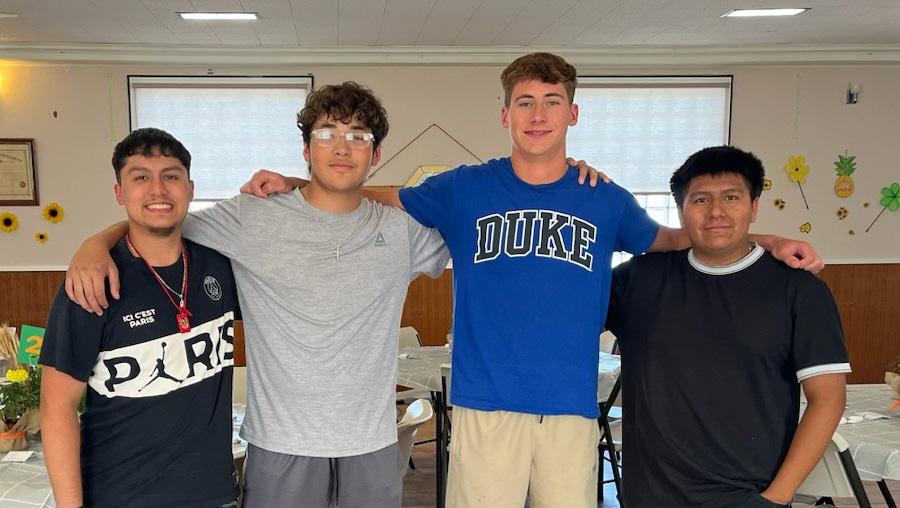
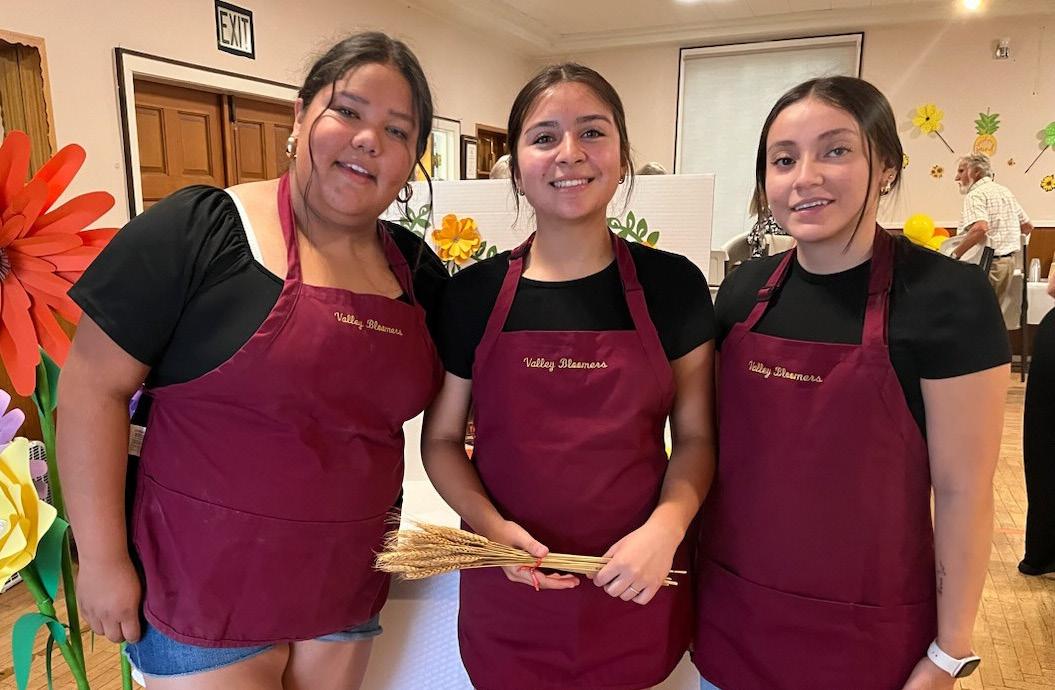
A special thank you goes to the outstanding students from Manson High School who graciously helped set up, serve, and support our event. You represented your school and community so well!
Because of the strong foundation laid by those who came before us and the ongoing efforts of today’s volunteers, the Manson Grange continues to thrive, grow, and serve our community in countless ways.
While we are proud of how far we have come, there is still work to be done. Like every seed that is planted, the Grange continues to grow through the care, commitment, and service of its members and supporters.
Above: Students from Manson High School helped support the Seeds of Service event by setting up and serving the meal.
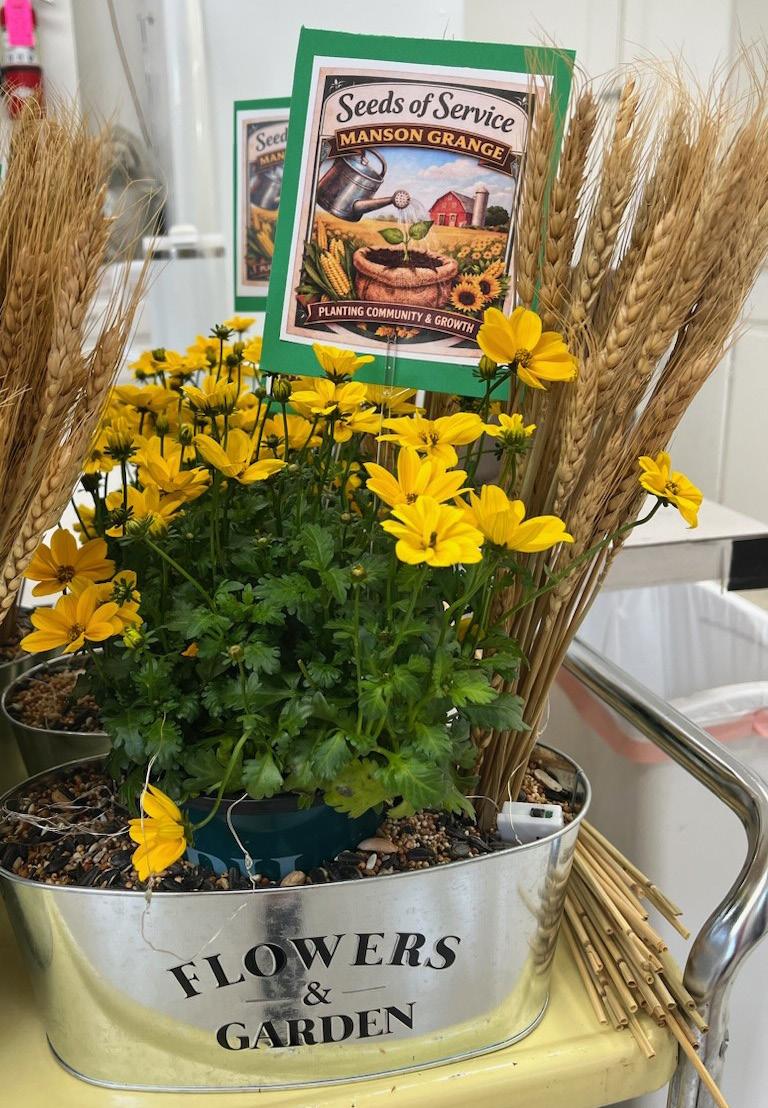
Below: The centerpieces honored the “Seeds of Service” throughout the night.
provided
Photos
The evening’s honorees: Rosanna Detering and Earl Stafford. Photo provided
Participate in a new Project
This work also continues something the Grange has stood for since its beginning. Women have held leadership roles in the Grange since its founding in 1867, long before they had the right to vote. Giving rural women a real voice in shaping health research is that same principle carried into a new setting.
We're Looking for 10 Granges
Each participating Grange nominates one woman member, aged 50 or older, to serve as a Community Health Champion (also called a Key Stakeholder). She doesn't need to be a health expert, in fact, that's the point. We're looking for women with lived experience, common sense, and a clear understanding of what life looks like in their community.
Through training and community roundtables, she'll help identify which health questions matter most to rural women, what good outcomes look like in real rural life, and bring that knowledge into the hands of researchers who need it.
This is also a chance for your Grange to bring people together (members and neighbors from outside the Grange alike) around something new for your community. Over the two years, there will be both online and in-person gatherings, giving your Grange a natural way to spread the word about the work you're doing and draw in others who care about rural women's health and want to be part of it.
Support and Compensation
We're looking for teams who are genuinely interested in this work, as the project is most successful when participants feel personally connected to the importance of elevating rural
women's health perspectives. To recognize the time, effort, and contributions involved, both the participating Grange and the Community Health Champion will be compensated for their work.
Timeline
Applications are being accepted from July 1 through August 10, 2026. Teams will be selected by August 20, 2026. The project begins in September 2026 and runs through April 2028.
Have Questions?
Contact us at rwshr@grange.org or join one of our open office hours - an informal call where you can ask anything and get a feel for what the project involves:
• Friday, July 17 – 3:00–4:00 PM ET
• Thursday, July 30 – 11:00 AM–12:00 PM ET
• Monday, August 3 – 5:00–6:00 PM ET
Register for office hours: https://form.jotform. com/261736265028055
Want to learn more?
Read the full details, eligibility, timeline, and how to apply here: https://www.nationalgrange.org/rural-women-shapinghealth-research/
Ready to apply?
Let us know through this short form before August 10: I want to participate in the project
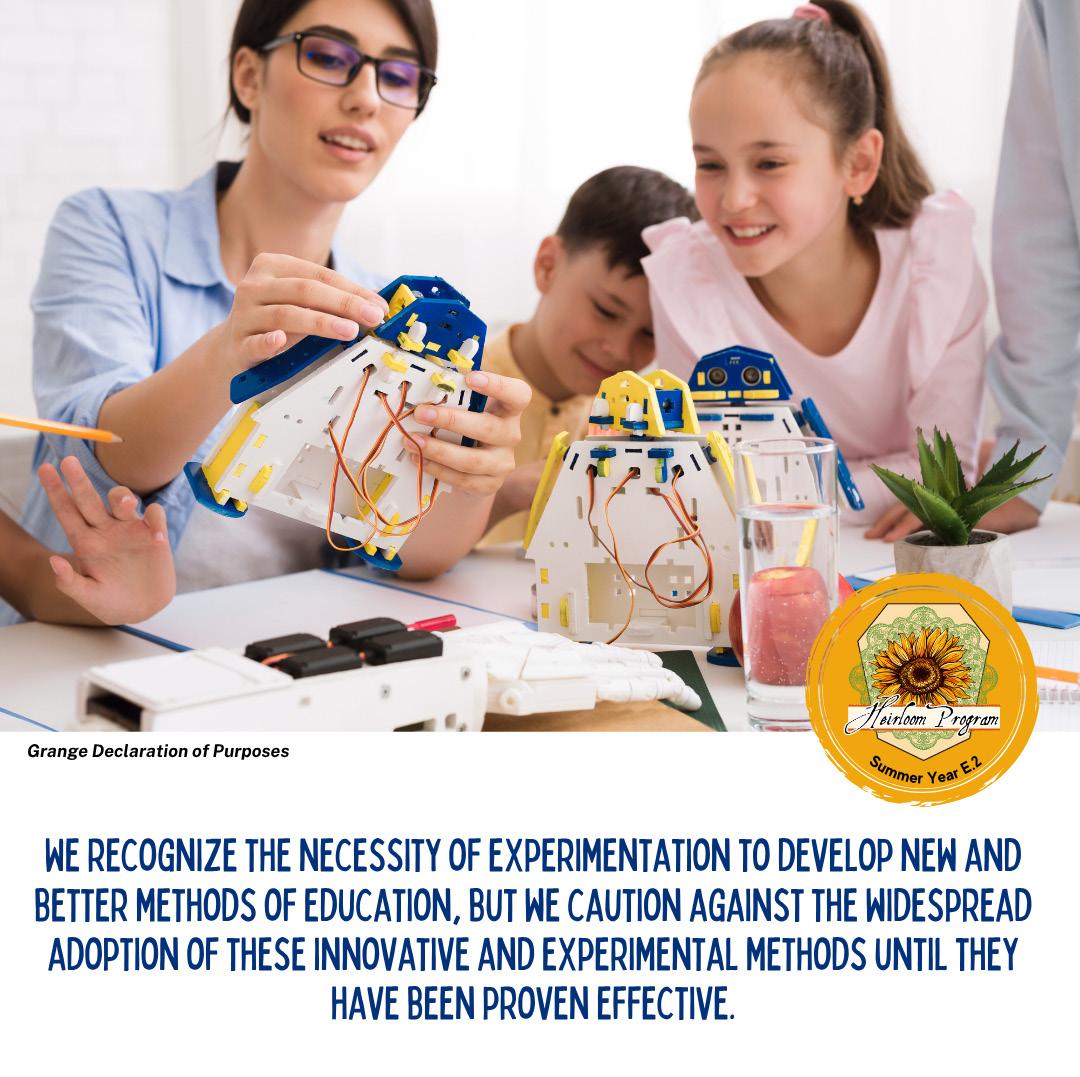
Grange Heirloom for July
Use the Grange Heirloom Program to teach your members and the community about some of the key cornerstones of the Grange. Materials are available at http://www.nationalgrange. org/heirloom-program
You are welcome to choose any of the Grange Heirlooms at any time. We are currently in “Year E,” running through February 2027.
Use the hashtag #GrangeHeirloom when you share these important pieces of our work and history on social media.
Seeking Advocacy Wins!
Has your Grange (State, Pomona, Community, or Junior) participated in an advocacy project or event, connecting with local, state, or federal legislators about an issue?
We are looking to include “success stories” in a new project. If you’re willing to share your stories and photos, please send them to National Grange Intern Savannah Mangold at savannah.mangold@grange.org.
Publisher is going away... now what?

by Philip J Vonada National Grange Communications Director
For many Granges, Microsoft Publisher has been the go-to program for creating newsletters, event flyers, brochures, programs, calendars, and just about everything else you can print for nearly 30 years. It hit a sweet spot between the limitations of Word and the expanse of a professional design software. You could drag things around until they looked just right, build templates you used year after year, and create publications that looked polished without needing a graphic design degree.
Unfortunately, Publisher’s days are numbered. Microsoft will discontinue the program in October 2026, and it will no longer be included with or supported by Microsoft 365 subscriptions. While your existing Publisher files won’t disappear overnight, they’ll become harder to edit as time goes on.
The good news? There are plenty of great alternatives, and some of them might actually make your life easier.
If your Grange mainly creates newsletters, meeting programs, or simple flyers, you may not have to look very far. Microsoft Word has come a long way over the years. It now includes newsletter, brochure, and flyer templates, handles images much better than it used to, and is already installed on many computers.
The One I’d Recommend First
If you’ve never tried Canva, now’s a great time.
Canva is free to get started, easy to learn, and packed with templates for almost anything your Grange might want to create. Need a flyer for a chicken barbecue? A quarterly newsletter? A Facebook graphic? A banquet program? A big pop-up banner to promote your Grange? Chances are there’s already a template waiting for you.
It also does a few things Publisher never could. You can work on projects from any computer, share designs with other officers, and even have multiple people editing the same project at once. Plus, it includes thousands of free photos, graphics, and icons that can really make your publications stand out.
For many Granges, Canva won’t just replace Publisher—it’ll save time and energy, and allow you to create more vibrant publications.
Check out our “Canva 101” presentation to see if it might be right for you: https://www.youtube.com/watch?v=xNGwn8hsR_o
Want Something More Like Publisher?
If you’ve always liked Publisher because it gave you complete control over your page layout, there are a couple of good options.
Scribus is completely free and works much like traditional desktop publishing software. It has a bit of a learning curve, but it’s a solid choice if you regularly put together longer newsletters or more detailed publications.
Another option is Affinity Publisher. There is a free version available, as well as the option to have paid add-ons. It’s powered by Canva, so many reviews suggest it’s a comfortable crossover between Microsoft Publisher and the Canva Suite.
Google Docs and Google Slides are free and make it easy for multiple people to work together. You will need a free Google or Gmail account.
Adobe Express is great for quick flyers, posters, and social media graphics. You can access Express for free, but an Adobe Pro account will get some additional features.
VistaCreate offers many of the same features as Canva, including free templates. This is powered by VistaPrint, so it’s easy to design then send directly to get printed.
LibreOffice Draw is part of the free LibreOffice suite and can handle many basic publishing projects. However, Draw has some limitations that may be prohibitive.
Every Grange is different, so there’s no single “right” answer. The best program is the one your members will actually use.
Make the Switch Before You Have To
If your Grange has years’ worth of Publisher files, don’t wait until October to think about them.
Save important publications as PDFs so you always have a copy. Then start recreating your most-used templates—your newsletter, event flyer, membership brochure, or banquet program—in whatever software you decide to use next.
You don’t have to convert everything at once. Just tackle a few things at a time, and by the time Publisher is gone, you’ll barely notice.
Nobody likes learning new software. But this is one of those changes that might end up being a blessing in disguise.
Today’s design programs are easier to use than ever before. They include professional templates, built-in graphics and photos, and tools that let several people work together instead of relying on one person with one computer.
Publisher served Granges well for a long time, and many users will miss it. But we encourage you to use this as a chance to freshen up your communications, involve a few more members in the process, and make creating your next newsletter or flyer a little easier—and flashier—than it used to be.

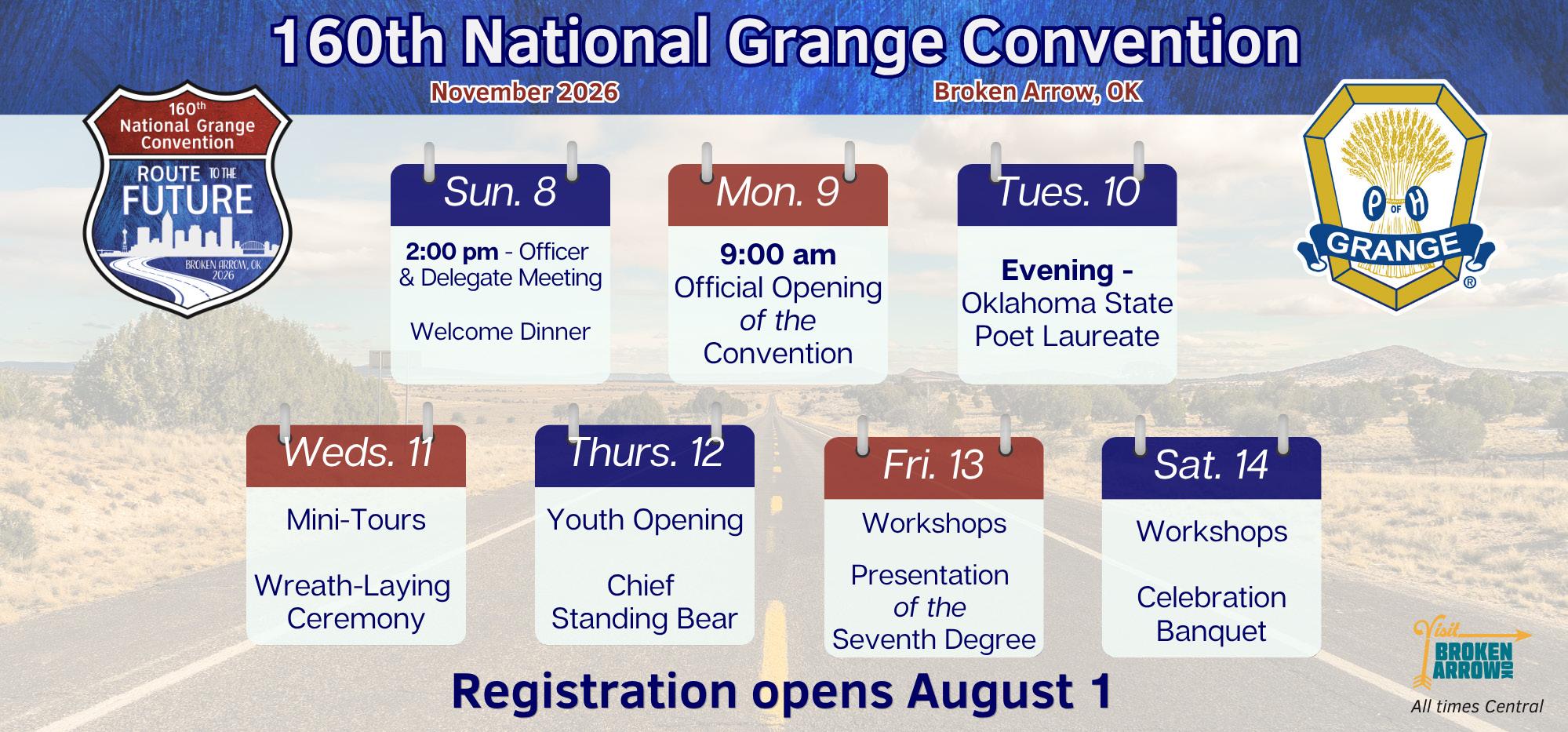
Opportunities at the 160th Annual National Grange Convention

The National Grange Convention would not be possible without the incredible volunteers who step up to serve!
We are looking for enthusiastic volunteers to help make this year’s convention a welcoming, successful, and memorable experience for everyone attending. Whether you
can help greet guests, assist with events, support activities, or simply lend a helping hand where needed, your time and talents can make a huge difference.
Volunteering at Convention is a wonderful opportunity to:
• Meet Grangers from across the country
• Build connections and friendships
• Serve the organization we all care about
Join Us for a Veterans Day Wreath-Laying Ceremony
The National Grange invites all convention attendees to participate in a special Veterans Day Wreath-Laying Ceremony during this year's National Grange Convention in Broken Arrow, OK.
Veterans Day – November 11 7:30 a.m. (0730 hours) CST
Veterans Park, 1111 S. Main St, Broken Arrow, OK
This meaningful ceremony is open to everyone attending the convention, and we encourage all members and guests to join us as we honor the service and sacrifice of our nation's veterans.
Veterans Needed for Ceremony Participation
We are seeking veterans representing all six branches of the
• Be part of something meaningful and memorable
No matter your experience level, there is a place for you to get involved! We encourage members of all ages to join us in helping make Convention a success.
If you are interested in volunteering, we would love to have you on the team! Please fill out this link to express your interest: https://grange.biz/160volunteers.
U.S. Armed Forces to assist with the wreath-laying ceremony. If you are a veteran and will be attending the convention, please contact Mark Gibbons at mark@retiresafe.org
When responding, please include:
• Your branch of service
• Your rank at the time of separation or retirement
One representative from each branch will be selected to participate in the ceremony.
This year's Veterans Day observance is proudly sponsored by Potomac Grange #1.
We look forward to honoring our veterans together in a spirit of gratitude and remembrance.
Opinion: City Waste, Rural Soil: Discussing a Fair Share in Biosolids Planning
by Holland Warren National Grange Intern
Political Science & Environment and Society major, Florida State University
Every year, cities produce millions of tons of wastewater solids. For decades, the solution has seemed simple. Wastewater treatment plants separate the liquids from the solids. Instead of dumping these solids into landfills, utilities treat them into a fertilizer called biosolids. This fertilizer then goes directly to agricultural lands. To a farmer, this sounds like a great deal.
Biosolids are rich in nutrients like nitrogen and phosphorus. They help crops grow and improve soil health. But who really bears the burden of this urban waste? The reality is that rural communities are carrying a heavy load without a fair say in the matter.
In the United States, regulations for biosolids have been in place since 1993 under the 503 Rule. This rule sets strict limits for heavy metals, pathogens, and nutrient application to make the waste safe for farms. Many scientists argue that biosolids support a circular economy. They recycle nutrients back into the earth, lower greenhouse gas emissions, and reduce the need for expensive chemical fertilizers.
Some long-term studies even show that direct health risks from pathogens remain low. But other science shows a darker side. When fields receive heavy or repeated applications of biosolids over a decade or more, major problems start to emerge. In fact, research by Murray McBride shows that long-term application can cause soil extractable phosphorus concentrations to spike to ten times the upper limit for agricultural soils. This excess phosphorus becomes highly soluble, creating a long-term source of runoff that contributes directly to the eutrophication of adjacent surface waters.
Furthermore, toxic accumulations of copper, zinc, and molybdenum can negatively impact long-term soil fertility and overall ecosystem functions. Wastewater treatment plants simply cannot filter out everything. Emerging contaminants like microplastics, pharmaceuticals, and toxic PFAS chemicals pass right through the treatment process. These chemicals can build up in the soil and enter the food chain. PFAS can cause serious health issues for humans and animals even in tiny amounts.
For people living near application sites, the problems are not only environmental. Residents frequently report terrible odors that ruin their quality of life. These smells interfere with daily chores and prevent families from socializing outside. Some neighbors even report falling ill after application events.
The answer to the question of why rural areas have to deal with this comes down to a lack of political power and poor regional planning. Urban centers hold the political power and make the rules. They often look for the path of least resistance

when disposing of waste. Rural areas are perfect targets because they have large, isolated tracts of land. Additionally, rural communities face systemic hurdles because they lack vital institutional resources, including funding, legal personnel, and specialized communication networks to lobby local governments effectively. This lack of bargaining power leaves them highly vulnerable to industrial and political forces that seek cheap waste disposal solutions.
This creates a dynamic that researchers call NOPIMBY, or “No Outside Problems In My BackYard.” Rural residents feel that urban centers are dumping their problems onto countryside neighbors. When people try to complain, they face major hurdles. Many residents report a total lack of public notification before biosolids are applied. They also find it very difficult to report their concerns to public officials or influence local decisions.
We need a new approach to sustainability. True sustainability cannot just be about city dwellers feeling good because they recycled their waste. In 1987, the United Nations defined sustainable development as “meeting our current needs without harming future generations.” Newer frameworks call for “neo-sustainability”. This idea demands that our social and economic systems respect ecological limits and promote fairness. Planning must change to reflect this reality.
Historically, urban planning focused heavily on fixing city issues like sanitation and crowding. Today, city planners often focus on large issues like climate change or building downtown parks. Unfortunately, they frequently ignore distributive justice and procedural justice. Distributive justice ensures that environmental burdens are shared fairly. Procedural justice ensures that everyone has a voice in how decisions are made. Planners must stop relying purely on technical language and start talking to real people. They need to practice collaborative planning. This means bringing diverse groups together to build a shared purpose and listen to rural realities.
Biosolids can be a valuable tool for agriculture, but we cannot ignore the risks. Rural communities deserve transparency, early notifications, and a real seat at the planning table. True sustainability means protecting both the soil we farm and the people who live on it.
New President Elected in Oregon
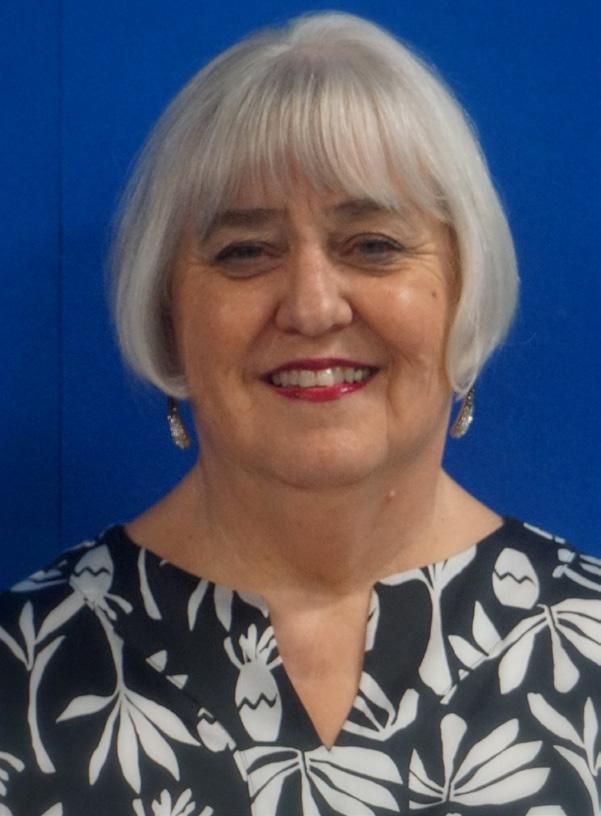
Susan Noah of Mohawk-McKenzie Grange #747 was elected as the President of the Oregon State Grange. Photo provided
At their annual convention, held in Baker City in June, the Oregon State Grange (OSG) elected Susan Noah of Mohawk-McKenzie Grange #747, Lane County as their President for the 202628 term.
She previously held the position for ten years from 2012-2022. In between, Sister Susan served two 2-year terms on the State Grange executive committee and was the State Director for the GWA (Grange Workers Activities) committee. Additionally, she currently serves on the Executive Committee of the National Grange.
Susan graduated from the University of Oregon with a Bachelor of Arts in Geography in 1976. She worked in the building products industry for most of her career, In 2021, she retired from Springfield Lumber Products.
She and her husband Mark, also a past OSG President and current Legislative Chairman of Oregon State Grange, live in Springfield and have a beautiful Gordon Setter named Roxy.
Congratulations, Susan!
Closing the Gap for Small Farm Labor
Proposed Amendment to H.R. 9535, the Securing America’s Workforce Act (SAWA): Establishment of a Small Farm Agricultural Worker Program
by Hailey Lincoln Williamson National Grange Intern
The National Grange supports the introduction of H.R. 9535, the Securing America’s Workforce Act (SAWA), introduced on June 30, and recognizes that the legislation represents an important step toward modernizing agricultural labor policy and improving access to a legal agricultural workforce.
The National Grange has met with key congressional staff directly involved in drafting SAWA and assisting the Chairman in advancing the legislation. These discussions have acknowledged that while the bill is not without shortcomings, the current Administration has made clear that it is not willing to consider creating an entirely new agricultural guest worker program outside of the existing H-2A framework. Under these political constraints, SAWA represents the strongest opportunity for meaningful agricultural labor reform and a practical compromise that can advance through Congress.
However, significant barriers remain for small and mid-sized farms that require only a handful of seasonal employees. For these operations, participation in the existing H-2A program is often financially and administratively infeasible.
Current H-2A employers must navigate multiple federal agencies, extensive paperwork requirements, recruitment
mandates, housing inspections, transportation obligations, and escalating application costs. According to the American Farm Bureau Federation, application fees alone for a single H-2A worker can exceed $1,350 before accounting for legal assistance, housing, transportation, and compliance expenses.
The USDA further estimates that employer-provided housing costs range from approximately $9,000 to $13,000 per worker, in addition to transportation and wage obligations (American Farm Bureau Federation, 2024; USDA Farmers.gov, 2025). These costs place the program beyond the reach of many diversified, specialty crop, livestock, and family-scale operations.
To address this gap, Congress should consider establishing a Small Farm Agricultural Worker Program within SAWA specifically designed for agricultural employers seeking between one and five temporary foreign workers annually.
Rather than creating an entirely separate visa category, this program could operate as a simplified permit pathway administered within the broader H-2A framework, reducing administrative burdens while maintaining strong worker protections. The goal would be to provide small farms with an affordable, legal avenue to hire seasonal workers without requiring them to
continued on page 9
Hamp Watch: Where is our National Grange PResident?
This monthly feature highlights where National Grange President Chris Hamp has been and what she’s been up to. Do you want to see her in your neighborhood or at your Grange event? Email her at champ@nationalgrange.org. This week, we’re looking back at June.
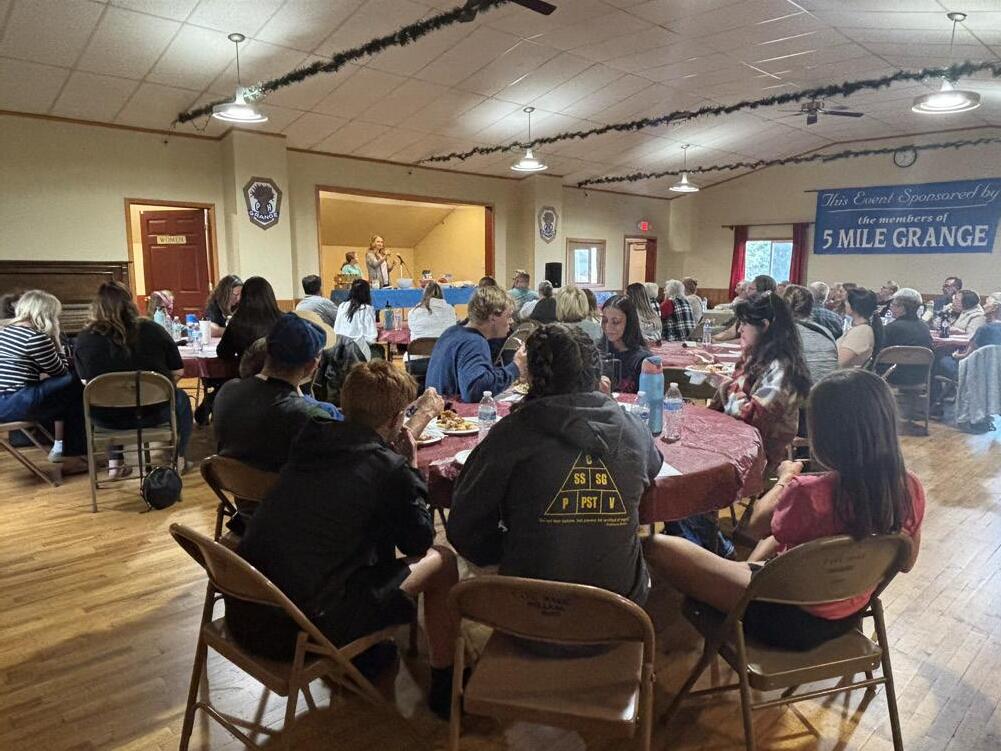
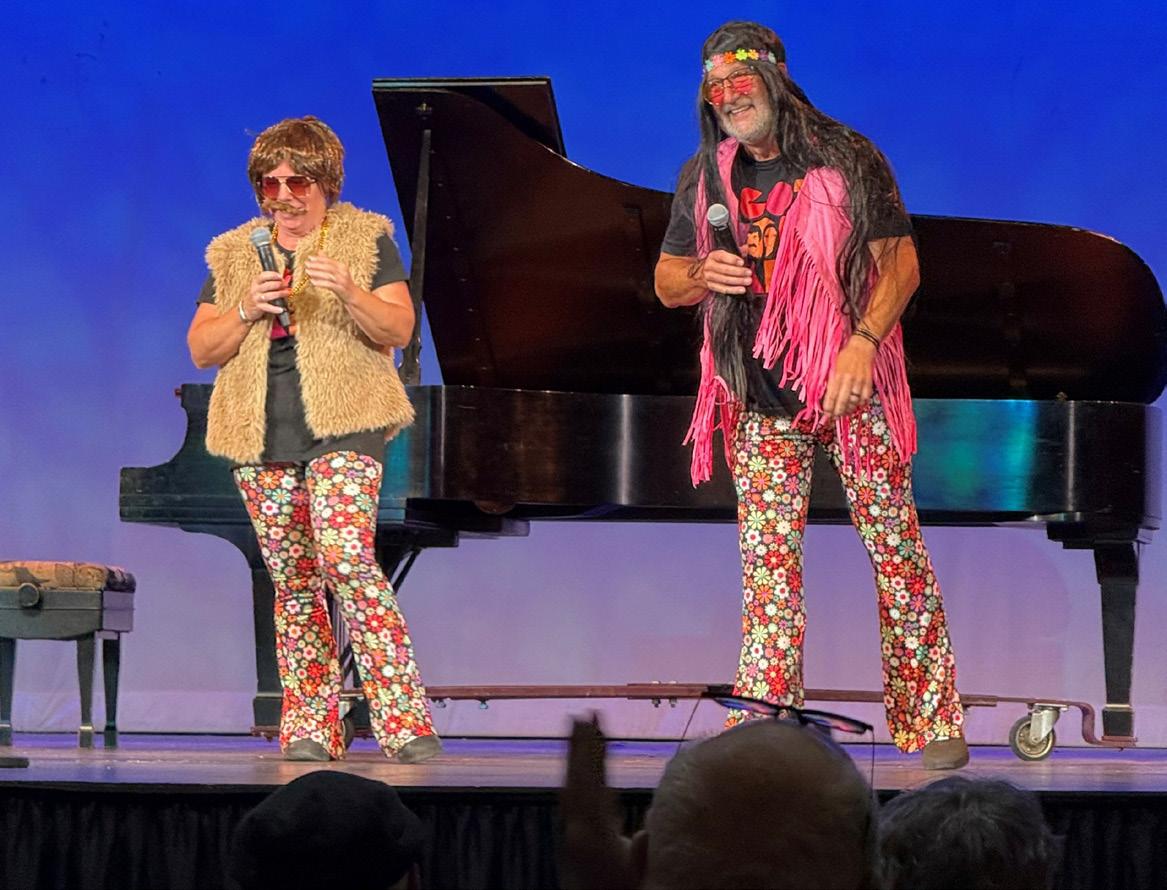
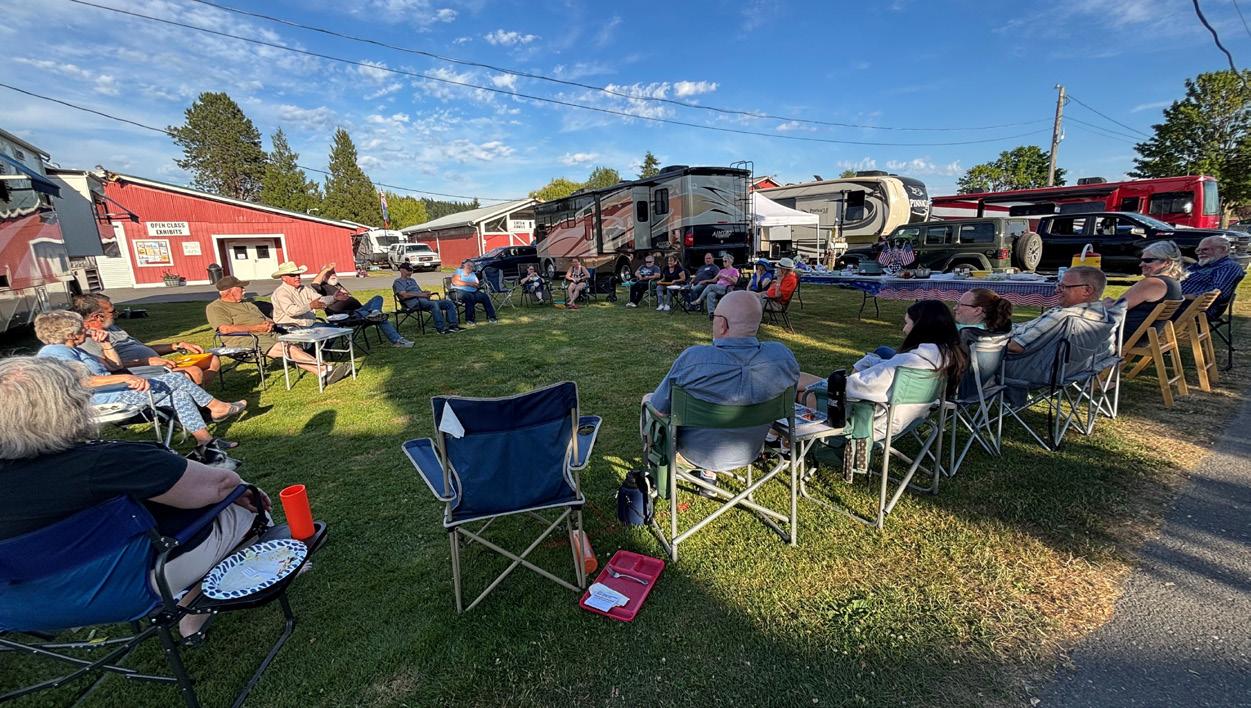
June 1: Five Mile Prairie Grange #905 (WA) sponsored a free-to-the-public sourdough bread-making class, which filled the hall.
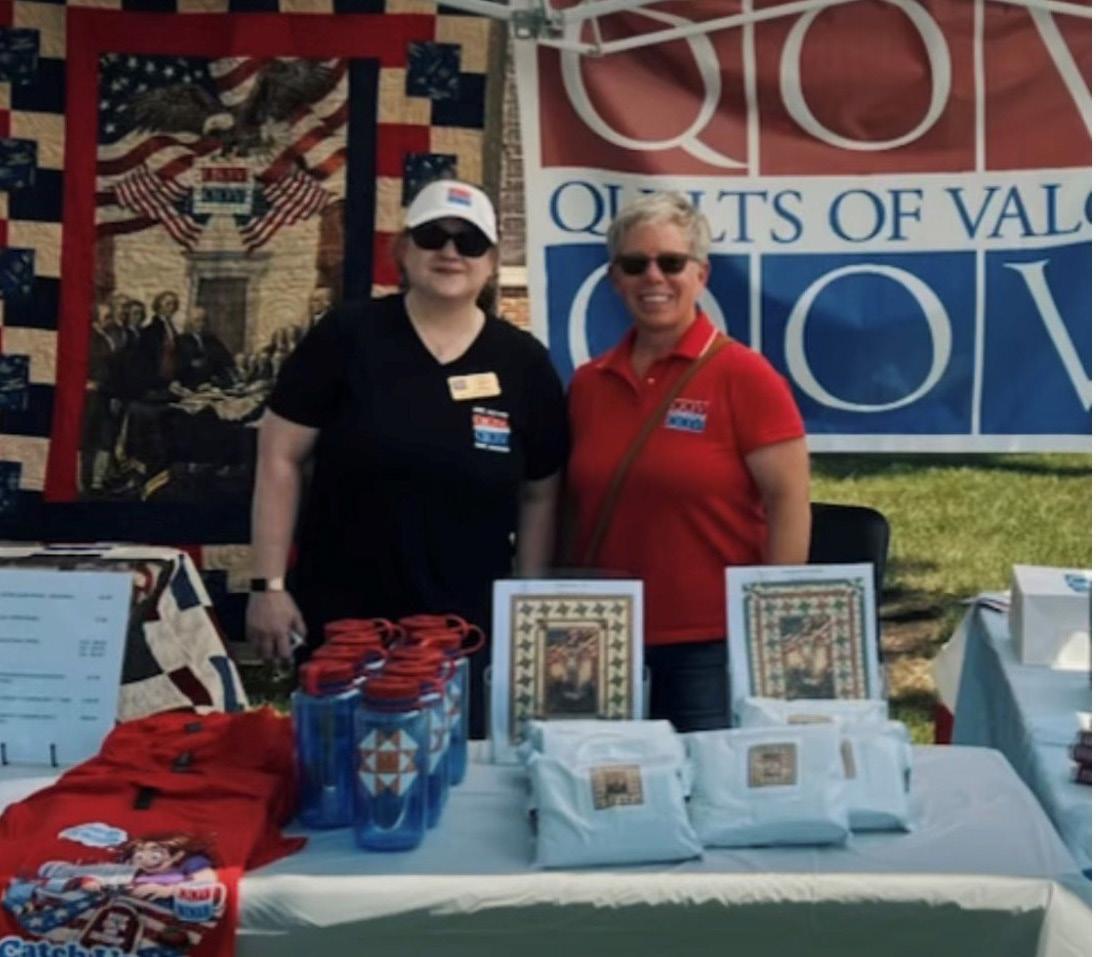
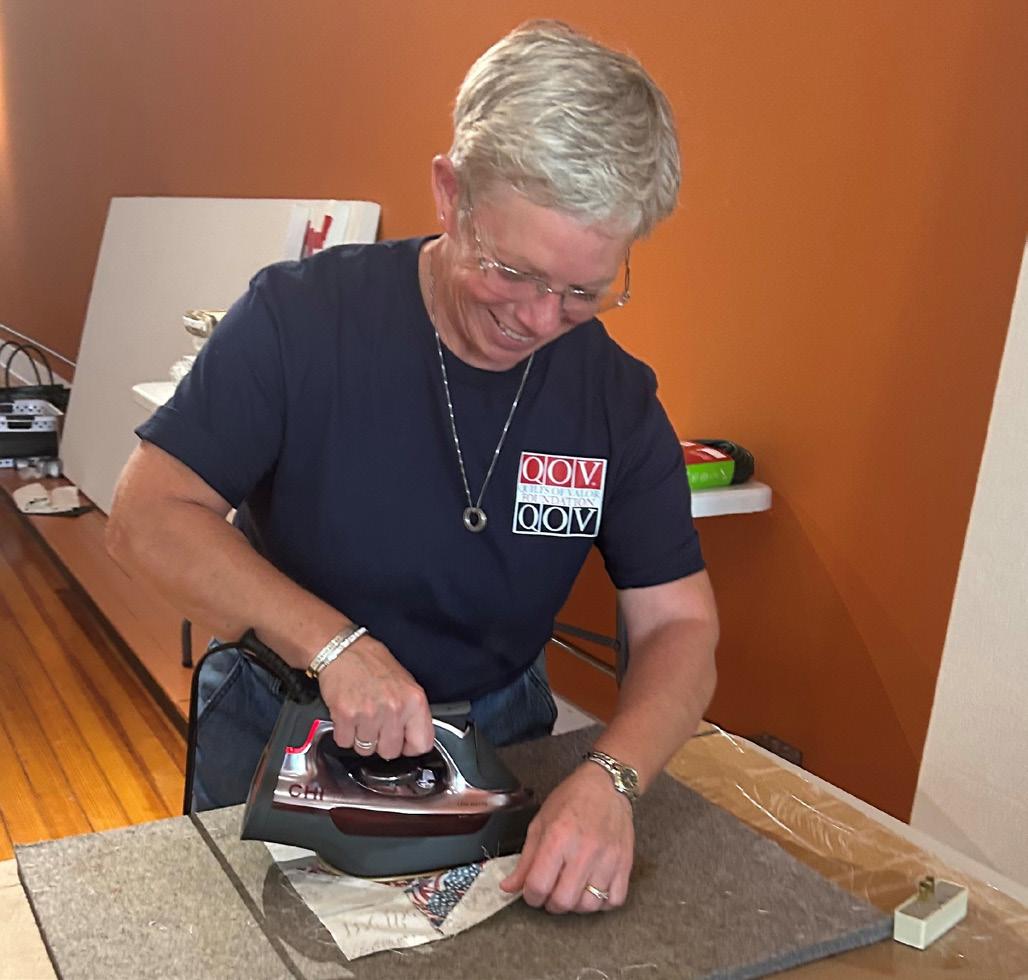
June 3-6: (Above, Left) The Board of Directors of the Quilts of Valor Foundation met in person in Winterset, Iowa, for a board meeting and strategic planning workshop, to participate in National “Catch Up” Day, and to attend the Airing of the Quilts celebration.
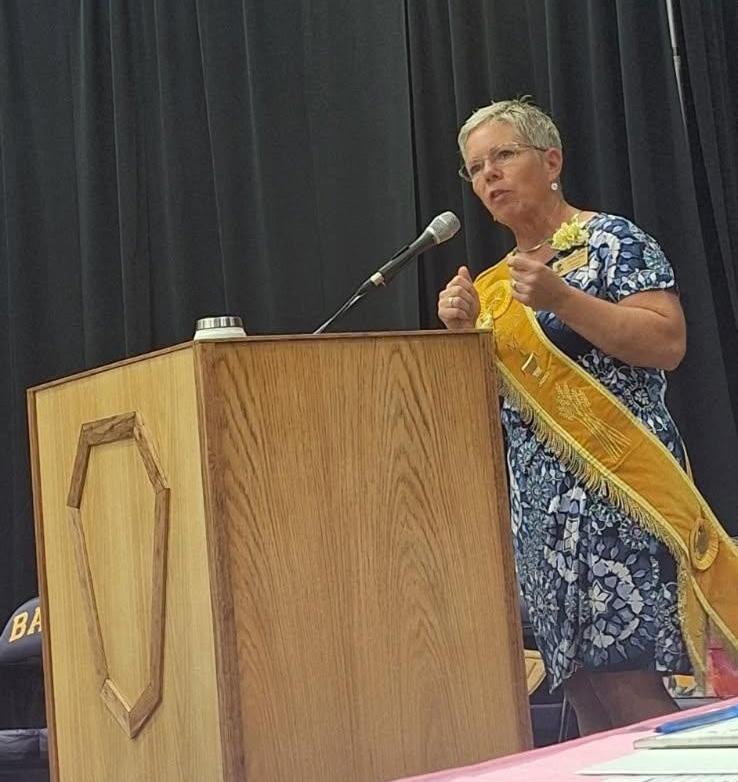
June 20 & 21 (Above, Left): We were fortunate to be able to attend the 153rd annual session of the Oregon State Grange in Baker City for most of their first two days.
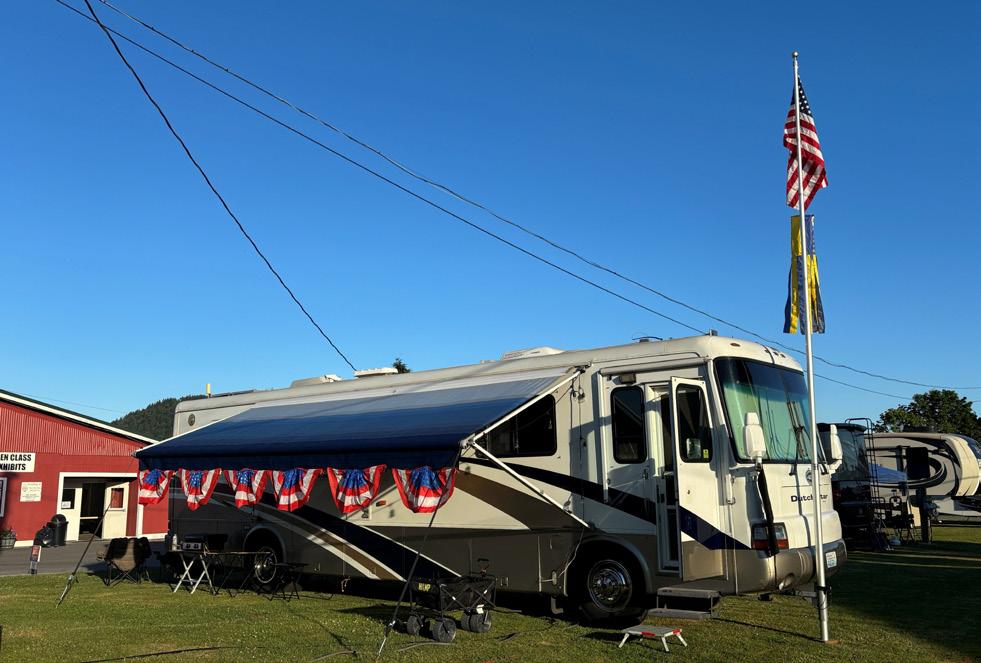
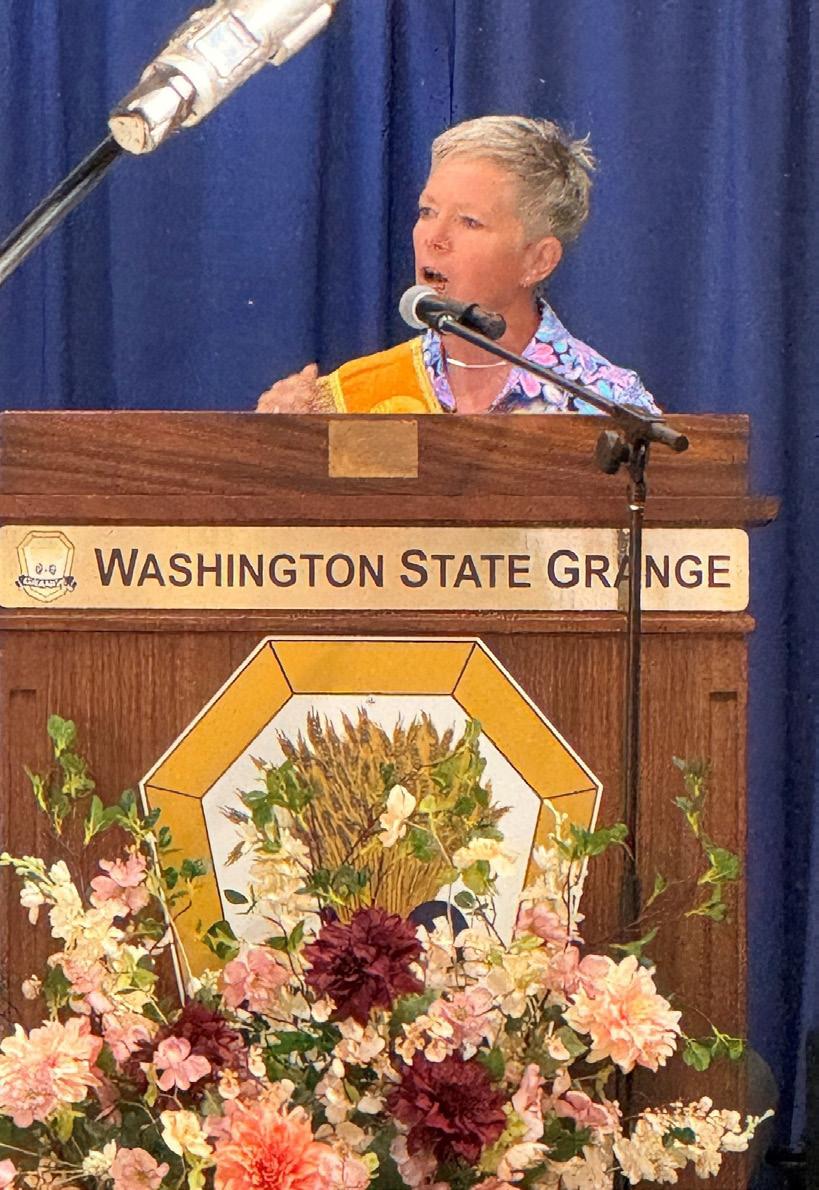
June 22-27: We served as delegates to the 137th annual session of the Washington State Grange in Mount Vernon.
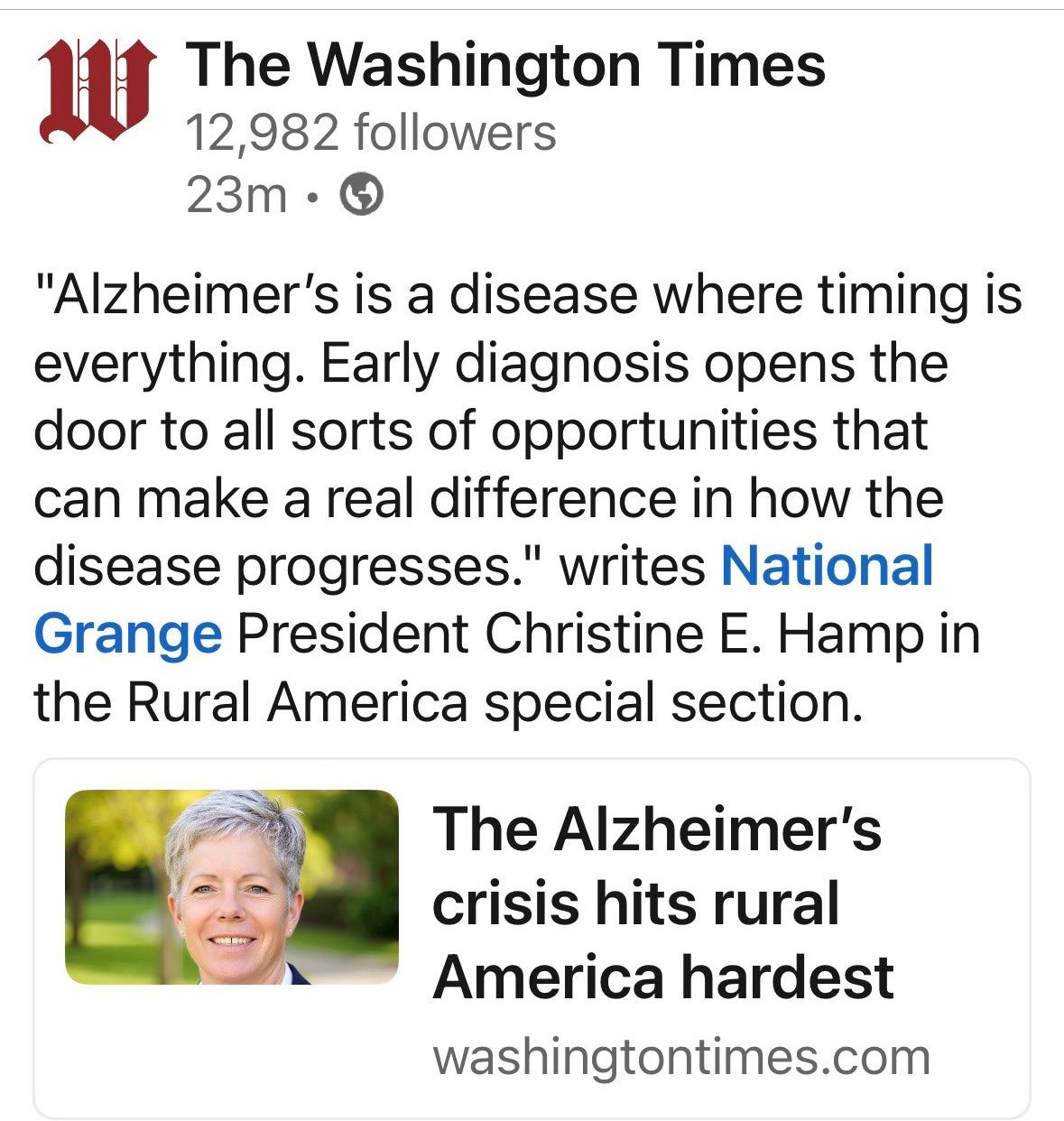
June 25: An op ed on the Alzheimer’s crisis in rural America was included in the June 25 special section on Rural America in The Washington Times. We continue to work hard at getting our name out front on the important issues of the day.
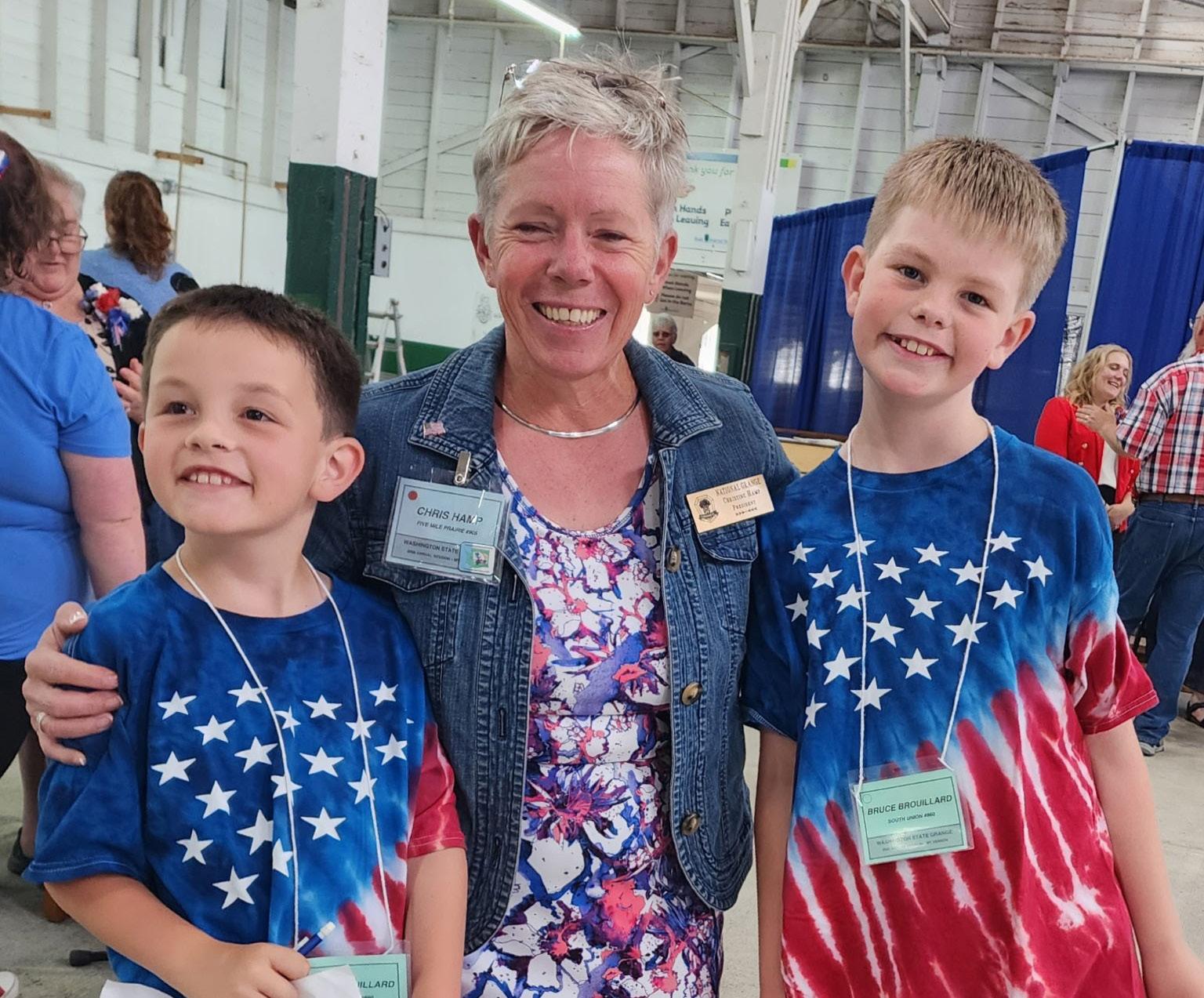
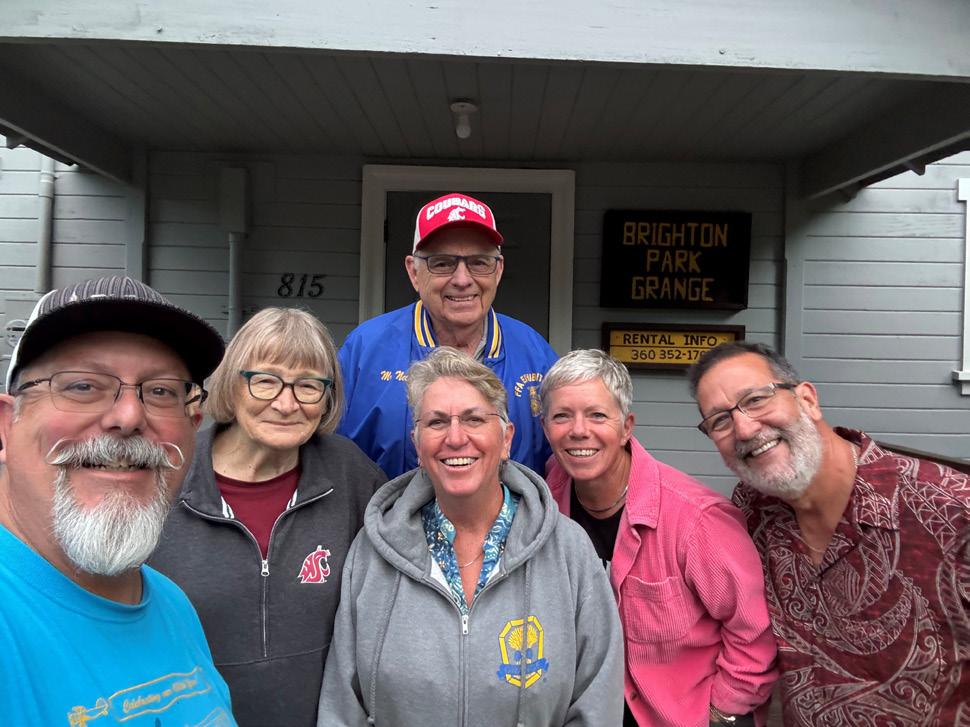
June 27: Following convention, we were able to catch up with long-time Grange mentors and friends,
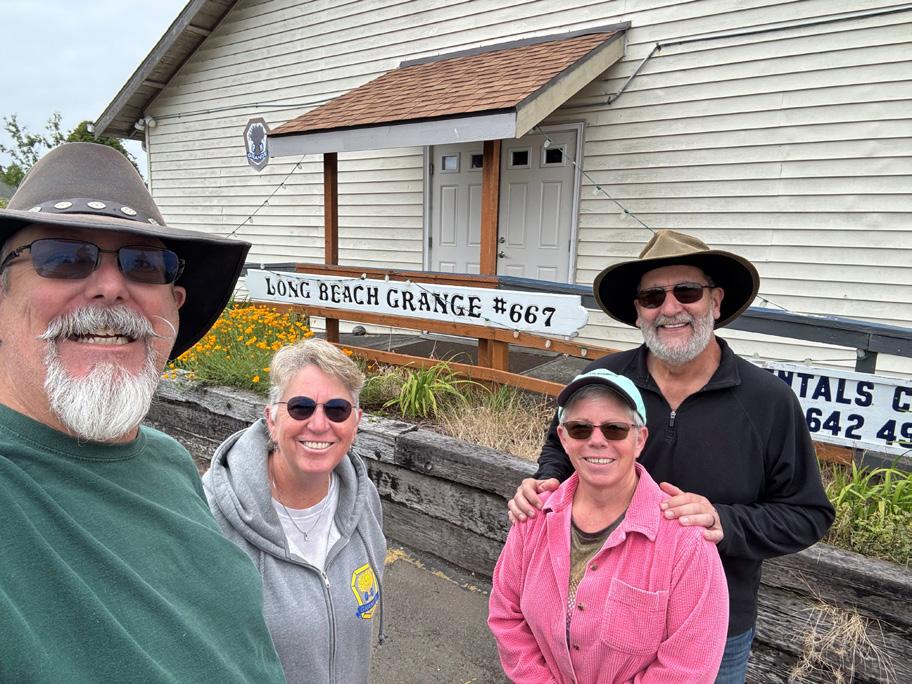
June 29: We took the long way home from our State Grange session and enjoyed camping with Paul and Susan
California
the
meaning a
was in order.
Ron and Kay Nelson of Brighton Park Grange #163 (WA).
Hanks of
near
beach on Long Beach –
visit to Long Beach Grange #667 (WA)
Farm Labor
navigate the full complexity and cost of the traditional H-2A process.
One potential model could be a streamlined bilateral agreement between the United States and Mexico. While recognizing the welldocumented shortcomings and worker abuses associated with the historic Bracero Program, a modern system would incorporate the robust worker protections already required under H.R. 9535, including:
• Adverse Effect Wage Rate (AEWR) protections;
• Housing and transportation standards where applicable;
• Anti-retaliation and worker protection provisions; and Mexico currently supplies more than 90 percent of all H-2A workers employed in U.S. agriculture, making a bilateral pilot program a logical starting point.
A streamlined small farm pathway would ensure that family farms and smaller producers—many of whom
cannot absorb the substantial fixed costs associated with H-2A— have access to a reliable and legal workforce. Without such a pathway, a significant portion of American agriculture will continue to face chronic labor shortages despite the broader reforms contained within H.R. 9535.
Ultimately, the National Grange supports a simple permit system that allows international agricultural workers to enter the United States legally for a defined period to perform agricultural work. Such a system should provide sufficient flexibility for workers to move among participating farms as seasonal labor demands shift, while minimizing unnecessary administrative burdens for both employers and employees.
H.R. 9535 presents the best opportunity in years to advance agricultural labor reform. As Congress continues to refine the legislation, policymakers should
continued from page 7
ensure that the final bill works not only for large agricultural employers but also for the thousands of small and mid-sized family farms that form the backbone of rural America.
References
American Farm Bureau Federation. (2024). Snail Mail and Government Bills: H-2A Application Costs Application fees for one H-2A worker exceed $1,350 and often require legal assistance in addition to government fees.
American Farm Bureau Federation. (2024). Critical Farm Labor Visa Use Ticks Up. More than 90% of H-2A workers originate from Mexico.
USDA Farmers.gov. (2025). Costs of the H-2A Visa Program. Employer housing costs are estimated at approximately $9,000–$13,000 per worker, with additional transportation, visa, and administrative expenses.
Enter the “BEst in Rural Writing” Contest
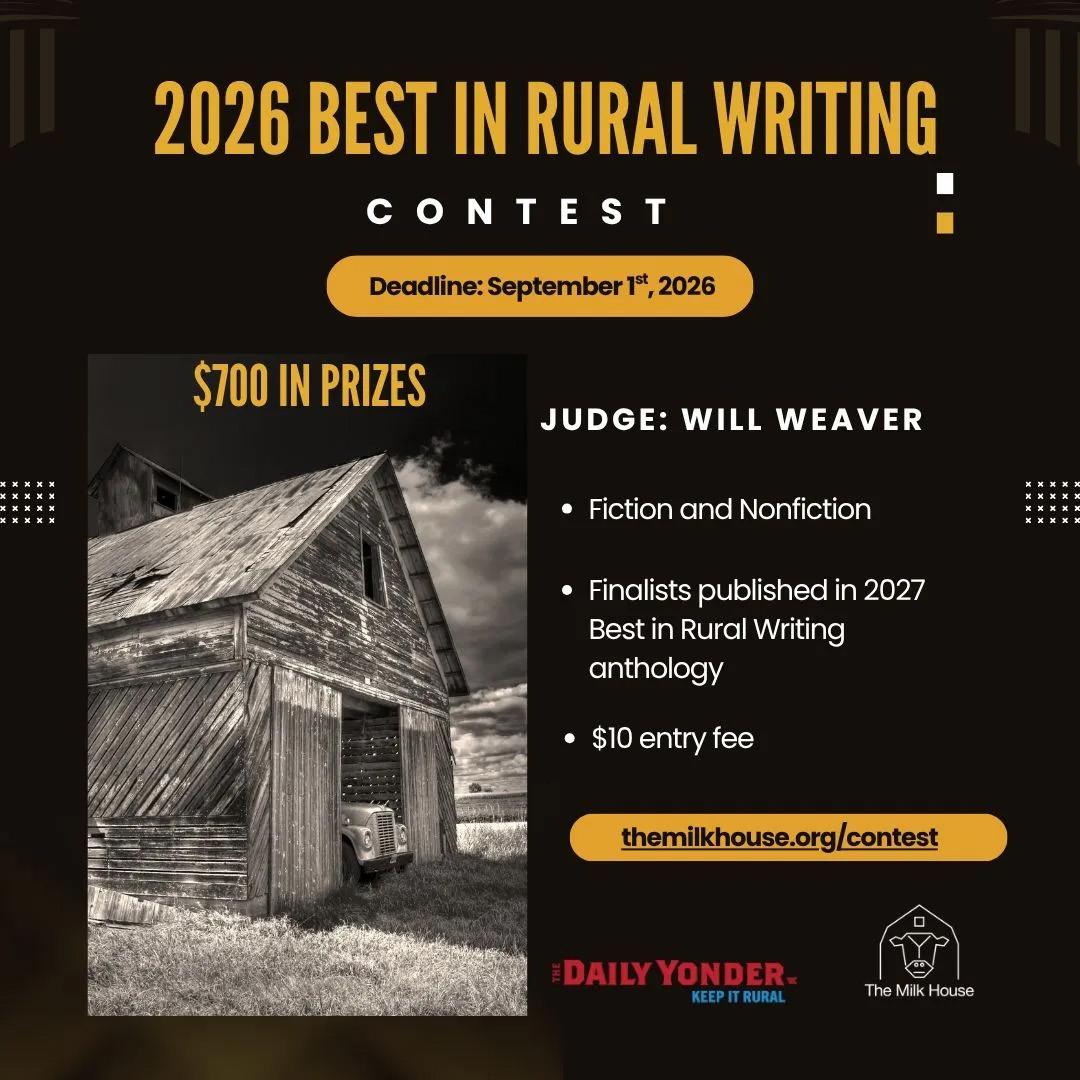
The Best in Rural Writing contest is open to everyone in the world. The work can have already been published (or scheduled to be published). By submitting, the author is agreeing to the possibility of The Milk House or the co-sponsor publishing or promoting their submission if it is selected as the top two. After publication, all rights revert back to the author.
Submissions should, in some way, be connected to “the rural.” The manner and extent to which this is done is open to the author and not necessarily limited to rural characters or rural topics.
Contest submissions may be previously published, and will also be read within 3-4 months of submitting with an eye towards publication on the site, as well as the forthcoming Best in Rural Writing print anthologies. (Note: shortlisting in the contest does not automatically secure a place in the anthology, unless selected as one of the two finalists. The work will be considered by future anthology committees, however). Go to our submit page for more details.
Submissions may be up to 7,000 words.
2026 Best in Rural Writing Contest deadline: September 1st, 2026
Enter your prose piece by selecting “contest-fiction” or “contestnonfiction” in the genre dropdown menu in our submission manager.
Contest fee: $10 First place: $500, Second place: $200

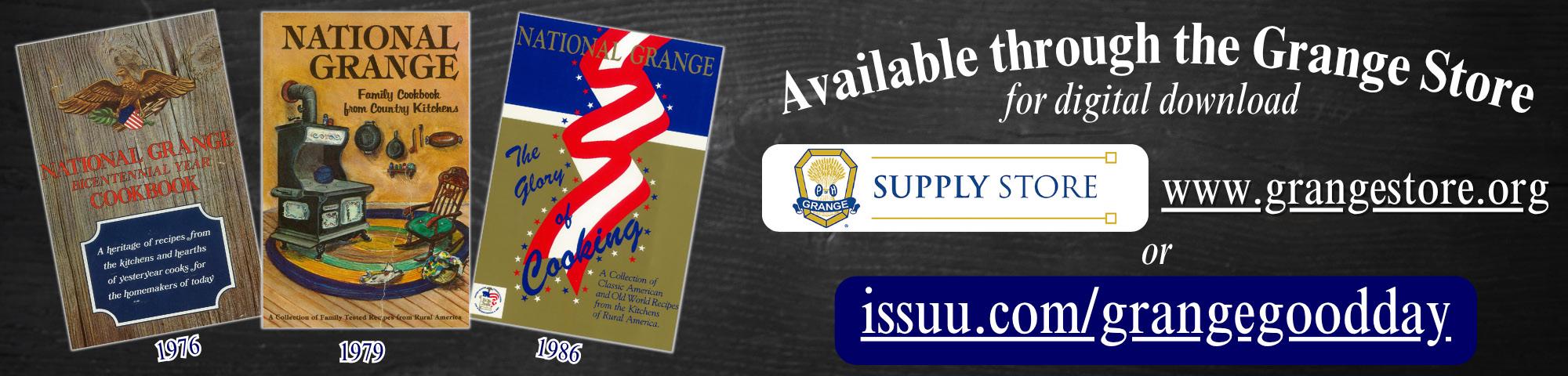
The America’s 250th Grange Workgroup is celebrating our country’s 250th Anniversary by “throwing back” to some classic recipes from Grange cookbooks. Do you have favorite recipes that evoke the American spirit which you would like to see published again? Send them to Lew Gaskill at olgaskill@comcast.net. Please include which Grange cookbook your recipes come from.
This week’s recipes are from Home Town Recipes of Millbury Grange #107, Millbury, Massachusetts
Mamie Eisenhower’s Fudge
4 1/2 cups sugar
2 Tablespoons Butter Salt
1 tall can evaporated milk
12 ounces semi-sweet chocolate
12 ounces sweet chocolate
1 pint marshmallow
2 cups nut meats, cut up
Place first 4 ingredients in saucepan; bring to a boil and boil 6 minutes only. Stir continuously. Place next 4 ingredients in large bowl and pour boiled syrup over them. Stir until chocolate is melted. Pour into 13x9 inch pan; cool a few hours before cutting. Important store in covered tin containers.
Apple Walnut Supreme Cake
4 cups coarsely chopped peeled apples
1 3/4 cup sugar
2 eggs
1/2 cup Crisco oil
2 teaspoons vanilla
2 cups sifted flour
2 teaspoons baking soda

1 teaspoon salt
2 teaspoons cinnamon 1/2 cup chopped walnuts
Combine apples and sugar and set aside. In a large bowl, mix eggs, oil, and vanilla, then beat 1 minute at medium speed. Add dry ingredients alternately with apple mixture. Stir in walnuts. Bake in floured and greased
13” x 9” x 2” pan at 350 degrees for 45 minutes or until done; do not underbake. For lemon glaze beat until smooth
1 cup confectioner’s sugar, 1 1/2 Tablespoon lemon juice, 1/2 teaspoon vanilla and 1 Tablespoon cornstarch.
Courtesy of Mrs. Clarence Rennell
Courtesy of Alice Goranson
Grange Store: Junior GranGE Pins

Grange Member Benefit: Lands End


The National Grange is partnering with Lands’ End. Grangers can now shop at Lands’ End, a onestop shop for quality branded and business apparel, hats, bags, promotional items and so much more backed by legendary customer service. Every item is designed to fit comfortably with the option of adding either the National Grange Logo or Grange Youth Logo embroidered on your purchase item.
Shop: https://business.landsend.com/store/ grange/