Celebrating excellence in the South Australian grain industry
3 February 2026
Adelaide Oval

Celebrating excellence in the South Australian grain industry
3 February 2026
Adelaide Oval
Elders has been working alongside South Australian farmers since 1839, and today, we’re dedicated to continuing this legacy through our ongoing focus on innovation and sustainability.
Our extensive network of specialists can provide tailored advice throughout your whole crop production cycle, enhancing your yield, and boosting your productivity and profit.

To learn more about our agronomy services, speak with your local branch or scan the QR code.

Tonight marks the second South Australian Grain Industry Awards; a moment to reflect on and tell the story of the state’s grain industry, through the people who shape it.
Following the success of the inaugural Awards last year, recognising the achievements of 2024 and inducting our first Hall of Fame members, this event has quickly become important on the industry calendar. It is an opportunity not only to acknowledge excellence, but to elevate our industry, tell our story, and showcase the standards by which South Australian grain producers operate every day. And of course, we can’t forgot about the networking and the importance of that tonight.
These Awards are about far more than those who take home a top gong.
They are about every person who took the time to nominate a peer.
They are about every individual who was nominated.
And they are about every finalist who was brave enough to put their hand up and share their story.
Grain producers are, by nature, quiet achievers. They are not ones to shout their successes from the rooftops. Yet we know that sharing these stories matters. It matters for our industry, for our communities, and for the broader public and decision makers who need to better understand how modern grain production operates and the very people who are feeding the world.
Within these pages, you will find the stories of finalists who represent the depth, diversity and professionalism of our sector. They highlight innovation onfarm, leadership beyond the farmgate, commitment to sustainability, and the pride grain producers take in doing their job well, in often challenging conditions.
As the peak industry body representing grain producers in South Australia, Grain Producers SA (GPSA) is committed to ensuring our industry is recognised for what it truly is; forward-thinking, highly skilled, and vital to the economic and social fabric of our state. These Awards play an important role in building that understanding and celebrating the people behind the production.
To our finalists, thank you for sharing your journeys and allowing your stories
to be told. To those who nominated, thank you for recognising excellence in others. And to everyone joining us tonight, thank you for being part of an industry that continues to lead with integrity, innovation and quiet confidence.
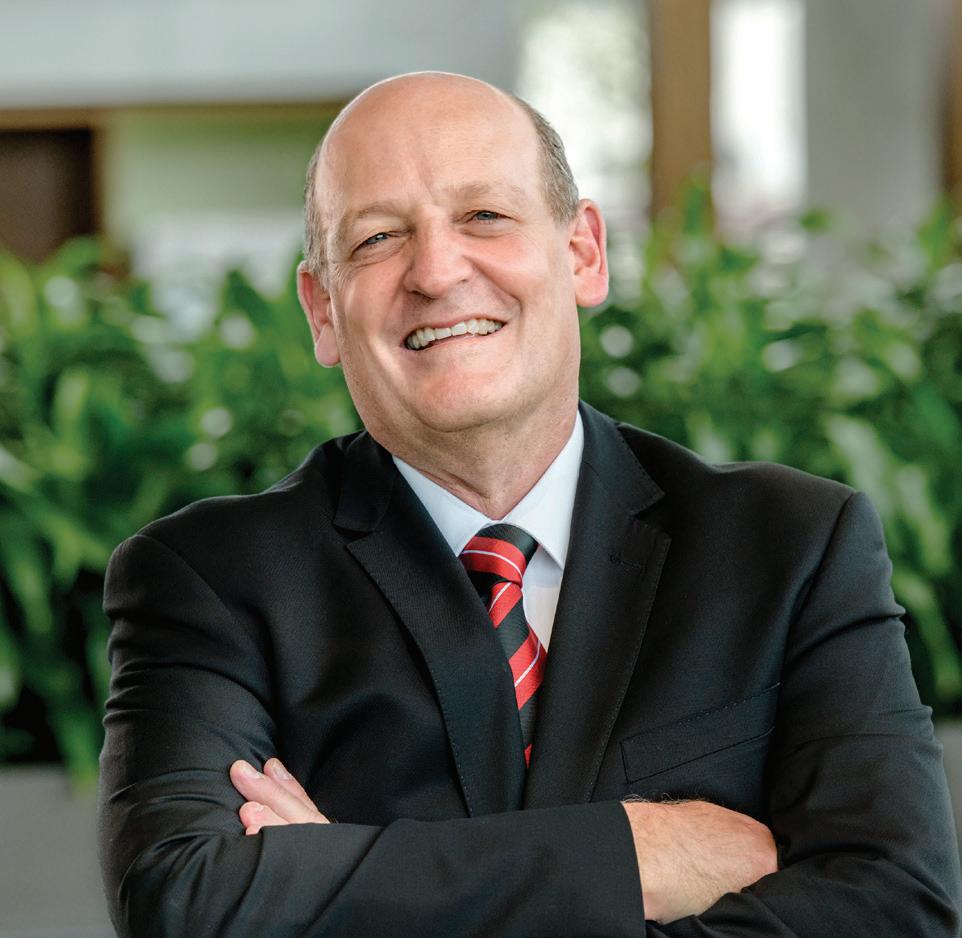
These Awards would not be possible without the generous support of our sponsors, and we would like to particularly acknowledge the contribution of our Platinum sponsor, Elders. Elders Managing Director and Chief Executive Officer, Mark Allison, supported the vision for these Awards from its inception, and the success of tonight’s event is a testament to that belief he put in GPSA to deliver these Awards.
Enjoy the evening and the opportunity to celebrate the people who make South Australian grain production something we can all be proud of.
John Gladigau Chair, Grain Producers SA
Brad Perry Chief Executive Officer, Grain Producers SA

is proud to be a Gold Sponsor of the South Australian Grain Industry Awards, supporting excellence, future growth, and sustainability across the state’s grain sector.


It is a pleasure to welcome you to the second South Australian Grain Industry Awards and to recognise the people and businesses who underpin one of our state’s most important industries.
South Australia’s grain industry plays a vital role in our economy and in the strength of our regional communities. From paddock to port, it supports jobs, drives innovation and contributes to our reputation as a producer of high-quality, responsibly grown grain for domestic and international markets.
These awards are an important opportunity to tell the story of the industry
through the people behind it - the grain producers, families and businesses whose skill, judgement and commitment shape outcomes season after season. They also highlight the leadership and innovation that continue to position South Australia at the forefront of modern agriculture.
I commend and thank Grain Producers SA for establishing these awards and for their ongoing advocacy on behalf of grain producers across the state. I congratulate all finalists and winners and thank everyone who took the time to nominate a peer and share these stories.
The South Australian Grain Industry Awards provide an important opportunity to recognise the people and businesses who contribute to the strength, productivity and sustainability of our grain sector.
Grain production is central to South Australia’s regional economy and communities, and the industry continues to evolve through innovation, research and a strong commitment to best practice.
These Awards help shine a light on the work being done on farms and across the value chain, often quietly and without recognition.
I wish you an enjoyable evening celebrating the people who contribute so much to South Australia’s prosperity and future.
Importantly, the Awards are not only about celebrating success, but about sharing knowledge, leadership and experience. By telling these stories, we build greater understanding of modern grain production and the challenges and opportunities faced by producers across the state.
I congratulate all finalists and winners and commend Grain Producers SA for delivering an event that recognises excellence, while strengthening connections across industry and community.
The Hon Clare Scriven MLC Minister for Primary Industries and Regional Development
Elders is proud to be the Platinum Sponsor and supporter of the South Australian Grain Industry Awards and to join in recognising the people and businesses who make this industry what it is today.
The grain industry is built on expertise, long-term thinking and a willingness to continually adapt. These Awards reflect those qualities by highlighting innovation, leadership and the commitment grain producers bring to their businesses and communities.
What makes these Awards particularly valuable is their focus on telling the story of the industry through the people behind it. Many of those stories are
rarely told, yet they are central to under standing the care, skill and professional ism involved in producing grain in South Australia.
Elders has a long history of working alongside grain producers, and we are pleased to support an event that recognises their contribution and celebrates the future of the industry. Congratulations to all finalists and winners and thank you to Grain Producers SA for bringing these Awards to life.
Mark Allison Managing Director and Chief Executive Officer, Elders
The Grains Research and Development Corporation (GRDC) is a partnership between Australian grain growers and the Australian government and is responsible for planning, investing in and overseeing research, development and extension (RD&E) for 27 leviable grain crops.
GRDC’s purpose is to invest in RD&E to create enduring profitability for Australian grain growers. By partnering with the best researchers and organisations from across Australia and the world, GRDC delivers innovative RD&E to improve the environmental, social and economic position of Australian grain growers, industry and the Australian community.
We invest more than $220 million across a diverse portfolio of over 600 projects that deliver tangible, on-the-ground impact to growers.
Nigel Hart Managing Director
For more information about GRDC’s investments and priorities, visit grdc.com.au
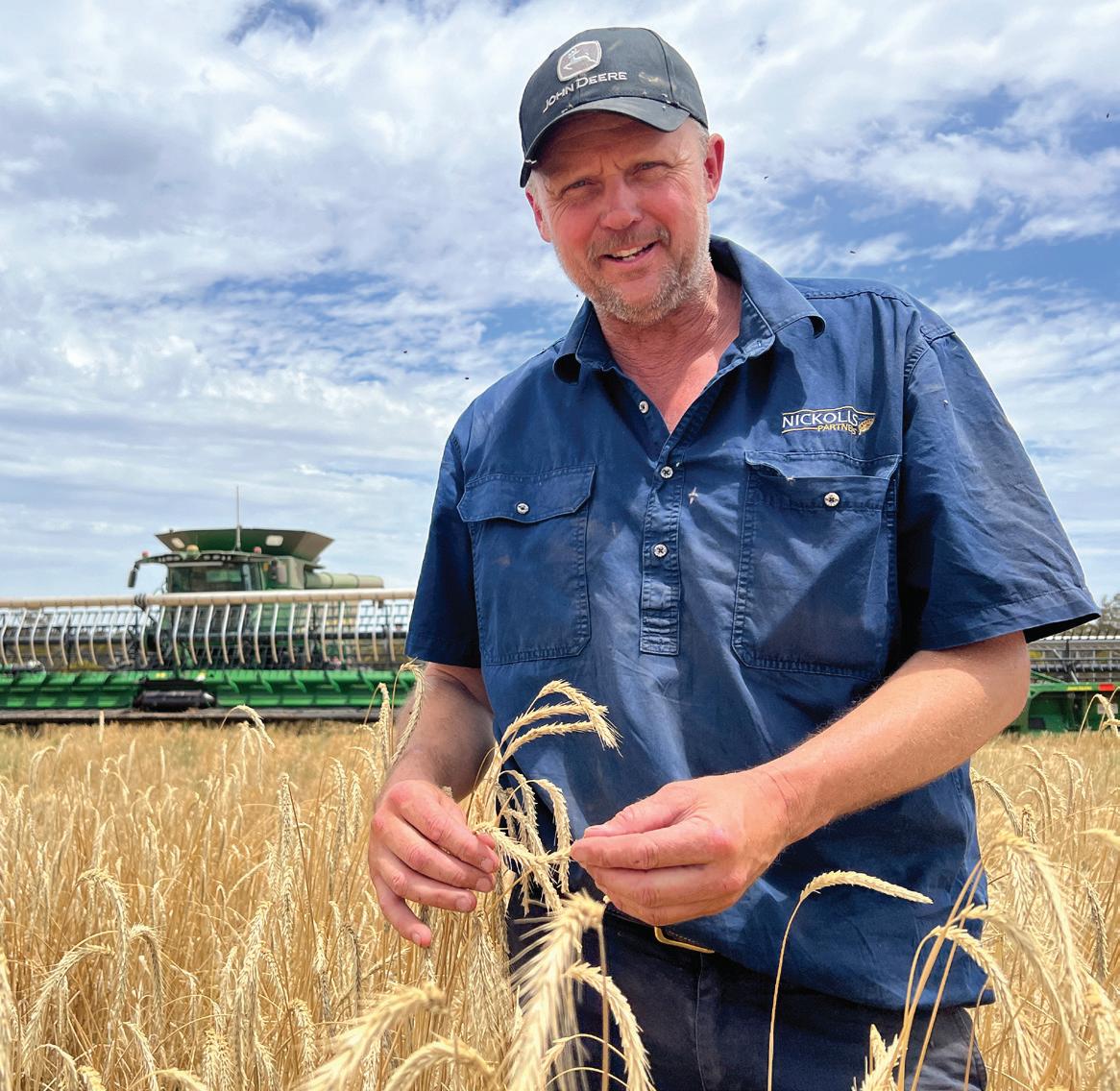
Scale, leadership and community have defined Wade Nickolls’ farming journey in the Mallee. A grain producer based at Pinnaroo since 1999, Wade has grown the business from around 1,800 hectares to more than 8,200 hectares of cropping, alongside 2,500 hectares of grazing across the South Australian and Victorian Mallee. He has played an active role in industry through involvement with SANTFA, the GRDC Regional Cropping Solutions Network, the SA Barley Advisory Committee and Mallee Sustainable Farming. Deeply connected to his community, Wade is a life member of the Pinnaroo Football Club, President of the Pinnaroo Tennis Club and founder of the Mallee Harvest Fire Prevention Group.
What first attracted you to the grain industry, and what continues to drive you today?
My family has been farming in the Mallee for 100 years, so I’ve always been involved and helping on the farm since I was a kid. I love the day-to-day challenges on-farm in the Mallee and driving efficiencies and increasing production levels.
What’s one decision, change or investment you’ve made that has had the biggest impact on you as a grain producer?
The biggest change for me has been a shift in mindset around weed man-
agement, moving from conventional systems through to zero-till farming. The focus has been on using every available tool to drive weed numbers lower, while preserving as much soil moisture as possible for the crop. That includes everything from cutting hay patches and spot spraying, through to seed termination on harvesters and all the measures in between.
Being nominated for the SA Grain Industry Award centres on peer recognition. What does that recognition mean to you?
Recognition is nice, but it’s not essential. As farmers, we tend to celebrate the small wins along the way, both as a business and as a family. It takes a whole team to make everything happen, and that’s what matters most.
The past few seasons have challenged grain producers in different ways. What helps you stay motivated?
Staying motivated in tough seasons is always a challenge. The sooner you come to terms with seasonal conditions that are outside of your control, the better. From there, it’s about continuing to do what we do best and fine-tuning decisions each season. Time away from work is also important for me - fishing, flying and taking holidays whenever possible all help reset the mind. Like farming, and life in general, we tend to learn far
more from mistakes and tough seasons than we ever do from the easy years.
Looking ahead, what do you see as the biggest opportunity for the South Australian grain industry?
I see the continued use of technology as one of the biggest opportunities, particularly for improving production efficiency and cost savings rather than simply chasing higher incomes. There’s also strong potential in better utilising South Australia’s feed markets to add value to both grain and hay.
What advice would you give to someone wanting to make a positive contribution to the grain industry in South Australia today?
Surround yourself with positive people within the industry, whether that’s other producers, machinery groups, agronomists or researchers. Get involved in groups and be comfortable with feeling uncomfortable at the start as that’s often where the most learning happens. Change doesn’t need to be implemented all at once; trying a little each year adds up, and after 25 years you’ll have achieved plenty. Most importantly, take pride in producing quality grain in one of the driest areas of the driest state on the driest continent in the world as that in itself is a significant achievement.
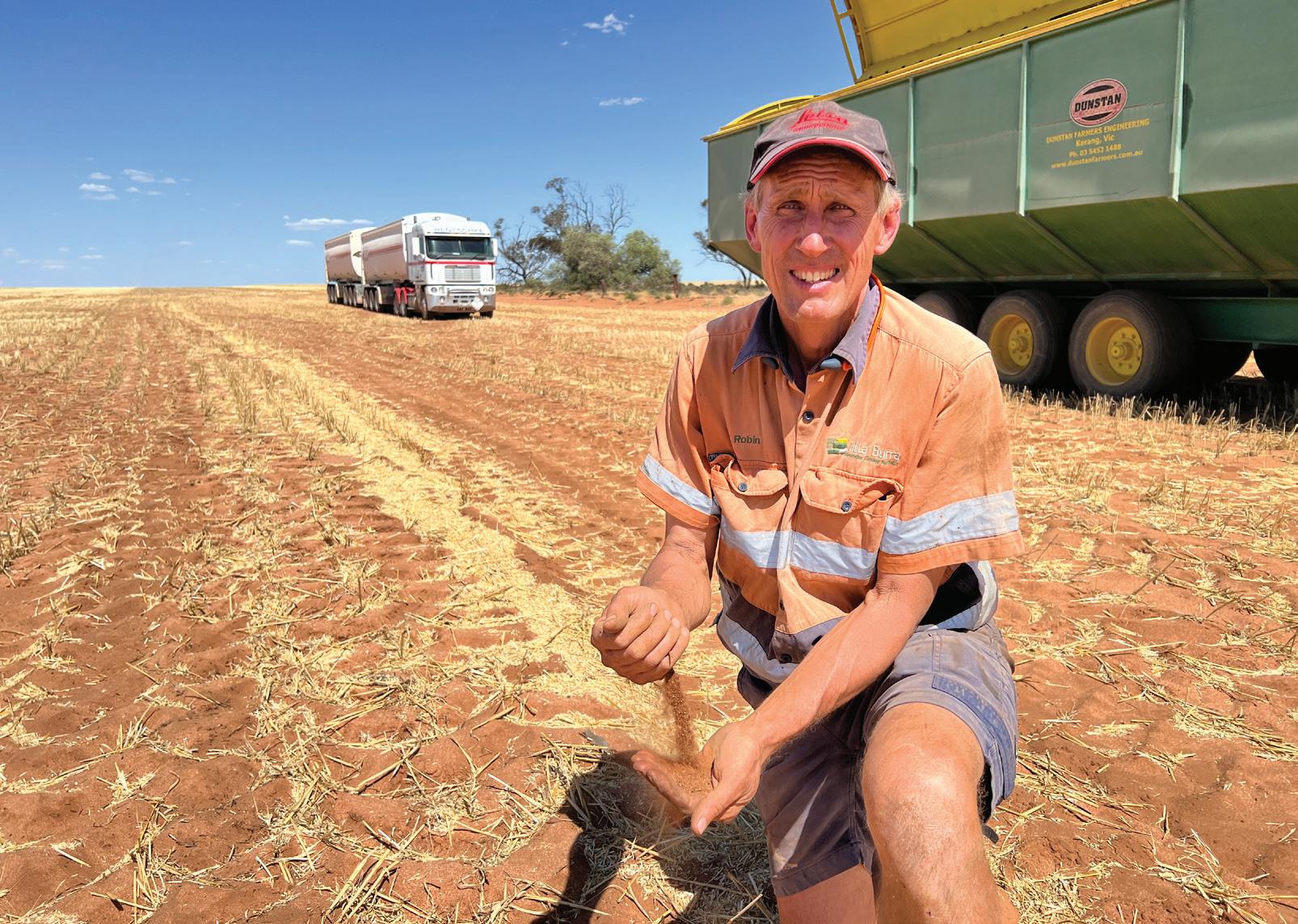
Along-standing commitment to both innovation and community has defined Robin Schaefer’s career in the grain industry. With almost four decades of experience, much of it spent farming south of Loxton in the Northern Mallee, Robin has played an active role in industry leadership and research adoption. Robin has served as President of the Loxton Agricultural Bureau, sat on the inaugural board of Mallee Sustainable Farming, and held leadership roles with the Society of Precision Agriculture (SPAA). A Nuffield Scholar, Robin has also hosted numerous trials and field days. Beyond farming, he is deeply involved in local sport and church leadership.
What first attracted you to the grain industry, and what continues to drive you today?
Ever since I was young I loved growing things working alongside my father, who was also a grain grower. Grain farming is a dynamic industry, ever changing and where new technology is encouraged and rapidly embraced to drive profitability and productivity, making it an exciting space to be involved in.
What’s one decision, change or investment you’ve made that has had the biggest impact on your grain business?
The biggest change was the adoption of no-till farming, which enabled us to protect our soil resource and to farm larger areas efficiently. A very close second would be embracing collaborative farming through the set-up of Bulla Burra.
Being nominated for the SA Grain Industry Award centres on peer recognition. What does that recognition mean to you?
I feel very honoured to be nominated as there are so many great achievers in the grain industry, people who have worked so hard to get us to where we are today.
I would like to acknowledge all of those who have worked together to share knowledge for the benefit of the industry and I am hoping the recognition will allow me to shine a spotlight on the role of encouraging family in farming for the future and the contribution low rainfall farming makes to the industry.
The past few seasons have challenged grain producers in different ways. What helps you stay motivated on farm and beyond it?
It certainly has been very challenging to stay motivated over the past few seasons. The key takeaways for me have been a deep personal faith in the one true living God, the support and encouragement I receive from my family, the great team I work with, and having outside interests like participating in church, playing music and playing hockey.
Looking ahead, what do you see as the biggest opportunity for South Australian grain producers?
The ability to grow a wide variety of grain legumes, a protein rich food source, where worldwide demand is continuing to grow and where there are opportunities to dramatically narrow the yield gap.
What advice would you give to someone wanting to make a positive contribution to the grain industry in South Australia today?
Build a network of positive, forward-looking people who are involved in the industry to share and learn from.
Alifetime on the land has shaped Bruce Heddle’s approach to farming and community. Bruce and his wife, Kathryn, farm near Minnipa on Central Eyre Peninsula, operating a cropping program alongside a self-replacing sheep enterprise. Wheat and lentils are his principal crops, supported by canola and barley. Bruce has farmed since leaving school in 1982, continuing a family farming history on the Eyre Peninsula that dates back to the late 1950s. He is a strong believer in community participation and has been actively involved in local schools, emergency services, sporting clubs and industry groups, including EPARF, Minnipa Ag Centre, GRDC, Ag Bureau and the local farming systems group.
What first attracted you to the grain industry, and what continues to drive you today?
As a kid, I really didn’t like school or sport that much, and farming was much more fun. So, it really wasn’t a conscious decision – honestly, it just happened. As I got older, I realised that, in general, farming provides a business opportunity that is profitable, interesting and rewarding. It is for the most part a useful endeavour. To be able to farm as we do is an absolute privilege, and as for many people in my position, that privilege is thanks to the frugality and industriousness of my grandparents
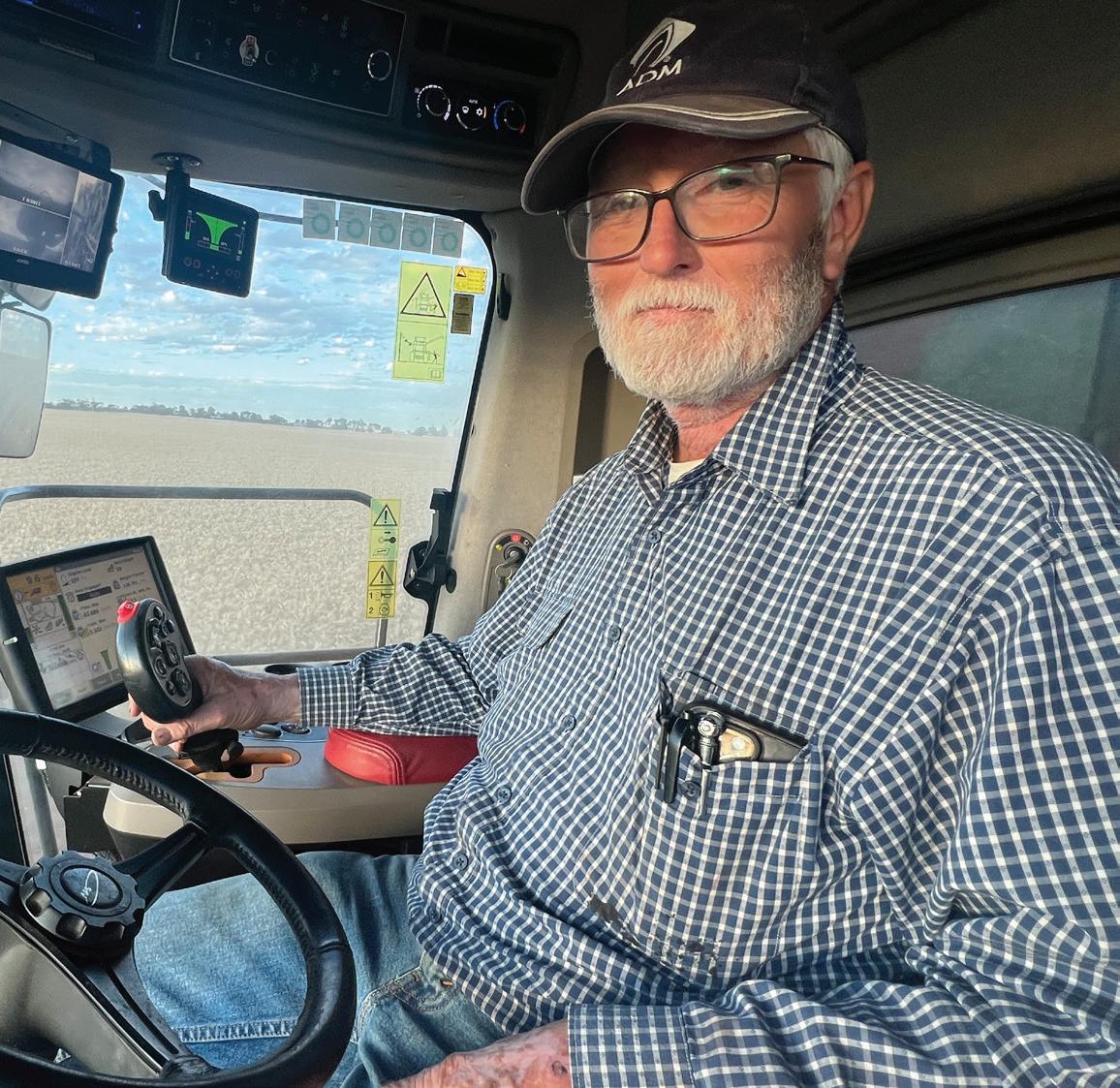
and parents. To enter production agriculture with ownership of a land asset these days without that backing would be a hard slog indeed.
What’s one decision, change or investment you’ve made that has had the biggest impact on your grain business?
I’m not sure there’s any one single decision, change or investment that has occurred in isolation. But what I do feel is that trying to think about ‘cause and effect’, and how to continuously fine tune a system is our biggest change in approach as I’ve got older. The farming ‘system’ of today has evolved so significantly and rapidly that it is unrecognisable from even twenty years ago.
Being nominated for the SA Grain Industry Award centres on peer recognition. What does that recognition mean to you?
It is definitely a great honour but also very humbling. I look around at my neighbours, friends and network of acquaintances, and I am struck by just how many extremely good farmers there are doing their absolute best, all of the time. I’ve been lucky to have some friends, older and wiser than me, who have been valued and generous mentors, and I am very fortunate to have some much younger friends and peers who motivate
me with their enthusiasm, innovation and commitment.
The past few seasons have challenged grain producers in different ways. What helps you stay motivated on farm and beyond it?
I’m the eternal optimist, like most farmers. So, this tight spell will end, and great seasons and high prices will return. Lean periods definitely test the farming system and enforce some discipline. There is also some reward in preparedness.
Looking ahead, what do you see as the biggest opportunity for South Australian grain producers?
A fully functional bio-fuel industry in Australia would be of great benefit to our farming system. It has the potential to significantly increase both farming system and economic diversity.
What advice would you give to someone wanting to make a positive contribution to the grain industry in South Australia today?
The grain industry offers a very broad range of opportunity. There’s room for anyone with passion and enthusiasm to find a rewarding and profitable path forward.
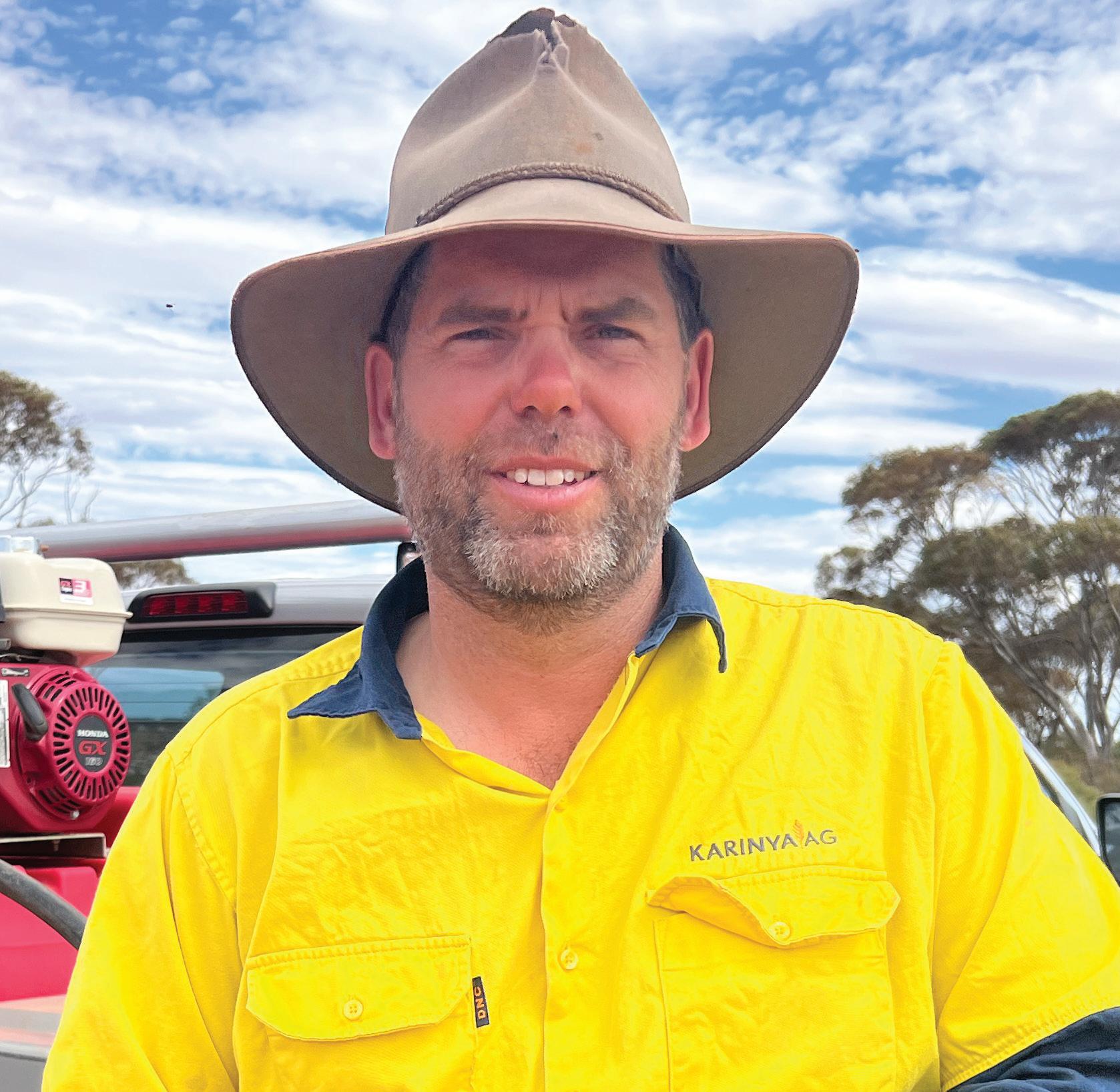
From paddock to policy, Tristan Baldock’s career has spanned agronomy, farming and national industry leadership. Raised on the family farm at Buckleboo, Tristan completed an agriculture degree at Roseworthy before beginning his career as an agronomist with Elders, supporting growers through the Black Tuesday bushfire recovery on Eyre Peninsula. He later held senior agronomy roles with NRI before returning home to farm in partnership with his family. Tristan has made a significant contribution to industry through leadership roles with GrainGrowers, GRDC grower networks and Buckleboo Farm Improvement Group, and is widely recognised for his commitment to innovation, extension and grower advocacy.
What first attracted you to the grain industry, and what continues to drive you today?
Growing up on the family farm, there was a high chance that I was always going to be doing something in the agriculture space. I enjoyed my ag studies, had a strong interest in research and development, and was passionate for the betterment of our industry. There are a couple of things that I love about our industry; one, there is an unparalleled willingness to help others learn, grow and prosper, and two, no day is the same and there is always something new to explore, discover and implement.
What’s one decision, change or investment you’ve made that has had the biggest impact on your grain business?
The decision to increase scale stands out as a significant moment in my farming journey. We had just become the lead partners in our business when the opportunity presented to expand our operation from 6,000 to 10,000 hectares. Whilst doing our due diligence on this lease opportunity and considering our capacity to take it on, January 2022 delivered a one in 200-year storm event that dropped between 150 and 300 millimetres of rain overnight, with more in the following weeks. We made the decision to increase scale, grabbed it with both hands, started growing the team, and during a significant recovery effort to repair extensive flood damage across thousands of hectares of land, we rolled up our sleeves and went all in. That year was an incredible effort by the whole team, and it delivered an unimaginable outcome.
Being nominated for the SA Grain Industry Award centres on peer recognition. What does that recognition mean to you?
It is incredibly humbling to be nominated and recognised by our peers for what I see as just doing my thing. Whilst I don’t think we are doing anything special or remarkably different on-farm, our journey and what we do on and off-farm is having a wider impact in the industry, and that’s incredibly pleasing.
The past few seasons have challenged grain producers in different ways. What helps you stay motivated?
Nine of the past 10 years at home have been decile 3 or below Growing Season
Rainfall (GSR) years. What is incredibly motivating and encouraging is that despite this, we have continued to lift the average grain yield in our low rainfall operation.
Looking ahead, what do you see as the biggest opportunity for the South Australian grain industry?
I still believe one of the greatest underlying fundamental issues that we face in agriculture is the disconnect of the urban based population with food production. With every generation there is less understanding of where food comes from and how it is produced. Our biggest challenge is to continue to tell ag’s story in a positive light, to challenge the populist urban ideologies with unwavering scientific evidence, and to ensure that we remain on the rigorously and proactively engaged, and front and centre in the halls of Adelaide and Canberra through organisations like GPSA, Grain Growers and the NFF.
What advice would you give to someone wanting to make a positive contribution to the grain industry in South Australia today?
If you feel you have something to offer, put yourself forward, and as uncomfortable as that may feel initially, you will be greeted with open arms. You will bring your own experience and values that can have a positive impact and will be incredibly rewarding.
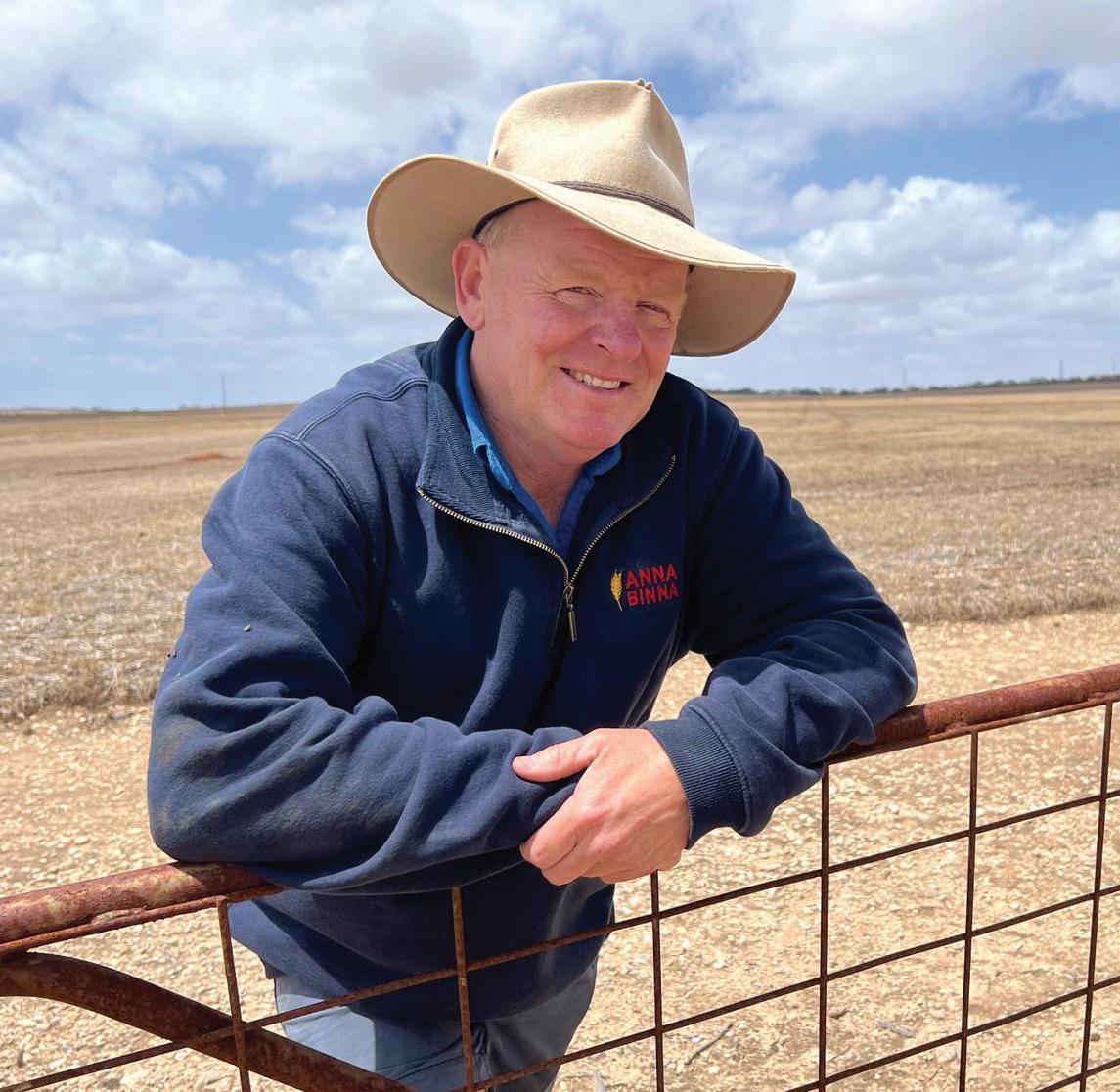
Few people embody leadership on and off the paddock like Ben Wundersitz. A fifth-generation grain producer on the Central Yorke Peninsula, Ben has completed more than 40 harvests and today farms around 6,000 hectares near Maitland with his wife, Belinda. Widely respected for his commitment to industry and community, Ben has held long-term roles across grain, biosecurity and fire safety committees and regularly shares knowledge at industry events and on-farm visits. He is also the founder of Fat Farmers, a national rural wellbeing initiative supporting healthier, more resilient farming communities.
What first attracted you to the grain industry, and what continues to drive you today?
Growing up in a farming family, I was always drawn to farm life and the opportunity to continue our family’s legacy. It is a great privilege to be entrusted not only with managing our own land, but also with caring for land owned by other farming families and communities and managing it in a professional and sustainable way. What continues to drive me is the challenge of farming in a highly variable environment.
What’s one decision, change or investment you’ve made that has had the biggest impact on your grain business?
Belinda and I made a deliberate decision to develop Anna Binna as a professional grain production and farm management business, with a strong focus on the
sustainable production of grain for the human consumption market. We adopted a family corporate model, as it was important to retain our core family values while introducing strong corporate governance to ensure growth was carefully planned and managed.
Being nominated for the SA Grain Industry Award centres on peer recognition. What does that recognition mean to you?
Our industry is fortunate to be made up of many passionate and hardworking farmers and industry professionals. For me, these awards are as much about recognising the character and calibre of the people involved as they are about individual achievements. I’m extremely proud to be nominated among such a group.
The past few seasons have challenged grain producers in different ways. What helps you stay motivated on farm and beyond it?
I am very fortunate to have strong support from my wife Bel, our extended family, and our team at Anna Binna. I have always believed in surrounding myself with good people, and we are also well supported by a strong business advisory network. Beyond the farm, our local Fat Farmers group and the wider network provide great support from likeminded people who often face the same challenges. The combination of regular exercise and catching up with mates over a coffee has been incredibly valuable. I also believe in reaching out
and supporting others during tough times, helping someone else is often one of the best ways to lift your own spirits and it reflects one of the great strengths in our industry.
Looking ahead, what do you see as the biggest opportunity for South Australian grain producers?
In a low and highly variable rainfall environment, the biggest opportunity for South Australian grain producers is continuing to improve efficiency and resilience through better systems, technology and people. Precision agriculture, automation and improved agronomy allow us to make better use of limited rainfall, manage risk more effectively and remain competitive.
What advice would you give to someone wanting to make a positive contribution to the grain industry in South Australia today?
I didn’t have the chance to study beyond school, so my advice is to never stop learning and to seek out good mentors. Stay involved in your local community, surround yourself with positive people, and be open to new opportunities. Just as importantly, look after your own wellbeing and support those around you because strong people and strong communities are the foundation of a strong grain industry.
Asystems-based approach sits at the core of Jeremy Lush’s farming operation in the South East. Farming with his parents at Keith, Jeremy helps manage a mixed enterprise combining cropping, dual-purpose Merino breeding, first-cross lambs and irrigated lucerne seed, with each facet designed to work symbiotically to optimise returns and manage risk. Grain production includes wheat, barley, canola and legume grazing crops, with faba beans and lentils grown when conditions allow. Jeremy has worked full-time in the business since 2016 and contributes to the industry through board roles with the Mackillop and Sherwood Farm Management Groups.
What first attracted you to the grain industry, and what continues to drive you today?
Like most people who were raised on a family farm, early exposure to farm life incited my passion. I am fortunate to have been given the opportunity to return to the family business, well guided and supported by good people and structures, which has strengthened my love and passion for the industry. I am driven by continual improvement and growth – improving the condition of the land, livestock and people that we manage. I continue to strive to identify and implement best practice for our business.
What’s one decision, change or investment you’ve made that has
had the biggest impact on you as a grain producer?
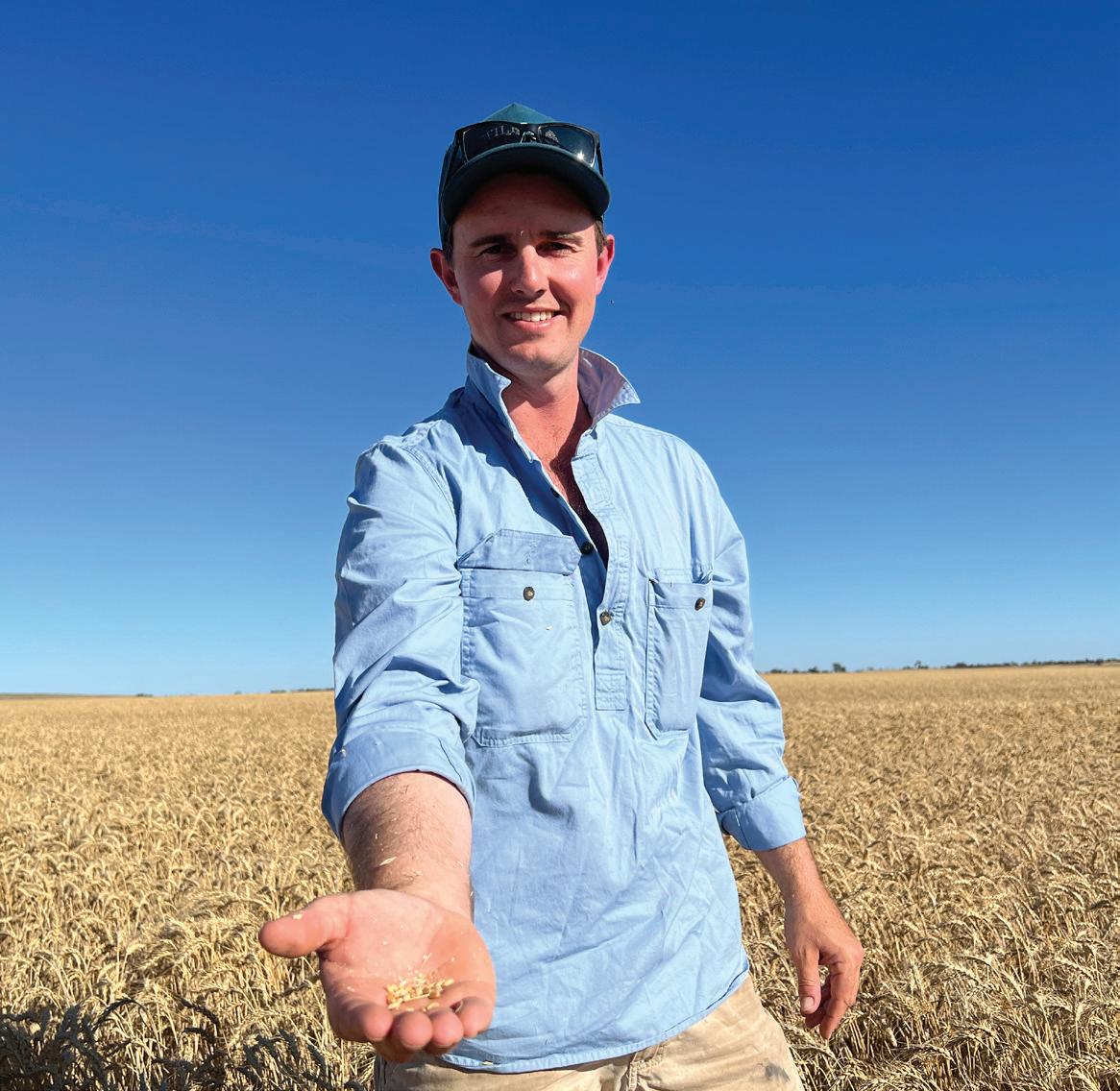
This would have to be studying at Marcus Oldham College. Not only did we have excellent lecturers and course content, but the contacts developed and industry exposure created, has taught me to critically analyse, find information and implement change effectively. It has also created an open-minded way of thinking about different opportunities and agricultural business in general.
Being nominated for the SA Grain Industry Award centres on peer recognition. What does that recognition mean to you?
This recognition is truly humbling. When I look at the calibre of the other nominees for all award categories, I do not consider myself to be at the same level but I am grateful that the people I work with consider me a worthy nominee. Regardless of the result, I am proud to be recognised.
The past few seasons have challenged grain producers in different ways. What helps you stay motivated?
I am motivated by the fact that we get another opportunity to achieve our goals and benchmarks each year. I agree that we have had a challenging period of late, but I am encouraged by the results we are able to achieve – this motivates me to build upon lessons learnt through tough times and strive to achieve
equivalent results in good times. There is no contentment on the path of continual improvement.
Looking ahead, what do you see as the biggest opportunity for the South Australian grain industry?
I think there is a huge opportunity for grain producers and the agriculture industry more broadly, to generate more value at the farmgate by staying ahead of consumer pressures. Whilst this is not an easy task, I believe that with focused research, through to extension and adoption, it can be done. Technology continues to be an exciting space too. The capacity for new technologies to improve efficiency and productivity is an exciting prospect. We continue to have more tools and practices at our disposal that allow us to maintain our business performance despite variation in climate and external factors.
What advice would you give to someone wanting to make a positive contribution to the grain industry in South Australia today?
My advice would be to take the opportunities that become available to you and continue to push yourself out of your comfort zone. In my case, doing this has evolved into some interesting and exciting industry involvement and it continues to create more opportunities for me to contribute at an industry level.
Astrong connection to land and community underpins
Dion Trezona’s farming journey on the Eyre Peninsula. Dion has worked on the family farm since finishing school in 2002, located 40 kilometres north of Streaky Bay in a low-rainfall environment. Dion has been actively involved in sustainable agriculture groups and local community organisations, including sporting clubs, and is currently a member of the GPSA Young Grain Producer Committee.
What first attracted you to the grain industry, and what continues to drive you today?
The attraction goes back a long way. Getting off the school bus as an eightand nine-year-old and the smell of fresh turned soil on a paddock that had been burnt days before always made me want to get involved. I was always given the chance to jump in the tractor with tandem disc ploughs when I was a kid and you couldn’t wipe the smile off my face. Even today, there is something about that first rain smell that gives me goosebumps, there is nothing quite like it. Our soil and rainfall is a constant challenge, striving to make more from less. What really drives me is aiming to show my kids how to grow food to feed people, as well as continually learning myself about how to do it better.
What’s one decision, change or investment you’ve made that has had the biggest impact on your grain business?
The biggest decision we’ve made is one
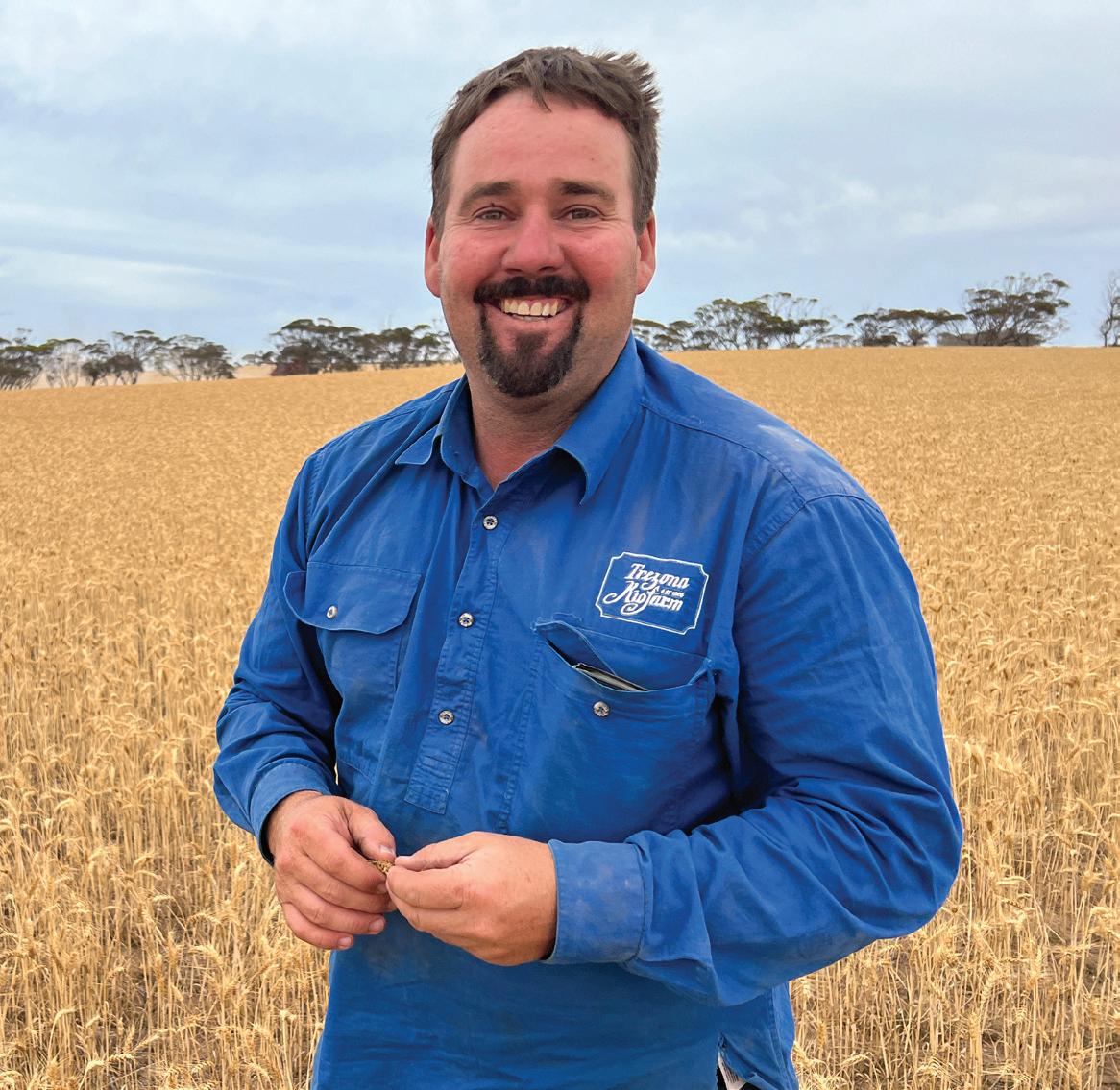
that has, at times, arguably been detrimental to the business. We seem to be caught in a “more” loop - more fertiliser, more chemical, more passes and more ground cover - and it’s bloody expensive. Putting $100 per hectare of fertiliser out and only producing 0.6 tonnes per hectare of grain quickly stops adding up. Over the past 10 years, our business has moved away from tillage. I think soil health is improving, largely because the weeds certainly seem to grow better now, but I’m still not convinced whether the overall impact on the business has been positive or negative. Another major decision has been committing to summer weed control. Preserving moisture from summer rainfall events has delivered a significant yield benefit and has been one of the clearest positives for our system. The challenge now is working out how to reintroduce and support soil micro-organisms once the soil wets up again.
Being nominated for the SA Grain Industry Award centres on peer recognition. What does that recognition mean to you?
I don’t think I farm any better than anyone else. If anything, I feel like there are a lot of great farmers around me that I learn plenty from.
The past few seasons have challenged grain producers in different ways. What helps you stay motivated on farm and beyond it?
Family would be my only answer. Not wanting to let them down is what keeps me motivated, particularly through
challenging seasons. From an occupational point of view, I’m also not sure what else I would do as farming is all I’ve ever known.
Looking ahead, what do you see as the biggest opportunity for South Australian grain producers?
I think plant and soil nutrition will become an increasingly important focus for the industry. Crop rotations have come a long way, and the ongoing challenge is growing more with fewer inputs. The work currently underway on plant nitrogen uptake has the potential to shift growers away from traditional urea, and towards greater use of liquid nitrogen, similar to what farmers in Western Australia have been using for some time. The key will be achieving sufficient scale and volume, so pricing becomes competitive with Western Australia.
What advice would you give to someone wanting to make a positive contribution to the grain industry in South Australia today?
Always focus on the part of your business that you can control and influence. You won’t be able to make a sound decision if you’re dwelling on something you have no control over. If the opportunity presents itself to stand up to make a change, then put your hand up, otherwise nothing will change.
Farming is a way of life for Sam and Tayla Przibilla, fourth-generation farmers based at Riverton in the Mid North. Sam grew-up on the family farm and has been hands-on from an early age, a passion now shared with Tayla as they raise their four young children. Alongside farming, Sam and Tayla are actively involved in a range of voluntary roles within their local community. Driven by a desire to do their best and share success with others, they have also invested in a seed cleaning and processing business to add value to their farming operation.
What first attracted you to the grain industry, and what continues to drive you today?
It’s the family and sense of community you get from working together to achieve your goals each day. We genuinely just love everything about farming, from the excitement around seeding time, full of ambition and hopes for the season ahead, to the planning, the budgeting, the predictions and being outside and in nature. Ultimately, nothing beats the feeling of seeing your crops emerging. Then comes the long-awaited harvest, the satisfaction of harvesting and seeing the outcome of your hard work is both fulfilling and addictive. For us, this year we also reached another milestone and had all three generations on-farm working together for the whole harvest. It was an amazing moment of reflection and fulfillment for all of us. Seeing the fifth generation of farmers coming through our farm really encourages us to strive to improve each year by seeking out more sustainable practices
and keeping up with industry advancements.
What’s one decision, change or investment you’ve made that has had the biggest impact on your grain business?
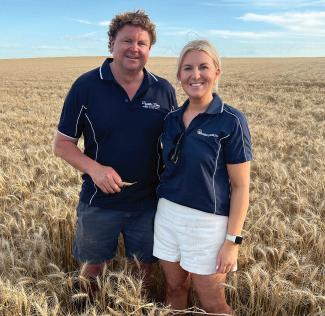
different ways. What helps you stay motivated on farm and beyond it?
In 2024, we decided to shift our core focus from a mixed farming enterprise to 100% dryland cropping. Whilst this decision was difficult, it had the biggest impact on our time and enabled us to double our cropping scale via both land lease and purchase in 2025. The purchase of Northern Seed Co (previously, Manoora Seeds) also in 2025, aligned with our passion which has always been centered around producing high yielding, high quality and high value dryland crops, which has naturally led to our niche of now producing up and coming new varieties of seed.
Being nominated for the SA Grain Industry Award centres on peer recognition. What does that recognition mean to you?
It’s an absolute honour! We don’t set out each day to be recognised but at the end of the day we just do what we do for our family, which gives us the drive to meet our goals and if we can help anyone along the way we will. To be seen as leaders in our field is a confidence booster and the acknowledgment that we’re doing something right. To be nominated alongside so many people that we aspire to be like is quite surreal.
The past few seasons have challenged grain producers in
Farming and trying to produce mass amounts of grain each year is exciting. Whilst it is still challenging due to seasonal conditions, market volatility and production costs, these are all out of our control so to find satisfaction in the challenge and improve on the things you can control, we think is important.
Looking ahead, what do you see as the biggest opportunity for South Australian grain producers?
We think embracing tech/data can be a big game changer. It can aid with productivity, profitability and help improve on your sustainable practices by incorporating variable rate systems, machine automation and improved genetic varieties released by the leading breeders.
What advice would you give to someone wanting to make a positive contribution to the grain industry in South Australia today?
Be open to learning new things and share your knowledge. Grain growers aren’t in competition with each other. Also, find your passion. If you genuinely enjoy something you will do well at it. Just because ‘it’s always been done a certain way’ doesn’t mean it’s the right way for you – embrace change.
Abackground in environmental science shapes Holly Crawford’s practical approach to farming in the Mid North. Holly and her husband, Luke, have been back on Luke’s family farm near Jamestown for almost 10 years, running a continuous cropping program of wheat, barley, lentils and beans using a strip-disc system. Before returning to the land, Holly studied and worked as an environmental adviser in the mining and construction sectors. She was also involved with the Bundaleer Forest Community Areas Association for six years, coordinating rehabilitation projects. More recently, Holly has joined Upper North Farming Systems and is keenly involved in its research and extension work.
What first attracted you to the grain industry, and what continues to drive you today?
I very much ended up in the grain industry by default when the boilermaker I married had a change of heart about farming. I’ve become progressively more involved in the business as time has gone on and as our three children have reached school age. We’re passionate about continuing to improve our farming practices, to ensure an environmentally and financially sustainable business.
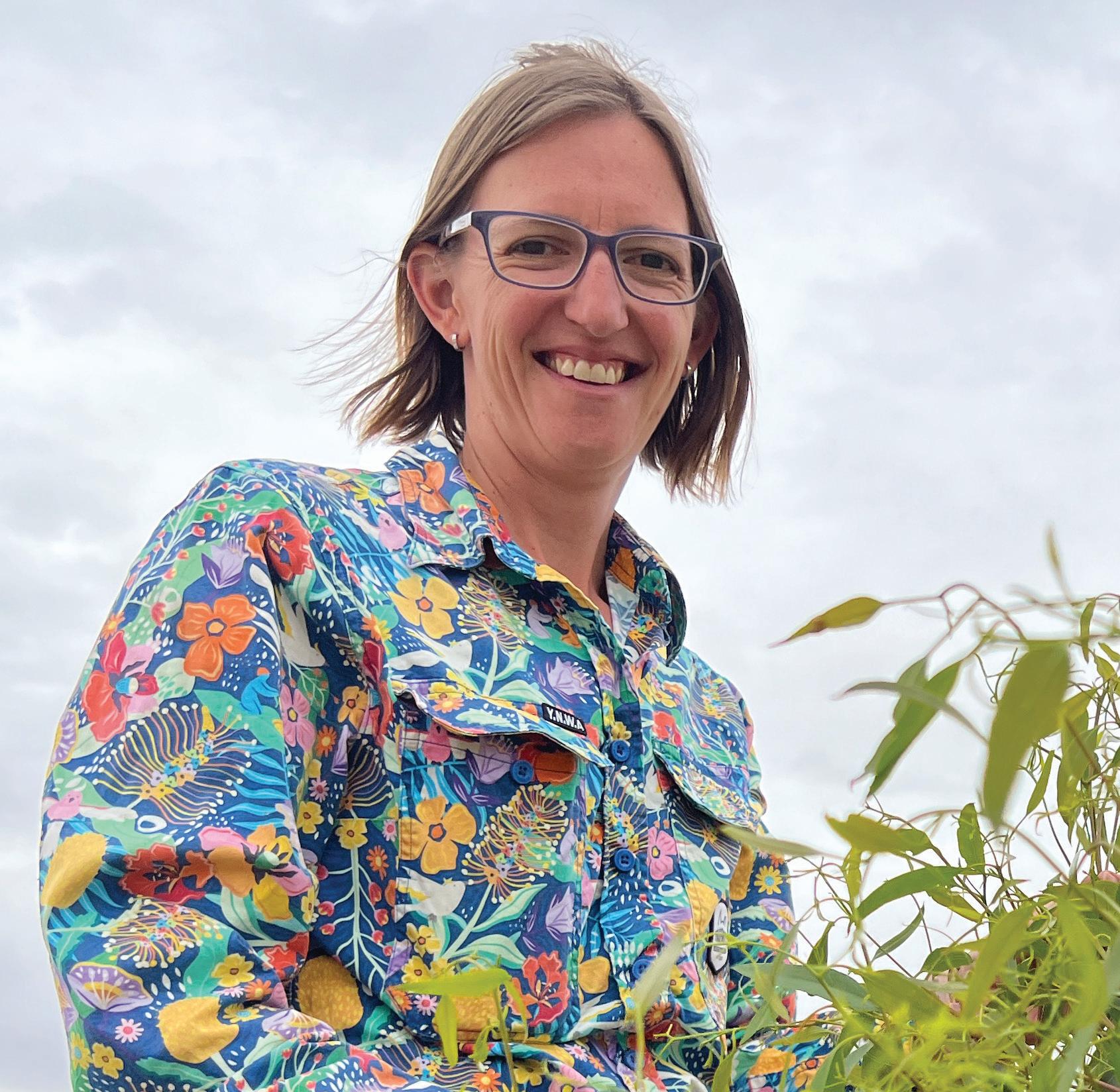
What’s one decision, change or investment you’ve made that has had the biggest impact on your grain business?
As a business, the biggest change we’ve made is shifting to continuous cropping but personally it’s been being involved in the Carbon + Biodiversity Pilot Program and revegetating 32 hectares of non-arable land on our farm. Whilst Luke was fully supportive, it was a big leap for me into the operational side of the business and made me realise I wanted to be more involved rather than seek work off-farm.
Being nominated for the SA Grain Industry Award centres on peer recognition. What does that recognition mean to you?
It’s humbling to think that our story has been recognised by someone who was motivated to nominate me for the Award, it was very unexpected.
The past few seasons have challenged grain producers in different ways. What helps you stay motivated on farm and beyond it?
Farming will always be at the mercy of the weather so we focus on what we can control, make the best decisions we can with the information at the time and focus on our long-term goals. One big
motivator during the dry conditions in the past few years has been seeing the resilience of our farming system. Being able to produce what we did reassured us we are on the right track. Having time off-farm with the family is also really important to us, it helps to step away and get clarity on what really matters.
Looking ahead, what do you see as the biggest opportunity for South Australian grain producers?
There is an opportunity to market nutrient dense and low, or carbon neutral, produce to the increasingly health and climate conscience population. It would require industry collaboration to ensure that farmers are rewarded for their efforts in these important areas.
What advice would you give to someone wanting to make a positive contribution to the grain industry in South Australia today?
Do what you are passionate about and don’t be afraid to do things differently in pursuit of what you believe in.
Farming is in Grant Pontifex’s DNA. A fifth-generation farmer, Grant has spent the past 30 years working on the family farming business and is currently Director of Pontifex Farming. He and his wife, Jodie, are raising their three children alongside the business, continuing a long family tradition in agriculture. Pontifex Farming operates across properties at Paskeville on the Yorke Peninsula and on Kangaroo Island, reflecting a diverse and resilient farming operation built on experience, adaptability and a strong commitment to family.
What first attracted you to the grain industry, and what continues to drive you today?
I was attracted to the grain industry because of the technology and machinery involved in grain production. Also, I don’t think I have the patience or temperament for stock husbandry. Growing more with less continues to drive our production today. Improving our soil and water use efficiency also continues to inspire me.
What’s one decision, change or investment you’ve made that has had the biggest impact on your grain business?
The biggest decision, change and invest-
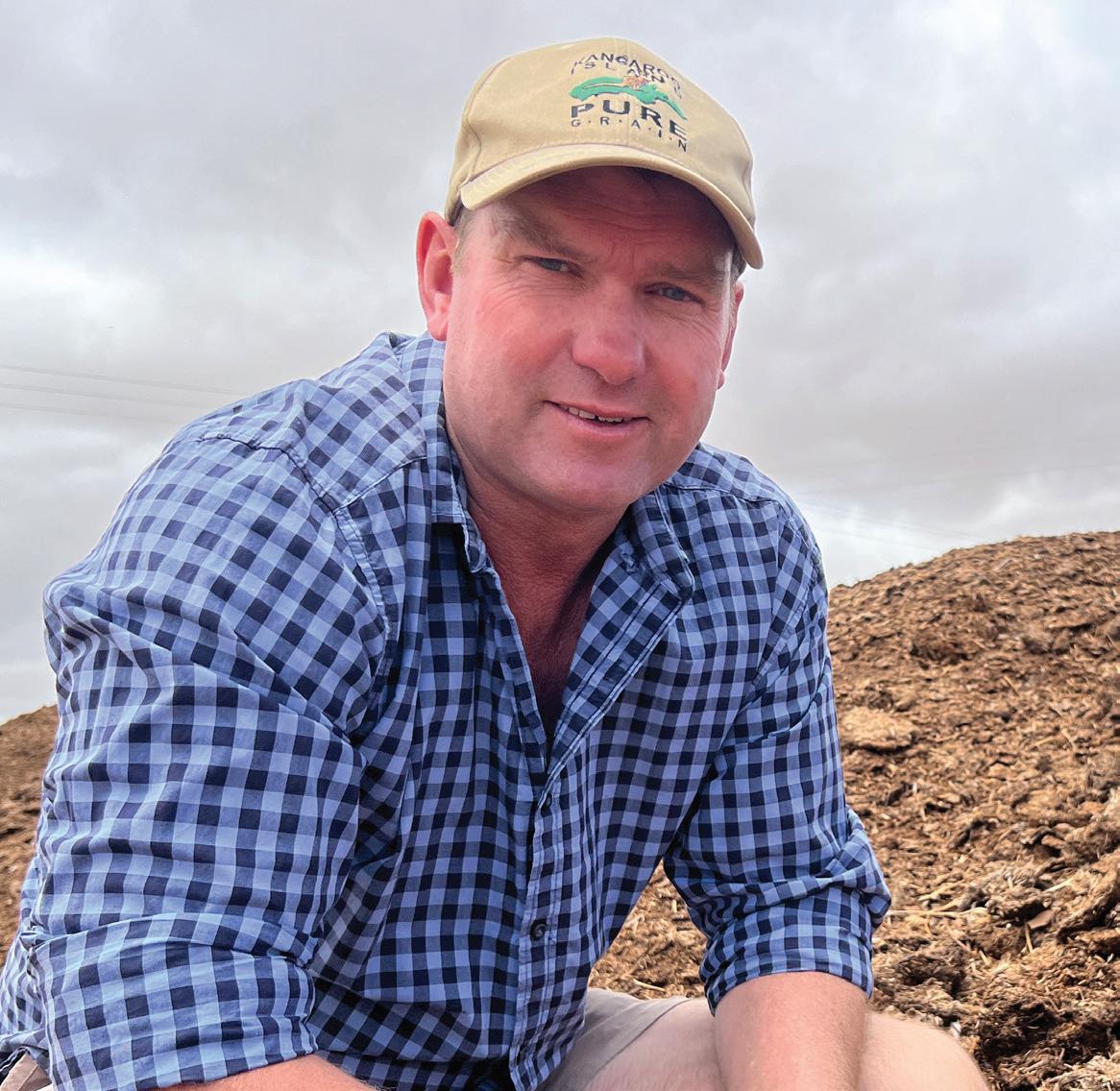
ment in our business has been purchasing sheep properties on Kangaroo Island and transforming them into a cropping operation. The logistics, infrastructure, staff and family impact has been considerable.
Being nominated for the SA Grain Industry Award centres on peer recognition. What does that recognition mean to you?
I’m humbled to think someone has nominated me. There are some extremely good grain operations in South Australia, and everyone has a story to tell.
The past few seasons have challenged grain producers in different ways. What helps you stay motivated on farm and beyond it?
We have continued to expand into other areas and commodities to insulate our business from challenging seasons. My brother recently moved to Ayr in Far North Queensland and manages our irrigated sugarcane properties, shifting our strategy to be less reliant on rainfall and southern grain markets.
Looking ahead, what do you see as the biggest opportunity for South Australian grain producers?
Diversification is the biggest opportunity. It’s important to keep trying new
things and spreading risk across different regions, commodities and markets.
What advice would you give to someone wanting to make a positive contribution to the grain industry in South Australia today?
Enjoy what you do. Have a positive attitude. Celebrate how successful we are. Encourage children to come home and farm. Seek and share knowledge.
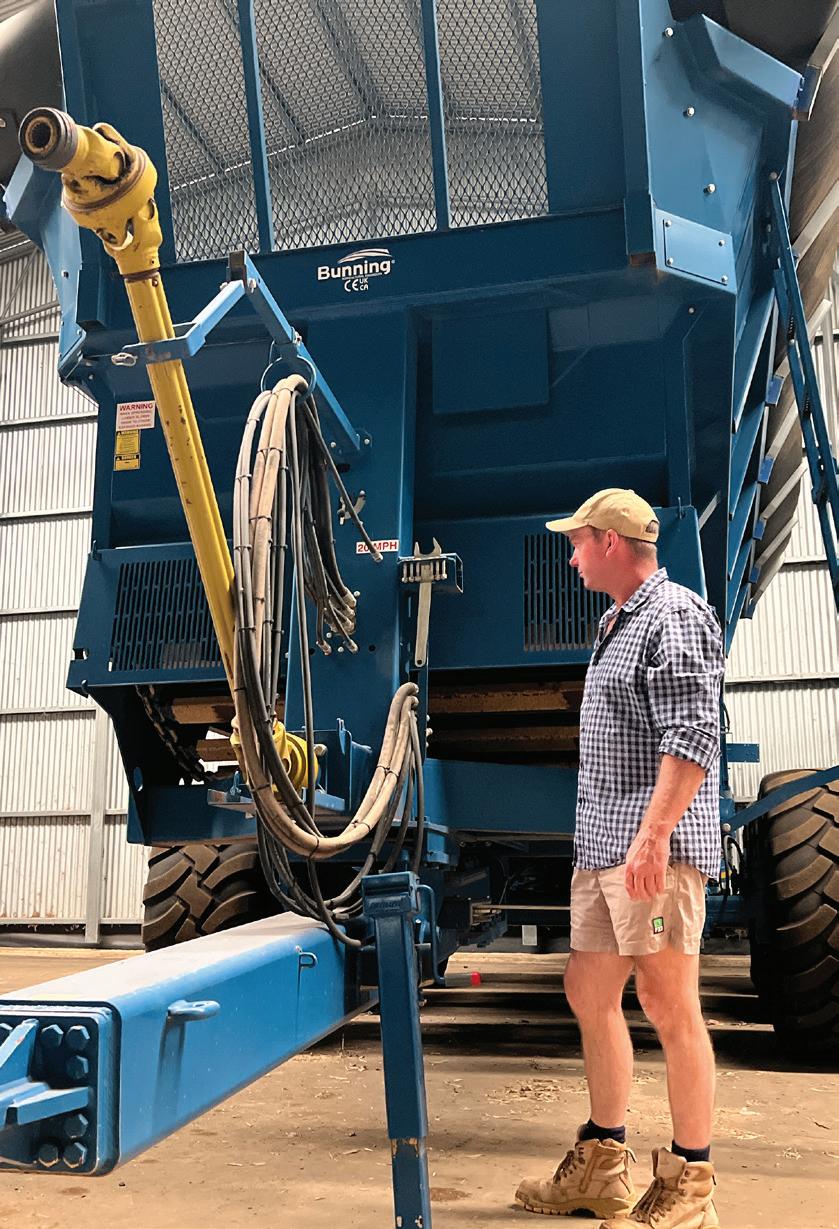
Early responsibility and steady growth have shaped Bruce McLean’s South East farming story. Based in the Bool Lagoon–Glenroy area, Bruce began farming straight out of school in 1995, working alongside his uncle before stepping into management of the family farm at just 21 years old, following an early succession and a shift from livestock to cropping. Today, Bruce operates his own farm, share farms for four local families and contract farms for another three, all within a 20-kilometre radius. Married to Angela, with strong family involvement including nephews now working in the business, Bruce has also contributed to the industry through committee roles with the Mackillop Farm Management Group and remains deeply connected to his local farming community.
What first attracted you to the grain industry?
Like many, it started with operating machinery from my teenage years. Over time, the real attraction became growing crops and being rewarded when everything comes together and the job is done right.
What decision or change has had the biggest impact on your business?
The biggest and most positive change
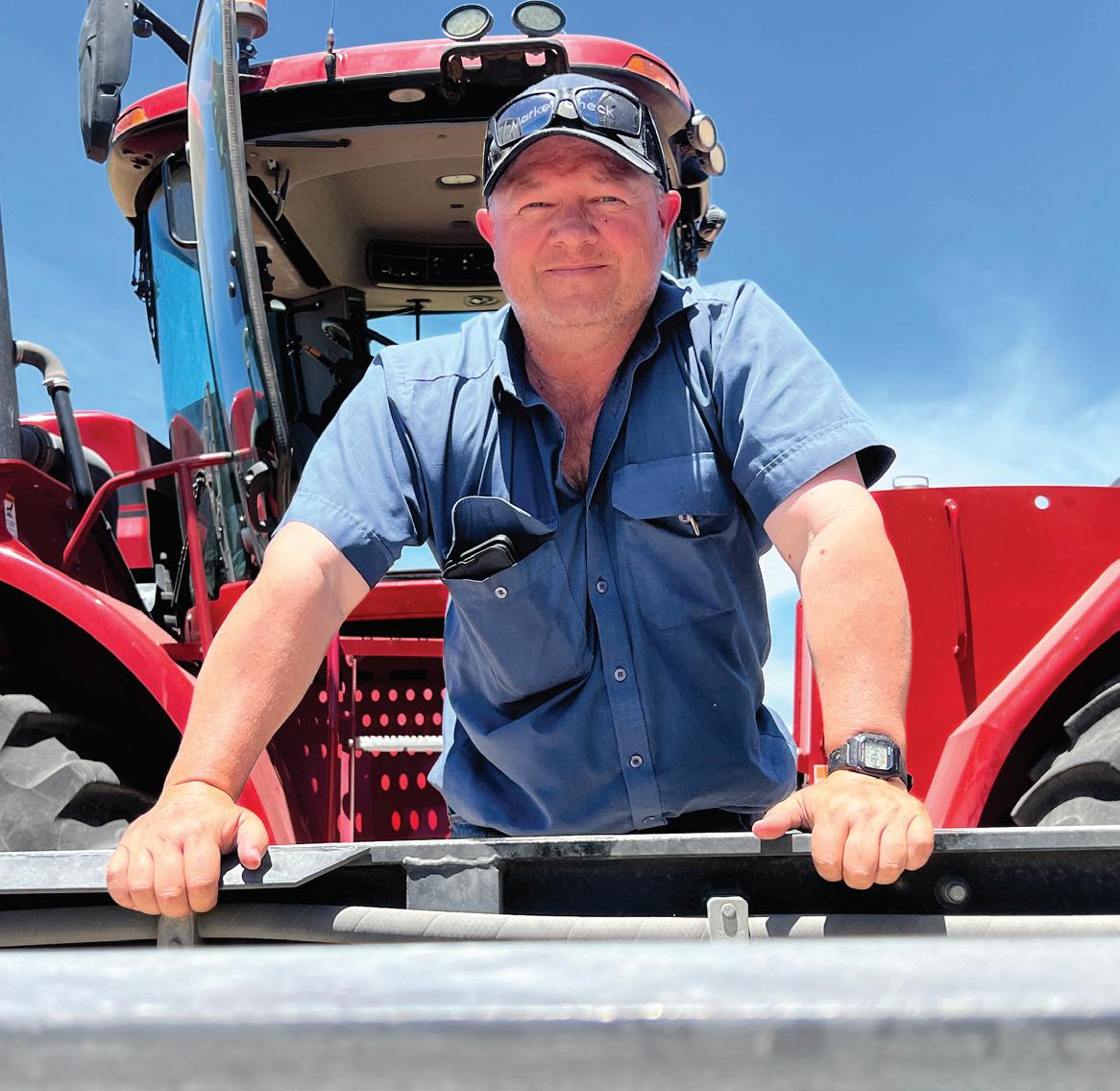
has been adopting research and trial work from FAR Australia and the Crop Technology Centre at Millicent. Applying improved cultivars and agronomy practices has lifted our 10-year average wheat yield from 4.7 tonnes per hectare to 8.1 tonnes per hectare over the past seven years.
What does peer recognition mean to you?
Being recognised by peers is quite humbling. I’m not one for the spotlight, but if it helps highlight what’s possible and contributes to the broader industry, that can only be a good thing.
How do you stay motivated through challenging seasons?
We’re fortunate in the South East that our seasons haven’t been as challenging as some other regions, although we’ve certainly had our own issues at times. Having a clear plan with targets in mind is important, but so is being adaptable when circumstances change.
What do you see as the biggest opportunity for South Australian grain producers?
South Australia’s strategic position remains a major advantage, particularly access to export and domestic markets through multiple ports, domestic mills and the ability to trade east or west.
Strong industry advocacy through organisations like GPSA is also a significant asset.
What advice would you give to others wanting to contribute to the industry?
Get involved in a group - whether that’s an Ag Bureau, farm management group or similar. These groups give you access to like-minded people and industry experts, and the shared learning and networks they create are invaluable.
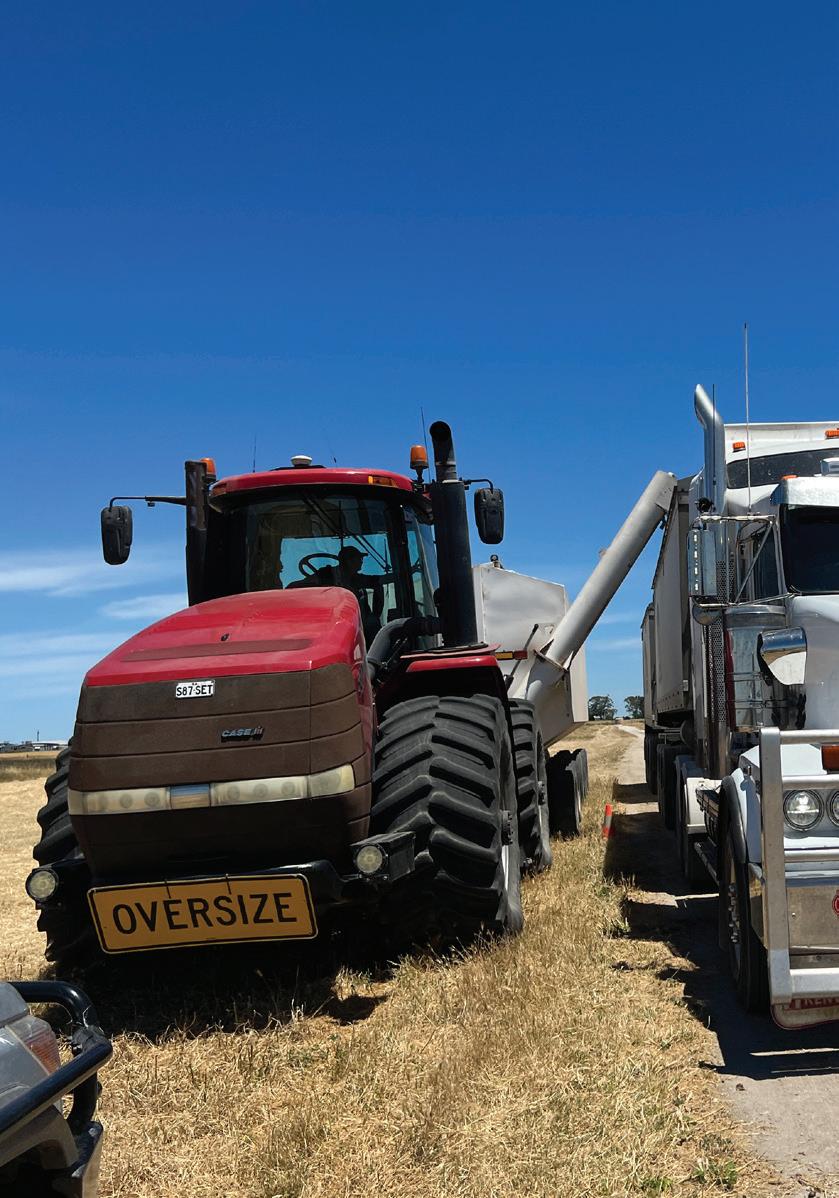
Supporting growers through change in sustainability and resilience has been central to Tracey Strugnell’s career in agriculture. With around 30 years’ experience in sustainable agriculture, Tracey has spent the past 15 years working as Senior Sustainability and Grants Officer with the Coorong Tatiara Local Action Plan and the Coorong and Tatiara District Councils, supporting grain producers across the Upper South East. Alongside her professional role, Tracey and her husband farm at ‘Stonehaven’ near Coonalpyn, producing grain and running sheep. She also contributes through farmer-led committees, regional advocacy and her role on the Limestone Coast Landscape Board.
What first attracted you to the grain industry, and what continues to drive you today?
Growing up around farms and through school work experience, I became fascinated by how land, water and farming systems interact, especially issues like dryland salinity in the Mallee. What keeps driving me is working alongside farmers, learning from their knowledge, and helping turn production and land management challenges into practical projects that make farming more productive and resilient. I’m motivated by seeing good ideas adopted, adapted and improved on by producers across our region.
What’s one decision, change or investment you’ve made that has had the biggest impact on your career?
One of the most impactful decisions has been focusing strongly on understanding soil limitations, including dryland salinity, and matching the right solutions to the right soils. Through projects on sandy soils, soil amelioration and matching land use to soil type, we’ve seen clear improvements in yield, ground cover and resilience. On our own farm, regular soil testing, mixed-species pastures and soil and fertility improvements have lifted grain yields by around 15%, hay production by about 40% and stocking rates by around 15%. Working to attract GRDC and Meat and Livestock Australia investment in projects relevant to our farming systems and production challenges and work in on-farm water security technologies have had big impacts also.
Being nominated for the SA Grain Industry Award centres on peer recognition. What does that recognition mean to you?
Being nominated by peers is extremely humbling. It tells me that the work we’re doing is valued by the people it’s meant to serve – farmers. To me, that recognition belongs to my valued work colleagues, to the farmer-led Coorong and Tatiara Local Action Plan Committees, farmers, Local Government and funding partners, who all work together to make change happen.
The past few seasons have challenged grain producers in different ways. What helps you stay motivated?
Staying motivated comes from staying
connected and listening – actively seeking direction from the farmers in our district in regard to arising issues that need tackling. Seeing farmers support each other through drought, fire and tough seasons is inspiring. On a personal level, I stay motivated by focusing on learning, problem-solving and making steady improvements on our own farm, even in challenging years.
Looking ahead, what do you see as the biggest opportunity for the South Australian grain industry?
The biggest opportunity lies in continuing to push productivity and resilience through soil amelioration, plant breeding, particularly in response to tough seasons. I can see an opportunity in carbon, emissions and nature-based accounting as markets and supply chains seek to quantify this information for their own reporting purposes.
What advice would you give to someone wanting to make a positive contribution to the grain industry in South Australia today?
Work with farmer groups and farmers. They know their own land and businesses better than anyone else. Stay curious and ask questions. Keep learning.
Connecting research with real-world farming has been the focus of Michael Moodie’s career in the Mallee. Working as an agronomist in the region for almost 20 years, Michael began in extension, helping translate research into practical outcomes for Mallee farmers. As regional capacity declined over time, his role evolved to include a stronger focus on research, ensuring locally relevant knowledge continues to support decision-making on-farm.
What first attracted you to the grain industry, and what continues to drive you today?
I grew up with a connection to farming (my grandparents had a farm) and decided very early on that agronomy was the path I wanted to pursue. I did not anticipate that I would end up in research, but this is where I feel like I have had the greatest impact. I like to think outside the box and not only understand what works but also why it works, which is what continues to drive me today.
What’s one decision, change or investment you’ve made that has had the biggest impact on your career?
As an extension agronomist I came to the realisation that there is no future in this role if there is no research to extend. In the face of declining research capacity in the Mallee, I made the leap and purchased the equipment required to implement research trials myself (headers, tractors, seeders etc). This enabled us to tackle a much wider range of issues with more rigour and greater impact, as we were involved throughout the whole
chain from issue identification, research and communication of the outcomes to farmers and consultants.
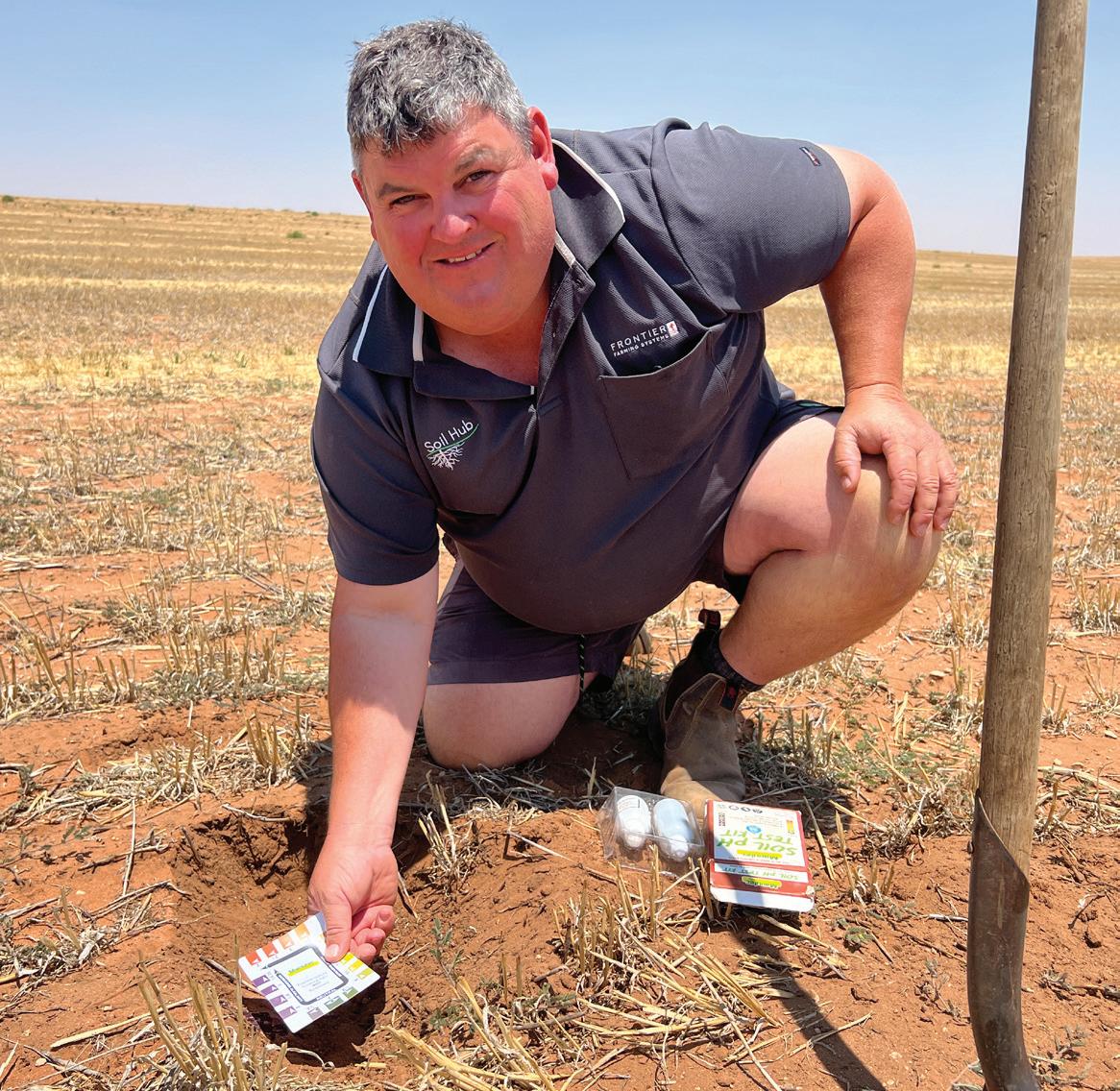
Being nominated for the SA Grain Industry Award centres on peer recognition. What does that recognition mean to you?
Quite simply, if someone has valued the work I have done, enough to put the time into nominating me for it, then that’s a great honour. It demonstrates that the risks, hard work and sacrifices that have been made have achieved real world impact, which as an agronomist and researcher is the ultimate goal.
The past few seasons have challenged grain producers in different ways. What helps you stay motivated?
The last few years have reinforced how the work I’ve been involved in has helped build resilience across the whole farming system. Two of the biggest focus areas for me have been the inclusion of pulses in Mallee crop sequences and the improvements made to overcome constraints on sandy soils. While the last few years have been incredibly tough for many farmers, and particularly harsh on pulses, the inclusion of pulses in rotations have resulted in some exceptional wheat and barley yield outcomes in very low rainfall years. Likewise, soil amelioration has helped farmers turn soils that are a constraint in low rainfall seasons to productive assets when moisture is limited. Seeing the material benefits that these two changes have had during the last few years provides both satisfaction and motivation.
Looking ahead, what do you see as the biggest opportunity for the South Australian grain industry?
Many farmers are operating highly efficient farming systems and are extracting as much of the rainfall that is available. So, the opportunity is to continue to identify and address potential constraints to these highly productive systems to ensure they are sustainable in the long term. Critical issues such as identifying and fixing soil constraints, managing broadleaf weeds in pulses, minimising herbicide resistance, and optimising crop nutrition to take advantage of the higher rainfall seasons, are agronomic issues that I think will not necessarily transform systems, but will help farmers maintain systems which are already pretty good.
What advice would you give to someone wanting to make a positive contribution to the grain industry in South Australia today?
Invest time and energy into understanding the farming system that you are working in. This cannot be taught; it needs to be learned. Once you have a good grounding in how the farming systems work you can be more effective at applying your skills and expertise to achieve impact. And don’t be afraid to work collaboratively with others including farmers, consultants and other researchers. Collaboration is key to achieving real world impact.
Bridging science and paddock practice has defined Dr Kenton Porker’s career in the grain industry. Raised on a mixed farm in the Mallee and shaped by his involvement in the Millennium Drought, Kenton studied Agricultural Science before building a career spanning agronomy, breeding and research leadership. His work has included roles with SARDI, a PhD in barley breeding, significant trials in high-rainfall and low-rainfall farming systems, and a return to CSIRO in Adelaide. Kenton is deeply involved in extension and industry collaboration and currently chairs the International Wheat Initiative Agronomy Expert Working Group.
What first attracted you to the grain industry, and what continues to drive you today?
I was always fascinated by crops and solving problems as a kid. Growing up, I didn’t really understand the range of careers beyond farming itself. I wasn’t very good at maths or science, but an agriculture teacher with an agronomy background helped me see other careers and influenced my decision to study further. Continuing to learn and solve problems remain a strong source of motivation. It can be rewarding knowing even a small part of your research has helped improve decisions or solved some challenges on-farm.
What’s one decision, change or investment you’ve made that has had the biggest impact on your career?
Scholarships and industry support early in my career have been critical. Support to attend university, opportunities to travel and collaborate internationally early in my career and later receiving a GRDC scholarship to return to study for a PhD. Being able to undertake a PhD later in life while staying connected to industry and maintaining income was important in my career and personal life. Support from organisations like SAGIT and GRDC early in my career on projects, is a big reason I’m still working in this industry today. Just as important has been working with people who encourage curiosity, debate and challenge. That environment really shapes how you think.
Being nominated for the SA Grain Industry Award centres on peer recognition. What does that recognition mean to you?
To be recognised as someone who has made even a small, positive contribution to South Australia’s strong network of growers, consultants and researchers makes me feel valued and encouraged.
The past few seasons have challenged grain producers in different ways. What helps you stay motivated?
Our research programs are designed to tackle exactly these challenges, which helps keep motivation high. South Australian grain production will always be water-limited and variable and helping growers navigate is a strong driver for motivation. Even in tough seasons, it’s hard not to admire how far our farming systems have come. Keeping that
progress in mind helps maintain perspective in difficult years.
Looking ahead, what do you see as the biggest opportunity for the South Australian grain industry?
One of the biggest opportunities for South Australian grain producers is building on something we already do really well, continuous improvement in water use efficiency, supported by research, innovation and a statewide culture of learning. South Australia has a long history of connected growers and consultants, plant breeding success, and practical agronomy research. More productive water-use still drives profit, but the challenge is to improve, or at least sustain productivity, while maintaining our natural capital, simplifying logistics and costs where possible, and managing risk rather than adding unnecessary complexity.
What advice would you give to someone wanting to make a positive contribution to the grain industry in South Australia today?
I’m biased, but I’d encourage people to give applied research a go. You might love it. Agronomy research can be incredibly rewarding because you get to work alongside growers and advisers who are exceptionally skilled at what they do, while stepping back to connect the dots and try things that may not yet be possible to do on-farm.
Alifelong connection to agriculture has shaped Professor Andy Barr’s career in the grain industry. Raised on a mixed farming property at Pinery, Andy completed a Bachelor of Agricultural Science, majoring in Plant Breeding and Agronomy, between 1972 and 1976. He spent almost 30 years working as a plant breeder of oats, barley and wheat before returning to the family farm in 2003 to run a cropping enterprise. Alongside farming, Andy established a consulting business reviewing Australian and international breeding programs and has served as a director and chair of major grain Research, Development and Extension (RD&E) organisations and agribusinesses.
What first attracted you to the grain industry, and what continues to drive you today?
My dad was an innovative and thorough farmer who always sought to understand better about what he was observing and I’ve followed that mantra. At high school I enjoyed science and loved genetics and agronomy at university. Having travelled to most cropping regions in the world and studied their farming systems, Australia, being a subsidy free producer, relies on adopting RD&E to remain competitive in world agricultural markets. Maximising the impact of innovations from RD&E is what has
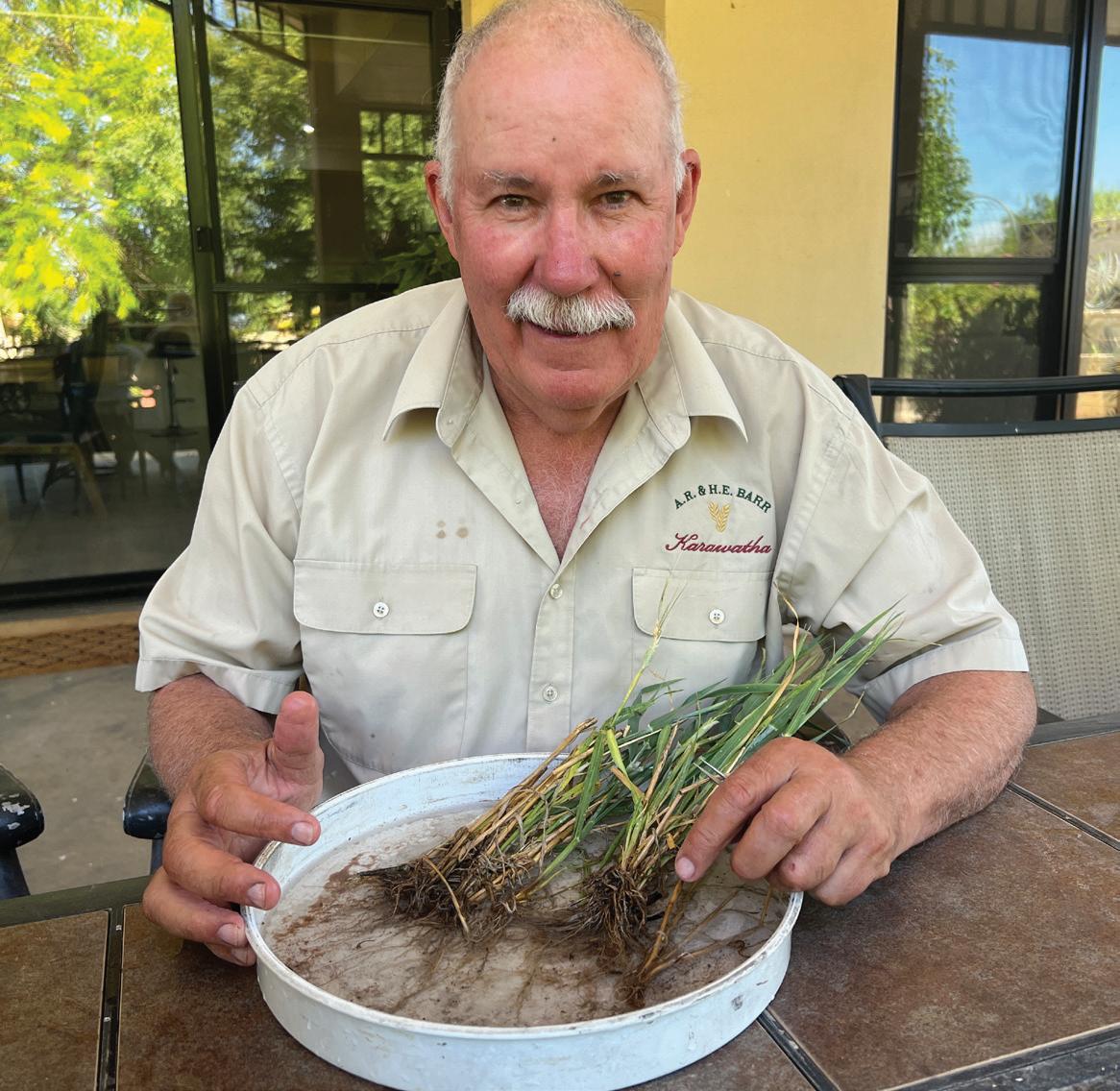
driven me, whether that’s as an active researcher or as an investor/manager of research funds.
What’s one decision, change or investment you’ve made that has had the biggest impact on your grain business?
The key decision was to study plant breeding with tutelage from world class lecturers at the University of Adelaide, and then to begin a career in plant breeding supervised by Rex Krause and Terry Heard in the South Australian Department of Agriculture. This was followed with a PhD supervised by Professor Tony Rathjen, which developed my scientific skills and knowledge base, leading to a productive career.
Being nominated for the SA Grain Industry Award centres on peer recognition. What does that recognition mean to you?
I am very pleased and humbled that someone feels that I may have done something useful for the grain industry. It has been a career that I have loved, and I will continue to contribute to, as long as I am able.
The past few seasons have challenged grain producers in different ways. What helps you stay motivated on farm and beyond it?
In 2024, it was the driest on record for our district and included a devastating week where there were four frost events dropping to minus 4.5 degrees. Then 2025, until late October, was even drier. These years came as we were planning to execute our succession plan, which was challenging. The enthusiasm of the family members to continue farming is what has kept me motivated.
Looking ahead, what do you see as the biggest opportunity for South Australian grain producers?
South Australia should avoid taking the easy option of being a FAQ producer and instead concentrate on producing the highest possible quality grain varieties, targeted specifically at the markets we service.
What advice would you give to someone wanting to make a positive contribution to the grain industry in South Australia today?
Chase your dreams hard, seek the best secondary and tertiary education relevant to your specialty, and build a network of like-minded people across the state, and even wider, to help you achieve your goals.
Building strong farming businesses and strong people has been central to Tim and Cheryl Freak’s journey. Farming at Coomandook in the Murraylands since 1990, they operate a mixed enterprise where sheep play an integral role alongside cropping, with multi-species pastures used as break crops and grazed through the rotation. Their cropping program includes wheat, barley, lupins and oaten hay. In 2020, Tim and Cheryl welcomed a young couple as equity partners, who now manage day-to-day operations. This transition has allowed Tim and Cheryl to focus on farm business coaching through Farm Owners Academy, supporting farming families across Australia.
What first attracted you to the grain industry, and what continues to drive you today?
We were attracted to the opportunity to run our own business in an industry with enormous potential and variety. Farming offered both independence and challenge - no two seasons are ever the same. What continues to drive us is our belief in constant and never-ending improvement. We love improving productivity, in a sustainable way. Our business model is a lower risk one that we have constantly refined over the years to suit our soils and environment. Even after more than 30 years in the industry, we still see opportunities to learn, adapt and improve. That challenge is what keeps the work exciting.
What’s one decision, change or investment you’ve made that has had the biggest impact on your grain business?
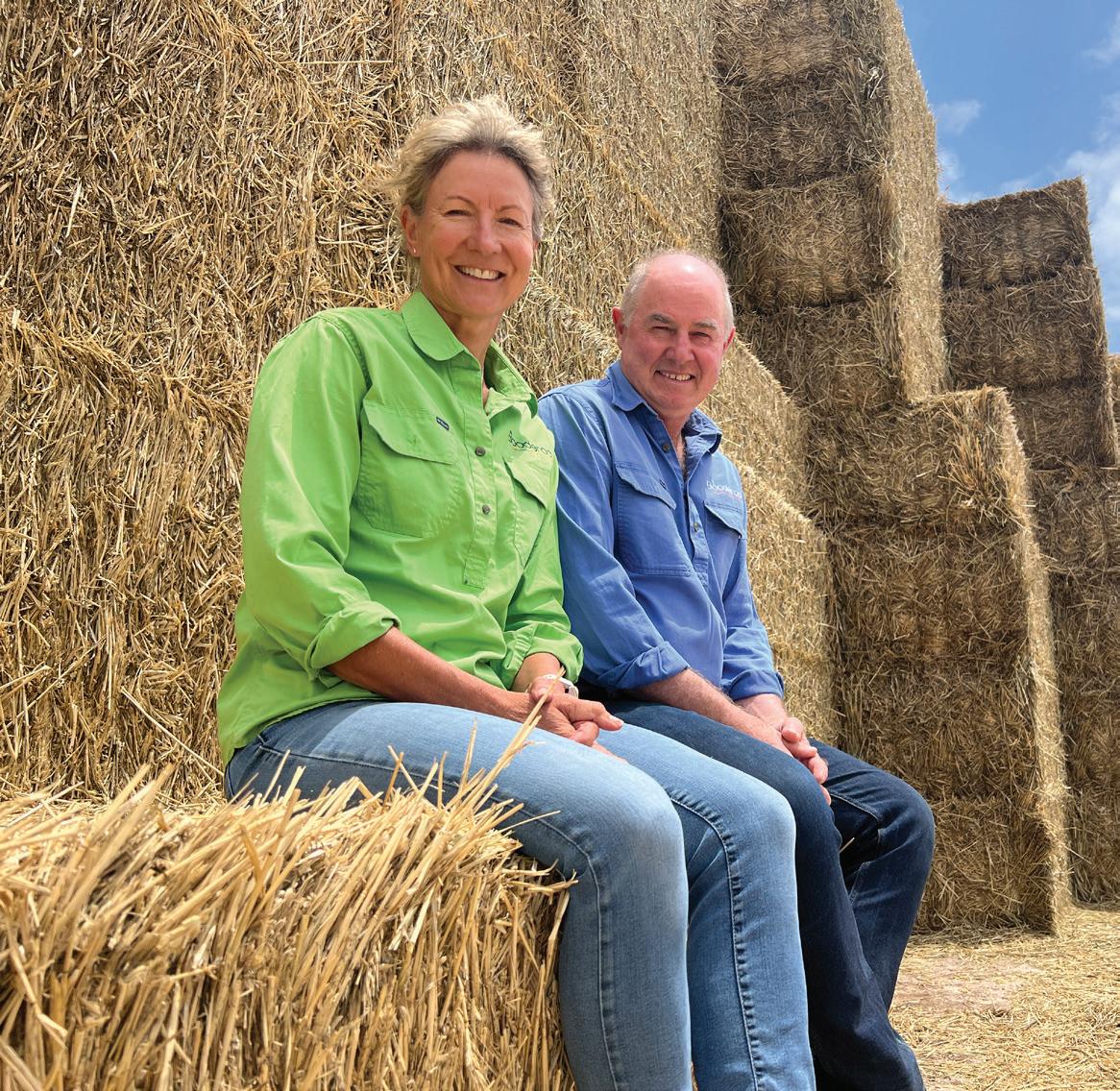
From a production perspective, one of our most important decisions was to move away from higher-risk, higher-return break crops and instead focus on a lower-risk system better aligned with our environment. This shift has significantly improved business resilience, especially in tougher seasons. From a business perspective, being proactive about succession has been amazing. It has created security and continuity for the farm, provided opportunities for others to enter the farming industry, and enabled us to pursue rewarding work beyond the farm gate, while remaining closely connected to agriculture.
Being nominated for the SA Grain Industry Award centres on peer recognition. What does that recognition mean to you?
We were genuinely surprised and very honoured to be nominated. We don’t do what we do for recognition, but we do it because we genuinely care about people and about giving back to an industry that has given us so much. To be recognised by peers makes the nomination especially meaningful.
The past few seasons have challenged grain producers in different ways. What helps you stay motivated?
The tough seasons are often where our greatest learnings occur. These years really test our business model, and we see this as an opportunity to refine our model. It’s motivating to see how much stronger and more resilient our business is in the tough seasons now. Through
our work with Farm Owners Academy, we also gain enormous motivation from helping other grain producers develop the skills, tools and confidence to navigate difficult seasons and position themselves to thrive in the years ahead.
Looking ahead, what do you see as the biggest opportunity for the South Australian grain industry?
One of the biggest opportunities that we see is increasing the professionalism of how farm businesses are run. This includes spending more time on strategy, being clear on direction, understanding key profit drivers and making decisions based on accurate financial information, especially in the case of machinery purchases and capital investments.
What advice would you give to someone wanting to make a positive contribution to the grain industry in South Australia today?
Care for your land, care about your industry, and never stop learning. Continually look for ways to improve, whether through better soil management, new technology or smarter business management. Profitability is important because it provides the capacity to invest, adapt and contribute more broadly, so a strong understanding of your numbers is critical. Build relationships, share your experiences, and support those around you, particularly during tough seasons.
Tanja Morgan has built her career at the intersection of research and practical farming. She began working in agriculture in 1999 with PIRSA after completing an agricultural science degree, before joining a family farming business at Geranium in the Mallee in 2002. In 2019, Tanja and her husband, Adam, established their own farming operation. Much of Tanja’s work has focused on farming systems research, development and extension, bridging science and on-farm application. Away from the paddock, she volunteers with the Geranium Community Hub, helping deliver an agricultural school camp that plans to connect city children with farming and regional life.
What first attracted you to the grain industry, and what continues to drive you today?
My grandparents both worked at the Adelaide University’s Waite Institute and my grandfather was in plant pathology research. Being involved in a vital industry that is so important to a growing population also satisfies my need to do something purposeful.
What’s one decision, change or investment you’ve made that has had the biggest impact on your grain business?
On the farm, it has been buckling-in
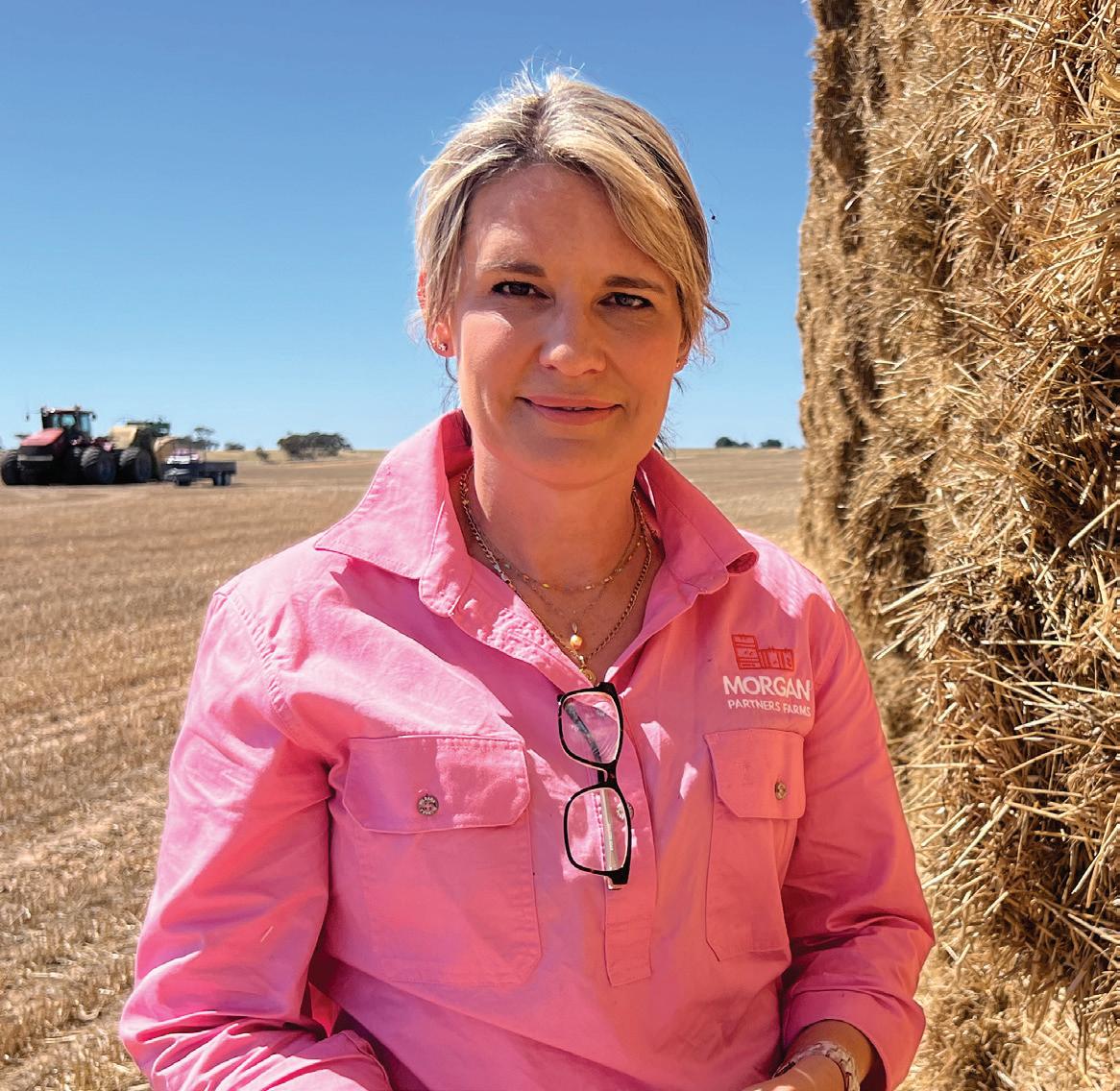
for expansion at the start of 2024. The expansion has been an all-in proposition and a test in fortitude. Working with Mallee Sustainable Farming has also been a rollercoaster and I have learnt so much and worked with lots of excellent people.
Being nominated for the SA Grain Industry Award centres on peer recognition. What does that recognition mean to you?
It’s a bit scary to be honest. There are so many deserving participants in the South Australian grain industry, so it feels humbling to be among them but I am grateful for the nomination.
The past few seasons have challenged grain producers in different ways. What helps you stay motivated on farm and beyond it?
Focusing on what you can control and trying to do those things well. Working with great people helps you stay motivated as we have a great team on the farm and I also worked with some fantastic people during my time at Mallee Sustainable Farming. Spending time giving back to our local community always helps put things into perspective.
Looking ahead, what do you see as the biggest opportunity for South Australian grain producers?
As in everything else we do, I think embracing Artificial Intelligence will be key. Taking the time to learn and embrace it, rather than avoid it.
What advice would you give to someone wanting to make a positive contribution to the grain industry in South Australia today?
Step out of your comfort zone by joining committees, embrace advocacy, and say ‘yes’ to innovative projects. Building a strong network and thinking outside the square is vital for driving positive change and advancing our industry.
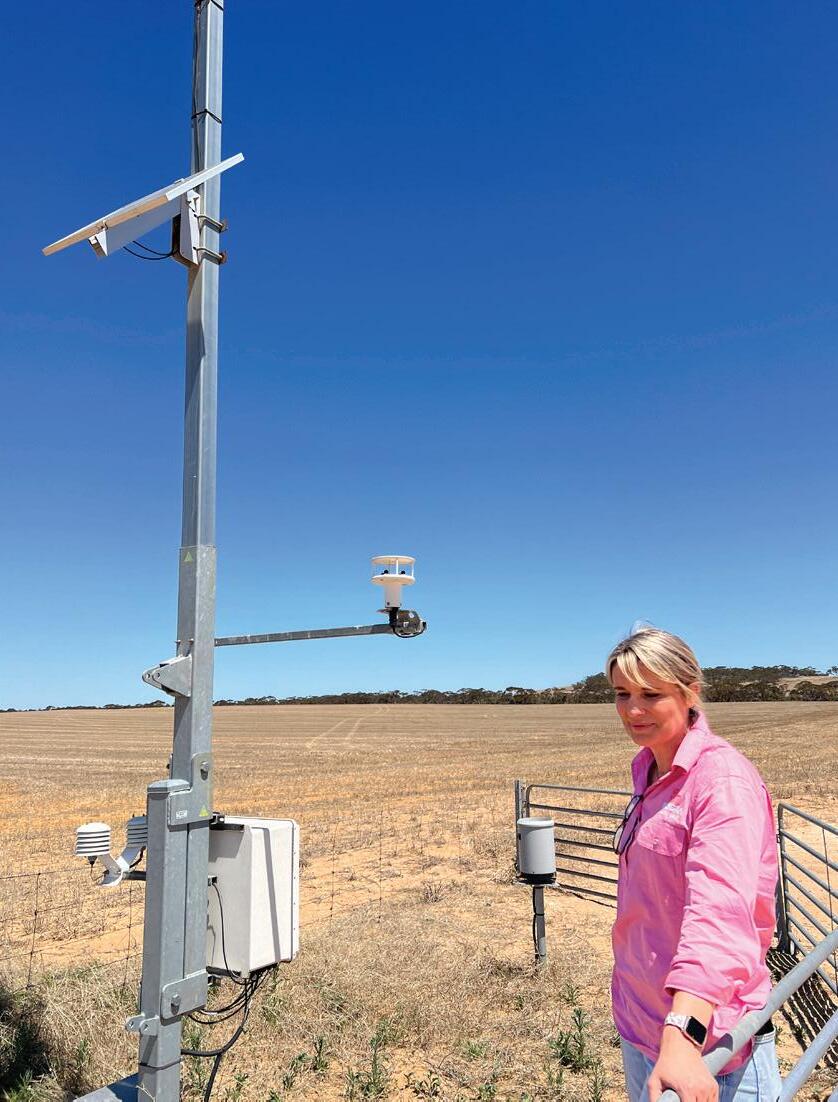
Farming and leadership have long gone hand-in-hand for Sharon Starick. Based in the Murraylands, Sharon and her husband, Matt, manage a mixed grain and pork enterprise alongside their three daughters, growing wheat, barley, canola and lentils in a low-rainfall environment. Sharon began farming with Matt and his parents more than 30 years ago and has since built an extensive record of industry leadership. She currently serves as Chair of the Grains Research and Development Corporation and sits on the boards of the Regional Investment Corporation and Animal Health Australia.
What first attracted you to the grain industry, and what continues to drive you today?
I grew up in the Barossa Valley on a wine grape growing property and had no knowledge of the grain industry. With strong encouragement by my parents, I was the first in my family to go to university and against the advice of career counsellors, I undertook an Agricultural Science Degree. It was Tony Rathjen (wheat breeder and lecturer), and working with Mallee farmers as a Landcare Officer, that sparked my interest in the grain industry. As a grain producer, I am passionate about research and innovation and how it can be applied on-farm.
What’s one decision, change or investment you’ve made that has had the biggest impact on your grain business?
In our business, the change that has had the biggest impact hasbeen no-till farm-
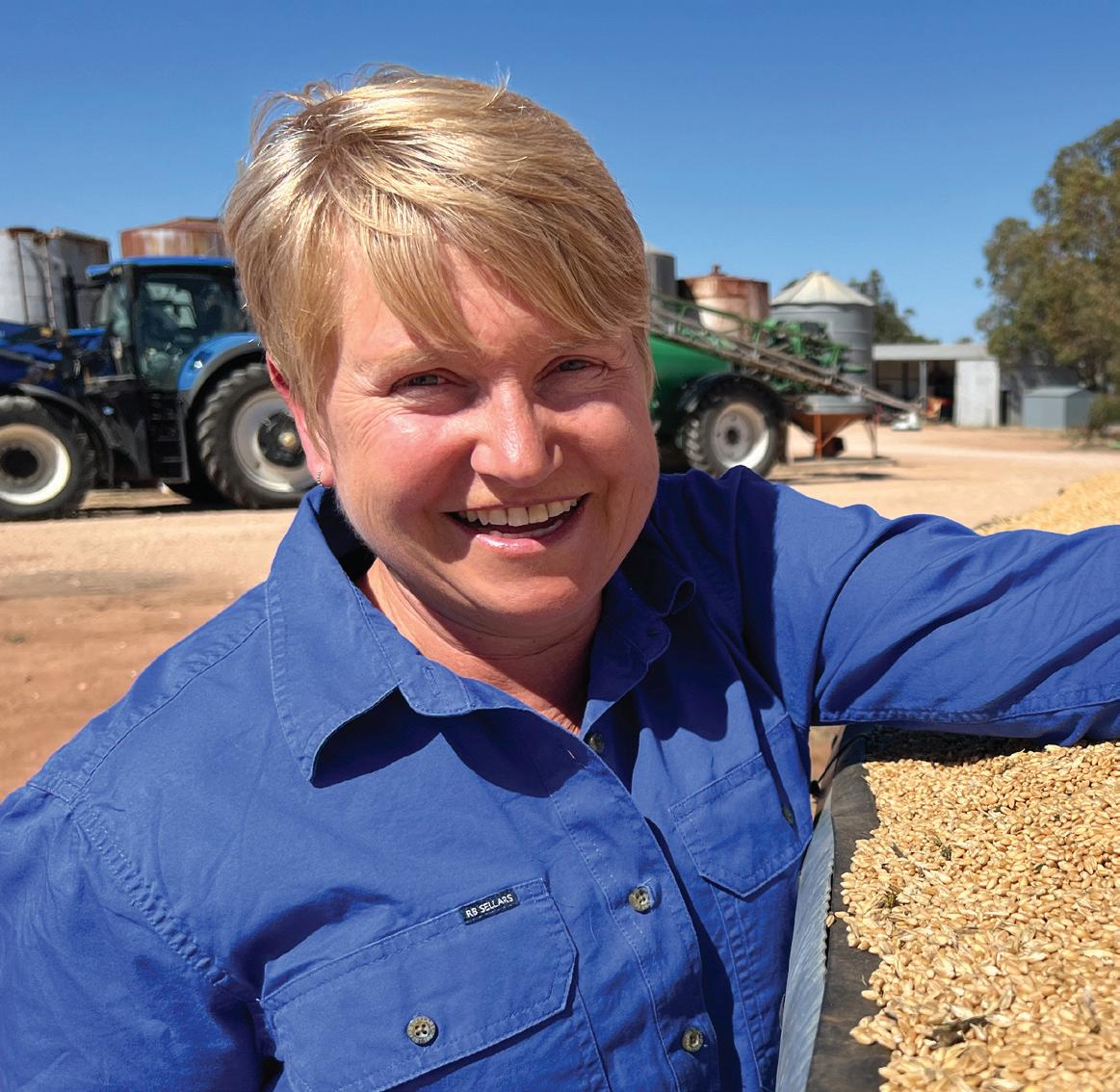
ing, which was initiated in the early 2000s and the ongoing focus through trials on improving soil health and addressing soil constraints. This has all contributed to pushing the bounds of water use efficiency and productivity, as well as ensuring we continue to improve our sustainability. For me personally, it’s been about stepping outside my comfort zone, being willing to put my hand up, to contribute to discussions respectfully and having the courage to call out issues.
Being nominated for the SA Grain Industry Award centres on peer recognition. What does that recognition mean to you?
I am very humbled and honoured to have been nominated as I am not someone who seeks out accolades. Being nominated gives me a platform to be able to continue to encourage and support women and young people, regardless of their experience, to become part of the grain industry and seek out opportunities for greater involvement.
The past few seasons have challenged grain producers in different ways. What helps you stay motivated on farm and beyond it?
The past few seasons have been very challenging with growing season rainfall between 120 and 140 millimetres. However, we continue to push the boundaries of water use efficiency and look for opportunities to improve and enhance our soils, ensuring we are able to achieve the best outcomes no matter the season. Our three daughters are all interested in the farm, so doing this for long term
sustainability of the business, both financial and environmental, keeps me motivated. Beyond the farm, I am excited by the new science and research which will help to transform our farms and grain production in the future, just as no-till farming led to a whole of farming systems change.
Looking ahead, what do you see as the biggest opportunity for South Australian grain producers?
The two biggest opportunities are that South Australia already has a diversified grains market both domestically and export wise, but there are further opportunities such as the development of a sustainable aviation fuels industry, increasing demand through intensive livestock production and future new grain crops and grain production that has reduced emissions intensity. The other opportunity is to continue to enhance and improve our soils.
What advice would you give to someone wanting to make a positive contribution to the grain industry in South Australia today?
The SA grain industry is very welcoming and encouraging, so develop your networks and talk to leaders within industry. Decide what or where you would like to contribute, be prepared to step outside of your comfort zone and take opportunities to continue to learn as part of your development.
Agriculture, rural communities and empowering others sit at the heart of Leanne Pridham’s work. A grain producer at Kulpara on the Yorke Peninsula for the past 20 years, Leanne runs Pridham Farms with her husband Daniel, their three teenage children and extended family, operating a continuous cropping enterprise. Alongside farming, Leanne is a facilitator, a director and local ambassador for Women Together Learning (WoTL), supporting education and connection for women in agriculture. She is also actively involved in several local community groups and was appointed to the Grain Producers SA Policy Committee in 2025.
What first attracted you to the grain industry, and what continues to drive you today?
To be honest- love. I grew up on Kangaroo Island and have a background and previous career in the livestock industry. Work brought me to the Yorke Peninsula and that is where I met my husband Daniel and the rest as they say is history. Over the last 20 years, I have also fallen in love with the grain industry. As a strategic, big picture thinker that also enjoys hands-on work, the grain industry provides for both skill sets. I am driven to produce high quality grain in a sustainable but profitable way and can feed the world’s population. I am also motivated to keep family farms alive and thriving, as regions and services shrink.
What’s one decision, change or investment you’ve made that has had the biggest impact on your grain business?
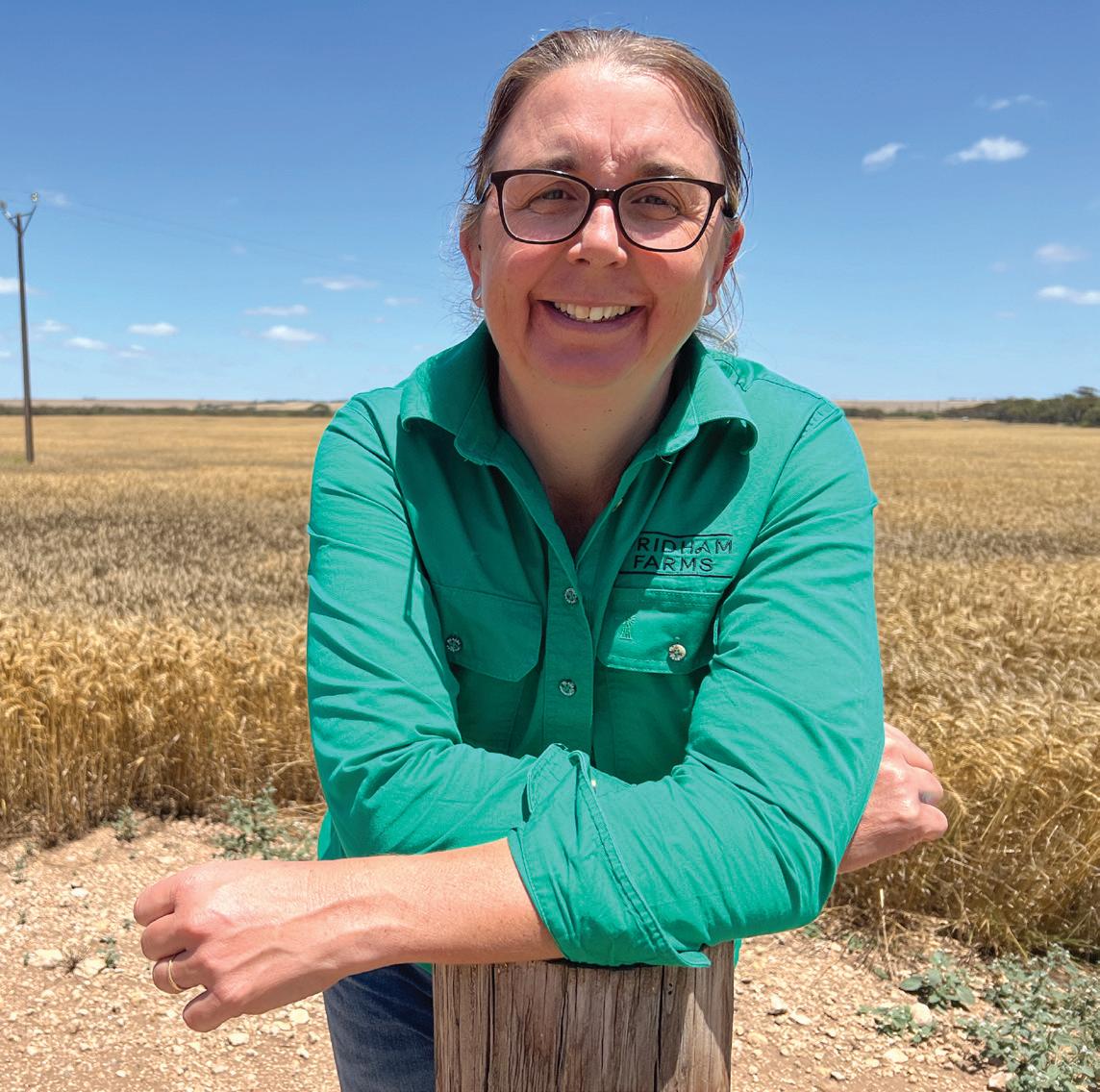
Whilst operationally no-till, stubble conservation and use of disc seeders have been a game changer for our business, my role and focuses are on business management. In that regard, seeking out a team of trusted professionals, including an independent chair, for our farm Board has been vital.
Being nominated for the SA Grain Industry Award centres on peer recognition. What does that recognition mean to you?
I am passionate about family farm businesses and valuing everyone’s role. This is what motivates me both within our business and in my other roles in the wider grain industry. It is very humbling to be recognised by my peers and those I respect and to be included amongst an amazing group of grain producers.
The past few seasons have challenged grain producers in different ways. What helps you stay motivated on farm and beyond it?
Two things have been critical in staying motivated - knowing yourself and recognising that looking after yourself is non-negotiable. As a ‘big picture’ person, having a clear long-term goal helps me stay focused and motivated. For others in our team, however, that same long-term view can feel overwhelming, particularly when things don’t go to plan. In those moments, focusing on the day-to-day tasks is far more effective. The idea of “putting on your oxygen mask first” might sound clichéd, but it’s vital. We spend hours servicing machinery and would never operate
headers without blowing them down or fuelling them up, yet it’s easy to convince ourselves that skipping exercise, good food or sleep during stressful periods is acceptable. Having a personal ‘tool kit’ to draw on at different times has been essential. During quieter periods, a 40-minute morning walk with the dogs is part of my daily routine and helps set up the day to be more productive. During busier times, such as seeding and harvest, that routine might change, but the principle remains the same. Being intentional about personal wellbeing is just as important as looking after the machinery and the business.
Looking ahead, what do you see as the biggest opportunity for South Australian grain producers?
Adoption of innovation and Ag Tech to boost production and efficiency, particularly on smaller scale operations, is an area that I see huge opportunities for South Australian grain producers.
What advice would you give to someone wanting to make a positive contribution to the grain industry in South Australia today?
Know what your strengths are. What is it that you bring to the table? Find a role and system that needs your strengths and make sure you reach out to those that support you and back yourself in. The grain industry needs us all.
Acareer spanning science, sustainability and farming systems has shaped Ruth Somerville’s work in agriculture. Raised on a sheep and cropping research station in Cowra, NSW, Ruth studied ecology at the University of Sydney before working in IPM research and sustainable agriculture projects across Australia. Since moving to the Mid North in 2008, she has worked in natural resource management, cropping research and, for the past 12 years, as a private consultant through her business Rufous & Co. Ruth works closely with farmers and farming systems groups, serves on GRDC’s Southern Panel and the Australian Grains Sustainability Framework Steering Group, and farms with her husband Damien and extended family near Spalding and Burra.
What first attracted you to the grain industry, and what continues to drive you today?
I grew up immersed in the grain industry. My first paid job was working with Sydney University’s wheat breeding team as a bagger on their old open top plot headers and we had some of Australia’s leading researchers, both in cropping and livestock, of the 1990’s working on the Cowra Research Station and part of our daily life. My career has been focused on improving the sustainability of our agriculture industries and now, as well as consulting to the industry, we are living it by farming with my husband, focused on growing the best grain we can and building a business that supports those in our multi-generational family to live their best lives. My passion lies in agriculture in general, and environmental management, growing
food and fibre for Australians and the world in ways that are sustainable and complementary with functional ecosystems.
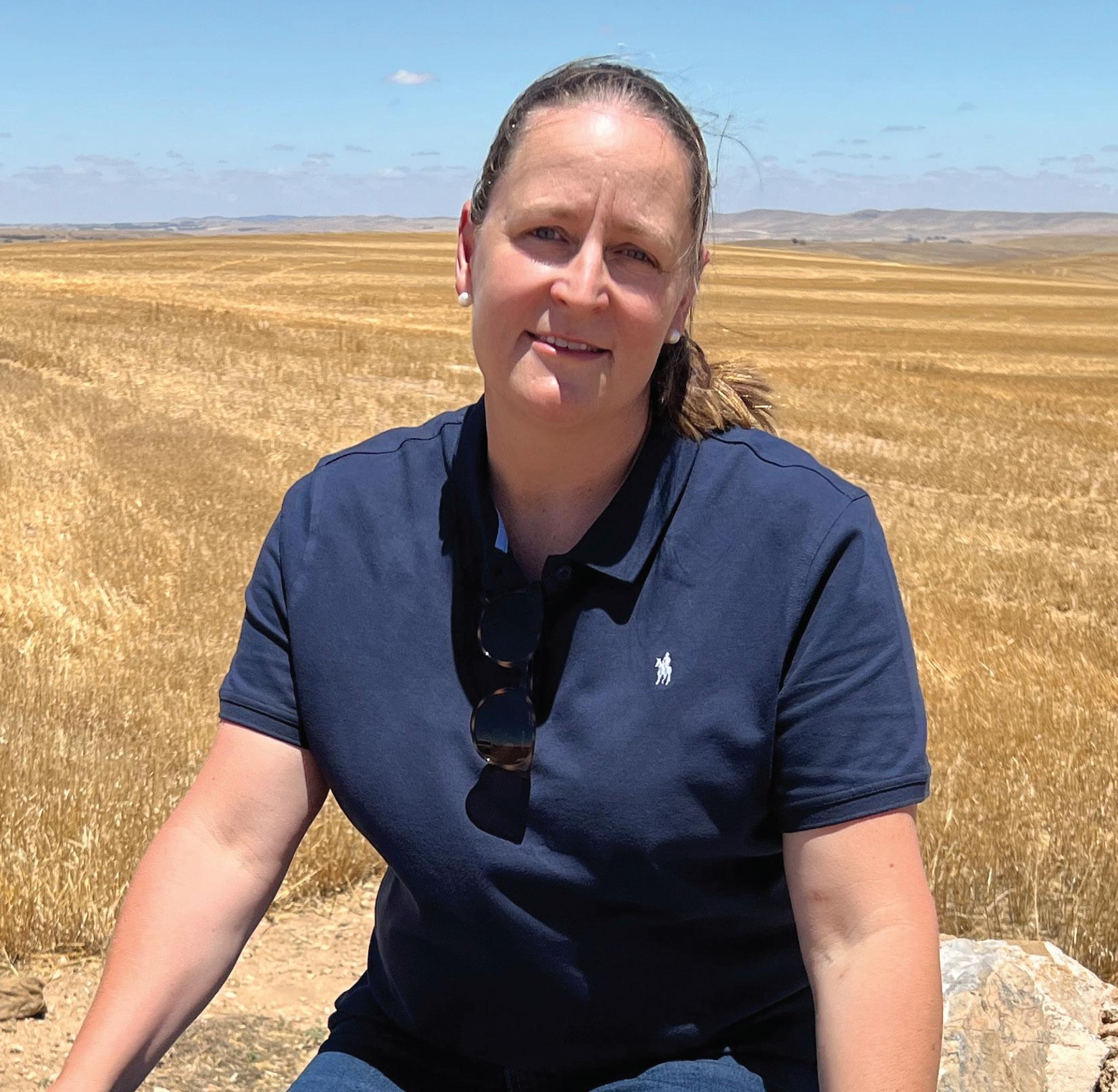
What’s one decision, change or investment you’ve made that has had the biggest impact on your grain business?
I’d love to say it was a career decision but ultimately it was falling for Damien and choosing to marry into a farming family and raise kids in the Mid North. I’m not sure there is an easy way to come into a multi-generational farming business, and it hasn’t been without challenges, but those challenges and lived experiences in our grain business makes me better at tackling industry challenges, and my career and industry involvement helps our farming enterprise.
Being nominated for the SA Grain Industry Award centres on peer recognition. What does that recognition mean to you?
To be recognised by your peers is humbling and a wonderful career and personal moment. I am surrounded by passionate and dedicated people in the grain sector, and agriculture more broadly. There are so many people that contribute well beyond the scope of their role, or that is expected by their communities. To be nominated with the others that I hold in such high regard this year is truly special.
The past few seasons have challenged grain producers in different ways. What helps you stay motivated?
2024 and 2025 were tough, hard to live in, hard to make decisions in and will take time to financially recover from. But they taught us things as well: like the value in good communication and working together, the amazing evolutions in the farming system, our improved water use efficiency and the importance of understanding your cost of production. We farm because we love it. We want our kids to have the opportunity to thrive in our industry if they want to, because we’ve been involved in agriculture for generations and to produce good food, fodder and fibre is a worthwhile pursuit.
Looking ahead, what do you see as the biggest opportunity for the South Australian grain industry?
As we embark on the next chapter of technology adoption in the grain industry, we have an opportunity to re-design our farms. With automation and changes to scale and scope of machinery, there is a need to consider function across the farm, identify areas for natural capital and ecosystem services and build them into our management of the land.
What advice would you give to someone wanting to make a positive contribution to the grain industry in South Australia today?
Join the group, jump on the committee, put your hand up to host a trial or an event in your shed. Or just speak up and ask around. There are so many opportunities in our industry to contribute.
Yorke Peninsula
Agriculture has been at the centre of Yorke Peninsula grain producer Mark Schilling’s life from an early age. After leaving school in 1984, Mark went straight into the industry and never looked back. He is known for his forward-thinking approach to farming, developing multiple value-adding enterprises on-farm, spanning new variety trials, machinery parts, mouse bait and seed, all focused on building resilience and long-term sustainability.
What first attracted you to the grain industry, and what continues to drive you today?
In many ways, I felt I had no choice but to become a farmer - at least in my own mind. On reflection, my parents gave me every opportunity to pursue a wide range of paths, yet I still chose agriculture. Technology, family and a constant hunger for knowledge continue to drive my desire to innovate and improve.
What’s one decision, change or investment you’ve made that has had the biggest impact on your grain business?
The biggest changes for me have been family involvement, diversification and employing great people. When you bring the right people into your business, it thrives as they contribute ideas, commitment and energy that help drive the business forward. Personally, stepping outside my comfort zone has also had a major impact. I’m naturally an introvert, and had I stayed that way, I would never have met the incredible mentors around the world who now inspire me to get up every morning and keep pushing
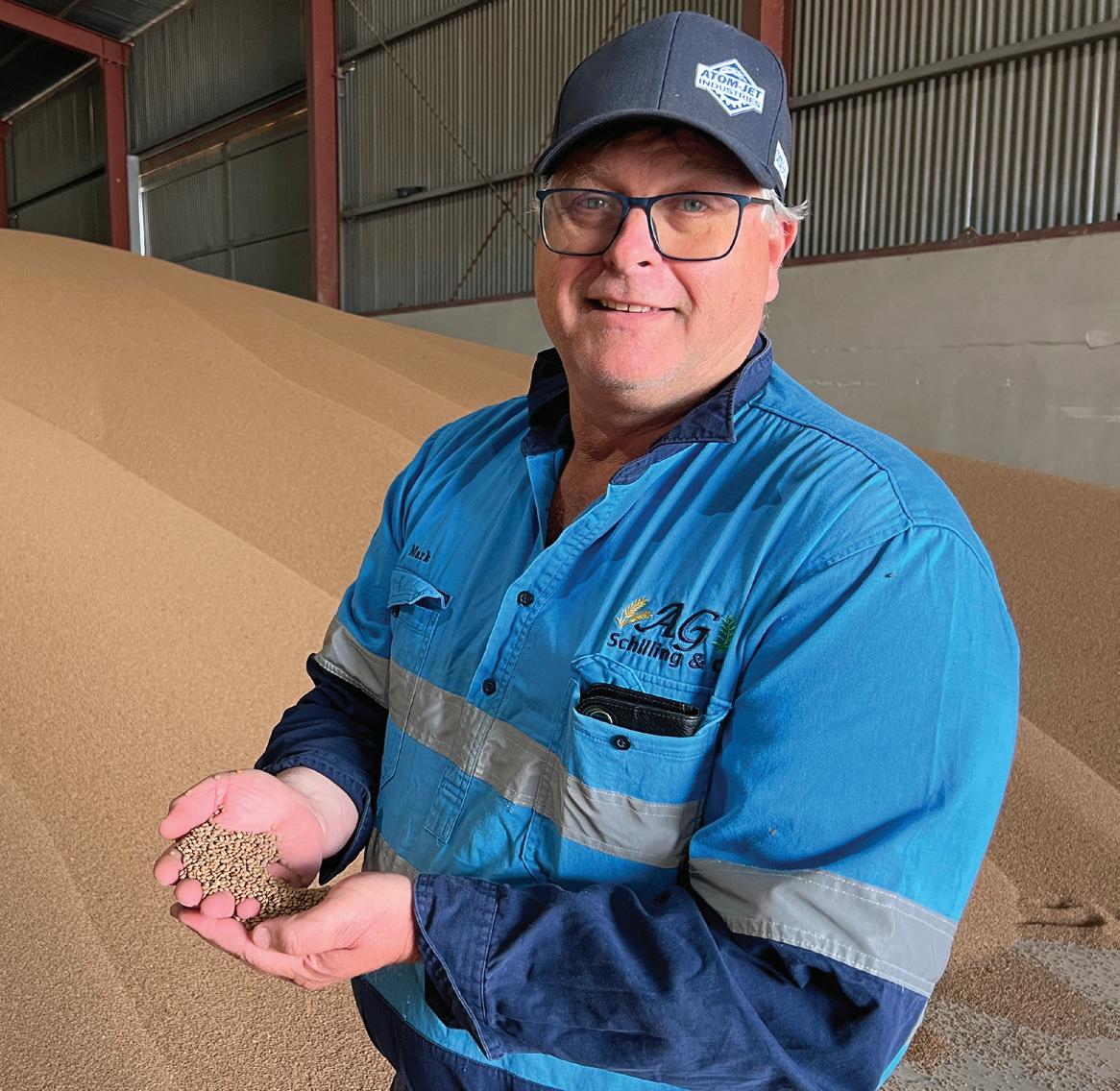
forward. Family is the backbone of our business. Merridee, my wife and Chief Financial Officer; Aidan, my son and farm manager; and Rohan, my son and Agculture distribution and logistics manager, all work within the business as they build their own careers and pursue their goals. That, to me, is what it’s all about: the strength and continuity of the family business.
Being nominated for the SA Grain Industry Award centres on peer recognition. What does that recognition mean to you?
Being recognised by peers as an innovator is both humbling and rewarding, not just for me, but for the people I work with every day. Every farmer is an innovator, we see problems and develop practical solutions to overcome them. I haven’t invented anything new - I’ve simply adopted ideas from around the world and made them applicable to my own farming business. Importantly, I’ve also focused on sharing that innovation commercially and continuing to look for the next game changer in agriculture.
The past few seasons have challenged grain producers in different ways. What helps you stay motivated on farm and beyond it?
Challenging seasons force you to confront some hard realities. We’ve seen commodity prices fall by 20 to 30 per cent at the same time as input costs have increased by a similar margin, all while operating in an increasingly regulated environment where profitability is still expected. In tough years, it can be tempting to avoid the uncomfortable
conversations, rather than dealing with the bigger issues. It’s easy to fall back on the mindset of “she’ll be right”. Unfortunately, farming doesn’t work like that anymore. What gets us through is being honest about where the business stands and taking a disciplined approach to planning. Reviewing the year gone, understanding budgets and cashflow, and committing to a clear ‘plan, execute, review’ cycle has been critical.
Looking ahead, what do you see as the biggest opportunity for South Australian grain producers?
Sustainability will continue to be important, particularly in proving credentials to end users to maintain and grow market access. Advances in autonomous machinery and hybrid tractors offer real opportunities as labour-saving and input-saving technologies, helping protect margins under increasing pressure. Seeand-spray tech also presents significant potential to reduce chemical use while maintaining effective weed control.
What advice would you give to someone wanting to make a positive contribution to the grain industry in South Australia today?
Have a go. Just because you’re doing something different doesn’t mean it’s wrong or right. If it is wrong, plenty of people will tell you. If it’s right, others will adopt it, copy it and follow. That, without a word being said, is the best compliment you can receive.
Acareer grounded in both innovation and practicality has defined Leighton Wilksch’s contribution to the grain industry. Raised on a grain farm at Yeelanna on the Eyre Peninsula, Leighton began his professional career in 1999 as a research agronomist with IAMA. He now calls Paskeville on the Yorke Peninsula home. For the past 20 years, Leighton has been actively involved in farming systems groups, runs his own weather station business, Agbyte, and is currently in his seventh year as Chair of the Ag Excellence Alliance Board.
What first attracted you to the grain industry, and what continues to drive you today?
Growing up on an innovative grain farm allowed me to experience the progress that adoption of no-till and continuous cropping could bring to grain production. Being employed as a research agronomist with a leading agribusiness gave me insight into new technologies. Whether it be through crop protection, grain varieties or Ag Tech, this inspired me to seek new ways to improve decision making on farms. Working with leading grain producers in my business gives me opportunities to observe how good people management, time management and agronomy can lead to robust businesses moving forward, even during tough seasons. This drives me to want to play my part by providing Ag Tech that is imperative to farm decision making.
What’s one decision, change or investment you’ve made that has had the biggest impact on your business?
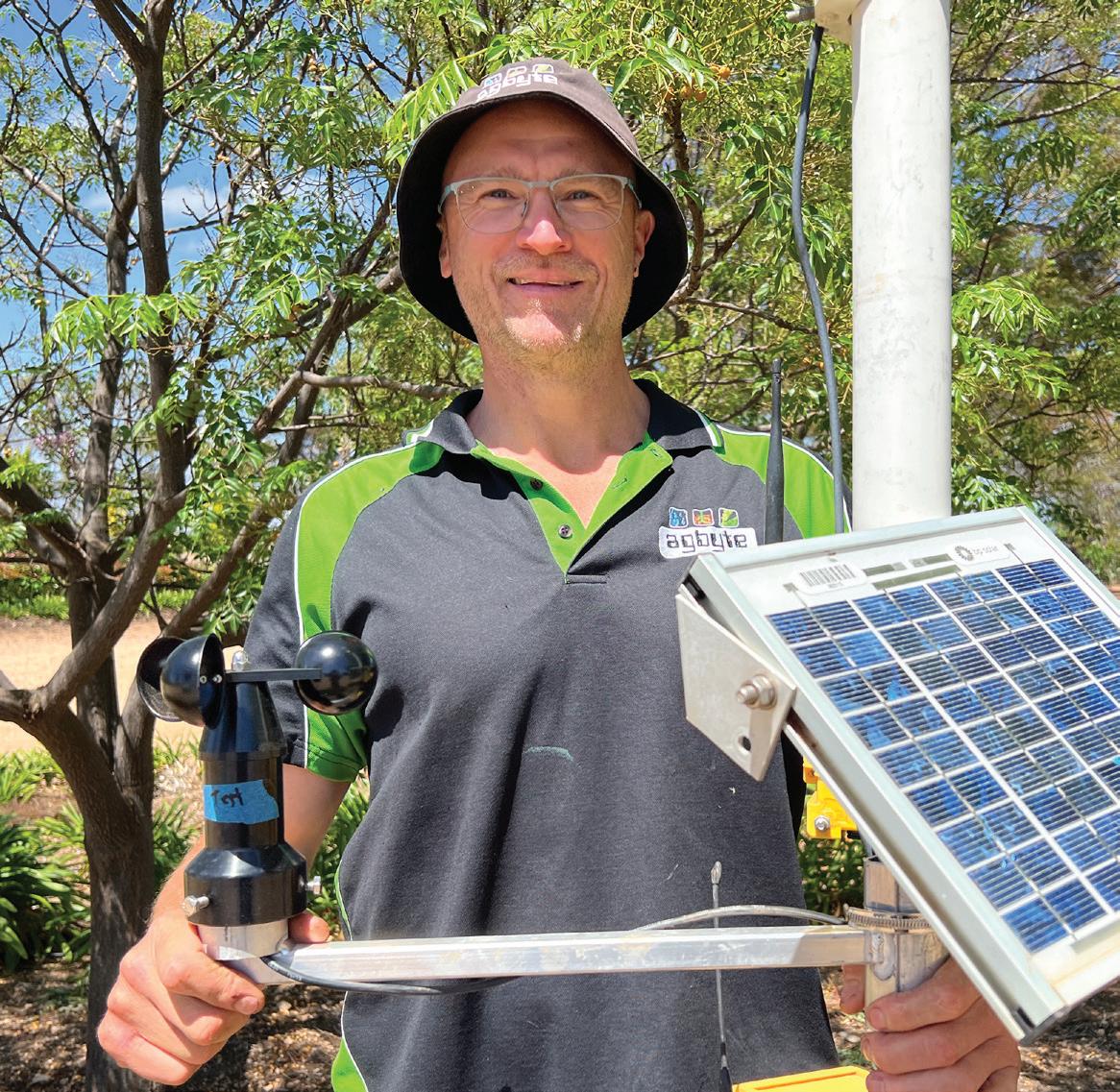
Taking the leap to ‘go on my own’ and start Agbyte was a huge decision as I was leaving behind my job as a research agronomist. I had good support from family and friends and confidence in my business model that I could make something of the burgeoning Ag Tech service industry.
Being nominated for the SA Grain Industry Award centres on peer recognition. What does that recognition mean to you?
I’ve been fortunate to find myself in a quite unique spot in the grain industry as a provider of (weather) Ag Tech as there are very few people in Australia that do what I do. To be recognised for what I have done is particularly humbling and I’m honoured to have received the nomination. But with recognition also comes responsibility and there are plenty of other people that have been just as innovative and work hard and smart within the grain industry. Therefore, I feel that the recognition should also drive me to continue to innovate, lead and contribute to this wonderful industry that we have in South Australia.
The past few seasons have challenged grain producers in different ways. What helps you stay motivated?
I’m particularly fortunate to be geographically spread with my travels across South Australia, Western Australia, and Victoria, so I do see the ups and downs across the regions. This certainly helps balance out my perspective. I get to see how and why different things are done on grain farms across these states
and why things work in one place, but not in others.
Looking ahead, what do you see as the biggest opportunity for the South Australian grain industry?
We are going to continue to have the opportunity to grow excellent quality grain crops and export them to the world. Seasonal conditions will fluctuate, as will grain prices, but we have most of our grain production within a couple of hours of a port/receival site in South Australia. We have a strong backbone of agribusiness service providers, farming systems groups, as well as research organisations. These partners provide excellent support to our grain producers which is critical to extend and disseminate new ideas and innovations.
What advice would you give to someone wanting to make a positive contribution to the grain industry in South Australia today?
Have a willingness to travel and experience different things as that has been invaluable to my career development. Whether you are a young school leaver looking to ‘get off the farm’ for a few years or a university graduate starting a career with an agribusiness; being willing to go to a new region and meet people, share ideas and get involved in the community is incredibly rewarding and confidence building.
Apractical, on-ground perspective underpins Adam Hancock’s work in the grain industry. Raised on a Mallee farm, Adam broadened his experience through international farm travel before completing university and commencing his agronomy career in 2010. He moved to Naracoorte as a trainee agronomist with Elders and now works across the South East, from Penola to Bordertown. Adam places a strong emphasis on industry engagement, sitting on several local committees and currently serving on the GRDC Southern Panel, where he contributes to robust discussions around the challenges, constraints and opportunities shaping the grain industry.
What first attracted you to the grain industry, and what continues to drive you today?
My inspiration comes from being born into agriculture. When you grow up living the highs and lows of farm life, it has an effect on you and it can be very challenging, which is what’s so motivating. It’s my kind of challenge. When I think about how well growers are doing today, what we are able to produce with the rainfall we receive, and then consider that tomorrow we need to find ways to do all of it better, it’s a daunting goal - and I like it. What continues to drive me is the chance to contribute to those solutions and see practical improvements take effect on farm.
What’s one decision, change or investment you’ve made that has had the biggest impact on your career?
The choice to be engaged with the industry the way I have has had a big impact on my career. I’ve been active in local Ag Bureaus, taken on roles within committees, and continually stepped up that involvement. Technical knowledge alone doesn’t drive industry change - advisers need leadership, collaboration, and research advocacy. If you want to make a bigger difference, you need to step into these roles. Doing so has also expanded my network, skills, and credibility.
Being nominated for the SA Grain Industry Award centres on peer recognition. What does that recognition mean to you?
It was a slight surprise as I thought of myself as someone who’s “passing the tools” to the researchers who are pushing innovation. Driving innovation adoption is also a team effort and hard to imagine singling out an individual. But some of us do drive it harder, which takes some sacrifice, so it’s nice being appreciated.
The past few seasons have challenged grain producers in different ways. What helps you stay motivated?
Finding solutions to challenges is a big part of my role, and that creates inspiration. I have an unwavering belief that things can always be done better. Thinking of recent small wins, such as seeing a new piece of Ag Tech capture data on a complex issue, translate it into practical insights, and to see it adopted on-farm, is always astonishing and makes me want to do it again tomorrow. Staying
close to the community around me, having a laugh when things don’t go to plan (we laugh a lot), and maintaining work–life balance also helps.
Looking ahead, what do you see as the biggest opportunity for the South Australian grain industry?
In the context of innovation, which is one of the greatest things our industry has going for us, we are an innovation sink and it’s attracting talent to come and work here. Innovation is a tool we use to solve problems, from reducing the cost of production to managing resistance or improving yields, and it is driven by people. Perhaps our biggest opportunity lies with those people: our innovation champions and leading growers. If we continue to support and empower them, the ideas, solutions, and adoption that drive our industry forward will grow stronger.
What advice would you give to someone wanting to make a positive contribution to the grain industry in South Australia today?
Be engaged with the industry, get on the committee, go to the field day, collaborate with other growers. Our industry is stronger when we share our knowledge because you can’t innovate in isolation.
Kym I’Anson has been farming in the Marrabel Valley in South Australia’s Mid North for more than 25 years, producing grain and high-quality export oaten hay. Known for his practical approach to innovation, Kym has worked closely with industry partners to adopt technologies that improve soil health, plant performance and overall crop production. A strong advocate for variable-rate inputs and data-driven decision-making, he believes understanding variability across the landscape is key to long-term productivity. Beyond his own operation, Kym is passionate about sharing knowledge and encouraging the broader farming community to adopt practical, technology-enabled solutions that strengthen the resilience of the grain industry.
What first attracted you to the grain industry, and what continues to drive you today?
Technology and innovation. It is a very technologically advanced industry, and data-based technologies are helping growers remain sustainable in all types of seasons.
What’s one decision, change or investment you’ve made that has had the biggest impact on your grain business?
Spending my final year at university
focusing on soils fundamentally changed how I approach farming. Understanding that soil health is directly linked to plant health and long-term profitability led me to invest heavily in soil testing and targeted soil amelioration to address underlying constraints. That work ultimately culminated in introducing the Veris MSP soil testing platform to farmers, helping turn soil data into practical, on-farm decisions.
Being nominated for the SA Grain Industry Award centres on peer recognition. What does that recognition mean to you?
Being nominated and shortlisted as finalist is a testament that no matter where you farm or how small your farm is, we can all contribute to grain production. The area we farm was known for sheep and lucerne and yet here we are today operating a continuous cropping business.
The past few seasons have challenged grain producers in different ways. What helps you stay motivated on farm and beyond it?
We farm in a very challenging area, so we’ve learnt to live with the normality of dry seasons. Our data shows that about one in every 11 years we have a strong season, so we play the long game and prepare for that. An important part of preparing to take advantage of that good
season is to never skimp on soil amelioration in between. We have used variable rate to apply all our inputs since I have been farming, and we have a great ability to ramp up input costs or reduce them by up to 50%, depending on the season. We rely on data and if the map says the crop is healthy, we don’t spend the money on inputs. Outside of our own farm, I go soil testing and surround myself with South Australia’s amazing grain producers, which helps me stay motivated.
Looking ahead, what do you see as the biggest opportunity for South Australian grain producers?
The three biggest opportunities are soil type mapping, healthy soils and amelioration and drone-based mapping for crop health and variable management.
What advice would you give to someone wanting to make a positive contribution to the grain industry in South Australia today?
For established farmers, make sure your farm is running well with a great team who are passionate about agriculture. You will feed off each other to innovate and then you will have the time to join industry groups and immerse yourself in areas of interest, while knowing the farm is still running in the background. For younger farmers, get a mentor or two and learn everything you can from them.
A pioneer of scientific agriculture in South Australia, John Daniel Custance played a foundational role in shaping the state’s grain industry and approach to soil management. Appointed South Australia’s first Professor of Agriculture in 1881, Custance was charged with establishing an agricultural college and experimental farm at a time when declining soil fertility and inconsistent crop performance were emerging concerns for grain producers.
Custance was instrumental in the establishment of Roseworthy Agricultural College and served as its first principal, embedding science, experimentation and practical learning at the core of agricultural education. He led extensive field trials that focused on cropping systems and soil improvement, conducting experiments on well over 180 wheat varieties sourced from five continents, alongside testing 157 different manurial substances and more than 520 fodder plant types. This work aimed to identify crops and inputs best suited to SA’s challenging soils and climate.
An early and influential advocate for superphosphate fertilisers, crop rotation and systematic cultivation, Custance helped shift farming practice away from reliance on tradition alone and toward evidence-based decision-making. He strongly promoted improved soil fertility as the foundation of sustainable grain production.
Beyond research and teaching, Custance believed knowledge should extend outside of the classroom. His commitment to extension and farmer engagement laid early foundations for the RD&E systems that continue to underpin SA’s grain industry today.
A nationally respected leader in agriculture, Andrew Robert Inglis AM has made an exceptional contribution to the South Australian grain industry through farming, governance and policy leadership spanning more than four decades. A grain and beef producer by background, Andrew combined practical farming experience with an extraordinary commitment to industry service.
Andrew played a defining role in shaping Australia’s modern grain research, biosecurity and trade frameworks. He served as Chair of the Grains Research and Development Corporation from 1993 to 1999, guiding levy-funded investment during a critical period of reform and growth, and was a Board Director of the Australian Wheat Board throughout the 1990s. His leadership extended to global representation as Vice Chairman of the International Federation of Agricultural Producers’ Grains Group and as an Australian delegate for more than a decade. He was also a central figure in national biosecurity and weed management, serving as Chair of Plant Health Australia, Chair of the Biosecurity Advisory Council, and contributing to landmark reviews including the Nairn Review and the Beale Review of quarantine and biosecurity. In South Australia, Andrew chaired the SA Natural Resources Management Council and presided over the SA Agriculture and NRM Action Plan, helping align productivity with long-term land stewardship.
Andrew’s service has been widely recognised, including being named South Australian Farmer of the Year, awarded the Centenary Medal, appointed a Member of the Order of Australia, and receiving the Farrer Memorial Medal in 2013.
A towering figure in Australian wheat breeding, Prof Tony Rathjen’s work fundamentally reshaped grain production in South Australia and across the nation. Appointed as a wheat breeder at the University of Adelaide’s Waite Agricultural Research Institute in 1965, Tony devoted his career to developing varieties that delivered practical, onfarm benefits for growers.
Over several decades, Tony released more than 20 wheat varieties, many of which combined higher yields with improved disease resistance and tolerance to challenging soil constraints. At one point, varieties developed through his program accounted for more than 40 per cent of Australia’s wheat crop, an extraordinary measure of adoption and impact.
Among his most significant achievements was the development of Molineaux, the first wheat variety resistant to cereal cyst nematode, and Yitpi, a widely grown variety valued for its nematode resistance and tolerance to boron - traits particularly important in South Australian grain regions. Tony also established and advanced the durum wheat breeding program at the Waite, helping lay the foundations for a viable durum industry in southern Australia.
Beyond varietal development, Tony was a passionate mentor and educator, using royalties from his work to support student learning and development. His legacy lives on in the paddocks of South Australia and in the productivity, resilience and global competitiveness of the Australian grain industry he helped shape.
PLATINUM SPONSOR
GOLD SPONSOR


SPONSOR
AWARD SPONSOR



BRONZE SPONSOR


SUPPORTERS