Residents Spotlight: Hisham Shakir on his way to Australia, his
18 The Graduate Union Council: Martin Comte OAM elected as new Chair of Council
19 Graduate Women Victoria Scholarship Presentation Ceremony 2026
Dear Members,
If you have any suggestions or would like anything of interest to be featured in the newsletter, please send an email to publications@graduatehouse.com.au so the team can consider your topic or answer any queries you may have.
Professor James Walter: Australia’s housing crisis as a reflection of our country’s fairness
On 3 June, Professor James Walter examined the history of housing policy in Australia and the competing political ideas that have shaped responses to housing affordability since the 1930s. He argued that current debates about housing are not new but reflect long-standing disagreements about fairness, the role of government, and the balance between individual responsibility and collective action.
Professor Walter noted that Australia has always faced housing challenges. Contemporary debates over affordability, taxation reform and property investment echo earlier arguments. He referenced former Treasury Secretary Ken Henry’s
description of the current situation as “intergenerational bastardry”, Treasurer Jim Chalmers’ calls for taxation reform, and Opposition claims that such reforms undermine aspiration. According to Professor Walter, these positions can only be understood through the history of Australian housing policy.
Post War Construction
The first major housing policy cycle began during World War II. Two developments were particularly significant: the creation of the Department of Post-War Reconstruction and the 1941 High Court decision that gave the Commonwealth effective control over taxation.
The Department of Post-War Reconstruction represented the emergence of a strong national public service. At the same time, Commonwealth taxation powers enabled Canberra to influence state policies through funding arrangements.
A key figure was Nugget Coombs, who advocated national planning and cooperation between federal and state governments. Under his influence, the Commonwealth-State Housing Agreement (CSHA) was established. The agreement enabled the Commonwealth to fund housing initiatives while States delivered programs through their housing authorities.
Although the States initially resisted, the CSHA became one of Australia’s most important housing frameworks and remained in place until 2008.
Post-war planners set ambitious targets to address shortages caused by the Depression, wartime disruption, returning servicemen and population growth. However, labour shortages, supply chain problems and limited building materials slowed progress. A large immigration program was intended to provide the workforce needed for construction, but its benefits took time to emerge. Housing shortages persisted and contributed to Labor’s defeat in 1949.
The Menzies Era and Home Ownership
When Robert Menzies came to power in 1949, he inherited many of Labor’s institutional foundations. Rather than dismantling the CSHA, he adapted it to support private home ownership.
Architect Robin Boyd played an important cultural role by publishing affordable house designs in The Age newspaper
that encouraged ordinary Australians to build or commission modest homes. This helped promote a DIY housing culture and reinforced the ideal of widespread home ownership.
Menzies redirected government support towards Building Societies that provided housing loans and introduced home savings grants. Government intervention remained significant. Public housing authorities were required to make 30 per cent of newly built homes available for purchase by people who had steady incomes but could not qualify for traditional loans.
The results were substantial. Home ownership rose from 57 per cent in 1947 to 71 per cent by 1966. The government still built around one in five homes during the 1950s, while the total housing stock expanded dramatically. For most of the post-war period, housing supply grew faster than demand.
Professor Walter described this period as the golden age of Australian home ownership. However, it also produced unintended consequences.
The Problems of Suburban Expansion
Rapid suburban growth was largely left to market forces and private developers. Many new suburbs lacked adequate infrastructure, transport links, schools, hospitals and community facilities.
These weaknesses became increasingly evident during the 1960s and early 1970s. The Henderson Poverty Inquiry found that public housing could accommodate fewer than one-third of Australians living in poverty. While housing policy had expanded home ownership, it had not adequately addressed urban planning and social inequality.
Professor Walter argued that many of these challenges remain familiar today, particularly in outer suburban areas.
Whitlam and DURD
These concerns became central to the reform agenda of the Whitlam Government after 1972. Whitlam was strongly influenced by urban planner Patrick Troy, who helped develop Labor’s housing and urban policies.
The government established the Department of Urban and Regional Development (DURD), which Professor Walter described as a return to the planning principles of the post-war reconstruction era. DURD sought coordinated solutions involving housing, transport, planning and social policy, requiring cooperation between federal, state and local governments. Key initiatives included growth centres such as Albury-Wodonga, land banks to manage land supply and prices, increased local government funding, and integrated approaches linking housing with infrastructure and community services.
Professor Walter viewed DURD as an ambitious attempt to address the shortcomings of post-war suburban development.
Why DURD Failed
Despite its vision, DURD was shortlived. Walter argued that Whitlam and many policymakers assumed Keynesian economic management had solved the problem of economic instability and that governments could focus on distributing prosperity.
The oil shocks of the 1970s proved otherwise. Rising inflation and economic
stagnation undermined confidence in largescale planning. DURD also faced practical difficulties: it was expensive, required extensive negotiations with States, and depended on long-term implementation.
Its architects lacked the bureaucratic experience needed to overcome resistance from established state agencies, while Treasury strongly opposed its costs. The Whitlam Government’s three-year term was simply too short for such an ambitious program to mature.
When Malcolm Fraser came to power, he prioritised fiscal restraint and significantly reduced DURD, ushering in a period with little national leadership in housing policy.
Hawke, Keating and Market-Based Solutions
Federal involvement in housing remained limited until the Hawke and Keating governments. However, they did not revive Whitlam-style planning. Instead, they sought to combine social objectives with economic liberalisation.
A key figure was Brian Howe, who championed the Better Cities Program. Although inspired by DURD, it operated on a much smaller scale and relied more heavily on private investment than direct government provision.
Housing policy increasingly focused on market incentives. Negative gearing, originally introduced in 1936, allowed investors to deduct property losses from taxable income. Paul Keating attempted to reform the policy and introduced capital gains taxation in an effort to direct investment into more productive sectors.
Political opposition led to a retreat from these reforms. Negative gearing remained
unchanged and encouraged investment in existing housing rather than new supply. As a result, it failed to generate the increase in housing stock that policymakers had anticipated.
The situation intensified under the Howard Government, which introduced a 50 per cent capital gains tax discount. Although intended to stimulate investment generally, it fuelled property speculation and contributed to rapidly rising house prices. Housing affordability steadily worsened, particularly for younger Australians.
Walter observed that previous generations entered the housing market when homes typically cost around four times average annual income. Today, the figure is commonly eight to ten times average income.
Contemporary Debates and Competing Ideas of Liberty
Current housing debates revolve around competing ideas of fairness. Reformers argue that negative gearing and capital gains tax concessions contribute to inequality and should be modified to improve affordability. Opponents contend that such changes punish individuals who have invested responsibly to build their wealth.
Walter suggested that the key question is whether fairness should prioritise existing investors or future generations seeking access to home ownership.
To explain these differences, he drew on political philosopher Isaiah Berlin’s concept of negative and positive liberty.
Negative liberty emphasises freedom from government interference and is associated
with individual responsibility and market solutions. Positive liberty recognises that governments may need to intervene to help people overcome disadvantages such as poverty or housing exclusion.
Walter argued that Australian housing policy has reflected both traditions. While Labor has generally favoured collective solutions, figures such as Robert Menzies also relied on government assistance to expand home ownership. Similarly, Brian Howe advocated interventionist housing policies despite operating within an era of economic liberalisation.
Professor Walter concluded that housing policy provides a valuable lens through which to understand broader debates about fairness, liberty and government. Throughout Australian history, policymakers have struggled to balance market forces with collective action.
From post-war reconstruction and the Commonwealth-State Housing Agreement, through Menzies’ home ownership programs, Whitlam’s planning initiatives and the market-oriented reforms of later decades, housing policy has reflected changing views about the relationship between government and citizens.
Today’s debates over affordability, taxation and housing access continue this long-running argument. At their core lies a fundamental question: what responsibilities should governments have in ensuring that Australians have a fair opportunity to achieve housing security?
UPCOMING Events
Monthly Luncheon with Dr Andrew Prentice
Twilight Lecture with Dr Robin Cash
12:30 pm
Monthly Luncheon with Chris McKenzie
12:30 pm
Monthly Luncheon with Dr Judith Buckrich
6:00 pm
Twilight Lecture with Professor Eduard Hovy
5:30 pm
3MBS & GH Evening Recital with Coady Green
12:30 pm
Monthly Luncheon with Professor Rob McGauran
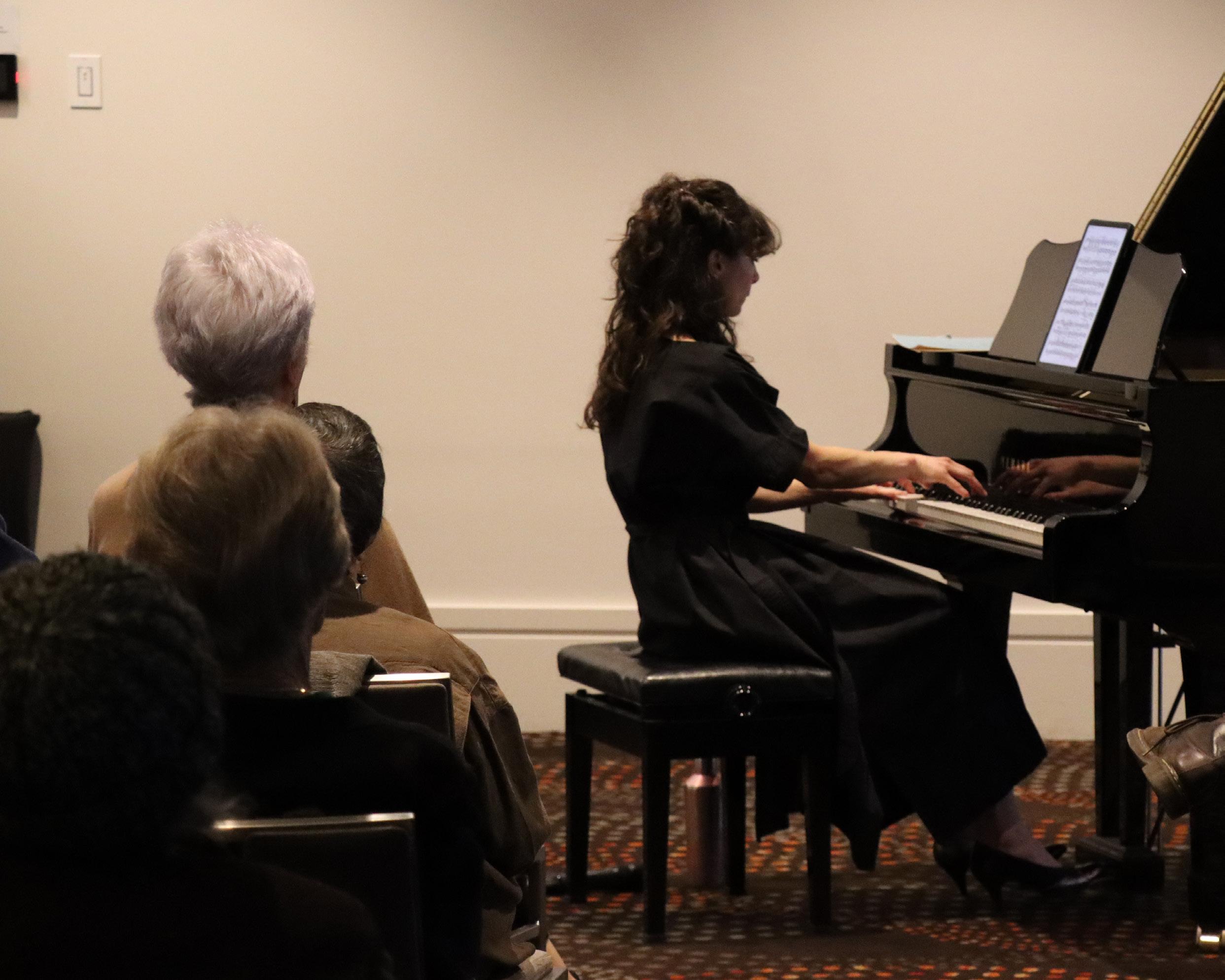
Lunchtime Recital with Georgina Lewis: a fabulous lunchtime performance
Our second 3MBS and Graduate House recital of the year, featured the incredibly talented Georgina Lewis.
Georgina is a widely renowned Melbournebased pianist, knowed for sensitive performances and her minimalist, womenfocused approach to curation.
Graduated from the Victorian College of Arts, Georgina has worked with some of the most respected musicians in the city, and in this opportunity she delighted Graduate Union and 3MBS Members with
her performance of some less common pieces such as Robert McIntire’s “Time, a passage”, Anne Cawrse’s “Time’s long ruins” and Josef suk’s “About Mother”, in a recital that explored the concept of time through Georgina’s wonderful interpretation.
Our next recital will take place on 29th October, with guest performer Coady Green, this time for an evening recital. Do not miss the opportunity to enjoy yet another wonderful performance.
June’s Women’s Forum:
On lobbying and political donations
At the June meeting of the monthly Women’s Forum, the group discussed two related topics: lobbying parliament and donations to political parties.
During the group’s usual animated discussion, it was pointed out that probably we all were lobbyists in a small way- by signing petitions or supporting a local committee concerned with a local matter. Not all lobbying is bad - it can be useful and informative for politicians and political advisors to hear an informed opinion on a topic of which they have no personal experience.
As with political donations, the danger to our democracy comes with secrecy - who is giving large sums of money to which parties? and who has been given an allareas lobbying pass by which politician?
Fortunately some recent legislation in
Victoria , though not perfect, has attempted to regulate donations by setting an upper limit for both individual donors and related entities, and insisting there be real-time disclosures over a certain amount. Foreign donations are forbidden.
The Commonwealth Government is working on establishing a Register for lobbyists which will show both the nominating politician and the name of the lobbyist and of the organization or company being represented, with some easier requirements for community groups and non-profit organisations. Despite these advances it is our responsibility as citizens to question decisions which seem unexplained or unexpected.
For generations, the Graduate Union has stood for the belief that education can be life shaping, and that those who have benefited from it have a responsibility to support those who follow.
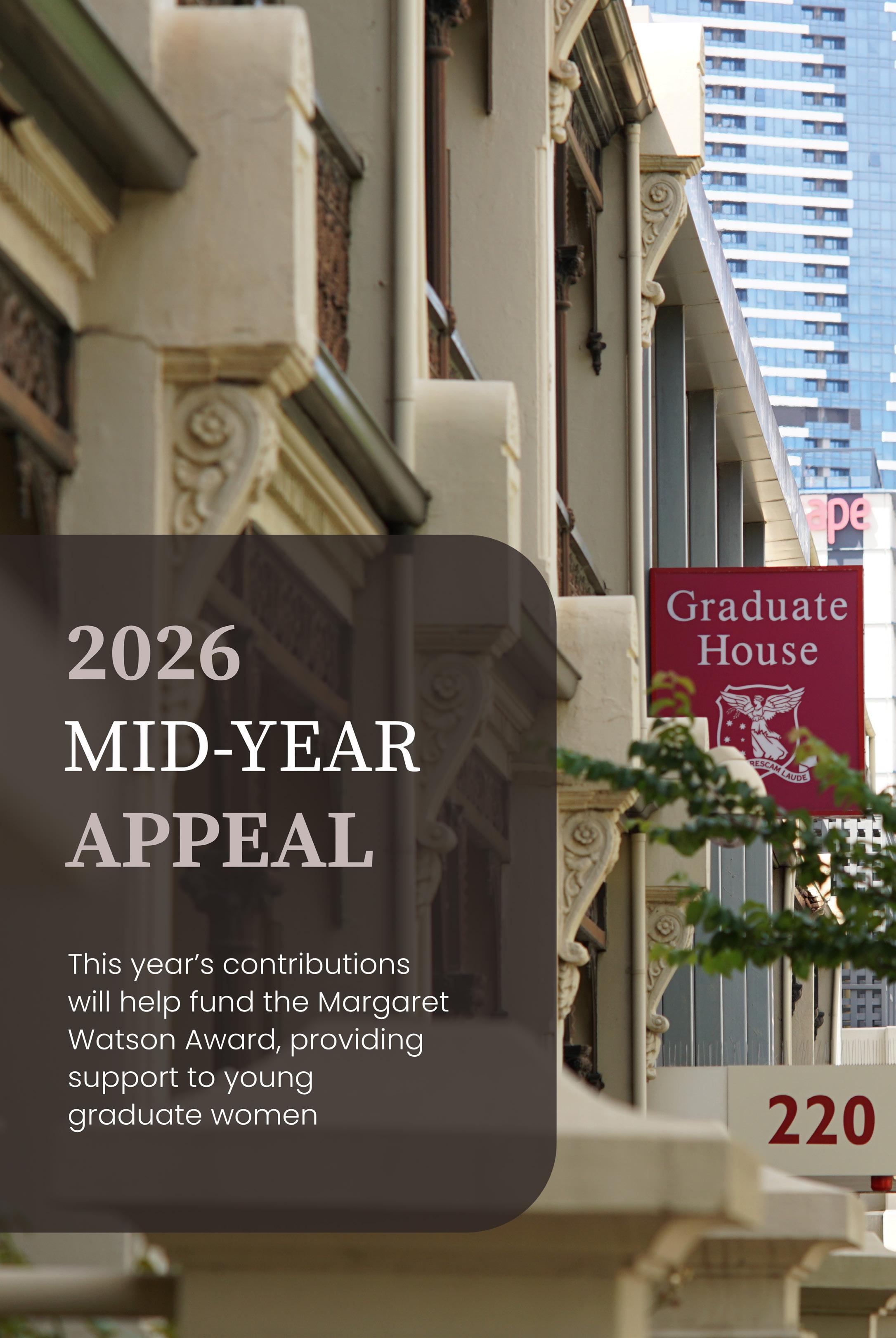
This year’s mid year Appeal will focus on supporting young graduate women at a critical point in their early careers, when confidence, opportunity and connection can profoundly influence future pathways.
The Graduate Union has a long and proud history of supporting women’s education, through initiatives such as the Margaret Watson Award and earlier scholarships for women residents of Graduate House. These awards have enabled talented scholars to pursue advanced study, research and leadership, often at decisive moments in their lives.
One recent example is Prerana Chatterjee, a resident of Graduate House who has completed her PhD in the School of Architecture and Design at The University of Melbourne. With the support of the Award, Prerana will now undertake post doctoral research in India, extending both her scholarship and the global impact of our community.
In 2026, we seek to build on this legacy by partnering with Graduate Women Victoria to recognise and support young graduate women through Graduate Union Scholarships. This collaboration reflects a long association between our organisations and a shared commitment to education, equity and mutual support.
In addition to a financial award, recipients will be offered complimentary membership of the Graduate Union for one year and invited to share their work, aspirations and experiences with the Graduate Union community. In this way, the Appeal not only supports individual women, but also strengthens the intergenerational collegiality that sits at the heart of the Graduate Union.
We invite you to support this Appeal and help ensure that promising young women continue to benefit from the encouragement, generosity and intellectual community that have long defined the Graduate Union. Your contribution will help transform opportunity into achievement, and potential into lasting impact.
Prerana Chatterjee
“The Margaret Watson Centenary Travelling Fellowship has provided me a great opportunity to expand on the findings of my PhD that focused on local perceptions of cultural heritage in Kolkata (previously Calcutta) in India.
This fellowship offers a valuable opportunity to revisit Pathuriaghata and expand upon interviews with long-standing residents whose indigenous perspectives on Kolkata’s origins contrast with colonial narratives. Work previously constrained by PhD deadlines can now be developed into a full publication. This fellowship is a priceless stepping stone for an early career researcher like myself who seeks a career pathway into academics.”
My Contact Information
Title: Firstname : Surname:
Phone number: Mobile:
Email:
Address: (number, street name or Post Office box, suburb, state, postcode and country)
Acknowledgement
Card Number
Expiry Date / CSV
Cardholder Name
Signature
Account Name: The Graduate Union of The University of Melbourne Inc. Bank: National Australia Bank BSB: 083 170
Account Number: 515 612 137
Swift Code: NATAAU3303M
Description: 2023AnnualAppeal
Financial Institution BSB
Account Number Signature
Commencing: / / Amount $AUD: I would like to give regularly through my selected payment option graduatehouse com au/give-here/
Weekly Fortnightly Monthly Yearly
Please contact us for alternative giving frequencies
Hisham Shakir on his way to Australia, his research and the Graduate Union Council
Currently pursuing a PhD in immunology at the prestigious Peter Doherty Institute for Infection and Immunity and recently elected as a Council Member for the Graduate union, Hisham Shakir reflects on his choice of moving into Graduate House. During his first year of doctoral studies and after receiving advice from a close friend and former resident, he arrived at Graduate House in early 2024 after a period of accommodation hunting. Here, he quickly realized the tremendous advantages of our community.
A passion for research and immunology
Hisham’s path to his current research began thousands of kilometres away. Originally
from Sri Lanka, he grew up in Botswana in Southern Africa, completing his school education there before making the leap to Australia. Drawn by the top-class infrastructure and biomedical excellence on the Parkville campus, he first completed his Bachelor of Biomedicine at the University of Melbourne, “I majored in immunology and during those study years I also took some biochemistry electives. I did some practical subjects during my bachelor’s and found research to be a really interesting field. And I thought, let’s do an honours degree, which I completed in the same lab that I am currently working at. I enjoyed that as well and then decided to continue into doctoral studies”.
Today, his doctoral work is conducting cutting-edge research in modern medicine, he explains that “there are a few different aims within my PhD, but maybe one that I can touch on is how we can harness our own immune system to fight cancer. The challenge with treating cancer is that cancers are basically our own body cells that divide uncontrollably and form a tumour. And because they look almost exactly like our own body cells, that makes it challenging for our own body’s defence systems to recognize them as foreign and remove them. I work on strategies to improve the recognition of cancers in our body. So, the tumour is flagged, alerting the immune system that it is not supposed to be there so that it can actually engage and get rid of it”. His research has also taken
him beyond Melbourne: during his PhD he undertook a placement in France, working with leading immunologists in Tours and at the Curie Institute in Paris – an experience that underscored both the international reach of his work and the value of having a home to return to.
Intellectual exchange beyond fields
For Hisham being part of the Graduate House community presents not only practical advantages such as its proximity to the Peter Doherty Institute and the significant benefit of meals served for residents. For him, a remarkable aspect of Graduate House lies in something harder to find elsewhere. “There are people undertaking their PhDs in so many different fields and backgrounds. I’ve been studying STEM sciences my whole life and being able to sit next to someone doing a PhD in humanities or human rights, or the arts has really enriched my understanding and experience. I actually had an opportunity to collaborate with a visiting researcher who is here on a one-year placement, also in the field of immunology. She came into our lab and did some work there, and that has now developed into an ongoing collaboration, which is a wonderful experience for her and for us to host someone in that capacity”.
A voice for the residents
Driven by a desire to contribute more actively, Hisham joined the Advancement Committee last year, a move that ultimately led to his election as a new Council Member for the Graduate Union . His presence on Council provides a direct voice for the residents who live and work within the building every day. Bridging the communication gap between both residents and non-resident members will be one of his central tasks. “I joined the Advancement Committee sometime last year and council
this year to represent the residents, to have a voice for them and to contribute to some of the amazing initiatives already in place, like the mentorship program and the roundtable workshops. I would like to strengthen the relationship between the Council and the residents. For example, we are in a crucial phase right now with key decisions being made, and being able to voice some of the thoughts and the opinions of not just myself but the residents at large and every other group of members, whether residents, life members, non-resident members, or corporate members, is a key part of why I ran for Council specifically”.
Beyond representation, Hisham has concrete ideas he wants to pursue. He is deeply committed to strengthening community focused activities offered at Graduate House, whether it is related to academic events, professional development or the exchange of knowledge across disciplines. Opportunities that improve our postgraduate community’s employability outcomes is one of his main priorities with workshops on resume writing, and interview techniques among his early goals. Taking advantage of the Graduate Union Members network is another one of his goals, tapping into the diverse networks our members belong to is a space with a lot of potential to enrich our community’s potential.
Through the implementation of these ideas, his dedicated service on the Council and within the Graduate House community, Hisham embodies the exact essence of a Graduate Union Member: a profound dedication to academic excellence, a commitment to human connection, and a passion for building a supportive community that leaves a lasting legacy for the members of tomorrow.
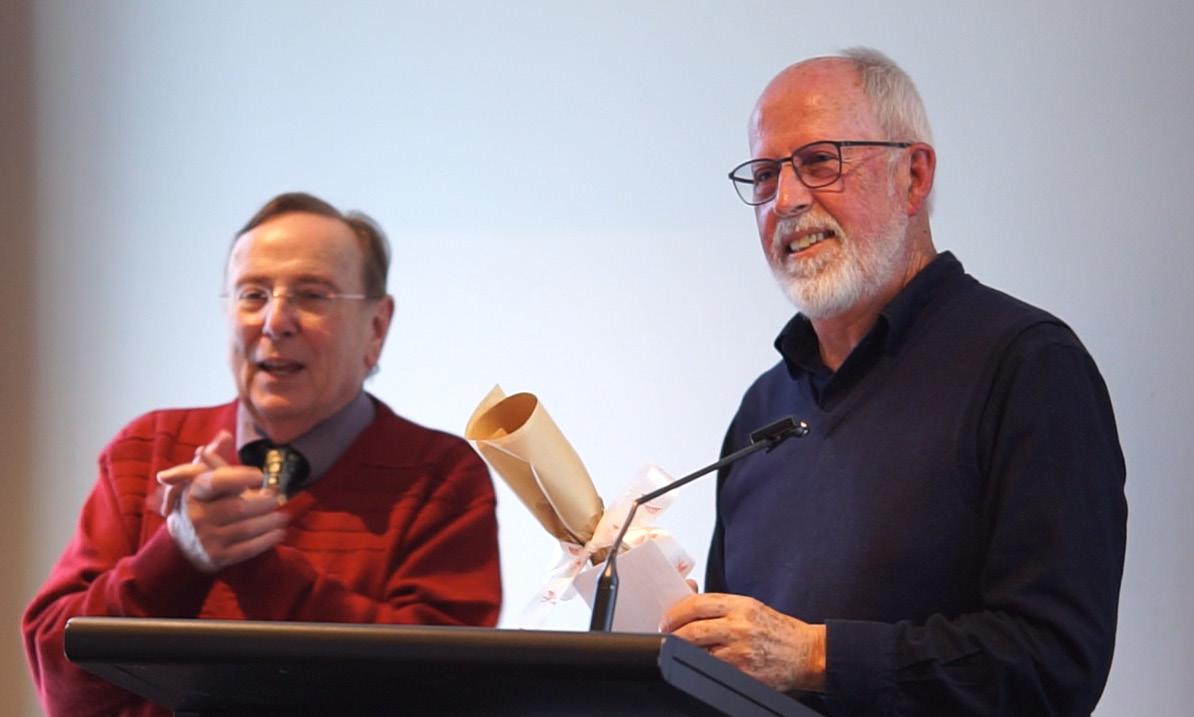
The Graduate Union Council: Emeritus Professor Martin Comte OAM elected as new Chair
The Graduate Union Council held its first official Council Meeting with the newly elected members on Wednesday 17th of June. One of the main points to be discussed was the election of a new Chair of Council, as former Chair Natalie Grey did not seek re-election at the 2026 Annual General Meeting.
After careful consideration, Emeritus Professor Martin Comte OAM, was elected as new Chair for a period of one year.
Martin has been an active member of the Graduate Union community for many years. He joined the organisation in 1972, and since then he has been working to strengthen the Graduate Union.
He completed his Bachelor of Music and Bachelor of Education at The University of Melbourne, a Master of Education from La Trobe University and a PhD in Music Education from The University of Michigan. He is a former Dean of a university Faculty of Education. Other university positions have included Associate Dean (Research) and Associate Dean (Cultural Development).
His university teaching has focused on the philosophy of education and the psychology of teaching and learning, proving his commitement to education and life-long learning.
of Council
He has been involved in the Council for 6 years. Most recently he had been Co-Chair of the Advancement Committee, alongside Cr Max Stephens, working to implement various initiatives to promote members engagement such as the Mentorship Program and the Writing Workshop for Members.
Emeritus Professor Martin Comte OAM’s dedication to our oganisation, passion and dedicated leadership at the Graduate Union has led to his election.
Graduate Women Victoria Scholarship Presentation Ceremony 2026
For generations, the Graduate Union has stood by its belief that education can be life shaping, and that those who have benefited from it have a responsibility to support those who follow. Graduate Women
Victoria, an organisation which began after WWI and not long after Graduate Union formed, has a similar focus, while being primarily dedicated to promoting the rights of women and girls to education and the protection of human rights.
Graduate Union and Graduate Women
Victoria which both date back to the early 1900s, both have as their core purpose to promote education as a means of influencing and benefitting society. Both organisations share a founding member, Georgina Sweet. She was a powerful and driving presence in the early days of Graduate Union and was also Graduate Women Victoria’s first president. Today the synergies between Graduate Union and Graduate Women Victoria remain strong.
Graduate Women Victoria continues to be involved in local, national and international advocacy in pursuit of its goals, and to that end and in practical terms, it assists postgraduate women to pursue their studies through its annual scholarships and bursaries program. The scholarships and bursaries are open to women and nonbinary/gender-diverse students enrolled in universities in Victoria who are Australian citizens (or permanent residents) and to those experiencing, or who have experienced, disadvantage in the pursuit of their studies. To quote a much-used slogan - Act locally, thinking globally: building a better world starts at home. At the national and global levels however, Graduate Women Victoria’s advocacy is actioned through membership of its national body, Graduate Women Australia, and globally
through its international body, International Federation of University Women which has special consultative status with the United Nations Economic and Social Council and is an NGO which maintains official relations with UNESCO.
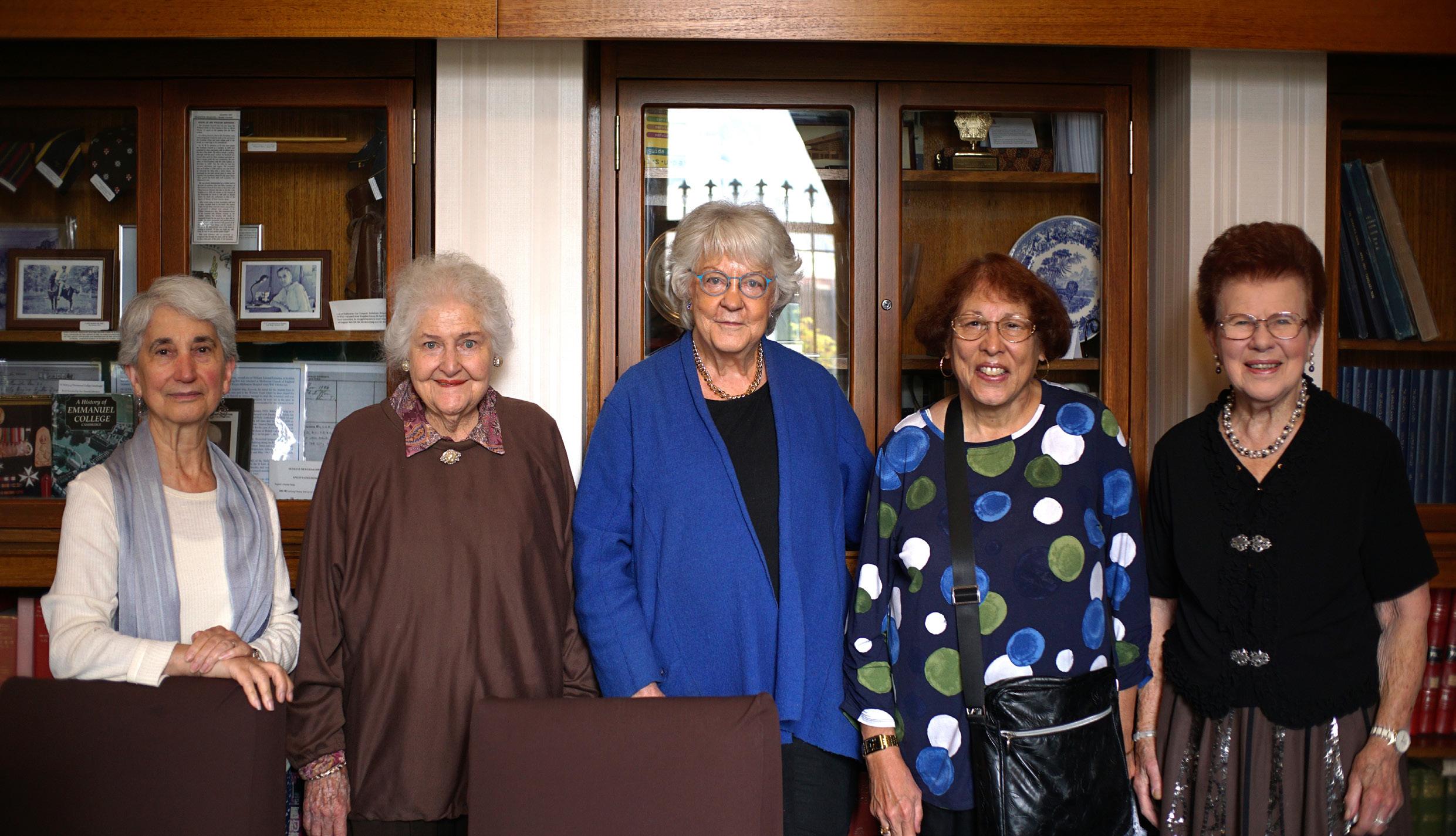
Each year Graduate Women Victoria awards 14 scholarships across five study categories: Indigenous Undergraduate education and Postgraduate in Health Sciences, Honours in Arts/Humanities, Masters of Teaching/Education, Masters by Course Work or Research, and Doctoral degrees. Emeritus Professor Martin Comte, Chair of Graduate Union Council, and Dr Heather Wheat represented Graduate Union at the 2026 award presentations held last month at the Burnley Campus of University of Melbourne. They were warmly welcomed by Graduate Women Victoria’s President Professor Jane Bourke and Vice-President Dr Tara-Lyn Camilleri. The award recipients’ personal stories were humbling and the breadth of their projects very impressive. The recipients will be supported by the organisation during the period of their awards. In addition to the financial awards, all recipients were presented with a complimentary one-year membership of the Graduate Union. At this presentation ceremony our historic ties and shared goals were again reinforced. Graduate Union hopes to build on this legacy by partnering with Graduate Women Victoria to recognise and support graduate women undertaking postgraduate studies through Graduate Union’s Scholarships program. Our collaboration reflects a long association between our organisations and a shared commitment to education, equity and mutual support.
THE GRADUATE UNION
of The University of Melbourne Inc.
220 Leicester Street, Carlton, Victoria 3053, Australia
Telephone: +61 (0)3 9347 3428
Australian Business Number: 55 610 664 963
Incorporated Association Registration Number: A0023234B