ΠΕΡΙΕΧΟΜΕΝΑ
ΠΕΡΙΛΗΨΗ............................................................................................... σελ. 4
ΑΝΑΛΥΣΗ................................................................................................. σελ. 6
ΒΑΣΙΚΕΣ ΑΡΧΕΣ ΣΥΝΘΕΣΗΣ............................................................. σελ. 16
ΚΤΙΡΙΟΛΟΓΙΚΟ ΠΡΟΓΡΑΜΜΑ............................................................ σελ. 18 ΣΧΕΔΙΑ....................................................................................................... σελ. 22Επάνω
και κάτω βόλτα............................................................... σελ. 22
Θαλάσσια διαδρομή............................. σελ.32
Κατασκευαστικά σχέδια............................................................. σελ. 38
ΜΑΚΕΤΑ.................................................................................................... σελ. 40
ΤΡΙΣΔΙΑΣΤΑΤΕΣ ΑΠΕΙΚΟΝΙΣΕΙΣ....................................................... σελ. 48
ABSTRACT
This thesis proposes, on the occasion of the 100th anniversary of the Asia Minor Disaster, a memorial/route (a pathway to remembrance), from the uprooting to the resettlement of the refugees to Greece and their passage from Kalamaria's Aretsou.
Today, Kalamaria constitutes a contemporary large municipality in the Gulf of Thermaikos. Its history is closely intertwined with Greek refugees and Pontic Greeks.
During the period of 1918 to 1923, it is estimated that over 350.000 refugees passed through Aretsou beach; coming from Pontos, Ionia, Cappadocia, Caucasus, Constantinople, Russia. They landed there to start a new life from nothing. Whilst they arrived empty-handed, they brought their identity, their culture, their customs and among other things, the lyre, their songs and dances. With all these, they indelibly sealed the character of Kalamaria.
In recent years, the demand for a memorial that will house the orphan memories of this drama in the same place, has now become resounding. This proposal aims to engage with the dialogue that was opened by this request.
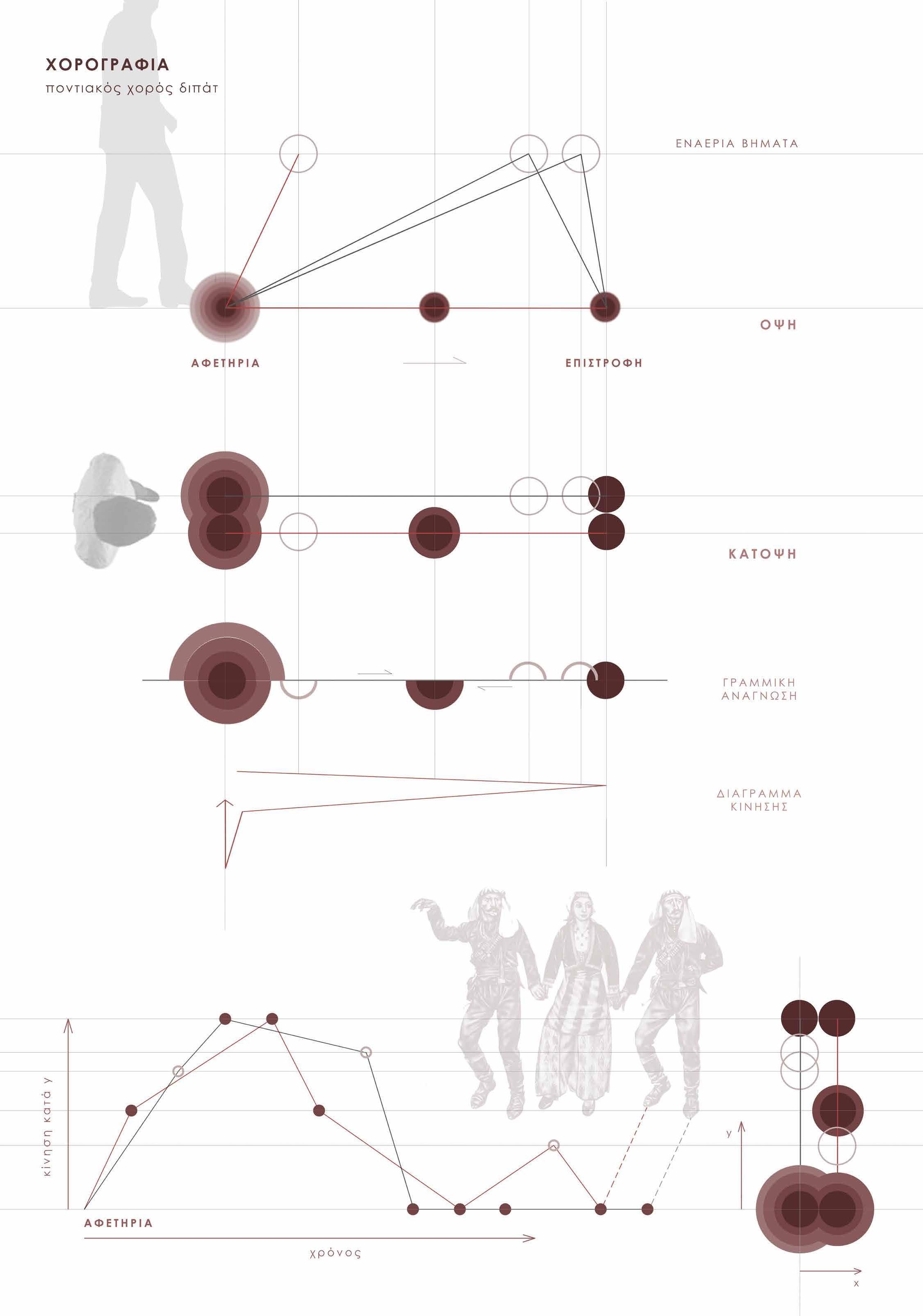
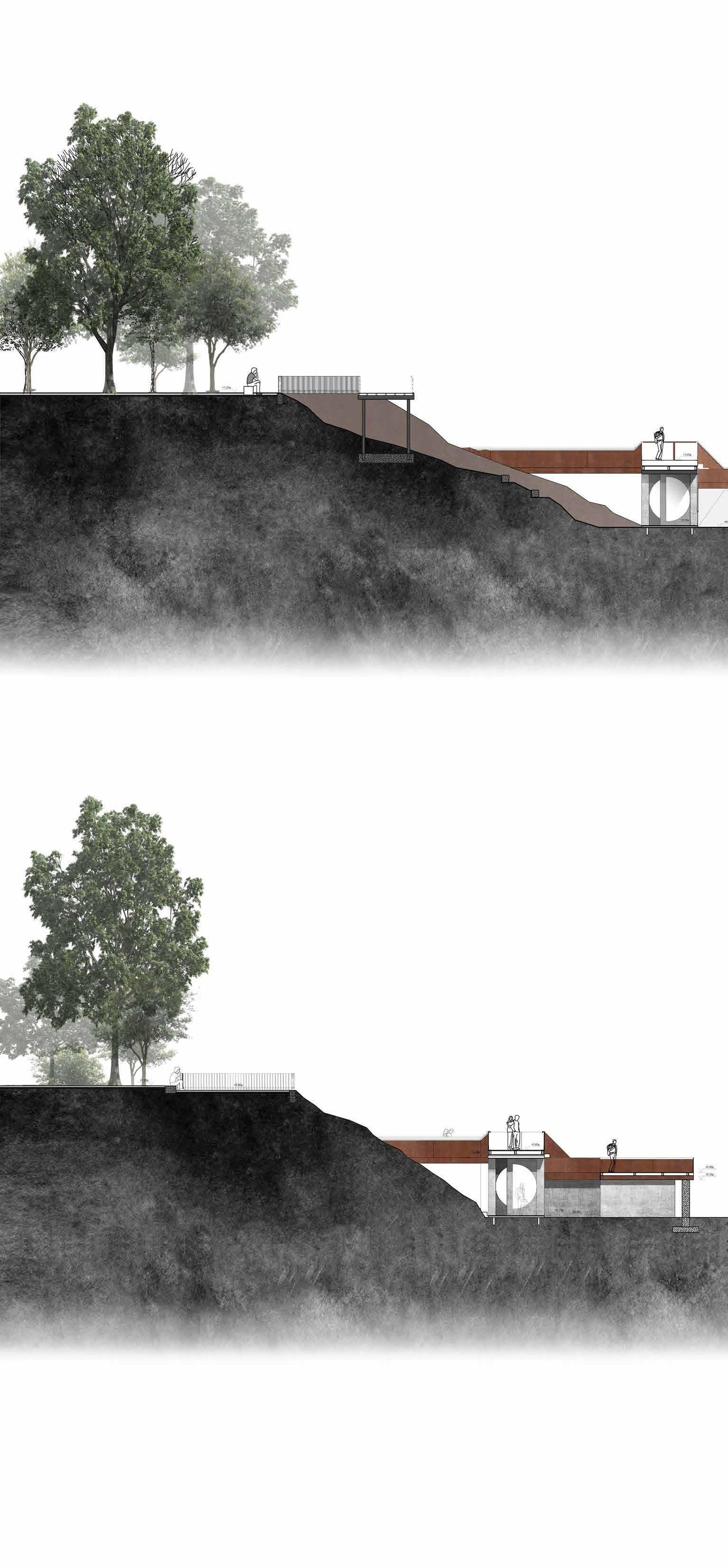
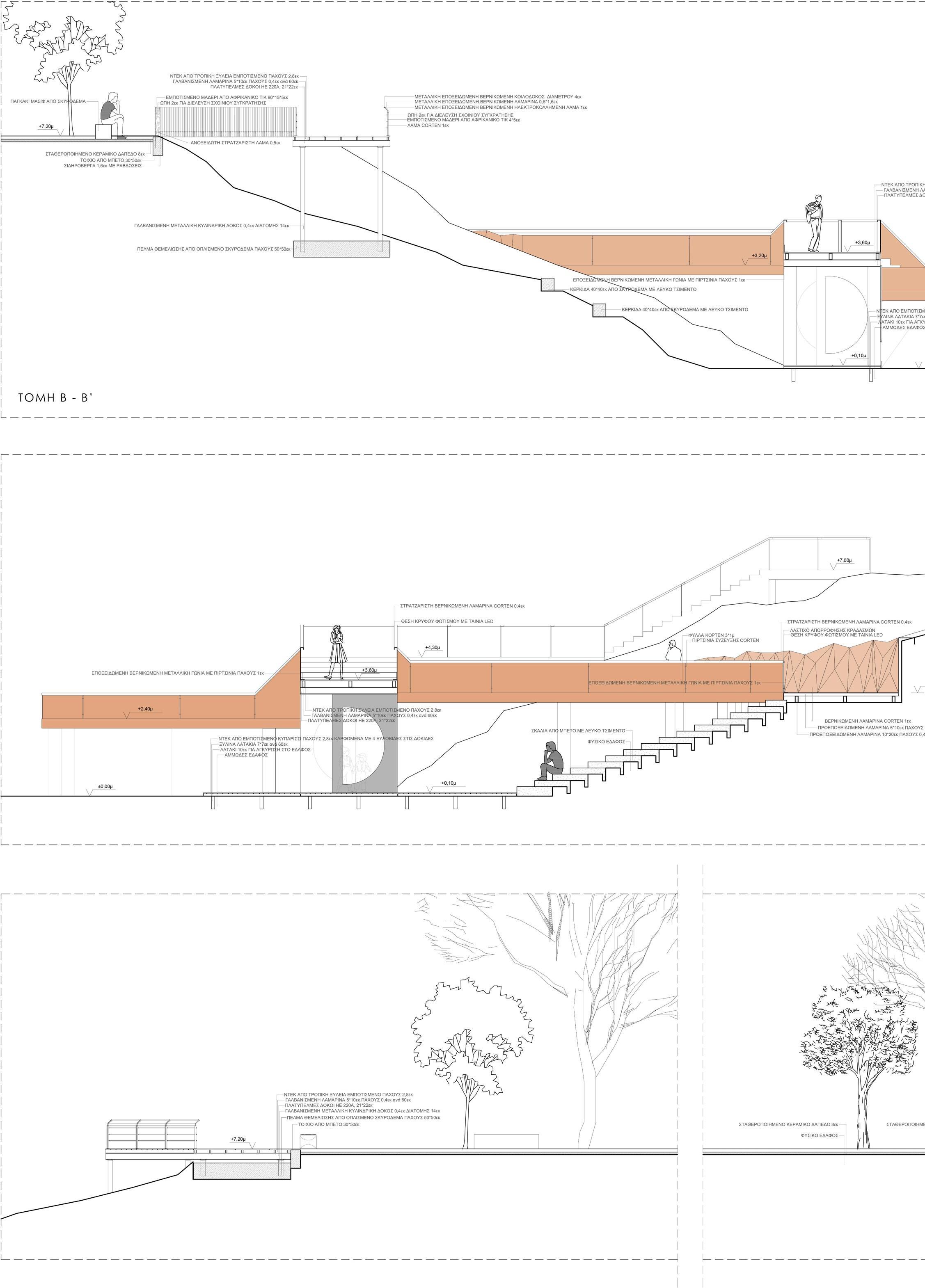
The concept was based on the dipat dance and aspires to transform the rhythm of this dance into an architectural design. In a forgotten part of Hamodrakas' beach, a path is created inspired by the steps of the dance and captures in space the drama of the Greek refugees.
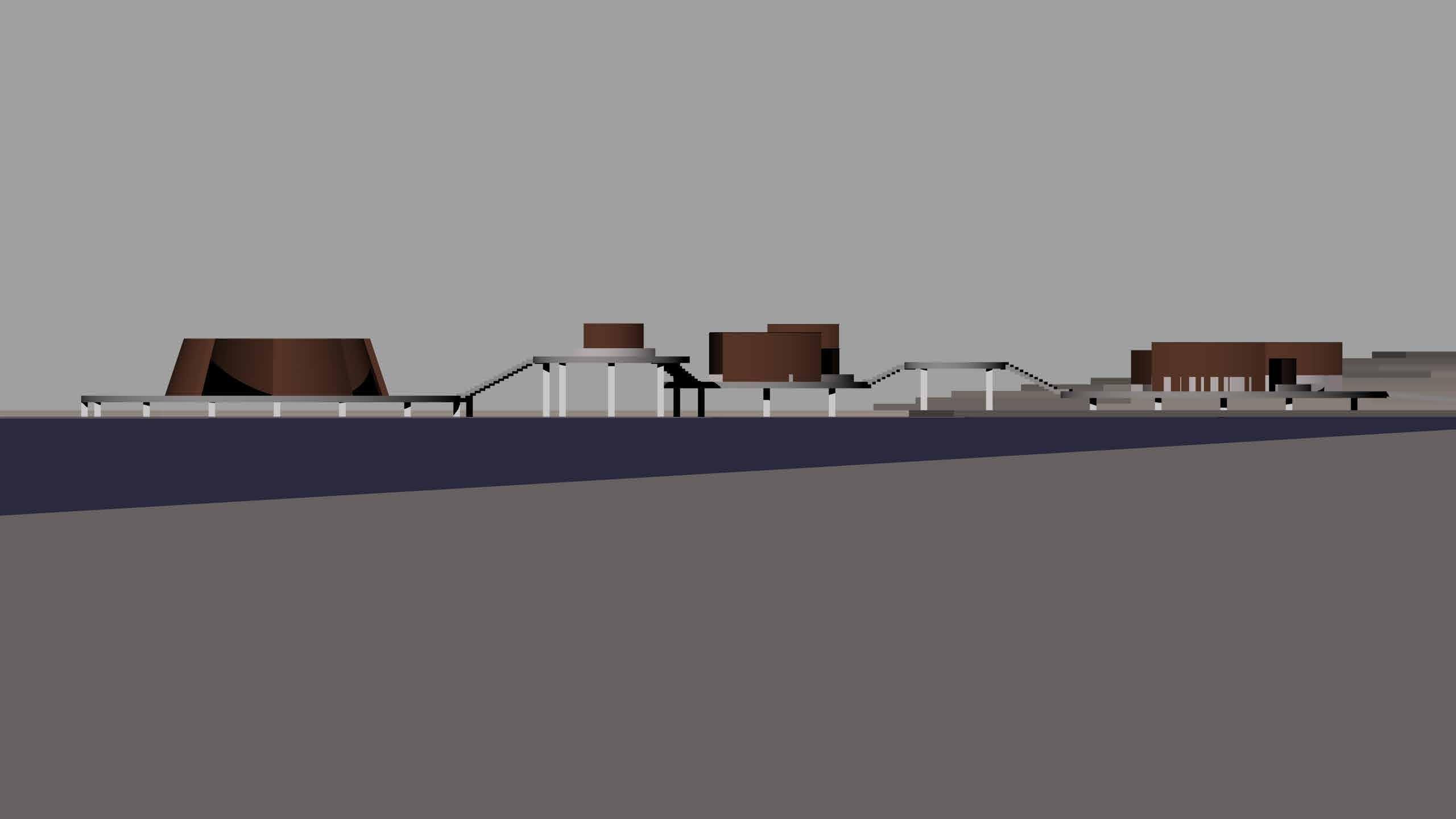
The proposal enters the sea route to shape a bidirectional journey; the refugee journey to the new homeland that lies in front of them and the journey of memory to the old homeland they left behind.