Understanding Why Secure Hauling Matters
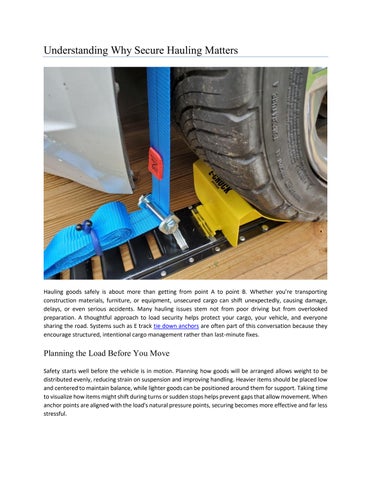
Hauling goods safely is about more than getting from point A to point B. Whether you're transporting construction materials, furniture, or equipment, unsecured cargo can shift unexpectedly, causing damage, delays, or even serious accidents. Many hauling issues stem not from poor driving but from overlooked preparation. A thoughtful approach to load security helps protect your cargo, your vehicle, and everyone sharing the road. Systems such as E track tie down anchors are often part of this conversation because they encourage structured, intentional cargo management rather than last-minute fixes.
Planning the Load Before You Move Safety starts well before the vehicle is in motion. Planning how goods will be arranged allows weight to be distributed evenly, reducing strain on suspension and improving handling. Heavier items should be placed low and centered to maintain balance, while lighter goods can be positioned around them for support. Taking time to visualize how items might shift during turns or sudden stops helps prevent gaps that allow movement. When anchor points are aligned with the load's natural pressure points, securing becomes more effective and far less stressful.
Choosing the Right Anchor Strategy Not all cargo requires the same securing approach. The size, shape, and fragility of goods should guide the use of anchor points. Instead of relying on a single strap or connection, spreading tension across multiple points reduces the risk of failure. Systems designed to run along the length of a trailer or truck bed, such as E track tie down anchors, allow flexibility in positioning restraints where they make the most sense. This adaptability supports safer hauling without overcomplicating the process.
Checking Tension and Stability Once goods are secured, the job isn't finished. Straps and anchors should be tightened enough to prevent movement but not so much that they damage the cargo. A quick stability test, gently pushing or pulling items, can reveal weak spots before they become hazards on the road. During longer trips, periodic checks are essential, as vibration and temperature changes can loosen tension. Making these checks a habit adds only minutes to a journey but significantly improves overall safety.
Adapting to Road and Weather Conditions Driving conditions play a significant role in how cargo behaves. Sudden braking, sharp turns, or uneven roads can amplify even small shifts in unsecured loads. Rain, wind, and heat can also affect straps and anchor points over time. Anticipating these factors encourages more cautious driving and reinforces the importance of secure hauling systems. Adjusting speed, allowing extra braking distance, and avoiding abrupt maneuvers all work hand in hand with proper anchoring to keep goods stable.
Building Long-Term Hauling Confidence Safe hauling isn't about perfection; it's about consistency. Each trip offers an opportunity to refine techniques and learn what works best for different types of cargo. Over time, using structured anchoring methods becomes second nature, reducing stress and increasing confidence behind the wheel. By combining careful planning, thoughtful anchor placement, and regular checks, haulers can create a reliable routine that prioritizes safety without slowing productivity. In the end, secure hauling protects more than just goods; it protects peace of mind on every journey.