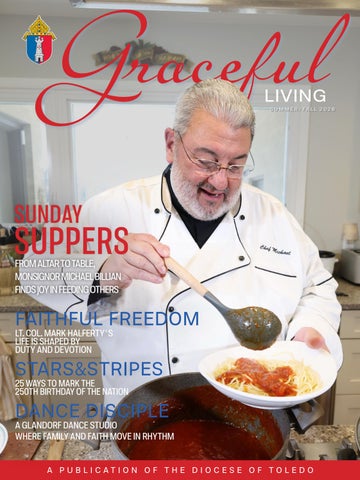
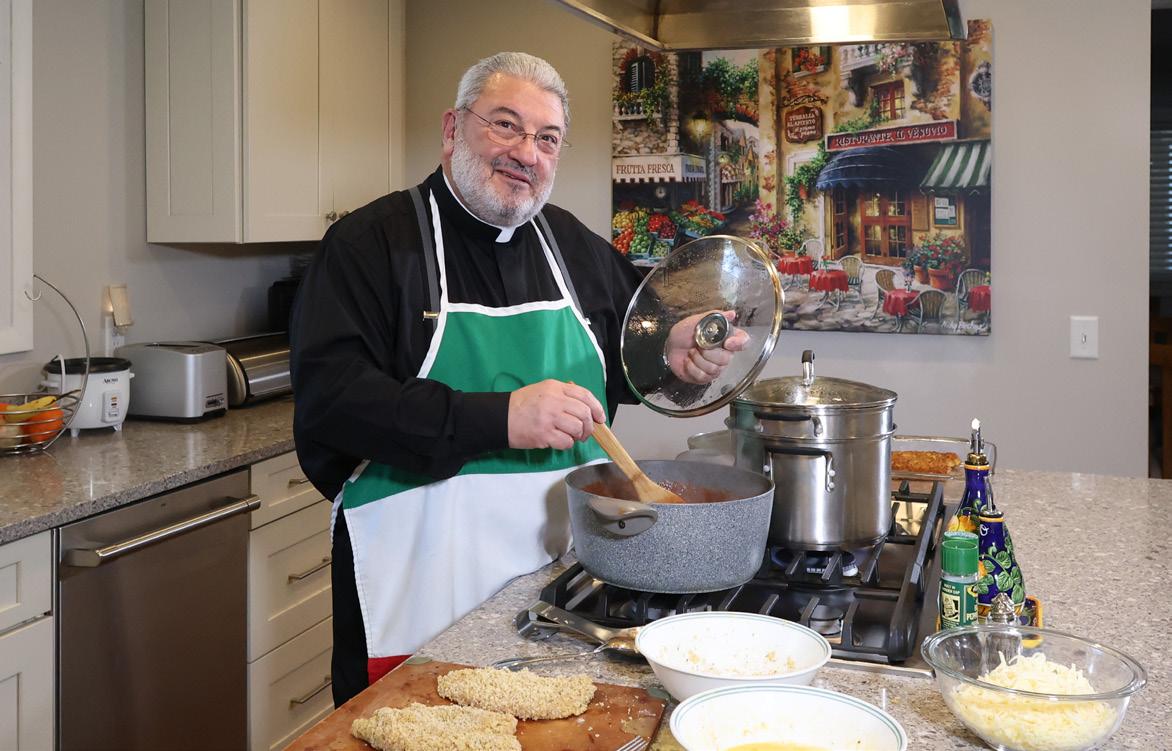
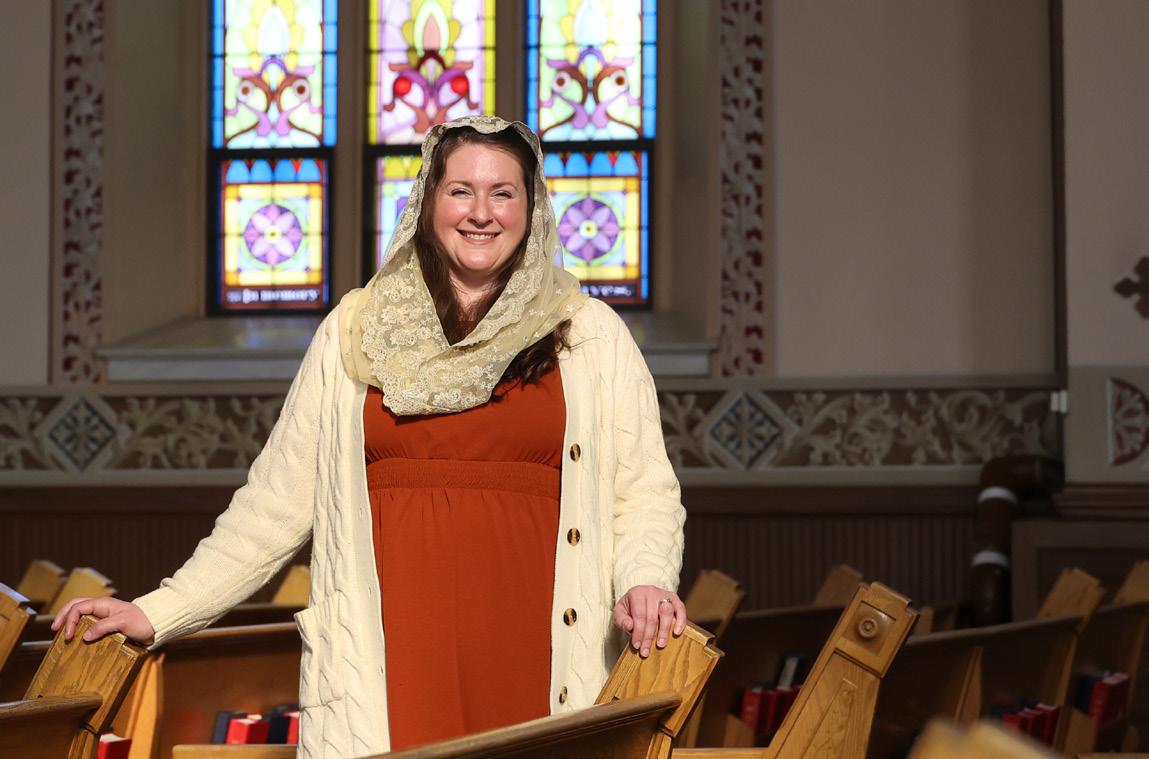
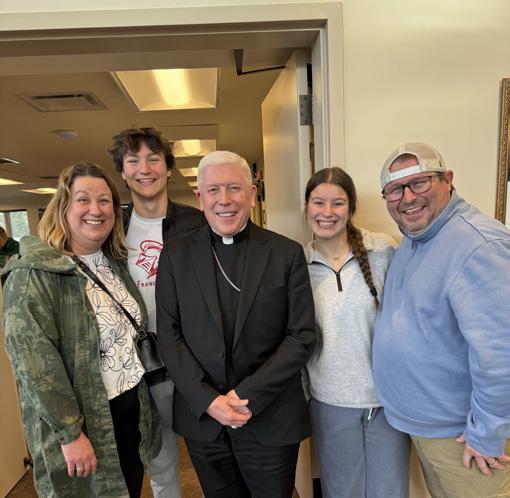
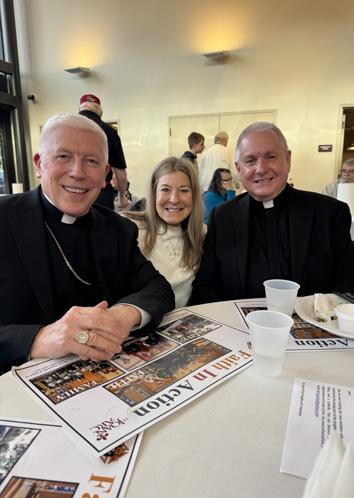
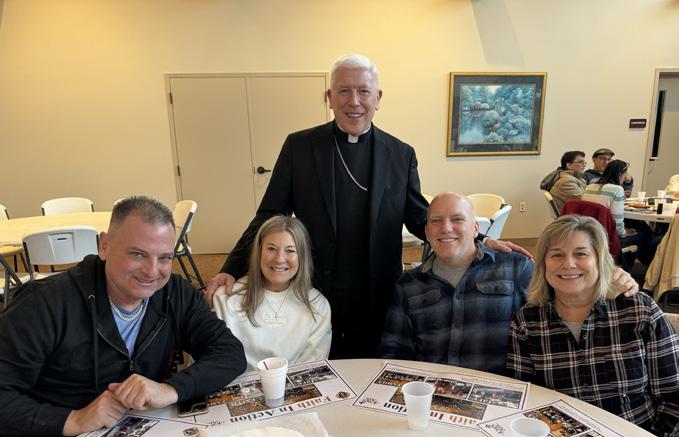
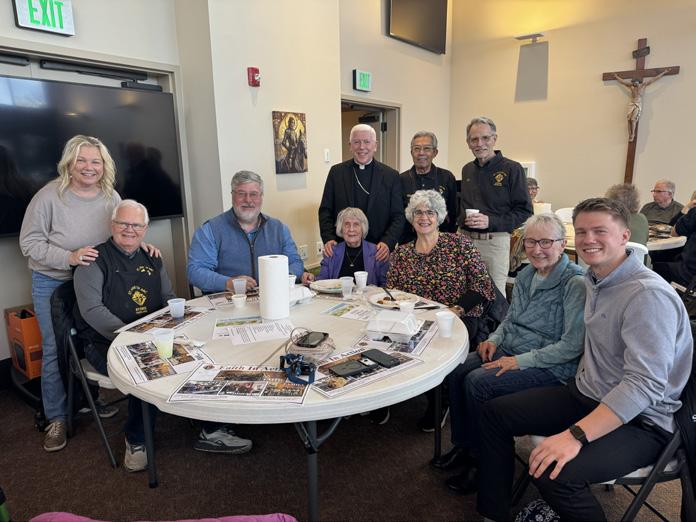
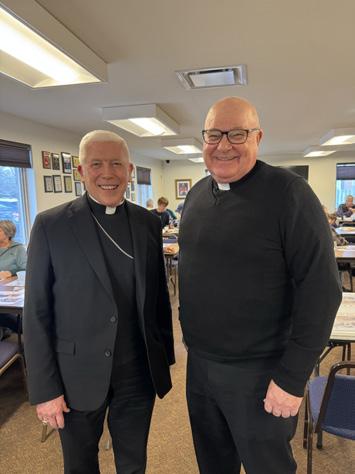
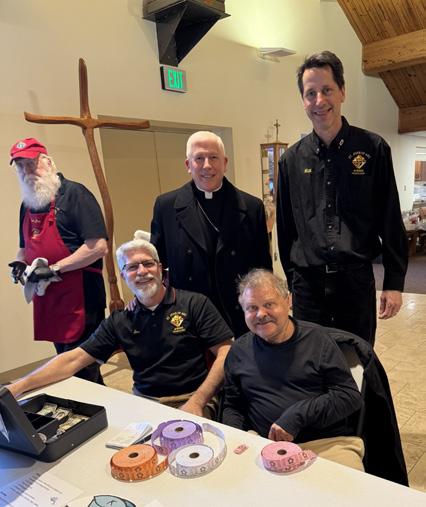
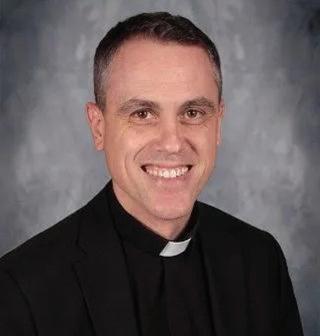
FROM ALTAR TO TABLE, MONSIGNOR MICHAEL BILLIAN FINDS JOY IN FEEDING OTHERS FAITHFUL
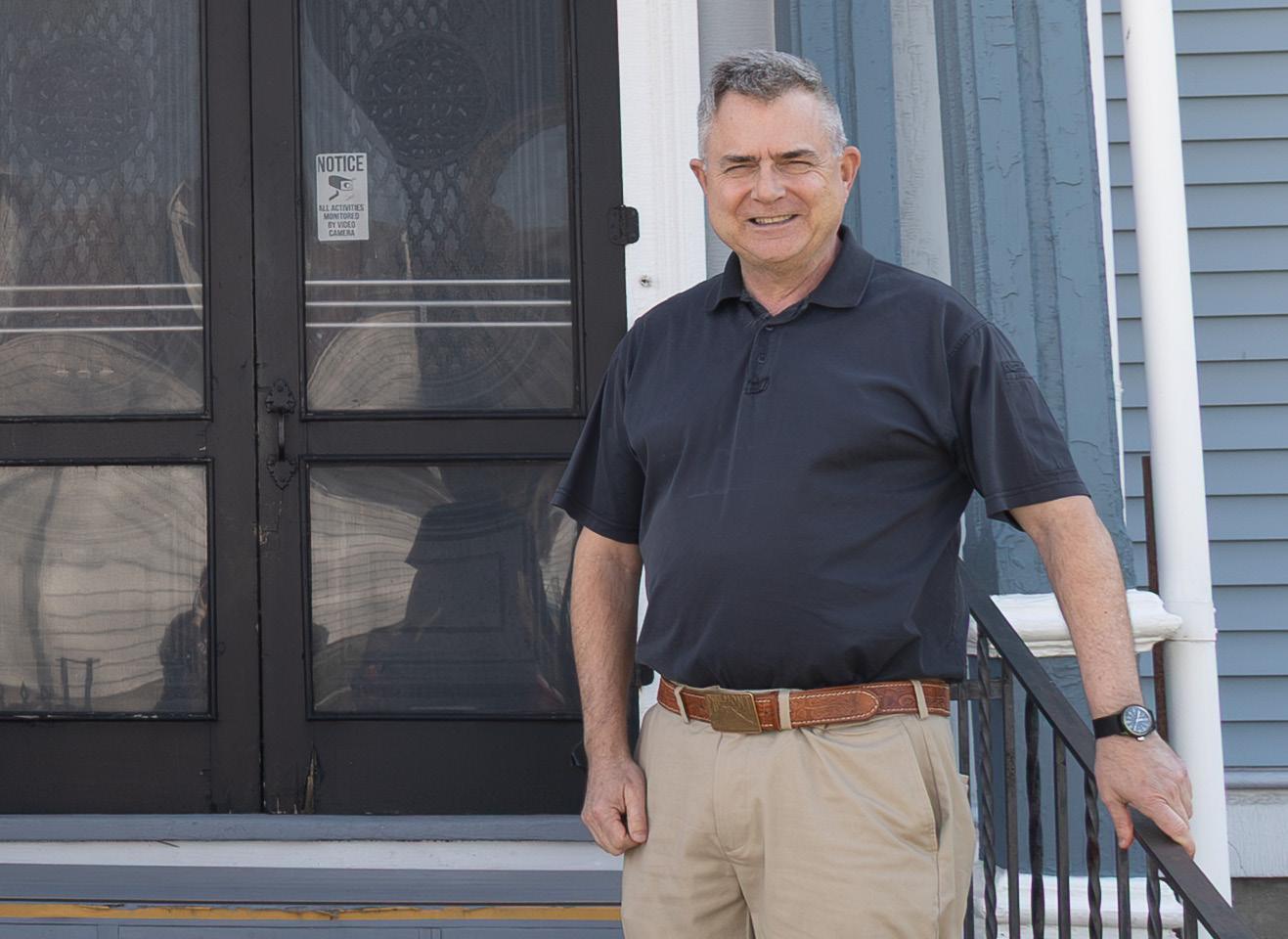
LT. COL. MARK HALFERTY'S LIFE IS SHAPED BY DUTY AND DEVOTION
STARS & STRIPES
25 WAYS TO MARK THE 250TH BIRTHDAY OF THE NATION
A GLANDORF DANCE STUDIO
WHERE FAMILY AND FAITH MOVE IN RHYTHM
Confidence for the road ahead.
Planning for care is one of life’s most important decisions. At CHI Living Communities, we offer a range of services designed to meet individuals where they are, from rehab, memory care & skilled nursing to assisted & independent living.
With faith as our foundation and compassion as our guide, we provide more than care. We provide reassurance, partnership, and a community committed to honoring every person with dignity and respect.
Discover more at CHILivingCommunities.org.
The Commons of Providence
5000 Providence Drive Sandusky, Ohio 44870
419.624.1171
Providence Care Center 2025 Hayes Avenue Sandusky, Ohio 44870
419.627.2273
Franciscan Care Center 4111 N. Holland Sylvania Rd. Toledo, Ohio 43623
419.882.6582
St. Clare Commons 12469 Five Point Road Perrysburg, Ohio 43551
419.931.0050
The Gardens of St. Francis 930 South Wynn Road Oregon, Ohio 43616
419.698.4331
Graceful FROM THE BISHOP
LIVING
ONE SEAGATE, SUITE 2300
TOLEDO, OHIO 43604
(419) 244-6711
PUBLISHER
MOST REV. DANIEL E. THOMAS
Bishop, Diocese of Toledo
KELLY DONAGHY
Senior Director, Communications
ANNIE LUST
Social Media & Communications Manager
NATHAN VOLKER
Sales & Production Specialist
SCOTT W. GRAU
Contributing Photographer
D IOCESAN STAFF
Contributing Graphic Design
Graceful Living is a special interest magazine of the Diocese of Toledo, in particular for our senior parishioners. Stories of the lives of Catholic seniors contributing their talents to our parish communities are highlighted. If you are interested in sponsorship, donations or advertising, please contact the Communications Department of the Diocese of Toledo: 419-214-4876
BISHOP
DANIEL E. THOMAS
Rev. Msgr. William J. Kubacki Vicar General/Moderator of the Curia
Rev. Michael G. Dandurand
Senior Director/Vicar for Clergy Clergy, Consecrated Life & Vocations
Sr. Rose Marie Timmer, RSM Chancellor
Ms. Kelly M. Donaghy
Senior Director, Communications
Mr. Bret V. Huntebrinker
Senior Director, Discipleship & Family Life
Mr. Kyle Kubik
Senior Director, Catholic Education
Mr. Rodney O. Schuster
Executive Director, Catholic Social Services
Mrs. Patricia Williams
CFO, Diocese of Toledo COO, Management Corporation
Dear Friends in Christ,
As our nation prepares to celebrate the 250th anniversary of the founding of the United States, this edition of our magazine invites us to reflect not only on America’s history, but also on the countless ordinary and extraordinary local witnesses whose lives continue to shape our future with courage, sacrifice, and faith. In these pages, you will encounter stories that remind us how God works through every vocation and every season of life.
You will meet Monsignor Michael Billian of Saint Joseph Parish in Sylvania through the engaging feature “Meals with Monsignor Billian.” His priestly joy, hospitality, and love for people reveal something deeply important about the Church: evangelization often begins around the table, in conversation, friendship, and genuine human encounter.
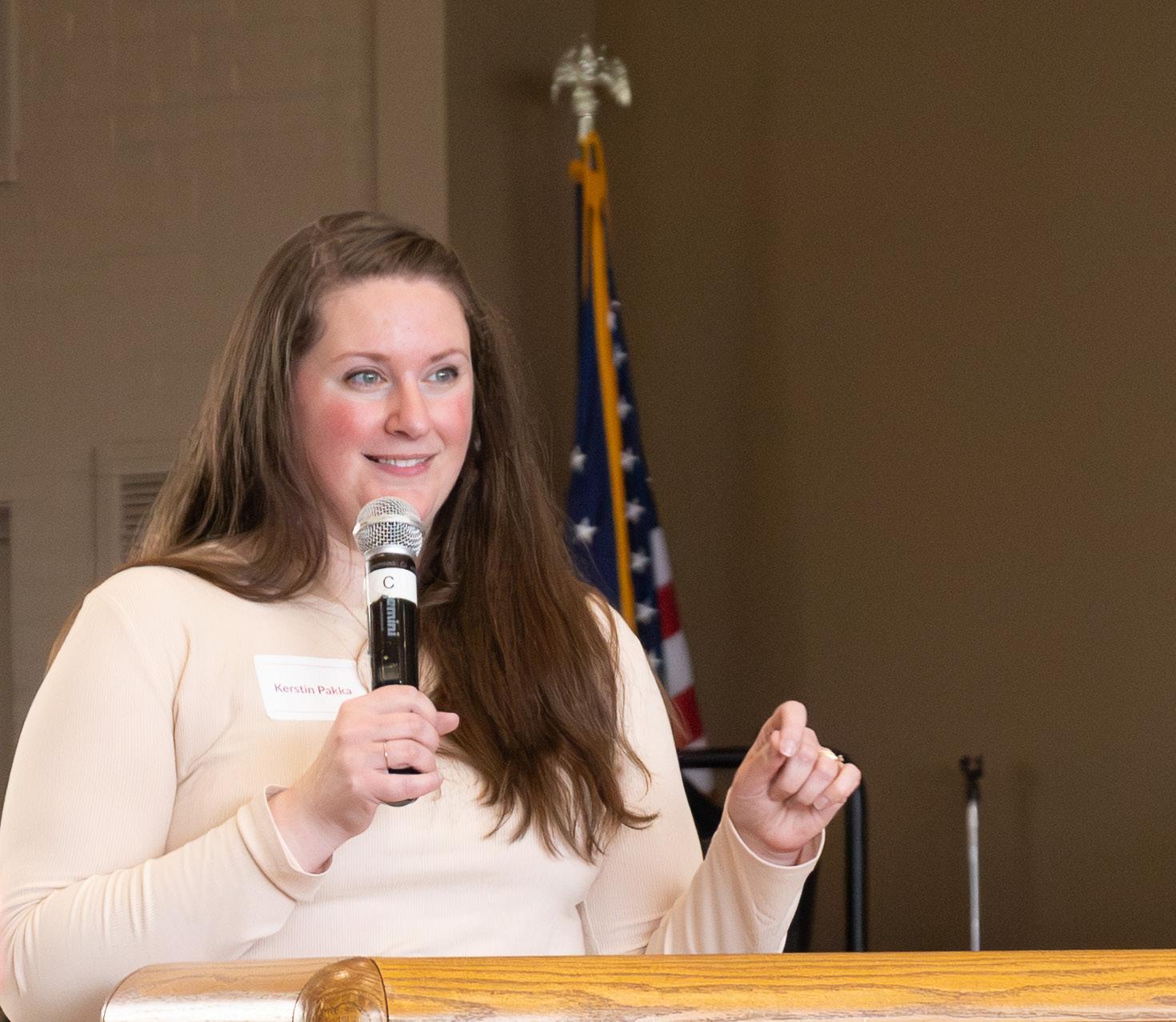
You will also read the powerful testimony of Kerstin Pakka, whose journey through abortion, grief, healing, and mercy stands as a profound witness to the compassion of Jesus Christ. Her story reminds us that no wound is beyond the reach of God’s grace. In a world that often speaks in anger or judgment, the Church must always proclaim the truth together with mercy — the same mercy Christ offers each one of us. Kerstin’s courage to share her experience through Project Rachel is a gift that will undoubtedly bring hope and healing to many.
This issue also honors Lt. Col. Mark Halferty, whose service to our nation reflects the virtues of duty, sacrifice, and love of country. As we commemorate America 250, we give thanks for all the men and women who have defended the freedoms we often take for granted. Authentic patriotism is rooted not in pride alone, but in gratitude, responsibility, and a commitment to the common good. Lt. Col. Halferty exemplifies these ideals with integrity and humility.
You will likewise be inspired by Kristen Gerding-Heffner, whose journey in dance and faith beautifully demonstrates that the pursuit of excellence can become a path toward God. Through creativity, discipline, and trust in the Lord, she shows how our talents become instruments of grace when offered back to Him.
Taken together, these stories point to a larger truth: holiness is lived in many different ways. In parish life, military service, artistic expression, family struggles, and personal conversion.
As we celebrate our nation’s 250th birthday, may we remember that the future of America depends not merely on institutions or policies, but on the moral and spiritual character of its people. A strong nation is built upon strong families, vibrant communities, courageous faith, and hearts open to the Will of God.
I pray that this issue encourages you to deepen your own relationship with Christ and to recognize the ways He is calling you to serve others with generosity and hope. With every good wish and prayer, I am
Sincerely yours in Christ Jesus,
Most Reverend Daniel E. Thomas Bishop of Toledo
ABOUT MY PRACTICE
I focus my practice in the areas of estate and wealth preservation planning, taxation, estate and trust administration, and residential and commercial real estate transactions. I work with individuals and families to address both simple and complex estate planning, business succession planning, and tax planning objectives. I also have significant experience in the preparation of personal income tax, personal gift tax, fiduciary income tax, and Federal estate tax returns.
ABOUT MY MISSION
I believe that estate planning is more than just wills or trusts; it is an act of love taken by those who care deeply about their families and desire to leave a lasting legacy in the world. My mission is to help families regain their peace of mind by providing protection in times of prosperity, security in times of uncertainty, and comfort in times of crisis. Understanding that no two families are alike, I take the time to get to know my clients so that I can provide customized advice to accomplish their specific goals and objectives. Also, seeing my role with my clients as both advisor and educator, I empower my clients to leave my office understanding all of the options so they can forge their path with confidence.
I got into the practice of law because helping people is my passion. And I strongly believe that I can help you.
8
8
How Sunday dinners and Sicilian recipes formed Monsignor Michael Billian's heart for hospitality.
14
One woman’s journey through abortion, grief and the mercy she never believed was possible—and now helps others discover.
20
Faithful to God and country. Lt. Col. Mark Halferty lives out the Marine motto.
26
Celebrate the nation turning 250 this summer.
14
28
Known proudly as the Bratwurst Capital of America, Bucyrus is a classic Ohio town with deep roots in travel, trade and tradition.
30
How a Glandorf dance studio owner keeps faith, family and fine arts in perfect alignment.
36
Step back in time with a colonial-style evening designed for simple, festive hospitality.
38
Across the Diocese of Toledo, breathtaking gardens and arboretums invite visitors to enjoy a summer stroll in nature.
ON THE COVER: Monsignor Michael Billian. Photo by Scott W. Grau/Special to the Diocese of Toledo.
WITH BISHOP DANIEL THOMAS
Pastoral Center Groundbreaking
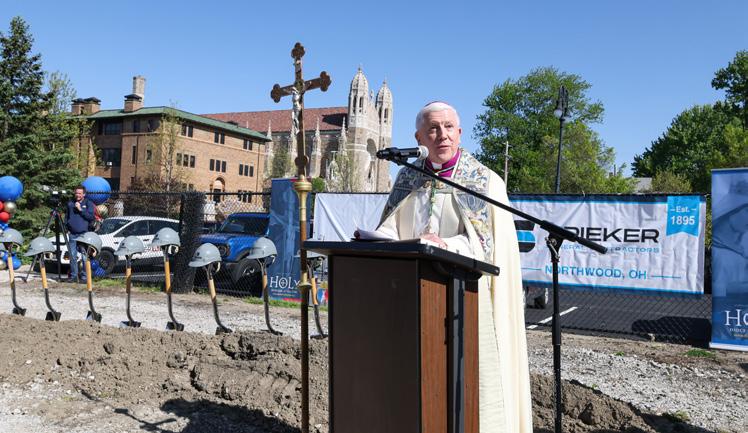
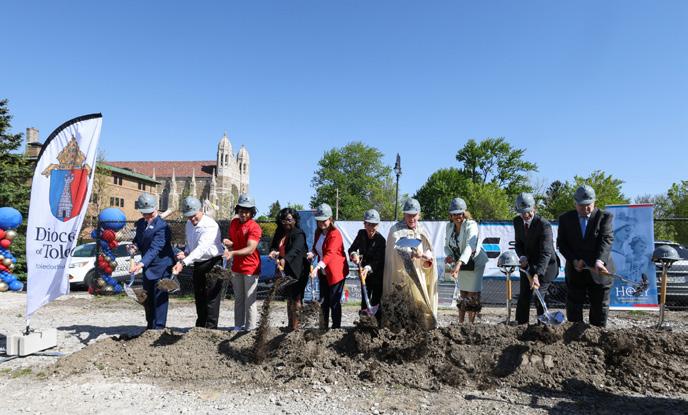
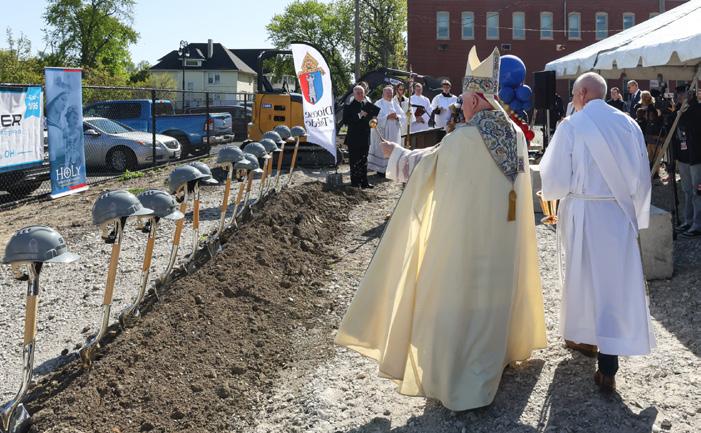
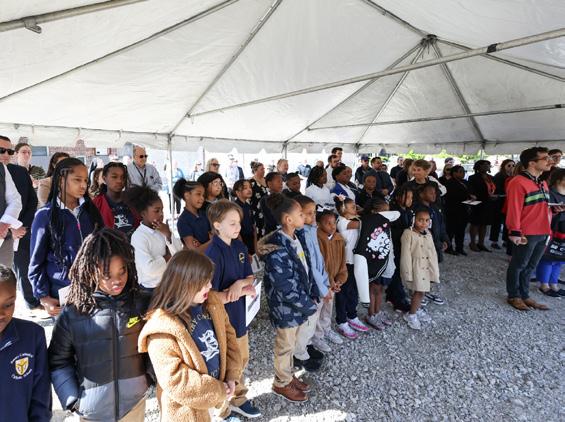
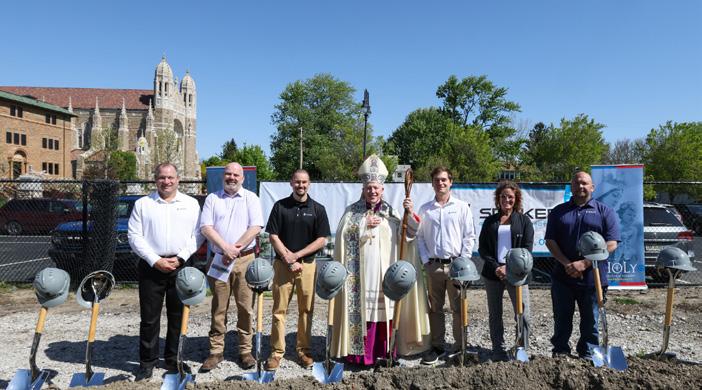
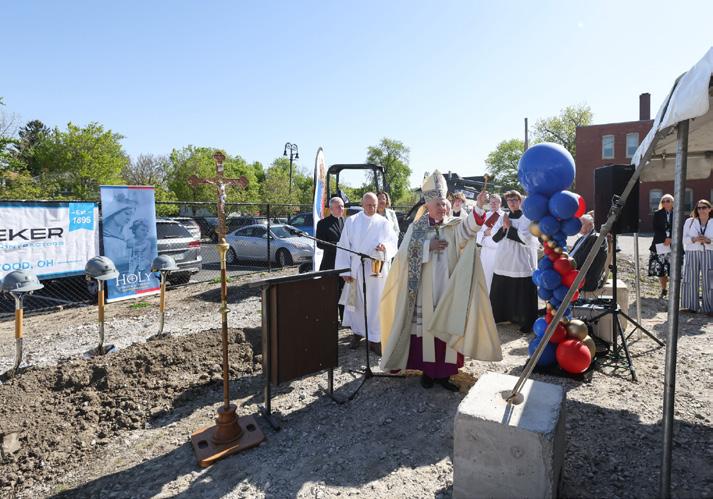
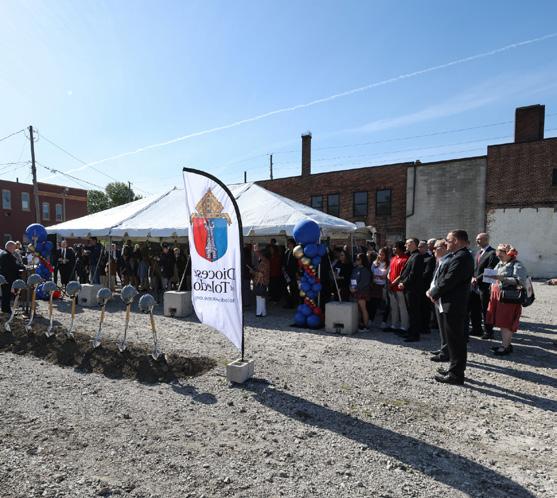
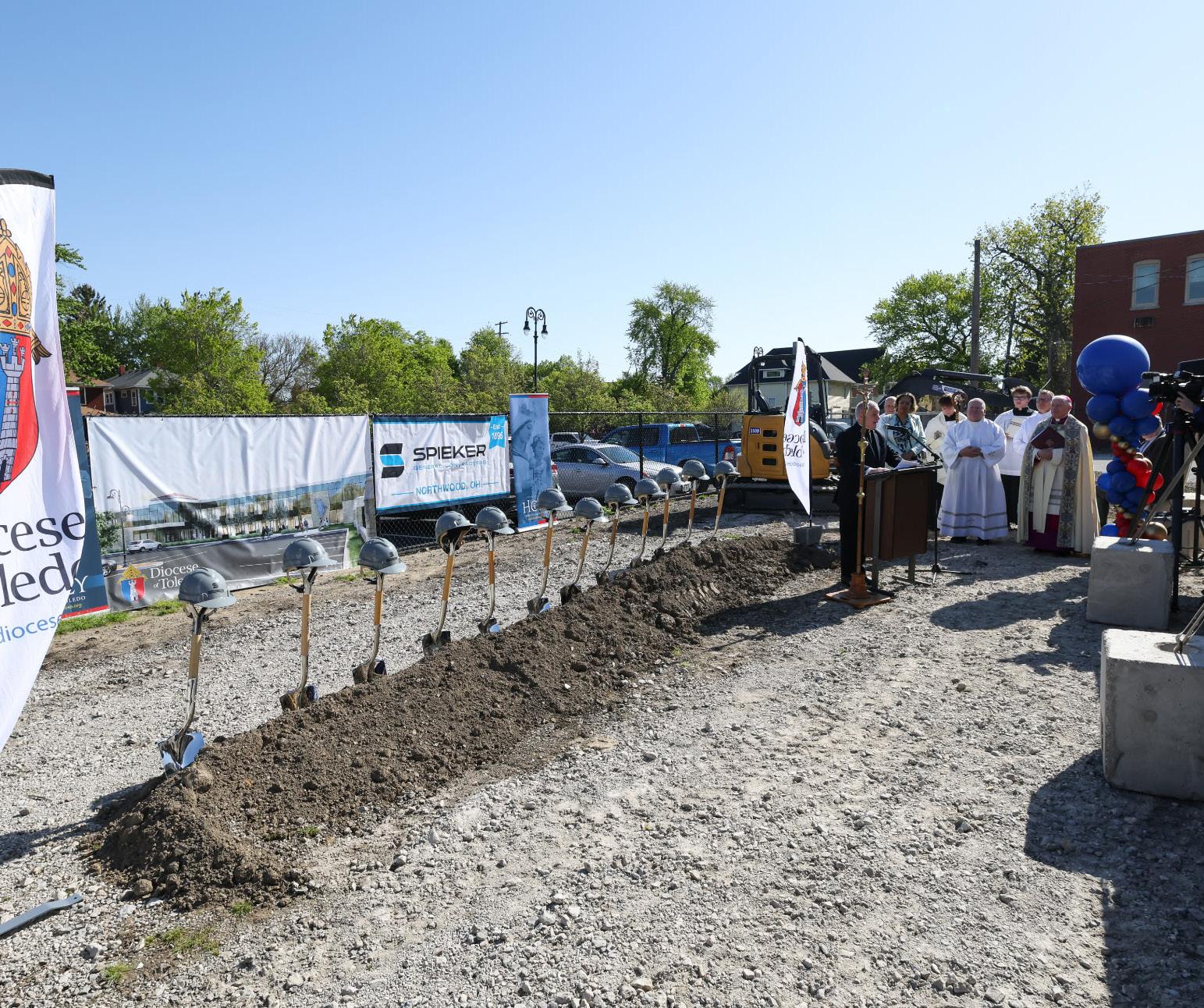
The Diocese of Toledo marked a historic milestone May 4, 2026, as Bishop Daniel E. Thomas joined priests, consecrated religious, community leaders and faithful for the groundbreaking of the new diocesan pastoral center across from Our Lady, Queen of the Most Holy Rosary Cathedral. The two-story facility will serve as the central hub for diocesan ministries supporting parishes, schools, Catholic Charities and outreach efforts throughout northwest Ohio. During the event, Bishop Thomas reflected on the years of planning and discernment behind the project, emphasizing stewardship, collaboration and service to the Church’s mission.
St. Joan of Arc Parish Fish Fry
MEALS WITH
How Sunday dinners and Sicilian recipes formed a priest’s heart for hospitality.
BY ANNIE LUST
PHOTO BY SCOTT W. GRAU/SPECIAL TO THE
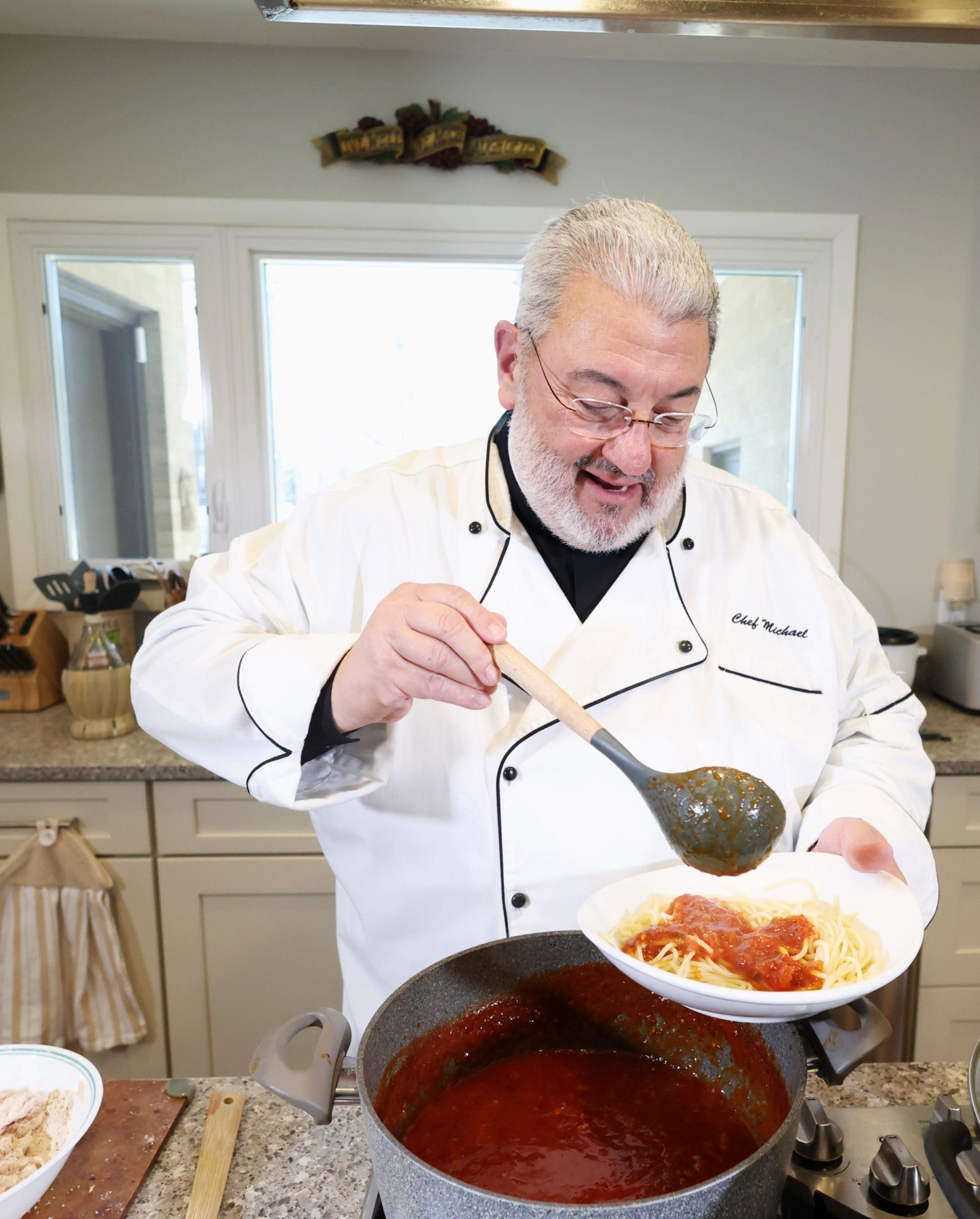
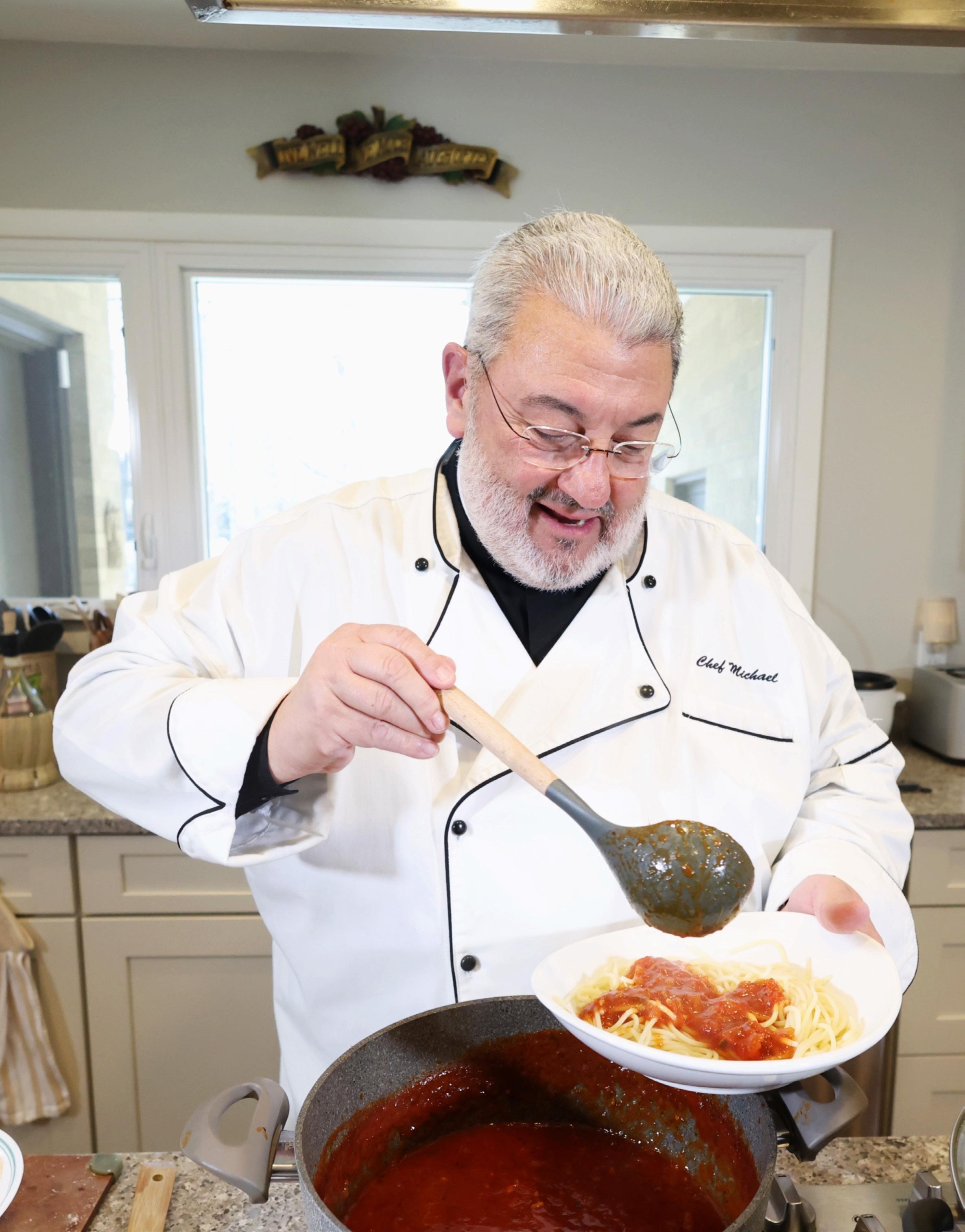
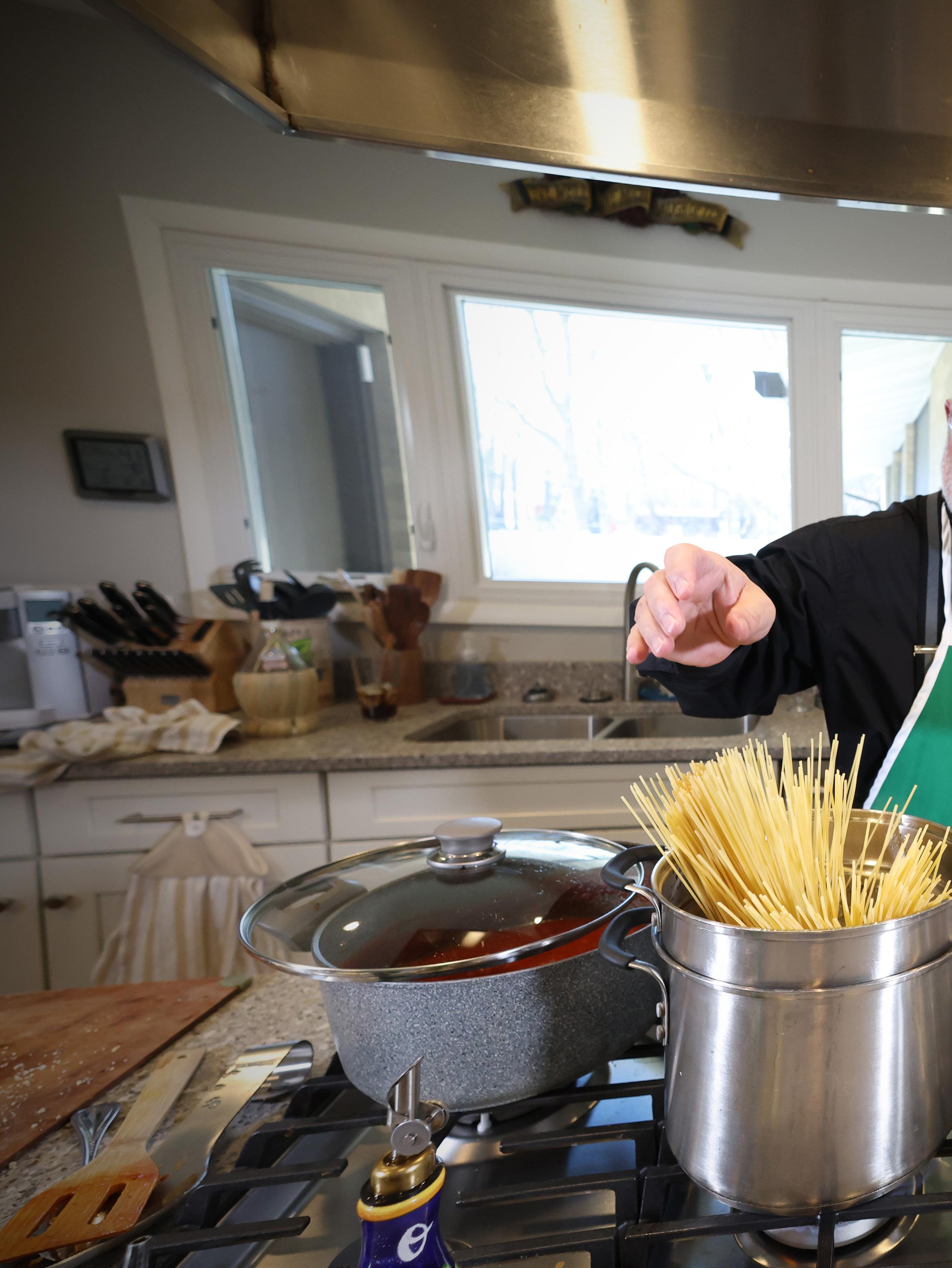
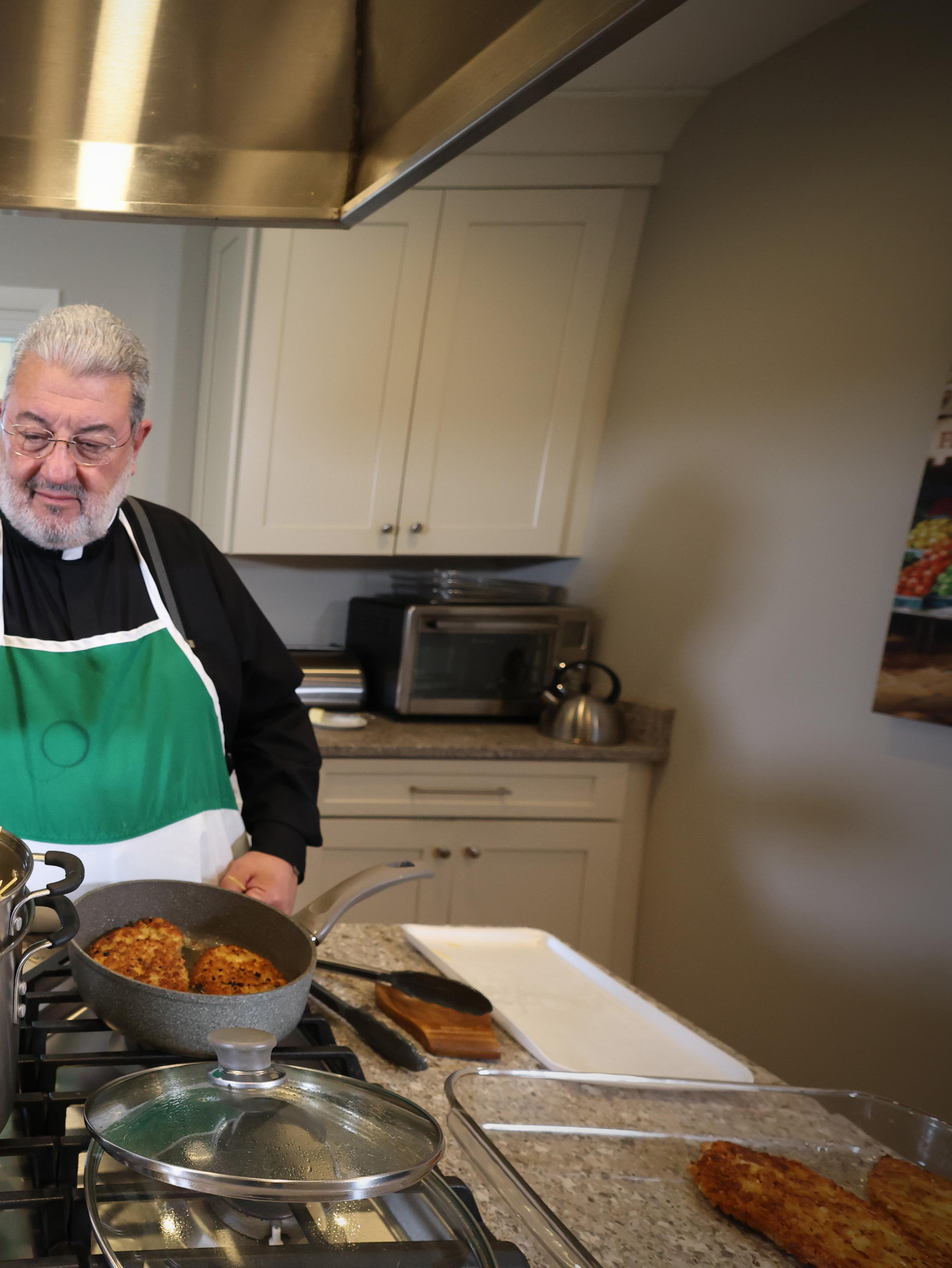
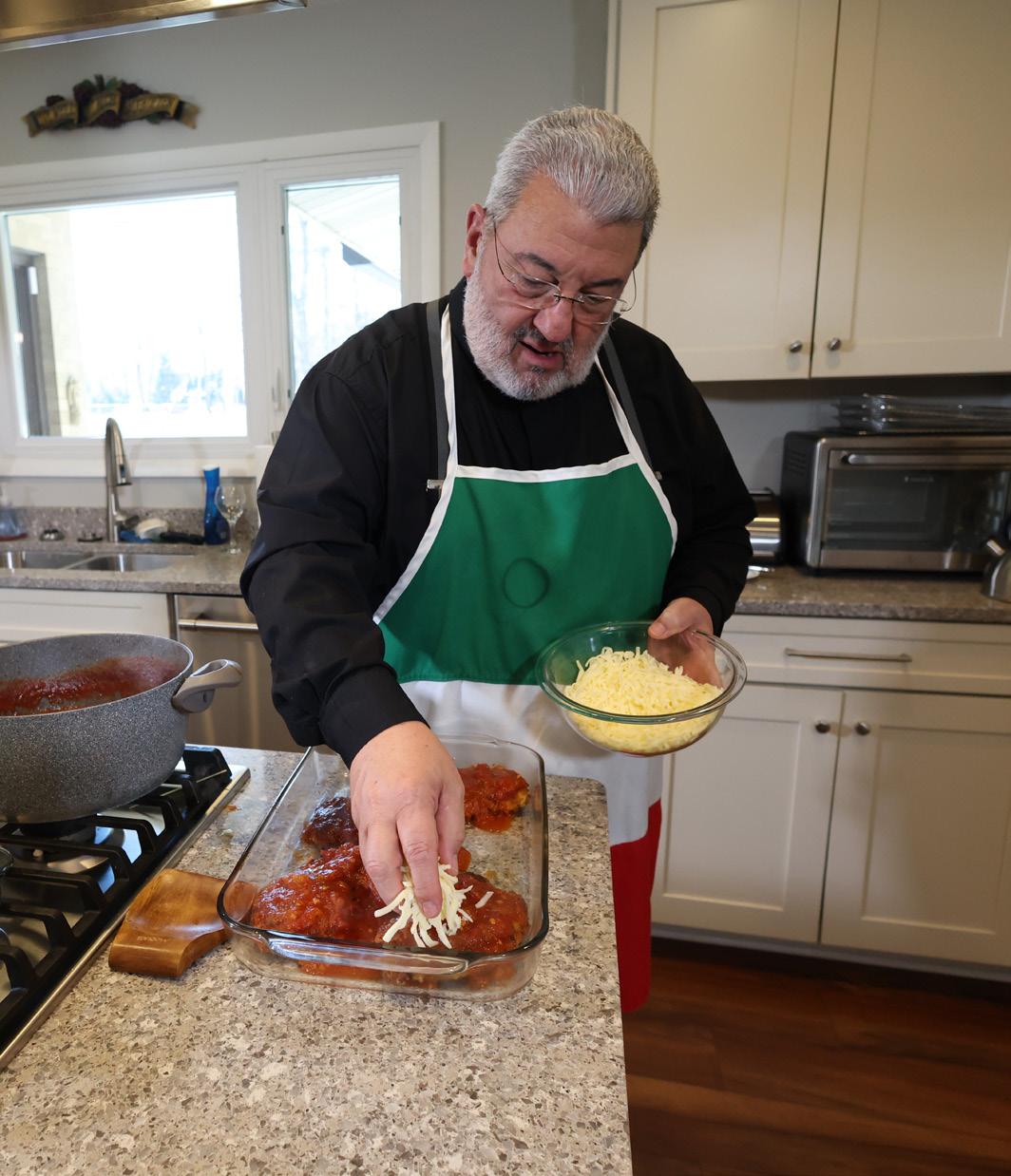
Monsignor Michael Billian appears in the doorway, already wearing an apron with the green, white and red of the Italian flag displayed across his chest. Without a word, it answers the question of what’s for dinner. Moments later, a rich, sweet, herbaceous aroma drifting from the kitchen confirms the menu.
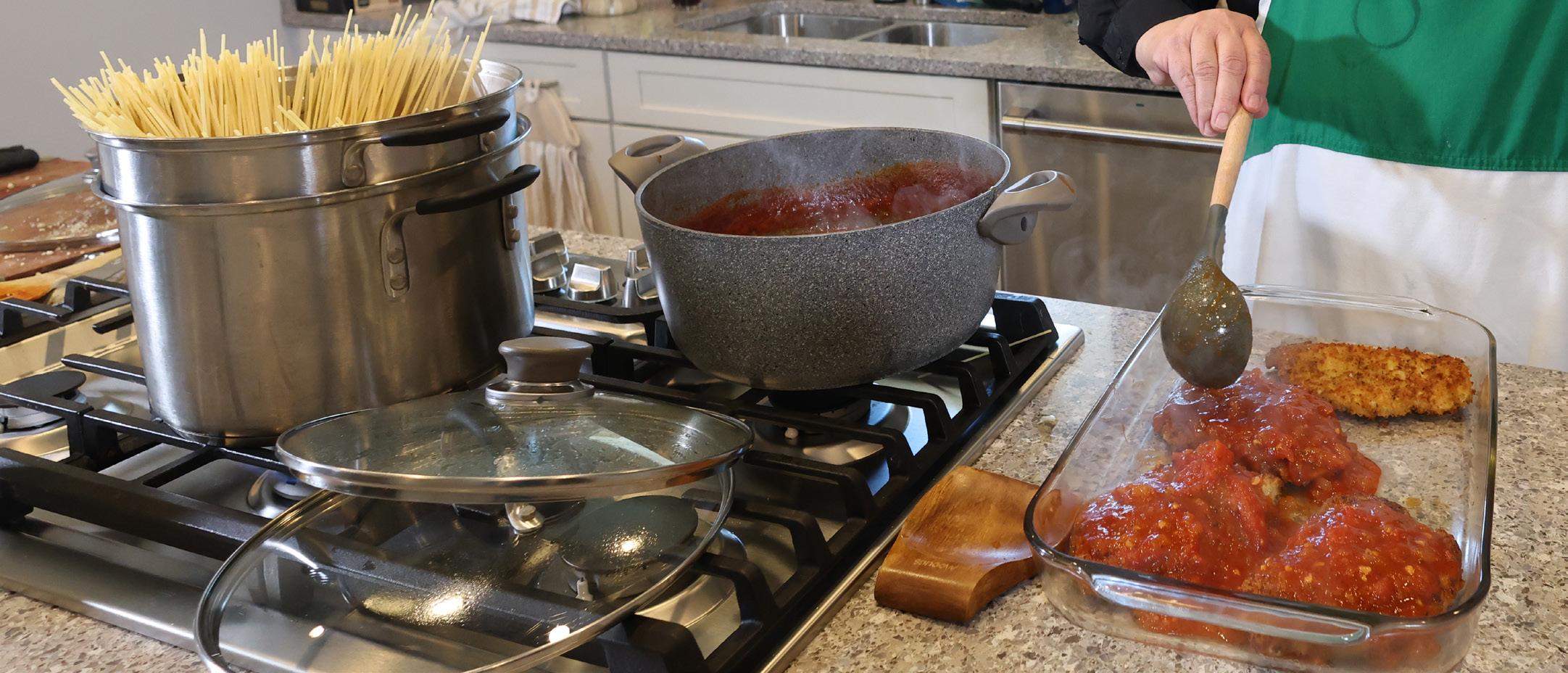
Sunlight streams into the kitchen, illuminating a space that is beautiful but practical. In the rectory kitchen, the island’s built-in stovetop allows Monsignor Billian to take his place while a visitor sits comfortably across from him, watching the work unfold. He moves through the room with ease. Without glancing, his hand reaches for the wooden spoon, stirring the pot of red sauce gently bubbling on the gas stove.
He talks easily as he transfers thin chicken cutlets into a bowl of breadcrumbs. He lowers the chicken into the hot oil; it responds with a lively sizzle. He tastes the sauce, adjusts the heat, chats as he works— all without a recipe in sight. This is instinct, experience, care.
Even the ingredients speak of intention: tomatoes harvested from his own summer garden, noodles imported from Italy but purchased locally.
Here, Monsignor Billian is at home. The kitchen is his sanctuary, every motion measured, every taste guided by memory and care. And in this quiet, fragrant space, it’s clear: cooking is not about showmanship for him. It is about generosity, connection, and the deliberate, humble act of feeding those around him.
DIOCESE OF TOLEDO
That ease was formed early. Monsignor Billian grew up in Toledo in a close-knit, multigenerational Sicilian family, living on the second floor of his grandparents’ home, with relatives filling the floors below and lining the same street. Kitchens were joyful spaces, crowded with grandparents, greataunts, great-uncles and cousins. “I learned to cook by watching,” he says. “I was always at the feet of my grandmother, my great-aunts, my great-uncles.”
Sunday dinner anchored it all. Every week, the family gathered at his grandparents’ house—with 30 people sometimes filling the dining table and the rooms beyond it. Attendance was not optional. “Sunday dinner was non-negotiable,” he recalls. “You could bring anyone you wanted—but you had to be there.” Meals were about more than food. Important conversations happened there. Decisions were made. Belonging was reinforced again and again.
That expansive understanding of family extended beyond the home. Monsignor Billian’s family owned a neighborhood bar, a gathering place where relationships mattered more than transactions. The only day it ever closed was the day he was ordained a priest. “Most of the people who were usually there were going anyway—it was a neighborhood place,” he explains. They weren’t just customers. They were an extended family.
That grounding stayed with him through seminary—first at Holy Spirit Seminary in Toledo, then the Josephinum in Columbus, then Mount Saint Mary’s in Cincinnati—
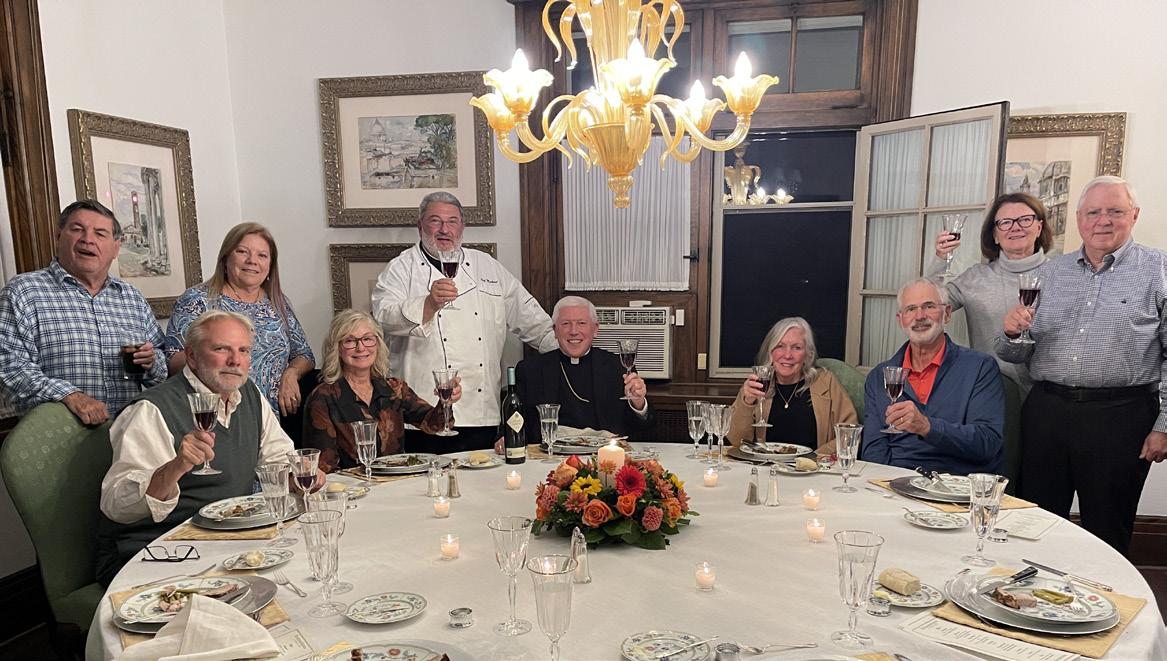
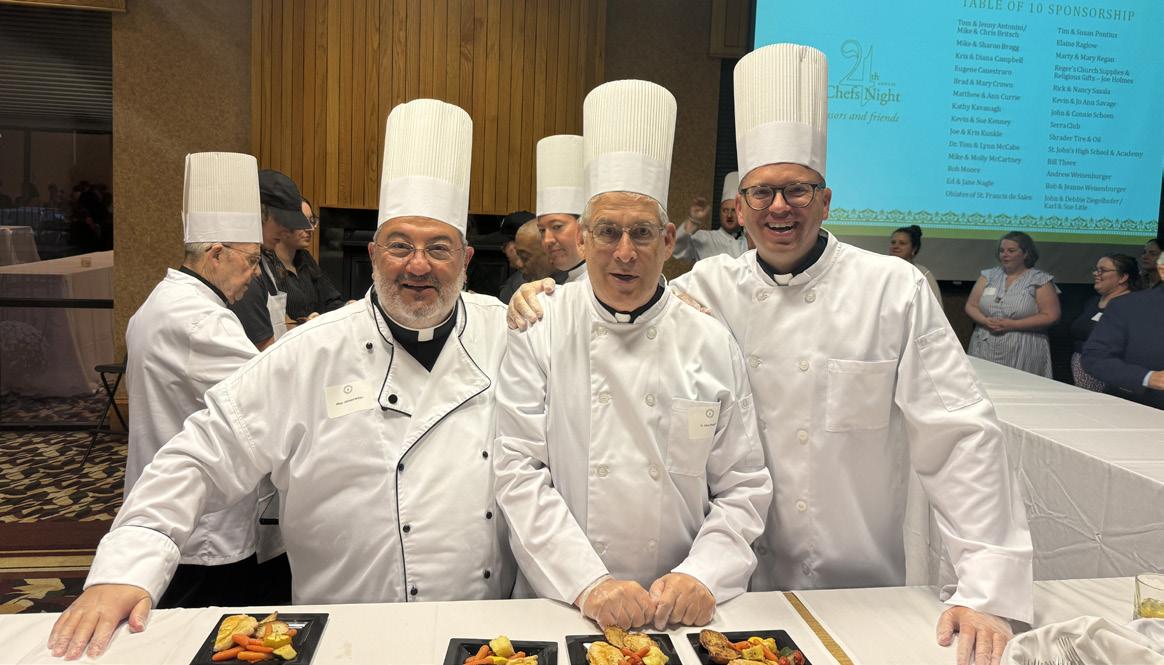
Monsignor Michael Billian lends his culinary talents to the Annual Celebrity Chefs Night, where priests of the Diocese of Toledo cook to benefit the Visitation Sisters. (Bottom) At the Cathedral Rectory, in another act of generosity, a donated dinner brings guests together for an evening of good food, wine, and fellowship—hospitality shared in its fullest sense.
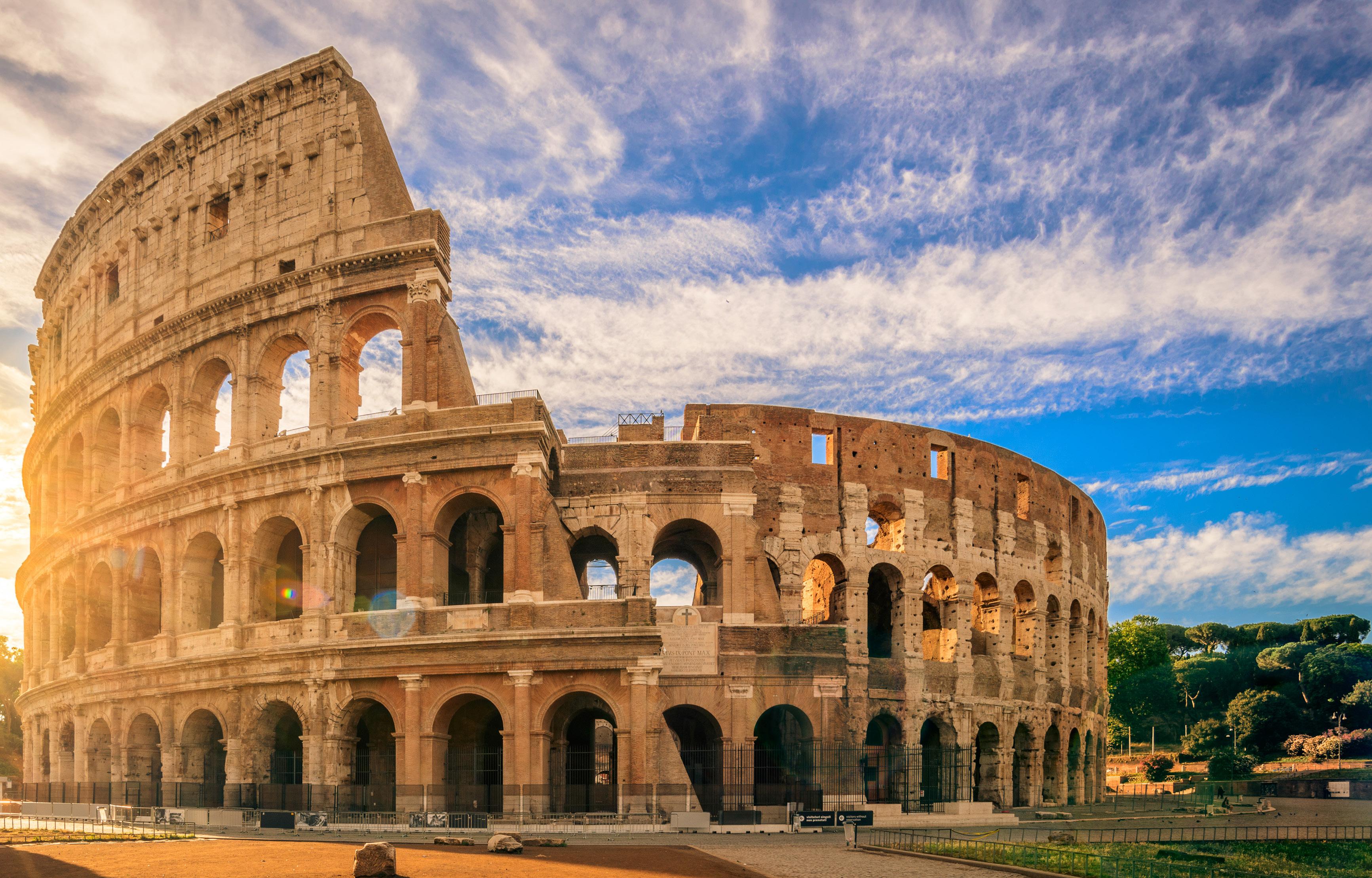
and into his early priesthood. Whenever he returned home, his mother handed over the kitchen. Cooking remained constant, a way of staying rooted amid formation and change. Over the years, the priesthood has taken him far beyond Toledo, often to Italy. Monsignor Billian regularly leads pilgrimages to Rome, where he has spent enough time to know the city not just by its landmarks, but by its tables. He recommends only restaurants he loves, almost always family-owned places where simplicity is respected and done well. When he brings pilgrims, he wants them to experience Rome as guests rather than tourists—to understand the city through shared meals. One pilgrimage was especially meaningful: taking his parents back to Sicily, the first members of their family to set foot there in 72 years. “That was really something to experience,” he says.
Closer to home, cooking remains an essential part of his ministry. He regularly prepares meals for the priests he lives with, paying attention to schedules so that meals can be shared when possible. Cooking, for him, is an act of hospitality that creates community—an ordinary, human way of caring for people. That same impulse led him to share recipes and reflections through Meals with Monsignor, his weekly segment on Annunciation Radio. Though he is not a recipe cook by nature, he deliberately
3rd Annual Catholic Charities
Join us for an inspiring evening honoring compassion, service and the power of community as we celebrate the Third Annual Catholic Charities Hands of Christ Gala.
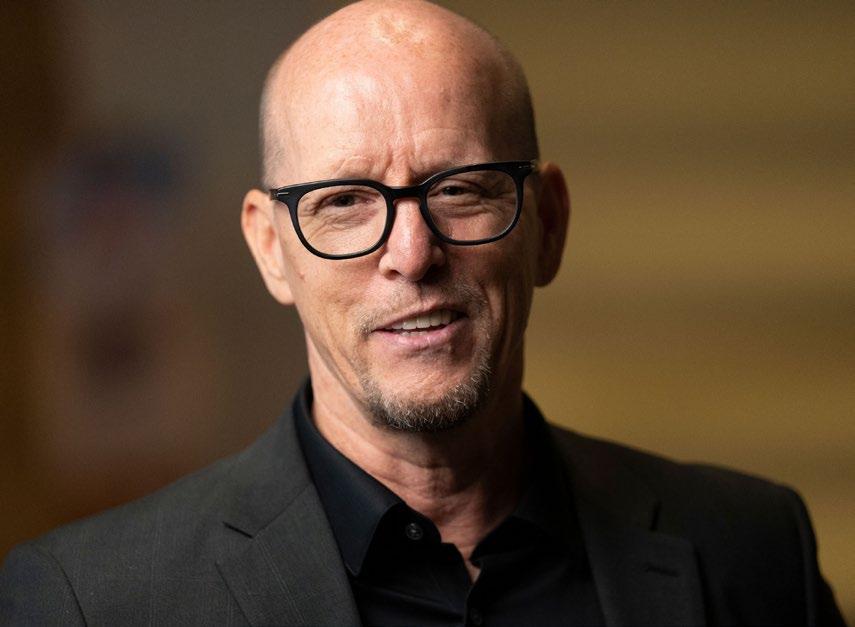
The evening will feature a keynote address from American film producer and screenwriter Jim Wahlberg, remarks from Most Reverend Bishop Daniel E. Thomas, and the presentation of the 2026 Hands of Christ Awards, recognizing individuals who have made an extraordinary impact through faith-driven service.
Come together for a memorable night of reflection, inspiration, and generosity as we celebrate those who extend the “Hands of Christ” to those most in need.
Thursday, November 5, 2026 | 6:00 PM
The Premier | 4480 Heatherdowns Blvd. | Toledo
Reserve Your Seat
Tickets and sponsorship opportunities are available.
Scan the QR code to purchase tickets or learn more.
Jim Wahlberg
From pan to plate,
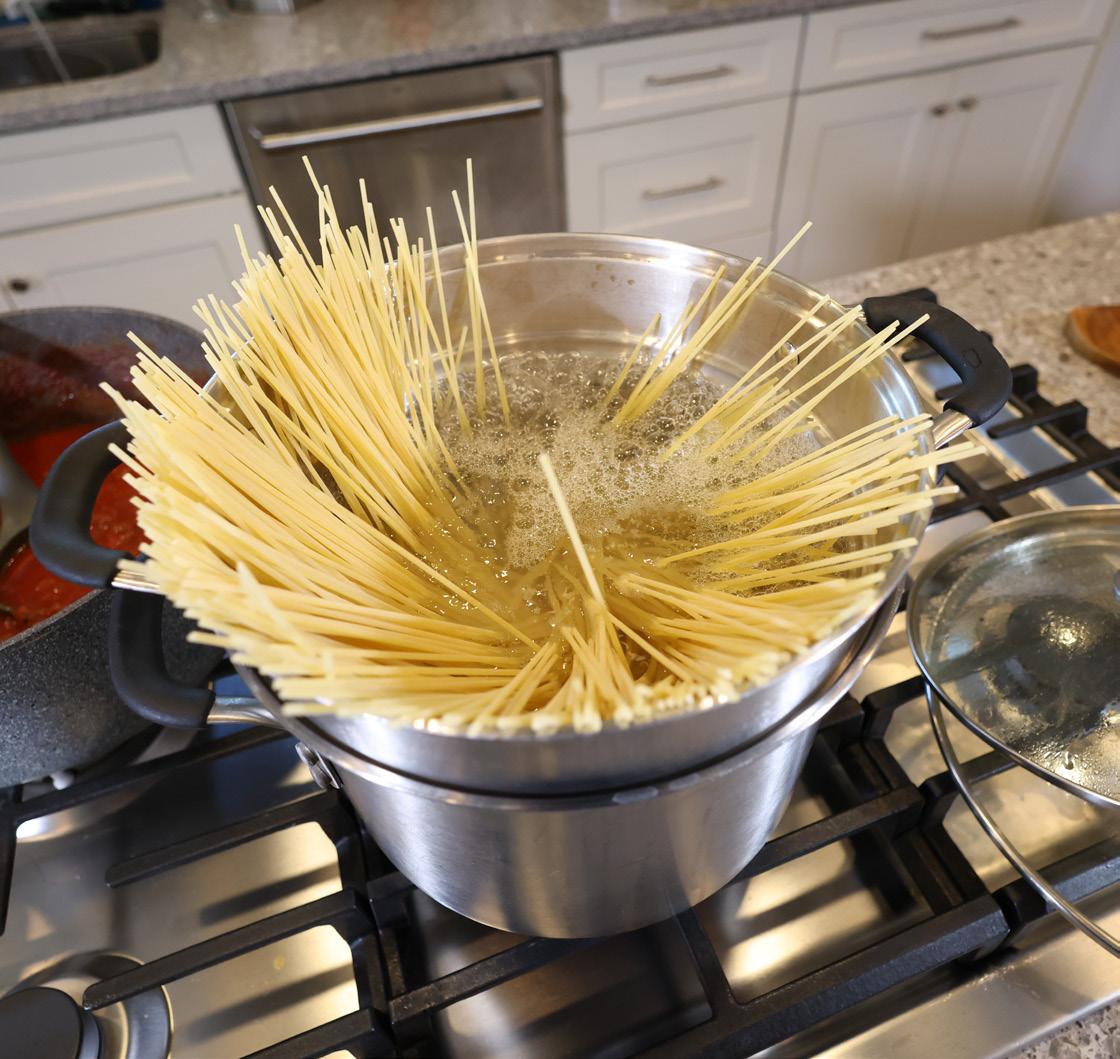
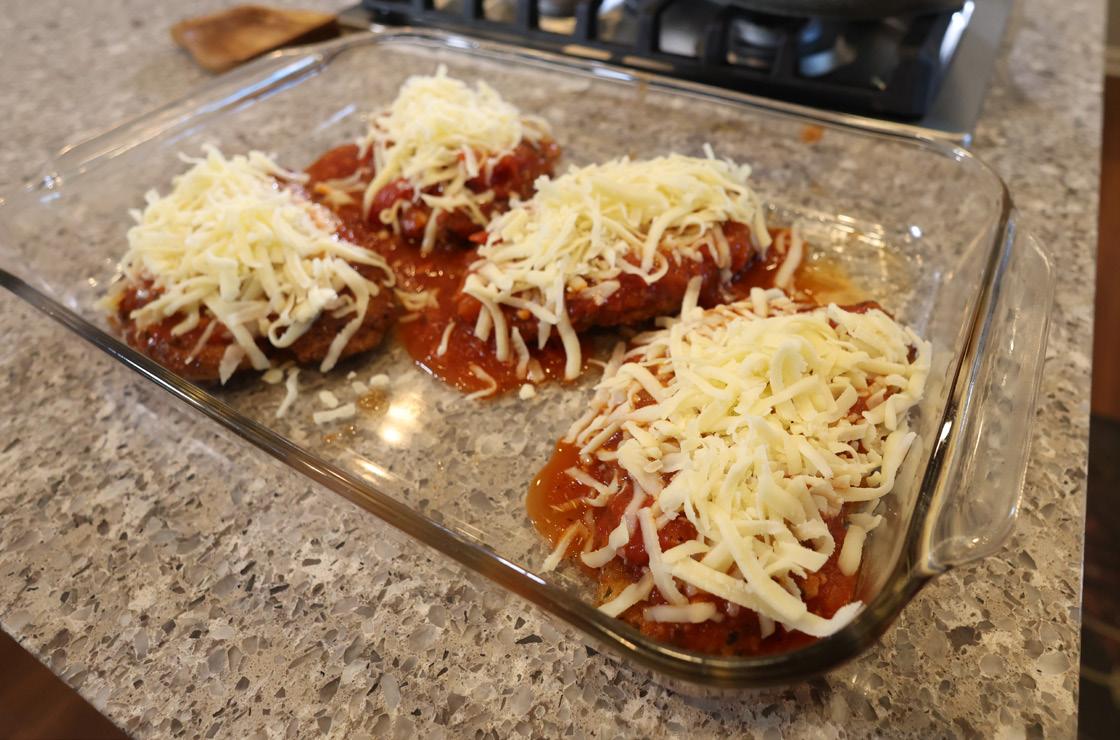
Monsignor Michael Billian prepares a classic chicken parmesan with the ease of a lifetime in the kitchen— breaded cutlets sizzling in oil, pasta boiling nearby, and the finished dish layered with sauce and cheese, ready for the oven. For him, each step is more than technique; it is an act of hospitality, rooted in family tradition and offered with care.
writes things down so others can participate, translating instinct into invitation.
His philosophy is simple: use good ingredients, preferably local and in season. Don’t over-handle. Trust your senses. Taste as you go. Adjust. Leave things alone when they don’t need fixing. The virtues of restraint and patience, he believes, are often undervalued—not just in the kitchen, but in life.
That belief naturally extends into his faith. Monsignor Billian has spent time reflecting on the role of meals in the life of Christ—how often Jesus taught, revealed himself, and gathered people around food. “So many important moments in the Gospels happen around meals,” he notes. Food slows people down. It creates space for encounter. It brings people together.
Today, as pastor of one of the largest parishes in the Diocese of Toledo, his Sundays look different from the family dinners in the 1960s and 70s. Instead of crowding into a dining room, parishioners fill a cavernous church. Instead of 30 people gathered, he is a pastor to more than 10,000. But it is the most important day of his week. It’s the day for gathering, nourishment and community.
Back in the kitchen, there is a kind of choreography to the way Monsignor Billian times everything just right: the pasta into the water, the chicken from the frying pan into a baking dish, layered with cheese and slid into
the oven. He finishes with a final touch—a sprinkling of pecorino romano—before gently setting the plates of chicken parmesan on the dining table. These are ritual movements practiced countless times. The gestures, the tools, the timing are second nature, handled with unhurried care. Feeding people— carefully, attentively, generously—remains at the heart of his vocation. And there is no place he feels more at home than in the kitchen—except, perhaps, the altar.
Vo l u n t eerin g C onnect s U s !
The AmeriCorps Seniors program at the Area Office on Aging invites you to join our team of dedicated volunteers! By sharing your time and talents, you can make a positive impact on the lives of others while enriching your own.
Volunteer Opportunities
Social Connection Visits:
Provide companionship to Older adults in need of social interaction. Your visits can brighten someone's day and improve their overall well-being.
Caregiver Respite:
Offer much-needed relief to family caregivers by stepping in to provide friendly peer to peer social connections for their loved ones. Your support allows Caregivers to take a break, recharge, and attend to their own needs.
Community Enrichment:
Engage in various community activities, such as gardening projects, working with the youth, hospitals, metroparks, and much more!!
Volunteering Can Help You Live
PHOTO BY SCOTT W. GRAU/SPECIAL TO THE DIOCESE OF TOLEDO
ONE WOMAN’S JOURNEY THROUGH ABORTION, GRIEF AND THE MERCY SHE NEVER BELIEVED WAS POSSIBLE—AND NOW HELPS OTHERS DISCOVER.
finding
forgiveness
BY ANNIE LUST
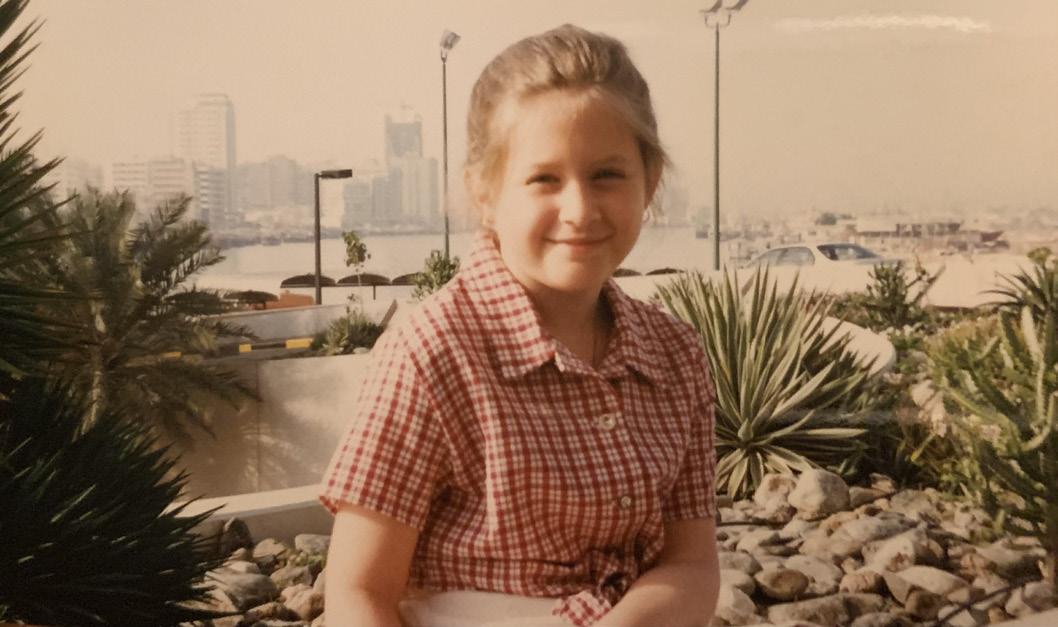
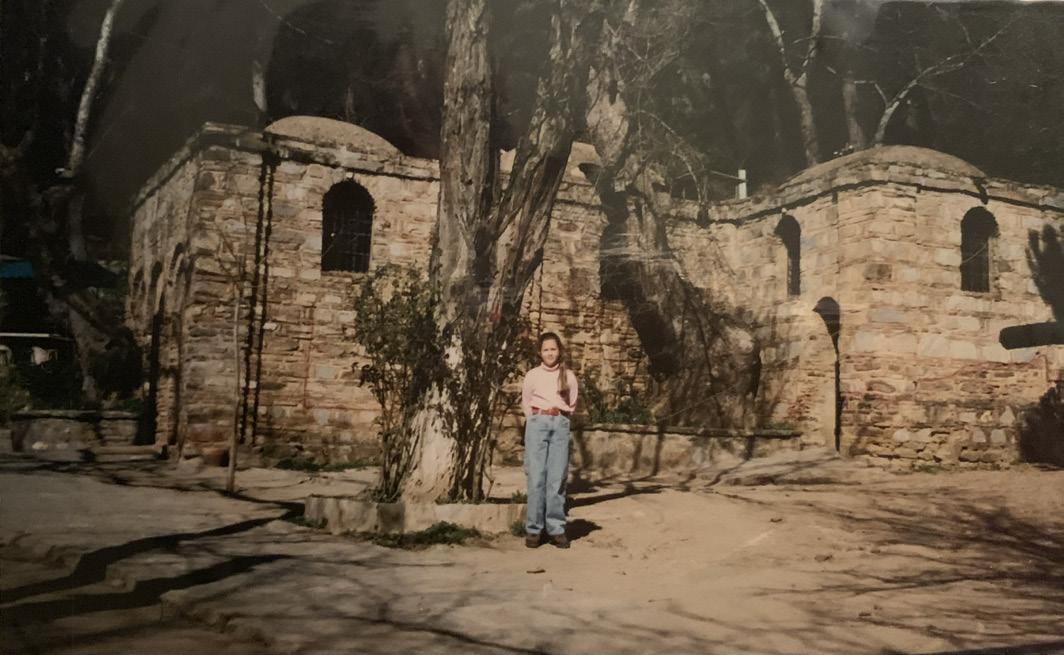
A young Kerstin stands near the stone home in Ephesus long believed to be where the Blessed Virgin Mary lived with St. John. She was a child in Kuwait, growing up amid cultures where faith shaped daily life. Long before she could name it, God was already drawing her—through sacred places, distant lands, and the quiet realization that faith was not just real, but worth seeking.
Kerstin Pakka was eight years old when she stepped into a cathedral in Istanbul and felt something she had never known before. The Cathedral of the Holy Spirit rose around her—vast and dim, its marble columns stretching upward. Candles flickered in the shadows. Ornate reliquaries housing the bones of saints were on display. The space was completely unfamiliar and unmistakably solemn. In short, it was decidedly not designed with children in mind. But Kerstin did not feel overwhelmed or afraid. She felt a stillness and peace that she recognized, even at such a young age. “It was this incredible feeling of love,” she recalled. That feeling imprinted onto Kerstin's heart. She carried it for many years and many thousands of miles.
SUBMITTED PHOTOS ABOVE;
PHOTO AT LEFT BY SCOTT W. GRAU/SPECIAL TO THE DIOCESE OF TOLEDO
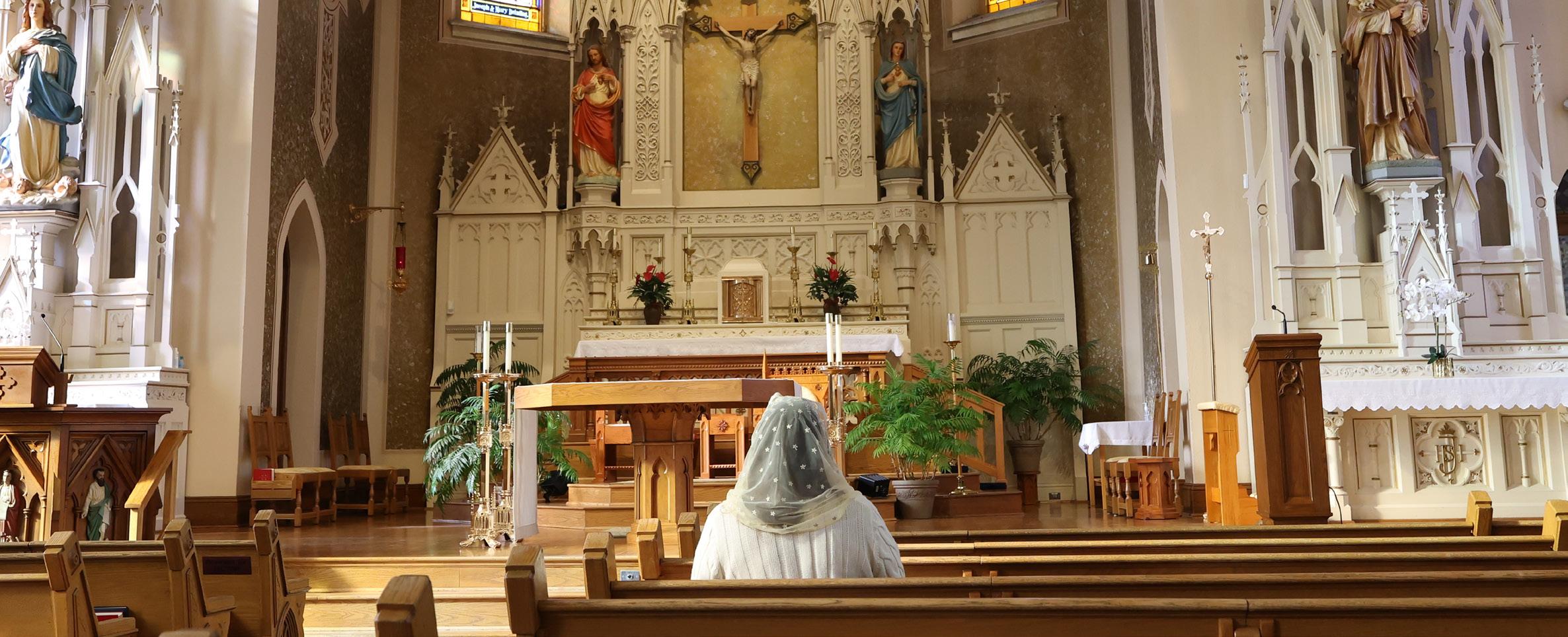
Years after first stepping inside, unsure if she belonged, Kerstin now stands rooted in the very parish where her journey of healing began. What once was a tentative visit became a home—a place where grace met her honestly, and where she continues to encounter the mercy that changed her life.
FOREIGN FAITH
Throughout her early childhood, Kerstin’s life was defined by movement. As the daughter of a U.S. State Department employee, she was born and raised overseas, living in a different country every few years. In places like Kuwait and Turkey, faith— especially Islam—was not private or discreet. It shaped the rhythm of daily life. Shops closed for prayer. Work stopped. People knelt in the streets. Devotion was visible and, at times, inconvenient. Watching life pause for prayer, Kerstin sensed something instinctively: whatever God was, He mattered. Faith was not ornamental. It was essential.
At the same time, the Christianity she encountered closer to home felt heavy. Faith was something you endured, not something that delighted. God, as Kerstin came to understand Him, was someone to obey carefully—watchful, distant, more judge than father.
So when a childhood friend invited her to Mass at the cathedral in Istanbul, she went without expectation, certainly not expecting something that would change her life. She didn’t understand the Latin or the Turkish. She didn’t know what the priest was saying. But the feeling of being in that cathedral crystallized in Kerstin as a memory she
returned to over and over.
Years later, after her family returned to the United States when she was ten, Kerstin found herself quietly searching for that same sense of peace again. As a teenager and young adult, she slipped into Catholic churches whenever she could, sitting in the back pews, watching, listening. For years, she attended Mass this way—present, but hidden. Drawn, but unsure how to draw closer.
A CHOICE MADE IN FEAR
Then, Kerstin’s life took an unexpected turn. She was a young married mother with a three month old baby when she discovered that she was pregnant again. The timing felt impossible. Her life did not look the way she thought it should. Panic set in. Control slipped away.
She had grown up hearing—consistently and sincerely—that abortion was not only acceptable, but compassionate. A solution. A way to make life manageable again. Her grandmother had worked at Planned Parenthood with the genuine belief that she was helping women. Though it was not what Kerstin wanted, abortion felt unavoidable.
Inside the abortion facility, every step reinforced the same message: this was necessary, responsible, the only way forward. The experience was harrowing. It was not
PHOTO ABOVE BY SCOTT W. GRAU/SPECIAL TO THE DIOCESE OF TOLEDO
quick, painless, or easy. But what followed was worse. “I walked in with someone else,” she says. “And I walked out alone.”
The world had promised relief. Normalcy. Freedom. Instead, Kerstin was left with a grief she could not name—and a certainty she had never felt before: God is real. And I have done something unforgivable. She stopped visiting Catholic churches. “I knew I was going to hell,” Kerstin solemnly recounted.
SILENCE AND SHAME
For years, Kerstin carried the weight alone. She did not speak of it—not to friends, not even to her husband. She believed she deserved the pain, and that carrying it alone was part of the punishment.
In the aftermath, her life began to unravel. Her mental health plummeted as she struggled with eating disorders, depression and suicidal ideation. As Kerstin and her husband, Tyler, each carried abortion regret in silence, their marriage strained nearly to the breaking point. In 2015, the family moved to Toledo. The change did not solve their problems.
One afternoon, while out walking in her new neighborhood, Kerstin turned a corner and found herself standing in front of St. Rose Catholic Church in Perrysburg. Memories of that first Catholic church—its beauty, its stillness—rose unexpectedly to the surface. She stepped inside, just to look.
The same sense of peace and belonging she had felt decades earlier met her again. Near the entrance, a simple sign caught her eye: Want to know more about the Catholic Church? Join our RCIA. She hesitated. Then she signed up.
A FACE OF MERCY
At St. Rose, Kerstin entered RCIA (now referred to as the Order of Christian Initiation of Adults) cautiously, still convinced she did not belong. She relished the evenings spent listening and learning, grateful for a place where questions were welcomed and nothing was demanded of her.
“I knew the Catholic Church did not
HOLY COMPANIONS FOR CONSOLATION
One of the beautiful aspects of Catholicism is the communion of saints. In her wisdom, the Church has given us holy men and women from every background, including many who endured profound suffering and grief. In our own seasons of sorrow, we can turn to these heavenly companions for companionships, intercession and the assurance of God’s mercy.
OUR LADY OF CONSOLATION AND OUR LADY OF SORROWS
Mary knows sorrow intimately, having witnessed the Passion and Death of her Son. Two shrines in the Diocese of Toledo — Our Lady of Consolation in Carey and the Sorrowful Mother Shrine near Bellevue — are destinations for prayer, hope, and healing.
ST. PAUL THE APOSTLE
Once a fierce persecutor of Christians, Paul’s dramatic conversion on the road to Damascus is a powerful reminder that no past sin is beyond the reach of God’s mercy. Transformed by grace, he became one of the Church’s greatest missionaries, preaching the very Gospel he once tried to destroy.
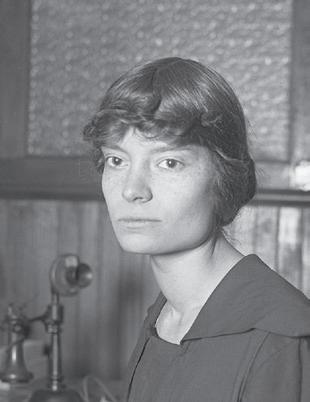
SERVANT OF GOD DOROTHY DAY
Though not yet canonized, Servant of God Dorothy Day offers a powerful witness of repentance and mercy. Before her conversion, she experienced the deep wound of abortion—a sorrow she carried throughout her life. After entering the Catholic Church, she entrusted that pain to God’s mercy and spent the rest of her days serving the poor and defending the dignity of every human life.
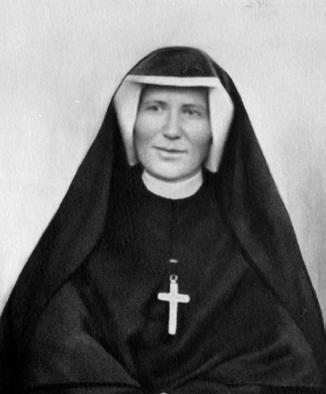
ST. FAUSTINA
A humble Polish nun and mystic, St. Faustina Kowalska was entrusted with the message of Divine Mercy for the whole world. Through her visions of Jesus and her faithful recording of His words, she reminded the Church that God’s mercy is greater than any sin.
like abortion,” she explained. “So I assumed they didn’t like women who had abortions.” Eventually, she asked to speak with a priest. She told him she had enjoyed RCIA—but that she knew she could not be Catholic because of what she had done. She waited for his expression to change, expecting disappointment, disgust or distance. Instead, when she finally said the words "I had an abortion," his face softened. “I’m so glad you told me,” he said.
He did not minimize what had happened. But neither did he reject her. “You’re right,” he told her gently. “You don’t deserve God’s love. None of us do. That’s why it’s a gift.” For the first time, Kerstin saw that the Church’s teaching on abortion was not rooted in condemnation—but in love. And that love extended to her. Then, he told her about Project Rachel.
THE WEIGHT LIFTED
Kerstin’s first confession remains etched in her memory. “It felt like a weight I’d been carrying for years was finally lifted,” she says. “I thought what I did was unforgivable. And God forgave me.” The absolution did not erase her grief, but it changed its direction. Healing could finally begin.
Through Project Rachel, Kerstin found not a program, but a community. Women of all ages shared their stories: wounds carried for months, for years, for lifetimes. “You can say the things out loud that you’re afraid to say anywhere else,” Kerstin explains. “And instead of shock, you hear, ‘Me too.’” The isolation lifted.
LOVE, GIVEN BACK
After years of healing, prayer, and discernment, Kerstin felt called to give back. When a position opened with Project Rachel in the Diocese of Toledo, she approached it carefully, aware that walking with others requires its own readiness.
Today, she serves as Project Rachel Coordinator, accompanying women at every stage of healing—teenagers who call days after a chemical abortion, elderly women nearing the end of their lives who have carried the secret
Drawing from her own story of loss and restoration, Kerstin now helps equip priests to meet others with the same compassion she once received. Through Project Rachel, her witness becomes a bridge—reminding those in ministry that behind every story is a person waiting to be met not with judgment, but with mercy.
for decades, Catholics, Protestants, and those with no faith at all. Her husband Tyler, who joined the Catholic Church two years after Kerstin, started a similar initiative for men, called The Joseph Ministry.
Their marriage revived once Kerstin and Tyler began to heal. Their family has thrived, becoming active members of St. Rose and growing to include six children on earth. In their respective ministries, they strive to share the grace that they have received.
“My job,” Kerstin said simply, “is to love the person in front of me.” It is the same love she first encountered as a child in a cathedral thousands of miles from home—the love she thought she had lost forever, the love that was waiting for her all along.
Looking back, the pattern is unmistakable: a curious child drawn into a cathedral in Istanbul, a teenager sitting quietly in back pews, a broken hearted woman stumbling into a parish church by chance. At every stage, God was present—patient, persistent, waiting.
And now Kerstin can share the assurance with everyone she encounters, especially those dealing with wounds from abortion: “No sin is unforgivable. You are never too far gone. God loves you, specifically.” Healing, Kerstin reiterated, is possible.
SUBMITTED PHOTO
“For I know well the plans I have in mind for you: Plans for your welfare and not for woe, so as to give you a future of hope.”
Jeremiah 29:11
With immense gratitude, we thank the over 12,000 generous families across the Diocese of Toledo, who driven by their tremendous faith, have come together to make this historic initiative a resounding success!
JThank you for the continued prayers and support of the Living Christ campaign. Because of your continuing generosity, over $80 million has been collected and $33 million returned to local parishes, bringing hope and transformation to countless lives within our community.
oin us with your prayers and financial support as we share the Living Christ for the future of our church in Northwest Ohio for generations to come.
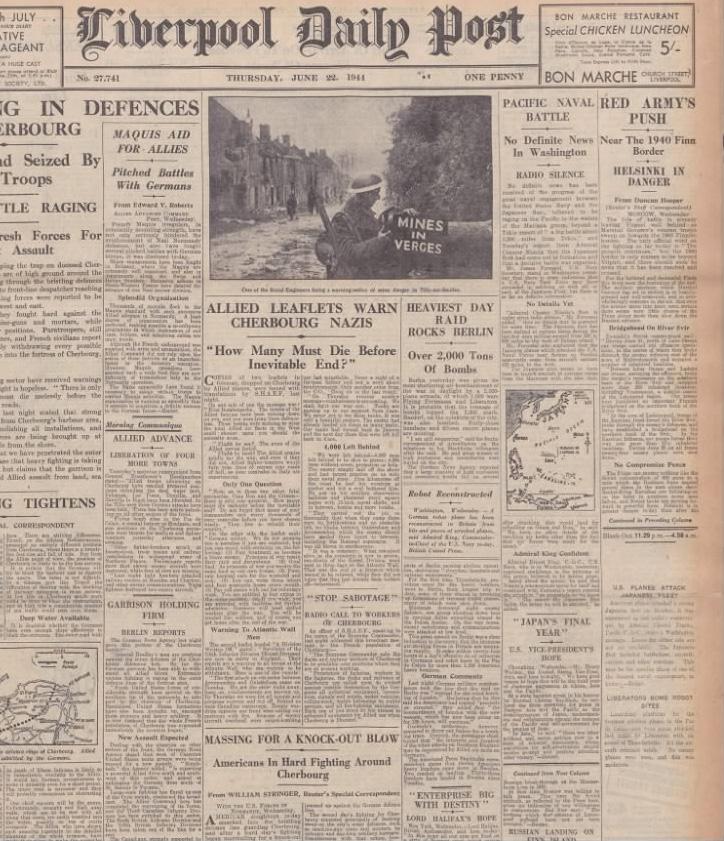
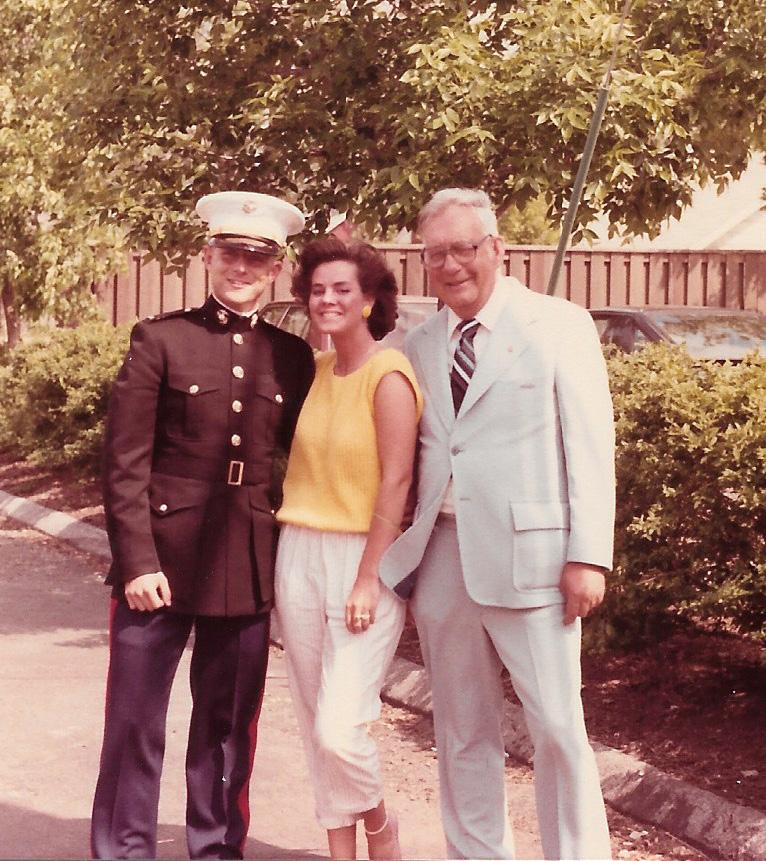
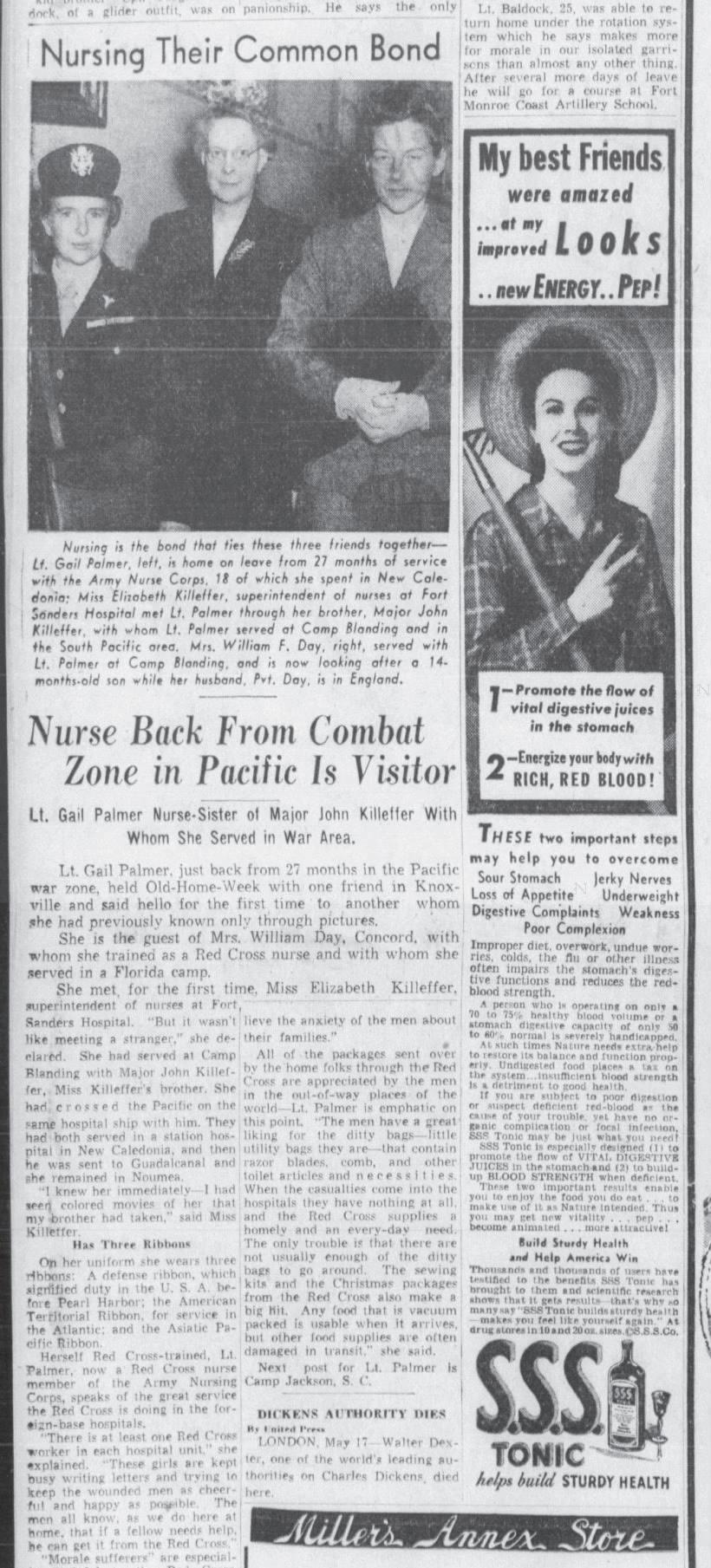
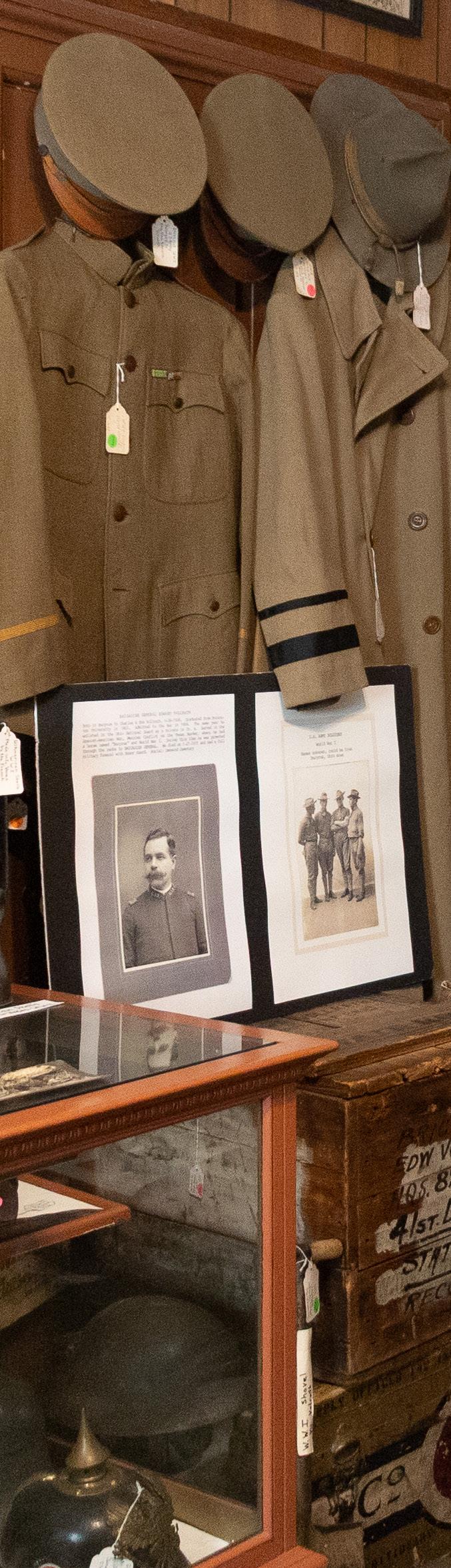
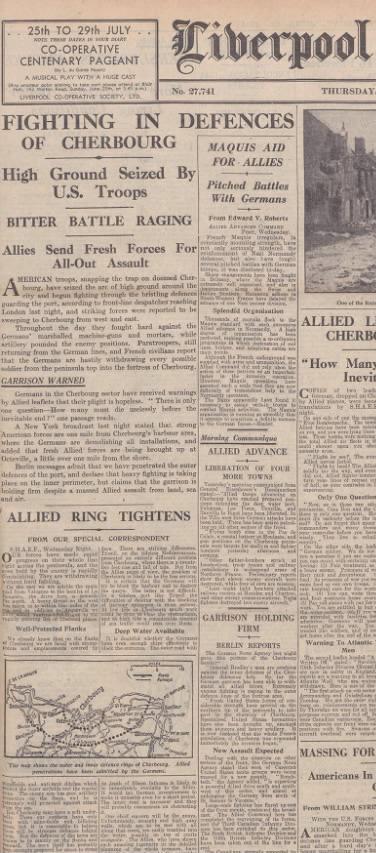
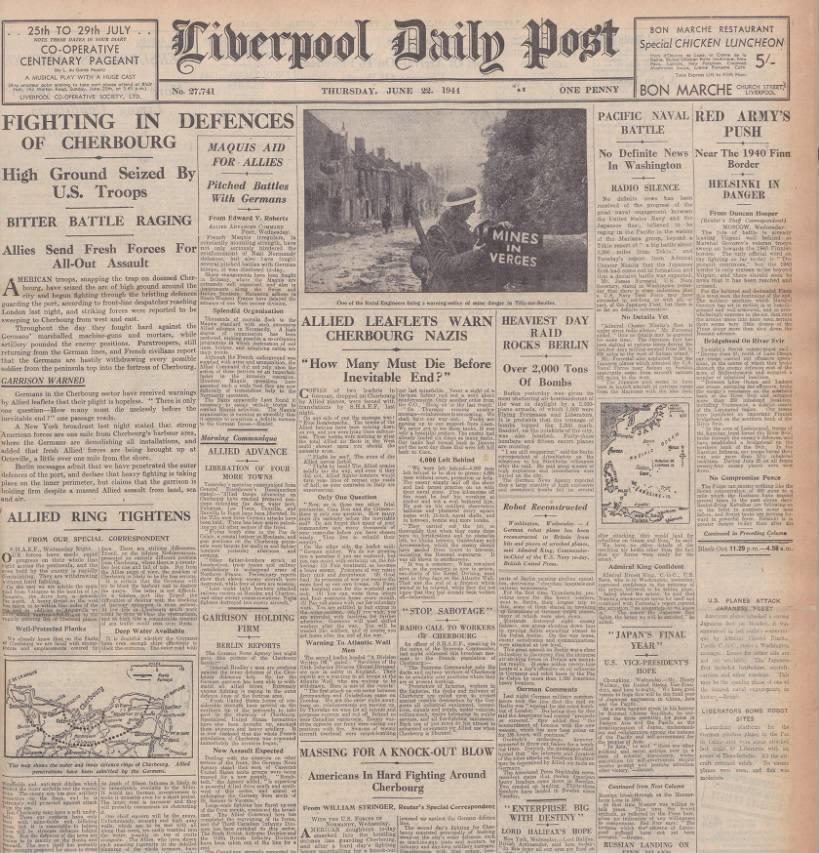
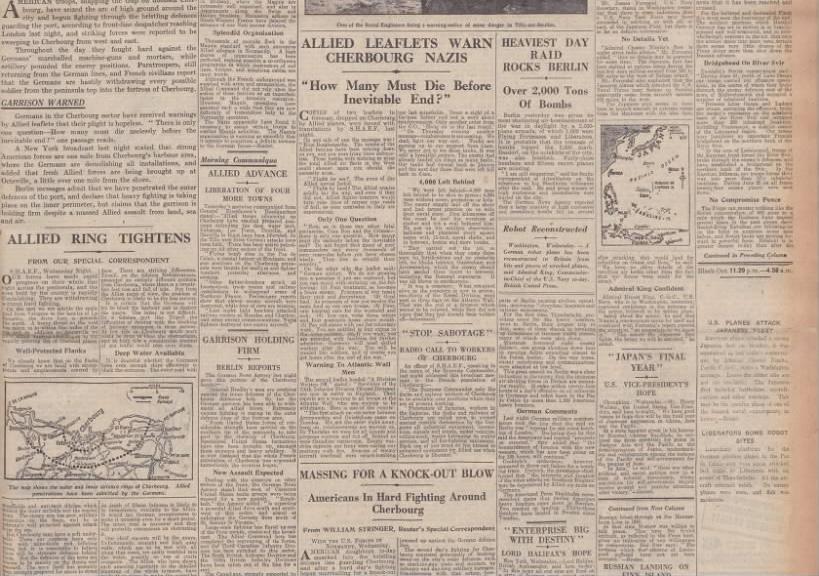
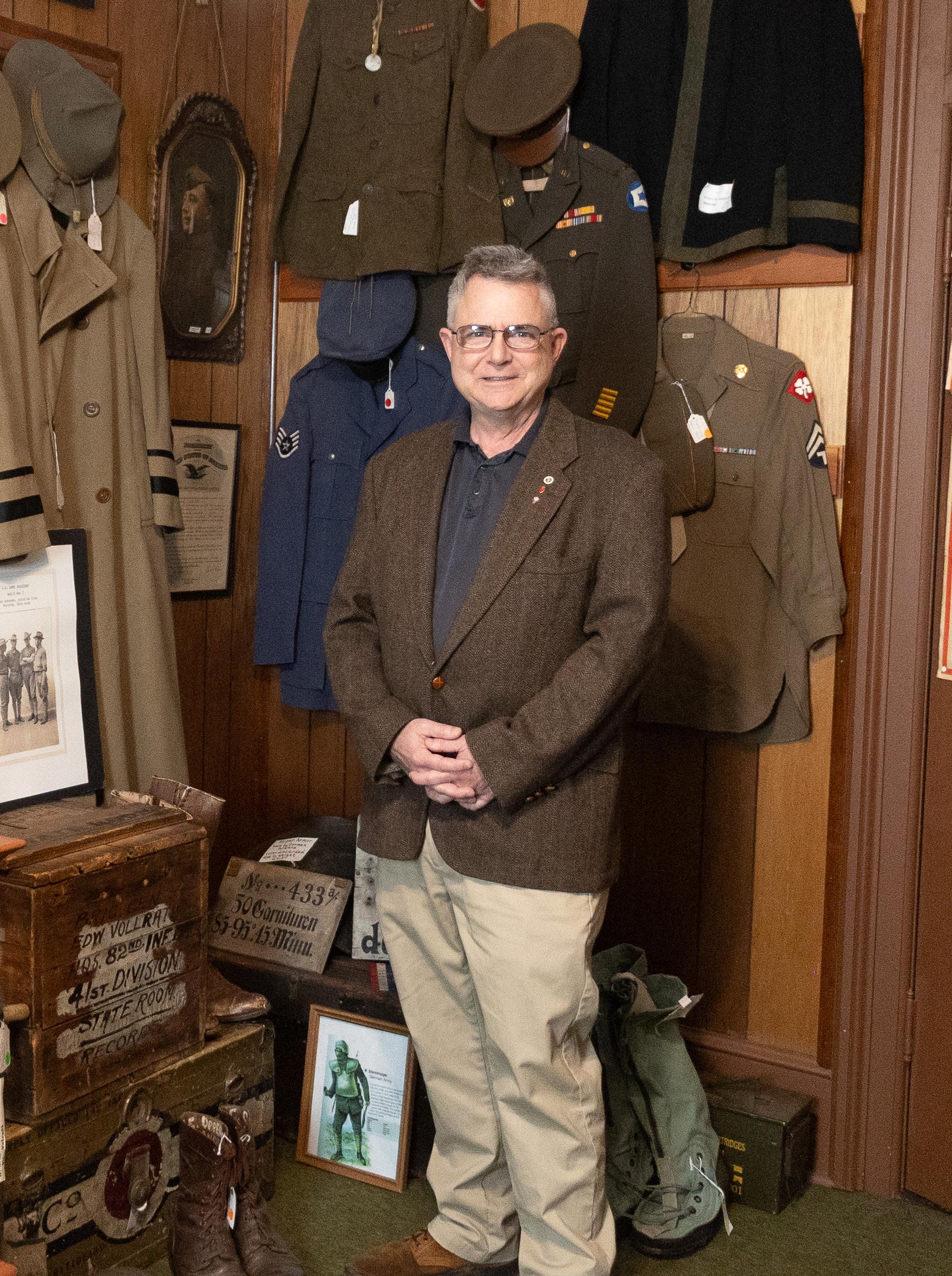
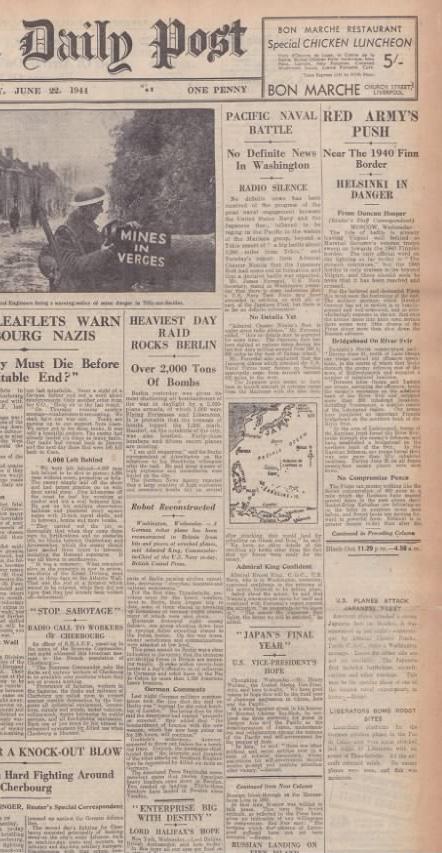
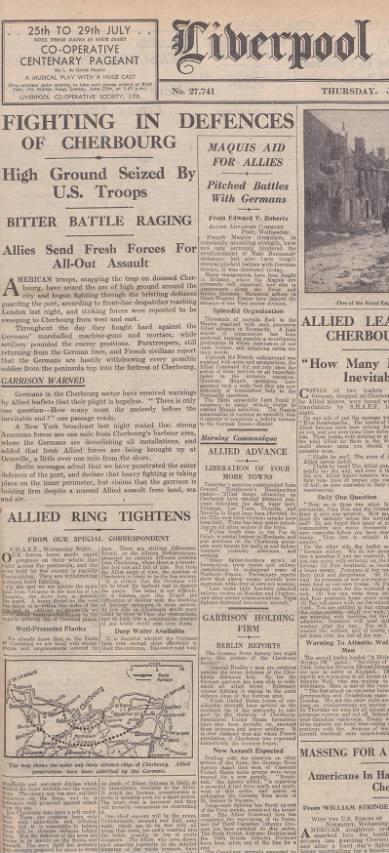
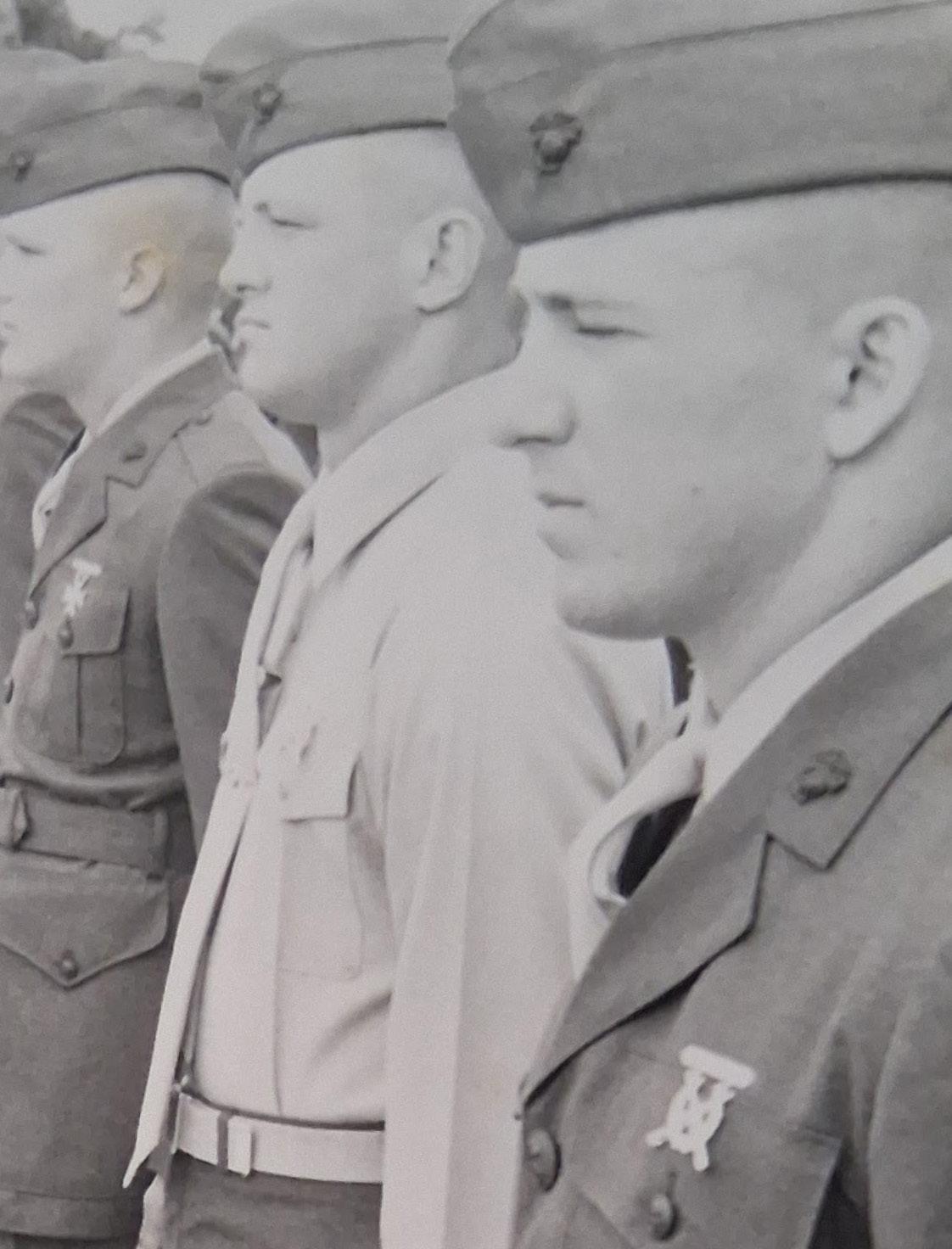
A legacy of service spans generations. (Left) On his commissioning day in 1985, Mark Halferty stands with his father and sister, stepping into a path shaped in part by his father and mother’s witnesses serving in World War II. (Middle) A newspaper clipping from her time in the Pacific captures the quiet strength and sacrifice Mark's mother exemplified. (Right) Today, Mark continues to honor that legacy, visiting a local museum dedicated to military service—a thread woven through his life long before it began.
faithful always
BY ANNIE LUST
PHOTO AT FAR RIGHT BY ANNIE LUST; IMAGES ABOVE AND CENTER SUBMITTED
When you step inside Lt. Col. Mark Halferty’s home, you do not need to ask what has shaped his life. It is written on the walls.
A St. Benedict medal hangs above the door. An American flag stands in the corner. A rosary rests on a side table beside Marine Corps medals. The Catechism of the Catholic Church shares shelf space with military biographies and American history. An image of the Sacred Heart is fastened to the refrigerator near a camouflage coat draped over a kitchen chair.
In every room, two devotions quietly coexist: the United States military and the Catholic Church. For Halferty, they are not competing allegiances. “God, then country,” he says.
That order was not improvised in adulthood. It was formed early in rural northwest Ohio, where the towns were small, and the heroes close enough to shake your hand.
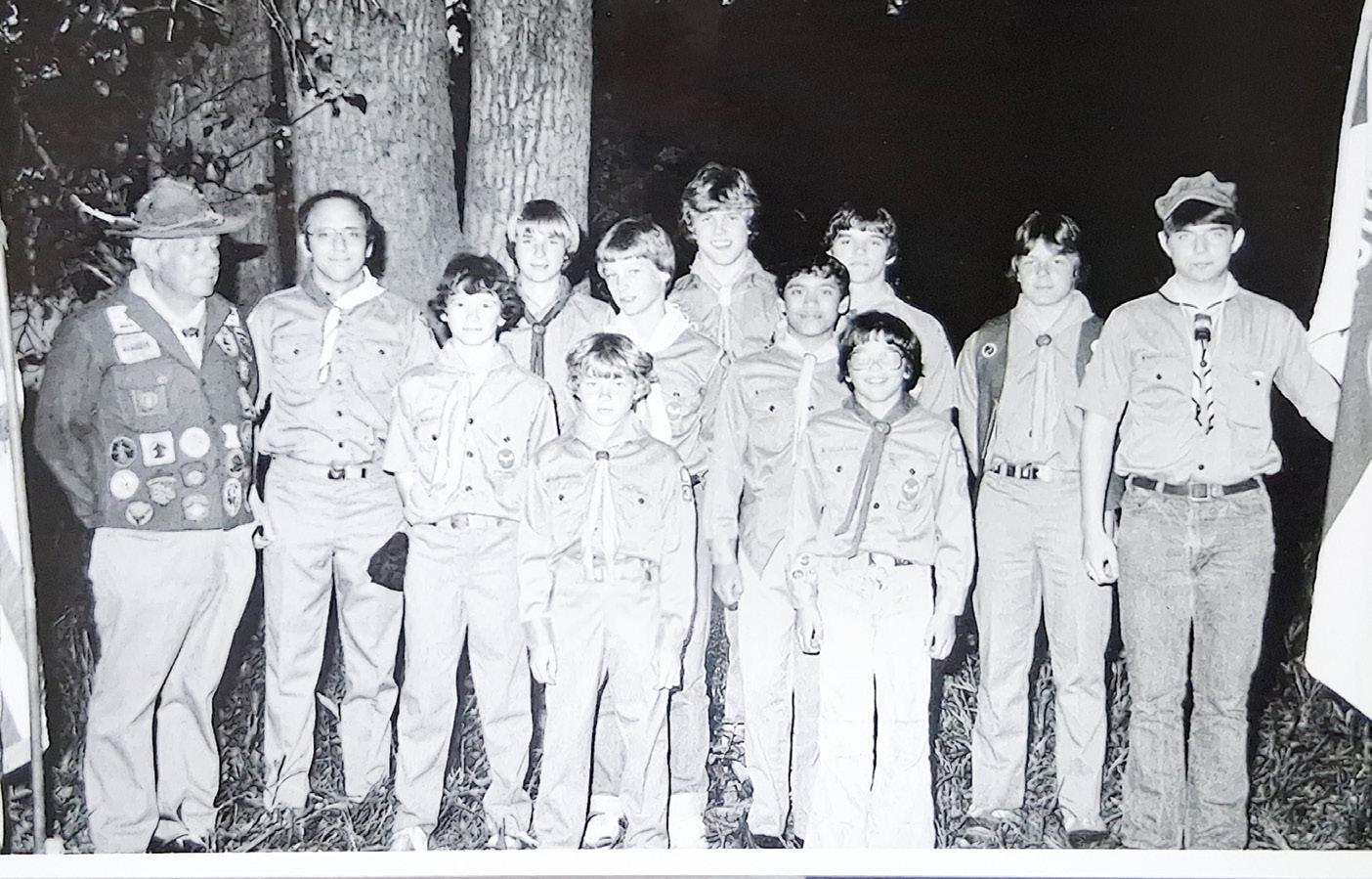
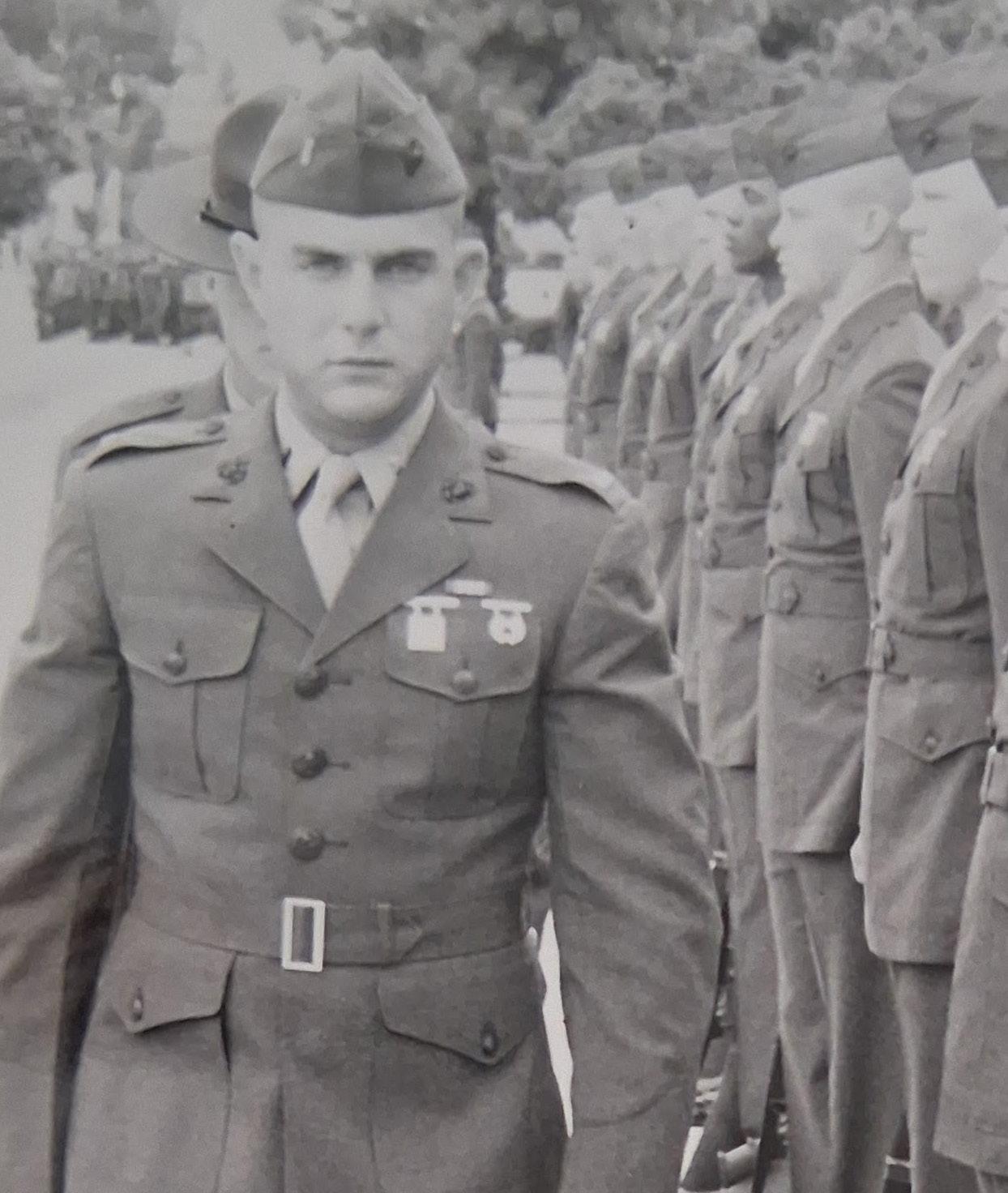
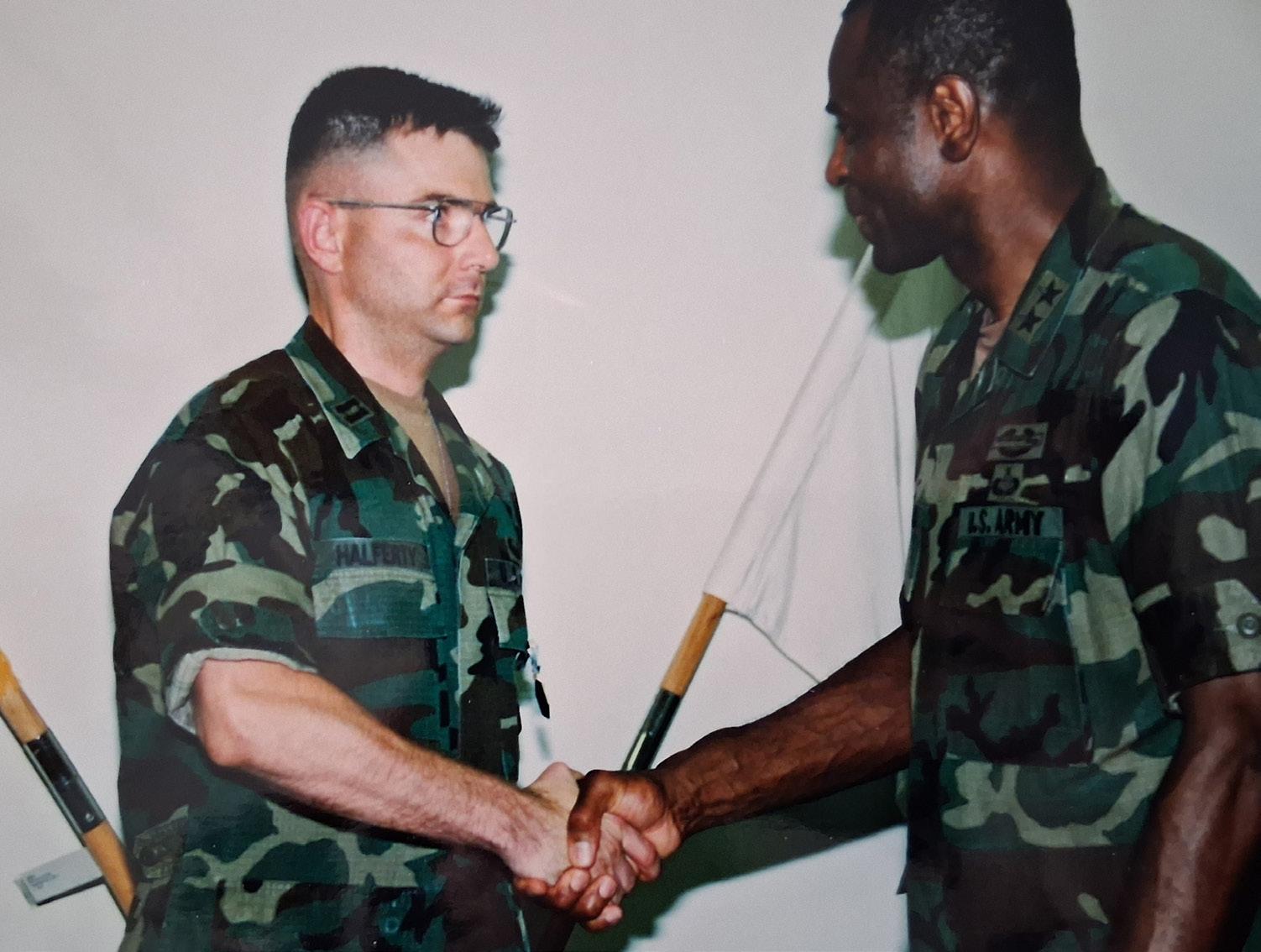
As a young Boy Scout, Mark Halferty, pictured among his troop, was surrounded by men who had served in World War II, including his own father, a Purple Heart recipient. (Middle) In 1987, Mark Halferty inspects troops in San Diego. Formed by the Marine Corps, his leadership was rooted not in authority alone, but in example—holding himself to the same measure as the men he led. (Right) Mark Halferty is recognized during his service in the Army National Guard, a chapter that reflects his continued commitment to serve even after active duty in the Marine Corps.
“Being Catholic made me a better Marine, a better officer, a better father, a better man.”
MARK HALFERTY
Mark grew up in a community where military service was not a slogan but a lived memory.
His parents answered the call during World War II. His father was a rifleman wounded in action in Normandy. His mother was an Army nurse in the South Pacific, tending to the injured and dying as that war raged. They were two influences on Mark, but not the only ones.
Veterans filled the church pews and volunteered as Scout leaders. Stories of bomber missions over Europe and battles across the Pacific were not abstractions; they were told by men who had lived them.
One family friend preserved a jagged piece of flak in plexiglass — a fragment that had torn through the nose of a B-17 over Europe. As a boy, Mark would study it, listening to the story behind it.
War was costly. Protecting freedom required sacrifice. The burden was borne by ordinary men who answered a call.
From them, Mark absorbed an early lesson: a life of service is a life of meaning.
LEARNING AUTHORITY
In high school, Mark did not look like a future Marine officer. “I was a skinny kid,” he says. “A bookworm. I was in the band.”
The Marine Corps was not an obvious path. The physical demands alone would be a stretch. But he was drawn to the challenge.
In college, he enrolled in the Marine Corps Platoon Leaders Class and reported to Quantico for officer training. He trained alongside college athletes and men far more physically prepared. The program demanded discipline and endurance. It demanded growth. He persisted.
The Marine Corps did not simply build strength; it formed leaders. Mark was commissioned as a second lieutenant. His Marine career immediately took him across the Pacific to Japan and Korea, then sent him stateside to San Diego. His specialty
PHOTO AT FAR RIGHT BY ANNIE LUST; PHOTOS ABOVE AND CENTER SUBMITTED
(Left)
was communications, ensuring units could coordinate and operate effectively. In 2001, he was promoted to Major.
After active duty, Mark returned to northwest Ohio, but his desire to serve did not decrease. He opted to take a commission in the Army National Guard, balancing a civilian job with weekends in an infantry company. Later, opportunities took him back to Korea in a civil service role. Eventually, he returned to the Marines.
When he retired as a lieutenant colonel, the silver oak leaf on his collar represented decades of leadership — operational planning, training, and care for the Marines under his charge.
He emphasizes leadership by example. “You are responsible for people.” It is not a line delivered lightly.
A CHURCH THAT MADE SENSE
Mark did not grow up Catholic. He was raised Methodist, and his early faith was sincere. But in junior high, he asked his mother if he could attend Midnight Mass with family friends at St. Aloysius Catholic Church in Bowling Green. “There was a reverence,” he recalls — something ancient, something ordered. The experience did not produce an immediate conversion. But it lingered.
Years passed. His military career carried
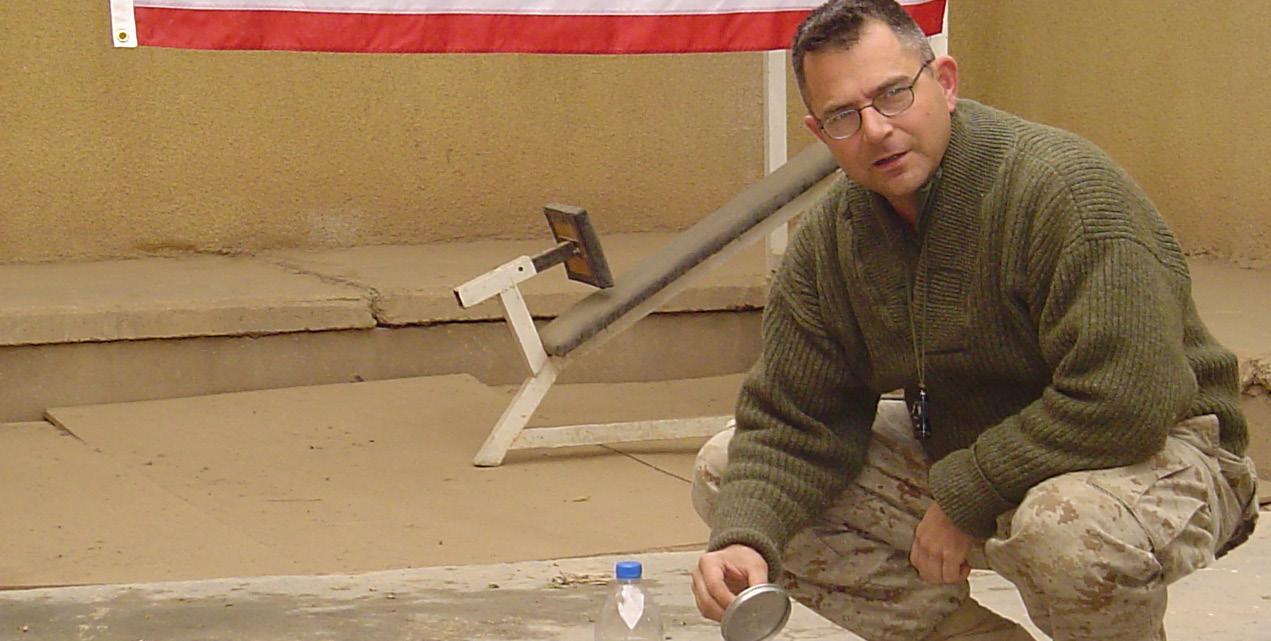
Much of Lt. Col. Mark Halferty’s life unfolded overseas, where his vocation as a Marine took root and deepened. Though he spent significant years stationed in Korea, this image captures him during his service in Iraq—one chapter in a long career marked by leadership, sacrifice, and steady fidelity. Across continents and conflicts, his commitment remained constant.
SUBMITTED PHOTO
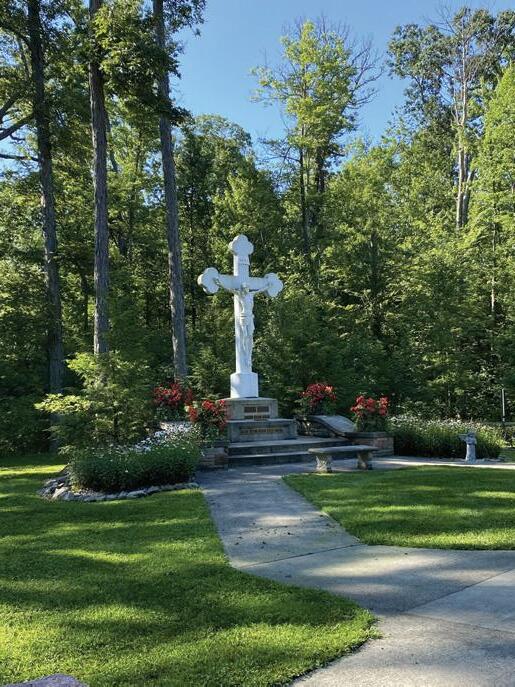
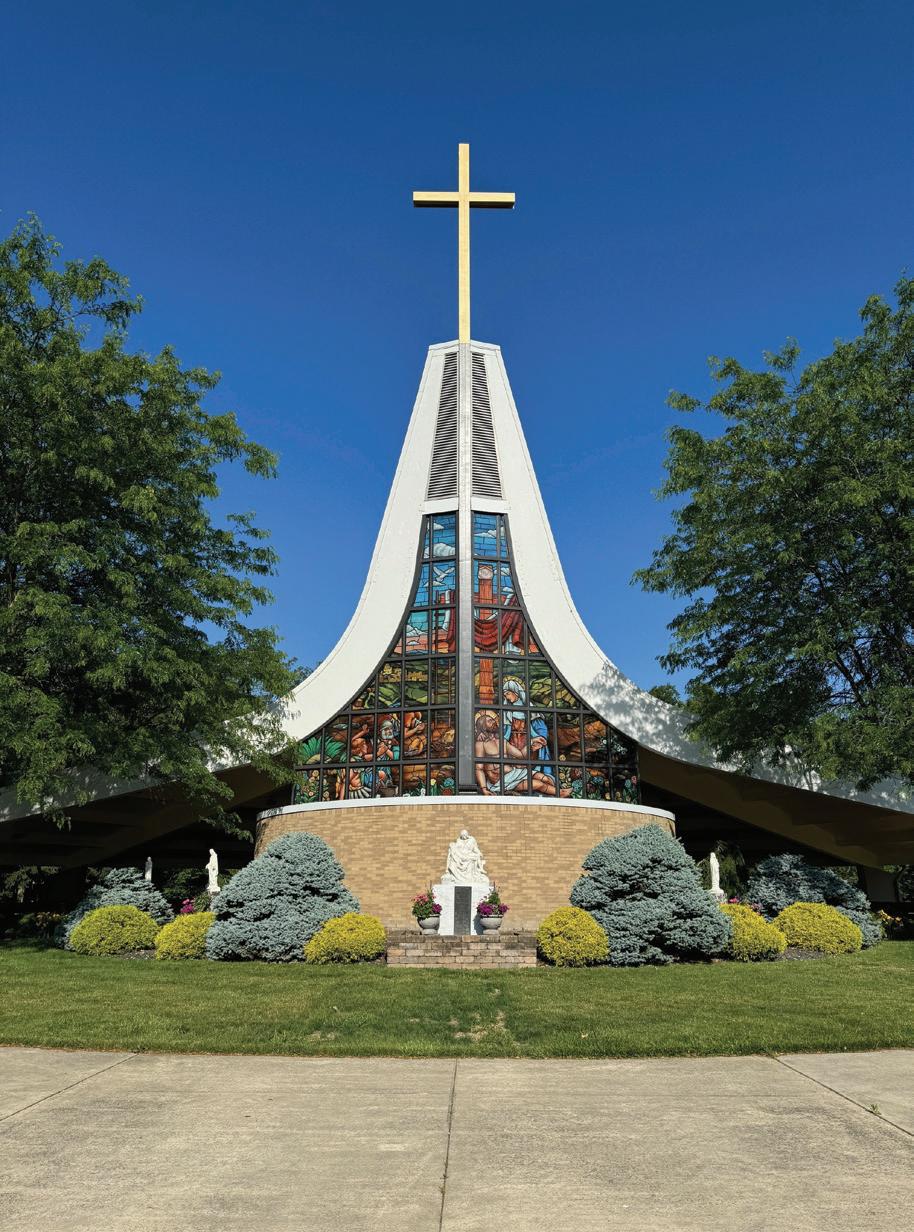
Plan a visit to the Sorrowful Mother Shrine
✓ Walk the wooded pathways dotted with over 40 Grottos
✓ Indoor chapel
✓ Outdoor Pieta Chapel
✓ Mass daily at 11:00 am Mon.-Sat.
✓ Confession 1 hour before each Mass
✓ Peaceful quiet place to rest the mind and body
✓ Gift Shop
✓ Picnic Area
✓ Restrooms
✓ Cafeteria available for groups with 15 or more - pre-arranged with Shrine caterer
him across continents — Korea, Okinawa, Hawaii, and beyond. In those places, he found himself drawn back to Mass.
He attended quietly. He read theology. He studied Church history. The more he learned, the more coherence he found. “It just made sense,” he says.
In 2003, while stationed in Hawaii, he made his profession of faith and received his First Communion in a chapel at Pearl Harbor. Later, during an assignment in Korea, he was confirmed at the Easter Vigil.
Referencing John Henry Newman, he repeats the line: “To be deep in history is to cease to be Protestant.” The Church’s continuity — its apostolic succession, its rootedness across centuries — resonated with a man formed by tradition and ordered authority.
The fruits of the conversion are clear to Mark: “Being Catholic made me a better Marine, a better officer, a better father, a better man.”
FREEDOM WORTH FIGHTING FOR
In a landmark year for our nation, celebrating its 250th anniversary, Mark reflects on the nation he served. “Our freedoms are unique in the world,” he says. Yet he draws an important distinction.
“Freedom isn’t just the ability to do whatever you want. That’s not real freedom.” His understanding comes from his Catholic faith: true freedom is the capacity to choose the good.
Mark explains, “That is what our Founding Fathers intended.” He recalls John Adams' observation: “Our Constitution was meant for a godly people,” Mark says. “It assumes virtue.”
A free society depends on virtuous citizens. Mark believes that virtue is worth fighting for as much as freedom is: “The Church — not only the bishops, priests, but the men and women in the pews, must lead that charge.” It requires formation, discipline, and each of us taking up the call to lead by example.
HEROES THEN — AND NOW
When Mark speaks of heroes now, he still recalls the men he knew as a child. He also lists military heroes like Ulysses S. Grant and Audie Murphy. The stories of these men shaped him. They taught him that duty matters. That sacrifice matters.
But over time, his understanding of heroism widened. Now, he looks most
often to the saints. “Those are lives worth emulating,” Mark says.
The heroes he once studied fought for a nation. The heroes he now looks to lived for eternity. Both require courage. Both require fidelity. Both require sacrifice.
For both the military heroes and the saints, the Marine motto is very fitting. Semper Fidelis. Always faithful — God, then country.
SUBMITTED
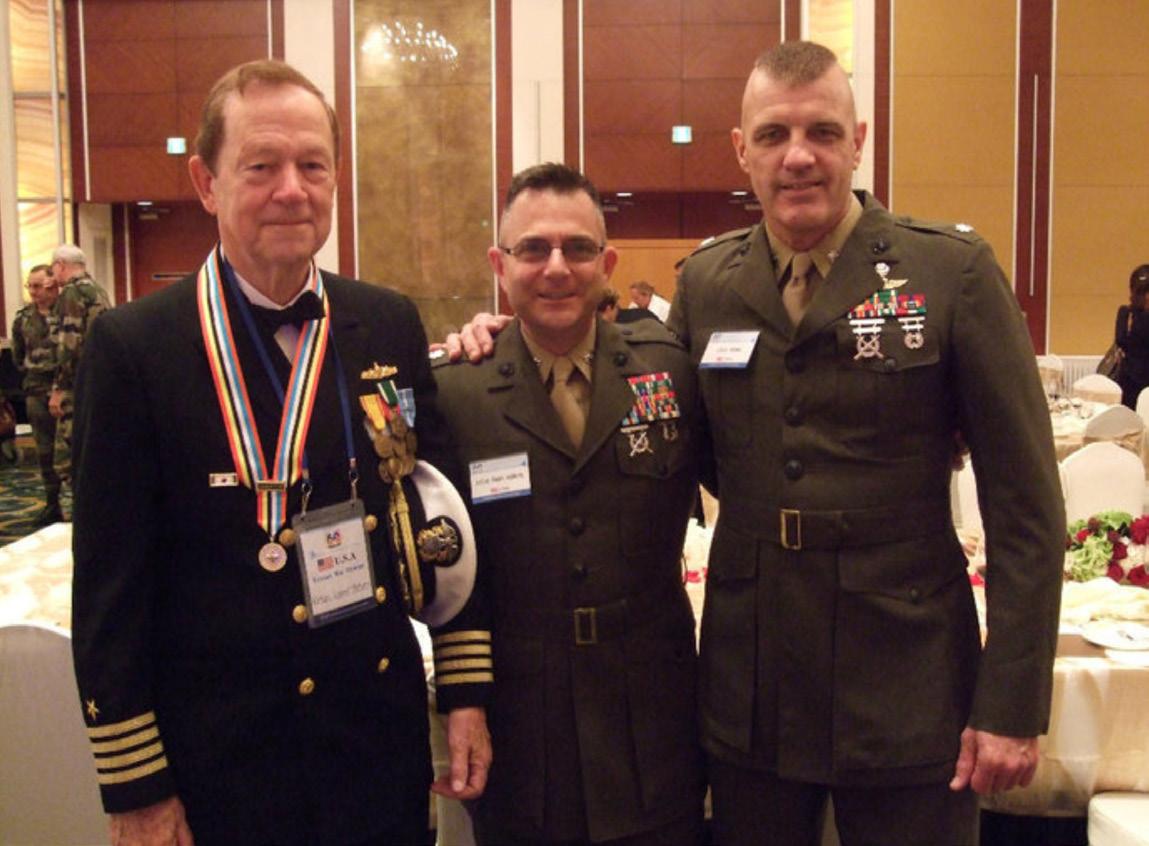
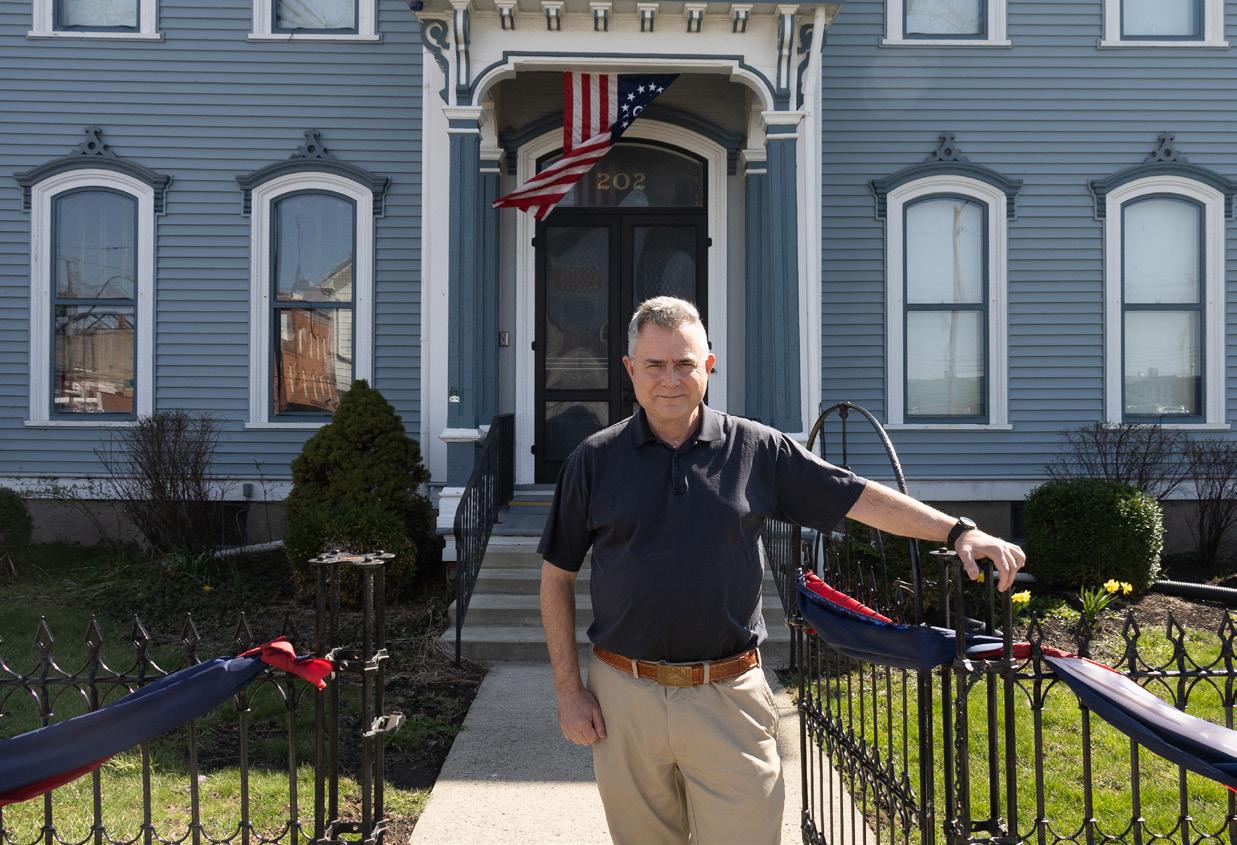
(Left) During his years in Korea, Lt. Col Mark Halferty attends a formal gathering in Seoul in 2010, reflecting a career shaped by long service abroad. (Right) Today, he stands outside the local historical society as it marks the 250th anniversary of the United States, a quiet continuation of the patriotism and service that have defined his life.
2 5 WAYS
TO CELEBRATE AMERICA’S 250TH
LEARN THE STORY
Read the Declaration of Independence aloud as a family — and talk about what surprises you.
Read the story of an American saint, such as Elizabeth Ann Seton — and reflect on how faith helped shape the nation.
Visit a local historical site or county historical society.
Attend a historical re-enactment or living history event.
Read a biography of a founder or lesser-known American hero.
PRACTICE CIVIC VIRTUE
Read one article of the Constitution and discuss why it matters.
Learn how your local government works — who serves? How are decisions made?
Attend a city council or school board meeting simply to observe.
Pray intentionally for elected leaders — by name if possible.
Study the concept of “civic virtue” — what does responsible citizenship actually require?
SERVE YOUR COMMUNITY
Volunteer at a local food pantry or pregnancy center.
Visit a nursing home and bring handwritten cards.
Support a veterans organization — through a donation or time.
Organize a neighborhood clean-up.
Sponsor or participate in a community service day.
STRENGTHEN YOUR PARISH
Pray the Litany of the Sacred Heart, especially as the U.S. bishops consecrate the nation to the Sacred Heart in 2026.
Pray a Rosary for service men and women, especially those deployed.
Start (or attend) a weekly prayer for the nation at your parish.
Volunteer for a parish outreach ministry.
Offer a Eucharistic Holy Hour for the country.
CELEBRATE WITH JOY
Host a patriotic picnic — invite family, neighbors or your parish community.
Make a patriotic playlist, featuring songs like America the Beautiful.
Purchase a new flag to fly outside your home.
Bake a heritage family recipe — celebrate the immigrant stories that built the nation.
Watch fireworks — and begin with a prayer of gratitude.
C TRAVEL C
WEEKEND GETAWAY
BY ANNIE LUST
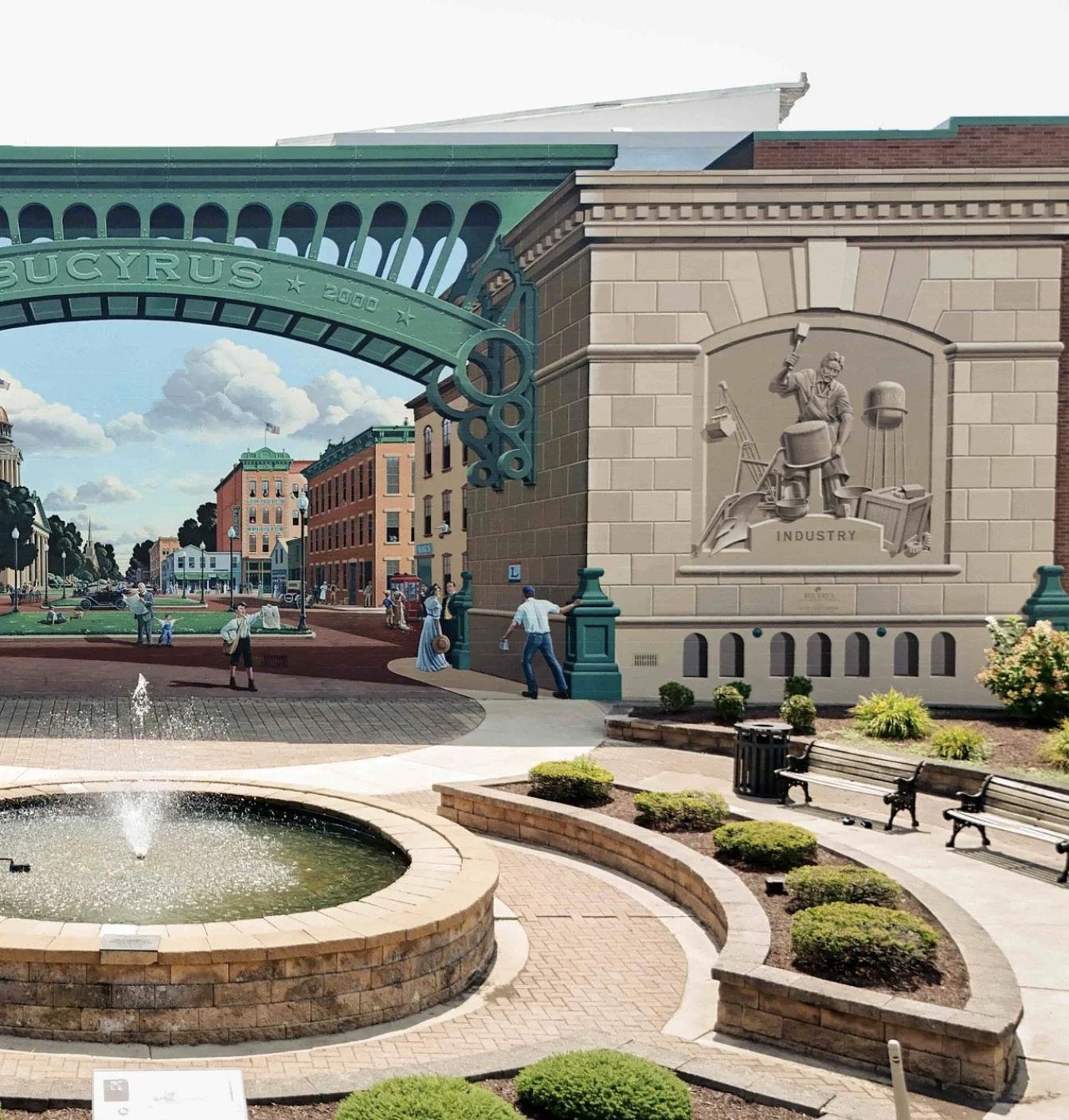
Known proudly as the Bratwurst Capital of America, Bucyrus is a classic Ohio town with deep roots in travel, trade and tradition. Positioned midway between Columbus and Sandusky along what would become major transportation routes, Bucyrus grew as a natural stopping point for travelers, railroads and industry. Today, the city blends its hardworking past with a welcoming present—offering walkable streets, beloved local flavors, public art and a faith life that continues to anchor the community. Whether you come for a festival, a meal or a quiet afternoon downtown, Bucyrus invites you to experience a place shaped by history and lived with pride.
BUCYRUS
EXPLORE
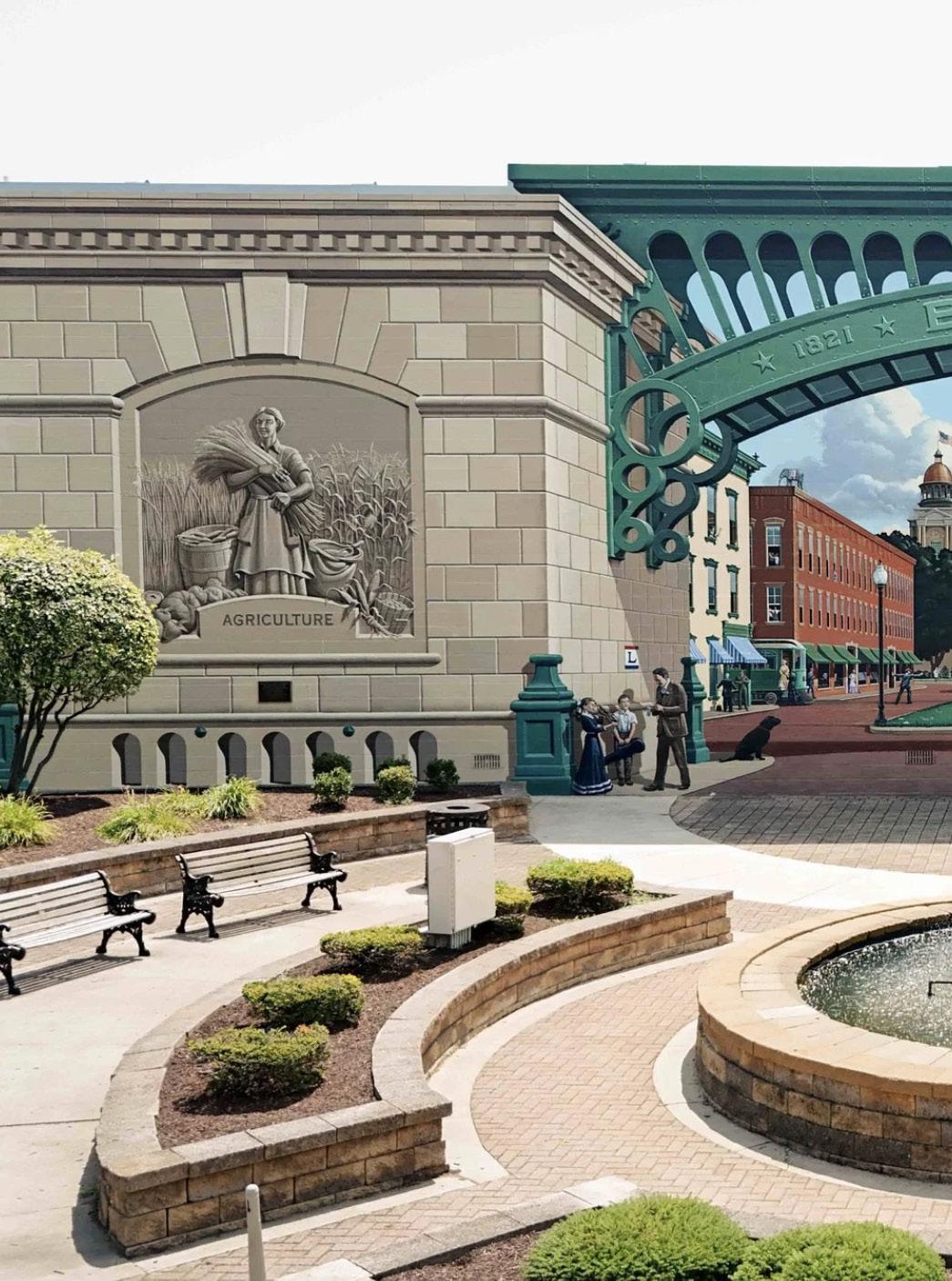
Downtown Bucyrus is best explored on foot, starting with its iconic murals by nationally recognized artist Eric Grohe. The Great American Crossroads, cataloged by the Library of Congress, stretches across Millennium Park and captures Bucyrus’s agricultural, industrial, and cultural legacy in sweeping detail—from farm families and factory work to everyday scenes of community life. Nearby, Liberty Remembers honors 285 Crawford County veterans spanning American military service from the American Revolution through 2001, offering a powerful moment of reflection. A few blocks south is Schines Art Park, where a cinematic-themed mural pays tribute to the historic Schines Theatre. Today, the park serves as a gathering place for concerts, outdoor movies and events. If you visit in August, plan your weekend around the Bucyrus Bratwurst Festival, when the city’s heritage and hospitality are on full display.
SHOP
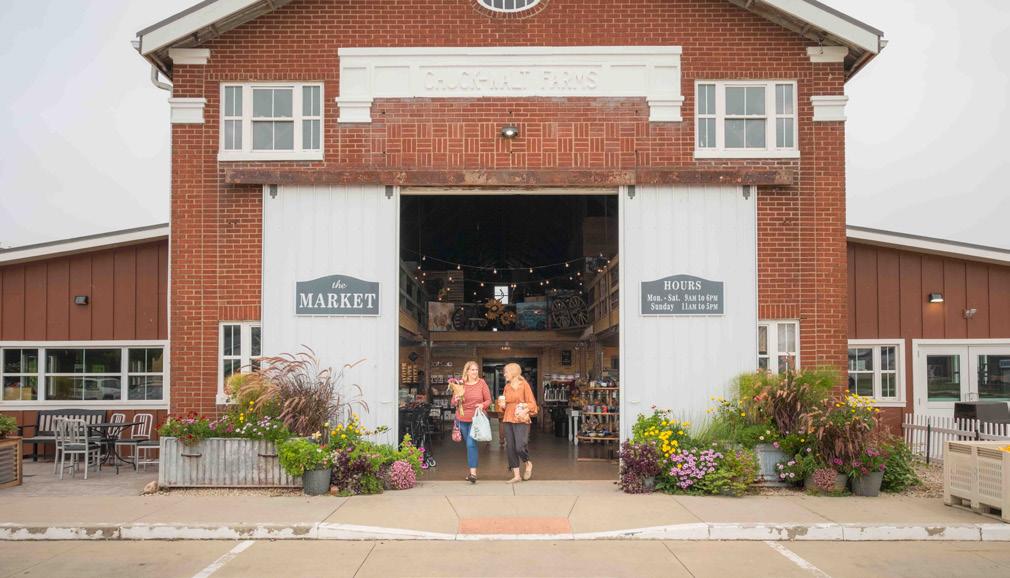
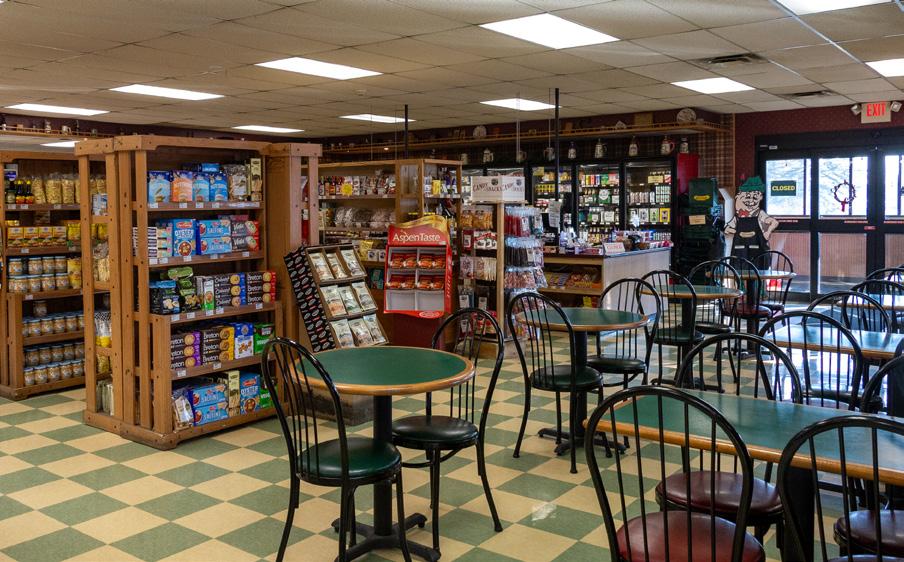
Be sure to make time for The Pickwick Place, a thoughtfully reimagined complex of former horse stables that has become a favorite gathering place for shopping, food, and seasonal fun. Nearby, explore more of Bucyrus’ specialty shops. Crossroads Original Designs creates hand-poured candles and gifts, crafted on site with care and creativity. Bucyrus Copper Kettle Works preserves a rare craft as the last facility in the United States hand-hammering copper kettles. Cooper’s Mill began in 1969 as a roadside stand selling homemade apple butter and other preserves; today it continues the tradition with small-batch jams, jellies and apple butter made from family recipes. Visitors can arrange tours at each location to see the work in action.
PRAY
EAT
Dining in Bucyrus is rooted in family traditions and longtime local favorites. Start your day with a coffee or latte from The Pelican Coffee House, conveniently located on a downtown corner.
For lunch, stop at Little Athens. Opened in 1994 and part of a century-long family legacy in Bucyrus, it serves flavorful gyros, salads, and specialties. Another local favorite is Carle’s Bratwurst, familyowned since 1929 and famous for its spiced bratwurst. Inside, you’ll also find a full butcher counter, deli, imported foods, and a hot bar, making it as much a destination as a meal stop. For dinner, settle in at Baker’s Pizza, a lively restaurant with dine-in seating, bars, live entertainment, and a sports-themed atmosphere. For heartier fare, Old 30 BBQ serves slow-smoked barbecue and comfort food classics in a casual, welcoming setting. No Bucyrus visit is complete without dessert from Mark’s Homemade Ice Cream. Made fresh in small batches with rotating seasonal flavors, each batch is still crafted by Mark himself—a true local tradition and the perfect way to end the day.
Faith has shaped Bucyrus from its earliest days, and Holy Trinity Catholic Church stands as a witness to nearly two centuries of devotion. Catholic life began in the 1830s with missionary priests celebrating Mass in private homes, and the parish’s first church also served as a school. Over time, new churches, schools, and parish buildings reflected the generosity of the community. The current church, completed in 1979 after years in a school auditorium, was built with simplicity, sturdiness, and reverence. Recent renovations, expected to be complete this autumn, enhance the altar and tabernacle, improve light and accessibility, and honor the parish’s dedication to the most Holy Trinity.
HOW A GLANDORF DANCE STUDIO OWNER KEEPS FAITH, FAMILY AND FINE ARTS IN PERFECT ALIGNMENT.
motion faith in
BY ANNIE LUST
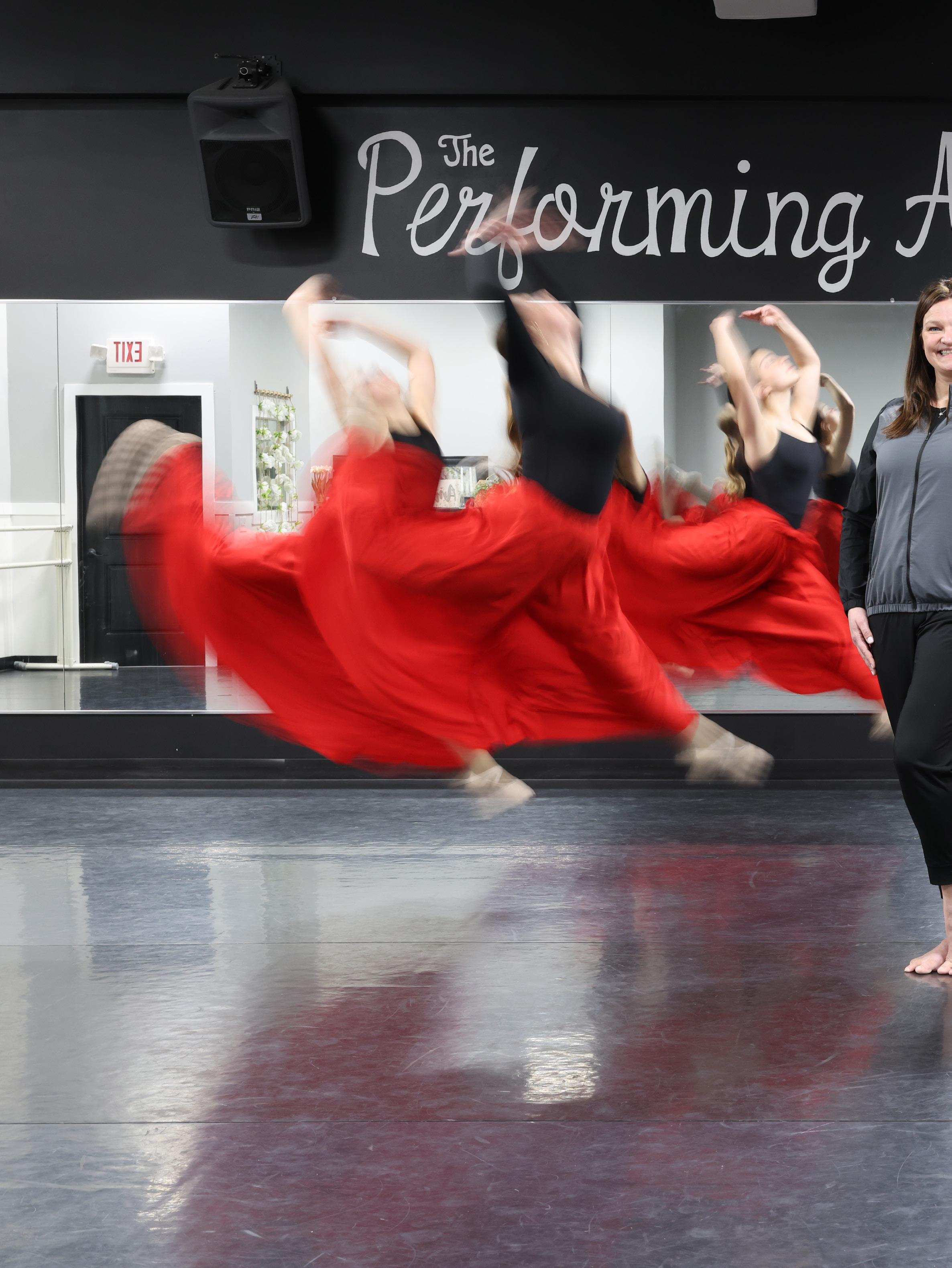
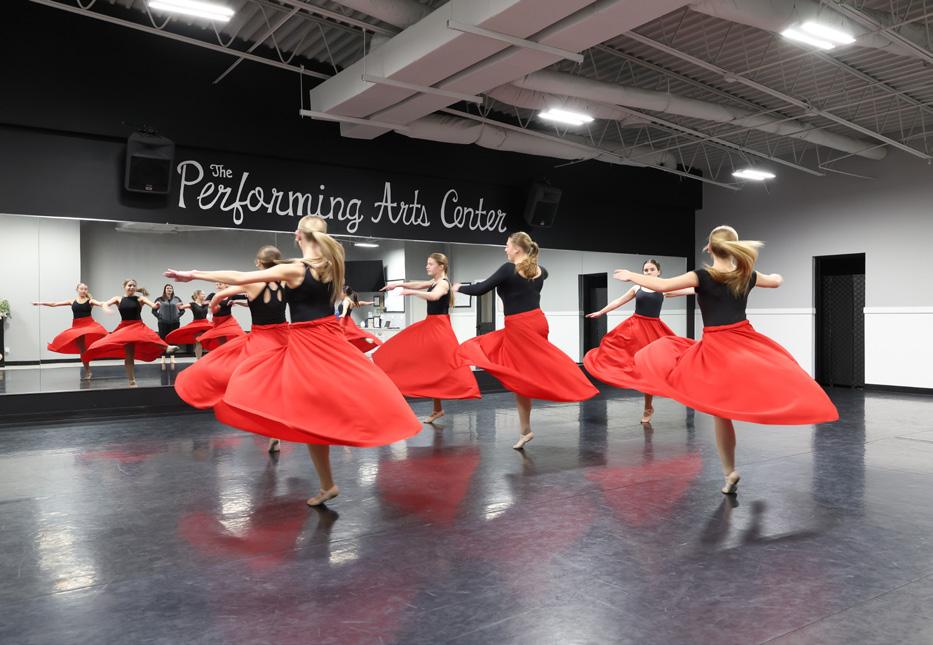
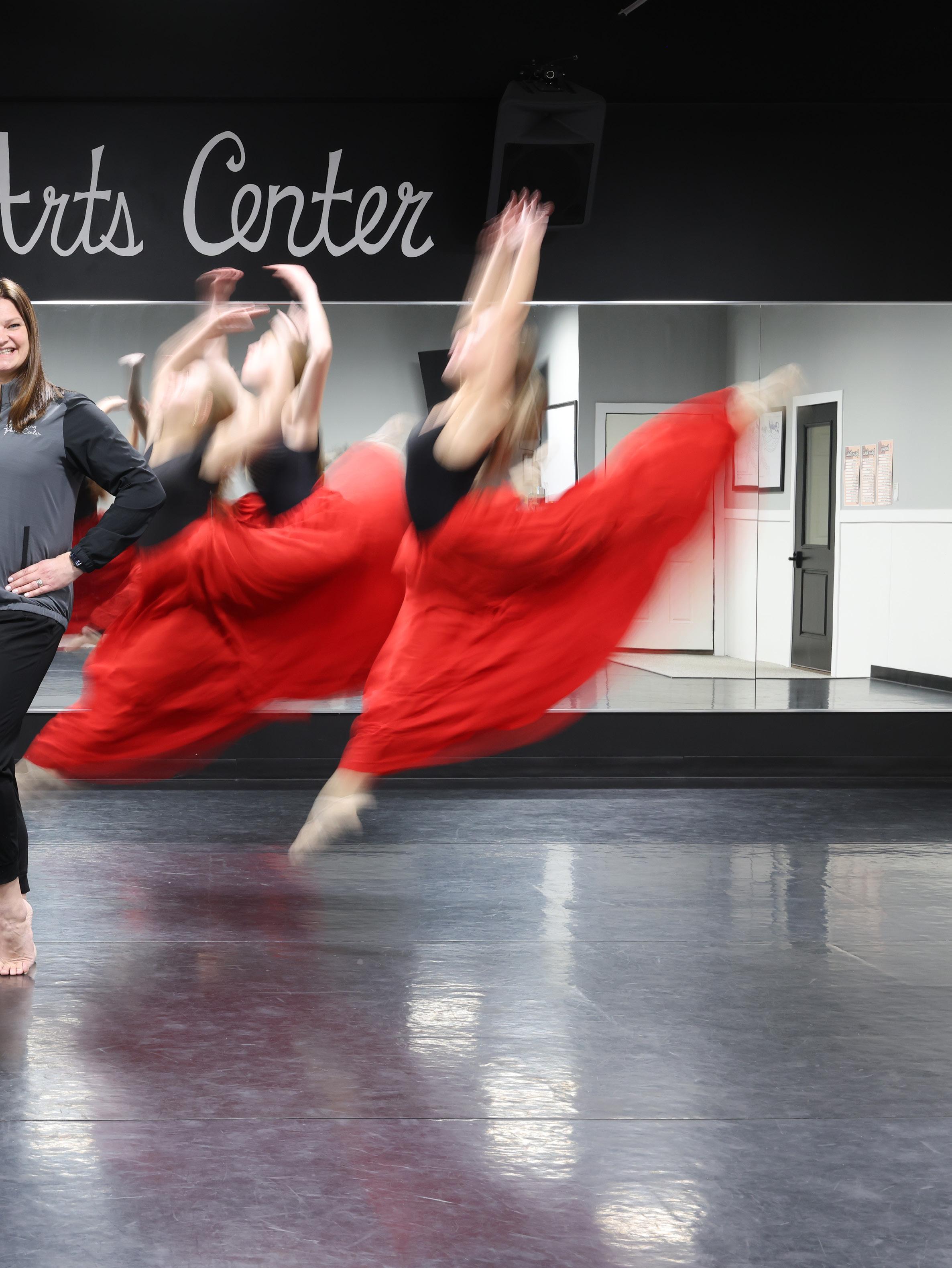
On Wednesday evenings, as most of Glandorf settles in for the night, the lights are still bright inside The Performing Arts Center. It’s close to 10 p.m., but the music hasn’t stopped. Six young dancers stand poised, black leotards crisp against red skirts that billow when they turn. They move with focus and confidence, leaping, landing, correcting and trying again. At the front of the room, Kristen GerdingHeffner calls out counts, offers a quiet adjustment of an arm, then breaks into applause when a sequence finally clicks. This late class isn’t unusual. It’s simply how the schedule works. Earlier in the evening, many of these same girls were across the street at St. John the Baptist Catholic Church for Parish School of Religion. In Kristen’s studio, that isn’t treated as a scheduling conflict to work around. It’s built into the plan. “Faith. Family. Then fine arts,” Kristen says, not simply as a studio motto, but as a way of life.
In Kristen’s studio,
something
than
The girls who
to
and twirl
don’t just grow as dancers, they become part of an extended family that lasts well beyond recital season. Years later, many return as adults, and Kristen is still present in their milestones—sometimes even standing at a wedding microphone, singing as former students begin their new chapters.
PHOTOS ABOVE AND AT LEFT BY SCOTT W. GRAU/SPECIAL TO THE DIOCESE OF TOLEDO; PHOTOS ABOVE AND CENTER SUBMITTED
dance quickly becomes
deeper
technique.
learn
leap
here
“MY DANCE CLASSES WILL NEVER BE THE REASON A CHILD MISSES MASS OR RELIGIOUS ED.”
KRISTEN GERDING-HEFFNER
Kristen knows firsthand how powerful early formation can be. She began dancing at just three years old. “I don’t remember much of anything from three years old,” she says, “but I remember dance.” Even before that, she was present at just a week old, bundled up and brought along while her older sisters attended class. “I have been in the dance studio, quite literally, for my entire life,” Kristen explains. “I danced in that studio for 15 years. Dance was something that was always a constant. I never knew what life was like without it.”
As many children moved on to other interests, Kristen stayed. What kept her wasn’t trophies or applause. It was steadiness. “It was always just kind of my release — emotional, physical, whatever it was,” she explains. “I didn’t really want to learn what it was like to not have it.”
Dance was not necessarily her longterm plan, but it was something she was unwilling to let go of. Through college, she trained in additional styles, stretching beyond her early formation and refining her technique. Professional opportunities followed, sharpening both her skill and her understanding of the industry. Eventually, her path led to Los Angeles, where she continued to dance at a professional level. The trajectory seemed clear.
And yet, when her father was diagnosed with cancer, there was no question where she needed to be. She returned to Glandorf. Once he entered remission, she intended to leave again. Instead, something unexpected happened. “The day before I was thinking of making plans [to return to Los Angeles],” she says, smiling, “I met my husband. So I knew I had to stick around.” The longer she remained, the more the pieces began to fall into place. Small-town rhythms — parish life, Friday night football games, familiar faces at the grocery store — felt less limiting and more grounding. In her youth, Kristen imagined a lifetime in a small town would be suffocating or boring. “And now,” she says, “it’s the biggest blessing.”
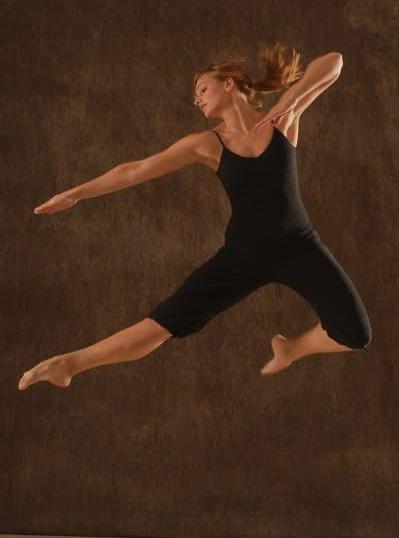
Before she was a teacher, Kristen was immersed in the music, training through college and dancing at a professional level in Los Angeles, where the path ahead seemed set. But what once looked like the destination became part of the preparation, leading her back home to a vocation that would weave together everything she loved.
“T
he ACA is important to me because it is an excellent way that our church family can be the hands and feet of Christ in our world. The many varied ministries it supports are needed in our community and world. My gift may not change the world on its own, but together with thousands of others, they can become a powerful witness of our shared faith and hope. I want to be part of the good that this program achieves.”
Daniel Gosser, and the Gosser family Parishioners of St. Michael | Findlay, OH
Her roots in Glandorf run deep. Her father’s family history stretches back generations. And St. John the Baptist Catholic Church is home. Her uncle serves as a deacon. Her family fills the pews. So she was thrilled when her fiancé entered the Order of Christian Initiation of Adults, attending classes every Tuesday. Walking alongside him drew Kristen even closer to the parish and to the life of the Church, and it led to an unexpected opportunity with dance.
Through OCIA, Kristen met one of the leaders, who also happened to be the parish business manager. At the same time, a new public school had been built, and the Catholic Church was converting the old school into a parish center. Kristen was asked to teach religious education, connecting her more deeply with parish leadership. Conversations developed, opportunities aligned,
City: ________________________________________
State: ___________ Zip: _______________________
Phone: ______________________________________
Email address: _______________________________
Parish my contribution is to be designated to:
Diocese of Toledo is a 501 (c)(3) tax-exempt organization. (Rev. 3.26)
PHOTOS ABOVE AND AT LEFT SUBMITTED
A Work of Saint Meinrad Archabbey
Building on a
Tradition Benedictine
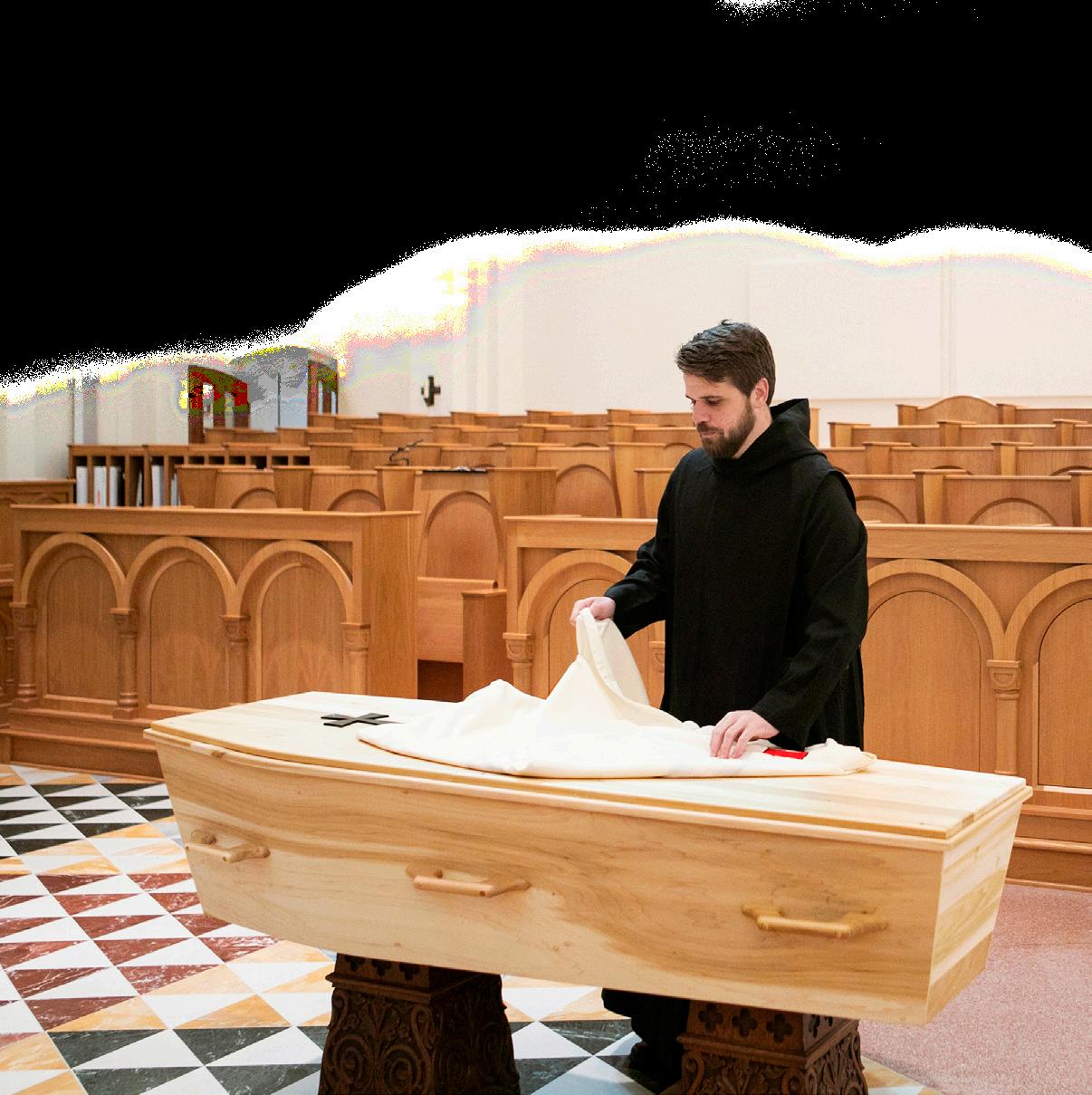
For over 25 years, Abbey Caskets has been handcrafting beautiful and affordable wooden caskets, urns, and keepsake crosses for the public.
Choosing an Abbey Casket is a deeply personal way to connect with the spirituality of the monks of Saint Meinrad Archabbey.
Learn about our handcrafted products, preplanning options, workshop tours, and more at abbeycaskets.com.
Have questions about planning ahead?
Request your free information packet with details on our history, preplanning options, pricing, and end-of-life resources. Scan the QR code or visit abbeycaskets.com
and she opened her studio in that parish center. Opening a studio happened much quicker and easier than Kristen ever imagined was possible. "It felt clearly guided by God," she says.
Because it was in a parish-owned building, Kristen felt free to lead openly with her faith. She intentionally structured the studio culture around the order she lives by: faith first, family second, and fine arts third.
It starts at registration. On her forms, she asks for religious education schedules so she can accommodate them. “My dance classes will never be the reason a child misses Mass or religious ed,” she says. Kristen frequently uses the phrase “save the drama for your mama.” It’s her fun way to tell the dancers to bring their worries to the Blessed Mother. “Say a Hail Mary. Give it to Mary. She’s got it,” Kristen explains.
| abbeycaskets.com
Faith is incorporated into the dancing, too. Christian music often fills the studio. Kristen chooses songs that speak to the heart of her dancers. Prayer is never far from rehearsal. “Faith and fine arts are hand in hand,” Kristen says. “It’s our way to pray — to physically pray, to dance.”
The dancers notice how different Kristen’s studio is. They speak about feeling safe here, known. Challenged without being torn down. Pushed to improve not only as performers, but as young women. In a world that often asks young people to choose between excellence and conviction, between ambition and belief, this small studio in Glandorf quietly insists they do not have to.
Kristen is living proof. Her faith, her family and her art have never existed in separate compartments. They overlap, reinforce and strengthen one another. And in Glandorf, they even sit within walking distance.
St. John the Baptist Catholic Church sits at the center, filled on Sunday mornings with extended family and dance students past and present. One direction leads to Kristen’s home, where her family gathers around the dinner table. In the other stands the studio, where red skirts spin late into the night.
Everything that matters, within half a mile.
Become a Friend of Graceful Living
We are so grateful to our Diocesan Catholic community we serve, especially our seniors! You are the reason we strive to find the best stories of faith-filled folks from all around the Diocese of Toledo.
This year we are again facing challenging circumstances, both globally and locally – so we want to make sure you don’t miss the good news that is happening throughout the diocese.
If you would like to see Graceful Living Magazine continue, we need your help and support now more than ever. The only way we can keep publishing this magazine is with generous donations from readers like you. We made the decision to keep the magazine free, so all readers could receive it. If you love what you see in Graceful Living, please consider becoming a friend of the magazine today.
You can mail the form below to make your donation – we thank you in advance! To subscribe to Graceful Living, email your name and mailing address to glmagazine@toledodiocese.org.
If you want to reach the mailboxes of nearly 42,000-plus people over the age of 55, consider advertising your business, organization or service in Graceful Living.
Check
Address:
LIKE IT'S 1776 PARTY
America is turning 250 — and every birthday deserves a proper party. But before there were fireworks and plastic tablecloths, there were handwritten invitations, hearty suppers, and lively conversation by candlelight. Ready to celebrate like it’s 1776? Here’s how to host a colonialstyle evening that feels festive — and just a little revolutionary.
DRINK: In 1776, beverages weren’t just for taste — they were often safer than water. Cider, beer, and wine were common at the table, as water could carry disease. Tea had once been popular but fell out of fashion in America after the 1773 Boston Tea Party. For your gathering, offer sparkling apple cider or fresh lemonade. If you like, include a small selection of colonial-style beer or wine for adults.
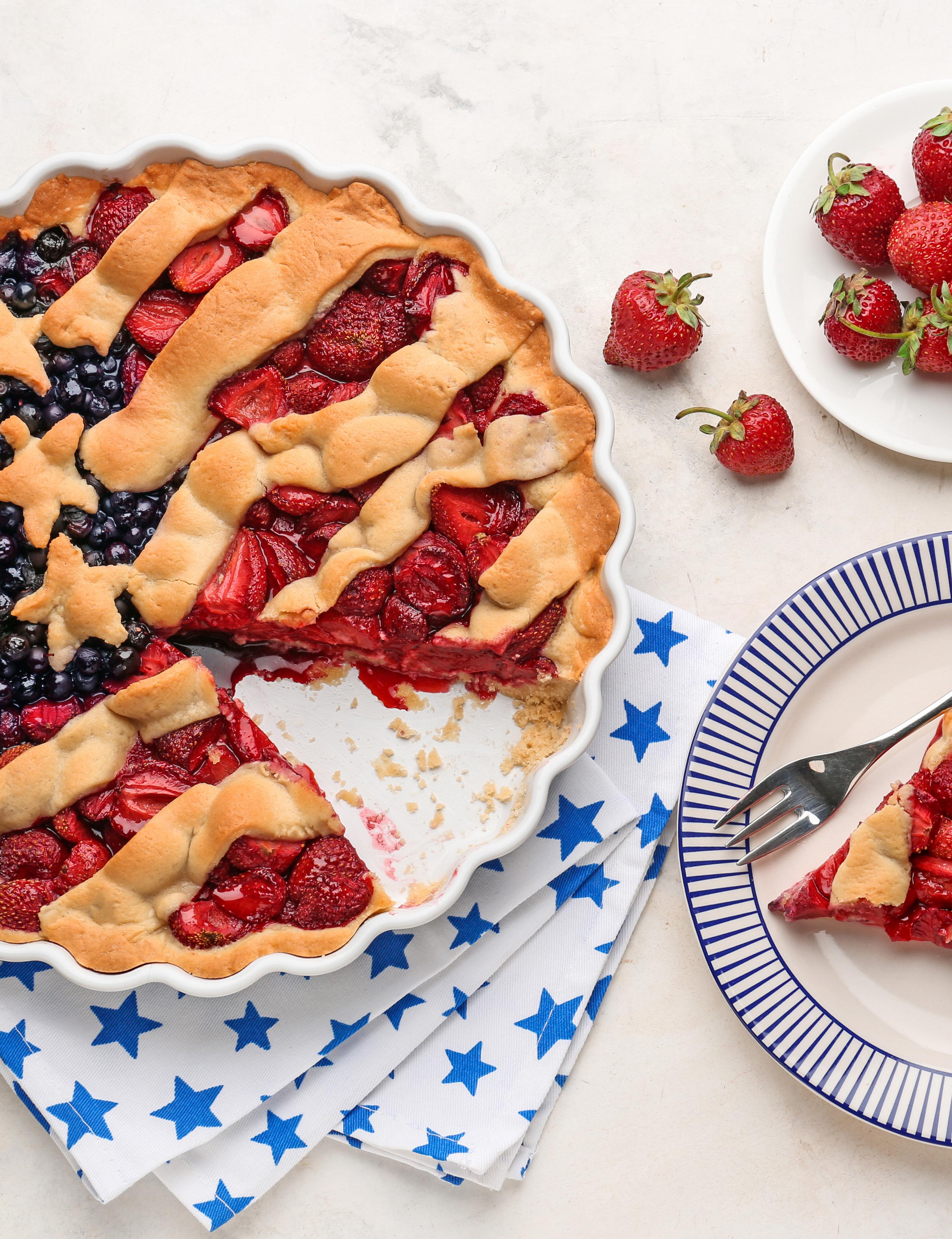
EAT: Keep the table hearty, rustic and seasonal. A simple roast chicken seasoned with rosemary and thyme, a pot of slow-simmered beef stew, or a ham glazed with honey sets the tone. Add johnnycakes or skillet cornbread, brown bread with good butter, and garden vegetables. For dessert — think classic and unfussy: apple pie, berry cobbler, or gingerbread served with fresh cream.
INVITE: In 1776, news traveled by paper — pamphlets, broadsides and handwritten letters. Set the tone early with simple handwritten invitations or a design that resembles parchment. Use language like, “You are cordially invited to a Supper in Celebration of Liberty.” Tie your invitation with twine, slip it into a plain envelope or seal it with wax for extra flair.
GET INSPIRED: For a little inspiration, browse “Townsends” on YouTube. Hosted by Jon Townsend, the educational channel explores everyday 18th-century life — from open-hearth cooking and colonial clothing to tools, table settings and simple domestic rhythms. Filmed in period dress with a calm, unhurried pace, the videos offer an immersive glimpse into the world of 1776.
ENTERTAIN: Before streaming, there was storytelling. Read an excerpt from the Declaration of Independence, invite guests to offer a brief toast to liberty or gather outside for simple lawn games like sack races, ring toss or relays. For children, set up a quill-pen writing station or fold paper tricorn hats. The entertainment doesn’t need to be elaborate, just communal.
AMBIANCE: No overhead lights. No phones. No distractions. Light taper candles and set a basket by the door labeled, “No Electricity in 1776.” Let conversation replace scrolling. Ask what freedom requires of us and which virtues sustain a republic. Soft instrumental fife-and-drum music or colonial tavern tunes playing quietly in the background completes the mood.
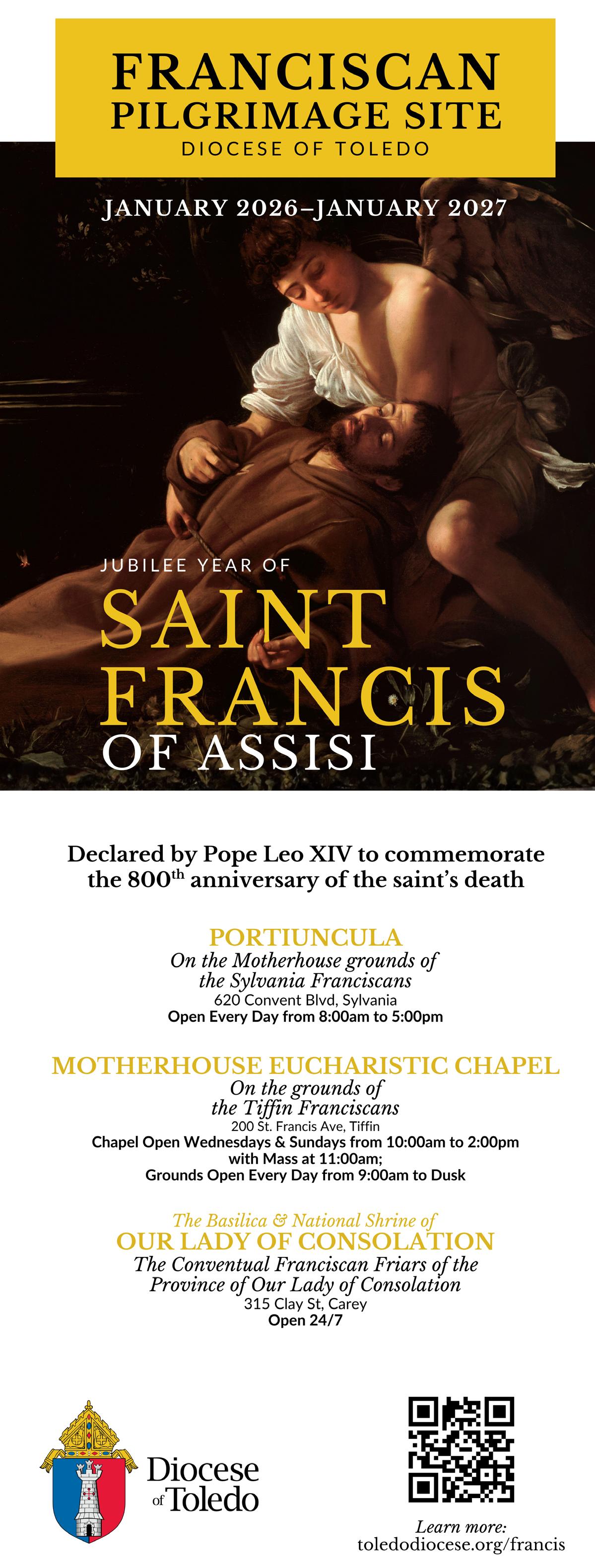
Declared by Pope Leo XIV to commemorate the 800th anniversary of the saint's death
Designated Pilgrimage Sites:
BY ANNIE LUST
From historic estates to university arboretums and butterfly gardens, these destinations offer inspiration in every season.
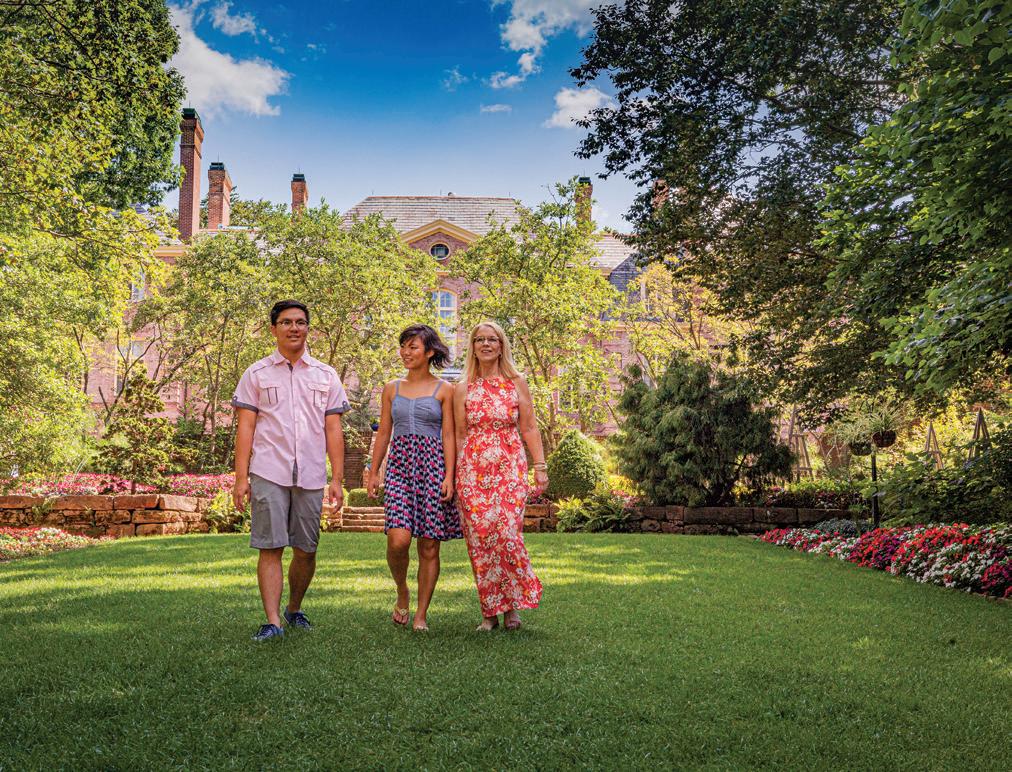
You don’t have to travel far to find breathtaking gardens, arboretums and estate landscapes. Across the Diocese of Toledo, beautifully tended grounds invite visitors to slow down, wander shaded paths and take in the quiet beauty of nature.
ELMORE
SCHEDEL ARBORETUM & GARDENS
A nature experience unlike any other in Northwest Ohio, the Schedel Arboretum and Gardens is a 17-acre garden estate set along the banks of the Portage River. Since opening to the public in 1991, this treasured destination has welcomed thousands each year. For more than 50 years, Joe and Marie Schedel dreamed, planned and built a sanctuary rooted in their love of nature and world travel. Their journeys to more than 120 countries inspired extensive collections of art, antiques and plants, all woven into thoughtfully designed themed gardens.
FREMONT
SPIEGEL GROVE
The 25-acre grounds surrounding the Rutherford B. Hayes Presidential Library & Museums are as rich in natural beauty as they are in history. In autumn, golden ginkgoes and scarlet maples frame the Hayes home, while winding paths invite exploration. In 2021, Spiegel Grove earned accreditation as an arboretum, recognizing its collection of 95 tree species—including massive white oaks dating back to 1776. Some trees were planted by President Hayes and his family, others named for notable visitors. Here, American history and the wonder of nature walk hand in hand.
HURON
JAMES H. MCBRIDE
ARBORETUM
Located at Bowling Green State University’s Firelands Campus, the James H. McBride Arboretum spans restored prairies, landscaped gardens and wooded areas. With more than 200 plant species, the arboretum provides a peaceful setting for
walking paths and quiet reflection. Its thoughtfully planned spaces highlight native plants and ecological restoration, making it an ideal stop for nature lovers and casual walkers alike.
MANSFIELD
KINGWOOD CENTER GARDENS
Driving onto the former estate of Charles Kelley King feels like stepping into a living work of art. The 47-acre property, meticulously designed in the early 20th century, features formal gardens, woodlands and expansive lawns that showcase both horticultural skill and artistic vision. In autumn, Ginkgo biloba trees fan out bright yellow leaves, welcoming visitors through the elegant Garden Gateway. Meandering paths lead past fragrant herb and rose gardens, serene reflecting pools and sculpted topiaries, offering moments for quiet reflection at every turn.
TOLEDO
TOLEDO BOTANICAL
GARDEN
Each season brings new beauty to the Toledo Botanical Garden. In autumn, golden maidenhair trees glow near the south entrance, while silver lindens shimmer along the Grand Allee beside Crosby Lake. Brilliant reds, oranges, yellows and even hints of purple create a striking tapestry throughout the grounds, making this garden a favorite for leisurely strolls and seasonal photography.
Sincera Palliative Care and Hospice of Northwest Ohio
When selecting a palliative care or hospice provider, it is important to ask questions to assure you are receiving the best care possible.
HOW LONG HAVE YOU BEEN PROVIDING CARE?
Hospice of Northwest Ohio was the area’s first hospice. Founded in 1981, we are the only local, independent, non-profit agency that dedicates all of its resources exclusively to hospice and palliative care. Sincera palliative care was started in 2008 to meet the pain and symptom management needs of patients with serious illness who are not on a hospice program.
WHERE DO YOU PROVIDE PALLIATIVE CARE SERVICES?
To best meet the needs of seriously ill patients across the community, Sincera’s care is typically provided in one of our outpatient clinic spaces conveniently located in Maumee, Oregon, Sylvania, Toledo and Wauseon, Ohio. And in Adrian and Lambertville, Michigan. If medically necessary, consideration will be made for a home visit.
HOW WELL DO YOU MANAGE PAIN AND OTHER SYMPTOMS?
Our pain and symptom management expertise is unmatched in this region. We strive to manage pain within 48 hours of admission to our program.
DO YOU HAVE A FREESTANDING INPATIENT CENTER?
Yes, we have three! Designed to meet the unique needs of patients and their families at the end of life, our Ebeid, Edward and Marion Knight and Virginia Clifford Hospice Centers provide beautiful, home-like environments for patients who require close medical monitoring, or whose conditions can no longer be managed at home.
DO YOU PROVIDE BEREAVEMENT SERVICES?
Yes. Hospice of Northwest Ohio provides the area’s most comprehensive range of grief support services. These include counseling, support groups and special workshops, which are free and open to anyone in the community.
WHAT ABOUT PATIENTS WHO ARE UNABLE TO PAY FOR SERVICES?
Medicare, Medicaid and most commercial insurance plans will cover the cost of Hospice or Sincera. As a not-for-profit agency, we receive substantial support from a variety of community sources. We care for everyone who requests our services, regardless of their ability to pay or complexity of care.