EINV
The Eye Institute of Nevada
 Grace Craig | The University of Kansas | The School of Architecture & Design
Architectural
Introduction
Project
& Summary
Statement
User Journey Maps Site Analysis
Alternative Generation Site Plan Floor Plans Exam Room Design Sections Elevations Aerial Rendering Interior Rendering Section Perspective Exterior Rendering 5 6 8 12 14 18 24 26 32 36 38 40 42 44 46 Contents
Design Considerations Stakeholders and
Design
4
Grace Craig | The University of Kansas | School of Architecture and Design | Master of Architecture
Capstone Studio
Project Introduction & Summary
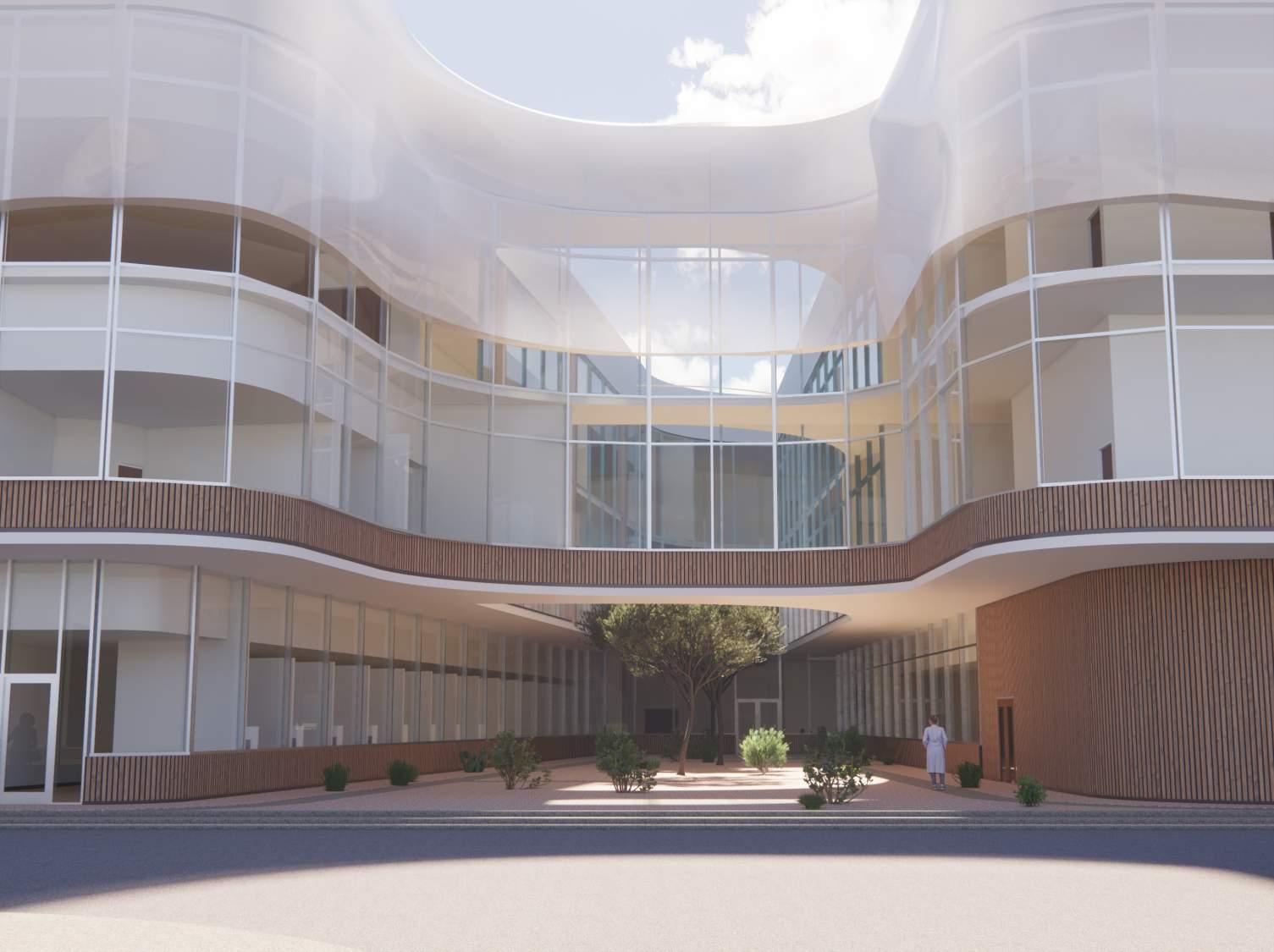
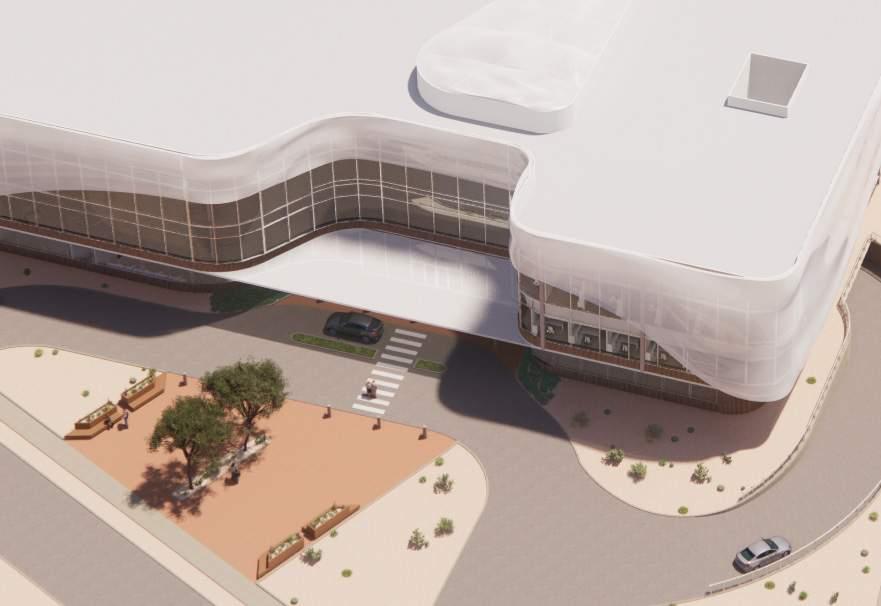
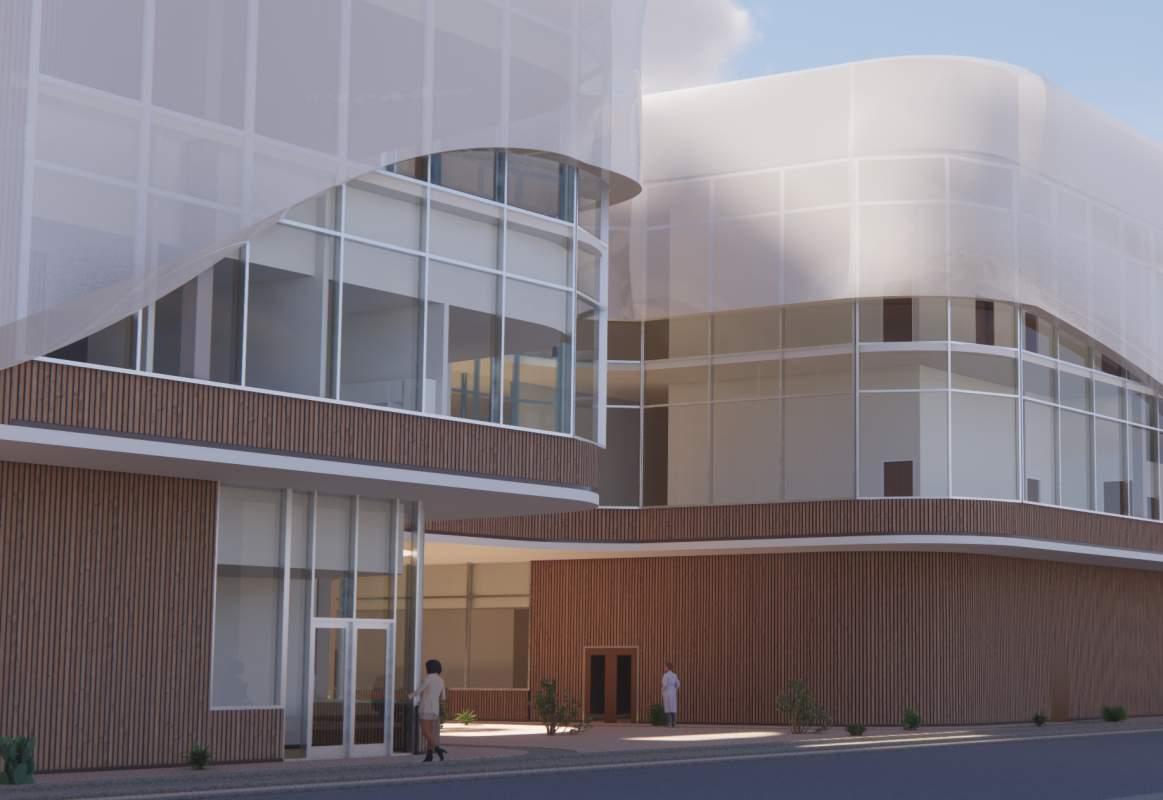
The Eye Institute of Las Vegas will be a comprehensive eye center located in the Symphony Park and Medical District areas of Las Vegas, Nevada. This eye institute will not only provide clinical spaces capable of examination, diagnosis, and outpatient surgery, but also act as a hub for doctors, nurses, fellows, residents, and other eye specialists and students to come to work, learn, and collaborate.
The clinic will have exam rooms dedicated to different eye specialties, as well as a full spread of testing rooms, surgery counseling rooms, retinal injection procedure rooms, and even a minor surgery room. This thorough program for the clinic ensures that patients and visitors can get all of their needs met in one place, diminishing the need to travel to and meet different treatment teams and navigate new spaces.
The in-house ambulatory surgical center provides convenience to patients, in addition to clinic staff who may work closely with ASC staff and doctors. Having both the clinic and the ASC within the same building can also be beneficial to students, residents, and fellows, providing them with a wide-range of clinical activities to observe and partake in.
The education and research department within this comprehensive eye center includes offices, conference rooms, study rooms, a large auditorium, and collaborative touchdown spaces for staff.
The overall design of the building aims to limit stressors placed on any one person entering the building, whether it is a nervous patient, a nurse working long hours, or a visitor trying to ensure their loved one is getting the treatment they need.
5 Eye Institute of Las Vegas, Nevada | Robin Leach Lane, LVNV 89101
Architectural Statement
The design of the Eye Institute will be a cohesive system that promotes staff efficiency , allows for intuitive wayfinding , and strengthens feelings of wellbeing for all users .
6 Grace Craig | The University of Kansas | School of Architecture and Design | Master of Architecture Capstone Studio
STAFF
EFFICIENCY
• Distance between key staff areas
• Ratio of patient care stations to staff stations
INTUITIVE WAYFINDING
• Number of wayfinding features
• Distances between key patient care stations
WELLBEING
• Number of rooms with daylight / views
• Number of staff respite areas
7 Eye Institute of Las Vegas, Nevada | Robin Leach Lane, LVNV 89101
DESIGN GOALS PERFORMANCE INDICATORS
DESIGN CONSIDERATIONS
8 Grace Craig | The University of Kansas | School of Architecture and Design | Master of Architecture Capstone Studio
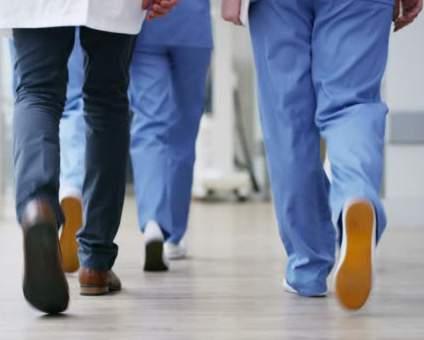
Staff Efficiency
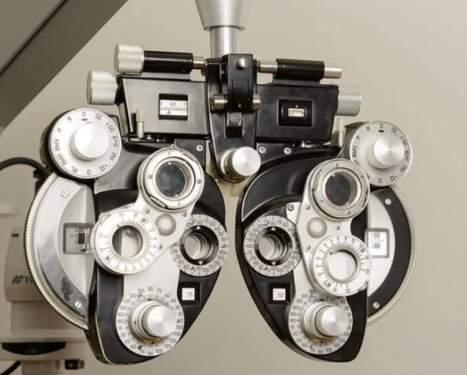
• Racetrack design
• One-way traffic
• Efficient equipment arrangement
• Position services in the order they will be accessed in
• Locate facilities (vertical circulation, restrooms, etc.) near frequented areas
• Front of house, back of house exam room entries
• Minimize unnecessary patient waiting areas
• Ensure sterile and decon rooms are in close proximity or are attached to operating and procedure room

9 Eye Institute of Las Vegas, Nevada | Robin Leach Lane, LVNV 89101
Wellbeing
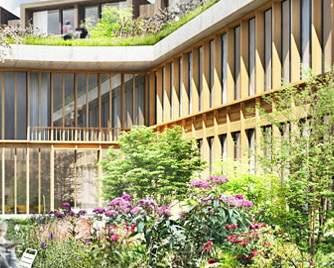
• Outdoor patios
• Large expanses of glass to let light in waiting areas
• Staff offices and areas to have exterior windows
• Atriums to be used to let light into the building’s core
• Home-like furniture
• Acoustic dampening
• Local artwork
• Views to surrounding landscape
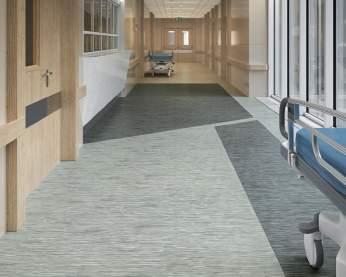
• Universal and barrier free design
• Eliminate tripping hazards
• Minimized staff travel distances
• Inboard exam rooms
• Finish materials in contrasting patterns and shades
• Diffused and filtered daylighting
• Indirect lighting
• Dimmable lighting
• Natural materials and views
• Controlled glare
10 Grace Craig | The University of Kansas | School of Architecture and Design | Master of Architecture Capstone Studio
Intuitive Wayfinding
• Arrange rooms and equipment in the order of staff and patient flow
• Corridors lead to areas of visual interest or importance
• Exterior windows to orient patients / visitors
• Bold fonts on signage
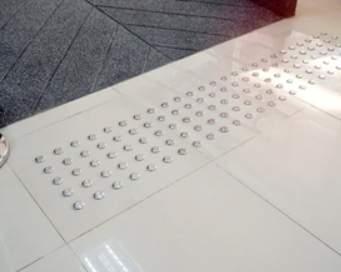
• Texture transitions to indicate area changes
• Braille
• Warning details to alert to upcoming changes
• Olfactory design
• Maps and signs
• Exterior clues
• Decision points
• Decreased number of turns to reach destination
• Material transitions
• Linear, clear hallways
• Unified circulation spine
• Logical vertical circulation
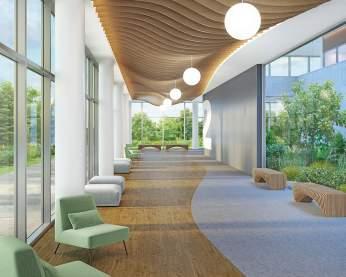
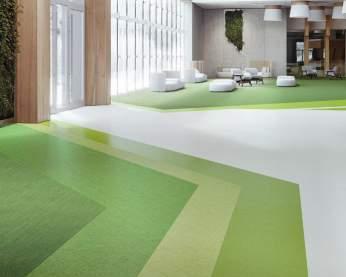
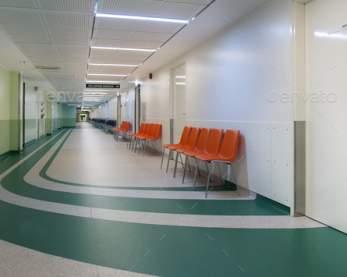
11 Eye Institute of Las Vegas, Nevada | Robin Leach Lane, LVNV 89101
Stakeholders and User Journey Maps
An important step before designing is to evaluate the experience and work flow of different stakeholders and understand the emotional state of each person at different points during their visit.
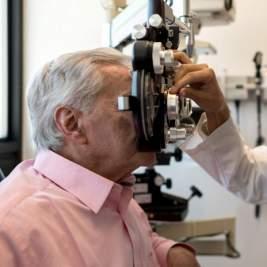


The Surgeon
DURATION: 8 hours
ARRIVAL CHECK SCHEDULE
12 Grace Craig | The University of Kansas | School of Architecture and Design | Master of Architecture Capstone Studio
CONSULTATION
LUNCH ADMIN SUPERVISE FELLOWS / RESIDENTS DEPARTURE REFRESHED CALM OFFICE 30 MIN EXAM ROOM 10 MIN OFFICE 5 MIN OOO / BREAK ROOM 30 MIN RESEARCH CENTER 3 HOURS OFFICE 3 MIN PATIENT ENGAGED EMPATHETIC INDIFFERENT REFLECTIVE CONTENT ENERGIZED REPEAT 1525X INTRIGUED PASSIONATE ENGAGED TIRED FULFILLED
EXAMINATION
The Patient
ARRIVAL CHECK-IN WAITING
ANTICIPATORY ANXIOUS
ANXIOUS IMPATIENT
The Tech
VULNERABLE
DURATION: 1 hour + 18 minutes
DIAGNOSTICS + TESTING
DURATION: 8 hours
13 Eye Institute of Las Vegas, Nevada | Robin Leach Lane, LVNV 89101
DILATION WAITING EXAMINATION CHECK-OUT
DEPARTURE
RECEPTION 5 MIN WAITING AREA 15 MIN SUB-WAIT 20 MIN TESTING ROOMS 15 MIN SUB-WAIT 5 MIN EXAM ROOM 15 MIN RECEPTION 3 MIN
OVERWHELMED
AGGRAVATED
UNCOMFORTABLE
RESTLESS WEARY TRUSTING ON EDGE ENGAGED
RELIEVED DEPLETED CONTENT
ARRIVAL CHECK SCHEDULE RETRIEVE PATIENT RETRIEVE PATIENT LUNCH NOTE TAKING NOTE TAKING DILATION DILATION DEPARTURE REFRESHED CALM OFFICE 30 MIN WAITING ROOM 2 MIN WAITING ROOM 2 MIN SUB-WAIT 5 MIN SUB-WAIT 5 MIN OOO / BREAK ROOM 30 MIN EXAM ROOM 15 MIN EXAM ROOM 15 MIN OFFICE 3 MIN EMPATHETIC CHEERFUL EMPATHETIC CHEERFUL COMFORTING ENGAGED COMFORTING ENGAGED CONTENT ENERGIZED INTRIGUED
EXPLORING INTRIGUED
REPEAT 10-12
REPEAT 10-12 TIMES REPEAT AS NECESSARY REPEAT AS NECESSARY TIRED FULFILLED
EAGER
EAGER EXPLORING
TIMES















 Grace Craig | The University of Kansas | School re Capstone Studio
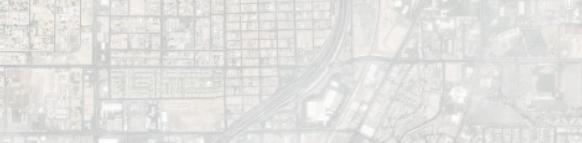
US-95
I-15
Grace Craig | The University of Kansas | School re Capstone Studio
US-95
I-15
Las Vegas Analysis
Climate
• Average low: 56 degrees Fahrenheit
• Average: 68 degrees Fahrenheit
• Average high: 80 degrees Fahrenheit
Las Vegas has a very hot and very dry climate, so it is imperative that buildings are designed to be protected from the sun. Being near Death Valley, the city averages 4 inches of rain a year, so water collection can be implemented into the site design and the design of wall assemblies. Due to the lack of precipitation, the soils are very dry in Vegas, so it is important that foundations are designed accordingly. Vegas lies on an active fault zone, increasing the frequency of seismic activity drastically. This information will need to be considered when designing foundations, structural connections, and other static points.
Population
Estimated in 2022, the population of Las Vegas sits somewhere around 656,274 people.
• 52% White
• 12% Black
• 34% Hispanic or Latino
• 14% two or more races
• 49% women
• 86% high school graduate or higher, 26% bachelor’s degree or higher
With so much diversity in the city’s population, it is important to design a healthcare space for a universal experience, regardless of race, gender, education level, language spoken, and more.
Transportation
• Bus: Two routes, The Strip and Downtown Las Vegas
• Monorail: 3.9 miles of elevated rail that travels through the Strip in 15 minutes at 50mph
• Taxi / Rideshare: Buildings must have a specified taxi or rideshare pickup location or lane.
With the abundance of public transportation options available, the site design for a new building in Vegas must support and encourage the use of such public transportation.
656,274
15 Eye Institute of Las Vegas, Nevada | Robin Leach Lane, LVNV 89101
AVERAGE LOW: AVERAGE: AVERAGE HIGH: 56 F 68 F 80 F
estimated in 2022 BUS MONORAIL TAXI
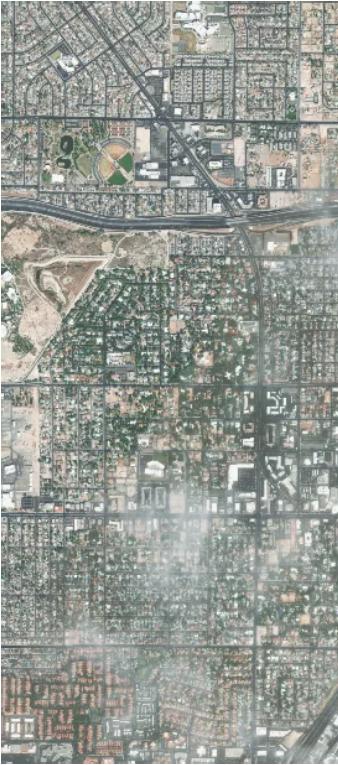
Site Analysis
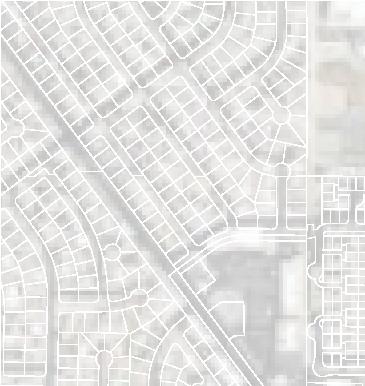
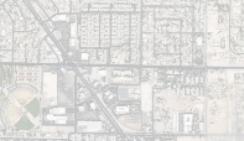
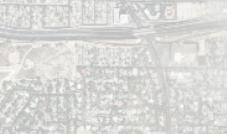
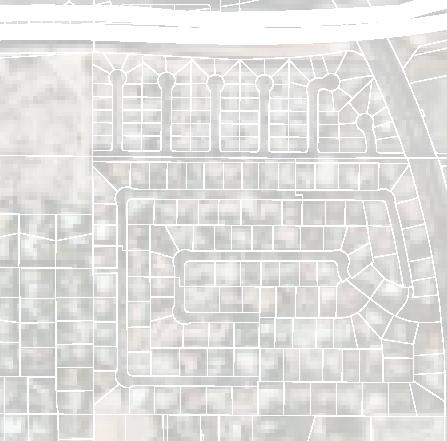
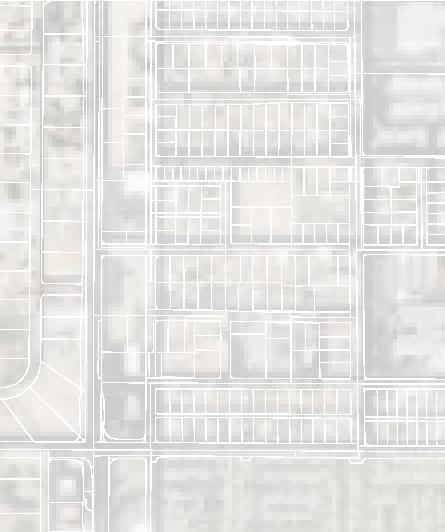
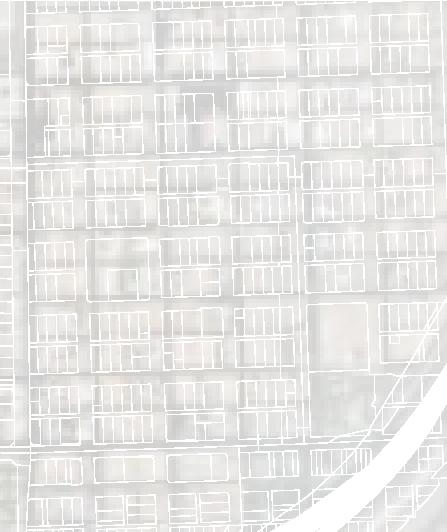
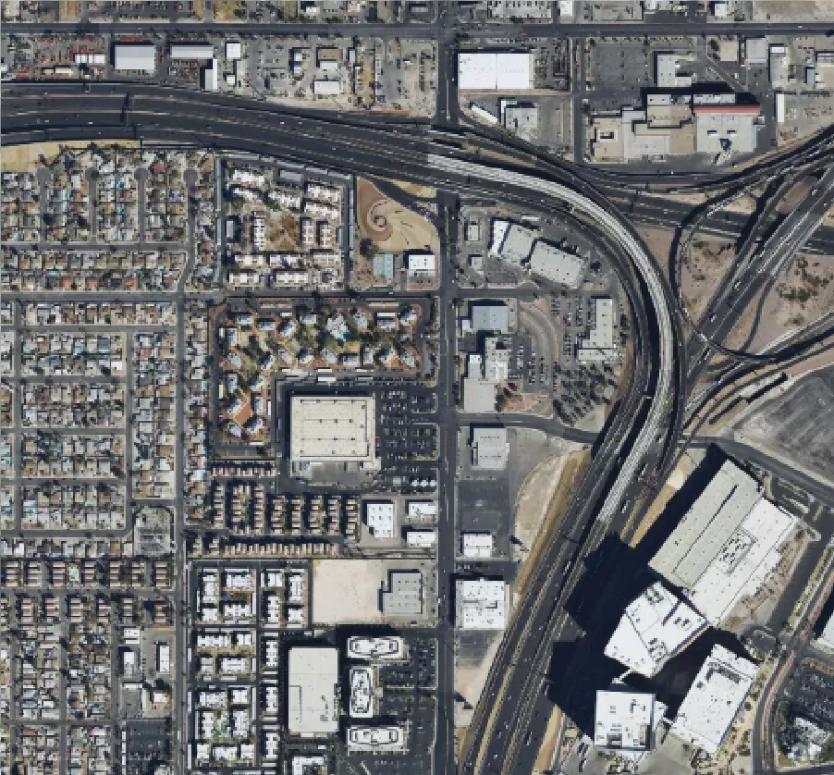
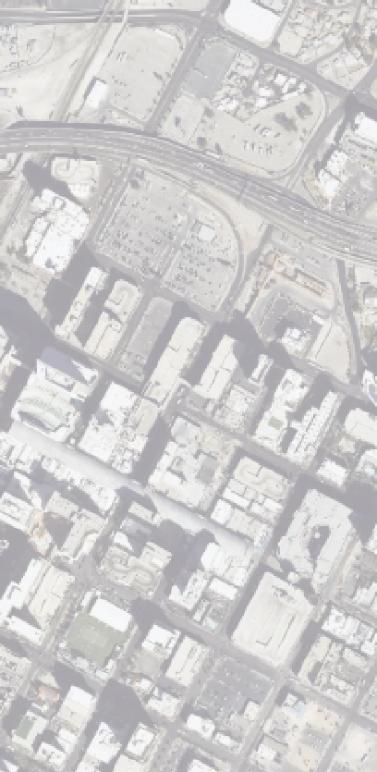
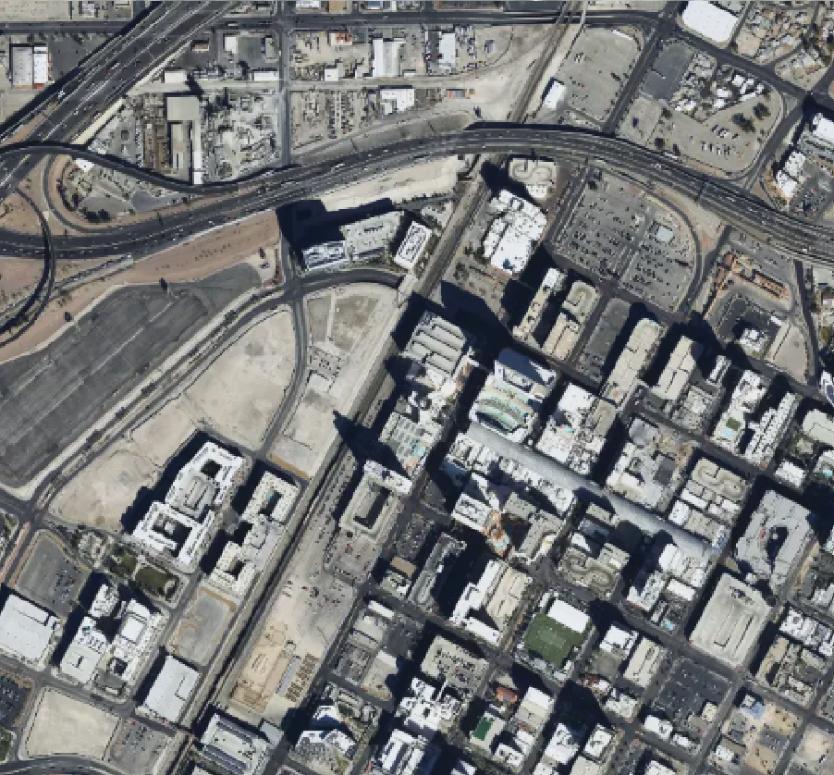
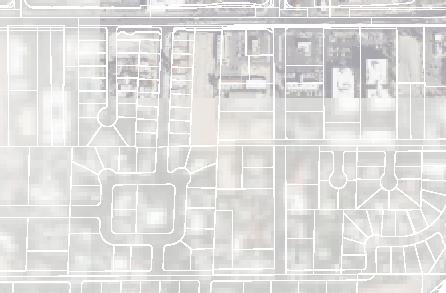
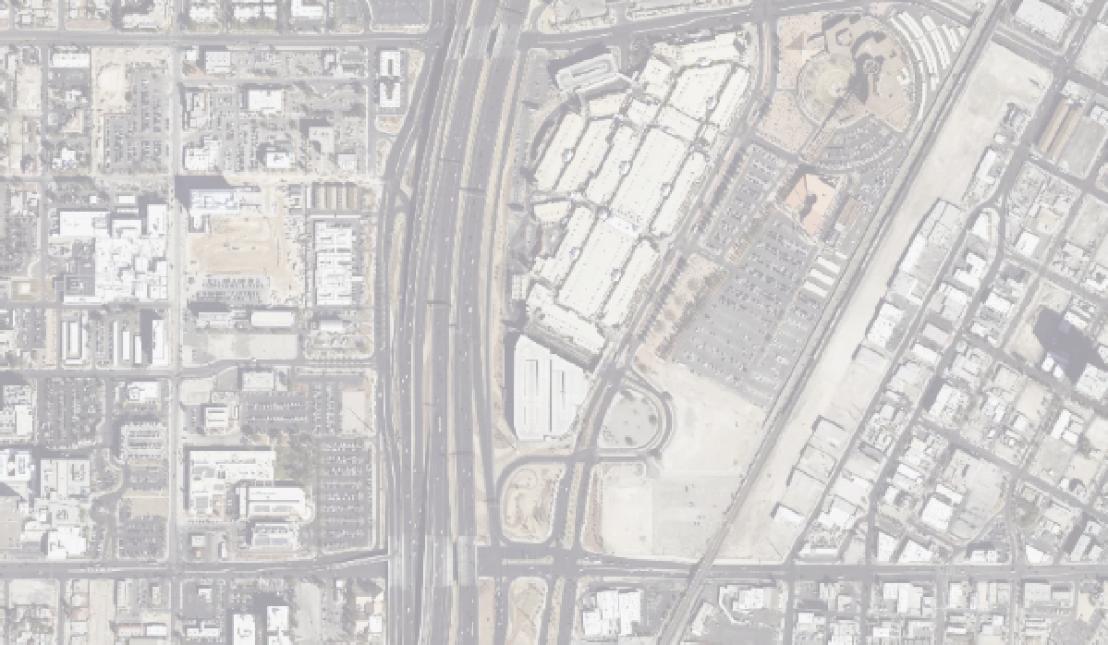
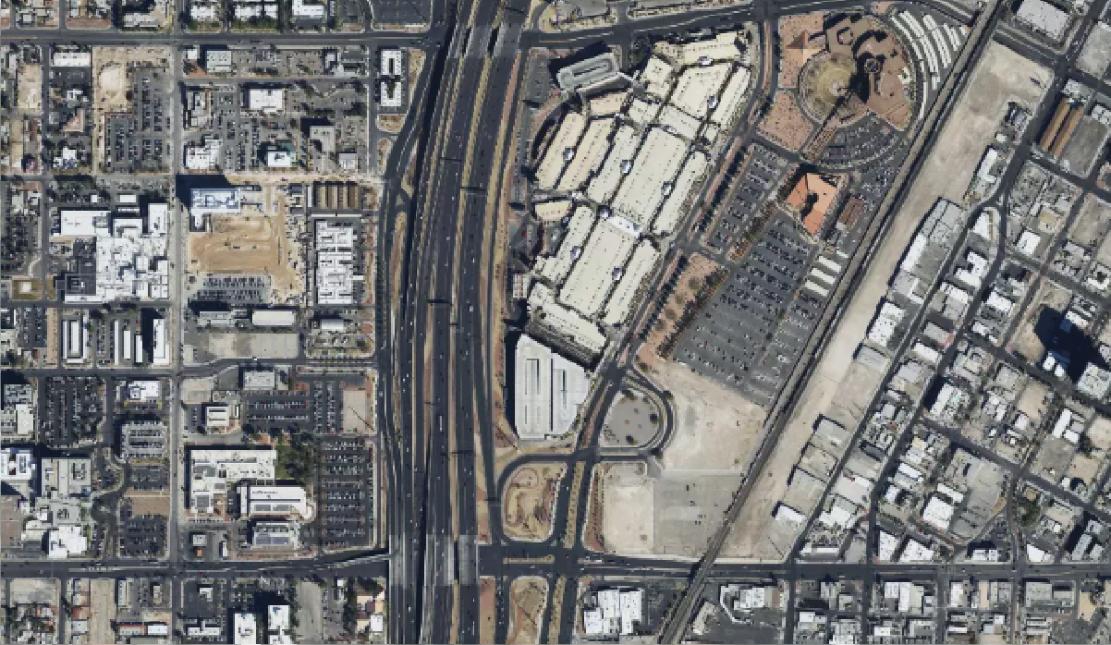
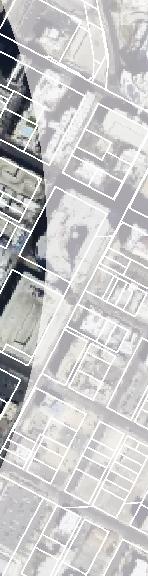
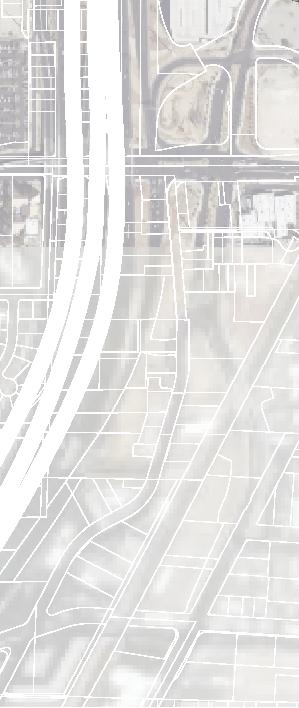
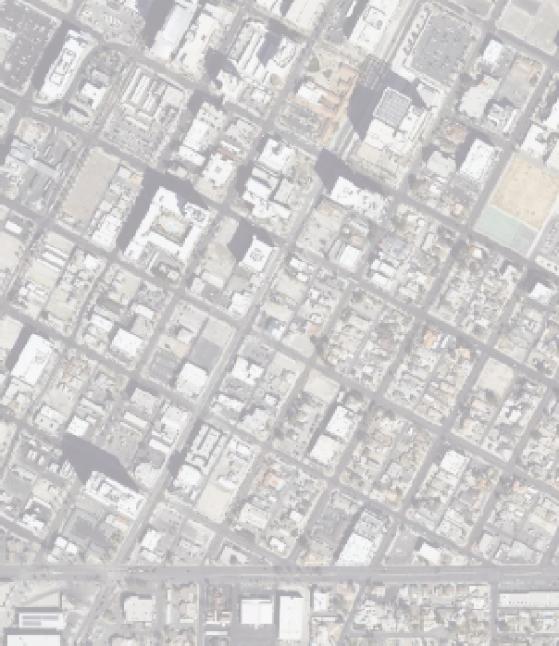
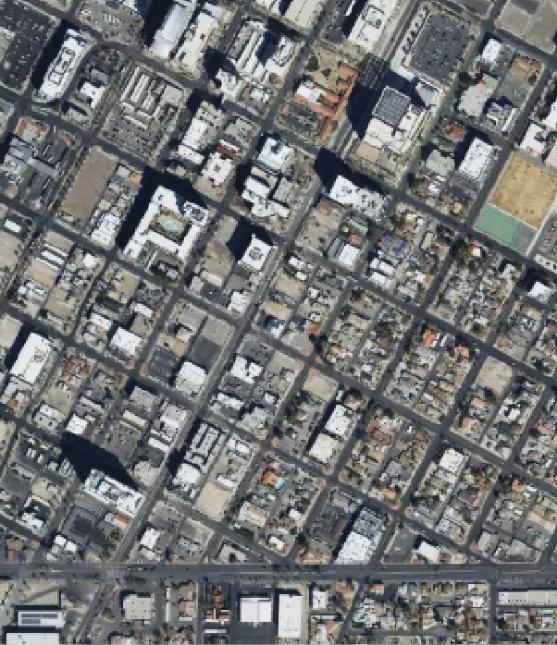
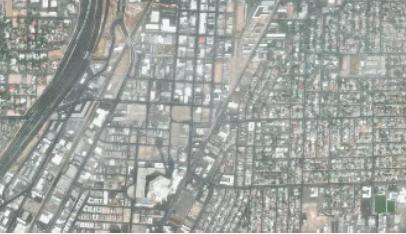
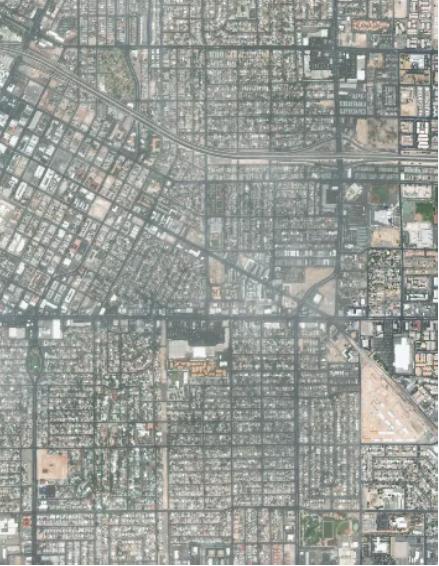
Address: 505 Robin Leach Lane, Las Vegas, NV 89106
Subdivision: Parkway Center
Estimated acreage: 4.82
Square footage: 209,959
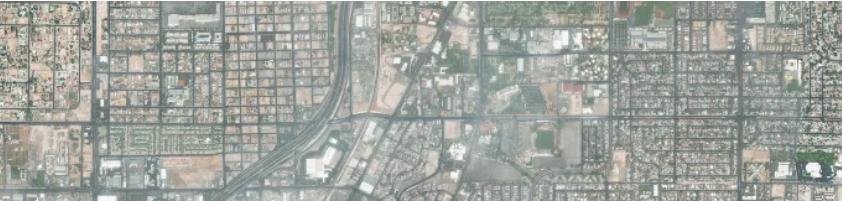
Major highways: Interstate 15 and US-95
Zoning: Planned Development (PD)
The purpose of a planned development (PD) is to permit and encourage comprehensively planned developments whose purpose is redevelopment, economic development, cultural enrichment, or to provide a single-purpose or multi-use planned development. “Providing for cultural, civic, educational, medical, religious, or any combination thereof, in a planned or a unique setting and design” (City of Las Vegas, Planning and Zoning, Code Enforcement).
There is limited planning and zoning “rules” associated with a PD, so in order to make design decisions based on setbacks and building height, research was done to find the closest match of a zone with more information associated.
Referenced Zoning: Planned Business Park (C-PB)
“The C-PB District allows industrial uses, including light manufacturing, assembling and processing, warehousing and distribution, research, development and testing laboratories; medical related uses and ancillary commercial uses in an Industrial Office Park setting; and mixed-use developments” (City of Las Vegas, Planning and Zoning, Code Enforcement).
Setbacks:
Back, Front, and Corner: 10 feet
Side: 20 feet
Height restrictions:
Maximum stories: 5
Flat roof: 85’ measured to top of coping
Pitched roof: 85’ measured to midpoint between eaves and ridgeline
17 Eye Institute of Las Vegas, Nevada | Robin Leach Lane, LVNV 89101
10’ 10’ 10’ 20’ 5 stories max. or 85’ max C-PB
Height
Setbacks and
Restrictions
Design Alternative Generation
18 Grace Craig | The University of Kansas | School of Architecture and Design | Master of Architecture Capstone Studio
56; 2 VAN 2 ADA RAMP TO PARKING GARAGE PICK-UP
DROP-OFF
IOL TESTING 56 SPOTS; 4 ADA (2 VAN)
TO EXAM ROOMS CLEAR AND EFFICIENT PATHWAYS 10’ 50’ 100’
&
RECEIVING
SINGLE DOOR ENTRY EXAM ROOMS SUPPORT AREAS DIRECTLY ADJACENT
19 Eye Institute of Las Vegas, Nevada | Robin Leach Lane, LVNV 89101 PROCEDURE(CATARACTLASER) PROCEDURE(OPHTHALMICLASER) EQUIPMENT OPEN TO BELOW RECESSED SHADED BALCONY RECESSED SHADED BALCONY CLEAR AND EFFICIENT PATHWAYS SUPPORT AREAS DIRECTLY ADJACENT TO OPERATING ROOMS WALKWAY OFFICES AROUND PERIMETER FOR EXTERIOR VIEWS SUPPORT AREAS DIRECTLY ADJACENT TO LAB OUTDOOR AREA FACING NORTH ADDITIONAL STUDY AND CONFERENCE AREAS FOR RESIDENTS 10’ 50’ 100’ Benchmarking Matrix Goal Success Rating
Notes Staff Efficiency
(1-5)
Intuitive Wayfinding
Wellbeing
4.5 Pods of exam rooms with support areas; minimized travel distances
4 Straight corridors; clear lines of sight
3 Inboard exam rooms; not all offices have daylight
Design Alternative Generation
20 Grace Craig | The University of Kansas | School of Architecture and Design | Master of Architecture Capstone Studio
EYELANE LANE EYELANE LANE LANE LANE LANE LANE RETINALINJECTIONPROCEDURE RETINALINJECTIONPROCEDURE SURG.COUNSELING RETINALINJECTIONPROCEDURE OFFICE OFFICE RESIDENT FELLOWOFFICE RESIDENT FELLOWOFFICE OFFICE OFFICE 78 SPACES; 2 VANS RAMP TO PARKING GARAGE PICK-UP & DROP-OFF RECEIVING 78 SPACES; 2 VANS OPEN LOUNGE SPACE
10’ 50’ 100’
FRONT OF HOUSE, BACK OF HOUSE EXAM ROOMS
EXTERIOR VIEWS FOR OFFICES
21 Eye Institute of Las Vegas, Nevada | Robin Leach Lane, LVNV 89101 Benchmarking Matrix Goal Success Rating (1-5) Notes Staff Efficiency 3.5 Front of house, back of house exam room access, longer travel distances Intuitive Wayfinding 4 Straight corridors; clear lines of sight Wellbeing 3 Inboard exam rooms; not all offices have daylight SURG. COUNSELING SURG. COUNSELING SURG. COUNSELING ROOM SURG. COUNSELING SURG. COUNSELING SURG. COUNSELING SURG. COUNSELING SURG. COUNSELING SURG. COUNSELING ROOM ROOM SURG. COUNSELING SURG. COUNSELING SURG. COUNSELING MINOR SURGERY ROOM EYE LANE EYE LANE EYE LANE EYE LANE EYE LANE EYE LANE EYE LANE EYE LANE EYE LANE EYE LANE EYE LANE EYE LANE EYE LANE EYE LANE EYE LANE EYE LANE EYE LANE EYE LANE EYE LANE EYE LANE EYE LANE EYE LANE EYE LANE DILATION WAITING DILATION WAITING SURG. COUNSELING CLASSROOM CLASSROOM CLASSROOM CLASSROOM AUDITORIUM NVF EXECUTIVE OFFICE EINV EXECUTIVE OFFICE EINV NVF KITCHEN EINV OFFICE EINV OFFICE EINV OFFICE NVF OFFICE RR FACILITY SUPPORT MECHANICAL STAIR STAIR STAIR STAIR IDENTICAL FLOW TO FLOOR BELOW OPTICAL STORE CELEBRATED VERTICAL CIRCULATION WALKWAY BETWEEN BUILDINGS OPEN AREAS FOR GROUP STUDY EXTERIOR VIEWS FOR OFFICES FACILITY SUPPORT MECHANICAL PROCEDURE (OPHTHALMIC LASER) PROCEDURE (OPHTHALMIC LASER) PRE-OP RECOVERY BAY EQUIPMENT ROOM PRE-OP RECOVERY BAY PRE-OP RECOVERY BAY PRE-OP RECOVERY BAY PRE-OP RECOVERY BAY PATIENT TLT PRE-OP RECOVERY BAY PROCEDURE (CATARACT LASER) PROCEDURE (CATARACT LASER) OPERATING ROOM OPERATING ROOM SOILED HOLDING OPERATING ROOM OPERATING ROOM STAFF TLT EVS STAFF LOCKER LOUNGE CENTRAL STERILIZATION EQUIPMENT ROOM RECEIVING HOLDING REGISTRATION FACULTY OFFICE FACULTY OFFICE FACULTY OFFICE FACULTY OFFICE FACULTY OFFICE FACULTY OFFICE FACULTY OFFICE FACULTY OFFICE FACULTY OFFICE LAB RR IMAGING CORE IMAGING CORE BILLING OFFICE BILLING OFFICE BILLING WORKSTATION BILLING WORKSTATION BILLING WORKSTATION BILLING WORKSTATION BILLING WORKSTATION BILLING WORKSTATION BILLING WORKSTATION BILLING WORKSTATION CALL CENTER WORKSTATION CALL CENTER WORKSTATION CALL CENTER WORKSTATION CALL CENTER WORKSTATION CALL CENTER WORKSTATION ELEV STAIR
AND EFFICIENT PATHWAYS DAYLIGHTING FOR WORKSTATIONS 10’ 50’ 100’
CLEAR
22
Grace Craig | The University of Kansas | School of Architecture and Design | Master of Architecture
Capstone Studio
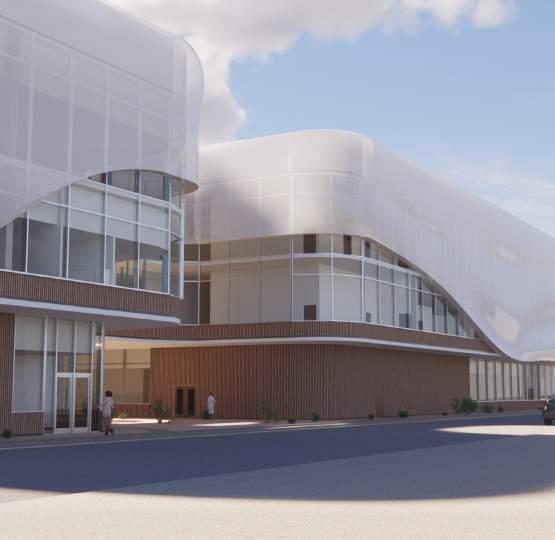
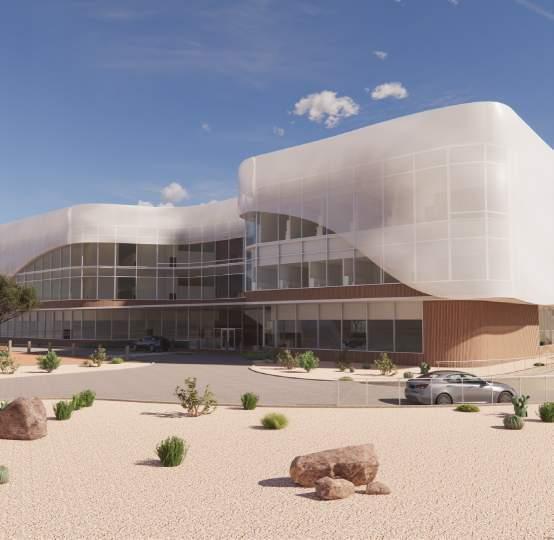
PROPOSED DESIGN OF THE EINV
23 Eye Institute of Las Vegas, Nevada | Robin Leach Lane, LVNV 89101
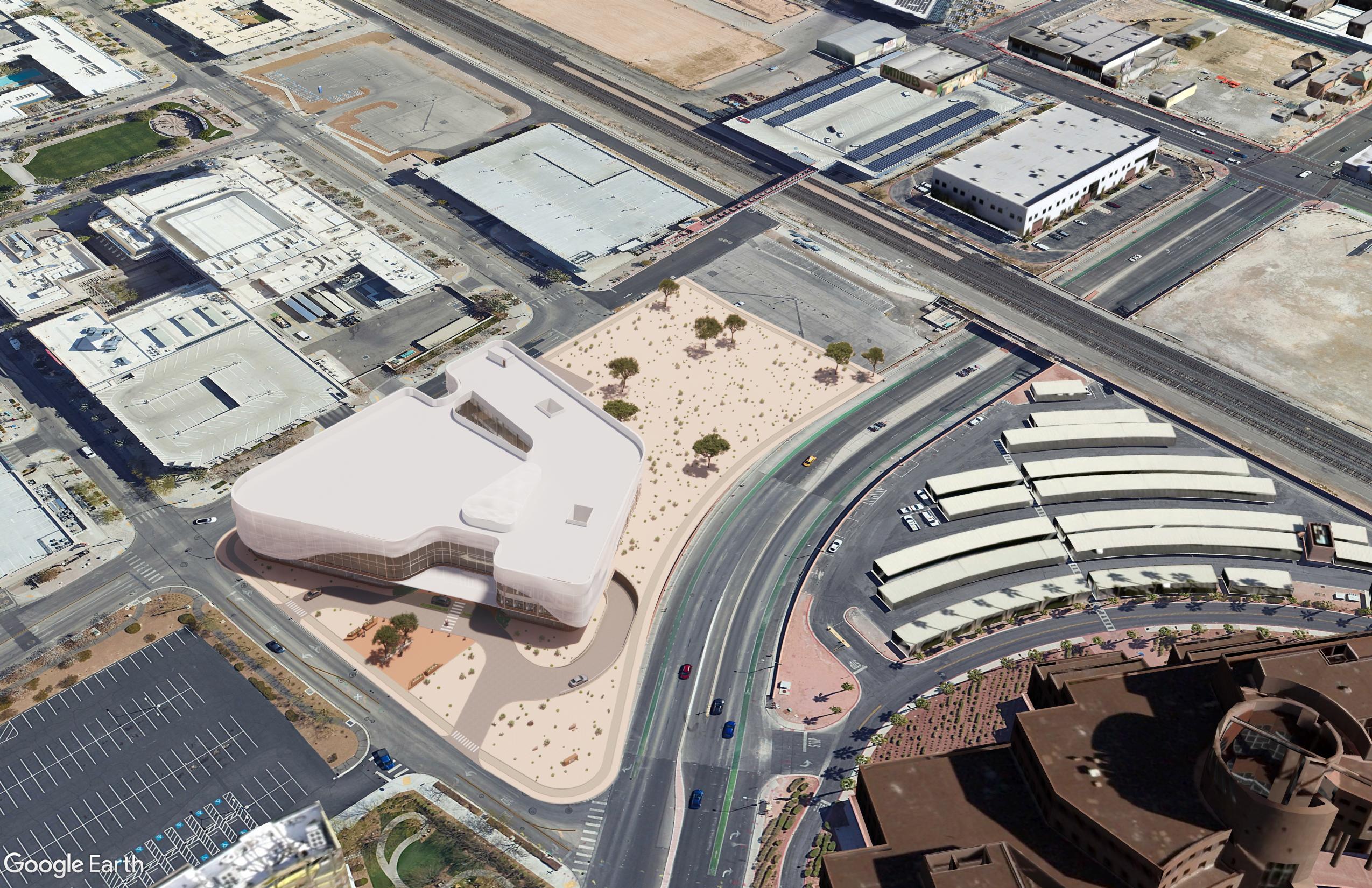
Site
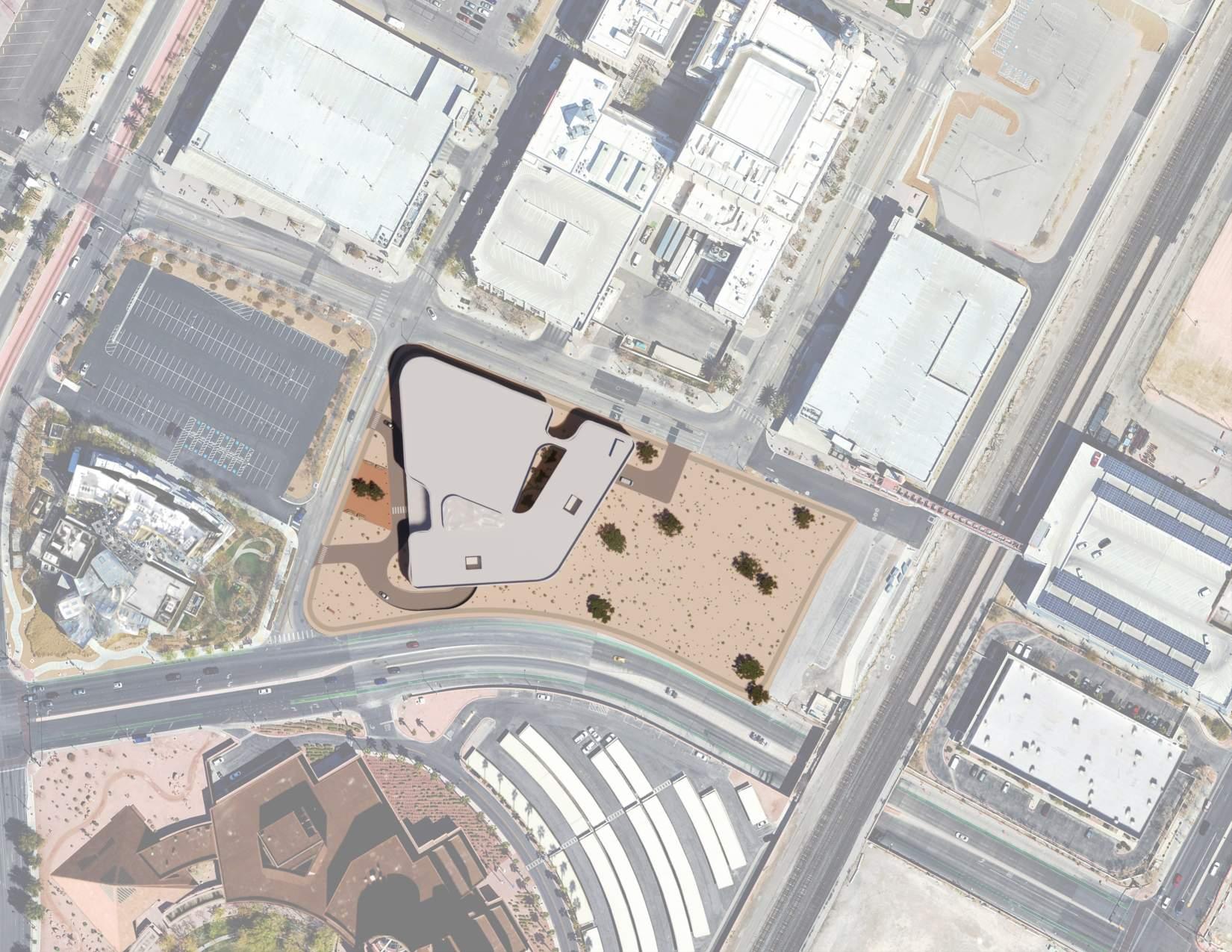
Not to scale Parking Garage Discovery Children’s Museum Drug Enforcement Administration City Hall Garage Lou Ruvo Center for Brain Health Clark County Government Center Railroad Railroad RobinLeachLn W Bonneville Ave SGrand Central Pkwy SCity Pkwy Bus Stop 50’-0” Parking garage Loading / receiving Vehicular traffic flow Pedestrian traffic flow Roof slope direction
Plan
Site Information
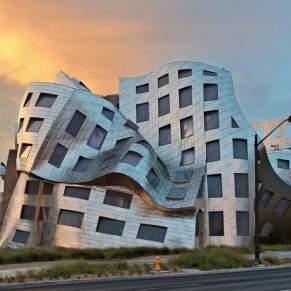
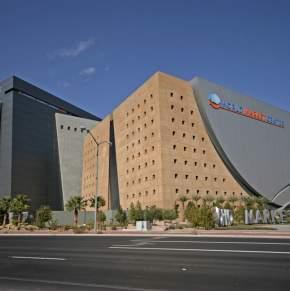
Neighboring Buildings:
• Discovery Children’s Museum
• Parking Garages
• Drug Enforcement Administration
• Clark County Government Center
• Lou Ruvo Center for Brain Health
• World Market
Adjacent Streets:
South Grand Central Parkway
West Bonneville Avenue
Robin Leach Lane
*Railroad directly East
Building Information
Roof height: 50’-0”
Parapet height: 58’-0”
Roofing material: EPDM (durable synthetic rubber roofing membrane derived from oil and natural gas
25 Eye Institute of Las Vegas, Nevada | Robin Leach Lane, LVNV 89101
Level One
ASC Features
• Four (4) operating rooms, six (6) procedure rooms of varying specialties, sixteen (16) pre-op / recovery bays, central sterilization, clean core, and soiled rooms
• Large waiting room
• Staff lounge, private staff restrooms, staff lockers, and staff dressing rooms
• Optical store
Education / Admin Features
• Auditorium
• Fifteen (15) resident / fellow offices, study rooms, conference rooms, four (4) classrooms
Facility Support Features
• Loading / receiving area
• Materials management
• Freight elevator
26 Grace Craig | The University of Kansas | School of Architecture and Design | Master of Architecture Capstone Studio
F E C D B 2 3 4 5 H.1 J K.1 6 7 M N O P Q R 13 12 11 10 9 14 A 1.1 1.1 L.1 L.1 8.1 Level One Structural Grid Placement Room Name # Pre-op / Recovery Bay 1 Operating Room 2 Ophthalmic Laser Procedure Room 3 Cataract Laser Procedure Room 4 LASIK Procedure Room 5 Nurse Station 6 Clean Core 7 Central Sterilization 8 Equipment Storage 9 Patient RR 10 Staff Lounge 11 Staff RR 12 Staff Dressing Room 13 Staff Locker Room 14 Reception 15 Waiting Room 16 Cafe 17 Cafe Storage 18 Materials Management 19 Copy / File 20 Room Name # Resident / fellow office 21 Private study room 22 Classroom 23 Conference room 24 Group study room 25 Restroom 26 Auditorium 27 Optical store 28 Storage 29
27 Eye Institute of Las Vegas, Nevada | Robin Leach Lane, LVNV 89101 Level One 1/32” = 1’-0” Level Two 1 1 1 1 1 1 1 1 1 1 1 2 2 2 2 1 1 3 4 4 5 6 7 8 9 10 10 10 11 12 12 12 13 14 14 15 16 17 18 19 20 21 22 23 23 23 23 24 25 25 26 26 27 28 29 22 22 22 22 22 22 22 21 21 21 21 21 21 21 21 21 21 21 21 21 21 9 9 9 6 1 1 3 1 3
Level Two
Clinic Features
• Clinical pods with six (6) exam rooms, 2 patient toilets, soiled utility, and clean supply
• Surgical counseling rooms, retinal injection procedure rooms, testing rooms, equipment / storage areas, large waiting room
• In-board exam rooms to protect patient eyes from sunlight
• Clear lines of circulation for easy wayfinding and increased staff efficiency
Education / Admin Features
• Auditorium
• Thirty-six (36) offices for faculty, conference rooms, call center
28 Grace Craig | The University of Kansas | School of Architecture and Design | Master of Architecture Capstone Studio
G F E C D B 1.2 2 3 4 5 J 6 8.2 7 L.2 L.2 M N O P Q R 13 12 11 10 9 14 A K.2 H.2 Level Two Structural Grid Placement Room Name # Eye Lane 1 Soiled utility 2 Clean / Meds 3 Patient RR 4 Retinal Injection Procedure Room 5 Surgical Counseling Room 6 Dr. Workstation 7 Equipment Storage 8 Waiting Room 9 Nurse Station 10 Sub-Wait 11 EVS 12 Staff Lounge 13 Staff RR 14 Staff Office 15 Conference Room 16 Auditorium 17 Call center workstation pod 18 Restrooms 19 Testing Rooms 20
workstations, restrooms
29 Eye Institute of Las Vegas, Nevada | Robin Leach Lane, LVNV 89101 Level Two 1/32” = 1’-0” 1 1 1 1 1 1 1 1 1 1 1 9 10 11 12 12 12 20 20 20 20 20 20 20 13 14 14 14 1 1 1 1 1 1 1 1 1 1 1 1 1 1 1 1 1 1 1 1 1 1 1 1 1 1 1 1 1 4 4 4 4 4 4 4 4 4 5 5 5 6 6 6 8 8 8 5 5 15 15 15 15 15 15 15 15 15 15 18 18 18 18 18 18 15 15 15 15 16 16 16 17 19 19 19 19 15 15 15 15 15 15 15 15 15 15 15 15 15 15 15 15 15 15 15 15 15 5 4 4 7 7 7 6 6 6 6 6 6 7 7 7 7 7 4 4 2 2 2 3 3 3 1 1 1 1 1 1 1 1
Level Three
Clinic Features
• Clinical pods with six (6) exam rooms, 2 patient toilets, soiled utility, and clean supply
• Surgical counseling rooms, retinal injection procedure rooms, testing rooms, equipment / storage areas, large waiting room
• In-board exam rooms to protect patient eyes from sunlight
• Clear lines of circulation for easy wayfinding and increased staff efficiency
Education / Research Features
• EINV office suite
• Two (2) labs with imaging cores
• Twenty (20) faculty offices, conference rooms, study rooms
30 Grace Craig | The University of Kansas | School of Architecture and Design | Master of Architecture Capstone Studio
G F E C D B 1.2 2 3 4 5 J 6 8.2 7 L.2 L.2 M N O P Q R 13 12 11 10 9 14 A JAN K.2 H.2 Level Three Structural Grid Placement Room Name # Eye Lane 1 Soiled utility 2 Clean / Meds 3 Patient RR 4 Retinal Injection Procedure Room 5 Surgical Counseling Room 6 Dr. Workstation 7 Equipment Storage 8 Waiting Room 9 Nurse Station 10 Sub-Wait 11 EVS 12 Staff Lounge 13 Staff RR 14 Staff Office 15 Conference Room 16 Executive office 17 Lab 18 Imaging Core 19 Testing Rooms 20
31 Eye Institute of Las Vegas, Nevada | Robin Leach Lane, LVNV 89101 JAN Level Three 1/32” = 1’-0” 1 1 1 1 1 1 1 1 1 1 1 9 10 11 15 15 15 15 15 16 18 18 FACILITY SUPPORT COURTYARD COURTYARD 19 19 17 17 15 15 15 15 15 15 15 15 15 15 15 15 15 15 15 15 15 15 15 15 15 15 15 12 20 20 20 20 20 20 20 13 14 14 14 1 1 1 1 1 1 1 1 1 1 1 1 1 1 1 1 1 1 1 1 1 1 1 1 1 1 1 1 1 4 4 4 4 4 4 4 4 4 5 6 6 6 8 8 8 5 5 4 4 7 7 7 6 6 6 6 6 MINOR SURGERY ROOM 6 6 6 5 6 6 7 7 7 7 7 4 4 2 2 2 3 3 3 1 1 1 1 1 1 1 1
Clinic Pod Design
- Shared walls for plumbing fixtures
- Six (6) exam rooms
- Clean / meds room
- Soiled utility room
- Doctor workstation
32 Grace Craig | The University of Kansas | School of Architecture and Design | Master of Architecture
Studio
Capstone
EYE LANE EYE LANE EYE LANE EYE LANE EYE LANE EYE LANE
CLEAN / MEDS
SOILED UTILITY
DR. WORKSTATION CLINIC POD 3/16” = 1’-0”
EYE LANE EXAM CHAIR ELEVATION
3/16” = 1’-0”
EYE LANE CASEWORK ELEVATION
3/16” = 1’-0”
EYE LANE DOOR + MONITOR ELEVATION
3/16” = 1’-0”
EYE LANE GUEST CHAIR ELEVATION
3/16” = 1’-0”
EYE LANE
EYE LANE EYE LANE
CLEAN ROOM CASEWORK ELEVATION
3/16” = 1’-0”
EYE LANE EYE LANE
EYE LANE EYE LANE
EYE LANE
SOILED UTILITY CASEWORK ELEVATION
3/16” = 1’-0”
33 Eye Institute of Las Vegas, Nevada | Robin Leach Lane, LVNV 89101
SHARPS GUEST CHAIR TV MONITOR EXAM CHAIR EXAM CHAIR HOPPER DUAL MONITOR PAPER TOWELS MEDS STORAGE
EXAM CHAIR
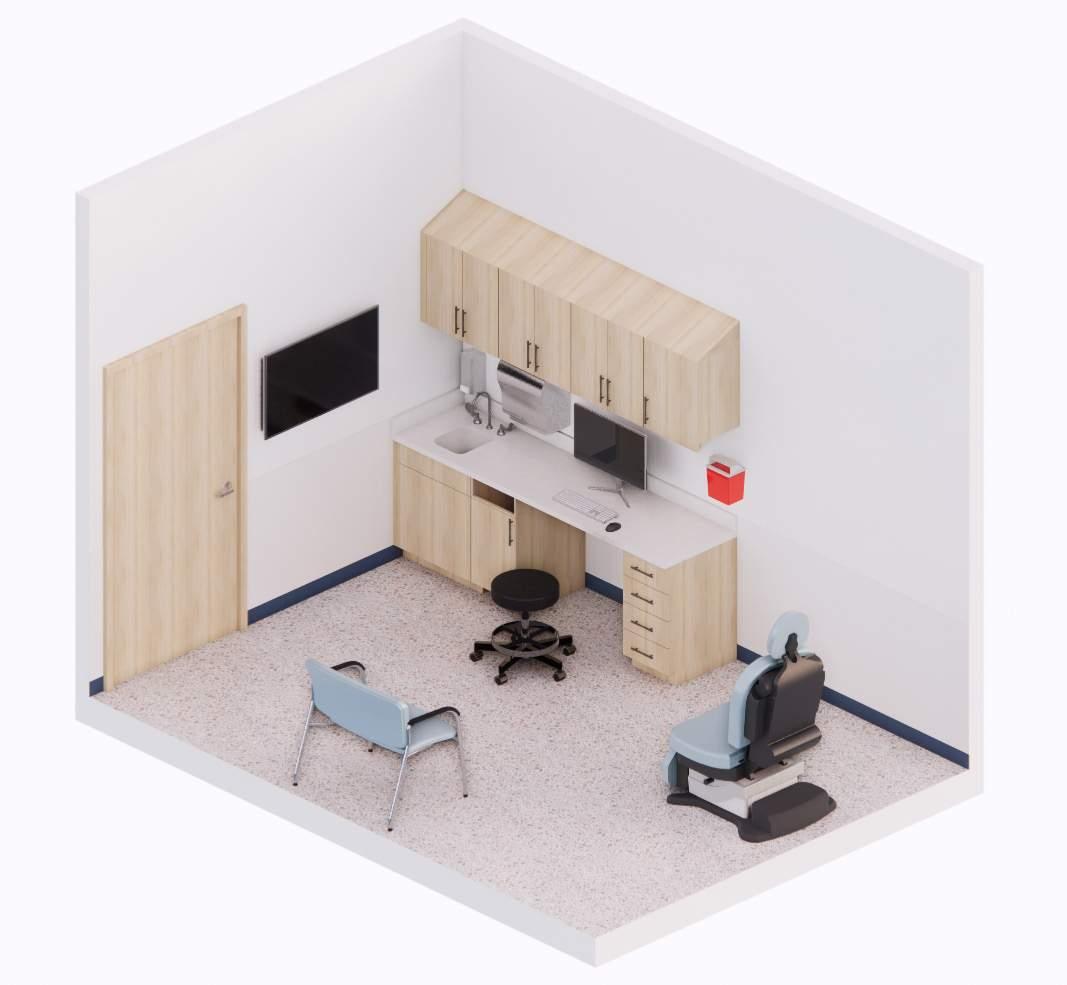
Eye Lane Design
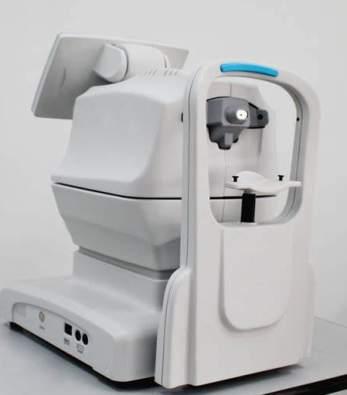
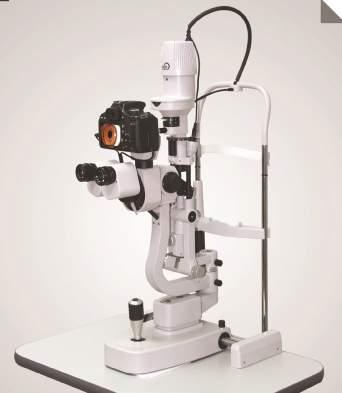
Equipment List
Midmark Exam Chair
Bariatric Guest Chair
Physician Stool
TV Monitor
Soap Paper Towels
Desktop Monitor and Keyboard
Sharps Container
Not pictured possible equipment:
Phoropter
Slit lamp
Tonometer
Ophthalmoscope
Materials:
Plastic laminate
Rubber base
Homogenous sheet
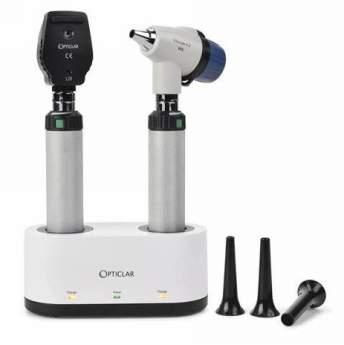
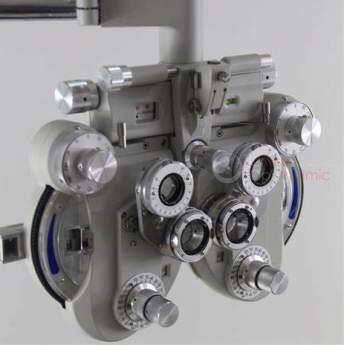
34
| The
|
|
Grace Craig
University of Kansas
School of Architecture and Design
Master of Architecture
Capstone Studio
Slit lamp
Phoropter
Ophthalmoscope
Tonometer
35 Eye Institute of Las Vegas, Nevada | Robin Leach Lane, LVNV 89101
EYE LANE RENDERING
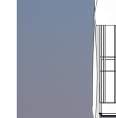
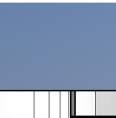
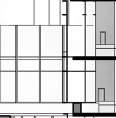
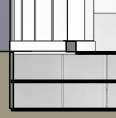
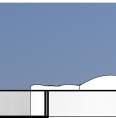
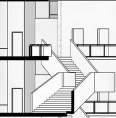
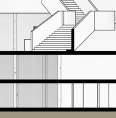
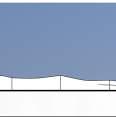
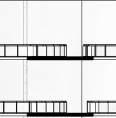
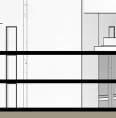
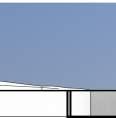
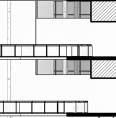
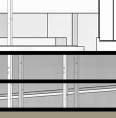
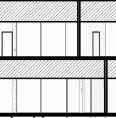
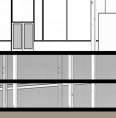
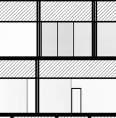
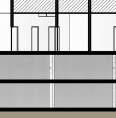
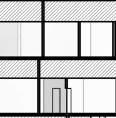
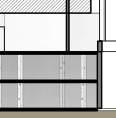
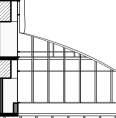
Sections




36
Grace Craig | The University of Kansas
|
School of Architecture and Design
|
Master of Architecture
Capstone Studio
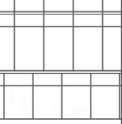
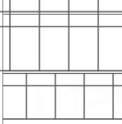
SECTION





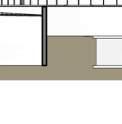

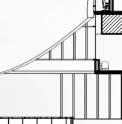

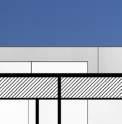
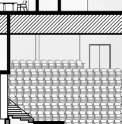

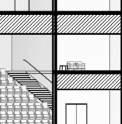

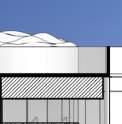
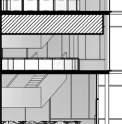





37 Eye Institute of Las Vegas, Nevada | Robin Leach Lane, LVNV 89101
SECTION
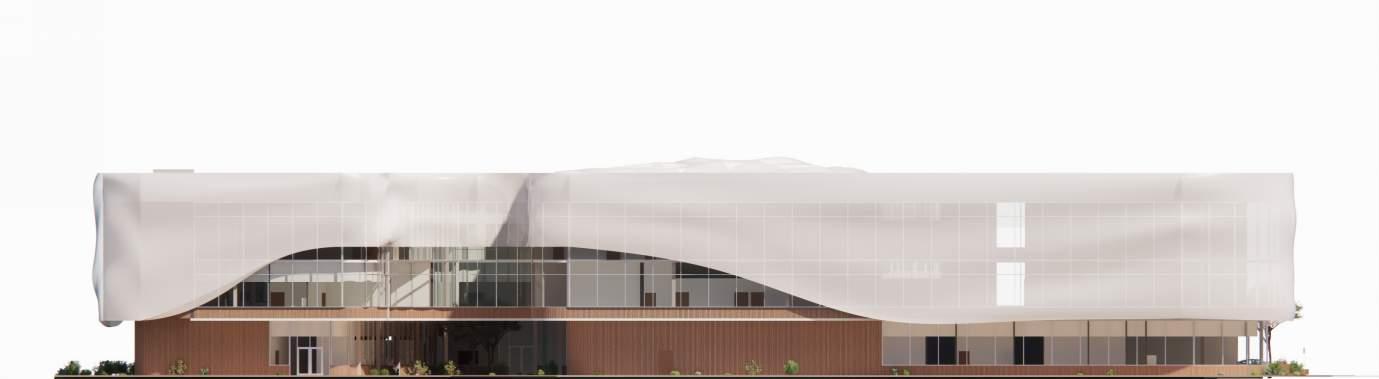
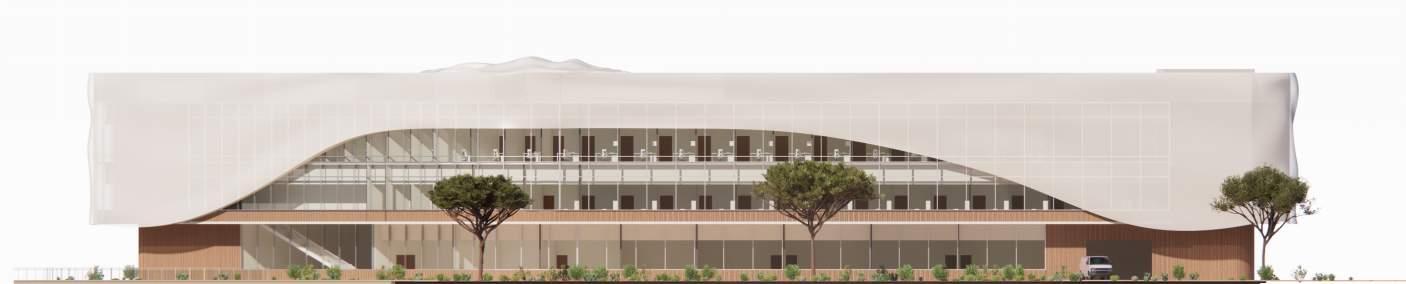
Rendered Elevations
38
|
|
|
Grace Craig
The University of Kansas
School of Architecture and Design
Master of Architecture Capstone Studio
NTS
North Elevation
NTS East
Elevation
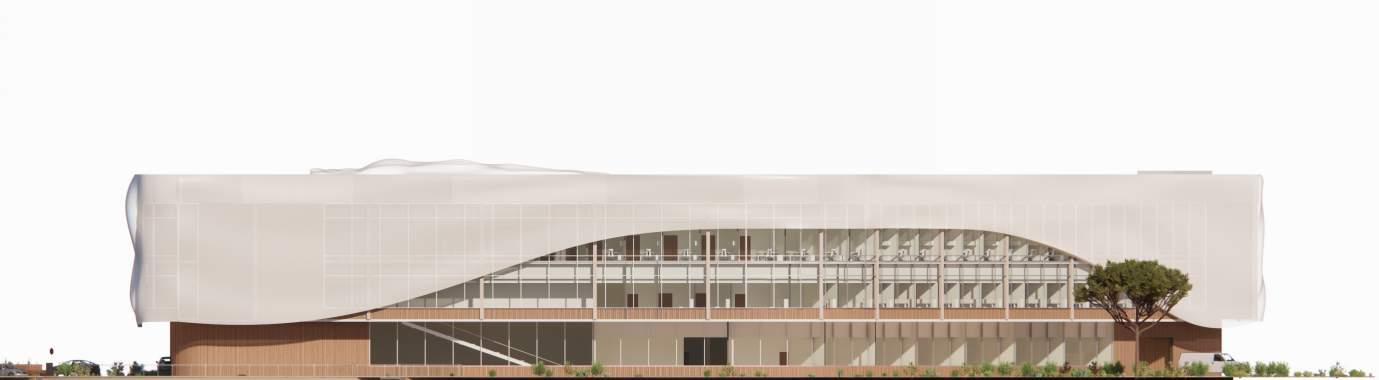
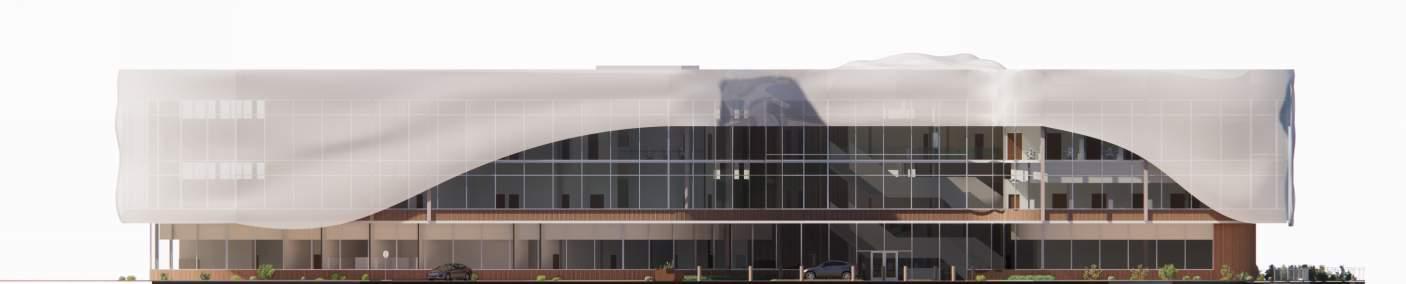
39 Eye Institute of Las Vegas, Nevada | Robin Leach Lane, LVNV 89101
Southeast Elevation NTS
Southwest Elevation NTS
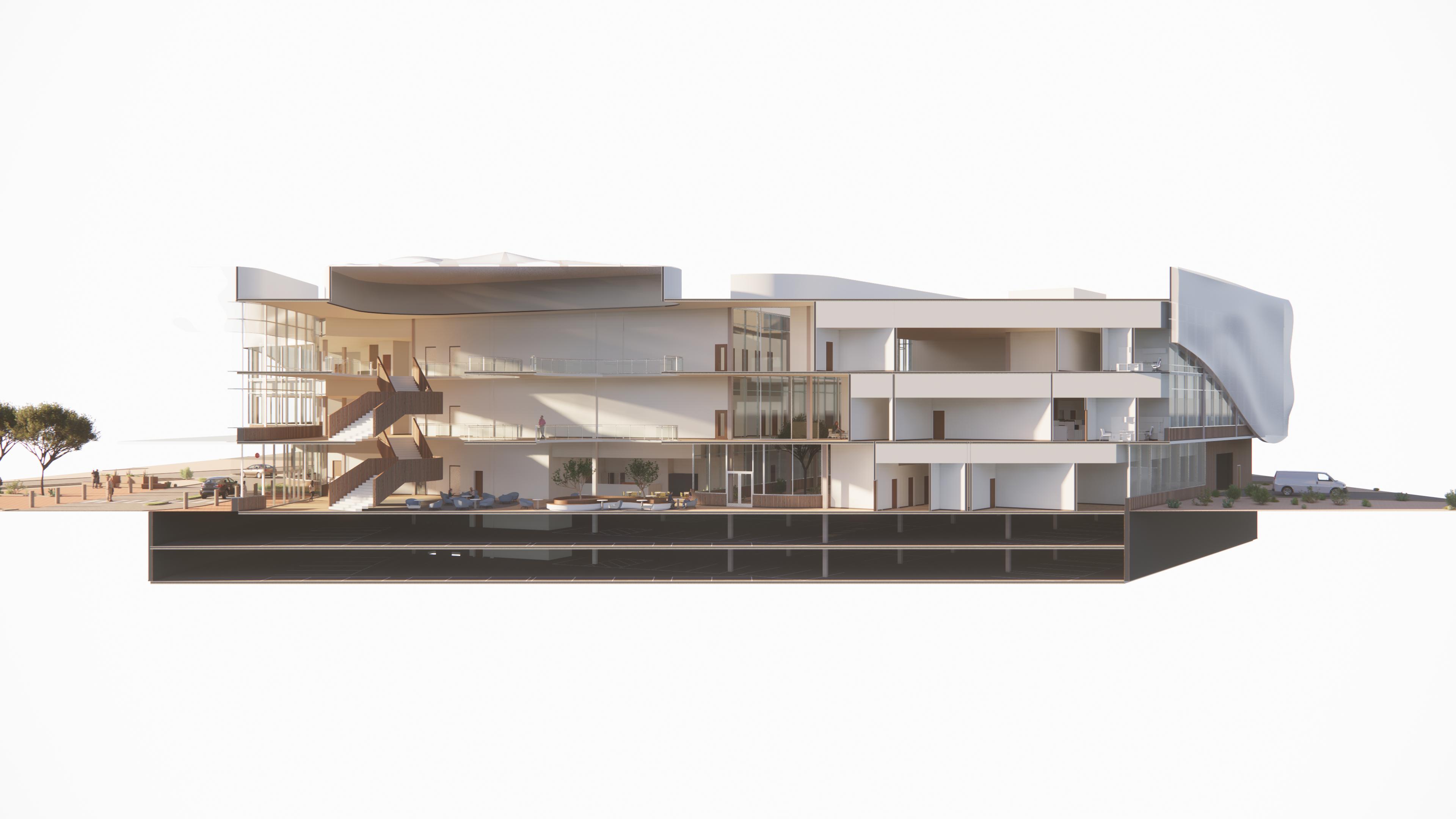
SECTION PERSPECTIVE
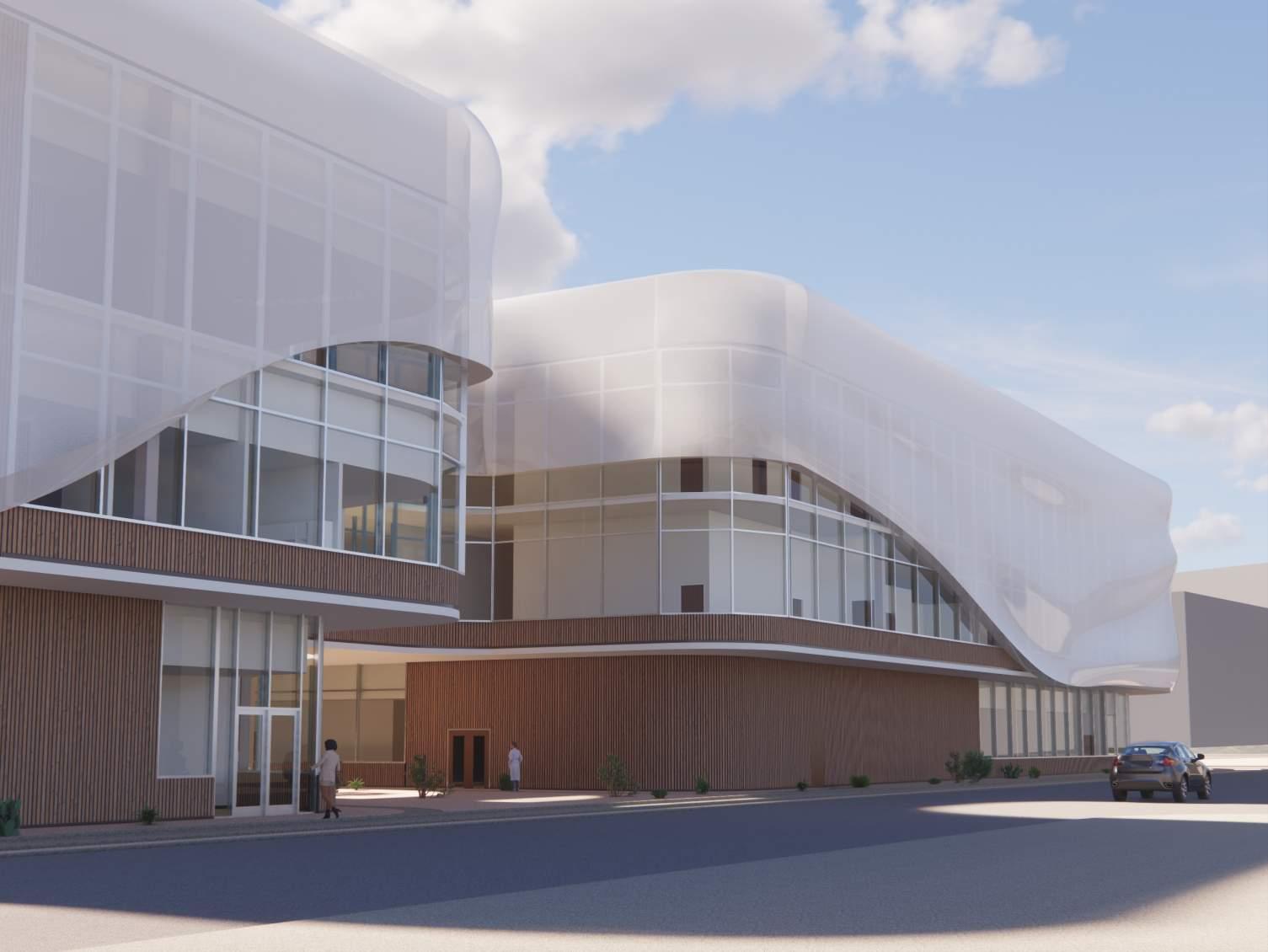
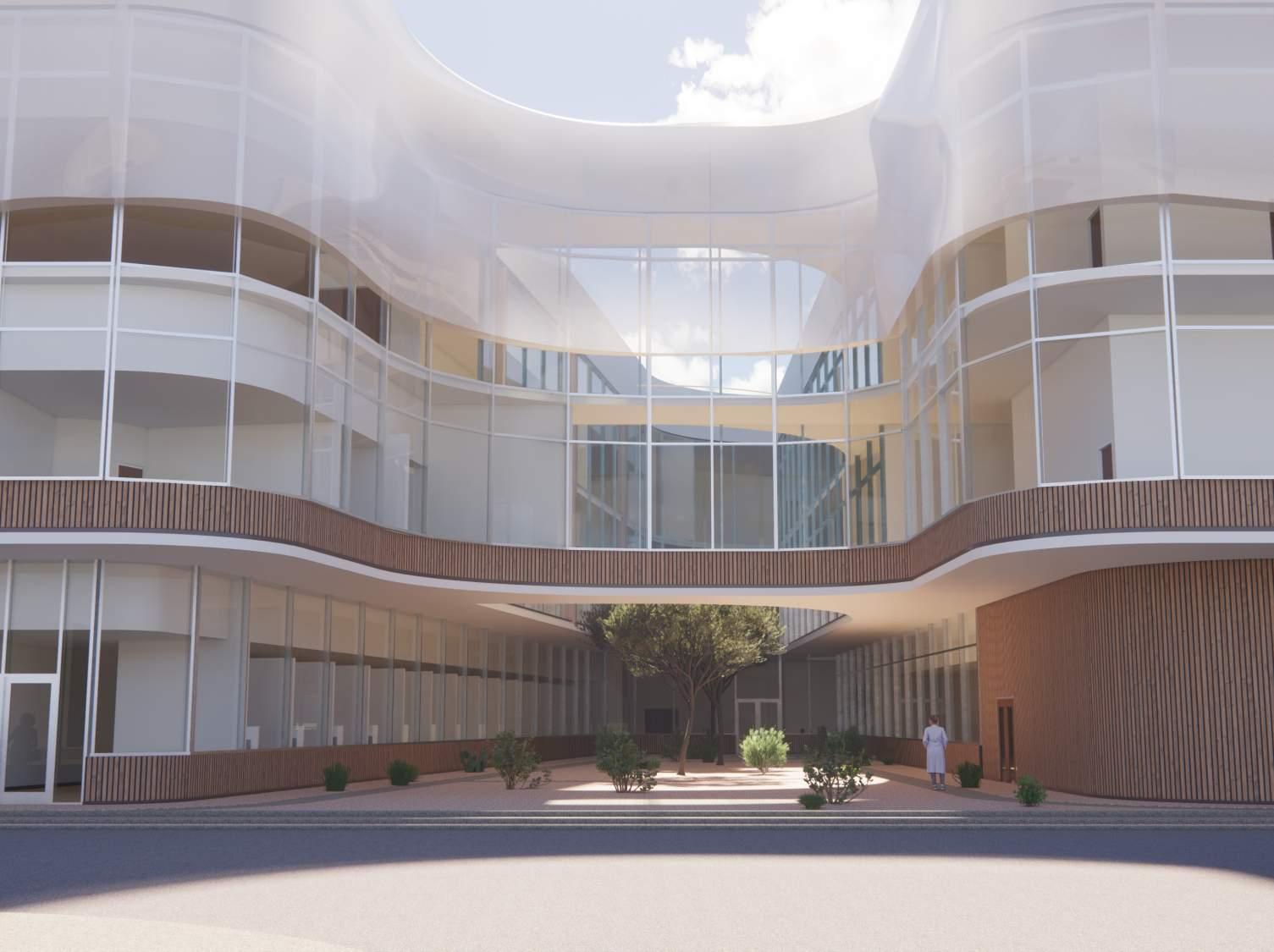
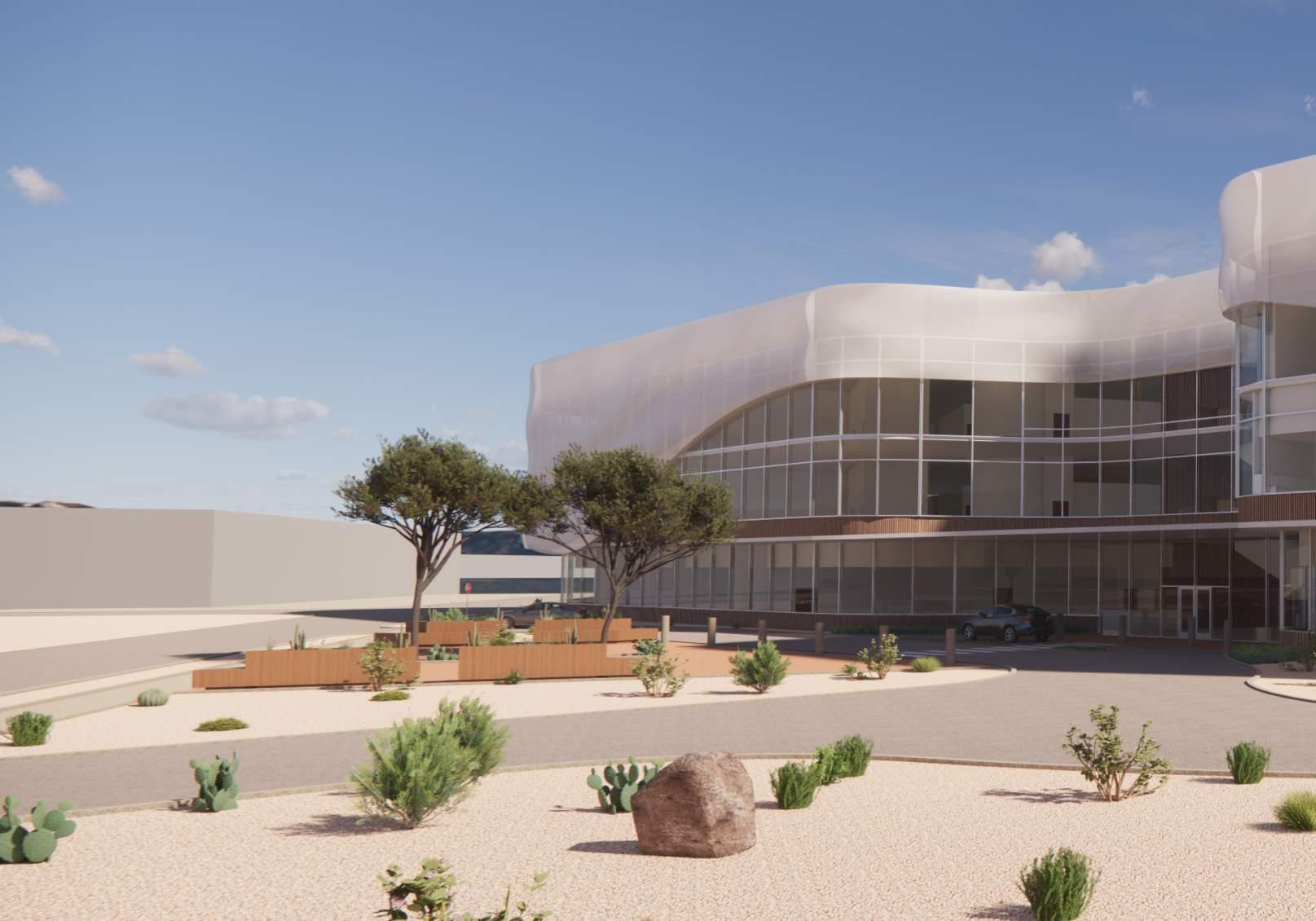
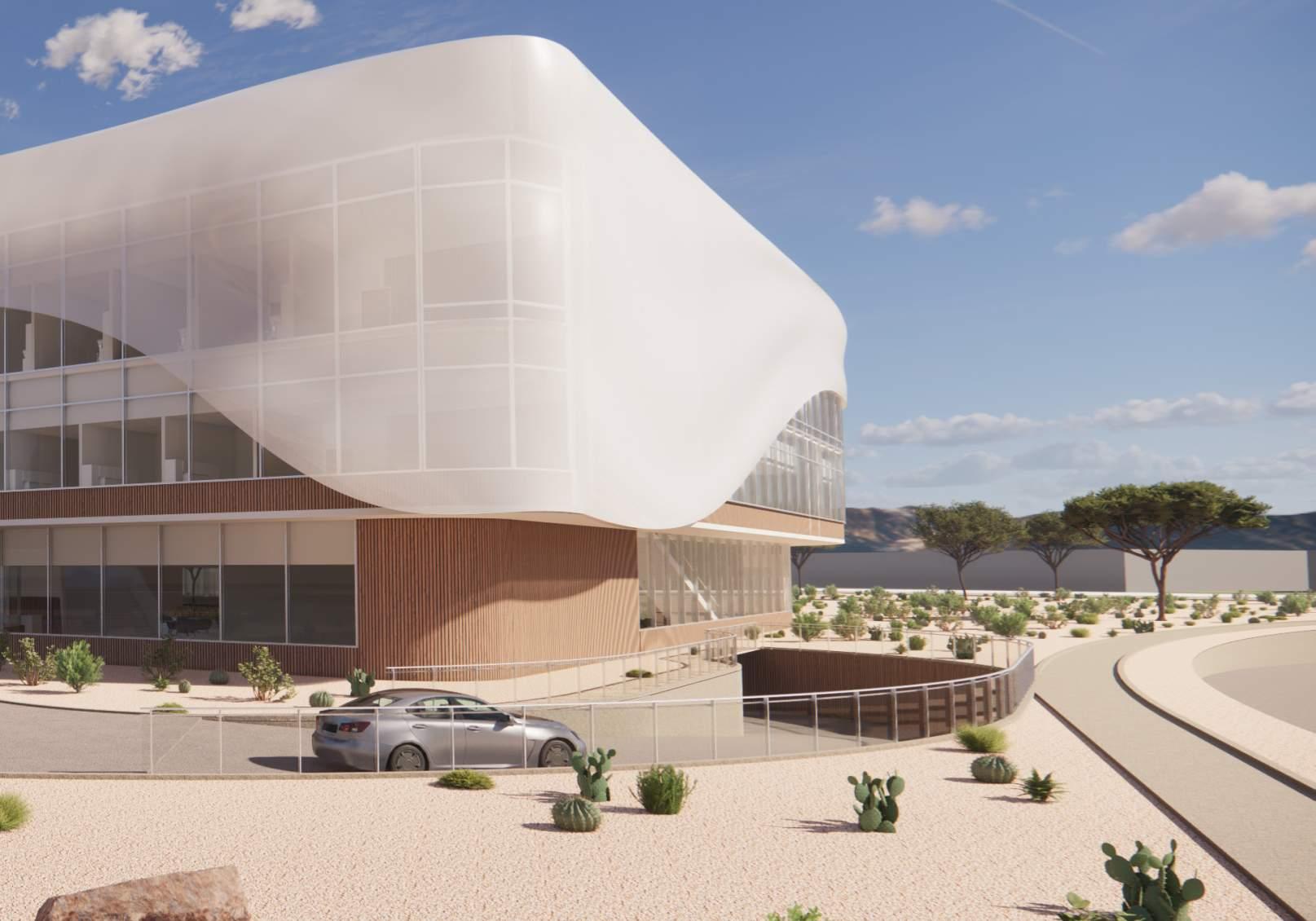
The Eye Institute of Nevada
Las Vegas, NV
Grace Craig
The University of Kansas School of Architecture & Design Health and Wellness Capstone Studio
