Governance Directions
Bula! Aviation leaders gather for governance training in the Pacific.
How CoSecs can stay up-to-date with AI tools in the boardroom.



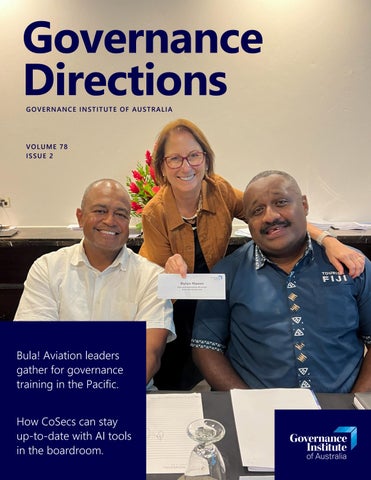
Bula! Aviation leaders gather for governance training in the Pacific.
How CoSecs can stay up-to-date with AI tools in the boardroom.
A national membership association, Governance Institute of Australia advocates for a community of governance and risk management professionals, equipping members with the tools to drive better governance within their organisation.
Our contact details
National office 1800 251 849 (02) 9223 5744
Level 11/10 Carrington Street, Sydney NSW 2000
customerservice@governanceinstitute.com.au
Call us on: 1800 251 849
Submissions:
Members of Governance Institute and others are welcome to submit articles for consideration. Please contact the editorial office for details and guidelines at media@governanceinstitute.com.au.
Disclaimer:
All expressions of opinion in this journal are published on the basis that they are not to be regarded as expressing the official opinion of Governance Institute of Australia, unless expressly so stated. Governance Institute of Australia, authors and all persons involved in the preparation and distribution of this journal, are not thereby giving legal, accounting or other professional advice and hence do not accept any responsibility for the accuracy of any of the opinions or information contained in the journal. Readers should not act or refrain from acting on the basis of opinions or information without first taking appropriate professional advice in respect of their own particular circumstances. Governance Institute of Australia does not accept any liability to advertisers for the publication of advertisements which may be held to be contrary to law. Material published in is copyright and may not be reproduced without permission. Governance Directions
It is with very mixed emotions that after six years of leading the Governance Institute, I have announced my decision to step down from the role in April.
It is never an easy decision to make, but I feel the timing is right for both me and the Institute to make way for a new leader to take the organisation on the next phase of its journey.
I’m incredibly proud of what the Institute has achieved over that time and am confident that it is well-placed to flourish over the years ahead
We’ve strengthened the foundations of the Institute including operational and process reform, digital transformation, and a strong culture of professionalism and engagement.
We have enhanced our profile and strength of voice in public policy and seen significant modernisation and uplift in governance
And, after the sale of our Sydney premises in 2022, we are in a sound financial position and investing in the future, with the launch of the Governance Academy and the Capability Framework, enabling governance professionals at all levels to get the education and skills they need to navigate a changing governance landscape.
I would like to send a very sincere thank you to our amazing members and volunteers who are the backbone of our success. This community is very special, full of dedication and drive to ensure best practice across all sectors of society I have so enjoyed working with you all on many issues over this time and I look forward to being a highly engaged member over the years ahead
My time at the Institute has been enhanced by working with some wonderful people to whom I am indebted for their support, encouragement and generosity. There are too many to thank individually, but I will carry many of those relationships forward fondly.
This is my penultimate CEO Memo I look forward to the remaining few weeks of leading the Institute as it moves forward into the next chapter
As Australia approaches a pivotal federal election, voters are being asked to consider not only plans to support economic growth and development, but also the ethical conduct and integrity of those seeking a seat in Parliament With real GDP growth lingering at 14% over the past financial year and forecasts predicting only marginal improvements, Australians will face a dual challenge: addressing economic uncertainty while demanding higher standards of ethical leadership.
Recent findings from the 2024 Ethics Index underscore the urgent need for reform. The ethical perceptions of federal politicians have fallen by four points over the past year, positioning them as the least trusted tier of elected officials, and only kept off the very bottom of the list by real estate agents In contrast, state politicians have improved by eight points, and local leaders have held steady
The Ethics Index also found that the gap between society’s expectations of good ethical conduct and the reality is growing, indicating that some of our institutions are failing to live up to community standards.
Governance Institute of Australia has laid out an ambitious pre-budget submission that calls for a comprehensive rethinking of economic and regulatory policies The submission identifies several key policy areas designed to strengthen both Australia’s economy as well as its ethical framework
Recognising the transformative potential of generative AI, the Institute recommends that government collaborate closely with industry. By mapping workforce capability gaps and launching digital upskilling and reskilling initiatives, Australia can harness new technologies to drive productivity, ensuring that digital advances benefit all Australians rather than entrenching inequality
The submission advocates for a coherent roadmap toward a low-emission, low-risk economy This plan would encourage nature-related financial disclosures and promote investment in renewable energy and green technology - vital for both environmental preservation and securing international capital flows amid increasing climate litigation and investor scrutiny.
The call for an independent Whistleblower Protection Authority and consistent, strengthened protections for those exposing unethical practices is a cornerstone of the submission. Alongside this, comprehensive corporate law reform is recommended to modernise the Corporations Act and reduce regulatory complexity, thereby stimulating productivity and safeguarding consumer interests
Our submission also calls for expedited strategies to diversify exports, particularly by expanding the services economy, which includes legal, financial, digital, and cybersecurity services, to reduce vulnerability to global shocks.
With the Ethics deficit gap widening, voters will undoubtably evaluate candidates not only on their promises to tackle cost-of-living pressures, housing affordability, and other pressing issues but also on their willingness to embrace a transparent, accountable, and reform-minded agenda
The power of democratic participation rests in the ability to demand high standards, ensuring that ethical conduct is the foundation upon which Australia’s future is built
MEGAN MOTTO, FGIA FCG
CEO, GOVERNANCE INSTITUTE OF AUSTRALIA



Embedding accountability in governance and risk frameworks
WA Tuesday, 6 May 2025 - Pan Pacific, Perth
SA Thursday, 8 May 2025 - U City, Adelaide
QLD Wednesday, 14 and Thursday, 15 May 2025 - Hotel Grand Chancellor, Brisbane
VIC Thursday, 22 and Friday, 23 May 2025 - Sheraton, Melbourne
NSW Thursday, 29 and Friday, 30 May 2025 - Intercontinental, Sydney





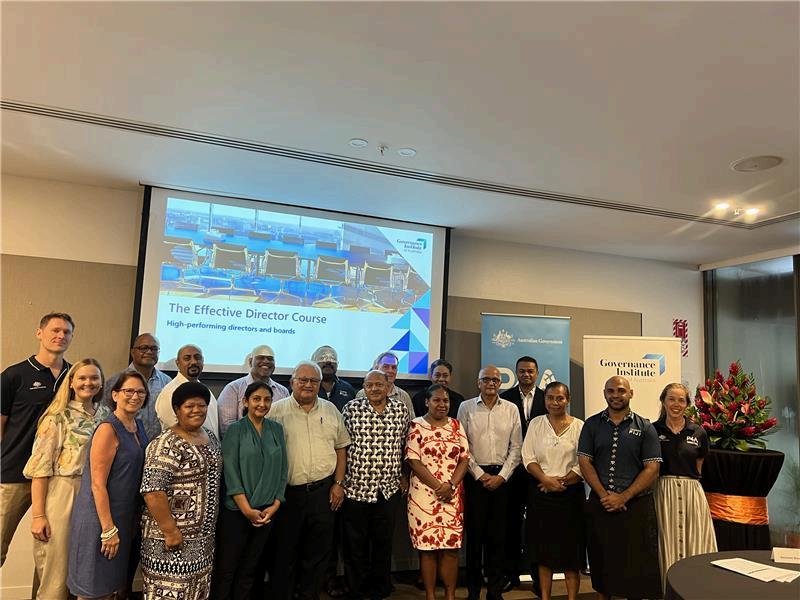
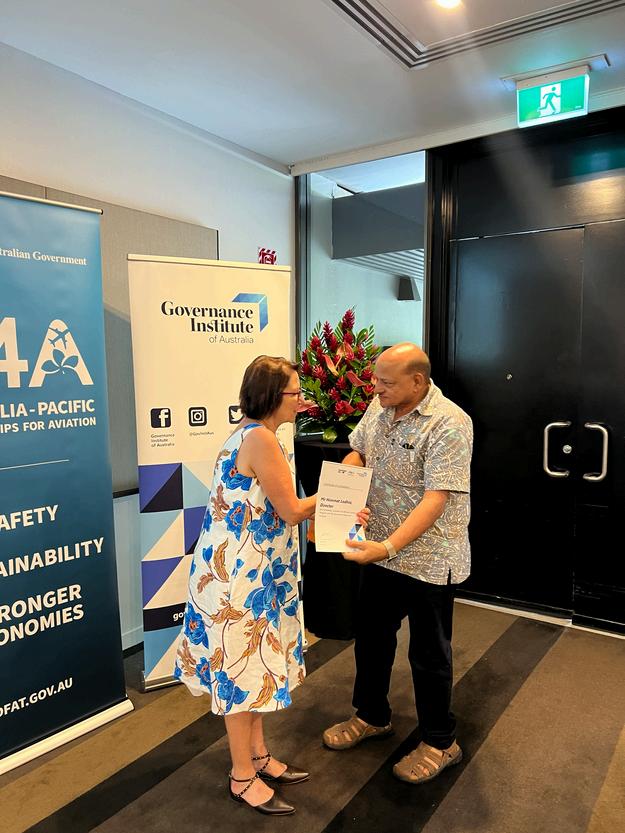
One of the Governance Institute’s flagship courses, the Effective Director Course made its way to Fiji in February, as part of the third installment of director training in collaboration with the Department of Foreign Affairs and Trade’s Australia-Pacific Partnerships for Aviation program
For four days at the Intercontinental Fiji Golf Resort & Spa, directors from Fiji and the Solomon Islands exchanged ideas, refined their skills, and built lasting connections under the expert guidance of facilitator and Governance Institute Board Director Debora Jackson
The training is focused on contemporary board structure and practices to improve the confidence of Directors in exercising their duties, making decisions, and developing a strategic outlook for their aviation or tourism organisation.
Executive Director of the Australia-Pacific Partnerships for Aviation James Ramsaey said the program’s goal is to drive economic growth by strengthening the enabling environment for aviation in the Pacific
‘One of the most practical ways to do that is to improve governance planning and decisionmaking in some of the key aviation organisations like airports, airlines, regulators and governments,’ he said.
‘When you are promoted to board director, you don’t necessarily get training, which is why I think this course has been extremely useful for new directors and for experienced directors looking to refresh their skills.’
‘We’ve been really pleased to see aviation and tourism leaders from across the region sharing their insights, and we hope that continues’
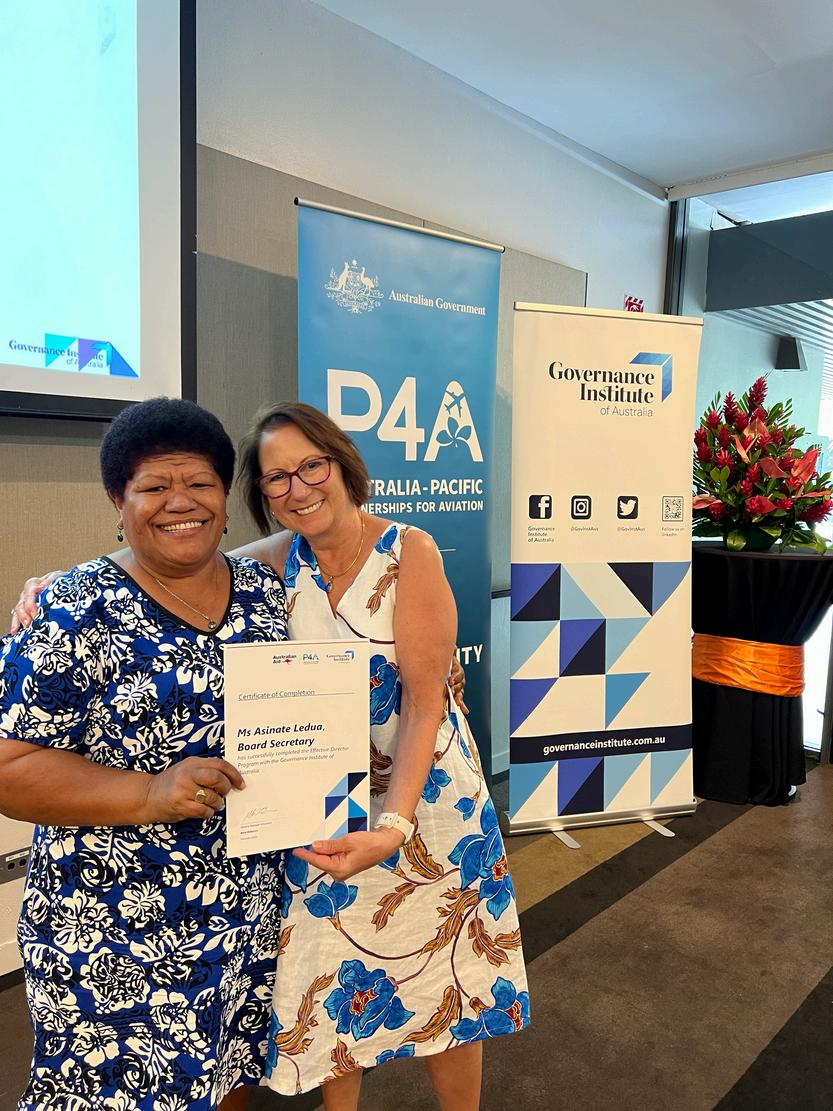
In 2024, 27 participants from Kiribati, Vanuatu, Fiji, Tonga and the Marshall Islands received board governance training in Brisbane and Canberra as part of the program. Another 16 have now graduated from the course, ready to put their newly honed skills and refreshed knowledge into practice
Seini Nabou, Fiji Airways Board Director and Chair of the Risk Sub-committee said taking time out to have conversations with other board directors – especially women - was invaluable
‘It’s been good to have free-flowing discussions with other board directors and Debora has been a really fabulous facilitator,’ she said.
‘We were also very lucky that we had colleagues from Solomon Islands aviation sector and two of them
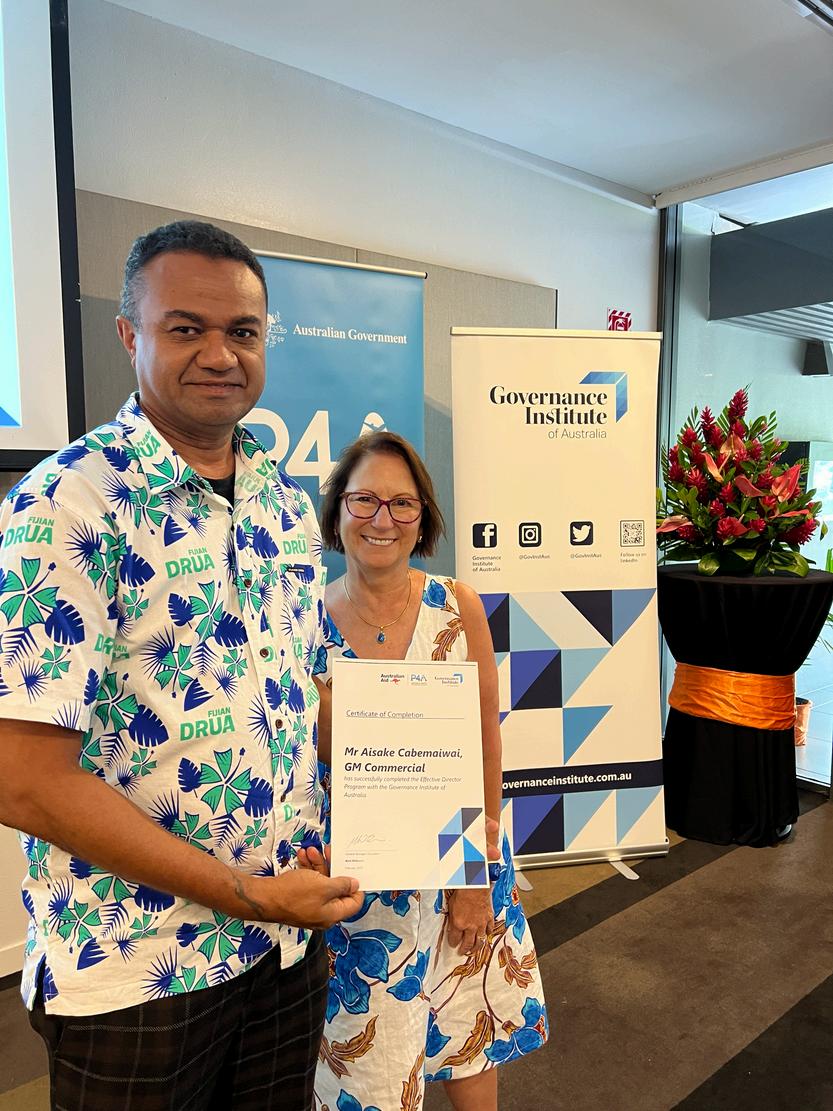
were women. Hopefully, it will entice more women leaders on boards so that we can come together and then elevate the standards of board excellence.’
Eroni Puamau, Tourism Fiji Board Director said the course provided him greater understanding of how to work collaboratively among directors with diverse perspectives
‘One of the learnings I really valued from the Governance Institute course has been the interaction with other serving board members of other state-owned boards,’ he said
‘It’s been really invaluable for me in terms of just learning different perspectives, learning different viewpoints, and understanding that a board is


really a collection of diverse opinions and perspectives that really are important in terms of how we can work together in forging forward to a common purpose of decision-making, for the benefit of the destination, for the benefit of the organisation that we serve’
He said establishing new networks and relationships with other directors has given him a broader community with which to share ideas and thoughts going forward.
‘Because when you have that relationship, you're able to then use the experiences, use the context that we’ve developed from this course, especially in areas where there are blind spots, to really get a wide balance of opinions I think an important aspect of board leadership is to be able to have the confidence to really ask and get opinions from a wider audience than what we perhaps are used to’
For Areau Hivu, Solomon Airlines Board Director, the practical guidance that the course offered was of utmost importance for her role.
‘Especially on the board charter, the induction policy. We don’t have any policy on induction, so it’s a really good guide for us to go back and put what we learn from the training into the organisations we represent.”
Experienced board director James Sowane, who is on the board of the Civil Aviation Authority of Fiji, said he gained a better understanding of how to be an ethical and effective director
‘Just when you thought you knew quite a lot, you pick up some gems,’ he said
‘One of the topics that would be a big takeaway for me would be managing conflicts of interest How do we record it and how do we manage it at every ongoing board meeting? That’s a big issue for directors in Fiji.’
A standout element of the training was the mock boardroom scenario. Not only was it about learning to manage issues but also learning to manage different characters that were role-played,’ James Sowane said.
‘Sometimes you see yourself in other characters, and it gives you an opportunity to learn how to manage boardroom dynamics’
‘I think an important aspect of board leadership is to be able to have the confidence to really ask and get opinions from a wider audience than what we perhaps are used to.’
Board Secretary for Tourism Fiji Asinate Ledua said she was enthusiastic about the opportunity to receive proper training in how boards operate.
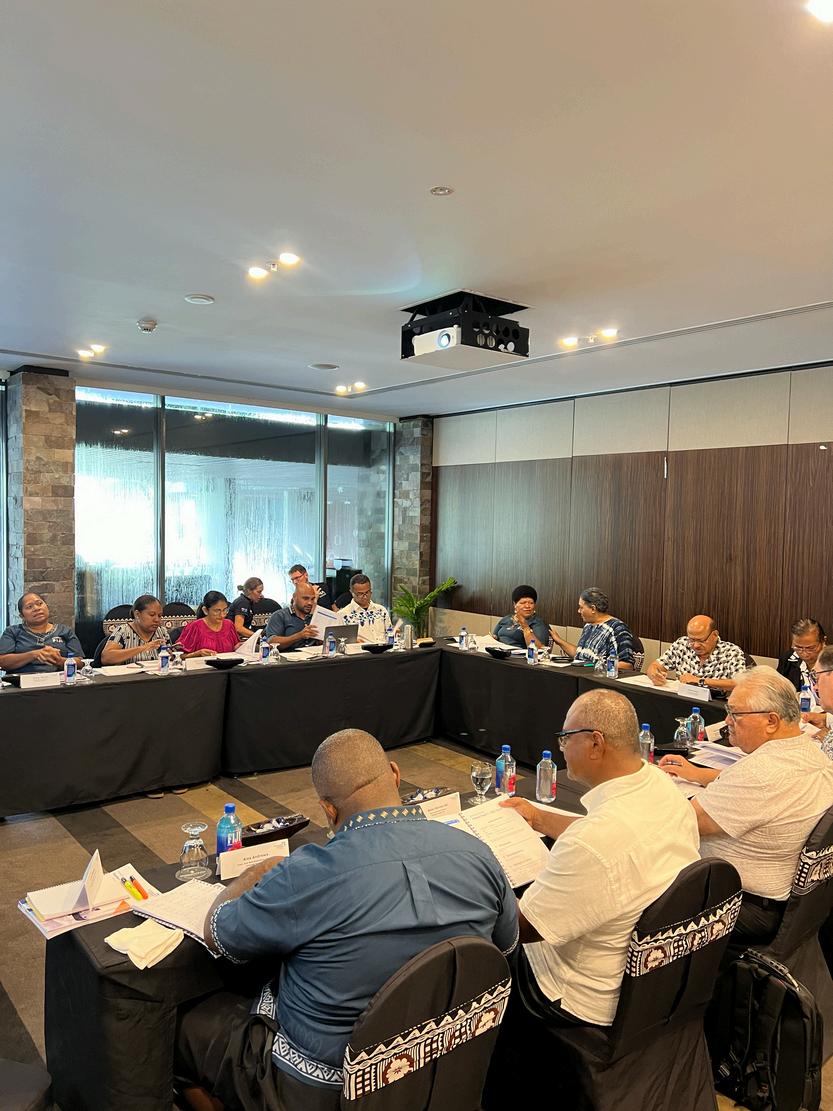
‘I’ve learned so much and there’s so many things we have done. Five of us came from the Tourism Fiji board and we achieved a lot,’ she said.
‘We’re looking forward to our next board meeting because I’ve told them we are getting things changed!’
If you or your organisation are interested in developing practical tools to be an effective director, head to our website for more information about the Effective Director Course

An extract from a speech by Dominique
SC given at the 2024 Association of Independent Schools of New South Wales Governance Symposium in Sydney.

A key principle of good governance is risk management. One element of risk management is reputation risk. We know that reputation is the opinion that people in general have about someone or something, or how much respect or admiration someone or something receives, based on past behaviour or character
Reputation risk, in turn, is the threat or danger to the good name or standing of a person or entity Reputational risk can arise directly – because of the actions of the entity; indirectly – due to actions of a leader or employees; or tangentially –through other peripheral parties, such as stakeholders and alumni.
The real problem with reputational risk is that it can seemingly erupt out of nowhere and without warning. Hopefully, it can be mitigated through prompt damage control measures. But reputational damage will occur when any kind of risk is not managed in a timely or sufficient manner Common causes of reputational damage are regulatory contraventions or other breaches of the law, misbehaviour by leaders, and misconduct by employees Increasingly, we can add data breaches from cyber-attacks But a loss in reputation can have cascading and cumulative consequences for organisations
You can seldom apologise your way out of a reputation crisis – although that is not to say that communication won’t become key. Often enough, the reputation crisis has revealed there to be fundamental problems of culture and governance at play.
There is no better example of the consequences of reputational damage borne of poor governance and culture than the stories that have emerged through Australia’s highest form of public investigation Royal commissions have become an entrenched feature of Australian public life They have broad powers to probe wrongdoing as well as to formulate the changes necessary to avoid a repetition Their qualities of independence from government, their neutrality and transparency, and the delivery of a reasoned report, have made them attractive tools to Australian governments
Recent royal commissions have been established to report on a vast range of matters with social, economic, and legal significance. Well known to those in the education sector is the Royal Commission into Institutional Responses to Child Sexual Abuse, a commission regarded as having a strong and ongoing impact.


There have been many more At the national level, their subjects have been diverse, including an automated social security debt collection program, natural disaster arrangements, aged care quality and safety, misconduct in the banking, superannuation and financial services industry, misconduct affecting people with a disability, trade union governance and corruption, and the collapse of Australia’s second largest insurer.
State-based commissions have been just as varied, including water access regulation in the Murray-Darling Basin, regulation of the greyhound racing industry, and the adequacy of funding of compensation for the James Hardie Group’s asbestos-related liabilities There are many more
I propose to focus on recent inquiries into the public sector, the corporate sector, and the not-for-profit charity sector, in order to explore issues of reputation risk and governance, before turning to lessons learned and suggested questions for school leaders and boards as ‘homework’ to translate into action
The Royal Commission into the Robodebt Scheme (2022-23) investigated an automated debt collection program aimed at recovering over-payments of social security benefits. In 2021, the Federal Court of Australia declared the scheme unlawful, calling it a "shameful chapter" in public administration.
Chaired by the Hon. Catherine Holmes AC, the Commission highlighted the human and economic costs of the scheme. It found that people suffered in various ways, and evidence linking the scheme to suicides Economically, the scheme, intended to save $4772 billion, instead cost over $565 million due to administrative failures and legal settlements
RoyalCommissionintothe
Royal
RoyalCommissionintoDefenceand
intoNational
RoyalCommissionintoAgedCare QualityandSafety;RoyalCommissionintoMisconductintheBanking,SuperannuationandFinancial ServicesIndustry;RoyalCommissionintoViolence,Abuse,NeglectandExploitationofPeoplewith Disability;RoyalCommissionintoTradeUnionGovernanceandCorruption;RoyalCommissionintothe collapseofHIHInsuranceLimited.
The Commissioner criticised the scheme's rushed implementation and lack of proper legal advice. She emphasised the need for greater transparency in Cabinet decision-making and recommended repealing FOI legislation that mandates secrecy for Cabinet documents
The Commission's recommendations focused on restoring trust in the social security system and strengthening public service integrity A sealed chapter of the report contained referrals for further investigation to hold individuals accountable, though the details remain confidential
The Royal Commission into Misconduct in the Banking, Superannuation and Financial Services Industry (2018-19), chaired by former High Court Justice Kenneth Hayne AC, focused on the role of corporate culture in driving misconduct. Justice Hayne identified culture as the shared values and norms shaping behaviours, emphasising that it is ‘what people do when no one is watching.’
The Commissioner found that poor culture led to widespread misconduct in the financial sector He placed responsibility for this misconduct on corporate boards and recommended regular assessments of culture and governance to identify and address issues
The investigation highlighted the severe consequences of reputational damage, including loss of trust, financial support, and increased regulatory scrutiny. The Commission's findings underscored the importance of ethical leadership and transparency in preventing misconduct and maintaining public trust.
The report also drew parallels with previous inquiries, such as those into the collapse of HIH Insurance and the James Hardie asbestos scandal, which similarly exposed significant corporate failings and led to regulatory actions like fines and director disqualifications
The overarching message was clear: strong, ethical leadership and a culture of integrity are crucial for good governance and public confidence Many independent schools are structured as incorporated entities Your boards and its members will be subject to specific common law, equitable, and statutory obligations. Most will be established on a not-for-profit or ‘for-purpose’ basis.
Some may be closely associated with religious charities, or at least charities established for educational purposes. So for some, the Governance Standards overseen by the Australian Charities and Not-for-Profits Commission rather than the Corporations Act 2001 (Cth) will warrant close attention and understanding Still, whilst their sanctions may differ, the substantive duties on directors are much the same
The RSL NSW Charitable Fundraising Inquiry (2017-18) chaired by Patricia Bergin SC, investigated misconduct within the RSL under the Charitable Fundraising Act 1991 (NSW)
‘The
overarching message was clear: strong, ethical leadership and a culture of integrity are crucial for good governance and public confidence.’
The inquiry revealed widespread ignorance of fundraising laws, cronyism, and improper conduct, including misuse of credit cards The RSL faced severe media and political scrutiny, risking the cancellation of fundraising licenses crucial for supporting veterans
The RSL's constructive approach, including leadership changes and cooperation with regulators, helped avoid license cancellation. Enforceable Undertakings with the ACNC outlined measures for improved governance and accountability.
These steps were essential for restoring trust and maintaining the RSL's financial sustainability and charitable status.

The Royal Commission into National Natural Disaster Arrangements (2020) highlighted Australia's alarming disaster outlook, emphasising the need for climate risk governance.
The Commission found that extreme heat and intense rainfall pose significant risks to health and wellbeing, particularly in school communities Heatwaves, bushfires, cyclones, and floods can trigger cascading and cumulative disasters, impacting vulnerable populations
The Commission's findings were reinforced by research from Natural Hazards Research Australia
An example from Mallacoota, Victoria, illustrated the compounded effects of bushfires and the COVID-19 pandemic on the community and its school. The inquiry underscored the importance of addressing climate risks for effective reputation risk management and good governance.
In my experience, how constructively leaders and boards respond to the pressure of an inquiry and investigation strongly correlates to their outcomes and downstream consequences.
Organisations and institutions that seek to conceal evidence of wrongdoing, error, incompetence, or other embarrassing information will eventually come undone. Indeed, they may suffer irremediable reputational damage, which will cascade into adverse regulatory action, perhaps even criminal sanctions
By contrast, experience shows that openness and engagement will be positively acknowledged by inquirers and begins the rebuilding of your reputation
Dominique Hogan-Doran SC is a barrister and Senior Counsel of the Australian Bar. She is also an experienced non-executive director and trustee. Dominique has appeared in over 20 Royal Commissions and public inquiries.
By answering these questions, you will help frame your school board’s agenda and translate good governance objectives into action.
Position, performance and prospects
Do we understand the risks and opportunities for our prospects over the short, medium and long-term?
Have we considered both the risks inside and more broadly?
Where material, how do risks impact on our performance and position?
Regulatory shifts
How are we placed to meet evolving regulatory and policy shifts?
How might these shifts impact on our strategy or create compliance risk issues?
Board capacity
Do we have the right capabilities to oversee management of risks and respond strategically?
How can we be supported by management or external experts?
Organisational strategy
How do material risks & opportunities factor into our strategy?
Have projections for future taken risks & opportunities into account?
Risk management
How do our risk management processes incorporate and mitigate risks?
For example, how is regulatory risk impacting personnel management?
Stakeholders’ expectations
What are expectations in relation to governance - and how are these evolving?
How may these impact on us (and any ‘social licence’ to operate)?
Do we have internal capacity to meet these heightened pressures?

Director & Principal of Governance in Action Pty Ltd, David Cantrick-Brooks FGIA FCG takes a look through the growth in tech-based solutions available to CoSecs.
Documents are at the heart of company secretariat practice. For many years printed or ‘hard’ copies of documents had to be faxed, posted or couriered, or manually processed and manually filed in a compactus or similar filing device.
Changes tended to be small and on the fringes of existing practices. Fast forward a mere 15 years or so and almost all documents are now transmitted via email or by a document sharing app before being processed on screen and electronically filed.
The filing of documents in a central and secure shared network drive began to overtake the manual filing of hard copies, with the added benefit of being able to electronically search for documents (if filed, indexed and named logically).

Sophisticated databases and entity management systems with online regulatory lodgement capability were followed by board portals, although these are still relatively expensive and can generally only be justified by larger organisations with active boards
Board portals were heralded as a major ‘game changer’ for company secretaries, removing the very time-consuming and expensive task of printing and physically despatching documents to meeting attendees
Board portals have since been supplemented by workflow-type modules and apps aimed at improving the internal efficiency of managing board and committee meetings, including agenda-setting, the arrangement and approval of papers for publication (uploading) into the board portal, the notification of publication, the drafting of minutes, the approval of minutes and circular resolutions, the facilitation of selfassessment surveys, and so on
COVID-19 further accelerated the need for change when working from home became mandatory and meetings had to be held virtually
“THE TRANSITION TO A CLEAN ECONOMY WILL REQUIRE NEW SKILLS; AN AGEING POPULATION WILL REQUIRE OUR SKILLS TO BE REFRESHED.”

The table below demonstrates how company secretaries are now embracing technology (IT) as part of regular practice. One cannot help but think that we are seeing a seismic shift in how company secretariat teams currently operate and what might be possible in the future – especially as the next generations of IT-savvy company secretaries move up the ranks.
Compared with most other professional groups, company secretaries, as a whole, are a conservative group
They have a preference for sticking with tried and tested ways of doing things, even if they aren’t the most efficient – possibly as a consequence of:
Fear of, or resistance to, change
A degree of conservatism that exists amongst company secretaries
Lack of curiosity about trends in corporate secretarial practice or technology outside of that practice area There is a different approach to company secretarial practice in the US, where a significant amount of entity management work is outsourced to third-party service providers who are often attached to registered agents, with their own proprietary systems
Stringent budgets - revenue centres tend to be better funded than cost centres, meaning there’s seldom additional budget for new software or attention to the transition and training required to get the best yield on the investment
Not having any capacity to invest time in better ways of working, even if is recognised as an area of improvement
Limited internal resources for advancing IT-related requests and projects
A prevalent view amongst company secretaries (and some others) that the company secretarial function provides a highly personalised and professional service, and the use of technology in the delivery of that service is not front of mind Software vendors not doing enough to promote the existence and benefits of their products.
Also, company secretarial practice wasn’t seen as a key area of business development for software houses, even though the potential market was enormous. Almost every organisation in the world has meetings and relies on good record-keeping
Whilst company secretarial practices and systems have come a very long way from where they were around 15 years ago, there is still much to do to improve the standard, efficiency and accessibility of governancerelated systems and resultant deliverables which support the entity, management and directors
One of the areas where this is most obvious is the way in which meetings and related activities are managed behind the board portal, which, for many organisations, is still very labour-intensive, timeconsuming and error-prone, despite the heroic efforts of some highly qualified and diligent company secretarial staff
Artificial intelligence (AI) has quickly emerged as a very powerful tool with apparently boundless applications! However, it comes with a few cautionary notes. First, whilst AI may indeed be an extremely powerful tool, there are some very important legal and information security considerations which must be considered, including whether:
The inputs are accurate, relevant, free from bias, up-to-date and complete
The outputs are accurate, relevant, useful, verifiable and reliable
The outputs are inconsistent, or at odds, with previous decisions based on similar information
The inputs and outputs are secure
The inputs and outputs are discoverable in legal proceedings
Reliance on the outputs demonstrates appropriate diligence
AI becomes an integral part of the decisionmaking process over time
Second, AI may start to be embedded in systems whether people like it or not
It’s worth noting that whilst AI may be extraordinarily attractive, we probably don’t need to worry about AI doing the tricky, nuanced parts of company secretarial practice (such as writing minutes) if we are still spending a material amount of time on simple, unnuanced work such as formatting those minutes. In simple terms, technology should automate the ‘dumb stuff’ before we need it to automate the ‘sexy stuff’.
It will be interesting to see where AI takes us in the future, and what the courts make of it in the context of governance failures where AI is relied upon in making or not making a critical business decision.

CoSecs are encouraged to:
Be curious and research the technology products currently available to assist them in performing their roles
Discuss CoSec systems, processes and practices with peers to learn what other CoSecs are using and their experiences
Consider and assess which CoSec-related activities and areas can be cost-effectively automated, or otherwise improved, within their own organisations
Do some kind of activity analysis – ie what are they, and their teams, actually spending their scarce time on? This is often required to make a compelling business case for change You can’t justify spending tight budgets on a software solution without some facts demonstrating that it will generate a meaningful return in time savings for the company secretarial function and the company
Discuss proposals and recommendations with management and the board if changes are warranted
Embrace change and be prepared to invest time to make improvements
The days of manual and archaic systems, processes and practices are thankfully drawing to a close, and organisations should support CoSecs in transitioning to better ways of working, like most other parts of the business
Thankfully, in this regard, there is an increasing number of products available and coming onto the market to make this a reality
Make technology a need to do, rather than a nice to do, and don’t be left behind!
David Cantrick-Brooks FGIA FCG Director & Principal Governance in Action Pty Ltd
Based on a simple desktop review, here is a list of some examples only and do not represent an exhaustive list of available products – nor does the inclusion or exclusion of a product indicate that it is recommended or not recommended (unless otherwise stated)
Some products may be jurisdiction-specific and may not be suitable for use in other jurisdictions In addition, IT helpdesk, compliance training, employee self-service and finance-related apps, of which there are many, can be used throughout the organisation (including by CoSecs).
Activity / Area of Application
Maintenance of various records and registers
Vendor and Product
Comments
Management of entities (including lodgement of various change-related forms / documents with ASIC)
Microsoft Word and Excel (generally saved in a shared drive with restricted access to maintain confidentiality and version control, US-based)
Computershare Issuer Online (for interrogating the register of members, Australian-based)
MUFG Miraqle (for interrogating the register of members, Australian-based)
Automic Invana (for interrogating the register of members, managing shareholder groups and, where relevant, beneficial ownership tracing, Australianbased)
Documents are created in Microsoft Word and often maintained on a secure network drive A Word document is often all that is required, so no need to over-think it! Excel is powerful and easy to use
Listed companies will invariably engage a third-party share registry to maintain their register of members
Mainly:
BGL CAS 360 (Australian-based)
Computershare GEMS (Australian-based) Corporify (Belgium-based)
Diligent Entities (formerly Blueprint OneWorld) (US-based)
Many companies (through their legal advisors) use proforma documents to create new entities, generally Word documents
Companies with large corporate structures will often use specialist software to manage their entities.
Companies with few entities will often simply use Microsoft Office products (e.g. Word and Excel) to manage their entities.
Microsoft PowerPoint is often used to prepare group structure charts where dedicated entity management systems are not used
Lodgement of documents with key regulators (ASIC and ASX)
Policies and procedures
Board and committee meetings, including:
Scheduling meeting dates
Setting agendas
Compilation, approval and despatch of meeting packs
Conduct of meetings Preparation of minutes
Approval of circular resolutions
Socialisation of actions / matters arising
Maintenance of workplans
Records of attendance at meetings (for annual financial reports)
Board skills matrix
Primarily: ASIC Edge (no charge) ASX Online (no charge)
Microsoft Word and Excel (generally saved in a shared drive with restricted access to maintain confidentiality and version control, US-based)
Adobe Acrobat Pro is strongly recommended to facilitate the preparation of documents for lodgement.
Documents are created in Microsoft Word and often maintained on a secure network drive Approved policies are published (or posted) on a company-wide intranet site
There are various apps which can assist with scheduling meeting dates, including: Doodle (Swissbased) Microsoft Scheduling Polls (a free feature in Outlook) Board portals (for dissemination and review of meeting papers by directors and/or committee members), include:
Boardcycle (Australian-based)
BoardPAC (US-based)
BoardPro (for SMEs and NFPs, Australian-based) Boardtrac (Australian-based)
Computershare
BoardWorks (Australian-based)
Convene (US-based)
Diligent Boards (US-based)
Some companies use Microsoft SharePoint to manage the agenda setting process and paper compilation (including the use of workflow) There are some pros and cons attached to this
Board portals can be very expensive, so small companies will probably need to weigh up the costs and benefits
Governance Online (Australianbased)
NASDAQ Boardvantage (US-based)
OnBoard (US-based)
2 1 3
Online meetings , including:
Cisco Webex (US-based)
Google Meet (US-based) Microsoft Teams (US-based) Zoom Workplace (US-based)
Using the resource centre within the board portal enables constituent documents, past meeting papers, policies, procedures and other key documents to be easily accessible.
Microsoft Word and Excel (generally saved in a shared drive) Simple and easy.
Board self-assessments
Execution of documents (electronically)
Management of material contracts (NB whilst often managed by the internal legal function or the business the company secretary is a user, so it is included here for completeness; some organisations rely on the company secretary to maintain these records)
Many , including:
Better Boards (UK-based)
BoardOutlook (Australian-based)
Google Forms (US-based) KPMG
Board Effectiveness Evaluator
Platform (Swiss / UK-based)
Microsoft Forms (US-based)
Qualtrics (US-based)
SoGoSurvey (US-based)
Survey Sparrow (US-based)
SurveyMonkey (US-based)
Wufoo (by SurveyMonkey, USbased)
As well as various board meeting management software (refer above)
Many , including:
Adobe Acrobat Sign (US-based)
Concord (US-based)
DocHub (US-based)
Docusign (US-based)
DocuWare (US-based)
Formstack Sign (US-based)
MSB Docs (Indian-based) pdfFiller (US-based)
Many , including some mentioned earlier and:
Concord (US-based) Conga (USbased)
ContractZen (Finland / USA-based)
Docusign CLM (US-based)
Ironclad (US-based)
LinkSquares (US-based)
PandaDoc (US-based)
Plexus (Australian-based)
Thomson Reuters (Canadian-based)
M&A transactions
Background checks in relation to ‘fit & proper’ assessments of directors
Project management software (such as Nexvia and ProjectManager) Virtual data room software (such as Ansarada)
Many , including: Checkmate (USbased) First Advantage (USbased) ProbityPeople (Australianbased) WorkPro (Australian-based)
Data rooms are generally managed by the Legal function
This is often done in collaboration with the HR function
Desired features and ease of use – get key stakeholder feedback Cloud hosting is recommended to avoid the numerous issues with internal hosting
Familiarity with products already used by directors at other organisations
Benefits including significant time savings, reductions in errors and rework, and improved levels of support for the board and management
Risks including efficiency, reliability and security
Compatibility with other systems already in use
Time and resources required to assess, implement and gain the required expertise in the software
Costs including initial and ongoing, including annual price increases
Reputation of the software vendor
Customer support for both users and system administrators
Customer ratings

The dominant product in Australia (because so many directors use it in other organisations) Declaration of interest – the author has an economic interest in Governance Online Pty Ltd

Sponsored article
By Kirsten Smith, CGP, FCG, AICD, Principal, Board Benchmarking
Key Insights:
Board reviews are more important than ever, but at least 10% of boards have never done any review.
Internal board reviews are still quite primitive, with over 25% still using paper surveys, excel or other spreadsheets.
Internal board reviews are widely used but lack benchmarking, and directors are less likely to be candid.
External reviews provide credibility and benchmarking but can be costly and timeconsuming
A blend of external and internal reviews is considered best practice
Boardreviewsaremoreimportantthan ever
In recent years, regulators, investors, and stakeholders have increased their expectations around board accountability and effectiveness.
There has been a stronger emphasis on governance transparency, with organisations facing greater scrutiny over board performance and decision-making
For example, in Australia, the ASX Corporate Governance Council’s Principles and Recommendations (4th Edition) emphasise the importance of regular board performance reviews to ensure boards are effectively overseeing risk, culture, and long-term sustainability.
Similarly, Board evaluations are increasingly recognised as a critical governance practice. Governance Institute of Australia highlights that regular board reviews help assess legal responsibilities, clarify roles, optimise meetings, and identify areas for development
In this context, board reviews, both internal and external, have become an increasingly important governance tool Many organisations are now reassessing their approach to board reviews, seeking ways to ensure their review processes are meaningful and effective.

To better understand how governance professionals approach board reviews, Board Benchmarking surveyed more than 130 Company Secretaries, Directors, and governance professionals
Despite the growing importance of board reviews, at least 10% of boards have never assessed their performance, and at least onethird have never carried out an external review of their board’s effectiveness
A staggering 14% say they still use paper forms, and another 13% say they use Excel or some other spreadsheet to carry out their internal board review. This is surprising in an era dominated by technology.
54% say they use an online survey platform like SurveyMonkey, Microsoft Forms or similar and another 9% use dedicated board software like Board Benchmarking, BoardPro or similar
The Company Secretary is often responsible for administering and overseeing the internal board review process Their deep understanding of governance practices makes them well-placed to coordinate these reviews However, this proximity to the board can sometimes be a challenge
THE GROWING
OF BOARD REVIEWS, AT LEAST 10% OF BOARDS HAVE NEVER ASSESSED THEIR PERFORMANCE, AND AT LEAST ONE-THIRD HAVE NEVER CARRIED OUT AN EXTERNAL REVIEW OF THEIR BOARD’S EFFECTIVENESS.
“The quality of an internal review is very much dependent on the skills and experience of the Company Secretary. If a consistent approach is used, it can enable the Company Secretary to highlight trends, improvements, and where governance may be weakening.”
While this reinforces the importance of having an experienced governance professional oversee the process, it also raises questions about objectivity Directors may be reluctant to share candid feedback, knowing that the results will be reviewed internally by someone they work with regularly
A CEO and Non-Executive Director echoed this concern, stating:
“Internal board reviews are often seen as marking your own exam; use of an externally validated tool/questionnaire would provide better objectivity.”
These concerns suggest that while internal reviews are valuable, they must be carefully structured to ensure credibility and genuine reflection
The two biggest concerns expressed about internal reviews were that they lacked benchmarking (76% of respondents) and that directors are less likely to be candid (59% of respondents)
Internal reviews come with several key challenges One of the most significant issues raised in the survey was the lack of benchmarking.
Unlike external reviews, which often provide comparisons with industry best practices, internal evaluations tend to focus on the board’s perceptions of its performance.

Another common challenge is time and resource constraints 25% of respondents noted that internal reviews can be time-consuming, requiring governance teams to develop surveys, collect responses, and compile reports tasks that can divert attention from other governance priorities.
A Senior Governance Professional highlighted another challenge:
“Some boards are not ready for self-evaluation. The established governance processes have not considered the board evaluation to be a priority. Self-evaluation can be difficult if not accompanied by reflection and action to improve”
One respondent highlighted the difficulty of ensuring follow-through on the findings of an internal review:
“When conducting an internal board review, care should be taken to isolate the review from other items of the board’s business so that the review and its outcomes are not compromised by reference to other agenda items.”
Despite the potential drawbacks, internal board reviews remain a widely used governance tool due to their accessibility, low cost, and flexibility.
One advantage of internal reviews is that they allow boards to assess their performance in a way that aligns with their unique needs and priorities 49% of respondents noted that internal reviews help boards focus on issues that are most relevant to them rather than relying on a standardised external framework
A Senior Board Advisor noted that internal reviews can be useful as a pulse check between external evaluations:
“Supplementing internal reviews in non-external review years can allow for internal reviews to focus attention on areas identified by the external review. They can almost function like a pulse check.”
Another advantage is cost-effectiveness.
Engaging an external reviewer can be a significant investment and for many organisations particularly notfor-profits and smaller boards an internal review is the only practical option 58% of respondents agreed that internal reviews are a more budget-friendly alternative
This reinforces the idea that an internal review is only as valuable as the action it drives. Without clear accountability for implementing improvements, even the most thorough review risks becoming a theoretical exercise rather than a catalyst for change.
A comprehensive study by Insync found that the most effective boards use performance reviews as an opportunity for strategic self-reflection, ensuring continuous improvement rather than routine compliance
The most significant drawback of external reviews is cost, with 87% of respondents stating that engaging an external provider was a significant financial investment. For smaller organisations, this can be a barrier to participation.
By leveraging the use of technology, some providers, such as our sister brand Board Surveys, have developed an Entry Level board survey and benchmarked report for as little as $499 These technology solutions are even starting to act as a good option for an internal board survey
While internal reviews are the norm for many organisations, external board reviews offer a level of independence and credibility that internal processes often lack.
In the survey, 66% of respondents indicated that they had engaged an external provider for a board review at some point, with the majority citing the desire for independent and impartial feedback as the primary reason. 79% stated this as a key factor in their decision.
A Senior Executive explained:
“It may be challenging for the board chair to follow up on issues or concerns without the assistance of an external party”
Another major benefit of external reviews is access to benchmarking External providers can compare a board’s performance against industry standards and peer organisations, helping to identify gaps and best practices.
Other challenges included aligning an external review with the board’s specific needs and ensuring that the findings were actionable.
A respondent expressed concern that:
“The scepticism of the outcome of an external review not being fit for purpose Also, the inability/inertia to take appropriate action and determine concrete next steps to get to a pre-desired outcome”
For many boards, the most effective strategy is a combination of both approaches using internal reviews to track progress and external reviews for broader benchmarking
As governance expectations evolve, boards must ensure that reviews translate into meaningful action. Governance Institute of Australia recommends aligning board evaluations with organisational purpose, strategy, and priorities to maximise impact.
Best practice for board reviews follows a structured cycle, a formal external review every three years, with internal reviews in the intervening years

Additionally, directors may be less open when speaking to an external reviewer, particularly if they feel uncertain about how their feedback will be interpreted.
Despite these challenges, most respondents who had engaged an external reviewer believed it was a valuable exercise. Many boards find that alternating between internal and external reviews offers the best balance of cost, objectivity, and relevance
Ultimately, the choice between an internal or external board review depends on the organisation’s needs, capacity, and objectives
This approach ensures that boards receive independent, benchmarked insights on a regular basis while also maintaining yearly accountability and continuous improvement.
External reviews provide an objective assessment, comparing board performance to industry best practices, while internal reviews help boards track progress on recommendations and address emerging governance issues
A well-balanced review process should not be seen as a tick-the-box exercise but as an opportunity for genuine self-reflection and development The most effective boards use internal reviews as “pulse checks” to assess whether they are improving in key areas identified during external evaluations
This consistent cycle of review and action helps boards stay proactive, accountable, and aligned with bestpractice governance standards
For boards seeking to enhance their governance practices, benchmarking against industry standards can provide valuable insights.
At Board Benchmarking, we offer a free trial survey for a single user, allowing governance professionals to assess key effectiveness metrics and compare their board’s performance against best-practice benchmarks Click here to try our free trial
Kirsten Alice Smith CGP, FCG, AICD, is a Principal at Board Benchmarking, specialising in governance effectiveness and board performance reviews
BoardBenchmarkingisAustralia’sleadingproviderof world-classBoardEffectivenessSurveysandexpert governanceadvice,withover500boardsinits database.Boardsarebenchmarkedagainstthoseof organisationsofsimilarsizeinthesamesector, ensuringrelevantandinsightfulcomparisons.


Expand your knowledge and expertise in governance and risk.


See Micro-credentials

By Daniel Popovski Senior Advisor, Policy and Advocacy Governance Institute of Australia

The recent launch of DeepSeek underscores the importance of AI governance frameworks that starts with a holistic review of where and how AI is being used across the organisation.
Important security considerations are being raised by the recent launch of DeepSeek – an AI model making head waves internationally for offering high performance and fewer resources. However, in the midst of recent media attention on its impact on the US stock market, key risks to business are being recognised including data privacy, new cybersecurity and compliance challenges.
Every organisation should begin preparing for the upcoming wave of potentially powerful generative artificical intelligence (GenAI) applications on their business GenAI, which is a type of machine learning, focuses on creating new data and often relies on the use of large language models to perform the tasks needed to create new data. Large Language Models (LLMS) are specifically trained on large data sets generated or controlled by an entity, its partners or further afield.
This is where data governance becomes a crucial component of a strategic AI deployment plan. The exercise of authority, control and shared decisionmaking (planning, monitoring and enforcement) over the management of data assets including information systems, databases, web pages, metadata and other digital documents of an organisation
Cyber criminals are finding ways to harness LLM and GenAI tools from organisations to create innovative and increasingly deceptive methods of attacking organisations and individuals
LLMs may enhance an adversary’s ability to design unique or tailored malware and phishing schemes that evade detection.
LLM capabilities introduce a different type of attack and attack surface to further expose system vulnerabilities Their ability to harness new technologies increases the speed and sophistication of attacks, making it difficult for defences to stay ahead In the process, cyber criminals may steal critical information, disrupt operations and damage confidence
Every organisation should begin preparing for the upcoming wave of potentially powerful generative artificical intelligence (GenAI) applications on their business.
Increasingly tailored and sophisticated uses of AI technologies by cyber criminals will demand specific responses and dedicated solutions for an organisation’s appropriate defence and resilience capabilities. It is critical that all employees are trained to understand AI and the future potential consequences of building, buying or utilising LLMs
Security awareness programs should be specialised to meet the operational needs of teams within the organisation such as human resources managers, legal advisers and data analysts Fair use policies and embedded cyber security training tools are a key aspect to drive awareness of AI cybersecurity awareness campaigns.


Shadow AI is the unapproved use of GenAI tools and features by employees Shadow AI may be adopted by individual employees seeking to improve their productivity and team performance but lack operational IT or data governance oversight and control
The explosion in the number of AI applications available at relatively low or zero costs has given rise to grassroots adoption. According to the 2025 CX Trends Report, shadow AI usage in some industries has increased by as much as 250%, exposing companies to significant risks including customer privacy, security and service quality.
On the other end of the spectrum, the risk of not leveraging the capabilities of LLMs can lead to competitive disadvantage, difficulties in scaling personalised communications between and amongst customers and suppliers, risk innovation stagnation, increasing operational inefficiencies, misallocation of human resources and increasing risk of human error in processes

By Daniel Popovski Senior Advisor, Policy and Advocacy Governance Institute of Australia

FCG
by CATHERINE MAXWELL General Manager, Policy & Advocacy, Governance Institute of Australia
Governance Institute of Australia Submission - Exposure Draft - Treasury Laws Amendment Bill 2024: Enhanced disclosure of ownership of listed entities –Beneficial ownership
In its December 2024 Submission, Governance Institute of Australia expressed broad support for Treasury’s proposals to bring equity derivatives into fuller view of Chapter 6C of the Corporations Act on the basis that this will enable listed companies to have greater visibility of their share registers
We also advocated that these amendments should include the introduction of a ‘proper purpose test’ into the Register of Relevant Interest (RORI) provisions, particularly for smaller investors. These investors are generally completely unaware that personal information, such as residential addresses, can be obtained through a request to access a company’s RORI. At a time when identity fraud is at unprecedented levels and citizens are concerned about the security of their personal information, granting access to this type of information without safeguards can no longer be justified
Companies do not want requests for access to RORI to be used by predators to target their smaller shareholders A proper purpose test was not introduced into Section 672DA of the Corporations Act
We also expressed support for:
Clarification of the cost to receive a copy of the RORI which should be in line with the cost for a copy of a register of members and there should be no difference between the cost of inspection of a RORI whether it is kept on a computer or by other means.
prohibition on:

Using RORI to target unsophisticated investors or engage in predatory behaviour like the prohibitions in Corporations Regulations 2C103 for registered members
Selling any analysis of the RORI other than analysis in relation to substantial shareholders which is already publicly available
Any person using information taken from the RORI or any analysis of the RORI for the purposes set out in Corporations Regulations 2C.1.03.
Any journalist or academic disclosing information taken from the RORI, if the disclosure would identify a particular beneficial holder or their relevant interest in the company, unless the holding is a substantial shareholding.
In a related development following Treasury’s late 2022 consultation on beneficial ownership of unlisted companies (see our Submission 16 December 2022), Treasury has now released a Policy paper indicating the next stage of the process which will be Exposure Draft legislation
We will continue to keep members updated on this issue
Our December 2024 Submission outlined suggested improvements to the proposed Regulatory Guide (Guidance) and outlined areas where further clarity is required about ASIC’s compliance approach. While acknowledging that the Guidance is not intended to provide exhaustive guidance on the preparation and content of a sustainability report, we observed that explanations of ASIC’s interpretation of the sustainability reporting requirements under the Corporations Act should be as clear as possible and not leave room for ambiguity or be subject to interpretation.
This need for clarity extends to how ASIC intends to administer and enforce the sustainability reporting requirements and its general compliance approach We encouraged ASIC to work closely with the AASB and AUASB in developing further guidance and education materials on sustainability reporting and assurance
We also urged caution in relation to reliance on ISSB accompanying guidance and education materials to support the application of IFRS S2 in the Australian context, as it may apply differently to Australia’s unique liability framework
ASIC has not yet released the updated Guidance We will continue to keep members updated on this issue
Governance Institute lodged its Pre-Budget Submission in January 2025. Our submission made recommendations designed to achieve: a productivity and competition policy roadmap for Australia’s digital economy leveraging rapid developments in AI, a coherent and inclusive sustainable growth plan, an administrative and regulatory complexity taskforce, critical whistleblower protections, investment in sophisticated regulatory architecture and measures to support trust and confidence in the digital economy and a corporate law reform body to initiate pragmatic policy reform efforts.
Members have been actively engaged in consideration of the proposed 5th edition of the Corporate Governance Principles and Recommendations (Principles and Recommendations) since the ASX Corporate Governance Council (Council) commenced its review in 2023 – see our May 2024 submission.
‘At
a time when identity fraud is at unprecedented levels and citizens are concerned about the security of their personal information, granting access to this type of information without safeguards can no longer be justified.’
As has been extensively reported in the media, the Council met on 14 February to discuss Council members’ views on the current draft of the document At that meeting, Governance Institute advocated on behalf of members that it did not support endorsing the document at this stage. Members considered that there was clearly no consensus after an extensive period of consultation.
They also considered that while the document is ‘if not, why not’, it is backed by the Listing Rules, there is no understanding or recognition that anything, anywhere in the document becomes an expectation of listed companies Members considered that on balance the document created rather than lessened the regulatory burden on listed companies They considered the document had become more rather than less prescriptive Members also considered the document created a disproportionate burden on smaller listed companies.
Following the 14 February Council meeting it became evident that there was not a clear consensus around moving forward. The Council issued a Communique on 20 February advising of the closure of the consultation. The Council also advised that the current Fourth Edition of the Principles and Recommendations will remain in effect without change
We will continue to keep members informed about developments
For all of our submissions and our advocacy work, head to our website

by Catherine Maxwell General Manager, Policy & Advocacy, Governance Institute of Australia
One for your diaries is our Webinar: Ensuring Your Board is Fit for Purpose and Adding Value in 2025, on Tuesday, 4 March from 12:00 PM to 1:00 PM AEDT. Proudly sponsored by Board Benchmarking, this session will delve into the evolving responsibilities of boards, offering strategies to enhance their structure and value in the contemporary landscape.
This is followed by the Brisbane Ideas Exchange Breakfast on Wednesday, 12 March which sees governance and risk management peers come together for an informal roundtable exchange of ideas and practical advice.
We’ll be celebrating International Women’s Day events in Queensland on 6 March, the Northern Territory on Thursday, 27 March, and in Tasmania on Friday, 4 April These gatherings provide a great way to mark the achievements of women in governance and explore strategies to promote gender equality in leadership roles
Register now for our National Virtual Discussion Group: Company Secretaries with guest speaker Barry Lewin, Managing Director, SLM Corporate who will review key findings from a recent Federal Court case regarding acquisitions and provide practical insights on directors’ responsibilities, risk mitigation, and corporate governance best practices.
And don’t forget…early bird tickets for our Governance and Risk Management Forum are on sale now! Check out the program and don’t miss out.
For more details and to register, please visit our Events Page.



Take the first step in advancing your careerdiscover your strengths and growth areas in governance and risk management.