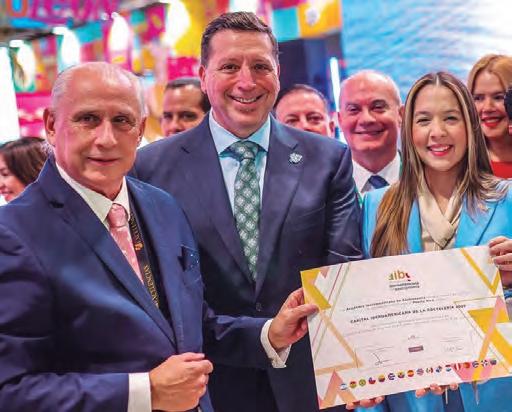
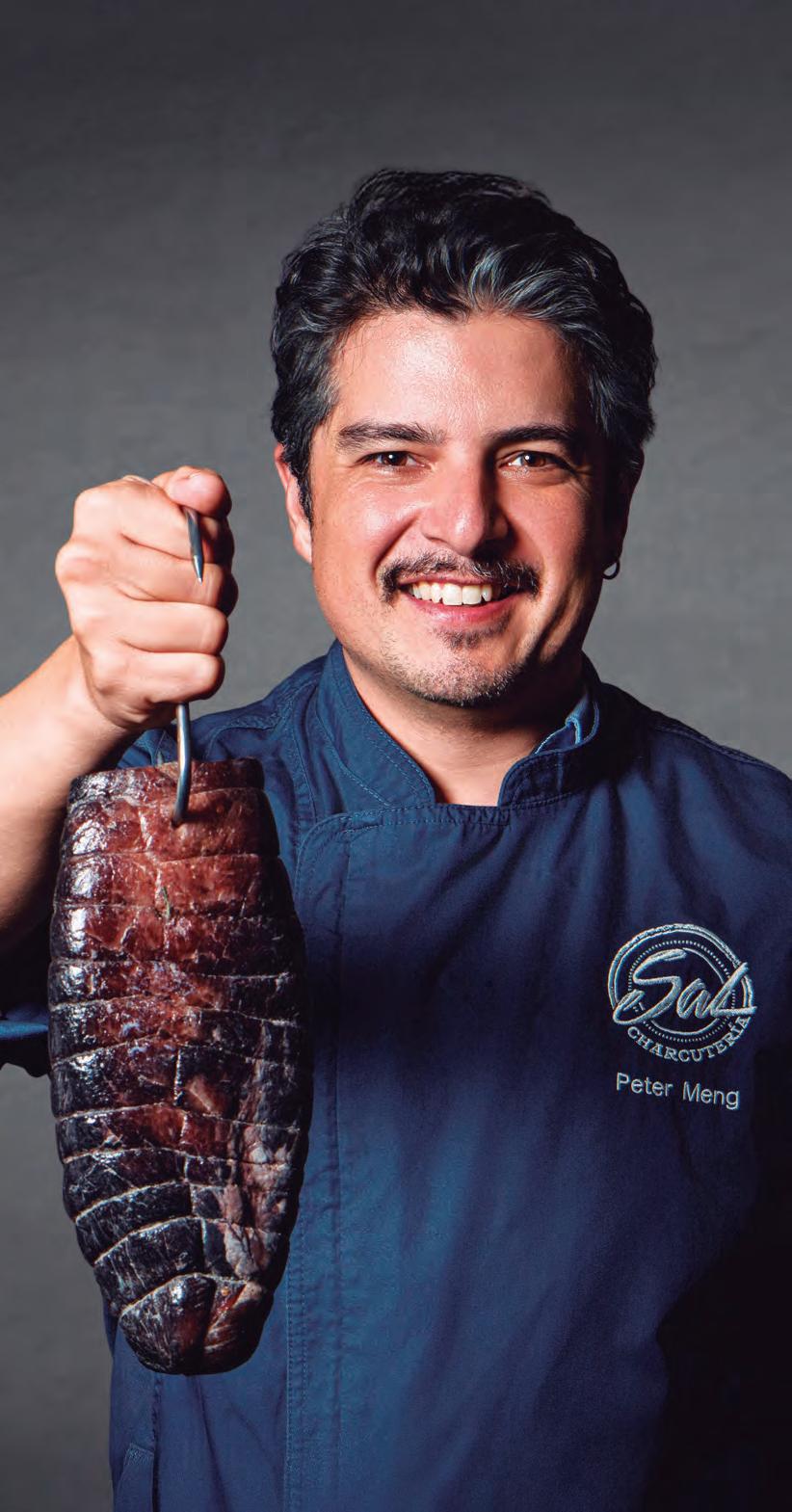
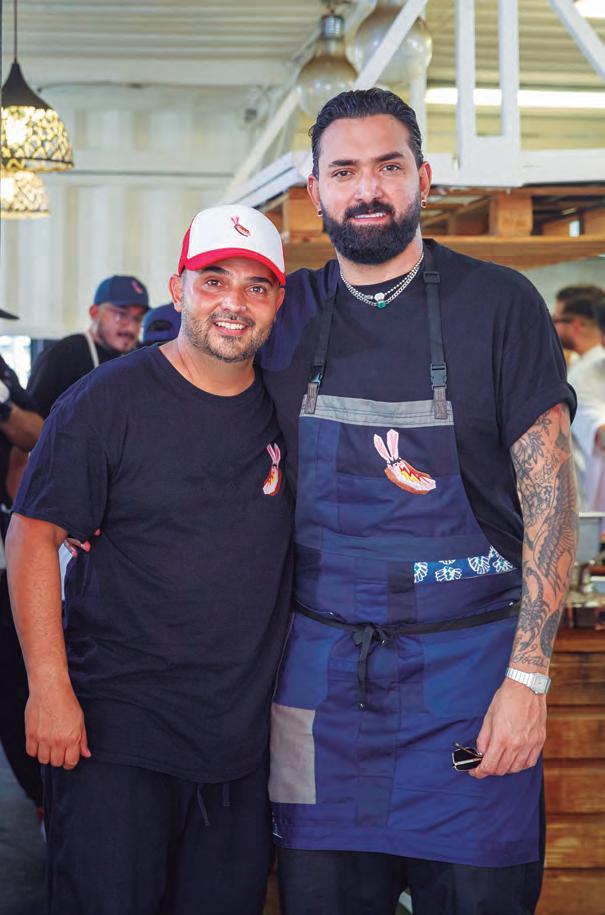
Hay destinos que se descubren con la vista. Otros, con el corazón. Y algunos, quizá los más memorables, se revelan a través de un sorbo y un bocado.
En esta séptima edición de Gourmand emprendemos un viaje hacia una de las culturas gastronómicas más fascinantes y vibrantes del mundo: México. Un país donde la cocina es patrimonio, las tradiciones son sagradas y cada ingrediente cuenta una historia que merece ser celebrada.
Además de explorar restaurantes donde se viven sus sabores auténticos y su riqueza culinaria fuera de México, rendimos homenaje a dos de los grandes emblemas de esta tierra: el tequila y el mezcal.
Mucho más que destilados, estos representan el carácter de una nación y el trabajo de quienes han preservado con pasión, durante siglos, el arte de transformar el agave en una expresión de identidad. Conoceremos algunas marcas y protagonistas que siguen escribiendo esta historia líquida en un recorrido que va más allá de la copa.
Nuestro compromiso continúa siendo inspirar a quienes entienden que viajar también es descubrir sabores, que la buena mesa es un lenguaje universal y que detrás de cada plato existe una historia que conecta culturas y personas.
Gracias por acompañarnos una vez más en este recorrido. Esperamos que esta edición despierte su curiosidad, los anime a explorar nuevos viajes y maridajes, pero sobre todo, les recuerde que las mejores experiencias siempre comienzan alrededor de una mesa.
Buen provecho y feliz viaje, mis queridos gourmands.
Carta de la Directora Director’s Letter
There are certain destinations that are discovered through the eyes. Others, with the heart. And some, perhaps the most memorable, are revealed through a sip and a bite.
In this seventh edition of Gourmand, we embark on a journey to one of the most fascinating and vibrant gastronomic cultures in the world: Mexico. A country where cuisine is heritage, traditions are sacred and each ingredient tells a story that deserves to be celebrated.
In addition to exploring restaurants where its authentic flavors and great culinary richness can be experienced outside of Mexico, we pay tribute to two of the great emblems of this land: tequila and mezcal.
Much more than distillates, they represent the character of a nation and the work of those who have passionately preserved, for centuries, the art of transforming agave into an expression of identity. We will get to know some brands and protagonists that continue to write that liquid history in a journey that goes beyond the glass.
Our commitment continues to be to inspire those who understand that traveling is also discovering flavors, that good food is a universal language and that behind each dish there is a story that connects cultures and people.
Thank you for joining us once again on this journey. We hope that this edition will arouse their curiosity, encourage them to explore new journeys and pairings but, above all, remind them that the best experiences always start around a table.
Enjoy your meal and happy travels, my dear gourmands.
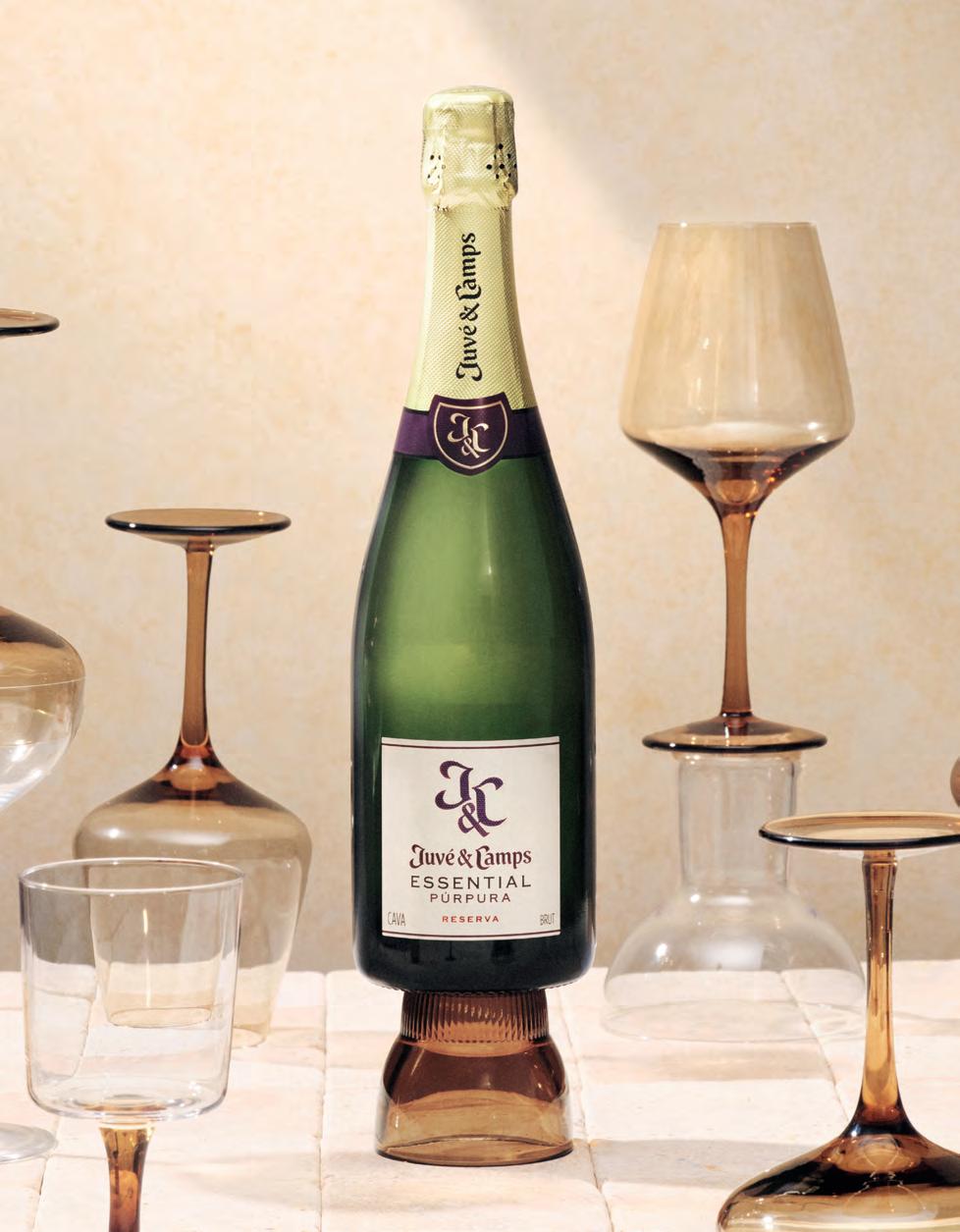
www.juveycamps.com
MÉXICO A TRAVÉS DE SUS SABORES
Mexico through its flavors
• Vuelve a la Vida
• Ándale
• Cielito Hecho en Casa PR
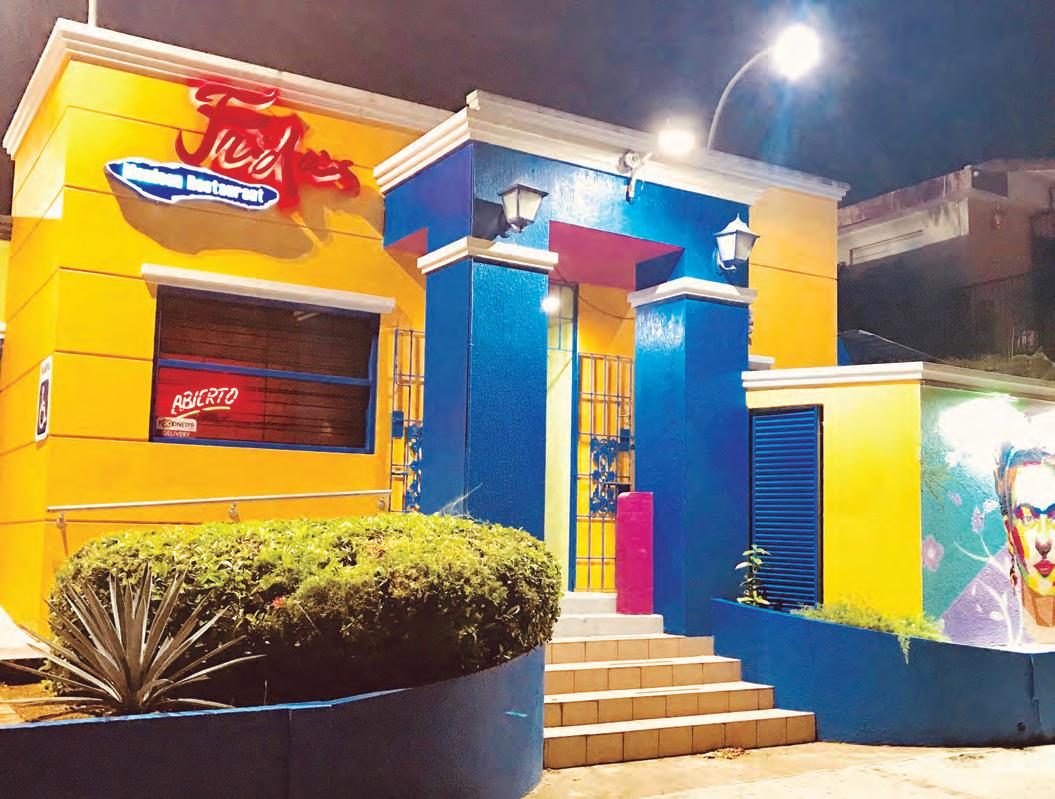
• Frida’s Mexican Restaurant
• La Revolución
• Los Guapos Taquería
TEQUILA Y MEZCAL CHEF TALKS XAVIER PACHECO
Siente el espíritu de México al conocer estas dos bebidas nacionales de agave
Feel the Mexican spirit while getting to know these two national drinks made of agave
• Los Guapos
• Aldeana
• Bacoa RD
GOURMAND TRAVELER
PR Wine & Food Festival
Destino de clase mundial en SJU
A World-Class Destination in SJU
• Moët-Hennessy
• Dante Restaurant
LAURA CATENA
Bodega Catena Zapata
Visita de Lujo en PR
A VIP visit in Puerto Rico
FUNDACIÓN CORTÉS
• PR — Gala Abrazo Cultural
• VSJ — Exposición “Territorios”
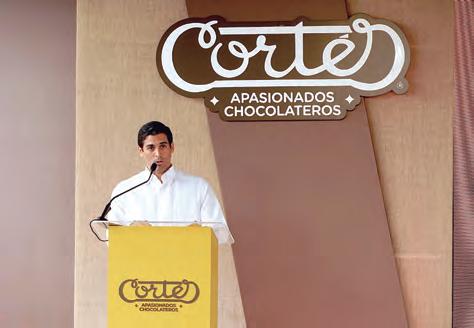
• RD — Nueva planta chocolate
Puerto Rico • Dominican Republic • Caribbean
DIRECTORA • DIRECTOR
Roselyn O’neil
EDITORA • EDITOR
Yvonne Brown Ieromazzo
PERIODISTA • STAFF WRITER
Orlando Jerez
DISEÑO • DESIGN
Albert Polanco
AUTORES INVITADOS • GUEST WRITERS
Thomas Sartori Spot 21 • Hospitality Lab
Daniel Veroes Especialista en Gastronomía
FOTOGRAFÍA • PHOTO
Luciano Luna, Frida’s Mexican Restaurant, La Revolución, Los Guapos Taquería, Vuelve a la Vida, Ándale, Cielito Hecho en Casa, El Tequileño, Axma Group, Agave Imports, Tres Santos Mezcal, Club Mezcal, Tequila El Cristiano, Fine Wine Imports, Puerto Rico Wine & Food Festival, Moët-Hennessy, Vodka Belvedere, Bodega Numanthia, Dante Restaurant, Chocolate Cortés Hermanos, Fundación Cortés, Salazón D, Braga Academia, Bodega Catena Zapata, La Bodega de Méndez, APUGA, Salazón RD, Lazos de Oro, Barceló Now, Diageo-World Class Bartender, Lavacar Foto de Portada / Cover Photo
La Revolución Cocina Mexicana & Cantina
EDITORIAL info@gourmandintl.net
VENTAS • SALES sales@gourmandintl.net
REP. DOMINICANA
José Eduardo García 849-450-2579
PUERTO RICO
Lourdes Rivera 787-402-0433
GOURMAND ES UNA PUBLICACIÓN DE
C/ 2, Villa Marina Sur, No. 8, Sto. Dgo. D.N, República Dominicana Tel.: 829-688-0256 @Gourmandintl • https://issuu.com/gourmandguideintl
Gourmand
Prohíbe la reproducción total o parcial de su portada, artículos y secciones fijas de la misma. No se hace responsable de las opiniones vertidas por los colaboradores o encuestas realizadas en sus artículos.
GastronomíaMexicana MexicanCuisine Restaurantes
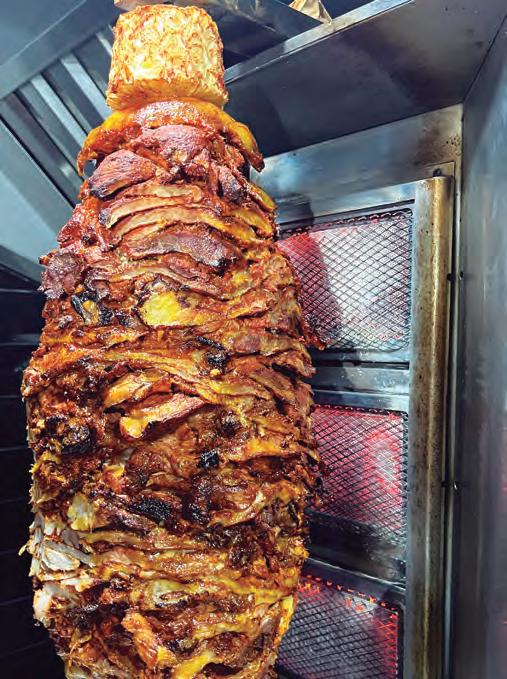
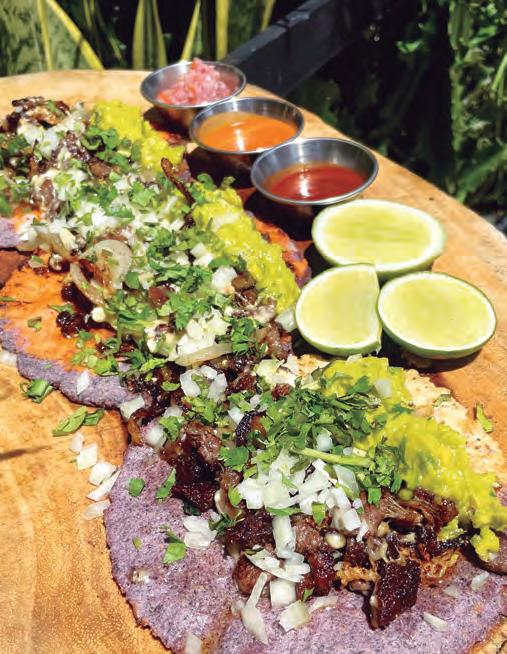
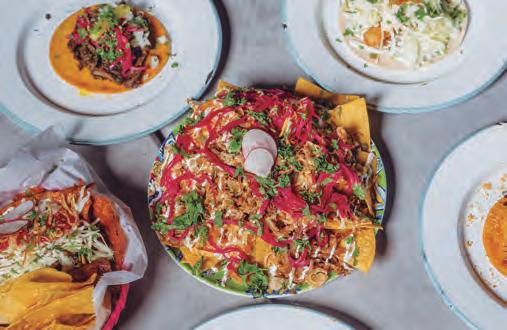
Una de las mejores maneras de conocer a México es a través de sus sabores. Y nada grita más identidad nacional que sus centenarias recetas, llenas de colorido y contrastes, que han pasado de generación en generación. Probar sus tacos, barbacoas, chilaquiles y pozoles, o las increíbles salsas de chiles y moles, es sentir la pasión y tradición de su gente.
Por esta razón, la cocina mexicana es considerada Patrimonio Cultural Inmaterial de la Humanidad por la UNESCO y México se ha convertido en destino gourmet de excelencia.
Aquí reseñaremos seis restaurantes en República Dominicana y Puerto Rico que han sabido llevar la rica tradición culinaria mexicana más allá de sus fronteras.
Dos de ellos —Frida’s y La Revolución— hasta recibieron el Sello M de la Secretaría de Relaciones Exteriores de México y la Academia Mexicana de Gastronomía por preservar la autenticidad de los sabores, ingredientes y técnicas de su cocina.
Pero todos tienen estilos y ambientes muy diferentes. Así que anímate a probarlos para descubrir la riqueza culinaria mexicana y sentir el alma de México.
One of the best ways to get to know Mexico is through its flavors. And nothing screams more national identity than his century-old recipes, full of color and contrasts, and which have been passed down from generation to generation. To try its tacos, barbacoas, chilaquiles and pozoles, or the incredible sauces of chiles and moles, is to feel the passion and tradition of its people.
For this reason, Mexican cuisine is considered Intangible Cultural Heritage of Humanity by UNESCO and Mexico has become a gourmet destination of excellence.
We will review six restaurants in the Dominican Republic and Puerto Rico that have been able to take the rich Mexican culinary tradition beyond their borders.
Two of them—Frida’s and La Revolución— received the Sello M certification from Mexico’s Ministry of Foreign Affairs and the Mexican Academy of Gastronomy for preserving the authenticity of their cuisine’s flavors, ingredients, and techniques.
But, they all have very different styles and ambiance. So, go ahead, try them all, and discover the Mexican culinary richness and feel the soul of Mexico.
VUELVE A LA VIDA ÁNDALE
CIELITO HECHO EN CASA
FRIDA’S LA REVOLUCIÓN
LOS GUAPOS
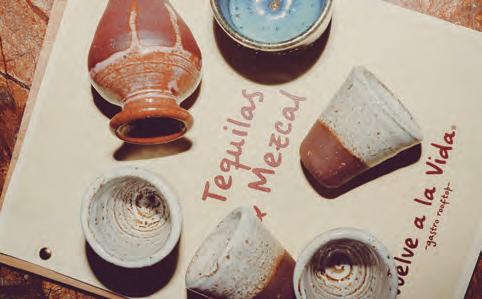
VUELVE A LA VIDA
Rooftop Taquería & Tequila
Yvonne Brown Ieromazzo
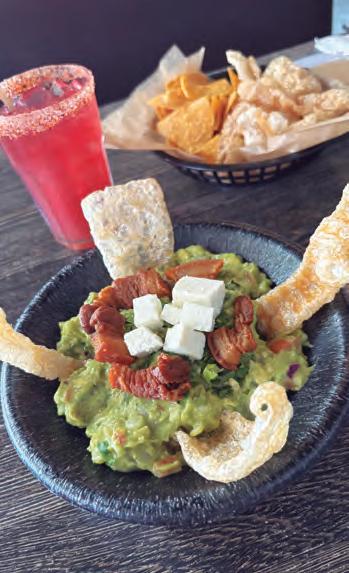
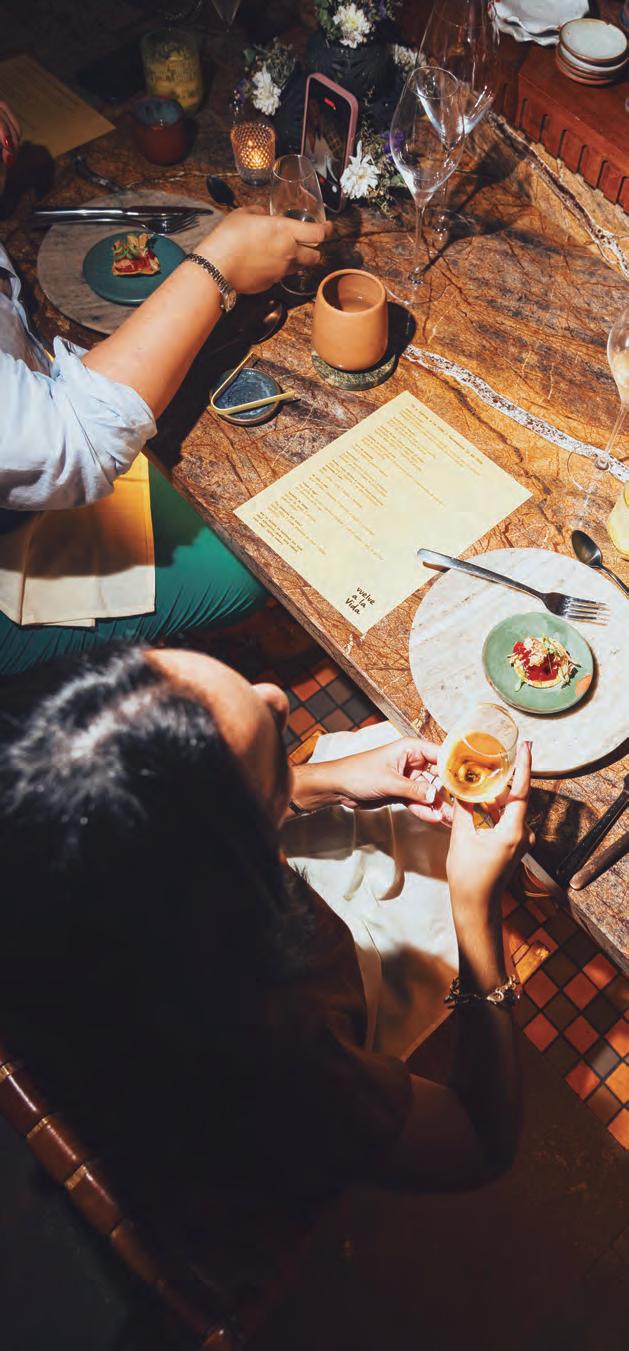
La tradición mexicana se encuentra con la sofisticación japonesa en Vuelve a la Vida, donde se vive una experiencia culinaria extraordinaria y llena de contrastes, creatividad, arte y sabor. Con vistas que hipnotizan, este Rooftop Taquería y Tequila está diseñado para despertar los sentidos de manera integral y celebrar la vida en cada detalle.
Por eso, tan pronto el Chef Pedro Mota Cabral entró a la terraza que le daba la vuelta al local en Plaza Paseo del Prado, se dio cuenta que había encontrado el lugar ideal. “Me dio un feeling de ‘L.A. nightlife’, donde se puede compartir picadera ligera e interesante, beber un buen trago y disfrutar de música toda la noche”.
Así, en diciembre 2024, nació Vuelve a la Vida, donde Chef Pedro ha logrado fusionar su variada experiencia culinaria de más de 20 años para crear un menú atrevido y divertido, que pudiéramos describir como Modern Mexican Cuisine con un toque japonés, todo elaborado en un estilo artesanal, innovador y natural.
Eso es un vivo reflejo de su trayectoria profesional, ya que estudió gastronomía en el California Culinary Academy en California, y su primer trabajo en cocina fue en un restaurante mexicano en New Orleans. “En California no trabajé en restaurante mexicano, pero mis tres roommates eran mexicanos y comía mucho en las taquerías de la ciudad, donde también descubrí la comida Nikkei”, explicó Chef Pedro.
En Vuelve a la Vida todo está diseñado para que se comparta, “pero en nuestro menú no tenemos nachos, ni frijoles refritos” dice el Chef. Lo que sí tienen son unas increíbles tostadas de diferentes pescados: hamachi, atún importado y pescados blancos frescos locales, como dorado y carite. También ceviche con aguachiles, el nigiri con salsa macha con mani y ajo, y el nigiri con sabores mexicanos que recientemente añadieron al menú.
PROTEINAS CURADAS Y A LA BRASA
Entre los platos más populares para compartir está la lubina a la brasa. El pescado se cura en dry-ager y luego se coloca en la brasa el lado de la piel, que queda como chicharrón, y con eso se preparan tacos.
También es muy solicitado el charcuterie board con charcuteria curada en casa. La cecina curada en miso y mezcal se toma 45-60 días para curarse. Y hacen su propio queso con diferentes chiles y los dejan marinando en vinagres que ellos han preparado y que llevan añejando más de dos años.
En cuanto a mariscos, preparan escabeches marinados en tequila de mejillones, pulpo, camarones y con diferentes chiles. Y para los platos con carnes, solo usan ganado criado con pasto (grass-fed) que son curadas 20-28 días para intensificar su sabor y suavizar su textura.
“Manejamos todas las proteínas con procesos de curados y luego la brasa para lograr los crocantes. Nuestro pollo rostizado es orgánico de una granja local free farm. Sale deshuesado y trinchado para armar los taquitos”, explica el Chef Carlos Romero quien, junto a Chef Pedro, Jorge Toirac, Luis y Tricky Carrasquero, es socio del GRUPO VIDA, empresa propietaria del restaurant.
PERSONAL Y ARTESANAL
A cada mesa en Vuelve a la Vida se le prepara su salsa personalizada al momento. Llega un carrito con distintos tipos de chile con varios perfiles de pique y sabor (ahumados, citricos, ácidos) y se prepara mientras se van probando y combinando los vinagres. Y hacen otras salsas en la casa, como salsa de pimiento fresco estilo californiana, salsa de aguacate con el vinagre añejado, y salsa de macha verde con semilla de auyama y chile poblano.
También elaboran casi 1,000 tortillas frescas, hechas a mano todos los dias, con maiz amarillo y maiz azul. Y preparan unas especiales de hongos, cilantro, pimientos rojos y yuca para el Taco Makasi.
TACO MAKASE
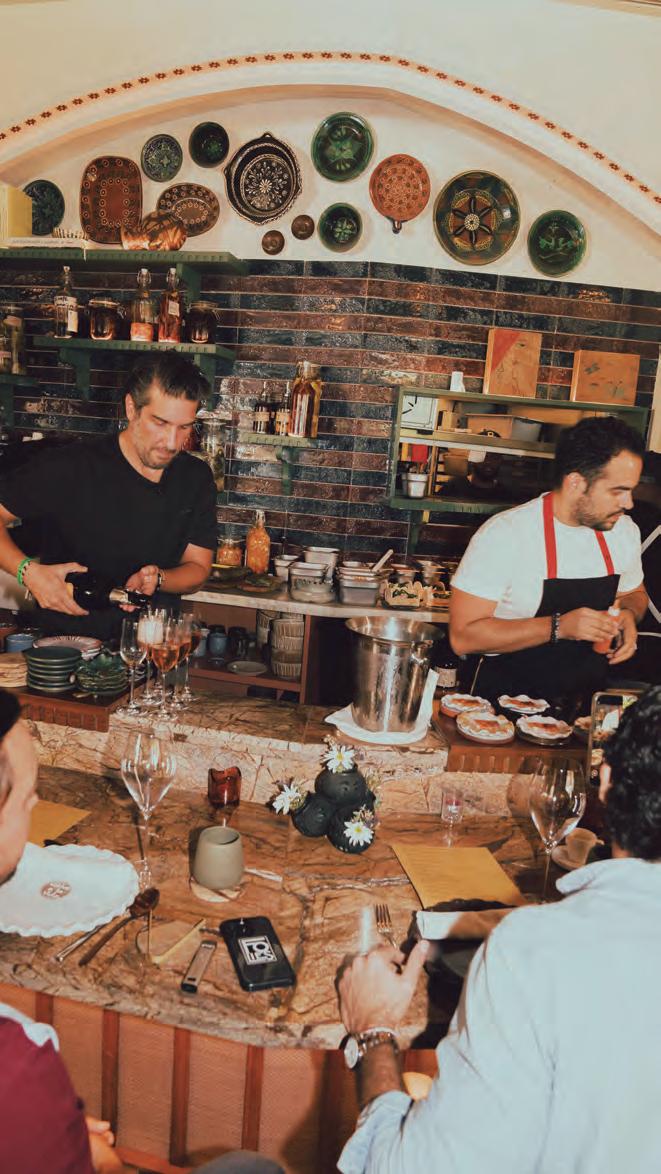
Si algo define la singular fusión de Vuelve a la Vida es el Taco Makase. “Esta es nuestra versión mexicana del omakase japonés”, explica Chef Pedro. Este fabuloso menú de degustación incluye 14 tiempos con un maridaje de vinos, tequila, mezcal, champagne, sake, combuchas caseras sin alcochol, ponches caseros, vinos fortificados, ice wine y madeira. Todos los platos se terminan de cocinar en barra. Y solo está disponible por reserva varios días a la semana. ¡Vale la pena!
HELADOS
En Vuelve a la Vida preparan unos helados con unas combinaciones increíbles y productos naturales, que son elaborados al instante con nitrógeno. Entre estos, COCO con reducción de albariño, MANGO con néctar de agave fermentado con chile pasilla y tomillo, y MALTA INDIA que lleva una reducción de esa bebida como syrup sobre el helado acompañado de bizcocho de chocolate mexicano con cajeta y crumble de cocoa. “Está inspirado en la bebida de Malta India con leche condensada que bebíamos cuando chiquitos”, dice Chef Pedro.
TRAGOS & COCTELERÍA
Un menú tan espectacular solo puedo ir acompañado de las mejores bebidas premium. Para empezar, Vuelve a la Vida cuenta con la cava de tequila más grande el país, incluyendo más de 100 variedades. “Ahora estamos añejando tequila en casa, en barricas para un sabor ahumado y más amaderado, tipo whisky”, dice Chef Carlos.
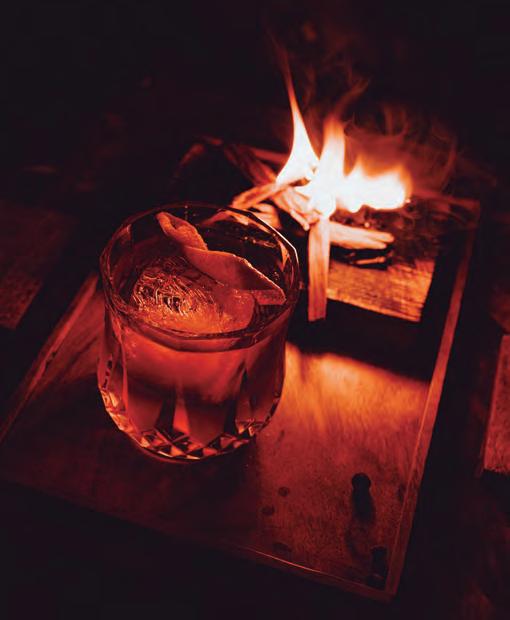
Y la coctelería está a otro nivel. Como es el caso del DON JULIO OLD FASHION, dándole al trago tradicional un giro mexicano. En vez de whisky usan tequila reposado añejado en barricas in-house, sustituyen el simple syrup con agave fermentado, usan el bitter con café chipotle y cambian la naranja por la toronja.
Negroni con palo santo
VUELVE A LA VIDA
Rooftop Taquería & Tequila
Mexican tradition meets Japanese sophistication at Vuelve a la Vida, where you can enjoy an extraordinary culinary experience full of contrasts, creativity, art and flavor. With views that mesmerize, this Rooftop Taqueria and Tequila is designed to awaken the senses in a comprehensive way and celebrate life in every detail.
That’s why, as soon as Chef Pedro Mota Cabral entered the terrace that went around the premises in Plaza Paseo del Prado, he realized that he had found the ideal place. “It gave me a feeling of the L.A. nightlife, where you can share light and interesting tapas, have a great drink and enjoy music all night long.”
Thus, in December 2024, Vuelve a la Vida was born, where Chef Pedro has managed to merge his varied culinary experience of more than 20 years to create a daring and fun menu, which we could describe as Modern Mexican Cuisine with a Japanese touch, all made in an artisanal, innovative and natural style.
That’s a vivid reflection of his career path, as he studied gastronomy at the California Culinary Academy in California, and his first job in the kitchen was at a Mexican restaurant in New Orleans. “In California I didn’t work in a Mexican restaurant, but my three roommates were Mexican and I ate a lot in the taquerias of the city, where I also discovered Nikkei food,” explained Chef Pedro.
In Vuelve a la Vida everything is designed to be shared, “but in our menu we do not have nachos, or refried beans” says the Chef. What they do have are amazing tostadas of different fish: hamachi, imported tuna, and fresh local white fish, such as dorado and carite. Also ceviche with aguachiles, nigiri with macha sauce with peanuts and garlic, and a nigiri with Mexican flavors that was recently added to the menu.
CURED AND GRILLED PROTEINS
Among the most popular dishes to share is the grilled sea bass. The fish is cured in a dry ager and then the skin side is placed on the grill, which turns out like pork rinds, and it is used prepare tacos.
Also in high demand, the charcuterie board with charcuterie cured at home. Cured jerky in miso and mezcal takes 45-60 days to cure. And they make their own cheese with different chiles and marinate them in vinegars also prepared by them that have been aging for more than two years.
As for seafood, they have a great selection of pickled mussels, octopus, and shrimp marinated in tequila with different chiles. And for meat dishes, they only use grass-fed cattle, which is cured for 20-28 days to intensify their flavor and soften their texture.
“We handle all the proteins with curing processes and then the embers to achieve the crispy ones. Our rotisserie chicken is organic from a local free farm. It comes out boneless and carved to assemble the taquitos,” explains Chef Carlos Romero, who along with Chef Pedro, Jorge Toirac, Luis and Tricky Carrasquero, is a partner of GRUPO VIDA, the company that owns the restaurant.
PERSONAL AND ARTISANAL
Each table at Vuelve a la Vida has its personalized sauce prepared on the spot. A cart arrives with different types of chili with various spicy and flavor profiles (smoked, citrus, acidic) and it is mixed while the vinegars are being tasted and combined. And other sauces are made in-house, such as Californian-style fresh pepper sauce, avocado sauce with aged vinegar, and macha verde sauce with pumpkin seed and poblano pepper.
They also make nearly 1,000 fresh, handmade tortillas every day with yellow corn and blue corn. And they prepare some special mushroom, cilantro, red peppers and yuca tortillas for the Makasi Taco.
TACO MAKASE
If anything defines the unique fusion of Vuelve a la Vida, it is the Taco Makase. “This is our Mexican version of Japanese omakase,” explains Chef Pedro. This fabulous tasting menu includes 14 courses with a pairing of wines, tequila, mezcal, champagne, sake, homemade non-alcoholic combuchas and punches, fortified wine, ice wine and madeira. All dishes are finished cooking at the bar. And it is only available by reservation several days a week. It’s worth trying it!
ICE CREAM
At Vuelve a la Vida they prepare their own ice creams with incredible combinations and natural products, which are instantly made with nitrogen. Among these, COCO with albariño reduction, MANGO with fermented agave nectar with pasilla chile and thyme, and MALTA INDIA that has a reduction of that drink as a syrup on ice cream accompanied by Mexican chocolate sponge cake with cajeta and cocoa crumble. “It’s inspired by the malt drink with condensed milk that we drank when we were kids,” says Chef Pedro.
DRINKS & COCKTAILS
Such a spectacular menu can only be accompanied by the best premium drinks. To begin with, Vuelve a la Vida has the largest tequila cellar in the country, including more than 100 varieties. “Now we’re aging tequila at home, in barrels for a smoky, woodier, whiskey-like flavor,” says Chef Carlos.
And cocktails are on another level. As is the case of DON JULIO OLD FASHION, in which they replace the components of the traditional drink with a Mexican twist. Instead of whiskey they use reposado tequila aged in in-house barrels, they replace the simple syrup with fermented agave, the bitter is with chipotle coffee and they change orange for grapefruit.
VUELVE A LA VIDA
Gustavo Mejía Ricart #28 Plaza Paseo del Prado Santo Domingo, RD @vuelvealavida.sdq
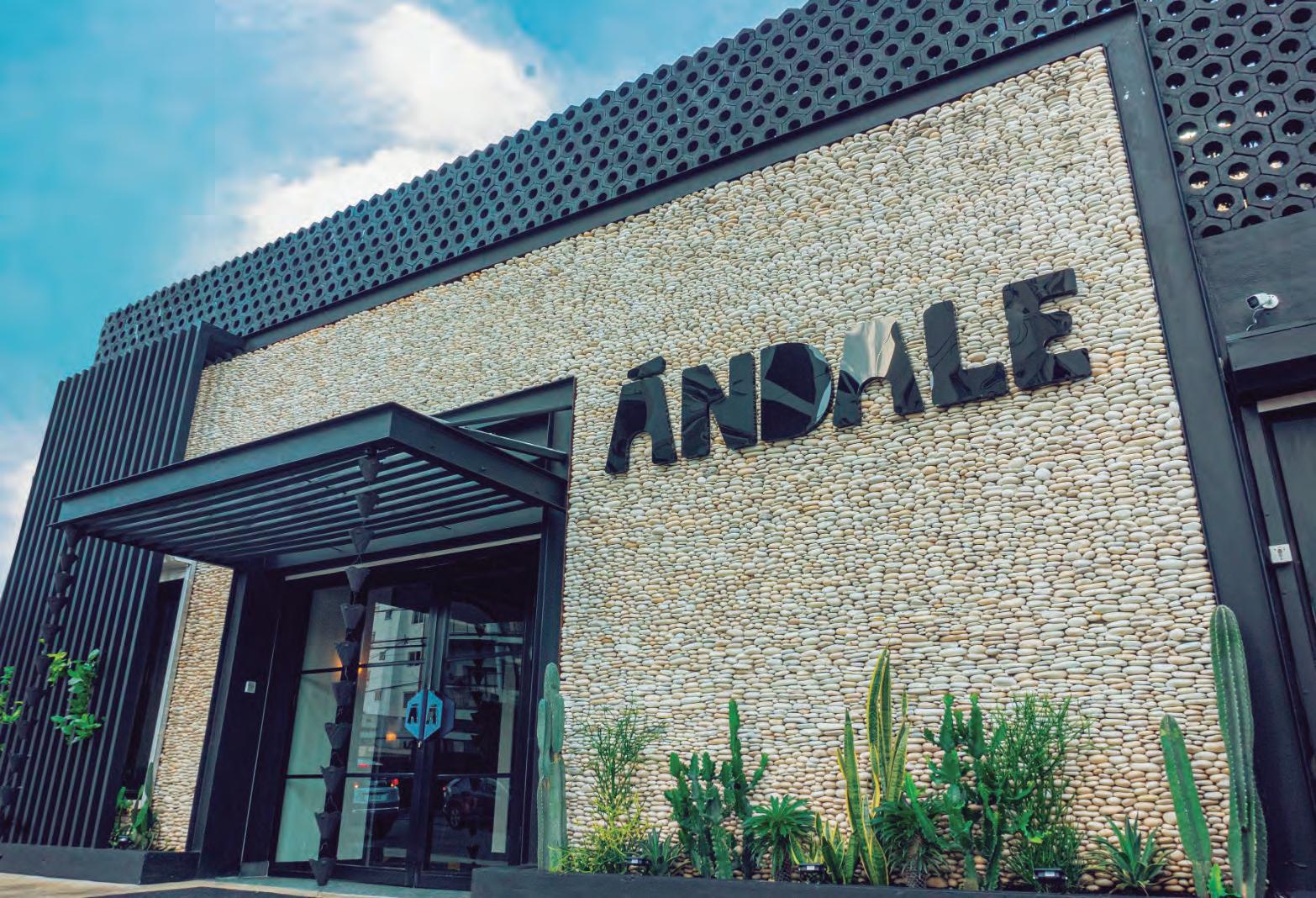
ÁNDALE
Auténticos sabores de México Daniel Veroes
En un panorama gastronómico donde la cocina mexicana suele asociarse a versiones adaptadas o influenciadas por el Tex-Mex, Ándale apuesta por una propuesta diferente: mostrar la comida que realmente se consume en los hogares de México. Ubicado en Naco, este restaurante ha logrado destacar gracias a una cocina auténtica, elaborada con ingredientes tradicionales y un profundo respeto por las recetas y procesos que forman parte de la cultura culinaria mexicana.
Detrás del proyecto se encuentran Oscar y Claudia, propietarios, chefs y mixólogos. Para Oscar, la cocina es una herencia familiar. Proveniente de una familia de cocineros tradicionales mexicanos, creció rodeado de recetas transmitidas de generación en generación. Su trayectoria profesional se desarrolló entre México y República Dominicana, por lo cual ha obtenido importantes reconocimientos, entre ellos cuatro premios como Chef del Año y seis del Festival Gastronómico Dominicano.
Claudia descubrió desde muy joven su pasión por la gastronomía.
Mientras estudiaba hotelería con especialización en alimentos y bebidas, comenzó a trabajar en restaurantes, adquiriendo la experiencia que hoy complementa la visión culinaria y empresarial del proyecto.
La historia de Ándale comenzó en 2019 realizando pequeños eventos privados. Durante la pandemia evolucionó hacia la elaboración de comida para llevar y productos para supermercados, todo mientras sus fundadores mantenían sus empleos. Más adelante llegaron los servicios de catering y las noches temáticas mexicanas, hasta que en octubre de 2024 abrieron el restaurante que hoy concentra todas sus operaciones.
La autenticidad se refleja en cada detalle. En Ándale elaboran artesanalmente su propio chorizo, sus quesos, el suero para las tortillas y las propias tortillas que acompañan gran parte del menú. Además, utilizan una amplia variedad de chiles típicos mexicanos cultivados en RD y aprovechan productos de temporada para enriquecer sus recetas.
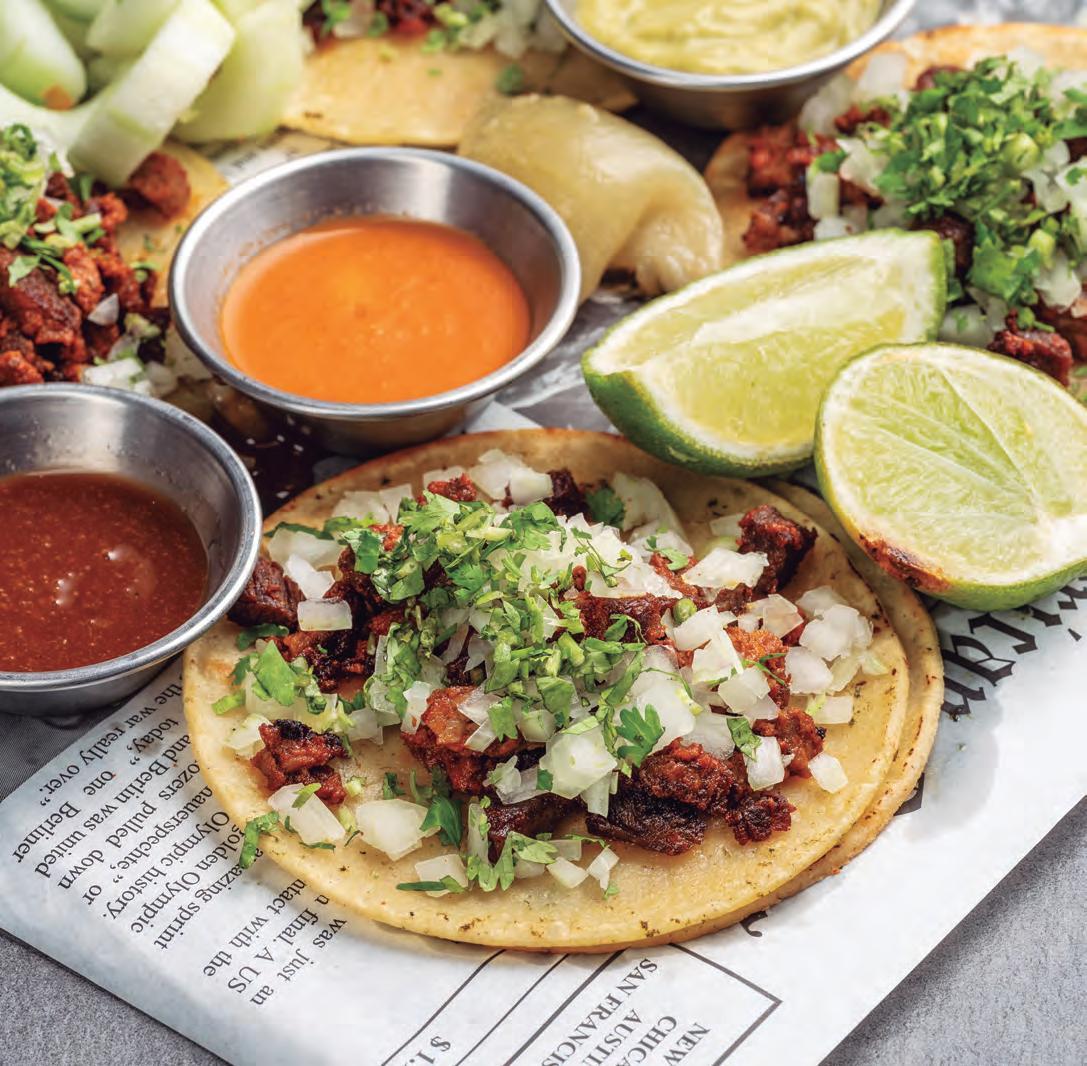
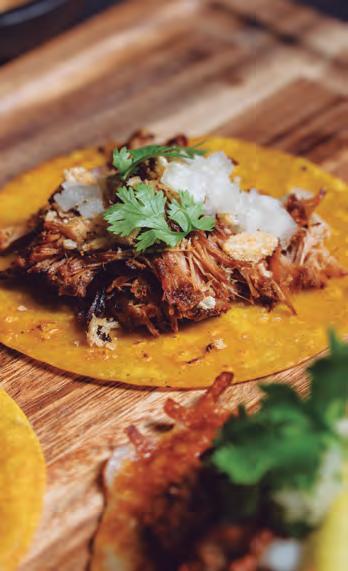
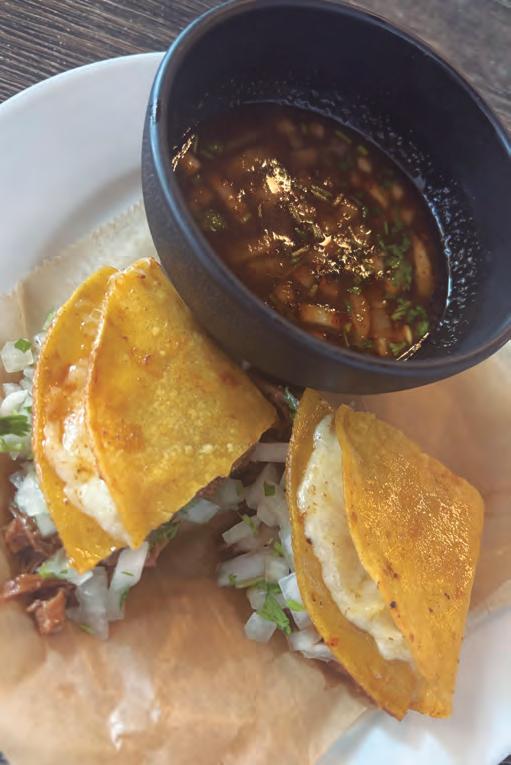
Los procesos de cocción son uno de los pilares de la casa. Preparaciones como la birria y la cochinita pibil respetan los tiempos tradicionales necesarios para alcanzar su máxima expresión. De hecho, Ándale fue pionero en la elaboración de birria en el país, mucho antes de que este plato se popularizara entre los amantes de la cocina mexicana.
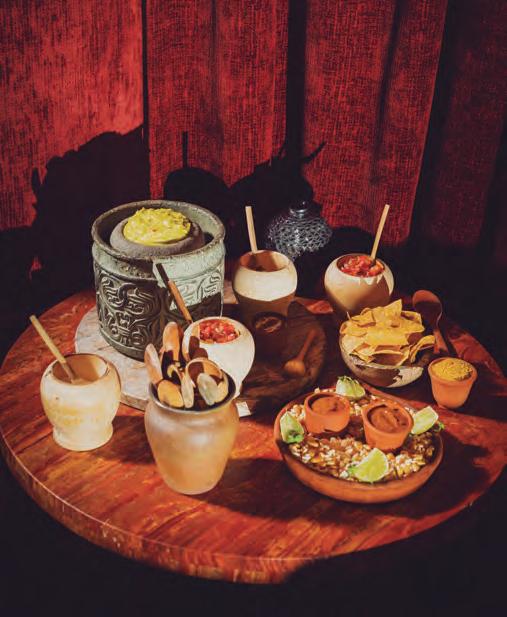
Uno de los elementos más distintivos del restaurante es su colección de más de diez salsas artesanales, servidas junto a totopos como bienvenida. Ninguno de los platos es picante por defecto; son las salsas las que permiten que cada comensal construya su propia experiencia, desde sabores suaves hasta combinaciones más intensas.
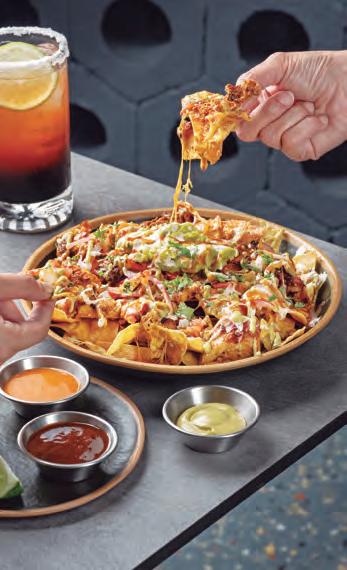
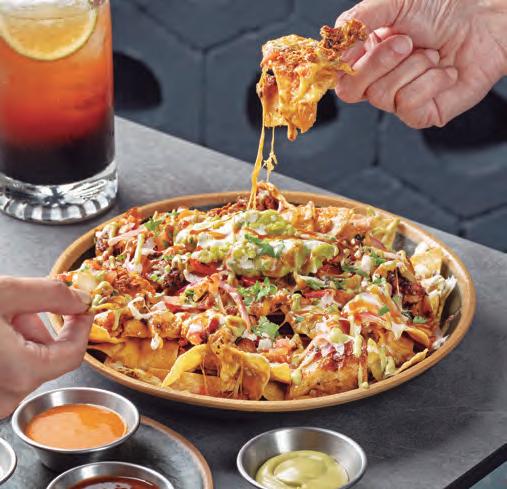
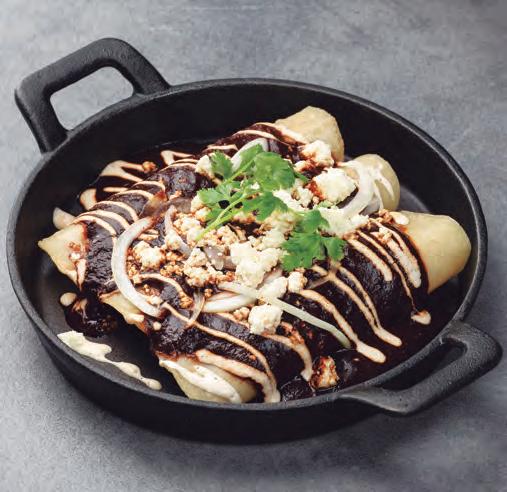
Entre sus especialidades destacan las quesabirrias sabor de Jalisco, el taco de chorizo verde y el chicharrón de ribeye con tortilla de guajillo, masa azul y tuétano, además de entradas como los Nachos Chingones con varias opciones de carnes, servidos con quesito lindo, pico de gallo y guacamole, y Vuelve a la Vida, el tradicional coctel de camarones de Acapulco.
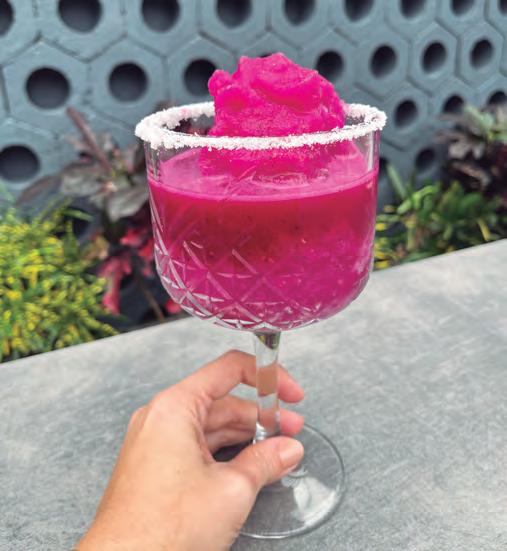
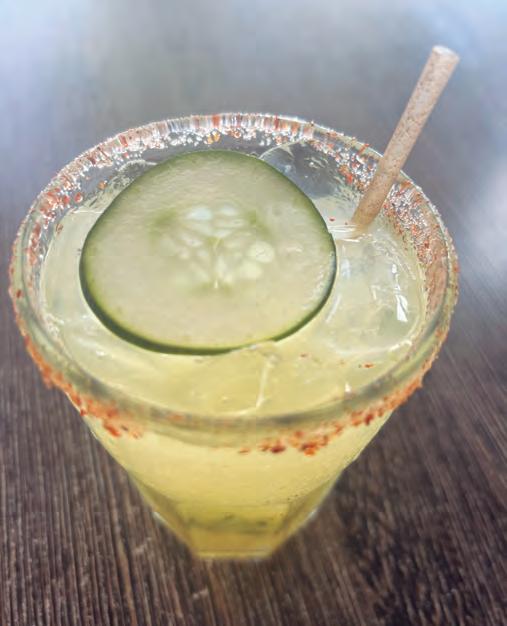
La propuesta se complementa con una mixología de autor desarrollada por Oscar y Claudia. Sobresalen el Tequilajito, una reinterpretación del mojito elaborada con tequila, y la Margarita de Pitahaya. A ello se suma una destacada selección de tequilas premium y una amplia carta de vinos.
Rodeados de un ambiente acogedor en el corazón de Santo Domingo, donde la comida es la protagonista, Ándale nos acerca a los sabores auténticos de México.
ÁNDALE
Authentic flavors of Mexico
In a gastronomic panorama where Mexican cuisine is usually associated with versions adapted or influenced by Tex-Mex, Ándale is committed to a different proposal: to show the food that is really consumed in homes in Mexico. Located in Naco, this restaurant has managed to stand out thanks to its authentic cuisine, made with traditional ingredients and a deep respect for the recipes and processes that are part of Mexican culinary culture.
Behind the project are Oscar and Claudia, owners, chefs and mixologists. For Oscar, cooking is a family heritage. Coming from a family of traditional Mexican cooks, he grew up surrounded by recipes passed down from generation to generation. His professional career took place between Mexico and the Dominican Republic, for which he has obtained important recognitions, including four awards as Chef of the Year and six from the Dominican Gastronomic Festival.
Claudia discovered her passion for gastronomy at a very young age. While studying hospitality with a specialization in food and beverages, she began working in restaurants, acquiring the experience that today complements the culinary and business vision of the project.
Ándale’s story began in 2019 with small private events. During the pandemic, it evolved into making takeaway food and products for supermarkets, all while its founders kept their jobs. Later, catering services and Mexican theme nights arrived, until October 2024, when they opened the restaurant that concentrates all their operations.
Authenticity is reflected in every detail. At Ándale they make their own chorizo, their cheeses, the whey for the tortillas and the tortillas themselves that accompany a large part of the menu. In addition, they use a wide variety of typical Mexican chiles grown in the DR and take advantage of seasonal products to enrich their recipes.
Oscar y Claudia
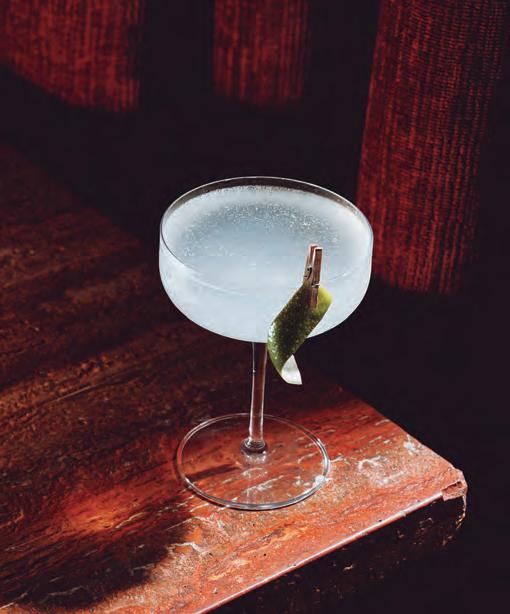
Tequilajito
The cooking processes are one of the pillars of the house. Preparations such as birria and cochinita pibil respect the traditional times necessary to reach their maximum expression. In fact, Ándale was a pioneer in the production of birria in the country, long before this dish became popular among lovers of Mexican cuisine.
One of the restaurant’s most distinctive elements is its collection of more than ten artisanal sauces, served alongside tortilla chips as a welcome snack. None of the dishes are spicy by default; It is the sauces that allow each diner to build their own experience, from mild flavors to more intense combinations.
Among its specialties are the quesabirrias flavor of Jalisco, the green chorizo taco and the ribeye chicharrón with guajillo tortilla, blue dough and marrow, as well as appetizers such as the Nachos Chingones with several meat options, served with cute cheese, pico de gallo and guacamole, and the traditional Vuelve a la Vida shrimp cocktail from Acapulco.
The proposal is complemented by a signature mixology developed by Oscar and Claudia. Two that stand out are the Tequilajito, a reinterpretation of the mojito made with tequila, and the Pitahaya Margarita. In addition to this, there is an outstanding selection of premium tequilas and an extensive wine list.
Surrounded by a cozy atmosphere in the heart of Santo Domingo, where where food is the star, Ándale brings us closer to the authentic flavors of Mexico.
ANDALE
Calle G. Frank Félix Miranda Naco, Santo Domingo, RD 809-377-1727
@andale.rd
Margarita de pitahaya
CIELITO HECHO EN CASA
Comenzó como una picadera Tex-Mex muy popular en las fiestas. Pero es tan rico y práctico, que se ha convertido en un plato obligatorio del menú dominicano, no solo en juntes familiares y reuniones de trabajo, sino también como comida en los hogares. Algo similar a lo que pasó con el quipe árabe en República Dominicana, donde ya es parte de la tradición culinaria local.
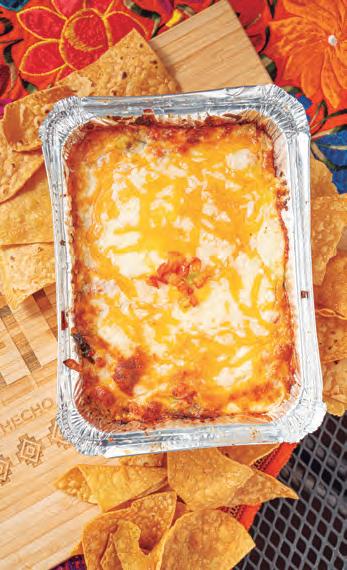
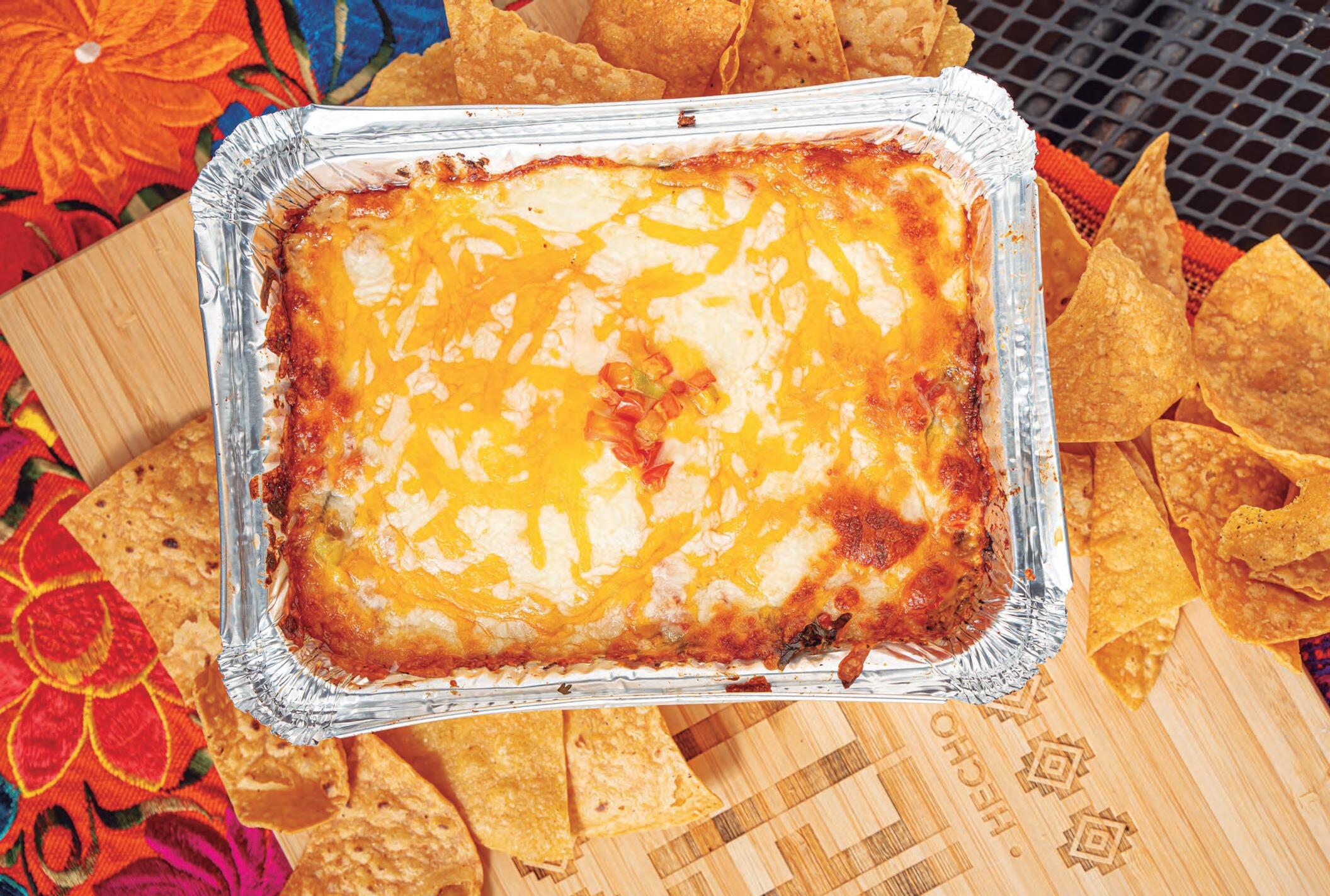
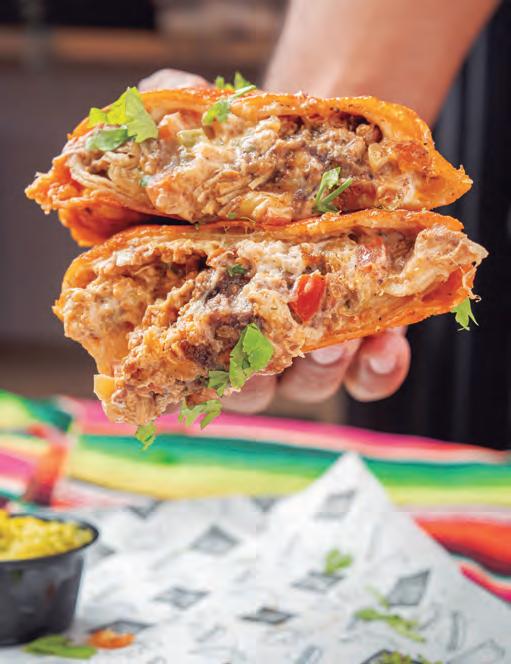
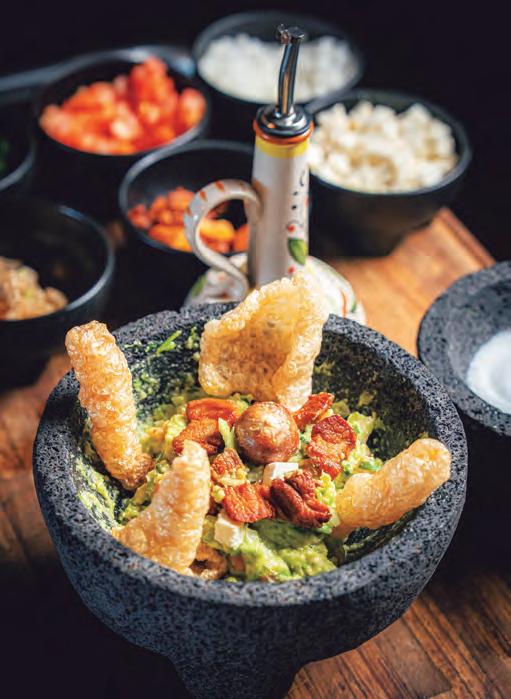
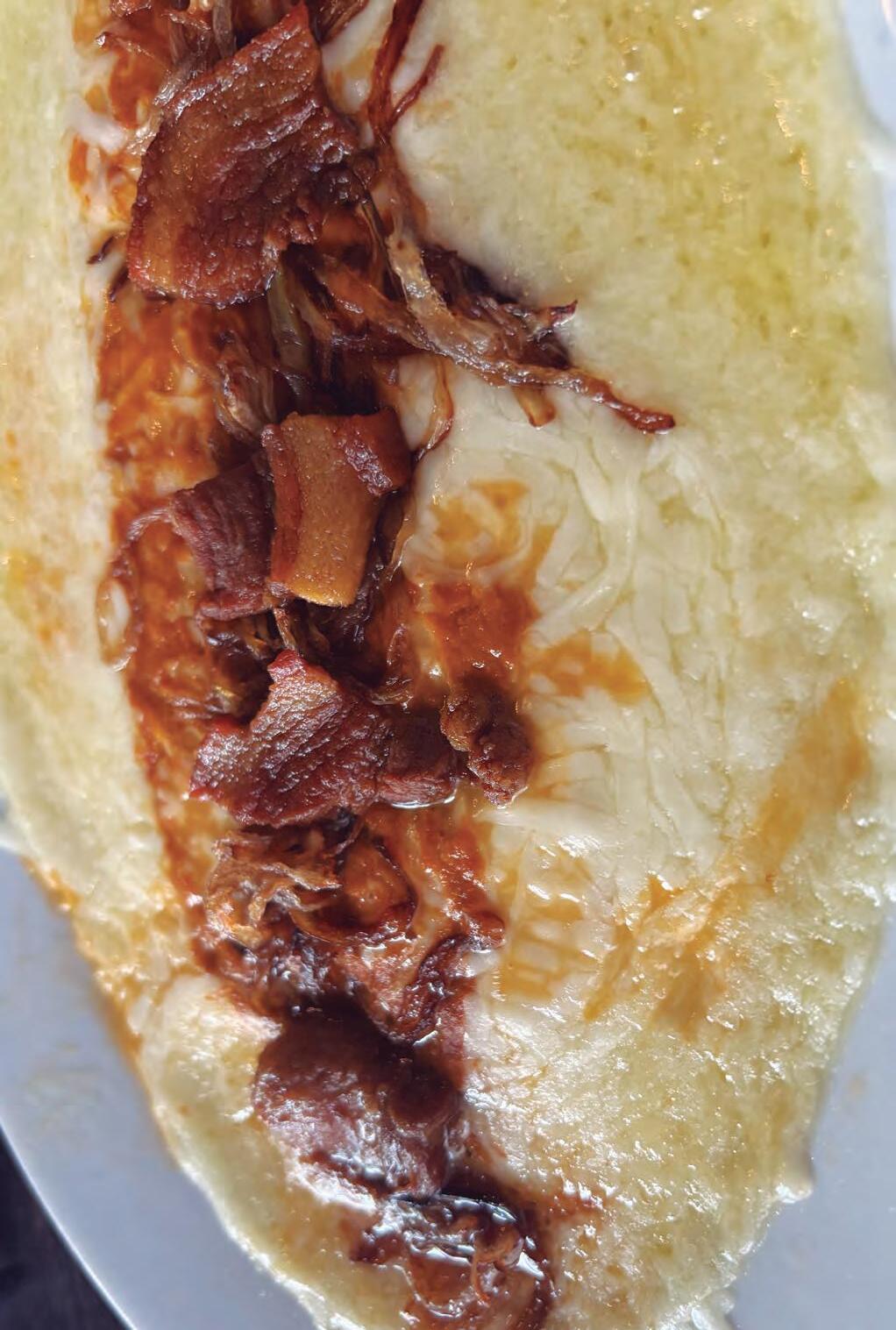
Hablamos del famoso y sabroso cielito lindo, un dip caliente que lleva capas de carne de res o pollo, crema agria, frijoles refritos, pico de gallo y queso mexicano, servido en un molde deep dish y acompañado de crujientes totopos.
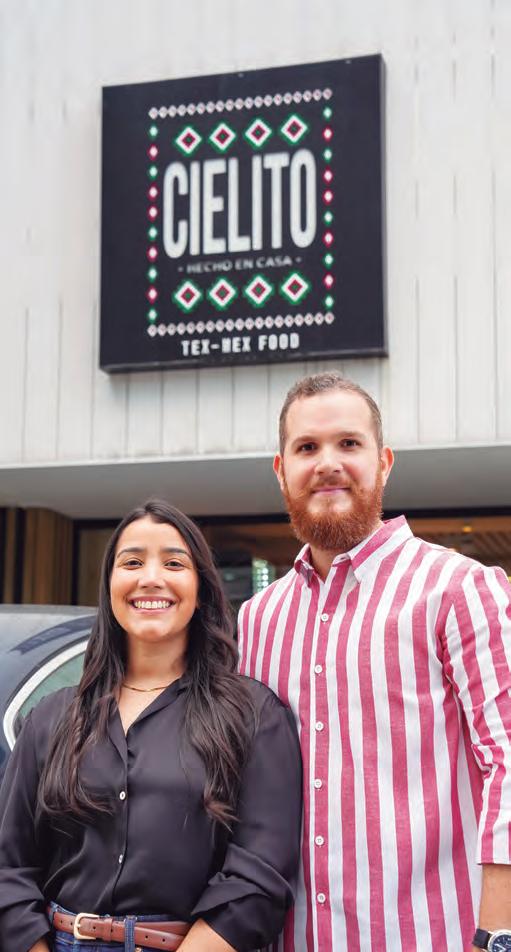
Esa es la receta básica, pero hay decenas de variaciones. Una de esas versiones la aprendió Carla Castillo en Brasil, donde estudiaba odontología. “Cuando regresé a RD, comencé a vender cielito lindo entre mis amigos y familiares de manera informal, mientras establecía mi negocio real. Pero no puse un consultorio, sino un depósito dental, pues me gusta vender y cocinar”, nos cuenta.
Eso fue en 2016. Pero mucho ha llovido en estos 10 años. En el 2019 se casó con Rafael Cabrera, quien es el financiero de la familia. Al siguiente año, en 2020, vino pandemia. Para enfrentar la nueva realidad, comenzaron a coger pedidos de cielito lindo por teléfono. Ella preparaba las órdenes y él las repartía al otro día.
Tuvieron tanto éxito, que en 2022 abrieron en Evaristo Morales el local de Cielito Hecho en Casa. “El negocio ha crecido orgánicamente, tanto por su excelente oferta como por la calidad de sus productos, pues todo está hecho from scratch”, comentó Rafael, quien en 2024 decidió dedicarse de lleno al negocio familiar.
El menú ya no se limita al plato cielito lindo, con el cual se originó el negocio, y que se puede ordenar de pollo o res en porciones de hasta 10 personas, siempre acompañado de totopos, y al que le puedes agregar tu topping favorito de bacon, chicharrón o plátano maduro.
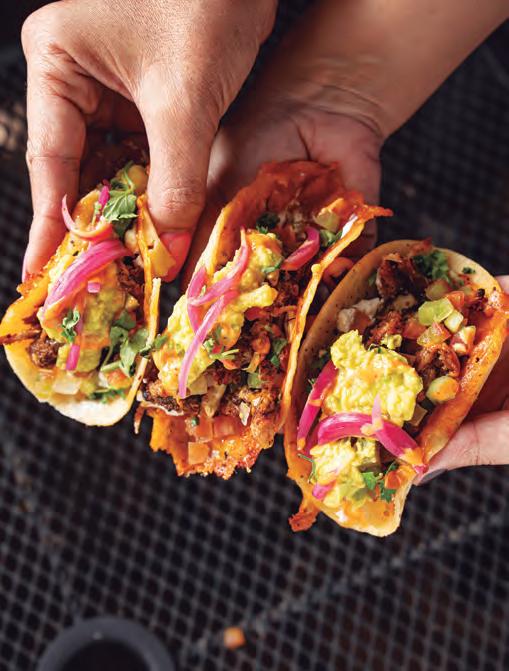
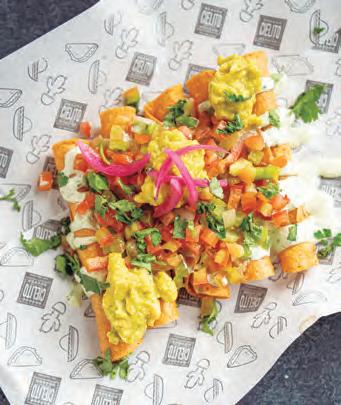
Ahora también incluye otros platos estilo Tex-Mex, tanto para llevar como para comer en el local. Entre los más populares están los Tacos de Birria, Quesadillas, Nachos, Flautas y Taco Box (1–20 personas), además de acompañantes que no pueden faltar como guacamole, salsa chipotle y pico de gallo.
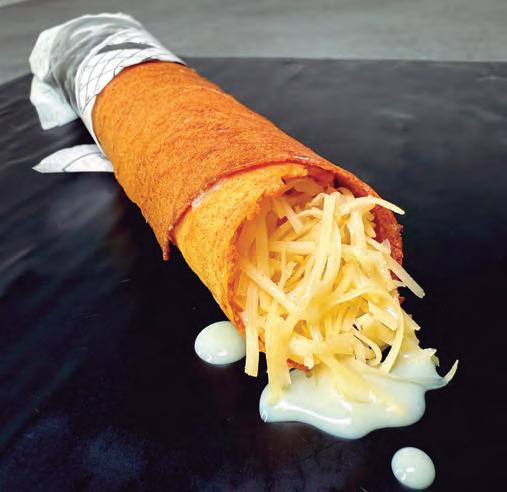
Y tienen opciones originales bien interesantes: Burritos rellenos de cielito lindo envueltos en costra de queso, Tacos de Chicharrón con una salsa dulce-picante con chipotle y miel, Tacos Keto con una costra de queso en vez de tortilla, relleno de proteína, pico de gallo, crema agria y guacamole, y el nuevo Crispy Crust, con masa burrito, crema agria, pico de gallo y queso, envuelto en costra de queso.
Para los que desean probar diferentes platillos, están los Combos y La Ruleta, una bandeja tipo sampler con nachos, flauta, quesadillas y tacos con cielito lindo. Y para acompañar la fiesta, margaritas y sangría elaboradas en casa con recetas de la familia.
Hace un año y medio, Cielito Hecho en Casa abrió en Agora Mall su segundo local. Y la empresa sigue creciendo. Ya tiene un staff de 15 personas y algunos de sus productos están disponibles en las tiendas Shell Café en Las Américas, Los Prados e Independencia-El Portal.
Y ahora hasta ofrece el servicio de montajes de eventos con tema mexicano. “Esto surgió porque una cliente me lo solicitó. Nosotros llevamos todo lo necesario: desde los mozos y las piezas en barro para servir hasta las vajillas traídas de México, la decoración de la mesa, y por supuesto, la comida”, comenta Carla, agradecida por la lealtad y el apoyo de sus clientes, que son para ella como una gran comunidad.
CIELITO HECHO EN CASA
It started out as a popular Tex-Mex snack at parties. But it is so delicious and practical that it has become a mandatory dish on the Dominican menu, not only in family and work gatherings, but also as a meal at home. Something similar to what happened with the Arab quipe in the Dominican Republic, where it is already part of the local culinary tradition.
We’re talking about the famous and flavorful cielito lindo, a hot dip that is layered with beef or chicken, sour cream, refried beans, pico de gall and mexican cheese, served on a deep dish and accompanied by crispy tortilla chips.
That’s the basic recipe, but there are dozens of variations. One of those versions was learned by Carla Castillo in Brazil, where she was studying dentistry. “When I returned to the DR, I started selling cielito lindo to my friends and family informally, while establishing my actual business. But I didn’t set up a dental office, but a dental warehouse, because I like to sell and cook,” she tells us.
That was in 2016. But a lot has happened in these 10 years. In 2019 she married Rafael Cabrera, who is the family’s financier. The following year, in 2020, the pandemic came. To face the new reality, they began to take orders for cielito lindo by phone. She prepared the orders and he distributed them the next day.
They were so successful that in 2022 they opened the Cielito Hecho en Casa store in Evaristo Morales. “The business has grown organically, both for its excellent offer and for the quality of its products, because everything is made from scratch,” said Rafael, who in 2024 decided to work fully with the family business.
The menu is no longer limited to the cielito lindo dish with which the business originated, and that can be ordered with chicken or beef in portions of up to 10 people, always accompanied by tortilla chips. You can also add your favorite toppping of bacon, pork rinds or sweet ripe plantains.
Now it also includes other Tex-Mex dishes, both for take out and to eat on the premise. Among the most popular are Birria Tacos, Quesadillas, Nachos, Flautas and the Taco Box (1–20 people), as well as must-have sides like guacamole, chipotle sauce and pico de gallo
And they have very interesting original options: Burritos stuffed with cielito lindo wrapped in cheese crust, Chicharrón Tacos with a sweet-spicy sauce with chipotle and honey, Keto Tacos with a cheese crust instead of tortilla, stuffed with protein, pico de gallo, sour cream and guacamole, and the new Crispy Crust, with burrito dough, sour cream, pico de gallo and cheese, wrapped in cheese crust.
For those who want to try the different dishes, there are options of Combos and La Ruleta, a sampler tray with bite-sized nachos, flute, quesadillas and tacos with cielito lindo. And to complete the party, margaritas and sangria made at home with family recipes.
A year and a half ago, Cielito Hecho en Casa opened its second location in Agora Mall. And the company continues to grow. It already has a staff of 15 people and some of its products are available in the Shell Café stores in Las Americas, Los Prados and Independencia-El Portal.
And now it even offers the service of setting up events with a Mexican theme. “This came about because a client asked me to help her. We bring everything needed –from the waiters and the clay pieces to serve the meals to the tableware imported from Mexico and the table decorations, and of course, the food,” says Carla, grateful for the loyalty and support of her customers, who are like a community to her.
CIELITO HECHO EN CASA
• Calle Paseo de los Locutores #49
Evaristo Morales, Santo Domingo
• Ágora Mall, Santo Domingo
PEDIDOSYA, UBER EATS
WHATSAPP +1(809)366-2701
@cielito.rd
FRIDA’S MEXICAN RESTAURANT
Hace ya 42 años que Gerardo García partió de su México natal y llegó a San Juan con un gran sueño: crear el mejor restaurante mexicano en Puerto Rico. Cargaba en la maleta su experiencia como empresario de ventas de productos alimenticios para comedores, taquerías y restaurantes en el Distrito Federal, ahora CDMX, y un grado en Ciencias Políticas y Comunicaciones de la Universidad Nacional Autónoma de México.
Tan pronto pisó la Isla, se puso manos a la obra y en 1984 abrió en Puerto Nuevo su primer restaurante, EL TAPATÍO. Tras el éxito obtenido después de 6 años, en los 90’s inaugura su segundo TAPATÍO en Punta las Marías, Isla Verde. Luego le siguieron dos novedosos conceptos de comida rápida, TAPATOSTO en Plaza las Américas y TACOTOSTO en San Patricio Plaza.
En 1996, vende todos los restaurantes, hasta que, “una calurosa noche de verano”, otro sueño le cambia la vida: soñó con Frida Kahlo y Diego Rivera y se despertó con el nombre de su nuevo proyecto fijo en su mente: FRIDA’s MEXICAN RESTAURANT.
En una fecha memorable, “El 5 de Mayo” (Día de la Batalla de Puebla), se celebró en 1997 la gran inauguración de FRIDA’s. Tengo que confesar que tuve la dicha de asistir ese día, pues tenía la encomienda de desarrollar la estrategia de marca y publicidad del nuevo restaurant, que el próximo año celebra su 30 aniversario.
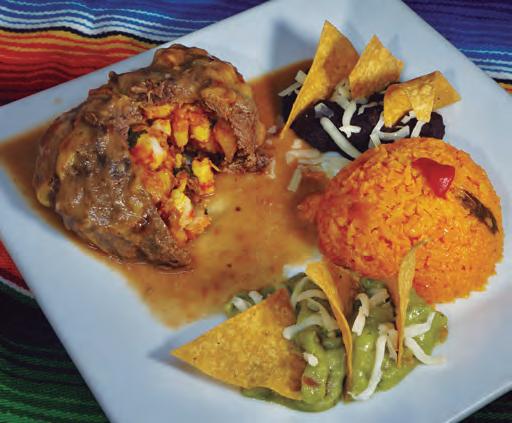
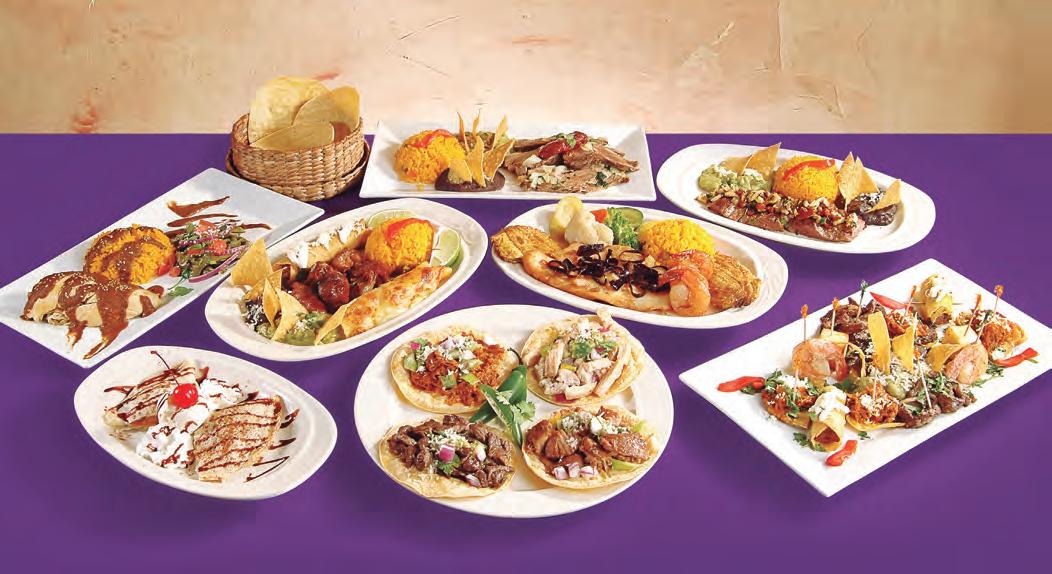
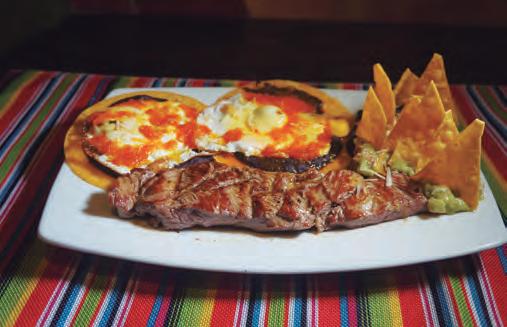
Desde ese primer día, FRIDA’s ha deleitado al público de Puerto Rico ofreciendo un menú de más de 100 platos auténticos mexicanos. Incluye algunas de las mejores recetas de la cocina azteca, como la clásica Tampiqueña, el Filete Toluqueño con chorizo y champiñones, los Huaraches Campechanos de churrasco en salsa verde y salsa de chile pasilla.
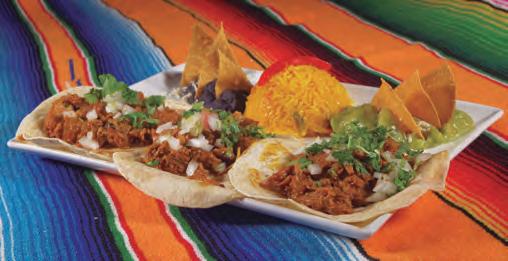
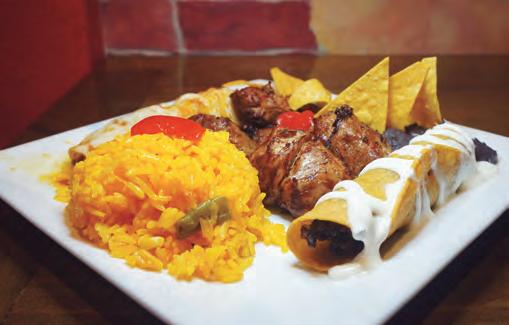
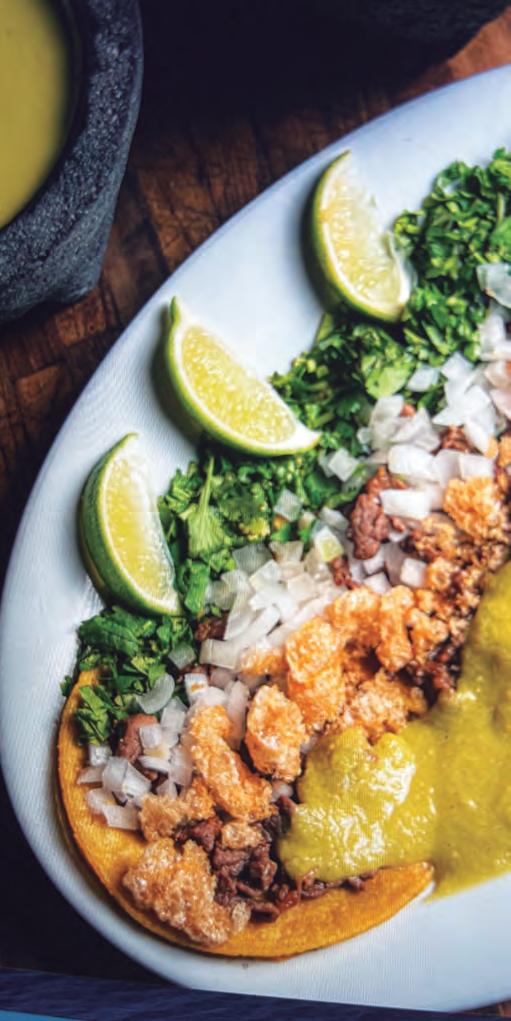
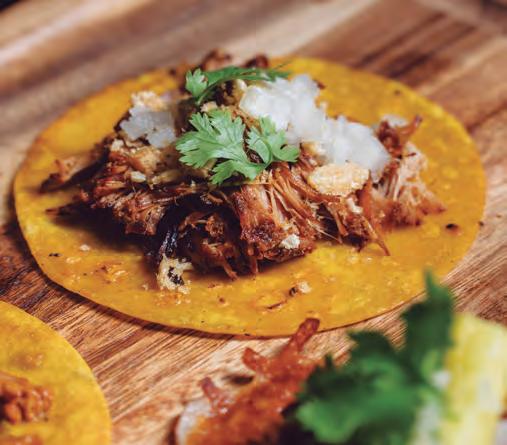
Y los favoritos de siempre: las carnitas de cerdo, las fajitas de res y pollo acompañadas de guacamole, refritos, pico de gallo y tortillas de maíz o trigo, así como los deliciosos tacos de todos los sabores imaginables, como los tradicionales de pastor, chicharrón en salsa verde y cochinita pibil.
Yvonne Brown Ieromazzo
Si eres gourmand, vale la pena probar un plato que es sensacional: Barbacoa de Cordero Lechal, traído de Australia, cocinado al vapor y servido en lascas o en flauta, acompañada con salsa de aguacate y chile morita.
El menú del mar es muy diverso. Son muy populares los Camarones en cualquiera de estos dos estilos —al Cuitlacoche (hongo de maíz) o al Tequila con chipotle— así como Mero al Guajillo y Cevichede pescado con pico de gallo, que siempre está en su punto.
Y eso, precisamente, es una de las grandes virtudes de la cocina de FRIDA’s, su gran consistencia en sabor y calidad.
Algo a lo que también ya nos tienen acostumbrados, es a los frijoles refritos con chicharrones que sirven junto a una sonrisa de bienvenida. Tan pronto uno se sienta, y recibes en la mesa esas dos fuentecitas, más una salsita verde o roja, uno se siente en casa.
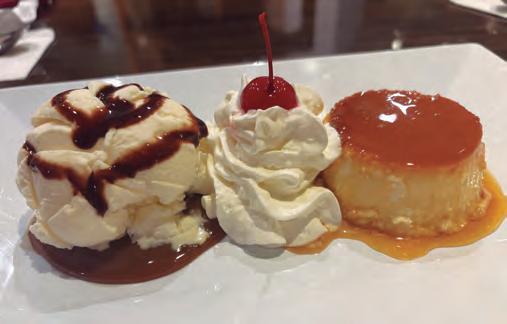
Los postres son también especiales. Mi favorito de siempre es la crepa rellena de dulce de leche (Cajeta) con mantecado de vainilla y canela. Aunque recientemente probé uno riquísimo: Flan de queso Manchego con crema y mantecado de vainilla bañado de chocolate.
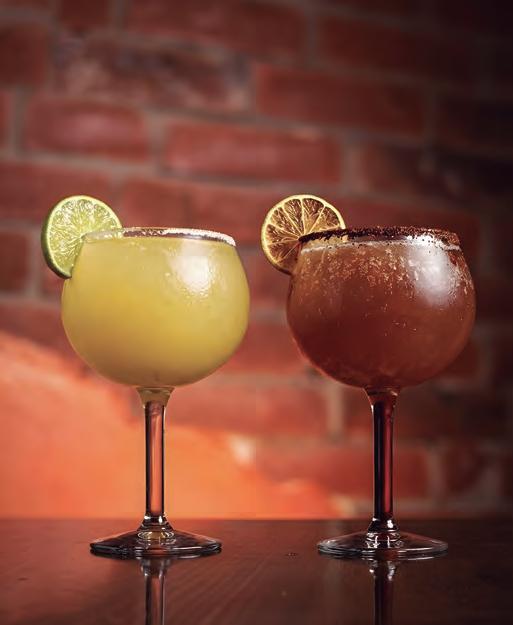
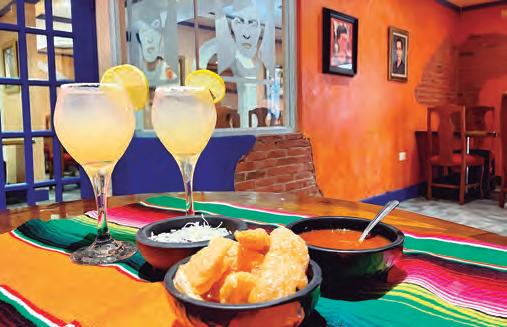
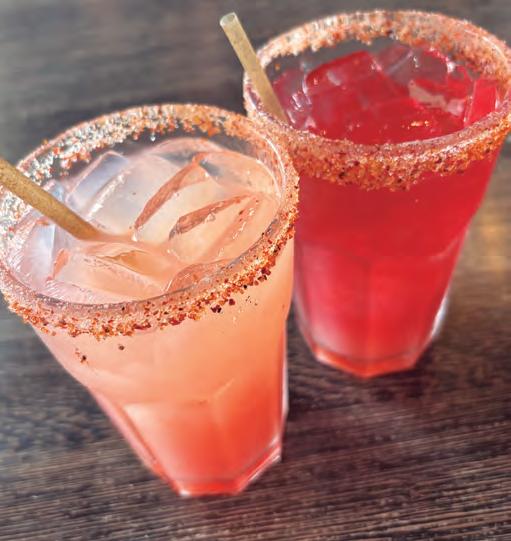
Ninguna comida mexicana está completa sin al menos una Margarita. Y en FRIDA’s puedes probarlas de distintos sabores — fresa, parcha, mango— o la clásica de limón, ya sea frozen o en las rocas. Y si hay mucha sed, puedes sumergirte en la gigantesca Piscina servida en una copa de 17.5 onzas. O para variar, puedes intentar la Mezcal-rrita, una margarita que tiene mezcal en vez de tequila, o quizás una Paloma o una Michelada.
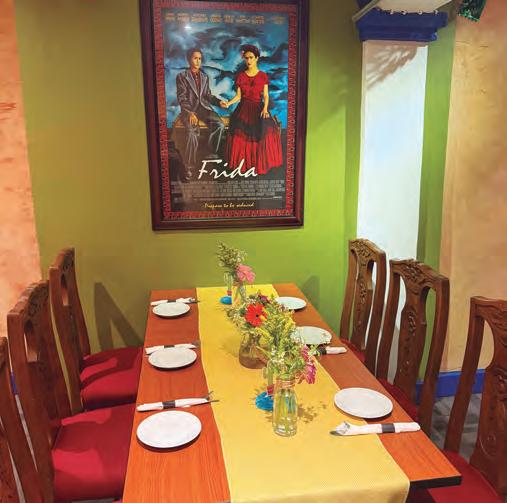
FRIDA’s también cuenta con una excelente carta de tequilas, mezcales y cervezas mexicanas, así como vinos y licores premium, para que puedas disfrutar de su exquisita comida en un ambiente acogedor de hacienda mexicana, decorado con réplicas de pinturas de la famosa artista mexicana e ícono mundial, Frida Kahlo.
Margarita y Michelada
Bandeja de Sopesitos Variados
FRIDA’s MEXICAN RESTAURANT
It’s been 42 years since Gerardo García left his native Mexico and arrived in San Juan with a big dream: to create the best Mexican restaurant in Puerto Rico. He carried in his suitcase both his experience as a businessman selling food products for dining rooms, taquerias and restaurants in the Federal District, now CDMX, and a degree in Political Science and Communications from the National Autonomous University of Mexico.
As soon as he set foot on the island, he got down to work and in 1984 he opened his first restaurant, EL TAPATÍO, in Puerto Nuevo. After the success obtained during 6 years, in the 90’s he opened his second TAPATÍO in Punta las Marías, Isla Verde. It was followed by two innovative fast food concepts, TAPATOSTO in Plaza las Américas and TACOTOSTO in San Patricio Plaza.
In 1996, he sold out all the restaurants, until, “one hot summer night,” another dream changed his life. He dreamed of Frida Kahlo and Diego Rivera and woke up with the name of his new project fixed in his mind: FRIDA’s MEXICAN RESTAURANT.
On a memorable date, “Cinco de Mayo” (Day of the Battle of Puebla), FRIDA’s grand opening took place in 1997. I have to confess that I had the joy of being present that day, as I was in charge of developing the brand and advertising strategy of the new restaurant, which next year celebrates its 30th anniversary.
Since that first day, FRIDA’S has delighted the public in Puerto Rico, offering a menu of more than 100 authentic Mexican dishes. It includes some of the best recipes from the Aztec cuisine, such as the classic
Tampiqueña, the Toluqueño Steak with chorizo and mushrooms, the Campechano Huaraches of churrasco with green sauce and pasilla chile.
And the all-time favorites: pork carnitas — also served in combination with enchilada, flauta dorada, rice, guacamole, and refried beans— as well as beef and chicken fajitas, and delicious tacos in every flavor imaginable, such as pastor, pork rind with green sauce and cochinita pibil.
If you are a gourmand, it is worth trying a dish that’s simply sensational: Barbacoa de Cordero Lechal, made with lamb brought from Australia, steamed and served sliced or in a flauta accompanied with avocado sauce and morita chile.
The seafood menu is very diverse. Shrimp in these two styles are very popular —Cuitlacoche (corn smores) or Tequila with chipotle— as well as Grouper al Guajillo and Fish Ceviche with pico de gallo, which is always at its perfect. And that, precisely, is one of the great virtues of FRIDA’s cuisine, its great consistency in flavor and quality.
Something that we are also used to is the refried beans with pork rinds that are served accompanied by a welcome smile. As soon as you sit down at the table, and receive those two little dishes, plus one with the green or red sauce, you feel truly at home.
Desserts are also very special treats. My all-time favorite is the crepe filled with dulce de leche (Cajeta) and topped with vanilla ice cream. Although I recently tried a new one that was truly delicious: Manchego cheese flan with cream and vanilla ice cream covered with chocolate.
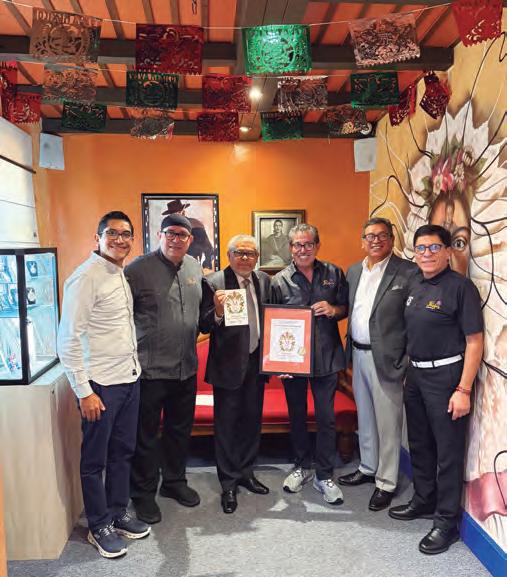
Gerardo García, acompañado de parte de su staff, recibe del Cónsul General de México en Puerto Rico, Juan Manuel Calderón Jaimes, el “Sello M” que reconoce a FRIDA’s MEXICAN RESTAURANT por su excelente labor de promover la gastronomía mexicana con calidad y autenticidad fuera de México.
Gerardo García, accompanied by part of his staff, receives from the Consul General of Mexico in Puerto Rico, Juan Manuel Calderón Jaimes, the “Sello M” seal that recognizes FRIDA’s MEXICAN RESTAURANT for its excellent work in promoting Mexican gastronomy outside of Mexico.
No Mexican meal is complete without at least one Margarita. And at FRIDA’s you can try them in different flavors – strawberry, passion fruit, mango– or the classic lemon, either frozen or on the rocks. And if you are very thirsty, you can dive into a very large Piscina (swimming pool) served in a 17.5 ounce glass. Or for a change, you can try the Mezcal-rrita, an original margarita that has mezcal instead of tequila, a Paloma or a Michelada.
FRIDA’s also has an excellent menu of tequilas, mezcals and Mexican beers, as well as premium wines and spirits, so you can enjoy its exquisite food in the cozy atmosphere of a Mexican hacienda, decorated with replicas of paintings by the famous Mexican artist and world icon, Frida Kahlo.
FRIDA’S MEXICAN RESTAURANT
Ave. Domenech #128
Hato Rey, San Juan, PR
787-763-4827
@fridasrestaurantpr
Filete al Jinete con Huevos Rancheros
Chicharrones y Refritos
Flan de Manchego
Tampiqueña de Cerdo
LA REVOLUCIÓN
Cocina Mexicana Regional & Cantina
Yvonne Brown Ieromazzo
Originario de Chiapas, México, el chef Rómulo Carreño Makintoy llegó a Puerto Rico para revolucionar la cocina mexicana en la Isla con una contundente declaración cultural y regional.
Coincidiendo con el aniversario de la Revolución de México, el 20 de noviembre, pero 105 años después, fundó en San Juan LA REVOLUCIÓN. Por eso su logo lleva el 1910 como fecha de fundación.
Comenzó en un pequeño local, pero al poco tiempo, se mudó a donde está actualmente en Borinquen Towers. Allí fue creando un menú que refleja el alma de México, con sabores auténticos y técnicas tradicionales de diversas regiones, siempre manteniendo respeto por la raíz.
LA BIRRIA REVOLUCIONARIA
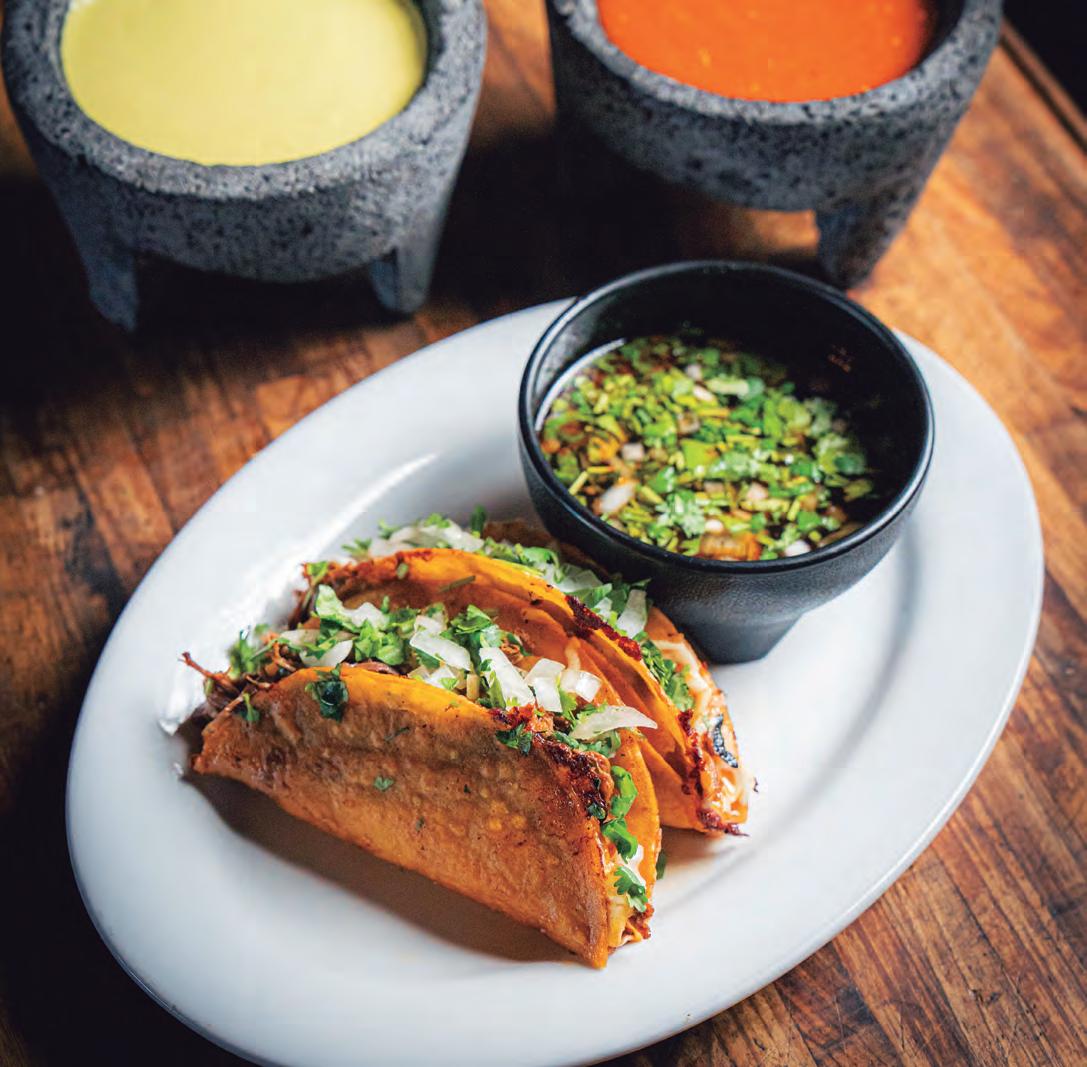
La Revolución fue ganando aceptación hasta que un día explotó su popularidad con la llegada de sus ya famosas Quesabirrias. Esta novedad culinaria causó tal sensación, que la gente hacía fila para probarlas. Hoy, el menú incluye Tacos, Sincronizadas y Chilaquiles de Birria, además de un interesante Birria Ramen.
Los Tacos de Birria son un platillo original de Jalisco y representan la esencia de la cocina mexicana tradicional. Birria es un guiso de carne cocido lentamente en un consomé especiado, logrando que la carne quede jugosa y llena de sabor, con un color rojizo. Es servida con tortillas que se remojan en el consomé.
El éxito de la Birria refleja la esencia tradición y pasión de La Revolución, cuyo nombre está inspirado en los personajes revolucionarios de México, como Zapata y Pancho Villa, que hoy decoran las paredes del local, el cual recrea una antigua cantina.
“En la época de la revolución mexicana surgieron muchos de los platos que conocemos hoy. Entonces se decía ‘los hombres a la lucha y las mujeres a la cocina’, pues ellos tenían que ir bien comidos a la guerra, mientras ellas preparaban platillos que fueran sabrosos y sustanciosos para mantenerlos bien alimentados. Así que se dio una especie de doble revolución—en la calle y en las cocinas”, comenta Rómulo.
VARIADO MENÚ REGIONAL
La Revolución ofrece muchas de las especialidades regionales que han hecho tan famosa a la cocina mexicana: Flautas Ahogadas, Enchiladas Suizas, Carnitas Bravas, Cochinita al Plato, Chilaquiles Rojos (con pastor, carnitas o asada), y Tacos Gobernadora de Camarones.
El menú de TACOS incluye opciones para todos los gustos: Pastor, Campechano de Pollo, Carnitas, Cerdo y Chicharrón, Asada, Cochinita Pibil. Los ANTOJITOS son tan ricos que se hace difícil escoger: sopes de carnitas o pibil, queso fundido, frijoles rancheros, elote, quesadilla de chicharrón, guacamole y pico de gallo. ¡Y qué decir de las margaritas! Tienen sabores súper refrescantes y novedosos, como Sandía, Melón y Pepino, entre otros.
EPICENTRO GASTRONÓMICO
La Revolución también se ha convertido en una especie de epicentro gastronómico, desde donde han surgido otros proyectos interesantes. Uno de estos, Sinaloa Marisquería Mexicana, opera en la Calle Loíza en Santurce y se especializa en aguachiles, ceviches, ostras y otras delicias del Pacífico mexicano, en especial de las costas de Tonalá, de donde es Rómulo.
En cuanto al aspecto solidario del ámbito culinario, La Revolución apoya diversas causas filantrópicas, siempre alimentando a los que Más lo necesitan. Ese fue el caso de los empleados federales que se quedaron sin trabajo por el cese del gobierno, a quienes le llevaron almuerzo gratis varias semanas. Y ahora están enfocados en ayudar a los damnificados de los terremotos en Venezuela.
RECONOCIMIENTO A LA EXCELENCIA
Por el respeto cultural de su propuesta gastronómica, La Revolución ha recibido varios reconocimientos locales e internacionales. En 2022, ganó “El Taco de Oro” de Dubai como mejor restaurante mexicano fuera de México. Este premio fue otorgado por la revista Cocineros MX por el mundo, que luego nombró a Rómulo como embajador y miembro del comité de jueces que selecciona los nuevos ganadores.
Este año, fue nominado a los Lazos de Oro que reconoce la gastronomía extraordinaria de Puerto Rico. Y recientemente, el Gobierno de México le otorgó el prestigioso “Sello M” que certifica la calidad y autenticidad de su cocina mexicana.
LA REVOLUCIÓN
Regional Mexican Cuisine & Cantina
Originally from Chiapas, Mexico, chef Rómulo Carreño Makintoy arrived in Puerto Rico to revolutionize Mexican cuisine on the island with a forceful cultural and regional statement.
Coinciding with the anniversary of the Mexican Revolution, on November 20, but 105 years later, he founded LA REVOLUCIÓN in San Juan. That is why its logo bears 1910 as the date of foundation.
He started in a small location, but soon after, he moved to where he is currently in Borinquen Towers. There he created a menu that reflects the soul of Mexico, with authentic flavors and traditional techniques from various regions, always maintaining respect for the roots.
THE REVOLUTIONARY BIRRIA
The Revolution was gaining acceptance until one day its popularity exploded with the arrival of its now famous Quesabirrias. This culinary novelty caused such a sensation that people lined up to try them. Today the menu also includes Tacos, Sincronizadas and Chilaquiles de Birria, as well as an interesting Birria Ramen.
Tacos de Birria are an original dish from Jalisco and represent the essence of traditional Mexican cuisine. Birria is a meat stew cooked slowly in a spicy broth, making the meat juicy and full of flavor, with a reddish color. It’s served with tortillas that are soaked in the consommé.
The Birria’s success reflects the essence, tradition and passion of La Revolución, whose name is inspired in the revolutionary characters of Mexico, such as Zapata and Pancho Villa, who today decorate the walls of the premises, which recreates an old cantina.
“At the time of the Mexican Revolution, many of the dishes we know today emerged. Then it was said ‘men to fight and women to the kitchen’, because they had to go well fed to war, while they prepared dishes that were tasty and substantial to keep them well fed. So there was a kind of double revolution—in the street and in the kitchens,” says Rómulo.
VARIED REGIONAL MENU
La Revolución offers many of the regional specialties that have made Mexican cuisine so famous: Flautas Ahogadas, Enchiladas Suizas, Carnitas Bravas, Cochinita al Plato, Chilaquiles Rojos (with pastor, carnitas or asada), and Tacos Gobernador with Shrimps.
The TACO menu includes options for all tastes: Pastor, Campechano de Pollo, Carnitas, Pork and Chicharrón, Asada, Cochinita Pibil. The ANTOJITOS are so delicious that it is difficult to choose: carnitas or pibil sopes, melted cheese, ranchero beans, corn, pork rind quesadilla, guacamole and pico de gallo. And what to say about the margaritas! They have super refreshing and uncommon flavors, such as Watermelon, Melon and Cucumber, among others.
GASTRONOMIC EPICENTER
The Revolution has also become a gastronomic epicenter, from where other interesting projects have emerged. One of these, Sinaloa Marisquería Mexicana, now operates on Calle Loíza in Santurce and specializes in aguachiles, ceviches, oysters and other delicacies from the Mexican Pacific, specially from the coast of Tonalá, where Rómulo is from.
As for the solidarity aspect of the culinary field, La Revolución supports various philanthropic causes, always feeding those who need it most. That was the case of the federal employees who were left without work due to the government shutdown, to whom they brought free lunch for several weeks. And now they are focused on helping the victims of the earthquakes in Venezuela.
RECOGNITION OF EXCELLENCE
For the cultural respect of its gastronomic proposal, La Revolución has received several local and international recognitions. In 2022, it won Dubai’s El Taco de Oro as the best Mexican restaurant outside of Mexico. This award was given by the magazine Cocineros MX por el mundo, which then appointed Rómulo as ambassador and member of the judging committee that selects the new winners.
This year, it was nominated for the Golden Ribbons that recognize Puerto Rico’s extraordinary gastronomy. And recently, the Government of Mexico awarded it the prestigious “M Seal” that certifies the quality and authenticity of its Mexican cuisine
Si quieres vivir la experiencia de una auténtica taquería mexicana, con mucha buena vibra y un ambiente urbano único, solo tienes que ir a Los Guapos. Cuando entras al local te parece estar en Ciudad México, pero esta moderna cantina está en el mismo corazón de San Juan.
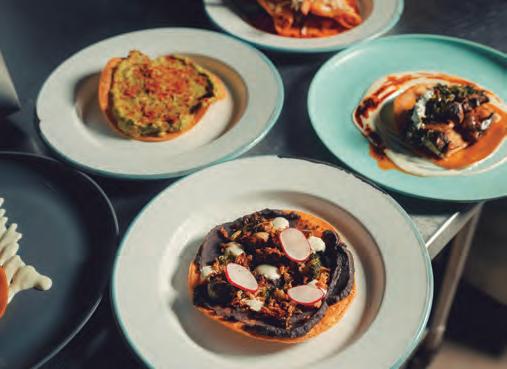
Aquí siempre puedes saborear platos frescos y artesanales, elaborados al mejor estilo “street food” mexicano, todos con el mejor producto local y una sazón única en Puerto Rico.
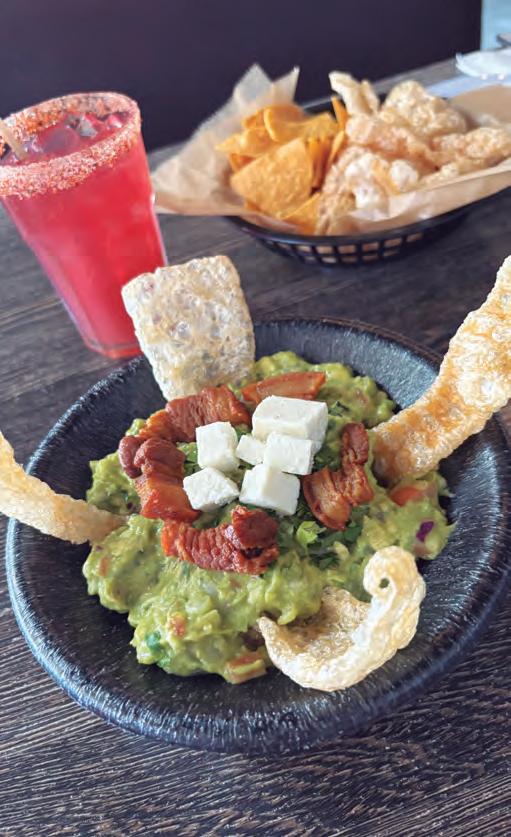
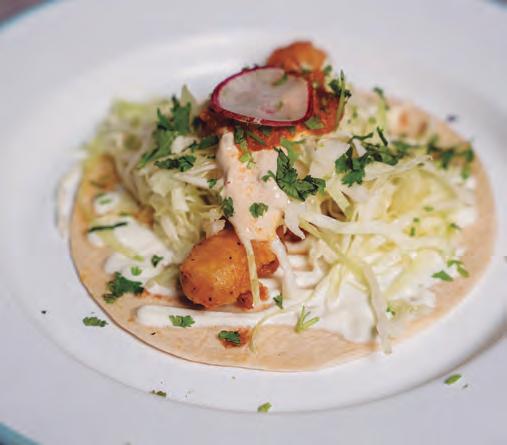
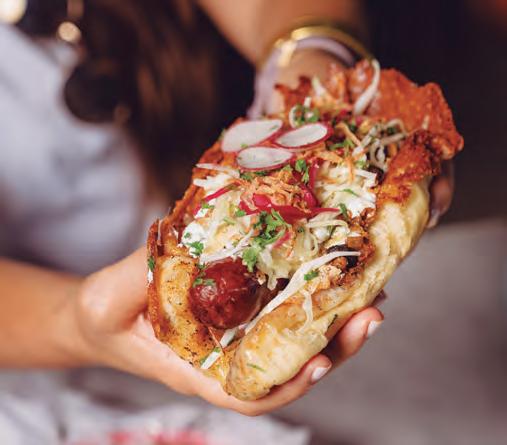
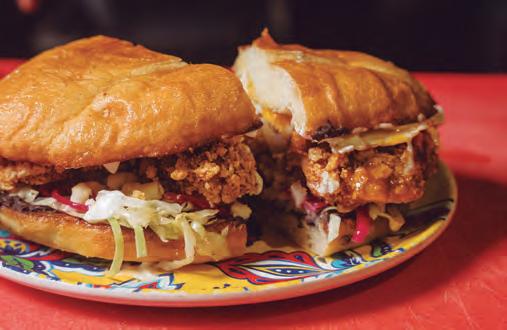
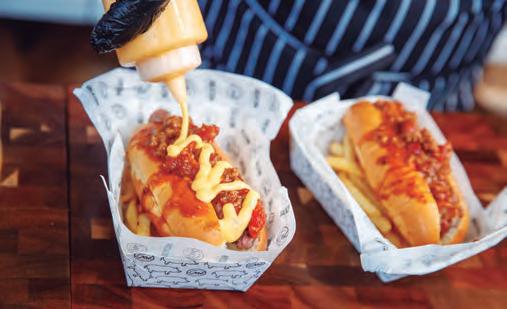
Tienen un menú de tacos bien guapos con distintos rellenos: tinga, carnitas, pibil, pastor, refrito o vegetales (calabaza, flor jamaica y nopales). Además de las tradicionales tostadas, chalupas, burritos, tortas, quesadillas, carne asada y aguachiles. Ofrecen excelentes opciones veganas y vegetarianas. Y para los dulceros, tienen un Flan de Tequila y unos Churros Pa’Lula, que son para chuparse los dedos.
En Los Guapos todo tiene ese toque casero tan especial. Las tortillas son elaboradas por un suplidor local que las hace frescas de manera artesanal. Para el queso fundido utilizan un chorizo hecho en casa, al igual que sus sabrosos chicharrones. Y los sazones son hechos por sus propios cocineros.
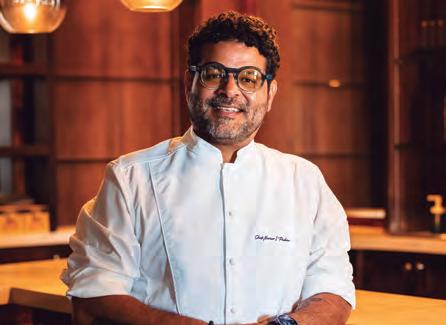
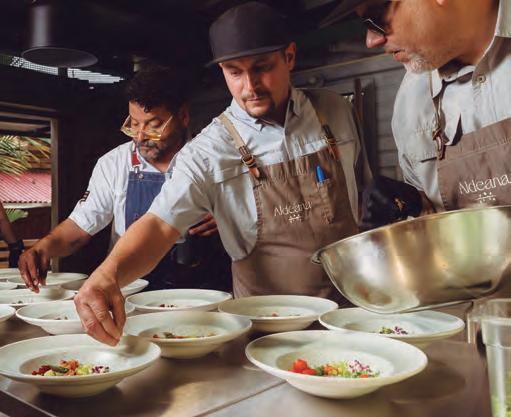
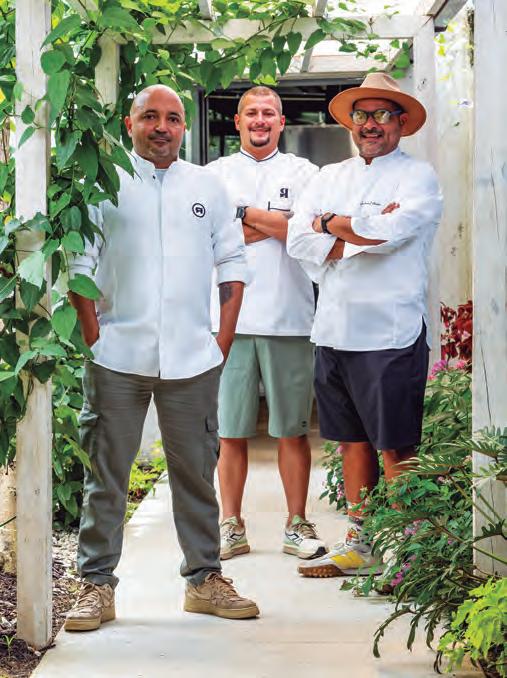
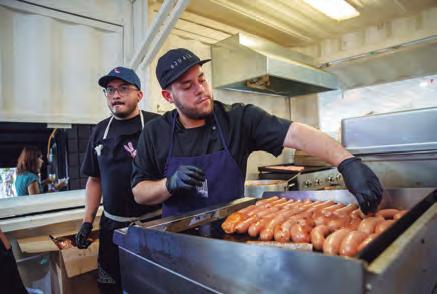
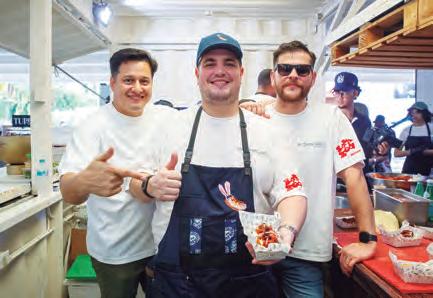
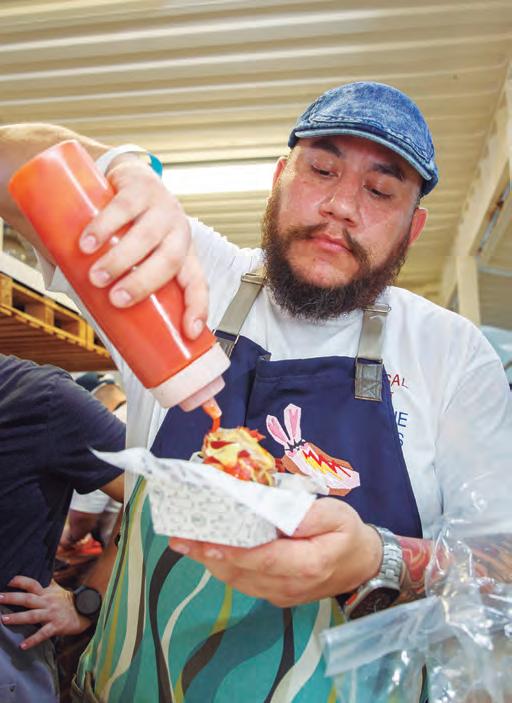
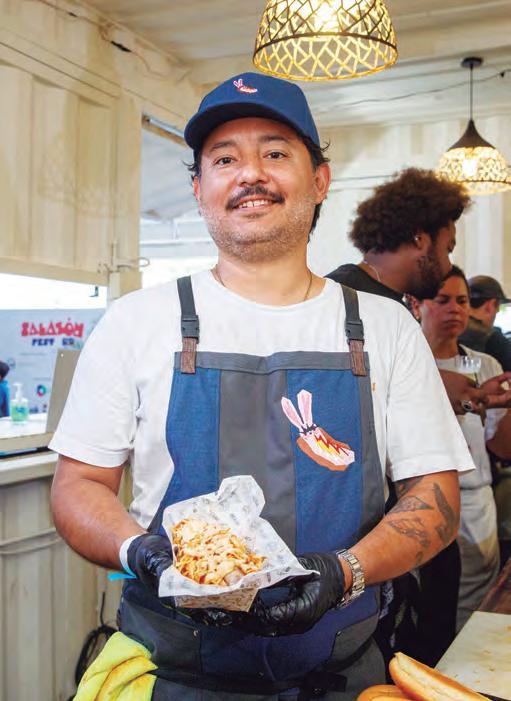
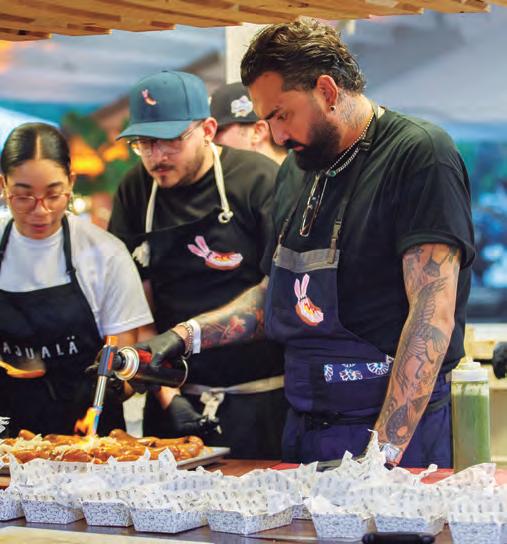
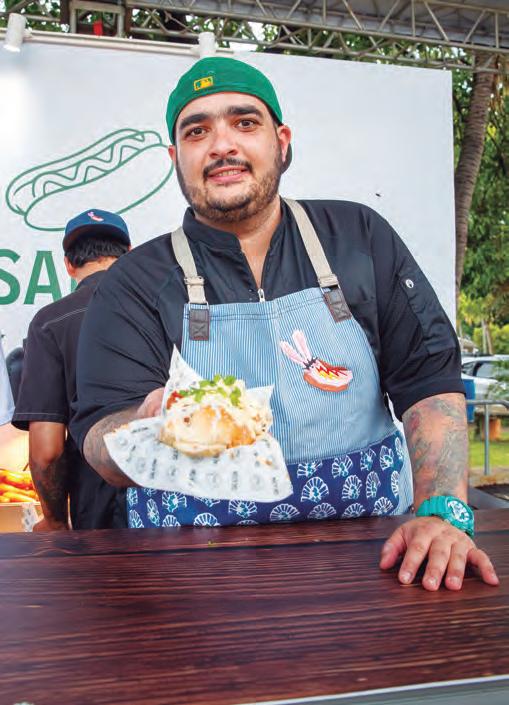
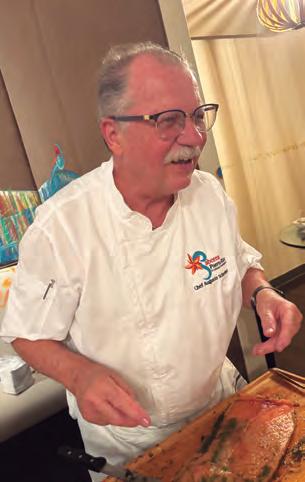
“Esto es cocina mexicana de verdad, pero hecha por puertorriqueños”, asegura el chef Xavier Pacheco, quien junto a Gabriel Antunez (RIP) y José Fred, desarrolló el innovador concepto que inauguró en 2021.
Para darle un ambiente especial a la taquería y resaltar “la guapería callejera”, las paredes están cubiertas con murales muy llamativos, alusivos a íconos espirituales y culturales, tanto mexicanos como locales, incluyendo la flor de maga y la flor del agave.
En la cantina cuentan con una gran variedad de cervezas, tequilas y cocteles. Pero para el calor, nada mejor que una Michelada con mucha guapura. Para prepararla, comienzan llenando el vaso con mucho hielo, luego le añaden la sangriíta de Los Guapos, elaborada a base de tomates rostizados y unas especias que le dan un pique leve, entonces le echan cerveza clara, y terminan con un toque de limón.
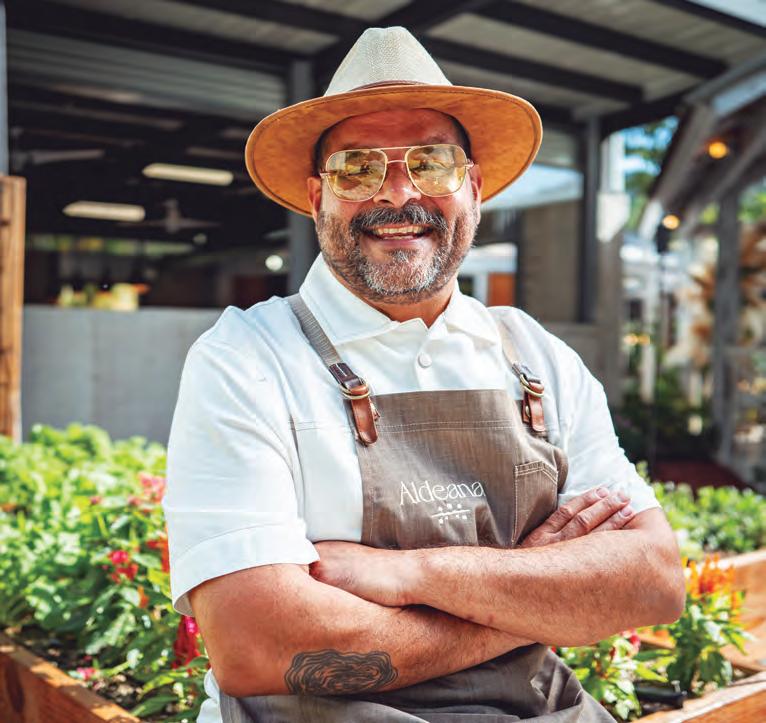
Ahora solo falta que te des la vuelta por Los Guapos. Le darás gracias a la vida por tomarte una de estas micheladas tan refrescantes y, taco a taco, descubrir la guapura de México, dice el Chef Pacheco, de quien hablamos en detalle en las siguientes páginas en la sección Chef Talks.
Taco de Tinga
Taco de Pescado
Perro Guapo
LOS GUAPOS MEXICAN TAQUERIA
If you want to live the experience of an authentic Mexican taqueria, with a lot of good vibes and a unique urban atmosphere, you just have to go to Los Guapos. When you walk into the place you feel like you’re in Mexico City, but this modern cantina is in the very heart of San Juan.
Here you can always savor fresh and artisanal dishes, prepared in Mexican “street food” style, all with the best local produce and a unique seasoning in Puerto Rico.
They have a menu of tacos guapos with different fillings: tinga, carnitas, pibil, pastor, refried or vegetables (pumpkin, hibiscus flower and nopales). In addition to the traditional tostadas, chalupas, burritos, tortas, quesadillas, carne asada and aguachiles. They also offer excellent vegan and vegetarian options. And for the sweet lovers, they have Tequila Flan and Pa’Lula Churros, which are both finger-licking good.
In Los Guapos everything has that special homemade touch. The tortillas are made by a local supplier who makes them fresh every week in an artisanal way. For the queso fundido (melted cheese) they use a homemade chorizo, as well as their tasty chicharrones. And the seasonings are made by their own cooks.
“This is real Mexican cuisine, but made by Puerto Ricans,” says chef Xavier Pacheco, who together with Gabriel Antunez (RIP) and José Fred, developed this innovative concept that opened in 2021.
To give a special atmosphere to the taqueria and highlight “the street guapería”, the walls are covered with very striking murals, alluding to spiritual and cultural icons, both Mexican and local, including the maga flower and the agave flower.
In the canteen they have a wide variety of beers, tequilas and cocktails. But for the heat, nothing better than a Michelada with a lot of beauty. To prepare it, they start by filling the glass with a lot of ice, then they add the Los Guapos sangriíta, made from roasted tomatoes and spices that give it a slight spiciness, then they add blond beer, and finish with a touch of lemon.
Now all you have to do is turn around Los Guapos. You will thank life for having one of these refreshing micheladas and, taco by taco, discovering the guapura of Mexico, says Chef Pacheco, who is featured in the Chef Talks section in the following pages.
LOS GUAPOS TAQUERÍA MEXICANA
Avenida José de Diego #87
Villas de San Francisco Plaza, San Juan, PR @losguapospr
Javier Pacheco y José Fred
De Portada
BEBIDAS DE AGAVE…TEQUILA Y MEZCAL
El tequila y el mezcal son dos grandes protagonistas de la gastronomía mexicana que tienen un gran arraigo cultural en México y, sorbo a sorbo, han ido ganando mucha popularidad a nivel mundial.
Ambas son bebidas alcohólicas destiladas elaboradas con el corazón o “piña” de la planta de maguey, también conocida por su nombre científico, agave. Si embargo, estas tienen diferentes ingredientes, regiones de origen, procesos de elaboración y graduación de alcohol.
TIPO DE AGAVE
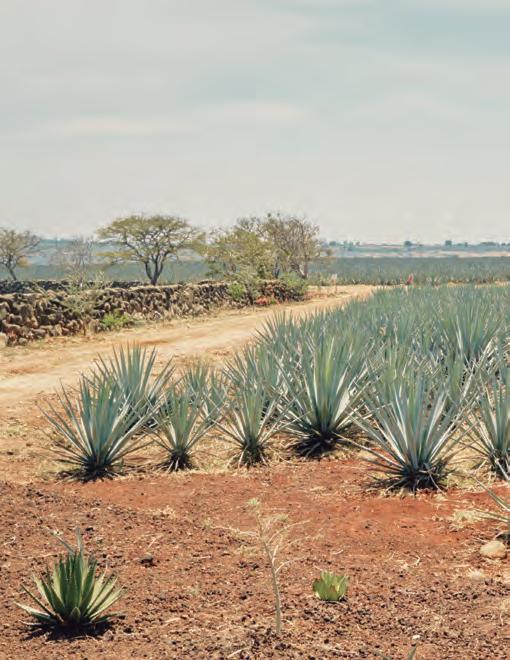
El tequila se elabora únicamente con Agave Azul (Tequilana Weber). Sin embargo, el mezcal se puede producir con cualquiera de las más de 30 especies de agave. De ahí el dicho: “todo tequila es mezcal, pero no todo mezcal es tequila”.
DENOMICACIÓN DE ORIGEN
A finales de 1400’s y principios de los 1500’s, los españoles que llegaron a México, comenzaron a fermentar bebidas con agave en una ciudad en las afueras de Jalisco llamada “Tequila”.
Y allí nació la leyenda. Pero, según evidencia del 1616, el mezcal es el espíritu destilado más antiguo de las Américas. Desde entonces, se han implementado leyes y regulaciones para definir lo que se considera un “auténtico” tequila o mezcal y controlar su calidad.
Hoy, ambos destilados cuentan con Denominación de Origen protegida por el gobierno mexicano, lo que significa que legalmente solo pueden producirse en regiones específicas del país utilizando métodos tradicionales.
En 1974 surge la Denominación de Origen Tequila. Esta exige el uso de la especie agave tequilana weber variedad azul procedente del estado de Jalisco o de ciertos municipios de los estados de Guanajuato, Michoacán, Nayarit y Tamaulipas.
Y 20 años más tarde, en 1994, se creó la Denominación de Origen Mezcal (DOM), y especifica que el agave deberá proceder de Oaxaca, donde se produce la mayoría del mezcal, así como de los estados de Guerrero, San Luis Potosí, Zacatecas y Durango, además de ciertos municipios de Guanajuato, Tamaulipas, Michoacán y Puebla. Y solo se permite la producción y el envasado del mezcal dentro de la DOM.
Yvonne Brown Ieromazzo
PROCESO DE ELABORACIÓN
Actualmente, existen numerosas marcas de tequila y mezcal en el mercado global, y cada uno brinda distintas experiencias y sabores. Estas se destacan no solo por su habilidad de capturar la esencia única del agave, sino también por sus singulares procesos de elaboración.
CULTIVO
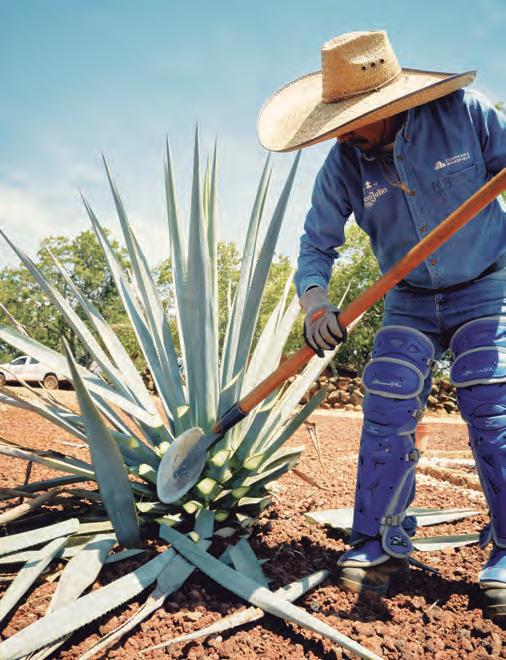
La planta de maguey dura de 5-30 años, según la especie. Su tiempo de maduración es de 6 a 7 años. Esta no se usa completa, solo la piña, que es el corazón del agave. El jimador es quien “jima”, o corta, con el machete las pencas afiladas de la planta y extrae la piña del centro.
COCCIÓN
Al llegar del campo al palenque (destilería), la piña del agave se pica en trozos pequeños y se hornea para convertir los almidones en azúcares.
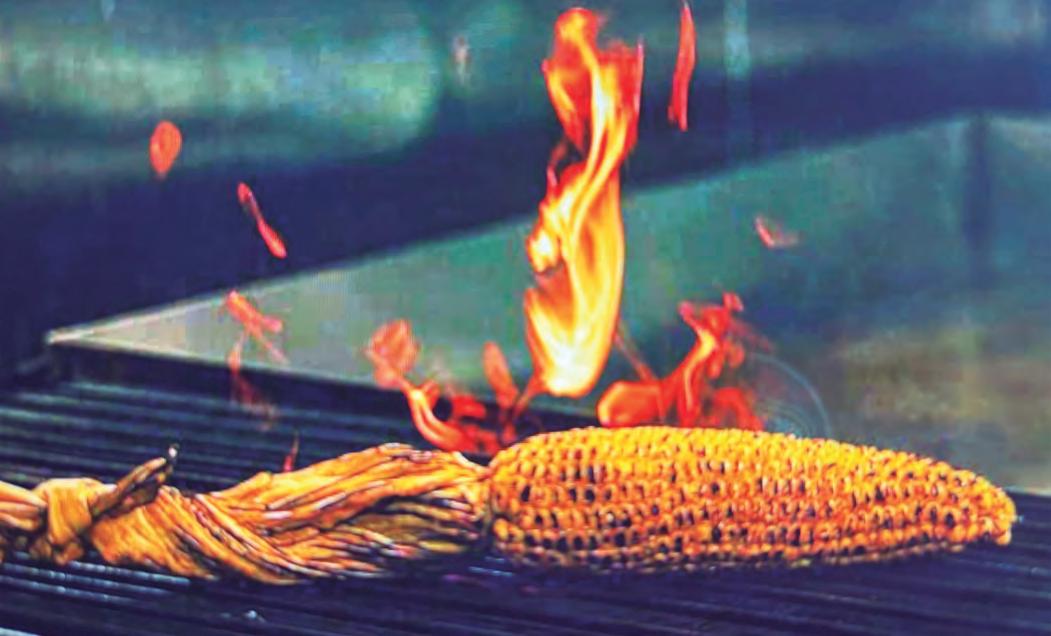
La principal diferencia es que el tipo de horno utilizada para cocinar la piña es distinto para cada bebida. Para el tequila, la piña se cuece en hornos de mampostería o al vapor, resultando en un sabor más limpio y suave. Y para el mezcal, las piñas del agave se colocan en hornos de piedra volcánica debajo de la tierra y calor a base de leña, lo cual le añade su característico sabor ahumado.
El tiempo de cocción de la piña también varía. En el caso del tequila, se cocinan 18-22 horas para retener la humedad y optimizar el sabor. Y con el mezcal, los trozos primero se colocan sobre las piedras volcánicas, se tapan con tierra y entonces se cocinan de 5 a 7 días. Las piñas salen de un color marrón, pues han sido caramelizadas, y se dejan enfriando unos días antes del próximo paso.
MOLIENDA
Una vez cocidas, las piñas son trituradas para extraerle el jugo. Se utilizan distintos sistemas para separar las fibras de los jugos de manera sutil y evitar el sabor amargo.
FERMENTACIÓN & DESTILACIÓN
Mezcal: El jugo del agave se coloca en tanques de fermentación con agua tibia, sin levadura añadida, donde dura de 5-14 días, según la temperatura y la receta del maestro mezcalero. Luego pasa por la primera destilación con todo el bagazo, y una segunda, que dura de 2 a 3 días.
Tequila: El jugo del agave se coloca en tanques para fermentar de 90 a 100 horas, lo cual aclara su sabor. Se le añade levadura para convertir las azúcares en alcohol, ya sea 40% o 80% grados prueba. Es destilado dos veces para concentrar el alcohol y remover elementos tóxicos.
GRADUACIÓN ALCOHÓLICA
Una vez completada la destilación, se hace un ajuste alcohólico, con el fin de llegar al porciento de alcohol por volumen deseado Para esto se utilizan “las tres c” de guía: Cabeza, 70-80%, Corazón, 50%, el más usado y le añaden agua para llegar al 40%, Cola, menos de 20%.
El tequila suele mantenerse estrictamente entre los 35 y 40 grados. En contraste, el mezcal está habitualmente entre 45 y 55 grados de alcohol por volumen, por lo que tiende a ser más fuerte, puro y con mayor concentración aromática.
Ahora que sabes las diferencias, anímate a descubrir el fascinante mundo del agave y siente la esencia de México a través de sus dos bebidas nacionales: Tequilas y Mezcal.
AGAVE DRINKS
Tequila and Mezcal
Tequila and Mezcal are two great protagonists of Mexican gastronomy that have great cultural roots in Mexico and, sip by sip, have been gaining a lot of popularity worldwide.
Both are distilled alcoholic beverages made from the heart or “pineapple” of the maguey plant, also known by its scientific name, agave. However, they have different ingredients, regions of origin, production processes and alcohol content.
TYPE
OF AGAVE
Tequila is made solely from Blue Agave (Tequilana Weber). However, mezcal can be produced with any of the more than 30 species of agave. Hence the saying: “all tequila is mezcal, but not all mezcal is tequila.”
DENOMINATION OF ORIGIN
In the late 1400’s and early 1500’s, the Spanish who arrived in Mexico began fermenting drinks with agave in a small town outside of Jalisco called “Tequila.” And that’s where the legend was born.
But, according to evidence from 1616, mezcal is the oldest distilled spirit in the Americas. Since then, laws and regulations have been implemented to define what is considered an “authentic” tequila or mezcal and control its quality.
Today, both distilled spirits have a Denomination of Origin protected by the Mexican government, meaning that they can only be legally produced in specific regions of the country using traditional methods.
In 1974 the Tequila Designation of Origin appellation emerged. This requires the use of the agave tequilana weber blue variety species from the state of Jalisco or from certain municipalities in the states of Guanajuato, Michoacán, Nayarit and Tamaulipas.
And 20 years later, in 1994, the Mezcal Designation of Origin (DOM) was created, and specifies that the agave used must come from Oaxaca, where most mezcal is produced, as well as from the states of Guerrero, San Luis Potosí, Zacatecas and Durango, as well as certain municipalities in Guanajuato, Tamaulipas, Michoacán and Puebla. And the subsequent production and packaging of mezcal is only allowed within the DOM.
PRODUCTION PROCESS
Currently, there are numerous tequila and mezcal brands in the global market, and each one offers different experiences and flavors. These stand out not only for their ability to capture the unique essence of agave, but also for their unique brewing processes.
HARVEST
The maguey plant lasts 5-30 years, depending on the species. Its maturation time is 6 to 7 years. It is not used whole, only the pineapple, which is the heart of the agave. The jimador is the one who “jima”, or cuts, with the machete the sharp stalks of the plant and extracts the pineapple from the center.
COOKING
Upon arrival from the field to the palenque (distillery), the pineapple is chopped into small pieces and baked to convert the starches into sugars.
The main difference is that the type of oven used to cook pineapple is different for each drink. For tequila, pineapple is cooked in masonry ovens or steamed, resulting in a cleaner, smoother flavor. And for mezcal, the agave pineapples are placed in volcanic stone ovens under the earth and heat from wood, which adds its characteristic smoky flavor.
The cooking time of pineapple also varies. In the case of tequila, they are cooked for 18-22 hours to retain moisture and optimize flavor. And with mezcal, the pieces are first placed on the volcanic stones, covered with earth and then cooked for 5 to 7 days. The pineapples come out brown, as they have been caramelized, and are left to cool a few days before the next step.
GRINDING
Once cooked, the pineapples are crushed to extract the juice. Different systems are used to subtly separate the fibers from the juices and avoid bitter taste.
FERMENTATION & DISTILLATION
Mezcal: The juice of the agave is placed in fermentation tanks with warm water, without added yeast, where it lasts for 5-14 days, depending on the temperature and the recipe of the mezcalero master. Then it goes through the first distillation with all the bagasse, and a second, which lasts 2 to 3 days.
Tequila: The juice of the agave is placed in tanks to ferment for 90 to 100 hours, which clarifies its flavor. Yeast is added to convert the sugars into alcohol, either 40% or 80% proof. It is distilled twice to concentrate the alcohol and remove toxic elements.
ALCOHOL CONTENT
Once distillation is complete, an alcohol adjustment is made, in order to reach the desired percentage of alcohol by volume. For this, “the three c’s” are used as a guide: Head, 70-80%, Heart, 50%, the most used and add water to reach 40%, Tail, less than 20%.
Tequila is usually kept strictly between 35 and 40 proof. In contrast, mezcal is usually between 45 and 55 degrees alcohol by volume, so it tends to be stronger, purer and with a higher aromatic concentration.
Now that you know the differences, get ready to discover the fascinating world of agave and feel the essence of Mexico through its two national drinks: Tequila and Mezcal.
MAYAHUEL
La Diosa del Agave
PLEASE DISCOVER RESPONSIBLY.
MAYAHUEL
Yvonne Brown Ieromazzo
EL TEQUILEÑO
Celebración
de herencia y
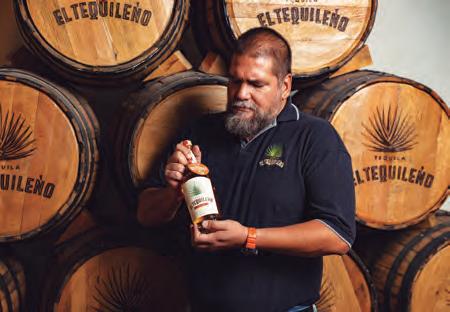
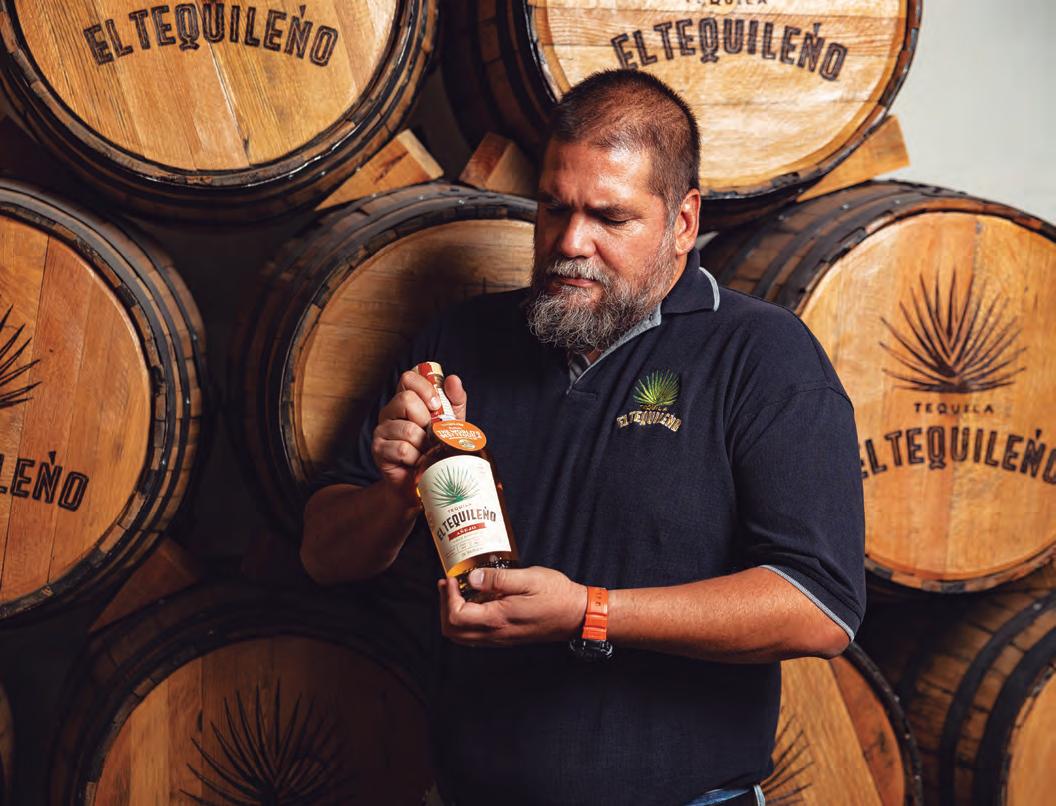
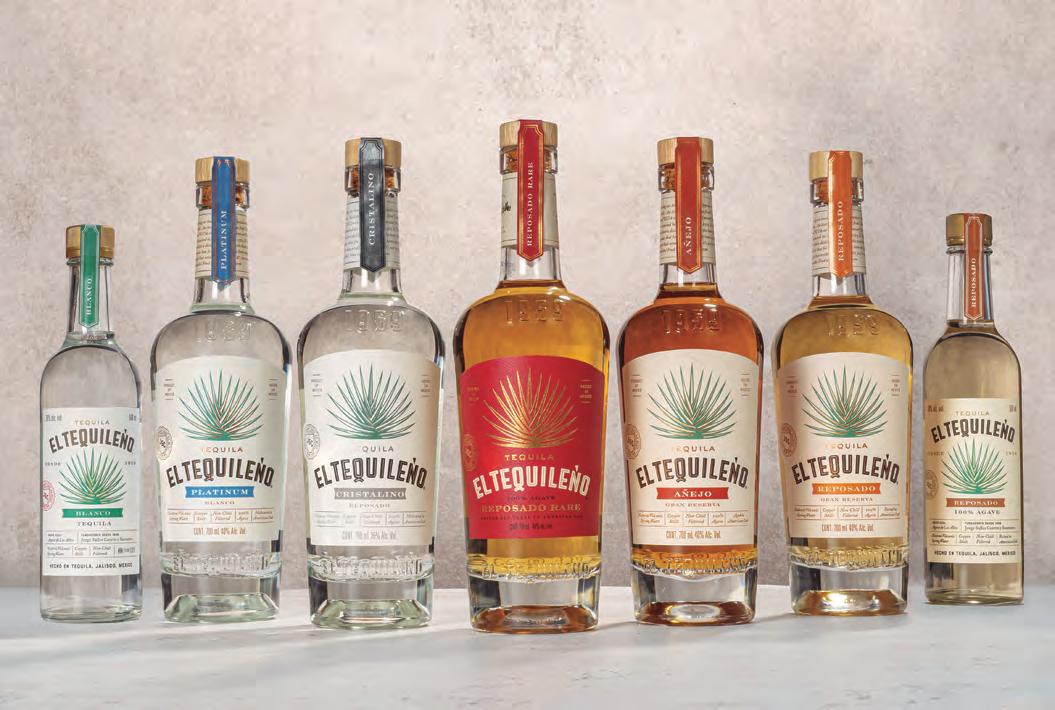
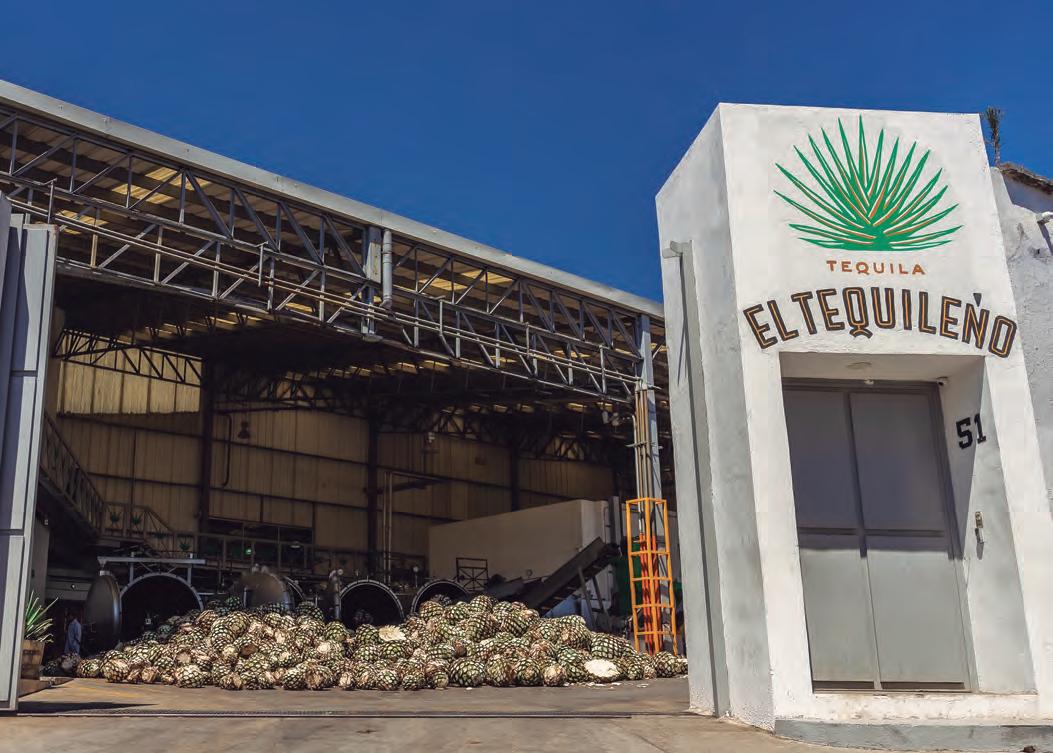
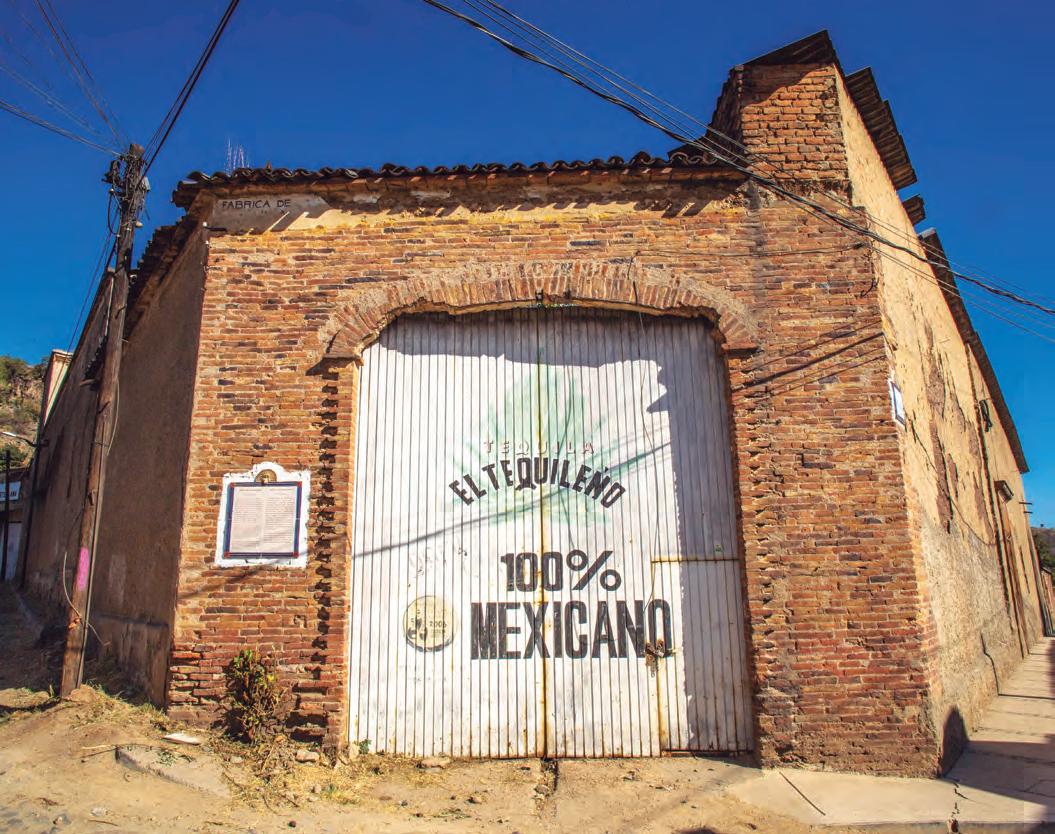
Durante casi 70 años, La Destilería La Guarreña ha sido el hogar exclusivo del mejor secreto guardado de México: Tequila El Tequileño. Pero desde hace tres años, ya muchos en la República Dominicana se han enterado de este icónico y galardonado tequila, elaborado 100% con agave azul, que ha cautivado al mundo por su pureza, equilibrio y carácter inconfundible.
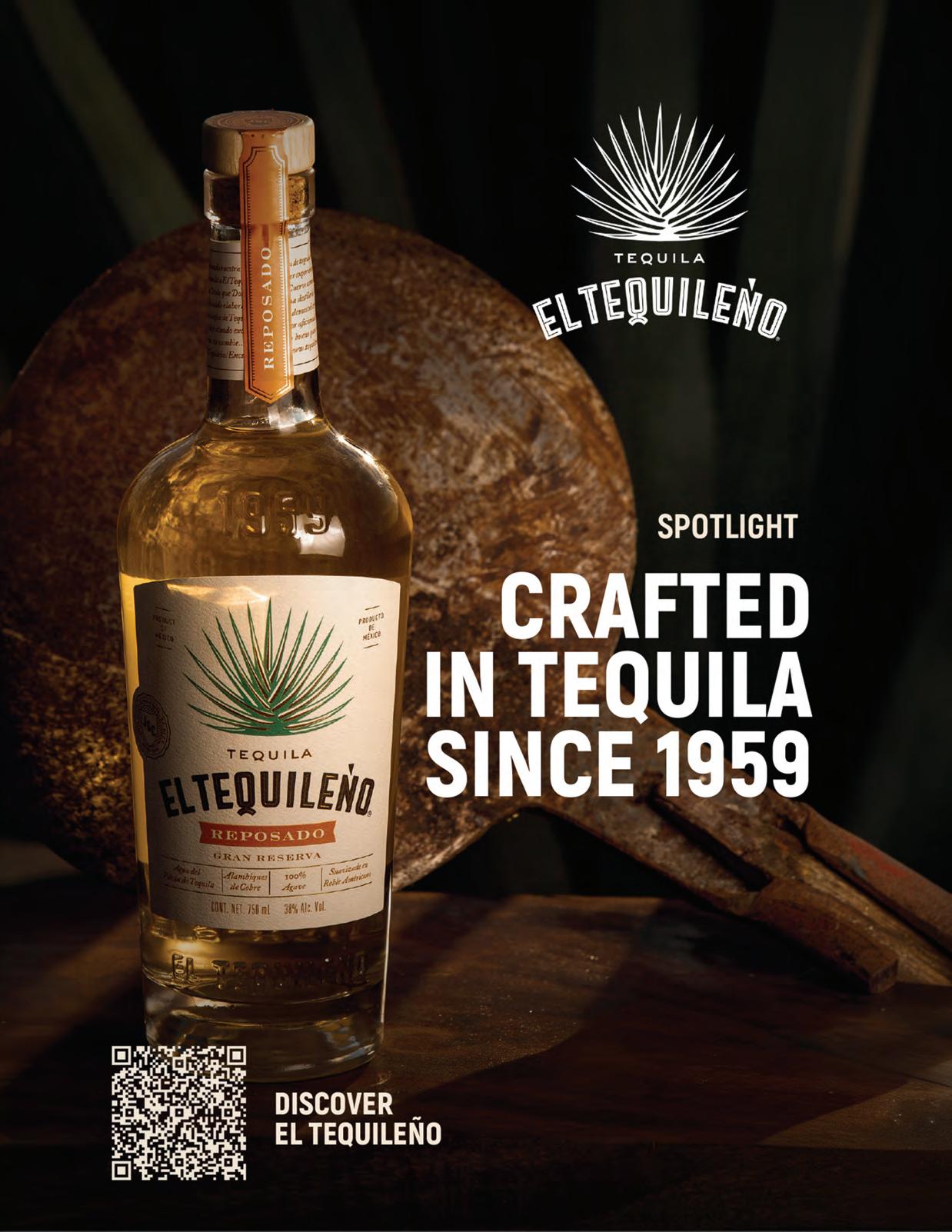
Creada en 1959 por el legendario pionero de la industria tequilera, Don Jorge Salles Cuervo, la marca El Tequileño fue nombrada en honor a la ciudad de Tequila en Jalisco, lugar que vio nacer esta popular bebida y donde también ubica la empresa.
Hoy, es una de ocho destilerías que solo produce su propia marca tequila y donde el legado familiar continúa bajo la supervisión del maestro tequilero de tercera generación, Jorge Antonio (Tony) Salles.
pasión en cada gota
El conocimiento y la experiencia transmitidos de generación en generación aseguran que se produzca solo tequila de la más alta calidad. Por eso, cada gota de El Tequileño es una celebración de la herencia y la pasión.
NACIDO EN LOS ALTOS, ELABORADO EN JALISCO
El agave que utiliza El Tequileño en su elaboración proviene de la región de Los Altos de Jalisco —a unas cuatro horas en camión—, considerada la zona de cultivo premium para el agave azul. A pesar del arduo trayecto, Don Jorge siempre creyó que no había atajos para elaborar el mejor tequila.
El suelo rojo arcilloso de esta región produce agaves con notas más florales y frutales, que tienen un contenido naturalmente más alto de azúcares. Alrededor de la destilería también crecen árboles de mango, lo cual impacta la fermentación de El Tequileño y le añade un toque muy distintivo.
Jorge Antonio (Tony) Salles
Yvonne Brown Ieromazzo
El agave se mezcla con agua de manantial pura y natural, proveniente directamente del Volcán de Tequila, para crear un tequila fino de sabor excepcional. De hecho, El Tequileño es una de las cuatro destilerías con acceso exclusivo a esta agua volcánica de Jalisco.
VIVE LA EXPERIENCIA EN TEQUILA
Ahora puedes vivir una maravillosa experiencia tequilera en Casa Salles, el Hotel Boutique que abrió sus puertas en 2019. Está ubicado justo al lado de la destilería donde se elabora El Tequileño, en la mágica ciudad de Tequila (Jalisco, México), considerada un World Heritage Site por la UNESCO. Tendrás la oportunidad de aprender sobre su historia y proceso de producción de este premiado tequila, y sentir de primera mano la pasión que destila cada gota de El Tequileño.
AHORA ES DISFRUTADO POR LOS DOMINICANOS
El Tequileño es uno de los primeros tequilas artesanales — sin aditivos y con muchos premios— en llegar a la República Dominicana, y lo hace de la mano de Axel B. Wittkop Hernández, fundador de AXMA Group, distribuidor de bebidas premium en todo el territorio nacional.
“Durante un tiempo viajaba mucho a México, y en el proceso me enamoré de su cultura, su comida y su tequila. Probé más de 100 marcas, pero El Tequileño es otra cosa”, explica el joven empresario.
Entre las consideraciones que le llevaron a seleccionarlo, Wittkop resalta que “El Tequileño es mucho más que un tequila de calidad. Es una marca con autenticidad, valores, herencia e integridad, que ha permanecido fiel a sus principios, generación tras generación, preservando su legado familiar y su compromiso con la excelencia. Y esa filosofía encaja perfectamente con nuestra visión de representar marcas con historia, legado, propósito y estándares de clase mundial”.
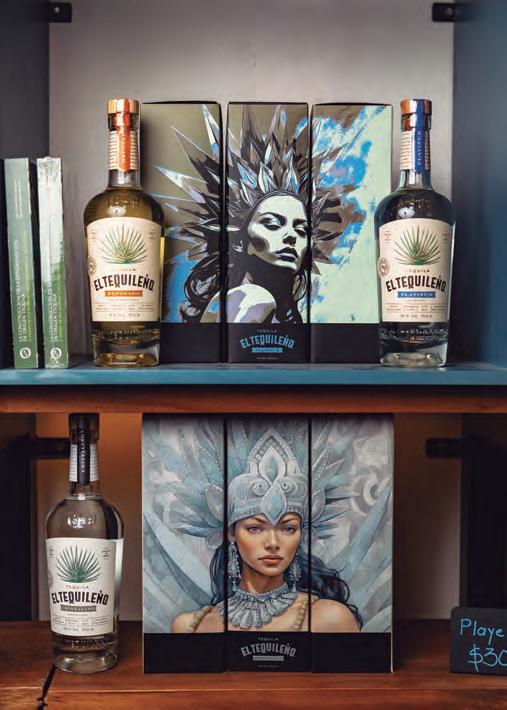
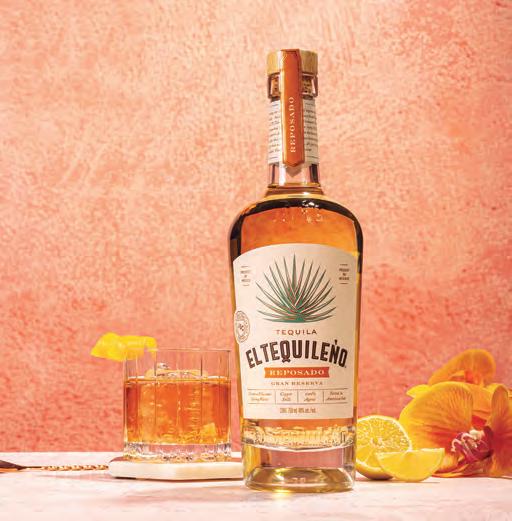
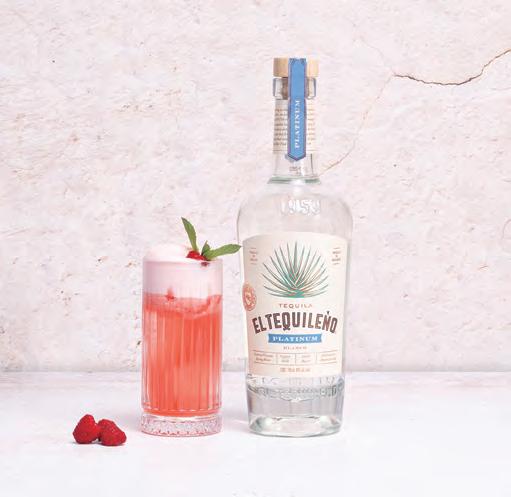
Así fue como en 2023, AXMA comenzó a traer dos presentaciones de la gama tradicional de El Tequileño —blanco y reposado— de medio litro y un litro. El portafolio ya se ha expandido para incluir la gama extra premium: Platinum, Cristalino, Reposado Gran Reserva y Añejo Gran Reserva.
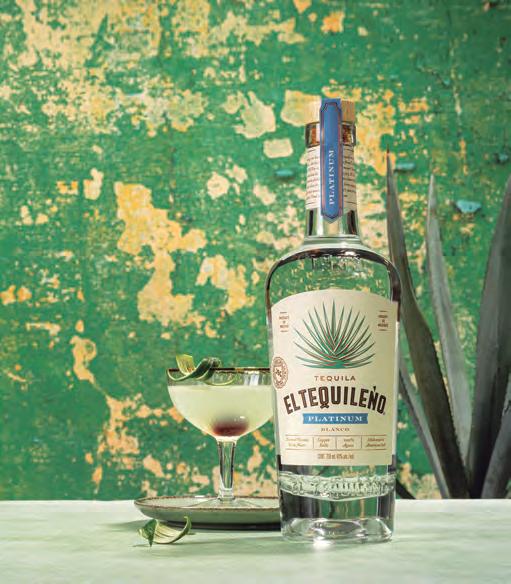
Ya sea solo, mezclado o en coctel, siempre hay una opción de El Tequileño para cada gusto y cada ocasión. “El Tequileño ha tenido tanta acogida, que ya está disponible en restaurantes, bares, tiendas de bebida y de conveniencia a través de todo el País”, señaló.
AXMA Group también distribuye a nivel nacional la popular marca POLAR (agua tónica, club soda, ginger ale y bebidas carbonatadas premium), además de otros destilados como Langley’s Gin de Londres y El Bandarra de Barcelona, tanto VERMUT ROJO con más de 50 especias, como AL FRESCO, aperitivo elaborado con vino 100% garnacha y macerado con especias y piel de pomelo.
Y ahora añadió una de las marcas más antiguas de bitter, FEE BROTHERS, que viene en variedad de sabores, como el Fee Foam—la alternativa moderna a la clara de huevo. Al ser una opción eficiente, higiénica, vegana y sin gluten, es la favorita de los bartenders.
EL TEQUILEÑO
A celebration of heritage and passion in every drop
For nearly 70 years, La Guarreña Distillery has been the exclusive home of Mexico’s best kept secret: El Tequileño Tequila. But for three years, many in the Dominican Republic have learned about this iconic and award-winning tequila, made with 100% blue agave, which has captivated the world with its purity, balance and unmistakable character.
Created in 1959 by the legendary pioneer of the tequila industry, Don Jorge Salles Cuervo, the El Tequileño brand was named in honor of the city of Tequila in Jalisco, the place where this popular drink was born and where the company is also located.
Today, it’s one of eight distilleries that only produces its own brand of tequila and where the family legacy continues under the supervision of third-generation tequila master Jorge Antonio (Tony) Salles.
The knowledge and experience passed down from generation to generation ensure that only the highest quality tequila is produced. That’s why every drop of El Tequileño is a celebration of heritage and passion.
BORN IN LOS ALTOS, MADE IN JALISCO
The agave used to produce El Tequileño comes from the Los Altos region of Jalisco – about four hours by truck – considered the premium cultivation area for blue agave. Despite the arduous journey, Don Jorge always believed that there were no shortcuts to making the best tequila.
The red clay soil of this region produces agaves with more floral and fruity notes, which have a naturally higher sugar content. Mango trees also grow around the distillery, which impacts the fermentation of El Tequileño and adds a very distinctive touch.
The agave is blended with pure, natural spring water, sourced directly from the Tequila Volcano, to create a fine tequila with exceptional flavor. In fact, El Tequileño is one of four distilleries with exclusive access to this volcanic water from Jalisco.
LIVE THE EXPERIENCE IN TEQUILA
You can now live a wonderful tequila experience in Casa Salles, a Boutique Hotel that opened its doors in 2019. It’s located right next to the distillery where El Tequileño is made, in the magical city of Tequila, (Jalisco, Mexico), considered a World Heritage Site by UNESCO. You’ll have the unique opportunity to learn about its history and production process of this award winning tequila, while feeling first-hand the passion that distills every drop of El Tequileño.
NOW IT IS ALSO ENJOYED BY DOMINICANS
El Tequileño is one of the first artisanal tequilas –without additives and with many awards– to arrive in the Dominican Republic, and it does so by the hand of Axel B. Wittkop Hernández, founder of AXMA Group, a distributor of premium drinks throughout the national territory.
“For a while I traveled a lot to Mexico, and in the process, I fell in love with its culture, its food, and its tequila. I tried more than 100 brands, but El Tequileño is something else,” explains the young entrepreneur.
Among the considerations that led him to select it, Wittkop highlights that “El Tequileño is much more than a quality tequila. It is a brand with authenticity, values, heritage and integrity, which has remained true to its principles, generation after generation, preserving its family legacy and its commitment to excellence. And that philosophy fits perfectly with our vision of representing brands with history, legacy, purpose and world-class standards.”
That’s how in 2023, AXMA began to bring two presentations of the traditional class of El Tequileño – white and reposado –of half and one liter. The portfolio has already expanded to include the extra premium category: Platinum, Cristalino, Reposado Gran Reserva and Añejo Gran Reserva.
Whether straight, mixed or in a cocktail, there is always an option of El Tequileño for every taste and every occasion. “El Tequileño has been so well received, that it is already available in restaurants, bars, beverage and convenience stores throughout the country,” he said.
AXMA Group also distributes nationwide the popular POLAR brand (tonic water, club soda, ginger ale and premium carbonated drinks), as well as other spirits, such as Langley’s Gin of London and El Bandarra de Barcelona, both the VERMUT ROJO with more than 50 spices, and AL FRESCO, an aperitif made with a 100% Grenache wine and macerated with spices and grapefruit peel.
And the company just added one of the oldest brands of bitters, FEE BROTHERS, which comes in a variety of flavors, such as Fee Foam—the modern alternative to egg white. Being an efficient, hygienic, vegan and gluten-free option, it is a favorite of bartenders.
@el_tequileño @axmagroup
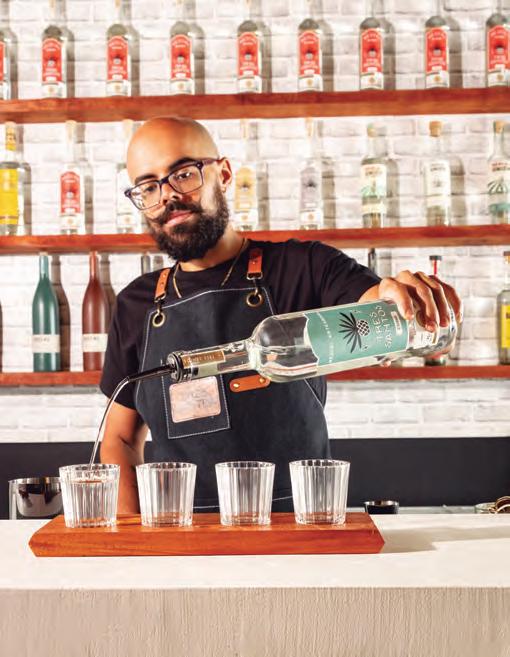
TRES SANTOS MEZCAL
Tradición mexicana con alma boricua que se bebe a besos
Yvonne Brown Ieromazzo
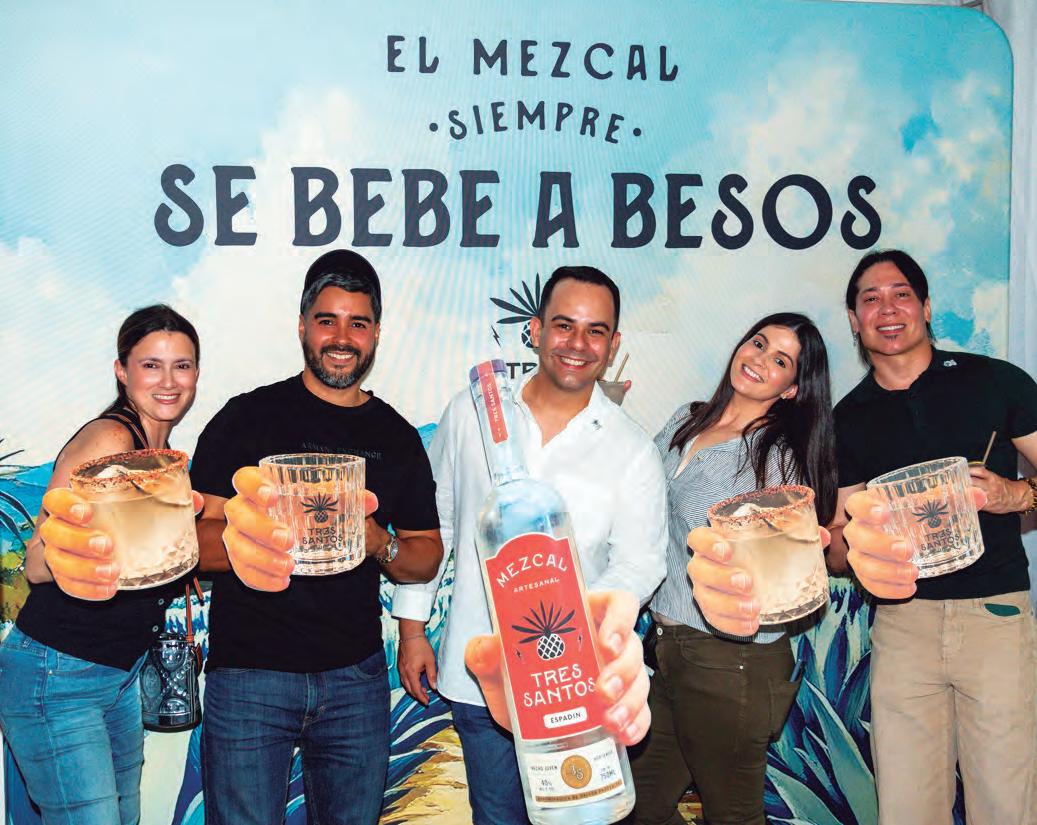
Dicen que “para todo mal, mezcal y para todo bien también”. Quizás por eso, apenas a un año de su lanzamiento oficial, Tres Santos Mezcal celebra la increíble acogida que ha tenido en Puerto Rico. Ya está disponible en más de 250 bares de coctelería, conceptos gastronómicos y puntos de venta a través de toda la Isla.
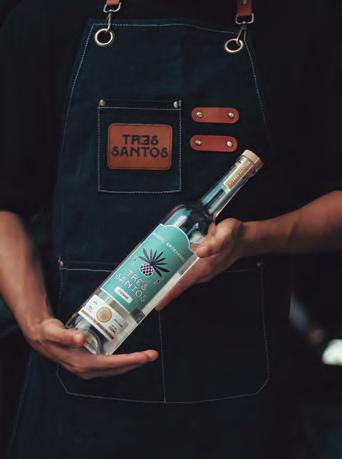
Quizás es porque Tres Santos no es un mezcal cualquiera. Más bien diría que es un mezcal con alma boricua. Elaborado con 100% agave en la destilería “Alma de Mezcal” en Oaxaca, México, este fue creado por la empresa puetorriqueña Agave Imports con la misión de acercar la cultura del mezcal al consumidor local mediante una propuesta auténtica, artesanal y accesible.
“Tres Santos es como Luis Miguel, el cantante que nació en Puerto Rico pero es el Sol de México”, dice Paul González Mangual, cofundador de Agave Imports.
DIFERENTES EXPRESIONES
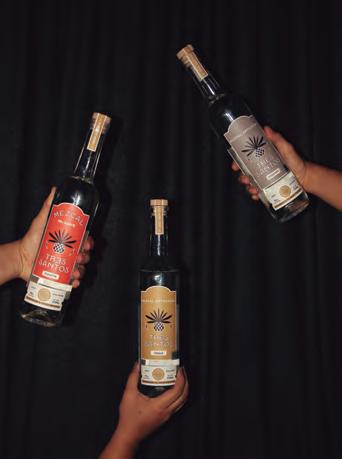
Tres Santos Mezcal tiene cinco expresiones artesanales:
• Espadín – Agave Angustifolia, 8-10 años, olor y sabor más ahumado, ideal para coctelería
• Ensemble – Blend de Espadín y Cuishe, menos humo, beber solo
• Cuishe – Agave Karwinski, 12-15 años, 45% alcohol por volumen
• Tobalá – Agave Potatorum, 10-12 años, untuoso para sipping
• Tepeztate – Agave marmorata, 25-30 años, sabores complejos
Durante el verano de 2026, llegará al mercado una nueva expresión de agave silvestre, Arroqueño. “Con esta variedad de expresiones, buscamos atraer tanto a quienes se inician en el mundo del mezcal artesanal como a conocedores que buscan perfiles más complejos y sofisticados dentro del universo del agave”, añade Paul.
MARCA EN EXPANSIÓN
Tres Santos se fue a bailar a la casa del mezcal. ¡Literalmente! La marca debutó en mayo en sobre 100 sucursales de la cadena mexicana de supermercados y tiendas por departamento Chedraui, marcando un paso importante en su evolución fuera de Puerto Rico. “Entrar a uno de los mercados más competitivos del mundo del mezcal, como es México, donde es bebida nacional, representa un paso gigante para el reconociento y crecimiento de Tres Santos”, expresó Paul.
Además de Paul, Agave Imports cuenta con otros dos socios: Felix Armenteros y Filiberto Lebrón. Estos “tres santos” han ido añadiendo otras bebidas de México, como tequila, sotol, licor de chile pasilla, y más recientemente el triple sec “Tres Naranjos” Ya representan 10 marcas exclusivas, y una de esas es su propia marca, Tres Santos.
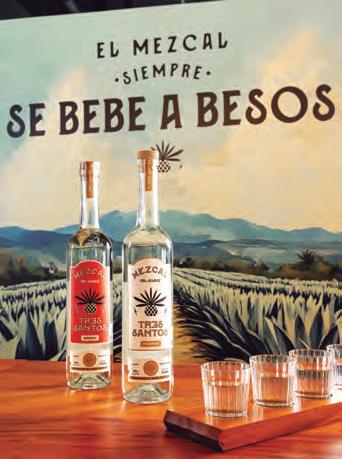
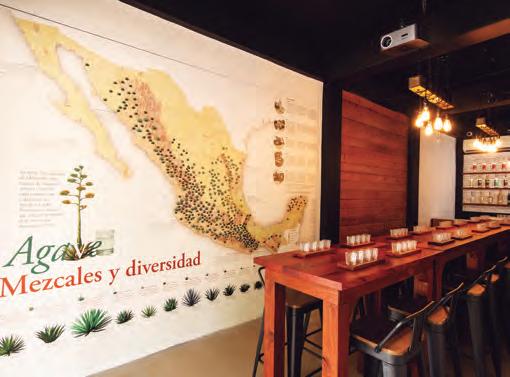
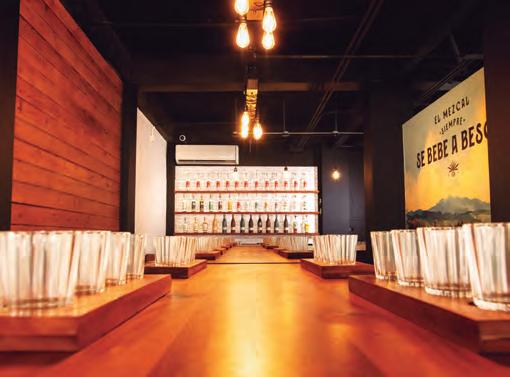
EL MEZCAL SE BEBE A BESOS
TRES SANTOS es un tributo a los tres pilares de la marca, el maguey, el maestro mezcalero, Miguel Martínez Jerónimo, y el ritual de beber este espíritu sinigual.
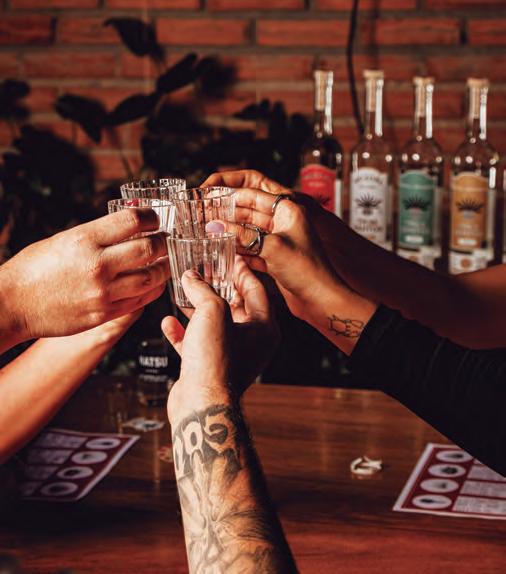
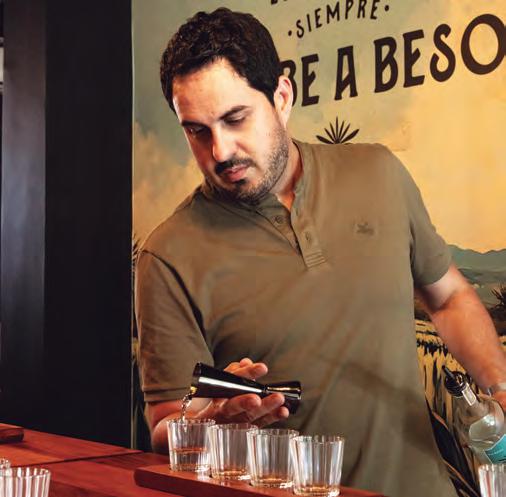
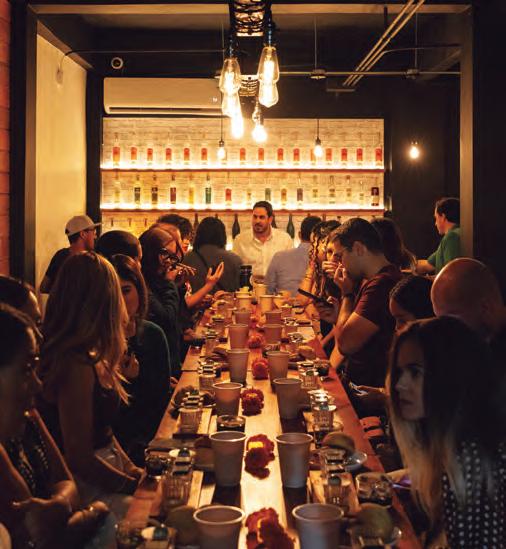
Aunque existen varias maneras de beber mezcal, dicen que el mezcal siempre se bebe a besos. Y Paul tiene la explicación: “esta bebida se tardó mínimo una década en llegar del campo a la botella. Así que no puedes apresurarla con un shot, sino apreciarla y degustarla en sorbitos intencionales y saboreando cada gota”.
Entre las formas más comunes de beber mezcal, está la “veladora”, el vasito donde antes se colocaban las velas y con el cual hay que beber hasta que se vea la cruz en el fondo. También está la jicarita para “el caballito”, el trago que pedían en las cantinas para llevar a caballo.
No importa cómo se beba, nunca se mezcla con sal y limón, como es costumbre con el tequila. Con mezcal, sí se usa la naranja para limpiar el paladar al hacer “sipping” de onzas.
@tressantosmezcal www.tressantosmezcal.com
CLUB MEZCAL
Este proyecto comenzó en el 2015, cuando Paul visitó CDMX por primera vez. “Como me gusta el whisky ahumado, me animaron a probar el mezcal”. Después del primer sorbo, el resto es historia. Se obsesionó tanto, que estudió un año para obtener un diplomado como promotor de la cultura del mezcal y los magueyes para poder promoverlo por el mundo.
Fue así como, durante la pandemia, le surgió la idea de hacer catas virtuales de mezcal. “Enviaba unas cajas a las casas con tubitos de ensayo llenos con los distintos mezcales y una explicación de cada uno como guía durante la cata virtual por zoom”.
Después el concepto se volvió presencial y se convirtió en lo que hoy es Club Mezcal. Se trata de una sala educativa y de catas en un acogedor local en Hato Rey, el cual abre únicamente para eventos especiales.
Regularmente se ofrecen dos tipos de experiencias. La primera está enfocada en la degustación en su forma más pura, permitiendo a los participantes conocer y apreciar las características del mezcal y el tequila. La segunda, Mezcal Cocktail Experience, es una experiencia de siete tiempos basada en cócteles elaborados con mezcal y tequila. En ambas se explora la historia, la cultura y el proceso de elaboración de estas bebidas, mientras degustan diferentes expresiones y cócteles que les permiten comprender mejor la esencia del producto.
Las experiencias tienen una duración de dos a tres horas. El espacio cuenta con capacidad para un máximo de 20 personas, lo que permite ofrecer una experiencia más personalizada e interactiva. Los eventos se anuncian a través de redes sociales y de nuestro sitio web.
Consigue más información de los eventos en @elclubmezcal y puedes comprar los boletos en www.elclubmezcal.com.
Paul Gonzalez
TRES SANTOS MEZCAL
Mexican tradition with a Puerto Rican soul to drink with kisses
They say that “for all evil, mezcal and for all good too.” Perhaps that’s why, barely a year after its official launch, Tres Santos Mezcal celebrates the incredible reception it has had in Puerto Rico. It is already available in more than 250 cocktail bars, gastronomic concepts and points of sale throughout the island.
Maybe it’s because Tres Santos isn’t just any mezcal. Rather, I would say that it is a mezcal with a Puerto Rican soul. Made with 100% agave at the “Alma de Mezcal” distillery in Oaxaca, Mexico, it was created by the Puerto Rican company Agave Imports with the mission of bringing the culture of mezcal to the local consumer through an authentic, artisanal and accessible proposal.
“Tres Santos is like Luis Miguel, the singer who was born in Puerto Rico but is the Sol of Mexico,” says Paul González Mangual, co-founder of Agave Imports.
DIFFERENT EXPRESSIONS
Tres Santos Mezcal has five distinct artisanal expressions:
• Espadín – Agave Angustifolia, 8-10 years, smell and flavor more smoky, ideal for cocktails
• Ensemble – Espadín and Cuishe blend, less smoke, drink alone
• Cuishe – Agave Karwinski, 12-15 years, 45% alcohol by volume
• Tobalá – Agave Potatorum, 10-12 years, unctuous for sipping
• Tepeztate – Agave marmorata, 25-30 years, complex flavors
During the summer of 2026, a new expression of wild agave, Arroqueño, will arrive on the market. “With this variety of expressions, we seek to attract both those who are new to the world of artisanal mezcal and connoisseurs who are looking for more complex and sophisticated profiles in the agave universe,” adds Paul.
AN EXPANDING BRAND
Tres Santos went dancing to the mezcal house. Literally! The brand debuted in May in more than 100 branches of the Mexican supermarket and department store chain Chedraui, marking an important step in its evolution outside of Puerto Rico. “Entering one of the most competitive markets in the world of mezcal, such as Mexico, where it is the national drink, represents a giant step for the recognition and growth of Tres Santos,” said Paul.
In addition to Paul, Agave Imports has two other partners: Felix Armenteros and Filiberto Lebrón. These “three saints” have been adding other drinks from Mexico to the portfolio, such as tequila, sotol, pasilla chile liqueur, and more recently the triple sec “Tres Naranjos”. They already represent 10 exclusive brands, and one of those is his own brand, Tres Santos.
MEZCAL IS DRUNK WITH KISSES
TRES SANTOS is a tribute to the three pillars of the brand: the maguey, the mezcalero master, Miguel Martínez Jerónimo, and the ritual of drinking this unique spirit.
Although there are several ways to drink mezcal, it’s said that mezcal is always drunk with kisses. And Paul explains it: “This drink took at least a decade to get from the field to the bottle. So you can’t rush it in shot, but rather appreciate it and taste it in intentional sips and savoring every drop.”
Among the most common ways to drink mezcal is the “veladora”, the glass where candles used to be placed and with which you have to drink until you see the cross appear at the bottom. There is also the jicarita for “el caballito”, which is the shot they asked to take out in the cantinas to continue horseback riding.
No matter how you drink it, it is never mixed with salt and lime, as is customary with tequila. With mezcal, orange is used to cleanse the palate when sipping ounces.
@tressantosmezcal www.tressantosmezcal.com
CLUB MEZCAL
This project began in 2015, when Paul visited Mexico City for the first time. “Since I like smoked whiskey, they encouraged me to try mezcal.” After the first sip, the rest is history. He became so obsessed, that he studied for a year to obtain a diploma as a promoter of the culture of mezcal and maguey, and thus be able to promote it around the world.
This is how, during the pandemic, he came up with the idea of doing virtual mezcal tastings. “I sent some boxes to the houses with several test tubes filled with the different mezcals and an explanation of each one as a guide to be used during the virtual tasting by zoom.”
Later it became an in-person event and turned into what is now Club Mezcal. It is an educational and tasting room in a cozy place in Hato Rey, which is open only for special events.
It regularly offers two types of experiences. The first is focused on tasting in its purest form, allowing participants to know and appreciate the characteristics of mezcal and tequila. The second, Mezcal Cocktail Experience, is a seven-course experience based on cocktails made with mezcal and tequila.
In both, the history, culture and process of making these drinks are explored, while attendees taste different expressions and cocktails that allow them to better understand the essence of the product. The experiences last two to three hours. The space can accommodate up to 20 people, allowing for a more personalized and interactive experience. Events are advertised through social media and our website.
Find out more information about the events on @elclubmezcal and tickets can be purchased at www.elclubmezcal.com.
EL CRISTIANO
Tequila con pureza, pasión y propósito
El Cristiano se fundó con una misión sencilla: crear el tequila libre de aditivos más delicioso y sostenible del mundo. Elaborado por maestros tequileros de tercera generación, el nombre simboliza la reverencia y el amor de la marca por México.
La empresa fue concebida por un pequeño grupo de amigos apasionados por el tequila y con más de cuatro décadas de experiencia en el sector que tienen un profundo compromiso con la cosecha sostenible de agave, salarios sostenibles y procesos tradicionales para fabricar tequila libre de aditivos.
PUREZA
El Cristiano está hecho con el mejor agave azul weber de las Tierras Altas de Jalisco. Al poner gran énfasis en cosechar solo agave maduro que haya envejecido al menos 6 años y de cierto tamaño, se ha eliminado la necesidad de aditivos que cambien su verdadera esencia y que ofrezcan la expresión más limpia del verdadero sabor de la planta de agave.
Aunque el 85% de todas las marcas de tequila añaden azúcar, saborees y colorantes para que su tequila sepa mejor para su cliente, el proceso tradicional utilizado por El Cristiano se ha perfeccionado a lo largo de generaciones mediante un meticuloso sistema de destilación y oxigenación para crear un tequila puro y delicioso , sin aditivos y sin compromisos ni atajos.
PASIÓN
La pasión es la fuerza motriz detrás de todo lo que hace El Cristiano. Esta marca es un homenaje a México, su gente y su bebida nacional: desde los campos de agave hasta la línea de embotellado, el equipo se une por un amor compartido por el tequila y un compromiso con la excelencia. Esta pasión se puede sentir desde el empaque visualmente impresionante hasta el sabor delicioso y persistente.
PROPÓSITO
Inspirado en la diosa azteca Mayahuel, la deidad de la planta maguey (agave), El Cristiano está comprometido con causar un impacto significativo en su comunidad.
Han creado una Fundación que apoya a las mujeres y niños de Arandas, Tierras Altas de Jalisco, y en San Luis del Río, Oaxaca, donde también elaboran mezcal.
EL CRISTIANO
100% puro agave
PLATA
Presume de una complejidad y profundidad inigualables, con un sabor puro y limpio.
Boasts unrivaled complexity and depth, with a pure, clean taste.
REPOSADO
Aromas y sabores complejos derivados del envejecimiento en barricas de roble americano durante 6 meses.
Complex aromas and flavors from agingin American oak casks for 6 months.
NEGRO - EXTRA AÑEJO
Un tequila de sorbos de una complejidad inigualable, elaborado en cantidad limitada y envejecido durante 3 años en roble americano.
A sipping tequila of unrivaled complexity, crafted in limited quantity and aged for 3 years in American oak. WWW.EL-CRISTIANO.COM @ELCRISTIANOTEQUILA TEQUILA EL CRISTIANO is distributed in Puerto Rico by FINE WINE IMPORTS www.finewinepr.com @ilikefinewine
Tequila with purity, passion, and purpose
El Cristiano was founded with a simple mission: to create the most delicious, sustainable, additive free tequila in the world. Made by third-generation master tequila makers, the name symbolizes the brand’s reverence and love for Mexico.
Conceived by a small group of friends with a passion for tequila and over four decades of experience in the industry, the company also has a deep commitment to sustainable harvesting of agave, sustainable wages, and traditional processes to make additive free tequila.
PURITY
El Cristiano is made with the finest Jalisco Highlands blue weber agave. By having a high focus on harvesting only mature agave that is aged at least 6 years and of a certain size, it has eliminated any need for additives that change its true essence and offer the cleanest expression of the true taste of the agave plant.
While 85% of all tequila brands add sugar, flavor or color to make their tequila taste better to their customer, the traditional process used by El Cristiano has been perfected over generations using a meticulous distillation and oxygenation system to create a pure, delicious tequila with zero additives and absolutely no compromise or shortcut.
PASSION
Passion is the driving force behind everything El Cristiano does. This brand is an homage to Mexico, its people, and its national drink: from the agave fields to the bottling line, the team is united by a shared love for tequila and a commitment to excellence. This passion can be felt from the visually stunning packaging to the delicious and lingering taste.
PURPOSE
Inspired by the Aztec goddess Mayahuel, the deity of the maguey (agave) plant, El Cristiano is also committed to making a meaningful impact in its community. They have created a Foundation that supports the women and children in Arandas, in the Highlands of Jalisco, and in San Luis del Río, Oaxaca, where they also make mezcal.
CHEF XAVIER PACHECO
Referente de la cocina creativa puertorriqueña y co-propietario de Los Guapos, Bacoa y Aldeana
Lo conocí cuando él tenía veinti y tantos años. Desde ya, se le veía ese “fueguito” en los ojos que tienen los verdaderos apasionados de la cocina. Xavi, como lo llamábamos de cariño, ya tenía su primer negocio, Paellas Pacheco en Casa. Daba gusto verlo preparar las paellas frente a los comensales con tanta maestría y alegría.
Desde entonces, era evidente la misma inagotable energía y creatividad culinaria que durante más 20 años lo han impulsado a ser hoy un referente de la cocina creativa en Puerto Rico. Además de ser uno de principales promotores del producto fresco local, la preservación cultural y la sostenibilidad en la cocina moderna.
Xavier lo tuvo claro desde el principio. “Comencé a trabajar a los 16 años con Rodo Hernández, quien tenía asadores de cerdo y hacía actividades de miles de personas. Ahí me di cuenta que me gustaba mucho cocinar y atender a mucha gente”, recuerda Xavier.
Por eso, cuando supimos que se iba a estudiar artes culinarias a la famosa Universidad Johnson & Wales (Florida), todos lo celebramos. Sus primeros pininos fueron en Nobu (comida Nikkei) y el Four Seasons Hotel mientras estudiaba. Y tan pronto se graduó, inició una exitosa trayectoria profesional que aún lo mantiene creando nuevas recetas y nuevos proyectos gastronómicos.
Luego viajó a Barcelona, España, donde trabajó bajo la tutela del chef Angel Palacios en Ámbar. “Esa fue mi gran escuela, donde aprendí a preparar platos para degustación y trabajar con productos locales de temporada, y eso fue lo que me inspiró a regresar a mi Isla y comenzar ese mismo movimiento”, comenta.
Al regresar a Puerto Rico, abre en Isla Verde junto a su hermano su primer restaurante, Xafra Latina. Pronto ganó mucho reconocimiento, incluyendo haber sido finalista de Operación Chef.
Yvonne Brown Ieromazzo
Tras varios años, regresó a Miami como Sous Chef Ejecutivo de Sushi Samba. “Allá aprendí mucho de la parte del negocio del restaurant y eso luego me ha ayudado en la administración de mis proyectos”.
Como el buen hijo a su casa vuelve, volvió a PR e hizo su gran sueño realidad en 2011 con la apertura de Jaquita Baya en Miramar. Causó una sensación desde el primer día, con un novel concepto inspirado en la poesía y la cultura puertorriqueña. Sus recetas reflejaban la tradición con sazones e ingredientes locales, pero tenían su toque de innovación con técnicas modernas y combinaciones creativas.
Los siguientes años estuvo muy activo participante en ferias culinarias internacionales. Su trabajo fue reseñado en el New York Times y en 2017 participó con Anthony Bourdain en Parts Unknown, apoyando con la curaduría y producción de este episodio sobre Puerto Rico.
Tras más de seis años de éxitos con su restaurante, le cambia el nombre y luego lo vende. Entonces, en 2019, se asocia con dos chefs boricuas —Raúl Correa y René Marichal— y juntos crean BACOA FINCA + FOGÓN en Juncos.
En cuanto a trabajar con otros socios, Chef Xavier comenta: “Yo creo en la magia del colectivo en la cocina. Las ideas para recetas se van en esteroide, porque cada uno aporta un aspecto distinto y se crea una dinámica de explorar a ver a dónde nos lleva. También hay que escuchar bien a los que trabajan en primera línea y los clientes”.
En BACOA preparan sabrosos platos de la cocina puertorriqueña, hechos con leña, y están enfocados en el concepto “farm-to-table” que se ha popularizado, el cual utiliza producto local fresco de temporada.
“Ya compramos la finca en Juncos donde está Bacoa. Allí sembramos muchos de los vegetales y especias que usamos en nuestras recetas e hicimos lazos con agricultores locales para obtener el resto”.
Ante la necesidad de contar con espacios más grandes para realizar eventos privados, en 2024 surge ALDEANA. Ubicado en una finca en Cidra, este hermoso local con decoración rústica tiene capacidad de hasta 250 personas. Es ideal para bodas, fiestas y experiencias culinarias especiales.
Ahora, los tres mosqueteros cocineros —Xavi, Raúl & René— lo están transformando en restaurant que ofrecerá un menú diferente todos los meses. “Allí le daremos rienda suelta a nuestra imaginación, pues el menú será lo que se nos antoje, según inspiración de ese mes—desde “Tributo a Wilo bennet” hasta comida de New Orleans” explica.
Xavier se aventuró a otras regiones culinarias e inauguró Los Guapos Taquería Mexicana en el 2021 (ver la reseña en esta edición). Y ahora, estuvo dos semanas en Oaxaca para hacer investigación que le servirá tanto para refrescar ese menú como para afinar su nuevo proyecto antes de su lanzamiento.
Teotihua será un tributo a la deidad femenina de la Guerra de Teotihuacán. Estará ubicado en una nueva área de Galerías Los Paseos, donde tendrán asador de leña y servirán platos más grandes, una sección de aguachiles, varios platos del mar y pescados a la brasa.
“En Oaxaca visitamos las barras más top y muchos mercados. También estuve cocinando con el Chef Memo Fernando, y hasta tendremos un trago en su nombre, Memo Brujo, a base tamarindo y su propia marca de mezcal Bruxo”, nos cuenta.
No hay duda que Chef Xavier es una fuente inagotable de creatividad y laboriosidad. Su trabajo ha sido reconocido con varios premios y distinciones. La revista WBC Inglaterra acaba de publicar un reportaje, y llamó a BACOA “la mejor comida latina”. Este año, el colectivo de los tres chefs estuvo nomidado como “Best Chef South” de los James Beard Awards. Y Lazos de Oro lo incluyó en su lista de los top 25 restaurantes con excelente gastronomía en Puerto Rico, y Los Guapos estuvo nominado.
CHEF XAVIER PACHECO
A benchmark for creative Puerto Rican cuisine and co-owner of Los Guapos, Bacoa and Aldeana
I met him when he was in my twenties. Since such an early time, you could see that “little fire” in the eyes that passionate cooking enthusiasts have. Xavi, as he was affectionately called, already had his first business, Paellas Pacheco en Casa. It was a pleasure to see him prepare the paellas in front of the diners with such mastery and grace.
Since then, it was evident the inexhaustible energy and culinary creativity that have propelled him during more than 20 years to be a benchmark for creative cuisine in Puerto Rico today. In addition to being one of the main promoters of sustainability, farm-to-table, and cultural preservation in modern cuisine.
Xavier was clear about it from the beginning. “I started working at the age of 16 with Rodo Hernández, who had pork roasters and had events for thousands of people. That’s when I realized that I really liked cooking and serving a lot of people,” Xavier recalls.
That’s why, when we found out that he was going to study culinary arts at the famous Johnson & Wales University (Florida), we all celebrated. His first steps were in Nobu (Nikkei food) and the Four Seasons Hotel while he was studying. As soon as he graduated, he began a successful professional career that still keeps him creating new recipes and new gastronomic projects.
He then traveled to Barcelona, Spain, where he worked under the tutelage of chef Angel Palacios at Ámbar. “That was a great school for me, where I learned to prepare dishes for tastings and to work with local seasonal products, which inspired me to return to my island and start that same trend”.
When he returned to Puerto Rico, he opened with his brother his first restaurant in Isla Verde, Xafra Latina. He soon gained a lot of recognition, including being a finalist in Operación Chef.
After several years, he returned to Miami, as Executive Sous Chef of Sushi Samba. “There I learned a lot about the restaurant business that it has later helped me in the management of my projects.”
As all good sons come back home, he returned to PR and made his great dream come true in 2011 with the opening of Jaquita Baya in Miramar. It caused a sensation from day one, featuring a nouvelle concept inspired by Puerto Rican poetry and culture. The recipes reflected tradition with local seasonings and ingredients, but had a touch of innovation with modern techniques and creative combinations.
The following years, he was a very active participant in international culinary fairs. His work was reviewed in the New York Times and in 2017, he participated with Anthony Bourdain in Parts Unknown, and contributed to the curatorship and production of the Puerto Rico episode.
After more than six years of success with his restaurant, he changes its name and then sells it. Then, in 2019, he partnered with two Puerto Rican chefs —Raúl Correa and René Marichal— and together they created BACOA FINCA + FOGÓN in Juncos.
As for working with other partners, Chef Xavier comments: “I believe in the magic of the collective in the kitchen. The ideas for recipes go on steroid, because each one brings a different aspect and a dynamic of exploring is created to see where it takes us. You also have to listen well to those who work on the front line and to customers.”
At BACOA they prepare tasty dishes of the Puerto Rican cuisine, made with firewood, and are focused on the farm-to-table concept that has now become popular, which uses fresh local seasonal produce.
“We have already bought the farm in Juncos where Bacoa is located. There we planted many of the vegetables and spices we use in our recipes and we have partnerships with local farmers to get the rest.”
Given the need of larger spaces to hold private events, ALDEANA emerges in 2024 . Located on a farm in Cidra, this beautiful place with rustic decoration has a capacity for up to 250 people. It is ideal for weddings, parties and special culinary experiences.
Now, the three musketeer chefs –Xavi, Raúl & Rene– are transforming it into a restaurant that will offer a different menu every month. “There, we’ll let our imaginations run wild, because the menu will be whatever we want, based on that month’s inspiration—from A Tribute to Wilo Bennet to New Orleans food,” he explains.
Raúl Correa, René Marichal y Xavier Pacheco
Xavier ventured into other culinary regions and opened Los Guapos Taqueria Mexicana in 2021 (see full review in this edition). And now, he spent two weeks in Oaxaca to do research that will serve both to refresh that menu and to fine-tune his new project before its launching.
Teotihua will be a tribute to the female deity of the Teotihuacan War. It will be located in a new area of Galerías Los Paseos, where they will have a wood-fired grill and will serve larger dishes, a section of aguachiles, several dishes from the sea and grilled fish.
“In Oaxaca we visited the top bars and many markets. I was also cooking with Chef Memo Fernando, and we will even have a drink in his name, Memo Brujo, based on tamarind and his own brand of mezcal Bruxo,” Xavi tells us enthusiastically.
There is no doubt that Chef Xavier is an inexhaustible source of creativity and intensity. His work has been recognized with several awards and distinctions. WBC England magazine just published a report calling BACOA “the best Latin food.” This year, the collective of the three chefs was nominated as “Best Chef South” of the James Beard Awards. And Lazos de Oro included it in its list of the top 25 restaurants with excellent gastronomy in Puerto Rico, and Los Guapos was also nominated.
TEAM PR @ MONACO
Nada le da más orgullo a Chef Xavier que representar a su Isla por todo el mundo. Este año, integró el equipo culinario que viajó al Principado Mónaco a participar en un intercambio cultural con L’AMI (Association Monégasque Ibéro-Américaine). El grupo de chefs boricuas ofreció talleres en la escuela gastronómica de Mónaco y preparó una cena para 250 empresarios internacionales y la familia real de Mónaco.
Brindamos por Xavier, y todos sus logros como Chef, con su famoso grito de guerra: Ecuajei!!! Es tan conocido, que incluso su dirección de IG es @chefecuajei.
Nothing makes Chef Xavier prouder than representing his Island around the world. This year, he was part of the culinary team that traveled to the Principality of Monaco to participate in a cultural exchange with L’AMI (Association Monégasque Ibéro-Américaine).
The group of Puerto Rican chefs offered workshops at the gastronomic school of Monaco and prepared a dinner for 250 international businessmen and the royal family of Monaco.
We cheer for Xavier, and all his success as a Chef, with his famous war cry: Ecuajei!!! He is now so well known for it, that his IG address is @chefecuajei
Aldeana
Bacoa
Gourmand Traveler
PUERTO RICO WINE & FOOD FESTIVAL
San Juan se convirtió en un destino gastronómico y enoturístico de clase mundial para los miles de visitantes y locales que asistieron a la segunda edición del Puerto Rico Wine & Food Festival, presentado por la Compañía de Turismo de Puerto Rico, 23-26 abril, 2026.
Los invitados vivieron una espectacular experiencia de inmersión culinaria y cultural durante cuatro días repletos de espectaculares almuerzos y cenas curadas, walk-around tastings con tapas muy creativas, e interesantes seminarios de vinos y licores premium.
El festival se convirtió en un escaparate de excelencia gastronómica impregnada de sabores y tradiciones locales, en el cual participaron más de 60 chefs, mixólogos, sumilleres y embajadores de marcas.
Los chefs Mario Pagán, Wilo Benet y Geoffrey Zakarian fueron los anfitriones de la noche de apertura en La Concha Resort de Condado que dio inicio a un fin de semana de aventuras culinarias. Los elegantes invitados, todos vestidos de blanco, gozaron de lo lindo entre exquisitos bocados seleccionados por chefs icónicos de todo el mundo acompañados de elaborados cócteles y bebidas ilimitadas
Fue una vibrante velada bajo las estrellas que estuvo repleta de buena música y entretenimiento al estilo boricua, incluyendo actuaciones de personajes folclóricos y bailes al son de la tradicional bomba y plena.
“Puerto Rico siempre ha tenido una historia culinaria poderosa que contar, y este festival es nuestro escenario ideal para presentarla”, dice el anfitrión, chef Pagán. Entre los renombrados chefs locales e internacionales que participaron destacan: Esther Choi, Juan Manuel Barrientos, Paul Bartolotta, Ayesha Nurdjaja, Scott Conant, Monti Carlo, Ming Tsai, Todd English y Marcus Samuelsson.
El éxito del festival se refleja no solo en el aumento de su asistencia, sino también en su creciente lista de socios de primer nivel. Además de repetir la Compañía de Turismo de Puerto Rico como Presentador Oficial y las Tarjetas de Crédito y Banca Visa Infinite como Patrocinador Oficial, este año también contó con el apoyo de Lexus Puerto Rico, OpenTable Power Lunch Series y FIJI Water como Agua Oficial, entre otros.
“El Puerto Rico Wine & Food Festival se basó en una creencia sencilla: que esta isla merece una plataforma de primer nivel”, dice el fundador del festival, Robert Weakley. “Lo que estamos viendo en el segundo año es la prueba de que la comunidad culinaria aquí está preparada para ese protagonismo, y nosotros apenas estamos empezando”.
PUERTO RICO WINE & FOOD FESTIVAL
San Juan turned into a world-class gastronomic and enotourism destination for thousands of visitors and locals who attended the second edition of the Puerto Rico Wine & Food Festival, presented by the Puerto Rico Tourism Company, April 23-26, 2026.
Guests celebrated in spectacular fashion during this four-day culinary and cultural immersion experience with a full menu of curated lunches and dinners, walk-around tastings with very creative tapas, and interesting seminars about top premium wine & spirit brands.
The festival turned into a true showcase of gastronomic excellence infused with local flavors and tradition, featuring more than 60 chefs, mixologists, sommeliers and brand ambassadors.
Chefs Mario Pagán, Wilo Benet and Geoffrey Zakarian hosted the Opening Night Reception at Condado’s La Concha Resort which kicked started this weekend of culinary adventures. The elegant guests, all dressed in white, mingled over curated bites from iconic global and local chefs alongside thoughtfully crafted cocktails and unlimited drinks.
It was a vibrant evening under the stars featuring great music and boricua-style entertainment, including performances with folkloric characters and great bomba and plena dance shows.
“Puerto Rico has always had a powerful culinary story to tell, and this festival is our stage,” says Host Chef Pagán. Other featured international and local chefs included: Esther Choi, Paul Bartolotta, Juan Manuel Barrientos, Ayesha Nurdjaja, Scott Conant, Monti Carlo, Ming Tsai, Todd English, and Marcus Samuelsson.
The festival’s success is reflected not only in its soaring attendance but also in its expanding roster of premier partners, led by returning Official Presenting Partner Puerto Rico Tourism Company and Official Credit Card & Banking Sponsor Visa Infinite. This year also welcomes Lexus Puerto Rico, OpenTable Power Lunch Series, and FIJI Water as Official Water Partner, among other notable brands.
“Puerto Rico Wine & Food Festival was built on a simple belief: that this island deserves a world-class platform,” says festival founder Robert Weakley. “What we are seeing in year two is proof that the culinary community here is ready for that spotlight, and we are just getting started.”
MOËT HENNESSY MADE A SPLASH AT THE PRWFF
Considerado el líder mundial en vinos y destilados de lujo, Moët Hennessy tuvo una destacada participación en el Puerto Rico Wine & Food Festival, donde realizó una serie de eventos para resaltar la calidad, herencia y creatividad que distinguen su portafolio premium a nivel global.
Según Louis-Philippe Lussier, Gerente General MH Caribe, “Buscamos responder al creciente interés del consumidor hispano sofisticado en buscar propuestas exclusivas que integran excelencia gastronómica, educación enológica e innovación y que nos ayuden a fortalecer el posicionamiento de Puerto Rico como destino clave dentro del panorama culinario del Caribe.”
Con esto en mente, la programación de MH incluyó tres fabulosas experiencias lideradas por Chris McLean, Embajador de Moët Hennessy, en colaboración con chefs invitados, sumilleres y expertos culinarios.
Entre estas destaca la curaduría de los maridajes de champagne para la aluciante Cena Les Grandes Maisons, ya que fue la primera vez que Moët Hennessy reunió a todas sus icónicas casas de champagne en un mismo evento.
También participó en el seminario especializado Caviar & Champagne Extravaganza y dirigió una cata combinada de Joseph Phelps Vineyards junto a Jesús Jiménez, director técnico de Bodegas Numanthia, quien viajó desde España.
Otro experto internacional de MH que también visitó Puerto Rico para el festival fue el Global Brand Ambassador de Belvedere Vodka, Michael Foster, quien lideró una experiencia enfocada en la evolución de la mixología de lujo y dio un adelanto de B10, que llegará a Puerto Rico en 2026.
El PRWFF también sirvió de marco ideal para el lanzamiento oficial en Puerto Rico de La Grande Dame 2018, una añada muy especial del popular champagne Veuve Clicquot que fue presentada recientemente a nivel global.
“La participación de Moët Hennessy en el PR Wine & Food Festival refleja nuestra visión de continuar invirtiendo en mercados con una afinidad natural hacia el lujo y la educación gastronómica con propuestas memorables que fortalecerán la conexión entre nuestras Maisons y el público premium local”, expresó Melissa Barral, Gerente de Desarrollo de Moët Hennessy en Puerto Rico.
MOËT HENNESSY (MH) es la división de Vinos y Espirituosos de LVMH, que también posee prestigiosas propiedades vitivinícolas a través de su portafolio LVMH Vins d’Exception. MH agrupa 28 Maisons reconocidas mundialmente por la riqueza de sus terroirs, la excelencia de sus productos y la maestría artesanal de su elaboración.
TEAM MOËT HENNESSY
Michael Foster, Louis-Philippe Lussier, Melissa Barral, Chris McLean, Jesús Jiménez
Yvonne Brown Ieromazzo
Considered the world leader in luxury wines and spirits, Moët Hennessy had an extraordinary participation in the Puerto Rico Wine & Food Festival, where it held a series of events designed to highlight the quality, heritage and creativity that distinguish its premium portfolio worldwide.
According to Louis-Philippe Lussier, General Manager of MH Caribe, “We seek to respond to the growing interest of a sophisticated Hispanic consumer seeking for exclusive proposals that integrate gastronomic excellence, wine education and innovation which helps us strengthen Puerto Rico’s position as a key destination within the Caribbean culinary scene.”
With this in mind, MH’s programming included three fabulous experiences led by Chris McLean, Moët Hennessy Ambassador, in collaboration with guest chefs, sommeliers and culinary experts.
Among these was the curation of the champagne pairings for the Les Grandes Maisons Dinner, as it was the first time that Moët Hennessy brought together all its iconic champagne houses in the same event.
He also participated in the specialized seminar Caviar & Champagne Extravaganza and led a combined tasting o Joseph Phelps Vineyards together with Jesús Jiménez, technical director of Bodegas Numanthia, who traveled from Spain.
Another MH international expert that also visited Puerto Rico for the festival was the Global Brand Ambassador de Belvedere Vodka, Michael Foster, offered an experience focused on the evolution of luxury mixology and gave a preview of B10, which will arrive in Puerto Rican in 2026.
The PRWFF also served as the ideal setting for the official launching in Puerto Rico of the La Grande Dame 2018, a select vintage of the popular Veuve Clicquot champagne that was recently presented in the global market.
“Moët Hennessy’s participation in the Puerto Rico Wine & Food Festival reflects our vision to continue investing in markets with a natural affinity for luxury and gastronomic education with memorable proposals that will further strengthen the connection between our Maisons and the local public,” said Melissa Barral, Development Manager of Moët Hennessy in Puerto Rico.
MOËT HENNESSY (MH) is the Wine and Spirits division of LVMH, which also owns prestigious winemaking properties through its LVMH Vins d’Exception portfolio. MH brings together 28 Maisons recognized worldwide for the richness of their terroirs, the excellence of their products and the craftsmanship of their production.
Les Grande Maison Dinner
MOËT HENNESSY CHAMPAGNE & CAVIAR EXTRAVAGANZA
Gourmand fue invitado a participar en una de las experiencias más elegantes y fascinantes presentadas por MOËT HENNESSY en el Puerto Rico Wine & Food Festival: CHAMPAGNE & CAVIAR EXTRAVAGANZA.
En este seminario inmersivo con cata guiada tuvimos la oportunidad única de degustar algunos de los prestige cuvées más exquisitos del mundo: Krug, Dom Pérignon, Ruinart y Veuve Clicquot. Para hacerlo aún más decadente, cada uno estuvo acompañado por una selección de caviar cuidadosamente curada para realzar la complejidad aromática, textura y estructura de cada champagne.
Esto fue un momento enológico histórico, pues Moët Hennessy no suele combinar distintas Maisons en una misma cata, y mucho menos estas cuatro, que son unas verdaderas joyas de su portafolio de lujo.
La cata estuvo diseñada y guíada por un panel de expertos internacionales en champán y caviar, incluyendo dos de MH — Chris McLean, Moët Hennessy Ambassador y Louis-Philippe Lussier, Moët Hennessy Caribe General Manager— y un representante de California Caviar, pionera en caviar sostenible que cultiva esturión en el Pacífico.
Para el pareo, se utilizaron distintas variedades de caviar de esa marca, las cuales variaban en su nivel de sal e intensidad de sabor, siempre buscando lograr un excelente balance en boca en cada combinación.
#1 — Ruinart Blanc de Blancs
c/Kaluga Hybrid
#2 — Veuve Clicquot La Grande Dame 2018
c/Royal White Sturgeon
#3 — Dom Pérignon Rosé 2009
c/Royal Osetra Caviar
#4 — Krug Grande Cuvée 172 edition
c/Golden Osetra Caviar
Realizada el domingo 26 de abril en La Concha Resort en Condado, este memorable evento de máxima excelencia gastronómica y educación enológica, resultó ser una magna celebración del buen gusto.
De hecho, al finalizar, me recordé de un programa de los 1980s, Lifestyles of the Rich and Famous, y la famosa frase con la que su anfitrión, Robin Leach, despedía cada episodio como un canto de aspiración a una vida de lujo: “Champagne Wishes & Caviar Dreams”.
Yvonne Brown Ieromazzo
Gourmand was invited to participate in one of the most elegant and fascinating experiences presented by MOËT HENNESSY at the Puerto Rico Wine & Food Festival: CHAMPAGNE & CAVIAR EXTRAVAGANZA.
In this immersive seminar with guided tasting we had the unique opportunity to taste some of the most exquisite prestige cuvées in the world: Krug, Dom Pérignon, Ruinart and Veuve Clicquot. To make it even more decadent, each was accompanied by a selection of caviar carefully curated to enhance the aromatic complexity, texture and structure of each champagne.
This was a historic enological moment, as it is very rare for Moët Hennessy to combine its different Maisons in the same tasting, much less these four, which are true jewels of its luxury portfolio.
The tasting was designed and guided by a panel of international champagne and caviar experts, including two from MH —Chris McLean, Moët Hennessy Ambassador and Louis-Philippe Lussier, Moët Hennessy Caribe General Manager— and a representative from California Caviar, a pioneer in sustainable caviar breeding that grows sturgeon in the Pacific.
For the pairing, different varieties of caviar of that brand were used, which varied in their level of salt and intensity of flavor, always seeking to achieve an excellent balance in the mouth in each combination.
#1 — Ruinart Blanc de Blancs w/Kaluga Hybrid
#2 — Veuve Clicquot La Grande Dame 2018 w/Royal White Sturgeon
#3 — Dom Pérignon Rosé 2009 w/Royal Osetra Caviar
#4 — Krug Grande Cuvée 172 edition w/Golden Osetra Caviar
Held on Sunday, April 26 at La Concha Resort in Condado, this memorable event of maximum gastronomic excellence and wine education turned out to be a great celebration of good taste.
In fact, at the end, I was reminded of a show from the 1980s, Lifestyles of the Rich and Famous, and the famous phrase with which its host, Robin Leach, ended each episode as a song of aspiration to a life of luxury: “Champagne Wishes & Caviar Dreams”.
BELVEDERE VODKA
Como Embajador Global de la Marca Belvedere Vodka, Michael Foster se dedica a compartir su vasto conocimiento y pasión por el vodka polaco tanto con consumidores como con profesionales de la industria. Viaja por todo el mundo educando a la gente sobre las tradiciones e innovaciones de esta marca premium, mientras les muestra distintas maneras de disfrutarla.
Por eso Michael viajó recientemente desde el Reino Unido hasta San Juan para participar en el Puerto Rico Wine & Food Festival, donde dirigió una experiencia interactiva en el restaurante Dante en Condado, centrada en la evolución del vodka Belvedere, parte del portfolio de Moët Hennessy, y brindó consejos avanzados de mixología con este destilado premium.
“Para ser considerado un vodka premium, hay que tener en cuenta la tradición nacional de elaboración. Aunque Belvedere se lanzó en 1993, se produce en la destilería de vodka en funcionamiento más antigua de Polonia, una operación centenaria que está abierta desde el 1910”, dijo Mike. “Y Belvedere se creó cuando un grupo de personas se unió con la idea producir el vodka que mejor representara a Polonia, su cultura y su gente”.
Aunque muchos creen que el vodka no tiene sabor, Mike aclaró que un vodka premium como el Belvedere es justo lo contrario, ya que utiliza los mejores ingredientes y un proceso de producción probado que aporta mucho carácter y sabor.
El compromiso de Mike va mucho más allá de la educación y promoción, ya que también forma parte del Equipo de Desarrollo de Nuevos Líquidos de Belvedere. Como tal, colabora en la innovación de productos, creando nuevas expresiones y desarrollando nuevos sabores distintivos aportados por el terroir, la artesanía y la infusión.
Recientemente, la empresa ha lanzado un nuevo vodka con sabor a café Belvedere Dirty Brew, y el Belvedere 10, el primer vodka de lujo del mundo. Durante el seminario, Mike ofreció a los invitados un adelanto de “el innovador B10”, como él le llama, que llegará a Puerto Rico a finales de 2026.
La exitosa carrera de Michael comenzó en los bares y restaurantes del norte de Inglaterra. En 2012, se trasladó a Londres para trabajar con el prestigioso grupo Drink Factory, donde desarrolló su comprensión del aroma y los sabores. Luego trabajó en otros bares galardonados y otras marcas globales antes de unirse al Belvedere Maison en 2018.
Yvonne Brown Ieromazzo
BELVEDERE VODKA
As Global Brand Ambassador of Belvedere Vodka, Michael Foster is devoted to sharing his vast knowledge and passion for Polish vodka to consumers and industry professionals. He travels around the world educating people about the traditions and innovations of this premium brand while showing them the best ways to enjoy it.
That’s why Michael recently traveled all the way from UK to San Juan to participate in the Puerto Rico Wine & Food Festival, where he led an interactive experience at Dante restaurant in Condado, focusing on the evolution of Belvedere Vodka, part of Moët Hennessy’s portfolio, and providing advanced mixology tips with this premium spirit.
“To be considered a premium vodka, one has to take into consideration the country’s tradition. While Belvedere launched in 1993, it is produced in Poland’s longest operating vodka distillery, a centennial operation which has been opened since 1910,” said Michael. “Also, Belvedere was created when a group of workers came together with the intent to produce the vodka that could best represent Poland’s people and culture.”
While many believe that vodka has no flavor, Michael explained that a premium vodka like Belvedere is just the opposite, as it uses the best ingredients and a time-tested production process to provide a lot of character and flavor.
Michael’s commitment goes well beyond education and promotion, as he is also part of the Belvedere New Liquid Development Team As such, he assists in the product innovation pipeline, creating new expressions and developing new distinctive flavors imparted by terroir, craft and infusion.
The company has recently launched the coffee-flavored vodka Belvedere Dirty Brew, and Belvedere 10, the world’s first luxury vodka. During the seminar, Mike provided guests with a preview of “the innovative B10”, as he calls it, which will reach the Puerto Rico market at the end of 2026.
Michael’s successful career started in the bars and restaurants of Northern England. In 2012, he moved to London to join the Drink Factory group, where he developed his understanding of aroma and flavors. He later worked in several award-winning bars and other global brands before joining the Belvedere Maison in 2018.
Abelardo Ruiz, PRWFF
Michael Foster
ACROSS THE VINES
NUMANTHIA & JOSEPH PHELPS
Yvonne Brown Ieromazzo
El Grupo Louis Vuitton-Moët Hennessy, líder mundial en vinos y destilados de lujo, presentó una cata realmente excepcional como parte del programa especial del Puerto Rico Wine & Food Festival 2026.
“Across the Vines: A Curated Tasting by LVMH” fue el título de este extraordinario evento de degustación que unió en una misma isla caribeña a dos grandes bodegas separadas por el Atlántico: JOSEPH PHELPS VINEYARDS en Napa Valley, Santa Helena, California y BODEGA NUMANTHIA en la histórica región de Toro, España.
Los asistentes contaron con la guía de dos expertos del mundo del vino: Chris McLean, Embajador de Moët Hennessy Global, y Jesús Jimenez, Director Técnico de Numanthia.
Joseph Phelps Vineyards inició estel fabuloso viaje enológico con un Sauvignon Blanc 2023 (SB 100%, Musque Clone 17%) y continuó con tres tintos “cabs” de primer nivel: Cabernet Sauvignon 2022 (CS 91%, Petit Verdot 4%, Cabernet Franc 2%, Malbec 2%, Merlot 1%), Insignia 2022 (CS 92%, Petit Verdot 4%, Cabernet Franc 2%, Malbec 2%), Insignia 2021 (CS 93%, Petit Verdot 3%, Cabernet Franc 2%, Malbec 2%).
Bodega Numanthia se decantó por una poderosa trilogía integrada por el Termes 2022, Numanthia 2020, Thermanthia 2017, todos Tempranillo Tinta de Toro 100%.
“En Bodega Numanthia abrazamos la naturaleza resiliente de nuestras viñas españolas de Tempranillo Tinta de Toro, cultivadas orgánicamente, nuestras viñas producen vinos tintos que encarnan fuerza, elegancia y una profunda conexión con la herencia española”, comentó Jimenez, quien es originario de La Mancha, como el Quijote.
El también Ingeniero Agrícola con maestría en Viticultura y Enología asegura que es un gran reto encontrar el balance perfecto entre viñedos centenarios y suelos arenosos y pedregosos con el clima extremo de la región de Toro. Pero su misión permanece igual: desarrollar vinos singulares y elegantes en este terroir excepcional.
McLean por su parte indicó que existe mucha anticipación con el Insignia 2022, una añada de gran profundidad, brillantez y carácter. Además de tener un balance excepcional, este ofrece disfrute inmediato y el potencial de añejar bien.
Chris McLean (MH) y Jesús Jiménez (Numanthia)
ACROSS THE VINES
NUMANTHIA & JOSEPH PHELPS
The Louis Vuitton-Moët Hennessy Group, a world leader in luxury wines and spirits, presented a truly exceptional tasting as part of the 2026 Puerto Rico Wine & Food Festival special program.
“Across the Vines: A Curated Tasting by LVMH” was the title of this extraordinary wine tasting event that brought together on the same Caribbean Island two great wineries separated by the Atlantic Ocean: JOSEPH PHELPS VINEYARDS in Napa Valley, St. Helena, California and BODEGA NUMANTHIA in the historic region of Toro, Spain.
Attendees were guided by two experts from the world of wine: Chris McLean, Ambassador of Moët Hennessy Global, and Jesús Jimenez, Numanthia Technical Director.
Joseph Phelps Vineyards kicked off this fabulous wine journey with a 2023 Sauvignon Blanc (Sauvignon Blanc 100%, Musque Clone 17%) and continued with three top “cabs”: Cabernet Sauvignon 2022 (CS 91%, Petit Verdot 4%, Cabernet Franc 2%, Malbec 2%, Merlot 1%), Insignia 2022 (CS 92%, Petit Verdot 4%, Cabernet Franc 2%, Malbec 2%), Insignia 2021 (CS 93%, Petit Verdot 3%, Cabernet Franc 2%, Malbec 2%).
Bodega Numanthia opted for a powerful trilogy made up of Termes 2022, Numanthia 2020, Thermanthia 2017, all 100% Tempranillo Tinta de Toro.
“At Bodega Numanthia we embrace the resilient nature of our organically grown Spanish Tempranillo Tinta de Toro vineyards, our vineyards produce red wines that embody strength, elegance and a deep connection to Spanish heritage,” said Jimenez, who is originally from La Mancha, like Don Quixote.
An Agricultural Engineer with a master’s degree in Viticulture and Oenology, Jimenez assures that it is a great challenge to find the perfect balance between centenary vineyards and sandy and stony soils with the extreme climate of the Toro region. But its mission remains the same: to develop unique and elegant wines in this exceptional terroir.
McLean for his part indicated that there is a lot of anticipation with the 2022 Insignia, a vintage of great depth, brilliance and character. In addition to having an exceptional balance, this one offers immediate enjoyment and the potential to age well.
RESTAURANTE DANTE
ROOFTOP CON FABULOSA VISTA A LAGUNA DEL CONDADO
En el marco de la segunda edición del Puerto Rico Wine & Food Festival, el restaurante DANTE celebró oficialmente su apertura en el rooftop del exclusivo hotel O:LV Fifty Five, con impresionantes vistas a la Laguna del Condado.
El co-propietario de DANTE, Abelardo Ruiz, y los propietarios de O:LV Fifty Five, Loisse Herger y Fernando Dávila, dieron la bienvenida a las destacadas figuras de la gastronomía, la hospitalidad y el gobierno de Puerto Rico que asistieron a la ceremonia de corte de cinta para dejar formalmente inaugurado este nuevo espacio gastronómico, en el mismo edificio donde ubica el restaurante DRGN.
Durante todo el fin de semana, DANTE se convirtió en uno de los escenarios más codiciados del festival, acogiendo una programación culinaria de primer nivel que reafirma el posicionamiento de Puerto Rico como un destino gastronómico de clase mundial.
Uno de los eventos más destacados fue una exclusiva experiencia con los reconocidos chefs internacionales Scott Conant, Geoffrey Zakarian, Wilo Benet y Jason Neroni. La velada presentó cuatro visiones culinarias únicas: la refinada sensibilidad italiana de Conant, la elegancia atemporal de Zakarian en la cocina americana, la
interpretación contemporánea de la cocina puertorriqueña de Wilo Benet y la creatividad audaz y globalmente inspirada de Neroni.
La experiencia fue complementada por cinco prestigiosas cuvées de Moët Hennessy, cada una seleccionada para elevar cada curso del menú: Moët & Chandon Grand Vintage, Ruinart Blanc de Blancs, Veuve Clicquot La Grande Dame, Dom Pérignon Blanc y Armand de Brignac Rosé. Más que un acompañante, el champagne se convirtió en un elemento protagonista de la experiencia, aportando profundidad, balance y un sentido de celebración en cada momento.
El restaurante también recibió la visita del reconocido chef colombiano Juan Manuel Barrientos, fundador de ElCielo y una de las figuras más influyentes de la gastronomía latinoamericana, quien participó en varias experiencias culinarias durante el festival.
Con su propuesta de cocina italiana contemporánea, coctelería inspirada en la Divina Comedia, una curada selección de vinos y una de las vistas más privilegiadas de San Juan, DANTE se proyecta como uno de los nuevos destinos imprescindibles dentro de la escena gastronómica, social y de lifestyle de Puerto Rico.
DANTE RESTAURANT
ROOFTOP WITH FABULOUS VIEWS TO THE CONDADO LAGOON
As part of the second edition of the Puerto Rico Wine & Food Festival, the DANTE restaurant officially celebrated its opening on the rooftop of the exclusive O:LV Fifty Five hotel, with stunning views of the Condado Lagoon.
DANTE co-owner Abelardo Ruiz and O:LV Fifty Five owners Loisse Herger and Fernando Dávila welcomed the prominent figures from gastronomy, hospitality and the government of Puerto Rico who attended the ribbon ceremony cutting to formally inaugurate this new gastronomic space.
Throughout the weekend, DANTE became one of the most coveted stages of the festival, hosting a first-class culinary program that reaffirms Puerto Rico’s positioning as a world-class gastronomic destination, in the same building where DRGN restaurant is located.
One of the highlights was an exclusive experience with renowned international chefs Scott Conant, Geoffrey Zakarian, Wilo Benet and Jason Neroni. The evening featured four unique culinary visions: Conant’s refined Italian sensibility, Zakarian’s timeless elegance in American cuisine, Wilo Benet’s contemporary interpretation of Puerto Rican cuisine, and Neroni’s bold, globally inspired creativity.
The experience was complemented by five prestigious Moët Hennessy cuvées, each selected to elevate each course on the menu: Moët & Chandon Grand Vintage, Ruinart Blanc de Blancs, Veuve Clicquot La Grande Dame, Dom Pérignon Blanc and Armand de Brignac Rosé. More than a side dish, champagne became a star of the experience, bringing depth, balance and a sense of celebration to every moment.
The restaurant also received a visit from renowned Colombian chef Juan Manuel Barrientos, founder of ElCielo and one of the most influential figures in Latin American gastronomy, who participated in several culinary experiences during the festival.
With its proposal of contemporary Italian cuisine, cocktails inspired by the Divine Comedy, a curated selection of wines and one of the most privileged views of San Juan, DANTE is projected as one of the new essential destinations within the gastronomic, social and lifestyle scene of Puerto Rico.
DANTE RESTAURANT
O:LV Fifty Five Hotel @ Rooftop Calle Barranquitas, Condado, PR @dante_italian
LAURA CATENA EN PR
GOURMAND compartió con la líder de CATENA ZAPATA y participó en su original maridaje con cata WINE FIRST
Yvonne Brown Ieromazzo
Los conocedores del vino en Puerto Rico estaban de fiesta con la tan esperada visita de la Dra. Laura Catena, Directora General de Catena Zapata y cuarta generación de una de las familias vitivinícolas más influyentes del mundo, cuyo trabajo ha sido clave en posicionar la región de Mendoza como un referente global en la producción de vinos de altura.
A Laura le sobran las credenciales para obtener un logro de tal magnitud. Además de su rol como viticultora, es doctora egresada de Harvard y Stanford, autora de libros especializados y fundadora del Catena Institute of Wine, organización dedicada a la investigación científica aplicada a la viticultura de altura y al estudio del terroir.
Como tal, ha sabido continuar la tradición familiar de la bodega Catena Zapata que, desde su fundación en 1902, ha sido pionera en la resurrección de la uva Malbec y la elaboración de vinos argentinos de prestigio mundial.
Prueba de ello es que Catena Zapata ha sido tres veces reconocida como #1 WORLD’S MOST ADMIRED WINE BRAND (Drinks International 2020, 2025 y 2026) y #1 MEJOR VIÑEDO DEL MUNDO (World’s Best Vineyard 2023). Y varios de sus vinos han obtenido calificaciones perfectas de 100 puntos por Robert Parker’s Wine Advocate y James Suckling, reafirmando su posicionamiento entre las bodegas más respetadas del mundo.
WINE FIRST: PORQUE EL VINO ES LO PRIMERO GOURMAND fue invitado a uno de los eventos que Laura realizó durante su estadía en Puerto Rico, dirigido a sommeliers, expertos en gastronomía y prensa especializada en alimentos y bebidas.
Se trató de una espectacular cata con siete vinos Catena Zapata, guiada por la propia Laura, acompañada de un memorable almuerzo en el restaurante argentino El Viejo Almacén en el Viejo San Juan.
Esta integró tres novedosos conceptos de degustación, haciendo la experiencia tan interesante como divertida: Wine First, se escoge primero el vino y luego se decide con qué se va a maridar cada uno, Rollercoaster, se alterna el vino tino con uno blanco, logrando mayor contraste e impacto en boca, y Zebra Stripes, se va alternando una bebida con alcohol con una sin alcohol.
“Con Wine First, el vino es el plato principal. Una vez decidimos qué queremos beber, entonces escogemos qué vamos a comer.
Así lo hacía mi abuela Angélica, y así lo hacemos todavía en nuestro restaurante, y ya ganó una Estrella Michelin”, dice Laura con orgullo.
Ella se refiere al restaurante Angélica Cocina Maestra, que ubica en su bodega en Mendoza y cuyo nombre le rinde homenaje a la madre de Don Nicolás Catena Zapata.
LAURA CATENA IN PR
GOURMAND shared with the leader of CATENA ZAPATA and participated in its original WINE FIRST tasting with pairing
Wine connoisseurs in Puerto Rico were celebrating with the long-awaited visit of Dr. Laura Catena, General Director of Catena Zapata and fourth generation of one of the most influential wine families in the world, whose work has been key in positioning the Mendoza region as a global benchmark in the production of highaltitude wines.
Laura has more than enough credentials to obtain an achievement of such magnitude. In addition to her role as a winegrower, she is a doctor graduated from Harvard and Stanford, author of specialized books and founder of the Catena Institute of Wine, an organization dedicated to scientific research applied to high-altitude viticulture and the study of terroir.
As such, it has been able to continue the family tradition of the Catena Zapata winery which, since its foundation in 1902, has been a pioneer in the resurrection of the Malbec grape and the production of Argentinian wines of worldwide prestige.
Proof of this is that Catena Zapata has been recognized three times as #1 WORLD’S MOST ADMIRED WINE BRAND (Drinks International 2020, 2025 and 2026) and #1 BEST VINEYARD IN THE WORLD (World’s Best Vineyard 2023). And several of its wines have earned perfect 100-point ratings by Robert Parker’s Wine Advocate and James Suckling, reaffirming its position among the world’s most respected wineries.
WINE FIRST: because wine comes first
GOURMAND was invited to one of the events that Laura held during her recent stay in Puerto Rico, aimed at sommeliers, culinary experts and press specialized in the food and beverage industry.
It was a spectacular tasting with seven Catena Zapata wines, guided by Laura herself, accompanied by a memorable lunch at the Argentine restaurant El Viejo Almacén in Old San Juan.
It integrated three innovative tasting concepts, making it a very interesting and fun experience: Wine First, the wine is chosen first and then it is decided what each one is going to be paired with, Rollercoaster, the red wine is alternated with a white one, achieving greater contrast and impact on the mouth, and Zebra Stripes, an alcoholic drink is alternated with a non-alcoholic one.
“With Wine First, wine is the main course. Once we decide what we want to drink, then we choose what we are going to eat. That’s how my grandmother Angélica did it, and that’s how we still do it in our restaurant, and she has already won a Michelin Star,” Laura says proudly.
She is referring to the Angélica Cocina Maestra restaurant, which is located in her winery in Mendoza and whose name pays tribute to the mother of Don Nicolás Catena Zapata.
Cuando la editora de Gourmand, Yvonne Brown, visitó Mendoza para realizar un reportaje de Catena Zapata y otras bodegas, nuestra editora compró el libro “Malbec Mon Amour” escrito por Laura Catena y Alejandro Vigil. Jamás imaginó que unos meses más tarde, iba a conocer a Laura, quien no solo le autografió el libro, sino también la edición #6 de la revista donde publicamos el artículo de Catena Zapata, específicamente en la página donde sale su foto con su icónica gorrita francesa de lado.
When Gourmand Editor, Yvonne Brown, visited Mendoza to write a story on Catena Zapata and other wineries, our publisher bought the book “Malbec Mon Amour” written by Laura Catena and Alejandro Vigil. He never imagined that a few months later, he would meet Laura, who not only autographed the book, but also issue #6 of the magazine where we published Catena Zapata’s article,specifically on the page where her photo appears with her iconic French cap on her side.
CON SORPRESAS, PERO SIN ALCOHOL
La cata comenzó con Domaine EdeM Brunette, cóctel liviano y refrescante color ámbar que, para sorpresa de todos, resultó ser una bebida gasificada sin alcohol a base de uvas Chardonnay estilo vermut. Esto fue seguido con un espumoso de un hermoso color salmón, Domaine EdeM N.O. Rosé, 100% Airén, también sin alcohol.
EdeM es la abreviación de Elena de Mendoza, en honor a la madre de Laura Catena, Elena Maza, y el nombre de la región donde está la sede de esta gran bodega familiar. Y es que fue ella fue quien le pidió a su hija que hiciera vinos sin alcohol para poder disfrutarlos.
WITH SURPRISES, BUT WITHOUT ALCOHOL
The tasting began with Domaine EdeM Brunette, a light and refreshing amber cocktail that, to everyone’s surprise, turned out to be a non-alcoholic carbonated vermouth-style drink with Chardonnay grapes. It was followed by a sparkling wine of a beautiful salmon color, Domaine EdeM N.O. Rosé, 100% Airén, also non-alcoholic.
EdeM is the abbreviation of Elena de Mendoza, in honor of Laura Catena’s mother, Elena Maza, and the wine region where the family winery is based. She was the one who asked her daughter to make non-alcoholic wines so that she could enjoy them.
MARIDAJE DE ENSUEÑO
Entonces comenzó la increíble degustación de los vinos premium
Catena Zapata, cada uno maridado con platos innovadores de la alta cocina argentina.
A DREAM PAIRING
Then came the incredible tasting of the Catena Zapata premium wines, each one paired with innovative dishes of Argentine haute cuisine
Catena Zapata Birth of Cabernet 2022
Provoleta grillada, quenelle de pesto de tomates, chorizo argentino y cremoso de arvejas. Grilled provoleta, tomato pesto quenelle, Argentinian chorizo and creamy peas.
Adrianna Vineyard White Stones 2023
Adrianna Vineyard White Stones 2014
Mollejas selladas, toronja rosada, hinojos braseados y échalotes encurtidos. Seared sweetbreads, pink grapefruit, braised fennel and pickled shallots.
Catena Zapata Malbec Argentino 2022
Ravioli “Nino Bergese” de ossobuco, Parmiggiano Regiano y mateca de salvia.
Ravioli “Nino Bergese” from ossobuco, Parmiggiano Regiano and sage mateca.
Nicolás Catena Zapata 2021
Lomo de cordero, costra de pistachos, portobellos al San Juan y puré de berenjena. Lamb loin, pistachio crust, portobellos with San Juan and aubergine puree.
EL LEGENDARIO ADRIANNA VINEYARD
Uno de los momentos más especiales de la cata fue la degustación de dos añadas (2014 y 2023), del vino de parcela Adrianna Vineyard White Stones Chardonnay.
Piedras Blancas es el nombre de una pequeña parcela dentro del legendario viñedo Adrianna, conocido como el “Grand Cru de Sudamérica”. Ubicado a más de 5,000 pies sobre el nivel del mar en Gualtallary, Mendoza, este es uno de los viñedos más estudiados del mundo, donde se producen etiquetas icónicas reconocidas por su precisión, mineralidad y potencial de guarda.
THE LEGENDARY ADRIANNA VINEYARD
One of the most special moments of the tasting was the tasting of two vintages (2014 and 2023), of the Adrianna Vineyard White Stones Chardonnay plot wine.
Piedras Blancas is the name of a small plot within the legendary Adrianna vineyard, known as the “Grand Cru of South America”. Located more than 5,000 feet above sea level in Gualtallary, Mendoza, this is one of the most studied vineyards in the world, where iconic labels recognized for their precision, minerality and aging potential are produced.
La pasión por la tierra de Laura Catena fue más que evidente en los momentos previos a dar inicio el evento en que GOURMAND participó. Sandro Guilimondi, summiller y director de vinos de La Bodega de Méndez que distribuye Catena Zapata en PR, y Martin Louzao, del mercado PRoduce, le obsequiaron a Laura varias frutas de Puerto Rico, incluyendo guamá, mango y guineitos niños.
Ella las probó con la curiosidad típica de científica y, evidentemente emocionada, exclamó: “Estas frutas son muy sabrosas y aunque sean exóticas para mí, son de una variedad autóctona de aquí. Eso me recuerda lo que nos pasa en Argentina, donde el 90% de los viñedos son únicos. La gente no lo entendía, pues no era lo tradicional, pero ahora son apreciados a nivel mundial. Así que me alegra mucho que están preservando estas frutas que son genéticamente diversas”.
Laura Catena’s passion for the land was more than evident moments before the start of the event in which GOURMAND participated.
Sandro Guilimondi, summiller and wine director of La Bodega de Méndez that distributes Catena Zapata in Puerto Rico, and Martin Louzao, from the PRoduce market, presented Laura with several fruits from Puerto Rico, including guamá, mango and baby guineitos.
She tasted them with the typical curiosity of a scientist and, evidently excited, exclaimed: “These fruits are very tasty and although they are exotic to me, they are of a variety native to here. That reminds me of what happens to us in Argentina, where 90% of the vineyards are unique. People did not understand it, because it was not traditional, but now they are appreciated worldwide. So I’m very happy that they are preserving these fruits that are genetically diverse.”
La Bodega de Méndez celebró una de las veladas de degustación de vinos más esperadas en Puerto Rico: Top 100 Wines Black and Blue Edition, a beneficio de la Asociación de la Distrofia Muscular de Puerto Rico (MDA).
En esta exquisita experiencia inmersiva los asistentes tuvieron la oportunidad de seleccionar entre 100 etiquetas de vinos mundialmente reconocidos —champanes, espumosos, blancos, rosados y tintos — todos distinguidos con altas puntuaciones en competencias y publicaciones especializadas en enología y vinicultura.
Esta nueva edición, realizada en el Claro Space Domo del Parque de las Ciencias, contó con la participación de los sommeliers Sandro Giulimondi, Giacomo Galati, Eduardo Dumont y Joselyn Rodríguez. Estos expertos ofrecieron recomendaciones a los participantes y compartieron detalles sobre las características y procedencias de cada selección, que incluyó las más importantes regiones vinícolas de España, Francia, Italia, Argentina, Australia, Nueva Zelanda, Estados Unidos, Alemania y Canadá.
La propuesta gastronómica estuvo a cargo de los restaurantes Meraki Sushi Bar, Il Nuovo Mercato, Fogo de Chão Brazilian Steakhouse, Chef Waldemar Figueroa de Paellas 4 x 4, Chef Miguel Giboyeaux, Fine Bites y Lechonera Los Amigos, quienes diseñaron sus platillos para complementar las distintas etiquetas de vinos incluidas en la experiencia.
La música en vivo de DJ Brave, paciente de la MDA, aportó un ambiente especial a esta celebración solidaria en apoyo a la misión de la organización.
El evento incluyó una subasta silente de obras de arte, incluyendo piezas creadas en vivo, así como joyería, estadías, certificados para diversas experiencias, así como vinos y otros licores. Además, el agrónomo y artista Douglas Candelario, subastó una colección de cajas de vino en homenaje a destacadas figuras del deporte y a elementos emblemáticos de Puerto Rico.
La Bodega de Méndez held one of the most anticipated wine tasting events in Puerto Rico: Top 100 Wines Black and Blue Edition, to benefit the Puerto Rico Muscular Dystrophy Association (MDA).
In this exquisite immersive experience, attendees had the opportunity to select from 100 world-renowned wine labels –champagnes, sparkling wines, whites, rosés and reds– all distinguished with high scores in oenological competitions and specialized publications.
This new edition, held at the Claro Space Dome of the Science Park, was attended by sommeliers Sandro Giulimondi, Giacomo Galati, Eduardo Dumont and Joselyn Rodríguez. These experts offered recommendations to the participants and shared details on the characteristics and origins of each selection, which included the most important wine regions of Spain, France, Italy, Argentina, Australia, New Zealand, the United States, Germany and Canada.
The culinary proposal was in charge of the restaurants Meraki Sushi Bar, Il Nuovo Mercato, Fogo de Chão Brazilian Steakhouse, Chef Waldemar Figueroa of Paellas 4 x 4, Chef Miguel Giboyeaux, Fine Bites and Lechonera Los Amigos, who designed their dishes to complement the different wine labels included in the experience.
Live music from MDA patient DJ Brave provided a special atmosphere to this charitable celebration in support of the organization’s mission.
The event featured a silent auction of works of art, including some live created pieces, as well as jewelry, stays, certificates for various experiences, as well as premium wines and other spirits. In addition, agronomist and artist Douglas Candelario, auctioned a collection of wine boxes in tribute to prominent sports figures and emblematic symbols of Puerto Rico.
Sandro Giulimondi, Sebastián Gagliano, Giaccomo Galati, Jeff Pisoni, Eduardo Dumont
DJ Brave
BRAGA ACADEMIA
“VIVIR DEL VINO SÍ ES POSIBLE”
Equipado con la experiencia y el conocimiento especializado de más de 20 años de carrera como sommelier, y un título universitario en marketing, Mariano Braga decidió unir estas dos pasiones y ponerlas al servicio de otros que como él, sueñan con tener un negocio relacionado al fascinante mundo del vino.
Así fue como surgió BRAGA ACADEMIA, organización que ha logrado transformar a decenas de amantes del vino y convertirlos en verdaderos cosechadores de éxitos comerciales en más de 35 países.
“Vivir del vino sí es posible” es mucho más que la visión de BA. Es el mantra omnipresente detrás de cada acción y cada decisión de Mariano, nacido en Argentina y residente en España hace varios años.
“Comenzamos trabajando con personas que disfrutaban del vino en diferentes maneras y querían desarrollar un negocio en ese rubro. Sin embargo, rápidamente nos dimos cuenta que puedes saber mucho de vinos, y tener toda la pasión y la experiencia, pero sin un método claro no hay negocio”, indicó Mariano.
Mariano Braga
Fue entonces que desarrolló un modelo de rentabilización de negocio orientado a resultados, Método V.I.N.O.S., que consta de cinco pasos:
V-Visión y mentalidad empresarial, creación de valores diferenciales I-Ideación del plan de negocios, aun cuando no sabes lo que quieres N-Núcleo de negocio: la estructura interna
O-Oportunidades de networking y aprendizaje compartido S-Saber ilimitado basado en la experiencia y en apoyo de peers
Además de guiarlos con la implantación de este modelo, BA brinda a sus miembros una serie de cursos, talleres y masterclasses, altamente especializados con un enfoque práctico, todos diseñados y presentados por expertos de clase mundial. Estos eventos grabados detallan temas cruciales para la industria, permitiéndoles aplicar rápidamente lo aprendido y lograr resultados inmediatos.
ENCUENTROS PRESENCIALES
Y BOOTCAMPS VIRTUALES
Para complementar estos esfuerzos educativos, Braga Academia ofrece una mentoría grupal virtual tipo bootcamp. Se celebran tres ediciones anuales de estas sesiones intensivas. La séptima fue en mayo y la octava está programada para septiembre, que será la última del año.
Este valioso acompañamiento es vital para el entendimiento y crecimiento de los miembros de BA, a la vez que les permite compartir sus experiencias con una comunidad valiosísima de 40 empresarios de 10 países.
BA también realiza un gran encuentro presencial anual. El más reciente se celebró en Punta Cana, VIVA 2026. “Porque no se trata solo de aprender. Se trata también de convivir con personas que están jugando en otro nivel. De salir del entorno que te mantiene igual. De tomar decisiones estratégicas cara a cara”, puntualizó Mariano.
Método V.I.N.O.S.
BRAGA ACADEMY
MAKING A LIVING FROM WINE IS POSSIBLE
Equipped with the experience and specialized knowledge of more than 20 years of career as a sommelier, and a university degree in marketing, Mariano Braga decided to unite these two passions and put them at the service of others who, like him, dream of having a business related to the fascinating world of wine.
This is how BRAGA ACADEMY was born, an organization that has managed to transform dozens of wine lovers and turn them into true harvesters of commercial success in more than 35 countries.
“Making a living from wine is possible” is much more than BA’s vision. It is the omnipresent mantra behind every action and every decision taken by Mariano, born in Argentina and living in Spain during the last few years.
“We started working with people who enjoyed wine in different ways and wanted to develop a business in that area. However, we quickly realized that you can know a lot about wines, and have all the passion and experience, but without a clear method there is no business,” said Mariano.
V.I.N.O.S. METHOD
It was then that he developed a results-oriented business profitability model, the V.I.N.O.S. Method, which consists of five steps:
V-Vision and business mentality, creation of differential values I-Ideation of business plan, even when you don’t know what you want N-Nucleus - the internal core business structure
O-Opportunities for networking and shared learning
S-“Saberes” - unlimited knowledge based on experience and peer support
In addition to guiding them with the implementation of this model, BA offers its members a series of courses, workshops, and masterclasses, highly specialized with a practical approach, all designed and presented by world-class experts. These recorded events detail critical industry issues, allowing them to quickly apply what they have learned and achieve immediate results.
PERSONAL MEETINGS AND VIRTUAL BOOTCAMPS
To complement all these educational efforts, Braga Academy holds a bootcamp style virtual group mentorship. Three editions of these intensive sessions are held each year. The seventh edition took place in May, and the eight is scheduled for this upcoming September, which will be the last one of the year.
This valuable accompaniment that is vital to the BA member’s understanding and growth, allowing them to share experiences with an invaluable community of 40 entrepreneurs from 10 countries.
BA also celebrates a major annual personal meeting. The most recent one, VIVA 2026, took place in Punta Cana. “Because it’s not just about learning. It’s also about living with people who are playing on another level. To get out of the environment that keeps you the same. To make strategic decisions face to face,” added Mariano.
www.bragaacademia.com @bragaacademia
Thomas Sartori, Mariano Braga cata a ciegas • blind tasting
Florencia Borsani
Roselyn O’Neil
APUGA: DOS AÑOS CONSTRUYENDO UNA VISIÓN PARA LA GASTRONOMÍA
Hace apenas dos años nació la Academia Puertorriqueña de Gastronomía (APUGA) con una misión clara: articular, representar y proyectar su gastronomía desde una visión amplia, donde la cocina se entendiera no solo como expresión cultural, sino también como herramienta de desarrollo económico, educativo, social y turístico.
Durante este tiempo, APUGA ha trabajado para abrir espacios donde Puerto Rico debía estar presente. Hemos fortalecido nuestra participación dentro del ecosistema gastronómico iberoamericano, impulsando una representación activa que ya ha generado resultados históricos.
Hemo obtenido dos premios de enorme relevancia para Puerto Rico de la Academia Iberoamericana de Gastronomía (AIG). Primero fue el chef Josiah Hernández quien ganó en la categoría de Gastronomía Sostenible y, este año, el chef Iván Clemente, obtuvo el premio de Gastronomía Solidaria por la extraordinaria labor que realiza desde El Comedor de la Kennedy.
La AIG también designó a Puerto Rico Capital Iberoamericana de la Coctelería 2026. Esta histórica distinción reconoce el talento, creatividad e identidad cultural de la mixología puertorriqueña y su potencial como motor de turismo cultura. Ahora estamos trabajando en colaboración con Roberto Berdecía para afinar el plan estratégico que lo potenciará.
APUGA ha estado bien activa desarrollando iniciativas para formar a la próxima generación de líderes gastronómicos del
país, tales como Sembrando Raíces, programas de mentoría con profesionales de la industria, conservatorios, espacios de diálogo y alianzas con escuelas y universidades, entre mucho otro.
La creación de los Premios Nacionales de Gastronomía APUGA responde precisamente a esa misma visión. Más que una premiación, constituyen un espacio institucional para visibilizar historias, reconocer trayectorias y elevar referentes que contribuyen al desarrollo de Puerto Rico desde distintos ámbitos del ecosistema gastronómico.
Este aniversario coincide con el inicio de la segunda edición de los Premios Nacionales de Gastronomía APUGA. En julio de 2026 abrirá oficialmente la convocatoria para presentar nominados en todas las categorías hasta el 25 de agosto (apugapr.org).
Los finalistas se anunciarán en octubre y la ceremonia de premiación será en noviembre, para reconocer a los que aportan al desarrollo de nuestro ecosistema gastronómico desde la innovación, la educación, la producción, la hospitalidad, la sostenibilidad y el compromiso social.
Al mismo tiempo, continuaremos impulsando nuevos proyectos, alianzas y programas que refuerzan el papel de la gastronomía como un activo estratégico para Puerto Rico.
Más que celebrar lo alcanzado, este segundo aniversario nos encuentra reafirmando el compromiso de seguir construyendo una institución relevante al servicio de la gastronomía puertorriqueña.
Madelaine Vázquez Directora Ejecutiva APUGA
APUGA: Two Years Building a Vision for Gastronomy
Just two years ago, the Puerto Rican Academy of Gastronomy (APUGA) was born with a clear mission: to articulate, represent and project its gastronomy from a broad vision, where cuisine is understood not only as a cultural expression, but also as a tool for economic, educational, social and tourism development.
During this time, APUGA has worked to open spaces where Puerto Rico should be present. We have strengthened our participation within the Ibero-American gastronomic ecosystem, promoting an active representation that has already generated historic results.
We have obtained two awards of enormous relevance for Puerto Rico from the Ibero-American Academy of Gastronomy (AIG), First it was chef Josiah Hernández who won in the category of Sustainable Gastronomy and, this year, chef Iván Clemente, won the Solidarity Gastronomy award for the extraordinary work he does from El Comedor de la Kennedy.
The AIG also designated Puerto Rico the 2026 Ibero-American Capital of Cocktails. This historic distinction recognizes the talent, creativity and cultural identity of Puerto Rican mixology and its potential as a driver of cultural tourism. We are now working in collaboration with Roberto Berdía to fine-tune the strategic plan to promote it.
APUGA has been very active in developing initiatives to train the next generation of gastronomic leaders in the country, such as Sembrando Raíces, mentoring programs with industry professionals, conservatories, spaces for dialogue and alliances with schools and universities, among many others.
The creation of the APUGA National Gastronomy Awards responds precisely to that same vision. More than an award, they constitute an institutional space to make stories visible, recognize trajectories and raise references that contribute to the development of Puerto Rico from different areas of the gastronomic ecosystem.
This anniversary coincides with the start of the second edition of the APUGA National Gastronomy Awards. The call for nominations in all categories will officially open in July 2026 until August 25 (apugapr.org). Finalists will be announced in October and the awards ceremony will be held in November, recognizing those who contribute to our culinary ecosystem through innovation, education, production, hospitality, sustainability and social commitment.
At the same time, we will continue to promote new projects, alliances, and programs that reinforce the role of gastronomy as a strategic asset for Puerto Rico.
More than celebrating what has been achieved, this second anniversary finds us reaffirming our commitment to continue building a relevant institution at the service of Puerto Rican gastronomy.
SALAZÓN 2026
El primer “hot dog festival” de RD llegó sazonado de creatividad y solidaridad
Orlando Jerez
El fuego de las parrillas nunca se apagó. Los aromas invadieron cada rincón del Pabellón 17 de la Ciudad Ganadera en Santo Domingo, donde cientos de asistentes comprobaron que un sencillo hot dog puede transformarse en una experiencia gastronómica extraordinaria cuando detrás hay talento, pasión y un propósito social.
Así transcurrió el primer SALAZÓN en República Dominicana, un festival que reunió a 15 reconocidos chefs nacionales e internacionales en una jornada donde la cocina fue el lenguaje común para crear comunidad y demostrar creatividad.
Durante diez horas continuas, los chefs se turnaron frente a las parrillas y estaciones de trabajo para presentar sus propias interpretaciones de hot dogs elaborados con las salchichas artesanales de Sal Charcutería.
Cada propuesta sorprendió por su originalidad, combinando ingredientes locales y globales con técnicas avanzadas y la personalidad culinaria de cada chef.
La iniciativa, organizada por el restaurante dominicano Ajualä y Sal Charcutería de Guatemala, logró mucho más que satisfacer paladares. Cada plato servido contribuyó a recaudar fondos para Futurum Educandi, organización que trabaja por la inclusión de personas con discapacidad en el sector de restaurantes, demostrando que la gastronomía también puede ser una poderosa herramienta de transformación social.
Peter Meng (Sal Charcuteria)
Uno de los grandes atractivos del encuentro fue la colaboración entre destacados representantes de la cocina dominicana y chefs invitados de Guatemala, El Salvador, Panamá, México y Estados Unidos, todos con el deseo de crear experiencias memorables para el público.
Figuras locales como Saverio Stassi, Erik Malmsten, Olivier Bur, Francis Peña, Adriano Venturini, Elly Rosario y Dayanny de la Cruz compartieron escenario con chefs internacionales como Gracia Navarro, Pablo Díaz, Peter Meng, Armando Acosta, Armando Bramwell, Javier Chávez, Sergio Barrios y Marcos Carlesso, enriqueciendo la jornada con estilos, sabores e influencias de distintos rincones de América Latina.
Mientras el “Bushi Dog” de Peña tenía un singular toque asiático y el “Kare Coco” de Bramwell llevaba salsa curry con vegetales y berenjena frita, “El Chamakito” de Rosario estaba cubierto con mermelada kimchi, alioli de maiz trufado, queso de cabra fresco y
crocante de tocineta. También llamó la atención “La Jefa” de Dayanny con su interesante mezcla de chicharrón confitado, pico de gallo de chayote, crocante de puerro y alioli de lima dulce y la creación de Malmsten, “The D.O.P. Dog”, que combinaba carnes de cerdo y pato con caña caramelizada, ají banana y cilantro.
Más allá de estas y otras originales recetas, SALAZÓN 2026 dejó claro que cuando la creatividad culinaria se pone al servicio de la solidaridad, el resultado trasciende el plato y deja una huella en toda la comunidad.
Entre conversaciones, risas, música y comensales ansiosos por probar cada creación, el hot dog festival consolidó una propuesta fresca y auténtica dentro del calendario gastronómico dominicano. Y al finalizar esta primera edición dominicana, quedó la sensación de haber participado en una celebración donde la comida fue apenas el punto de partida.
First Hot Dog Festival in DR was seasoned with creativity and solidarity
The fire on the grills never went out. The aromas invaded every corner of Pavilion 17 of Ciudad Ganadera in Santo Domingo where hundreds of attendees confirmed that a simple hot dog can be transformed into an extraordinary gastronomic experience when there is talent, passion and a social purpose behind it.
This is how the first SALAZÓN was celebrated in the Dominican Republic, a festival that brought together 15 renowned national and international chefs in a day where cooking was the common language to create community and showcase creativity.
During ten non-stop hours, the chefs took turns in front of the grills and workstations to present their own interpretations of hot dogs made with Sal Charcuteria’s artisanal sausages. Each proposal surprised with its originality, combining local and global ingredients, with advanced techniques and the culinary personality of each chef.
The initiative, organized by Dominican restaurant Ajualä and Guatemala’s Sal Charcuteria, achieved much more than satisfying palates. Each dish served contributed to raising funds for Futurum Educandi, an organization that works for the inclusion of people with disabilities in the restaurant sector, demonstrating that gastronomy can also be a powerful tool for social transformation.
One of the great attractions of the meeting was the collaboration between prominent representatives of Dominican cuisine and guest chefs from Guatemala, El Salvador, Panama, Mexico and the United States, all with the desire to create memorable experiences for the public.
Local figures such as Saverio Stassi, Erik Malmsten, Olivier Bur, Francis Peña, Adriano Venturini, Elly Rosario and Dayanny de la Cruz shared the stage with international chefs such as Gracia Navarro, Pablo Díaz, Peter Meng, Armando Acosta, Armando Bramwell, Javier Chávez, Sergio Barrios and Marcos Carlesso, enriching the day with styles, flavors and influences from different corners of Latin America.
While Peña’s “Bushi Dog” had a unique Asian twist, and Bramwell’s “Kare Coco” had curry sauce with vegetables and fried eggplant, Rosario’s “El Chamakito” was topped with kimchi jam, truffled corn aioli, fresh goat cheese, and crispy bacon.
Also surprising were Dayanny’s “La Jefa” hot dogs with an interesting mixture of candied pork rinds, chayote pico de gallo, crispy leek and sweet lime aioli and Malmsten’s creation, “The D.O.P. Dog”, which combined pork and duck with caramelized cane, banana pepper and cilantro, among other ingredients.
Beyond these and other original recipes, SALAZÓN 2026 made it clear that when culinary creativity is put at the service of solidarity, the result transcends the dish and leaves a mark on the entire community.
Between conversations, laughter, music and diners eager to try each creation, the hot dog festival consolidated a fresh and authentic proposal within the Dominican gastronomic calendar. And at the end of this first Dominican edition, there was the feeling of having participated in a celebration where food was just the starting point.
GALA FUNDACIÓN CORTÉS
Abrazo Cultural: Un Banquete de Aquí y de Allá
Una experiencia vibrante en la cual la gastronomía, el arte y la música se entrelazaron para honrar la profunda conexión cultural entre Puerto Rico y la República Dominicana fue lo que se vivió en la tercera edición de la gala benéfica de la Fundación Cortés.
Bajo el título “Abrazo Cultural: Un Banquete de Aquí y de Allá” se celebró una auténtica fiesta de hermandad caribeña en el Museo de Arte de Puerto Rico (MAPR).
Allí se dieron cita más de 10 reconocidos chefs de Puerto Rico y República Dominicana para ofrecer una propuesta excepcional lideriada por el chef Augusto Schreiner como Director Gastronómico de la Gala. El dream team culinario incluyó a Saverio Stassi, Dayanny De La Cruz, María M. Grubb, María Franco, Natalia Vallejo, Erika Solórzan, Juan Peña, Lorraine Colón.
Estos contaron con el apoyo del equipo de cocina del MAPR, bajo la dirección de Chef Marisoll Hernández, quien también supervisó a los estudiantes de la Universidad Ana G. Méndez, que sorprendieron con una creativa selección de tapas durante el cóctel de bienvenida, con la guía del chef Patrick Escobar.
También recibieron el valioso respaldo de dos importantes entidades: La Academia Puertorriqueña de Gastronomía (APUGA) y la Academia Dominicana de Gastronomía (ADG).
Durante toda la noche se pudo disfrutar de un verdadero banquete musical, bajo la dirección del Maestro Ramón Vázquez Martirena. Los asistentes se contagiaron con el ritmo de la salsa y el merengue y las presentaciones memorables de Manolito y la Orquesta La Zonika y del legendario Conjunto Quisqueya.
La velada también incluyó una subasta de arte curada por Adlín Ríos Rigau, Walter Otero y Alexis Figueroa, con obras de destacados artistas del Caribe.
“Los recaudos del evento beneficiarán el programa Educa Cortés: El Arte del Bienestar y la Salud Mental, reafirmando la capacidad del arte para sanar y transformar vidas”, expresó Adelisa González Lugo, directora ejecutiva de la Fundación Cortés. También se apoyará la labor de APUGA en la promoción de la gastronomía puertorriqueña como patrimonio cultural y herramienta educativa.
Esta Gala de la Fundación Cortés refleja la misma conexión casi centenaria de Chocolate Cortés con ambas islas, ya que la empresa opera desde 1929 en la República Dominicana y en 1931 comenzó a exportar a Puerto Rico, donde inició operaciones en 1937.
A vibrant experience in which gastronomy, art and music intertwined to honor the deep cultural connection between Puerto Rico and the Dominican Republic was the essence of the third edition of the Cortés Foundation charity gala.
Under the title Cultural Embrace: A Banquet from Here and There, an authentic Caribbean brotherhood party was held at the Museum of Art of Puerto Rico (MAPR).
More than 10 renowned chefs from Puerto Rico and the Dominican Republic showcased their talents to provide an exceptional proposal led by chef Augusto Schreiner as Gastronomic Director of the Gala. The culinary dream team included Saverio Stassi, Dayanny De La Cruz, María M. Grubb, María Franco, Natalia Vallejo, Erika Solórzan, Juan Peña, Lorraine Colón.
These were supported by the MAPR kitchen team, under the direction of Chef Marisoll Hernández, who also supervised the students of the Ana G. Méndez University, who surprised all guests with a creative selection of tapas during the welcome cocktail with the guidance of Chef Patrick Escobar.
They also received the valuable support of two important national entities: the Puerto Rican Academy of Gastronomy (APUGA) and the Dominican Academy of Gastronomy (ADG).
Throughout the night, guests enjoyed a musical banquet, under the direction of Maestro Ramón Vázquez Martirena. Everyone danced to the rhythm of salsa and merengue, and the memorable presentations of Manolito and the La Zonika Orchestra and the legendary Quisqueya Ensemble.
The evening also included an art auction curated by Adlín Ríos Rigau, Walter Otero, and Alexis Figueroa, featuring works by prominent Caribbean artists.
“The proceeds from the event will benefit the Educa Cortés program: The Art of Wellness and Mental Health, reaffirming the capacity of art to heal and transform lives,” said Adelisa González Lugo, executive director of the Cortés Foundation. It will also support APUGA’s work in promoting Puerto Rican gastronomy as a cultural heritage and educational tool.
The Cortés Foundation Gala reflects the same relationship of Chocolate Cortés with both islands, since the company has been operating since 1929 in the Dominican Republic and in 1931 began exporting to Puerto Rico, where it began operations in 1937.
CHEFS EN ACCIÓN @ GALA FUNDACIÓN
Dayanny De La Cruz Quimera Food Dorado curado en ron, remolacha ahumaa, sal de níspero, leche de tigre de jagua y coco, toronja quemada
Rum-cured mahi-mahi, smoked beetroot, loqualt salt, jagua and coconut leche de tigre, charred grapefruit
Saverio Stassi Ajualä
Costillita de cordero ligeramente ahumada en café Baraka acompañada de torta de maíz chechén Lamb ribs, lightly smoked with frehly roasted Baraka coffee, served with Dominican chechén corn cake
María M. Grubb—Sato Fino Dumpling de cabrito (chivo) en caldo de cabro con ron Brugal y café Baraka Goat dumpling in goat broth infused with Baraka coffee and Brugal rum
Franco—La Cocina de María Franco Crema de sancocho con rabo de ternera desmigado
sancocho with shredded oxtail
María
Creamy
Erika Solórzano Chef Ejecutiva Aceite Betis
Paella jíbara apastelada con masitas de cerdo, longaniza, pechuga de pollo, chorizo parrillero, y chistorras con Aceite de Oliva Extra Virgen Betis con sabor a orégano
Creole paella with moisty rice, fried pork, longaniza sausage,chicken breasts, grilled chorizo, chistorra sausage with oregano flavored Betis Extra Virgen Olive Oil
Natalia Vallejo–Cocina al Fondo
Ceviche de setas, zucchini y chayote, parcha (chinola)servido con chips de malanga frita Mushrroom, zucchini and chayote ceviche with passion fruit,served with crispy fried malanga chips
Juan Peña—Chef Ejecutivo Condado Vanderbilt
Guiso de peto local con guanimes de coco y concassé de pimientos Local wahoo stew, coconut guanime (traditional Puerto Rican dumpling) and pepper concassé
Augusto Schreiner
Director Culinario de la Gala Salmón marinado con hinojo y anís estrellado con ensalada tabulé, salsa de mostaza en grano y miel
Marinated salmon with fennel and star anise and tabbouleh salad with whole grain mustard and honey sauce
Ricardo de Obaldía
Encargado de elaborar el menú de postres de la Gala y las trufas con Chocolate Cortés, incluyendo unas con Aceite de Oliva Betis
In charge of the dessert menu for the Gala and making a variety of truffles with Chocolate Cortés, including some with Betis Olive Oil.
Chef Ejecutivo Pastelero y Chocolatier del Chocobar y Chocolate Cortés
FUNDACIÓN CORTÉS INAUGURA
EXPOSICIÓN EN SU SEDE
DEL VIEJO SAN JUAN
Desde su creación en 2012, la Fundación Cortés ha recibido cerca de 100,000 visitantes en sus espacios expositivos e impactado a casi 30,000 participantes mediante sus programas educativos, culturales y comunitarios enfocados en el bienestar y el acceso inclusivo a las artes.
Continuando con esa misión, en los días previos a la Gala, inauguró en su sede de El Viejo San Juan la exposición “TERRITORIOS: ESPLENDOR, RÉQUIEM, FUTURO”.
Curada por Diana Cuéllar Ledesma, las obras escogidas se ocupan de la interacción entre los seres humanos y el territorio en sus multiples escalas, cosmovisiones y contestos históricos y politicos, con un énfasis orgánico en la region Cariba que deriva del perfil de la Colección Chocolate Cortés a la cual pertenecen.
El recorrido se inicia por lo sagrado, pues a lo largo de la historia y alrededor del mundo, todas las culturas han venerado la naturaleza. La segunda sección se aboca a la ruptura de aquella armonía soñada: la contaminación, el turismo masivo, y muchas otras maneras en las que el ser humano profana su hábitat con consecuencias. La tercera está centrada en las interacciones lúdicas, que nos recuerdan que el disfrute del territorio es vital para el bienestar de las personas y la sociedad. Y la última sección, está dedicada a los territorios imaginarios o incógnitos.
“La aporía de Felix Gonzáles —Somewhere better than this places, nowhere better than this place– guía este ejercicio curatorial como un mantra tutelar. En el exceso de esperanza, y su inmediata imposibilidad, no hay consuelo sin urgencia; tenemos que seguir haciendo de esta Tierra un territorio habitable”, afirma Cuéllar.
Así que, la próxima vez que vayas al Viejo San Juan, date la vuelta por el Chocobar Cortés y luego sube a disfrutar de esta sugerente exposición. Para más información, accede a www.fundacióncortes.org
Fundación Cortés inaugurates exhibit at its headquarters in Old San Juan
Since its inception in 2012, Fundación Cortés has welcomed nearly 100,000 visitors to its exhibition spaces and impacted nearly 30,000 participants through its educational, cultural, and community programs focused on well-being and inclusive access to the arts.
Continuing with that mission, in the days prior to the Gala, it inaugurated at its headquarters in Old San Juan the exhibition “TERRITORIES: SPLENDOR, REQUIEM, FUTURE”.
Curated by Diana Cuéllar Ledesma, the selected works deal with the interaction between human beings and the territory in their multiple scales, worldviews, and historical and political conflicts, with an organic emphasis on the Cariba region that derives from the profile of the Chocolate Cortés Collection to which they belong.
The tour begins with the sacred, because throughout history and around the world, all cultures have venerated nature. The second section focuses on the rupture of that dreamed harmony: pollution, mass tourism, and many other ways in which human beings desecrate their habitat with consequences. The third is focused on playful interactions, which remind us that the enjoyment of the territory is vital for the well-being of people and society. And the last section is dedicated to imaginary or unknown territories.
“Felix Gonzáles’s aporia—Somewhere better than this places, nowhere better than this place—guides this curatorial exercise like a tutelary mantra. In the excess of hope, and its immediate impossibility, there is no consolation without urgency; we have to continue making this Earth a habitable territory,” says Cuéllar.
So, the next time you go to Old San Juan, take a tour of Chocobar Cortés and then go up to enjoy this suggestive exhibition. For more information, go to www.fundacióncortes.org
Elaine Sheehab & Ignacio Cortés
CORTÉS
HERMANOS @ RD
Tradición en continua expansión
Existen aromas que no solo despiertan el apetito, sino también la memoria. El cacao dominicano tiene esa capacidad casi mágica de transportarnos a la infancia. Basta sentir el perfume tibio de una tableta de chocolate derritiéndose en una taza de leche o el humo dulce que escapa de un grano recién tostado para regresar a la cocina de la abuela, al desayuno de las mañanas lluviosas o al cálido abrazo de una tradición que nunca se fue.
Por eso, la inauguración de la nueva planta de procesamiento de cacao de Cortés Hermanos (CH) en la República Dominicana no fue simplemente un acto empresarial. Fue, en cierto modo, la continuación de una historia que el país lleva escribiendo desde hace generaciones, una historia hecha de tierra fértil, manos campesinas y chocolate.
En medio del movimiento constante de la Autopista Duarte, se levanta ahora una estructura moderna que huele a futuro, pero también a nostalgia. Allí, en las instalaciones de CH Alimentos Internacional, el cacao dominicano comenzará un nuevo viaje. Uno más ambicioso, más grande y más universal.
La inversión superior a los cinco millones de dólares, no sólo duplicó la capacidad de procesamiento de la empresa, pasando de 5,000 a 10,000 toneladas anuales. También amplifica algo más profundo: la posibilidad de que el cacao dominicano siga conquistando mesas lejanas sin perder su esencia de origen.
Cada grano que entra a esta planta parece cargar consigo una pequeña geografía del país. Viene de campos húmedos bajo el sol del nordeste, de manos curtidas por la cosecha, de árboles que florecen silenciosamente mientras la lluvia cae sobre la tierra oscura. Luego atraviesa máquinas de acero relucientes, tecnología de última generación y procesos diseñados para responder a los exigentes estándares de la industria chocolatera internacional. Aun así, detrás de cada barra y de cada taza de chocolate, sigue latiendo algo profundamente humano.
Eduardo Cortés, vicepresidente ejecutivo de la empresa, habló de productividad, expansión y mercados internacionales. Pero entre sus palabras también se percibía otra intención: proteger el alma del chocolate dominicano mientras se abre camino hacia Europa y Estados Unidos. Porque industrializar no siempre significa deshumanizar. A veces significa preservar.
Desde 1929, Cortés Hermanos ha estado presente en la vida cotidiana de los dominicanos. Sus marcas no solo ocupan estantes; ocupan recuerdos. Chocolate Embajador, Diplomático, Cocoa Sobrino, Mas Mas y Cacaíto forman parte de una especie de patrimonio afectivo nacional. Son sabores que han acompañado meriendas escolares, conversaciones familiares, madrugadas de trabajo y noches de lluvia por casi un siglo.
Quizás por eso esta nueva planta —que sería la tercera en el vasto complejo industrial de Cortés Hermanos— representa mucho más que acero, inversión y capacidad de producción. Representa la decisión de creer en el cacao dominicano como símbolo de identidad y orgullo nacional. Mientras otros países solo exportan materia prima, República Dominicana también exporta valor, historia y cultura.
En tiempos donde casi todo parece inmediato y desechable, el cacao sigue enseñando la importancia de la paciencia. Primero hay que sembrar. Luego esperar. Después secar, fermentar, tostar y moler lentamente hasta que el aroma aparezca. Tal vez por eso el chocolate se parece tanto a la memoria: ambos necesitan tiempo para alcanzar su mejor versión.
Y ahora, con esta reciente expansión que duplica sueños y toneladas, el país vuelve a oler a cacao recién tostado. A tradición quisqueyana. Ya se siente el aroma del futuro.
Orlando Jerez
CORTÉS HERMANOS @ RD
Tradition in continuous expansion
There are aromas that not only awaken the appetite, but also the memory. Dominican cacao has that almost magical ability to transport us back to our childhood. It is enough to feel the warm perfume of a chocolate bar melting in a cup of milk or the sweet smoke that escapes from a freshly roasted cacao bean to return to our grandma’s kitchen, to breakfast on rainy mornings or to the warm embrace of a tradition that never left.
For this reason, the inauguration of the new cocoa processing plant of Cortés Hermanos (CH) in the Dominican Republic was not simply a business affair. It was, in a way, the continuation of a story that the country has been writing for generations, a story made of fertile soil, peasant hands and hot chocolate.
In the midst of the constant movement of busy Duarte Highway, a modern structure now stands with a smell of future, but also of nostalgia. There, at the facilities of CH Alimentos Internacional, Dominican cocoa will begin a new journey. One that is bigger, more ambitious, and more universal.
The investment of more than five million dollars not only doubled the company’s processing capacity, going from 5,000 to 10,000 tons per year. It also amplifies something deeper: the possibility that Dominican cacao continues to conquer distant tables without losing its essence of origin.
Each grain that enters this plant seems to carry with it a small geography of the country. It comes from damp fields in the northeastern sun, from harvest-tanned hands, from trees that bloom silently as rain falls on the dark earth. It then passes through gleaming steel machines, state-of-the-art technology, and processes designed to meet the exacting standards of the international chocolate industry. Still, behind every bar and every cup of chocolate, something deeply human still beats.
about productivity, expansion and international markets. But among his words there was also another intention: to protect the soul of Dominican chocolate as it makes its way to Europe and the United States. Because industrializing does not always mean dehumanizing. Sometimes it means preserve.
Since 1929, Cortés Hermanos has been present in the daily lives of Dominicans. Their brands don’t just occupy shelves; they occupy memories. Chocolate Embajador, Diplomático, Cocoa Sobrino, Mas Mas and Cacaíto are part of a kind of national affective heritage. These are flavors that have accompanied school snacks, family conversations, early mornings at work and rainy nights for almost a century.
Perhaps that is why this new plant – which would be the third in the vast industrial complex of Cortés Hermanos – represents much more than steel, investment and production capacity. It represents the decision to believe in Dominican cacao as a symbol of identity and national pride. While other countries only export raw materials, the Dominican Republic also exports value, history and culture.
In times when almost everything seems immediate and disposable, cocoa continues to teach the importance of patience. First you have to sow. Then wait. Then dry, ferment, roast and grind slowly until the aroma appears. Maybe that’s why chocolate is so much like memory: they both need time to reach their best version.
And now, with this recent expansion that doubles dreams and tons, the country smells of freshly roasted cocoa again. A Quisqueyan tradition. You can already feel the aroma of the future.
Eduardo Cortés, executive vice president of the company, spoke
LAZOS DE ORO 2026
Celebrando la excelencia culinaria en Puerto Rico
En esta tercera edición, los premios Lazos de Oro han vuelto a rendir homenaje a lo extraordinario de la gastronomía en Puerto Rico. Y por primera vez, la distinción fue celebrada en una gala oficial, presentada en alianza a la Compañía de Turismo de Puerto Rico y Voy Turisteando.
Creada por La Mafia Puerto Rico, Lazos de Oro reconoce la excelencia, impacto y compromiso en el sector culinario de la isla y reafirma su misión de destacar a aquellos que elevan la experiencia gastronómica local.
Esta Primera Gala arrancó con una alfombra roja que hizo sentir a todos los nominados como las estrellas que son, capturando la emoción y el glamour propio de una celebración de esta magnitud.
“La grandeza culinaria de nuestra Isla inicia en valorizarnos a nosotros mismos. No solo la alta cocina y/o las recetas, sino también nuestra hospitalidad, talento, producto local, experiencia del comensal.
No tenemos que esperar por alguien que llegue del extranjero para apreciar y resaltar lo que hacemos”, menciona Rafael N. Ruiz Mederos, director de La Mafia y Lazos de Oro.
La selección estuvo a cargo de 29 jueces, todos chefs, mixólogos, restauranteurs y marketers, entre otros profesionales locales. Estos evaluaron 88 conceptos nominados, seleccionados previamente a través de un riguroso proceso de nominación interna.
Las categorías evaluadas para el listado oficial fueron: Menú, Servicio, Ambiente, Vanguardia, Justificación, Consistencia (solo a ganadores en 2025). Los 26 seleccionados caen bajo un mismo grupo y no se reconocen por categoría. Ver columna con la lista de ganadores.
Otros dos reconocimientos especiales se otorgaron durante la Gala. El premio Hospitalidad de Excelencia lo ganó Marmalade Restaurant & Wine Bar en Viejo San Juan, liderado por el propietario y chef Peter Schintler y el chef ejecutivo Edimar Vázquez. Y la querida Chef Giovanna Huyke entregó el Premio de La Tradición a La Fonda de Ángelo en Santa Isabel.
Fonda de Angelo-Premio Tradición
Cocina al Fondo
Marmalade
Fidela
2026 LAZOS DE ORO
Celebrating Culinary Excellence in Puerto Rico
In this third edition, the Lazos de Oro awards have once again paid tribute to the extraordinary gastronomy in Puerto Rico. And for the first time, the distinction was celebrated at an official gala, presented in partnership with the Puerto Rico Tourism Company and Voy Turisteando.
Created by La Mafia Puerto Rico, Lazos de Oro recognizes excellence, impact, and commitment in the island’s culinary sector and reaffirms its mission to highlight those who elevate the local dining experience.
This First Gala kicked off with a red carpet that made all the nominees feel like the stars they are, capturing the excitement and glamour of a celebration of this magnitude.
“The culinary greatness of our island begins with valuing ourselves. Not only haute cuisine and/or recipes, but also our hospitality, talent, local produce, diner experience. We don’t have to wait for someone who arrives from abroad to appreciate and highlight what we do,” says Rafael N. Ruiz Mederos, director of La Mafia and Lazos de Oro.
The selection was made by 29 judges, all chefs, mixologists, restaurateurs and marketers, among other local professionals. They evaluated 88 nominated concepts, pre-selected through a rigorous internal nomination process.
The categories evaluated for the official list were: Menu, Service, Atmosphere, Avant-garde, Justification, Consistency (only to winners in 2025).
The 26 selected fall under the same group and are not recognized by culinary category. See the full list of winners in the side column.
Two very special awards were also given during the Gala. The Hospitality of Excellence Award went to Marmalade Restaurant & Wine Bar in Old San Juan, led by owner and chef Peter Schintler and executive chef Edimar Vázquez. And beloved Chef Giovanna Huyke presented the Tradition Award to La Fonda de Angelo in Santa Isabel.
Hay historias empresariales que comienzan con grandes inversiones y ambiciosos planes. La de Jaime Simó empezó con una curiosidad. Mientras pasaba las tardes en un taller de mecánica automotriz familiar, una pregunta comenzó a rondarle la cabeza: si los vehículos llegaban para ser reparados, ¿por qué no podían lavarlos para que salieran impecables?
Esa observación tan reveladora, que parecía un detale tan sencillo, fue la chispa que originó la idea de un negocio que hoy celebra 30 años. Y en el trayecto, LAVACAR Auto Detailing ha dejado a miles de clientes satisfechos al ver sus autos brillosos y cuidados hasta el más mínimo detalle. Después de todo, dicen que el lujo está en los detalles.
La historia de Jaime
Con apenas 20 años, Jaime Simó aún no sabía que estaba construyendo el proyecto que marcaría su vida. Lo único que tenía claro era que quería dedicarse a algo que realmente le apasionara. Por eso, aunque estudiaba Administración de Empresas, con el tiempo decidió estudiar mecánica automotriz. Las mañanas transcurrían entre herramientas y motores estudiando en INFOTEP y pasaba las tardes en un taller que su padre había adquirido.
Poco después, su padre adquirió una estación de combustible en la avenida López de Vega. Allí comenzaron a ofrecer un modesto servicio de lavado de vehículos. Los primeros clientes eran amigos, familiares y conocidos que llegaban los fines de semana para apoyar aquel emprendimiento que apenas daba sus primeros pasos.
Jaime Simó
Lo que empezó como una actividad complementaria fue creciendo poco a poco. Más vehículos llegaban, más personas recomendaban el servicio y Jaime comenzó a visualizar un futuro propio. “Le dije a mi padre que quería independizarme”, cuenta. La respuesta fue sencilla: ¡adelante! Aquella confianza se convirtió en el punto de partida de su aventura empresarial.
Evolución de los servicios
A sus 50 años, Jaime afirma que “la única manera de hacer un buen trabajo y ser feliz es amar lo que haces”. Esa filosofía ha guiado cada etapa de LAVACAR desde el primer día.
Treinta años después de aquel primer lavado, la empresa ofrece una amplia gama de servicios: limpieza profunda de interiores, servicios de pulido, tratamientos de pintura, limpieza de motor, procesos de descontaminación, tratamientos de ozono y las más modernas soluciones de protección y conservación estética de los vehículos.
Con los años llegaron nuevas tecnologías y tendencias. Hoy, LAVACAR ofrece desde tratamientos integrales de detailing hasta recubrimientos de última generación para proteger la pintura de los vehículos frente al desgaste diario. Estos servicios tienen mucha demanda, pues los clientes son cada vez más consciente de cuidar su inversión.
Ese es el caso de Protective Coat Ceramic (PCP) que protege las pinturas y las superficies automotrices como ningún otro producto. Una vez aplicado, forma una capa hidrofóbica que protege contra el ácido de deposiciones e insectos, y permite retirar los bichos de la superficie con mayor facilidad. Además, tiene filtros UV y antiestáticos para que la tierra no se pegue tanto a la carrocería.
Negocio construido sobre relaciones
Sin embargo, cuando se le pregunta qué diferencia realmente a LAVACAR de otros servicios de auto detailing, Jaime no menciona la tecnología ni los productos. “Lo que nos hace diferentes es nuestro trato personalizado”, dice Jaime, quien sigue presente cada día en el negocio. Conoce a muchos clientes por nombre, conversa con ellos, escucha sus necesidades y supervisa personalmente los trabajos.
La lealtad también se refleja dentro de la empresa. Parte de su equipo lleva más de 25 años trabajando a su lado. En una época donde la rotación laboral es frecuente, LAVACAR conserva algo que cada vez resulta más difícil de encontrar: relaciones humanas duraderas.
Tres décadas después, esas relación es lo que sigue brillando en cada vehículo que sale de LAVACAR. Porque más que un negocio dedicado al cuidado automotriz, LAVACAR es la historia de una pasión convertida en oficio, de una familia que creyó en una idea y de un emprendedor que encontró su camino haciendo exactamente lo que le gusta.
LAVACAR AUTO DETAILING
30 years dedicated to a “culture of details”
There are business stories that start with big investments and ambitious plans. Jaime Simó’s began with a curiosity. As he spent his afternoons in a family-owned auto mechanic shop, a question began to haunt his mind: If vehicles arrived to be repaired, why couldn’t they wash it and leave the shop spotless clean?
That revealing observation, that seemed like a simple detail, ended up becoming the spark that ignited the idea of a business that today celebrates 30 years. Along the way, LAVACAR Auto Detailing has left thousands of customers satisfied to see their cars shiny and cared for down to the tiniest detail. After all, they say luxury is in the details.
Jaime’s Story
At just 20 years old, Jaime Simó did not yet know that he was building the project that would mark his life. The only thing that was clear to him was that he wanted to dedicate himself to something that he was really passionate about.
For this reason, although he was studying Business Administration, he eventually decided to study auto mechanics. His mornings were spent between tools and engines taking classes at INFOTEP while he spent the afternoons in a workshop that his father had acquired.
Shortly after, his father acquired a gas station on López de Vega Avenue. There they began to offer a modest vehicle wash service. The first customers were friends, family and acquaintances who came on weekends to support this venture that was just taking its first steps.
What began as a complementary activity grew little by little. More vehicles arrived, more people recommended the service and Jaime began to visualize a future of his own. “I told my father that I wanted to become independent,” she says. The answer was simple: go ahead! That trust became the starting point of his business adventure.
Evolution of Services
At 50 years old, Jaime says that “the only way to do a good job and be happy is to love what you do.” That philosophy has guided every stage of LAVACAR from day one.
Thirty years after that first wash, the company now offers a wide range of services: deep interior cleaning, polishing services, paint treatments, engine cleaning, decontamination processes, ozone treatments and the most modern solutions for the protection and aesthetic conservation of vehicles.
Over the years came new technologies and trends. Today, LAVACAR offers everything from comprehensive detailing treatments to state-of-the-art coatings to protect vehicle paintwork against daily wear and tear. These services are in high demand among a clientele that is increasingly aware of taking care of their investment.
One such service is the Protective Coat Ceramic (PCP) that protects automotive paints and surfaces like no other product. Once applied, it forms a hydrophobic layer that protects against acid from feces and insects, and allows for easier removal of surface bugs. In addition, it has UV and antistatic filters so that the dirt does not stick so much to the bodywork.
A Business Built on Relationships
However, when asked what really sets LAVACAR apart from other companies, Jaime doesn’t mention the technology or the products. “What makes us different is our personalized treatment,” said Jaime, who is still present every day in the business. He knows many customers by name, talks to them, listens to their needs and personally supervises the works.
Loyalty is also reflected within the company. Part of his team has been working by his side for more than 25 years. In an era where labor turnover is frequent, LAVACAR retains something that is increasingly difficult to find: lasting human relationships with its clients and staff.
Three decades later, those relationships are what continue to shine in every vehicle that leaves LAVACAR. Because more than a business dedicated to automotive care, LAVACAR is the story of a passion turned into a trade, of a family that believed in an idea and of an entrepreneur who found his way doing exactly what he likes.
(809) 412-2264 @lavacarlovers
Manuel de Jesús Trocoso #10, Esq. Jacinto Mañon
Ensanche Paraiso, SD
HERIBERTO FEDERICO SE CORONA “BARTENDER DEL AÑO”
EN WORLD CLASS RD 2026
Orlando Jerez
Hay victorias que se celebran con aplausos y otras que se construyen en silencio. La de Heriberto Federico pertenece, sin duda, a la segunda categoría. Detrás de su coronación como ganador de World Class República Dominicana 2026 hay largas horas de estudio, noches practicando en la barra, y una determinación que tomó forma mucho antes de escuchar su nombre como campeón.
La décima cuarta edición de esta prestigiosa competencia impulsada por Diageo que celebra la excelencia en la coctelería a nivel global, reunió el pasado 26 de mayo en el restaurante Pepperoni en Santo Domingo, a algunos de los mejores mixólogos del país. Allí, Heriberto fue reconocido como Bartender del Año, un logro que marca el inicio de un intenso proceso de preparación que lo llevará a representar a la República Dominicana en la final global de World Class en 2027.
Su triunfo es también una historia de evolución profesional. Integrante del equipo de mixología de Casarré, un restaurante top en la Ciudad Colonial, y egresado del programa Learning for Life de Diageo, Heriberto ya había demostrado su talento al convertirse en finalista nacional en 2024. Sin embargo, regresó a la competencia con mayor dominio técnico y una creatividad fortalecida que terminaron conquistando al jurado.
“Escuchar mi nombre como ganador significó la confirmación de que todo el sacrificio y el esfuerzo valieron la pena, y el poder llevar la bandera dominicana a Escocia es un honor enorme y una responsabilidad que asumo con mucho orgullo”.
Para Heriberto, la coctelería trasciende la mezcla de ingredientes. “Lo que me atrajo de la barra fue la posibilidad de conectar con gente distinta, escuchar historias y aprender de diferentes perspectivas”, explica. “Las personas buscan una experiencia, una buena conversación, un momento para celebrar o desconectarse de las preocupaciones del día a día”. Y esa filosofía es la que intenta plasmar en cada una de sus creaciones.
Cuando habla de República Dominicana, sus recuerdos se llenan de aromas y sabores. Tamarindo, guanábana, guayaba y cereza aparecen como símbolos de su infancia. “Quiero transmitir esa energía, esa sazón y ese ‘saoco’ que nos caracteriza como dominicanos”, expresa. Sus cócteles nacen de esas memorias, transformadas en propuestas contemporáneas que buscan contar historias auténticas sobre la identidad dominicana.
Lo próximo: una etapa bien decisiva
Aunque será el representante dominicano en la edición global de 2027, desde este año comenzará su inmersión en el escenario internacional. La representante nacional en la final mundial de este año será Frendymar Camacho, ganadora de World Class RD 2025, quien competirá en Escocia.
Como parte del nuevo modelo de formación de World Class en el país, Heriberto la acompañará durante esta experiencia para conocer de cerca la dinámica de la competencia, observar a los mejores talentos de la coctelería mundial y comenzar desde ahora su preparación formal rumbo a la edición en la que llevará oficialmente los colores dominicanos.
Esto le permitirá ampliar sus conocimientos, perfeccionar técnicas y tener una visión más clara de los estándares globales. Pero, sobre todo, le brindará la posibilidad de seguir construyendo una propuesta única basada en lo que considera su mayor fortaleza: la identidad dominicana.
“Mi expectativa es que las personas se enamoren de nuestra esencia dominicana”, dice. Y si algo ha demostrado Heriberto Federico es que la República Dominicana puede contar su historia de muchas maneras. La suya, por ahora, se sirve en una copa donde conviven técnica, memoria, cultura, hospitalidad y el orgullo de representar a todo un país ante el mundo.
HERIBERTO FEDERICO IS CROWNED “BARTENDER OF THE YEAR”
IN DR’S 2026 WORLD CLASS COMPETITION
There are victories that are celebrated with applause and others that are built in silence. Heriberto Federico’s belongs, without a doubt, to the second category. Behind his coronation as the winner of World Class Dominican Republic 2026 are long hours of study, nights practicing at the bar, and a determination that took shape long before he heard his name as champion.
g ourmand
The fourteenth edition of this prestigious competition promoted by Diageo that celebrates excellence in cocktails at a global level, brought together some of the best mixologists in the country on May 26 at the Peppereroni restaurant in Santo Domingo. There, Heriberto was recognized as Bartender of the Year, an achievement that marks the beginning of an intense preparation process that will lead him to represent the Dominican Republic in the global World Class final in 2027.
His triumph is also a story of professional evolution. A member of the mixology team at Casarré, a top restaurant in the Colonial City, and a graduate of Diageo’s Learning for Life program, Heriberto had already demonstrated his talent by becoming a national finalist in 2024. However, she returned to the competition with greater technical mastery and a strengthened creativity that ended up conquering the jury.
“Hearing my name as the winner meant confirmation that all the sacrifice and effort was worth it, and to be able to carry the Dominican flag to Scotland is a huge honor and a responsibility that I take on with great pride.”
For Heriberto, cocktails transcend the mixture of ingredients. “What attracted me to the bar was the possibility of connecting with different people, listening to stories and learning from different perspectives,” he explains. “People are looking for an experience, a good conversation, a time to celebrate or disconnect from day-to-day worries.” And that philosophy is what he tries to capture in each of his creations.
When he talks about the Dominican Republic, his memories are filled with aromas and flavors. Tamarindo, soursop, guava and cherry appear as symbols of his childhood. “I want to transmit that energy, that seasoning and that ‘saoco’ that characterizes us as Dominicans,” he says. His cocktails are born from those memories, transformed into contemporary proposals that seek to tell authentic stories about Dominican identity.
Up next: a very decisive stage
Although he will be the Dominican representative in the 2027 global edition, from this year he will begin his immersion on the international stage. The national representative in this year’s world final will be Frendymar Camacho, winner of World Class RD 2025, who will compete in Scotland.
As part of the new World Class training model in the country, Heriberto will accompany her during this experience to learn about the dynamics of the competition, observe the best talents of the world cocktail industry and begin his formal preparation for the edition in which he will officially wear the Dominican colors.
This will allow him to expand his knowledge, refine techniques and have a clearer vision of global standards. But, above all, it will give him the possibility of continuing to build a unique proposal
based on what he considers his greatest strength: the Dominican identity.
“My expectation is that people will fall in love with our Dominican essence,” he says. And if Heriberto Federico has shown anything, it is that the Dominican Republic can tell its story in many ways. His story, for now, is served in a glass where technique, memory, culture, hospitality and the pride of representing an entire country to the world coexist.
George Valdez, Rafael Reyes y Arturo Savage
Frayan Rodríguez
Wilmer Rodríguez
Andreudy Pozo Pérez
MIDA CONFERENCE & FOOD SHOW
- Radiografía del Consumidor 2026 -
Más de dos mil ejecutivos y empresarios de la industria de alimentos se dieron cita en el Centro de Convenciones de Puerto Rico, para la presentación de hallazgos de Radiografía del Consumidor, la principal investigación de la Industria de Alimentos, comisionada por la Cámara de Mercadeo, Industria y Distribución de Alimentos (MIDA).
Esta sirvió de apertura del MIDA Conference & Food Show, que se reafirmó como la convención más grande del Caribe. Contó con más de 550 exhibidores de empresas locales y pabellones internacionales de Estados Unidos, República Dominicana, Costa Rica, Ecuador, España y México. Estos aprovecharon para presentar su portfolio actual y los nuevos productos e ideas que llegarán pronto a la Isla
Durante tres días (25 al 27 de junio), MIDA ofreció un programa repleto de actividades educativas, sociales y comerciales, incluyeno la presentación de El Gurú de los Supermercados, Phil Lempert.
Revelador Estudio
Estos son algunos de los resultados más reveladores de este estudio, realizado bajo el lema “La lógica de compra del consumidor, de la ecuación de valor a la decisión de compra”.
• Disminuye el gasto mensual: 5% alimentos y 14% prod. del hogar
• Reduce tamaño de las porciones de alimentos que compra
• Aumento en la planificación—92% verifica antes y 73% lleva lista
• Shopper—lo usa el 72% de los encuestados
• Uso digital sigue creciendo—4 de cada 10 verifica las páginas web
• Influencia de las guías alimentarias—casi 6 de cada 10
• Crece la confianza en marcas privadas-4 entre las más compradas
• Aumenta confianza en una marca— 28% calidad y 27% consistencia
• Prevalece influencia de las redes sociales en la compra de alimentos
• Reconoce el sello Hecho en Puerto Rico y 97% los compra
• Va menos veces al supermercado
• Aumenta la compra de alimentos en línea
• Quiere cuidarse más y comer más saludable
• Influencia de las guias alimentarias al comprar
• Refresco regular disminuyó 7% y cero calorías aumentó 55%
More than two thousand executives and business people from the food industry gathered at the Puerto Rico Convention Center for the presentation of findings from Consumer X-Ray, the main research on the Food Industry, commissioned by the Chamber of Marketing, Industry and Food Distribution (MIDA).
This served as the opening of the MIDA Conference & Food Show, which reaffirmed itself as the largest convention in the Caribbean. It featured over 550 exhibitors from local companies and international pavilions from the United States, Dominican Republic, Costa Rica, Ecuador, Spain and Mexico. They took the opportunity to present their current portfolio and the new products and ideas that will soon arrive on the island
For three days (June 25-27), MIDA offered an action-packed program of educational, social, and business activities, including a presentation by Supermarket Guru Phil Lempert.
Revealing Study
These are some of the most revealing results of this study, carried out under the slogan “The consumer’s purchasing logic, from the value equation to the purchase decision”.
• Monthly expenditure decreases: 5% food and 14% prod. of the home
• Reduce portion sizes of food you buy
• Increased planning—92% check ahead and 73% keep ready
• Shopper—used by 72% of respondents
• Digital usage continues to grow—4 in 10 verify web pages
• Influence of dietary guidelines—nearly 6 out of 10
• Trust in private labels-4 grows among the most purchased
• Increases trust in a brand—28% quality and 27% consistency
• The influence of social networks prevails in the purchase of food
• Recognizes the Made in Puerto Rico seal and 97% buy them
• Goes to the supermarket fewer times
• Online grocery shopping increases
• You want to take better care of yourself and eat healthier
• Influence of dietary guidelines when shopping
• Regular soda decreased 7% and zero calories increased 55% www.midapr.com
Para más información escanea el código QR o accede a www.restaurantweek.com.do del 1 al 27 de septiembre
Cuatro semanas. Cuatro ciudades. Más de 200 restaurantes. Descubre el tour gastronómico que redefine el buen comer.