Got Rum? ®


c ontents
July 2026
5 From The e di T or 6-9 The Angel’s s h A re - r um r eviews
10-13 C oo K ing wi T h rum
14-17 T he rum mixologis T
18-19 T he rum universi TY® li B r A r Y
22-25 The rum his T ori A n
26-29 T he r um l AB or AT or Y
30-33 rum in T he news
34-51 T he swee T B usiness o F sug A r
52-55 The his T or Y A nd s C ien C e o F T he BA rrel
56-59 C ig A r A nd rum PA iring



ot r um?


Got Rum? ®
Printed in the u s .A. A publication of r um r unner Press, i nc. Taylor, Texas 76574 - u s .A.
Tel/Fax +1 (855) rum -T i P s © 2026 by r um r unner Press, i nc. All rights reserved. July 2026
e ditor and Publisher: luis@gotrum.com
e xecutive e ditor: margaret@gotrum.com
Cigar and r um: philip@gotrum.com
Angel’s s hare: paul@gotrum.com
r um h istorian: marco@gotrum.com
r um in the n ews: mike@gotrum.com
Cooking with r um: sue@gotrum.com
w ebmaster: web@gotrum.com
d irector of Photography: art@gotrum.com
i f you would like to submit news or press releases, please forward them to: news@gotrum.com
You can download the free electronic version (low-res) of this magazine, or purchase the high resolution printed version at:
WWW. gotr U m . com

The printed version of “ g ot r um?” is produced with F s C-certified paper, which means it is from responsibly managed forests and verified recycled sources.
F ron T C over : s ummer h ydration Break inside s P re A d : d ark s torm By The Pool
F rom T he edi T or Vicious Vicissitudes
e very industry has its share of difficulties and challenges. For those of us in the distilled spirits space, it often feels like our problems are disproportionately large, but after exchanging experiences with professionals in other industries, we quickly realize that things are equally bad for most.
o ur challenges are not new either: what makes the current climate appear to be catastrophic, is that many of these known challenges are knocking on our doors all at once, like a flock of birds moving in unison.
Throughout history, anyone who has manufactured or supplied a good has had to react to consumer’s changing preferences, to supply chain limitations and to distribution logistical nightmares. u nfortunately, facing all three of these obstacles simultaneously, in a politically unstable world, has been an undefeatable adversary for many.
w hen i am with my consulting clients or teaching classes to future distillers, the message for my audience is always the same: business plans are important, but they should not be carved on granite! The sooner we embrace the notion that change, even vicious change, is the norm and not the exception, the faster our mindset will allow us to “roll with the punches” while we adjust our survival strategies.
The perfect storm -with all its vicissitudes and chaos- has arrived, and it will probably become a recurring weather pattern in all of our industries. But our job remains simple: build a business culture strong enough to survive the storms, yet flexible and smart enough to grow between them.

Japanese writer h aruki m urakami cleverly encapsulated this:
“And once the storm is over, you won’t remember how you made it through, how you managed to survive. y ou won’t even be sure whether the storm is really over. But one thing is certain. When you come out of the storm, you won’t be the same person who walked in. That’s what this storm is all about.”
Cheers!

l uis Ayala, Editor and Publisher http://www.linkedin.com/in/rumconsultant

do you want to learn more about rum but don’t want to wait until the next issue of “got rum?”? Then join the “rum lovers unite!” group on linkedin for updates, previews, Q&A and exclusive material.

T he A ngel’ s sh A re
by Paul s enft


m y name is Paul s enft - r um r eviewer, Tasting host, Judge and w riter. m y exploration of r ums began by learning to craft Tiki cocktails for friends. i quickly learned that not all rums are created equally and that the uniqueness of the spirit can be as varied as the locales they are from. This inspired me to travel with my wife around the Caribbean, Central America, and u nited s tates visiting distilleries and learning about how each one creates their rums. i have also had the pleasure of learning from bartenders, brand ambassadors, and other enthusiasts from around the world; each one providing their own unique point of view, adding another chapter to the modern story of rum.
The desire to share this information led me to create www. r umJourney.com where i share my experiences and reviews in the hopes that i would inspire others in their own explorations. i t is my wish in the pages of “ g ot r um?” to be your host and provide you with my impressions of rums available in the world market. h opefully my tasting notes will inspire you to try the rums and make your own opinions. The world is full of good rums and the journey is always best experienced with others.
Cheers!
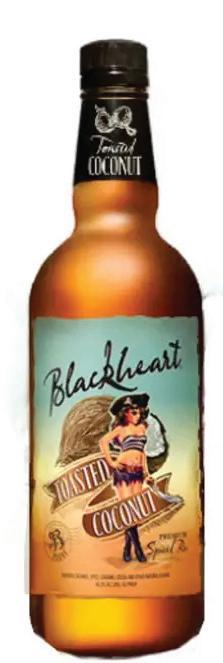
Toasted Coconut r um
The base rum for all Blackheart rums is sourced from a distillery in the us v irgin i slands. The rum is transported to h eaven h ill’s blending and bottling center in Bardstown, Kentucky, where the flavors are infused and blended to 46.5 AB v and bottled for distribution.
a ppearance
The rum is packaged in a standard 750 ml bottle with a black metal screw cap. The label is a bit more colorful than the core spiced rum brand, featuring Blackheart the pirate on the front. The basic details are on the front label, and a marketing blurb covers the back label along with the standard legal warnings and barcode.
i n the bottle and glass, the rum holds a caramel color with amber highlights. s wirling the liquid creates a razorthin band that thickens slightly and releases a wave of slow-moving legs that cling to the side of the glass before a second wave descends, bumping the liquid downward. A great deal of residue is left around the glass after the legs have finished, and the evaporation is complete.
n ose
The aroma is dominated by toasted coconut and vanilla notes. As the aromas yield, they are followed quickly by notes of sugar cookie, cola, black cherry, and baking spice that fade quickly as the toasted coconut returns.
Blackheart

Palate
The first sip delivers the expected punch of the coconut flavor and proof of the rum. The texture is a bit chewy as the black cherry cola, vanilla, and spice notes swarm the tongue, leaving a thick bit of residue across the palate. These flavors drift and form a long, overly sweet finish.
r eview
i t has been a long while since i had seen Blackheart s piced rum on the shelves, and finding the toasted coconut expression was just too good to resist. A good bit of the flavor profile felt contrived and heavy on the artificial flavoring; however, none of these details should be a surprise because the company discloses the use of artificial flavors on the front label. The black cherry cola flavor was unexpected but seemed to work with the toasted coconut flavor, providing some unexpected depth to what i was expecting to be a simple one-two-note flavor profile. o bviously not designed to be a sipper; it functions extremely well in a tropical fruit juice-style cocktail by putting an interesting spin on the flavors. w hile it may not achieve the flavor profile of better made toasted coconut rums such as s iesta Key, it is far superior to m alibu and some other brands on the market
T
he A ngel’ s sh A re
by Paul s enft
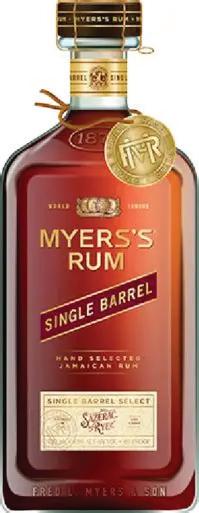
m yers’s r um s ingle Barrel s elect
w hile visiting one of my local shops, i found this rum on sale. After a less than positive experience with a different m yers bottling, i was wary of having a repeat experience. h owever, the price was right, and after two years of curiosity, it was time to review this one. The rum for this bottling is molasses based continuous column and pot still blends sourced from the n ational r ums of Jamaica (Clarendon and l ong Pond). There is painfully little information about the rum, but we can surmise that for it to be called “Jamaican rum,” it must have been aged in an oak barrel for a minimum of one year. Then the rum was finished for an unspecified amount of time in s azerac r ye barrels and blended to 43% AB v a ppearance
The bottle is a standard, heavy 750 ml prohibition era medicine glass bottle flask design that has a wooden cap holding a synthetic cork. The front label provides a small amount of information with bars that read “ s ingle Barrel” and “ h and s elected Jamaican r um.” A small white label states that it was finished in s azerac rye whiskey barrels. The back label is devoted to the bar code and legal requirements. They did not even provide a marketing blurb.
The rum has a dark walnut color (painfully obvious artificial color) in the bottle and takes on a bit of a ruby hue in the glass with greenish-brown highlights around the edges. s wirling the liquid creates a medium band that thickens and releases one wave of fast-moving legs and a second slower wave that slides down the glass as the band beads and evaporates.
n ose
The aroma leads with a dark molasses note that relents, letting notes of dark chocolate, vanilla, and baking spices
manifest, making me think of rum cake. n otes of cooked bananas drift in briefly, a tiny nip of clove, and oddly, no strong immature oak notes of any kind are found.
Palate
The first sip delivers a strong note of caramelized vanilla, a bite of alcohol, and a brief pop of pepper. Additional sips revealed a flavor that reminding me of maple syrup covering banana pancakes. As the rum begins to fade, there is a brief dance of raw ginger, black pepper, and a whisper of rye whiskey. As the flavors swirl, the original sweet caramelized vanilla notes come in and linger briefly before the finish is complete.
r eview
As mentioned, i approached this review with a certain level of curiosity and caution and felt rewarded with an intriguing Jamaican rum experience. The lack of information concerning this product and other m yers’s rums in s azerac’s portfolio is annoying. They are trying to sell rum by its brand name reputation alone, which is fine for someone like me who has been around a while and experienced the original pre- d iageo products, the over-adulterated d iageo incarnation, and now a step back towards what reminds me of the original product. h owever, what about the new drinkers and cocktail makers entering the world? They simply need to do better.
m yers’s has always been engineered to be an ingredient in a cocktail and not a sipping rum. i t was quite reliable in this role until d iageo purchased it, and then made (in my opinion) a series of poor decisions that weakened the brand. w hen s azerac bought the brand in 2018, some saw it as a rescue purchase that would hopefully save the rum from extinction. This rye finish rum provides a little twist to a familiar flavor profile and works well in a variety of classic and modern tropical cocktails.

COOKING WITH RUM
Bringing the s pirit of the c ane i nto the h eart of the Kitchen!
by Chef s usan w hitley
s piced r um- g lazed s hrimp

i ngredients:
• 1½ lb. s hrimp, peeled and deveined
• 4 Tbsp. o live o il, divided in half
• 2 Tbsp. s riracha
• 1½ Tbsp. h oney
• ¼ C. s oy s auce
• ¼ C. s piced r um
• 2 Cloves g arlic, minced
• 1 l ime, juiced
• 1/2 tsp. Crushed r ed Pepper Flakes
• g arnish: 1 g reen o nion, thinly sliced
• g arnish: s mall bunch of Cilantro, chopped
d irections:
1. Place shrimp in a large bowl. i n a medium bowl, whisk together 2 tablespoons olive oil, sweet chili sauce, soy sauce, rum, half of the minced garlic, lime juice, and red pepper flakes. Add 3/4 of the marinade to the bowl of shrimp and let marinate in refrigerator for 15 to 30 minutes.
2. h eat remaining 2 tablespoons of olive oil in a large pan over mediumhigh heat. Add the rest of the minced garlic and cook until lightly browned. Then add shrimp and cook on one side until golden, about 2 minutes. u sing tongs, flip shrimp, then brush with remaining marinade. Cook 1 to 2 minutes more.
3. g arnish with green onions and cilantro, then serve immediately. Yields 4-6 servings.

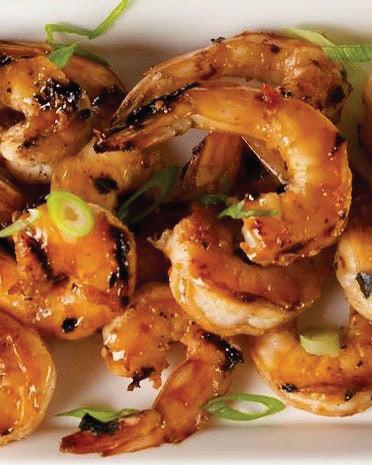

Photo Credit: www.delish.com


Piña c olada f luffy s alad

i ngredients:
• 3.4 oz. v anilla i nstant Pudding
• 20 oz. Crushed Pineapple, do not drain
• 8 oz. s our Cream
• 8 oz. w hipped Cream
• 1 tsp. d ark r um
• 2 C. m ini m arshmallows
• 1½ C. s weetened s hredded Coconut
• ½ C. w alnuts, chopped
d irections:
1. i n a large bowl, combine the vanilla pudding and crushed pineapple with juice and mix well.
2. g ently fold in the sour cream, whipped cream and rum into the mixture.
3. Add in the marshmallows, coconut and walnuts.
4. Chill for approximately 2 hours. s erve cold.
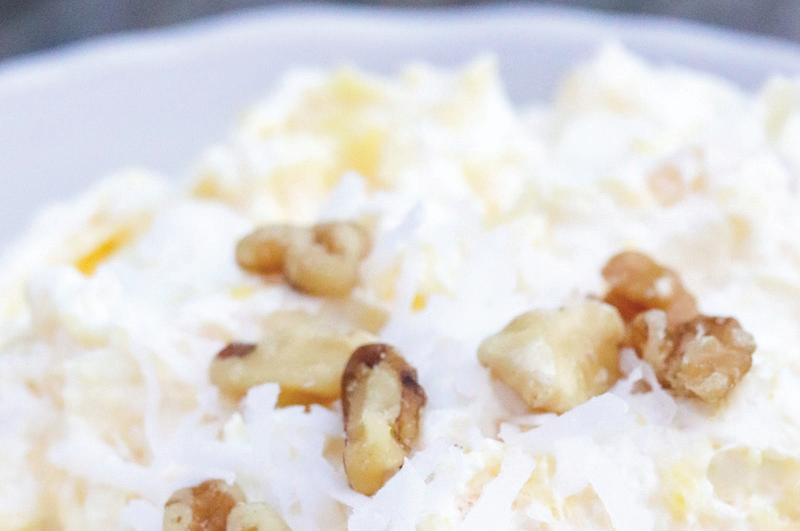
Photo Credit: www.dailydishrecipes.com
THE RUM Mixologist
A space devoted to the exploration of classic and new rum cocktails

What i s m ixology?
m ixology is the study and skill of inventing, preparing and serving cocktails and other mixed drinks. m ixologists are experts in this field, but mixologists’ knowledge goes beyond memorizing basic cocktail recipes: it includes historical information, basic chemistry behind flavor combinations and a capacity for combining common ingredients in new ways.
Join us, as we explore the essential collection of rum cocktail recipes that every mixologist needs to master.
THE RUM Mixologist
This m onth’s Cocktail:
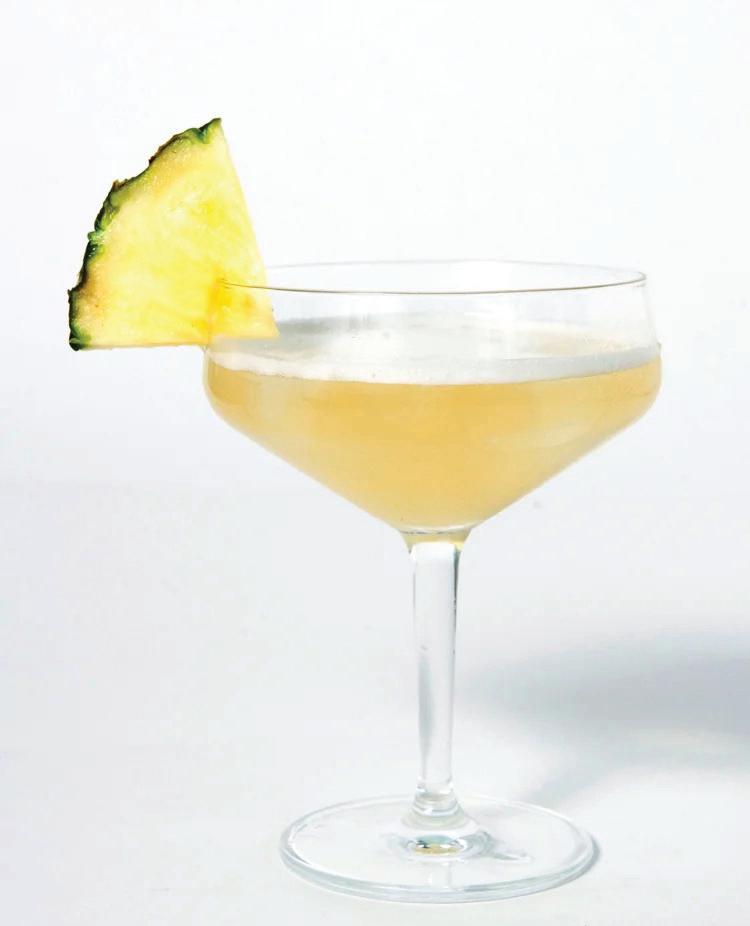
i sland o asis
This festive cocktail was created by bartender and cocktail educator Jena e llenwood, who came up with it for a relative’s summer wedding.
i sland o asis
• 2 oz. Aged r um
• 2 oz. Coconut w ater
• 1 oz. Pineapple Juice
• 1 oz. Pineapple s hrub (recipe below)
d irections
1. Add all ingredients into a shaker with ice and shake until well-chilled.
2. s train into a double rocks glass over fresh ice.
Pineaple s hrub i ngredients
• 4 C. Fresh or Frozen Pineapple Cubes
• 2 C. d ark Brown s ugar
• 4 Cloves
• 4 quarter-inch pieces peeled g inger r oot
• 2 Cinnamon s ticks
• 2 C. w ater
• 2 C. Apple Cider v inegar
d irections
1. Add pineapple, brown sugar, cloves, ginger and cinnamon into a medium saucepan and cook over medium heat until the sugar bubbles and the pineapple is caramelized.
2. Add water and bring to a boil, then reduce heat, cover and simmer for 20 minutes.
3. r emove from heat and add the vinegar, stirring to combine.
4. Cool and refrigerate overnight.
5. s train out solids (note: the pineapple chunks are edible and delicious; don’t discard them) and store in refrigerator.
s ource: www.liquor.com

r
www. r um u niversity.com
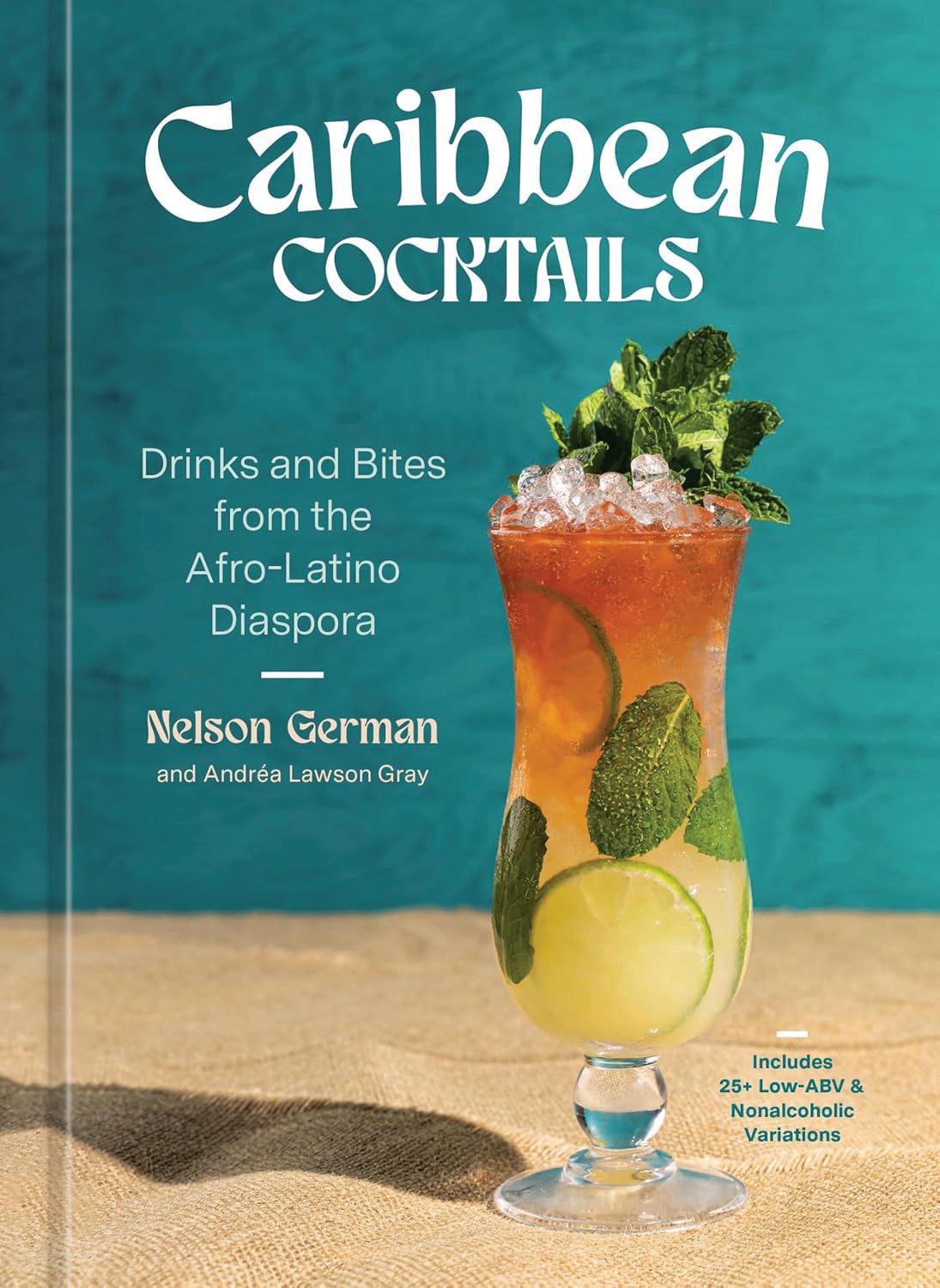
c aribbean c ocktails: Drinks and Bites from the a fro-Latino Diaspora by n elson g erman
and a ndréa Lawson g ray

(Publisher’s r eview)
s ip and savor the bold flavors and vibrant culture of the Afro- l atino diaspora with over 40 drink recipes and 20 food recipes from Top Chef alum and acclaimed chefrestaurateur n elson g erman, the culinary visionary behind m eski, s obre m esa, and ala m ar Kitchen and Bar.
For Afro- d ominican chef n elson g erman, drinks and food are about connection— whether it’s sharing stories over cocktails on a stoop in w ashington h eights or gathering with friends under the warm, buzzy lights of his restaurants. i n Caribbean Cocktails , he brings the rich culinary history of the Afro- l atino diaspora straight to your home bar and kitchen, blending tradition, personal storytelling, and modern mixology. i nside, you’ll find cocktail recipes easy enough for home bartenders yet inventive enough for seasoned mixologists, along with an ingredient index to help you make the most of every bottle on your bar cart, tips for batching drinks, plus low-AB v and alcohol-free variations for every kind of celebration.
r eflecting the vibrant drinking and food culture of the Afro- l atino diaspora, Caribbean Cocktails presents a rich selection of recipes from celebrated bartenders and chefs, spanning refreshing spritzes and bold island classics to tasty small plates. e ach chapter highlights a distinct flavor profile, including concoctions for:
w arm and sweet flavors like The h eights m amajuana, g ingerbread h oliday m ilk Punch, and Coconut r um Caramelized s weet Plantains
Floral, fruity, and herbal flavors like Coconut d aiquiri, Zombie r evier n o. 2, and d ominican Chorizo “Kipe” Bites
s our and bitter flavors like Cafecito de la m esa, l a Cultura o ld-Fashioned, and Coffee Cake with g uavaberry Caramel s auce
s picy flavors like s pice m e d own, d ominican d ate s our, and Afro-Cuban m ojo o lives with Peanuts
s alty and smoky flavors like e l Premio, m ayaimi s wizzle, and d ungeness s tuffed Piquillo Peppers
w ith the unique, culturally rooted, flavorful recipes in Caribbean Cocktails, you’ll soon be entertaining impressively at home.
Publisher: Ten s peed Press
Publication date: June 2, 2026
l anguage: e nglish
Print length: 176 pages
is B n -10: 0593837746
is B n -13: 978-0593837740
i tem w eight: 1.29 pounds
d imensions: 6.8 x 0.78 x 9.3 inches
g ot r um? July 2026 - 20

Your o ne- s top s hop for a ged r ums in Bulk!
• Column- d istilled, Pot- d istilled or Blends
• h igh Congener ( i ncluding h igh e sters), l ow Congener or Blends
• Aged in American or French o ak Barrels
• Aged in r ye w hiskey, Bourbon, Tequila, Armagnac, Port, s herry and w ine Barrels
• s ingle Barrels and s econd Aging/Finish
• d istilled in the us A, Central America, s outh America or in the Caribbean
• o ver 150 m arks/ s tyles Available, plus Custom Blends
• l ow m inimums and Fast Turnaround, w orldwide s hipping www. r umCentral.com
the r U m historian
by m arco Pierini
i was born in 1954 in a little town in Tuscany ( i taly) where i still live. i n my youth, i got a degree in Philosophy in Florence and i studied Political s cience in m adrid, but my real passion has always been h istory. l ife brought me to work in tourism, event organization and vocational training, then i discovered rum and i fell in love with it.
i have visited distilleries, met rum people, attended rum Festivals and joined the r um Family. i have studied too, because r um is not only a great distillate, it’s a world. Produced in scores of countries, by thousands of companies, with an extraordinary variety of aromas and flavors, it is a fascinating field of studies.
s oon, i discovered that rum has also a terrible and rich h istory, made of voyages and conquests, blood and sweat, imperial fleets and revolutions. i realized that this h istory deserved to be researched properly and i decided to devote myself to it with the help of the basic scholarly tools i had learnt during my old university years.
i n 2017 i published the book “A meri CA n rum – A s hort h istory of r um in e arly America”
i n 2020, with my son Claudio, i have published a new book “F ren C h rum – A h istory 1639-1902”.
TA verns A nd rum in e A rlY A meri CA
i n e arly America, taverns were at the center of social life. o fficially, they fulfilled a double public function: they were set up for the “receiving and refreshment of travellers and strangers, and to serve the public occasions of such town or precint”. That is, first of all, they were meant to feed and lodge travelers and strangers suitably. A surprising number of traders and travelers from all ranks of society were always on the move, among them judges and other civil servants who had to travel regularly to the towns and villages. s o, there was a steady flow of travelers of middle to upper social rank, and the idea was to offer them the necessary, and possibly comfortable, accommodation. Then, taverns were the gathering place for the local community on various occasions, for example, the sittings of ordinary civil courts. Taverns were so necessary that the authorities obliged all the communities to have at least one. i n the villages, but also in the towns, the public places available for gatherings were really few: the church and the meeting house, both usually bitterly cold in winter and where it was always necessary to have a dignified, proper behavior. A tavern provided its customers with a warm, fire-lit place
where they could meet in a more relaxed way.
The fact that local people gathered there to drink was of secondary importance, often barely tolerated by the authorities. The tavern keepers were subject to a lot of rules and regulations. They needed a license issued by the authorities, which was granted only to citizens of proven morality. l icenses had to be renewed annually, and the extension could be refused if public decency was not observed. Authorities tried to limit alcohol consumption, gambling, dancing, and the very sojourn of customers. e ven the prices were subject to regulations, and the quality of the products and of the service too.
Taverns attracted also vagabonds, adventurers, odd preachers and other people to be wary of. But the authorities kept watch: “ i n 1637, there were not many houses in the Town of Boston, amongst which were two houses of entertainment called o rdinaries, into which if a stranger went, he was presently followed by one appointed to that o ffice, who would trust himself into his company uninvited, and if he called more drink than the o fficer thought in his judgment he could soberly bear away, he would presently countermand it, and appoint the proportion, beyond which he could not get one drop.” (J. Josselyn “ Account of two Voyages to New England ” 1675)
i n the first decades, they were private houses converted into taverns as best as possible and served the general public, from all ranks of society. l ater, in the 1700s, there is evidence of buildings planned and built specifically as taverns and, with population growth, economic development and increasing social complexity, in the cities taverns started to cater to a more specific public. i n Boston, n ew York, Philadelphia and other cities there were taverns for the élites, often in the city center, where the clientele had wine, brandy, chocolate, coffee and other luxuries at their disposal. Then there were taverns for the middle class and regular workers, more modest, but
still respectable. Finally, usually on the waterfront, there were scores of lowly taverns for the humble classes, where they drank mainly rum.
Then, there were retailers. They were shops or private houses where they sold beer and spirits which could not be consumed on the premises but had to be taken away. r etailers were forbidden to sell cups or glasses, they had to sell only by the bottle or, anyway, in vessels of a certain capacity. But often the owner added a few tables, dealt out a few drams and it became a poorer version of a tavern.
i n the tavern you could drink beer, cider and various kinds of spirits, but mostly rum, “Any account of old-time travel by stage-coach and lodging in old-time taverns would be incomplete without frequent reference to that universal accompaniment of travel and tavern sojourn, that most Americans of comforting stimulants -- rum.” (A. m orse e arle “ Stage-coach and tavern days ” 1900).
i n the1700s, locally produced American rum became plentiful and cheap, very cheap. Tavern account books indicated a preference for rum over all other drinks, both in towns and in the countryside. For instance, in 1728, a group of backcountry surveyors in n orth Carolina found rum in every place they ventured and marveled that some settlers even used it in the cooking of bacon. According to w ayne Curtis’ “ And a bottle of rum ” 2006, one tavern keeper’s book for 1774 in n orth Carolina showed that out of 221 customers, some 165 had ordered rum by itself, and another 41 ordered drinks that contained rum. i n Philadelphia, the sales at the o ne Tun tavern for five months in 1770 show that drinks made with rum, including toddy, grog and punch, out sold beer and wine combined.
Authorities were worried, and there was no lack of attempts to limit the consumption of rum. The highest point of this prohibitionist effort was perhaps reached in 1712 when the g eneral Court of m assachusetts forbade at all the sale
of rum and of other distilled beverages in taverns. The ban was largely ignored by tavern-keepers and in actual fact very few o fficials attempted to enforce the law which, over time, became a dead letter. r um was stronger than the worries of the authorities and towards 1740 it was at the core of popular drinking culture. “ i t comes rolling in, hogshead after hogshead” lamented r ev. s amuel n iles in his 1761 pamphlet.
e verybody could afford rum and it allowed everybody to take part in the collective rounds of booze, and even to get drunk, which led to a loosening of inhibitions and social rules. All this threatened the traditional, rigid control that the upper classed had always exerted on society, “That the upper classes were able to monitor drinking and to impose restraints was due to the hierarchical nature of colonial society. Although men were deemed equal before the law and before g od, their social and political inequalities were recognized and respected. n ew e nglanders followed the advice of their educated, socially prominent Congregational clergy, and in free and open elections they chose men from the upper classes as tithingmen, school overseers, town selectmen, and legislative representatives” ( w . J. r orabaugh “ The Alcoholic Republic ” 1979).
Also a future Founding Father was worried. “Fifty-three years ago –remembers John Adams after the r evolution - i was fired with a zeal, amounting to enthusiasm, against ardent spirits, the multiplication of taverns, retailers and dram-shop and tipplinghouses. g rieved to the heart to see the number of idlers, thieves, sots and consumptive patients made for use of physicians, in these infamous seminaries, i applied to the Court od s essions, procured a committee of inspection and inquiry, reduced the number of licensed houses, etc. But i only acquired the reputation of a hypocrite and an ambitious demagogue by it. The number of licensed houses was soon reinstated, drams, grog and sotting were not diminished, and
remain to this day as deplorable as ever. You may as well preach to the i ndians against rum as to our people.”
Taverns were also the main place to share news about what was happening in the world. Today we often tend to forget that modern mass media are a recent thing. Back then, ordinary citizens heard the news from traders, travelers, visitors, people who came back from a journey, people who had spoken to someone and knew something. s o in taverns, in-between glasses, people talked, discussed, shared information, expressed their views; in the 1700s people could also find a copy of the first newspapers and some pamphlets. w hat is now called public opinion was created that way.
As time went on, taverns became the center of political life; therefore, those who aspired to be a leader of their people, had to face up to this new reality: the winning over of the citizens’ minds, and votes, had to go through taverns and rum. Taverns became a sort of constituencies. Therefore, candidates went to the taverns, spoke to the customers, made themselves popular and bought people drinks, a lot of drinks.
i n 1758 g eorge w ashington stood as candidate in the v irginia h ouse of Burgesses. Taking his usual pragmatic approach, in the electoral campaign he paid a long liquor bill where the largest items of expenditure were 40 gallons of r um Punch, 18,5 gallons of wine and 26 gallons of “best Barbados rum”. h e was elected with 301 votes, “the largest number cast for any candidate”.
But let’s see how a young John Adams describes the new relationship between taverns and political life, in his d iary, on 29th m ay, 1760:
“Few things i believe have deviated so far from the first d esign of their i nstitution, are so fruitful of destructive e vils or so needful of a speedy r egulation, as l icensed h ouses. The Accomodation of s trangers, and perhaps of Town i nhabitants on public occasions, are the only warrantable i ntentions of a Tavern
g ot r um? July 2026 - 24
and the supply of the n eighbourhood with necessary l iquors, in small Quantities … and at the cheapest r ates are the only excusable d esigns of a r etailer; and that these Purposes may be effected, it is necessary, that both should be selected from the most virtuous, and wealthy People who will accept the Trust, and so few of each should be erected, that the Profits may enable them to make the best Provision, at a moderate Price. But at the present d ay, such h ouses are become the eternal h aunt, of loose disorderly People of the same Town, which renders them offensive and unfit for the e ntertainment of a Traveller of the least delicacy; and, it seems that Poverty, and distressed Circumstances are become the strongest Argument, to procure an Approbation, and for [these?] assigned r easons, such m ultitudes have been lately licensed, that none can afford to make Provision, for any but the trifling, nasty vicious Crew, that most frequent them. The Consequences of these Abuses are obvious. Young People are [illegible] tempted to waste their Time and m oney, and to acquire habits of i ntemperance and i dleness that we often see [illegible] reduce many of them to Beggary, and v ice, and lead some of them at last to Prisons and the g allows. The r eputation of our County is ruined among s trangers who are apt to infer the Character of a Place from that of the Taverns and the People they see there. But the worst e ffect of all, and which ought to make every m an who has the least sense of his Priviledges tremble, these h ouses are become in many Places the n urseries of our l egislators; An Artful m an, who has neither sense nor sentiment may by gaining a little sway among the r abble of a Town, multiply Taverns and d ram s hops and thereby secure the v otes of Taverner and r etailer and of all, who will be induced and the m ultiplication of Taverns will make many who may be induced by Plip and r um to v ote for any m an whatever and for These i dare not presume to point but any m ethod, to suppress or r estrain these increasing e vils; but i think for these r easons it would be well worth the Attention of our
l egislature, to confine the n umber of, and retrieve the Character of l icensed h ouses; least, that i mpiety, and Prophaneness, that abandoned i ntemperance, and Prodigality; that i mpudence and brawling Temper, which these abominable n urseries daily propagate, should arise at length to a degree of strength, that even the l egislature will not be able to control.”
Customs and laws varied slightly from colony to colony and in every colony they changed over the years, yet certain general characteristics can be recognized. To simplify, in the taverns for the élites the clientele was made up almost exclusively of white males. e ntrance to slaves, black freemen, i ndians and white servants was often absolutely forbidden. At other times it was discouraged: for example, they could purchase alcoholic drinks only if their master was present, or with his written authorization. By contrast, there were no laws which explicitly forbade women to frequent taverns, but the influence of the all-pervasive moral values was such that in actual fact it prevented women from frequenting them. o f course, female travelers were exempted from this rule, but, if possible, it was considered more socially acceptable to find accommodation for them in a guest house or in the private home of some relative or acquaintance.
Things were very different in low-rank taverns. There, the laws were not really respected and poor white workers of both sexes, whores, occasional seamen, thieves and receivers of stolen goods, slaves, black freemen, mulattos and even i ndians would congregate and interact. Actually, according to the prosecution, the so-called n ew York s lave Conspiracies of 1712 and 1741 took shape in the poor, low-rank taverns and ale houses of the waterfront. And they were washed down with rivers of rum.
And now, just as i did last year, i ’m taking my summer leave. s ee you again in n ovember.
m arco Pierini


The Rum Laboratory
Presented
by
Join us as we explore the world of rum spices and flavors! i n this series you will learn to flavor your own r ums and to create your own Liqueurs and c reams.
g ot r um? July 2026 - 27

t he r um University® Laboratory Presents making your own Golden Plum Rum Liqueur
i ngredients:
• 1 Cup h oney
• 1 Cup w ater
• 10 Yellow/ o range Plums, s temmed
• 2 Cups Plum w ine
• 1 Cup h eavy ( h igh Congener) Aged r um
• 1 Cup l ight ( l ow Congener) w hite r um
• 1/2 tsp l emon zest
• 1 Tbsp Freshly-squeezed l emon Juice
Directions:
Combine the water and the honey in a medium saucepan, stirring until all the honey has dissolved. Bring the mixture to a boil over medium heat and maintain the boil for 3 minutes, skim any foam that forms on the surface. r emove from the heat and allow it to cool.
Cut the plums in halves and remove the pits, place the pits in a 2-quart (2-liter) jar. m ash the plum halves with a potato masher, combine with the remaining ingredients, including the syrup, then transfer the mixture to the jar with the plum pits.
Allow the liqueur to rest in a dark, cool place for at least 30 days.
s train and discard the solids, then allow it to rest for another 7-10 days so that impurities can precipitate. Filter or rack to one or more final serving containers.

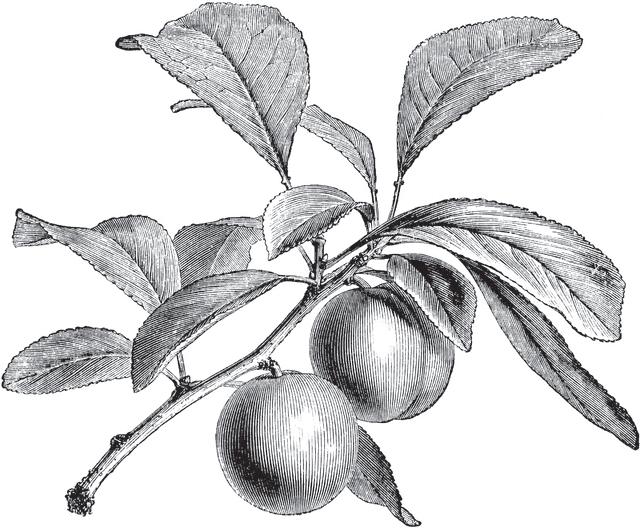
Did you know that plums ...
• Are great for relieving constipation and digestive problems: plums are filled with dietary fiber, sorbitol and isatin.
• Protect your heart: a medium fresh plum contains 113 mg of potassium that helps manage high blood pressure and reduce your risk of stroke.
• Prevent diabetes: plums have a low glycemic index, so eating plums can help you control your blood sugar and reduce the risk of type 2 diabetes according to the d ietitians of Canada.
• i mprove bone health: in a study one group ate prunes, the other group ate dried apples and both took calcium and vitamin d supplements. The prune group had substantially higher bone mineral density in the spine and forearms. (Florida s tate and o klahoma s tate u niversities)
• The Chinese believe plums symbolize good fortune.
• m ore than one hundred varieties of plum stones were found on h enry viii ’s flagship the m ary r ose, which sank in 1545.
• February is the month for plums in Japan; there are plum blossoms everywhere.
• u meboshi (Japanese pickled plums) were thought by the samurai to combat fatigue.
• Plum trees are grown on every continent except Antarctica.
• There are more than 140 varieties of plum sold in the u nited s tates.
• Plums are the second most cultivated fruit in the world.
• Plums can be as large as a baseball or a small as a cherry.
• Plums were on the menu at the first Thanksgiving dinner in 1621.
Caution: those with a history of kidney stones are advised to avoid eating plums.
rU m in the ne W s
by m ike Kunetka
These are the most recent and noteworthy headlines in the rum industry. i f you want us to share your news with our readers, please send me an email to: m ike@gotrum.com.
FLOR de CAŇA
Flor de Caña has been awarded the prestigious “ d iamond Product s ustainability Award” by the organization s ustainability Award in Australia, the competition’s highest distinction and the first d iamond-level recognition granted in 2026. The award recognizes brands that demonstrate exceptional environmental performance and measurable sustainability impact throughout their value chain. The judges highlighted Flor de Caña’s industry-leading “field-to-bottle” sustainability model, which integrates renewable energy, carbon reduction initiatives, circular production practices, responsible packaging, and long-term environmental stewardship. As one of the world’s first Carbon n eutral spirits, Flor de Caña is distilled using 100% renewable energy, captures and repurposes all fermentation C o 2, and has planted more than one million trees since 2005. The award also recognized the brand’s premium quality, consistency, and craftsmanship developed over 135 years of family tradition. This recognition further strengthens Flor de Caña’s position as a global leader in sustainability within the spirits industry and reflects the company’s
long-standing commitment to creating positive environmental and social impact. The rum is distributed in Australia by v anguard l uxury Brands. www.flordecana.com
ca D enhea D’ s
Paying homage to their rich history as an independent bottler of rum, Cadenhead’s s ingle Cask e dition releases are each selected to showcase the diverse range of high- quality casks maturing in their warehouses. This summer, they will be releasing three bottlings:
• Trinidad d istillery - This s ingle Cask e dition bottling hails from an undisclosed distillery on the Caribbean island of Trinidad. d eliciously sweet, this 19-year-old rum features notes of dark fruits, cola cubes, cooking apples, candy floss and cayenne pepper. d istilled in 2007 and bottled at 50.4% AB v
• Jamaican d istillery - This s ingle Cask e dition bottling hails from an undisclosed distillery on the Caribbean island of Jamaica. This 15-year-old rum features notes of pineapple, banana, custard, white grapefruit and tobacco. d istilled in 2011 and bottled at 50.4% AB v
• Panamanian d istillery - This s ingle Cask e dition bottling hails from an undisclosed distillery in Panama. A beautifully balanced rum, notes of blueberries, baked pear, molasses, honey and barbecued pineapple unfold as you sip. d istilled in 2007 and bottled at 55.0 % AB v https://www.cadenhead.scot/
mo U nt ga Y
m ount g ay has unveiled the e xceptionally Aged Collection, a prestigious new series paying tribute to time, craft, and the enduring heritage of Barbados. l aunching with two ultra-rare expressions, e xceptionally Aged 15Y o and e xceptionally Aged 25Y o , this collection marks a significant brand-first, with its emphasis on clear age statements, opening a new chapter for the brand. Both expressions proudly adhere to m ount g ay’s uncompromising commitment to quality, crafted without any added sugar or flavoring. m ount g ay e xceptionally Aged 15Y o is a tribute to continuity of craftsmanship and the enduring legacy of the world’s oldest running rum distillery. Crafted in Barbados, its story is defined by a generational handover between three m aster Blenders: Jerry e dwards, Allen s mith, and Trudiann Branker. e very drop is 100% distilled, matured, blended, and bottled at the m ount g ay distillery in s t. l ucy, Barbados, imbued with the unique essence of our tropical island. The journey of e xceptionally Aged 15Y o is a testament to continuous stewardship across generations. i t began with former m aster Blender
Jerry e dwards, who skillfully distilled the rums on a single column still and carefully laid them down to age in ex-American oak Bourbon casks. The guardianship then passed to former m aster Blender Allen s mith, and subsequently current m aster Blender, Trudiann Branker. e ach meticulously monitored the rum’s evolution. i n 2025, Trudiann Branker brought this shared vision to fruition, meticulously crafting the perfect blend that proudly embodies the essence of a 15-year-old m ount g ay rum. m ount g ay e xceptionally Aged 15Y o is a blend aged for a minimum of 15 years in Barbados’s warm, tropical climate. i t is non-chill filtered and was bottled 43% AB v e xceptionally Aged 25Y o represents a unique confluence of expertise, having been shaped by three distinct m ount g ay m aster Blenders over a quarter-century. d istilled in 1999 on a single column still under the vigilant eye of then- m aster Blender Jerry e dwards, its prolonged maturation was carefully overseen by his successor, Allen s mith. Finally, current m aster Blender Trudiann Branker masterfully brought this extraordinary spirit to its ultimate expression. After 25 years of tropical ageing exclusively in ex-American oak Bourbon casks, this rum stands as a testament to a generational commitment to crafting an unparalleled spirit. m ount g ay e xceptionally Aged 25Y o is a singlebatch rum distilled in 1999, aged for precisely 25 years and presented at 47% AB v and non-chill filtered. https://www.mountgayrum.com/
internationa L W ine & s P irits com P etition
o ut of the hundreds of rums from all over the world that were submitted to the i nternational w ine & s pirits Competition this year, only 184 won medals. o f these only 14 won the coveted g old o utstanding medal. r ichard s eale’s Foursquare d istillery dominated the category with 5 g old o utstanding medals for their s upernum, e pilogue, m andamus, Penultimus and i ndomitas rums. Three Jamaican rums, w orthy Park’s o verproof r um, m onymusk’s msr l imited e dition s ingle m ark 2007 r um and h ampden e state’s g reat h ouse d istillery e dition 2025 r um won g old o utstanding medals. s t. n icholas Abbey’s 12 Y o r are s ingle Cask s trength r um from Barbados and d istillerie l ongueteau’s l e 55 r hum from g uadeloupe each won g old o utstanding medals. r um’s expanding global reach was clearly represented in the remaining four medals as distilleries from s cotland, Japan and the u nited s tates were recognized. s ome quick notes about the us distilleries. o ne is new, the other has been making rum for 17 years. m aggie Campbell is the C eo of American Cane, the new rum company in l ouisiana. m aggie’s
resume in the rum world is legendary. The fact that she and d arin v est could develop a new blend, bottle it, bring it to market and win a g old o utstanding in their first year is amazing. d esert d iamond d istillery has been making rum for 17 years in Kingman, Arizona, a small town that you speed through on your way to l as v egas, i n the last five years, this small distillery, in the middle of nowhere, has won a dozen g old m edals at iws C, several of which were g old o utstanding. https://iwsc.net/
V a LU e of J amaican r U m
“Jamaica is well positioned to strengthen its foothold in the global spirits industry and generate greater economic value from one of its most internationally recognized products”, said m inister of s tate in the m inistry of i ndustry, i nvestment and Commerce, h on. d elano s eiveright. s peaking at the recently held w est i ndies r um and s pirits Producers’ Association ( wirs PA) and s pirits Pool Association ( s PA) Cocktail r eception in Kingston, m r. s eiveright underscored the significant contribution of Jamaica’s rum industry to the national economy and highlighted opportunities for future growth. “The rum industry represents far more than beverage production. i t supports economic activity across agriculture, manufacturing, tourism, logistics and exports, making it a critical pillar of Jamaica’s economic development,” he said. The s tate m inister noted that Jamaica’s rum exports generated approximately us $57 million (J$9.1 billion) in 2024, contributing substantially to employment, foreign exchange earnings and value-added manufacturing. h ighlighting the scale of the international marketplace, m r. s eiveright referenced a 2024 study conducted by o xford e conomics and i nternational w ine and s pirits r esearch on behalf of the w orld s pirits Alliance. The study found that the global spirits industry contributes approximately us $730 billion (J$117 trillion) to global g ross d omestic Product ( gd P), supports some 36 million jobs worldwide, generates roughly us $390 billion (J$62 trillion) in tax revenues and drives approximately us $120 billion (J$19 trillion) in supplier spending. Those figures, according to the s tate m inister, demonstrate that “this is not a niche industry. i t is a major global industry with enormous economic impact”. m r. s eiveright pointed to Jamaica’s competitive advantages, including its globally recognized rum heritage, strong tourism linkages, established production expertise and reputation for authenticity and quality. h e emphasized that expanding exports, strengthening value-added production and protecting Jamaica r um through the country’s g eographical i ndication ( gi ) framework will be critical to capturing a larger share of growing
international demand. “ w hen we look at rum, we see agriculture, manufacturing, logistics, tourism, export earnings, intellectual property, rural livelihoods, employment and Brand Jamaica,” the s tate m inister noted. m eanwhile, Chairman of wirs PA and the s pirits Pool Association, Clement “Jimmy” l awrence, highlighted the importance of safeguarding Caribbean competitiveness amid evolving international trade conditions and ongoing supply chain challenges. m r. l awrence noted that the Caribbean spirits industry remains a significant contributor to agriculture, manufacturing, tourism, employment and foreign exchange earnings throughout the region. h e also underscored the need for strong partnerships among governments, regional institutions and private-sector stakeholders to ensure that Caribbean manufacturers remain globally competitive. https://jis.gov.jm/jamaicawell-positioned-to-strengthen-foothold-in-globalspirits-industry-state-minister/
ron B arce LÓ and am B er B e V erage in a U stra L ia
o ne of the world’s leading premium rum brands, r on Barceló, will soon be available to Australia’s drinks trade through exclusive national distributor Amber Beverage Australia. e ffective from August, the Amber Beverage and r on Barceló partnership marks the d ominican r epublic distillery’s first major expansion into Australia after having already secured distribution in more than 80 countries globally. i t also comes just a few years ahead of Barcelo’s 100-year anniversary in 2029. Founded in 1929, r on Barceló is recognized for its portfolio of premium aged rums centered around their dedication to quality, provenance and sustainability. i n 2012, it became the first rum producer globally to achieve Carbon n eutral certification. The initial Australian range of r on Barceló will include r on Barceló Blanco, d orado, Añejo, g ran Añejo and i mperial, with the distribution partnership to be supported by a national rollout across retail, key account and premium on-premise channels, alongside trade education initiatives designed to build awareness of the brand and support category development. u liana l inenko, m anaging d irector of Amber Beverage Australia, said: “Australia’s premium spirits drinker is more curious and discerning than ever, and the rum category presents a significant opportunity for growth. r on Barceló brings together nearly a century of heritage, strong sustainability credentials and a portfolio that appeals across both cocktail and sipping occasions. w e are proud to be the brand’s Australian distribution partner and look forward to expanding its presence across the market.” i n addition to r on Barceló, Amber Beverage Australia’s portfolio includes rum brands Flor de
Caña, Bayou, Cargo Cult, Chairman’s r eserve, g oslings, Pampero, and s tolen. https://ronbarcelo.com/en/, https://amberbev.com.au/
ron del B arri Lto and oro hote L & resi D ences
i n a move that speaks volumes about the future of luxury development, the team behind s an Juan’s oro h otel & r esidences has announced a partnership with r on del Barrilito, one of Puerto r ico’s most storied rum producers. The collaboration will birth the first-ever “Barrilito Bar” inside the lobby of the new high-end tower. w hile a custom-branded bar is a compelling feature, the real story here is the strategic fusion of hyperlocal heritage with global luxury standards. This partnership is more than a press event at a historic distillery; it’s a calculated bet that in the modern economy, authenticity is the ultimate amenity and a powerful driver of value. “ r on del Barrilito has been part of Puerto r ico’s story since 1880, and we look for partners who share that same commitment to craft and place. oro is building something that reflects the best of the island — sophisticated, authentic, and unmistakably Puerto r ican — and the Barrilito Bar is a natural extension of that vision,” said e duardo Bacardi, d irector of s ales & m arketing, r on del Barrilito. i nspired by the property’s “golden hour” concept, the experience transitions seamlessly from the “golden” coffee moments of the morning to the warmth and sophistication of Puerto r ico’s iconic golden rum in the evening. g uests will enjoy an elegant and inviting atmosphere featuring a curated menu of signature Barrilito cocktails alongside timeless classics, all thoughtfully crafted to complement the spirit and ambiance of oro . “At oro h otel & r esidences, we are committed to creating a luxury experience that is deeply rooted in the culture, craftsmanship, and excellence of Puerto r ico. Partnering with iconic local brands such as r on del Barrilito allows us to celebrate the very best the island has to offer while delivering an authentic and elevated experience for our residents and guests,” said d avid w eibel, from the oro h otel & r esidences development team. https://rondelbarrilito.com/ https://www.ororesidences.com
r U ms of PU erto rico and ma J or L eag U e B ase B a LL
Puerto r ico has secured commercial partnerships between its r ums of Puerto r ico program and four m ajor l eague Baseball organizations for the first time, g ov. Jenniffer g onzález Colón and d epartment of e conomic d evelopment and Commerce ( dde C) s ecretary
Carlos J. r íos Pierluisi announced last month. The agreements involve the n ew York Yankees, n ew York m ets, Tampa Bay r ays and m iami m arlins and are intended to expand the presence of Puerto r ican rum brands in key u s . markets through year-round promotional and commercial activities. g ov. g onzález Colón described the agreements as a milestone for Puerto r ico’s rum industry, saying they validate the quality of the island’s products and strengthen its position in international markets. s he added that the partnerships were finalized within a matter of months and that additional m ajor l eague Baseball organizations have expressed interest in exploring similar agreements. r íos Pierluisi said the partnerships represent a significant opportunity to expand sales of Puerto r ican rum in the u nited s tates while increasing the industry’s visibility among millions of baseball fans. “This is a home run for Puerto r ico,” r íos Pierluisi said in a statement. “ o btaining the confidence of organizations as prestigious as the Yankees, m ets, r ays and m arlins validates the strength of our rum industry and our potential as a strategic partner.” Carlos B. h errero v ázquez, director of the r um of Puerto r ico program, said the initiative reflects a shift in strategy from focusing primarily on promotion to emphasizing sales, distribution and market expansion. h errero v ázquez said the program spent months conducting market research and negotiating directly with ml B organizations to establish long-term commercial relationships. https://www.rumcapital.pr.gov/home, https://www.mlb.com/
TROIS RIVIĖRES
s pirit Business reported that Campari g roup’s Trois r ivières brand from m artinique has unveiled new packaging for its aged rum portfolio. The redesigned bottle and refreshed packaging are inspired by the sugarcane fields that characterize southern m artinique in the Caribbean. i t features vertical engravings in the glass that evoke the orderly rows of cane growing across the landscape. The brand’s history is highlighted by embossed elements, including the year 1660, which is associated with the estate’s heritage, and an illustration of the Trois r ivières windmill. The bottle’s silhouette has softly rounded angles to create a refined, balanced aesthetic. m eanwhile, the textured glass showcases the natural hues of the aged rums, ranging from amber and copper to mahogany, depending on maturity. The liquid inside remains unchanged for each expression. https://www.troisrivieresrhum.com/
The Sweet Business of Sugar


Honduras
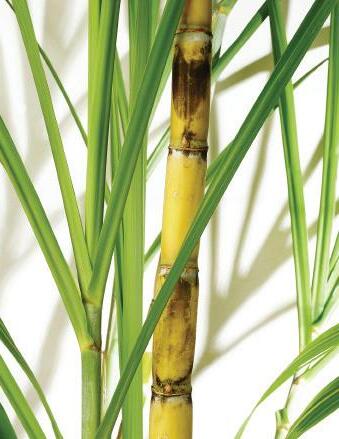
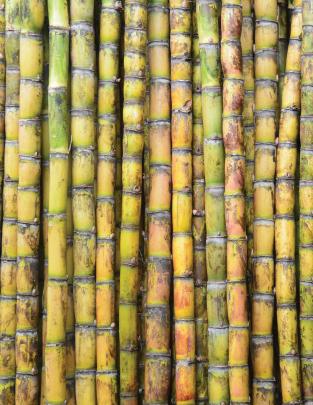
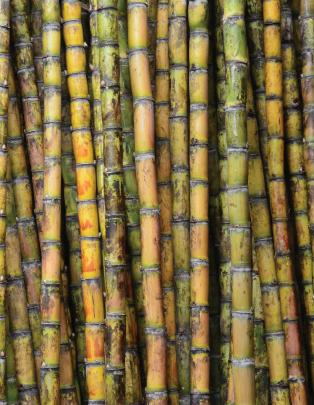
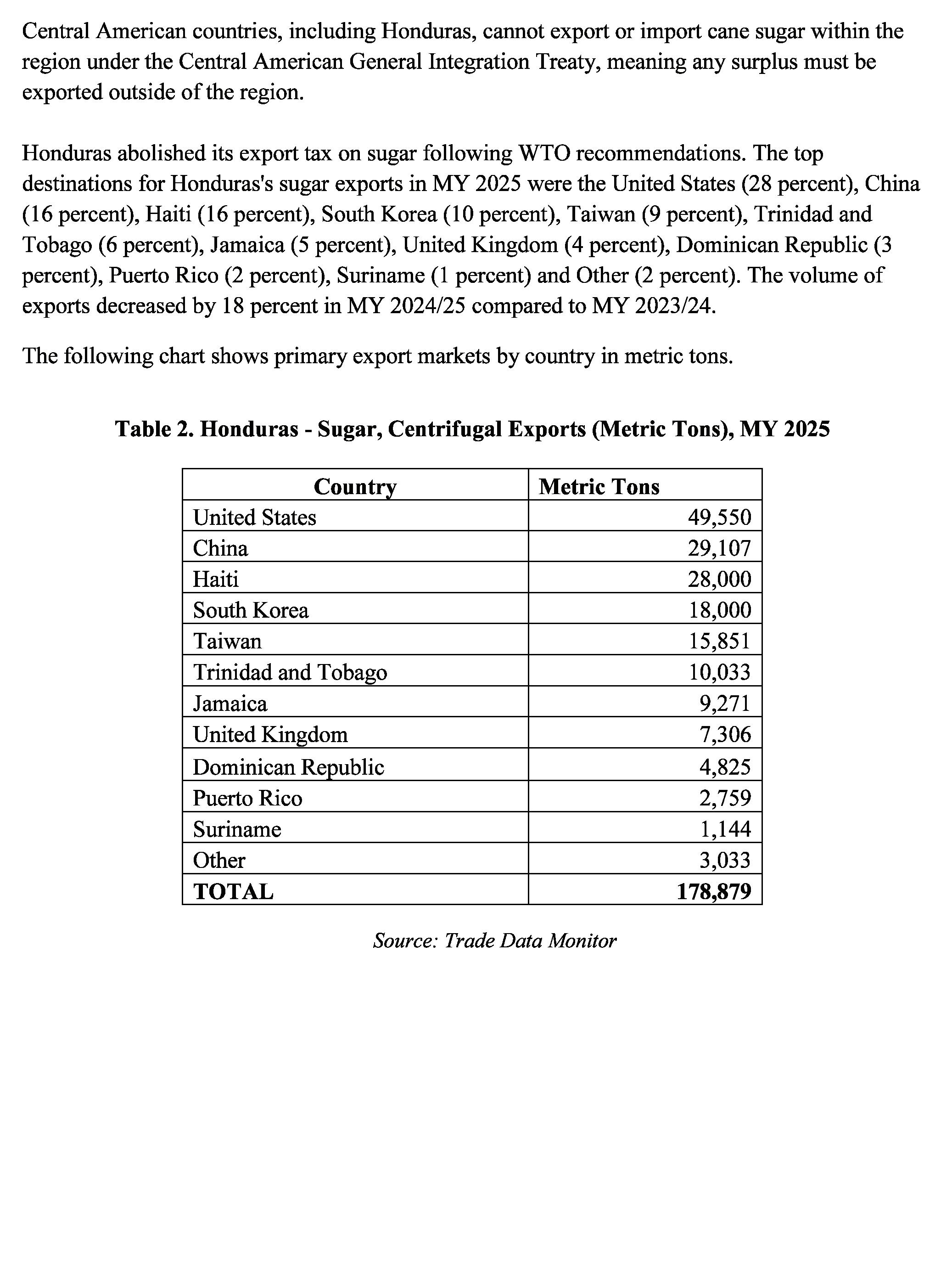
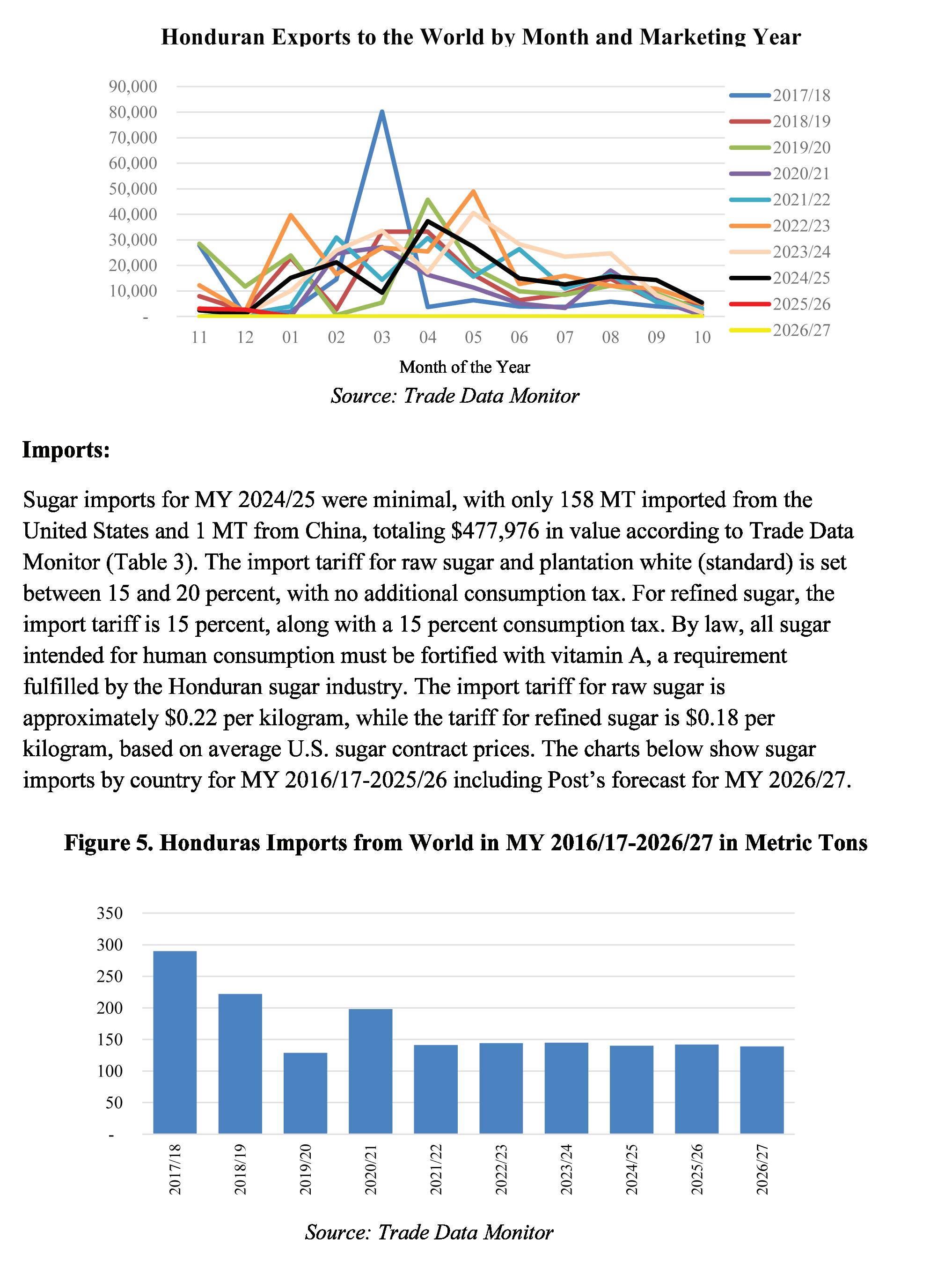
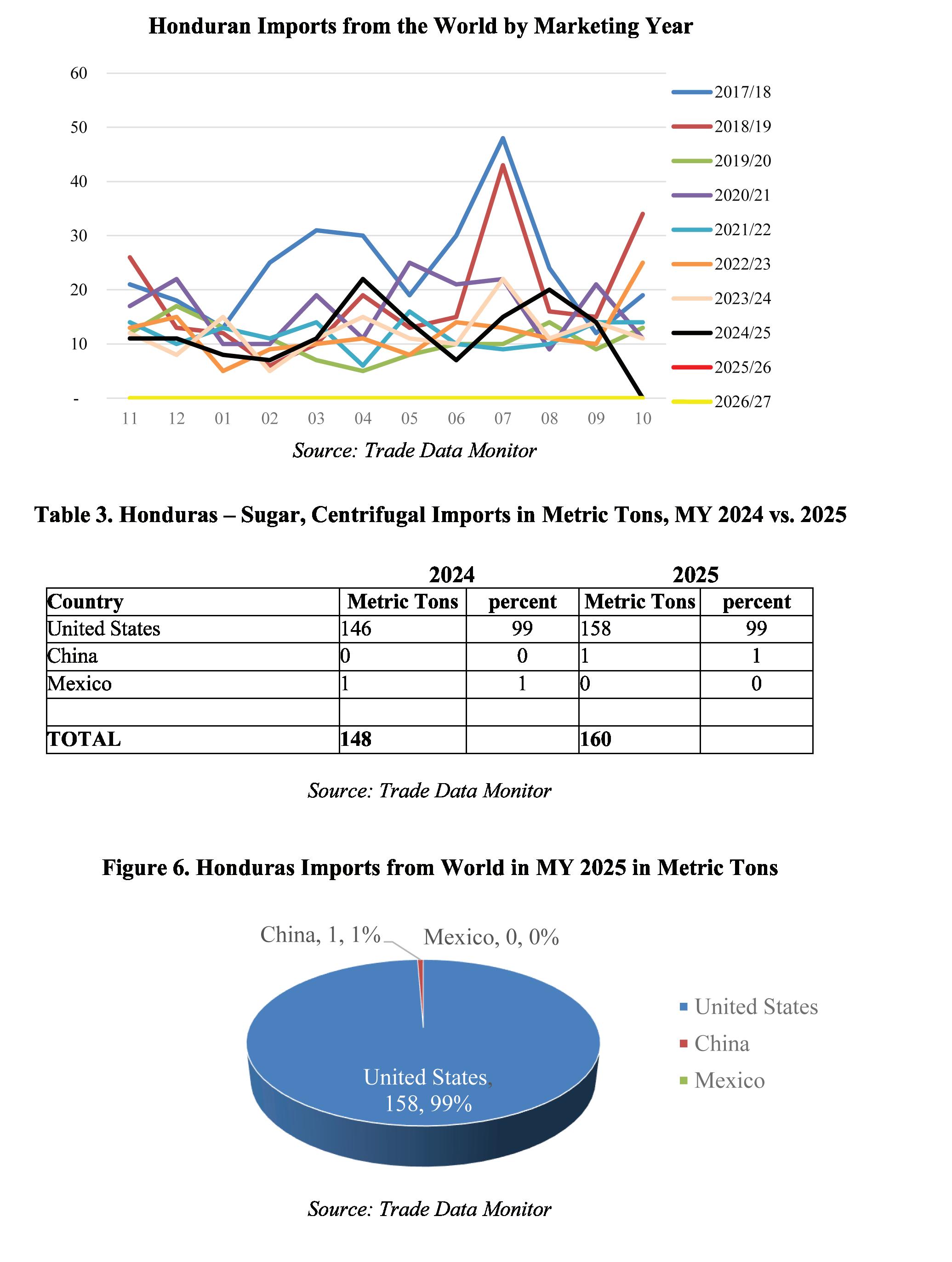
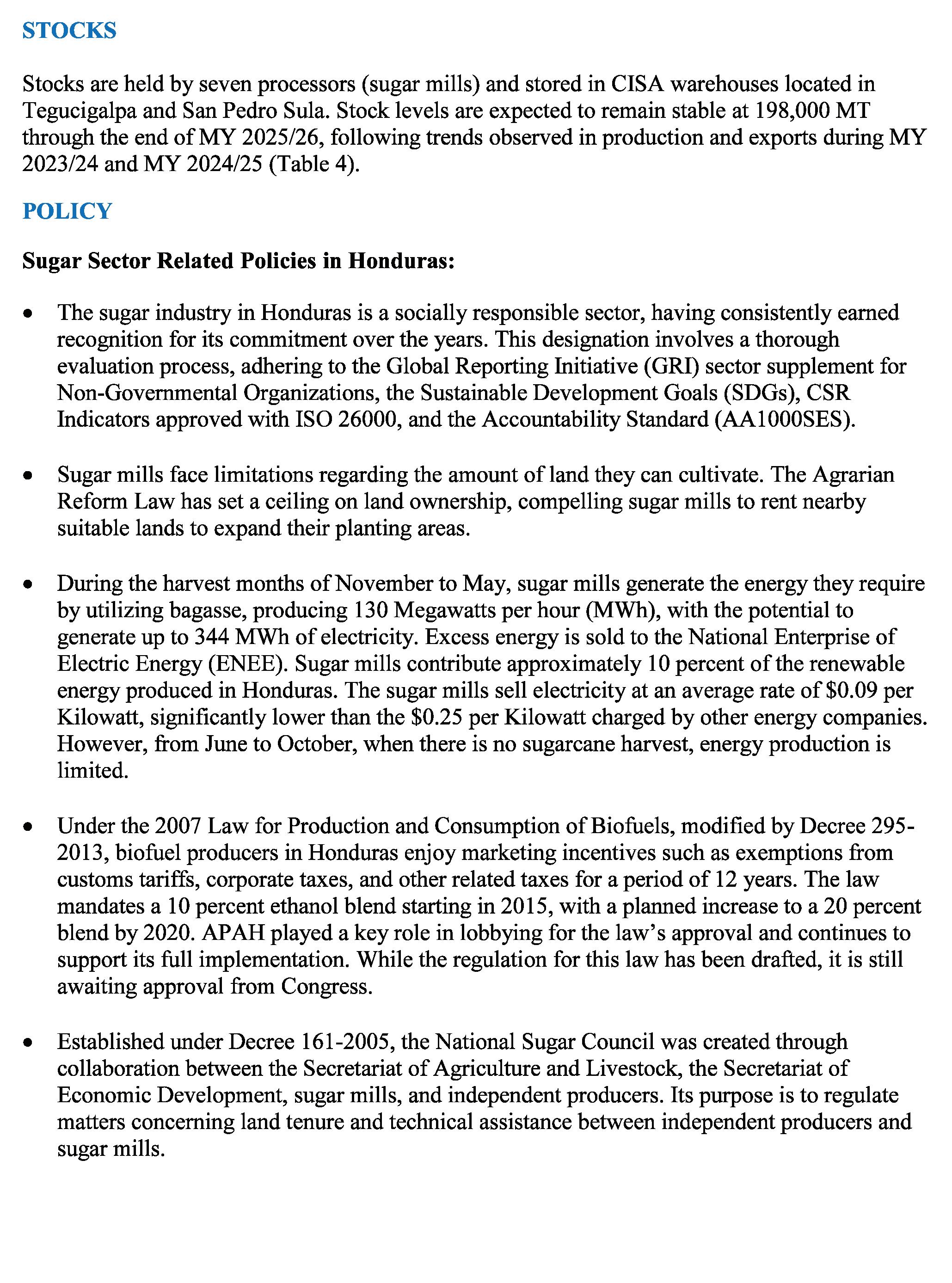
r egardless of distillation equipment, fermentation method, aging or blending techniques, all rum producers have one thing in common: sugarcane
w ithout sugarcane we would not have sugar mills, countless farmers would not have a profitable crop and we would not have rum!


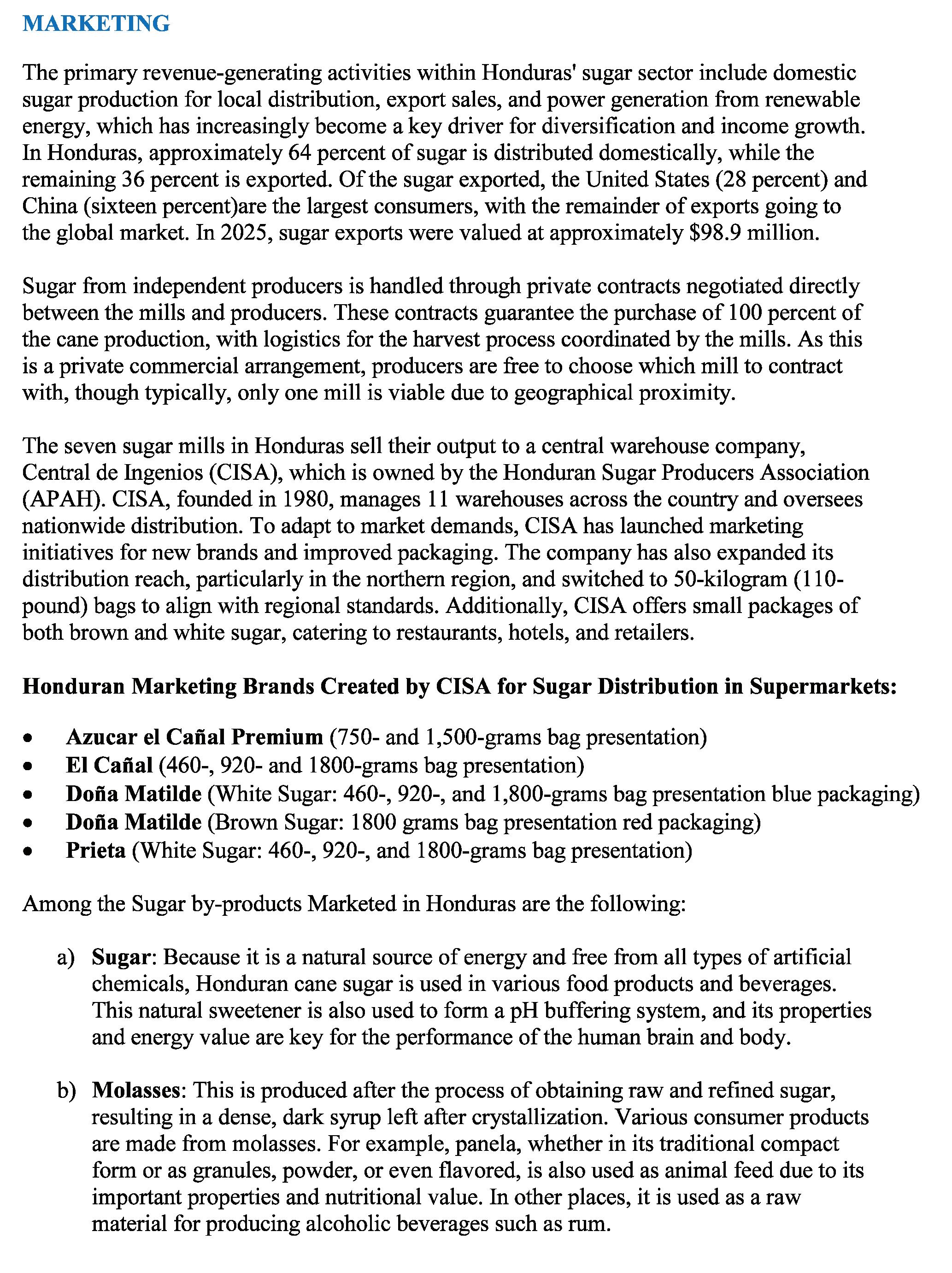
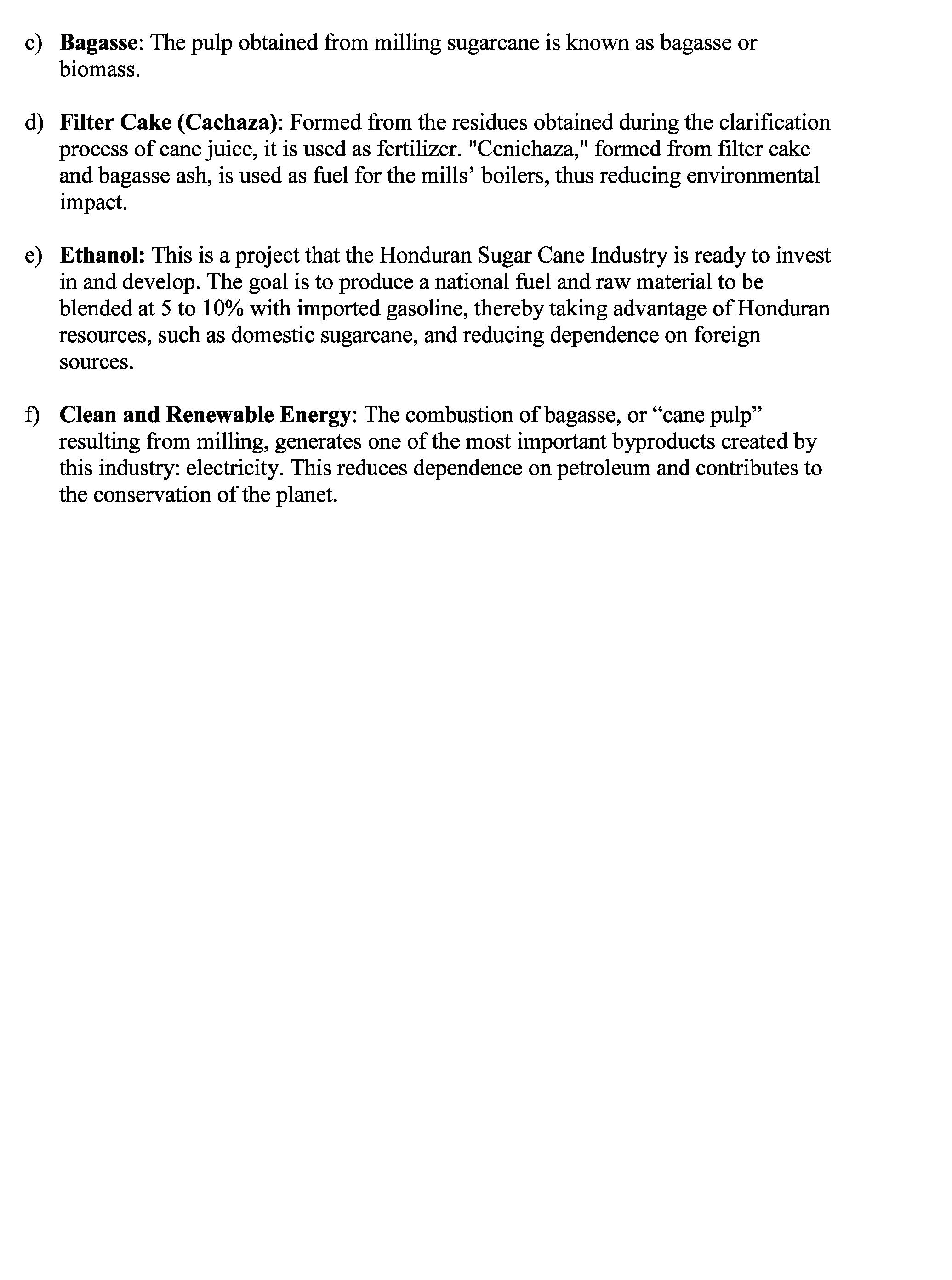
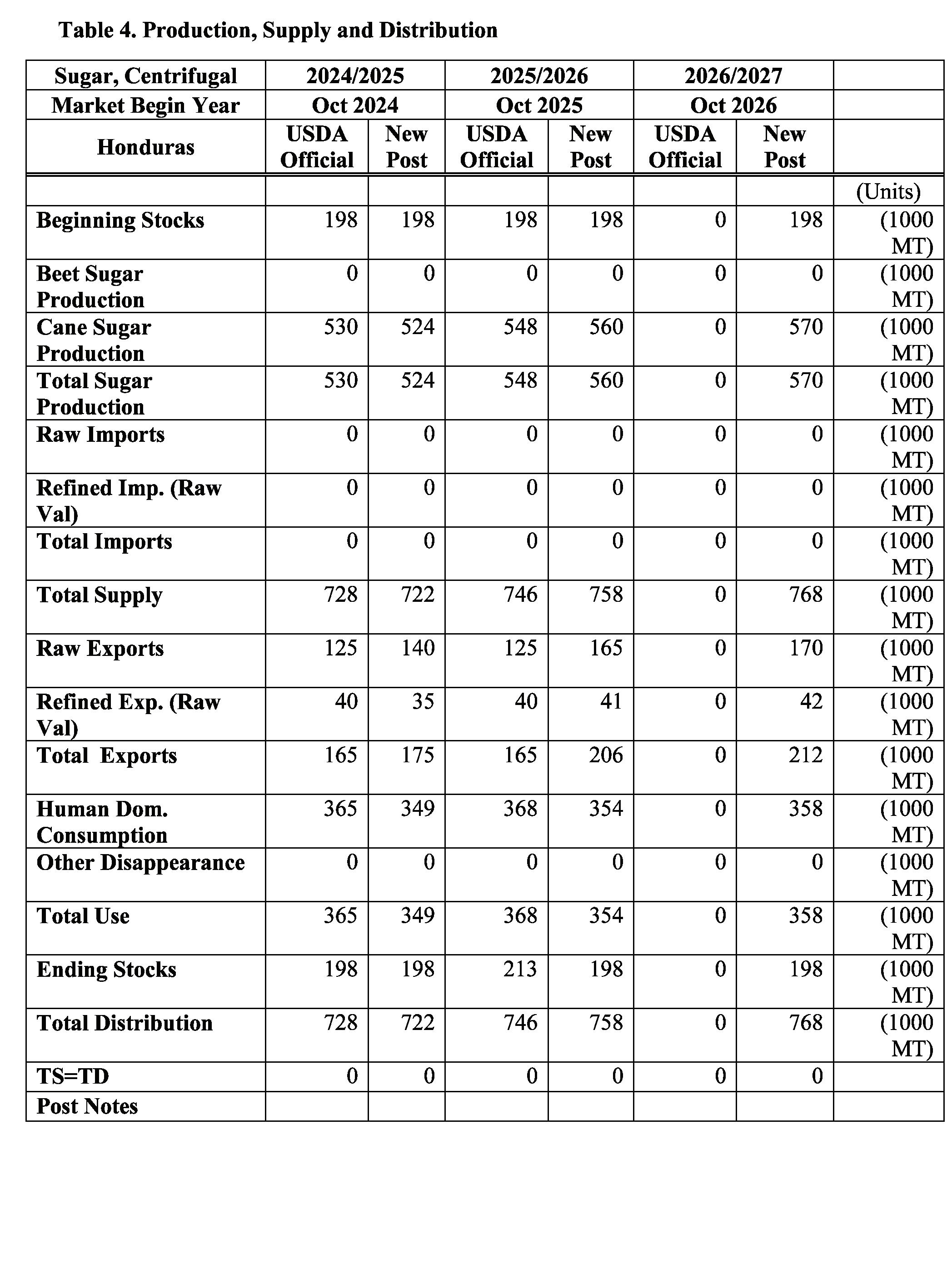
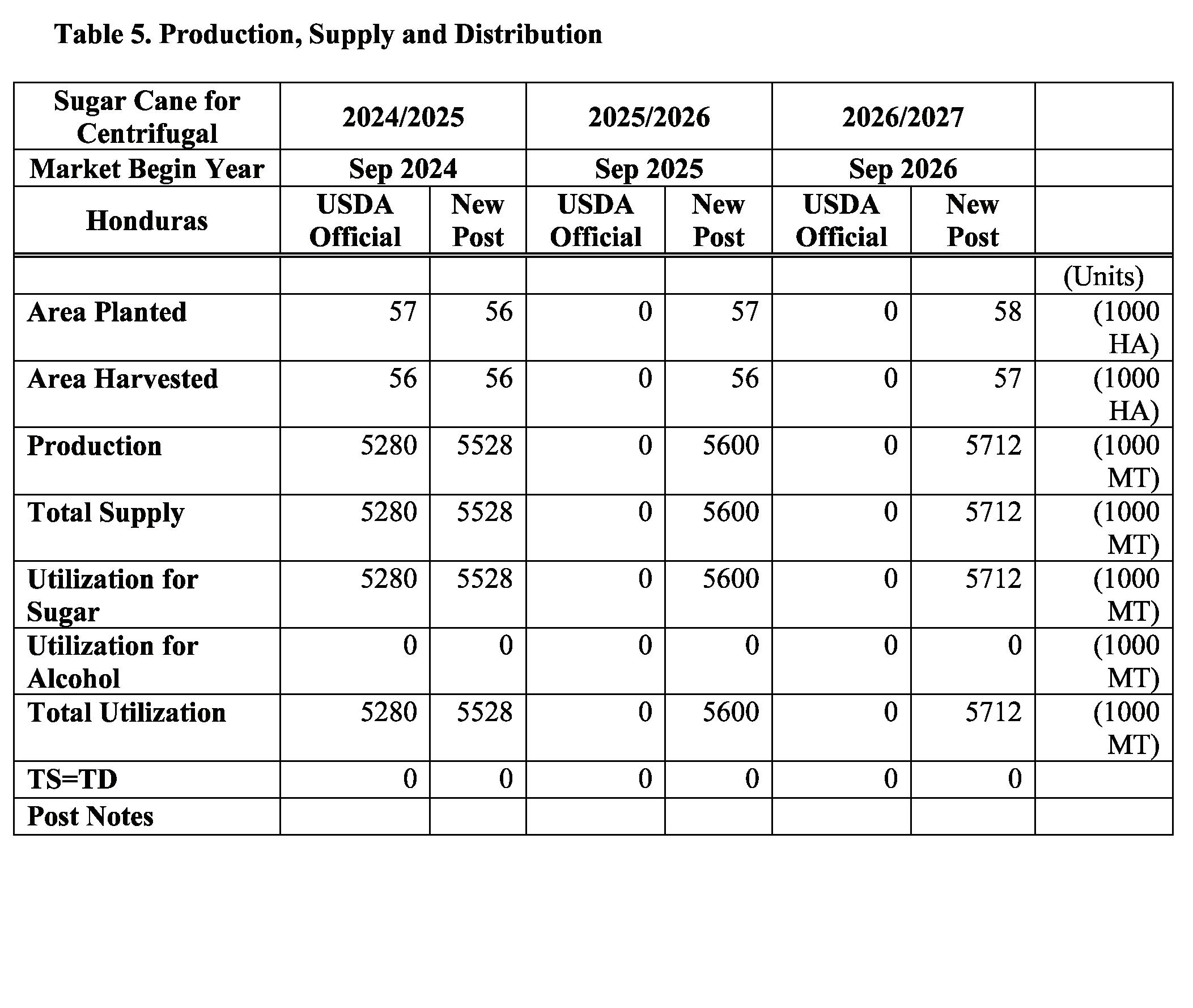
g ot r um? July 2026 - 52



Present
The History and Science of the Barrel
in the world of distilled spirits, nothing evokes elegance, sophistication and transformation more than barrel aging. The right barrels, in the right hands, can transform the mundane into the spectacular. whether it is American, French, Colombian, Bulgarian or other oak variety, a well-made barrel is the magic chamber within which time slowly transforms the contents.
Join us as we explore the world of barrels. we’ll take a deep dive into the physical and chemical transformations that take place inside the world’s preferred aging vessels.
The History and Science of the Barrel
Lesson 7: Components and Manufacture of the Barrel
welcome to Lesson 7 of 12 of the Rum University’s latest course! You can find previous lessons of this course by visiting the Archives page on www.gotrum. com, you can also find additional courses and material on the university’s official website at www.rumUniversity.com. from stave
to Barrel
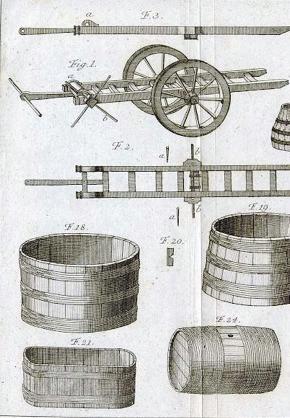
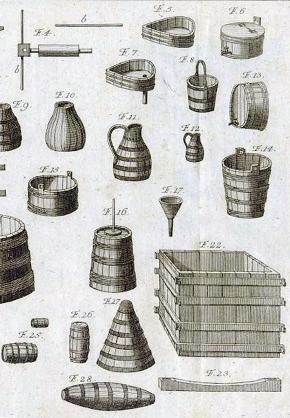
oak staves were traditionally shaped entirely by hand, each piece carefully cut and formed individually and painstakingly put together to produce a true piece of functional art.
As time passed, special hand tools were invented to aide in the process, but it wasn’t until the industrial revolution that coopers turned to power tools and mechanization.
Today most of the staves are prepared by machines that allow companies to create hundreds of barrels per day, instead of only a couple of them per week.

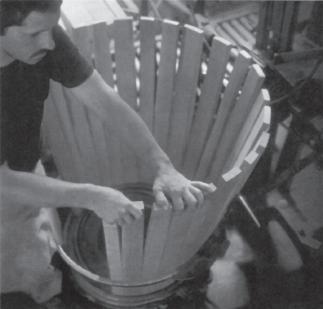
The process of putting together the barrels is known in the industry as “barrel raising.” it begins with the selection of the bung stave (a wide stave), followed by alternating staves of narrow, medium and wide widths, until there are enough staves to complete the circumference of the barrel. A large iron hoop keeps the staves in place as the barrel is moved to the stave bending area.
Bending can be done either using fire (most common method) or water. The purpose of the bending process is to soften the wood staves so they can be molded into the shape of the barrel. once the staves have been bent into shape, the barrel is toasted (this will be discussed
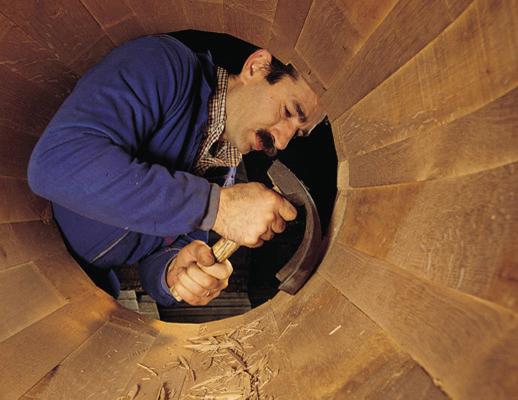
A master crafter carving the “croze” in a barrel, v iña Tondonia, s pain.
Parts of the Barrel:
1. h ead
2. h ead h oop
3. Chime (staves that protrude past the heads)
4. Quarter h oop
5. Bilge h oop
6. s tave
7. s tave Joint
8. Bilge (widest part of cask)
9. Bung h ole
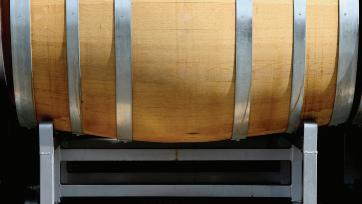
n ote: the typical Americal oak barrel (shown here) has only 6 hoops, while French barrels have 2 additional “French h oops” for a total of 8.
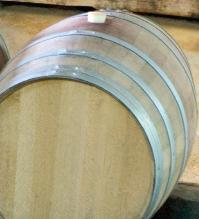
in greater detail in lesson 8) and aligned either manually or by machine prior to the cutting of the grooves (known as crozes) at each end of the barrel to help keep the heads in place.
The heads, which make up about 25% of the inner surface of the barrel, are also toasted (or charred) prior to being added to the rest of the body of the barrel.
once the barrels have cooled down completely, they receive their permanent hoops (until now the staves have been kept together using temporary steel hoops) and are inspected visually and physically for leaks.
Our special thanks to Independent Stave Company for their support in our research of oak.
Components of an oak barrel
cigar & r U m P airing
by Philip i li Barake


my name is Philip i li Barake, s ommelier by trade. As a result of working with selected restaurants and wine producers in Chile, i started developing a passion for distilled spirits and cigars. As part of my most recent job, i had the opportunity to visit many Central American countries, as well as, rum distilleries and tobacco growers.
But my passion for spirits and cigars did not end there; in 2010 i had the honor of representing Chile at the i nternational Cigar s ommelier Competition, where i won first place, becoming the first s outh American to ever achieve that feat.
n ow i face the challenge of impressing the readers of “ g ot r um?” with what is perhaps the toughest task for a s ommelier: discussing pairings while being well aware that there are as many individual preferences as there are rums and cigars in the world.
i believe a pairing is an experience that should not be limited to only two products;
2026 it is something that can be incorporated into our lives. i hope to help our readers discover and appreciate the pleasure of trying new things (or experiencing known things in new ways).
Philip # gr CigarPairing


f ather’s Day
This month’s pairing features a mixology and cigar event in celebration of Father’s d ay in Chile. i t took place in s antiago, at the Bar s iete n egronis in Providencia, this is the first Chilean bar to be included in the “50 Best Bars,” managed by “ o n Trip,” a tourism company that normally focuses its activities more around wine tastings, but they are now venturing into the world of cigars and distilled spirits. i know the owners of the establishment very well, they are very professional and are highly devoted to making every activity unique and special. The preparations began a week earlier, in order to have ample time to implement all the necessary changes. The plan was to feature a couple of their flagship cocktails and, if needed, make small tweaks to enhance their pairing the day of the event. i spoke with two of the partners (both named m atías) and mentioned some of the flavors that would enhance the experience and we decided how to honor rum with the main cocktail.
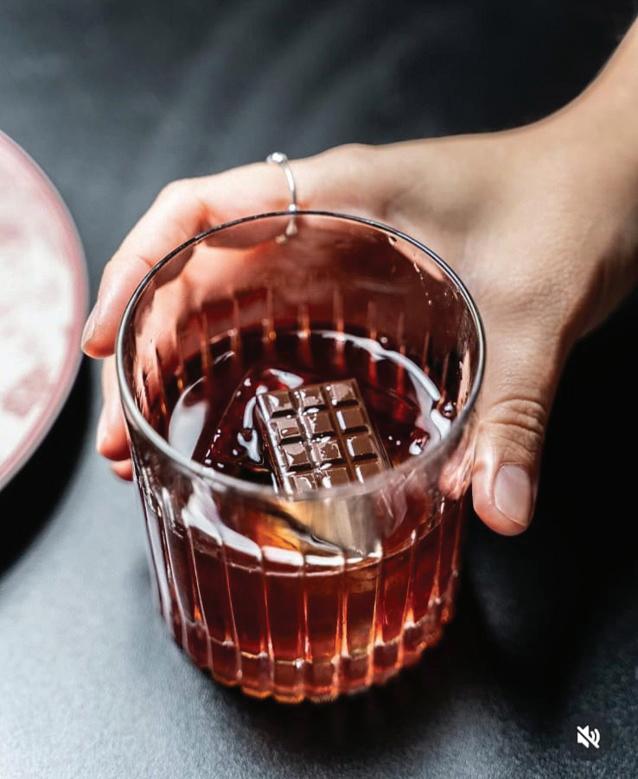
The first cocktail was one of the n egronis from their menu, named x ocolat n egroni. This is the cocktail we modified the most, starting with a base of r on Bacardi 8 Years o ld, infused in a thermal recirculator for three hours at 45C (113F), with French oak chips that were previously toasted in an oven for 20 minutes at 200C (400F). This is, obviously, a level or preparation beyond what average people can do at home, but i was surrounded by highly-skilled professionals and i had to take advantage of the situation. The r on Bacardi was further infused with bitter cocoa nibs, v ermouth r osso and r ed Bitters. As a finishing touch, the cocktail featured a chocolate perfumed with leather, reminiscent of the smell of a new leather jacket.
The second cocktail was a Tiramisu e spresso m artini, and it did not require any changes. i t represented a combination of two favorites of mine: the Tiramisu as a dessert and the e spresso m artini as a last drink of the day. At the core of the cocktail is a smooth Tiramisu that is made by combining g rey g oose v odka infused with m ascarpone, vanilla bean, fresh coffee and simple syrup. i t is

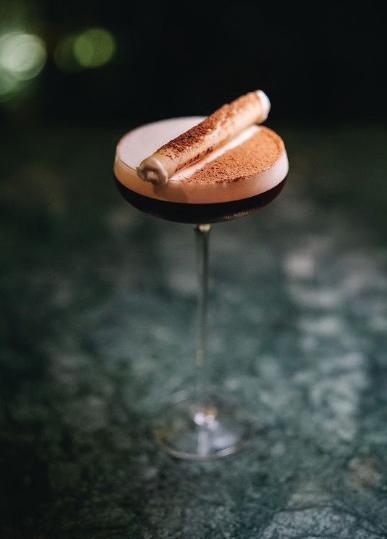
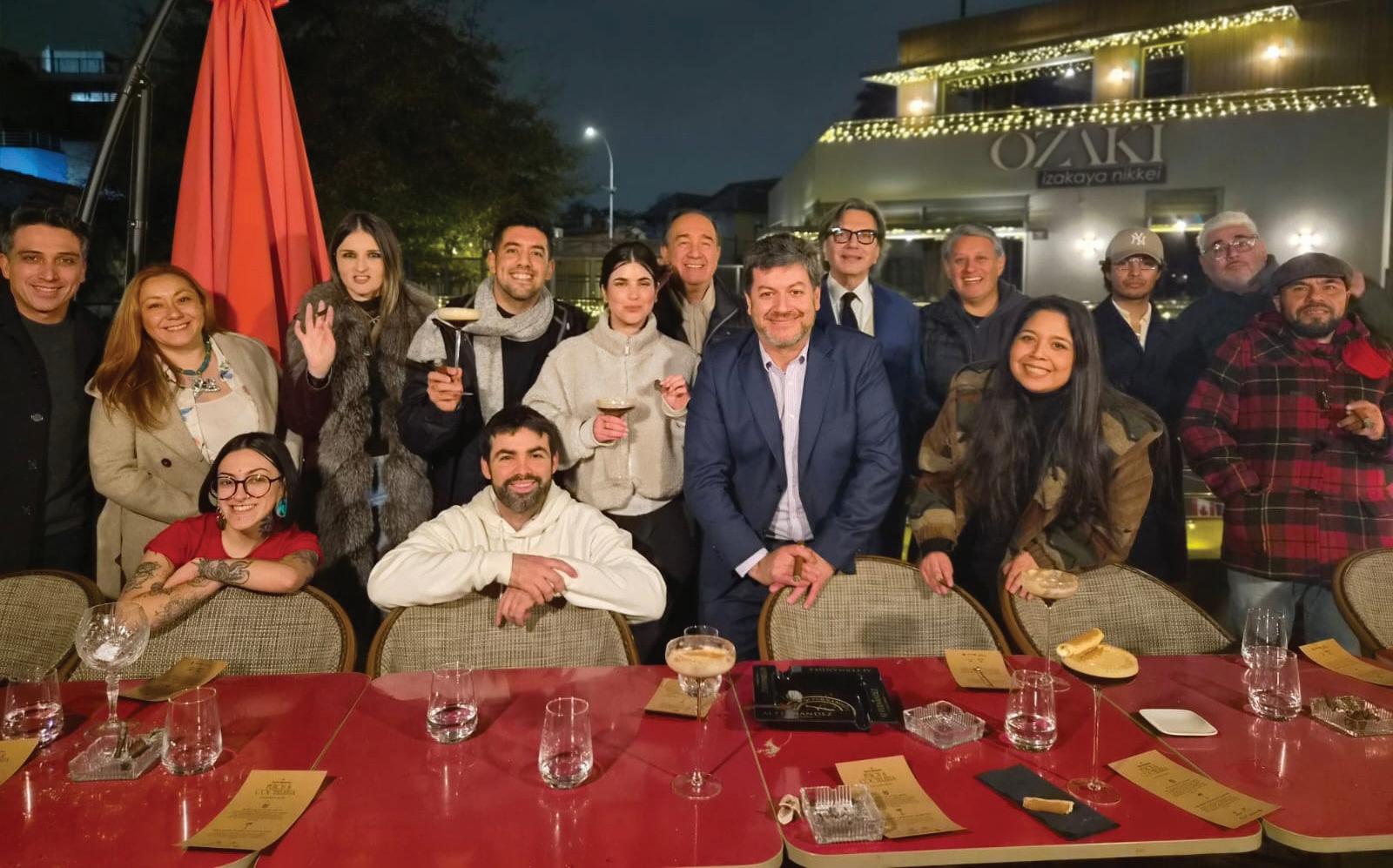
accompanied by a cannoli that is stuffed with real Tiramisu cream.
As you can see, the evening featured an exquisite cocktail menu. Now I’ll describe the cigar pairings, which was something very personal for each attendee. Like many other events of this caliber, the planning starts by identifying a theme, followed by the technical overview for the participants. In this case, the gathering was an activity for fathers and their adult children, where we couldn’t assume that everyone had the same level of understanding regarding drinks or cigars.
For the cigars, we presented a selection from Dominican Republic and from Nicaragua. The first ones from Fuller Cigar, a company that carries tobaccos from different origins, but mainly Dominican. We had Rigoletto, Traviatta and Otelo, all box pressed. The second ones were AJ Fernandez from Nicaragua, imported by Club Robusto, a company led by Anabel, who is recognized among cigar lovers in Chile as the Cuban Cigar Lady. The cigars were Last Call Habano and New World Oscuro.
The range of offerings allowed us to present different cigar intensities for each smoker, based on their experience and preference. This was perfect, as we had seasoned smokers, as well as newcomers to the world of cigars.
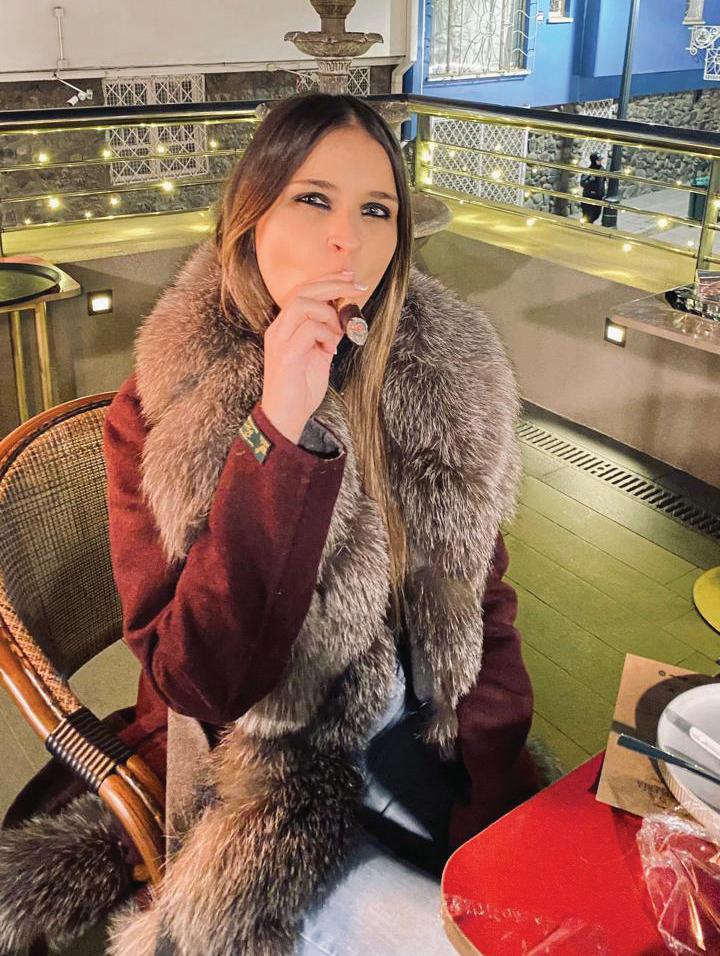
After each smoker selected their cigar, they paired it with the x ocolat n egroni. All the cigars, although different amongst themselves, had a smoking time between 30 and 40 minutes. The session started with each attendee lighting up their chosen cigar, the arrival of the cocktails followed shortly after. This allowed everyone to experience the cigar’s transition from the first third to the second third, accompanied by the first cocktail. The Tiramisu e spresso m artini arrived as everyone approached the last third of the cigar.
To avoid the potentially overwhelming intensity of the last third for the neophytes in the group, i also offered them a small d ominican puro, which had notes similar to those from the first third of the original cigars.
The pairing turned out exactly as we had planned it, it was an enjoyable setting for fathers and sons to share a unique experience. Following the pairing, we had a drawing for gifts and some lucky attendees went home with special gifts.
i really hope that there are more opportunities like this one, for fathers and sons to have these experiences under professional guidance, as they can create everlasting memories.
Philip i li Barake # gr CigarPairing