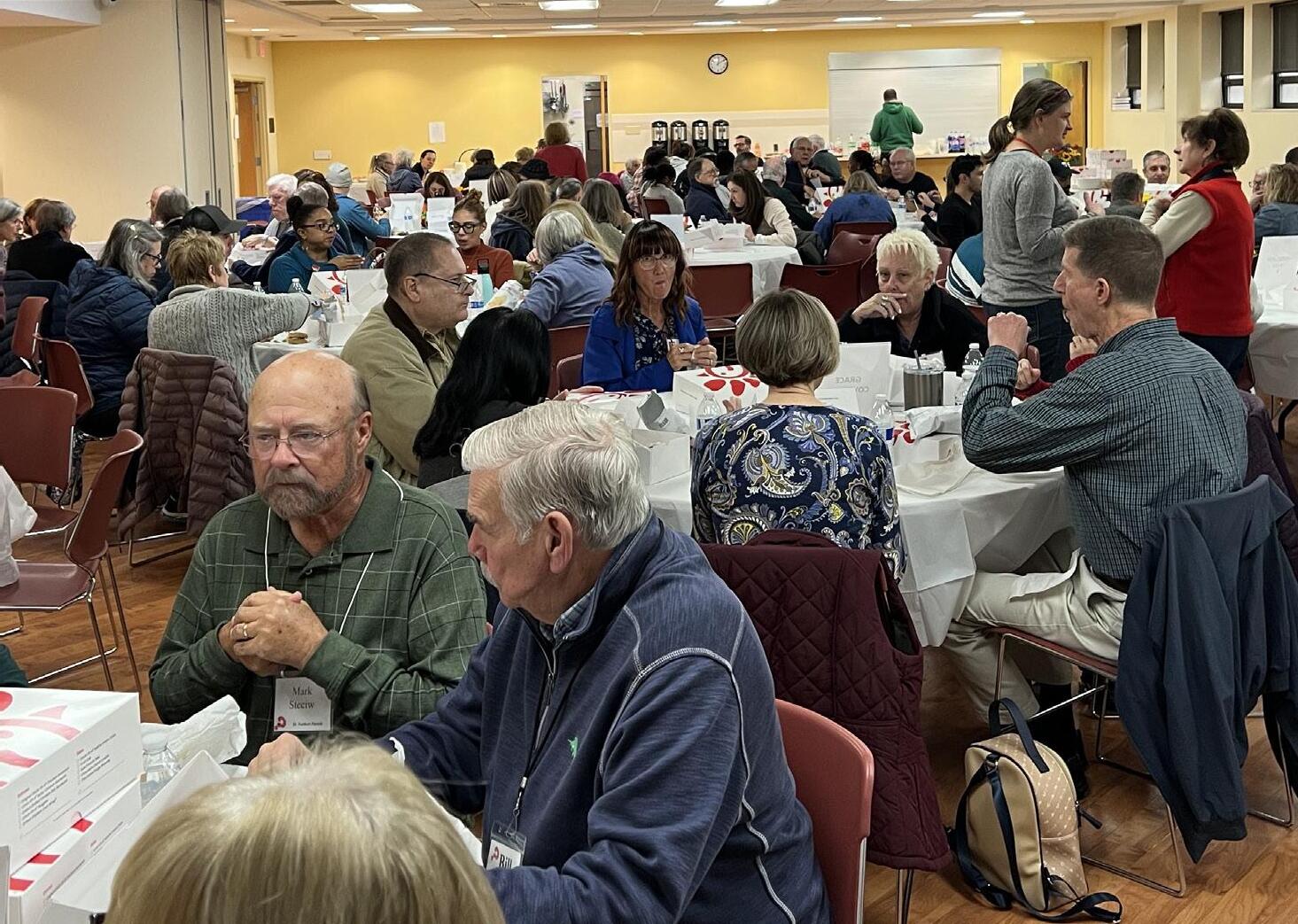
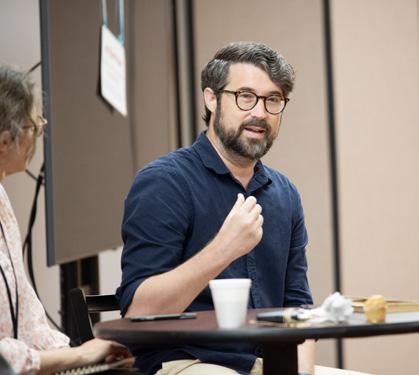
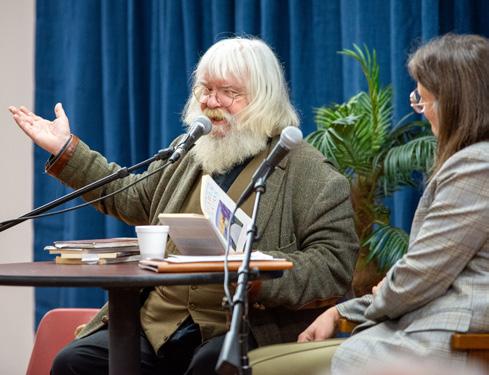
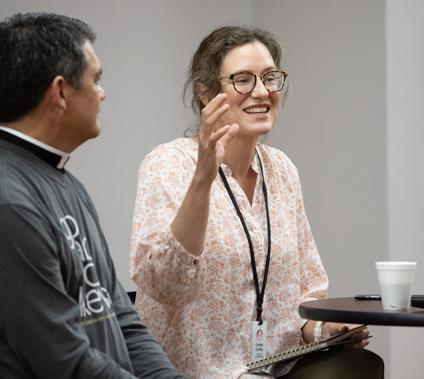
Alpha, and on this “day away” prayer is offered for each guest that they would be filled with the Holy Spirit. While the Holy Spirit is received at baptism, Fr Matthew knows that some who are Christians have never had that personal experience of being filled to overflowing with the Spirit of God. And when individuals are filled with the Spirit, churches can be transformed as well. This seems obvious, yet it surprised me. I have tended to hold evangelism at arm’s length by viewing it as an offering for those outside of the church, but in Alpha, evangelism takes its place at the center of the church and can even revitalize the church from within. The Church of the Good Samaritan has remained a faithful gathering, filled with the Holy Spirit, for so many years—due in part to all who have led and participated in Alpha.
I thought evangelism was for others, but now I know it is also for us. If a church is strong, then evangelism will be woven into the fabric of its life in ways that touch everyone and everything. Evangelism is for our joy. Evangelism is for our growth. And evangelism may even be for the life of the Holy Spirit in us. Alpha began for those within the church, but it grew to become a safe place for the questions being asked by those outside the church. But we all have questions. We are all in need of welcome. And we all deserve the chance to personally encounter Jesus and be filled with the Holy Spirit. Perhaps the next Alpha at The Church of the Good Samaritan is for your friend who is already having a conversation with God. You likely do not know this is happening, but God knows and God will nudge you in the right direction through prayer. But perhaps the next Alpha is for you. Maybe you have been in church your whole life but have never really met Jesus as if face-toface. Do you want to experience change in your life? Alpha is for anyone who doesn’t know Jesus, but Alpha is also for anyone who knows a lot about Jesus but has never really encountered him and been filled by his life-giving Spirit.
Alpha is for anyone who doesn’t know Jesus, but Alpha is also for anyone who knows a lot about Jesus but has never really encountered him and been filled by his life-giving Spirit.
a category line item we tick off with a program. Rather, by helping us help our neighbors encounter Jesus, we and they can be formed through the great questions and conversations Alpha helps facilitate. And through Alpha, everyone is given the chance to join the mission of the church. Thankfully, Alpha has a strong foundation at The Church of the Good Samaritan. As well, we give thanks that our long history of evangelism in the Alpha way is met in a new Vicar who has his own long history with Alpha. Fr Matthew has participated in Alpha for the entirety of his priestly ministry. He has been and will continue to be a good shepherd for anyone ready to take a seat at this table.
ALPHA AT GOOD SAM THIS FALL
Tuesday September 8
Worship Night & Launch
Tuesday September 22
Alpha Course Begins
There are many ways to be part of Alpha at Good Sam this year, whether by attending, praying, serving, or inviting a friend. Contact Fr Matthew Kozlowski to learn more.
Powered by prayer and pursued for joy, evangelism can permeate the life of the church like flowing water. But just like water that refreshes the household of God, evangelism doesn’t remain tucked up neatly in a jar. It isn’t
Several people I spoke with mentioned Adam as an especially gifted listener in his role as an Alpha Table Host. Perhaps, for that reason, I would love to give him the final word here. Adam told me that though he felt called to share his faith with others, he often struggled to put that faith into words. He well knows that trying to share the belief that is most important to us with another person is often met with polite dismissal or irritation. But Alpha, he told me, is very different. At Alpha, everyone shares and everyone listens: “We eat together, we pray together, we learn together, and each week the Spirit fills us.”
To learn about Alpha at Chester County Prison and ways to get involved with that growing ministry, contact Dina Gibson at dvag23@gmail.com.
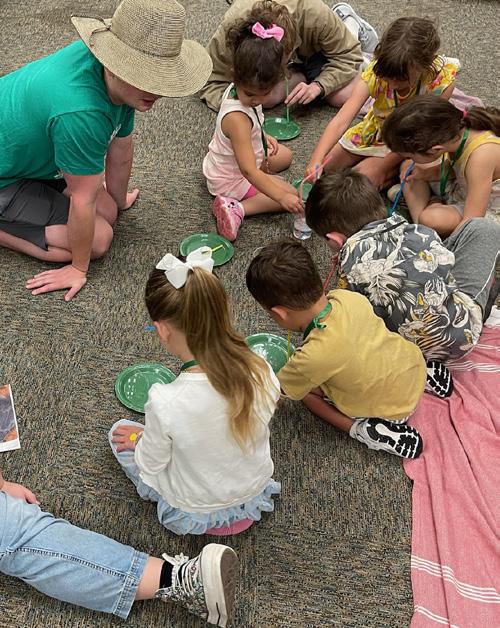
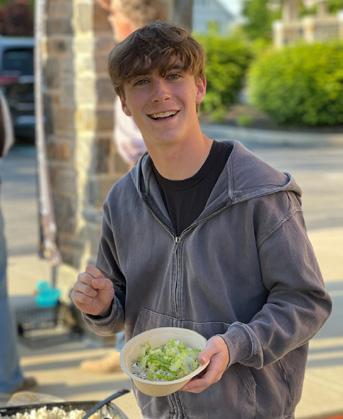
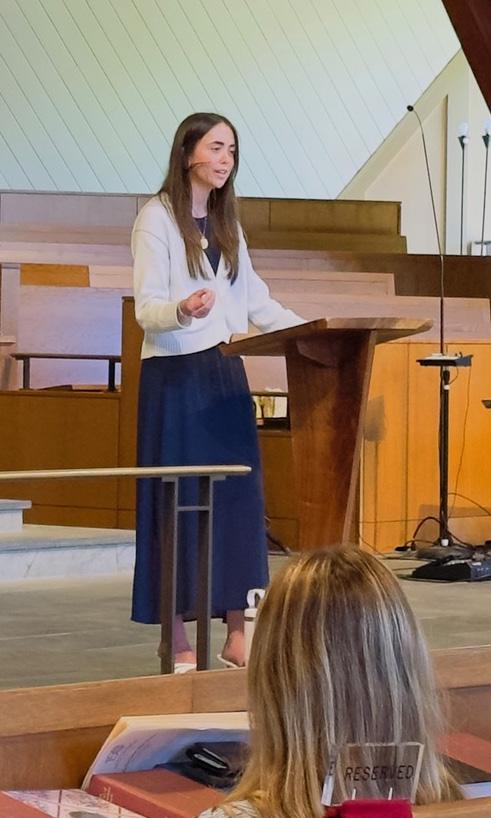
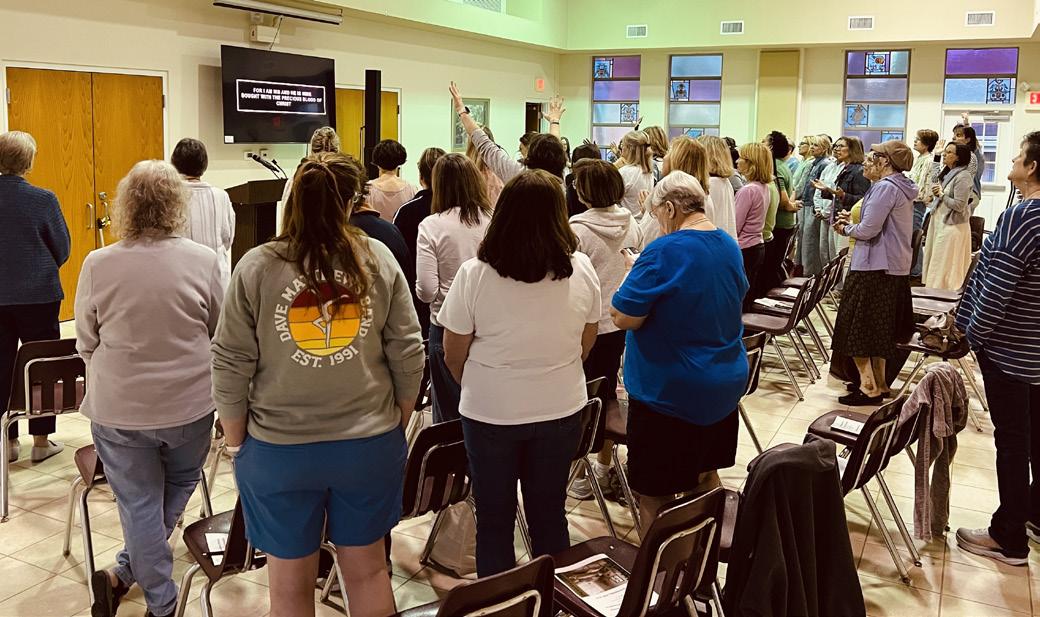
An Alpha Day Away at The Church of the Good Samaritan, November 2023
I remember so many of those twenty-minute conversations when Carol would ask, “What’d you learn tonight? How are you? How is your heart?”
God’s heart was not just taught to me; it was really demonstrated for me. That shaped my heart for missions and for other people: learning to see others the way God sees them, and learning to see myself the way God sees me. It meant recognizing that we’re all in the same boat, all struggling with many of the same things: self-worth, self-image, family struggles, relationship struggles. And in the midst of all of it, God is with us and loves us.
Now I lead a church in the most religious but least Christian state in the country, and I can trace all of that back to the seeds that were planted and the roots that have been spreading since my time at Good Sam.
What do you think is so important about youth missions?
That’s where we learn to see the world from new perspectives. I remember serving on the Standing Rock Reservation in North Dakota. One day at camp we were holding service in the chapel, and there were some guys who looked like they were sleeping. I went to tell them to “focus up,” and as I did I had to stop because I noticed there were tears in their eyes.
I asked, “Hey, what’s up? What’s going on?” They told me that just a few months prior, one of their friends had died of suicide. As a college student at the time, I had no idea what to do. I wasn’t equipped to handle that. But it was one of those moments where God really comes to life in your heart and mind and you find out it’s really true, what Jesus said: Don’t worry about what you’re going to say because I’m going to send the Spirit and he’s going to help you. I don’t remember what I said in that moment, but I do remember just sitting with these guys and crying over losing a friend. All I could do was be present. And, you know, even that connects to my ministry now—Utah has one of the highest rates of teen suicide in the country. God orchestrated that moment to equip me for a ministry I had no idea he was leading me into.
What has been meaningful about being a church planter and a missionary supported by your home church?
It’s been so meaningful to know there are people who have known me since I was born, who have seen me throughout my whole journey and now see me walking with God. They believe in me enough to support what God is doing in and through me. It gives me peace to know that the church I grew up in is healthy and still committed to generously supporting us, and that there are people who care about me and understand what I’m dealing with as we make disciples in Utah.
Can you share about the leadership development you received here at Good Sam?
Good Sam gave me countless opportunities to step up in leadership, whether it was serving as a VBS counselor-in-training in sixth grade, being on the drama team, or working as a youth group student leader with a group of middle school guys. I can trace a line through all of these opportunities that felt too big for me at the time. Serving as a drummer on a New Chapel worship team was one of them. I never thought I would be able to use that gift in the church, and it became such a fun way to serve and grow in my own musicianship. That experience launched me into many different worship leadership roles over the last 15 – 20 years.
I’ll never forget a moment from our spring retreat in eighth grade. After the worship session, speaker, and prayer time, I was weeping. As I was walking out of the room, one of the speakers pulled me aside, looked me in the eye, and told me, “God has made you to be a leader.” I said, “Do you know me? I’m one of the youngest kids here. I don’t really know anything about anything.” And he said, “No, God has made you to be a leader.” I’m sure he said more, but that’s what stuck with me.
It took years to discern what that meant. I experienced some trial and error in different church roles, a brief career in insurance, and then a ministry role that was not a great fit. But the church that hosted that retreat eventually became our sending church to plant in Utah. Looking back, I can see how God has been faithful through the years. I felt like a young David: small, nothing particularly special to look at. But God chooses to work through people like that—people like David, people like me.
So, you named your church Neighborhood Church, and you took that name from the same text Good Sam did. Let’s talk about the Parable of the Good Samaritan and what it means to be a good neighbor.
Jesus describes someone who is hurt—injured, broken, bleeding, falling apart on the side of the road. Then the one unexpected person becomes the hero of the story. It’s true that everyone is our neighbor, even someone on the other side of the world whom, conveniently, I’ve never met. But the point of the parable is that the person right across the street from us is our neighbor too, whoever it is. It can be a lot harder to love the people we rub shoulders with every day, the people with whom we may not necessarily see eye-to-eye. But wherever we find ourselves—at the grocery store, the park where we take our kids, the gym, or at work—our neighbor is the person right in front of us who’s in need. That’s what Good Sam has always been about, and now that’s what Neighborhood Church is about too.
For us, the word “neighborhood” doesn’t just refer to place. It also refers to a role, like motherhood or fatherhood. We are living out our neighborhood with the people around us every day. That’s who we are.
PROFILES
Meet Joe Davis
BY JACK FRANICEVICH, DIRECTOR OF CHRISTIAN FORMATION
It’s great to have you here, Joe. Tell us a bit about yourself.
I grew up just outside Media, Pennsylvania, as the oldest of seven kids, and I’ve lived in Delaware and Chester Counties ever since.
I studied mechanical engineering at Penn State, but a software internship changed my direction. I ended up loving the speed, the innovation, and the meritocracy of the software world, so I made the switch when I graduated. I’ve focused my professional career on working for startups, and recently I’ve started my own company with my best friend.
Outside work, my active hobbies include training with gymnastics rings, playing flag football in a league with my siblings, and rock climbing. Intellectually, I’m interested in history and untangling church movements to understand our current culture.
You recently became a member at Good Sam. How’d you find us, and what about our life and worship has resonated with you?
I grew up in non-denominational circles, but as I got older I felt like church was lacking. I began to desire rootedness in the Great Tradition—to feel like I could really join in the company of all the saints. Good Sam seemed like a place where the ancient and the new could meet: reverent toward what came before, but open to new forms of worship.
What I remember from my first visits to Good Sam was the reverence for the Eucharist. It felt real and grounding. If trying times came during the week, I had something concrete to return to, something that had actually happened, not just a feeling I was trying to hold onto. The Lord gave himself for me, and I am part of his body. This participation has given me a new, stable, and grounded peace.
I’ve also really enjoyed the Adult Ed classes. They’re deep and respectful; they capture the best parts of higher education, where the participants are all genuinely pursuing Truth and contributing to the conversation.
This issue of The Samaritan is focused on evangelism and the “good news.” What good has God done for you lately?
I recently got my own copy of the Book of Common Prayer. I’ve appreciated learning how to pray Scripture. I’ve been letting the words of Scripture slowly and organically shape my thoughts, instead of letting my thoughts overly shape my prayers. That daily practice has kept me grounded, even when other things in life have gone sideways.
Let’s talk about hope. What are your hopes for Good Sam, and what does it look like to practice hope together in a world that’s aching with despair?
I think practicing hope is about enjoying God and appreciating his beauty. Beauty gives us a glimpse into the new heaven and the new earth. Coming back to the same table each week keeps us connected to one another and wards off despair. That’s why I love Good Sam’s services: we appreciate the beauty and depth of Christ’s sacrifice every week, and it lifts the soul.
“I’ve been letting the words of Scripture slowly and organically shape my thoughts, instead of letting my thoughts overly shape my prayers.”
JOE DAVIS
EVANGELISM IN AN AGE OF DESPAIR
BY DR ANDREW ROOT, GUEST WRITER
For many of the evangelicals who have joined Episcopal churches, evangelism is a relic of evangelicalism Sharing the gospel came to feel like a sales technique, a reduction of people to projects, or an oversimplified approach to the complexities of life.
Dr Andrew Root (Andy) teaches on the theology of ministry, youth ministry, and culture at Luther Seminary in St Paul, Minnesota and is a friend of Good Sam through parishioner Jonathan Hobbs. Andy sees this decline of interest in evangelism among American Protestants. But he also has a vision—rooted in the incarnational, sacramental imagination of our tradition—for a new approach to evangelism. In a word, it’s simply “by joining sorrow.” This excerpt comes from Andy’s 2025 book, Evangelism in an Age of Despair: Hope Beyond the Failed Promise of Happiness, and is reproduced here with permission from Baker Academic.
Evangelism has become American Protestantism’s schmole. In the parlance of slang, a “schmole” is a friend, or core part of your group or crew, who is an obnoxious downer who you don’t really want around.
But the schmole comes with the group. The group has not figured out how to rid itself of the obnoxious and embarrassing schmole. The group knows or senses that, in the end, it needs the schmole—maybe for the schmole’s energy but more so for the schmole’s car or access to the pool.
Evangelism is the schmole of American Protestantism. Evangelism is assumed to be a bit obnoxious and annoying and more than a little embarrassing—even a potentially dangerous downer if we’re not careful. Mainline and exiled evangelical Protestants worry that if they give evangelism too much focus, evangelism will potentially ruin things, violating ethical and cultural sensibilities. But these Protestants, while mostly
uncomfortable with and wanting to ignore evangelism, sense that they need evangelism. Evangelism can’t just be kicked out of the crew! Hence, American Protestantism’s soft openness to evangelism.
Yet even with this soft openness to evangelism, most would agree that evangelism has little traction in the discussions, let alone practices, of American Protestants. Evangelism is the schmole, after all. Evangelism is kept around, though banished to the fringes, because we think we might need evangelism, even if we’re embarrassed by it. After all, evangelism might be necessary in helping us beat back decline and the need for lifestyle marketing. Evangelism is justified for its instrumental function. It’s a tool (and to add another layer of slang, a schmole is always a tool).
This (tacit) assumption shows that our conceptions of evangelism have been almost completely hollowed out. Evangelism has become shrouded in immanence, or
stuck in the tangible, because evangelism is assumed to be a tool to gain things that can be counted. Mainline and exiled evangelicals may not count souls converted, as classic conservative Protestants do, but they nonetheless count. They’re not counting who is praying the sinner’s prayer, but they count how much their soft evangelism wins them reach, quantified by the number of new members and the amount of likes (which is a direct sign of brand uptake).
Focusing on the immanent and quantifiable affords little to no sacramental sense to our visions and practices of evangelism. There is little grasp of how evangelism witnesses to, and joins, the infinite’s participation in the finite. Little concern with how evangelism testifies to a reality—to a world as a whole— that is sacramental in nature. Our lives in the world are the very place where God comes to and shares in. Theologians call this “sacramental ontology.” The sacraments themselves, such as bread and wine, witness that the infinite God shares in our finite bodies in the world, joining us in finite elements. The world is a place where the infinite and finite commune. How evangelism invites others into this event of communion has not much been explored. The shell that remains of evangelism is almost completely immanent, with little to no inbreaking transcendent quality. Evangelism’s value contributes only to the finite plane (more people will come, giving will go up, relevance will increase, institutional fragility will be reversed).
This book explores how evangelism invites participation in the life of God. We participate in the life of God through the work of the Spirit. The Spirit leads us to hear the voice of the living Christ calling us to follow. This following takes us into sacramental participation as the concrete invitation to join another’s sorrow. Where Jesus calls us to follow is to the cross (Matt 16. 24 – 25), which is to concretely enter the sorrow of our neighbor and give the ministry of consolation. This, I’ll show, is both to do evangelism and to be evangelized.
To turn to consolation as the shape of evangelism is to let go of all seeking for control and instead to embrace encounter.
But there are risks that come with getting free from being locked solely on this finite plane and placing evangelism on the ground of a sacramental ontology. Inside this more mystical (or even liturgical) spirituality of divine and human— infinite and finite—union, evangelism risks becoming abstract and disconnected from the concrete lives of [real] people. Trying to place evangelism on the ground of a sacramental ontology—onto a place where the divine truly encounters the human—runs the danger of losing the practical nature of evangelism, which is the only thing keeping the schmole in the crew. If this abstract anti-practicality prevails, what’s the point of keeping evangelism around at all? This danger of abstraction from our concrete lives casts suspicion on an evangelism that is bound in something other than the immanent and instrumental.
But this shouldn’t be. Attending to the sacramental shape of divine and human encounter in evangelism should not lead us away from the concrete and practical lives of [real people]. Nor should focusing on the practical turn evangelism into a schmoley tool for crass gains. But how do we keep this two-headed monster of a problem from chomping? How do we imagine evangelism as sacramental without losing evangelism’s practicality and concreteness?
The answer is by joining sorrow.
Ultimately, we’ll see in the chapters that follow how this sacramental sense of evangelism is bound to consolation. Evangelism as consolation not only rests on a sacramental ontology but, in turn, avoids the triumphalism of some Protestant forms of evangelism, and it altogether avoids instrumentalization (a sense that all our relationships and connections must produce means and values that are more than the relationship itself). Evangelism shaped by consolation as a true sharing in the sorrow of our neighbor cannot be instrumentalized, and thereby it keeps its integrity. To enter sorrow (even the sorrows of joy, as we’ll explore) as the sacramental embodying of the good news is to release our grip of control (instrumentalization is always a form of control). Evangelism, seen through consolation, is not bound in what we do but in who we can be for our neighbor and how we can be with them. Period. To console is never to control another but instead to share in their sorrow, contending that sharing is enough. Sharing itself is the place where the infinite encounters the finite. The great temptation of evangelism is control, imagining that evangelism is the way to get control of decline or lost relevance (or new land or political power). To turn to consolation as the shape of evangelism is to let go of all seeking for control and instead to embrace encounter.
If we look, we can spot the centrality of consolation in theologians throughout the tradition. Not surprisingly, the theologians who recognize the centrality of consolation (entering another’s sorrow) as the gift of inviting another into the divine life have been pastors as much as theologians (or their pastoral concerns turned them into groundbreaking theologians). For [these theologians], consolation—walking into and joining sorrow—is the deepest witness to the beautiful truth that God sacramentally enters death to bring life. We receive the evangel (the good news) of God’s redemption of the finite in the life of the infinite by concretely and practically consoling our neighbor in their sorrow. (Consider that the greatest novels, paintings, songs, and poems—those that really move us—have sorrow at their center. There is a sacramental reality that can only be touched through sorrow.) Walking into sorrow is the evangelistic shape of a church that is inviting its neighbors to share in the place where the divine shares in the human, turning death into life, bringing the world back together.
RELATIONAL EVANGELISM AND THE NEXT GENERATION
BY JESSICA CAMPBELL, DIRECTOR OF STUDENT MINISTRY
Brady Shearer recently discussed why people leave churches on his podcast, Pro Church Tools. In the episode “Why Young People Leave Churches,” he noted that PRRI and Pew, two of the largest religion research organizations in America, independently asked more than 80,000 respondents the same question: “Why are you actually leaving the church?” Despite conducting separate studies, they arrived at the same conclusion. According to surveys conducted in 2024 and 2025, the number one reason people leave church is simple: they stop believing. That answer appeared more often than any other factor and, according to Pew, has steadily increased from 2016 to 2024.
Shearer argues this matters because it reframes where church leaders often place their energy. Better music, stronger sermons, outreach events, small groups, or adult programming alone will not stem the flow.
There is much to explore here, especially the reality that most departures happen through drift rather than drama. The majority of people who leave churches do so quietly. They describe their loss of faith less as one decisive event and more as a gradual fading away (Pew, 2025). Paying attention when someone moves from weekly attendance to monthly attendance may ultimately matter more than worrying about the occasional email complaining the music is too loud.
But perhaps the most staggering finding is this: childhood experience is the strongest
predictor of whether someone remains committed to Jesus as an adult. According to Pew (December 2025), 84 percent of adults who described their childhood religious experience as mostly positive still identify with their childhood faith today. Among those who described it as mostly negative, only 24 percent remained. Nearly seven in ten of those with negative experiences now identify as “nones,” meaning they claim no religious affiliation at all.
Why are we talking about church attendance and people leaving the Christian faith in a magazine issue focused on evangelism, bringing people to faith? Because the data consistently suggests that evangelism is most effective before the age of 18 and least effective after the age of 30. Churches that focus most of their outreach energy on adults will often find themselves discouraged by the results. Evangelism among children, youth, and young adults should be on the radar of every Christian and every Christian minister. Pew found that 85 percent of all religious switching happens before age 30, while nearly half, 46 percent, takes place during childhood or the teenage years before adulthood even begins. Over the last two decades, multiple studies have pointed to what is often called the “4 –14 Window,” the period in which people appear most open to religious commitment. Depending on the study, 50 – 65 percent of Christians say they first made a commitment to Jesus during those years. The pattern remains remarkably consistent across organizations and traditions. Between 65 – 85 percent of adults who remain committed to Jesus first entered the life of faith before age 18, while 85 – 95 percent did so before age 30. Studies from Barna, Pew, PRRI, Fuller, several denominations, and other research groups all point in the same direction: only 5 –15 percent come to faith for the first time after the age of 30. The language varies across traditions, but the underlying reality is similar. Evangelicals may speak of a “first-time commitment to Jesus,” while liturgical traditions might describe “confirmation” or “owning my faith.” The wording changes, but the pattern does not.
If you are passionate about evangelism, serve your church through children’s, youth, or young adult ministry. Arguments about not “relating” to younger people, having already “served your time” when your own children were young, or feeling more useful elsewhere on Sunday mornings become difficult to defend when set alongside the data. We cannot sincerely say that we want the world to know Jesus while functionally ignoring people
reimagining apologetics
BY DR JUSTIN BAILEY, GUEST WRITER
Apologetics has traditionally meant defending Christianity with arguments—demonstrating that belief in God is rational and intellectually credible. Yet many Christians today find themselves strangely unmoved by such defenses, and even weary of them. The reason, suggests Dr Justin Bailey, Dean of Chapel and Professor of Theology at Dordt University, is that doubt rarely begins in the intellect: “Crises of faith and doubt are not experienced in the intellect, but in the imagination. We feel the narrowness of faith before we reject it.”
Dr Bailey doesn’t recommend we move on from apologetics, but that we reimagine apologetics in a way that takes the imagination seriously. What follows is an excerpt from his 2020 book, from IVP Academic, Reimagining Apologetics: The Beauty of Faith in a Secular Age.
Imaginative apologetics is not new; it predates modern secularity. Recall Pascal’s famous prescription: “Men despise religion. They hate it and are afraid it may be true. The cure for this is first to show that religion is not contrary to reason, but worthy of reverence and respect. Next make it attractive, make good men wish it were true, and then show that it is.” For Pascal, the demonstration of faith’s beauty precedes the demonstration of faith’s verity, even if the demonstration of faith’s rationality precedes both.
But what has changed with our current situation is that the aesthetic dimension has become “the way into” rationality. The two obstacles are related: part of the unattractiveness of Christianity is the (often-warranted) caricature that it is irrational and anti-intellectual. But caricatures are imaginative construals, and pictures have incredible power to hold us captive. Freedom may be found in painting a better and more beautiful picture. If a person can picture a resonant life of faith, she can begin to entertain the possibility of its rationality and its connection to reality.
Pascal’s example remains instructive. Pascal’s strategy was to make people “wish it were true” by paying attention to the negative space, the vacuum created by alienation from God. This has been called “the apologetics of despair.” According to Lee Hardy, it seeks to “push the assumptions of the secular worldview to the point where that worldview becomes untenable, to trace out the logic of atheism to its bitter and presumably unacceptable conclusions, thereby creating a new openness to the hope of the Gospel.” Despair, of course, is not the ultimate goal. The ultimate goal is to puncture human hubris, creating space for a humility that is open to divine address.
My proposal operates in a similar register as the apologetics of despair. It is sensitive to existential implications—the felt sense of a worldview— and it seeks to provoke rather than to prove. But rather than seeking to surface the weaknesses of a rival worldview, I want to move in the opposite
direction. I want to explore aesthetic sensibilities and to situate desire within a broader theodramatic context. I want to water the best imaginative impulses and to provide them a more fertile, transcendent ground.
Thus, the project of reimagining apologetics is a move toward the apologetics of hope rather than despair. The two apologetic strategies are not necessarily in competition. For some skeptics, an apologetic of despair may be necessary to clear the way for hope. Despair can expose pretensions of objectivity, deflate narratives of enlightened maturity, and undermine humanistic confidence. But without corresponding engagement with hopes and desires, an apologetic of despair runs the risk of leveling in order to build, rather than attending to the ways that God is already at work. Instead of starting with our existential angst caused by our finitude and fallenness, hope moves forward on the conviction of the original goodness of creation and human creativity. It does not ignore fallenness but seeks the renewing power of the Spirit to heal creation.
When I speak of the apologetics of hope, I mean it in at least three ways. First, hope identifies the existential register of my argument. To explore a person’s hopes and imaginings is to place the conversation in the realm of desire, the aesthetic realm, where the felt experience of meaning is most important.
Second, hope signifies the scope of my apologetic aims. What I have proposed in this book is an imaginatively inflected exploration of the argument from desire: that our desires are not delusions but are responsive to the provocations of God’s active presence. As [Marilynne] Robinson writes, “We are a part of this ultimate reality and by nature we participate in eternal things—justice, truth, compassion, love. We have a vision of these things we have not arrived at by reason, have rarely learned from experience, have not found in history. We feel the lack. Hope leads us toward them.”
Similarly, Avery Dulles notes that the very idea of hope compels us to inquire as to its ground: “An apologetics of hope might be expected to establish two propositions: first, that it is fitting and proper for man always to hope and never to despair, and secondly, that Christianity sustains the type of hope that it is good for man to have. Of itself this argument does not prove that Christianity is true, but it provides strong reasons for taking the Christian message seriously.” My aim is not to prove Christianity’s truth but to provide a provocation for its ground of hope seriously, appealing to the gospel’s resonance, beauty, and generativity.
structure, the right of subcreation “has not decayed. We make still by the law in which we’re made.” It is the goodness of creation and human creativity that God seeks to renew through Son and Spirit. We should expect human desire, drawn out by the imagination, as well as the products and practices that desire produces to be sites of God’s active presence.
The apologetics of hope seeks to explore the experience of presence in creation and creativity, inviting seekers to consider whether the presence might have a transcendent source and a personal name. It seeks the source of our imaginative longings as well as a larger context in which these musings can be explored, deepened, negotiated, and fulfilled…
The project of reimagining apologetics is a move toward the apologetics of hope rather than despair.
Finally, hope identifies the orienting posture of the Christian apologist: full of hope that God is present and active in the world, that God was in Christ reconciling the world to himself, and that the Holy Spirit is bringing creation to consummation. Apologetics, after all, has to do with speaking about hope (1 Peter 3. 15). In our contemporary situation it means doing so in response to the particular questions that are being asked.
A well-known example of an apologetic of hope can be seen in J.R.R. Tolkien’s poem Mythopoeia, which addressed then-atheist C.S. Lewis’ contention that “myths were lies and therefore worthless, even though ‘breathed through silver.’” Tolkien responded that although the desires of the human heart may be disordered, and the creative impulse misused, the power to dream, desire, and create is itself good. As part of our created
This brings me back to the beginning: the existential impulse for this book. The struggle to experience God in the midst of a secular age is one I resonate with both on a personal and a pastoral level. I have been deeply affected by the disenchantment that I have encountered in the churches where I have ministered, in the college students I now teach, and in my own experience of faith and doubt. I find myself increasingly dissatisfied with traditional apologetic strategies and have long been convinced that the imagination is in some way the missing piece. My professional work in general, and this book in particular, is guided by this conviction of the centrality of the imagination, even as I seek to establish with greater clarity what that might mean. In some ways, this book is my attempt to work out my own sense of hope in Christ, for the church, and for the world.
As long as there is faith, traditional apologetic argumentation will continue. But what is really needed in secular settings is the willingness to engage imaginations and not just intellects. The possibilities are exciting: what might it mean—for theologians, for pastors, and for the people in the pews—to reimagine apologetics?
Be Living Proof It takes time and practice to tell our story well
BY JONAH ROUIZEM, GUEST WRITER
The Christian life is about coming into ever-greater agreement with God on who he is, and who we are in him. Who God is, and who we are in his eyes, is an objective, unchanging Truth—regardless of what we happen to think about it.
A problem arises when we’re so familiar with Christian doctrine, that it stops challenging us in our identity. It’s very possible to know the Bible well and yet remain utterly unchanged by it. That’s why I love to mine something a bit more unusual, that helps us chew on the great Truth of who God is, and who we are in his sight—so that we can know how then we shall live.
One such passage, for me, is encapsulated in the first few verses of one of the most obscure texts of Scripture, Leviticus 14. I want to focus our attention on the first nine verses. Please read them carefully, asking yourself: what’s this teaching me about who I am, and what I am called to do as a Christian in this world?
The Lord spoke to Moses, saying, “This shall be the law of the leprous person for the day of his cleansing. He shall be brought to the priest, and the priest shall go out of the camp, and the priest shall look. Then, if the case of leprous disease is healed in the leprous person, the priest shall command them to take for him who is to be cleansed two live clean birds and cedarwood and scarlet yarn and hyssop. And the priest shall command them to kill one of the birds in an earthenware vessel over fresh water. He shall take the live bird with the cedarwood and the scarlet yarn and the hyssop, and dip them and the live bird in the blood of the bird that was killed over the fresh water. And he shall sprinkle it seven times on him who is to be cleansed of the leprous disease. Then he shall pronounce him clean and shall let the living bird go into the open field. And he who is to be cleansed shall wash his clothes and shave off all his
hair and bathe himself in water, and he shall be clean. And after that he may come into the camp but live outside his tent seven days. And on the seventh day he shall shave off all his hair from his head, his beard, and his eyebrows. He shall shave off all his hair, and then he shall wash his clothes and bathe his body in water, and he shall be clean.
In these foreign, obscure instructions, I find the entire gospel.
First, sin has a deep, deep impact, which lasts throughout our earthly life. Leprosy is a symbol for sin, its stain, its shame, its death. We’re the leper; we’re the sinner. Just like leprosy greatly impacts its carrier, so does sin greatly impact us.
Like leprosy, sin brings death in the deepest parts of us. That’s why cleansing is costly. We aren’t cleansed by inspiration, moral uplift, or happy thoughts. We aren’t cleansed because we feel cleansed. We aren’t cleansed because we come to church or perform rituals.
Second, this passage powerfully presents the gospel truth of substitutionary atonement: we’re cleansed because something (or someone) innocent dies in our place, and because we accept that substitution on our behalf.
The priest doesn’t use any blood for himself. The blood is entirely dedicated to the ex-leper; similarly, Jesus kept no life for himself. He became a clay vessel, like the one the bird is sacrificed in, at the Incarnation. Then he gave all his blood-life for our benefit at the Cross. Jesus, unlike the victim-bird, chose to offer his life for ours. May this astounding truth never dim its wonder in our sight.
There’s another bird in our passage. This bird should be Jesus, who was free to go; but he swapped places with us: he is cut off and we go free. He’s bound and we’re released into life, sprinkled with the blood of the Sacrificed.
Did you notice? Lepers have no say over their healing. That’s my third point: we cannot heal ourselves—only God can do that. Moreover, we cannot declare ourselves healed—
READING TEXTS A SECOND TIME
Where Adult Christian Formation is headed at Good Sam
BY JACK FRANICEVICH, DIRECTOR OF CHRISTIAN FORMATION
If I could characterize the direction of Adult Christian Formation at Good Sam in one phrase, I’d say we’re “reading the Bible for the second time.”
The first time you read a text from Scripture—or really from any text—the first thing you have to do is simply figure out what’s going on. In a narrative, like the Parable of the Good Samaritan (Luke 10. 25 – 37), you have some basic work to do: identifying the characters, identifying the conflict, tracing the plot. After that, you have to figure out “the point” of the story.
In the Parable of the Good Samaritan, for example, you’ve got the Torah scholar having a conversation with Jesus. Within the context of that conversation, Jesus tells a story. The story is about a beaten man, two religious leaders who pass him by, a surprising hero, and the innkeeper responsible for caring for the man. The point—the lesson—is that everyone is our
neighbor, and neighborliness looks like showing mercy to each person we meet. (I am very impressed with the way our mission partner, Dave Henderson, has made this lesson the bedrock of Neighborhood Church in Utah. See article on page 12.)
The second time you read a text is both easier and more difficult. It’s easier: now that you have found your point of orientation, you can attend to and explore the details you hadn’t considered the first time. Why does Luke keep using language for “seeing” and repeating the phrase “going down”? What motivates the scholar’s question? What’s the significance of the oil and the wine? Why an inn?
It’s more difficult: those questions reveal how little we really know about what’s going on in the text! It’s difficult because of how attached we often are to our first readings of texts. Hey! This story means a lot to me—don’t tell me I don’t know what it means! Re-reading requires letting go of our initial readings in order to open ourselves up to what more the text has to say: “forgetting what lies behind,” as Paul says, “and straining forward to what lies ahead” (Phil 3. 13).
If the goal of a first reading is to figure out the plot and find the point, the goal of a second reading is more modest and mundane. You’re noticing odd details in the text, identifying peculiar patterns that might require further interpretation, and asking honest questions. We follow the example of Moses, who said, “I must turn aside and look at this… and see why” (Exod 3. 3).
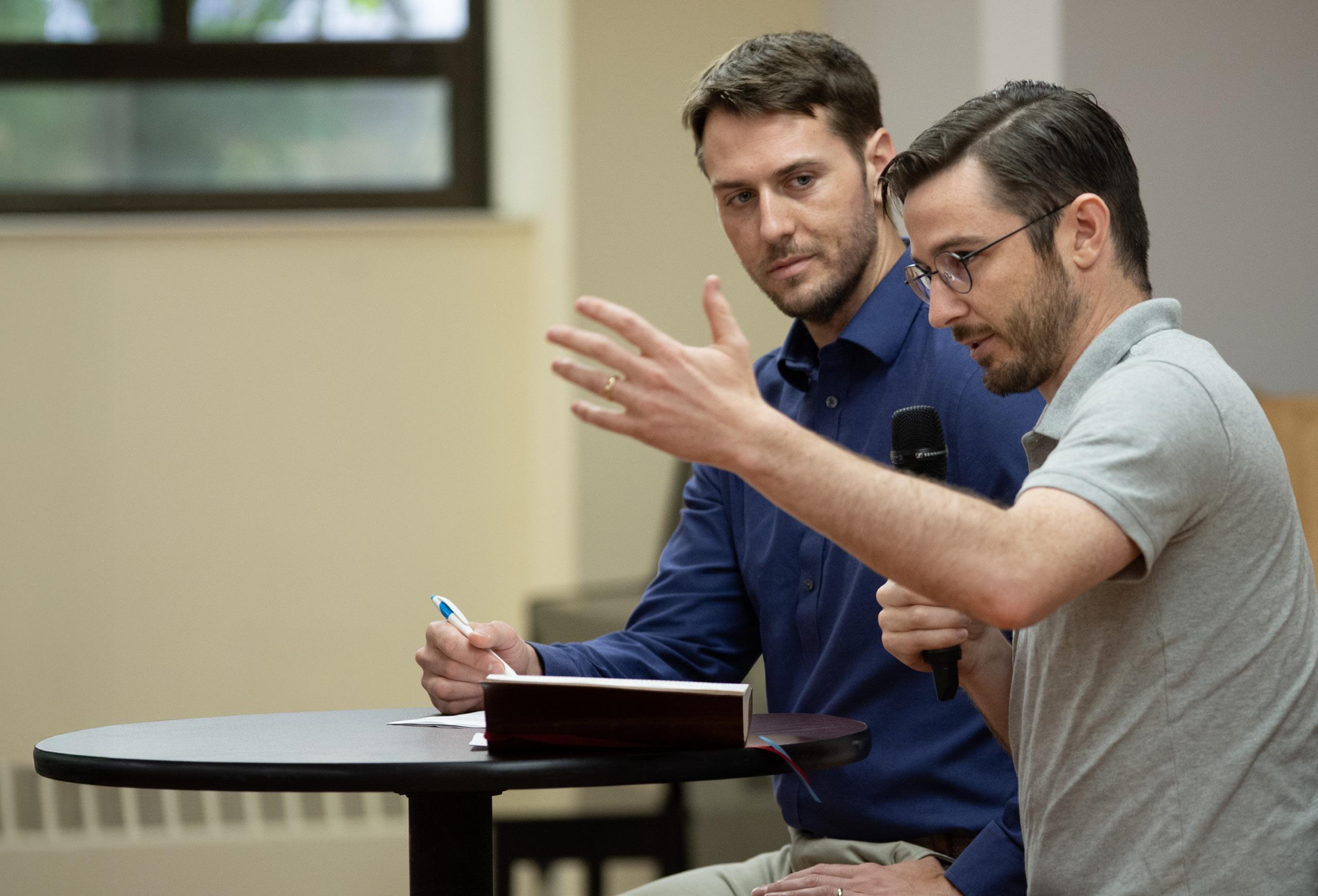
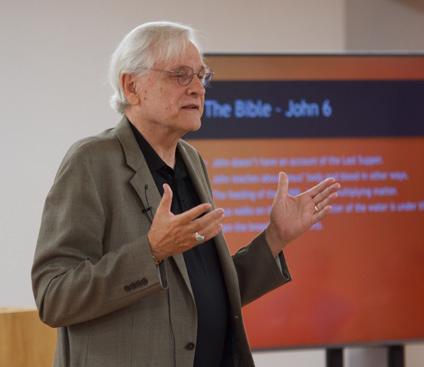
Jack Franicevich (right) teaching The Theology of Ephesians: Fullness & Filling with Teaching Fellow Dr Matt Messer (left).
If the goal of a first reading is to figure out the plot and find the point, the goal of a second reading is more modest and mundane. You’re noticing odd details in the text, identifying peculiar patterns that might require further interpretation, and asking honest questions.
The work of second reading also helps us appreciate the value of what we could call historical theology or the Great Tradition. Here’s what that looks like at Good Sam:
On Sunday mornings in Eastertide, at the Ashton Seminar, we undertook a “second reading” of the Book of Ephesians. The first time any of us read Ephesians, we recognized familiar and well-loved phrases like “By grace you have been saved” (2. 8 – 9), “speak the truth in love” (4. 15), and “put on the whole armor of God” (6. 11). These texts are incredibly important for the Christian life, and it’s important for us to understand them!
But once you’ve done that, it’s time to look again, to see how these familiar texts fit together, to read between the lines, and to see what holds the book together. In our course, we noticed that Paul’s big concern is to communicate God’s plan for the fullness of time, which is to “unite all things” under Christ (1. 10) and “fill all things” with his fullness (4. 10). We noticed that throughout the letter, whatever else he may be talking about, Paul focuses on God’s work of unifying and filling, and that he keeps making reference to “all things.” That led us to an honest realization: We didn’t understand what Paul meant by God’s fullness.
We also noticed that Paul describes his audience, the body of Christ, as “blessed” (1. 3 – 14), as “one man” who is “seated” in the heavenly places (1. 15 – 2. 22), who “walks in love” (4. 1 – 6. 9) and “stands firm” (6. 9 – 20). That suggested to us that this perfectly parallels Psalm 1. 1 (NASB 95):
“How blessed is the man
Who does not walk in the counsel of the wicked, Nor stands in the way of sinners, Nor sits in the seat of scoffers!”
What would it mean to read Ephesians in the light of Psalm 1?
We took some of these questions and turned to the Tradition for help. I interviewed Teaching Fellow Dr Matt Messer, a parishioner who happens to be an expert in the thought of St Thomas Aquinas (ca. 1225 – 1274), and who explained the way Aquinas understands God’s fullness. The way Aquinas describes it, Matt taught us, God’s fullness is a sort of “welling perfection,” an overflowing cup of spiritual gifts that results in an overflow of thanksgiving (Eph 5. 4, 20) and praise (cf. “singing songs, hymns, and spiritual songs,” 5. 19). The overflow of our thanksgiving and praise fills the world with God’s fullness like “rivers of living water” (John 7. 38).
Do you see what happened there? Our second reading revealed gaps in our understanding and patterns that needed interpretation, and they gave us a chance to ask an honest question. We listened to the way one great reader of Scripture, Thomas Aquinas, understands these texts. Reading Ephesians together with (Matt and) Aquinas is our participation in the Great Tradition. This work of reading the Scriptures together is what it looks like to “comprehend with all the saints, what is the breadth and length and height and depth” (Eph 3. 18).
This is where Adult Christian Formation is headed at Good Sam. We’re reading texts, together, for a second time, and leaning on the great readers of Scripture who came before us. Here’s how this is playing out in our offerings:
Ashton Seminar: On Sunday mornings at 10:15 am in Ashton Hall, we will read Scripture together slowly and carefully, learning to notice what we missed the first time and leaning on great readers of the Christian tradition for help.
Short Courses: While the Seminar meets in Ashton Hall, Good Sam’s gifted teachers will offer short, focused courses on theology, prayer, Scripture, and Christian life, helping us deepen our understanding of particular issues, texts, and practices.
Evening Classes: Offered at various times throughout the year, these classes will invite us to turn our attention to the wider world of Christian reading and thought, either practicing habits of careful interpretation or listening to voices from the Great Tradition.
Saturday Seminars: Several times each year, we will invite gifted theologians, pastors, and scholars from across the Anglican world—the best ones we know—to help us read Scripture and think about the Christian life with greater depth, clarity, and imagination.
Good Sam News
Thrift Shop
Spring has reached the New Life Thrift Shop. Warm-weather clothing has replaced winter layers and books, and household items fill the shelves. There are always a few unexpected treasures waiting for someone who likes to browse. Last year, the shop raised more than $102,000 to support Good Sam’s mission and outreach efforts. That generosity begins with donated items and continues with every purchase made at the register. Proceeds from the shop are designated by the Vestry for special mission initiatives.
Baptisms
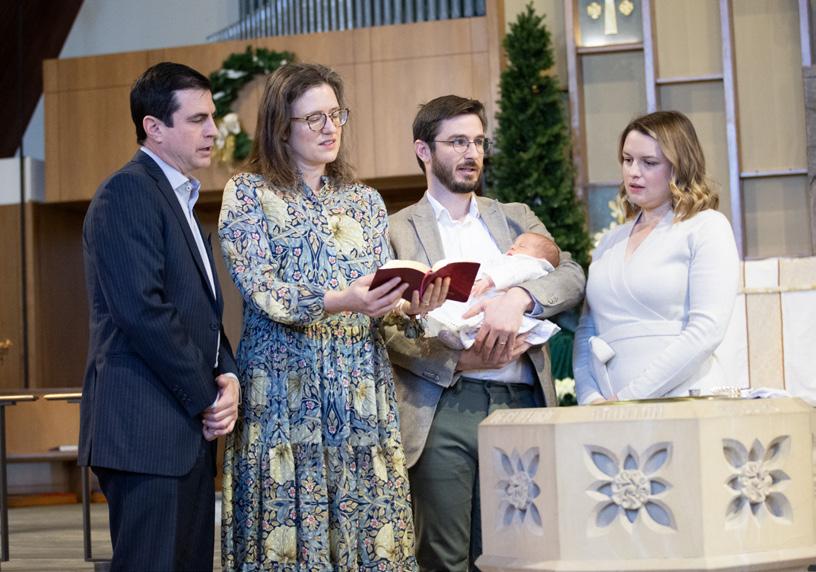
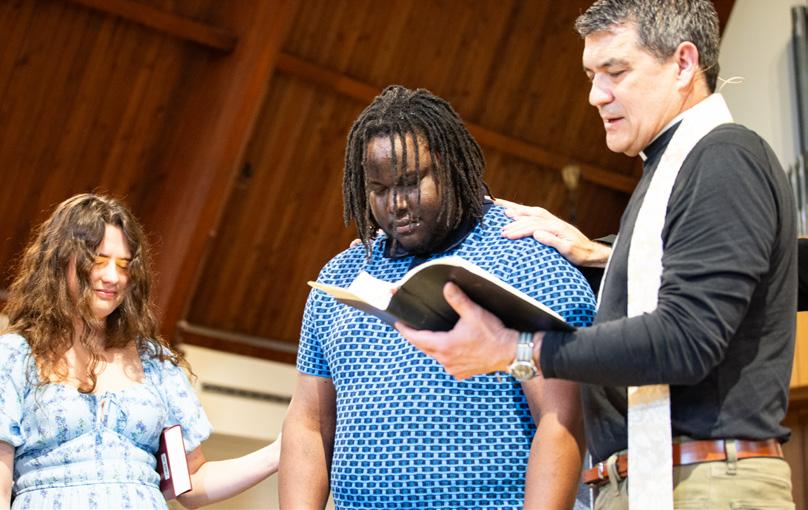
The waters of Baptism have been busy this year. Five people have already been baptized at Good Sam in 2026, including three infants, one middle schooler, and one adult, and several more are planned in the months ahead. We never seem to tire of gathering around the font, making promises together, and welcoming another person into the life of Christ and his Church.
Lent and Easter
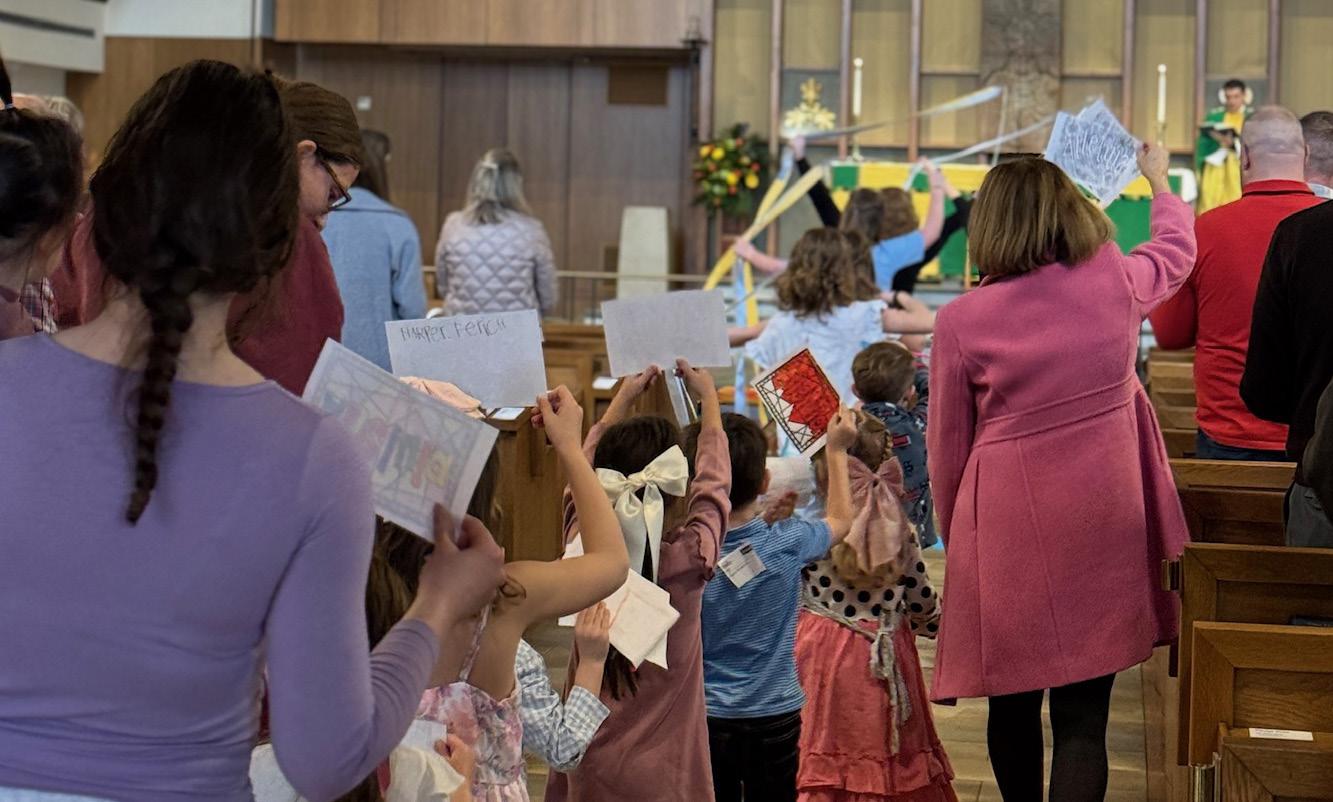
This year, many parishioners made their way through Lent with a new companion: a devotional written by Good Sam clergy, staff, and parishioners and available in both print and digital formats. Then came Holy Week. Candles were lit. Sacred stories were read. Alleluias returned. By Easter morning, flowers filled the church, musicians were in place, coffee cups were in hand between services, and children were scanning the playground for brightly colored eggs. Christ is risen!
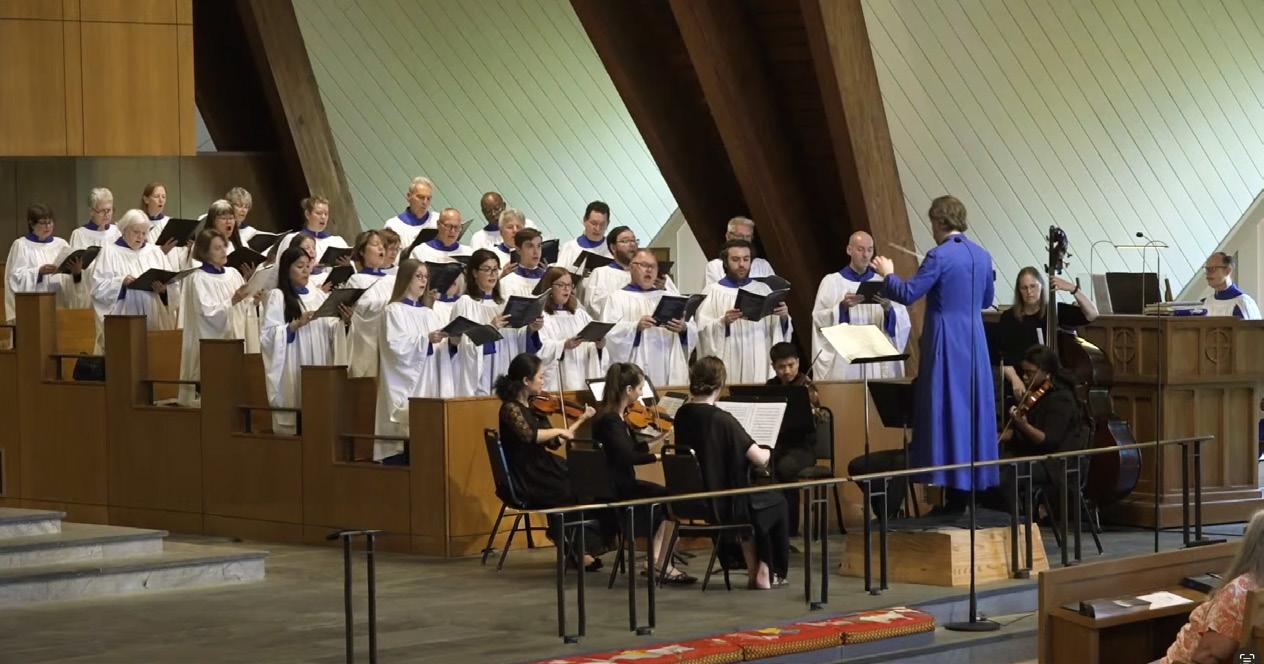
Mozart’s Missa Brevis in F
On Sunday, June 7, the choir brought its season to a close with Mozart’s Missa brevis in F at the 9 am service. Joined by a seven-piece string ensemble under the direction of Connor Fluharty, the choir offered the setting as part of the congregation’s worship. Ancient words of praise and prayer were carried into an ordinary June morning by strings, voices, and Mozart’s bright and joyful music.
Burying the Alleluias before Lent
Mission Trips This Summer
Summer will send Good Sam parishioners in several directions. About eight participants will travel to Bolivia to serve alongside Niños con Valor and spend time with children and families connected to the ministry. High school students and adults will return to the Standing Rock Reservation in North Dakota, where they will worship, learn, serve, and help lead camp activities for local children. Middle school students stayed closer to home during Week on Mission, serving through Vacation Bible School and local outreach partners each afternoon.
Hosting New Episcopal Friends
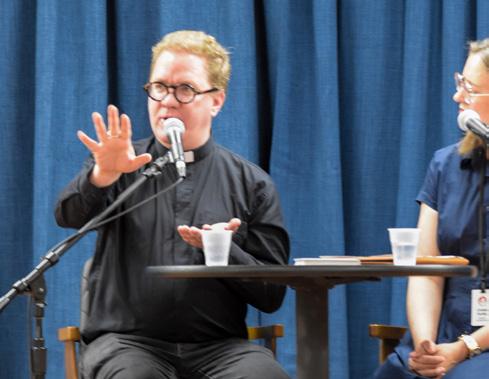
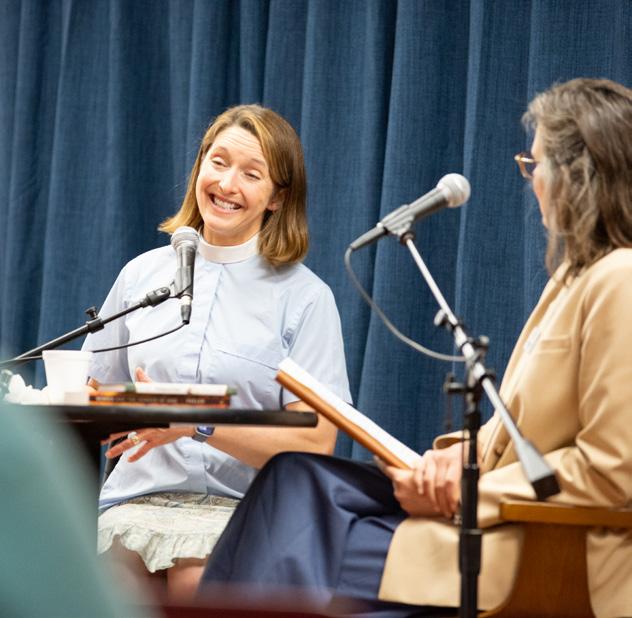
This Spring, we had the chance to host two scholarpriests in the Episcopal Church, The Rev’d Dr Amy Peeler and The Rev’d Dr Wesley Hill. Each guest gave a masterclass in one of their areas of expertise in the New Testament for our Saturday Seminar series. Then, on Sunday, they each preached at our 9 am and 11:15 am services and sat for interviews about their life, faith, and scholarship with Writer-in-Residence Christie Purifoy.
Amy talked about what it has looked like for her to read the Bible honestly, asking difficult questions and considering the observations and responding to the criticisms of skeptical readers. Amy’s class focused on the New Testament household codes, those passages in Paul’s and Peter’s letters where they enumerate how the husbands, wives, children, and servants ought to comport themselves. Her scholarly reading pushed past the popular debates between complementarian and egalitarian readers, engaged the concerns of feminist critics, and offered us a vision of households as places of friendship and flourishing.
Wes worked though some of the material he has been preparing for his forthcoming theological commentary on John’s three epistles for T&T Clark. Wes led us through a patient, theological reflection on John’s central claim that, in himself, “God is love.” We were impressed by Wes’ attention to patterns and details in John’s gospel, and his wide and appreciative reading of the many people who had commented on John’s letters before him.
We enjoyed their visits, and look forward to having them back. Amy, for one, will return to Good Sam on February 27 – 28, 2027. We also look forward to visits this fall from Peter David Gross, Carolyn Arends, and Dr Joy Clarkson (see page 1 for details).
If you missed any of Amy Peeler’s or Wesley Hill’s Saturday Seminars, Sunday sermons or conversations, visit our YouTube channel @goodsampaoli or scan the QRs below.
Saturday Seminars
Sunday Conversations
Amy Peeler Sunday Sermon
Wes Hill Sunday Sermon
GOOD SAM NEWS
Good Sam Kids
Children continue to shape life at Good Sam in ways both noisy and quiet. On Sunday mornings, Godly Play is filled with wooden figures, Bible stories, and wondering questions that invite children to listen closely and share what they notice.
Holy Week brought one of the spring’s memorable moments. More than 50 children and parents gathered in the Chapel for the Family Good Friday service and walked the Stations of the Cross together. Two days later, the rain held off just long enough for Easter baskets to come out and children to scatter across the playground in search of brightly colored eggs.
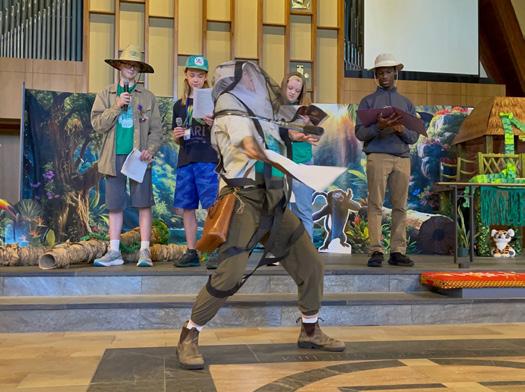
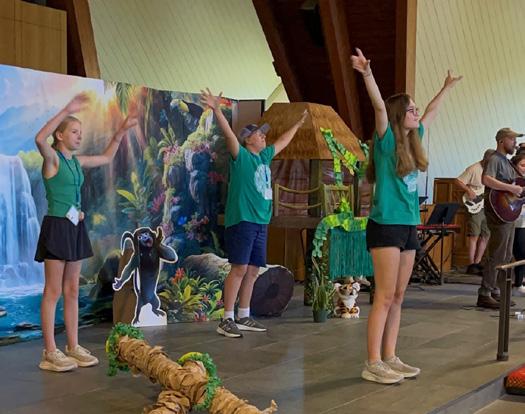
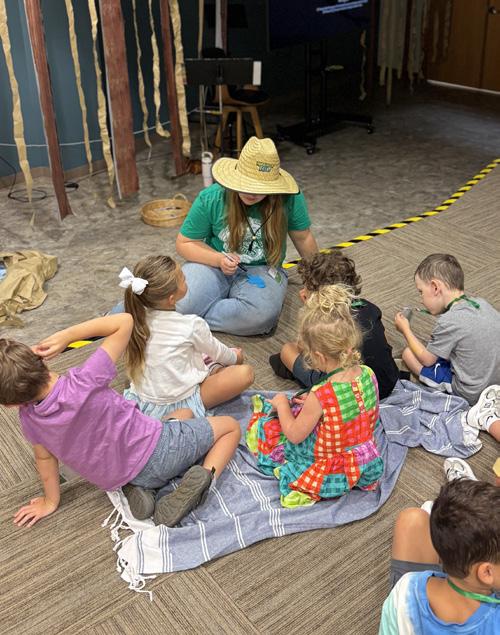
Summer began with another favorite tradition as more than 110 children filled the church for Vacation Bible School. This year’s rainforest theme invited kids to explore the nature of God through songs, games, Bible stories, crafts, and plenty of laughter. Throughout the week, children learned to respond to moments of wonder with a simple phrase that quickly became part of the rhythm of VBS: “Wow, God!”
The nursery has also become a busier place each Sunday, and we are grateful for the volunteers who rock babies, read board books, and help welcome some of our youngest parishioners.
Good Sam Youth
Winter and spring kept Good Sam students busy. In April, students and leaders gathered for another Peepstravaganza, turning marshmallow Peeps into surprisingly detailed scenes from Scripture.
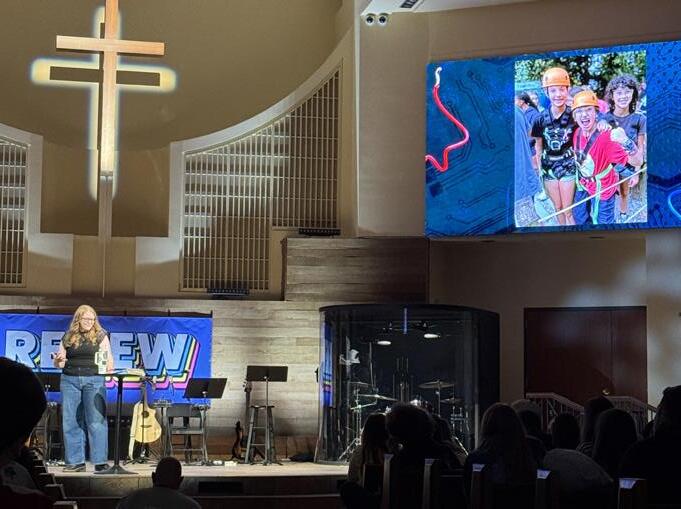
Another event was Renew, a student conference in Wilmington where teenagers joined other young Christians for worship, teaching, small groups, games, and conversations that stretched beyond the scheduled sessions. Sunday morning CORE groups also introduced Rooted, a new Confirmation curriculum designed to help students establish lasting foundations for faith.
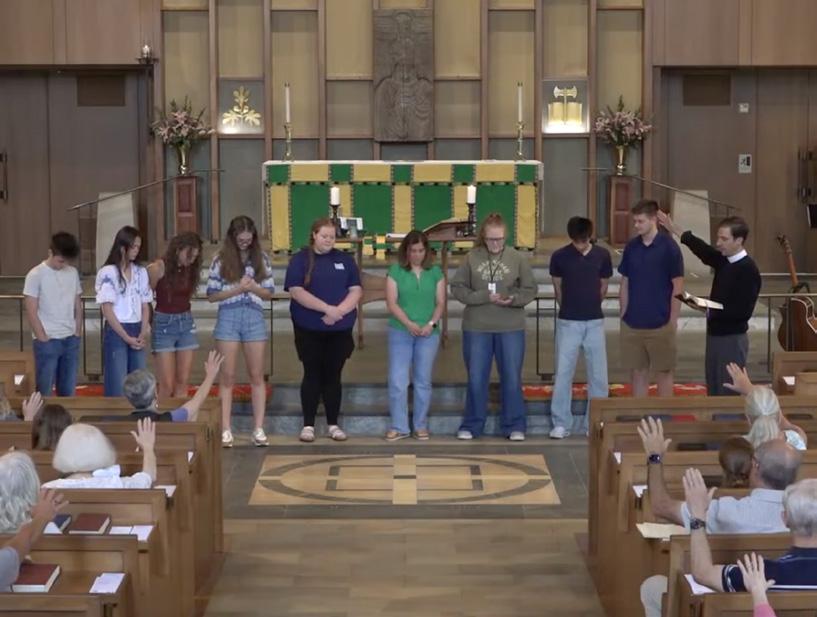
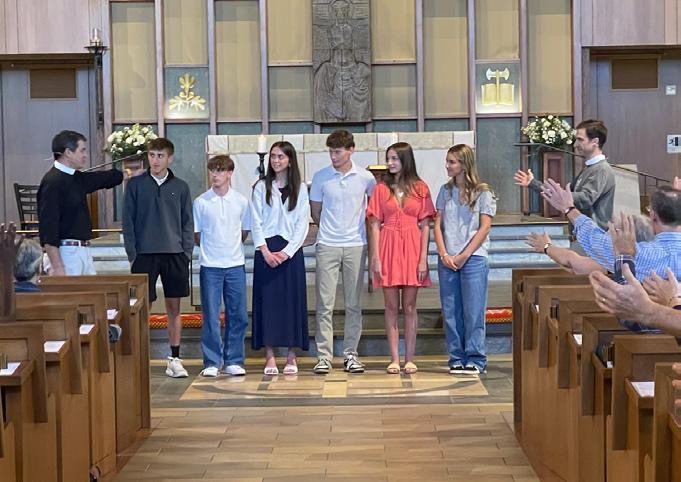
This spring also brought moments of transition as graduating seniors were recognized during Youth Night and Senior Sunday, sharing reflections, leading prayers, and helping guide worship before heading into a new season of life.
InSight Women’s Ministry
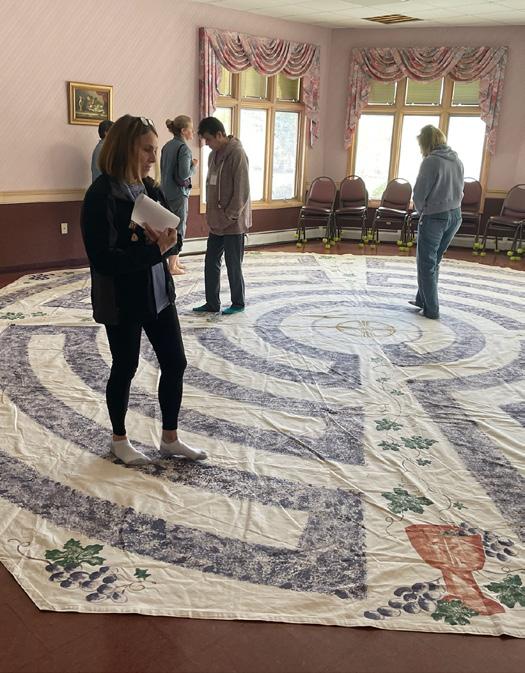
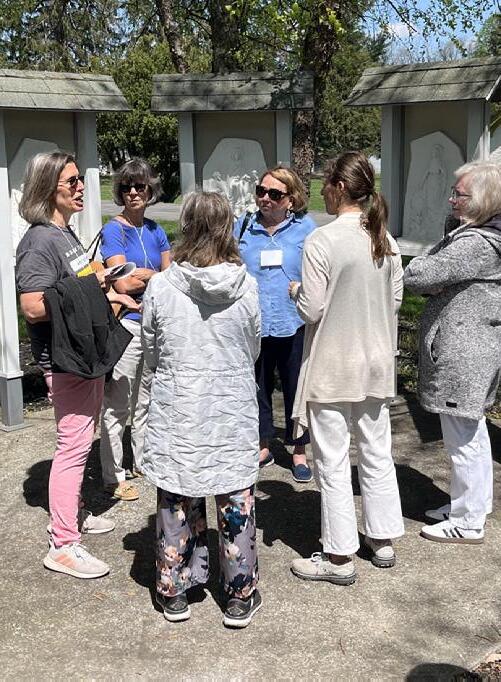
More than 50 women from Good Sam and the surrounding community traveled to St Mary of Providence Center in April for the annual InSight Women’s Retreat. The weekend offered time for worship, teaching, conversation, quiet, and rest. For many, one memorable stop along the way was the prayer labyrinth (see photo bottom left), which sparked conversations about creating a similar place for prayer at Good Sam.
One participant, Heidi Lee, described the retreat this way: “I was very tired, not from sleeplessness but from a difficult year, and this retreat brought me rest. I appreciated the community, the conversations, the speaker’s message, the beautiful location, the workshops, and the care with which each detail was planned.”
Women’s Bible Study continued this spring with a study of 1 and 2 Peter and Jude, bringing together women from many stages of life to study Scripture, pray, and encourage one another. The next study begins in September. The annual Come Together breakfast returns on Saturday, October 3.
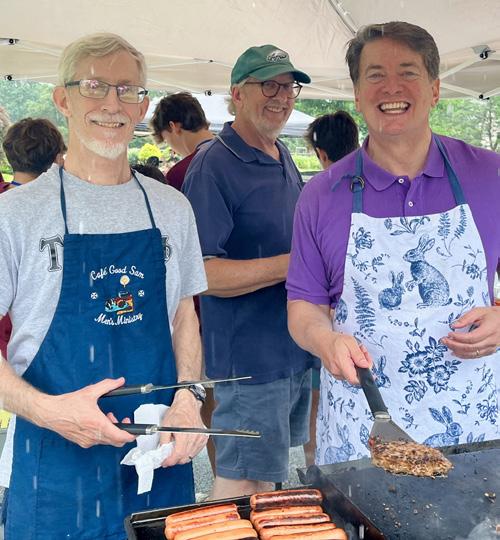
Men’s Ministry
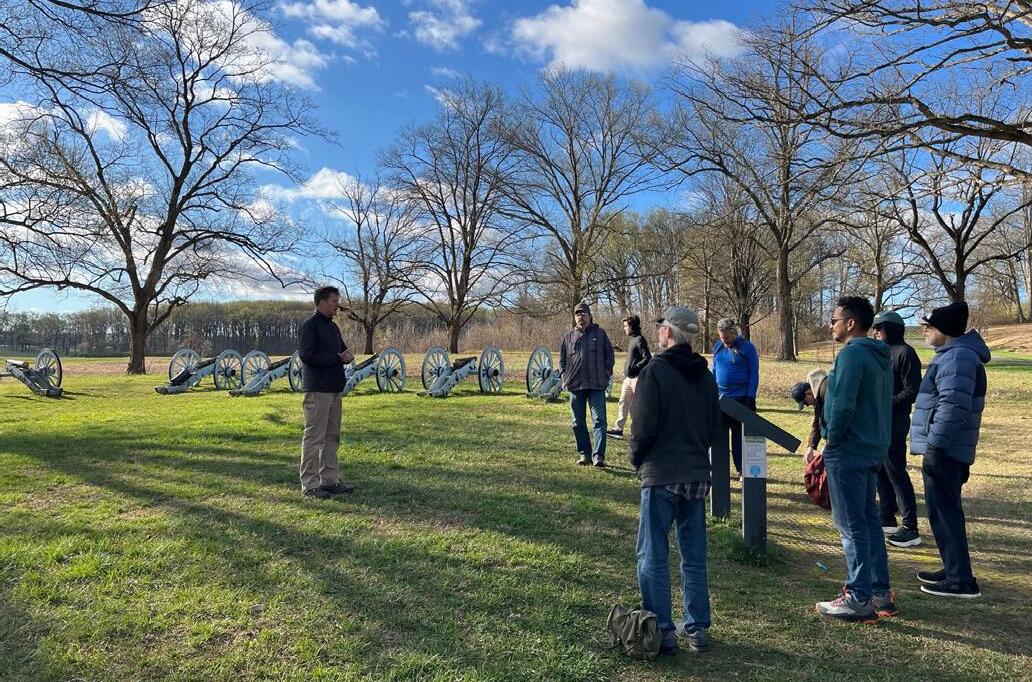
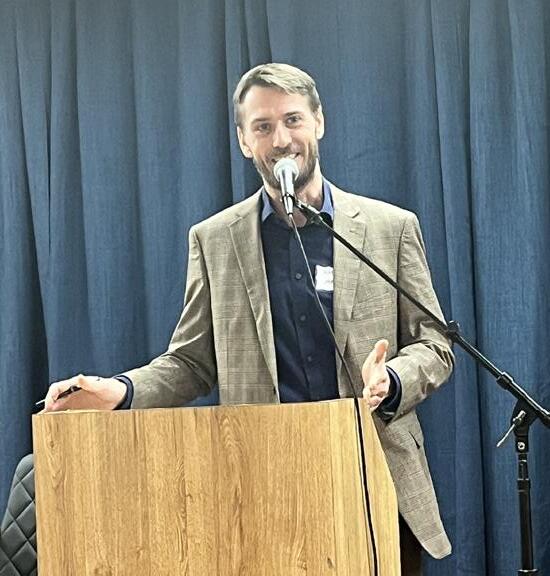
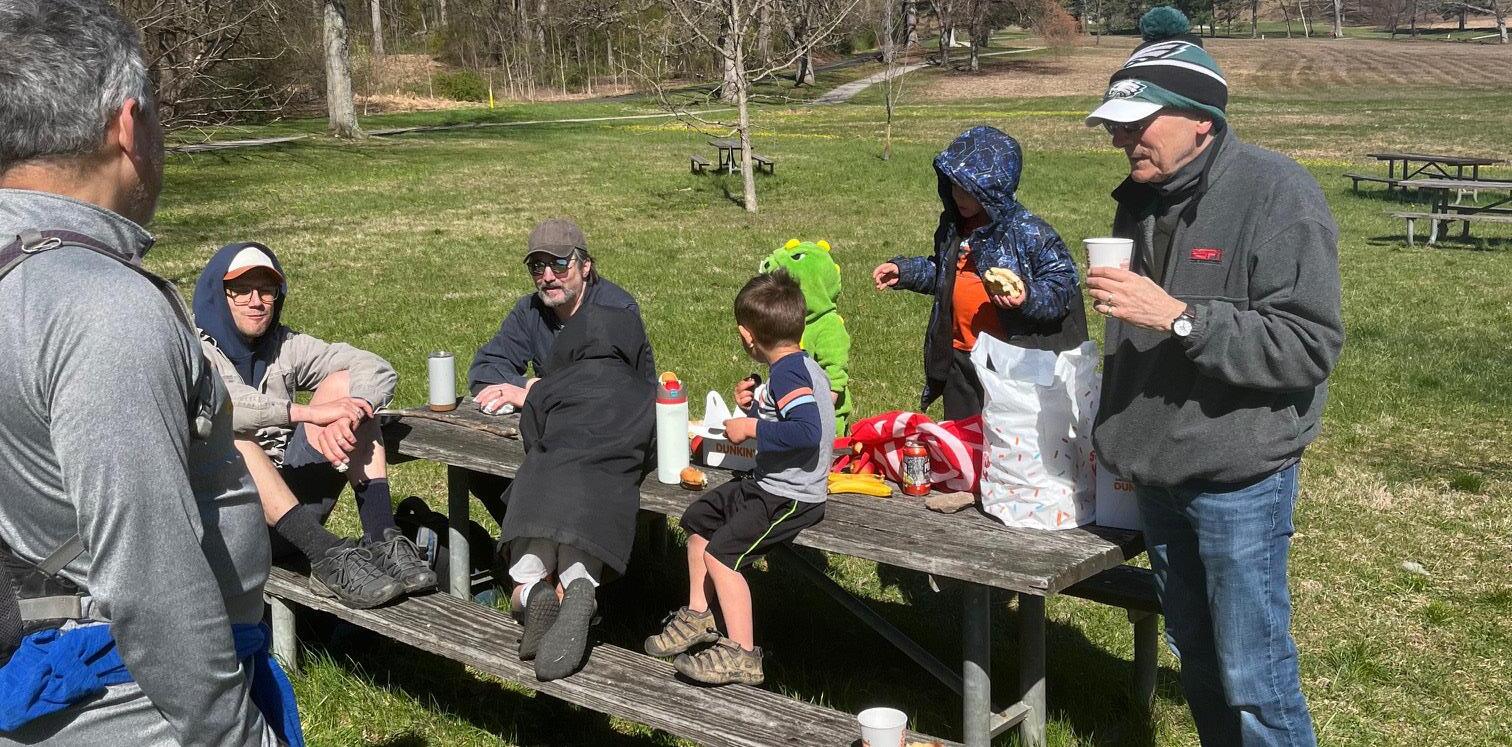
The men of Good Sam have found a few reasons to set their alarms early this year. In January, Dr Matt Messer joined the group for breakfast and a conversation about happiness, virtue, and the habits that shape a faithful life. In April, men gathered again, this time sharing breakfast before lacing up their hiking shoes and heading out together at Valley Forge.
These gatherings continue to bring together men from different generations, with fathers encouraged to invite their sons along. Looking ahead, Matt Lozano of Heart of the Father Ministries will join us on Tuesday July 28, for Unbound: Dinner with Matt Lozano, an evening of dinner and conversation open to both men and women. He will also lead Unbound: A Men’s Retreat on September 18 – 19 at Daylesford Abbey, inviting men to receive and live more deeply into the freedom Christ offers.