
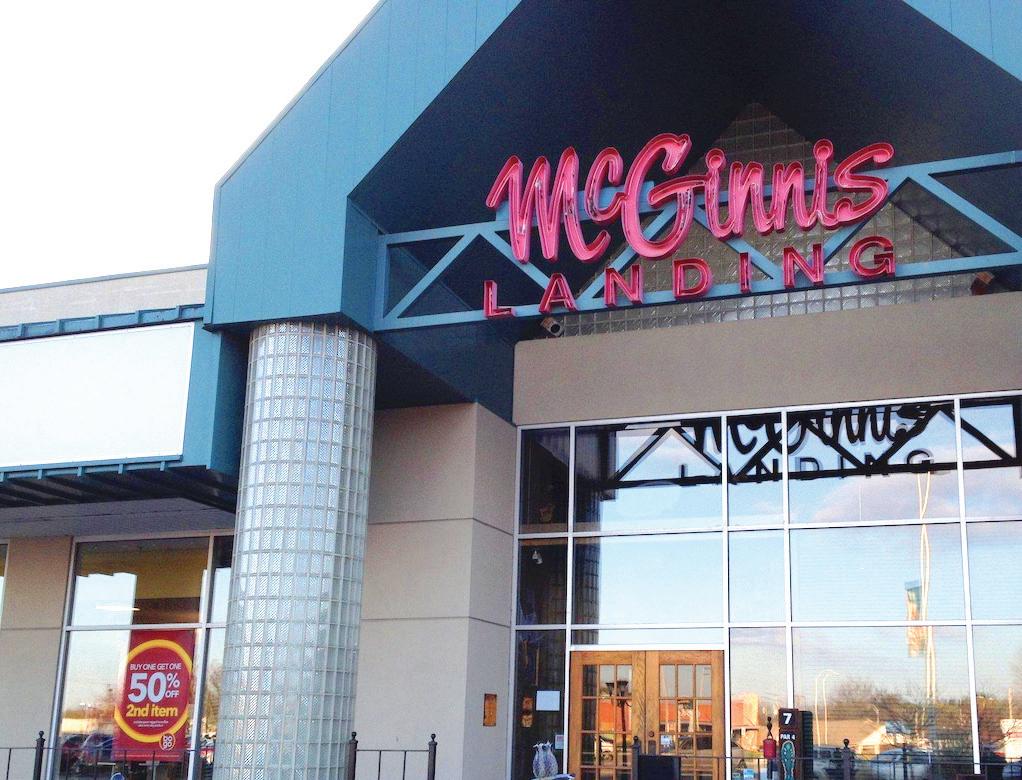
McGinnis Landing was an iconic restaurant and sports bar located on the west side of Kalamazoo for over 20 years. McGinnis Landing was unusual in that it was a Canadian restaurant chain’s only restaurant in America.
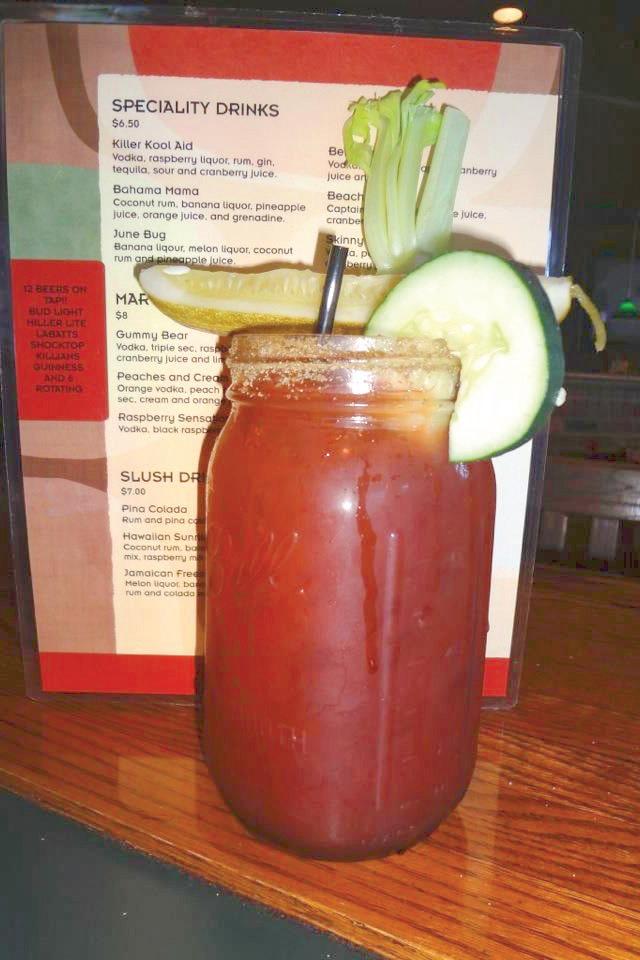
They were known for their great food and drinks. Former patrons fondly remember their burgers (especially the Feaster Burger), quesadillas, fried grouper, spinach salad (served with the best bacon dressing), cashew chicken pasta, BLT sandwich (with loads of bacon), and the French onion and tomato tortellini soups. They served big drinks in quart mason jars for just $4 and the best Bloody Mary’s, known as the “Bloody McGinnis,” that were made with clamato juice.
Other fond memories shared include: “I had my first drink in Kalamazoo as an adult there.” “Loved that place! My brother got to meet Eddie Money there!” “Our go to spot!” “It was our local hang out that was not cluttered with college kids.” “Loved their B.L.T. (built like truck). Literally, was a pound of bacon. It was a legit B.L.T sandwich.” “Many memories and Bloody Mary’s! It was always packed.” “We got engaged there in 1998!” “Miss it.” “It was a fun place to go! Very nice, clean atmosphere & good food & drinks!!” “I worked there in college! I still have the t-shirts.”
The friendly staff and owners, Mike and Kathy Rogers, created a welcoming atmosphere that made McGinnis Landing a popular local hangout for adults, families and professionals. A former customer posted on the Vanished Kalamazoo website that Mike would always take our baby son and walk around the restaurant, so the couple could eat in peace.
The sports memorabilia adorning the walls, along with the fireplaces,
made it a cozy place to watch a game on a big screen tv, while enjoying a snack, a meal or a drink. In good weather, the outdoor patio was a fun and happening space, during a time when there weren’t very many outdoor seating options.
The restaurant opened in 1991, and was the place many milestone events were celebrated, including baby showers, birthdays, first dates, engagements, anniversaries and many other special events. It was located at 5031 W. Main St., in the West Century Plaza. McGinnis Landing was open every day beginning at 11am until 11pm weeknights and until 12am on weekends.
The Rogers operated the restaurant for 10 years, until 2001, when they sold it to Rich Feaster and relocated to Banff Alberta, a picturesque town located within the Banff National Park in the Canadian Rockies. Friends said that it was also the home of Kathy’s sister. The couple later relocated to the Collingwood area of Ontario to care for Mike’s parents.
The closing of McGinnis Landing in November 2012, was a surprise to the community. There was a message posted by Feaster, on their Facebook page, stating they were no longer open for business. Another message was posted on the restaurant’s door by staff members, that said: “Thanks for the year years. We will miss you all.”
Sadly, the original owners, Mike and Kathy Rogers, who were in their mid-fifties, were the victims of a double-homicide at their home in Canada in June, the summer prior to the restaurant closing. The case remains unsolved.
Jackie Merriam
Sources: KG 11/7/2012, Vanished Kalamazoo/Facebook, Yelp.com.


Ficus is an incredibly rich and diverse genus of plants that primarily hail from tropical and subtropical regions worldwide. From tasty snacks to privacy hedges to towering trees to classic houseplants and even climbing vines, there’s a fabulous Ficus for just about everyone.
You can find a Ficus native to practically every continent except Antarctica. Strangler Figs, for example, come from North America. Our edible fig originates in Europe. And the Fiddleleaf Fig is from Africa.
One fun fact that all Ficus share: Tiny wasps pollinate their inflorescences. They don’t try to compete with bees and butterflies to form their fruits.
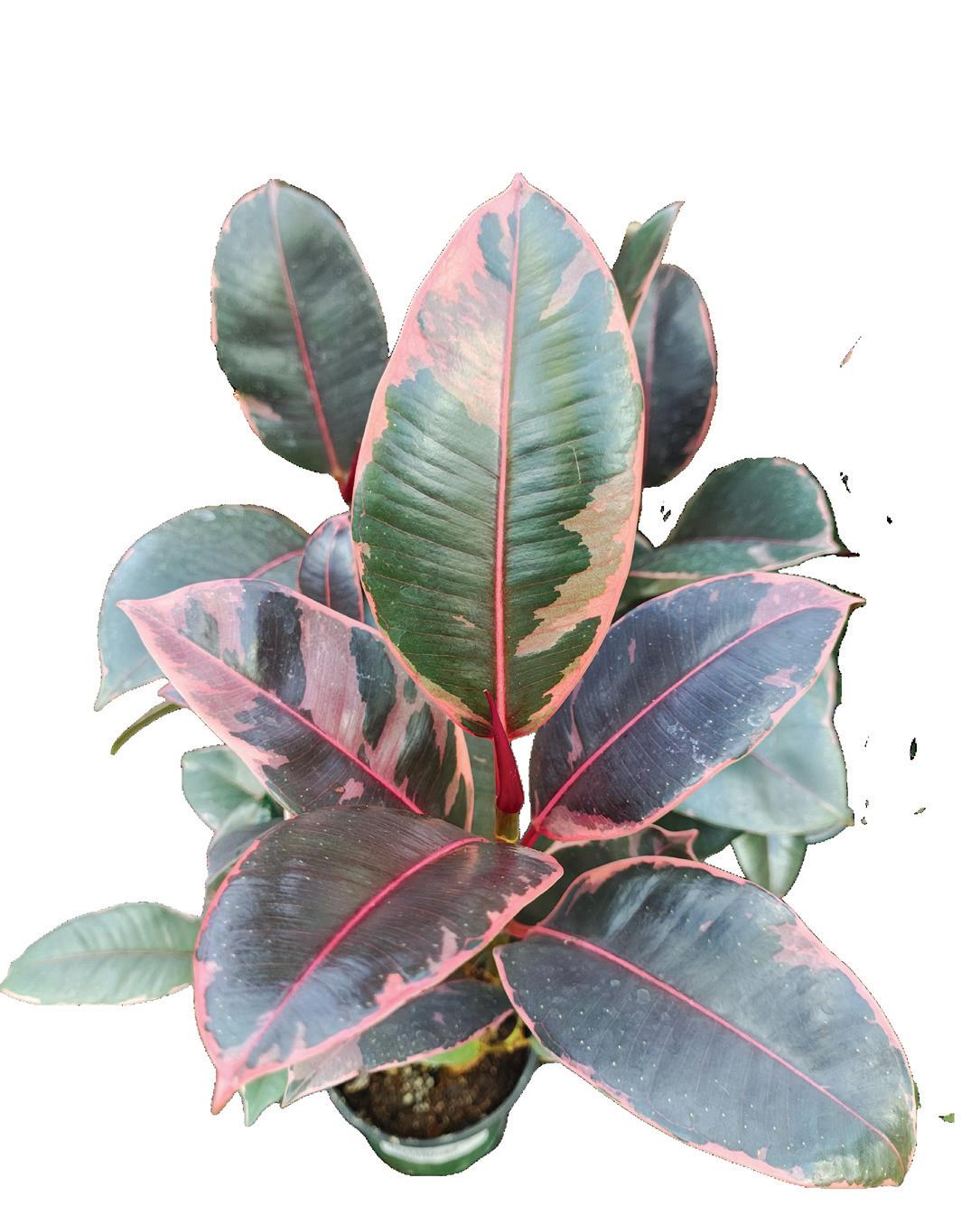
Ficus benjamina or Weeping Fig is the classic Ficus houseplant. Ficus elastica is another easy to grow, tried-and-true houseplant. Like other Ficus, Rubber Tree has a dense, milky sap that was used to produce latex.

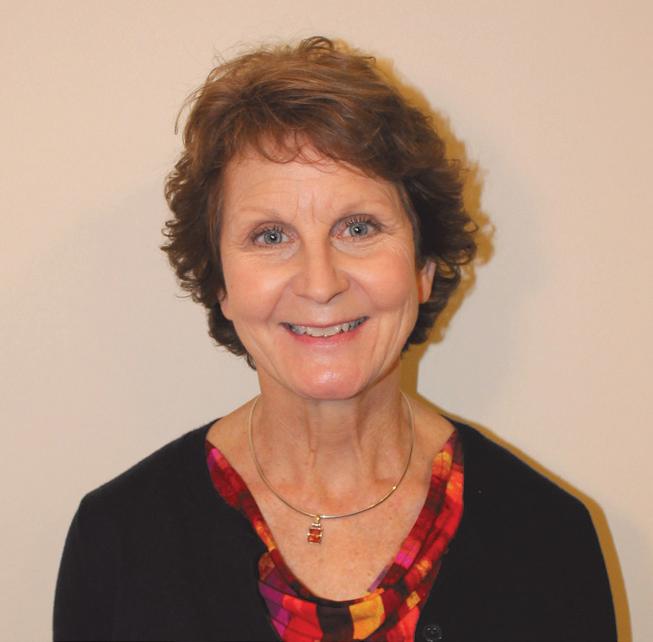
Growing up in a family with 7 kids and 2 adults, we celebrated nine birthdays each year. In addition to the 10 holidays: Valentine’s Day, St. Patrick’s Day, Easter, 4th of July, Halloween, Thanksgiving, Christmas Eve, Christmas Day, New Year’s
Several cultivars of Ficus elastica are available including Ruby, Burgundy, and Tineke. Ficus lyrata, Fiddle Leaf Fig shows off big, shiny leaves and doesn’t grow as fast as some of the other varieties. The two varieties available are Bambino/Little Fiddle and Variegata.
Light: The More Light, the Better Indoors, the first key to growing a happy, healthy Ficus is to give it plenty of light. Some varieties will tolerate medium light levels, but they do best in bright light. If you can, site your Ficus within about 4 feet of a good-sized east-, west-, or southfacing window or augment with plant lights.
Water: Regularly
A good general guideline is to water as the top 25 to 50 percent of the potting mix dries to the touch. Some species, like Ficus elastica, are more drought-tolerant than others, like Ficus pumila. Avoid overwatering; too much water will suffocate the roots.
Temperature: between about 60°F and 85°F is ideal
If you’re comfortable, your Ficus is, too. That said, try to avoid placing your Ficus near hot or cold drafts. Blasts of air that are noticeably warmer or cooler than the ambient air temperature can cause leaf yellowing and leaf drop.
Humidity: Average household relative humidity levels are fine Ficus varieties with thick leaves tend to tolerate low humidity levels better than those species with thinner leaves.
Rootbound: Ficus tend to tolerate being rootbound
While they tolerate being rootbound, they’ll grow best and fastest if regularly repotted. It’s optimal to
Eve and New Year’s Day, there was a whopping nineteen days a year that we were celebrating someone or something special.
Celebrations not only included our immediate family, but often the extended family too, which is evident in our 8mm movies. Grandparents, aunts, uncles and cousins are present at many of these occasions.
As a child, it was wonderful to continually have a celebration to look forward to. My mom had to be uber creative to make each of the occasions special on a shoestring budget, which she did by creating special cakes. Some that I can remember include: fluffy pink icing with carousel candle holders, cakes in
repot as the rootball appears to be about 75 percent roots and 25 percent potting mix.
Fertilize: Yes, they benefit
General-purpose fertilizers formulated for houseplants will do the trick; they don’t need anything fancy or specialized.
Schultz Houseplant Food is easy - just 7 drops in a quart of water. Or try We the Wild Organic houseplant food. Both choices will give your ficus a boost year-round.
Dropping Leaves: Some do when stressed
Some varieties, particularly Weeping Fig, have a reputation for shattering—which is a fancy way of saying they drop a lot of leaves— when they’re stressed. Stress can occur when the plant’s environment changes and it’s subjected to tough conditions (especially cold temperatures, inconsistent watering, etc.). If it’s just a stressful moment—such as the change in conditions from the store to your home- then it should start to quickly grow new leaves once it’s settled in. Shattering isn’t necessarily a sign of a problem unless leaves continue to drop.
1. White- or pink-variegated Ficus varieties have less chlorophyll than their cousins, so they’ll grow more slowly and may be more susceptible to stress. They may need a little extra attention.
2. Some Ficus varieties—including Fiddleleaf Fig—can root from just a leaf cutting. But without a node to grow from, these are “zombie” leaves—the leaf will never
the shape of the birthday child’s age, heart shaped cakes, green icing with shamrocks, an Easter bunny cake and so many others.
These cakes, made each of our birthdays and holidays, memorable and fun. I have followed in my mom’s footsteps, by making special desserts for birthdays and holidays for my kids and grandkids. This tradition started before my oldest child was born. I made a shamrock cake and my daughter decided to join in the celebration by arriving 3 ½ weeks early and was born on St. Patrick’s Day.
Jackie Merriam
grow, it will just maintain itself until it reaches the end of its natural lifespan.
3. Many Ficus varieties are easy to propagate and can be reproduced via several methods: Seeds (if they’re pollinated), stem cuttings, root cuttings, air layers, and tissue culture.
4.Sungro Black Gold Natural & Organic Potting Soil is a great choice for potting mix. Ficus houseplants aren’t generally fussy - as long as it’s potting mix (vs soil).
5. Pruning & Trimming – sculpt and shape your Ficus to fit any space. If your Ficus produces aerial roots that hang down from branches, they can be removed without harming the plant.
6. Wiping down Ficus leaves—particularly large-leaf varieties—as dust accumulates can help keep your plant significantly happier and healthier! A dust layer reduces the amount of light that reaches the leaf surface. The less light, the less energy the plant has.
publication does not specifically endorse advertisers or their products or services. No part of this publication may be reprinted or otherwise reproduced without the written permission from the publisher.

Have you ever gone snowshoeing?
How about sharing a rustic log cabin with a group of people for a weekend? This past month, I was able to enjoy both experiences; snowshoeing for the first time and sharing a cabin, as I’ve done a number of times before. Winters in Michigan can be approached in a few different ways. One of my favorite things to enjoy during the winter is to stay inside, cuddle up with tea, a blanket, read a number of books, and just stay cozy. Another thing is the exact opposite, to put on warming gear, embrace the cold, and get outside to explore. I enjoyed a brief but fulfilling weekend up at Wilderness State Park. We hiked, we snowshoed, we explored, we played games, talked, and laughed. In reflecting on the practice of being cozy,
a friend and I talked about the names other countries give to this act of settling in and creating a welcoming space in winter. There’s hygge, which likely many of you have heard of, and then there’s koselig, a Norwegian term, which I learned about from my friend. We coined a term for that cozy feeling you get spending time with good company and friends. We call it a “candle in your heart” feeling. So, that’s been my focus for this year. Spending time with the ones I love that bring me joy and that bring warmth to my heart.
My husband and I were driving back from Indiana after spending time with family. Leaving is hard and we were missing them as we crossed miles during the gray winter evening. But, to our delight, the sun started
shining. I love looking at clouds, as some of you may know. We were mesmerized by the colors. From the deep rich darks to the bright vibrant highlights, there’s nothing like the purest colors produced in a sunset. What I observed was a wonderful reminder. The sunset and the clouds closest to the sun were stunning and full of excitement, but the clouds opposite from the sun, the ones far away and reaching across the landscape, also had colors. They were muted and less of a showstopper, but they still reflected the sun and the warmth. For almost 20 years, my personal mantra has been, “to live the light of love”. This is what we should do, and who we should surround ourselves with. To be the sunset and spread the warmth to all the clouds







and people across the landscape. Be among people who make your heart glow with warmth.
Michigan will have winter. There will be snow and ice, and cold and wind. People will not be their most pleasant selves, especially on gray days when the sun still wants to hide. But we can create our own light and share it with others to bring that cozy feeling to their day. Candle in the heart moments don’t need blankets, tea, books, or fireplaces. They just need good people that shine warmth to everyone around them. 20 original art prints are placed randomly into copies of this month’s issue of the Good News Paper.
Peace, Love, and Art. -Amy Instagram: @amylgieschen


Cognition can be defined as “the mental processes involved in thinking, knowing, remembering, and decision-making,” or as “the mental action or process of acquiring knowledge and understanding through thought, experience, and the senses.”
Recently, our son Steve visited with his little dog, Timbre. I’m always cautious about anthropomorphizing— humanizing—animal behavior. So, a more appropriate definition of cognition, as it applies to animals, might be “the mental processes by which animals perceive sensory information, learn, remember, make choices, and adapt their behavior to cues in their environment.”
While they were here, something happened that caught my attention.
We were watching television in the family room when a commercial included the sound of a doorbell. Timbre sat up, barked, hopped off the couch, and ran straight to our front door.
Steve acquired Timbre as a puppy; he turned five this year. Steve lives in a high-rise condo in Austin, where elevators are accessible only by passkey. There are no doorbells on any residential doors in his building. Timbre has never lived anywhere else. Yet Steve says Timbre does the same thing at home when he hears a doorbell sound on TV—running to his entry door.
It’s no accident that doorbell sounds are incorporated into televi-
sion commercials. Producers know that humans respond to them as well. The sound breaks “passive viewing” and triggers a brief surge of alertness—just enough to pull attention back to the screen.
On the table next to my chair in the sunroom sits an Amazon Echo, a voice-activated device that responds as “Alexa.” With Steve and Timbre nearby, I asked Alexa to play a doorbell sound. She did. Timbre immediately sprang up and ran to the front door—which wasn’t even in his line of sight—looked up, and barked.
The question seems obvious: how did this little dog learn to associate that specific sound with a door—and even “know” what a door is? And if he associates the sound with a door, why not a bedroom, closet, or kitchen door? He went to the only door that leads outside.
What we witnessed had to be cognition. The real question is how this is possible.
We’re all familiar with Pavlov’s famous dog experiments demonstrating conditioned response—animals learn to associate a stimulus, such as a bell, with food and then salivate as though food is present. Pavlov also noted that the dogs would salivate at the sight or even the footsteps of the lab assistant who routinely fed them.
That process—learning from experience—is called conditioning. But Timbre’s behavior points to something more complex: associating
a doorbell with an entry door and knowing where that door is in multiple locations—his condo, our home, and elsewhere.
The sound doesn’t come from the door itself but from somewhere else entirely. Yet Timbre identifies it, links it to a specific object among many similar ones, and goes directly to it to alert. Somewhere between conditioning and reasoning, experience has been organized into understanding.
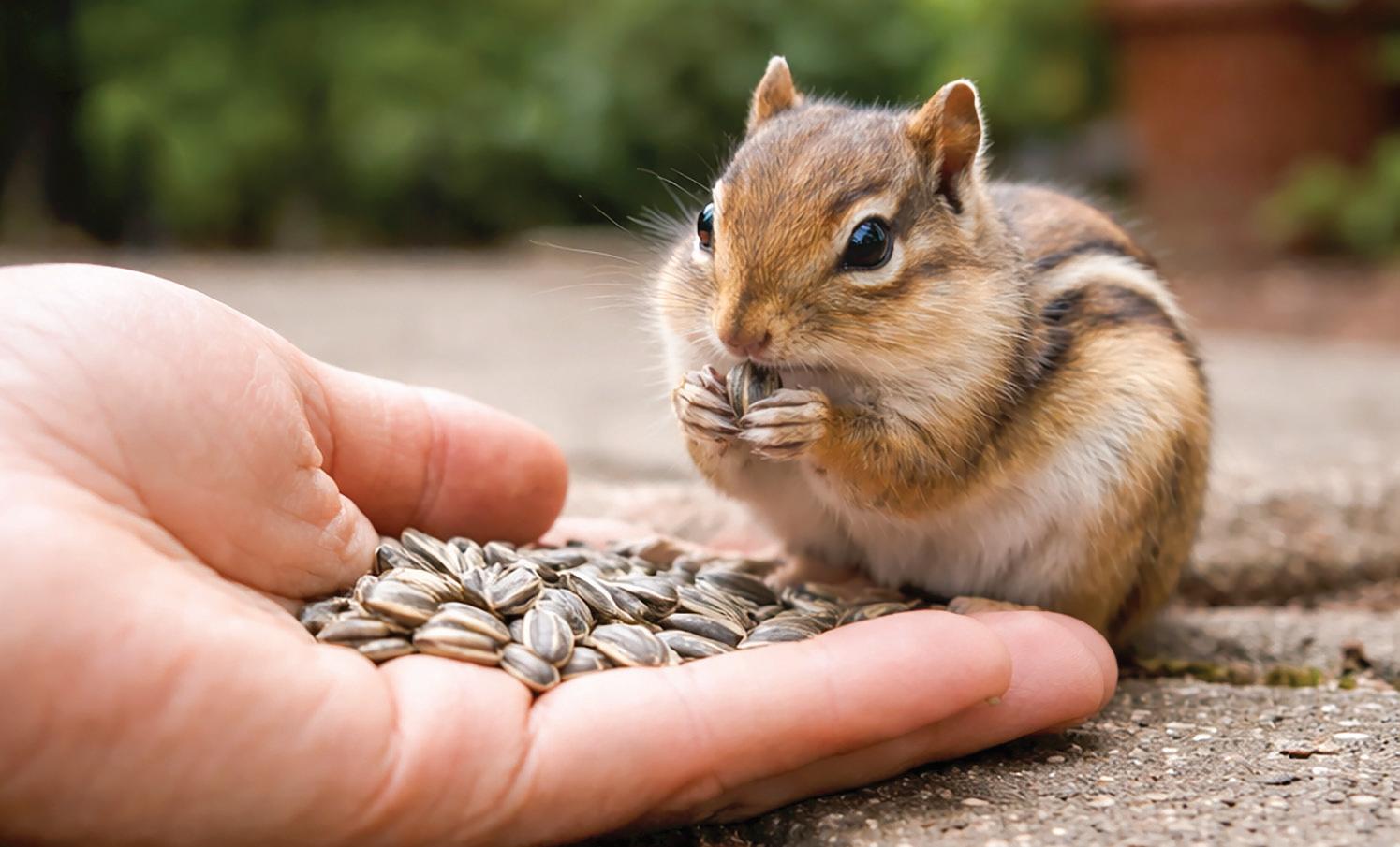
When our children were young, they—and their friends—were mystified by my ability to have a chipmunk hop into my hand to take sunflower seeds as I sat on our patio. I would make a soft “chippy” sound whenever I was outside with seeds. What the kids didn’t see was the process behind it. It took hours over many days to build trust, gradually shortening the distance between the seed and my hand. The chipmunk learned to associate that sound with food and safety. Once the conditioning was complete, the behavior looked effortless and natural, lasting all summer and into fall.
Examples of this kind of cognition appear throughout the animal kingdom. Crows and ravens, members of the corvid family, are especially well known for insight learning and problem-solving. Some have been observed bending wire into hooks to retrieve food—suggesting they can envision a solution before acting.
Octopuses demonstrate exploratory
learning. They can figure out how to open jars to reach food and remember those steps later. Dolphins show symbolic learning, responding to artificial languages that use symbols to represent objects, actions, and even word order.
And then there’s one of my favorites: slime mold.
Slime mold has no brain and no nervous system. Yet it can solve mazes, consistently finding the shortest path to food. It avoids areas treated with salt or other unpleasant substances and appears to retain information from past experience by leaving chemical trails—an external form of memory.
Whatever definition of cognition you prefer, it’s clear that something observable is happening across the animal kingdom. These creatures aren’t just reacting; they’re learning from experience and using that knowledge to navigate their world.
Sometimes it takes a small dog and a doorbell to bring that into focus. And as I think more about it, I find myself rethinking my knee-jerk rejection of anthropomorphism. Perhaps the real mistake isn’t humanizing animal behavior, but failing to recognize that human cognition itself is deeply rooted in our animal past.
And so, thank you, Timbre, for helping this old dog try to learn a few new tricks.
James D. Coppinger





e at w w w.Librar yReads.org
For book recommendations from your Kalamazoo Public Library Staff go to www.kpl.gov/blog/

T The Bookbinder's Secr he Bookbinder's Secret et A.D. Bell (St. Martin's Press)
Lily is in limbo. She loves books and her binding trade, but her father is distant and her employer seems not to value her. Her life is turned upside down when she is given a burned book and the secrets it holds. This is truly a wonderful read full of mystery, love, and intrigue

W Women of a omen Pr Promiscuous Natur omiscuous Nature e Donna Everhart (Kensington)
In this stunning characterdriven novel set in the 1940s, Everhart introduces the inmates and staff of the Industrial Farm Colony for Women. As readers are drawn into the life of the Colony, the lofty goals as well as the terrible cruelty and injustice of the place are slowly revealed. Highly recommended.

Is T This a Cr his a Cry f y for He or Helplp? ? Emily Austin (Atria Books)

After she learns of the death of her ex-boy friend, librarian Darcy has a mental breakdown and takes a leave from her job at a public library. With time, therapy, and support from her wife, Darcy returns to work while coping with guilt and book-banning protests. This reflective, heartwarming, and character-driven read delves into grief and identity with care and humor

Al All the L l Littlittle Houses e May Cobb (Sourcebooks Landmark)
Cobb’s latest gasp-out-loud read doesn t disappoint, bringing readers back to the East Texas town of Longview, where wealth, booze, secrets, sex, and very bad—some might even say murderous—behavior abound. Readers will not be able to take their eyes off this propulsive thriller

Ho How to Commit a P w Postco ostcollonial onial Mur Murder: A No der: A Novveel l Nina McConigley (Pantheon)
When their uncle arrives from India, two sisters' adjustment to a dual culture life in smalltown Wyoming in the mid-1980s becomes complicated. This debut hits on touchy subjects with grace, as the sisters choose to fight instead of being silent victims. Those of us who spent many hours at teen sleepovers will delight in the nostalgia scattered amidst the actual crime and justice served.
TX
No One W One Woulould Do What the d L Lamberts Hav amberts Have Done e Sophie Hannah (Sourcebooks Landmark)
Anatomy of an Al Alibi: ibi: A No Novveel l Ashley Elston
This is a tale of two women: Wealthy Camille is living the high life, while Aubrey works as a bartender. Who is telling the truth? An unhappy marriage, skeletons in the closet, and a murdered husband make this a story worth reading!

In this satirical book-withina-book, the Lamberts’ dog, Champ,is accused of biting the neighbor’s daughter. The eccentric pet-obsessed matriarch Sally refuses to believe this, so the family goes on the run with Champ in tow. Twisty and puzzling. It Shoul Should Hav d Have Been Y e You: ou: A No Novveel l Andrea Mara (Pamela Dorman Books)
When a woman accidentally sends a private message meant for her sisters to the entire neighborhood group chat, the ensuing chain of events exposes secrets and causes deadly anguish. This book was a wild ride that will captivate readers from the first page
Vigil: A No Novveel l George Saunders (Random House) Saunders knows how to capture the essence of life in a story all about death. This message is wrapped in a Christmas Carol package about a ghost ushering a greedy, selfish man into the afterlife This climate story effectively hammers home that climate change affects everyone and everything irreparably, but we must also carry on. T The Else he Elsewherwhere Expr e Express: ess: A No Novveel l Samantha Sotto Yambao (Del Rey)
—Sabrina Unrein, Mahwah Public Library, NJ NoveList read-alike: The Apology by Jimin Han
T The P he Poet Empr oet Empress ess Shen Tao (Bramble)

Be sure to check

This enchanting, whimsical fantasy is a warm hug for the soul. A magical train that appears to those who are lost is absolutely charming, and creativity shines in the descriptions of the train's wondrous cars, from lily-pad picnics to jelly fish swimming through clouds. A journey not just through a magical world, but also of self-discovery hope, and finding one's sense of purpose
—Lee V., New York Public Library, NY NoveList read-alike:The Rainfall Market by Yeong Gwang You
Nonfiction:
Made in LibraryAware - www.libraryaware.com
When T Trrees T ees Testify: estify: Science Science, Wisdom, History , History and America’ America’s Bl s Black ack Botanical L Legacegacy y Beronda L. Montgomery (Henry Holt & Co )
When I first came across the listing for my home, what I now call Z Acres, it was less the little red farmhouse itself that caught my eye. I was intrigued by the funky little cottage on the hill. Part of the property is wooded hillside, a bit of a walk uphill from the farmhouse. When the foliage comes in, the cottage is entirely invisible until one comes right up on it.
Why would I need a Cottage on the Hill when I already have a house? And a barn, and a shed. Isn’t that enough? Well, yes. But whoever had created the realty listing must have had a telepathic eye on me. The listing referred to it as a Writer’s Cottage.
Writers by definition are creative folk. As I trekked up the path through the woods and up the hill, the Cottage emerged in all its funkiness. Whoever built it—and I did later have the joy and privilege of meeting the builder—had used a wide range of parts and pieces left over from building the house, barn, and shed. Plus a few other random pieces saved from a builder’s leftover pile. Nothing had gone to waste.
I was immediately charmed by the many windows of the 200-squarefoot structure. No two matched. No two were aligned. The cottage itself seemed to bust out at various angles.
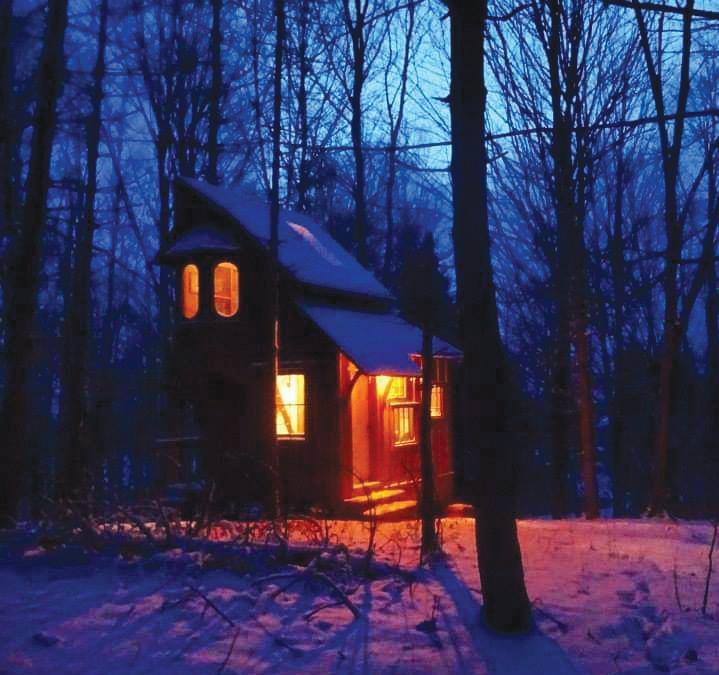
Steps on one side, a small deck out the other. A compact main floor, room enough for a desk and a bed and chair, and wooden steps up to a second floor, smaller still.
Once the property became mine, I was determined to arrange the Cottage on the Hill to become, yes,
my writer’s cottage. That became my name for it. My son built a desk for me that fit perfectly in the corner beneath three misaligned windows and a bookshelf. An old mattress filled the other corner, arranged with comfortable quilts and colorful pillows. I added an antique stand I found at a
resale store that had an opening on top for a washbowl, a place beneath for a water pitcher, and a small mirror overhead. It was how people washed hands in the days before. At least the cottage has the modernization of being electrified.
Upstairs went another small desk, several bookshelves, and a wooden rocking chair that fit perfectly against the Cottage’s largest windows for light to read by when not bird watching.
My space away, when I wanted to close out all outside influences and focus on my literary pursuits, was set. My walk up the hill became a mental refocusing as I left one world below for another above. A place for creativity, a place to rest, a place to daydream. This was mine.
Last summer, one of the tall trees near the Cottage on the Hill fell in a windstorm and broke the skylight on the top floor roof. Rain gushed in. Little critters figured they had found a new home. My cottage appeared a ruin.
Sure, a few tears. But no. The summer ahead awaits with a new project, because in a mad, mad world, we can all use a space away. Even better than the first. This February, it is my Valentine promise to myself.
Zinta Aistars













The story of the Fenton Art Glass Company begins in 1905. Brothers Frank L. and John Fenton launched their venture in an abandoned Ohio glass factory. Initially they applied hand-painted decorations to glass blanks made by other manufacturers. Over time, difficulty obtaining suitable glass prompted the brothers to make their own. The Fentons relocated to West Virginia, in 1907. On January 2 of that year they produced their first piece, a pitcher with a Water Lily and Cattails pattern. In 1909, John Fenton left to establish another glass company in Ohio. Frank continued to lead the West Virginia operation with support from other family members. Under Frank’s guidance, Fenton Art Glass became the leading manufacturer of handmade colored glass in the United States.
During the Great Depression, Fenton turned to practical designs such as kitchen- and tableware. In 1938, a collaboration with Wrisley, a perfume maker, led to the production of a perfume bottle. The bottle’s popularity became a key component of Fenton’s survival through WWII. It also launched the company’s hallmark pairing with the Hobnail pattern. By the late 1940s, leadership had passed to a second generation. Despite widespread factory closures in the glass industry, brothers Frank M. and Wilmer Fenton oversaw decades of growth. In 1986, a third generation took charge under George Fenton. The company celebrated its 100th anniversary in 2005.

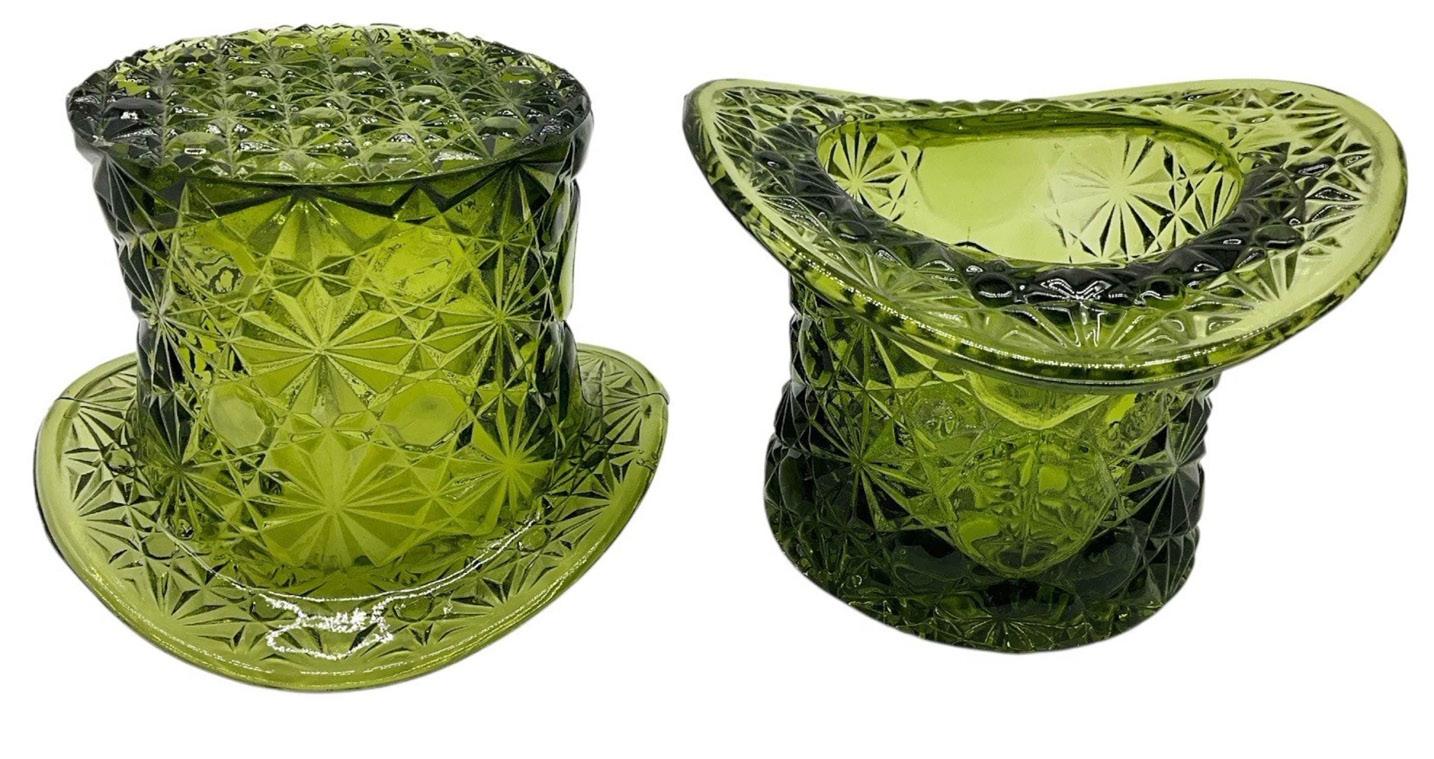
From the beginning, Fenton emphasized experimentation. The company developed new hues, textures, and finishes that set its work apart in the American art glass arena. Frank L. Fenton’s admiration for the master glassmakers of Tiffany and Steuben fueled the company’s artistic direction.
Jacob Rosenthal, factory manager and glass chemist, also aided Fenton’s early success. Rosenthal’s expertise led to the development of groundbreaking colors such as chocolate glass and golden agate. In 1907 Fenton introduced iridescent ware (later known as carnival glass). Rosenthal fashioned this glass using chemical sprays applied during firing. In the 1920s, Fenton explored hand-blown (or “offhand”) styles such as Hanging Hearts and Pulled Feather. Aided by a team of European glassworkers, Fenton introduced colors like Karnak Red, Oriental Ivory, and Turquoise Blue. During this period, Fenton also produced a mosaic style by rolling molten glass in frit (colorful glass pieces). Al-


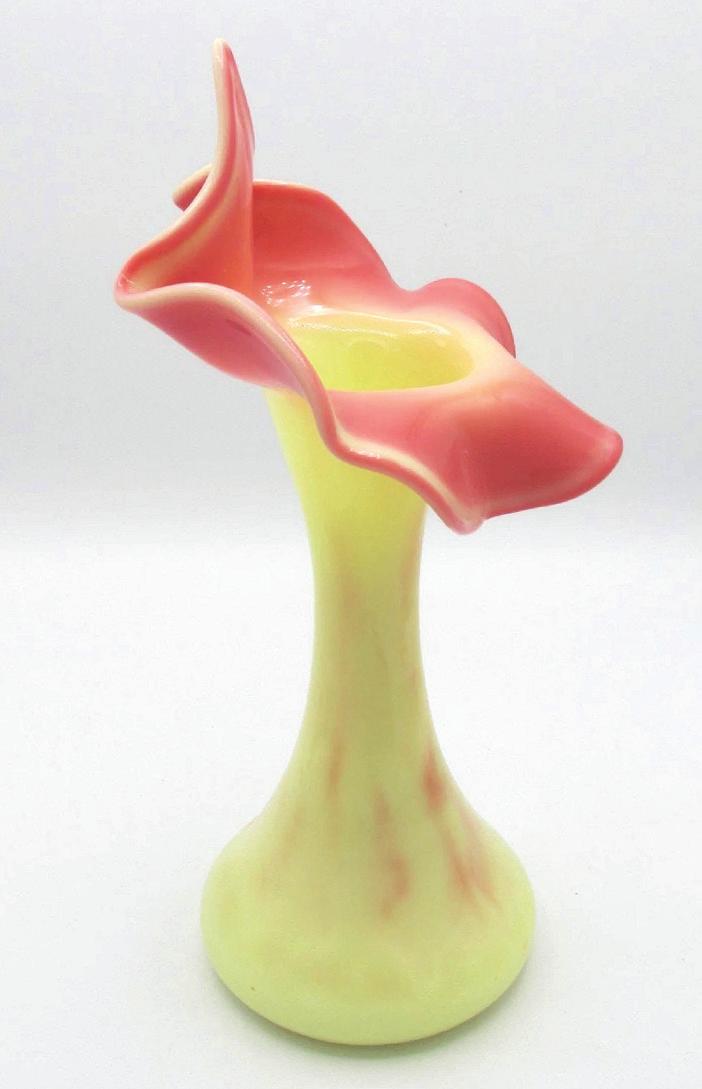
though the result was striking, the labor-intensive process proved too costly to sustain. While pressed glass products moved to prominence at Fenton, color remained its signature. Using ingredients like gold, cobalt, and manganese, the company produced slag with marbled stone-like patterns, amberina with dramatic red-toamber shading, and opalescent glass with a soft translucence. Handpainted decorations—often accented with 22k gold—were fused to the glass at high temperatures, ensuring durability of detail. Fenton is also noted for sculptural details, especially its characteristic ruffled edges. Classic Fenton styles such as Crest, Coin Dot, Daisy Button, and Burmese (opaque yellow glass shading into pink), cemented the company’s reputation for beauty and enduring appeal.
Rarity, condition, color, and production year drive the resale value of Fenton glass. A knowledge of labels and marks will help the prospective collector. From 1957 to 1971, the




company used blue paper labels reading “Authentic Fenton Handmade”. From 1970 to 1985 they shifted to gold labels. Between 1970 and 1979, artisans molded a raised cursive “Fenton” inside an oval onto the glass. After 1980, small numbers joined this mark to indicate the decade. Recognize that paper labels may fall off over time. Also note that flames, stars, or block letters identify preferred seconds.
A Wrisley perfume bottle in good condition will start at around $20. An epergne (a bowl with three hornshaped vases that fit inside) can range from $70 to $700. Twenties offhand pieces may fetch $2000 or more. Though its traditional glassmaking ceased in 2011, Fenton’s heritage continues today through limited editions sold at its gift shop in Williamstown, WV. There, designers decorate and finish glass made in Ohio from original Fenton moulds. The legacy of the Fenton Art Glass Company lives on in these new creations.
Bridget Klusman
Owner, Retro Estate Sales
https://retroestatesales.wixsite.com/retroestatesales
A. Amberina handkerchief vase
B. Turquoise milk glass epergne
C. Burmese Jack-In-The-Pulpit vase
D. Wrisley Hobnail perfume bottle in aqua
E. Daisy and Button Hat cigarette holder, sometimes sold as toothpick holders, bud vases, or “whimsies”
About a quarter of a million Dutch citizens came to the United States during the mid-19th century, mostly craftspeople and peasants from rural areas. Many came to escape the stateregulated church, some to escape failures of the critical potato and rye crops, and some to avoid high taxes that followed the Napoleonic Wars. But increasingly, they came because of the promise of a better life in America.
One of those immigrants was Jacobus Vander Salm. His arrival from Holland in 1883 started good things happening for five generations




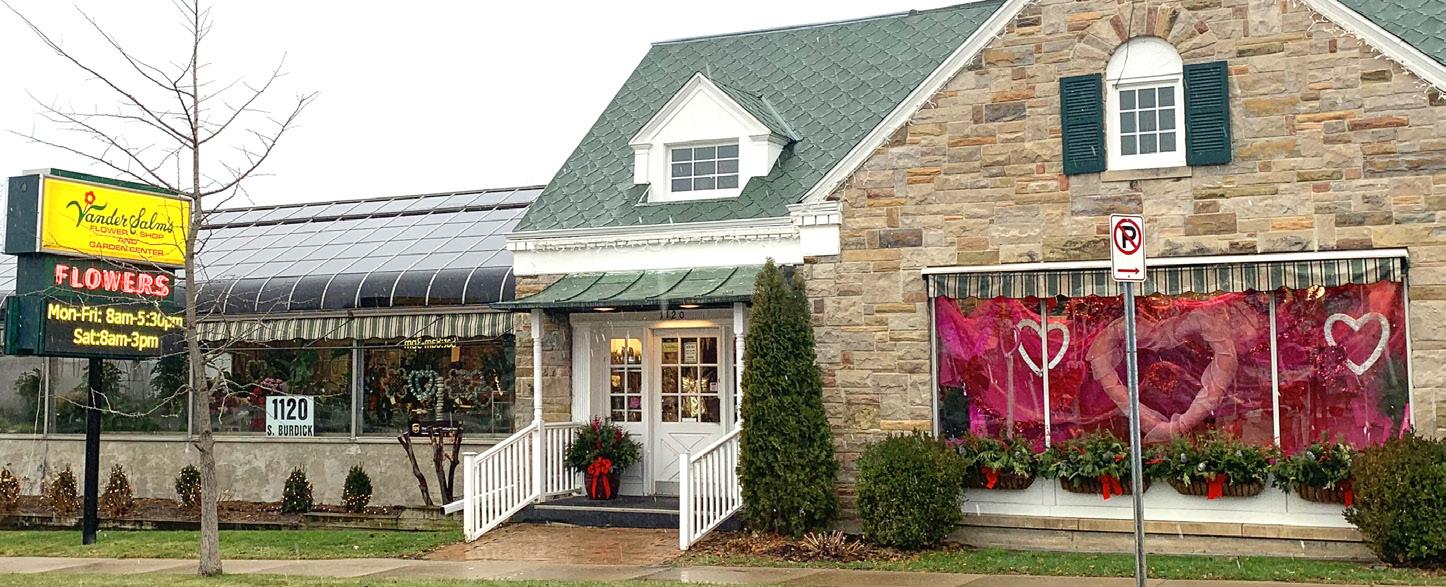
of his family and for the Kalamazoo Community. The business he founded in 1910, Vander Salm’s Flower Shop & Garden Center at 1120 South Burdick Street in Kalamazoo, has continued as a family-owned, familymanaged business for more than 115 years.
To put the longevity of Vander Salm’s business into some chronological perspective, well over half of all U.S. presidents have served since Jacobus arrived in Kalamazoo in 1883, when Chester A. Arthur was president, and 20 new presidents have taken their oath of office since
flower shop in 1910, when our 27th president, Wil-
let in light for keeping plants healthy and thriving.

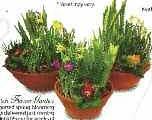





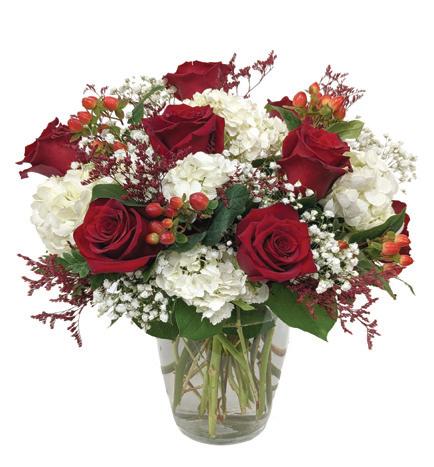
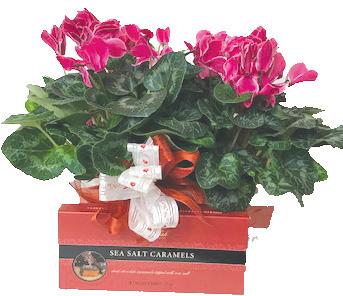





Every mass migration of people has had its center of attraction, whether it was gold in California in the mid1800s, iron and copper in Michigan’s Upper Peninsula in the late 1800s, or the promise of work in the Motor City early in the 20th Century. For the Dutch immigrants, it was the earth itself. Many Dutch immigrants who came to Michigan had originally planned to continue west to fertile regions in Wisconsin or Iowa, but stopped when they discovered the rich soil of southwest Michigan, including the black muck in Kalamazoo that was perfect for growing certain vegetables and flowers.
Vander Salm’s current vice president, Ned Vander Salm, says that when great-great-grandfather Jacobus arrived in Kalamazoo in 1883, he found work at Brill Gardens, close to where Vander Salm’s is located today. That area, in the vicinity of South Burdick, Wall Street, and West Crosstown Parkway, was marshland. At Brill Gardens, Jacobus developed expertise in growing celery and pansies, two crops that thrive in the rich black soil in the area. After years of hard work, Jacobus purchased the business from the Brills and created his own business. It didn’t take long for it to prosper. By the early 1920s, he had built up the business, remodeled the building, and added large greenhouses with a boiler plant.
The flower shop that customers visit today opened in the summer of 1941, five months before the attack on Pearl Harbor. The main showroom is decorated beautifully for the season and is a great place to buy flowers, candy, and other gifts. The glass walls of the shop’s conservatory
Male and female family members alike have worked hard to maintain the store’s level of quality and service. Founder Jacobus’s sister, Adrian, known as “Aunt Jennie” to many, worked at Vander Salm’s until she was 92. She personally inspected floral arrangements before they went out the door to be delivered. From the family’s fourth generation, Ned’s mother, Cathryn, was actively involved in the business, including the creation of displays. Ned’s father, John, is the owner of Vander Salm’s.
In 1982, the hard work and care shown by the Vander Salm family and their employees resulted in the business being named in the top 1percent of all florist members worldwide by Florists’ Transworld Delivery (FTD), the international floral sales and delivery network.
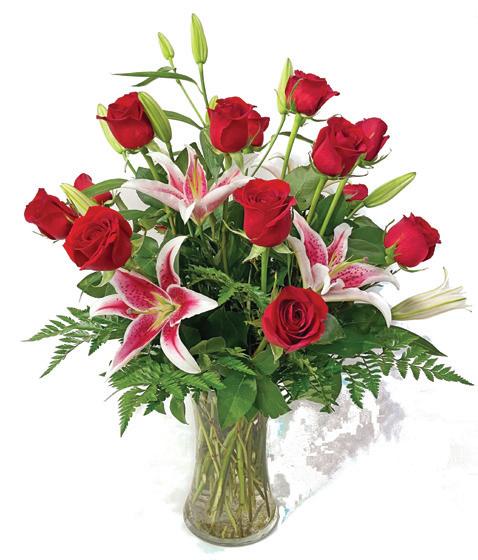
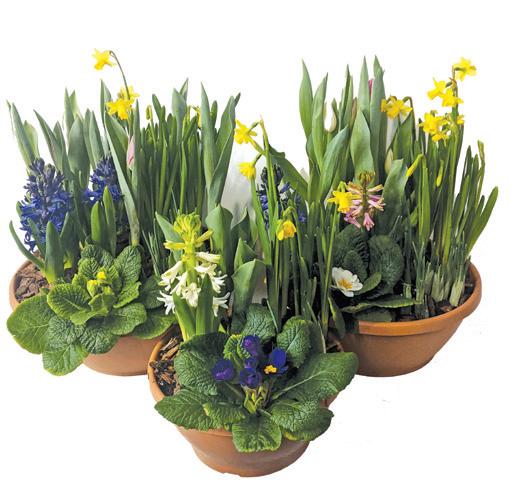
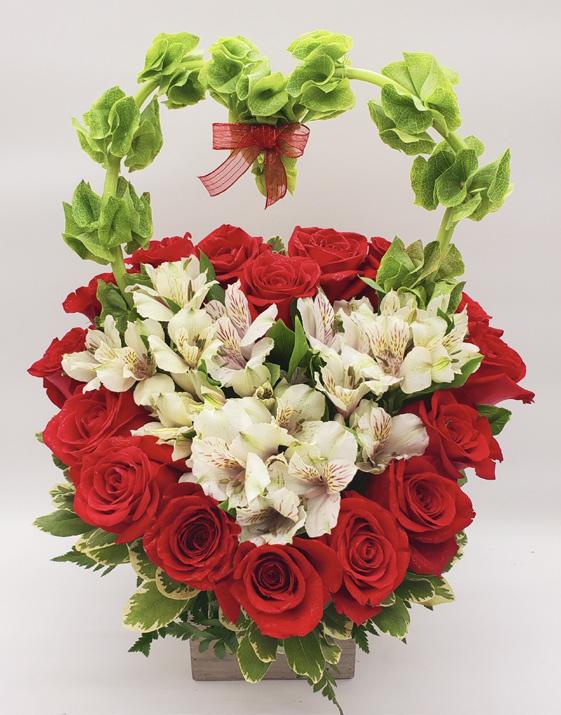
Ned Vander Salm says that Valentine’s Day is the busiest event on their annual calendar. In addition, the shop carries arrangements for anniversaries, birthdays, graduations, get well wishes, new babies, new homes and housewarmings, memorials, thank-you messages, weddings, and custom arrangements for any occasion.
Tony Ettwein HistoryZoo1837@gmail.com
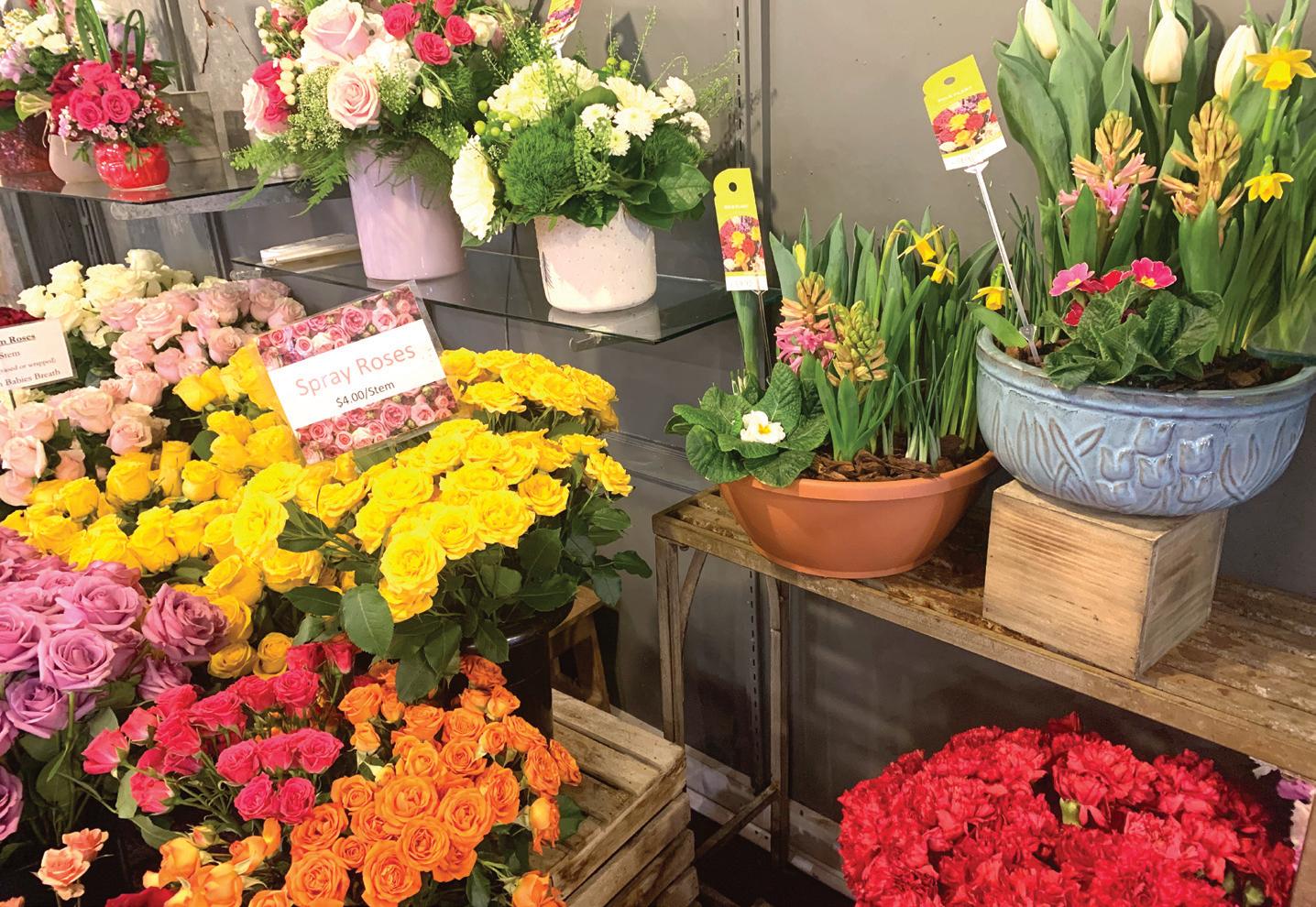
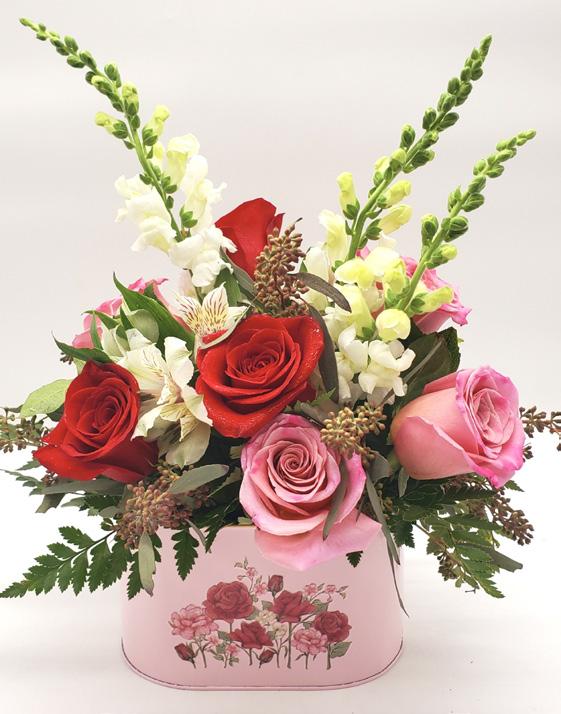
A. Fresh Arrangements and flowers are ready for any occasion at Vander Salm’s.
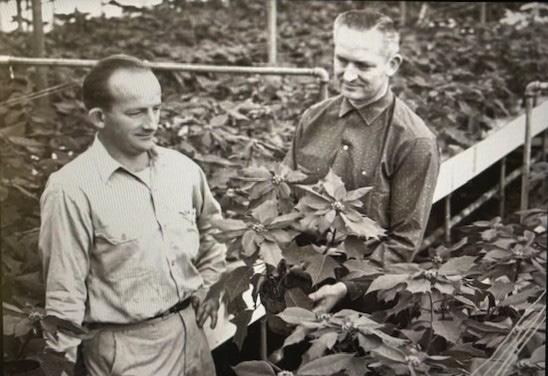
B. Second-generation Jacob and third-generation James Vander Salm tend to plants in the greenhouse
courtesy Vander Salm’s Flower Shop and Garden Center
C. Vander Salm’s storefront at 1120 South Burdick in Kalamazoo
I love when I discover an incredible source for ingredients that can also make us feel good, especially when they also have ties to our great state of Michigan. Such is the case for Holy Wow Cacao, a ceremonial grade single origin cacao producer and distributor that was founded by Mat Chandler, a young man with Michigan roots that found healing and a whole new direction in life thanks to cacao!
“Right after I graduated from college,” Chandler said, “with a double masters in architecture and business, my mom passed away from cancer and it wrecked me. Turning everything on its head, and making me rethink my life. I was twenty-sixyears-old at the time and didn’t know how to handle it.”
After a few years of depression, Mat found relief through alternative medicines and healing techniques, which included yoga and meditation. “It led me to open a healing arts center in Gainesville, Florida but then, at age twenty-nine, I discovered the power of ceremonial grade cacao and it changed my life forever!”
Experiencing the power of cacao first hand motivated Mat to start holding cacao ceremonies for others. “I could feel a weight lifted from me,” he sighed. “It was such an eye-
opening and uplifting experience for me that I had to make it a part of my life, so six and a half years ago I sold everything I owned and moved from the U.S. to Guatemala, so I could work with cacao.”
Founding Holy Wow Cacao, Mat created a company that focuses on producing ceremonial grade organic cacao in its purest form. Being new to ceremonial grade anything I had to look it up to better understand what it means.
Differing from commercial chocolate by its purity, ethical sourcing, and intentional production to preserve its ‘heart-opening’ properties, ceremonial grade cacao is a minimally processed, high-quality paste made from pure, organic heirloom (Criollo or Trinitario) cacao beans that have been grown in harmony with nature, respect for the land, and fair compensation for farmers, often with specific intentions for healing and connection, so the cacao won’t have any negative energy attached to it.
The beans undergo a light roasting and traditional grinding (often with
stone wheels) to preserve nutrients and compounds like theobromine and anandamide, which promote both focus and joy, and once ground into a 100% pure cacao paste, no sugar, milk, or fillers are added, so it remains pure and able to be used in ceremonies, for meditation, selfreflection, and enhancing creativity. Conversely, the typical cacao we see made into grocery store chocolate and cocoa can be made from any grade of bean from any source and typically heavily roasted, fermented longer, then processed with high heat to extract the majority of its cocoa butter, which also removes the beneficial compounds, flavor complexities, and its many uplifting powers.
“It’s because it still has all its powers intact that ceremonial grade cacao is such an epically-delicious heartopener,” Chandler said.
Appreciating what cacao has done for him, Chandler has made it his mission to help others find the same peace that cacao has helped to bring him.
“I travel the world teaching others

about the benefits of cacao and how to use this powerful plant medicine as a therapeutic ally. I am grateful to help others find themselves, to reconnect to their spirit like ceremonial grade cacao has done for me and countless others, too!”
To find out more about Holy WOW Cacao and get more recipes, check out: holywowcacao.com. I cannot think of a better way to celebrate Valentine’s Day (single or with someone) than by indulging in a cup filled with the awesome, uplifting powers of pure cacao, or even a quality cocoa if that’s on hand.
Here now is Chandler’s ceremonial grade drinking chocolate and recipe along with others to help us all get a lift from cacao or cocoa. FYI: To convert from cocoa powder to solid unsweetened cacao (or unsweetened baking chocolate), use a ratio of 1 ounce of solid cacao for every 3 tablespoons of cocoa powder, then melt solid cacao.
Enjoy and Happy Valentine’s Day!
Laura
Kurella Photographer Laura Kurella
Laura Kurella is an award-winning home cook who loves to share recipes from her Michigan kitchen. She welcomes comments at laurakurella@yahoo.com.










1 cup cocoa powder
(or 6 ounces melted cacao)
1/2 cup unsalted butter
1/2 cane sugar
1-teaspoon pure vanilla extract
In a microwave-safe, 2-cup glass
measure, combine cocoa, butter, and sugar then microwave for 30 seconds.
Remove and stir then continue to
microwave in 15 second increments until butter and sugar are melted.
Add vanilla, blend well, then begin dipping strawberries into it.
Place dipped berries in candy wrappers or on a parchment sheet.
Place dipped berries in the refrigerator until serving.
Good for about 2 to 3 days.

2 cups cold heavy cream
2/3 cup sifted unsweetened cocoa powder
(or 5 ounces melted cacao)
2/3 cup sifted powdered sugar
1 teaspoon pure vanilla extract
1/4 teaspoon sea salt
Garnish (optional): Whipped cream, chocolate shavings
Place your mixing bowl and beaters in the freezer for 15-20 minutes to
help the cream whip better. Once chilled, in the bowl combine the cold heavy cream with cocoa powder, powdered sugar, vanilla, and salt. Mix on low speed to combine, then increase to high speed and beat until stiff peaks form, about 1-2 minutes. Spoon into desired serving dishes, garnish, if desired, then refrigerate for at least an hour before serving.




What started as a neighborly friendship spawned into a movement to utilize a shared love for art for greater activism. Michael Zutis, 31, and Elena Pulliam, 23, first met in the Vine neighborhood during neighborhood porch gatherings. Sharing a love for music, Zutis saw Pulliam as a “young art-adjacent person” and “felt an impulse to push [her] in a direction that would benefit her and the greater community.” Zutis, the music director at St. Thomas Parish, had been organizing concert benefits after being inspired by Columbia’s “Batuta” program which offered music education to disadvantaged children, focusing on traditional Colombian instruments The program’s slogan stuck with Zutis: “We’re going to change the world one note at a time.”
Zutis had also noticed political graffiti in Kalamazoo with the tag Slava Ukraini, or “Glory to Ukraine,” after Russia invaded Ukraine in 2022. Answering an internal necessity to help, Zutis organized a benefit concert called “Slava Ukraini” in which musicians in the greater Kalamazoo area volunteered to play Ukrainian compositions. What Zutis didn’t expect was the huge turnout and shocking $5,500 in donations. He knew that this blend of art and activism could be something much larger and increasingly successful. Following this success, Zutis organized the Jonathan Cook memorial concert and the Clean Water for the World benefit.
Zutis wanted to continue organizing benefit concerts but knew that he couldn’t maintain this momentum alone. He told Pulliam about the concerts he had been directing and asked if she would be interested in creating a nonprofit together. As well as wanting to guide Pulliam’s musical talent, Zutis believed that she was a strong choice to lead due to her degree from Kalamazoo College in Art History and Women, Gender, and Sexuality studies. Despite slight hesitation, Pulliam knew that “It would’ve been wrong not to say yes.” From then on, Arts in Action was official with Zutis leading as President and Pulliam as Vice President.

The duo asked other Kalamazoo artists to join Arts in Action. They immediately said yes. “That was a shock for sure, but it was also a relief that other people are seeing what I’m seeing [regarding the state of the world] and are also not okay with it. I wasn’t the only one.” Zutis and Pulliam shared their concern about so much negativity in the world and feeling helpless, yet realized through their nonprofit that any action is worthwhile.
For their latest concert, Samud, in November, they partnered with Kalamazoo Nonviolent Opponents of War (KNOW) to raise money for a Palestinian refugee in Ypsilanti. This concert was a big step for Arts in Action. Pulliam invited local visual artists to sell their work and donate a percentage of the proceeds as well as hosting a concert. While being new
and scary territory, the music and art benefit was successful, raising more than $2,200. It proved that Arts in Action was capable of expanding to larger projects. “Part of what I love about Arts in Action is how serendipitous it becomes,” Zutis said. “It’s like, one person tells somebody else and now I learn about a skill that I didn’t know this person had and now they’re part of this circle too. There’s this artistic energy happening in Kalamazoo… And all it needs is someone to just direct it a little bit.”
Arts in Action is planning their next event, “Safe Harbor,” a concert at the First Congregational church in downtown Kalamazoo on February 13. The concert will raise money to help pay bills for people at risk of being evicted, thus aiming to prevent future homelessness by breaking the cycle that would put disadvantaged
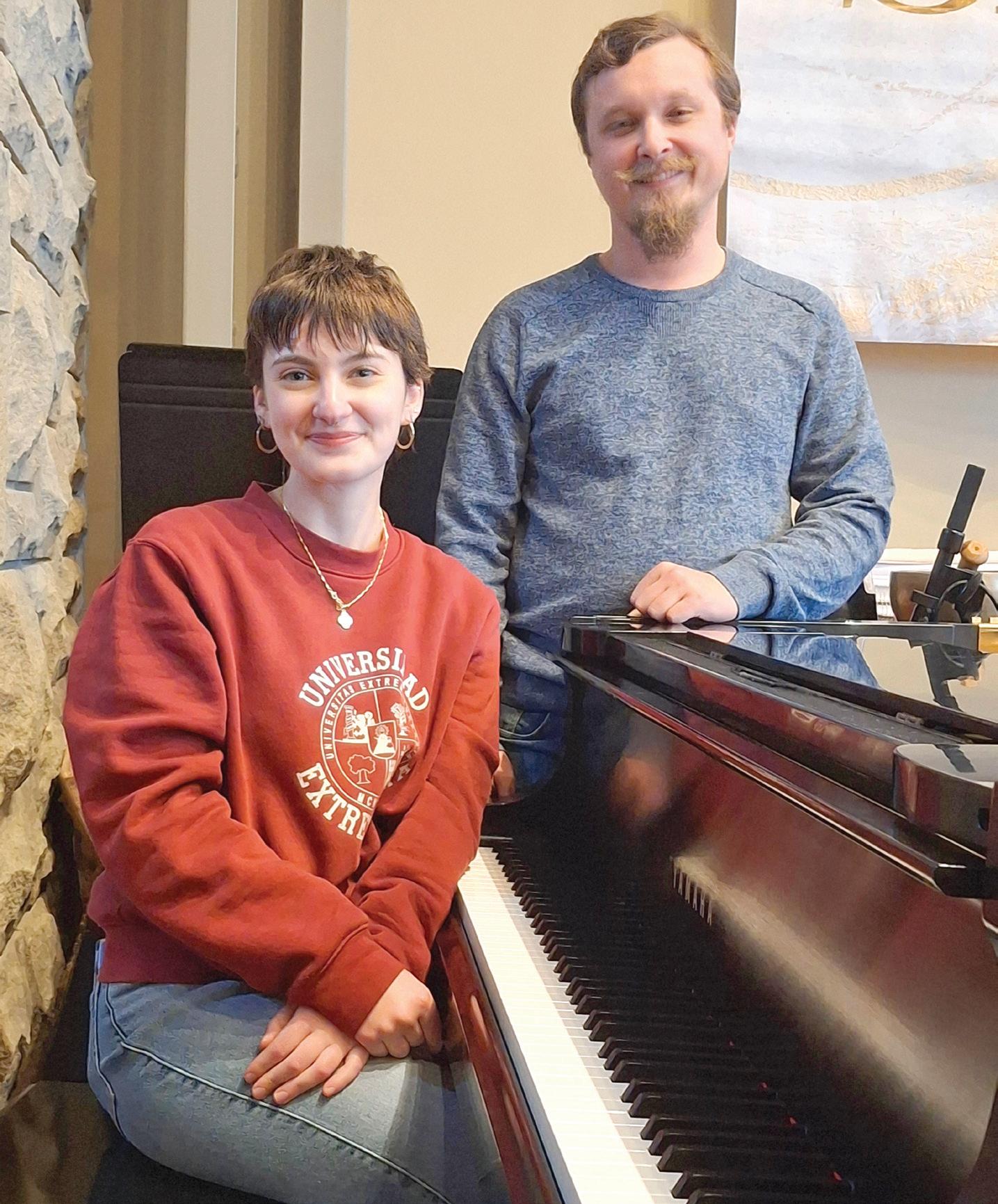

people on the street in the first place. While Arts in Action usually aims for themed musical pieces, this benefit will feature a variety of artists and compositions, featuring Claire Tong and Zutis playing Frédéric Chopin ballads, the Gospel Voices of WMU, and Pulliam performing Erik Satie’s “Gymnopédie 1, 2, and 3.”
A reception will follow with baked goods and artwork for sale. The show will start at 7 p.m., and while admission is free there is a suggested $10 donation.
Arts in Action is also aiming to split into two chapters so it can accomplish more in a year by planning and presenting separate benefits under the Arts in Action name. Ideally, Zutis would lead one group and Pulliam would lead the other. Zutis hopes that he can start new chapters of Arts in Action around the country, and has already been in communication with activists in Baltimore, Seattle, and San Francisco. “I think just continuing to push forward with this momentum that we have [is the next step],” Zutis said.
“There’s a lesson in this about how we all think that we’re powerless, but really we’re not.” Zutis said. “There’s power in community. There’s power in the individual talents that people have all coming together in one place.” That power is felt when watching Zutis and Pulliam work together, especially at their benefit concerts. Kalamazoo is honored to have these figures working hard to better and unite their community.
Carson Williams




I’ve spoken to several people that routinely ask either Google AI or ChatGPT questions related to nutrition and health. I’m uncertain as to whether the advice is received with skepticism or adhered to. I’m aware that robotics play an increasing role in surgery but providing medical advice? Let’s look at this a little closer.
I came across an article that addressed exactly that in the January 2026 issue of Nutrition Action, published by the Center for Science in the Public Interest. It’s a publication that I’ve learned to trust. It offered guidance for consulting ChatGPT for answers on health and nutrition in case you’re inclined to try it.
Ask for ChatGPT’s evidence. Let’s say you ask: “What foods can lower the risk of prostate cancer?” You can follow up with a question like “What’s the evidence for your advice?” The ChatGPT then supplies a list of studies that appears impressive, but there’s no guarantee that those studies are the most trustworthy.
Check the sources. Click on every link citing evidence. Don’t be too surprised to find mistakes. For example, some studies actually contradict ChatGPT’s advice. I’ve found that some studies quoted were actually on the wrong topic. If a source is quoted, like the American Cancer Society, make sure the advice is actually from

there. Some excellent studies are missed entirely.
ChatGPT aims to please you, the questioner. For example, if asked the question “what foods can lower the risk (insert illness)?” ChatGPT rarely answers “Sorry, foods can’t help.” Like any expert, it likes to show you that it has an answer. But the answer may not be accurate or even misleading. Ask for contradictory evidence.
Try “What evidence contradicts your advice?” This may result in hedging,


resulting in answers like “here’s where the evidence is inconclusive.”
Another tip is to repeat the same question to see if you get the same or different answers. Sometimes ChatGPT will say “ChatGPT can make mistakes.” Good to know.
Here is an actual case in which ChatGPT was asked “What foods can lower the risk of osteoarthritis?”
ChatGPT cited “fatty fish rich is omega-3 fatty acids which reduce joint inflammation and stiffness.”
It cited a review of six clinical trials involving 454 people as evidence. However, peer review indicated that results from the trials was low quality evidence and did not meet criteria for clinical guidance. Worse yet, ChatGPT missed the VITAL study (of which I was a participant) which gave 1,398 people with knee pain fish oil every day for five years or a placebo for the same duration. Pain scores? No difference between the fish oil and the placebo.
Chatbot also suggested low-fat dairy for its vitamin D, saying that low levels of vitamin D are linked with increased osteoarthritis pain and progression. The VITAL study randomly gave the same 1398 people 2,000 IU of vitamin D a day for five years. Result? Those who received vitamin D reported no less pain than those who received a placebo.
What’s one to make of this? There will likely come a day when AI will provide better medical information consistently and be a genuine resource for those who have difficulty accessing good medical information. But it seems we’re not there yet. Till next time. Make your day and someone else’s day great!
Ken Dettlof ACE Personal and Brain Health Trainer








As I sit down to write this month’s Piece by Piece, the lyrics to a song from The Sound of Music enter my thoughts. “These are a few of my favorite things.”
I remember pink, white, and red construction paper, a pencil, crayons, glue, scissors absent of sharp pointed blades, and a stapler, should the glue need reinforcement. These were the supplies needed for making a large envelope to tape to a desk in anticipation of receiving valentines from each classmate.
Two pieces of construction paper were glued along the edges on three sides and decorated with the outcome of folding construction paper in two, tracing a half ear shape on one side, and then using scissors to cut along the pencil shape we had just traced so that when the folded paper was opened, wa-la, a heart! These handmade envelopes were perfect holders for approximately twenty-four small 4” x 5” cards hand-signed by each
student either in neat print or cursive. After all, the class was studious when it came to applying good penmanship learned and practiced on one inch line-ruled paper.
I cannot recall boxes of chocolate being a part of our classroom holiday celebration, but certainly there was an abundance of “be mine,” “forever,” “be true,” “first kiss,” and “love you.” Heart shaped candy in pastel colors and do I remember each held a different flavor? Something tells me it was simply the sweet sugar in each bite.
When snowmobiling was our favorite pastime, February was when we would take our annual trip to the U.P. A cabin rental, a week-long riding excursion, and hundreds of miles rode in that same five days in which by the end, when we collapsed into bed after a fun day’s adventure, we felt as if our bodies were still bouncing up and down from woops on the trail we had rode so much.
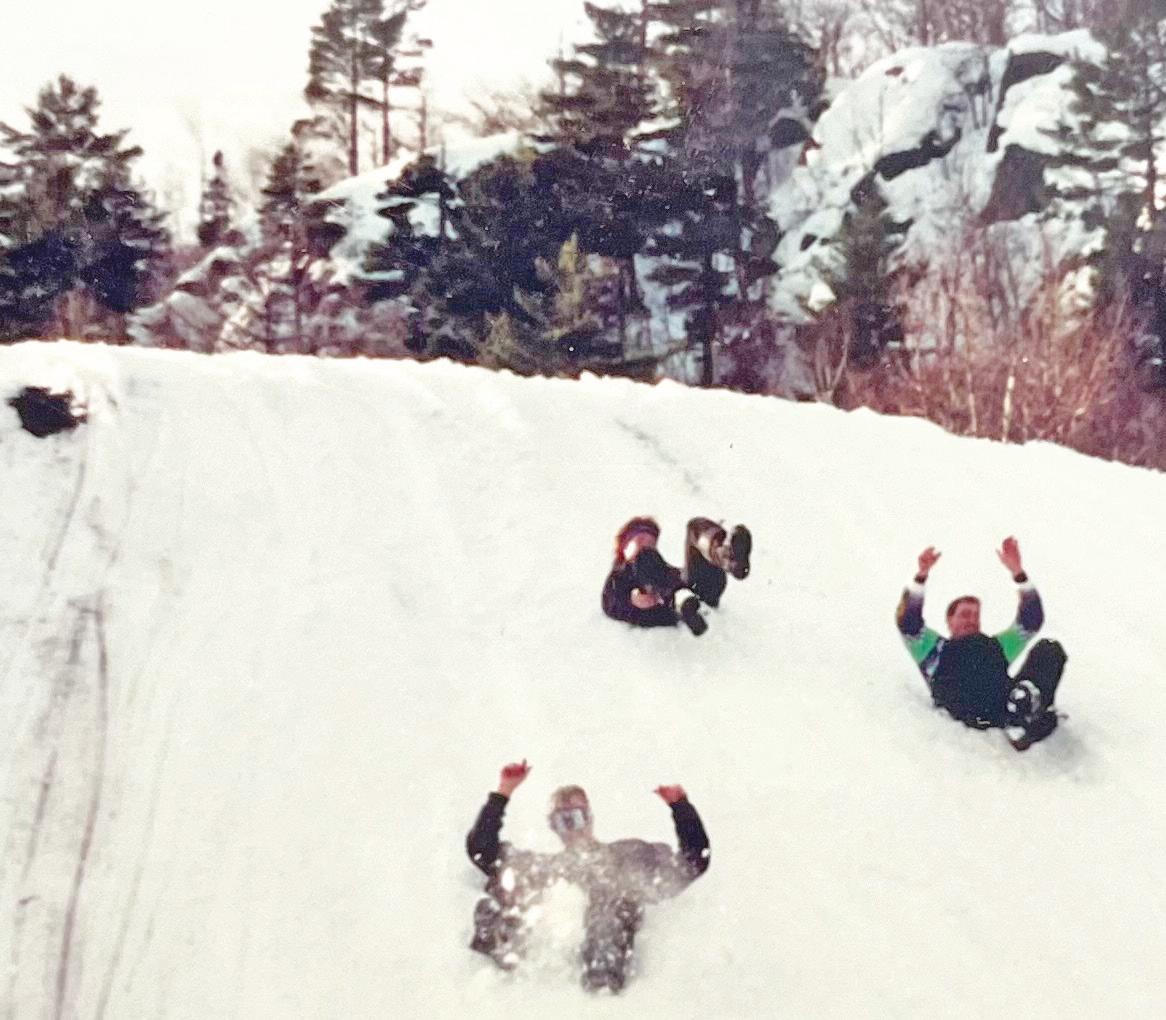
What began as a first trip in Paradise on the east side of upper Michigan became Munising then Christmas and ended up becoming an annual trip to the Keweenaw Peninsula. It was on our travels to Copper Harbor where my husband and brother-in-law and others who felt brave and daring would endeavor with their snowmobiles to climb Mount Bohemia in Lac La Belle before this mountain became a ski resort. It was also where we would stop for the view at Brockway Mountain. When winter came, our work colleagues eagerly planned spring break trips to Florida for sun and heat.
They couldn’t quite understand our excitement for the three feet of snow awaiting our vacations. As much as we loved our winter trips, what we loved about coming home was that the threshold into March was a mere couple of weeks away, and we would soon be readying for the next season’s adventures like blue gill fishing. Let’s see, did we still have our dirt bikes then, too?
As we knock on February’s door, may warmth and coziness recall some of your most favorite memories.
Christine Hassing https://christinehassing.com






Financial
and Financial
and Divorcees 2025, stepping into independence, whether as a young adult or someone rebuilding after divorce, it’d no longer the simple rite of passage it once was. Today’s advancing into adulthood are tackling one of the most financially challenging environments in the history of the US. Housing costs have outpaced wage growth, everyday essentials take a bigger chunk of income, and tuition debt and medical costs continue to strain budgets (U.S. Census Bureau, 2024; U.S. Treasury, 2025; U.S. Bureau of Labor Statistics, 2024). These shifts mean the paths earlier generations relied on, such as affordable rent, more reasonable college expenses, or entering the housing market early, have fundamentally emerged.
The story doesn’t end with financial constraints. Across the country, young adults and newly divorced individuals are validating extraordinary adaptability. Many are budgeting with intention, delaying major commitments strategically, prioritizing mental health, diversifying income streams, and redefining what stability looks like in a modern context. What might appear as “being behind” from an older perspective is actually a highly rational and resilient response to an economic strains transformed over decades.
Despite the challenges, countless individuals are not only surviving — they are carving out meaningful, purpose-driven lives. Independence in 2025 is no longer about hitting universal milestones by a specific age; it is about understanding the context, protecting one’s peace, and designing a life that aligns with personal values, well-being, and realistic financial possibilities.
There are practical strategies and growth mindsets that can help the Gen Z, Millennials (Gen Y) manage, survive, and ultimately thrive.
• Budget fiercely and honestly.
Tracking income and distinguish between fixed expenses (housing, utilities, transportation) adding variable ones (entertainment, cloth-



ing, subscriptions). Identifying your “bare-minimum survival budget” builds a foundation for healthier financial choices and reduces anxiety.
• Delay big financial commitments strategically.
Buying a home used to be considered a milestone of early adulthood, but today’s housing costs and interest rates often make renting the more stable and flexible option (Newsweek, 2025). Choosing affordable rentals, adding a roommate or two, and holding off on major purchases until your income stabilizes is a responsible, strategy, not a setback.
• Boost or diversify income without burning out.
Side gigs, freelance roles, upskilling, and occasional part-time work can increase income in meaningful ways. However, financial health should not come at the expense of mental health, make sure to add time for you in each day. Strive for balance: growth without burnout.
• Prioritize essentials & minimize lifestyle creep.
Elevated food, energy, and transportation costs demand intentionality (OfficialData.org, 2025). Distinguishing between needs and wants protects your budget and mental health. Budget-friendly habits like cooking at home, simplifying entertainment, reducing impulse spending, are not signs of deprivation but tools for stability.
• Build a financial cushion, even slowly.
Emergency funds are essential in this volatile economy. For divorcees, this safety net is especially important due to legal fees, custody transitions,
“Though,
and unpredictable expenses. Even $20–$50 per paycheck adds up.
Advocate for systemic change.
This generation of young adults and divorcees are not “making poor financial choices.” They are confronting barriers such as high rent, stagnant wages, and rising costs. Supporting policy changes that increase affordable housing, promote fair wages, and reduce debt burdens helps shift the narrative from personal blame to systemic understanding.
Protect your peace.
Do not internalize shame if you are not where older generations think you “should” be. The economic context has shifted dramatically. You are navigating a world they did not know or have to endure, and you are adapting with intelligence and resilience.
• Recognize the changing economy.
The housing market, college tuition, food prices, and energy costs look nothing like they did 20–40 years ago (U.S. Census Bureau, 2024; OfficialData.org, 2025). Many of the advantages earlier generations enjoyed simply no longer exist.
• Avoid shame-based expectations.
Questions like “Why aren’t you buying a house yet?” reflect outdated assumptions. Empathy is crucial, not comparison and fosters healthier conversations across generations.
• Support relevant policy change.
Affordable housing initiatives, fairwage legislation, protections for renters, and educational access without lifelong debt benefit families and communities across age groups.
• Acknowledge resilience.
Many 20- and 30-somethings — and many divorced adults — are juggling work, debt, childcare, healing from past relationships, and steep living expenses. This requires extraordinary strength.
The idea of “moving out on your own” or “starting fresh after divorce” has transformed. Economic realities, from housing to tuition to basic living costs have reshaped the timeline and expectations around independence. For many young adults and individuals undergoing major life transitions, the financial burden can feel overwhelming sometimes leading to mental health concerns.
Yet independence is still possible. Through honest budgeting, mindful prioritization, supportive relationships, and deep self-compassion, people are carving out their own versions of stability. And with greater awareness, older generations can shift from judgment to empathy, recognizing that today’s challenges are not moral failings but reflections of a transformed economic landscape. Ultimately, the gap in expectations of where someone “should be” by age 25–35 is not about ambition. It’s about context. Understanding that context, and supporting one another within it, is the first step toward bridging generational divides and building more compassionate, realistic pathways forward.
Dr. Julie Sorenson, DMFT, MA, LPC, LMHC
References
U.S. Census Bureau. (2024). How the nation’s housing changed in 20 years.
U.S. Department of the Treasury. (2025). Rent, house prices, and demographics.
OfficialData.org. (2025). Food price inflation 1985–2025.
U.S. Bureau of Labor Statistics. (2024). College tuition inflation 2001–2024.
OfficialData.org. (2025). Household energy price inflation 1990–2024. Newsweek. (2025). How renters’ costs have spiraled in 20 years.

MRC Industries, Inc. is pleased to announce their new thrift store, ThriftAbility, at 5309 Gull Road in Kalamazoo. The store is designed to create meaningful employment opportunities for individuals with disabilities while generating vital funding to support MRC’s mission.
ThriftAbility opened on January 12, 2026 and offers affordable clothing, home goods, décor, and unique finds—all in support of a greater purpose. Every donation and every purchase directly contribute to empowering individuals with disabilities through skill-building, employment, and independence.
Donation hours are the same as the store hours, which are Monday –Saturday from 10am – 7pm.
“ThriftAbility reflects everything MRC stands for,” said Dan Pontius, CEO of MRC Industries. “It’s more than a thrift store; it’s a place where abilities are recognized, achievements are celebrated, and people are given the chance to thrive.”
ThriftAbility will host a grand opening celebration on Friday, January 16 from 3:00 – 6:00 PM. The community is encouraged to stop in for refreshments, meet staff and clients and browse the store for great
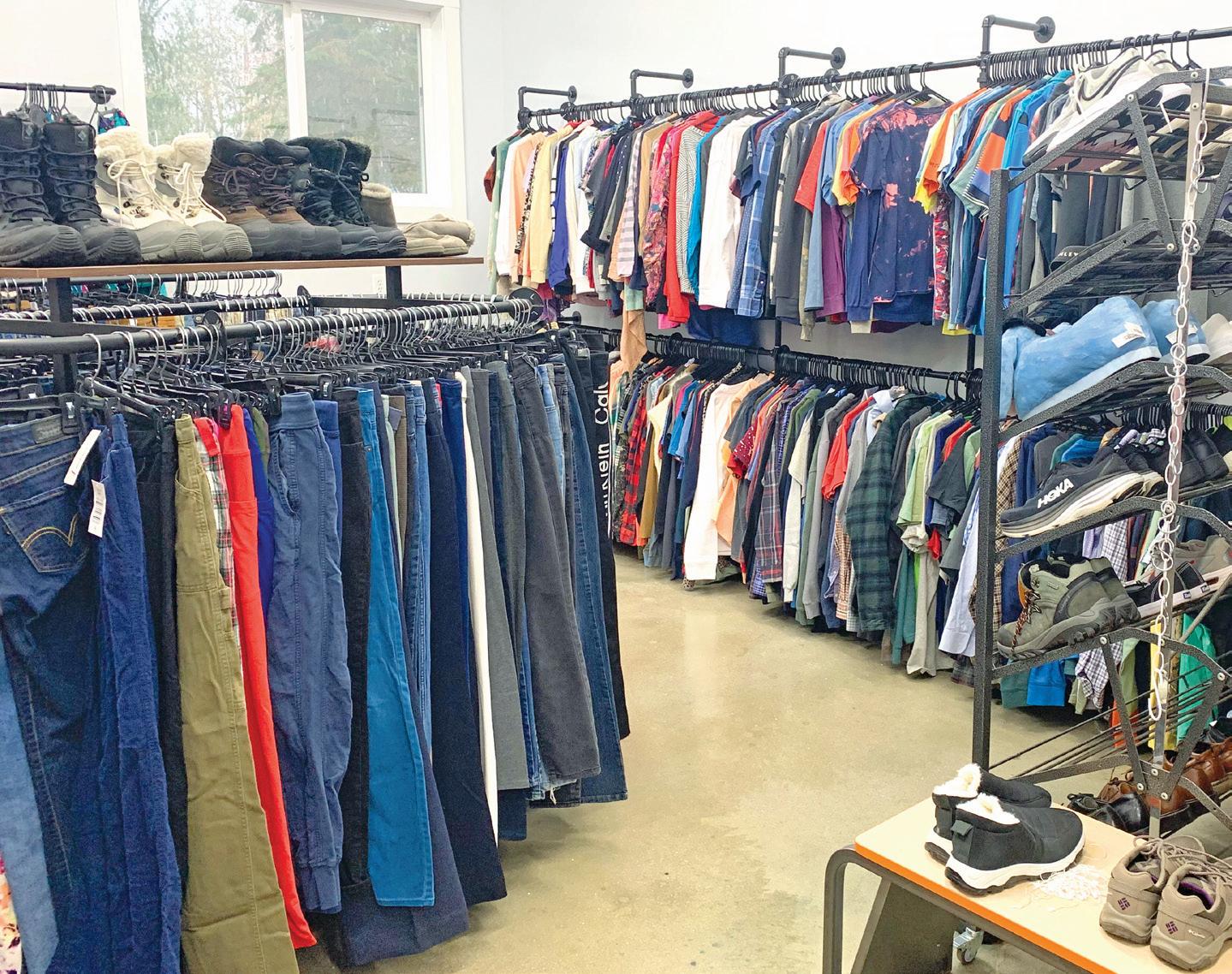
finds, all in the spirit of supporting individuals with disabilities or living with severe and persistent mental illness right here in Kalamazoo.
Located on Gull Road in Kalamazoo, ThriftAbility will employ individuals with disabilities across a variety of roles, including customer service, merchandising, donation processing, and retail operations. These hands-on experiences help partici-

pants build workplace skills, confidence, and community connections.
All proceeds from ThriftAbility directly support MRC’s programs, ensuring continued access to employment, skill development, vocational support, and community living services for adults with disabilities throughout the region.
MRC invites the community to shop, donate, and celebrate the open-


ing. More details will be shared on Facebook and Instagram (@thriftabilitykzoo).
About MRC Industries, Inc. MRC Industries, Inc. is a nonprofit 501 (c) (3) organization in Kalamazoo providing community living supports, employment, skill-building and case management services to individuals with developmental or intellectual disabilities, traumatic brain injury and/or mental illness.
MRC’s mission is to champion the potential of individuals with disabilities and mental illness by promoting equity, inspiring independence, and creating inclusive pathways to thrive within the community. MRC serves approximately 800 individuals each year with the philosophy that every person is unique, valued and entitled to be treated with respect and dignity.
Funding sources include individual and corporate donor contributions, community- wide fundraising events such as the Kalamazoo Klassic and Tacos and Tequila Crawl federal, state and local grants, Integrated Services of Kalamazoo and other community mental health agencies, United Way of Southwest Michigan, and donations to the Annual Campaign and Endowment.
Burger & Fries
Topped

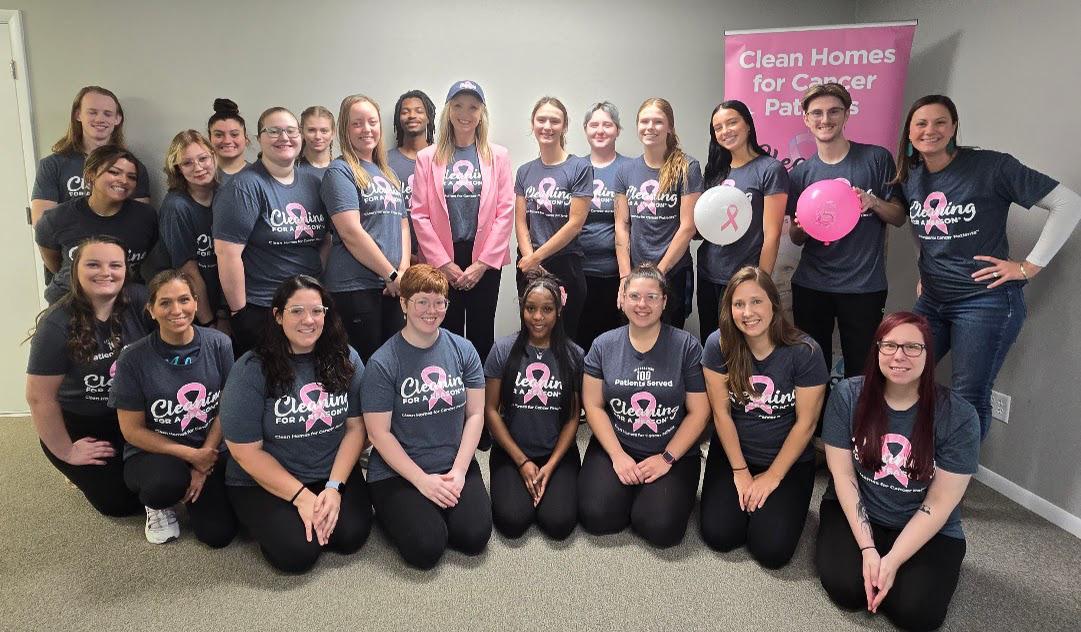
From a laundry-room startup to 30+ employees across two cities, Jeannie Cleaning marks a decade of growth, resilience, and service — including supporting nearly 200 cancer patients through Cleaning for a Reason.
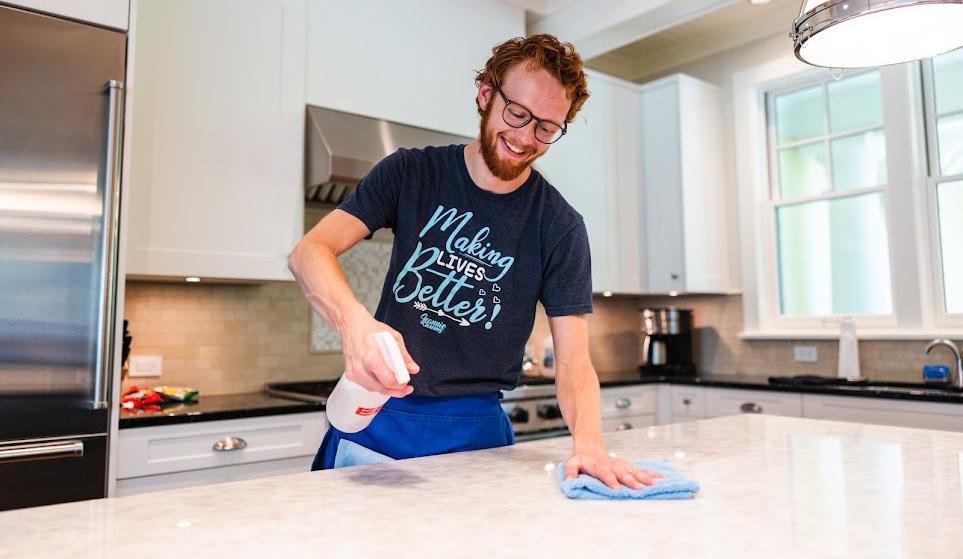
This year, Jeannie Cleaning celebrates a milestone that many small businesses never reach: ten years in business. While nearly half of new businesses close within five years, the locally owned house cleaning company has not only survived — it has flourished, expanding to two locations, building a 35-person team, and serving thousands of homes across Southwest Michigan.
The company’s roots trace back to an unexpected new beginning. After decades of running more than 30 franchise restaurants, owners Jeannie and Terry Henderson faced a devastating credit-card hacking incident that wiped out their business. In 2015, seeking stability and a fresh start, they purchased a small, growing cleaning company and began running it from their laundry room with just three employees.
“Starting over wasn’t part of the script we imagined, but it became the most meaningful chapter of our lives,” said founder Jeannie Henderson. “We went from taking client
calls between loads of laundry to building a team of more than 30 incredible cleaning professionals. Every step taught us, stretched us, and reminded us that rebuilding can create something even better than what came before.”
She added, “This journey didn’t just change our lives — it opened the door for us to help many others. We became a partner with Cleaning for a Reason in 2017, and since then have cleaned for nearly 200 cancer patients. Through my work as a Master Coach with Cleaning Business Fundamentals, I get to support other cleaning business owners in building companies they love. And with the launch of our new manufacturing company, JeannieCo, I’m creating tools and supplies designed by a cleaning professional especially for house cleaning professionals.”
Over the last decade, Jeannie Cleaning has grown into a trusted name in Kalamazoo and Grand Rapids, marked by clear systems, strong leadership, and a mission that guides every decision: Making Lives Better. That mission extends far beyond client homes. Since becoming a Cleaning for a Reason partner in 2017, Jeannie Cleaning has served nearly 200 cancer patients and donated more than $69,000 in free



cleanings, earning national honors including Triple Star Awards and recognition as a Top Partner. Jeannie is also celebrating reaching their $10,000 Cleaning for a Reason fundraising goal during their 10th Anniversary week.
In addition to expanding its service footprint, Jeannie Cleaning has played a growing role in strengthening the industry itself. Henderson’s work as a Master Coach with Cleaning Business Fundamentals and her launch of JeannieCo, a residential cleaning tool company, in 2025 continue to support and elevate cleaning professionals nationwide.
• Expanded from 3 employees to 30+ cleaning technicians
• Built a 6-member leadership team
• Now operates two locations: Kalamazoo and Grand Rapids Community
The Salvation Army, Jericho Foundation, Moms Bloom, Jesus Loves Kzoo, Gryphon Place, SPCA, First Day Shoe Fund, Twelve Baskets, Aacorn, Miracle League Field, Sunset Lake PTSO, West Portage Little League, Heart for Home, Commu-
nity Healing Center Roofsit, Go Red For Women, Kalamazoo Country Day School, Big Brothers Big Sisters, YMCA, Kairos Dwelling, and more. Awards & Recognition:
• Comcast RISE Grant Recipient (2025)
• NextDoor “Neighborhood Fave” (2022–2025)
• Do-Dah Parade First Place Winner (2023 & 2025)
• Top 10 Platinum Partner & Triple Star Award, Cleaning for a Reason As the company enters its second decade, Henderson says the most rewarding part of the journey has remained the same: “We get to serve people. We get to create good jobs. We get to make lives better. Ten years later, my heart is full. We’re still grateful, still growing, and still spreading a little sparkle wherever we go.”
About Jeannie Cleaning
Jeannie Cleaning provides professional, caring house cleaning services and is locally owned and operated by Jeannie and Terry Henderson. What began as a small laundry-room startup has grown into a two-location company with more than 30 employees, united by the mission to Make Lives Better. Learn more at www.jeanniecleaning.com.


Back in my teaching days, I always started biology class with the ecology unit. It was a great way to ease into the year by taking a bigpicture view. My preference was to introduce the idea of conservation of both matter and energy as fundamental concepts for understanding not just the living world but the entire universe. You know, energy can neither be created nor destroyed, only converted from one form to another. The laws of thermodynamics further state that these conversions are never efficient and that each energy conversion involves the degradation of the source into what we want (usually to do some kind of work) and heat. If we’re trying to cook dinner, we want the heat, but make no mistake, much of that heat is wasted, not frying our pork chops.
Heat has been on my mind a lot lately, not because it’s January and cold outside. It seems that every day there’s another community doing battle with companies and local zoning authorities over the purchase of land to build a data center that will help meet the ever-growing requirements of artificial intelligence (AI). I don’t think anyone needs to be much of a genius to see that demand for greater digital intelligence and the global appeal of using data for decision-making are here to stay and only stand to become more prevalent in the days ahead. And those days are approaching more quickly than many of us can adapt to.
It’s not my intention to discuss the pros and cons of AI or advocate for more or less, larger or smaller data farms as a means to handle what is quickly becoming an insatiable need. Like any new or predominant technology, there will be lots of growing pains as we accommodate, adapt, and eventually learn to exploit this data technology to our benefit. I remember my husband bringing home an Apple IIc computer and telling me it would revolutionize my life by giving me a central place to store my recipes. Really?? Wasn’t that what my little 3x5 notecard box was for? It turned out that he was right, but not for the recipes. I can’t imagine my life without all my digital devices now. Email? Cell phones? It feels like I’ve seen it all. AI promises to dwarf such revolutionary technologies in ways that I can’t even begin to fathom. But at a cost, to be sure. I read online (so take that for what it is…) that using AI to compose an email requires 10 times the electrical energy as it would to just write it yourself.
Data farms, or centers as they
are more correctly called, are literally buildings that house powerful computer servers that receive, store, and integrate information. The servers may be interconnected with each other as well as to other large and small groups of servers. If you use YouTube or Netflix (or any other streaming service), consider that you have access to hundreds of thousands of video selections at your fingertips at any time. Make a selection and, like magic, it arrives - ready to watch on your laptop or iPad. All of the data that makes up those video files and allows them to be sent to you and to whomever else in the world wants to watch the same video is housed on servers, probably in data centers like the ones we are talking about. When you upload photos to your “cloud” account, they are stored on a server in a data center somewhere. It’s not up in the sky on a fluffy aggregate of water vapor; it’s in a building, who knows where. Your banking information – the same. And let’s not even think about governmental data, although I hope it is secure (whatever that means!).
The ability to store vast amounts of information appears to be almost limitless. Artificial intelligence takes all this information many steps further. Data is inputted and stored, then processed, enabling the machine to develop models that recognize and distinguish patterns based on this voluminous information. AI then refines the models to take in new data, and, based on past experience, propose and predict outcomes, changing assumptions as input varies. This is called inference, the ability to “learn” from the past and “predict” the future. This inference stage of data processing is particularly energy-intensive, as it requires many data iterations to identify patterns and adjust outcomes as new inputs change. Think about how efficiently we are able to do repetitive tasks, but how hard it is for humans to learn new skills. Then multiply that effort by a gazillion! Suffice it to say that we need data centers – and that most people don’t want to have them in their neighborhoods. It’s not too different from the reaction of many communities to any new facility that seeks to establish a presence in the area. Unlike a pig farm or an auto plant, people want to be surrounded by wide open spaces, clean air, wildlife, and abundant water. Just as an agricultural farm requires fertile soil and a combine, data farms require electricity and water – and LOTS of both, with no interruptions in service allowed.
These banks of computer servers, running 24/7, 365 days a year, generate a lot of heat due to electrical resistance as current flows through the digital circuitry. As we know from thermodynamics, energy conversions are inefficient. Many servers utilize only 20 to 30 percent of their capacity actually processing data – the rest of their energy consumption is lost as heat. The annual electrical requirement to power a relatively large data center comprising many connected units is estimated to be in the neighborhood of a gigawatt (GW), which is a billion watts. According to reliable sources, a power plant—such as one potentially owned by Consumers Energy—could supply close to a million average households for a year with a gigawatt of power. That’s a lot of electricity - much more than our current infrastructure can support. A data center would require significant upgrades to almost any electric power grid to reliably supply that level of power on a continuous basis. Energy suppliers must make tough and potentially expensive decisions about how to meet the demands of such a system. “Clean” (non-carbonbased) energy sources, like wind and solar, don’t yet have the capacity or reliability at this scale to meet such demands, so “net zero” energy pledges are not feasible if data centers are to be a major consideration.
Then there are the water requirements. All those little microcircuits, emitting tiny bits of waste heat, result in temperature rises that require cooling to prevent overheating the fragile systems, or else the equipment will malfunction. This cooling is frequently accomplished by evaporative cooling. Water, an excellent heattransfer fluid, is circulated around the server system to draw heat away from the equipment. The warmed water is vented to the outside, where it evaporates into the atmosphere. If you’ve ever seen steam rising from a factory or energy facility, you’ve seen evaporative cooling. The problem is that the steam is carried away by wind currents and not redeposited into local bodies of surface water or aquifers, depleting them of the natural recharge they would normally receive. Again, my Google AI source estimates that data farms require between a quarter million and three million gallons of water per day to meet cooling needs and maintain operations. To gain perspective, the huge aquifer that supplies our city water can comfortably supply 270 million gallons daily, primarily because it is recharged by nearly 100
billion gallons of rain and snowmelt each year. To draw and lose a million gallons per day, if it is not replaced, could, over time, result in serious depletion of our local supply and require many new, deeper wells to be drilled.
To reiterate, the need for such data facilities is undeniable, and they will certainly be built somewhere. Michigan, with its long seasonal stretches of cool, temperate climate and abundant water resources, makes our locale a desirable target for these important centers. Like innovative technologies of the past, there must be solutions to the environmental problems that they pose. These problems can be overcome, I think, but it will require a long-term partnership among regional, state, and local governments, working with private industry, to implement significant investments that will benefit everyone involved. Change is coming fast, and practical technological solutions are lagging at present.
In researching this article, I used several useful resources listed in the document linked via the QR code. Please review them and share your informed opinion with our elected officials, who will make key decisions that will impact our communities for decades.
Data scientists had a farm. AI-AIO
And on this farm, they had big bytes. AI-AI-O
With a gigabyte here, with a megabyte there, Here a byte, there a byte.
Everywhere a data byte.
Data scientists had a farm. AI-AI-O
Apologies to Thomas d’Urfey (original author)
Cheryl Hach
Retired Science Teacher
Kalamazoo Area Math and Science Center
To access references for this article, pleas scan the attached QR code.

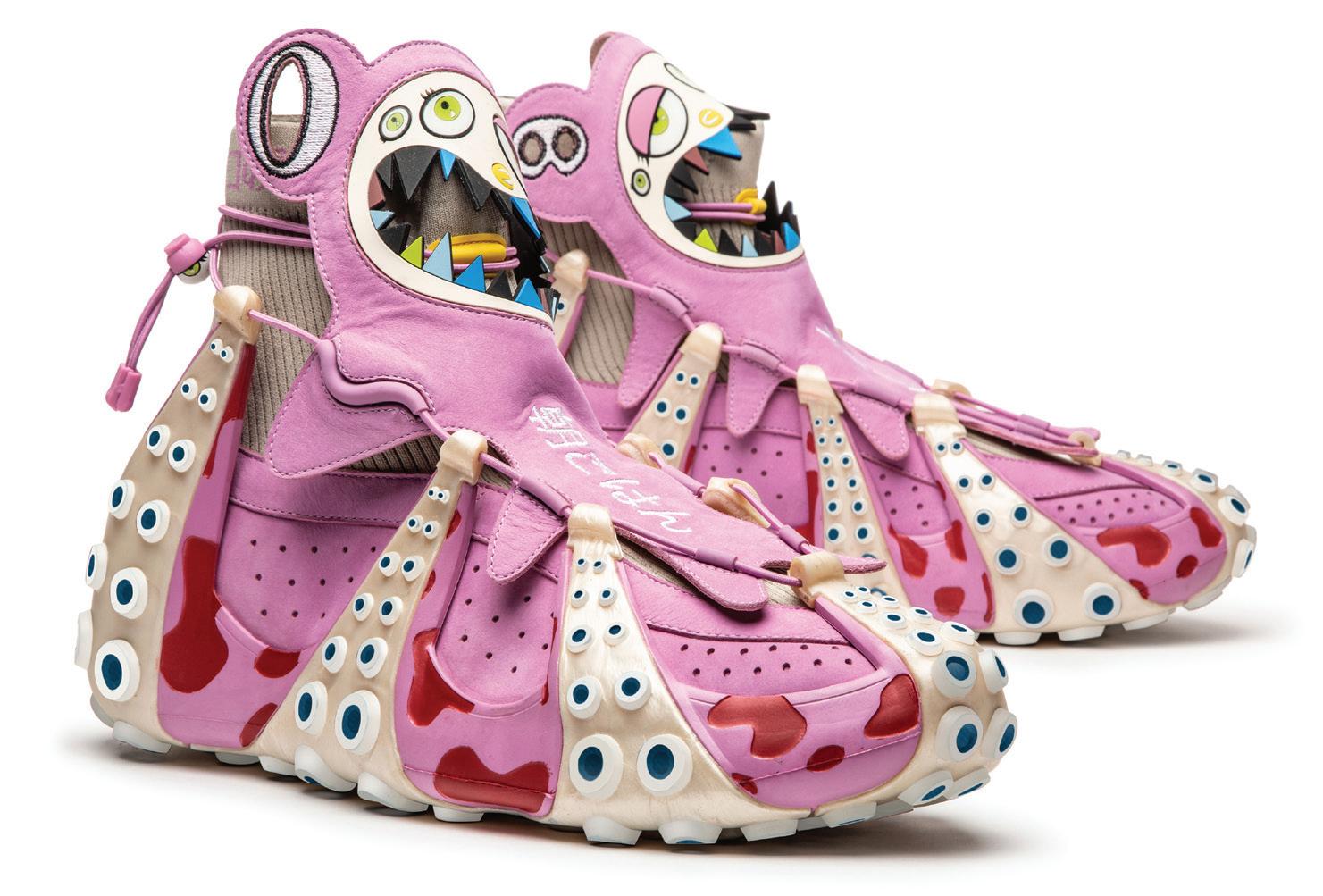
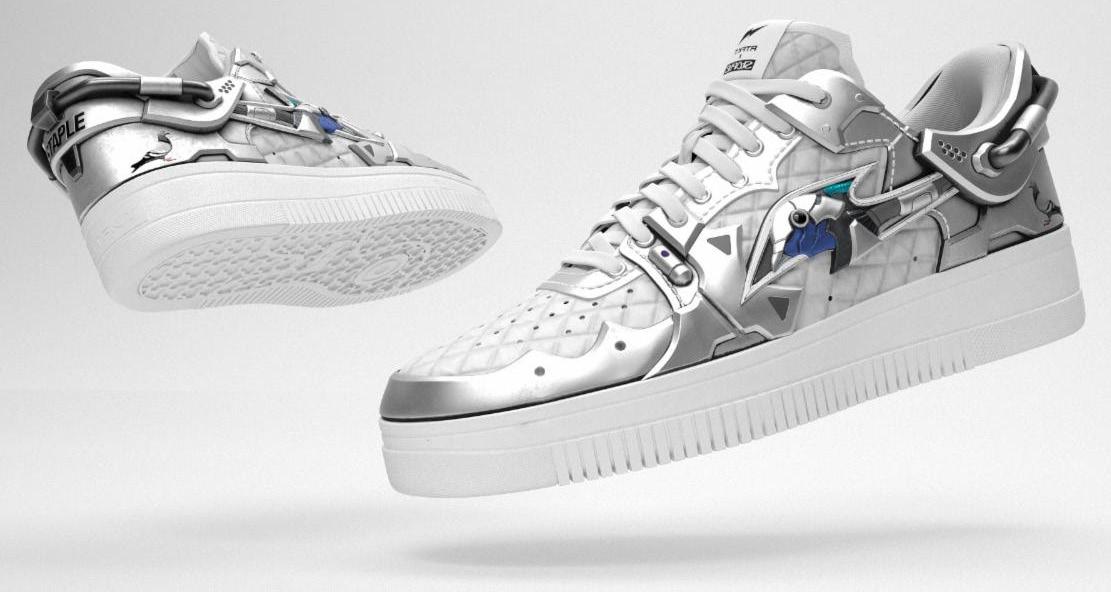
(KIA) is thrilled to present the groundbreaking exhibition Future Now: Virtual Sneakers to CuttingEdge Kicks from February 7 through June 7, 2026, for the very first time in West Michigan! This exhibition isn’t just a showcase of footwear design, it’s about creating a space where the community can interact and engage with forward thinking ideas centered around a medium we often think of as practical.
“Future Now is a natural fit for Kalamazoo—a community that champions creativity, education, entrepreneurship, and making. We’re bringing sneakers into the museum because they are art: objects that tell our stories through design, engineering, and how we move through the world. Together with educators, makers, and design leaders, we’ll transform the KIA into a place where innovation, sustainability, and culture come together,” says Michelle Hargrave, Executive Director.
This innovative national exhibition features nearly 60 state-of-the-art
and Zaha Hadid, innovators Mr. Bailey and Salehe Bembury, as well as designs made in collaboration with fashion icons Rick Owens, Stella McCartney, and Yohji Yamamoto, and top gaming and innovation companies such as PlayStation, Gravity Sketch, and more.
Future Now features sections exploring Innovative, Sustainable, Transformative, and Virtual shoes.
Exhibition highlights include the self-lacing Nike MAG (first conceived for the movie Back to the Future Part II), digitally designed and 3D-printed shoes, sneakers made from mushroom leather and reclaimed ocean plastics, virtual footwear, and more.
To learn more about Future Now: Virtual Sneakers to Cutting-Edge

Kicks visit kiarts.org/futurenow
—
The exhibition is co-organized by the American Federation of Arts and the Bata Shoe Museum, and curated by Elizabeth Semmelhack, Director and Senior Curator of the Bata Shoe Museum.
(Sponsorship Opportunities for Future Now)
Sponsoring Future Now gives you an opportunity to bring this one-ofa-kind exhibition to West Michigan for the very first time. Sponsors receive both prominent recognition and special invitations to experience the exhibition. At the KIA we believe that Art is for Everyone, and in sponsoring Future Now you help make that a reality.
About the Kalamazoo Institute of Arts
Since 1924, the KIA has offered its visitors the opportunity to enjoy and create art. The KIA’s permanent collection holds more than 4,600 objects across a wide spectrum of media, and the museum presents 10-15 exhibi-

tions annually in its 10 galleries. In addition to its exhibition spaces, the museum houses the KIA Gallery Shop, which sells pieces by international artisans and local and regional artists, a multi-media auditorium, a publicly accessible library, an interactive children’s gallery, and the Kirk Newman Art School (KNAS). KNAS has nurtured the creative passions of tens of thousands of students around the region, state, and beyond, annually welcoming more than 3,400 enrollments. Students of all ages engage with our talented and committed faculty as a part of an exciting fine arts curriculum that includes ceramics, sculpture, jewelry, drawing/ painting, printmaking, fiber, photography, glass fusing and enrichment program.
Expanded offerings, collaborations, and outreach will celebrate 100 years of excellence in the arts and bring the KIA’s unparalleled resources to a wider audience than ever before. These special initiatives will give back to the community in appreciation for 100 years of growth, and deepen the ability of all Kalamazooans to find joy, learn from one another, and grow. Through close listening and renewed creativity, the anniversary will illuminate the pathway for the Institute’s next 100 years. For more information, visit kiarts.org.

Through April 26
Shape Shifting: The Guitar As Modern ARTifact, Kalamazoo Valley Museum
Through July 26
Exhibit: Black Cowboys: An American Story, Kalamazoo Valley Museum
Sunday, February 1
Cozy Market, 11am – 3pm Portage Parks & Recreation 320 Library Lane
Sundays, Feb. 1,8,15,22 Sunday Night Blues Jam, 6-9pm, Shakespeare’s Pub
Sundays, Feb. 1,8,15,22 Nerdy Trivia & Cosplay Night 5:30-8:30, LFG Gaming Bar
Mondays, Feb. 2,9,16,23 Family Storytime 10-11am, Books, songs, more! Vicksburg Library
Monday, February 2
Roll Out the Barrel, featuring 12+ barrel aged beers on tap 11am- 9pm, Bell’s Brewery
Mondays, Feb. 2,9,16,23
Support Group: depression, Bipolar disorder & other mental Health challenges, 7-8:30pm Portage Chapel Hill United Methodist Church
Monday, February 2
Monday Night Trivia, 7-8pm Hop Cat Kalamazoo
Monday, Feb. 2,9,16,23 Trivia Night @ Louie’s Corner Bar, 7-9pm
Tuesdays, Feb. 3,10,17,24 Preschool Workshop (ages 3-5) 10:15am, Richland Library
Tuesday, February 3
Craft Stitching Group, bring your project, 1-4pm, Parchment Library
Tuesdays, Feb. 3,10,17,24
Weekly Gaming, grades 6-12, 3-5pm, Register: Richland Library
Tuesday, February 3 Teens/tweens Dungeons & Dragons, 4-6pm, Vicksburg Library
Tuesdays, January 3 & 17
Adult Jackbox Game Nights, 6pm, Register ahead: Richland Library
Tuesday, February 3
Biggest Little Baseball Museum: Jackie Was the First. 6-7pm, Paw Paw Library
Tuesdays, Feb. 3,10,17,24 Trivia Night, 7-9pm Louie’s Trophy House
Tuesdays, Feb. 3,10,17,24
Laugh Draft Open Mic Comedy 7-9pm, Apoptosis Brewing
Tuesdays, Feb. 3,10,17,24
Best Trivia Ever Team Trivia!, 7pm, Shakespeare’s Pub
Tuesdays, Feb. 3,10,17,24
LFG Karaoke Night, 8:30-12am LFG Gaming Bar, Kalamazoo
Wednesdays, Feb. 4, 18
Mugs & Hugs, stories, activities, play, 10-11am, Vicksburg Library
Wednesday, Feb. 4,11,18,25
Wednesday Wigglers, infant/Toddler, 10:15am, Richland Library
Wednesdays, Feb. 4,11,18,25
Teen Dungeons & Dragons, 3-5pm, grades 6-12, Register: 629-9085, Richland Library
Wednesdays, Feb. 4,11,18,25
Free ½ hour of Bowling, Crafted Copper, Kalamazoo, 4-10 pm
Wednesday, February 4 Trivia Night @ 468 Wine in Portage, 6-8pm
Wednesday, Feb. 4,11,18,25
Live Music, 6-9pm, Zero: Non-alcoholic Bar, Kalamazoo
Wednesday, Feb. 4,11,18,25 Karaoke Bingo, 7-10pm Presidential Brewing, Portage
Wednesdays, Feb. 4,11,18,25 Trivia at the Taproom, 7-9pm, Apoptosis Brewing Co., Kal.
Thursday, February 5
Book Club for Adults: How to Read a Book by Monica Wood, 9:30-10:30, Vicksburg library
Thursdays, Feb. 4,11,18,25
Free Thursdays, 11am-8pm, Kalamazoo Institute of Arts
Thursday, February 5
Elementary “Drive-in” Movie night We make popcorn, you bring, drink, blanket & cardboard box large enough to sit in, 3:30-6pm,Vicksburg Library
Thursdays, Feb. 5,12,19, 26
Teen Dungeons & Dragons, 4:30-6:30pm, Register: 629-9085, Richland Community Library
Thursday, February 5
Charles Henry Alston’s Untitled (Couple), 5:30-6pm, Register: Kalamazoo Institute of Arts
Thursday, February 5
Film Screening: Through a Lens Darkly, 6-7:30pm, Register: Kalamazoo Institute of Arts
Thursdays, Feb. 5,12,19,26
Triple Threat Trivia, 6:30pm Presidential Brewing Co.
Thursdays, Feb. 5,12,19,26
King Trivia, 7-9pm, Gull Lake Distilling Co., Galesburg
Thursdays, Feb. 5,12,19,26 Karaoke, 7-11pm, Alley Cat in Kalamazoo
Thursdays, Feb. 5,12,19,26
Music Extreme Bingo, 7pm Shakespeare’s Pub
Thursdays, Feb. 5,12,19,26
Music Bingo, 7-9pm, Louie’s Trophy House, Kalamazoo
Friday, February 6
Play, Learn, Connect with KRESA, Preschoolers & adult, 10am, Parchment Library
Friday, Feb. 6,13,20,27
Sit N’ Stitch, 10am-12pm Bring your own project Richland Library
Fridays, Feb. 6,13,20,27
Family Story Time, 10:15am, All ages, Richland Library
Friday, February 6
Memory Café – for people with Mild dementia and their care Partners, 10:30am – Noon Paw Paw District Library
Fridays, Feb. 6,13,20,27
Live Music 6-9pm @ Zero: Non-Alcoholic Bar, Kalamazoo
Friday, February 6
Black History Month: Green Book. Presenter: Candacy Taylor, 6pm, Air Zoo
Fridays, Feb. 6,13,20,27
Live Music @ The Dock at Bayview, 8pm-12am
Saturdays, Feb. 7,14,21,28
Kalamazoo Farmers Market 8am-1pm, 1204 Bank St.
Saturday, February 7
Beginning Birding Walks, 9am, Wolf Lake Fish Hatchery
Saturday, February 7
Downtown Plainwell Chocolate Stroll, shipping, specials, treats, specials, drinks, more,10am-5pm
Saturday, February 7
My Day with Abe Lincoln, 11am, Parchment Library
Saturday, February 7
General Store Garage Sale, 11am-7pm. Bells Brewery
Saturday, February 7
National Take Your Child
To The Library Day, make a button, free picture book, & more! 11am – 3pm, Vicksburg Library
Saturday, February 7
Lantern Lit Trails, 6pm, Wolf Lake Fisheries, Mattawan
Saturdays, Feb. 7,14,21,28
Karaoke & Dance Night
Back Alley Saloon, 9pm12am, Continental Lanes
Sunday, February 8
Kalamazoo Indoor Flea Market, 9am-3pm, Kalamazoo Expo Ctr.
Sunday, February 8
2nd Sundays Live!Shelagh & Robbie, 2pm, Parchment Library
Monday, February 9
Great Michigan Read/ParchMent Book Group: Everything I Learned, I Learned in a Chinese Restaurant by Curtis Chin, 6pm Parchment Library
Tuesday, February 10
Scrabble Club for Adults, 1-2:30pm, Vicksburg Library
Wednesday, February 11
Birds & Coffee Chat on Zoom, Michigan Owls, 10am, Register: birdsanctuary@kbs.msu.edu
Wednesday, February 11
ArtBreak: The People Could Fly, 12-1pm, Register: Kalamazoo Institute of Arts
Wednesday, February 11
Adult Dungeons & Dragons Bravo Team, 5-8pm, Register: 629-9085, Richland Library
Wednesday, February 11
Vinyasa Yoga with Alla, 5:15pm, Parchment Library
Thursday, February 12
Keep Your Houseplants Alive, 11am, Richland Library
Thursday Feb. 12, 26
Teen Break & Bulldog Break, Fun, crafts, games, activities, Treats, Teen/tweens under 18, 2:45-4:45, Vicksburg Library
Thursday, February 12
Adult Writers’ Motivational Group, support, discuss, write, 4-5pm, Vicksburg Library
Thursday, February 12
Explore & Create Night: Taekyeom Lee: Designed, Printed, Fired, 6-7:30pm Kalamazoo Institute of Arts
Thursday, February 12
Wine & Euchre @ 468 Wine, 6-8pm, Portage
Thursday, February 12
Friends Read Book Club, discuss What you are reading/snacks, 6:30-7:30pm, Paw Paw Library
Thursday, February 12
Taste Test Challenge: Oreo Edition (18+), 6:30pm, Parchment Library
Friday, February 13
Chocolate Olympics (ages 10-14), 4pm Register: Parchment Library
Friday, February 13
Vintage in the Zoo Presents: Night Shop at Louie’s Trophy House, 629 Walbridge St., Kalamazoo, 5-10pm
Saturday, February 14
Internet group, bring Smart Phones, 10am-Noon & questions, Paw Paw Library
Saturdays, Feb. 14 & 28
Art Journaling for Adults, 11-1pm, Richland Library
Saturday, February 14
Art Detectives: So Tortoise Dug by Emmy Kastner 10:30am-Noon Kalamazoo Institute of Arts
Saturday, February 14
Winter in the Zoo: Winter Fest, Ice Sculptures & more! 12-4pm, downtown Kalamazoo
Sunday, February 15
Free Admission, 10am-3pm W.K. Kellogg Bird Sanctuary
Monday, February 16
STEAM event & activity 11am-12pm, Vicksburg Library
Monday, February 16
Board Game Night @ Zero Nonalcoholic Bar, 6pm, Kal.
Thursday, February 16
Adult Book Club, 6pm, Richland Library
Monday, February 16 Pizza & Perspectives: Indie Lens PopUp, watch & discuss documentary The Librarians, 6pm, Parchment Library
Tuesday, February 17
Lego & Duplo Club, 1-2pm & 5:30 – 6:30pm, Vicksburg Library
Tuesday, February 17
Mystery Book Club: Murder On Brittany Shores by Jean-Luc Bannalec, 6:30pm, Parchment Library
Wednesday, February 18
Book Discussion: Kicks: The Great American Story of Sneakers by Nicholas Smith, 2-3pm Kalamazoo Institute of Arts
Wednesday, February 18
Adult Dungeons & Dragons Bravo Team, 3-6pm, Register: 629-9085, Richland Library
Wednesday, February 18
Adults Bad Art Night, enjoy the freedom of creating bad art, 5:30-7pm, Vicksburg Library
Wednesday, February 18
Wine & Euchre, 5:45pm Register: 468 Wine, Portage
Wednesday, February 18
Cup Staking Challenge, 6-7pm, Paw Paw Library
Monday, February 19
STEAM event & activity 6-7pm, Vicksburg Library
Thursday, February 19
Improvisation as Discovery, 6-7pm, Register: Kalamazoo Institute of Arts
Thursday, February 19
Heartbreak Book club: First Time Caller by B.K. Borison, 6:30-7:30pm, Paw Paw Library
Friday, February 20
Fiber Friends – bring you Project & lunch, 10am2pm, Parchment Library
Friday, February 20
How to Make Sushi, ages 11-17 w/adult, 6pm, Register: 629-9085, Richland Library
Saturday, February 21
Once Upon a Saturday, 10:15am, Stories, songs & craft, all ages Richland Library
Monday, February 23
Tween Book Club (ages 10-14)
On Thin Ice by Jessica Kim, Register ahead for a free copy, 4pm, Parchment Library
Wednesday, February 25
ArtBreak: The Poetry of Shoes, 12-1pm, Register: Kalamazoo Institute of Arts
Wednesday, February 25
Chinese Lunar New Year Celebration, wear red & enjoy snacks, crafts & more, 4-6pm Vicksburg Library
Wednesday, February 25
Robo-Art, Learn to code a Robot and create an abstract art piece! 6-7pm, Paw Paw Library
Wednesday, February 25 Between the Pages Romance Book Club for adults, 6pm, Register: Richland Library held at Ned’s on Gull Lake
Thursday, February 26
Prepare for a Financial Disaster, 11am, Richland Library
Thursday, February 26
D.Y.I Bandana Tote Bag, 4pm, Register: 629-9085, Richland Library
Thursday, February 26
Nuestro Futuro, 6-8pm, Register: Kalamazoo Institute of Arts
Thursday, February 26
Between The Lines Book Club: The Caretaker by Ron Rash 6:30-7:30pm, Paw Paw Library
Friday, February 27
Board Game Blast – stop by to play board games with other adults, 10-12pm, Parchment Library
Friday, February 27
Listen Up Book Club, An audiobook club for people With low vision,10:30am11:30am, Paw Paw Library
Saturday, February 28
WMU Double Reed Day: Featuring the Mass Ensemble, 4pm, Dalton Recital Hall