
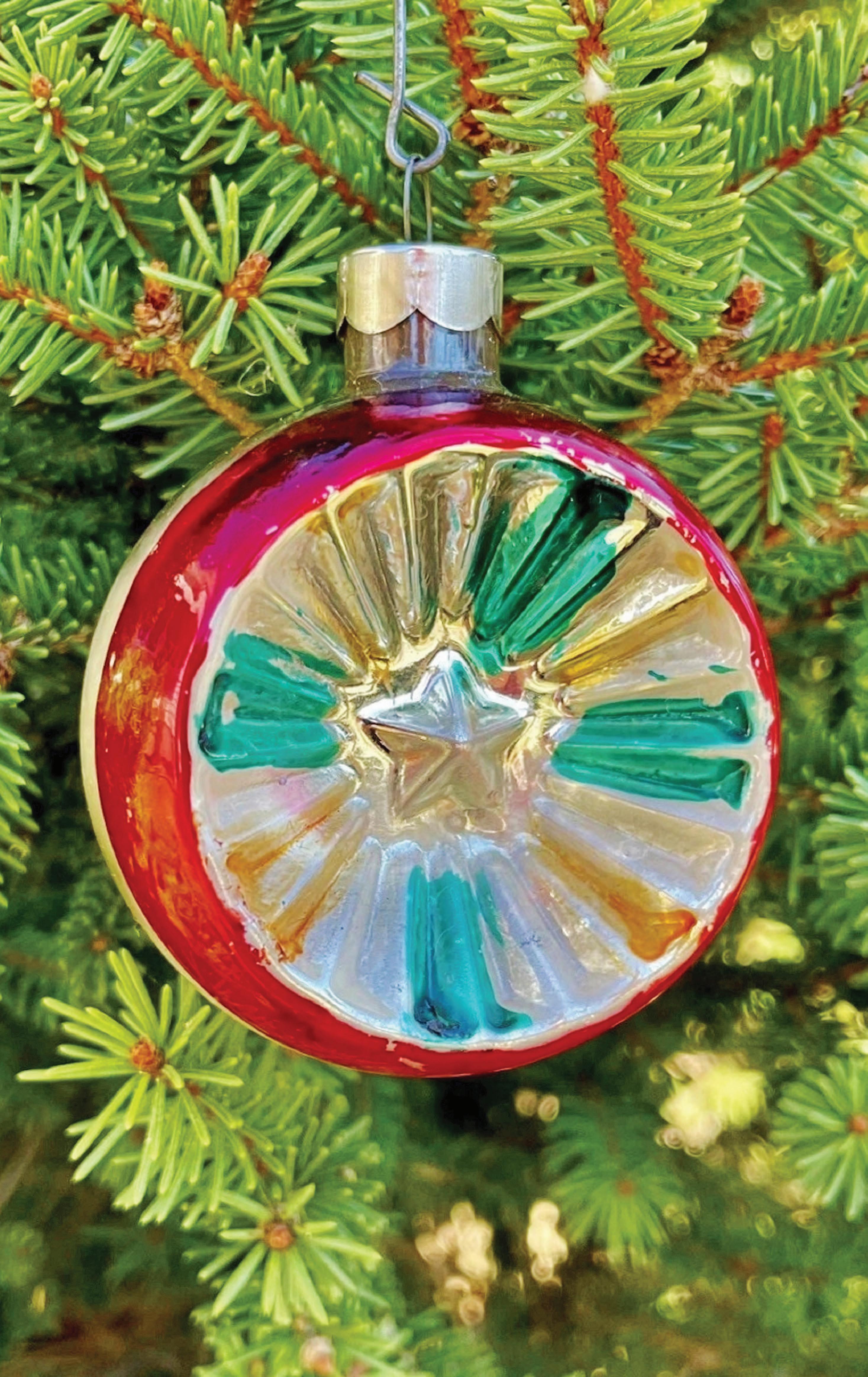
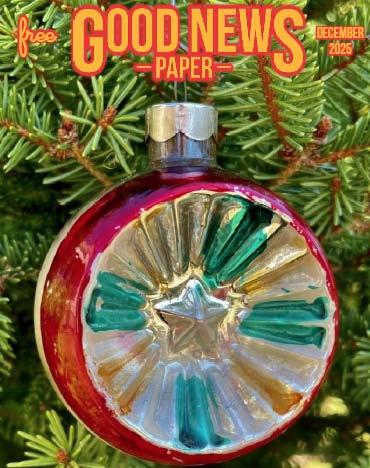
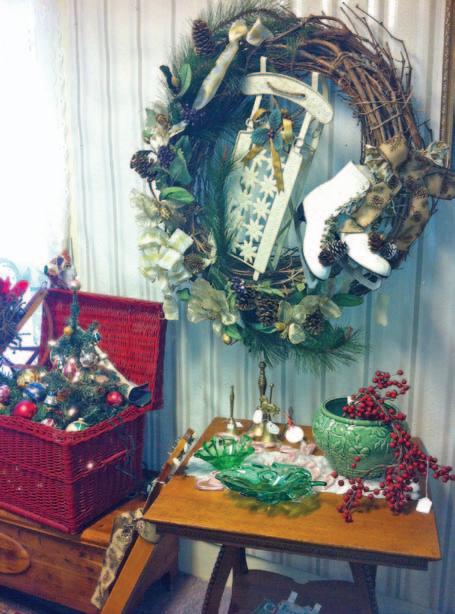
See page 8 for the vintage story about Shiny Brite ornaments.

See page 8 for the vintage story about Shiny Brite ornaments.
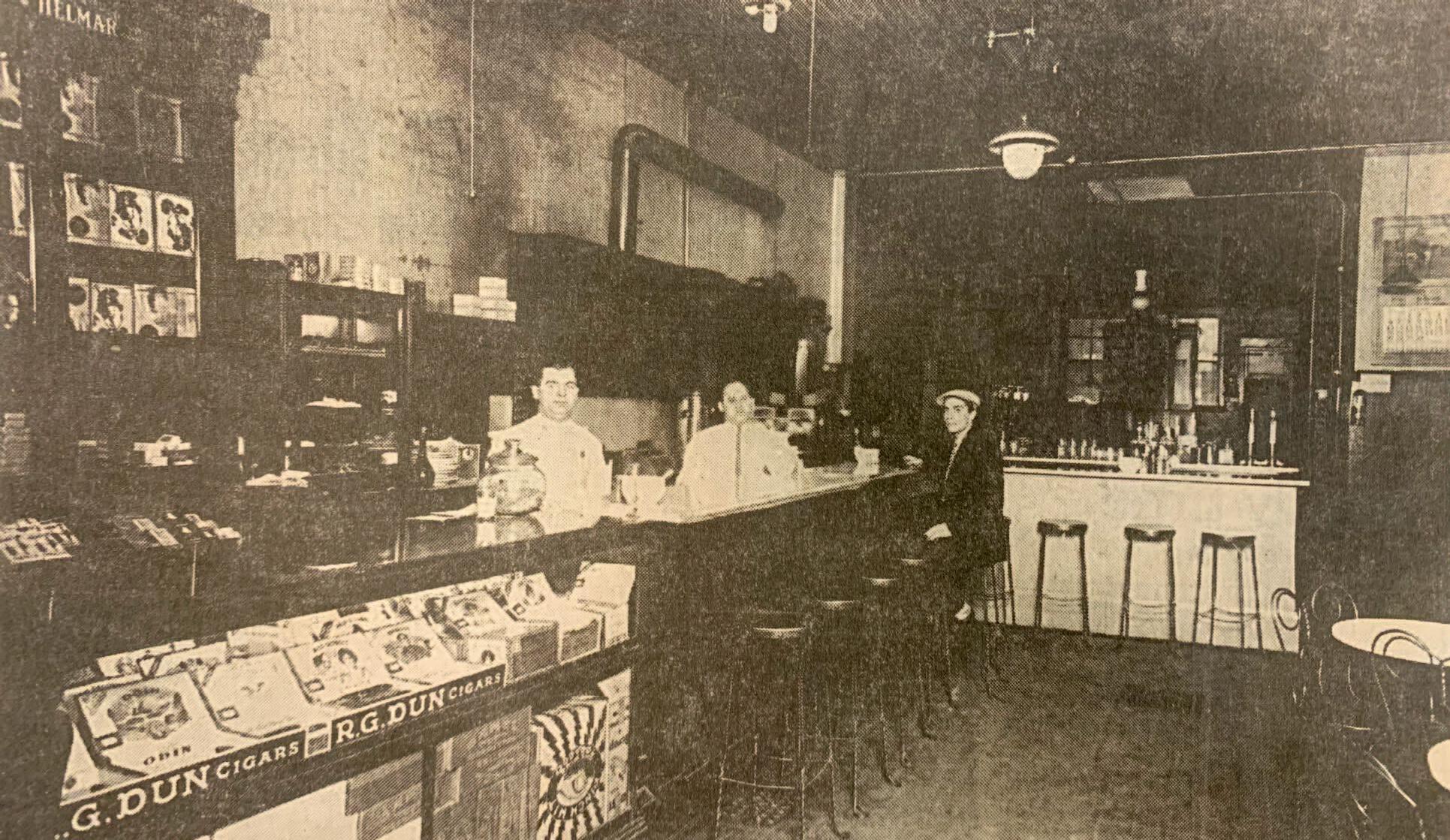
Missias Bar & Grill opened in Kalamazoo during prohibition, in 1921, as a restaurant, with a well-stocked cigar bar. After prohibition, they were the first to serve beer and wine, and one of the first to offer liquor by the glass in the mid-60’s, which was previously only served in private clubs.
They became a working man’s saloon, where diversity ensued before it was popular. It wasn’t unusual for a hipster, a student, a factory worker and a business man of various ethnicities to be conversing together at the bar.
Steve Missias founded Missias Bar & Grill, which was managed by the Missias family for decades. His brother, George, helped in the bar. Steve’s son, Nick, joined the ranks when he was of age. Nick’s stepson, Al Yucker, worked alongside his stepdad, and the two ran the business together for 17 years.
The original bar was located on the northside of downtown Kalamazoo at 335 N. Burdick Street, on the west side of N. Burdick between Eleanor St. and Kalamazoo Ave. Upstairs was a boxing club and boxer, Cornell White, became the first black bartender.
The original building was where Sarkozy’s Bakery began in 1978, before it was destroyed by fire in 2012. Judy and Ken Sarkozy fit into the
northside neighborhood nicely and embraced the unique community.
There were five different Missias locations over the years.
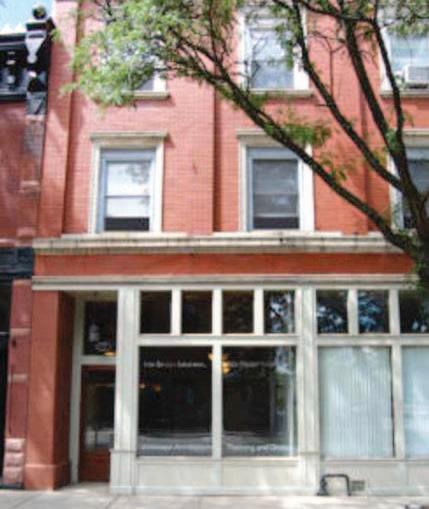
In 1931, after prohibition, Missias moved just four doors down from their original location, to 313 N. Burdick Street, where they thrived for over 45 years. The building is still intact and houses the Institute of Public Scholarship (IPS). They embrace the rich history of the neighborhood by displaying photos of the past on their walls.
In the late 1970’s, Nick opened a second location, Missias Little Red Barn, out N. Burdick near Mosel Avenue, offering three happy hours a day. One at the end of each (1st, 2nd and 3rd) shifts. This location eventually fell victim to the auto recession.
In July of 1977, Missias moved around the corner to 128 Eleanor Street. They remained at this location until 1993, when they were forced by eminent domain, to sell, to make room for the Arcadia Creek Project.
They built their new place at 562 Portage St., south of Walnut (where the VFW Post 827 is located today) in just 70 days. “The day of the move, the Kalamazoo Rugby Club showed up to carry the bar, loaded with beer on top. They were drinking and singing through the streets from Eleanor

St. to Portage St.,” recalls, Yucker. Sadly, the bar lasted only a few short years on Portage Street.
In the late 1980’s, a few of the businesses near the corner of N. Burdick and Eleanor streets, established the “Hands Across Eleanor” event. Flipside Records along with Missias Bar & Restaurant and Mr. Presidents Restaurant and Cocktail Lounge created a parody of the “Hands Across America,” fundraising event that took place in 1986. The event included a pig roast, music from Missias’ jukebox (filled with a variety of oldies and new records by Flipside) and lots of neighborhood fun. Attendees actually held hands, and the line reached through the Missias bar and all the way across to the record store. The idea turned into an annual block party that continued for nine years.
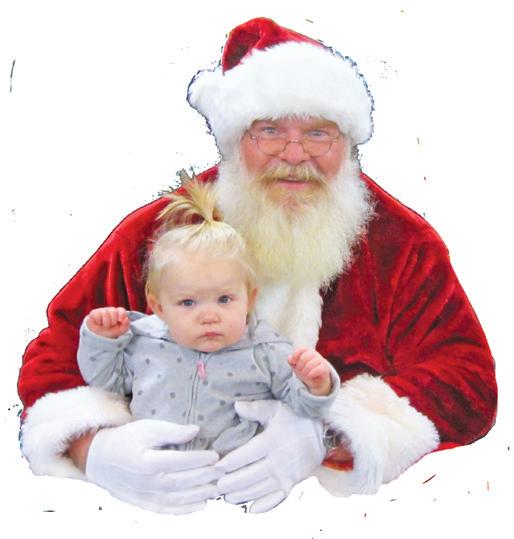
Many former patrons shared their fond memories of the Missias Bar & Grill on the popular, Vanished Kalamazoo Facebook site, including: “Great Cheeseburgers,” “Spent many nights at this place, I loved going there!!” “What a fun place.....great Blues........happy times there,” “Hung out there a lot in the late 80’s,.” “Good burgers.” “A Goebel’s and an Al Burger!” “I was at hands across Eleanor Street.” “My husband played Santa there several years ago one of his favorite bars.” “Loved that place.”
“Hands across Eleanor Street party every year between Missias and Flipside .. great times,” “I’d sometimes go after my shift at the car wash. Seeing us in our Bunca hats and jackets, the barkeep would sometimes give us a free round. Glory days,” “My band played there a few times in the early 90s, “My granny and I would walk down there to pull grandpa out of there when they lived on Ransom across from Harrison Pickle Packing 1959-60.”
I featured Flipside Records, across the street from Missias, in the June issue of Good News Paper and I intend to feature neighbor, Mr. President’s, in a future Issue. All of these former northside businesses were part of the unique time and place in downtown Kalamazoo’s history.
Jackie Merriam
Sources: Second Wave, Feb. 1, 2024 and Jan. 16, 2025, KG12/11/94, Vanished Kalamazoo Facebook site, rootsweb.com.
Photos
A.1926 photo of the Bar (Steve Missia’s and his brother George, customer unidentified.
B. Original location 313 N. Burdick St.


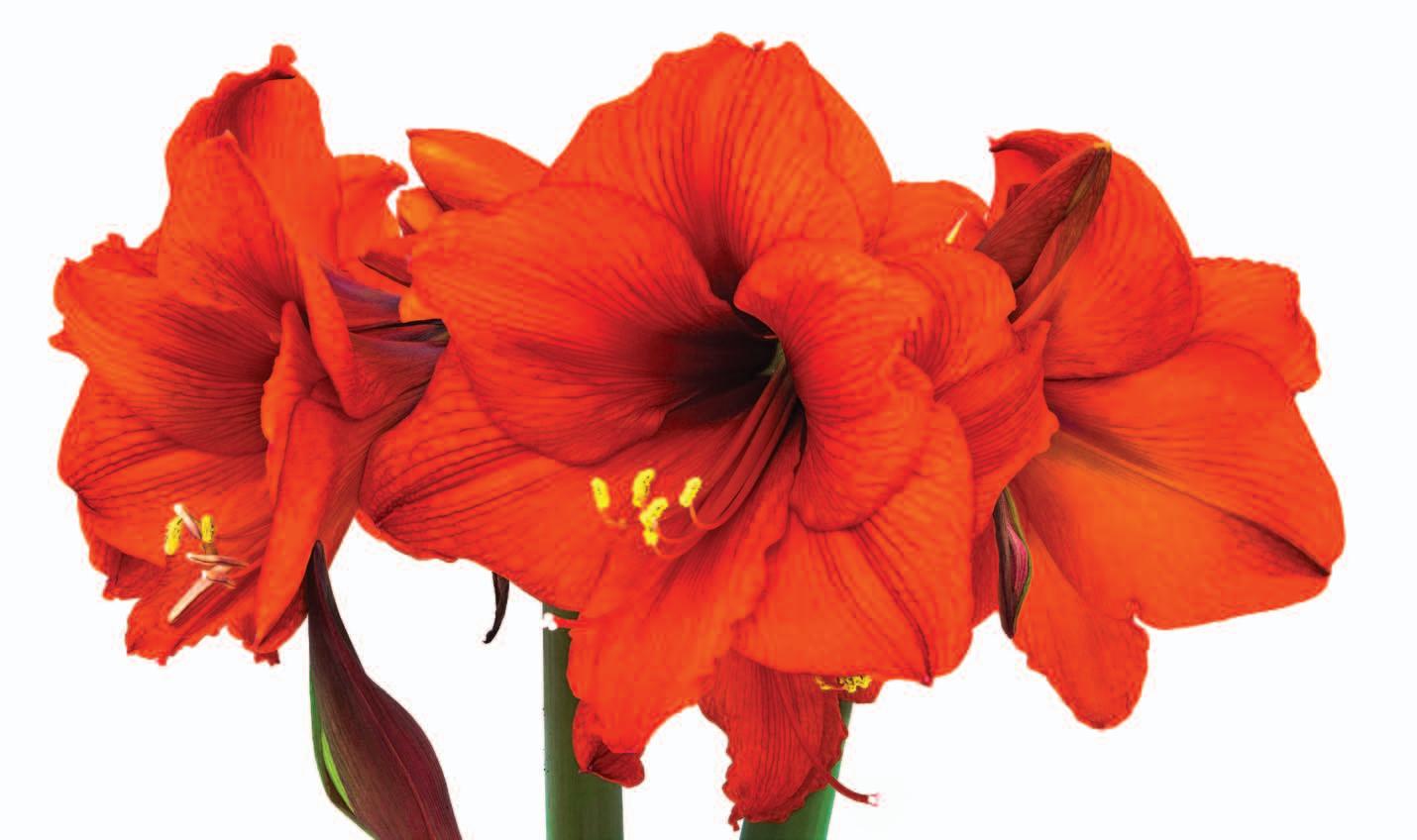
The Amaryllis you decorate your home with during the winter holidays is a Hippeastrum. A Member of the genus Amaryllidaceae, Hippeastrum bulbs are native to Central and South America and include 90 species and over 600 cultivars; these plants are commonly called Amaryllis. In contrast, Amaryllis is a bulb native to South Africa with only one species, Amaryllis belladona, also known as “Naked Ladies” because of their pink flowers on stems without leaves.
Amaryllis (Hippeastrum) offered in the late fall through winter are used as forced bulbs to decorate and beautify the inside of homes during the winter. These easy-to-grow bulbs are being propagated in many parts of the world today. Wedel’s carries bulbs grown in the Northern Hemisphere in Holland and they normally take 4-8 weeks to bloom.
Which Amaryllis to Choose
Amaryllis is offered in assorted sizes, measured in centimeters in circumference (around the bulb). Larger bulb sizes normally produce more flower stalks or more flowers per stem. The heavier the bulbs, the more expensive it is. The largest size is sometimes called jumbo.
Speaking of choices, Amaryllis come in a wide variety of colors
and flower formations thanks to the hybridizers who are continuing to create more forms and colors such as:
Single Flower Amaryllis These are normally large flowers with six petals per flower; multiple stems and multiple blooms per stem; often one stem emerges at a time, giving a long bloom season, typically a month or more.
Double Flower Amaryllis Large flowers with additional petals found within the outside six petals. Some petals curve into the center of the flower making it look more rose-like.
Hybridized Amaryllis Hybridizers of these extremely popular bulbs continue to create more types of ‘Amaryllis’ (Hippeastrum), often with different shapes and petal forms. Some, with their pointy, thin petals, resemble spider legs.
Use a good potting mix that includes bark to help with drainage. Place your bulb in the container with the top 1/3 of the bulb above the soil.
Water once; do not water again until there is a sign of some growth, and then water only sparingly. Amaryllis need lots of light. Select a location with as much light as possible and add grow lights if possible. If not using grow lights, place your


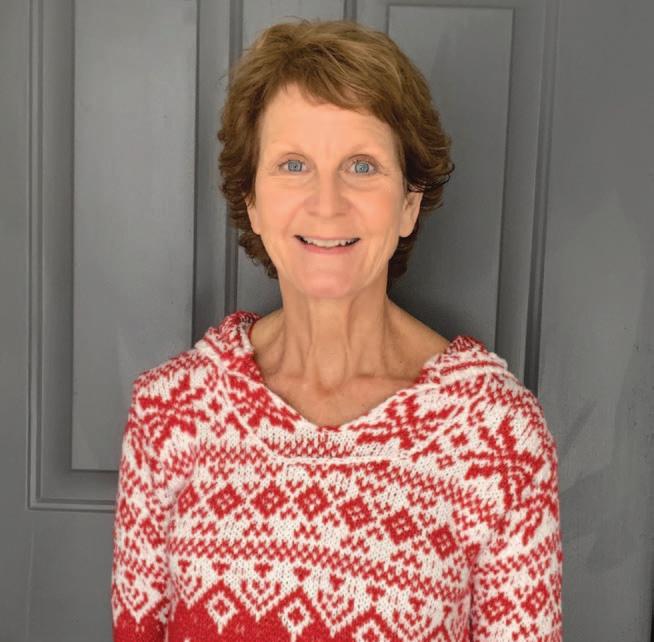
Chance conversations throughout your day, can become gratifying encounters. Sometimes the conversations can be lengthy about deep topics or simply brief chats about nothing in particular.
This past weekend was spent in Traverse City, where a few chance encounters impacted me.
The first memorable encounter took
place at The Pub in downtown Traverse City. We were seated at the bar, enjoying a meal, when another couple, slightly younger than us, sat down and we began chatting. When we asked if they were regulars, the man said, “No, we’re just taking a break from reality this weekend.” We Initially chatted about the game on the television, which led to some deeper topics. Before long the guys were talking sports and the woman shared with me about her special needs son and her daughter that was having some personal challenges. I listened and then we commiserated about motherhood. When we were ready to leave, we exchanged hugs and supportive sentiments. This encounter was an impromptu mini-therapy session for both of us.
The next memorable chance conversation, was a fun and jovial encounter. When we got back to the hotel and were in the elevator, where I was acting as the
con
tainer where there is the most amount of natural light after sundown. This will keep it from stretching to reach for more light.
Once the flower stalk begins to form buds, water as needed. (Hint: Lift the pot once potted but before the first time you water. This will give you a feel for its weight without water. The top of the soil may feel dry but the weight of moist soil deeper in the pot, which makes it heavier, will help you know when the bulb needs to be watered).
Once the flower has finished blooming, cut off the spent flower, leaving its green stem, which acts as another leaf.
Wedel’s offer ‘Amaryllis’ already in a container, ready to give as a gift. We also have bulbs that are ‘waxed’ and look like Christmas ornaments or bulbs you can purchase individually to plant in a pot.
What to do with Your Amaryllis
Once your potted Amaryllis (Hippeastrum) flower has finished blooming, you should continue to leave it where it gets as much light as possible, watering when necessary. This will help it store enough starches and sugars in the bulb so it will rebloom the following year. Once the springtime warmth is in your area to stay, you can set your potted Amaryllis (Hippeastrum) outside to continue to work on creating next year’s flower. Mark your calendar to take the pot inside on September 1st; put it in a dark, cool place (closet; under the bed, etc) so it can take a ‘nap’ for a couple of months. Then on November 1st, repot your ‘Amaryllis’ (Hippeastrum), water it, and give it light so you can enjoy it again.
Article written by Brent and Becky Bulbs from the National Garden Bureau with edits from Wedel’s.
elevator operator, asking which floors the others were going to. A lady said 6, we were heading to 8, and the young couple said they were heading to the bar. Above the button with the number 9 on it, was a button that had the letter “T” on it. I said, “That must be it! What do you think the T stands for?” One woman said “Tower,” I said “Top” and the young man said, “Ten.” We all shared a quick laugh and exited at our floors.
Upon returning from the weekend, I was curious to know what the “T” really stood for. I searched the website and the bar at the top, on 10th tower floor, is named “Top of the Park.” None of us had the perfect answer, but we were all, in essence, correct.
Chance conversations can make the difference between an ordinary day, and an extraordinary day.
Jackie Merriam
This publication does not specifically endorse advertisers or their products or services. No part of this publication may be reprinted or otherwise reproduced without the written permission from the publisher.


The Big Foot Story - holiday edition. Why is Big Foot so elusive? Why is there such a fascination with him and his reclusiveness? I mean, really, we’ve brought him into mainstream pop-culture consumerism. He’s on billboards, window clings, t-shirts, coffee mugs, you name it; his stamp of approval is there with his silhouette as the trademark. Yet, there are very few photos, if any real ones, of Big Foot. Why have we glorified such a creature? I don’t see jackalope merch everywhere. I have a theory. Maybe we want to be him, away from people and alone, to enjoy the woods. Big Foot is elusive, because he’s always on the move. We assume he’s avoiding people,

but he’s actually an overachiever. He’s got family coming over, meals to prep for, shopping to get done, gifts to wrap, and cards to write. It’s the holiday season folks; there’s no time to dillydally. He’s too busy for a chat and “to go grab a cup of coffee.” There will be no sitting between now and January 1st. But I suspect, he’ll grind seasonally themed, coffee beans and make you a French press if you stop on by for a visit. Though, you won’t find hi m at home if you do stop by. He ran out for eggs, and while out, figured he had better buy a poinsettia for one, two, maybe three people. The stores have this hybrid color this year; you can’t just walk by, without walking to buy. On the rare occa-

sion you catch him at his residence, his back is turned to you and in a flash, he’s cleaning up the yard, clearing out the gutters, and untangling Christmas lights. The tree is up, the ornaments perfectly arranged while Bin Crosby croons in the background, and all is right in the world for that twinkle of a moment.
Then, again, he’s gone as the smell of pine hangs in the air! Big Foot doesn’t bake sugar cookies, but once a year somebody has to roll out the dough.
Isn’t that what has become of the holidays? The busy pace, and desire to meet expectations. Prioritizing the look of the holidays, rather than the feeling. Maybe, just maybe, Holiday Big Foot should not be





our idol. I wonder if our attraction to Big Foot our desire is actually not to be him, as some might assume, but the unconscious realization we are him. He is the shadow that we see when we are too busy to notice the people around us. They are trying to get us to stand still for just a moment to take a family photo with them for this year’s Christmas card. And what they get is the signature Big Foot pose; we’re already moving. Slow down and get in the photo. 20 original art prints are in this month’s issue of the Good News Paper.
Peace, Love, and Art. -Amy Instagram: @amylgieschen

One of the moments that has stuck with me from high school goes back to a classroom lab and a slice of apple.
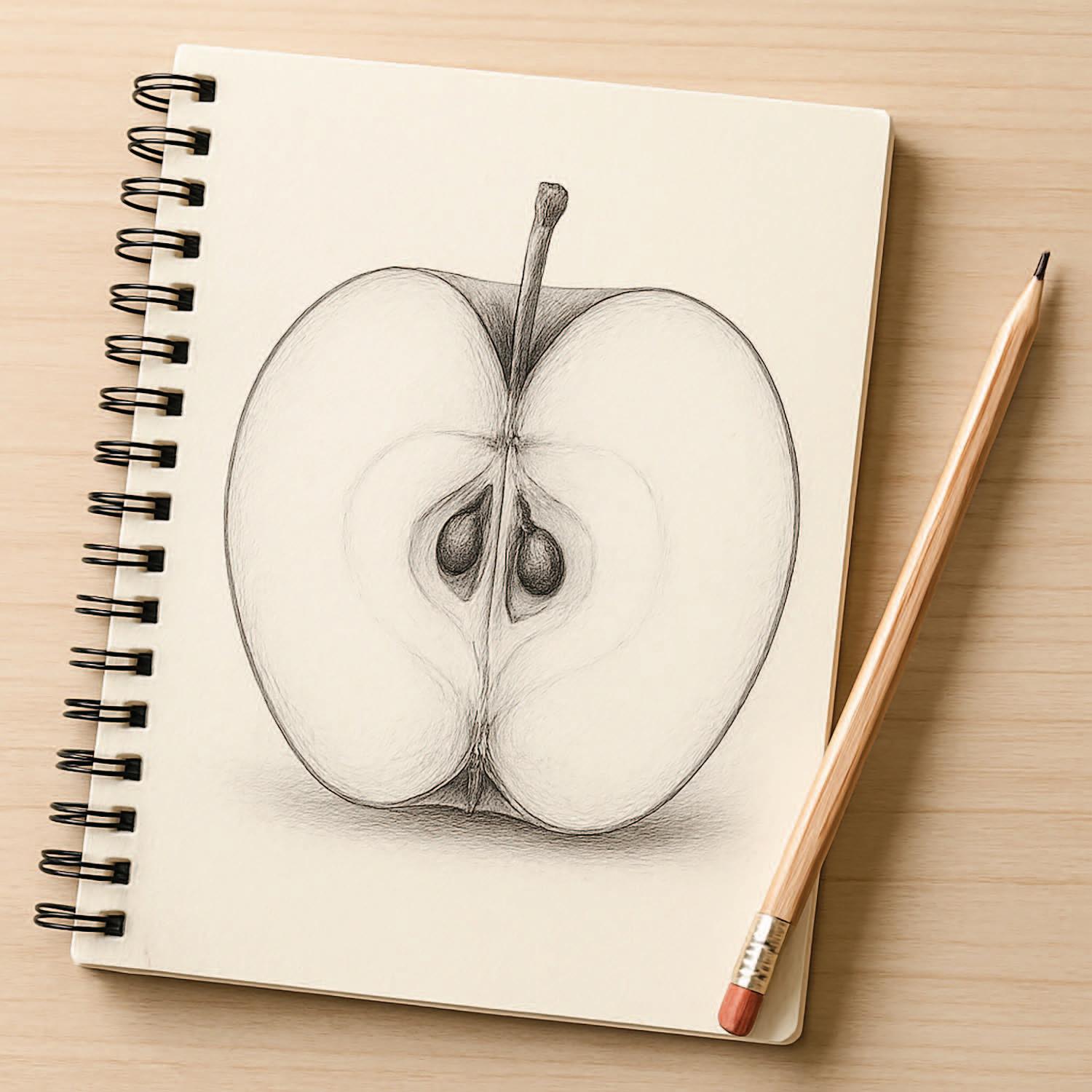
Miss Bacon was my biology teacher at Arthur Hill High School in Saginaw, Michigan. During one particular class session, she gave us an unusual assignment. We were to create a detailed scientific illustration of a simple object—an apple slice or an onion cross-section from prepared samples she’d laid out. After sharing some examples, she handed out drawing paper, pencils, magnifying glasses, and dissecting microscopes, then left us to observe and draw.
What I remember most isn’t the assignment itself—it was the feeling of being completely absorbed. It didn’t feel like work. It felt like play: a challenge filled with curiosity and discovery. I chose the apple slice. Under the lens, the apple’s simple, yet elegant, architecture came into focus—symmetrical chambers holding seeds, delicate outer skin, a stem at one end, sepals at the other. At that moment, I wasn’t just looking, I was seeing.
That’s what scientific illustration does. It’s not really about artistic skill. It’s about attention. The exercise trains your eye and mind to slow down, to truly observe. You stop
assuming you know what something looks like—and begin to notice what’s actually there.
Years later, that same love of close observation carried over into photography. Especially nature photography. A camera can capture stunning detail, but even now, I think back to that drawing assignment when I want to really understand what I’m seeing.
A few years ago, I asked a surgeon friend whether today’s medical students learn more from photographs or illustrations. Without hesitation, he said illustrations—because they strip away the “noise.” A well-drawn image can isolate and clarify what’s essential. Photographs might show everything, but not everything matters.
That’s the brilliance behind artists like Maria Sibylla Merian, a naturalist and illustrator I recently learned about during a book club lunch. Born in Germany in 1647, Merian studied, and colorfully illustrated, insects and plants with remarkable detail and accuracy—at a time when women had little access to formal science or education. She was among the first to document the metamorphosis of butterflies. Her work is at once beautiful and scientific.
Years ago, when my son Peter was nine or ten, we took a Saturday trip

to the Field Museum of Natural History in Chicago. One of the special exhibits that day was on scientific illustration—bones, insects, shells, flowers—each image a fusion of meticulous detail and evocatively beautiful artistry. I remember standing in front of those magnificent works, feeling that old, familiar tug—the same one I first felt in Miss Bacon’s class. As much as I reveled in what I was seeing, I couldn’t help but wonder if I’d missed a calling sparked by Miss Bacon’s assignment. I had a similar feeling at the Smithsonian in Washington, D.C. many years ago, where I saw an exhibition of John James Audubon’s work—including some of his earliest drawings, which were understandably amateurish and rough. But as his now-famous pieces confirm, with time and practice, he developed a distinctive style that became something remarkable. His birds weren’t just accurate—they seemed to come alive with artistic flair.
That blend of art and science goes back even further. In 1655, English scientist Robert Hooke looked through a microscope at a thin slice of cork and saw something no one had ever described—tiny distinct compartments. He called them “cells,” a term still in use today.
Hooke wasn’t just a scientist—he was an illustrator. His book Micrographia featured detailed drawings of cork, mold, fleas, and more. His work opened a new world—one of structure, scale, and pattern.
Around that time, Dutch scientist Antonie van Leeuwenhoek used a handmade lens to examine deeper still. He saw tiny organisms swimming in a drop of water which he called “animalcules,”–what we know as protozoa. The kind I marveled at as a child, not knowing they existed until I saw them under a classroom microscope.
Looking back, Miss Bacon’s simple assignment wasn’t just about science. It was about presence—the practice of conscious observation. It was an exercise to experience the mindfulness of seeing, not just looking. That shift—from casual looking to intentional observation—turns any subject into a pathway to deeper understanding.
Lately, I’ve been revisiting old topics, following my curiosity wherever it leads. It’s funny how something as small as an apple slice can open up a whole way of seeing the world. And how the thrill of discovery never really goes away.
James D. Coppinger



e at w w w.Librar yReads.org

Bl Black-Owned:Tack-Owned:The Re he Revvoolutionary lutionary
L Lifife of the Bl e of Black Bookstor ack Bookstore e Char Adams (Tiny Reparations Books)
An extremely informative and well-researched book on a worthy topic.This comprehensive work looks at Black history in the United States through the lens of Black-owned bookstores covering their functions as pillars of community engagement and social justice organizations as well. Readers will appreciate the book recommendations and the bookstores listed in the endnotes

T The F he Ferryman and His Wif erryman His Wife e Frode Grytten (Algonquin Books)
This tale of a widowed Norwegian ferryman’s last day of life is simple, quiet, and effortlessly moving. Nils navigates through his cherished memories, converses with the dead, and reevaluates his connection to all who crossed his path, whether in a single trip across the forge or a decades-long marriage

I I, Medusa , Ayana Gray (Random House)

Medusa—legend, myth, monster—was once an innocent girl named Meddy who longed to see the world beyond her island. Meddy is a mortal born of two immortal sea gods in Poseidon's kingdom. When she catches the attention of the goddess Athena and is taken on as an acolyte in her temple, she thinks she has found her purpose, but a misstep angers the Gods and she becomes Medusa. A feminist tale that will capture readers’ attention from the first page

Cursed Daughters: A No Novveel l
Eniiyi has been haunted her entire life by her strong resemblance to her mother's cousin Monife, who drowned shortly before Eniiyi's birth. She has also been told that the women of her family are cursed to never find lasting romantic happiness. Is there any way for her to break free of her family's painful past? A beautifully told and emotional page-turner about confronting family trauma and finding peace and forgiveness along the way

Daddy Issues: A No Issues: Novveel l Kate Goldbeck (Dial Press Trade Paperbacks)
The pandemic blew up every plan Sam ever had postcollege, and now she's stuck living with her mom, working a deadbeat job. Her sad status quo is disrupted when Nick moves in next door with his young daughter. As Sam confronts her relationship with her father, she starts a relationship with Nick. This romance hits on the ways the pandemic affected everyone's lives

The housing market can be murder. Find out how far one woman will go when she sets her sights on her dream home. And just when it seems our main character Margot, can’t surprise any more, she stuns readers once again. Once you settle in with this deliciously dark and twisty thriller, you won t be able to look away

T The Bridesmaid he Cate Quinn (Sourcebooks Landmark)

The Kensingtons invite you to the society wedding of the decade. There's just one hitch. You might not make it out alive This book is full of intrigue and suspense that will draw readers into the pitfalls of high-society life, where nothing matters more than your social media clicks and lavish parties. Great characters and a shocking ending.
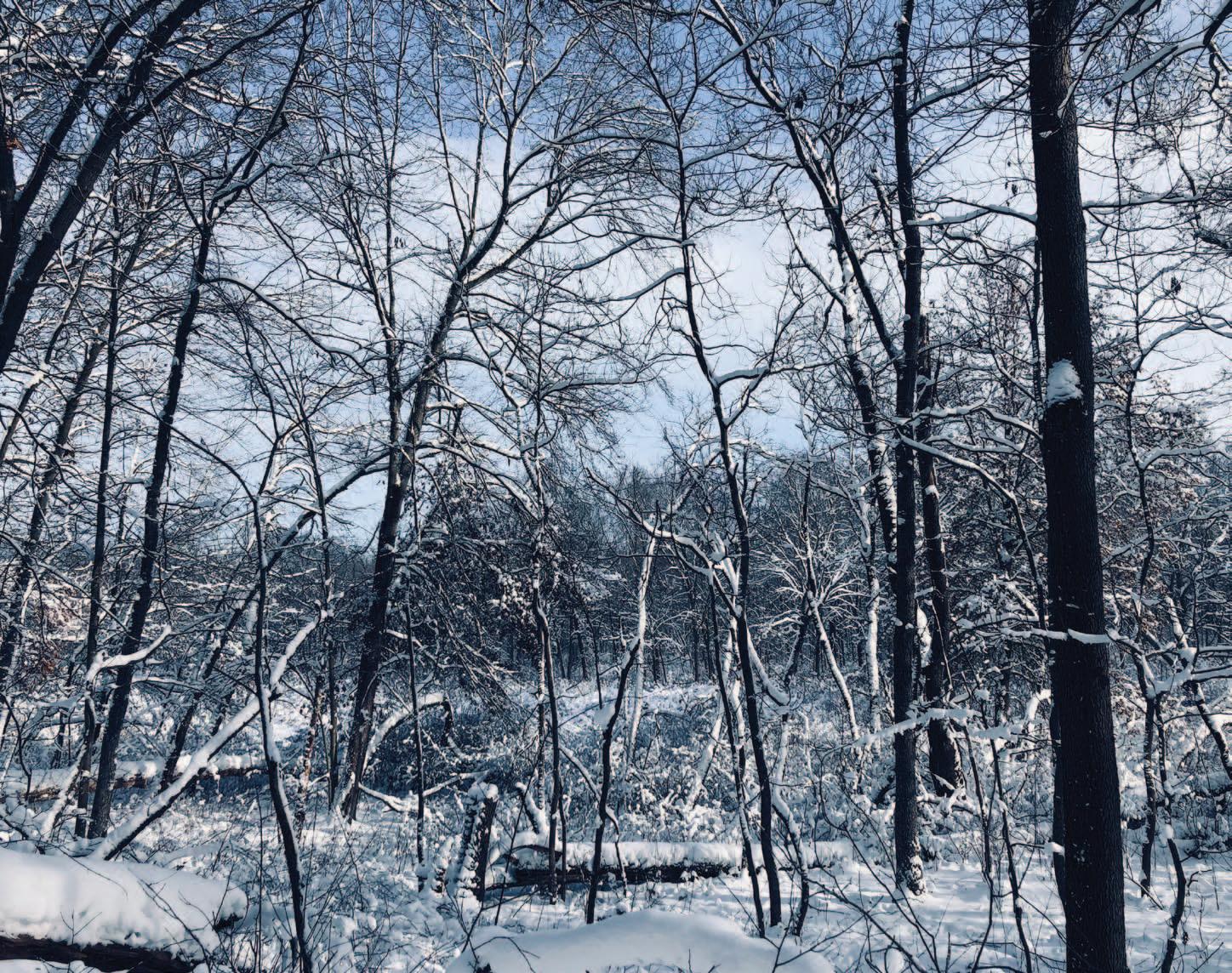
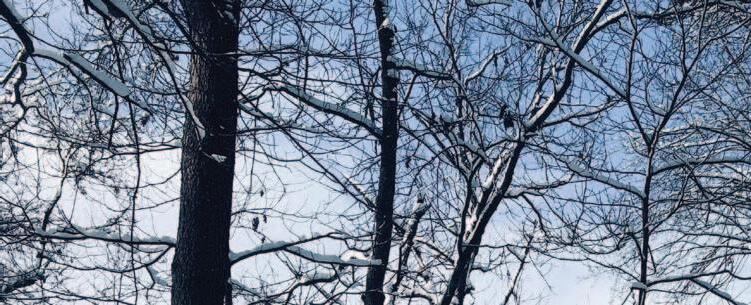
Even now, decades beyond my childhood, I feel a thrill at the sight of the first snow falling. The first snowflakes twirl and swirl through the air, catching on every surface, until all the bare branches of the trees are lined with white lace and the ground covered in a white blanket. I am a child born in the deepest time of the winter, and to experience that first snow of the season never fails to bring me back to the purity of a child’s joy.
One of my very first memories is from another such winter. It was my birthday, and I was a proud four years old. I had climbed up onto the back of the living room sofa, leaning into the window, my nose pressed to the cold glass. My father was outside in the front yard. He was an artist, and to him all things beckoned artistic form. He was building a snowman for me, but in his hands, that snowman was exquisite. It had detailed facial features, hands with individual fingers, a coat with woven woolen texture, and a smile wide and warm between plump lips. As did my father, glancing back at his little girl, so rapt in the window. I waved four stubby fingers at him. He waved back.
I am older now than he was then. My own children are grown. It has been years since I have played in the snow. I have shoveled snow, I have
swept white cushions from my front doorstep, and I have scraped layers of white frosting from my car wind-





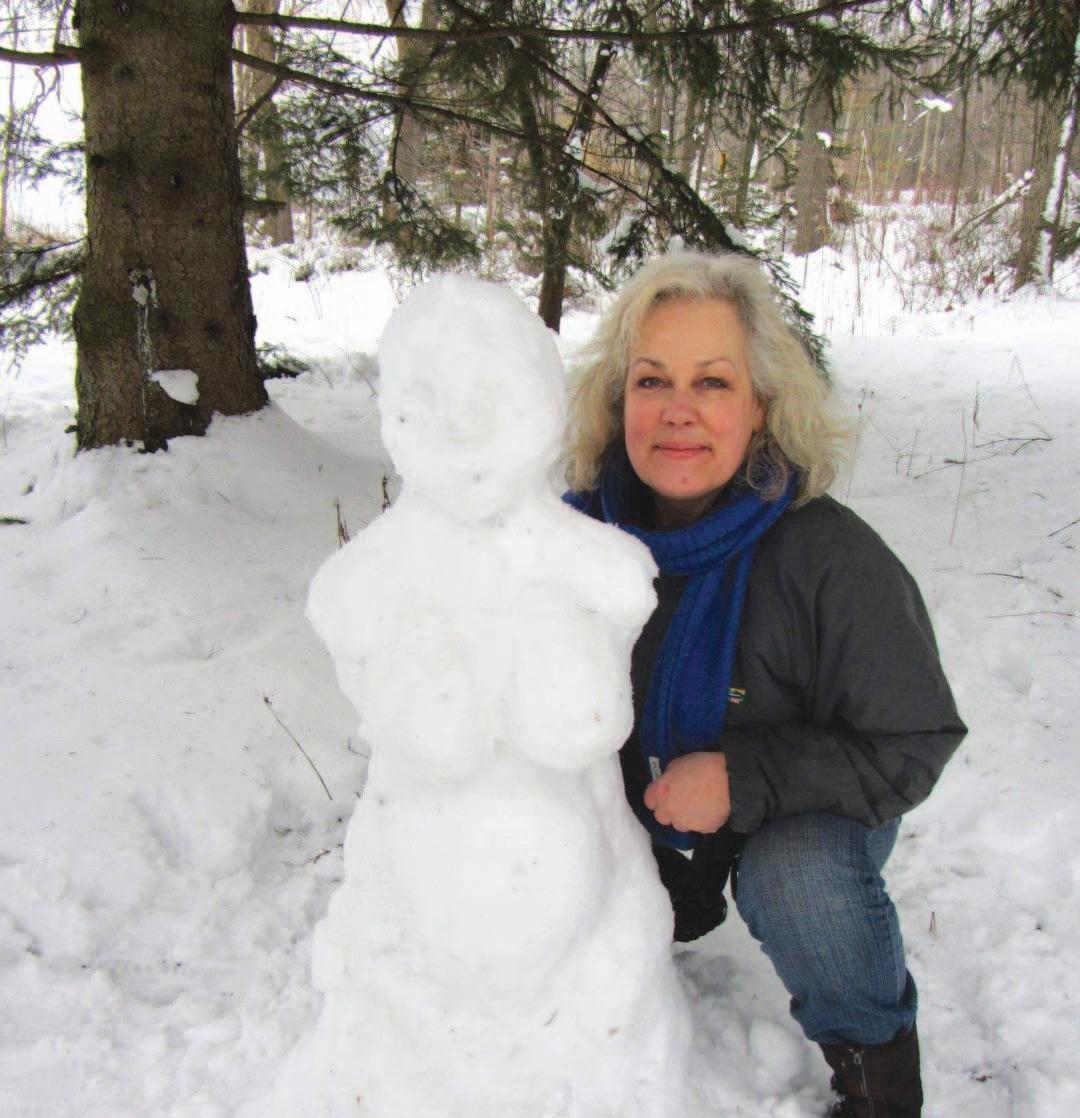
It suddenly occurs to me: I should. A snowwoman. In her prime, maybe a little past, like me. Why not. I am already smiling as I pull on my boots, slip on my jacket, wrap a blue scarf around my neck. I run out into my front yard, kicking up puffs of snow. It is a perfect consistency, with just a touch of damp to make it stick together when I wrap my mittened hands around a ball of chill white. My sculpted snowwoman is not as fine and detailed as my father’s snowman, but I keep in mind some of his paintings of women as I give her shape. My father loved to paint the female form in all her gentle curves and sensuous slopes. She is a woman who has known life, carried children, and now has a rounded belly in memory of those miraculous days. She kneels on the earth, not in submission, but in reverence for all the earth has given her and she has given back.
I hope he is watching. My father. From such a long time ago, but every day remembered. This snowwoman, his daughter grown, still knows the joy of a four-year-old child in her heart when first snowflakes of December catch in my graying hair. I wave up at him. I imagine him waving back.
Zinta Aistars








Blown-glass Christmas ornaments originated in the German village of Lauscha in the 1840s. Glass blowers formed their designs, then silvered the interiors with a mixture of silver nitrate and sugar water. By the 1870s, American retailer F.W. Woolworth recognized the appeal of these glittering creations and began to import them.
When Max Eckardt, a German native from Oberlind, near Lauscha, immigrated to New York in the 1920s, he worked as an importer of glass ornaments. As war loomed, Eckardt feared that it would disrupt his supply. In 1937, he founded the Shiny Brite Company. Together with Woolworth’s manager, Bill Thompson, Eckardt persuaded Corning Glass Works to produce ornaments. By December 1939, over 235,000 American-made ornaments, selling for a few pennies each, filled Woolworth stores.
By the 1960s, the rise of plastic ornaments led to the company’s decline. Shiny Brite ceased production in 1970. In 2001, designer Christopher Radko revived the brand. Radko reissued Shiny Brite’s classic styles so new generations could enjoy the nostalgic twinkle of America’s original Christmas ornaments.
To produce the ornaments, Corning Glass Works modified its glass ribbon machine. The machine—designed in 1926 to produce 2,000 light bulbs per minute— fed a continuous stream of molten glass onto a type of conveyor belt. Air jets blew the glass into molds. Once shaped, the belt advanced, and the cooled bulbs were cut free and collected.
By 1940, Corning was turning out about 300,000 unadorned ornaments daily. At first available in silver only, Shiny Brites soon appeared in red, green, gold, pink, and blue. The clear


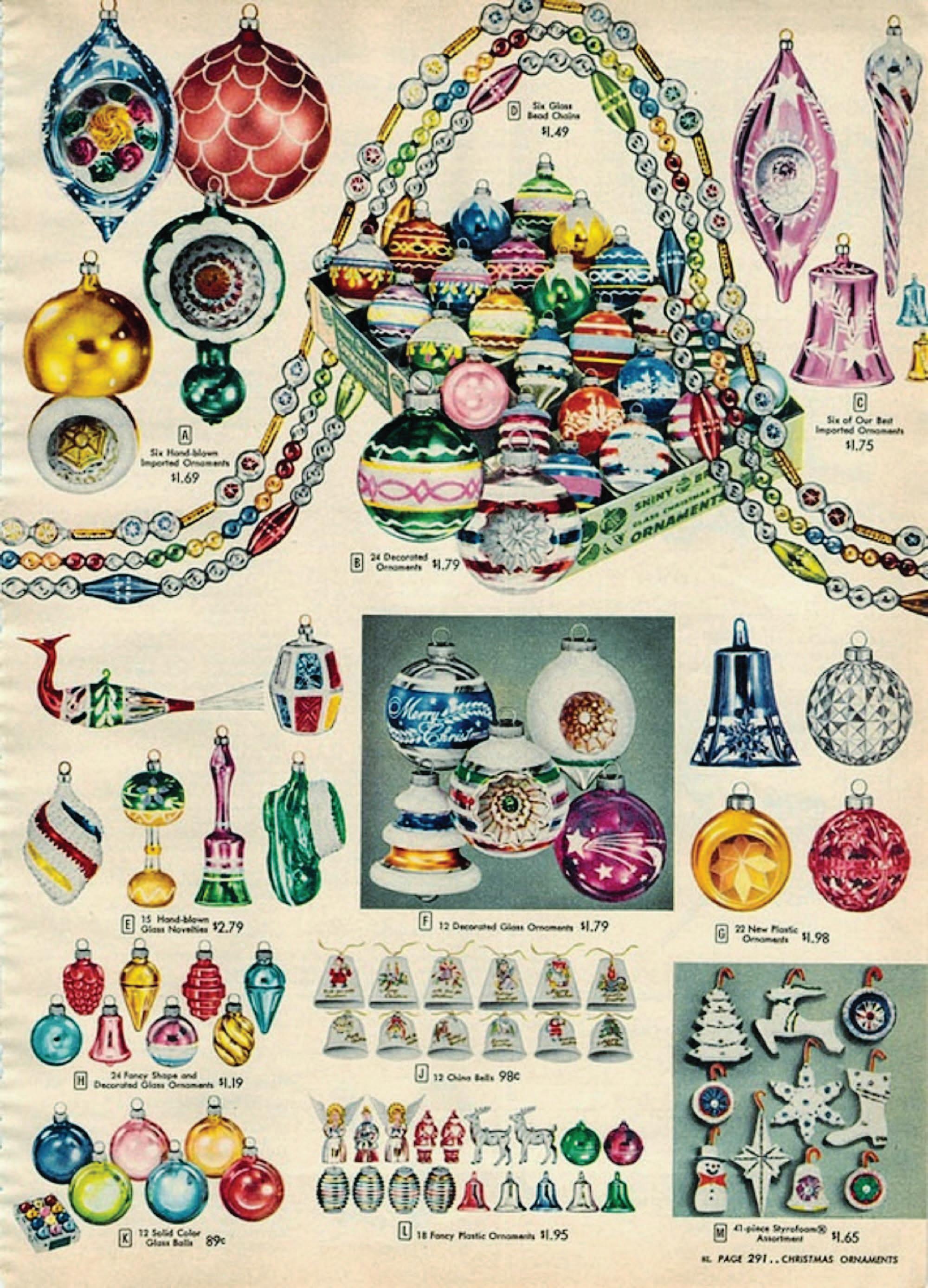
glass bulbs shipped to Eckardt’s New Jersey factories. There, workers lined them with silver nitrate, dipped them in lacquer, hand-painted them with designs, and packaged the ornaments into cardboard boxes. Ornate shapes followed—bells, teardrops, pinecones, finials, and Japanese lanterns. Many ornaments featured mica “snow”.
World War II brought shortages
of silver and lacquer, forcing Eckardt to adapt. The company replaced metal caps with cardboard. Thin pastel stripes adorned un-silvered ornaments. Some ornaments featured a tiny sprig of tinsel inside, but the shortage of metal soon put an end to these. After the war, metallic paints and silver returned, along with bright glitter and metal caps reading

“Shiny Brite – Made in U.S.A.”. By the 1950s, Shiny Brite ornaments had become emblems of American holiday tradition.
To care for vintage Shiny Brite ornaments, dust them with a clean cotton cloth or soft brush. Never use water or cleaners, as the paints are water-based and easily damaged. Store them wrapped in acid-free tissue away from sunlight, humidity, and extreme temperatures.
Collecting vintage Shiny Brite ornaments offers a glimpse into mid-century American Christmas traditions. Real Shiny Brites are still easy to find at estate sales, in antique shops, and online, though collectors should proceed with care. Some sellers use the Shiny Brite name loosely, and others may replace caps to pass off imitations as originals. Authentic Shiny Brites can often be identified by their caps—pre-war versions feature metal tops stamped “Made in U.S. of A.”. Many consider the transparent wartime ornaments with cardboard caps the “Holy Grail” of Shiny Brite collecting.
Shiny Brite boxes are also collectible—those once marked 29 cents now sell for $25 or more. Ornament prices vary. Individual ornaments sell from $1 to $80-plus. Boxed sets of six to twelve range from $10 to $250. Large lots can exceed $500. For those who treasure vintage holiday sparkle, authentic Shiny Brite ornaments remain timeless collectibles.
Bridget Klusman
Owner, Retro Estate Sales https://retroestatesales.wixsite.com/retroestatesales
Photos
A. Shiny Brite Christmas Ornaments B. 1950s Sears Ad for Shiny Brite


We’re blessed with many beautiful towns in Michigan that we can visit to discover all sorts of history, art, and fun things to do. If you haven’t visited
Ada, Michigan, you may be surprised by the history of the town that’s been called “the cradle of European settlement in west Michigan” and which





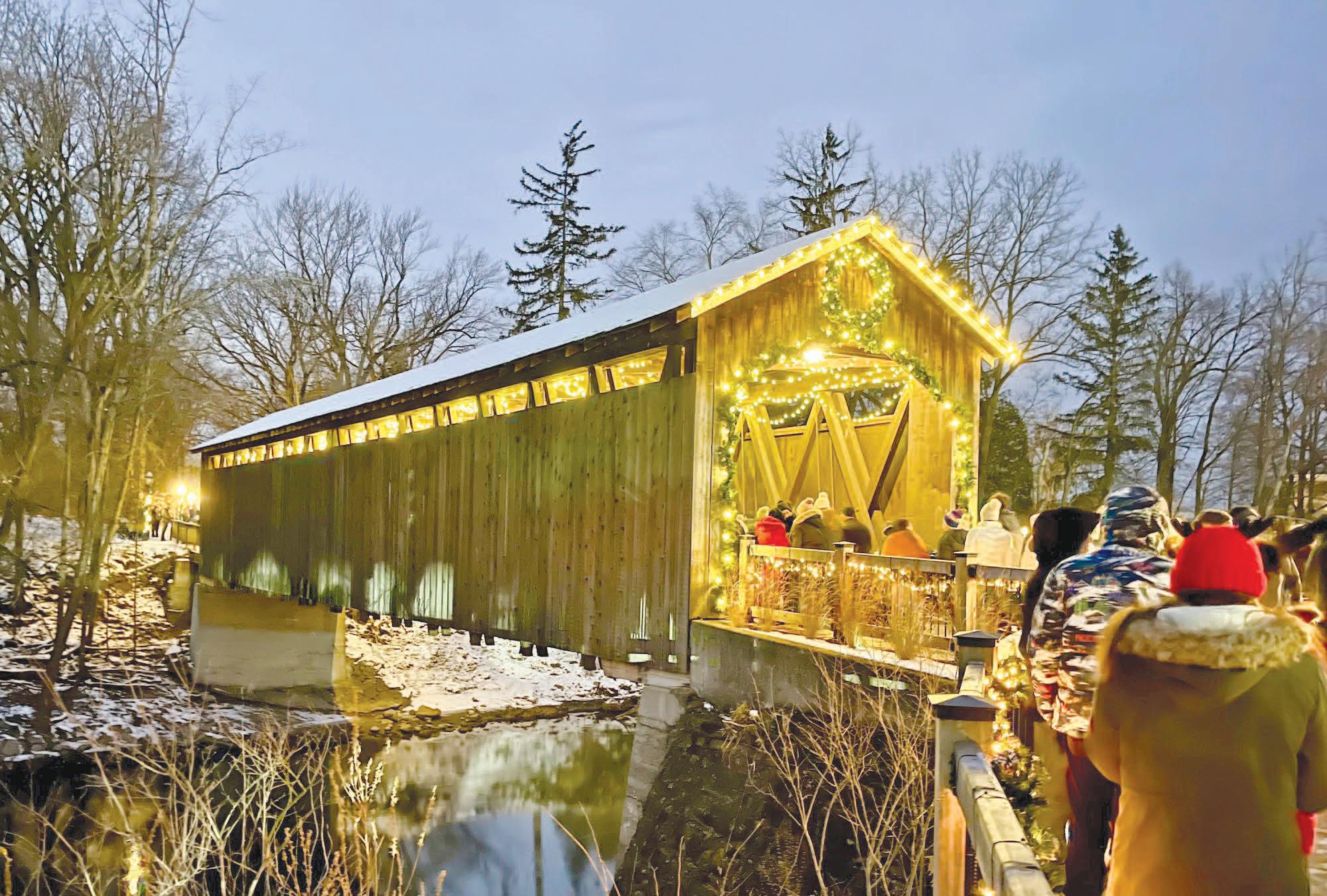
was home to the first non-native residents of west Michigan. December 2025 will be a good month to visit Ada. The town will not only be filled with Holiday decorations and events, but the Averill Historical Museum— a wonderful, recently renovated and expanded tribute to Ada’s past—has a special temporary exhibit called “Change,” which explores the history of Ada landmarks.
Located three miles east of Grand Rapids and just over an hour north of Kalamazoo, the area was home to Odawa people for thousands of years. European settlers set up a trading post in the late 1700s. Then, just over 200 years ago, in 1821, west Michigan’s first permanent European settler arrived. Massachusetts-born fur trader Rix Robinson came to the area following company assignments in Detroit, Mackinac Island, and Green Bay. The area was perfect for his work, as the place, then called “The Forks,” marks the congruence of the Thornapple and Grand rivers. The rivers allowed shipping access to the Great Lakes and to other nations, especially Britain, where American furs were hugely popular. Furs included beaver, raccoon, fox, otter, mink, and even bison. Robinson was named the head fur trader for John Jacob Astor’s American Fur Company, which became a virtual monopoly after non-U.S. traders were barred from operating in America in 1817. Ada still recognizes its fur-trading heritage each September with the reenactment of a trading encampment on the grounds of the Averill Museum, featuring actual descendants of traders.
The town’s name is a story in itself. According to Kristen L. Wildes, executive director of the Ada History Center, the name can be traced to British poet Lord Byron, whose daughter, Augusta Ada Byron, was
called Ada by her father. Town founder and supervisor Sidney Smith, who admired Byron’s work, proposed that the town be named Ada, a suggestion that was accepted. Businesses and infrastructure grew over time. A post office was established in 1837 and Ada became a stop on the Detroit and Milwaukee Railroad in 1853. A covered bridge was built across the Thornapple in 1867, and today, the photogenic Ada Covered Bridge is listed on the National Register of Historic Places. The comfortable village prompted writer Franklin Everett in 1878 to call Ada “a snug little place.” Adjacent to the bridge, town leaders broke ground this past summer on Covered Bridge Park, scheduled for completion in 2026. Other spots to visit include the riverfront and town hall. The Ada Historical Society also hosts walking tours of the village’s cemeteries. Today, the “snug” environs bely the fact that the world’s largest multi-level marketing company, Amway Corporation, has its headquarters less than half a mile away.
This month, Ada will be bustling with Christmas festivities, including the history center’s Wreath Sale fundraiser starting November 21, followed by Tinsel, Treats, and Trolleys (with a real trolley) on December 5. Ada’s Santa Parade, followed by cookies and hot chocolate in the History Center barn, takes place at the Averill Museum, 7144 Headley Street, starting at 10:00 a.m. Details are at www.adahistorycenter.org/ events . Consider making a short drive to Ada, especially during the Holidays, as a nice day trip.
Tony Ettwein HistoryZoo1837@gmail.com
Aging in a Youth-Focused World: Navigating the Physical, Emotional, and Social Challenges of Getting Older
Aging is one of life’s few certainties, yet it’s often met with resistance, fear, and even shame. In a society obsessed with appearance and youth, growing older can feel like slipping out of the frame. Wrinkles, gray hair, and slower steps are too often viewed as signs of decline rather than markers of experience. While physical changes are inevitable, the emotional and social challenges of aging are less visible—and far less discussed.
It’s time to change that narrative. We need to stop treating aging as something to fight and start seeing it as something to understand, honor, and embrace.
Our bodies tell the story of our years—sometimes more loudly than we’d like. Reduced muscle mass, decreased bone density, slower metabolism, and changes in skin elasticity and vision are all natural parts of the aging process (National Institute on Aging [NIA], 2020). These changes can affect mobility, independence, and self-esteem, especially when they limit once-loved activities.
Older adults are also more likely to

face chronic conditions such as arthritis, cardiovascular disease, cognitive decline, and increased risk of falls (Centers for Disease Control and Prevention [CDC], 2022). Fatigue and slower recovery times often mean rethinking daily routines, exercise habits, and diet.
These adjustments, while challenging, can also become acts of empowerment. Staying active, eating well, and prioritizing rest aren’t just “health tips”—they’re ways to honor the body’s evolving needs.
Aging isn’t only physical, it’s deeply
emotional. Many older adults wrestle with feelings of loss: loss of youth, health, loved ones, or even a sense of purpose. Retirement, reduced social circles, or children leaving home can contribute to loneliness and disconnection (Cohen-Mansfield et al., 2016). As time passes, the absence of friends or partners can deepen that sense of emptiness.
Depression and anxiety can become more common in later years, especially when social support is lacking or physical limitations increase (Fiske et al., 2009). Ageism—the quiet but persistent bias against older adults— only compounds these struggles. When society sends the message

that aging equals irrelevance, it’s easy for individuals to internalize those beliefs, leading to lower self-esteem and decreased well-being (Levy & Macdonald, 2016).
Recognizing these emotions isn’t a sign of weakness—it’s the first step toward resilience.
Society’s
Youth and Beauty
Scroll through social media, flip through a magazine, or watch a commercial, and one thing is clear: our culture glorifies youth. Western media often equates beauty, success, and desirability with being young. Older adults, if they’re visible at all, are often portrayed as frail, forgetful, or out of touch.
This youth-centered mindset reinforces the idea that aging should be hidden or “corrected” through cosmetic fixes and anti-aging products. Research shows that such exposure to youth-centric imagery can significantly impact how older individuals view themselves and their appearance (Halliwell & Dittmar, 2003). For many women especially, “appearance-based ageism” creates an unfair double bind: the expectation to look young, even when celebrating the wisdom of age.
It’s time we rewrite that script. Every line, every wrinkle, every story




etched into a face is a testament to survival and strength—not something to erase.
Despite the challenges, aging can bring clarity, purpose, and peace that youth rarely allows. Many people find that growing older offers a new kind of freedom—the ability to prioritize what truly matters, let go of superficial concerns, and cultivate gratitude.
Developing emotional resilience means embracing aging with acceptance and curiosity rather than denial. Some ways to do that include:
Stay connected. Join community groups, volunteer, or pursue hobbies that foster social engagement.
Nurture your body. Choose age-appropriate exercise, balanced nutrition, and adequate rest.
Challenge internalized ageism. Seek out positive and diverse representations of older adults in media.
Practice mindfulness and gratitude. These habits can boost life satisfaction and reduce anxiety (Lomas et al., 2015).
Seek support when needed. Therapy or support groups can help process transitions like retirement or the loss of loved ones.

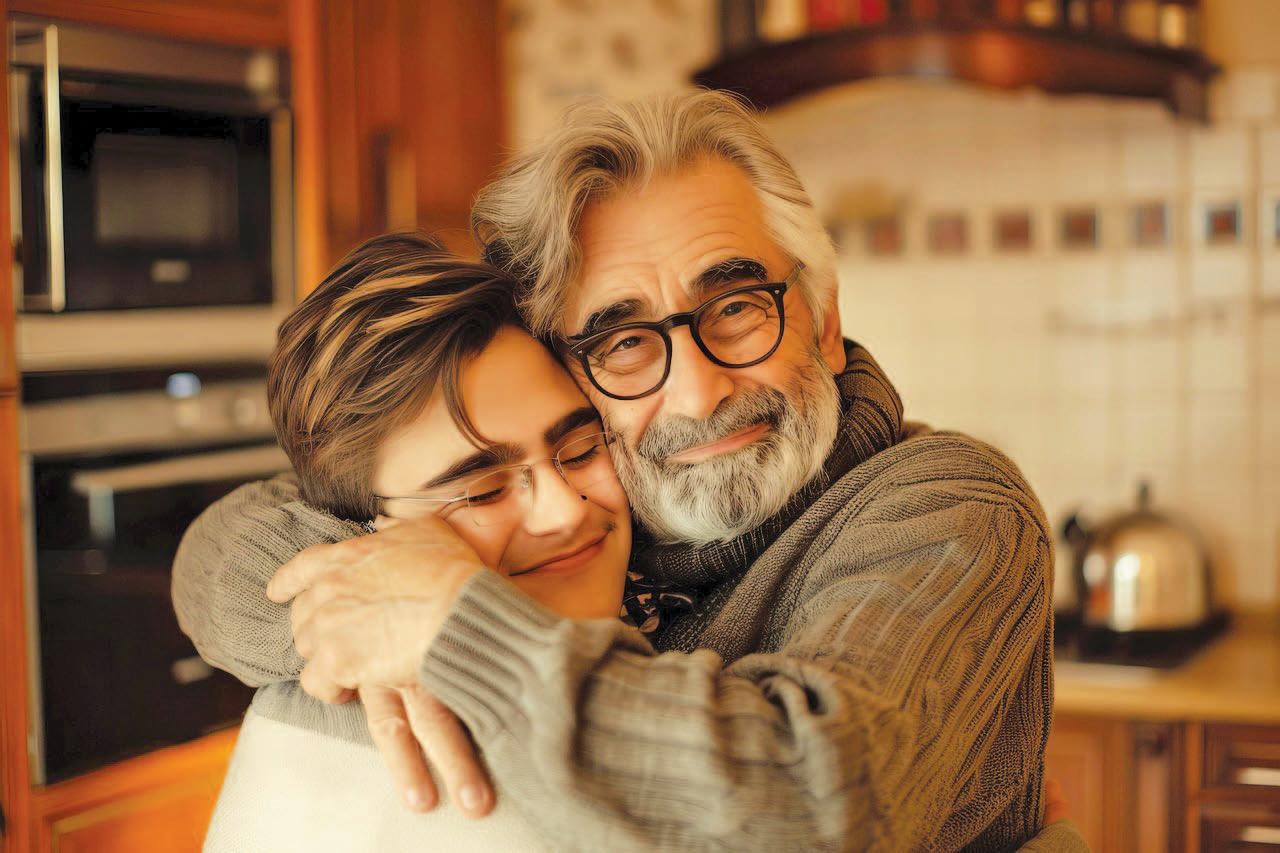
Aging is a journey that intertwines biology, emotion, and culture. It is not the end of vitality but a redefinition of it. While it brings undeniable difficulties, it also provides opportunities to grow into one’s truest self. We can choose to see aging not as losing something, but as gaining perspective, wisdom, and gratitude. After all, growing older is a privilege denied to many. By challenging ageism, celebrating resilience, and embracing change, we can redefine what it means to age—with dignity,


confidence, and joy. In the end, the truth is simple: aging is better than the alternative.
Dr. Julie Sorenson, DMFT, MA, LPC, LMFT
References
Centers for Disease Control and Prevention. (2022). Healthy aging: Helping people to live long and productive lives and enjoy a good quality of life. https://www.cdc.gov/ Cohen-Mansfield, J., Hazan, H., Lerman, Y., & Shalom, V. (2016). Correlates and predictors of lone-
liness in older adults: A review of quantitative results informed by qualitative insights. International Psychogeriatrics, 28(4), 557–576. https://doi.org/10.1017/ S1041610215001532
Fiske, A., Wetherell, J. L., & Gatz, M. (2009). Depression in older adults. Annual Review of Clinical Psychology, 5(1), 363–389. https://doi.org/10.1146/annurev. clinpsy.032408.153621
Halliwell, E., & Dittmar, H. (2003). A qualitative investigation of women’s accounts of their body image development in adulthood. Psychology of Women Quarterly, 27(4), 308–317. https://doi. org/10.1111/1471-6402.00110
Levy, S. R., & Macdonald, J. L. (2016). Progress on understanding ageism. Journal of Social Issues, 72(1), 5–25. https://doi.org/10.1111/ josi.12153
Lomas, T., Hefferon, K., & Ivtzan, I. (2015). The LIFE model: A meta-framework for integrating the humanistic and positive psychology traditions. Review of General Psychology, 19(1), 42–58. https://doi. org/10.1037/gpr0000030
National Institute on Aging. (2020). Biological basis of aging. https://www.nia.nih.gov/





Christmas gives us all a chance to reconnect with our inner child, thanks to the unique and timeless comfort found in those oh-so-delightful Christmas cookies!
Being blessed to have lived to experience sixty something Christmas Days, I have come to two conclusions about this holiday. The first is that Christmas is best when you are a child and the second is that heirloom Christmas cookie recipes will always (no matter our age) open a magic door in our hearts that lets out our inner child!
All the sweet, delightful memories from childhood will suddenly start flooding your heart the moment you bite into or smell something Mom used to bake for you. Today, marvel over the fact that, even though I no longer get that childlike thrill of waiting anxiously for Christmas morning, I do still surprisingly experience the same feeling of comfort and joy the moment I smell a pan of my mother’s Christmas cookies baking in the oven.
Thinking back over all the Christmas mornings of the past, I bet all of us would be hard-pressed to recall all the gifts we got from year to year, but our memories of the confections are



super clear!
I am grateful and thankful that Mom took the time to make us cookies from the “Old Country,” as she called it. Using fresh ingredients and mixing them up totally from scratch made them special in ways that no gift under the tree ever could.
Heirloom, handmade Christmas treats do have a special magic that you will not find in ordinary, runof-the-mill sweets from the store.
Home-baked treats contain a magic that enables us to travel back to childhood to remember all the comfort and joy those treats brought us in our youth.
Offering a magic that can span
Prep Time: 30 minutes; Cook Time: 30 minutes; Total Time: 1 hour active time + chill time; Yield: 24.
2 1/2 cups all-purpose flour, plus more for dusting
1/4 teaspoon baking powder
1/2 cup cane sugar, divided use
2 teaspoons unrefined mineral salt, divided use
1 cup chilled unsalted butter, cut into pieces
8 ounces Neufchatel cheese
Zest of 1 orange
1 1/2 cups finely chopped walnuts
1 cup raspberry, or any flavor, jam, or marmalade
1/2 cup freeze-dried raspberries or strawberries*
1 large egg, beaten
In the bowl of a stand mixer, combine flour, baking powder, half of the cane sugar (1/4 cup), and half of the salt (1 teaspoon). Using a paddle attachment on low speed, mix to combine. Add butter then beat mixture until it looks like clumping sand, about 2 minutes. Stop mixer and then cut cheese into 8–10 pieces then add all at once to mixer bowl. Beat just until dough cleans the sides of bowl. Turn dough out onto a work surface and divide in half. Pat each into an oval disk then wrap tightly in plastic and chill until firm, about 30–45 minutes. Meanwhile, in a small bowl, combine orange zest, nuts, jam, and remaining 1 teaspoon of salt then set aside. Once dough has firmed, on a rolling surface with a rolling pin, roll each dough out separately between two


generations (and make a sixty-somethings feel like a kid again too) I can’t think of a more important reason to dust off that old recipe box, or find a new recipe that flows from your ancestral roots.
Roll some magically-sweet memories into your holidays, so that your upcoming generations will get to experience that same childhood comfort and joy when they reach adulthood, too.
Here now are some ways to weave a little old worldly magic into our current holidays. Enjoy!
Laura Kurella Photographer: Laura Kurella
pieces of floured parchment paper. Dust with more flour and turn dough over as needed until it is rolled out to an approximate 14 x 10- inch rectangle that is 1/8-inch thick. Spread half of filling over each rolled out dough leaving a 1/4-inch border on both long ends. Rotate dough so that a long side is closest to you then roll it up into a tight spiral, using parchment to help you lift it as you go. If dough is sticking, chill 5 minutes before proceeding. Once rolled into a tight log, wrap tightly in plastic wrap and chill until firm, at least 60 minutes or up to 1 day. Place oven racks in upper and lower thirds of oven, and preheat to 375 degrees. Using a spice grinder or mortar and pestle, finely grind freeze-dried berries into a powder. Transfer to a small bowl then mix in remaining 1/4 cup cane sugar. Place chilled dough on a cutting surface then brush the tops of both doughs well with beaten egg. Using half of berry /sugar mixture, sprinkle the tops of both doughs. Then, using a knife, cut dough into diagonal wedges 2-inch wide at the base and 1/2-inch wide at the point. Alternate direction each time so that short and wide ends alternate. Divide pieces between two parchment-lined baking sheets. Bake, rotating baking sheets top to bottom and front to back halfway through, until deep golden brown, about 25 minutes. Cool on baking sheets, sprinkling with remaining berry/sugar mixture the moment they come out of the oven so it’s able to melt a bit.

1 cup pecans
1 cup powdered sugar, divided use
1 cup unsalted butter, chilled
1 teaspoon 100% fine Jamaican rum*
2 cups all-purpose flour, plus more for working
1 teaspoon sea salt
1 teaspoon ground Saigon cinnamon
1/2 teaspoon ground nutmeg
1/4 teaspoon ground clove
1/4 teaspoon ground cardamon
1/4 teaspoon ground coriander
1/8 teaspoon cayenne powder
*= The use of a higher quality, 100% fine Jamaican rum (such as Myers’s) is preferred over traditional cooking extracts because of the quality and flavor they impart. However, you can make this recipe without rum, or extracts, by using my Non-alcoholic Jamaican Rum recipe (found at the end of this recipe).
In the bowl of a food processor, process pecans and 3/4 cup of the powdered sugar until nuts are finely ground, about 1 minute. Cut butter into small pieces (hard-boiled cutter makes it easy). Add to the processor with vanilla then process again until smooth, about 1 minute. Add flour, salt, cinnamon, nutmeg, clove, cardamon, coriander, and cayenne, then process until combined, about 30 to 45 seconds. Remove dough to a sheet of waxed or parchment paper.

Place another sheet on top of dough and, using a rolling pin, roll dough out to a 1/4-inch thickness. Place paper-covered dough onto a cookie sheet and chill until firm, about 30 minutes. Preheat the oven to 350 degrees. Line two baking sheets with parchment paper then, using floured snowflake-shaped cookie cutters, cut out cookies and place on prepared baking sheets about 1 1/2 inches apart. Place the pan in the oven and bake until lightly golden brown

around the edges, about 7 to 10 minutes. Cool on a baking sheet on a wire rack.
While cookies are cooling, but still warm, place remaining powdered sugar into a sifter or small screen strainer and dust cookies evenly.
*=Non-alcoholic Jamaican Rum
2/3 cup boiling water 1/4 cup raisins 2 tablespoons butter
4 teaspoons molasses pinch of natural sea salt 1 tea bag filled with black tea In a heat proof, 2-cup bowl, combine boiling water, raisins, butter molasses, and salt. Stir well then add tea bag and submerge. Cover and let steep on the counter for 5 minutes then place in the refrigerator to let flavors develop for 1 hour. Strain solids out, placing liquid into a sterile 8-ounce bottle or jar. Store under refrigeration.

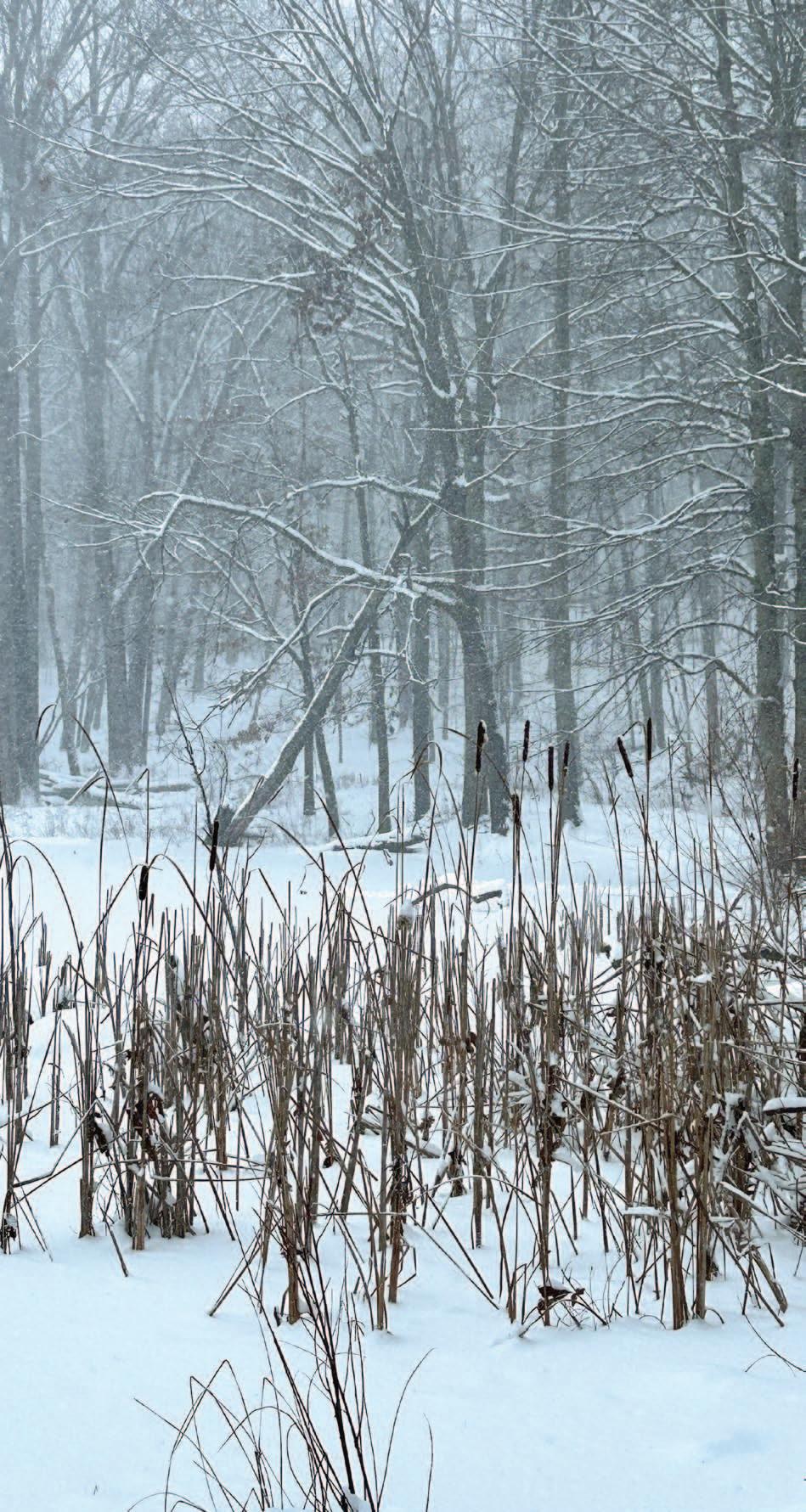
On days where I feel cramped in my house, wanting to do something yet feeling uninspired, I often forget that I live only a five-minute walk away from one of the prettiest walking trails in Kalamazoo. Well, maybe I’m biased, but despite having ventured into the many woodsy paths that Kalamazoo has to offer, the Asylum Lake Preserve remains closest to my heart. Many of the Saturday and Sunday mornings in my childhood were spent walking with my family and dog through the trails, playing with my dog in the creek and carefully avoiding the weeds lining the paths where my mom pointed out all of the poison ivy hiding in plain sight. It was always a treat for me to spend my summer and fall mornings this way: enjoying the sun, fresh air, and the beauty of nature that I wouldn’t otherwise see everyday.
Upon coming through my little neighborhood entrance, I am immediately swallowed by thousands of trees lining the path and creating a canopy above. The path itself is spotted with small patches where sunlight could shine through the bright green (or red and yellow) leaves. Following the routine built with my family, I first stop at the small beach access


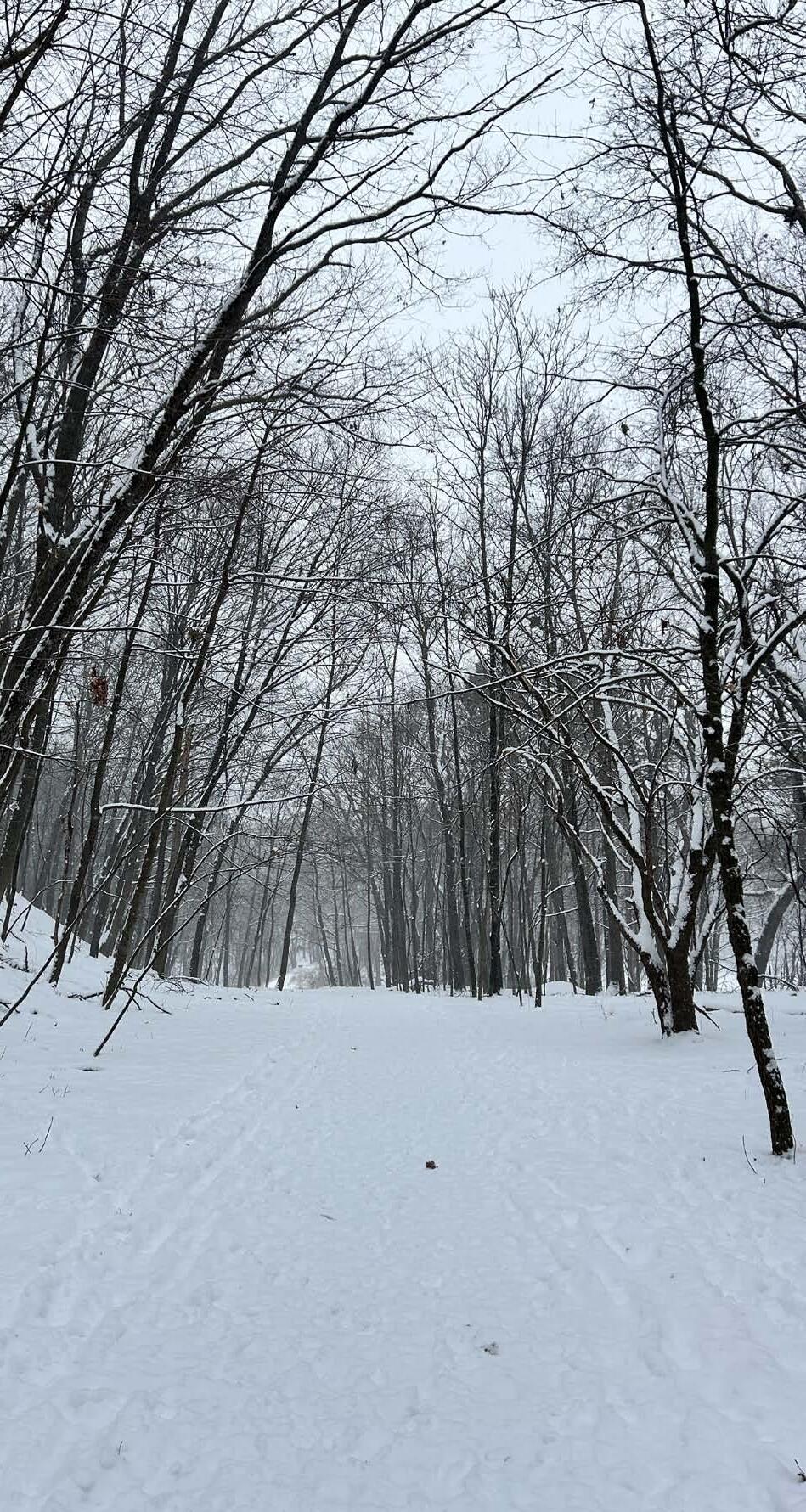
that leads into the Asylum Lake. From there I may look at the creek, or head further into the woods. This second option provides the choice of staying in the woods or walking through the meadow. The numerous trails offer a variety of routes with inspiring views.
While I love taking in the scenery, the rumors of ghost sightings add intrigue to my walks. As someone with a deep love of horror, I’ve always been fascinated with the history of the Asylum Lake Preserve and the claims that the land is haunted. Nestled between what is now Drake Road and Parkview Avenue, the area was first used for orchards before being bought for the by the Michigan Asylum for the Insane, which was established in 1859 around Oakland Drive.Those living in Kalamazoo recognize the famous water tower that is a part of Western Michigan University’s campus (also rumored to be haunted) and while the water tower is out of commission, the hospital there is still active. The land of McMartin Lake was bought in 1887 as an addition to the state psychiatric hospital as a Colony Farm, hence why we now know the lake to be Asylum. Since my child-



hood, I had heard stories of hikers feeling like they were being watched, or seeing a strange apparition in the woods, experiences which were most likely influenced by the history of the location (if you are interested in this history, I highly recommend checking out Haunted History of Kalamazoo by Nicole Bray and Robert Du Shane). I wanted to believe the stories simply because I thought they added an exciting element to my walks, yet I had a hard time trusting these rumored accounts because so many ghost stories could be easily explained, and I hadn’t experienced anything myself.
Last year I walked the trails with my mom and dog after not visiting the trails in at least a year, a consequence of moving out of my childhood home and into my college apartment. Bare tree limbs hung above us, covering our path in shadows. The branches seemed to reach out like bony fingers. We shuffled down a narrow path where we couldn’t walk side-by-side. My dog Jax led the way, I followed, holding her leash, and my mom was behind me. She unexpectedly grabbed my left shoulder, startling me and sending a rippling tingle through my arm.


I turned and gave her a confused look only to be met by an equally confused look. My mom had no idea why I turned so sharply. She hadn’t actually grabbed me. She saw nothing on my shoulder. But I had absolutely felt something, a grip on my shoulder. Not just a twitch or twinge of the nerves. Maybe I finally had my ghostly experience.
Now that autumn is upon us, I want to soak in every last drop of sun and good weather before winter unsheaths its cold, cruel grip. The Asylum Lake trails are even better in the fall, where the chill breeze keeps you cool under your favorite sweatshirt. The last of the warm sun glows on the turning leaves, and woodland critters prepare for a long winter’s nap. If you, too, are looking to enjoy the outdoors before needing to bundle up in thick coats and gloves, head out to the Asylum Lake Preserve. Enjoy the scenic water, trees, and fields. And if you’re anything like me and like the spooky thrill of fall, keep an eye out for ghostly specters as you reflect on the nature and deep history that play hand in hand.
Carson Williams
Good ideas come when they’re least expected. For example, I was in Bronson Park last month, listening to a band playing Middle Eastern music. I noticed a couple women standing and swaying to the rhythms of the various songs. This prompted me to ask myself, how many times a day do I move to music? More importantly, (because I’m an exercise instructor at a senior living facility), how many times a day do people in my classes move to music. The answer was little to none.
I’ve read plenty of professional literature on the benefits of music and movement (more on that later), but have not heard of any that requires no equipment and is universally accessible. Then the idea came: Why not the Hand Jive! For those of you who may not be familiar with the term, it’s dancing with your hands. It was popular in the late ‘50’s and early 60’s, often done at high school sock hops or basketball games. It consists of five repetitive hand movements, done to typical early rock n’ roll music. The movie “Grease” popularized the hand jive when it came out. Consult u-Tube video if you want a lesson. It’s really simple.
Now, why is this important? Because it checks all the boxes for a self- sustaining exercise routine. It requires no equipment; you can do
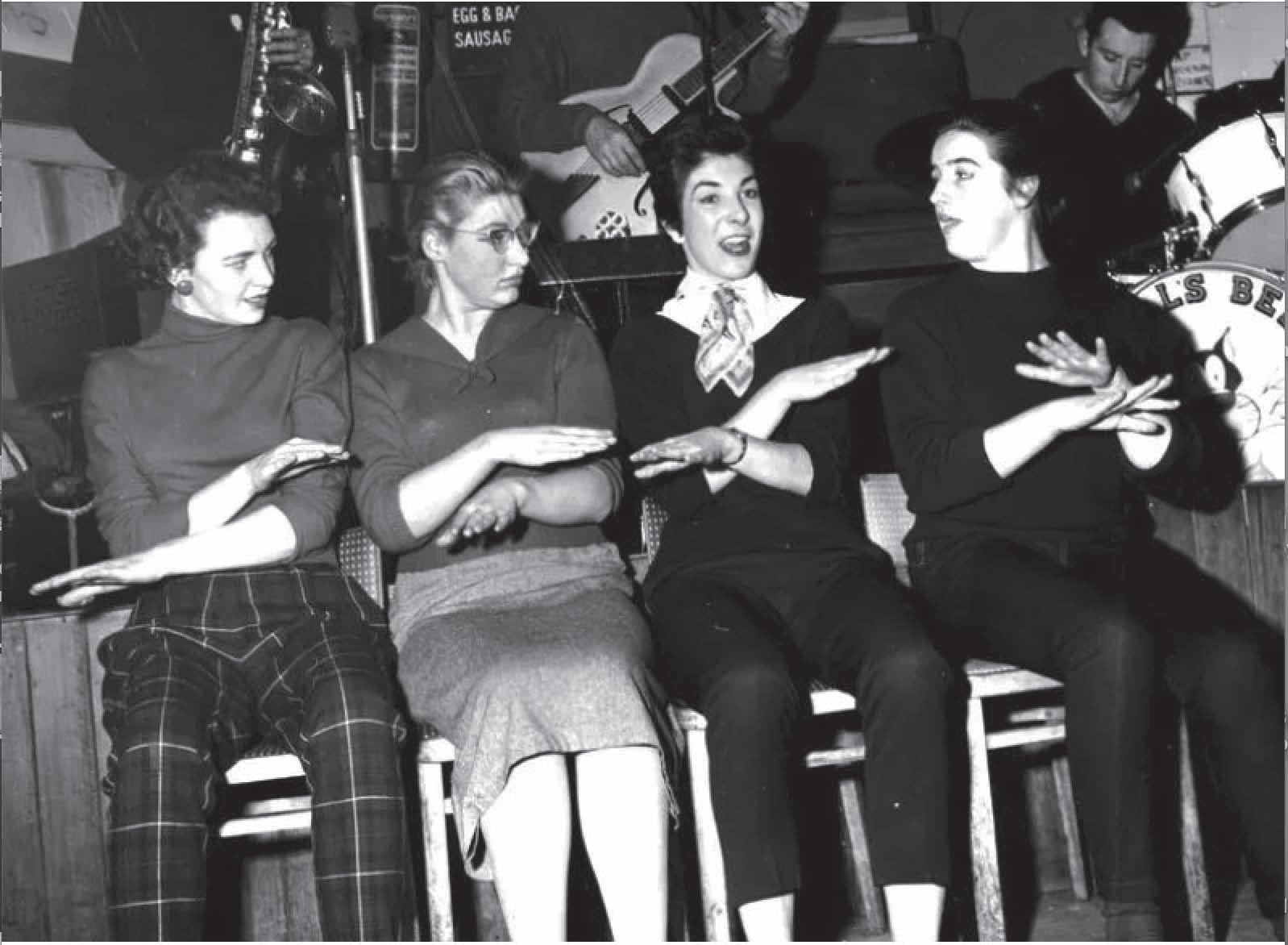
it with a group or by yourself; you can do it sitting down; it doesn’t require attendance at a class; it’s a good workout (believe me) because


it moves your arms which are closer to your heart than your legs, thus elevating your heart rate; it works your chest muscles, which are often overlooked in strength training; it promotes growth of neural transmitters in your brain; and, perhaps most important, it’s FUN!
Everyone has that one song that, if they hear the opening bars, will start tapping their toes or twisting their hips. There is ample scientific evidence that shows combining music and movement not only helps fitness but can positively impact brain health and improve mental health, particularly in those who are isolated or less social.
One recent study found that seniors, typically the least physically active age group, who participated in music and movement classes, reported feeling better and more satisfied with their lives, as well as keeping diabetes under control. For those with neurological disorders like Parkinson’s disease, moving to music
can improve gait, balance, and quality of life. Another study found that seniors with dementia who listened to or moved to music had fewer depression symptoms and an improved mental well-being. At any age, music, whether played, listened to, or danced has been found to improve cognition. For older adults in general, “bopping to the oldies” stretches memory muscles as well as their bodies.
We’ve all seen that guy in the car in front of us doing the “Richard Simmons” routine to Dion and the Belmonts, or people in stadiums doing “the wave” to a familiar tune. Movement to music is natural; it’s born in us.
So brush off the poodle skirt and clean up the white bucks. We’re gonna rock and roll tonight!
Till next time,
Ken Dettloff ACE Personal and Brain Health Trainer

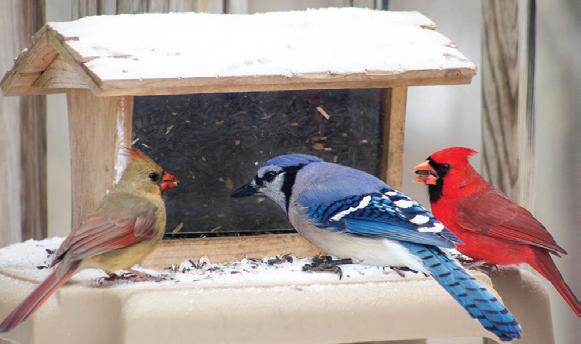
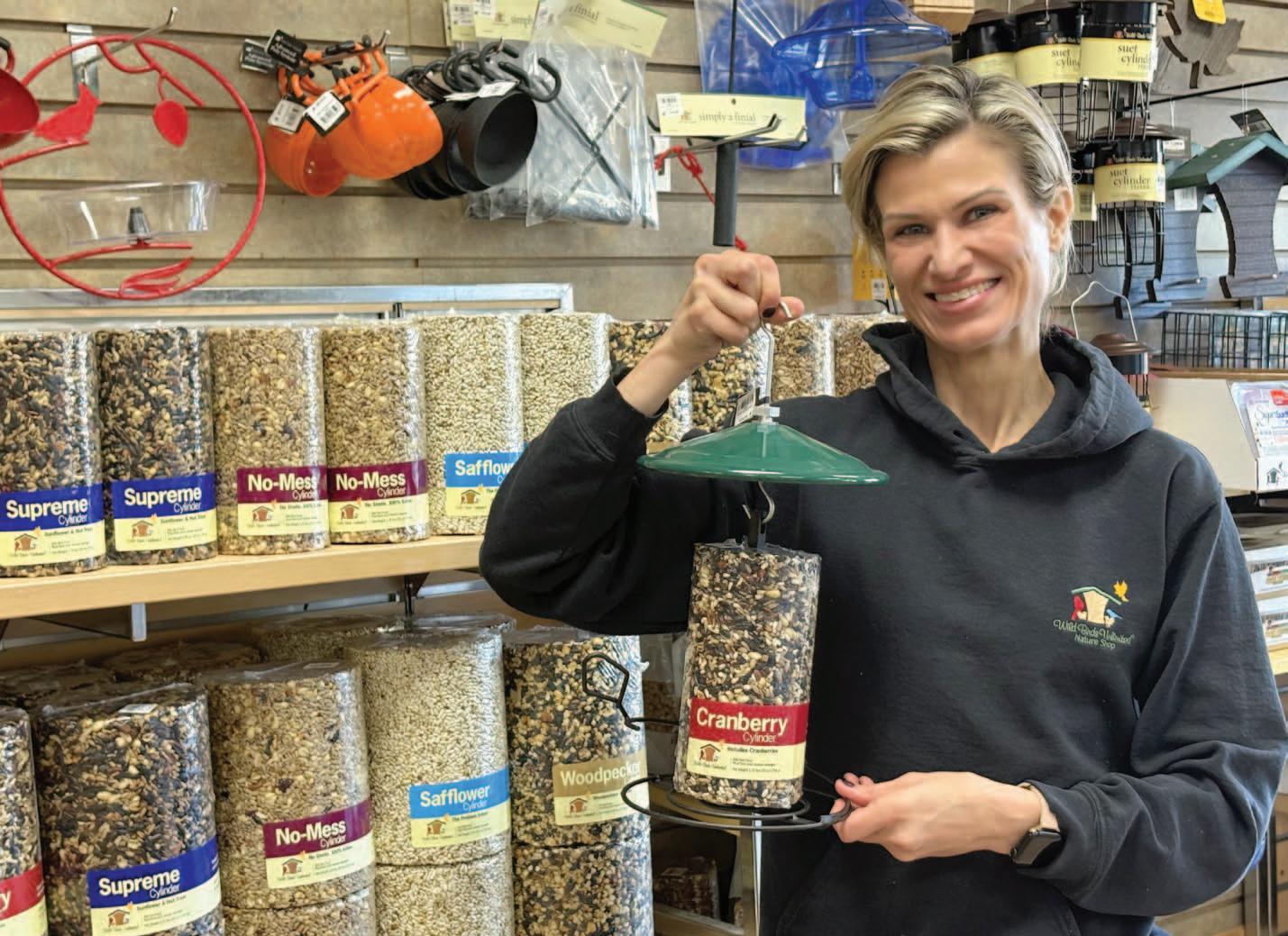
When you talk with Heather Purcell about birds and great places to see and hear them, her face is likely to light up. Birds are special to her. Heather is the owner of Wild Birds Unlimited Nature Shop at 3015 Oakland Drive in Oakwood Plaza in Kalamazoo. Enjoying our flying, feathered neighbors is a passion to her. Her store, which was the fifth Wild Birds Unlimited franchise in the nation, has been in her family since 2011. She took over duties from parents Jim and Val Lippincott as primary owner-operator in 2020. Some people discover their passion early in life and some later on. Many don’t remember exactly how it came to them. Heather remembers, because her relationship with birds affected not only her career, but her life. Heather is a recovering alcoholic,
and she still remembers how birds helped to initiate her journey to recovery.
“I was walking through Kleinstuck Preserve, thinking about everything I had going on in my life at the time, and hearing the birds gave me a peace. It made me realize how small my problems are. It made me realize that nature doesn’t care what you’re going through.” She says that many of her customers have had similar experiences, in which discovering a love of birds has helped them get through rough situations.
Heather says that when customers come into her shop, they’re like family. Some share their problems, such as talking about loved ones who have passed away. But all of them have in common the enjoyment of birds, sometimes certain kinds of them. Heather is especially fond of hummingbirds, who migrate to and from Michigan each year, frequently coming back to the same feeder, and who “fly over the ocean for 12 hours” to reach their destination.

tion, and related topics.
Heather says there are benefits in buying locally, including the quality of products and services. Many feeders sold by her shop have lifetime warranties, and her shop repairs them on site. Heather adds that good-quality seed is important, and the Lizzie Mae’s brand seed carried by the shop is high-quality. It arrives weekly in order to ensure freshness, and doesn’t contain milo, red millet, and sticks and dust from the plant. Heather adds that the world’s leading producer of sunflower seed is Ukraine, which has resulted in shortages due to the war there.
Wild Birds Unlimited holds information sessions with customers, and plans to start scheduling additional education sessions. Customers can add their names to the store’s mailing list to receive information about promotions, classes, migration informa-
Now, I could tell you that with birds being so important to Heather and her family that a bird was involved in their buying the store back in 2011. But that would be wrong. It was a cat.
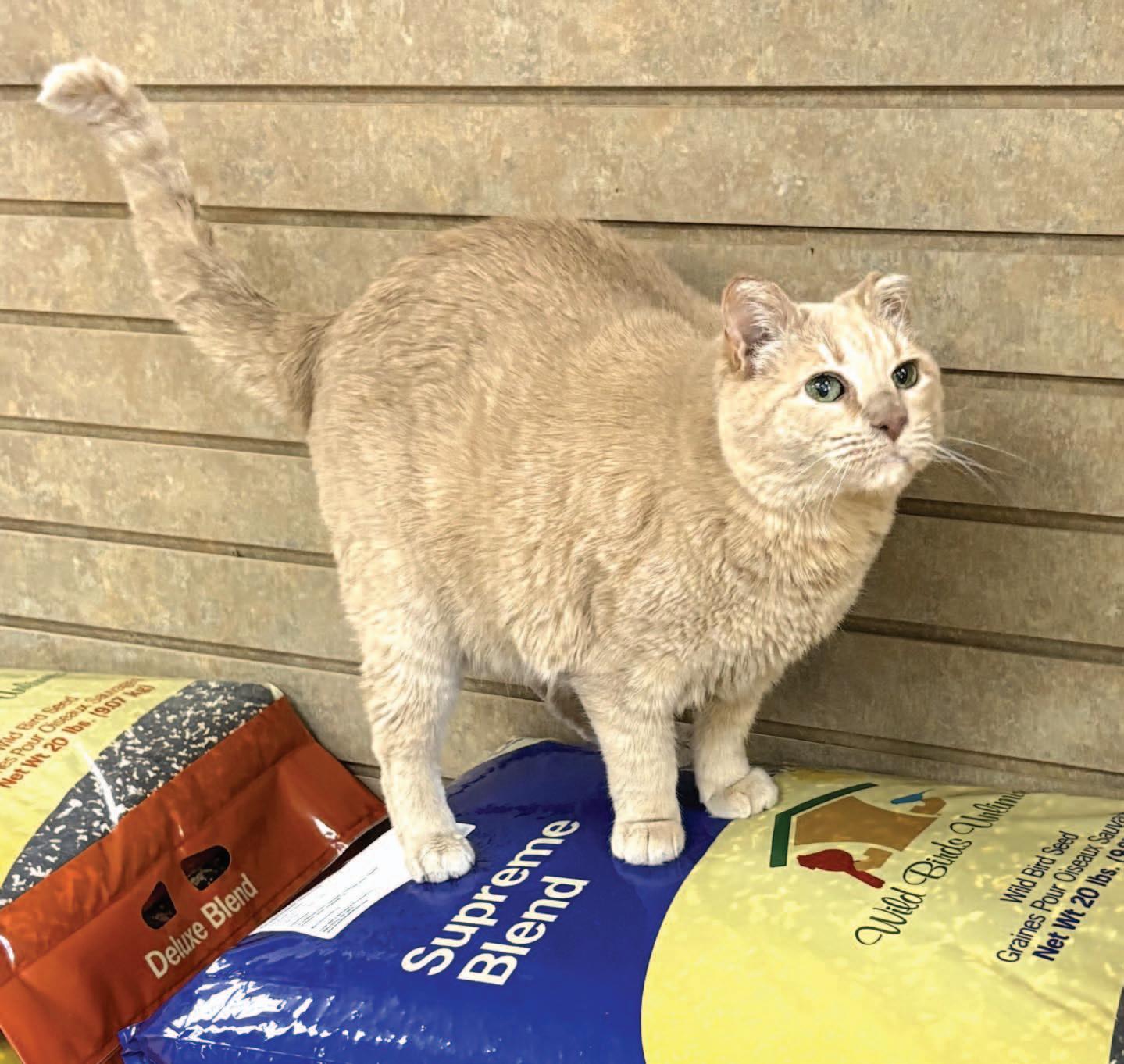
The previous owner had taken in a furry feline named Frankie, who enjoyed visiting customers. When Jim and Val Lippincott were told that if they bought the store, Frankie would come as part of the deal, the offer put a bow on the deal. Today, a friendly cat named Peanut welcomes customers.
Heather encourages folks to come into the store to be part of the experience of enjoying birds and buying from a local business. Birds and people have been part of Heather’s “being present” in the local community. She adds “We love our customers.”
Tony Ettwein HistoryZoo1837@gmail.com
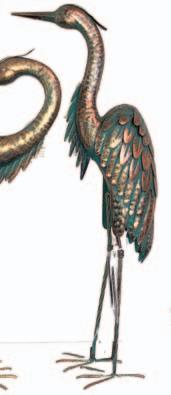

I have always been interested in roads and highways. Ever since I was 14 years old (73 years ago) I have been interested in how roads and highways were surveyed, constructed, designed and built. In particular, I was very interested in how they were named and numbered. Then, about 30 years ago I became even more interested in crazy, weird, unusual and strange highway signs - either man-made or legal. The first crazy sign I remember seeing was on a county road southeast of Albion, MI - “WATCH FOR WATER UNDER BRIDGE.” I crossed over said bridge, stopped and watched
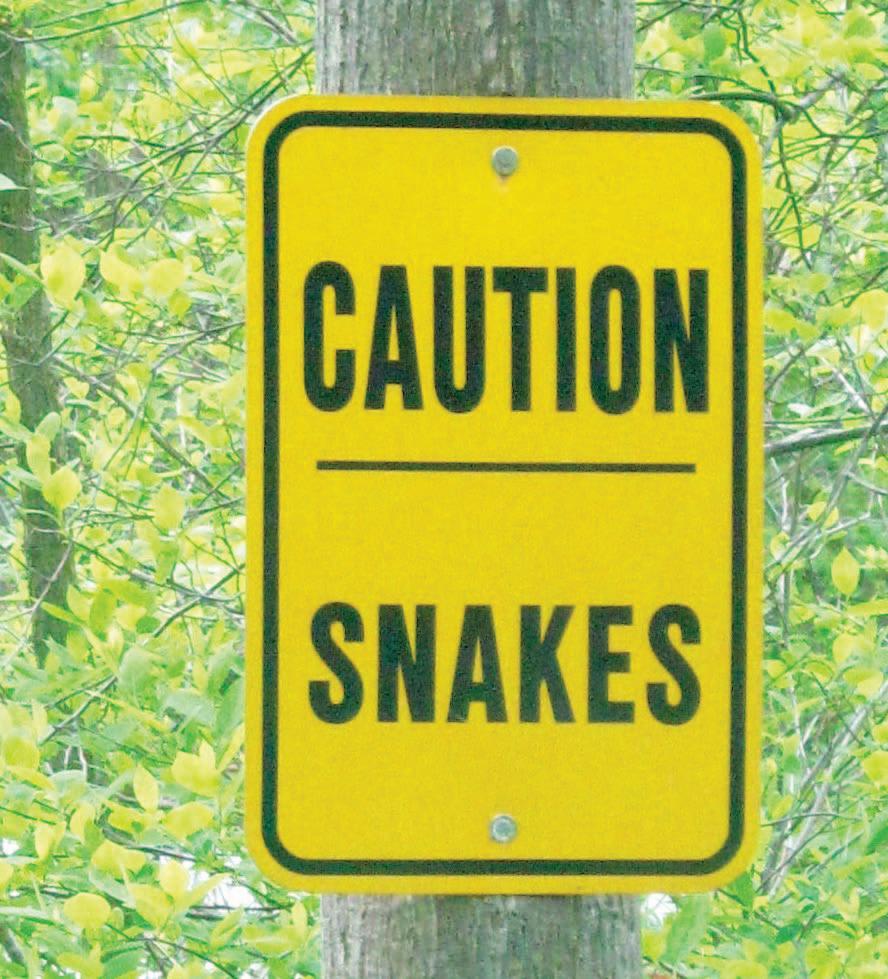
the water. Nothing happened! I then continued over the bridge. One mile later I said to myself “I must
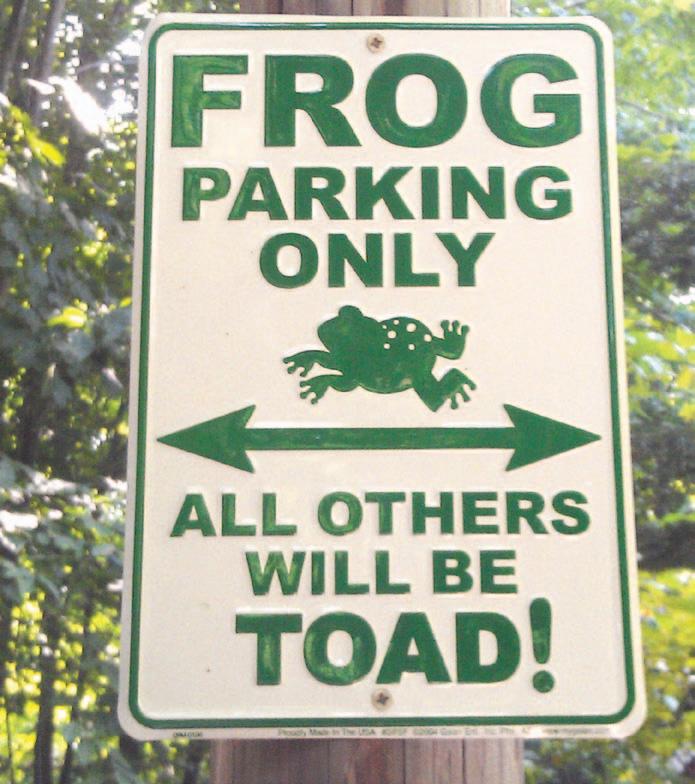
have misunderstood the message on the sign”. Eventually, I returned to the sign and viewed it again. I was










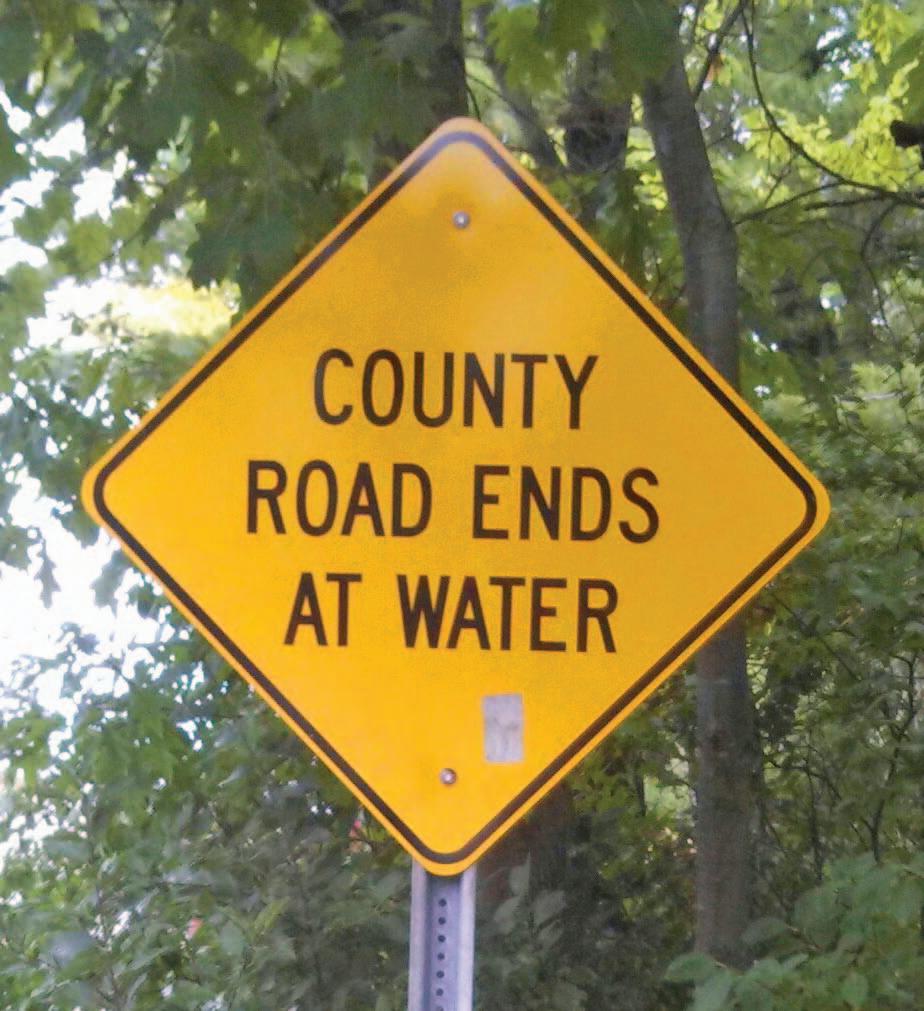
correct - that was the message. I then said to myself - “Isn’t that where the water should be (i. e., Under the Bridge)?” I still have not figured it out.
Since that point in time I have kept looking for (and finding) strange and unusual highway signs. I now have a collection of over 100 crazy, bizarre signs that I present to audiences that find them funny and entertaining.
Dr. John S. Geisler, Professor Emeritus, Western Michigan University Email - john.geisler@wmich.edu. Phone 269-400-4789


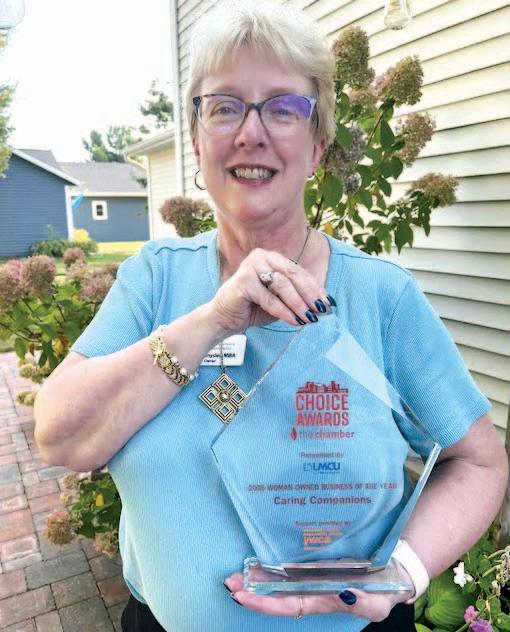
We are thrilled to announce that Caring Companions Kalamazoo has been honored with the 2025 Southwest Michigan First Chamber’s Choice Award in the WomanOwned Business category! This prestigious recognition is a testament to the hard work, dedication, and compassionate care our team provides to the Kalamazoo community every single day.
Out of 39 incredible nominations in our category, Caring Companions Kalamazoo was selected as the winner, a feat made possible by the support of our community and the rigorous evaluation of a diverse panel of community judges. Following

the initial vetting process, current Chamber members cast their votes for the top three finalists, and we are overjoyed to have emerged as the top choice.
“The mission: to join the community in meaningfully acknowledging and celebrating those businesses and leaders who’ve made a significant impact in our community over the past year.”
We are so excited to have won this award. To be recognized by the Kalamazoo Chamber and the community is a profound honor. We started Caring Companions with a simple goal: to provide high-quality, compassionate care that allows people to
live with dignity in their own homes. This award energizes us to continue doing what we love and to expand our reach to help even more people in our community.
This award is not just for us. It is for every one of our caregivers, clients, and their families. It validates our core mission: to assist ill and disabled adults throughout Kalamazoo County to remain independent at home by providing caregivers committed to the timeless art of caregiving.
This recognition marks a significant milestone in our journey, and we are grateful for the trust and support of everyone who believes in our mis-
sion. We look forward to continuing to serve Kalamazoo with the same passion and excellence that earned us this incredible award.
Thank you to everyone who has believed in us these past two incredible years, and especially those who voted for us!!
For more information, visit the Caring Companions website: caringcompanionskalamazoo.com, email: info@caringcompanionskalamazoo.com, or call (269) 204-6537.
Nancy Snyder, CEO








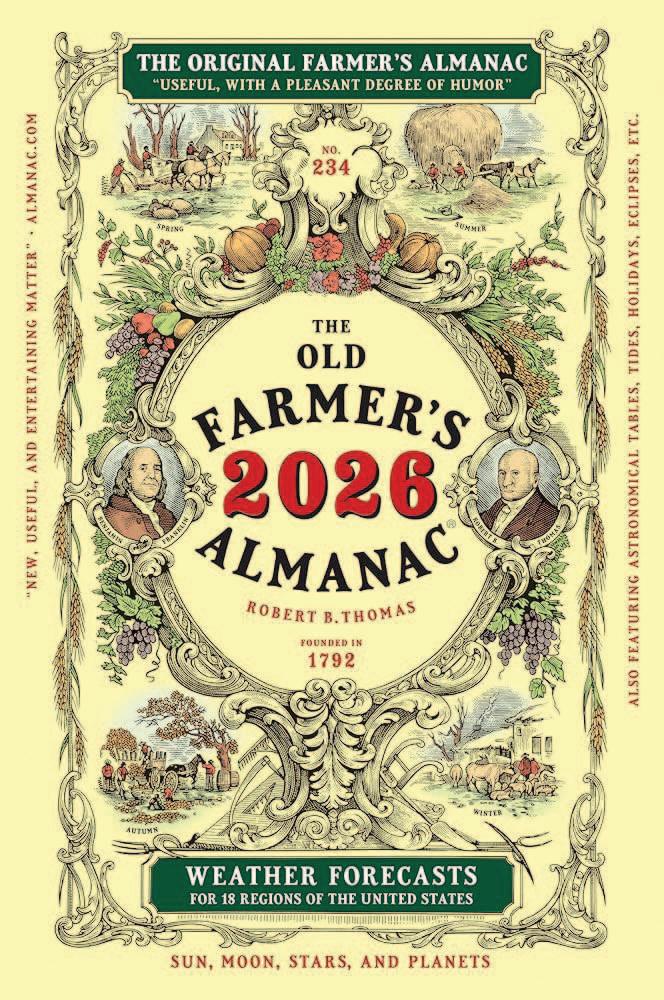
As a child, I spent a lot of time reading – almost anything was fodder for my easily bored mind. I didn’t have siblings or cousins to “act a fool” with, so it was a common sight to see me curled up with some book or magazine. One of my favorite holiday gifts was the annual copy of the Old Farmer’s Almanac. I devoured that thing – admiring the sage wisdom of an imaginary group of overall- or apron-wearing, plaid flannel-shirted grandma and grandpa-like elders who seemed to know and have tips for absolutely everything. They knew the best day to plan my decades-inthe-future wedding, how to can green beans, and even answers to ancient Egyptian mysteries that had eluded modern “know-it-alls” for centuries. Who wouldn’t just hang on every page? I certainly did!
Someone on television recently referred to the current set of winter weather predictions from this year’s edition of the Almanac. For Michigan, they predict generally mild temperatures (with some colder periods), patchy snow (with probable lakeeffect), and occasional snowstorms. Amazing! I’ll bet they’re right on.
The editors claim an accuracy rate of 80% in their nationwide predictions. The staff bases them on “comparison of solar patterns and historical weather conditions with current solar activity” (i.e., sunspots), through use of a “secret” proprietary formula.
Modern science has debunked the notion that sunspots have a significant impact on Earth’s weather, particularly at a local level. These dark regions on the Sun’s surface are areas of varying temperature due to changes in its magnetic field. Sunspots tend to occur cyclically, and when they appear in significant numbers, they can decrease the amount of solar energy that strikes the Earth, although by a statistically insignificant amount. Paraphrasing Greg Kopp, a researcher at the University of Colorado, “it would take the Earth’s energy system several months of a continual solar decrease to notice any effect, but it’s unlikely because sunspots don’t last that long.” Seen through telescopes, sunspots and the solar flares and coronal mass ejections of plasma they release, are beautiful and dramatic, but have little effect on Earth’s atmospheric weather conditions, since they are about 93 million miles away. Meteorologically speaking, weather



is derived from localized variations in atmospheric and ocean current phenomena that drive climate conditions. Combined with seasonal temperature variation and geographic location, weather is experienced regionally and even locally in microclimates, such as those immediately surrounding the Great Lakes.
Scientists use vast amounts of data from many sources to create computerized models that are useful for predicting future weather conditions. Satellites, both orbiting and stationary, continuously gather data such as air pressure, temperature, and relative humidity. Weather balloons are likewise gathering data, albeit from conditions closer to Earth’s surface. Lake buoys are especially useful for gathering data about lake conditions. Local weather stations, some located in our own neighborhoods, also monitor current weather data. This information is compiled, sorted, and used by professionals to create models that make predictions and are released to the public. In the United States, meteorologists primarily rely on two models: the European Centre for Medium-Range Weather Forecasts (ECMWF), commonly referred to as the European Model, and the Global Forecast System (GFS), operated by the National Weather Service under its parent agency, the National Oceanic and Atmospheric Administration (NOAA).
Like any computerized mathematical model, each has its own strengths and weaknesses, depending on the information included in the algorithm that analyzes the data and how frequently it is refreshed with current information. The European Model is generally more accurate in predicting mid-range weather trends and the movement of cold fronts. In contrast, the GFS model is a better predic-
weather trends - statistically between 80-90% correct over one to two week periods.
tor of widespread patterns over both long- and short-term time periods. It is generally considered superior for predicting hurricane paths. Like the Old Farmer’s Almanac, these models also factor in historical data, but in this case to support or refute the scientific conclusions generated by computer logic.
Of course, the real expertise lies in the knowledge of meteorologists. They are the “boots on the ground,” so to speak. These scientists can effectively monitor the microdata that makes such a difference when it comes to localized predictions, such as the difference between snowfall amounts in Paw Paw versus Portage, or where dreaded black ice is most likely to be a morning peril. Are they always spot on? No, but they are more likely than not to be in the ballpark of what we should expect.
So, what is the relative accuracy of scientific modeling and local meteorological predictions versus the Old Farmer’s Almanac? Well, it’s complicated. Long term, I wouldn’t bet my life on either. Too many variables. This year, NOAA predicts a mix of milder and colder periods, with slightly above-average precipitation for Michigan. You may recall that the Almanac predicted a mild winter with patchy snow and a few storms. Remarkably similar…. I say, should anyone ask, you can safely report with confidence that yes, Michigan will have a winter. We can expect some cold temperatures and snow. Perhaps even a snowstorm or two. They can take that to the bank!
In the long term, although it advertises a higher rate of accuracy, the Almanac is really closer to about 50% overall. At the same time, NOAA is not much better. However, when we break it into smaller time periods, science does a great job of predicting
Because I’m interested (or maybe because I’m just a geek…), I have several weather apps downloaded to my smartphone. It amazes me when I get a notification telling me exactly when it will begin to rain at my precise location. And you know, it’s pretty much right. If my phone says it’s going to start raining in 13 minutes, I should probably go upstairs and close the windows. If the dogs are out, I’d better get them in, or the kitchen floor will turn into a muddy mess.
You may recall that back in February, the Department of Government Efficiency (DOGE) successfully orchestrated the layoff of 600 employees, roughly 10%, of NOAA workers. Eliminated positions included data scientists and longterm meteorologists. This cut hit the National Weather Service especially hard. Many projects, including those that launch and monitor satellites and weather balloons, as well as those that update and feed data into the GFS models, lost personnel as well as funding. Six months later, in August of this year, the Federal News Network announced that NOAA is attempting to rehire as many as 450 professionals after officials discovered that these firings had put essential services at risk. I hope we can learn from past mistakes such as this and try not to make too many more.
In the meantime, I see a notice telling me that snow will begin at 8:57 P.M. – just an hour ago. Pardon me while I step outside to check that out! Perhaps it’s time to get my snow boots out of storage.
Cheryl Hach Retired Science Teacher
Kalamazoo Area Math and Science Center
Scan the QR code to see references.

Through January 4
Exhibit: Dancing with Life: Mexican Masks, Kalamazoo Valley Museum
Through December 31
Gift Book Sale @ Friends Of KPL Bookstore, Wed. 126pm, Thurs.-Sat. 10am-4pm
Mondays, Dec. 1,8,15,22,29
Family Storytime 10-11am, Books, songs, more! Vicksburg Library
Mondays, Dec. 1,8,15,22,29
Support Group: depression, Bipolar disorder & other mental Health challenges, 7-8:30pm Portage Chapel Hill United Methodist Church
Tuesdays, Dec. 2,9,16,23,30 Preschool Workshop (ages 3-5) 10:15am, Richland Library
Tuesday, December 2
Craft Stitching Group - Bring Your own project, 1-4pm Parchment Library
Tuesdays, Dec. 2,9,16,23,30 Weekly Gaming, grades 6-12, 3-5pm, Register: Richland Library
Tuesday, December 2
Teens/tweens Dungeons & Dragons, 4-6pm, Vicksburg Library
Tuesday, December 2
Music Bingo: Trivia meets Bingo, All ages, 6-7:30pm, Parchment Library
Tuesdays, Dec. 2,9,16,23,30 Trivia Night, 7-9pm Louie’s Trophy House
Wednesday, December 3
Duck-orating Contest, Pick Them up and return by January 2nd, Vicksburg Library
Wednesdays, Dec. 3,17
Mugs & Hugs, stories, activites, play, 10-11am, Vicksburg Library
Wednesday, Dec. 3,10,17,24,31
Wednesday Wigglers, infant/Toddler, 10:15am, Richland Library
Wednesdays, Dec.
3,10,17,24,31
Teen Dungeons & Dragons, 3-5pm, grades 6-12, Register: 629-9085, Richland Library
Wednesdays, Dec.
3,10,17,24,31
Free ½ hour of Bowling, Crafted Copper, Kalamazoo, 4-10 pm
Wednesday, December 3
Between the Pages Romance Book Club for adults, 6pm, Register: Richland Library held at Ned’s on Gull Lake
Wednesday, December 3
Holiday Chocolate, 6-8pm, Parchment Library
Wednesdays, Dec.
3,10,17,24,31
Trivia at the Taproom, 7-9pm, Apoptosis Brewing Co., Kal.
Thursday, December 4
Adult Book Club: Horse by Geraldine Brooks, 9:30 –10:30am, Vicksburg Library
Thursdays, Dec. 4,11,18,25
Free Thursdays, 11am-8pm, Kalamazoo Institute of Arts
Thursday, December 4
Elementary “Drive-in” Movie night We make popcorn, you bring, drink, blanket & cardboard box large enough to sit in, 3:30-6pm, Vicksburg Library
Thursdays, Dec. 4,11,18,25
Teen Dungeons & Dragons, 4:30-6:30pm, Register: 629-9085, Richland Community Library
Thurs., Fri., Sat. Sun. December, 4,5,6,7,12, 13,14,18,19,20,21
Santa’s Workshop @ Downtown City Centre, Kalamazoo, Thurs. & Fri. 5-8pm, Sat. 12-6pm, Sun. 12-6pm
Thursday, December 4
Richland Area Wassailing, 5-8pm, Richland Library
Thursday, December 4
WMU Studio Recital, 5:30pm Dalton Center Lecture Hall
Thursday, December 4
Gingerbread House:
Minecraft Build, ages 10-14, 6pm, Register @ Parchment Library
Thursday, December 4
Wine & Euchre, 6-8pm, Sign up ahead, 468 Wine, Portage
Thursday, December 4
Between the Lines Book club: Early Morning Riser by KatherIne Heiny, 6:30-7:30pm Parchment Library
Thursdays, Dec. 4,11,18,25
Triple Threat Trivia, 6:30pm Presidential Brewing Co.
Thursday, December 4
WMU Chamber Music Series, 7pm, Zion Lutheran Church
Thursdays, Dec. 4,11,18,25
King Trivia, 7-9pm, Gull Lake Distilling Co., Galesburg
Thursdays, Dec. 4,11,18,25
Music Extreme Bingo, 7pm Shakespeare’s Pub
Thursdays, Dec. 4,11,18,.25
Music Bingo, 7-9pm, Louie’s Trophy House, Kalamazoo
Thursday, December 4
Slap Your Tail Comedy: Open Mic, 7:30pm, Doors open 7pm Dormouse Theatre, Kalamazoo
Fri., Dec. 5 – Sat., Dec. 6
Holiday Greens Sale, Fri. 10am-6pm, Sat. 9am-3pm, Portage Zhang Senior Center
Friday, December 5
KRESA Play & Learn, preschoolers & parents/caregivers, 10am, Parchment Library
Friday, December 5
Memory Café – for people with Mild dementia and their care Partners, 10:30am – Noon Paw Paw District Library
Fridays, December 5,12,19,26
Sit N’ Stitch, 10am-12pm Richland Community Library
Fridays, Dec. 5,12,19,26
Family Story Time, 10:15am, All ages, Richland Library
Fri., Dec. 5 – Sat., Dec. 6
Holiday Art Sale, Fri. 4-8pm, Sat. 9am-3pm, Kalamazoo Institute of Arts
Fridays, Dec. 5,12,19,26
Live Music @ The Dock at Bayview, 8pm-12am
Saturdays, Dec. 6,13,20,27
Kalamazoo Farmers Market 8am-1pm, 1204 Bank St.
Saturdays, Dec. 6,13,20,27
Karaoke & Dance Night
Back Alley Saloon, 9pm12am, Continental Lanes
Sat., Dec. 6 – Sun. Dec. 7
Handmade Art & Craft Show Sat. 9am-4pm, Sun. 10am-4pm Wings Event Center, Kalamazoo
Saturday, December 6
Buy Local Art & Gift Fair, 9am4pm, Kalamazoo Nature Center
Saturday, December 6
Family Holiday Photos, 1-3pm Register: Richland Library
Sundays, Dec. 7,14,21,28
Sunday Night Blues Jam, 6-9pm, Shakespeare’s Pub
Monday, December 8
Parchment Book Group: The Matzah Ball by Jean Meltzer, 6pm, Parchment Library
Tuesday, December 9
Adult Scrabble Club, 1-2:30pm, Vicksburg Library
Tuesday, December 9
Teens/Tweens Dungeons & Dragons, 4-6pm, Vicksburg Library
Tuesday, December 9
Cookbook Club: Try a recipeat home/bring to share 6pm, Richland Library
Tuesday, December 9
Holiday Craft Workshop, Adults & teens ages 15+, 6pm, Register: Parchment Library
Tues., Dec. 9 & Wed., Dec. 10 Craft Your Own Art Journal (adults) 6pm, Register: Richland Library
Wednesday, December 10
Birds & Coffee Chat on Zoom: 10-11am, register at: birdsanctuary@kbs.msu.edu
Wednesday, December 10
Adult Dungeons & Dragons Bravo Team, 3-6pm, Register: 629-9085, Richland Library
Wednesday, December 10
Winter Crafternoon, Children all ages & parents, crafts/hot cocoa, 4-6pm, Vicksburg Library
Thursday Dec. 11, 18
Teen Break & Bulldog Break, Fun, crafts, games, activities, Treats, Teen/tweens under 18, 2:45-4:45, Vicksburg Library
Thursday, December 11 Writers’ Motivational Group, 4-5pm, Vicksburg Library
Thursday, December 11
Gallery Gathering: Washi TransFormed: New Expressions in Japanese Paper, 5:30-6:30pm Kalamazoo Institute of Arts
Thursday, December 11
Friends Read Book Club, discuss What you are reading/snacks, 6:30-7:30pm, Paw Paw Library
Friday, December 12
Make Your Own Snowglobe, Ages, 11-17, 3pm, Register: Richland Library
Saturday, December 13
Cookie Fest (you pick then out) 9a,-1pm, Scotts UM Church 8458 Wallene St., Scotts
Saturday, December 13
Internet group, bring Smart Phones, 10am-Noon & questions, Paw Paw Library
Saturday, December 13
Santa’s Winter Workshop, take pictures with Santa, crafts, games, food and live holiday music, 10am-1pm, Parchment Library
Saturday, December 13
Christmas Open House, 10-6, Passiflora, Plainwell
Saturday, December 13
Art Detectives: The Typefaces By Scott Lambert, 10:30-noon Kalamazoo Institute of Arts
Saturdays, Dec. 13 & 27
Art Journaling for Adults, 11-1pm, Richland Library
Sunday, December 14
2nd Sundays Live!: Chapter Two Band, 2pm, Parchment Library
Monday, December 15
STEAM event & activity 11am-12pm, Vicksburg Library
Thursday, December 16
LEGO & DUPLO Club, 1-2pm & 5:30-6:30pm, Vicksburg Library
Thursday, December 16
Happy Birthday, Jane! A Jane Austen Celebration, tea/treats.., 6pm, Register: Richland Library
Tuesday, December 16
Mystery Book Club: A Fashionably French Murder by Colleen Cambridge, 6:30pm, Parchment Library
Tuesday, December 16
Southwest MI Seek & Search Club (Metal Detecting), 7-9pm Kalamazoo Rod & Gun Club
Wednesday, December 17
Author Visit: Colleen Cambridge, 11am, Parchment Library
Wednesday, December 17
Film Screening: Between the Folds, Noon-1pm, Kalamazoo Institute of Arts
Wednesday, December 17
Book Discussion: Everything She Touched: The Life of Ruth Asawa by Marilyn Chase, 2-3pm, Kalamazoo Institute of Arts
Wednesday, December 17
Adult D&D: Bravo Team, 3-6pm Register: Richland Library
Thursday, December 18
Christmas Open House,11am1:30pm, Shalom Woolery 3191 Van Buren St., Kalamazoo
Thursday, December 18
Custom Baseball Cap for kids, 4pm, Register: Richland Library
Thursday, December 18
Book Club, 6pm, Richland Library
Thursday, December 18
STEAM, hands-on/problem solving, 6-7pm, Vicksburg Library
Thursdays, December 18
Heartbreak Book Club:
The Merry Matchmaker by Sheila Roberts, 6:30-7:30, Paw Paw Library
Friday, December 19
Fiber Friends – Bring your own Project & lunch, 10am-2pm Parchment Library
Friday, December 19
Listen Up Book Club, An Audiobook club for people With low vision,10:30am11:30am, Paw Paw Library
Friday, December 19 Poetry Circle for Adults, 12-1pm, Vicksburg Library
Friday, December 19
International Holiday Food, Ages 11-17, 5-9pm, Register: Richland Library
Saturday, December 20
Kalamazoo Indoor Flea Mkt. 9am-1pm, Kalamazoo County Expo Center
Saturday, December 20
Once Upon a Saturday, all ages, stories, songs, activities, 10:15am, Richland library
Saturday, December 20 Simple Folded Books, 11am- 3pm, Materials provided, Kalamazoo Institute of Arts Library
Monday, December 22
Read Aquiet Book Club for Adults, 10:30am-12pm, Vicksburg District Library
Monday, December 22
Adult Graham Cracker Houses, 1-3pm, Vicksburg Library
Tuesday, December 23
Lego Challenge for kids, 10am-2pm, Richland Library
Tuesday, December 23
Kids Rock Painting, 1pm Register: Richland Library
Tuesday, December 23 Lego & Duplo Club, 1-2pm & 5:30 – 6:30pm, Vicksburg Library
Saturday, December 27
EPS Foam, Electronic & oral Care recycling & Document Shredding 10am-1pm, Mayor’s Riverfront Park, Kalamazoo
Wednesday, December 31
Noon Year’s Eve Party, for Families with kids ages 10 & under, 11am-12:30pm, Parchment Library