You are now a part of a global community that celebrates the people, ideas, and movements that are changing the world for the better.
It’s when times are hardest that it’s most important that we shine a light on good news.
Not “feel-good” news. Hope — real hope — no matter how messy it may be.
There’s a lot of good in the world that needs to be celebrated. And we need to be a part of it.
IT ALL STARTS WITH A DROP.
Mother Theresa is quoted as saying, “We ourselves feel that what we are doing is just a drop in the ocean. But the ocean would be less because of that missing drop.”
When it comes to motivational quotes about making change, this is one of many that stem from a philosophy of microscopic moves making a larger-than-oneself impact.
These ideas also often pull wisdom from nature; a seed, a spark, a drop as the impetus for a tree, a fire, or a wave that brings tangible transformation.
That concept of a single drop in the ocean was the inspiration for this issue of the Goodnewspaper:
The Water Edition.
It’s subtle, but you’ll notice that the stories in this paper take you on a journey from drought to depth. The Water Edition begins with stories about fighting water shortages and improving access to clean drinking water. Then, it all starts to grow, as the paper explores stories related to swimming pools, rivers, river coastlines, and even boats on top of the high seas. Finally, you’ll reach the ocean, from sea level all
the way into the depths of the deep blue. While it would be fun to snorkel forever, you’ll come up for air at the end, learning about land-dwelling humans doing their part to help, and how you, too, can make a difference for life at sea.
Once you reach the end, you’ll be amazed: How did that all start with just one drop — one dribble of condensation — to something so much grander?
As water remains inextricably tied to so many of our modern fears and frustrations — climate change, the looming threat of thirsty data centers, affordability of life’s basic necessities — I hope this Goodnewspaper reminds you how much of an impact we each can still have, even if it requires us to move against the current.
COME ON IN — THE WATER’S FINE, KAMRIN BAKER
Managing Editor, Goodnewspaper
WHO MAKES THE GOODNEWSPAPER ?
Editor-in-Chief
Branden Harvey - @brandenharvey
Managing Editor
Kamrin Baker - @kamstagrams
Senior Writer
Meghan Cook - @meghancooking
Art Director
Carra Sykes - @carrasykes
Social & Email Editor
Megan Burns - @meganburnsyou
Communications Manager
Margaux Madamba - @mdrm.x
Centerfold Poster Artist
Michael-Andrew Spalding - @mandrewspalding
GET GOOD NEWS IN YOUR NEWS FEED
Join 850,000+ inspiring people who get good news from Good Good Good on Instagram and Facebook at @goodgoodgoodco
Read more good news daily at goodgoodgood.org and get good news delivered to your inbox via the Goodnewsletter at goodgoodgood.org/goodnewsletter
This issue of the Goodnewspaper was printed in Franklin, Tennessee in June 2026 and released in July 2026. Every issue is designed to be evergreen so you can read and share good news all year round.
Read and share good news and find ways to do good on our website at goodgoodgood.org
Shop our most popular back issues, apparel, and more at shop.goodgoodgood.co
For details on advertising or wholesale, please visit goodgoodgood.org/partnerships
Easily update your subscription and shipping information at goodgoodgood.org/home
We want to hear from you. Send your feedback and questions at goodgoodgood.org/contact
Share good news and get rewarded as a GGG Ambassador at goodgoodgood.org/a liate
Women Protest Water Shortages By Blocking India’s Roads With Empty Pots
In Somalia, Access To Water Means Access To Money Nobel Prize Winner Invents Solution To Harvest Water
In 2025, Omar Yaghi, Ph.D., a professor of chemistry at the University of California, Berkeley, was honored with a Nobel Prize in chemistry for his invention, which harvests water by extracting moisture from the air, even in desert conditions.
The main technology behind his company, Atoco, is reticular chemistry, or the act of stitching molecular building blocks into predetermined structures — like linking moisture molecules from the air together to create water. Atmospheric water harvesting can be done utilizing fog, condensation, desiccants, or porous materials called sorbents. Overall, the idea is to be able to access clean water even if central supplies are unavailable, whether due to climate disaster like hurricane or drought, or in conflict zones.
Yaghi was inspired by his own hardships as a Palestinian man who grew up in a refugee community in Jordan without regular access to water or electricity. Now, that experience has shaped a solution that could help solve the water crisis.
Yaghi’s invention is also more sustainable than the current alternative, desalination, which produces a toxic brine byproduct that harms oceans. As nearly three-quarters of the world’s population live in a country classified as water-insecure, according to the United Nations, Yaghi’s invention is “capable of reimagining matter.” It can generate up to 1,000 liters of clean water every day, according to The Guardian, using thermal energy.
“On climate, the hour for collective action has already arrived. The science is here,” Yaghi concluded in his Nobel acceptance speech. “What we need now is courage — courage scaled to the enormity of the task — so we may gift the next generation … a planet worthy of their hopes.”
How To Fight Back Against Water Scarcity
Out of 1.4 billion people living in India, 342 million lack access to safe drinking water, according to global nonprofit Water.org. Between depleted groundwater, contaminated surface water, and a lack of modern infrastructure, along with the increasingly devastating impacts of climate change, like droughts and rising sea levels, the water scarcity crisis is felt in very real ways across the country.
One village, Kudimenahalli, near the town of Pochampally, is home to about 300 families. After more than three months without water from the Thenpanni River or the local drinking water scheme, the village’s women took to the streets.
Carrying empty pots and vessels, more than 50 women protested the water crisis in their village, sitting in the middle of a busy street and bringing traffic to a standstill.
“While panchayat officials promised to take steps to provide drinking water after the election, they didn’t keep their word,” villager J. Lakshmi told The Times of India. Authorities intervened in the protest, and according to the Times of India, local police assured the women they would take steps toward water access in the following days.
While it’s unclear whether a resolution was reached in Kudimenahalli, India’s nationwide effort to provide drinking water to 100% of households has seen major successes since 2019. According to UNICEF India, as of mid-2026, roughly 81% of rural households in the country now have tap connections.
WHAT’S THIS? THIS IS THE GOOD BAR.
We believe in celebrating good and then joining in to make a difference. The Good Bar is full of advice from the Good Good Good community on how to take action. Start small and work your way up.
In rural Somalia, families have long been forced to spend hours every day collecting water for their basic survival. While improved water access leads to wins across public health and environmental stability, it also means people have time to earn an income and generate real livelihoods.
Barwaaqo, or the Somalia Water for Rural Resilience Project, has proven this to be true. The World Bank-backed project uses water as a foundation for long-term job resilience. About halfway through the implementation of the project, 40 new and rehabilitated water points had been set up as hubs for generating economic activity. Plus, the communities themselves get to decide how this new water infrastructure is used and maintained.
So far, the project has led nearly 70,000 farmers to participate in Farmer Field Schools where they learn how to improve yields, protect soil, and cope with dry conditions, thanks to improved water infrastructure. Thousands of acres of land have already been rehabilitated, allowing pastures to regenerate and providing sustainable grazing areas for livestock. Over 630,000 animals are also now receiving greater care from a veterinary industry made up of 31% women trained as animal health workers.
It’s an all-around success story not just for the land, the animals, and the individuals who can now make a living and access clean water, but for the economy and governance of the area as a whole.
“By investing in water, land, livelihoods, and community empowerment, Barwaaqo also contributes to peacebuilding and state-building,” World Bank shared in a report. “It helps rebuild trust between citizens and institutions, reduces competition over scarce resources, and creates conditions where people can imagine a future beyond survival.”
Find small ways around your home to scale back your water usage. Reducing strain on the system means more water for everyone. Visit epa.gov/watersense/start-saving for helpful tips.
Donate to Water Well Trust, a nonprofit that provides water wells and septic systems to low-income and rural American families facing water scarcity. Visit waterwelltrust.org to contribute.
Take local action. The National Association of Clean Water Agencies can help you set meetings with elected officials or take a tour of a local water facility. Visit nacwatoolbox.org to get involved.
Interactive Museum Shows What A World
Without Water Looks Like — And How To Help
Since 2006, charity: water has helped fight the global water crisis, bringing 209,000 water infrastructure projects to 29 countries and over 21 million people. But that work relies heavily on the generosity of donors — and public understanding of the water crisis as a whole.
That’s why the organization opened the Experience Lab, an interactive exhibit in Franklin, Tennessee. Guests can see the colors of dirty water under a microscope and put on a virtual reality headset that shows what it’s like for a community to get water for the first time.
In one especially visceral room, visitors are instructed to carry two weighted jerrycans and walk on a treadmill in a room heated to 90 degrees and scented to simulate a village without access to clean water and sanitation. The treadmill is surrounded by screens, virtually immersing the participant in a young Ugandan girl’s daily walk for water. It’s a take on a previous charity: water “water walk” experience it held in Times Square in New York City.
How To End The Global Water Crisis GOOD
“Instead of asking people to walk on a catwalk, we would ask them to carry 40 pounds of water, to walk in somebody’s shoes and feel just how unbelievably difficult it is for the women and girls who are hauling dirty water every single day,” Scott Harrison, founder and CEO of charity: water told NFocus, a Nashvillebased magazine.
The goal is not just to inform visitors about the problem, but show them what it looks like when solutions are implemented. And, of course, give them the opportunity to be a part of the effort.
Instead of a traditional museum gift shop, the Experience Lab has a “give shop,” which encourages creative and generous giving.
“We just had an 11-year-old kid [visit the space]. He came back six weeks later with $10,000 in cash that he had collected,” Harrison told NFocus. “It’s certainly to raise awareness, but it’s also to make a difference and construct water projects that bring life-saving water to people in need.”
Read “The Last Drop: Solving the World’s Water Crisis” by Tim Smedley. The book explores the severity of the global water crisis while also finding practical ways to address it — including some major success stories.
YouTubers Raise $40 Million To Bring Clean Drinking Water To 2 Million People
In August of 2025, YouTubers Jimmy Donaldson, a.k.a. MrBeast, and Mark Rober joined forces to encourage their fellow content creators to raise $40 million over the course of one month in support of nonprofit WaterAid.
About 3,000 YouTubers joined the initiative, with a combined following of approximately 3 billion people. The campaign, called #TeamWater, was touted as “one of the largest philanthropy projects in history.”
And over the course of August, more than $41.7 million was raised for WaterAid, which will supply an estimated 2 million people with access to clean water for decades in regions of Brazil, Cambodia, Tanzania, and the United States.
“[We] are blown away by what the creator community has accomplished — we could never have achieved this on our own,” Donaldson and Rober said
Donate to charity: water. The global nonprofit ensures 100% of donations go toward water projects, not fees or overhead costs. Every dollar given goes to clean water. Visit charitywater.org to support its mission.
BEST
in a joint statement. “From $1 to $1 million, every donation made a difference in reaching this goal, and we couldn’t be more grateful.”
With the money raised, WaterAid will now work on implementing projects, including installing solar-powered wells and rainwater harvesting systems, training local water technicians, establishing local water boards, and developing reporting and transparency systems so donors can follow all the progress.
“Turning on the tap is just the first step — keeping the water fl owing is our long-term goal and commitment,” Kelly Parsons, the CEO of WaterAid America told Good Good Good. “We want to keep the stories coming and this amazing community engaged because we know this is just the beginning of what we can achieve together. Advocacy doesn’t end with a single campaign.”
Take a free water advocate training series with River Network, a nonprofit improving water justice across the U.S. Visit rivernetwork.org/connect-learn/resources/drinking-water-guide to sign up.
Aquatic Therapy Program Offers Free Rehabilitation To Disabled Children In India A New Organization Is Making Swimming Safer For Everyone
In February 2026, a 12-year-old boy with cerebral palsy was able to swim for the fi rst time, kicking his legs as his physiotherapist, Dr. Arunima Sharma, guided him through the water.
“He has taken only one intro session,” Sharma told The Indian Express. “I have seen the difference in children with cerebral palsy and autism. For kids who struggle to stand or maintain balance, aqua is a safe medium as the chance of falling reduces and weightlessness makes movements easier.”
The aquatic therapy program the boy participated in is called ADAPT, or Able Disabled All People Together. It was founded by Dr. Mithu Alur in 1972 with just three children. Today, it serves 3,000
children and 10,000 families across India.
Although aqua therapy sessions in Mumbai can be pricey, children from low-income households can participate for free. According to Alur, 90% of the children in the program are helped free of charge.
“Our dream is aff ordable, accessible, and safe rehabilitation for children with disabilities,” Alur said.
Right now, ADAPT’s pool is 4 feet deep, 13 feet wide, and 12 feet long, with space for three therapists and three children at a time. But it dreams of adding more pools, so it can help more kids.
“This is the only pool we have for all our centers,” Alur explained. “We hope to expand with donor support.”
How To Practice Water Safety
Have a swimming buddy that can watch out for you and vice versa — especially if there is no lifeguard present. In as little as 20 seconds, a child or adult can slip under the water and disappear.
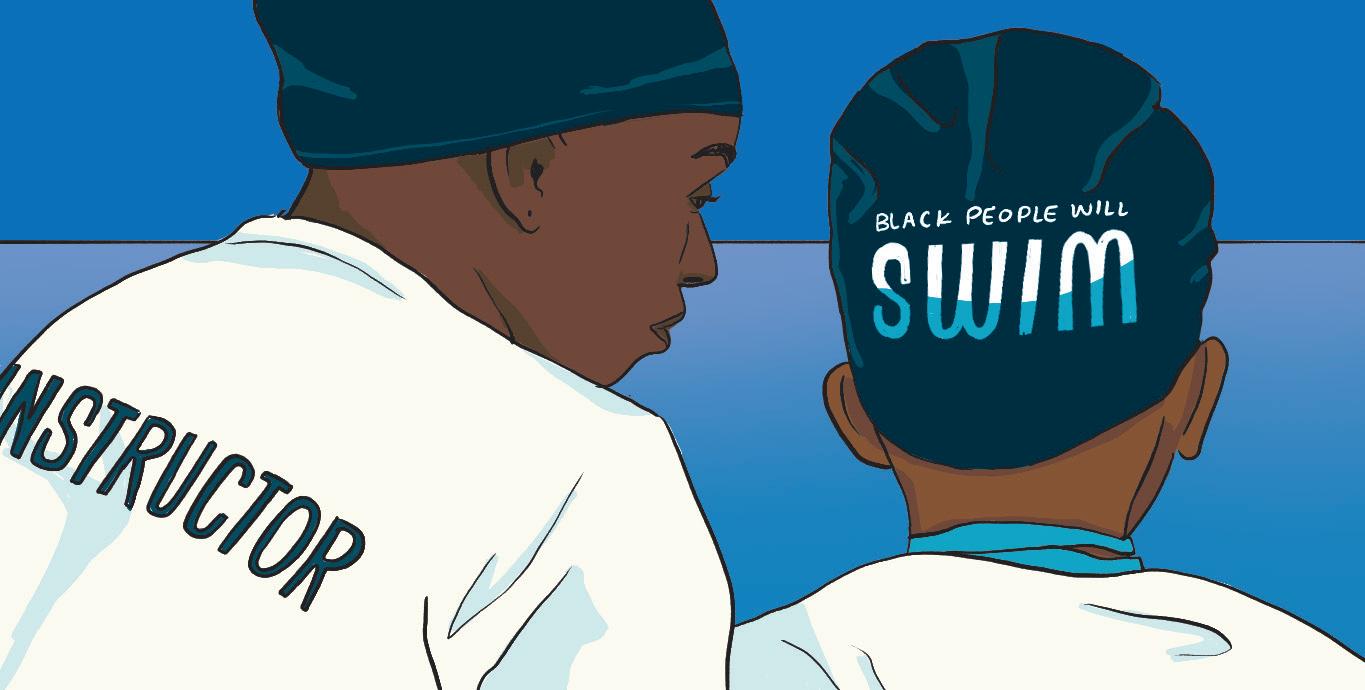
Since 2020, Black People Will Swim has offered affordable swimming lessons to communities of color to reduce drowning-related deaths.
So, when Tameka Bostick saw a social media ad for Black People Will Swim in summer 2025, she immediately encouraged her teenage daughter to sign up. Then, her daughter challenged her to do it first.
“I did want to learn how to swim, so I was like, ‘You know what? I’ll do it,’”
Bostick told CBS News. “There’s nothing to be ashamed of, I’m 42 and just now learning. And I love it! I wished I had learned when I was younger. But I’m grateful I stepped outside of my comfort zone and thankful to my daughter for making me go first.”
Black People Will Swim’s partner organization, Outdoor Afro, has donated
Donate to Black People Will Swim. In addition to offering swimming lessons, they also train lifeguards through the Swim to Serve initiative, which employs young people of color. Visit blackpeoplewillswim.com/donation BEST
3,000 “swimmerships” to people like Bostick to eliminate a major barrier of entry: The cost of swimming lessons.
“This is a public health crisis,” said Outdoor Afro founder Rue Mapp. “No child, no one in America, should have any barrier to connecting to water.”
Unequal access to swimming safety and education is rooted in racism. Even after pools were desegregated in 1973, they remained a luxury for many, available only behind gated communities and within recreational centers.
Mapp said Black People Will Swim also provides an entry point for those held back by fear, apprehension, or the challenge of trying something new.
“A door needs to just be opened,” she said. “People go on to invest in swimming; they just need beginner lessons.”
Take a water safety course through the American Red Cross. Courses typically include basic swim skills, CPR lessons, and how to assist struggling swimmers. Visit redcross. org to find one near you.
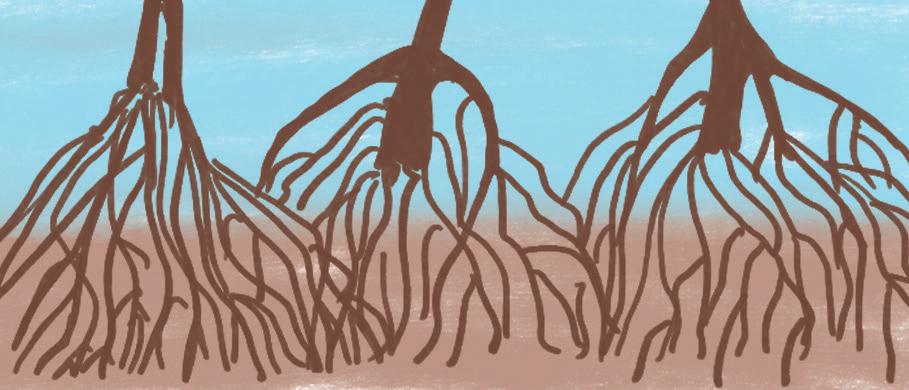
Mangrove Trees Protect Countless Homes Every Hurricane Season
A new study from researchers at the University of California, Santa Cruz found that mangrove forests play a crucial role in protecting homes from storm surge during hurricanes. Using computer modeling, the team replicated storm surges from Hurricanes Ian and Irma twice: once with mangrove trees present, and again with the trees digitally removed.
Based on the simulations, they estimated that Florida mangroves prevented more than $725 million in property damage during Hurricane Irma and a staggering $4.1 billion during Hurricane Ian.
But Mariana Pardo doesn’t need a simulation to believe it; she’s seen the mangrove trees work their magic in real time. Before Hurricane Ian hit in September 2022, Pardo evacuated from Sanibel Island, Florida. When she returned, her next-door neighbors had five to eight feet of flooding. With mangrove trees in her backyard as her first line of defense, Pardo only had three feet.
“I’m sure we would have gotten a lot more if it was not for the protection of this gorgeous vegetation here,” she told Gulf Coast News Now. “The roots, the system, it’s just so thick that regardless of how fast the water comes, it reduces it.”
The new data is encouraging for marine biologists, who have long said that mangroves’ thick, porous roots are a natural infrastructure against surging storms and coastal erosion. And locals like Pardo are happy to have the towering trees watching over them.
“Now I see them as a part of me,” Pardo said. “I know that’s touchy-feely ... but what they did for the land was just remarkable.”
How to Keep Waterways Clean
Learn about the reality of plastic pollution in the documentary “A Plastic Ocean.” When journalist Craig Leeson sets off to find a blue whale, he finds an ocean of plastic instead. Watch it for free on YouTube.
New Study Shows That Coastal Litter In Europe Is Down By Nearly One-Third
In 2016, researchers at the Joint Research Centre set out to record every piece of litter on the European Union coastline that was bigger than an inch. Then they did it again five years later, resulting in the EU Coastline Macro Litter Trend report.
According to that report, which was recently released to the public, the amount of litter on the coastline dropped by 29% during those five years.
“In 2020-2021, there was about one-third less litter on EU coastlines than in 2015-2016, based on data from 253 selected monitored beaches after data preparation and treatment,” wrote study co-author Georg Hanke and his colleagues.
“Single-use plastic was found to have decreased by 40% between 2015-2016 and 2020-2021, fisheries-related items decreased by 20%, and plastic bags reduced by 20%.”
The report was created in conjunction with the Marine Strategy Framework Directive, a European initiative designed to establish good environmental practices across 11 standards by 2020. Even after that deadline passed, researchers like Hanke have continued to collect data on marine life and coastal health to continue making improvements.
“The results show progress towards Good Environmental Status, enabling the setting of intermediate quantitative targets and informing on progress towards the EU Zero Pollution Action Plan’s Target 5 on coastline litter,” the researchers concluded.
BETTER
Donate to The Ocean Cleanup, a nonprofit organization developing bigger and better ways to remove plastic from waterways around the world. Visit theoceancleanup.com/donate to give.
Fishermen Are Competing In ‘Ghost Trap Rodeos’ To Keep The Ocean Clean
In 2015, Neill Holland and his partner, Danielle Dawley, started a fishing charter operation in St. Petersburg, Florida. Over the next decade, the two constantly came across “ghost traps” — fishing traps that had been swept away in storms and currents, or simply abandoned.
The ghost traps boast an eerie name, but their impact is much scarier. Once the traps are lost underwater, they pose a huge threat to marine life, which can be injured by the heavy metal traps, strangled by fishing trap ropes, or trapped inside.
That’s why Dawley and Holland founded Ocean Aid 360, a conservation organization that works with local fishermen and charter operations to find, retrieve, and recycle marine debris, including ghost traps.
Holland told Catalyst that he is constantly deconstructing the misconception that “being environmentally impactconscious” is at odds with his work as a fisherman.
“When in fact,” he said, “it’s the basis.”
Since 2018, Ocean Aid 360 has hosted an annual Ghost Trap Rodeo, a tournament-style event that challenges fishermen to recover traps in ocean waters around Florida. In the summer of 2025, the crew removed 3,478 abandoned traps — over 165,000 pounds of litter — from the lower Florida Keys.
After that three-week cleanup effort, Ocean Aid 360 said in a statement, “Not only did we clear marine debris, but we also catalogued and freed thousands of bycatch [like] lobster, crabs, sharks, and groupers, giving marine life a second chance — and helping local fishermen start the next season strong.”
BEST
Pick up trash where you live! You can use the app Litter CleanUp (only on iOS) to log each piece of litter that you collect, and earn badges and achievements along the way. Visit the App Store to download it for free.
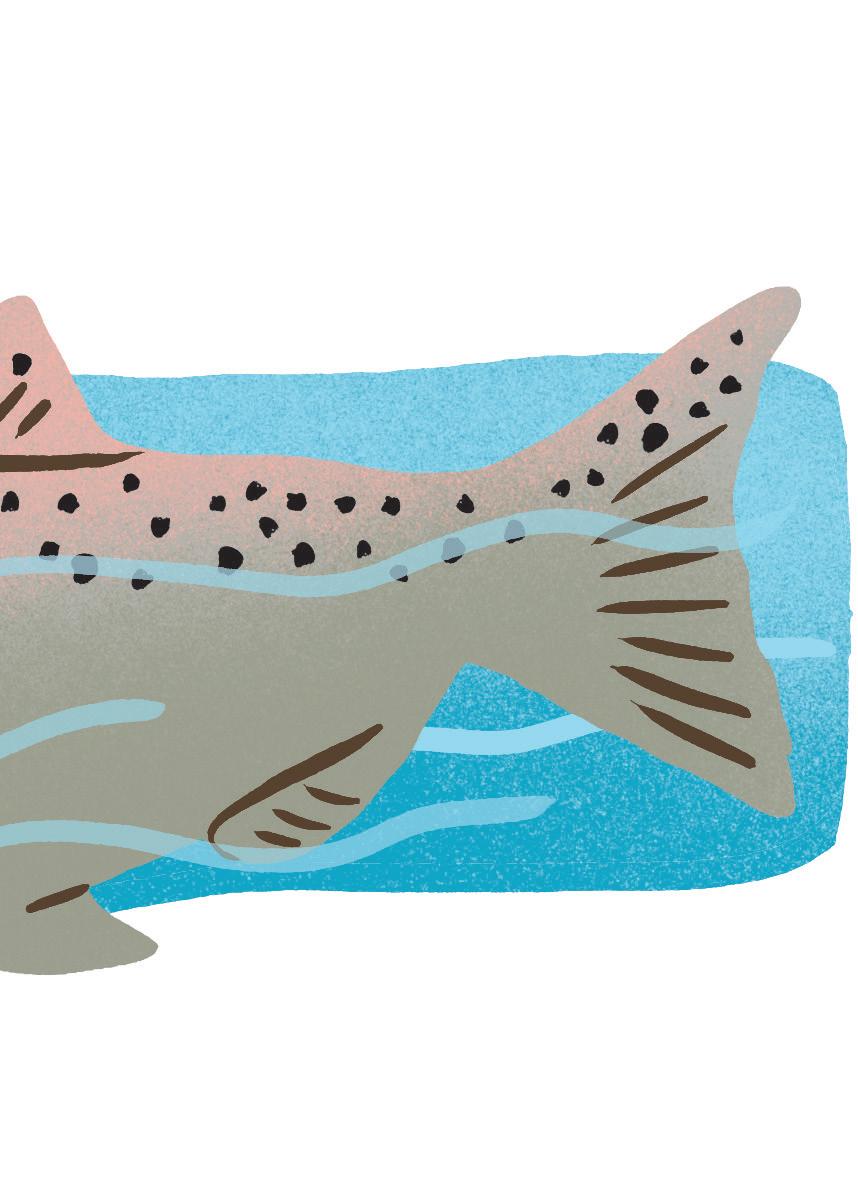
Fnot only subsisted on fi shing, but felt a deeply spiritual connection to the river itself, and all the beings they shared it with.
“We are a salmon people. We always have been. We have fished the same runs of wild salmon on the Klamath since the beginning of time,” Amy Bowers Cordalis, the tribe’s legal counsel and long-time Indigenous activist, told Good Good Good. “My dad jokes that we share the same DNA with the salmon because we’ve been fishing with them and eating them for so long.”
But in the mid-1800s, colonization made its way to Yurok country, and the entire ecosystem faced a period of “genocide, repression, and assimilation,” as Cordalis describes it.
By the early 2000s, dams, habitat loss, pollution, and more had all but destroyed the Klamath River. Its salmon runs were once the third largest in the continental United States, but in 2002, water diversions and damming—what Cordalis calls “the legacy of colonization” — led to the largest fish kill in American history, bringing the salmon runs to as low as 3% of what they once were.
“Not only were we colonized, but so was the river. And so were the salmon,” Cordalis said. “And under that regime and that set of values, nobody thrived.”
This spurred Cordalis’ legal career — and led to the Undam The Klamath movement, catalyzing countless Indigenous peoples and allies to free the river. Cordalis went to law school, relentlessly dedicating herself to
the cause and later becoming the tribe’s general counsel — the fi rst woman and tribal
member to do so. She then co-founded the Ridges to Riffles Indigenous Conservation Group to ensure that “this kind of ecocide never happens again.”
One of her biggest victories was in 2019, when Yurok adopted an ordinance to give the Klamath River legal personhood.
“Culturally, for Yurok … the river is alive. It is its own being. It is its own entity. It is our lifeblood. It is our relative,” Cordalis explained.
“And law is merely a refl ection of society’s values. We make illegal behavior we want to prohibit, like crime and violence. And we make legal behavior we want to encourage, like tax incentives or encouraging business. A really good example of that is under the The Constitution, corporations have personhood rights, and that’s a reflection of the capitalistic values that the country has had,” she continued. “So for Yurok, because we see the Klamath as this ancient relative, personhood rights are appropriate. And what that does is expand the legal protections offered for the river under Yurok law.”
The ordinance adopted by the tribe lays out the rights of the river broadly: It has the right to exist, to have water that is clean and cold, to be protected from harms, to be free of dams. If there is, say, an oil spill, the tribe has the legal authority to sue whoever caused that oil spill for violating the river’s personhood. It’s a model being increasingly adopted across the world to protect ecological fixtures.
UNDAM THE KLAMATH: THE VICTORY BEHIND THE WORLD’S LARGEST SALMON RESTORATION
And it was also part of what helped Cordalis and her community reach victory as they fought to finally remove the dams that had been built over the last century. Using the tribe’s constitutional rights and modern environmental and energy law, they litigated against the power company behind the dams, Pacifi Corp. The tribe won the legal battle on almost every count and ultimately reached a $200 million settlement and an agreement to remove the dams. And in 2023 and 2024, four dams were removed from the Klamath, making Undam The Klamath the world’s largest salmon restoration project in history, and the largest dam removal in U.S. history.
As soon as the dams were breached, the water “knew exactly where to go — fi rst as a sparkle, then as a ribbon, and then, the river reconnected with itself,” Cordalis said in a 2026 TED Talk. And within just three days of the dam removal, the salmon “came home.”
A victory for Cordalis, the experience was also inspiring: When humans work with nature, she learned, the planet really can heal. Now, the Klamath River restoration model is laid out step-by-step in Cordalis’s book, “The Water Remembers,” and she’s seen it begin to take shape for other Indigenous restoration projects nationwide.
“We all have ancestral knowledge deep in our bones about what it was like to live on a healthy planet. And we also have tremendous power when we tap into our own ancestral knowledge, leadership, and courage — expressions of our own personal sovereignty,” Cordalis said.
The task is remembering how to return to that personal sovereignty — just as the water and the salmon remembered the way home — she said, “and we can literally change the world.”
Local River Defenders & Politicians Are Protecting The Amazon From Privatization
The Amazon River is the second-longest river on Earth, spanning an estimated 4,000 to 4,300 miles. In addition to providing about 20% of the world’s total riverine runoff into the sea, it’s also the lifeblood of Indigenous communities in South America, primarily flowing through Brazil, Colombia, and Peru.
Despite how long these communities have lived in harmony with the river, global corporations are treated as though they’re entitled to the river’s resources, too. But the steadfast activism of local communities and environmental policy has led to some major recent wins.
In Brazil, for instance, river defenders successfully stopped Cargill, the biggest privately owned company in the United States, from privatizing and expanding its shipping operations along the Tapajós, Madeira, and Tocantins Rivers, all major tributaries of the Amazon. In February 2026, approximately 1,000 activists from the Munduruku, Arapiun, and Apiaká tribes intercepted and boarded a grain barge headed for the port. They also invaded Cargill’s main terminal, occupying the water for several days, disrupting business, and ultimately forcing the Brazilian government to revoke its permission for these commercial projects to continue.
“The transformation of Amazonian rivers into routes for economic exploitation directly threatens Indigenous territories, traditional ways of life, food security, biodiversity and the environmental balance
of the entire region,” the Federation of Indigenous Peoples of Pará said in a statement against the Cargill expansion.
When President Luiz Inácio Lula da Silva finally took action on their behalf, organizers celebrated, “The river won, the forest won, the memory of our ancestors won.”
Meanwhile, in Colombia, all new oil and mining projects have been banned along the country’s share of the Amazon, which covers about 42% of the country’s territory.
Irene Vélez Torres, the acting Environment Minister, made the announcement during COP30, declaring that the entire Colombian Amazon will be designated as a reserve for renewable natural resources.
“This declaration is an ethical and scientific commitment. It seeks to prevent forest degradation, river contamination and biodiversity loss that threatens the continent’s climate balance,” Vélez Torres said in a statement.
She called on other Amazonian nations to do the same, noting that Colombia controls just 7% of the Amazon biome. Even with Colombia’s commitment, 871 oil and gas blocks remain in the Amazon, covering an area roughly twice the size of France, Mongabay reports.
“We do this not only as an act of environmental sovereignty, but as a fraternal call to the other countries that share the Amazon biome,” Vélez Torres added. “The Amazon does not know borders, and its care requires us to move forward together.”
Chicago River Reopens For Safe Swimming For The First Time In 100 Years
For over a century, the Chicago River was thought to be “untouchable.” Treated as a free-for-all dumping ground for decades — for sewage and other waste, including carcasses and liquid waste from slaughterhouses — it caused outbreaks of cholera and typhoid in the 19th and early 20th centuries. In 1900, the city even reversed the river’s flow through a system of canals and locks, so it wouldn’t poison Lake Michigan, and subsequently, the drinking water of the entire city.
But in a seemingly miraculous feat, the Chicago River opened for a public swim for the first time in a century in September 2025, following monumental efforts to clean the river of its toxic pollution.
“We treated the river like it was part of the sewer system, which haunted us,” Margaret Frisbie, executive director of Friends of the Chicago River, told The Guardian. “Until just a few years ago people would’ve thought it would be outrageous to jump into it.”
Friends of the Chicago River was formed in 1979, with a vision to restore the river’s ecological functions, to be enjoyed
by both people and wildlife. It took a few decades, but with the passage of the Clean Water Act and the creation of the Environmental Protection Agency in the 1970s, the group had a strong foundation.
The 156-mile river is defined by more than just its history — one that includes being turned green every year for St. Patrick’s Day. For Frisbie, and the hundreds who jumped into the river for the big event last fall, the river is defined by how it will flow into the future.
“The river that flows through the heart of downtown Chicago, past forest preserves and parks, and all kinds of urban and suburban communities is the lifeblood of the region,” the Friends of the Chicago River website reads. “It tells a complex and powerful story of Chicago’s history and growth, industry and resourcefulness, and environmental progress. The Chicago River stands at the intersection of urban planning, biodiversity, architectural majesty, recreation, transportation, clean water, and commerce. It is a river whose time has come.”
Dockside Health Clinics Are Providing Lifesaving Care To Fishermen
Dawn is still breaking in the sky when Dr. James Gunning and his staff arrive at Brixham Harbour, a historic working fishing port in Devon, England. They spend the first part of their shift walking around the docks, gently persuading fishermen to visit their dockside health clinic for free health screenings and physical exams.
But lately, Gunning and his peers don’t have to do much coaxing — the fishermen are coming to them.
“The skippers of the boats and the whole fishing community now know exactly where to find us,” Gunning told the BBC. He is one of many general practitioners who work at the fishermen’s health clinic in Brixham — one of 79 pop-up “Seafit” clinics active in fishing ports across the U.K.
In addition to basic exam services, several Seafit clinics have begun offering dental and mental health services, as well as skin cancer checks.
“They’re a community that fits into health inequalities, where a population either can’t access, or struggles to access, normal NHS services,” he explained.
The dockside health clinics have proved to be lifesaving for fishermen like Tom Parker, who injured himself while boating alone three miles off the Devon coast.
“I was pulling one of the ropes and I slipped and fell,” he says. “I had this really,
really bad pain in my ankle. So much so, I couldn’t get up off the floor.”
The 37-year-old didn’t know it at the time, but he had broken his fibula. For months, he grappled with severe pain in his ankle — until he got a second opinion from the port doctors in Brixham. They soon gave him antibiotics and recommended surgery.
“Without that service, I would have probably ended up with my leg turning septic,” Parker said, “and I’m not too sure what would have happened after that.”
Right now, Brixham’s Seafit clinic, and others, operate every three months, but the National Health Service hopes to scale them up to 12 hours a day, six days a week. The small team of care workers will eventually grow to include a mix of general practitioners, nurses, pharmacists, mental health specialists, and social workers.
Sandra Welch is the CEO of the Seafarers Hospital Society, a charity that has been dedicated to meeting the health and welfare needs of every seafarer in U.K. waters since 1821. She has seen how the dockside health clinic has evolved, after fits and starts in the 2000s and 2010s.
“Fishermen don’t have nine-to-five jobs, they don’t have lunchtime where they can just pop off their fishing boat and to the GP’s office,” Welch said, “and so it’s really important that we take those services to them.”
An MIT Student Created Biodegradable Plastic Out Of Fish Waste
When Jacqueline Prawira was in fourth grade, her backpack was often weighed down by her favorite book — a massive, 641-page college textbook titled “Oceanography: An Invitation to Marine Science.”
“That sparked my initial interest in the planet by starting with oceanography,” she told the MIT Department of Materials Science and Engineering.
In 2026, she was one of four students awarded MIT’s Barry Goldwater Scholarship, out of more than 5,000 applicants. She won it by creating a new type of biodegradable plastic from fish waste.
Her inspiration came from visiting fish markets with her family, when her eyes were drawn to fish scales, a byproduct typically destined for the chum bucket.
“But I also started noticing they’re actually fairly strong. They’re thin, somewhat flexible, and pretty lightweight, too, for their strength,” Prawira said in an interview with CBS’s Zay Harding. “And that got me thinking: Well, what other material has these properties? Plastics.”
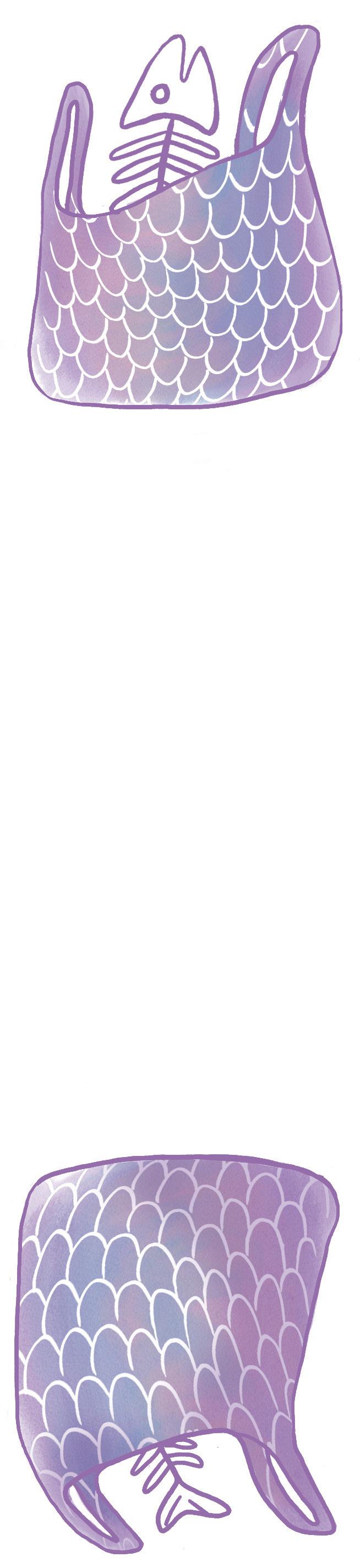
Prawira has since dedicated her academic career to reimagining plastics as ultra-thin, transparent materials made from fish waste. She’s already adapted the material for disposable products such as grocery bags, packaging, and utensils.
“We basically made plastics to be too good at their job. That also means the environment doesn’t know what to do with this, because they simply won’t degrade,” Prawira told Harding. “And now we’re literally drowning in plastic. By 2050, plastics are expected to outweigh fish in the ocean.”
Prawira is not alone in her quest. Researchers at Purdue University have spent years perfecting a recyclable bioplastic using sugars derived from corn. Professors at the Korea Advanced Institute of Science and Technology made a new “plastic” out of common bacteria like E. coli. And in 2026, after 370 different lab attempts, University of Wolverhampton scientists were able to make one out of fully compostable and biodegradable seaweed.
“The root of our environmental issues is waste and pollution piling up where they shouldn’t be,” Prawira said. “Nature has been perfecting the art of circularity — it already reuses everything. That’s a powerful blueprint for sustainability — and I think it demonstrates how our innovations should strive to minimize the strain on our planet.”
Female Fishers Become Citizen Scientists To Save Endangered Sharks
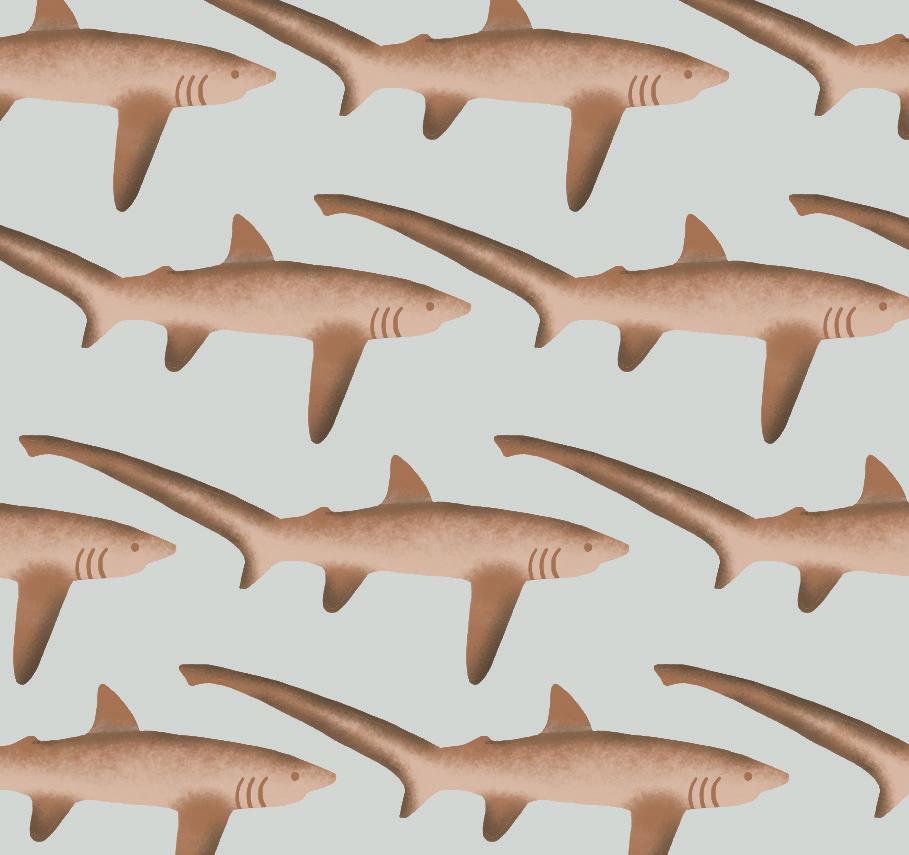
Indonesia is the world’s top shark fishing nation. One shark in particular, the thresher shark, has been the source of local livelihood in the coastal town of Alor for decades, especially for women fishmongers.
While bycatch, overfishing, and the shark fin trade put most sharks in danger of population decline, thresher sharks are slow to reproduce and therefore have a notably lower capacity to recover. For that reason, they are listed as an endangered species.
Thresher Shark Project Indonesia, a local nonprofit, has been working with Alor’s fishing community to increase protection of thresher sharks and pivot to alternative income sources, like sustainable tuna fishing, production of corn granola, mangrove restoration, and even sharkinspired basket-weaving. As of 2024, there has been a 77% reduction in thresher catch, and simultaneously, growth among local businesses.
For one local fisher, Feby, the first woman angler in her village, her career was tied to her familial and cultural traditions, but she wanted to learn how to do it sustainably. So, she became a Conservation Champion with the nonprofit, learning to dive to collect underwater conservation data. She also maintains eco-conscious fishing practices and teaches marine conservation in local schools.
“It is important for young people, especially in coastal communities, to know how to protect the ocean ecosystem,” Feby said in a video. “I dream of a future where we can continue to fish sustainably, a future where the ocean is not just our livelihood, but our legacy.”
A New ‘Ocean Equity Index’ Aims To Improve Social Justice In Ocean Conservation
Until now, there has been no standardized way to measure the equity of ocean projects and governance initiatives, leading to major gaps between the coastal communities most impacted by climate change and the leaders imposing solutions on them.
“Inequality is on the rise,” said Jessica Blythe in a video. Blythe is an associate professor of environmental sustainability at Brock University in Canada and lead author of the study behind the new Ocean Equity Index. “A handful of corporations are generating billions in profit while marginalized [communities] are excluded from management decisions that affect them.”
The new index, developed by 27 researchers from institutions around the world, was built around 12 criteria, including benefit-sharing, human rights, participation, accountability, mitigation of harm, diversity of knowledge, and the right to a healthy ocean. The goal is for the framework to be used by governments, companies, and Indigenous groups to create better outcomes for ocean initiatives — and the people most impacted by them.
The developers tested the criteria against existing ocean initiatives, which ultimately produced numerical results, a percentage at which a project is considered “equitable,” like 68% or 44%.
While Blythe and other creators agree that equity is not a perfect science, their goal is to make sure it is at least part of the conversation, acting as a gateway to more “in-depth, qualitative” discussions around “diverse perspectives,” or even being used as a “tool of resistance” for marginalized groups assessing a project, like offshore oil drilling, in their area. The scores themselves are not as important as the dialogue they generate, Blythe told Mongabay.
“The whole goal is to improve practices in the water,” she said. “Once we start tracking equity, we’re going to see big changes.”
Thanks To Marine Conservation Areas, 10% Of
The Ocean Is Already Protected
In January 2026, the United Nations formally adopted the High Seas Treaty, an agreement that creates the first-ever global legal framework to establish protected areas in international waters, in support of the global goal to protect 30% of the world’s oceans by 2030.
But before this treaty was enacted, countries had been working individually to establish conservation and protected marine areas around the world. Those efforts alone have led to 10% of the world’s oceans being protected to some degree, according to a recent announcement by the U.N. Environment Programme’s World Conservation Monitoring Centre.
One major marine protected area that helped reach this milestone is the Tainui Atea MPA, a 1.7 million-square-mile area in French Polynesia. It’s currently the largest MPA in the world.
While this is an exciting milestone, it comes about six years behind schedule, and experts agree that efforts must ramp up to reach that 30% by 2030 goal — which will require global leaders to protect an area about the size of the Indian Ocean in under four years.
“The great strides at the national level over the past two years to protect more than 10% of the marine realm is … a moment for celebration,” Neville Ash, director of UNEPWCMC, said in a statement. “But reaching this milestone is a reminder of how much work there is still to do. The coverage of protected and conserved areas at sea still needs to triple by 2030, and it is critical that both new and existing areas are managed effectively to deliver positive outcomes for people and nature.”
Special Operations Veterans Have A New Mission:
2015, Jim Ritterhoff was packing up to head to the Cayman Islands with his daughter.
SAVE THE OCEAN IN
Right before his trip, the New York advertising executive received a call from his friend Rudy Reyes, a former U.S. Marine who had served multiple tours in Iraq and Afghanistan.
When the two met for dinner, Ritterhoff learned that Reyes was suffering from post-traumatic stress disorder and depression.
“You could tell something was kind of gone in his eyes,” Ritterhoff recalled in an interview with NBC Miami. “And he went on to explain to me that he had just been in rehab.”
That’s when Ritterhoff invited Reyes to join him on vacation. They fl ew down and met up with Keith Sahm, who manages the oldest continuously operated dive resort in the Caribbean. When they jumped off a boat into crystal blue waters, Reyes was immediately transfixed by the bright coral and marine life that surrounded him.
“Here’s this trained combat diver,” Ritterhoff said. “One of the best, most highly skilled individuals you’ll ever encounter underwater. Yet he’s never seen a fish.”
In the military, diving operations typically happen at night, when speed and skill are paramount. For the first time, Reyes was able to soak it all in.
“He was like, ‘We got to get more of my guys down to experience this,’” Ritterhoff said. “So, then the idea was, what if we could create an organization for military-trained combat divers that could put them back into service, promoting marine conservation. A cause greater than themselves, a way to continue to serve, a way to have purpose and meaning, but also an amazing workforce for a marine scientific community that desperately needs the help.”
Blue. The nonprofit pairs special operations veterans with scientists to protect the ocean. To become a member of Force Blue, a veteran must be dive qualified, honorably discharged, and in good standing with their community. Dive missions include anything and everything from coral reef restoration and marine debris removal to animal rescues and invasive species eradication.
One Force Blue diver is Roger Sparks, a former Air Force Pararescue who spent two decades as a rescue specialist with paramedic-level training. Despite being a recipient of the Silver Star, the nation’s third-highest award for valor, Sparks’ pride and joy is in his Force Blue conservation work.
“It’s an affirmation that my life has purpose, that it has value,” Sparks said. “And that we belong to this very beautiful group of people.”
The nonprofit unites two groups of people that don’t typically share a room: veterans and marine biologists. But Sparks said the collaboration has been seamless.
“We’re all very mission-oriented people, and we’re not afraid to work really long, hard, arduous days, and there’s a lot of passion that drives both of those groups. So, we found a lot of commonalities,” Sparks said. “It’s all family. I can’t think of my future without the experiences and the family that we’ve created with Force Blue.”
Recently, Sparks helped restore an ancient pillar coral in the Florida Keys that toppled over in a storm.
That was when Ritterhoff and Reyes created Force
“They’re like, ‘This thousands-of-years-old coral is dying right now, we can’t do anything about it,’” Sparks said. “And I was like, ‘If we just grab some lift bags and some underwater concrete, I think that we could basically right this pillar coral and then concrete it back down to the substrate, and it’s gonna live.”
So he dove down with a team and did it. When they returned, they were met by a crowd of cheering marine specialists.
“They were, like, hugging each other and crying like, ‘Holy smokes, you guys did this! This is totally amazing,’” Sparks laughed. “And to me, I was like, ‘That was kind of easy.’”
In the last decade, Force Blue has grown from a small, devoted team to a global contingent of over 40 members. That includes Steve “Gonzo” Gonzalez, who served on Navy SEAL operations for 34 years.
“I did a number of deployments, as most of our veterans have,” Gonzalez said. “And unfortunately, I’ve seen a lot of the evil and ugliness of this world. Force Blue allows you to see the beauty and the joy and the love in this world.”
Andi Cross’s climate activist origin story starts with a universally understood experience: She saw a National Geographic photo of a starving polar bear.
But instead of a momentary feeling of grief, it completely turned her world upside down. As a lifelong New Yorker, she found herself reevaluating her corporate career and devoted herself to a years-long research project to “satisfy a burning question,” as she called it. “What good news is happening with regards to our blue planet?”
There was only one problem: She had to learn how to swim.
The Manhattanite started taking proper swimming lessons in 2018, trading her skills with scuba experts to learn how to dive, and eventually passing her open water certification test in a community center pool in the city. Then, she went to the Bahamas to train even more, graduating from a “doggie paddle” to have the confidence to book a one-way ticket to Australia. It was at this juncture that Edges of Earth was born.
Edges of Earth is a storytelling firm that works on the frontlines of climate and conservation solutions globally. What started as Cross’s own personal expedition chasing marine aggregations and biodiversity “hotspots” in the remote areas of the world turned into a greater calling to uncover the people “at the edges of the Earth” finding unique ways to protect the planet’s waters.
Cross and her team embed themselves into frontline coastal communities, gaining trust to capture compelling images, videos, and field notes that are turned into real-world case studies about climate solutions.
“This is about people who are living on the frontlines, who have the ingenuity, passion, and local knowledge to work with very little to protect these natural resources that matter so much to them,” Cross told Good Good Good. “Essentially, we’re finding communities that are succeeding against the odds … and we ask: Why are these communities seeing their reefs restored or seeing their kelp forests thriving or seeing fisheries not collapsing? What are they doing differently?”
Cross and her team have traveled to 50 countries and territories, interviewed over 3,000 people, and have
A DIVER TRAVELED THE GLOBE IN SEARCH OF THE OCEAN’S SAVIORS, ONLY TO FIND THEM RIGHT AT HOME
published more than 350 case studies in just three years in the field. And once they gather this research, they don’t stop there. They train those frontline communities to tell their own stories, apply for awards, and even receive direct funding from major investors. And Cross consults with institutions and corporate responsibility offices to turn their desire to fund real climate solutions into sizable impact for the local communities she’s come to know. That consultation work is actually what pays for the pro bono storytelling services.
But between catalyzing funding for ocean gardens run by Māori tribal communities in New Zealand, spotlighting the women of Cambodia who install cement blocks to stop bottom trawling, or exploring the marine ecology lab in Saudi Arabia protecting the Red Sea’s coral reefs and sea turtle populations, Cross finds herself back home in New York.
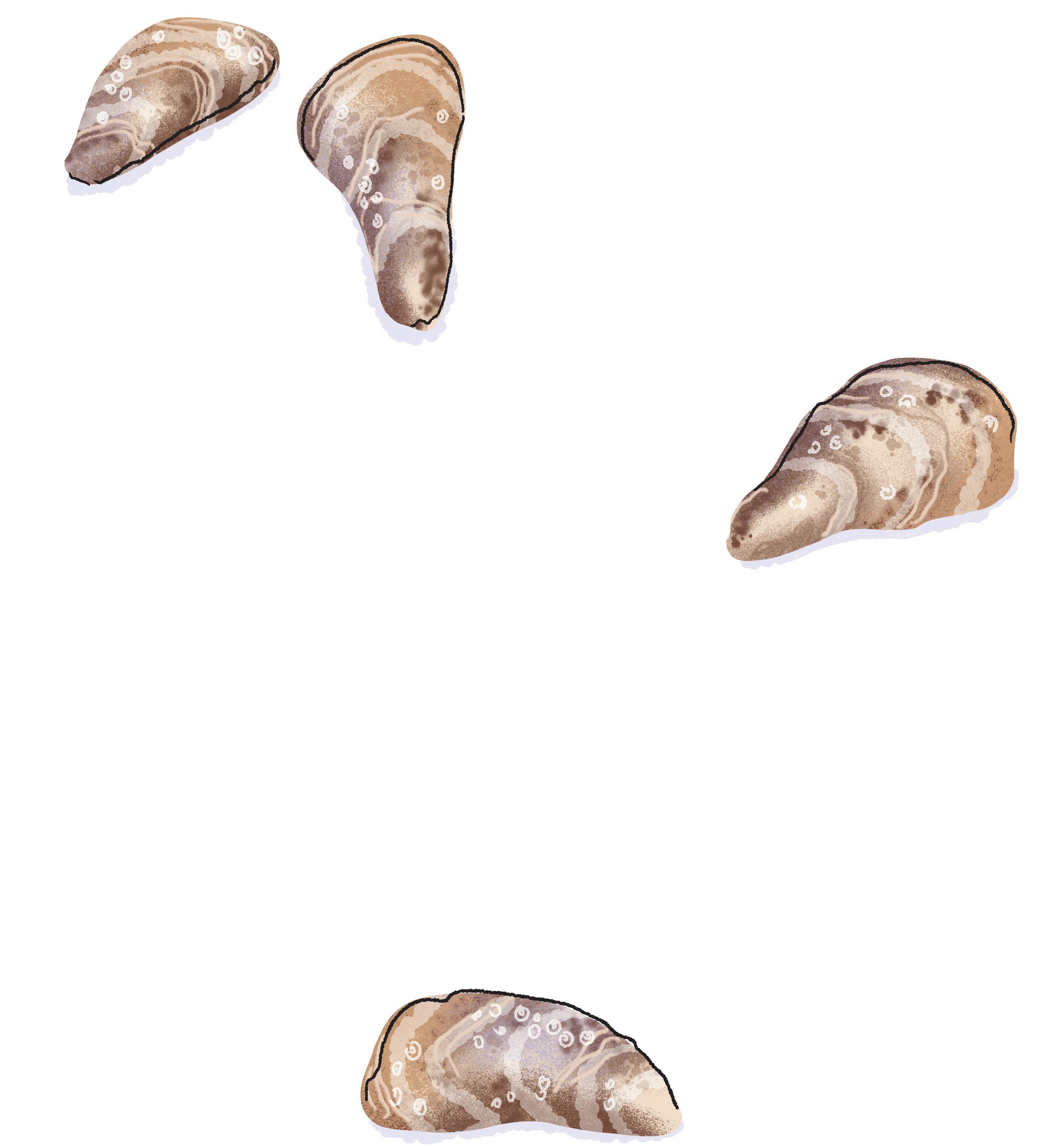
She’s been working with New York’s Billion Oyster Project, which aims to restore a billion oysters to the New York Harbor by 2030. Supporting the nonprofit’s efforts through strategy and storytelling, Edges of Earth amplifies the largescale restoration and reminds urbanites how wild the world can be, even without traversing the globe three times over.
“New York is not often visualized as a wild space, yet we have eagles and ospreys and humpback whales and dolphins and seals,” Cross said. “Just last week, I photographed a whole pod of seals with the New York City skyline in the background. It’s not normal for the average New Yorker
to think of their home like this, but the city was built on oysters — trillions of oysters. We ate them all. We polluted our waters. We dumped our sewage into the harbor. The 1972 Clean Water Act started to change things for the New York Harbor. And then in 2014, a group of oyster farmers, restoration practitioners, educators decided to care about what is in this harbor and thought, ‘Could we restore oysters?’”
Upon learning about the organization, Cross was immediately captivated by how locals in her own city mirrored the tenacity and ingenuity of people she had met in her travels. In fact, even in the most remote corners of the world, she realized she found something to be true at every pass: “We have the solutions to all of our climate problems. We know exactly what we should do. And we have a lot of people working towards it.”
The trick is getting people to care. She hopes her work takes care of that part.
“There’s exploration and magic happening pretty much everywhere,” Cross said. “ I implore people to look a little bit closer and to think a little bit bigger. If people can see themselves in the work … it becomes more of a reality for them, especially if they can see it in their own backyard.”
Deep-Sea Expeditions Are Helping Us Better Understand Our Own Planet
The Schmidt Ocean Institute is a nonprofit that uses cutting-edge technologies to map the seafloor, discover new species, and better understand the world’s oceans — 80% of which remain unexplored.
Since 2013, the institute has been sharing video footage from its deep-sea ocean adventures. And for over a decade, most of its dives averaged around 4,000 views.
But in 2025, when researchers at the Schmidt Ocean Institute livestreamed their expedition of Argentina’s Mar del Plata Canyon, it went viral on a global scale, garnering over 17.5 million views.
The livestream became a three-week event, with classrooms around the world watching in awe as the team’s remotely operated vessel plunged into a 3,500-meter-deep canyon.
“It’s been incredible to see how people of all ages have connected with the deep sea,” science team member Dr. Martín Brogger said in a statement.
As a marine biologist, researcher, and engineer, Brogger has worked for the Schmidt Ocean Institute for years. He had never seen the public so engaged with his work.
“We received hundreds of messages from families, teachers, and kids who felt inspired, surprised, and even emotional watching the live broadcasts,” he said. “Some young students told us they now dream of becoming marine biologists — an impact that goes beyond science by creating a shared sense of wonder and curiosity that can truly last a lifetime.”
Every time the Schmidt Ocean Institute
spearheads an expedition, it emerges with countless discoveries. During the Mar del Plata Canyon expedition alone, Brogger and his colleagues documented a wide range of marine life in the deep ocean.
At a depth of 1,014 meters — more than half a mile underwater — they discovered deepsea coral reefs made up of Bathelia candida, a hard coral species that houses other sea life. At around 1,500 meters deep — nearly a mile underwater — they found a large field of vibrant Anthomastus corals, a type of deep-sea soft coral often called mushroom coral that can live without sunlight.
They also uncovered proof of nearly 40 potential new species, including never-before-seen sea anemones, sea cucumbers, sea urchins, and snails.
“The deep sea and its awe-inspiring life — from bright corals to mesmerising octopuses — has captivated an entire nation, thanks to a team of passionate scientists and the millions of people watching their work, via livestream,” said Wendy Schmidt, co-founder and president of the Schmidt Ocean Institute.
“Argentina is showing the world the power of deep-sea exploration to not only spark wonder, but to remind us how much of our planet remains to be discovered and protected.”
The Schmidt Ocean Institute also used the 21-day expedition to teach viewers around the world about the impact of human activity and how it can reach even the furthest corners of the ocean. Amidst the transparent glow of telescope
octopi and bug-eyed lanternfish, researchers pointed out shoes, plastic bags, and fishing gear. The data collected from the expedition will aid future conservation campaigns.
In the second half of 2026, the institute will explore a fracture zone within the Doldrums Megatransform System, the world’s longest underwater mountain range.
This underwater volcanic mountain chain stretches more than 16,000 kilometers and forms where Earth’s tectonic plates slowly pull apart. As the plates separate, hot material rises from inside Earth and creates magma that forms a new ocean floor. This movement also creates cracks and ridges, called fault zones, that reveal Earth’s tectonic history.
For researchers at the Schmidt Ocean Institute, the zone will serve as yet another puzzle to solve in ocean exploration.
“We know more about the back side of the moon than we do about our own planetary surface,” Schmidt told Lux Magazine. “We know we are only at the beginning of the journey that brings humanity back to the ocean as its stewards and guardians.”
To Schmidt, every piece of data that is uncovered presents a new opportunity to better protect the planet.
“We have a responsibility to use this extraordinary opportunity to explore the frontiers of our planet in a way that is ethical and inclusive, that will serve all peoples of the world and preserve the integrity of the living systems that support us all.”
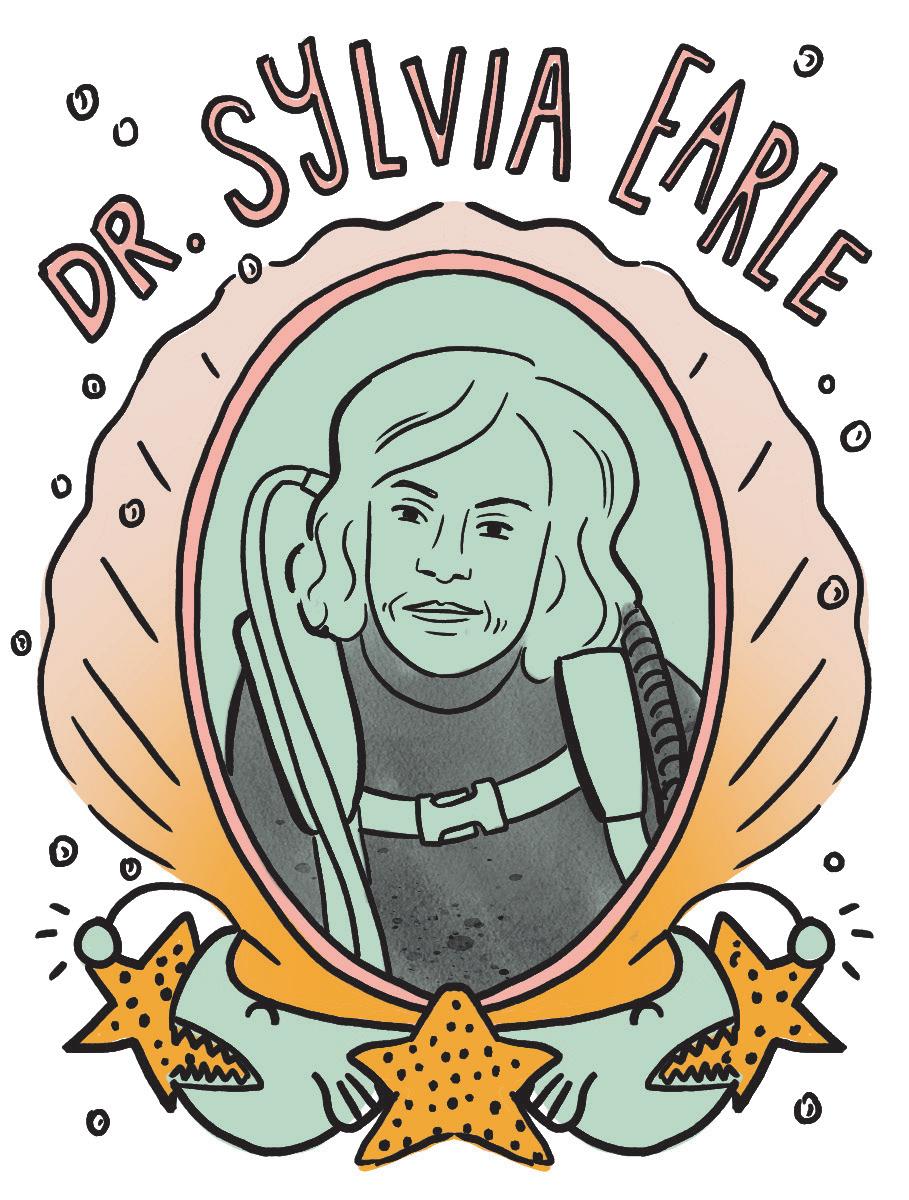
In 1979, oceanographer and renowned marine biologist Sylvia Earle made history by descending 1,250 feet below sea level off the coast of Oahu, Hawaii. In doing so, she became the first person to walk untethered on the deep ocean floor, and she recalls that walk like it was yesterday.
In the inky darkness, she saw strange sea creatures blinking back at her — new kinds of jellyfish, squid, fish, crustaceans — many of whom were “covered with lights.”
“It was like diving into a galaxy of these lights,” Earle told Brief But Spectacular.
For Earle, that sense of wonder has never gone away — it’s only compounded with time. To date, she has led over 100 ocean expeditions and logged more than 7,000 hours underwater — while authoring more than 200 publications and leading some of the most renowned marine laboratories in the world.
One of her many nonprofits is Mission Blue, a global organization driving progress towards the global goal of protecting and restoring at least 30% of the world’s oceans by 2030. It’s ambitious — and it requires help from people around the world.
“What’s hard is getting people to understand why the ocean matters to them. If the ocean dried up tomorrow, life would also dry up,” Earle said. “They should know that every breath they take, every drop of water they drink … the ocean is touching them. You should treat the ocean as if your life depends on it — because it does.”
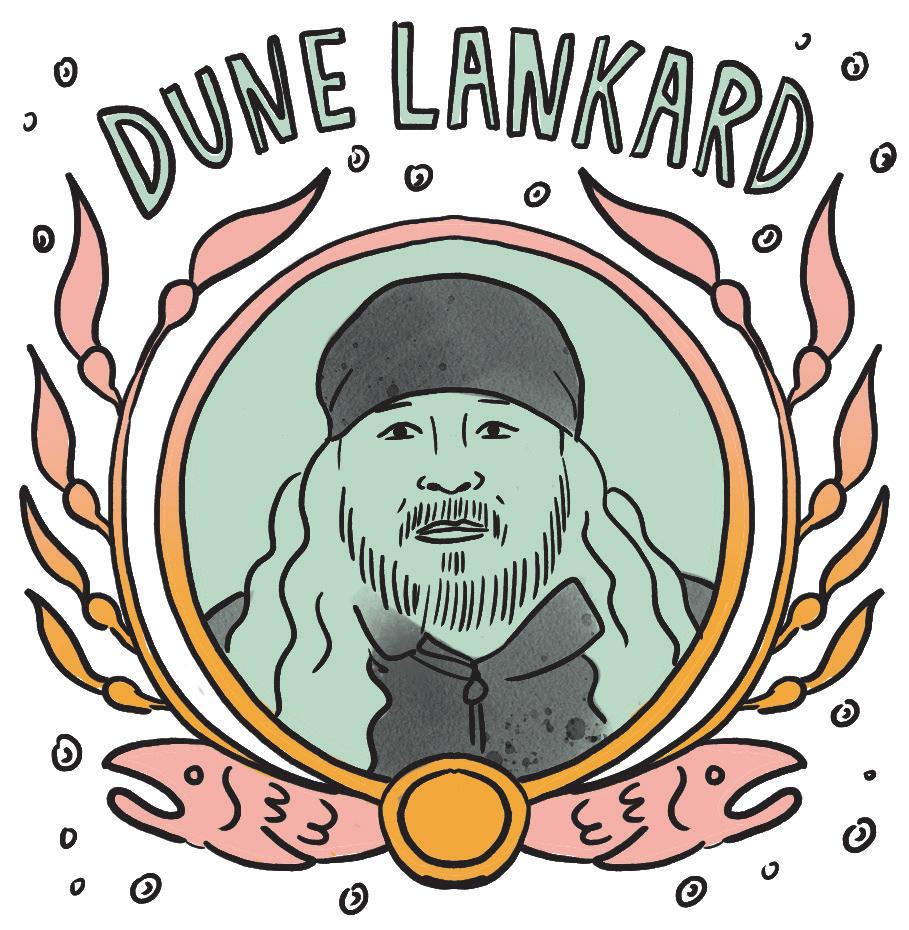
Dune Lankard is an Eyak Athabascan man who was born and raised in Alaska. According to Lankard, his Eyak name “Jamachakih” translates to: “Little bird that screams really loud and won’t shut up.” It’s a name that’s informed his entire approach to conservation.
Lankard was born into a fishing family on the waters of Prince William Sound. He once worked as a commercial fisherman, but the Exxon Valdez oil spill disaster of 1989 reawakened his passion for Indigenous ocean farming.
“Being a fisherman, I always felt that I was a provider and that everyone has their roles in their community, and especially in tribal communities,” Lankard told The Cordova Times. “So I felt that ocean farming, both kelp and mariculture, could have a different importance of not only feeding our people, but helping heal and restore the ocean in the process.”
For years, he has worked with local scientists to farm and harvest kelp that can acclimate to changing ocean temperatures. He has been teaching Indigenous fishing communities what he’s learned along the way, developing a shared kelp seed nursery and leading community trainings.
“In ocean farming we are trying to do emergent training and technical assistance programs, so people understand the barriers to entry,” he said. “We want to turn these communities into citizen scientists.”
When it comes to “saving the ocean” from pollution and climate change, Lankard is not starry-eyed. But he is determined.
“It’s not going to happen because we are lucky,” he said in an online video promoting ocean farming. “It’s going to happen because we actually care and we do something about it.”
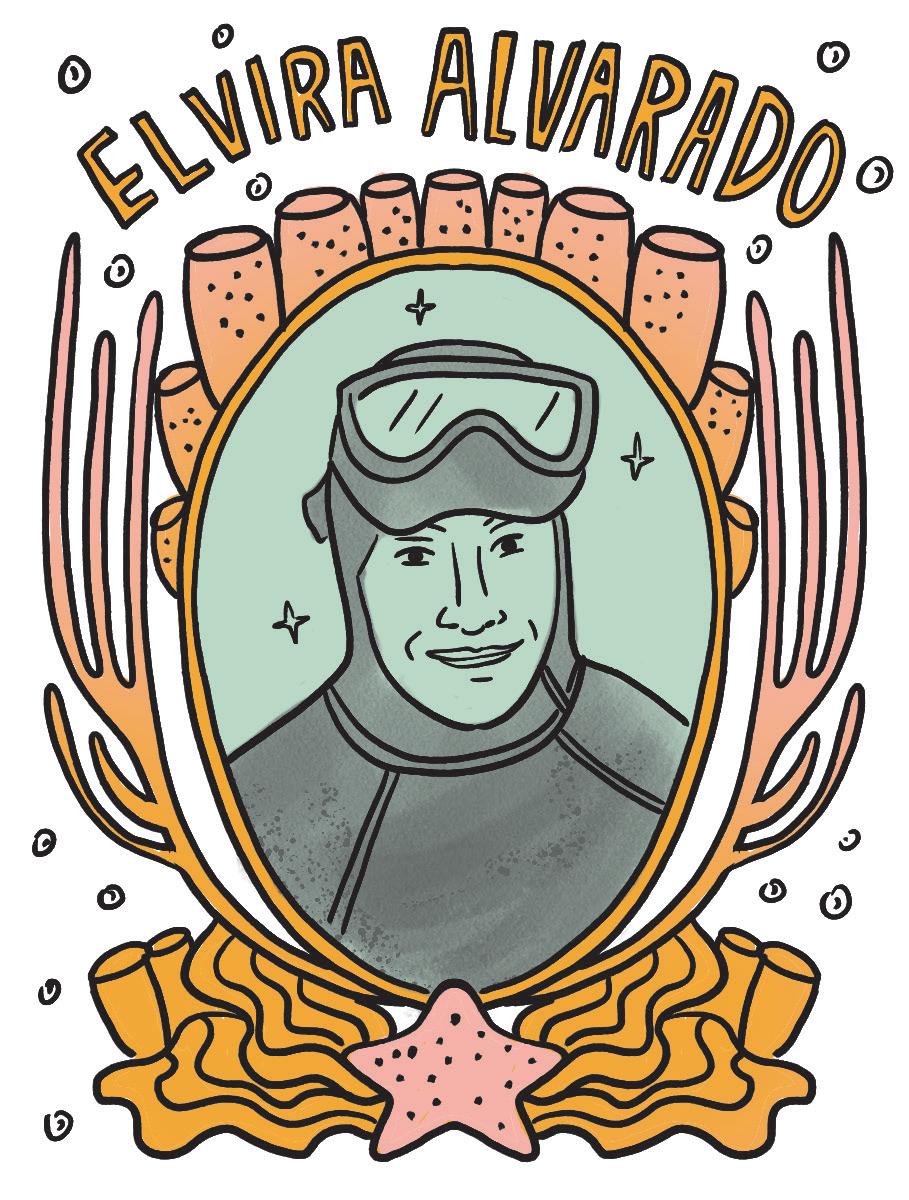
Half of the coral reefs along Colombia’s Caribbean coast may be gone now, but the ones that remain still bring a smile to Elvira Alvarado’s face, even 50 years later.
“Everything was alive. And it was green and bright orange. And there were fishes. And there were huge things. And they were corals. It was astonishing,” Alvarado told NPR. “Can you imagine paradise? It’s paradise.”
She may be 70 now, but the marine biologist has no plans to retire any time soon. Rather, she is determined to restore Colombia’s endangered coral reefs — and she’s doing it by reproducing coral through in vitro fertilization.
Coral spawn only once a year, which gives Alvarado and her team a very small window of opportunity. After diving to collect the coral eggs and sperm, they take them to the lab to mix them together. Then, the coral hatchlings are placed in “nurseries” for six months to a year before they are replanted in the reef.
It’s a painstaking process, but it works.
And through it all — whether she is diving, researching, or working in the lab — Alvarado is often surrounded by young scientists who are hanging on to her every word.
“She’s a very inspiring woman,” said María Fernanda Maya, a former student who now restores coral reefs through the nonprofit Blue Indigo Foundation. “She’s the mother of coral in Colombia.”
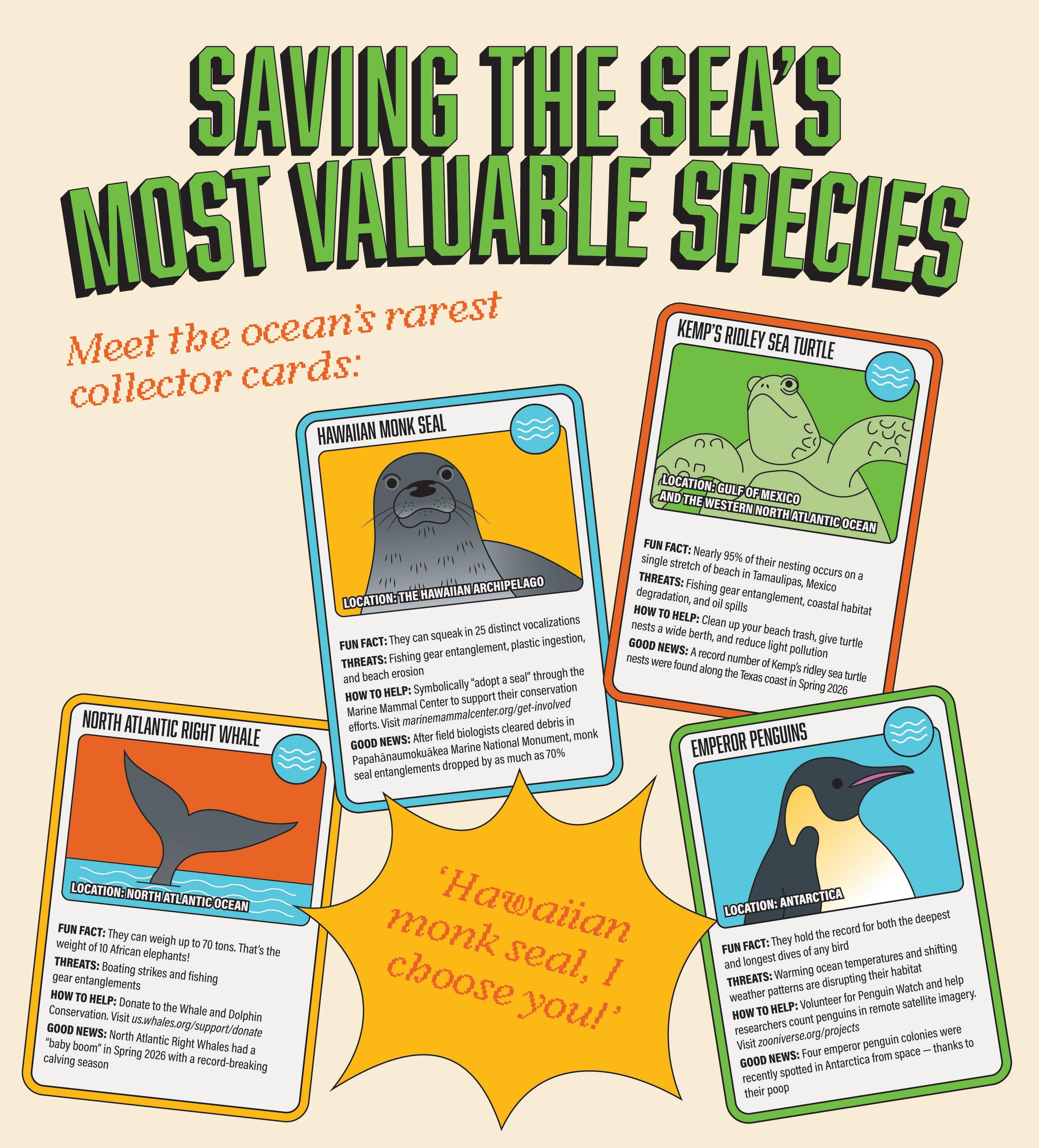
Incredible marine animals so endangered that spotting one in the wild is like pulling the rarest card in the pack. The good news? With a little help from all of us, these amazing species still have a fighting chance to recover — and stick around for a long, long time.