Gonzalo Reyes Araos
Entrevista
Interview
Ensayo

En este enlace encontrarás la audiodescripción del libro Cielos Forasteros
PROYECTO FINANCIADO POR EL FONDO NACIONAL DE DESARROLLO CULTURAL Y DE LAS ARTES (FONDART), CONVOCATORIA 2025, REGIÓN DE ANTOFAGASTA
[español] En el año 2012, mientras realizaba una residencia artística en Shanghái, encontrándome en el lado opuesto del mundo respecto a mi lugar de origen en Chile, experimenté la lejanía como nunca antes. Mientras me comunicaba a distancia con mi familia por medio de videollamadas, podía ver a través de la pantalla el amanecer al otro extremo del planeta y, simultáneamente, el atardecer tras la ventana de mi cuarto, vivenciando así un fenómeno natural ubicuamente, mediado por un algoritmo que moldeaba mi experiencia consciente mediante la luz de una pantalla. Esta sensación de vértigo enfatizó mi curiosidad respecto a nuestra forma de percibir y de relacionarnos con la naturaleza.
Esta experiencia me llevó a entender la digitalidad como una forma de arquitectura expansiva e inmaterial capaz de construir espacios de interacción humana, alterando las barreras de tiempo y espacio que condicionan nuestra naturaleza física. Desde esta perspectiva, el algoritmo se revela como una fórmula que configura una realidad alternativa a la percibida tradicionalmente a través de los sentidos, activando procesos de expansión de la mente y el cuerpo humano.
In 2012, while undertaking an artistic residency in Shanghai, I experienced an unparalleled sense of remoteness, finding myself on the diametrically opposite side of the world from my place of origin in Chile. As I communicated with my family from a distance through video calls, I could see the sunrise on the other end of the planet through the screen, while simultaneously witnessing the sunset outside my own window. I was thus experiencing a ubiquitous natural phenomenon, mediated by an algorithm that molded my conscious experience through the light of a screen. This sense of vertigo emphasized my curiosity regarding our way of perceiving and relating to nature.
This experience led me to understand the digital realm as a form of expansive and immaterial architecture capable of constructing spaces for human interaction, altering the barriers of time and space that condition our physical nature. Seen this way, the algorithm is a formula that configures a reality alternative to the one traditionally perceived through the senses, activating processes of expansion of the human mind and body.
[english]
[español]
Considerando que la humanidad es parte del ecosistema natural, y que lo natural evoluciona en un medio regido por una lógica intrínseca, todo lo que el ser humano inventa, crea o descubre, contiene parte del mismo orden. Las matemáticas surgieron como una forma de descifrar dicha lógica. La computación, al ser una extensión de esta rama del pensamiento, se presenta como un lenguaje que prolonga y externaliza la lógica de la naturaleza. Así, lo que llamamos natural y lo que llamamos artificial se revelan bajo la misma fórmula invisible.
Bajo estas premisas he desarrollado una obra transdisciplinaria en la que la gramática de los medios digitales funciona como metáfora y símbolo, volviéndose su sujeto de estudio. Esta se presenta como una investigación abierta y continua abordando las relaciones entre tecnología, percepción, afecto y comunicación humana, mediante diversos medios, entre los que se encuentra el videoarte, instalaciones lumínicas, pintura y poesía conceptual.
Cielos Forasteros reúne una selección de obras que exploran estos temas. El libro incluye además dos textos críticos: Julianne Cordray indaga en los aspectos biográficos que configuran formalmente mi práctica, mientras que Samuel Toro Contreras contextualiza mi trabajo en el marco del pensamiento contemporáneo.
Gonzalo Reyes Araos
Considering that humanity is part of the natural ecosystem, and that what is natural evolves within a medium governed by an intrinsic logic, everything that human beings invent, create, or discover contains part of the same order. Mathematics emerged as a way to decipher this logic. Computing, being an extension of this branch of thought, presents itself as a language that prolongs and externalizes the logic of nature. Thus, what we call natural and what we call artificial are revealed under the same invisible formula.
Under these premises, I have developed a transdisciplinary body of work in which the grammar of digital media functions as both a metaphor and a symbol, thereby becoming its own subject of study. This is presented as an open and continuous investigation addressing the relationships between technology, perception, affect, and human communication, utilizing various media including video art, light installations, painting, and conceptual poetry.
Foreign Skies gathers a selection of works that explore these themes. The book also includes two critical texts: Julianne Cordray delves into the biographical aspects that formally shape my practice, while Samuel Toro Contreras contextualizes my work within the framework of contemporary thought.
Gonzalo Reyes Araos
The notion of Foreign Skies
Julianne Cordray
[español] La noción en Cielos Forasteros nos invita a imaginar algo adyacente a lo familiar: marcado, quizás, por una variación en el color, la luz o la visibilidad. Describe una forma de partida, una distancia: del cielo mismo, o de nuestra percepción de él. Podría sugerir una relación con lo intangible, o bien, una conexión tangible que lo trasciende, filtrado por los sistemas que llevamos dentro. Tales condiciones duales abren una ventana hacia la práctica de Gonzalo Reyes Araos.
Gonzalo y yo nos juntamos para conversar en su estudio. Ambos coincidíamos en Berlín, bajo un cielo forastero, tan físicamente distante de los lugares de los que proveníamos. A medida que hablábamos, emprendimos una especie de viaje que comenzó frente a la pantalla y terminó tras de ella. Ciertos hilos conductores pueden trazarse en el plano físico de lo inmaterial; la construcción tanto de la imagen como de la realidad y la posibilidad de hallar significado en lo desconocido.
La trayectoria actual de su trabajo evolucionó en base a ciertas preguntas sobre la materia, el tiempo y la luz ―objeto de investigación de una residencia de la que fue parte en Shanghái en 2012, con el propósito de conectar con estos conceptos a través de diversos estados materiales.
The notion of Foreign Skies invites us to imagine something adjacent to the familiar: marked, perhaps, by a shift in color, light, or visibility. It describes a kind of departure, a distance – of the sky itself, or our perception of it. It may suggest a relation to the intangible, or a tangible link that reaches beyond it, filtered through the systems carried within. Such dual conditions offer a window into the practice of Gonzalo Reyes Araos.
Gonzalo and I converged in Berlin under a foreign sky. Physically distant from the places we both come from, we met for a conversation in his studio. As we spoke, taking a sort of journey from in front of the screen to behind it, certain throughlines could be traced in the physicality of the non-material; the construction of both image and reality; and the possibility of finding meaning in the unknowable.
The current trajectory of his work evolved out of questions of matter, time, and light – the subject of a research residency he undertook in Shanghai in 2012, with the aim of engaging with these concepts through different material states. This line of inquiry was sharpened during the early stages of the residency, when he was unexpectedly confined to
[english]
Esta línea de investigación fue pulida durante las primeras etapas de la residencia, cuando, de manera imprevista, se vio a sí mismo confinado en su departamento por un tiempo prolongado debido a un problema de salud. Un evento que él describe como un accidente afortunado y que, bajo el lente de sus intereses investigativos, lo llevó a reflexiones reveladoras.
Con sus vínculos interpersonales asignados a las pantallas, su atención se vio atraída, física y conceptualmente, hacia aquellos dispositivos que han ido tomando de forma creciente un lugar central en la comunicación humana. Esto le impulsó más allá de la distancia física ―la cual, para ese momento, había sido tensada tan lejos de su lugar de origen como era posible. Al contemplar la materialidad y estética de la distancia, como un fenómeno de aislamiento físico, una convicción inicial tomó forma ante él: la información emocional, los sentires, podían ser transportados digitalmente. Migraciones compuestas, tanto de cuerpo como de información, desencadenaron exploraciones místicas sobre la transmisión y recepción de la información digital y, fundamentalmente, de sus lagunas inherentes.
Gonzalo Reyes Araos: Durante el mes que estuve recuperando mi salud, me encontré completamente aislado en mi habitación. Dado que no tenía ningún contacto real con mi entorno, sentía como si estuviera inmerso dentro de una suerte de realidad virtual. Esta situación me llevó a reflexionar sobre mi relación con la naturaleza, especialmente con la luz del cielo. A través de mi computador, disfrutaba de amaneceres en tiempo real en cualquier parte del mundo. Me sentía como si perteneciera a un ecosistema diferente. Fue una especie de transición hacia lo que podría haberse convertido, con el tiempo, en un estado de independencia de los ciclos naturales.
SCREENSHOT
2014
Vista de la instalación
GAPE - 02, LIGHTHEART, Plateaux Gallery, Berlin
Installation view
GAPE - 02, LIGHTHEART, Plateaux Gallery, Berlin
La pantalla, vista como un espacio liminal entre la transmisión digital y la presencia de lo material, es recurrente a lo largo de su práctica ―ya sea como objeto o imagen. Por medio de ellas, Gonzalo ha llevado a los espectadores a ver diferentes cielos, realidades y calidades de luz. Como artista, ha abordado interrogantes sobre la interrelación entre tecnología y naturaleza, seres humanos y naturaleza, además de transformar el entendimiento del lugar y la forma de la reubicación, la comunicación y la interacción.
his apartment for an extended period due to a health issue. It’s an event that he describes as a fortunate accident, which, through the lens of his research interests, led to meaningful reflections.
With his interpersonal relations allocated to screens, his attention was pulled, physically and conceptually, towards the devices that have become increasingly central to human communication. This propelled him beyond the distance of place – which, at the time, had already been stretched as far from his origin as possible. In contemplating the materiality and aesthetic of distance as physical isolation, an initial conviction took shape for him: that emotional information, such as feelings, could be transported digitally. Compounded migrations, of body and data, not only sparked otherworldly explorations of how digital information is relayed and received, but also of its inherent gaps.
Gonzalo Reyes Araos: During the month I spent recovering my health, I found myself completely isolated in my room. Since I had no real contact with my surroundings, I felt as if I were immersed in a kind of virtual reality. This situation led me to reflect on my relationship with nature, especially with the light of the sky. Through my computer, I enjoyed realtime sunrises from anywhere in the world. I felt as if I belonged to a different ecosystem. It was a kind of transition toward what could have become, over time, a state of independence from natural cycles.
The screen, as a liminal space between digital transmission and material presence, recurs throughout his practice. Through object or image, he has transported viewers to different skies, different realities, different qualities of light. He has pursued questions of the interrelation between technology and nature, humans and nature, as well as changing understandings of place, and forms of relocation, communication and interaction.
With titles like Wife RGB Mode (2013) and Mother PNG (2014), physical works based on his own screenshots from the period immediately following this artist residency suggest a specific relation and all the emotional implications that might be carried with it. But they’re also juxtaposed with a file type, becoming digital information. While seemingly personal, they are archetypes or stand-ins – the idea of a relation, a relative, an origin. They are what they describe – a representation, an image, a code – redirecting attention from the individual to the structural.
Obras como Wife RGB Mode (2013) y Mother PNG (2014), piezas físicas que surgen de sus capturas de pantalla correspondientes al periodo inmediatamente posterior a su residencia, sugieren una relación específica, además de todas las implicaciones emocionales derivadas de ellas. Pero también, han sido yuxtapuestas a un tipo de archivo, convirtiéndose en información digital. Si bien éstas parecen personales, son en realidad arquetipos o suplentes ―la idea de una relación, pariente, u origen. Son lo que describen ―una representación, una imagen, un código― y redirigen la atención de lo individual a lo estructural.
GRA: Estaba interesado en explorar la célula de la imagen: su unidad mínima. Al mirar dentro de la imagen, buscaba una suerte de estructura atómica. Comencé a experimentar con la pantalla y con el código que subyace detrás de ella. Estudié programación por un año para entender cómo se construyen en su totalidad las imágenes que consumimos.
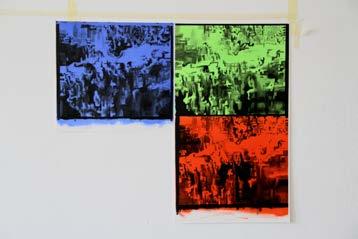
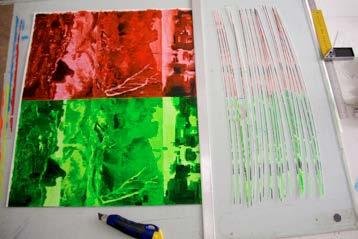
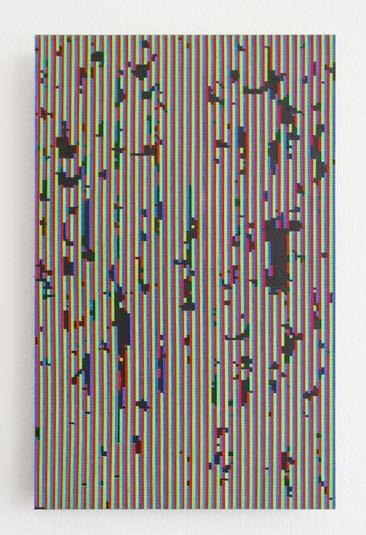
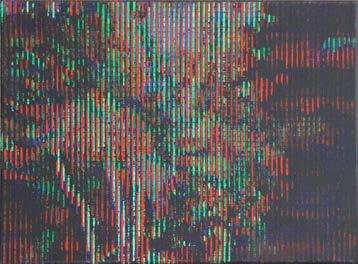
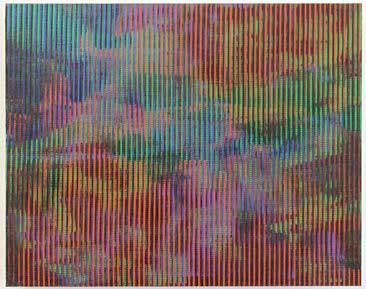
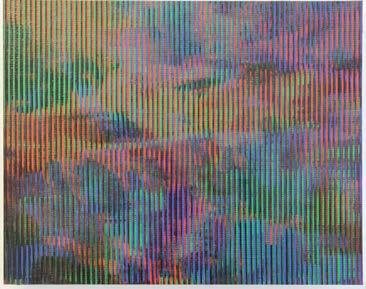
Los bloques básicos que componen la imagen digital, los píxeles, a veces se trasladan a la esfera física. Aunque, en efecto, se trata de algo abstracto, la imagen pixelada es una representación precisa. Vemos esto en su intricada serie RGB Paintings (con sus primeras versiones a partir del 2013), piezas compuestas de papeles cortados y pegados meticulosamente ―un proceso que deja huellas en las superficies de su estudio. A veces estas obras las produce a menor escala y en otras ocasiones, son tan altas como él; en ambos casos, conservan un tipo de intimidad. Aunque pareciera ser mínima, la impresión general es la de ver una inexplicable luminosidad, casi una ilusión óptica. La serie se desarrolló a través de una inesperada presencia: la ausencia. Una apertura que adhiere una capa de materialidad digital a través de la pérdida en la pintura.
GRA: Para mí, el momento accidental es realmente significativo, ya que éste denota el proceso de construcción y manifiesta la naturaleza técnica de la obra. Debo confesar que, inicialmente, pensé que era necesario controlar el resultado, pero tras una reveladora conversación con un amigo artista, me di cuenta de que el fallo técnico, la falta de información, era clave para mi investigación. Cuando hablas por teléfono, envías una señal; ondas electromagnéticas viajan hacia la otra antena. En este proceso, la información ya no es solo digital, es física. Si este paquete de información experimenta algún tipo de interferencia atmosféri-
GRA: I was very interested in exploring the cell of the image: its minimal unit. By looking inside the image, I was looking for some kind of atomic structure. I started experimenting with the screen, even with the code behind it. I studied programming for a year. I wanted to understand how the entire image is built, how the images we consume are made.
The building blocks of the digital image, the pixel, at times get transferred to the physical sphere. Though abstract in effect, the pixelated image is a precise representation. We see this in his intricate RGB Paintings series (with its earliest iterations beginning in 2013), composed of meticulously cut-and-glued painted bits of paper – a process that leaves traces flecking his studio’s surfaces. The works are sometimes produced in smaller scale and sometimes they are as large as the span of his body, in both cases retaining a kind of intimacy. Though seemingly minimal, the overall impression is an inexplicable shimmer, almost an optical illusion. The series developed through the unexpected presence of absence. “Glitches”, or missing sections of data, appear as white spaces. These gaps add a layer of digital materiality through the loss of material of the painting.
GRA: For me, the accidental moment is very important, as it denotes the process of construction in the work and manifests its technical nature. I must confess that, initially, I thought it was necessary to control the outcome. But after an interesting conversation with an artist friend, I realized that the glitch, the misinformation, was key to my research. When you talk on the phone, you send a signal; electromagnetic waves travel to the other antenna. In this process, the information is no longer just digital, it is physical. If this packet of information experiences any kind of atmospheric or meteorological interference, it may get lost in space. The system then has to make its own decision and replace the missing information. In that case, the glitch, for me, is the expression of the technique itself. It’s a way of saying ‘I am here. I exist.’ Here, I systematized a technique to make room for error as a composer of the work.
The bits of lost information in the paintings appear as distance –blank white spaces that form constellations of sorts, materializing the relationship between sky and screen in another way. In working with an
ca o meteorológica, podría perderse en el espacio. El sistema, entonces, tiene que tomar su propia decisión y reemplazar la información perdida. En tal caso, el glitch, para mí, es la expresión de la técnica en sí misma. Es una forma de decir: «Estoy aquí». «Existo». Aquí he sistematizado una técnica para darle espacio al error como compositor de la obra.
Los fragmentos de información perdida en las pinturas se muestran como distancia ―espacios en blanco que forman una especie de constelación, materializando la relación entre cielo y pantalla de otra manera. Al trabajar con un proceso análogo para construir una imagen como pantalla digital, utilizando los colores que hoy en día iluminan nuestro mundo, se establece una relación con el píxel de una manera más inmediata.
GRA: Trabajo con colores RGB, los cuales asocio con la luz: luz vista como portadora de información. He trabajado con luz natural, de pantalla, y con la idea de esencia espiritual inherente al concepto de la luz. Para mí, ha sido muy importante trabajar con este concepto, pero desde la perspectiva del pigmento. Cuando ves una «falta de información» en estas pinturas, se crea un efecto óptico característico de la luz, en el cual los amarillos, los cianes, y los magentas (CMYK) ―colores que se utilizan al imprimir― pueden ser vistos. Esto produce un efecto reverso: trabajo con RGB en el dominio de lo físico y creo CMYK en la luz. Los espacios en donde estos efectos se crean significan, para mí, pequeñas ventanas que conectan los dos universos.
Esta idea, de los universos paralelos e inversiones, refleja no solo sistemas binarios, sino que también dicotomías, polos, antípodas ―lo que caracteriza gran parte de su trabajo: en las manifestaciones de la noche y el día, la intuición y el razonamiento, y en los procesos humanos y maquinarios. Gonzalo enfatiza que tales contrastes son un componente central.
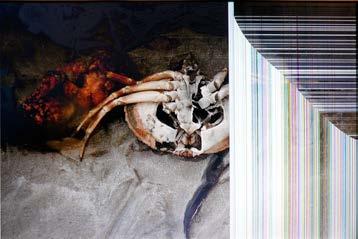
Imágenes de referencia e inspiración.
Pantalla de laptop rota.
Reference and inspiration images. Broken laptop screen.
En Bitmap Poemarium (2023), por ejemplo, se refiere a las dos facetas de la obra ―la visualidad y el código detrás de esta― como reflejos de la parte externa e interna de una imagen, que a la vez funcionan como espejo del lado derecho e izquierdo del cerebro. Aquí, las imágenes, como él las describe, han sido codificadas con palabras. Los caracteres, tal cual átomos, son agrupados de tres en tres, y no solo componen palabras, sino que también píxeles: cada uno de los tres caracteres se interpreta
analog process to build an image as a digital screen, using the colors that now light our world, a relationship with the pixel is established in a more immediate way.
GRA: I work with RGB colors, which I associate with light as a carrier of information. I have worked with natural light, the screen, and with the idea of the spiritual essence inherent to the concept of light. For me, it has been very important to work with this concept, but from the perspective of pigment. When you see a ‘lack of information’ in these paintings, it creates an optical effect characteristic of light, in which yellows, cyans, and magentas (CMYK) – the colors used in printing – can be seen. This produces a reverse effect: I work with RGB in the physical realm and create CMYK in light. The spaces where these effects are created are, for me, small windows that connect the two universes.
This idea, of parallel universes and inversions, reflects not only binary systems, but also dichotomies, poles, antipodals – which characterize much of his work: in manifestations of night and day, intuition and ration, human and machine processes. Gonzalo emphasizes that such contrasts are a central component.
In his Bitmap Poemarium (2023), for example, he refers to the two facets of the work – the visual and the code behind it – as reflecting the outside and inside of an image, which also mirror the right and left sides of the brain. Here, images, as he describes, have been written with words. Characters, like atoms, are grouped in threes, not just composing words, but also pixels: each of the three characters is interpreted as a particular amount of red, green, and blue to be mixed into a color. Some meaning is conveyed in the poems-as-code, not necessarily in a sensical, logical way, but at times seemingly hinting at something deeper. He remarks that some even prompt subjective interpretation. Our internal processing of information, between word and image, is also simulated, as is the transference of different sensory experiences – as a kind of synesthesia.
Set in interplay with human language, code is made readable here, if not fully understandable. The nature of expression is considered – of humans as well as of machines, data, processes and systems. Different outputs or states of data also emerge elsewhere in his work, with the system that receives it informing how it is expressed.
como una cantidad particular de rojo, verde, y azul a ser mezclado en un nuevo color. Parte del significado de los código-poemas se transmite, no necesariamente de manera práctica o lógica, más bien, a ratos parecen insinuar algo más profundo. Gonzalo destaca que algunos incluso suscitan una interpretación subjetiva. Nuestro procesamiento interno de la información, entre palabra e imagen, también es simulado, al igual que la transferencia de diferentes experiencias sensoriales ―como un tipo de sinestesia.
En interacción con el lenguaje humano, el código se hace aquí legible, si no totalmente comprensible. Se considera la naturaleza de la expresión ―tanto de los humanos como de las máquinas, los procesos y los sistemas. De otras partes de su obra emergen, asimismo, diferentes resultados o estados de información, donde el sistema que los recibe determina cómo se expresan.
En un cambio pertinente, nuestra segunda conversación fue mediada por la pantalla, en la cual Gonzalo habló más sobre su experiencia con esta y cómo ha cambiado a lo largo del tiempo.
GRA: Mi acercamiento inicial con las pantallas involucró reflexiones sobre mi posición física ―yo consideraba a las tecnologías como extensiones de mi cuerpo y sentidos. Con el tiempo, mi perspectiva ha cambiado, y ahora entiendo la pantalla como un instrumento de comunicación que juega activamente con nuestros sentidos, condicionando nuestra percepción de la realidad.
En la serie Dark Constellations (2023) ―una especie de inversión de luz-oscuridad que utiliza un proceso similar a la de RGB Paintings Gonzalo toma un enfoque casi arqueológico y excava en la historia de los colores de pantalla, incluyendo la CGA, que fue el primer sistema de colores presentado (introducido en 1981). Para él, ser capaz de entender el procesador del computador en mayor medida fue lo que impulsó su interés hacia el estudio de la data―yendo más allá de la pantalla, hacia otra capa invisible.
GRA: Creo que siempre hay algo que se transmite más allá de la información pura y concreta, y siempre relaciono esto con una dimensión que va más allá de mi comprensión. En mi investigación, busco materializar o hacer visible esta fuerza que le da forma a la información.
In an appropriate shift, our second conversation was mediated by the screen, during which he spoke more about his relationship to such devices and how it has changed over time.
GRA: My initial engagement with screens involved reflections on my physical position – I considered technologies as extensions of my body and senses. Over time, my perspective has shifted, and I now understand the screen as a communication instrument that actively plays with our senses, conditioning our perception of reality.
In the series Dark Constellations (2023) – a sort of light-dark reversal using a similar process as the RGB Paintings – he takes an archeological approach, digging into the history of screen colors, including CGA, which was the first color display system (introduced in 1981). According to him, it was a better understanding of the computer processor that pushed his focus more towards data – moving beyond the screen to another, invisible layer.
GRA: I believe that there is always something conveyed beyond pure concrete data, and I always relate this to a dimension that goes beyond my comprehension. In my research, I seek to materialize, or make visible, this force that shapes data. Perhaps the architecture that governs the laws of nature also extends to everything generated by humanity.
The idea of spirituality appears in a number of contexts, particularly tied to nature, whether as topic or phenomena. References to belief systems – from those belonging to the Atacameño culture of the Atacama Desert in northern Chile, to those transported through colonization –appear alongside representations of sunlight and stellar constellations as an ongoing presence.
GRA: In my work, I try to reveal something subtle that isn’t purely logical. Since our senses are very limited, there are many things we cannot hear, smell, touch, or see. For example, often, when it’s dark in my studio at night, I can see the cold light of the streetlamp hitting the kitchen wall. When I turn the light on inside, the outside light is no longer perceptible in the room. Although I know that it continues to enter through the window, I can’t see it. The code that a computer processes is abstract,
Quizás la arquitectura que gobierna las leyes de la naturaleza también se extiende a todo lo creado por la humanidad.
La idea de espiritualidad aparece en diversos contextos, particularmente ligada a la naturaleza, ya sea como tema o fenómeno. Referencias a sistemas de creencias ―desde aquellas pertenecientes a la cultura Atacameña del desierto de Atacama en el norte de Chile, hasta aquellas que fueron transportadas por la colonización― aparecen a lo largo de las representaciones de la luz solar y las constelaciones estelares como una presencia continua.
GRA: En mi trabajo, intento revelar algo sutil que no es puramente lógico. Dado que nuestros sentidos son muy limitados, hay muchas cosas que no podemos escuchar, oler, tocar o ver. Por ejemplo, a menudo, cuando está oscuro en mi estudio por la noche, puedo ver la luz fría de los faroles de la calle, reflejados en la pared de la cocina. Cuando enciendo la luz al interior, la luz externa ya no es perceptible en la habitación. Aunque sé que continúa entrando por la ventana, no puedo verla. El código que procesa un computador es abstracto, una fórmula que corre en lo invisible. La pantalla, nuevamente, es una ventana que extiende nuestros sentidos.
Gonzalo me cuenta que una de las fuerzas impulsoras detrás de su trabajo es materializar dichos momentos ―darle expresión a su presencia― para poder compartirlos. De manera acertada, y quizá incluso paradójica, esto ocurre a menudo a través de un lenguaje visual abstracto. Pero lo que puede primeramente parecer abstracto, señala, solo se oculta a primera vista, transmitiendo algo que se puede sentir, como otro modo de entender el mundo.
RÍO DEL CIELO
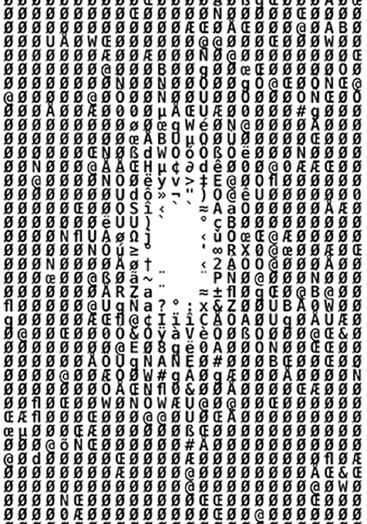
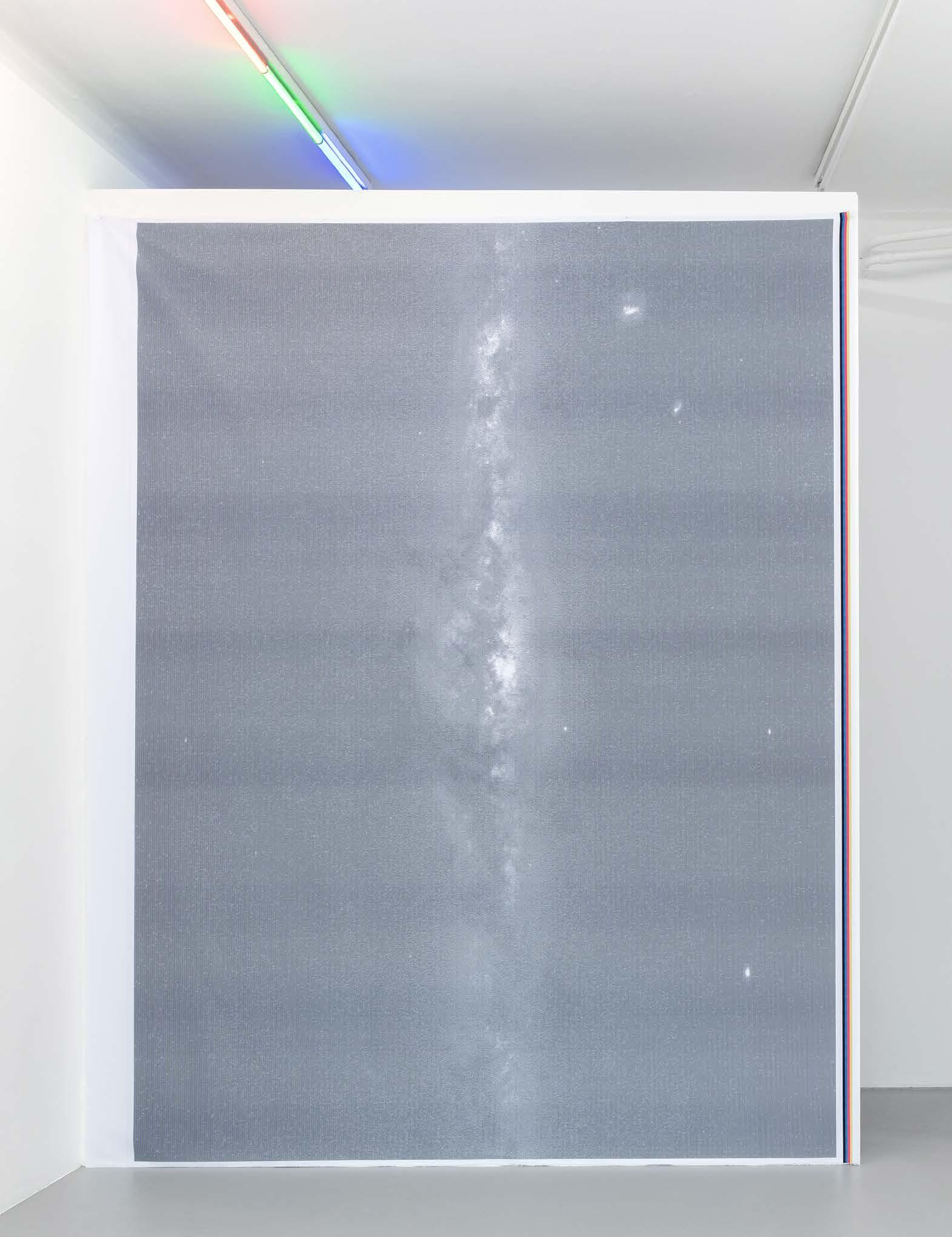
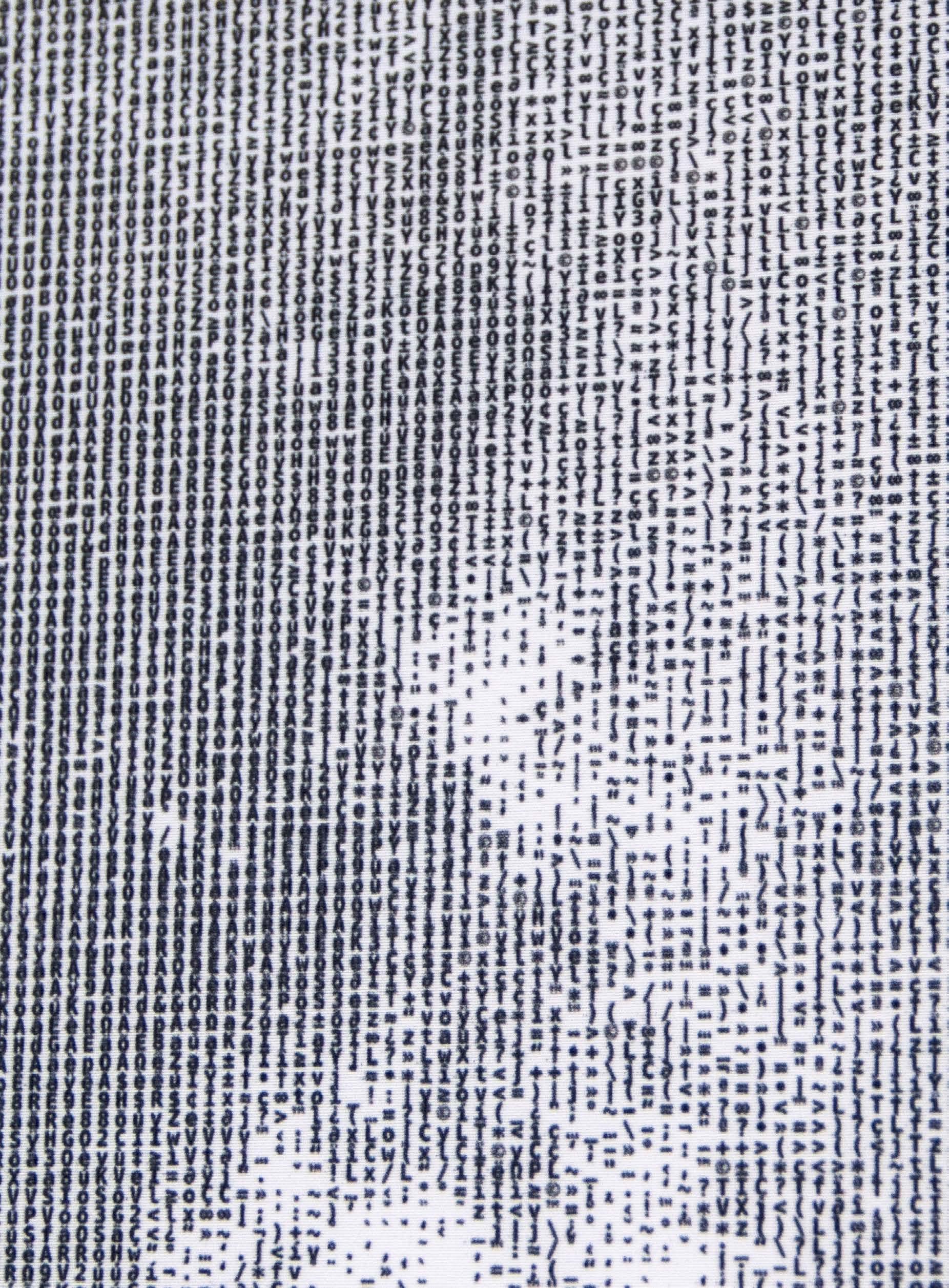
GRA: Incluso si una obra es abstracta, puede ser interpretada, y de múltiples maneras. Frecuentemente, el cerebro busca patrones preconcebidos para darle sentido a una imagen en la que se presentan formas aleatorias : una pareidolia. Es como una sopa de letras, en la que puedes encontrar palabras claras entre una masa indefinida de datos. La obra Río del Cielo, creada en el 2022 e inspirada por «La biblioteca de Babel» de J. L. Borges, es una imagen de la Vía Láctea formada a partir del código ASCII. Pensé en las letras y caracteres como átomos que, al ser combinados, formaban palabras de manera similar a la que los elementos químicos de la tabla periódica forman el mundo material que conocemos.
a formula that runs in the invisible. The screen, again, is a window that extends our senses.
Gonzalo tells me that a driving force behind his work is materializing such moments – giving expression to their presence – in order to share them. Fittingly, and perhaps even paradoxically, this often occurs through an abstract visual language. But what may at first appear abstract, he points out, only conceals itself at first glance, conveying something that can be felt, as another mode of understanding the world.
GRA: Even if a work is abstract, it can be interpreted in multiple ways. Often, the brain looks for preconceived patterns to make sense of an image where random shapes are present: a pareidolia. It’s like a word search, where you can find clear words hidden within an undefined mass of data. The work Río del Cielo (River of the Sky), which was created in 2022 and inspired by ‘The Library of Babel’ by J.L. Borges, is an image of the Milky Way formed from ASCII code. I thought of the letters and characters as atoms that, when combined, form words in a way similar to chemical elements in the periodic table, which in turn form the material world we know.
What is suggested is a search for meaning, a connection to something larger than ourselves. This is both facilitated and complicated by the use of ASCII code (American Standard Code for Information Interchange), a character encoding standard that is universally understandable in digital communications. From a distance, large grayscale works like Río del Cielo, even though vast and elusive, achieve a sense of clarity. But the more closely you look, the more incomprehensible it becomes. Gonzalo likens it to looking under a microscope. As the image breaks down into recognizable parts, it becomes possible to analyze; yet, the meaning of the whole dissolves, opening space for new interpretations.
In such works, a generative process is involved, rather than a material one. Something both more abstract and more concrete, more embodied, takes place, as outer form and inner workings coexist on a single surface. Beyond just a result, there is often a process taking place in his work – which also gives it an inherently interactive quality. Every part of an image is carefully considered, carried out with great intent, with every element holding specific significance. But, as he explains:
Lo que se sugiere es una búsqueda de significado, una conexión con algo más grande que nosotros mismos. Esto se facilita y complejiza al mismo tiempo mediante el uso de código ASCII1 (Código Estándar Estadounidense para el Intercambio de Información), un estándar de codificación de caracteres universalmente comprendido dentro de las comunicaciones digitales. Desde lejos, en obras grandes y en escala de grises como Río del Cielo, la imagen completa, incluso si es vasta y elusiva, alcanza un sentido de claridad. No obstante, mientras más la examinas, más incomprensible se vuelve. Gonzalo lo compara con mirar bajo un microscopio. A medida que la imagen se descompone en partes reconocibles, se vuelve posible analizarla; sin embargo, el significado de su totalidad se disuelve, abriendo un espacio para nuevas interpretaciones.
En tales obras interviene un proceso generativo más que uno material. Algo más abstracto y a la vez más concreto, más encarnado, toma lugar, ya que la forma exterior y los funcionamientos internos coexisten en una misma superficie. Más allá de un simple resultado, hay, a menudo, un proceso tomando lugar en su trabajo, entregándole una calidad inherentemente interactiva. Cada parte de una imagen se considera de manera cuidadosa y se lleva a cabo con gran intención, donde cada elemento posee un significado específico. Pero, tal como Gonzalo explica: cada acto, movimiento, o proceso tiene, también, una consecuencia, que a la vez afecta a todo lo demás.
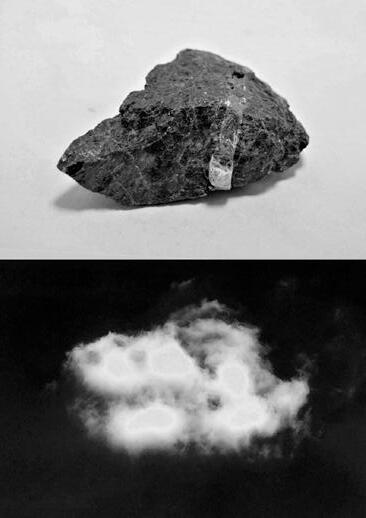
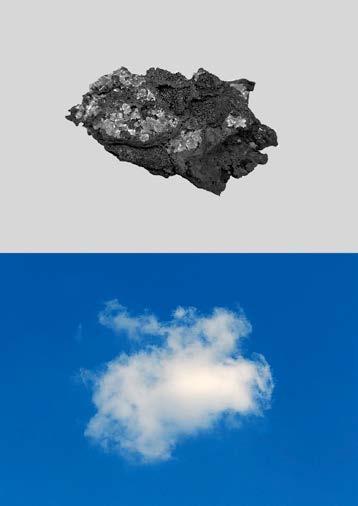
En el marco de su actual investigación, Gonzalo profundiza sobre la idea de que todo es una especie de pareidolia, susceptible a la deriva de lo perceptual ―con patrones que emergen de otro tipo de ocurrencia accidental.
MINERALWOLKEN
2025
En el marco del proyecto en proceso "Algorithmische Apophänie und die Morphologie des Unsichtbaren"
As part of the ongoing project "Algorithmische Apophänie und die Morphologie des Unsichtbaren"
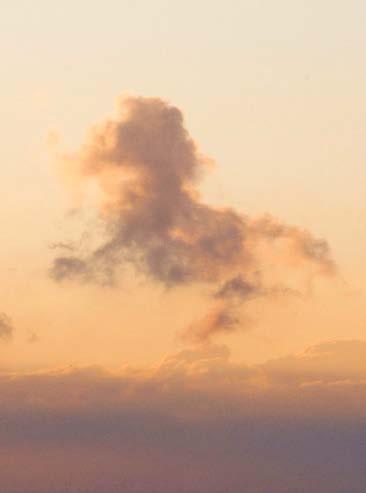
GRA: El ejemplo más universal de pareidolia son las nubes. Cuando ves una nube, a veces, reconoces algo en ella; usualmente animales o rostros. Puedes percibir un significado asociado a ella. Pero en el fondo, es algo neutro. Como el pensamiento que toma forma en un instante y luego se disuelve con el viento.
En la ausencia, entonces, podría residir el peso de la presencia; ser transportada, codificada en los sistemas que nos dan forma, y que nosotros modificamos a su vez.
1 En inglés American Standard Code for Information Interchange (ASCII)
every act, movement, or process also has a consequence, which in turn affects everything else.
Recently, he has come to think about everything as a pareidolia, susceptible to perceptual drifts – with patterns emerging out of another kind of accidental occurrence. He expands on this idea within the context of his current research.
GRA: The most universal example is clouds. When you see a cloud, sometimes, you recognize something in it; usually animals or faces. You might detect a meaning associated with it. But at its core, it’s something neutral. Like thought, it takes form suddenly and then dissolves with the wind.
In what is missing, then, the weight of presence may be carried –encoded into the systems that shape us, and that we shape in return.



En el marco del proyecto "I remember correctly you are you and the rest is history"
As part of the project "I remember correctly you are you and the rest is history"
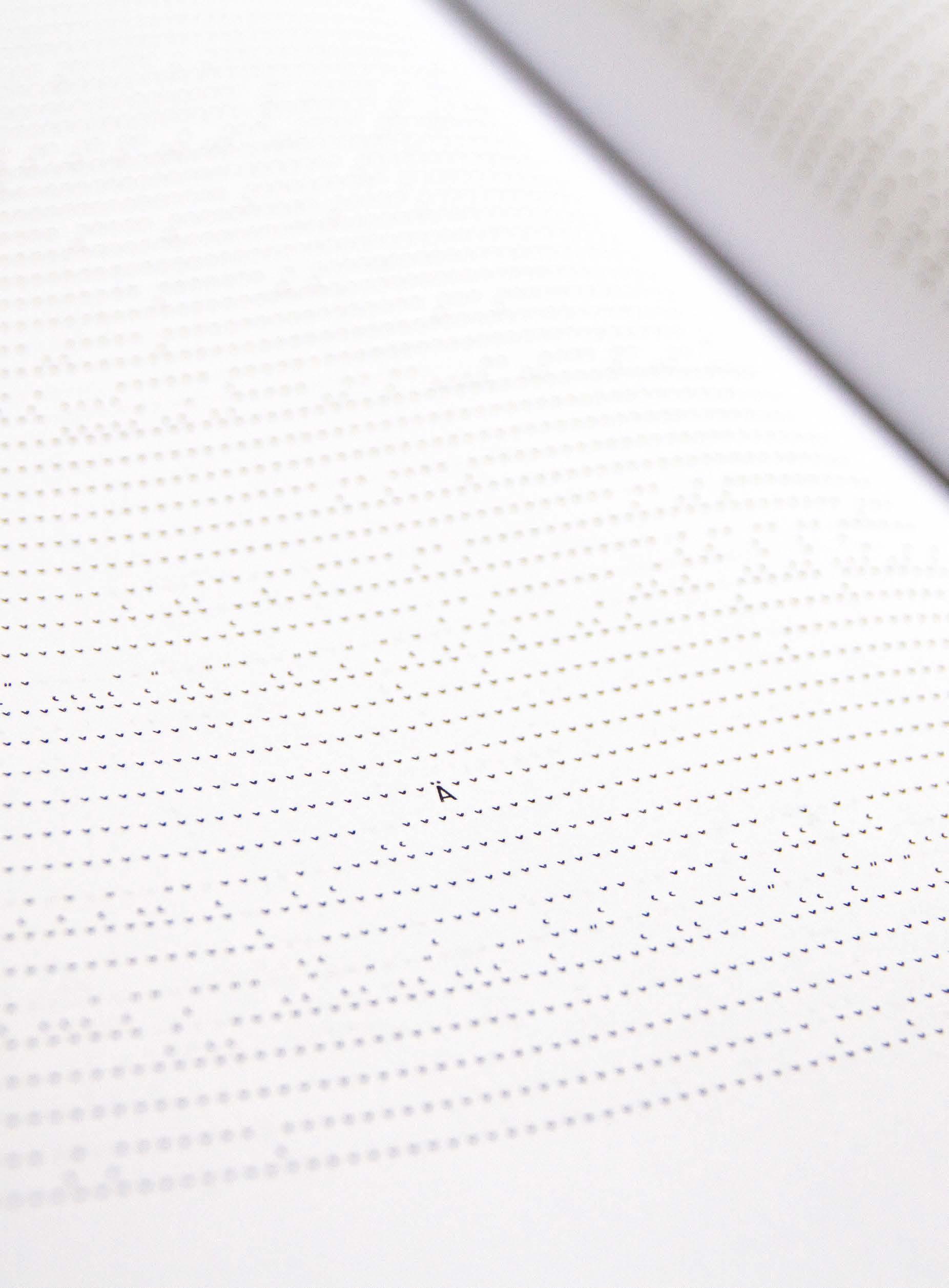
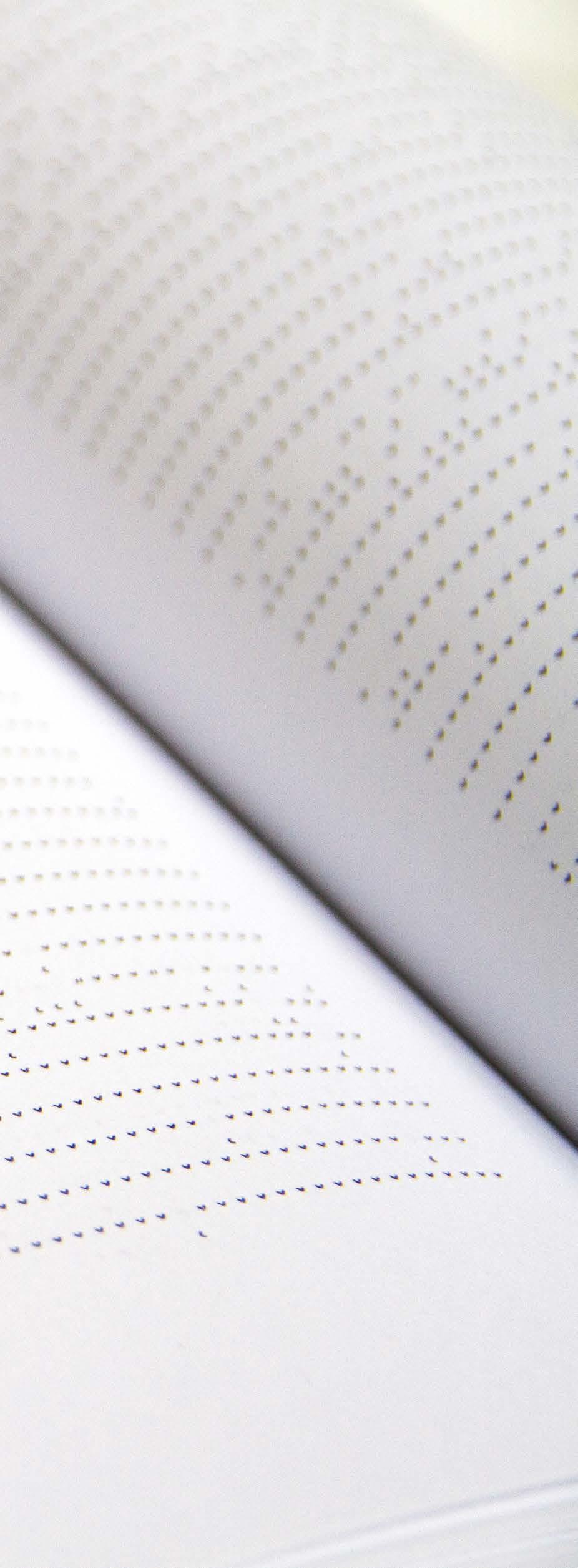
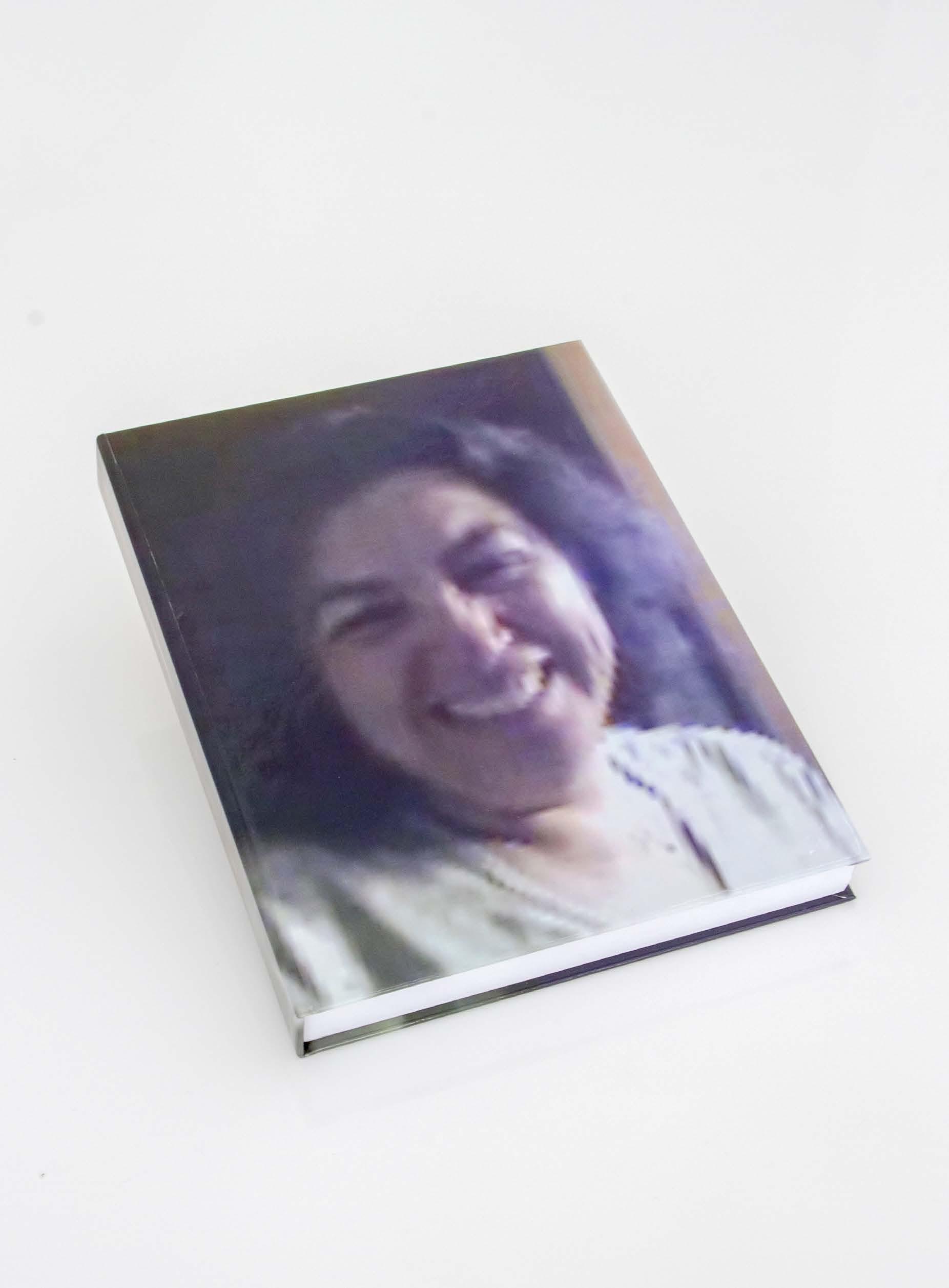
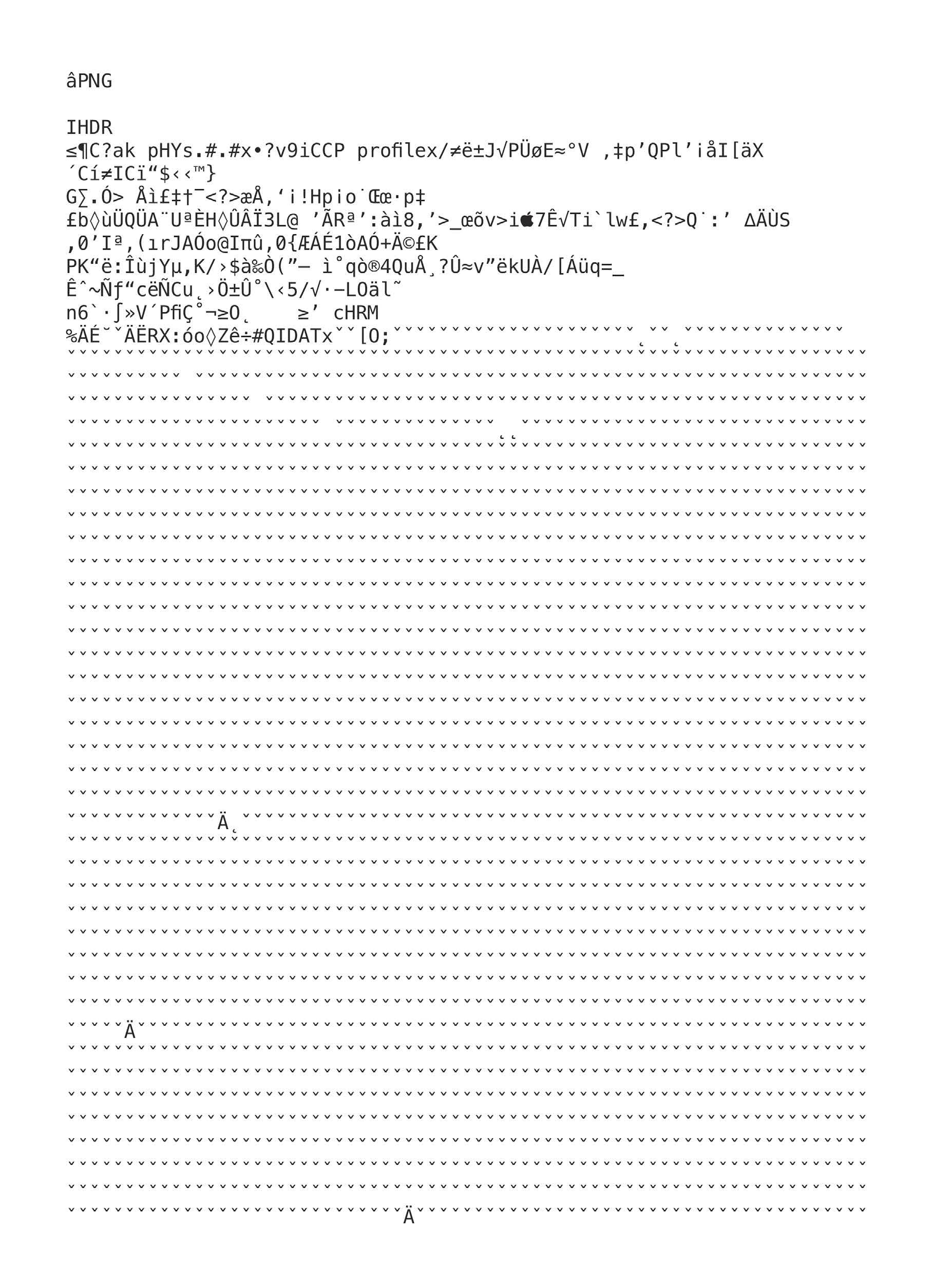
MOTHER PNG 2014
Libro de artista
440 páginas
27,8 × 21,4 × 3,3 cm
Edición de 10 ejemplares
Artist’s book
440 pages
27.8 × 21.4 × 3.3 cm
Edition of 10 copies
Páginas 30–31:
Detalle del interior del libro
Pages 30–31:
Detail of the book's interior
[español]
Mother PNG es un libro que contiene el código PNG (Portable Network Graphics) que un computador debe leer para reproducir la imagen de su portada, la cual es un retrato de la madre del artista, capturada durante una conversación a distancia.
En esta obra la presencia de nuestra interacción humano/digital queda encapsulada en un extenso código, indescifrable para la comprensión humana. Este código es la transcripción de un estado de la materia que existe más allá de lo tangible: un estado digital.
[english]
Mother PNG is a book that contains the PNG code (Portable Network Graphics) that a computer must read to render its cover image, which is a portrait of the artist’s mother captured during a remote conversation.
In this work, the presence of our human/digital interaction is encapsulated within an extensive code, inscrutable to human comprehension. This code serves as the transcription of a state of matter that exists beyond the tangible: a digital state.

[español]
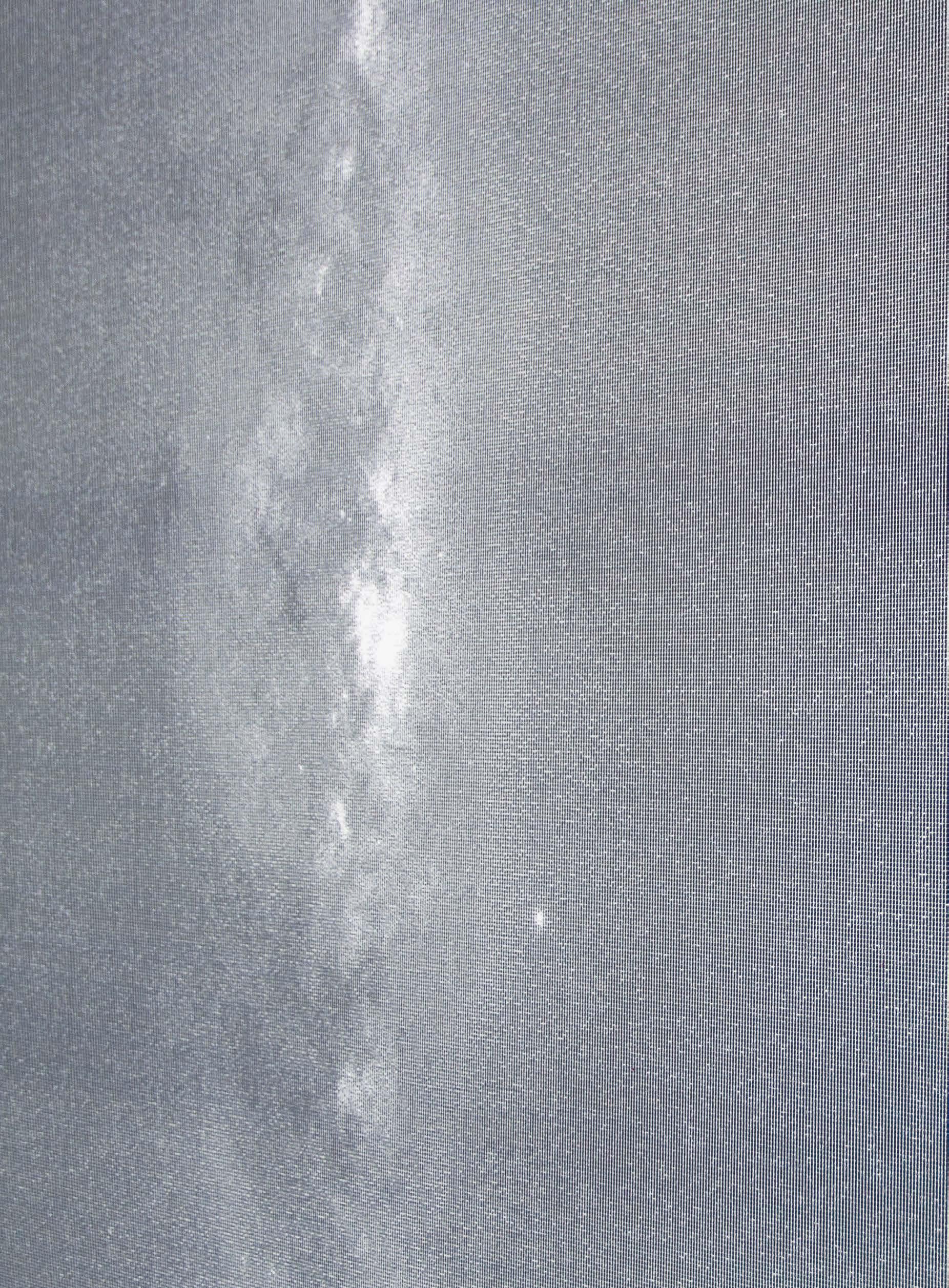
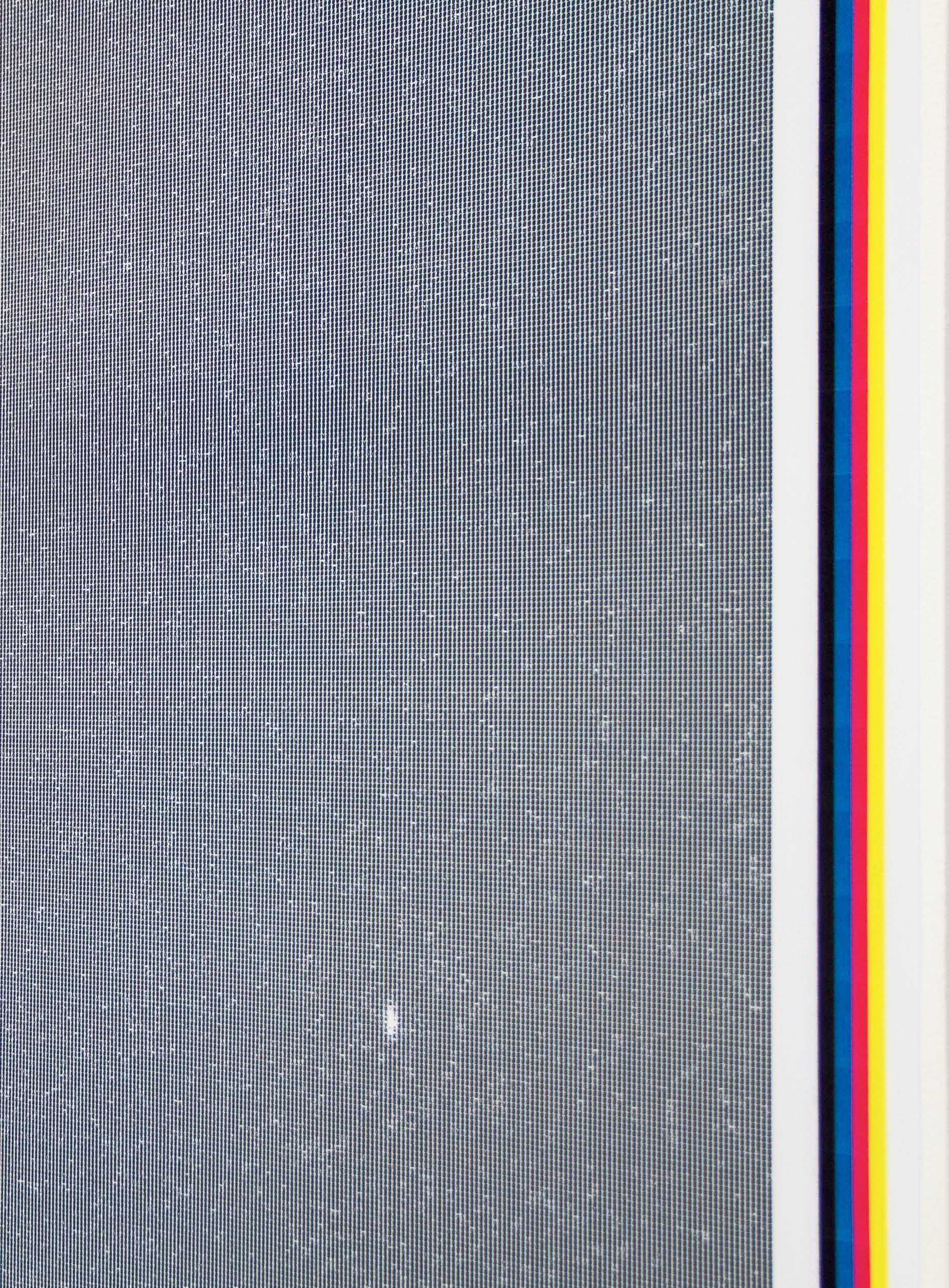
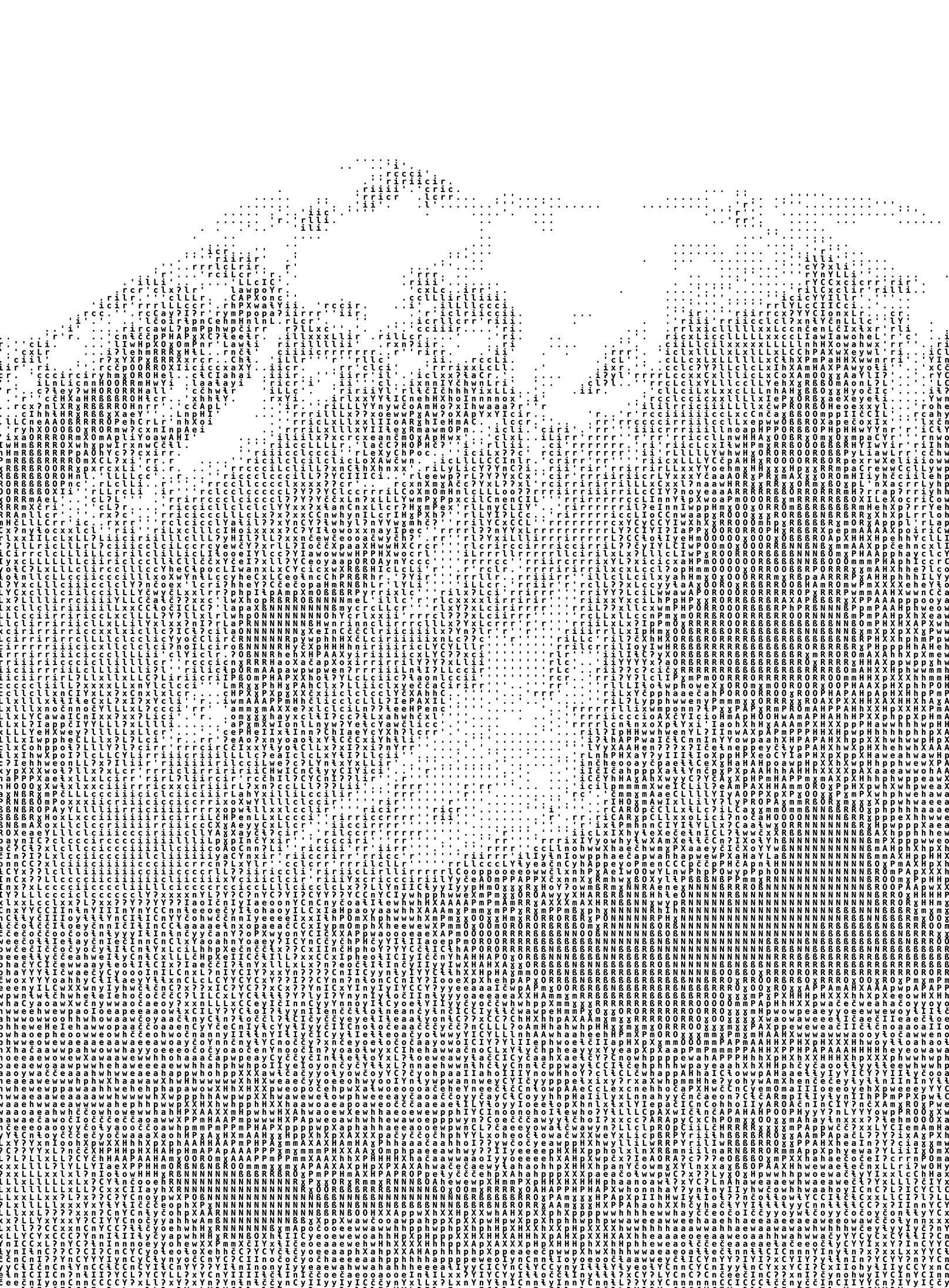
Esta obra es una impresión textil de la Vía Láctea, generada en modo ASCII. Los caracteres que componen la imagen están determinados por el código del perfil colorimétrico de la imagen digital original.
El artista invierte la lógica convencional, en lugar de que el perfil de color defina la visibilidad en pantalla, traslada este código directamente a la superficie de la tela. Con esto, transforma información puramente digital en una manifestación tangible.
Inspirado en el relato La biblioteca de Babel de J. L. Borges, el artista compara las palabras compuestas por letras con elementos formados por átomos.
La obra se concibe como un cosmos caótico, donde formas -con o sin sentido- se reconfiguran a partir de la aleación de letras que, como átomos, conforman nuestro universo.
[english]
This piece is a textile print of the Milky Way, generated in ASCII mode. The characters composing the image are determined by the color profile code of the original digital image.
The artist reverses conventional logic: instead of the color profile defining on-screen visibility, this code is directly transferred onto the fabric surface. In doing so, the artist transforms purely digital information into a tangible manifestation.
Inspired by Jorge Luis Borges' short story The Library of Babel, the artist draws a parallel between words composed of letters and elements formed by atoms.
The work is conceived as a chaotic cosmos, where forms—whether meaningful or not—are reconfigured from the alloy of letters that, like atoms, constitute our universe.
RÍO DEL
Imagen ASCII Impresión por sublimación sobre DekoTexx
320 x 230 cm
Crédito fotográfico: Chroma, cortesía de Galerie Gilla Lörcher
Paginas 32–33: Detalle
ASCII image
Sublimation print on DekoTexx
320 x 230 cm
Photo credit: Chroma, courtesy Galerie Gilla Lörcher
Pages 32–33:
Detail
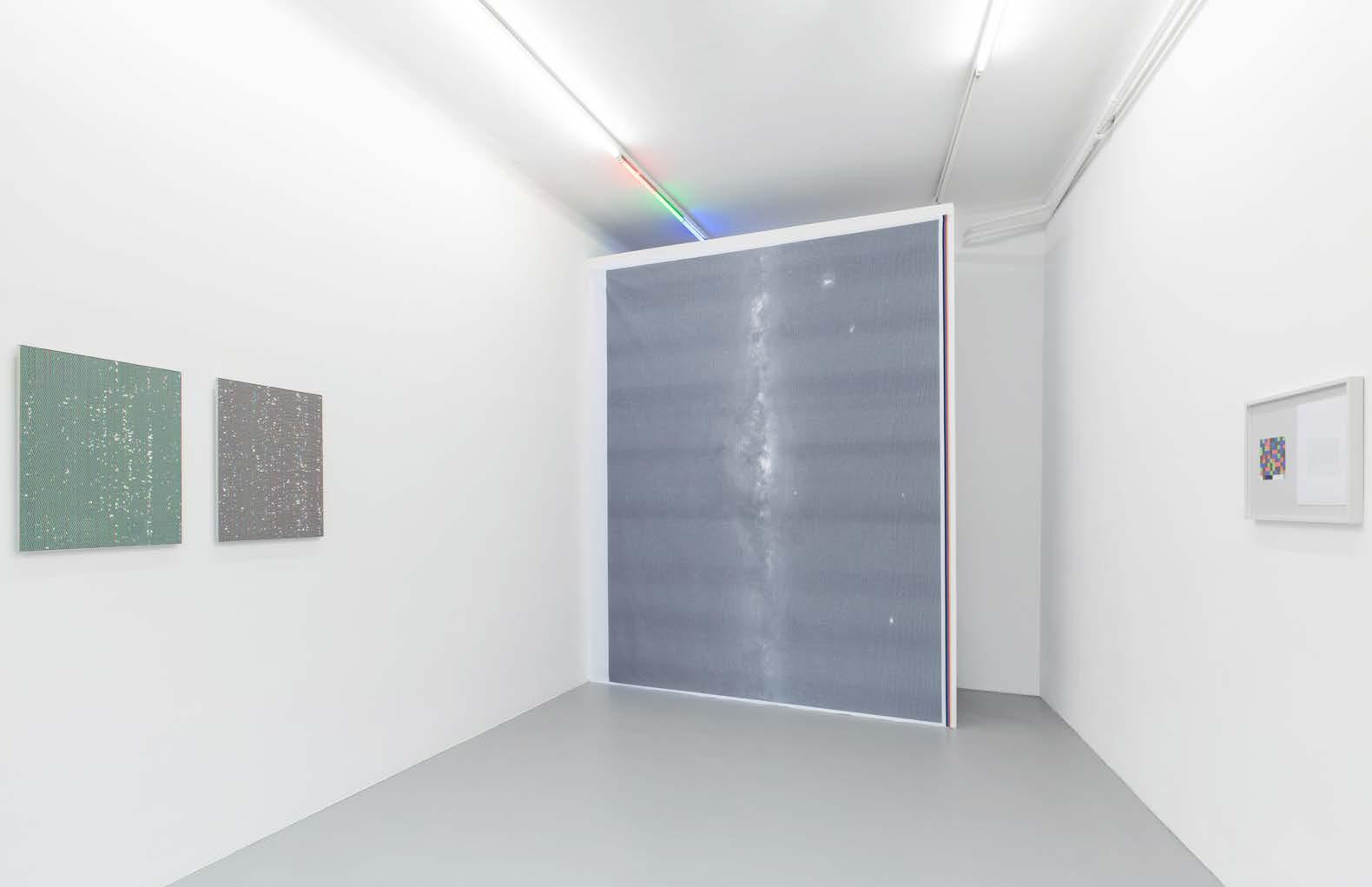
Arriba:
Vista de la exposición Nocturnos, Galerie Gilla Lörcher, Berlín, Alemania
Crédito fotográfico:
Chroma, cortesía de Galerie Gilla Lörcher
Derecha:
Detalle
Top:
View of the exhibition Nocturnos, Galerie Gilla Lörcher, Berlin, Germany
Photo credit:
Chroma, courtesy Galerie Gilla Lörcher
Right:
Detail
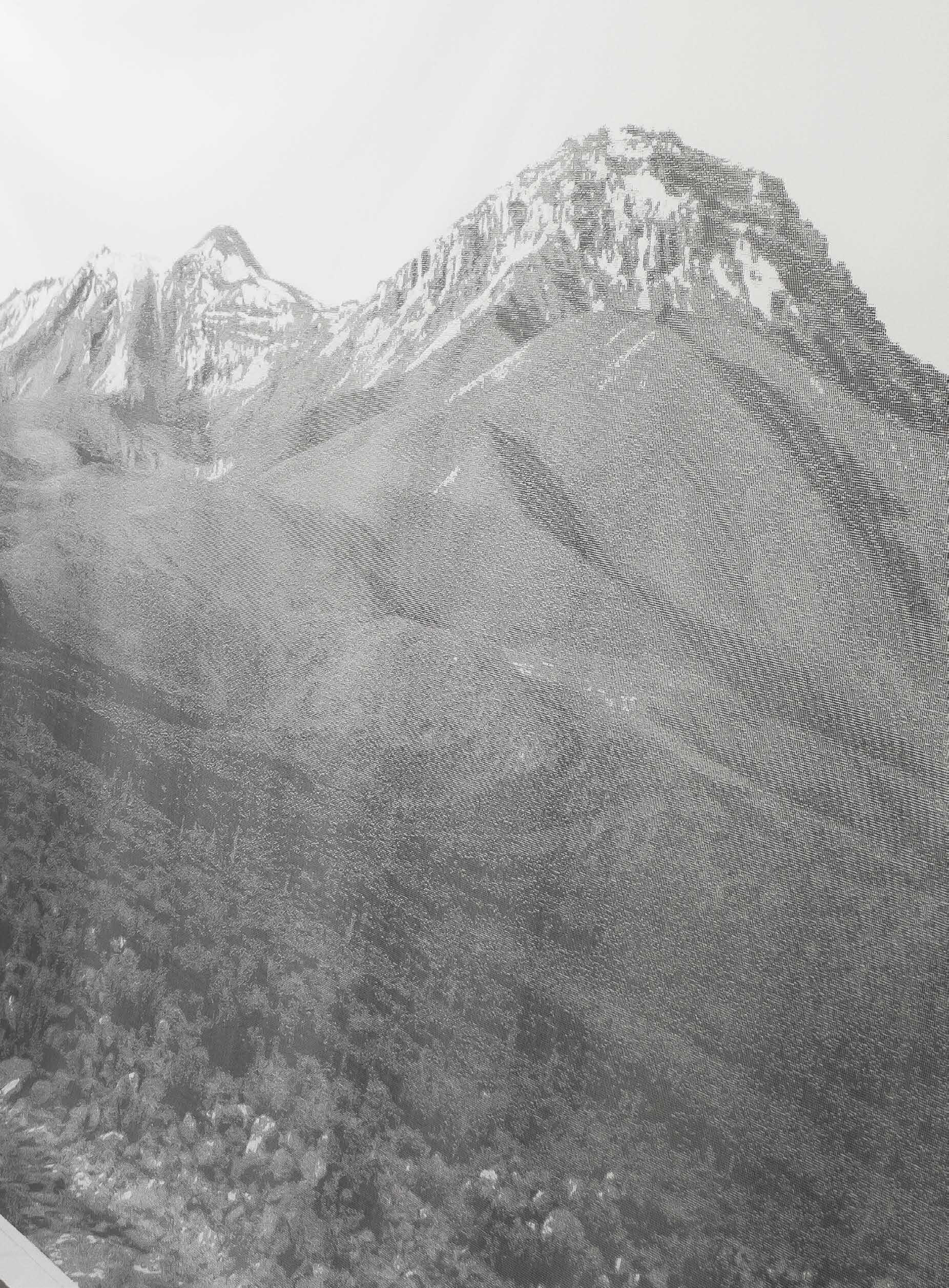
[español] [english]
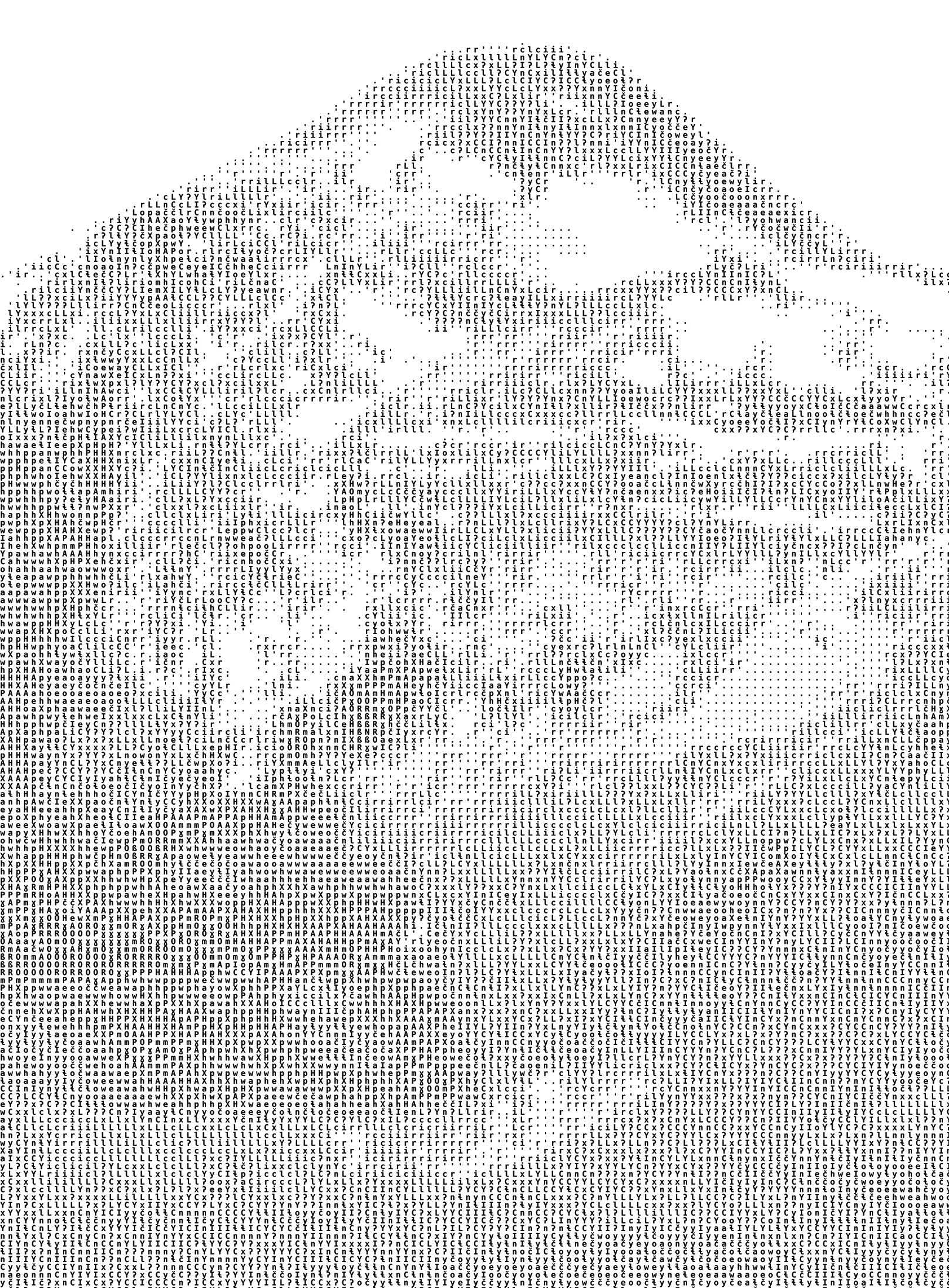
La imagen del volcán Paniri, ubicado en el Desierto de Atacama, fue impresa en modo ASCII sobre textil. El método ASCII (American Standard Code for Information Interchange) utilizado en esta obra convierte cada píxel de la imagen en un carácter de texto, creando un equivalente visual de una fotografía en escala de grises.
Los caracteres que componen esta imagen fueron seleccionados a partir de la frase “Ay la hoy’ri peni cachii li cielo”, que en lengua Kunza se traduce “Así en la tierra como en el cielo”. Esta frase proviene del “Padre Nuestro”, una oración bíblica introducida por el catolicismo durante la colonización española que dejó una profunda huella cultural en la región atacameña de América del sur.
La pieza rinde homenaje a la creencia de la cultura atacameña, según la cual los volcanes, o Tata Mallkus, son un puente de conexión entre el cielo y la tierra.
The image of the Paniri volcano, located in the Atacama Desert, was printed in ASCII mode onto fabric. The ASCII method (American Standard Code for Information Interchange) used in this work converts each pixel of the original image into a text character, creating a visual equivalent of a grayscale photograph.
The characters forming the image were selected from the phrase “Ay la hoy’ri peni cachii li cielo,” which in the Kunza language translates as “Thus on earth as in the sky.” This phrase comes from the “Lord’s Prayer”, introduced by Catholicism during Spanish colonization—a period that left a profound cultural imprint on the Atacama region of South America.
The piece pays homage to the beliefs of the Atacameño culture, according to which volcanoes—or Tata Mallkus—serve as a bridge between the sky and the earth.
AY LA HOY’RI PENI CACHII
LI CIELO 2022
Imagen ASCII
Impresión por sublimación en DekoTexx
320 x 475 cm
Vista de la exposición Sky is falling asleep on the desk of the time, Galerie Peter Gaugy Viena, Austria
ASCII image
Sublimation print on DekoTexx
320 x 475 cm
View of the exhibition Sky is falling asleep on the desk of the time, Galerie Peter Gaugy Vienna, Austria
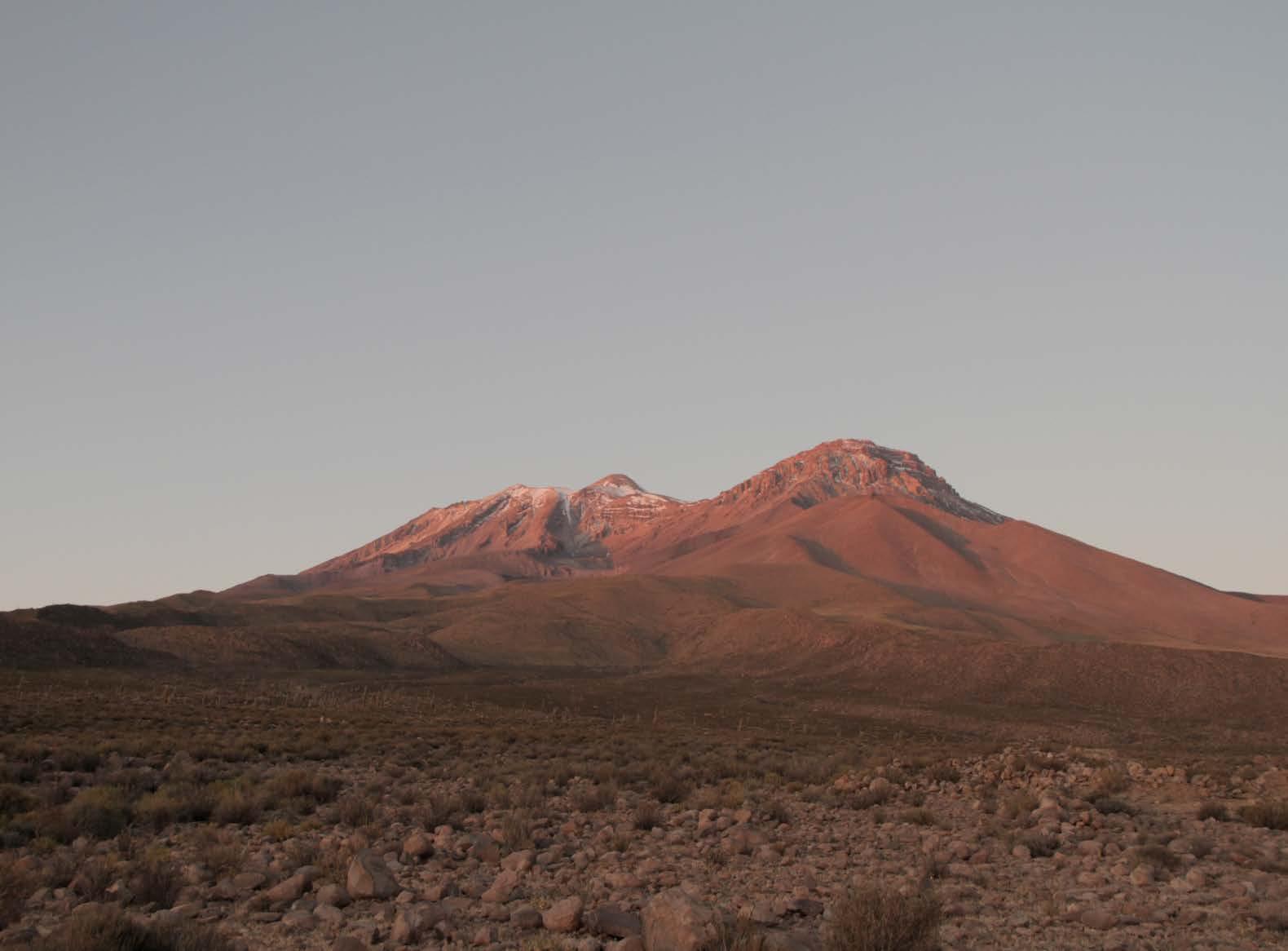
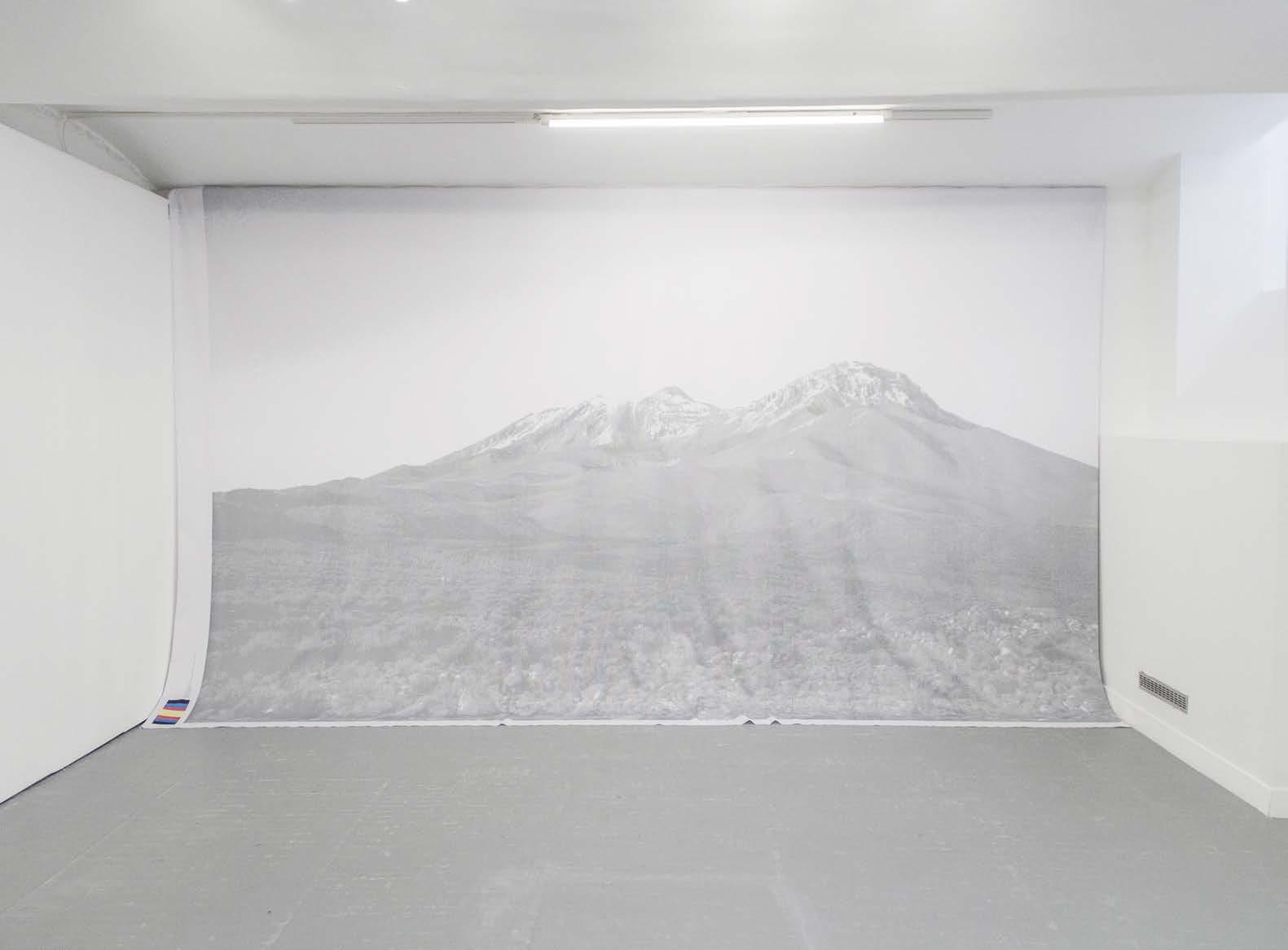
Imagen ASCII
Impresión por sublimación en DekoTexx
320 × 475 cm
Vista de la exposición Sky is falling asleep on the desk of the time, Galerie Peter Gaugy Viena, Austria
ASCII image
Sublimation print on DekoTexx
320 × 475 cm
View of the exhibition Sky is falling asleep on the desk of the time, Galerie Peter Gaugy Vienna, Austria
[español]
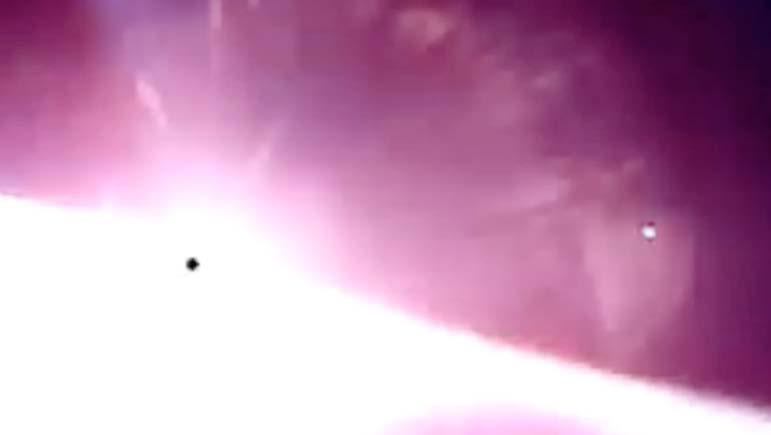
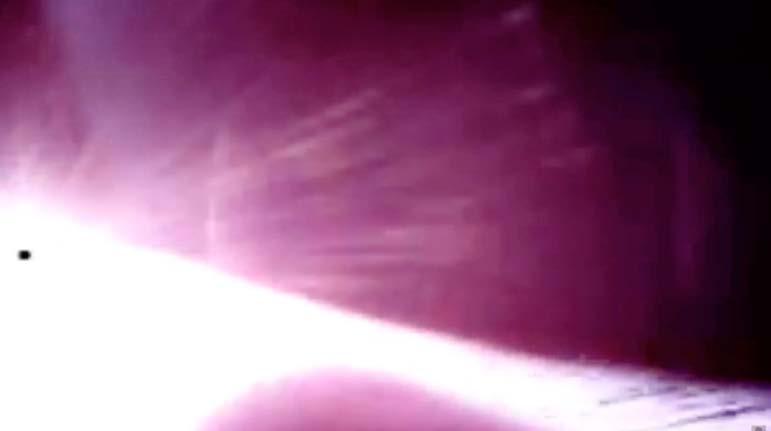
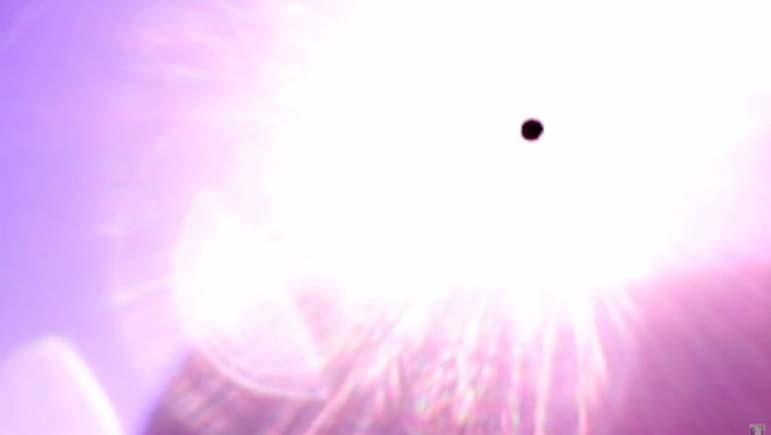
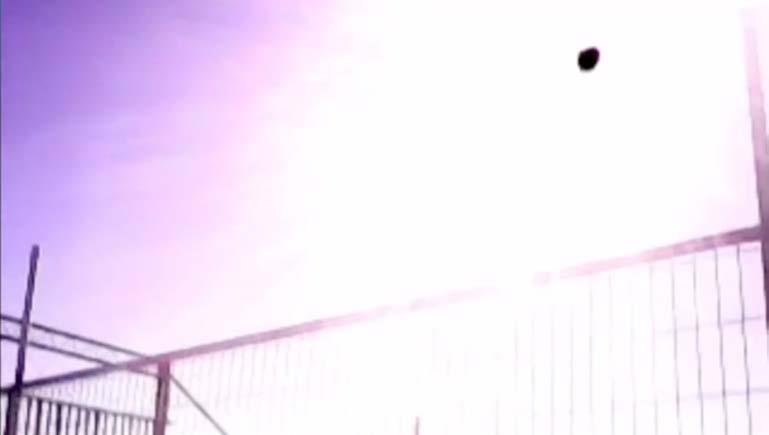
Esta obra es un video cuyo proceso investigativo emerge de reflexiones acerca de las comunicaciones a distancia.
La obra se moldea a partir de una estética definida por imágenes y sonidos extraídos de las videollamadas a través de las cuales, el artista mantuvo sus vínculos afectivos con su lugar de origen, en América del Sur, reconociéndose así mismo como parte de un flujo migratorio global.
Esta obra está potenciada por imágenes cuya estética se basa en interrupciones en la transmisión, accidentes visuales y efectos somáticos provocados por fenómenos naturales. Lejos de ser imperfecciones, estos elementos se integran y resignifican, mostrando la fragilidad y, a la vez, la resiliencia de los afectos humanos en el contexto de las relaciones afectivas en la lejanía.
[english]
This video work is the result of an investigative process that emerges from reflections on longdistance communication.
The piece is shaped by an aesthetic of images and sounds extracted from video calls, through which the artist maintained emotional ties with his place of origin. In doing so, he recognizes himself as part of a global migratory flow.
The work is driven by an aesthetic rooted in transmission interruptions, visual glitches, and somatic effects caused by natural phenomena. Far from being imperfections, these elements are integrated and re-signified, revealing both the fragility and the resilience of human affections in the context of long-distance relationships.
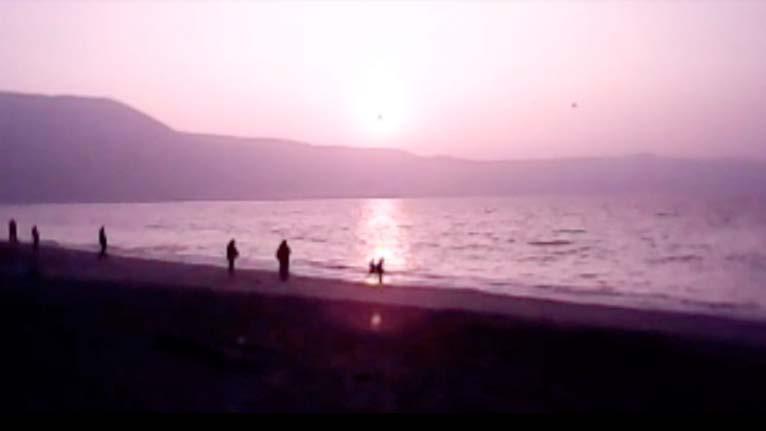
Video generado a partir de videollamada 6'25''
Fotogramas de vídeo (secuencia)
Video sourced from video call 6'25''
Video stills
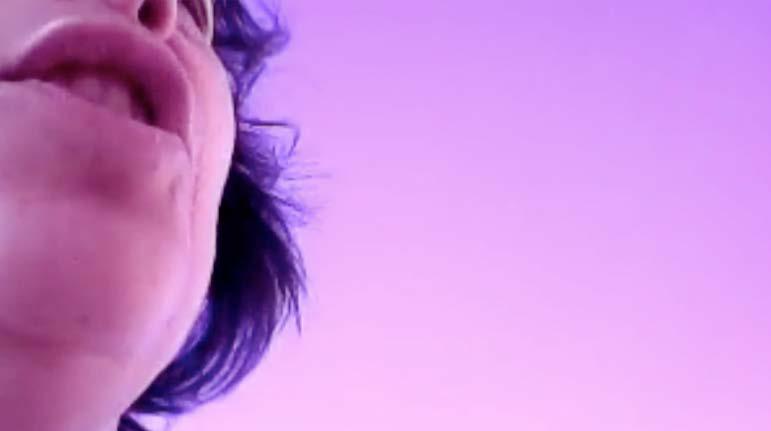
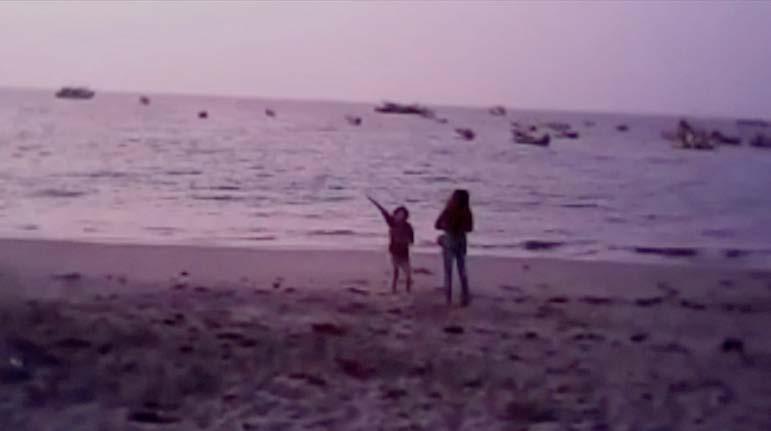
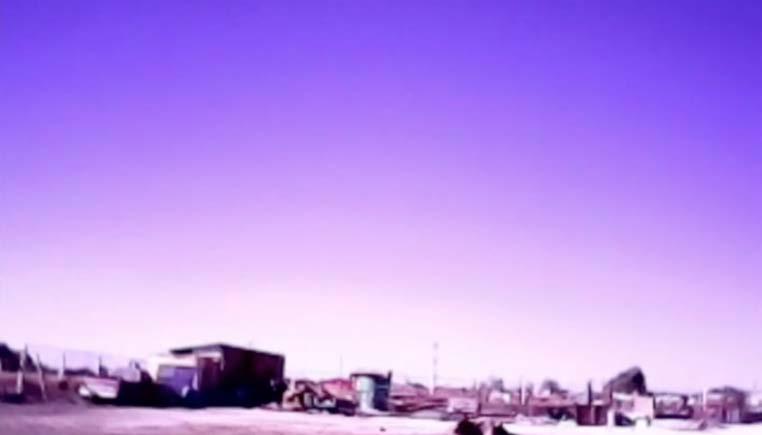
Calama’s Dawn
[español]
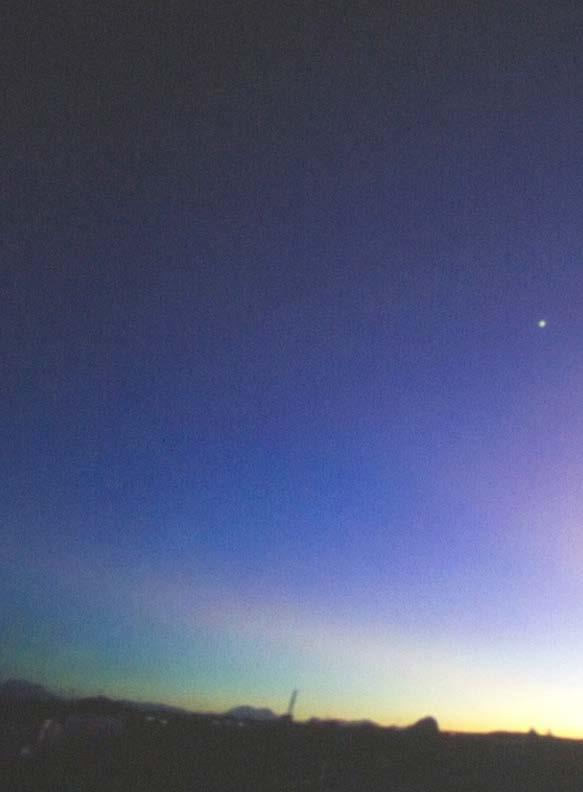
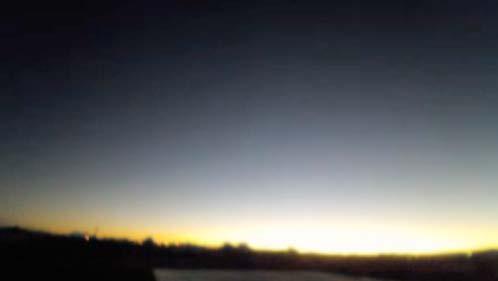
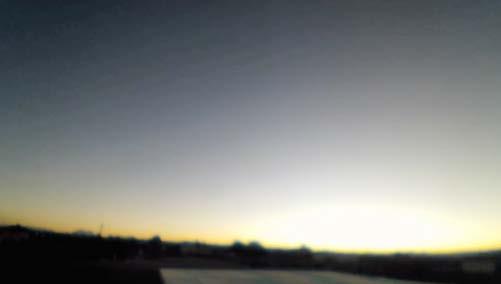
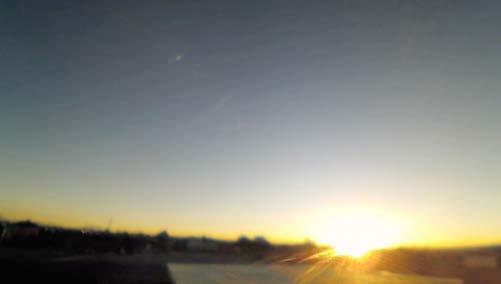
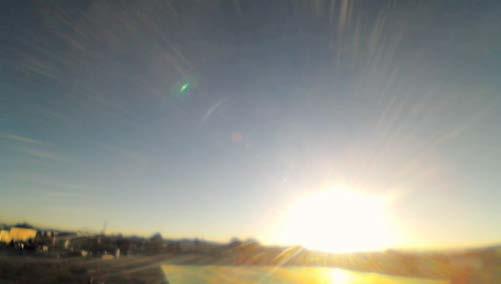
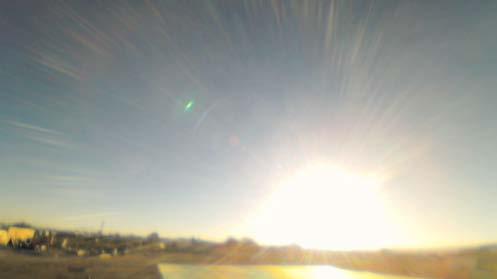
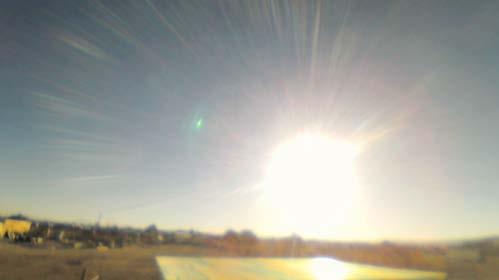
Una cámara de video instalada en el techo de la casa familiar del artista nos muestra, en tiempo real, el amanecer en la ciudad de Calama, en el Desierto de Atacama en Chile.
La obra, presentada en el marco de la exposición “Final draf.mov” en Geumcheon Art Space de Seúl en Corea del Sur, cobraba vida cada día con la participación activa de la madre del artista, quien conectaba el dispositivo vía Skype para compartir la salida del sol a las 6:19 a.m en Chile, mientras coincidía con la puesta de sol asiática a las 6:19 p.m.
[english]
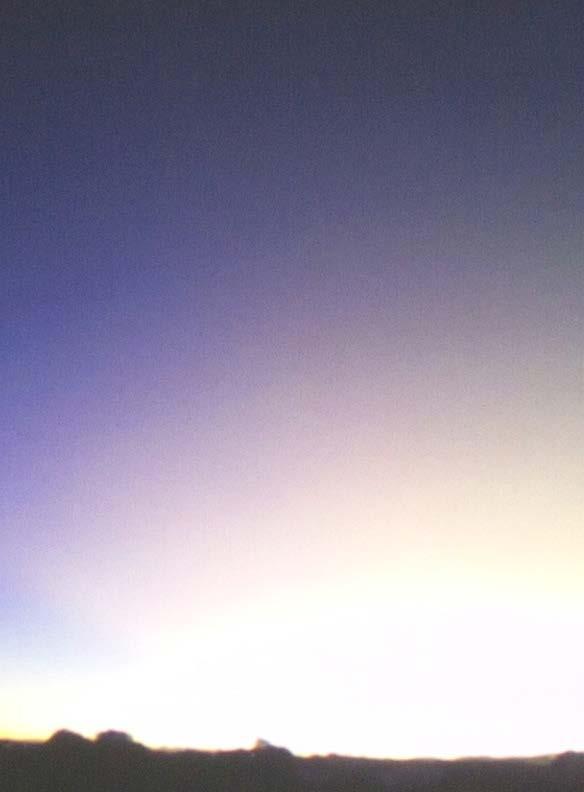
A video camera installed on the roof of the artist's family home shows us, in real time, the sunrise in the city of Calama, in the Atacama Desert in Chile.
The work, presented within the framework of the exhibition "Final draf.mov" at Geumcheon Art Space in Seoul, South Korea, came to life each day with the active participation of the artist's mother, who connected the device via Skype to share the sunrise at 6:19 a.m. in Chile, which coincided with the Asian sunset at 6:19 p.m.
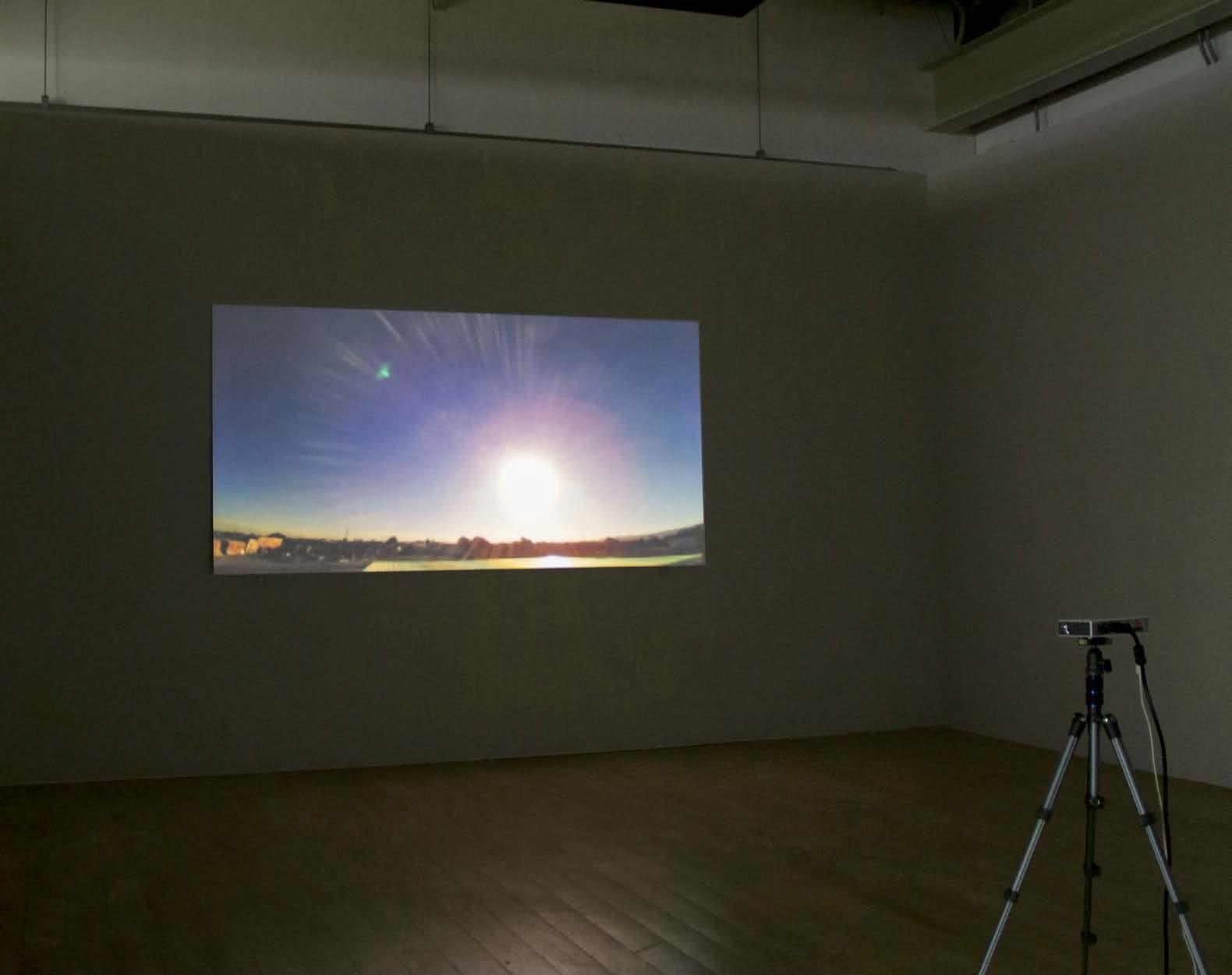
Instalación de video en streaming
Dimensiones variables
Vista de la exposición Final_draft.mov
Geumcheon Art Space
Seúl, Corea del Sur
Live stream video installation
Variable dimensions
Installation view, Final_draft.mov
Geumcheon Art Space
Seoul, South Korea
[español]
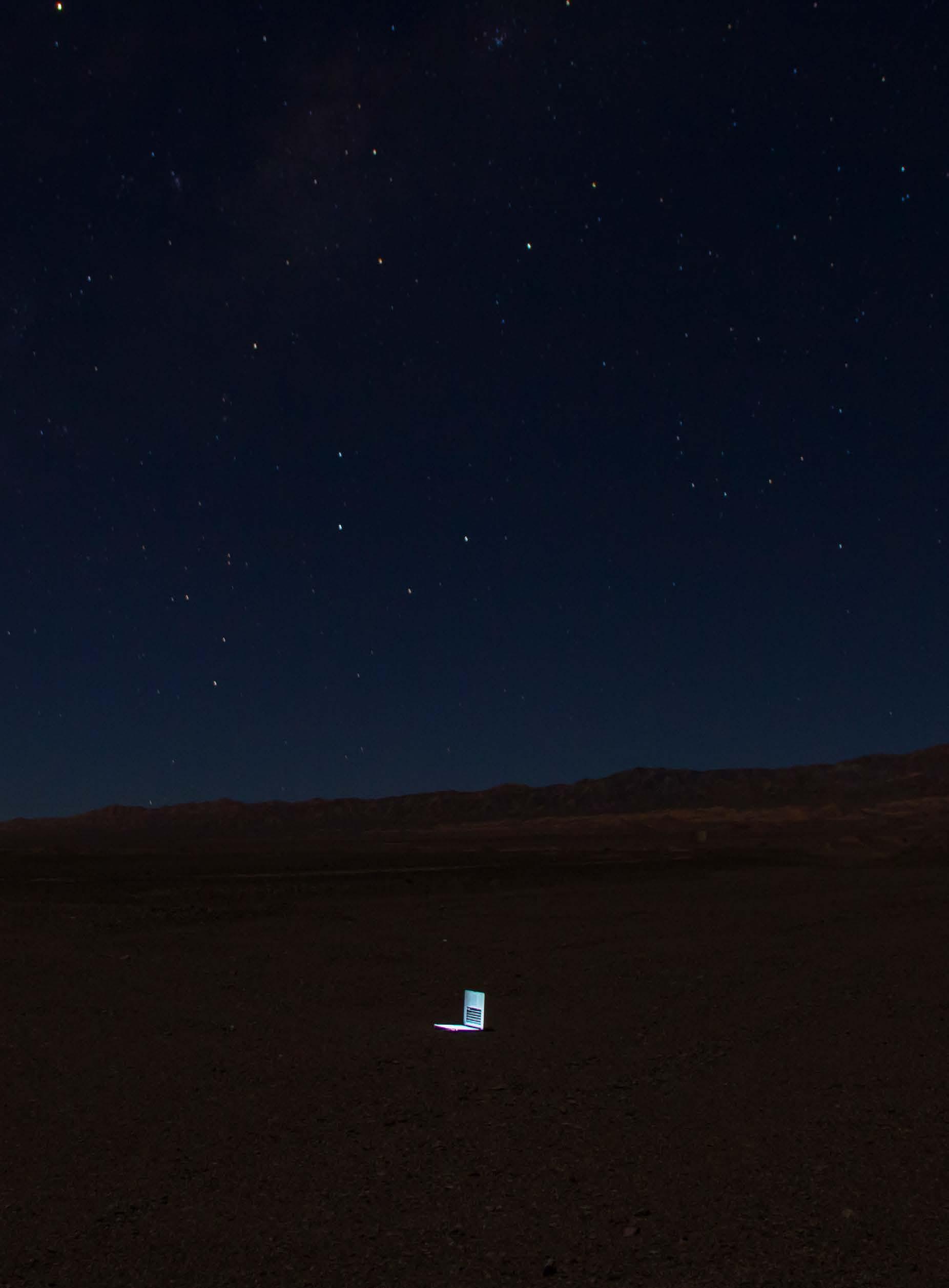
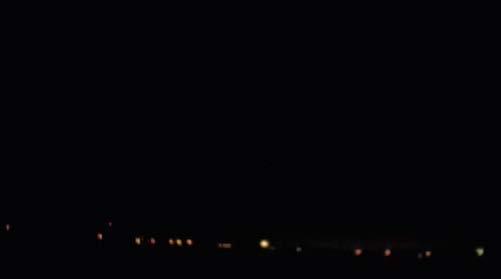
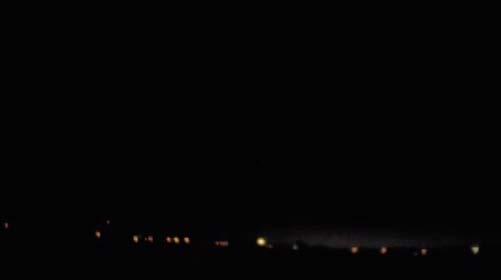
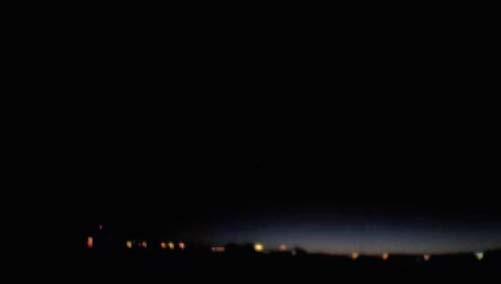
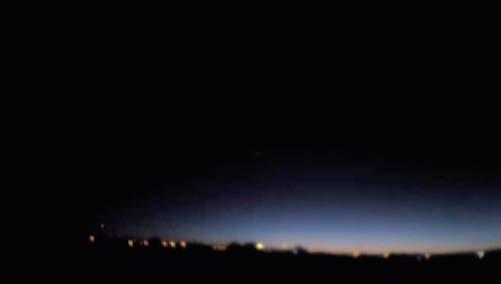
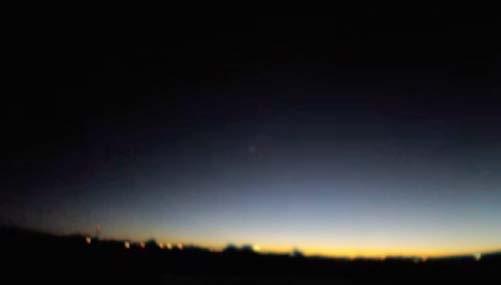
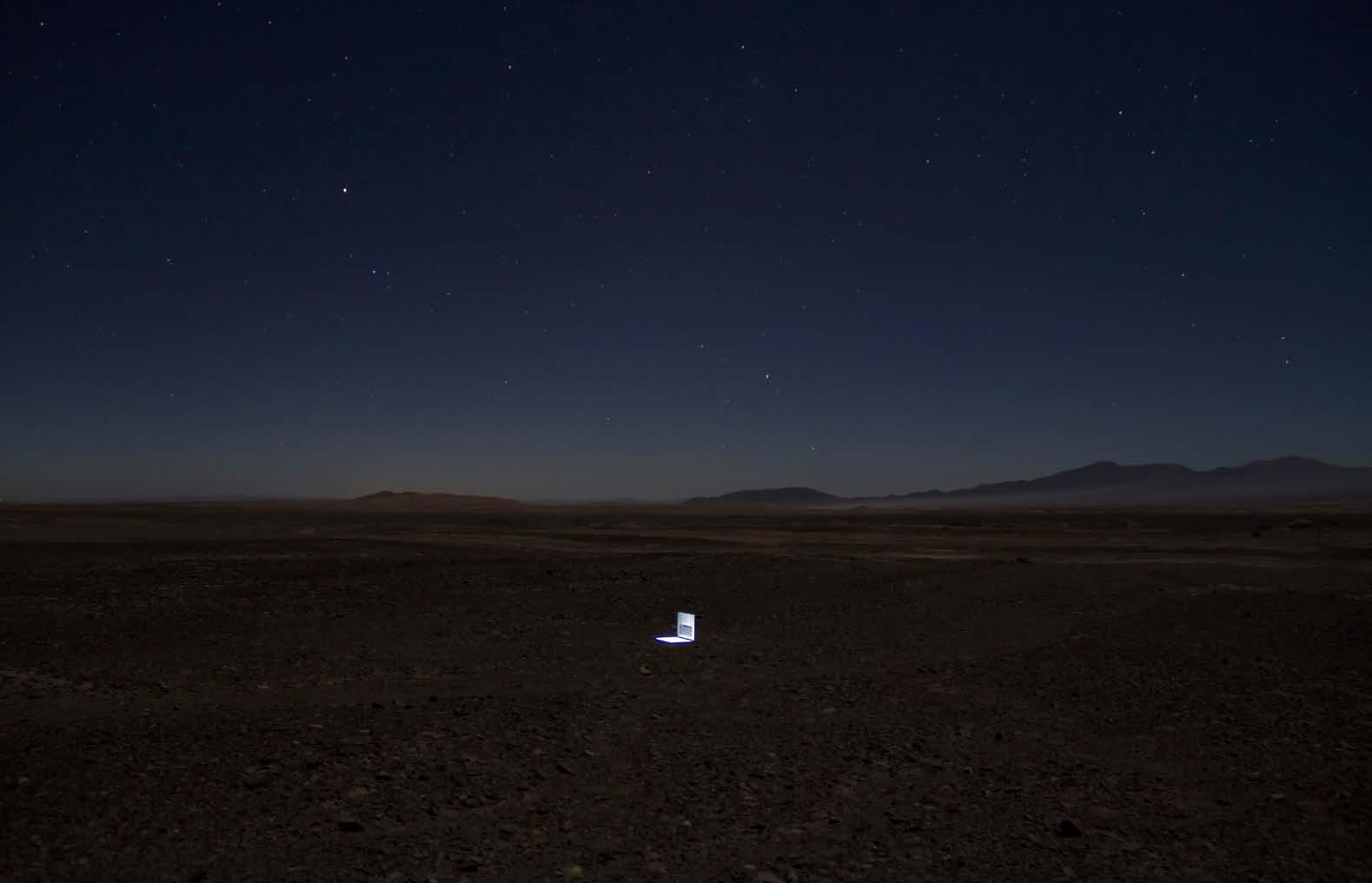
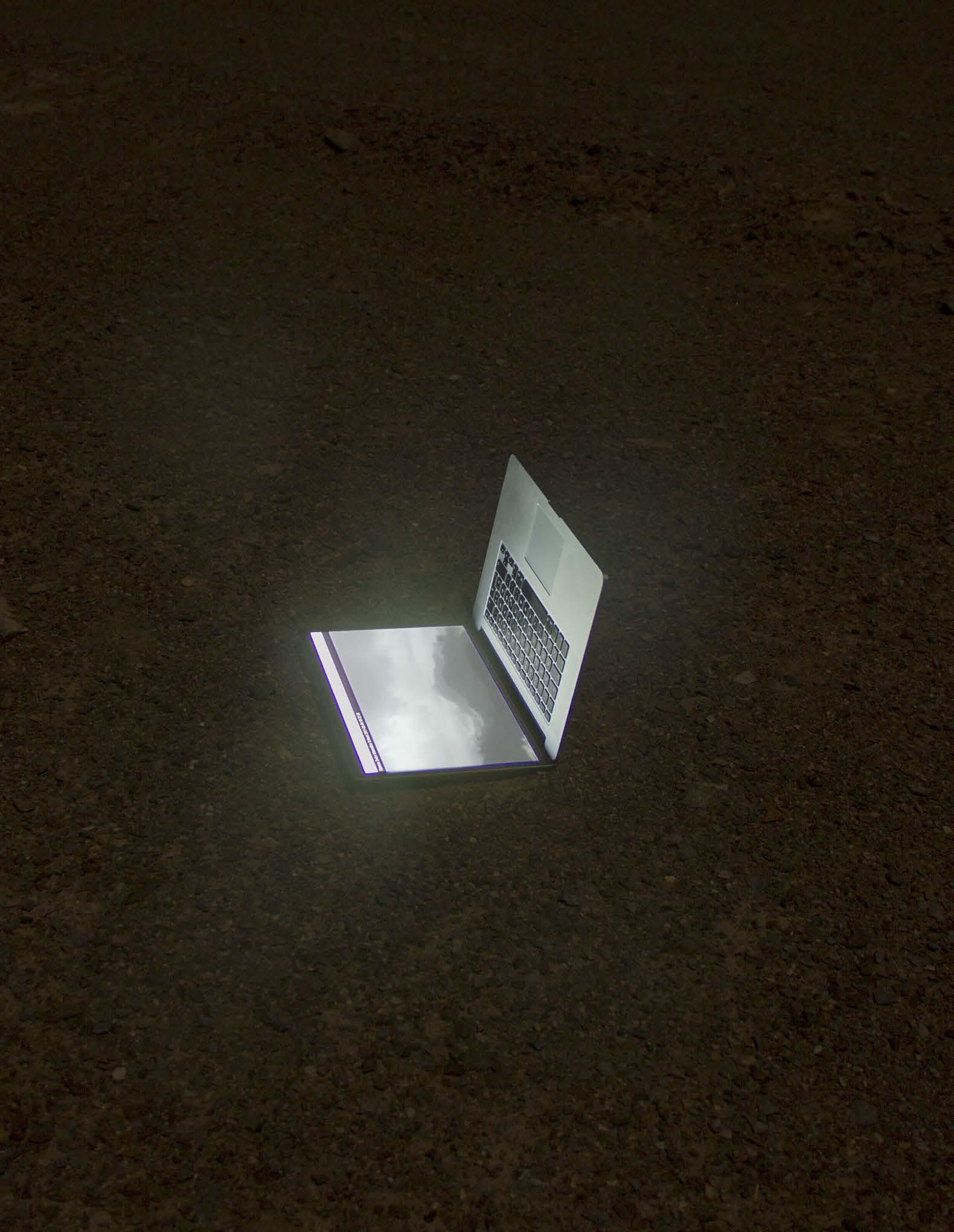
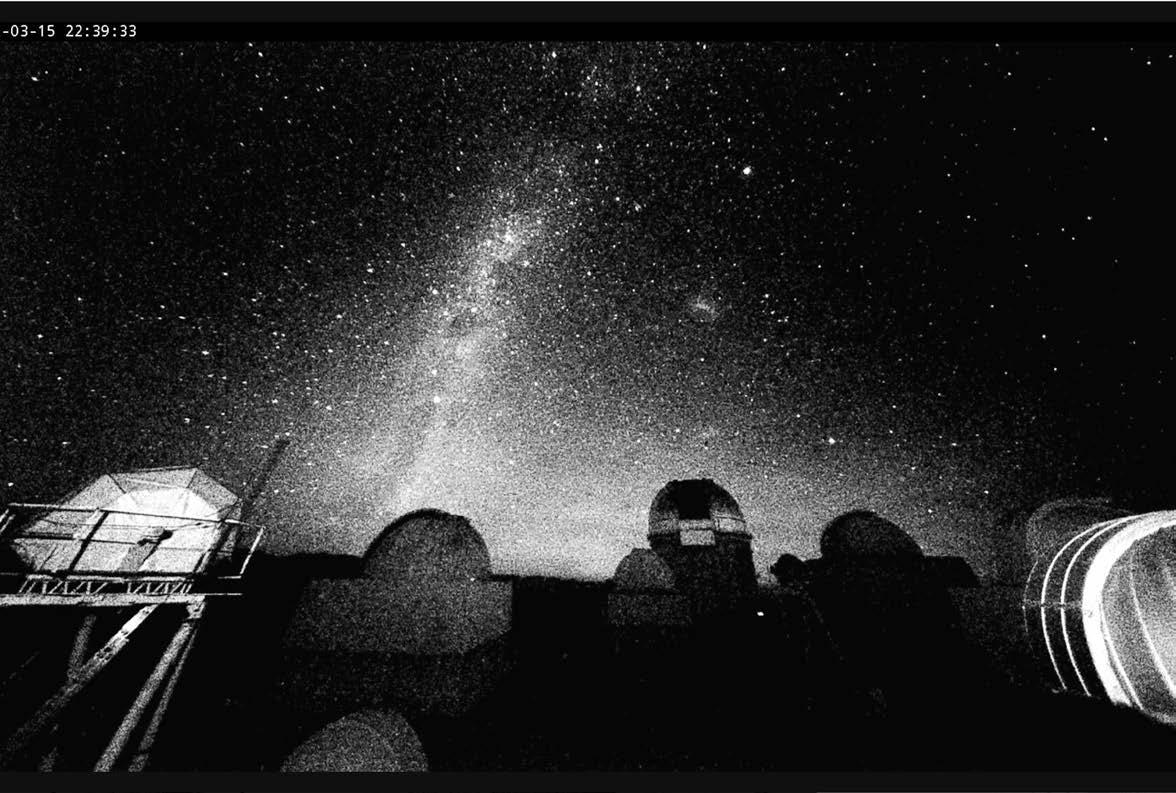
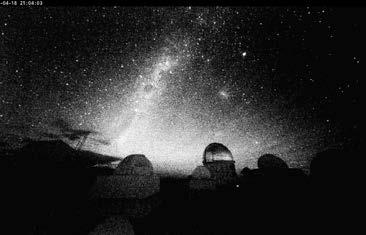
Esta obra es una instalación ubicada en la vasta llanura del desierto de Atacama, al norte de Chile. En este paisaje, bajo el cielo nocturno, el artista dispuso un portátil con conexión a una webcam, transmitiendo en vivo una vista de la ciudad de Hong Kong, situada al lado opuesto del globo.
La instalación funciona como un nodo activo de transmisión que, al enlazar dos puntos diametralmente opuestos del planeta, pone de manifiesto cómo la conectividad contemporánea desafía y reconfigura nuestra noción de tiempo y espacio.
[english]
This work is an installation located in the vast plain of the Atacama Desert in northern Chile. In this landscape, under the night sky, the artist set up a laptop connected to a webcam, streaming a view of Hong Kong, situated on the opposite side of the globe.
The installation functions as an active transmission node that, by linking two diametrically opposite points on the planet, highlights how contemporary connectivity constantly challenges and reconfigures our perception of time and space.
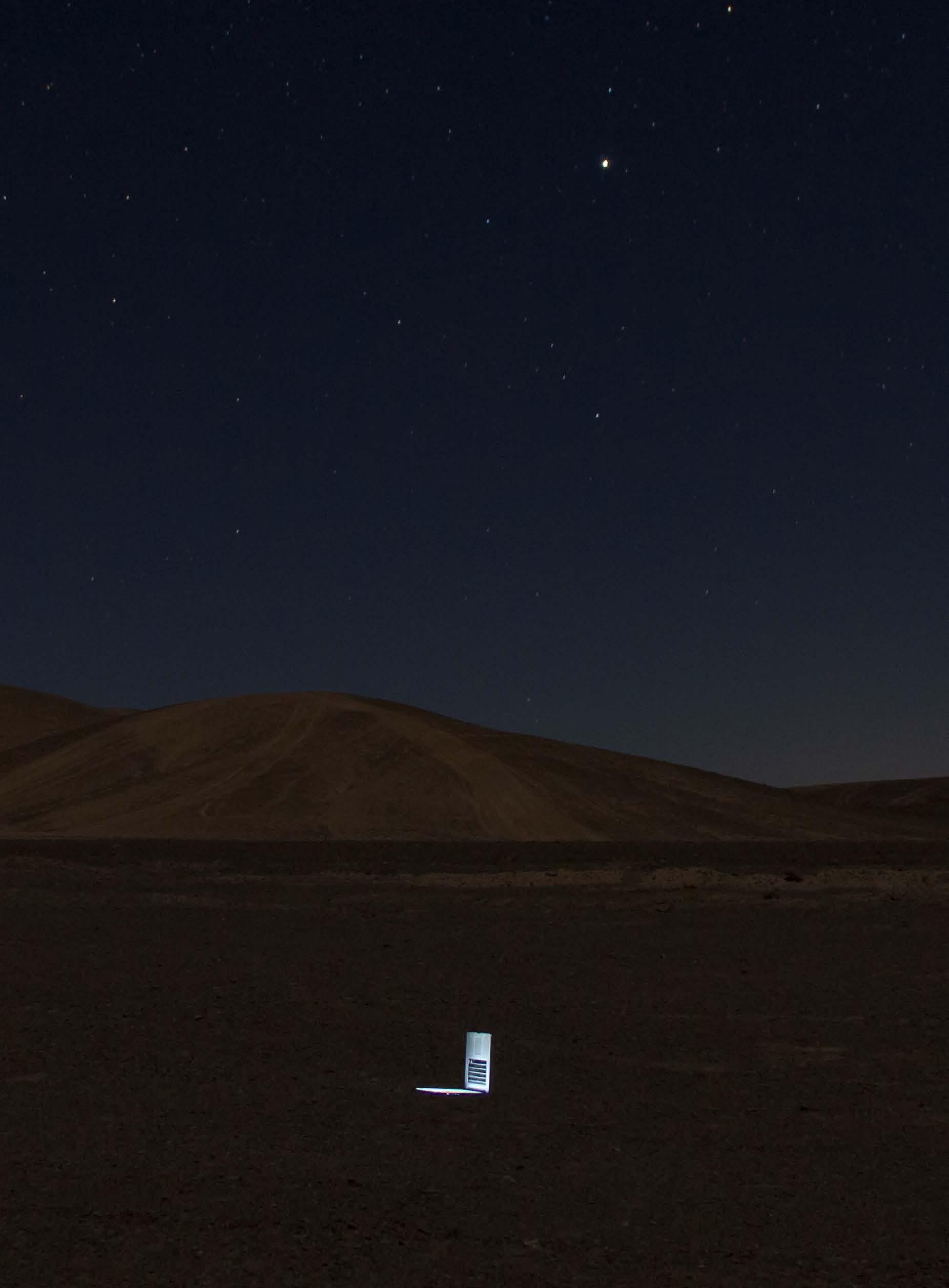
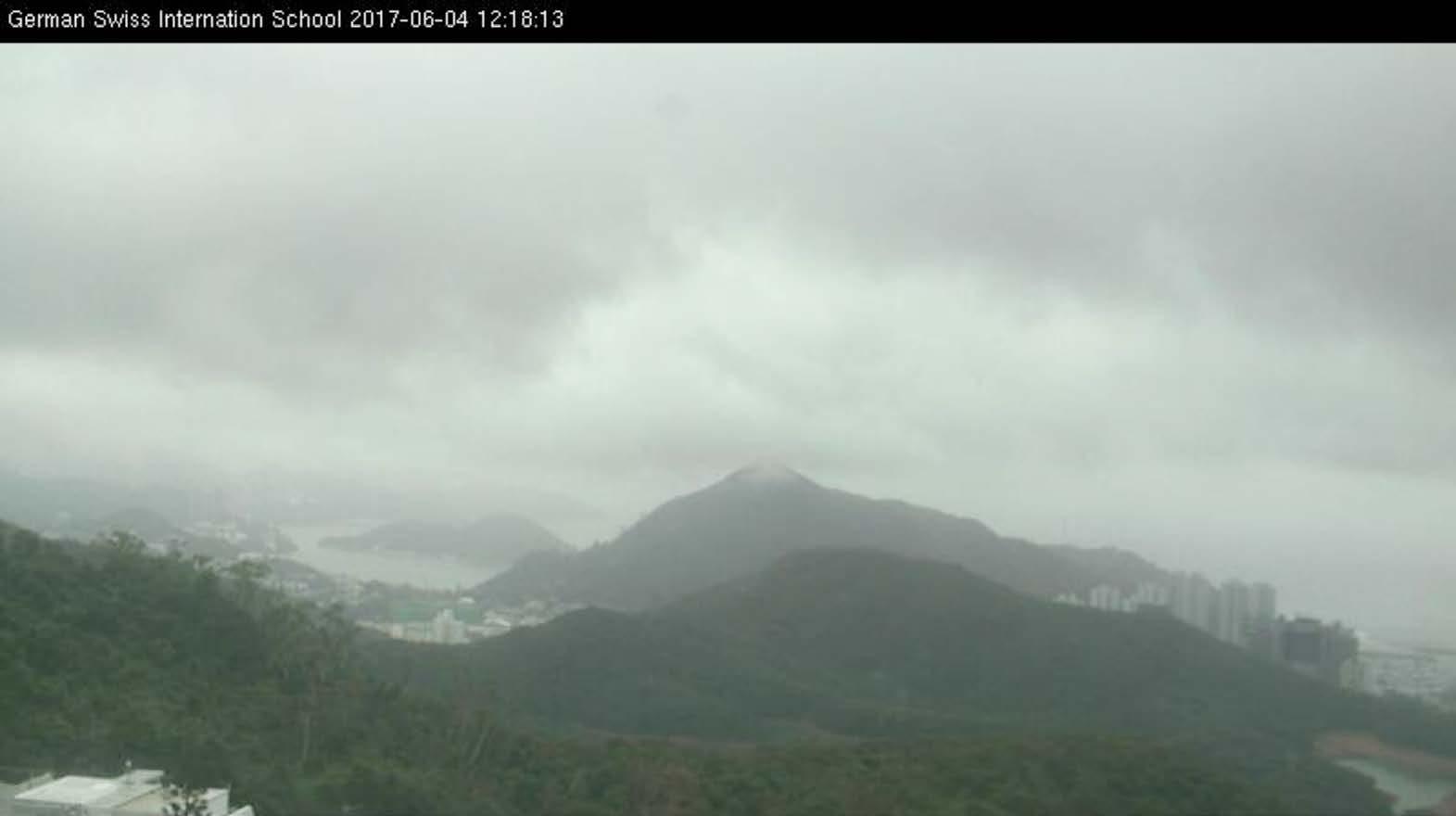
WORMHOLE 2017
Arriba:
Captura de pantalla de cámara web mostrando la ciudad de Hong Kong
Derecha:
Impresión inkjet UV sobre poliéster, caja de luz
Detalle
35 × 55 × 8 cm
Top:
Screenshot from a webcam showing the city of Hong Kong
Right:
UV inkjet print on polyester, lightbox
Detail
35 × 55 × 8 cm
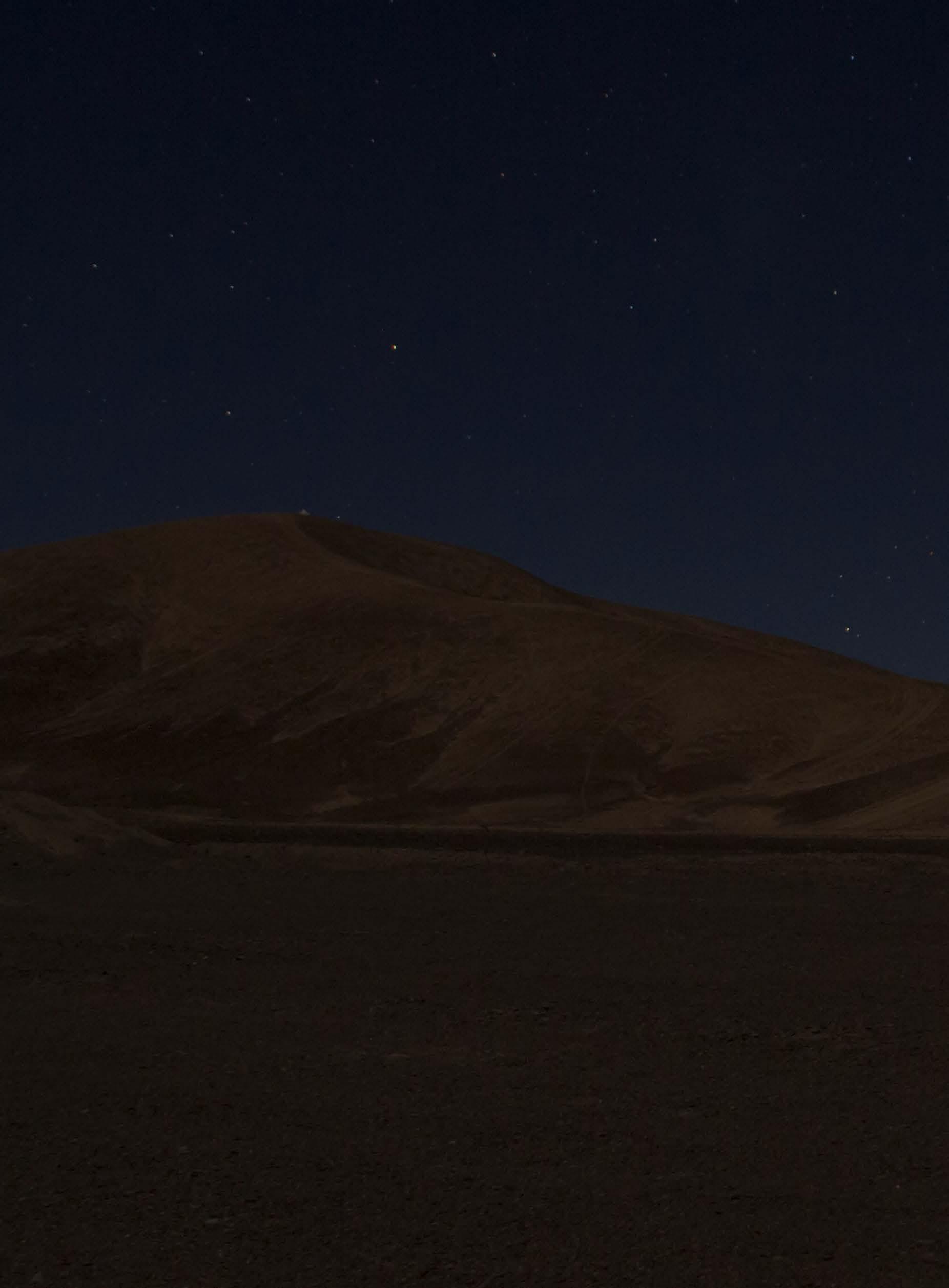
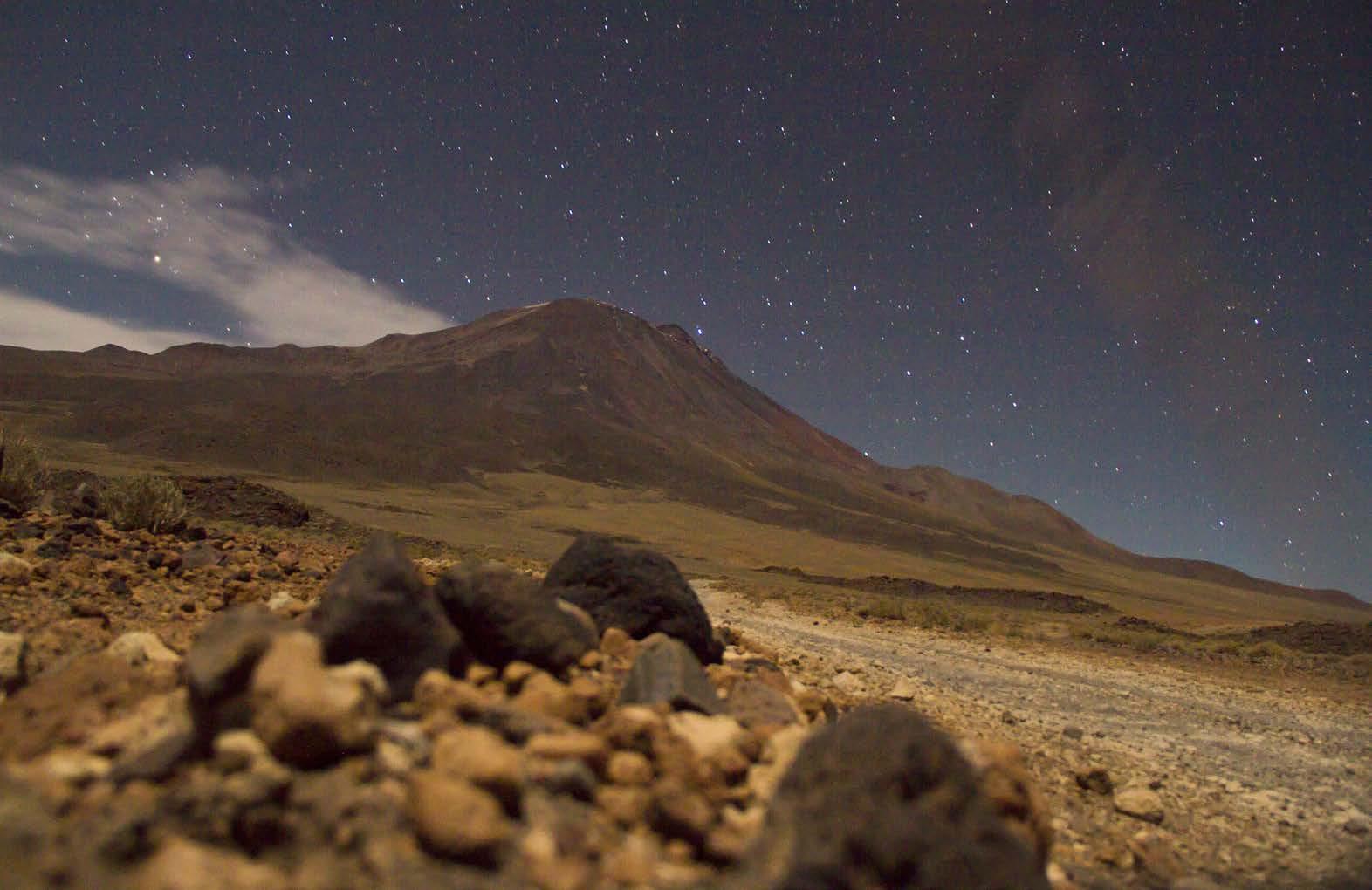
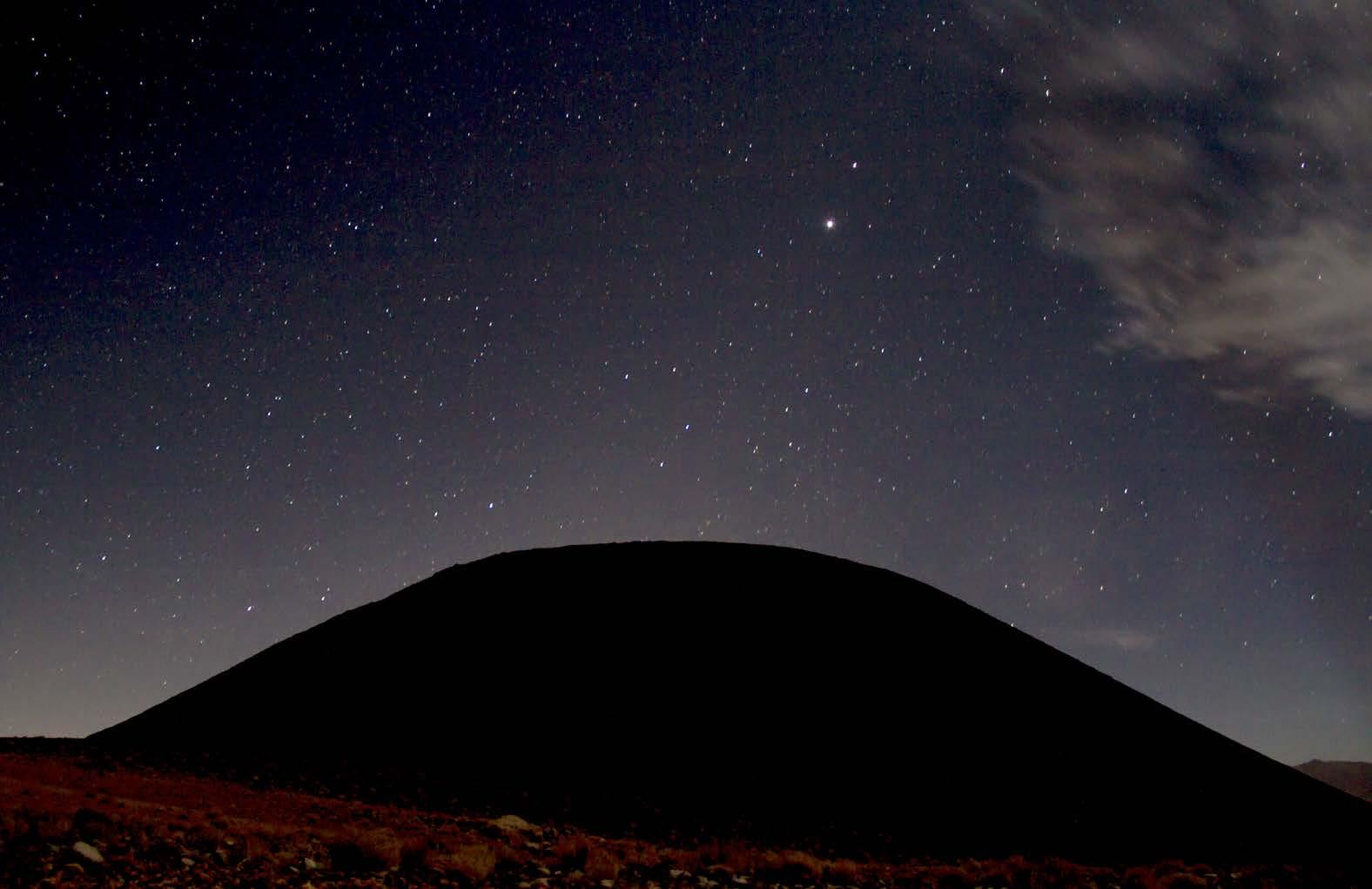
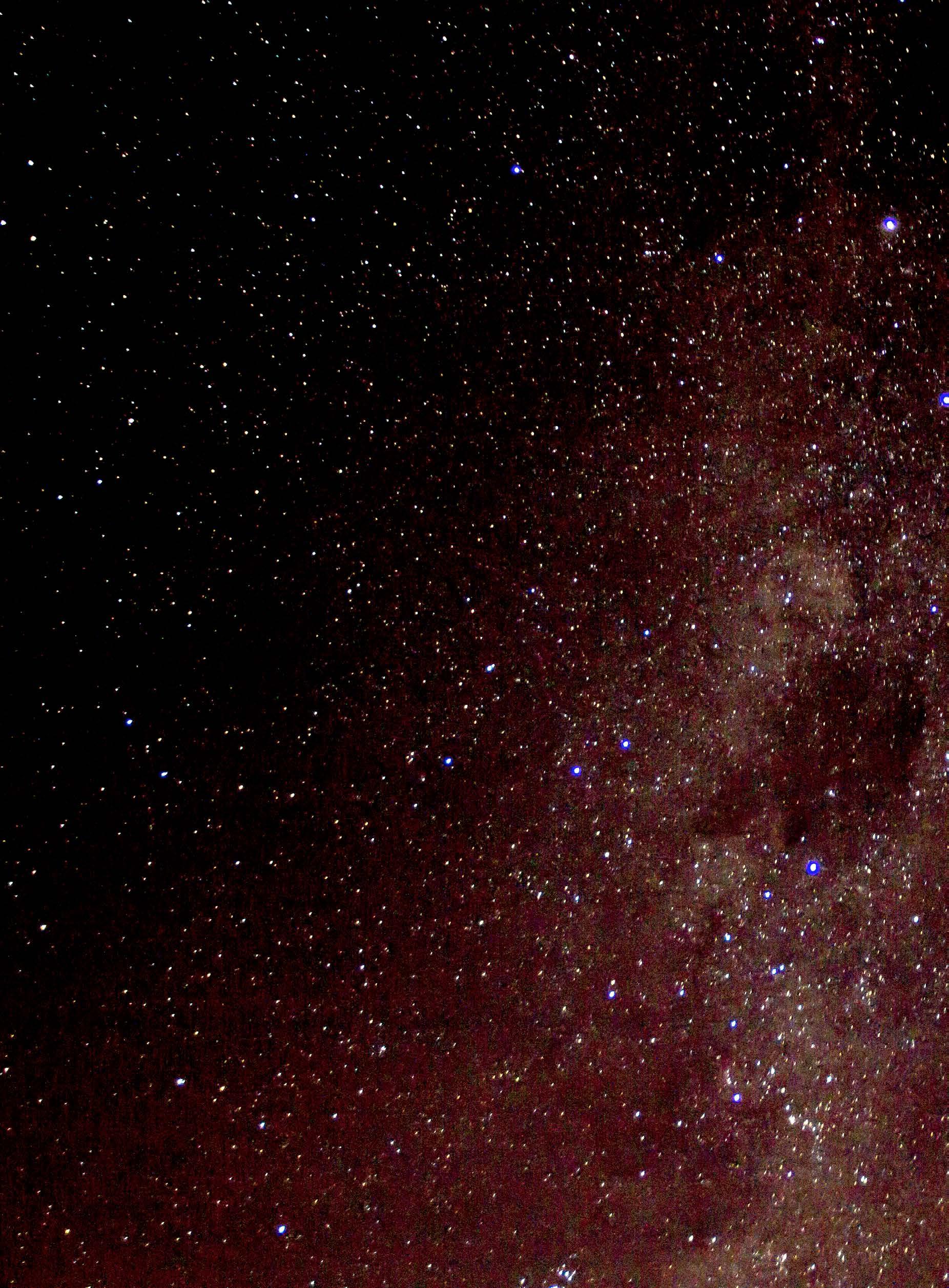
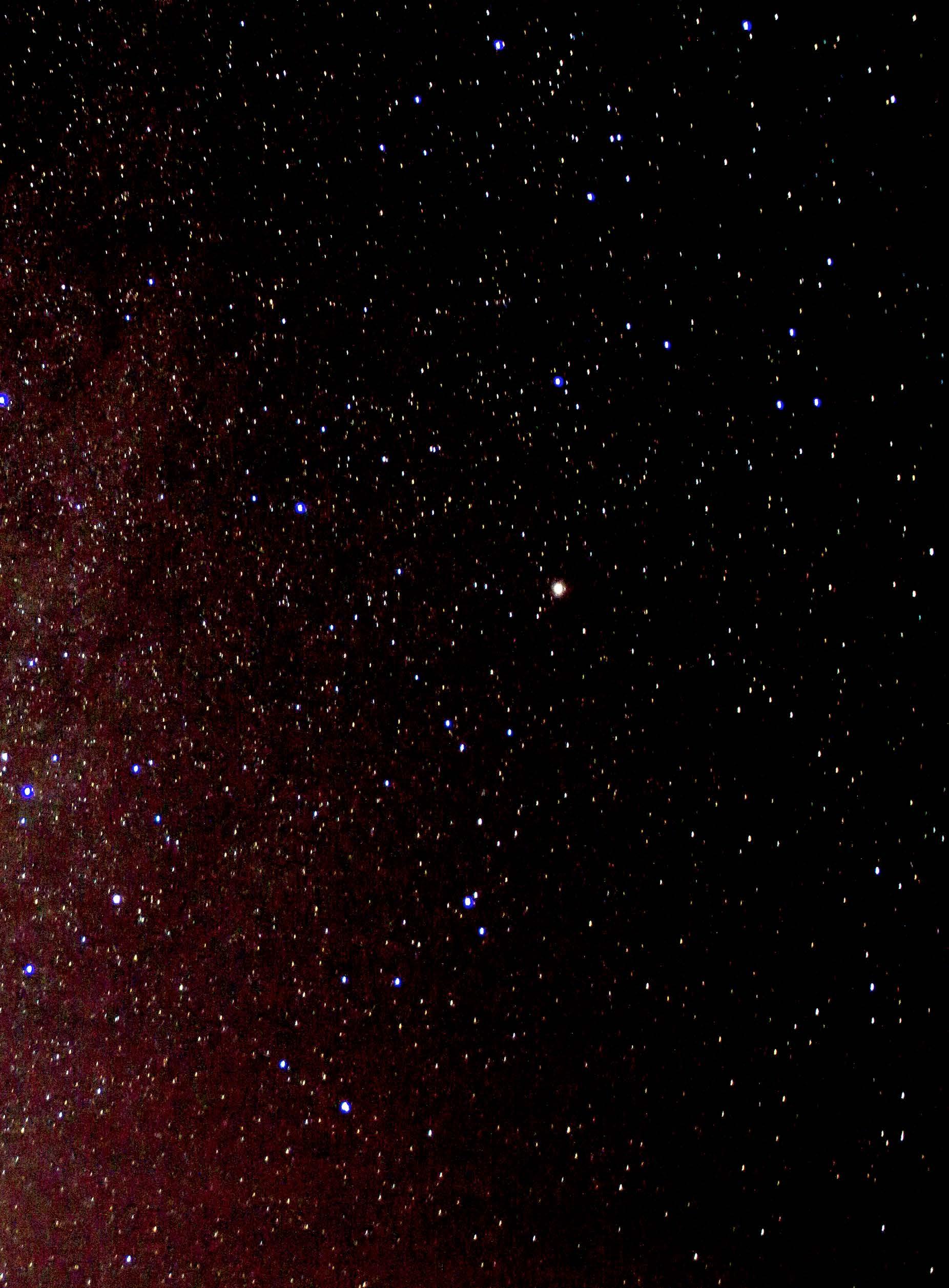
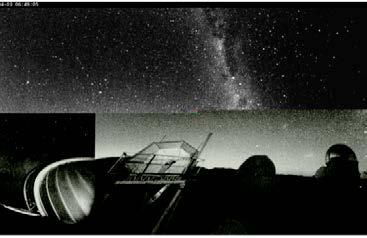
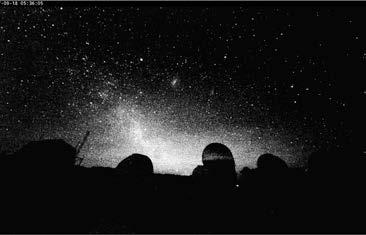
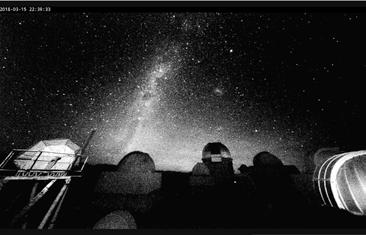
Fotografías digitales de los cielos nocturnos del Desierto de Atacama
Página 60–61: Fotografía del cielo nocturno del Desierto de Atacama
Digital photographs of the night skies of the Atacama Desert
Pages 60–61: Photograph of the Atacama Desert night sky
[español]
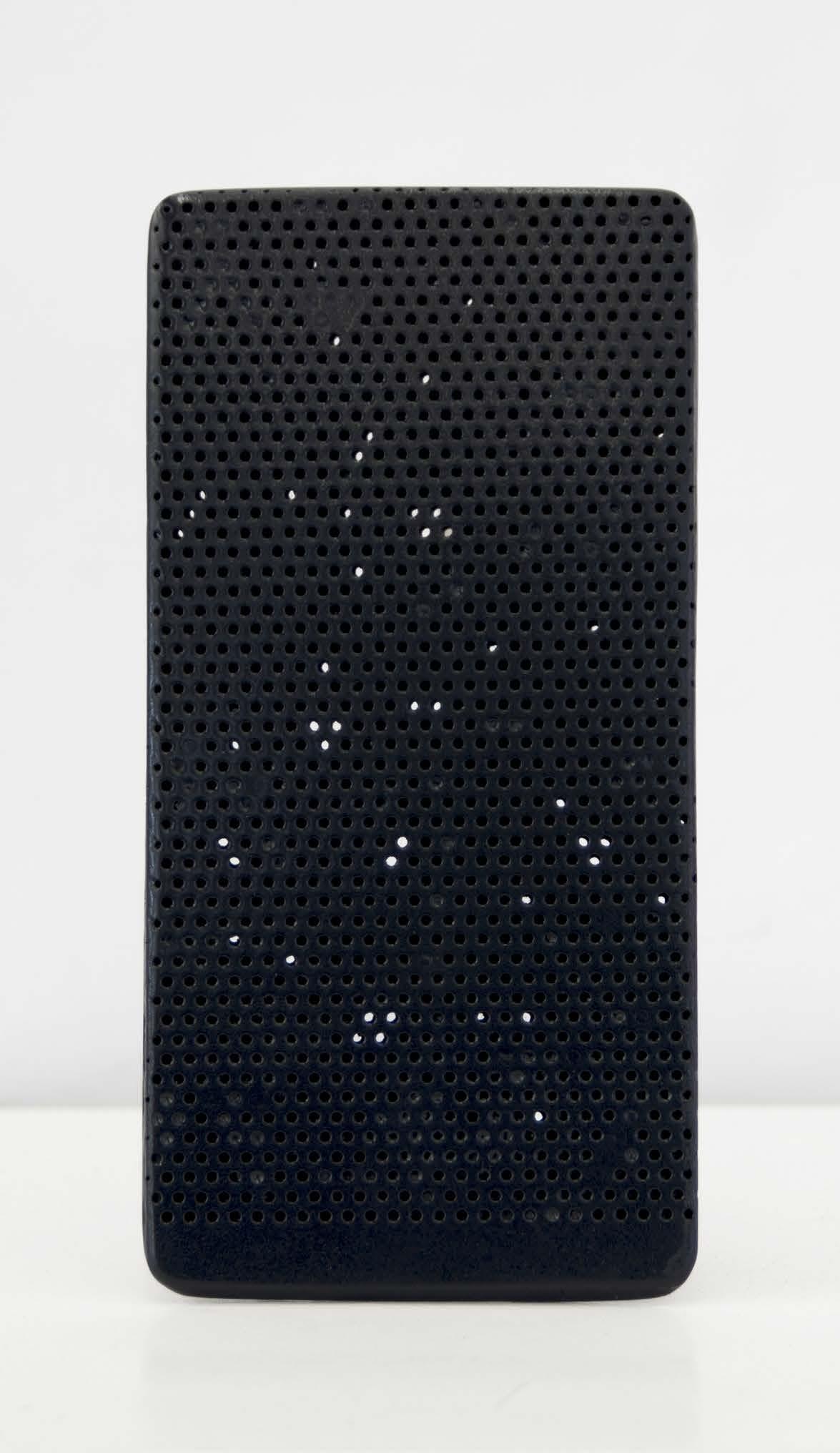
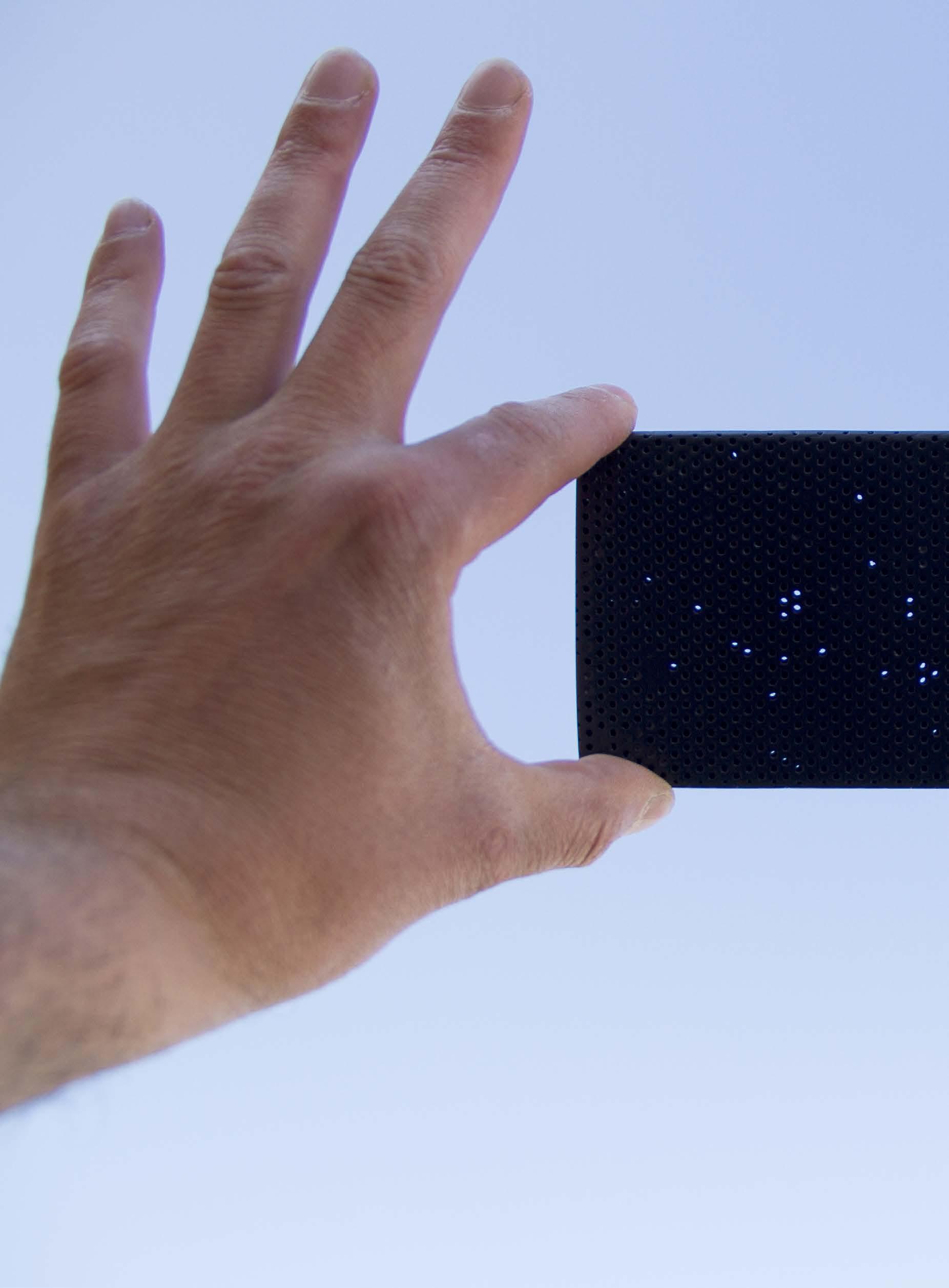
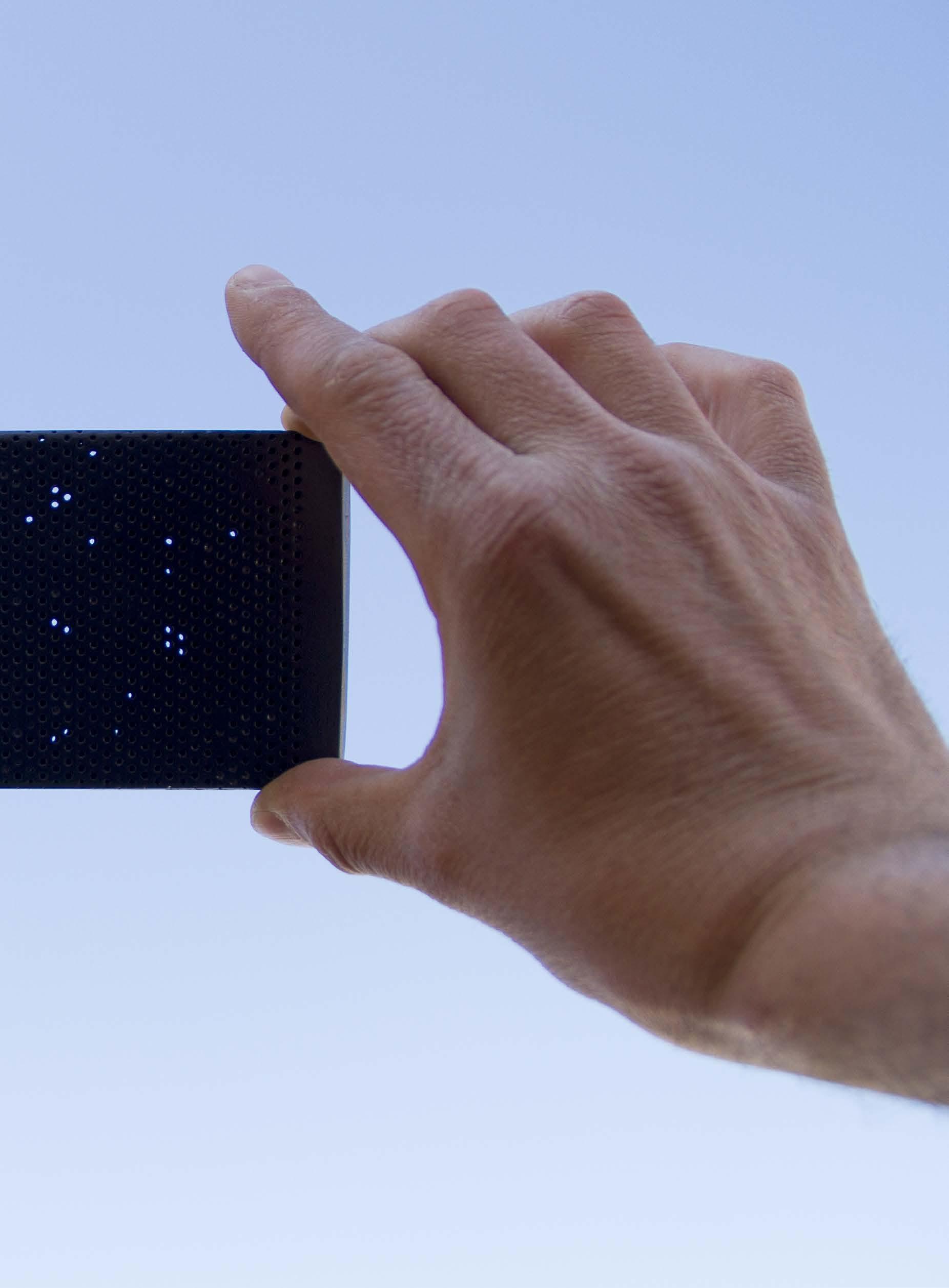
Esta obra presenta un dispositivo metálico hecho a mano, que replica con exactitud la forma del teléfono celular del artista. La superficie del objeto está perforada con agujeros abiertos y cerrados, los cuales aluden al código binario (0 y 1) como símil del funcionamiento de los dispositivos electrónicos.
Al exponer este dispositivo a contraluz, los orificios abiertos revelan la constelación de la Cruz del Sur y su cielo circundante, con una precisión en sus medidas y proporciones tal como se observa desde la Tierra.
La Cruz del Sur es una constelación del hemisferio austral que ha servido históricamente como brújula natural. La obra simboliza la orientación y la conexión, representando cómo las relaciones y la comunicación humanas se entrelazan en un mundo globalizado.
[english]
This work presents a handmade metal device that replicates the form of the artist’s mobile phone. The surface of the object is perforated with open and closed holes that evoke binary code (0 and 1), symbolizing the inner workings of electronic devices.
When backlit, the open perforations reveal the Southern Cross constellation and its surrounding sky, rendered with precise measurements and proportions as seen from Earth.
The Southern Cross is a constellation of the Southern Hemisphere that has historically served as a natural compass. This piece symbolizes orientation and connection, illustrating how human relationships and communication intertwine in a globalized world.
Placa de acero perforado, pegamento industrial, laca acrílica 14,9 x 7,4 x 0,4 cm
Páginas 64–65: Vista de la obra a contraluz
Perforated steel plate, industrial adhesive, acrylic lacquer 14.9 x 7.4 x 0.4 cm
Pages 64–65: Backlit view of the artwork
[español] [english]
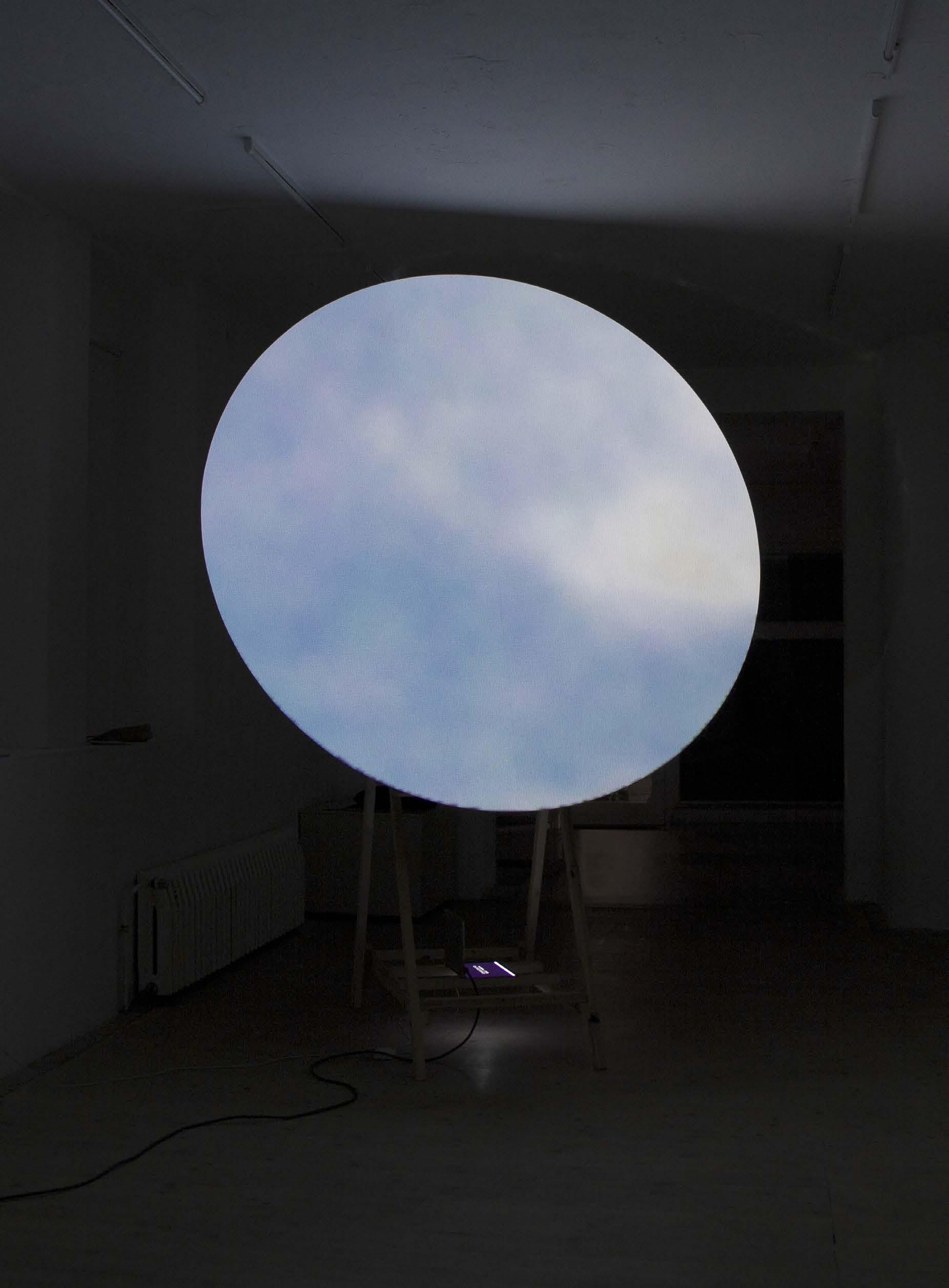
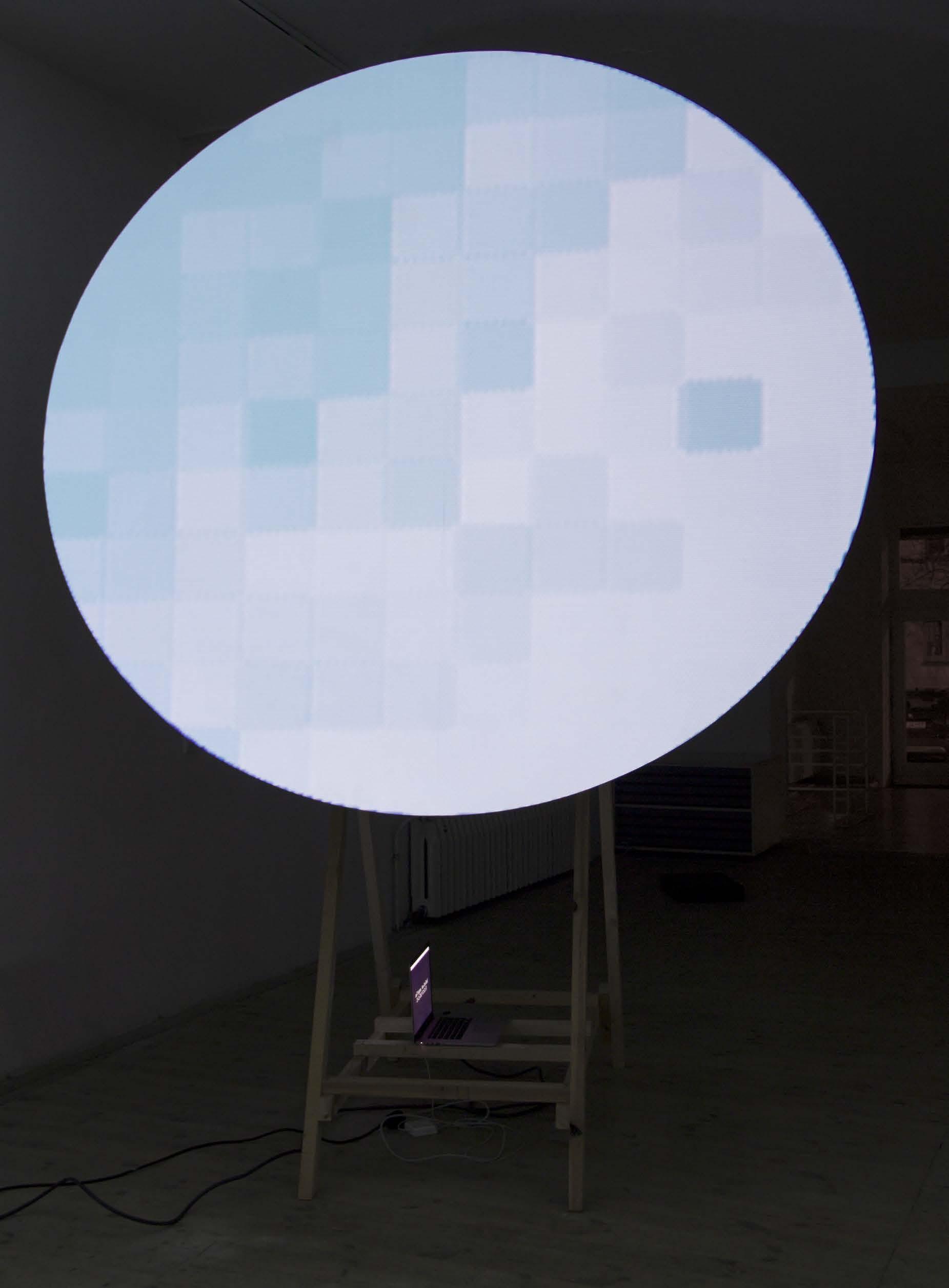
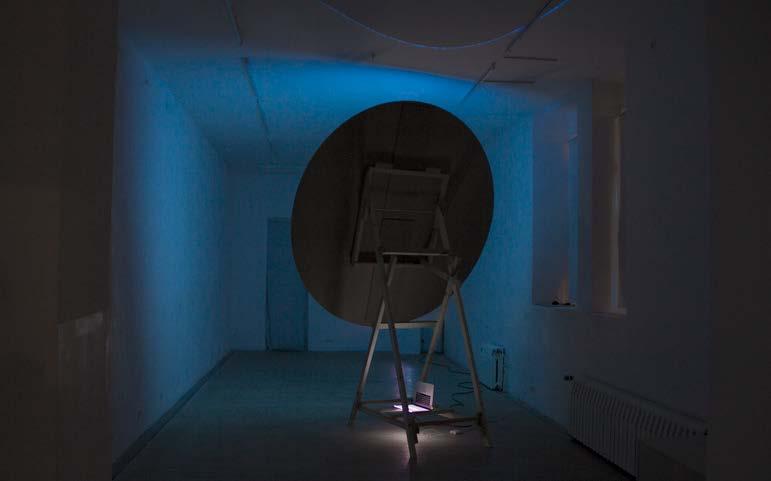
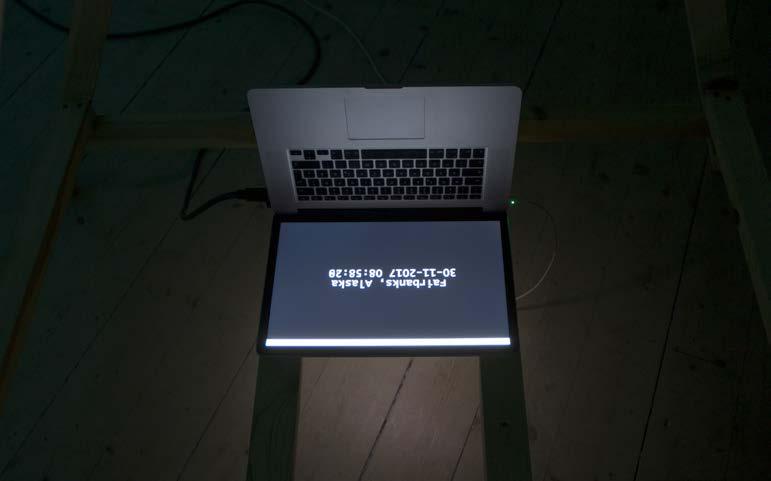
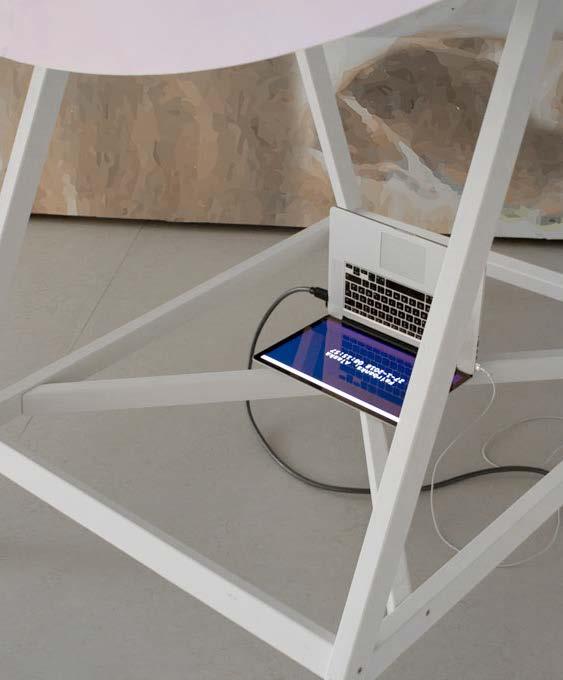
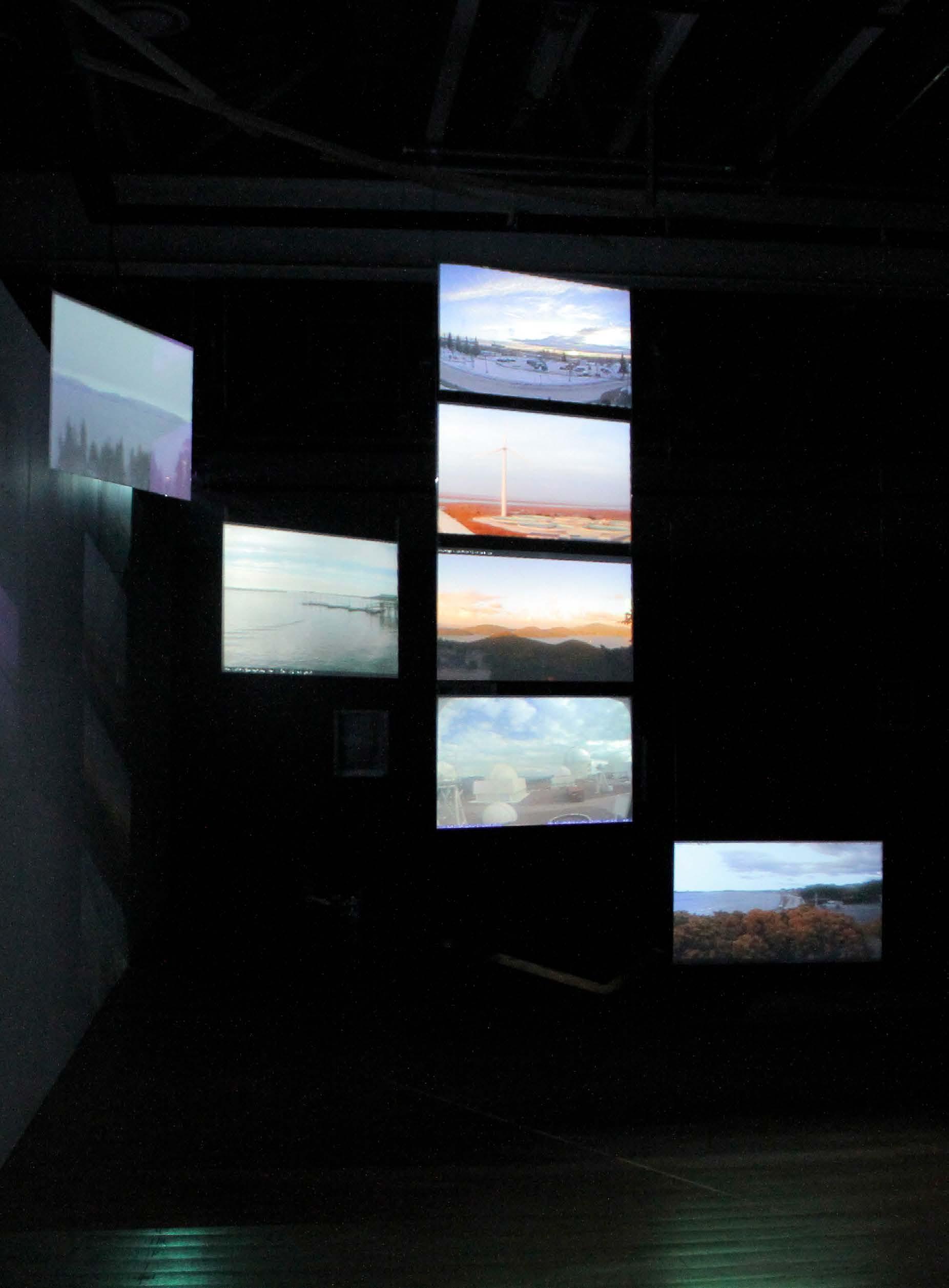
Es una video instalación que presenta imágenes del cielo durante el amanecer en diversos lugares del mundo, a través de transmisiones en vivo de cámaras web.
El video es manipulado mediante un zoom extremo, transformando las imágenes en una suerte de macro-microscopio que devela los detalles más sutiles de la imagen digital: píxeles, glitches y distorsiones. Este enfoque resalta la naturaleza digital del fenómeno natural que se observa, desafiando nuestra percepción tradicional de lo que constituye un cielo, y sugiriendo una reflexión sobre cómo la tecnología interrumpe y redefine nuestras experiencias sensoriales del mundo.
La obra se proyecta sobre una estructura de madera que remite a las antenas de telecomunicaciones espaciales, estableciendo un paralelismo entre la transmisión de señales digitales y la comunicación que se establece a través de fenómenos naturales, como el amanecer, a una escala global.
This is a video installation featuring live webcam feeds of the sky at sunrise from various locations around the world.
The video-camera is manipulated through extreme zoom, transforming the view into a kind of macro-microscope that unveils the digital image’s most subtle details—pixels, glitches, and distortions. This approach highlights the digital nature of a natural phenomenon, challenging our traditional perception of what constitutes a sky , and invites reflection on how technology disrupts and redefines our sensory experiences of the world.
The work is projected onto a wooden structure reminiscent of space telecommunications antennas, drawing a parallel between digital signal transmission and the global communication established through natural phenomena like the sunrise.
2017
Proyección de vídeo en streaming Estructura de madera, ordenador portátil Vista de la exposición Foreign Sky en NON Berlín Berlín, Alemania
Live stream webcam video projection Wood structure, laptop View of the exhibition Foreign Sky at NON Berlín Berlin, Germany
Proyección de videos en streaming
Dimensiones variables
Livestream video projection
Variable dimensions
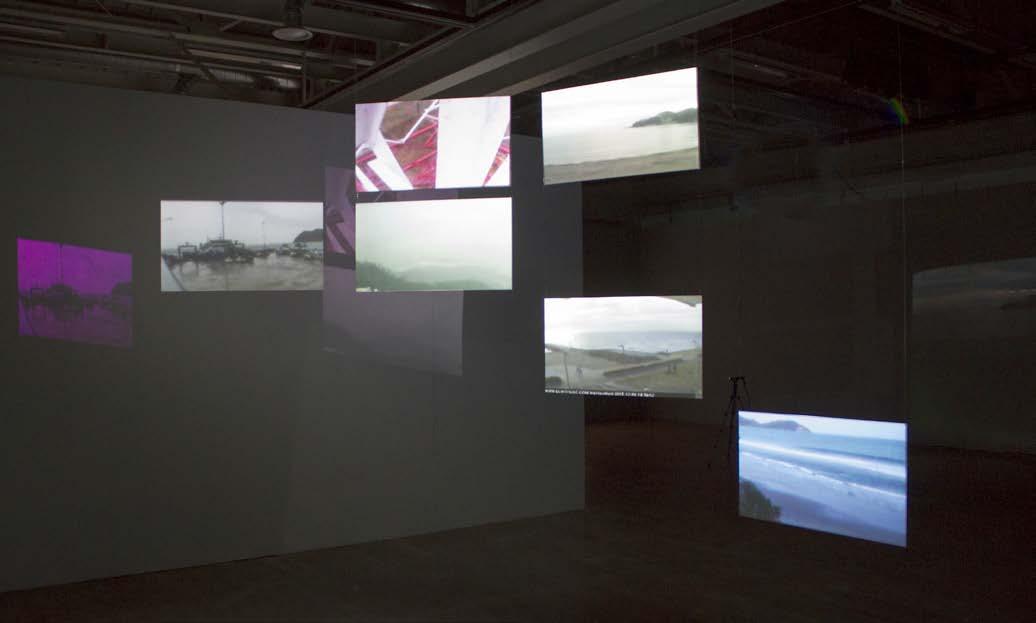
Facing the sun es una video-instalación que presenta una serie de cámaras web, las que muestran el sol en todas sus fases y en tiempo real desde distintos puntos del planeta.
Mediante estos sistemas de comunicación interconectados, la obra enfatiza el acceso global a estas imágenes, subrayando la disolución constante de las fronteras entre tiempo y espacio.
Este proyecto fue realizado en colaboración con la artista coreana Lucia Jeesun Lee.
Facing the Sun is a video installation that features a series of webcams capturing the sun at all its phases in real time from various locations around the globe.
Through these interconnected communication systems, the artwork emphasizes global access to these images, underscoring the continual dissolution of the boundaries of time and space.
This project was created in collaboration with the Korean artist Lucia Jeesun Lee.
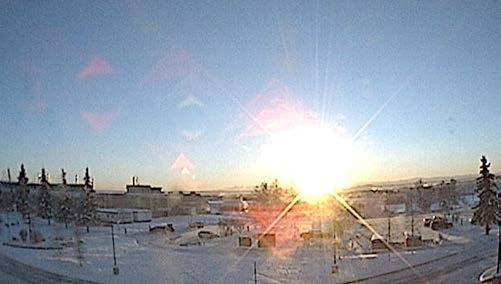
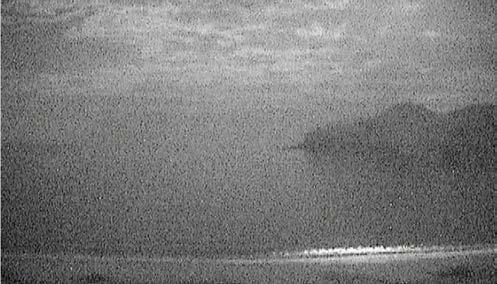
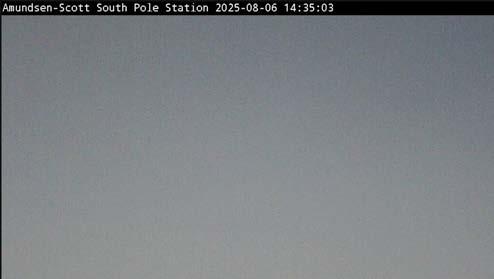
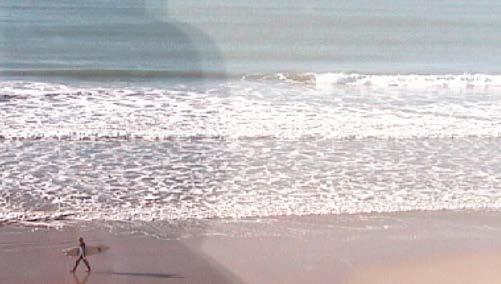
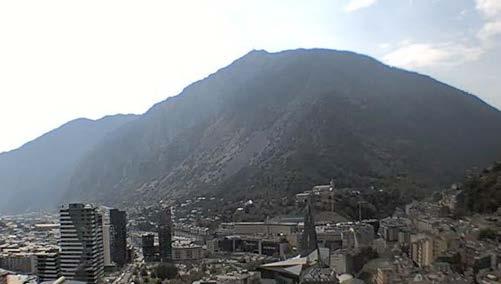
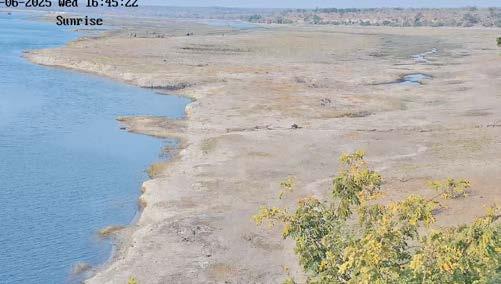
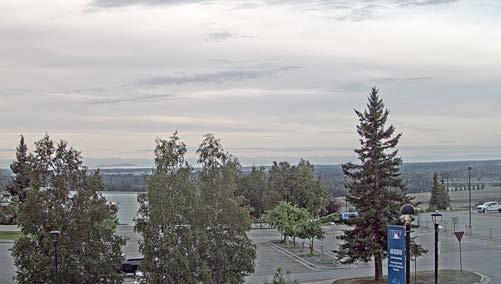
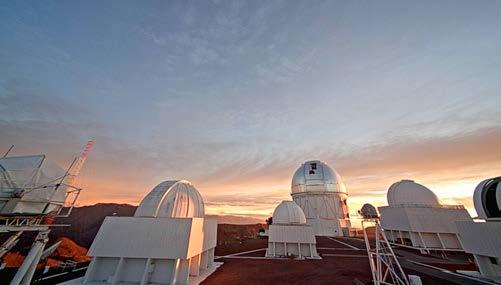
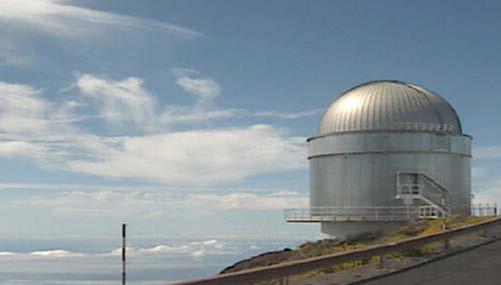
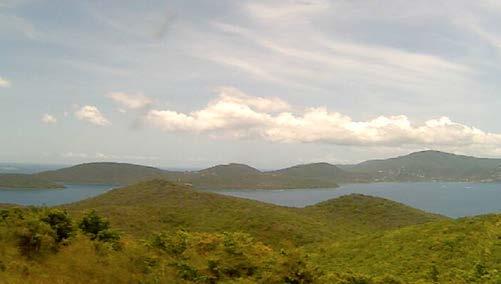
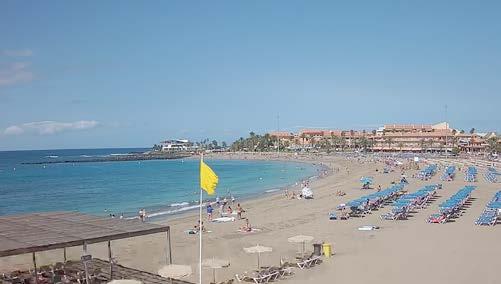
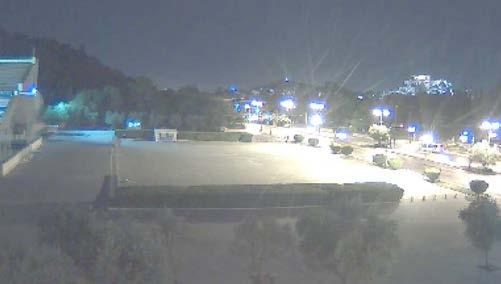
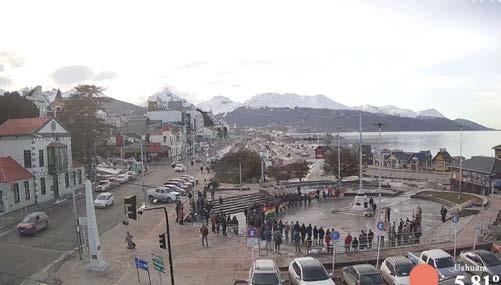
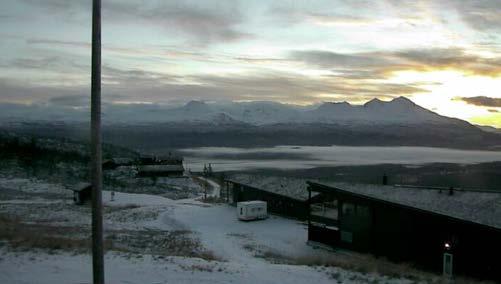
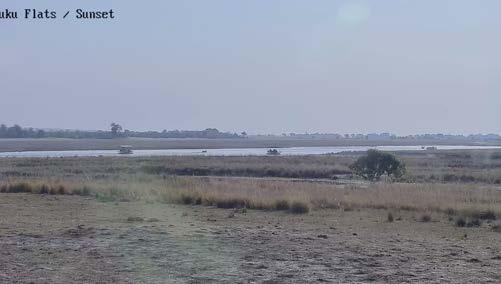
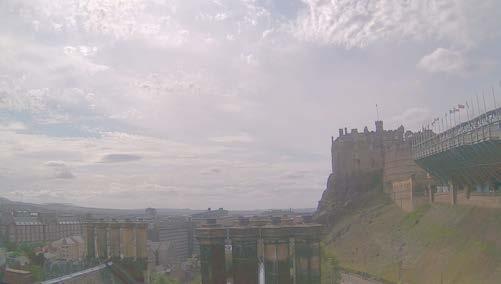
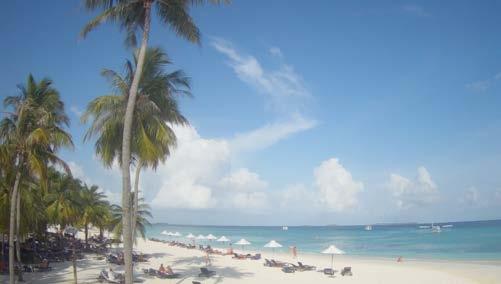
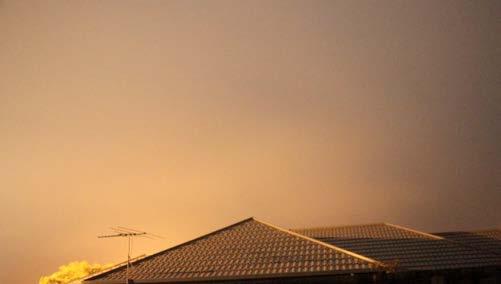
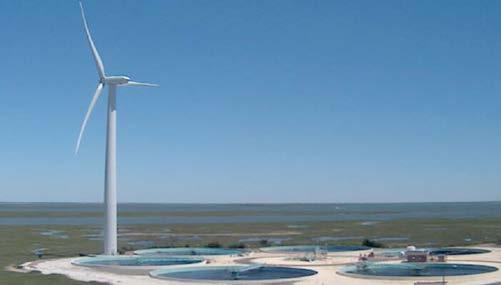
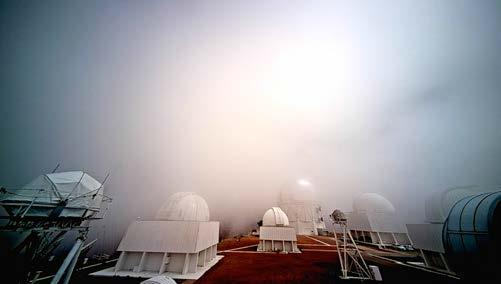
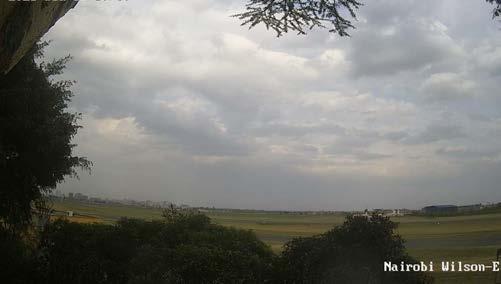
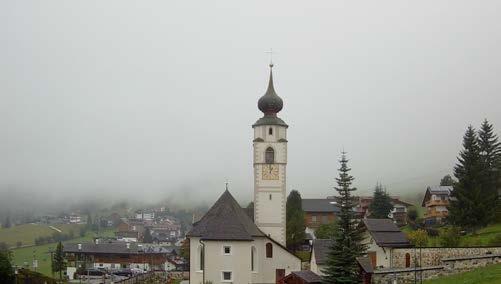
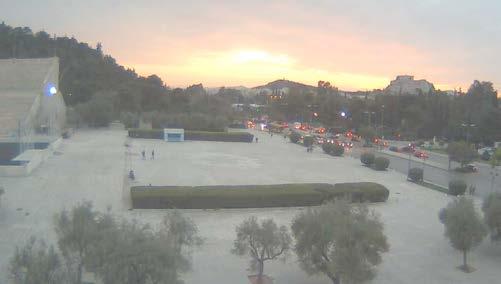
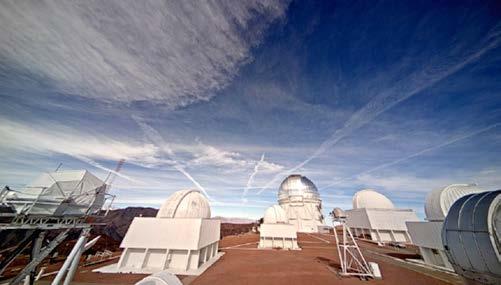
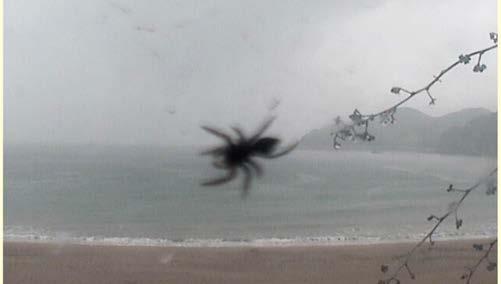
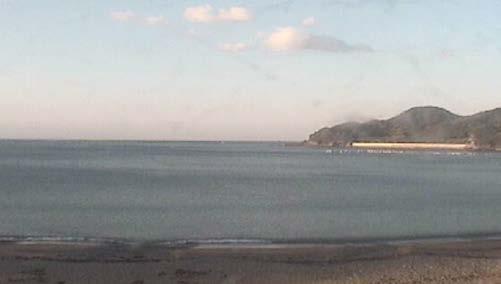
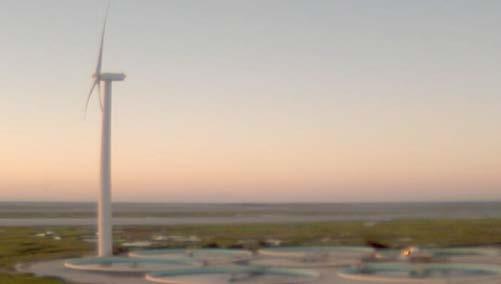
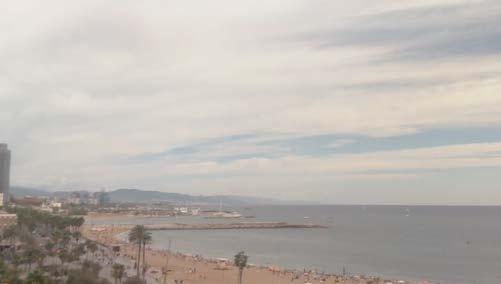
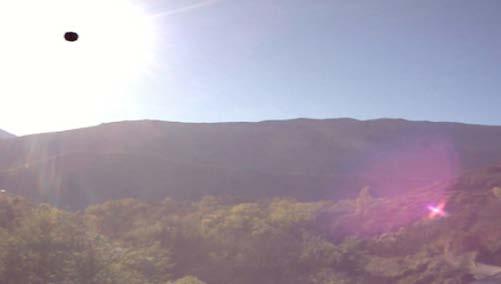
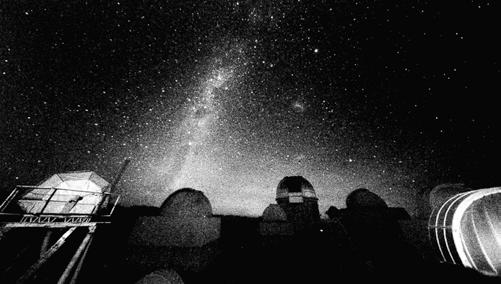
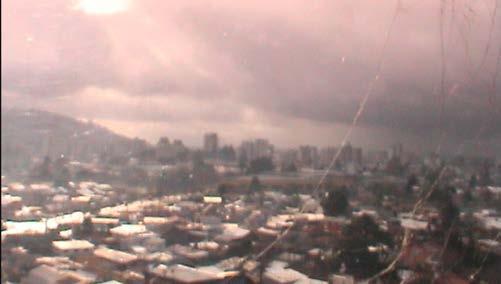
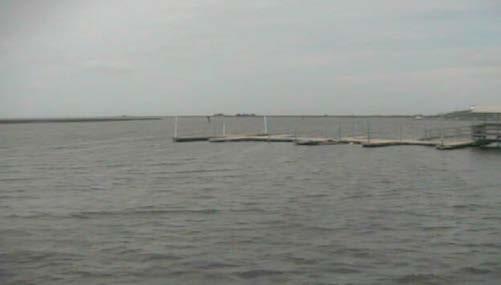
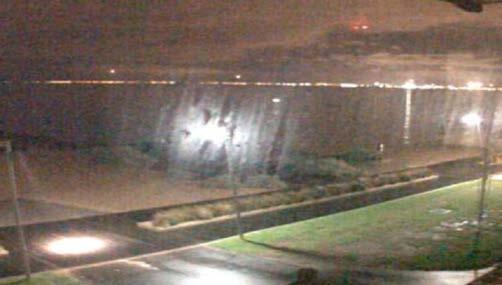
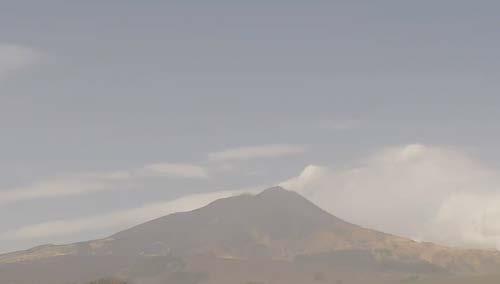
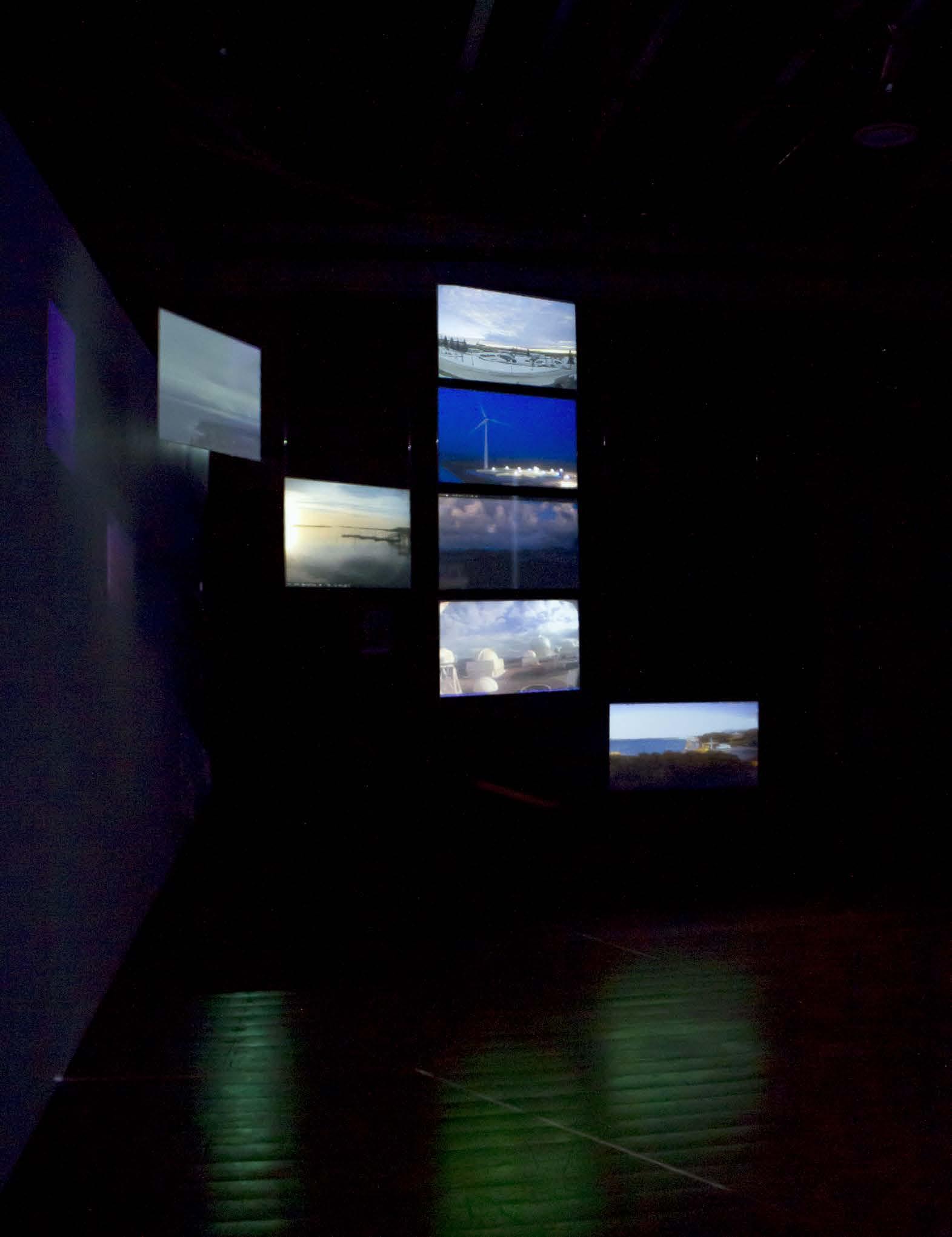
2015
Proyección de videos en streaming
Dimensiones variables
Vista de la exposición Final_draf.mov
Geumcheon Art Space
Seúl, Corea del Sur
Installation of livestream webcams
Variable dimension
View of the exhibition Final_draf.mov
Geumcheon Art Space
Seoul, South Korea
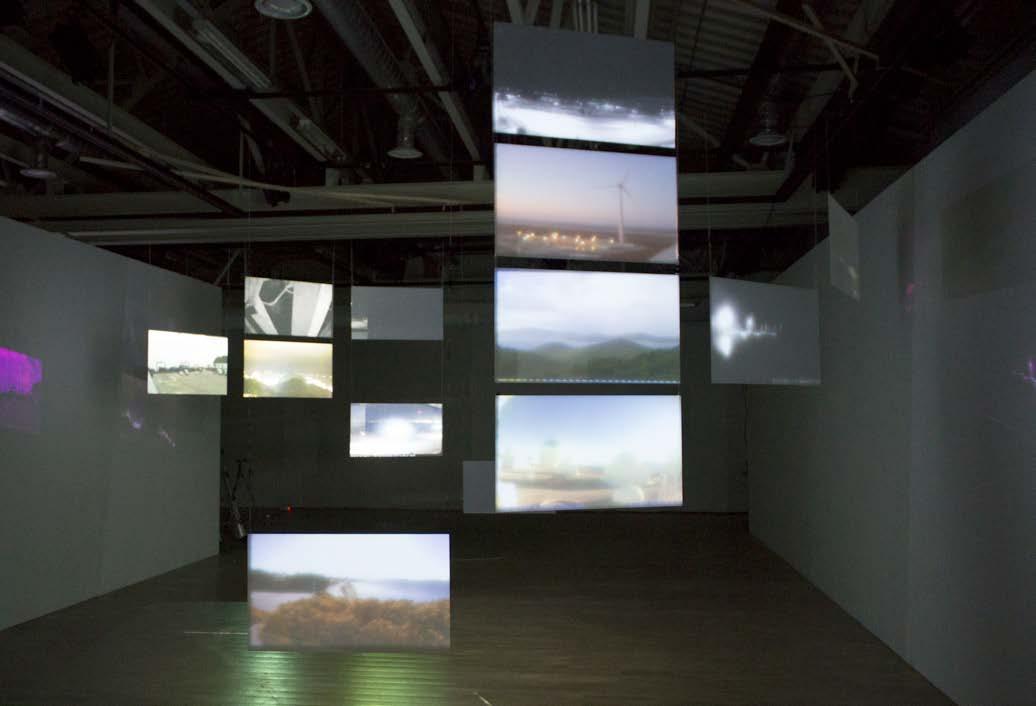
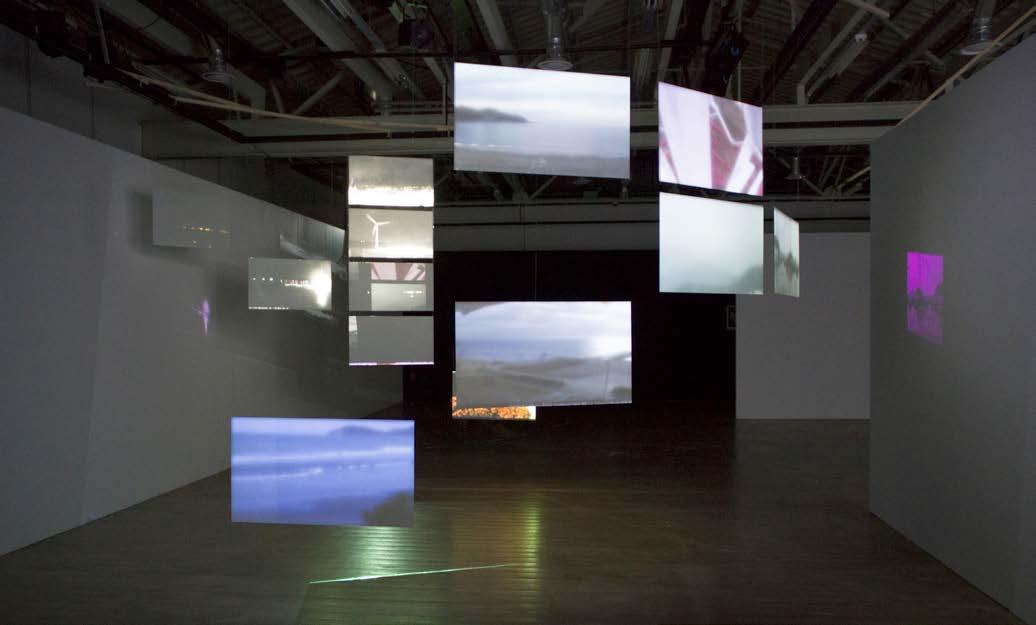
Páginas 72–73:
Capturas de pantalla de cámaras web en diferentes partes del mundo
Páginas 76–77:
Vista de instalación
(montaje en proceso con la artista Lucia Jeesun Lee)
Pages 72–73:
Webcam screenshots from different parts of the world
Pages 76–77:
Installation view (setup in progress with the artist Lucia Jeesun Lee)
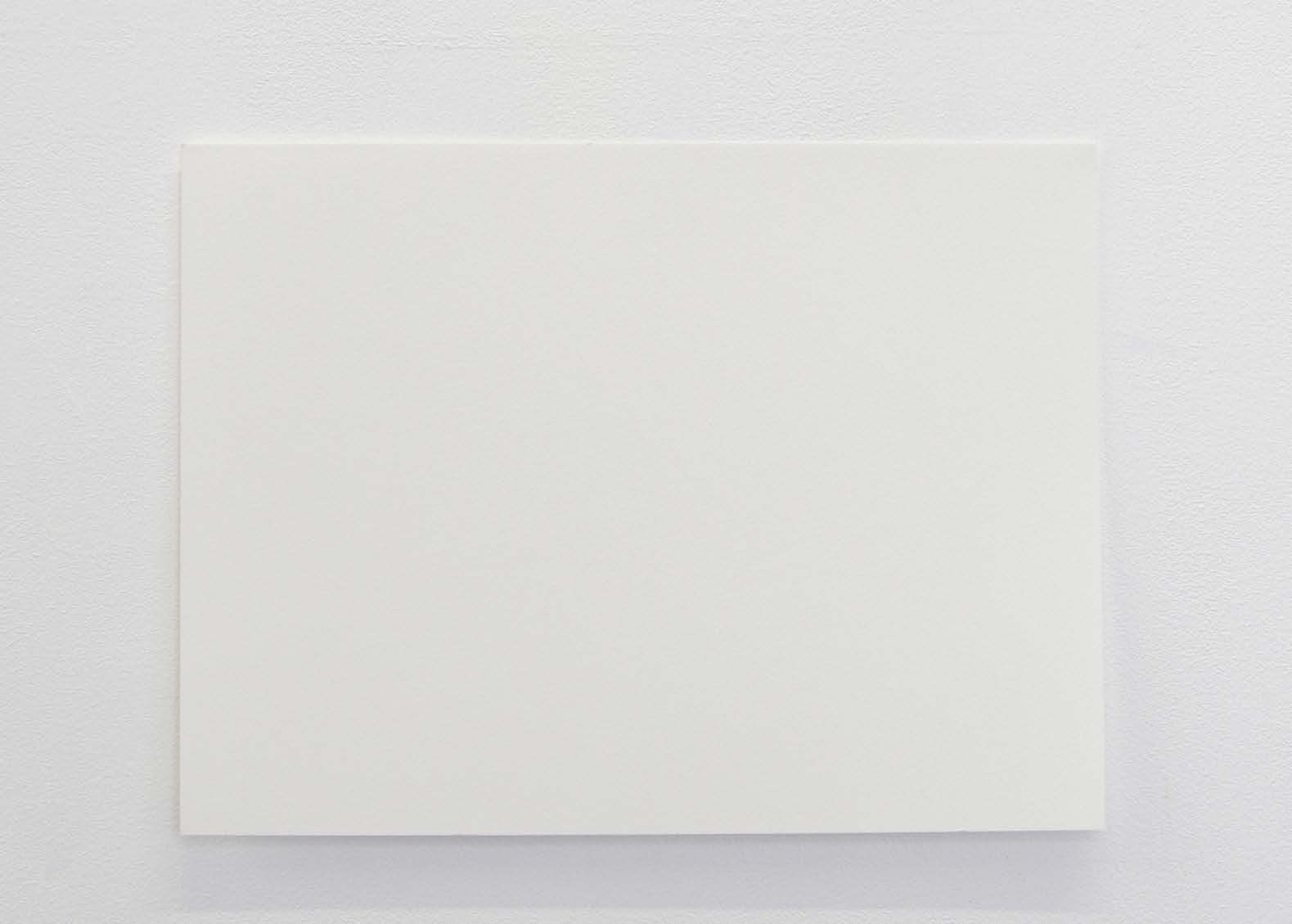
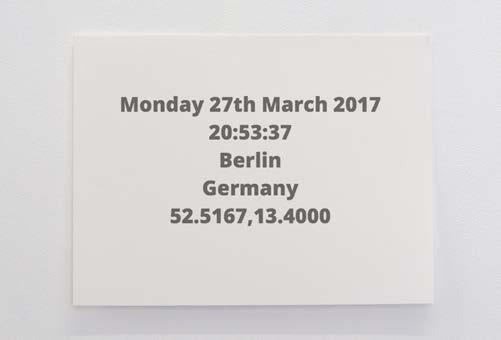
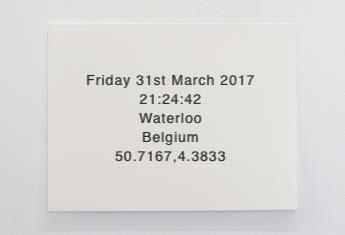
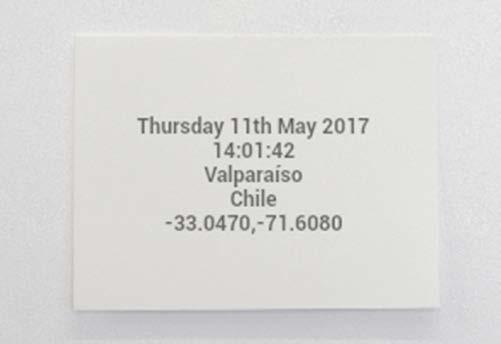
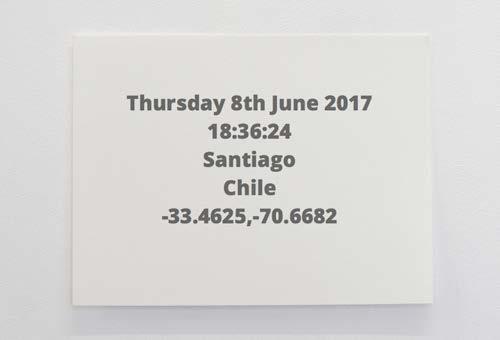
Fotografía digital de una hoja de papel en blanco
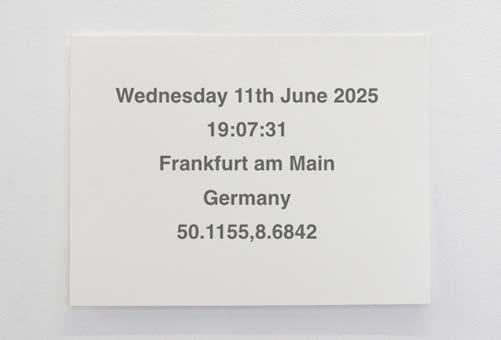
Obra basada en la web, iniciada el domingo 26 de marzo de 2017 a las 23:26:09 en Berlín, Alemania
Digital photograph of a blank sheet of paper Web-based work, started on Sunday, March 26, 2017 at 23:26:09 in Berlin, Germany
[español]
[english]
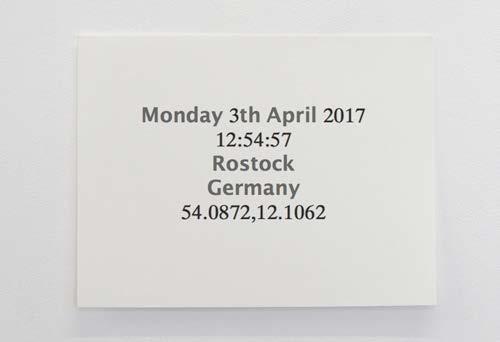
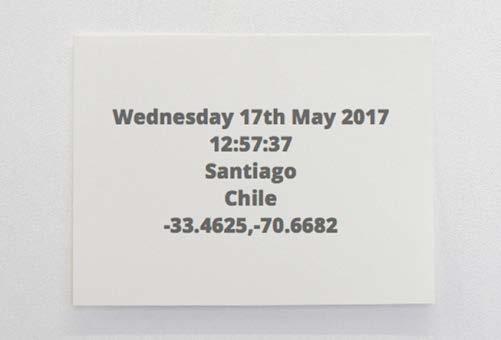
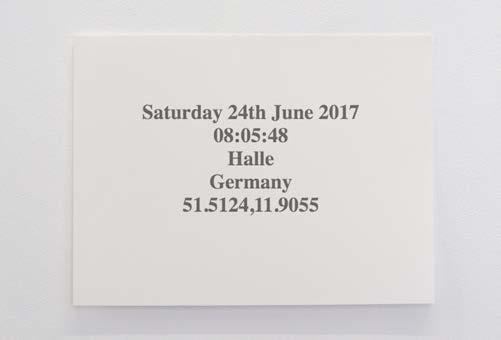
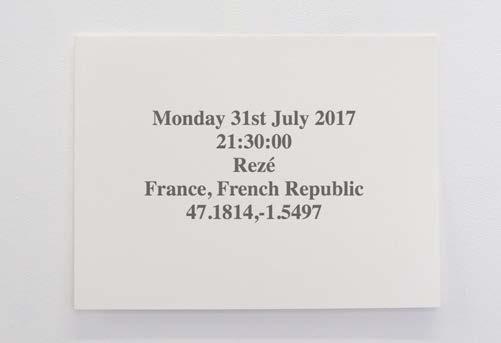
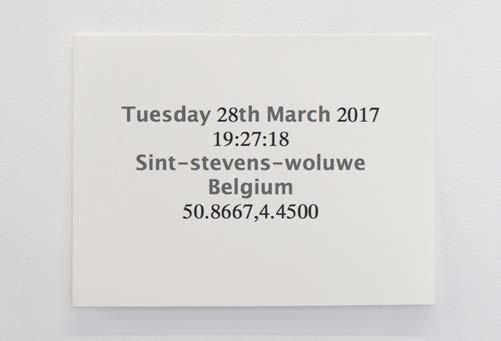
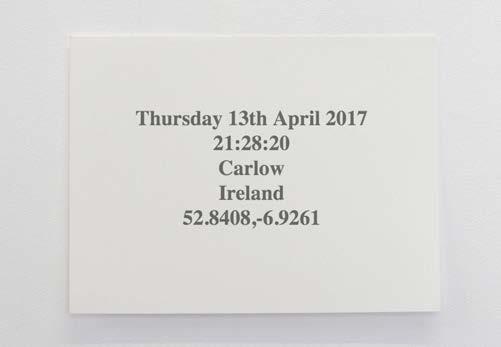
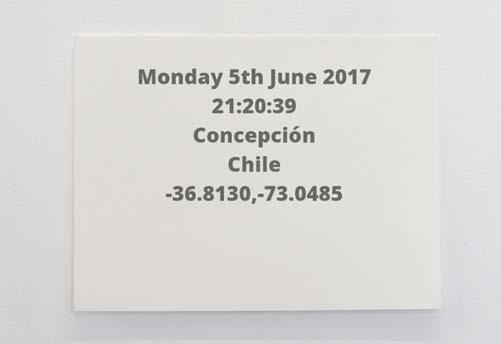
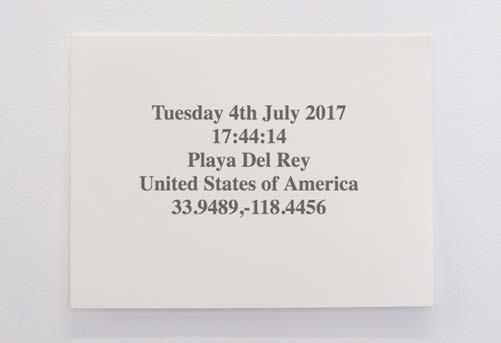
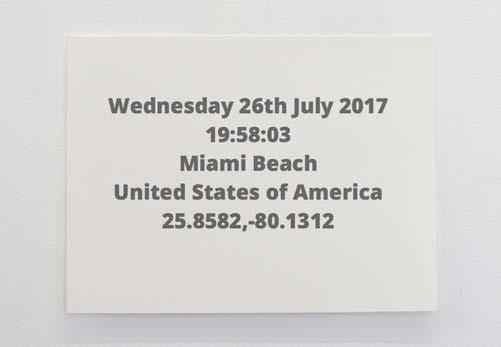
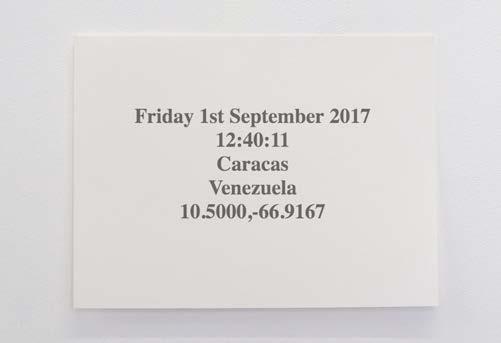
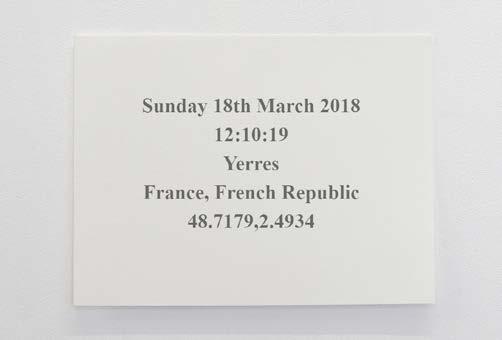
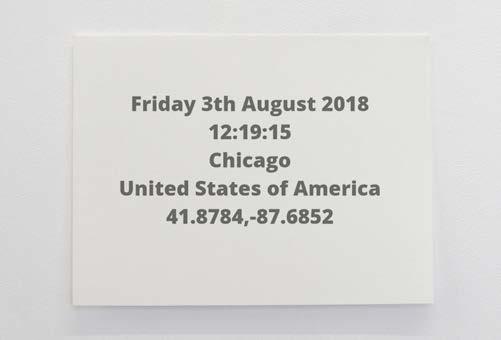
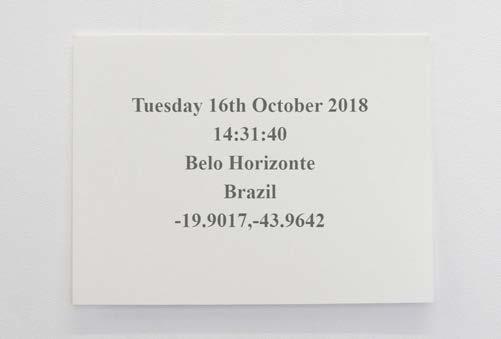
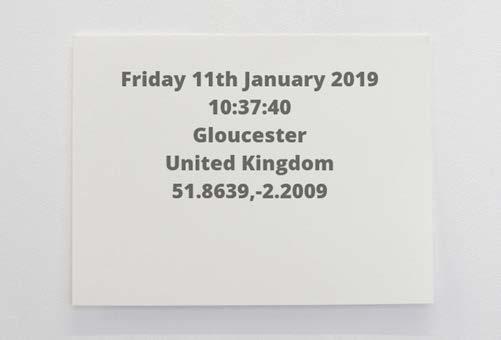
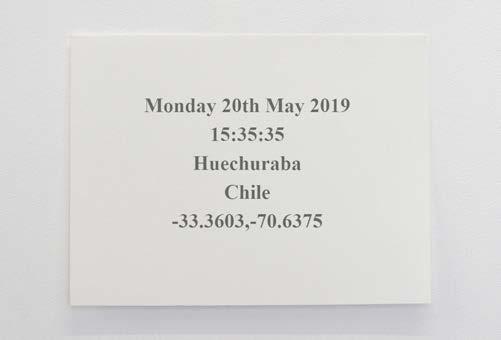
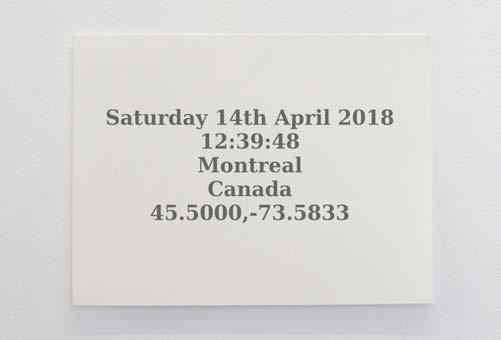
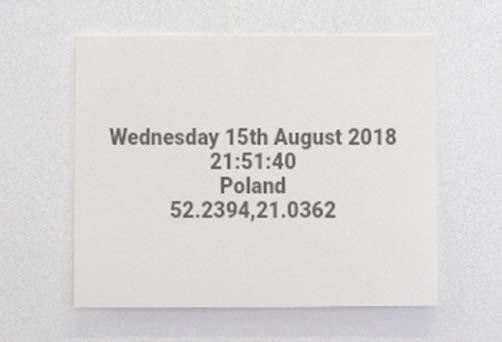
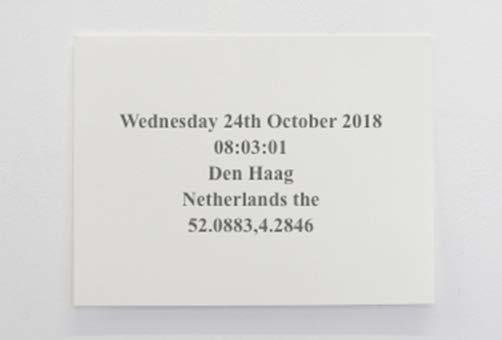
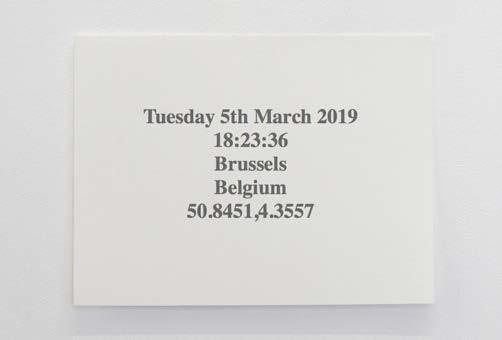
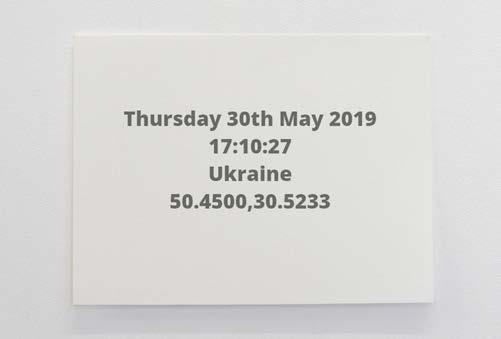
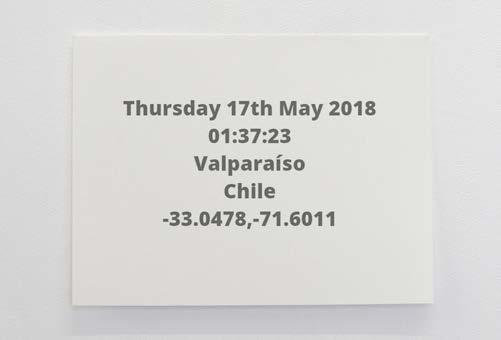
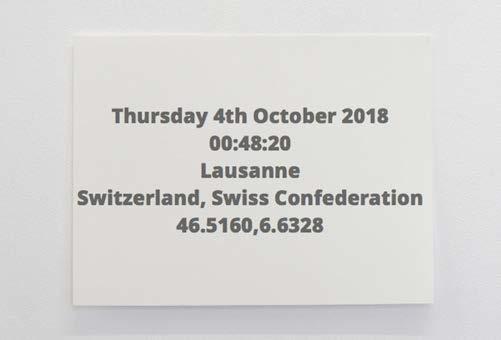
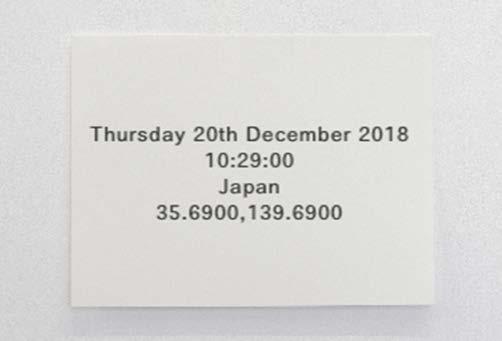
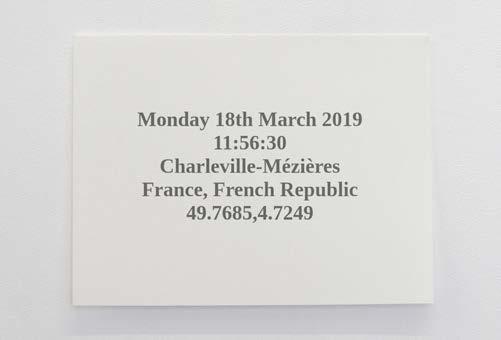
Nunc es una obra net.art que se activa cada vez que un espectador accede a ella mediante un enlace web. Un algoritmo retrata, en una hoja en blanco, la información detallada del contexto del observador: fecha, hora, ciudad, país y coordenadas geográficas del VPN desde el cual accede.
El simple acto de observar es lo que hace posible la existencia de la obra. Cada visualización contribuye a una colección infinita de imágenes únicas, archivadas en extensión .png, que sirven como testimonio de las diferentes instancias de la obra a lo largo del tiempo.
La obra puede ser visualizada en la página www.gonzalo-ra.net/nunc.php
Nunc is a net.art work that is activated each time a viewer accesses it via a web link. An algorithm renders, onto a photograph of a blank page, detailed information about the observer's context: the date, time, city, country, and the geographic coordinates of the VPN from which they are accessing it.
The simple act of observation is what makes the existence of the artwork possible. Each viewing contributes to an infinite collection of unique images, archived in .png format, which stand as testimonies to the artwork’s various temporal instantiations.
The work can be viewed at: https://gonzalo-ra.net/nunc/
Narrativas algorítmicas en la percepción expandida
Algorithmic Narratives in Expanded Perception
Samuel Toro Contreras
[español] En el presente ensayo propongo un análisis de la obra de Gonzalo Reyes Araos desde su exploración de la materialidad, la percepción y la migración, abordando la intersección entre lo tecnológico y lo sensorial en su práctica artística. A partir de una selección de sus obras –que abarcan alrededor de una década– examinaré cómo su trabajo pone en tensión los límites entre lo virtual y lo físico, proponiendo formas alternativas de habitar la imagen y el espacio. En este sentido, su andar investigativo transita entre lo tangible y lo “inmaterial”, articulando un lenguaje que integra luz, plasticidad, tecnología y procesos algorítmicos que nos invitan a replantear nuestra relación con el entorno, entendiendo este en la triple vertiente “naturaleza”-cultura-tecnología. Formalmente, y de manera un tanto reductiva, su trabajo podríamos inscribirlo en una cartografía expandida, donde convergen el arte lumínico, la instalación interactiva, la escultura digital y las narrativas afectivas de la migración. Gonzalo explora la compleja plasticidad de lo contemporáneo a través de multiplicidad de materiales que van desde la proyección lumínica hasta la utilización de elementos industriales y digitales. En este sentido, su búsqueda podría establecer diálogos con artistas que han problematizado la relación entre percepción y tecnología, como Olafur
In this essay, I propose an analysis of Gonzalo Reyes Araos’ oeuvre focusing on his exploration of materiality, perception, and migration; and addressing the intersection between technology and the sensory aspect of his artistic practice. Based on a selection of his works, spanning over a decade, I will examine how his work challenges the boundaries between the virtual and the physical, proposing alternative ways of inhabiting image and space. In this sense, his investigative journey moves between the tangible and the “non-material,” articulating a language that integrates light, plasticity, technology, and algorithmic processes. He invites us to rethink our relationship with our milieu, interpreting the latter through the triad “nature”-culture-technology. From a formal perspective, and in a somewhat reductive way, we could situate his work within an expanded cartography, where light art, interactive installation, digital sculpture, and the emotional narratives of migration converge.
Gonzalo explores the complex plasticity of the contemporary through a multiplicity of materials ranging from light projection to industrial and digital elements. Along these lines, his search could establish dialogues with artists who have problematized the relationship between
Eliasson y su exploración de los fenómenos ópticos en el espacio expositivo (Eliasson, 2016), o Rafael Lozano-Hemmer (2012) y su uso de la interactividad para cuestionar la vigilancia y la memoria colectiva (Bishop, 2012). Sumado a esto, los procesos del artista se distinguen por su énfasis en la hibridación entre lo digital y lo matérico, así como por su interés en los modos en que la experiencia humana se reconfigura en la era de la hiperconectividad.
Desde una perspectiva curatorial, su producción podría entenderse como una investigación en torno a la percepción y los mecanismos que la estructuran. La luz y el color en su obra no operan solo como recursos estéticos, sino como agentes de transformación sensorial. A través de procesos de superposición, retroalimentación y distorsión, el artista nos sitúa en un territorio inestable, donde las imágenes fluctúan entre la abstracción y la representación, entre lo orgánico y lo sintético. La modernidad artística, aquí –como parte de una hipótesis en desarrollo– no se abandona, pues en las obras de Gonzalo puedo encontrar la pintura expandida o desplazada, la búsqueda de paisajes, la síntesis de la paleta de colores, la velocidad moderna, la luz impresionista y post-impresionista, entre otros múltiples enlaces entre la modernidad pictórica y los alcances del arte contemporáneo.
La obra de Gonzalo Reyes Araos se despliega en un terreno conceptual donde convergen las dimensiones técnicas, estéticas y emocionales. Su propuesta se sitúa en la intersección entre la materialidad y lo digital, articulando un discurso que invita a repensar la percepción y la interacción en un mundo marcado por la inmediatez de la tecnología. En este sentido, su obra se podría enmarcar, momentáneamente, dentro del debate sobre digitalismo y post-digitalismo, donde la transformación de los medios y la reconfiguración del “sujeto” se convierten en temas centrales.
Registro de trabajo en proceso
La exploración de la luz y el color, en la obra de nuestro artista, también aborda la materialidad de los objetos técnicos y su capacidad para mediar la experiencia humana. Retomando los planteamientos de Simondon (2007, 2009, 2014) y Stiegler (2012, 2014) que mencioné en la hipótesis curatorial que realicé para su exposición “Cielo rojo y verde y azul de fondo de pantalla de tu vida” en el 2023, Gonzalo trabajaría el
perception and technology, such as Olafur Eliasson and his exploration of optical phenomena in the exhibition space (Eliasson, 2016), or Rafael Lozano-Hemmer (2012) and his use of interactivity to question vigilance and collective memory (Bishop, 2012). In addition to this, the artist’s processes are distinguished by his emphasis on the hybridization between the digital and the material, as well as his interest in the ways human experience is reconfigured in the era of hyperconnectivity.
From a curatorial perspective, his production could be understood as an investigation into perception and the mechanisms that give structure to it. Light and color in his work do not operate only as aesthetic resources, but also as agents of sensory transformation. Using juxtaposition processes, feedback, and distortion, the artist takes us to an unstable territory, where images oscillate between abstraction and representation, between the organic and the synthetic. Artistic modernism, here – as part of a developing hypothesis – is not abandoned, since in Gonzalo’s works, I can see the expanded painting, the search for landscapes, the synthesis of the color palette, modern speed, impressionist and postimpressionist light, among multiple links between pictorial modernism and the scope of contemporary art.
Gonzalo Reyes Araos’ work unfolds on a conceptual terrain where technical, aesthetic, and emotional dimensions converge. His proposal is situated at the intersection between materiality and the digital, articulating a discourse that invites us to rethink the notions of perception and interaction in a world shaped by the immediacy of technology. In this sense, his work could be framed, for the time being, within the debate on digitalism and post-digitalism, where the transformation of means and the reconfiguration of the «subject» become key issues.
The exploration of light and color in our artist’s work also addresses the materiality of technical objects and their ability to mediate human experience. Referring back to the ideas of Simondon (2007, 2009, 2014) and Stiegler (2012, 2014) that I mentioned in the curatorial hypothesis I wrote for his 2023 exhibition «Cielo rojo y verde y azul de fondo de
objeto técnico como una entidad en proceso de individuación que, a través de su interacción con el receptor, adquiere un nuevo significado. Esta visión se ve complementada por la reflexión sobre el digitalismo y el post-digitalismo, a partir de los análisis de cómo las tecnologías no solo modifican los procesos de creación, sino que también reestructuran la forma en que habitamos y experimentamos el espacio (Toro Contreras, 2025). Desde pretensiones teóricas del arte contemporáneo, la convergencia entre lo “digital y lo matérico” permite abrir un campo interpretativo en el que la imagen se convierte en un objeto híbrido. Así, Gonzalo utiliza la luz, el color, el código y la materialidad para construir una narrativa que desdibuja la línea entre lo virtual y lo real, lo efímero y lo permanente. Tal enfoque dialoga con las propuestas de Eliasson (2016) y Grau (2017), quienes plantean que la experiencia estética en la era digital no es simplemente una reproducción de lo visible, sino una reconfiguración de la percepción que involucra tanto lo sensorial como lo cognitivo (los cuales siempre han estado integrados).
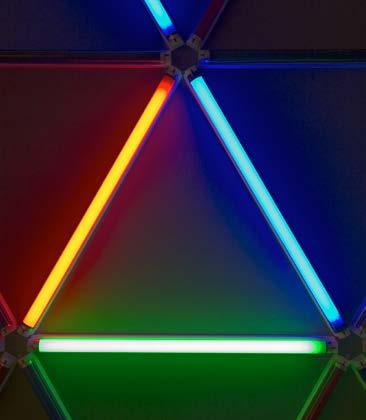
CIELO ROJO Y VERDE Y AZUL
En la hipótesis curatorial, mencionada antes, también destaco que la obra del artista se convierte en un mapa de vínculos afectivos y técnicos que atraviesan las fronteras geográficas y temporales, lo cual nos ayuda a comprender parte de la poética de Gonzalo. Esta comprensión se potencia al incorporar la “visión” del digitalismo, que sugiere que las tecnologías actuales han transformado la imagen y la experiencia en un proceso de constante mediación, en el que el “espectador” se convierte en co-creador del significado (Filinich & Toro Contreras, 2023). En este marco, la obra se revela como un ejercicio de reconfiguración de la percepción, donde la transformación de lo técnico en poético abre espacios de resignificación. La integración de procesos de digitalización y materialización, en su práctica, nos invita a cuestionar la noción de realidad espacio-temporal, revelando que, en la era post-digital, la imagen y el objeto se transforman en portadores de una memoria colectiva y mutable. Esta compleja interacción entre técnica y poética se hace patente en cada intervención del artista, configurando un discurso visual que nos invita al desplazamiento –y deslinde pictórico– de las barreras pre-modernas entre lo “humano” (biológico) y lo tecnológico.
A continuación, analizaré algunas obras que, según mi criterio, reconfiguran la imagen y la percepción, integrando aportes teóricos que abarcan
pantalla de tu vida,»1 Gonzalo would work the technical object as an entity in the process of individuation, which through its interaction with a receiver, would acquire a new meaning. This perspective is complemented by the reflection on digitalism and post-digitalism, based on the analysis of how technologies not only modify creation processes but also restructure how we inhabit and experience space (Toro Contreras, 2025). From theoretical pretensions of contemporary art, the convergence between «the digital and the material» allows the opening of an interpretative field in which the image becomes a hybrid object. Thus, Gonzalo uses light, color, coding, and materiality to build a narrative that blurs the line between the virtual and the real, the ephemeral and the perpetual. Such an approach engages in a dialogue with the ideas of Eliasson (2016) and Grau (2017), who claim that aesthetic experience in the digital era is not simply a reproduction of the visible, but a reconfiguration of perception involving both sensory as well as cognitive aspects (which have always been integrated).
In the aforementioned curatorial hypothesis, I also emphasize that the artist’s work becomes a map of the emotional and technical bonds that transcend geographic and temporal borders, which help us to understand part of Gonzalo’s poetics. This understanding is complemented by incorporating the «view» of digitalism, which suggests that current technologies have transformed the image and the experience in a process of constant mediation, in which the «viewer» becomes the co-creator of meaning (Filinich & Toro Contreras, 2023). Within this framework, the oeuvre reveals itself as an exercise of reconfiguration of perception, where the transformation of what is technical into something poetic opens spaces of resignification. The integration of digitalization and materialization processes, in his practice, invites us to question the notion of time-space reality, revealing that, in the postdigital era, image and object are transformed into bearers of a collective and mutable memory. This complex interaction between technique and poetics becomes evident in every one of the artist’s interventions, configuring a visual discourse that leads us to the expansion – and pictorial demarcation – of the pre-modern boundaries between the «human» (biological) and the technological.
1 Translation for explanatory purposes only: Red, Green, and Blue Sky as the wallpaper of your life.
desde la individuación técnica hasta la crítica de la cultura de la imagen: En “Looking to the South” (2018), Gonzalo transforma un objeto cotidiano –la forma de un teléfono celular– en un artefacto que rememora la tradición de la navegación y, al mismo tiempo, interroga la experiencia migratoria. Al exponer el objeto a contraluz, se revela la constelación de la Cruz del Sur, lo que sugiere una reorientación simbólica del sujeto en movimiento. Esta transformación podemos reflexionarla a partir de Simondon (2007, 2009), para quien el objeto técnico se individualiza a través de su interacción con el entorno. Además, desde una lectura stiegleriana, lo bio-humano se ampliaría, simbólica y teóricamente, al incorporar la noción de “organología”, en la que la técnica se “humaniza” y se imbrica en la red de las memorias colectivas.
DAWN EYE - ZOOM 2017
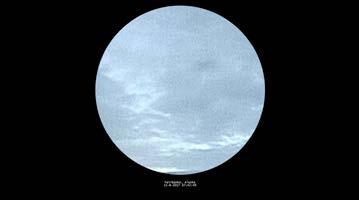
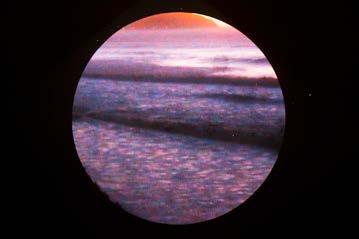
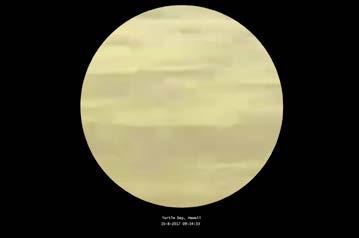
Vistas de cámaras web de diferentes partes del mundo: Alaska, Australia, Hawaii
Webcams views from different parts of the world: Alaska, Australia, Hawaii
En “Dawn Eye – Zoom” (2017), el artista convierte el “amanecer global” en un experimento sensorial que pone al descubierto la arquitectura digital de lo cotidiano. A partir de flujos de vídeo en vivo, capturados por cámaras remotas en distintas partes del planeta, la pieza proyecta sobre una estructura de madera –evocadora de antenas satelitales– un paisaje de luz matinal que, al ser amplificado digitalmente, se fragmenta en un “mosaico” de píxeles y “fallos técnicos” que nos muestran la base “orgánica” de los aparatos técnicos en los distintos “estar ahí” de los amaneceres del mundo. Bajo este “macro-microscopio” visual, el cielo deja de ser un horizonte distante para convertirse en un tejido de gestos lumínicos y rupturas digitales, donde cualquier momento o distorsión revela la “manualidad oculta” de los algoritmos (Flusser, 2015). En su descomposición, la instalación desafía la ilusión de la imagen perfecta y propone un encuentro íntimo con la fragilidad del medio: una reflexión sobre cómo la tecnología re-dibuja nuestra conexión con lo que entendemos como natural, transduciendo un “fenómeno atemporal” en celdas y manchas de color. Este ejercicio podríamos relacionarlo con lo que menciona Manovich (2002), quien sostiene que el lenguaje de los nuevos medios permite transformar la imagen en un objeto en constante cambio, donde cada error digital se convierte en parte del mensaje.
Aun cuando los intereses de evidenciar las “viseras primarias” de lo técnico, la instalación «Wormhole» (2017) nos muestra un ejemplo de la tecnología –en su fragilidad paisajística y su potencia de hiperconexión– en la disolución de las fronteras temporales y espaciales. La
I will proceed now to analyze some works that, from my point of view, reconfigure the notions of image and perception, managing to integrate theoretical contributions that range from technical individuation to the critique of image culture:
In «Looking to the South» (2018), Gonzalo transforms a quotidian object – the shape of a cellphone – into an artifact that recalls the tradition of navigation and, simultaneously, questions the migration experience. When backlighting the object, the Southern Cross constellation is revealed, suggesting a symbolic reorientation of the subject in movement. We can reflect on this transformation with reference to Simondon (2007, 2009), for whom the technical object is individualized through its interaction with the milieu. In addition, from a Stieglerian reading, the bio-human aspect would be amplified, symbolically and theoretically, by incorporating the notion of «organology,» through which technique is «humanized» and intertwined within the net of collective memories.
In «Dawn Eye - Zoom» (2017), the artist turns the «global dawn» into a sensory experiment that lays bare the digital architecture of the everyday. Using live video streams, captured by remote cameras in different parts of the world, the piece projects onto a wooden structure – reminiscent of a satellite dish – a morning light landscape that, when digitally amplified, fragments into a «mosaic» of pixels and «glitches» that let us see the «organic» base of the technical devices in the various “being-there” of the sunrises of the world. Under this visual «macromicroscope,» the sky ceases to be a distant horizon in order to become a knitted set of luminous gestures and digital faults, where any moment or distortion reveals the «hidden craft» of the algorithms (Flusser, 2015). When decomposed, the installation challenges the illusion of a perfect image and proposes an intimate encounter with the fragility of the medium: a reflection on how technology re-draws our connection with what we understand as natural, transducing a «timeless phenomenon» into cells and color stains. We could relate this exercise to Manovich (2002), who claims that the language of new media allows for the transformation of the image into an object in constant change, where every digital error becomes part of the message.
Despite the interest in evidencing the “primary visors” of the technical, the installation “Wormhole” (2017) shows us an example of technology
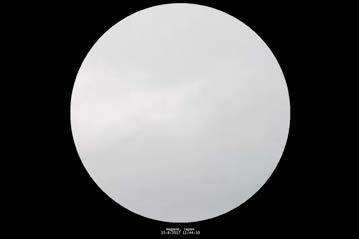
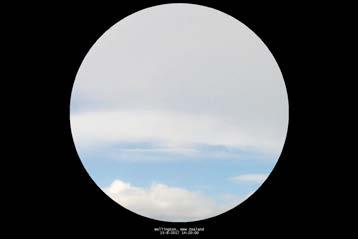
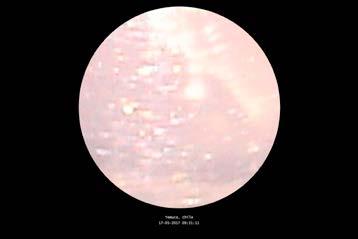
EYE - ZOOM 2017
Vistas de cámaras web de diferentes partes del mundo: Japón, Nueva Zelanda, Chile Webcams views from different parts of the world: Japan, New-Zealand, Chile
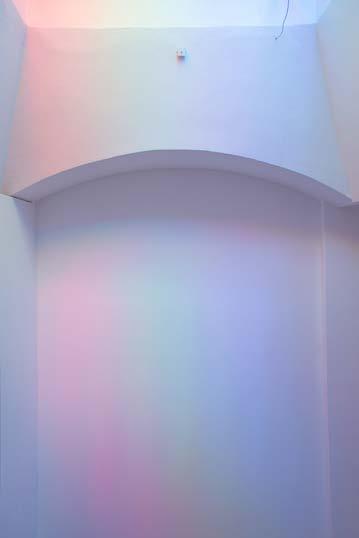
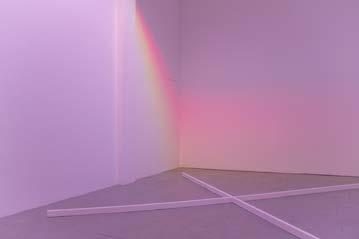
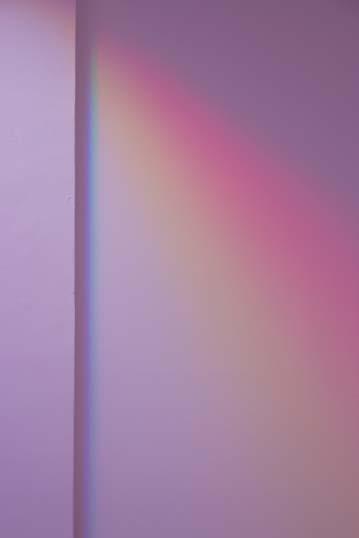
PIXEL 2017
Detalle de la exposición
Thresholds, Meinblau
Projektraum.
Centro: Vista de obra del artista Juan Varela
Detail from the exhibition
Thresholds, Meinblau
Projektraum.
Center: View of the artwork by artist Juan Varela
transmisión, en tiempo real desde el desierto de Atacama, nos muestra un encuadre de la periferia de Hong Kong, generando la metáfora de un “agujero de gusano digital” que posibilita la conexión entre extremos geográficos. Este fenómeno se relaciona con las nociones de transindividuación (Stiegler, 2012) y la idea de una “cultura de la conexión” que Castells (2009) expone en su análisis de la comunicación y el poder. Además, en el marco del post-digitalismo, esta obra nos muestra cómo la tecnología reconfigura la experiencia fragmentada y relativa de tiempo y espacio, que abarca gran parte de su trabajo (Toro Contreras, 2025).
Algo relevante de “Wormhole” (y de gran parte de su trabajo) es el desplazamiento en la inscripción de la tradición del arte moderno –fotografía análoga (luz/oscuridad) y pintura (impresionismo y simbolismo en lo que concierne a la luz y el color)– que se podrá ver en casi todos sus trabajos preparatorios y actuales en su búsqueda no acabada, y que también se nos presenta en “Looking to the South”, Dawn Eye –Zoom y en las posteriores que iré describiendo y analizando.
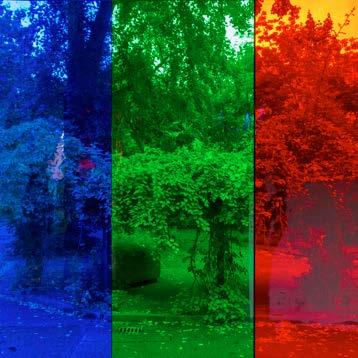
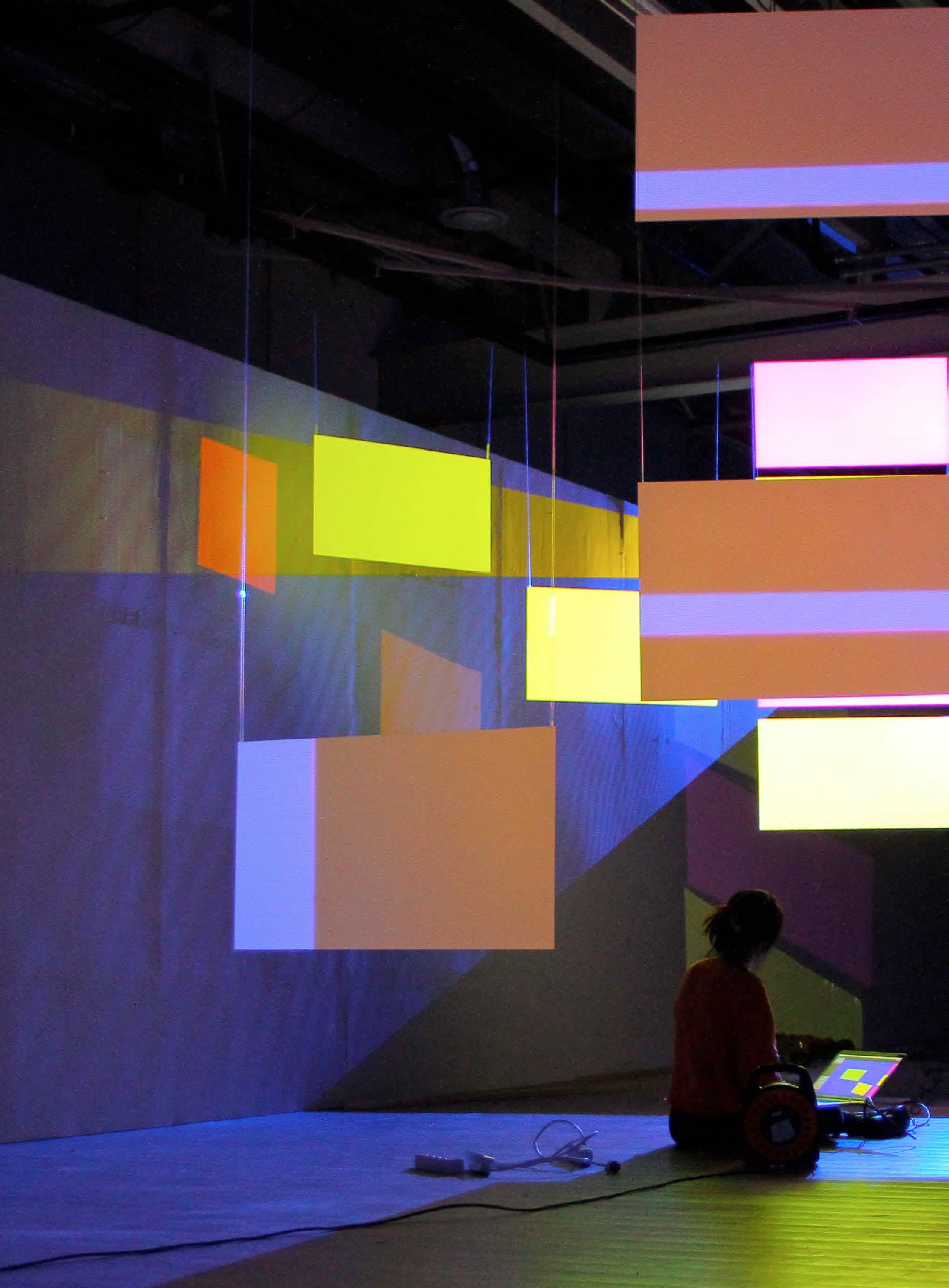
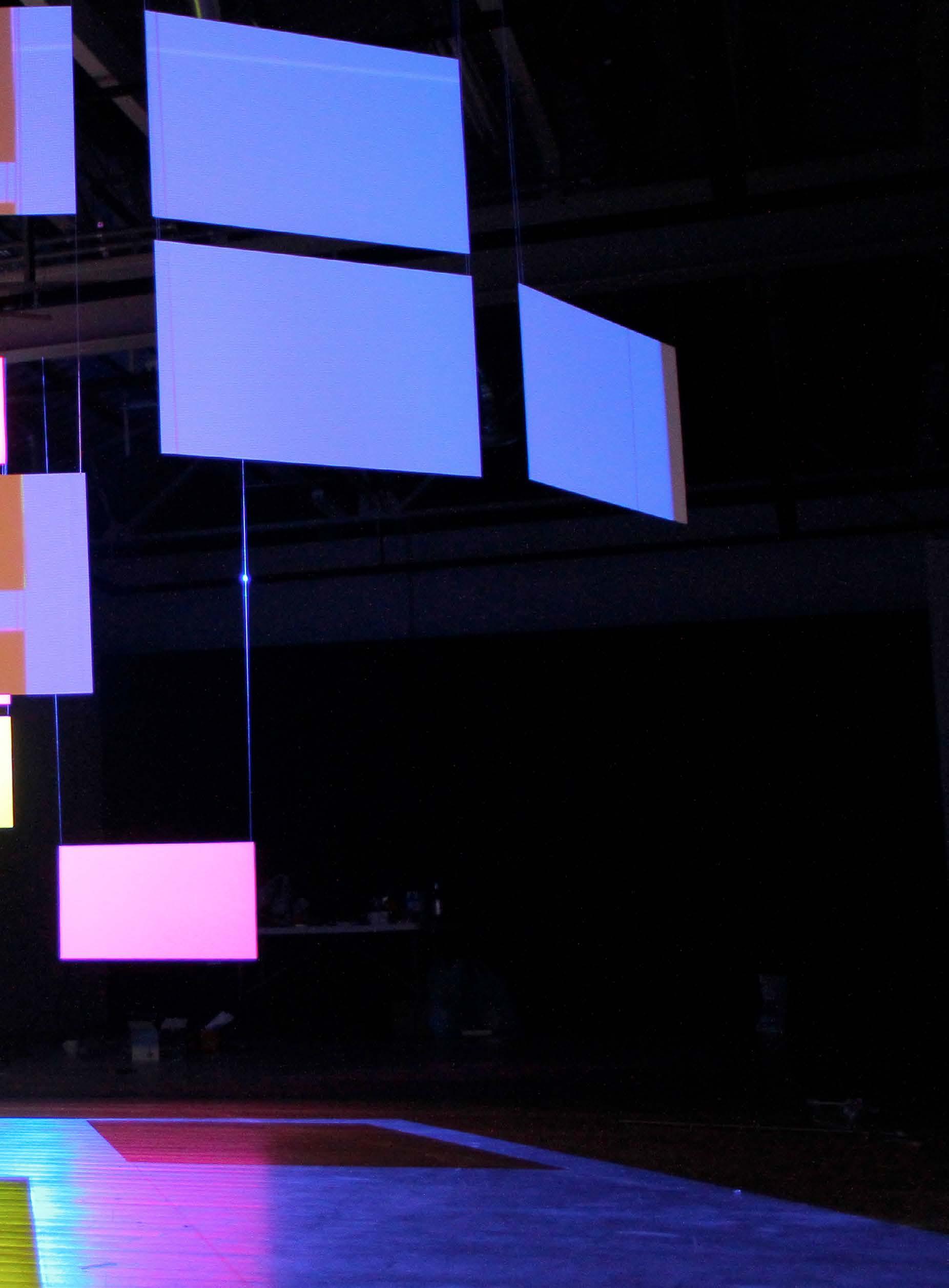
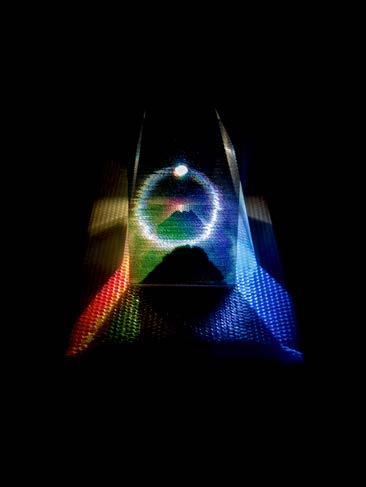
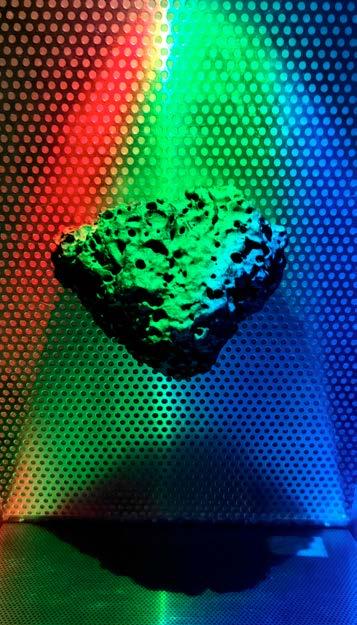
Las intervenciones «Pixel» (2017) y «RGBA – ABGR (0.8)» (2017) también exploran los movimientos, y la manipulación de la luz y el color para transformar el espacio expositivo. En “Pixel”, Gonzalo saturó la sala principal con filtros de luz roja, verde y azul, de modo que el tragaluz se convirtió en un “hiper-pixel” a escala arquitectónica. Al modular la luz exterior según las condiciones meteorológicas y la posición del sol, la instalación transduce el cielo en un código RGB “vivo”, fragmentando la percepción del espacio en sus componentes primarios. Este gesto de descomposición y recomposición lumínica ejemplificaría, de algún modo, la individuación de lo técnico, donde la materialidad de la luz se vuelve un objeto híbrido que coexiste, alterando la realidad del color en el espacio construido y en los cuerpos de quienes se encuentren ahí (pintura cinética y body art “técnico primario expandido”). Asimismo, la obra opera, conceptualmente, como una extensión sensorial de la tecnología, donde los medios modifican nuestras capacidades de percepción (McLuhan, 1996). En “RGBA – ABGR (0.8)”, los ventanales del recinto son reconfigurados en grandes píxeles filtrantes, donde el artista, al colocar paneles de color sobre estos ventanales, hace ambivalentes los límites entre interior y exterior. La luz que atraviesa estos filtros adopta la estructura del modelo RGB, invitando al asistente a mirar hacia dentro y hacia fuera a través de un “prisma digital”. Esta
that – in its landscape fragility and hyper-connective power – leads to the dissolution of temporal and spatial boundaries. The broadcasting, in real time from the Atacama Desert, shows us a frame of the outskirts of Hong Kong, creating the «digital wormhole» metaphor that makes possible the connection between geographical extremes. This phenomenon is related to the notions of transindividuation (Stiegler, 2012) and the idea of a «connection culture,» which Castells (2009) explains in his analysis of communication and power. In addition, within the framework of post-digitalism, this work of art shows us how technology reconfigures the fragmented and relativized experience of time and space, which constitutes a major part of Reyes Araos’ production (Toro Contreras, 2025).
A salient aspect of «Wormhole» (and much of the artist’s oeuvre) is the expansion regarding the inscription of the modern art tradition –analog photography (light/darkness) and painting (impressionism and symbolism in terms of light and color). This is evident in almost every one of the artist’s preliminary and current works within his ongoing exploration, and similarly manifests in “Looking to the South,” “Dawn Eye - Zoom,” and the subsequent works I will describe and analyze.
The interventions «Pixel» (2017) and «RGBA – ABGR (0.8)» (2017) also explore movement and the manipulation of light and color in order to transform the exhibition space. In «Pixel,» Gonzalo saturated the primary room with red, green, and blue light filters, turning the skylight into a hyperpixel on an architectural scale. By modifying external light according to weather conditions and the sun’s position, the installation transduces the sky into a live RGB code, fracturing the perception of space into its primary components. The gesture of light’s decomposition and recomposition exemplifies, in essence, the individuation of the technical; the materiality of light becoming a hybrid object that coexists, altering the reality of color in the built space and on the bodies of those who are there (kinetic painting and “technical, primary, expanded” body art). Along these lines, the artwork operates, conceptually, as a sensory extension of technology, where the different means change our capacity for perception (McLuhan, 1996). In «RGBA - ABGR (0.8),» the windows of the premises are reconfigured into large filtering pixels, where the artist, by placing color panels over the windows, makes out of the inner and outer boundaries something ambivalent. The light that passes through those filters adopts the RGB model structure,
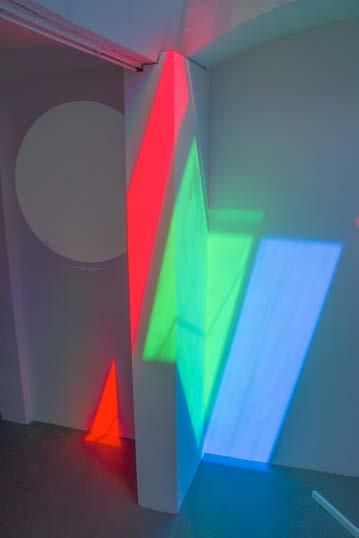
Vista de la exposición Thresholds, Meinblau Projektraum, Berlin
View of the exhibition Thresholds, Meinblau Projektraum, Berlin
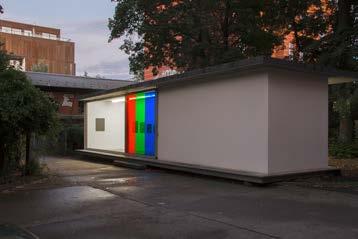
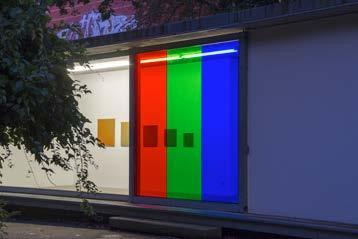
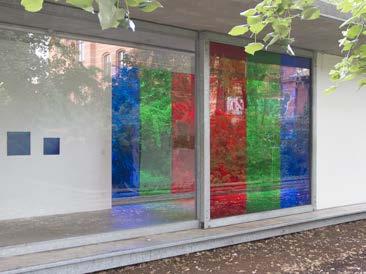
inversión del rol arquitectónico nos plantearía cómo la técnica nunca ha sido un instrumento pasivo, sino un proceso de individuación que reconfigura la experiencia del espacio y la imagen (Simondon, 2009), haciéndonos partícipes activos/as de la omnipresencia de lo digital en la forma en que habitamos los mundos.
Las experiencias de “Facing the Sun” (2015) y “Calama’s Dawn” (2015) sincronizan amaneceres y crepúsculos en distintos puntos del planeta, utilizando transmisiones en tiempo real para entrelazar afectos, geografías y temporalidades, rearticulando los límites momentáneos entre lo íntimo y lo global. En “Facing the Sun”, Gonzalo transmite en vivo desde cámaras instaladas en distintos puntos del planeta. Al entrelazar imágenes de cielos “dispares”, la instalación articula una experiencia sensorial que funde lo local y lo global (Jenkins, 2006) al analizar la convergencia de medios. Esta simultaneidad cuestiona nuestra percepción del tiempo y sugiere una forma de transindividuación (Stiegler, 2012) donde la memoria y la identidad se expanden a través de redes técnicas y afectivas. Por su parte, “Calama’s Dawn” introduce un gesto íntimo, donde cada mañana la cámara ubicada en el hogar de la madre del artista en Calama captura el alba chilena y lo transmite simultáneamente con el crepúsculo en su lugar de exposición. Este contrapunto entre despertar y anochecer crea un paralelismo temporal sobre la carga emotiva del proyecto. Al compartir ese instante de “buenos días” a miles de kilómetros, Gonzalo hace tangible la noción de lo “ubicuo” que planteo en la reflexión sobre post-digitalismo, intentando mostrar cómo la tecnología puede reconfigurar nuestra experiencia del espacio y de los lazos afectivos (Toro Contreras, 2025).
RGBA - ABGR (0.8)
2017
Vista de la exposición
Different Similarities, Pavillon am Milchhof, Berlin
View of the exhibition Different Similarities, Pavillon am Milchhof, Berlin
En “Mother PNG” (2014) y “Nunc” (2017), Gonzalo traslada la intimidad familiar y anónima al terreno del código puro. “Mother PNG” se articula en un libro de artista con el contenido binario de un archivo PNG (Portable Network Graphics). Las imágenes se transducen, en el libro, en líneas de código que el computador interpreta para renderizar la captura de pantalla de una videollamada con su madre, tensionando los límites entre afecto y dato. Al externalizar la memoria en un soporte legible por máquinas, la obra cuestiona la estabilidad del recuerdo y revela que nuestra historia personal se escribe, actualmente en protocolos digitales. “Nunc” despliega un archivo vivo y colectivo, donde cada vez que
inviting the audience to look inwards and outwards through a «digital prism.» This inversion of the architectonic suggests that the technique has never been a passive instrument, but rather a process of individuation that reconfigures the experience of space and image (Simondon, 2009), thereby making us active participants in the omnipresence of the digital in the way we inhabit worlds.
The experiences of «Facing the Sun» (2015) and «Calama’s Dawn» (2015) synchronize sunrises and twilights in different parts of the planet, using live broadcasting to intertwine affection, geography, and time – rearticulating the temporary boundaries between the intimate and the global. In «Facing the Sun,» Gonzalo broadcasts live from two cameras installed in different parts of the world. By intertwining images of «mixed» skies, the installation articulates a sensory experience that blends the local and the global (Jenkins, 2006), when the convergence of means is analyzed. This simultaneity challenges our perception of time and suggests a form of transindividuation (Stiegler, 2012), whereby memory and identity are expanded through the affective and technical networks. On the other hand, «Calama’s Dawn» introduces an intimate gesture. Every morning, the camera located in the artist’s mother’s home, in Calama, captures the Chilean dawn, broadcasting it simultaneously with the twilight in its place of exhibition. This counterpoint between dawn and dusk creates a temporary parallelism in the emotional aspect of the project. By sharing that «good morning» moment, despite being miles apart, Gonzalo makes the notion of «omnipresence» tangible, which I discuss in my reflection on post-digitalism, by demonstrating how technology can reshape our experience regarding space and emotional bonds (Toro Contreras, 2025).
In «Mother PNG» (2014) and «Nunc» (2017), Gonzalo takes the family and anonymous intimacy to the realm of pure code. «Mother PNG» is articulated in one artistic book through the binary content of a PNG (Portable Network Graphics) file. In the book, images are transduced into lines of code, which the computer interprets to render the screenshot of a video call with his mother, tightening the limits between affection and data. By externalizing this memory into a machine-readable medium, the piece questions the stability of memory and reveals that our personal history is increasingly written through digital protocols.
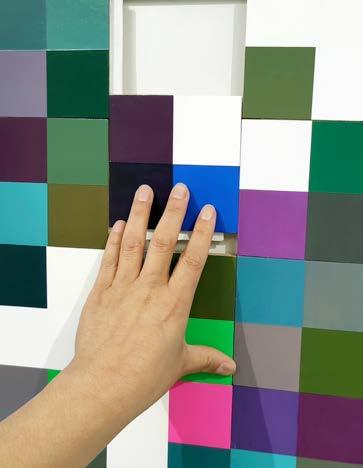
un visitante activa el enlace, un script genera una imagen PNG sobre un lienzo en blanco, inscribiendo fecha, hora, ciudad, país y coordenadas geográficas de su ubicación. Este mecanismo interactivo (que nos recuerda obras de net.art no solo en esta obra), hace, de quién participa en co-creador de un testimonio anónimo y fragmentado, tal como las plataformas digitales construyen identidades a partir de metadatos. La acumulación de estos registros configura una documentación de presencias dispersas, evidenciando que la experiencia y la identidad se distribuyen hoy entre cuerpos y circuitos, y que el acto mismo de mirar y hacer “clic” forma parte de la construcción de sentido (Bates, 2015).
“Bitmap Poemarium” (2023) y “Puxxel” (2023) articulan una poética algorítmica donde el “verso libre” se convierte en color y el color en “verso libre”, develando la materialidad algorítmica del lenguaje. En “Bitmap Poemarium”, Gonzalo despliega 33 poemas conceptuales concebidos mediante “escritura automática” a partir de texto predictivo en su teléfono móvil, un dispositivo descrito por el artista como “prótesis neuronal” (McLuhan, 1996), lo que devendría en la exosomatización stiegleriana. Cada texto se transduce a píxeles, luego el artista convierte cada palabra en un valor de color dentro de un formato bitmap, de modo que la obra se presenta, simultáneamente, como imagen y como código legible. “Puxxel” traslada ese ejercicio al espacio físico mediante cuadros-puzzle de piezas cromáticas, donde cada fragmento de color representa una palabra de un poema. Al recomponer manualmente estas piezas, podemos reconfigurar el orden semántico y alterar el mensaje original, en una dinámica de “democratización de la imagen” que refleja la descentralización del autor en la era digital (Virilio, 1997). Usando el código hexadecimal RGB, cada pieza se inserta en un mosaico que, al ser manipulado, manifiesta la “naturaleza” mutable del sentido y la co-responsabilidad del “público” en la construcción del “significado poético”.
Sobre la obra “Cielo Rojo y Verde y Azul” (2023), la cual es una extensión instalativa de las dos obras antes mencionadas, y la que tuve el privilegio de curar, puede leerse en extenso en la hipótesis curatorial que desarrollé y que pueden encontrar al final del ensayo en las referencias bibliográficas.
«Nunc» displays a live and collective file, whereby every time a visitor clicks on the link, a script generates a PNG image on a white canvas, registering date, time, city, country, and geographic coordinates of their location. This interactive mechanism (which, beyond this specific artwork, recalls pieces from net.art) turns those who participate into cocreators of an anonymous and fragmented testimony, just like digital platforms build identities based on metadata. The accumulation of these records configures a document collection of scattered presences, demonstrating that experience and identity are today distributed among bodies and circuits, and that the very act of looking and clicking is part of the construction of meaning (Bates, 2015).
«Bitmap Poemarium» (2023) and «Puxxel» (2023) articulate an algorithmic poetics, where «free verse» is transformed into colors and color turns into «free verse,» unveiling the algorithmic materiality of language. In «Bitmap Poemarium,» Gonzalo displays 33 conceptual poems conceived through «automatic writing» based on the predictive text of his cell phone, a device described by the artist as a «neuronal prosthesis» (McLuhan, 1996), which would become a Stieglerian exosomatization. Every piece of text is transduced into pixels, then, the artist transforms every word into a color value within the bitmap format so that the art piece is presented, simultaneously, as image and as readable code. «Puxxel» takes that exercise to the physical space through puzzle-frames of chromatic pieces, where each color fragment represents a word of a poem. By manually recomposing these pieces, the semantic order can be reconfigured, altering the original message in a dynamic of «democratization of the image,» which reflects the decentralization of the author in the digital era (Virilio, 1997). Using the hexadecimal code RGB, every piece is inserted in a mosaic, which, when manipulated, manifests the mutable «nature» of sense and coresponsibility of the «audience» in the construction of «poetic meaning.»
Regarding the work «Cielo Rojo y Verde y Azul» (2023), which is an installation that builds upon the two aforementioned pieces, and which I had the privilege of curating, you can read about it extensively in the curatorial hypothesis that I developed and that you can find at the end of this essay in the bibliographic references.
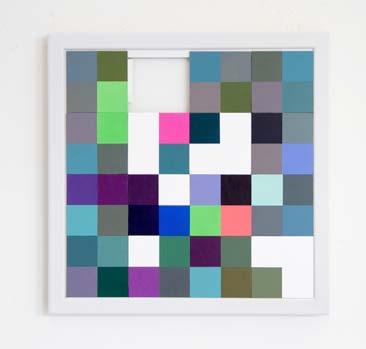
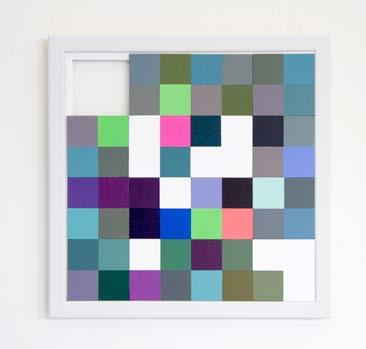
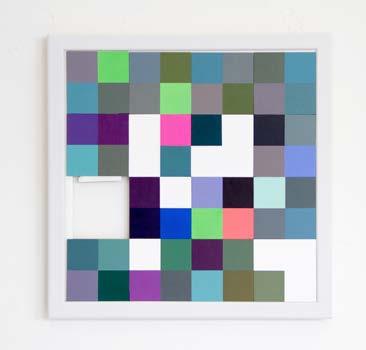
PUXXEL 2023
Vista de diferentes posibilidades de composición de la obra View of different composition possibilities of the work
Reflexión crítica de las obras y su narrativa
La forma en que se reflexiona, organiza y presenta la obra de Gonzalo Reyes Araos en el espacio expositivo es, en sí misma, un acto de crítica y reconfiguración del discurso contemporáneo. Parte de la narrativa que envuelve sus intervenciones no solo se limita a la disposición de objetos o instalaciones, sino que actúa como un sistema dialéctico que articula la relación entre la tecnología, la percepción, la desterritorialización digital de disciplinas desplazadas, en principio por el algoritmo y, no pocas veces, condensadas en la manualidad que responde a lo construido por la data, las tensiones de percepción del “poema”, la trayectoria de la pintura y la puesta en crisis de las memorias en la retención terciaria (Stiegler, 2002) de los códigos en la era post-digital. Volviendo a las narrativas de Gonzalo, estas se articulan a partir de una tensión crítica: por un lado, se observa una apuesta por la inmersión y la participación, mientras que, por otro, se interroga la “superficialidad” inherente a la reproducción digital, tal como advierte Stiegler (2018) en lo que concierne a la “estupidez artificial”. En este sentido, sus exploraciones podrían considerarse como herramientas para desmantelar la aparente inmediatez de lo digital y revelar las capas subyacentes que configuran la experiencia estética y cognitiva. La obra se desplegaría como una “tecnología sensible” que, al transformar el espacio y el tiempo, invita a una reflexión sobre la forma en que las tecnologías no solo median la experiencia, sino que también la constituyen en una cuasi nula línea entre lo natural y lo artificial.
Desde una perspectiva crítica, es importante destacar cómo las obras de Gonzalo se erigen como un laboratorio en el que convergen la materialidad y lo intangible. La interacción entre obras como «Wormhole», «Dawn Eye – Zoom» y «Pixel» no solo cuestiona los límites entre lo digital y lo material, sino que también desafía las nociones convencionales espacio temporales como mencionaba antes. Podríamos abarcar este enfoque con la importancia de entender la tecnología como un proceso de individuación y transindividuación que reconfigura la experiencia del tiempo, donde la interactividad y la convergencia de las obras permiten reconstruir nuestro propio recorrido narrativo.
Críticamente, el trabajo de Gonzalo se enfrenta a la paradoja de la tecnología como amplitud de las posibilidades expresivas y de demo-
The way in which the work of Gonzalo Reyes Araos is presented, organized, and reflected on in the exhibition space is, in itself, an act of critique and reconfiguration of the contemporary discourse. Part of the narrative behind his interventions is not confined to the arrangement of objects or installations; instead, it functions as a dialectical system that articulates the relationship between technology, perception, and the digital deterritorialization of displaced disciplines. This is primarily driven by the algorithm and, quite often, condensed in the manual skills that respond to data-driven constructions, the perceptual tensions of the “poem,» the trajectory of painting, and the crisis of memory in the tertiary retention (Stiegler, 2002) of codes in the post-digital era. Continuing with Gonzalo’s narratives, these are articulated on the basis of a critical tension: on the one hand, a commitment to immersion and participation is appreciated, while, on the other hand, the inherent «superficiality» is questioned concerning digital reproduction, just like Stiegler (2018) points out with regard to «artificial stupidity.» In this sense, his explorations serve as tools that dismantle the apparent immediacy of the digital and reveal the underlying layers that shape the aesthetic and cognitive experience. The oeuvre unfolds as a «sensitive technology» that, through the transformation of time and space, promotes a reflection on the way in which technologies not only mediate experience, but also constitute an almost null line between the natural and the artificial.
From a critical perspective, it is important to highlight how Gonzalo’s works stand as a laboratory where materiality and the intangible converge. The interaction among works such as «Wormhole,» «Dawn Eye - Zoom,» and «Pixel» not only challenges the boundaries between the digital and the material, but also defies conventional time-space notions, as I mentioned earlier. We could address this approach by understanding how important it is to see technology as a process of individuation and transindividuation that reconfigures the experience of time, where the interactivity and convergence of the works allow us to build our own narrative journey.
From a critical point of view, Gonzalo’s work faces the paradox of technology seen as the amplitude of expressive possibilities and
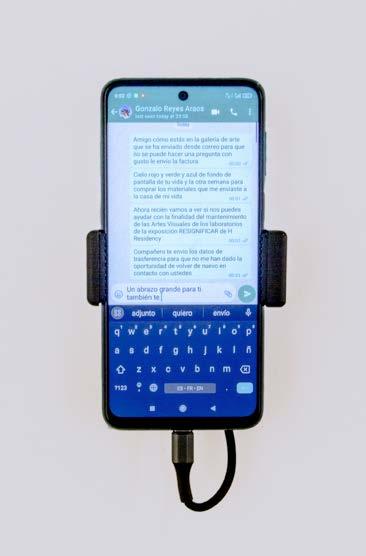
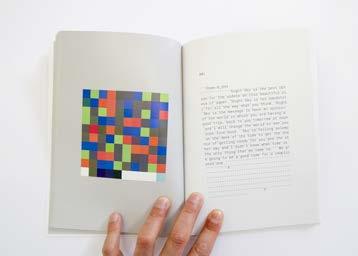
Arriba / Above: Poemas generados por escritura automática vía WhatsApp. Video presentado en smartphone. Exposición Cielo rojo y verde y azul, Parque Cultural de Valparaíso, Chile. Poems generated by automatic writing via WhatsApp. Video displayed on smartphone. Exhibition Cielo rojo y verde y azul, Parque Cultural de Valparaíso, Chile.
Abajo / Below: BITMAP POEMARIUM 2023
Libro de artista. Artist’s book
Referencias
References
cratización del acceso a la información y, por otro lado, reproduce mecanismos de control y superficialidad que, según Baudrillard (1978), pueden llevar a una cultura de simulacros donde la realidad se sustituye por su imagen. La obra de Gonzalo, al (re)presentar los signos y errores inherentes a lo digital, logra generar un espacio de resistencia ante la hipercontrolada lógica de la imagen mediática que deriva en una hiperindividualización (Lipovetsky, 2024). Asimismo, la narrativa se nutre de la reflexión sobre la memoria y la experiencia migratoria, a partir de las reflexiones en torno a los artefactos que organizan lo expositivo –donde cada obra actúa como un nodo en una red de conexiones afectivas y geográficas–, permite que podamos ser partícipes de un proceso de reubicación y resignificación. Esta disposición nos recuerda lo que describe Guattari (1996) en «Las tres ecologías», donde la transformación del entorno no es solo física, sino también psicológica y social.
Finalmente, podría agregar, siempre desde una perspectiva tecnológica, que el trabajo del artista participa en una crítica más amplia de la cultura digital. A partir de los planteamientos de Floridi (2014) sobre la transformación de la realidad en la «infosfera», las obras de Gonzalo se conciben como un espacio híbrido donde lo digital y lo matérico coexisten en una dinámica de constante cambio. Este enfoque crítico permite no solo apreciar la obra en su dimensión estética, sino también cuestionar las implicaciones éticas y políticas de un mundo cada vez más mediatizado.
Baudrillard, J. (1978). "Cultura y simulacro." Kairós
Bishop, C. (2012). "Artificial hells: Participatory art and the politics of spectatorship." Verso Books
Castells, M. (2009). "Comunicación y poder."
Alianza Editorial
Eliasson, O. (2016). "Reality machines." Moderna Museet
Filinich, R., & Toro Contreras, S. (2023). "De la farmacología a la organología: Diálogos en torno al pensamiento de Bernard Stiegler." Ril Editores
Flusser, V. (2015). "El universo de las imágenes técnicas: Elogio de la superficialidad." Caja Negra
Grau, O. (2017). "Virtual art: From illusion to immersion." MIT Press
Jenkins, H. (2006). "Convergence culture: Where old and new media collide." New York University Press
Lipovetsky, G. (2024). "La consagración de la autenticidad." Anagrama
Lozano-Hemmer, R. (2012). "For the city." Prestel Manovich, L. (2002). "The language of new media." MIT Press.
McLuhan, M. (1996). "Comprender los medios de comunicación: Las extensiones del ser humano." Ediciones Paidós Ibérica
Simondon, G. (2007). "El modo de existencia de los objetos técnicos." Prometeo Libros.
Simondon, G. (2009). "La individuación: A la luz de las nociones de forma y de información." Cactus - La Cebra
Simondon, G. (2014). "Curso sobre la percepción." Cactus
Stiegler, B. (2002). "La técnica y el tiempo II: La desorientación." Hiru
of democratization of access to information. On the other hand, it reproduces mechanisms of control and superficiality that, according to Baudrillard (1978), can lead to a culture of simulacra where reality is replaced by its image. By (re)presenting signs and inherent errors regarding the digital, Gonzalo’s work creates a space of resistance in the face of the hyper-controlled logic of the media image that leads to a hyperindividualization (Lipovetsky, 2024). Likewise, the narrative is nourished by the reflection on memory and the migration experience, based on the analysis of the artifacts that organize the exhibition –where every work of art acts as a node inside a network of emotional and geographical connections – it is possible for us to be part of a process of relocation and resignification. This disposition reminds us of what Guattari (1996) describes in «The Three Ecologies,» where the transformation of the environment is not only physical, but also psychological and social.
Finally, I would add, from a technological perspective, that the artist’s work is part of a broader critique of digital culture. Drawing on Floridi’s claims (2014) on the transformation of reality in the «infosphere,» Gonzalo Reyes Araos’ works are conceived as a hybrid space where the digital and the material coexist in a dynamic of constant change. This critical approach allows us not only to appreciate his oeuvre from its aesthetic dimension, but also to question the ethical and political implications of an increasingly mediatized world.
Stiegler, B. (2012). "Tiempo e individuaciones técnica, psíquica y colectiva en la obra de Simondon." Trilogía, 6, 133-146.
Stiegler, B. (2014). "Ars e invenciones organológicas en las sociedades de hipercontrol." Revista de Filosofía Nombres, 28, 147-163. Stiegler, B. (2016). "Relational ecology and the digital pharmakon." Electronic Book Review
Stiegler, B. (2018). "Artificial stupidity and artificial intelligence in the Anthropocene" [Discourse]. Retrieved from https://www.academia. edu/37849763/Bernard_Stiegler_Artificial_ Stupidity_and_Artificial_Intelligence_in_the_ Anthropocene_2018
Stiegler, B., & Rogoff, I. (2010). "Transindividuation." e-flux journal, 14, 1-6.
Toro Contreras, S. (2023). "Hipótesis curatorial: Samuel Toro Contreras." Retrieved from https://
www.academia.edu/109048209/Hip%C3%B3tesis_ Curatorial_Samuel_Toro_Contraras
Toro Contreras, S. (2025). "Digitalismo y post-digitalismo." Retrieved from https://www. academia.edu/128913008/Digitalismo_y_post_ digitalismo
Virilio, P. (1997). "Speed and politics." Semiotext(e)
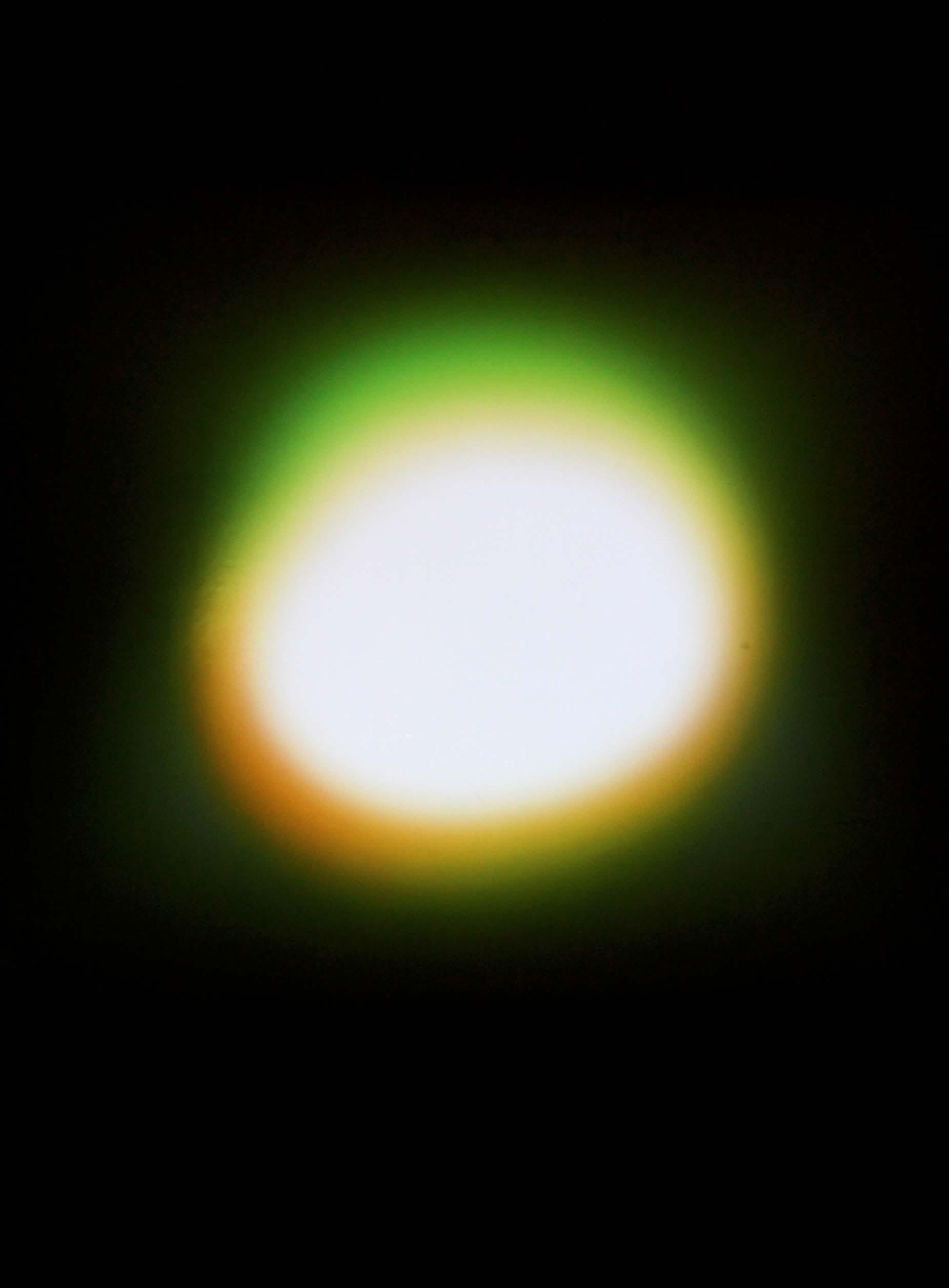
[español]
Esta instalación proyecta un haz de luz que evoca una célula circular. La proyección responde activamente a los estímulos físicos del entorno, desde variaciones en la iluminación del espacio hasta los movimientos de la audiencia que interactúa con ella, generando una experiencia dinámica y envolvente.
Con esta obra, el artista reflexiona sobre la luz como organismo viviente, con la capacidad de reaccionar y nutrirse mediante su propia energía autopoiética, en un ciclo de autosustentación y transformación.
[english]
LIGHTHEART
2014
Instalación interactiva
Proyector y cámara de video
Dimensiones variables
Interactive installation
Projector and video camera
Variable dimensions
This installation projects a beam of light that evokes a circular cell. The projection responds dynamically to physical stimuli in its environment—ranging from shifts in the space’s lighting to the movements of the audience interacting with it—creating an immersive and vibrant experience.
Through this work, the artist invites reflection on light as a living organism, endowed with the capacity to react and nourish itself through its own autopoietic energy, engaging in a cyclical process of self-sustenance and transformation.
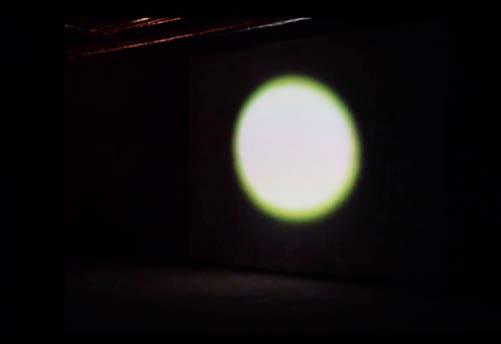
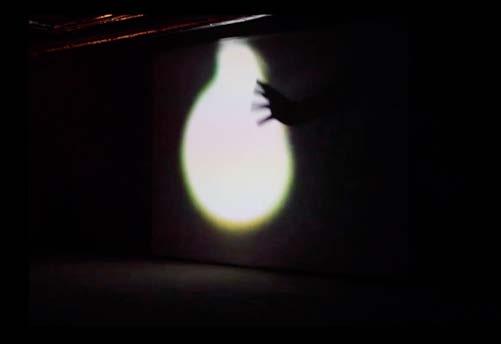
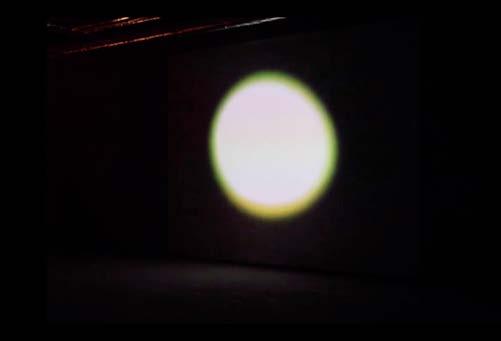
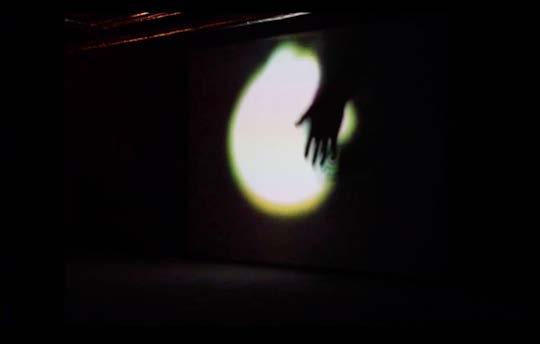
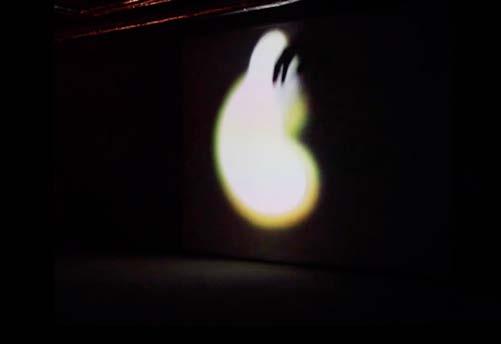
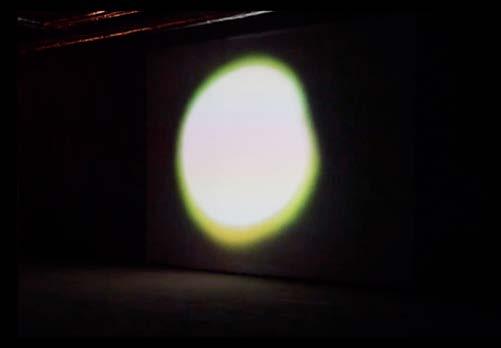
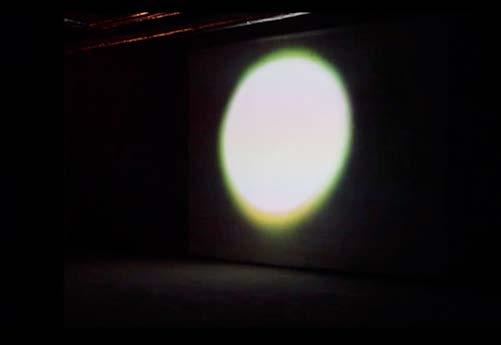
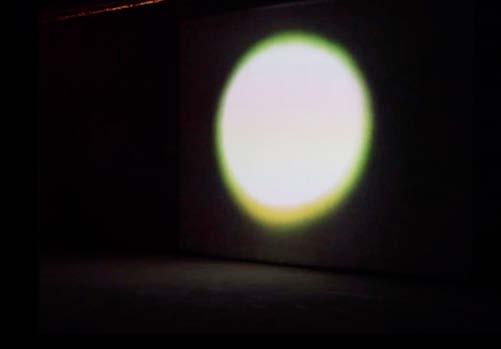
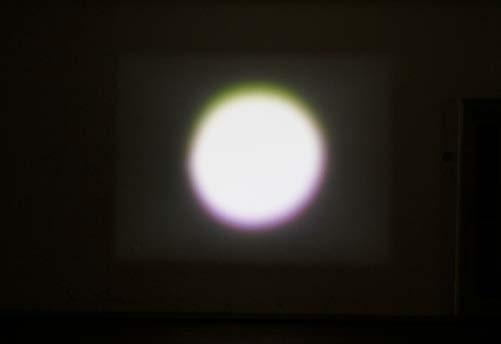
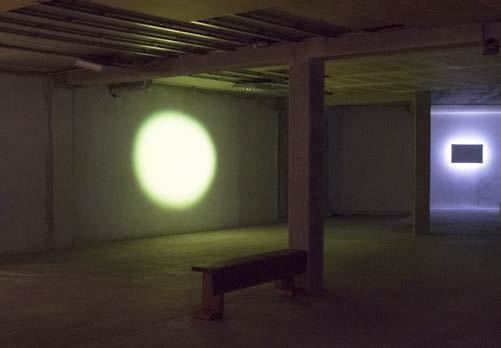
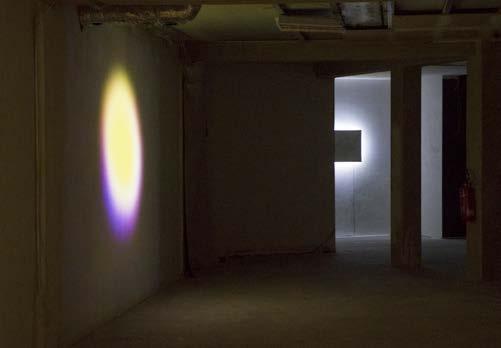
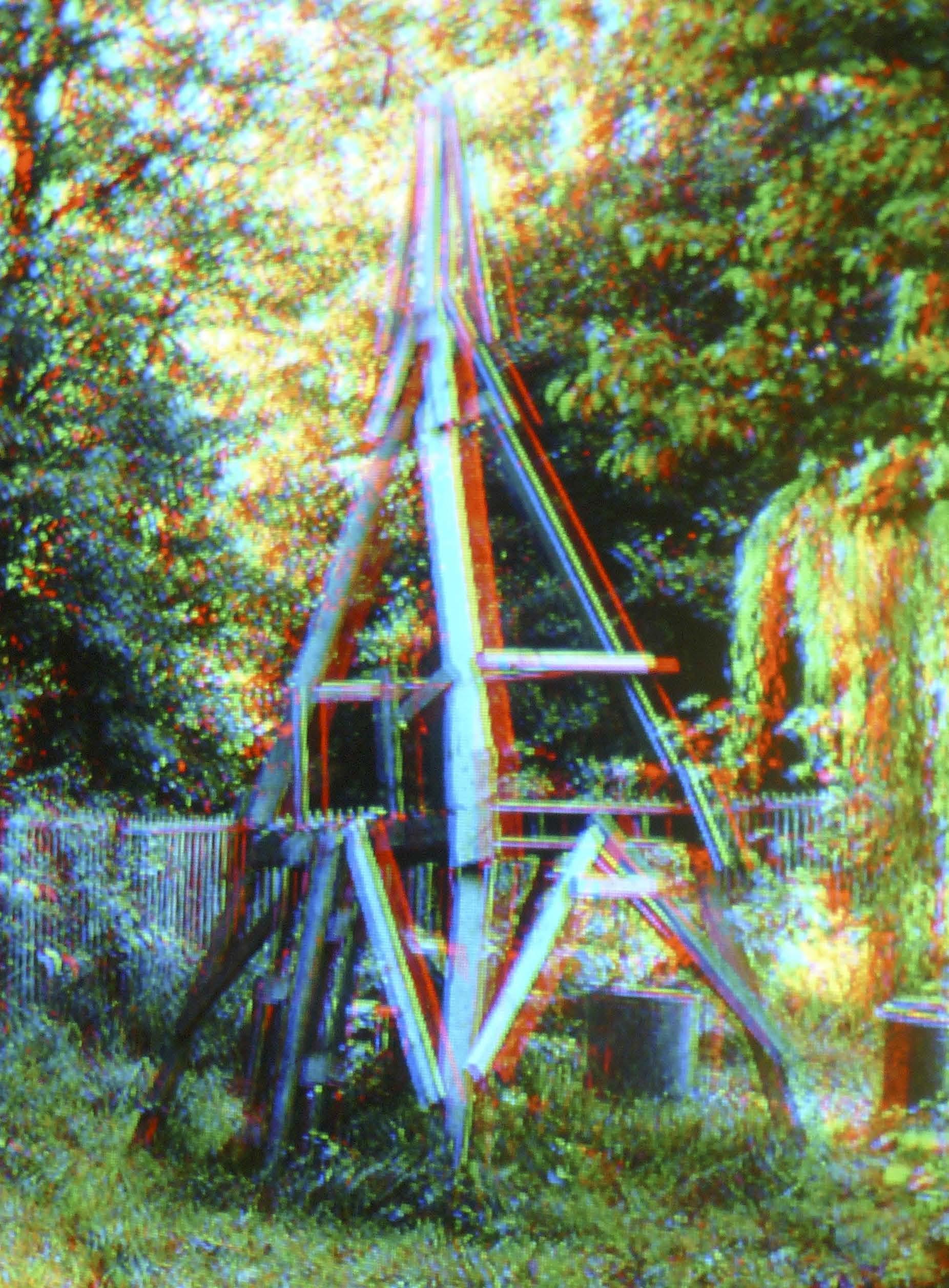
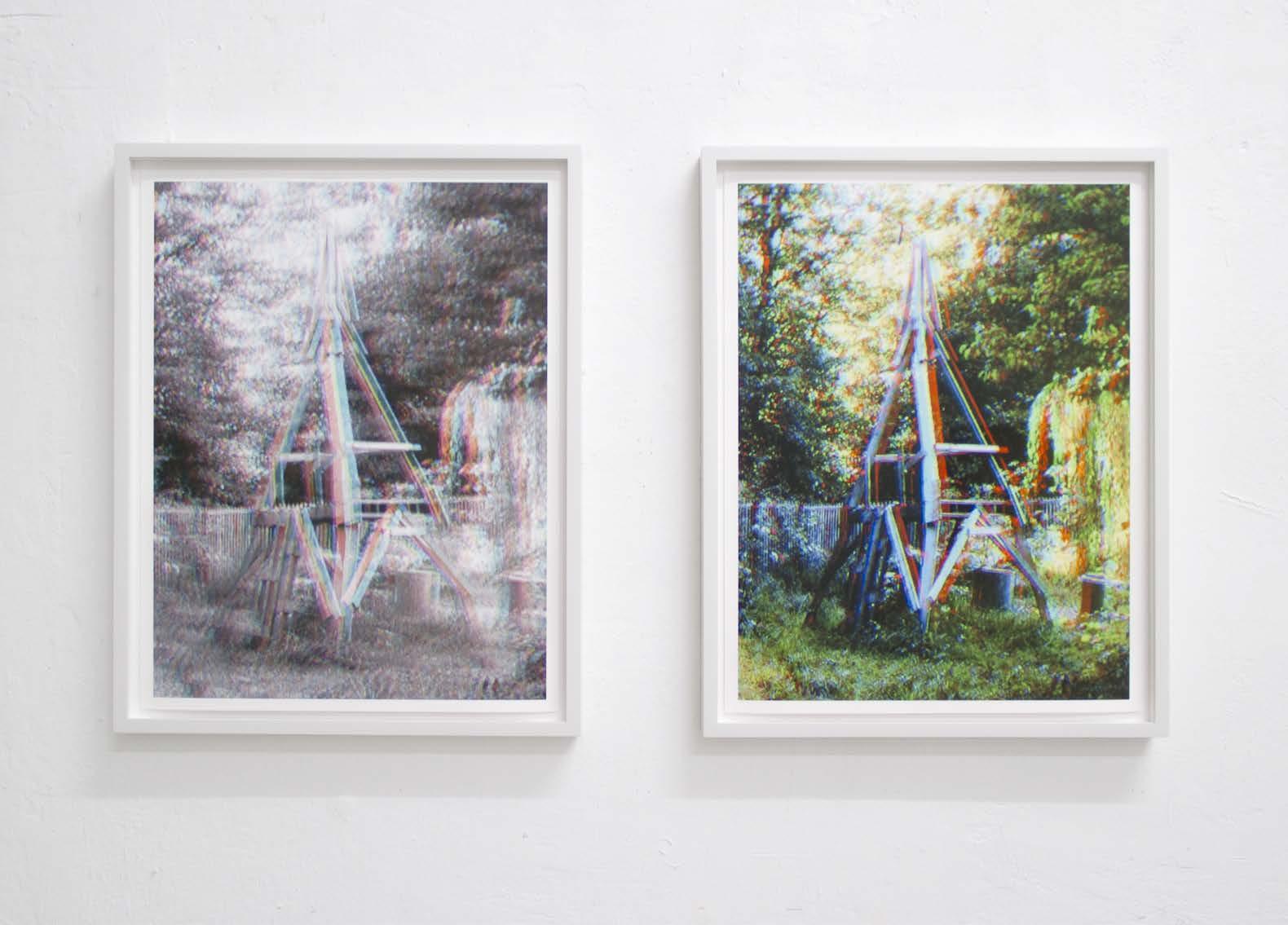
[español] [english]
Twin Realities es un díptico fotográfico que presenta un mismo modelo desde dos perspectivas cromáticas fundamentales: una en RGB (Rojo, Verde, Azul) y otra en CMYK (Cian, Magenta, Amarillo, Negro).
Esta dualidad subraya la antítesis entre los espacios colorimétricos. Por un lado, el digital RGB, usado por las pantallas y basado en la luz; por otro, el CMYK, diseñado para la impresión y que emplea el pigmento como base.
Esta observación abre un diálogo sobre la percepción de la luz como fenómeno óptico y su materialización en los medios impresos.
Twin Realities is a photographic diptych presenting the same model from two fundamental chromatic perspectives: one in RGB (Red, Green, Blue) and the other in CMYK (Cyan, Magenta, Yellow, Black).
This duality emphasizes the contrast between the two color spaces—on one hand, the digital RGB system used for screens and based on light; on the other, the CMYK model designed for print, which relies on pigments.
This contrast opens a dialogue on how we perceive light as an optical phenomenon and how that perception is materialized through printed media.
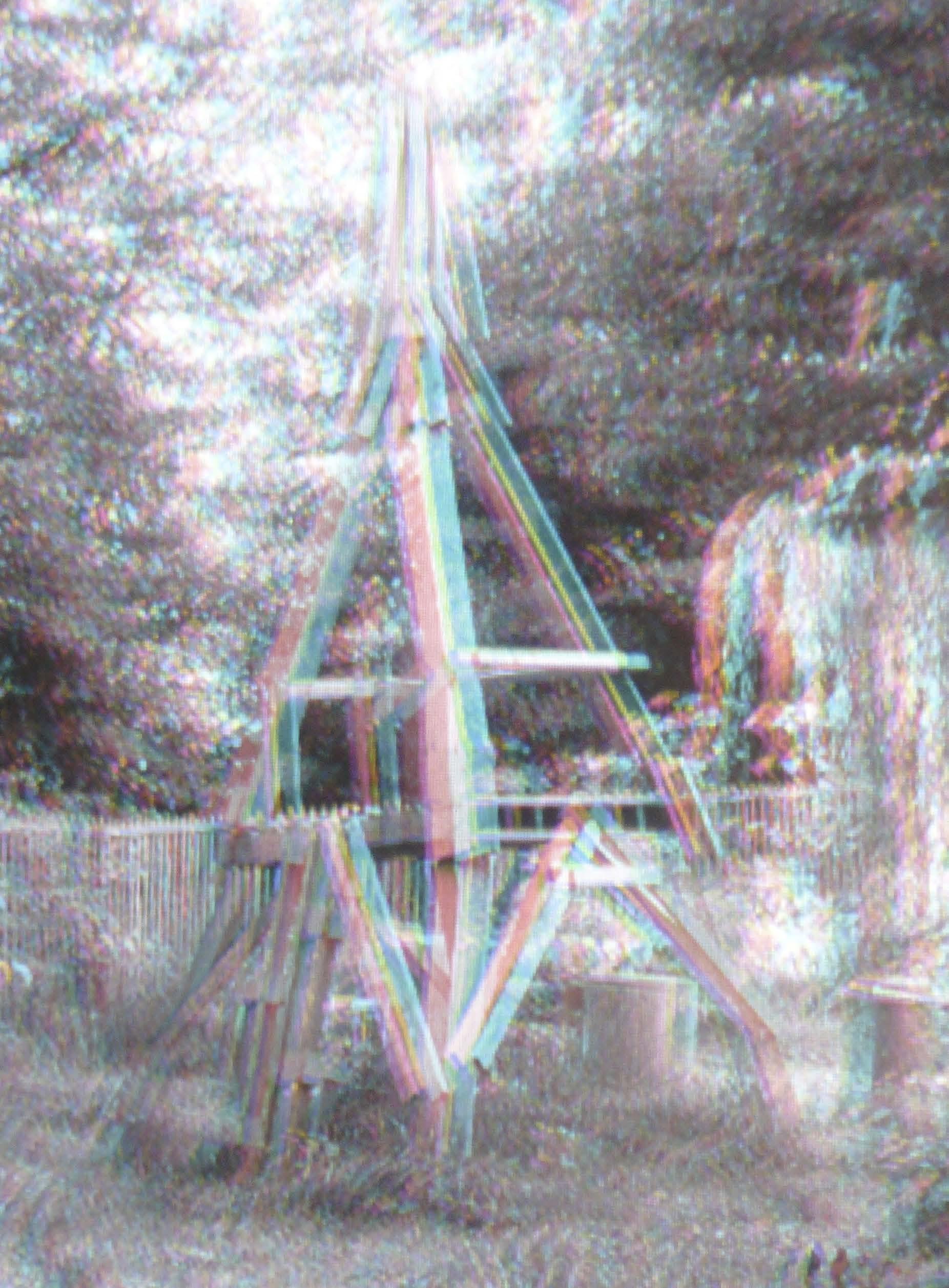
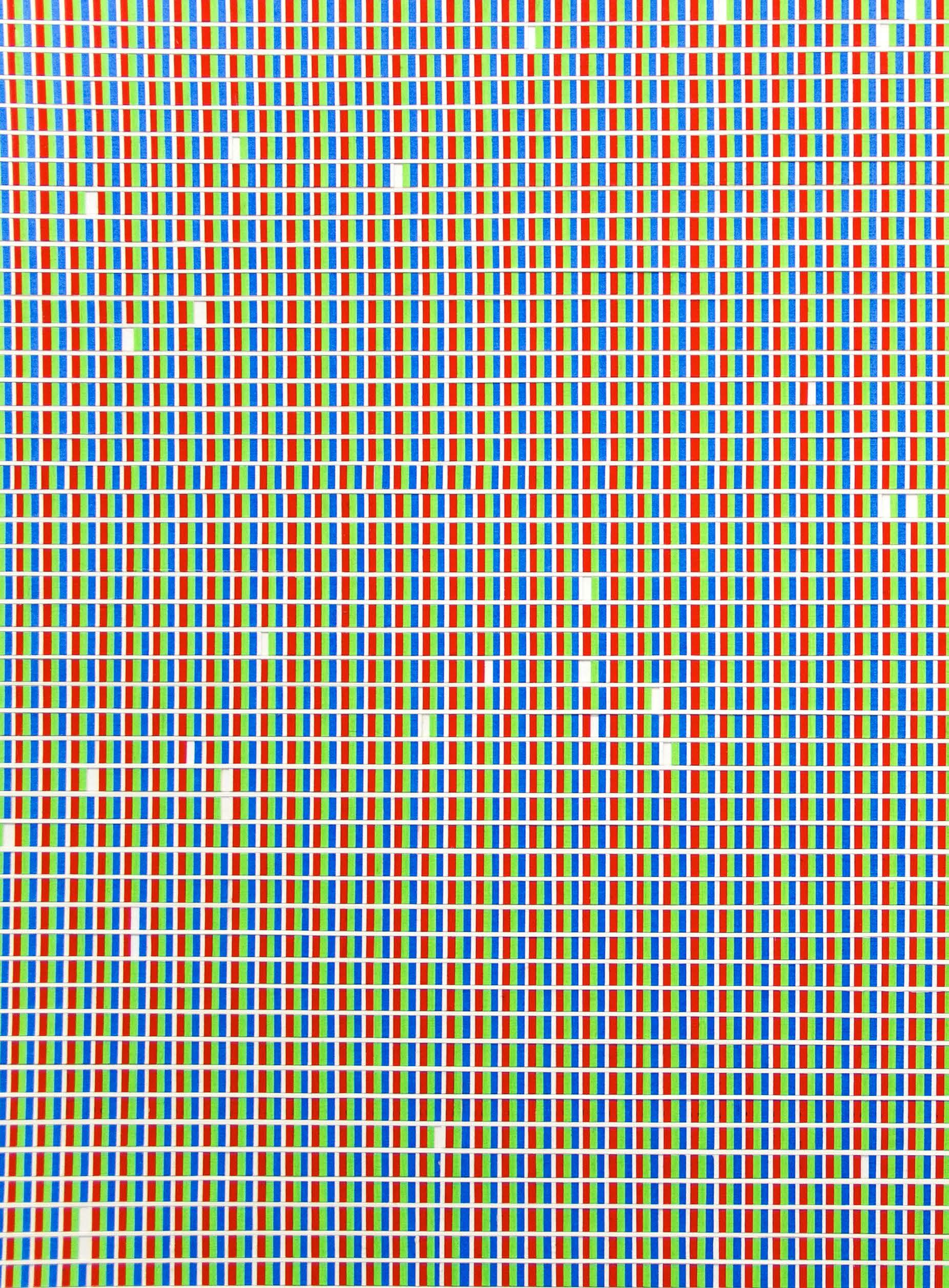
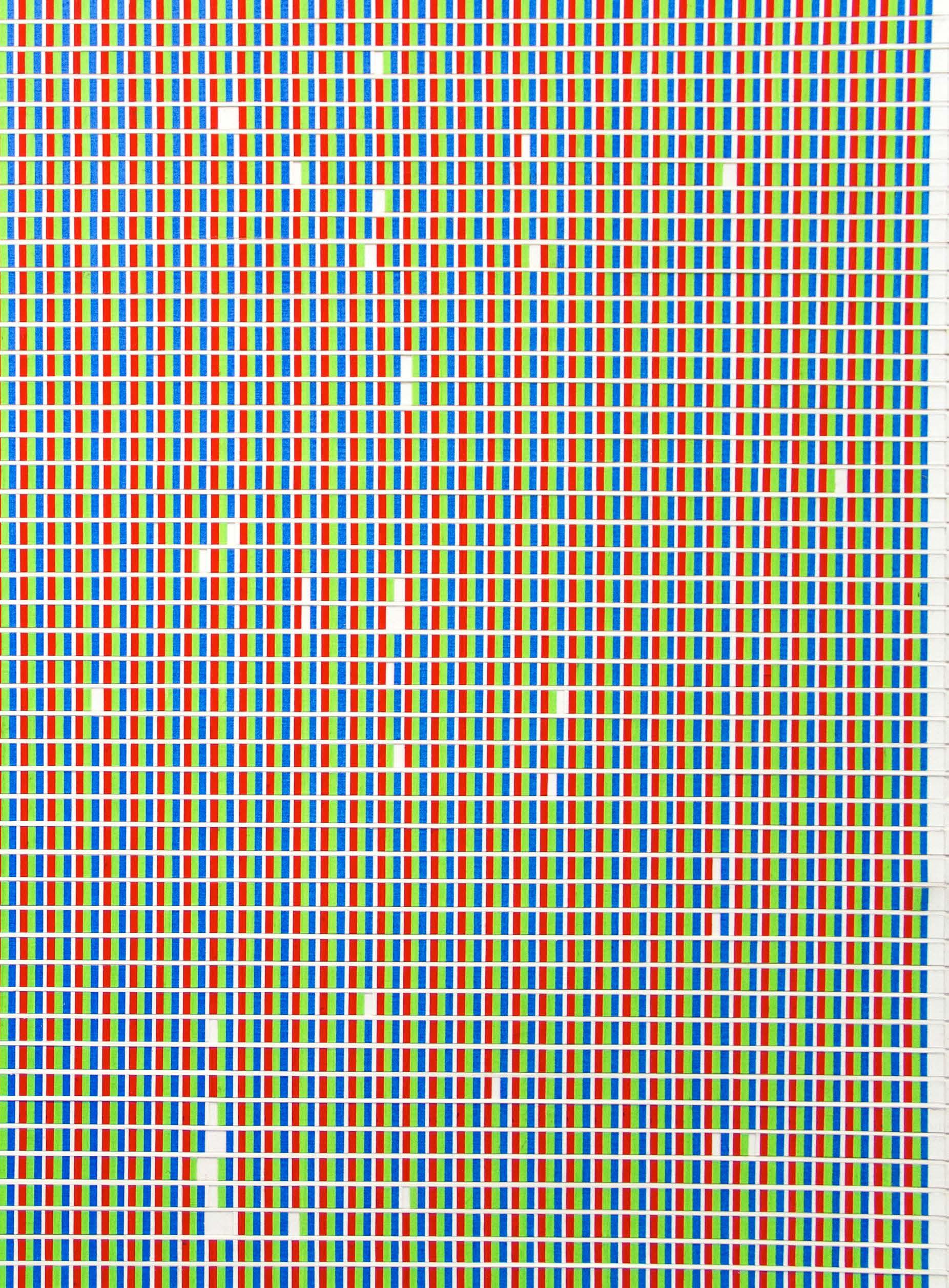
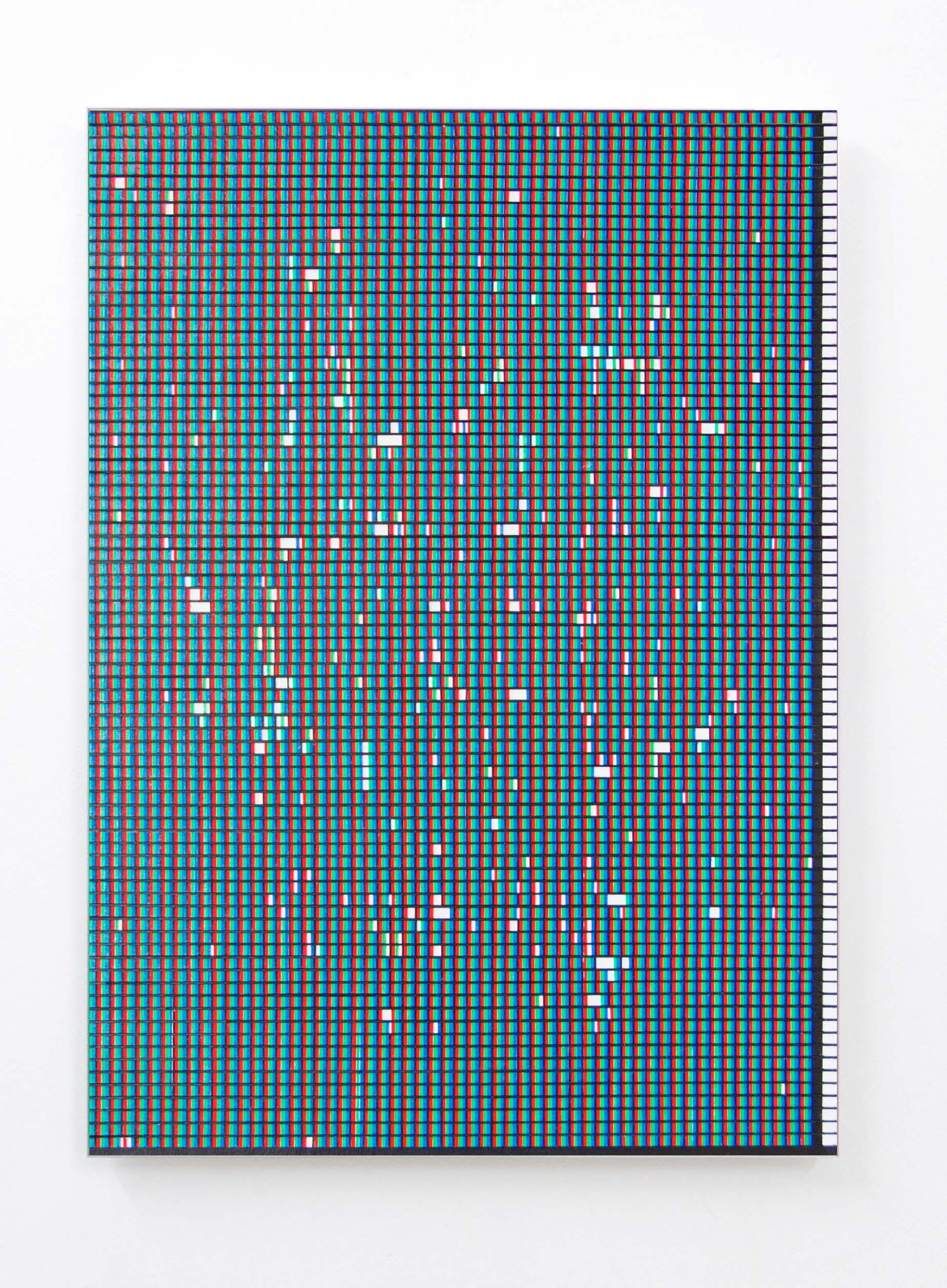
[español]
El proceso creativo de RGB Paintings da origen a una serie de obras que dialogan con los algoritmos que forman imágenes en pantallas digitales, trazando un puente entre el universo tangible y el lenguaje digital.
Pintado sobre papel, cortado y pegado mediante un meticuloso proceso, las obras reproducen las estructuras de las pantallas de cristal líquido (LCD) mediante el uso de los colores rojo, verde y azul. Aproximando así la teoría aditiva de la luz, con el uso de pigmentos físicos.
La composición se ordena sobre un ráster: una red precisa en la que los píxeles rellenan toda la superficie. La intervención del azar técnico se manifiesta en "glitches": pequeñas piezas de papel se desprenden del soporte, provocando “vacíos de información”. El fondo o base reaparece en esos emplazamientos, generando nuevos matices cromáticos y “puntos de información” dentro de una apariencia monocromática (o tricromática).
[english]
RGB Paintings is a series of works on paper inspired by daily life means of communication systems, screens, and the Internet.
The process giving rise to these paintings seeks to analogize algorithms composing images in LCD screens, thus creating a parallel between a physical and a digital language. The works are composed of red, green and blue colours (the three colours constituting the pixels that structure screens), thereby approaching the Additive colour theory (light) by “physical” pigments.
The layout is organized in a raster, in which the pixels will compose the structure of the works. The composition is created by technical accidents or “glitches” occurring during the process of “transmission of information”. Some “bits” of papers fall unglued from the support resulting in a random lack of data, which is supplanted by the background, creating new colours and flecks of information on a monochromatic (or three-chromatic) surface.
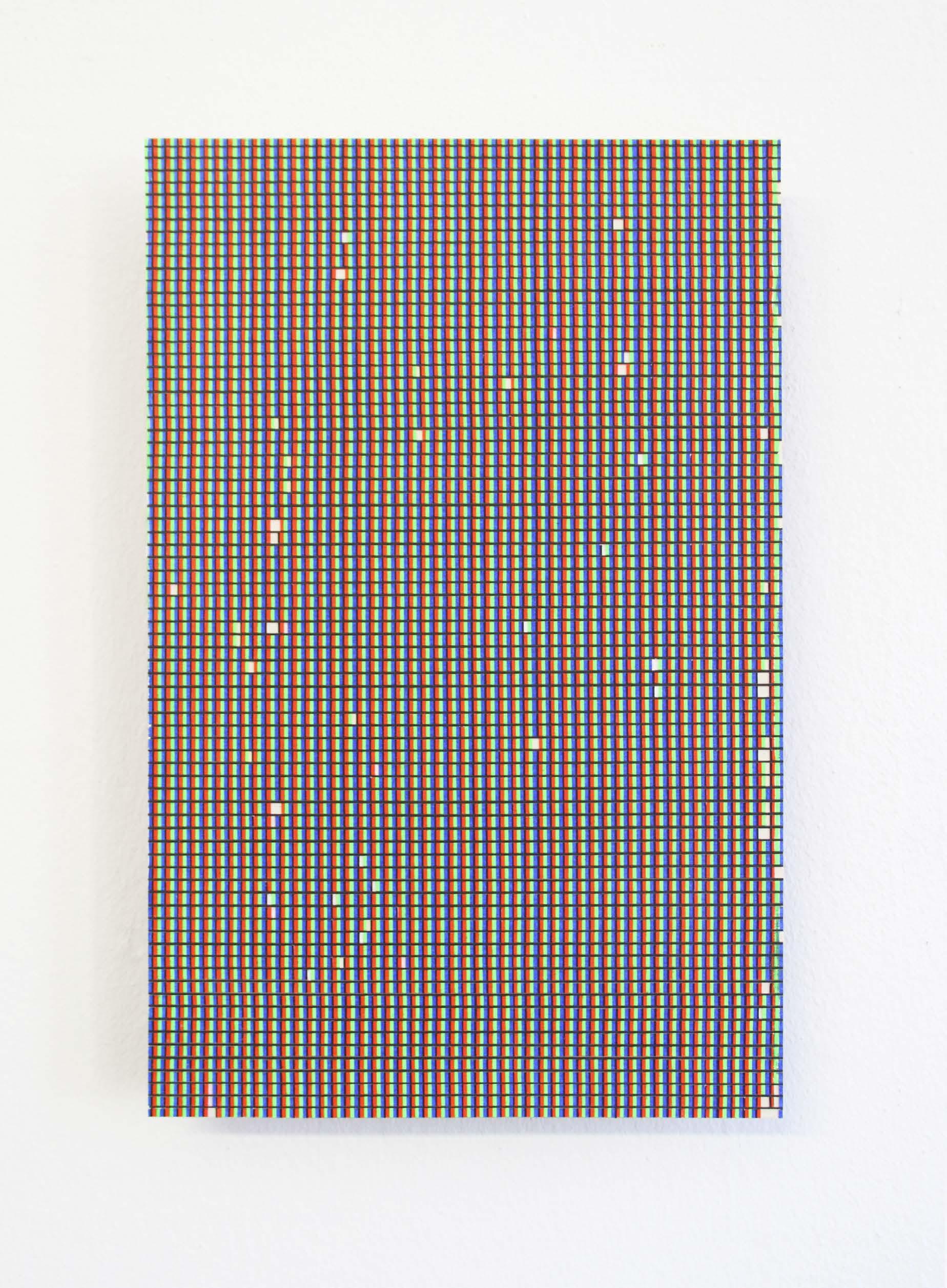
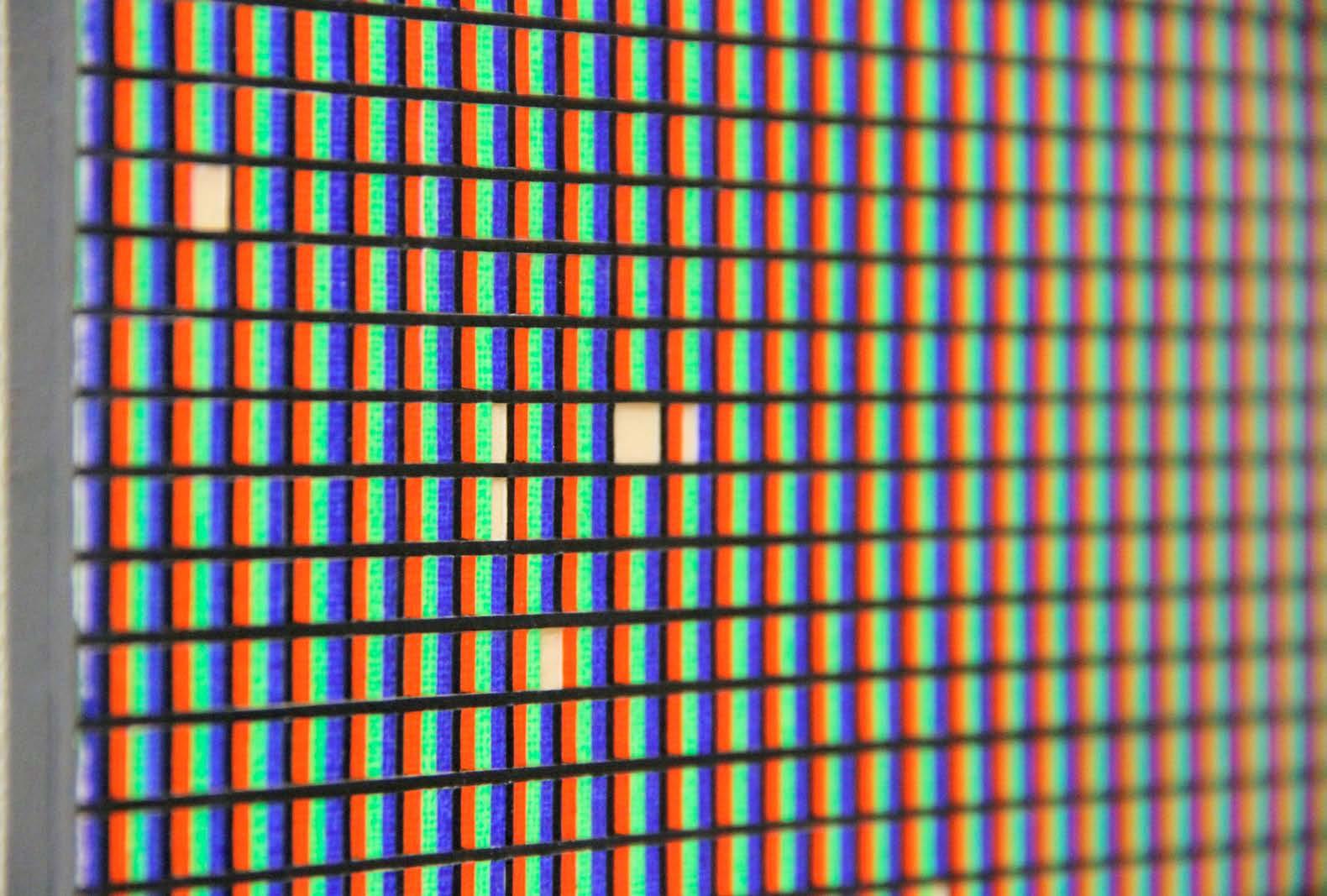
Izquierda / Left: SCREEN (WIFE RGB MODE) 2013
Página / Page 116: RGB PAINTING (#626760) 2019
Página / Page 117: YOU (#c2c2ca) 2019
Acrílico sobre papel, montado en panel de aluminio compuesto
47,9 × 33,7 cm
Óleo sobre papel, montado en panel de aluminio compuesto
78 × 57 cm
Óleo sobre papel, montado en panel de aluminio compuesto
78 × 57 cm
Acrylic on paper, mounted on composite aluminium sheet
47.9 × 33.7 cm
Oil on paper, mounted on composite aluminium sheet
78 × 57 cm
Oil on paper, mounted on composite aluminium sheet
78 × 57 cm
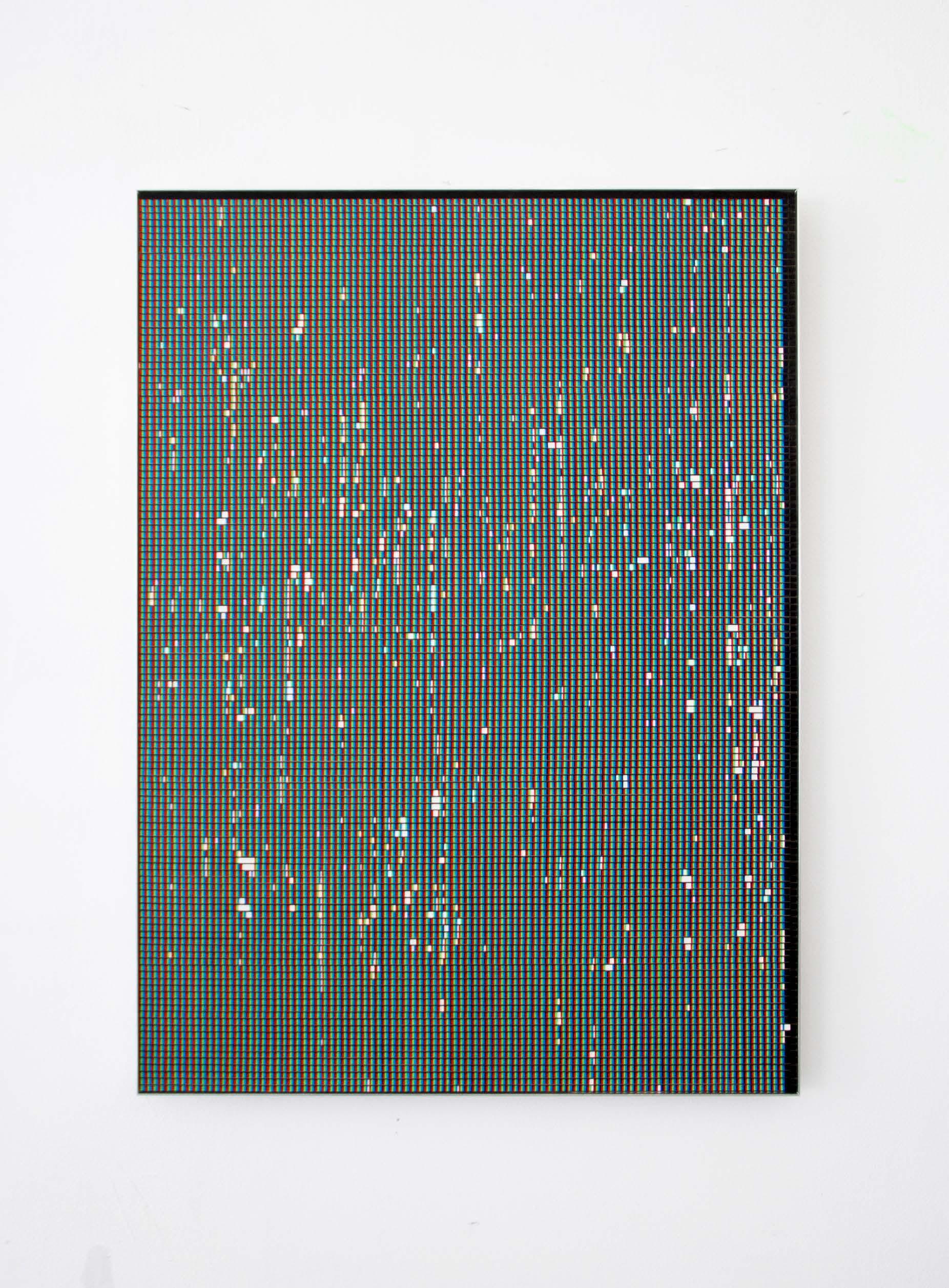
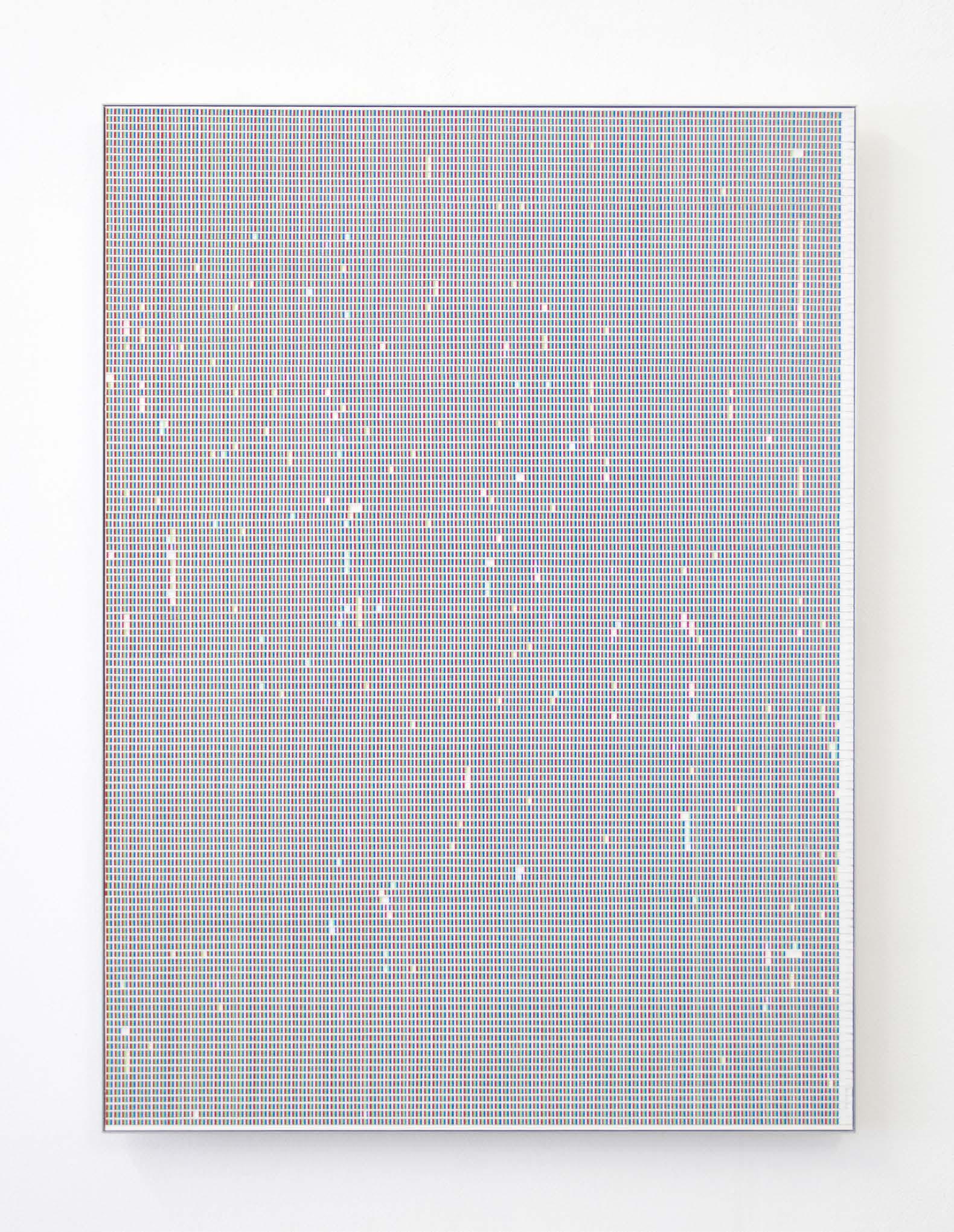
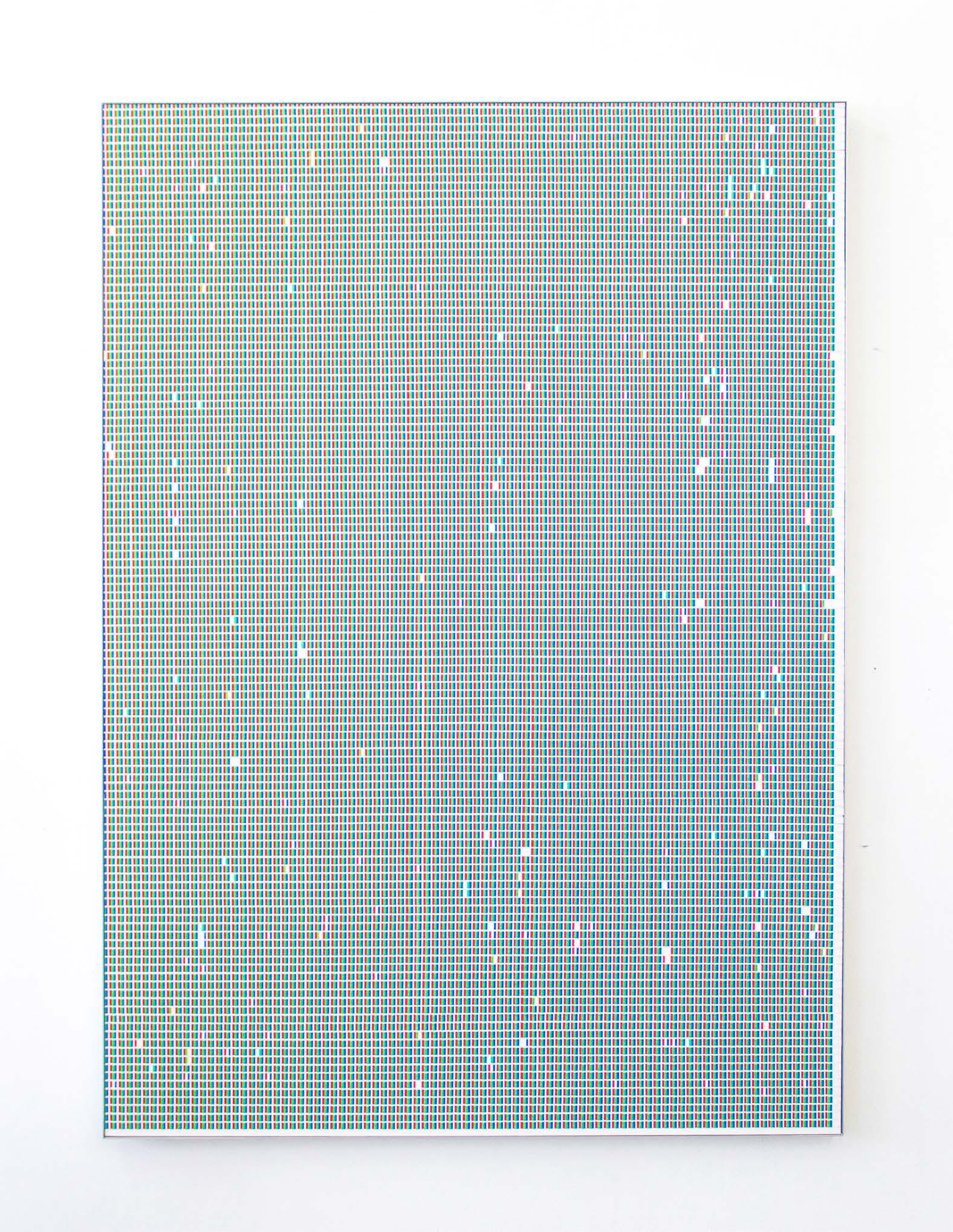
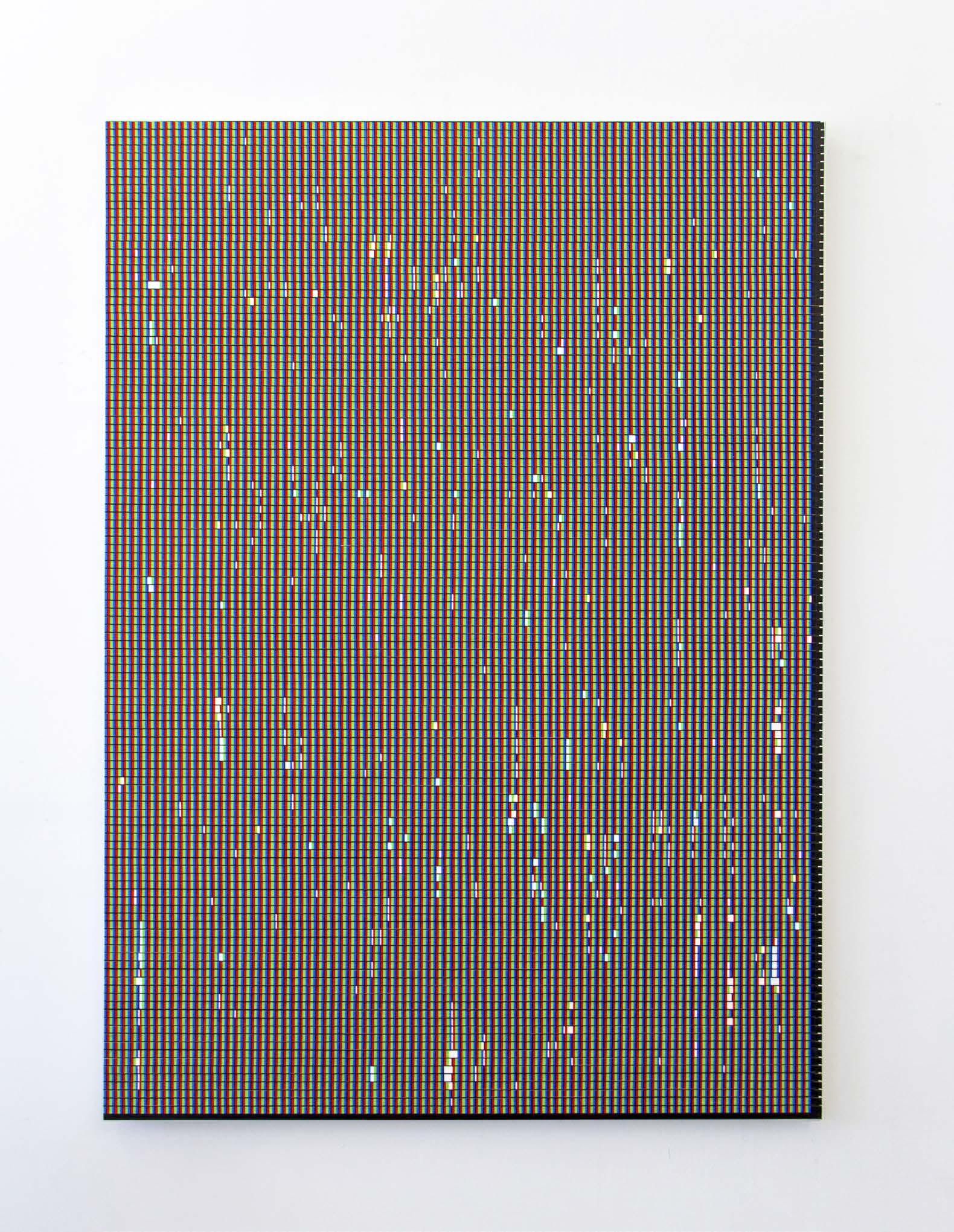
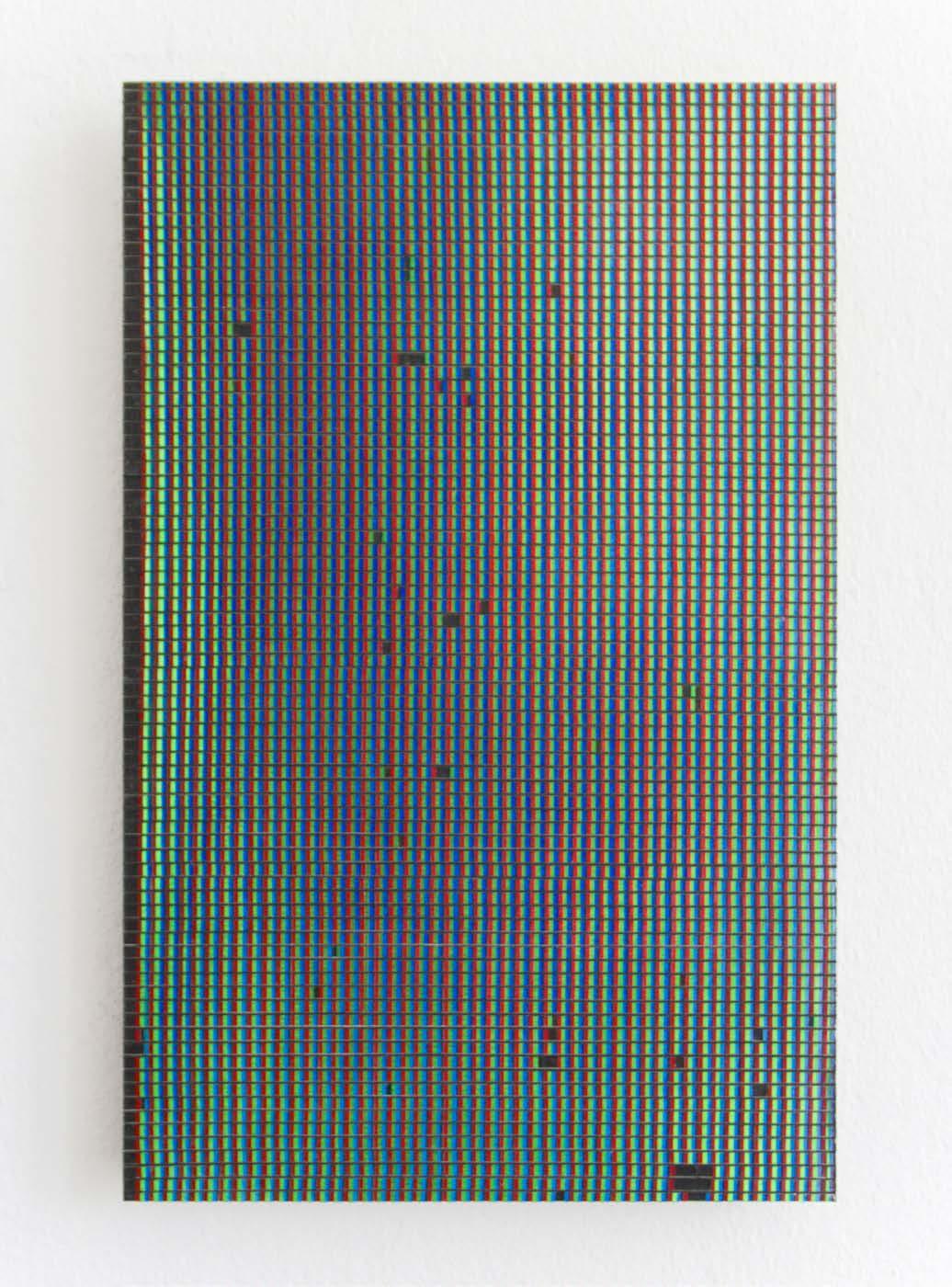
Página / Page 118: PRESENCE (#aca8ab) 2019
Página / Page 119: PRESENCE (#7a7f86) 2019
Óleo sobre papel, montado en panel de aluminio compuesto
140 x 100 cm
Óleo sobre papel, montado en panel de aluminio compuesto
140 x 100 cm
Oil on paper, mounted on aluminium composite sheet
140 x 100 cm
Oil on paper, mounted on aluminium composite sheet
140 x 100 cm
Izquierda / Left: (INTERPRETATION) 2014
Abajo / Bottom: (INTERPRETATION)
Óleo sobre papel, montado sobre panel
47,5 x 30 cm
Oil on paper, mounted on panel
47.5 x 30 cm
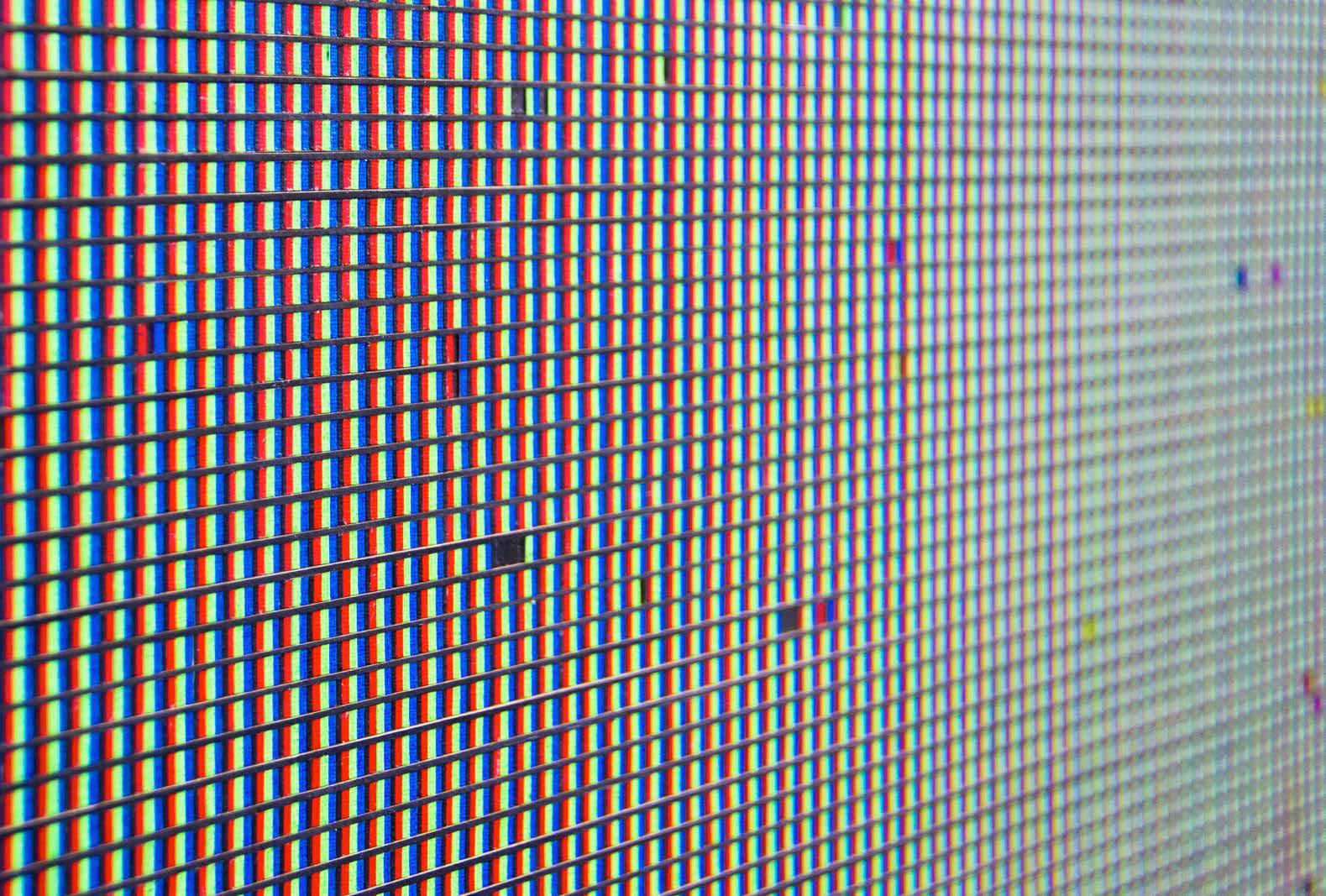
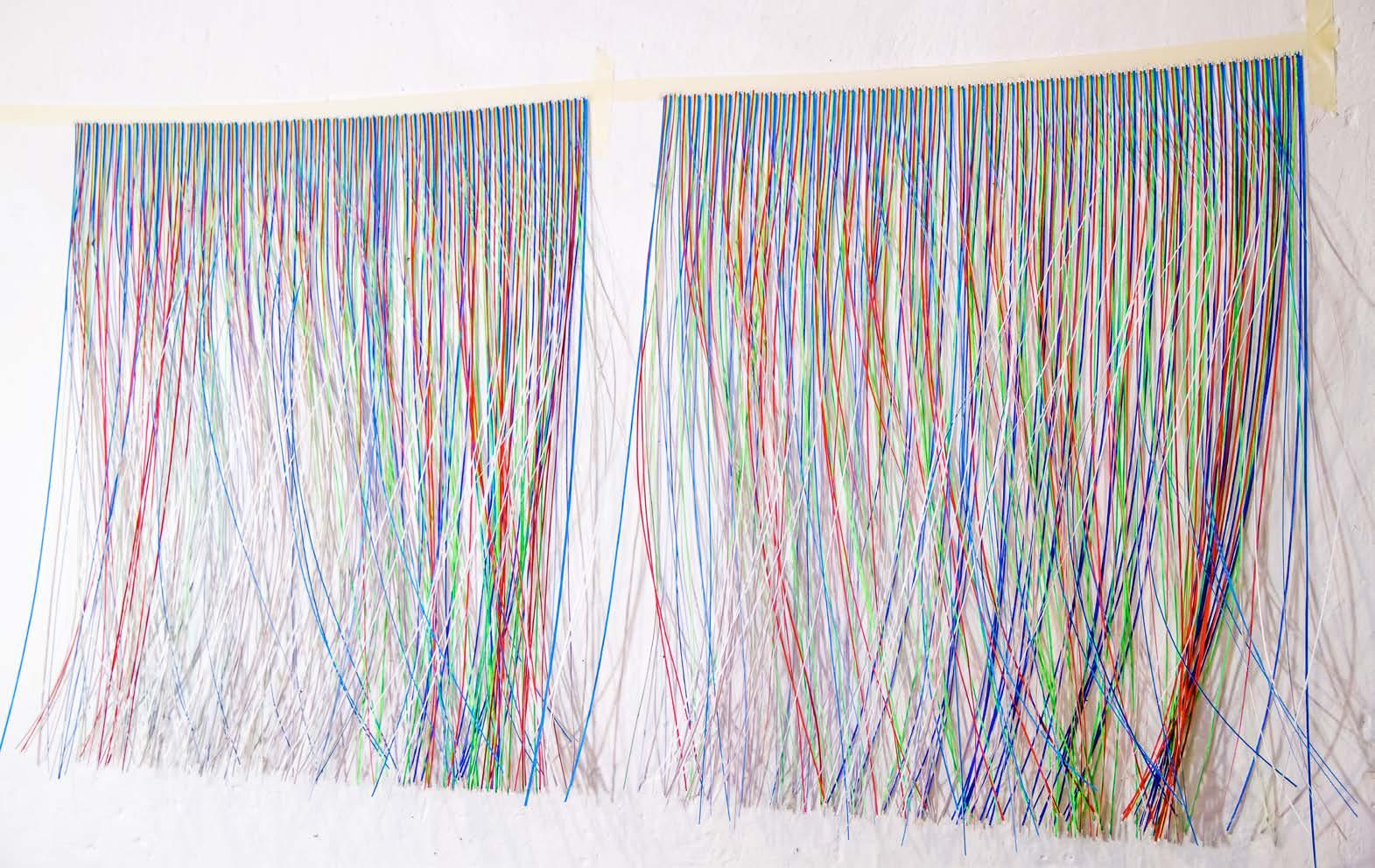
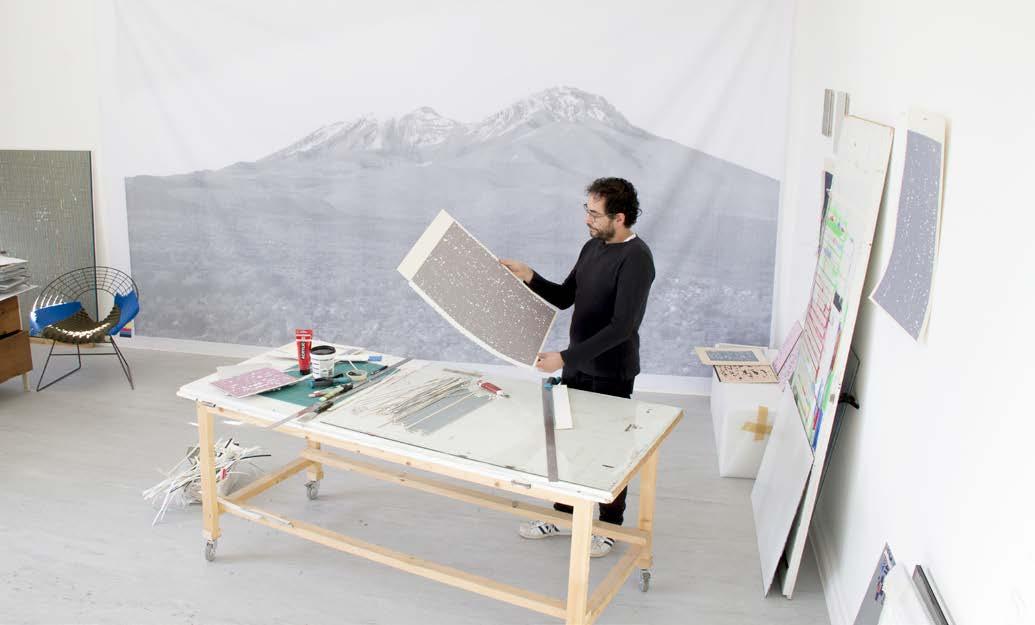
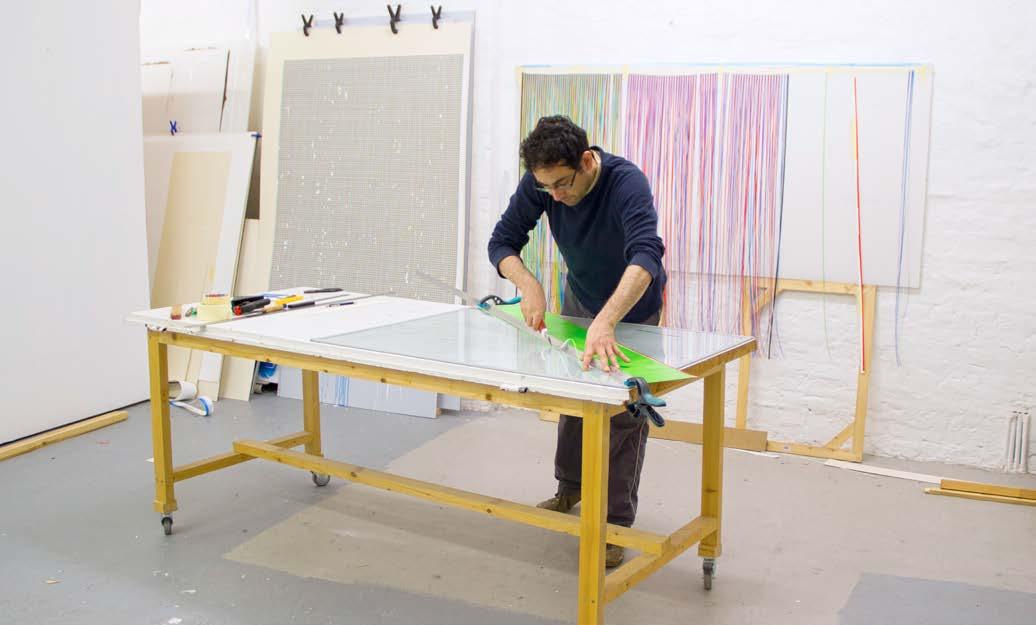
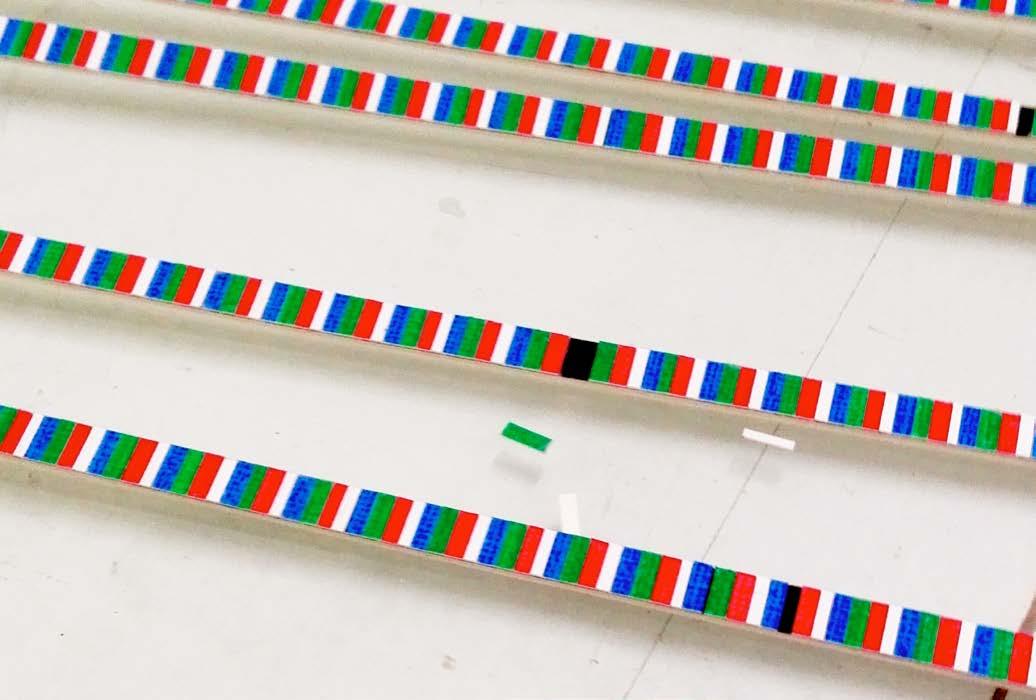
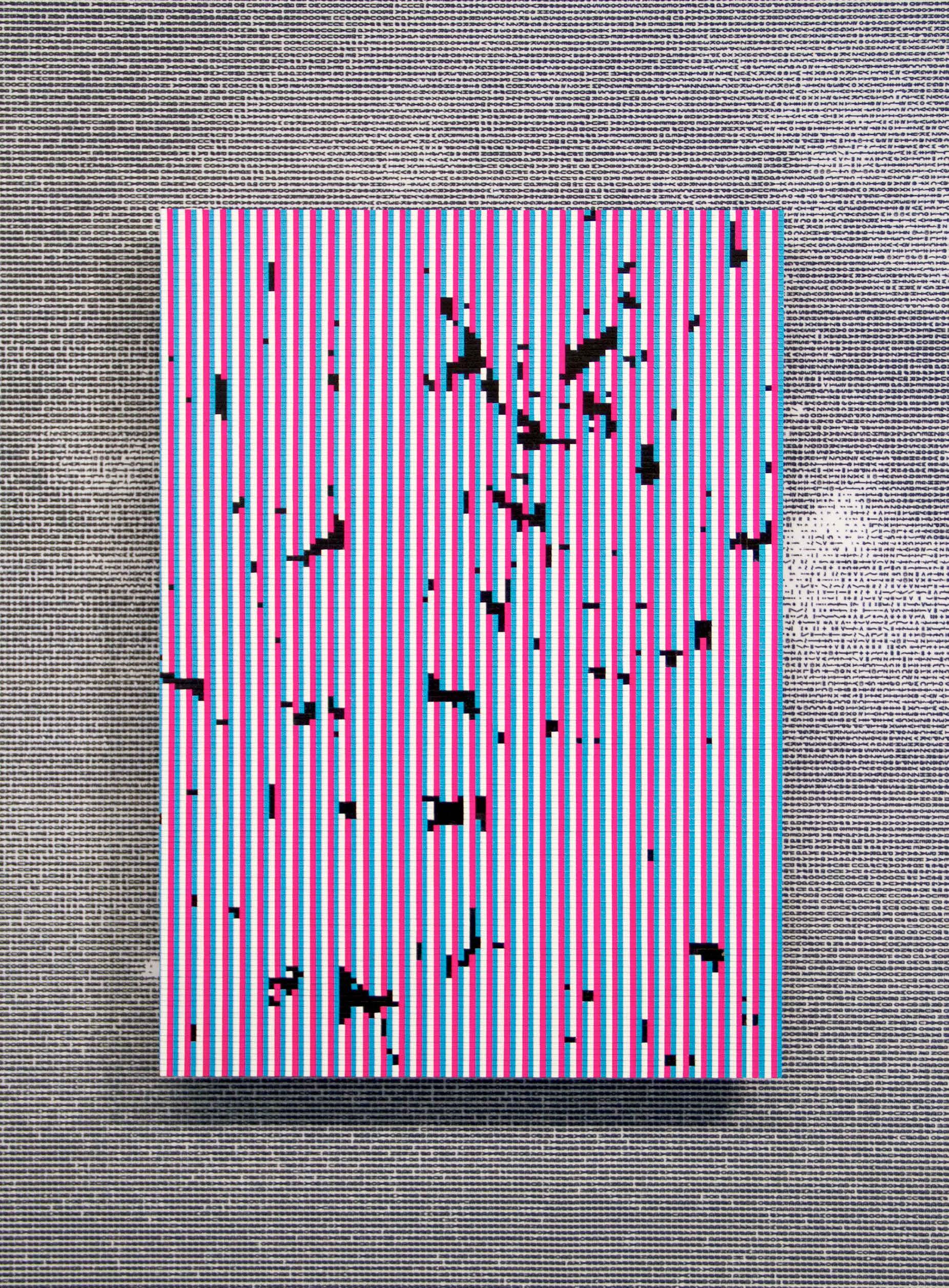
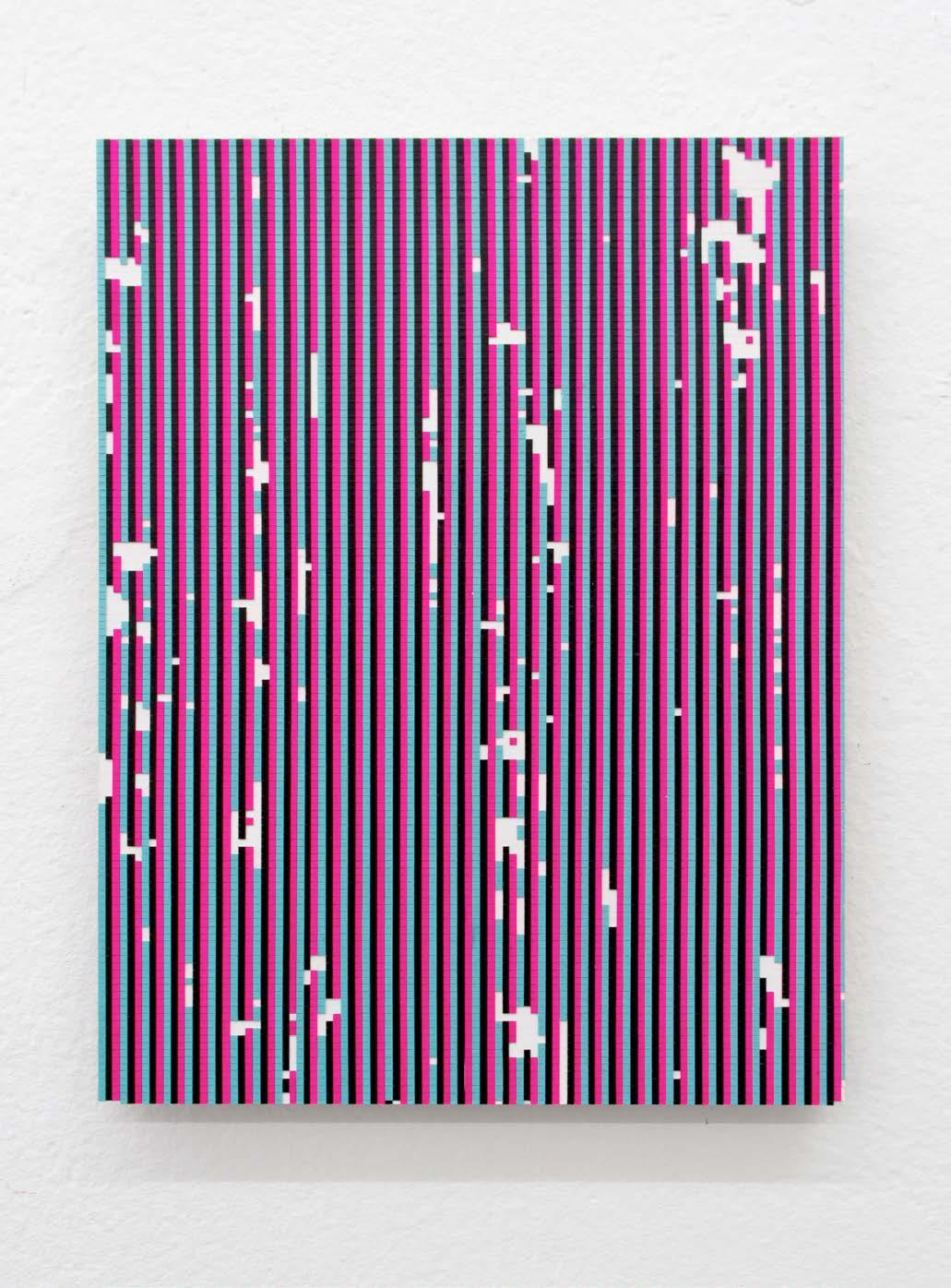
34 x 26 cm
Acrílico sobre papel montado en panel de aluminio compuesto
37,5 x 27 cm
on paper mounted on aluminium composite sheet
37.5 x 27 cm
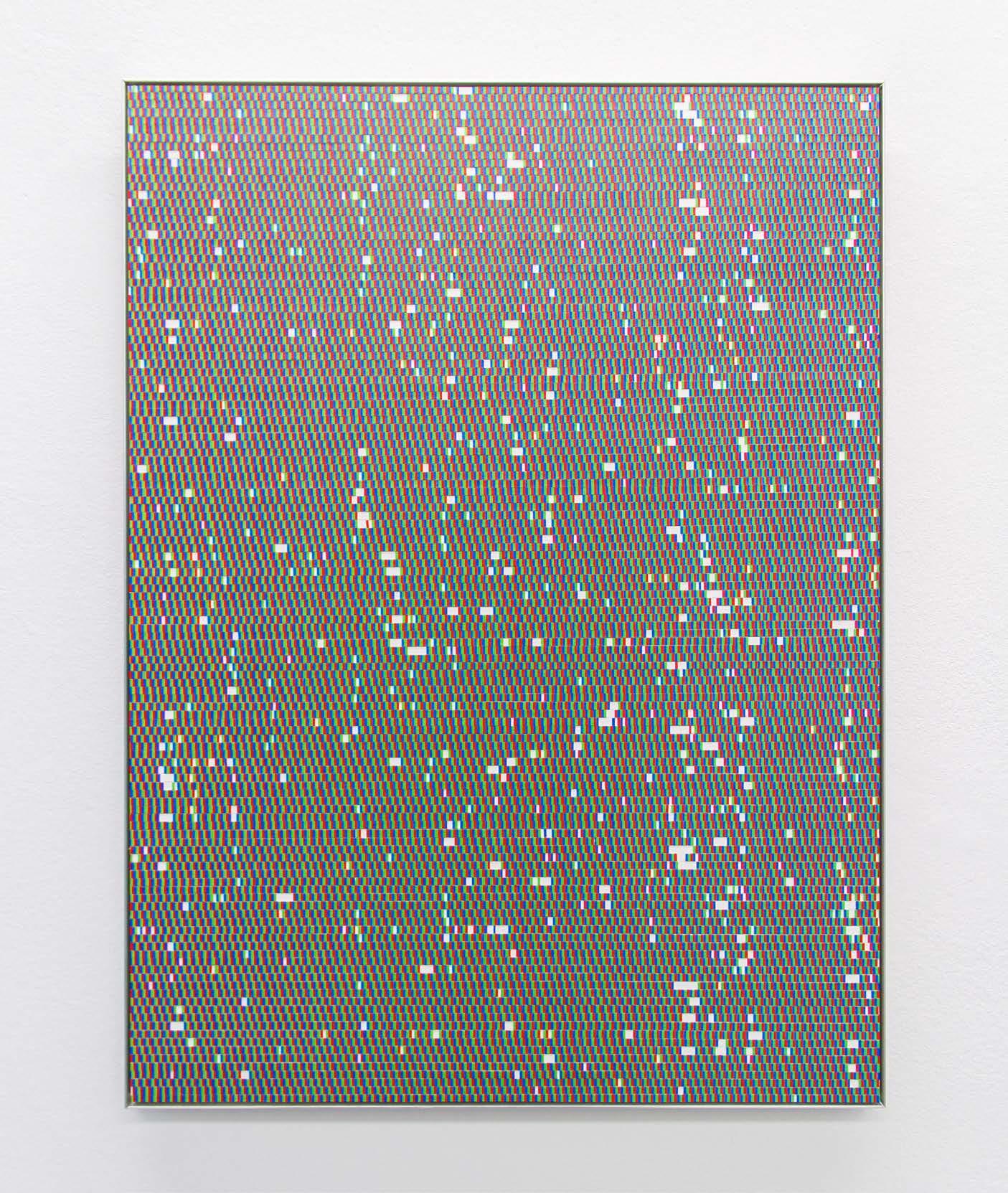
Acrílico sobre papel, montado en panel de aluminio compuesto
61 x 45 cm
Acrylic on paper, mounted on aluminium composite sheet
61 x 45 cm
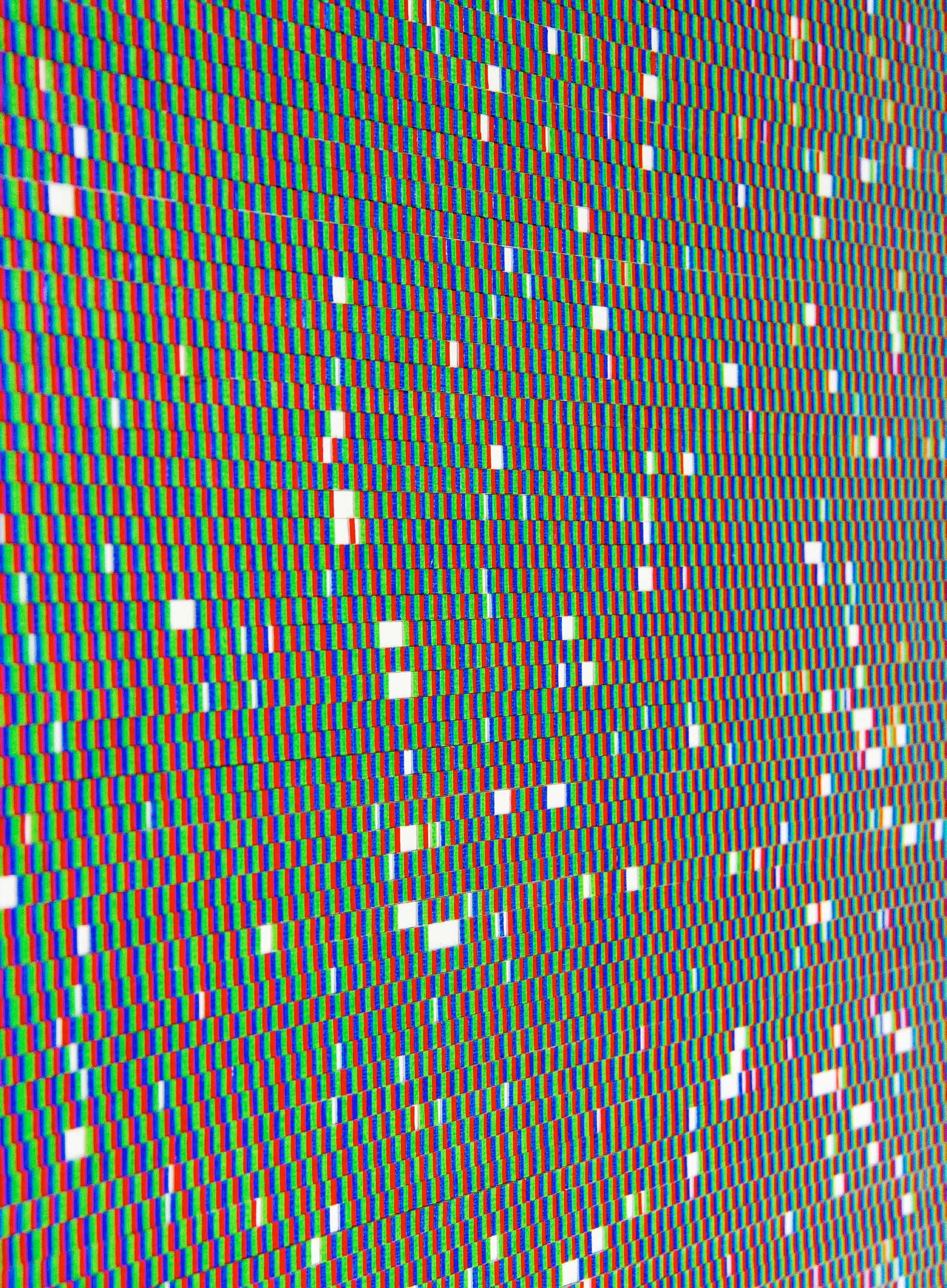
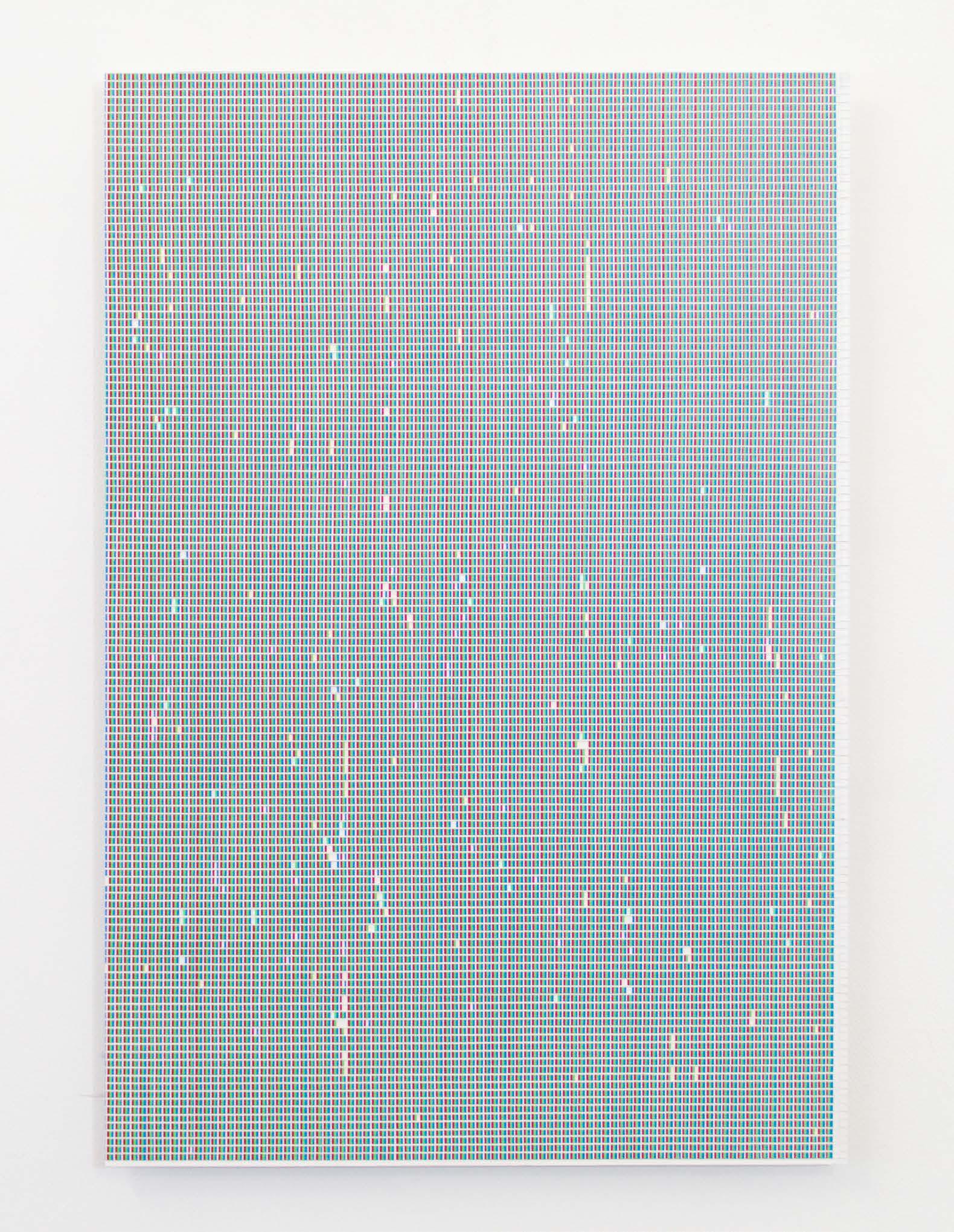
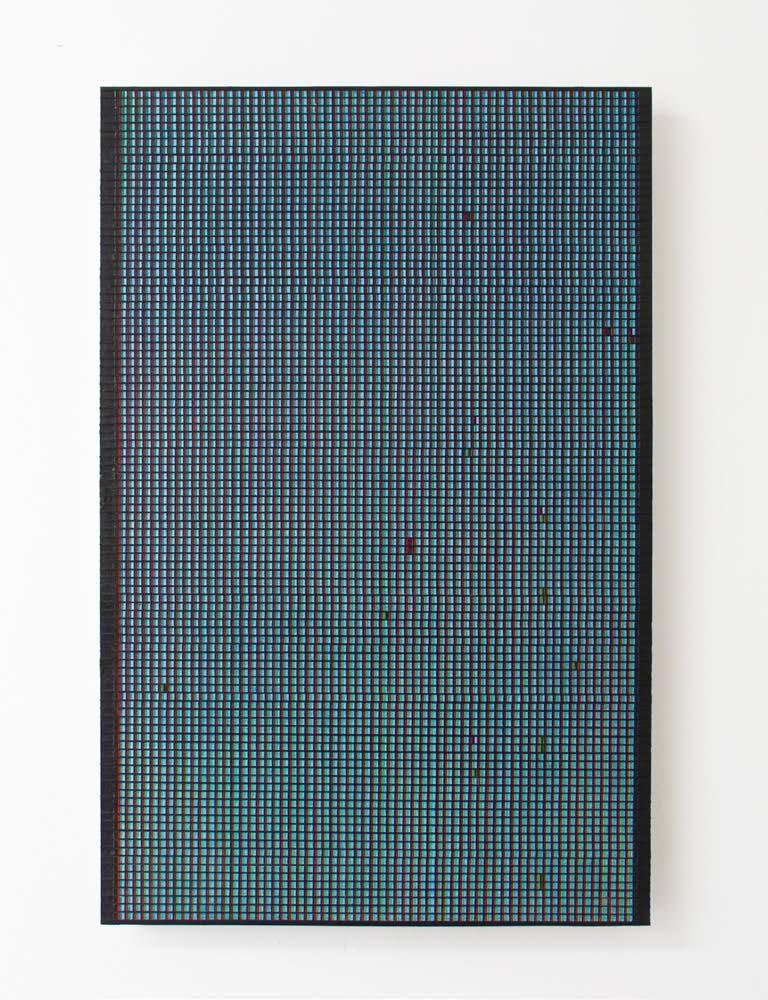
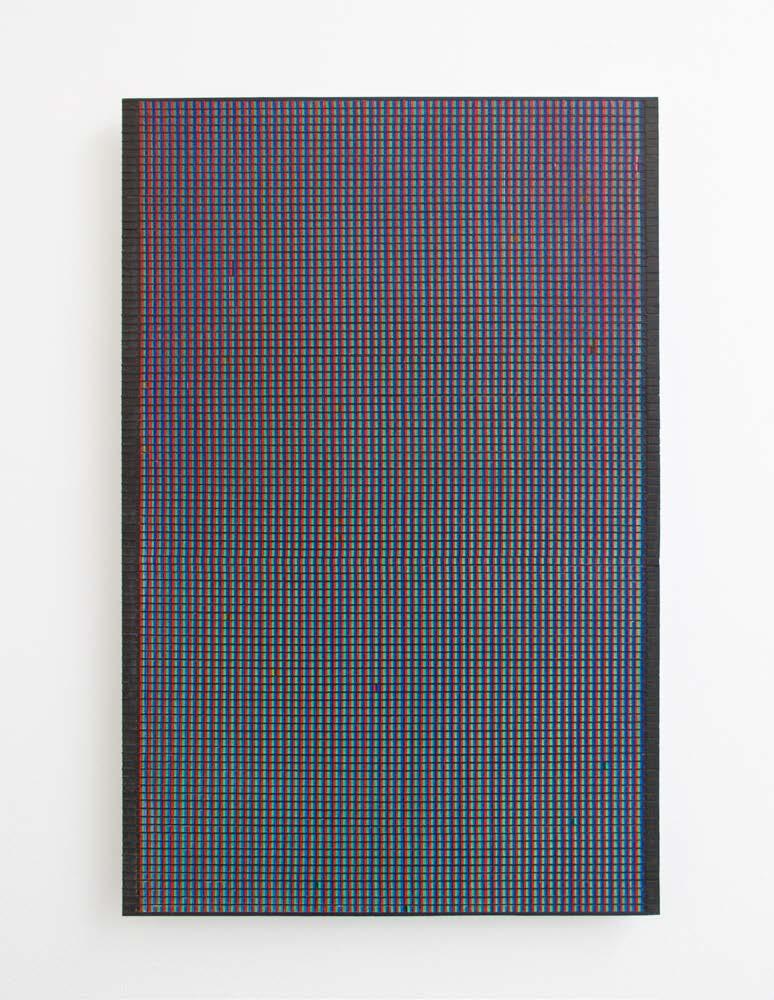
Arriba izquierda / Top Left:
RGB PAINTING (#0F0)
2017
Arriba derecha / Top right:
RGB PAINTING (#F00)
2017
Izquierda / Left:
RGB Painting (#B5BBBA)
2019
Óleo sobre papel, montado en panel de aluminio compuesto
60 x 40 cm
Óleo sobre papel, montado en panel de aluminio compuesto
60 x 40 cm
Acrílico sobre papel, montado en panel de aluminio compuesto
98 x 67 cm
Oil on paper, mounted on aluminium composite sheet
60 x 40 cm
Oil on paper, mounted on aluminium composite sheet
60 x 40 cm
Acrylic on paper, mounted on aluminium composite sheet
98 x 67 cm
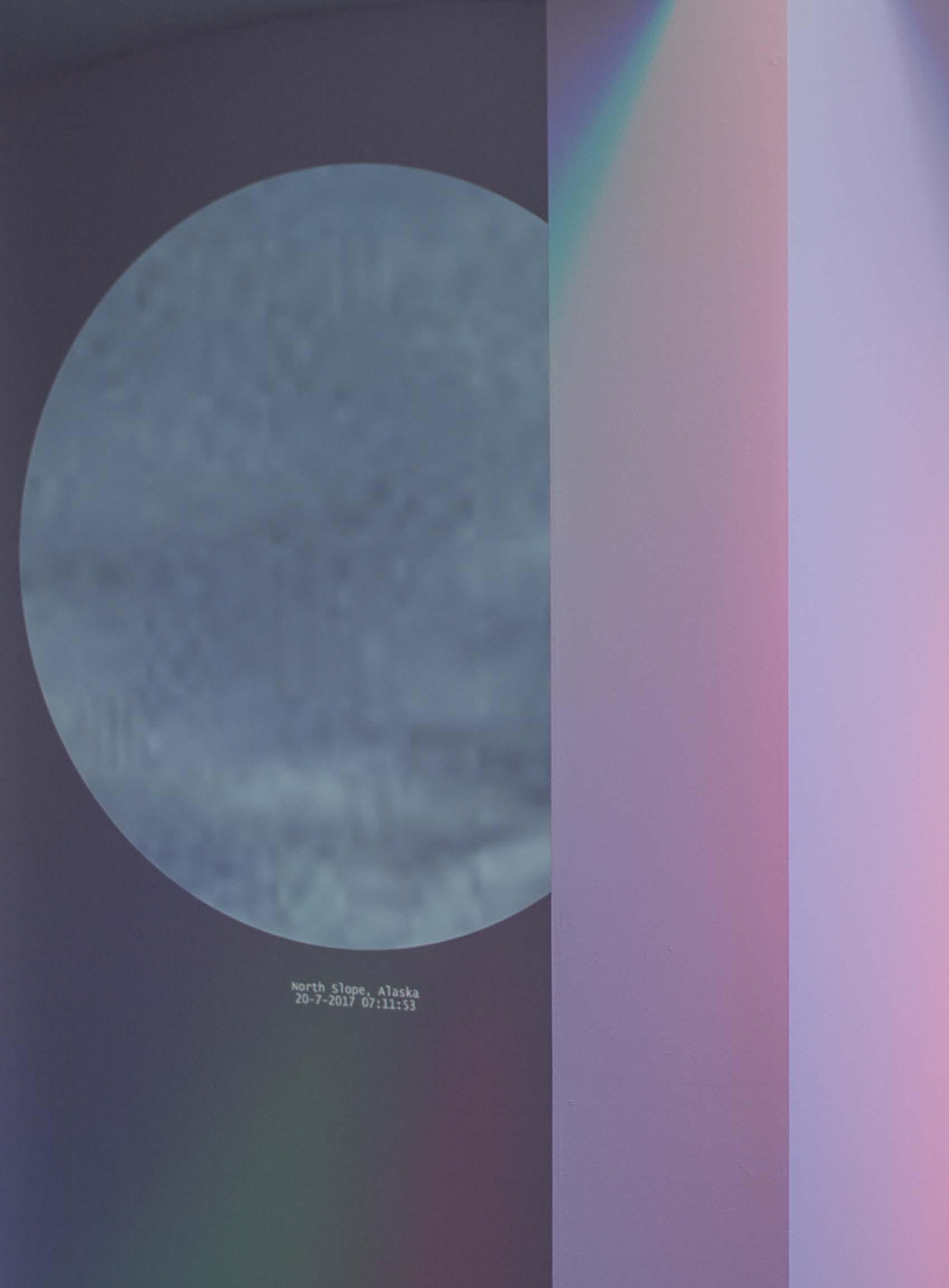
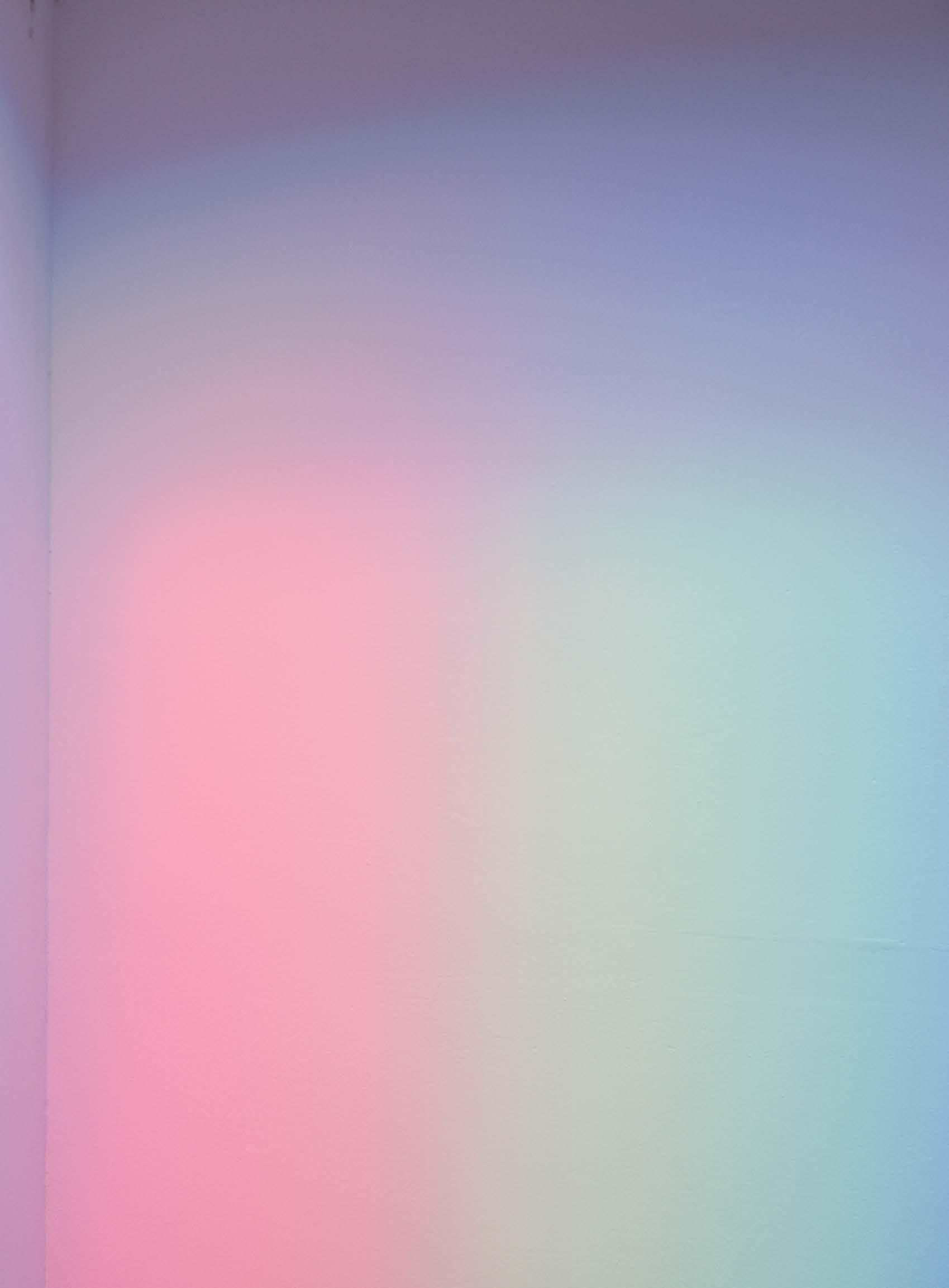
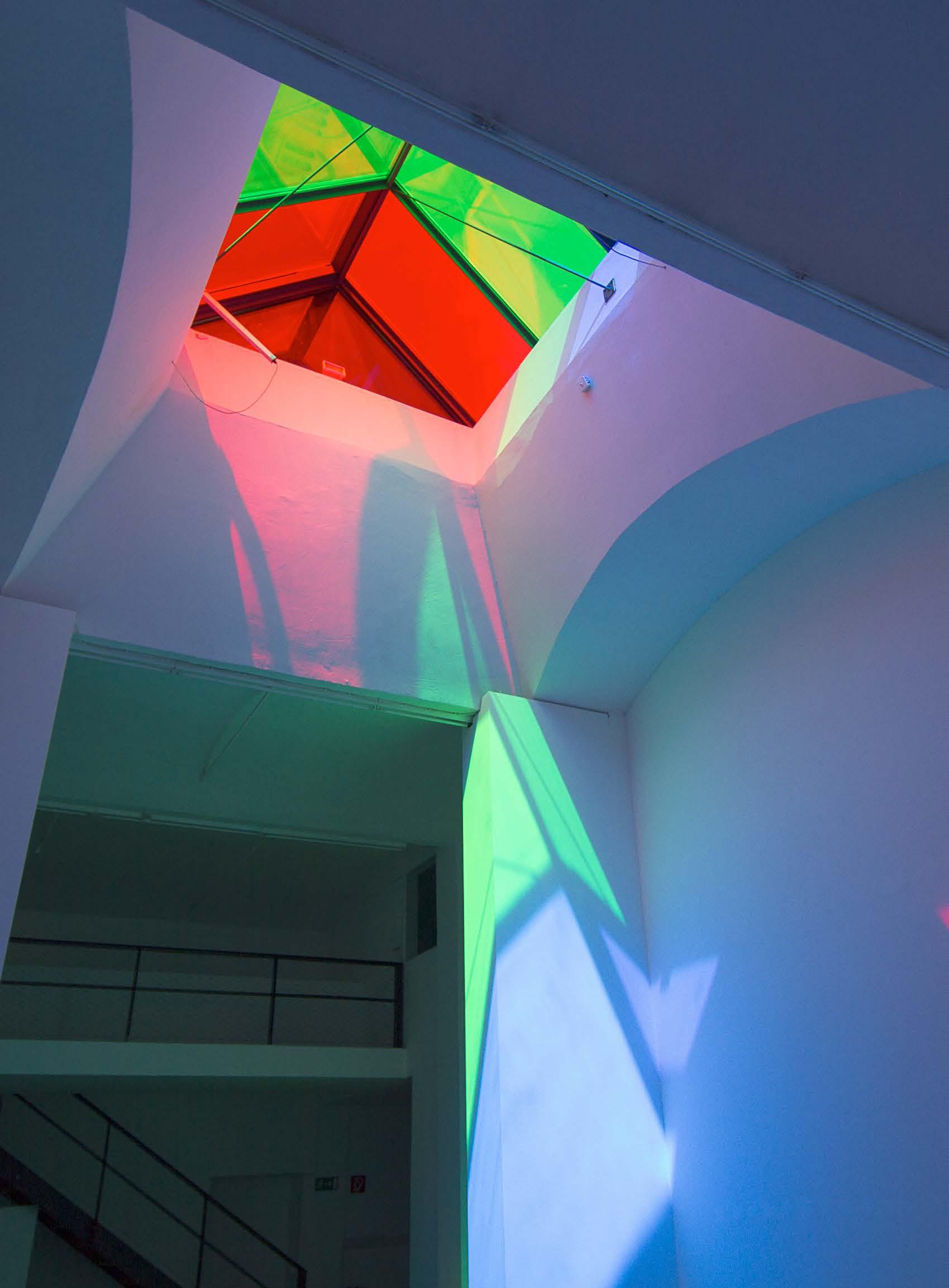
[español]
[english]
PIXEL 2017
Instalación site-specific
Filtros de color LEE sobre tragaluz
Dimensiones variables
Exposición Thresholds, Meinblau Projektraum.
Berlín, Alemania
Site-specific installation
LEE colored gels on a skylight
Variable dimensions
Exhibition Thresholds, Meinblau Projektraum.
Berlin, Germany
Esta intervención site-specific fue realizada en la sala principal de Meinblau Projektraum, en Berlín. La sala fue bañada en luz roja, verde y azul, transformando el tragaluz de la galería en un pixel ampliado, reinterpretando la luz natural del cielo desde el modelo de color digital RGB. Así, los colores del ambiente interior se ven constantemente modificados por las condiciones meteorológicas y la posición del sol.
La obra explora la convergencia entre los elementos digitales que se entrelazan con los del entorno natural, moldeando nuestra percepción del espacio.
PIXEL fue presentada en la exposición Thresholds, una exposición bipersonal junto al artista Juan Varela.
This site-specific intervention was realized in the main hall of Meinblau Projektraum in Berlin. The room was bathed in red, green, and blue light, transforming the gallery's skylight into an expanded pixel and reinterpreting the sky's natural light through the digital RGB color model. The interior colors were therefore constantly modified by weather conditions and the sun's position.
The work explores the convergence of digital and natural elements as they intertwine, shaping our perception of space.
PIXEL was presented in the exhibition Thresholds, a duo show with the artist Juan Varela.
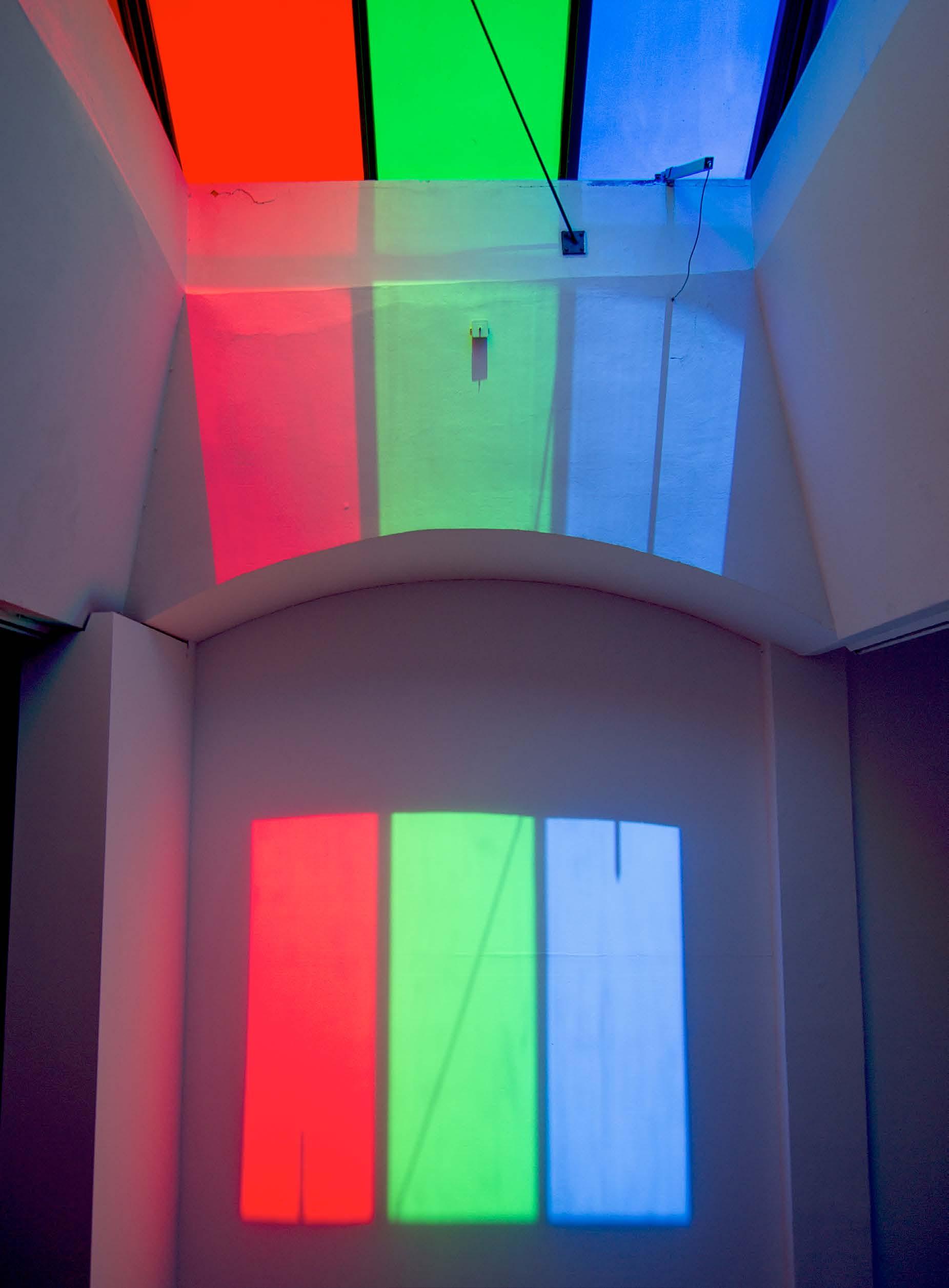
Izquierda y derecha / Left and right:
PIXEL
2017
Vista de la instalación
Installation view
Centro, inferior derecha, y páginas 136–137: Vista de la exposición
Thresholds, Meinblau Projektraum, con la obra de Juan Varela en segundo plano
Center right, bottom and pages 136–137: View of the exhibition
Thresholds, Meinblau Projektraum, with the work of Juan Varela in the background
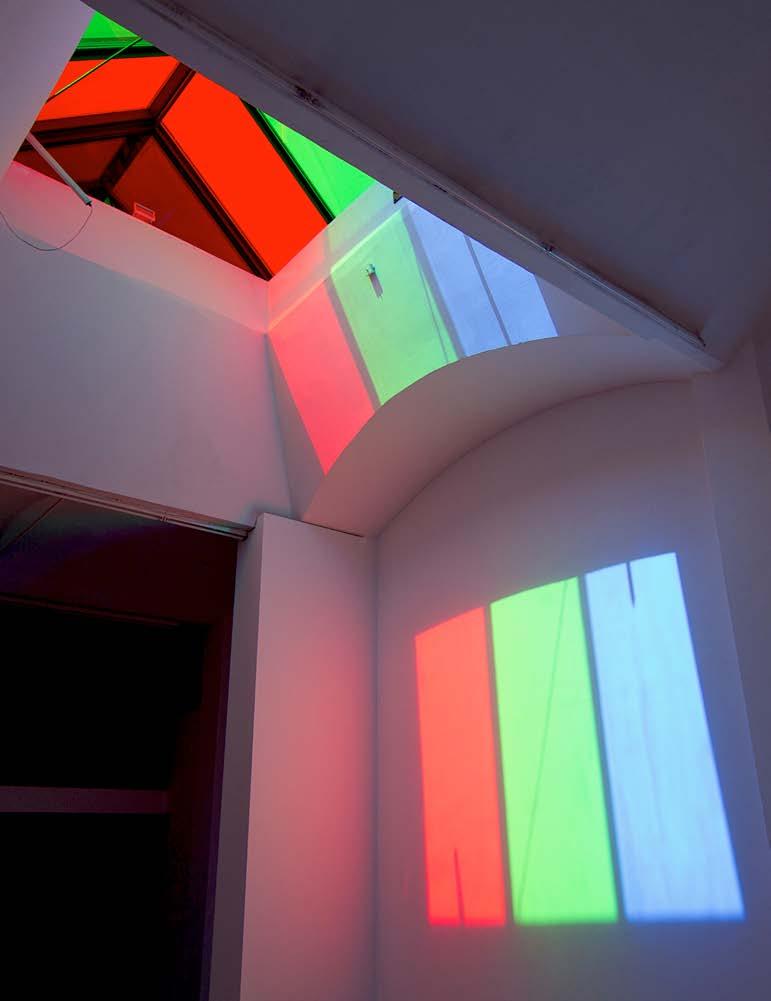
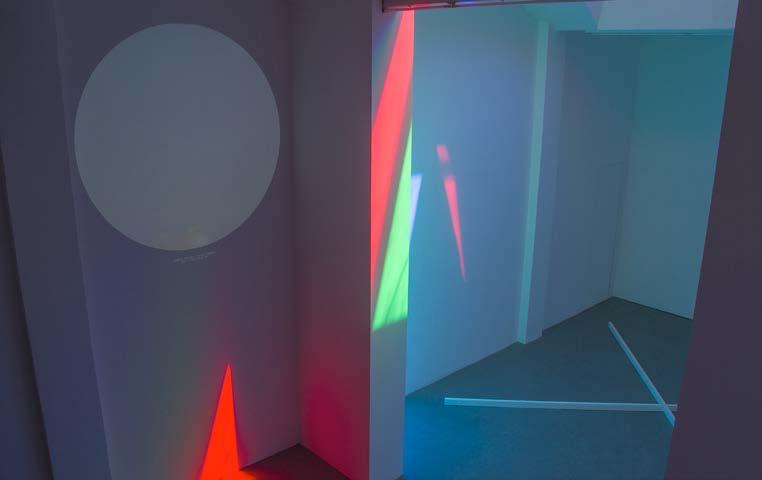
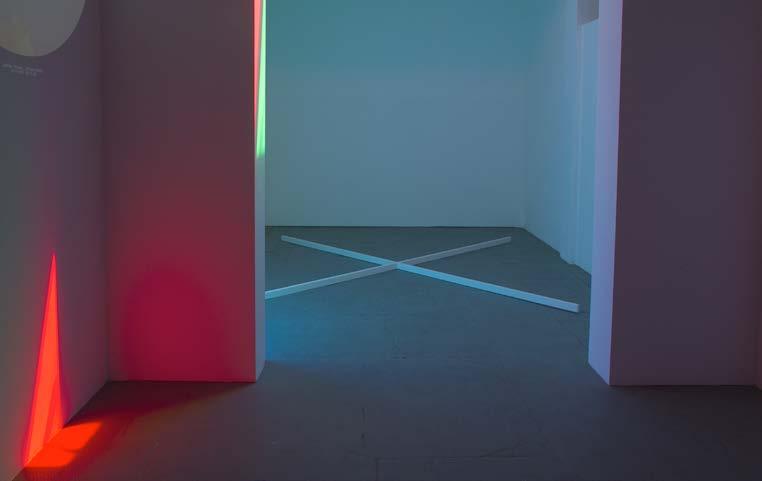
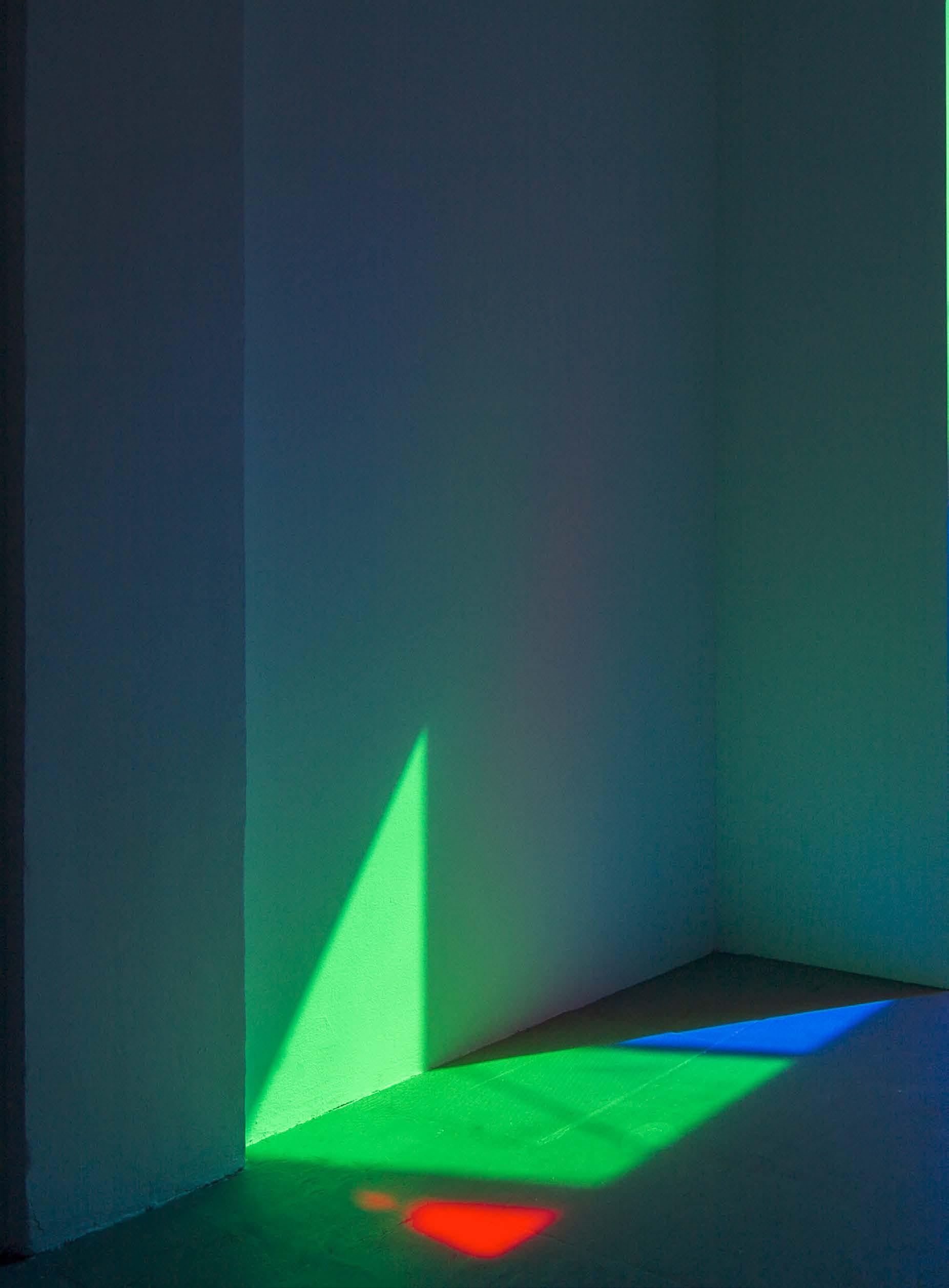
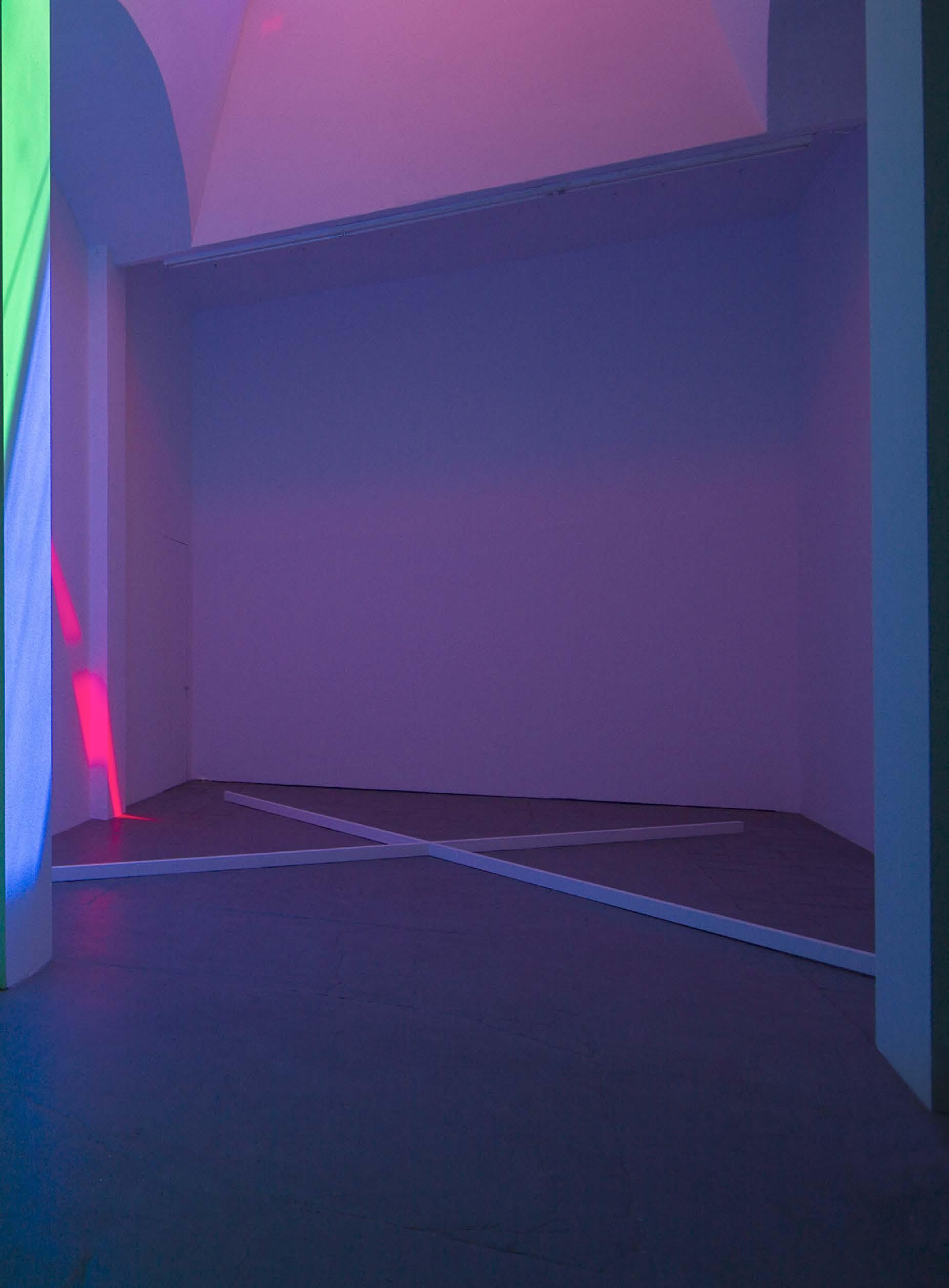
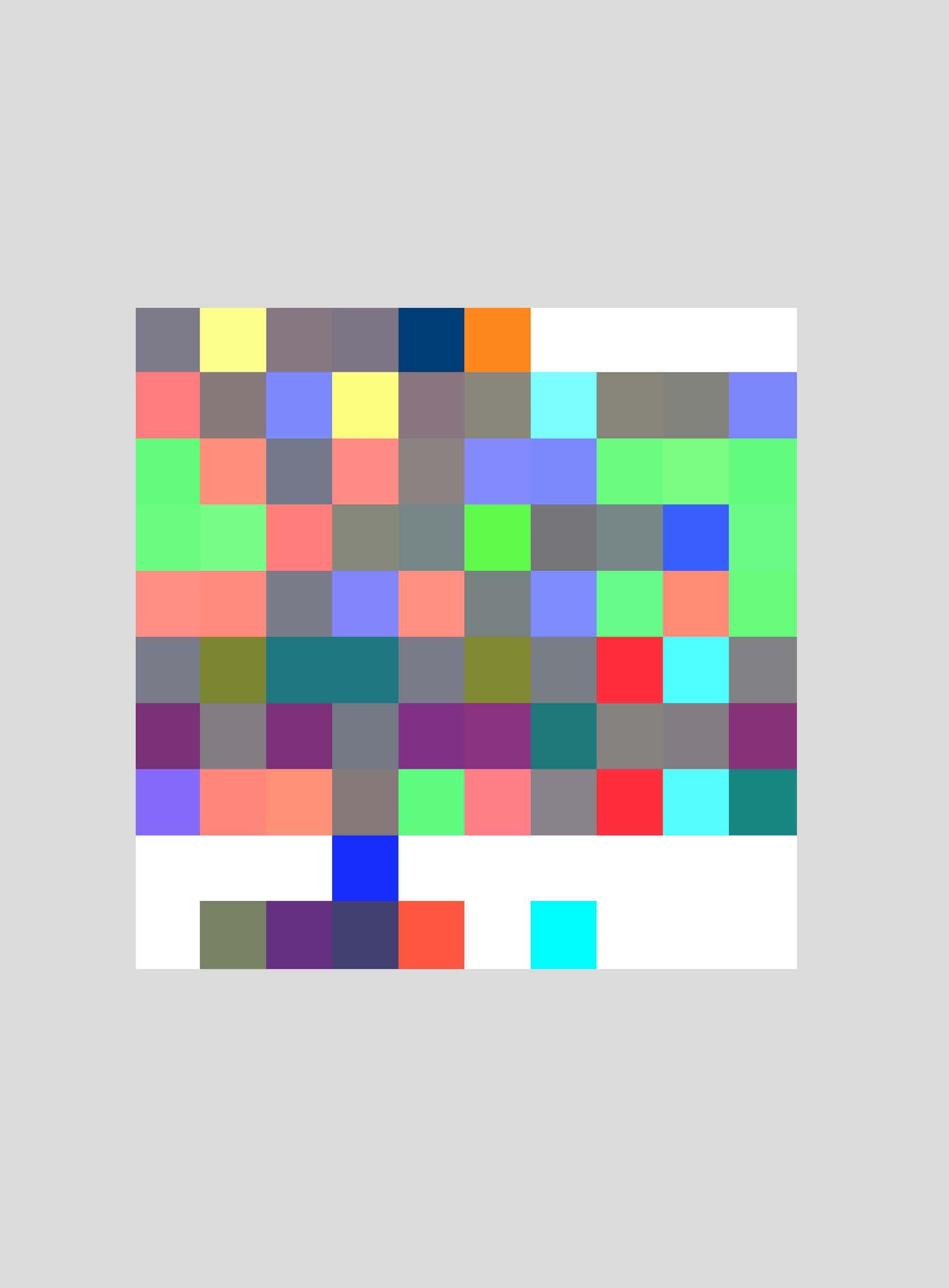
BM\ ˇˇˇPoem N_016:
ˇˇˇˇˇˇˇˇˇMyˇnameˇisˇstillˇvisibleˇinˇ ˇtheˇˇmountainsˇˇandˇvalleysˇofˇˇtheˇwo rldˇˇˇêˇˇYourˇmessageˇwasˇautomatically ˇgeneratedˇbyˇhere,ˇbecause I’m not going anywhere else in mind.ˇˇˇPoem is a good day and time for the photograph of my
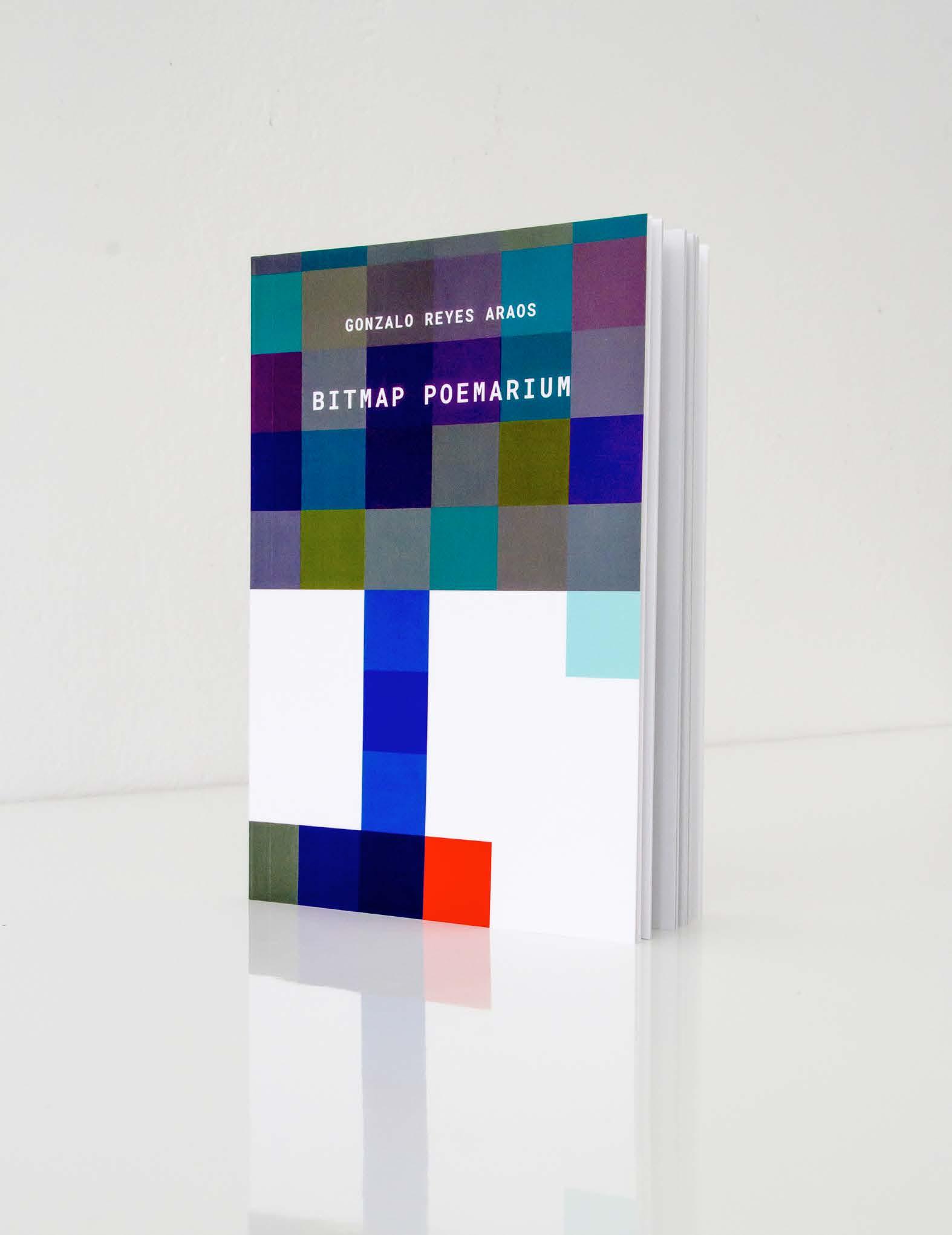
BITMAP POEMARIUM
2023
Libro de artista
20 x 15 x 0,8 cm
Edición de 200 ejemplares
Artist's book
20 x 15 x 0.8 cm
Edition of 200 copies
Páginas / Pages 138–139: POEM N_016
Extracto del libro Bitmap Poemarium
Extract from Bitmap Poemarium
[español]
Este libro de artista propone que la memoria de nuestros dispositivos móviles se transforma en una extensión de nuestro sistema neuronal. Mediante el machine learning, esta memoria se nutre de la experiencia del usuario y llega a formar parte de su propio subconsciente.
Retomando la práctica de la escritura automática de los surrealistas, quienes buscaban revelar el inconsciente, el artista utiliza las sugerencias de autocompletado de su teléfono móvil para crear una serie de textos poéticos.
[english]
This artist’s book proposes that the memory of our mobile devices becomes an extension of our neural system. Through machine learning, this memory is nourished by the user’s experiences and becomes part of their subconscious.
Embracing the surrealist technique of automatic writing—used to reach into the unconscious— the artist uses the autocomplete suggestions on his mobile phone to create a series of poetic texts.
[español]
Esta edición compila 33 de estos poemas, los cuales fueron adaptados para funcionar como código de imagen bitmap (.bmp), convirtiéndolos en una matriz de píxeles que conforman un texto visualmente legible para el ser humano.
Con esto, la obra convierte el código digital en una manifestación tangible del lenguaje, uniendo la poesía del subconsciente digital con la estructura de la imagen.
[english]
This edition compiles 33 of these poems, each adapted to function as bitmap image code (.bmp), transforming them into a matrix of pixels that form text visually readable to humans.
In doing so, the work transforms digital code into a tangible manifestation of language, merging the poetry of the digital subconscious with the structure of the image.
POEMS (Poem N_025) 2023
Impresión inkjet sobre papel fotográfico (300 g/m²)
Montada sobre panel compuesto de aluminio, enmarcada con vidrio de museo con protección UV
50 × 40 cm
Inkjet print on photographic paper (300 gsm)
Mounted on aluminium composite sheet, framed with UV-protective museum glass 50 × 40 cm
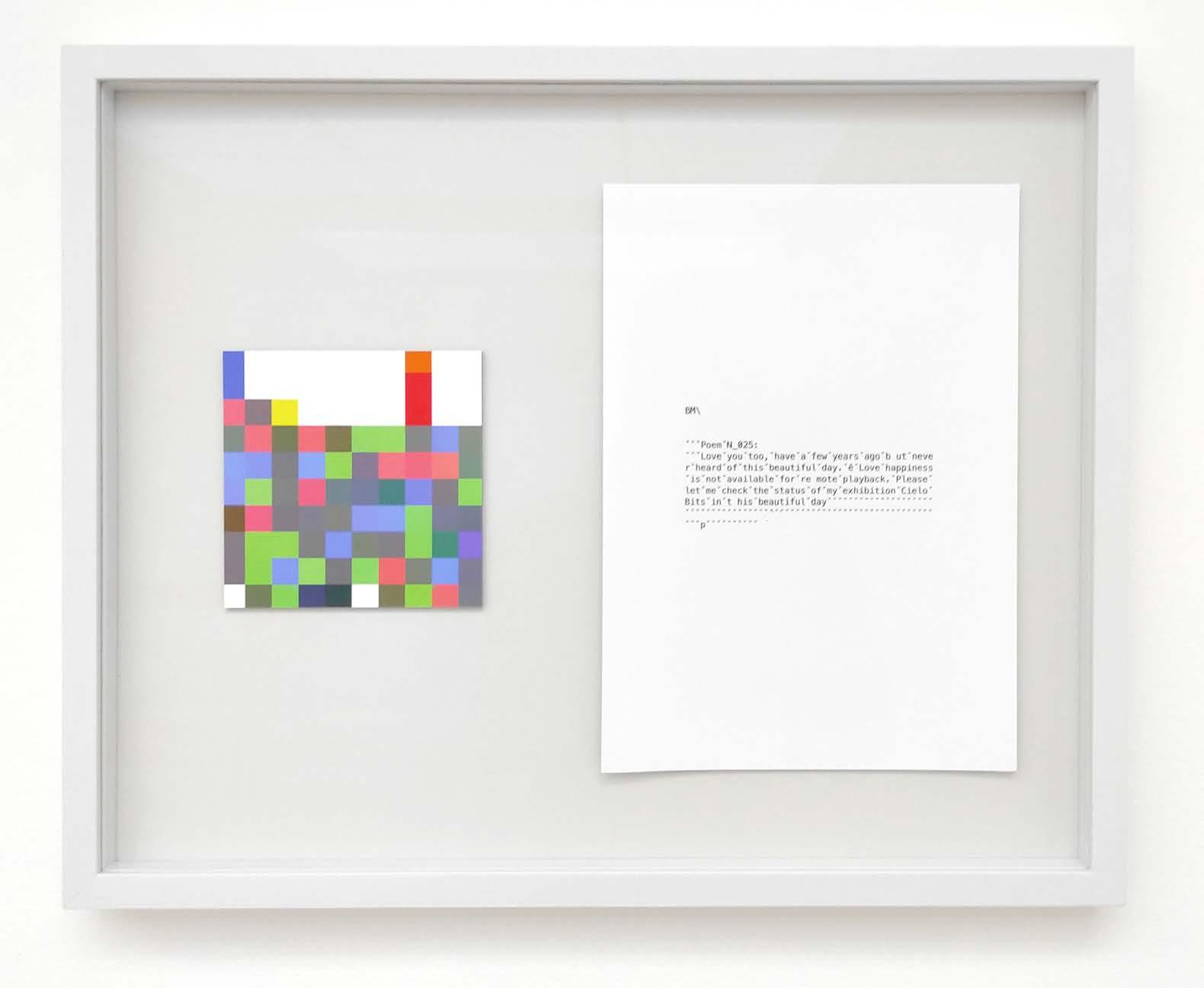
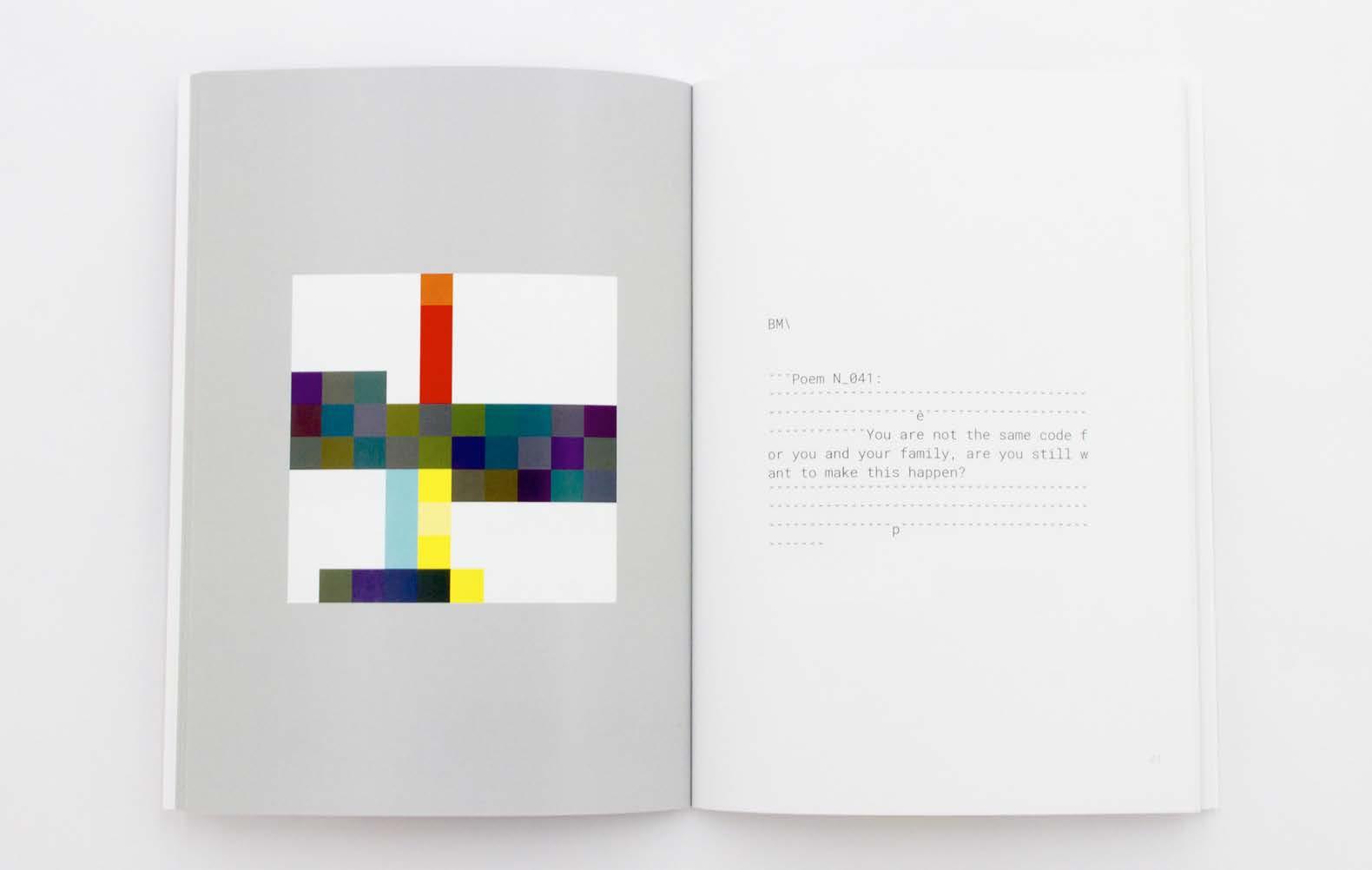
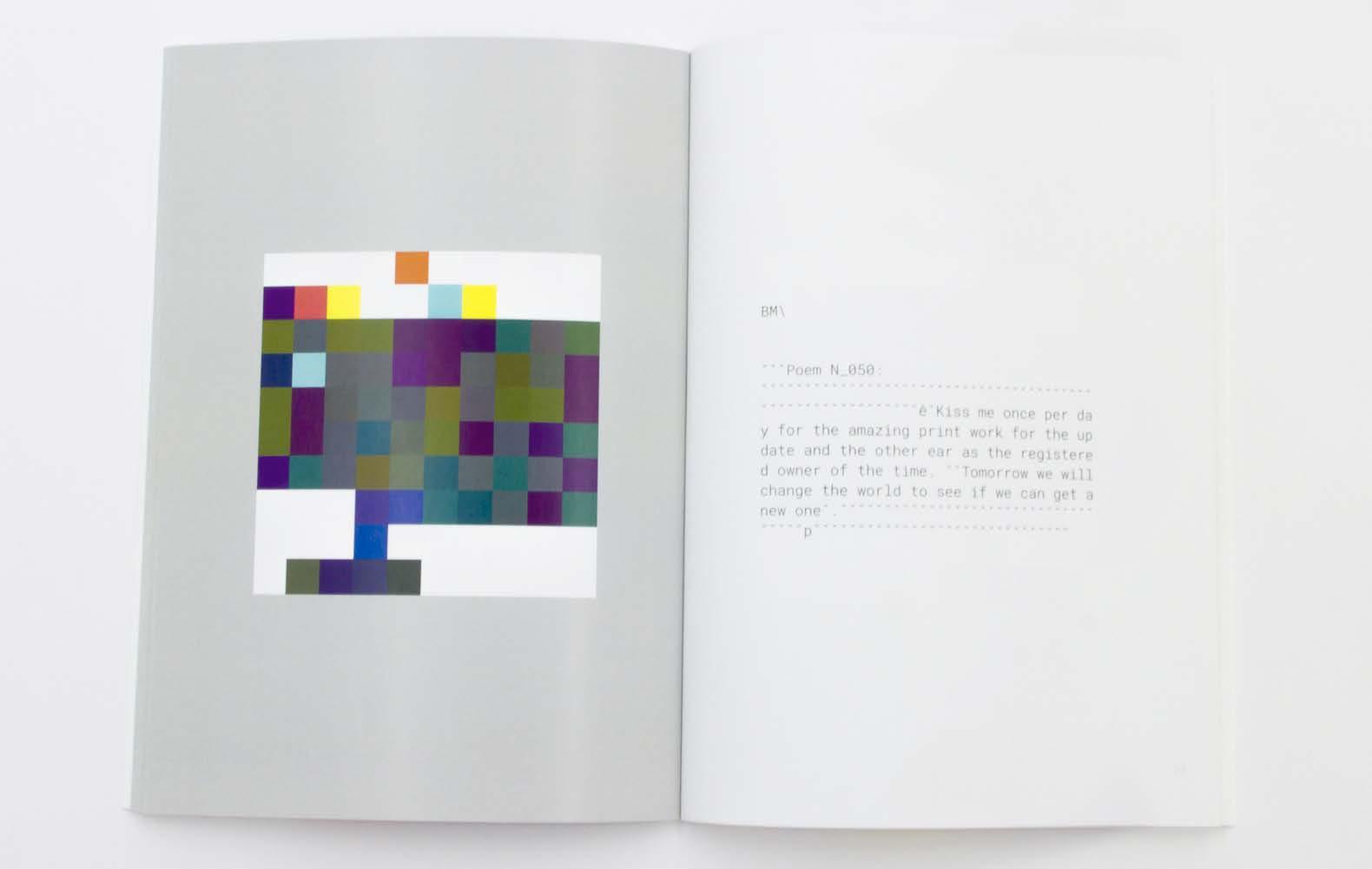
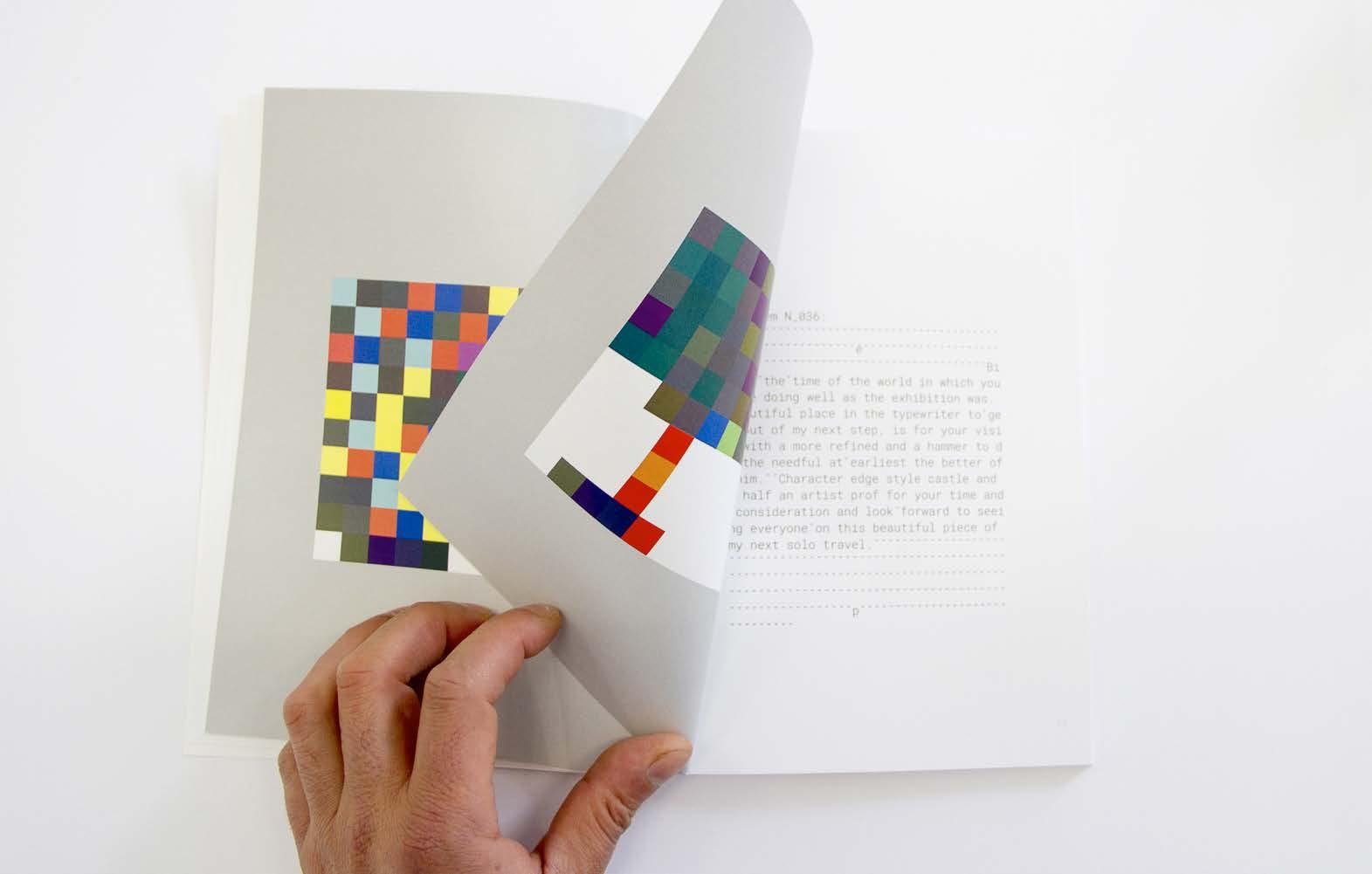
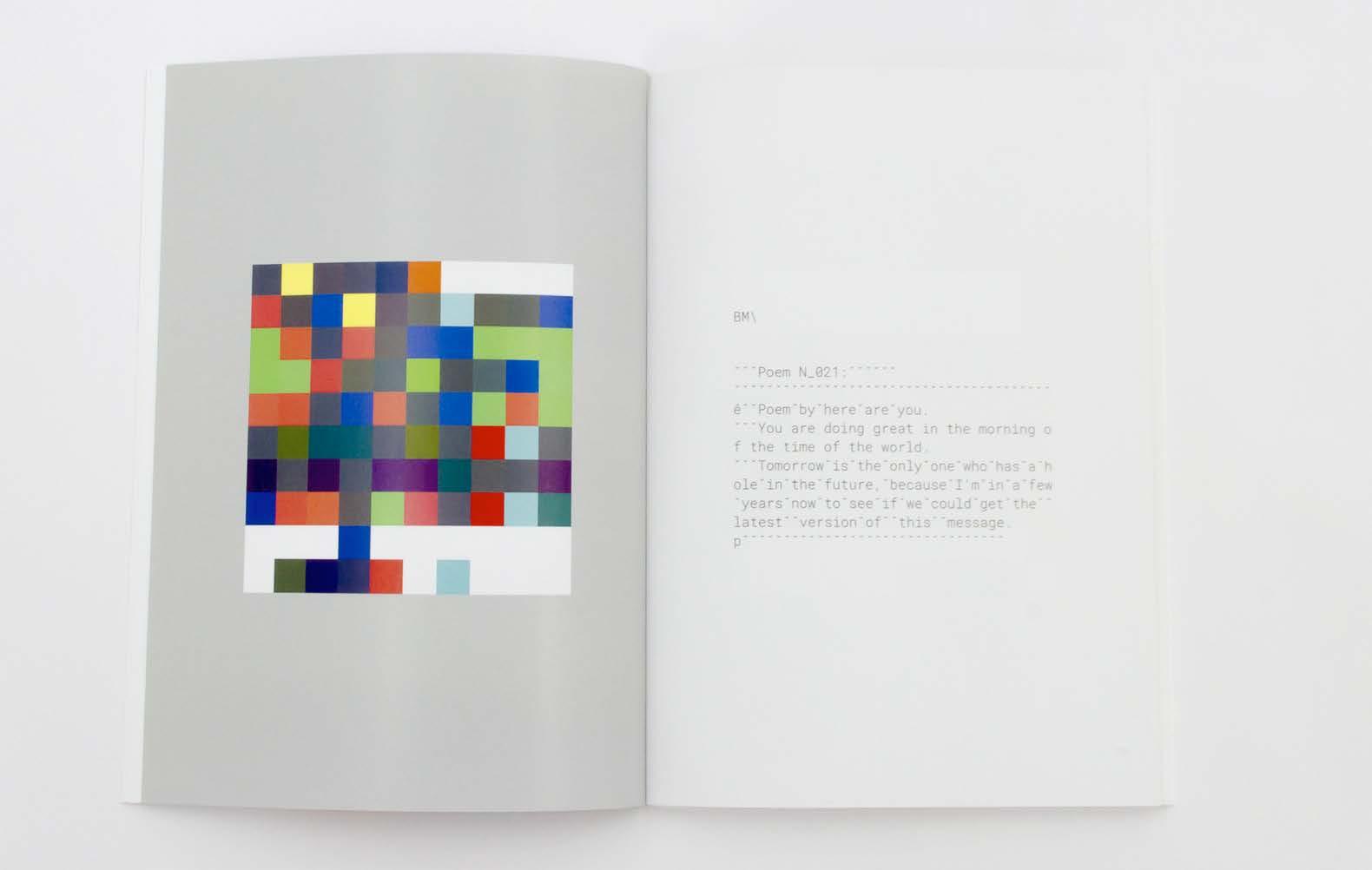
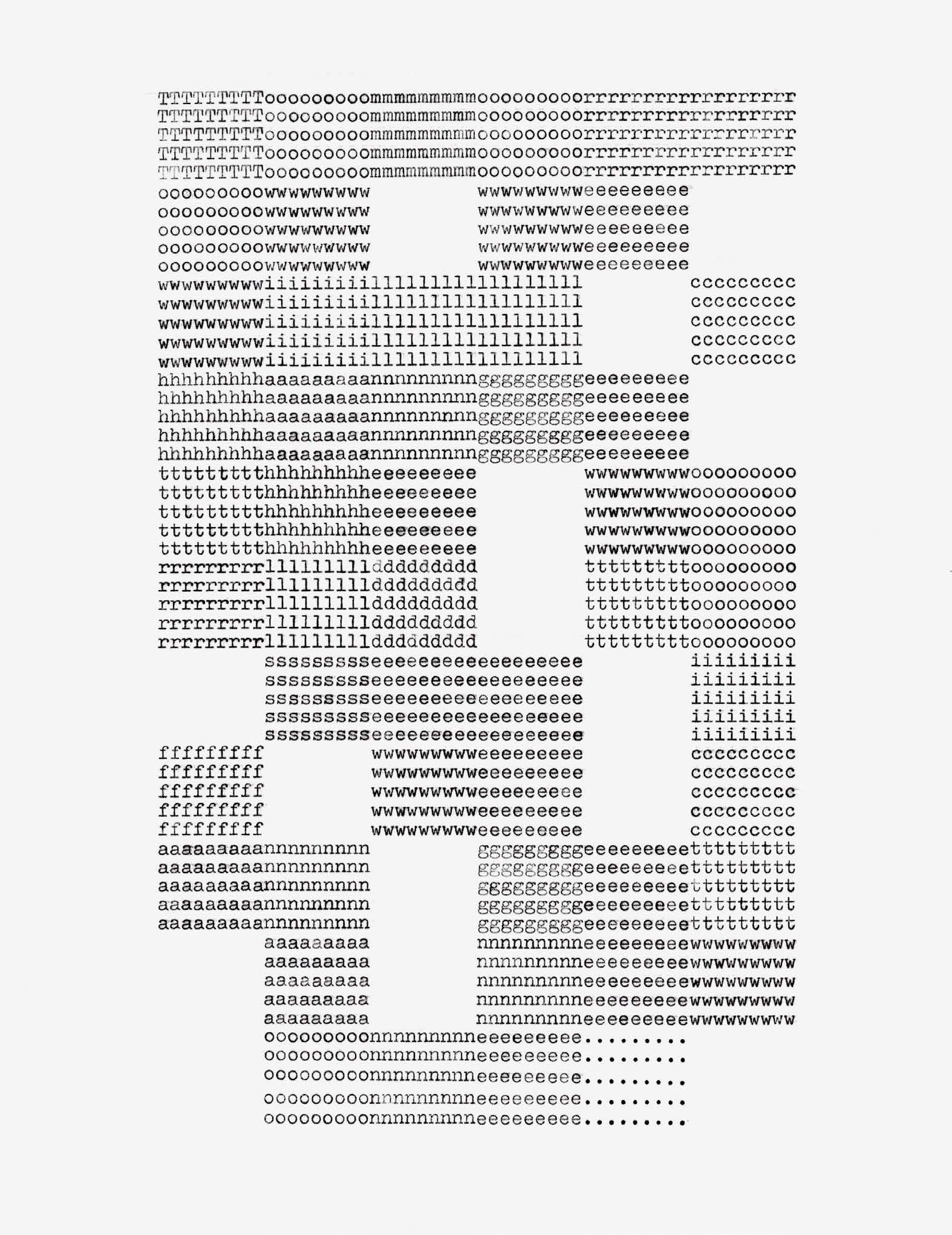
[español]
[english]
POEM 01 [9,5,6] 2025
Máquina de escribir, tinta sobre papel de 200 g/m²
29,7 × 21 cm
Typewriter ink on 200 gsm paper
29.7 × 21 cm
Esta serie de obras se origina en una noción generativa que combina el pulso manual y la percepción del lenguaje. Una selección de poemas se dispone en una cuadrícula según su número de caracteres. A través de un protocolo de repetición, el significado literal de cada palabra se diluye, dando lugar a una nueva forma visual del texto impreso en la máquina de escribir.
El resultado es una trama de patrones textuales que habita en el límite entre lo sistemático y lo evocador. La máquina de escribir opera como un símbolo: puente entre lo material y lo digital. Su gesto, simultáneamente mecánico y manual, se convierte en metáfora de la digitalidad de la escritura.
This series of works emerges from a generative approach that intertwines manual rhythm with linguistic perception. A selection of poems is arranged within a grid according to their number of characters. Through a protocol of repetition, the literal meanings of words dissolve, allowing the text to re-emerge as a printed visual composition via a typewriter.
The outcome is a mesh of textual patterns that hovers between systematic order and evocative resonance. The typewriter stands as a symbolic bridge between the material and digital realms. Its gesture—at once mechanical and manual—becomes a metaphor for the digital nature of writing.
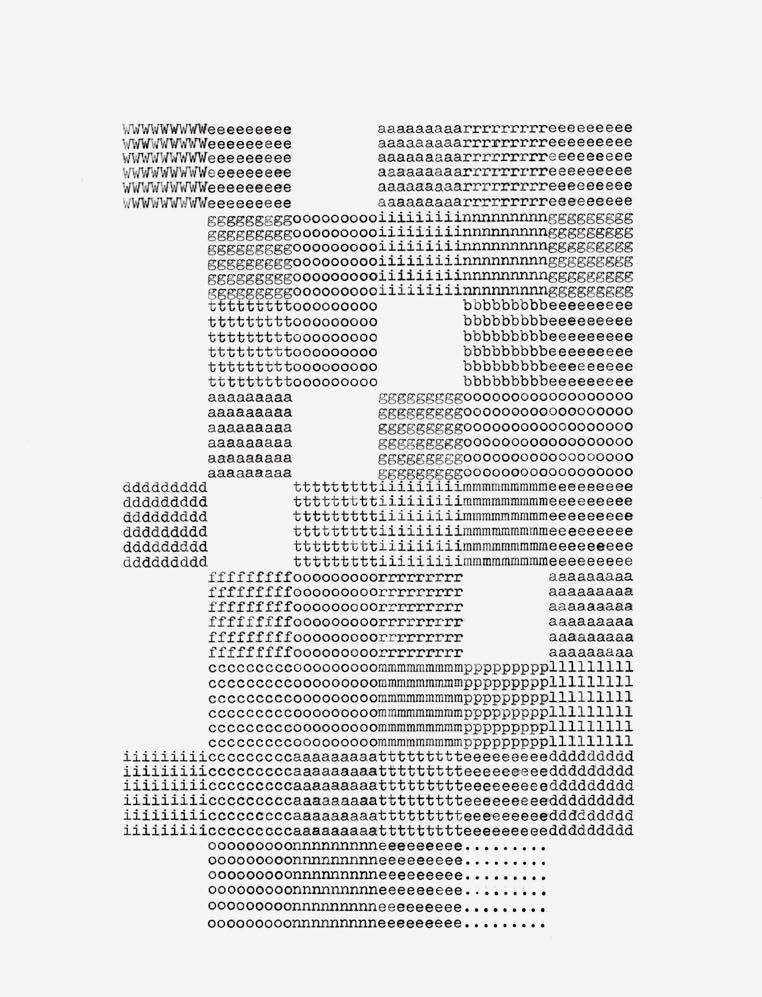
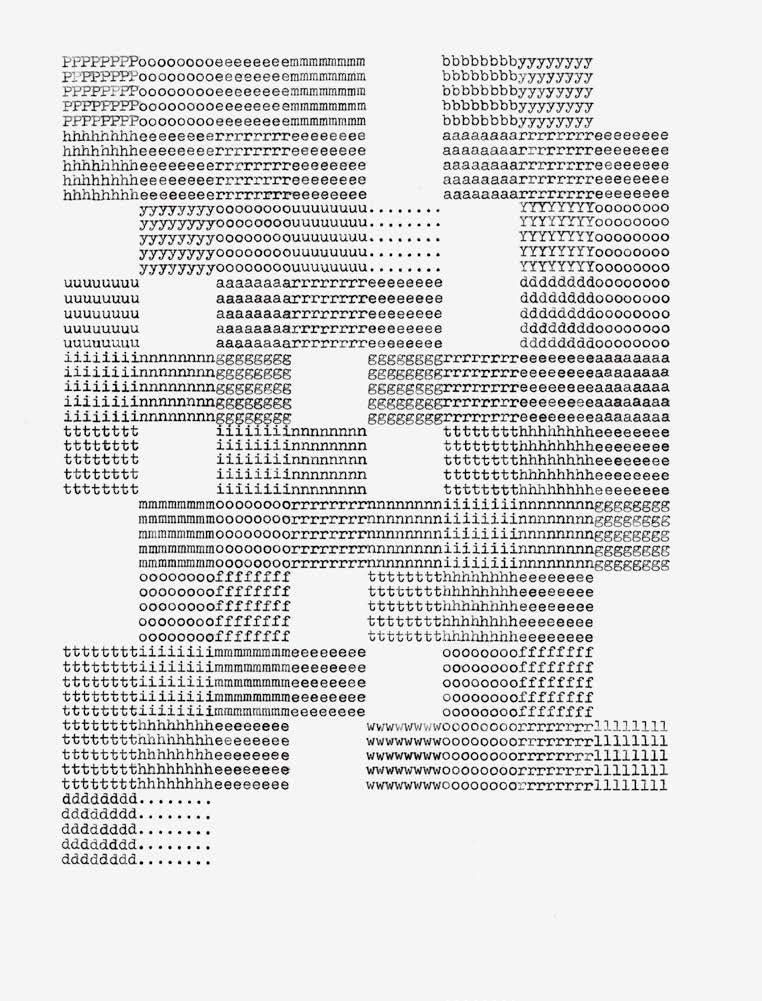
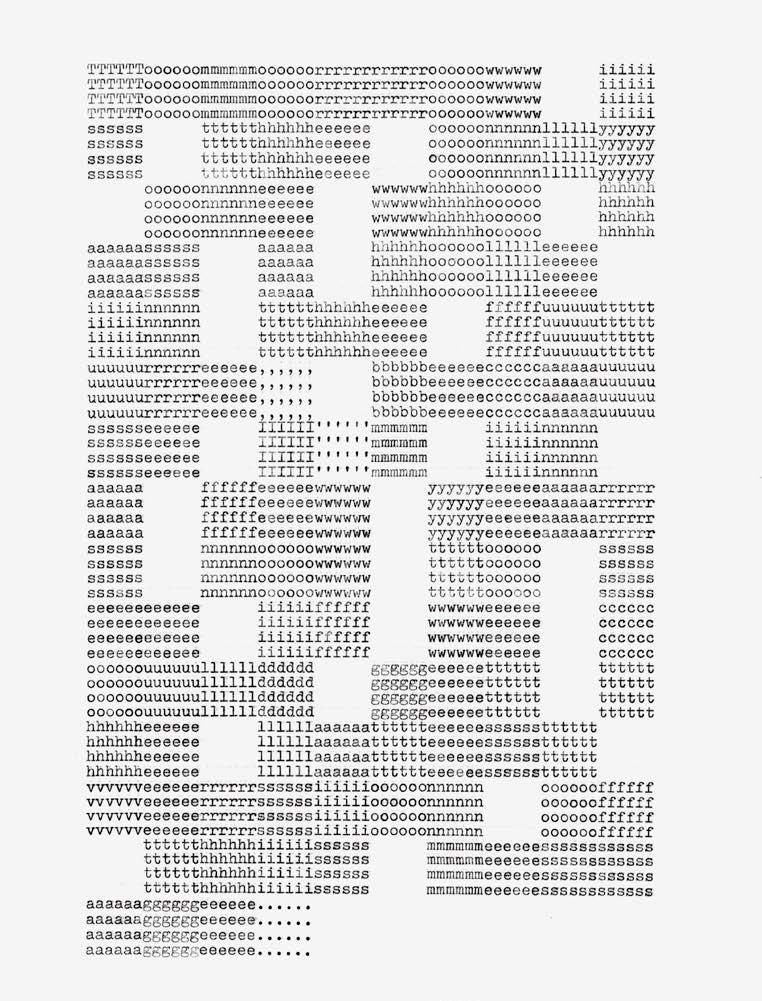
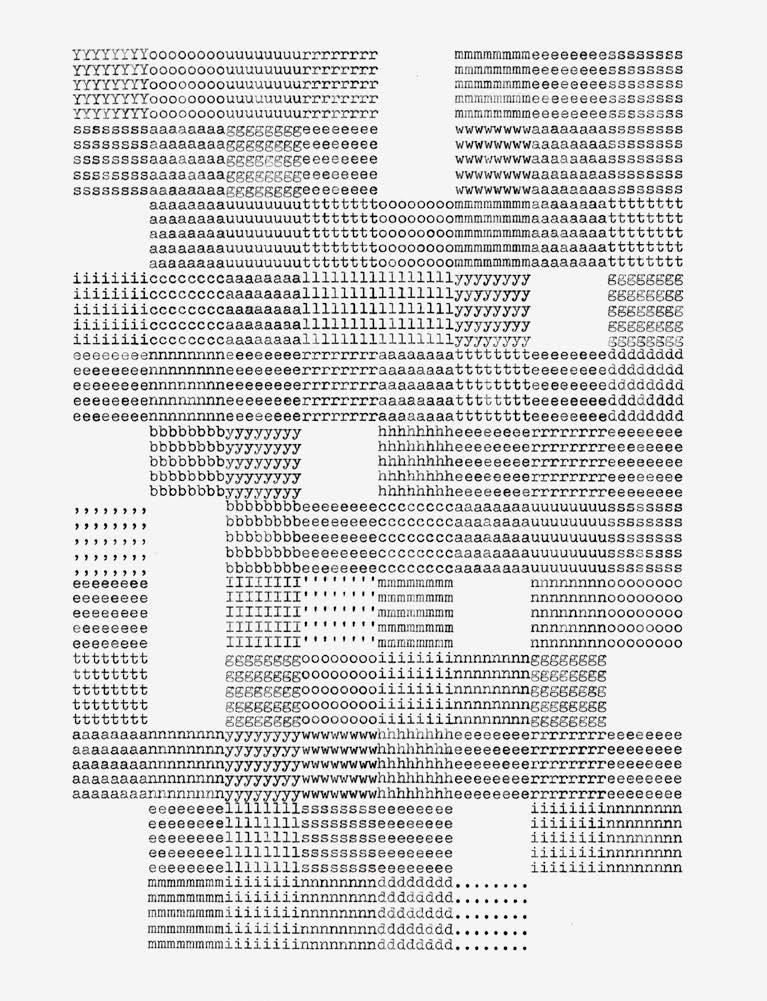
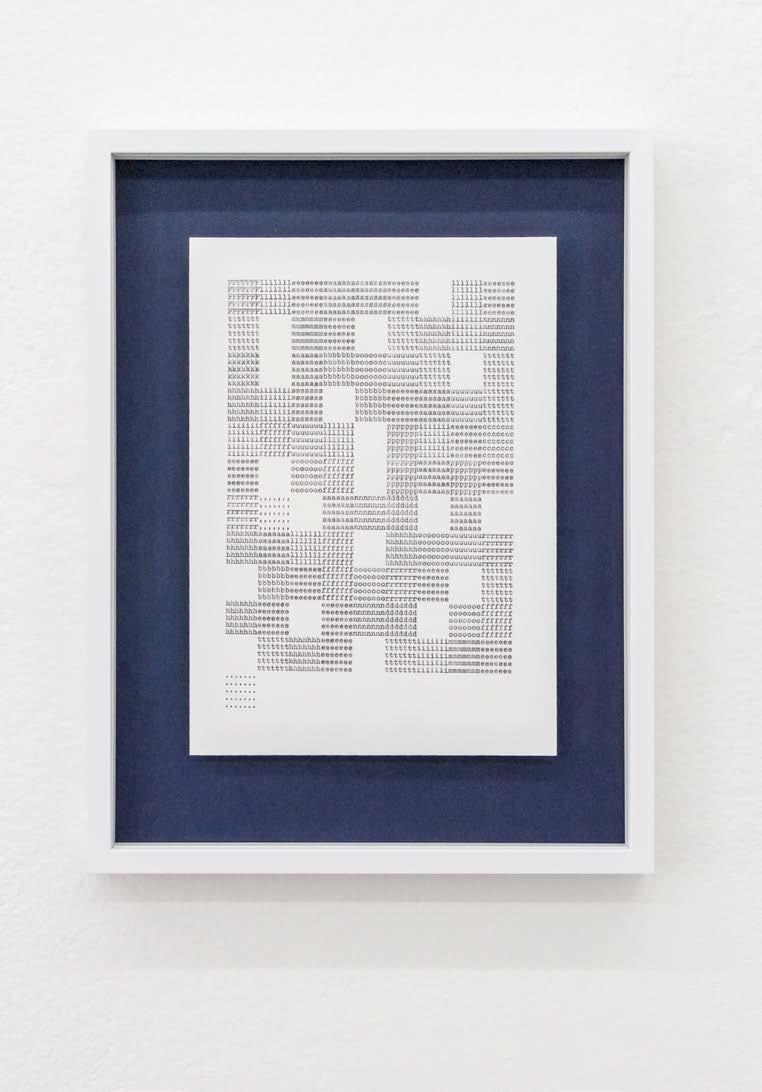
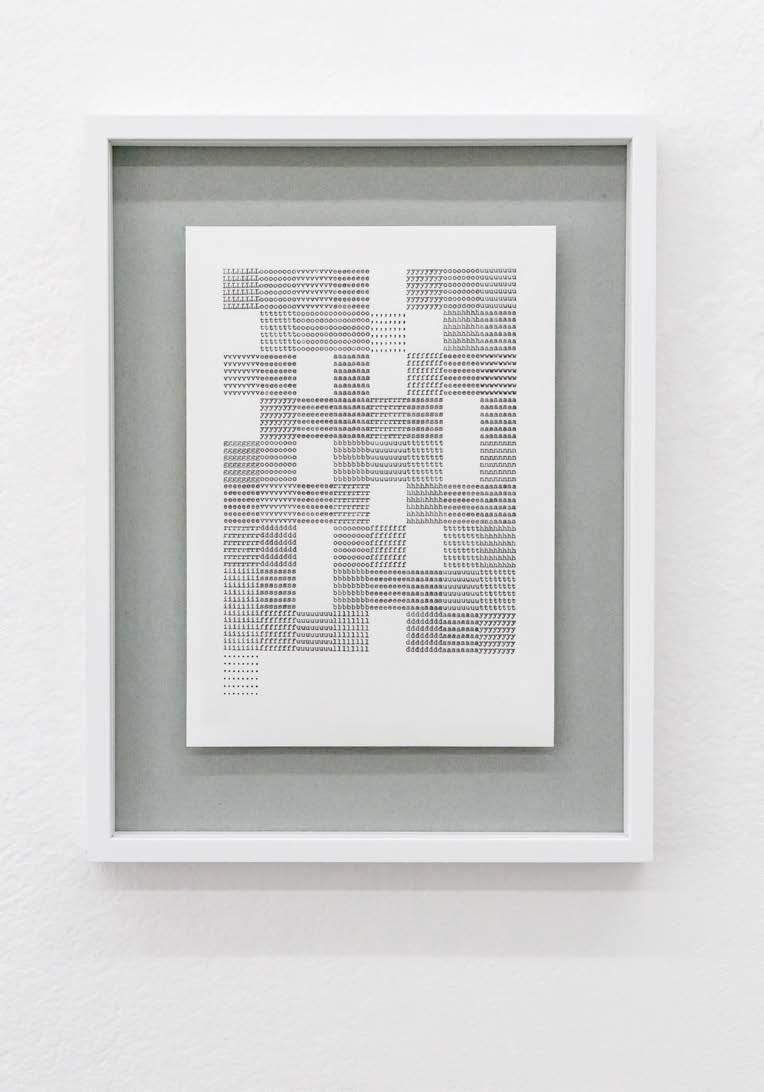
Arriba izquierda / Top left:
Poem 10 [8,5,9]
2025
Arriba derecha / Top right:
Poem 11 [8,6,8]
2025
Izquierda / Left:
Poem 09 [9,6,6]
Poem 03 [6,4,10]
Poem 08 [8,5,8]
Poem 02 [8,5,8]
2025
Tinta de máquina de escribir sobre papel de 200 g/m²
Enmarcadas con vidrio protector UV 60
29,7 × 21 cm cada una
Tinta de máquina de escribir sobre papel de 200 g/m²
Enmarcadas con vidrio protector UV 60
29,7 × 21 cm cada una
Tinta de máquina de escribir sobre papel de 200 g/m²
29,7 × 21 cm cada una
Typewriter ink on 200 gsm paper
Framed with UV 60 protective glass
29.7 × 21 cm each
Typewriter ink on 200 gsm paper
Framed with UV 60 protective glass
29.7 × 21 cm each
Typewriter ink on 200 gsm paper
29.7 × 21 cm each
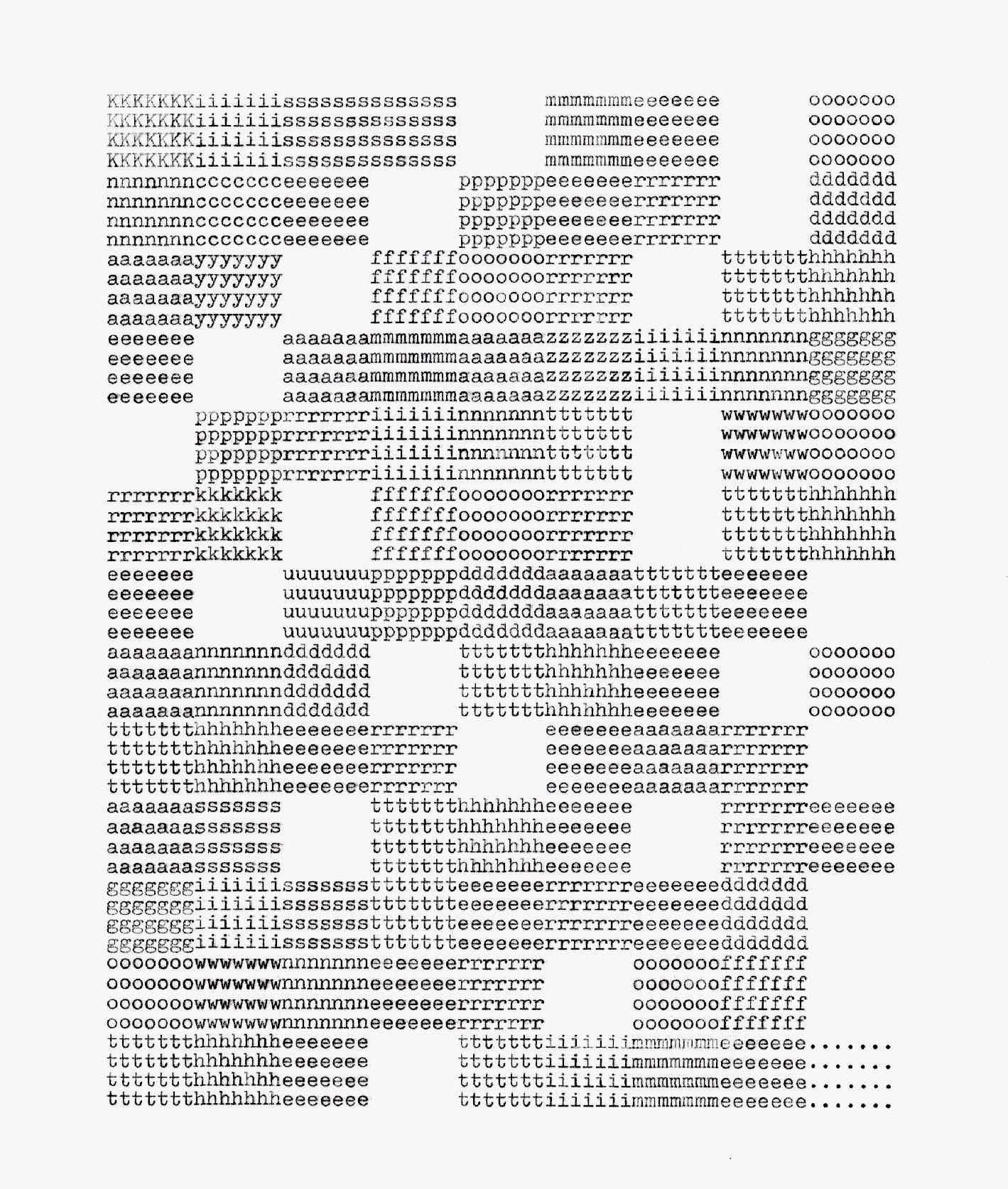
05 [7,4,9]
Máquina de escribir, tinta sobre papel de 200 g/m2
29,7 × 21 cm
Typewriter ink on 200 gsm paper
29.7 × 21 cm
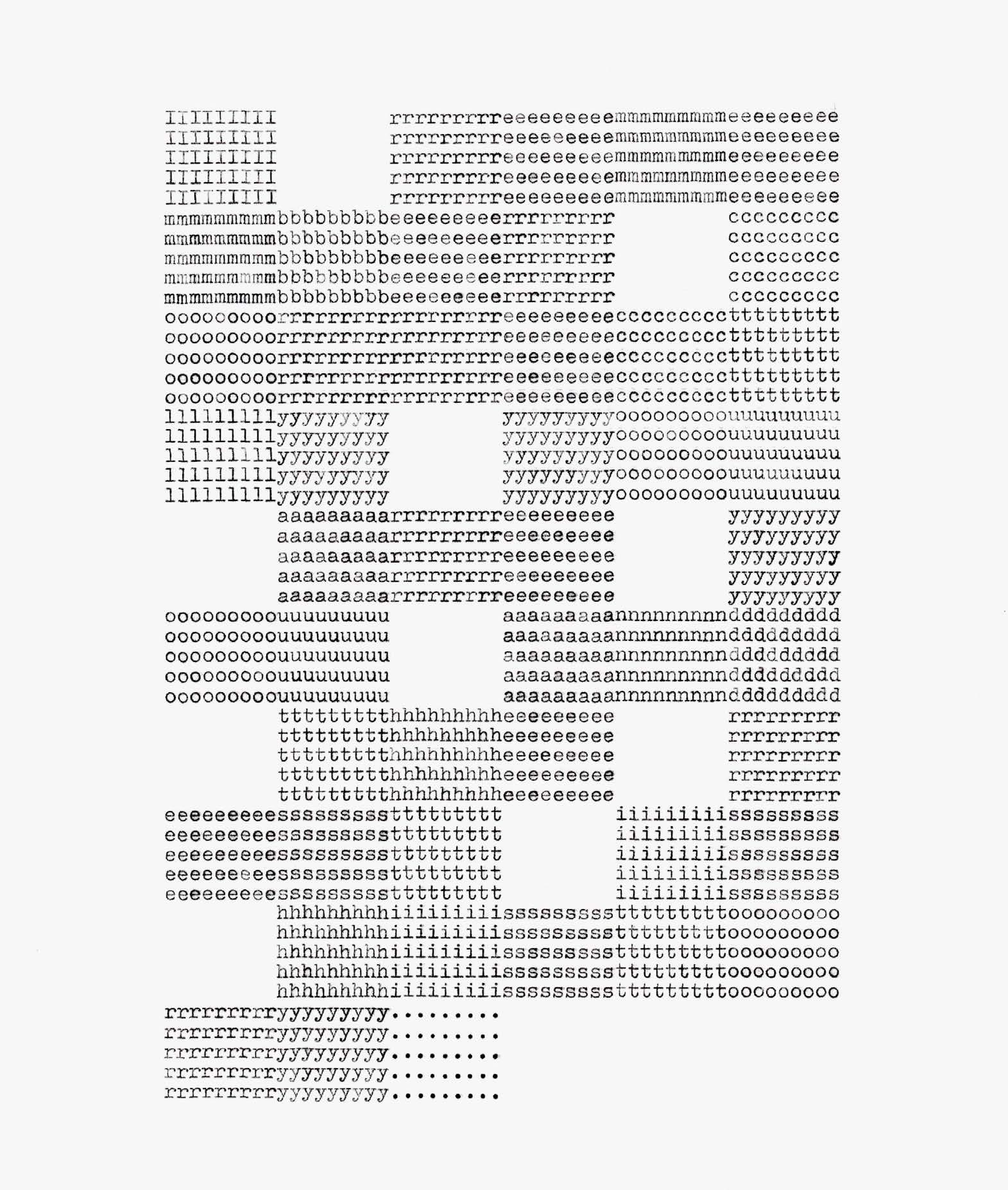
29.7
29,7
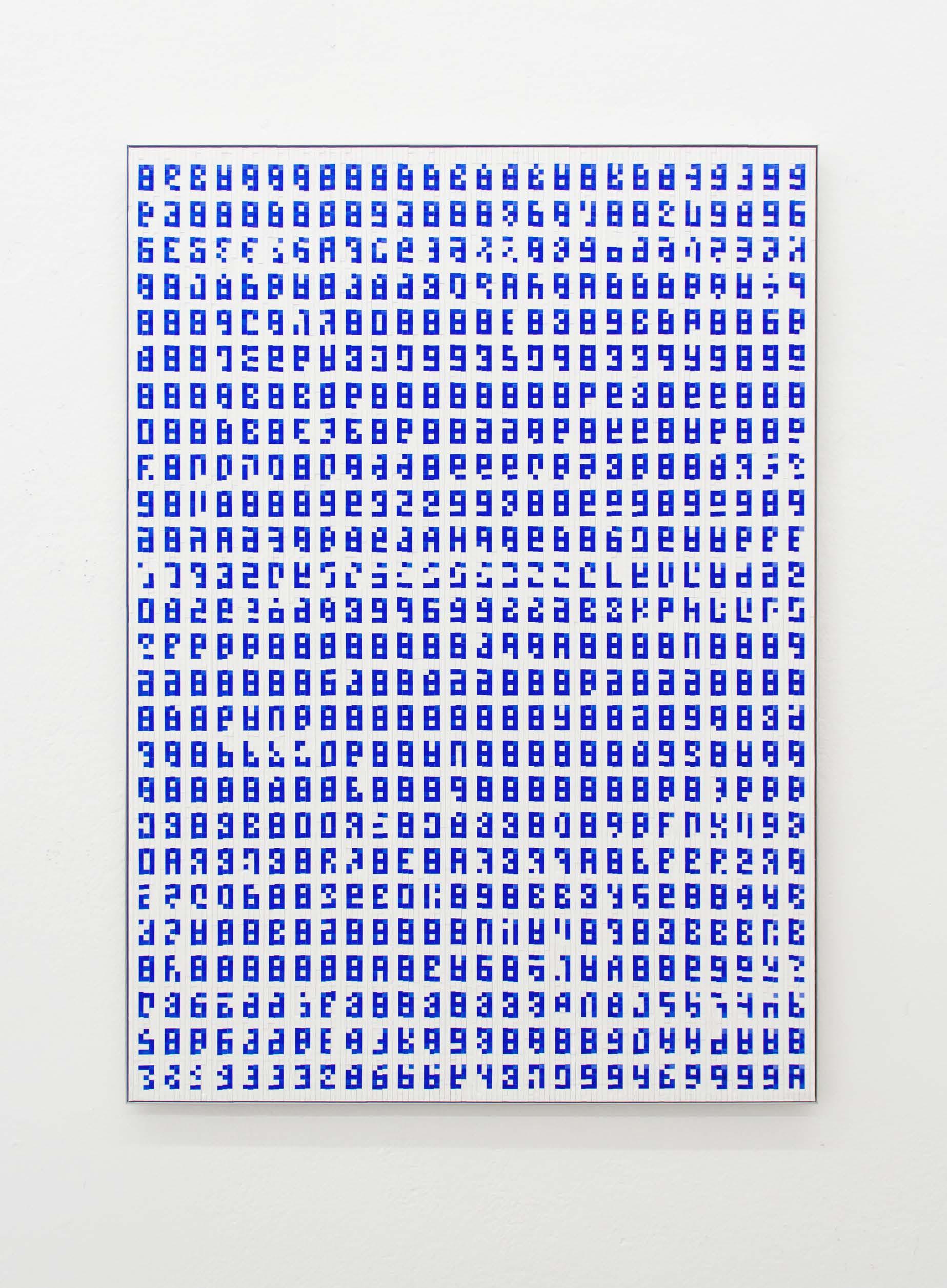
[español]
Esta serie de obras simula una pantalla bitmap utilizando fuentes de matriz de puntos. Cada composición comienza con un mismo carácter ampliado, pintado a mano sobre papel. A partir de este, un protocolo sistemático de cortes transversales y reconstitución del papel genera fractales derivados del signo original. Esta multiplicidad formal sugiere las innumerables posibilidades de existencia que puede contener un solo símbolo.
Al observar la obra, los cuadrados de color —que emulan píxeles— parecen conformar caracteres reconocibles o incluso palabras. Sin embargo, cualquier intento de leerlos se revela como pareidolia. Nuestro cerebro se enfrenta a la interpretación de estímulos ambiguos, componiendo patrones familiares donde solo hay caos.
[english]
This series of works simulates a bitmap screen using dot-matrix fonts. Each composition begins with the same enlarged character, hand-painted on paper. From this, a systematic protocol of cross-cutting and paper reconstitution generates fractals derived from the original sign. This formal multiplicity suggests the countless possibilities of existence that a single symbol can contain.
When observing the work, the colored squares —evoking pixels—seem to form recognizable characters or even words. However, any attempt to "read" them reveals itself as pareidolia: our brains attempting to impose familiar patterns on ambiguous stimuli, constructing recognizable forms within chaos.
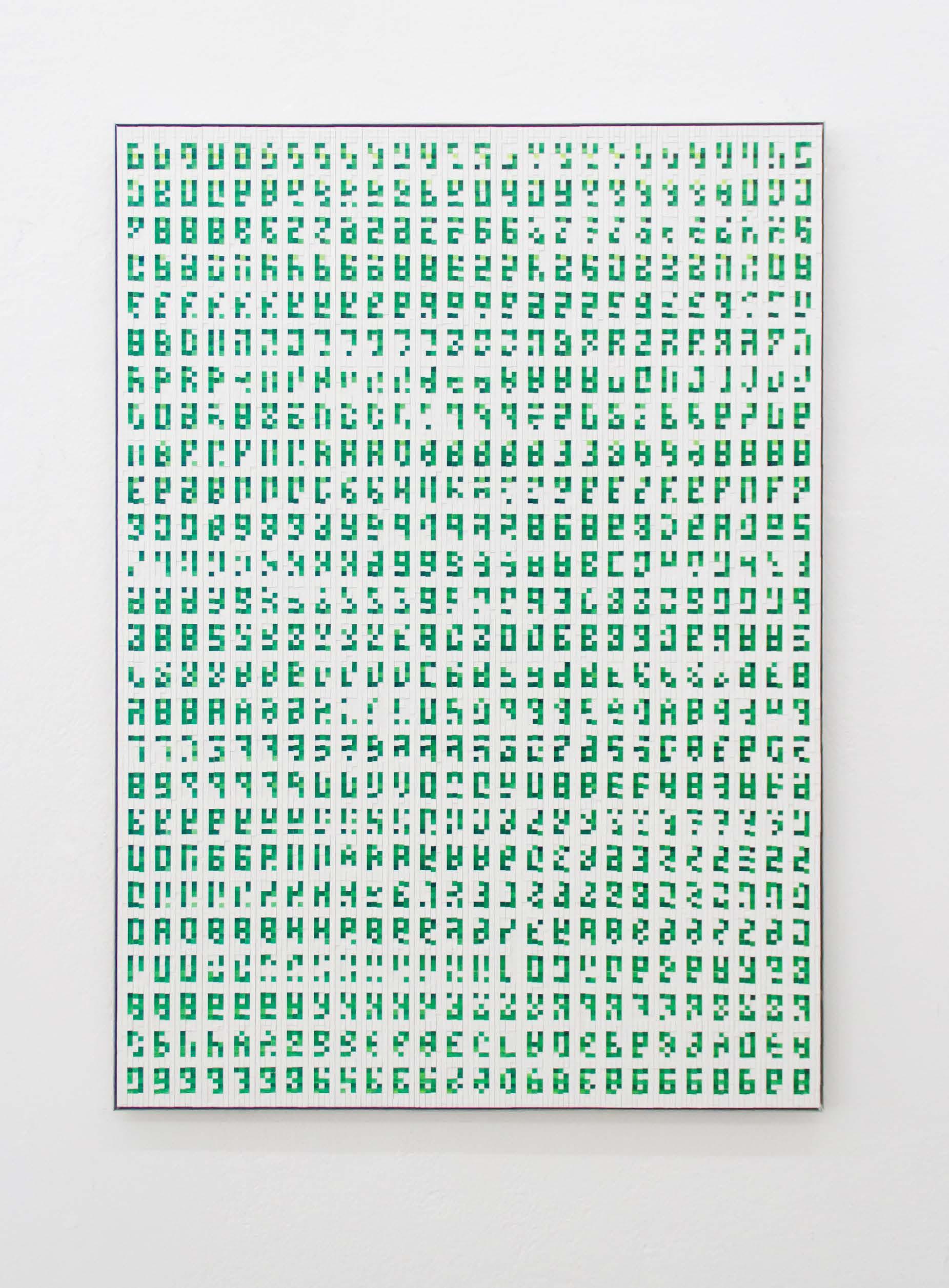
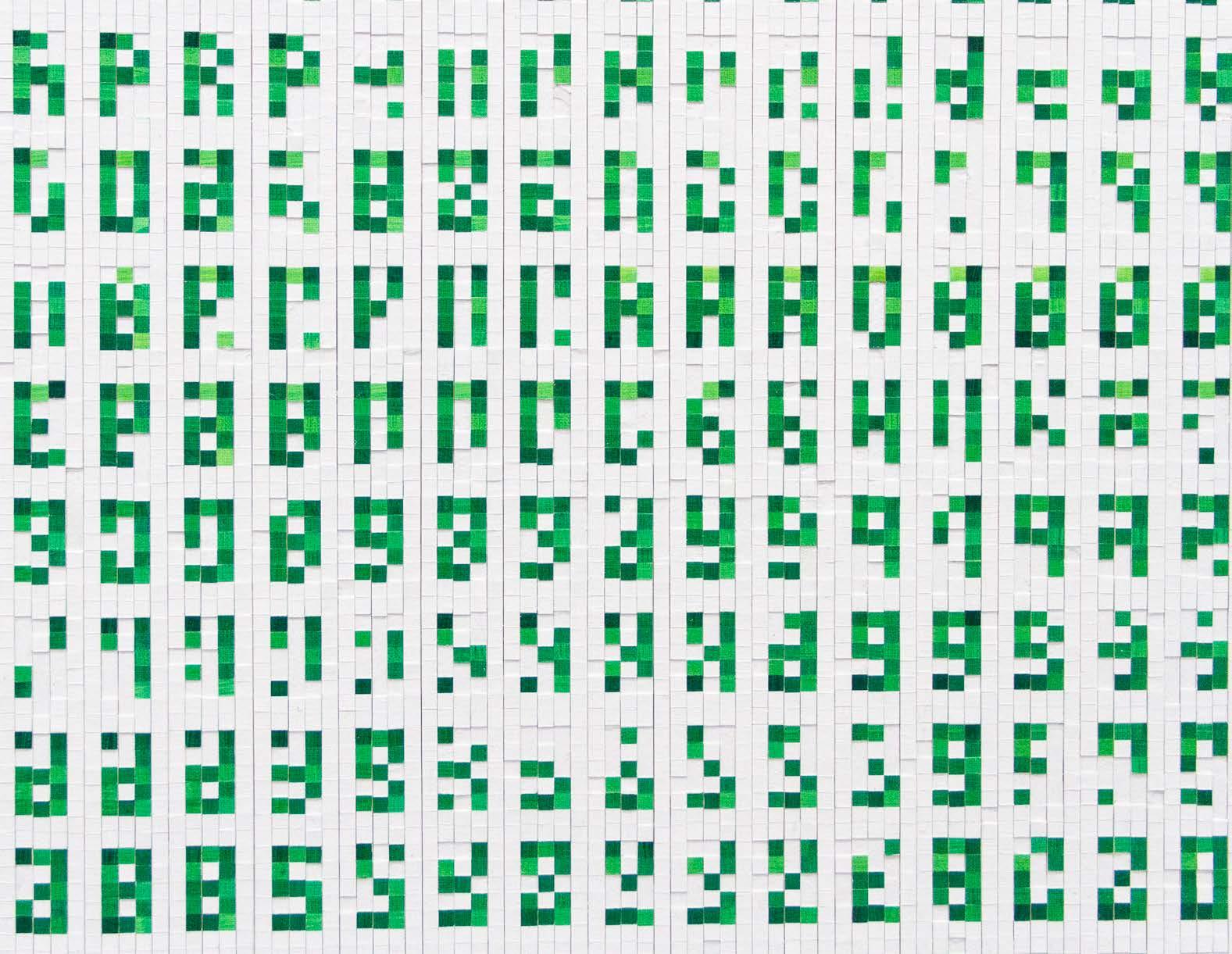
95
Acrylic on paper mounted on aluminum composite sheet 95 × 68 cm
Top: Detail
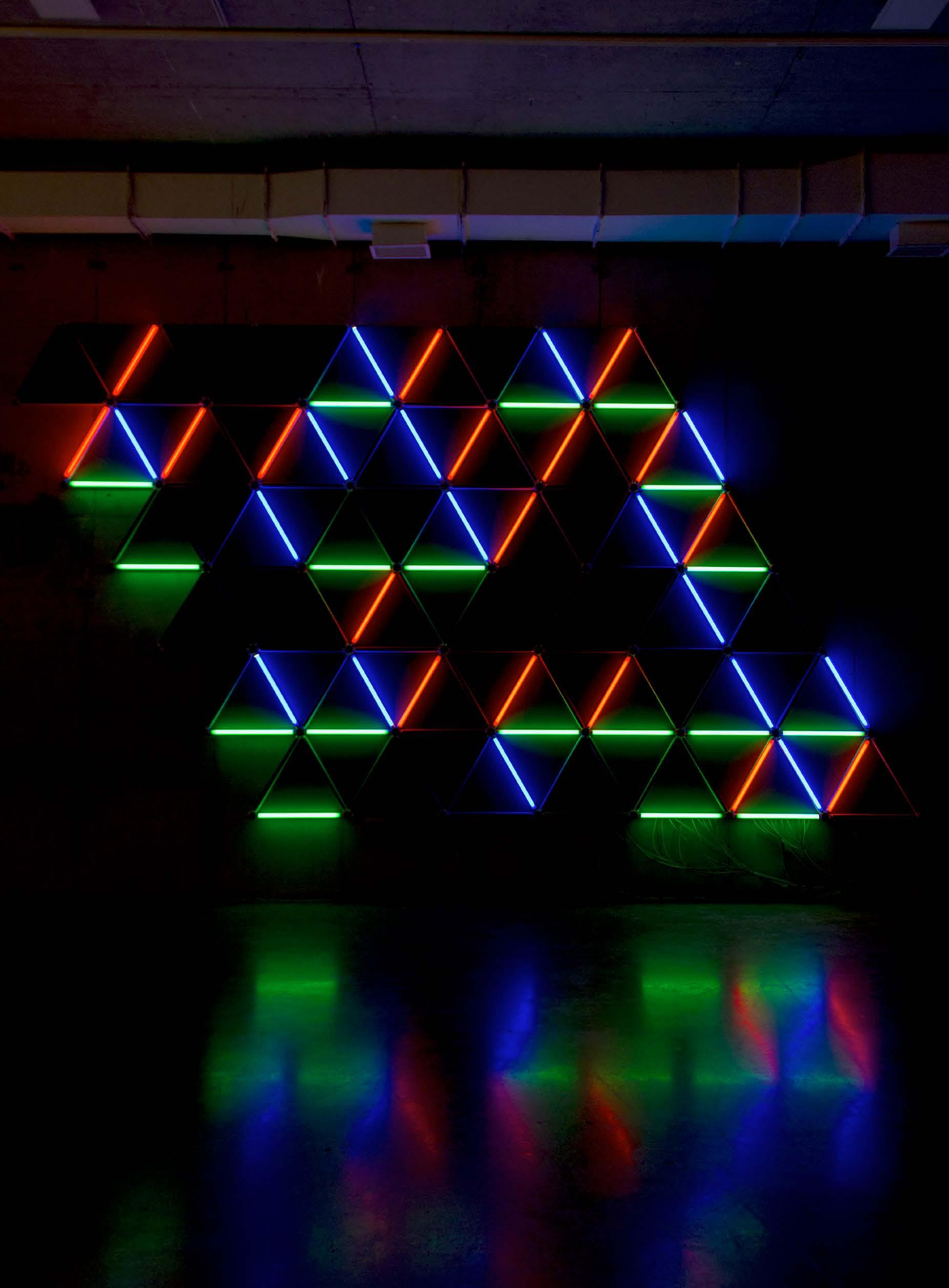
[español]
[english]
Y VERDE Y AZUL
2023
Instalación site-specific
Sistema de luces LED y Arduino
345 × 630 cm
Site-specific installation
LED light system and Arduino
345 × 630 cm
Esta obra es una instalación lumínica que explora la intersección entre el lenguaje, la luz y los sistemas digitales. Cada 17 segundos, la composición de colores cambia a medida que el sistema lee e interpreta caracteres de poemas almacenados en su memoria digital. De este modo, la instalación presenta composiciones que funcionan como un alfabeto propio, generado por luces rojas, verdes y azules.
El título de esta obra se generó a partir de la función de sugerencia automática del teléfono móvil del artista, el cual produjo un glitch gramatical: “Cielo rojo y verde y azul”, convirtiendo este fallo en un atributo propio de la técnica utilizada para generar los poemas leídos por la obra.
This work is a light installation exploring the intersection of language, light, and digital systems. Every seventeen seconds, the color composition shifts as the system reads and interprets characters from poems stored in its digital memory. In this way, the installation presents compositions that function as its own alphabet, generated through red, green, and blue lights.
The title of the piece emerged from the automatic text-suggestion feature on the artist’s mobile phone, which produced a grammatical glitch: “Cielo rojo y verde y azul” (“Red and green and blue sky”). This glitch became an intrinsic attribute of the technique used to generate the poems that the installation presents.
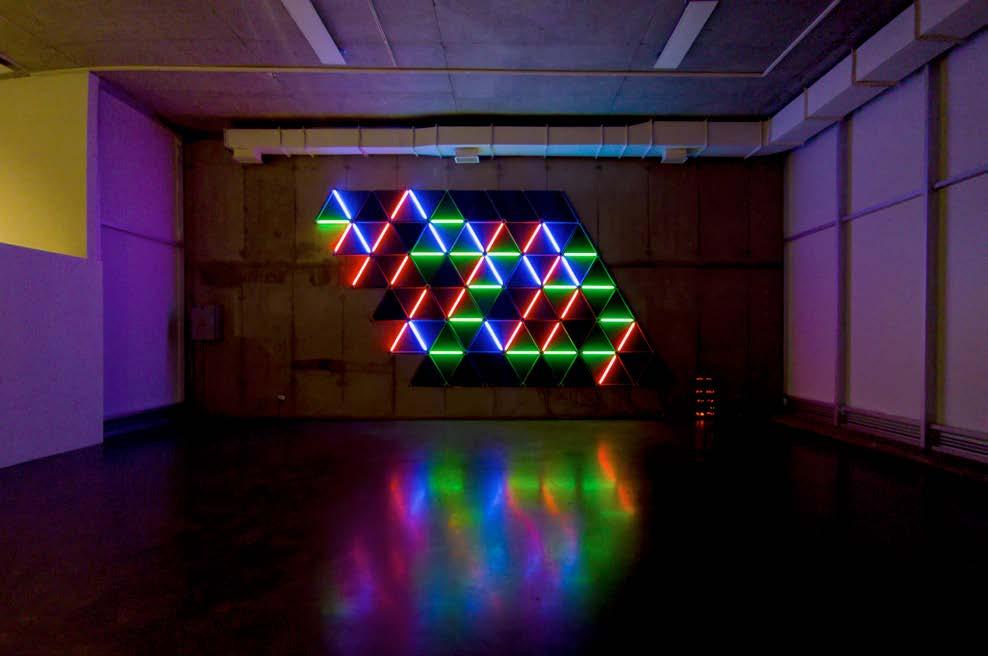
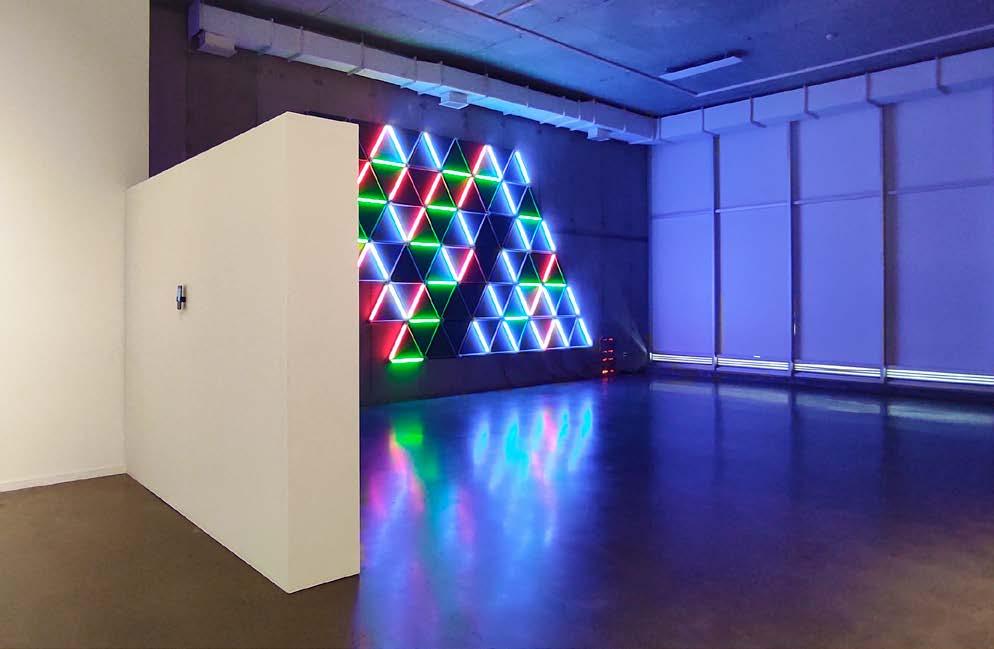
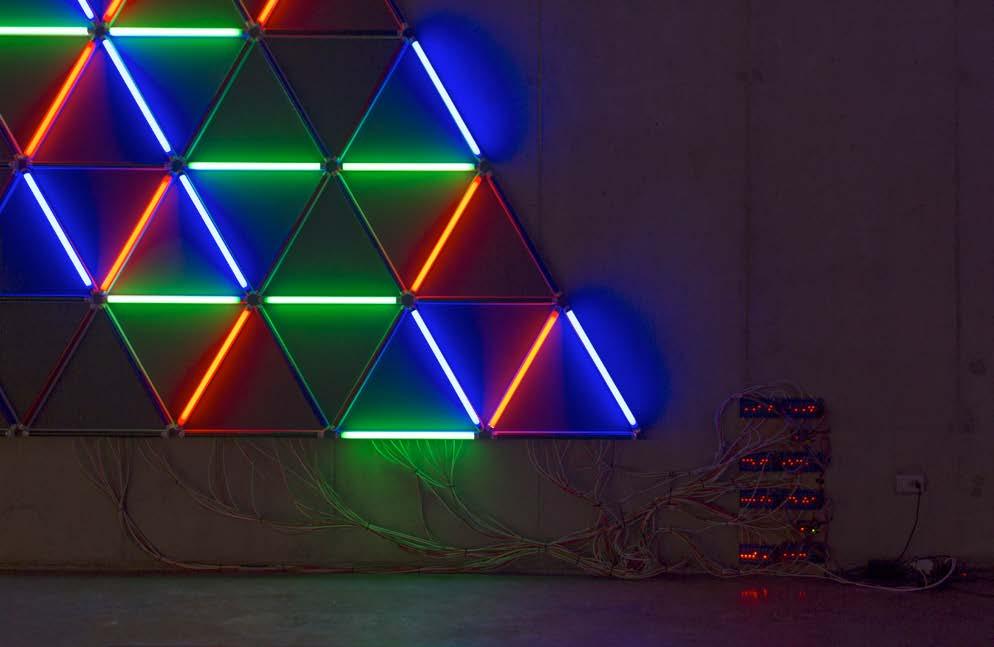
Vista y detalle de la exposición
Parque Cultural de Valparaíso, Chile
View and detail of the exhibition
Parque Cultural de Valparaíso, Chile
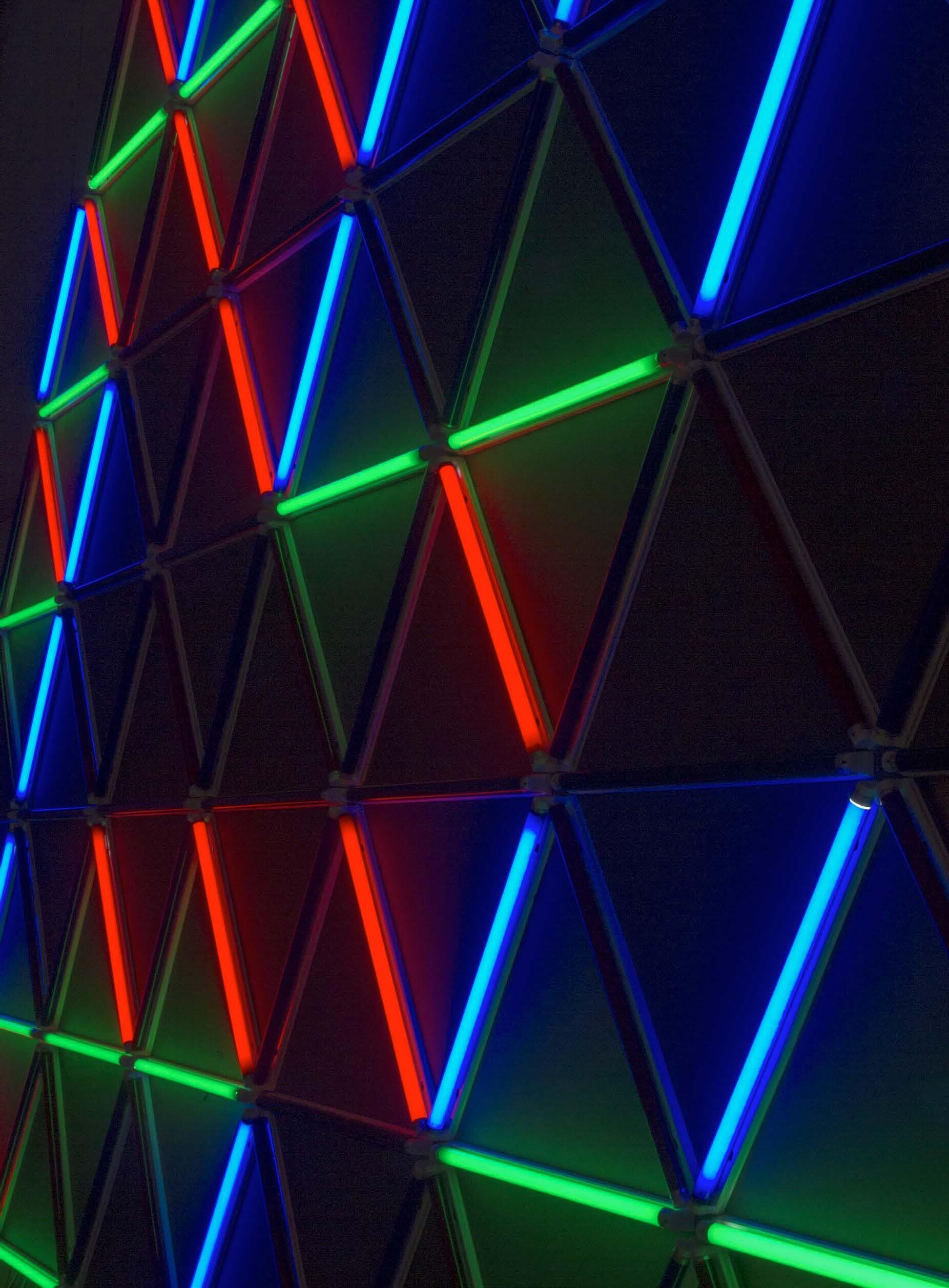
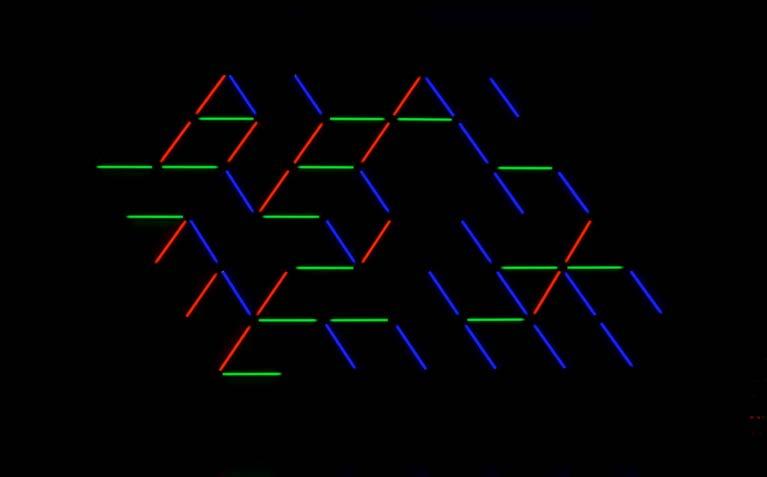
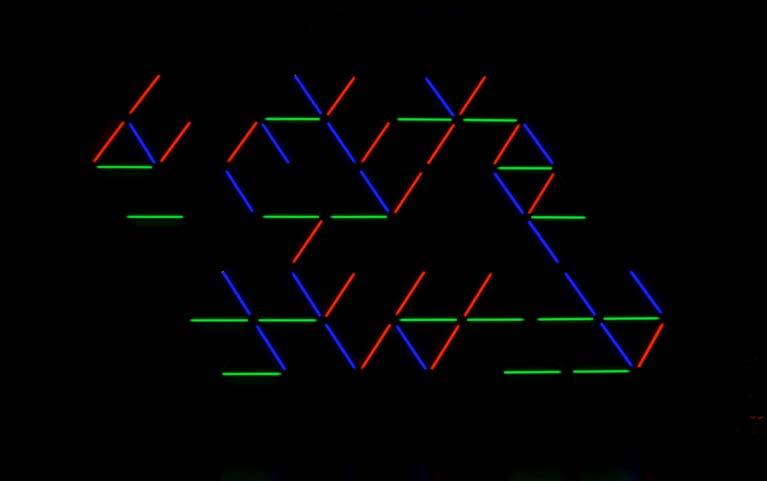
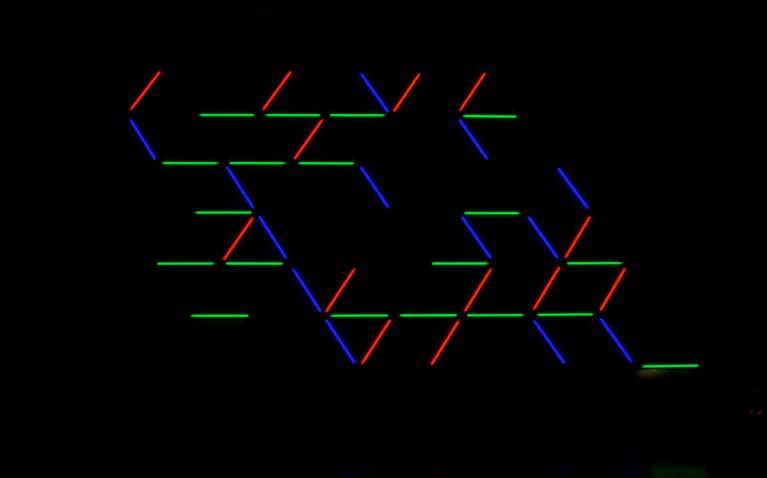
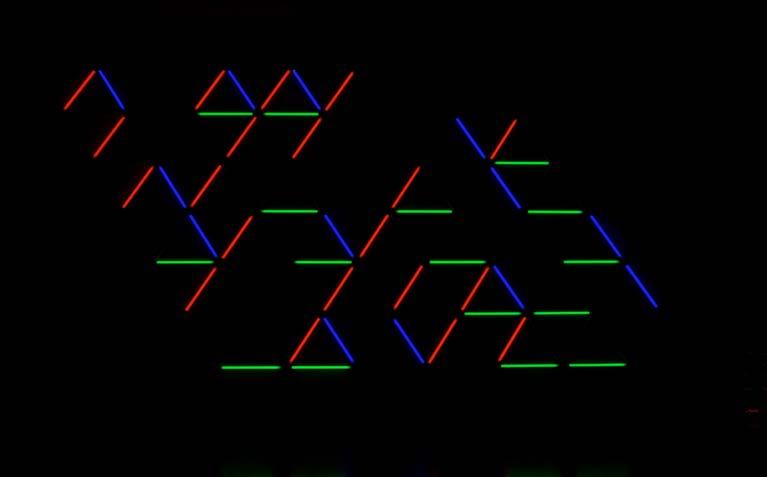
2023
Fotografías de composiciones generadas por el sistema Arduino
Photographs of compositions generated by the Arduino system
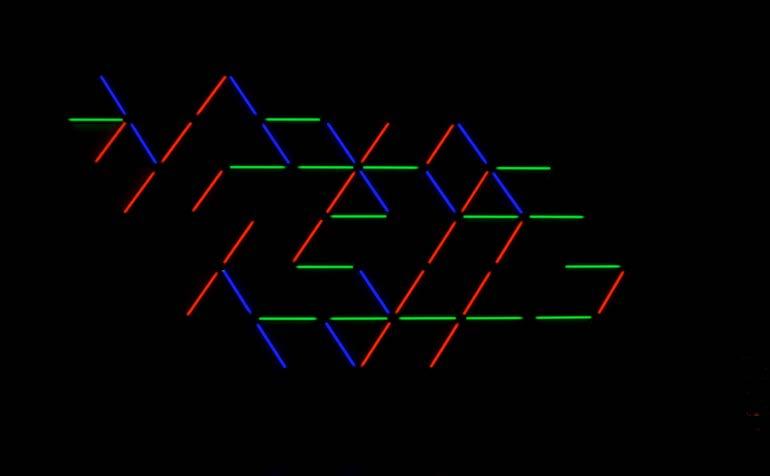
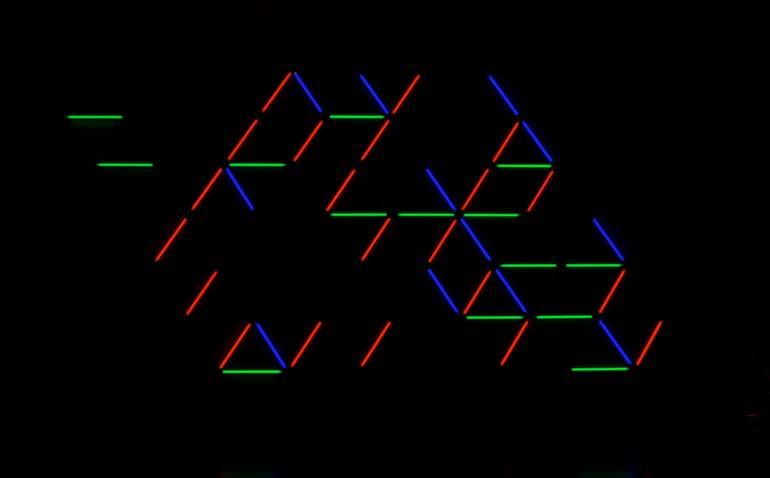
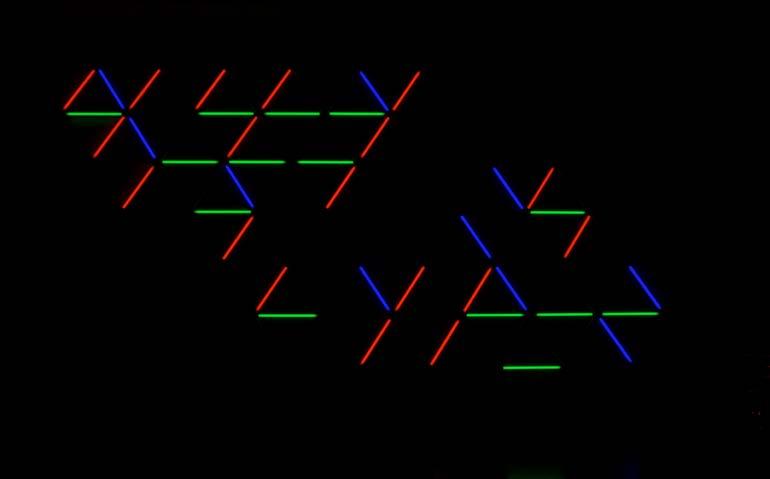
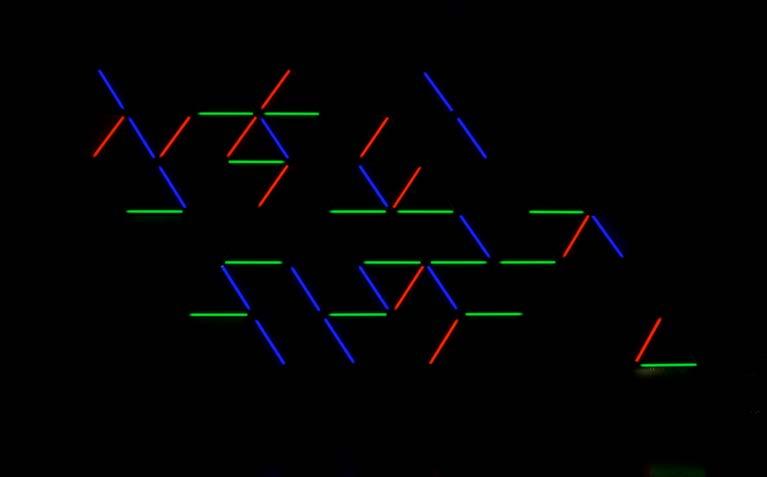
Páginas / Pages 162–165: CIELO ROJO Y VERDE Y AZUL
Vistas de exposición Cielo rojo y verde y azul, Parque Cultural de Valparaíso, Chile
Views of the exhibition Cielo rojo y verde y azul, Parque Cultural de Valparaíso, Chile
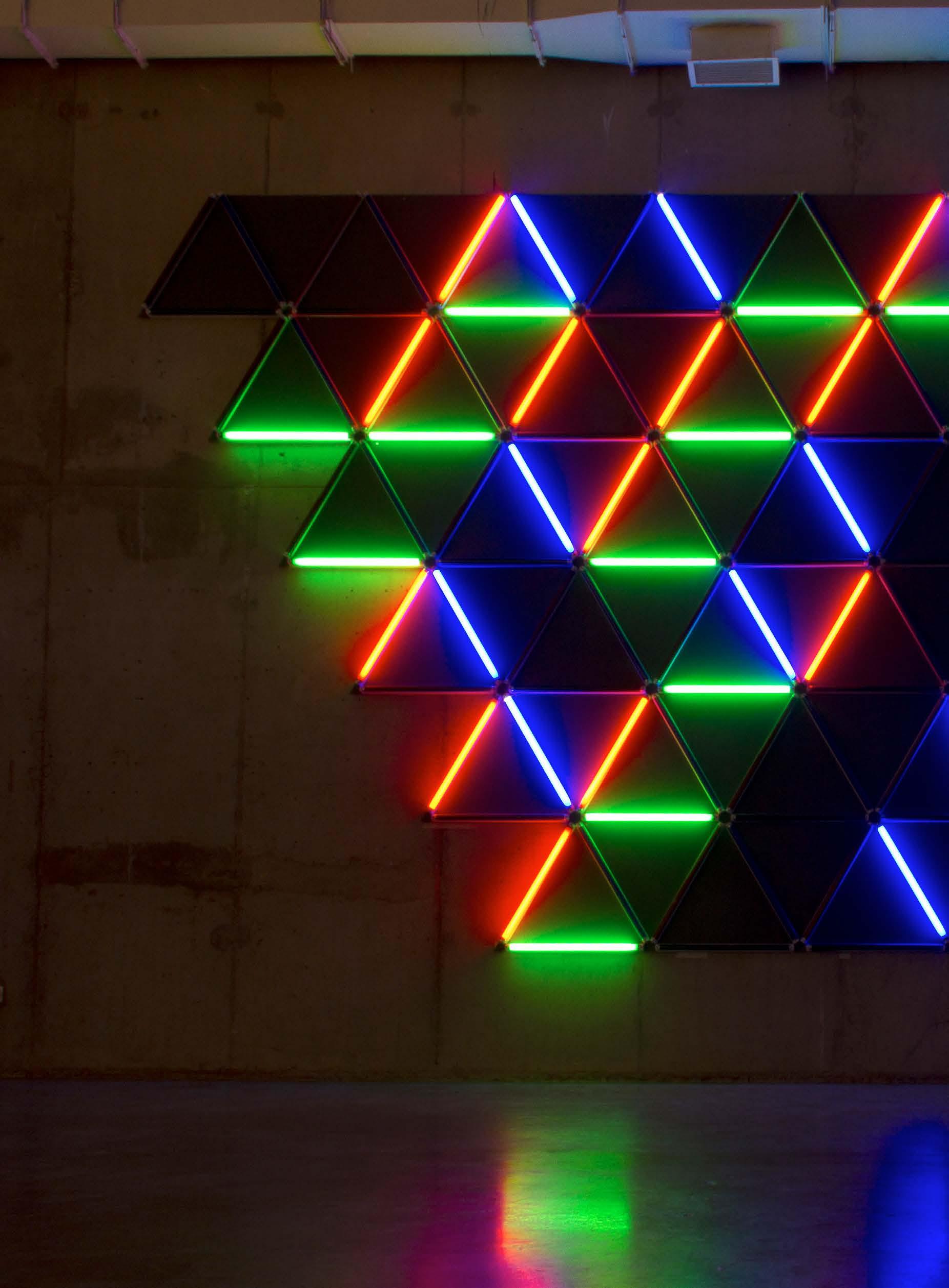
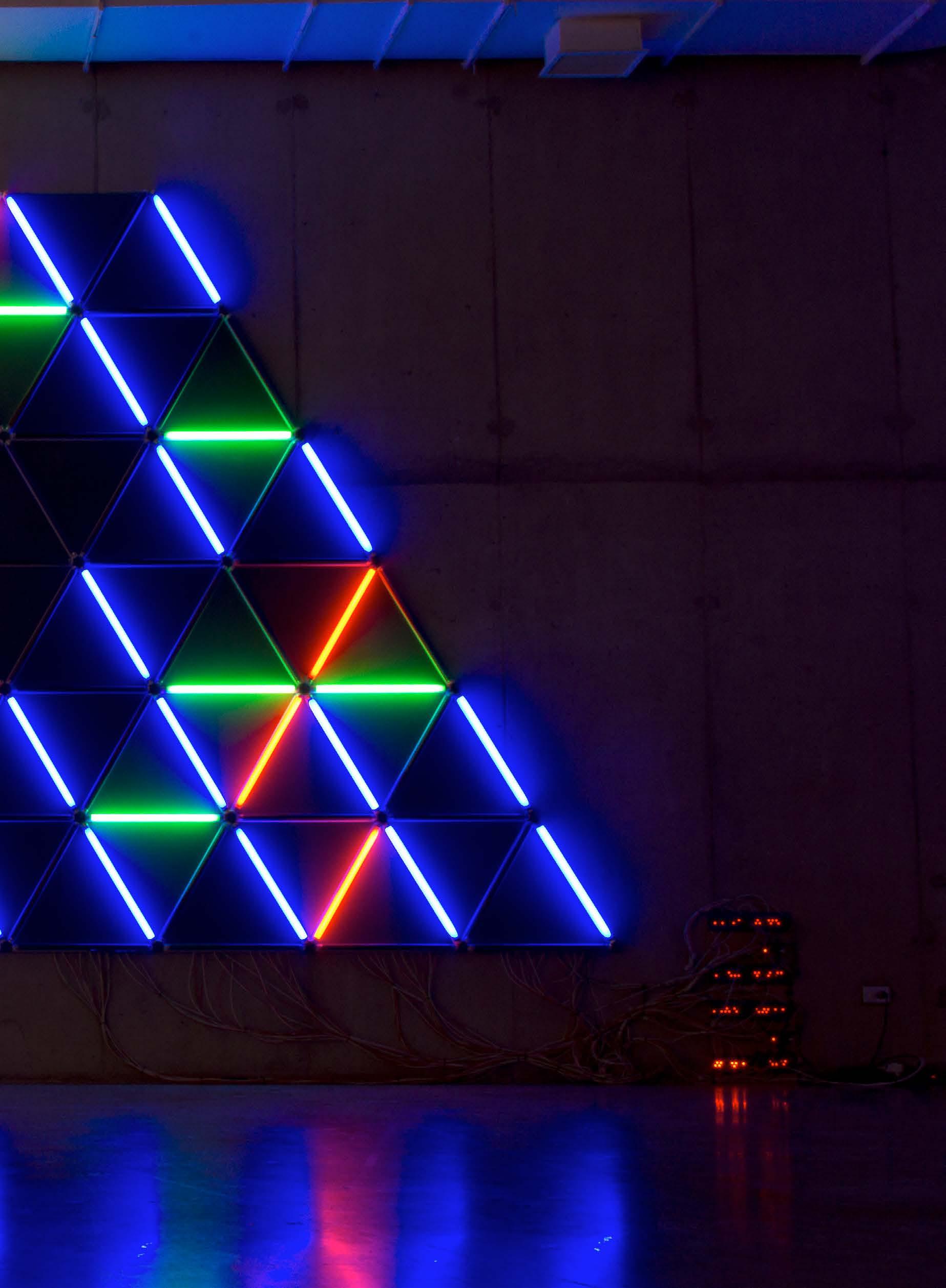
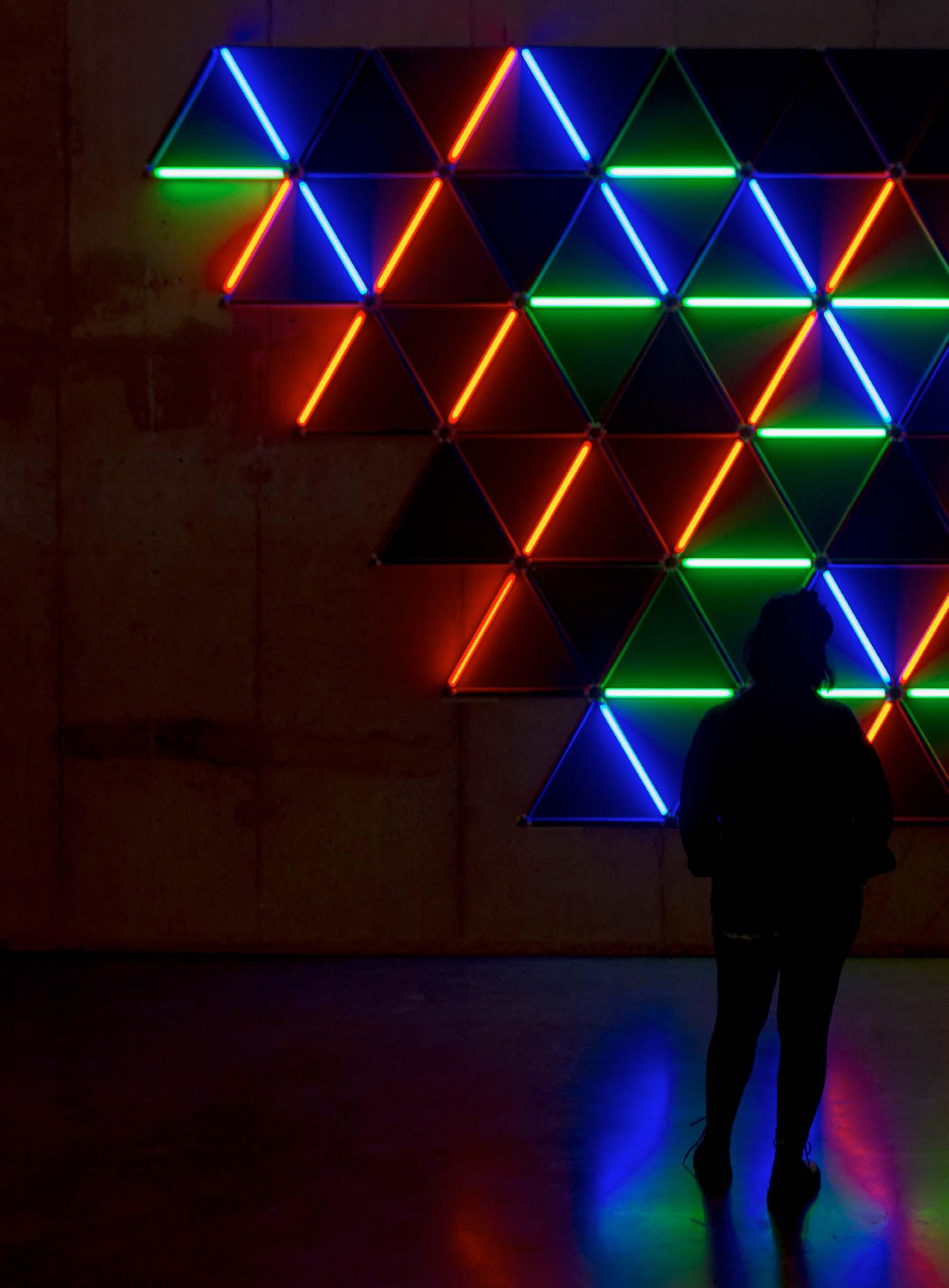
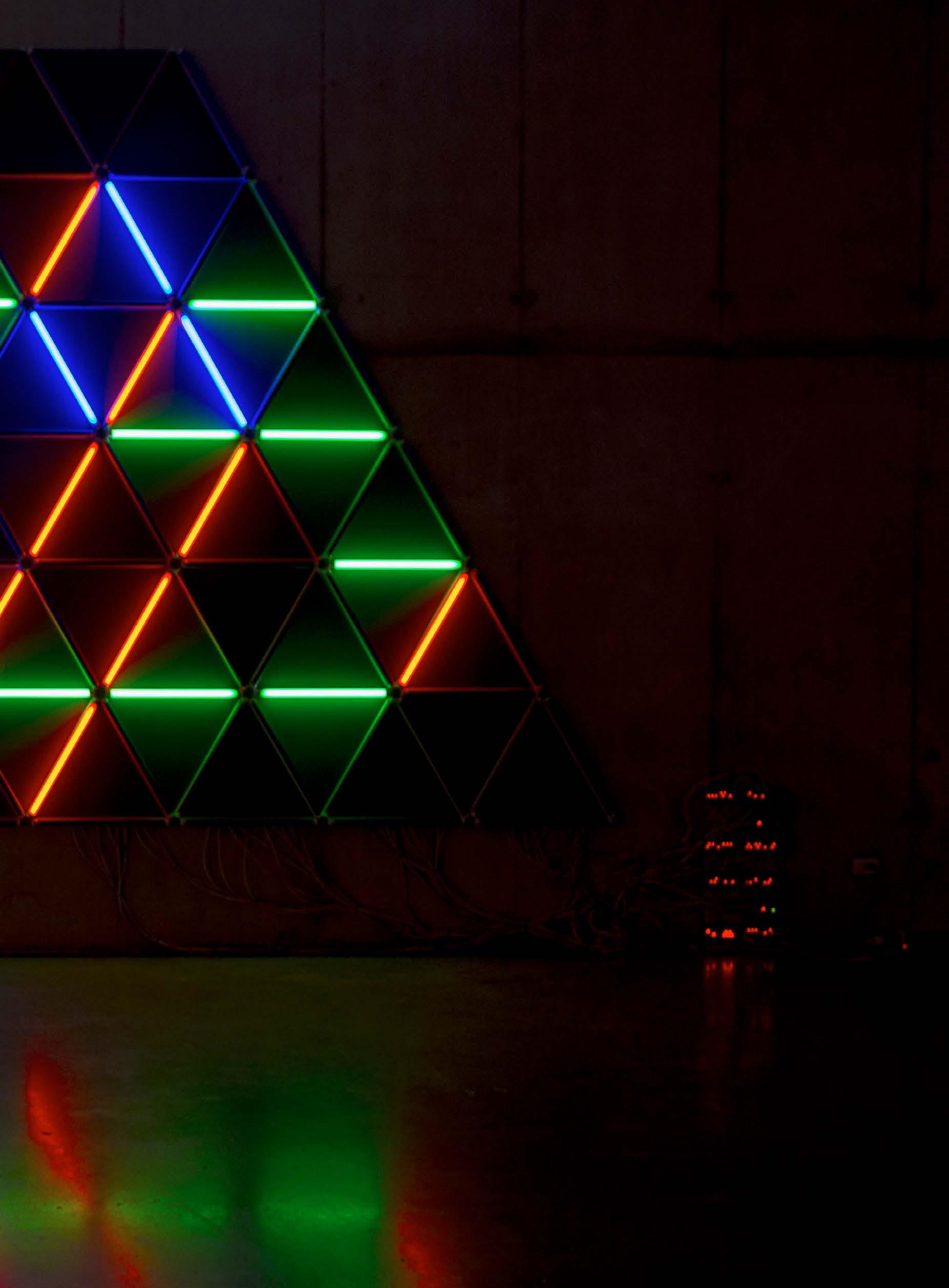
Biografía / Biography
1980 Nace en / born in Quilpué, Chile
2000–04
Estudios / Study, Licenciatura en Artes / Master of Fine Arts, Escuela de Bellas Artes de Valparaíso, Valparaiso
2000–03
Graduado / Graduate, Instructor Fine Arts in painting, Escuela de Bellas Artes de Valparaíso, Valparaiso
2013–14
Diplomado / University Diploma, Développeur web de systèmes d'informations et communications, Université de Strasbourg
2017–presente / 2017–Present
Director of H Residency, Platform of Contemporary Art, Calama
Vive y trabaja entre Alemania y Chile / Lives and works between Germany and Chile
Exposiciones individuales seleccionadas (2012–presente) / Selected Solo Exhibitions (2012–Present)
2023
Cielo rojo y verde y azul, Parque Cultural de Valparaíso, Valparaiso
Sky is falling asleep on the desk of the time, Galerie Peter Gaugy, Vienna
2022
Nocturnos, Galerie Gilla Lörcher, Berlin
Cielo & Bits, KSTN Projektraum, Berlin
2018
RGB Paintings, Galerie Gilla Lörcher, Berlin
2017
Foreign Sky, Asia Contemporary Art Platform NON BERLIN, Berlin
2014
Gape - 02. LIGHTHEART, Plateau Gallery, Berlin
2012
Matter - Light - Time, Pantocrator Gallery, Shanghai
Exposiciones colectivas seleccionadas (2012–presente) / Selected Group Exhibitions (2012–Present)
2025
Strike Presence, Galerie LAGE EGAL, Brussels
**Leer**, Freiraum, Berlin
Reclaim Reality, Rosalux Projektraum, Berlin
Accrochage, Galerie Gilla Lörcher, Berlin
2024
Betwixt & Between, Galerie LAGE EGAL, Berlin
BAAM, Monopol, Berlin
3%, NADAN, Berlin
Another day at the office, Galerie Office
Impart, Berlin
2023
Weaving Memories, NADAN, Berlin
Paper Positions art fair, Galerie Gilla Lörcher, Berlín
De/cipher, gkg - Gesellschaft für kunst und gestaltung, Bonn
De/cipher, Arti et amicitiae, Amsterdam
2022
Natura Ex Machina, Continuous Regeneration, Venice Arsenale, Venice
Transtopia, Chilean Conexión Festival of Arts, Monopol, Berlin
In Focus, Galerie Peter Gaugy, Vienna
Corresponsal Extranjero, Museo Baburizza, Valparaíso
December’s Children (and everybody’s), Galerie LAGE EGAL, Berlin
2021
Naturae, Galerie Peter Gaugy, Vienna
SWAB, art fair, Galerie LAGE EGAL, Barcelona
Chilean Conexión, art festival Berlin, Monopol, Berlin
Drawing Room art fair, Galerie LAGE EGAL, Madrid
2020
Small Wonders, Galerie Gilla Lörcher, Berlin
L’artiste et les commissaires, Galerie LAGE EGAL, Berlin
Berlin Banlieue, Galerie LAGE EGAL and Auktionshaus Jeschke van Vliet Auctions, Berlin
2019
Behind the screen, KINDL - Zentrum für Zeitgenössische Kunst, Berlin
All out «small», Galerie KWADRAT, Berlin
Chilean Conexión, GlogauAIR artist residency, Berlin
Augmented Dreams, Kunstquartier Bethanien, Berlin
Paper Position art fair [flare of frankfurt], Galerie LAGE EGAL, Frankfurt
2018
Demi-gros, Safe Gallery, Berlin
H0, Saco7 Festival, Sala Chela Lira, Universidad Catolica del Norte, Antofagasta
No Place / Like Home, loop - raum für aktuelle kunst, Berlin
Wasting Time - Vol. 1 the nature edition, Objekte Unserer Tage, Berlin
Experiment, Voodoo55, Berlin
2017
Different Similarities, duo show with Carla Bertone, Pavillon am Milchhof, Berlin
Thresholds, duo show with Juan Varela, Meinblau Projektraum, Berlin
Social Geometrism, Kunst Am Spreeknie, Berlin
Autremer, Centre Socioculturel Pôle Sud, Lausanne
2016
Archimedial, Schöneweide Art Festival, Berlin
Renaissance, Lighthaus Berlin, Funkhaus Nalepasetasse, Berlin
2015
Final_draft.mov, Geumcheon Art Space, Seoul
Velada remix, art festival, Hamburg
Zentralstation, Kunst am Spreeknie, Schöneweide Art Festival, Berlin
Postinternet is dead, Fisher Gallery, Galerie Oberlin College of Arts, Ohio
Losito Kunstpreis, Löwen Palais, Berlin
2014
SWAB art fair, Pantocrator Gallery, Barcelona 1st Shandong Biennale, Mass Art Museum, Jinan
Sunland, Pantocrator Gallery, Shanghai
Paint like you mean it, Interview Room 11, Edinburgh
Spark, Kunst am Spreeknie, Schöneweide Art Festival, Berlin
Digital zur Malerei - Dialog der Medien, Karlsruhe
Umschalten, Schalterraum gallery, Berlin, Alemania
2013
Screen Festival Barcelona, Pantocrator Gallery, Barcelona
Zendai Himalayas Center, Pantocrator Gallery, Shanghai
Aktuelle selbstportraits, Nachbarschaftsgalerie, Berlin
2012
Amsterdam showcase art fair, Pantocrator Gallery, Amsterdam
Prismes, duo show with Kerstin Heller, Kartüche Gallery, Berlin
Retro-perspective, Kartüche Gallery, Berlin
Residencias, premios y reconocimientos / Residencies, Awards and Grants
2025
Fondart / Chilean Arts and Culture Fund Grant, ARITHMOS, exhibition in Brussels
Fondart / Chilean Arts and Culture Fund Grant, Cielos Forasteros, catalog of artworks
2024
I remember correctly you are you and the rest is history, residency at Galerie Pluto, Bonn
2023
Fondart / Chilean Arts and Culture Fund Grant, Bitmap Poemarium
2022
NEUSTARTplus-Stipendium, German Federal Grant, Stiftung Kunstfonds
Fondart / Chilean Arts and Culture Fund Grant, H-Residency
2021
Recherchestipendium, Berlin Senat Research Fellowship
Studio grant BBK, Senate Department for Culture and Europe, Berlin
2020
Acquisition of Artworks, Centro Nacional de Arte Contemporáneo, Santiago
Fondart / Chilean Arts and Culture Fund Grant, H-Residency
2018
H-Residency, residency in the framework of SACO7 Festival, Calama
2015
Residency at SASG (Seoul Art Space Geumcheon), Seoul Foundation for Arts and Culture , Seoul
2012
Residency at Pantocrátor Gallery, Shanghai
Colecciones / Collections
Centro Nacional de Arte Contemporáno, Santiago, Chile
gkg - Gesellschaft für Kunst und Gestaltung, Bonn, Germany
Shandong Art Museum, Jinan, China
Casa de la Cultura de Limache, Chile
Corporación Cultural de Viña del Mar, Viña del Mar, Chile
Private collections in Chile, Switzerland, Germany, Belgium, Netherlands, Spain, United Kingdoms, China, South Korea and United States of America
Publicaciones y proyectos editoriales seleccionados (2012–presente) / Selected Publications and Editorial Contributions (2012–Present)
2023
"Bitmap Poemarium", Artist Book, Berlin, Germany
Susannah Cremer-Bermbach, "De/cipherZum semiotischen Wechselspiel zwischen Ver- und Entschlüsselung von Zeichen und Symbolen und ihrer Übersetzung in Information, "Gesellschaft für Kunst und Gestaltung e.V., Bonn, Germany
DIAGRAMA Magazine, 6th edition, Finis Terrae University Editions, Santiago, Chile. ISSN 0719-9384
Paper Positions art fair, catalogue, Berlin, Germany
2019
Camila Molina Rivera, "Gonzalo Reyes Araos, RGB Paintings," Revista Esbozo, July 2019.
2018
Gonzalo Reyes Araos, "Constellations in a Foreign Sky," SACO7 Origin and Myth, Antofagasta, Chile, December 2018, pp. 142–145, ISBN 978-956-398-332-6
Peter Ungeheuer, DEMI-GROS, Catalogue, Berlin, Germany
Alejandra Villasmil, "Gonzalo Reyes Araos | Portafolio" , Artishock Magazine, Santiago, Chile, online publication, August
2017
"Social Geometrism," kunstamspreeknie.org, catalogue, Berlin, Germany, December
2015
"Losito Kressmann-Zschach Foundation," Losito Kunstpreis 2015, Berlin, Germany. ISBN 3-937155-15-5
Mareike Lemme and Marlene Lerch, Schöneweide Kreativ, Berlin, Germany
2014
KASK – Kunst am Spreeknie, catalogue, Schock Verlag & Novilla, Berlin, Germany
"Paint Like You Mean It", Mirja Koponen and Scott McCracken, Interviewroom 11, Edinburgh, Scotland. ISBN 978-1-32001242-3
2013
"Galerie Mazzocca Catalogue 2013," Mazzocca Contemporary Paintings, Berlin, Germany, March 2013
2012
"Répertoire de 67 auteurs de bande dessinée en Wallonie et à Bruxelles," Commission d'aide à la Bande Dessinée de la Communauté Francophone de Belgique, Brussels, Belgium. ISBN 2-930071-83-4
Conferencias, ponencias y charlas de artista (2019–presente) / Selected Lectures, Presentations, and Artist Talks (2019–Present)
2025
Poetics of Machine Learning, lecture and panel discussion, TRA4, Bonn Universität, Bonn
2023
BITMAP POEMARIUM, book release and artist talk at : Galerie Peter Gaugy, Vienna; NADAN, Berlin; Arti et Amicitiae, Amsterdam; gkg –Gesellschaft für Kunst und Gestaltung, Bonn Cielo rojo y verde y azul, talk at Parque Cultural de Valparaíso, Valparaiso Seminar, Faculty of Art, Finis Terrae University, Santiago
2022
Corresponsal extranjero, Museo Baburizza & Escuela de Bellas Artes de Valparaíso Umbrales, H Residency, Calama
2020
Cielos Binarios, H-Residency, Calama, Artist talk at Escuela de Bellas Artes de Valparaíso
2019
Guest presentation, Escuela de Bellas Artes de Viña del Mar, Viña del Mar
Julianne Cordray
Entrevista / Intervew
The Notion of Foreign Skies
[español] [english]
Escritora, editora y editora de publicaciones en el ámbito del arte contemporáneo, cuyo enfoque analítico y exhaustivo ha recibido reconocimiento internacional. En sus textos sobre arte, se centra en las prácticas artísticas colaborativas, las formas experimentales de producción artística y las estructuras y voces alternativas en las artes.
Su labor escrita ha sido reconocida con premios como el programa Critic in Residence en studio DAS WEISSE HAUS, en colaboración con Vienna Art Week, y ha sido publicada en exposiciones, catálogos y plataformas de todo el mundo.
Vive y trabaja entre Estados Unidos y Alemania
Writer, editor and publisher in the field of contemporary art whose comprehensive analytical approach has gained international recognition. In her art writing she focuses on collaborative artistic practices, experimental forms of art production, and alternative structures and voices in the arts.
Her writing has been acknowledged through awards such as the Critic in Residence program at studio DAS WEISSE HAUS in collaboration with Vienna Art Week, and has been published in exhibitions, catalogues, and on platforms worldwide.
Lives and works between the United States and Germany
Samuel Toro Contreras
Ensayo / Essay
Narrativas algorítmicas en la percepción expandida
[español]
Curador, investigador y ensayista, su trayectoria se distingue por un cruce constante entre teoría, práctica curatorial y experimentación estética. Su trabajo indaga en las tensiones entre arte y política, explorando campos como las ficciones contemporáneas, la filosofía de la ciencia y la tecnología.
Licenciado en Arte por la Universidad de Playa Ancha, Magíster en Pensamiento Contemporáneo y Filosofía Política por la Universidad Diego Portales, y Doctor en Estudios Interdisciplinarios en Pensamiento, Cultura y Sociedad por la Universidad de Valparaíso.
Vive y trabaja en Chile
[english]
Curator, researcher, and essayist, his career is distinguished by a constant interplay between theory, curatorial practice, and aesthetic experimentation. His work explores the tensions between art and politics, delving into fields such as contemporary fictions, the philosophy of science, and technology.
Bachelor of Arts from the University of Playa Ancha, Graduate of the Master's program in Contemporary Thought and Political Philosophy at Diego Portales University, and PhD in Interdisciplinary Studies in Thought, Culture, and Society from the University of Valparaíso.
Lives and works in Chile
Equipo Editorial y de Producción
Editorial and Production Team
Coordinación editorial / Editorial Coordination Cristina Olguín Acevedo, Gonzalo Reyes Araos Textos / Texts
Julianne Cordray, Samuel Toro Contreras Prólogo / Prologue Gonzalo Reyes Araos Apoyo editorial / Editorial Support Julianne Cordray Diseño y maquetación / Design and Layout Luis Gálvez Traducción / Translation Kathleen García (The Notion of Foreign Sky, Narrativas algorítmicas en la percepción expandida) Corrección de textos en español / Spanish Proofreading Cristina Olguín Acevedo Corrección de textos en inglés / English Proofreading Jane Brucker, Miranda Friedman, Julianne Cordray Audiodescripción / Audiodescription Alejando Mateluna Nuñez
Créditos de las imágenes
Image Credits
Todas las imágenes © Gonzalo Reyes Araos, a excepción de páginas 35 y 37, Chroma, cortesía de Galerie Gilla Lörcher.
All images © Gonzalo Reyes Araos, except pages 35 and 37, Chroma, courtesy of Galerie Gilla Lörcher.
Imagen de portada / Cover image: WORMHOLE, 2017
Imagen de contraportada / Back cover image: WORMHOLE-v006, 2017
Página / Page 1: LIGHTHEART, 2014
Página / Page 172: SCREENSHOT, vista de exposición/ view of the exhibition Gape - 02. LIGHTHEART, 2014. Plateau Gallery, Berlin
Datos de la edición
Publication Details
Primera edición Octubre 2025 / First edition October 2025
Impreso en Santiago de Chile por Ograma Impresores
Printed in Santiago, Chile, by Ograma Impresores
Impresores Tirada: 300 ejemplares / Print run: 300 copies
ISBN 978-956-423-888-3
© 2025 Gonzalo Reyes Araos Todos los derechos reservados / All rights reserved
Studio Gonzalo Reyes Araos www.gonzalo-ra.net studio@gonzalo-ra.net
[español]
[english]
Agradezco profundamente a todas las personas que han apoyado esta investigación desde sus inicios, especialmente a aquellas sin las cuales estas obras no habrían visto la luz.
A mi familia, cuya comunicación en la distancia inspiró gran parte de este trabajo: a mi madre, Roxana Araos; a Luis Olivares; a mis hermanos, Abraham y Ara-Sofía Olivares; a mi abuela, Genoveva Donoso; a mis tías, María Angélica, Claudia y Marcela Araos; y a Marcelo Leiva.
A mis colegas y amigos, especialmente a Juan Varela; al equipo de galerie PLUTO: Jane Brucker, Jeremy Wasser y Miranda Friedman ; y a los curadores Susannah Cremer-Bermbach y Samuel Toro Contreras.
Y, por supuesto, a todo el trabajo e incondicional amor de mi compañera Cristina Olguín Acevedo. Esta publicación fue financiada por el Fondo Nacional de Desarrollo Cultural y las Artes (FONDART), Convocatoria 2025, Región de Antofagasta.
I am deeply grateful to all the people who have supported this research since its beginnings, especially to those without whom these works would never have seen the light of day.
To my family, whose communication across distance inspired much of this work: to my mother, Roxana Araos; to Luis Olivares; to my siblings, Abraham and Ara-Sofía Olivares; to my grandmother, Genoveva Donoso; to my aunts, María Angélica, Claudia, and Marcela Araos; and to Marcelo Leiva.
To my colleagues and friends, especially Juan Varela; to the team at galerie PLUTO: Jane Brucker, Jeremy Wasser, and Miranda Friedman; and to the curators Susannah Cremer-Bermbach and Samuel Toro Contreras.
And, of course, to my partner, Cristina Olguín Acevedo, for her unwavering love and dedicated work. This publication was funded by the National Fund for Cultural Development and the Arts (FONDART).
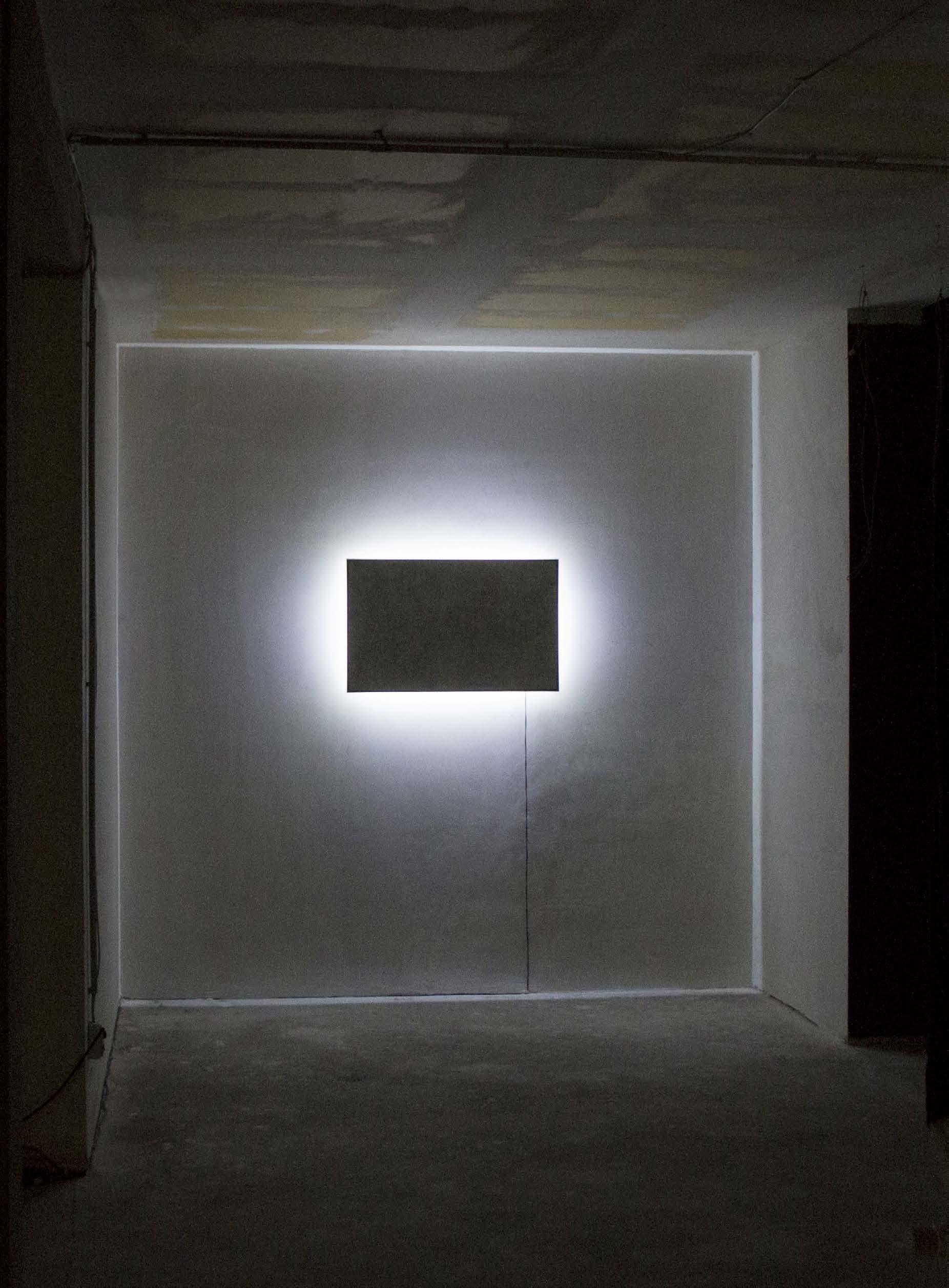
Financiado por / Funded by
PROYECTO FINANCIADO POR EL FONDO NACIONAL DE DESARROLLO CULTURAL Y DE LAS ARTES (FONDART), CONVOCATORIA 2025, REGIÓN DE ANTOFAGASTA
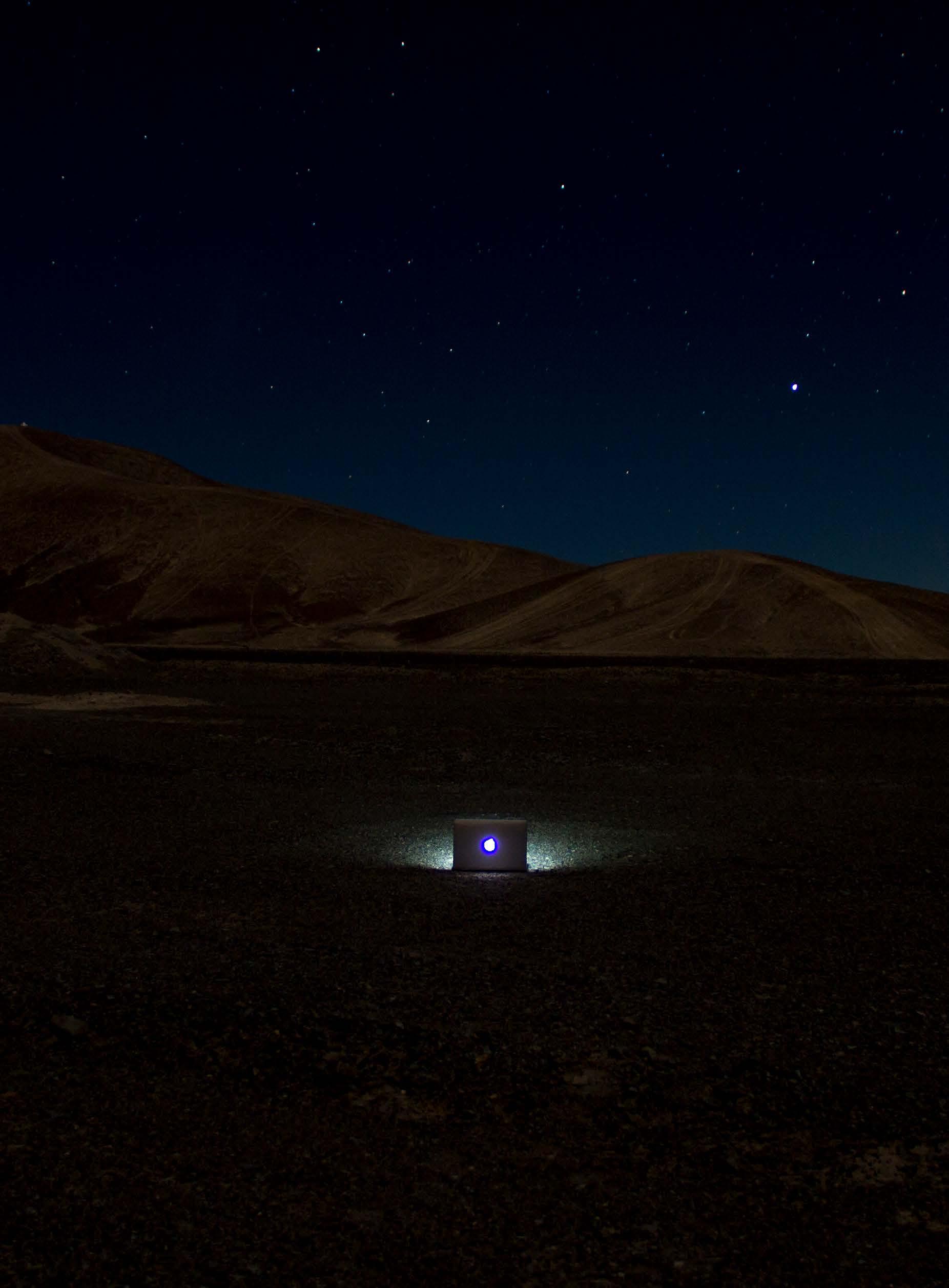
En colaboración con / In partnership with