Golf Circus no se hace responsable de la opinión de sus colaboradores en los trabajos publicados, ni se identifica necesariamente con los mismos. Queda prohibido reproducir total o parcialmente el contenido de esta revista, aún citando procedencia, sin autorización expresa y por escrito del editor.
Hay deportes que evolucionan en silencio. El golf no es uno de ellos. Todo lo que está pasando ocurre a la vista, con nombres y apellidos: circuitos enfrentados, formatos que rompen con la tradición, calendarios que ya no encajan. Y aun así cuesta entender exactamente hacia dónde va.
LIV Golf no solo fragmentó el panorama, sino que introdujo una lógica distinta, una forma diferente de entender el ritmo, el formato y la relación con el espectador. Y eso, aunque el debate siga centrado en quién tiene razón, es lo que realmente importa, porque el golf, hoy, ya no se consume igual.
Durante años, el golf se seguía de una manera concreta: torneos largos, narrativas construidas con el tiempo, una relación casi ritual con el calendario. Ese modelo no desaparece, pero deja de ser el único. En paralelo emerge una propuesta más directa, donde el evento se construye como experiencia y no solo como competición. No se trata de sustituir una cosa por otra, sino de entender que ambas conviven, y que esa convivencia está ampliando el campo de juego.
El efecto más visible, sin embargo, no está en los rankings sino en los destinos. Tanto los torneos de LIV Golf como los del DP World Tour han dejado de ser únicamente citas deportivas para convertirse
en plataformas de proyección internacional, capaces de concentrar atención, atraer perfiles diversos y redefinir la forma en la que un lugar se posiciona durante unos días. Ya no se trata solo de acoger un torneo, sino de construir una experiencia alrededor de él, y eso cambia las reglas.
El viaje de golf empieza a alejarse del modelo clásico, centrado exclusivamente en el campo, para acercarse a algo más amplio. El alojamiento, la gastronomía, el entorno y el tiempo fuera del recorrido tienen ahora tanto peso como el propio juego. Y en ese contexto, también cambia el jugador. Sigue existiendo el perfil tradicional, exigente y fiel a ciertos recorridos, pero junto a él aparece otro tipo de usuario, menos condicionado por la tradición e interesado en combinar golf con otras capas de experiencia. No busca únicamente jugar, sino que todo encaje. Y ahí es donde muchos destinos están encontrando una oportunidad real.
Entender este momento va de reconocer hacia dónde se mueve el golf y qué implica para quienes forman parte de la industria. Este cambio supone a la vez una pérdida y una evolución, y no hace falta elegir entre las dos lecturas. El golf que conocíamos no desaparece, pero ya no lo explica todo. Y en ese proceso, el deporte está redefiniendo no solo cómo se juega o se ve, sino también cómo se vive.
GOLF CIRCUS
frente al nuevo orden del golf VALDERRAMA
JAVIER REVIRIEGO
Director general del Real Club Valderrama
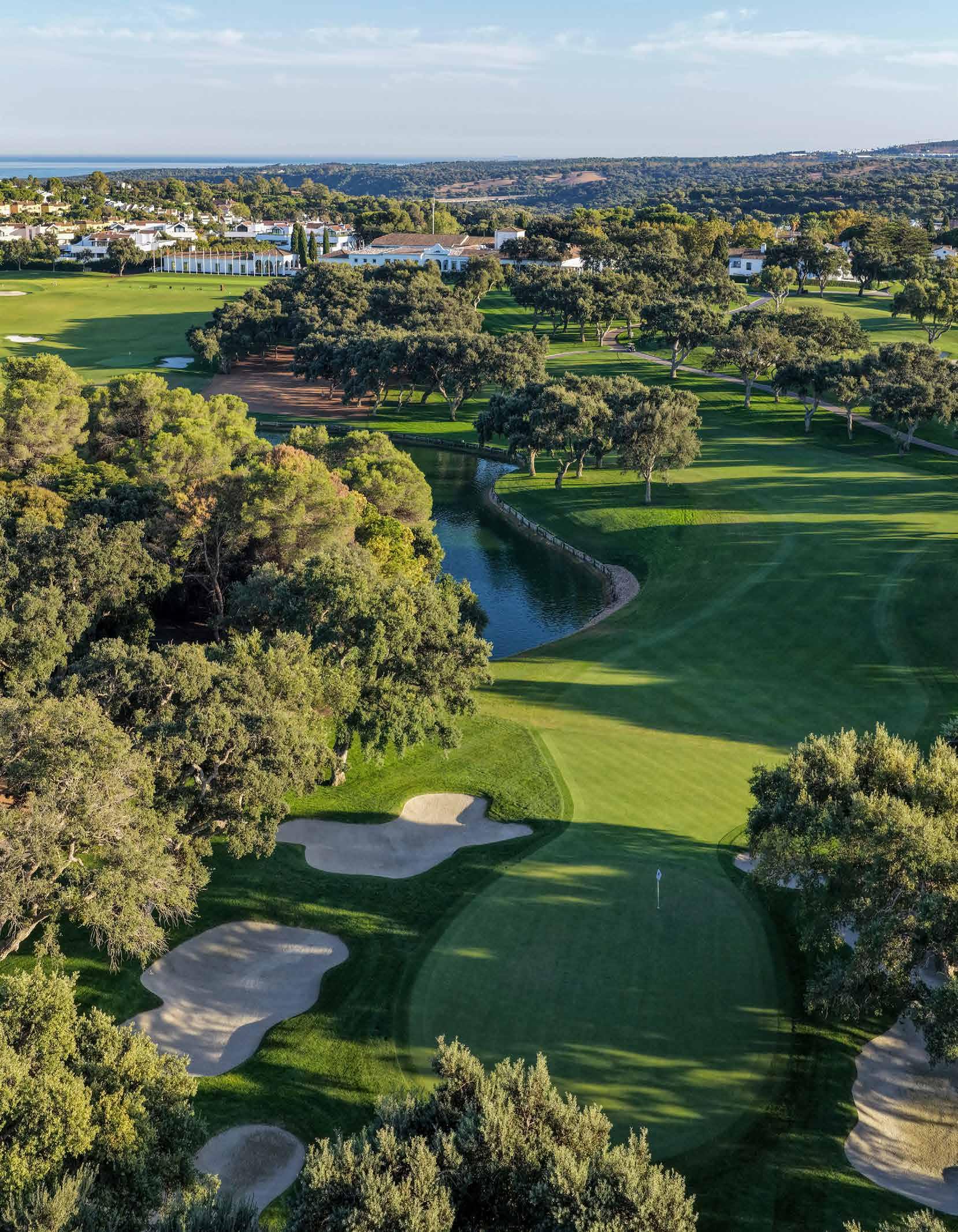
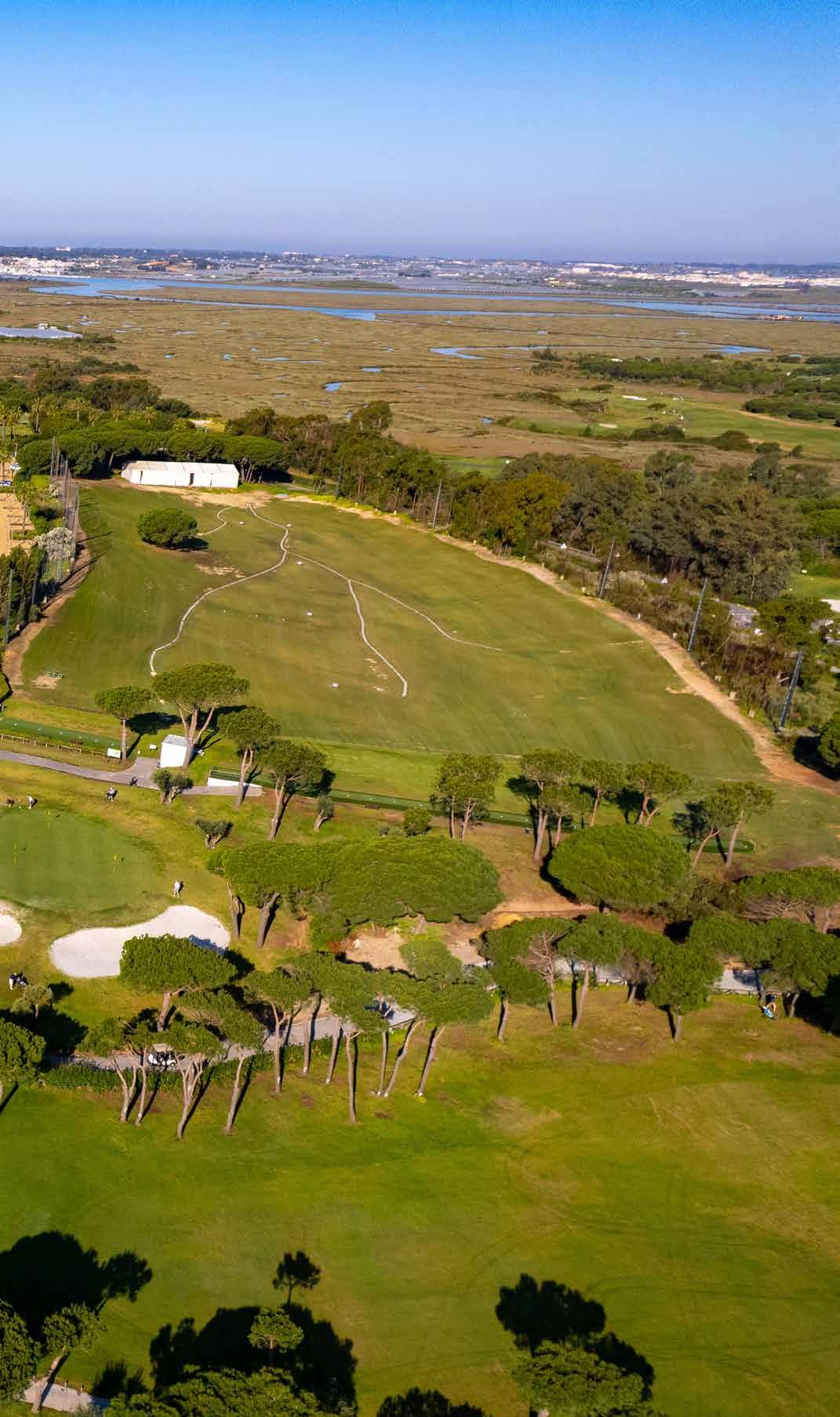
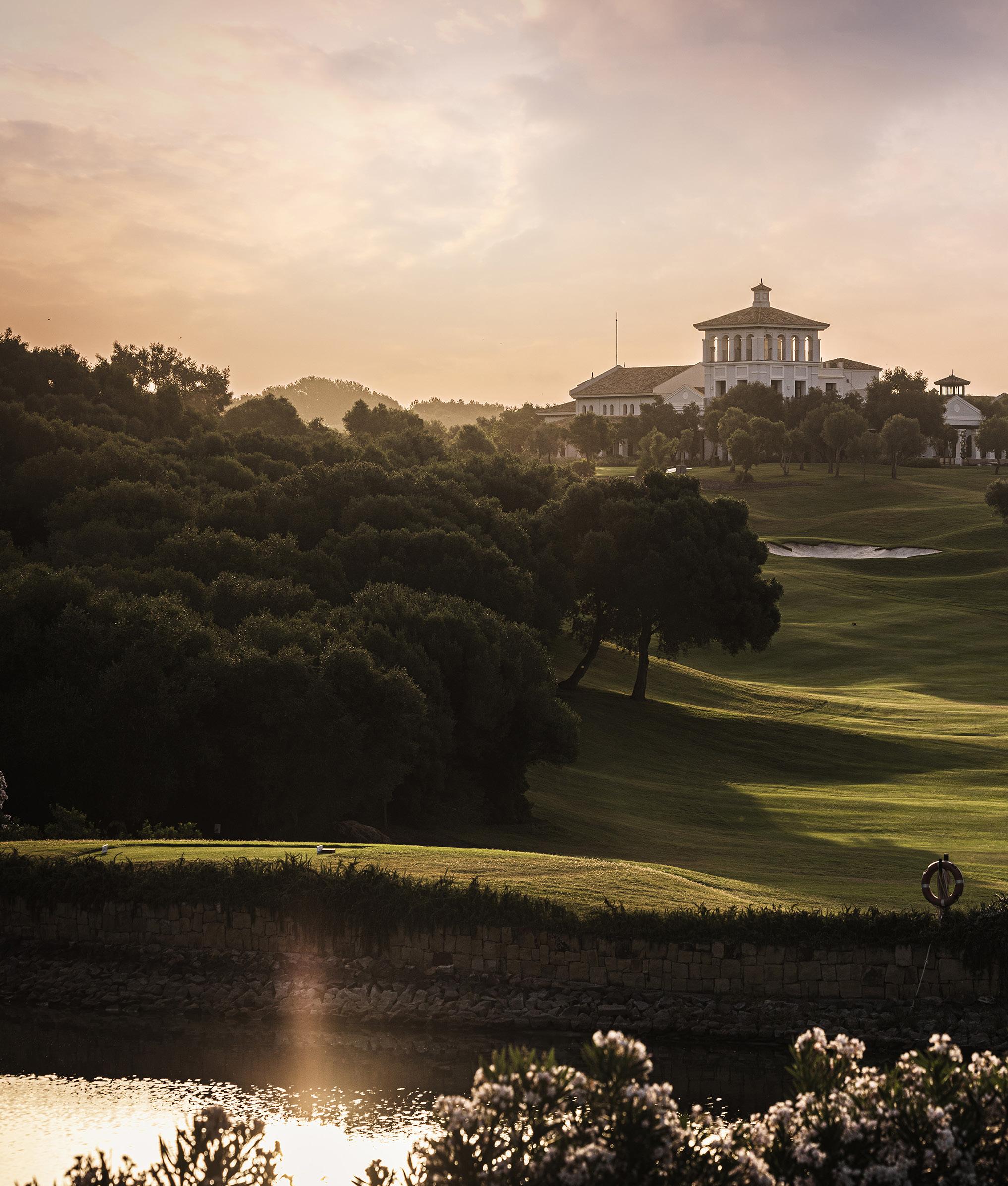
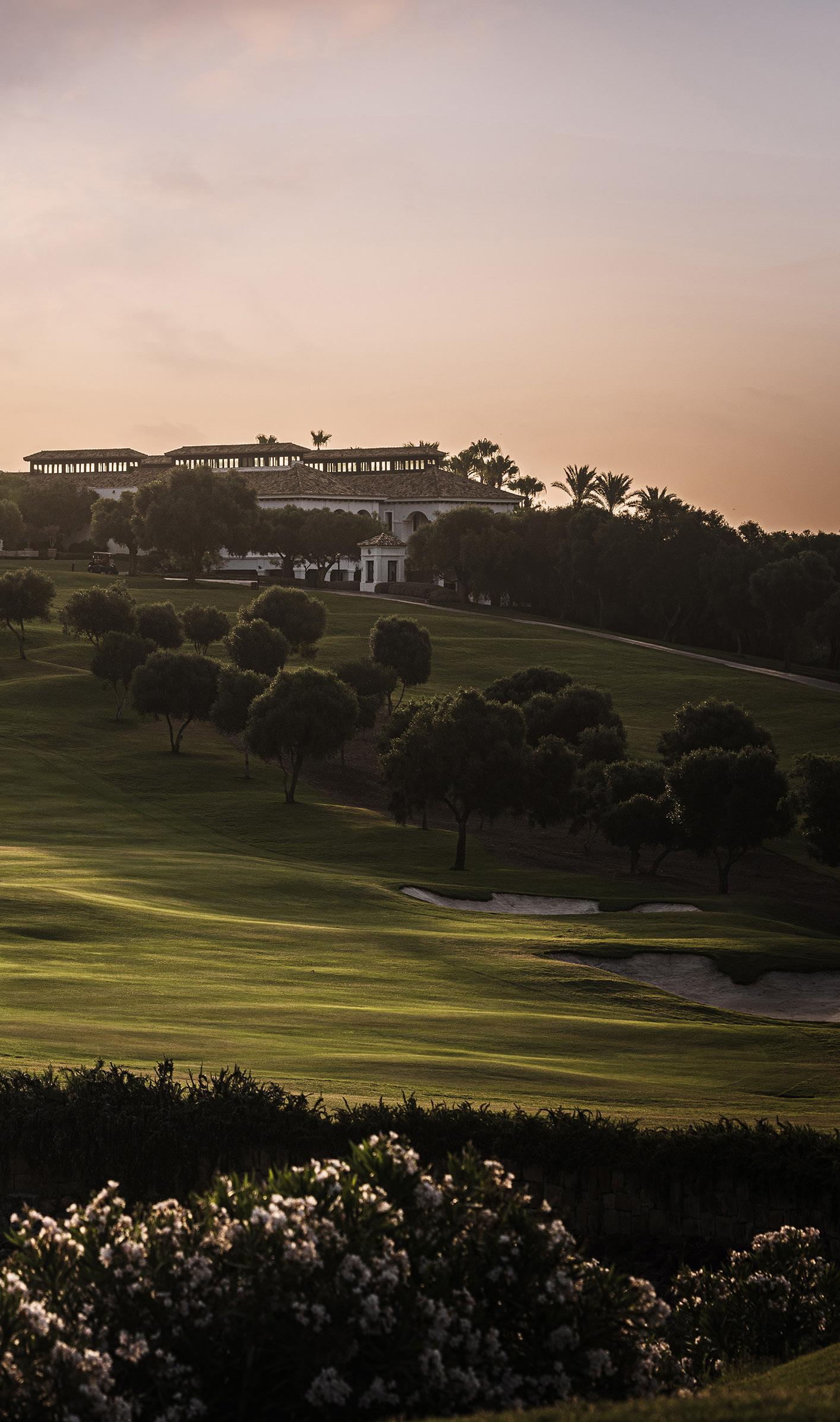
En un momento en el que el golf profesional sigue reconfigurando sus equilibrios, Valderrama ocupa una posición poco habitual: la de observar el cambio desde dentro. Sede de LIV Golf Andalucía desde 2023, el club no solo ha
consolidado su papel dentro del circuito, sino que ha reforzado su identidad como uno de los recorridos más exigentes y respetados del mundo.
Hablamos con Javier Reviriego, director general del Real Club Valderrama, sobre la evolución del torneo, el encaje de LIV en el ecosistema global del golf y la lectura que hace el club en medio del debate que sigue rodeando al circuito.
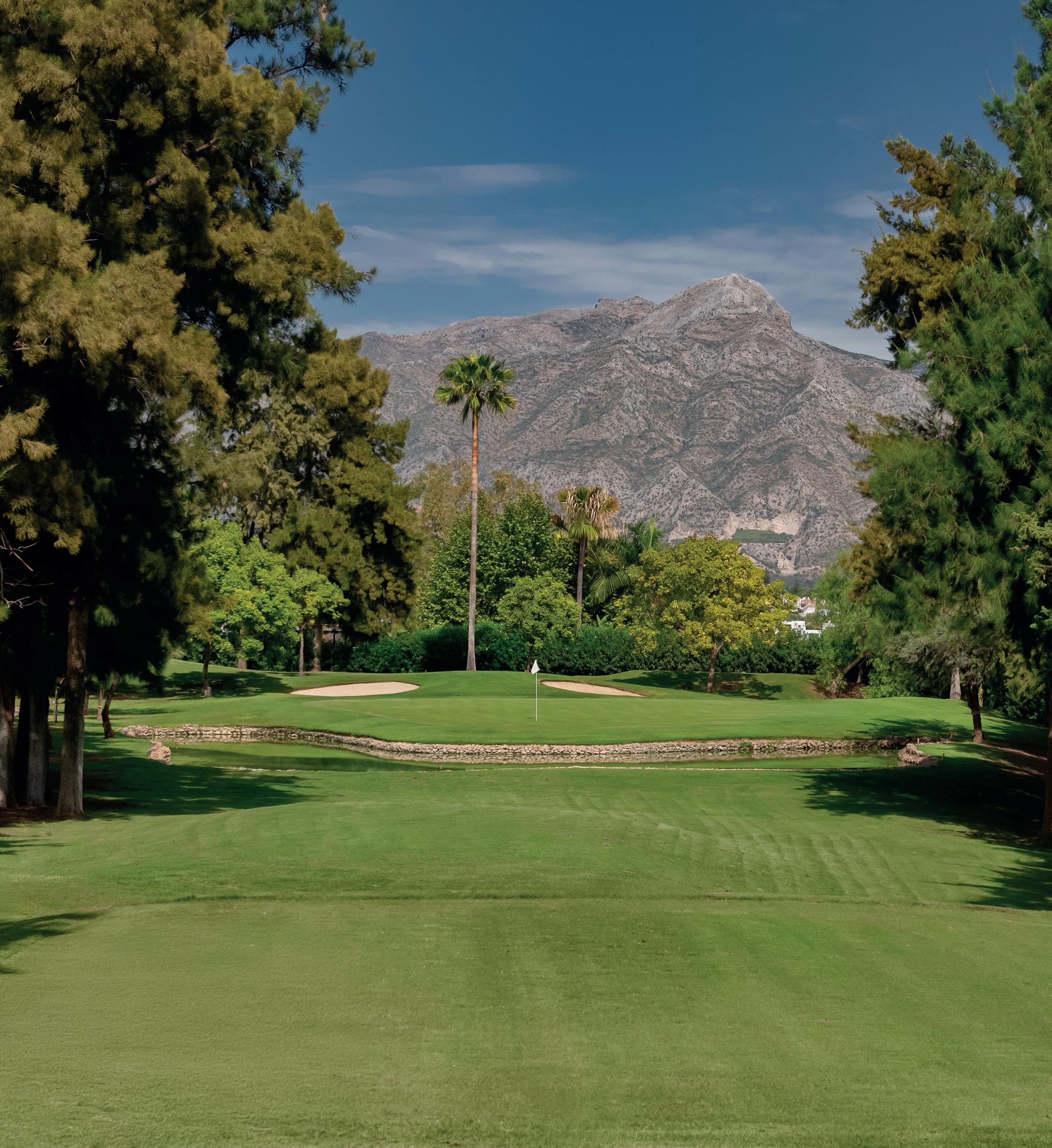
Esta será la cuarta edición de LIV Golf Andalucía en Valderrama. ¿Cómo ha evolucionado el torneo desde aquella primera edición de 2023 hasta hoy, tanto a nivel deportivo como de experiencia para el público? Creo que la evolución ha sido muy clara. En lo deportivo, el torneo ha ido ganando peso competitivo y también identidad propia dentro del calendario. Valderrama ya no es simplemente una sede prestigiosa: se ha convertido en una prueba que los jugadores respetan mucho. Existen pocos campos en el mundo que hayan resistido tan bien el desarrollo tecnológico de los palos y bolas. No es un campo en el que se puedan “pasear” pegando drives de 300 metros. En Valderrama gana el que mejor controla la bola, el que toma buenas decisiones estratégicas y mantiene la paciencia durante toda la semana. Digamos que Valderrama selecciona muy bien al campeón.
Y desde el punto de vista del público, el crecimiento también ha sido evidente. Desde 2023 hemos visto una propuesta más madura, mejor organizada y con una oferta de hospitalidad, restauración y fan experience mucho más completa. LIV ha sabido construir un evento que combina golf de máximo nivel con una atmósfera más abierta, más dinámica y cercana para públicos distintos, incluido gente que quizá no venía del golf tradicional. En ese sentido, la evolución ha consistido en integrar mejor el espectáculo sin perder la esencia competitiva, y en un escenario como Valderrama ese equilibrio tiene todavía más valor.
Valderrama apostó por LIV Golf en un momento de cambio en el golf mundial. Viendo la evolución del circuito, ¿qué balance hace hoy de esa decisión y hacia dónde cree que puede evolucionar esta relación en los próximos años?
El balance es positivo. Nosotros tomamos la decisión entendiendo que el golf profesional estaba entrando en una etapa de transformación profunda y que Valderrama, por historia y posicionamiento internacional, debía estar presente en esa conversación desde un papel protagonista. Con el paso del tiempo, esa apuesta ha permitido que Valderrama siga acogiendo a algunas de las mayores figuras del golf mundial, proyectando la marca del club y de Andalucía a una audiencia global y generando un impacto deportivo, turístico y mediático muy relevante.
Tenemos un acuerdo en vigor con LIV Golf, restan dos años de contrato y nuestra planificación se apoya en ese marco con plena normalidad.”
De cara al futuro, creo que la relación puede evolucionar de forma muy natural si el circuito sigue dando pasos para consolidarse dentro del ecosistema global del golf. Los cambios de 2026 van en esa dirección: más hoyos, mayor exigencia competitiva y una entrada, aunque parcial, en el ranking mundial. Todo eso refuerza la idea de que LIV no está estático, sino en evolución. Y para una sede como Valderrama, lo importante es seguir vinculados a un producto que combine élite deportiva, relevancia internacional y una experiencia diferencial.
Valderrama es sinónimo de exigencia. ¿Qué tipo de desafío se van a encontrar este año los jugadores y qué aspectos del recorrido cree que marcarán la diferencia durante el torneo?
Valderrama sigue siendo uno de esos campos que exigen al jugador estar fino en todas las facetas del juego. Como decía antes, aquí no basta con pegarle fuerte; hay que mover bien la bola, saber evitar las zonas de peligro y sobre todo, tener muchísima disciplina y paciencia. Valderrama exige muchísimo y no permite fallos de concentración.
Si tuviera que señalar los factores decisivos, diría tres. Primero, la precisión
desde el tee, porque las calles son estrechas y Valderrama penaliza mucho cuando juegas desde el rough. Segundo, el control de distancia en los hierros, porque los greens son muy pequeños y demandan muchísima precisión. Y tercero, la capacidad de recuperación con el juego corto. Es un campo en el que los bogeys pueden venir con mucha facilidad si el jugador no está fino con el putt.
La temporada 2026 introduce cambios relevantes en LIV Golf, como el paso a 72 hoyos, la entrada —aunque limitada— en el ranking mundial, la ampliación del field o una mayor exigencia competitiva. Desde la perspectiva de Valderrama como sede, ¿cómo valora esta evolución del circuito y en qué medida cree que estos ajustes refuerzan su credibilidad dentro del golf profesional? Desde nuestra perspectiva, son cambios positivos porque refuerzan el componente estrictamente deportivo del circuito. El paso a 72 hoyos es especialmente importante: acerca el formato al estándar histórico del golf profesional de élite y añade una capa extra de exigencia física, técnica y mental. En un campo como Valderrama, eso se nota todavía más, porque aquí cuatro días de competición premian de verdad la consistencia.
GOLF
La decisión de OWGR también es relevante, aunque haya llegado con matices y limitaciones. El hecho de que LIV reciba puntos de ranking en 2026 significa que hay un reconocimiento institucional de que sus resultados deben tener reflejo en la clasificación mundial, aunque al mismo tiempo OWGR haya dejado claro que todavía ve diferencias estructurales respecto de otros circuitos, como el tamaño medio del field, la ausencia de corte y las vías de acceso. Precisamente por eso, estos cambios refuerzan la credibilidad de LIV: porque muestran una voluntad real de evolucionar, adaptarse y acercarse a estándares que el golf profesional valora. No tengo duda de que vendrán más cambios en los próximos meses.
Más allá de cualquier polémica, creemos sinceramente que el LIV de Valderrama representa una gran oportunidad para el golf español: permite al público disfrutar durante cuatro días de algunos de los mejores jugadores del mundo, muchos de los cuales difícilmente habrían venido a competir a Andalucía o a España de no existir este evento. Eso también debe ponerse en valor.
A veces conviene mirar más allá del ruido y centrarse en lo que el evento aporta en términos deportivos, de visibilidad internacional y de promoción de nuestro destino.
golf profesional. Eso responde a una realidad: para consolidarse a largo plazo, LIV necesita dialogar con algunas de las referencias históricas del deporte.
Pero, al mismo tiempo, LIV sigue manteniendo rasgos propios que lo diferencian: el formato por equipos concurrente con la competición individual, las salidas simultáneas y una presentación más orientada al entretenimiento y a la cercanía con el aficionado. Así que no lo definiría como una simple copia del modelo tradicional, sino como una plataforma que está incorporando elementos clásicos para ganar solidez sin renunciar a una personalidad distinta. Y probablemente
especulativas ni en debates que corresponden a los órganos de gobierno, inversores o responsables ejecutivos de los distintos circuitos. Nuestro papel es el de un club anfitrión de referencia internacional, y desde esa responsabilidad analizamos los hechos con prudencia, profesionalidad y perspectiva.
LIV Golf ha tenido un impacto evidente en el golf profesional. Más allá de las distintas opiniones que pueda generar su modelo, su aparición ha provocado una reacción en la industria, ha acelerado cambios y ha contribuido a elevar de forma muy significativa las condiciones económicas de los jugadores. En ese sentido, resulta difícil negar que su irrupción ha cambiado la conversación global del golf.
Con estos cambios hacia un formato más exigente y una mayor integración en el ecosistema global del golf, ¿diría que LIV Golf está convergiendo hacia el modelo tradicional o que sigue construyendo una identidad propia diferenciada?
Yo diría que está haciendo las dos cosas a la vez. Por un lado, sí hay una convergencia evidente en ciertos elementos que son fundamentales para la legitimidad competitiva: el paso a 72 hoyos es un ejemplo claro, y también lo es la búsqueda de una mayor integración con el ranking mundial y, por extensión, con el ecosistema internacional del
ese equilibrio sea, precisamente, una de las claves de su futuro. LIV siempre ha resaltado que su modelo se basa en atraer un público más joven y en crecer en el mundo digital.
¿Cuál es la posición del Club respecto a las noticias aparecidas en prensa en las últimas semanas?
Desde sus inicios, LIV Golf ha formado parte de un debate intenso dentro del golf profesional. Es lógico que un proyecto que ha alterado equilibrios muy consolidados en este deporte genere análisis, opiniones y, en ocasiones, una cobertura especialmente crítica.
Nuestra posición como Club es clara: Valderrama no entra en valoraciones
En cuanto a Valderrama, afrontamos la situación con absoluta tranquilidad. Tenemos un acuerdo en vigor con LIV Golf, restan dos años de contrato y nuestra planificación se apoya en ese marco con plena normalidad. Estamos satisfechos con la relación, con el nivel organizativo del evento y con la proyección internacional que aporta al Club, a Sotogrande, a Andalucía y a España como destino de golf.
Es evidente que las noticias recientes sobre el PIF abren una nueva etapa para LIV Golf. El circuito tendrá que evolucionar, ajustar su modelo y demostrar su capacidad para atraer nuevos socios e inversores que garanticen un proyecto sostenible a medio y largo plazo. Ese es un reto importante, pero también forma parte del proceso natural de maduración de cualquier plataforma deportiva que aspira a consolidarse globalmente.
Desde el Club seguimos los acontecimientos con atención, pero sin precipitación. Confiamos en que Scott O’Neil y su equipo sabrán gestionar esta etapa con rigor, realismo y visión de futuro.
Valderrama sigue siendo uno de esos campos que exigen al jugador estar fino en todas las facetas del juego.”
Valderrama in Golf’s New Order
At a time when professional golf continues to reshape itself, Valderrama finds itself in a rare position: witnessing that change from within. Having hosted LIV Golf Andalucía since 2023, the club has not only cemented its place within the circuit but reinforced its standing as one of the most demanding and respected courses in the world.
We sat down with Javier Reviriego, General Manager of Real Club Valderrama, to discuss the tournament’s evolution, how LIV fits into the broader golf ecosystem, and the club’s take on the debate that continues to surround the circuit.
This will be the fourth edition of LIV Golf Andalucía at Valderrama. How has the tournament evolved since that first edition in 2023 — both in competitive terms and in terms of the fan experience?
I think the direction of travel has been very clear. On the sporting side, the tournament has grown in competitive stature and developed its own identity within the calendar. Valderrama is no longer simply a prestigious venue: it has become an event that players genuinely respect. There are very few courses in the world that have held their own so well against the technological advances in clubs and balls. This isn’t a place where you can cruise around firing 300-metre drives. At Valderrama, the winner is the player who controls the ball best, makes sound strategic decisions and keeps their head throughout the week. The course has a knack for picking out a worthy champion.
From the spectator’s point of view, the growth has been equally evident. Since 2023 we’ve seen a more polished proposition — better organised, with a much stronger offer in hospitality, food & beverage and the overall fan experience. LIV has managed to build an event that combines top-level golf with a more open, dynamic and accessible atmosphere, drawing in audiences who might not have come from a traditional golf background. In that sense, the evolution has been about weaving in the spectacle without losing the competitive soul — and in a setting like Valderrama, getting that balance right matters even more.
Valderrama backed LIV Golf at a moment of real upheaval in the professional game. Looking back, how do you assess that decision, and where do you see the relationship heading over the next few years?
The overall assessment is positive. We made the decision knowing that professional golf was entering a period of deep transformation and that Valderrama — given its history and international standing — needed to be part of that conversation, and in a leading role. Over time, that commitment has allowed Valderrama to continue hosting some of the biggest names in world golf, projecting the club’s brand and that of Andalucía to a global audience, and generating a very significant sporting, tourism and media impact.
Looking ahead, I think the relationship can evolve very naturally, provided the
We have a live agreement with LIV Golf — two years still to run — and our planning is built around that framework, business as usual.”
circuit keeps taking steps to consolidate its place within the broader golf ecosystem. The 2026 changes point in that direction: the move to 72 holes, greater competitive rigour and a foothold, however partial, in the world rankings. All of that reinforces the idea that LIV is not standing still — it’s moving forward. And for a venue like Valderrama, what matters is remaining aligned with a product that combines sporting excellence, international relevance and a distinctive experience.
Valderrama is synonymous with demanding golf. What sort of challenge will players face this year, and which aspects of the course do you think will prove decisive?
Valderrama remains one of those courses that demands players are sharp in every department of the game. Raw power simply isn’t enough here — you have to shape the ball, stay out of trouble and, above all, maintain extraordinary discipline and patience. Valderrama punishes any lapse in concentration.
If I had to pinpoint the decisive factors,
I’d say there are three. First, tee-to-fairway accuracy — the fairways are narrow and the rough is costly. Second, distance control with the irons, because the greens are small and demand real precision. And third, the short game and the ability to scramble. This is a course where bogeys come easily if your putting isn’t up to scratch.
The 2026 season brings significant changes to LIV Golf — the move to 72 holes, limited entry into the world rankings, an expanded field and a sharper competitive framework. From Valderrama’s perspective as a host venue, how do you view these developments and to what extent do you think they strengthen LIV’s credibility within professional golf? From our perspective, these are positive changes because they reinforce the purely sporting dimension of the circuit. The move to 72 holes is particularly significant: it brings the format in line with the historic standard of elite professional golf and adds an extra layer of physical, technical and mental demand. At a course like Valderrama, that
is felt even more acutely — four days of competition here genuinely reward consistency.
The OWGR decision is also meaningful, even if it comes with caveats and limitations. The fact that LIV will receive ranking points in 2026 represents an institutional acknowledgement that its results should be reflected in the world standings — though OWGR has made equally clear that it still sees structural differences with other circuits, such as the average field size, the absence of a cut, and qualification pathways. That’s precisely why these changes bolster LIV’s credibility: they signal a genuine willingness to evolve, to adapt, and to close the gap with standards that professional golf holds dear. I have no doubt there will be further changes in the months ahead.
Beyond any controversy, we genuinely believe that LIV at Valderrama represents a major opportunity for Spanish golf: it gives the public four days in the company of some of the finest players in the world — many of whom would simply never have come to compete in Andalucía, or in Spain at all, were it not for this event. That deserves to be recognised. Sometimes it pays to look past the noise and focus on what the tournament actually delivers in terms of sport, international visibility and
the promotion of our destination.
With the shift towards a more rigorous format and greater integration into the global golf ecosystem, would you say LIV Golf is converging with the traditional model, or is it still carving out a distinct identity of its own?
I’d say it’s doing both at the same time. On one hand, there is clear convergence on certain elements that are fundamental to competitive legitimacy: the move to 72 holes is an obvious example, as is the pursuit of closer ties with the world rankings and, by extension, with the broader international framework of professional golf. That reflects a real understanding that, to establish itself over the long term, LIV needs to engage with some of the sport’s historical reference points.
At the same time, LIV continues to retain its own distinctive traits: the team format running alongside individual competition, shotgun starts, and a presentation that is more entertainment-driven and fanfriendly. So I wouldn’t describe it as a straightforward copy of the traditional model — it’s more of a platform that is grafting on classical elements to gain solidity without surrendering a personality of its own. And that balance may well be one of the keys to its future. LIV has always been clear that its model
is built on attracting a younger audience and growing in the digital space.
What is the club’s position regarding the press coverage that has appeared in recent weeks?
From the very beginning, LIV Golf has been at the centre of an intense debate within professional golf. It is only natural that a project which has unsettled such well-established structures in the sport should generate analysis, strong opinions and, at times, sharply critical coverage.
The club’s position is clear: Valderrama does not engage in speculative commentary or in debates that are properly the domain of governing bodies, investors and the executive leadership of the respective circuits. Our role is that of a host club of international standing, and from that position we assess developments with care, professionalism and perspective.
LIV Golf has had an undeniable impact on professional golf. Whatever view one takes of its model, its arrival triggered a reaction across the industry, accelerated change and contributed to a very significant improvement in players’ financial conditions. It is hard to argue that its emergence has not fundamentally shifted the conversation around the global game.
Valderrama remains one of those courses that demands players are sharp in every department of the game.”
As for Valderrama, we approach the current situation with complete calm. We have a live agreement with LIV Golf — two years still to run — and our planning is built around that framework, business as usual. We are satisfied with the relationship, with the organisational standard of the event, and with the international exposure it brings to the club, to Sotogrande, to Andalucía and to Spain as a golf destination.
The recent news surrounding PIF clearly opens a new chapter for LIV Golf. The circuit will need to evolve, reshape certain aspects of its model and demonstrate its ability to attract new partners and investors capable of underwriting a sustainable project over the medium and long term. That is a significant challenge — but it is also part of the natural maturation process of any sporting platform with genuine global ambitions.
At the club, we are following developments closely, but without jumping to conclusions. We have confidence in Scott O’Neil and his team to navigate this period with rigour, realism and a clear vision for the future.
valderrama.com •
20 años marcando el estándar del golf en Europa
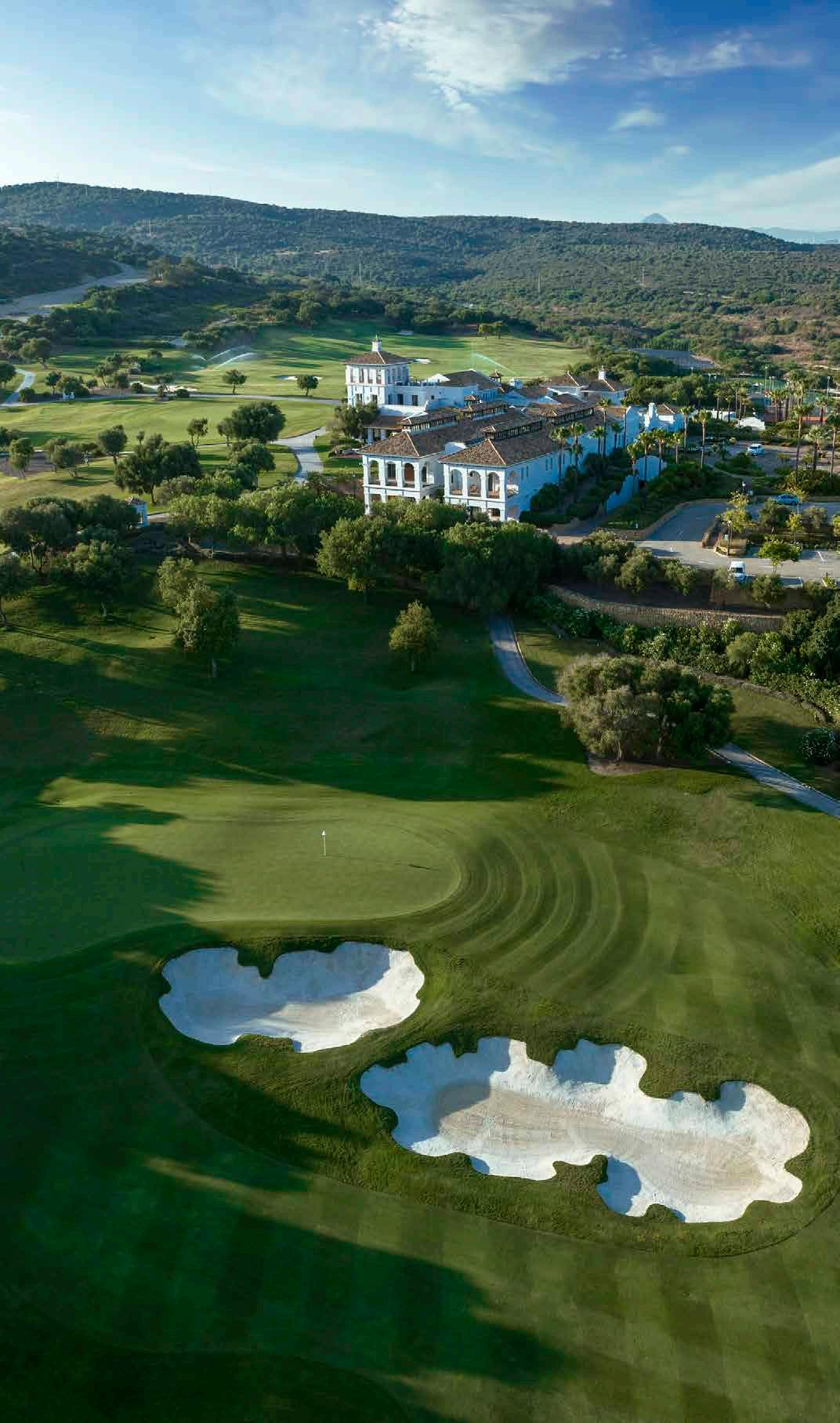
En la Costa del Sol, uno de los destinos de golf más consolidados de Europa, Finca Cortesin cumple 20 años como uno de sus referentes. Desde su inauguración en 2006, el resort ubicado en Casares, entre la Sierra Bermeja y el mar Mediterráneo, ha construido una identidad propia combinando tradición andaluza, innovación y una visión clara de sostenibilidad aplicada al golf de alto nivel. Sede de grandes torneos como la Solheim Cup, el resort se ha convertido en un punto de referencia donde se definen los estándares del golf y la hospitalidad contemporánea.
En Finca Cortesin, cada elemento responde a un modelo de lujo sereno y exigente, donde el refinamiento, la discreción y la atención al detalle han definido, con el tiempo, su carácter.
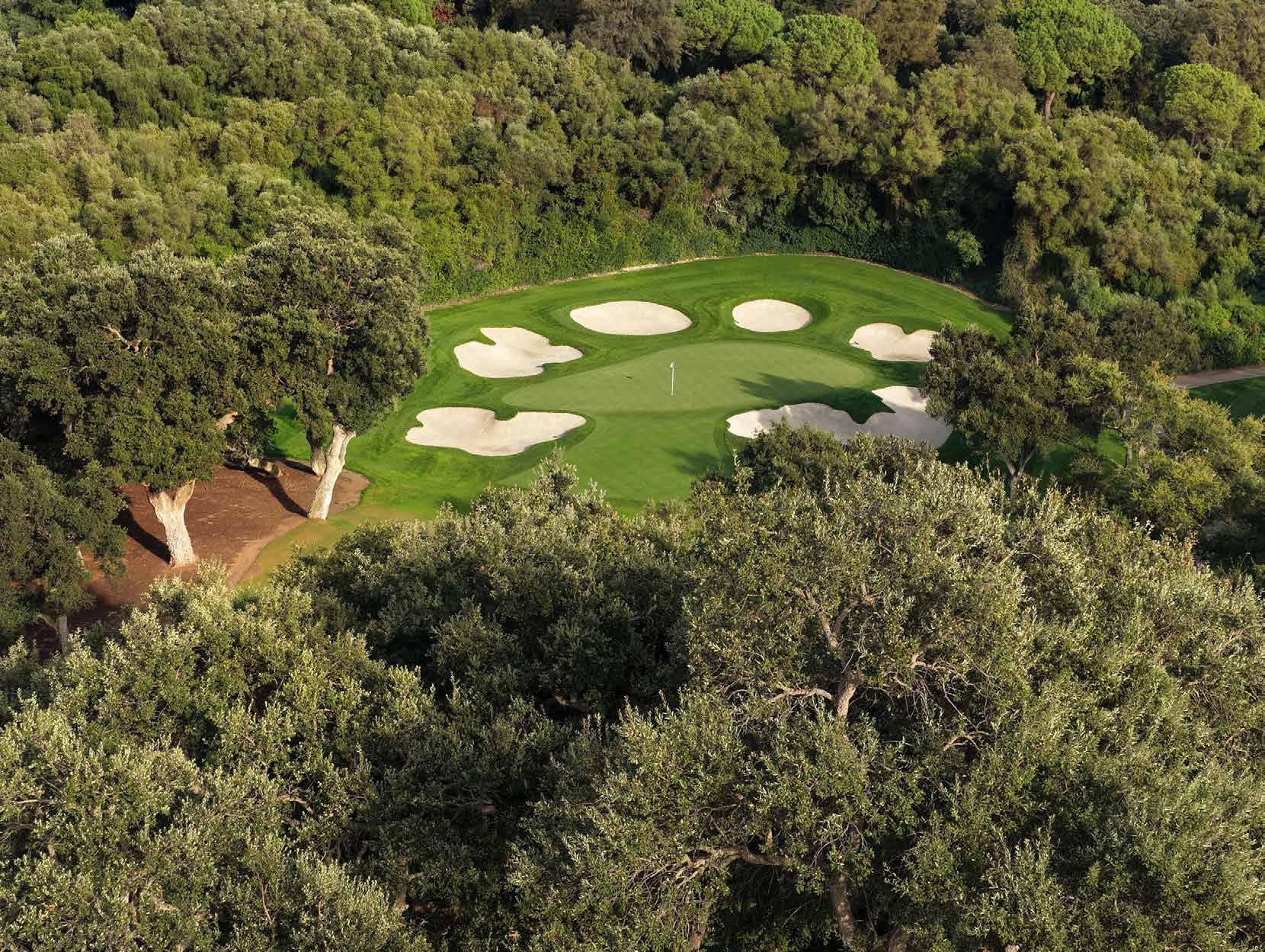
El campo, con casi 7.500 yardas, fue diseñado por Cabell B. Robinson para ofrecer un equilibrio claro entre exigencia y jugabilidad. Sus bunkers estratégicos, greenes ondulados y cambios de elevación plantean un desafío real para el jugador experimentado, sin resultar excluyente.
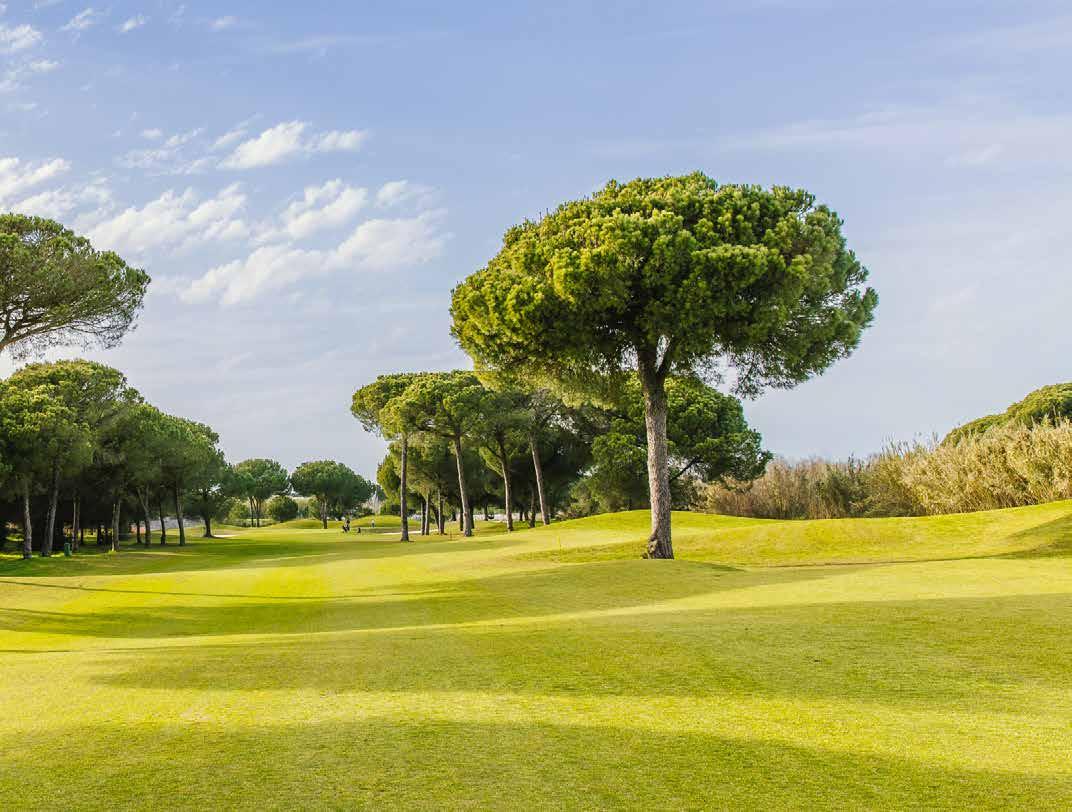
Ese mismo equilibrio se percibe en su entorno. Rodeado de olivares y con vistas abiertas al Mediterráneo, el recorrido combina claridad visual y precisión técnica, dos factores que explican su reconocimiento internacional. Es un campo donde la jugabilidad y la presentación responden a un mismo estándar.
A primera hora, con el campo aún en silencio, esa coherencia se hace más evidente: el mantenimiento ya ha hecho su trabajo, el recorrido está preparado y nada interrumpe el ritmo del juego.
UN RECORRIDO DE RECONOCIMIENTO INTERNACIONAL MEJORAR SIN ALTERAR LA ESENCIA
En estos 20 años, la evolución de Finca Cortesin ha seguido una idea constante: mejorar sin alterar su esencia.
La sostenibilidad forma parte de esa lógica. El campo se riega exclusivamente con agua reciclada y, en 2017, se convirtió en el primero de España en implantar Ultra Dwarf Bermuda Grass, reduciendo el consumo hídrico en un 30% sin comprometer la calidad de juego. Ese mismo año incorporó el sistema Better Billy Bunker, reforzando la durabilidad y la consistencia del recorrido.
Más que medidas puntuales, son decisiones que definen una forma de gestionar el campo, reconocida en 2022 con el Sello de Calidad de ACOSOL en gestión sostenible del agua.
Ese mismo nivel de exigencia es el que ha permitido a Finca Cortesin acoger competiciones de primer nivel. Además de la Solheim Cup 2023, donde Europa retuvo el título ante una audiencia global, el campo fue sede en tres ocasiones del Volvo World Match Play Championship, consolidando su prestigio internacional.
UN ESTILO DE VIDA
DEFINIDO POR EL ENTORNO
Más allá del campo, Finca Cortesin funciona como un lugar que se recorre sin prisa. La arquitectura andaluza, los patios y los jardines no buscan impresionar, sino ordenar el espacio y marcar el ritmo.
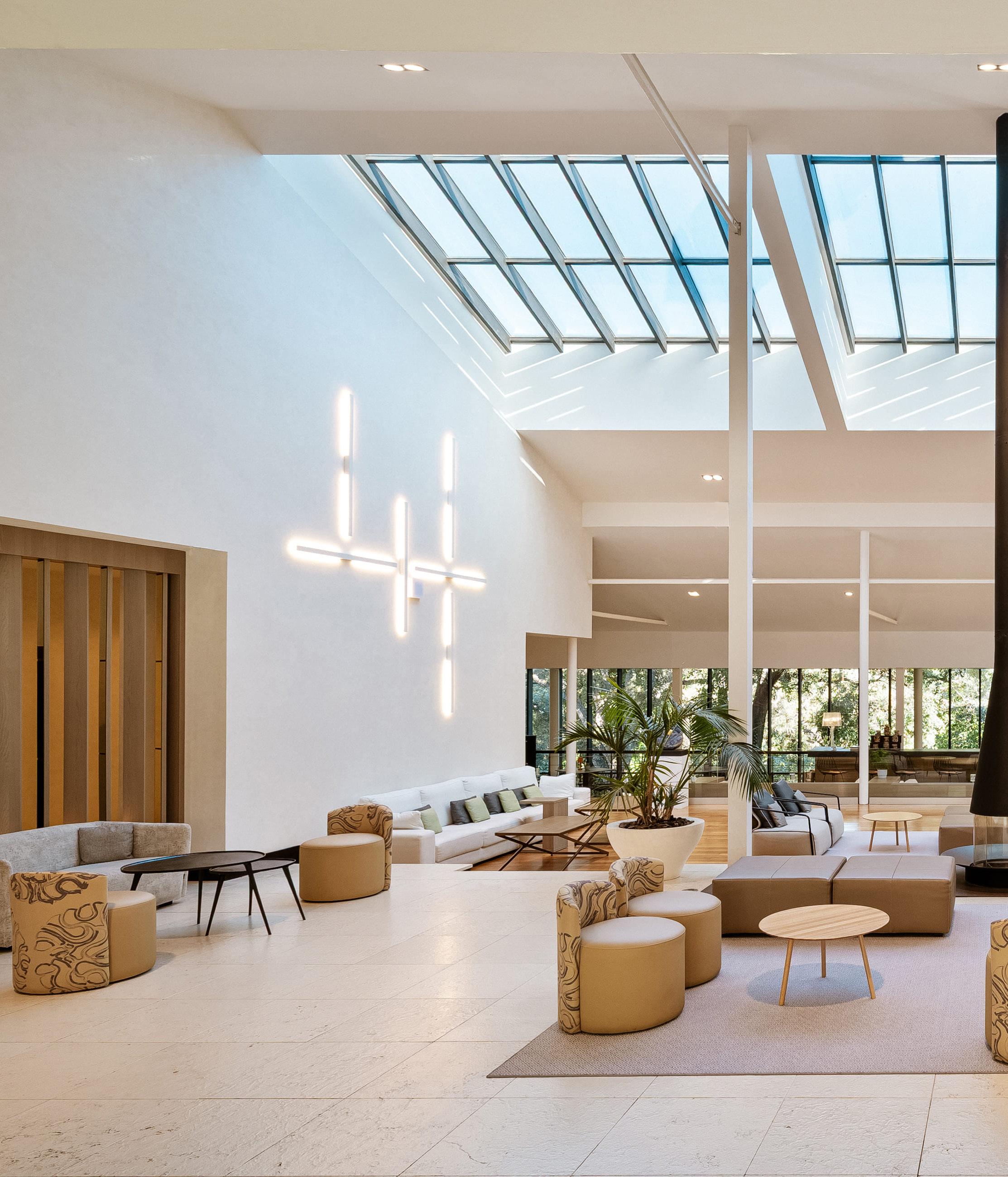
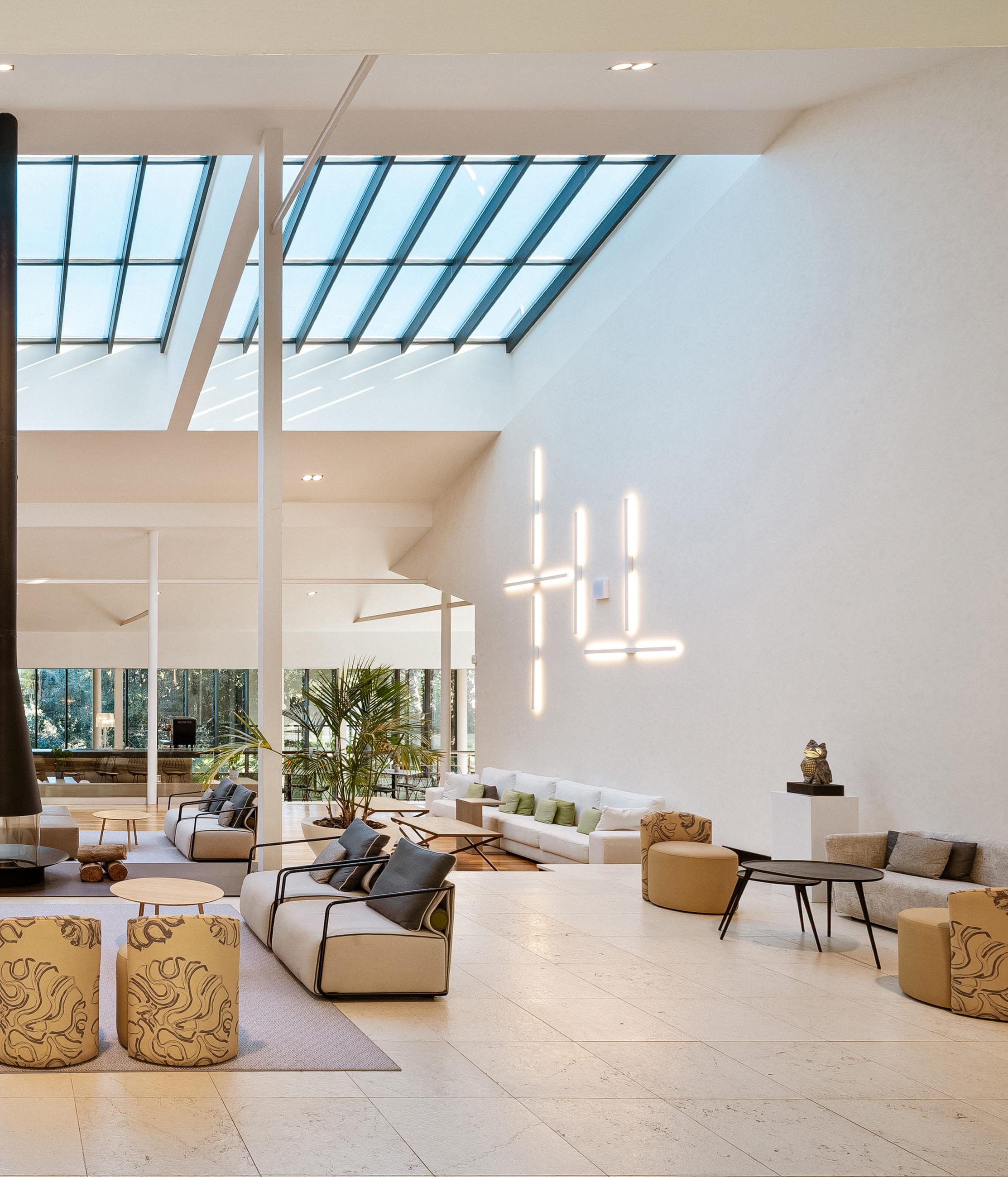
El diseño contemporáneo se integra sin sobresalir. Todo está planteado para que la experiencia resulte cómoda y previsible en el mejor sentido: silencio, amplitud y una atención al detalle constante.
La oferta —restauración, spa, beach club— no se presenta como un catálogo, sino como una extensión natural de la estancia. Nada obliga a moverse rápido, ni a salir del entorno.
La membresía responde a esa misma lógica. Más que añadir, refuerza lo que ya existe: continuidad, entorno y una comunidad que entiende el valor de la discreción.
LA EXIGENCIA TAMBIÉN SE ENTRENA
En el ámbito deportivo, la presencia de la Jack Nicklaus Golf Academy refuerza el posicionamiento del resort dentro del circuito internacional. No es un complemento, sino una extensión natural de su nivel de exigencia, incorporando tecnología avanzada de análisis y un enfoque basado en la precisión y la repetición.
UN MODELO QUE SE SOSTIENE EN EL TIEMPO
Tras 20 años, Finca Cortesin no ha necesitado reinventarse, sino mantenerse fiel a su idea de exclusividad, atención al detalle y excelencia. En un entorno donde muchos destinos evolucionan siguiendo tendencias, aquí la estrategia ha sido otra: construir con tiempo y sostener el nivel.
El resultado es un modelo difícil de replicar, donde el golf, el entorno y la hospitalidad responden a un mismo criterio: un lujo contenido, sin necesidad de imponerse.
Twenty Years Setting the Standard for Golf in Europe
On Spain’s Costa del Sol — one of Europe’s most established golfing destinations — Finca Cortesin marks its twentieth anniversary as one of the region’s defining addresses. Since opening in 2006, the resort set in Casares, between the Sierra Bermeja mountains and the Mediterranean, has carved out a character entirely its own: Andalusian tradition, quiet innovation, and a sustained commitment to sustainability at the highest level of the game. Having hosted landmark events including the Solheim Cup, Finca Cortesin has become a benchmark not only for golf, but for what contemporary hospitality can look like when it’s done with conviction.
Here, every detail answers to the same understated ideal — refinement without showmanship, precision without fuss. It’s a philosophy that has, over two decades, become the resort’s signature.
GOLF CIRCUS
A COURSE OF INTERNATIONAL STANDING
Stretching to nearly 7,500 yards, the course was designed by Cabell B. Robinson with a clear brief: to challenge without excluding. Strategic bunkering, undulating greens and shifts in elevation make for a genuinely testing round, yet one that never feels punishing for the sake of it.
The setting reinforces that balance. Framed by ancient olive groves with open views across the Mediterranean, the layout pairs visual clarity with technical demand — two qualities that go a long way towards explaining its international reputation. Presentation and playability here are not in competition; they answer to the same standard.
Early in the morning, before the day fully arrives, that coherence is especially striking. The maintenance team has already done its work, the course is composed, and nothing interrupts the rhythm of play.
EVOLUTION WITHOUT COMPROMISE
Over twenty years, Finca Cortesin has changed — but deliberately, and always in keeping with what it already was.
Sustainability sits at the heart of that approach. The course is irrigated exclusively with recycled water, and in 2017 it became the first in Spain to introduce Ultra Dwarf Bermuda Grass, cutting water consumption by 30 per cent without any loss in playing quality. That same year saw the installation of the Better Billy Bunker system, improving both the durability and consistency of the course. These aren’t isolated gestures — they reflect a broader philosophy of stewardship, recognised in 2022 with ACOSOL’s Quality Seal for sustainable water management.
That same attention to excellence is what has made the resort a natural home for top-level competition. Alongside the 2023 Solheim Cup — where Europe retained the trophy in front of a global audience — Finca Cortesin hosted the Volvo World Match Play Championship on three occasions, cementing its place on the international stage.
A WAY OF LIFE SHAPED BY ITS SURROUNDINGS
Away from the course, Finca Cortesin moves at its own unhurried pace. The Andalusian architecture, the colonnaded patios and the kept gardens make no effort to impress — instead, they quietly organise the space and set the tone.
Contemporary design is woven in without announcing itself. Everything is arranged to feel natural, comfortable and considered: calm, space and a consistent attention to detail that never tips into theatre.
The wider offering — restaurants, spa, beach club — isn’t presented as a list of amenities, but as a natural extension of
the stay itself. There’s no urgency here, no pressure to move on.
Membership reflects the same sensibility. Rather than adding something new, it deepens what’s already there: continuity, surroundings and a community that knows the value of keeping things quiet.
On the sporting side, the presence of the Jack Nicklaus Golf Academy strengthens the resort’s standing within the international circuit. It isn’t an add-on — it’s a natural extension of the same exacting standards, combining advanced analytical technology with a coaching philosophy rooted in precision and repetition.
A MODEL BUILT TO LAST
After twenty years, Finca Cortesin has had no need to reinvent itself. The founding principles — exclusivity, attention to detail, an uncompromising pursuit of excellence — have simply been upheld. In a world where many destinations chase the next trend, the strategy here has always been different: build carefully, and hold the line.
The result is something genuinely difficult to replicate — a place where golf, landscape and hospitality speak the same language. A quiet kind of luxury, with nothing to prove.
Bienestar y Golf en Perfecto Equilibrio
Well-being and Golf in Perfect Balance
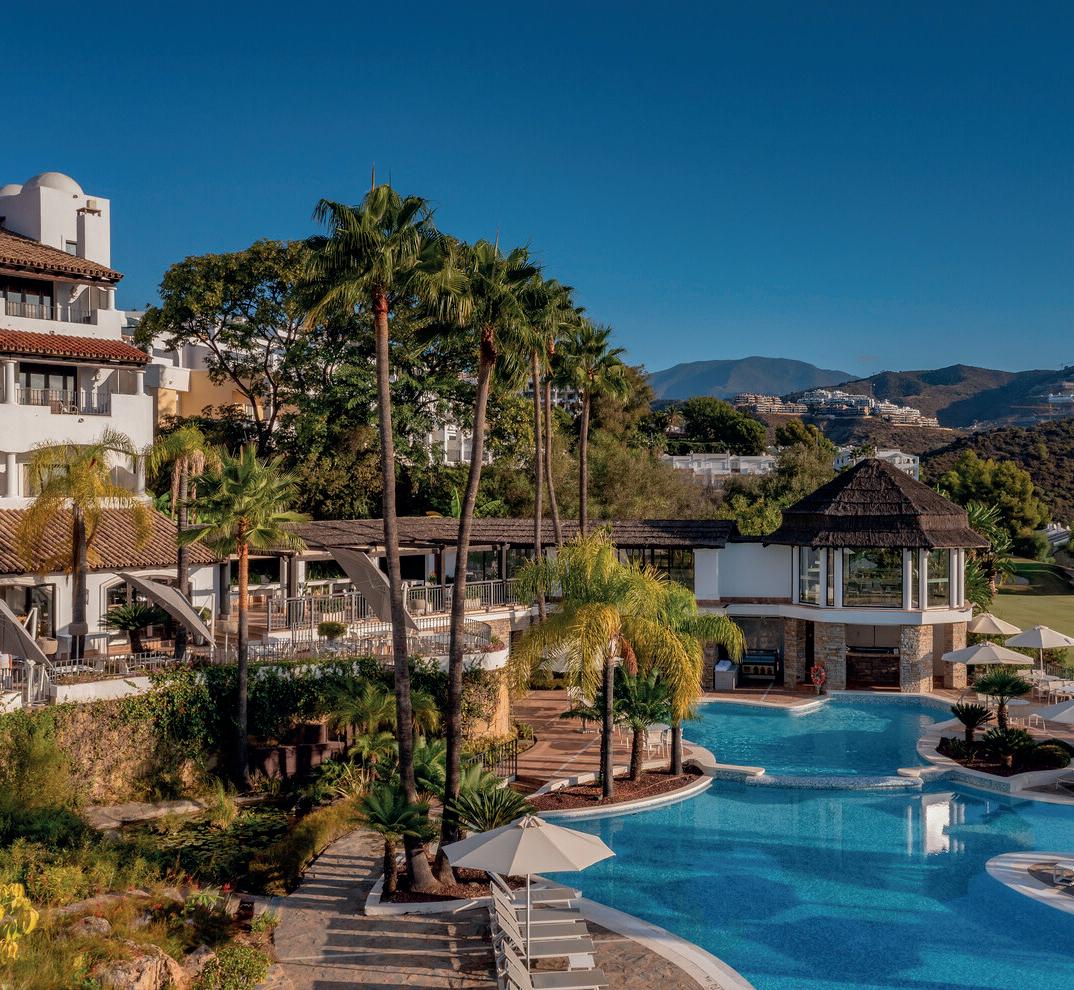
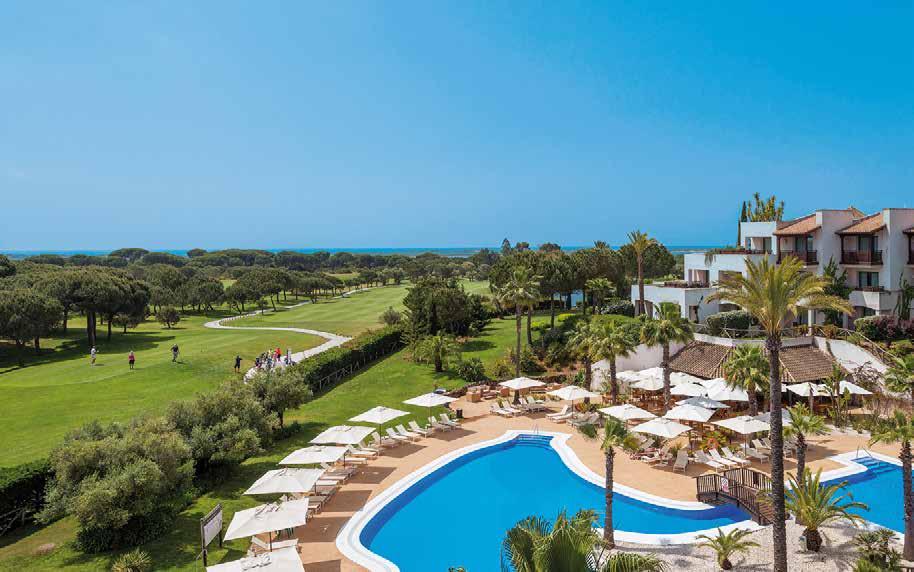
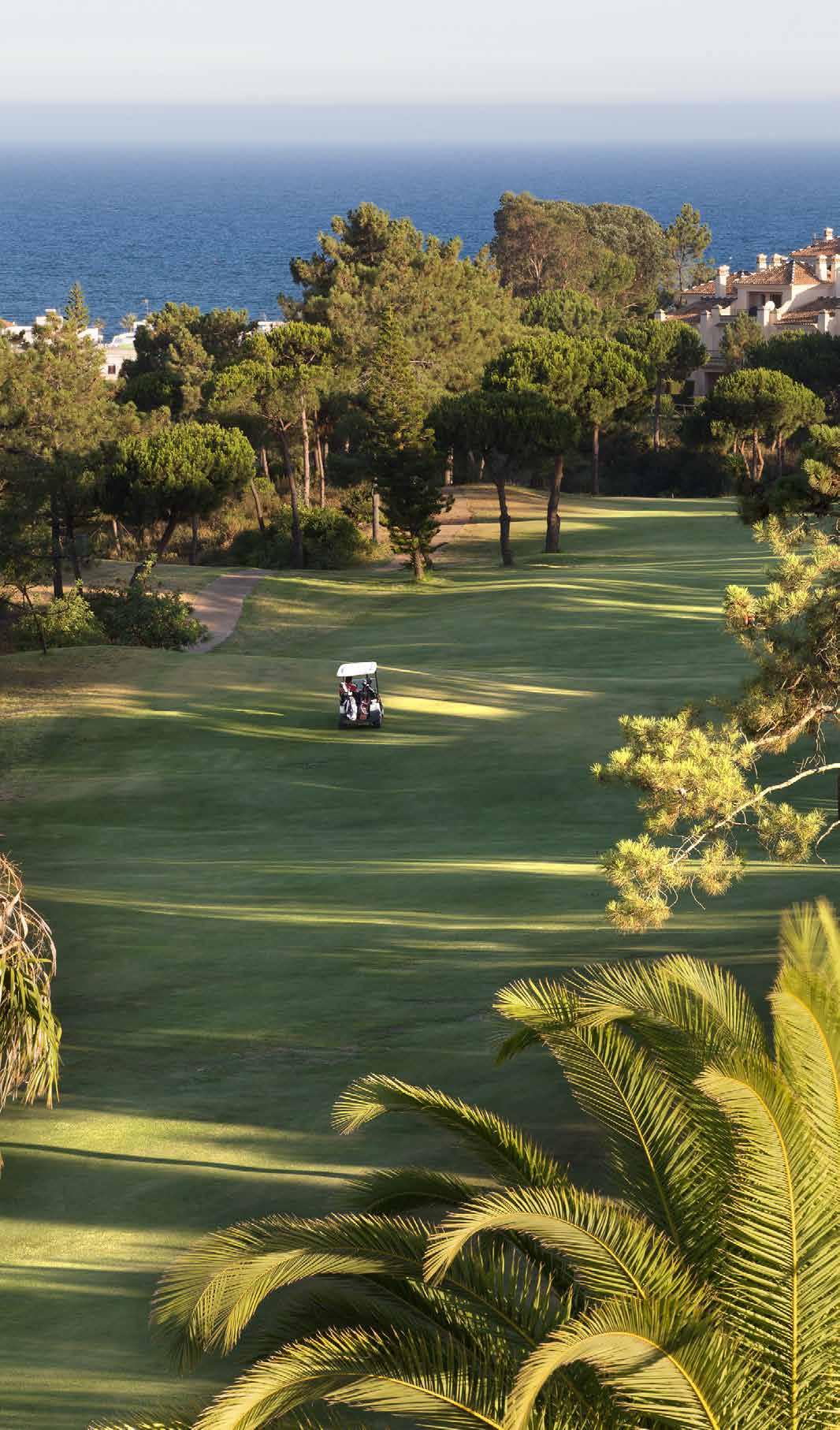
The Westin La Quinta Golf Resort & Spa Benahavís, Marbella no necesita presentación dentro del golf en la Costa del Sol. Situado en el llamado Valle del Golf de Marbella, rodeado de algunos de los mejores campos de Andalucía y a menos de una hora del aeropuerto internacional de Málaga, el resort ha construido con el tiempo una posición discreta pero firme dentro del destino. A pocos minutos del mar, pero con la perspectiva que dan las vistas, el resort funciona con una lógica propia, alejada del ruido y centrada en la experiencia.
The Westin La Quinta Golf Resort & Spa, Benahavís, Marbella requires little introduction within the Costa del Sol golf scene. Set in what is known as the Marbella Golf Valley, surrounded by some of Andalusia’s finest courses and less than an hour from Málaga International Airport, the resort has built a quiet but firm reputation over time. Close to the sea, yet elevated enough to feel apart from it, it operates on its own terms — unhurried, focused and consistent.
La propuesta empieza, precisamente, por la ubicación. El Valle del Golf concentra en pocos kilómetros una combinación poco habitual de campos, paisaje y nivel de vida. The Westin La Quinta no solo forma parte de ese entorno: lo ordena. Es un destino en sí mismo para quien busca permanecer dentro del resort, y al mismo tiempo un punto de partida cómodo para moverse por Marbella, Ronda o el resto de la Costa del Sol sin complicaciones. It starts, as it should, with location. The Golf Valley packs an unusual combination of courses, landscape and lifestyle into a relatively small area, and La Quinta doesn’t merely sit within that setting — it helps to give it shape. For those content to remain on the property, it works as a destination in itself. For those who want to venture further, Marbella, Ronda and the wider Costa del Sol are all comfortably within reach.
El campo
27 hoyos para disfrutar
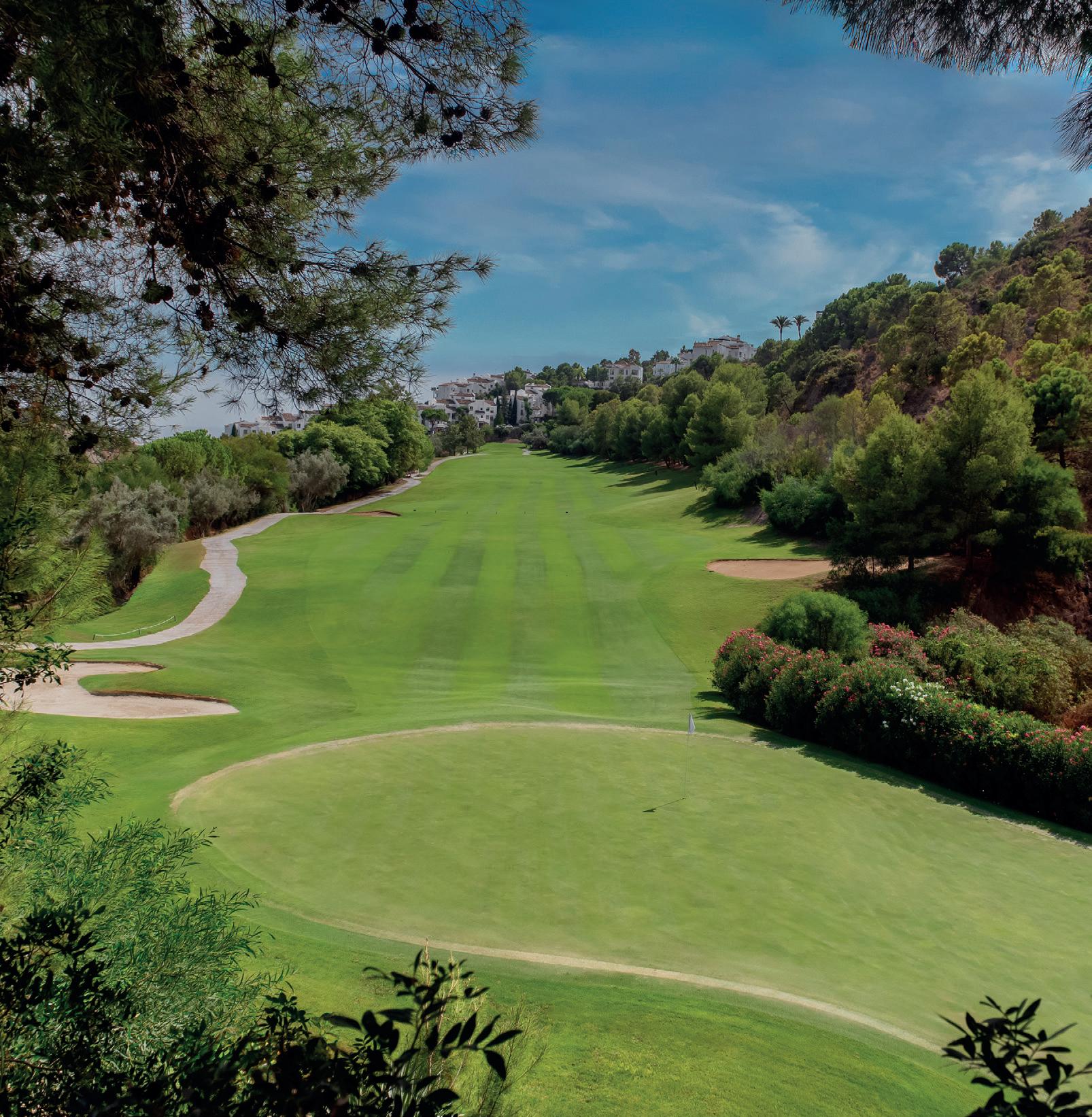
Hablar de La Quinta es hablar de su campo. El recorrido de 27 hoyos diseñado por Manuel Piñero se integra en el entorno con naturalidad, sin necesidad de imponerse. El mantenimiento, basado en el uso exclusivo de agua regenerada, responde a una política de sostenibilidad real en todos los procesos.
La estructura en tres recorridos de nueve hoyos permite distintas combinaciones de juego dentro de una misma estancia. Esa flexibilidad, poco habitual, introduce variedad sin necesidad de salir del resort y responde bien al perfil del viajero que busca distintas opciones de juego.
La identidad de la marca Westin se crea en torno al bienestar: comer, dormir y moverse bien a través de programas exclusivos dentro del encaje natural en
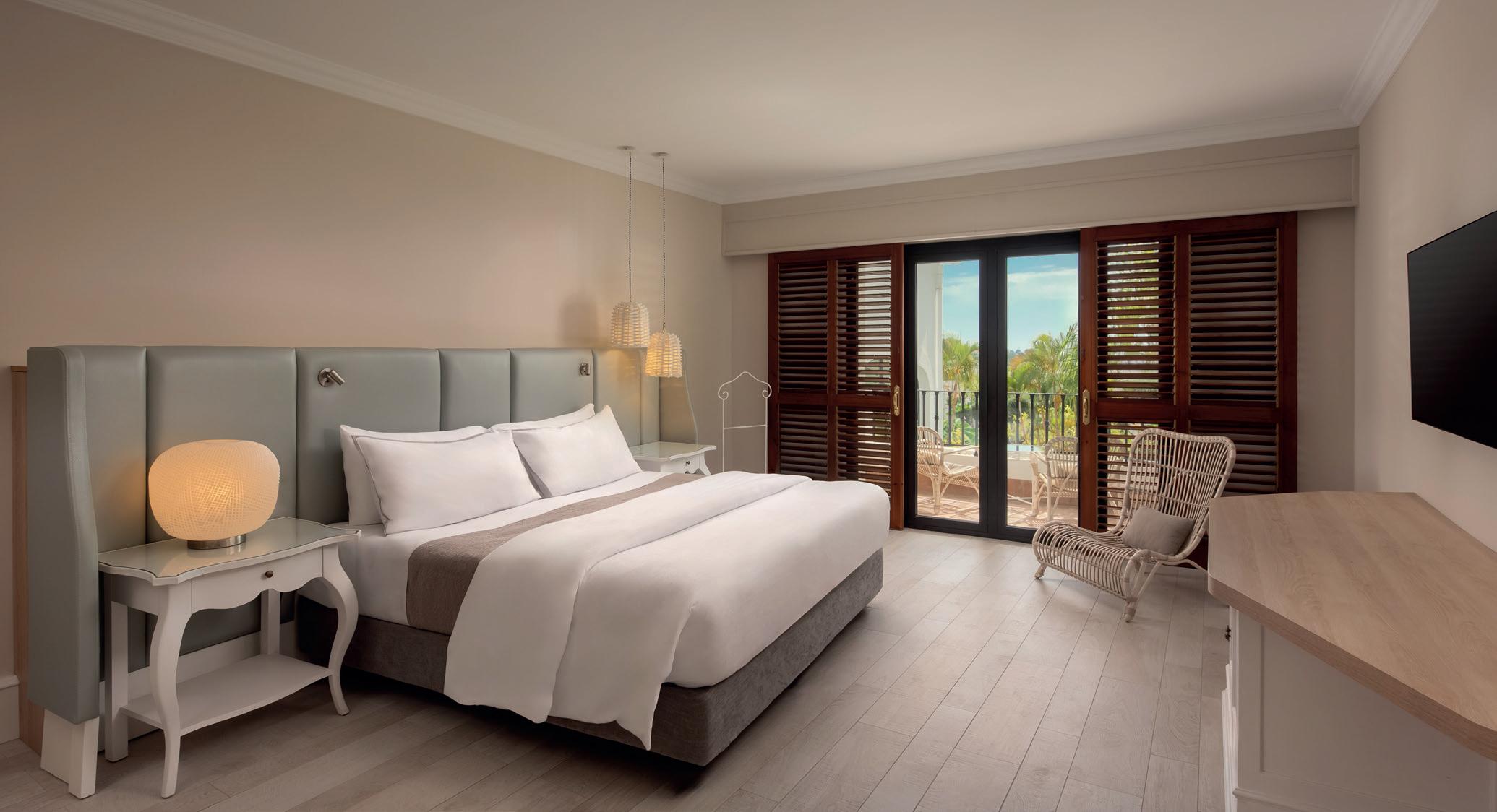
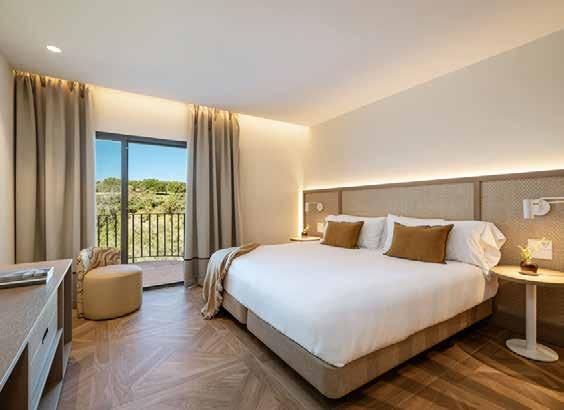
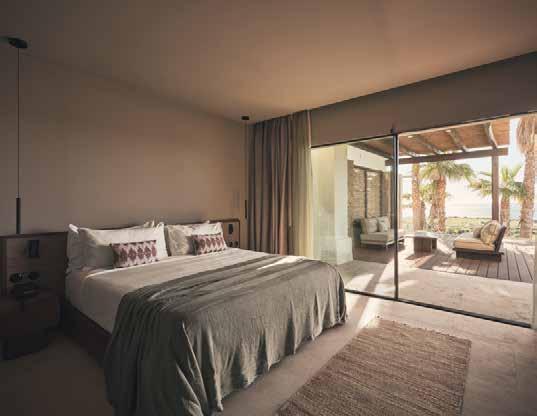
el que se encuentra el resort. Las 170 habitaciones, orientadas al campo, piscina o jardín, han sido diseñadas para ofrecer una experiencia de bienestar y descanso de forma integral.
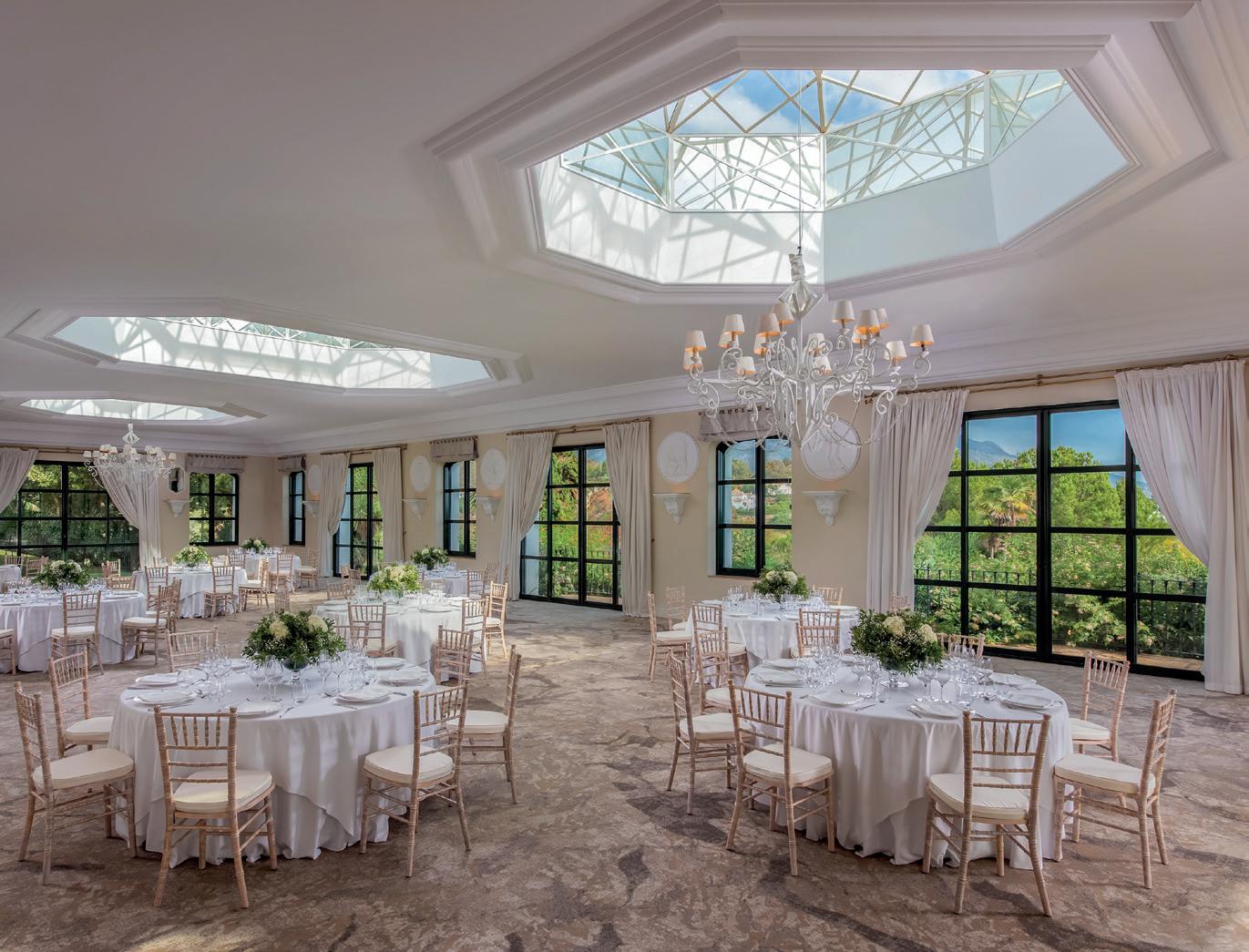
El resort también acoge reuniones y grupos corporativos en espacios que siguen la misma filosofía práctica del conjunto. Esa versatilidad se extiende de forma natural a encuentros sociales y celebraciones privadas, que encuentran aquí un entorno donde el equipo entiende bien cuándo intervenir y cuándo dejar que las cosas simplemente fluyan. Nada se percibe como ajeno a la experiencia: trabajo, ocio y descanso conviven sin alterar el ritmo de la estancia en The Westin La Quinta.
The Course 27 holes to enjoy
Any conversation about La Quinta begins with the golf. The 27-hole course, designed by Manuel Piñero, sits naturally within its surroundings — shaped by the contours of the land, not imposed upon them. Maintenance relies entirely on recycled water, reflecting a genuine commitment to sustainability that runs through day-to-day operations rather than existing purely on paper.
The layout breaks into three loops of nine holes, each playable in different combinations across a stay. It is a format that keeps things varied without having to venture beyond the property, and one well suited to those who want flexibility without compromise.
Westin’s identity is built around wellbeing — eating, sleeping and moving well, supported by a set of programmes that sit naturally within the resort’s character. All 170 rooms look out over the course, pool or gardens, and have been designed to support rest and recovery as an integrated part of the stay, not an afterthought.
The resort also accommodates meetings and corporate groups in spaces that follow the same practical logic as the rest of the property. That extends naturally to private celebrations and social gatherings, where the team understands when to be present and when to step back. Work, leisure and rest coexist here without one encroaching on the other.
GOLF
El spa Heavenly Spa by Westin™
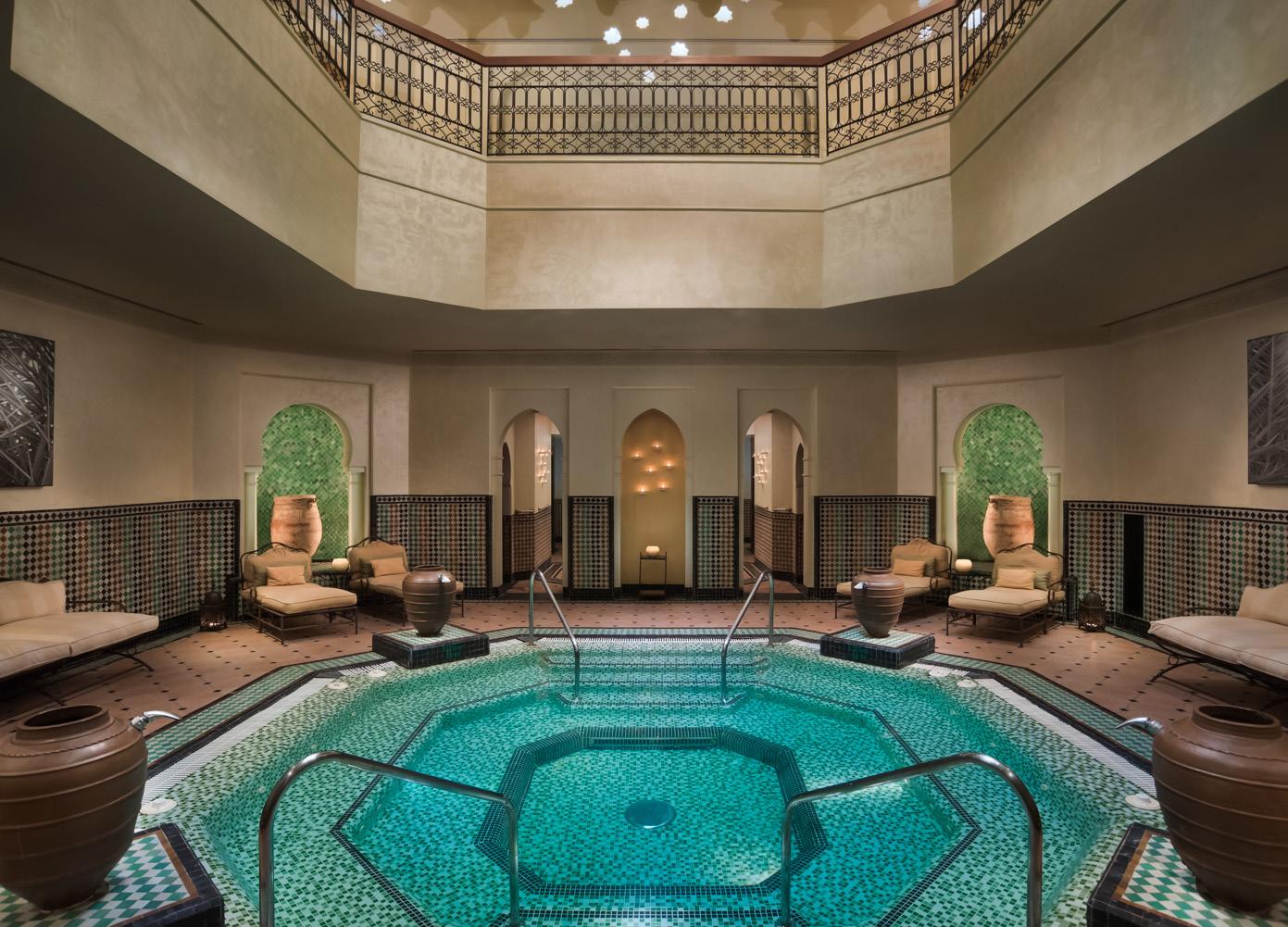
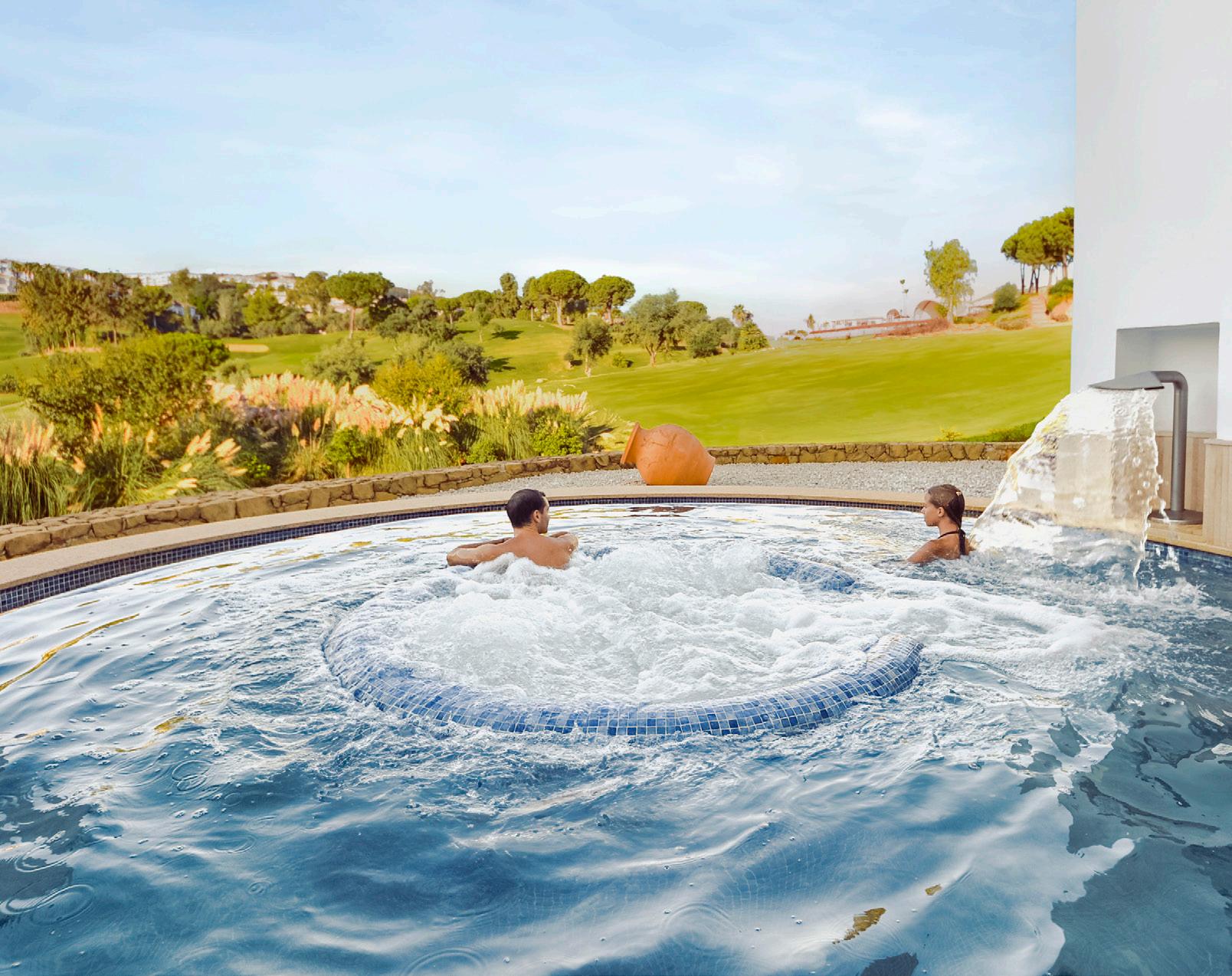
Si el campo define el ritmo activo del resort, el Heavenly Spa introduce el equilibrio necesario. Más de 1.500 metros cuadrados dedicados al descanso, con ocho salas de tratamiento, circuito de aguas y una propuesta que incorpora la línea Thalgo. No hay exceso ni artificio: el espacio funciona con la misma coherencia que el resto del resort.
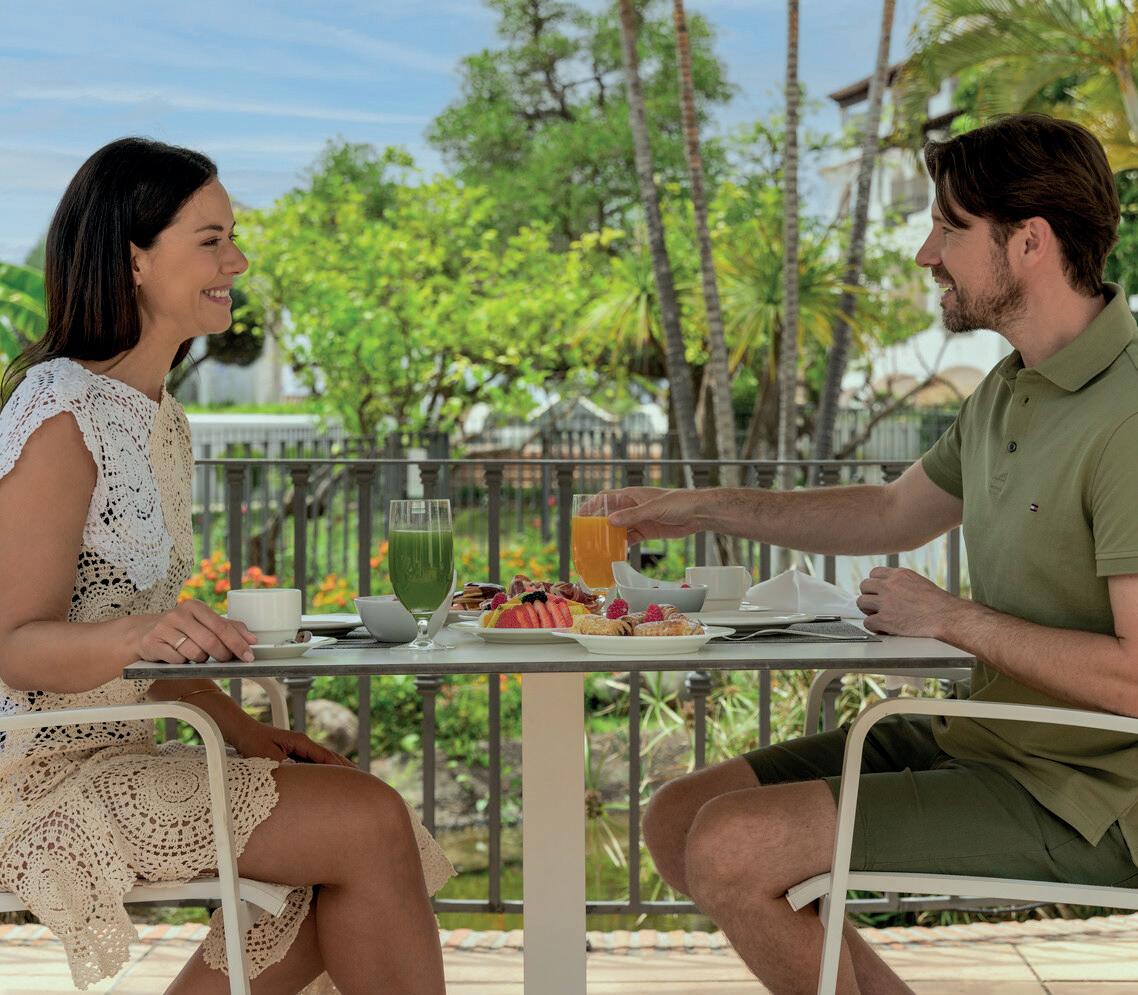
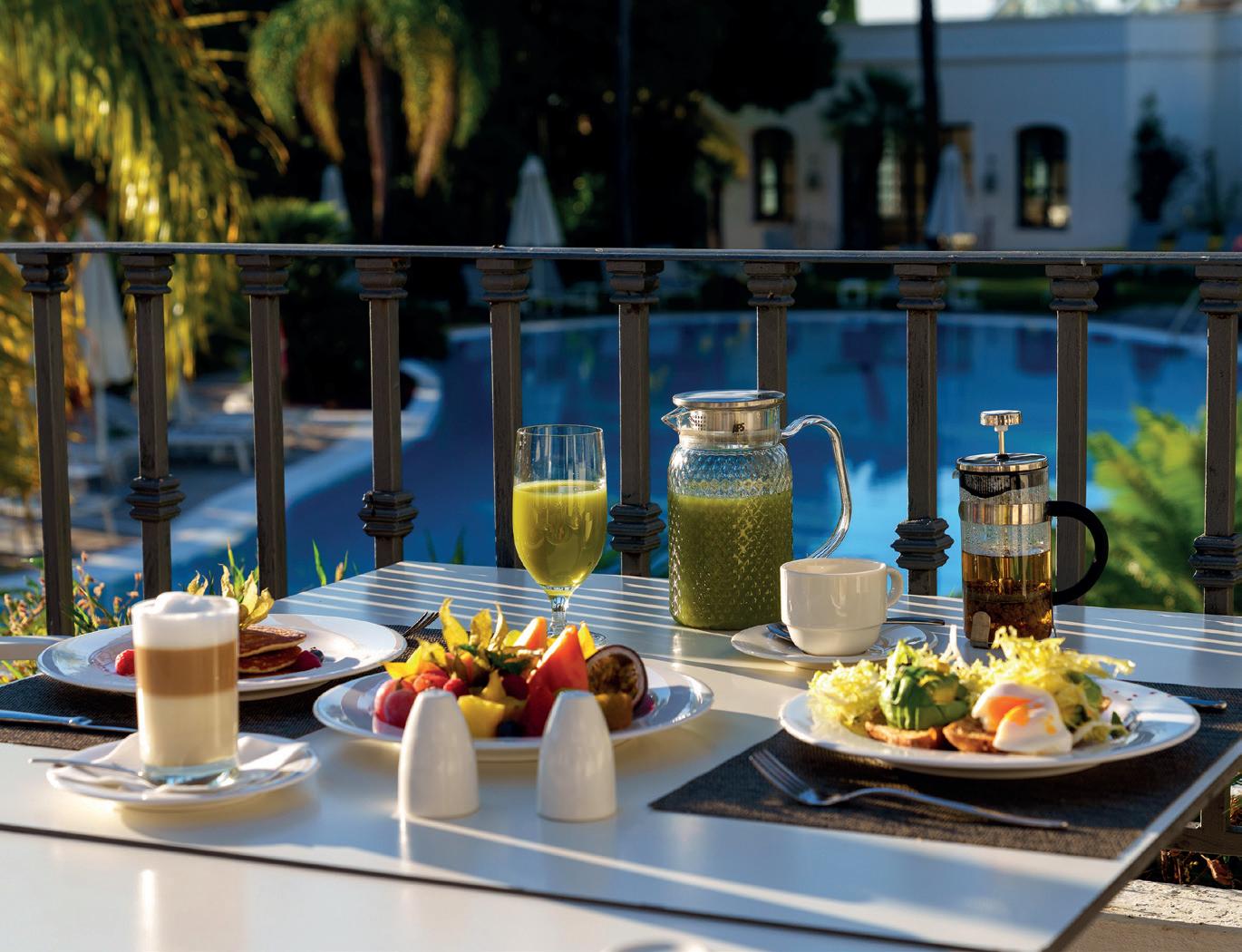
La propuesta Sprunch —circuito termal seguido de un brunch especial en la casa club— sintetiza bien esa idea de bienestar aplicado. La oferta gastronómica, basada en producto local y cocina mediterránea, completa una experiencia que no depende de elementos aislados, sino de cómo se conectan entre sí.
The Spa Heavenly by Westin™ Spa
Where the course sets the resort’s active tempo, the Heavenly Spa provides the counterbalance. Over 1,500 square metres of treatment rooms, thermal facilities and considered quiet, with eight rooms and a menu that now includes the Thalgo range. Nothing is overdone; the space works for the same reason the rest of the resort does — it knows what it is.
The Sprunch — a thermal circuit followed by a special brunch at the clubhouse — is a good illustration of the approach. The restaurant offer, grounded in local produce and Mediterranean cooking, rounds out an experience built not on isolated elements but on how well they connect.
La experiencia está en los detalles
Hay algo en The Westin La Quinta Golf Resort & Spa Benahavís, Marbella que no se percibe de inmediato, pero se confirma con el paso de las horas. No está en grandes gestos, sino en la forma en la que se resuelven los detalles: el ritmo del servicio, las recomendaciones que encajan, la sensación de continuidad. No es una cuestión de protocolo, sino de consistencia.
En un destino con una oferta amplia, esa coherencia marca la diferencia. The Westin La Quinta es un destino que te atrapa, lo hace desde el equilibrio, ofreciendo una experiencia única, y que, una vez entendida, te hará volver.
The Experience Is in the details
There is something about The Westin La Quinta Golf Resort & Spa, Benahavís, Marbella that takes a little time to place. It isn’t in the obvious moments — it’s in the smaller ones: the pace of service, recommendations that feel well-judged, the sense that things move along without anyone having to push them. Less a matter of protocol, more one of genuine consistency.
In a destination with a wide range of offerings, that coherence makes all the difference. The Westin La Quinta is a destination that captivates you, doing so through balance, offering a unique experience that, once understood, will make you want to return.
westinlaquinta.com
•
SPRUNCH
Spa + Brunch
Mímate con una experiencia única
Disfruta de un acceso al relajante circuito termal de The Westin Heavenly Spa™ y saborea un brunch especial en el restaurante Casa Club.
THE WESTIN LA QUINTA GOLF RESORT & SPA, BENAHAVIS, MARBELLA
Enjoy access to the relaxing thermal circuit at The Westin Heavenly Spa™ and savor a special brunch at the Clubhouse Restaurant.
MEJORAR EL CAMPO, ELEVAR LA EXPERIENCIA GOLF EL ROMPIDO
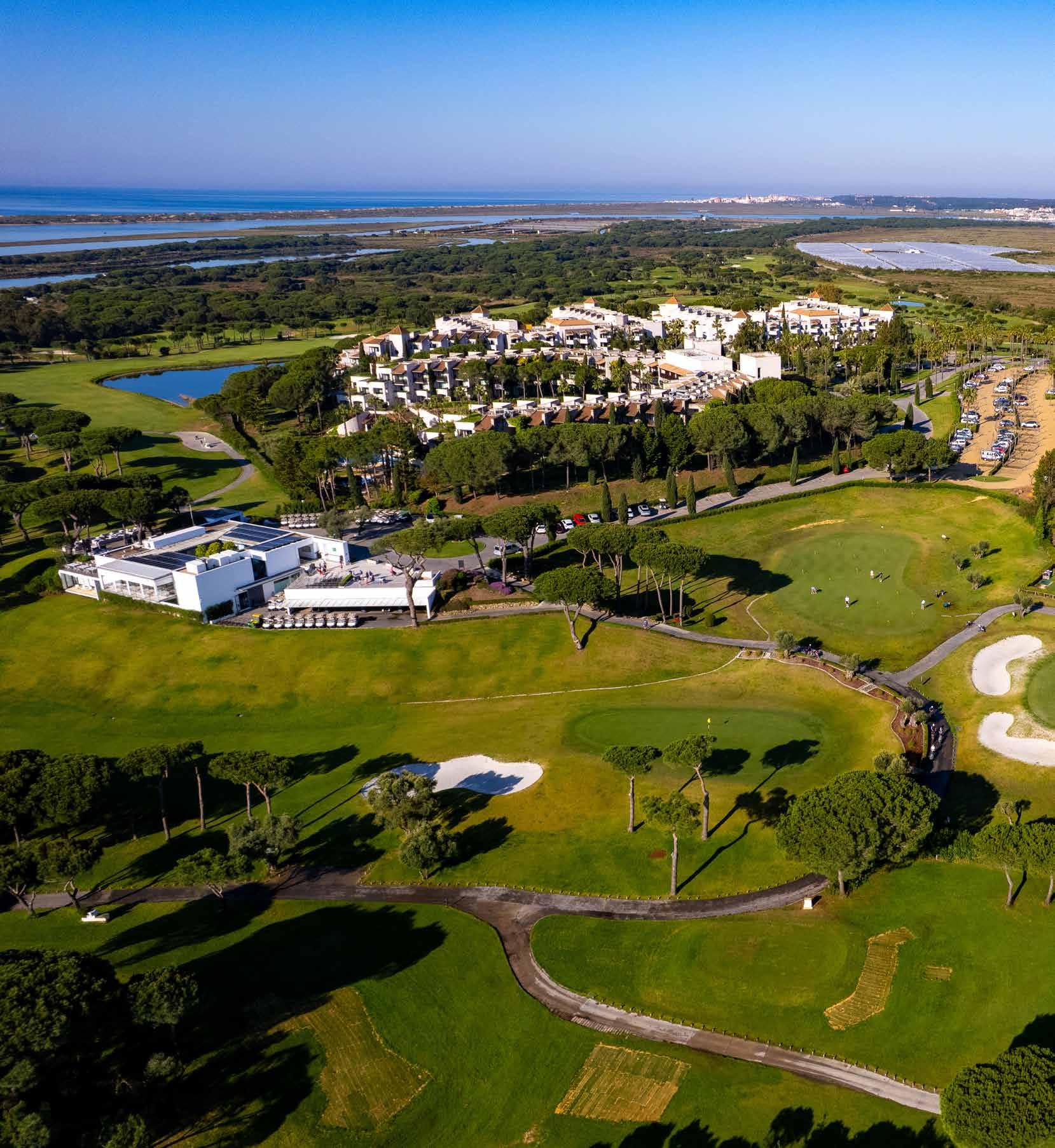
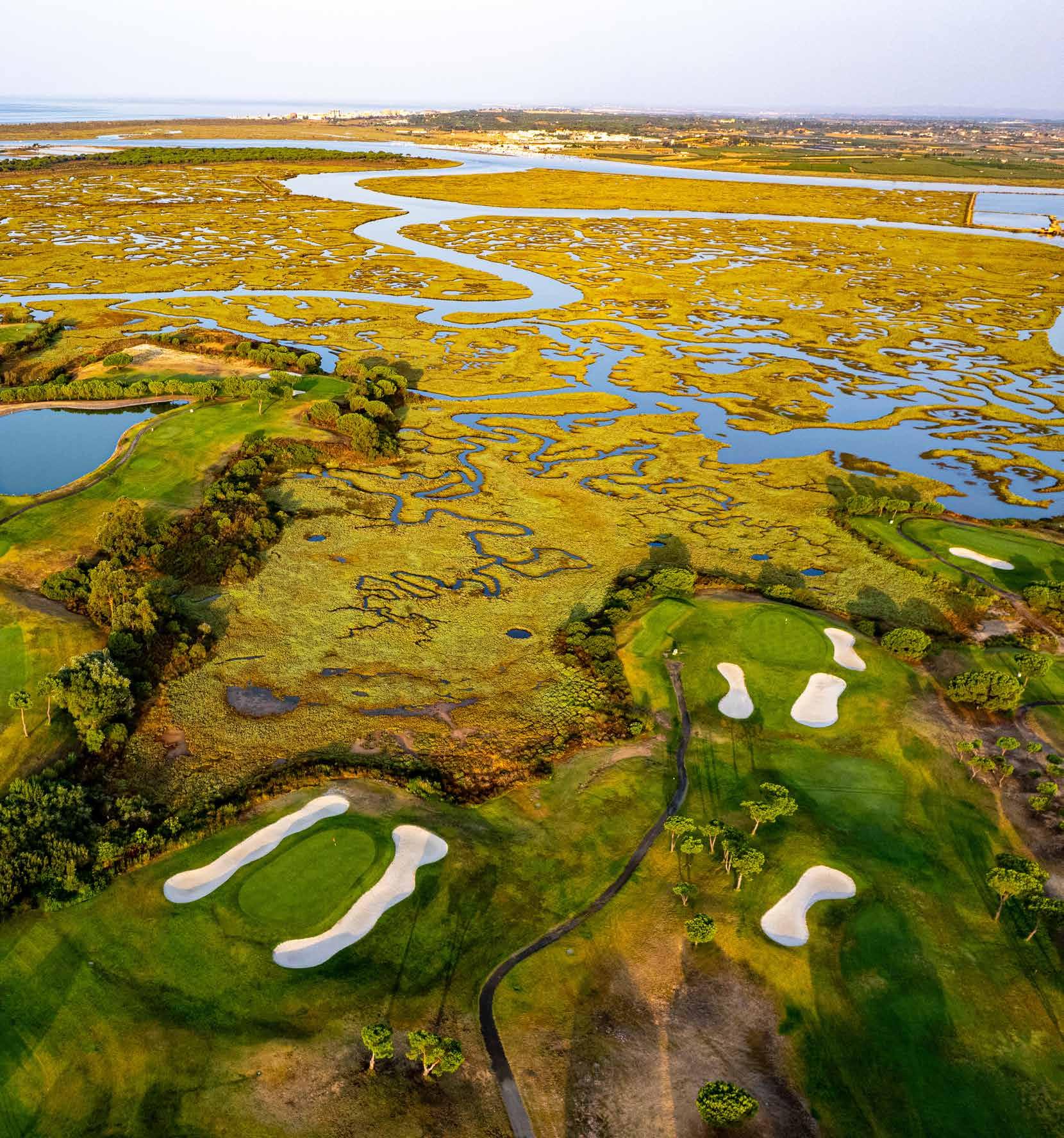
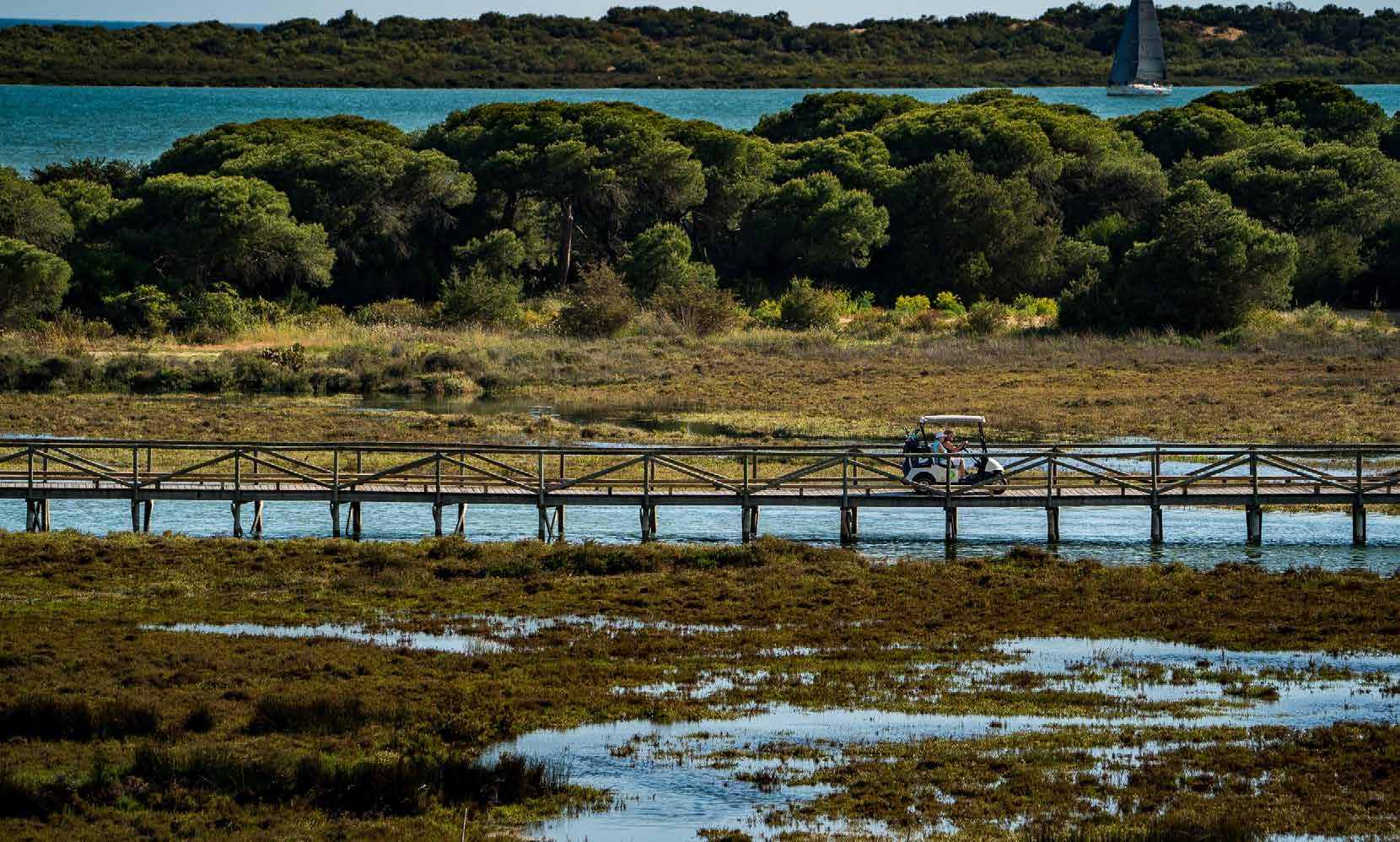
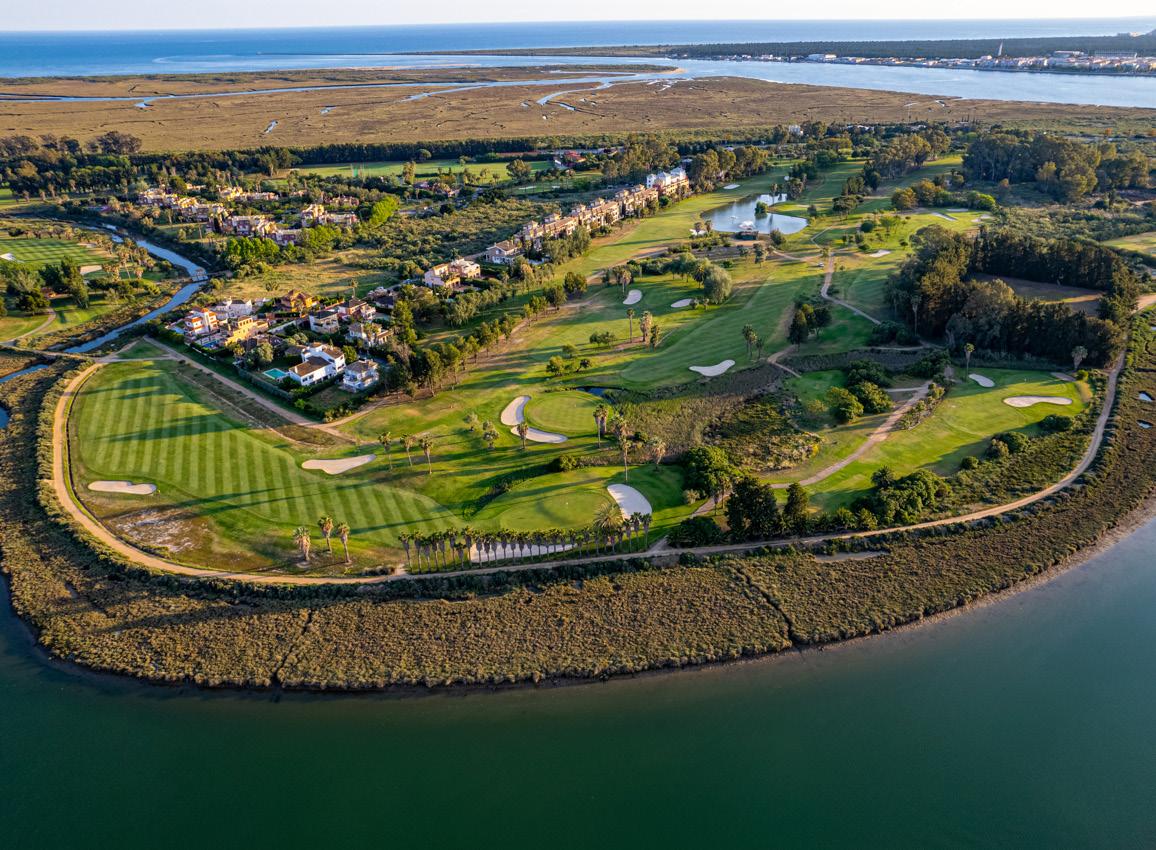
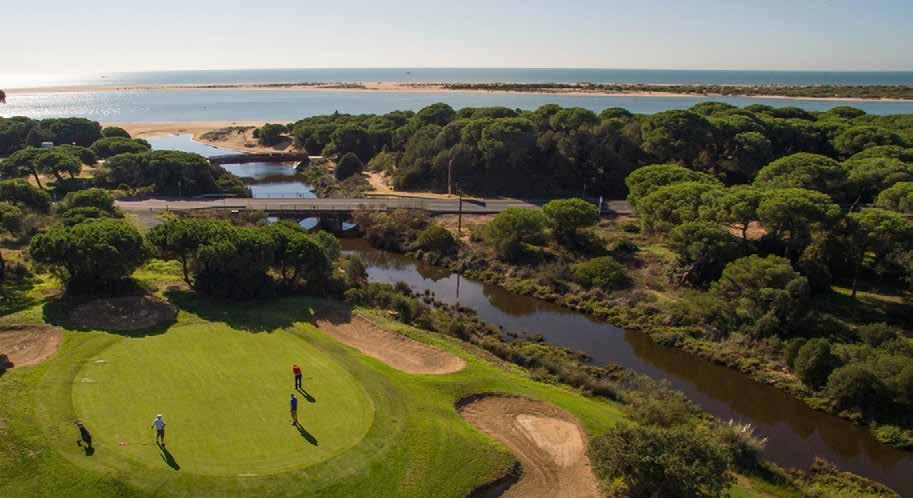
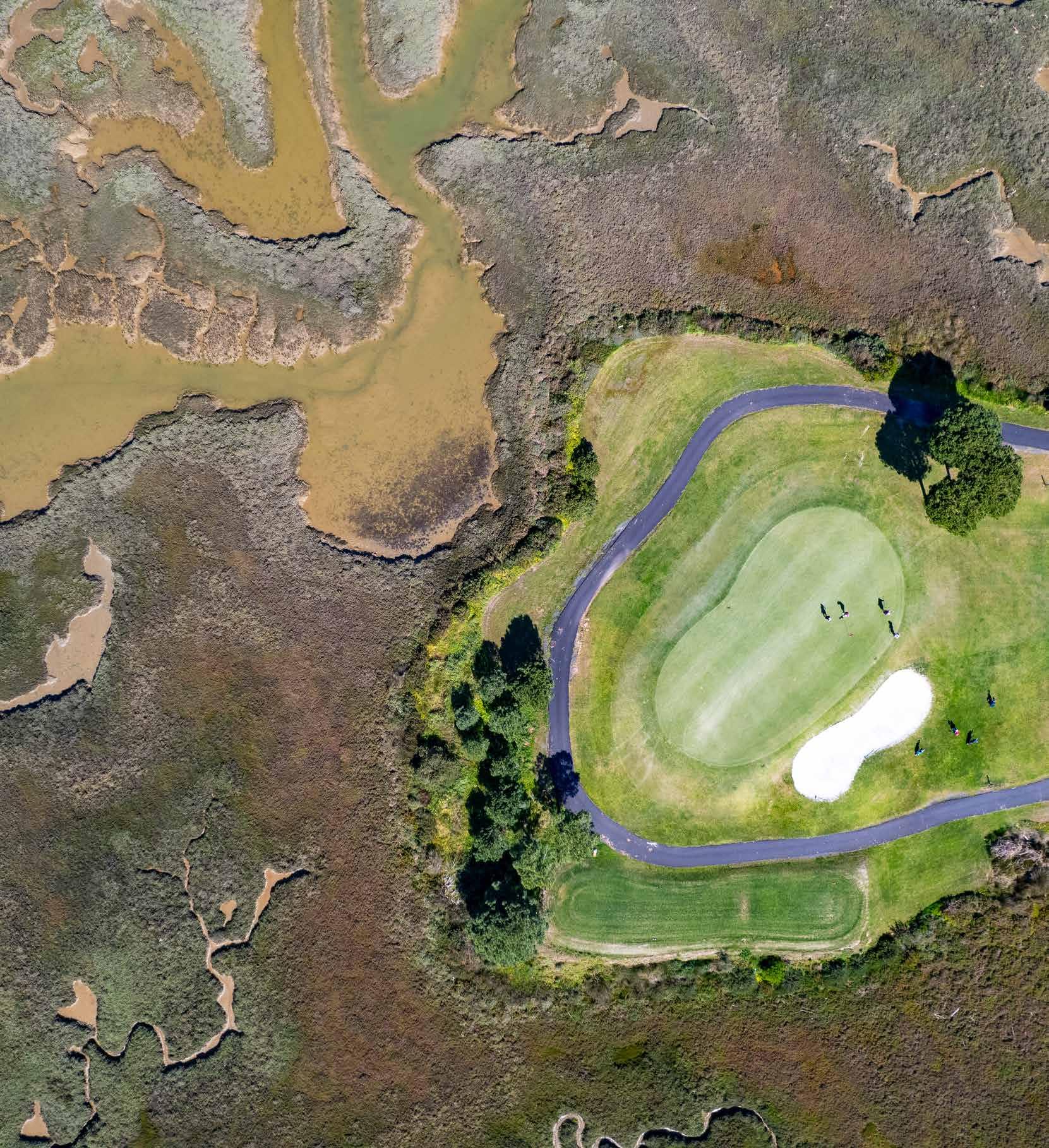
Marismas, pinos y el océano Atlántico como telón de fondo definen los 36 hoyos de Golf El Rompido. Integrado en Precise Resort El Rompido, un resort de 5 estrellas en un entorno natural protegido, el recorrido combina dos trazados bien diferenciados: el Sur, más técnico, donde el juego se construye desde la precisión, y el Norte, más abierto y dinámico.
Ponemos rumbo a la Costa de la Luz, en Huelva —un destino aún por descubrir, bien conectado con el Algarve y Sevilla— para hablar con su directora, Mar Timoner, sobre cómo el campo ha incorporado en los últimos años tecnología, renovado infraestructuras y reforzado su compromiso medioambiental para ofrecer una experiencia más completa.
MAR TIMONER
DIRECTORA DE GOLF EL ROMPIDO
En los últimos años habéis llevado a cabo una evolución importante. ¿Qué hay detrás de ese proceso?
El enfoque ha sido bastante claro desde el principio: mejorar la experiencia del jugador en su conjunto. No solo el campo, también todo lo que rodea la visita. Hemos trabajado en tecnología, en sostenibilidad y en pequeños detalles que, al final, marcan la diferencia. La idea es que todo funcione bien y que el entorno acompañe.
Golf El Rompido forma parte de un resort más amplio. ¿Qué aporta ese conjunto a la experiencia del jugador?
Formamos parte de Precise Resort El Rompido, un resort concebido para que cada huésped encuentre su propio ritmo, ya venga en pareja, en grupo o en familia. El campo es el eje, pero el entorno acompaña: habitaciones abiertas al paisaje, zonas de piscina, un spa pensado para la recuperación tras el juego y una propuesta gastronómica muy ligada al producto local. Todo suma para que la experiencia no se limite a la vuelta de golf, sino que continúe antes y después.
La tecnología empieza a formar parte del día a día en muchos campos. ¿Cómo la habéis integrado en Golf El Rompido?
De forma muy natural. La tecnología nos ha permitido simplificar muchos aspectos de la operativa diaria, desde el acceso
a bolas en el campo de prácticas hasta la información del club en tiempo real. Al mismo tiempo, hemos incorporado procesos de automatización en áreas como la zona de prácticas y ya estamos trabajando en su extensión a distintas partes del campo. Son avances que mejoran la eficiencia sin interferir en la experiencia del jugador.
También habéis reforzado la zona de prácticas. ¿Qué cambios habéis introducido?
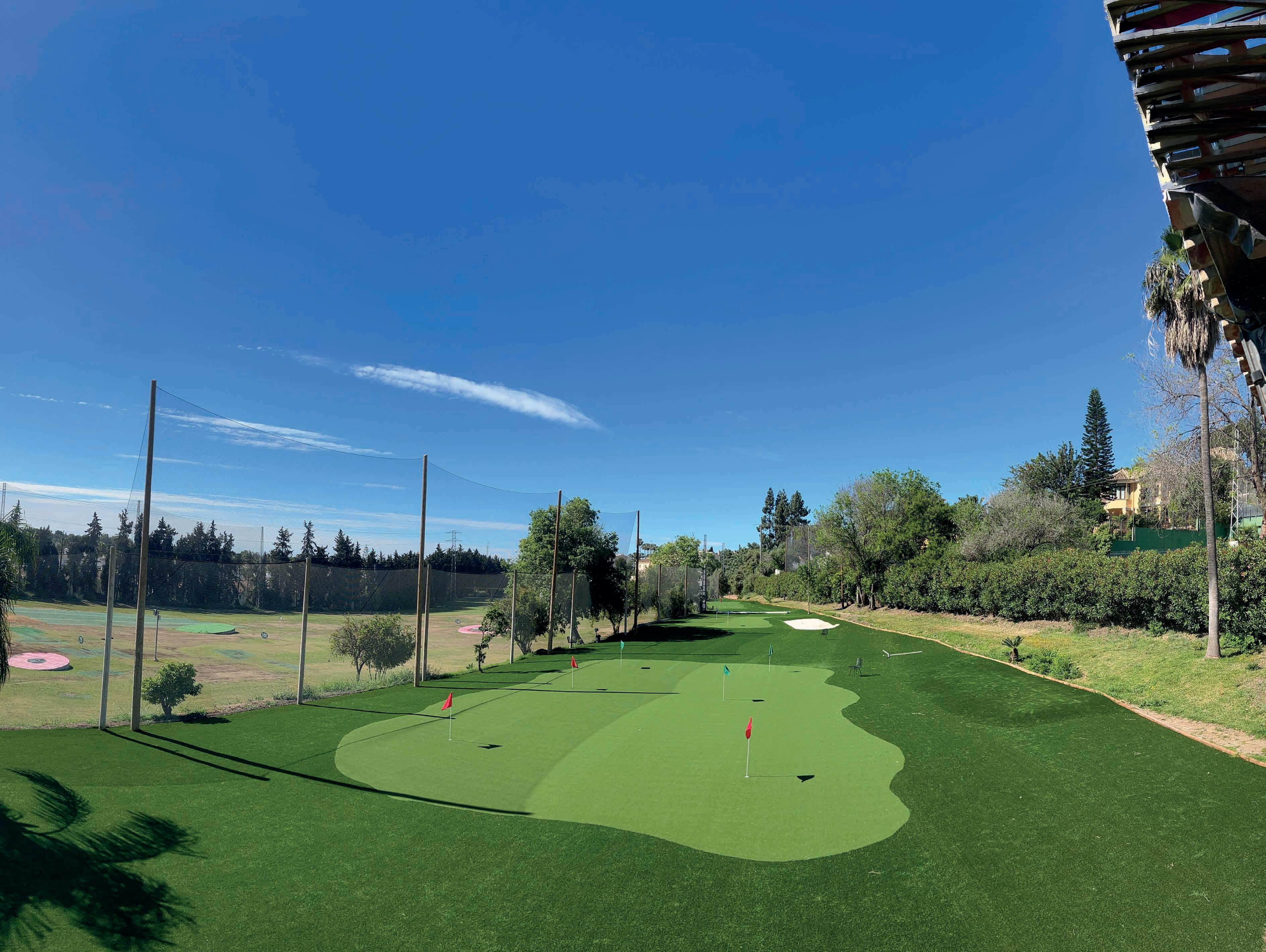
Hemos instalado un tee line de hierba artificial de última generación que reproduce muy bien las condiciones reales de juego. Eso nos permite mantener una calidad constante durante todo el año y, al mismo tiempo, cuidar mejor la zona de prácticas, que es una parte clave del día a día de muchos jugadores.
Uno de los cambios más interesantes es el nuevo sistema de tees. ¿Por qué dar ese paso?
Porque el modelo tradicional se estaba quedando corto. Ahora trabajamos con tees por distancia, de forma que cada jugador elige el recorrido en función de su juego, no de etiquetas. Es una forma más lógica de plantearlo y también más abierta. Hace el juego más ágil y accesible.
El entorno de Golf El Rompido obliga a mirar de cerca la sostenibilidad. ¿Qué líneas habéis seguido en este sentido? Aquí no es una opción, forma parte del día a día. En 2023 desarrollamos un proyecto de naturalización que vino acompañado de la modernización del sistema de riego: nuevos aspersores
sectoriales, boquillas de alta eficiencia y el uso del software Lynx, que nos permite ajustar mucho mejor el consumo de agua. Se trata de ser más precisos y eficientes, sin perder calidad en el campo.
Más allá del mantenimiento, también habéis actuado sobre el recorrido. ¿Dónde se nota más ese trabajo? En varias áreas. Llevamos años trabajando en la gestión arbórea para mantener el diseño original y mejorar el ritmo de juego. A eso se suma la renovación de caminos en el recorrido Norte, la mejora de tees y bunkers —con nueva arena— y la actualización completa del driving range Sur, tanto en drenaje como en césped. Son mejoras que el jugador percibe, aunque no siempre sepa exactamente por qué.
Todo esto exige una base técnica importante. ¿Cómo habéis reforzado esa parte?
Renovando maquinaria. Entre 2021 y 2025 hemos ido actualizando todo el parque para poder mantener el nivel que buscamos. Y ya estamos trabajando en la siguiente fase, centrada en mejorar drenajes en zonas concretas del campo, especialmente alrededor de greenes.
Con esta evolución, ¿cómo definirías hoy la experiencia en Golf El Rompido? Es un campo muy ligado a su entorno. Estamos en un espacio natural sin desarrollo urbanístico, rodeados de marismas y pinares, y eso condiciona todo. Nuestro trabajo ha sido acompañar ese entorno con un nivel de mantenimiento y de servicio que esté a la altura. Sin artificios, pero bien hecho.
Set among salt marshes, pine trees and the Atlantic, Golf El Rompido’s 36 holes sit in a world of their own. Part of Precise Resort El Rompido, a five-star resort within a protected natural setting, the club offers two very different layouts: the South Course, technical and demanding, where every shot counts, and the North Course, more open and playable.
We head to the Costa de la Luz, in Huelva — a destination still relatively undiscovered, with strong connections to the Algarve and Seville — to speak with director Mar Timoner about how the club has embraced new technology, upgraded its facilities and made sustainability a genuine part of its dayto-day operations — all with one goal: a better experience, from the first tee to the last green.
RAISING THE BAR, ON AND OFF THE COURSE GOLF EL ROMPIDO
MAR TIMONER
DIRECTOR OF GOLF EL ROMPIDO
You’ve gone through quite a significant evolution in recent years. What’s been driving that?
The focus has always been clear: improving the overall experience for the golfer. Not just the course itself, but everything around the visit. We’ve worked on technology, sustainability and the small details that end up making the biggest difference. The idea is that everything runs smoothly and that the surroundings feel like part of it.
Golf El Rompido is part of a wider resort. What does that add to the experience?
We’re part of Precise Resort El Rompido, a resort designed so that every guest can find their own pace, whether travelling as a couple, in a group or with family. The course is at the centre, but the surroundings matter: rooms that open onto the landscape, pool areas, a spa designed for post-round recovery and a food offering rooted in local produce. Everything adds up to an experience that doesn’t begin and end on the fairway.
Technology is becoming part of everyday life at many clubs. How have you approached that at Golf El Rompido?
Very naturally. Technology has allowed us to simplify many aspects of day-today operations — from accessing balls at the practice area to real-time club information. We’ve also introduced automation in areas such as the practice facilities and are already working on extending it to other parts of the course.
These are advances that improve efficiency without getting in the way of the player’s experience.
You’ve also upgraded the practice facilities. What changes have you made?
We’ve installed a state-of-the-art artificial turf tee line that closely replicates real playing conditions, keeping quality consistent throughout the year while also taking better care of the practice area — a key part of the daily routine for many golfers.
One of the more interesting changes is the new tee system. What was behind that decision?
The traditional model was starting to feel limiting. We now work with distancebased tees, so each player chooses their route according to their game, not a label. It’s a more logical approach, and a more inclusive one. It keeps the game moving and makes it more accessible.
The natural setting at Golf El Rompido puts sustainability front and centre. What steps have you taken?
Here it’s not optional — it’s part of how we operate. In 2023 we developed a naturalisation project alongside a full modernisation of the irrigation system: new sector sprinklers, high-efficiency nozzles and Lynx software, giving us far greater control over water use. The goal is to be more efficient without compromising course quality.
Beyond maintenance, you’ve also
made changes to the course itself. Where does the work show most?
In several areas. We’ve spent years on tree management to preserve the original design and improve pace of play. On top of that, we’ve resurfaced pathways on the North Course, improved tees and bunkers — with new sand — and completely overhauled the South driving range, both drainage and turf. These are improvements players notice, even if they can’t always put their finger on exactly why.
All of this requires serious technical resources. How have you strengthened that side of things?
By renewing our machinery. Between 2021 and 2025 we’ve been steadily updating the full fleet to maintain the standards we’re after. And we’re already working on the next phase, focused on improving drainage in specific areas of the course, particularly around the greens.
With all this evolution, how would you describe the experience at Golf El Rompido today?
It’s a course that’s deeply connected to its surroundings. We’re in a natural space with no urban development, surrounded by marshland and pine trees, and that shapes everything.
Our job has been to match that environment with a level of maintenance and service that does it justice. No gimmicks — just done well.
HUELVA: EL EQUILIBRIO ENTRE GOLF Y ENTORNO
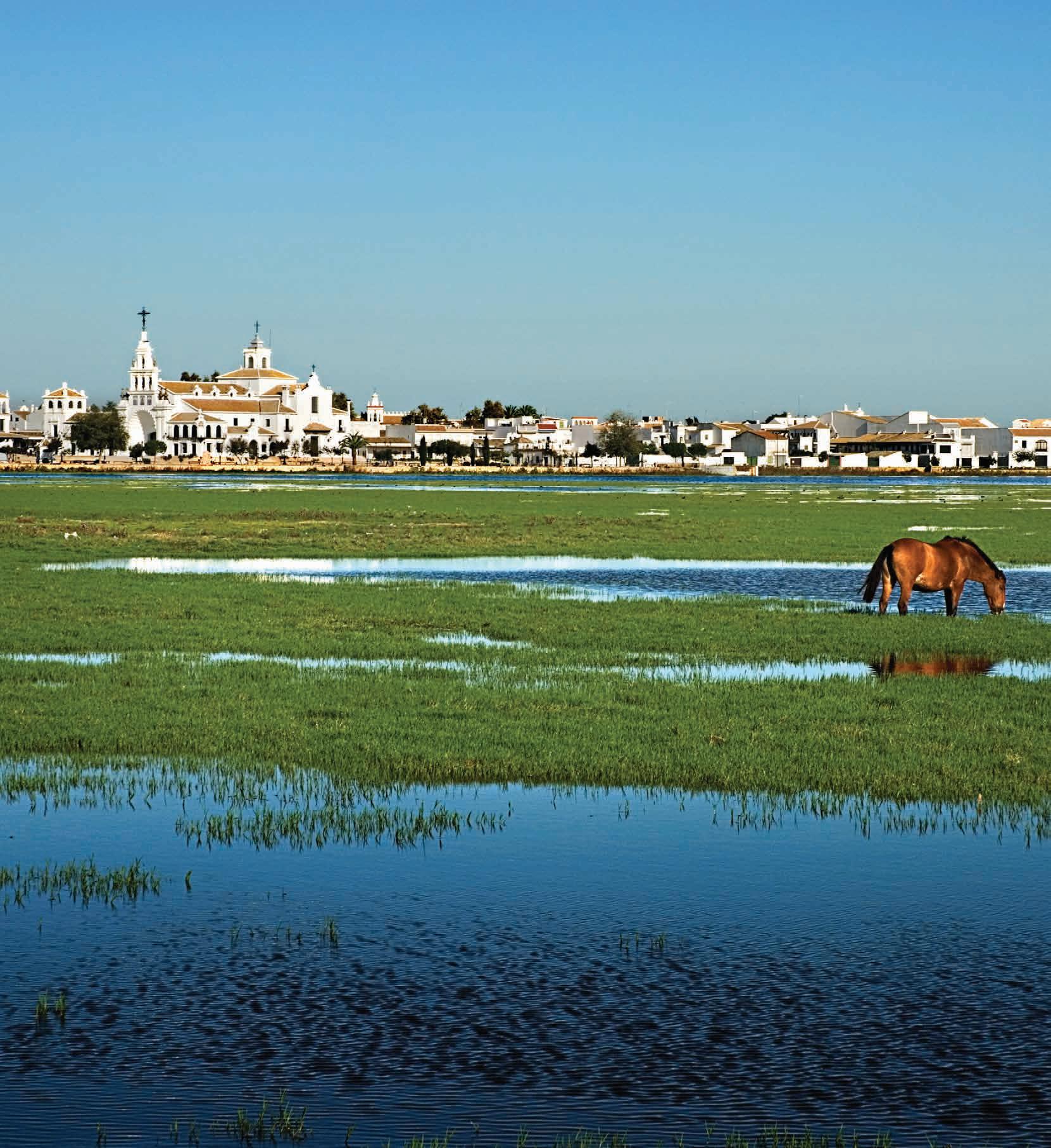
Huelva no se explica solo desde el golf, pero se entiende mejor a través de él. Entre marismas, pinares y kilómetros de costa abierta al Atlántico, el destino construye una experiencia donde jugar es solo una parte —y donde todo lo demás es lo que realmente marca la diferencia.
En el extremo suroccidental de España, Huelva se posiciona como un destino que va más allá del campo. Aquí, el golf no se entiende sin el entorno: sin la luz, sin el espacio, sin una naturaleza que marca el ritmo de cada jornada.
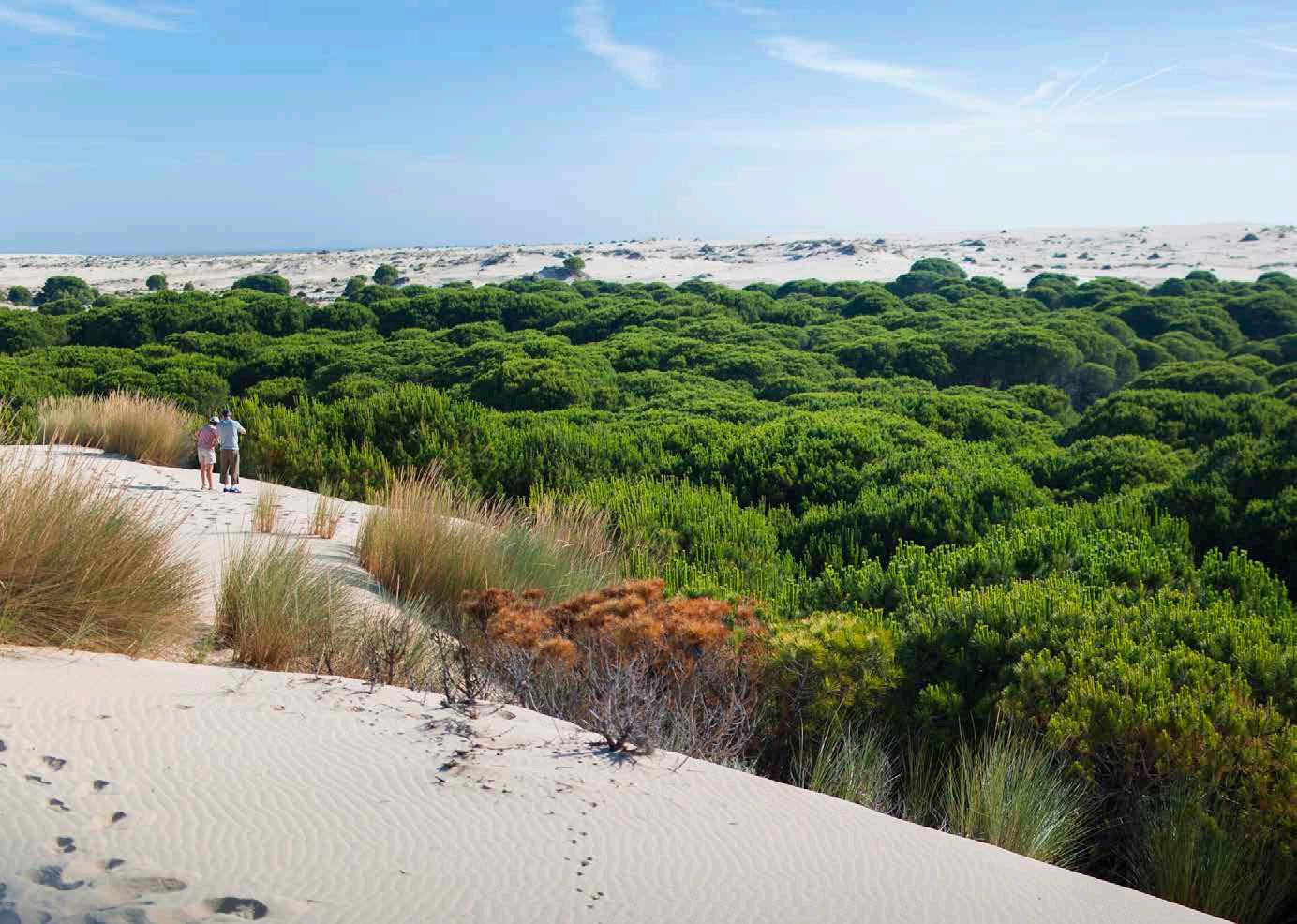
Más de un tercio de la provincia está protegido, con referentes como el Parque Nacional de Doñana o la Sierra de Aracena y Picos de Aroche. A esto se suman kilómetros de playas abiertas al Atlántico, sin presión urbanística, donde el paisaje sigue teniendo protagonismo. Este equilibrio no es accesorio: es lo que define la experiencia del viajero.
En ese contexto, el golf encuentra su lugar natural. Huelva fue pionera en España y hoy ofrece ocho campos que combinan diseño, variedad y una oferta bien estructurada de alojamiento que facilita estancias cómodas y sin desplazamientos largos.
ISLA CANELA OLD COURSE
Golf El Rompido resume bien esta idea: dos recorridos distintos junto a las marismas del río Piedras, donde el paisaje entra en juego en cada golpe. Bellavista Huelva Golf Club propone un recorrido fluido entre pinares, accesible y jugable durante todo el año. Islantilla Golf Resort, por su parte, destaca por su configuración de 27 hoyos y su integración natural con el entorno costero.
En la costa, Isla Canela Old Course e Isla Canela Links incorporan el carácter de las marismas y la cercanía al Guadiana. Golf Nuevo Portil abre el juego hacia dunas y vistas al Atlántico, y La Monacilla Golf Club, diseño de Olazábal, añade un recorrido técnico bien integrado en el entorno. Incluso propuestas singulares como Corta Atalaya Golf aportan una dimensión diferente, ligada al paisaje minero.
Pero lo que consolida el destino es todo lo que ocurre fuera del campo. La gastronomía actúa como extensión natural de la experiencia: pescados y mariscos en la costa, producto de dehesa en el interior y el jamón de la DOP Jabugo como emblema. El vino encuentra su espacio en la Ruta del Vino del Condado de Huelva, donde tradición y territorio van de la mano.
Huelva funciona porque es coherente. El golf no está aislado, forma parte de un conjunto donde clima, paisaje y estilo de vida juegan a favor. Y es precisamente ahí donde el destino marca la diferencia: en todo lo que rodea a la partida.
HUELVA: WHERE GOLF AND LANDSCAPE ARE IN BALANCE
Huelva isn’t defined by golf alone — but it’s one of the best ways to understand it. Set between marshlands, pine forests and miles of open Atlantic coastline, this destination offers something more than a round: a place where the game is just one part of the experience, and where everything around it is what stays with you.
GOLF EL ROMPIDO
GOLF
In Spain’s far south-west, Huelva has built a reputation that goes well beyond the fairway. Here, golf and landscape are inseparable — the light, the space, the natural rhythms of each day are as much a part of the visit as the course itself.
Over a third of the province is protected land. Doñana National Park and the Sierra de Aracena y Picos de Aroche are the obvious anchors, but there’s also a long stretch of unspoilt Atlantic coastline — broad, open beaches with no overdevelopment crowding the horizon. That balance isn’t a selling point bolted on afterwards. It’s what shapes the whole experience.
Golf fits naturally into all of this. Huelva was a pioneer in Spain, and today the province has eight courses, offering real variety in design alongside a well-
ISLA CANELA LINKS
organised range of accommodation that makes it easy to stay, play and move between them — without the hassle of long transfers.
Golf El Rompido captures the spirit well: two distinct layouts alongside the marshes of the Piedras River, where the landscape is genuinely part of the game. Bellavista Huelva Golf Club offers an open, flowing course through pine woodland — accessible and playable year-round. Islantilla Golf Resort stands out for its 27-hole setup and the way it sits comfortably within the coastal surroundings.
Further along the coast, Isla Canela Old Course and Isla Canela Links bring in the character of the marshes and the closeness of the Guadiana. Golf Nuevo Portil opens up towards dunes
LA
and Atlantic views. La Monacilla Golf Club, designed by Olazábal, adds a more technical challenge within a wellintegrated natural setting. And Corta Atalaya Golf offers something genuinely different — a course shaped by the area’s mining landscape.
Off the course, Huelva is just as strong. The food is a natural extension of where you are: fresh fish and seafood on the coast, dehesa produce inland, and Jabugo DOP ham as a regional emblem that speaks for itself. Wine has its own thread to follow too, along the Condado de Huelva Wine Route, where local tradition and the land it comes from are very much the point.
What makes Huelva work is that it all holds together. The golf isn’t an isolated offer — it sits within a place where climate, landscape and pace of life all pull in the same direction. And that’s where the destination finds its edge: in everything that surrounds the game.
destinohuelva.org
MONACILLA GOLF CLUB
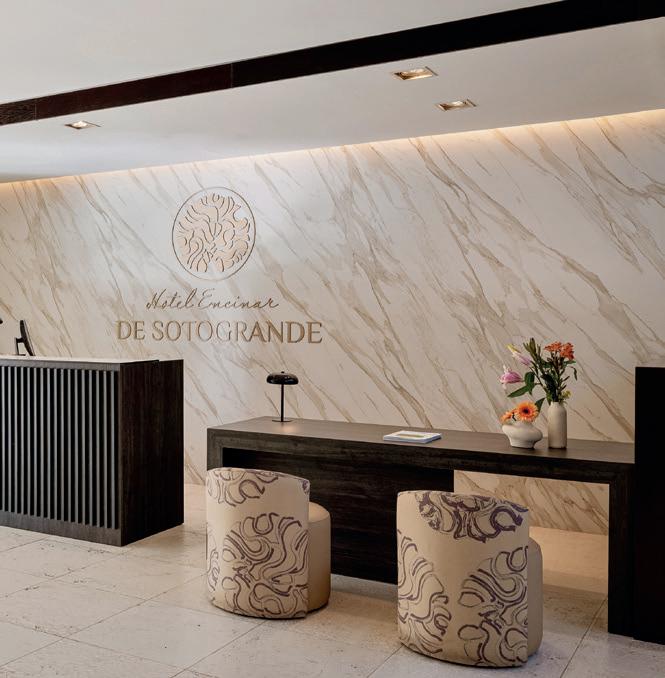
HOTEL ENCINAR DE SOTOGRANDE
Own Pace
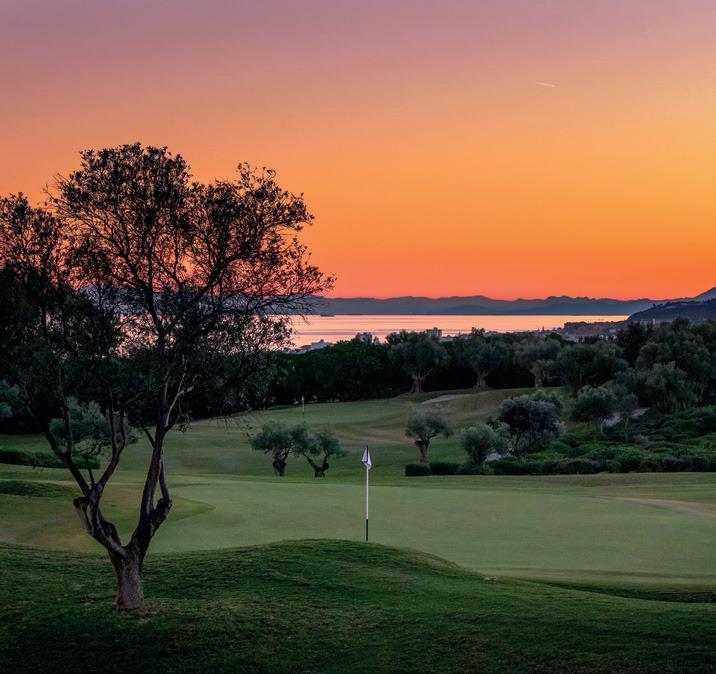
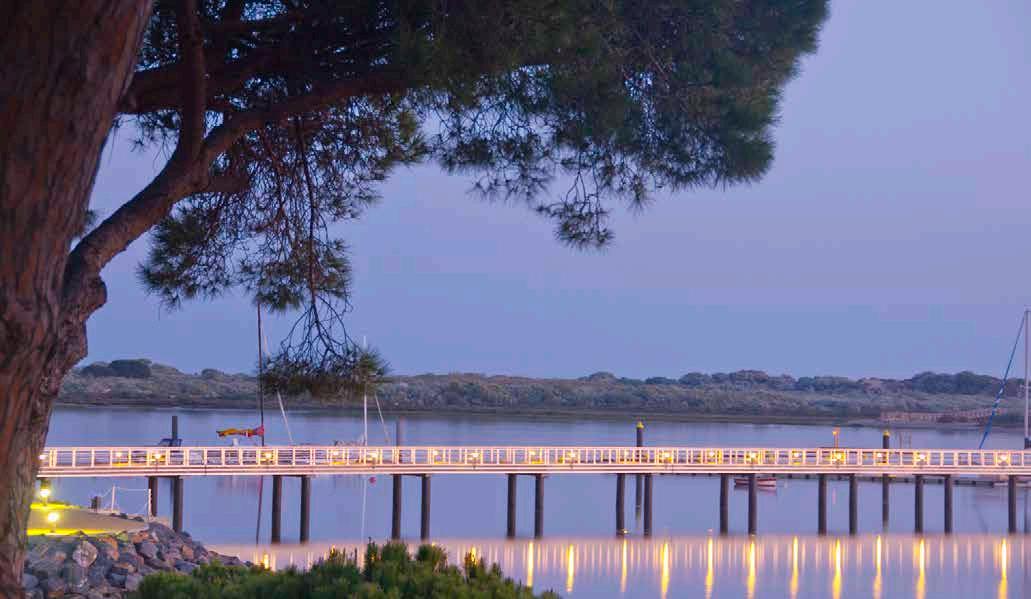
Entre algunos de los mejores campos de golf de Europa y rodeado de naturaleza, Hotel Encinar de Sotogrande propone una forma distinta de vivir el destino: sin prisas, con todo al alcance y con el equilibrio justo entre juego y descanso.
Some resorts sell a lifestyle. Encinar de Sotogrande just gets on with it — unhurried, well-positioned and quietly attentive. Surrounded by nature and within minutes of some of southern Europe’s finest courses, it offers a more grounded way to experience one of the continent’s most established golfing destinations.
EN EL CORAZÓN DEL GOLF EN SOTOGRANDE
En Sotogrande, la ubicación no es un detalle, es el punto de partida de toda la experiencia. Situado en pleno corazón de la zona, el hotel permite acceder en pocos minutos a algunos de los campos más reconocidos del sur de Europa, incluido el Real Club Valderrama. El resultado es simple: menos desplazamientos y más tiempo en el campo.
A partir de ahí, todo fluye. El hotel gestiona green fees, coordina traslados y organiza horarios adaptándose a cada tipo de cliente, desde jugadores individuales hasta grupos que combinan varios recorridos en una misma estancia. Sin complicaciones.
Esa facilidad no es casual. A lo largo de los años, el Encinar ha trabajado con perfiles muy distintos: profesionales en pretemporada, grupos corporativos o aficionados habituales del destino. La discreción es parte del servicio, pero también lo es una forma de hacer las cosas que se nota en los detalles.
AT THE HEART OF SOTOGRANDE GOLF
In Sotogrande, location isn’t a selling point — it’s the starting point. The hotel sits at the centre of a region that includes Real Club Valderrama, meaning less time in the car and more time on the course. For a golf trip, that matters.
The practical side is handled with the same ease. Green fees, transfers and tee times are coordinated with flexibility, whether for individual players or groups planning several rounds across different courses. It works because it’s been done many times before, for a wide mix of guests — from professionals to regular visitors who return each season. Discretion is part of it. So is an attention to detail that doesn’t need to be overstated.
DONDE EL RITMO CAMBIA
Después del campo, el ritmo baja. Rodeado de encinas y palmeras, el hotel mantiene una calma poco habitual en un destino con tanta actividad.
Sus 106 habitaciones, recientemente renovadas, se integran en un edificio diseñado por José Antonio Corrales, Premio Nacional de Arquitectura y reconocido como Patrimonio Histórico por la Junta de Andalucía. Historia y confort conviven con naturalidad, sin necesidad de elegir entre uno y otro.
Piscina exterior, gimnasio y espacios abiertos completan una propuesta pensada para desconectar sin salir del entorno del golf. Un lugar que, más de sesenta años después, sigue fiel a su esencia.
WHERE THE PACE SHIFTS
After the round, everything slows — deliberately. Set among holm oaks and palm trees, the hotel has a sense of calm that feels intentional rather than incidental, even in a destination as active as Sotogrande.
Its 106 renovated rooms are housed in a building designed by José Antonio Corrales, a National Architecture Award winner, and recognised as part of Andalusia’s architectural heritage. A place with history, and the comfort to match.
An outdoor pool, gym and generous open spaces complete a setting designed for genuine downtime. More than sixty years on, its character remains intact.
GOLF CIRCUS
LA MESA TAMBIÉN CUENTA
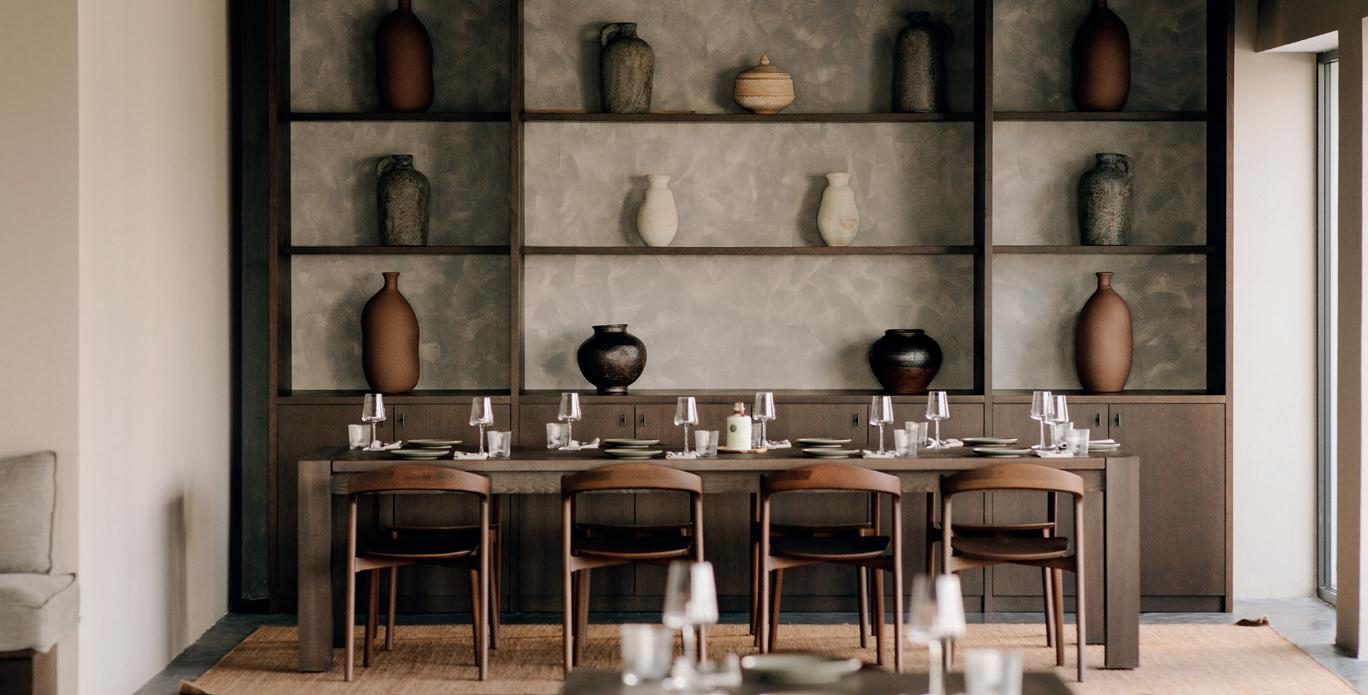
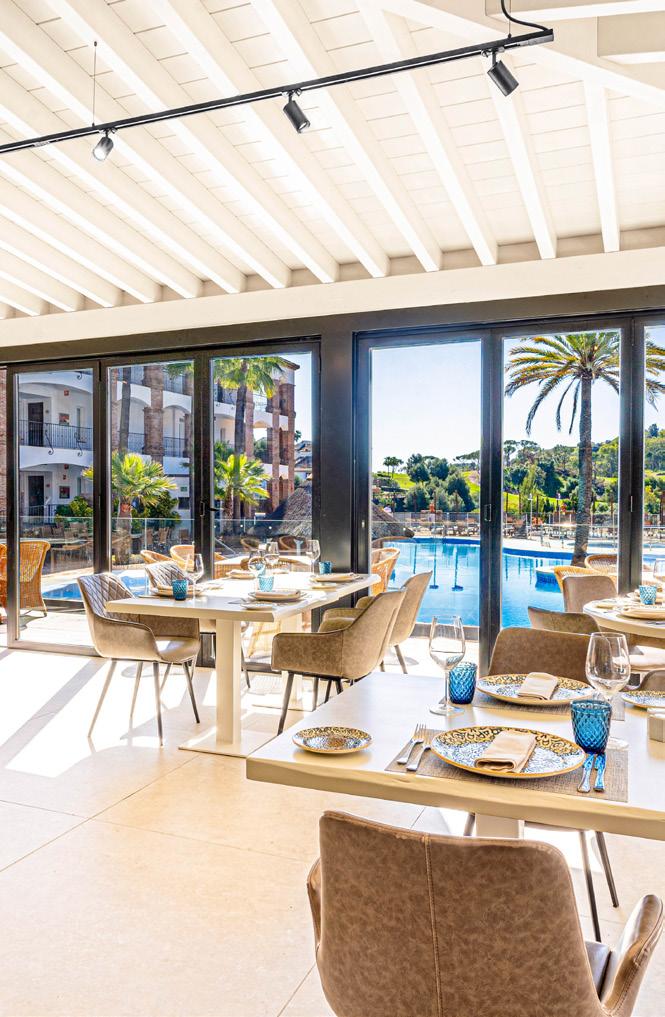
El Restaurante Acebuche es parte esencial de la experiencia. Abierto tanto a huéspedes como a visitantes, es uno de esos sitios que funcionan tanto después de una jornada de golf como por sí solos. Su propuesta se basa en una cocina andaluza de producto, en un entorno que invita a alargar la sobremesa, ya sea en interior o en su terraza rodeada de vegetación.
Aquí, un detalle marca la diferencia: el aceite. El AOVE Finca El Charcón, cultivado en sus propias fincas y obtenido mediante procesos mecánicos, está presente en cada plato, del desayuno a la cena, aportando identidad a toda la propuesta.
THE TABLE MATTERS TOO
At Restaurante Acebuche, the focus is on seasonal Andalusian produce, served in a relaxed dining room or on a terrace set within the gardens. It works just as well after a round as it does as a destination in its own right.
One detail runs through the entire menu: the olive oil. Finca El Charcón EVOO, grown and cold-pressed on the hotel’s own estate, appears from breakfast to dinner — a small but defining touch that gives the food a clear sense of place.
hotelencinardesotogrande.com •
ÁNGEL AYORA
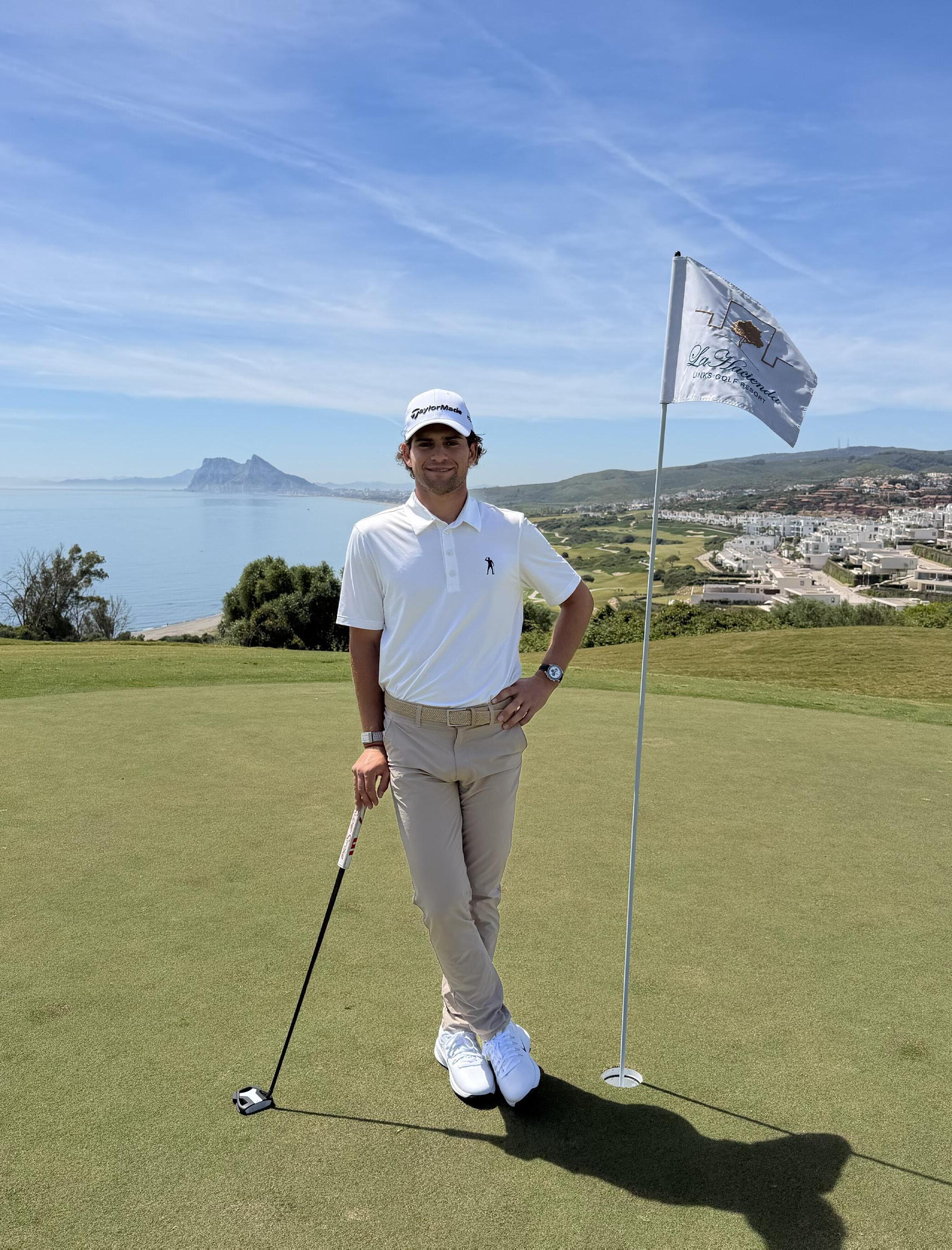
En La Hacienda Links Golf Resort: así se construye un jugador de élite
At La Hacienda Links Golf Resort: how an elite player is built
En el golf actual, hablar de futuro suele ser una forma cómoda de evitar el presente. Con Ángel Ayora ocurre justo lo contrario. A sus 21 años, su nombre ya se mueve con naturalidad dentro del DP World Tour, respaldado no solo por resultados —diez top 10 en su temporada rookie— sino por algo menos habitual: la sensación, compartida dentro del circuito, de que su techo todavía está lejos.
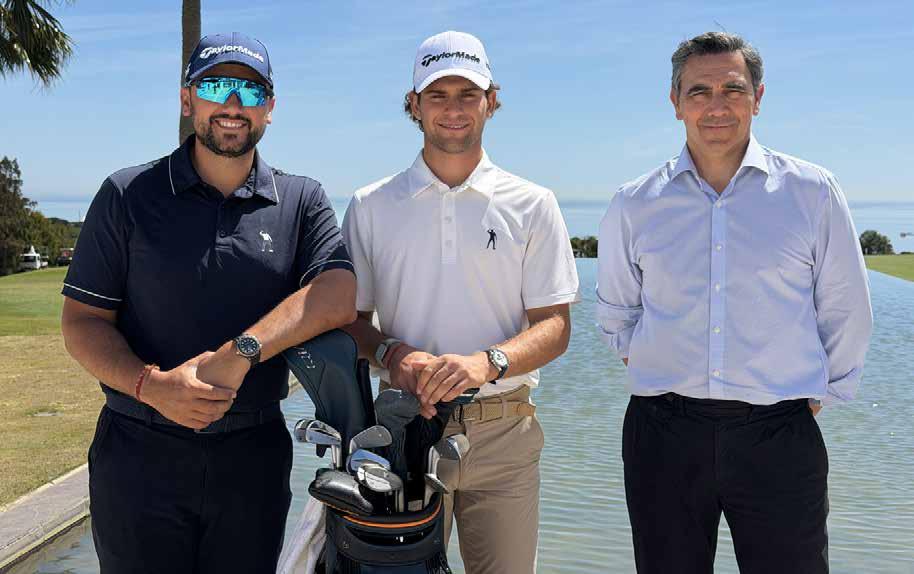
En este contexto, Golf Circus reúne a Ángel Ayora, a su entrenador Juan Ochoa y al equipo de La Hacienda Links Golf Resort —con su director general, Javier Jiménez-Casquet, y su director de golf, Fernando Padrón— para entender qué hay detrás de ese crecimiento y cómo se construye hoy un jugador de alto nivel.
In today’s game, talking about the future is often a convenient way of avoiding the present. With Ángel Ayora, the opposite is true. At just 21, he is already moving comfortably within the DP World Tour — backed not only by results (ten top-10 finishes in his rookie season), but by something less tangible: a growing sense on tour that his ceiling is still some way off.
In that context, Golf Circus brings together Ayora, his coach Juan Ochoa, and the team at La Hacienda Links Golf Resort — general manager Javier Jiménez-Casquet and director of golf Fernando Padrón — to look beyond the results and understand what is really driving that progression.
El talento no está en discusión. Tampoco su capacidad para competir en escenarios exigentes. Pero en un deporte donde la diferencia entre estar arriba y ganar es mínima, el siguiente paso rara vez depende de un solo factor.
Detrás de esa progresión hay algo más que un buen swing. Hay una estructura de trabajo cada vez más presente en el golf de élite: preparación física, control del descanso, trabajo mental y un enfoque global que entiende al jugador como un atleta completo.
“Cada vez hay más nivel y mejorar en cualquier área que afecte a tu juego es imprescindible si quieres llegar al más alto nivel.”, explica Ayora.
En ese proceso, la figura de Juan Ochoa —entrenador, caddie y uno de los perfiles más completos del panorama nacional— ha sido clave para ordenar el crecimiento. Su lectura es directa: el talento abre la puerta, pero no garantiza nada.
“Hoy en día, si quieres ser un jugador top mundial, tienes que marcar la diferencia en cada pequeño detalle.”
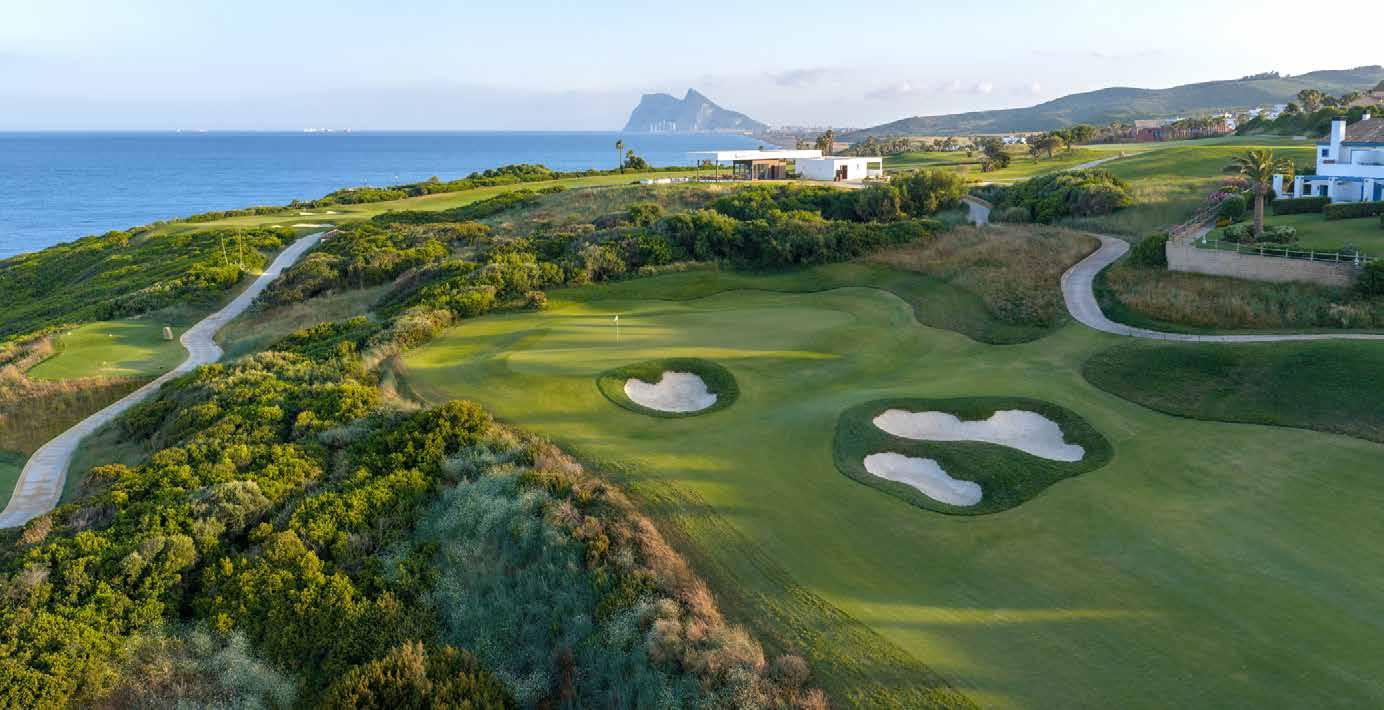
Parte de ese trabajo se desarrolla en La Hacienda Links Golf Resort, donde Ayora entrena de forma habitual. Un entorno que no solo ofrece condiciones de primer nivel, sino que obliga a enfrentarse a situaciones reales de juego: viento, variedad de golpes y greenes que penalizan cualquier falta de precisión.
No es un escenario casual. Es una pieza más dentro de un proceso que busca algo muy concreto: convertir el potencial en resultados.
His talent is not in question. Nor is his ability to compete in demanding conditions. But in a sport where the gap between contending and winning is minimal, the next step rarely comes down to one thing.
Behind that progression lies more than a good swing. There is now a clear structure to his work: physical preparation, recovery, mental performance — a broader approach that treats the player as a complete athlete.
“The standard keeps rising, and improving in every area is non-negotiable if you want to reach the top,” says Ayora.
Within that framework, Juan Ochoa — coach, caddie and one of the most respected figures in Spanish golf — has played a defining role. His view is simple: talent might open the door, but it does not take you through it.
“If you want to be a top player in the world today, you have to make a difference in every small detail.”
Much of that work takes place at La Hacienda Links Golf Resort, where Ayora trains regularly. It is an environment that does more than provide world-class conditions — it exposes him to the kind of situations he will face on tour: wind, shotmaking variety, and greens that punish any lack of precision.
It is no coincidence. It is part of a process with a clear aim: turning potential into performance.
ÁNGEL AYORA:
EL JUEGO DESDE DENTRO
Ángel Ayora no parece especialmente interesado en el ruido que le rodea. Cuando se le plantea si se reconoce como uno de los grandes talentos del golf español actual, su respuesta es tan directa como significativa: “No es algo a lo que preste demasiada atención.”
Esa distancia con el discurso externo contrasta con la percepción dentro del circuito. Su nombre aparece cada vez con más frecuencia, no solo por los resultados, sino por la forma en la que está construyendo su juego. Y ahí es donde empiezan los matices.
Uno de los aspectos más comentados es su swing. Fluido, eficiente y aparentemente sin esfuerzo, se ha convertido en uno de los rasgos más reconocibles de su juego. Pero lejos de asumirlo como una ventaja definitiva, Ayora introduce un punto de realismo que explica bien cómo funciona el golf a este nivel.
“Por tener buen swing se da por hecho que tienes que pegarle muy bien a la bola, pero hay muchas otras cosas más importantes.”
Porque, en efecto, el rendimiento no se sostiene únicamente desde la técnica. El propio jugador lo reconoce con naturalidad: su margen de mejora sigue estando en áreas mucho menos
visibles, pero decisivas cuando se trata de competir.
“El año pasado el juego corto y el putt han sido las áreas más flojas, pero hemos mejorado bastante en estos últimos meses.”
Esa capacidad de identificar con claridad dónde está el siguiente paso forma parte del proceso. También de una forma de entender esta primera etapa como profesional en la que acumular experiencia es casi tan importante como competir.
No se trata solo de jugar más, sino de exponerse a todo tipo de situaciones, de entender qué funciona y qué no en distintos escenarios.
“Creo que al principio de tu carrera es importante jugar en todo tipo de campos, conocer lugares y saber qué campos te van mejor.”
Esa lógica explica un calendario exigente, pero también una planificación que tiene un objetivo muy concreto.
“Mi objetivo es conseguir una de esas tarjetas del PGA Tour. Para eso hacen falta puntos, y cuantos más torneos juegue, más opciones tengo.”
En paralelo, el trabajo fuera del campo ha ido ganando peso. Preparación física, análisis, control de aspectos que hasta hace poco quedaban en un segundo plano… todo forma parte ya de una estructura más completa.
“El golf es un deporte muy complicado y cada vez hay más nivel. Intentar mejorar en cualquier área es imprescindible si quieres llegar arriba.”
No es una evolución puntual, sino una forma de adaptarse a lo que exige hoy el golf profesional y de construir con sentido un camino que ya ha dejado de ser una promesa para convertirse en realidad.
ÁNGEL AYORA: THE GAME FROM WITHIN
Ayora shows little interest in the noise around him. Asked whether he sees himself as one of the standout talents in Spanish golf, his answer is immediate: “It’s not something I pay much attention to.”
That detachment contrasts with how he is viewed inside the game. His name comes up more and more often — not just for the results, but for the way he is building his game.
His swing is the obvious starting point. Fluid, efficient, almost effortless, it has become one of his defining traits. But Ayora is quick to put it into context.
“If you’ve got a good swing, people expect the ball-striking to follow — but there are plenty of other things that matter more.”
Because at this level, technique alone is not enough. The areas that matter most are often less visible.
“Last year, my short game and putting were the weakest parts, but we’ve improved a lot over the last few months.”
That clarity — knowing exactly where the next gains lie — is part of the process. So is the way he approaches this early stage of his career.
It is not just about playing more, but about exposing himself to different conditions and learning what works.
“At the start of your career, it’s important to play all kinds of courses, see different places and understand which ones suit you best.”
That thinking explains a busy schedule, but also a clear objective.
“My goal is to earn a PGA Tour card. For that, you need points — and the more you play, the more chances you have.”
Away from the course, the structure continues. Physical work, analysis, attention to detail — elements that were once secondary are now part of the foundation.
“Golf is a very demanding sport and the level keeps rising. You have to improve in every area if you want to get to the top.”
This is not a short-term shift. It is an adaptation to what the modern game demands — and a sign that Ayora has already moved beyond potential into something more concrete.
Heathland Course
JUAN OCHOA: DAR FORMA AL TALENTO
Si hay alguien que puede traducir el potencial de Ángel Ayora en términos reales, ese es Juan Ochoa. Su lectura no se mueve en el terreno de la intuición ni del entusiasmo, sino en el análisis de lo que ya ha demostrado y de lo que todavía falta por construir.
Cuando se le pregunta por la expectación que rodea al jugador, no duda en validarla, aunque con matices.
“El hype es muy real porque ha demostrado en muchas ocasiones que tiene el juego para poder ganar cualquier torneo.”
Esta afirmación convive con una realidad evidente: ese potencial todavía no se ha traducido en todo lo que podría. Ahí es donde entra el trabajo diario. Y también la diferencia entre competir y ganar.
Desde el punto de vista técnico, Ochoa pone el foco en la eficiencia del swing de Ayora, uno de los aspectos que más llaman la atención dentro del circuito.
“Es un swing muy eficiente, tanto en el control de las condiciones de impacto como en la generación de velocidad. Es habitual verle entre los que más distancia sacan sin que parezca que hace esfuerzo.”
Esa base le permite mantenerse competitivo incluso en momentos en los que no está en su mejor nivel. Pero, como él mismo insiste, eso por sí solo no es suficiente.
“Un swing ayuda mucho, pero no garantiza nada.”
El siguiente paso está en otro sitio. Más concreto. Más exigente.
“Necesita mejorar algo más el putt y, sobre todo, ser más consciente en el campo de lo que toca hacer y confiar más en sí mismo.”
No se trata solo de ejecución, sino de toma de decisiones. De entender el juego en situaciones reales, cuando el margen de error es mínimo. Ese enfoque se extiende también a la manera en la que entiende el desarrollo del jugador. Lejos de una visión limitada a la técnica, Ochoa plantea un modelo más amplio, donde cada detalle suma.
“Para ser un jugador top mundial hoy en
día es necesario marcar la diferencia en cualquier pequeño detalle que se pueda controlar.”
Y ahí es donde aparece la diferencia respecto a generaciones anteriores.
“El jugador hay que entenderlo como un atleta que compite en la élite, no solo como alguien que juega bien al golf.”
Ese cambio de perspectiva es, en gran parte, lo que explica la evolución de perfiles como el de Ayora.
JUAN OCHOA: SHAPING THE TALENT
If anyone can translate Ayora’s potential into something tangible, it is Juan Ochoa. His perspective is grounded, analytical, and focused on what still needs to be built.
When asked about the expectation surrounding the player, he does not hesitate.
“The hype is very real. He’s shown more than enough to suggest he can win any tournament he enters.”
But that belief comes with context. The step from competing to winning remains.
That is where the work lies.
Technically, Ochoa highlights the efficiency
of Ayora’s swing — one of the most striking aspects of his game.
“It’s a very efficient motion, both in impact control and speed generation. He’s among the longest hitters, and it looks effortless.”
That base keeps him competitive even when he is not at his best. But, as Ochoa points out, it is only part of the picture.
“A good swing helps, but it guarantees nothing.”
The next gains are more specific.
“He needs to sharpen his putting and, above all, be clearer on the course and trust himself more.”
Because at this level, execution and decision-making are inseparable.
Ochoa’s view goes further. Player development, in his eyes, is no longer just technical.
“To be a top player today, you have to make a difference in every detail you can control.”
And that requires a shift in mindset.
“You have to see the player as an elite athlete — not just someone who plays good golf.”
EL CAMPO: ASÍ LO VE ÁNGEL
Parte del desarrollo de Ángel Ayora no se explica solo desde el trabajo técnico o la competición, sino también desde el entorno en el que entrena. En ese sentido, La Hacienda Links Golf Resort no actúa simplemente como base, sino como un elemento activo dentro de su evolución.
Lejos de ser un campo complaciente, Links plantea situaciones que obligan al jugador a adaptarse constantemente. Y eso, a este nivel, es lo que marca la diferencia.
Ayora lo describe desde la experiencia directa, sin rodeos: “Es un campo en el que vas a tener que hacer todo tipo de golpes y usar todos los palos de la bolsa.”
Esa variedad no es solo una característica del recorrido, sino una herramienta de trabajo. Cada golpe exige una lectura distinta, cada situación obliga a tomar decisiones, y esa acumulación de escenarios es la que permite trasladar el entrenamiento a la competición.
Una de las claves está en los greenes, donde el margen de error se reduce al mínimo.
“Tienen muchísimos planos y te exigen ser muy preciso si realmente quieres dejarla cerca.”
“El hoyo más icónico del campo Links es el 5 y las vistas son increíbles, pero diría que mi hoyo favorito es el 16, un par 5, muy exigente desde el tee y que te obliga a ser muy preciso en el siguiente golpe, sobre todo si tiras a green porque es muy estrecho”.
“En cuanto al campo Heathland, suelo ir cuando el viento viene de Poniente. Es muy competitivo y aquí mi hoyo favorito es el 10, otro par 5 que hay que saber jugar porque te puedes liar un poco”.
Desde el punto de vista técnico, Juan Ochoa añade dos factores que terminan de definir el carácter del campo: el comportamiento del putter y la influencia del viento.
“Los greenes son muy ondulados y más rápidos de lo que aparentan, y el viento aquí es algo con lo que tienes que saber jugar.”
Esa combinación convierte cada sesión en una preparación real para la competición.
Porque en este tipo de recorridos no
basta con ejecutar bien. Hay que saber adaptarse. Y ahí es donde el campo deja de ser un escenario para convertirse en una herramienta.
THE COURSE: ÁNGEL’S PERSPECTIVE
Ayora’s development is shaped as much by his environment as by his work. In that sense, La Hacienda Links Golf Resort is not just a base — it is part of the process.
Links it is not a forgiving course. It demands adaptation. And at this level, that matters.
“It’s a course where you have to hit every type of shot and use every club in your bag.”
That variety becomes a tool. Each situation forces a decision, each shot a different read — and that is what translates into performance.
The greens are a defining feature.
“They have a lot of movement, and you have to be very precise if you want to leave it close.”
“The most iconic hole on the Links course is the 5th— the views are incredible — but I’d say my favourite is the 16th, a par 5. It’s very demanding from the tee and forces you to be precise with your next shot, especially if you go for the green, as it’s quite narrow.”
“As for the Heathland course, I tend to play it when the wind is coming from the west. It’s very competitive, and my favourite hole there is the 10th — another par 5 that you need to think your way around, as it can catch you out if you’re not careful.”
Ochoa adds two key factors: the greens themselves and the wind.
“They’re more undulating and quicker than they look, and the wind is always a factor here.”
Together, they turn practice into real preparation.
Because at this level, execution alone is not enough. Adaptation is everything.
LA HACIENDA LINKS GOLF
RESORT: PARTE DEL PROCESO
En el caso de Ángel Ayora, el entorno de trabajo no se limita al campo o a la planificación técnica. También hay una estructura detrás que, sin ser protagonista, forma parte del proceso.
En La Hacienda Links Golf Resort, esa implicación se entiende desde una perspectiva más amplia: acompañar al jugador sin interferir en su evolución.
Para Javier Jiménez-Casquet, director general de La Hacienda, la relación con Ayora responde tanto a una apuesta deportiva como a una identificación natural con el perfil del jugador.
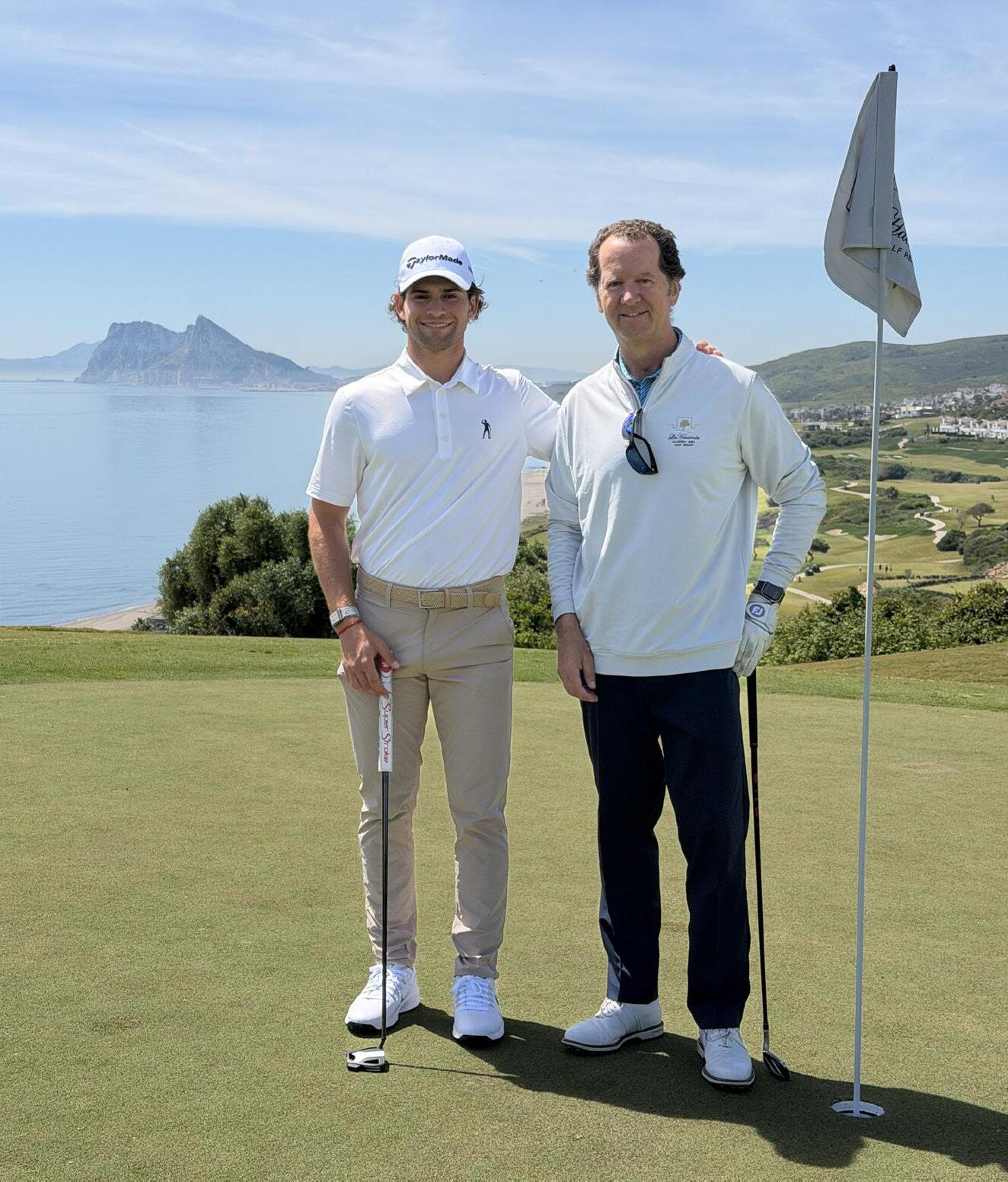
“Para nosotros es un auténtico orgullo que alguien con el presente y la proyección de Ángel haya elegido nuestro club como base de entrenamiento.”
Más allá de la visibilidad que pueda generar, el vínculo nace en una fase mucho más temprana.
“Desde el principio vimos en él valores como compromiso, humildad y profesionalidad, y quisimos que formara parte del club.”
Esa continuidad permite que el club no solo sea un lugar de paso, sino un entorno reconocible dentro de su rutina.
Desde una perspectiva más técnica, Fernando Padrón, director de golf, pone el foco en cómo las instalaciones se adaptan al trabajo diario de un jugador de este nivel.
“Las zonas de juego corto permiten trabajar todos los golpes: approach, bunker, putting… en condiciones muy cercanas a la competición.”
El diseño de las superficies y la variedad de recorridos responden a la necesidad de ofrecer situaciones reales de juego.
“Contamos con diferentes tipos de green y superficies que ayudan al jugador a adaptarse a distintos escenarios.”
Para el equipo de La Hacienda, no se trata solo de tener a un profesional entrenando en sus instalaciones, sino de formar parte, en cierta medida, de su evolución.
Y ahí es donde el entorno deja de ser únicamente un escenario para convertirse en parte del proceso.
AT LA HACIENDA LINKS GOLF RESORT, THAT APPROACH IS DELIBERATE
For general manager Javier JiménezCasquet, the relationship reflects both sporting intent and shared values.
“It’s a real source of pride that a player like Ángel has chosen us as his training base.”
The connection began early — and has grown with his career.
“From the start, we saw his commitment, his attitude, his professionalism. It felt natural for him to be part of the club.”
That continuity matters. It turns the club into more than a base — it becomes part of his routine.
From a technical standpoint, Director of Golf Fernando Padrón focuses on how the course supports that work.
“The short-game areas allow you to practise every type of shot in conditions that are very close to competition.”
The design of the surfaces and the variety of playing conditions are intentional.
“We’ve created different types of greens and surfaces to help players adapt to different scenarios.”
For the team at La Hacienda, it is not just about hosting a professional player.
It is about being part of his development.
And that is where the environment stops being a setting — and becomes part of the process.
LUJO
sin
prisas frente al Mediterráneo
En la costa gaditana, donde el paisaje alterna entre mar y montaña, OKU Andalusia propone una forma distinta de entender el lujo. Más que un hotel, es un refugio donde el tiempo baja de revoluciones y todo está pensado para reconectar con lo esencial. Hablamos con Sergio Tamayo, su director general, para entender qué hace diferente a este destino desde el primer momento.
OKU Andalusia no es solo un hotel, es un concepto. Para alguien que aún no lo conoce, ¿qué tipo de experiencia le espera y qué hace que sea diferente desde el primer momento? Es un concepto diferente al lujo habitual al que podemos estar acostumbrados. Nuestra premisa principal es el Laidback Luxury, una forma de entender la estancia desde la naturalidad, el equilibrio y la atención al detalle. Todo está diseñado para que te sientas cómodo, relajado y en armonía, en un ambiente cuidado pero muy natural y orgánico.
Aquí, nuestros huéspedes pueden desconectar de verdad y dejar atrás el ritmo del día a día, disfrutando de un entorno idílico con vistas increíbles al Mar Mediterráneo. Es como entrar en un espacio más íntimo y privado, donde la naturaleza y el bienestar se combinan de forma muy fluida, haciendo que todo invite a parar, respirar y dejarse cuidar. Es un lugar donde el bienestar se integra en cada momento, generando una sensación constante de calma, privacidad y cuidado sin esfuerzo.
El viaje hoy ya no es solo destino, es
SERGIO TAMAYO Director General
cómo se vive. ¿Cómo se combinan en OKU Andalusia la gastronomía, el diseño y el ritmo del hotel para construir esa experiencia completa? En OKU Andalusia concebimos el viaje como una experiencia completa, donde diseño, gastronomía y ritmo conviven de forma natural.
La gastronomía actúa como hilo conductor, con espacios que acompañan cada momento del día: The Terrace, de inspiración italiana y espíritu social; La Bodega, centrada en el producto local; y el Beach Club Alma, donde la cocina mediterránea y las brasas marcan un ritmo más dinámico junto al mar.
La experiencia se completa con To Kima, una propuesta fresca de raíces griegas y mediterráneas, y culmina en Teyo, nuestra apuesta más experiencial: una cocina fusión Nikkei que combina influencias japonesas y sudamericanas en un entorno sofisticado y envolvente.
El resort cuenta con un spa solo para adultos de más de 2.000 metros cuadrados, concebido como un espacio de bienestar integral. A ello se suman instalaciones deportivas, tanto interiores
como al aire libre, que incluyen tenis, pádel y áreas de entrenamiento.
La oferta se completa con distintas zonas de piscina, pensadas tanto para familias como para adultos, entre ellas una infinity pool en primera línea de mar. Todo el ritmo del hotel ha sido cuidadosamente diseñado para que el huésped se integre de forma natural en la experiencia: un entorno donde cada elemento invita a desconectar, bajar el ritmo y reconectar con uno mismo.
Cada vez más, el cliente de golf busca algo más que jugar un buen campo. ¿Por qué OKU Andalusia encaja especialmente bien en ese tipo de viaje?
Estamos ubicados en un entorno idílico, muy cerca de algunos de los mejores campos de golf de la Costa del Sol, como La Hacienda, San Roque o el reconocido Valderrama, referentes internacionales situados a escasos minutos del resort.
Esa combinación de poder disfrutar de uno de los deportes más emblemáticos de la zona y volver después a la calma y el confort del resort hace que la experiencia sea memorable. Es un plan perfecto para escaparse, cambiar el ritmo y disfrutar de unos días de desconexión total.
Si tuviera que definir en una imagen o sensación lo que se lleva un huésped, ya sea golfista o no, después de unos días en OKU Andalusia, ¿cuál sería?
La esencia de la experiencia se resume en una sensación de desconexión profunda y reconexión con lo esencial. Aquí todo invita a bajar el ritmo: el entorno natural, los materiales nobles, la calma que se respira y las experiencias que van surgiendo a lo largo del día, pensadas para disfrutar sin prisas.
Es un lugar donde la naturaleza tiene un papel protagonista y donde cada plan, ya sea activo o más relajado, suma a esa sensación de equilibrio. Todo lo que te rodea está enfocado a que te sientas bien, ligero y en armonía.
Uno de los aspectos más distintivos es la posibilidad de transitar entre mar y montaña en un mismo entorno. El huésped puede empezar el día frente al Mediterráneo y terminarlo rodeado de naturaleza, integrando ambos paisajes en una misma estancia.
Unhurried Luxury on the Mediterranean Coast
On the Cádiz coastline, where the landscape shifts between sea and mountain, OKU Andalusia offers an altogether different take on luxury. More than a hotel, it’s a retreat where the pace slows right down and everything is designed to bring you back to what matters. We sat down with general manager Sergio Tamayo to find out what sets this destination apart from the moment you arrive.
SERGIO TAMAYO General Manager
OKU Andalusia isn’t just a hotel — it’s a concept. For someone who hasn’t been, what kind of experience are they in for, and what makes it different straight away?
It’s a different take on luxury from what most people are used to. Our guiding philosophy is Laidback Luxury — an approach to hospitality rooted in naturalness, balance and attention to detail. Everything is designed to make you feel at ease, relaxed and in harmony, within a setting that’s considered yet genuinely organic.
Guests can truly switch off here and leave the daily grind behind, soaking up an idyllic setting with breathtaking views over the Mediterranean. It feels like stepping into somewhere more intimate and private, where nature and wellbeing intertwine effortlessly, and everything encourages you to pause, breathe and simply be looked after. Wellbeing isn’t an add-on — it’s woven into every moment, creating a constant sense of calm, privacy and effortless care.
Travel today is about more than the destination — it’s about how you experience it. How do gastronomy, design and the rhythm of the hotel come together at OKU Andalusia to create something complete?
At OKU Andalusia, we think of a stay as an experience in the fullest sense — one
Food is the thread that runs through it all, with spaces that speak to every part of the day: The Terrace, with its Italian soul and social spirit; La Bodega, celebrating local produce; and the Beach Club Alma, where Mediterranean cooking and open-fire grilling set a livelier tone right by the water.
The offering continues with To Kima — a fresh, Greek-Mediterranean concept — and culminates in Teyo, our most immersive dining experience: a Nikkei fusion kitchen blending Japanese and South American influences in a sophisticated, enveloping space.
The resort also features an adultsonly spa of over 2,000 square metres, conceived as a space for holistic wellbeing, alongside both indoor and outdoor sports facilities including tennis, padel and fitness areas.
Several pool areas complete the picture — catering to both families and adults, with an infinity pool right on the seafront. The entire rhythm of the hotel has been carefully calibrated so guests slip into the experience naturally: a setting where every element invites you to unwind, slow down and reconnect with yourself.
Golf travellers are increasingly looking for more than a great round. Why does OKU Andalusia lend itself so well to that kind of trip?
• where design, food and pace coexist naturally.
We’re set in a stunning location, just a short drive from some of the finest golf courses on the Costa del Sol — La Hacienda, San Roque and the worldrenowned Valderrama are all within easy reach of the resort.
Being able to play one of the area’s most iconic sports and then come back to the calm and comfort of the resort makes for a genuinely memorable experience. It’s the ideal escape — a chance to change pace and enjoy a few days of total disconnection.
If you had to sum up what a guest takes home after a stay at OKU Andalusia — golfer or not — in a single image or feeling, what would it be?
The essence of the experience comes down to a feeling of deep disconnection and a return to what’s essential. Everything here encourages you to slow down: the natural surroundings, the quality of the materials, the quiet that hangs in the air, and the experiences that unfold throughout the day — all designed to be savoured without rushing.
It’s a place where nature plays a starring role and where every activity, whether active or restful, feeds into that sense of
balance. Everything around you is geared towards making you feel good — lighter, more at ease, in harmony.
One of the most distinctive aspects is the ability to move between sea and mountain within a single stay. A guest can start their morning facing the Mediterranean and end the evening embraced by nature, weaving both landscapes into one seamless experience.
okuhotels.com
EL NUEVO ENFOQUE DEL GOLF EN SOTOGRANDE
Sotogrande ha construido su reputación sobre algunos de los mejores campos de Europa. Hoy, esa base se mantiene, pero la experiencia evoluciona. Nuevos espacios y conceptos introducen una forma más flexible de vivir el golf, en la que jugar, entrenar y desconectar dejan de ser experiencias separadas.
Sotogrande ha construido su reputación sobre algunos de los mejores campos de Europa. Hoy, esa base se mantiene, pero la experiencia evoluciona. Nuevos espacios y conceptos introducen una forma más flexible de vivir el golf, en la que jugar, entrenar y desconectar dejan de ser experiencias separadas.
El cambio en Sotogrande no es teórico. Se ve en proyectos como The Alto Club, desarrollado sobre el antiguo Almenara Golf. El campo ha sido replanteado bajo una lógica más contemporánea: un trazado que fluye entre alcornoques y encinas, con vistas abiertas que refuerzan la conexión con el entorno. El resultado es un recorrido que se siente integrado en el paisaje, sin perder jugabilidad para perfiles de jugador muy distintos.
Pero el cambio no está solo en el campo. También en la manera de utilizarlo. En The Alto Club, la experiencia se aleja de la rigidez de los clubes más tradicionales de la zona. Aquí, una vuelta de golf no necesariamente empieza y termina en el tee del uno. Es habitual combinar el juego con sesiones de práctica o entrenamiento, generando una relación
más abierta y menos estructurada con el tiempo que se pasa en el club.
Esa misma idea se traslada a la Alto Club Academy. Con un driving range equipado con Toptracer, zonas específicas de juego corto y herramientas de análisis de rendimiento, ofrece un entorno pensado para trabajar el juego de forma estructurada. Al mismo tiempo, mantiene un carácter accesible, tanto para quienes se inician como para jugadores más avanzados que buscan instalaciones de alto nivel para entrenar con continuidad.
El proyecto cuenta además con el impulso de figuras como Suzann Pettersen, ex capitana de la Solheim Cup, en su papel de embajadora global, y de la jugadora del LPGA Tour Mimi Rhodes, vinculada al club desde sus inicios en Sotogrande. Su implicación refuerza una propuesta que se sitúa en una posición singular dentro del panorama nacional.
Integrado en el SO/ Sotogrande Spa & Golf Resort, The Alto Club forma parte de una oferta más amplia que conecta con campos consolidados como Valderrama, Real Club Sotogrande o La Reserva Club. Esta combinación permite al visitante acceder a un ecosistema completo, donde conviven algunos de los recorridos más exigentes de Europa con nuevas formas de entender el golf.
Dentro de ese planteamiento, el entrenamiento adquiere un papel más relevante. Los programas específicos de fitness para golf, desarrollados desde el spa del resort, introducen una dimensión adicional al juego. Movilidad, fuerza y acondicionamiento físico se trabajan de forma coordinada, con propuestas adaptadas a distintos niveles y objetivos. Más que un complemento, se convierten en una herramienta para sostener el rendimiento a lo largo de varios días de juego.
Fuera del campo, la experiencia mantiene ese mismo equilibrio. El spa y centro de bienestar, con más de 3.500 metros cuadrados, y una oferta gastronómica vinculada al entorno refuerzan una estancia que no gira exclusivamente en torno al golf, pero que tampoco lo diluye.
En paralelo, La Reserva Club aporta una perspectiva complementaria. Recurrentemente, entre los mejores campos de España, su recorrido combina calles amplias, cambios de elevación y una lectura del juego que admite distintos planteamientos. Es un campo
que no se agota en una sola vuelta, y que sigue atrayendo tanto a socios como a visitantes en busca de una experiencia sólida.
Al mismo tiempo, La Reserva ha ampliado su propuesta más allá del golf. Espacios como The Beach, un club de playa interior dentro de la finca, o el Racket Centre, introducen alternativas que responden a una forma más abierta de disfrutar el destino, especialmente para quienes viajan en grupo o en familia.
En este contexto, Sotogrande deja de funcionar únicamente como un destino de golf para consolidarse como un lugar donde el tiempo se organiza de otra manera. El golf sigue siendo el eje, pero ya no es el único punto de atención. Para algunos, será el motivo principal del viaje; para otros, una parte más dentro de una experiencia más amplia. En ambos casos, la evolución es evidente: Sotogrande no cambia su esencia, pero sí la forma en la que se vive.
Integrado en el SO/ Sotogrande Spa & Golf Resort, The Alto Club forma parte de una oferta más amplia que conecta con campos consolidados como Valderrama, Real Club Sotogrande o La Reserva Club.
THE NEW SHAPE OF GOLF IN SOTOGRANDE
The change in Sotogrande is not theoretical. Built on the former Almenara Golf course, the layout has been reworked to reflect a modern approach – with the routing flowing through cork and oak-lined fairways and open viewpoints, creating a course that feels closely connected to the surrounding landscape, while still being playable for a wide range of golfers.
GOLF
The change in Sotogrande is not theoretical. It can be seen in projects like The Alto Club, developed on the site of the former Almenara Golf. The layout has been reworked to reflect a modern approach – with the routing flowing through cork and oak-lined fairways and open viewpoints, creating a course that feels closely connected to the surrounding landscape, while still being playable for a wide range of golfers.
What stands out at The Alto Club is not just the course itself, but the overall atmosphere. The vibe is less formal than some of the more traditional clubs in
the area, encouraging a more flexible way of spending time on site. Rounds are often combined with practice sessions or coaching, rather than being treated as a standalone experience.
This is also reflected in the Alto Club Academy, which sits alongside the course. With a Toptracer-equipped driving range, short game areas, and performance analysis tools, it offers a structured setting for those looking to work on their game. At the same time, it’s clearly designed to be accessible - whether for beginners, families, or more experienced players looking for a
premium practice facility.
The new concept is shaped by former Solheim Cup Captain Suzann Pettersen in her role as Global Ambassador, with LPGA Tour player and Touring Ambassador Mimi Rhodes, who grew up in Sotogrande, also closely connected to the Club and using the facilities as part of her professional preparation. The result is an innovative and ambitious offering that is the first of its kind in Spain.
As part of the SO/ Sotogrande Spa & Golf Resort experience, The Alto Club plays a
As
part of the SO/ Sotogrande Spa & Golf Resort experience, The Alto Club plays a central role in the overall golf offering, giving guests direct access to a well-established destination that includes nearby courses such as Valderrama. Real Club Sotogrande and La Reserva Club...
central role in the overall golf offering, giving guests direct access to a wellestablished destination that includes nearby courses such as Valderrama. Real Club Sotogrande and La Reserva Club, alongside on-site facilities and the Alto Club Golf Academy.
Guests can combine play with structured practice and coaching, supported by specialised golf fitness programmes developed through the spa. These focus on mobility, strength and conditioning, with options such as Start and Swing, Body and Swing Balance, and personalised sessions tailored to individual goals. This approach supports recovery and helps maintain performance across multiple rounds.
Beyond golf, the experience reflects the Andalusian way of living, with an award winning spa and wellness facility spanning 3,500 sqm, alongside a gastronomic offering rooted in local culture, creating a strong sense of place throughout the stay.
A complementary perspective can be found at La Reserva Club, consistently ranked among Spain’s leading courses and currently positioned within the Top 15 in the Top100GolfCourses Spain ranking. The layout is defined by generous fairways, elevation changes and wide views across the surrounding landscape. It’s a course that can be played in different ways, depending on approach, and continues to attract both members and visiting golfers looking for a first-class round.
At the same time, La Reserva has expanded its offer beyond golf. The Beach – an inland beach club within the estate – and the Racket Centre provide alternatives for those looking to unwind or spend quality time with friends and family away from the course.
Set against this evolving backdrop, Sotogrande feels less like a single destination and more like a way of spending time well. Golf remains at its heart, but it sits alongside plenty of offcourse offerings for everybody to enjoy. For some, it will be the draw of the golf that brings them in, while for others, it is the balance they find once they arrive. Either way, Sotogrande continues to move forward, refining what it means to visit, play, and stay a little.
sotogrande.com
donde todo encaja
Entre Valencia y Alicante, la costa se abre en un tramo más tranquilo, con menos presión y más espacio. En ese paisaje abierto se sitúa Oliva Nova Beach & Golf Resort, un destino que no se explica por lo que ofrece, sino por cómo encajan sus piezas.
GOLF
En Oliva Nova Beach & Golf Resort, el golf es el punto de partida, pero no lo único. El campo de 18 hoyos, diseñado por Seve Ballesteros, propone un recorrido equilibrado en el que se puede jugar con confianza desde el tee, aunque cada hoyo exige colocación para afrontar bien el golpe a green. No premia tanto la potencia como la colocación, y ahí está su interés. La cercanía del mar se percibe en el ambiente y también en el ritmo de juego, más pausado y natural.
Fuera del recorrido, esa misma lógica se mantiene. El resort dispone de un amplio driving range equipado con Toptracer, zonas específicas de juego corto, putting green y espacios que permiten trabajar cada aspecto técnico con continuidad. Y cuando apetece algo más ágil, el pitch & putt introduce una alternativa rápida y desenfadada dentro del propio complejo.
El hotel completa la experiencia con naturalidad. Situado a pocos metros del campo, permite organizar la jornada con facilidad, alternando golf, descanso y otros planes sin necesidad de desplazamientos. Habitaciones luminosas, zonas comunes abiertas y servicios como spa o piscina encajan en ese mismo ritmo, tanto para una escapada como para una estancia más larga.
Más allá del golf, el resort incorpora otras formas de entender el deporte sin perder su sentido. Durante varios meses al año, el Mediterranean Equestrian Tour introduce una dimensión internacional muy marcada, reuniendo a jinetes y equipos en un entorno preparado para la competición. Al mismo tiempo, equipos de fútbol y rugby utilizan el complejo como base de trabajo, aprovechando el clima y las instalaciones para concentraciones y pretemporadas. El pádel mantiene actividad constante, mientras que el ciclismo encuentra en el entorno inmediato un punto de partida natural, con rutas que combinan tramos junto al mar y recorridos hacia el interior sin grandes desplazamientos.
En paralelo, el Mediterráneo sigue presente como contrapunto. La playa, amplia y poco saturada, aparece como una extensión lógica del día, ya sea después de jugar, de entrenar o simplemente sin un plan definido.
La gastronomía se articula dentro del propio resort con propuestas bien definidas. Restaurantes como El Olivo, Columbus y La Pérgola trabajan sobre una base mediterránea clara, donde los
El hotel completa la experiencia con naturalidad. Situado a pocos metros del campo, permite organizar la jornada con facilidad, alternando golf, descanso y otros planes sin necesidad de desplazamientos.
Oliva Nova no destaca por hacer más, sino por cómo organiza todo lo que ofrece.
arroces, los pescados y el producto local marcan la pauta en entornos abiertos y vinculados al ritmo del hotel. El Lobby Bar funciona como punto versátil a lo largo del día, desde una comida ligera hasta una copa al final de la jornada, mientras que el Beach Club, en temporada, traslada ese mismo planteamiento junto al mar, con una propuesta más desenfadada que invita a alargar la tarde sin salir del entorno.
Oliva Nova no destaca por hacer más, sino por cómo organiza todo lo que ofrece. Golf, deporte, mar y descanso conviven sin competir, permitiendo que cada estancia encuentre su propio ritmo. Y en un contexto en el que muchos destinos tienden a saturar, aquí la diferencia está en que todo resulta más fácil.
GOLF CIRCUS
The hotel completes the picture with ease. Located just a short walk from the first tee, it allows the day to flow naturally between golf, rest and other activities.
Oliva Nova where everything alls into place
B
etween Valencia and Alicante, the coastline opens into something quieter — less pressure, more room to breathe. Set among dunes and open landscape, Oliva Nova Beach & Golf Resort is a destination that doesn’t explain itself through a list of facilities, but through the way everything connects.
Golf is the starting point, though it doesn’t define the whole experience. The 18-hole course, designed by Seve Ballesteros, strikes a considered balance: approachable from the tee, yet each hole rewards careful positioning over raw distance. It’s a course that asks questions rather than relying on power — and that’s precisely what makes it interesting. The proximity of the sea also shapes the pace of play, which here feels more unhurried and natural.
Away from the course, that same approach continues. The resort’s practice facilities are designed for those who want to spend time on their game: a generous driving range with Toptracer, dedicated short-game areas and a putting green allow for focused sessions. When something more relaxed appeals, the pitch & putt offers a quicker, more informal option within the resort.
Oliva Nova doesn’t stand out for doing more, but for how well everything comes together.
The hotel completes the picture with ease. Located just a short walk from the first tee, it allows the day to flow naturally between golf, rest and other activities. Bright rooms, open communal spaces and amenities such as a spa and pool support stays of both a few days and longer breaks.
Beyond golf, the resort broadens its offer without losing focus. For several months each year, the Mediterranean Equestrian Tour brings a strong international dimension, drawing riders and teams from across Europe. Football and rugby squads also use the complex as a training base, while padel runs yearround and cycling routes begin directly from the resort, linking coast and inland terrain without long transfers.
The sea, meanwhile, is never far away. The beach — wide, open and rarely overcrowded — becomes a natural
extension of the day, whether after a round, a training session or simply without a plan.
Dining follows the same logic. El Olivo, Columbus and La Pérgola work from a clear Mediterranean base — rice dishes, fresh fish and local produce — in relaxed, open settings. The Lobby Bar covers the day’s in-between moments, while the Beach Club, in season, brings that same atmosphere closer to the water.
Oliva Nova doesn’t stand out for doing more, but for how well everything comes together. Golf, sport, sea and rest coexist without competing, allowing each stay to find its own rhythm. In a landscape where many resorts try too hard, the difference here is simply that everything feels easy.
GOLF CIRCUS
Garia Mónaco
Recorrer la urbanización al atardecer, bajar a la playa, compras pequeñas de última hora, acercar a los niños al colegio, desplazarse por una finca o llegar al campo de golf con la sensación de que todo fluye. Sin ruido, sin esfuerzo, sin depender de un coche sobredimensionado para trayectos que, en realidad, son mucho más simples.
En ese cambio, la movilidad empieza a adaptarse al entorno. Y es ahí donde los buggies eléctricos, íntimamente relacionados al golf, han dejado de ser una solución puntual de la práctica deportiva para convertirse en una elección consciente, más cómoda, más elegante y alineada con una forma de vida que prioriza la tranquilidad y la eficiencia.
Riversa, con más de 50 años de experiencia en el sector, no solo importa y distribuye buggies para la industria del golf, sino que ha identificado esta nueva necesidad y ha desarrollado un nuevo porfolio de productos adaptado a los nuevos usos. Además, acompaña a los usuarios con un servicio postventa que permite integrarlos con total confianza.
RIVERSA
redefine el uso del buggy de golf
GARIA • MÓNACO
El Garia Mónaco rompe con la imagen tradicional del buggy. Fabricado en Polonia, su diseño exclusivo y nivel de acabados lo sitúan más cerca de un vehículo premium que de un simple medio de transporte. A primera vista, su estética recuerda más a la de un pequeño automóvil de alta gama que a la de un buggy convencional. Una sensación que se confirma en cuanto empieza a moverse.
Equipado con luces delanteras, toma de corriente, frenos hidráulicos y freno de estacionamiento automático, el Mónaco permite salir de un recinto privado, enlazar trayectos y moverse con libertad en cualquier entorno, sin renunciar al confort, ya que se puede matricular. Cuenta con batería de litio de 120 Ah o 180 Ah, con una potencia de 10 kW y una velocidad máxima de 50 km/h y autonomía de hasta 64 km.
Además, puede personalizarse para adaptarse al gusto del usuario, que puede elegir el color de los asientos, el chasis o las llantas, entre otros.
Garia Monaco ofrece una conducción suave y estable. Su interior está perfectamente pensado para ofrecer almacenamiento bien integrados y una ergonomía que invita a utilizarlo.
ICOCAR • CITY 3.0
La marca IcoCar ha llegado al mercado español para ampliar la diversidad de modelos de buggies y redefinir la experiencia de conducción de los vehículos eléctricos. La propuesta de esta marca china es la de ofrecer buggies “diferentes”, que aspiran a diferenciarse por su diseño y versatilidad sin perder el foco en lo esencial: que los usuarios puedan moverse en cualquier entorno con eficiencia, comodidad y adaptándose a cualquier uso.
Icocar City
El City 3.0 de IcoCar es el modelo más valorado por los usuarios de la marca, ya que es un buggy diseñado para moverse tanto por entornos urbanos como en campos de golf. Ofrece una conducción ágil, intuitiva y silenciosa. Impulsado por un motor de CA de 4,0 kW (5,4 CV) sin mantenimiento y una batería de litio-ferrofosfato de 105 Ah, alcanza velocidades de hasta 40 km/h con una autonomía de hasta 72 km.
Construido sobre un chasis de acero con protección anticorrosión, cuenta con frenos hidráulicos en las cuatro ruedas
(discos en la parte delantera y tambores en la trasera), llantas de aleación de 12” y una amplia capota. Los asientos de cuero sintético de alta calidad, el salpicadero de carbono, la protección contra la lluvia y los cinturones de seguridad garantizan comodidad y seguridad.
A ello se suman elementos que refuerzan su carácter práctico como un portaequipajes o caja de carga, pantalla digital, sistema de iluminación completo y acabados personalizables con opciones de protección frente a las condiciones climáticas.
CLUB CAR • TEMPO
El modelo Tempo, de la reconocida marca Club Car, es el buggy más demandado por los campos de golf y se utiliza fuera del recorrido deportivo. Es un modelo clásico que destaca por su diseño eficiente, práctico y seguro, y, aunque no se puede matricular, ofrece una conducción suave y una autonomía fiable, para moverse por recintos privados con total tranquilidad.
Una de las principales novedades del nuevo Tempo es el freno de estacionamiento automático, un innovador sistema electrónico que se activa automáticamente cuando el vehículo se detiene, eliminando la necesidad de pisar el pedal. Gracias a la tecnología StopSmart, el frenado es progresivo y suave, lo que evita paradas bruscas y ofrece a los usuarios una conducción más segura y fluida.
Desarrollado por Club Car, una compañía consolidada en el sector, este modelo destaca por su ligereza gracias a su chasis de aluminio, resistente a la corrosión. Alcanza velocidades de hasta 24 km/h.
Icocar City
Garia Mónaco
C Riversa redefines the Golf Buggy
ruising through a residential estate at sunset, heading down to the beach or simply running a quick errand. Short journeys that never really required a car in the first place.
This is where mobility starts to shift. Where it adapts to its surroundings — not the other way round. And in that context, electric buggies — long associated with golf — have moved well beyond the fairway to become a considered lifestyle choice: more comfortable, more refined, and better aligned with those who value calm and efficiency.
With over 50 years of experience in the sector, Riversa doesn’t simply import and distribute buggies for the golf industry. The company has recognised this change in how people move and has developed a product portfolio to match. Backed by a comprehensive aftersales service, the transition feels straightforward — and, more importantly, reliable.
Club Car Tempo
GOLF CIRCUS
GARIA • MONACO
The Garia Monaco moves away from any conventional idea of a buggy. Made in Poland, its distinctive design and level of finish place it firmly in premium vehicle territory — far removed from the functional image most people associate with this type of vehicle.
At first glance, it feels closer to a compact luxury car than a buggy. And once in motion, that impression holds: the drive is smooth, stable and notably refined.
Equipped with front lights, a charging socket, hydraulic brakes and an automatic parking brake, the Monaco is designed to move beyond private settings, linking short journeys with ease while maintaining a high level of comfort. It is road legal, and features a lithium battery in either 120 Ah or 180 Ah, a 10 kW motor, a top speed of 50 km/h and a range of up to 64 km.
Personalisation plays a key role, with options ranging from seat colours to chassis finishes and alloy wheels. Inside, the layout is carefully considered, with well-integrated storage and an ergonomic design that encourages regular, effortless use.
ICOCAR • CITY 3.0
IcoCar enters the Spanish market with a clear objective: to broaden what a buggy can be. Its approach is straightforward — to offer vehicles that stand out through design and versatility, while remaining focused on what matters most: efficient, comfortable movement across different environments.
The City 3.0 is the brand’s most popular model, and with good reason. Equally suited to urban settings and golf courses, it delivers a nimble, intuitive and nearsilent driving experience.
Powered by a maintenance-free 4.0 kW (5.4 hp) AC motor and a 105 Ah lithium iron phosphate battery, it reaches speeds of up to 40 km/h, with a range of up to 72 km.
Built on a corrosion-resistant steel chassis, it features four-wheel hydraulic brakes (disc at the front, drum at the rear), 12” alloy wheels and a generous canopy. High-quality synthetic leather seats, a carbon-effect dashboard, rain
protection and seatbelts contribute to a comfortable and secure experience.
Practical details complete the package: a cargo rack, digital display, full lighting system and customisable finishes, including options for additional weather protection.
CLUB CAR • TEMPO
The Tempo, from the well-established Club Car brand, remains one of the most widely used models in the sector, particularly across golf courses. Increasingly, it is also finding its place beyond the fairway.
A classic in its category, it stands out for its efficient, practical and reliable design. While it is not road legal, it offers a smooth ride and dependable range,
making it ideal for moving around private environments with complete ease.
One of the key updates in the latest version is the automatic parking brake — an electronic system that engages as soon as the vehicle comes to a halt, removing the need for manual input. Combined with StopSmart technology, braking is progressive and controlled, avoiding abrupt stops and delivering a more fluid driving experience.
Its lightweight, corrosion-resistant aluminium chassis reinforces durability, while a top speed of 24 km/h positions it as a highly effective solution for internal transport.
Icocar City
El primer buggy de lujo matriculable
CONFIGURA EL GARIA
LA CALA RESORT
Una
escapada de golf que funciona para todos
(para quienes juegan y para quienes no)
En las colinas de Mijas, a pocos kilómetros del Mediterráneo, La Cala Resort lleva décadas construyendo algo más difícil que un buen campo de golf: un destino donde todo el mundo encuentra su sitio.
GOLF
... entre golf, descanso, gastronomía y tiempo compartido, La Cala Resort lleva años jugando una partida distinta.
Las mañanas en La Cala tienen una calidad particular. La luz entra limpia desde la sierra, los campos amanecen en silencio y desde la terraza de la habitación uno todavía no ha decidido si hoy toca ronda larga o descanso. Esa duda — placentera, sin urgencia — resume bien lo que este resort ha construido a lo largo de los años: un lugar donde el golf es el motivo del viaje, pero no su único argumento.
Es algo que cualquier golfista que viaje en pareja o con amigos que no juegan conoce bien. El campo no lo es todo. Y La Cala lo sabe. Mientras unos salen al campo, otros pueden pasar la mañana en el spa, relajarse junto a la piscina o simplemente dejarse llevar por el ritmo tranquilo del resort. Cuando termina la ronda, el viaje vuelve a encontrarse de forma natural: una comida sin prisas, una tarde en la terraza, una cena dentro del resort. Sin desplazamientos, sin negociaciones, sin que nadie sienta que ha sacrificado algo.
El hotel cuatro estrellas superior, recientemente renovado y reconocido como Spain’s Best Golf Hotel 2025 en los
World Golf Awards, conserva el carácter relajado de una hacienda andaluza reinterpretada desde una estética luminosa y contemporánea. Todas las habitaciones se abren a terrazas privadas con vistas a los campos, la piscina o la Sierra de Mijas. A partir de ahí, el resort fluye con naturalidad entre el spa, la piscina exterior, los espacios wellness, el Racquet Club y una oferta pensada para que cada uno encuentre su propio ritmo dentro del viaje.
El golf, por supuesto, sigue ocupando el centro de la experiencia. Los recorridos America, Asia y Europa, junto al Short Course par 3, permiten alternar días más exigentes con jornadas mucho más relajadas. No todos juegan igual, ni todos los viajes necesitan el mismo ritmo, y ahí La Cala encuentra una de sus mayores fortalezas.
El Golf Hub termina de dar forma a esa idea. Más que una zona de práctica es el espacio donde el golf se vuelve flexible: se puede calentar antes de una ronda, mejorar la técnica en la academia, poner el material a punto en el taller de palos o simplemente jugar el Short Course
sin la presión de los 18 hoyos. Para quien quiere seguir afinando el swing, también hay análisis de vídeo y fittings de palos. Para quien prefiere alargar el día sin alejarse del entorno golf, Vista Café ofrece terraza, vistas abiertas a la sierra y Starbucks Coffee Corner — el lugar donde las rondas se comentan, las pausas se alargan y el golf sigue siendo el tema sin que nadie tenga que coger el coche.
Pero lo que convierte una escapada en un recuerdo suele ocurrir después del hoyo 18. En La Cala, ese momento tiene muchas formas posibles: una tarde en el spa, una cena en The Steakhouse, música en directo o simplemente tiempo compartido sin que nadie tenga que ceder nada.
Porque al final, las mejores escapadas de golf no son necesariamente las que acumulan más hoyos, sino las que consiguen que todo el viaje funcione. Y ahí, entre golf, descanso, gastronomía y tiempo compartido, La Cala Resort lleva años jugando una partida distinta.
A golf break that works for everyone (for golfers and non-golfers alike)
Tucked into the hills above Mijas, a short drive from the Mediterranean, La Cala Resort has spent decades building something harder to achieve than a good golf course: a place where everyone finds their rhythm.
... the golf, the downtime, the food and those unhurried hours around the resort — is exactly what La Cala Resort has always been about.
Mornings at La Cala have a particular quality. The light comes in clean off the sierra, the fairways are still quiet, and from the private terrace you haven’t yet decided whether today calls for a full round or a slow breakfast that stretches into something else entirely. That unhurried uncertainty — the sense that the day could go either way — says more
about this resort than any list of facilities ever could.
It’s something every golfer who travels with a non-playing partner knows well. The course isn’t enough on its own. And La Cala understands that. While some head out to the first tee, others can spend the morning at the spa, relax by the pool,
or simply let the resort set the pace. When the round is done, the trip comes back together naturally — a long lunch, an afternoon on the terrace, dinner without needing to leave the grounds. No logistics, no compromises, no one feeling they’ve given something up.
The four-star superior hotel, recently renovated and recognised as Spain’s Best Golf Hotel 2025 at the World Golf Awards, has the unhurried character of a contemporary Andalusian hacienda — warm, light-filled and quietly elegant. Every room opens onto a private terrace with views across the fairways, the pool or the Sierra de Mijas. Beyond that, the resort unfolds with the kind of ease that makes a week feel longer than it is: a spa built into the hotel itself, an outdoor pool with Pool Bar, a wellness area, gym and Racquet Club with padel, tennis and squash.
The golf, of course, remains at the centre of it all. Three championship courses — America, Asia and Europa — alongside a nine-hole par 3 Short Course give you 63 holes with distinctly different characters, allowing the group to mix demanding rounds with lighter days without the week ever losing its appeal. The Golf Hub adds another dimension entirely: more than a practice area, it’s where golf becomes flexible. You can warm up before a round, work on your swing in the academy, have your clubs fitted or simply play the Short Course without the commitment of 18 holes. For those who’d rather linger, Vista Café offers an open terrace, wide views across the sierra and a Starbucks Coffee Corner — the kind of place where rounds get replayed, pauses stretch pleasantly and nobody feels in a hurry to leave.
What turns a good trip into a memorable one, though, usually happens after the 18th hole. At La Cala that might mean an afternoon in the spa, dinner at The Steakhouse, a night of live music or simply time together with nowhere particular to be.
Because the best golf breaks aren’t always the ones with the most holes played. They’re the ones where the whole trip works. And that — somewhere between the golf, the downtime, the food and those unhurried hours around the resort — is exactly what La Cala Resort has always been about.
085 lacala.com
•
GOLF CIRCUS
Andalucía hace historia con su sexto título consecutivo en el Campeonato de España Sub-18 de Federaciones Autonómicas
Andalucía volvió a imponer su ley en el Campeonato de España Sub-18 de Federaciones Autonómicas tras derrotar a Cataluña por 7-2 en la final disputada en Rioja Alta Golf Club, en Cirueña. El resultado confirma algo que ya no es una racha puntual sino un dominio sostenido: seis títulos consecutivos que hablan de estructura, profundidad y una generación que sigue elevando el listón del golf amateur español.
La final se empezó a decidir en los foursomes. Andalucía salió con claridad, sin margen para la duda, y firmó un 3-0 que condicionó todo lo que vino después. El primer punto llegó en el hoyo 19 de la mano de Yago Horno y Gonzalo Baños, en un partido ajustado que marcó el tono. A
partir de ahí, el equipo andaluz no bajó la intensidad: Oliver de Wint y Martín Cervera ampliaron la ventaja con un sólido 2/1, mientras que Samuel Love y Joaquín Beltrán cerraron la sesión con un 3/2 que dejaba la final muy encarrilada.
Con esa ventaja, Andalucía afrontó los individuales con una mezcla de control y determinación. Yago Horno volvió a responder con una victoria contundente por 5/4 ante Pol Teruel, y Gonzalo Baños repitió resultado frente a Biel Cabanes, reforzando la superioridad andaluza en los duelos directos. El punto definitivo llevó la firma de Oliver de Wint, que resolvió su partido ante Nicolás García por 1 arriba en el hoyo 18, certificando matemáticamente el título.
El resto de los encuentros no cambió el desenlace, pero sí reflejó la solidez del equipo: Samuel Love y Joaquín Beltrán firmaron sendos empates, mientras que Martín Cervera cedió por la mínima en un duelo ya intrascendente. El 7-2 final no solo resume una final bien gestionada, sino una semana impecable en la que Andalucía volvió a demostrar su capacidad para competir en formato match play.
Más allá del resultado, el dato relevante es el contexto: seis títulos consecutivos en este campeonato no son una coincidencia. Andalucía no solo gana, marca el ritmo competitivo del golf base en España.
BE NA HAVÍS Benahavis tu otro lugar en el mundo
“No somos una revista de golf. Somos una revista de los lugares a los que el golf te lleva.
Y de cómo esos lugares se construyen, se posicionan y se eligen.”