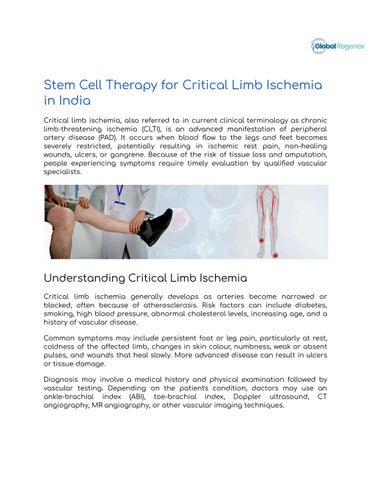
Stem Cell Therapy for Critical Limb Ischemia in India Critical limb ischemia, also referred to in current clinical terminology as chronic limb-threatening ischemia (CLTI), is an advanced manifestation of peripheral artery disease (PAD). It occurs when blood flow to the legs and feet becomes severely restricted, potentially resulting in ischemic rest pain, non-healing wounds, ulcers, or gangrene. Because of the risk of tissue loss and amputation, people experiencing symptoms require timely evaluation by qualified vascular specialists.
Understanding Critical Limb Ischemia Critical limb ischemia generally develops as arteries become narrowed or blocked, often because of atherosclerosis. Risk factors can include diabetes, smoking, high blood pressure, abnormal cholesterol levels, increasing age, and a history of vascular disease. Common symptoms may include persistent foot or leg pain, particularly at rest, coldness of the affected limb, changes in skin colour, numbness, weak or absent pulses, and wounds that heal slowly. More advanced disease can result in ulcers or tissue damage. Diagnosis may involve a medical history and physical examination followed by vascular testing. Depending on the patient's condition, doctors may use an ankle-brachial index (ABI), toe-brachial index, Doppler ultrasound, CT angiography, MR angiography, or other vascular imaging techniques.
Treatment Approaches for Critical Limb Ischemia Management of CLTI requires an individualized approach. Current guidelines emphasize medical therapy, foot care, wound management, control of cardiovascular risk factors, and evaluation for revascularization. Revascularization may involve endovascular procedures, surgery, or a hybrid approach and is an important strategy for preventing limb loss when appropriate. A multidisciplinary team can help coordinate vascular, wound-care, podiatric, and rehabilitation needs. Alongside established treatment approaches, regenerative medicine is being researched as a potential option for patients with severe disease, particularly in situations where conventional revascularization may not be possible.
Stem Cell Therapy for Critical Limb Ischemia Stem cell therapy for critical limb ischemia is an emerging area of regenerative medicine research. Researchers are investigating whether certain cell-based therapies may encourage the formation of new blood vessels, improve local blood flow, influence inflammation, and support tissue repair. Some early clinical studies have reported potentially encouraging findings, particularly with autologous bone-marrow-derived cell therapies. However, the evidence remains under development, and clinical outcomes can vary depending on the patient population, cell type, treatment protocol, and severity of disease. For this reason, regenerative cell therapies should not be presented as a guaranteed cure or replacement for established vascular treatment. Major vascular guidelines have emphasized that regenerative approaches for CLTI should be evaluated within appropriately conducted clinical research.
Exploring Treatment Options in India Patients researching stem cell therapy for critical limb ischemia in India should begin with a comprehensive medical assessment. Previous angiography or imaging reports, laboratory investigations, medication history, diabetes status, wound details, and previous vascular procedures can all help doctors understand the individual case. Global Regenex provides information, consultation, case evaluation, and patient support related to regenerative medicine. Its Critical Limb Ischemia page discusses the potential role of regenerative approaches and describes a
treatment-support pathway for eligible patients. Patients should independently discuss potential benefits, limitations, risks, alternatives, and the regulatory status of any proposed cell-based therapy with qualified medical professionals.
Conclusion Critical limb ischemia is a serious vascular condition that requires timely and specialized medical attention. Established management remains focused on restoring adequate blood flow when possible, controlling cardiovascular risk factors, treating wounds and infections, and protecting the limb. Stem cell-based regenerative medicine continues to be investigated as a potential approach for selected patients. As research develops, careful patient selection, medical supervision, and evidence-based decision-making remain essential when considering stem cell therapy for critical limb ischemia in India. For More : Website : https://globalregenex.com/
Call Us (Indian) : (+91 ) 7827791242 Call Us (International) : (+91 ) 7827791242