TEST: Impact and Sustainability Report - 2024 / 2025
Impact & Sustainability Report 24/25
NawiriGroup is a leading safari travel group, offering
Through the Group’s various subsidiaries which includes Asilia Africa, a leading safari operator with 17 camps and lodges and a DMC offering across East Africa, and the multi-award-winning African safari tour operator Go2Africa, we deliver immersive travel experiences while supporting a range of impact organisations and initiatives in some of the greatest, globally important natural wilderness areas on the African continent.
Making a positive impact in the areas and local communities where we operate and running our operations in a responsible and sustainable manner is an integral part of our strategy and is reflected in our B-Corp status, the first company in Africa to achieve the certification.
‘Nawiri’
What impact means to us
Our story began with a handful of like-minded people who believed travel could be more than just a journey. In the early 2000’s small family-run safari outfits came together to share their passion for Africa’s unique wilderness areas and to create something built on being a force for good for nature and local communities.
From those beginnings, our camps have grown into a network across East Africa’s most iconic ecosystems, and we’ve formed partnerships expanding our commercial entities establishing us as one of the leading safari travel groups creating and delivering thousands of personalised travel experiences each year across the African continent. But our purpose has remained the same; to help strengthen livelihoods, regenerate landscapes, and ensure Africa’s great ecosystems continue to flourish for generations to come.
We have seen how easily landscapes can fragment when communities receive little value in conservation. In places like Naboisho, families once faced the
choice to divide or sell land, and wildlife numbers plummeted. By working with local landowners to create conservancies, we helped build a model where people and wildlife thrive together. Today, corridors remain open, predators flourish, and landowners earn steady income in one of continent’s most successful impact stories. A model we are now replicating elsewhere.
Impact, for us, is not an add-on. It is woven into everything: from scholarships and teacher training that expand opportunity, to renewable energy and low-impact camp design to protect our ecosystems, to supporting partners who strengthen governance so communities can shape their own future.
Every traveller who stays with us becomes part of this story. When you wake to the sound of lions or share a meal under an African sky, you are also helping protect ecosystems, fund education, and create livelihoods. This is what impact means to us. A shared effort to ensure that Africa’s wild places endure, and that the people who call them home thrive.
How we approach impact
Our goal is to ensure that every part of our business creates value that directly contributes to positive impact, with conservation, community support, and responsible travel at its core. We monitor progress in three areas.
1. External Impact: Preserving biodiversity and improving livelihoods by raising funds from travellers, adding our own profits, and partnering with donors. Together we direct resources to grassroots NGOs and education initiatives to reduce the burdens of conservation, such as human-wildlife conflict, and increase the benefits of it.
2. Internal Impact: Sustainable operations are central, minimising the environmental footprint of travel while strengthening long-term growth. We invest in our people, nurturing local talent, providing opportunities and training, creating quality jobs and career pathways that last.
3. Travellers: When travellers care, their pursuit of responsible travel drives demand for sustainability across the industry. By making our impact visible and engaging guests in it, we inspire responsible choices.
Emissions & Offsets
Decarbonising operations and for unavoidable emissions offsetting initiatives that extend impact beyond carbon.
Employment
Careers and training that have a lasting impact, with locally rooted opportunities.
Sustainable Operations
Measuring the waste, water and energy of our safari operations and embedding sustainability across the whole business.
InternalImpact
Our vision of impact
Nature protection
Funding National Parks and investing in community-led initiatives beyond them to protect and restore ecosystems.
Education
Expanding access to quality education so communities have the skills and opportunity to shape their own futures.
Travellers
Premium safari experiences that inspire travellers to travel responsibly and make a net positive impact in the natural areas they visit.
Responsible Business
Contributing positively to both the environment and society in the countries where we operate.
Community Support
We believe that those who bear the costs of conservation deserve to share in its benefits.
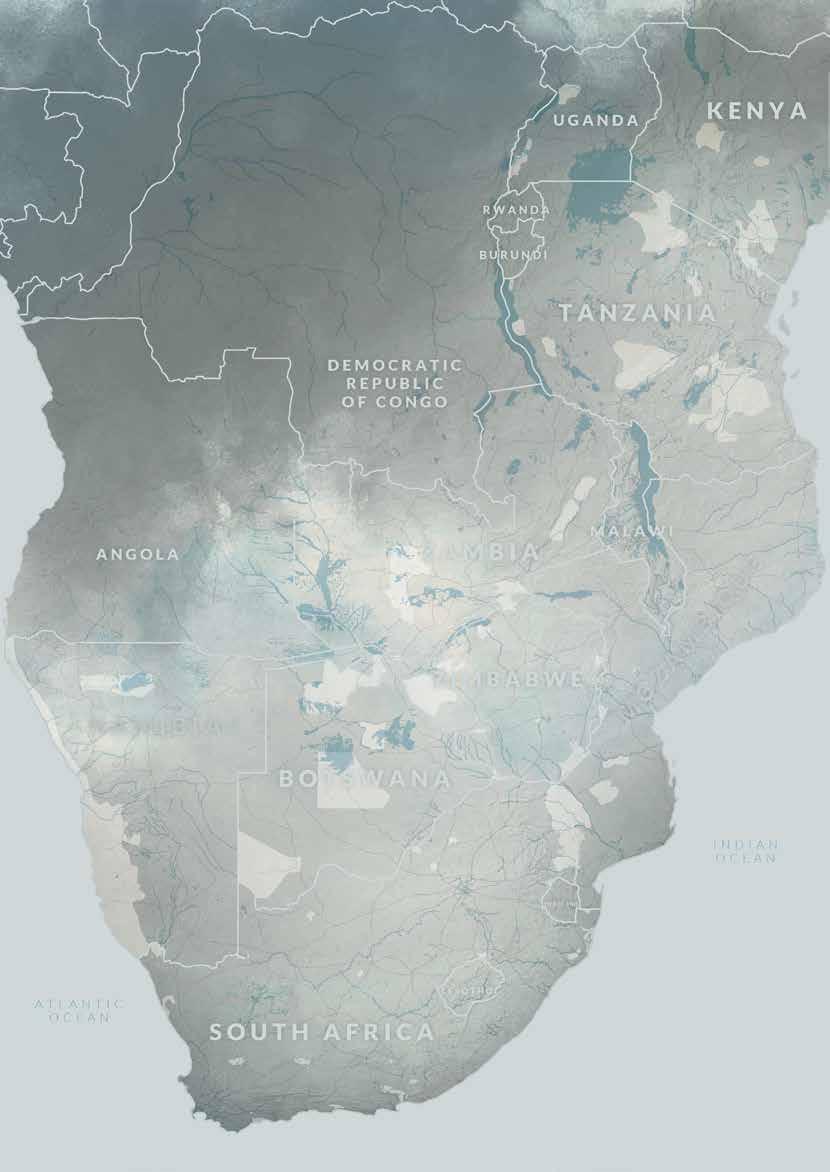
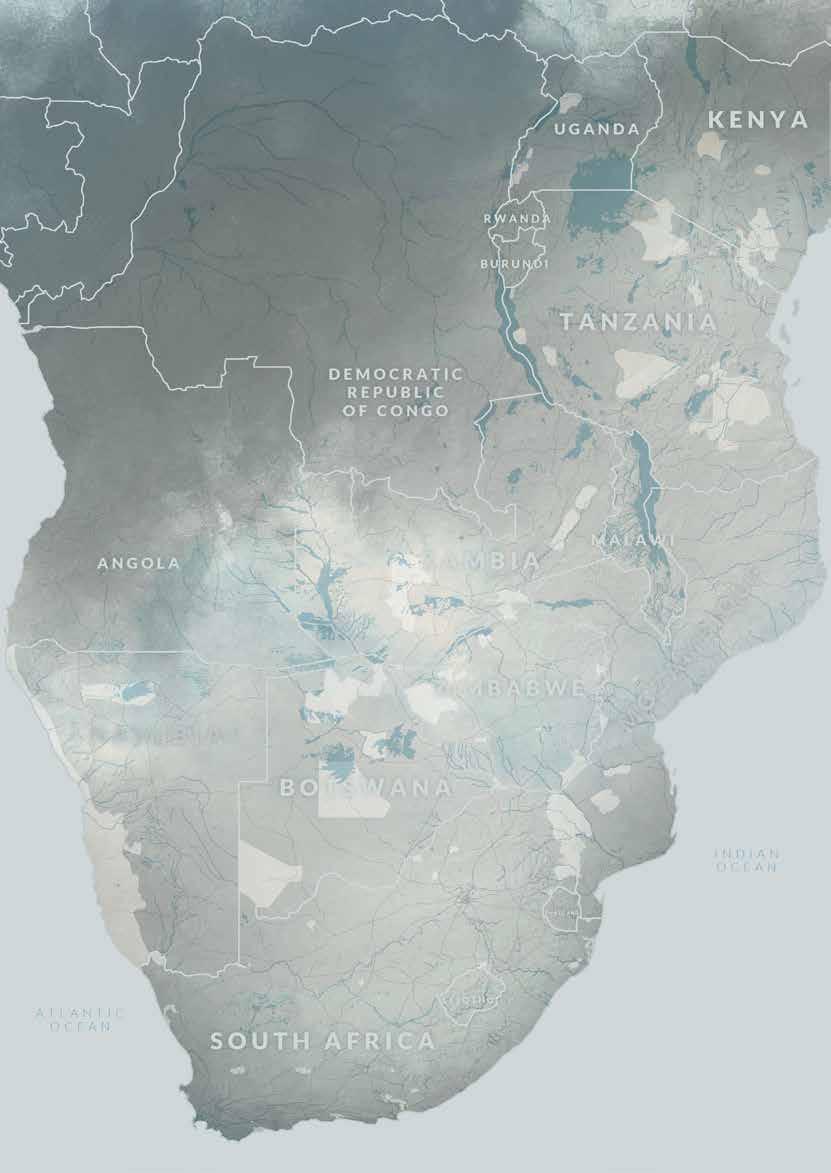
Serengeti-Mara Ecosystem
Kavango-Zambezi Transfrontier Conservation Area
Selous Ecosystems
Greater Limpopo Transfrontier Conservation Area
The Cape Floral Region
Camp presence
Traveller bednights
Funding impact at scale
Providing local project support
Our Ecosystems
Africa’s Living Systems
Across sub-Saharan Africa, a network of great ecological systems breathes life into the planet. These are some of Earth’s most important natural ecosystems, absorbing vast quantities of carbon, sustaining exceptional biodiversity, and underpinning weather patterns far beyond their borders.
Throughout these ecosystems are national parks and reserves that hold global renown, but just as vital are the surrounding community lands. Seventy per cent of Africa’s wildlife spends at least part of its life outside formal protected areas, on land owned, grazed, and cultivated by rural families. The future of these systems depends on those communities being able to realise value from keeping their land wild.
Bwindi Impenetrable Forest
• Home to over 450 mountain gorillas, representing half of the world’s remaining population.
• Unparalleled avian diversity, with around 350 bird species including 17 globally threatened and 23 endemic to the region.
• A UNESCO World Heritage Site, declared one of Earth’s most biologically rich areas.
• The high-altitude montane forests of Bwindi and the Virunga Volcanoes absorb immense quantities of moisture from the air, feeding rivers that flow into the Nile basin.
Serengeti–Mara Ecosystem
• Over 1.5 million wildebeest, 250,000 zebra, and 400,000 gazelles migrate through this savannah annually.
• Supports 70 large mammal species, including roughly 4,000 lions, making it one of the highest wildlife densities on Earth.
• Declared a UNESCO World Heritage Site for its intact predator-prey dynamics and the spectacle of migration.
Greater Ruaha Ecosystem
• 45,000 km², larger than Switzerland and one of East Africa’s largest remaining wildernesses.
• Holds 10% of the planet’s remaining lions, 15,000 elephants, and 570 bird species.
• The Great Ruaha River sustains agriculture and hydropower for millions downstream
Greater Selous Ecosystem
• Over 140,000 km², three times larger than Switzerland.
• The Miombo woodlands here store millions of tonnes of carbon, perhaps four times more than previously estimated.
• Home to 6,500 lions, 18,000 elephants, and 16% of the world’s remaining wild dogs.
• Another UNESCO World Heritage Site noted for its undisturbed wilderness.
Kavango–Zambezi Transfrontier Conservation Area
• Covering more than 520,000 km² across Angola, Botswana, Namibia, Zambia and Zimbabwe, KAZA is the world’s largest transboundary conservation landscape.
• Home to over 200,000 elephants, the largest connected population on Earth, and thriving populations of lion, wild dog and cheetah.
• Safeguards vital corridors linking the Okavango Delta, Hwange, and the Zambezi Basin, maintaining ecological connectivity across southern Africa.
Greater Limpopo Transfrontier Conservation Area
• Extends across Mozambique, Zimbabwe, and South Africa, linking Kruger National Park to the Limpopo and Zinave reserves.
• Supports free movement of elephants, rhinos, and wild dogs across restored corridors.
• Acts as a climate-resilient buffer for southern Africa’s dry-season rainfall systems.
The Cape Floral Region
• One of only six floral kingdoms on Earth — and the smallest, yet richest in species.
• Over 9,000 plant species, 70% of which occur nowhere else.
• Recognised as a UNESCO World Heritage Site for its botanical uniqueness.
These headline ecosystems tell only part of the story. Across sub-Saharan Africa are countless other wild places of global significance: from the island forests of Rubondo on Lake Victoria to the arid ranges of northern Kenya. Each one a wilderness area supporting wildlife and communities whose futures are bound to the health of the land.
Together, they form a living web that captures carbon, shapes climate, and sustains humanity. Protecting these ecosystems and ensuring that those who live within them benefit from keeping them intact, remains one of the most powerful ways we can make a difference.
Greater
Greater Ruaha Ecosystem
Bwindi Impenetrable Forest
Our impact journey so far
2004
Asilia formed through merger of experienced family-owned safari companies.
2010
Founding partners in the Mara Naboisho Conservancy in Kenya
2013
Founding partner and seed funder of Maasai Mara Wildlife Conservancies Association
1987
Rekero Camp founded in the Masai Mara, Kenya
1998
2007
Honeyguide Foundation founded, with support of Asilia 2010
2012
First African safari company to receive 5-star sustainability rating from GIIRS
2013
Comprehensive solar systems first introduced into Asilia camps
2014
Asilia is winner of World Travel & Tourism Council’s Tourism for Tomorrow award.
2020
Formation of our Foundation, an NGO registered in Tanzania, established to support our impact work
2022
NawiriGroup established as impact and collaboration platform, including long-term financial commitments by Norfund, LGT, Indahl Family, Sinding Family and co-founders
2024
Asilia guest bednight impact levy of US$10 per person per night, matched by group profit generating US$20 per guest for every bednight in an Asilia camp
2016
One of first to replace plastic water bottles with aluminium ones
2012
2014
2019
2020
Covid crisis partner provding funding for the Mara during pandemic
2022
Usangu Expedition Camp launched, trialling first ethanol vehicles
2023
Nawiri Foundation secures grant funding for impact-at-scale
2022
2022
2023
2024
2025
Significant steps in sustainable camp operations including investment in elecric vehicle conversion technology, and improved reporting and data
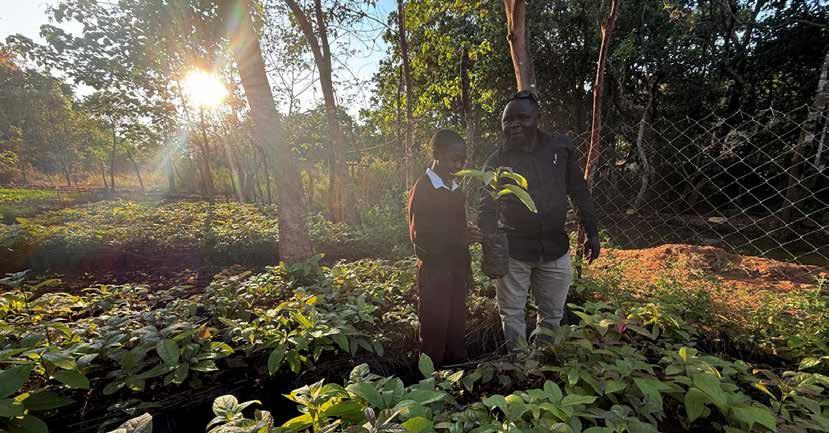
Expansion into Uganda announced with a new lodge and impact goal to reforest a new buffer zone adjoining Bwindi Impenetrable Forest
2024
2025
Go2Africa formed as leading online safari travel resource
,
Start measuring operational water consumption and food waste
Asilia certified as B Corp, the first in Africa and second travel company globally.
First scholarship funded in Tanzania to support access to further education
Arrival of first electric, solarpowered safari vehicle in Kenya
Opening of Wildlife Tourism College of Maasai Mara, with funding from Nawiri backers
Go2Africa launch first impact partnerships, with EWT, Greenpop and ABC Foundation
NawiriGroup and individual brands certified as B Corps
Provided funding support for the creation of new conservation area, Mara East
USD$4.5m funding secured from investors for impact over the next three years
Our key metrics
FUNDING, FINANCIALS & REACH
Ensuring that we operate in a way that is corporately responsible helps guide us as we balance profitability with purpose, ensuring we contribute positively to both the environment and society as a whole.
US$11m impact value
Made up of US$8.4m in park fees and levies going to nature protection
↑ 14% increase from US$7.4m) and US$2.6m in philanthropic funds going into impact projects (↑ 27% increase from US$2m).
US$134m US$10m
Revenue represents the value of inbound tourism brought into Sub-Sahara Africa.
↑ 25% YOY from US$107m.
Tax contributions into the economies where we are operating.
↑20% YOY from US$8.4m.
Where we serve as an anchor tourism operator, contributing the largest share of bednights and visitor revenue in places such as Ruaha National Park, Rubondo Island, and Naboisho Conservancy.
SUSTAINABLE OPERATIONS
We generate revenue by bringing people into pristine areas and need to minimise the negative effects of that. We aim to be an industry leader in sustainability, minimising our footprint and leading by example.
per bednight
↓ 26% decrease from 0.19kg in 23/24
↓ 33% decrease from 0.21kg in 22/23
↑ 5% increase from 925 litres in 23/24 ↑ 24% increase from 785 litres in 22/23
↑ 27% increase from 26kg in 23/24
↓ 8% decrease from 36kg in 22/23
per bednight
in 23/24
↑37% increase from 282k KwH in 23/24
of power used in camp (up from 75%)
EDUCATION
We believe education creates opportunity and agency, giving people the freedom to shape their own futures.
NET PROMOTOR SCORES
We want travellers to see that sustainability and exceptional quality can exist side by side. Our goal is to show that a company can deliver industry-leading experiences while operating responsibly and creating meaningful impact. We use post-travel Net Promoter Scores to measure how well we achieve this, holding ourselves to the same high standards for guest experience as we do for sustainability.
A future where vital natural ecosystems and local communities thrive together
People + Wildlife
EXTERNAL IMPACT
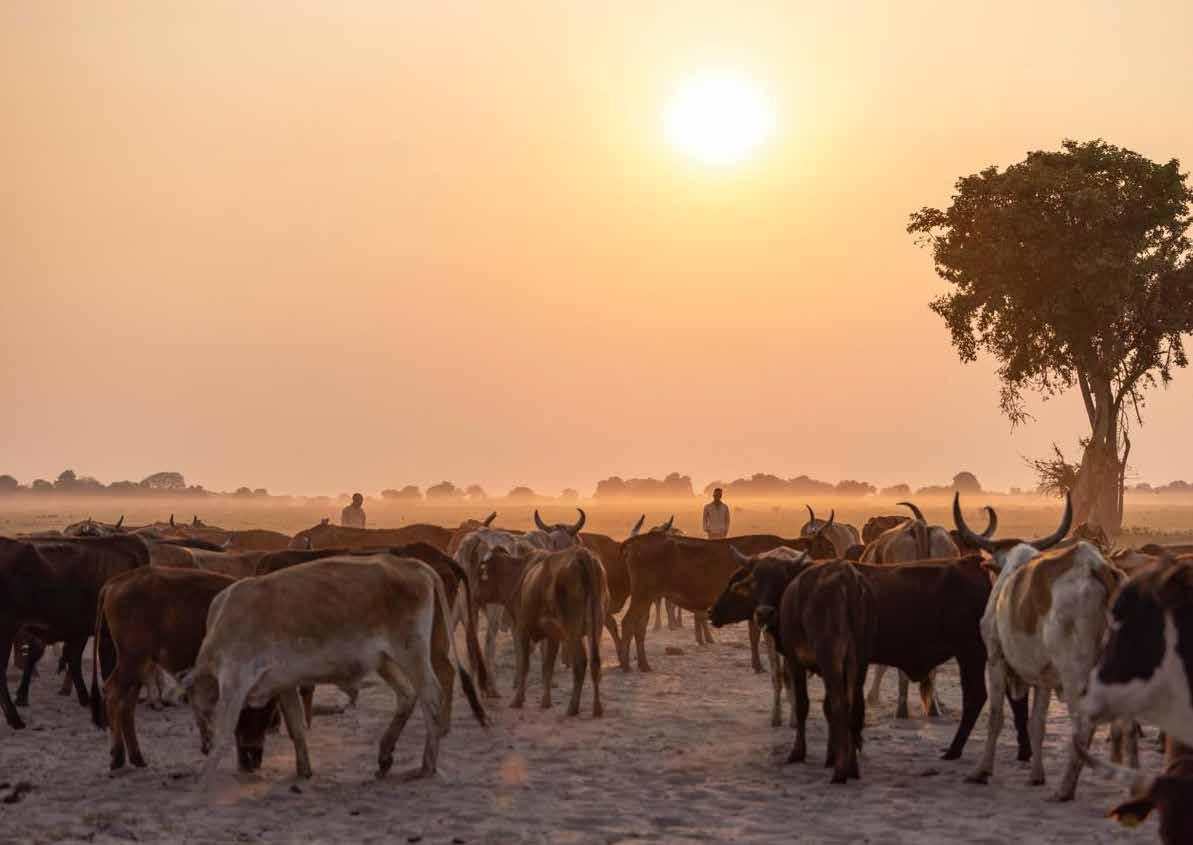
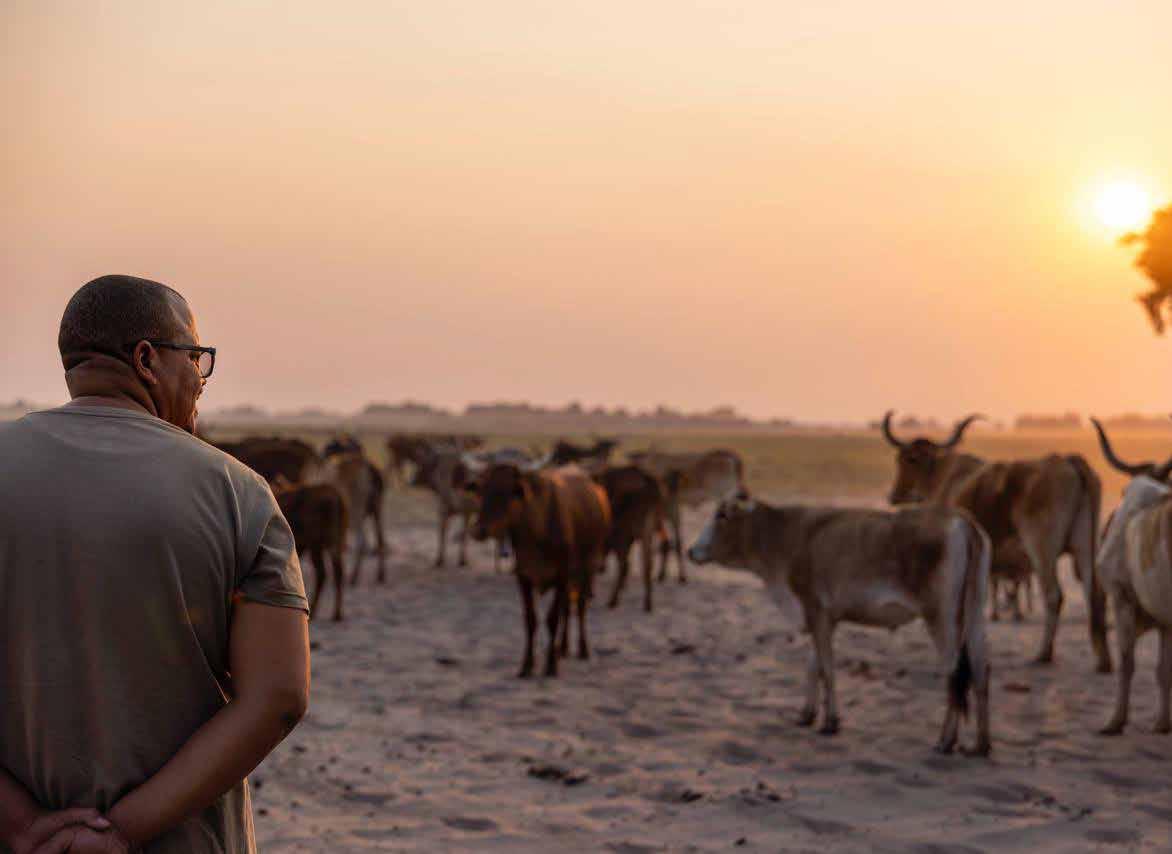
First light departure: cattle leave the boma for the day’s grazing, safe from Okavango Delta lions as part of CLAWS communal herding initiative, Botswana. Photo by Sacha Specker, Black Bean Productions
US$11m contributed towards nature protection and impact funding External Impact
US$8.4m towards nature protection
Park fees and levies underwrite the protection of large portions of Africa’s conserved landscapes. In Tanzania, the Tanzania National Parks Authority (TANAPA) relies on tourism-derived revenue to finance park management, staffing, infrastructure, anti-poaching and habitat protection. In South Africa, SANParks generates around 80 % of its operating budget from tourism and visitor fees. In Uganda and Rwanda gorilla permits are a core financing mechanism that pay for park management and protection. Our business brings guests to the continent to contribute to this feebased model of nature propection.
Last year, we contributed US$8.4m in visitor fees and conservation levies toward nature protection. In Tanzania, where we welcome the highest volume
of visitors, our businesses generated US$5.4m in funding this year to support self-sustaining national parks that rely solely on visitor revenue. We purposely invest in promoting lesser-visited parks to increase the distribution and equity of funding. In places like Rubondo Island National Park and Ruaha National Park in Tanzania, fees from our camps are among the largest single funding sources, making us a primary contributor to their nature protection budgets.
Our contribution to nature protection goes beyond national parks. In Kenya, we were pioneers in the conservancy model, helping establish the Naboisho Conservancy where community landowners receive lease payments that keep land unfenced and wild, maintaining biodiversity corridors.
US$2.6m towards impact funding
Impact funding is the money we direct towards community-led projects across the regions where we work. These funds, raised through guest donations, group profit and investors, are channelled through our network of trusted partners who have the expertise and local relationships to deliver lasting change. This represents a 27% increase on the funds raised for impact funding year-on-year
The projects they run are diverse, but all are rooted in supporting livelihoods, improving local governance, creating access to education, and strengthening the connection between people and the landscapes they live within.
To date, we have invested over US$1m in projects run by Honeyguide in Southern Tanzania, helping
local Wildlife Management Areas strengthen governance, train rangers, and create shared systems for wildlife protection and resource use. This work is reducing conflict, and supporting communities to run WMAs as a business, attracting investment and ensuring benefits from protecting the land reach households.
In 24/25, we funded twenty-eight partners to deliver project work. Each partnership is built around the principle that communities are the custodians of their land and that impact must be led by them.
Together, these projects show how targeted impact funding supports communities to thrive, restoring the balance between people and nature and building a foundation for long-term resilience.
Thriving Ecosystems and Communities by Reducing Poverty and Increasing Biodiversity
Enhance Education Unlock Value of Natural Capital
Increase Education Access
This supports individuals who want more education but can’t access it. This area of impact includes scholarships, supporting new educational establishments, and the expansion of existing establishments to create access to higher levels of education than was previously unavailable.
Build Governance Capacity
Communities need to have the capacity to manage protected areas as sustainable enterprises. Robust governance structures help landscapes attract investors and ensure that conservation initiatives generate more revenue than they cost to operate.
Regenerate Natural Capital
Shift to regenerative agriculture
This focuses on farming differently. By improving soil health and using better seeds, farmers can increase yields while lowering costs and restoring the land’s natural fertility. For pastoral communities, rotational grazing regenerates grasslands by allowing pastures to recover, to a more productive state.
Our approach
Increase Education Quality
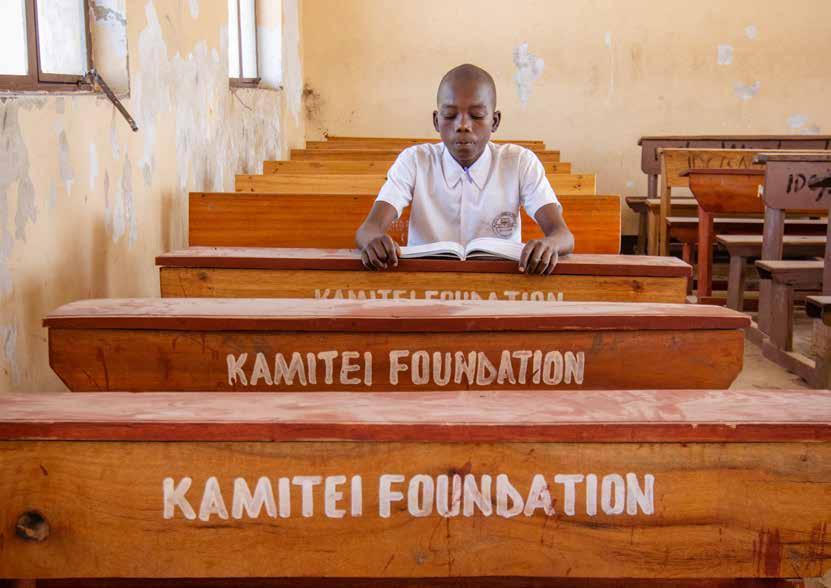
Projects that fall within this area of impact relate to raising standard of existing educational opportunities. Within this area of impact, there is infrastructure, but funding can help improve it. Educational materials, improved facilities water and sanitation, desks, and teacher training all fall under this.
Increase Returns on Natual Capital
This can be twofold:
1. Providing new ways to generate income, for example ecotourism fees or carbon credits. It also includes diversifying income sources and improve livelihoods.
2. Reducing the cost of living around wildlife. For example the loss of crops to wildlife.
Increase Returns on Natural Capital
Restoring degraded land, for example regenerating grasslands, contributes to climate resilience, enhances water retention, improves biodiversity, and provides sustainable resources for communities. Reforestation programmes allow ecosystems to expand, providing space for wildlife populations to grow.
Build Financial Capacity
Enhancing financial capacity through saving and loans groups, microfinance collectives that enable individuals to access loans for eco-friendly ventures. These promotes sustainable livelihoods and enhance community engagement in nature protection.
Our impact approach is built around the belief that people and nature must thrive together. It is driven by two connected goals: reducing poverty and sustaining biodiversity across the ecosystems where we operate. In many of these areas, more than 90% of people live on less than US$1 a day, while biodiversity has fallen by as much as 30%.
As climate pressures grow, livelihoods and natural systems are under threat. Our impact agenda aims to address this trend by creating resilient communities and landscapes that sustain one another.
We have seen how easily landscapes can fragment when communities receive little value in conservation.
In places like Naboisho, families once faced the choice to divide or sell land, and wildlife numbers plummeted. By working with local landowners to create conservancies, we helped build a model where people and wildlife thrive together.
Impact, for us, is not an add-on. It is woven into everything: from scholarships and teacher training that expand opportunity, to renewable energy and low-impact camp design to protect our ecosystems, to supporting partners who strengthen governance so communities can shape their own future. Our external impact strategy has three pillars:
Enhancing Education: Education opens pathways to economic independence, providing communities with the knowledge and skills to pursue diverse livelihoods,
reduce reliance on limited local resources and assume full agency over their community interests.
Unlocking the Value of Natural Capital: We focus on creating sustainable income for communities from natural assets. We support projects that offer solutions for people and wildlife, providing substantive, direct economic returns to communities who protect these landscapes.
Regenerating Natural Capital: Through regenerative agriculture and habitat restoration, we fund work to restore biodiversity and strengthen ecosystem health. These practices help secure the resources that local communities depend on, while building resilience against climate impacts.
Together, these pillars support a future where communities and ecosystems thrive in harmony and people and nature flourish together, each enriching the other and building a legacy of resilience and opportunity.
Benefiting over 500k people
People are at the heart of our impact agenda, with poverty reduction and biodiversity protection guiding everything we do. We believe in an approach whereby nature and local communities both thrive. Community-led conservation initiatives transform protection into opportunity, giving people ownership of natural resources and a direct stake in their future.
In Tanzania, we are the primary funders of Honeyguide, which now supports a network of community-owned Wildlife Management Areas (WMAs) spanning more than 1.2 million acres of land and benefiting over 500,000 people. Across all its landscapes, Honeyguide’s integrated approach
combining enterprise development, governance, wildlife protection, and human–wildlife conflict prevention is turning nature protection into a viable community business model.
In Kenya, our long-term partnerships have helped shape the conservancy movement from its inception. From establishing Naboisho Conservancy to supporting MMWCA, KWT, and The Maa Trust, we continue to ensure that tourism revenues reach local landowners. Today, Naboisho alone benefits more than 700 landowners and their families through lease payments, while thousands more receive regular conservancy income across the country.
Support for 20,000 students
This year, we directly supported over 20,000 children, addressing educational needs through books, teacher training, and funding salaries of additional teachers to improve teacher-student ratios, as well as the provision of desks across 57 primary schools, a 73 percent increase on last year. In total, our education support reached 75,000 students through our impact partners when we include projects, we funded that supported sanitation and conservation education awareness raising. We also funded 244 vocational training scholarships for secondary school leavers to continue their studies.
Expanding access to quality education is essential for building resilient communities around the ecosystems we support. Education provides skills
and opportunities, opening doors to a range of diverse livelihoods.
Our focus is on improving the quality of primary education in villages close to protected areas. We fund textbooks, desks and teaching materials, and through our partner our partner Kamitei provide training for teachers in remote communities.
For older students, we continue to invest in education that links learning to opportunity. This year, 244 young people received vocational scholarships to train in tourism and hospitality related fields. These courses give school leavers the chance to build practical skills and equips them to work in the tourism industry.
External Impact
Good governance
is the first step in generating reliable income from tourism, carbon, and other naturebased ventures.
Governance
This year, we’ve provided funding to our long-term partner Honeyguide Foundation to continue their work strengthening governance and management across Wildlife Management Areas (WMAs), including five in the Ruvuma region that span more than 15,000 square kilometres in southern Tanzania. Together, they form one of East Africa’s largest unbroken wilderness areas, connecting the Selous Ecosystem with Mozambique’s Niassa Reserve.
Through the project, the WMA management teams have been trained and equipped to oversee budgets and manage transparent reporting.
“Strong governance gives investors’ confidence that funds will be managed properly,” said Sylvester Mselle, Honeyguide’s Southern Portfolio Coordinator. “It’s the foundation for long-term sustainability.”
The project also trains and equips rangers recruited directly from the local villages. They patrol vast forested areas threatened by charcoal burning, illegal timber harvesting and bushmeat hunting. With better training, equipment and coordination, rangers can now use GPS and mobile tools to monitor activity and share intelligence gathered from local networks. “People tell us when something isn’t right,” one ranger explained. “They understand the value of the wilderness and that when they protect their land, they protect their own future.”
The five Ruvuma WMAs received advanced payment for carbon credits from Carbon Tanzania this year, marking the start of a new phase in their development. The funds are supporting ranger salaries and essential operations as the WMAs prepare to receive their first carbon payments in 2026. These payments will reward the communities within the WMA for keeping their forests intact and storing carbon. Most of the income is distributed to the villages for them to invest in local priorities such as classrooms, clinics and infrastructure.
Ranger patrol teams work hand in hand with village intelligence committees, sharing information to prevent poaching and illegal grazing.
Across the five WMAs there are coordinated patrols, structured management, and a growing sense of pride in what the communities are building. Their land, mostly dense miombo woodland, now offers a tangible financial benefit.
External Impact
Community Outcome
Burha Khalfan Sanya, a father of six, is a rice farmer. Over the last year his family have struggled as his sight deteriorated and he started suffering from crippling migraines. He described that even brushing against the side of his face caused pain. His vision had deteriorated to the point where he could see barely two metres ahead. Previously, he farmed a hectare of land and sold his rice to earn an income. Over the past year due to his poor health, he has only been able to cultivate a small area for his family to eat from.
Health Impact
In parts of rural Tanzania, healthcare is distant, both in geography and availability. For many residents living in rural villages, accessing medical treatment means traveling for hours on foot and many local clinics are both expensive and unable to treat many conditions.
In February 2025, Nawiri Foundation partnered with DeLight Dental Polyclinic, Smart Vision Eye Care, and Kafika House to hold its first medical camp in the Greater Ruaha region. Over four days, 998 people received free treatment, from dental and eye care to screenings for disabilities. For many, it was the first time seeing a qualified doctor.
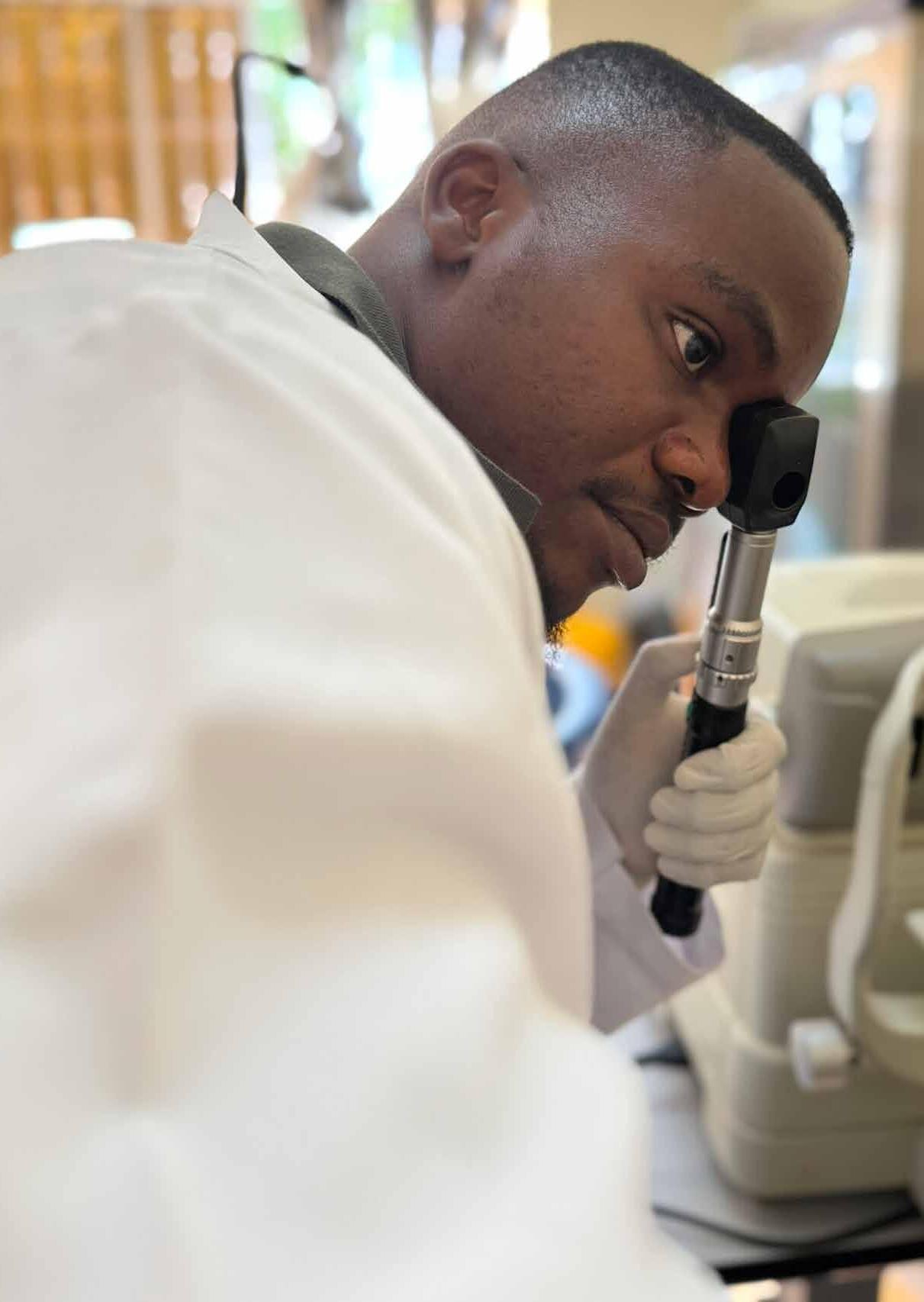
Easily treatable eye conditions were among the most common issues people presented with. Optometrist
Tito Msasa from Smart Vision Eye Care explained that poor vision is widespread due to infection, malnutrition, and a lack of access to care. “Older people think blindness is just part of getting old,” he said, “but most of it can be treated.” Cataracts, conjunctivitis, and refractive errors are routine.
“Hygiene issues from dust and unclean water are another cause of vision loss, especially for children.”
Tito examined over a hundred people each day, prescribing medication, glasses, and referrals for surgery. He described the joy of seeing patients smile the moment they put on glasses and “see the world better.” Plans are now underway to expand the camps through 2025–26 so that more communities can access care
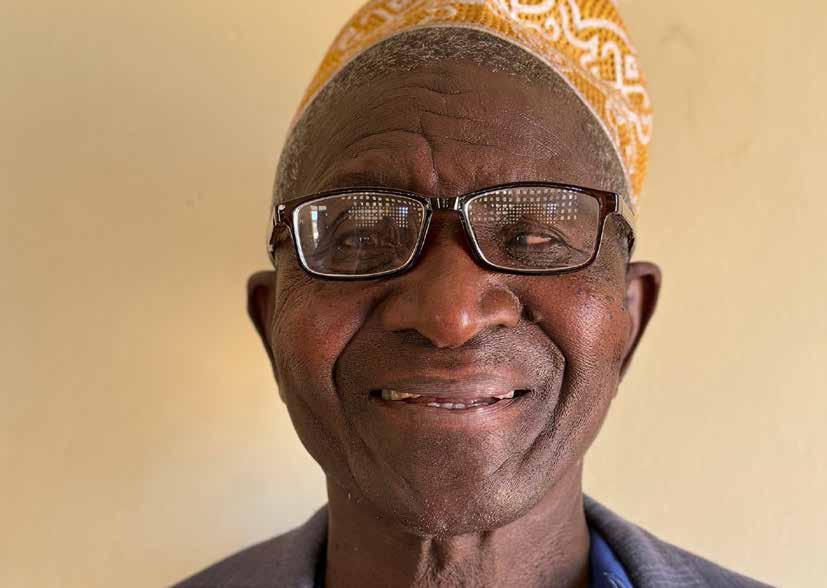
delighted with the them and found it remarkable to be able to see clearly again, animatedly pointing to things in the distance and exclaiming, look, I can see that building now.
With no harvest to sell, his older children began helping him in the fields, and with one son in his last year of primary, he was unsure he would have the funds to send him to secondary school. At the camp, he was examined by the Smart Vision Eye Care team and prescribed new glasses. He was
The treatment isn’t a miracle cure and won’t instantly solve his income concerns, or the headaches caused by eye strain, though they should ease as he adjusts to the new glasses. There’s a chance the glasses could break, or his prescription might change, and this alone isn’t a long-term or sustainable solution. But it makes a difference today. He can return to farming a larger plot and, if the next harvest goes well, hopes to earn enough to send his son to secondary school. Small interventions like this build trust and community support, creating momentum and the foundation to work together on deeper, long-term change.
Sources and uses of funding External Impact
Over the past year, we distributed US$2.6m of funding to impact projects across East and Southern Africa. Every dollar of this funding went directly to projects, ensuring that our resources drive results where they matter most. This funding complements the US$8.4m generated for nature protection through park fees and conservation levies, underscoring our dual approach to impact.
Of the total US$2.6m, 53% came from our impact investors. We had a reduced amount from USAID this financial year, representing the final payment of their grant funding. As widely publicised, USAID has ended the majority of its funding for overseas projects.
We have seen considerable growth from impact funding raised from our own businesses. This is increased as from June 2024 we matched guest donations from bed night levys and EFT payments (see panel right) on new bookings across Asilia Africa and Go2Africa.
At Go2Africa, in addition to optional bednight levy donations on properties flagged for positive impact (US$124k), and the EFT generated funds (US$36k),
the Go2Africa team also continue to innovate and bring impact fundraising into the heart of the business. adding an impressive US$55k through events such as a safari auction.
Distribution
Our impact funding is channelled through three distinct approaches, to ensure that every dollar we contribute delivers meaningful change, with a focus on additionality and transparency.
Project Support: These are initiatives where we join broader efforts, as one of many funders, and not the largest. Here, we help drive collective progress on big challenges.
Principal Funder: These are projects where we are the largest funder, and we are critical to their success. We enable local organizations to address urgent challenges and deliver lasting impact.
Project Lead : These are projects we take full ownership of, using our resources and experience to deliver targeted activities where they are most needed.
Funding
Partner Case Study: CLAWS
case study: EFT
Go2Africa has introduced an innovative way for travellers to contribute to impact funding simply through how they choose to pay. By opting to settle their balance via bank transfer (also known as Electronic Funds Transfer or EFT) rather than credit card, clients enable Go2Africa to redirect resources that would otherwise go toward transaction fees into funding positive impact projects.
measurable change. The switch of payment method just offers the opportunity for clients to donate additional funds, at no cost to themselves.
In northern Tanzania’s Ngorongoro Conservation Area (NCA), where human-wildlife conflict threatens both communities and lions, Kope Lion works to find solutions for peaceful coexistence between predators and people. NawiriGroup, through Asilia Giving, contributed US$10k to support their efforts during this reporting period.
As an incentive to switch, we also match the funds that are generated from our Group profit, doubling the money raised through this initiative.
The funding secured livestock and livelihoods by reinforcing 40 bomas and retrieving 345 lost livestock worth US$44k. Lost livestock are a high risk for predation which leads to retaliatory killings, so their timely retrieval is key. Kope Lion also monitors lion populations in partnership with TAWIRI— Tanzania’s Wildlife Research Institute, which balances pastoralist livelihoods with wildlife management. This included tracking collared lion movements and collaring two additional lions in Ngorongoro.
This idea was successfully piloted. During the pilot clients who had chosen to pay their deposit by credit card were personally contacted and invited to consider switching to EFT. The outreach was designed to educate rather than persuade, sharing on our positive impact approach and some of the projects we fund to support education, livelihoods, and ecosystem protection in the destinations travellers visit.
Funding disbursements are also used to support the traditional pastoralist communities in the area and funding was used to provide scholarships to 43 students in Irekepus village.
Clients were given full choice, with no pressure to change their payment method. Every safari we create already contributes to meaningful,
The simplicity of the EFT system lies in its dual benefit: it offers clients a secure, straightforward way to pay and unlike credit card transactions, which typically carry a 2–5% processing fee charged to the business, EFT payments incur no such cost. It is a win-win opportunity when we can transform this operational saving and redirect the equivalent fee amount into positive impact funding to support people and ecosystems across East and Southern Africa.
Through initiatives like this, we continue to lead innovation in the travel sector, demonstrating that sustainability and commerce can go hand in hand without any extra cost or effort for our travellers.
Implementation partners
Delivering meaningful impact requires working with the right partners, local experts solving critical challenges on the ground. Alongside project-specific funding for a wide range of initiatives, we provide long-term, stable funding to our primary grassroots NGO partners. These organisations, already making a difference in the ecosystems where we operate, share our vision of helping people and ecosystems thrive together. Our continued funding gives them the stability to focus on strategic, transformative work that scales up their impact. Below are seven of our partners who have received the highest proportion of funding for work done this financial year. The total given is the cumulative total over the last few years of investment.
Honeyguide collaborates with communities in Tanzania to establish and manage Wildlife Management Areas (WMAs) that benefit both people and wildlife. By building robust local governance systems, and linking the WMAs to ecotourism, carbon markets, and other nature-positive investors, they create lasting revenue streams that directly benefit communities while preserving vital ecosystems. In the coming five years, Honeyguide aims to scale its work to 15 WMAs across Tanzania, building on its proven model to strengthen governance, attract sustainable investment, and deliver lasting benefits for people and wildlife.
Education is critical to breaking the cycle of poverty in rural East Africa, opening pathways to economic independence, and providing communities with the knowledge and skills to pursue diverse livelihoods. Kamitei plays a pivotal role in this space by training teachers, supporting their development, and enhancing schools with improved resources and infrastructure.
Kenya Wildlife Trust is dedicated to protecting Kenya’s predators and the rangelands they depend on. Through the Mara Predator Conservation Programme, the team combines science, community partnerships and education to reduce conflict and safeguard biodiversity. In the Mara, they have created a network of ten zonal conflict response committees and trained scouts and herders to prevent and report incidents. Alongside this, KWT runs a livestock health programme, reaching over 120,000 cattle and sheep in recent months. Their work protects predators while improving livestock health and community livelihoods across the Mara.
The Maa Trust works with conservancies across the Greater Mara to ensure that nature protection directly benefits local families. Its programmes focus on education, healthcare and sustainable livelihoods. The Trust manages the Talek Maternal, Neonatal and Child Health Unit, the first of its kind in the Mara, and continues to expand access to essential healthcare. The Maa Beadwork and Maa Honey enterprises provide steady income for hundreds of women, while scholarships and school infrastructure projects improve educational opportunities for the next generation.
Lion Landscapes works to transform large carnivores into assets for the communities living alongside them, addressing coexistence challenges, and supporting sustainable conservation. Their work includes employing community liaisons to patrol village lands, using advanced ecological monitoring systems to guide conservation decisions, and linking conservation to income opportunities like ecotourism and biodiversity credits. Over the next five years, Lion Landscapes aims to scale its successful coexistence programmes across key Wildlife Management Areas, ensuring communities gain lasting benefits from protecting their vital ecosystems.
The Maasai Mara Wildlife Conservancies Association (MMWCA) brings together landowners and partners across the Mara providing technical support and training to new and established conservancies, helping communities form legal entities, manage protection, and attract tourism investment. MMWCA’s recent work has focused on land known as Mara East, an important part of overall Mara Ecosystem, where the organisation is guiding land adjudication, governance structures and environmental assessments to prevent fragmentation.
Endangered Wildlife Trust (EWT) works across southern Africa to protect biodiversity through community-driven conservation. In the Soutpansberg Mountains of South Africa where our funding is channelled, EWT manages the Medike Reserve and surrounding landscapes, linking ecological restoration with rural development. Their programmes include regenerative agriculture training that has helped local farmers form cooperatives, diversify crops and improve soil health; a women’s health projects for adolescent girls, and microenterprise training, connecting improved livelihoods with care for the environment.
Operating area: Tanzania
Operating area: Kenya
Operating area: Kenya
Operating area: Tanzania
Operating area: Kenya
Operating area: Tanzania
Operating area: South Africa
External Impact
Project support
In addition to our primary impact partner organisations, we provide funding to numerous organisations across Sub-Sahara Africa with disbursements of between US$5kand US$25k each, delivered via Nawiri Foundation, Asilia Africa, and Go2Africa. This year, we funded projects through the following partners.
Kenya
• Wildlife Tourism College (WTC): Providing scholarships and resources for Maasai Mara youth to train in tourism and conservation, building local capacity for future careers.
• Rhino Ark: Funding conservation education and renewable energy projects that protect Kenya’s vital forest ecosystems.
Southern Africa
• CLAWS (Botswana): Working in Botswana’s Okavango Panhandle, CLAWS trains local eco-rangers to manage shared cattle herds to protect livestock, restore rangelands, and reduce conflict with lions.
• Ecoexist (Botswana): Supporting coexistence between people and elephants in the Okavango Panhandle through land-use planning, crop-protection tools, and community-led livelihood programmes.
• Greenpop (South Africa): Funding reforestation and urban greening initiatives, including school “Gardens for Good” days.
• Food & Trees for Africa (South Africa): Supporting tree planting and food garden projects in under-resourced communities, improving nutrition, climate resilience, and environmental awareness.
• Victoria Falls Wildlife Trust (Zimbabwe): Providing biogas digesters to local households to reduce reliance on firewood for cooking, improving community wellbeing.
• ABC Foundation / Maunga Primary School (Zambia) Funding infrastructure, school meals, and classroom resources at Maunga Primary school.
Tanzania
• Wisdom College (VETA): Providing scholarships for students from rural communities to access hospitality and tourism training.
• Vocational Hospitality & Tourism Training Institute (VHTTI): Supporting vocational training that equips Tanzanian youth with skills for careers in tourism and hospitality.
• Maasai Steppe Carnivore Conservation Trust (Tarangire Lion Project): Reducing conflict between people and lions through research, community outreach, and livestock protection.
• Serengeti Cheetah Project: Funding ongoing cheetah research and conservation efforts.
• Southern Tanzania Elephant Project (STEP): Protecting elephants and supporting coexistence through research, education, and community partnerships.
• Kope Lion Project: Working in Ngorongoro to reduce livestock predation and prevent retaliatory killings, combining scientific monitoring with traditional pastoral knowledge.
• The Green Economy (TGE): Supporting regenerative agriculture in the Selous-Ruvuma region to improve soil health, boost food security, and reduce pressure on protected areas.
• Lead Foundation: Supporting communities in southern Tanzania through sustainable farming, and environmental education.
• Afya Plus: Delivering community-led health initiatives in Water, Sanitation and Hygiene (WASH), nutrition.
• Sustainable Earth Alternatives (SEAL): Promoting climate-smart agriculture, ecosystem restoration, and natural resource governance to strengthen rural livelihoods
• Frankfurt Zoological Society (FZS): Supporting habitat protection and antiencroachment activities in the Serengeti to safeguard biodiversity and local livelihoods.
• Future Stars: Providing educational support and resources for children in under-served communities near protected areas in Tanzania Uganda
• Change A Life Bwindi: Working with Batwa and Bakiga communities to create income opportunities, and restore forest ecosystems through reforestation and nature-based enterprises.
Partner case study: CLAWS
CLAWS (Communities Living Among Wildlife Sustainably) is one of our new Positive Impact partners for FY24/25, working in Botswana’s remote Okavango Panhandle. Here, most families rely on cattle for food and income, yet the way cattle are managed has long caused conflict with lions. Herds are often left to roam freely through the bush, and farmers don’t always know the exact location of their animals. Losses to predators are frequent and, for years, retaliatory poisoning devastated the local lion population.
Partner Case Study: CLAWS
manage shared herds. These eco-rangers use mobile, predator-proof bomas, each holding up to 600 cattle, that move across the landscape, protecting cattle while regenerating grasslands.
In northern Tanzania’s Ngorongoro Conservation Area (NCA), where human-wildlife conflict threatens both communities and lions, Kope Lion works to find solutions for peaceful coexistence between predators and people. NawiriGroup, through Asilia Giving, contributed US$10k to support their efforts during this reporting period.
The funding secured livestock and livelihoods by reinforcing 40 bomas and retrieving 345 lost livestock worth US$44k. Lost livestock are a high risk for predation which leads to retaliatory killings, so their timely retrieval is key. Kope Lion also monitors lion populations in partnership with TAWIRI— Tanzania’s Wildlife Research Institute, which balances pastoralist livelihoods with wildlife management. This included tracking collared lion movements and collaring two additional lions in Ngorongoro.
Founded in response to this crisis, CLAWS approach aligns with our own philosophy of community-led impact. They work to understand the daily realities of pastoral life and offer practical solutions that make wildlife an asset rather than a threat.
Funding disbursements are also used to support the traditional pastoralist communities in the area and funding was used to provide scholarships to 43 students in Irekepus village.
CLAWS first introduced a Lion Alert System to warn farmers when collared lions were nearby, but soon saw that information alone couldn’t change behaviour when cattle wandered unattended. In 2019, they launched the communal herding programme, employing young local eco-rangers to
Our funding is supporting the expansion of this communal herding project into new villages. This includes providing an additional mobile cattle boma and training more young people from surrounding communities as eco-rangers. As part of the project, CLAWS is developing new routes to market through its Wildlife Friendly Beef programme, selling beef to luxury safari lodges, which helps farmers benefit directly from better land and livestock management, giving value to practices that protect wildlife.
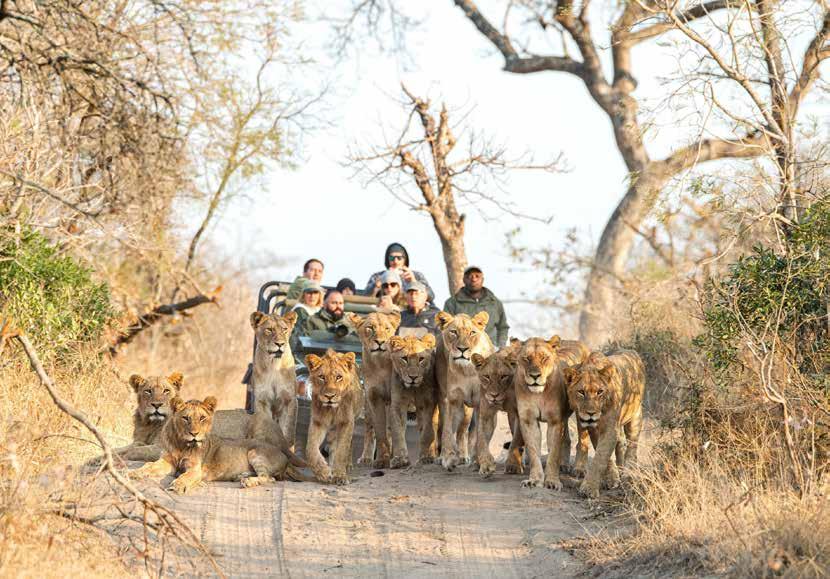
So far this year, 150 lion sightings have been recorded within the project area, along with 13 cubs. It’s a hopeful sign of recovery for the local lion population. Together we’re supporting safer communities, healthier rangelands and a future where people and wildlife can both thrive on shared land.
Careers, training, and opportunities with lasting impact
Our people
At the heart of Nawiri are the people who bring it to life. Many grew up alongside the wildlife and communities where we work, and their stories are woven into the landscapes we protect. From our guides who know every birdcall of the bush, to young interns taking their first steps in hospitality, and to colleagues in our offices connecting travellers to our experiences, our team is connected by purpose. We believe in creating meaningful work that is fair, supportive, and full of opportunity, so that everyone who joins us can grow, contribute, and feel proud to be part of the success they make possible.
A Commitment to Training
We continue to prioritise training and development across the group, tailoring opportunities to the diverse roles and locations of our staff. From in-camp training with our dedicated field team to online platforms accessible anywhere, to , we provide pathways for growth at every level. The Asilia Academy equips commercial teams with specialist skills, while our expanding library of soft skills courses supports personal as well as professional development. Our training opportunities allow people to grow and progress within their careers. Alongside this, life-skills and wellbeing support ensure our people thrive in every aspect of life.
Gender Equality
Gender equality is an area we continue to focus on, particularly within our East Africa safari operations where women have historically had fewer opportunities to build careers. Over the past two years we have increased our female headcount, but our priority now is understanding not only how many women we are hiring, but how well we are supporting and retaining them.
This past year we carried out detailed research across Asilia East Africa to better understand the challenges women face in camp and lodge operations. We looked closely at our workplace environment, reviewed job quality surveys, and asked whether our policies truly create a safe and supportive space. As a result, we introduced a new maternity policy and strengthened our sexual harassment policy, building the foundations for greater equity. We recognise that attracting female talent is only the first step. Retention, training, and clear pathways into leadership roles will ensure we have an environment that will attract and retain women over time.
Several of our female guides have already advanced into senior positions, such as Evalyn Sintoya, Kenya’s first female walking guide in the Maasai Mara. Her success shows what is possible when opportunities are fair and support structures are in place.
Local Opportunities
Offering opportunities to local people is central to how we operate. In East Africa, we define “local” as someone who attended primary school in the villages closest to our camps. These are often rural areas where access to quality jobs can be limited, and where talented young people face real barriers to building careers. By opening doors to employment, training, and education, we help create pathways that allow people to pursue careers while staying connected to the landscapes they call home. We provide scholarships and training opportunities in hospitality and tourism, sectors that might otherwise feel out of reach. We help fund organisations that support this goal, such as the Wildlife Tourism College of the Maasai Mara, which equips students from surrounding communities with the practical skills and experience to thrive in the safari industry.
Job Quality
We believe good jobs change lives. While our B Corp certification holds us to rigorous global standards on fair pay, equity, and workplace wellbeing, we also genuinely believe in doing our best for our team.
1103 35% Staff Trained Female Staff
The impact of this approach is twofold. For local communities, it means more meaningful, long-term employment and the chance to build livelihoods close to home. For our guests, it means the opportunity to connect more deeply to East Africa’s wild places, guided and hosted by people who know these landscapes best, with a knowledge and authenticity that cannot be taught anywhere else.
We use detailed job quality surveys to identify gaps, build targeted initiatives, and track results over time. This continuous cycle of listening, action, and review helps us create fair, supportive, and highquality jobs across every part of the business, helping us to track progress and act on what matters to our people.
Working carefully within wilderness landscapes
We are committed to sustainable operations, minimising our footprint through renewable energy, and efficient resource use, while working closely with third-party suppliers to ensure they share our sustainability ethos.
Sustainability
INTERNAL IMPACT
Internal Impact
Sustainability at our heart
We have a deep respect for the fragile ecosystems in which we operate. These wild places make everything we do possible, yet they are vulnerable to the pressures of climate change and human impact. We recognise the responsibility that comes with welcoming travellers into such environments.
In Our Heritage
From our beginnings, sustainability has been the foundation of who we are. Our vision has always been rooted in respect for the land, its people, and wildlife. That conviction has guided us ever since, shaping how we design our camps, source our materials, and welcome our guests into some of Africa’s most fragile ecosystems.
In 2012, we became the first company in Africa to achieve B Corp certification, and only the second travel and hospitality business globally to do so. We believe running a business responsibly is inseparable from caring for the places that make it possible and that ethos is woven through everything we do. From moving towards 95% solar power in our camps to eliminating single-use plastics, to working with suppliers who share our values, sustainability is part of our heritage and our compass, ensuring that the choices we make today keep these wild places alive for tomorrow.
In Our People
Sustainability is part of who our people are. Many of our colleagues grew up in the communities that border the landscapes where we work. Respect for water, soil and wildlife is second nature to them, which is carried through into their jobs. There is a genuine care around our natural resources born by habits passed through generations.
We’ve also found that same energy amongst our office based teams. We see the same the same mindset of our safari guides in our engineers. They are enthusiastic about using data to help track how much energy, water and waste is being used in camp, building simple systems that allow us to reduce our footprint.
Our teams are found supporting clean ups of highways into the protected landscapes where we operate, where we also place donated roadside bins, collecting the rubbish in our trucks during supply runs so that it can be sorted and recycled.
In Cape Town, colleagues join planting days, working side by side to restore indigenous fynbos in an urban landscape. Offices across the group recycle and reuse, from paper and plastics to electronic equipment.
What unites these acts, whether in a camp kitchen or a city office, is a shared love for nature. No one is told to care. It comes naturally, and it is lived through small, everyday choices. Sustainability is part of our people, and it runs through everything we do. Collectively we recognise each small act as part of our bigger journey.
In Our Camps & Lodges
We work in some of the world’s most pristine landscapes, where every operational choice must be rooted in reducing harm. Because we bring travellers into wild places, we invest heavily in methods and systems that minimise our ecological footprint in camps and lodges.
Our Environmental Management System (EMS) supports this commitment. It tracks metrics like waste, water, emissions, and renewable energy use to guide improvement. From the analysis of historical data that we gathered last year we’ve identified and made progress on our key priorities of lowering waste per bednight, expanding water recycling, and increasing renewable energy uptake.
We are always looking to reduce waste., and of that we can’t reduce, over 90% is recycled. We are working towards the goal of getting it to 100%.
One of our successes this year has been the installation of a vertical farm at Encounter Mara. Built in partnership with local hydroponics specialists, the farm produces fresh vegetables within the camp itself, cutting the need for long supply runs and reducing food miles. It provides the majority of fresh produce served to guests and staff at the camp, as well as supplementing supplies at two of our other properties.
While we are proud of our progress, we also know there is much more to do. Each step forward helps us reduce our footprint and act responsibly in the landscapes we call home. We remain committed to continuous innovation and care when it comes to sustainable operations in our camps and lodges.
In Our Suppliers
A big focus this year has been auditing and improving the sustainability of our supply chain. This spans procurement of items for our camps and lodges, third-party operational partners as we move our guests around the continent and the third party properties our guests visit through our Asilia DMC, and our Go2Africa travellers. In the absence of an industry-wide African standard, we’ve created our own baseline assessment based on GSTC criteria, aligned with B Corp and Travelife guidelines.
Our audits started with our Southern Africa third party suppliers. Of our top four destinations in Southern Africa (Botswana, Zimbabwe, Zambia and South Africa) we’ve audited 437 properties and found that 70% are actively engaged in impact and sustainability initiatives. These audits give us a good high-level understanding, a starting place for further conversations, and the opportunity to drive business to our partners who invest in impact and sustainability.
Water and waste
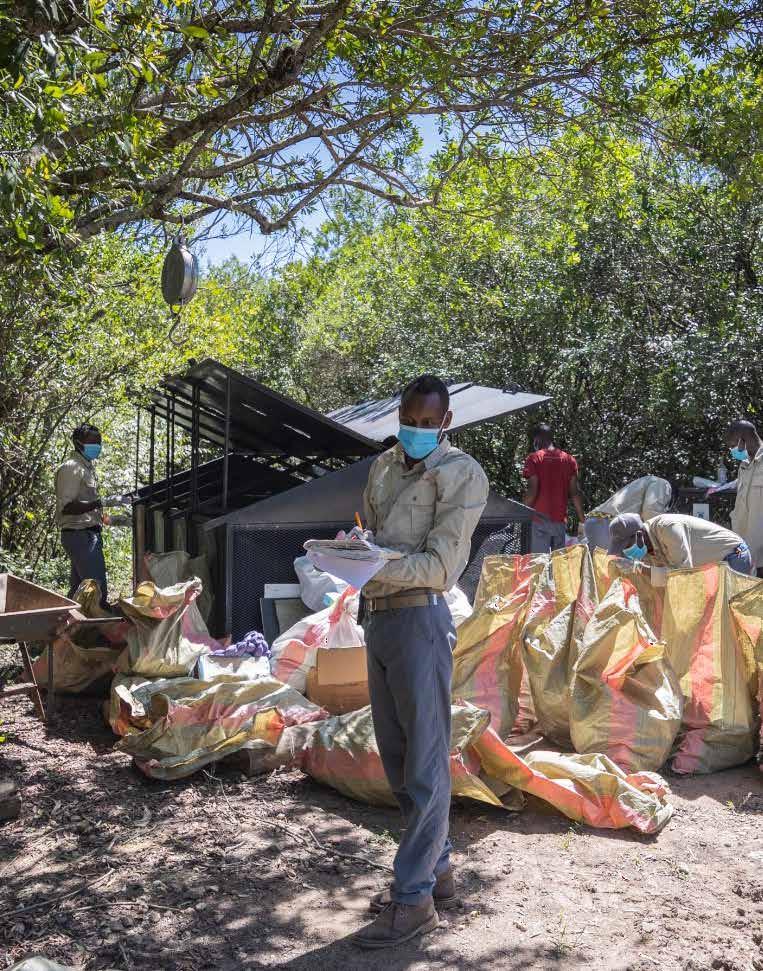
We take a rigorous approach to waste recycling in our camps and lodges. All solid waste is carefully sorted at source, with the team separating plastics, metals, glass, paper, and organic material. Everything is weighed and recorded before being transported off-site to certified recycling facilities.
Recycling waste being sorted and weighed at our Encounter Mara camp in the Naboisho Conservancy, Kenya
970 litres of water used per bednight
↑ 5% increase year-on-year from 925 litres per bednight
Our camps used 9751 litres of water per bednight between June 01, 2024, and May 31, 2025, primarily from groundwater sources. The increase is primarily attributed to construction and improved data collection.
Use Per
0.8kg of food waste per bednight
↓ 28% decrease year-on-year from 1.3kg per bednight
Our food waste is composted onsite. To reduce food waste we have run training sessions with our chefs, looking at portioning and menu planning, and improved food storage in camp.
0.14kg of plastic waste per bednight
↓ 26% decrease year-on-year from 0.19kg per bednight
All plastics are separated, weighed, and transported off-site for recycling or appropriate disposal. While we have eliminated plastic water bottles, PET plastics from other sources, such as olive oil bottles, remain.
Energy and emissions
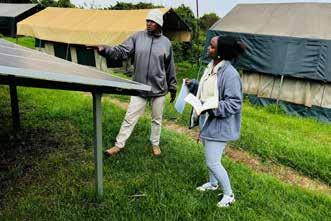
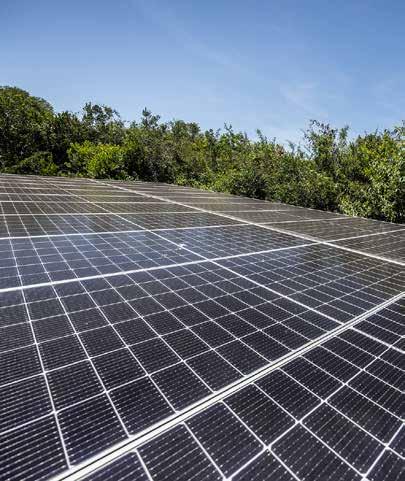
Operating in some of Africa’s most remote and fragile ecosystems means that how we generate and use energy must be both reliable and low impact. Solar power remains the cleanest energy option for our operations and is the primary power source in all Asilia camps.
In the 2024/25 financial year, 81% of all energy used across our camps came from solar, up from 75.5% the previous year. Collectively, our solar systems generated 385,000 kWh of clean energy, compared to 282,000 kWh last year, a 36% increase.
These gains reflect significant investment in our solar systems. While solar now powers most of our operations, diesel still drives our vehicle fleet, our largest remaining source of Scope 1 emissions.
Transitioning to electric vehicles will require an increase in solar generation and storage, forming the foundation of our long-term energy transition plan, ensuring our operations remain as light on the land as possible while helping us reach our goal of reducing Scope emissions by 90% by 2037.
While reducing emissions is our primary goal, what we are unable to reduce or erase, we offset through partners with community focused REDD+ projects in Kenya and Tanzania.
Carbon Tanzania, Tanzania
We offset our Scope 1 emissions in Tanzania through Carbon Tanzania, which develops REDD+ projects that protect endangered forests while enhancing local livelihoods.
A project we support in partnership with Honeyguide Foundation, is governance training, ranger development, and management systems across community-led Wildlife Management Areas (WMAs) For five WMAs in southern Tanzania. This work has strengthened local capacity and enabled them to qualify for verified carbon credits from Carbon Tanzania, with revenue generation beginning next year. The credits will create a long-term, conservation-based income stream in a region with limited tourism potential, ensuring communities are financially rewarded for keeping forests standing.
Chyulu Hills, Kenya
The Chyulu Hills REDD+ Project protects over 410,000 acres of forest and savanna between Kenya’s Tsavo and Amboseli national park, a critical wildlife corridor facing pressures from deforestation and grazing. Certified under Verra’s VCS and CCB Gold Standards, the project delivers verified climate, community, and biodiversity benefits.
Revenue from carbon credits supports community conservation, ranger employment, and the restoration of degraded habitats. Our partnership here allows us to offset emissions while contributing to the long-term protection of one of East Africa’s most important water catchment areas.
81% of energy used in camp is solar ↑ 36% increase year-on-year from 75.5%
We want to get travellers to engage with and care about impact and sustainability
Our guests
Every traveller who stays with us becomes part of our impact story. When guests travel with us they are also helping protect ecosystems, fund education, and create livelihoods. This is what impact means to us a shared effort to ensure that Africa’s wild places endure, and that the people who call them home thrive.
To shift the industry toward sustainable travel, we need both real impact on the ground and responsible operations within our business. Yet the true catalyst for change lies with travellers themselves: when travellers are inspired by responsible travel, and seek it out, their choices drive demand for sustainability across the industry. By making our practices visible and engaging with travellers around our impact work, we can help shape a future where sustainable travel becomes the standard. This year, once again our work was recognized with multiple sustainability awards, highlighting our impact, and strengthening our message.
Guest experience is key to business growth, which in turn will allow us to scale and grow our impact agenda. Both Asilia Africa and Go2Afria use Net Promoter Score (NPS), a measure used to gauge customer loyalty, satisfaction, and enthusiasm with a company. NPS measures customer loyalty by asking “How likely are you to recommend our product/service to others?” on a 0-10 scale, where only customers scoring 9 or 10 are Promoters, ensuring these represent truly enthusiastic advocates, while 7-8 are Passives, and 0-6 are Detractors. The final NPS is calculated by subtracting the percentage of Detractors from the percentage of Promoters, resulting in a score between -100 and +100, with higher scores indicating stronger customer loyalty.
GO2AFRICA
Impact in Action
Some of the community living close to Rubondo National Park talk about the direct impact tourism has for them and their families.
Rubondo National Park
“Asilia accounts for 60% of my business, which is a money exchange service. Through my income I support a family of five which includes my parents and siblings.”
“I have a hardware shop and when there is maintenance done in the camp they buy hardware and plumbing supplies from me. My business is thriving and is what funds my child’s education”
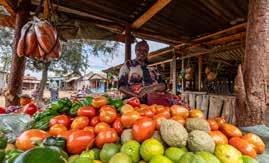
“Every Saturday Asilia buys my best vegetables, they really like my tomatoes. I’ve been able to upgrade my stall thanks to the regular business which supports my whole family; I have seven children.”
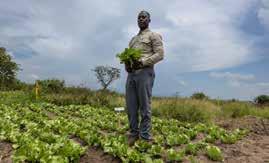
“I’m a farmer, and since 2022 I’ve been employed by Asilia to run a farm in Muganza. This supplies the camp with fresh herbs and vegetables, while I get a regular income and healthcare for my family”
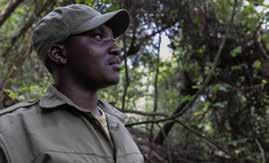
“Honeyguide [Asilia funded] employ me as a chimpanzee tracker; I used to be a farmer. The job allows me to provide for my family, which includes my five children. I’m proud of the wildlife on the island.”
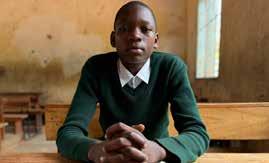
“I do much better at school now. The new desks have had the biggest impact as I used to write on the floor. I make less mistakes now and don’t spend as much time erasing my work.”
Rubondo Island National Park, a pristine sanctuary in Lake Victoria, protects forests and wildlife including chimpanzees. Asilia Africa acquired Rubondo Island Camp in 2013, investing in conservation, research, and sustainable tourism, supporting the local community to ensure that both they and this remarkable landscape would thrive.
Nature Protection
Nature protection through the payment of park fees which fund TANAPA. In 2024/2025 we contributed over US$5.4m in park fees and permits in Tanzania as a whole.
Quality of Education
We support primary schools in the area with desks, and learning materials, and classroom infrastructure.Exam performance has improved thanks to a stronger learning environment.
New Sustainable Practices
At Rubondo, solar power, measured water use, and grey-water recycling underpin operations.
Waste is tracked and recycled while regular clean-ups remove plastic from the beach.
Community Projects
TANAPA use park fees to fund community-led projects around the National Park. Most recently they have invested in supporting a fishing cage to support youth fishermen.
Wildlife Populations
Wildlife on Rubondo is thriving. Elephant and chimpanzee numbers have risen, poaching on the island is near zero, and community trackers now help protect the island’s rich biodiversity.
Local Employment
The camp creates local career opportunities in roles such as guiding and hospitality, allowing neighbouring communities to build lasting livelihoods, supporting the local economy.
Scholarship Support
Decrease in Poaching
Scholarships, widely advertised in local communities, enable young people to study courses such as hospitality management Arusha, opening career paths for those unable to afford higher education. Poaching around Rubondo has fallen sharply. Though village populations have grown, incidents per hundred people have decreased, reflecting stronger community awareness.
Community Income
Income from tourism flows through surrounding villages, staff wages, produce sales, and local services create a steady trickle-down effect, strengthening small businesses and family livelihoods.
Tourism
Product
Investment in chimpanzee habituation has made Rubondo a viable year-round destination, with sighting success rising from 69% in 2014 to 95% in 2024, strengthening tourism.
Frank Msese
Shukrani January
Genita Milali
Flavian Maduka
Richard Bituro
Kelvin Ndalahwa
Impact in Action
Ripples of impact
From the park fees that our travellers pay which support nature protection on the island, to the projects we fund directly such as the investment in school infrastructure to enhance the quality of education, to the scholarships that provide a career entry point to the youth of nearby villages, to the members of the community whose businesses benefit from Rubondo Island Camp, the ripples of impact from tourism spread widely beyond the National Park.
On the far edge of Lake Victoria, Muganza Primary School sits between green hills and the slow sweep of the lake shore dotted with fishing boats. For Head Teacher Simon Samuel (pictured left) the impact of tourism is visible in his pupils’ handwriting.
“Asilia has given a lot of support to the school, including equipment and desks,” he says. “We also had help to finish building two classrooms which both needed a roof and windows before they could be used. Before, children were studying outside under trees. Even supplies like cupboards and bookshelves have made a difference. Teachers can now prepare lessons properly and keep their materials organised.”
The results are clear. In 2022, 63% of the 222 pupils sitting standard seven, the Primary School Leaving Examination (PSLE) passed. In 2024, with the new classrooms and one hundred desks, 94% out of 275 did. “We split classes into three streams and could focus on individual needs. The improvement speaks for itself,” he adds.
Fourteen-year-old Rehema Joram is a pupil at the school. Her parents are fishermen and she dreams of becoming a judge. “Before, I used to sit on the floor,” she says. “Now with the desks, I can write properly and my handwriting is much better.”
In Muganza village, fruit and vegetable seller Genita Milali arranges neat piles of tomatoes on her stall. “Every Saturday Asilia buys my best vegetables, they really like my tomatoes,” she says. “With that regular business I’ve expanded and improved the structure of my stall and have a good income to help support my seven children.”
A few streets away, Frank Msese, who runs a money-changing business, smiles at the mention of tourism. “Asilia accounts for sixty percent of my trade. Through that income I support my parents and siblings.” He says.
When maintenance work is needed at Rubondo Island Camp, the order goes to Shukrani January, who owns the local hardware shop. “They buy plumbing fittings and other supplies from me. My business is thriving and supports my whole family.”
The camp itself employs 37 staff, over 35% from nearby villages. On their days off they travel home, buying food and household goods locally. Their wages circulate through the area, sustaining dozens of small traders.
For TANAPA park staff, the impact is measured in wildlife as much as livelihoods. Chief Park Warden Imani Kikoti explains how tourism helps the protection of Rubondo beyond raising revenue through park fees. “When I first worked here twenty years ago, there was a lot of poaching activity. Now the trackers and rangers patrolling, alongside the tourism presence, have helped reduce it.
Tracker James Mazezele, who has worked on the island for nearly three decades, talks of the social change. “More people from my village have jobs on the island now. Trackers, rangers, and camp staff. A lot of youth have received scholarships to study in Arusha. My children go to a primary school that got new desks funded by Asilia.”
Even the lake itself reflects the connection between people and protection. TANAPA, together with a community groups, the Bugwego youth association, have funded a fish-cage farm outside the park boundary. “It will give young fishermen their own source of income,” says Kikoti. “They see the value of protecting the breeding grounds inside the park.”
These ripples, improved classroom, growing businesses, protected fish stocks, show what happens when ecosystem health and community opportunities are tied together by steady, local investment. Impact spreads out, widening its reach, allowing both people and wildlife to thrive.