RESHAPE your TOMORROW.
Consider weight-loss surgery TODAY
The Surgical Weight Control Center in Las Vegas offers a variety of quality weight-loss procedures and long-term management to help you take control of your lifestyle.
Marc R. Leduc, MD Medical Director
Call 702-313-THIN (8466) to learn more or scan the QR code to sign up for a FREE seminar.
Affiliated with West Henderson Hospital
2850 W. Horizon Ridge Parkway, Suite 100 | Henderson, NV 89052 surgicalweightcontrolcenter.com Individual results may vary. There are risks associated with any surgical procedure. Talk with your doctor about these risks to find out if bariatric surgery is right for you. Physicians are independent practitioners who are not employees or agents of West Henderson Hospital. The hospital shall not be liable for actions or treatments provided by physicians. For language assistance, disability accommodations and the nondiscrimination notice, visit our website. 266159710-6435921 9/26
YOU DESERVE HEALTHCARE
THAT FEELS PERSONAL EDITORIAL & ART Ass oc i ate Pub li s her a nd Special Publications Editor ALE X H AAS E Managing Editor/News DAVE MONDT Sta ff Writers AVA CHATLOSH, GRACE DA ROCHA, HILLARY DAVIS, KATIE ANN MCCARVER Copy Ed i tor ABRAHAM KOBY LANSKI Sta ff Photog ra p hers CHRISTOPHER DEVARGAS, STEVE MARCUS, WADE VANDERVORT
ADVERTISING Vi ce Pres id ent of Dig i ta l KATIE HORTON Senior Ad verti s i ng Ma na g er MIKE MALL, ADAIR MILNE, S U E S RA N Account Exec utives LAU R EN DALY, MEL I NA TAY LOR Web Content Sp ec ia l ist CLAYT KEEFER
PRODUCTION & DISTRIBUTION Vi ce Pres id ent of Ma nufa cturi ng MAR I A BLONDEAUX Prod ucti on Director PAU L HU NTSBER RY Prod ucti on Ma na g er BLU E U Y EDA
PRIMARY CARE & FAMILY MEDICINE
Welcoming Medicare Patients
Ma rketi ng & Ed i toria l Des ig ner AMANDA LU NDQU I ST Multi m ed i a Prod ucti on Des ig ner MAR I SSA MAHERAS Senior Tra ffi c Coord inator DENI SE ARANCI BI A Tra ffic Coord i nator KI MBER LY CHANG Ful fi ll m ent O p erations Coord i nator CASANDRA PI ER C E
• On-site lab, X-ray & ultrasound • Accepting new patients
MARKETING & EVENTS
• Personalized care from an experienced team
Events Di rector SAMANTHA LAMB Events Ma na g er HANNAH ANTER Events Coord inator APR I L MARTI NEZ
GREENSPUN MEDIA GROUP SAME-DAY & WALK-IN APPOINTMENTS AVAILABLE
CEO, Pub li s her & Ed itor BR I AN GR EENSPU N Chief O p erating O ffi cer R OBERT CAU THOR N Di rector of Hum a n Res ources SHANNA CHAVEZ G RAY Chief Fi na nc i a l O fficer STEVE GRAY Ma na g ing Ed itor RAY BR EWER V EGAS INC
5410 W Sahara Ave. West of Decatur • North side of Sahara
Most Major Insurance Accepted Aetna • Humana • Medicare • UHC Please call to verify your specific plan
Call to Schedule Your Appointment
(702) 362-2500 osteodoxlv.com
4
H E A LT H C A R E M AG A Z I N E
OCTOBER 2026
P.O. BOX 94 018 LAS VEGAS, NEVADA 89193 | 702. 990. 2550
From the editor
E
very year when we compile our Top Doctors list, I feel reassured when I see the names of doctors I’ve trusted with my own health. Among them, some were recommended to me by word of mouth, but many were also recommended by my primary care physician or another specialist. Sometimes, it’s easy to forget that physicians are people too, and that they have medical needs of their own. When a physician offers that vote of confidence in a peer—someone they trust with their own lives—it carries considerable weight. I’m thankful that my doctors treat me on a personal level and are willing to share such information with me, but I know the same is not true for everyone. That’s why our annual Top Doctors list is such a valuable resource to the community—it gives all our readers access to the peer recommendations of our local physicians. Doctors across the Valley are invited to nominate peers they trust and respect across a range of medical specialties. Once nominations are received by Vegas Inc, each physician is checked against the appropriate medical boards, and the result is a list of doctors recommended by doctors. While we celebrate the physicians who have earned the confidence of their peers, we also hope that this list may serve as a starting point for our readers, whether they’re establishing care with a new provider, looking for a specialist or facing an unexpected diagnosis. Beyond Top Doctors, this issue covers a wide range of topics affecting healthcare in Southern Nevada. Among them, we look at what Sunrise Hospital & Medical Center’s new Level I Trauma Center means for the community and the role freestanding emergency rooms play as the Valley grows. Brain health is another focus. We look into whether aerobic exercise could help slow the progression of Parkinson’s disease, as well as ways to support brain health as we age
and potentially reduce the risk of Alzheimer’s disease and other forms of dementia. Of course, the people providing care have lives outside of medicine, too. In our Beyond Medicine feature, six Southern Nevada physicians share the interests and experiences that occupy their time away from work, from music and photography to endurance sports, travel and family. Their answers offer a different glimpse of the doctors behind the credentials and, in some cases, how caring for others has influenced the way they live their own lives. That brings us back to the physicians who make our Top Doctors list possible. I want to thank each doctor who took time out of their busy schedule to participate in the nomination process. We benefit from their knowledge of our medical community and their willingness to recommend and advocate for their fellow physicians. I also want to thank our sponsors, University Medical Center and Comprehensive Cancer Centers of Nevada. We appreciate your commitment to this publication and your continued support of our annual Top Doctors issue. I’d also like to thank Circa Resort & Casino for once again hosting this year’s event. Lastly, I want to congratulate each of this year’s Top Doctors honorees. Being recognized by other physicians is a meaningful distinction, and we’re proud to honor the doctors who earned the respect and confidence of their peers. Sincerely,
Alex Haase Associate Publisher and Special Publications Editor
OCTOBER 2026
H E A LT H C A R E M AG A Z I N E
5
From the sponsor
C
omprehensive Cancer Centers congratulates the 2026 Vegas Inc Top Doctors honorees. We are proud to support and recognize the heroes throughout our healthcare community, including several of our own physicians, by sponsoring this annual recognition. Southern Nevada’s healthcare professionals work selflessly to provide compassionate treatment to patients across the region. Their commitment to delivering first-rate care remains exemplary. For more than 50 years, Comprehensive physicians have provided high-quality care across medical oncology, hematology, radiation oncology, breast surgery, pulmonary services, cancer genetic counseling, clinical research and infusion services. Our professionals continue to enhance the patient experience by recruiting exceptional physicians and advanced practice providers, expanding specialized services and investing in advanced technology. This year brought several milestones. We opened a 15,000-square-foot flagship treatment center in the Las Vegas Medical District, expanding access to medical oncology, PET/CT imaging, genetic counseling, and Phase II and III clinical trials. Its location also creates opportunities for collaboration with nearby healthcare institutions, including the Kirk Kerkorian School of Medicine at UNLV. We also announced SCRI at Comprehensive
6
H E A LT H C A R E M AG A Z I N E
OCTOBER 2026
Cancer Centers, a collaboration with Sarah Cannon Research Institute that broadens access to innovative, community-based clinical trials. Patients may benefit from a wider range of research opportunities, cutting-edge therapies and advanced trial matching informed by clinical and genetic data. This relationship builds on Comprehensive’s decades of research leadership, which has contributed to the development of more than 120 FDA-approved therapies. Our growth reflects a longstanding promise, which is to bring coordinated, research-driven care closer to home while meeting the evolving needs of Southern Nevada. We take tremendous pride in supporting the local medical community and sponsoring Top Doctors for 14 years. Congratulations to the 2026 honorees on your noteworthy contributions. Together, we will continue advancing health care and making our patients proud.
Sincerely,
Lisa Santwer Executive Director Comprehensive Cancer Centers
Nothing heals like home. The best doctors and my very best friends, right here where I needed them.
50 YEARS IN NE VADA 10 TREATMENT CENTERS 37 MEDIC AL / R ADIATION ONCOLOGISTS
Here Where You Need Us
OVER 100 CLINIC AL TRIAL S 4 BREAST SURGEONS 6 PULMONOLOGISTS 23 ADVANCED PR AC TICE PROVIDER S 3 GENE TIC COUNSELORS
cccnevada.com • 702.952.3350
Medical News ALZHEIMER’S CARE SHIFTS TOWARD EARLIER DETECTION Neurologists at Cleveland Clinic Lou Ruvo Center for Brain Health say Alzheimer’s care is moving toward earlier detection and treatment. Blood-based biomarker testing is entering clinical practice, potentially making it easier to identify biological signs of Alzheimer’s earlier. At the same time, new disease-modifying therapies are changing how physicians approach patients in the early stages of the disease. The developments are also raising questions about how Alzheimer’s should be defined, including whether a biological diagnosis could be made years before symptoms appear.
VALLEY HEALTH SYSTEM EXPANDS ACCESS TO VIRTUAL CARE The Valley Health System is expanding access to virtual behavioral health care through its affiliation with Talkspace. The partnership connects Talkspace’s virtual therapy and psychiatry services with Valley Health’s existing outpatient, crisis, inpatient and recovery programs, creating a broader continuum of behavioral health services. The affiliation follows parent company Universal Health Services’ acquisition of Talkspace, which has approximately 6,000 licensed providers nationwide.
Inside this issue
8
H E A LT H C A R E M AG A Z I N E
10 14
POSTPARTUM ALERT BRACELETS AIM TO IMPROVE EMERGENCY CARE Sunrise Health System has introduced orange postpartum alert bracelets to help emergency responders identify patients who have recently given birth. Mothers are encouraged to wear the bracelets for six to 12 weeks after delivery, when they may face increased risk of complications including hemorrhage, preeclampsia, sepsis and blood clots. The bracelets can prompt screening for maternal emergencies and help EMS route patients to appropriate facilities.
Contributed columns: Medical professionals share their insights Beyond Medicine: Physicians share the lives they live outside their profession
OCTOBER 2026
18 38
Vegas Inc’s list of a few of the Valley’s Top Doctors UNLV research suggests exercise could help slow Parkinson’s disease
46 48
Cleft and palate care is a growing specialty in Southern Nevada News and updates from the Las Vegas medical community
Advanced heart and lung care.
For every beat. For every breath. Life is defined by its rhythm. Whether it’s the steady pulse of a healthy heart or the ease of a deep, restorative breath, these are the moments that matter most. At Dignity Health, our dedicated cardiothoracic team is committed to safeguarding your most vital functions. Using advanced surgical expertise and a compassionate, patient-centered philosophy, we’re here to help you get back to the things—and the people—you love. Experience care that keeps pace with the rhythm of your life.
Dignity Health Cardiovascular and Thoracic Surgery 7190 S. Cimarron Rd. Las Vegas, NV 89113 (702) 675-3240 10001 S. Eastern Ave., Ste. 201 Henderson, NV 89052 (702) 616-5700
To learn more, scan or visit DignityHealth.org/NVCVT.
Michael Wood, MD
Neel V. Dhudshia, MD
Chan Jerome “CJ” Park, MD
Bruce M. Toporoff, MD
Five ways to protect your brain health BY DYLAN WINT, MD
H Dylan Wint is a neurologist and the Medical Director of Cleveland Clinic Nevada
ealthy aging has long focused on protecting the cardiovascular and musculoskeletal systems but increasingly, we recognize that protecting the brain is just as important. This is especially relevant in Nevada, one of the nation’s fastest-aging states. While age and genetics play a role, according to the World Health Organization, up to 45% of dementia cases may be prevented or delayed by addressing modifiable risk factors. The choices we make today can have a lasting impact on longterm cognitive health. No single habit can guarantee protection from dementia, but consistent lifestyle choices can make a meaningful difference over time. Here are five ways to support brain health and healthy aging.
1. Feed your brain
What you eat matters just as much for your brain as it does for your heart. A brain-healthy eating pattern, such as the MIND diet, emphasizes leafy green vegetables, berries, whole grains, beans, nuts and fish while limiting processed foods, added sugars and saturated fats. Nutrient-rich foods help protect brain cells, reduce inflammation and support blood vessels that supply the brain.
2. Keep moving
Exercise is one of the most powerful tools for protecting your brain. Regular activity improves blood flow to the brain, supports memory and thinking, and helps manage conditions such as hypertension, diabetes and high cholesterol, all of which are linked to increased dementia risk. Aim for at least 150 minutes of moderate physical activity each week, incorporate strength training and look for opportunities to move throughout the day.
3. Challenge your mind and stay connected
Your brain thrives on learning. Mentally stimu-
10
H E A LT H C A R E M AG A Z I N E
OCTOBER 2026
lating activities like taking a class, learning a hobby, reading, doing puzzles and trying new experiences strengthen brain connections. Maintaining meaningful social relationships is equally important. Spending time with friends and family, volunteering, joining a club, or participating in community activities can support emotional well-being and avoid the negative effects of social isolation.
4. Prioritize sleep and manage stress
Your brain works hard while you sleep. During quality sleep, the brain stores memories, repairs itself and clears away waste, including proteins associated with Alzheimer’s disease. Typical adults need seven to eight hours of sleep each night. Managing stress is also an important part of maintaining cognitive health. Chronic stress can negatively affect memory, concentration and overall well-being. Mindfulness, meditation, deep breathing, yoga and outdoor time are strategies that can build resilience and support a healthy brain.
5. Know your numbers and protect your senses
One of the best ways to protect your brain is to maintain your overall health. Abnormal blood pressure, high cholesterol, diabetes, being underor overweight, and smoking are among the factors associated with increased dementia risk. Regular primary care visits can identify and manage these conditions early. Attending to hearing and vision is also important—if you notice a decline, speak with your healthcare provider about evaluation and treatment options.
Small steps can make a big difference
It’s never too early or too late to invest in your brain health. While there is no guaranteed way to prevent cognitive decline, adopting healthy habits reduces risk and improves overall quality of life for years to come.
Physician advocacy is a critical part of caring for patients BY RUPESH J. PARIKH, MD
M
ost physicians enter medicine for one reason: to care for patients. Physicians spend years learning how to diagnose illness, develop treatment plans and guide patients through some of the most difficult moments of their lives. But excellent care requires more than clinical expertise. It also requires advocacy. For physicians, patient care does not end at the exam room door. When regulations create unnecessary hurdles, insurance requirements delay appropriate care or administrative rules make treatment harder to obtain, physicians have an obligation to speak up. I experienced this firsthand during a five-year effort that changed how cancer patients access oral chemotherapy. For years, oncology practices in Nevada faced a burdensome pharmacy inventory requirement that limited the ability to dispense oral cancer medications directly to patients at the point of care. The rule may have been well-intentioned, but it created operational challenges for community oncology practices and added another layer of difficulty for patients already facing a cancer diagnosis. Physicians, practice leaders, pharmacists and advocates recognized that the rule was standing in the way of efficient, patient-centered care. Together, we engaged with the Nevada Board of Pharmacy and other stakeholders to explain the real-world impact. Meaningful policy change requires persistence, education and a willingness to keep showing up. After five years of meetings, conversations and advocacy, the rule was ultimately overturned. The change may sound technical, but its impact was deeply human. Removing an unnecessary administrative barrier meant fewer logistical hurdles, greater convenience and a more seamless treatment experience for people already navigating the challenges of cancer.
That experience reinforced my belief that advocacy is not separate from medicine. Advocacy is patient care. This theme was central to my recent co-authored publication in JCO Oncology Practice, which focused on the importance of physician advocacy in protecting local cancer care. Community physicians are uniquely positioned to see how policy decisions affect patients in real life. We understand the science behind treatment decisions, but we also understand what happens when a patient is forced to wait, appeal, travel farther or navigate a system that is more complicated than it needs to be. Today, that responsibility extends well beyond pharmacy regulations. Cancer patients increasingly face insurance barriers, including prior authorization requirements, step-therapy protocols and “fail-first” mandates that can delay access to treatments. These policies are often created with legitimate goals, including controlling costs. But physicians see the consequences when a patient must try one treatment before receiving the therapy their physician believes is most appropriate, or when a patient waits weeks for an insurance determination. In cancer care, time matters. Physicians have an important voice in these conversations. We can help regulators, legislators, professional organizations and payers understand how policy decisions affect patients, families and care teams. The future of cancer care will require physicians to embrace both roles: clinician and advocate. Our responsibility does not end when we prescribe a treatment. It extends to helping ensure patients can actually access that treatment in a timely and equitable way. Whether we are challenging outdated regulations, addressing insurance barriers or shaping healthcare policy, the goal remains the same: removing obstacles between patients and the care they need. OCTOBER 2026
Rupesh J. Parikh, MD is Practice President and a Medical Oncologist for Comprehensive Cancer Centers of Nevada.
H E A LT H C A R E M AG A Z I N E
11
Neurofeedback may be a solution when talk therapy isn’t enough BY ROBYN ROHDE
have not experienced enough relief from other approaches.
A
Robyn Rohde is the Director of Integrative Wellness Clinic of Nevada’s Henderson location
ccording to the National Institute of Mental Health, each year, 1 in 5 adults and 1 in 6 adolescents experience a mental illness or depressive episode. Yet many people cycle through treatments that don’t meet their needs. This challenge is particularly acute in Nevada, which Mental Health America ranks 47th in the nation for access to mental health care. For Southern Nevadans, improving care means not only expanding access to qualified providers, but also offering more treatment options when a first or even second approach doesn’t provide enough relief. One of those options is neurofeedback.
What is neurofeedback?
Neurofeedback is a drug-free, non-invasive brain-training technique that uses EEG biofeedback to help train the brain to regulate itself. Sensors measure brain-wave activity and provide real-time feedback that essentially nudges the brain toward more regulated functioning. Through repeated training, the brain can learn and reinforce those patterns. Neurofeedback has been studied for different conditions including ADHD, PTSD, depression and anxiety, though evidence varies by condition and protocol. While some studies have reported promising outcomes, researchers continue to call for larger, more rigorous studies and greater standardization across protocols. Like other mental health interventions, neurofeedback does not work the same way for everyone. It is not a guaranteed solution or necessarily a replacement for psychotherapy, medication or other options. Instead, it can provide another intervention for people who
12
H E A LT H C A R E M AG A Z I N E
OCTOBER 2026
Bringing another option to Southern Nevada
After 13 years as a therapist, Jillian Wendelin has extensive experience with talk therapy and trauma-informed therapies such as Eye Movement Desensitization and Reprocessing. Over time, she became frustrated by how long it could take for even effective therapies to bring relief to some clients. Wendelin became focused on a question: What modalities could create deep, lasting change more quickly? That search led to neurofeedback. She first tried it herself for ADHD, then with her family. After seeing changes, she began incorporating neurofeedback into her work with clients. What she observed was significant enough that it became the primary focus of her practice, Integrative Wellness Clinic of Nevada. “I was surrounded by good people who were trying so hard to make their lives better,” Wendelin said. “I could see that if their brains could work with them rather than against them, things could move in the right direction.”
Expanding access in Southern Nevada
Neurofeedback requires repeated training sessions, making access an important consideration for patients who choose to pursue it. Earlier this year, Integrative Wellness Clinic of Nevada added a Henderson location on Water Street, expanding availability of treatment to the southeastern part of the Valley. For Wendelin, expanding access is less about positioning neurofeedback as a solution for everyone and more about ensuring Southern Nevadans have another option when traditional approaches don’t provide enough relief.
For Nevada’s caregivers: It’s time to care for your own health, too BY BRIAN GREENLEE, RN, MSN
A
cross the country, people are helping spouses bathe safely, driving parents to appointments, or managing meals, medications and daily routines for loved ones. According to AARP, about 63 million Americans are caregivers and this number has grown nearly 50% since 2015. Nationwide, 1 in 5 caregivers report being in poor health and half report financial strain related to caregiving. Nevada reflects that trend as more retirees settle here, and families take on added caregiving duties. According to the Centers for Disease Control and Prevention, more than 19% of Nevada adults aged 45 years or older report being a caregiver to a friend or family member. More than 18% of those adults report frequent mental distress because of the emotional and physical demands of caregiving.
The health toll of caring for others
According to AARP, high emotional stress is reported by 64% of caregivers while 24% report feeling alone. Anyone who has cared for a loved one understands the strain. Long distances, limited respite options and families spread across states can make caregiving especially isolating. The National Alliance on Mental Illness explains that caregiver stress manifests both emotionally and physically. It can cause headaches, stomach issues, sleep problems, low energy, aches and pains or tense muscles.
Simple ways caregivers can support their health
How can Nevada’s caregivers support their
well-being? There is some guidance from NAMI: Get enough sleep. Most adults need seven to nine hours a night. Naps can be good, as is a consistent nighttime routine and avoiding screen time before bed. Move your body daily. Take the stairs, walk up escalators, and consider biking or running, if possible. Talk with your doctor before significantly increasing your activity level. This is especially important for those with underlying medical conditions. Ask about the amounts and types of activities that may be best for you. Practice relaxation. Deep breathing, meditation or progressive muscle relaxation can help calm stress. Avoid alcohol or drugs for coping. These often worsen stress. Eat nourishing foods. Whole grains, fruits and vegetables may help stabilize mood and energy, and lower risk for chronic disease. Spend time with family and friends. Even if you don’t always have time, plan to meet up with a family member or a friend, or go to an event to stay connected for the long term.
Brian Grenlee is the Clinical Executive Director of Operations, Home Health, Hospice and Palliative Care at Southwest Medical Home Health, Hospice, Palliative Care, part of Optum
A reminder for those who know a caregiver
Caregivers make it possible for thousands of Nevadans to remain in their homes, maintain independence and live with dignity. They are the backbone of families across the state, yet their work often goes unseen. Simple gestures can go a long way. Offer a meal. Run an errand. Sit with a loved one briefly. Small acts can lighten an enormous load. Let’s remember to care for the caregivers. If you are a caregiver, remember this: Caring for yourself is necessary, not selfish. You deserve rest, support and compassion.
OCTOBER 2026
H E A LT H C A R E M AG A Z I N E
13
Zoltan Mari, MD
RUVO FAMILY CHAIR AND DIRECTOR OF THE PARKINSON’S DISEASE & MOVEMENT DISORDERS PROGRAM, CLEVELAND CLINIC NEVADA What do you enjoy doing when you’re not practicing medicine?
I took up table tennis about six years ago, after surviving cancer and recovering from chemotherapy. A colleague encouraged me to learn the sport properly and compete, and it became a new chapter in my life.
What’s something your patients would be surprised to learn about you?
I was a competitive water polo player in my youth, and I also won my hometown’s arm-wrestling championship at age 16.
Has being a physician changed the way you live your own life?
Being a physician and understanding the health benefits of exercise gives me an extra level of motivation. I know I’m investing in my future self, how I’ll look and function 10 or 20 years from now. I have young children, and I want to be around for them and capable of playing with them for years to come.
14
H E A LT H C A R E M AG A Z I N E
OCTOBER 2026
P
BY W S O T HO
AD
DER E VA N
VORT
What accomplishment are you most proud of outside of medicine?
I won the Las Vegas Corporate Challenge in 2024. I was not really a favorite. The year before, I lost in the second round of the men’s singles competition, but I improved a lot from 2023 to 2024. My coaches thought I might make it to the quarterfinals or perhaps even the semifinals, but I won it all.
What are you looking forward to over the next few years, professionally or personally?
What I’m looking forward to most is seeing the continued transformation of brain healthcare in this region. When I arrived in 2017 and organized our first continuing medical education program on movement disorders, we didn’t have a single attendee from the community. I was devastated. Last year, we held another CME program and had 100 attendees. Going from zero to 100 in less than 10 years gives me tremendous hope for what we can accomplish over the next decade.
OCTOBER 2026
H E A LT H C A R E M AG A Z I N E
15
16
H E A LT H C A R E M AG A Z I N E
OCTOBER 2026
Nelly Chow, DO
CARDIOTHORACIC SURGEON, MOUNTAINVIEW CARDIOVASCULAR & THORACIC SURGERY ASSOCIATES What do you enjoy doing when you’re not practicing medicine?
I wish I had an exciting answer like sky diving or rock climbing, but the operating room provides enough adrenaline for the day. I enjoy slow paced, calming activities such as reading, long walks and bird watching. This helps me find balance in an otherwise high-intensity profession. My ideal weekend would consist of taking a yoga class in the morning, a stroll through the farmers market and an evening getting lost in a good book.
What’s something your patients would be surprised to learn about you?
English is the fourth language I learned. I lived in four different countries before the age of 4; Myanmar, Taiwan and China before coming to the U.S.
Has being a physician changed the way you live your own life?
My patients invite me into their lives at a time of incredible vulnerability, and I never take that for granted. I have the privilege of listening and learning from their lived experiences. I always strive to be a more compassionate doctor with every encounter I have, and a more skilled surgeon with every case I complete.
What accomplishment are you most proud of outside of medicine?
I am proud of the life I have built with my husband here in Las Vegas, which is the first place that I have truly felt at home. I lived a very transient life, having moved frequently as a child and moving across the country for my medical education and training. I’m proud of being a part of this community and hope to continue improving the quality of healthcare provided.
OCTOBER 2026
H E A LT H C A R E M AG A Z I N E
17
Marc Kahn, MD PROFESSOR AND CHIEF OF HEMATOLOGY, KIRK KERKORIAN SCHOOL OF MEDICINE What do you enjoy doing when you’re not practicing medicine?
As a kid, I played trumpet and thought about taking up the instrument again. However, after living in New Orleans for 26 years, I really appreciated the throaty, low sounds of the trombone. I have been taking lessons and playing the trombone for about four years. It is an instrument that is impossible to master, but one that is fun to practice and fun to learn. I have also developed a greater appreciation for jazz. The ability to improvise is creative and allows me to use the non-scientific right side of my brain.
What’s something your patients would be surprised to learn about you?
When I lived in New Orleans, I started boxing at a local down-and-dirty gym. Over time, I became a fight doctor through USA amateur boxing and would serve as the fight doctor for Friday night fights.
What accomplishment are you most proud of outside of medicine?
Outside of medicine, I am most proud that I started exercising and losing weight about 25 years ago. I lost a total of 80 pounds through diet and exercise. I completed six marathons—including one 50k ultramarathon—I completed the bike portion of a triathlon, and completed several 100-mile bike rides. My endurance sport participation is over, but I hope to complete a five-day, four-night trek to Machu Pichu next spring.
What are you looking forward to over the next few years, professionally or personally?
I would like to spend more time with my family, and more time with my trombone. My wife and I are high school sweethearts celebrating nearly 50 years together. I look forward to continuing our journey together.
18
H E A LT H C A R E M AG A Z I N E
OCTOBER 2026
Hamidreza Sanatinia, MD MEDICAL ONCOLOGIST, COMPREHENSIVE CANCER CENTERS OF NEVADA What do you enjoy doing when you’re not practicing medicine?
I enjoy traveling to experience different cultures and to appreciate the unique natural beauty of different places. One of my passions is landscape photography, which has become an important part of the way I experience my travels. Photography encourages me to slow down, observe the details of a place, and try to capture something of its character and beauty.
Has being a physician changed the way you live your own life?
Absolutely. As the years have passed, I have learned more and more about the extraordinary complexity of the human body and how our daily choices can influence our health. I try to apply what I have learned about medicine, physiology, nutrition, exercise and aging to the way I live my own life. Knowing what we should do and actually doing it consistently, however, are two very different things. I have discovered that living according
to the advice we give our patients can sometimes be much harder than giving the advice.
What accomplishment are you most proud of outside of medicine?
Earlier in my life, I made the decision to take an enormous risk and flee a dictatorship. My journey took me through the mountains and involved considerable uncertainty before I eventually had the opportunity to fly to the United States and begin a new chapter of my life. That experience taught me about perseverance, uncertainty and the willingness to move forward even when the path ahead is difficult.
What are you looking forward to over the next few years, professionally or personally?
I hope to continue learning, both within medicine and far beyond it. Medicine has taught me that the more we learn, the more we realize how much remains unknown, and I find that exciting rather than discouraging.
OCTOBER 2026
H E A LT H C A R E M AG A Z I N E
19
20
H E A LT H C A R E M AG A Z I N E
OCTOBER 2026
Matthew J. Swenson, MD ASSOCIATE PROGRAM DIRECTOR, VALLEY HEALTH SYSTEM GENERAL SURGERY RESIDENCY PROGRAM What do you enjoy doing when you’re not practicing medicine?
Whenever I can, I enjoy running on the Pittman Wash in Henderson, mountain biking in the Red Rock area, kayaking and fishing at Willow Beach on the Colorado, or hiking through the mountains of Mt. Charleston. I also stay incredibly busy keeping up with my family.
What’s something your patients would be surprised to learn about you?
As a military surgeon, I got to work with the Secret Service to provide surgical readiness for President Barack Obama, and I even got to run next to him once in the gym.
Has being a physician changed the way you live your own life?
Absolutely. Exercising and trying to stay healthy has given me a great appreciation for the difficulty many of my patients face with their own health issues. As I get older, I find it harder and harder to stay in shape, avoid injury and keep a healthy weight. Seeing this firsthand is one of the motivations as to why I encourage my residents to be healthy—it only gets harder as we get older!
What accomplishment are you most proud of outside of medicine?
I am incredibly proud of the culture of wellness we are building with our young surgeons in the Valley Health System. After my military service, I returned to Las Vegas to teach. Now that I am in charge of my own surgery residents, I’ve been working to help them create the same healthy habits I learned during training. I created the “Dr. Swenson’s Fitness Challenge,” where I personally pay the entry fee for any resident who runs a race with me. As a group, we have now competed in Spartan obstacle courses, the Las Vegas Marathon, and the Rock ‘n’ Roll runs.
OCTOBER 2026
H E A LT H C A R E M AG A Z I N E
21
Arsalan Salamat, MD DIRECTOR OF BREAST CARE PROGRAM, OPTUM CANCER CARE LAS VEGAS What do you enjoy doing when you’re not practicing medicine?
I enjoy playing tennis, running, hiking, and spending time with family and friends. I also enjoy traveling to new places and learning how different people live around the world.
Has being a physician changed the way you live your own life?
Absolutely. It has taught me to treat people with compassion and care. As a cancer specialist, I often meet patients at their toughest moment. Working with patients facing a breast cancer diagnosis has also reminded me not to take good health for granted. It has made me more mindful of maintaining a healthy lifestyle, but also of the importance of family, support systems and living with purpose. Seeing the courage and resilience of my patients has influenced the way I approach challenges in my own life.
What accomplishments are you most proud of outside of medicine?
I once did a 200-mile relay race from Madison to Chicago with nine other team members. I also did a 100-mile bike ride the same year.
What are you looking forward to over the next few years, professionally or personally?
I look forward to seeing how developing new technologies, including AI, will change medicine and cancer care. I enjoy being part of a multidisciplinary team and would like to take on greater leadership and mentoring opportunities over time.
22
H E A LT H C A R E M AG A Z I N E
OCTOBER 2026
OCTOBER 2026
H E A LT H C A R E M AG A Z I N E
23
Where science and training shape the future of healthcare.
Lead Research.
Serve The Community.
Transform Healthcare.
Kinesiology - Nutrition Sciences - Athletic Training - Physical Therapy Occupational Therapy - Applied Health Sciences - Health Physics - Ultrasound Diagnostic Sciences - Radiography - Cutting-Edge Research - World-Class Faculty
unlv.edu/integratedhealth
Comprehensive Care for Growing Kids NOW OFFERING PEDIATRIC SERVICES AT ROSEMAN MEDICAL GROUP
Our pediatricians provide comprehensive, compassionate care for infants, children, adolescents, and young adults. We partner with families to support healthy growth and development from the newborn period through adolescence. WELL-CHILD & PREVENTIVE CARE • Routine checkups, growth and developmental monitoring, screenings, nutrition and safety guidance. NEWBORN & INFANT CARE • Newborn follow-up, feeding and growth concerns, jaundice evaluation, and newborn circumcision. SICK VISITS & ACUTE CARE • Care for fever, cough, sore throat, ear infections, rashes, vomiting, diarrhea, minor injuries, and other common childhood illnesses. IMMUNIZATIONS • Routine childhood and adolescent vaccines and review of immunization records. DEVELOPMENTAL, BEHAVIORAL & MENTAL HEALTH • Developmental and autism screening, ADHD evaluation and management, school concerns, anxiety, depression, and behavioral health support. ADOLESCENT & YOUNG ADULT CARE • Preventive care, puberty and menstrual concerns, mental health, reproductive health, healthy relationships, and transition to adult healthcare. PEDIATRIC OFFICE PROCEDURES • Abscess drainage, simple laceration repair, suture and staple removal, foreign-body removal, newborn circumcision, earwax removal, wart treatment, and minor wound care. CHRONIC CONDITIONS & CARE COORDINATION • Ongoing care for asthma, allergies, eczema, constipation, headaches, weight and nutrition concerns, and coordination with pediatric specialists when needed. CALL 702-463-4040 TO SCHEDULE AN APPOINTMENT Hours of Operation: Monday to Friday, 8am – 4:30pm 5380 S Rainbow Blvd, Suite 120, Las Vegas, NV 89118 rosemanmedicalgroup.com | @rosemanmedicalgroup
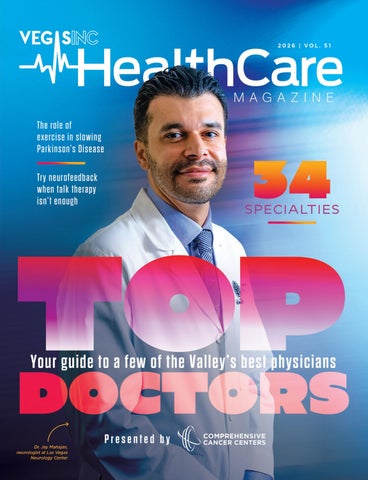
Each year, Health Care Magazine recognizes Southern Nevada physicians who have earned the confidence and respect of their peers. Selected through a peer-nomination process and verified through professional boards, this year’s Top Doctors represent excellence across a broad range of medical specialties. From primary and preventive care to highly specialized treatment, the physicians featured in this guide reflect the breadth of expertise available throughout our region. We’re proud to recognize the doctors whose skill, dedication and commitment to their patients help keep Southern Nevada healthy.
26
H E A LT H C A R E M AG A Z I N E
OCTOBER 2026
ALLERGY
David Tottori, MD Tottori Allergy & Asthma Associates 702-432-8250 tottoriallergy.com
ANESTHESIOLOGY Steven Brown, MD Hair Transplant Vegas 702-990-1975 hairtransplantvegas.com Veneta George, MD Sunrise Health System sunrisehealthinfo.com
BARIATRICS
Punam Patel, MD Dignity Health Bariatrics 702-675-3240
Navid Kazemi, MD Nevada Cardiology 702-233-1000 nevadacardiology.com Jeffrey Levisman, MD Las Vegas Heart Associates 702-962-2200 lasvegasheartassociates.com Sanjay Malhotra, MD Nevada Heart & Vascular Center 702-227-3422 nevadaheart.com Gary Mayman, MD Children’s Heart Center Nevada 702-732-1290 childrensheartcenter.com
CARDIOVASCULAR SURGERY
Elizabeth Santone, MD Southern Nevada Surgery Specialists 702-914-2420 southernnvsurgery.com
Michael Wood, MD Dignity Health Cardiovascular & Thoracic Surgery 702-675-3240 commonspirit.org
Francis Teng, MD Advanced Surgical 702-838-5888 advancedsurgical.net
DERMATOLOGY
CARDIOLOGY
Keshav Chander, MD Smart Heart Care & Smart Medical Care 702-473-5333 4smartcare.com
Victoria Farley, MD Vivida Dermatology 702-255-6647 vivida.com
H.L. Greenberg, MD Las Vegas Dermatology 702-456-3120 lasvegasdermatology.com
Alfred Danielian, MD Las Vegas Heart Associates 702-962-2200 lasvegasheartassociates.com
Candace Thornton Spann, MD Couture Dermatology & Plastic Surgery 702-605-5106 couturemedical.com
Ronny Jiji, MD Las Vegas Heart Associates 702-962-2200 lasvegasheartassociates.com
Douglas Thomas, MD Thomas Dermatology 702-430-5333 thomasderm.com
EAR, NOSE, THROAT Matthew Ng, MD UNLV Health 702-671-6480 unlvhealth.org
Ashley Sikand, MD ENTC of Nevada 702-792-6700 entc.com Lenhanh Tran, MD Sunrise Ear, Nose & Throat Specialists 702-961-6011 sunriseentspecialists.com
EMERGENCY MEDICINE
Holly Owens, MD Pediatrix Emergency Medicine of Nevada pediatrix.com
ENDOCRINOLOGY Amber Champion, MD UNLV Health 702-671-6469 unlvhealth.org
W. Reid Litchfield, MD Desert Endocrinology 702-434-8400 desertendo.com Omer Tarar, MD Platinum Hospitalists 702-407-7700 platinumhospitalists.com
OCTOBER 2026
H E A LT H C A R E M AG A Z I N E
27
GASTROENTEROLOGY
INTERNAL MEDICINE
David Shih, MD Comprehensive Digestive Institute of Nevada 702-483-4483 nevadagastro.com
Aria Fazlinejad, DO MDVIP 844-268-3502 mdvip.com
Vishal Gandotra, MD Vegas Gastroenterology 702-750-0313 vegasgastroenterology.com
FAMILY PRACTICE
Ati Hakimi, MD Vegas Direct Primary Care 702-829-0478 vegasdpc.com
Souzan El-Eid, MD Comprehensive Cancer Centers 702-255-1133 cccnevada.com
Lisa Haworth, MD Lisa Haworth, MD 702-719-6003 drlisahaworth.com Jeffrey Ng, MD Ng Family Healthcare 702-847-7744 jeffreyngmd.com William Rosenberg, MD Silver State Sports Medicine 702-591-1874 silverstatesportsmedicine. com Thomas Shang, MD Las Vegas Laser Services Med Spa 702-321-3735 lvlaserservices.com
FERTILITY
H E A LT H C A R E M AG A Z I N E
Matthew Swenson, MD Valley Health System 702-382-8222 valleyhealthphysicians.com
Constantine George, MD Epitomedical 702-419-3482 epitomedical.com Renu Mahajan, MD Smart Heart Care & Smart Medical Care 702-473-5333 4smartcare.com Nathalie Majorek, MD CarePartnersMD 725-293-7271 carepartnersmd.com
Francis Teng, MD Advanced Surgical 702-838-5888 advancedsurgical.net
Angela Miller, MD Concierge Medicine 702-850-2422 conciergemedicinelasvegas.com
GERIATRICS
Candice Tung, MD Schwartz & Tung, MDs 702-737-8657
Ati Hakimi, MD Vegas Direct Primary Care 702-829-0478 vegasdpc.com
Carrie Bedient, MD The Fertility Center of Las Vegas 702-254-1777 fertilitycenterlv.com
28
GENERAL SURGERY
Maia Carter, MD North Las Vegas VA Medical Center va.gov
INFECTIOUS DISEASE
Fadi El-Salibi, MD Infectious Diseases of Southern Nevada 702-776-8300 idofsn.com
OCTOBER 2026
NEPHROLOGY
Vivek Veerapaneni, MD Kidney Specialists of Southern Nevada 702-877-1887 kson.com
NEUROLOGY
Azin Azma, MD Las Vegas Neurology Center 702-432-2233 lvneuro.com
It’s the Patients Who Benefit Most. Thank You to This Year’s Top Doctors.
STEPHANI CHRISTENSEN, MD Medical Oncology
SOUZAN EL-EID, MD, FACS Breast Surgery
KAREN S. JACKS, MD Medical Oncology
NISARG CHANGAWALA, MD, MPH Pulmonary Disease
EDWIN C. KINGSLEY, MD
AMMAR M. YOUSIF, MD
ANDREW M. COHEN, MD
VISHISHT MEHTA, MD, FCCP, DAABIP, ATSF
GEORGE S. TU, MD, FCCP, DABSM
JOHN J. WOJCIK, MD, FCCP, DABSM
Medical Oncology
Pulmonary Disease
Medical Oncology
Pulmonary Disease
Radiation Oncology
Pulmonary Disease
Comprehensive Cancer Centers congratulates Vegas Inc’s 2026 Top Doctors, including the physicians from our own practice who are being honored. While diverse in your specialties, you share the common goal of providing the highest level of care to your patients. Thank you for creating a healthier Southern Nevada for all of us.
cccnevada.com | 702.952.3350
Stephani Christensen, MD Comprehensive Cancer Centers 702-536-9920 cccnevada.com Aimee Foord, DO Cure 4 the Kids Foundation 702-732-1493 cure4thekids.org Jay Mahajan, DO Las Vegas Neurology Center 702-432-2233 lvneuro.com
Karen Jacks, MD Comprehensive Cancer Centers 702-952-1251 cccnevada.com
Nidhi Mehta, MD Dignity Health 702-616-5915
Edwin Kingsley, MD Comprehensive Cancer Centers 702-952-3400 cccnevada.com
NEUROSURGERY
Taryn Bragg, MD Sunrise Children’s Hospital 702-961-6011 sunrisehealthinfo.com James Forage, MD The Spine and Brain Institute 702-948-9088 thespinebrain.com Michael Seif, MD The Spine & Brain Institute 702-948-9088 thespinebrain.com
OBSTETRICS & GYNECOLOGY
Arshia Rassi, DO Complete Care OBGYN 702-213-5601 completecareobgyn.com
ONCOLOGY
Waseem Alhushki, MD Cure 4 the Kids Foundation 702-732-1493 cure4thekids.org
30
H E A LT H C A R E M AG A Z I N E
Joseph Lasky, MD Cure 4 the Kids Foundation 702-732-1493 cure4thekids.org
ORTHOPEDICS
Karen Nelson, DO University Medical Center 702-383-2663 drkarennelson.com Troy Watson, MD Desert Orthopaedic Center 702-731-4088 doclv.com Randall Yee, DO Advanced Orthopedics 702-740-5327 aosmlv.com
PAIN MANAGEMENT
Willis Wu, MD Innovative Pain Care Center 702-684-7246 painfreenevada.com
Ammar Yousif, MD Comprehensive Cancer Centers 702-952-1251 cccnevada.com
PALLIATIVE CARE
OPHTHALMOLOGY
Diana Lee, MD Platinum Hospitalists 702-407-7700 platinumhospitalists.com
Mark Doubrava, MD Eye Care for Nevada 702-794-2020 eyecarefornevada.com Emily Schorr, MD Schorr Vision 702-702-2020 schorrvision.com Grace Shin, MD Ideal Eye Care 702-896-2020 idealeyecarelv.com
Matthew Swanic, MD Las Vegas Eye Institute 702-816-2525 lasvegaseyeinstitute.com
OCTOBER 2026
Paige Kozlowski, DO Platinum Hospitalists 702-407-7700 platinumhospitalists.com
PEDIATRICS
Constantine George, MD Epitomedical 702-419-3482 epitomedical.com Atousa Ghaneian, MD Healthy Kids Care at Sunrise 702-444-7685 healthykidscarelv.org Ashley Mo, MD Zarminali Pediatrics 702-546-7875 zarminali.com
TOP DOCTORS ARE OUR SPECIALTY When looking for the TOP DOCTORS in education, look no further than the Kirk Kerkorian School of Medicine at UNLV. When looking for the TOP DOCTORS in healthcare, look no further than UNLV Health. The Future of Health Starts Here. Congratulations to Dr. Amber Champion and Dr. Matthew Ng for being named 2026 Top Doctors by VEGAS INC!
Amber Champion, MD
Associate Professor, Residency Associate Program Director, and Endocrinology Fellowship Associate Program Director, Department of Internal Medicine, Kirk Kerkorian School of Medicine at UNLV; Endocrinologist, UNLV Health Board-certified in Internal Medicine and Endocrinology, Diabetes, and Metabolism
Matthew Ng, MD
Associate Professor and Vice Chair, Department of Otolaryngology - Head & Neck Surgery, Kirk Kerkorian School of Medicine at UNLV; Otolaryngologist, UNLV Health
Board-certified in Otolaryngology - Head and Neck Surgery and Neurotology
UNLV HEALTH unlv.edu/medicine
unlvhealth.org
PODIATRY
Casey Burchill, DPM Crovetti Orthopaedics & Sports Medicine 702-990-2290 crovettiortho.com
PSYCHIATRY Ryan Nishihara, MD Meadows Pediatrics 702-436-7337 meadowspediatrics.org Laura Weidenfeld, MD Sunshine Valley Pediatrics 702-363-3000 lasvegaspediatricdoctors.com Carrie Wijesinghe, MD Siena Pediatrics 702-248-7337 sienapediatrics.com
PLASTIC SURGERY
Hayley Brown, MD Desert Hill Plastic Surgery Center 702-260-7707 deserthillsplasticsurgery.com Mitchell Lyons, MD Couture Dermatology & Plastic Surgery 702-608-3789 couturemedical.com Aradhana Mehta, MD Plastic Surgery Vegas 702-470-0682 plasticsurgeryvegas.com Stephen Miller, MD Stephen M. Miller MD 702-369-1001 drstephenmiller.com Brandon Reynolds, MD Reynolds Plastic Surgery 702-410-9800 reynoldscosmetics.com
32
H E A LT H C A R E M AG A Z I N E
Deepa Hasija, MD Satori Behavioral Health 702-780-6200 satoribhealth.com
PULMONARY
Nisarg Changawala, MD Comprehensive Cancer Centers 702-737-5864 cccnevada.com Ordessia Charran, MD Charran Charter Medical Associates 702-570-3173 charranmedical.com Michelle Danielian, MD Nevada Critical Care Consultants 702-509-7573 Hrishikesh Kulkarni, MD Platinum Hospitalists 725-205-1249 platinumhospitalists.com
RADIATION ONCOLOGY Andrew Cohen Comprehensive Cancer Centers 702-952-2140 cccnevada.com
RADIOLOGY
Peter Weidenfeld, MD Red Rock Radiology Associates 702-410-8495 redrockradiology.org
RHEUMATOLOGY
Aida Loudyi, MD Dr. Loudyi Rheumatology 702-915-7856 drloudyrheumatology.com Luciana Brandao Paim Marques, MD Cure 4 the Kids Foundation 702-732-1493 cure4thekids.org
Gita Verma, MD Intermountain Health— Badura Clinic 702-968-3235 intermountainhealth.org
UROLOGY
Vishisht Mehta, MD Comprehensive Cancer Centers 702-737-5864 cccnevada.com
Andrew Hwang, MD Las Vegas Pediatric Urology 702-728-5686 lasvegaspediatricurology.com
George Tu, MD Comprehensive Cancer Centers 702-737-5864 cccnevada.com
Jason Zommick, MD Urology Specialists of Nevada 702-877-0814 usonv.com
John Wojcik, MD Comprehensive Cancer Centers 702-737-5864 cccnevada.com
OCTOBER 2026
CHARRAN MEDICAL
5550 Painted Mirage Road, Ste. 320 Las Vegas, NV 89149 702-570-3173 charranmedical.com
34
H E A LT H C A R E M AG A Z I N E
Nathalie Majorek, MD
N
athalie Majorek, MD, is a board-certified internal medicine physician and founder of CarePartnersMD, a concierge primary care practice in Las Vegas. With more than 25 years of experience as a physician leader and clinician in Boston, Dr. Majorek brings extensive medical expertise and a deep commitment to personalized patient care to Las Vegas. She earned her medical degree from McGill University, completed her internal medicine residency at the University of Arizona and received her MBA from MIT. Dr. Majorek founded CarePartnersMD to deliver the best quality care by taking the time to listen, understand each patient’s needs and work with her patients to achieve their best health. CarePartnersMD provides personalized primary care, preventive care, chronic disease, hormone management, wellness exams, advanced diagnostics, telemedicine and specialty care coordination—all designed around the individual patient. Her philosophy is simple: exceptional healthcare begins with knowing the person, not just the medical record.
CAREPARTNERSMD 851 S. Rampart Blvd. Ste. 225 Las Vegas, NV 89145 carepartnersmd.com
OCTOBER 2026
PEDIATRICS
O
rdessia Charran, MD, is a triple boardcertified physician and founder of Charran Medical, a concierge medical practice in Las Vegas created for patients seeking a more personal, proactive approach to their health. Board certified in internal medicine, pulmonary disease and critical care medicine, Dr. Charran brings extensive experience ranging from preventive and primary care to complex pulmonary disease and intensive care medicine. A graduate of Cornell University and St. George’s University School of Medicine, she completed her residency in internal medicine in Washington, D.C., at MedStar Washington Hospital Center and fellowship training in pulmonary and critical care medicine at Mount Sinai in New York City. Today, her practice focuses on concierge primary care, pulmonary and sleep care, weight and metabolic health, and prevention— with more time, greater access and highly personalized care. Her philosophy is simple: Don’t wait until something is wrong to start taking your health seriously.
INTERNAL MEDICINE
INTERNAL MEDICINE
Ordessia Charran, MD, FCCP
Julpohng “JP” Vilai, MD
J
ulpohng “JP” Vilai, MD, is a board-certified pediatrician, Associate Professor of Clinical Sciences at Roseman University College of Medicine, Pediatrics Clerkship Director, and Medical Director of Roseman Medical Group. Since joining Roseman in 2023, he’s helped expand RMG’s services and providers, advancing family-centered care. His clinical interests include infectious disease, behavioral and mental health, telehealth, transplantation medicine, and care for underserved, unhoused and LGBTQIA+ populations. Dr. Vilai serves as Vice President of the Nevada Chapter of the American Academy of Pediatrics and works closely with Shannon West Homeless Youth Center. A member of the Gold Humanism Honor Society, he has received Educator and Mentor Honors from UNLV’s Pediatrics Residency Program and Nevada Business Magazine’s 2025 Healthcare Heroes Humanitarian award. Passionate about improving health outcomes in his hometown of Las Vegas, Dr. Vilai is dedicated to compassionate, evidence-based care that addresses both medical needs and social determinants of health.
ROSEMAN MEDICAL GROUP
5380 S. Rainbow Blvd. Ste. 120 Las Vegas, NV 89118 702-463-4040 rosemanmedicalgroup.com
COMPREHENSIVE CANCER CENTERS
3131 La Canada St., Ste. 134 Las Vegas, NV 89169 702-990-6360 cccnevada.com
Diana Hung, DO
D
iana Hung, DO, is a board-certified general surgeon and fellowship-trained breast surgical oncologist with Comprehensive Cancer Center’s Breast Surgery Division. She provides personalized and patient-centered breast care, combining evidence-based treatments with individualized care plans tailored to each patient’s needs. Her approach is guided by the latest research and best practices to help patients make informed decisions throughout their treatment. Dr. Hung earned her medical degree from Western University of Health Science’s College of Osteopathic Medicine of the Pacific. She completed her general surgery residency at the Sunrise Health GME Consortium in Las Vegas. She then completed a fellowship in breast surgical oncology at the University of Illinois Chicago. Dr. Hung serves as the co-medical director of the Sunrise Breast Center and is currently a member of the American Society of Breast Surgeons, the American College of Surgeons and the American Medical Association.
COMPREHENSIVE CANCER CENTERS
3131 La Canada St., Ste. 134 Las Vegas, NV 89169 702-990-6360 cccnevada.com
OCTOBER 2026
BREAST SURGICAL ONCOLOGY
B
ased in Comprehensive Cancer Center’s Breast Surgery Division, Gabriela Doyle, MD, is a fellowship-trained breast surgical oncologist and board-certified general surgeon. A Nevada native, she is proud to serve her home community. Dr. Doyle provides compassionate, individualized care for women and men navigating breast disease, combining evidence-based surgical expertise with respect for each patient’s values, goals and preferences. She supports patients throughout every stage of care, from diagnosis and treatment through survivorship. Dr. Doyle earned both her medical degree and bachelor of science in biological sciences from UNR. She completed her general surgery internship and residency at the Kirk Kerkorian School of Medicine at UNLV before pursuing a fellowship in breast surgical oncology at Columbia University. She mentors members of the UNLV Association of Women Surgeons and is a member of the American Society of Breast Surgeons, the American College of Surgeons and the American Medical Association.
BREAST SURGICAL ONCOLOGY
BREAST SURGICAL ONCOLOGY
Gabriela Doyle, MD
Tooba Mohammad, MD
A
fellowship-trained breast surgical oncologist and board-certified general surgeon, Tooba Mohammad, MD, brings specialized surgical care to Comprehensive Cancer Centers. She treats both cancerous and noncancerous breast conditions with advanced surgical techniques and individualized care plans. Dr. Mohammad combines the latest clinical knowledge and technology to help patients access specialized breast care. Dr. Mohammad earned her medical degree from Ross University School of Medicine. She completed her general surgery residency at Conemaugh Valley Memorial Hospital, affiliated with Temple University School of Medicine, followed by a Society of Surgical Oncology-accredited breast surgical oncology fellowship at Rutgers Cancer Institute and Rutgers Robert Wood Johnson Medical School. She is a member of the American Society of Breast Surgeons, the American College of Surgeons, and the Society of Surgical Oncology.
COMPREHENSIVE CANCER CENTERS
3131 La Canada St., Ste. 134 Las Vegas, NV 89169 702-990-6360 cccnevada.com
H E A LT H C A R E M AG A Z I N E
35
UMC achieves historic recognition for nursing excellence in Nevada BY EMILY ANTUNA
I Emily Antuna is the public relations coordinator at University Medical Center
f a hospital were like a living human body, nurses would be the heart because they are central to every aspect of a patient’s care. Nearly a decade ago, UMC started listening to its heart, empowering nurses to have their voices heard and improve processes, conduct valuable research and incorporate additional patient safety measures. This work led to UMC being recognized as the first and only hospital in Nevada to achieve Magnet status for nursing excellence from the American Nurses Credentialing Center.
The Magnet standard
The Magnet Program started in 1983 when the American Academy of Nursing conducted a study to identify hospitals that created positive work environments to attract and retain well-qualified nurses who delivered high-quality patient care. Of the 163 institutions surveyed, 41 became what were described as “magnet” hospitals, and the characteristics that set them apart from other organizations are still known today as Forces of Magnetism. “It’s the gold standard for nursing excellence,” said Debra Fox, UMC chief nursing officer. The Magnet Program has since expanded to include hospitals across the globe. In the United States, only 10% of hospitals meet the program’s rigorous standards.
Pathway to excellence
When Fox became chief nursing officer in 2015, she knew it was possible to achieve Magnet recognition, but it was going to take time. “The first thing I noticed when I started at UMC was that nurses had no seat at the decision-making table. They didn’t know how to
36
H E A LT H C A R E M AG A Z I N E
OCTOBER 2026
harness their own power to increase efficiency, improve patient care and create a more positive work environment for themselves,” Fox said. Fox knew the nursing culture at UMC had to change and that transition had to be led by the staff. “At first, we had a lot of naysayers and people who didn’t want to change,” said Tania Taylor, a perinatal nurse who has worked in UMC’s Women & Newborn Care Center for nearly 20 years. Taylor was one of the first ambassadors of the Magnet Program at UMC nearly 10 years ago. “Our team started talking with the nursing staff and asking what clinical excellence looks like to them,” Fox said. Through those conversations, UMC began investing in nurse development initiatives and research opportunities, formed a shared governance model for the hospital and established recognition programs for excellence in patient care and contributions to the organization. “UMC now has a culture of mutual respect, and that directly impacts the people who matter the most: our patients,” Taylor said.
From the bedside to the decision table
Research has linked Magnet recognition to several key benefits to patients, including higher satisfaction, lower risk of 30-day mortality and lower failure-to-rescue rates. Fox believes UMC’s patients are benefiting significantly from the shared governance structure led by the hospital’s nurses. UMC’s Unit-Based Council is led by the nursing staff and has a participation rate of nearly 95%. The council empowers nursing staff to exchange ideas and form innovative solutions to issues that arise, from workplace problems to re-
UMC Chief Nursing Officer Debra Fox celebrates with nurses and clinical leaders after receiving the call announcing UMC’s Magnet Recognition from the American Nurses Credentialling Center. (Courtesy photo)
sponding to a national pandemic. “During the height of COVID-19, we took their lead, and they began to test practice models that didn’t exist before, including turning teams, a float pool staffing system and designated infection control champions in each unit. Some of these practices we still use today,” Fox said. The Unit-Based Council has also championed several initiatives at UMC that improve team member satisfaction and nurse development, including nursing and non-nursing recognition programs, an integrative therapy program for employees and patients, a research poster competition and a new graduate nurse program.
Drawing new talent to Southern Nevada
“It was really scary for me to start a new career in nursing,” said Alexa Gamboa, a nurse in one of UMC’s medical-surgical units. Gamboa was hired
as part of UMC’s new graduate nurse program three years ago. The program offers new graduate nurses the opportunity to learn best practices from expert staff in multiple departments across the hospital before settling into a single unit. “We were able to learn the different processes and meet people in each department, and early on, we were invited to the council meetings. I quickly started to see that my opinion, even as a new graduate, mattered here,” Gamboa said. According to Fox, it’s stories like Gamboa’s that have helped UMC achieve its historic Magnet recognition. The numbers also point to a positive outlook for the future. “Not only are we keeping our talented nurses with a 9% turnover rate, less than half the national average, but we are attracting top nurses to our state,” Fox said. “For 50 new graduate nurse positions each year, we interview nearly 1,400 people. They are noticing what we are doing here at UMC.”
OCTOBER 2026
H E A LT H C A R E M AG A Z I N E
37
UNLV research suggests exercise could help slow Parkinson’s disease BY STEVEN SLIVKA
W
Steven Slivka is Director of Communications at UNLV’s School of Integrated Health Sciences
38
of exercise on people with Parkinson’s disease. As part of his research, Landers and a small group of students from UNLV’s physical therapy department work with people who have Parkinson’s disease, guiding them through exercise at different aerobic intensities. They then collect blood samples from these sessions to help understand what amounts and levels of exercise may be most effective for people living with Parkinson’s.
ithout a known cure for Parkinson’s disease, UNLV researchers studying the disease suggest that exercise could be critical in helping slow its progression. “Exercise may be more than just good for your general health, as it can actually help slow the progression of Parkinson’s by reducing the brain inflammation at the root of the disease,” said Merrill Landers, interim dean for UNLV’s The importance School of Integrated Health Sciences and a and benefits of exercise practicing physical therapist for the past 30 Exercise acts as “fertilizer for the brain,” years. Landers said. It increases brain-deParkinson’s disease is a neuroderived neurotrophic factor, a protein generative disorder, most commonly that promotes the survival and diagnosed between ages 55 and growth of neurons. 65, that affects movement, sleep, “BDNF also dials down inflammacognition and even bladder control. tion throughout the body and brain For someone over the age of 60, a by triggering the release of anti-inslight tremor in the hand, slowness flammatory signals from muscles of movement or a loss of smell can and tissues during exercise,” Landsignal a potential health issue. ers said. “Until a cure is found, one of the Landers While inflammation is critical biggest goals in Parkinson’s research to the body’s immune system, too is finding a treatment that can actumuch inflammation can damage ally slow or stop the disease,” Landers otherwise healthy tissue. Simply put, said. “One of the most promising inflammation accelerates the death candidates for slowing progression is of neurons, but aerobic exercise can aerobic exercise, which is the focus of decrease your resting inflammatory my current research.” state. According to the Parkinson’s FounLanders recommends any form of dation, more than 1.1 million Amerisustained aerobic exercise including cans are living with Parkinson’s, with treadmill walking, cycling, dancing Poston 90,000 new diagnoses annually. While or any other activity that gets your it only affects 1% of individuals over the heart pumping. He also recommends age of 60, Parkinson’s is the fastest-growing exercising at a moderate but challenging intenneurodegenerative disorder in the U.S. sity—hard enough to speak in short sentences, With research funding from the Cyrus Tang but not easy enough that holding a full converFoundation, Landers is studying the effects sation feels effortless. This sweet spot, roughly
H E A LT H C A R E M AG A Z I N E
OCTOBER 2026
Courtesy photo
60% to 75% of your maximum heart rate, produces the biggest boost in BDNF. “You want to be in this intensity zone so that you can sustain it over a relatively long time,” Landers said. “If the exercise is too intense, you would not be able to do it long enough to get the boost in BDNF.” Brach Poston, a UNLV kinesiology and nutrition sciences professor, said there are benefits to strength training, interval training and even boxing. His research focuses on the use of noninvasive brain stimulation to improve motor skill learning in Parkinson’s disease, aging and young adults. “Boxing involves more complex movements,” Poston said. “It has an aerobic component and it has more interval training. It forces people to stand up, and it challenges their balance.” As symptoms start to interfere with daily activities, people with Parkinson’s disease may be prescribed levodopa, which helps increase dopamine levels in the brain. “For most people, it takes about six years after
diagnosis before the symptoms get really bad,” Poston said. Some of the earliest prediagnosis symptoms of Parkinson’s disease include constipation, REM sleep behavior disorder, excessive daytime fatigue, depression and loss of smell. According to Poston, people with Parkinson’s disease have already lost about 70% of their dopamine-producing neurons before experiencing more overt motor symptoms. Actor Michael J. Fox’s experience has raised awareness of Parkinson’s disease for more than three decades. Fox was diagnosed with the disease at 29, a rarity for Parkinson’s. Now, at 65, he continues to live with Parkinson’s and experiences dyskinesias, which are involuntary and erratic movements. “Bringing more attention to Parkinson’s is a good thing,” Landers said. “It not only brings more people into the conversation, but we hope it ultimately leads to more funding for research that could change lives.”
OCTOBER 2026
H E A LT H C A R E M AG A Z I N E
39
If you aren’t a candidate for LASIK, explore these other options BY EMILY SCHORR, MD
B
eing told you’re not a candidate for LASIK is one of the most common disappointments patients face in an eye surgeon’s office. Patients arrive hopeful about life without glasses and leave believing the door has closed. It hasn’t. For many patients, another option is the EVO Implantable Collamer Lens, a lens designed to correct vision without reshaping the cornea.
Emily Schorr is a fellowship-trained cataract and vision corrective surgeon and founder of Schorr Vision
Why some eyes are not suited to LASIK
LASIK reshapes the cornea, the clear front surface of the eye, with a laser. It is a precise, well-studied procedure with excellent outcomes in the right patients. But because it removes corneal tissue, the cornea needs enough thickness and structural strength to be reshaped safely. A patient with thin corneas or a very high prescription may need more tissue removed than the cornea can safely give. Significant dry eye can also make laser surgery a less comfortable choice, since healing can temporarily worsen dryness. None of these findings mean an eye is unhealthy. They simply mean the correction needs to happen somewhere other than the cornea. LASIK is a great procedure, but not for all patients.
A lens instead of a laser
An alternative to LASIK is the EVO ICL. Instead of reshaping the cornea, a surgeon positions a soft, flexible lens inside the eye, just behind the iris and in front of the eye’s natural lens. It corrects vision continuously and invisibly, like a contact lens that never needs cleaning and never dries out. Nothing is removed from the eye and the lens can be taken 40
H E A LT H C A R E M AG A Z I N E
OCTOBER 2026
out or exchanged later if a patient’s needs ever change. The ICL is not new. Surgeons have used it internationally for more than two decades, and the current EVO generation earned FDA approval in 2022 with a design refinement that eliminated a preparatory laser step older versions required. The lens corrects nearsightedness with or without astigmatism and is typically offered between ages 21 and 45. Because the corneal surface stays untouched, the procedure does not aggravate dry eye the way laser surgery sometimes can. Patients with high prescriptions often describe the quality of their vision afterward as strikingly crisp, especially at night.
What patients can expect
The procedure takes about 20 to 30 minutes for both eyes, with numbing drops and gentle relaxation medication. The lens goes in folded through a small opening and unfolds into position behind the iris. No sutures. Most patients notice dramatically better vision within hours and are back to normal activities the next day.
Matching the eye to the technology
Whether an eye can safely hold an EVO ICL comes down to internal anatomy, specifically the small space between the cornea and the natural lens where the implant will sit. Accurately measuring that space helps determine the appropriate lens size for each patient. No single procedure fits every eye. A consultation should include imaging of the cornea and the eye’s internal anatomy to determine whether LASIK, the EVO ICL or a lens-based option such as Custom Lens Replacement (or Refractive Lens Exchange) is the right fit. And for anyone who was told no to LASIK years ago: ask again. The technology has progressed and the answer may have changed.
YOU’RE NEVER FAR
FROM QUALITY CARE The Valley Health System has hospitals, freestanding emergency departments and other facilities throughout Southern Nevada to care for you and your loved ones.
Learn more about our services at VALLEYHEALTHSYSTEMLV.COM
Physicians are independent practitioners who are not employees or agents of The Valley Health System. The System shall not be liable for actions ortreatments provided by physicians. For language assistance, disability accommodations and the nondiscrimination notice, visit our website. 266236348-6273831 9/26
Our community relies on a variety of emergency care offerings BY SCOTT SCHERR, MD
T Scott Scherr, MD, is regional medical director for TeamHealth
he need for emergency care in Las Vegas was never more evident than on Oct. 1, 2017, in the aftermath of the country’s deadliest mass shooting. The emergency department at Sunrise Hospital received 250 patients in just two hours, with more than 100 physicians and 200 nurses responding. That profound experience demonstrated how highly trained emergency medical professionals, access to lifesaving resources, and the ability to provide immediate care can make a significant difference in patient outcomes.
Emergency care in a growing community
Over the past decade, Clark County’s population has increased by more than a quarter-million residents, driving greater demand for emergency medical care. Nevada has also seen a rising number of freestanding emergency rooms, micro-hospitals and urgent care facilities, yet many people remain unsure how these facilities differ or when to choose one over another.
Freestanding ERs vs. urgent care: What’s the difference?
Freestanding ERs function as full-service emergency departments in standalone locations. They are open 24/7 and staffed by emergency physicians and specially trained emergency nurses. With advanced diagnostic and treatment capabilities—including CT scans, X-rays, cardiac testing, laboratory services, medications and emergency interventions—freestanding ERs can evaluate and treat serious and potentially life-threatening conditions. These may include cardiac and stroke symptoms, breathing emergencies, traumatic injuries, serious infections and pediatric emergencies. Patients who require 42
H E A LT H C A R E M AG A Z I N E
OCTOBER 2026
hospitalization or highly specialized care can be stabilized and transferred through established hospital networks. For less serious conditions, urgent care centers provide care for many everyday illnesses and minor injuries that do not require the advanced capabilities of an emergency department. However, determining the appropriate level of care is not always straightforward. In some cases, seemingly minor symptoms can signal a serious emergency. When an urgent care facility determines that a patient needs emergency care, the patient may need to be transferred to an emergency department, adding another step before definitive care begins.
Emergency care close to home
During an emergency, proximity matters. Every minute spent traveling is another minute before diagnosis and treatment can begin. Freestanding ERs are located throughout residential communities, creating additional access points where patients, families and EMS crews can reach emergency physicians closer to home. Standalone ERs also add capacity to a healthcare system serving a rapidly growing population. By distributing emergency patients across multiple locations, freestanding ERs help relieve congestion and preserve hospital resources for patients requiring inpatient and highly specialized care. For example, HCA Healthcare’s freestanding ER at The Lakes treated more than 20,000 patients last year, allowing thousands to receive emergency care in their community rather than traveling to a traditional hospital campus. Freestanding ERs also provide additional destinations for EMS crews. When ambulances are delayed at crowded emergency departments, those crews remain unavailable for the next 911 call. Multiple emergency access points can help distribute demand and support first-responder availability throughout our communities.
Pediatric emergency care
Children deserve the same access to emergency care as adults. According to the American Academy of Pediatrics, more than 1 in 5 emergency department visits nationally involve children. Freestanding ERs can evaluate and stabilize pediatric patients and transfer those needing specialized care or hospitalization to established hospital networks, including Sunrise Children’s Hospital. For patients transferred from an HCA Healthcare freestanding ER to an affiliated hospital, ambulance transportation is provided at no charge to the patient.
The future of freestanding ERs in Nevada
Freestanding ERs have also been the subject of debate over how their services should be reimbursed. During the 2025 legislative session, legislation was proposed that would have required insurers to reimburse freestanding emergency rooms at rates comparable to those paid to urgent care centers. Although it did not pass, the issue could resurface in the 2027 session. Freestanding ERs and urgent care centers serve different roles and operate with different resources and staffing requirements. Maintaining physicians, nurses, imaging and laboratory services, medications and emergency equipment 24/7 carries different costs than operating an urgent care facility. If reimbursement does not adequately reflect the costs associated with maintaining emergency services, some freestanding ERs could become financially unsustainable. A reduction in the number of freestanding ERs could mean fewer emergency access points as Southern Nevada’s population continues to grow. This could be particularly significant in rapidly growing communities, where fewer emergency care options may require patients and EMS crews to travel farther and could place additional demand on already busy hospital emergency departments.
Preserving access to emergency care
Preserving access to freestanding ERs is more than healthcare economics. It is about maintaining emergency capacity, keeping first responders available to answer emergency calls and providing Nevada families with lifesaving care close to home. Urgent care centers and freestanding ERs each have an important place in our healthcare system. The goal should not be to choose one over the other, but to ensure patients can reach the appropriate level of care when they need it. When minutes matter, knowing where to go—and preserving access to that care—can save more than time. It can save lives.
WHAT ANOTHER LEVEL I TRAUMA CENTER MEANS FOR THE VALLEY BY CASSANDRA JONES
S
unrise Hospital & Medical Center is now the second Level I trauma center in Las Vegas, expanding the community’s access to the highest level of trauma care available. Patients with the most serious and life-threatening injuries now have another hospital equipped with the specialists, technology and resources needed to care for them. Imagine a patient arriving after a serious car or motorcycle crash with injuries to the brain, spine, bones and internal organs. There is no time to start assembling resources. The right teams need to be ready. Trauma surgeons, neurosurgeons, orthopedic surgeons, emergency physicians, nurses, imaging teams, Cassandra Jones blood bank specialists is the Director of and many others can be Media Relations at called into action, with HCA Healthcare, operating rooms, intenFar West Division sive care and advanced technology available when needed most. That level of coordination can be lifesaving. Currently, Sunrise cares for approximately 7,000 trauma patients each year following vehicle crashes, motorcycle and e-bike accidents, shootings, falls, industrial accidents, severe burns and other traumatic events. Level I trauma centers are expected to advance trauma care through education and research. For Sunrise, that opens new doors to train physicians, participate in trauma research and retain highly skilled medical professionals in Nevada. Of course, no trauma center does this work alone. Successful trauma care starts with the first responder and continues through EMS, the emergency department, surgery, intensive care, rehabilitation and recovery. It is an extraordinary chain of people working toward the same goal: giving someone the best possible chance to go home.
OCTOBER 2026
H E A LT H C A R E M AG A Z I N E
43
Cleft and palate care is a growing specialty in Southern Nevada BY PAUL JONCICH
C Paul Joncich is the Manager of Media Relations at UNLV’s Kirk Kerkorian School of Medicine
left lip and palate are birth defects that occur when tissues in the mouth or lip do not fuse properly during the first trimester of fetal development, leaving an opening or split. Cleft lip and palate occur in about 1 per 1,000 births, while cleft palate alone occurs in about 0.6 per 1,000. Treatment can require multiple procedures throughout childhood to improve feeding, speech, hearing and appearance. John Menezes, MD, associate professor of plastic surgery at the Kirk Kerkorian School of Medicine at UNLV, is one of few plastic surgeons in Southern Nevada with advanced fellowship training in craniofacial surgery. He practices at the UNLV Health Plastic Surgery Clinic and the UNLV School of Dental Medicine’s Advanced Care Clinic, where a multidisciplinary craniofacial team coordinates care for patients with cleft lip and palate.
How many cleft lip and palate procedures do you perform?
John Menezes, MD, is a fellowship trained craniofacial surgeon in Las Vegas who specializes in cleft lip and palate repair
46
When I first got here in 2002, we had a cohort of about 350-400 patients that were being seen by all the specialists. Since then, the city’s population has more than doubled and so has the population with craniofacial needs. My current personal list is around 900 patients. Plus, every year there are another 50-plus being born and moving to the area. University Medical Center of Southern Nevada has been the primary hospital for craniofacial surgery since I have been in town.
H E A LT H C A R E M AG A Z I N E
OCTOBER 2026
How is the UNLV School of Dental Medicine’s new Advanced Care Clinic doing?
It is working out well. In the past, many patients were told they needed to go to California or Utah for cleft care. But now, our team can offer the gold standard for care set by the American Cleft Palate-Craniofacial Association, which has existed since the 1950s. These standards are important because cleft patients are not just average patients; they need coordination of care at specific ages, by a team of specialists experienced in this subspecialty to get the best outcome. The Nevada team was established in the 1990s and remained accredited by the ACPA until 2021, when defunding due to the COVID crisis caused its closing. The team restarted in October of last year, and we look forward to being reaccredited later this year. Right now, we are only seeing 10 patients once a month. With the population doubling and the number of patients going from 450 to 900, that means we’re seeing less than 15% of the patients that could be seen.
Why are so many specialists needed?
Because these children have problems that affect their ears, for which they need ear, nose and throat specialists, problems that affect their mouths that need dentistry, orthodontics and oral surgery. They require speech and language therapy because when you have a cleft palate, you may not speak normally. Also, on the cleft team there is a social worker, which is significant, because some of these patients are underinsured, and sometimes they have to travel, and do not get consistent care unless they are followed by a team. A social worker can help coordinate things. And together we can put together letters for insurance con-
firming the treatments are medically necessary. This type of comprehensive focus is important, and patients are grateful for it.
is significantly decreased, and speech outcomes are better when people go to someone who is experienced and does a certain number of cases a year.
What is the treatment plan for a typical patient?
How have surgical procedures changed through the years?
The lip repair is typically performed by 3 months of age, the palate by 8 to 10 months. Hearing, speech and language development need close follow-up for cleft in the preschool years. In those of school age, the first stage of orthodontic management begins prior to bone grafting to the gumline which is done by age 7 to 8. The final procedures happen in the teenage years, when growth is nearing completion, with coordination again between a plastic surgeon, an oral surgeon and an orthodontist.
What is your advice for parents looking for the best surgeon?
As in many cities, there are doctors who perform surgeries that they should not. These are doctors who like to promote their practices by saying they volunteer on missions or perform cleft services, but in fact are not specially trained to do so. Sometimes they are surgeons who have very little specific training in cleft lip and palate. They just decide that because they work around the mouth that they can operate anywhere on the head and neck. But it is very important that surgeons who perform cleft lip and palate surgeries be fellowship trained and follow the current standards of care as outlined by the ACPA. They do not necessarily need to be a plastic surgeon, but make sure they are board certified, preferably in plastic surgery, and have done a craniofacial fellowship. If they haven’t, you should strongly consider not going to them. Multiple studies show that plastic surgeons who just occasionally do cleft have more complications, more scarring, need more revisional surgeries, and subsequently the revisional surgeries are harder to do because of the techniques they used. Conversely, several studies in the 1990s and early 2000s showed the complication rate
There has been a major refinement of technique. Years of evidence-based results are directing us to do things at certain stages. Also, for the first time in Nevada, in collaboration with Roseman University, we have been able to offer something called nasoalveolar molding as well as staged repair of the cleft palate. NAM is a nonsurgical technique used on infants to reshape the gum pads, lip and nose before surgery. In the first weeks of life, we’re already shaping the lip, gumline and nose with an appliance that the orthodontist uses, and this helps mold the segments while the babies are still pliable, so the subsequent cleft repair and nasal appearance is significantly better. Those kinds of things did not exist before the late ’90s and did not exist at all in Nevada until recently because you need a dedicated cranial-facial orthodontist, and there are not many of those.
What is your hope for the future of healthcare in Southern Nevada?
I would like to double the number of Advanced Care Clinic appointments, and we will hopefully ask for that during the next legislative session. We are going to have to increase the number of doctors. It helps that we have more medical schools in Las Vegas, but we need to expand residencies too. The biggest thing going forward may be state support for residencies, which has the greatest potential to affect the retention of doctors in Nevada. Data from the Association of American Medical Colleges and recent 2025–2026 workforce reports show that the longer a doctor spends in a specific location during the final stages of their training, the more likely they are to stay there permanently, so offering more residencies and fellowships in Southern Nevada is paramount.
OCTOBER 2026
The lip repair is typically performed by 3 months of age, the palate by 8 to 10 months. Hearing, speech and language development need close follow-up for cleft in the preschool years. In those of school age, the first stage of orthodontic management begins prior to bone grafting to the gumline which is done by age 7 to 8. The final procedures happen in the teenage years, when growth is nearing completion, with coordination again between a plastic surgeon, an oral surgeon and an orthodontist.
H E A LT H C A R E M AG A Z I N E
47
+ HCM Notes Sunrise Children’s Hospital is the first pediatric emergency department in Nevada to receive Peds Ready Advanced + Trauma recognition from the Nevada Division of Public and Behavioral Health. The designation recognizes its pediatric-specific staffing, equipment and clinical processes supporting high-quality emergency care for children.
Clark County’s Division of Air Quality has launched the BURN Survey to better understand residential wood-burning habits and their potential impact on air pollution in Southern Nevada. Residents who use fireplaces, woodburning stoves, firepits, grills or similar equipment are encouraged to participate. The survey is open through Nov. 23.
Clark County Family Services and FirstMed Health & Wellness opened a pediatric clinic at Child Haven serving children in foster care. The clinic provides primary care, dental and behavioral health services under one roof.
MountainView Hospital and Sunrise Hospital are the first in Nevada to use the Abbott Volt Pulsed Field Ablation system to treat atrial fibrillation. The technology uses electrical pulses rather than heat or extreme cold and combines heart mapping and treatment in a single catheter. Desert Hope Treatment Center launched its first responder lifeline program, providing addiction and mental health treatment tailored to law enforcement officers, firefighters, EMTs and other public safety professionals. Developed with the UNLV School of Social Work and Nevada Department of Public Safety, the program includes confidential, trauma-informed care.
Comprehensive Cancer Centers added five advanced practice providers. Nurse practitioner Cherie Allison joins the Northwest treatment center; Maddie
H E A LT H C A R E M AG A Z I N E
Scheurich
Rowe
Cunningham
Scheurich, Southwest and Summerlin; Becca Rowe, the Comprehensive Lung Center in Summerlin; and Stacey Cunningham, Central Valley–Twain. Physician assistant Zach Dixon will serve multiple locations.
Dixon
Touro University Nevada’s Michael Tang Regional Center for Clinical Simulation earned multisite accreditation from the Society for Simulation in Healthcare, placing it among the top 15% of simulation centers nationwide.
Southern Hills Hospital performed Nevada’s first surgery using the FDA-approved Synergy Disc artificial cervical disc replacement system. The implant is designed to preserve motion while helping restore the natural curvature and alignment of the neck.
48
Allison
OCTOBER 2026
Cleveland Clinic Nevada pledged $500,000 over five years to address hunger and expand access to nutritious food in Las Vegas. In partnership with The Just One Project, the commitment will support local food banks and community organizations that provide food assistance to Southern Nevada residents in need. CareNow launched a 24/7 virtual urgent care in Las Vegas, allowing patients to connect with local physicians, nurse practitioners and physician assistants by video. Providers can evaluate many minor conditions and prescribe non-narcotic medications when appropriate. Patients
Stacey Pierce-Talsma, DO, is the new dean of the Touro University Nevada College of Osteopathic Medicine. She is the college’s first female dean.
requiring further examination or testing can transition to an in-person CareNow visit. Foundation Assisting Seniors is expanding its Henderson facility from 2,400 to nearly 5,000 square feet. The expansion will help meet growing demand while providing more space to store and distribute donated medical equipment, including power scooters, wheelchairs and bariatric equipment, to seniors in need. MountainView Hospital became the first hospital in Nevada to perform a lobectomy using the da Vinci SP single-port robotic system. The minimally invasive procedure uses a single incision to remove diseased lung tissue and can reduce pain, scarring and recovery time compared with traditional approaches. Dignity Health St. Rose Dominican San Martin Hospital earned an “A” in the Leapfrog Group’s spring 2026 hospital safety grades and received Healthgrades’ 2026 outstanding patient experience award, which uses federal patient survey data to recognize hospitals for patient experience.
Cardiologist Steve Kibuom Lee joined Nevada Heart & Pierce-Talsma Vascular Center. Lee completed his general cardiology fellowship at the Kirk Kerkorian School of Medicine at UNLV, where he served as chief cardiology fellow, followed by an advanced fellowship in interventional cardiology at the University of Arkansas for Medical Sciences. Touro University Nevada held its white coat ceremony Aug. 31, welcoming 180 osteopathic medical students from the College of Osteopathic Medicine and 170 students pursuing degrees in physical therapy, physician assistant studies and nursing through the College of
Sunrise Hospital treated 508 e-bike and e-scooter injuries through August 2026, double the 254 cases treated in all of 2025. Of those injured, 138 were hospitalized and four adults died from traumatic brain injuries. Of pediatric patients, only 23.4% were wearing helmets.
Continued on page 50
Still the medical professionals credit union createcu.org
Greenspun Health Care HP V2.indd 1
OCTOBER 2026
H E A L T H C A R E M A G A Z I N 10/6/26 E 44:57 9 PM
+Notes continued Health and Human Services.
Dignity Health St. Rose Dominican graduated the first class of physicians from its internal medicine residency program. Of the 11 graduates, three will continue providing care within Dignity Health in Las Vegas, while another will remain in the local community.
MountainView Hospital launched a monthly farmers market, held on the fourth Thursday of each month, offering fresh produce and other healthy food options to the community.
Jacobson
Southwest Medical, part of Optum, added four providers at locations across the Las Vegas Valley. Danijela Cakovic-Dobrijevic, NP, joins Siena Heights in Henderson, specializing in adult Hollowood medicine, while Soloman Wu, DPM, joins Oakey in Las
Leen
re & odern ua ng o und a nc i Great For all ages teens to seniors
Challenge your mind and keep it sharp Enjoy fun exercise without the gym
Vegas, specializing in podiatry. Janice Jaene Bautista, PA-C, joins Optum Community Center—West with a background in urgent care, and Brandon Freel, DO, joins Tenaya Healthcare Center, specializing in OB/ Parks GYN. Southwest Medical Hospice Care also named Kenneth Pettit, DO, its medical director of hospice. Teachers Health Trust appointed Patrick Jacobson and Glenford Parks to its board of trustees, while Christina Hollowood was reelected board secretary. Jacobson is a special education math teacher at Clifford Lawrence Jr. High School; Parks is a teacher and retired U.S. Air Force veteran; and Hollowood is a specialized programs teacher at Sierra Vista High School.
PETER LICATA, D.O. Medical Director • Family Medicine
Personal Care.
Convenient Location. Preventive care, chronic disease management, and whole-person primary care for the Las Vegas community. Welcoming new patients
5410 W Sahara Ave. Las Vegas, NV 89146
Scan me!
as egas uare & ound ancers
Scan the QR code or call today! 310.739.7673
50
H E A LT H C A R E M AG A Z I N E
OCTOBER 2026
West of Decatur • North side of Sahara
Call to Schedule Your Appointment
702-362-2500 OsteodoxLV.com