

The Fight for D.C.’s Future
Sotheby’s
IN THIS ISSUE
NEWS 5-7
Town Topics
EDITORIAL & OPINION 8
Tom Brady, Commencement Speaker?
Bad Bunny’s Fashionable Lesson on Aging
A Budget That Reflects Our Priorities — and Our Challenges
THE VILLAGE 9
Ranked-Choice Voting: A Meaningful Step Forward
BUSINESS 10
Ins & Outs
COVER STORY 11-13
FOOD & WINE 14
Cocktail of the Month
The Latest Dish
ARTS 15-16
Summer Arts Preview
Hirshhorn Head Leaves for Guggenheim
REAL ESTATE 18
Sales Figures
AUCTION BLOCK 19
At Marcel, You Can Order Duck Confit — and Buy a Calder
IN COUNTRY 20
Gold Cup Charms Virginia Hunt Country at Great Meadow
SOCIAL SCENE 21
House Tour Patrons Party, Georgetown Heritage Gala & WHCD Weekend
KITTY KELLEY BOOK CLUB 22
Elizabeth Cady Stanton: A Revolutionary Life
ON THE COVER
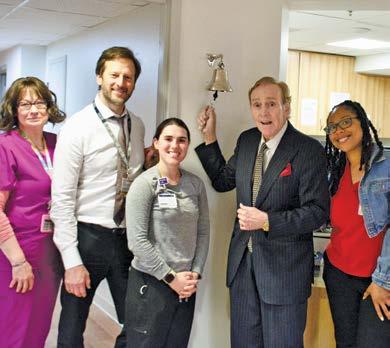
Robert Rings The Bell
Robert Devaney, our beloved Editor-At-Large, rang the bell to signal the completion of radiation therapy for his prostate cancer at Georgetown Lombardi Comprehensive Cancer Center, April 30. So much gratitude to Matthew Witek, M.D., radiation oncologist and director of Proton Therapy (left), the doctors, nurses, technicians, therapists and assistants of MedStar Georgetown University Hospital. We also cannot thank his neighbors, friends, and family enough for all their undying support and who have been with him on this two-year journey that included two other cancers. A year of strength and healing continues.
PUBLISHER & EDITOR-
Sonya Bernhardt
MANAGING EDITOR & DIRECTOR OF CONTENT & ADVERTISING Kate Oczypok
SENIOR CORRESPONDENT EMERITUS Peggy Sands
FASHION & BEAUTY
Allyson Burkhardt Lauretta McCoy
GRAPHIC DESIGN Jill Madsen Katie McKenney Heather Harris Roemer
PHOTOGRAPHERS Philip Bermingham
EDITOR-AT-LARGE
Hailey Wharram
1050 30th Street, NW Washington, DC 20007
Phone: (202) 338-4833
Fax: (202) 338-4834
www.georgetowner.com
“The Newspaper Whose Influence Far Exceeds Its Size” — Pierre Cardin
The GeorGeTowner is published in print monthly with an online newsletter supplement posted twice per week — On Mondays we highlight news and on Thursdays goings on about town. The opinions of our writers and columnists do not necessarily reflect the editorial and corporate opinions of The GeorGeTowner newspaper. The GeorGeTowner accepts no responsibility for unsolicited manuscripts or photographs and assumes no liability for products or services advertised herein. The GeorGeTowner reserves the right to edit, rewrite or refuse material and is not responsible for errors or omissions. Copyright 2026.
Please send submissions of opinions for consideration to: editorial@georgetowner.com
For advertising inquiries email Advertising@georgetowner.com or call (202) 338-4833


Malcom Fox, Executive Director of Opportunity DC in Georgetown on P St. Photo by Sueraya Shaheen.
JUNE 16, 2026
Primary and Special Elections
Every registered DC voter will be mailed a ballot for the June 16, 2026 Elections.

Mail Ballot Drop Boxes Open
May 22–June 16, 2026 until 8:00 pm
Early Voting: June 8–14, 2026
Vote Centers Open: 8:30 am – 7:00 pm
Election Day: June 16, 2026
Vote Centers Open: 7:00 am – 8:00 pm
Ranked choice voting (RCV) is a voting method that allows voters to rank candidates in order of their preference. In DC, RCV is used in eligible contests with three (3) or more candidates, and voters may rank up to five (5) candidates, including write-in candidates. RCV allows your vote to count towards another candidate if your first-choice candidate does not receive enough votes.



Board of Elections (DCBOE) for hands-on practice.
Visit www.dcboe.org/RCV for interactive tools, practice ballots, and additional information about RCV. You can also attend voter outreach events and visit
WHAT’S ONLINE GEORGETOWNER.COM
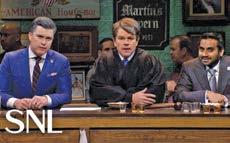
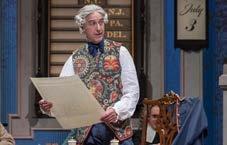



MARTIN’S TAVERN GOES VIRAL AFTER SNL COLD OPEN
BY ROBERT DEVANEY & RICHARD SELDEN
A three-letter acronym has all of Georgetown abuzz.
COMMUNITY CALENDAR
Scan this for all the latest things to do and post your upcoming events too. We do not sell our mailing list under any circumstances and your information will remain private and secure.
BIKE TO WORK DAY PIT STOP
Friday, May 15
ONSTAGE GEORGETOWN: MAY
BY MARK EDELMAN
It’s May—the month we celebrate our Mamma Mia’s, who, in most cases, introduced us to the joys of live theater.
GEORGETOWN’S THE PHOENIX HOSTS FUNDRAISER FOR LUCKY DOG ANIMAL RESCUE BY CONSTANCE CHATFIELD-TAYLOR
Walking around the store on the evening of the fundraiser for Lucky Dog Animal Rescue, I can see echoes of what I’ve heard about Samantha Hays Gusher, the third-generation owner of The Phoenix.
PHILIPPE LANIER NAMED CEO OF EASTBANC, TOP CRE PLAYER IN GEORGETOWN BY ROBERT DEVANEY
EastBanc, a Washington, D.C.-based multinational real estate investment firm with $4 billion in assets under management, announced the appointment of Philippe Lanier as Chief Executive Officer last week.
DOUGLAS DEVELOPMENT PITCHES LUXURY RESIDENTIAL CONVERSION FOR 2715 M ST. NW BY THE GEORGETOWNER
2715 M St. NW is just a bit nearer to its new purpose of high-end living.
SÉZANE DEBUTS PERMANENT GEORGETOWN BOUTIQUE AFTER POP-UP SUCCESS BY MIA PECH
A bit of Paris came to Georgetown last week as Sézane opened its first permanent store in Washington, D.C
Bike to Work Day is a fun, healthy alternative to the usual grind. The Georgetown Business Improvement District sponsors a pit stop from 7 to 9 a.m. at Georgetown Waterfront Park, where commuters can grab refreshments and bike-themed giveaways. Visit georgetowndc.com.
FERNANDO CASAS ART OPENING
Saturday, May 16
The Limits & Proximities Foundation will hold a free opening reception at its Georgetown gallery, 1054 31st St. NW, Suite 138, from 10 a.m. to 4 p.m. “Inexorable” will display works by Bolivian American artist Fernando Casas. The exhibition will run through Feb. 27, 2027. Visit limitsandproximities.com.
JACKSON CENTER OPEN STUDIOS
Sunday, May 17
From noon to 4 p.m., visit Jackson Art Center, 3050 R St. NW, for the center’s annual Spring Open Studios event, when you can view and purchase the latest work by 40 resident artists, many on hand for a chat. Visit georgetowndc.com.
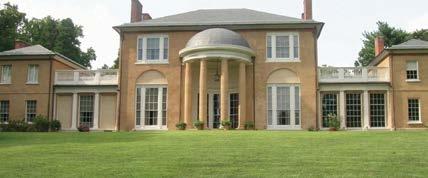
TUDOR PLACE GARDEN PARTY
Wednesday, May 20
The Spring Garden Party at Tudor Place Historic House & Garden, 1644 31st St. NW, is the organization’s most significant fundraiser of the year, running from 6 to 9 p.m. Proceeds support conservation of objects in Tudor Place’s collection and archives. Tickets start at $300 for members and $350 for nonmembers. Visit tudorplace.org.
ART CELEBRATION AT RITZ-CARLTON
Friday, May 22
The Calloway Collection of contemporary art will be introduced in the Living Room at the Ritz-Carlton Georgetown, 3100 S St. NW, as part of its Art in Residence program. The celebration runs from 5 to 7 p.m. Visit georgetowndc.com.
BOOK HILL FRIENDS PARTY
Friday, May 29
Friends of Book Hill Park is hosting a wine, cheese and charcuterie party from 5 to 7 p.m. at the home of renowned organic chef Nora Pouillon, 3210 Reservoir Road NW. To purchase tickets, visit the Donate page at bookhillparkdc.com.
ANC 2E MONTHLY MEETING
Monday, June 1
Advisory Neighborhood Commission 2E, representing Georgetown, Burleith and Hillandale, will hold its June meeting at 6:30 p.m. at Georgetown Visitation Preparatory School, 1524 35th St. NW, and via Zoom. Visit anc.dc.gov.
OLD GEORGETOWN BOARD
Thursday, June 4
The Old Georgetown Board–Commission of Fine Arts will meet at 9 a.m. at 401 F St. NW, Suite 312. Meeting documents are posted on the Monday afternoon prior to the meeting. Visit cfa.gov.
BY ROBERT DEVANEY
CHRISTOPHER DORSEY NAMED 2ND DISTRICT COMMANDER
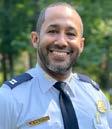
On May 4, Christopher Dorsey was named commander of the Second District, which serves the Northwest quadrant of the District of Columbia, succeeding Tatjana Savoy, who was put on administrative leave due to the crime statistics scandal in the Metropolitan Police Department.
American communities. In 1963, while doing her master’s degree in African Studies, she took time off to join the March on Washington. In the 1960s, as a member of the Library of Congress’s African section, she served as the Library’s representative to 13 countries in Africa.
ST. JOHN’S RECTOR TO RETIRE IN JUNE
The Rev. Gini Gerbasi, Rector of St. John’s Episcopal Church Georgetown, will retire at the end of June. Her last Sunday at St. John’s will be June 28. Gerbasi left St. John’s, Lafayette Square to become rector in June of 2014. She was ordained in 2007.
Gerbasi is a graduate of the Wesley Theological Seminary in Washington and also a graduate of both the Undergraduate and Law School at the College of William and Mary. In her previous life, she worked in public policy relating to poverty and hunger, and as a criminal defense attorney.
announced last month. Born on May 1, 1945, she lived at Orchard Lane in Georgetown and also spent part of the year in Chile.
Dorsey began his MPD career in 2006 as a patrol officer in the Third District. In 2014, he was promoted to patrol sergeant in the Fifth District. Dorsey became captain in 2021, taking charge of the Seventh District. That same year, he was appointed Deputy Director of the Metropolitan Police Academy. Since September 2022, he has served as captain in the Criminal Investigations Division, managing investigations across the First, Sixth, and Seventh Districts, coordinating operations with the ATF. He transferred to the Office of the Field Commander in November 2024.
Dorsey earned a Bachelor of Arts in Criminal Justice from the University of Maryland at College Park in 2005.

Lockwood’s passion over the past 45 years was helping 62 godchildren, primarily from Langston Dwellings, a housing project in Northeast D.C., through college and graduate school.
She was also the founder of Georgetown Village, a nonprofit that helps residents age in place. As Lockwood told The Georgetowner in 2013, referring to her inspiration: “I want to leave the house feet first.”
Lockwood is survived by her son Reid Lockwood, his wife Susanna, and their children Adelaide and Nathaniel of Atlanta, and son Mark Lockwood, his wife Liz, and children Jack, Lizzy, and Emma of Washington, D.C. She is predeceased by her husband, David Lockwood.
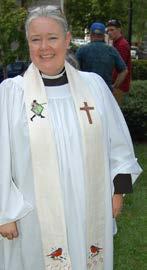
Married to Joe Gerbasi, a federal prosecutor, she is the mother of Michael, 27 and Andrew, 23. When she is not working, you will probably find her at a baseball field, coffee in hand, cheering for her favorite MLB team (the Os!) or one of the men in her life, she tells us.
In 2017, Gerbasi was profiled in The Georgetowner as “The Unexpected Episcopal Priest.”
BELINDA WINSLOW FUNERAL ON MAY 23
Belinda Leigh Winslow, daughter of Edward and Frida Burling, and wife to Luis-Fernando Moro Amunátegui has died, her family


A graduate of the Potomac and Westover Schools and Briarcliff College, Winslow worked with her mother Frida Burling on projects involving the Georgetown House Tour and the Junior League of Washington.
A memorial service for Belinda Winslow will be held at St. John’s Church Georgetown at 10 a.m. May 23, the Saturday of Memorial Day weekend.
D.C. SPENT $67 MILLION ON SNOW REMOVAL
After a January storm dumped more than eight inches of snow and sleet on D.C., it took weeks for the city to clear what officials were referring to as “snowcrete,” a clever moniker that helped highlight how challenging the resulting icy mix was to deal with, according to the 51st.
Three D.C. agencies spent a combined $67.2 million to plow and haul hundreds of tons of snow in the wake of the storm.
Get the Latest News in your inbox for FREE. We never sell your information, it’s kept private.
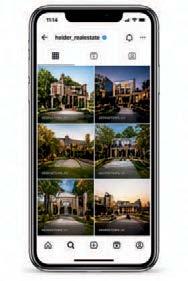
The World’s #1 Followed Real Estate Practice Located Here in Georgetown













2nd District Commander Christopher Dorsey PHOTO COURTESY
MPD
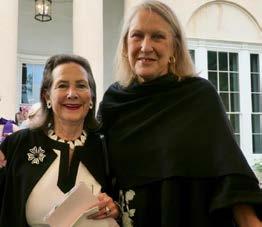
Sharon Lockwood at Tudor Place in 2022
PHOTO BY JUDITH BEERMANN
The Rev. Gini Gerbasi
PHOTO BY ROBERT DEVANEY
The ANC’s 4-Hour May Meeting, Condensed
BY THE GEORGETOWNER
Advisory Neighborhood Commission 2E gaveled in on Monday, May 4, and gaveled out four hours later. That’s a long night by any standard. But strip away the procedural throatclearing and the meeting delivered something rarer than usual: a clear-eyed snapshot of what’s actually keeping Georgetown up at night. Crime data the police can’t talk about. A budget the Council is sweating over. A 25-year vision for the city that ran headfirst into a roomful of skeptical commissioners. Here’s what mattered.
PUBLIC SAFETY: SAFEWAY ON THE CLOCK
The Safeway at 1855 Wisconsin Ave. NW has a problem, and it’s running on a deadline. Police presence has been bumped up around the store, especially in the after-school window when most thefts happen. The message from MPD was blunt: if the trend continues, the 24-hour Safeway won’t stay 24 hours.
Beyond that, neighborhood crime stats haven’t budged much — except for the slow drumbeat of auto thefts, which refuses to quit.
Then there are the cars-on-sidewalks. A recent crash at 33rd and P sent a vehicle up onto
the pavement, ending up backwards. Another smashed up near Boulangerie Christophe on Wisconsin. One crash happened roughly 100 feet from a school — close enough to make commissioners ask the obvious question: where are the raised crosswalks? Where are the speed bumps? MPD’s answer was the answer it always is: those measures help, but they also slow down ambulances and fire trucks. Pick your tradeoff. Then came the question nobody at the dais wanted. A member of the public asked about the manipulated crime data scandal — the one where 13 MPD officers were placed on administrative leave and now face possible termination over allegations that crime numbers were doctored to make the city look safer than it is. MPD’s response? They had no information. They could not speak on the matter. Conversation closed.
FROM PINTO’S OFFICE: THE BUDGET CRUNCH COMES HOME
Councilmember Brooke Pinto’s office had updates, and most of them came with sharp edges. The 311 app is still broken. Until it isn’t, call or use the website.
On the FY 27 budget: committee hearings

should wrap this week, then markups, then votes — the first two of three, sandwiched around the June 16 primary. Pinto isn’t hiding her concern about the proposed cuts, and she’s telling residents now is the moment to advocate, not later. Among the casualties on the chopping block: the Safe Commercial Corridors grants, an evidence-based public-safety program, and a proposed pay freeze for firefighters. Read those two together and ask yourself what the District is signaling about its priorities.
Juvenile curfew zones came up. Pinto wants her bills expanding youth recreation and employment moved forward — the carrot to go with the curfew’s stick.
Residents got the standard primary-election reminders: register, research ranked choice voting, show up.
And the Georgetown DMV? Still closed. Still waterlogged. Still no reopening date.


Use Map, the document that sets the longrange vision for how the city grows. These get updated roughly every 20 years. The 2021 version was a touch-up. This one is a full rewrite.
“We are visualizing different city growth scenarios and collecting as much feedback as we can,” Samra said.
THE 2050 VISION MEETS THE 2025 REALITY
Rita Abou Samra from the D.C. Office

THIS MAY, WE CELEBRATE 2 YEARS ON PROSPECT STREET!
WE COULDN’T HAVE DONE IT WITHOUT YOU + WE’RE SO GRATEFUL TO BE PART OF THIS INCREDIBLE COMMUNITY.
JOIN US MAY 4TH - 8TH AS WE THANK OUR NEIGHBORS + CELEBRATE TOGETHER.
SHOW YOUR 20007 ZIP CODE TO ENJOY A COMPLIMENTARY INFRARED SAUNA SESSION!



The new wrinkle this cycle is something called place types — a framework that looks past the building and at the experience. “So not only in terms of is this a large scale, mixed use building, or building typology as we’ve previously looked at them,” Samra said.

Friends of Volta Park
ANNUAL COCKTAIL PARTY
THURSDAY, JUNE 4TH, 2026 6:00PM - 8:00PM
FATHOM GALLERY GEORGETOWN
PLEASE JOIN US FOR THE 1351 WISCONSIN AVE NW WASHINGTON, DC 20007
TICKETS CAN BE PURCHASED ONLINE AT HTTPS://VOLTAPARK.ORG/EVENTS/2026/6/4/2026SPRING-COCKTAIL-PARTY-AMP-AUCTION OR SCAN HERE



A project for a bike lane that would span about 14 blocks, called the M Street Corridor Safety Project, was discussed.
“We’re including a different policy guide that relates to building form and density, land uses, transportation and connectivity and parks and open spaces.” Translation: the planners want to talk about how a neighborhood feels, not just what it’s zoned for. There are place types for both residential and commercial corridors.
For Ward 2, the headline number is 14,000. That’s how many additional households the FLUM is sketching room for by 2050. Most of the new housing clusters near transit — metro stations, and increasingly, the priority bus corridors that haven’t seen real growth in two decades.
That was the pitch. The pushback came fast.
COMMISSIONERS PUSH BACK — HARD
The feedback session was, to put it generously, heated.
A question about salvaging residential units and zoning sent the conversation briefly into the wrong lane — Samra initially heard “historic preservation” — before commissioners corrected course and pointed out the real issue
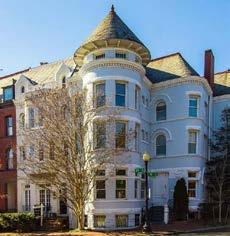
was zoning itself. Then someone surfaced a case study: 3100 R St. NW, a home that multiple families bid on, that ultimately went to buyers who turned it into a nonprofit office.
“What would have been a family living there is now used as offices,” Commissioner Daniel Chao said.
Commissioner Gwen Lohse drove the point further, flagging Mayor Bowser’s proposal that would let District homeowners buy a second property and run it as an Airbnb. Houses, in other words, that don’t house anyone.
Commissioner Mimsy Lindner had been hearing this song for a while. “I have a lot of conversions from offices to residences in my district,” she said. “My big question is, who are all these people moving here? It’s more and more expensive to live in the city, we’re losing a lot of perks of being a neighbor and mom and pop shops are getting pushed out by bigger shops.”
Her broader point cut closer to the bone: if D.C. genuinely expects 14,000 more households in Ward 2, the city had better deliver schools and affordability worthy of them. Otherwise the FLUM is a real-estate brochure with civic ambitions.
“I just kind of chuckle and think, who are all these people moving in here?” Lindner said.
TOWN TOPICS
For those who want to dig in: dc2050. dc.gov/pages/resources.
D.C. WATER: LEAD LINES OUT, TRAFFIC CONES IN
Sean Moore, representing D.C. Water, gave the room a heads-up on lead service line replacement work coming to Wisconsin Ave. NW and P St. NW. Expect temporary lane closures, sidewalk closures, and shifted traffic patterns. More phases are queued up after this one.

For an concerns and questions please go to lead@dcwater.com or 202-787-4044.
NEW BUSINESS: MARKETS, SPEED TRAPS, AND A BIKE LANE FIGHT
Scheele’s Market — a longtime neighborhood landing spot whose owner recently decided to sell — has triggered a grassroots response. A group of residents is organizing to educate the community and potentially put together a collective buyer pool to keep the market as the market.
A DDOT-focused resolution on speeding and pedestrian safety drew the kind of weary commentary you’d expect: dealing with DDOT, several commissioners noted, is a constant push and pull.
Then came the M Street Corridor Safety Project — a roughly 14-block bike lane that has become this season’s signature infrastructure brawl. The protected lane currently funded ends at 28th and M, because that’s where the money runs out. A separate, unfunded project would carry it from 28th to Key Bridge. A longer-term strategic bike plan is also in motion.
The proposal on the table has two pieces: building a curb lane that cuts in from the multimodal trail added in Rose Park along Rock Creek, and terminating the protected lane at 28th and M.
The ANC isn’t sold. Its draft resolution, sent to DDOT for review, asks the agency to push the lane’s endpoint one block west — to 29th and M — citing 28th and M as one of the “most congested and chaotic” intersections in Georgetown. Translation: don’t dump cyclists into a blender and call it a safety project.
OTHER RESOLUTIONS
Two more resolutions made the docket: one supporting a new mural in Burleith, and another tied to a Food Waste Smart Bin. Smaller items, but the kind of business that keep a neighborhood neighborly.


Ritz-Carlton Residences Georgetown 3150 South St NW, Apt 1A | 3 BD | 3.55 BA | $4,000,000
The light-filled, open layout is designed for entertaining, features a dramatic custom bar and private terraces. The primary suite offers a spa-like bath, private sauna, and custom closets. Residents enjoy 24-hour concierge and security, valet parking, and convenient access to the Georgetown waterfront, parks, dining, and shopping.
| 703.216.1333
PHOTO COURTESY DC WATER
Lead lines are in the process of being replaced in Georgetown.
3100 R St. NW, which was purchased by individuals who turned it into a nonprofit.
$21 Billion Question: 2027 Budget Built for Hard Truths
BY JACK EVANS
Tom Brady, Commencement Speaker?
Learning that legendary quarterback Tom Brady would be one of Georgetown University’s commencement speakers, perhaps some of you said, “Why?”
Not just the Brady Haters. Yes, outside of Baltimore — where there will always be one Golden Arm (Johnny U) — the seven-time Super Bowl champ is considered the G.O.A.T. But TB12 is a controversial figure on account of his dating, marriage and procreation record; his long-standing bromance with the current president; and a lingering association with a decade-old matter labeled “Deflategate.”
Apart from that, are his achievements, impressive as they are, worthy of an honorary degree from the oldest Catholic institution of higher education in the country?
Also on this year’s lineup of 13 speakers are such leading lights as classics scholar Mary Beard, to be honored by the Graduate School of Arts & Sciences; former U.N. Ambassador Cindy McCain, by the McCourt School of Public Policy; and former Secretary of State John Kerry, by the Walsh School of Foreign Service.
At 2:30 p.m. this Saturday, when he trots to the Healy Lawn lectern to address the class of 2026 of the McDonough School of Business, Brady, 48, will be making his first commencement speech at a major university. (Kerry is due at 5 p.m.)
Other than that, he’s a high-profile celebrity and a successful entrepreneur — with brands in the wellness, apparel and media spaces — here, we believe, is why.
This spring, the McDonough School launched the Durban Sports Business Program with an inaugural cohort of 40 students. Led by Luis Maes, who has held positions with the Kansas City Royals, EA and Nike, the program is named for donors Egon and Abby Durban, parents of a currently enrolled Hoya.
The former is co-CEO and managing partner of investment firm Silver Lake, the portfolio of which includes major sports properties and interactive entertainment firms. The latter is a managing partner at ASK Capital, the Durbans’ family investment office.
Egon Durban, McDonough class of 1995, credits the Jesuit tradition of “Men and Women for Others” he encountered at GU with helping him along on his life and career paths.
The direct Brady connection? Durban’s just-approved option to purchase a majority stake in the Las Vegas Raiders; Tom holds five percent of the team (leading to accusations of a conflict of interest, since he’s an NFL analyst for Fox Sports).
Frankly, we’re jazzed that he’s coming to the Hilltop. In the words of RFK — like Tom Brady, a former big name in football — we say, “Why not?”
Bad Bunny’s Fashionable Lesson on Aging
Two Mondays ago, the same night as the May meeting of ANC 2E, Benito Antonio Martínez Ocasio showed up at the Met Gala and didn’t act his age.
Co-chaired by transcendent sovereign Beyoncé Knowles-Carter, with the beguiling Anne Jacqueline Hathaway, among many others, on hand (despite all the kvetching about sponsors Jeff and Lauren Bezos), the event raised $42 million.
This year’s gala took its cue from “Costume Art,” an exhibition at the Met’s Costume Institute that ruminates on body types, including the aging body. On May 4, Bad Bunny took it to the next level.
The 32-year-old singer-songwriter showed up looking five decades older. Another halfcrocked stunt or silly cosplay this was not. His makeup took hours to apply.
It was entirely intentional that we were seeing the Super Bowl LX halftime performer as an elegant, 80-something abuelo. Clutching his walking stick, he was slapping back at
a looksmaxxing, cosmetic surgery-obsessed culture in the very hall that was celebrating it.
As he got ready for the Met Gala, Bad Bunny told Vogue: “Fashion ages, but the art within it does not expire. It doesn’t get old. Of course, our bodies might age, but what we carry inside doesn’t, right? You’re not just aging. You’re learning and evolving. And, at least for me, I strive every day to become a better person and a better artist.
“Everything I do, including music, I want it to feel different and personal. If you’re taking the right path — nobody knows the right path, of course — but if you’re taking everything you want to do so that when you’re this age, you have nothing to regret: If I were to die right now, I’m going to heaven.”
Do not fear aging and your own mortality, Benito opines. Appreciate yourself right now. Not bad for a singer who cried, “I should have taken more photos.”
We wonder if he knows that May is officially Older Americans Month.
For two decades, the District of Columbia’s budget has done one thing reliably: grow. That streak just ended.
Mayor Muriel Bowser has dropped a $21-billion proposal on the Council’s desk — smaller than last year’s, and by most reckonings the first shrinking budget the city has seen in roughly 20 years.
Forget the press-release framing; that’s the headline. Washington, the city that always had a little more to spend next year than it did this one, doesn’t anymore.
What happens next is the Council’s most consequential job, full stop. Budgets aren’t paperwork. They’re priorities with dollar signs attached — and this year’s numbers don’t lie.
Councils in this city, and in plenty of others, have a long, well-worn habit of softening cuts with one-time revenues, accounting maneuvers and creative bookkeeping that makes today’s numbers work and tomorrow’s problems worse.
It’s a magic trick. The rabbit always comes back.
This is the moment to skip the magic. If D.C. is genuinely entering a slowergrowth era, the responsible move is to act like it — even when “responsible” means saying no in places where saying no is politically radioactive.
And about that politics: this is an election year. Of course it is. Hard votes are hard enough in any year; in an election year,
Here’s where the money goes: roughly $7 billion to human services. Another $4 billion to public schools. About $2 billion servicing debt. Nearly $1.9 billion on public safety. Add it up and those four categories swallow about 76 percent of every dollar the District spends. Everything else — buses, parks, permit offices, inspectors, the entire scaffolding of city government — fights over what’s left.
That’s not a budget with a lot of give. It’s a budget with four pillars and a hallway.
Which brings us to the trap the Council is walking into. If revenues are down and the pie is shrinking, the math gets brutal fast: real cuts can only come from the Big Four. And the Big Four are exactly what no elected official wants to touch.
Human services protect the city’s most vulnerable. Schools educate its children. Public safety is, well, public safety. Debt service isn’t optional. So which sacred cow gets the knife?
Bowser’s proposal makes its choices. With trims here, adjustments there, it’s an honest-enough attempt to pull spending into line with what the District can actually afford. Now the Council gets to decide whether to swallow the medicine — or reach for the sugar.
History suggests that sugar wins.
with voters paying attention and opponents taking notes, the gravitational pull toward delay, defer and don’t-rock-the-boat is enormous.
Governing well means resisting that pull anyway.
Over the next several weeks, the Council will hold hearings, comb through agency budgets and haggle over amendments. A final vote is scheduled for June 23. Expect noise. Expect lobbying. Expect every line item to have a champion and every cut to have a casualty.
The test isn’t whether the Council passes a budget — it has to. The test is whether what it passes reflects fiscal reality or just political comfort.
Because a balanced budget isn’t a legal box to check. It’s a promise: that the services residents count on this year will still be there next year, and the year after and the one after that. Gimmicks break that promise quietly. Discipline keeps it.
The choices made in this cycle will set the city’s trajectory for years. The only real question is whether the people making them are willing to choose like it.
Jack Evans represented Ward 2 on the District Council from 1991 to 2020 and chaired the finance committee for 20 years, 1999 to 2019.
PHOTO COURTESY OFFICE OF THE MAYOR
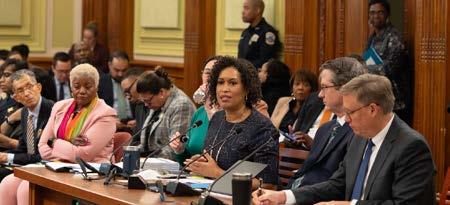
Mayor Muriel Bowser testifies in support of her 2025 fiscal year budget.
Ranked-Choice Voting: A Meaningful Step Forward
BY JOE STERNLIEB
The District’s new ranked-choice voting (RCV) system is a great improvement for our local elections and for our democracy. One of the biggest benefits of RCV is that it eliminates victories by candidates opposed by the majority of voters. I can think of many examples when unpopular incumbents were returned to office after the majority of voters chose other candidates in multi-candidate races.
Just last year, disgraced Ward 8 Council member Trayon White — who the District Council had unanimously expelled for being caught on an FBI video taking a bribe — won a special election with only 28 percent of the vote in a four-person race. Seventy-two percent of Ward 8 voters clearly wanted someone else to represent them, yet because of D.C.’s old “first past the post” election law they were stuck with White as their Council member. RCV completely eliminates this problem.
Under the new RCV system, to be used for the first time this year, we will be able to rank candidates in our order of preference — from one to five — rather than choosing just one. If no candidate wins a majority of firstplace votes, the lowest-ranked candidates are eliminated. The votes they received are then redistributed to their voters’ next choices until
a candidate crosses the 50-percent threshold. What sounds like a technical tweak actually reshapes elections in powerful ways.
First, RCV ensures that winners of multicandidate races have broader support. In a diverse city like ours, winners who have the support of a broader cross section of the electorate can help build legitimacy and trust.
Second, RCV gives voters more choice to express their real preferences. I can’t count the number of times I’ve heard, “I am voting for the lesser of two evils,” usually for the better-known or better-financed candidate; or, “I don’t want to waste my vote, so I’m not voting for the person I really want because she doesn’t have a chance.”
Ranked-choice voting frees us to pick our favorite — regardless of how well known or well funded that candidate is — without worrying about “wasting” our vote. If our first choice is eliminated, our second choice is counted, and so on, until at least 50 percent of the ballots support a candidate. This creates space for new voices and ideas, which is essential in a healthy democracy.
Third, RCV tends to discourage negative campaigning — although in these divided times that’s aspirational. Because candidates


must now compete for second- and third-choice votes, campaigning that angers one’s opponents’ supporters could drive those votes to other candidates. Even small shifts toward more respectful discourse are a good thing for our city.
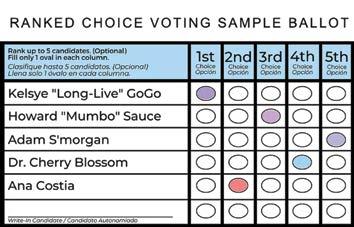
Critics of RCV often point to the system’s complexity. However, based on years of experience in other cities and countries worldwide, it appears that voters given clear instructions adapt quickly. In fact, many find the system intuitive after using it once. More important, the added complexity serves a purpose: it captures voter preferences more accurately than a single-choice ballot ever could. No voting system is perfect, and RCV is not a cure-all for every challenge facing democracy in the nation’s capital. Issues such as representation in Congress and the
structure of local governance will not be solved by ballot design. But improving how elections translate voter intent into outcomes is a meaningful step forward. I for one am grateful to the city’s voters for passing the RCV ballot initiative and look forward to this new era for our elections.
City planner Joe Sternlieb is the former CEO of the Georgetown Business Improvement District.
INS & OUTS
BY ROBERT DEVANEY
Georgetown continues to get meatier and sweeter — and hotter.
IN: RYAN RATINO’S OX & OLIVE
“Eat More Beef … Moody by design, Indulgent by Nature … A temple of Beef in Georgetown.” Behold the promises of a new restaurant off the beaten path on Grace Street. Steakhouses are in again.
Chef Ryan Ratino opened his eagerly anticipated steakhouse Ox & Olive at 3201 Cherry Hill Lane NW, formerly the home of Johnny Spero’s Reverie, on May 7. Expect meat and martinis.
Also behind Jônt and Bresca, Ratino and his Hive Hospitality told us: “Tucked into a historic cobblestone alley in Georgetown, our 50-seat American steakhouse is an intimate expression of Hive Hospitality’s passion for exceptional dining. Here, we showcase what we believe to be the finest beef available — thoughtfully sourced from producers who share our commitment to quality, integrity and flavor.”

IN: THE SALTY
Also eagerly anticipated: the Salty Donut, which opened on May 8. With a dozen locations, the Salty in Georgetown is the Miami-based company’s first Washington, D.C., location. (Across the street is Georgetown Cupcake.)
The corner spot at 3299 M St. NW — previously home to Peet’s Coffee and, before that, Aditi Indian Dining — will serve specialty doughnuts (our spelling) as well as croissant sandwiches, avocado toast and coffee.
IN: SÉZANE REDUX
A bit of Paris returned to Georgetown in April, as Sézane marks its first permanent store in Washington, D.C. The brand had a pop-up in the neighborhood last year and opened at 1242 Wisconsin Ave. NW.
“The beloved Parisian, B-Corp certified DTC brand will unveil its newest Appartement,” the company tell us. “Located on one of Georgetown’s most storied streets, the space reflects Sézane’s signature Parisian point of
view while deepening its relationship with the city. After a thoughtful search for the right long-term home, the brand has found a location that feels both rooted in the neighborhood and aligned with its global vision.”
COMING: MEERMIN ON M
Meermin, a Spanish footwear brand based on the island of Mallorca, has leased space at 3001 M St. NW and is slated to open this summer or fall, per its landlord EastBanc, as first reported by the Washington Business

Journal. With its inaugural U.S. shop in SoHo, Meermin will open its second in the 1,630-square-foot space that housed Mykita Shops for a decade.
ACE WINDOW CLEANING, CO.
“This location is a strategic step in our deliberate U.S. expansion, allowing us to serve the East Coast more comprehensively while positioning ourselves in a market that values both our European heritage and our value proposition,” Pepe Albaladejo, who runs the business with his father, said in a statement.
COMING: 55 SEVENTY
Our restaurant industry writer Linda Roth reports: “A Dallas-based private wine club, 55 Seventy, has targeted Georgetown for its next opening, at 1115 30th St. NW, near M Street. “It plans to seat 250, with total occupancy of 675. The unusual name signifies the ideal conditions for storing wine: 55 degrees and 70-percent humidity. Membership is by application only.”
COMING: BLUE NILE
Another diamond shop is on the way (Lugano left an opening?). Blue Nile will be taking take over the James Allen space at 3109 M St. NW. Topher Mathews tells us: “It turns out that Blue Nile is owned by the same holding company that also owns James Allen. So, this is more like a repositioning of a brand strategy than one shop moving in to replace another.”
COMING: HILL HOUSE
Speaking of diamonds ... Nell Diamond’s Hill House Home is opening a new location on Wisconsin Avenue in Georgetown, as

confirmed by recent social media posts. The clothing brand is known for its signature Nap Dresses, bedding and home accessories.
COMING: BIZZERIA
Washingtonian reports that, with the success of Yellow café on Wisconsin Avenue, which offers an evening menu of pizzas or “not pizzas,” Albi and La’ Shukran chef Michael Rafidi and his team will open Bizzeria, a Levantine-inspired pizzeria, at 3246 Prospect St. NW in the fall.
OUT: TAKE CARE
Becky Waddell’s health and beauty oasis, a curated shop and holistic spa on Wisconsin Avenue, officially closed on April 26. Waddell told her patrons: “After nine wonderful years at 1338 Wisconsin, Take Care is beginning a new chapter — one that transitions Take Care from brick and mortar to fully online.”
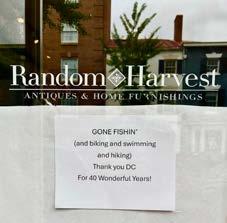
OUT: RANDOM HARVEST … GONE FISHIN’
Random Harvest Home Furnishings, the standout store of handpicked selections of furniture and accessories at 1313-15 Wisconsin Ave. NW, closed for good on April 26. OUT (TEMPORARILY):
Bibibop, the eatery of healthful Asian and gluten-free bowls at 2805 M St. NW, is closed for renovations, they say. A nearby Bibibop is on Connecticut Avenue near Dupont Circle.

Random Harvest at 1313 Wisconsin Ave. NW. Georgetowner photo.
Hill House is coming to town.
Meermin shoe display.
Chef Ryan Ratino of Ox & Olive prepares a beef treat during a May 3 preview party.
Photo by Bill Starrels.
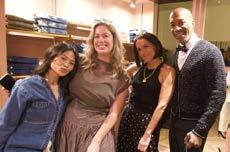
Sézane’s VIP party on April 22.
Photo by Bill Starrels.
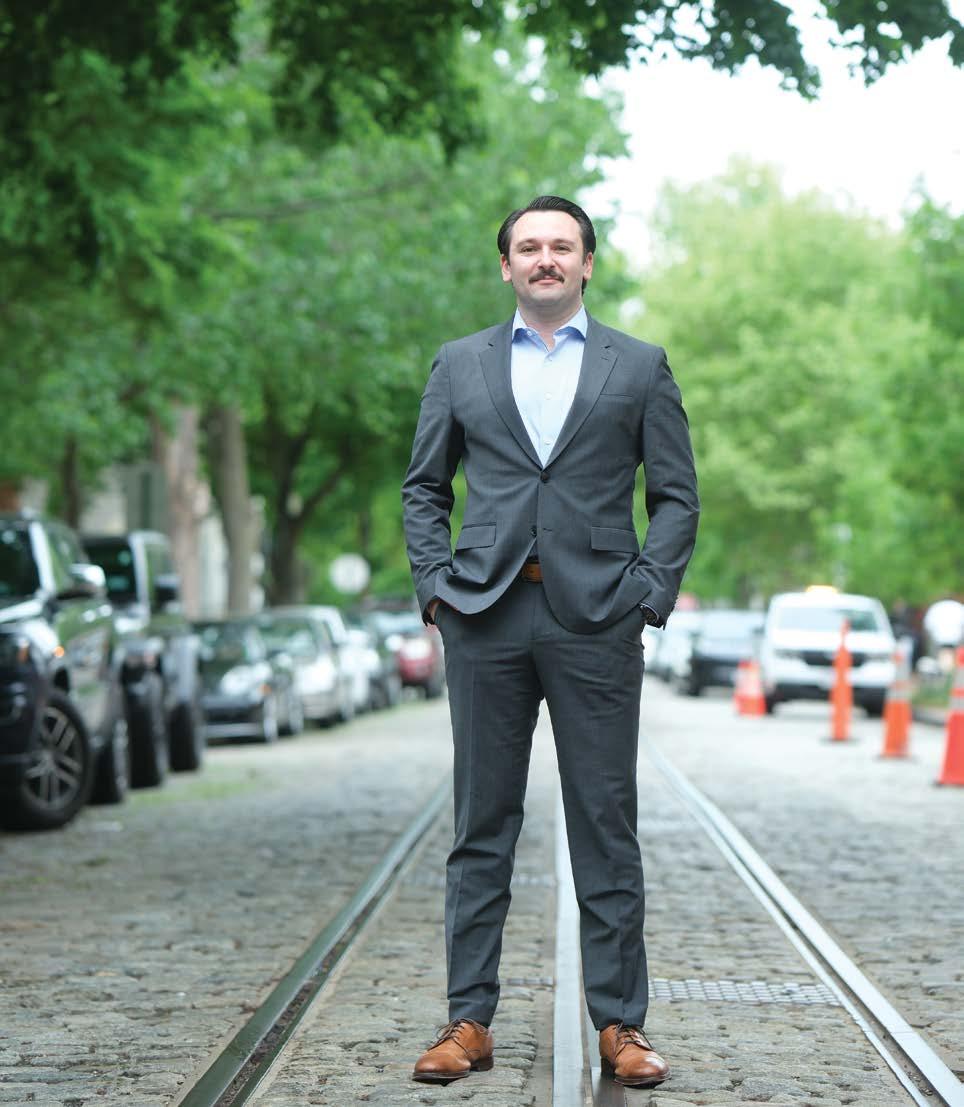
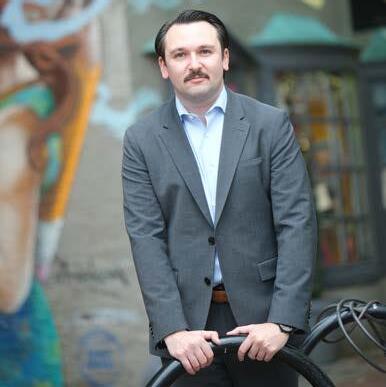
A Man for Uncertain Times: Malcom Fox
BY AMOS GELB
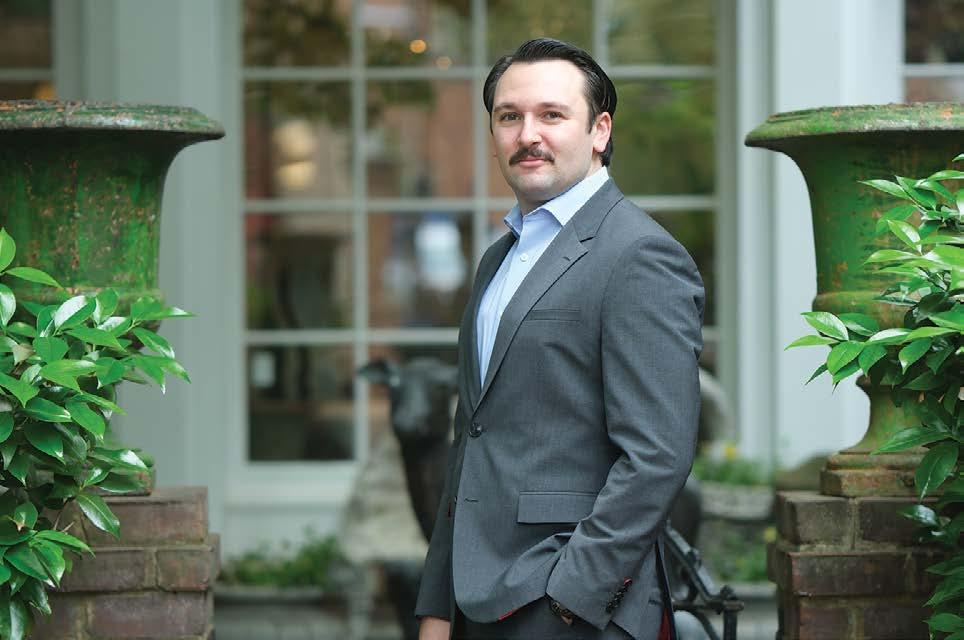
Malcom Fox is a disruptor wading into our collective uncertainty. This fall will see a new mayor, three newly elected Council members and a new representative to Congress. It is as close to wiping the slate clean as it gets. What comes out of the election will likely shape what happens in D.C. for the next decade.
Malcom Fox doesn’t look like a boogeyman.
But read the City Paper or the messages from Democratic Socialists and he is the personification of dark money, trying to buy D.C.’s municipal elections, a puppet controlled by rapacious developers.
So, it is a bit disarming when this one-time Bernie Sanders campaign volunteer responds to the taunts not with political jousting, but by saying if he had to sum up in one word where he thinks our city is today, it would be “uncertainty.”
To be clear, Opportunity DC, of which Fox is executive director, is a political advocacy organization. It endorses candidates: McDuffie for mayor and a slate of Council members including current Chairman Phil Mendelson.
At one point, Fox worked for McDuffie, making that endorsement perhaps not a surprise.
The idea for Opportunity DC came from the Federal City Council, a collective of corporate and business leaders, with a smattering of community activists. The policies it promotes are based on economic growth rather than economic redistribution.
Opportunity DC also undertakes education campaigns, such as for ranked-choice voting, running a direct-mail campaign after polling showed that twothirds of likely Black voters were unfamiliar with the system. Whether ranked-choice voting would help Opportunity DC’s preferred candidates is unclear.
But beyond the politics, Opportunity DC and Fox are totems of a pivotal moment. A seismic change is quietly, but definitively, reshaping our city.
One inflection point is economic. The Covid hangover of remote work and the hollowing out of office occupancy was exacerbated by the Trumpian evisceration of the federal employment base. The communal budget hole we faced suddenly became a crevasse. The question is no longer how, and on whom, should the money be spent, but where will it come from.
Another is demographic. While the median age of the city has stayed around 34, there has been a massive shift in the past three decades from a mostly Black city to one where white and Black populations are almost evenly divided. But beyond race, the change came largely in a tidal wave of professional Millennials who arrived with Obama and stayed for Biden.
Where does this lead? The traditional power structure in D.C. is ceding power to a new generation, and Malcom Fox represents that change.
In a town that defines “transient,” at 31 he can be considered a D.C. lifer. He moved to the city in 2017 with a freshly minted political science degree, part of the generation of eager new arrivals who took up residence in neighborhoods then considered less than inviting: Shaw, H Street NE, Bloomingdale, Eckington.
But rather than joining the cult of Capitol Hill, he committed to the city, working in city politics, going to graduate school at Georgetown in public policy and working on local campaigns (losing one, Marcus Goodwin’s, the disappointment of which still lingers).
According to a longtime former colleague, Fox today
“dances the line” between D.C.’s business interests and his own progressive beginnings, a reminder of which takes the form of his girlfriend’s work financing affordable housing. Ask him where he stands on the city’s challenges today and he rattles off his three-point agenda: making the city “safe, affordable and prosperous.” Critics will point to his support for increasing housing as a sign of his being a tool of developers. His retort: “If we don’t increase housing, where will people live? And if housing is scarce, prices will never come down.” What of gentrification? “That is a problem.” His suggestion that rapid housing growth and raising wages are the answer will ring hollow for many.
When pushed about what Opportunity DC means to the traditional power of D.C. that emanated from Wards 7 and 8, he pauses, acknowledging that his organization is a disruptor. He believes it is time for the city to get over ideological politics and economic policies based on “free.”
Malcom Fox is a disruptor wading into our collective uncertainty. This fall will see a new mayor, three newly elected Council members and a new representative to Congress. It is as close to wiping the slate clean as it gets. What comes out of the election will likely shape what happens in D.C. for the next decade.
Opportunity DC openly wants to tilt those scales. While you can argue with his prescriptions for the city, what really counts is that Malcom Fox represents more than an economic and social philosophy. He is the vanguard of a changing of our city’s guard.
He won’t be alone. •
PHOTO BY SUERAYA SHAHEEN
Speaking With the


TOP 3 MAYORAL CANDIDATES
BY ROBERT DEVANEY, FRANCIS RIENZO AND BILL STARRELS
Last week, The Georgetowner conducted exclusive individual sit-down interviews with the three top mayoral candidates: Janeese Lewis George, Kenyan McDuffie and Vincent Orange. The following are summaries of conversations with those three candidateswho are vying for the Democratic nomination for mayor of Washington, D.C. Full transcripts will be available at georgetowner.com.
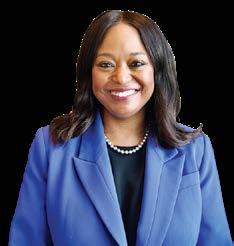

MAYORAL CANDIDATE
When asked why she wants to be mayor, Janeese Lewis George said it’s because she is a third-generation Washingtonian who loves her city. She sees three key issues: affordability; our relationship with President Trump and the federal government; and making sure the District’s agencies deliver on services to D.C. residents.
George believes there is a problem in basic government oversight. Just holding hearings is not enough. She said that “being on the ground with my community helps identify problems and the necessary solutions.”
In her time as a Council member, she has focused on transforming neighborhoods and helping to support small businesses and schools. She built trust with residents and businesses in Ward 4 by delivering for them. She highlighted the Early Childhood Educator Pay Equity Fund.
When asked about the lack of timely and efficient delivery of basic city services, George acknowledged there is work to be done. She said she is putting together teams to improve efficiencies in District government.


If elected, George wants to hit the ground running. She said she would start early, putting together a transition team with three areas of focus. One group would oversee recruitment for agencies, including custodians, and another would review agencies’ organization and structure. The third would serve different affinity groups and gather community feedback.
“Constituents feel as if they are complaining into a void,” she said. She wants to see residents who call 311 to get fast and efficient responses. George said the promised response times from DDOT and other agencies “is unacceptable.”
Talking about the infrastructure money, she commented: “We’ve been given $60 million for sustainability efforts, so that could be putting solar across buildings, and how much have we used?” We need to find out, she said. Many worry that George will raise taxes to fix problems, and she vowed not to raise property or income taxes as mayor. George wants to make D.C. a destination for retirement, due to our numbers of hospitals and universities, which can boost the economy and act as a consistent tax source. George talked crime, ICE and MPD. She would end most collaboration between MPD and ICE. She said she supported the recent curfew extensions. She addressed working strategically with the Trump administration and with Congress. George stated that many representatives told her they have not been approached recently by District leaders. George would work closely with the newly elected delegate replacing Eleanor Holmes Norton, who is retiring. She also highlighted her union support. When asked about how cozy she is with unions, George said, “We have been operating within the greatest level of integrity.”
Regarding the D.C. budget and the need for efficiency, George cited a building the D.C. government leases for $26 million a year that is all but empty. She said that needed to change. She did not disagree that the number of District workers was out of proportion when compared to other major cities. Boston, for example, employs around 19,000 and has a population of 675,000 residents. With a population of 700,000, the District has 34,000 workers. •
JANEESE LEWIS GEORGE
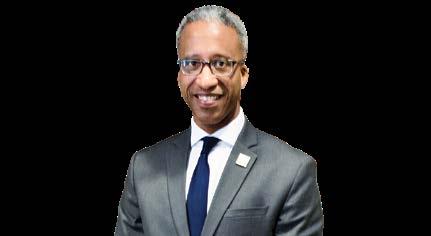
MAYORAL CANDIDATE
KENYAN MCDUFFIE
Kenyan McDuffie is one of the seven Democratic candidates in D.C.’s mayoral race. We spoke with him about his experience as a District Council member, his priorities and his beliefs. When asked about his time on the Council, he quipped: “How much time do we have?”
McDuffie worked on the Neighborhood Engagement Achieves Results (NEAR) Act, which implemented more of a public health approach to public safety. It “both supported enhanced safety by the Metropolitan Police Department, but also brought in community violence intervention policies,” he said.
McDuffie also authored the police body-worn camera law, which is particularly relevant in today’s landscape with Immigration and Customs Enforcement. He worked on the Child Wealth Building Act, known as “baby bonds,” designed to “give kids hope and the ability to invest themselves in a city that has become increasingly unaffordable,” he said.
McDuffie vows to achieve stable economic growth, growing the city’s economy without displacing anyone. One plan includes investing close to $4 billion at the former RFK Stadium site, which he says will create thousands of jobs.
“We need to be training our young folks to complete these jobs and create a workforce development pipeline,” he said, pointing to the importance of workers in the trades, such as plumbers, electricians and carpenters. He emphasized that we need to protect and prepare our youth population.
McDuffie openly supports the youth curfew, believing that this temporary
measure is absolutely necessary. “We have a serious crisis with these juvenile takeovers in communities like Navy Yard and U Street, where young people are at extreme risk of harm.” Interagency support, involving the Department of Youth Rehabilitation Services, is essential to fixing the issue, so that opportunities for youth can be ushered in, he said.
McDuffie’s plans for his term include expanding MPD, saying “we need to hire 1,000 new officers.” He cites his experience as a civil rights attorney as proof that he can create an equitable police department, hiring the right kind of leadership. Referring to the reports of data manipulation, he stated that “the issues with the MPD are about the leadership at the department, not the rank and file who show up every day to protect and serve residents and visitors.”
Amid President Trump’s administration, McDuffie said we need an “abundance mentality.” By attracting new residents and businesses, he wants to grow the economy without defaulting to raising taxes. He pointed out the need to address local issues such as unfilled potholes and the omnipresent rat problem. “We can’t have a government that people can attribute its best work to predatory ticketing or automated traffic cameras that don’t prioritize safety,” he said. McDuffie offered solid solutions to these problems, mentioning using AI to help with 311 calls and using existing 311 staff to aid the 911 operations. “You should know how the government is spending your tax dollars,” he said. “What that does is put accountability where it belongs, with the mayor.” •

MAYORAL CANDIDATE VINCENT ORANGE
“I got 40 pieces of legislation passed,” Vincent Orange began, including minimum-wage legislation. Orange believes he does not need to start over like the other candidates, and can improve the systems already in place.
Orange understands the complicated relationship between D.C. and the federal government. “Just because this guy is bad news, he’s still the president,” he said about Trump. Important bills and legislation should still be initiated and passed. He bashed some of the decoupling legislation regarding the One Big Beautiful Bill Act.
Regarding concerns about young people engaging in disruption and crime, Orange believes that if youth do not want to engage in opportunities, they should suffer the consequences. He views the curfews as necessary for public safety, though this doesn’t prevent the District from opening up youth facilities and providing more pathways for students.
“It’s nothing wrong with the gathering, it’s your activity,” he said, commenting that the curfew hurts families who want to visit Navy Yard.
“We are not here to provoke people,” Orange said about the Metropolitan Police Department, now led by Interim Chief Jeffery Carroll. His campaign supports hiring new officers and overhauling relationships with youth. He wants to look to provide educational structure for younger students, mentioning kindergartners and fourth-graders in particular. To prevent a ripple effect into crime, he doesn’t want any child left behind.
“Every D.C. college will have an apprenticeship program,” he added. He wants the youth workforce to expand,
with positions such as entry-level event planning and department jobs. This will not only give students employment but keep them off the streets.
Orange vows to build 1,600-squarefoot units for first responders, minimum wage workers, seniors and recent high school graduates. He wants them built by local businesses, without raising taxes. This can help lower unemployment and increase affordable housing. He believes that the government needs to keep its integrity and be transparent, always working toward a better city.
In a landscape with fewer federal jobs, Orange sees a changing D.C. that could be an entertainment center, drawing large numbers of visitors to museums and restaurants. “We can jumpstart our economy if you put that $600 million in our residents’ paychecks,” he said. He believes we can become a family town — a way to invite people to D.C. and simultaneously circulate revenue back into the city.
“We don’t have a money problem, we have a management problem,” Orange said of the D.C. budget. He would establish a Revenue Alignment Commission, looking at intended purposes, the money being spent and the money being received. “We’ve lost 22,000 federal jobs,” he noted. In his opinion, a strong, tough mayor is needed as the District shifts away from being a strictly government town.
“I can’t think of anything he’s really done,” Orange said about Kenyan McDuffie. Both served 13 years on the Council. When asked if you can be both strong on crime and anti-curfew, Orange said he doesn’t think so, the opposite of Janeese Lewis George’s view. •
Co C ktail o f t he Month: t he Spiegel g rove
BY JODY KURASH
The history of the navy and spirits goes back centuries. Daily liquor rations were relied on to maintain morale, preserve water supplies and act as “liquid courage” for sailors.
The British Royal Navy started issuing a daily “tot” of rum in 1655. Fresh water would turn rancid in barrels, so rum was chosen because it was potent and didn’t spoil.
Possibly one of the first cocktails was invented in 1740. Adm. Edward Vernon ordered the rum to be diluted with water to reduce drunkenness, creating a mixture known as “grog.”
When the U.S. Navy was formed, it followed tradition, issuing a daily spirits ration, initially half a pint of rum, later whiskey.
During World War II, another seafaring tipple appeared. Sailors made “torpedo juice,” a mix of torpedo fuel (grain alcohol) and fruit juice, leading the navy to put toxic additives in fuel to deter drinking.
Brands of “navy strength” (57-percent ABV) rums are sold to this day. The term originated because the Royal Navy required high-proof spirits that would still allow gunpowder to ignite if the alcohol spilled on it.
Despite this storied legacy, only one U.S. Navy ship has the honor of having a cocktail named after it. It’s leagues above the utilitarian concoctions of yore. Commissioned in 1956, the USS Spiegel Grove (LSD-32) — named for Rutherford B. Hayes’s Ohio estate — spent 33 years participating in
such key operations as the Cuban Missile Crisis and Operation Desert Storm.
After its retirement in 1989, the ship was transferred to the James River in Virginia. In
1998, its title passed to the state of Florida, which planned to sink it to make an artificial reef off Key Largo. In 2002, the ship finally got the green light to be towed south.
the lateSt DiSh
BY LINDA ROTH
Daniella Senior launched 5C Hospitality for her growing portfolio of concepts, including Colada Shop, Elegancia and the forthcoming Bar Nuestro, slated to open at Navy Yard Urby in the third quarter. Bar Nuestro (“our bar”) offers classic European dishes through the lens of Latin flavors. Claudio Foschi is culinary director and Jorge Figueredo is director of operations.
Knead Hospitality + Design (Succotash, Mi Vida, Gatsby) is slated to open Café Monet, a pan-European-inspired café and bistro with seating for 100, including a 48-seat outdoor terrace. Located in McLean Project for the Arts’ Berlage Arts & Education Center in downtown McLean, Café Monet will be led by executive chef Mario Pineda and GM Kiersten Johnson.
Hakan Ilhan ( Brasserie Liberté, Ottoman Tavern, Il Piatto) plans to open Bistro Français at 1200 18th St. NW in Dupont
Circle, where Daily Grill used to be. A salute to the legendary (now closed) Georgetown bistro, it’s slated to open in the third quarter with 225 seats inside and 60 on the outdoor
As things turned out, it wasn’t so simple. The ship sank prematurely, forcing workers to abandon it, and ended up upside-down, with its bow protruding from the ocean and its stern on the ocean floor. After much effort, the Spiegel Grove was rotated onto its starboard side.
The primary photographer covering this prolonged event was renowned Keys documentarian Andy Newman. This was back before drones, so Newman had to photograph the whole event by helicopter. While recording this drawnout process, Newman often visited Key Largo’s Fish House restaurant, where he became a regular.
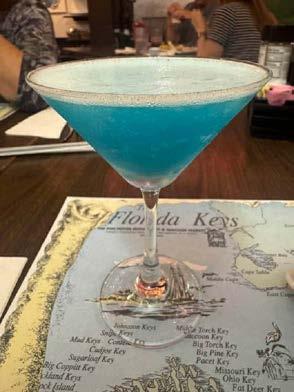
One day, Newman suggested to co-owner Doug Weydener that they should create a cocktail to commemorate the event. Weydener’s reply: “That’s one hell of an idea!” Immediately, Capt. Dana Banks, bartender at the time, went to work and produced an alluring blue concoction served in a martini glass.
Came the pronouncement: “This is great — you don’t need to do anything else!” Thus, a new cocktail was born. Forged from three types of flavored rum and blue curaçao, this potent potable surely does the Navy proud.
The sunken vessel became a popular scuba diving spot with a massive artificial ecosystem. It later righted itself during Hurricane Dennis in 2005.
When passing through, Newman, who is retired and lives in the Keys, makes a point of stopping at the Fish House to order a Spiegel
Grove. Capt. Banks went back to being a full-time charter captain. The Fish House is still a family-run operation, with Weydener’s son Phil taking the helm. Says the younger Weydener: “We are truly a multigenerational establishment with many second-generation family members working here, mothers and daughters, fathers and sons.”
So as the days of May wind down and Memorial Day arrives, toasting with a Spiegel Grove can serve a dual purpose: first, to honor those who served; second, to promote active coral restoration and marine biodiversity, as these ecosystems support 25 percent of marine life and provide vital coastal protection.
the Spiegel grove
1/2 oz. parrot Bay CoConut ruM
1/2oz. BaCarDi orange ruM
1/2oz. BaCarDi liMón 1/2 oz. Blue Curaçao liqueur 1 1/2 oz. Sour Mix
CoMBine all in a Shaker with iCe. Shake vigorouSly, Strain anD pour into a ChilleD Martini glaSS.
patio. Ilhan also plans to open Le Midi in the fourth quarter at 1100 New York Ave. NW, where Capitol City Brewing used to be. Likewise in the fourth quarter, Geoff Tracy will open his third Chef Geoff’s restaurant, at 111 Massachusetts Ave. NW in Mount Vernon Triangle. It will seat 185, with a 20-seat bar and outdoor patio with a view of the Capitol. The building is owned by Georgetown University. He also renewed his 10-year lease for the original Chef Geoff’s on New Mexico Ave. NW. That landlord is American University. Geoff may soon be asked to teach.
John Meadow of New York-based LDV Hospitality plans to open American Cut steakhouse, with a 120-seat dining room, at 1625 Eye St. NW, where BLT Steak used to be. An opening early in the fourth quarter is targeted.
Michael Rafidi (Albi, La’ Shukran, Yellow) plans to open Bizzeria at 3246 Prospect St. NW in Georgetown, serving Levantine pizza, so that his Yellow at 1524 Wisconsin Ave. NW will send guests who
crave pizza to its new sister operation. Quick Hits: Based in Winter Park, Florida, Park Lights Hospitality plans to open its flagship Italian concept, Prato, in the fourth quarter at 7278 Woodmont Ave. in Bethesda Row, where Matchbox used to be … La Omri Mediterranean restaurant and social venue will open at Capitol One Center in Tysons in the fourth quarter … Panda Express is slated to open where Rasa was at 1247 First St. SE in Navy Yard … South Florida-based Talkin’ Tacos, which has a shop in Dupont Circle and another planned for the 14th StreetLogan Circle corridor, aims to open one on Richmond Highway in Alexandria’s Oakville Row … Japanese restaurant Waraku and ramen shop Mensho also signed leases in the Oakville Triangle project.
Linda Roth is the founder and CEO of Linda Roth Associates, a D.C.-based public relations and marketing firm that specializes in the food service and hospitality industries. Follow her at: @LindaRothPR, #LindaRothPR or lindarothpr.com.
Daniella Senior of 5C Hospitality.
Su MM er a rt S p review
BY KATE OCZYPOK
Summer arts season is a great time to get outdoors and check out all the city has to offer. With it being prime outdoor concert and movie season, expect lots of opportunities to take in all forms of art under the stars. Lots of enjoyable musicals tour through town, artsrelated festivals pop up and local museums unveil new exhibits or get ready to close ones that have been running. Here are just a few exhibits, festivals and performances to look forward as we march into summer.
OUTDOOR CONCERTS AND MOVIES
There’s nothing better than spending a warm summer evening taking in a concert or watching a movie under the stars. This year, there are multiple options to choose from.
The Library of Congress is hosting their annual Summer Movies on the Lawn with National Film Registry Selections. The series begins July 9 and will run Thursday evenings through August 6 at sundown on the southeast lawn of the LOC’s Thomas Jefferson Building.

The series kicks off with the ‘90s classic Clueless, a modern retelling of Jane Austen’s novel Emma. Other selections include the Philadelphia-set Rocky, starring Sylvester Stallone, the ‘80s ride Back to the Future starring a very young Michael J. Fox, A League of Their Own (“There’s no crying
in baseball!”) and the based-on-a-true story Apollo 13. Before each movie, performances by local musicians like Matthew Van Hoose, organist for the Washington Nationals.
The area’s favorite—so popular there is a lottery before each event—summer concert series returns in the National Gallery of Art. Jazz in the Garden returns on Friday


evenings from May 22 through August 14 (except June 5 and July 3). This year, there will also be special pre-show dance classes on select days.
The lottery for Jazz in the Garden takes place the week before each event, opening on Monday at 10 a.m. and closing Friday at noon.
Venture up to Strathmore for their Live from the Lawn series in July and August for family friendly shows. The series begins July 1 with feel-good funk-pop band Strutman Lane and ends August 12 with the UkeFest Finale.
SUMMER MUSICALS
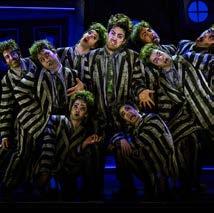
With summer brings fun and frothy musicals like the take on Tim Burton’s dark comedy Beetlejuice, which appears at the National Theatre July 7-19.
Beginning August 25, Signature Theatre presents Stephen Sondheim’s Merrily We Roll Along, which is a reverse time travel
story about the lives of three friends. The musical score includes stunning songs like “Our Time,” “Good Thing Going,” and “Not a Day Goes By.”
Get nostalgic at Arena Stage’s CrazySexyCool: The TLC Musical, which runs from June 12 through August 9. From visionary writer and director Kwame KweiArmah, attendees get an inside look on Tionne “T-Boz” Watkins, Lisa “Left Eye” Lopes and Rozonda “Chilli” Thomas and how they become the most successful female group of all time, with hits like “No Scrubs” and “Creep.”
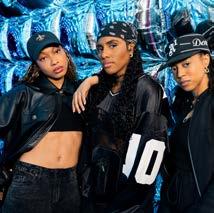

Reminisce with TLC songs at Arena Stage. Courtesy Arena Stage.
Beetlejuice: The Musical’s Australian production. Photo by Michelle Grace Hunder.
Jazz in the Garden at the National Gallery of Art is so popular it requires a lottery to attend. Courtesy National Gallery of Art.
Strathmore’s Live from the Lawn series offers family-friendly shows throughout July and early August. Courtesy Strathmore.
Summer Movies on the Lawn return at the Library of Congress starting July 9. Courtesy Library of Congress.
The Sondheim classic ‘Merrily We Roll Along’ is an end-of-summer treat at Signature Theatre.
FESTIVALS
The DC/DOX Film Festival runs June 11-14 at theater venues around D.C. The four days of documentaries and conversations will explore works of non-fiction storytelling, with an inspiring 100 films to check out.

End summer 2026 with the DC Jazz Fest, which runs over Labor Day weekend at The Wharf. This year’s lineup includes artists like The Dee Dee Bridgewater Quartet, saxophonist Joshua Redman, singer Kurt Elling and others.
Jackson Arts Center will host its Open Studios on Sunday, May 17. The twice annual event features around 40 artists and the chance to view the studios, chat with the artists and buy a gift for yourself or loved one.
NEW EXHIBITS
Many local museums are celebrating the 250th birthday of the U.S. this summer. On July 2, the National Portrait Gallery will unveil a newly conserved “Declaration of Independence” diorama and new Revolutionary War era gallery. The installations are part of the Portrait Gallery’s “Our of Many: Portraits from 1600 to 1900.”

At the National Museum of African Art, don’t miss “Here: Pride and Belonging in African Art,” which runs through August 23. The exhibit explores how LGBTQ+ artists from Africa are part of a bigger story on African art history. Artists like Rotimi FaniKayode, Jim Chuchu and others are featured.



Explore Pueblo pottery at the National Museum of Women in the Arts with “Burnished: Pueblo Pottery at NMWA,” running now through September 27. See the impact of Pueblo women potters through two dozen clay ollas, seed jars, bowls and other items.
Don’t miss Basquiat x Banksy at The Hirshhorn, which ends September 7. The exhibit examines Basquiat’s “Boy and Dog in a Johnnypump” and Banksy’s reply, “Banksquiat. Boy and Dog in Stop and Search” and how street art, contemporary art and the popular imagination all intertwine.


The D.C. Jazz Festival ends the summer season at The Wharf. Courtesy DC JazzFest.
“I Will Continue to Seek Home.” Wool on Hessian, 2025. Courtesy Instagram/taliaramkilawan.
Explore Pueblo pottery at the National Museum of Women in the Arts. Courtesy NMWA.
Learn how Basquiat and Banksy intertwine. Courtesy Smithsonian.
Hirshhorn Head Leaves for Guggenheim
BY RICHARD SELDEN
After 12 years leading the Smithsonian’s Hirshhorn Museum and Sculpture Garden, Director Melissa Chiu has been named director of another cylindrical landmark, the Frank Lloyd Wright-designed Guggenheim Museum in Manhattan, effective Sept. 1.
In the April 9 announcement, Mariët Westermann, director and CEO of the Solomon R. Guggenheim Museum and Foundation, stated that Chiu’s “commitment to presenting history collections in new ways and deepening community engagement positions her uniquely to lead the Guggenheim New York into its next chapter.”
In October of 2014, two weeks after taking up the Hirshhorn directorship, Chiu spoke at the George Town Club as part of The Georgetowner’s Cultural Leadership Breakfast Series. “My parents were Australian and Chinese, and I grew up in Australia,” she said. “So, I think I come by globalism naturally.”
Born in Darwin, the capital of Australia’s Northern Territory, Chiu, 54, holds a bachelor’s degree from the University of Western Sydney, a master’s degree from the University of New South Wales and a doctorate from the University of Western Sydney. An art historian with expertise in contemporary Asian art, she was previously director of New York’s Asia
Society Museum.
Aaron Seeto, deputy director since 2024, will become the Hirshhorn’s interim director upon Chiu’s departure. Earlier, Seeto served as inaugural director of the Museum of Modern and Contemporary Art in Nusantara in Jakarta, Indonesia.
On view at the Hirshhorn through Nov. 1 is “Revolutions: Art from the Hirshhorn Collection, 1860–1960,” an exhibition that opened in March of 2024 to celebrate the museum’s 50th anniversary. Designed by Gordon Bunshaft of Skidmore, Owings & Merrill, the Hirshhorn opened in 1974 as the Smithsonian’s museum of modern and contemporary art. Wooed by President Lyndon and Lady Bird Johnson — and Smithsonian Secretary S. Dillon Ripley — Latvian-born Joseph Hirshhorn, a stockbroker who made a fortune in Canadian gold and uranium mining, donated the founding collection.
Chiu has overseen major solo exhibitions by, among others: Shirin Neshat in 2015, Yayoi Kusama in 2017, Georg Baselitz in 2018, Sean Scully in 2018-19, Simone Leigh in 2023-24 and Osgemeos in 2024-25. During its threemonth run at the museum, nearly 160,000 people waited in line to enter the six mirrored rooms in the Hirshhorn-organized Kusama exhibition,
“Infinity Mirrors.”
The most visible of Chiu’s many acquisitions is “Pickett’s Charge.” Commissioned from Mark Bradford and mounted in 2017, the series of eight abstract collage-paintings, inspired by the cyclorama at Gettysburg National Military Park, spans about 400 feet of the Hirshhorn’s third-floor inner circle.
Likewise taking advantage of Bunshaft’s doughnut-like design, Linn Meyers created “Our View From Here,” a temporary (May 2016 to August 2017) wall drawing on the museum’s second-floor inner circle even longer than Bradford’s installation.
While Chiu has expanded the Hirshhorn’s permanent collection, visitation, board and endowment, and got the museum through the pandemic closure, her most lasting impact is likely to be the $68-million redesign by Hiroshi Sugimoto of the sculpture garden, across the Mall from the National Gallery of Art’s sculpture garden. The project, which broke ground in 2022, is set to open in October. Earlier, in 2018, Sugimoto redesigned the Hirshhorn lobby.
Yoko Ono’s “Wish Tree for Washington, DC,” a 2007 gift from the artist, to which museum visitors attach their written wishes, will be installed in the sculpture garden when it reopens.

BY
Also due to open this year, after many delays — not to mention recent Iranian missile and drone strikes in the capital of the United Arab Emirates — is the Frank Gehry-designed Guggenheim Abu Dhabi, one of the New York Guggenheim’s three satellite museums. The others are located in Venice, Italy (displaying the collection of Peggy Guggenheim, Solomon’s niece), and in Bilbao, Spain, an earlier design by Gehry.
Chiu’s appointment to lead the New York museum is part of Westermann’s revision of the Guggenheim Foundation’s management structure. Founding provost of New York University’s Abu Dhabi campus, she has indicated that she intends to focus on the new museum’s completion, leaving the decision making at Wright’s inverted ziggurat in Chiu’s capable hands.


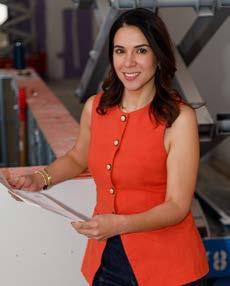
Hirshhorn Museum Director Melissa Chiu will become director of New York’s Guggenheim Museum, effective Sept. 1.
PHOTO
GREG POWERS
APRIL 2026 REAL ESTATE SALES
PROVIDED BY WASHINGTON FINE PROPERTIES
See the full list at georgetowner.com. Listed from highest to lowest sold.
At Marcel, You Can Order Duck Confit — and Buy a Calder
BY THE GEORGETOWNER
At Sotheby’s New York, dinner now comes with a side of Warhol — and maybe a sixfigure impulse purchase.
On April 16, the auction powerhouse unveiled Marcel, a glossy new restaurant
tucked inside its iconic Madison Avenue headquarters, the former home of the Whitney Museum of American Art. The space is equal parts power lunch destination, gallery and billionaire playground.

Named for famed architect Marcel Breuer, who designed the landmark 1966 building, Marcel is the latest flex from Sotheby’s — where collectors can sip cocktails under candlelight while eyeing the next addition to their private vaults.
The project is a collaboration between Sotheby’s and celebrated design duo Robin Standefer and Stephen Alesch of Roman and Williams, known for creating some of New York’s most atmospheric


dining rooms. Here, they’ve layered walnutpaneled walls, moody lighting and enough midcentury swagger to make Don Draper feel underdressed.
But the real scene-stealers are the artworks. Rotating pieces on display — and available for purchase through auction or private sale — include works by Alexander Calder, John Chamberlain, Henri Matisse and Andy Warhol. Most carry price tags deep into the six- and seven-figure range, though some require the classic luxury-world phrase: “price upon request.”
Coming up for auction in June: a whimsical Lalanne sheep sculpture estimated at $200,000 to $300,000. Sotheby’s also plans to rotate in photography, jewelry and additional collectible design pieces, blurring the line between gallery and dining room even further.
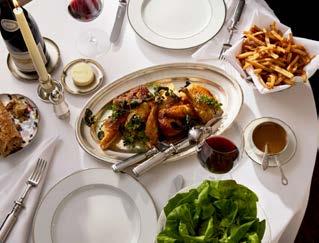
The menu leans unapologetically French. Lunch offerings include elevated tartines stacked with ham and Comté, while dinner serves up comfort-food luxury like poulet rôti and duck confit. For those wanting less scene

and more sugar, La Mercerie Pâtisserie offers coffee and madeleines throughout the day.
Roman and Williams already helped define downtown New York dining with hotspots like The Standard Grill and The Dutch. Their acclaimed La Mercerie — opened with chef Marie-Aude Rose — landed on The New York Times’ list of best restaurants in 2018.
Marcel is open Wednesday through Sunday from 5 to 10 p.m. — just enough time to order duck confit and accidentally leave with a Calder.



REED STREET

700 W WASHINGTON STREET


Robin and Stephen Alesch, of Roman and Williams, design firm of Marcel, the continental restaurant in the former Whitney Museum at the Breuer Building.
Marcel, a concept that links fine dining to luxury auctions, has opened in the new headquarters of Sotheby’s New York.
Gold Cup Charms Virginia Hunt Country at Great Meadow
BY LELAND SCHWARTZ
The 101st running of the Gold Cup, Virginia’s race of the year, thrilled the thousands who came out to The Plains on Saturday, May 2 — not only to watch Keys Discount win the main timber race, but to throw one hell of party, stretching from one end of track to the other.
It was a bit chilly for the beginning of May, but the sun stayed the course and Gold Cup’s
vibe was in full force.
Dr. Seuss would have loved the hats. No hats, no race.
“The crowd was by far the biggest we have had since the pre-Covid era, and the racing with parimutuel wagering saw its biggest day ever,” said Race Co-Chair Al Griffin.
“The synergy that has formed between Great Meadow and Gold Cup is paying great
dividends for both organizations.”
Whoosh! There went Bogey’s Image, Track and Trace, Marcel Magic, Little Trilby, Pudding Lane, I’m A Rocket Man and Ten Bucks A Glass.
Mark your calendars: the 86th running of the International Gold Cup is set for Saturday, Oct. 24.


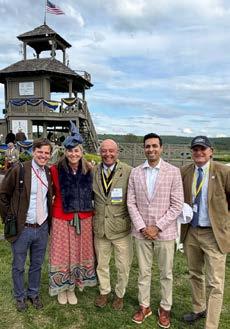

Hotel Burg and the Chase Club anchored the South Rail. Rachel Van Zanten, Kevin Ash and Remington Ash.
Riverdee Stable’s Sean Clancy, Megan Connolly, Race Co-Chair Al Griffin, Rep. Suhas Subramanyam (D-VA) and Robert Bonnie. Photo by Anthony Barns.
Race Co-Chair Will Allison and his wife Christinia.
House Tour Patrons Party, GT Heritage Gala, WHCD
BY THE GEORGETOWNER
PATRONS PARTY: GEORGETOWN TO THE MAX AT PROSPECT HOUSE
As always, it was the place to be, the annual Patrons’ Preview Party for the 93rd Georgetown House Tour. The April 15 party, chaired by Danielle Naeve and Lindley Richard, at Prospect House was Georgetownmaxxing at its finest: Beautiful home, beautiful people, beautiful event, beautiful cause.





2026 WHCD WRAP-UP: DESPITE SHOOTING, WEEKEND PRESSES ON
The 2026 White House Correspondents’ Dinner weekend unfolded with its usual swirl of high-profile pre-parties and postparties, where media figures, celebrities and political insiders gathered across D.C. for a mix of celebration and networking. However, the festive atmosphere was abruptly shaken on Saturday night when a gunman opened
fire near the security checkpoint at the Washington Hilton, prompting panic, a swift Secret Service response and the evacuation of top officials. Despite the chaos—attendees taking cover, events disrupted and the dinner ultimately cut short—no one was killed and the surrounding parties largely resumed or carried on in the aftermath, underscoring both the unease yet resilience that defined this year’s WHCD weekend.


GEORGETOWN HERITAGE GALA RETURNS TO THE C&O CANAL
Georgetown Heritage’s All Aboard Gala returned April 30 with an evening dedicated to celebrating the history, culture and artistic spirit of Georgetown while raising funds for the nonprofit’s ongoing preservation and programming efforts. Held under a large tent in the Mule Yard along the historic C&O Canal, the spring soirée brought together community leaders, preservationists, philanthropists and neighborhood supporters for cocktails, conversation and a shared commitment to Georgetown’s future.
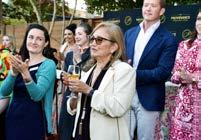








Carol and Will Cooke flank Georgetown Heritage Board President Jennifer Romm.
Tony Dokoupil, Sam Vinograd, Katy Tur and Kasie Hunt. Photo by Reginald Cunningham (@kidnoble) / Pure Black Photography; Kenny Bundy (@iKBoy.jpg).
Mark Thompson, Gavin Newsom, Jennifer Siebel Newsom and Tammy Haddad Photo by Paul Morigi/Getty Images for Haddad Media.
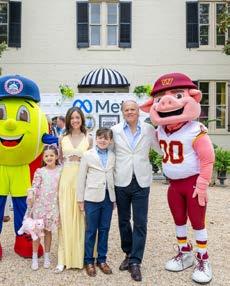
Citi Open mascot Topspin, Ein Family, and Washington Commanders mascot Major Tuddy. Photo by Dan Swartz
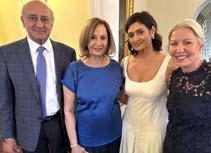
Georgetown House Tour Co-Chair Azali Kassum with her parents and Sonya Bernhardt, publisher of The Georgetowner, which has supported the tour for many years. Photo by Robert Devaney.
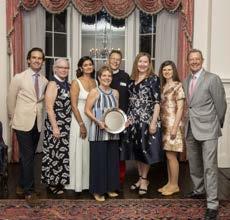
Amy Titus, president of the Citizens Association of Georgetown, which was awarded the Frida Burling Community Service Award, celebrates with Malcolm Dilley, Rev. Gini Gerbasi of St. John’s, Azali Kassum, Rev. Dr. Laura Natta of St. John’s, CAG’s Stephanie Bothwell, Brittany Sawyer and Vice President Tam Bayoumi. Photo by Malek Naz Freidouni.
‘Elizabeth Cady Stanton: A Revolutionary Life’
REVIEWED BY KITTY KELLEY
The 19th-century suffragist remains controversial today.
The recipe seems simple: Multiply Abigail Adams by four, add Eleanor Roosevelt squared, throw in a dollop of Hillary Clinton and you have the formula for the fierce activist who led the 19th-century stampede for women’s rights in America — and did it without the benefit of being married to the president.
Elizabeth Cady Stanton (1815-1902) insisted on using her full name, lest she be referred to as “Mrs. Henry Stanton,” an accessory to her abolitionist husband, or worse, be known simply as “Mrs. Stanton,” mother of seven children.
The suffragist warrior sometimes wrote under the byline of E.C. Stanton so that her words would be taken seriously by men. Since her time, the status of women has progressed to the point that a professor emerita of history and gender studies at UCLA can now proudly publish “Elizabeth Cady Stanton: A Revolutionary Life” under her own full name, Ellen Carol DuBois.
In her introduction, DuBois admits that she struggled to find a balance between Stanton’s “most forward-looking and most backward ideas.” The professor finally emerges as one who does “not find the lessons of her [controversial subject’s] entire legacy tainted by her prejudices.”
Those “prejudices” sprang from Stanton’s sense of her own superiority. The elitist daughter of a New York Supreme Court justice, she frequently made racially insensitive remarks and stated that educated white women were more deserving of the vote than were any of the formerly enslaved. She also pronounced that women needed to protect themselves from the brutality of Black men.
In advocating for women’s rights, Stanton had a stalwart ally in Susan B. Anthony. They joined forces with abolitionist Frederick Douglass in support of the 13th Amendment, which ended slavery, and of the 14th Amendment, which granted citizenship and equal protection under the law to African Americans.
But the two women stopped short of supporting the 15th Amendment, which prohibited the government from denying a citizen’s right to vote based on race, color or previous condition of servitude. They believed sex should be included as a condition of servitude.
The formerly enslaved Douglass, however, insisted the right to vote was “a matter of life and death” for Black men. He conceded that it was for a Black woman, too, “but not because she is a woman but because she is black!” He also called out Stanton for her “employment of certain
names such as ‘Sambo’ and the gardener and the bootblack” when referring to Black men. Eventually, their friendship would rupture.
Following the Seneca Falls Women’s Rights Convention in 1848, Stanton wrote the Declaration of Sentiments, a founding document of the women’s rights movement, stating that American women should be accorded full citizenship. She pushed for passage of a Married Women’s Property Act in the New York legislature and later addressed lawmakers on “the property rights of married women,” saying that a husband’s drunkenness should constitute cause for divorce.
When Stanton and Anthony were barred from the all-male Temperance Union, they founded the Woman’s New York State Temperance Society. They also established the Women’s Loyal National League, initiated the American Equal Rights Association and published a women’s rights newspaper called the Revolution. They formed the National Woman Suffrage Association in 1869, which later merged with the American Woman Suffrage Association to become the National American Woman Suffrage Association and, eventually, the League of Women Voters.
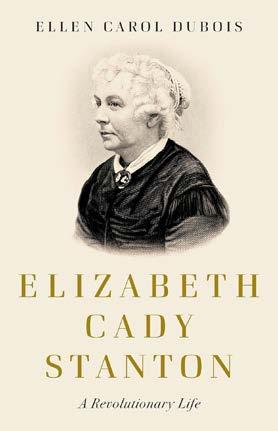
Years later, Stanton and Anthony collaborated on “The History of Woman Suffrage,” which was to grow to six volumes.
In their preface, they wrote: “We hope the contribution we have made may enable some other hand in the future to write a more complete history of ‘the most momentous reform that has yet been launched on the world — the first organized protest against the injustice which has brooded over the character and destiny of onehalf the human race.’”
In 1878, Stanton and Anthony arranged for Congress to be presented with an amendment giving women the right to vote. This eventually became the 19th Amendment to the U.S. Constitution in 1920. Neither woman lived to see its passage, but both believed they were instrumental in securing the ability of women in America to attend college alongside men and to be considered equal partners in marriage.
Here would be an ideal place for a restin-peace benediction on an activist life; unfortunately, as she aged, Stanton became even more aggressively opinionated. In one article, she railed against immigrants and, according to DuBois, used “her harshest language and most fearsome images yet to make her point.”
During her final years, Stanton labored on “The Woman’s Bible,” a collection of essays challenging the Bible. Stanton declared the Old Testament’s first five books — Genesis, Exodus, Leviticus, Numbers and Deuteronomy — not divine and completely demoralizing to women.
Hours before her death on Oct. 26, 1902, Stanton dictated a letter to President Theodore Roosevelt, pleading with him to send Congress a message urging passage of the suffrage amendment. It read: “Abraham Lincoln immortalized himself by the emancipation of four million Southern slaves. Speaking for my suffrage coadjutors, we now desire that you, Mr. President, … immortalize yourself by bringing about our complete emancipation from the slavery of the past.”
The suffragist took her last breath before she could sign it.
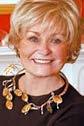
Kitty Kelley is the author of seven number-one New York Times Best Seller biographies, including “Nancy Reagan,” “Jackie Oh!” and “Elizabeth Taylor: The Last Star.” She is on the board of the Independent and is a recipient of the PEN Oakland/Gary Webb Anti-Censorship Award. In 2023, she was honored with Biographers International Organization’s BIO Award, given annually to a writer who has made major contributions to the advancement of the art and craft of biography.
Stanton wrote: “The violent mob element that always appears on the surface when honest labor strikes for better wages is chiefly foreign, so are the criminals in our jails and prisons, the paupers in our charitable institutions, the diseased idiots and lunatics in our hospitals. The majority of our brewers, liquor dealers and saloon keepers are foreigners, and the 20,000 young girls imported annually for the vilest purpose brought here by foreigners.”
All the little girls who grew up reading Judy Blume will celebrate this biography. Courtesy Washington Independent Review of Books.

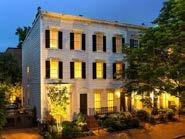
GEORGETOWN
$7,999,999 1524 29th Street NW Washington, DC
Kayla Venners 571-243-7441
Chauvin & Co.
DUPONT
$3,250,000 1716 Q Street, NW Washington, DC
Anne Hatfield Weir 202-255-2490
Craig Davitian 202-333-2225
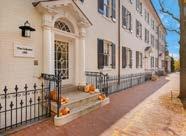
GEORGETOWN $2,195,000 1315 30th Street, NW #106 Washington, DC
Jamie Peva 202-258-5050

GEORGETOWN $1,225,000 2726 P Street, NW Washington, DC
Jamie Peva 202-258-5050
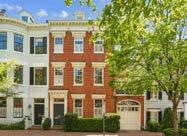
GEORGETOWN
$4,850,000 3122 N Street, NW Washington, DC
Nancy Taylor Bubes 202-386-7813 The NTB Group

GEORGETOWN/BURLEITH
$2,995,000
3554 T Street, NW Washington, DC
Lenore G. Rubino 202-262-1261
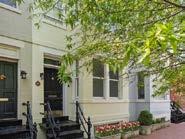
GEORGETOWN $1,749,000 3408 Dent Place, NW Washington, DC
Cailin Monahan 804-874-1847 The NTB Group

CHEVY CHASE $1,095,000 5105 Connecticut Ave, NW #3 Washington, DC Nate Guggenheim 202-333-5905


GEORGETOWN $4,495,000 3420 P Street, NW Washington, DC
Nancy Taylor Bubes 202-386-7813 The NTB Group
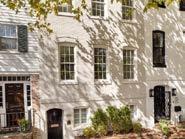
GEORGETOWN $2,875,000 1412 34th Street, NW Washington, DC
Jamie Peva 202-258-5050

GLOVER PARK $1,645,000 2026 37th Street, NW Washington, DC
Lenore G. Rubino 202-262-1261
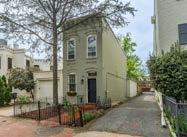
CAPITOL HILL $899,000 331 10th Street, SE Washington, DC Nate Guggenheim 202-333-5905
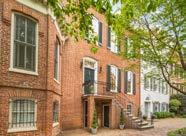
GEORGETOWN $3,495,000 3316 N Street, NW Washington, DC
Nancy Taylor Bubes 202-386-7813 The NTB Group

GEORGETOWN $2,495,000 2912 Dumbarton Street, NW Washington, DC Nate Guggenheim 202-333-5905
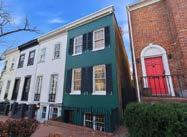
GEORGETOWN $1,349,000 1610 33rd Street, NW Washington, DC Lee Murphy 202-277-7477

Tammy Gale 202-297-0169 COMING SOON
CATHEDRAL HEIGHTS $749,000 4101 Cathedral Avenue, NW #504 Washington, DC
Andrea Hatfield 202-487-4294