Real Estate Rising
Georgetown to Make Big Gains in Luxury Living
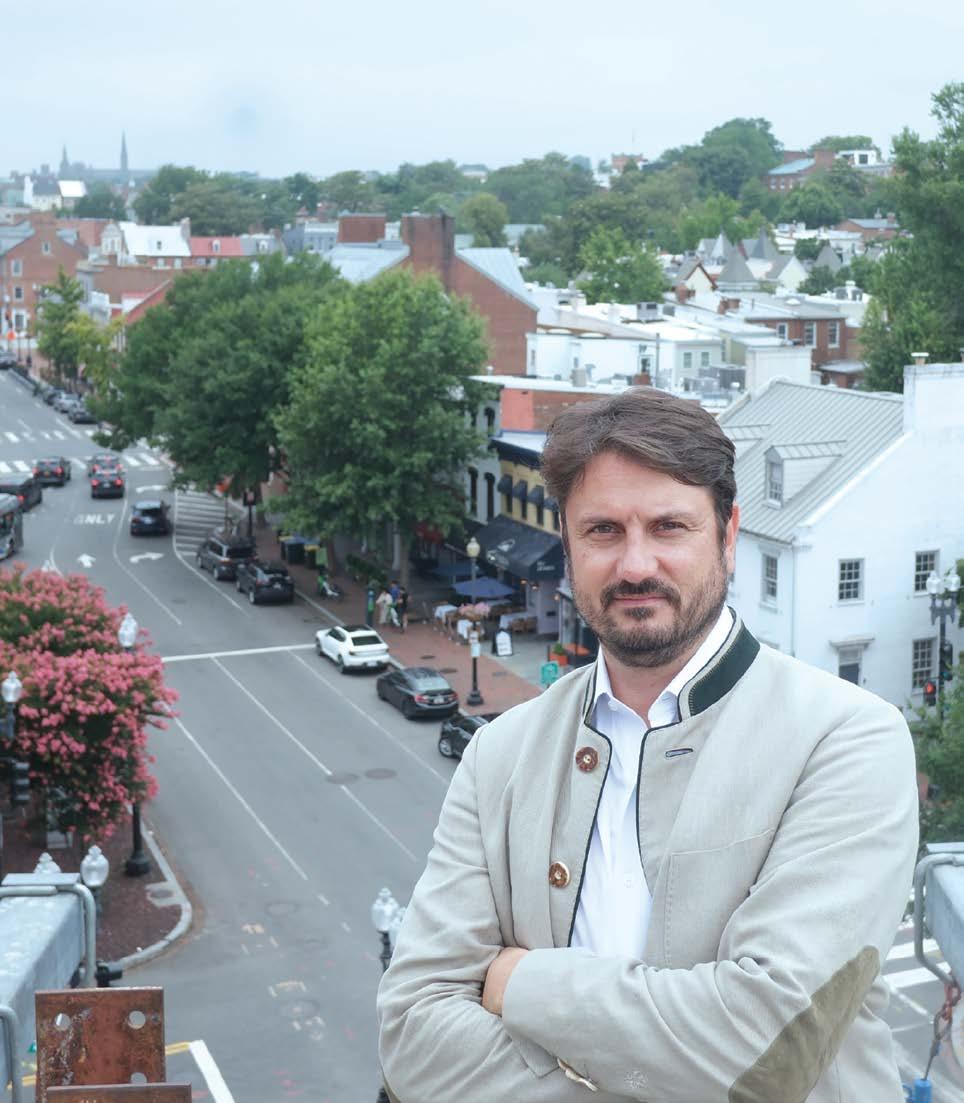
Janeese Lewis George & Democratic Socialism
Business: The Oak Room Opens
New National Geographic Museum
Bill & Sarah Dean Wedding

Georgetown to Make Big Gains in Luxury Living
Janeese Lewis George & Democratic Socialism
Business: The Oak Room Opens
New National Geographic Museum
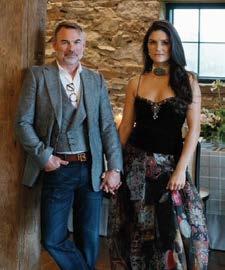
Bill & Sarah Dean Wedding
ORGAN CONCERT AT GRACE CHURCH
Friday, July 17
The 31st Bach Festival at Grace Episcopal Church, 1041 Wisconsin Ave. NW, concludes with a 7 p.m. concert by organist David Bond. Dr. Bond will perform works by Johann Sebastian Bach and his contemporaries Girolamo Frescobaldi, Dieterich Buxtehude, Louis-Nicolas Clérambault and Domenico Scarlatti. Tickets are $35; $15 for students and those under 18. Visit gracedc.org.
DANCING ON THE WATERFRONT
Tuesday, July 21
The Georgetown Business Improvement District presents free, all-ages, all-levels, outdoor dance classes in Georgetown Waterfront Park on Tuesday evenings from 6 to 9 p.m. Line dancing will be featured at this session, Latin and African dancing on July 28. Rain date: Aug. 4. Visit georgetowndc.com.
WOLF TRAP OPERA AT HOLY TRINITY
Tuesday, July 21
As part of Wolf Trap’s “Untrapped” series, presented at venues other than its Vienna, Virginia, home, Wolf Trap Opera Studio Artists — more than a dozen current college and conservatory students and recent graduates — will give a free performance of arias and scenes at 7 p.m. at Holy Trinity Catholic Church, 1315 36th St. NW. Visit wolftrap.org.
SECOND SATURDAY AT LIMITS & PROXIMITIES
Saturday, August 8
The Limits & Proximities Gallery, 1054 31st St. NW, second floor, will hold its first monthly Second Saturday event from 10 a.m. to 4 p.m. at Canal Square. Visitors can explore contemporary art galleries, artist studios and pottery. Visit limitsandproximities.com.
SUMMER DISTRICT 5K & HALF
Sunday, August 16
These two runs on the Chesapeake & Ohio Canal path benefit the John P. Mayhugh Foundation, which seeks to address systemic barriers to recovery and improve outcomes for those suffering from post-traumatic stress, traumatic brain injury and addiction. The half marathon (registration fee: $76.33) begins and ends near the Potomac Boat Club. The 5K (registration fee: $38.96) begins and ends at Fletcher’s Boathouse. Visit bishopsevents.com.
30th Street, NW Washington, DC
Phone: (202) 338-4833 Fax: (202) 338-4834
“The Newspaper Whose Influence Far Exceeds Its Size” — Pierre Cardin
The GeorGeTowner is published in print monthly with an online newsletter supplement posted twice per week — On Mondays we highlight news and on Thursdays goings on about town. The opinions of our writers and columnists do not necessarily reflect the editorial and corporate opinions of The GeorGeTowner newspaper. The GeorGeTowner accepts no responsibility for unsolicited manuscripts or photographs and assumes no liability for products or services advertised herein. The GeorGeTowner reserves the right to edit, rewrite or refuse material and is not responsible for errors or omissions. Copyright 2026.
Please send submissions of opinions for consideration to: editorial@georgetowner.com For advertising inquiries email Advertising@georgetowner.com or call (202) 338-4833




NEWLY ARRIVED: GEORGETOWN UNIVERSITY PRESIDENT EDUARDO PEÑALVER BY RICHARD SELDEN
Eduardo Peñalver, 49th president of Georgetown University. Photo by Elman Studio. Courtesy GU.
WASHINGTON’S LOCKED-DOWN USA 250 BIRTHDAY PARTY BY ROBERT DEVANEY
Our National Guard at 15th Street and Constitution Avenue. Photo by Bill Starrels.
CHICAGO’S OBAMA PRESIDENTIAL CENTER: A BEACON OF HOPE BY EMMA IBRAHIM
Former President Barack Obama at the new Obama Presidential Center in Chicago.
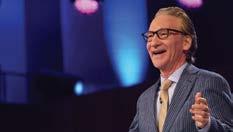
MARK TWAIN PRIZE: FRIENDS OF BILL TAKE OVER KENNEDY CENTER BY ROBERT DEVANEY
Comedian Bill Maher received the Mark Twain Prize on June 28 at the Kennedy Center. Courtesy Kennedy Center.


ACROSS EVERY CATEGORY AND SIZE CLASSIFICATION IN THE CAPITAL REGION PER REAL TRENDS

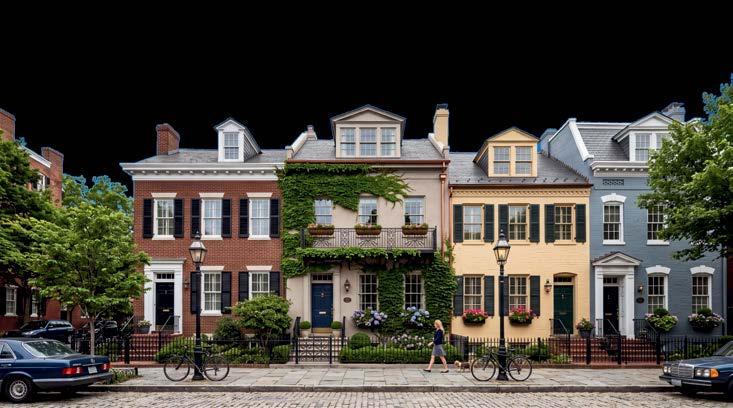



BY THE GEORGETOWNER
The June 29 meeting of the GeorgetownBurleith-Hillandale Advisory Neighborhood Commission ranged across the D.C. budget, Fourth of July preparations, public safety, nightlife, a wave of new restaurant license applications and a farewell to a commissioner stepping down after a decade of service.
Much of the early discussion, following updates from the mayor’s office and Council member Pinto’s office, centered on the D.C. budget. The Council added $400 million, restoring many of the cuts the mayor had proposed, notably to funding for child care, housing and legal services. Closer to home, commissioners heard that several Georgetown projects had been funded: a second phase of work on Ellington Field, a Volta Park splash pad and a new accessible trail at 34th Street. The updates also touched on telework policies for D.C. agencies, advocating keeping flexibility in place.
MPD reported an increase in robberies and burglaries and urged residents to lock their doors. Theft from autos remains a persistent problem. The report also took up the matter of unhoused individuals living in cars and related neighborhood concerns. The commission separately discussed the National Guard presence in the District, a federal initiative, with up to 5,000 Guardsmen expected for summer and fall events.
During community comments, residents asked for an update on Airbnb legislation, including the mayor’s proposal to allow shortterm rentals of non-primary residences. Others voiced concern about pending nightlife and hospitality legislation, connected with summer gardens, pop-ups and alcohol licenses, and what
they described as a lack of community input. Residents were encouraged to submit comments and testimony on the bills.
The meeting included a farewell to Commissioner Kishan Putta, who is moving abroad after 10 years of service.
A new design for the Duke Ellington mural was presented after community feedback. DC Water adjusted the phasing of P Street construction to avoid disrupting businesses and pushed Wisconsin Avenue work to January.
The commission passed resolutions supporting the Army Ten-Miler and the DC Bike Ride; urging the District Council to address problems with the tax sale of remnant parcels that affect neighboring properties; and formally requesting the District Department of Transportation to conduct surveys and consider resident-only parking on selected blocks. Regarding the latter, enforcement and the use of license-plate readers were discussed.
A cluster of new Georgetown restaurants including Café Tulúm, Bizzeria, Flora Pizzeria and Alfies drew attention. The commission protested the licenses pending settlement agreements, while supporting stipulated licenses that would let the businesses open before the next ANC meeting.
On zoning and public space, the commission offered no comment on two applications it had already reviewed and supported: a residential addition and bollards at Kesher Israel.
The meeting adjourned after final comments and announcements. The next meeting of ANC 2E will be held on Aug. 31 at 6:30 p.m.

BY MIA DINUNZI
The District Council unanimously approved a revised version of the Fiscal Year 2027 Budget Support Act on Tuesday afternoon, July 7, advancing the District’s budget after nearly two hours of debate over amendments ranging from infrastructure fees to paid family leave.
While the legislation passed without opposition, several amendments prompted discussion concerning the Council’s authority and the long-term impact of its decisions. One of the most debated issues involved a new infrastructure fee on lengthy construction projects. Ward 6 Council member Charles Allen introduced an amendment to allow the fee to expire in October of 2030 after DC Water warned the added cost could be passed on to residents through higher water rates.
Allen said he would have preferred exempting DC Water from the fee altogether, but argued that doing so would have disrupted the District’s four-year financial plan. Instead, the sunset provision limits the fee’s long-term impact while preserving the budget’s balance.
Ward 8 Council member Trayon White later proposed requiring any water rate increases tied to the fee to expire alongside it. Chairman Phil Mendelson ruled the amendment out of order after the Council’s general counsel determined lawmakers do not have the authority to regulate
DC Water rates. White unsuccessfully requested a recess to revise the proposal before responding, “That’s crazy.”
The Council also approved an amendment from Ward 4 Council member Janeese Lewis George, the Democratic candidate for mayor, adding a sunset provision to new restrictions on the District’s Universal Paid Leave program. Under the amendment, limits on medical and family caregiving leave will expire at the end of the current financial plan.
“We must right this wrong as soon as possible,” said Lewis George, noting that budget constraints prevented the Council from restoring funding this year.
Not every proposal advanced. A measure from Ward 2 Council member Brooke Pinto and at-large Council member Doni Crawford to dedicate $100,000 from the new Greater U Street Performance Parking Zone to existing Main Street organizations failed on a 6-7 vote after opponents argued the funding should instead support the creation of a business improvement district.
With the Council’s second and final approval, the Budget Support Act now heads to Congress for review. The Council also passed emergency legislation allowing key provisions to take effect when the District’s new fiscal year begins on Oct. 1.
While most welcome the return of springtime weather, it can also mean increased incidents of crime. In May, crime in Georgetown increased by over a third from its April 2026 levels, largely due to a jump in property crime.
In May of 2026, Georgetown’s Police Service Area 206 logged 67 total crimes, up from 50 total incidents in April of 2026, a 34-percent increase. Because PSA 206 registered 50 total crimes in May of 2025, the year-to-year increase was also 34 percent.
Two of the May 2026 crimes were classified


as violent crimes — specifically, assault with a dangerous weapon and robbery — up from zero incidents in April, while 65 incidents were property-related crimes, including thefts and burglary. Of those, the biggest increases were seen in thefts from autos (18 total, a 38-percent increase) and other thefts (45 total, a 45-percent increase).
One bright spot in the May numbers was a significant decrease in car thefts, dropping from six incidents in April to just one in May. Nearly two-thirds of all incidents occurred within the business district and adjacent areas.
A meeting in May of representatives of the Citizens Association of Georgetown and the Georgetown Business Improvement District with Metropolitan Police Department Second District Cmdr. Christopher Dorsey emphasized the importance of community collaboration and the use of camera networks to provide real-time data to law enforcement.
For example, the perpetrator of the May 17 vandalism attack on Georgetown Cupcake was quickly identified through the use of business and law enforcement cameras, leading to his arrest on May 21. Since its launch in April of 2024, MPD’s CameraConnect program has allowed residents and businesses to register their security cameras and share data with MPD to prevent and solve crimes. Information about how residents can participate in this program is available at mpdc.dc.gov/cameraconnectdc.
BY FRANCIS RIENZO AND ROBERT DEVANEY
For those who haven’t been paying attention, here’s a local newsflash: a political earthquake has occurred in Washington. A new era in D.C. politics is about to begin, as democratic socialist Janeese Lewis George is set to become mayor of Washington, D.C., in 2027.
Lewis George declared victory June 18 at a press conference at Busboys & Poets on 14th Street NW, saying she will be “mayor of everybody … one D.C. united.”
Lewis George leads the D.C. Democratic mayoral primary election with more than 54 percent, according to the District Board of Elections, with 97 percent of the ballots counted so far. Election results will be certified on July 17.
Her main opponent, Democrat Kenyan McDuffie, behind with 35 percent of the vote, conceded defeat on June 18, saying in a statement: “While the final certification process will continue, it is clear that the voters have chosen a different path.” He said he phoned Lewis George to congratulate her.
Lewis George will replace Mayor Muriel Bowser, who is retiring after three terms. She will make history as a democratic socialist mayor. Stepping away from Bowser’s softer approach to President Trump, Lewis George has vowed to “not back down” from Trump’s administration.
On June 11, President Trump had a lastminute comment on the election, threatening to take over D.C. and pause home rule by running Washington on a “federal basis,” when asked what he would do if a “crazy socialist” were elected mayor. “I wouldn’t like it.”
Elsewhere on the June 16 ballot, Robert White is the presumed winner — 64 percent of the votes —as the District’s non-voting delegate to Congress, ending the streak of Eleanor Holmes Norton, who has represented the city in the House of Representatives since 1991. White easily defeated fellow Council member Brooke Pinto and Kinney Zalesne, a former employee of the Democratic National Committee.
This primary election is also monumental as the first conducted under the District’s new ranked-choice voting system. Instead of voting for just one candidate, voters are allowed to rank up to five candidates in order of preference.
Lewis George led in seven of D.C.’s eight wards, trailing McDuffie only in affluent Ward 3. She will join democratic socialists Oye Owolewa and Aparna Raj, who lead their District Council races; White, a progressive; and Elissa Silverman, who ran to replace McDuffie on the Council.
In a statement on June 17, Pinto congratulated White, who previously served on Norton’s staff, saying “as this election season closes, let’s all remember we are on the same team in D.C.”
The two ran a fiery campaign against each other for the non-voting delegate spot, disagreeing on teen curfew zones. Pinto retains her Ward 2 Council seat. In her conceding
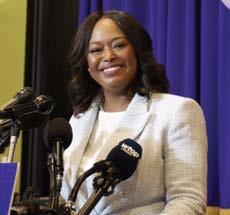
Mayor-elect
a June 18 press conference.
statement, Zalesne congratulated White and pledged to continue to advance D.C. statehood and defend home rule.
In her election-night speech at the Howard Theatre, Mayor-elect Lewis George said, “Let’s show them what the government can do.” She had aimed her campaign at youth voters and anti-Trump progressives, while McDuffie ran a more moderate campaign that tended to appeal to older voters.
This election has revealed a distinct progressive shift in the District, focusing on progressive labor and democratic socialist values. Phil Mendelson, unopposed Council chairman, is a more moderate Democrat whose new term may balance this out.
Michael Schaffer at City Cast DC wrote about some takeaways from the election: “The Green Team is dead — and the Purple Team is in charge. The centrists were out of gas. Janeese Lewis George ran on a platform that repudiated not just Kenyan McDuffie and Muriel Bowser but D.C.’s whole 21st-century business-friendly ideology. Even the D.C.-based Substacker (and bitter JLG antagonist) Matthew Yglesias agreed that the old guard was done — and didn’t seem too broken up about it. ‘After twelve years of Bowser, the voters clearly wanted change and they were *right* to want change,’ he wrote.
Schaffer added: “WAMU’s Alex Koma grabbed an astonishing quote from Bill Lightfoot, former council member and establishment pillar. ‘The Green Team is over, no doubt about that,’ he said, referring to the network of donors and pols that elevated former mayor Adrian Fenty and then Bowser and have for 20 years been the most powerful coalition in mayoral politics.
“Hello, Purple! Instead of the longtime network of moneyed insiders, people are talking about a ‘Purple Team,’ named for Lewis George’s campaign color. Unions and D.C.’s Democratic Socialists of America chapter (which calls its turnout campaign the ‘Big Red Machine’) are credited with out-organizing lackluster centrist campaigns.”

6,540 SF or 2,100 SF Per FL
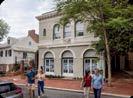
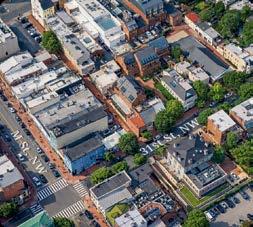
1232 Hamilton Collective
For Locals. By Locals.
Looking for the perfect place to work, train, or store your gear—right here in your neighborhood?
At 1232 Hamilton Collective, you'll find a welcoming community of local businesses and professionals, with flexible spaces and amenities designed for the people who live and work here. Now Available:
Office Space 6,540SF or 2100SF Per
Floor can be subdevided
Private Health Club Memberships
Reserved Parking Storage Units
Join a thriving community of great neighbors and tenants in a convenient, locally focused environment. Interested?
Contact us to learn more: Jennifer: jennifer@serenitynowlm.com JB: jbobb@tbchotels.com
BY ROBERT DEVANEY
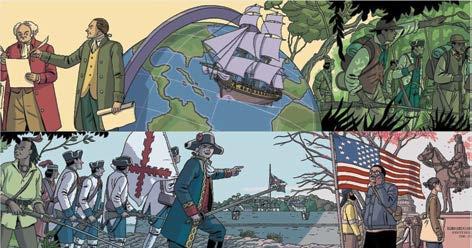
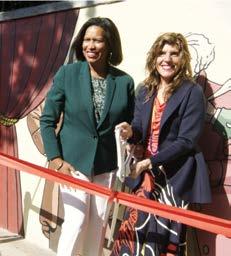
Spanish Ambassador Ángeles Moreno Bau and D.C. Mayor Muriel Bowser unveiled a mural on the sidewalk-facing walls of Grace Church, 1041 Wisconsin Ave. NW, on June 25. In honor of the 250th anniversary of the Declaration of Independence, the new mural, by Spanish artist Paco Roca, celebrates the shared history of Spain and the United States and highlights Spain’s contribution to the American Revolutionary War. For America’s 250th, the Embassy of Spain
issued the following proclamation: The 250th anniversary of the independence of the United States marks a defining moment in world history, celebrating the birth of a nation founded on liberty, democracy and the pursuit of self-government. From the very beginning, Spain played a decisive role in this process, providing political support, financial aid, military assistance and strategic alliances that helped make American independence possible.
Two hundred and fifty years later, this shared history deserves a meaningful celebration. To honor this milestone, a year of cultural, academic and public diplomacy activities brings to the United States a transatlantic perspective on the values that unite the United States and Spain, highlighting a friendship forged in the struggle for freedom and sustained by common democratic ideals.
The mural offers a concise and inclusive perspective on the origins of the United States, linking the drafting of the Declaration of Independence — featuring figures such as George Washington, Thomas Jefferson and Benjamin Franklin — with the broader international context of the American Revolutionary War. At its center, Bernardo de Gálvez embodies Spain’s contribution, leading a diverse coalition whose success in the Siege of Pensacola favored the ultimate success of the Continental Army. The composition concludes in the present day, where his legacy in Washington, D.C., connects this shared history to the diversity of contemporary American society.
This mural is a gift from Spain to Washington, D.C., and the United States on the occasion of its 250th anniversary, and it is intended to remain on public display well beyond 2026. Designed by Paco Roca and executed by the local company
Mural Spot Studio, it reflects a shared history rooted in cooperation, diversity and common democratic values.
This project is a partnership between the Executive Office of the Mayor, the Department of Public Works’ MuralsDC program, the Cultural Office of the Embassy of Spain in Washington, D.C., and community partners Georgetown Heritage and Grace Episcopal Church, and has been made possible through the generous support of Repsol.
Driver in Fatal Crash Gets 29-Year Rap
Nakita Walker, who crashed her car into another car on Rock Creek Parkway in 2023 and killed three persons — Lyft driver Mohamed Kamara and passengers Jonathan Cabrera Mendez and Olvin Torres Velasquez — was
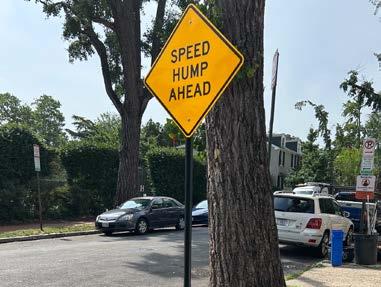
yellow warning signs and slow down — or your suspension just might take a hit. Stop-sign cameras are being installed too. The latest ones are at the intersection of 33rd and O Streets. The one at 37th Street and Whitehaven Parkway is a legendary annoyance. Be sure to halt your vehicle at the line and not at the crosswalk.

More DDOT Love: Speed Humps, Stop-Sign Cameras
Be on the lookout for more speed humps going up around the neighborhood. Heed those
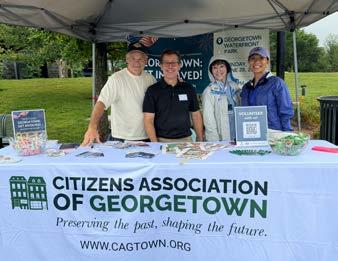
‘Georgetown: Get Involved!’
The inaugural “Georgetown: Get Involved!” event, sponsored by the Citizens Association of June 28, may have been wet, but the spirit of the participating civic groups was infectious. Volunteers were happy to meet attendees and discuss their nonprofits’ missions. do it again next year.)
The offices of the Georgetown Business Improvement District will relocate on Aug. 1 1055 Thomas Jefferson St. NW, #304 — the Foundry Building and across the street from Baked & Wired.



Washington has entered a new political chapter. With Janeese Lewis George emerging as the Democratic nominee for mayor, District voters have embraced a candidate whose campaign reflects a growing national movement toward democratic socialism and progressive governance. Whether that vision ultimately strengthens the city or places its recent progress at risk will become one of the defining questions of the next four years.
For much of the past two decades, Washington, D.C., has enjoyed a remarkable renaissance. Once plagued by population decline, budget instability and soaring crime, the city reinvented itself through neighborhood revitalization, publicprivate partnerships, new development and an influx of residents and businesses. Georgetown, the Wharf, Navy Yard and NoMa are just a few examples of what thoughtful investment and economic growth helped create or maintain.
That progress should never be taken for granted.
The mayoral campaign presented voters with two distinctly different visions. Lewis George focused on affordability, housing, labor rights and expanding government programs designed to reduce inequality. Her opponent, Kenyan McDuffie, argued that economic growth, business investment and job creation are essential to funding the very services residents depend upon.
Neither vision is without merit. The question is whether the District of Columbia can pursue one without sacrificing the other.
Some political observers have drawn comparisons between Lewis George’s victory and the rise of democratic socialist leaders in other major cities, particularly New York. Those comparisons reflect a broader national conversation about how cities should balance economic development with social equity. Washington now finds itself squarely within that debate.
The composition of any new administration will also deserve careful attention. Lewis George’s political director, Makia Green, has served as a Black Lives Matter organizer and is a co-chair of the Defund MPD Coalition. Campaign personnel do not automatically determine governing
On “Veep and Family to Add Middleburg Residence,” Suzanne Schneck writes: Where did you find a family that said they were THRILLED to have them?
On “After 21 Years, Kafe Leopold to Close on Father’s Day,” Caroline Karp writes: It was one of my favorite places to dine and visit when in Georgetown.
On “Washington’s Locked-Down USA 250 Birthday Party,” Jenice Armstrong writes: Your piece made me feel nostalgic for D.C. back in the day. Nice read. Thanks for linking to my column.
David John Berkebile writes: Robert, I was
priorities, but appointments often provide an early indication of the voices likely to influence policy. That matters, because public safety remains one of the District’s most pressing challenges.
Residents continue to debate juvenile crime, repeat offenders, youth curfews and the resources needed to support the Metropolitan Police Department. At the same time, questions surrounding recent allegations involving the reporting of crime statistics have underscored the need for transparency and public confidence. Regardless of political philosophy, restoring trust in the city’s institutions must remain a priority.
The District cannot afford to repeat mistakes that once drove families and businesses away. Washington remembers the years when crime dominated headlines, storefronts sat vacant and investment stalled. Those memories are not ancient history — they are a reminder that cities thrive only when residents feel safe, businesses are willing to invest and government manages taxpayer dollars responsibly.
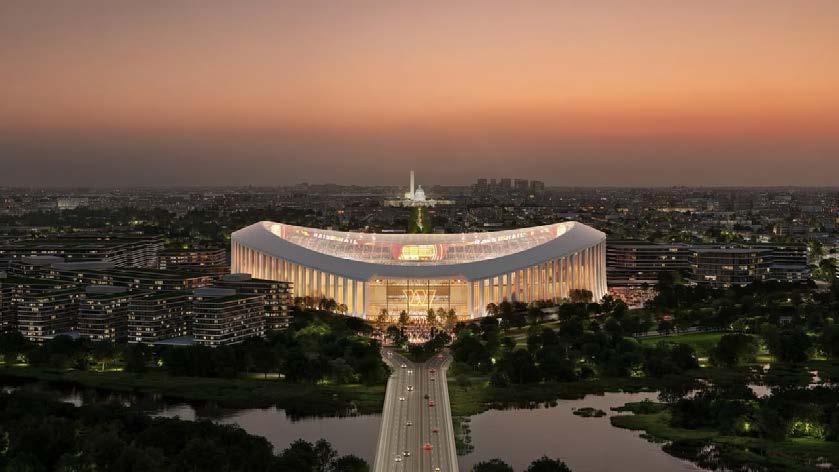
mayoral administrations, the D.C. Council, public officials, business leaders and privatesector partners. The result transformed not only the city’s sports landscape, but also its economy and civic identity.
ultimately deserves credit for bringing those negotiations to a successful conclusion. When the new stadium opens at the RFK campus, professional football will once again be played in the District of Columbia.
None of this suggests that Washington should reject bold ideas or ignore the affordability challenges facing many residents. Housing costs, income inequality and access to opportunity are real concerns that deserve serious solutions. But solutions must also preserve the economic engine that pays for schools, parks, public transportation, social services and public safety.
The District’s future should not be framed as a choice between compassion and prosperity. Washington needs both. It needs policies that encourage investment while expanding opportunity. It needs businesses that create jobs alongside programs that help struggling families. And it needs leaders willing to measure success not by ideology, but by results.
As the new administration prepares to take office, D.C. faces a defining test. Can it chart a more progressive course while preserving the economic vitality, public safety and civic confidence that transformed the city over the past generation?
The answer will shape the District for years to come.
born in Georgetown in 1939 and have a business here since 1964. So, as a native I could not agree with you more as it IS a sad state of affairs in our beloved city. Thank you for expressing what so many of us feel.
DJT writes: Robert, you and your readers should come down to the Mall for the Freedom 250 celebration! It’s a great representation of country, from the States and the Territories, our Federal Agencies, and Patriotic companies!
On “The Long Way Home: Field & Main’s Neil Wayra,” Jim Griffin writes: Thank you for finding Neal. He is a treasure for all to appreciate and share.
When the Washington football team left RFK Stadium for what became FedEx Field in 1997, the District faced an uncomfortable reality: the nation’s capital no longer had a full complement of major professional sports franchises within its borders.
The foundation for the city’s resurgence had begun several years earlier, when the Washington Bullets and Washington Capitals sought a new downtown arena. Working under Mayor Sharon Pratt Kelly and later Mayor Anthony Williams, the D.C. Council, city officials and private-sector partners approved what became the MCI Center, now Capital One Arena.
The arena did far more than keep professional basketball and hockey in Washington. It sparked the revitalization of downtown, fueling new restaurants, hotels, retail, housing and renewed activity in an area that had struggled for years.
The next milestone was the return of Major League Baseball. When the Montreal Expos sought a new home, Mayor Anthony Williams assembled a team that included Linda Cropp, Natwar Gandhi, Mark Tuohey and many others. After years of negotiations, baseball returned to Washington for the first time since 1971. The Nationals’ World Series championship in 2019 rewarded generations of fans who had waited nearly four decades for the sport’s return.
Professional soccer also flourished. D.C. United became one of Major League Soccer’s founding clubs and one of its most successful franchises. The Washington Mystics captured the WNBA championship in 2019, and the Washington Spirit won the National Women’s Soccer League championship in 2021, underscoring the growing prominence and success of women’s professional sports in the nation’s capital.
One challenge remained: bringing professional football back to Washington. Beginning during the Adrian Fenty administration and continuing
The accomplishment is remarkable. Only a handful of American cities can claim all four major men’s professional sports leagues within their city limits. When championship-caliber men’s and women’s professional soccer and the WNBA are included, Washington stands among a select group of cities offering the full spectrum of professional sports.
The economic benefits are substantial, but the greatest impact extends beyond dollars and cents. Championship teams have repeatedly united the city — from the Capitals’ Stanley Cup victory and the Nationals’ World Series title to the Mystics’ WNBA championship and the Spirit’s NWSL championship. With football returning to RFK, a future championship parade down Constitution Avenue could one day celebrate a Super Bowl victory.
Washington’s rise as a major sports city was never the accomplishment of a single mayor, Council member or administration. It was the product of decades of persistence, collaboration and shared vision by elected officials, business leaders, team owners and countless Washingtonians who believed the nation’s capital deserved to stand alongside America’s greatest sports cities. Today, it does.
Meanwhile, the public is invited to review the Commanders’ plan and provide feedback for a 45-day period, ending Aug. 14.
Here’s how you can get involved:
• Online feedback form
• Email written comments
• In-person testimony at a public hearing
• Pop-up engagement schedule: ourrfk. dc.gov/page/rfk-campus-master-plan.
The draft plan is available at OurRFK.dc.gov.
Jack Evans served as Council member for Ward 2 from 1991 through 2020 and as chair of the Finance Committee from 1999 through 2019.

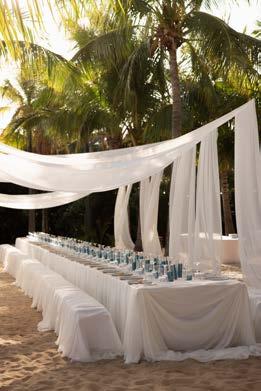
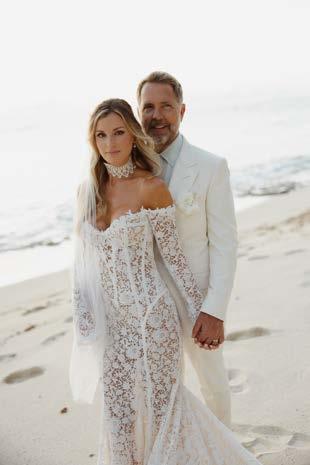
Designer: Galia Lahav
Date: April 25th
Guests: 150
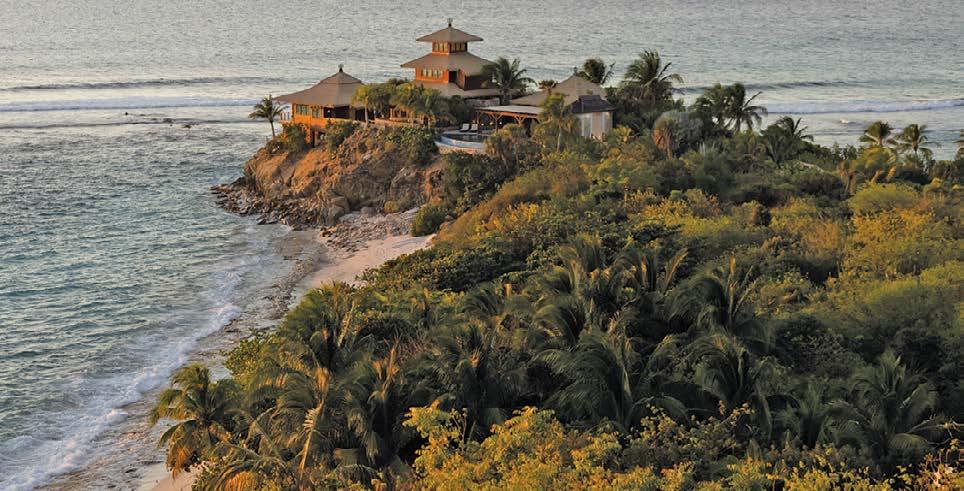
Location: Necker Island, BVI
Officiant: Our pastor and longtime friend of Bills, John Slye
Special memory: Our two dogs passed away shortly after we got engaged (former cover pups Shredder & Splinter) and they made an obvious appearance during our ceremony. Two flamingos flew overhead and without hesitation we all instinctively looked up calling them out. It became one of the most memorable moments of the day.

BY ROBERT DEVANEY AND RICHARD SELDEN WITH HANNAH BEIL, EMMA IBRAHIM AND FRANCIS RIENZO
As America celebrates its 250th birthday and Georgetown its 275th — and Washington, D.C., awaits its next mayor — palpable change is in the air. So much so that we confront it daily along the sidewalks and streets of D.C.’s oldest neighborhood, which rebuilds itself continually.
Almost everywhere you look, a building project is open, almost complete or getting started. Reconstruction is also ongoing.
“Georgetown is distinctly different. Defending its history while embracing its advancement is our responsibility,” says Philippe Lanier, new CEO of EastBanc, a major CRE player in town. “Successful execution preserves what makes Georgetown stand out as the country’s greatest village.”
Others in the know agree about the key factors.
“Since 1751, Georgetown has been an economic hub that established the nation’s capital. Our history and historic character are part of what makes Georgetown one of the most desirable places to live, work and visit,” says Brittany Sawyer, executive director of the Citizens Association of Georgetown.
“Georgetown’s walkability, combined with its experiential retail environment and historic charm, leads to unparalleled pedestrian activity. This is key to the vitality of our neighborhood,” says Deb Kerson Bilek, CEO of the Georgetown Business Improvement District. “We welcomed over 14 million visitors in 2025, and that’s extremely attractive to prospective tenants. Last year, 57 new businesses opened in Georgetown, which remains the top destination for new-to-market retailers, small business owners and destination restaurants.”
“Georgetown is a true mixed-use urban village, with office, residential, retail, hotels and restaurants. It is also one of the few truly authentic high-street shopping destinations in the country, with lots of unique, international first-to-market brands with flagship stores,” says Alex Walker, principal and co-founder of Miller Walker Retail Real Estate. “
Here, we zero in on the commercial real estate activity, yielding hundreds of new housing units — talk about taking on the housing issue — along with new hotels and retail.
So, what and where are all these developments?
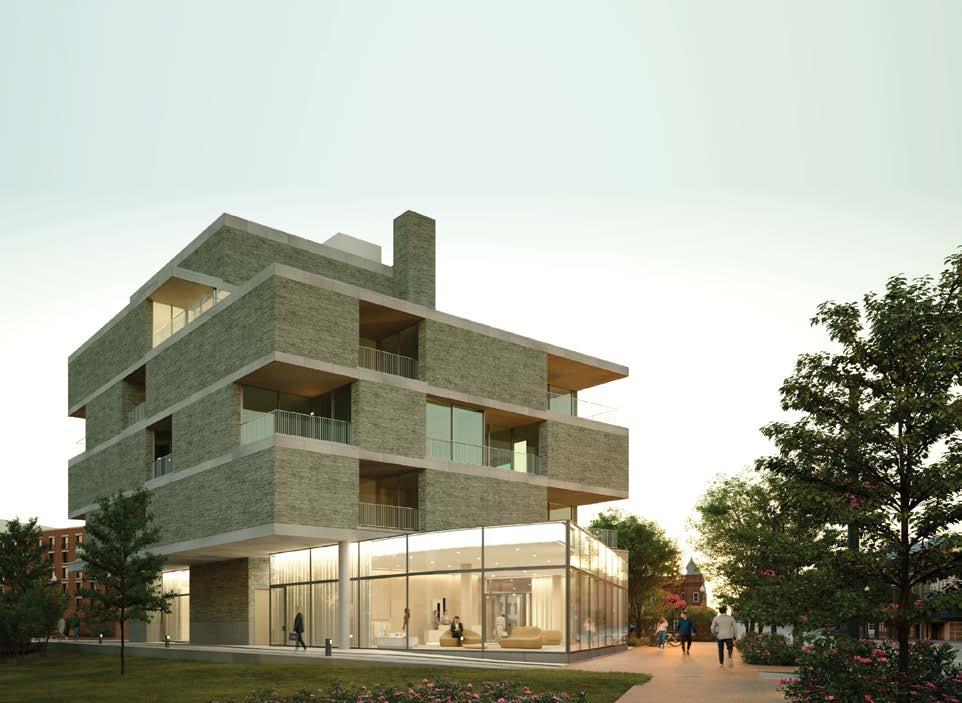
To begin, let’s look at EastBanc’s Miradoro. This unique, seven-unit luxury residence — the first in the U.S. to be designed by award-winning Portuguese architect Eduardo Souto de Moura — rises at the eastern entrance to Georgetown at 2715 Pennsylvania Ave. NW, adjacent to Rock Creek Park. Its name, meaning vantage point, hints at the building panoramic views on three sides. With ground-floor retail, the Miradoro should make its debut in the first quarter of 2027.
“Every neighborhood needs a threshold, a moment that tells you you’ve arrived somewhere specific,” explains Philippe Lanier. “Getting that right takes the right team, and architects
who understand not just how to design a building, but how a building should behave within a neighborhood.
“We’ve spent decades thinking about Georgetown’s edges — where it begins, how it announces itself, how to serve the community that’s already there. That’s the work that interests us most: not any single address, but Georgetown as a whole, and the design thinking it takes to keep earning that place.”
The Miradoro represents a longtime dream and disciplined effort by EastBanc founder Anthony Lanier, father of Philippe.
The Four Seasons Private Residences project, this year’s top CRE winner in all of the nation’s capital, has the same significance for Richard Levy. Both Levy’s and Lanier’s firms hold extensive portfolios of Georgetown properties.
Scheduled for a 2026 debut, Georgetown’s Four Seasons Private Residences at 1051 29th St. NW — behind the Four Seasons Hotel and adjacent to the C&O Canal — have been a long time coming. Richard Levy’s real estate development firm, the Levy Group Limited, purchased the two-acre West Heating Plant site from the General Services Administration at auction for $19.5 million in June of 2013.
Four years later, Levy told The Georgetowner that his goal
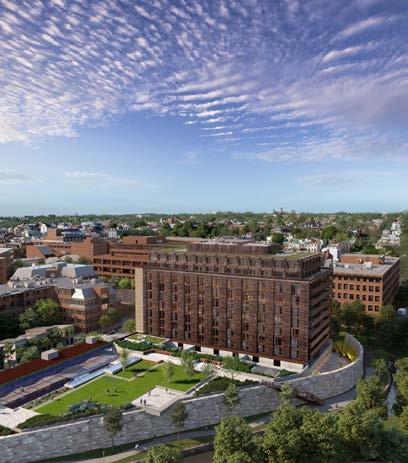
market for high-end condo living.” The project’s co-developers are the Georgetown Company and Mohari Hospitality. The original architect is David Adjaye.
The $300-million project, designed by SLCE Architects, is about to deliver 70 light-filled, one-to-four-bedroom residences with interiors by Ingrao Inc. In 2025, Axios reported that “several units have gone for over $3,000 per square foot,” a new record, with an average sale price at that time of $5.4 million.
Along with a dedicated Four Seasons team on call 24/7 “to tailor daily life to your exact needs and preferences,” the building’s amenities include an indoor swimming pool, a hightech fitness center, a chef’s kitchen, a state-of-the-art wine cellar, a cinema room, a club and game room and a children’s playroom.
Walking and biking paths along the Potomac are easily reached from the project’s one-acre elevated community park and patio — originally the steam heating plant’s coal yard — designed by distinguished landscape architect Laurie Olin.
Georgetown’s real estate landscape is being reshaped by major office-to-residence conversions, particularly of buildings on and near the waterfront, including the historic Flour Mill on Potomac Street.
Consolidated ownership of 1000 and 1050 Thomas Jefferson St. NW will transform the two buildings into 299 apartments — the biggest multifamily venture in Georgetown in a long time. Rockpoint, LCOR and Potomac Investment Properties are behind the conversion, comprising 349,000 square feet. The project will feature a rooftop pool, lounges and a spa and fitness center.
On K Street, 3333 was purchased by One Street Commercial Properties to become a 30-unit residential complex. The building was formerly occupied by the Legal Services Corporation, with the top story holding a penthouse. The interior will be completely redone, with retail on the bottom floor and condos filling the second to fifth floors.
One Street is also creating luxury apartments at 1048 29th St. NW, with four units of between four and five thousand square feet.
A major conversion underway involves the four-building Flour Mill at 1000 Potomac St. NW, which will become 135 residential units, 8,000 square feet in total. The exterior will be redesigned, with the south building and the interior courtyard getting a new look. Dating to 1847, the complex was converted to offices in 1980.
In similar fashion, Varsity Investment Group will convert office and hotel space at 1101, 1111 and 1115 30th St. NW into hundreds of housing units. (The number of units has not been disclosed.) Varsity previously converted the Georgetown Suites hotel on 29th Street into 80 apartments.
Plans to transform the office and retail building at 2715 M St. NW into 28 new apartments, adding to the eight existing residential units, are also in the works.
After more than a decade without a new hotel, Georgetown is entering a period of rapid growth in its hospitality scene.
When Canal House opened in February of 2025 with 92 guest rooms and two attached townhomes, it had been roughly 12 years since a new hotel opened its doors in Georgetown. Located at 1023 31st St. NW, Canal House is near the C&O Canal, the Georgetown waterfront and M Street dining and shopping.
Opening last month, the citizenM Washington DC Georgetown, a seven-story, 228-room hotel at 3401 Water St. NW, added another Marriott property to the neighborhood. The Georgetown location marks the third citizenM hotel in the D.C. area and the first to open as part of the Marriott Bonvoy portfolio.
Two more projects on the horizon:
Georgetown University is converting five stories of the Leavey Center into the 146-room Hoya Hotel, with 13,000 square feet of event space. Set to open this fall, managed by Crestline Hotels & Resorts, it replaces the former Leavey Center Hotel, which closed in 2022.
At the former Latham Hotel site at 3000 M St. NW, Thor Equities is developing Bazaar House, marking José Andrés’s first venture into the hotel industry. The 67-room property will feature luxury accommodations, restaurants from Andrés’s restaurant group and a private membership club, bringing one of Washington’s most recognizable culinary names to Georgetown.
Hamilton Collective
The compound of retail, restaurants and businesses at 1232 31st St. NW celebrates a traditionally Georgetown vibe, thanks to the vision of Jessica and Ezra Glass, who have partnered with David and Marc Duber and other investors. The current and soon-to-open tenant list is impressive: Ultraviolet florist, Two Nine sushi, Flor Coffee + Books, Christian Science Reading Room, Beso Besu, RM Wellness, Outerbridge Horsey, Alfie’s, Flora Pizzeria, Georgetown Preschool, Georgetown Pilates, Georgetown Auto Spa, Hamilton Health Club and residential units.
After years of inactivity, the development of the 2900 block of M Street NW is underway after AGEM Property bought the property from the Meridian Group in May of 2025. The block will welcome global menswear brand Suit Supply, which signed a flagship lease; five to nine premier retail stores; and a restaurant with outdoor dining. (Boston-based AGEM recently acquired 3130 and 3132 M St. NW from two German broadcasting agencies.)

Anticipating a fall 2027 debut, Fortis Companies is currently in the pre-construction phase of a mixed-use development with retail stores and nine townhouses. Featuring high ceilings, private elevators and garages and rooftop terraces, the homes will surround a central courtyard accessed via a grand entrance on S Street.
Altus Realty Partners proposes to transform one of Georgetown’s most prominent development sites — 3601 M St. NW, next to the Exorcist Steps and the Car Barn — into a five-story development with 21 residential units and a penthouse. Fifteen years after initial plans were submitted to the Old Georgetown Board, the project, designed by Handel Architects, would also include two below-ground levels with 47 parking spaces and offer such amenities as a rooftop pool, a yoga studio and a communal wine cellar.
Built in 1981, Georgetown Park Condominiums at 1080 Wisconsin Ave. NW comprise five stories with 154 units. Owner Jamestown LP plans to add 166 residential units from the shopping complex space.
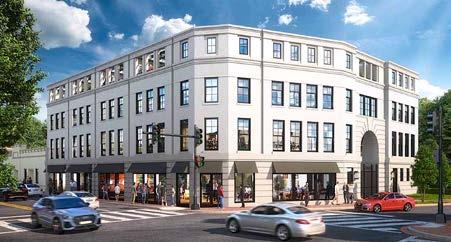
The mixed-use buildings at 1234-1238 Wisconsin Ave. NW have office space and residential units above the ground-floor retail: Swarovski Jewelry, Blank Street Coffee and Van Leeuwen Ice Cream. Developed by EastBanc, the landmark property previously boasted a Zara store and, long before that, Billy Martin’s Carriage House and Tramps Discotheque.
Across from Cafe Milano and Peacock Cafe, the Weavers Row project at 3220 Prospect St. NW is a new five-story building containing 115 units and a parking garage. It is owned by W.T. Weaver & Sons, which launched its nearby hardware business in 1889.
Georgetown’s newest luxury building, named for local developer Bob Elliott, is located at 3255 Prospect St. NW. The five spacious residences are complemented by a penthouse roof garden and terrace.
BY ROBERT DEVANEY
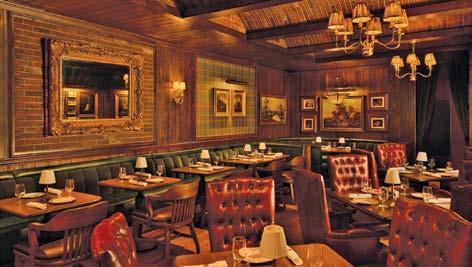
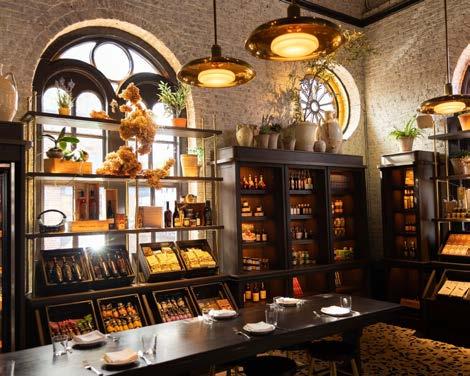
New life has come to the building at 1218 Wisconsin Ave. NW that once housed the legendary Third Edition and El Centro D.F. Ten Five Hospitality told us: “Opening June 26, The Oak Room is a grand American grill rooted in nostalgia, precision and oldworld hospitality. Developed by Chef Tim Hollingsworth — formerly of The French Laundry and one of the country’s most acclaimed chefs — the concept reimagines classic American dining … Upstairs, Bernadette’s offers a distinct shift in mood: a candlelit supper club inspired by legendary European rooms like Hotel Costes, Harry’s Bar and Annabel’s. The cocktail program across both concepts is led by three-time James Beard Award nominee Julian Cox.”
Marriott International and Another Star opened citizenM’s third Washington, D.C., hotel in the rehabbed ice factory at 3401 K St. NW that once held the Berliner restaurant. Its debut marks the first opening for citizenM as a Marriott Bonvoy brand.
Designed by the brand’s longtime architecture partner, Concrete Amsterdam, the 230-room property “brings citizenM’s signature bold, design-forward approach to the capital’s oldest neighborhood,” says the company.
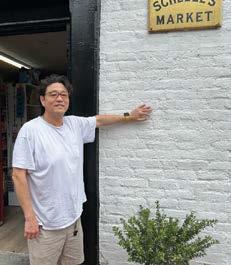
Set to close at the end of July, the landmark Scheele’s Market — the 130-year-old grocery store at 1331 29th St. NW — has received an extension to Nov. 30, the end date of its original lease. Store owner Daniel Hong will now vacate the space just days after Thanksgiving.
“Mr. Peabody [the property owner] told me I could stay until Nov. 30,” Hong told The Georgetowner, which named him a 2024 Georgetowner of the Year for his optimism and work ethic.
Georgetowner John Lindsay is spearheading a campaign to save Scheele’s. His website, savescheelesmarket.com, urges residents to sign an online form, showing their support for the effort to find a buyer who will keep the market operating.
Love Couture Bridal, a bridal shop in Potomac, Maryland, has opened a flagship at 1523 Wisconsin Ave. NW. Previous businesses at that location also celebrated weddings: Modern Trousseau and Hitched.
Acqua Pura luxury swim and resort wear has set up shop in the former Lugano’s at
2810 Pennsylvania Ave. NW, next to the Four Seasons.
Fathom Gallery, the art and venue space beneath Compass Coffee on Wisconsin Avenue, has expanded to Georgetown Court, which Peacock Cafe, Cafe Milano, Sid and Ann Mashburn, the UPS Store and Fitness Together call home. The address: 3251 Prospect St. NW.
New Orleans-born Krewe Eyewear has popped up through July 19 in a former cannabis shop space at 1251 Wisconsin Ave. NW.
IN:
Now open at 1655 Wisconsin Ave. NW, Suit Shop touts itself as “the premiere destination for affordable, size- and gender-inclusive and yours-to-keep suiting. Made for everybody and every occasion, SuitShop offers the first and only coordinating collection for men, women, nonbinary individuals and kids.”
You may have seen the large magenta plywood covering. Montreal-based Garage clothing store — beloved by teenage girls — is moving into the former Club Monaco space at 3295 M St. NW that housed the Rhino Bar and, earlier, Winston’s (both defunct).
Joe & The Juice, a Danish chain of coffee shops and juice bars founded in 2002 by Kaspar Basse, will open at 1420 Wisconsin Ave. NW. With 382 locations around the world, the restaurant is known for its popular tunacado sandwich — as well as smoothies and veggie shots.
Dayglow, an L.A. coffee chain that features coffee roasters and nonalcoholic coffee cocktails, has selected Georgetown for its first D.C.-area location: 1510 Wisconsin Ave. NW, formerly home to Alkova Yoga & Coworking.
Bringing beach vibes to 3210 Grace St. NW., Café Tulúm Mar & Bar will offer “the vibrant flavors and lively atmosphere of southern México. Specializing in tacos, tostadas, oysters and ceviches, our restaurant offers an authentic culinary experience with top-quality ingredients.”
While dealing with permit issues, Puree Juice Bar, which has locations in Virginia and Maryland, remains set to open in the former Solbiato space at 1511 Wisconsin Ave. NW.
A pottery barn of sorts is coming to the recently shuttered Random Harvest space at 1313 Wisconsin Ave. NW. The company tells us: “Founded by potters, East Fork is a Certified B Corporation in Asheville, North Carolina.”
Footwear maker Thursday Boot Co. is coming to 3015 M St. NW in the former Sprinkles space.
Pressed, the juice joint at 1300 Wisconsin Ave. NW that opened in July of 2022 in the
former Papyrus space, closed abruptly last week. The corner store was the company’s 116th location. Pressed offers plant-based foods along with its signature cold-pressed juices and began in Los Angeles in 2010 as a 25-square-foot “juice closet.”
Georgetown classic Kafe Leopold closed on June 21 after 21 years of operation. When EastBanc developed Cady’s Alley, the firm recognized that the space needed a daily anchor. So, the firm recalled: “EastBanc founder Anthony Lanier didn’t recruit a concept. Together with restaurateur Paul Guzzardo, they built one from scratch.”
The Prime Rib, a Washington place-tobe, closed on June 17 with once-young oldtimers toasting their beloved steakhouse for the last time. Founded in Baltimore in 1965 by brothers Buzz and Nick Beler, the restaurant opened its D.C. location at 2020 K St. NW in 1976.



BY LELAND SCHWARTZ
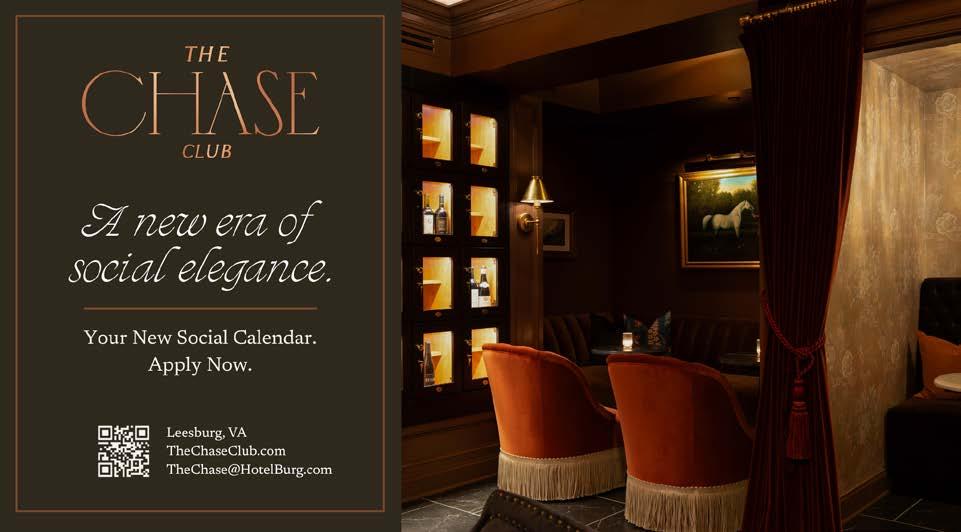
Before the dust settles, Kevin Ash will have built two hotels, three upscale public restaurants, three cafés and a members-only club in Leesburg, Warrenton and Middleburg, Virginia.
Coming to Middleburg, next to the post office, will be an Italian Restaurant, La Caccia. Italian for “the hunt,” the name connects with that of Ash’s restaurant in Leesburg, the Huntōn.
Warrenton will be gaining a brasserie — in other words, a lively, upscale yet casual French
restaurant with such staples as onion soup, steak frites and seafood.
“Think of Le Diplomate in D.C.,” Ash suggests. “Not unapproachable, not highbrow, just good French meals.”
In each town, and with reciprocity with each other, the Chase Club brings together members in the club’s space, where one can work, eat and use conference rooms. Members can also take part in 70 year-round social events ranging from fly fishing trips in the region to catered winery picnics.
La Caccia’s sommelier will conduct monthly “Wines Around the World” tastings for 25 club members, with wines from regions of the world that, says Ash, “many people might not be familiar with.”
The Chase Club in Middleburg is working on some level of reciprocity with Salamander. “We are developing a very positive relationship about how the Salamander and the Chase Club could work together in the future,” comments Ash.
Ash is part architect and part builder, not to mention a stone mason, a land planner and an expert in building restoration. But when you ask him what he does for a living, he says: “I manage risk.” He explains: “What I do in these historic communities is very complex. In trying to manage the complexity of these projects, I am managing risk.” He’s also an avid outdoorsman, stating: “I love to fly fish all over the world.”

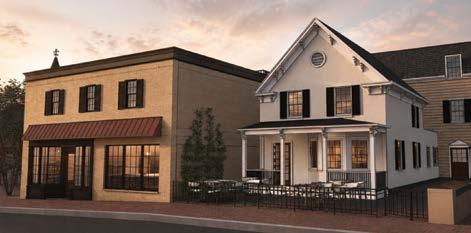
If you walk by the old Fun Shop — where another developer’s plans to open a steakhouse stalled out and fell through — you can hear Ash’s Clay Construction inside, building out the restaurant downstairs and the club upstairs, along with what Ash calls “two proper bars.”
“The execution of the work is not as seamless as it could be,” he says, referring to the town’s red tape and the fact that the town manager’s position has been vacant. “I wish their development was as simple as the buildings that are there,” he says, describing the one thing that slows him down.
“Time kills deals,” Ash says, every time I see

Janeen Marconi Managing Broker, REALTOR®

Christy Hertel Global Real Estate Advisor
him. Warrenton, on the other hand, “is superproactive to get downtown development going.”
The Fun Shop was 15,000 square feet (the Middleburg Safeway is 12,500). “I had to clean all of that out and start from a blank slate,” he says. The three single-family houses on the property are getting renovated and updated, a request from Middleburg Mayor Bridge Littleton.
The historic house will be an Italian café open for breakfast, lunch and dinner. What Ash calls a “speakeasy” is tucked away behind the café. Unlike the speakeasies of the Prohibition era, however, this one has its ABC license.
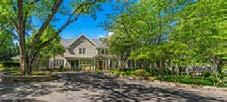
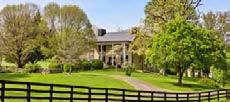
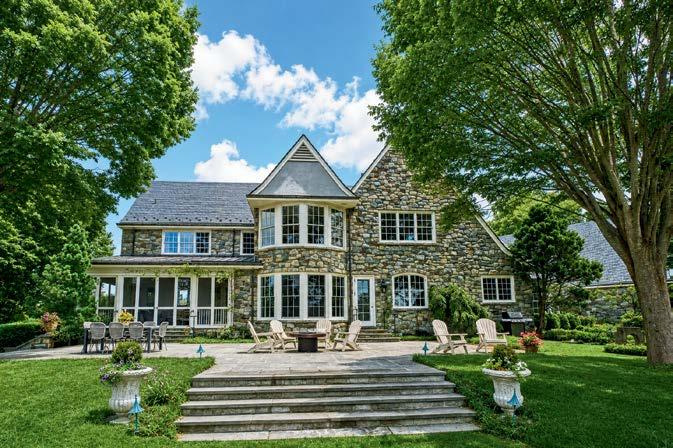
Set amid the rolling hills of Virginia's Hunt Country, just minutes from historic Waterford, Birchwood Estate is a rare offering where timeless English Arts & Crafts architecture meets one of the region's most remarkable private landscapes.
Inspired by the work of renowned architect C.F.A. Voysey, the approximately 9,000-square-foot stone manor sits on 37 breathtaking acres with sweeping Blue Ridge Mountain views. Elegant interiors, handcrafted details, expansive entertaining spaces and modern amenities are complemented by one of the East Coast's premier private arboretums, featuring rare specimen trees, formal gardens, walking paths and an orchard.
Whether envisioned as a full-time residence or an exceptional country retreat, Birchwood Estate offers a unique opportunity to own one of Virginia's finest legacy properties.
Learn more or schedule a private showing at TheBirchwoodEstate.com
Priced at $5,500,000

BY ZOE SHIELDS
Charleston in July is ripe. It’s a slow Southern summer, as seen in the farmers market selection on Saturday morning: sweet corn, stem-and-leaf peaches, sun-warmed heirloom tomatoes.
The season offers a palette of red and chartreuse — fresh produce, clipped herbs, the green of growth against brick — and with it much to see, do, buy and try.
Choices to inspire the season: a read on coastal interiors and life lived close to the tide, a tomato tarte tatin at FIG, gauzy textiles at Wentworth.
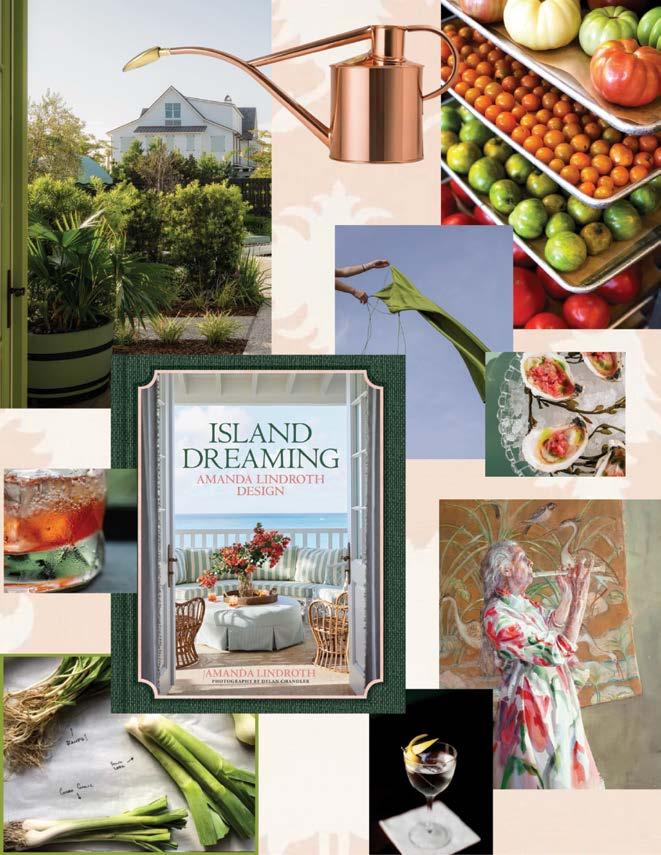
FIG is a cornerstone of Charleston’s contemporary dining scene, often cited as one of the city’s defining expressions of its farmto-table ethos. Don’t miss the tomato tarte tatin, slow-roasted and served with whipped goat cheese fromage blanc, black olive purée and fresh herbs.
Designed by Amanda Lindroth, the Dunlin evokes the timelessness of a Lowcountry summer house: wicker, cane, batik and ticking stripes. Set on the banks of the Kiawah River, it feels deeply connected to its landscape of tidal marshes, live oaks and winding waterways. Its gracious porches offer the perfect perch for an afternoon cocktail. Lindroth’s book, “Island Dreaming,” captures her enduring vision of coastal living.
On view through late September at the Gibbes is “Mary Whyte: Salt of the Earth,” an exhibition marking a timely reflection of America’s semiquincentennial. The series centers workers and makers across the country, including South Carolina oystermen, through portraiture that elevates labor, craft and the people who shape place.
A casual, quintessential Charleston spot for summer dining, known for oysters, rosé and its fried chicken sandwich. Founded by restaurateur and entrepreneur Brooks Reitz, it captures the city’s seafood-forward culinary culture in a setting that feels especially local.
A century-old, family-owned jeweler and Charleston institution known for its selection of fine and antique pieces. I’m drawn to their Temple St. Clair Small Sea Star Pendant, set with luminous blue moonstone and diamond accents.
Operated by Gregory Blake Sams, Wentworth is a tightly edited selection of tabletop wares, gifts and accessories, including linen textiles and beautifully made objects for everyday. New-in highlights include Karst woodless artist pencils and Cambridge Imprint’s Animalcules Bawden Green hardback notebook: 80 pages of cream paper, sewn and bound into a slim book made for summer wandering.
Zoe Shields, who writes on art, interiors and culture, leads Bramble & Cane, a studio crafting concept-driven visual identities.
BY JODY KURASH
The United States marked its milestone 250th birthday this month with much jubilation. In our nation’s capital, the festivities were tainted by politics: Trump’s “Great American State Fair” was scarred by low turnout, canceled performers, states not participating, weather extremes and an algaefilled reflecting pool.
In New York City, the Empire State Building was lit up in red, white and blue. Navy jets soared over the city and tall ships filled the harbor. However, even these grand events seemed overshadowed by Taylor Swift and Travis Kelce’s nuptials at Madison Square Garden.
Perhaps the city that should have received the most attention was a tad overlooked. On July 4, 1776, the Declaration of Independence was adopted in Independence Hall in Philadelphia, making it the birthplace of the American Revolution.
As we begin the country’s quartermillennium, there are still many chances to toast the city that sparked the fire. While Philadelphia does not have a legally mandated municipal drink, it’s famous for some legendary concoctions.
Originating in the 1880s, the Clover Club is a classic, pre-Prohibition cocktail. The drink takes its name from an elite gentlemen’s club, composed of prominent bankers, journalists,
politicians and business leaders, that met regularly at Philadelphia’s Bellevue-Stratford Hotel.
A more robust tipple that put the City of Brotherly Love on the map is Philadelphia Fish House Punch, one of America’s oldest surviving cocktail recipes. Dating back to 1730, it predates the founding of our great nation.
This high-proof drink was created at the Schuylkill Fishing Company, a famous colonial angling club. A potent combination of rum, cognac, peach brandy, lemon juice, simple syrup and cold black tea, it was made in large batches to satisfy a crowd, making it a convenient option for an afternoon backyard barbecue (but a bit potent for day drinking).
If you’re looking for something more modern, there’s the Philly Flyer, which won a contest sponsored by Philadelphia Magazine in 2011.
This creation is forged from Bluecoat Gin, a local spirit, its name inspired by the patriots that won the Revolutionary War. According to the website, the name “bluecoat” refers to the ordinary citizens — farmers, doctors, blacksmiths and lawyers —united in common cause to free our country from the British Crown. These courageous folks, who took up arms and fought for independence, were known as bluecoats.
Although Philadelphia has a strong cocktail culture, with many talented mixologists, the contest was won by an amateur, Rick Fitzgerald, which reflects the plucky spirit of the rebels who fought off Britain’s well-trained military regime.
The Philly Flyer is a variation on the classic Aviation cocktail, the main difference being the liqueur used to flavor and color the drink. While both share a base of gin, lemon juice and maraschino liqueur, the
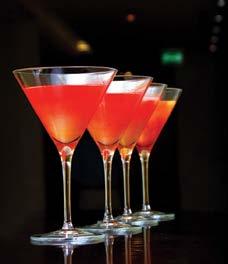
Philly Flyer swaps out the Aviation’s crème de violette for the more accessible crème de cassis, a black current spirit.
With enough sweet fruitiness to make it a summer hit, the resulting cocktail is tempered by the complex gin botanicals and lemon, keeping it refreshing, with a crisp edge.
While Caps fans may not appreciate imbibing a drink with a rival team’s moniker, let’s look at it as a metaphor for the nation’s next era. It’s time to fly!
Combine all ingredients in a shaker with ice. Shake well until chilled, then strain into a chilled cocktail glass.
BY HANNAH BEIL
For 138 years, the National Geographic Society has defined the spirit of discovery. On Friday, June 26, that legacy took physical form in the new $300-million, 100,000-square-foot Museum of Exploration. Rather than simply displaying the world, the museum asks visitors to step into it, organizing its galleries around the process of an expedition and transforming guests from spectators into explorers.
The experience begins even before you enter the building. A towering yellow frame — a nod to National Geographic’s signature magazine border — welcomes visitors into a courtyard that recreates six global ecosystems: tropical and temperate forests, grasslands, deserts, polar regions and oceans.
Native D.C. plants, tactile animal tracks, immersive soundscapes, life-size sculptures and an augmented reality experience blur the line between exhibition and environment, setting the tone for what’s inside.
Crossing the threshold, I found myself looking up almost immediately. Massive screens pulse with wildlife imagery while sweeping wooden beams curve overhead like a forest canopy. The effect is stunning, made even more meaningful by its origins: the ash timber was salvaged from a New Hampshire farm devastated by invasive beetles, transforming an ecological loss into a symbol of renewal.
Then the museum asks you to look down. Glass portals embedded in the floor reveal relics from legendary expeditions, from the marble ruins of Aphrodisias to a recreation of the ruins of the Titanic. It feels as though you’re walking across the timeline of human discovery.
Instead of separating its collections into isolated galleries, the museum builds its story around five interconnected experiences: Rolex Explorer’s Landing, In Focus, Photo Ark, The Archives and Geoverse. The spaces flow naturally into one another, creating a narrative that mirrors the curiosity-driven journey of exploration itself.
Rolex Explorer’s Landing is the museum’s heartbeat. Following an expedition from its first spark of inspiration to its lasting impact, the gallery pairs scientific process with tangible history through artifacts like the 1935 Explorer II gondola and the JIM suit that Sylvia Earle wore to the floor of the Pacific. Rather than celebrating explorers as untouchable heroes, it makes their work feel accessible, suggesting that discovery begins with a single question.
Downstairs, In Focus serves as a visual diary of National Geographic’s history. Permanent classics line the perimeter, while rotating exhibitions in the center promise fresh perspectives every six months. George

Shiras III’s haunting 1890s camera-trap photographs sit beside Michael Nichols’s portrait of a 1,500-year-old redwood, reminding visitors that photography can preserve not only moments but entire ecosystems and histories.
The museum reaches its emotional peak in Photo Ark.
Joel Sartore’s portraits of more than 17,000 species fill the gallery, each animal isolated against a stark black or white background. Stripped of context, every face of every animal, big or small, demands attention. I spent more time here than anywhere else, unexpectedly lingering with creatures I had never seen before. It is the museum’s simplest gallery and its most powerful.

The Museum of Exploration succeeds because it refuses to let visitors remain passive observers. Every projection, artifact and photograph is designed to spark curiosity rather than simply display achievement, reminding us that discovery is an ongoing process, not a completed story.
My experience concluded with The Archives and Geoverse, near the 16th Street entrance. The Archives offers a treasure trove of physical artifacts and interactive records documenting National Geographic’s history, while Geoverse surrounds visitors with a 15-minute cinematic journey that turns exploration into spectacle. It is an energetic finale, and one that reinforces the museum’s central message: geography is alive, constantly changing and deeply interconnected.
In an age when the world often feels entirely mapped and endlessly accessible, this impressive facility conveys the message that exploration is less about finding new places than seeing familiar ones with fresh eyes. The new museum is not only a celebration of National Geographic’s past, but — more important — an invitation to become part of its future. The next great explorer, it tells us, could be anyone willing to step through the yellow frame.







REVIEWED BY KITTY KELLEY
One of the most riveting epigraphs in American literature opens John O’Hara’s 1934 novel “Appointment in Samarra,” in which he borrows from W. Somerset Maugham’s retelling of an ancient fable, writing: “Death Speaks.”
From there, O’Hara unspools Maugham’s mythical tale of Death jostling a servant in the market in Baghdad, who then jumps on his boss’s horse and flees to Samarra. Later in the day, the boss chides Death for bumping into his servant and asks why he did it. Death replies, “I was astonished to see him in Baghdad, for I had an appointment with him tonight in Samarra.”
Just as memorable is the start of Wally Lamb’s 2025 novel, “The River Is Waiting,” now out in paperback. In its first pages, which the novelist rightly entitles “The Unimaginable,” he describes a scene that will haunt his main character — and readers — with excruciating pain.
Lamb introduces the character as Corbin (“Call me Corby”) Ledbetter, who’s currently
unemployed after being laid off as a commercial artist. Dad stays home to take care of 2-year-old twins, while Mom goes to work. He begins his day with an Ativan (for anxiety) that he chases down with his morning coffee, followed by “a couple of splashes of hundred-proof Captain Morgan” that he hides in a kitchen cabinet where his wife can’t reach.
As she picks up the empty beer cans from the night before, he tells the reader that he’s now drinking the hard stuff during the day and hiding the empty bottles from her. He also admits that he’s doubling up on the benzos. But, he assures us, “It’s not like I’m addicted.”
Mom kisses the twins goodbye as she leaves for work, and Dad hits the Captain Morgan again as he gets the toddlers dressed to go to their grandmother’s house because he’s supposed to spend the day job-hunting. As he informs the reader, though, he’s “pretty much surrendered to the status quo.” Corby’s existing state of affairs and experienced
trained Nurse Practitioner. Suzy French, MS, CRNP
seems to be mostly rum-based.
He takes the kids outside and buckles Maisie into her car seat as her brother, Niko, studies a swarm of ants in the driveway. Dad schmoozes with the neighborhood wives seeing their kids off to school and then remembers the diaper bag. He rushes inside to get it, comes back and jumps in the car.
Only when he sees the women waving wildly and screaming — and feels the horrible crunch under his tires — does he realize Niko isn’t strapped into his seat. The little boy is rushed to the hospital but does not survive. Corby is arrested, pleads guilty to involuntary manslaughter and is sentenced to three years in prison, where the rest of the novel unfolds.

A drinking and drugging dad responsible for his young son’s death is a damning subject for a 480-page novel — dislikable, even despicable — but such is Lamb’s talent that his hapless protagonist compels as much as he repels. Readers might not like Corby, and may feel contempt for what he did, but they’ll keep reading this book because Lamb writes with a magic wand.
He seems to have a therapist’s understanding of prisoners, some of whom carry lifelong wounds on their backs as the barred doors slam shut. “The bruises might not show, but they haven’t necessarily healed,” he writes. One of the most significant quotes in the novel comes from the prison psychiatrist, who counsels Corby: “Worrying does not empty tomorrow of its sorrow; it empties today of its strength.”
(Lamb seems to have improved on Matthew 6:34 in the King James version of the New Testament: “Sufficient unto the day is the evil thereof.”)
The author knows prisons. He’s volunteered in them, taught inmates and facilitated a writing program for incarcerated women at the York Correctional Institution in Connecticut. In addition to his seven bestselling novels, three of which were blessed by Oprah, Lamb has written two nonfiction books about prisons:
“Couldn’t Keep It to Myself: Testimonies from Our Imprisoned Sisters” (2003) and “I’ll Fly Away: Further Testimonies from the Women of York Prison” (2007).
Lamb isn’t afraid to show the ugly underside of prison, including the bullying, the racism and the sexual violence. (As the well-known saying goes, when behind bars, it’s often “gay for the stay and straight at the gate.”)
“The River Is Waiting” isn’t a happy book, but it weaves a spell like the metaphor Lamb invokes in its title: The river is never still — it slaps against an ever-changing shoreline, ebbing and flowing as it waits for each of us at the end of life.
Georgetown resident Kitty Kelley has written several best-sellers, including “The Family: The Real Story Behind the Bush Dynasty.” Recent books include “Let Freedom Ring: Stanley Tretick’s Iconic Images of the March on Washington.” She serves on the board of BIO (Biographers International Organization) and Washington Independent Review of Books, where this review first appeared.
BY CALLIE SOLOMON
Two Georgetown farmers markets offer residents and visitors something online shopping cannot: the opportunity to connect with the people behind the products. Along with the chance to purchase fresh produce, they provide a more personal way to experience the neighborhood.
Sponsored by the Friends of Rose Park, Rose Park Farmers Market is open on Wednesdays from 3 to 7 p.m. It features a variety of vendors, including many small and local businesses. Among the many vendors — selling everything from freshly baked breads to fresh juice and seasonal produce — are Bread Furst, Potomac Roasting Company and Quaker Valley Orchards. The market also features ready-to-eat options, including tacos from Alejandro’s Tacos and pizza from El Jefe Wood Fired Pizza.
Roberto Hernandez, owner of Covenant Bagels, said the Rose Park Farmers Market stands out compared to other markets because of “the environment, the people and the familial side of this market.”
Just steps away from the market, families sit on picnic blankets enjoying sandwiches and fruit
purchased from the vendors, while others walk along the Rose Park trail, holding fresh, ice-cold lemonade from the market.
Chastity Hare, one of the owners of Country Vittles from Critter Hill Farm, said that what makes shopping at a farmers market important is customers’ ability to ask questions directly to farmers and producers. “This is how you educate consumers to be smart about what it is they’re buying, where it’s coming from and how it’s raised,” she said.
Osteria Mozza’s Farmers Market, 3276 M St. NW
Osteria Mozza’s Farmers Market is open on Fridays from 11 a.m. to 1 p.m. Osteria Mozza is an Italian restaurant from chef Nancy Silverton, a James Beard Foundation Lifetime Achievement Award winner. On Fridays, Osteria Mozza features seasonal produce from two local farms: Deep Roots Farm and Chalet Farm.
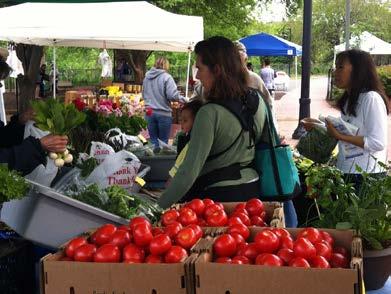
Gloria Waxman, farmers market manager, explained that, although the market sells some staples, such as basil, she works closely with the farmers to select seasonal produce that complements Osteria Mozza’s menu, while allowing the farmers to showcase produce of which they are proud.
Waxman added that she wants to make the
produce accessible to the Georgetown community. “A lot of times at farmers markets, the pricing can be a little bit inaccessible for some folks,” she said. “So when I’m doing the pricing for these, pretty much everything is going to be five dollars or below.”
She also highlighted the market’s unique location inside Osteria Mozza, where customers can shop for seasonal produce from the farmers market alongside the restaurant’s regularly
available pantry staples, then sit down for a meal at the restaurant.
“Sitting down and sharing a meal is, to me, the ultimate part of human connection,” she said. “Breaking bread is historically this unifying thing that people do.”
BEN STREET & ADAM CRUZ • ETIENNE CHARLES & CREOLE SOUL • JANELLE GILL WITH SPECIAL GUEST AMINA CLAUDINE MYERS • MS. LISA FISCHER • ORRIN EVANS TRIO • MICHELE ROSEWOMAN AND QUINTESSENCE • NASAR ABADEY AND SUPERNOVA • BRANDON WOODY'S UPENDO • AFRICAN RHYTHMS ALUMNI QUINTET: RANDY WESTON CENTENNIAL • CHELSEY GREEN • JASON MARSALIS CHRISTIE DASHIELL • JAZZDC ALLSTARS DIRECTED BY PAUL CARR • CHUCK BROWN BAND • BEN WILLIAMS BAND • ISAIAH COLLIER “COLLIER PLAYS COLTRANE” • BUTCHER BROWN • EKEP NKWELLE • ALFRED YUN • ALLYN JOHNSON TRIO • B3 SUMMIT VOL.2 WITH CHARLES COVINGTON, MIKE LEDONNE, LENNY ROBINSON, AND DAVE MANLEY CHARLES RAHMAT WOODS • CORCORAN HOLT QUINTET • DAN MURRAY • DOMAS ŽEROMSKAS • ELSA NILSSONBAND OF PULSES • FELIX CONTRERAS • FRAN VIELMA HANNAH MARKS • HEIDI MARTIN ENSEMBLE • JOE BROTHERTON • JOSÉ ANDRÉ QUARTET • JOSÉ LUIZ MARTINS • KENNY RITTENHOUSE • LAURA ANGLADE • LUKE STEWART'S SILT TRIO • MARSHALL KEYS AND SOULFUL PATH • NEXT JAZZ LEGACY • PUREUM JIN & THE EMPRESS • RICARDO TOSCANO • SAKOBI • SHACARA ROGERS
SHAREL CASSITY • SON CUBANO SUBTERRANEO • TOMMY CECIL TRIO • DC JAZZPRIX FINALS: AMINA SCOTT QUINTET, BOKANI DYER TRIO, JAMES FERNANDO TRIO, LUTHER S. ALLISON & POIESIS
CLEVELAND PARK $6,499,000 3460 Ordway Street NW Washington, DC
Margot Wilson 202-549-2100
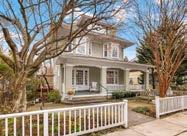
CLEVELAND PARK $3,439,500 3411 33rd Place NW, Washington, DC
Margot Wilson 202-549-2101
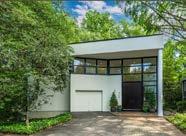
SOMERSET HEIGHTS
$2,750,000
4708 Dorset Avenue, Chevy Chase MD
Marilyn G. Charity 202-427-7553
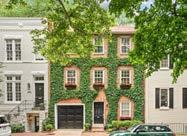
GEORGETOWN $1,850,000 2918 O Street NW, Washington, DC
Nancy Taylor Bubes 202-386-7813 The NTB Group

MCLEAN $5,001,970 1322 Darnall Drive, McLean, VA
Marilyn G. Charity 202-427-7553

CRESTWOOD $3,295,000 2065 Trumbull Terrace NW Washington, DC
Lee Murphy, 202-277-7477
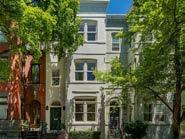
GEORGETOWN $2,695,000 3307 O Street NW, Washington, DC
Nancy Itteilag 202-905-7762
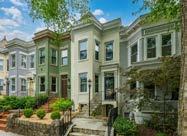
GLOVER PARK $1,695,000 2219 Hall Place NW Washington DC
Clare Boland 202-276-2902
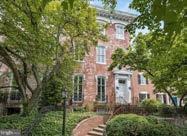
GEORGETOWN $4,100,000 3019 N Street NW, Washington, DC
Cynthia Howar 202-297-6000
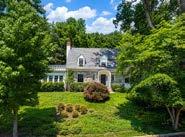
KENT
$3,250,000 5193 Watson Street NW, Washington, DC
Craig Davitian 202-333-2225
Anne Weir 202-255-2490
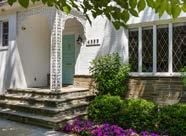
BERKLEY $2,495,000 4555 W Street NW, Washington, DC
Cailin Monahan 804-874-1847
Nancy Taylor Bubes 202-386-7813 The NTB Group
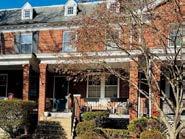
GLOVER PARK $1,399,000 2456 39th Place NW, Washington, DC
Tammy Gale 202-297-0169

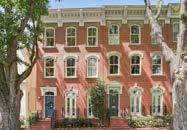
GEORGETOWN $3,850,000 1230 27th Streett NW, Washington, DC
Craig Davitian 202-333-2225
Anne Weir 202-255-2490
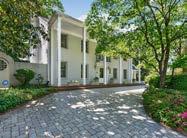
BERKLEY $3,195,000 2260 48th Street NW, Washington, DC Joanne Pinover 301-404-7011

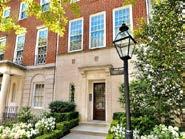
GEORGETOWN $2,099,000 3303 Water Street NW #6C Washington, DC
Lenore G. Rubino 202-262-1261
Daniel Miller 202-669-6478
R