
Conveyor and L g y tem Design: A Practical Guide for Industrial Equipment Buyers
Planning conveyor or lifting equipment for your facility? This practical guide covers design types, engineering requirements, and what to specify.
Conveyor and lifting systems are among the most common custom engineering projects in industrial manufacturing They are also among the most specification-dependent The same general equipment category a belt conveyor, a gantry crane, a scissor lift can vary
enormously in structural requiremen afety compliance depending on the product it handles, the environment p , arket it is installed in
This guide covers the key design considerations for both conveyor systems and lifting equipment, what information an engineering team needs to produce a reliable design, and how to evaluate whether a design firm has the relevant experience for your application.
Conveyor System Design: More Than Moving Products from A to B
A conveyor system is a material handling solution At the design level, it is a mechanical system that must transfer products reliably, at the required rate, without damaging them, in the available space, with the available power supply, and in the environmental conditions of the facility
Each of those constraints shapes the design The conveyor that handles 20kg cardboard boxes in a dry ambient warehouse is structurally and mechanically different from the conveyor that handles 200kg steel components in a high-temperature press shop, even if both are described as "belt conveyors."
The main conveyor types and their primary applications:
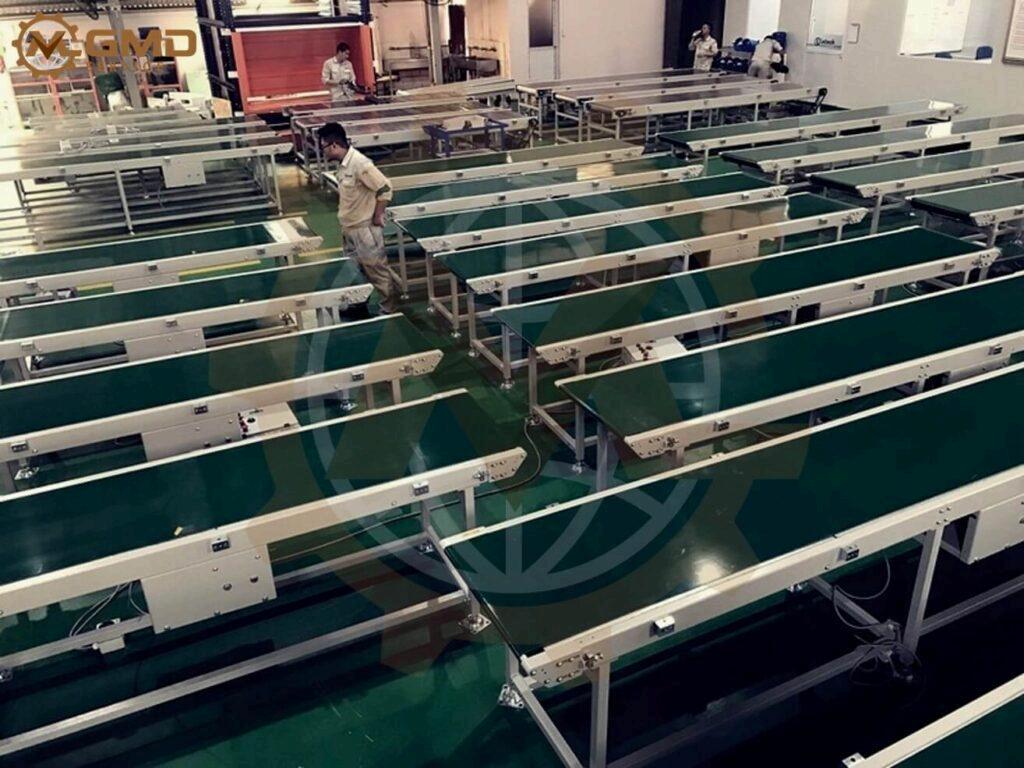
Belt conveyors are used for continuous material handling where a flat or inclined surface is sufficient They handle a wide range of products from small packages to bulk materials Drive systems range from simple single-motor fixed-speed arrangements to variable frequency drive systems with speed control
Roller conveyors are suited to heavier discrete products that can be transported on cylindrical rollers Gravity roller conveyors require no drive on level runs Powered roller conveyors use belt-driven or individually motorized rollers for controlled transport
Chain conveyors handle heavy or abrasive products, or products that need to be transported through high-temperature environments where a rubber belt would degrade Chain conveyor design requires careful attention to chain pull calculations and drive sizing
Screw conveyors are used exclusiv owders, and granules Design parameters are dominated by mater k density, particle size, abrasiveness, and flowability
The type selection decision is made in the brief stage, based on product specifications and operational requirements. Getting this decision right matters because changing conveyor type after detailed design has begun is a significant rework event.
Engineers comparing conveyor concepts can also explore the Industrial Engineering Knowledge Hub for additional system design resources
What a Conveyor Design Brief Must Include
Engineering teams can produce good conveyor designs from a well-structured brief They cannot produce good designs from an incomplete one
The minimum information required:
- Product description, weight per unit, and plan dimensions
- Required throughput rate (units per hour or mass flow rate)
- Conveyor centerline length and any elevation change
- Available headroom along the conveyor path
- Facility environmental conditions (temperature range, humidity, presence of cleaning chemicals or wash-down requirements)
- Available electrical supply and drive power constraint
- Integration requirements with upstream and downstream equipment or production systems
- Target market for the installation (determines which safety and engineering standards apply)
An engineering firm that proceeds to design without clarifying these parameters is taking a risk on behalf of the client Any experienced team will treat the brief confirmation as the first substantive step, not as an administrative precondition
Lifting System Design: Structural and Compliance Requirements
Lifting equipment carries a more stringent regulatory framework than most conveyor systems A conveyor system that underperforms can be modified A lifting system that fails structurally causes injury The engineering standards applicable to lifting equipment are correspondingly detailed
The three main lifting equipment types in industrial applications:
Gantry and overhead cranes are used for heavy component handling in manufacturing, fabrication, and maintenance environments Design involves structural sizing of the bridge beam, end trucks, and runway structure, as well as hoist selection and runway beam specification
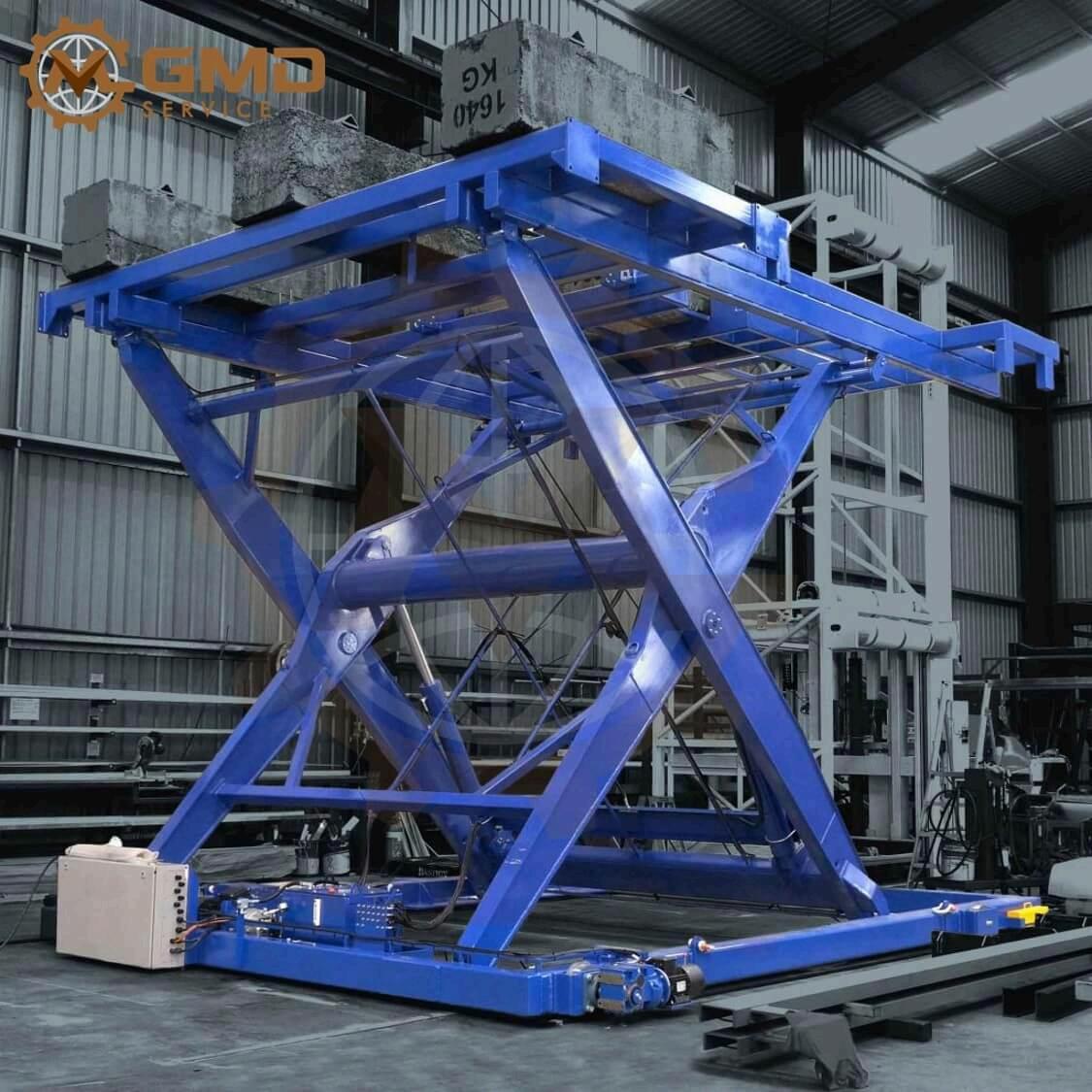
Scissor lifts and work positioning tables raise personnel or products to working height Structural design must account for eccentric loading, worst-case load position, and hydraulic or mechanical actuator sizing.
Custom hoists, lifting frames, and below-the-hook devices are application-specific lifting tools used to handle components that require a specific attachment arrangement engine assemblies, large structural fabrications, dies, and molds
Structural design for all lifting equipment requires FEA or formal hand calculation to verify that the structure meets the required safety factor for the rated load For lifting equipment installed in Europe, this requirement is codified in EN 13001 and the Machinery Directive. For North American markets, ASME B30 provides the reference standard. Australian installations reference AS 1418. These are not optional compliance considerations. They are the legal framework for equipment that can injure people.
Global Machine Design Services applies the standard applicable to the target market for every lifting system project, confirmed with the client before detailed design begins Copyright ©
Companies including GMD Enginee nveyor calculations with structural validation before manufacturing draw g
Evaluating an Engineering Partner for Conveyor and Lifting Work
Two specific checks help identify engineering firms with genuine conveyor and lifting experience versus those who treat all mechanical design as interchangeable
Ask about load and drive calculations. A conveyor design requires belt pull calculation, drive selection, drive shaft sizing, and bearing selection based on load and speed. These are engineering calculations, not CAD tasks A firm that cannot describe their calculation process has not done this type of work at the level you need
Ask how the firm handles standards compliance for the target market A firm experienced in designing lifting equipment for European clients will describe the EN standard process as a normal part of their workflow A firm that has only designed for domestic clients in a different market will need to learn standards compliance on your project.
Why Offshore Engineering Teams Work for This Type of Project
Conveyor and lifting system design is documentation-intensive and iteration-heavy The engineering process brief, concept, detailed design, structural check, drawing release generates substantial file volume and requires clear communication between the engineering team and the client's technical staff
These characteristics suit a remote engineering model well The work is deliverable-based, the review cycle is structured, and the file formats (Autodesk Inventor assemblies, DWG drawings, PDF documentation) transfer cleanly across borders without any loss of fidelity
The cost advantage of an offshore engineering firm for this category of work is significant The engineering process is the same The output format is the same The standards applied are the same determined by the target market, not the location of the engineering team
Copyright © 2026 Gmd.Engineeing All rights reserved.
Global Machine Design Services pro lifting system engineering, and material handling design for clients across Europe, North America, and Australia. Review the conveyor design services section at gmd.engineering/conveyor-design-services/ or consult the full engineering services guide for a complete picture of available services and project structure.
Browse the Mechanical Engineering Resource Library for additional technical references and practical engineering documentation.
FAQ
What are the main types of conveyor systems in manufacturing?
The main conveyor types used in manufacturing are belt conveyors, roller conveyors, chain conveyors, screw conveyors, and overhead conveyors Belt conveyors are the most widely used for general material handling Roller conveyors suit heavy discrete products Chain conveyors handle high-temperature or heavy-load applications Screw conveyors move bulk powder or granular materials The correct type depends on product characteristics, throughput requirements, and the production environment.
What specifications are needed for a conveyor design project?
A conveyor design brief should include product weight and dimensions, required throughput rate, conveyor length and elevation change, environmental conditions (temperature, humidity, presence of chemicals), available drive power, integration requirements with upstream and downstream equipment, and relevant safety standards for the target market
What engineering standards apply to lifting equipment design?
Lifting equipment design in Europe is governed by the Machinery Directive and relevant EN standards including EN 13001 for crane design and EN 14492 for powered winches and hoists. In North America, ASME B30 covers lifting devices and rigging. Australia uses AS 1418 for cranes, hoists, and winches. An engineering firm designing lifting equipment for a specific target market must apply the standards applicable to that market.