
Autodesk Inven gn Services: Why Global Manufacturers Choose Specialist Offshore Teams
Discover what Autodesk Inventor design services include, how specialist offshore teams work, and why Inventor expertise matters for industrial machine design.
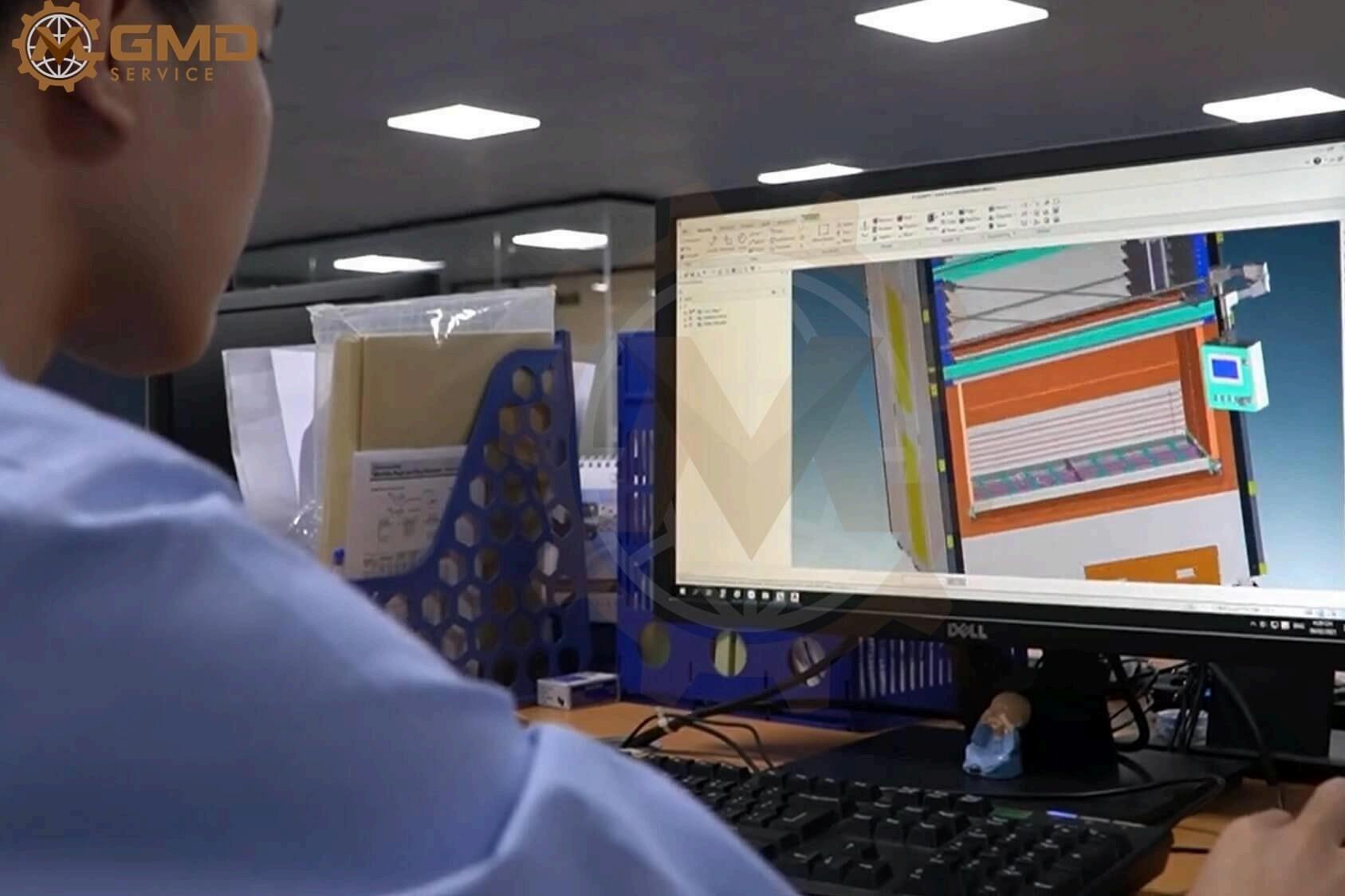
Not every CAD engineer is an Autodesk Inventor specialist. The distinction matters more than many procurement managers realize when they begin evaluating offshore engineering services.
Autodesk Inventor is a parametric 3D CAD platform used extensively in industrial machine design, particularly for complex assemblies, sheet metal fabrication, weldments, and design automation A team that works in Inventor daily builds a different depth of capability than one that rotates between platforms based on whatever the client requests This guide explains what separates a genuine Inventor specialist from a general CAD contractor, and what the difference means for your project outcome
Copyright © 2026 Gmd.Engineeing All rights reserved.
Why Inventor Matters for Industrial Machine Design
Autodesk Inventor handles large multi-component assemblies in a way that general-purpose platforms often struggle with The constraint-based assembly environment maintains relationships between components as the design evolves, which means a modification to a shaft diameter propagates correctly through every mating component automatically This matters for machine design because industrial machines conveyors, lifting systems, automated assembly cells, testing equipment involve hundreds of interacting components, and changes during the design review phase are standard. Readers interested in broader engineering workflows can also explore the machine design engineering resource hub.
The platform also supports design automation through iLogic scripting, which allows engineering teams to build parametric design rules into an assembly When a machine needs to be scaled to a different capacity, an iLogic-enabled model can regenerate the geometry based on a small number of input parameters rather than requiring a full redesign For manufacturers who produce machine families in multiple sizes, this is a significant time saving
Autodesk Vault integration adds document version control, which is important for any serious engineering project. Revision management, check-in and check-out of files, and audit trails of design changes are not optional when a machine will be manufactured and then serviced over a multi-year operational life.
What an Autodesk Inventor Design
Engagement Actually Covers
The scope of an Inventor design service varies by project At the minimum level, a client provides a functional brief and receives 3D assembly files and manufacturing drawings At the maximum, the engagement covers everything from initial concept
sketching through to a complete ma on package
A typical project for an experienced firm like Global Machine Design Services, a Vietnam-based mechanical engineering specialist serving manufacturers in Europe, North America, and Australia, runs through four stages.
Brief analysis and requirements confirmation comes first Understanding load requirements, cycle rates, material specifications, integration constraints with existing equipment, and maintenance access requirements before any modeling begins is what separates thorough engineering from rushed 3D drawing
Concept modeling in Inventor follows. This stage produces a 3D layout showing component positions, clearances, and the overall machine envelope. Client review at concept stage is significantly less expensive than changes during detailed design.
Detailed design builds out every component with full manufacturing intent Tolerances, fits, surface finishes, and fastening strategies are specified at this stage FEA or motion simulation may be performed where the design includes structural or dynamic loading See the related engineering resource on FEA and simulation services for manufacturers who require simulation as part of their design package
Manufacturing documentation closes the engagement. Fully toleranced 2D drawings produced directly from the Inventor model, an integrated BOM, and any technical documentation required for the target market or end customer.
The Offshore Specialist Advantage
European and North American manufacturers considering offshore Inventor design services often raise two concerns: timezone overlap for communication, and engineering standard alignment for the output
Both are legitimate concerns, and both have clear answers
Timezone overlap is manageable for most European and North American clients working with a Vietnam-based team. The working day overlap between Vietnam and Central European Time Copyright © 2026 Gmd.Engineeing
covers early morning in Europe, whi esign review calls, file exchange, and feedback processing within a 24 y North American clients typically operate on an asynchronous review model where brief and feedback are exchanged at end-of-day US time and deliverables are ready for review the following morning
Engineering standard alignment is the more substantive question. A professional offshore engineering firm working for European clients produces documentation that references ISO and EN standards for dimensional tolerancing and GD&T. For North American clients, ASME Y14.5 is the relevant standard. The manufacturing drawings and annotations follow the standard applicable to where the machine will be manufactured and serviced, not the standard native to where the engineering is done
Global Machine Design Services applies ISO standards as the default for European clients and ASME Y14 5 for North American clients, with explicit confirmation on each project before detailed design begins
Evaluating Inventor Specialist Claims
The term "Autodesk Inventor services" appears in many CAD contracting profiles, but it does not always indicate deep platform capability. Three specific checks help verify genuine Inventor expertise.
Ask to see assembly files from previous projects, not just screenshots A firm with real Inventor depth can explain its assembly constraint strategy, parametric structure, and file organization approach A firm that only uses Inventor occasionally will struggle to articulate these decisions
Review the manufacturing drawings produced, not only the 3D models. Accurate, fully toleranced manufacturing drawings require engineering judgment that goes beyond CAD skills. GD&T application, datum selection, and tolerance stack analysis are engineering decisions, not software operations.
Ask whether iLogic has been used on previous projects iLogic capability is the clearest indicator of an Autodesk Inventor specialist versus a generalist who can open the software The majority of offshore CAD contractors do not have iLogic experience
What This Means for You
If your engineering requirements include complex multi-component assemblies, design automation for product families, revision-controlled documentation, or manufacturing drawings that will go directly to a fabrication shop working with an Autodesk Inventor specialist, rather than a general mechanical design contractor, reduces risk and revision cycles throughout the project
Explore the complete range of services available from GMD Engineering, or review the detailed remote mechanical engineering process guide before starting your next project.
FAQ
What is Autodesk Inventor used for in machine design?
Autodesk Inventor is a parametric 3D CAD platform used for designing mechanical assemblies, sheet metal components, weldments, and industrial machinery It is widely used in machine design because of its robust assembly management, design automation via iLogic, integrated BOM management, and direct manufacturing drawing output from the 3D model
What is the difference between Autodesk Inventor and SolidWorks?
Both are parametric 3D CAD platforms used in industrial design. Autodesk Inventor integrates closely with the broader Autodesk ecosystem including AutoCAD, Vault, and Nastran. SolidWorks integrates with the Dassault Systemes ecosystem. The better choice depends on which platform your internal team and suppliers already use, since file compatibility during design review and handoff is a practical constraint.
Can Autodesk Inventor files be used directly for manufacturing?
Yes Autodesk Inventor produces manufacturing drawings directly from the 3D assembly model, ensuring dimensional consistency between the model and the drawing Manufacturing files can be exported in standard formats including DWG, DXF, PDF, and STEP for CNC machining, fabrication, and supplier communication