INTRODUCTION
WHY NOW
WHY MOVEMENTS MATTER
WHAT WE DID TOGETHER
THE AIM OF THIS REPORT
A WORD ON TERMINOLOGY
SOCIAL MOVEMENTS AS THE INVISIBLE FORCE SHAPING CONFLICT TRANSFORMATION
SOCIAL MOVEMENTS ACROSS THE PHASES OF CONFLICT TRANSFORMATION
LATENT CONFLICT: HOW SOCIAL MOVEMENTS PREVENT AND NAVIGATE DEMOCRATIC COLLAPSE
OVERT CONFLICT: ORGANISING IN THE MIDST OF WAR
CONFLICT SETTLEMENT: INCLUSION OF SOCIAL MOVEMENTS IN FORMAL PEACE PROCESSES
POST CONFLICT: SUDDEN POLITICAL CHANGES AND WINDOWS FOR TRANSFORMATION
CROSSCUTTING THEMES
SYNERGISING NONVIOLENT RESISTANCE AND PEACEBUILDING APPROACHES THE
“Those who love peace must learn to organize as effectively as those who love war.”
Martin Luther King Jr.

The Copenhagen People Power Conference 2025 (CPPC25) was born out of a shared sense of urgency: We stand at a crossroads for world peace. The past decade has seen wars that have displaced millions, flattened communities, and eroded trust between neighbors. Global leaders have increasingly relied on military power to achieve their aims while rarely addressing the root causes of violent conflict. The role of social movements therefore is more vital than ever. Social movements are critical peacemaking agents in their own right—able to transform conflicts and build models of peace that are just, inclusive, and sustainable.
A key take away from CPPC25 is, that we stand at this crossroads not only because wars persist, but because justice is absent. True peace can only be built with the people most affected at the centre. Social movements are vital to this transformation. The conference therefore carried a clear mission: to increase visibility and support for social movements that work to foster "just peace from below" — a peace that not only ends violence but also dismantles the underlying inequalities fueling it.
Although the UN Charter begins with the words “We, the Peoples”, the international peace and security architecture has consistently excluded those it claims to protect. This exclusion has contributed to its failures—a fact now widely recognised by both global civil society and the UN itself.1 Recent initiatives such as the New Agenda for Peace2, Pact for the Future3, and the 2025 Peacebuilding Architecture Review (PBAR) signal an acknowledgment that the system must change. The task now is to ensure these reforms are not rhetorical but real, shaped by the people most affected by conflict and at the center of conflict transformation.
Building on the foundation laid by the first Copenhagen People Power Conference in 20234, CPPC25 was both a continuation and a bold amplification of shared efforts to reimagine peacebuilding. Established research and firsthand experience from practitioners shared in a collection of essays published by ICNC and AADK5 shows that organized nonviolent civil resistance can constructively impact all stages of conflict. Social movements do what institutions often cannot: confront the root causes of violence, press for disarmament, and open space for dialogue. Beyond bringing warring parties to the negotiation table, they, sustain local civilian populations under fire, build alliance across civil society, mediate stakeholders, deter violence by armed groups, broker local ceasefires, and advocate for greater inclusion in rebuilding efforts after conflicts. They can hold leaders accountable and keep democratic aspirations alive.6 Yet despite these contributions, social movements remain sidelined in most formal peace processes where attention gravitates to armed factions — even though history shows that elite-driven agreements rarely deliver lasting peace.
CPPC25 sought to challenge this imbalance and respond to escalating conflicts in places like Sudan, Palestine, Ukraine, Myanmar, and beyond, by creating a transformative space for dialogue, knowledge-sharing, and collaboration between movement leaders, policymakers, donors, and institutional actors.
The conference brought together over 300 participants from more than 30 countries. They included movement leaders from conflict-affected areas such as Syria, Myanmar, Sudan, the DRC, Palestine, Mali, Ukraine, South Africa, Sri Lanka, and Nigeria; government representatives and diplomats with experience in mediation and negotiation; international organizations and donors seeking deeper understanding of movements’ roles; and academics, researchers, and civil society organizations offering both theoretical and practical expertise. Together, these diverse voices carried a simple but urgent message: the future of peace depends on the power of people..For an overview of the program see: Copenhagen People Power Conference Programme






This report serves as a strategic roadmap, highlighting key lessons on the vital role of movements in conflict transformation — from prevention and resistance to negotiation and post-conflict rebuilding—through historical and contemporary examples. It identifies the support needed to strengthen their impact and offers tangible recommendations for donors, international organisations, and governments to engage social movements as core peacebuilding actors. As such, it speaks to the wider international peacebuilding community of governments, institutions, donors, mediators, NGOs, capacity providers, advocacy actors, and other peace facilitation bodies — from prevention and resistance to negotiation and post-conflict rebuilding—through historical and contemporary examples. It identifies the support needed to strengthen their impact and offers tangible recommendations for donors, international organisations, and governments to engage social movements as core peacebuilding actors. anyone with the power to make peacebuilding processes more inclusive and justice-driven by ensuring the involvement of social movements and the communities they represent.
Terms like ‘People power’, ‘resistance struggles’, ‘nonviolent action’, 'civil resistance’, ‘grassroots organising’, ‘community organising’ are often used interchangeably to refer to the collective efforts of ordinary people pushing for social, political, economic or cultural change. In this report, we refer to such efforts broadly and collectively as social movements: groups of people with a shared identity and common goals that engage in collective action, combining organizing, protest, and sometimes formal institutional methods.7 Tactics include civil disobedience, strikes, and boycotts, distinguishing them from formal channels such as elections, though many movements use both approaches.8


History has repeatedly demonstrated that people power and social movements are critical catalysts for justice and peace. Research shows that including community groups, human rights defenders, women’s groups, religious groups and other civil society actors reduces the risk of failure by two thirds.9 Social movements do more than push warring parties to the negotiating table, they create conditions that lower the risk of conflict, reduce violence intensity during conflict, and increase the likelihood of lasting, inclusive peace settlements.10
From Liberia to South Africa, Nepal to Tunisia, Colombia to Northern Ireland, community groups and movements have not only helped end violence but also actively crossed the very divides that created conflict in the first place to confront the injustices at their root. While institutional peacebuilders may adopt an impartial stance that prioritizes stability and depolarization, social movements can ensure that transformative justice is prioritized instead, and that societal engagement is both broad and deep. Across major violent conflicts today,11 organised communities and nonviolent movement show up as key actors for “a Just Peace”, pushing for democratic governance and inclusion in rebuilding efforts, brokering local ceasefires, and providing for the needs of civilians in the midst of violence.





While conflict-settlement approaches focus on ending hostilities through political agreements between armed parties, conflict transformation seeks to address the underlying causes of inequality, structural violence, and power imbalance to enable a just and lasting peace.12 It is about transforming the very systems, structures and relationships that give rise to violence and injustice. This is what we refer to as Just Peace.
The model below is based on the conflict transformation matrix developed within peace and conflict studies.13 It conceptualises conflicts along two dimensions: the balance of power between the parties, and the degree of awareness of their conflicting needs and interests. Its stages form a continuum of overlapping priorities and tactics:
LATENT CONFLICT - characterised by unbalanced power and low awareness. This stage calls for education, community organising, and increasing awareness of injustice and inequalities. E.g. in Nepal, the Jana Andolan II (2006) citizen mobilization pressured the monarchy to restore parliamentary democracy, laying the groundwork for eventual civil war settlement.
OVERT CONFLICT – characterised by unbalanced power and increased awareness. This stage requires approaches like constructive confrontation, sustaining non-violent discipline, local mobilisation and mediation, just peace campaigns, and nonviolent resistance. E.g. the Women of Liberia Mass Action for Peace movement united women across religious divides, staged nonviolent protests, and influenced peace negotiators to include grassroots voices, helping to end the civil war.
CONFLICT SETTLEMENT - opportunities for rebalancing power that call for (in)direct negotiations with broad participation, mutual recognition and cooperation, and inclusive dialogue. E.g. in Colombia, MOVICE and other grassroots organizations advocated for the inclusive negotiations between the government and FARC, that were essential to the 2016 peace agreement.
POST CONFLICT - potential for more equal and peaceful relations and, restructuring the conflict relationships. This stage requires prevention of further polarisation, monitoring commitments, and building new institutions and leadership. E.g. in Northern Ireland, the Women’s Coalition and Community Relations Council bridged Catholic and Protestant communities, ensuring the necessary community support for the Good Friday Agreement (1998) and long-term reconciliation efforts. In South Africa, Anti-apartheid networks were instrumental to establishing democratic governance and social cohesion efforts following apartheid rule.
In reality, conflicts rarely progress linearly; they may regress, loop, or skip stages. The model is therefore a tool for recognising the diverse roles social movements play at every stage of transformation.
Most peacebuilding focuses on very visible formal spaces involving state and international actors. This model, however, makes visible the less recognised yet crucial work of social movements in conflict transformation. It illustrates that social movements are often only noticed when mobilising citizens en masse or directly participating in peace negotiations. Yet, their diverse roles in extra-institutional spaces, from community level and upward, is what makes just and sustainable peace possible. These efforts are not an add-on to peacebuilding; they are at the heart of it. It is essential that movements are recognised, supported, and engaged as core actors across the full arc of conflict transformation.
The following section highlights key research, insights, gaps and priorities to deepen our understanding of the role, challenges and needs of social movements and allies across these different stages of conflict transformation.
People Power in times of democratic backsliding
Across the globe, from Eastern Europe to Central America, democratic systems are eroding under the combined pressures of state repression, disinformation, organised crime and institutional collapse. In these contexts, social movement's play a dual role advocating for change while holding communities together, resisting authoritarian consolidation, and creating alternative democratic spaces.
As governments dismantle checks and balances, weaponize the judiciary, and criminalize dissent, movements become the connective tissue that sustains civic space. They challenge repression while modelling governance alternatives when the state fails to serve the public good.
How Social Movements Prevent and Navigate Democratic Collapse.
The conference brought together activists from different places of latent conflict to discuss how movements navigate such realities, build alternative structures of governance and prevent community violence. It also explored strategies for international engagement to strengthen social movements without undermining their legitimacy or local agency.
Kenneth Chomba, African Coaching Network, Kenya // Ronald Portillo, Global Platform, El Salvador // Ana, Activist, Georgia // Maja Stojanović, Executive Director, Civic Initiatives, Serbia // Ola Ibrahim, Sudanese Resistance Committee, Sudan
Moderator: Jamila Raqib // Executive Director of the Albert Einstein Institution
Understanding opponents
Building civic resistance in fragile democracies demands not only rallying allies but also engaging those whoknowingly or unknowingly - support repressive forces. Reaching out to opponents early can create unexpected openings for dialogue. In Georgia, democracy has been weakened by oligarchic control, Russian occupation, and captured institutions. The ruling Georgian Dream party suppresses dissent through restrictive laws and street-level proxies, with protesters facing police violence and attacks from government-linked mobs often incentivized by money, food, or nationalist appeals. In 2023, far-right anti-LGBT groups offered people rewards to “defend the nation” and threaten the organisers. Instead of a public appeal for tolerance, activists found that direct conversations and personal connections worked better to reduce polarisation and challenge disinformation. This shows that understanding the opponent’s motivations can weaken authoritarian tools of division, and create openings for more to join the movement, broadening the base of potential supporters.
When repression becomes systemic through media control, captured courts, and laws targeting civil society, movements adapt by proactively adjusting tactics. Georgia’s Shame Movement, launched in 2019 to push for democracy and EU integration, focused on reading the political landscape early to anticipate authoritarian patterns. Similar trends are seen in Serbia, where leaders have tightened their grip on media and institutions, prompting the student movement to form local Citizens’ Assemblies. In El Salvador, President Bukele has concentrated power by weakening the courts and silencing critics under the guise of security. These cases highlight the need for movements to understand authoritarian playbooks and prepare strategic responses in advance.
In environments where organized crime and state violence reinforce each other, movements often step into governance gaps to protect communities. In El Salvador, youth and community groups use nonviolent communication, education, restorative dialogues, and art to maintain community safety and cohesion, demonstrating that democracy can grow from the ground up —even when the state itself is a source of insecurity. In Sudan, during the fragile post-Bashir transition, resistance committees ran neighborhood governance, mutual aid, and political education, while tensions simmered between military and civilian authorities. These committees provided local accountability and support in a period of latent conflict, helping communities navigate insecurity before full-scale war broke out. Both examples illustrate how communities can build their own structures of protection and accountability when formal institutions fail.
International solidarity without harm
Participants emphasised the delicate balance of external support. International allies strengthen movements when they amplify local priorities without overshadowing those voices, and avoid imposing donor-driven frameworks. Poorly executed external support, however, can backfire, —branding activists as “foreign agents” and undermining their credibility at home. Effective solidarity is therefore rooted in listening, enabling, and aligning with locally determined strategies.
Three key session take-aways:
Movements as community anchors: Supporting social movements not only in advocacy but also in their role as stabilizers, helping communities resist authoritarian consolidation and sustain spaces for democratic life.
Proactive responses: When movements recognize and anticipate patterns of repression (media capture, judicial weaponization, criminalization of dissent) they can adapt strategies before authoritarian control solidifies, e.g. proactively reaching out to those aligned with repressive forces can reduce polarization, undermine authoritarian tools of division, and create opportunities for broader civic participation.
Local governance alternatives: Grassroots initiatives that provide justice, safety, and accountability where state systems fail, offer blueprints for bottom-up democracy and accountability, which should be amplified.
The conference brought together frontline activists that resist war, occupation, and repression to share strategies and tactics for nonviolent resistance, organizing, and solidarity, They explored how movements survive under extreme conditions, analyzed key resistance tactics and showed ways to support their struggles.
Zahra Hayder, Waye Organisation, Sudan // Nyein Chan May, Student Activist and CEO German Solidarity Myanmar, Myanmar // Activist from Palestine // Micheline Mwendike, LUCHA,
In conflict zones around the world, from Ukraine and Sudan to Myanmar, DR Congo, and Palestine, social movements are not just surviving; they are leading. They serve, represent and organise their communities amid bombs, blockades, and shifting local needs. Civil resistance remains a vital, resilient force, claiming agency over survival and asserting the possibility of a different future, in the midst of violence.
Supporting these movements is not charity; it is a strategic, moral, and political imperative.
When institutions collapse or international actors withdraw, movements take on roles as local mediatiors and community aid responders. In Colombia and Syria, organized civilians have outpaced aid agencies in protecting lives and promoting humanitarian norms.14 They respond rapidly to emerging needs, often where formal organisations cannot operate, providing food aid, legal counsel, information sharing, economic empowerment, and psychosocial support. Trusted within their communities, they also mediate inter-group conflicts. In Sudan, for example, after the 2023 outbreak of civil war, Resistance Committees established Emergency Response Rooms to coordinate healthcare and protection, distribute supplies, run communal kitchens and monitor conflict zone developments for evacuations.
Movements do more than fill service gaps; —they actively transform conflict. Unlike external peacebuilders who often act as intermediaries, movements use direct, relational approaches like constructive confrontation to address root causes and heal divisions.15 In DR Congo, the apolitical citizens movement, LUCHA, builds just peace through civic education, nonviolence, public accountability and a strict commitment to nonviolence, breaking cycles of anger and trauma.16
Through decentralized decision-making and direct democracy, movements offer compelling alternatives to armed struggle. Colombia’s peace communities, for example, have developed neutral, community-run governance structures that reduce the influence of violent actors while cultivating cultures of resistance and resilience.
Nonviolence in wartime is not passive nor simple - it is strategic, creative, and profoundly courageous. Movements raise awareness of injustice and rights17, demand accountability, document atrocities, and build evidence for advocacy.18 Across civil wars on the African continent, studies show that non-cooperation tactics such as strikes and boycotts can reduce violence.19 In wartorn societies with little room to operate, movements connect to diaspora and global audiences, engaging in digital battles to counter hate speech and dominant media narratives that fuel conflicts. In Sudan, citizen-led media campaigns have challenged divisive narratives and sustain resistance, long after street protests have faded,20 while in Myanmar, artists and activists use arts and new media to denounce violence and envision a more just future.21
Even in the world’s most violent and repressed contexts, everyday acts of nonviolent resistance—sharing food, preserving culture, performing rituals—carry symbolic and strategic weight. Palestinians call this sumud: steadfastness in the face of oppression. Existence itself becomes resistance. Such acts sustain morale, affirm identity, and inspire others to continue the struggle and keep hope alive. In Ukraine’s occupied territories, resistance takes the form of cultural preservation through everyday actions, such as giving out candy on holidays, and hiding books and sustaining Ukrainian identity and morale through humour, art, and underground organizing.
Three key session take-aways:
Support as strategic solidarity: Solidarity is a political and moral commitment to shared struggles, not a framework of aid. True solidarity recognizes social movements’ agency and builds momentum for local priorities rather than external agendas.
Support everyday resistance: The invisible work - art, ritual, caregiving, cultural memoryanchors communities when public organizing is impossible. Support for these acts is as vital as support for protests or campaigns.
Protect and elevate those at risk: In an era of transnational repression, safeguarding activists with legal aid, safe digital infrastructure, and relocation can be life-saving. Elevating silenced voices globally, without diluting their messages, keeps movements alive when they are forced underground at home.
See personal accounts and case studies by activists in DRC, Sudan and Ethiopia in the conference publication pp. 31-50.






From the Street to the Peace Table: Inclusion Challenges for
The session sought to discuss the challenges and promising approaches to effectively leverage the power of social movement in peacebuilding processes, based on complementary perspectives on peacemaking practices of state negotiators, nonviolent activists and external mediators.
Michael Keating, Director of European Institute of Peace // Shadia Marhaban, Mediator, capacity builder, activist // Ayak Chol Deng Alak, Senior Advisor, Inclusive Peace // Juan Garrigues, UN standby team of senior mediation advisers // Isabel Bramsen, Lund University
Hosted by Berghoff Foundation and Inclusive Peace
Peace is not a stage that follows war. It is a continuous process lived in the midst of conflict. For indigenous and peasant communities in Colombia, peace did not suddenly happen with the 2016 peace agreement between the government and FARC.22 Similarly in Mali, the 2015 Bamako Agreement had limited impact due to exclusion of key community actors.23 Peace is something we practice, and peace processes only endure when they reflect the diverse realities of the populations facing violence and injustice.
Popular acts of nonviolent protest such as sit-ins and blockades have been impactful in laying the groundwork for peace negotiations and for moving talks to a peaceful conclusion. Yet traditional peace processes remain largely elite-driven and state-dominated, while social movements, are often sidelined. Their absence is not due to irrelevance but to the hierarchy and representative nature of formal peacemaking efforts. Grassroots actors are treated as too fragmented, too radical, or too difficult to fit into institutional negotiation formats.
As conflicts grow more protracted, fragmented, and mediated by an expanding array of external actors, formal peace processes themselves, are becoming less common. This shift creates an opening to reimagine what peace processes for the 21st century could look like. Social movements - already organizing, protesting, and practicing alternative governance, must be central to this reimagining.
Beyond the negotiation phase, social movements also remain crucial for holding parties accountable, mobilizing community support, and ensuring that agreements are not just signed, but lived.
There is therefore a need to shift the paradigm from "inviting" movements in, to rethinking the very structures of peace negotiations: There’s a critical difference between NGOs and social movements. While the former may be easier to invite formally, the latter often holds greater legitimacy but resists traditional forms of representation. Protest movements from Serbia to Sudan, are not homogenous, and should not necessarily be expected to be entirely “unified” as a prerequisite for their engagement in peacemaking efforts. Rather than forcing movements into elite spaces we must redesign peace processes to reflect, and be accountable to the population.
Including social movements in conflict settlement comes with tensions. Entering formal processes can risk co-optation, while exclusion can mean invisibility in key decisions. Activists therefore need greater strategic literacy - knowing when to negotiate and when to resist. They need support to develop negotiation techniques, timing, and strategic engagement, while mediators must learn to work with movements that are non-hierarchical, leaderless, or radically democratic. Peace requires moving beyond the rush to consensusthat often defines mediation, towards processes that privilege legitimacy, trust and the inclusion of a multitude of perspectives.
This shift also demands rethinking what counts as expertise. Lived experience, grievances, and community representation are as vital as technical or diplomatic credentials. Peace processes must evolve from elite deals to participatory frameworks that reflect the public imagination and legitimacy that only movements can provide. Alternative formats are already emerging: national dialogues, popular assemblies, and movement-led forums that cultivate broader democratic legitimacy. These models not only expand participation but allow social movements to convene and lead peace efforts on their own terms. Documenting these experiences, amplifying their lessons, and telling their stories in engaging ways is critical for shifting mindsets among policymakers and mediators. Formal processes will only be sustainable if they recognize, include, and are accountable to this power.
Three key session take-aways:
Peace is practiced, not declared: Sustainable peace is lived daily in communities, not only signed at negotiating tables. Agreements endure only when they reflect people’s lived realities of violence, justice, and resilience.
Legitimacy over elites: Peace processes should prioritize those who represent the most people, not those with the most weapons or external backing. Social movements bring legitimacy, accountability, and public imagination often missing from elite-driven deals.
Rethinking expertise: Lived experience and community representation are vital forms of knowledge. Recognizing movements as experts in peacebuilding opens space for inclusive, accountable, and innovative processes.
When the guns fall silent, social movements don’t disappear. They shift, rebuild, and reshape societies scarred by conflict. Post-war contexts are often characterised by fragile institutions and lingering violence, but also by rare opportunities to influence governance and redefine justice. Movements step into this space with energy and legitimacy; pushing democratic reforms, acting as watchdogs to prevent renewed conflict, and building inclusive societies. Their contributions go beyond law and policy; they use dialogue, restorative programs, and civic education to combat disinformation and harmful narratives, heal trauma, foster social trust, and dismantle authoritarian legacies.
The Day After: Sudden political changes, deep uncertainty and windows for transformation
This session’s discussion focused on the sudden political change of the post coflict era that presents both opportunities and challenges for movements, activists, and civil society. It opens the door to reform, but also requires careful navigation of diverse societal perspectives—from rural and urban communities to conservative and liberal voices, from religious groups to secular actors, and from majorities to marginalized communities.
Manzur al-Matin, Bangladesh // Shreen Saroor, Sri Lanka // Lailas Alboni, Palestinian activist and writer, Lebanon/Syria
Moderator: Haifaa Awad // ActionAid Denmark Chair
Yet activism after conflict is never simple. Internal tensions often emerge between resistance veterans and newcomers, between leaders and grassroots constituents, and between competing priorities and visions of what comes next. The central challenge lies in sustaining cohesion and transforming wartime activism into lasting civic engagement once the common enemy is gone. Sudden political change offers the possibility of reforms but also demands careful navigation of the diverse voices within society: urban and rural, conservative and liberal, religious and secular, majority and marginalised.
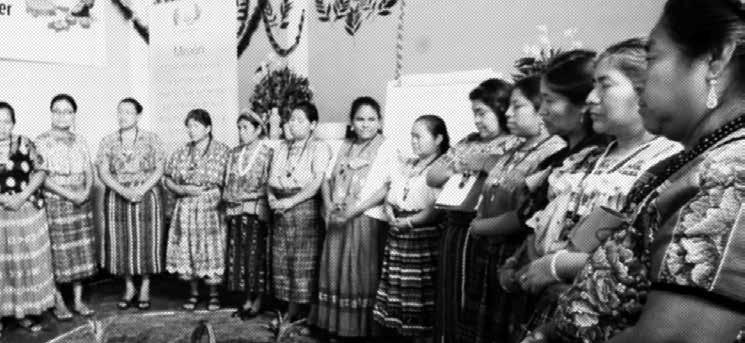
Wartime often equips movements with skills, networks, and legitimacy that formal institutions lack. As intermediaries between citizens and authorities, they provide essential services, protect the vulnerable, push for accountability, and imagine and practice new social and political norms. For example, activists returning to war-torn Sri Lanka rebuilt the Women’s Development Federation, offering micro-credit and community-based support that reached thousands of women, which was crucial in addressing gender-based violence and fostering collective healing.24 In Colombia, activists documented human rights violations and created safe space for women to preserve historical memory.25 In Guatamala, indigenous women’s groups organised education and nutrition programs in rural communities where state services were absent.26
Beyond services, movements act as peacekeepers, helping to avert revenge attacks, mob violence, or armed clashes. In post-conflict realities, movements build alternative pathways and mechanisms of reconciliation, often long before — or in place of — state-led processes. In Sri Lanka, community groups supported survivors of violence with legal aid and community mediation, while advocating for accountability. In Liberia, the Women's Peace Movement leaders redirected their focus towards psychological healing for both ex-combatants and victims, while forming local peace committees to prevent renewed violence.27 In Guatemala, after more than 30 years of civil war, Indigenous women’s28 groups have played a crucial role in facilitating processes of grief, mourning and memory preservation through healing circles and cooperatives for women survivors.29 Similar initiatives in Bosnia and Herzegovina saw community groups providing psychosocial support, rebuilding schools, and coordinating housing for displaced populations.30 These local efforts are often the first and most trusted steps in repairing the torn social fabric.
As one activist put it: “We were used to tearing down—now we had to build.” In the aftermath of war, movements foster democratic participation by implementing inclusive governance that emphasises horizontal, participatory decision-making as an alternative to hierarchical models of representation.
In post-revolution Tunisia, youth movements and civil society set up local ‘governance hubs’ to monitor spending and hold the newly established councils accountable, while civic platforms, such as Al Bawsala, advocated for transparency and civic participation. Nepal’s Madhesi and Indigenous movements also sustained watchdog functions to document land rights abuses and pushed for the decentralization promised in peace agreements. In South Africa, local groups such as the shack dweller movements31 fought for the housing rights guaranteed in the new constitution. In El Salvador, after the civil war, key actors from the Farabundo Marti National Liberation Front (FMLN) laid down weapons and transformed into local community organizations that rebuilt war-torn areas while fostering reconciliation. In Colombia, citizen-led monitoring committees now hold both government and former armed groups accountable, promoting transparency and preventing elite capture,32 while women’s peace networks in Liberia monitored local elections to prevent backsliding into violence.33
Post-conflict movements organise advocacy campaigns and connect local struggles to national and international policy, shifting political horizons. In Nepal, grassroots women’s groups leveraged their wartime networks to influence the constitution-making process, ensuring women’s and minority rights were enshrined. Across West Africa, youth movements have pushed electoral reform, challenging corruption, and expanded civic education.34 In Latin America, movements linked peace to underlying conflict causes such as climate justice,35 housing rights,36 and minority protections.37 In Colombia post-conflict networks cultivated new leaders capable of sustaining civic engagement and democratic norms long term.38
By maintaining trust and legitimacy in communities, movements can shape recovery from the ground up. They identify local priorities, amplify marginalised voices, heal traumas, promote reconciliation, and ensure that reconstruction reflects the lived realities of the people while actively preventing polarisation and nurturing inclusive governance. Their work shows that peace is not only negotiated at tables in capital cities — it is built daily in the villages, neighborhoods, and communities.
Three key session take-aways:
Rebuilding from below: Post-conflict, movements often become the backbone of recovery, delivering services, preventing revenge violence, and fostering new forms of governance. Supporting their networks and infrastructure strengthens trust, civic capacity, and social cohesion when institutions are fragile.
Healing as a path to justice: Grassroots actors lead reconciliation through healing circles, memorialisation, and psychosocial support. Investing in these initiatives means protecting emerging leadership, offering legal and security support, and ensuring recovery processes reflect community-defined priorities rather than donor templates.
From grassroots to political shapers: Movements monitor governments, push reforms, and advocate for rights, reshaping politics long after war ends. Amplifying local agendas, fostering civic education and advocacy skills, and documenting lessons learned ensures their wartime legitimacy translates into long-term democratic transformation.
The following section highlights four key areas that emerged as central points at the conference: synergizing nonviolent resistance and peacebuilding approaches; the role of women and gender in conflict transformation; the impact of misinformation, and narrative building and artistic activism.
By focusing on these themes, this report does not diminish the importance of other themes and challenges raised at CPPC25. Rather, it uses these discussions as a lens to understand how peacebuilding is pursued in practice today. Peace is never a static concept, and the pathways toward it must be responsive to changing forms of resistance, oppression, and solidarity.
Each theme illustrates the creative, strategic, and relational work required to advance peace — whether through grassroots resistance, gender-sensitive engagement, narrative shaping, or cultural expression. They also speak directly to contemporary challenges: the need to link collective action with institutional processes, center gender justice, counter the weaponization of information, and harness storytelling and art as tools of transformation. These are not abstract concerns; they are urgent realities shaping conflict and peacebuilding across the world.
Why it matters
Nonviolent resistance and peacebuilding are complementary forces. Nonviolent resistance creates leverage; peacebuilding works to channel that leverage into lasting solutions. Yet too often they remain disconnected, weakening prospects for durable transformation amid rising authoritarianism, democratic backsliding and violent conflict.
Insights and challenges
Movements often see peacebuilding as slow, elite-driven, or detached from urgent struggles. Institutional peacebuilders, meanwhile, frequently arrive after uprisings subside, overlooking the grassroots actors who shifted the balance of power. The result is predictable: peacebuilding without legitimacy, movements without sustainability. In Sudan, the 2019 revolution that toppled Bashir faltered partly because institutional peacebuilders and donors neglected local committees and unions. In Colombia, Afro-Colombian and Indigenous communities used civil resistance to force recognition of historical grievances but were largely sidelined from actual negotiations. While some initiatives — such as the United State Institute of Peace’s Synergizing Nonviolent Action and Peacebuilding (SNAP) — blend these approaches in practice, intentional frameworks for collaboration remain rare and underutilised. Structural biases reinforce this gap. Peacebuilding is framed as “neutral,” leading donors to avoid politically engaged movements, while formal processes prioritize stability over justice and favor armed groups over civilians. Resistance itself is often dismissed as spontaneous disruption rather than a disciplined strategy for transformation. Yet movements increasingly recognize the need to “build up” institutions, sustain dialogue, and maintain alternative governance structures, all requiring long-term support in strategy, negotiation, protection, and capacity.
Bridging this gap requires treating movements as peace actors, not peripheral stakeholders. Donors and practitioners must invest in protective networks, legal aid, digital security, psychosocial support, and strategic coaching. Peacebuilders can gain legitimacy and local knowledge, while movements benefit from negotiation, coalition-building, and conflict-resolution skills. Supporting synergy is not optional. It is essential for durable, legitimate, and transformative peace.
Across some of the world’s most volatile settings, women sustain nonviolent discipline, negotiate across battle lines, and hold fractured communities together, often under extreme pressure. Yet their contributions are frequently unrecognised or excluded from formal peace processes. Research consistently shows that women’s participation in peace processes correlates with longer-lasting settlements, broader coalitions, and deeper social trust. Yet their contributions remain under-recognized, underfunded, and excluded from formal decision-making.
The UN’s Women, Peace and Security Agenda Handbook39 highlights women’s critical informal and often overlooked roles in peacebuilding and conflict resolution. Women draw from both their professional competences and moral authority as community carers and mothers to organise sit-ins, trainings, mediation, negotiations with security forces, and legal briefings; they create safe zones, use cultural taboos to their advantage, and even act as human shields.40 However, feminist movements receive less than 1% of global development aid despite bearing much of the frontline burden. Patriarchal norms, unpaid care work, and direct violence restrict participation, while tokenistic gestures replace meaningful inclusion. In South Sudan, women’s political discussions are confined to narrow spaces such as churches. In Syria, the absence of female civil defense responders leaves women without timely care. In Thailand’s protests, demands for gender justice are often dismissed, and even basic provisions, like women’s toilets during demonstrations, are overlooked. Women often use gender stereotypes strategically to gain access, only to be sidelined again once crises subside.
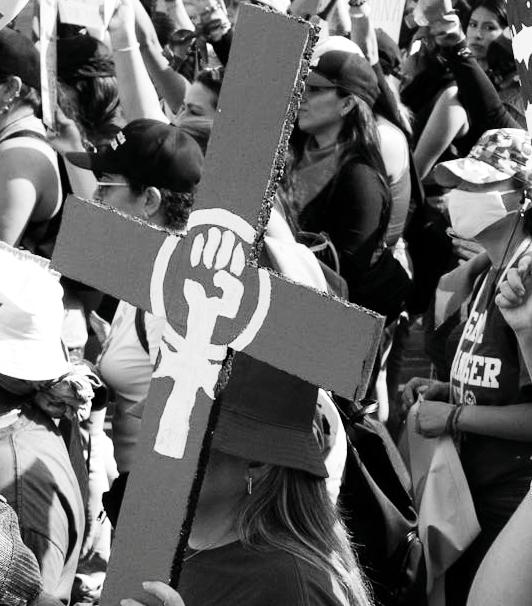
Embedding a feminist approach in conflict transformation is not merely about representation; it is integral to the effectiveness and legitimacy of the work itself.41 Governments, mediators, and donors must identify who is already acting as negotiators, mediators, or protectors, and equip them with legal aid, psychosocial services, secure communications, protection strategies, and long-term peer networks. Moving beyond one-off trainings to durable, gender-informed infrastructures will prevent exclusion and enable women’s contributions to anchor inclusive, resilient, and transformative peace processes. Concrete gender inclusion benchmarks would avoid reproducing exclusion under the guise of urgency, and recognise cumulative impact of violence, care burdens and marginalisation of women in a comprehensive trauma-informed approach to peacebuilding. Without this shift, peacebuilding risks replicating the very injustices it aims to dismantle.

Why it matters
Falsehoods have always circulated, but when weaponized, they suppress dissent, polarize communities, and control narratives.42 Disinformation and misinformation are amplified by digital technologies and generative AI, which make false content faster, cheaper, and harder to trace — giving authoritarian actors unprecedented reach.43
Challenges and insights
Digital platforms serve both activists and regimes. While digital technologies have empowered activists to coordinate leaderless movements, expose human rights abuses and mobilize international support, states deploy it to surveil, censor, discredit opponents, and blur the line between fact and fiction. Marginalized groups are frequently targeted and reframed as threats to justify repression—polarising societies, eroding democratic participation, and entrenching authoritarianism. In Crimea, Russia’s disinformation reshaped global perceptions and local identities. Activists and support actors have shown that countering falsehoods requires advanced tools and cooperation from major platforms, yet commercial incentives often amplify harmful content. Open-source solutions are promising but insufficient without political will and sustained funding.
Way forward
Responses must go beyond reactive measures and fact-checking. Stronger enforcement of regulations, such as the EU’s Digital Services Act and AI Act, is critical, alongside research into AI’s systemic risks to democracy.44 Civil society must proactively build compelling public narratives through art, music, and storytelling, recognising the power of cultural media such as livestreams to reach wider audiences. To truly support those under threat, international actors must avoid over-relying on local resilience and instead, provide secure infrastructure, flexible funding, and global amplification of local voices to counter polarisation. Building resilient narratives is not just defensive, it is central for shifting public perception and reclaiming democratic space from disinformation.45
Artistic activism—or artivism— is vital in contexts of shrinking civic space, rising repression and violent conflict. Artivism transforms resistance into something accessible, emotional, and culturally resonant. It allows communities to process trauma, confront injustice, and imagine alternatives. Artivism disrupts dominant narratives, blends hope with resistance, and strengthens civic engagement, particularly where formal political avenues are blocked and civic space limited.

Across regions, art builds healing, community, and resistance where activists are excluded from formal politics such as repressed and marginalised groups, survivors of violence, refugees, or those in exile. Feminist and decolonial thinkers such as Sylvia Tamale46 stress the power of art and storytelling to decolonize concepts of justice and uplift indigenous knowledge.47 The Artful Activism Toolkit48 highlights how in the face of critical intersectional issues like climate change, racial injustice, or gender inequality, artivism excels at challenging dominant cultural narratives, while incorporating joy and play into activism. In the DRC, Goma Slam combines spoken word and advocacy to give survivors of sexual violence a stage for testimony. In Kenya, the Octopizzo Foundation uses music workshops in refugee camps to shift narratives, while Octopizzo himself uses metaphor and coded language to speak truth to power under censorship. In Thailand the collective, A New Burma connects exiled Myanmar artists with local communities via exhibitions and digital platforms. Yet this strong and powerful work faces barriers of funding and recognition. Structural limitations, including precarious funding, lack of protection, and marginalization of cultural work, constrain the reach and sustainability of artivism.
Supporting artivism must a core component of conflict transformation, not an add-on. Donors, INGOs, and cultural institutions should invest in artist capacity, provide security assistance, and offer flexible funding that enables experimentation. Artivism strengthens inclusivity, healing, resilience and community-rooted narratives, shaping activism and peacebuilding in ways that policy alone cannot. By integrating creativity into strategy, movements can reach broader audiences and embed lasting social change and peace.49
The following section highlights four key areas that emerged as central points at the conference: synergizing nonviolent resistance and peacebuilding approaches; the role of women and gender in conflict transformation; disinformation, misinformation, and narrative building and artistic activism.
The themes selected for this report provide a framework for understanding peacebuilding as a living, evolving practice—one that must continually adapt to new expressions of resistance, inequality, and solidarity, without overlooking the broader issues discussed at CPPC25.
Each theme illustrates the creative, strategic, and relational work required to advance peace, whether through grassroots resistance, gender-sensitive engagement, narrative shaping, or cultural expression. They also speak directly to contemporary challenges: the need to link collective action with institutional processes, center gender justice, counter the weaponization of information, and harness storytelling and art as tools of transformation. These are not abstract concerns; they are urgent realities shaping conflict and peacebuilding across the world.
Support transformative work for justice
Fund justice-oriented initiatives that address root causes of violent conflict, including systemic inequality and oppression, and recognise the different needs, interests, priorities and tactics of all peacebuilding actors before, during and after armed conflicts that lead to just peace. Prioritize community engaged work which sustains conflict resilience and fosters healing in conflict-affected communities, to ensure resources are used effectively to empower transformative, equitable change. Ensure broad and deep engagement of diverse grassroots groups; invest in the long term and support organising communities, strenghten inclusive dialogue, build alternative institutions and cultivate new leaders. Support projects that integrate community-driven trauma-informed practices and solutions, such as peer networks for sharing knowledge and building capacity using art, ritual, and community care as essential components of peace work to uplift entire communities.
Provide flexible funding based on mutual trust
Movements are normative and political and the context they work in can change rapidly. Building trust requires a regular practice of open and honest conversations about alignment; ensure that you have the same understanding of what you want to change and how.
Multi-year, flexible funding enables sustained, adaptive work that aligns with conflict-affected communities’ urgent and changing needs—rather than donor-driven priorities. Simplify processes to enhance flexibility around rapid conflict developments and ensure reliable funding accessibility for affected communities. By reducing reporting and using clear, jargon-free communication, funders can empower organizations to adapt, innovate, and achieve sustainable impact even in difficult times as during overt conflict, while ensuring equitable access to resources. By embedding specific gender-inclusion benchmarks in donor-funded initiatives and movement-led processes, funders can prevent the exclusion of marginalised genders in conflict transformative processes under the guise of urgency. By offering flexible, reliable and gender responsive grants, funders can ensure that movements are able to work towards their own priorities for achieving just peace.
Include digital security in protection strategies
Fund grassroots and regional campaigns advocating for digital policy reforms that protect human rights and counter authoritarian surveillance, censorship and other repressive tactics. These campaigns should focus on creating inclusive, community-driven policies that address digital threats and promote equitable access to secure technology.
Funders who invest in integrating digital security, legal aid and mental health resources into protection strategies and funding frameworks, help build the resilience that sustains peace. At a larger scale, funding should be available for regional campaigns on digital policy reforms, investing in tools and training for digital literacy and cybersecurity for conflict-affected communities; and supporting networks for movements and activist working in conflict-affected areas to share best practices against digital threats.
Provide strategic solidarity to movements
Civil society actors can play a transformative role by reframing their support as strategic solidarity—strengthening movement capacity and amplifying activist voices. This includes protecting and elevating conflict-affected and at-risk activists’ voices, providing strategic resources to organizers before and beyond overt conflict and mass mobilizations to enhance resilience and impact, and investing in impactful narratives towards lasting peace through high-quality content, art, and culture.
Nurture platforms for connection and exchange
Civil society actors can promote collaboration between practitioners from the fields of peacebuilding and nonviolent resistance by 1) creating spaces for strategy sharing and goals alignment, 2) documenting case studies of effective partnerships, such as joint community dialogues, and 3) sharing findings through accessible formats and means to inspire broader impact.
Civil society actors should acknowledge and empower women’s informal mediation as an essential part of peace infrastructure. This involves identifying women mediators, messengers, or negotiators through local partnerships, providing tailored support like funding or training to meet their unique needs, creating trauma-sensitive networks for sharing experiences and skill-building in safe settings, and sharing their successes through reports or events. Such efforts ensure sustainability and promote women’s inclusion in formal and informal peace processes.
Recognising civil resistance as a core element of peacebuilding means working with movements as independent peace actors—not merely stakeholders to consult—by valuing their role as architects of alternative futures. Engage directly with movement leaders to understand their visions and priorities; support their work through resources, policy influence, or platforms to amplify their voices; and foster partnerships that respect their autonomy, empowering movements to create innovative, community-rooted, and sustainable solutions for lasting peace.
Decision makers should focus on building lasting democratic cultures rather than pursuing short-term gains. This means countering authoritarian tendencies through inclusive dialogue, supporting community-led conflict resolution and restorative justice initiatives, and investing in democratic institutions with sustained resources, transparent reforms, and policies that promote accountability and civic participation. Together, these efforts foster resilient and inclusive systems that can uphold peace and justice over the long term.
Decision makers should stay informed of current research and address the unique challenges faced by conflict-affected, often exiled activists. This includes financial insecurity, disinformation, and digital security risks. They should make funding available to initiatives to uncover barriers to access and engagement, consult activists when shaping responsive policies, and strengthen enforcement of frameworks like the EU’s Digital Services Act (DSA) and AI Act to combat disinformation and enhance digital safety. Such approaches help build policies and programmes that protect and empower activists to continue their vital work for conflict transformation.
1 United Nations, Pact for the Future, Global Digital Compact and Declaration on Future Generations: Summit of the Future Outcome Documents (September 2024), https://unsotf.cdn.prismic.io/unsotf/ZxLHvoF3NbkBXurv_2418052EOSGPactfortheFuturerev3_Official.pdf
2 United Nations, A New Agenda for Peace (2023), https://www.un.org/climatesecuritymechanism/sites/default/files/2025-06/our-common-agenda-policy-brief-new-agenda-for-peac e-en_0.pdf
3 United Nations, Pact for the Future, Global Digital Compact and Declaration on Future Generations: Summit of the Future Outcome Documents (September 2024), https://unsotf.cdn.prismic.io/unsotf/ZxLHvoF3NbkBXurv_2418052EOSGPactfortheFuturerev3_Official.pdf
4 ActionAid Denmark, Building People Power: How to Support and Stand with Movements (September 2023), https://issuu.com/globalplatforms/docs/building_people_power_conference_report_march_20
5 Hardy Merriman, Gino Govender, Steward Muhindo, Ola Ibrahim, Hanyea Mohammed, Shreen Saroor, and Véronique Dudouet, Towards a People’s Peace: A Task for Activists, Peacebuilders, and Allies (Washington, DC: ICNC Press, 2025), https://issuu.com/globalplatforms/docs/towards_a_people_s_peace_a_task_for_activists_pe
6 Ibid.
7 Global Social Movement Center (MOVE), Building a Movement Mindset (September 2023), https://issuu.com/globalplatforms/docs/building_a_movement_mindset_web_3?fr=xKAE9_zU1NQ
8 Hardy Merriman, “We Need People Power to Address a World in Peril,” International Center on Nonviolent Conflict, September 2023, accessed September 30, 2025, https://www.nonviolent-conflict.org/we-need-people-power-to-address-a-world-in-peril/
9 Desiree Nilsson, “Anchoring the Peace: Civil Society Actors in Peace Accords and Durable Peace,” International Interactions 38, no. 2 (April 1, 2012): 243–66. https://doi.org/10.1080/03050629.2012.658909
10 Hardy Merriman, Gino Govender, Steward Muhindo, Ola Ibrahim, Hanyea Mohammed, Shreen Saroor, and Véronique Dudouet, Towards a People’s Peace: A Task for Activists, Peacebuilders, and Allies (Washington, DC: ICNC Press, 2025), https://issuu.com/globalplatforms/docs/towards_a_people_s_peace_a_task_for_activists_pe
11 Ibid.
12 Berghof Foundation, ed., Berghof Glossary on Conflict Transformation (2012), https://berghof-foundation.org/files/publications/berghof_glossary_2012_03_conflict_transformation.pdf
13 Ibid.
14 Oliver Kaplan, “Nudging Armed Groups: How Civilians Transmit Norms of Protection,” Stability: International Journal of Security & Development 2, no. 3 (2013): Article 62, https://doi.org/10.5334/sta.cw
15 Véronique Dudouet, “Lessons for the International Community,” in Hardy Merriman et al., Towards a People’s Peace: A Task for Activists, Peacebuilders, and Allies (Washington, DC: ICNC Press, 2025).
16 LUCHA, “A Powerful Way and Choice to Change the DRC,” LUCHA, n.d., https://www.luchacongo.org/lucha-a-powerful-way-and-choice-to-change-the-drc/
17 Erica Chenoweth and Maria J. Stephan, Why Civil Resistance Works: The Strategic Logic of Nonviolent Conflict (New York: Columbia University Press, 2011), https://www.jstor.org/stable/10.7312/chen15682
18 Chandra Lekha Sriram et al., Transitional Justice and Peacebuilding on the Ground: Victims and Ex-Combatants (2009).
19 Luke Abbs and Marina G. Petrova, “How—and When—People Power Can Advance Peace Amid Civil War,” United States Institute of Peace, July 15, 2021, https://www.usip.org/publications/2021/07/how-and-when-people-power-can-advance-peace-amid-civil-war
20 “Digital Propaganda and the Steering of Mass Narratives Have Shaped the War in Sudan,” Africa at LSE blog, June 16, 2025, https://blogs.lse.ac.uk/africaatlse/2025/06/16/digital-propaganda-and-the-steering-of-mass-narratives-have-shaped-the-war-in-su dan/
21 A New Burma, A New Burma. [Incomplete reference].
22 IWGIA, “The End of the Illusion for Indigenous Peoples in Colombia,” n.d., https://iwgia.org/en/colombia/3909-the-end-of-the-illusion-for-indigenous-peoples-in-colombia.html
23 ACCORD, “The Potential and Limits of Peace Agreements,” Conflict Trends, February 11, 2019, https://www.accord.org.za/conflict-trends/the-potential-and-limits-of-peace-agreements/
24 Hardy Merriman, Gino Govender, Steward Muhindo, Ola Ibrahim, Hanyea Mohammed, Shreen Saroor, and Véronique Dudouet, Towards a People’s Peace: A Task for Activists, Peacebuilders, and Allies (Washington, DC: ICNC Press, 2025), https://issuu.com/globalplatforms/docs/towards_a_people_s_peace_a_task_for_activists_pe
25 JusticeInfo, “Colombia: ‘Hall of Never Again’ Sends Out Distress Signals,” https://www.justiceinfo.net/en/45357-colombia-hall-of-never-again-sends-out-distress-signals.html
26 Inter Pares, “Coordinadora Nacional de Viudas de Guatemala (CONAVIGUA),” https://interpares.ca/content/coordinadora-nacional-de-viudas-de-guatemala-conavigua
27 Galvanek, J. & Shilue, J. (2021) Working tirelessly for peace and equality: Civil resistance and peacebuilding in Liberia. ICNC Press. https://www.nonviolent-conflict.org/wp-content/uploads/2021/05/Working-Tirelessly-for-Peace-and-Equality-Liberia-SR.pdf
28 Inter Pares, “Coordinadora Nacional de Viudas de Guatemala (CONAVIGUA),” https://interpares.ca/content/coordinadora-nacional-de-viudas-de-guatemala-conavigua
29 Ibid.
30 BOSFAM, “Home,” BOSFAM, https://bosfam.ba/en/home-eng/
31 Abahlali, Abahlali BaseMjondolo, https://abahlali.org
32 US-Colombia Advisory Group, with Isabel Chiriboga and Geoff Ramsey, A Path Forward for Colombia’s 2016 Peace Accord and Lasting Security (Washington, DC: Atlantic Council, 2024), https://www.atlanticcouncil.org/in-depth-research-reports/report/a-path-forward-for-colombias-2016-peace-accord-and-lasting-se curity/
33 Dorina Bekoe and Christina Parajon, “Women’s Role in Liberia’s Reconstruction,” United States Institute of Peace, May 1, 2007, https://www.usip.org/publications/2007/05/womens-role-liberias-reconstruction
34 WACSI, Africa’s Youth-Led Movements: A Catalyst for People-Driven Change (2023), https://wacsi.org/africas-youth-led-movements-a-catalyst-for-people-driven-change/
35 Maria Campuzano Perez, “Latinas for Climate: Meet the Young Latinas Championing Climate Justice,” Women’s Resilience to Disasters Knowledge Hub, UN Women, August 11, 2023, https://wrd.unwomen.org/index.php/explore/insights/latinas-climate-meet-young-latinas-championing-climate-justice
36 Cleide Carvalho, “Movimento de sem-teto reúne 40 mil famílias,” O Globo, October 18, 2013, https://oglobo.globo.com/politica/movimento-de-sem-teto-reune-40-mil-familias-10416141#ixzz2toZLL63Y
37 CISPES, “Wake Bukele Election: Feminist Movement Vows to Continue Fight for Structural Change,” https://cispes.org/article/wake-bukele-election-feminist-movement-vows-continue-fight-structural-change?language=es&
38 US-Colombia Advisory Group, A Path Forward for Colombia’s 2016 Peace Accord and Lasting Security, https://www.atlanticcouncil.org/in-depth-research-reports/report/a-path-forward-for-colombias-2016-peace-accord-and-lasting-se curity/
39 United Nations Development Programme, Parliaments as Partners Supporting the Women, Peace and Security Agenda: A Global Handbook (2019), https://www.undp.org/sites/g/files/zskgke326/files/publications/Parliament_as_partners_supporting_the_Women_Peace_and_Sec urity_Agenda_-_A_Global_Handbook.pdf
40 Conciliation Resources, “Women Building Peace,” Women and Peacebuilding Insight, https://www.c-r.org/accord/women-and-peacebuilding-insight/women-building-peace
41 International Center on Nonviolent Conflict (ICNC), “Women & Civil Resistance,” https://www.nonviolent-conflict.org/resource/women-civil-resistance
42 Eliška Pírková, Daniel Leufer, and Méabh Maguire, “Generative AI and Election Disinformation: Much Ado About Nothing?” Access Now, July 4, 2024, https://www.accessnow.org/generative-ai-election-disinformation/
43 Lilly Irani, “Exporter India: Deepfake Trolls,” Rest of World, March 12, 2024, https://restofworld.org/2024/exporter-india-deepfake-trolls/
44 Eliška Pírková, Daniel Leufer, and Méabh Maguire, “Generative AI and Election Disinformation: Much Ado About Nothing?” Access Now, July 4, 2024, https://www.accessnow.org/generative-ai-election-disinformation/
45 Ibid.
46 Sylvia Tamale, Decolonization and Afro-Feminism (Ottawa: Daraja Press, 2020), https://pueaa.unam.mx/uploads/materials/Tamale-S.-2020-1.pdf
47 ActionAid, Artful Activism Toolkit (February 2021), https://actionaid.org/sites/default/files/publications/Artful%20Activism%20Toolkit.pdf
48 Iris M. Young, “Activist Challenges to Deliberative Democracy,” Political Theory 29, no. 5 (2001): 670–90.
49 Susan Finley, “Arts-Based Inquiry: Performing Revolutionary Pedagogy,” in The SAGE Handbook of Qualitative Research, 3rd ed., ed. Norman K. Denzin and Yvonna S. Lincoln (Thousand Oaks, CA: SAGE Publications, 2005), 681–94.