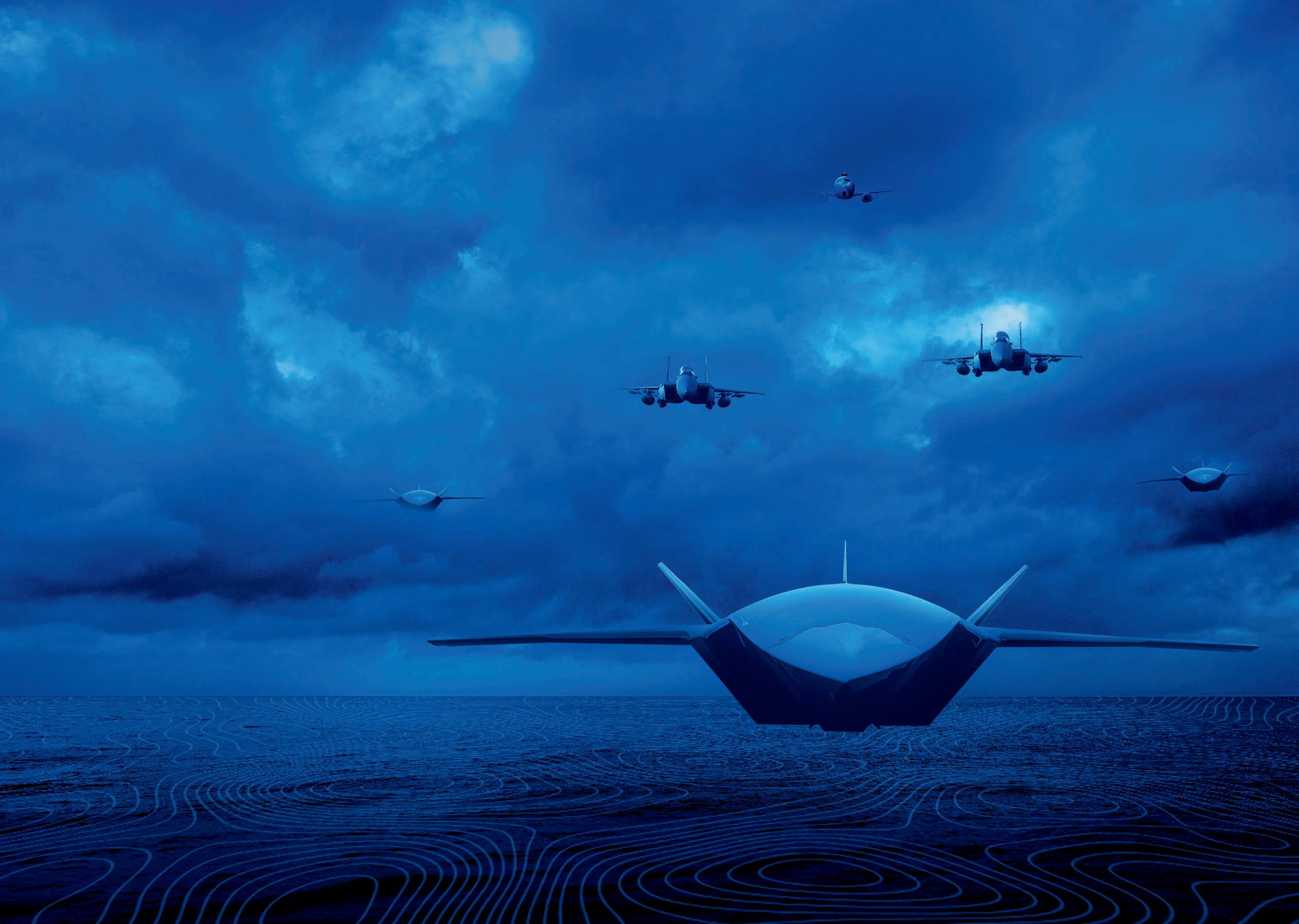
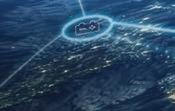
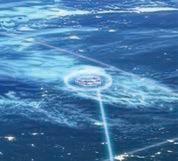
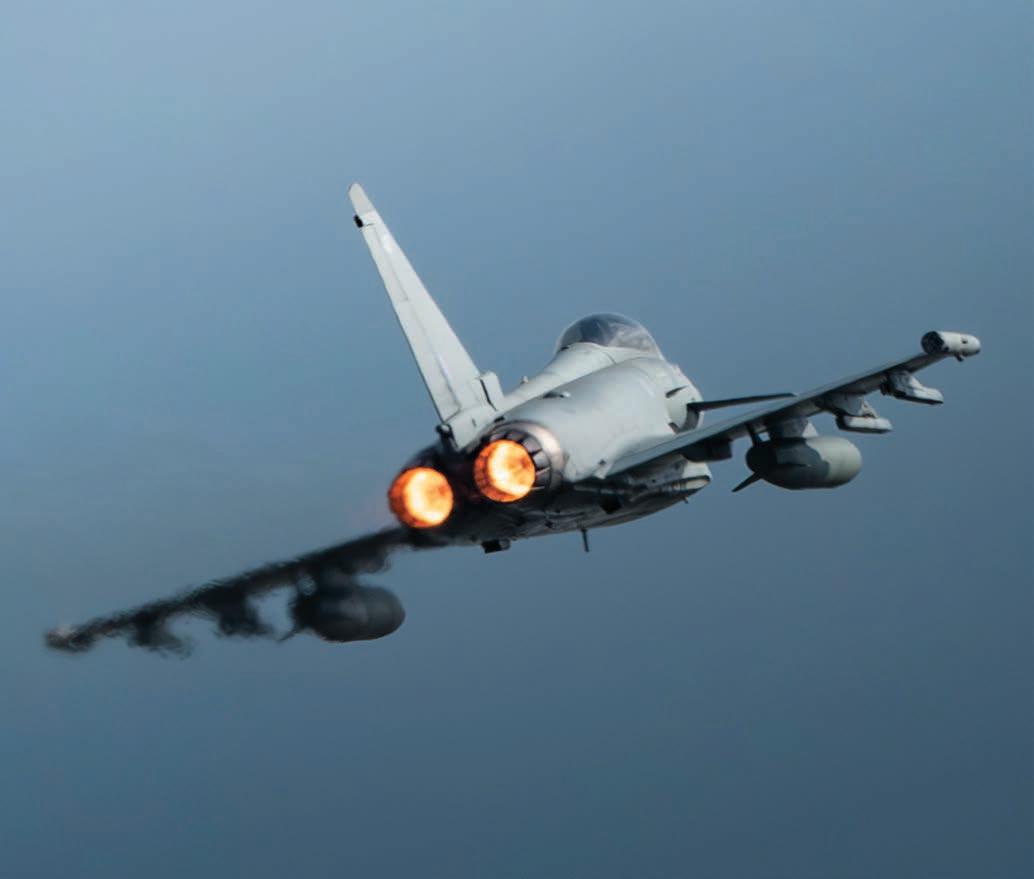
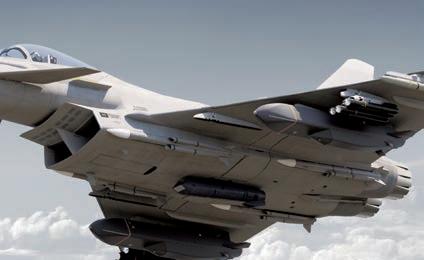
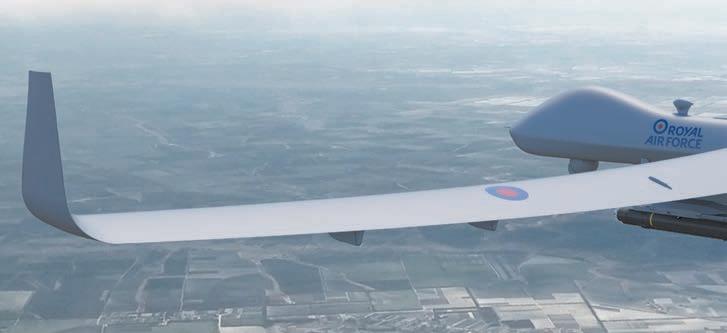
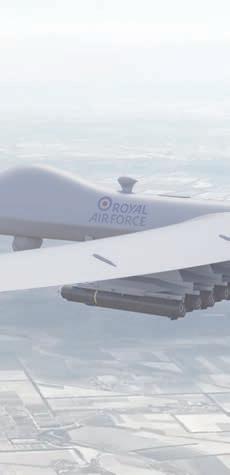
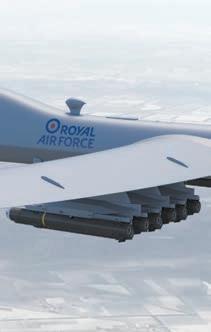
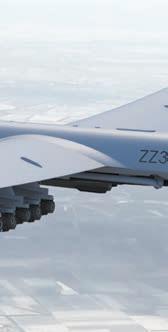
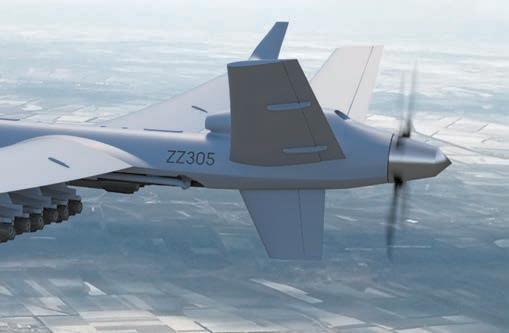
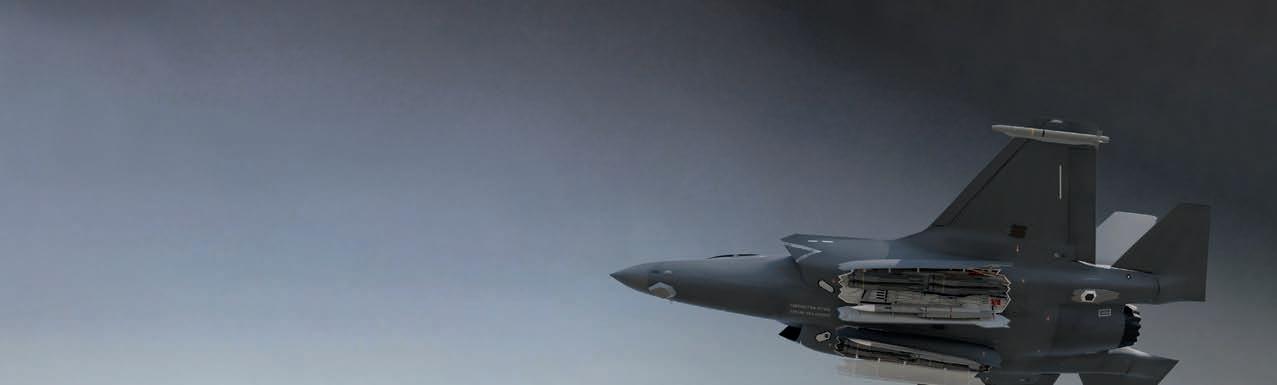
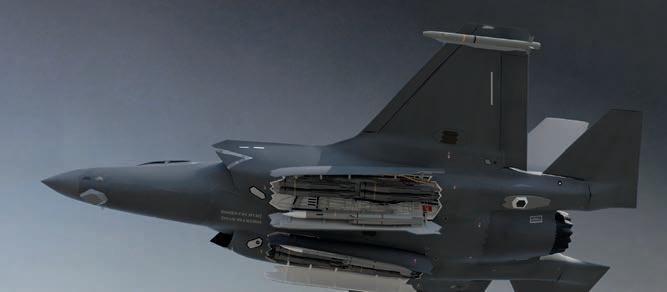
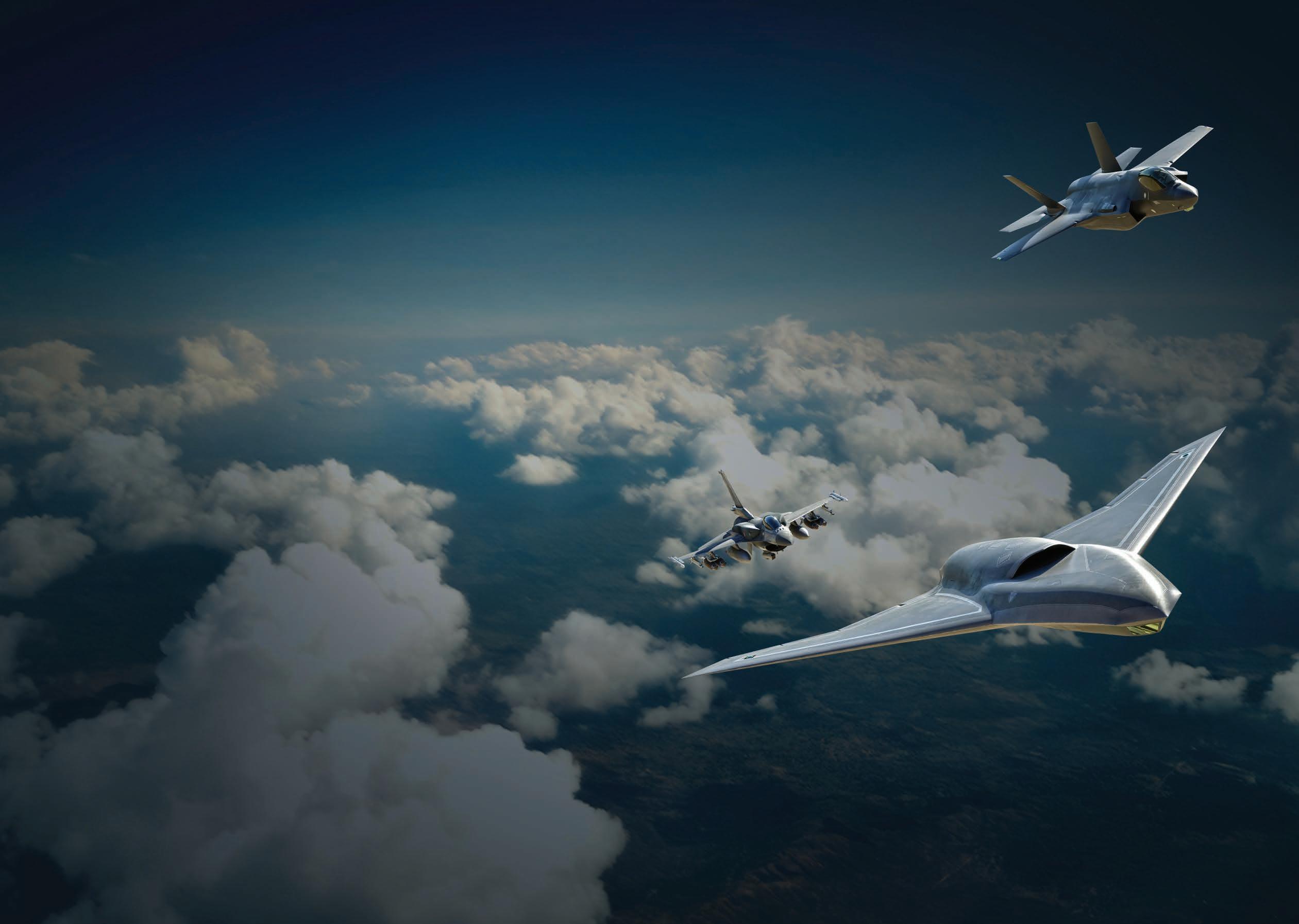
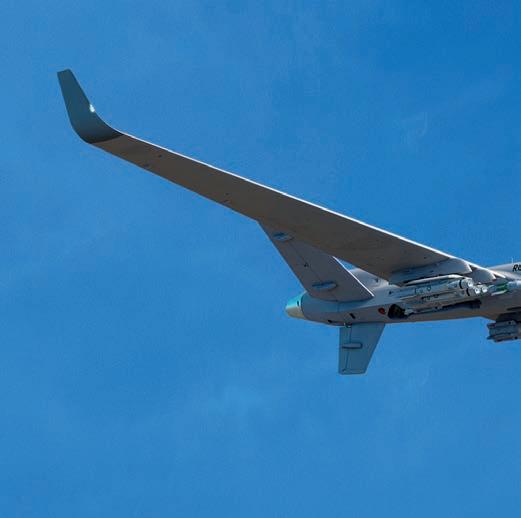
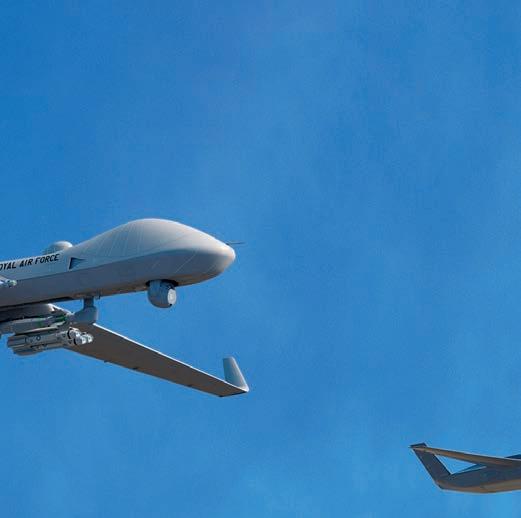
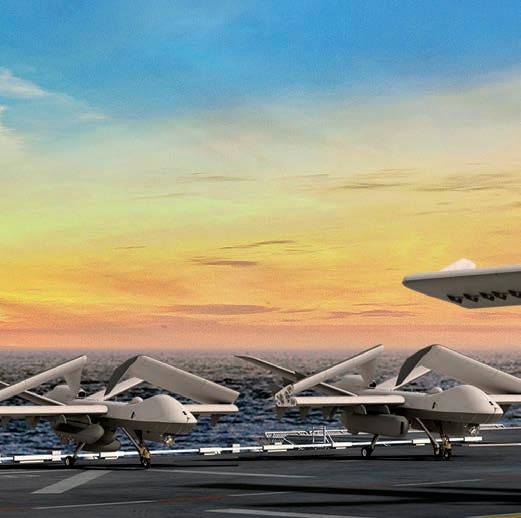
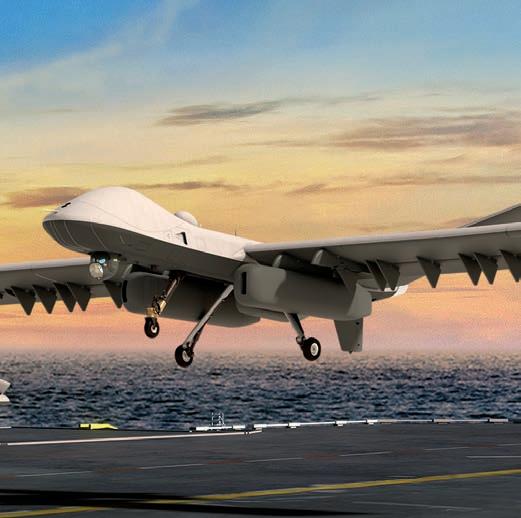
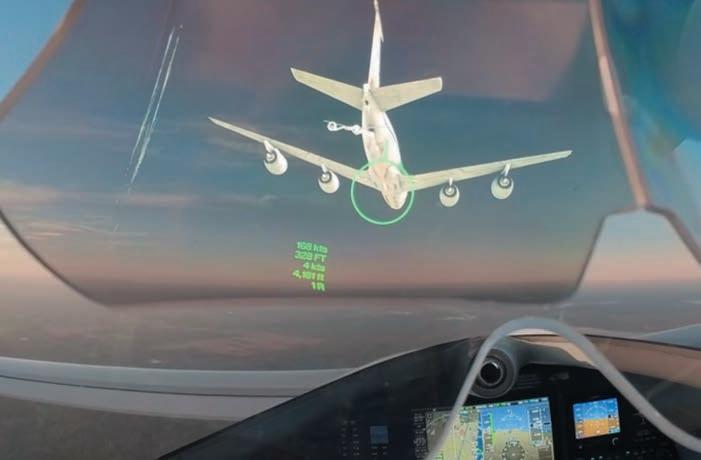
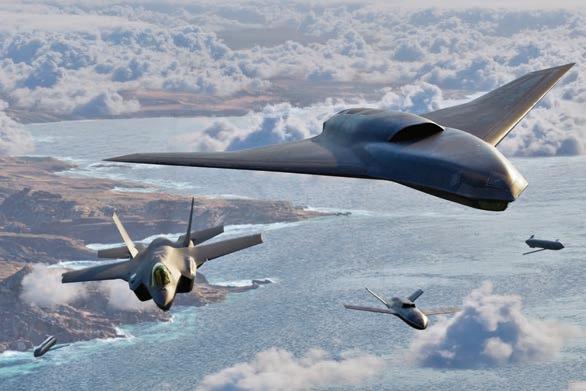
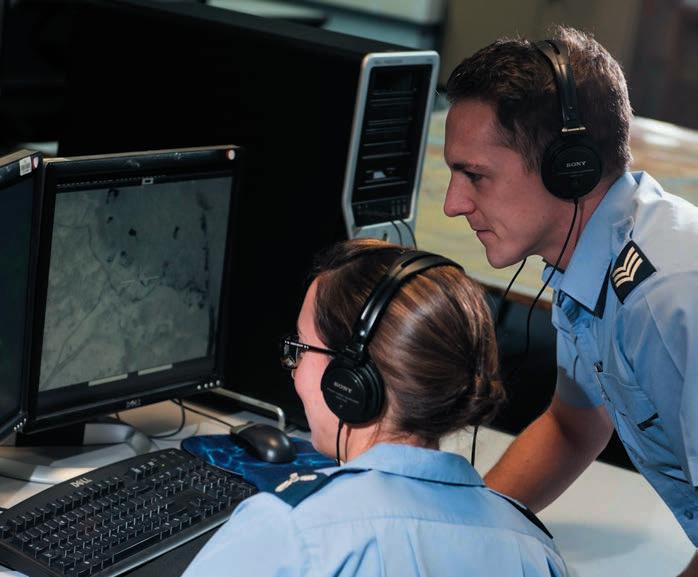
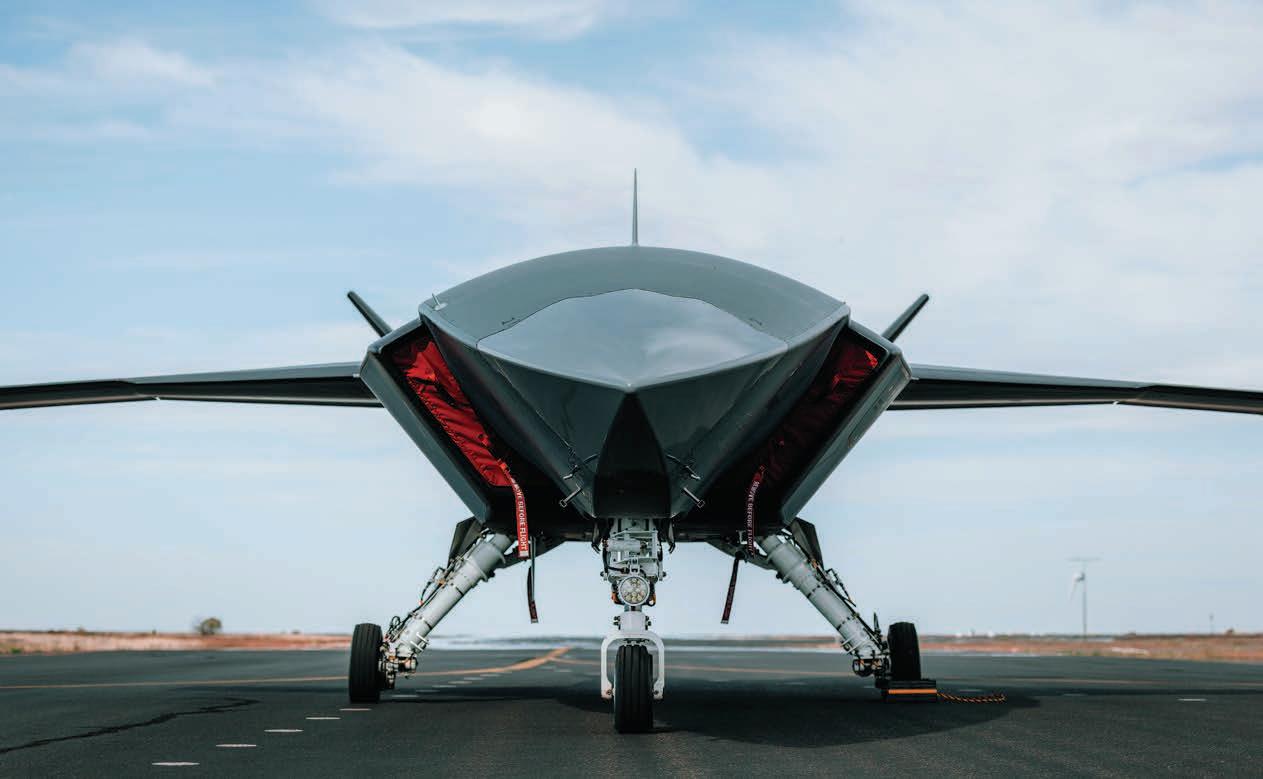
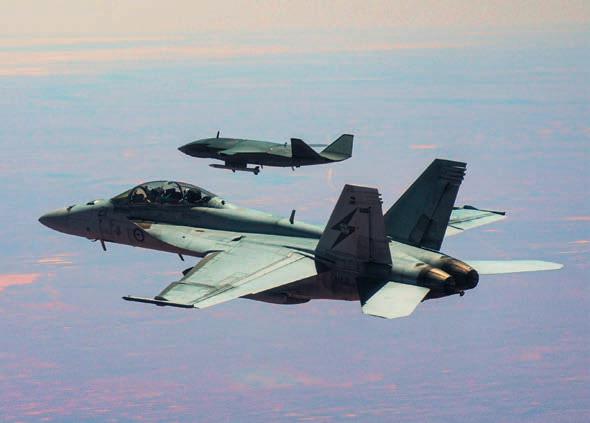
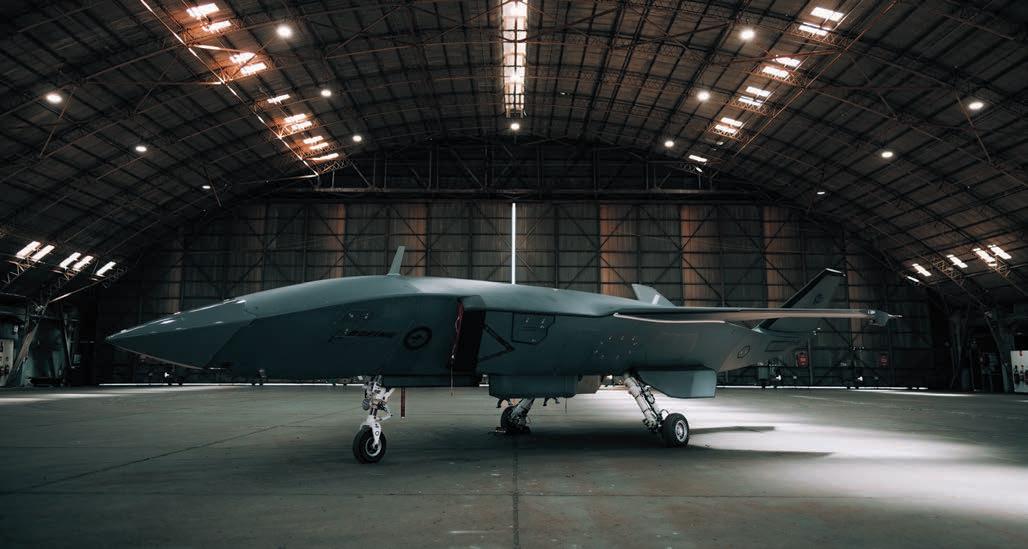
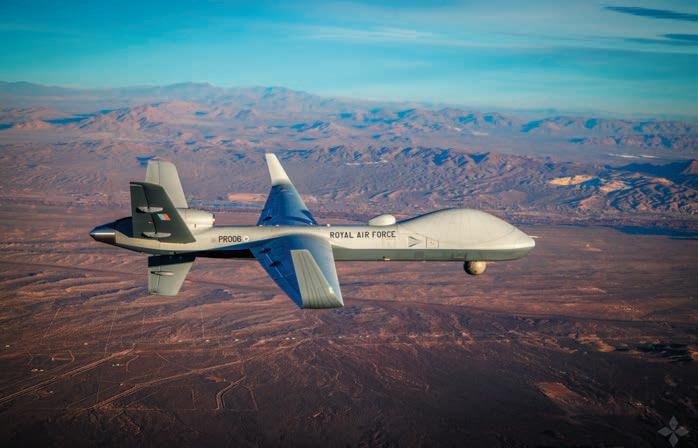
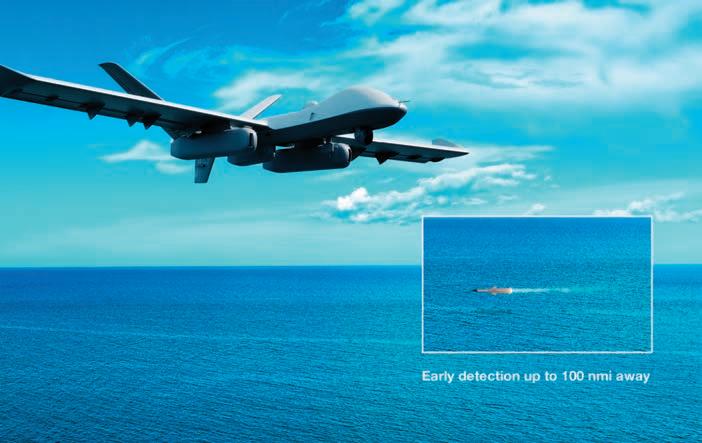
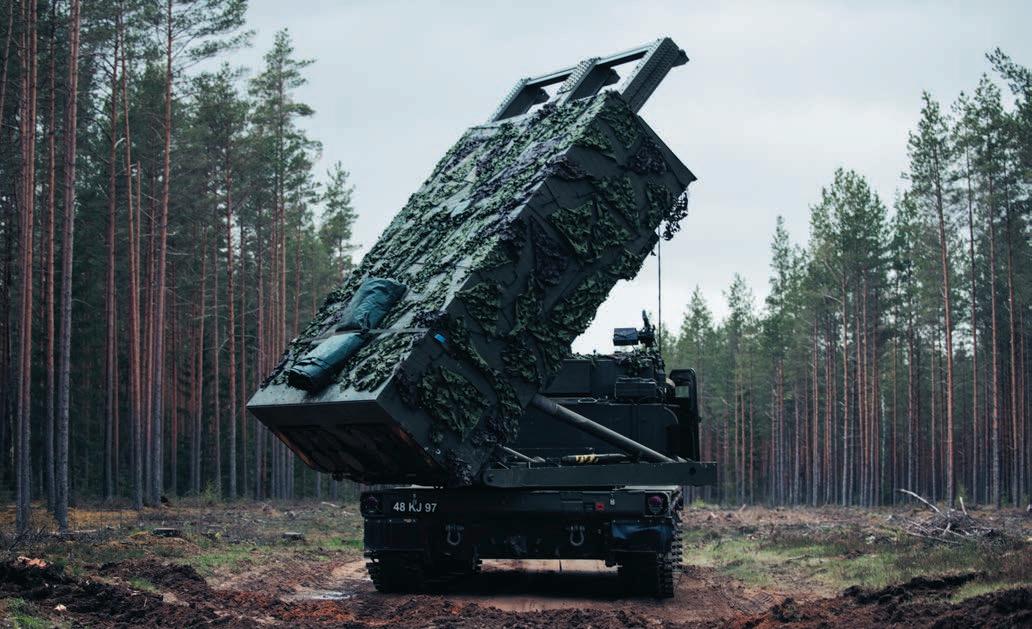
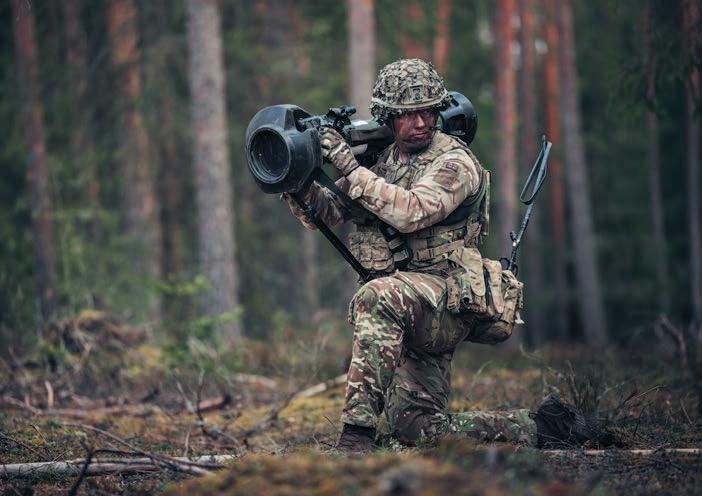
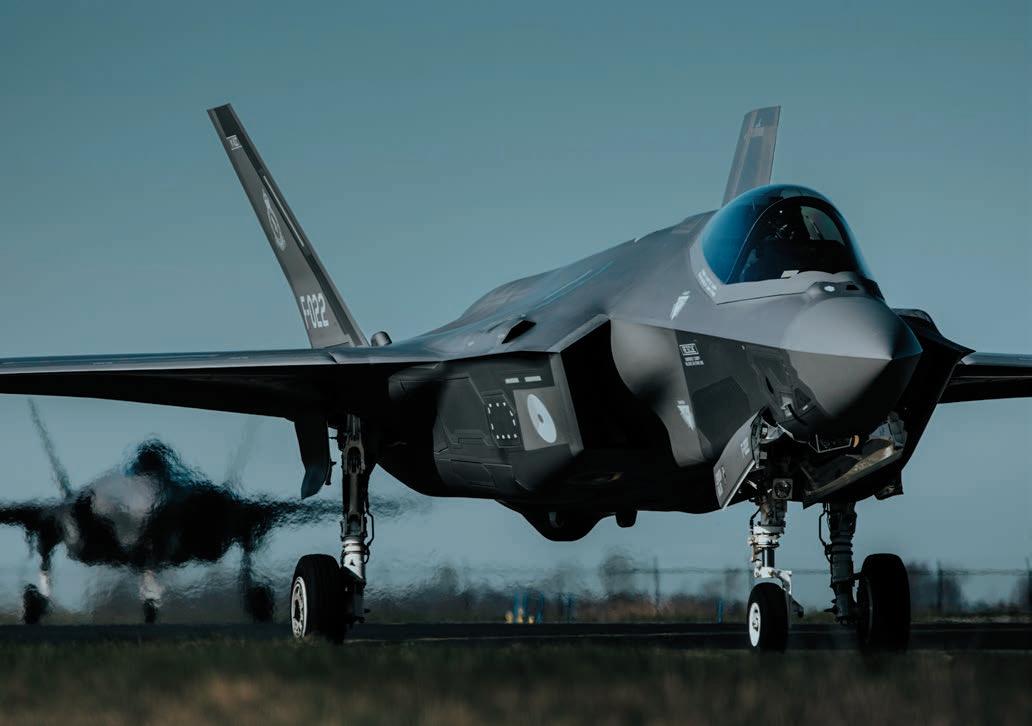
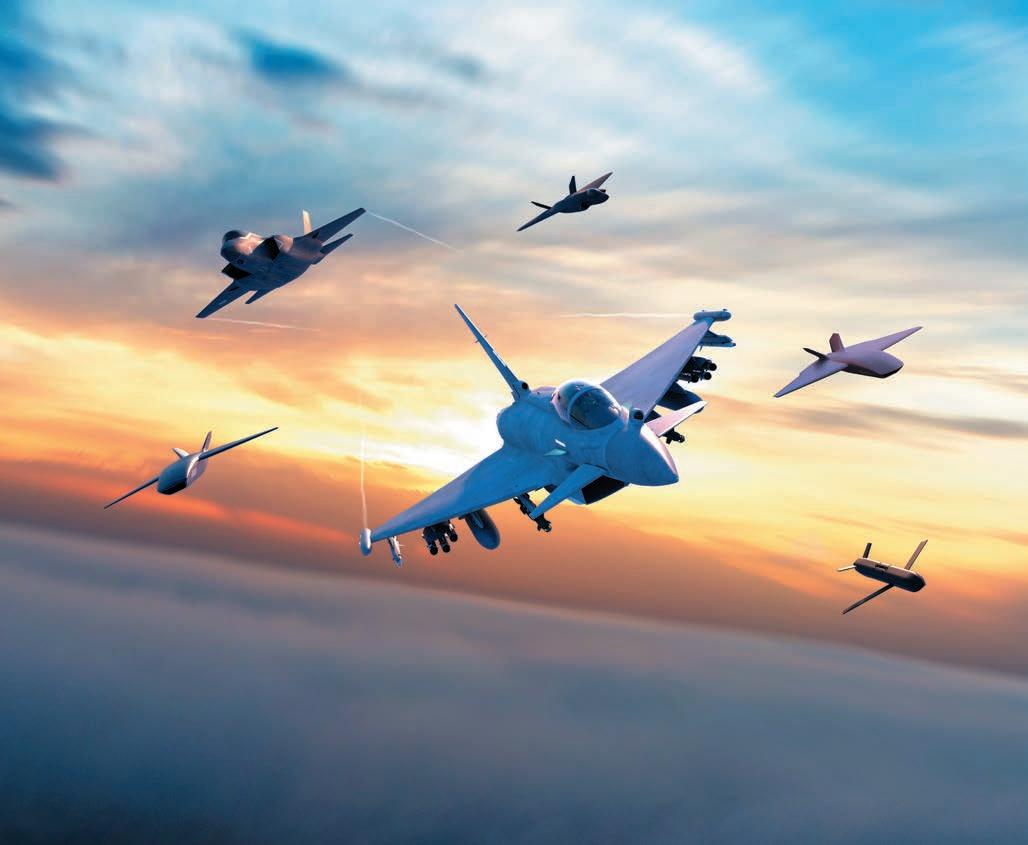
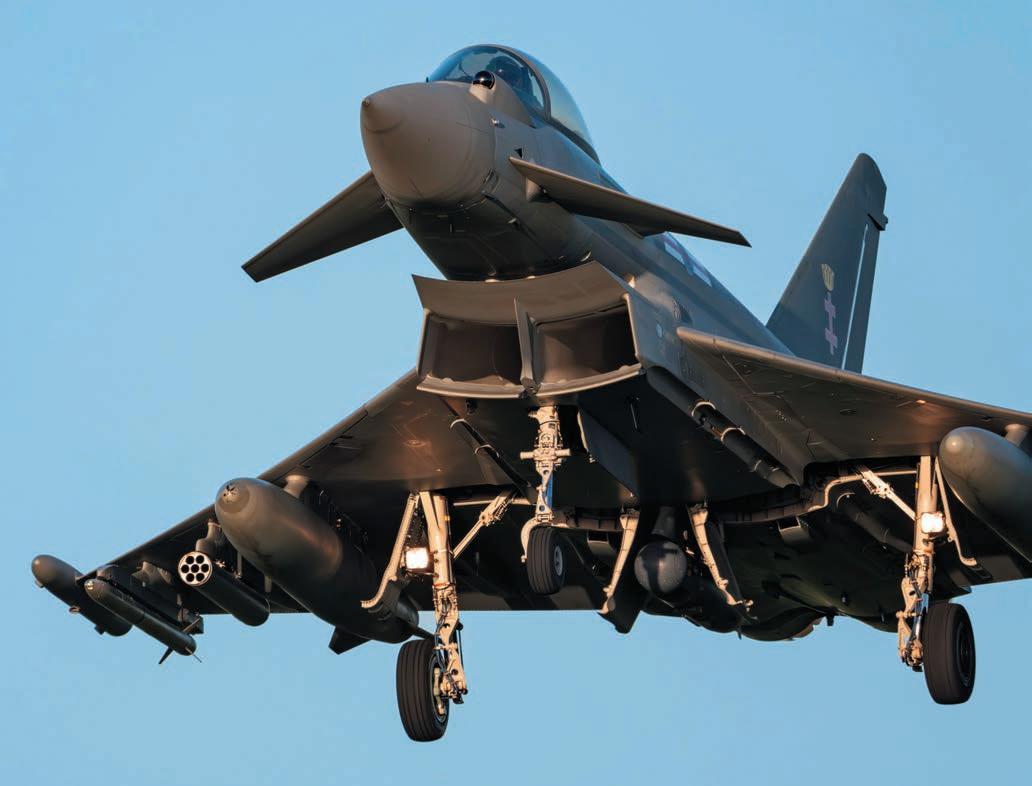
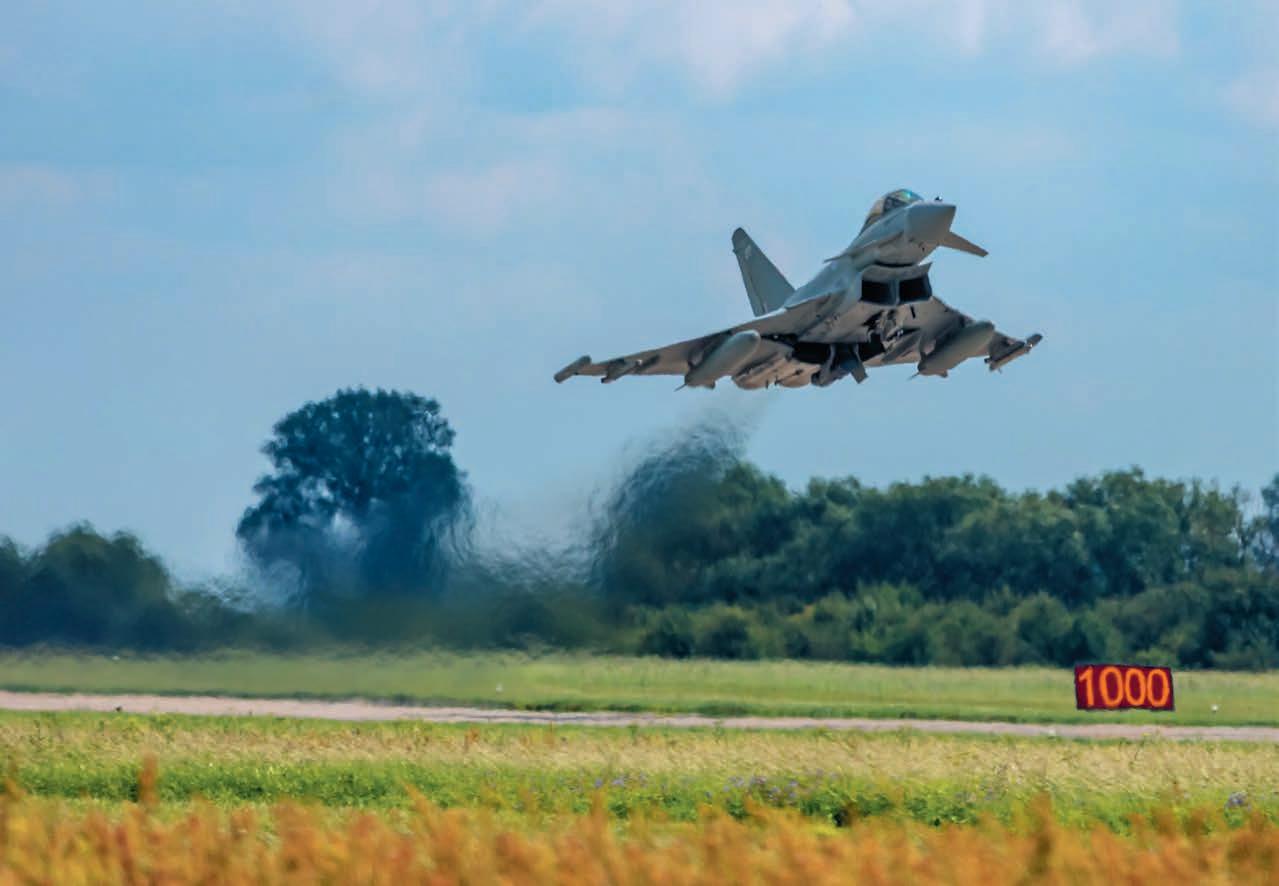
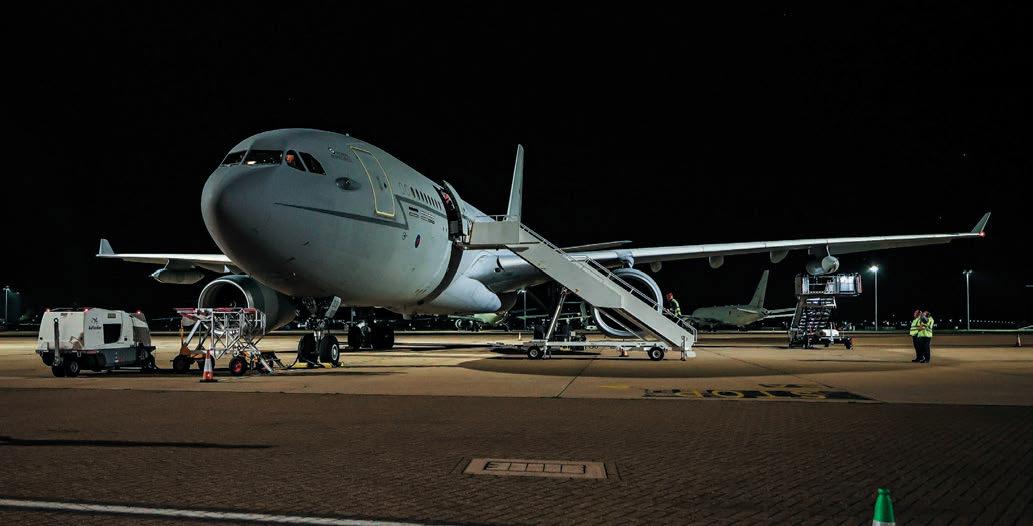
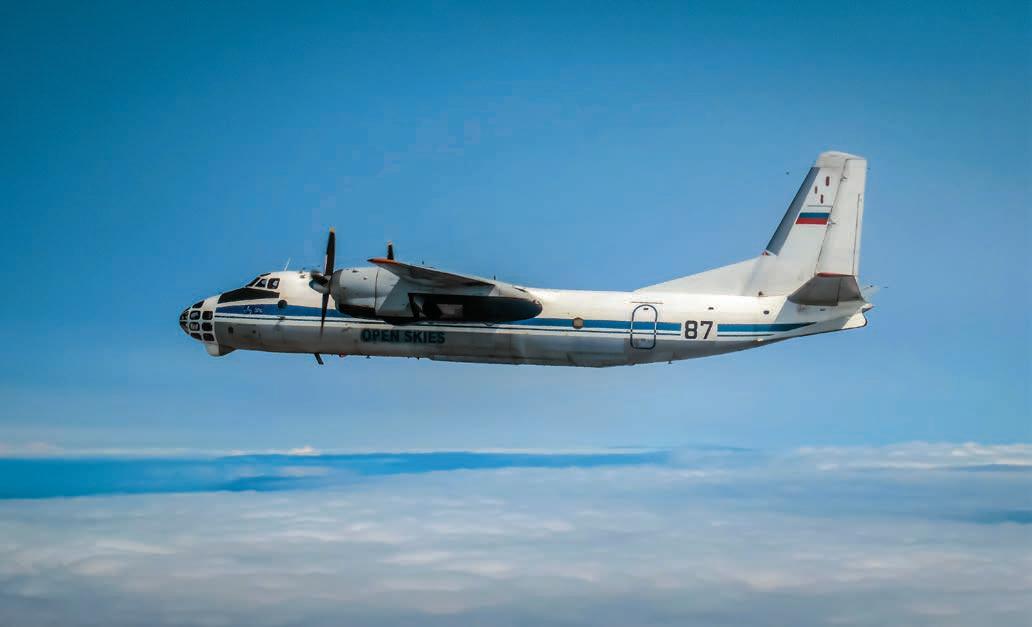
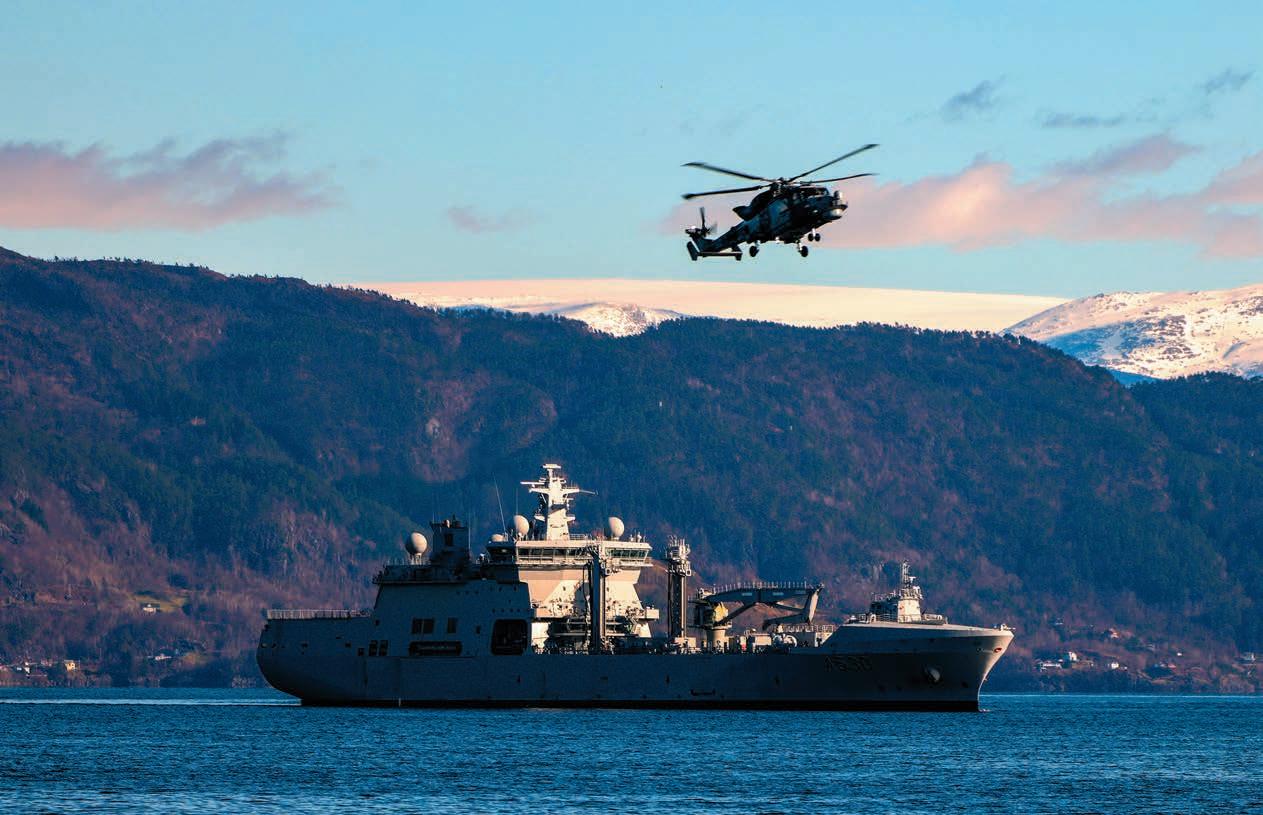
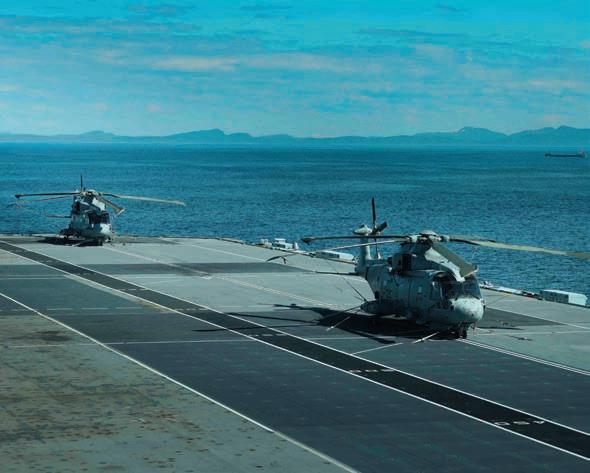
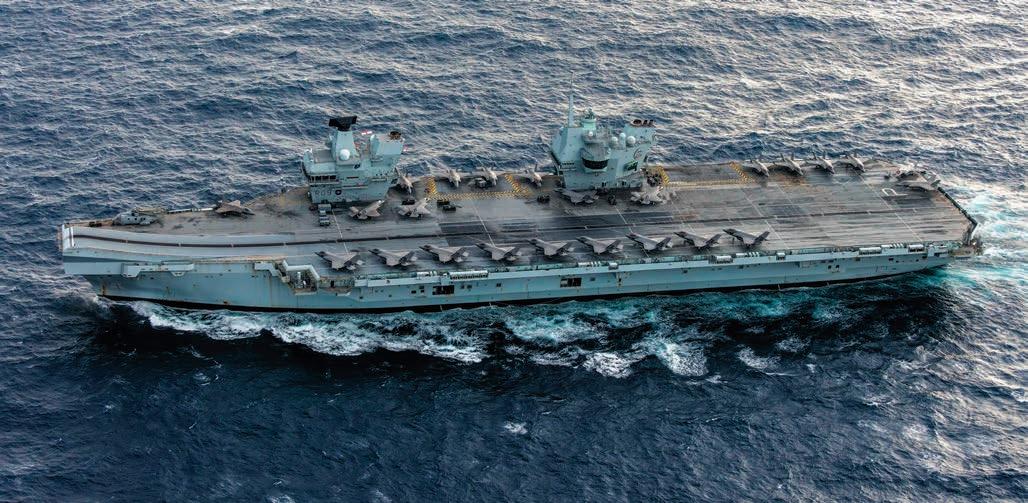
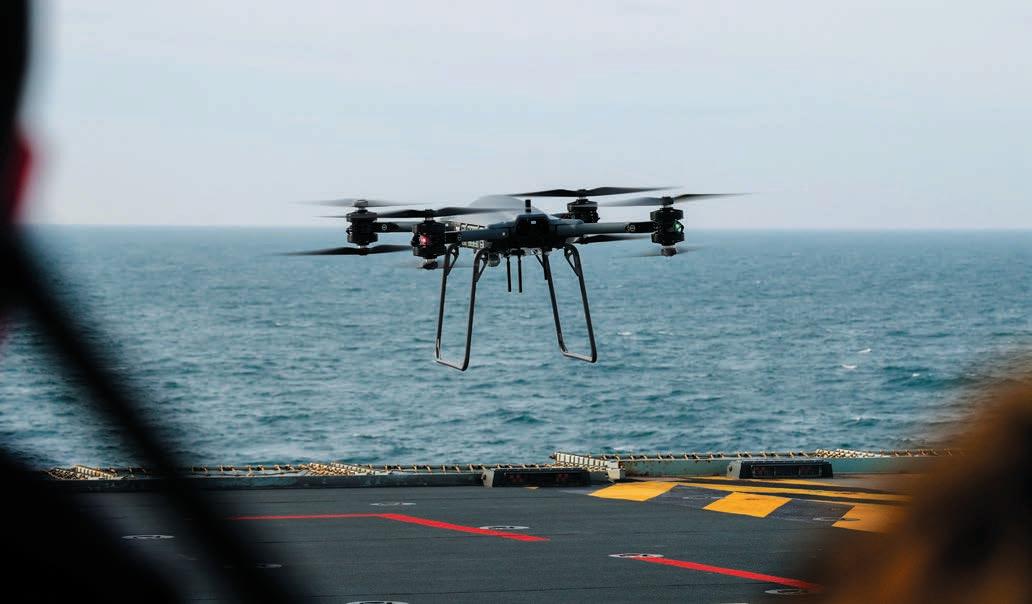
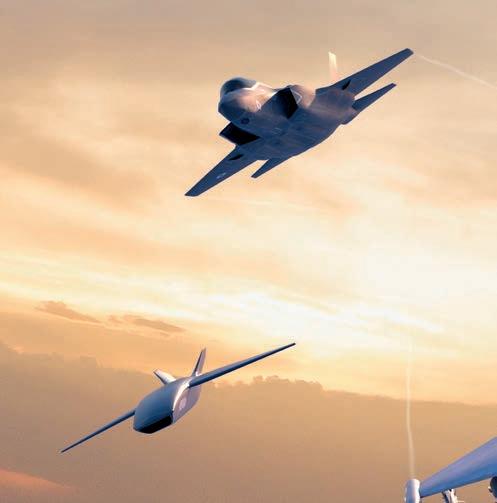
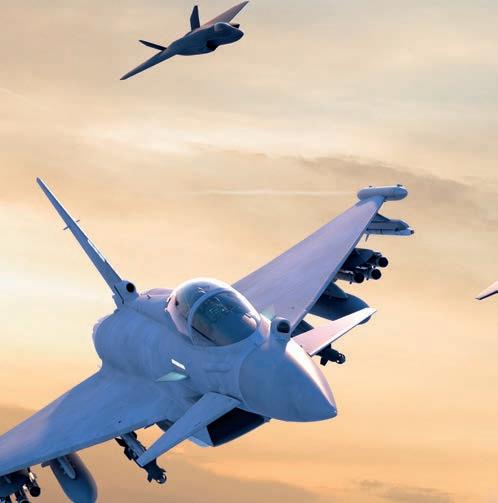
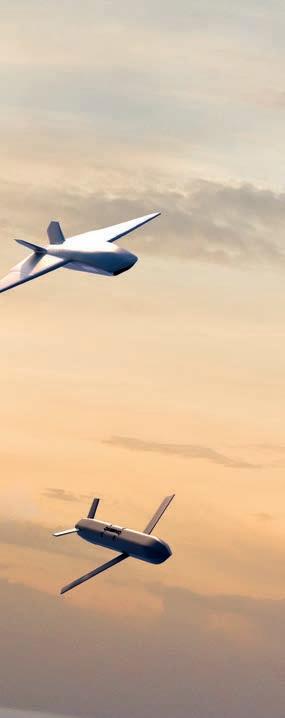
Boeing Defence Australia’s MQ-28 Ghost Bat delivers the most advanced Manned-Unmanned Teaming platform, today. Built with an open architecture to enable a family-of-systems approach, the aircraft supports cross-industry collaboration to advance customer capabilities in every scenario.
boeing.com/mq-28
Air
Cecil
and Terry Makewell,
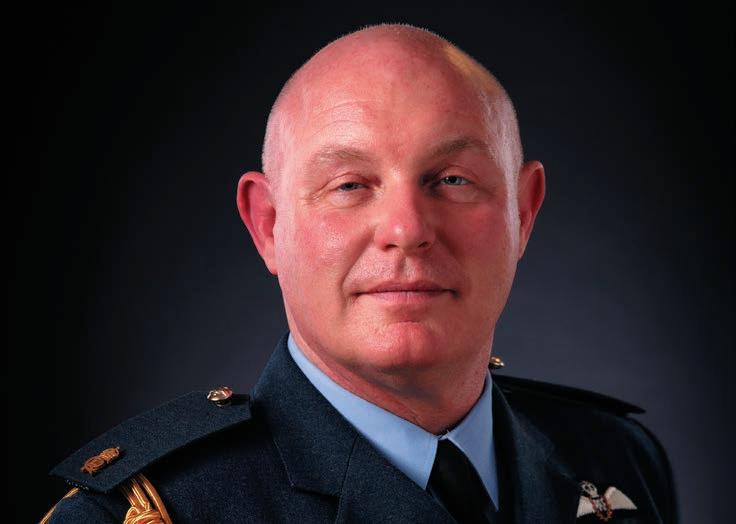
Air Vice-Marshal Ian Sharrocks, Air O cer Commanding No 22 Group, gives an insight into the future of RAF fast-jet training
Air Commodore Nick Lowe, Head Capability
Delivery Combat Air, explains why the decision to acquire 12 F-35A Lightning fast jets was a deliberate strategic shift
Chauncey McIntosh, Lockheed Martin F-35 Vice President and General Manager, outlines how the F-35 is advancing Allied air power through partnership and innovation
Air Vice-Marshal Mark Ridgway, the RAF’s Director Defence Futures, highlights how air and space power will evolve over the next 20 years
Air Marshal (Retd) Greg Bagwell CB CBE FRAeS, President of the Air & Space Power Association, calls for a reinvigoration of the ideals, concepts and vision that are the bedrock of collective action and resolve
48 Nuclear weapons and the moral component
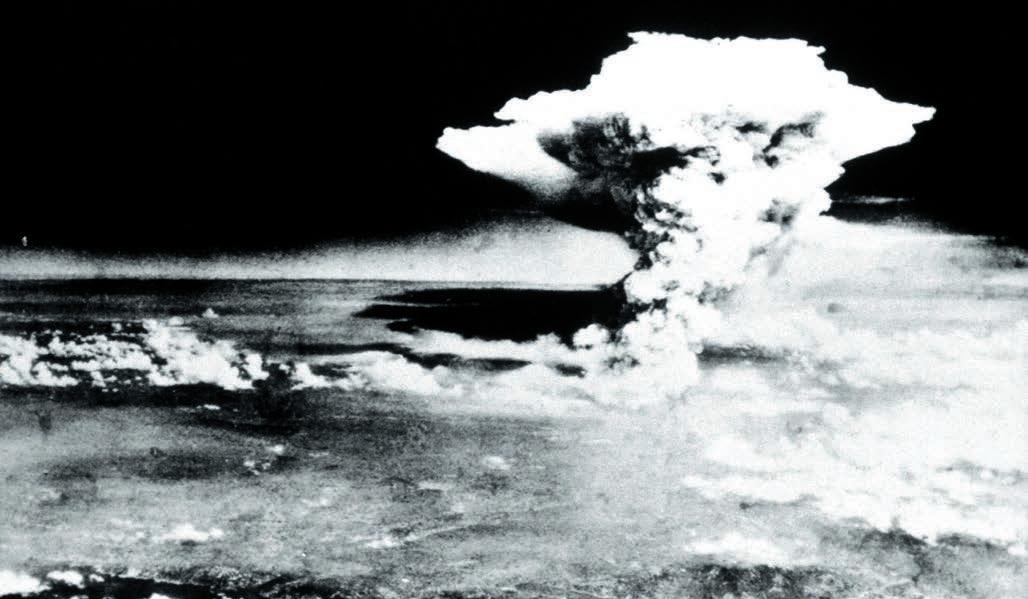
Air Vice-Marshal Mark Phelps, the RAF’s Director of Legal Services, explains the legal, moral and ethical challenges of the reintroduction of an airborne nuclear capability and how the RAF should address them
50 A di erent kind of air attack
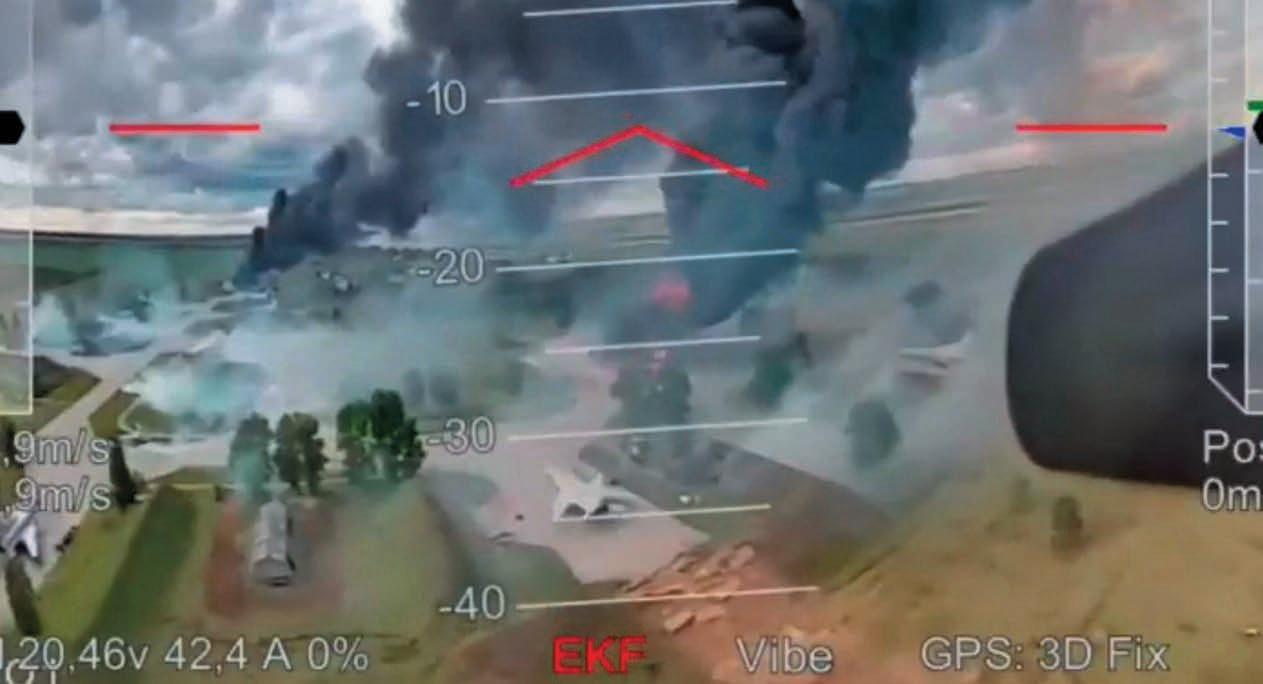
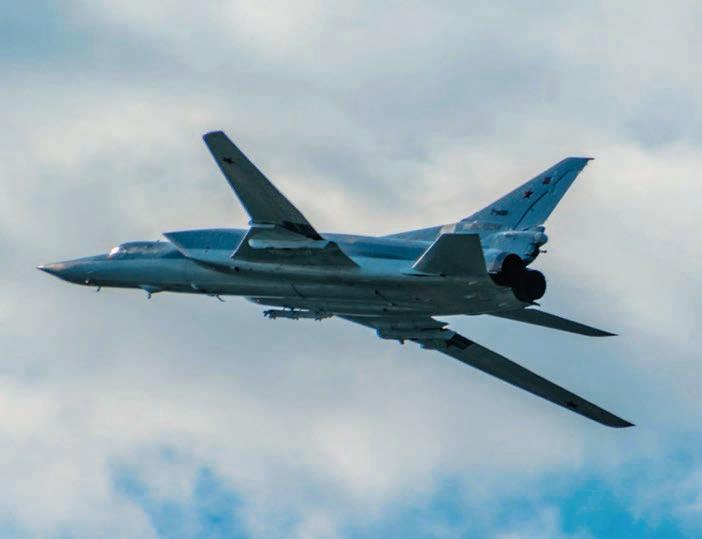
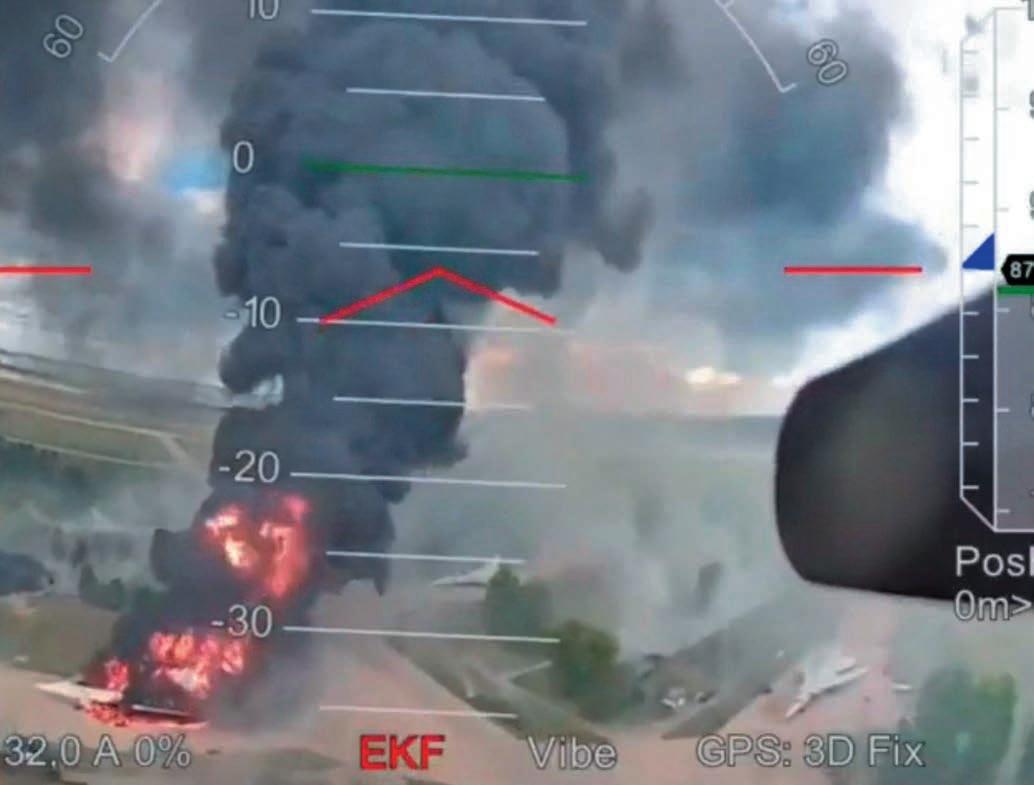
The RAF’s Air and Space Commander, Air Marshal Allan Marshall, o ers an intriguing explanation of Ukraine’s Operation Spiderweb, which targeted Russian strategic bomber aircraft with drones
53 Air manoeuvre reimagined
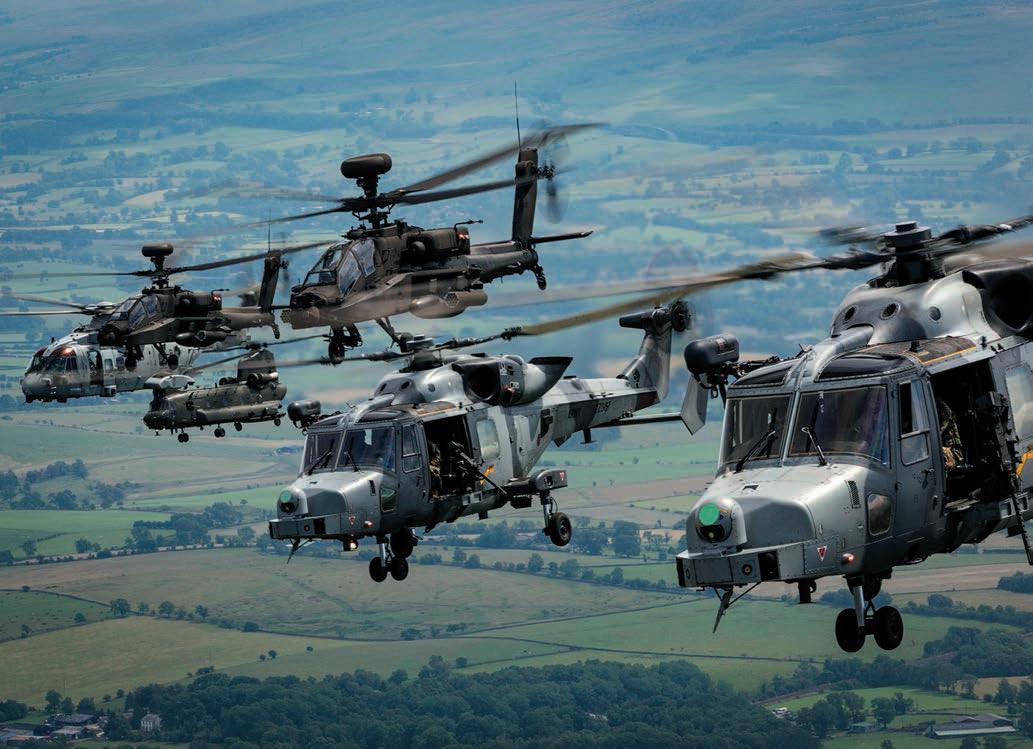
Brigadier Richard Ball, Chief of Sta of the Joint Aviation Command (JAC), explores the evolution of aviation on the modern battle eld and the growing complexity of the ‘Near Surface’ battlespace
56 Allied by Design
General B. Chance Saltzman, Chief of Space Operations, United States Space Force, underlines the need for a collaborative international approach to safeguard the space domain
58 Securing the future battlespace
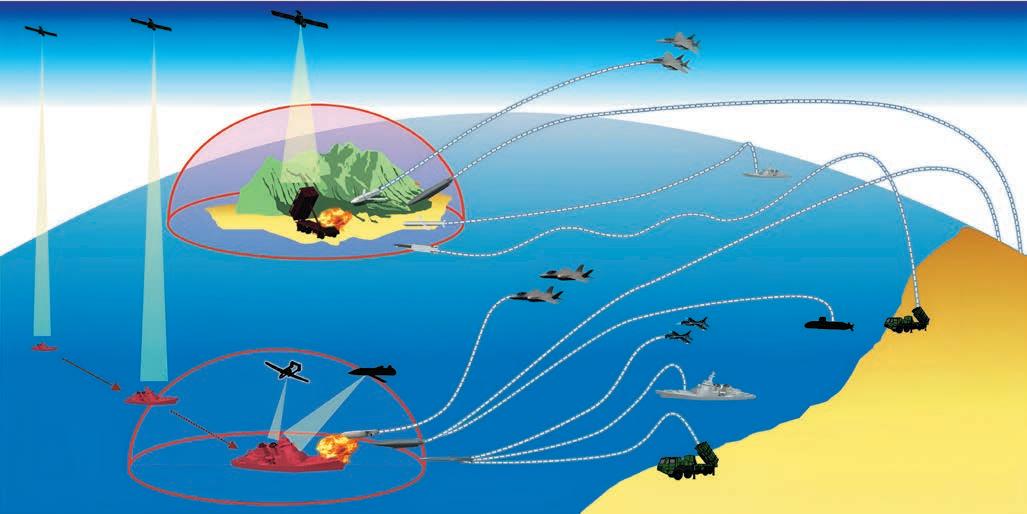
Air Vice-Marshal Andrew Martin, Director Integrated Air and Missile Defence (IAMD), outlines why the UK’s IAMD solution must be multi-domain, layered and a multinational e ort
62 Ensuring the Whole Force is agile, integrated and ready
Air Vice-Marshal Jo Lincoln, Director Reserves and Commandant General of the Royal Auxiliary Air Force, on the bene ts of placing RAF Reservists at the heart of a deliberately designed Whole Force
65
66
72
MQ-28 Ghost Bat
Amy List, Vice President and Managing Director of Boeing Defence Australia, o ers an update on the MQ-28 Ghost Bat, which seeks to bring a disruptive advantage to crewed and uncrewed missions
74
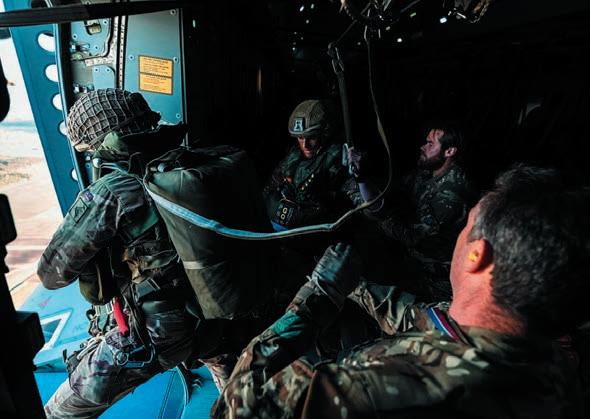
The return of UK air manoeuvre
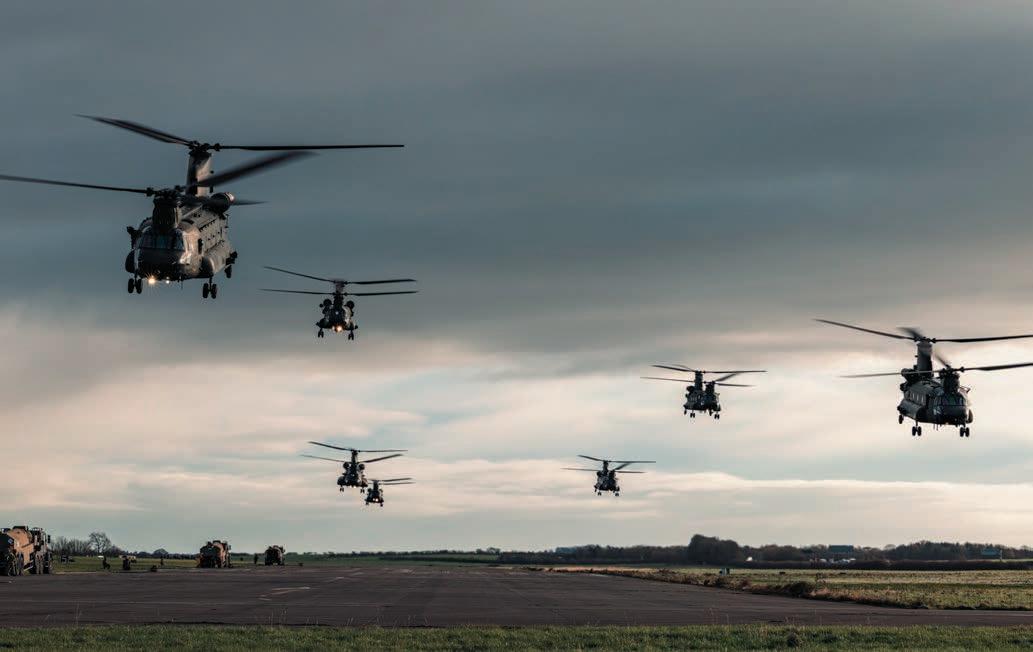
Air Commodore Dan James, Air Mobility Force Commander, explains how Exercise Swift Response 25 gave new life to a somewhat neglected art of warfare – air manoeuvre at scale – and highlights the role of the newly established Joint Airborne Task Force
69
Powering the defence industry through partnership
Kevin Craven, Chief Executive O cer of ADS, says that recent international partnerships must mark the start of deeper collaboration
Enduring bedrocks in a turbulent world
General Ken Wilsbach, Chief of Sta , United States Air Force, explains why air and space superiority and interoperability are non-negotiable
Building the E-7A Wedgetail community
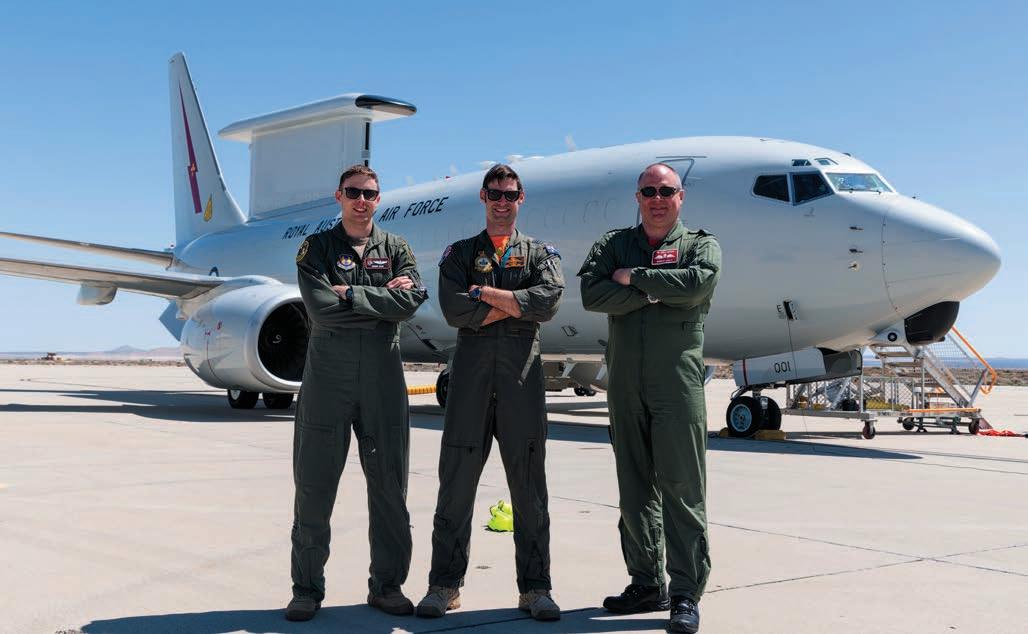
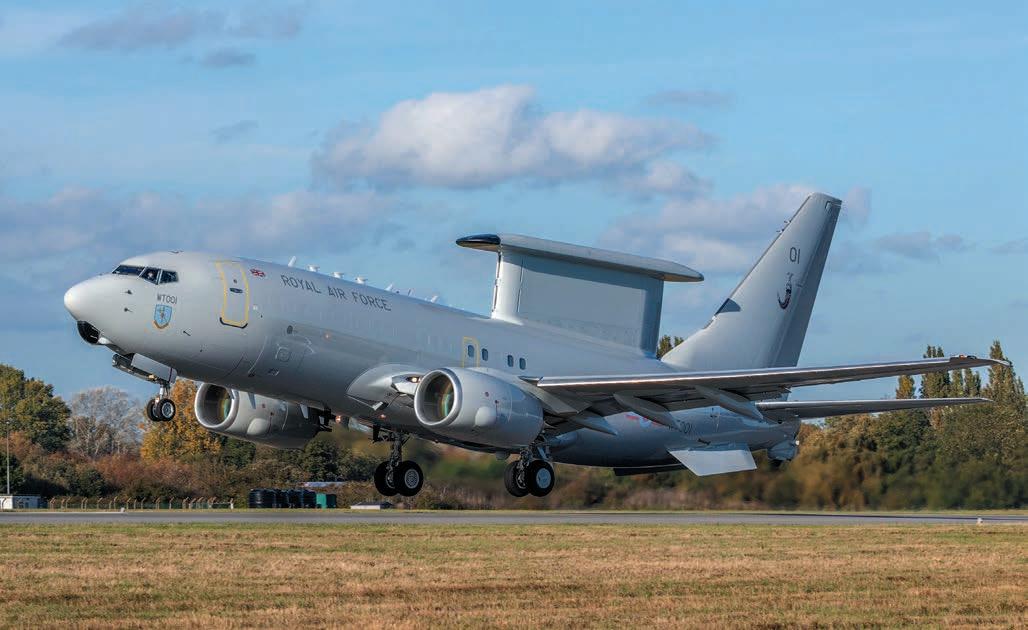
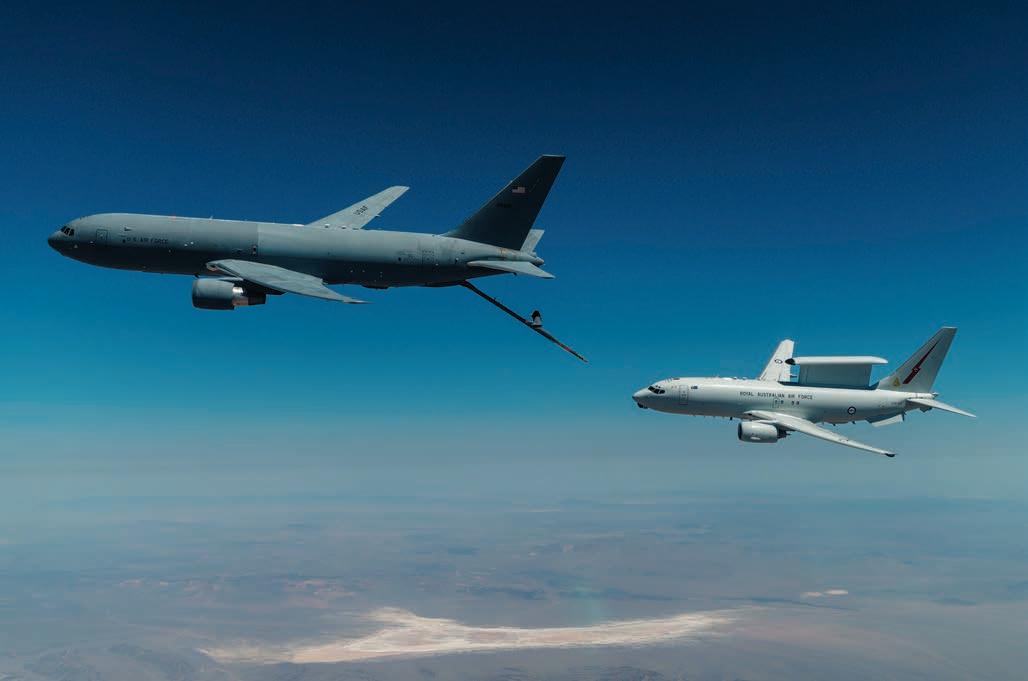
Air Marshal Stephen Chappell DSC CSC OAM, Chief of the Royal Australian Air Force, describes how it is cultivating a multinational culture of interoperability and coalition readiness around the E-7A AEW&C aircraft
77
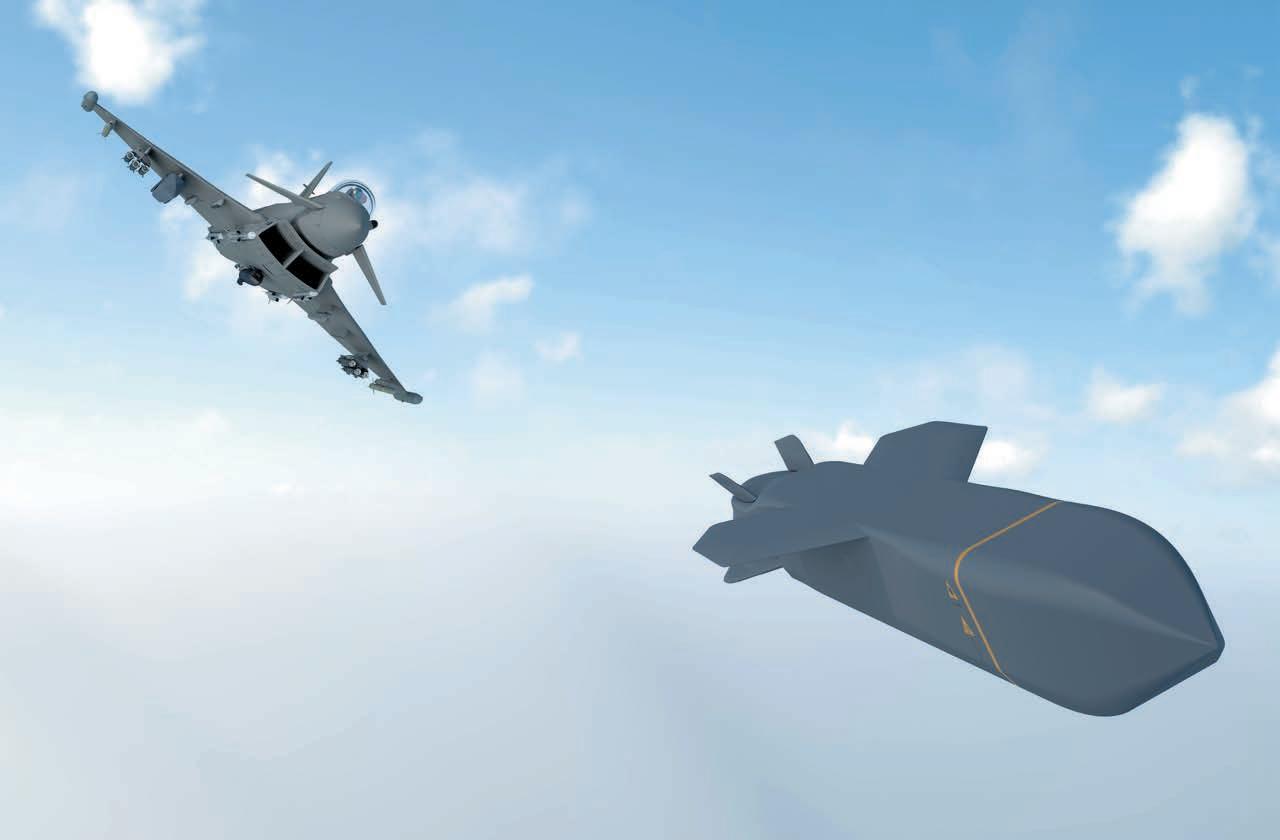
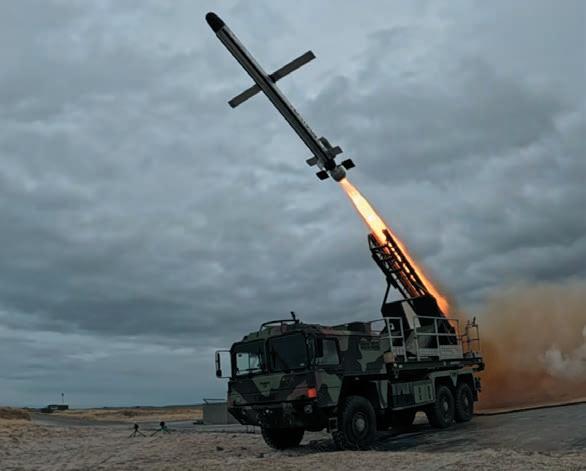
Rapidly evolving air-launched complex weapons
Tom Wallington, Vice President – Air, UK Sales and Business Development, MBDA, highlights how the company is leading the way on weapons solutions for airborne, drone and land-based systems 80
Cobra Warrior
Air Commodore Steven Berry, Commandant of the RAF’s Air and Space Warfare Centre (ASWC), explains what the Cobra Warrior exercise reveals about coalition air power and the relevance of adaptable training
84
Integrated air and missile defence
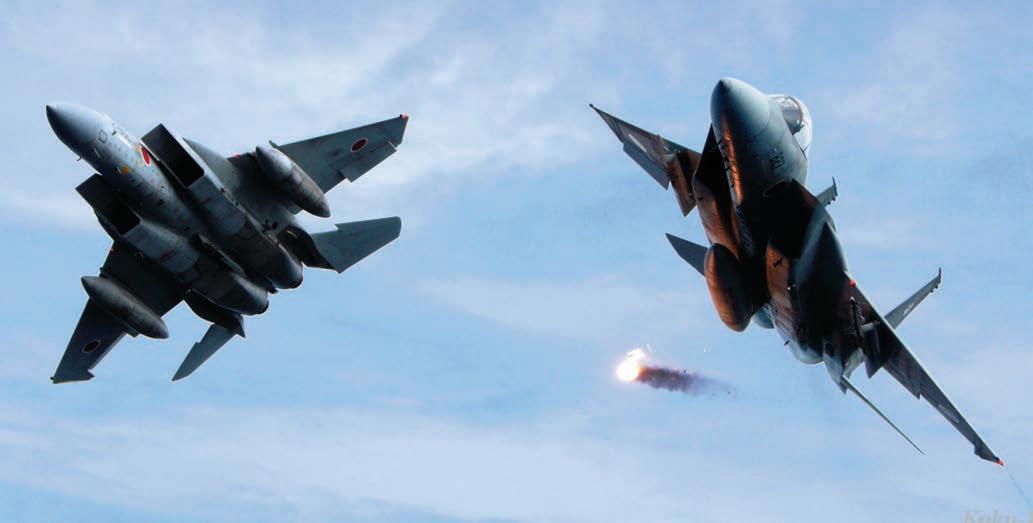
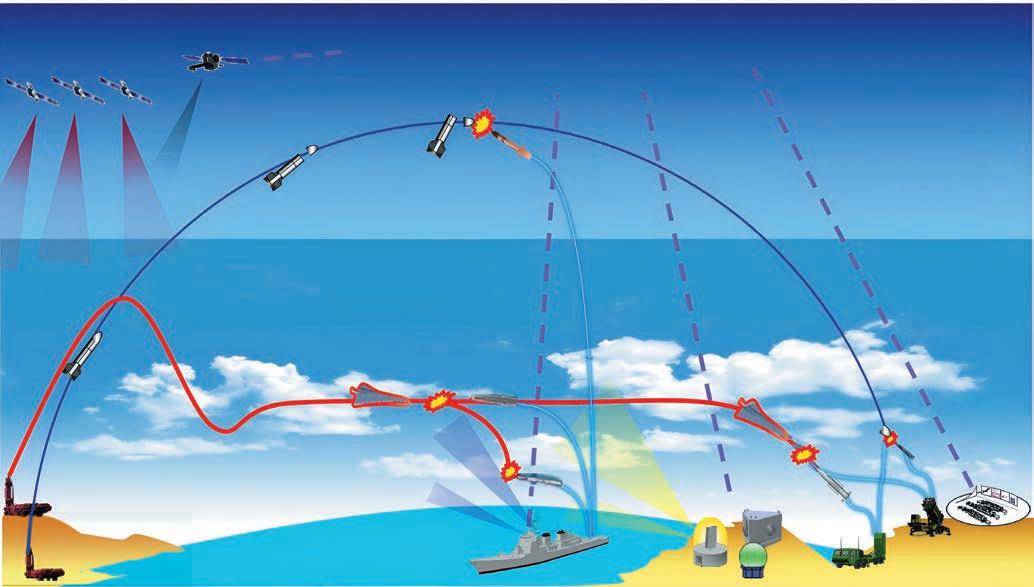
General Takehiro Morita, Chief of the Japanese Air Sta , highlights the composition and capabilities of his country’s Integrated Air and Missile Defence solution, which has the ability to counter hypersonic and ballistic missile threats
Ready
88
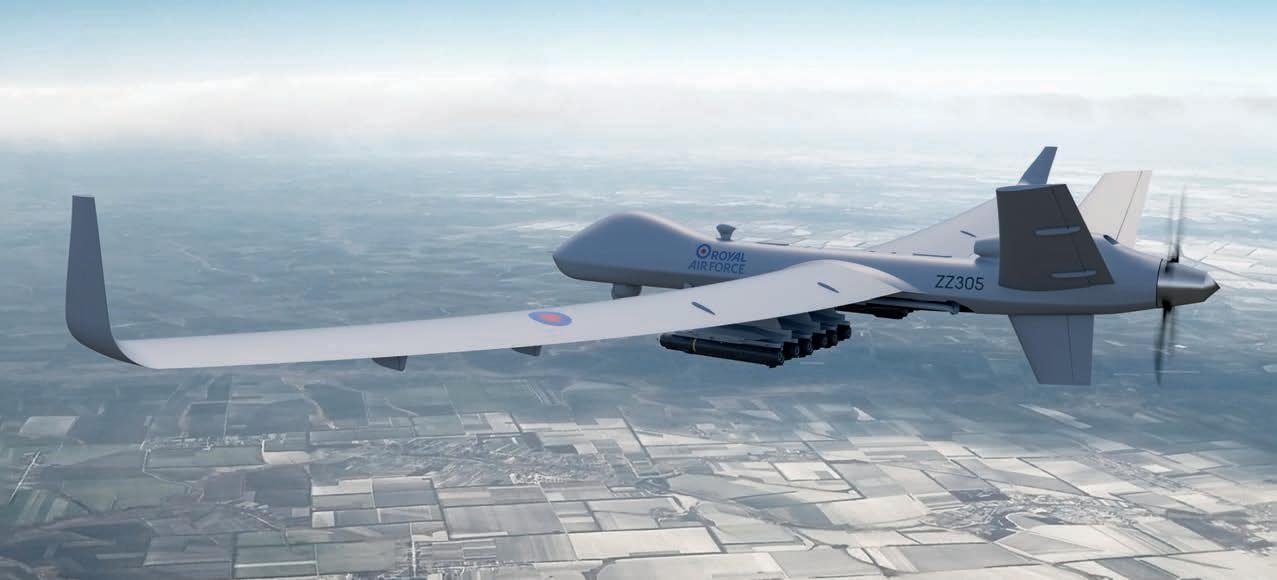
Protector RG Mk1: the RAF’s new di erence-maker in the sky
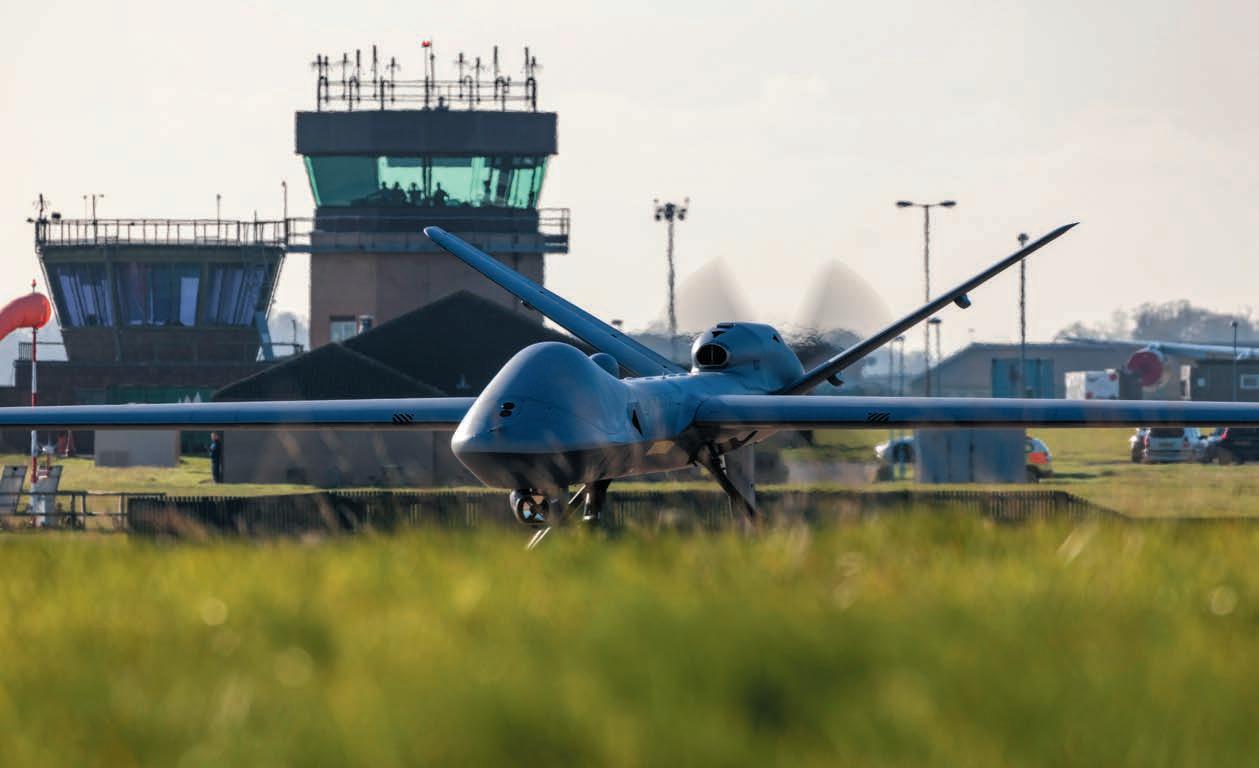
GA-ASI’s Jamie Walters, a senior executive inside the company’s strategic development group, highlights the growing utility of the RAF’s Protector Remotely Piloted Aircraft System
90
Asgard Decide
Major General Mark Purves, Director Digital, Security and Intelligence Directorate, describes how the British Army’s Asgard Decide project will improve targeting accuracy, reduce decision-making times and promote closer integration of Air, Land and Space forces
94
NATO’s nuclear mission
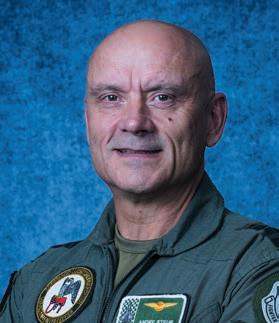
Lieutenant General André ‘Jabba’ Steur, Commander of the Royal Netherlands Air and Space Force, explains the Dutch contribution to NATO’s nuclear mission, its unsung heroes and the transition to fth-generation dual capable aircraft
98 Air superiority today: rethinking control of the air
Mike Baulkwill, Combat Air Strategy Director at BAE Systems, highlights the fast-evolving characteristics of modern air combat and the subsequent need to evolve rapidly
101 Deployed control of the air
Air Vice-Marshal Steve Kilvington, Air O cer Commanding No 11 Group, reveals the intricacies of NATO’s Eastern Sentry operation, which lls a gap in the Alliance’s Enhanced Air Policing e ort
104 Strike and defend
Rear Admiral Anthony Rimington looks at how Operation Firecrest is charting a course towards integrated concepts that will transform security in the North Atlantic with the help of the RAF and international partners
107
Continuity in action: strengthening air power through partnership and progress
Lieutenant General Holger ‘Hawk’ Neumann, Chief of the German Air and Space Force, underlines the importance of the Anglo-German partnership in the air and space domain
110
Poseidons in Iceland
Wing Commander David Higgins, O cer Commanding No 120 Squadron, o ers a compelling insight into the exible nature of the P-8 Poseidon maritime patrol aircraft and its supporting elements on a short-notice tasking to Ke avik airbase in Iceland
114 Transforming UK space power
Air Vice-Marshal Jamie Thompson CBE, Commander UK Space Command, highlights the need for the UK to transform the way it thinks about the space domain in an era of increased space competition
117
StormShroud: the future of combat air power
Air Vice-Marshal Jim Beck, Director Capability and Programmes, explains how the RAF’s rst autonomous collaborative platform will shape the battlespace and enable manned aircraft to operate in highly contested airspace
120
Defending the Arctic
Lieutenant-General J.R. Speiser-Blanchet, Commander, Royal Canadian Air Force, reveals the activities and e orts to strengthen Allied cooperation to maintain regional security and stability in the High North
Air & Space Power 2026
Dominating the Skies and Beyond
AGILE – INTEGRATED – READY
Editor Simon Michell
Project Managers Gp Capt John Shields, Director Defence Studies (Air); Wg Cdr Amanda J Wolfe, Deputy Director Defence Studies (Air)
Editorial Director Barry Davies
Managing Director Andrew Howard
Printed by Micropress Front cover image: AS1 Amber Mayall RAF
Published by
Chantry House, Suite 10a High Street, Billericay, Essex CM12 9BQ United Kingdom Tel: +44 (0) 1277 655100
On behalf of the Royal Air Force Ministry of Defence Main Building, Whitehall, London SW1A 2HB, UK www.raf.mod.uk
recording or otherwise, without the prior permission of the publisher. The views and opinions expressed by independent authors and contributors in this publication are provided in the writers’ personal capacities and are their sole responsibility. Their publication does not imply that they represent the views or opinions of the Royal Air Force or Global Media Partners and must neither be regarded as constituting advice on any matter whatsoever, nor be interpreted as such. The reproduction of advertisements in this publication does not in any way imply endorsement by the Royal Air Force or Global Media Partners of products or services referred to therein.
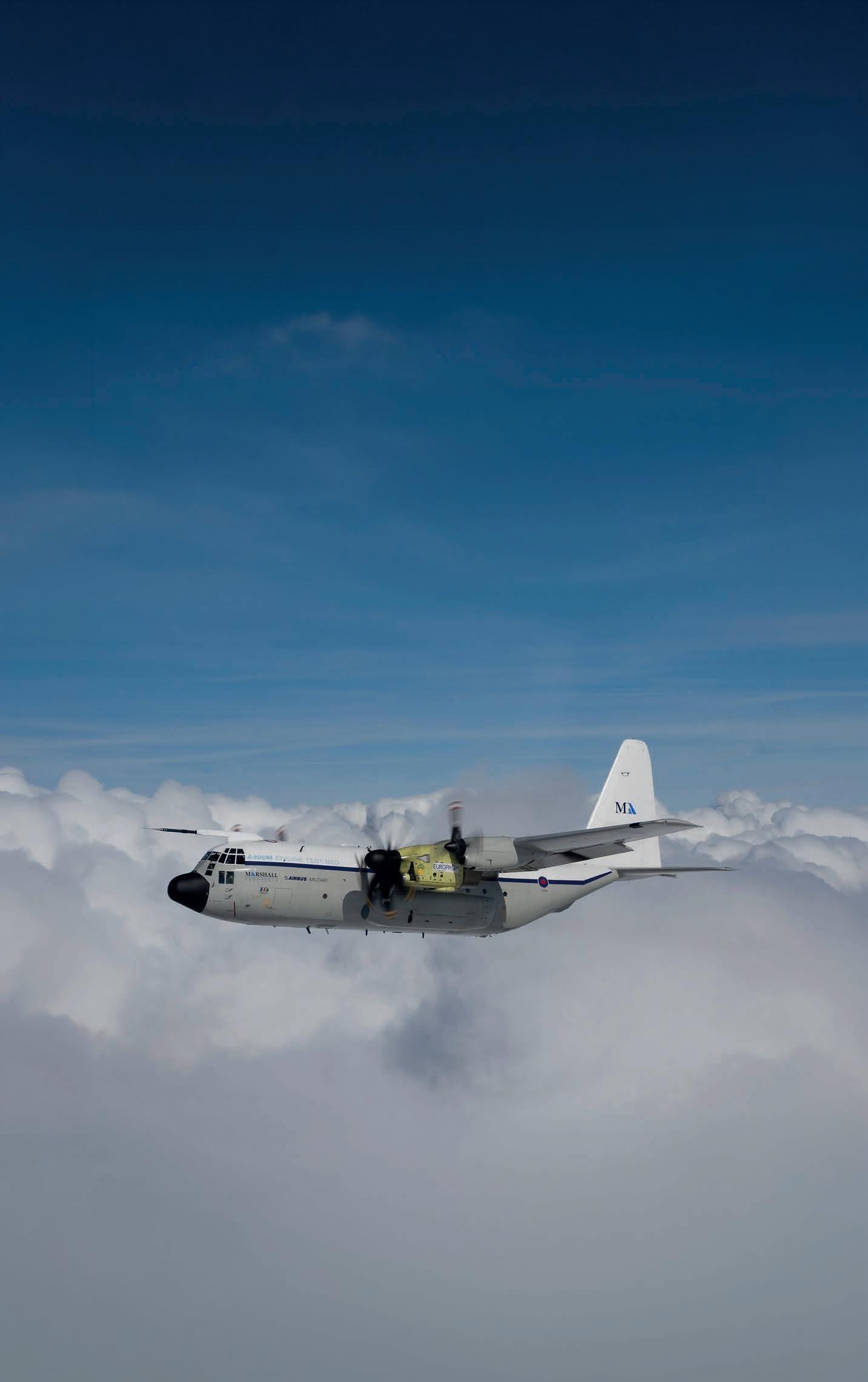
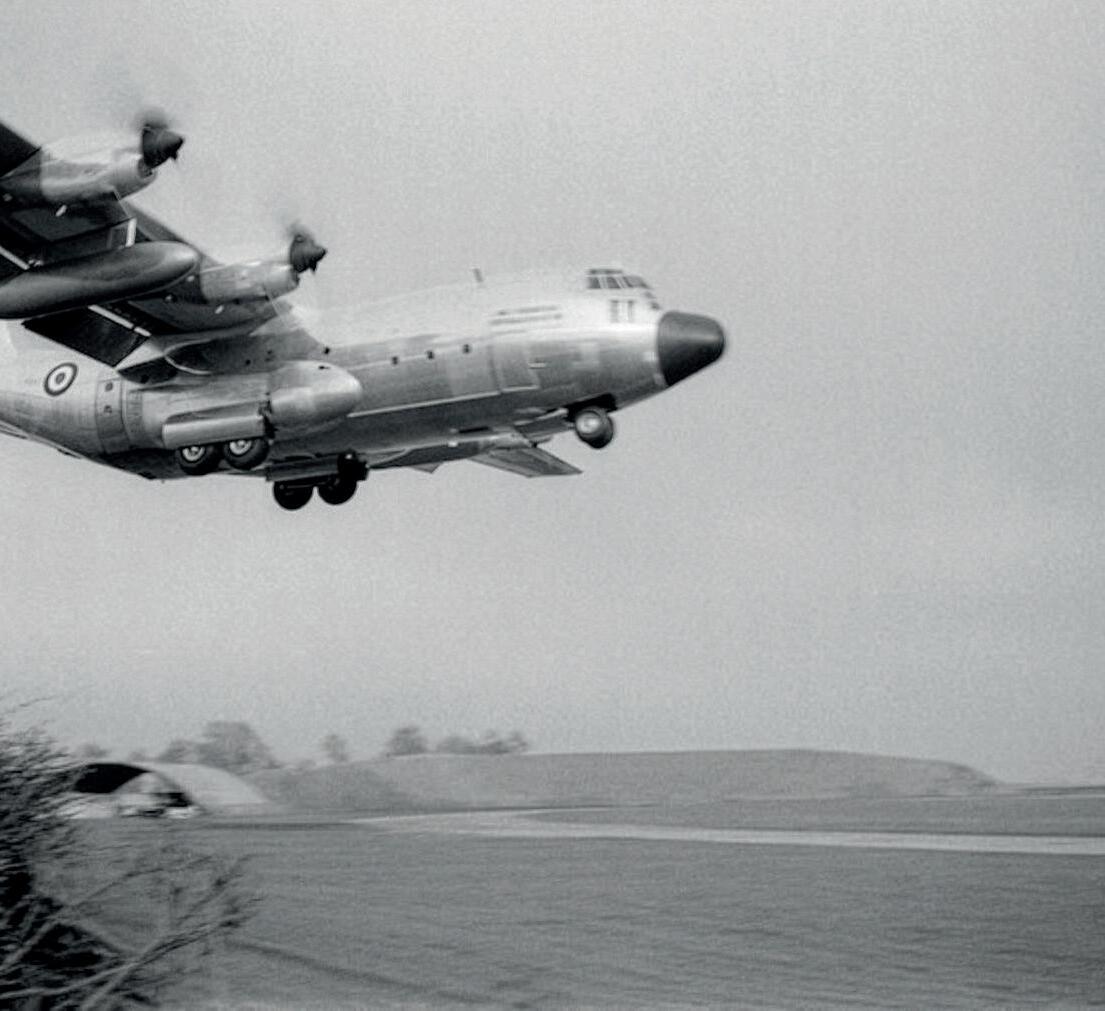
Marshall Aerospace has been a global authority on the C-130 Hercules since 1966, earning multiple world-first accreditations, permissions and accolades for our excellence on the platform.
We work closely with aircraft operators to keep their fleets mission-ready and mission-capable, regardless of whether they are operating a 60−year-old C-130B or the latest C-130J Super Hercules.
1966 2026
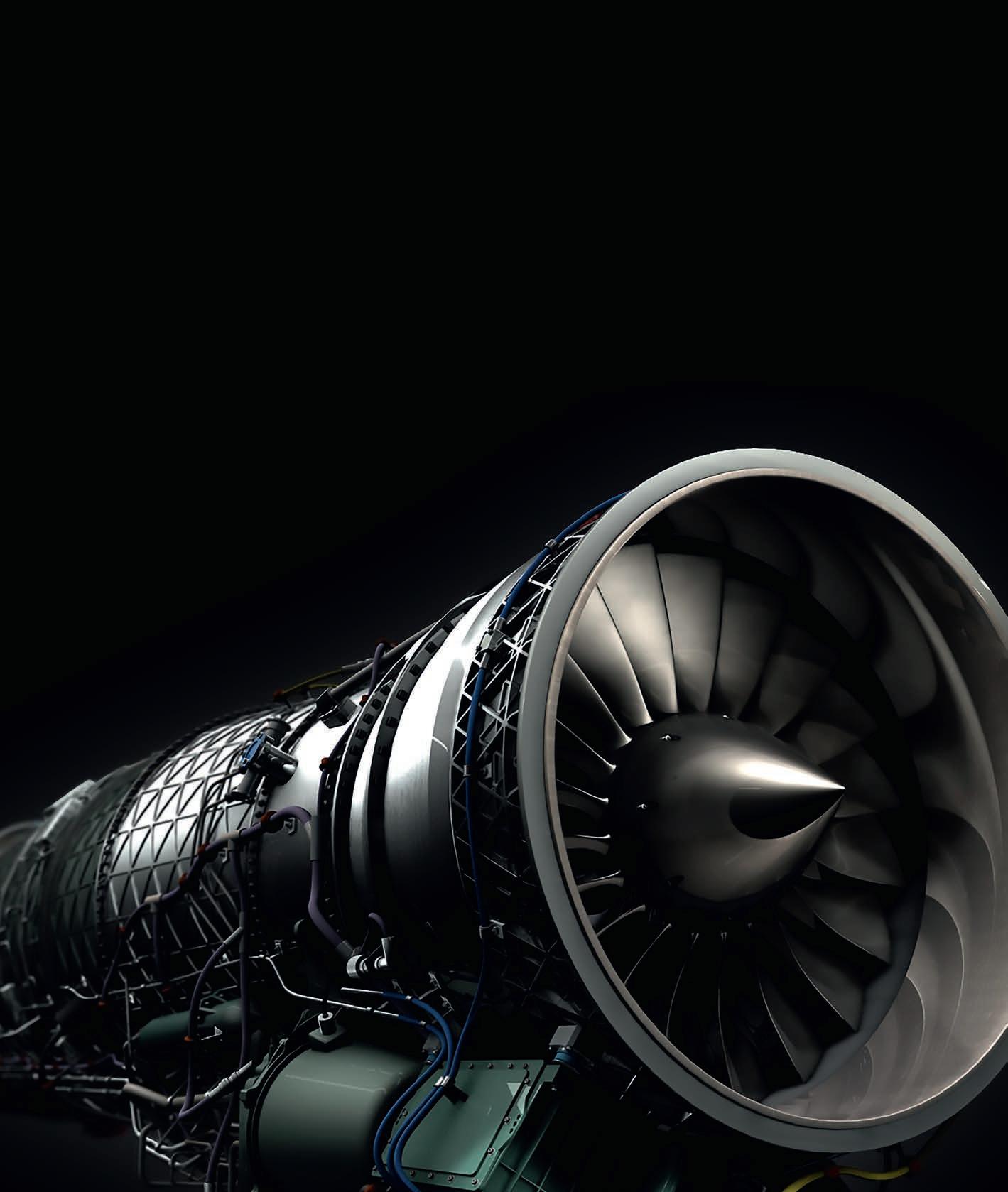
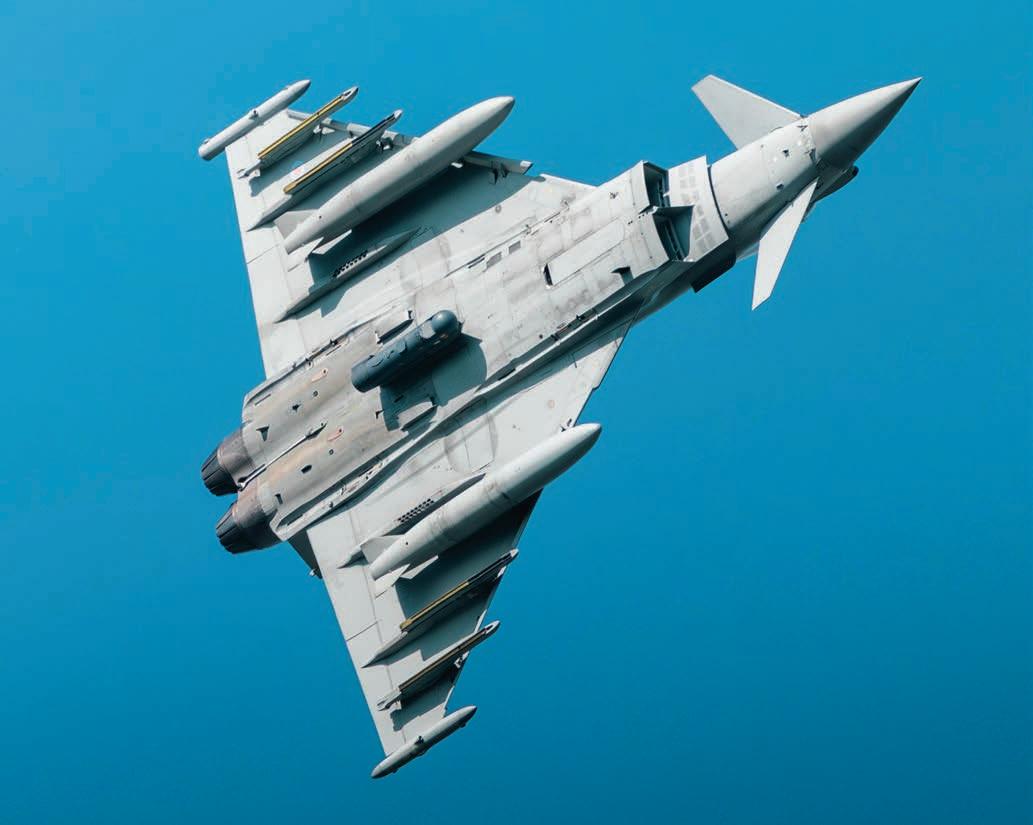
The latest generation engine for latest generation fighter aircraft
The demands of military aviation in the 21st century leave no room for compromise – or outdated solutions. With cutting-edge technology and unrivalled build quality, the EJ200, installed in the Eurofighter Typhoon, has proven time and again to be the best engine in its class. To find out more about our market-leading design and unique maintenance concept, visit us at www.eurojet.de
The EJ200: Why would you want anything less?
The Rt Hon
Dan Jarvis MBE MP
Secretary of State for Defence
RAF – making Britain safer: secure at home and strong abroad
Over the past year, the Royal Air Force (RAF) has shown, once again, that it represents the very best of Britain.
In the Middle East, the RAF has been at the vanguard of defending British lives, interests and partner nations. Through long hours of constant vigilance, under immense pressure, RAF Regiment gunners stood watch with relentless dedication. These young aviators defended their ground against more than 100 drone attacks, meeting danger with courage and composure.
Meanwhile, Typhoon and F-35B pilots racked up 1,755 hours ying defensive air patrols in support of our interests and our regional partners, protecting lives by shooting down Iranian drones with precision and professionalism. The joint UK/Qatari Typhoon unit is a case in point, delivering cohesion, understanding and capability in a period of turmoil within the region.
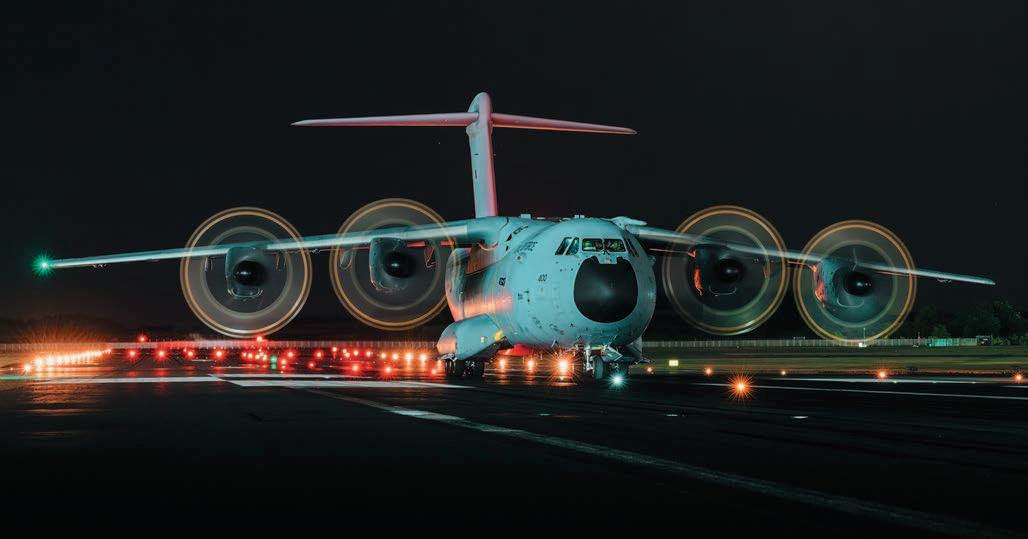
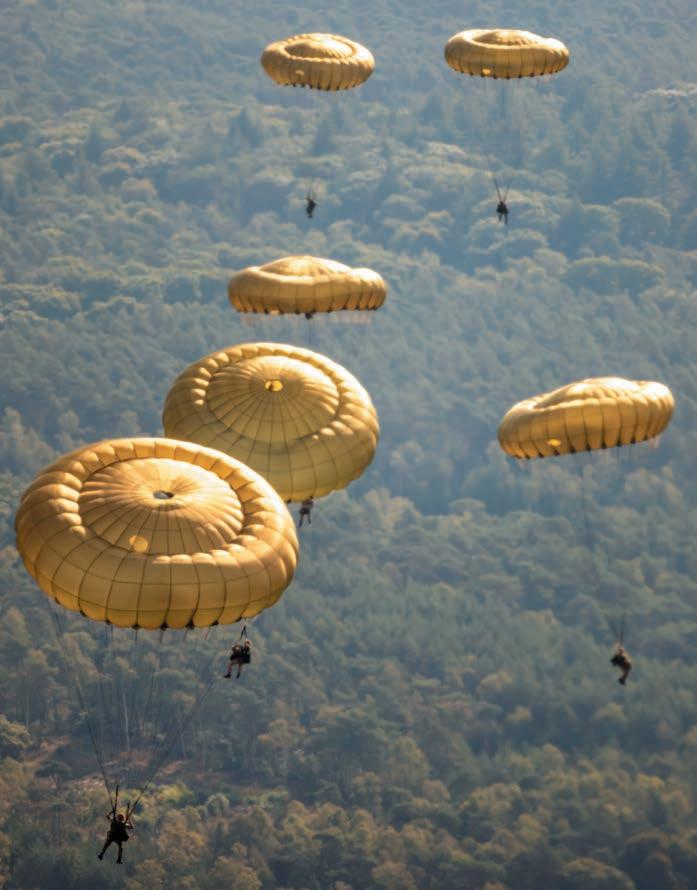
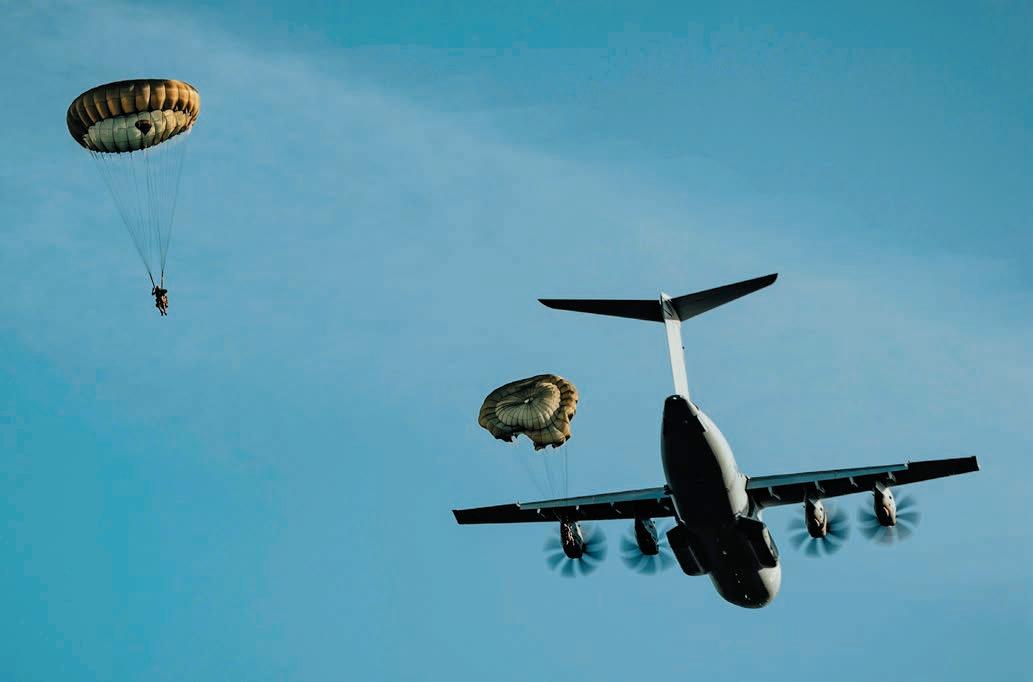
The RAF’s global reach was further demonstrated on a 4,000-mile round trip from Ascension Island to the most remote inhabited British Overseas Territory on earth. The remarkable footage of the A400M aircrew despatching Paratroopers and urgent medical supplies to Tristan da Cunha in the wake of the Hantavirus shows the RAF as global rst responders.
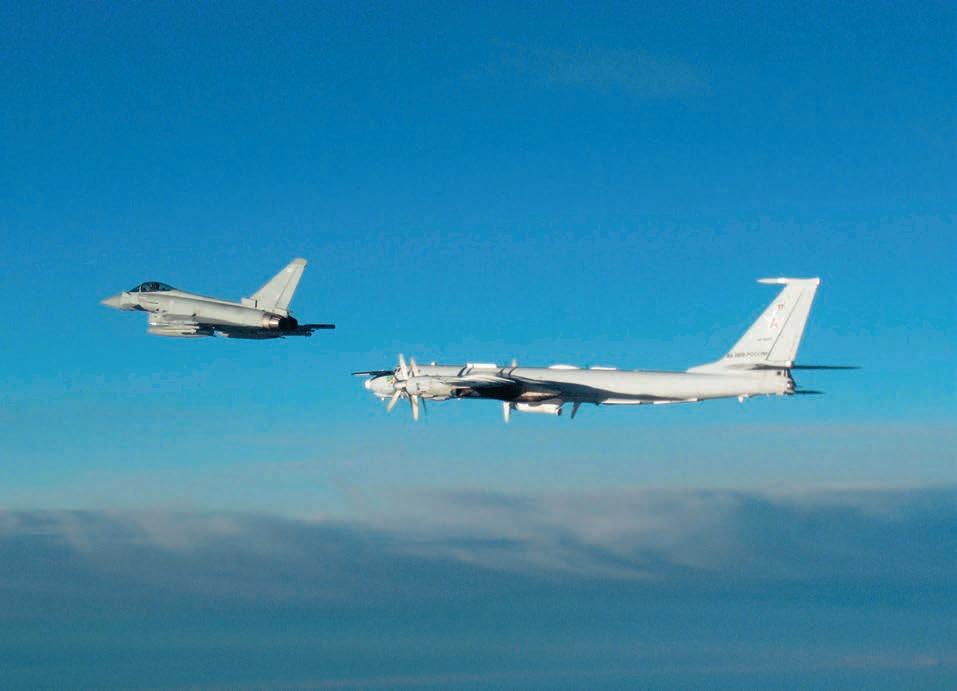
Our UK defence policy is proudly ‘NATO rst’ and the RAF has spent the past 12 months implementing that commitment. Our aviators continue to lead enhanced Air Policing missions in Eastern Europe. During Operation Chessman in Poland, our Typhoons ew 153 missions and conducted 22 scrambles against Russian aircraft probing NATO airspace. Today, our Typhoons stand ready in Romania carrying out the same vital mission. Across the world, the RAF has worked alongside partners from 45 nations, strengthening alliances and reinforcing collective
security. Further bolstering our leverage within the alliance is our F-35 Lightning Force, which adds modernity, capability and scale to NATO’s ever-growing Lightning community.
Control of the air remains the rst duty of the RAF. Quick Reaction Alert aircraft have been called to cockpit 42 times over the past year, including scrambles against Russian military aircraft and to intercept potentially threatening civilian airliners.
Meanwhile, our maritime patrol and intelligence assets continue their work, day after day, often unseen but always essential. P-8 Poseidon aircraft have protected UK waters and supported operations in the High North, including on a month-long deployment to track and expose Russian spy submarines operating in our wider waters.
And as we look to the threats of the future, we will ensure our aviators have the capabilities they need to prevail. For more than a century, the RAF has remained a step ahead of adversaries through innovation and adaptation: from radar and the jet engine to precision weapons and ISTAR. Today, we stand on the brink of another profound transformation, where autonomy, arti cial intelligence and digitisation will de ne who controls the skies.
To deliver on the Strategic Defence Review, we will rely on engineering excellence, technological ingenuity and the hard lessons of modern con ict. We will put our RAF, as with our wider Armed Forces, at the leading edge of innovation within NATO. Emerging capabilities such as Collaborative Combat Aircraft present such an opportunity. By exploiting cutting-edge thinking and AI technologies, we can provide the RAF with the competitive advantage it needs to counter future threats, as we move into the sixth-generation of Air Combat Power and the arrival of GCAP.
The security situation we face is more serious and less predictable than at any point since the Cold War. Putin’s attacks in Ukraine and aggression across Europe are escalating. We have enduring instability in the Middle East, and increasingly contested space and cyber domains. But one fact remains true: dominating the skies is – and will always be – fundamental to our success.
The RAF’s reputation is built on tactical excellence, operational integration and strategic relevance. The RAF is always ready and always on. And through the commitment of our outstanding pilots, air crews, engineers and personnel across the RAF, we will succeed in keeping Britain safe and secure today – and in the years ahead.
RAF Typhoons ew 153 missions and conducted 22 scrambles against Russian aircraft during Operation Chessman (PHOTO: MOD/CROWN COPYRIGHT)
delivering game-changing capability across the raf
Our commitment to the Royal Air Force
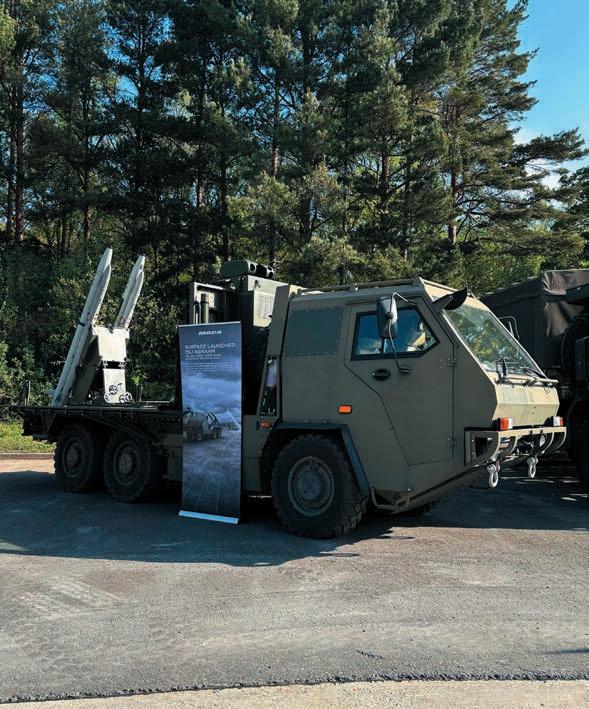
The Royal Air Force faces increasingly complex engagement scenarios where there is no room for error. In this demanding environment you can count on our expert teams who are committed to bringing you cutting-edge, sovereign, combat-proven technology. ASRAAM, Brimstone, Storm Shadow, Meteor & SPEAR family are capabilities the RAF can rely on to meet the operational needs of the modern battlespace.
ALLIES NEVER ALONE.
FLY
Air Chief Marshal
Sir Harv Smyth
KCB OBE DFC ADC MA RAF, Chief of the Air Sta
Dominating the skies and beyond
Welcome to this, the 2026 edition of Air and Space Power, the theme of which is ‘Dominating the Skies and Beyond – Agile, Integrated & Ready’.
Today, we live in an era of polycrisis and the rate of change in the global strategic environment shows no signs of abating; if anything, the tempo is increasing.
However, there is a constant – the need for air and space power to dominate the skies and beyond. Mastering the air and space domains is what we do; to provide the joint and coalition force with the freedom of action it needs to secure the battlespace, our nations, our interests and our way of life. Together, we must be agile, integrated and ready.
Agile
Since taking over as Chief of the Air Sta last summer, and driven by the outcomes of the 2025 Strategic Defence Review, my mantra has been to make Air more A-I-R; more agile, more integrated and more ready.
The air and space power era that we grew up in, where we learned our trade, and then began the long journey of mastering our craft, is gradually fading. Those memories
are consigned, for now, to stories in the crew room and, in the future, to our history books. The days of a predictable tempo of deployments far from home, with a predominantly permissive air environment conducting counter-insurgency operations in desert conditions, are no longer the norm.
In 2026, the world is an increasingly volatile, complex and unpredictable place. History informs us that the time, the location, the actors and the scale of the next intervention are rarely known in the required detail beforehand. However, when chaos, friction and turmoil descend, our governments need a rapid, unambiguous and physical display of presence and intent. Air and space power are often seen as our nation’s de facto rst responders, due to their inherit attributes of speed, reach and height – with a bit of jet noise thrown in for good measure. This is a role that air and space power practitioners seek and revel in. Thrown into this complex operating environment is the proliferation of uncrewed aerial systems (UAS). Once the preserve of advanced militaries, these capabilities are now accessible to a far wider range of state and non-state actors, delivering mass, persistence and precision at relatively low cost. From tactical reconnaissance to overwhelming long-range strike, UAS are
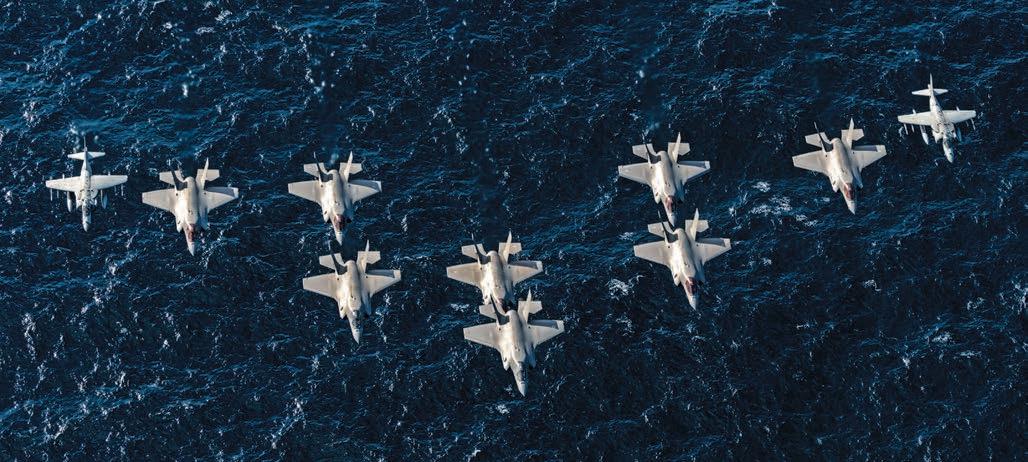
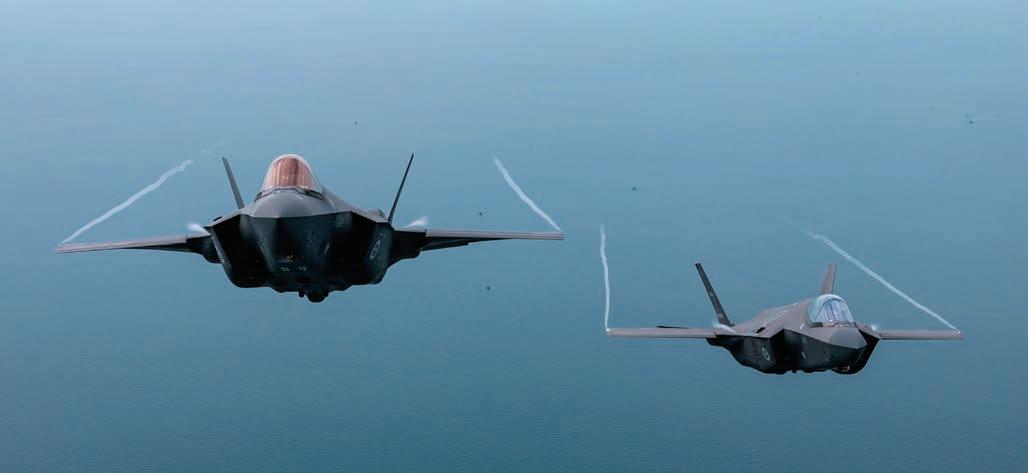
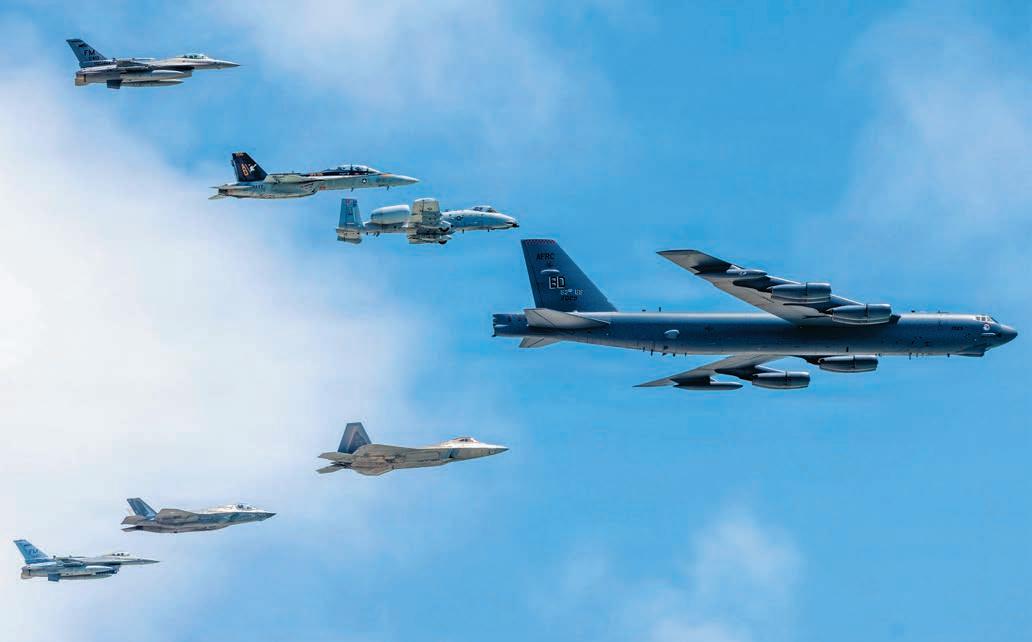
RAF F-35B Lightnings y alongside Italian F-35Bs and AV-8Bs, exemplifying A-I-R – Agile, Integrated and Ready (PHOTO: MOD/CROWN COPYRIGHT)
compressing decision timelines, complicating air defence and challenging traditional notions of air superiority. To remain competitive, we must adapt – integrating counter-UAS measures, exploiting our own autonomous capabilities and ensuring we retain the agility to spirally upgrade at pace, to operate e ectively in an increasingly contested air and space domain.
Now, more than any other time in our careers, air and space power are needed to secure our nation, our interests and our way of life. However, the mission we face is more ambiguous, far broader and more taxing than we have been accustomed to in the past. Greater agility allows us to rapidly adapt to the ever-changing character of war. We must move faster and break old norms.
Integrated
To o set any advantage our aggressors may have, we need to be more integrated by working closer than ever before with our allies and partners, including Defence Industry.
Irrespective of the mission, the battle, the campaign or the war, air and space power are team games; they always have been, and it remains true both for today and tomorrow. In 2025, the RAF operated alongside our joint partners and 45 partner nations. We continue to work together tactically, operationally, strategically and politically.
While the ongoing con icts in Eastern Europe and the Middle East, and whatever might come next, focus our minds, we are also fully aware of our broader, global responsibilities, partners and allies, which importantly includes our relationships with Defence Industry.
Integration is more than just an overseas exercise; it is about a multitude of factors that we can bring to bear to make us y and ght better together – greater than the sum of the parts. By working collectively – from aircraft cross-servicing to exchange tours to multinational procurement programmes – we create greater integration, greater interoperability and provide ourselves with a greater chance of success in future con icts. Our alliances and partnerships are our asymmetric
advantage – our superpower. Our adversaries fear them, and seek to undermine them. We must remain integrated as one team to meet the challenges of the evolving battlespace. E ective integration is a never-ending quest for excellence.
Ready
‘Train hard, ght easy’ is a mantra that, I suspect, has been drummed into each and every one of us throughout our air and space power careers. While we have enjoyed air superiority pretty much wherever we have operated over the past 30 years, that is clearly not the case today – in Europe, in the Middle East, or wherever we are needed; we must be willing and ready to ght for control of the air and space, regardless of the scenario.
Achieving and maintaining control of the air is hard and demands practice alongside our allies. That is why we participate in multinational, multidomain, high-end war ghting exercises all around the world. The pursuit of excellence in the air and space domains is a relentless endeavour.
This is a de ning moment for our generation, but our nation and our allies and partners have been here before, and we are not starting from scratch.
We must continue to develop, deliver and eld air and space power capabilities that our allies and partners admire and our enemies fear. We have a eeting opportunity to make the necessary changes: the capability delta is closing fast. Enhanced readiness allows us to deliver campaign-winning e ects at a scale, pace, place and time of our choosing. And, most importantly, it a ords us the ability to sustain a prolonged ght.
Throughout the pages of Air and Space Power 2026 and on the stage of the Global Air and Space Chiefs’ Conference 2026, the challenges and opportunities will be explored in more detail. I hope it stimulates ideas, leads to debate and tangible concepts of how we can integrate more e ectively. I very much look forward to continuing to work alongside you all throughout the future, no matter how uncertain or challenging that may be.
Fight’s on!
UNMATCHED INNOVATION FOR THE WORLD’S TOUGHEST MISSIONS
We deliver remotely piloted aircraft innovation powered by experience, ingenuity, and performance — backed by world-class partners.
This means unmatched pole-to-pole strategic armed ISR from the multi-mission, long-endurance Protector. For maritime requirements, a short takeoff and landing kit brings airborne early warning and control capabilities to aircraft carrier operations in the form of Sea Protector. And for the best all-domain awareness deep within the battlespace, look to our jet-powered Gambit Series of Collaborative Combat Aircraft.
These next-gen solutions deliver affordability at scale for any mission anywhere. And they’re ready today.
Sea Protector
Protector RG Mk1
Gambit Series
Simon Michell
Editor, RAF Air & Space Power
2026: Dominating the Skies and Beyond
Building air dominance together
The unsuccessful Russian helicopter assault on Hostomel Airport in the rst few days of the illegal invasion of Ukraine is a chilling example of the consequence of the lack of air dominance. Had the Russians been able to retain Hostomel and land thousands of combatants a mere 20 km from Kyiv, the outcome of the war could have been very di erent. However, Ukraine’s ability to deny air dominance in the airspace around Hostomel during those two days of heavy combat almost certainly saved the entire country from being overrun in a matter of weeks. Ukraine’s force agility, the integrated nature of its air and land forces and their readiness to ght turned the tables on the Russian aggressor.
The agile nature of Ukraine’s response to the Hostomel assault is worth noting, as military agility is more than just speed and dexterity of movement. It is the capacity to build awareness, make decisions and act faster than your adversary. In this issue, therefore, we examine agility from a number of perspectives. From recruitment and training to technological innovation through to battlespace management and operations. The article on arti cial intelligence (AI) by the RAF’s Chief Technology O cer, Cecil Buchanan, and Terry Makewell, RAF Chief Digital Technology O cer, is an illuminating explanation of how to use
the technology to its fullest capability. Those militaries that truly distinguish the properties and capabilities of the multiple AI tools available will gain an agility advantage quickly.
AI underpins a growing number of the MOD’s Projects designed to enhance agility, such as Project Asgard, which will accelerate decision-making exponentially – shortening targeting decisions from hours to minutes. Brigadier Richard Ball, Chief of Sta of the Joint Aviation Command, and author of the article ‘Air manoeuvre reimagined’, highlights the bene ts of Asgard for targeting decisions while also revealing the role that Project Rapstone will play in speeding up UK Defence’s counter-UAS capabilities. He also highlights the evolution of an Apache attack helicopter ‘Loyal Wingman’ capability driven by Project NYX.
In icting damage on a low budget
Another fascinating article on the impact of drones on modern warfare is Air Marshal Allan Marshall’s exposé of Operation Spiderweb. The RAF’s Air and Space Commander reveals the astonishing operation run by Ukraine with a budget likely to be in the very low millions to in ict damage on Russia’s rear echelon estimated to be in the billions – tiny quadcopters turning Russian Air Force strategic bombers into ashes.
E orts to achieve an integrated capability are best when executed on multiple levels, across domains, among technologies and between forces and international partners. Fortunately, we have been able to highlight a growing appetite for integration over the many issues of Air and Space Power. This issue is no exception. Multi-Domain Operations (MDO) are predicated on integration with Integrated Air and Missile Defence (IAMD) systems being high on the MDO to-do list. Air Vice-Marshal Andrew Martin, Director of the newly formed UK IAMD, o ers a fascinating look into the need for continuing to evolve the UK’s IAMD capability alongside the urgent necessity to bear down on the cost-per-kill ratio.
Integration between services is also critical, particularly between land and air forces. In his article about Air/Land integration, Major General Mark Purves, Director Digital, Security and Intelligence Directorate, pinpoints how this close cooperation can be achieved and the current activities to enhance it.
A constant state of readiness
The worst shocks are often unexpected. For the RAF and its partners, therefore, being ready translates to a global preparedness across all the domains of warfare. Some threats,
though, are easier to discern and counter. To that end, Operation Eastern Sentry (EASN) is a prime example of the vigilance and readiness the RAF is delivering via its most important Alliance – NATO. RAF Typhoons join Alliance partners patrolling NATO’s eastern border with Russia on a daily basis. In his article on ’Deployed control of the air’, Air Vice-Marshal Steve Kilvington explains how EASN activities “are not temporary measures, but instead a permanent condition of NATO’s security landscape”. They are at a constant state of readiness. Every issue of Air and Space Power represents the combined e orts of a vast array of people, each with a vital role to play. We are however, particularly grateful to the international Air and Space Chiefs who were able to contribute highly valuable articles to the issue – Air Marshal Stephen Chappell, Chief of the Royal Australian Air Force; General Takehiro Morita, Chief of the Japanese Air Sta ; Lieutenant General Holger Neumann, Chief of the German Air and Space Force; General B. Chance Saltzman, U.S. Space Force Commander; Lieutenant General Jamie Speiser-Blanchet, Commander of the Royal Canadian Air Force; Lieutenant General André Steur, Commander of the Royal Netherlands Air and Space Force; and General Kenneth S. Wilsbach, Chief of Sta of the U.S. Air Force.
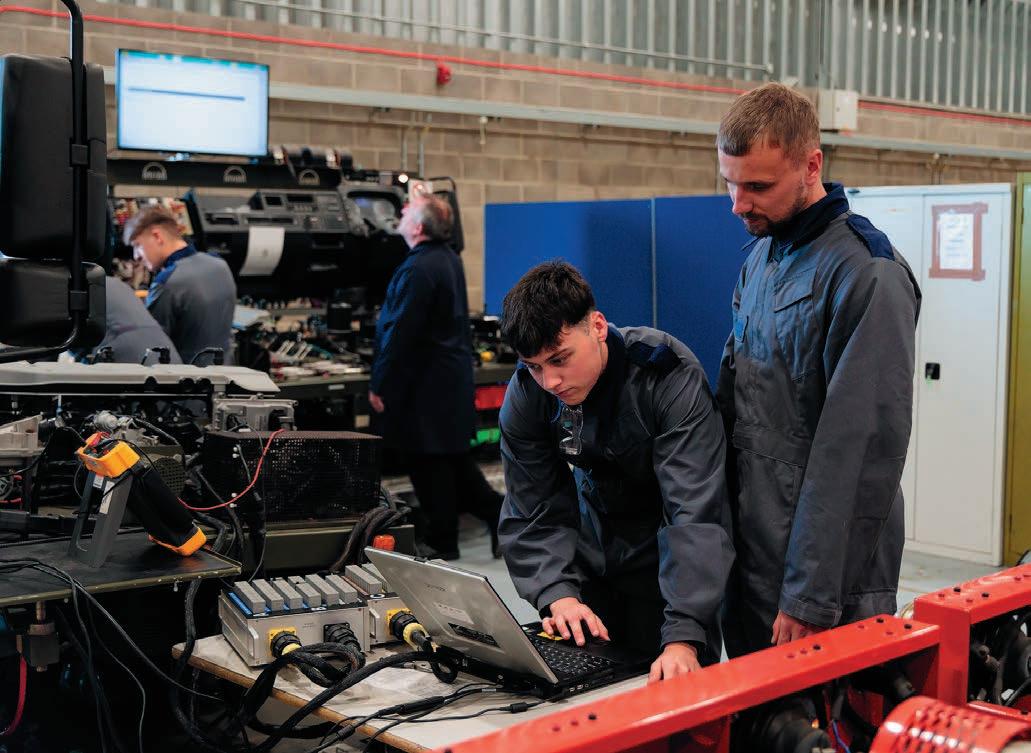
The RAF’s recruitment and retention priorities are aimed at creating a modern, resilient force. By focusing on speed, inclusivity, welfare and career satisfaction, the Service aims to attract new talent while keeping experienced personnel engaged, as Air Vice-Marshal Simon Edwards, RAF Director of People, explains
Since I wrote last year, we have made signi cant strides in how we both attract, recruit and retain within the RAF. Progress has been remarkable, real and measurable. And it has been driven by a clear-sighted approach to look at the entirety of our people’s experience: how we rst engage and attract; how we support and develop; how we value those who already serve; and how we do our best to ensure they transition well to their next time of life when they move on.
Building on the successes of last year, we have continued to expand the way we engage with society. We are using a variety of new approaches to reach audiences from all walks of life. We know that awareness and visibility matters.
Operation Cloudburst remains a strong example. Over the last year, we have taken the RAF into communities across the United Kingdom, visiting 15 towns and directly engaging with over 235,000 people.
The RAF is focused on attracting new talent while retaining valued experience
(PHOTO: MOD/CROWN COPYRIGHT)
“By inviting people behind the wire to experience interactive exhibits and engage directly with our personnel, we are creating opportunities for genuine, meaningful interaction”
The impact has been immediate and tangible. Following the Exeter town show, we saw a 20% increase in applications from local postcodes. That matters. It reinforces a simple but important point: when we meet people where they are, when we show them who we are and what we do, interest follows.
Building trust, understanding and familiarity
But while we should recognise success, attraction is not a one-o activity. It must be sustained, consistent and deliberate. If we do that activity well, we build understanding and familiarity. And when the time is right, that trust translates into intent. People begin to see themselves in the RAF. They choose to join. Our approach to delivering this is deliberate. It is structured around two complementary lines of e ort.
The rst is to bring our audience behind the wire. By opening the Service and providing authentic exposure to our people and our roles, we enable individuals to better understand what life in the RAF looks like.
The second is taking the RAF into communities. By engaging audiences in familiar environments, we broaden our reach and improve understanding of what we do, how we operate and why it matters.
Both approaches are necessary. Both are mutually reinforcing. And, together, they are now central to how we attract the next generation. To give people a look behind the wire, we are establishing a nationally recognised work experience pathway –one that is accessible and capable of providing a meaningful and realistic understanding of Service life.
The introduction of Virtual Work Experience, delivered through SpringPod, is an important step in that direction. Through immersive and interactive environments, individuals can explore RAF roles, capabilities and scenarios. Early engagement has been strong, with over 2,000 people signing up in a matter of weeks. Just as importantly, as they learn more about us, we learn more about them, which will help us focus our e orts. For example, by identifying the parts of the country where there is a thirst for more engagement – and therefore where we might take Cloudburst next.
Engaging directly with people
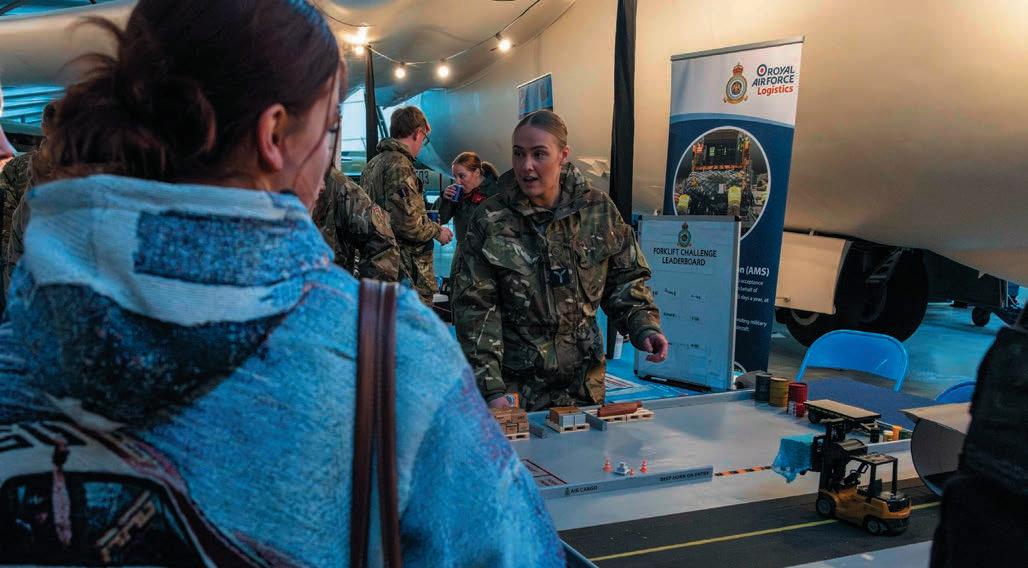
Operation Prosperity is helping to strengthen the connection between the RAF and the communities we serve. By inviting people behind the wire to experience interactive exhibits and engage directly with our personnel, we are creating opportunities
The RAF is now seeing a growth in recruitment, thanks to concerted e orts to attract and engage (PHOTO:
MOD/ CROWN COPYRIGHT)
Community engagement activities are helping to increase awareness of the RAF (PHOTO: MOD/ CROWN COPYRIGHT)
for genuine, meaningful interaction. At our recent event at RAF Museum Cosford, over 1,500 young people attended; 79% of them indicated that this sparked an interest in them joining us in the future.
We are also increasingly recognising the role that our own people – both serving personnel and veterans – play in attraction. They are our most credible advocates. Their experiences are real. Their voices carry weight in a way no campaign can replicate.
Initiatives such as Hometown Heroes are designed to enable them to share those experiences more widely, supported through RAF associations and sporting networks. In parallel, Operation Hermes is extending our reach into areas with limited RAF presence, using sport as a means of engagement to build familiarity, strengthen local connection and create new points of entry into the Service.
Taken together, these e orts represent a step-change in how we approach attraction. They are broader in scope and more aligned with the society we serve. At the same time, we are transforming how recruitment itself will operate.
From 2027, the Armed Forces Recruitment Service will commence, bringing together recruiting processes under a single, integrated contract. For applicants, this will result in a simpler, faster and more joined-up experience. A single application process will replace the current fragmented system. Candidates will be able to consider all three Services more easily, rather than engaging with each in isolation. Which is one of the reasons why our own engagement is so important – we need to be foremost in people’s minds.
However, attraction and recruitment alone are not enough. We must also ensure that those who currently serve choose to stay. That they feel valued. That their lived experience re ects the expectations we set. Encouragingly, we are seeing progress in retaining our people. Exit rates have declined and stabilised at 6.7%, with voluntary exit from service at 4.3%. This re ects sustained e ort across multiple areas, not least a renewed focus on listening to our people and acting on what they tell us.
Increasing rewards
A key area of focus has been in pay and allowances. Through unit visits, survey responses and engagement with service leavers, we have built a much clearer picture of where targeted changes can have the greatest impact.
As a result, we have introduced several speci c initiatives. A lateral substitution pay trial at RAF Lossiemouth recognises those who take on additional responsibility. A Get You Home European Commuting Allowance supports those serving overseas. Disturbance Expense has been increased to better re ect the cost and impact of moving between assignments. And over 1,500 vouchers have been awarded through the Military Thank You scheme. Retention nevertheless remains fragile; it always will be and so we must always work to protect it. People’s expectations continue to evolve, and the factors that in uence their decisions change. And so, we must remain tireless in that e ort.
Ready to respond
Richard Hamilton Managing Director – Air Operations, BAE Systems
The past 12 months have seen a rapidly evolving security environment. How are you supporting?
The past year has underlined just how quickly the operational environment is changing, with a more contested and unpredictable landscape and threats evolving at pace. Our focus is on ensuring the capabilities we deliver are not only advanced, but ready, available and adaptable. That is a responsibility we take seriously.
A key element is how we partner with customers to sustain and evolve in-service platforms. Typhoon continues to play a critical role securing UK airspace, supporting NATO operations and maintaining a presence in the Middle East. Over the past 12 months, our teams have delivered round-theclock support to the RAF and key allies across Europe and the region, including Qatar and Saudi Arabia, ensuring those eets remain mission ready.
At the same time, we are accelerating how quickly we integrate new capabilities. We have demonstrated the rapid integration of the APKWS® precision-guided rocket onto RAF Typhoons, providing a lower-cost option to counter emerging threats such as uncrewed systems. This highlights how we are helping customers respond with speed and agility, as well as capability.
Uncrewed technology continues to play a critical role in modern warfare. How are you responding?
Recent con icts have shown how drones and uncrewed systems can deliver operational advantage while also posing signi cant threats. Our approach is to build a exible portfolio that re ects that diversity while enabling rapid adaptation. Through our Falconworks® business, we are developing and prototyping uncrewed concepts that can be elded quickly and recon gured as mission needs evolve.
A strong example is the Malloy T150 platform and its TRV150 variant. Originally designed for logistics, we have demonstrated how it can be rapidly adapted into a strike platform through integration of the APKWS guidance kit, successfully engaging air and ground targets in trials. The ability to repurpose systems and integrate new capability quickly is essential to staying ahead.
Crucially, we view uncrewed systems as part of a wider force mix. Operating alongside crewed platforms, they extend capability, increase mass and provide more exible, cost-e ective options.
In such a complex environment, how important is interoperability?
Interoperability is fundamental. Modern air power is de ned not by individual platforms, but by how they connect, share data and operate together.
Real-time information sharing enables faster decision-making and operational advantage, particularly against fast-moving threats such as drone swarms, where speed and cost matter. Our strength lies in integration –combining mission systems, sensors and weapons across domains to deliver exibility, scalability and a ordability. Ultimately, interoperability is what turns capability into e ect.
What role can companies such as BAE Systems play in ensuring UK sovereign defence capability?
The UK holds a rare strategic advantage in its ability to develop, produce and sustain its own combat air capability. Our role is unique as a sovereign integrator – working closely with government and armed forces to bring together technologies, expertise and partnerships to deliver capability at pace. With deep expertise across air, land, maritime and cyber, we ensure solutions meet operational needs across domains.
Sovereign capability ensures freedom of action – allowing the UK to adapt without reliance on external supply chains, while supporting allies.
In today’s environment, sovereignty is about readiness: having the skills, technology and industrial capacity to deliver the right capability at the right time. Our focus is ensuring the UK and its allies are not just equipped, but ready.
ARTIFICIAL INTELLIGENCE FOR AIR POWER
Reimagining AI
AI is not a single thing – it is a family of discrete techniques that must be utilised according to each speci c use case. Those that grasp this quickest will have a strategic advantage. Cecil Buchanan, the RAF’s Chief Technology O cer, and Terry Makewell, RAF Chief Digital Technology O cer, explain
“We overestimate the e ect of a technology in the short run and underestimate the e ect in the long run.”
Roy Amara, American researcher, engineer and futurist; president of the Institute for the Future
AI has the power to compress the conceptto-prototype paradigm from years to weeks (IMAGE: ALAMY/KATERYNA KOLESNYKOVA)
Western air forces stand at a decisive in ection point. After decades of cyclical hype and disappointment, arti cial intelligence (AI) is entering the phase that Roy Amara’s law predicted all along: a period of compounding, structural impact consistently underestimated by those burned by
earlier promise. The forces that recognise this shift, and act on it with institutional rigour, will de ne the character of air power for a generation. Those that do not will cede the high ground, both literally and epistemically.
There are ve interconnected propositions of key importance if we are to rigorously institutionalise AI adoption. First, that ‘AI’ is not one thing, but a family of discrete techniques, each suited to di erent problems. Second, that explainability and calibrated trust are the binding constraints on operational adoption. Third, that the governmentindustry co-creative model carries an unresolved intellectual property fault line that will determine
whether sovereign AI capability can be built and sustained in the long run. Fourth, that emergent agentic AI will compress the hardware designbuild- y cycle to previously unseen pace, with government leadership critical to unleash a wave of innovation across our industries. Fifth, that a government-owned data ontology is the foundational prerequisite on which the above depends to enable an agile enterprise-wide AI adoption approach that adapts at the rate and scale we need.
The propositions
AI is a family of discrete technologies We often speak of ‘using AI’ for targeting, logistics, mission planning and aircraft design as though the same approach could serve all these purposes. It cannot.
The AI family encompasses fundamentally di erent techniques, each a distinct engineering discipline, each powerful within its domain, each dangerous when misapplied outside it. Sub-symbolic AI learns patterns from classi ed data; symbolic AI encodes doctrine and rules of engagement; reinforcement learning discovers novel tactics; reasoning models produce auditable plans; agentic AI orchestrates end-to-end work ows. Applying the wrong technique to the wrong problem is a primary cause of failed programmes. Portfolio thinking, matching technique to problem class, is one foundation of e ective military AI strategy.
Explainability is an operational requirement
Opacity is not a technical inconvenience. It is a blocker to adoption. A commander who cannot interrogate an AI recommendation in terms of assumptions, weightings and contingencies should not act on it. Legal accountabilities reinforce this –human judgement at key decision points is nonnegotiable. Explainability must be designed in from the outset, not retro tted, building calibrated trust.
The co-creative model and its intellectual property (IP) fault line Neither government nor industry can build militarily capable AI alone. Government holds the two sovereign inputs: classi ed training data for sub-symbolic AI, and the planning art and doctrine for symbolic reasoning systems. Industry holds engineering scale, compute infrastructure and innovation tempo. The fault line is ownership of the trained models. A model trained on classi ed data and sovereign doctrine is itself a classi ed asset and increasingly one of national security importance. The old ways of contracting industry to provide a product, over which they have IP and the government licences in, simply doesn’t work; it leads to vendor-locked stasis. This issue needs addressing now across the enterprise.
Agentic AI and the Design-Build-Fly revolution
Agentic AI systems that pursue complex goals autonomously across disciplines, iterating at machine speed through design, simulation, testing and re nement, will compress the aerospace concept-to-prototype cycle from years or decades to weeks or months. Paired with embodied AI on the manufacturing oor, this creates a closed design loop in which operational lessons inform the next iteration in near real-time.
Agentic AI will revolutionise the hardware innovation cycle – and uncrewed systems are the most pressing test case. The nation that achieves this cycle time advantage holds a structural edge that no quantity of legacy platforms can o set. Given the classi ed and nationally sensitive nature of many of the underpinning data sets and methodologies, government has a key leadership role to play in creating and providing these design systems across the industrial landscape to unleash a hardware revolution for aerospace systems.
A graphical representation of Amara’s Law on the estimated and actual e ect of technology over time
AI is a family of discrete techniques, each suited to specialist tasks (PHOTO: SHUTTERSTOCK/ ANNA OM)
The future of AI-enabled systems belongs to those who seize it rst (PHOTO: MOD/ CROWN COPYRIGHT)
Data ontology – the invisible foundation
Every AI capability described in this paper – sensor fusion, mission planning, agentic design, shared situation awareness – depends on data being understood consistently across systems, domains and organisations. A data ontology de nes the shared vocabulary: what an ‘entity’ is, what a ‘threat’ means, how an ‘asset’ relates to a ‘task’, how operational data and equipment-support data connect.
Without a government-owned ontology, each supplier builds its own, and every system integration becomes a bespoke translation problem –a pressing challenge if we are to harness low-cost
AIR POWER 4.0: BUILT ON THE NEXUS DATA FABRIC
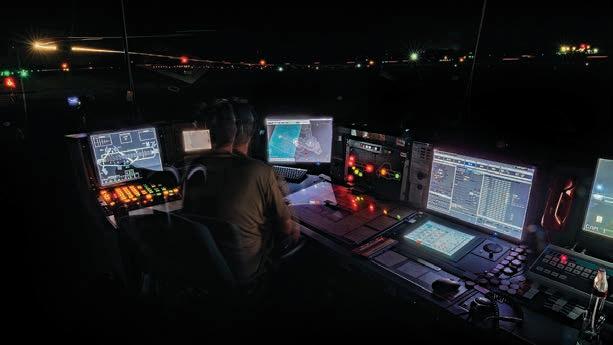
RAF AI activity is moving beyond proofsof-concept into deployable, model-driven capability across ISR, C2 and cognitive EW problem sets. Examples include vision-based sense and understand, probabilistic decisionsupport in Air Tra c Control (right), and knowledge-graph-enabled reasoning for complex C2 through programmes such as Air Power 4.0, all built on the NEXUS data fabric. Success will come from the continued critical shift toward scalable delivery, integrating data pipelines, ontologies and software engineering with assurance frameworks to transition models into operational systems.
uncrewed systems at scale. A sovereign, open, government-controlled data ontology, covering both operational data (the common operating picture, targeting and intelligence) and operating data (logistics, maintenance, engineering and supply chain), is the prerequisite for enterprisewide AI integration. It is also the mechanism by which government retains the right to compete, switch or combine suppliers without rebuilding the information architecture from scratch each time. This is unglamorous infrastructure work. It is also the single highest-leverage investment any defence ministry can make for its long-term AI sovereignty.
Implications for government and industry
The underestimation phase of Amara’s law is now. The window to establish structural AI advantage in western air power is open, but not inde nitely. The forces that navigate this moment successfully will be those that resisted the overestimation trap, understood that AI is a family of tools not a single technology, invested in trust and explainability through the lean years, built co-creative partnerships on terms that preserve sovereign control, and laid the unglamorous data foundations – the ontologies – that make enterprise-wide AI integration possible. They are the ones positioned to leverage AI’s compounding advantages with the institutional con dence to use them.
The high ground of future air power is not merely technological. It is epistemic: knowing which AI to use for which problem, knowing why it recommends what it recommends, knowing who owns it, knowing that it connects across the enterprise – speaking the same language, and knowing when to trust it with the mission.
Ahmet Akyol President & CEO, ASELSAN
What expertise does ASELSAN have in Surface Electronic Warfare Training (SEWT)?
ASELSAN has developed strong expertise in SEWT through more than two decades of close cooperation with the Turkish Air Force. This experience goes beyond providing standalone equipment and is rooted in a deep understanding of operational EW environments and real-world threat systems. All airborne EW systems delivered come with the training and mission data- le preparation infrastructure. Continuous engagement with end users has enabled ASELSAN to evolve its SEWT capabilities in line with increasingly complex threat landscapes, particularly modern Integrated Air Defence Systems (IADS).
A key strength lies in combining system development know-how with training design. ASELSAN can replicate realistic electromagnetic environments, including accurate threat signatures, radar behaviours and engagement scenarios. The solutions are grounded in eldproven technologies and operational feedback, ensuring training environments remain relevant, adaptive and aligned with mission requirements. This provides armed forces with high- delity, futureready EW training capabilities.
How can ASELSAN support Babcock International’s SEWT training capabilities?
ASELSAN’s support is based on both technical depth and a long-term partnership approach. Initially, ASELSAN provides critical system components, such as main and auxiliary emitters, which form the backbone of realistic EW training environments. These systems are designed to emulate a wide range of threat scenarios, including complex, multilayered IADS structures.
Beyond initial system delivery, ASELSAN’s approach is centred on continuous support and spiral development. As threat environments evolve, ASELSAN works closely with partners and end users to update and enhance system capabilities, ensuring that training solutions remain operationally relevant over time. This is particularly important given the rapid proliferation of advanced air-defence systems and the increasing sophistication of radar and missileguidance technologies worldwide.
The collaboration between ASELSAN and Babcock combines complementary strengths: ASELSAN’s expertise in EW system design and threat modelling, alongside Babcock’s experience in training integration and operational delivery. Together, it provides a comprehensive training solution capable of accurately emulating modern threat environments without gaps. This partnership is also well positioned to address international demand, as many countries seek advanced EW training capabilities to match evolving operational challenges.
How could this industrial partnership bene t the RAF?
For the RAF, this partnership provides access to a highly realistic and adaptable EW training environment capable of replicating advanced and layered threat scenarios. This is critical for preparing personnel to operate in contested electromagnetic environments.
It also enhances interoperability with NATO allies. ASELSAN’s long-standing integration with the Turkish Air Force
ensures alignment with NATO standards and operational practices. With the Turkish Air Force expected to operate platforms such as the Euro ghter Typhoon, opportunities for shared understanding and joint training will increase.
ASELSAN also brings the advantage of being closely connected to operational users. Its systems are developed with continuous eld feedback, resulting in practical, mission-focused training solutions. This enables the RAF to bene t from a partner that understands operational requirements and can adapt solutions accordingly.
What
other capabilities does ASELSAN have in airborne EW training?
ASELSAN’s airborne EW training capabilities are built on its broad portfolio of eld-proven airborne EW systems, ensuring strong alignment with real operational environments. Our approach integrates training with operational systems, enabling realistic, mission-focused training scenarios.
Core capabilities stem from systems such as KORAL, HAVASOJ and İHASOJ, which support advanced stand-o jamming and electronic support, allowing the simulation of complex threat environments. UAV-based solutions, including UAV EW payloads, further enhance training by incorporating unmanned platforms into EW scenarios.
In addition, self-protection systems such as HEWS, FEWS-U and the ANTIDOT family enable the simulation of defensive EW operations, including threat detection, identi cation and countermeasures deployment.
Supported by advanced software, threat libraries and scenario generation tools, ASELSAN’s airborne EW training solutions provide adaptable and realistic environments, helping operators develop and re ne tactics in line with evolving threats.
Training the next generation of aircrew
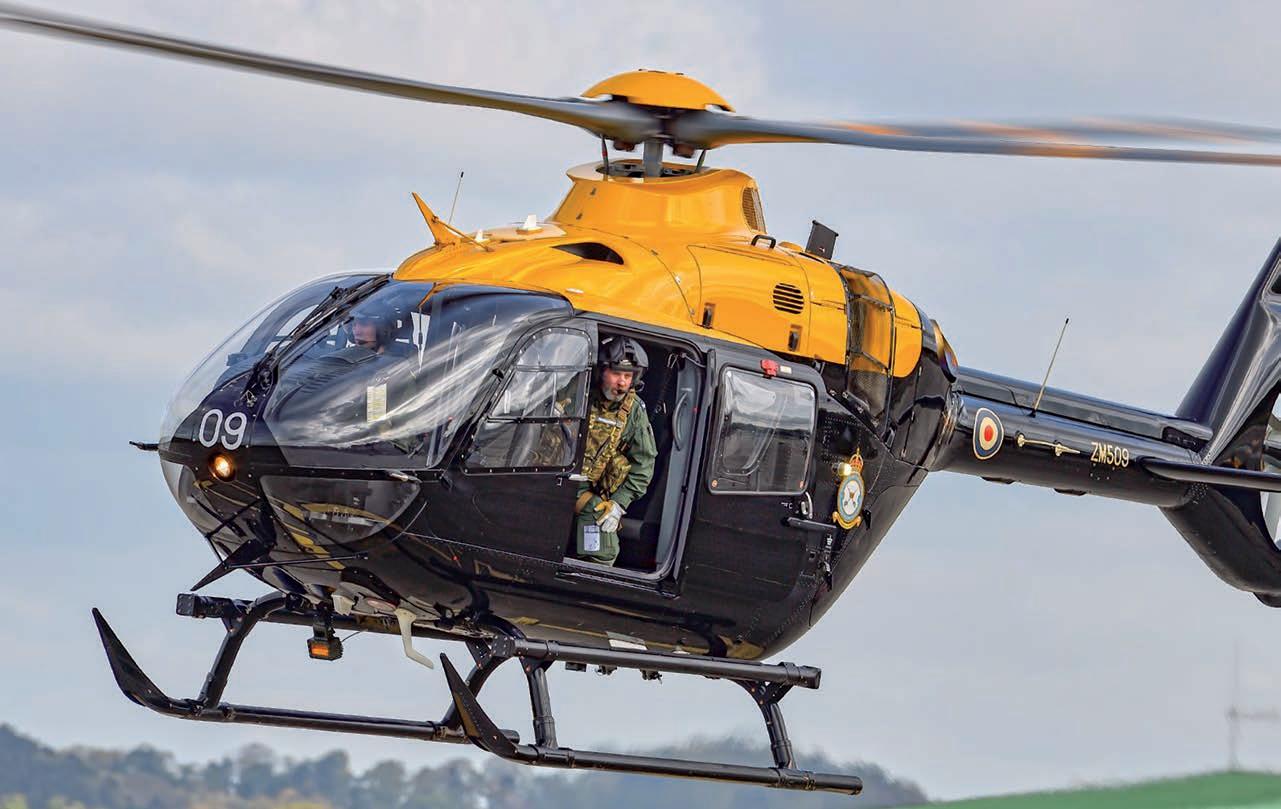
Air Vice-Marshal Ian Sharrocks, Air O cer Commanding No 22 Group, explains how future RAF fast-jet training will hinge on replacing the Hawk with a modern trainer, embedding simulation alongside live ying and tailoring the system to the digital, high-performance demands of next-generation ghters
TEmbedding more advanced synthetic training into fast-jet training is essential
(PHOTO: MOD/ CROWN COPYRIGHT)
he contemporary battlespace is increasingly volatile, uncertain and ambiguous, demanding a modernised approach to preparing aircrew for complex and rapidly evolving situations. In response, RAF fastjet training must deliver the next generation of ghter pilots who are professional, agile in their thinking and capable leaders – individuals who are always prepared and ready to y, ght and win.
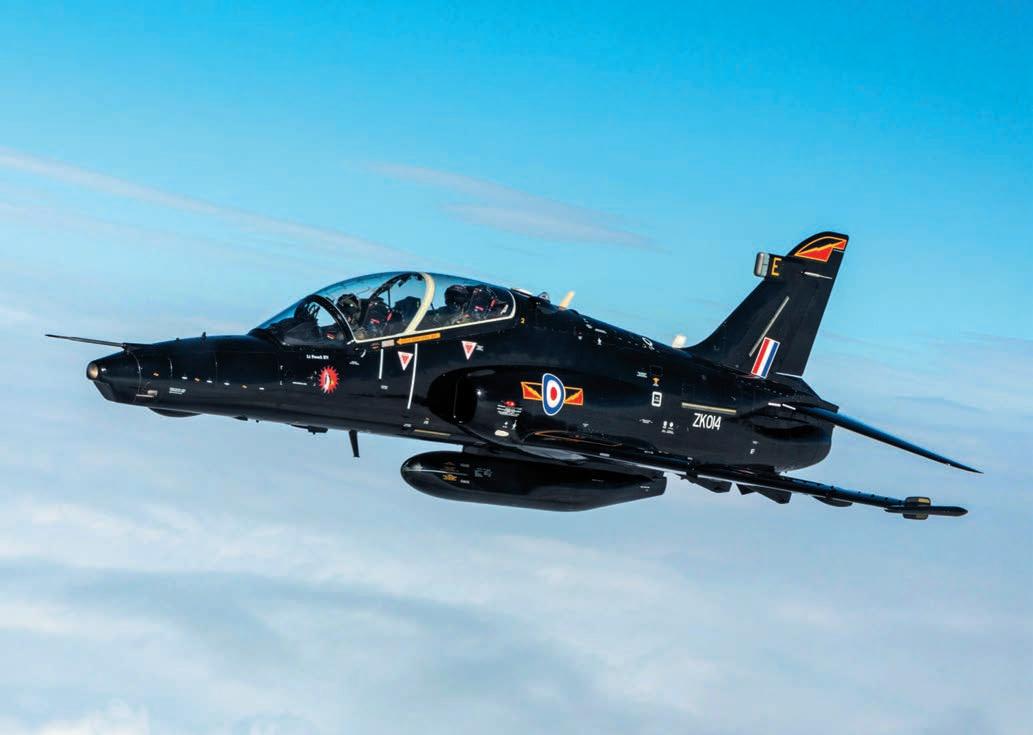
To achieve this, we must reshape the entire training system around the realities of modern air combat. Whilst the fast jet trainer programme is ongoing and no nal procurement decisions have been made, the rst step is replacing the Hawk with a modern trainer that matches the digital, networked and cognitively demanding world our pilots will y in. The Hawk, Mks 1 and 2 trainer aircraft, have served the RAF well, but their availability, design
and limited mission system capability no longer re ect the environment our pilots must master.
The Strategic Defence Review recommended that the Hawk T1 and T2 be replaced with a coste ective advanced jet trainer, and a team has been established to deliver this capability (a decision on this will be made after the publication of the Defence Investment Plan). Modern aircraft require operators who can process dense information, manage complex human-machine interfaces and make rapid, high-consequence decisions. A modern trainer must, therefore, act as a true lead-in for the front line – equipped with digital avionics, realistic data ows, tactical displays and the ability to integrate with synthetic networks.
Early exposure to this environment improves quality, building and normalising habits aligned directly to fth-generation operations. It improves throughput by decreasing the scale of the step to the Operational Conversion Unit (OCU), making transition easier and more e cient. It enhances safety, because complex systems and high workloads are introduced gradually rather than suddenly. And it deepens performance because trainees see clear relevance and value in every phase of their training journey.
Embedding simulation
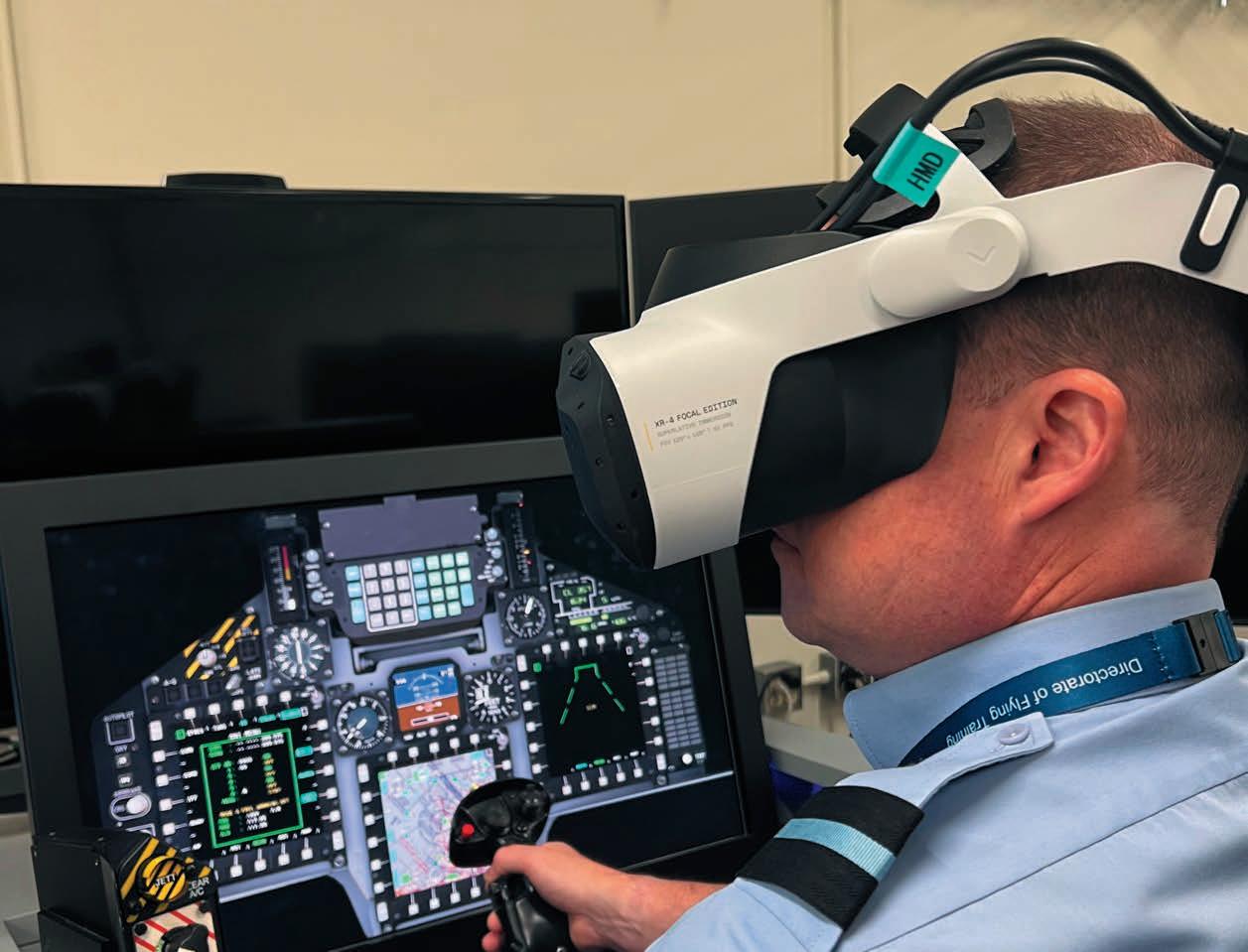
This transition to a new aircraft is inseparable from the second pillar of transformation: embedding simulation alongside live ying. Traditional simulators once provided valuable preparation, but the demands on future operators will require far more immersive and adaptable synthetic environments. Virtual reality, augmented reality, mixed reality and live virtual constructive systems can now deliver dynamic, operationally rich scenarios in which trainees experience the cognitive, emotional and physical demands of air combat without the constraints or risks of the live environment.
Synthetic environments allow us to rehearse advanced handling, air combat manoeuvring, multiship operations and complex battlespace dynamics repeatedly and safely. They enable the deliberate design of complexity, variability and instability –conditions that re ect real operations and challenge pilots to adapt quickly. When pilots subsequently progress to live ying, they do so with clearer mental models, stronger tactical awareness and greater con dence in their decision-making in complexity. They may also have the opportunity to improve the mathematical requirements for aircraft, instructors and airspace, while improving training relevance and quality. This integrated approach directly supports our core imperatives. It increases safety by allowing hazardous scenarios to be practised synthetically
before being own. It raises quality by o ering unlimited, feedback-rich repetition. It boosts throughput, because aviators progress faster and require fewer remediation events. It increases ful lment, as trainees experience competent performance earlier in their development, reinforcing motivation and professional pride. Synthetic and live ying are no longer separate worlds; they form a single, connected pipeline and ecosystem in which each strengthens the other.
Combat Edge
However, modern aircraft and advanced simulation alone are not enough. The deciding factor in future air combat will be human performance. Nextgeneration ghters require individuals who can think clearly under pressure, in complexity, and
manage cognitive load, demonstrate resilience and maintain adaptability amid uncertainty. This is why the RAF is placing human performance at the centre of training modernisation.
Combat Edge embodies this shift. It is a humancentred, holistic programme designed to raise the performance of the entire training population. Its purpose is not to produce occasional exceptional performers, but to lift the whole bell curve, ensuring every trainee operates at a consistently higher standard.
The Human Performance Programme complements a cultural reset on high performance. We will deliver this by embedding psychologists, physiologists, performance coaches and physical training specialists within training units. Their role will be to support aircrew through structured psychological skills training, physical optimisation and individual development plans. Trainees learn
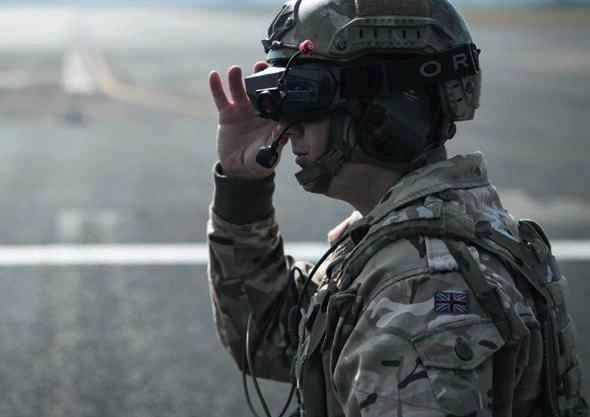
Integrating augmented reality systems, such as ATARS, will sharpen pilots’ combat edge
(PHOTO: MOD/ CROWN COPYRIGHT)
After decades in service, the Hawk trainer will be replaced (PHOTO: MOD/ CROWN COPYRIGHT)
mental skills, such as visualisation, attentional control, self talk, arousal regulation and re ective practice – essential for maintaining performance in demanding, unpredictable environments. These interventions build resilience, improve emotional regulation and help students adapt sooner to the pressures inherent in fast-jet training.
By combining modern aircraft, advanced synthetic environments and a holistic, scienti cally grounded high-performance system, we create a training enterprise that is safer, higher in quality, more e cient and more ful lling for our people. Replacing the Hawk aligns the platform with the front line and drives
“By capturing and analysing physical, cognitive, psychological and technical performance indicators, instructors and commanders can see how trainees respond, not just how they perform”
The Data Driven Training System provides the evidence base for this human performance focus. By capturing and analysing physical, cognitive, psychological and technical performance indicators, instructors and commanders can see how trainees respond, not just how they perform. This enables early identi cation of risk, bespoke coaching and a more consistent standard of assessment. It also o ers trainees clear, objective insight into their own progress, reinforcing ful lment and self belief.
e ciency and e cacy. Embedding simulation aligns the environment with the pipeline and the ecosystem. And investing in human performance aligns the individual with the culture, values and the ability to put agile, integrated and ready people onto the frontline. Together, these pillars form a coherent transformation to a UK Military Flying Training System (UKMFTS) 2.0 that prepares our aviators to y, ght and win in the most demanding operational conditions.
Setting a global benchmark for military ying training
Chloe Barker Managing Director, Ascent Flight Training
What role does Ascent play in keeping the RAF agile, integrated and ready?
Ascent has now been delivering the UK’s Military Flying Training System (UKMFTS) for 18 years. While it’s not been without challenges, our incredible team has provided a safe, credible and reliable training environment, while gathering the critical experience required to fully understand what it takes to deliver world-class ying training. Together with our partners, we have achieved more than 215,000 ying and 150,000 simulator hours to date, graduating more than 1,400 trainees and 900+ instructors. UKMFTS, provided across all three military services, is an international benchmark for ying training and an exemplar for an integrated enterprise partnership. Since the inception of UKMFTS, we have responded to evolving demands and added additional courses to our training provision – this year celebrating 10 years of both xed- and rotary-wing
training. Our latest addition is to deliver the Future ISTAR Rear Crew Training System (FIRCTS), which will see signi cant growth and advancements within our mission aircrew training from early 2027. Through FIRCTS, 85% of the syllabus will be delivered in the classroom or synthetically, using state-of-the-art Mission Simulators. This enables a more cost-e ective, digitised training system that keeps pace with the rapidly evolving landscape of modern warfare. The easily updatable system will ensure that skilled operators are delivered to their Operational Conversion Units, ready to engage with advanced technologies and platforms.
How is Ascent using technology to advance UKMFTS?
The use of emerging technology to modernise and improve ying training is at the core of our strategy. For example, a new mixed-reality training system is now in use across our fast jet training pipeline. This is a step change in how future fast jet pilots learn and re ne key ying skills, before they are assessed in an aircraft. This is not about replacing live ying – it’s about maximising the quality of every airborne sortie, improving trainee preparedness and driving down the need for re- y hours. It’s about optimising our system for streamlined performance. What is really impressive about this programme is the agile procurement approach, where industry engineers and instructors at RAF Valley rapidly iterate device capability, xing issues as individual training sessions are coded, tested and rolled out within 24 hours. This is how we need to work with our partners!
We are also working in partnership with Aquila Learning Ltd to deliver Ascent Training and Operations Management System (ATOMS) – an industry leading toolset enabling us to optimise management, delivery and assurance of the ying training system, supporting more than 2,000 sta and trainees across our live and synthetic assets. Integration of ATOMS is a huge leap forward for optimising Ascent’s delivery of UKMFTS.
With NFTE accreditation, what opportunities lie ahead for Ascent’s international partners? The global demand for military ying training is increasing in line with the changing geopolitical environment. Ascent, as the MOD’s Training Service Partner, will continue to work in partnership with No 22 Group and DE&S to deliver enhancements across the current system, as well as creating additional capacity, over and above the sovereign requirement. Ascent will continue to invest in indigenous capability and, through supporting the MOD’s aspiration for eet modernisation in the fast jet pipeline, we will deliver both value for money and a reliable training environment for sovereign and international students.
We are extremely proud that three of our training facilities are now NATO Flight Training Europe (NFTE) accredited, and we look forward to working closely with our NATO partners in the future. We are already training international students and instructors within UKMFTS and see NFTE as a huge opportunity to strengthen NATO partnerships and uphold the UK’s position as a global leader in military ying training.
Supporting global security
OJ Sanchez
President, Lockheed Martin Aeronautics
As you take the helm at Lockheed Martin Aeronautics, what are your immediate priorities for the business?
I am honoured to lead the exceptional Lockheed Martin Aeronautics team and build on a legacy of delivering mission-critical capability for our customers around the world. My priority is straightforward: ensure we continue delivering air power solutions that help our nation and its allies deter evolving threats and maintain security in an increasingly complex environment. That starts with working alongside and listening closely to our customers to understand their operational priorities, strategic objectives and long-term capability needs. Strong partnerships and strategic investment are foundational to everything we do, particularly across the UK, Europe and the broader allied community.
In my previous role leading the Skunk Works® team, I gained an even deeper appreciation for the expertise across our business and the critical role our solutions play in supporting global security. From the F-35, F-22, F-16 and C-130J to
unmanned, next-generation systems such as Vectis, our focus is on delivering integrated, interoperable solutions that provide operators a decisive advantage.
We are continuing to accelerate innovation across the enterprise by integrating advanced software, arti cial intelligence and digital engineering to enable faster capability delivery, improve sustainment networks and increase readiness. Increasingly, success in today’s environment depends not only on the aircraft itself, but on the ability to connect systems, and share information securely across coalition forces.
How are you accelerating innovation to ensure interoperability across allied forces?
Interoperability is essential to modern deterrence and coalition operations, and air power will continue to have a central role in creating multi-domain solutions. Our customers need sovereign systems that can operate seamlessly across domains, services and allied nations, and we are designing with that requirement from the outset.
One of the ways we are accelerating innovation is through the adoption of open architecture and digital technologies that enable faster integration of ready-now capabilities, greater exibility and more integrated solutions. This allows allied forces to adapt quickly to evolving mission requirements while deepening interoperability across a broad operational landscape.
Just as important are the partnerships that underpin these e orts. We are working closely with governments, industry partners and operators across the UK, Europe and beyond to strengthen
collaboration through co-development initiatives, sustainment partnerships and shared technology investment. Earlier this year, we joined as a Tier 1 member of the Manufacturing Technology Centre and launched a UK Technology Roadmaps initiative that will help us build on the long legacy of transatlantic excellence to deliver mutual security bene ts.
At Lockheed Martin, we view innovation and international cooperation as mutually reinforcing. Together, they create a more resilient and connected defence ecosystem that strengthens collective security and ensures our allies have what they need now and for the future ght.
How is Lockheed Martin investing to ensure allies maintain air superiority for decades to come?
Maintaining air superiority requires sustained investment, not only in advanced capability, but also in the industrial base, workforce and partnerships that support long-term readiness. Across Lockheed Martin, we continue to invest signi cantly in production capacity, sustainment, digital engineering and next-generation technologies to ensure allied forces have the reliable, advanced capabilities they need to maintain operational advantage.
Equally important is investing in people and international partnerships. Collaboration across allied nations helps strengthen critical skills, expand industrial resilience and ensure the transfer of knowledge to the next generation of engineers, operators and innovators who will shape the future of defence. That long-term commitment to innovation, partnership and mission success will remain central to how we support our customers around the world.
F-35A opportunities
Air Commodore Nick Lowe, Head Capability Delivery Combat Air, explains why the decision to acquire 12 F-35A Lightning fast jets was a deliberate strategic shift, aimed at delivering the RAF nuclear strike capability, longer range, cheaper procurement and closer alignment with NATO allies while complementing the carrier-capable F-35B
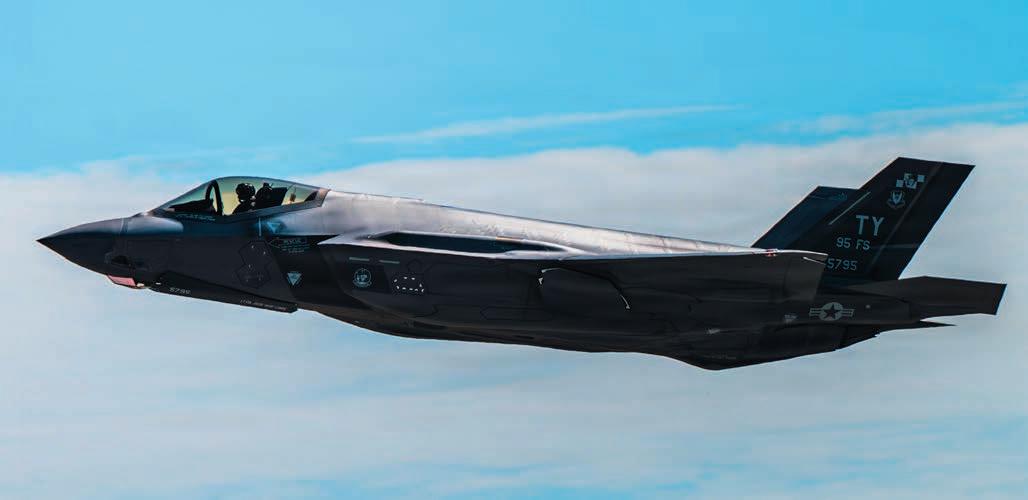
The F-35 Lightning is a fth-generation, multi-role stealth ghter designed to dominate the modern battlespace. With three variants – F-35A, F-35B and F-35C – each tailored to speci c operational needs, the aircraft has become a cornerstone of air power for many nations, including 14 NATO allies.
The UK, a leading partner in the F-35 programme, has focused primarily on the F-35B for its carrier strike capabilities. However, in June 2025, the UK Government announced the acquisition of the F-35A, the conventional take-o and landing (CTOL) variant, to complement the UK’s existing eet and strengthen national security by joining NATO’s Dual Capable Aircraft (DCA) nuclear mission.
The F-35A is the most widely adopted variant of the F-35 family, designed for conventional air eld operations. All F-35 variants boast advanced
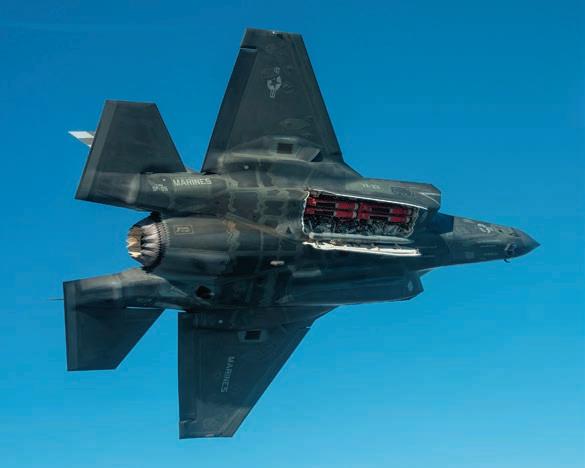
stealth technology, sensor fusion and unparalleled situational awareness, making each variant a formidable asset in air-to-air, air-to-ground and ISR (intelligence, surveillance and reconnaissance) missions. Crucially, the F-35A is equipped with a larger internal weapons bay than the F-35B, which increases the array of weapons that can be loaded internally. It also has a greater internal fuel capacity than the F-35B, providing a longer range and endurance, which is particularly advantageous for missions requiring extended loiter times or deeppenetration missions into highly contested airspace.
The F-35A’s ace card is its ability to carry nuclear weapons, speci cally the B61-12 precision-guided nuclear bomb, as part of NATO’s DCA nuclear mission. This capability positions the F-35A as a critical component of NATO’s nuclear deterrence strategy, ensuring the Alliance’s ability to respond to emerging threats.
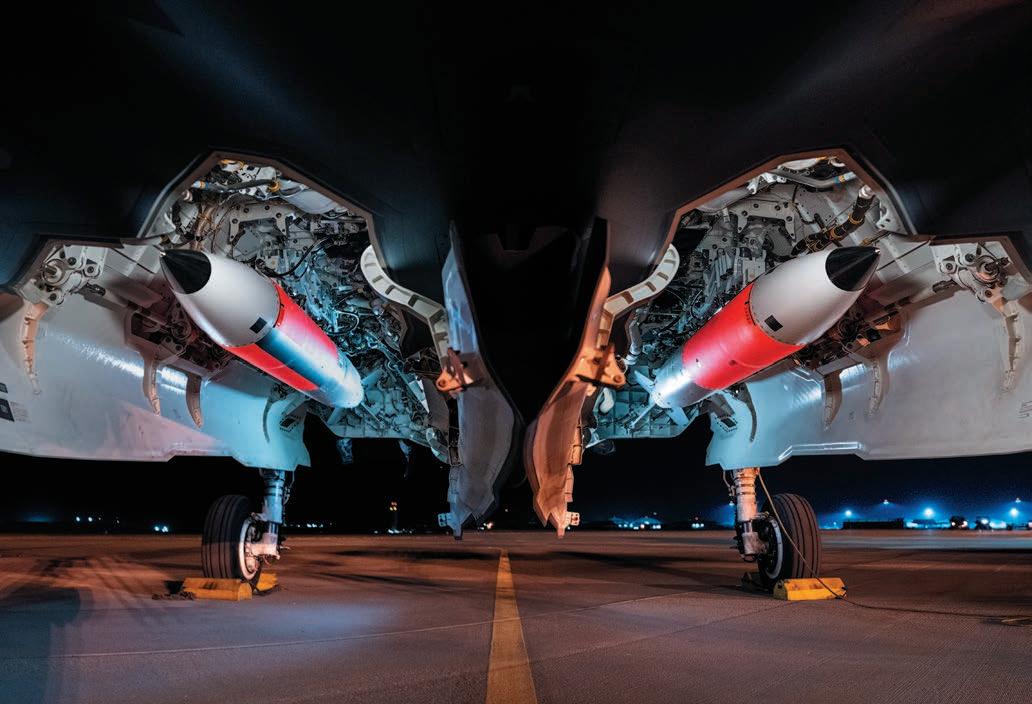
Compared to the F-35B, the F-35A’s larger internal weapons bay enables the carriage of two B61-12 nuclear bombs (PHOTO: SANDIA NATIONAL LABORATORIES)
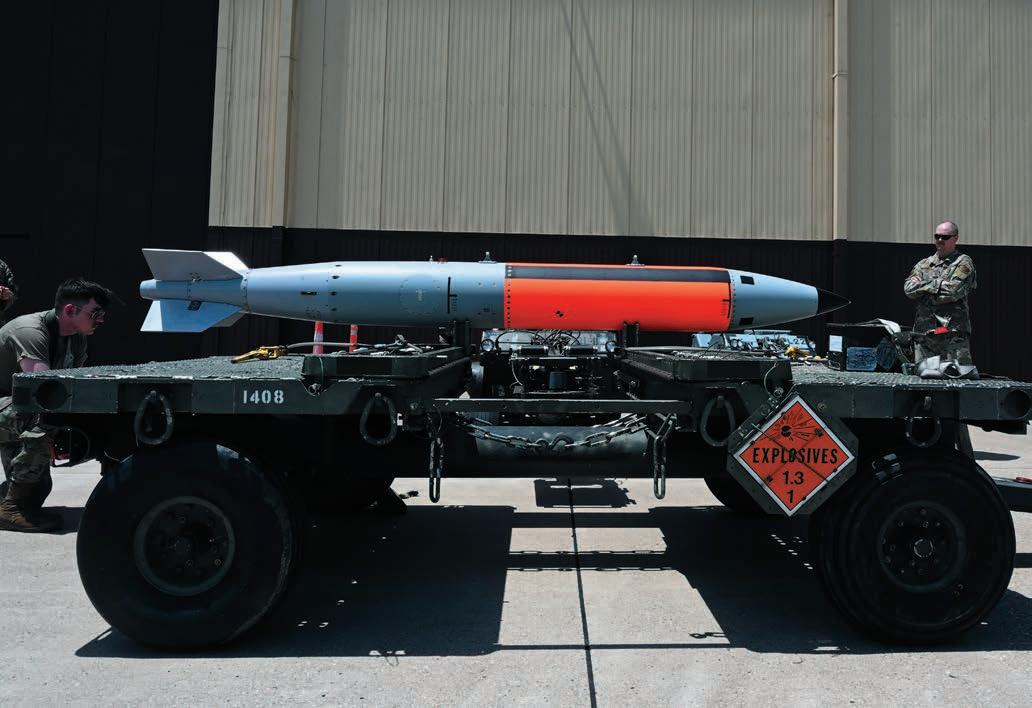
The B61-12 nuclear bomb features precision guidance and variable yield options (PHOTO: U.S. DEPARTMENT OF WAR)
Following the Strategic Defence Review, on 24 June 2025 the UK Government declared it would purchase at least 12 F-35A within the UK’s second F-35 procurement phase. There are two compelling reasons for the switch from the F-35B to the A variant. First, the purchase marks the biggest strengthening of the UK’s nuclear posture in a generation. It reintroduces a nuclear role for the RAF for the rst time since the UK retired its sovereign air-launched nuclear weapons following the end of the Cold War, and it will reinforce NATO’s nuclear deterrence posture. Second, F-35A will enhance the speed and cost-e ectiveness of Operational Conversion Unit (OCU) training to maximise the pace of UK Lightning Force Growth.
Commonality and interoperability
The F-35A and F-35B share a high degree of commonality, with approximately 70%-80% of their components being identical. Both variants feature the same advanced avionics, stealth design and mission systems, ensuring seamless interoperability. However, the key di erences lie in their operational roles and design features. The F-35B, designed for short take-o and vertical landing (STOVL), is optimised for operations from aircraft carriers and austere air elds. This capability comes at the cost of reduced internal fuel capacity and payload in comparison to the F-35A.
The shared systems and components between the two variants simplify maintenance, logistics and training, enabling the UK to leverage its existing F-35B infrastructure to support the introduction of the F-35A. This commonality also reduces the overall cost of ownership and enhances operational exibility. Plus this high level of commonality is good for the UK as, across the three F-35 variants, approximately 15% of every jet is built in the UK, sustaining over 16,000 jobs and vital industrial skills across a broad network of suppliers.
Making the most of what we have
The F-35A is generally less expensive to operate than the F-35B. The STOVL capability of the F-35B requires a more complex propulsion system, including the Rolls-Royce LiftSystem, which increases maintenance demands. In contrast, the F-35A’s CTOL design is simpler and more coste ective to maintain. Additionally, the F-35A’s greater fuel e ciency and longer range contribute to lower operational costs over its life cycle.
The F-35A purchase cost is about 20%-25% less than the B variant. While exact gures vary, depending on factors such as mission pro les and support infrastructure, US Government estimates suggest the F-35A’s cost per ight hour is also
about 10% lower than that of the F-35B. This cost di erential makes the F-35A an attractive option for augmenting the UK’s Lightning Force, particularly for missions that do not require STOVL capabilities.
The introduction of the F-35A will signi cantly enhance UK Lightning Force capacity and operational exibility. The F-35A’s lower operating costs and longer range make it well suited for OCU training. In essence, more training can be conducted in every sortie and with reduced engineering demands. This means the Lightning Force can maximise the use of its resources and train pilots more quickly.
The high degree of commonality and interoperability between the F-35A and F-35B means it is much more straightforward for pilots and maintainers to be trained on both types than would otherwise be the case. While there are STOVL speci cs that require specialist training, pilots trained on one variant can transition to the other with minimal additional instruction, while shared maintenance procedures reduce the logistical burden. Furthermore, using principally F-35A on the OCU releases additional B variants for carrier operations when required.
Dual Capable Aircraft
NATO’s Dual Capable Aircraft are ghter jets capable of delivering both conventional and nuclear weapons. These aircraft play a vital role in the Alliance’s nuclear deterrence strategy, ensuring that NATO can respond to threats with a exible and credible range of options. The F-35A, as a certi ed DCA, is equipped to carry the B61-12 nuclear bomb, which features precision guidance and variable yield options.
The inclusion of the F-35A in NATO’s DCA eet enhances the Alliance’s ability to deter aggression and maintain strategic stability. For the UK, operating
the F-35A as a DCA strengthens its contribution to NATO’s collective defence and reinforces its position as a key player in European security.
Some 14 NATO allies operate the F-35A as their primary combat aircraft. A subset of these nations has committed to deliver the NATO DCA mission. By acquiring the F-35A, the UK would align more closely with all F-35 NATO nations, enhancing interoperability and facilitating joint operations. Shared platforms enable seamless integration of tactics, techniques and procedures, ensuring that the UK can operate e ectively within NATO’s integrated air and missile defence architecture and strengthen the Alliance’s nuclear posture.
Delivering the NATO DCA mission requires much more than the aircraft. Nuclear commitments are a ‘no-fail’ mission. This is a whole of Air Base and Air Wing endeavour; indeed, the return to nuclear capability will a ect the whole of the RAF. Somewhat ‘back to the future’, there will be old lessons, procedures and mindsets to revitalise. But time has moved on since the RAF relinquished its nuclear weapons responsibilities in 1998. B61-12 is a US weapon for NATO use, not a UK WE177.
Contemporary ‘Rubik’ deterrence concepts now emphasise the combination of conventional, nuclear and novel capabilities, rather than stovepiped planning. And aggressive revisionist states are now exing their muscles, unincumbered by the constraints of the bipolar Cold War world. So, there is much that is new or di erent to learn too. In that sense, the (re)generation of an RAF airlaunched nuclear capability will exemplify how the RAF becomes more Agile, Integrated and Ready.
The RAF has opted to acquire at least 12 nuclearcapable F-35A Lightning jets, like these examples from the Royal Australian Air Force (PHOTO: MOD/ CROWN COPYRIGHT)
HOW THE F-35 IS ADVANCING ALLIED AIR POWER THROUGH PARTNERSHIP AND INNOVATION Designed for the future
One of the de ning strengths of the F-35 is that it was designed with growth and adaptability at its core. Chauncey McIntosh, Lockheed Martin F-35 Vice President and General Manager explains
As I speak with military leaders, government o cials and industry partners around the world, one reality is impossible to ignore: the security environment is changing at an extraordinary pace. Threats are evolving faster, operations are becoming more interconnected, and the need for allies to operate together seamlessly has never been greater.
For the F-35 programme, that challenge has shaped our approach from the very beginning. We did not set out to build an aircraft optimised for a single moment in time. We set out to build an aircraft, and a partnership, that could evolve alongside the mission.
Today, with more than 1,330 aircraft operating worldwide, the F-35 continues to demonstrate why it remains the aircraft of choice for allied air power. Nations are investing in the aircraft not only because of what it delivers today, but because of its ability to continuously modernise, integrate emerging technologies and strengthen interoperability among allied forces for decades to come.
A global enterprise built on partnership
One of the things that makes the F-35 unique is that, from the outset, the programme was designed as a multinational enterprise, one that strengthens collective
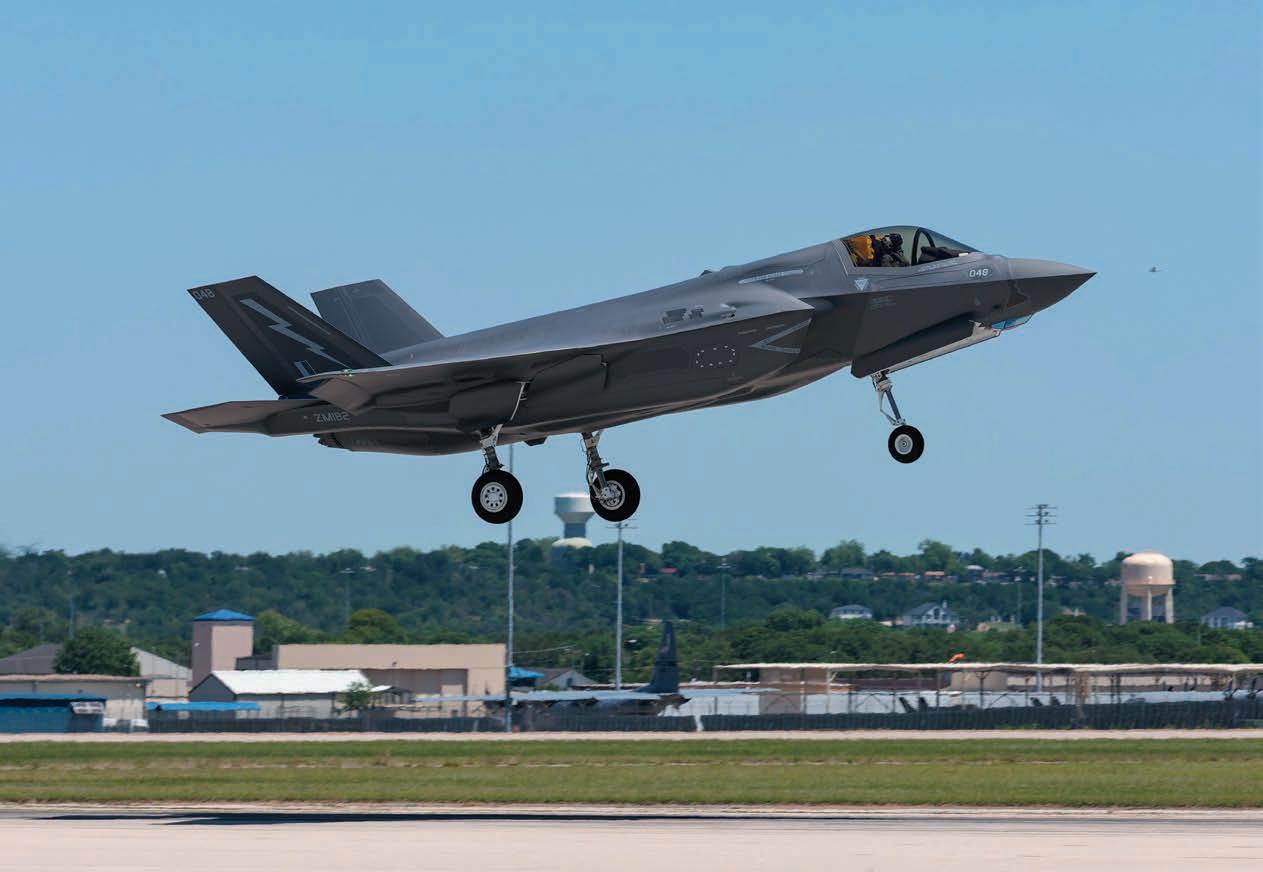
The RAF took delivery of its 48th F-35B in 2026 (PHOTO: LOCKHEED MARTIN)
security while creating long-term economic and industrial opportunities for participating nations. Simply put, the F-35 is more than aircraft: it represents allied strength and economic impact that spans the globe.
The United Kingdom is a powerful example of that model in action. British industry contributes to every F-35 produced, supporting not only the UK’s eet but also the thousands of aircraft expected to operate globally throughout the life of the programme. That work supports more than 20,000 highly skilled jobs across the UK and is expected to contribute £45.2 billion to the national economy.
At the same time, the F-35 community continues to grow. This year marked an important milestone with delivery of the 48th F-35 for the UK eet, completing the nation’s initial procurement phase. Germany, Singapore and Canada are preparing to receive their rst aircraft, while Poland and Finland will welcome the F-35 to their home soil for the rst time.
These milestones represent more than eet growth. They re ect the increasing importance allies place on interoperability and collective deterrence in an increasingly complex security environment. In the 2030s, approximately 700 F-35s are expected to operate across Europe alone, creating an unprecedented level of interoperability among allied air forces.
With 20 nations having selected the aircraft, pilots and maintainers are able to train together, share information more e ectively and integrate operations with greater speed and precision. In a world where military operations increasingly span air, land, sea, cyber and space domains, that ability to operate as a connected force is a force multiplier.
Designed to evolve
One of the de ning strengths of the F-35 is that it was engineered with growth and adaptability at its core. Its open systems architecture allows new capabilities to be integrated over time without requiring major redesigns, ensuring operators can respond to evolving threats and emerging technologies.
The ongoing Block 4 modernisation e ort is a prime example of that approach. It is delivering enhanced electronic warfare capabilities, expanded weapons capacity and AI-enabled technologies that help pilots and commanders process information more quickly and make better-informed decisions.
Equally important, these advancements are shaped by the operational experience of customers across the global eet. The close collaboration among governments, military operators and industry allows us to rapidly evaluate new capabilities, incorporate lessons learnt and deliver meaningful upgrades to the eld.
Integration progress and recent test milestones of sovereign weapons developed by British industry, Meteor and SPEAR, further demonstrate how the
aircraft can incorporate advanced capabilities that preserve operational advantage while strengthening sovereign defence capability.
We have also seen the aircraft continue to validate its performance in real-world operations. Its combination of stealth, sensor fusion and advanced connectivity enables pilots and commanders to operate e ectively in highly contested environments while maintaining a decisive advantage in awareness, survivability and mission-e ectiveness.
Connecting the battlespace
The F-35 was never intended to be another ghter aircraft. It was designed to be a force multiplier. Its ability to collect, fuse and securely share data allows operators to develop a clearer understanding of the operational environment, enabling faster decisionmaking across coalition operations. The aircraft serves as a central node within a larger networked battlespace. That capability becomes especially powerful in multinational operations, where interoperability and information sharing are essential to mission success.
F-35 was designed with growth and adaptability at its core
A collaborative manned/ unmanned airborne team showcasing Vectis (front) and F-35 (left) (PHOTO: LOCKHEED MARTIN)
The
(PHOTO: LOCKHEED MARTIN)
The F-35 programme supports over 20,000 jobs in the UK
A recent example is the collaboration with the UK Ministry of Defence on Babel Fish, an exercise that advanced secure communications and data-sharing capabilities across the F-35, allied sovereign systems and domains. E orts like this help unlock the full value of a connected force and demonstrate how allied nations can operate more e ectively together.
The F-35 will also play a central role in a broader system-of-systems approach de ning nextgeneration air power. As a mature command and control network has already been developed, there is a not-too-distant future in which F-35s will operate alongside crewed and uncrewed systems. Emerging technologies, including AI-enabled mission systems, predictive maintenance tools and enhanced spacedomain connectivity, will further expand the power of the F-35 and its lead role in multi-domain operations.
Sustaining operational advantage for decades to come
Of course, maintaining operational advantage requires more than modernisation alone. Readiness and a ordability remain equally critical as the global eet continues to expand. Across the enterprise, we are working closely with customers and industry
partners to strengthen regional sustainment capabilities, improve supply-chain resilience and increase aircraft availability. Those e orts are essential to ensuring operators have the capabilities they need, when and where they need them.
Advances in predictive maintenance and data analytics are helping operators identify issues earlier, reduce downtime and ensure aircraft are available when and where they are needed. As allied nations continue to focus on resilience and operational preparedness, these capabilities will become increasingly important.
Ultimately, the long-term strength of the F-35 programme lies in the combination of continuous modernisation, multinational partnership and a commitment to long-term sustainment. As the global eet continues to grow, the F-35 will remain at the centre of allied air power, connecting forces, strengthening deterrence and enabling coalition operations across domains.
That is the true value of the F-35. It is not simply an aircraft. It is a platform for partnership, a catalyst for innovation and a long-term investment in the collective security of allied nations around the world.
(PHOTO: BAE SYSTEMS)
WAR AS A WEB, NOT A BATTLESPACE
The changing character of war
Air Vice-Marshal Mark Ridgway, the RAF’s Director Defence Futures, highlights how air and space power will evolve over the next 20 years
Over the next two decades, air and space warfare will be reshaped: less geography and more interdependence. Power and military success will be derived from connected (and connecting) systems, as much as the speci c capabilities of air and space forces. At the same time, the environment will be full of contradictions: more transparency, yet greater ambiguity; faster action, but fewer decisive outcomes. This shift is being driven by several factors: persistent great power rivalry, more (non-state) security actors, rapid technological change,
environmental stress and economic realignment. Together, these pressures are blurring the old lines between peace, competition and con ict. As these stages become ever less distinct, ‘peace’ will be less a stable condition and more a temporary balance. Consequently, long-held assumptions about where war happens and how advantage is created will be challenged. Con ict will not stay at the front line or be limited to kinetic e ects. It will ow through the systems that underpin everyday life: energy networks, supply chains, nance, data platforms and space-based services. Air and space
Over the next 20 years, the battlespace will become a web of interconnected interdependencies
(PHOTO: SHUTTERSTOCK/ SDECORET)
Services delivered from space will become heavily contested (PHOTO: SHUTTERSTOCK/ KINOMASTERSKAYA)
“Human-machine teaming will be essential, to deliver e ects and to manage decision-making as sensing and targeting cycles accelerate”
power sit at the centre of this shift, not just as ghting domains, but as the vital connectors that allow modern nations and militaries to function.
Future war is, therefore, best understood not as a series of battles, but as a web that touches almost every part of human activity. In that web, control will often be local and temporary, while exposure is constant. E ects will spread rapidly across domains. The ability to detect, connect and protect systems will matter as much as the ability to strike targets.
Air power will feel and demonstrate this change starkly. Air superiority was once linked to relative safety and freedom of action. Over the next 20 years, that assumption will weaken. The air domain is becoming crowded, transparent and contested. Cheap uncrewed systems, widespread sensors and persistent surveillance mean movement is easier to spot and track. Hypersonic weapons compress reaction times and place new pressures on basing and force protection. Fixed infrastructure – from runways to headquarters – will be easier to nd and harder to defend.
As a result, survival in the air will rely less on platform performance alone and more on behaviour and system design. Dispersal, deception, mobility and rapid recovery will become routine, not exceptional. Human-machine teaming will be essential, to deliver e ects and to manage
decision-making as sensing and targeting cycles accelerate. Air forces will be judged on their ability to keep operating under attack and degradation, not on their performance in ideal conditions.
Contested space-based services
Space power, too, underlines this logic. Spacebased services are essential for modern warfare, supporting communications, navigation, intelligence and targeting across all domains, as well as being more dual-use with non-military purposes. As space becomes increasingly congested and contested, so those services will become increasingly vulnerable. Adversaries will have stronger incentives to disrupt or degrade space services to shape competition, crisis and con ict.
Freedom of action in space cannot, therefore, be taken for granted. As with air power, the key question will not be whether space systems can be perfectly protected, but whether forces can operate through disruption and recover quickly when systems fail. Resilience becomes critical: diverse orbits, rapid reconstitution, protected ground segments and access to credible alternatives.
Additional complexity is added by the fact that air and space power will be embedded in a wide ecosystem of dependencies. Commercial providers will own much of the infrastructure that militaries
rely on, from satellite communications to cloud services and logistics. Non-state actors – criminal groups or technologically enabled individuals – will be able to generate e ects once reserved for states. A disruption in space services could ripple through civil aviation, nancial markets and emergency response. The line between civilian and military systems will blur, and societal resilience will become inseparable from military e ectiveness.
Competition, crisis and con ict
War in this context will be de ned by simultaneity. Competition, crisis and con ict will occur at the same time. Traditional phased campaigns give way to continuous activity, where positioning and momentum matter more than formal transitions.
Across this spectrum, con ict becomes system versus system. Platforms and weapons still matter, but they will rarely decide outcomes on their own. Victory will depend on the ability to sustain logistics, replenish forces, integrate allies, maintain legitimacy and adapt faster than an adversary. Air and space power are central to this contest, enabling speed and reach, but also exposing vulnerabilities when key dependencies are disrupted.
Looking ahead, the operating environment may evolve in di erent ways. In some futures, competition remains controlled, but hybrid pressure intensi es. In others, multipolar rivalry hardens
spheres of in uence and turns interdependence into a weapon. In more severe cases, systemic fracture could drive prolonged con ict, straining industrial capacity and social cohesion.
Across all these paths, some features remain constant. War becomes more visible but harder to interpret, faster but rarely decisive, and deeply entwined with the systems that sustain societies. The demands on defence do not just increase in scale, they change in nature.
For air and space power, success will rest on integration and endurance. Forces that link sensors, platforms, data and partners will generate advantage more quickly. Nations that can operate through disruption and recover fast will project power more credibly. Coalitions that move beyond basic interoperability towards true interchangeability will be better positioned to combine e ects at speed.
The future of war will not hinge on a single decisive battle or technological breakthrough. It will be shaped by how well nations manage complexity, protect the systems they depend upon and adapt as pressure builds. In a world where the battlespace is now a web, the decisive edge will belong to those who recognise that readiness is a habit and a discipline, not a moment – and that air and space power are not just ghting domains, but foundations of national resilience and strategic advantage.
In future wars, nations will need to nd ways to protect the systems on which they depend (PHOTO: SHUTTERSTOCK/ UMOMOS)
Collective action and resolve
Air Marshal (Retd) Greg Bagwell CB CBE FRAeS, President of the Air & Space Power Association, calls for a reinvigoration of the ideals, concepts and vision that are the bedrock of collective action and resolve
It is my pleasure to once again contribute to the RAF Air and Space Power publication, which supports the Global Air and Space Chiefs’ conference. Like this publication, the conference itself continues to be a superbly supported event, and I look forward to extending a warm welcome to all our participants and delegates. We, at The Air & Space Power Association, have done our
utmost to ensure that the Conference will live up to expectations and the high standards we set ourselves.
But, as has been the case for some time now, we are living in extraordinary times.
Unlike many of our ever more youthful-looking senior air and space force leaders and practitioners, I am probably old enough to nd the current world situation all too familiar. And that’s not very reassuring.
A belligerent, angry and increasingly isolated Russia continues to struggle with its identity and place in the world. It, above all other countries, turns to coercion, deception and outright violence to achieve its own illegal aims. It plays the role of villain perfectly, and it is this Russian character that seems so eerily familiar to those with greyer hair.
NATO was formed in 1949 to provide collective security from the threat of the Soviet Union. Although
NATO has stayed in existence to this day, some 77 years later, its fundamental purpose as a uni ed Alliance now faces its greatest test under the most exacting circumstances. How we respond to that challenge will certainly de ne the next decade, if not the next 77 years.
At the end of the Cold War, many Nations understandably took a peace dividend and reduced the investment in their Armed Forces – that was understandable in the circumstances. But as we now know, many (including my own Nation) probably cut too far, ignoring the warnings of military professionals as to the di culty of reversing reductions made so readily at the time. National wealth was diverted to more pressing issues, and Europe and the West entered a period of relative calm and prosperity.
The threat of the Soviet Union faded in the rear-view mirror, and we focused on boutique militaries
An RAF Typhoon trains with NATO Members and partner nations at the Red Flag exercise (PHOTO: MOD/CROWN COPYRIGHT)
Russian combat aircraft, such as this Tu-142 (right), are regularly intercepted by RAF QRA fast jets
that looked good, but lacked depth and resilience. We fought wars of choice that bent our force structures away from all-out war and lowered public appetite for future con ict. But it forgot the fundamental principle of deterrence as a means to avoid that outcome.
Our adversaries paid attention and, mindful of our weakness, both politically and militarily, they seized the opportunity and continue to do so.
Many have rightly criticised those past decisions and the subsequent lack of response when warning signs appeared, but the correct response is collective action and resolve, not dissolution or separation.
Isolationism as a policy can be attractive politically, but our world is both guratively smaller and more connected and codependent than ever. Thanks to cartographers, Russia is viewed as a continental European problem; look down on a globe
“With the advent of increasingly long-range systems for conventional attack, or even those launched from unconventional means... no homeland remains safe”
and you quickly see a very di erent picture. And with the advent of increasingly long-range systems for conventional attack, or even those launched from unconventional means such as shipping containers or sea freighters, no homeland remains safe. The purpose of NATO should be as strong today as it has ever been.
And all of us attending Conference know what a vital part air and space power plays in that endeavour. Control of the Air and Space domain remains critical to our future success and prosperity. But air and space
control is no longer assured, or the conventional contest it once was – Ukraine has taught us that. Our collective defence remains the foundation of our collective security and prosperity, but our collective values, ideas and close cooperation remain the bedrock on which it is built. This publication is the opportunity to explore the ideas and concepts that will shape the next decade of peace. Because if we fail, we fail as one, and the price of that failure is a very heavy one indeed – for all of us.
(PHOTO: MOD/CROWN COPYRIGHT)
Nuclear weapons and the moral component
With the reintroduction of an airborne nuclear capability, the RAF has to address the legal, moral and ethical challenges that this change in doctrine brings. Air Vice-Marshal Mark Phelps, the RAF’s Director of Legal Services, explains what they are and how the RAF should address them
“We are all in our democracies, targets, victims and, as citizens, participants in nuclear deterrence; we must, therefore, develop moral reasoning rather than content ourselves with a cry of moral outrage.”
Joseph
Nye, Nuclear Ethics (1986)
The explosion of the atomic
at Hiroshima, Japan in 1945. However troubling the use of nuclear weapons may be, they are a strategic reality in today’s security environment
The announcement of the UK’s procurement of the F-35A, and, with it, the capacity to carry a nuclear munition, is strategically important. It both reinforces the UK’s deterrence posture and reopens a long-standing and unresolved moral question: how can the possession and potential use of nuclear weapons be reconciled with moral responsibility?
This debate takes place between two poles. The rst lies in the claim that nuclear weapons are intrinsically immoral. Their destructive potential, indiscriminate e ects and long-term humanitarian consequences render them morally impermissible ab initio. On this view, no doctrine, intention or circumstance can redeem weapons, the use of which would foreseeably cause mass civilian su ering and environmental devastation.
The second pole centres on pragmatism –an argument that nuclear weapons, however morally troubling, are an inescapable feature of the contemporary security environment. As Brad Roberts cogently explains in his seminal work of 2023, Morality and Nuclear Weapons: Practitioner Perspectives, from this perspective, deterrence
bomb
is not merely a strategic choice but a moral obligation, owing from the state’s primary duty: the protection of its citizens. The possession of nuclear weapons is thus justi ed not by their use, but by their role in preventing catastrophic con ict.
An ethical paradox
Classical deterrence theory seeks to avoid war by convincing a would-be aggressor that the advantage they seek through such aggression would be far outweighed by the consequences of attack wrought upon them. The very nature of nuclear deterrence, therefore, creates an ethical paradox in simultaneously presenting the use of nuclear weapons as too horrifying to countenance while signalling a willingness to employ them to temper the ambitions of a would-be aggressor.
The moral conundrum becomes more complicated when considering the use of tactical nuclear weapons. These systems are often presented as more ‘usable’ due to their lower yield and supposed battle eld discrimination. However, this very framing potentially destabilises the moral logic of deterrence. If nuclear weapons are no longer weapons of last resort, but instruments of limited war ghting, the rewall between deterrence and use collapses. Tactical nuclear weapons do not sit comfortably within a doctrine that relies on existential fear to prevent con ict. Instead, they risk normalising nuclear use and blurring the boundary between conventional and nuclear war.
From a just-war perspective, this presents profound di culties. The principles of discrimination and proportionality are foundational to moral reasoning about the use of force. Nuclear weapons, strategic or tactical, strain these principles to their breaking point. Even lower-yield nuclear detonations produce blast, heat, radiation and long-term environmental e ects that may not be reliably contained within military targets.
To put this into context, while tactical nuclear weapons are less destructive than their strategic counterparts, having a yield of between 0.1 and 50 kilotons, one should note that the atomic bomb dropped on Hiroshima in 1945 had a yield of 15 kilotons, the e ects of which are still being felt more than 80 years later. Hence, the moral hazard is not merely that such weapons could be used unjustly, but that their e ects make just use implausible in practice, rendering all such weapons strategic by e ect.
Yet to conclude that nuclear weapons are morally impermissible is to confront a further dilemma. If deterrence has, in fact, contributed to the absence of great power war since 1945, can its abandonment be morally justi ed? Critics of unilateral disarmament often argue that it would not eliminate the knowledge of nuclear weapons, nor guarantee reciprocal
restraint. In a world characterised by strategic mistrust, abandoning deterrence may expose states to coercion or aggression, thereby failing the very moral duty that motivates the abolitionist position. This argument is brought into sharp relief when considered in the context of Russian aggression against Ukraine and the associated nuclear rhetoric.
The moral component
This is where the ‘moral component’ of nuclear weapons must be understood not as a binary judgement between good and evil, but as an ongoing responsibility borne by societies. As philosopher Joseph Nye observed, citizens are not passive observers of deterrence; they are implicated in it. Nuclear weapons are authorised, funded and legitimised through political processes carried out in the name of the state. Moral responsibility therefore demands sustained ethical engagement with the realities of nuclear policy.
This is particularly the case for those in the kill chain who need to reconcile personal ethical positions with participation in an act that will likely result in mass destruction. To equip its personnel to undertake this task the RAF will have to ensure that education, training and culture are reinforced as essential components of a credible and morally responsible nuclear posture. Nuclear deterrence poses a profound moral challenge, simultaneously balancing an abhorrence of the e ects of the weapon itself with a love of the very peace that it has helped to preserve.
Morality in the nuclear age is found in restraint, legality of action and acceptance of responsibility. These characteristics are at play in the RAF within our professionalism, adherence to the law and clear defensive intent. By confronting in advance the implications of holding an airborne nuclear capability, the RAF will underscore its legitimacy and e ectiveness. The ultimate purpose of nuclear deterrence is to preserve the peace, a goal that requires the highest ethical standards from those to be entrusted with the most destructive weapons ever invented.
When it came to nuclear weapons, the American philosopher and Harvard professor, Joseph Nye, called for moral reasoning rather than moral outrage (PHOTO: STEPHANIE MITCHELL/ HARVARD UNIVERSITY)
UKRAINE LESSONS: OPERATION SPIDERWEB
A different kind of air attack
Ukraine’s Operation Spiderweb targeted Russian strategic bomber aircraft with drones, damaging assets, disrupting operations, boosting Ukrainian morale and demonstrating innovative asymmetric warfare e ectiveness. The RAF’s Air and Space Commander, Air Marshal Allan Marshall, o ers an intriguing explanation of the attack and the lessons it provides to the RAF and other air forces
In the early hours of 1 June 2025, Russian strategic air power was attacked with surprise and asymmetry – not by enemy aircraft or long-range missiles, but by capability concealed in civilian logistics vehicles. Parked unobtrusively near several Russian airbases, these trucks concealed dozens of small uncrewed aerial systems (UAS). Launched remotely, within minutes they had struck multiple long-range strategic aviation aircraft parked in the open.
Ukraine’s Operation Spiderweb did not rely on air superiority, suppression of enemy air defences or visible force projection. Instead, it exploited predictability and permissive assumptions about rear-area security at several major Russian airbases. Open-source imagery subsequently con rmed the
destruction of, or severe damage to, multiple Tu-95 and Tu-22M strategic bomber aircraft – strategic assets central to Russia’s long-range aviation capability.
For modern militaries and air forces, Operation Spiderweb merits careful re ection. It reminds us that control of the air is not contested in the air alone, but just as much on the ground, where covert tactics can deliver serious strategic impact at minimal cost.
Covert warfare as a contemporary reality
Long-standing assumptions that have underpinned military doctrine for decades are now being tested in real time. The employment of UAS as tactical enablers to achieve strategic e ects underscores the reality that geographic depth no
Taken from a video released by Ukraine, this image shows Russian aircraft under attack during Operation Spiderweb (PHOTO: ALAMY/UPI)
longer provides the security guarantee it once did. Low-cost, widely available technologies are increasingly outstripping the advanced and costly air-defence systems designed to secure rear areas.
The emerging lesson is stark: covert warfare is no longer a niche or exceptional activity. It has become a normalised instrument of statecraft, capable of achieving strategic e ect before a single conventional shot is red.
Israel’s Operation Rising Lion reinforces this picture. Pre-positioned UAS strike platforms were employed against key Iranian ground-based airdefence systems, degrading them to enable follow-on strikes by crewed aircraft. Both Spiderweb and Rising Lion relied upon hiding in plain sight – concealing lethal capability within benign and routine patterns of civilian life. Techniques such as smuggling drone components via trucks and shipping containers blur the traditional distinction between the front line and the rear area. These are not isolated incidents; they represent an emerging and consistent pattern of covert action that adversaries are observing, learning from and may seek to replicate.
Drones and the compression of the battlespace
Small UAS have enabled long-range, covert and precise attack without the need for conventional deep-strike capabilities. In Spiderweb, drones were launched from within kilometres of their targets, compressing detection and response times to a matter of seconds and outmanoeuvring existing air defences in the process.
Attempting to control ground access out to such distances is operationally unrealistic, particularly when attacks can be initiated almost instantaneously. Distance, depth, traditional perimeter security and current ground-based air defences can no longer be solely relied upon to protect high-value air power assets. The battlespace has compressed in ways that doctrine has yet to fully absorb.
Cost asymmetry and strategic impact
Spiderweb laid bare the stark economic imbalance inherent in modern drone warfare. Open-source assessments indicate that an entire arsenal of attack drones likely costing less than $1 million enabled the destruction of, or severe damage to aircraft conservatively valued in the billions of dollars – including Tu-95 and Tu-22M strategic bombers that are no longer in production and cannot be replaced. Ukrainian o cials assessed the total damage at approximately $7 billion. This asymmetry has profound implications. Low-cost systems, intelligently employed, can impose disproportionate strategic and
operational costs on air forces – particularly those structured around small numbers of exquisite and irreplaceable platforms. The calculus of deterrence and defence must adapt accordingly.
Precision without presence
Operation Spiderweb demonstrated that dronedelivered strikes can be both highly precise and exceptionally di cult to counter. Imagery analysis suggests UAS were able to identify and engage speci c aircraft to maximise damage and degrade operational e ectiveness. Pre-programmed routing allowed drones to exploit known gaps in defensive perimeters and approach from unexpected axes.
Crucially, this precision was achieved without persistent local operator presence. Autonomous and semi-autonomous execution, combined with covert launch methods, made interception and disruption exceptionally challenging once the attack commenced. The drones operated across ve time zones simultaneously – a level of geographic distribution that overwhelmed any coherent defensive response.
The reality of a covert rst strike
As adversaries observe and adapt the lessons from Ukraine, the prospect of a covertly placed rst strike must be considered increasingly credible. The opening moments of a future con ict could plausibly begin not with overt military escalation, but with waves of UAS launched from innocuous-looking containers or vehicles positioned within a nation’s
The loss of Tu-22M aircraft (as pictured) was a strategic blow to the Russian Air Force (PHOTO: ALAMY/ EVGENII KHABAROV)
own territory – destroying key strategic assets before conventional hostilities are formally recognised.
This is not a theoretical concern for some distant future. It is a present and growing risk that demands we reconsider how we protect our most critical air and space capabilities – in peacetime, through crisis and into con ict.
Defence must be preventative, not reactive
Tactics such as those employed in Operation Spiderweb con rm that reactive counter-UAS responses alone will be unable to fully defend against well-planned, covert drone attacks. Small counter-UAS teams responding after launch may mitigate isolated threats and lessen the blow, but will not prevent signi cant damage when attacks are rapid, distributed and pre-positioned.
Defending against such threats requires investment in a preventative, system-level approach –integrating intelligence, security, dispersion, deception, hardening and resilience alongside the ability to defeat UAS in ight. No single layer will su ce; our approach must be as layered and adaptive as the threat itself.
Crucially, while Operation Spiderweb employed small UAS e ectors, the distinction between UAS, cruise missiles and other e ectors is becoming increasingly blurred – in speed, signature, payload and enabling technology. This demands that counter-UAS thinking be embedded within a wider Integrated Air and Missile Defence (IAMD) framework, not treated as a separate problem. Many nations are already moving in this direction. Spiderweb should accelerate both the urgency and the ambition of that e ort.
Operation Spiderweb’s signi cance lies in what it con rmed and what it now demands of us: that modern air power can be contested covertly, persistently and at minimal cost by any adversary prepared to exploit our assumptions about visibility, sanctuary and defence.
For air forces, the lesson is clear. Dominating the skies in future con ict will depend on far more than the ght in the air itself. Resilience, agility and the ability to absorb o ensive action and adapt rapidly are non-discretionary – they are foundational to our preparedness and to the e ectiveness of air and space forces when it matters most.
An image from a video released by Ukraine, showing one of the Russian aircraft being destroyed in the drone attack
(PHOTO: ALAMY/UPI)
Air manoeuvre reimagined
Brigadier Richard Ball, Chief of Sta of the Joint Aviation Command (JAC), o ers an insight into the evolution of aviation on the modern battle eld and explains the growing complexity of the ‘Near Surface’ battlespace
In the rapidly evolving landscape of modern warfare, aviation remains a decisive element –albeit one undergoing profound transformation. In the Joint Aviation Command (JAC) this is manifest in the integration of uncrewed systems alongside traditional rotary-wing platforms.
In Ukraine, the battle eld has already been reshaped by newly operationalised technologies, fuelled by the proliferation of uncrewed systems. However, for aviation this evolution is not merely
about adopting new technology, it is also about fundamentally rethinking how aviation operates within a complex, contested and multi-domain environment.
The con ict in Ukraine has been a stark reminder of the brutal realities of modern war and the accelerating pace of technological change, which will be enduring. It has underscored the importance of credible, ready conventional forces and has driven NATO and its partners to rethink their war ghting concepts. For aviation, Wildcat, Apache, Merlin and Chinook helicopters ying in formation
(PHOTO: MOD/ CROWN COPYRIGHT)
the lessons are clear: survivability, presence and impact in the battlespace are paramount, but achieving these essential traits requires adaptation to meet the new threats and opportunities.
ground manoeuvre is increasingly di cult. The challenge for aviation is to remain relevant and e ective in a battlespace that is more transparent, lethal and contested than at any time since the Cold War.
(PHOTO: MOD/CROWN COPYRIGHT)
The ‘Near Surface’ (air/land engagement zone) ght – de ned by the intense use of drones, dense air defence networks, electronic warfare and loitering munitions – has transformed the operational environment. This domain is now characterised by persistent intelligence, surveillance and reconnaissance (ISR), digital networks and contested spaces where
Despite some narratives suggesting aviation’s declining survivability, adaptive aviation remains battle-winning. The early Russian air assault on Hostomel air eld demonstrated aviation manoeuvre’s continued strategic potential, and subsequent adaptations by both sides in Ukraine have reduced loss rates, proving the resilience and exibility of air power.
The key to aviation’s continued e ectiveness lies in adopting a manoeuvrist mindset and adapting to a genuinely multi-domain approach. This means integrating aviation with land, cyber, space and information domains to deliver synchronised e ects at speed and scale. The ability of aviation to provide temporal depth and control of the Near Surface is essential for unlocking deep operations, whether through crewed deep strikes, one-way e ectors or a combination of both.
The rise of uncrewed systems
Central to this adaptation is the increasing role of uncrewed air systems (UAS). The JAC’s formation in 2023 marked a signi cant step in this journey, evolving from the Joint Helicopter Command to embrace a broader remit that includes uncrewed
(above) Exercise Pinion Titan practised the complex battlespace management and multi-domain planning required for future Land/ Air operations
platforms. The establishment of a dedicated UAS Group and an Adapt Pillar within the JAC’s headquarters re ects the priority given to embedding uncrewed capabilities into the Army’s reconnaissance and strike complexes at every echelon.
Uncrewed systems o er several advantages on the modern battle eld. They can provide enhanced lethality, low-cost attritable mass, absorb high-risk tasks and enhance the survivability of personnel and crewed platforms. They also enable new operational concepts such as launched e ects – deploying small, expendable drones from larger aircraft to overwhelm enemy defences or conduct precision strikes. The integration of rst-person view (FPV) drones, deployable from JAC aircraft, exempli es this shift towards leveraging low-cost, high-impact technologies integrated with traditional aviation.
Innovation and collaboration
The JAC’s approach to modernisation is characterised by close collaboration with Dstl (Defence Science and Technology Laboratory), industry partners such as QinetiQ and internal Army incubators, such as Project Asgard and Project Rapstone. These partnerships accelerate the development of novel electronic warfare (EW) e ectors and lethality enhancements for both rotary-wing and uncrewed platforms.
One promising area is the development of swarming tactics, where multiple small drones operate in concert to saturate enemy defences or conduct coordinated ISR missions. Lessons learned from these experiments are informing broader Army programmes such as Project NYX, which aims to create a networked combat system combining Autonomous Collaborative Platforms (ACPs), Air Launched E ects (ALE) and o board e ectors that support survivable crewed platforms within a distributed kill web.
Training for a new era
Technology alone is insu cient without meaningful, representative training that is enemyfocused, centred on targeting, and rehearses and exposes Force Elements to the complexities of Battlspace Management and multi-domain planning. The JAC’s recent Exercise Pinion Titan marked a milestone in this regard, being the rst full-scale eld deployment of 1 Aviation Brigade, supported by French army aviation support helicopters and specialist JAC enablers to rehearse Corps-level deep operations within a NATO Strategic Reserve Corps framework.
This exercise built on previous advances and enabled structured experimentation with Near Surface e ects and crewed/uncrewed teaming, expanding commanders’ options and demonstrating
how the JAC intends to operate in contested environments. The emphasis on command and control (C2), logistics and tactics underpinned by data highlights the critical role of synthetic and live training in preparing forces for future con icts.
The future of aviation
The JAC’s vision for aviation is one of evolution and revolution. It is about blending the strengths of rotary-wing aviation, with the agility and risk absorption of uncrewed systems. This hybrid approach will rede ne how aviation supports Land operations, enabling forces to operate more e ectively in contested, multi-domain environments.
Aviation’s future is not about the wholesale replacement of crewed platforms, but about integrating uncrewed systems to enhance survivability and lethality. This transition aligns with the broader Army ambition to double ghting power by 2027 and triple it by 2030 – re ecting a shift from platform-centric to networked combat systems. Aviation remains as relevant as ever on the modern battle eld, but its continued success depends on adaptation. The integration of uncrewed systems, supported by cutting-edge technology, innovative tactics, targeting and rigorous training, is central to this evolution. By embracing these changes, the JAC is positioning itself to meet current and emerging threats, ensuring that aviation continues to be relevant and lethal, even in the most challenging operational environments. This vision promises to keep UK aviation at the forefront of modern warfare for years to come.
A drone is launched from the rear of a Chinook helicopter (PHOTO: MOD/ CROWN COPYRIGHT) (opposite) The integration of FPV drones exempli es a shift to low-cost, high-impact technologies integrated with traditional aviation (PHOTO: MOD/ CROWN COPYRIGHT)
MULTIPLYING COMBAT CAPABILITY THROUGH ALLIED SPACE POWER Allied by Design
General B. Chance Saltzman, Chief of Space Operations, United States Space Force, underlines the need for a collaborative international approach to safeguard the space domain
Oon 8 July 2025
ver the last two decades, the space domain shifted from a benign, uncrowded sanctuary to a congested and actively contested domain –a modern-day battlefront where the stakes have never been higher. Today, it is undeniable that the US relies on space to meet our military objectives and enable our way of life. Freedom to operate in this war ghting domain is non-negotiable.
As the US faces increasing military competition in space, it is clear that the domain is simply too vast and too complex for any entity to singlehandedly
contest and control. ‘America First’ does not mean ‘America Alone’ in space. Particularly in the space domain, we must be intentional and forwardlooking with our global partnerships to maintain these essential civil and military advantages.
Allied integration will not be e ective as an afterthought. We must align with like-minded nations to build combat credible alliances before con ict starts. We must integrate allied capabilities into our architecture from the start. We must build a mutual understanding of capabilities and burden-sharing before we are tested in battle. In other words: we must be Allied by Design.
Exercise Resolute Space 25 began
at Joint Base Pearl Harbor-Hickam, Hawaii (PHOTO:
The U.S. Space Force’s International Partnership Strategy drives us to create opportunities for allies to integrate with us, learn from each other and together maximise our collective military capacity. This e ort spurs innovation, re nes doctrine and strengthens our alliances, ensuring the US is never alone in facing global threats in space.
Objective Force 2040
Foundational to our alliances are the relationships and trust we build with those who will share the burdens. Bilateral agreements have deepened our space integration with the United Kingdom, Japan and Italy, and there are several more in the works. Our collaboration in the Combined Space Operations (CSpO) forum capitalises on our shared interests in the domain and clari es each nation’s commitment to defending our homelands and our interests in space.
Even within the ranks of the U.S. Space Force, the desire to lock arms with allies is intentional and concrete. We have integrated allies at all echelons, including a British RAF Air Marshal as my Assistant Chief of Space Operations, a Royal Canadian Air Force (RCAF) Major-General as our Deputy Combined Joint Force Space Component Commander, and a Royal Australian Air Force (RAAF) Group Captain as the Deputy Commander of U.S. Space Forces – Indo-Paci c.
As we build those bonds of trust, we must also design our weapon systems with global partnerships in mind from the ground up, matching our collective combat capabilities to emerging global threats.
The Space Force recently published the Objective Force 2040 – a roadmap detailing the capabilities, people and support that will be required to secure the space domain in the future. This analysis rea rmed what we already knew: we must include our allies and partners in our force design from the beginning. Identifying overlapping interests and unique capabilities allows each of us to leverage one another’s strengths to our mutual bene t. To fully realise these advantages, we must design future systems for interoperability from the start, rather than bolting-on allied capabilities after the fact. As those integrated capabilities become operational, we must also prove to ourselves and the world that they are combat credible.
The U.S. Space Force works hard to ensure humanity never ghts a war in space, although we prepare to respond to aggression should the need arise. While we lack the centuries of operational learning that bene t air, land and maritime forces, our space forces are proving their operational credibility daily. Guardians and Space Force systems are employed in active military operations around the globe, operating seamlessly with like-minded nations.
Their combined expertise and combat capability secure coalition interests and enable global military objectives. We are using this combat experience to enhance our doctrine and tactics. To prepare for future con ict, we must ‘train like we ght’ – fully integrated alongside our allies and partners.
Resolute Space 25
This is why large-scale coalition space exercises have become the cornerstone of Space Force combat readiness. Last year, during Resolute Space 25 –the largest combined US space exercise since the Cold War – we tested our integration across the vastness of the Paci c Ocean. Space war ghters from the US, Australia and other nations rehearsed our tactics and authorities to stretch the limits of our combined space capabilities. Placing our command and control (C2) networks under pressure helped us identify and quickly close seams in our allied responses to high-end threats.
Furthermore, Schriever Wargame 2025 – the Space Force’s annual multinational exercise – brought together over 350 participants from 10 allied and partner nations, including Canada, France, Germany, Italy and the UK. As a single team of space professionals, we tested advanced, notional technologies against con ict scenarios 10 years in the future. By stress-testing our shared concepts and capabilities, Schriever Wargame allows us to practise together, improve our operations across borders and re ne the future architecture we need to be successful alongside our allies and partners. The future of the space domain will not be dictated by a single power, but by the strongest coalition. We do not have the luxury of waiting for the next crisis to gure out how to ght together. The threats are here today, and the timelines are unforgiving. To guarantee the military and civil advantages that space provides, we must act now to partner more closely, build and practise together, and share in the burdens of presenting a uni ed, combat-credible front that is Allied by Design. Semper Supra!
The Schriever Wargame brought together 10 allied and partner nations for its 2025 iteration (IMAGE: U.S. SPACE FORCE)
Securing the future battlespace
Air Vice-Marshal Andrew Martin, Director Integrated Air and Missile Defence (IAMD), outlines why the UK’s IAMD solution must be multi-domain, layered and a multinational e ort, weaving together command and control systems, sensors, missile-defence systems and o ensive capabilities to secure the future battlespace
The air and missile threat has never been more complex or more challenging than it is today. Our adversaries continue to seek innovative ways to neutralise our strengths, deliberately targeting seams and exploiting gaps in our defences. If left unchecked, rapid technological advances will enable them to deny us the freedom of action required to operate, deter and, if necessary, prevail.
aircraft, adversaries continue to develop high-end capabilities, such as hypersonic weapons, nuclearpowered cruise missiles and orbital bombardment systems. Their speed, range and unpredictability create a 360-degree threat environment which, when combined with stealth technology and selfprotection measures, signi cantly compresses the warning and decision time available to defenders.
The RAF Regiment’s StormShroud UAS EW jammer forms part of a layered defence (PHOTO: MOD/ CROWN COPYRIGHT)
Field Marshal Montgomery’s observation that “If we lose the war in the air, we lose the war, and we lose it quickly” remains as true today as when rst spoken; however, the character of the threat has expanded dramatically. To circumvent our strength against conventional combat
From small drones to nuclear missiles
In parallel to this high-end expansion of the threat spectrum, the widespread availability of low-cost technologies enables adversaries to blend highand low-end systems in coordinated attacks,
overwhelming defences both locally and in terms of the economic battle to sustain expensive interceptor stocks. Equally concerning is the proliferation of these cheap but capable technologies to non-state actors and proxies, enabling them to acquire capabilities once only available to the military. The result is a threat continuum that extends from small drones to nuclear weapons and from space to the surface (and below in the maritime environment). It is characterised by uncertain direction, timing and low attributability, and is present now at the lower end in the competitive grey zone short of open con ict.
Ultimately, the air and missile threat must be addressed through o ensive action that tackles the problem at source. Recent operations demonstrate that destroying missile stockpiles, production facilities, launch platforms and targeting systems can signi cantly reduce the threat faced. However, they also show that a determined and resilient adversary will continue to operate unless decisive action is taken, which will likely be costly. As a result, robust air and missile defence remains essential both to preserving freedom of action, and to underpin deterrence by ensuring our adversaries are aware they cannot deny our ability to strike back if attacked.
From a defensive perspective, the building blocks of e ective air and missile defence are clear. We must possess the sensors required to detect, track and identify threats at su cient range to act e ectively, and a sustainable, layered mix of
e ectors to defeat them. Kinetic capabilities must be augmented by non-kinetic electronic warfare, space and cyber e ects, and supplemented by pre-emptive passive measures that range from dispersal, deception, camou age and hardening to the use of low-cost counters like anti-drone nets.
Given the scope of the contemporary threat spectrum, e ective defence can no longer be delivered by any single Service or nation acting alone. Responses must draw on the full breadth of the Joint Military Force, while also integrating capabilities from other government departments and agencies, and those of allies and partners – particularly when seeking to counter grey-zone activity and long-range, strategic threats. History is instructive on how to succeed in this integration challenge: during the Battle of Britain, the e ectiveness of Spit res and Hurricanes depended as much on the Dowding System’s command and control as on the aircraft themselves.
Today’s challenge is vastly more complex, and the requirement for real-time, multi-domain, multinational command and control has never been greater.
Optimising cost-per-kill
Decision timelines will be extremely short, and defenders will face dense, ambiguous and rapidly evolving air pictures. Choices about what to engage, when and with which e ector are critical – not only to defeat the immediate threat, but also to preserve high-end capabilities for when they are
Today’s IAMD must be capable of defending against high- and low-end threats (PHOTO:
ALAMY/ ASSOCIATED PRESS)
The British Army’s Sky Sabre is e ective against high-end threats
(PHOTO: MOD/ CROWN COPYRIGHT)
truly needed. These decisions cannot be based solely on cost-per-shot comparisons, but should rather optimise the cost per kill, taking account of factors as diverse as defended asset value, alternative engagement options, local availability of e ector stocks and overall campaign sustainability.
The volume of data and the number of variables involved in making e ective optimisation choices increasingly exceeds human cognitive limits. The solution lies in a data-centric approach to command and control that delivers the right information to the right decision-maker – or system – in the right place, and at the right time. Such an approach will also enable machine-assisted decision-making to process data into e ective action in a timely manner, with humans in the loop where time allows, on the loop where necessary, and – subject to rules of engagement and ethical constraints – fully automated where conditions demand.
Encouragingly, the path to delivering this capability is already being followed by the UK, the US, NATO and other allies. The ability to bring together multiple sources of data in diverse formats at di erent classi cations, latencies and accuracies, then lter and fuse that data into a coherent Common Operating Picture that is available where and when needed, is undeniably
challenging. However, adoption of a cloud-based, zero-trust, credential-based access approach o ers a technological solution to all these challenges, both within a national force and across a coalition with diverse security, releasability and access needs.
Any sensor, best shooter
All of this depends on secure, resilient connectivity capable of sharing both high-bandwidth, lowlatency, measurement quality sensor data for ‘any sensor, best shooter’ engagements, and lowertempo functions such as operational planning and airspace management. Yet the greatest obstacles are not technical. They are policy, trust and the provision of enabling permissions: the willingness of allies and organisations to share data, integrate systems and train together in advance of crisis. These foundations must be in place now, not improvised at the moment they are needed most.
While technology is, therefore, the driver of today’s air and missile defence challenges, it is also key to overcoming them. Integration and interoperability across a strong alliance of trusted partners is achievable. NATO – and frameworks such as Five Eyes – demonstrate that the model already exists. The task now is to leverage what is available, at pace, and with the ambition that the threat environment demands.
Protector: an expanding capability
Aria Mahdion Regional Vice President, General Atomics Aeronautical Systems, Inc
Where do things stand with the Protector programme?
Protector is moving right along. A large number of the programme’s 16 aircraft are operational, and we’ve been busy integrating new weapons systems to make sure the aircraft is as relevant as it can be to the RAF’s missions. That’s the real advantage of Protector: it’s not just a passive collector of information; it delivers e ects.
During the recent con icts in the Middle East, MQ-9 systems have been employed in some very innovative ways and have racked up a lot of successful missions. Those lessons learnt will directly bene t the UK Protector programme from a concept of operations standpoint. What we’ve learnt is that even when standing in against sophisticated integrated air defences, when used as part of a networked joint force, MQ-9 can and does change the game on today’s battle eld. No aircraft is invulnerable, but MQ-9’s core virtue is ‘capability forward’, as it both collects and delivers e ects
without putting any pilots at risk. We are seeing that if there is an especially risky mission, commanders are more willing to risk an uncrewed aircraft than to risk losing pilots or launching search-andrescue missions deep in enemy territory.
To what extent will GA-ASI’s future be in Collaborative Combat Aircraft (CCAs)?
CCAs are essentially uncrewed autonomous ghter jets. They are designed to augment and support advanced crewed ghters, and they will play a vital role in generating the kind of a ordable mass that will be needed to establish air superiority in a high-end con ict.
We designed our Gambit Series of CCAs to share a common chassis, avionics, landing gear and so on, so we could produce them quickly and at lower cost. But each variant will be missionspeci c, so we can eliminate the expense associated with multi-mission aircraft.
like the Mediterranean or the Arctic, it really requires the kind of multimission, long-range, long-endurance capabilities that MQ-9B delivers at a fraction of the cost of crewed aircraft.
What’s next for GA-ASI as it continues to innovate in 2026? We’re focused on staying ahead of the curve. For the MQ-9B – which directly impacts Protector – we’ve achieved a signi cant milestone with the rst ight of the MQ-9B equipped with its AEW&C mission package, and we’re preparing for the radar’s rst operational tests later this year.
We’re also busy developing a Short Takeo and Landing (STOL) version of MQ-9B, which bene ts from our work on Mojave STOL. The Mojave is based on our Gray Eagle, in service with the U.S. Army. As you may recall, in 2023, we had the immense privilege of launching and recovering Mojave aboard the
“Even when standing in against sophisticated integrated air defences, when used as part of a networked joint force, MQ-9 can and does change the game on today’s battle eld”
That said, you’ll still need long-range, long-endurance uncrewed ISR and all the multi-domain capabilities that Protector will deliver for the RAF. Hence, the MQ-9B remains a cornerstone of our unmanned aircraft systems portfolio, and its relevance to the modern battle eld and civil missions is stronger than ever. When we talk about security in places
Royal Navy’s HMS Prince of Wales aircraft carrier at sea in the Atlantic. We think a number of users see the need for a STOL SeaGuardian – aka Sea Protector, a maritime version of MQ-9B – so we’re pushing on that front as well. We’re also forging ahead with the U.S. Air Force on our YFQ-42A CCA testing to make it a elded capability as quickly as possible.
Ensuring the Whole Force is agile, integrated and ready
Air Vice-Marshal Jo Lincoln, Director Reserves and Commandant General of the Royal Auxiliary Air Force (RAuxAF), sets out her vision of how placing RAF Reservists at the heart of a deliberately designed Whole Force will ensure the RAF can be even more agile, integrated and ready to y, ght and win
TRegulars and Reservists training as one force enhances resilience and trust
(PHOTO: MOD/ CROWN COPYRIGHT)
he Royal Auxiliary Air Force motto, Comitamur ad astra (We go with them to the Stars), captures something essential about the relationship between the RAF’s Regular and Reserve forces. It speaks to a shared journey, where every member of the Force, whatever their employment status, contributes to a common purpose. In an era of increasing complexity and uncertainty, this unity of purpose is more important than ever.
Regardless of technological advances in modern warfare and the rapid evolution of threats across air, space, cyber and the information domains, war remains
fundamentally a human endeavour. Platforms, data and algorithms may accelerate decision-making and extend reach, but it is people – trained, motivated and integrated – who ultimately deter adversaries and, if required, deliver combat power. For the RAF, this reality demands the intelligent and optimal utilisation of every element of the Air and Space Force, with RAF Reservists at the centre of a more agile, integrated and ready Whole Force.
Historically, elements of Air Command have approached force design through a Regular- rst lens, with Reservists employed to back ll gaps. That model
is no longer su cient. The strategic environment, described in the National Security Strategy, emphasises a more contested landscape, with reduced warning times and increasing demands for resilience at scale. In this context, the deliberate design of the Whole Force – Regulars, Reservists and Civil Servants alike, alongside our partners from industry, academia and the third sector – is not simply desirable but essential.
The 2025 Strategic Defence Review also set a clear ambition to grow and better utilise the Reserves. This ambition re ects both necessity and opportunity. As the character of warfare evolves, particularly in areas such as space operations, cyber defence and arti cial intelligence, the pace of technological change in the civilian sector often exceeds that within traditional military structures. Our RAF Reservists, particularly Part-Time Volunteer Reservists, provide a critical bridge to this expertise.
Churchill recognised that the development of air power had to be understood in its broadest sense, encompassing not just aircraft but the industrial, scienti c and human systems that sustained it. Today, that insight resonates strongly. The means of war are increasingly complex and interconnected, but they remain dependent on human ingenuity. Reservists, drawn from across society, often at the forefront of technological innovation in their civilian careers, represent a vital source of that ingenuity.
Recognising knowledge, skills and experience
To realise fully this potential, a shift in mindset is required. Rather than asking how Reservists can ll gaps, the RAF must begin with the operational requirement and deliberately design-in the most appropriate workforce mix. This means recruiting to function and task, recognising external knowledge, skills and experience (KSE), and adopting a risk-based approach to training. It also requires a more nuanced understanding of what each individual brings. As one might ask: what if the junior aviator, trained as a Military Transport driver is, in civilian life, the chief executive of an AI company? The opportunity cost of not recognising and exploiting such talent is signi cant, and that individual could provide the innovative edge over our adversary.
The principle that the Whole Force should be ‘interoperable and integrated, but not necessarily interchangeable’ is key. Regulars and Reservists bring di erent strengths, experiences and perspectives. The aim is not to homogenise these cadres, but to integrate them e ectively into cohesive teams. This demands curiosity and leadership from commanders, who must look beyond rank and specialisation, to understand and harness the full spectrum of human capability within their units.
During transition to con ict is not the time to discover how to integrate these capabilities. As the Secretary of State for Defence has emphasised, the UK must be ready to respond at pace and scale in an increasingly contested world. Readiness, in this sense, is not solely about equipment availability or force numbers; it is about the cohesion and e ectiveness of teams under pressure. Training must therefore re ect how the RAF intends to ght – integrated, agile and mission-focused.
For the Part-Time Volunteer Reservists, this has particular implications. Their role as the RAF’s ‘primary insurance policy’ in times of crisis places
(above and below) RAF Reservists bring critical civilian knowledge, skills and experience in areas such as cyber, data and space (PHOTO: MOD/ CROWN COPYRIGHT)
The Whole Force approach draws on talent from across society to ensure the RAF remains integrated, adaptable and ready (PHOTO: MOD/ CROWN COPYRIGHT)
a premium on their ability to deliver specialist skills from the outset. War ghting is likely to demand their contribution at pace in areas such as cyber defence, data analysis or space operations, often in contested and degraded environments. Annual training must evolve accordingly, prioritising mission-speci c competencies alongside the core military skills required for survival and resilience.
Whole-of-society approach
The Prime Minister has recently highlighted the importance of a whole-of-society approach to national security, recognising that resilience in the modern era extends beyond traditional military structures, and that perhaps we should think of Civilian Aid to the Military Authorities rather than just Military Aid to the Civilian Authorities. The RAF Reserve embodies this approach. These are individuals who volunteer their time, often sacri cing weekends and personal commitments to serve, bringing with them the expertise, innovation and perspectives of the wider society they represent. This contribution must be recognised and valued. The RAF, as an institution, has a responsibility to ensure that Reservists are not only integrated into operational
planning, but are also supported and developed in a way that maximises their e ectiveness. This includes fostering mutual understanding between Regulars and Reservists, building trust through shared training, and ensuring clarity of roles and expectations.
Ultimately, ensuring the Whole Force is agile, integrated and ready is about more than structural reform; it is about cultural change. It requires a recognition that the boundaries between military and civilian expertise are increasingly blurred, and that the strength of the RAF lies in its ability to harness the full breadth of talent available to it.
Now is the time to move beyond simply acknowledging the bene ts of a Whole Force approach. Reservists can be a vital bridge between the RAF and wider society, and we cannot achieve this without their employers’ support. The RAF must train as it will ght, that is as a truly integrated force, with unity of purpose and a shared commitment to defending the United Kingdom’s interests at home and abroad alongside our allies. By placing RAF Reservists at the heart of this approach, the Service will not only enhance its resilience and capability today, it will remain adaptable and ready for what may come tomorrow.
Powering the defence industry through partnership
Kevin Craven
,
Chief Executive
O cer of ADS, says the UK cannot meet today’s security threats by acting alone and that recent international partnerships must mark the start of deeper collaboration
Our strength lies in the partnerships we build, both with international allies and within our own borders. Recent government strategies have set out a clear ambition to make the UK “secure at home and strong abroad”. What is equally clear is the central role industry is already playing in turning that ambition into practice. Not at some distant point in the future, but now and at pace.
Partnering with Ukraine
Nowhere is this clearer than in the UK’s engagement with Ukraine. ADS have been privileged to lead seven in-country trade missions to Kyiv, bringing together companies from across the UK defence sector alongside partners from across Europe. Since Russia’s full-scale invasion in 2022, the sharp deterioration in European security has underlined just how vital international cooperation remains, even as the rules-based system is increasingly challenged. Europe is rightly stepping up, but it has been industry that has mobilised at speed. UK and European
companies have established factories and repair facilities across the front lines, rapidly scaled up drone and counter-drone production, both at home and in Ukraine, and established business development capabilities inside Ukraine to strengthen local industrial capacity where it is most urgently needed.
Few con icts in history have seen such a collective, international industrial response. It is a powerful demonstration of what partnership looks like when political intent and industrial capability are aligned, and the UK absolutely must continue to match that level of commitment to our allies in the Gulf, who rely on our support as well.
We’re proud to boast that the UK is one of NATO’s largest defence exporters, generating £13.7 billion annually and accounting for more than a third of the sector’s revenue. International collaboration is not a side activity for our industry; it is central to how we operate, in times of peace as well as con ict.
Deepening partnerships
However, if we are serious about supporting our Ukrainian allies to the fullest extent possible, we must go further. For some time, industry has repeatedly called for stronger UK-EU defence cooperation.
The UK-EU Security and Defence Partnership in May 2025 was a welcome step, but it should be the beginning, not the endpoint. The longer we delay deeper collaboration, the harder it becomes to respond to emerging threats, despite having the capability, the political will and the moral responsibility to do so. Ukraine only bene ts from a more uni ed European defence enterprise.
There is no doubt that a NATO- rst approach remains the only credible path to a uni ed and lasting deterrent. Without continually deepening the relationships that underpin it, we risk undermining the very progress that industry has worked so hard to deliver. Support to our allies cannot be allowed to falter if we are to remain an agile, integrated and ready force.
Kevin Craven addresses the audience during the UK Trade Mission to Kyiv, Ukraine in 2026 (PHOTO: ADS GROUP)
Enduring bedrocks in a turbulent world
General Ken Wilsbach, Chief of Sta , United States Air Force, explains why air and space superiority and interoperability are non-negotiable
IUnited States Air Force B-52, A-10, F-22, F-18, F-35, F-16 aircraft y in the Arsenal of Freedom formation (PHOTO: U.S. DEPARTMENT OF DEFENSE)
n today’s strategic environment, change is a sturdy, ever-present constant. Yet, amid this unrelenting churn, long-standing truths persist. Air and space superiority is essential and necessary to protect national security while preserving our shared interests. Another truth is that no nation in today’s world can ght, deter or navigate crisis alone.
Those of us in the ‘profession of arms’ understand that our military-to-military bond remains strong. These bonds and shared capabilities forge stability while sending a clear, unmistakable signal of strength and deterrence to our adversaries.
The question we must constantly ask ourselves as Air and Space Chiefs is how we can best work together to meet our nations’ defence and security objectives. We must strive to operate as a tightly integrated, interoperable force before con ict begins. We must be ready to generate collective and combined air power in any major theatre to produce agile and dispersed e ects across contested environments.
That means we must train as we ght, which we are actively doing today. We are asking our people to do hard things together, across
services and with allies, operating in austere environments and testing resilient logistics to ensure we are ready for the high-end ght.
But it’s more than just training; it’s establishing reciprocal agreements that allow us to rapidly fuel, reload and x aircraft across allied and partner nations.
Recently, we put these concepts into practice during Exercise Cold Response, where US and allied forces operated across the High North in challenging Arctic conditions, integrating fourth- and fthgeneration aircraft while demonstrating NATO’s ability to rapidly deploy and sustain combat-credible forces.
These same principles are also taking shape in the Indo-Paci c. In Japan, we have Japanese Self Defense Force refuellers conducting hot pit refuelling for our aircraft. This shared capability reduces aircraft turnaround times, streamlines bilateral logistics and gets jets in the air (and to the ght) faster.
When we eld shared platforms like the F-35, F-16, C-17 and C-130 – to name just a few – launch, recovery, refuelling, re-arming, maintenance and weapons-loading procedures should be interchangeable and routine across allied forces.
Agreements and shared commitments
Most recently, at the Paci c Air Chief’s Symposium, a letter of understanding was signed concerning cross-servicing interoperability and support services for the C-130J aircraft. Agreements and shared commitments like these help drive future progress, and we need more like them.
Success in future con ict depends on all of us being ready, equipped and fused to deter and, if necessary, ght together from Day One. That means starting with interoperability
in mind, rather than trying to establish it in the midst of combat or as a contingency.
We know every ally brings unique capabilities to the ght. When we lock arms and help one another with spare parts, refuelling capabilities or airlift, our adversaries notice and react. When we smartly blend existing doctrine and practices with emerging capabilities, such as arti cial intelligence and human-machine teaming, we multiply combat power and create dilemmas faster than our adversaries can respond – or even recognise.
Access – the critical enabler
The next war will not be won by the most advanced platform alone, but by the forces that connect, adapt and ght together seamlessly, which requires the critical enabler of global air power: access.
Securing access, basing and over ight remains one of the most complex – yet vital – aspects of combined air operations. Power projection requires a forward presence built on the strength of our partnerships, shared interests and mutual trust. In today’s high-speed, long-range con icts, freedom of manoeuvre is essential. By establishing a resilient network of distributed basing, we complicate adversary decision-making and secure the air superiority necessary to win.
Our sense of security and strategic stability is directly tied to knowing we have air superiority and unfettered freedom of manoeuvre in space. It’s rooted in the knowledge that we will y and, if necessary, ght as one.
If we aggressively build this integrated, modernised coalition force now that is ready, we will ensure that deterrence holds.
And if deterrence fails, we must and will win.
F-35A will be the backbone of the USAF’s tactical air power for decades to come (PHOTO: U.S. DEPARTMENT OF DEFENSE)
How readiness today and relevance tomorrow can be built together
Bernd Peters Vice President of Business Development & Strategy, Boeing Defense, Space & Security
As threats evolve and operational demands grow more complex, allied militaries need partners that can deliver advanced platforms and integrated solutions at pace and at scale. Air forces need capability they can trust today and a path to modernise for tomorrow.
A key advantage comes from a family of systems – platforms, sensors, networks and weapons – working together across multiple domains and adapting as threats change. The challenge is not only to eld capability quickly, but to keep it connected, relevant and ready for what comes next.
Boeing designs and builds with the war ghter in mind. We know that breaking down information silos and
improving the speed of communication and decision-making in the eld is critical.
We continue to invest in keeping proven platforms mission-ready through upgrades, modi cations and sustainment. These e orts extend operational value and help keep platforms relevant for decades to come.
Open systems architecture
Escalating threats have made open systems architecture an operational imperative for improving readiness and mission outcomes for both US forces and allies. Boeing has long supported this approach, and the AH-64 Apache is a strong example. Traditionally an air-to-ground platform, the helicopter is evolving through modular, interoperable design and partnerships into a counterUAS platform with expanded mission pro les, extending its operational relevance well into the future.
The F-15EX is another example of how we build platforms that can connect and modernise more e ectively across a wide ecosystem. It is designed to integrate into a broader network and rapidly upgrade with new capabilities while still o ering the same range, speed and payload dominance.
Safe and reliable solutions that empower the war ghter remain at the centre of what we do. At the same time, we are challenging the status quo and exploring new approaches to help military forces meet their toughest challenges. Disruptive technologies
such as advanced manufacturing and arti cial intelligence are helping us improve quality and accelerate delivery.
But technology alone does not create an advantage over adversaries. People do. And we place great emphasis not just on what we deliver, but on how we deliver it.
It starts with shared goals and a partnership built on trust and transparency. Boeing understands the geopolitical challenges our partners face and is dedicated to supporting sovereign capacity for our allies.
The most e ective and impactful way to strengthen allied defence readiness is through investments in local companies, supplier networks and workforce development that can serve the mission for years to come.
Collaborative approach
We are also working with global defence industry leaders, innovative startups and subsidiaries to bring together the right capabilities for complex mission demands. That collaborative approach strengthens our ability to deliver integrated solutions for multi-domain operations and near-peer threats.
The future ght will be won by disciplined execution, connected systems and strong partnerships. Boeing remains committed to supporting allied forces with products that are ready today, adaptable for tomorrow and built to endure.
Building the E-7A Wedgetail community
The Royal Australian Air Force (RAAF) is cultivating a multinational culture of interoperability and coalition readiness around the E-7A AEW&C aircraft, ensuring they will already be part of a cohesive team when the US and UK eets come online. Air Marshal
Stephen Chappell DSC CSC OAM, Chief of the RAAF, explains
The E-7A Wedgetail Airborne Early Warning & Control (AEW&C) aircraft is a world-leading capability. The Wedgetail originated as an Australian idea, built to Australian speci cations to meet Australia’s requirements. As Chief of the Royal Australian Air Force (RAAF), I am enormously proud of what has been achieved so far –and continues to be achieved – day in, day out.
For many, the name Wedgetail will evoke pictures of a Boeing 737 airframe wearing the now-famous ‘Top Hat’ housing the Northrop Grumman Multi-Role Electronically Scanned Array radar. That is part of the story, but the greatest strength of the E-7A Wedgetail is the international community built around the system over the past quarter of a century. It is this strength that has allowed
The E-7A was conceived by the Royal Australian Air Force 25 years ago (PHOTO: RAAF)
In October 2024, the RAF’s E-7A showed o its livery for the rst time (PHOTO: MOD/ CROWN COPYRIGHT)
us to overcome enormous adversity to realise ambitious technical goals and to maximise the operational advantages o ered by the Wedgetail. Creating this community was also an Australian idea to meet Australian requirements – and it now bene ts the entire Wedgetail community, internationally and at home.
Early challenges
Despite the modern-day success that is Wedgetail, it’s important to remember that the early years were not easy. The phased array radar at the heart of the E-7A’s surveillance capability had never been integrated into an aircraft at that scale. This posed technical challenges that saw delays in delivery and the Wedgetail listed as one of Australia’s projects of concern from 2008 to 2012.
Its entry into RAAF service in 2010 was rightly celebrated, but by no means marked the end of the E-7A’s challenges and development. The RAAF’s eet of six Wedgetails achieved nal operating capability in 2015 – after multiple operational deployments, including more than 1,200 hours directing coalition air operations over Iraq and Syria since October 2014.
Yet it was in this adversity that the seeds of the Wedgetail community were sown, and new growth nurtured. Central to the e orts to deliver and evolve the Wedgetail capability, both before and after its entry into service, were a series of studies addressing the core operational challenges and opportunities facing the E-7A as an AEW&C capability.
In the earliest studies, the RAAF, along with Australia’s defence acquisition and scienti c organisations, worked with Boeing, Northrop Grumman and the United States Air Force (USAF) to nd solutions to the di culties delaying the capability’s entry into service. These studies started small and were deliberately focused on speci c problems. They delivered remarkable technical xes, but more importantly built professional relationships and institutional trust across organisations and nations that would prove far more valuable.
Meeting future requirements
Following the Wedgetail’s entry into service, the studies moved onto examining how the capability could evolve to meet future requirements. Along with the expanding scope came a larger group of stakeholders, particularly as the United States and United Kingdom began exploring their future AEW&C requirements. It was at this point that Australia’s foresight and perseverance came to the fore.
For much of the Wedgetail’s life, the RAAF was one of a small number of operators, alongside Türkiye and the Republic of Korea. Throughout the programme, Australia has persisted with a conviction that the Wedgetail family should grow. Accordingly, Australia held the Wedgetail doors open to a larger community, centred on its fellow operators and long-standing partnerships with the USAF, the RAF and the Royal Canadian Air Force (RCAF).
This policy ensured the knowledge generated by Wedgetail studies and experience gained over the years was relatively easy to share. More importantly, it cultivated a cadre of operators, engineers and stakeholders accustomed to working collaboratively across national and organisational boundaries.
When the RAF, in 2017, and then the USAF in 2019, signalled their intent to become Wedgetail operators, the structures, relationships and bodies of knowledge needed to properly understand what the E-7A could deliver were already in place.
The rst trilateral working group
The knowledge extended well beyond technical speci cations, and we were able to provide crucial insights from Australian crews, engineers and analysts on how the AEW&C mission – and the Wedgetail along with it – might adapt to emerging technologies, such as autonomous systems and space sensors. In 2019, the RAAF, RAF and USAF convened the rst trilateral working group of current and prospective Wedgetail operators. This laid a foundation for deeper collaboration and modernisation as the community grew.
There is no better way to see the strength of this community than to visit the RAAF’s No 2 Squadron, either at its home base at RAAF Base Williamtown or deployed on operations or exercises.
RAF and USAF personnel have been key parts of No 2 Squadron since 2018 and 2022 respectively. Along with their RAAF hosts, they have turned the unit into the beating heart of the international Wedgetail community. From operations supporting Ukraine or Australia’s partners in the Middle East, to exercises and test and evaluation events, No 2 Squadron’s dedicated and innovative multinational air and ground crews continue to nd new ways to exploit Wedgetail’s potential and feed these insights back to the broader international Wedgetail community. This community is ready to support countries considering the Advanced E-7 for their new AEW&C capability. What has emerged from over 25 years of perseverance and hard work is far more than a shared platform. No 2 Squadron is the embodiment of a genuine international community built on the trust that can only come from shared experiences, long personal and professional relationships and common knowledge. Australia toiled alone for many years to prepare the ground for this community to take root, building Wedgetail knowledge and investing in relationships the entire community can now harvest. From challenging beginnings a quarter-century ago to a now world-leading multinational capability, the Wedgetail community has truly shown the way Per Ardua ad Astra
The USAF, RAAF and RAF worked together to quickly certify the E-7A for KC-46A refuelling (PHOTO: MOD/ CROWN COPYRIGHT)
MISSION READY – READY FOR WHAT’S NEXT
MQ-28 Ghost Bat
Developed by Boeing Australia and supported by the Royal Australian Air Force, the MQ-28 Ghost Bat seeks to bring a disruptive advantage to allied forces’ crewed and uncrewed missions by delivering a ordable mass and rapid capability insertion. Amy List, Vice President and Managing Director of Boeing Defence Australia, o ers an intriguing update
Developed with the Royal Australian Air Force (RAAF), Boeing’s MQ-28 Ghost Bat is one of the most mature collaborative combat aircraft (CCA) in the world; after more than eight years of investment, research, development and ight testing, the programme is rapidly moving uncrewed airpower from concept to operational capability.
O ering allied air forces around the world a disruptive advantage to crewed and uncrewed missions, MQ-28 delivers a ordable mass and rapid capability insertion when and where it’s needed the most.
aircraft, fth-generation ghters or future combat systems. With ghter-like performance, MQ-28 provides versatility in the battlespace by:
– fusing sensor and payload information from multiple aircraft to complement and extend ISR, tactical early-warning missions and more;
– enhancing the operational e ectiveness of existing platforms;
– supporting mission execution while driving down crewed platform workload over successive upgrades.
MQ-28 Ghost Bat stands mission ready at the Woomera Range Complex in South Australia
(PHOTO: BOEING)
Designed to ght alongside the Joint Force Shaped by operational requirements, interoperability was central to MQ-28’s design, regardless of whether it is ying and teaming with legacy
MQ-28’s versatility and rapid capability integration was on display during an air-to-air autonomous weapon engagement, when it teamed with an E-7A Wedgetail and F/A-18F Super Hornet to shoot down
a ghter-class target drone. Australia’s Minister for Defence Industry, the Hon Pat Conroy MP, explains the added value that Ghost Bat brings to the table: “The Ghost Bat transforms a single ghter jet into a formidable team, with advanced sensors that are like hundreds of eyes in the sky. As a loyal wingman, the Ghost Bat provides a vital layer of protection for our aviators, who remain our most valuable asset, while also giving us strike capability and critical combat mass in highly contested environments.”
Built for rapid capability growth and national industry participation
MQ-28’s modular, software-enabled design enables rapid integration of payloads, mission systems and networks. Its swappable mission nose allows sensors, electronic warfare systems, communications equipment and other mission payloads to be quickly integrated.
Rather than being tied to a single platform or proprietary ecosystem, it is designed to connect with existing and future force structures. If there is a datalink, MQ-28 can connect, thanks to its Open Mission Systems and government reference architecture.
MQ-28’s open architecture allows allied forces to integrate national systems, third-party technologies and mission-speci c payloads –providing an air force with the exibility it requires.
Ready for the next generation of air power
Ghost Bat is on track to become an operational capability for the RAAF in 2028. Australia’s years of investment and development reduces risk and time to operational capability for other allied nations.
MQ-28 Ghost Bat combines maturity, exibility and interoperability in a Collaborative Combat Aircraft designed for mixed eets and evolving missions. Enabled by open mission systems, adaptable through rapid capability insertion and built to support sovereign industrial participation from day one, it is more than an autonomous aircraft. It is a collaborative combat capability built to integrate now, evolve continuously and meet the future mission. Australia’s Chief of Air Force Air Marshal Stephen Chappell DSC CSC OAM highlights Ghost Bat’s utility, con rming: “I’m con dent that this is the sort of platform and capability mix the air domain needs to enhance lethality and survivability in the years ahead.”
Teamed with an F/A-18F Super Hornet, MQ-28 is designed for interoperability and integration with fourth-, fth-, and sixthgeneration aircraft (PHOTO: COURTESY OF THE COMMONWEALTH OF AUSTRALIA)
Boeing is ready to bring MQ-28 to allied forces around the world (PHOTO: BOEING)
EXERCISE SWIFT RESPONSE 25
The return of UK air manoeuvre
Air Commodore Dan James, Air Mobility Force Commander, explains how Exercise Swift Response 25 gave new life to a somewhat neglected art of warfare – air manoeuvre at scale – and highlights the role that the newly established Joint Airborne Task Force is playing in this renaissance
“Against an army sailing through the clouds, neither walls, mountains nor seas could a ord security.” Dr Samuel Johnson
DThe A400M was the key to unlocking the resurrection of the Joint Airborne Task Force (PHOTO: MOD/ CROWN COPYRIGHT)
octor Samuel Johnson’s words came vividly to life during Exercise Swift Response in May 2025, as the RAF’s Air Mobility Force executed an airborne insertion of 16 Air Assault Brigade paratroopers onto a drop zone in Sweden – over 1,000 miles from the UK, crossing seas, mountains and multiple national boundaries. The exercise demonstrated not only the reach and speed of air power, but the renaissance of a capability that has strategic relevance once more: UK air manoeuvre at scale.
More recently, on 30 March 2026, for the rst time since the retirement of the C -130 Hercules, UK Defence has proved the ability to project a company strength force by parachute from multiple A400M Atlas aircraft. That achievement marks an important Proof of Concept on a deliberate pathway toward re-establishing a credible Joint Airborne Task Force (JATF).
Why the JATF matters
The JATF is not a nostalgic revival of a Cold War concept. It is a modern combined arms, joint and integrated force, able to deploy rapidly by air to seize or occupy key terrain, insert combat power ahead of events, or reassure allies at speed. In an era de ned by constrained warning time, contested
access and information warfare, airborne and air-land operations provide decision-makers with options that are challenging for an adversary to counter.
Too often, parachute assault is dismissed as a legacy capability. Yet there is no doubt that it o ers deterrence by denial: the ability to place credible combat power where an adversary does not expect it, faster than they can react. The JATF will provide options to UK Defence across the tactical, operational and strategic levels which have not been fully available to the UK for decades.
From ambition to Proof of Concept
Swift Response 25 was not an isolated success; it was one milestone in a coherent programme to rebuild UK air manoeuvre capability.
On the exercise, two A400M Atlas aircraft staged from the UK ew tactically across Europe, conducted a Company-level parachute drop, and then executed a rapid air-land serial at Visby air eld on Gotland. Troops and equipment were o oaded with engines running, before the aircraft departed within minutes to recover to the UK. The operation demonstrated reach, tempo and integration, and, crucially, that the A400M can deliver both parachute and austere air-land e ects at range.
This achievement has been underpinned by sustained e ort. 16 Air Assault Brigade’s Combat Team has intensi ed low-level parachute training, while the Air Mobility Force has expanded its ability to y tactically, operate in formation and sustain the aircraft and crews required to deliver a standing capability. Across Defence, Airborne Delivery Wing (the RAF’s Parachute Jump Instructors at RAF Brize Norton), 47 Air Despatch Squadron RLC (Royal Logistic Corps) and the A400M Force have come together to re-energise skills that had atrophied.
The result is substantial progress towards creating a UK JATF, capable of deploying paratroopers and supporting elements by air to drop zones or austere air elds wherever required.
Building momentum through exercises
Exercise Swift Response 25 built on, and was reinforced by, a series of increasingly ambitious exercises. On Exercise Orion in France, a Companysized UK parachute force joined French and Italian allies in a multinational mass airborne assault led by high-altitude path nders. Exercise Falcon Leap saw UK Atlas aircraft integrate with allied eets to form mass formations commemorating Arnhem, strengthening procedures, trust and interoperability.
In March this year, the JATF Proof of Concept exercise delivered over 270 personnel and heavy
equipment onto Salisbury Plain, the largest UK parachute drop in more than a decade. Looking ahead, Exercise Rhino Titan 26 will take the next decisive step, demonstrating the delivery of a battlegroup-sized formation by parachute with enabling equipment.
This spiral of activity is deliberate: each exercise expands scale, complexity and con dence, steadily moving the force toward Initial Operating Capability in 2027.
Challenges and integration
Rebuilding air manoeuvre at scale is not without challenge. The central theme is integration between air and land forces, across logistics units and among allies. Delivering e ects by air demands more than aircraft and parachutes: it requires assured command and control, logistics, protection in the air and on the ground, and seamless cooperation across numerous RAF and Army units.
Exercise Falcon Leap saw soldiers from 16 Air Assault Brigade descend from an RAF A400M under the supervision of RAF Jump Instructors (PHOTO: MOD/ CROWN COPYRIGHT)
(above and below)
(PHOTOS: MOD/ CROWN
The Russian airborne assault on Hostomel in 2022 demonstrated the risks of poorly supported airborne operations. The lesson is not that air manoeuvre is obsolete, but that it must be employed as part of a fully integrated force, with the ability to support, sustain and, if necessary, recover troops. Used appropriately, the JATF creates dilemmas for an adversary by projecting force and occupying key ground ahead of advancing enemy formations, reinforcing deterrence by denial, rather than seeking decisive action in isolation.
Exercises such as Swift Response are, therefore, essential. They allow the full-scale commitment required for air manoeuvre to be rehearsed, tested, exposed and improved.
The future of UK rapid response
Via the RAF’s Air Mobility Force, 16 Air Assault Brigade’s Combat Team will become a truly global rapid reaction force. Integrated with air power, it o ers the UK the ability to respond pre-emptively or reactively to emerging crises, regardless of distance. As Defence shifts from expeditionary operations of choice toward readiness for larger-scale con ict alongside allies, speed of response will be decisive.
Next steps focus on growth and reinforcement: renewing Para Wedge capabilities (delivering troops and stores from the same aircraft); expanding air delivery to potentially include modern systems, such as drones and electric vehicles; and increasing weight, range and speed of insertion. Above all, we must continue to break down barriers between air and land, between UK and allies, and between doctrine and practice.
As a tool, the JATF restores options not available for a generation. Exercises such as Swift Response show what is possible when commitment, integration and ambition align, and challenge us to keep pushing the boundaries of what a truly agile response force can deliver.
Exercise Swift Response 25 in Gotland, Sweden, saw B Company, the Parachute Regiment, descend from RAF A400Ms
COPYRIGHT)
Rapidly evolving air-launched complex weapons
MBDA is undergoing a period of rapid growth, innovation and diversi cation, leading the way on weapons solutions for airborne, drone and land-based systems. Tom Wallington, Vice President –Air, UK Sales and Business Development, MBDA, highlights recent progress across multiple domains
Over the last year, MBDA has strengthened its air-launched complex weapon capabilities across a range of activities. These include the progression and acceleration of existing developments, the diversi cation of platform integrations and a new approach to innovation and adaptation.
In parallel, MBDA has prioritised increasing the rate of manufacture to meet the demand from our European and wider export customers. Missile
production doubled between 2023 and the end of 2025, with a further 40% increase in production planned for 2026. This has been enabled by signi cant internal investment in infrastructure and workforce, with a further doubling of investment planned for the 2026-30 period, to €5 billion. This investment includes £200 million into MBDA’s UK production facilities, more than doubling the physical footprint by 2028, and two new sites in Italy. This, in turn, is creating highly skilled jobs and boosting local apprenticeships
MBDA is working on the integration of the UK-led STRATUS LO (Low Observable) onto Typhoon from 2030 (IMAGE: MBDA)
SPEAR 3 recently achieved a milestone rst ight on F-35B (PHOTO: LOCKHEED MARTIN)
The one-way e ector, Crossbow, progressed from design to demonstration in nine months (PHOTO: MBDA)
and early-career opportunities. Globally, MBDA aims to recruit 2,800 additional people this year. These investments are ensuring MBDA continues to deliver on its role as Europe’s leader in complex weapons.
Progression and acceleration
In the strike domain, there has been signi cant progress in both the development of future weapons and maturing integration onto the RAF’s combat air platforms. SPEAR3 recently achieved its rst ight on F-35B – a key milestone towards elding this unique sovereign capability by the end of the decade. This has occurred alongside intense ground testing, as the weapon reaches the end of its development lifecycle and enters manufacture, alongside multiple guided rings from Typhoon over the last year.
In parallel, advances have been made in the Stratus programme (previously Future Cruise/ Anti-Ship Weapon), both technically and programmatically. Recent subsystem testing has included the seeker, warhead and new propulsion system, alongside overall radar cross-section measurements and analysis.
The formalisation of the Italian partnership in the programme is now complete, with the integration of the UK-led STRATUS LO (Low Observable) onto Typhoon at the heart of the initial capability from 2030. Alongside LO, the Frenchled STRATUS RS (Rapid Strike) missile has matured over the last year; initial air integration will focus on the Rafale. Beyond Typhoon, the commonality between the UK & Italy in both STRATUS and GCAP presents a signi cant opportunity.
MBDA stands ready to harness its expertise from the Meteor programme and the burgeoning international resolve to develop a Next-Generation Beyond Visual Range Air-to-Air Missile (NGBVRAAM), aiming to maximise sixth-generation technologies while also increasing the relevance of current platforms in tomorrow’s air-to-air ght.
Diversi cation of integration
In addition to maturing and accelerating its complex weapons pipeline, MBDA has created opportunities to integrate its weapons portfolio across a wider range of platforms. Recent examples highlight MBDA’s ability to do this at pace, such as the rapid integration of Meteor onto KF-21. However, it is the diversi cation of platforms, not just the pace of integration, that is an area of focus. There has been progress in integrating both air-dominance and strike weapons onto uncrewed platforms, ranging from the industrial scoping of the SPEAR/ MQ-9B Protector to an array of Autonomous Collaborative Platforms (ACPs), including General Atomics’ Gambit series. In recognition of MBDA’s role as the complex weapon provider of choice in this emerging market, MBDA has curated its rst Uncrewed Systems Island at Farnborough this year.
Alongside our progress on ACPs, a key element of MBDA’s work on GCAP is speci cally focused on revolutionising weapon integration. MBDA’s status as the UK and Italy’s Sovereign E ects Partner (SEP), alongside our industrial partners in Japan, re ects our pivotal role in GCAP.
One of the aims of our work is not only to accelerate weapon availability, but to enable greater capacity for multiple simultaneous integrations, a key need for GCAP as it enters service and users look to maximise both interoperability and interchangeability of stockpiles. This is being supplemented by our work to ensure that spiral
iterations of weapons capability are available at an unprecedented tempo, as well as our cuttingedge sixth-generation technologies to maximise overall system lethality through e ects optimisation between platforms and complex weapons.
Adaptation and innovation
Alongside the development of future world-leading complex weapons, MBDA has prioritised adaptation of current weapons to provide innovative battlewinning solutions in the near term. Examples of this include Surface Launched ASRAAM (SLASRAAM), a simple but highly e ective system that provides a complementary capability to MBDA’s core air defence products as part of a layered solution. SLASRAAM can provide rapid air defence capability to existing users of ASRAAM and has the additional bene t of exploiting stockpiles nearing the end of their air-carriage life.
Furthermore, MBDA is developing new concepts for alternative missiles that build on the launch systems developed for SLASRAAM to provide a cheaper overall weapon solution, leveraging commercial-o -theshelf (COTS) components and minimising complexity within the weapon itself. MBDA will demonstrate these capabilities at Farnborough this year.
Towards the other end of the high/low mix, we have also launched industrial support to the UK and German governments’ Deep Precision Strike (DPS) initiative. While primarily a ground-launched solution, future complex weapons and air platforms could stand to bene t. For example, DPS o ers the potential to further exploit the investment already made in capabilities such as Stratus-LO to achieve broader high-end capabilities, as well as reinforcing the case for larger-scale variants that unlock greater loadout capacity for future combat aircraft, such as GCAP.
The development of DPS as a ground-launch solution is not, however, in isolation; we have demonstrated our innovation through our Crossbow one-way e ector, the technologies and development approach of which could be adopted in future airlaunched developments, where we see a growing need for economically appropriate air-dominance solutions. The success of Crossbow has, in large part, been due to the successful model enacted between MBDA as the prime and a range of SMEs involved in the programme.
Another compelling example of MBDA’s ability to leverage the expertise and agility of SMEs is our signi cant investment in, and work with, Hybrid Drones Ltd, the company behind the groundbreaking HYDRA-400 ultra-heavy-lift hybrid UAS. MBDA is combining its world-leading weapons integration and systems engineering capability with Hybrid Drones’ disruptive technology to accelerate the delivery of versatile, battle eldready, modular autonomous solutions.
MBDA’s partnership with Hybrid Drones Ltd extends beyond its commitment as a lead investor. Indeed, it represents a powerful fusion of sovereign innovation and agility overlaid with the bene ts of 25 years of operational expertise. MBDA has adopted a exible and adaptive role –leading where strategic direction and integration expertise is required, but, critically, supporting when the SME’s agility can accelerate progress.
Developing the right mix
MBDA is responding to the current defence and security environment across the board, with a focus on ensuring we develop the right mix of capabilities for the future, balancing the need for complex, highly survivable and technologically advanced weapons with simpler capabilities that can be elded in very high quantities.
MBDA is accelerating these capabilities, integrating them onto an increasingly diverse platform base with an increasing focus on uncrewed systems, and adapting their use to provide novel and innovative solutions to today’s ght. All of these activities re ect the urgent imperative for MBDA and the wider defence industrial base to ensure that our customers and we are truly ‘Battle Ready’ in 2026.
SLASRAAM can provide rapid ground-based airdefence capability to existing users of ASRAAM
(PHOTO: MBDA)
RELEARNING HIGH-END AIR WARFARE IN AN ERA OF STRATEGIC COMPETITION Cobra Warrior
Air Commodore Steven Berry, Commandant of the RAF’s Air and Space Warfare Centre (ASWC), explains what the Cobra Warrior exercise reveals about coalition air power and the relevance of adaptable training
Western air forces have grown accustomed to operating with freedom of manoeuvre. Recent campaigns, such as Afghanistan, were demanding, but the underlying assumption remained reassuring: air power would arrive with superior sensors, networks and weapons, and operate largely uncontested. That assumption is no longer valid.
passive enablers. And unmanned platforms – cheap enough to use at scale, capable enough to matter –further erode the idea of uncontested air dominance. What once felt enduring is now conditional.
We must, therefore, ask ourselves, whether air forces are ready to ght and win in an environment that is degraded, confused and adversary-shaped. That is where exercises like Cobra Warrior earn their relevance.
(PHOTO:
Peer and near-peer competitors have spent the past decade studying how western air power ghts and have then built layered systems designed to deny access, rather than contest it symmetrically. Integrated air defence systems are denser, electronic attack is routine, long-range precision res reach further. Moreover, space and cyber e ects are no longer
A training event – and a stress test
Cobra Warrior is the RAF’s biannual capstone multinational air combat exercise. It is deliberately positioned at the high end of the war ghting spectrum with complex mission sets, mixed formations and a tempo designed to feel uncomfortable. Delivered by
A German Air Force A400M arrives at RAF Waddington as part of Cobra Warrior preparations
MOD/ CROWN COPYRIGHT)
No 92 Squadron, with the Air and Space Warfare Centre acting as the White Force (on behalf of No 11 Group), it is no longer a procedural validation exercise. It is closer to a laboratory – one that exposes friction as much as it teaches technique.
The exercise has evolved to meet the changing strategic environment. Once focused primarily on air-to-air excellence, Cobra Warrior now centres on realistic Composite Air Operations (COMAO) in contested conditions, against a thinking adversary and across a much broader range of capabilities. The shift re ects a simple truth: modern air warfare rewards integration under pressure more than isolated platform performance.
Mission sets now include o ensive and defensive counter-air, strike, mobility, rotary-wing and intelligence, surveillance and reconnaissance (ISR) operations, all delivered within a threat picture that includes electronic attack, cyber e ects and degraded communications. Participants are also required to generate credible Red Air at scale – because realism matters, and because the adversary gets a vote.
The message for senior leaders is clear: Cobra Warrior is not reassurance, it is readiness. Interoperability doesn’t usually fail in the aircraft, it fails at the seams through authorities, data, classi cation and trust.
Why friction is the point
Modern sta processes can make any operation look coherent on paper. Real con ict rarely is and Cobra Warrior is designed to remind us of that. Planning cycles are deliberately compressed, information is incomplete and communications are degraded. With cyber e ects introduced, even the planning process itself is contested.
The result will be familiar to anyone with operational experience; the plan works until it doesn’t. That is not a aw in the exercise, it is the training objective.
In this setting, leaders must do what no system can automate: exercise judgement, delegate authority, accept risk and regain momentum as the situation changes. Ultimately, a sortie that ‘fails’ against the scenario may deliver far greater operational learning than one that succeeds, because this directly challenges all assumptions and encourages personnel to ask why.
“The message for senior leaders is clear: Cobra Warrior is not reassurance, it is readiness”
Cobra Warrior’s design continues to evolve through observation of partner-nation exercises. For example, lessons drawn from the USAF’s Bamboo Eagle – focused on distributed command and control (C2), Agile Combat Employment (ACE) and operating across vast distances – have informed the introduction of dispersed C2, cyber e ects and integrated non-kinetic challenges. The aim is not novelty, but relevance.
From exercise design to operational e ect
The 2025-26 series has further expanded Cobra Warrior, with Air-Land Integration (ALI) and Air-Maritime Integration (AMI) now featuring prominently, alongside the deliberate development of partner-nation instructors. Cobra Warrior 25-2 became the largest
Six Polish Air Force F-16s participated in the 2026-1 Exercise Cobra Warrior (PHOTO: MOD/ CROWN COPYRIGHT)
ALI event delivered in over a decade. By embedding success and failure in the land domain as genuine cause-and-e ect, the exercise increased complexity and underscored how tactical decisions generate operational consequences in an integrated force.
Similarly, support to the Qatar Emiri Air Force (QEAF) Quali ed Weapons Instructor programme translated directly into seamless RAF/QEAF defensive integration during operations in the Gulf in MarchApril 2026. This is where training moves beyond theory and becomes operational insurance.
Coalition air power: where it breaks rst
Future air campaigns will almost certainly be coalition-led. Cobra Warrior treats this not as an assumption, but as a test. Participants bring di erent platforms, caveats, rules of engagement and command philosophies into a single framework. The exercise does not smooth these di erences; it exposes them, because that is where risk accumulates.
Interoperability rarely fails because aircraft cannot y the mission. It fails when planning processes diverge, data standards con ict, classi cation boundaries restrict information ow, or authorities are unclear. These are not administrative inconveniences; they are operational constraints that impact time, coherence and e ect.
Cobra Warrior, therefore, functions as an early warning system: revealing whether a coalition will converge under pressure, or fragment at the seams. Unfortunately, opportunities to discover those seams in peacetime are diminishing.
Readiness, not theatre
Large exercises can drift toward demonstration: clean outcomes, tidy narratives and success that feels pre-approved. Cobra Warrior’s enduring value lies in its refusal to sanitise results.
When exercises are allowed to be raw, the RAF, and our partners and allies, of all domains, can extract meaningful lessons and feed them back into training, doctrine and procedures. This exposes gaps in sustainment, workforce and planning depth, and it forces prioritisation.
Cobra Warrior is demanding, particularly on stretched personnel but it is strategically necessary. At the operational level, it sustains credibility. At the tactical level, it accelerates re-familiarisation with near-peer problems after a decade of permissive operations.
For leaders shaping future force development, these insights are invaluable. For leaders responsible for preparing for con ict, they are essential.
The 2026-1 Cobra Warrior had a deliberate focus on Air-Land Integration (ALI) (PHOTO: MOD/ CROWN COPYRIGHT)
Delivering Defence 3.0
Blythe
Crawford CBE
Director of GRAIL, Tiberius Aerospace, Inc
What is Tiberius delivering that will revolutionise defence?
For the last decade we have been trying to drive innovation in defence, particularly over the last four years, where Ukraine validated our thesis, that it’s not about the product, it’s about how you get there. The key lesson is not about drones, electronic warfare (EW) or arti cial intelligence (AI), but acknowledging that whoever innovates faster, scales quicker and does it cheaper will prevail – we refer to this as Defence 3.0. If this is a theory of winning, then it’s also a theory of deterrence.
As such, our real innovation isn’t a single product, it’s a new operating model for capability development –and we’ve proven this by being our own guinea pig. Sceptre is our rst example – the world’s rst 155mm liquid-fuelled ramjet powered shell that gives any NATO-standard howitzer missile-class reach of up to 150km, Mach 3.5, sub- ve-metre accuracy
even in GPS-contested conditions at roughly $50,000 a round against some $400,000 for a comparable deep-strike missile. This took less than 18 months from drawing board to ring, solving a 50-year-old science problem and proving the system could survive the 16,000 ‘g’ it is subject to at launch. We’ve now advanced this model to include the Invictus strike missile and the containerised Vault launcher.
But in order to deliver Defence 3.0 we need to scale this e ort across NATO and our allies, and that leads us to the genuine breakthrough that is GRAIL, an AI-enabled platform that lets us design, evaluate and iterate these systems as software-de ned products, rather than xed-con guration purchases.
Who is GRAIL targeted at and how can it help them?
We have four pain points to address, innovate faster, scale quicker, do it cheaper and cut through the bureaucracy of defence to deliver it. GRAIL (Generative Real-time Arti cial Intelligence for Lethality) does just that, while providing a quanti able feedback loop from front line to factory to ensure a continuous development cycle based on e ect, rather than platform. GRAIL is built for three communities at once: frontline users, government acquirers and the industrial base. It answers the question procurement teams can’t. Rather than ‘what does this platform cost?’ it asks ‘what is the cost-pertarget engaged, at 95% con dence, in this threat environment?’
GRAIL Lethality scores systems objectively through our Cost-E cient Lethality Score (CELS), Human and Logistics Overhead Score (HALO) and
Target E ectiveness Lethality Score (TELS) so capability is judged on evidence, not relationships. GRAIL Agility is a vetted marketplace, connecting suppliers and allied governments. The platform has been assessed ‘Awardable’ through the US Department of War’s Tradewinds Solutions Marketplace. For the RAF, it compresses the gap between an operational need and a elded answer from years to weeks.
How does the Tiberius Defence-as-a-Service solution work?
Defence-as-a-Service structurally separates research and development from manufacturing. We design and validate the system then license the reference architecture to allied nations for sovereign, in-country production, with GRAIL providing the supplier marketplace, con guration management, export-control work ows and the lifecycle data that links frontline demand back to the factory. This gives nations their own defence industrial base and enhances deterrence, agility and resilience. Commercially, it behaves like software: continuous iteration and systems that evolve over their service life, rather than ageing on a xed con guration.
For the RAF and allies, the practical e ect is sovereign control of production, faster upgrade cycles and the ability to fold battle eld-validated technology, including systems proven in Ukraine, into UK manufacturing at speed. It turns bigger budgets into faster delivery and stronger domestic supply chains. The next revolution in military a airs will not be about individual products, but how we develop them.
Integrated air and missile defence
Japan’s Integrated Air and Missile Defence solution is a multilayered interception system with an ability to counter hypersonic and ballistic missile threats. General Takehiro Morita, Chief of the Japanese Air Sta , highlights the system’s composition and capabilities
In the context of unilateral attempts to alter the status quo by force, the widening of con icts, heightening geopolitical tensions and intensifying great power competition, the international community faces a historical turning point. These security challenges are particularly pronounced in the Indo-Paci c region, where Japan is located, and may further intensify.
Russia’s aggression against Ukraine has entered its fth year, evolving into a prolonged and intensi ed war of attrition. International support has emerged as a key factor in sustaining the war. Ukraine has bene tted from the building of a Western-led support system, while Russia has received substantial support from North Korea, a neighbour of Japan.
JASDF’s
Neighbouring countries continue opaque military build-ups while expanding and intensifying their military activities across the region. Japan now nds itself in the most severe and complex security environment since the end of the Second World War. As such, Japan has resolved to fundamentally strengthen its defence capabilities and has undertaken signi cant adjustments to its security policy.
Against this backdrop, there is a growing shared recognition that ‘the security and prosperity of the Euro Atlantic and the Indo Paci c are inseparable’, and that today’s security environment is characterised by the unprecedented degree of cross-regional connectivity.
Japan’s integrated air and missile defence
The modernisation and substantive expansion of air capabilities, nuclear and conventional missile stockpiles of Japan’s neighbours is considerable. These military
The
F-15D fast jets form part of the Japanese IAMD concept
(IMAGE: JASDF)
build-ups are re ected in the emergence of Hypersonic Glide Vehicles (HGVs), the launch of ballistic missiles ying at low altitude along irregular trajectories, and the increase and diversi cation of launch platforms. These trends are amplifying airborne threats and have even made interception increasingly di cult.
With these changes in the strategic context, Japan’s National Defense Strategy (2022) identi es IAMD as priority areas for defence capability development. As a result, Japan is strengthening its detection, tracking and interception capabilities to address complex high-low mixes of missiles and drones.
Japan will further develop an architecture that enables the integrated employment of sensors and shooters through a networked system, thereby enhancing its IAMD capabilities.
Relating to this point, in March 2025, Japan established the JSDF Joint Operations Command. This organisation enables uni ed command of Ground, Maritime and Air Self Defence Forces units and joint units, facilitating seamless responses as situations evolve.
Within its IAMD framework, Japan will strengthen its missile defence architecture in both quality and quantity to intercept missile attacks against our country. At the same time, Japan will seek to deter such attacks by holding adversary launch capabilities at risk through counterstrike capabilities, including stando defence, in combination with missile defence.
The ghting in Ukraine also demonstrates that countering non-kinetic e ects – such as satellite jamming and spoo ng, cyber attacks, and even cognitive warfare – will be an important challenge in strengthening defence capabilities, including future IAMD capabilities.
Furthermore, in Ukraine, the combined employment of large numbers of missiles and UAVs by Russia has imposed sustained costs on the defender’s air-defence capabilities.
Given that UAVs are signi cantly cheaper than ballistic and cruise missiles, countering them with expensive interceptor missiles poses serious cost-e ectiveness challenges. The Ukrainian case underscores the need for a multilayered air-defence architecture that integrates a broad range of capabilities and methods, extending beyond reliance on high-end interceptor missiles to encompass asset dispersion and deception. Such indirect e orts have been critical in enabling Ukraine to sustain a prolonged con ict.
In today’s security environment, no country can reliably ensure its security or achieve e ective deterrence on its own. Therefore, defence cooperation with allies and like-minded countries has become more important than ever. Japan’s strategy accordingly posits that defence objectives will be achieved through a combination of three approaches:
Intercepting Part of Future
and HGV) (GRAPHIC: JSDF)
IAMD (against Ballistic Missile
Grasping the indication by satellite constellation
Future operation of stand-o defence capabilities
Japan’s own e orts, strengthened joint deterrence and response capabilities under the Japan-US Alliance, and close cooperation with like-minded countries.
In particular, Ukraine’s experience has demonstrated that preparation for prolonged con ict is an essential component of contemporary deterrence. Enabled by international support, the continuous provision of military assets to ghting forces is, therefore, critical to credible deterrence.
Connectivity in IAMD between Japan, its ally the United States and like-minded countries continues to advance. At the pillars of its IAMD, Japan operates US missile defence systems, including Aegis destroyers and Patriot missiles. Japan also works closely with the United States by receiving Shared Early Warning information, sharing information collected by transportable BMD radars and Aegis destroyers deployed by USFJ (U. S. Forces Japan), as well as developing joint response procedures.
With the aim of strengthening joint defence capability, Japan and the United States have also commenced the co-development of the Glide Phase Interceptor missile, with completion envisaged to be in the 2030s.
Under Japan-US-Republic of Korea cooperation on IAMD, the three countries now share information in real time on ballistic missiles and other projectiles launched by North Korea. From June 2024, in the training components of the three countries’ joint exercise Freedom Edge, responses to ballistic missiles are also included.
Furthermore, in recent years, cooperation among Japan, the United States and Australia on air and missile defence architecture has progressed. This
initiative seeks to establish a networked architecture to counter regional airborne threats and constitutes a signi cant contribution to strengthening deterrence through the enhancement of trilateral interoperability. At Exercise Talisman Sabre in 2027, the three countries are expected to conduct a live- re exercise.
Future outlook
Lessons drawn from Russia’s aggression against Ukraine underscore that sustaining long-term operations requires a resilient domestic production base. Under the Japan-US Defense Industrial Cooperation, Acquisition and Sustainment (DICAS) framework, the two countries have agreed to advance co-production of PAC 3 (MSE) in Japan, strengthening alliance deterrence and response capabilities.
As exhibited in modern-day prolonged con icts, the sustained provision of defence equipment by like-minded countries, as well as cooperation in the eld of ammunition and drones, is of increased importance. Japan is jointly developing the next-generation ghter aircraft with the United Kingdom and Italy. This programme re ects shared strategic recognition that the security and prosperity of the Euro Atlantic and the Indo Paci c regions are inseparable.
While enhancing interoperability through joint exercises is essential, fostering mutual interest in, and understanding of, each other’s regions also serves to further deepen multilateral cooperation. If multilateral IAMD cooperation progresses, it has the potential to go beyond a purely defensive capability and to contribute to the strengthening of collective deterrence through multinational cooperation.
Ground
Decisive advantage for autonomous and uncrewed systems
Shane Rutherford
Uncrewed Systems Lead, UK Sales and Business Development, MBDA
MBDA is known as a complex weapons provider. What value can it o er low-cost ACPs?
In the e ect-centric era of uncrewed systems, we have observed a shift in focus from what something can carry to what e ect the totality of assets need to create. MBDA is uniquely positioned to meet this challenge, as we o er a range of adaptive, modular e ectors and technologies that deliver decisive operational advantage across the force mix. Equipping ACPs with MBDA weapons enables operators to achieve smart force mass, persistence and reach at an optimal cost-per-e ect ratio. MBDA’s approach to ACPs and Collaborative Combat Aircraft (CCAs) is to provide a comprehensive set of capabilities that complement new and future platforms. MBDA sees transferable weapon e ects and enabling technologies as essential to an evolving ACP market. MBDA’s proven track record in precision and mission success positions it to anticipate and address future threats.
What mission challenges could ACP weaponisation solve?
Modern con icts show that airborne platforms face threats from IAMD, saturation attacks, EW and wider A2/AD capabilities, making survivability a key challenge. Weaponising ACPs enhances their lethality and survivability
by extending stand-o range and operational reach. In these environments, ACPs can conduct missions that reduce risk to crewed platforms and high-value assets. For example, MBDA’s SPEAR family enables ACPs to deliver precision SEAD, Attack, EW jamming and decoys with high loadouts and increased stando beyond the range of adversary systems.
What does the SPEAR family include, and which other weapon systems are best suited to these ACP roles?
The SPEAR family includes a miniature cruise missile that is entering production, an EW variant matured through a rapid demonstration phase and a lower-cost glide variant. Additionally, studies are under way to consider other variants of SPEAR, including options to increase range. Beyond SPEAR, MBDA’s current and future portfolio consists of a comprehensive suite of suitable options for ACPs. Weapon variant suitability depends on the missions the ACP is designed for, and its payload capacity. MBDA is partnering with several ACP manufacturers to understand optimal platform/weapons con gurations. In the air domain, SPEAR 3 and Meteor are existing weapons of choice because they provide speci c capabilities that supplement current CCA o erings.
The kinematic pro le associated with Meteor’s initial launch and ramjet propulsion make it inherently suited to integration on ACPs for the longerrange air-to-air ght.
Beyond SPEAR and Meteor, Brimstone has demonstrated versatility and is being integrated onto the RAF’s Protector for tactical precision strikes. ASRAAM is also e ective against drone threats, making it suitable for ACP-enabled Defensive Counter Air. In this e ect-centric era, MBDA’s portfolio will be central to the operational e ectiveness of autonomous vehicles in every domain.
How does weaponising expendable ACPs maintain operational e ectiveness when losses are expected?
The goal is to improve the likelihood of achieving mission objectives and understanding cost-per-e ect. For instance, integrating MBDA’s cooperative technology, Orchestrike, enables weaponto-weapon collaboration, autonomous reaction and prioritisation of threats.
Of course, this feature will always include human oversight, but the technology results in mission success, even if missile numbers are reduced, or ACPs are lost. To better understand the operational utility of weaponised ACPs, MBDA is working in concert with the RAF and the Royal Navy to address required e ects, such as the impact of MannedUnmanned Teaming (MUM-T) to enhance the survivability of crewed platforms.
MBDA believes that, as the character of warfare evolves, it is essential that we support our customer in answering these complex questions. Over the coming months, we will use MBDA’s Digital Battlespace Facility and next-generation simulators to develop understanding of this and other challenges.
THE RAF’S NEW DIFFERENCE-MAKER IN THE SKY Protector RG Mk1
GA-ASI’s Jamie Walters, a senior executive inside the company’s strategic development group, highlights the growing utility of the RAF’s Protector Remotely Piloted Aircraft System
The RAF’s Protector RG Mk1 represents a new era of Remotely Piloted Aircraft Systems (RPAS). Based on the MQ-9B SkyGuardian® designed and built by General Atomics
Aeronautical Systems, Inc. (GA-ASI), Protector delivers unmatched endurance, precision and versatility.
Programme updates
The longendurance Protector RG Mk1 is a nextgeneration RPAS used by the RAF to provide ISR and precision strike capability alongside NATO and US forces
(PHOTO: GA-ASI)
With its investment in Protector, the RAF is acquiring a platform from the most operationally proven Intelligence, Surveillance, Target Acquisition and Reconnaissance (ISTAR) family of systems in the world, one that has the ability to deliver e ects across all domains. Protector can y for more than 30 hours in a broad range of adverse weather conditions, day or night, and safely integrate into civil airspace.
Protector is no mere replacement for the RAF’s Reaper eet, but a transformational leap forward. It sets a new standard for safety, reliability and operational exibility. It is a powerful tool for both military and civil operations.
The Protector programme continues to make remarkable progress. To date, a large number of the RAF’s 16 aircraft are operational. Without doubt, one of the most signi cant achievements of the Protector programme is its certi cation to operate in civil airspace. This certi cation, the rst of its kind for an RPAS, means that Protector can safely share the skies with crewed aircraft.
It opens up a world of possibilities for civil and military applications, from disaster response and environmental monitoring to border security and beyond. The milestone is a testament to the rigorous testing and innovation that GA-ASI has put into the development of this state-of-the-art aircraft. Protector’s impact extends far beyond the UK. A growing number of NATO allies have recognised the value of the MQ-9B platform, with several nations following the UK’s lead in procuring this
advanced system. Germany, for example, recently announced its decision to acquire the SeaGuardian® variant of the MQ-9B, further solidifying the platform’s reputation as a trusted and versatile solution for modern defence and security challenges.
MQ-9B’s growing international adoption highlights the platform’s interoperability and its ability to strengthen alliances across the globe. From broadarea surveillance and search and rescue to precision strike and supporting NATO allies in joint operations, Protector is designed to excel in diverse environments while seamlessly integrating with allied forces.
Protector will operate from RAF Waddington and deploy to multiple global locations, ensuring that a global Britain can project power and provide critical support wherever it is needed.
The Protector programme also represents a signi cant investment in the UK’s defence and aerospace industries. With assembly and operations based at RAF Waddington, the programme supports over 200 British jobs and strengthens the nation’s industrial base. Crucially, Protector is an example of how innovation and collaboration can drive economic growth while enhancing national security.
New capabilities for MQ-9B
Recent world events, such as con icts in the Middle East, the war in Ukraine and continuing counterterrorism e orts, alongside the economic warfare in the Red Sea and in the Arabian Gulf, have put an emphasis on the need to rapidly eld systems to counter the myriad threats facing today’s war ghter.
At GA-ASI, we’ve always placed a high value on continuous innovation to keep our MQ-9B aircraft relevant. As the threat evolves, so does the aircraft.
It starts from a high baseline, with advanced radar technology, a Signals Intelligence (SIGINT) suite, Identi cation Friend or Foe (IFF) capability and SATCOM command and control. But the payload capacity, the nine external hardpoints and system upgradability are where the magic lies.
In recent con icts, MQ-9 has stood in against advanced integrated air defences, proving it can be, and has been, successful in that role. The best way to deal with archers, however, is to eliminate them before they shoot their arrows.
To that end, GA-ASI has evaluated the integration of long-range weapons onto MQ-9B, such as MBDA’s SPEAR family of weapons, Kongsberg’s Joint Strike Missile and Lockheed Martin’s Long Range Anti-Ship Missile. These are especially relevant in theatres such as the High North or Eastern Europe, where increased military activity is evident.
Air threats also pose a signi cant and growing threat. With the proliferation of both high-end missiles and low-tech drone swarms, the need for
long-endurance airborne early warning has never been more pressing. GA-ASI is therefore integrating an Airborne Early Warning and Control (AEW&C) mission package developed in conjunction with Saab.
Another countermeasure against low-tech, one-way attack drones is the recent integration of an Advanced Precision Kill Weapon System (APKWS) onto the MQ-9 platform. With its extended on-station time, MQ-9B equipped with APKWS will be ready to defend against a drone swarm at any time, day or night.
Protector RG Mk1 and its parent design, the MQ-9B, deliver capabilities that are not only relevant today but also designed to evolve with the challenges of tomorrow.
Protector’s ability to integrate seamlessly with both NATO and allied forces ensures that the UK remains a key player on the global stage, ready to respond to any threat, anywhere, at any time.
The multi-role Protector RPAS is the only platform of its type able to y in all classes of airspace and seamlessly support both military and civil missions (PHOTO: GA-ASI) Protector will soon be available in an AEW&C con guration for cost-e ective wide-area surveillance (PHOTO: GA-ASI)
THE LAND PERSPECTIVE ON AIR AND SPACE POWER IN AN INTEGRATED FORCE Asgard Decide
Major General Mark Purves, Director Digital, Security and Intelligence Directorate, describes how the British Army’s Asgard Decide project will improve targeting accuracy, reduce decision-making times and promote closer integration of Air, Land and Space forces
In the Land domain, the value of Air and Space power extends well beyond strike. Its greater contribution lies in the combination of reach, intelligence, mobility and precision it brings to the ght, particularly when fused with the physical control, tactical understanding and endurance generated by ground forces. For Land forces, Air and Space power are therefore integral to the scheme of manoeuvre, rather than capabilities requested once the operational plan has been designed.
Contemporary warfare reinforces a central proposition: decision advantage now carries weight comparable to mass. The force that converts
data into understanding, and understanding into action, faster than its adversary gains tempo, survivability and freedom of manoeuvre.
Applying AI-enabled tools
Asgard Decide represents a practical step from the Land domain towards making the Integrated Force operationally credible. By applying arti cial intelligence (AI)-enabled tools to large volumes of live and near-live data, it enables commanders and sta s to identify relevant activity, generate options and accelerate planning and targeting. This should not be mistaken for an argument that military judgement
The value of Air capability in the Land domain extends beyond strike (PHOTO: MOD/ CROWN COPYRIGHT)
can be automated. War remains a profoundly human, uncertain and adversarial endeavour. Rather, such systems o er the prospect of restoring cognitive advantage to commanders operating in dispersed, complex and high-tempo conditions. Its signi cance is best understood as part of a wider military transformation. Historically, shifts in warfare have proved consequential when technological innovation converges with changes in doctrine, organisation and command. Today, that convergence is being driven by advances in AI, autonomy, cyber capability, robotics and space-enabled sensing. Asgard Decide matters; it helps link sensors, headquarters and e ectors into a coherent decision-and-e ects architecture, enabling faster, better decisions while retaining human authority and accountability.
Emerging digital targeting web
This bears directly on the Army’s pursuit of lethality. Combat e ectiveness is not determined solely by platforms or munitions, but by the ability to identify targets, prioritise them correctly, match the optimal e ector, and deliver e ects before an adversary can react. The emerging digital targeting web is central to this ambition, connecting reconnaissance, uncrewed systems, electronic warfare, spacederived intelligence, artillery, aviation, cyber e ects and joint res into a responsive network capable of generating integrated e ects at pace.
In practical terms, this means compressing the time between detection and action. A eeting target identi ed by an uncrewed system, corroborated by electronic or space-based sensing, must be rapidly validated, prioritised and prosecuted, whether by artillery, aviation or other means, before it can relocate or conceal itself. Achieving this requires not only connectivity, but shared understanding across domains and headquarters. It is here that the integration of Land, Air and Space becomes decisive.
Crucially, this process cannot assume uninterrupted access to the electromagnetic spectrum. In contested environments, sensing, communications and data exchange will be
Project Asgard Decide links sensors to headquarters and e ectors (PHOTO: MOD/ CROWN COPYRIGHT)
Asgard Decide enables Land and Air to plan and target together
(PHOTO: MOD/ CROWN COPYRIGHT)
(PHOTO: MOD/ CROWN COPYRIGHT)
degraded, intermittent or denied. The targeting web must therefore function under conditions of uncertainty, requiring forces to operate with incomplete information, prioritise limited bandwidth and reconstitute shared understanding as connectivity uctuates. In such conditions, Land, Air and Space capabilities compensate for one another’s vulnerabilities: Land provides persistence, proximity and physical con rmation, while Air and Space o er reach, reconstitution and access in depth when conditions permit. Integration is therefore not simply advantageous; it is essential to maintaining operational e ectiveness under disruption.
Beyond such contested conditions, Air and Space capabilities remain fundamental enablers of how Land ghts. They provide resilient communications, assured positioning and timing, persistent surveillance and access to targets in depth. At the same time, Air Power depends on the persistence and physical exploitation that Land forces uniquely provide. Enduring operational outcomes depend on this relationship being designed into the force from the outset, not added as an afterthought.
Early planning integration
For this to be realised, Air and Space power must operate as part of a continuous, integrated system, rather than episodic support. From a Land perspective, this implies earlier integration in planning, deeper alignment with the targeting process and full participation in the shared digital architecture that underpins the targeting web.
Asgard Decide is particularly signi cant in enabling command and planning at the pace modern con ict demands. Headquarters are increasingly
challenged by the scale of available information and the speed at which events unfold, with the risk that planning cycles cannot keep pace with operational tempo. AI-enabled tools can reduce this burden by extracting relevant information, supporting the development of courses of action, and enabling commanders to focus on judgement, design, prioritisation and risk while sustaining decision quality when networks are degraded or contested. However, speed alone is insu cient. Any AI-enabled command architecture must be sovereign, auditable, interoperable and consistent with human command responsibility. Trust will depend not only on technical performance, but on transparency: how recommendations are generated, what assumptions underpin them and where accountability resides. In this context, Asgard Decide is best understood as an enabler of integrated command, linking intelligence, targeting, planning and e ects across domains to sustain coherent decision-making and synchronised action at tempo.
Four requisite pillars
Four implications follow. First, the Integrated Force must be designed as a system from inception, rather than integrated after the fact. Second, investment in the digital targeting web and decision-support architecture is now as critical as investment in platforms and munitions. Third, the credibility of AI-enabled command systems will depend on assured sovereignty, interoperability with allies and clear accountability within the chain of command. Fourth, the force must be designed to operate through a contested electromagnetic environment, not depend on its uninterrupted availability.
Ultimately, Land forces’ e ectiveness will depend not simply on the quality of their organic capabilities, but on their ability to act as connective tissue within an integrated force, one in which Land, Air and Space are woven together at every stage of operational design and execution.
Asgard Decide supports this by enabling a shared, data-driven operational picture across domains, drawing on airborne ISR, space-based sensing, land reconnaissance and cyber indicators. This shared understanding allows commanders to plan against common targets, timelines and decision thresholds. Rather than Air power servicing Land requirements through sequential requests, it enables parallel planning in which e ects from Air, Land, Space and Cyber are deliberately sequenced. The result is not tighter control, but better orchestration: a shared decision architecture that enables forces to operate at a common tempo, exploit eeting opportunities and impose converged e ects faster than an adversary can adapt.
Planning and targeting activities are accelerated under Asgard Decide, thanks to AI-enabled tools
SHAPING THE FUTURE OF AIR AND SPACE POWER
Our mission is to advocate for UK Air & Space Power and convene those who secure and shape it.
The Air & Space Power Association’s aim is to provide an air and space power focus for stakeholders across all domains. Our membership comprises professionals with a wealth of experience in the air and space power domains and is open to individuals, businesses, military units, embassy and government personnel, the aviation, defence and space technology community, academics and the media. Indeed, anyone who has an interest in air and space power.
Air Staff’s Global Air & Space Chiefs’ Conference on behalf of the Royal Air Force, the UK Space Power Conference on behalf of UK Space Command, the Battlespace Advantage Symposium for the Cyber & Specialist Operations Command and a series of NATO technical and operational working group events. These conferences provide a strategic global focus on collective security concerns faced by UK and international partners and global allies as well as providing a platform to discuss emerging thinking and strategy on a wide variety of operational capability and technology across all domains.
Join us. Join the air and space power debate.
NATO’s nuclear mission
Lieutenant General André ‘Jabba’ Steur, Commander of the Royal Netherlands Air and Space Force (RNLASF), explains the Dutch contribution to NATO’s nuclear mission, its unsung heroes and the transition to fth-generation dual capable aircraft
NThe F-35A provides the RNLASF with a dual-capable aircraft (DCA) that can deliver nuclear weapons
(PHOTO: RNLASF)
ATO’s Deterrence and Defence posture, as set out in the Alliance’s 2022 Strategic Concept, is based on an appropriate mix of nuclear, conventional and missile defence capabilities, complemented by cyber and space. With the Dutch government’s commitment to almost double defence-spending to meet the 3.5% core defence objective, the RNLASF will contribute Suppression of Enemy Air Defences (SEAD) and Deep
Precision Strike capabilities to NATO’s conventional deterrence as well as advanced Ballistic Missile Defence (BMD)-capable radar systems, a Control and Reporting Centre (CRC) and a growing SurfaceBased Air and Missile Defence (SBAMD) capability to NATO’s Integrated Air and Missile Defence (IAMD). However, in line with Supreme Allied Commander Europe’s (SACEUR’s) ‘priority zero’, the RNLASF’s number-one priority is providing dual-capable
aircraft (DCA) at readiness to ensure NATO’s nuclear deterrence mission – executed by the men and women at Volkel Air Base 24/7, 365 days per year.
Since 1949, nuclear deterrence has been a core part of NATO’s collective defence and mutual security commitment. In an increasingly uncertain world, nuclear deterrence remains the cornerstone of Alliance security, and NATO’s nuclear forces are a vital component of our overall deterrence and defence posture. Along with the other DCA allies, the Netherlands has voluntarily contributed ghter aircraft, as part of NATO’s nuclear forces, since the early 1960s. As the Netherlands is a non-nuclear-weapon state, the execution of this mission is only possible through close cooperation with the U.S. Air Force in Europe. The mission is therefore a fundamental element of the transatlantic bond and US extended nuclear deterrence.
Not limited to DCA alone
The Dutch contribution is not limited to a squadron of dual-capable aircraft alone. On a 24/7 basis, maintainers, intelligence o cers, logisticians, communications specialists, force protection personnel and pilots are combat-ready to execute the mission. NATO’s nuclear operations are, in essence, similar to regular air operations and thus require conventional support to enable mission e ectiveness.
All NATO allies provide these necessary support forces, including the RNLASF with SEAD, escort ghters and air-to-air refuelling (AAR). All elements
come together in annual exercises like Steadfast Noon, which focus on multinational planning, coordination and execution-like conventional exercises. RNLASF’s men and women do not take the nuclear mission lightly and understand what it takes to prepare for the ‘worst day’, should it ever arrive. Bound by con dentiality, these professionals perform their duties in secrecy and to the highest standards, without any public recognition for their commitment and sacri ce. These airmen and women truly are the embodiment of Alliance security.
Fifth-generation deterrence
In 2024, fth-generation deterrence arrived with the RNLASF’s introduction of the F-35A to NATO’s nuclear mission, replacing the F-16s. It rea rmed the Netherlands’ enduring commitment to NATO’s nuclear deterrence. Two years into the F-35A’s nuclear role, it is clear that we have entered a new era of credible, secure and e ective nuclear operations. The F-35’s sensors, stealth and electronic attack capabilities, as well as advanced conventional munitions, take NATO’s nuclear operations to another level.
With the arrival of approximately 600 F-35s in the inventories of European air forces, SACEUR’s operational planning will bene t from advanced fth-generation conventional support to nuclear operations. In the coming years, all of NATO’s DCA will transition to the F-35A. In addition, as laid out in the UK’s 2025 Strategic Defence Review, the RAF
The Supreme Allied Commander Europe (SACEUR), General Alexus G. Grynkewich, United States Air Force (left), visits Volkel Air Base with the Chief of the RNLASF, General André Steur (right) (PHOTO: RNLASF)
will be rejoining NATO’s nuclear mission within the next decade. This will bring more F-35A’s to NATO’s nuclear forces and the RNLASF looks forward to further cooperation. These developments are important signals of European allies’ commitment to strengthening Alliance deterrence.
Critical enabling capabilities
The Alliance will bene t from continued Dutch and other European allies’ investment in critical enabling capabilities. The relevance of these conventional capability developments to NATO’s nuclear operations should not be underestimated as governments consider growing defence spending to 3.5% of their respective GDPs.
The eet of European AAR aircraft continues to grow, with new commitments to enlarge the pool of A330 MRTT aircraft home-based at Eindhoven Air Base. In addition, the Alliance is preparing the replacement of the ageing eet of E-3 Sentry aircraft with new and advanced
Airborne Early Warning and Control (AEW&C) capabilities in the next decade. Finally, the largescale investment in SBAMD capabilities will provide urgently required protection to air bases throughout SACEUR’s Area of Responsibility (AOR).
NATO’s nuclear mission is clearly the number-one priority for the RNLASF. A mission that comes with a burden, but one the RNLASF undertakes with pride as it understands the fundamental importance of nuclear deterrence to Alliance security. With the introduction of the F-35A in a DCA role, the RNLASF’s airmen and women are leading the way in maintaining a credible nuclear deterrent. The nuclear mission will bene t from the arrival of more F-35s, both in a DCA and a purely conventional role. As investments in critical enabling capabilities such as AAR and AEW&C turn into new conventional capability, NATO’s nuclear operations will equally bene t. Clearly, the Alliance is on the right path of further future-proo ng the mission. An important message in an increasingly uncertain world.
The pool of A330 MRTT aircraft home-based at Eindhoven Air Base will be enlarged (PHOTO: ALAMY/ PIEMAGS/AVIATION PHOTO CREW)
RETHINKING CONTROL OF THE AIR
Air superiority today
Mike Baulkwill, Combat Air Strategy Director at BAE Systems, highlights the fast-evolving characteristics of modern air combat and the subsequent need to evolve rapidly
Air superiority today relies not on a single platform, but on the ability to connect assets and integrate e ects (IMAGE: BAE SYSTEMS)
In an increasingly contested and connected battlespace with rapid technological change and constant pressure on mass, readiness and resilience, air superiority can no longer be de ned solely by the performance of a single platform. It is now shaped by the strength of the wider system: the ability to connect assets, integrate e ects across domains, adapt at pace and sustain sovereign capability over time.
This shift matters because the character of con ict has already changed. Recent con ict and operations have reinforced a clear lesson: advantage is increasingly won by forces that can sense, decide and act faster than their adversary, while remaining resilient under persistent disruption. This puts a premium not only on lethality and survivability, but on interoperability, availability and the capacity to evolve capability in service.
The question is no longer simply whether a combat air platform is advanced enough. It is whether the system behind it can upgrade rapidly, integrate new e ects, combine crewed and uncrewed systems e ectively, and ultimately deliver advantage at the speed the threat demands. Control of the air is as much about Whole Force resilience as the performance of separate platforms.
We can already see this transition taking shape. Typhoon remains a highly e ective combat aircraft for today’s ght, and its role in the future battlespace comes from continued evolution of its capability curve of radar, mission systems and weapons integration relevant to a more connected and more exible force.
Adapting systems quickly
A recent example is the integration of Advanced Precision Kill Weapon System (APKWS) onto Royal Air Force Typhoons. The process from testing to deployment on operations took less than two months. That matters because it demonstrates more than a new weapon on a platform, it shows what can be achieved when operational urgency, engineering expertise and close collaboration between industry and the user are aligned around a clear requirement. In a contested environment, the ability to adapt proven systems quickly and a ordably can be as important as elding entirely new ones.
Of course, air superiority is no longer just about one outstanding aircraft – it’s about operating within a multi-domain, multi-layered approach as part of a system of systems, where the network is greater than the sum of its parts. Uncrewed systems are becoming fundamental to air combat, providing the mass, survivability and adaptability required in increasingly contested environments.
The operational relevance of drones and counter-drone capabilities has been demonstrated repeatedly in Ukraine and across the Middle East. Those con icts have shown that relatively low-cost systems can shape tactical and operational outcomes, make a disproportionate impact and compress decision time. They have also shown that the side able to adapt fastest often gains an immediate advantage. That is why the speed of development, integration and elding has become a strategic variable in its own right.
This is one of the reasons we continue to invest in an expanding portfolio of uncrewed air systems delivered through our FalconWorks® business. Building on more than 25 years of experience in uncrewed and autonomous systems, we’re developing a range of uncrewed capabilities – from the edge of space to the dismounted soldier on the ground – that will complement
current and future frontline platforms and be able to deliver a ordable combat mass and an advantage against rapidly evolving threats.
The real value in the future will come from how they operate alongside crewed platforms and within a wider system, extending the armed forces, increasing mass and providing operators with more exible options at a lower cost. As uncrewed systems become integral to combat operations, the era where crewed and uncrewed platforms will operate together has accelerated towards us.
Increasing combat mass
The UK’s Future Combat Air System programme includes a stated requirement for an uncrewed element to operate alongside Tempest (GCAP), making Collaborative Combat Aircraft fundamental to future combat air capability. What’s clear is the need to accelerate the integration with crewed aircraft, such as operating alongside Typhoon.
Collaborative Combat Aircraft are fundamental to future combat air capability
(IMAGE: BAE SYSTEMS)
It took less than two months from testing to deployment on operations for APKWS on Typhoon (PHOTO: BAE SYSTEMS)
We are exploring how crewed and uncrewed aircraft can operate together, building on synthetic trials that look at connectivity, autonomy, interoperability and human-machine teaming, including how crewed aircraft can direct uncrewed systems to undertake dull, dirty and dangerous tasks. The strategic signi cance is clear. By extending the reach of the air force operators through uncrewed systems, we reduce risk to them and generate more combat mass at a lower cost.
Industrial and technological capacity
For the UK and its allies, this leads to a broader point. Control of the air is no longer generated by frontline platforms alone. It is underpinned by the strength of the sovereign defence enterprise that supports them: the engineers, digital specialists, manufacturers, software teams, supply-chain partners, institutional relationships and the crew who work side-by-side with the air force operators on the front line. Retaining freedom of action in an uncertain world requires not only operational capability, but the industrial and technological capacity to modify, repair, expand and regenerate that capability when conditions change.
BAE Systems’ role, rst and foremost, is to ensure we give the UK and its allies the capability and readiness they need, whether that’s today or decades in the future. This includes sustaining and evolving today’s platforms, advancing autonomy and uncrewed integration, and helping to design the combat air systems that will de ne the decades ahead. We continue to invest in the technologies, facilities and skills that allow us to move from concept to operational e ect with greater pace and con dence.
The enduring objective has not changed. Air superiority still underpins freedom of manoeuvre, force protection and mission success. But the path to achieving it is broader than it once was. It depends on layers of capabilities, a combination of crewed and uncrewed, connected systems and an adaptable architecture.
In that environment, true control of the air will belong to those who can combine advanced platforms with resilient enterprises, sovereign industrial capability and innovation with the exibility to eld it quickly. The challenge before us is not simply to prepare for the future battlespace, but to get ahead of it.
Deployed control of the air
Air Vice-Marshal Steve Kilvington, Air O cer Commanding No 11 Group, reveals the intricacies of NATO’s Eastern Sentry operation, which lls a gap in the Alliance’s Enhanced Air Policing e ort
On the evening of 19 September 2025, two RAF Typhoons launched from RAF Coningsby, joining with a Voyager tanker to cross European airspace and undertake defensive patrols over Poland. The aircraft were among the rst to support Eastern Sentry (EASN), NATO’s latest response to persistent and increasingly sophisticated Russian airspace incursions. No shots were red, and yet the mission mattered profoundly. These sorties captured the new reality of air power in Europe: defensive posture delivered at range and under constant scrutiny – designed not to win a shooting war, but to prevent
one. For NATO and the RAF, EASN marked an evolution in assuring ‘Control of the Air’ in an operating environment short of con ict.
A contest without declaration of war
Since the illegal annexation of Crimea in 2014 and Russia’s full scale invasion of Ukraine in 2022, NATO airspace has been under sustained pressure. Initially, the Alliance responded to an increased number of crewed aircraft ying close to borders, transponders switched o , probing reactions and response times. But as the war in Ukraine progressed, Russia adapted.
RAF Typhoon fast jets supply the Quick Reaction Alert to Operation Eastern Sentry (PHOTO: MOD/ CROWN COPYRIGHT)
Voyager aircraft from RAF Brize Norton ensure the Typhoons on Eastern Sentry duties have su cient fuel
(PHOTO: MOD/ CROWN COPYRIGHT)
Cheap, expendable and now produced on an industrial scale, uncrewed aerial systems (UAS) became tools not just of war in Ukraine, but also a threat to NATO’s eastern ank. Surveillance drones, electronic warfare platforms and long-range strike systems blurred the distinction between battle eld and homeland territories. By 2025, Russian UAS had strayed into Polish and Romanian airspace, creating dilemmas of attribution, intent and response.
Enhanced Air Policing had been e ective at deterring traditional violations, but it was not designed for this volume, persistence or ambiguity.
EASN lled the gap, shifting NATO towards a more defensive, integrated posture, one that fused sensors, command and control (C2) and e ectors under an integrated air and missile defence (IAMD) construct.
Flying from Home, Fighting Together
RAF contributions to EASN illustrated the strengths and stresses of modern air operations. Launching Typhoon and Voyager from the UK exploited a key advantage of air power – reach. Flying from the home base reduced dependence on forward infrastructure, increased resilience and allowed aircraft to plug directly into NATO C2, while drawing on domestic support and reinforcement.
Other nations adopted similar approaches, but new multinational operations rarely unfold cleanly. Di erent national caveats, rules of engagement and employment authorities added layers of complexity as operational tempo increased.
Commanders needed to understand not only what assets could do, but what they were permitted to do under national political authorities.
While this complexity is unavoidable, what matters is whether it is understood in advance.
EASN reinforced the lesson that C2 does not emerge in crisis; it must be built beforehand, via detailed planning, policy alignment and trust.
Tackling the threat in crowded airspace
The challenges of EASN are not unique to Europe. They echo strongly in the Middle East, where recent UK operations required simultaneous reinforcement of Cyprus and bilateral support to Gulf partners.
In the Gulf, e ectiveness depended on access to host-nation air-defence centres, deep understanding of local airspace control plans and careful assurance of UK rules of engagement. Small, forward-deployed Air Defence Liaison Teams proved critical, embedding UK expertise into national operations centres to ensure coherence, oversight and con dence at speed.
Around Cyprus, the problem looked di erent, but no less demanding. High-tempo air defence operations unfolded in mixed civil-military airspace, with airlines operating alongside live defensive missions. Persistent coordination and decon iction were essential to prevent mid-air collision or fratricide. The eventual creation of an Eastern Mediterranean Defence Coordination Unit allowed liaison expertise to be centralised and situational awareness shared.
The headline is that operations short of armed con ict may be among the most complex air operations we conduct. They combine real threats, real weapons and real consequences, conducted under peacetime legal frameworks in crowded skies.
People win air control
Platforms and systems enable Control of the Air, but people deliver it. Enhanced Air Policing works because squadrons and support elements integrate rapidly with host nations, adapting to local procedures for launching, recovering and sustaining aircraft. NATO training and standardisation help, but success still depends on individuals with the con dence to operate across cultures and command structures.
As EASN quickly iterated, ghter presence was reinforced with intelligence, air-to-air refuelling and electronic warfare, enabled by C2 expertise that could fuse national sensors into NATO’s federated air picture. For the RAF, this demanded close alignment between national and NATO headquarters, coordinated through No 11 Group as the Air Component.
The same pattern appeared in the Middle East. Highly experienced RAF battlespace managers and operations sta revived legacy procedures, developed new ones under pressure, and stitched together activity across overlapping bilateral and multilateral structures. There was no single, neat regional command, only professional judgement, robust relationships, and e ective coordination.
The hidden weight of persistence
Just as Control of the Air is reassuring, sustaining it is punishing. Twenty-four-hour coverage strains force generation, readiness cycles, depth maintenance and stockpiles. Every four-month Enhanced Air
Policing rotation means aircraft, crews, engineers and spares moving in and out, often at long range. UK deployments to Romania and Poland exposed how quickly sustainment becomes the limiting factor. Without su cient resilience in supply chains, readiness and enablers, even routine operations risk strategic overextension.
The war in Ukraine and recent Middle East operations underline the same point: industrial resilience and interoperability are operational requirements. Common components, shared supply chains, cross-nation support and simple military border access are no longer e ciencies, they are necessities. NATO standardisation and collaboration will need to accelerate if Control of the Air is to be maintained at scale.
The key lessons
EASN and Enhanced Air Policing demonstrate that Control of the Air in environments short of con ict are not temporary measures, but instead a permanent condition of NATO’s security landscape. Delivering them requires coherent C2 before crisis, experienced personnel able to integrate at speed, and sustainment models built for persistence, not surge. As NATO continues to develop plans to deter and defend, these foundations matter, because delivering Control of the Air in a peacetime construct is an operational imperative that requires investment and support, not an optional extra.
An-30B is intercepted near NATO’s airspace as part of Operation Eastern Sentry (PHOTO: MOD/ CROWN COPYRIGHT)
MARITIME AIR POWER IN MULTILAYERED NORTH ATLANTIC DETERRENCE Strike and defend
Rear Admiral Anthony Rimington looks at how Operation Firecrest is charting a course towards integrated concepts that will transform security in the North Atlantic with the help of the RAF and international partners
Last year, I wrote in this publication on the topic of Operation Highmast, the UK Carrier Strike Group deployment to the IndoPaci c. That deployment was 222 days of sustained global operations, spanning nearly 40,000 miles, operating with like-minded partners and allies around the world. It achieved Full Operating Capability for Carrier Strike – the culmination of over a quarter of a century of endeavour across all our armed forces, the civil service and industry.
Yet Full Operating Capability is not Final Operating Capability. In an increasingly troubled world, where the pace of technological development is accelerating ever faster, we cannot stand still.
Since its inception, the UK’s renascent Carrier Strike capability, based on the Queen Elizabeth -class aircraft carriers and their embarked Carrier Air Wing, have been able to adapt to changing world events.
And now, the North Atlantic is once again at the forefront of Defence priorities. It always has been our primary strategic theatre – we live here – but this has not always been quite as clear as it is now. As geopolitical tensions rise, the critical waterways stretching from Greenland to Iceland to the UK and the High North have re-emerged as a contested region. This arena is inherently aeromaritime in nature; it is where we must defend ourselves and our homeland; it is where we must
Wildcat helicopters honed their skills during Exercise Tamber Shield
(PHOTO: MOD/ CROWN COPYRIGHT)
protect vital sea lines of communication; it is where we can exploit maritime freedom of manoeuvre to out ank and act; it is where we strike and defend.
Central to this posture is maritime air power. By combining rapid reach, persistent surveillance, layered defence and lethal strike, maritime air power extends the defensive perimeter of our homeland and o ers exible choice across the spectrum of competition to con ict.
This is why in 2026 the UK Carrier Strike Group is deployed to the North Atlantic and High North, as announced by the Prime Minister. At the heart of the nation’s conventional deterrence, the Carrier Strike Group will use this deployment, known as Operation Firecrest, to advance war ghting readiness in the region, while retaining the ability to act at a time and place of the Government’s choosing.
It has already participated in the Joint Expeditionary Force Exercise Tamber Shield, where its Wildcat helicopters honed their skills against small, fast surface craft, and the NATO anti-submarine Exercise Dynamic Mongoose, providing complex training for Merlin helicopters integrating with our northern allies. It will soon embark F-35B ghters to support NATO and complete the Strike Group’s ability to operate across all the four roles of air power: control of the air, attack, ISR and air mobility. In the North Atlantic it can ght above the waves, on the waves, below the waves and from the waves, all at the same time.
Air-Maritime Integration
Yet the Carrier Strike Group should not operate in isolation. One of the lessons of last year’s Operation Highmast was the pressing need for Air-Maritime Integration (AMI). In a world of proliferating
threats, the boundaries between traditional domains are increasingly blurred, and e ective integration is as necessary in the North Atlantic as it is in the contested waters of the Red Sea. AMI is not a new concept, but it requires constant dedication. Indeed, it was in these very cold, grey Atlantic waters that AMI was forged in the crucible of the Second World War, with carrier-based air power integrating with long-range maritime patrol aircraft to close the ‘Atlantic Gap’. Yet that earlier Battle of the Atlantic teaches us a salutary lesson. It took until 1943, four years after the start of the war, for true integration to safeguard our vital sea lanes, before which the U-boat menace nearly strangled our ability to wage war.
NATO’s Exercise Dynamic Mongoose provided complex ASW training for RN Merlin helicopters (PHOTO: MOD/ CROWN COPYRIGHT)
Full Operational Capability for the Carrier Strike capability was achieved during Operation Highmast in 2025 (PHOTO: MOD/ CROWN COPYRIGHT)
In the contemporary ght, we simply do not have this much time. Layered, multi-domain defence and deterrence in the Euro-Atlantic must be inculcated into our every activity now if we are to be able to ght and win. Here we can learn a lot from later Cold War exercises and doctrine, where maritime air power, both seaborne tactical and land-based long-range, were integrated to provide layered options in support of o ensive sea control and strike warfare deterrence doctrines.
Operation Firecrest and its successors will build upon this model, using opportunities such as the integration of fourth- and fth-generation ghters at and from the sea, forging closer ties between RAF and international maritime patrol aircraft and the Carrier Strike Group, or the ever-closer linking of space and cyber capabilities into the older, traditional domains.
Creating a Hybrid Navy
But we must go further still. It is evident that we cannot rely solely on the integration of traditional, conventional forces, such as crewed ships and aircraft. As has been shown by the war in Ukraine, the relentless rise of uncrewed systems is rede ning the way wars are fought. In the UK, we must embrace this.
Here, the Royal Navy is being transformed into a Hybrid Navy, to ensure we have the necessary lethality, survivability and mass of war ghting. The First Sea Lord has been clear that our focus must be war ghting readiness, and that 2029 is a meaningful
point against which to measure that ambition. The deterrence of a Hybrid Navy is arranged into the Atlantic Fleet series of Bastion, Shield and Strike.
Atlantic Bastion protects the nation’s Continuous At-Sea Deterrent with new anti-submarine, layered sensors and autonomous sub-surface systems. Atlantic Shield is the Royal Navy’s contribution to Integrated Air and Missile Defence, protecting the homeland and other interests alongside our other Services. Atlantic Strike enhances conventional deterrence through the integration of Carrier Strike and Littoral Strike capabilities to be ready to react to threats and strike back as required. These Atlantic series layers are designed to network across Defence and with international allies to operate seamlessly across domains.
Operation Firecrest is an important step on this path. Alongside the Carrier Air Wing’s F-35B jets and Merlin and Wildcat helicopters are Malloy drones. These quadcopters are now able to y concurrently with our crewed aircraft and are being used routinely for small logistics transfers between ships. Malloys are helping us to break down the regulatory and procedural hurdles that will pave the way for more fully integrated Hybrid Carrier Air Wings, linked to autonomous sense, decide and e ect platforms in the near future. How we integrate these capabilities into layered deterrence across Services, with NATO and with other international partners is the challenge of our generation. If we get this right, the deterrence will work, but, if that fails, then we must ensure that we are truly integrated to be ready to lead, ght and win.
Malloy quadcopter drones are helping the Royal Navy transform itself into a Hybrid Navy (PHOTO: MOD/ CROWN COPYRIGHT)
STRENGTHENING AIR POWER THROUGH PARTNERSHIP AND PROGRESS
Continuity in action
Lieutenant General Holger ‘Hawk’ Neumann, Chief of the German Air and Space Force, underlines the importance of the Anglo-German partnership in the air and space domain
On 31 March 2026, at Borcea Air Base in Romania, the Luftwa e handed over responsibility for NATO’s Enhanced Air Policing mission to the Royal Air Force. This moment was more than a ceremonial transition. It was once more a visible demonstration of continuity, cohesion and operational excellence within our Alliance. Operating at NATO’s Eastern Flank, only a short distance from the war in Ukraine, the mission underscored the daily reality of collective defence. It is important to demonstrate and prove that we guarantee security for every inch of any NATO
Member State. Over the course of the deployment, German forces executed their task with precision and professionalism – conducting more than 500 sorties, responding to over 30 Alpha Scrambles, and accumulating more than 600 ight hours.
Yet these gures only tell part of the story. What truly de nes this mission is the unwavering commitment of our personnel – pilots, technicians and support sta – who ensured 24/7 readiness in a demanding operational environment.
The seamless handover to the RAF re ects the high level of trust, interoperability and shared responsibility that de nes our partnership. It also
The UK’s Ground Mobility Force using a German C-130 to deliver troops and snow vehicles while building interoperability (PHOTO: MOD/ CROWN COPYRIGHT)
demonstrates a fundamental principle of NATO: security and freedom are neither a given nor for free – both require a continuous, collective e ort.
This spirit of cooperation is further re ected in the German-British ‘Flight Plan’, agreed upon in March 2025. With its next iteration, ‘Phase 1’, scheduled to begin in summer 2026, this initiative provides a structured framework to deepen bilateral cooperation across key domains.
At its core, the Flight Plan is more than a roadmap – it is a practical instrument to measure progress. The accompanying annex, a ‘living document’ of action items, allows us to track developments, identify opportunities and adapt dynamically as cooperation evolves.
Importantly, cooperation is not a future ambition – it is already under way. Across missions, training, capability development and personnel exchange, tangible progress has been achieved. Especially in the elds of operational cooperation and training, as well as in key capability areas such as CH-47 helicopters, A400M transport aircraft, F-35 ghters and future air systems, the exchange between our forces has intensi ed signi cantly. Exercises such as Cobra Warrior 26 and preparations for Air Defender 27 further reinforce this momentum, enabling us to train together under realistic conditions and enhance interoperability at scale.
A agship of bilateral cooperation
The introduction of the CH-47 Chinook represents a cornerstone of the German Air and Space Force’s modernisation. As the ageing CH53 eet reaches its operational limits, the need for a capable and reliable heavy-lift transport helicopter remains unchanged. The CH-47 will signi cantly enhance our capabilities across the
full spectrum of rotary-wing operations – from Tactical Air Transport to Special Operations support and Combat Search and Rescue (CSAR).
In this context, cooperation with the United Kingdom is of the utmost importance. The RAF’s extensive experience with the Chinook provides invaluable insight into both operational employment and sustainment.
A rst tangible step is the ongoing personnel exchange: Since summer 2025, German CH-47 personnel have been embedded in the UK, with further exchanges to follow. This initiative not only strengthens individual expertise, but also builds the foundation for deeper institutional cooperation between our two Air Forces.
Looking ahead, with the planned introduction of the platform in Germany, this exchange could evolve into a fully reciprocal model. These exchanges and the recent establishment of a formal German-British CH-47 working group highlight our shared commitment – making the CH-47 a agship project within the framework of the Trinity House Agreement.
Entering the fth generation together
The procurement of the F-35A marks a strategic milestone for the Luftwa e. Beyond its critical role in nuclear deterrence, it represents our entry into the operational domain of fth-generation air power. For Germany, joining the F-35 community opens new avenues for cooperation – particularly with partners such as the United Kingdom, who have been involved in the programme from the outset.
While di erences in variants (F-35A CTOL vs F-35B STOVL) and timelines exist, the exchange of experience across established forums –such as the F-35 User Group or aeromedical communities – remains highly valuable.
At the same time, the parallel operation of Euro ghter Typhoon and F-35 in both air forces presents shared challenges. These include integration into existing force structures, the development of multi-domain capabilities, and the e cient use of training airspace –particularly over regions such as the North Sea.
Beyond platforms, cooperation between the German Air and Space Force and the RAF continues to expand into new areas. In the eld of weapons integration, joint e orts – such as the integration of the counter-UAS capability Advanced Precision Kill Weapon System (APKWS) – demonstrates how practical collaboration can enhance operational e ectiveness.
In the space domain, discussions are under way regarding potential bilateral cooperation, including sensor deployments and participation
Two German Luftwa e Euro ghter Typhoons in formation (PHOTO: MOD/ CROWN COPYRIGHT)
in launch infrastructure. These e orts re ect a shared understanding: security extends beyond the air domain into space.
Equally important is the human dimension. Exchanges of personnel – whether among o cers, non-commissioned o cers or specialists – play a crucial role in building interoperability. They foster mutual understanding, strengthen professional networks and create the trust necessary for e ective joint and combined operations.
Shaping the path ahead
This year’s Chief of the Air Sta ’s Global Air and Space Chiefs’ Conference takes place at a time that demands clarity, determination and unity of e ort. The decisions we take today will shape the security architecture of Europe and the transatlantic community for decades to come. For the German Air and Space Force, this means remaining rmly anchored within a network of trusted partners while continuously enhancing our capabilities and readiness.
Together with the RAF, we are not only responding to current challenges – we are actively shaping the future of air and space power. Our cooperation is built on shared values, mutual trust and a common understanding of our responsibility. By aligning our e orts, integrating our capabilities and strengthening our interoperability, we ensure that we are prepared to meet the demands of an increasingly complex security environment – reliably, decisively and together.
The year 2026 also marks a signi cant milestone: the 70th anniversary of the Luftwa e. Since its establishment in 1956, the Luftwa e has evolved from a force in formation during the Cold War into a modern, multinationally integrated Air and Space Force. Our history is one of continuous adaptation – shaped by changing geopolitical realities, technological progress and the growing importance of international cooperation.
Yet, amid all transformation, one constant remains: the central role of the people who serve. Advanced platforms, sensors and systems are essential – but their true potential and operational e ectiveness depend entirely on the skill, dedication and professionalism of those who operate them – our airmen and airwomen. The success of the Luftwa e has always been built on teamwork – across all ranks, functions and domains.
Today, the German Air and Space Force operates as a exible and rapidly deployable instrument of national and collective defence. Whether safeguarding NATO airspace, contributing signi cantly to deterrence, engaging in multinational missions in the air and space domain, or supporting strategic signalling in the Indo-Paci c region, we continue to demonstrate our reliability and readiness.
The 70th anniversary is, therefore, not only an occasion to re ect on the past – it is a reminder of our enduring responsibility for the future: Team Luftwa e –Ready. Fight. Win. Together. In Air and Space
A Luftwa e A400M participating in Exercise Cobra Warrior alongside partner forces (PHOTO: MOD/ CROWN COPYRIGHT)
Poseidons in Iceland
Wing Commander David Higgins, O cer Commanding No 120 Squadron, o ers a compelling insight into the exible nature of the P-8 Poseidon maritime patrol aircraft and its supporting elements on a short-notice tasking to Ke avik airbase in Iceland
TRAF
he Chief of the Air Sta ’s (CAS’s) War ghting Ready Directive, sets out a vision of an RAF that is agile, integrated and ready to y, ght and win. Inherent in this is a mindset that air operations, including in defence of our homeland, may need to be launched from locations other than Main Operating Bases (MOBs). Aircraft, crews and enabling personnel need to be able to rapidly relocate, even in the middle of high-tempo operations. The requirement could be to get closer to the action, or for resilience in the face of attacks on air bases and their supply chains, or both. In parallel, CAS’s NATO First Directive makes clear the starting point for our war ghting plans, and preparations for
any transition to con ict on home soil, must be as an integral member of the Alliance. NATO’s recent reinvigoration and reformulation of its Strategic Plans, including publishing three Regional Defence Plans, give clarity and focus on what we need to prepare for.
For the RAF, the most pertinent is NATO’s Regional Plan Northwest (RP-NW), which sets out tasks, areas of operations and overseas NATO bases that many or most of our forces would be assigned to during an escalating con ict that directly threatens the UK.
A notable con uence of these two directives happened last year when our Poseidon Maritime Patrol Aircraft deployed at scale to a NATO base in Iceland at short notice. As highly mobile, exible,
P-8 Poseidon MPAs were tasked at short-notice to operate from Ke avik airbase in Iceland (PHOTO: MOD/ CROWN COPYRIGHT)
strategic assets, Poseidons have been ying on intelligence-collection missions along NATO’s Eastern border for years. Simultaneously, a detachment of Poseidons deployed to the Middle East in an antisurface warfare role last spring to help escort HMS Prince of Wales safely through the Red Sea as part of Operation Highmast. Planning teams were well into preparing for a return to the Middle East in autumn to escort the carrier home, when a short-notice request came in to provide anti-submarine warfare cover across NATO’s northern ank and deep into the mid-Atlantic, beyond the range that could be covered from the Poseidon’s MOB at RAF Lossiemouth.
Within days, multiple overseas sites were surveyed, and logistics arrangements made. Extensive use was made of civilian supply sources in-country to reduce the burden on Strategic Air Transport. Similarly, our previous interoperability work and pre-existing arrangements with NATO military allies to share the expendable acoustic sensors – sonobuoys – used for tracking submarines meant we would be able to draw on our partners’ stocks immediately if needed.
Freezing conditions and strong winds
As soon as the decision was made on the detachment to Iceland, our rapid preparations meant a force of, initially, three aircraft and ve crews could be deployed within days, quickly declaring readiness and ying operational missions. This was the largest and longest overseas deployment of our Poseidons to date. As the detachment, located just south of the Arctic Circle, fought through sub-zero temperatures, winds of
over 60 knots, and an operating surface that at times some professional ice rinks would be jealous of, we learned invaluable lessons about operating these aircraft in freezing conditions for extended periods.
Although the tasking itself did not come from NATO this time, the success of the detachment still drew heavily on NATO arrangements for basing and interoperability. With no armed forces of its own, Iceland’s major contribution to the Alliance is access, basing and over ight. Providing world-class hosting to a major detachment like ours is treated as a task of the highest importance, and the detachment attracted VIP visits ranging from Iceland’s Minister
A P-8 Poseidon
member checks sonobuoy frequencies before a ight (PHOTO: MOD/ CROWN COPYRIGHT)
RAF P-8 aircraft on the ight line at Ke avik airbase (PHOTO: MOD/ CROWN COPYRIGHT)
crew
for Foreign A airs, Þorgerður Katrín Gunnarsdóttir, to NATO Secretary General Mark Rutte. All saw the ease with which NATO processes and systems enabled the delivery of agile air power. Several other NATO allies based aircraft at Ke avík at the same time, allowing crews from multiple nations to interoperate and work closely together both in the air and on the ground, all from a NATO base.
Back to RAF Lossiemouth
The detachment ended on a high with an intense period of activity, during which it achieved the same ying rate as our maximum surge capacity when operating from Lossiemouth. As the area of operations shifted closer to the UK, we intended to demonstrate our ability to tactically reposition all the aircraft back to Lossiemouth while ying at a maximum rate of operations.
As the task changed, the planned repositioning ights were changed to shuttling ights. Almost the entire detachment, including all aircraft, aircrew and engineers, relocated back to Lossiemouth over the course of a day. This ensured that the aircraft and crews were ready to go again from the MOB in the shortest time possible, and without any requirements for Strategic Air Transport before they were ready to launch from the new location.
What began as a short-notice response to a call for assistance, developed into an impromptu and highly successful exercising of key elements of RP-NW. Multiple NATO allies worked from a NATO base on the edge of the Arctic, ghting through an Arctic winter to deliver an intense rate of e ort.
We learned a huge amount about operating Poseidon in Arctic conditions, and how to stage detachments from Ke avík. Some of the geographical considerations and mindset needed are rooted in history. During the Second World War, the need to project air power deep into the mid-Atlantic drove our Maritime Patrol Squadrons rst to Northern Ireland, and then to Iceland, to fully close the mid-Atlantic gap.
The ISTAR Force is ready to operate from both of those locations again, and recapturing some of this wartime mindset is key to delivering what the RAF is truly capable of with its Agile Combat Employment philosophy. As Russian activity in the North Atlantic continues to be more prominent, the importance of the enhanced security and deterrence of our Air Maritime capability has been reinforced. While we continue to develop further detail to our transition to con ict plans, there is no doubt in my mind the detachment to Iceland demonstrated that the Poseidon eet – and the ISTAR Force – is ready to meet the challenge.
An aerial view of the Northern Lights from the cockpit of an RAF P-8 Poseidon over Iceland (PHOTO: MOD/ CROWN COPYRIGHT)
Adapting air power from the industrial base up
Bob Baxter Chief Executive O cer, Marshall Aerospace
What industrial capabilities will help meet the changing needs of air power?
The UK and its allies are facing a set of interconnected pressures that can’t be dealt with one at a time.
Geopolitically, we have Russia’s war against Ukraine, con ict in the Middle East, fragility in the Indo-Paci c and questions around the role that the United States wishes to take in all of these. Meanwhile, the nature of air power itself is being transformed by uncrewed systems with rapid development cycles, autonomy, electronic warfare and long-range precision e ects.
These changes are not all short-term responses to current con icts. They are long-term, they are linked, and they are rewriting the operating environment for air forces and industry alike. Either way, they will place a premium on engineering depth: the ability to sustain platforms over
long service lives, adapt them as threats change, integrate new systems, certify modi cations and manufacture complex equipment to demanding standards.
That is where Marshall Aerospace has an important role to play. Our capabilities range from aircraft maintenance, repair and overhaul (MRO) and modi cation, all the way to certi cation, testing, through-life support and complex subsystem assembly for UK and allied defence programmes.
What does sovereignty mean in practical industrial terms?
Sovereign capability is often discussed in terms of platforms, but it also depends on the engineering control that a nation can exercise through life. Can we modify aircraft safely and quickly? Can we certify new equipment? Can we manufacture critical subsystems? Can we retain the practical knowledge needed to solve di cult technical problems when operational needs change?
Those capabilities cannot be created at short notice. They come from sustained work on real programmes, close relationships with operators and original equipment manufacturers (OEMs), investment in skills, and a deep understanding of how aircraft and mission systems behave in service.
This includes work that is both highly specialised and operationally signi cant, such as Marshall Aerospace’s ability to return decades-old airframes to service in OEM production-line condition, or extending an aircraft’s useful life and modifying its capabilities. For the UK, that kind of industrial base is an important part of resilience.
How does Marshall Aerospace’s advanced manufacturing work support UK and allied defence?
Our manufacturing work illustrates the breadth of our contribution. Since 2007, we have manufactured auxiliary fuel tanks for the P-8 Poseidon programme, supporting a vitally important platform operated by the RAF and other allied air forces. The signi cance is not only the product itself, but the industrial capability behind it: design, engineering, productionisation and repeatable delivery for a demanding aerospace application.
The same is true of our long-term contract to co-produce sonar modules for Thales, with the Royal Navy as the end user. Although very di erent from aerospace production, it draws on the same core strengths: adapting engineering knowledge to complex defence requirements, quickly establishing and scaling robust production methods, and delivering specialist equipment into critical operational programmes.
Where can Marshall Aerospace make the greatest contribution?
We want to apply the breadth of our capability to the defence challenges now taking shape: sustaining longlived eets, supporting new mission requirements, manufacturing specialist subsystems and helping the UK preserve practical engineering options as threats evolve.
In a period of rapid military change, we can bring our proven engineering, manufacturing and certi cation expertise into programmes where the UK needs practical, deliverable capability.
INCREASING OPERATIONAL PURCHASE IN AN ERA OF ASTROPOLITICS
Transforming UK space power
Air Vice-Marshal Jamie Thompson CBE, Commander UK Space Command, highlights the need for the UK to transform the way it thinks about the space domain in an era of increased space competition
TSpace domain awareness is absolutely critical for future UK
resilience (PHOTO: MOD/CROWN COPYRIGHT)
he world has entered a de nitive era of ‘astropolitics’, where the ability to access, protect and control the space domain is no longer a purely military concern, but a fundamental determinant of national power. Currently, the UK’s economic and strategic security is inextricably linked to orbital assets; approximately 18% of the nation’s GDP – roughly £450 billion – is underpinned by space-based services.
Despite this existential dependency, the Ministry of Defence (MOD) remains vulnerable to an ‘ambush by the future’, due to legacy procurement cycles and an historical reliance on space as a passive and
accessible sanctuary. To increase its operational purchase, UK Defence must move beyond passive resilience toward an assertive posture of space control, revolutionise its acquisition frameworks, and embrace a shift from platform-centric hardware to outcome-oriented ‘intelligent mass’. Modern con ict is evolving into ‘hyperactive’ warfare – in other words, future AI-enabled combat – which is characterised by extreme speed and automation across multiple domains. In this environment, the traditional OODA (Observe-OrientDecide-Act) loop is being compressed beyond human cognitive capacity, requiring a transition
to automated, high-speed decision cycles. Space serves not merely as a supporting domain, but as the central nervous system for this new character of war, providing the persistent intelligence, surveillance and reconnaissance (ISR) and resilient communications necessary to link global networks and sensors, to decision-makers and e ectors.
Without assured access to space, the UK’s reconnaissance-strike complex risks becoming brittle and ine ective. Operational purchase is currently limited by traditional campaign models and Western kill chains that are too linear, manual and slow to fully meet the demands of multidomain operations. To rectify this, space must be elevated to parity with the traditional domains – as recognised in the 2025 Strategic Defence Review (SDR) – serving as the keystone that integrates, rather than simply enables, the force.
Moving from passive resilience to space control
For decades, Western space strategy focused on passive resilience – the hardening of satellites and the creation of redundant systems. However, the proliferation of counterspace capabilities by adversaries – including kinetic anti-satellite weapons, directed-energy systems and cyber tools – has rendered passive defence alone as insu cient. Currently, there are approximately 20 operational counterspace systems in geostationary orbit (GEO) and over 200 in low Earth orbit (LEO).
To gain a strategic advantage, the UK must transition to a more assertive posture. Operational purchase in space requires three speci c pillars:
– Space control: this involves investing in both terrestrial and on-orbit Space Domain Awareness (SDA) to identify threats in real time. It also necessitates the development of credible counterspace options – both defensive and o ensive – to deter aggression and deny the domain to hostile actors if necessary;
– Decision advantage: the UK must prioritise satellite communications (SATCOM) and data-relay architectures that allow for faster cognitive processing than the adversary;
– Global sensing: developing space-based ISR to detect, track and target threats globally is essential for an integrated ‘Digital Targeting Web’.
Perhaps the most signi cant barrier to increasing operational purchase is the tyranny of legacy acquisition approaches. Current procurement timelines – often spanning decades for submarines or aircraft – are catastrophically misaligned with the rapid pace of technological acceleration in the space sector. This misalignment leads to strategic obsolescence, where adversaries counter systems before they even enter service.
To remain relevant, Defence must adopt a better buyer mindset that rewards speed and iteration over perfect compliance with complex requirements. This involves shifting from buying
The UK’s Space Command’s mission is to protect and defend the UK and its allies (PHOTO: MOD/ CRWON COPYRIGHT)
things (bespoke, exquisite platforms) to buying outcomes. By adopting commercial models – such as those used by new space companies like SpaceX – the MOD can embrace rapid testing, accept ‘failure’ as a learning mechanism and iterate at pace.
The 20th-century paradigm of high-cost, lowvolume platforms is no longer sustainable; some projections suggest that by 2050, costs could rise so sharply that services might only a ord a single ghter aircraft type. To increase operational purchase, the UK must pivot toward ‘intelligent mass’ – large numbers of small, low-cost, expendable and highly autonomous machines. These systems should be:
– Software-de ned: utilising AI-enabled architectures, where hardware serves as an interchangeable e ector;
– Resiliently networked: operating within mesh networks capable of self-healing and physical reconstitution if segments are destroyed;
– Vertically integrated: focusing investments on core strategic programmes, including space control and global sensing, while leveraging horizontal enablers, such as quantum technology and advanced propulsion.
Requirement for institutional courage
The UK already possesses the nancial resources and the innovation ecosystem required to lead in the space domain. The primary de cit is not capability, but imagination and a willingness to accept judicious risk.
Historically, military bureaucracies have excelled at risk avoidance, which in the modern era could translate directly to loss of strategic e ectiveness.
Progress is being made through the One Space enterprise framework and the establishment of the National Space Operations Centre (NSpOC).
UK Space Command has already increased operational outputs signi cantly and invested over £300 million in satellite and software capabilities. However, these are only the rst steps. Achieving the desired end state for 2035 requires a wholesale reimagining of a resilient and competitive national space enterprise, where initiative and the ability to navigate complex astropolitical landscapes are prioritised.
The strategic imperative for the United Kingdom is clear: space is the foundation of modern economic prosperity, security and military e ectiveness. Access without control is an illusion, and passive resilience without a deterrent capability is a recipe for failure. To increase its operational purchase, the UK must match its stated ambitions in the National Security Strategy and SDR with boldness and urgency. The cost of inaction – strategic irrelevance and the potential loss of critical national infrastructure – is too high to ignore.
Written with input from
Major General Paul Tedman CBE, prior to his leaving the post of Commander UK Space Command in June 2026
UK Defence needs to adopt commercial models pioneered by companies such as SpaceX (PHOTO: ALAMY/FEDERICO ROSTAGNO)
THE FUTURE OF COMBAT AIR POWER StormShroud
Air Vice-Marshal Jim Beck , Director Capability and Programmes, the o cer credited with developing StormShroud – the RAF’s rst autonomous collaborative platform – explains how it will shape the battlespace and enable manned aircraft to operate in highly contested airspace
The RAF’s introduction of StormShroud represents more than the arrival of another uncrewed air system; it marks the start of a doctrinal shift in how the UK intends to ght and survive in highly contested airspace. O cially entering RAF service in May 2025, StormShroud is the rst operational manifestation of the RAF’s broader Autonomous Collaborative Platform (ACP) construct, designed to operate alongside crewed combat aircraft and extend combat mass, survivability and mission e ectiveness.
In an era de ned by increasingly sophisticated Integrated Air Defence Systems (IADS), StormShroud seeks to help solve a pressing operational problem: how to enable high-value aircraft such as the RAF’s Typhoon and F-35B Lightning to penetrate defended airspace without exposing pilots to unacceptable risk. The answer lies not in replacing crewed
combat aviation, but in augmenting it through autonomous, expendable and electronically enabled systems operating as force multipliers.
At its core, StormShroud combines the battleproven Tekever AR3 uncrewed aircraft with Leonardo UK’s BriteStorm electronic warfare (EW) payload. This pairing delivers a highly agile ‘stand-in jammer’ capability – an uncrewed platform able to move ahead of manned strike packages and actively suppress or deceive hostile radar systems. Unlike traditional escort jamming aircraft, StormShroud o ers electronic attack e ects without placing aircrew directly in danger and at signi cantly lower cost and risk than a crewed alternative.
The operational concept is straightforward, but strategically signi cant. During o ensive counterair or strike operations, StormShroud would y forward of RAF fast jets, employing sophisticated
RAF Regiment gunners trial
StormShroud on Exercise Eclipse
Tutor (PHOTO: MOD/ CROWN COPYRIGHT)
Exercise Eclipse Tutor enabled the RAF Regiment to put StormShroud through its paces
(PHOTO: MOD/ CROWN COPYRIGHT)
EW techniques to confuse enemy sensors and degrade target acquisition systems. By blinding or misleading adversary radars, the platform can complicate an opponent’s air-defence picture, creating windows of opportunity for Typhoon or F-35 aircraft to conduct strikes, gather intelligence or maintain air superiority. In essence, StormShroud is intended to shape the electromagnetic battlespace before higher-value assets enter it.
This matters because modern air combat is increasingly de ned not simply by speed or stealth, but by the ability to survive within dense, layered air-defence networks. Potential adversaries now eld integrated systems capable of linking groundbased radars, surface-to-air missiles, electronic surveillance and command networks into resilient defensive architectures. Against such threats, the RAF recognises that survivability cannot rely solely on traditional suppression of enemy air defence (SEAD) techniques or exquisite crewed platforms. Instead, survivability increasingly depends on distributed, networked and expendable capabilities that complicate enemy decision-making.
StormShroud re ects lessons drawn from contemporary con icts, particularly Ukraine, where uncrewed systems have transformed tactical and operational approaches to warfare. While much public attention has focused on one-way attack drones and battle eld reconnaissance systems, defence planners have also observed the importance of EW, deception and rapid capability adaptation. The RAF has openly stated that lessons from Ukraine informed StormShroud’s development, particularly the need for rapidly deployable, scalable and adaptable systems
capable of operating in contested electromagnetic environments, but other campaigns such as seen in the Middle East need to be considered.
The choice of the BriteStorm payload is particularly notable. Developed by Leonardo in the UK, BriteStorm is designed as a compact, low-size, -weight and -power EW package capable of high-powered digital jamming and deception. Its modular architecture enables operators to update software rapidly in response to evolving threats, creating an important degree of future-proo ng in an environment where radar systems and electronic countermeasures continuously evolve. Unlike legacy EW systems tied to speci c airframes, BriteStorm is platform-agnostic and can, theoretically, migrate across multiple autonomous systems as the RAF’s ACP ecosystem matures.
Mass through autonomy
Equally important is StormShroud’s ‘expendable’ nature. Defence planners increasingly distinguish between platforms that are disposable, attritable or recoverable. StormShroud is su ciently a ordable and replaceable that losses in combat may be operationally tolerable, yet sophisticated enough to deliver meaningful combat e ect. This changes risk calculus. A commander may be willing to expose an autonomous jammer to dangerous airspace in circumstances where risking a crewed aircraft would be politically or militarily prohibitive. The concept also aligns closely with broader Western thinking around ‘mass through autonomy’, whereby combat e ectiveness derives not only from highly capable aircraft, but from the intelligent integration of lower-cost autonomous systems.
For the RAF, StormShroud also represents an institutional shift. Developed through the RAF Rapid Capabilities O ce (RCO) and delivered in partnership with Defence Equipment & Support (DE&S) and the Defence Science and Technology Laboratory (Dstl), the programme re ects a growing appetite for faster acquisition pathways and iterative capability development. StormShroud exempli es rapid capability insertion – a model likely to shape future RAF programmes as operational demands evolve at unprecedented pace.
The platform’s operational home of No 216 Squadron within the Air and Space Warfare Centre (ASWC) is equally symbolic, o ering the opportunity to explore and harness a range of autonomous collaborative air systems for manned/ unmanned teaming and next-generation air warfare concepts linking a number of force elements to better coordinate front-line activity. In this context, StormShroud should be viewed not merely as a standalone capability, but as the opening chapter of a broader family of autonomous systems that may ultimately include sensing, strike, logistics and decoy functions integrated into a common operational architecture.
However, StormShroud is not intended to be a silver bullet against advanced integrated air defences, particularly against adversaries capable of sophisticated
counter-EW or kinetic counter-UAS operations. The survivability of relatively small autonomous systems in highly contested environments remains uncertain, and e ective employment will depend on a high/low mix of capabilities, integrated with wider ISR, cyber and kinetic e ects. There are also broader questions concerning command and control, data links and autonomy in degraded electromagnetic environments.
An early glimpse of the future
Nevertheless, StormShroud’s signi cance should not be underestimated. It signals an RAF increasingly comfortable with distributed combat architectures and human-machine teaming, while acknowledging that future air superiority will depend as much on electromagnetic dominance and decision advantage as on kinetic capability alone. More fundamentally, it suggests the RAF understands that combat mass in the 21st century may be generated not simply through more aircraft, but through smarter combinations of crewed and autonomous systems operating collaboratively.
StormShroud may be modest, but its implications for British air power are anything but. As the RAF’s rst operational ACP, it o ers an early glimpse into the future of air combat: one in which intelligent, expendable systems help shape the battlespace before the rst missile is red.
StormShroud will y alongside manned aircraft such as the F-35B (rear) to shape the battlespace (PHOTO: MOD/ CROWN COPYRIGHT)
Defending the Arctic
Lieutenant-General J.R. Speiser-Blanchet, Commander, Royal Canadian Air Force, reveals the activities and e orts being undertaken to strengthen Allied cooperation to maintain regional security and stability in the High North
We are living through what Canada’s Prime Minister has described as a period in which the global security landscape is being reshaped by converging forces at unprecedented speed. Renewed strategic competition, rapid technological disruption, advanced air and missile threats, destabilising behaviour in the space domain and the accelerating impacts of climate change are not isolated trends; they compound one another and compress decision-making timelines.
For Canada, these dynamics are not abstract. They are increasingly visible in the North; through heightened Arctic activity, shrinking warning times and an emerging threat vector that runs over the Arctic – this is fundamentally multidimensional. These realities demand a clear response: the Royal Canadian Air Force (RCAF) must transform into a digitally connected, modernised air force that is resilient across the air, space and cyber domains, while deepening allied cooperation to ensure deterrence and stability in the Arctic.
Climate change has heightened Arctic activity, shrinking warning times and introducing an emerging threat vector
(PHOTO: ROYAL CANADIAN AIR FORCE)
Canada’s geography fundamentally shapes our approach to defence. As the second-largest country in the world, spanning three oceans and extending deep into the Arctic, the Canadian Armed Forces operate across vast distances in extreme conditions with limited infrastructure. In that environment, air and space power is often the only practical means to connect, monitor and respond to threats.
The Arctic is not a remote periphery; it is a region of growing strategic consequence. Canada’s Arctic represents the majority of our coastline and a signi cant portion of our landmass – an area too vast for surface-based surveillance and response alone. Climate change is accelerating access and increasing activity in the region, as melting sea ice opens new waterways and invites greater foreign presence, including that of potential adversaries.
Arctic security focused on deterrence
Across the Alliance, expectations of air power continue to grow, even as operational demands and resource pressures intensify. To maintain stability in the Arctic, deterrence must be credible, integrated and responsive. For the RCAF, this is anchored in a simple but demanding principle –to detect rst, decide rst and act rst:
– Detect rst through integrated sensing, including: ground-based radar, spacebased surveillance and airborne intelligence platforms that provide persistent awareness across vast distances.
– Decide rst by fusing data through resilient, secure, all-domain command and control systems, increasingly enabled by arti cial intelligence and advanced analytics.
– Act rst with responsive, interoperable forces, which include fth-generation ghters, integrated air and missile defence and coordinated NORAD, NATO and other allied responders.
This approach re ects a shift away from platform-centric thinking toward a fully integrated operational ecosystem, where sensors, systems and decision-makers are connected across domains. In the Arctic, where geography compresses time and ampli es distance, this integration is essential to mission success.
Presence with purpose
Capability alone is insu cient without consistent presence. That is why Canada’s approach in the Arctic is evolving.
Operation Nanook, Canada’s signature Arctic operation, is transitioning from an episodic demonstration of sovereignty into
a near-persistent, all-domain operation. It is designed to detect, deter and defend against emerging threats while strengthening readiness and expanding opportunities for allied participation.
Similarly, the RCAF is advancing the RAGNAR Initiative – Range Advancement for Generation Next and Airspace Revitalization. This e ort will create one of the largest fth-generation overland training environments in the NATO Alliance, leveraging Canada’s geography to support advanced, integrated training for both Canadian and allied forces. These initiatives are leveraging Canada’s geography, industry innovation and leading-edge capability development to meet a growing demand that contributes directly to securing NATO’s Northern ank.
Canada’s population is also relatively small and concentrated along our southern border, yet we are positioned at the strategic crossroads between Europe, the Arctic and the Indo-Paci c. This combination creates a unique responsibility: vast areas to safeguard, few people on the ground, and critical air and maritime approaches that matter not only to Canada, but to our allies. Our geography makes us a front-line contributor to collective defence, which creates a simultaneous challenge.
To better safeguard our sovereignty and strategic geographic reality, the RCAF is investing in new capabilities that enhance Canada’s presence, especially in the north, in reach and responsiveness from sea-level to the space domain.
RCAF CC-138 Twin Otters support longrange patrolling of the Arctic as part of Operation Nanook-Takuniq (PHOTO: ROYAL CANADIAN AIR FORCE)
Security in the Arctic cannot be achieved by any nation alone. It is inherently a shared responsibility.
Our adversaries are increasingly coordinated in their actions, seeking to exploit seams between allies and undermine unity. The response must be equally cohesive. Interoperability across platforms, data, doctrine and people has become the cornerstone of e ective air and space power.
For Canada, this means ensuring that our capabilities are fully integrated with those of our allies through NORAD, NATO, Combined Space Operations Initiative and other partnerships. It requires common standards, shared training and seamless information exchange. In an environment where time is critical and distances are vast; interoperability is not just an advantage; it is a necessity.
Strong alliances amplify strength. They enhance deterrence, increase resilience and ensure that no single nation carries the burden alone.
People: our decisive advantage
While technology, infrastructure and partnerships are essential, they are not the decisive factor. Our greatest strength remains our people.
Transforming the RCAF into a fth-generation air and space force requires more than acquiring new platforms; it requires investing in all our personnel. It demands a culture that values innovation, learning and adaptability.
We are guided by a commitment to people, purpose and progress. That means ensuring our personnel are equipped with the skills required to operate in data-rich, multi-domain environments, while maintaining a clear sense of mission and measurable progress toward our objectives. In the demanding conditions of the Arctic, it is the judgement, resilience and professionalism of our people that will ultimately determine success.
A shared strategic responsibility
The Arctic is increasingly central to global security. It is a region where geography, technology and geopolitics converge, and where the consequences of inaction would be signi cant.
Defending this region requires more than presence. It requires credible capabilities, integrated across domains and strengthened through allied cooperation. It demands that we modernise at pace, adapt to evolving threats and remain united in purpose. Deterrence cannot rest on rhetoric alone. It must be built on readiness, resilience and partnership.
In the Arctic, we are not simply defending territory; we are safeguarding a strategic approach to security that depends on trust, interoperability and shared commitment. By working together, we ensure that the region remains secure, stable and governed by the principles we collectively uphold.
The RCAF CP-140 Aurora longrange patrol aircraft provide awareness across vast distances of Canada’s territory
(PHOTO: ROYAL CANADIAN AIR FORCE)
The RAF Reserves offers opportunities across a wide range of specialisations. Apply your skills across engineering and logistics to medical, intelligence, cyber and air operations.
SCAN TO EXPLORE OPPORTUNITIES NEAR YOU.
Control of the Air
Sovereign capability. Enduring readiness. National prosperity.