


Page 1 Global i-Tech | www.smartapplicationsgroup.com Delivering a Seamless Hospital Experience Talk to us on: Email: info@smartapplicationsgroup.com | Website: www.smartapplicationsgroup.com SmartHealth+ End-to-End

Powered by Smart Applications Group
International House, Mama Ngina Street
P.O. Box: 57776 - 00200, Nairobi,Kenya
Tel: +254 20 320 6000
Tel: +254 709 326 000
Toll Free Line: 0800723600
Whatsapp: +254 718 222 000
E-mail: info@smartapplicationsgroup.com
Website: www.smartapplicationsgroup.com
Esther Kiringa
William Techera
Baraka Jefwa
Andreas Mukabwa
Levi Kinyanjui
Eunice Ndila

Harrison Muiru Irving Amukasa
Isiah Mosiori Kepha Nyanumba
Mary Murigah Christopher A.LeGrand
Collins Ngeno Rachel Clad
Purity Njagi Ruan Viljoen
Joshua Juna Seleman Yusuph Kitenge
First and foremost, welcome to the inaugural issue of the Global iTech Magazine brought to you by Smart Applications International.
You might be wondering why a leading ICT company is throwing its hat in the ring when it comes to the publishing game. Well… the answer to this lies within our company’s vision whereby we believe in “inspiring a world of convenience”. In the case of our publication, we are aiming to inspire convenience by driving both the technology conversation and innovation within the ecosystem at the same time.
Sticking to the theme mentioned above, we’ve gone to great lengths to ensure the publication has the feel of a one-stop shop when it comes to matters of ICT, technology, and innovation. We have ensured that you get a taste of what is cooking behind the scenes at Smart by dedicating a couple of pages to our executive team to give a sneak peek of what they are working on in their respective capacities in the inaugraul edition.
We’ve also incorporated a number of news pages to keep you abreast with industry happenings from different regions in Africa and in the world at large. As you get deeper into the magazine, our main feature highlights how far technology has come to empower customers and improve their experience while interacting with companies. The feature focuses primarily on new Smart technologies and how they have enhanced virtual experiences for customers.
A recent study by Juniper Research found that the global value of virtual card transactions will reach $6.8 trillion in 2026, from $1.9 trillion in 2021. The research further predicts that outside of the dynamic B2B market, the added security from virtual cards will also appeal to the consumer market. With such predictions, we hope our feature will be an interesting read for you.
We have also included some insight-packed columns from our contributers designed to get you thinking outside the box when it comes to innovation Our hope is that the magazine will provide an immersive experience for you, and you will enjoy reading it as much as we enjoyed crafting it.
The research identified that Virtual cards would show strong growth as they are increasingly used for B2B payments. The new research, Virtual Cards: B2B and B2C Applications, Competitive Analysis & Market Forecasts 2021-2026, predicts that outside of the dynamic B2B market, the added security from virtual cards will also appeal to the consumer market.

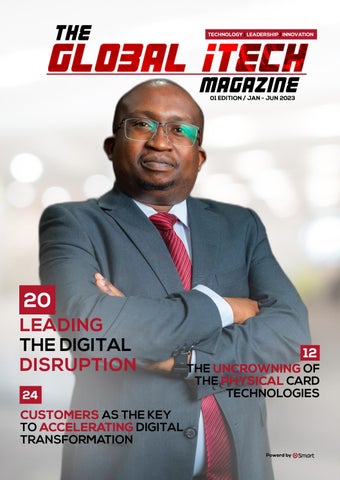
Smart Applications Group MD, Mr. Harisson Muiru talks about his role as a leader in a technology company that is currently disrupting the healthcare industry in a bid to improve the change management required to bridge the divide between payers and providers through technology that promotes efficiency, visibility, and accountability whilst eradicating fraud, wastage, and abuse.

At a recently concluded medical insurance CIO Forum hosted by Smart Applications International various insurance stakeholders came together to discuss what the future holds for medical insurance in terms of digital transformation as a means of both attracting and retaining younger generations of customers.
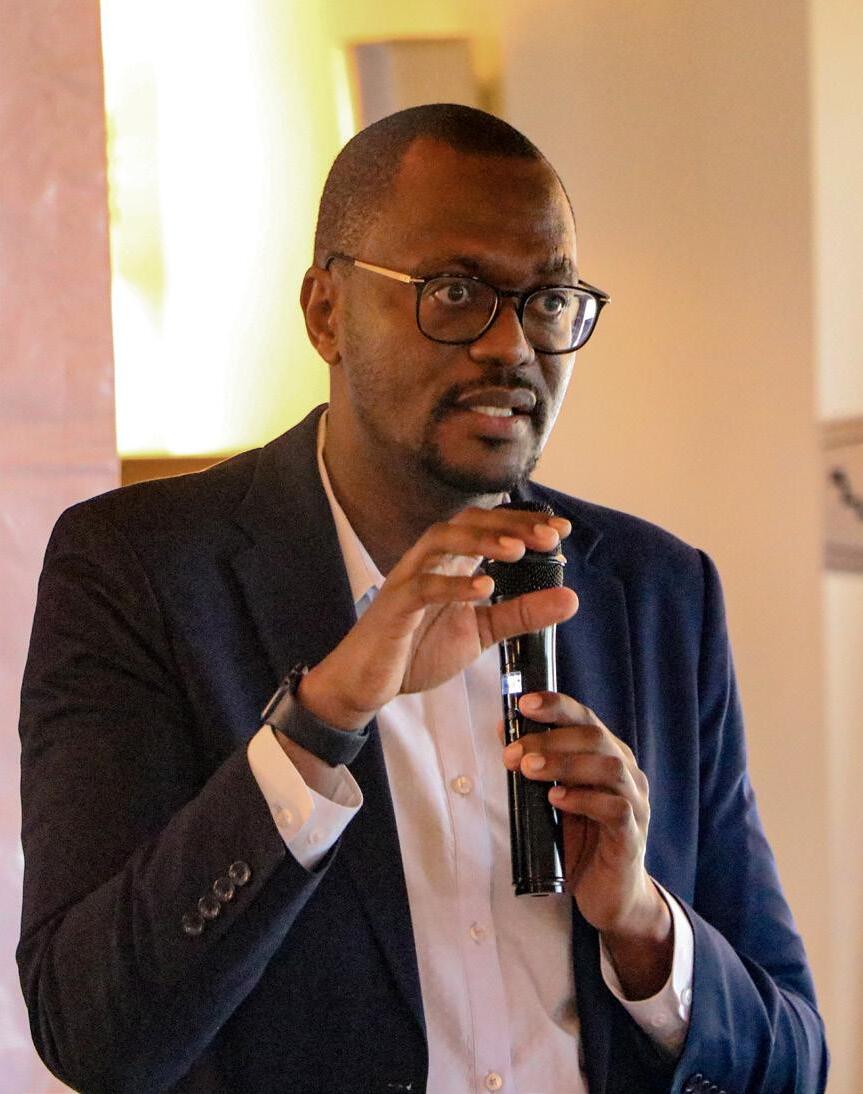
As the globe spins, we are all reminded we are here for a purpose and a calling higher than ourselves. Thankfully, when we come together, we define the purpose and drive change through our responsibilities and collaboration.
Smart Applications International has enjoyed cordial support and goodwill from its partners in our process of spearheading the digitization of healthcare access and automation of workplaces in Africa and beyond. We take pride in creating healthier and happy communities and supporting sound and transparent governance through our technology solutions. We at Smart have been on a journey that I have been privileged to be part of for more than a decade and a half. And this journey has led us through the innovation space.
Much like you would expect in every technology company, we are constantly innovating to keep pace and outpace the technological development in our space and the demands and needs of our stakeholders, who come from various sectors of the economy.
On behalf of the Governing Board, we extend our willingness to listen to you and work with you in creating a World of Infinite Possibilities.

Much like you would expect in every technology company, we are constantly innovating to keep pace and outpace the technological development in our space and the demands and needs of our stakeholders, who come from various sectors of the economy.
ANDREW MUKITE MUSANGI BOARD CHAIRMAN SMART APPLICATIONS INTERNATIONAL LTD
We are excited to share the Smart Story with our customers, partners, and the market. We like to picture ourselves as a mustard seed that has grown into a Pan-African Pinnacle. Ours is a true K e n y a n a n d A f r i c a n s t o r y b e i n g r e c i t e d i n t h e g l o b a l a r e n a O u r commitment to transforming lives has been the impetus for change, taking us f r o m c i t y t o c i t y a n d c o u n t r y t o country.
I am pleased to connect with you once again through this platform. For the last 2 years, the business environment has been uncertain, disruptive, and more so unpredictable. The economic crisis presented by Covid 19 and the disruption of trade at an estimated 88% across the world presented a setback to t h e l a i d b u s i n e s s p l a n s a c r o s s t h e globe.
Covid 19 in as much as it negated the social culture and sent us back to a restrictive work environment; it has b e e n a c a t a l y s t f o r c h a n g e I t h a s presented immense opportunities to develop and scale up our solutions based on our responsive approach to industrial needs. We have seen a high level of resilience and goodwill from our staff, business partners, suppliers, a n d o u r c l i e n t s . T h e i n n a t e a n d indomitable spirit to dream and to make it happen remained high and a l i v e A m o m e n t t o s h a r e o u r gratitude.
Smart Applications International has b u i l t a s u p p o r t i v e a n d t a i l o r e d customer-centric culture.

Millions of people in both the public and private sector who use our Biometric S m a r t c a r d & C a r d l e s s t e c h n o l o g y , B e s p o k e S o f t w a r e , U H C D i g i t i s a t i o n technologies, Time & Attendance and A c c e s s C o n t r o l a c r o s s a l l m a r k e t s e g m e n t s h a v e b e e n a n d r e m a i n o u r utmost focus in delivering value We h a v e p u t i n p l a c e a 2 4 / 7 C u s t o m e r Experience Center with Client Service Call Lines and Email for any immediate assistance around our solutions. We been q u i c k t o u n d e r s t a n d y o u r n e e d s a n d respond to them. That is why we believe that Our People are Our Heroes

We have been honored as an institution to be recognised locally and regionally for o u r r o l e i n c r e a t i n g a w o r l d o f c o n v e n i e n c e O u r s o l u t i o n s h a v e received befitting recognition for market r e l e v a n c e , c o s t s a v i n g s a n d t h e i r c o n t r i b u t i o n t o c r e a t i n g a S m a r t e r society. Our Smart Productivity Solution that tracks Employee Performance won the IHRM Technology of the Year 2021 Award. Further, we received DIGITAL TECH EXCELLENCE Winner Award in B e s t H e a l t h S e c t o r B i o m e t r i c A c c e s s Platform 2020. Regionally, we received CONSUMER CHOICE AWARDS 2021 R W A N D A a s t h e W i n n e r o f L e a d i n g Healthcare Technology Provider.
We have been recognised and awarded as t h e U n i v e r s a l H e a l t h c a r e I n n o v a t i o n Winner in Connected Africa among other a w a r d s a n d r e c o g n i t i o n I n d e e d , Innovation is our end-game
The jou rney to chang e the wor ld can never be walked alone. We have had a
remarkable team from both consumer and supply ends closely working with p a r t n e r s i n b o t h p u b l i c a n d p r i v a t e sector across Africa. Governments, NonG o v e r n m e n t O r g a n i s a t i o n s , C o r p o r a t e s , m u l t i - n a t i o n a l s , M e d i c a l S e r v i c e P r o v i d e r s , a n d M e d i c a l I n s u r a n c e P r o v i d e r s . W e e x t e n d o u r i m m e n s e g r a t i t u d e a n d g o o d w i l l t o f o r g e t h e s e c o l l a b o r a t i o n s t o h i g h e r levels across our markets of service. We are for you, by you, and with you.

Growth, change, research, technology, and many other factors challenge us daily to adjust our lifestyles, confront new opportunities, and meet greater demands. We could not achieve all this without a dedicated team that believes in the course to change the world in a r e p u t a b l e m a n n e r W e s h a r e o u r h e a r t f u l g r a t i t u d e t o t h e S e n i o r Management and each staff member t h a t h a s p u t t h e i r b e s t f o o t f o r w a r d . L a d i e s a n d gentlemen , lets go for i t ! W i t h Smart, it’s s i m p l y h a s s l efree!
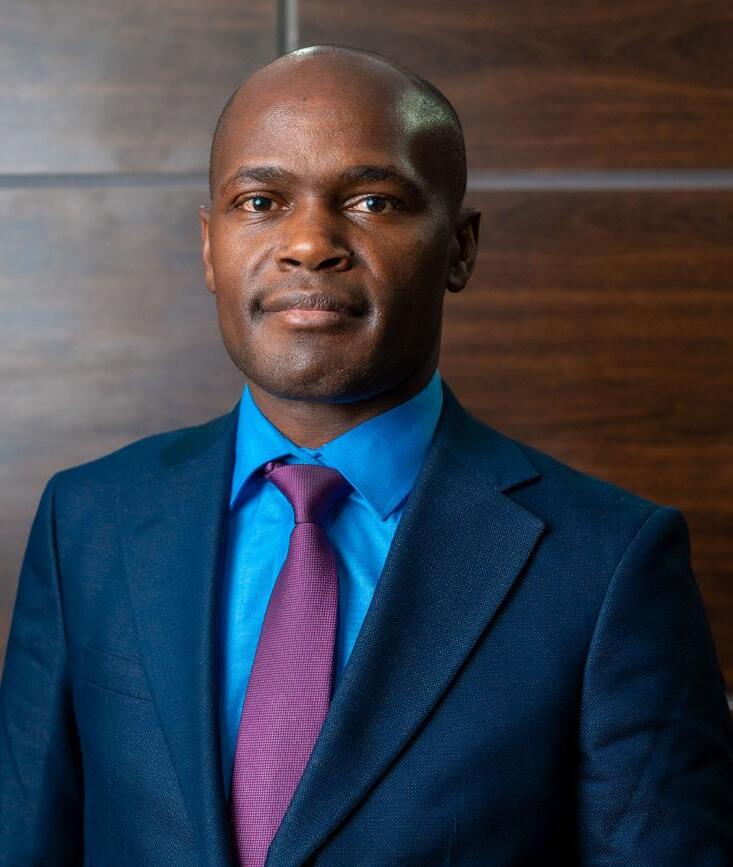
Techera Marketing Manager, Smart Applications InternationalExpansion is one of the pillars that make up our corporate strategy. If you pay close attention, our name is Smart Applications International, with emphasis on the International, and for the first 10 years or so of our existence, we have been aggressive in that aspect.
We began as a start-up 18 years ago, but we have always sought to establish our presence on the global stage, which we have successfully done time and again. We began with Africa; after establishing ourselves in Kenya, we moved on to the neighboring nations that make up the bulk of East Africa. We are currently advancing quickly toward Africa’s southern region.
We also intend to establish our presence in Africa’s western and northern regions. As far as our growth initiatives are concerned, one of the things we are doing is deliberately selecting the strategic partners with whom we collaborate as we take off in the various regions of this continent.


Our expansion has been slowed down by the language hurdles in the many locations we wish to operate in because it required us to revisit the fundamental principles of our solutions in order to make them scalable, flexible, easy to deploy, and language-agnostic.
Apart from the language barrier being a challenge, we also know that there is a slight difference in culture between the French-speaking countries and the English-speaking countries. One of the ways we’ve dealt with this is by having quick local liftoff when it comes to talent and putting systems in place to hire local talent to enable us easily and quickly penetrate the markets.
Our goal as Smart, being a leading technology company, is to inspire a world of convenience as per our mission. Our role as the technology arm of the organisation is to work on and develop solutions. Those solutions are the ones that deliver products that are then delivered into the market, which we later support.
For the longest time, we have been playing on one specific facet of the market with our tried and tested medical scheme management solution known to the industry as MediSmart. Currently, we are launching new solutions like SmartHealth+, our hospital management information system.
We are also big on digitising the medical claims processing, this entails digitising the entire underwriting and the claims side of medical insurance. This is done through what we are calling our Electronic Data Interface (EDI).
With this product, we are working to ensure that we offer customers a very simplified but rich platform that would have all the functionalities that any typical insurance company would be looking out for to automate their business processes.
Electronic-based solutions became a really big thing during COVID because at that time people were trying to avoid touching paper and post the initial effects of COVID, people had started enjoying certain conveniences and that is why there is a shift towards digital because of the operational efficiencies they were able to realise.
Broadly, from our technology strategy, we are looking at product diversification and enhancing our existing products to give them new life.
Africa is indeed a global talent pool, even though the pandemic may have hit us hard and there were massive job losses, Africa remains the most lucrative continent to do business on for several reasons.

The continent has the youngest and fastest-growing population, which contributes massively to the labour force.
A recent report by McKinsey shows that by 2035 there will be more than 450M working population.
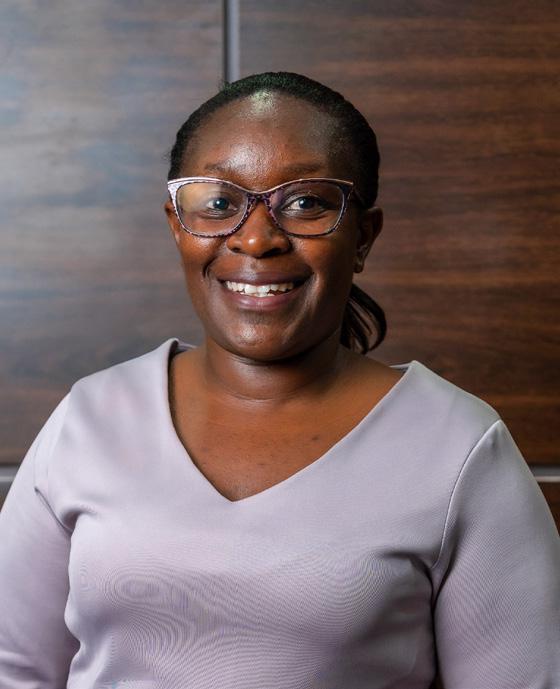
As a leading ICT solutions provider delivering a wide range of worldclass technology solutions across Africa and the world, Smart Applications International prides itself in delivering value by tapping into the diverse talent across Africa.

Technology is no longer a new thing in Africa, and many are pursuing digital upskilling, which helps global companies such as ours to get access to the best and brightest tech-savvy minds across the continent. As a company with a vast corporate footprint that spans 10 African countries, we must stay cognizant of the fact that the continent enjoys diversity across the many cultures that exist. One advantage that makes it quite easy to access talent within Africa is that many African countries are Anglophone and Francophone speaking and thus the language barriers are not a major problem in the larger part of Africa.

For any business that wants to bring high-quality products to market, project management is a crucial component. At Smart Applications International, we take pride in offering our clients innovative ICT solutions, with a human touch.
Our workplace is particularly fast paced because, as a technology company, we frequently modify our aims based on the needs of the consumers. In this regard, we need to be able to switch gears quickly. As a business, we serve the needs of our customers by providing top-notch products and support that guarantee seamless operations and pleasant interactions with our systems and solutions. This in turn inspires a world of convenience.
To ensurewe work flexibly, we have formulated a project governance structure that guides us on how projects are handled within the organization. The structure dictates how projects are approached right from when customers make requests.
Smart has increased productivity and automated many processes in the healthcare sector. We, as a technology company, have tried to comprehend the difficulties facing healthcare service providers to help manage them. We identified pain points facing healthcare providers and developed a solution, known industry wide as MediSmart, to help mitigate these problems.
We have been at the forefront of providing innovative biometric solutions for the management of medical schemes for over 19 years. In addition to being industry pioneers, our systems are well thought out because we have taken the time to understand our end users.
We also offer excellent customer service, and we have a team that makes sure we are available whenever healthcare providers need us. These are just a few of the things that set us apart.
To add to MediSmart, we have given healthcare providers other solutions like analytics so that they can understand what is happening within their healthcare facilities and in turn make data-driven business decisions.
MICT’s Subsidiary, Tingo Mobile, establishes a strategic presence in Malawi and East Africa, representing an important market for its agri-fintech and fintech products
is an important development for a number of reasons. While Malawi is itself a sizeable target market for Tingo Mobile’s Agri-Fintech and FinTech platforms and products, its strategic location is also expected to facilitate accelerated expansion into other key East Africa territories, such as the neighbouring countries of Tanzania, Zambia, and Mozambique.
to facilitate access to significant volumes of the region’s key crops, including coffee, tea, cotton, sugar cane, maize, and rice. With the ability to trade in such produce, which markedly broadens Tingo Mobile’s product range, the company has already identified significant sales demand through its commodity trading and export business and Tingo DMCC.
MICT, Inc. announced that its wholly owned subsidiary, Tingo Mobile Limited (“Tingo Mobile” and together with MICT, the “Group”), has launched in Malawi, as it establishes a strategic presence in East Africa and accelerates its pan-African rollout.
Having already achieved a substantial user base in West Africa, which is expected to expand considerably in the coming months, Tingo Mobile’s move into Malawi
With farming and agriculture representing Malawi’s biggest contributor to Gross Domestic Product, maize, cassava, bananas, sugar cane and ground nuts the most widely grown crops, this new market is expected to make a material contribution to the Group’s revenues and profitability from 2023 and beyond.
Through the adoption of its proven model in West Africa, Tingo Mobile is at an advanced stage of negotiating trade deals with a number of Malawi’s largest co-operatives and agricultural associations, representing several million farmers.
Tingo Mobile’s expansion into Malawi and East Africa is expected
Dozy Mmobuosi, Tingo Mobile Founder and Chief Executive Officer, commented: “We are delighted to launch our business into Malawi, which marks our first move into East Africa and is a further progression of our pan-African expansion.
Our rollout into Malawi and other countries clearly demonstrates the transferability of our Agri-Fintech platform and its benefits into new markets, and as such, we look forward to having a long-term relationship with numerous soon-tobe-announced partners in the East Africa region.
The investment will increase Akili Network’s positive educational impact on African families and enable greater access and more local educational content
This investment will increase Akili Network’s positive educational impact on African families and enable greater access and more local educational content.
The Rwanda Innovation Fund was officially launched in 2021, with the mission to back disruptive,innovative companies that deploy solutions to solve major sustainability challenges in Africa and provide answers to the dire needs of hundreds of millions of people across the continent.
ly value-driven team with brilliant execution driving impact at scale”, says Olivier Munyeshyaka, Associate, Angaza Capital.

With 95% of the families reported that their quality of life was very much improved from watching Akili Kids! TV, Akili Network is looking to increase its content portfolio in a bid to create a family-focused TV destination that is not only free but also safe, educative, and entertaining for all families, including teens, parents, and caregivers.
Angaza Capital, the manager of the Rwanda Innovation Fund (RIF), is happy to announce its latest investment in Akili Network, the creators of Akili Kids! TV, one of Africa’s most-watched TV stations in households with children under 18 years old.
“For us at Angaza Capital, leveraging different platforms and technologies in order to channel impactful content - and pretty much nothing is more impactful than children’s education - is an obvious goal. What we found in Akili is a high-
“We are incredibly excited for this investment from the Rwanda Innovation Fund and Angaza Capital as it will help Akili Network improve the lives of even more children and families”, says Jesse Soleil, President and Co-Founder, Akili Network.
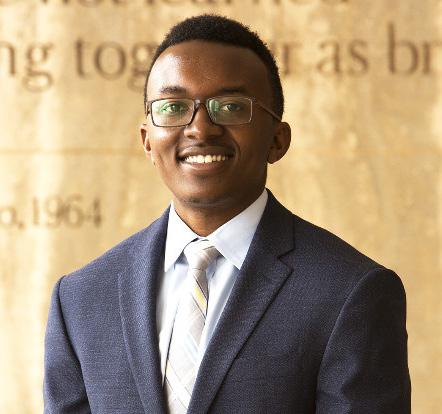
Clear Blue Technologies International Inc. announced that it received its first order from Telia Cameroon on October 18, 2022.
Clear Blue will supply its Nano-Grid Smart Off-Grid power solution and will be Telia Cameroon’s preferred Solar power provider for its program with MTN Cameroon. These 50 sites have an estimated 5-year lifetime contract value of $1M CAD for Clear Blue.
“Clear Blue Technologies’ systems have incredible value for telecommunications. To support applications in Cameroon, we need systems that are cost-effective and provide reliable solar power without the need for diesel generators,” said Jean Baptiste, Manager of Telia Cameroon.
of telecom deployments and work with major network operators like MTN Cameroon to bring connectivity to more people across Cameroon. We are thrilled to be working with Telia on this rollout program and, hopefully, many more to come in the future”, said Miriam Tuerk, co-founder and CEO of Clear Blue. “ The desire to move away from traditional diesel generator-based solutions was a key element of Telia’s business plan. Their commitment to using Smart Off-Grid power will help transform access to telecom service across the country.
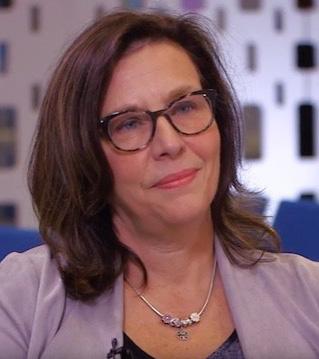
Clear Blue Technologies International Inc. recently announced that it received its first order from Telia Cameroon (“Telia”) on October 18, 2022, for initial systems as part of its telecommunications service rollout in Cameroon for MTN.
Following successful pilot validation, the initial rollout of 50 systems is expected in early 2023
“Clear Blue’s systems are remotely managed and operated by Clear Blue, reducing the initial size and CAPEX, while also significantly reducing OPEX, as we won’t have to go to the site for maintenance and can triage a problem before it occurs.”
“Telia Cameroon is an exciting new strategic partner providing valuable services to help connect the unconnected in Africa. They have a number
As a market leader in the provision of clean, managed, off-grid wireless power for mission-critical telecommunications systems, Clear Blue is solving one of the biggest barriers to expanding connectivity in emerging markets – the ability to access costeffective, reliable solar power. Telia Cameroon is bringing connectivity access across Cameroon, and we are excited to see what the future holds with them.”
Disrupt-X and Security and Future Technologies (SAFT) are pleased to announce their strategic partnership to offer a range of IoT solutions in North Africa.
their marketplace, Disrupt-X plans to extend their portfolio to up to 55+ ready use-cases by the end of this year.
Disrupt-X is committed to leverage the vast growth of technology and digitalization through the development of smart solutions that deliver innovative IoT products and services designed for industrial, commercial and residential sectors.
that drive business value. The partnership will focus on improving efficiency, reducing costs, and increasing sustainability through the use of connected devices and advanced data analytics.
They will also work closely with local partners and government agencies to identify and help drive innovation and economic growth in the country on adoption of IoT solutions.
Disrupt-X, an IoT Platform company providing end-to-end IoT Solutions signed an MoU with SAFT combining their expertise and resources to offer a range of IoT services to businesses and organizations in North Africa.
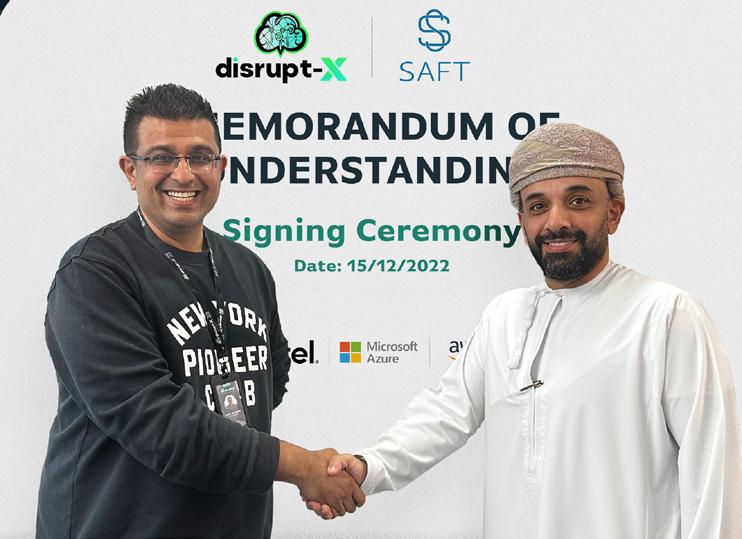
These services will include IoT consulting, implementation, as well as support and maintenance. With over 30 ready use-cases on
Security and Future Technologies (SAFT) was established to change the way people work and live by using the power of IoT. SAFT services and solutions include fleet management, smart city, and facility management.
Disrupt-X and SAFT are committed to working closely with customers to understand their unique needs and deliver tailored IoT solutions
Mr. Asim Sajwani CEO of Disrupt-X Said “We are excited to partner with SAFT to bring the benefits of IoT to businesses in North Africa. Their presence in the region and Disrupt-X’s experience in IoT, we are confident that we can drive significant value for our customers and help drive the growth of North Africa’s economy.”
Showcasing the appeal of EUTELSAT KONNECT in Sub-Saharan Africa to support telecom operators in bridging the digital divide
Eutelsat Communications ETL and Liquid Intelligent Technologies (Liquid), a business of Cassava Technologies, a pan-African technology group, have signed a multi-year, multi-beam agreement for capacity on the EUTELSAT KONNECT satellite to address the connectivity needs of Small and Medium Enterprises (SME) and Small Office / Home Office (SOHO) customers in Uganda, South Sudan and the Eastern regions of the Democratic Republic of Congo.
Under the agreement, Liquid will leverage capacity on the EUTELSAT KONNECT satellite to increase its portfolio with affordable internet services in territories underserved by terrestrial networks.
Scott Mumford CEO, Liquid Satellite ServicesLiquid is already a long-standing partner of Eutelsat, where it uses Ku-band capacity on Eutelsat's EUTELSAT 7B satellite for VSAT services in Sub-Saharan Africa under a long-term contract that was renewed and expanded in 2021.
Liquid will also host the first EUTELSAT KONNECT ground gateway in Sub-Saharan Africa, thus reinforcing its dominance as a key satellite Ground Segment / Teleport operator in Africa, further cementing the existing relationship with EUTELSAT. Located in Krugersdorp, South Africa, the gateway will help Eutelsat expand local coverage and secure and create new business opportunities by offering enhanced broadband service performance.


EUTELSAT KONNECT is a new-generation High Throughout Satellite offering unrivaled operational flexibility and extensive in-orbit resources to bring broadband services to Africa. Since entering full service more than a year ago, the satellite has gained strong momentum through multiple agreements with telecommunications operators in many of the most densely populated countries on the African continent.
Scott Mumford, CEO of Liquid Satellite Services, commented:"We offer satellite services in over 27 African countries, impacting the lives of over 1.3 billion people. With this agreement, we will expand our service portfolio to include Ka-band services for the first time. We have always been early innovators and investors towards initiatives and technology that will help us realise our vision of creating a digitally connected future that leaves no African behind."

Smart Applications International Uganda Ltd has partnered with some of the CHI schemes in the provision of automation for the management of medical schemes.
a saving culture through savings and credit cooperatives (SACCOs) and village savings and loan associations (VSLAs), p o o l i n g r e s o u r c e s t o w a r d s a c o m m o n goal was not a common characteristic. The m a n a g e m e n t o f t h e s e g r o u p s g r o s s l y r e l i e d o n m a n u a l s y s t e m s e s t a b l i s h e d locally to handle community initiatives.
f o r t h e m a n a g e m e n t o f m e d i c a l s c h e m e s T h e m a j o r C H I p r o m o t e r s currently using Smart products include S a v e f o r H e a l t h U g a n d a ( S H U ) , U g a n d a P r o t e s t a n t M e d i c a l B u r e a u (UPMB), Kiwoko Hospital, and Ngora Hospital.
Rural communities in more than 40 districts in Uganda have nurtured initiatives for mobilization of local resources to address some of the c h a l l e n g e s t h e y f a c e i n c l u d i n g fi n a n c i a l b a r r i e r s t o a c c e s s i n g healthcare. Pooling resources at the community level is enabling families to access quality healthcare services at their time of need. Although many o r g a n i z a t i o n s h a d o v e r t h e y e a r s supported communities to adopt
C o m m u n i t y h e a l t h i n s u r a n c e ( C H I ) schemes are unique in such a way that they mobilize local communities to pool t o g e t h e r r e s o u r c e s t o w a r d s h e a l t h c a r e c o s t s a n d s h a r e r i s k s . F a m i l i e s m a k e contributions in form of small premiums paid based on the arrangement which can be on a monthly, quarterly, biannual or a n n u a l b a s i s T h e s e w o r k w i t h o t h e r p a r t n e r s p a r t i c u l a r l y h e a l t h c a r e p r o v i d e r s , w h i c h n e c e s s i t a t e s p r u d e n t m a n a g e m e n t o f t h e i r f u n d s a n d healthcare benefits.
Smart Applications International Uganda Ltd has partnered with some of the CHI schemes in the provision of automation
This automation has helped in terms of member identification before accessing medical services, implementation of restrictions regarding member access, and services to be accessed. With the S m a r t p l a t f o r m , t h e s c h e m e a d m i n i s t r a t o r s a r e a b l e t o r e c e i v e reports on real-time basis i.e. reports on scheme expenditure and the scheme performance at large.
As Smart, we envision full adoption of technology by the CHI schemes around U g a n d a a n d a l s o a d o p t i o n b y t h e Ministry of Health for the proposed N a t i o n a l H e a l t h I n s u r a n c e S c h e m e (NHIS) as we inspire convenience in terms of access to healthcare services.
Physical cards have been a part of payment history for a long time. In fact, it was way back in 1950, when the first payment card was made available to members of the public. This marked a very big moment in time when it came to payments as it signified a move from depending on cash payments, people now had another option of card payments.
Since then, payment cards have continued to evolve, and there is currently a global shift toward virtual cards. A recent study by Juniper Research found that the global value of virtual card transactions will reach $6.8 trillion in 2026, from $1.9 trillion in 2021.


The research identified that Virtual cards would show strong growth as they are increasingly used for B2B payments. The new research, Virtual Cards: B2B and B2C Applications, Competitive Analysis & Market Forecasts 2021-2026, predicts that outside of the dynamic B2B market, the added security from virtual cards will also appeal to the consumer market.
This is the case when it comes to a recent initiative by Safaricom and Visa. The two companies came together to introduce the M-PESA GlobalPay Visa Virtual card The launch of the new M-PESA Visa virtual card is set to open global shopping for Kenyan consumers, allowing secure cashless payments at merchant locations in over 200 countries through Visa’s global network.
Discussing the move, Peter Ndegwa, CEO of Safaricom, noted that: “By partnering with Visa to provide the MPESA GlobalPay Visa virtual card, we are looking to bridge the gap for our customers who would like to use M-PESA anywhere across the world”.
This move by Safaricom highlights the fact that even nonbanking institutions are trying to create seamless virtual customer experiences by embracing virtual cards. Virtual cards serve the same purpose as physical cards, the biggest difference is in the level of convenience they offer as these cards are accessible at any time by users as long as they have their mobile phones with them.
More companies, whether financial institutions or not, are adopting virtual cards to meet the demands of their clients in an effort to draw tech-savvy peesons to interact with
launched a mobile phone-based banking service targeting millennial entrepreneurs dubbed NCBA Loop.
Loop has a wide range of transactional features that streamline how customers save and make investments. With this product, customers are able to manage their personal finances, schedule their utility bill payments, send money, access loans and pay for goods and services at retail outlets.
Apart from unique virtual experiences, virtual cards have a number of other features that make them advantageous when it comes to delivering a good customer experience as compared to physical cards. Being that these cards are digital they can be programmed by issuers to meet users’ specic requirements.
Virtual cards are also more secure than their physical counterparts as they are digital assets that can be pin protected. Some users even go to the extra step of enabling two-step verication to ensure that their cards are extra protected. When it comes to physical cards like debit cards, for example, hackers can pretend to make online purchases as you if they have access to some basic information such as the card and CSV number.
Even organisations that have had card issuing at the core of their businesses are starting to change that model to keep up with security. Recent media reports revealed that Kenya’s National Hospital Insurance Fund (NHIF) has stopped issuing physical cards as well.
rather than using NHIF cards and national identity cards as the mode of identication, both of which have provided loopholes for fraudulent claims, NHIF introduced the use of ngerprints to identify its members and their dependents. The reports further reiterated that the move was meant to tackle fraud and speed up the payment of medical claims.
International when it comes to the development of card technology. For more than 19 years, the rm has catered to the demands of many industries with its biometrically controlled Smart Cards.
Speaking on the perceived shift from physical to virtual cards by businesses across different sectors, the company’s GSMD, Esther Kiringa, noted that:
“The move towards virtual cards should not be something to alarm businesses, but rather something that excites them as these tools hold immense potential in how organisations can interact with the newer generations of customers. With these cards, customer needs can be addressed as and when they arise because they are online tools that can be updated from anywhere.”
“We are an organisation that has been issuing physical cards for a number of years and as such, these cards are etched within our DNA. In the same breath, we are an ICT company and this means always innovating to keep up with market demands. At the moment physical cards still have a place in the payments ecosystem even though virtual cards are catching up. The best thing an organization like ours can do in this instance is to keep an eye on what is happening in the market in order to make changes that will positively impact our customers.” She concluded.
A recent study by Juniper Research found that the global value of virtual card transactions will reach $6.8 trillion in 2026, from $1.9 trillion in 2021.
































The virtual medical access will be available on both a newly developed app dubbed Smart Access and through the short code *891# for Safaricom subscribers.
Leading ICT and biometric giant, Smart Applications International Ltd, fondly known as, Smart, recently launched a virtual mode of medical access, aimed at enhancing patient experience, providing health on-the-go, and providing instant onboarding support to medical insurers, for enhanced provider transparency in healthcare administration.
The virtual access will be available on both a newly developed app dubbed Smart Access and through the short code *891# for Safaricom subscribers.
Smart has been providing biometric smart cards to all its clientele as the mode of identification for access to medical services installed in over 6,000 healthcare facilities across Africa. With the growing adoption of mobile technology globally Smart Access will be a timely upgrade from physical biometric smart cards to virtual access.
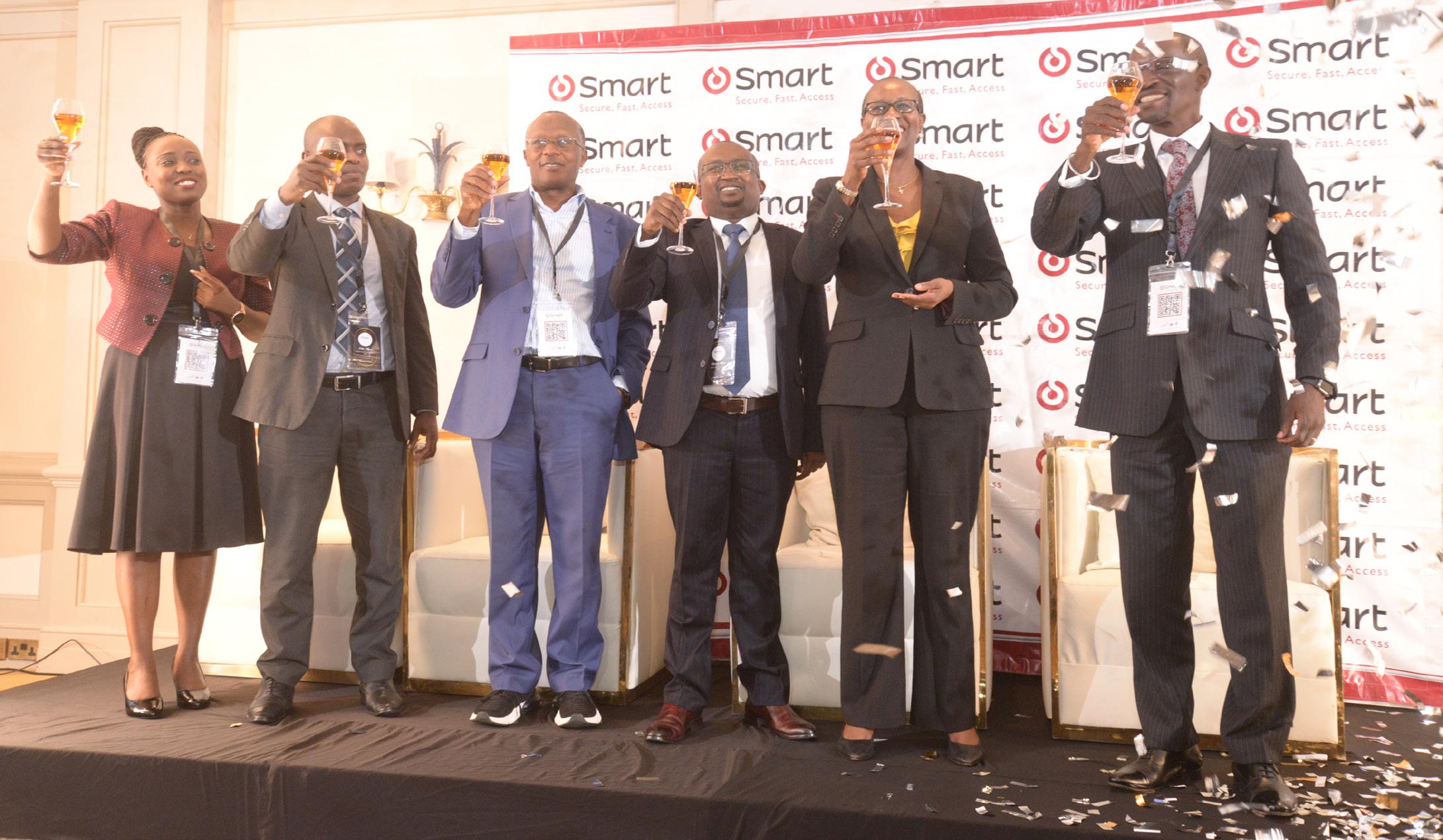
Through the app, patients will be able to access healthcare insurance, view utilisation of their covers instantly, read informational articles about their health, and geolocate their healthcare providers of choice at the top of their screens. This service will be available in the 11 countries that Smart currently operates. Speaking during the launch, Smart Applications International, Managing Director, Mr. Harrison Muiru, noted that, “millions of Smart customers will now be able to use virtual access to pay for services across all lines of healthcare. We are cognizant of creating transformative patient-centric solutions that address current needs in such economic times”.
Mr. Muiru further noted, “Our team has worked on the Smart Access App to ensure that this unique and comprehensive solution offers accurate users an opportunity to manage access health education on various topics of interest, check for closest medical providers with specified services These features will go a long way in the promotion of trust within the healthcare ecosystem”.
“With our newly launched app, a customer traveling through the 11 countries covered by Smart can access healthcare by using the app across all lines of healthcare without having to worry about pre-authorization or even coverage,” said Esther Muiruri, Sales & Marketing Director, Smart Applications International.
Smart Applications is committed to pioneering digitization across Africa and beyond through the provision of World Class Technology Solutions.
(L-R) Esther Kiringa, Group Marketing Director, Smart Applications International, Collins Ngeno, Group Technology Director, Smart Applications International, Mary Ann Musangi, Board Director, Smart Applications International, and Harrison Muiru, Group Managing Director, Smart Applications International interact with the Smart Access App on a mobile device.Every wide-eyed founder I have had the pleasure to meet in the FinTech space starts with three things, amazing branding, beautifully designed software, and a vision to, "bank the unbanked", "disrupt cross-border payments" and "improve nancial inclusion".
 Irving Amukasa CEO, Sophie Bot

Noble as all this may seem, they almost a l w a y s e n d u p f a c i n g t h e s e t h r e e pitfalls:
One, they get bogged down with so m a n y r e g u l a t o r y r e q u i r e m e n t s t h e y e n d u p l i k e t h e o l d n a n c i a l institutions they wanted to "disrupt". I have seen bold "register anywhere" programs get relegated to in-person o n - p r e m i s e s i g n - u p s , b a n k i n g h a l l s that were supposed to have less trafc with queues of folks waiting for onet i m e p a s s w o r d a u t h e n t i c a t i o n , a n d new sim-card innovation relegated to n o r m a l s i m - c a r d s o n i n f r a s t r u c t u r e that is over-subscribed to the extent transactions don't go through past 10 am.
The reason for this could be because regulators across the continent have r i g i d a n d u n e n d i n g K n o w Y o u r Customer requirements that require innovators to somehow conform to be a b l e t o o p e r a t e H o w e v e r , I d o empathise with them as it's the only w a y t h e y k n o w h o w t o m o n i t o r p o s s i b l e f r a u d a n d i l l i c i t n a n c i a l ows, but all it does is keep nancial s e r v i c e s i n t h e d o m a i n o f t h o s e documented and patient enough to get signed up.
I f o n l y t h e r e w a s t e c h n o l o g y t h a t secured users' authentication details w h i l e m o n i t o r i n g o v e r a l l h e a l t h t o stem illicit ows and fraud.
T w o , p r e d a t o r y l e n d i n g . K e n y a i s home to 300+ digital lenders. Though initially pitched as tools of nancial inclusion they are responsible for the listing of 14 million Kenyans on the Kenyan Credit Reference Bureau.
S o m e m a y a r g u e i t ' s a r e s u l t o f t h e worsening economic conditions, but I beg to differ. I would like to submit that the bleeding edge machine learning tool s, t h a t t h e y p i t c h e d w e r e a b l e t o r e a d through mobile money transactions and score credit, were never built.
I would wager, that they only checked if applicants were already listed on the Credit Reference Bureau and if not, they gave them loans on a graduating scale on p r e v i o u s l o a n s p a i d . T o m a k e t h i n g s worse the interest rates on these loans were only advised on a metric called, Tolerance. Tolerance is calculated as what p e r c e n t a g e o f t h e l o a n s g i v e n c o u l d default without bankrupting the lender.
I am curious how much the 300+ digital lenders spend on debt collectors. If only t h e t e c h n o l o g y e x i s t e d t o r e v i e w a l l n a n c i a l t r a n s a c t i o n s , d e v e l o p a r i s k prole, and score credit individually for every user.
Three, cloned by the big sh once you prove your model. A few years back, one of the most prominent Telecos launched a s e r v i c e t h a t l e t s i t s s u b s c r i b e r s " e f f o r t l e s s l y " m o v e f u n d s f r o m t h e i r PayPal account straight to their mobile money accounts. A move celebrated as a g a m e c h a n g e r f o r f r e e l a n c e r s w h o depend on PayPal to get payments from all over the world.
W h a t f e w e r p e o p l e k n e w i s a m o n t h earlier they had pulled API access to a l o c a l l y s u p e r i o r p r o d u c t o f f e r i n g t h e s a m e s e r v i c e , c l e a r i n g t h o u s a n d s o f dollars in transactions every day.
The new celebrated product was by a few orders of magnitude inferior because they used a third-party service to integrate into PayPal as opposed to the local service direct integration with PayPal. The story repeated itself with their virtual card product, with worse consequences.
They had to pull down that product because their integration partner was implicated in credit card fraud.
If only this ecosystem knew the value of start-ups as playing grounds for new, exciting, and interesting ideas, and to acquire them once they prove t h e i r m o d e l I f o n l y t h e y h a d t h e f o r e s i g h t t o i n f e r s t a r t - u p s h a v e learned a lot of lessons proving their m o d e l a n d t h a t m o r e v a l u e l i e s i n acquiring them rather than building inferior clones.
My vision for the future of FinTech is t h e c o m p a n i e s t h a t s u c c e s s f u l l y n a v i g a t e t h o s e t h r e e p i t f a l l s . F a i r l y enough the last is a result of the overall e c o s y s t e m m a t u r i n g M y r s t t w o concerns though, breed two kinds of founders. One, is founders who will want early mainstream adoption and comply with regulators only to end up w h e r e t h e y b e g a n , i n a c c e s s i b l e , predatory banks.
T w o , v i s i o n a r y f o u n d e r s w h o w i l l gravitate towards new technology that circumvents the usual gatekeepers.
F i r s t l y , t h e s e f o u n d e r s k n o w t h e o r i g i n a l b l o c k c h a i n - b a s e d c u r r e n c y solves a majority of concerns and are saddened that the ecosystem is full of speculators.
Secondly, these founders are hopeful the ecosystem will turn to the spirit of the original paper straight from the a s h e s o f t h e c u r r e n t e c o n o m i c downturn.
Lastly, these founders know once they build and prove their model, they need t o o p e n u p A P I a c c e s s i n o r d e r t o empower more founders to amplify their impact.
Making sure your company is cyber security ready has become an important task for most organisations. In this day and age, many critical business functions have either become digitised or are in the process of being digitised.
It is thus important to note that cyber security readiness and the success of your business are intertwined.
Even with this knowledge, many organisations are still not cyber security ready. A 2018 Global Cyber Readiness Barometer report from telecommunications provider Vodafone notes that only 24% of organizations globally could reasonably call themselves “cyber ready”.
“Cyber readiness is a mix of different measures that include cyber operations, cyber strategies, cyber resilience, an understanding of risk, and employee awareness.” The report further notes
In recent times, the threat landscape has continued to evolve, and cyber-attacks against businesses have become more prevalent. A recent report by SonicWall noted that 495 million ransomware attacks occurred in the first nine months of 2021 representing a 148% increase on the previous year.
Ransomware and other cyber-attacks have been a scourge for years. Recently, the attacks have been on the rise with major organisations appearing in headlines such as Colonial Pipeline, JBS,UKs NHS, etc.
which is largely attributed to the covid 19 pandemic that led to the rise of work from home and bring your own device(BYOD)
“A recent report by SonicWall noted that 495 million ransomware attacks occurred in the first nine months of 2021 representing a 148% increase on the previous year.”

which is largely attributed to the covid 19 pandemic that led to the rise of work from home and bring your own device(BYOD). At the core of all these attacks was the human endpoint which still today remains the biggest weakness in any organization large or small.

To address the issues above, the Cyber Readiness Institute (CRI), rolled out the Cyber Readiness program a free Cybersecurity Training that Busineses can adopt for their staff despite the organization size.
This is a simple solution that helps organisations reduce the threat of ransomwarend other forms of cyber-attacks By educating people to do the basic cyber hygiene practices that will make us all cyber ready whether at home or work .
and will make it more difficult for criminal actors to succeed. It’s the proverbial low-hanging fruit.
A ransomware Playbook has also been published to help guide organizations of any size through the steps that will help prevent ransomware attacks. Since not every attack can be averted, it has been recognised that a lot of the behaviors individuals and organizations engage in, allow bad actors to take advantage of gaps in their cybersecurity.
It is for this reason that Cyber readiness focuses on the aspects of human behavior that can help create a foundation for a strong culture of cybersecurity. It’s not about technology and it’s not complicated. Below are some tips and tricks that are recommended:
Ransomware and other cyber-attacks are all about access, prevention is key:
• Use strong unique passwords or passphrases.
• Promote the use of multifactor authentication.
• Make sure your software and systems are updated and patched.
• Limit administrator accounts on your network.
• Train your staff on phishing prevention, on their laptops, desktops, and mobile devices.
• Ensure you have off-network backups that are kept up to date.
• Test your back-ups regularly to confirm that they are usable and current.
• Create an incident response plan with clear steps on what to do if compromised
First leveraged in late March 2021, the newly discovered backdoor has hit governmental institutions and NGOs across the globe
In December 2021, Kaspersky uncovered “Owowa”, a previously unknown IIS module that steals credentials entered by a user when logging into Outlook Web Access (OWA).
Since then, the company’s experts have kept an eye on the new opportunity for cybercriminal activity – it has become clear that deploying a backdoor within IIS is a trend for threat actors, who previously exploited one of the “ProxyLogon-type” vulnerabilities within Microsoft Exchange servers.

In a recent investigation, Kaspersky experts came across a new unwanted module backdoor, dubbed SessionManager.
The SessionManager backdoor enables threat actors to keep persistent, update-resistant, and rather stealthy access to the IT infrastructure of a targeted organisation.
Pierre Delcher Senior Security Researcher Kaspersky’s Global Research and Analysis
Kaspersky experts have brought to light a poorly detected SessionManager backdoor that was set up as a malicious module within the Internet Information Services (IIS), a popular web server edited by Microsoft. Once propagated, SessionManager enables a wide range of malicious activities, starting from collecting emails to complete control over the victim’s infrastructure
First leveraged in late March 2021, the newly discovered backdoor has hit governmental institutions and NGOs across the globe with victims in eight countries from the Middle East, Turkey and Africa region, including Kuwait, Saudi Arabia, Nigeria, Kenya and Turkey.
Once dropped into the victim’s system, cybercriminals behind the backdoor can gain access to company emails and update further malicious access by installing other types of malware or clandestinely managing compromised servers, which can be leveraged as malicious infrastructure.
A distinctive feature of SessionManager is its poor detection rate. First discovered by Kaspersky researchers in early 2022, some of the backdoor samples were still not flagged as malicious in most popular online file scanning services.
To date, SessionManager is still deployed in more than 90% of targeted organisations according to an Internet scan carried out by Kaspersky researchers.
The threat actor who operates SessionManager shows a special interest in NGOs and government entities, but medical organisations, oil companies, and transportation companies, among others, have been targeted as well.

Because of similar victimology and the use of the common “OwlProxy” variant, Kaspersky experts believe that the malicious IIS module might have been leveraged by the GELSEMIUM threat actor, as part of its espionage operations.
“The exploitation of exchange server vulnerabilities has been a favourite of cybercriminals looking to get into targeted infrastructure since Q1 2021.
It notably enabled a series of long unnoticed cyberespionage campaigns. The recently discovered SessionManager was poorly detected for a year.
Facing massive and unprecedented server-side vulnerability exploitation, most cybersecurity actors were busy investigating and responding to the first identified offences.
As a result, it is still possible to discover related malicious activities months or years later, and this will probably be the case for a long time,” comments Pierre Delcher, Senior Security Researcher at Kaspersky’s Global Research and Analysis team.
“Gaining visibility into actual and recent cyberthreats is paramount for companies to protect their assets.
Such attacks may result in significant financial or reputational losses and may disrupt a target’s operations.
Threat intelligence is the only component that can enable reliable and timely anticipation of such threats.
In the case of Exchange servers, we cannot stress it enough: the past year’s vulnerabilities have made them perfect targets, whatever the malicious intent, so they should be carefully audited and monitored for hidden implants if they were not already,” adds Pierre.
Overall, 34 servers of 24 organisations from Europe, the Middle East, South Asia, and Africa were compromised by Session Manager.
Gaining visibility into actual and recent cyberthreats is paramount for companies to protect their assets.
To date, Session Manager is still deployed in more than 90% of targeted organisations according to an Internet scan carried out by Kaspersky researchers
After a major launch that saw Smart Applications International foray into the realm of virtual access, the Group Managing Director, Mr. Harisson Muiru had a brief sitdown with the Global iTech Magazine. In this interview, he talked about his role as a leader in a technology company that is currently disrupting the healthcare industry. He pointed out that disruption was necessary for the industry in a bid to improve the change management required to bridge the divide between payers and providers through technology that promotes efficiency, visibility, and accountability whilst eradicating fraud, wastage, and abuse.
Who is Mr. Harrison Muiru, and what motivates you?

I am a leader, a technology business enthusiast, a visionary, a coach, and a mentor to the people I work with. I am motivated by the vision to achieve the best in myself and in others. I am also happily married and a father to three lovely daughters; they inspire me every day to make the world a better place for humanity.
How do you balance family life and running a business?
I believe that it is not about balance especially in our interconnected world as a person can be reached any time of day and night or wherever one is in the world due to the various digital communication platforms. Therefore, I live by the principle of work-life integration which is based on flexibility, agility, and self-mindedness to ensure both times for work and for the family as per the circumstances of the moment. This would not have worked if I did not have the support of my family and my team members.
Has there been a time when you were ready to give up? What kept you going??
Yes, there have been challenging times in my career and in my life. 2021 was one of those dark years where I lost two fathers in my life. My chairman, the late Dr. Chris Kirubi, and my father, the late Rev Fredrick Muiru within a short span of months apart.
Both great men had great visions and we were traveling a journey together. Nonetheless, I believe that in life everything happens for a reason. What has kept me going is my faith in God and my strong belief in the betterment of humanity as well as support from my family and the Smart team.
What has been the greatest challenge in your industry, and how have you overcome it?
The greatest challenge that we have in the healthcare value chain has been the change management required to bridge the divide between payers and providers through technology that promotes efficiency, visibility, and accountability whilst eradicating fraud, wastage, and abuse.
It has been a journey that has taken Smart over 17 years, and we are still at. We have overcome it in various ways
For example, we were the first in Africa to introduce the use of biometric smart card technology for patient identification and access, the first to roll out a connected healthcare facility Smart network, and the first to achieve significant savings through the elimination of fraud through impersonation, achieve benefit and service controls as well as paperless delivery of e-claims. There were many who did not believe in us, but we kept working at it, refining our systems, processes, and stakeholder engagement and we can say that we are proud that the first 30 or so trial healthcare facilities in Kenya allowed us to pilot at their facilities 17 years ago, we are now at over 6,000 healthcare facilities across 10 countries in Africa.
Golf and software coding! I have always had an interest in this gentleman’s game and have had an interest in the newer software development technologies, especially in data analytics. It’s never too late, I am working hard to realize this dream in both areas.
Really exciting, makes me jump out of bed every morning. This is because we are in a place where the market is awake on the impact of technology, especially in sectors like
healthcare and there are new and emerging business opportunities, business models, new products, and the possibility of expansion internationally. I may not be able to get into specifics but watch this space.
As mentioned earlier, we were the first to develop and introduce biometric smart card technology in healthcare for patient access, we were also the first to have a fully-fledged interconnected hospital and medical scheme administration platform and the first to have a Pan African healthcare roaming access enablement for our customers. We have also introduced the first comprehensive modern technology-based SmartHealth+ Healthcare facility management system and SmartAnalytics , the first of its kind healthcare industry-wide analytics platform.

The list is quite extensive on the many firsts that we have achieved but the most important things are that we could not have done it without the support of our key stakeholders, the insurance companies and corporate administrators, the healthcare facilities, our Smart members, our Chairman and Board members and our members of staff who are our heroes. Nonetheless, we continue to engage in self-disruption and adapting to change in the marketplace and anticipated change in equal measure and this is embodied in our corporate pillar of creativity and innovation and in our agile thinking and execution.
If you had to start all over again, what is the one thing you’d change?
Perhaps I would have become a specialist doctor or surgeon. My parents had this great aspiration of having me get into medical school but my great interest in electronics, computing, and engineering led me to a different tangent. I also do still aspire to have more time to spend with family and friends.
What do you hope your legacy to be?
That’s a difficult one because, on matters of legacy, I always believe that a true leader should have his legacy defined and etched in history through his deeds and not just his words. Having said that, I must say that the vision of my legacy is to be remembered as a leader who from very humble beginnings transformed the healthcare sector across Africa through technology that truly delivers a world of convenience.
What’s your biggest regret in business?
There are definitely times that wrong decisions or wrong actions are made as such is the nature of life but the biggest difference that one can make is how you bounce back, dust yourself and move on. I remember there is one project that we did for quite some time, we codenamed it the Lorry, quite hopeful that it would pick up in the marketplace, and after expending so much effort, time, and money we had to shelf it. Every one of these regrettable situations has led to a big lesson. As such, I always rather focus on bouncing back and moving on.
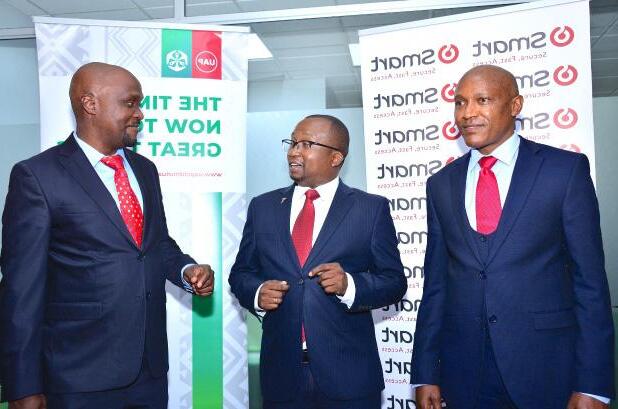
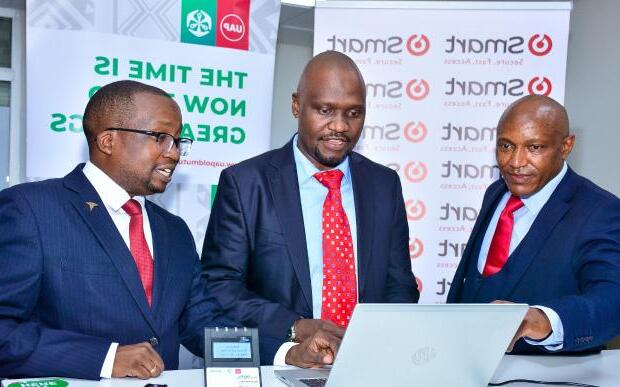
UAP OLD MUTUAL SIGNS WITH SMART APPLICATIONS TO AUTOMATE ITS ELECTRONIC DATA INTERCHANGE FOR MEDICAL CLAIMS.
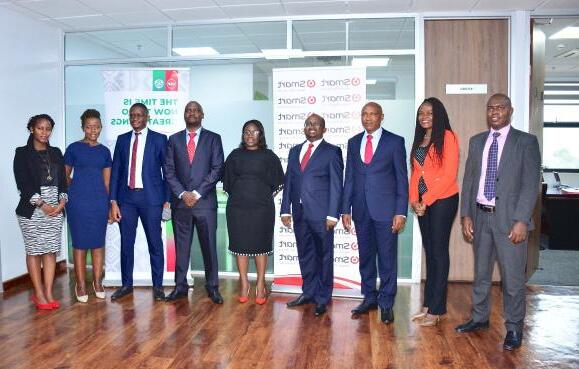

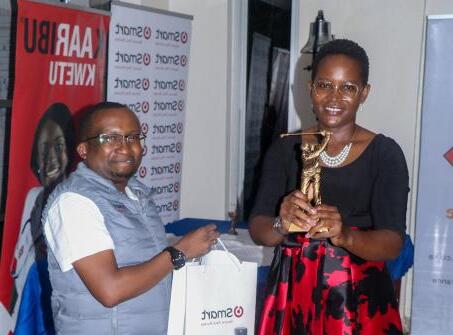
UNISURE GROUP, MUA, AND SMART APPLICATIONS INTERNATIONAL STRATEGIC PARTNERSHIP LAUNCH.
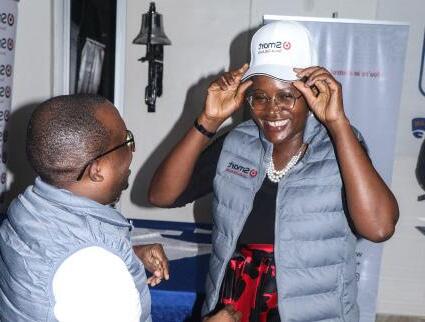
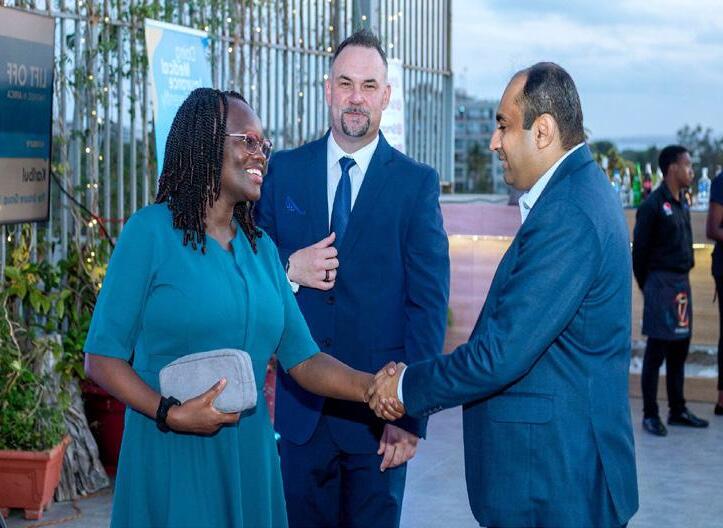
SMART APPLICATIONS INTERNATIONAL AND SANLAM LIFE INSURANCE UGANDA ELECTRONIC DATA INTERCHANGE LAUNCH.
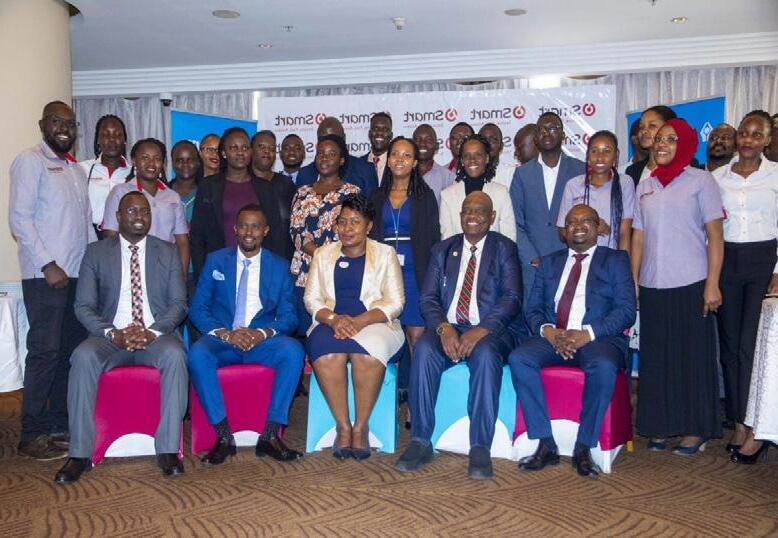
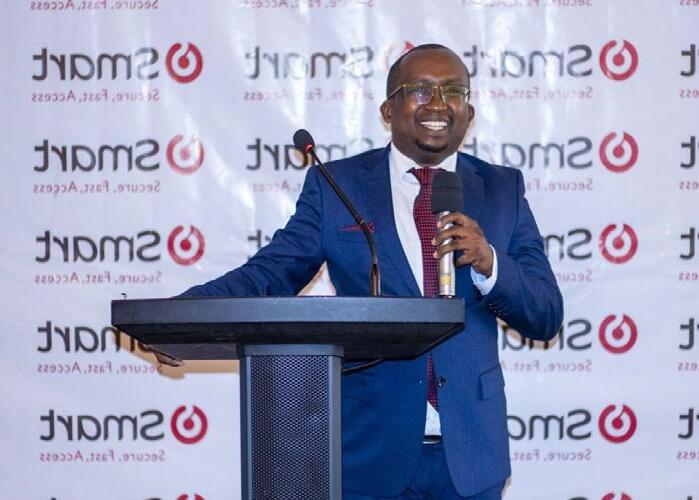

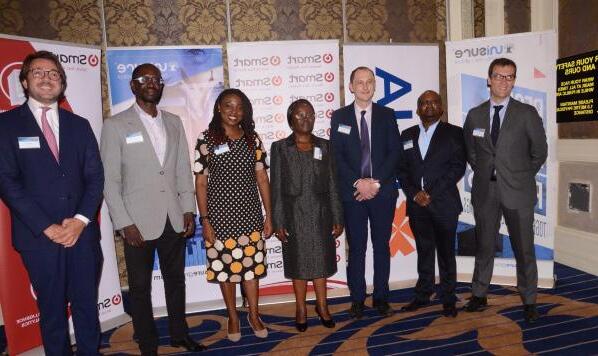
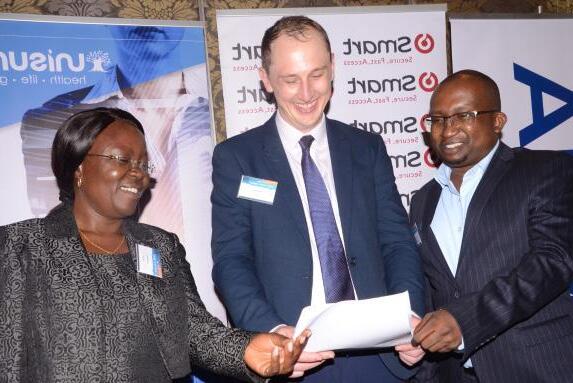
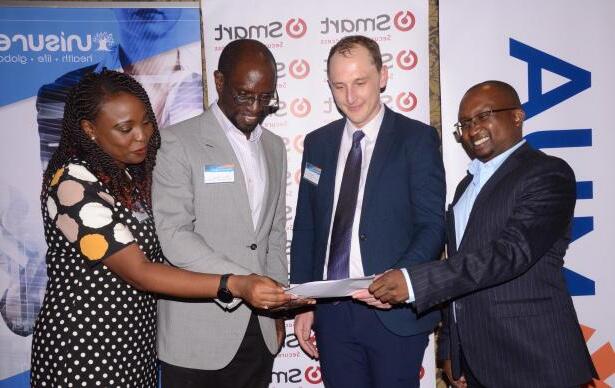
UNISURE, SMART APPLICATIONS INTERNATIONAL, AND PHOENIX TANZANIA STRATEGIC PARTNERSHIP




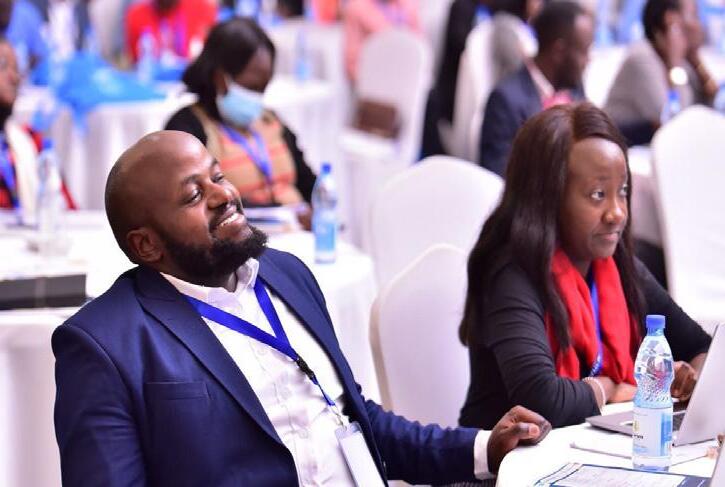
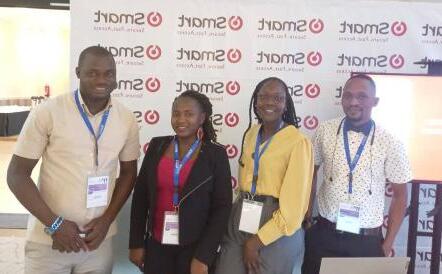

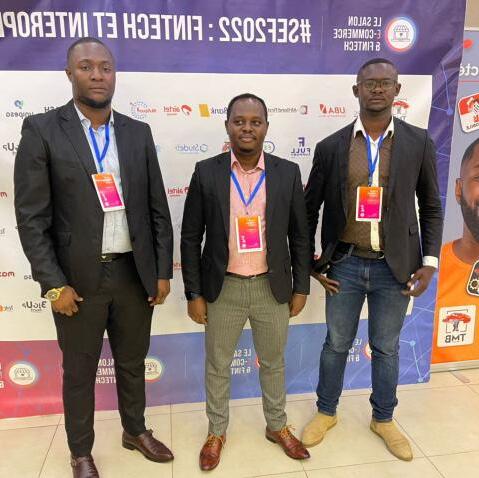
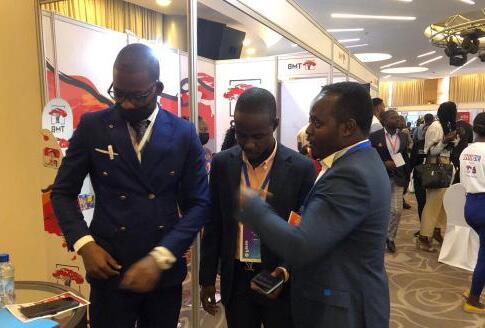
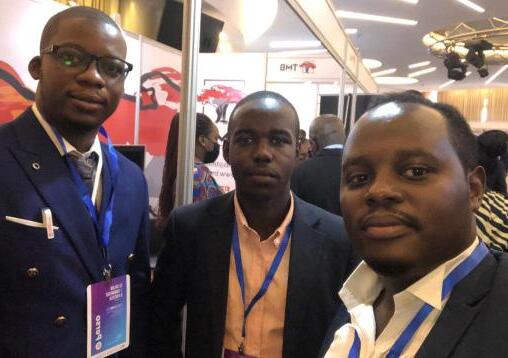
At a recently concluded medical insurance CIO Forum hosted by Smart Applications International various insurance stakeholders came together to discuss what the future holds for medical insurance in terms of digital transformation as a means of both attracting and retaining younger generations of customers.
Mr. Harrison Muiru, Group Managing Director, Smart Applications International, kicked off the session by noting, “we felt that by being part of both the insurance industry and the medical industry, we needed to bring together key stakeholders to address some of the things that are emerging in our line of work”.
Getting right to the topic at hand, Mr. Muiru noted that many organisations still see the IT function as a disparaged function sitting behind the back office, but at the same time expected to play a very key front office and business engagement role. He noted that as the IT function grew, it was important for technology professionals to continue engaging in such forums to keep up with the technological changes taking place in their respective industries.
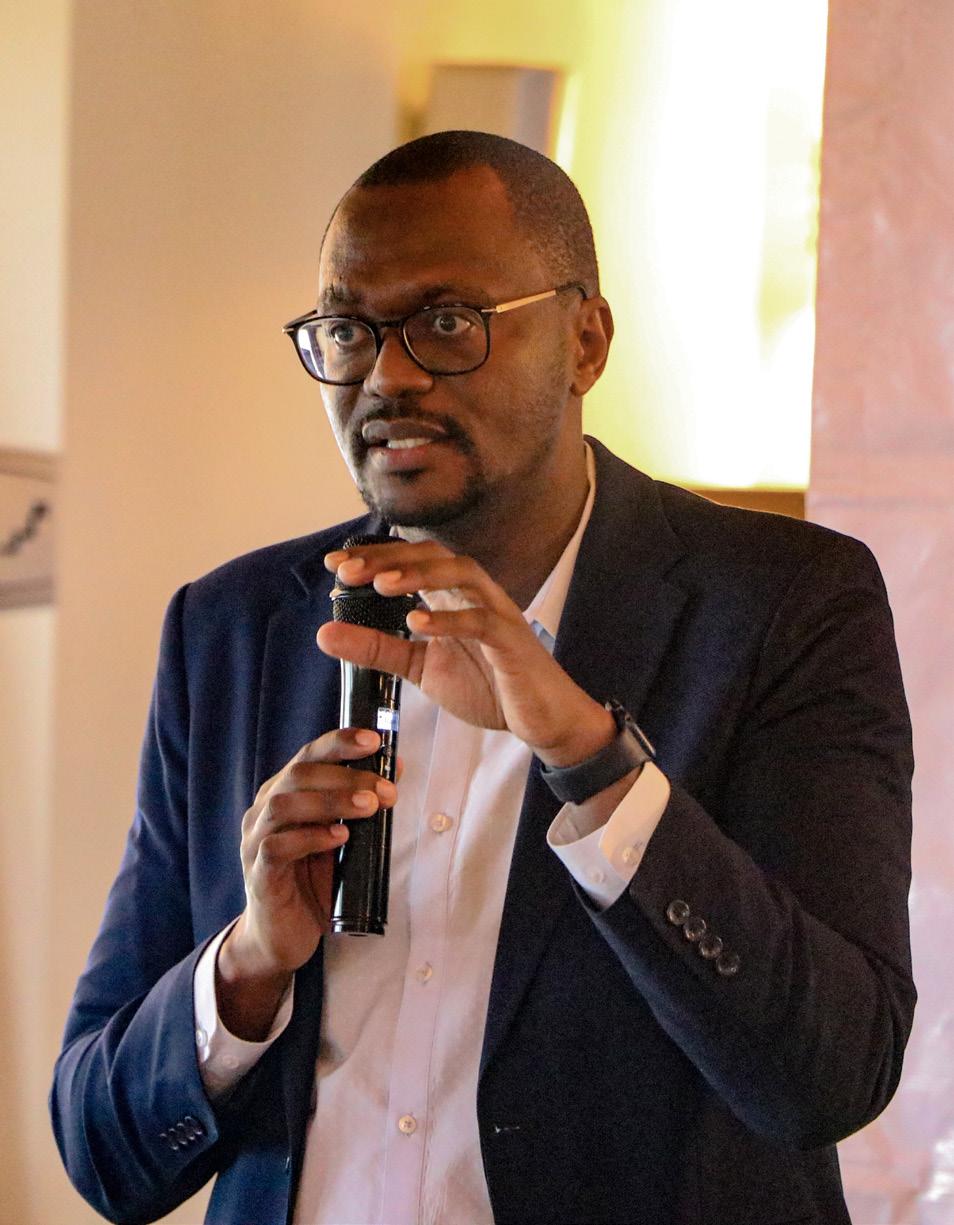
Mr. Muiru set the tone for the conversation that followed. The keynote speech was delivered by Mr. Ezekiel Macharia, Chief Actuary, and CEO, Kenbright, who shared progressive insights on how organisations can accelerate Digital Transformation.

In his remarks, Mr. Macharia mentioned that medical insurance accounted for only 8% of the Kes 15 billion
insurance market’s total value Twenty years ago. Twenty years later, medical insurance accounted for one-third of a 131 billion Kenyan shilling market. In this context, Mr. Macharia called on key stakeholders to consider future possibilities rather than current considerations of medical insurance when making decisions on how to innovate going forward.
Even though the insurance market continues to grow, Mr. Macharia noted that it is facing stiff competition from other industries. He chose to give the example of betting as an industry, noting that it overtook the entire general insurance industry. Mr. Macharia cited the fact that Kenyans spent Sh169.1 billion to place bets through Safaricom’s M-Pesa in the year ended March 2022.
“The issue here is not that consumers do not have money; it is just that we (the insurance industry) sell bad products that are not exciting. So, a larger opportunity is to understand why the consumer is going towards betting,” added Mr. Macharia.
“Ten years ago, betting was at zero market share, and as an industry, they have overtaken general insurance. I can give you three characteristics as to why this is the case,
it is a digital-first market, there is real-time engagement, and there is limited involvement of third parties”. He further opined.
Mr. Macharia then urged the stakeholders in the insurance sector, to make sure that future iterations of such forums did not focus on how the sector is falling behind in terms of digital transformation, rather than on how it is embracing new technologies to enhance its goods and services.

The forum transitioned into a panel discussion whereby the participants shared details about where their organisations are in their respective digital transformation journeys, the challenges they have faced along the way on their journeys, how they mitigated the challenges, how innovation and regulation relate, and finally shared insights on what the insurance industry could do to enhance digital transfor mation adoption so as not to be left behind by other industries.
The panel discussion was led by Stanley Sang, Head of Information Technology at Jubilee Insurance, James Mwaniki Systems, and Innovation Manager at AAR Insurance Kenya LTD, Thomas Kongongo, Group Chief Information Officer of Old Mutual Kenya, Collins Ngeno, Group Technology Director at Smart Applications International Ltd.
Chief Actuary, and CEO, Kenbright giving a keynote speech during the event
The session was moderated by Esther Kiringa Muiruri, Group Sales, and Marketing Director, Smart Applications International Ltd, who asked several important questions for the experts to address.

We felt that by being part of both the insurance industry and the medical industry, we needed to bring together key stakeholders to address some of the things that are emerging in our line of work.
HARRISON MUIRU
Group Managing Director, Smart ApplicationsEZEKIEL MACHARIA Technology Director at Smart Applications International Ltd, Stanley AAR Insurance Kenya LTD, and Esther Kiringa Muiruri,
Esther Kiringa Muiruri (Moderator)
How can companies prioritise digital transformation when they have other demanding and pressing needs within the organisation?
Stanley Sang (Panelist)
I believe that when we discuss prioritisation, we need to consider what Digital Transformation brings. Moreover, what would you lose if you do not adopt digital transformation?
Digital Transformation adoption is supposed to lower your operational cost, mitigate fraud, and make customer service seamless. Therefore, by not prioritising it you are losing on those benefits. So, I don’t think there is anything that should be more important to an organisation than making digital transformation a priority.
Collins Ngeno (Panelist)
My idea would be not to look at Digital Transformation as an expense, but rather as part and parcel of your organisations business strategy. So, as you operate the other initiatives, digital becomes the underlying bedrock of the processes that will help you achieve your business goals
Esther Kiringa Muiruri (Moderator)
We have seen very steady growth by insurance companies in digitising and automating their processes but still there is a challenge if you compare this with other players in the financial services sector. So, what could be the reason for this and what can we do to bring about a change?
Stanley Sang (Panelist)
We can see that the insurance sector is still lagging in terms of adopting new technologies if we look at comparisons with the banking sector, for instance. The penetration of our insurance services in Kenya is about 2-2.1 percent and that has been the situation for a long time. If you look at the banking services, it is at an upward of 55 percent penetration.
So, as an industry, we keep fighting over the same clients instead of looking at a new type of client, especially in the informal sector which makes up 95 percent of the economy.
This could be because, as earlier mentioned by Mr. Macharia, we are not selling good products, our products in turn lead to problems of trust. As an industry, we should find a way of gaining back people’s trust and making them aware of the benefits of our products and services in order to increase our market and further the need to adopt the technology.
From an insurance perspective, it is all about the willingness of insurance organisations to invest in innovations. A recent report revealed that less than 28 percent of insurance companies have invested in innovations.
When we look specifically at Big Data Analytics, the uptake of this technology has been quite low in the insurance sector even though we are making great strides towards embracing this technology. If the insurance industry can match how the telcos and the banks are embracing Big Data, this could be the key to unlocking the penetration issues facing insurance.
I am particularly concerned about the insurance value chain when it comes to digitalisation and why we (the insurance sector) are lagging. Banks, in contrast, own their consumer, their value chain, and the complete service.
Insurance companies on the contrary work with partners and these partners are on different paths in their digitisation processes.
If you have any member of that value chain with zero integration that value chain is as good as one that has zero percent integration entirely. In my view, this is the single biggest drawback when we are digitising insurance.
In conclusion, despite the fact that every stakeholder would like to see the insurance business digitized more quickly, there is a universal consensus that structural challenges must be resolved first.
In order to ensure that customers have a better grasp of insurance goods and an improved experience anytime they interact with the products, it is crucial to keep customers in mind when digitising.

The startup’s idea was born in early 2019 by Purity who learned the pain points of the rural fishermen in their day-to-day fishing activities. She linked with Dennis Onkangi who worked with her in research and development. At the time, Purity’s bedsitter served as their workshop by day.
They later carried out a crowdfunding campaign and bootstrapping to raise funds for the project and made their first prototype in 2020 which helped them in the piloting stage. The start-up was registered in 2021. Why the fish value and supply chain?
About 12.3 million people in Sub-Saharan Africa depend on fishing to earn a living. But did you know that 45% of their harvest goes to waste daily?
Approximately, 45% of their harvest is lost before it can be sold or safely consumed due to a lack of access to affordable cooling solutions.
Electricity is not only an expensive commodity in most parts of Africa, but also scarce and most fishermen depend on ice to preserve their fish harvest. This is not reliable for them in the long run.
Unfortunately, most small-scale fishers are also unbanked and lack access to credit in order to invest in cold storage equipment. Additionally, many of the fishing-dependent communities are either off-grid or do not have access to reliable and affordable electricity to run such equipment.
How Kuza Freezer is solving the problem
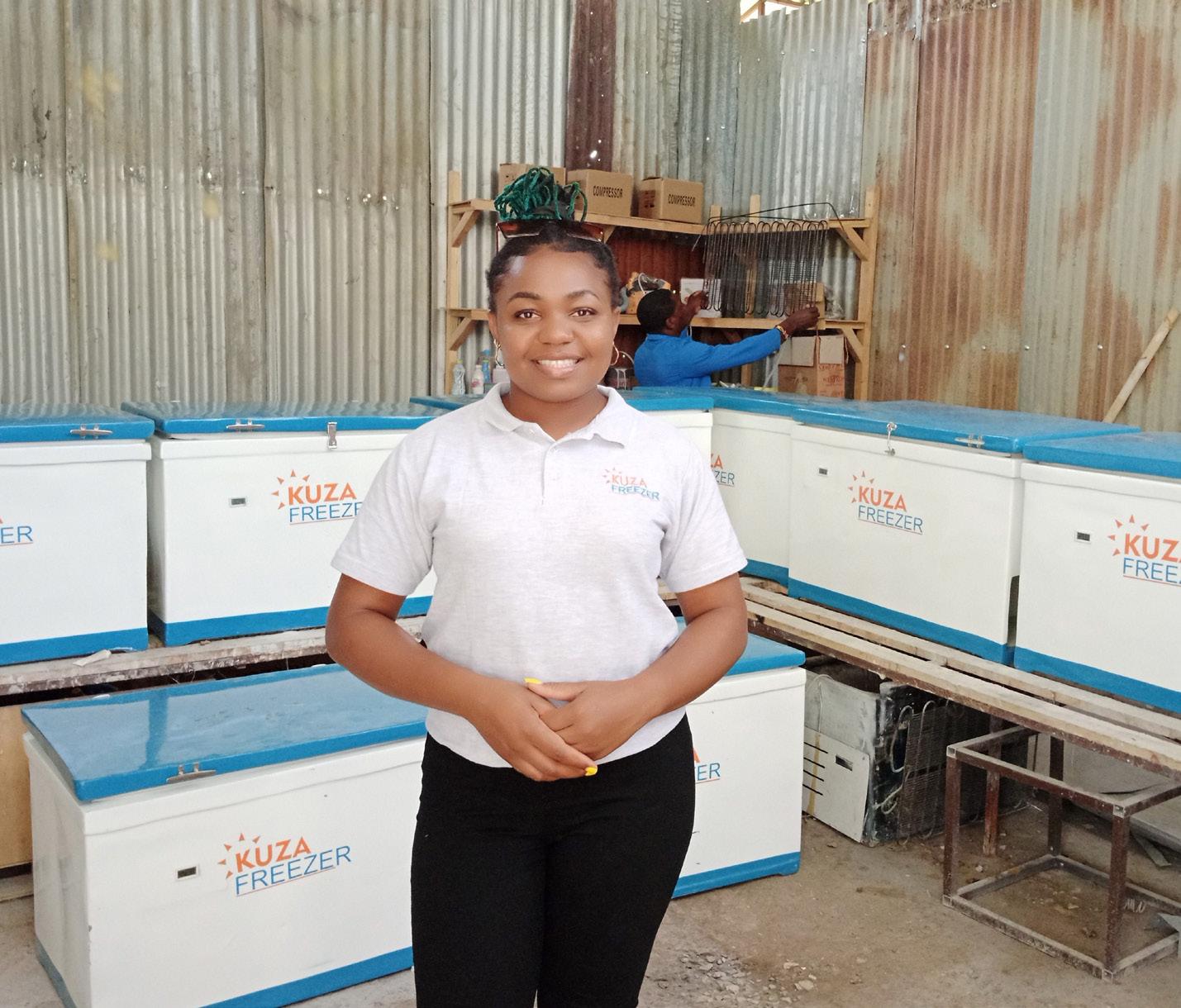
“To solve this problem, we manufacture pay-as-you-go solarpowered freezers.
This Kuza Freezer solution helps rural fishermen and fish farmers to reduce post-harvest losses and increase their income by eliminating the need to use ice to cool, hence saving the fishermen the ice cost,” notes Purity Nyambura, Co-founder of Kuza Freezer.
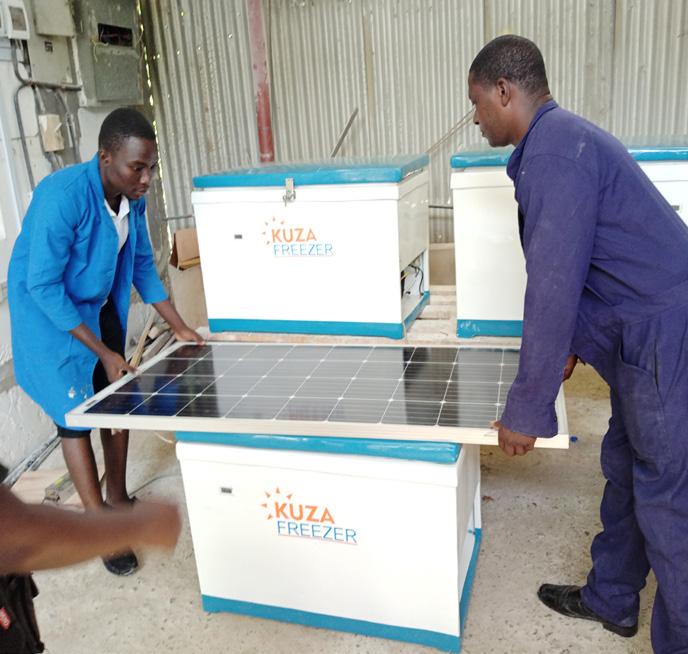
“We also manufacture a solar-powered freezer on a Tricycle that bridges the mobility gap and enables them to freeze as they ride giving them easy access to markets in remote areas. Although fishing is primarily male-dominated, the participation of women in secondary and tertiary levels of the fish value chain is remarkable,” added Purity.
Purity further explained, “So far, we have reached and improved the livelihoods of about 160 rural fishermen and created jobs for youth and women in the fish value chain. We have also provided them access to the ready market by connecting them to fish vendors across the country, hence increasing their income by 60%,”
“Our long-term vision is to see the livelihoods of over 30,000 rural fishermen in Kenya improved through our solution in the next 5 years.” She concluded.















As earlier mentioned in the article there are several mental health disorders that could plague people in their lifetimes. Recent statistics from the Smart data a n a l y t i c s s o l u t i o n , p o w e r e d b y t h e Q l i k S e n s e business intelligence platform, provided insights on the top 5 mental health trends affecting people for the period between Jan 2021-Jan 2022. According to the d a t a , t h e t o p v e m e n t a l h e a l t h c o n d i t i o n s t h a t affected people during the period were as follows:
Anxiety disorder
Depressive disorder
Bipolar affective disorder
Mood [Affective] disorder
Schizophrenia
The statistics point to a rise in mental health disorders during the month of October. This could have been caused due to the COVID-19 pandemic which was at its peak at the time. Regardless of whether they contracted COVID-19 or not, many people went through some sort of mental health disorder, and this is highlighted in the report.
Me n t a l h e a l t h d i s o r d e r s are a problem for people o f a l l a g e s T h e a f f e c t anybody, anytime and anywhere. Research reveals that in a lifetime, o v e r 2 5 % o f p e o p l e d e v e l o p a m i n i m u m o f o n e m e n t a l o r b e h a v i o r a l d i s o r d e r . T h e W o r l d Health Organization projected that by 2020 depression was going to be t h e s e c o n d l e a d i n g r e a s o n o f medical disability on earth.

Given these shocking predictions, mental conditions, once written off a s “ p e r s o n a l f a i l u r e s ” o r “weaknesses,” are now garnering g r e a t e r a t t e n t i o n a s s i g n i c a n t p u b l i c h e a l t h c o n c e r n s p e r t h e W o r l d H e a l t h O r g a n i s a t i o n (WHO), mental wellness is a state o f w e l l - b e i n g d u r i n g w h i c h t h e i n d i v i d u a l r e a l i z e s h i s o r h e r a b i l i t i e s , c a n d e a l w i t h t h e traditional stresses of life, can work p r o d u c t i v e l y a n d f r u i t f u l l y , a n d m i g h t c o n t r i b u t e t o h i s o r h e r community.
Apart from the top 5 disorders affecting people at the time, the report went on to further highlight the top mental health diagnoses that were prevalent during the period mentioned above.

“Research reveals that in a lifetime, over 25% of people develop a minimum of one mental or behavioral disorder.”
Nyanumba, Consultant Nutritionist, Crystal Health Consultants Limited
With the above statistics in mind, it is important to note that a number of factors can contribute to mental health disorders. During the period in question, COVID-19 could have been the leading cause of such problems. However, another cause of mental health disorders that might go unnoticed to many is the food we choose to eat on a daily basis.
The choice of our food makes all the difference and directly affects the function of our brain and mood. Eating high-
q u a l i t y f o o d s t h a t c o n t a i n v i t a m i n s , m i n e r a l s , a n d antioxidants nourishes the brain in a very positive way.
S i m i l a r l y , a d i e t
h i g h i n r e n e d sugars can impair
b r a i n f u n c t i o n s
a n d w o r s e n
m e n t a l d i s o r d e r symptoms.
It is important to avoid high sugar,
a n d p r o c e s s e d
f o o d s a n d
c o n c e n t r a t e o n
f o o d s c o n t a i n i n g the nutrients that
b e n e t b r a i n h e a l t h . A b r a i nf r i e n d l y d i e t includes fruits and vegetables, whole g r a i n s , l o w - f a t d a i r y , l e a n p r o t e i n , a n d l i m i t e d amounts of sodium, saturated fat, and sugar. Working these foods into your diet will help protect your brain, ght fatigue, and boost your mood and awareness.

Our thoughts, how we feel, and how we behave daily are inuenced by the balance of assorted neurotransmitters in our brain. When this process is functioning optimally our brain chemistry is claimed to be balanced and that we respond appropriately and positively to the world around us. A neurotransmitter is dened as a chemical messenger that carries, boosts, and balances signals between neurons or nerve cells, and other cells within the body.
These chemical messengers can affect a number of sorts of both physical and psychological functions including pulse, sleep, appetite, mood, and fear. Billions of neurotransmitter m o l e c u l e s w o r k c o n s t a n t l y t o l e t o u r b r a i n f u n c t i o n , managing everything from our feelings to our learning and c o n c e n t r a t i o n l e v e l s . T h e r e a r e n u m e r o u s d i f f e r e n t neurotransmitters that inuence how we use our brains and feel.
There are several nutrients that play several vital roles in supporting brain chemistry, sleep quality, and helping to cut back the chance of depression. These include:
Iron: This is a mineral that our bodies need for several functions. as an example, iron is an element of hemoglobin, a protein that carries oxygen from our lungs throughout our bodies. Iron is required for the structure and performance of the central nervous system. Rich sources include red meats, liver, poultry, oily sh, eggs, green leafy vegetables, and pulses.
Z i n c : T h i s i s a t r a c e m i n e r a l , meaning that the body only needs s m a l l a m o u n t s , a n d y e t i t ’ s n e c e s s a r y f o r pretty much 100 e n z y m e s t o s u p p o r t v i t a l c h e m i c a l reactions. Zinc is r e q u i r e d f o r t h e c o n v e r s i o n o f t r y p t o p h a n t o serotonin. Zinc is found in seafood, l e a n m e a t , s h , nuts, and seeds.
M a g n e s i u m : This is a mineral that's crucial to the body's function. Magnesium helps keep pressure levels normal and plays a key role in nerve cell s i g n a l i n g I t ’ s f o u n d i n d a r k g r e e n l e a f y v e g e t a b l e s , butternut squash, pumpkin seeds, nuts, and seeds.
It’s thus very important for us to keep an eye on what we put in our bodies, in terms of the food that we eat. This will enable us to better manage our mental health over the course of our lives.
The Smart analytics solution provides insights on organisations data from various business processes to enable organisations to make prompt interpretations and decisions to improve protability a n d e n h a n c e e f c i e n c y a s w e l l a s c u s t o m e r s e r v i c e S m a r t Applications International provides data within the connes of Data Protection Act and International Acts. Copyright reserved
Kepha Nyanumba is a seasoned Consultant Nutritionist at Crystal Health Consultants Limited. You can engage him on this or related matters via mail: knyanumba@chc.co.ke / kephanyanumba@gmail.com, or follow him on twitter: @knyanumba. Blog: kephanyanumba.blogspot.com.


A c c o r d i n g t o t h e U n i t e d Nations Conference on Trade and Development (UNCTAD)
E c o n o m i c D e v e l o p m e n t Report for Africa (2021), thirtyfour percent (34%) of African households are poor, living in s o m e o f t h e w o r l d ' s m o s t u n e q u a l s o c i e t i e s w i t h a regional Gini index of 0.40.
Several African Union (AU) Member States have yet to develop efcient ways to support long-term growth and r a i s e l i v i n g c o n d i t i o n s f o r m o s t c i t i z e n s w h o r e m a i n i m p o v e r i s h e d T h e p r e s e n t r i s e o f t h e 4 t h I n d u s t r i a l Revolution (4IR) holds immense potential for improving Africa's sustainable development trajectory by creating more e m p l o y m e n t o p p o r t u n i t i e s a n d p r o m o t i n g a l e v e l o f entrepreneurship that reduce poverty.
Accor di ng t o t he Brook in g s In st i t u t e's F or esig h t Afr i ca report of 2020, mobile technologies and services have created 1 7 m i l l i o n d i r e c t j o b s , b o t h f o r m a l a n d i n f o r m a l , contributing $144 billion in economic value or 8.5 percent of Sub-Saharan Africa's Gross domestic product (GDP), and $15.6 billion in tax revenue to the government. Digitisation h a s s o l v e d i n f o r m a t i o n a s y m m e t r y i s s u e s i n b o t h t h e nancial system and labor market. This has resulted in an i n c r e a s e d e f c i e n c y , c e r t a i n t y , a n d s e c u r i t y i n a n environment where information ow is vital for economic growth and job creation.
Investing in Science, Innovation, and Technology (STI) is critical for Africa to achieve both Agenda 2063 and the 2030 A g e n d a f o r s u s t a i n a b l e d e v e l o p m e n t . R e s e a r c h a n d innovation aim to boost the continent's socio-economic d e v e l o p m e n t i n t h e c u r r e n t k n o w l e d g e - b a s e d a n d innovation led-economy. STI is a prerequisite for moving forward with the implementation of frameworks like the Science, Technology, and Innovation Strategies for Africa (STISA-2024) and the African Continental Free Trade Area (AfCFTA) which promote the attainment of both continental and global development goals. STISA-2024 supports a target pledged in the Lagos Plan of Action of 1980 requiring all AU member States spend at least 1% of their GDP on research to include national science, technology commissions, councils, and research institutions across African to keep up with the changing digital 4IR environment.
Despite the potentiality of the 4th Industrial Revolution, Africa appears to be lagging compared to other continents d e s p i t e i t s w e a l t h y y o u t h f u l p o p u l a t i o n a n d n a t u r a l e n d o w m e n t s F o s t e r i n g a n i n n o v a t i o n -
dependent on how member States develop science and technology and innovation policies based on evidence.
The same applies when these policies are in alignment with national development plan’s priorities and provide both technical and nancial support to promising innovative ideas and projects developed by young start-ups from across Africa. An investment in business innovation will improve t
The ability for African rms to compete with foreign investors can lead to resilience allowing more micro, small, and medium enterprises to take advantage of AfCFTA's mega-market prospects.
According to the UNESCO Institute for Statistics report on Data for SDG 9.5 on Research and Development spending and personnel for 2020, Europe and North America, Eastern and South-Eastern Asia spent 2.25 percent and 2.13 percent of GDP on R&D, also known as Gross Domestic expenditures on R&D (GERD), respectively, while Sub-Saharan Africa spent 0.38 percent and Northern Africa and Western Asia spent 0.81 percent. Given the importance of STI in driving development, this lack of investment in R&D raises concerns about whether Africa is ready and will be able to meet its c o m m i t m e n t t o r e a c h i n g b o t h g l o b a l a n d c o n t i n e n t a l development goals.
Europe and North America, Eastern & South-Eastern Asia spent 2.25% & 2.13% of GDP on R&D, while
Sub-Saharan Africa spent 0.38% & Northern Africa & Western Asia spent 0.81 %
Expediting or enhancing the implementation of STISA-2024, which argues for Africa's transformation into an innovationled, knowledge-based economy, requires pushing both the government and business enterprises sectors to adopt STI and to comply with the target in securing appropriate funding to R e s e a r c h a n d D e v e l o p m e n t ( R & D ) P o l i c y m a k e r s a n d decision-makers play a critical role in ensuring there are enough funds and implementation of relevant supranational policies such as Agenda 2063 (Aspiration 1), STISA 2024 priority areas, National Development Plans (NDPs), and national science and technology policies to foster innovation. Thus, being more inclusive with grassroots Africans in the process will ensure that no one is left behind as far as socioeconomic development is concerned.
Taking advantage of most of the radical innovation known as the emerging technologies, robotics, cyber-physical systems ( C P S ) , t h e i n t e r n e t o f t h i n g s ( I o T ) , c l o u d c o m p u t i n g , biotechnology, nanotechnology, cognitive computing, gene therapy, and articial intelligence will help in one way or the other to revolutionalise various development sectors. For instance, in sub-sectors such as manufacturing , agriculture, e d u c a t i o n , h e a l t h , a n d s e r v i c e p r o v i s i o n , e m e r g i n g t e c h n o l o g i e s a r e a l r e a d y c o n t r i b u t i n g s i g n i c a n t l y t o e n h a n c i n g p r o d u c t i v i t y , e f c i e n c y , a n d e f f e c t i v e n e s s o f activities in the respective areas. Putting more nancial, and non-nancial resources, as well as implementing the existing p o l i c i e s o n S T a n d / o r I n n o v a t i o n , w i l l f u r t h e r f a c i l i t a t e progress in these sectors.
On this note, a newly established AUDA-NEPAD Centre of E x c e l l e n c e i n S T I ( A U D A - N E P A D C o E - S T I ) u n d e r a p a r t n e r s h i p b e t w e e n A U D A - N E P A D , S o u t h A f r i c a ’ s Council for Scientic and Industrial Research (CSIR), and Stellenbosch University is a foundation stone towards e n h a n c i n g S T I ’ s r o l e t o a c c e l e r a t e d e v e l o p m e n t . T h e AUDA-NEPAD Centre of Excellence in STI comes with the potential to provide substantial support to fast-track both the implementation of STISA-2024, AfCFTA, in addition to the Continental Education Strategy for Africa (CESA) and r e s h a p e A f r i c a ’ s d e v e l o p m e n t c o n t e x t . T h e f o c u s o f AUDA-NEPAD CoE-STI on potential areas such as basic research, applied research, development, and innovation (RDI) will expedite technology advancement which in turn will lead to broader economic growth in Africa.
Identifying and selecting promising innovations, as well as promoting their adoption across Africa's development e c o s y s t e m , w o u l d h e l p a c c e l e r a t e s o c i o - e c o n o m i c transformation at the national, regional, and continental levels. On top of that, the new AUDA-NEPAD's mandate and convening power give it more responsibilities to serve Member States and Regional Economic Communities. This can help sustain the vision of the Centre of Excellence in STI to spearhead the development of evidence-based solutions and improve expertise/critical skills in specic thematic areas to sharpen the delivery of National Development Plans (NDPs) and Agenda 2063 for Regional Integration.
Cloud computing, along with increasingly ubiquitous digital tools for collection, aggregation, and analysis of health data, offers substantial potential to help the African continent leapfrog many more mature systems in transforming healthcare and improving health outcomes. However, more rigour and attention must be focused on protecting the privacy and security of health data.
Over the past two decades we have seen major advances in technology and digital health tools, which mean that most health data is now automated and stored digitally, and s h a r a b l e f o r r e s e a r c h , p o l i c y , a n d p r o g r a m implementation.
Key privacy laws have also been formalised in many parts of the world to:
1) conrm the privacy and stewardship of personally identiable health information (PHI) and
2) require that those holding this information protect and secure it from unauthorised use or release.
Health data privacy and security protections carry strong health equity implications. The disclosure of personally identiable health information, such as HIV status, can result in stigma, embarrassment or discrimination, and lead to loss of employment and reduced trust in and e n g a g e m e n t w i t h t h e h e a l t h c a r e s y s t e m F r e e a n d informed consent around data disclosure and control over one’s own health data should be equally applied across all geographies. This must be a focus across Africa.
Almost 20 years ago when people across the African continent were dying daily by the tens of thousands from HIV/AIDS, the US President’s Emergency Plan for AIDS Relief (PEPFAR) program was launched to save lives. PEPFAR and other global HIV programs, as well as many other urgent infectious disease efforts over the years have been noble and laudable in their hyper focus to save lives.
Through those years huge volumes of data were collected across Africa, some of it personally identiable health data. Safeguarding this data, while considered, was a much l o w e r p r i o r i t y t h a n g e t t i n g t h e l i f e s a v i n g d r u g s a n d services to those most in need. And while signicant investments have been made in strengthening health systems, there has been limited attention on the rigor required to protect health information, particularly with heightened frequency of cyber crime and cyber terrorism worldwide.
About half of African countries have now passed laws to protect a person’s right to the privacy of their health information; however, even in African countries that have enacted privacy legislation, practically speaking these laws have seen limited enforcement and impact.
Nonetheless, these legal frameworks signal important progress in advancing health data privacy and security agendas.
Nonetheless, these legal frameworks signal important progress in advancing health data privacy and security agendas.de in strengthening health systems, there has been limited attention on the rigor required to protect health information, particularly with heightened frequency of cyber crime and cyber terrorism worldwide.
Hundreds of digital health technologies, many of these free or open source, have been piloted and implemented across c o u n t r i e s i n A f r i c a D e s p i t e t h e i r n o b l e i n t e n t , t h e s e technologies have not been subject to the kinds of scrutiny that rigorous compliance frameworks such as POPIA, GDPR, or the US-based HITRUST certication process bring. It is critical to explore:
· Securing the privacy of health information via robust cloud computing, and
· E n s u r i n g t h e m y r i a d o f d i g i t a l h e a l t h technologies are hardened enough to offer end-toend protection of health data, including PHI.
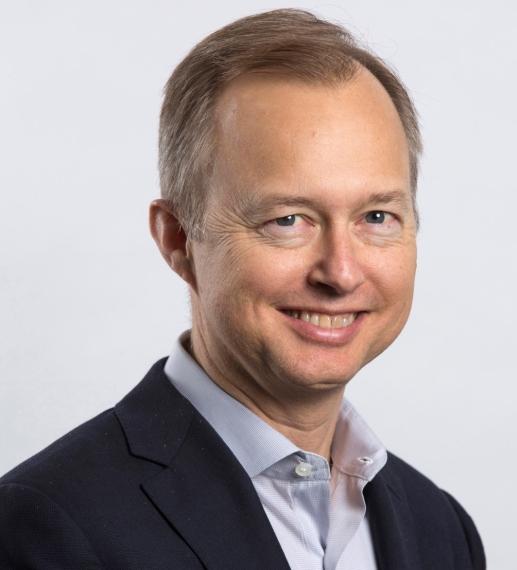
S o m e a s s u m e t h a t c l o u d c o m p u t i n g m e a n s d a t a i s ‘offshored’ and is no longer private nor protected by a local country’s regulations. This has led to some countries calling for health and other data to be stored physically within the country’s borders. Yet, this may mean less rigorous IT security provisions than could possibly be found with a global provider.
L o c a l l y d e v e l o p e d o r f r e e l y a v a i l a b l e d i g i t a l h e a l t h software tools and applications are also being deployed across Africa, which is exciting, but it is critical to ensure these systems are subject to the design, technical, and process compliance needed to secure health data.
There are several areas that could be explored to advance p r i v a c y a n d s e c u r i t y o f h e a l t h d a t a o n t h e A f r i c a n continent. These include the following:
The global development community must focus more attention on protecting health information through policy development, education and awareness, and systems strengthening.
F o r e x a m p l e , a n o v e r a r c h i n g W H O - l e d r e g u l a t o r y framework for health data privacy and security has been discussed, but this sort of regulatory framework, beyond promoting general principles of data privacy, has yet to come to fruition. This means a continued patchwork of i m p r a c t i c a l , i n c o n s i s t e n t , o r n o n - e x i s t e n t g o v e r n a n c e approaches to securing health data for the foreseeable future.
Health data privacy and security policy and practice need to be a focused part of the development agenda going forward.
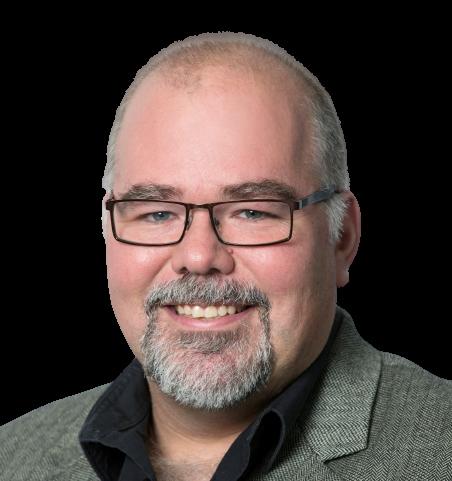
S e v e r a l o f t h e l a r g e c l o u d o f f e r i n g s f r o m M i c r o s o f t , Google, and Amazon, offer secure, cost-efcient ways to manage health data for African healthcare.
However, these global tech players need to navigate the maze of legal frameworks across African countries, which m a y b e p a r t i a l l y i m p l e m e n t e d a n d s o m e t i m e s contradictory.
A f r i c a n c o u n t r y g o v e r n m e n t s a n d t h e i r s u p p o r t i n g development donors need to take advantage of the global tide of cloud computing so that they can harness the best technologies for managing increasing volumes of data.
African governments and their ecosystem actors also need to consider enhanced scrutiny of the various digital health tools and software applications to ensure these have adequate data protection and security features.

D e p l o y i n g f u l l - o n P O P I A o r G D P R - l i k e l e g a l r e q u i r e m e n t s o r i m p l e m e n t i n g a r i g o r o u s s y s t e m certication requirement such as HITRUST across Africa would be cost prohibitive and impractical; yet, there are some components that should be explored. For example, a “lite” version of HITRUST certication could become a minimum standard for digital health technologies and cloud computing offerings.
W h i l e m u c h p r o g r e s s h a s b e e n m a d e i n h e a l t h development across the African continent, this progress has not kept up with exponential growth in digital health.
T h i s i n c l u d e s h a r n e s s i n g t h e b e s t o f w h a t s c a l a b l e t e c h n o l o g y c a n b r i n g , w h i l e a l s o m a n a g i n g t h e a c c o m p a n y i n g r i s k s i n a c o n n e c t e d d i g i t a l w o r l d , including securing health data assets.
Rachel Clad, Director, Partnerships and Alliances, BroadReach Group
Locally developed or freely available digital health software tools and applications are also being deployed across Africa...
The Digital space is undoubtedl y the f uture of health & wellbeing Healthcare practitioners and providers are constantand accessibility to care.
This has also come about more from the recent realities fronted by the corona virus pandemic . Corona virus pandemic not onl y caused a g reat threat to health but also exacerbated poor mental health. Social distancing was one of the core pre ventati ve measures of Covid-19 virus and while this slowed down the rate of ne w inf ections, it led to social isolation. We ha ve all heard of the saying no man is an island. Social isolation brought about decreased interactions, ph ysical acti vity more anxiety and rumination of thoughts posing a red flag more so to those with pre-existing mental illness diagnosis. There was also a record of high ne w diagnosis of mental illness and poor mental wellbeing f or indi viduals with vulnerabilities to mental health, yet access to care was not as easy
The use of technolog y proved to be usef ul, practical and convenient in accessing care and treatment. Today with the launch of telepsychiatr y in Kenya, (Read more on Implementation of telepsychiatr y in Kenya:htt ps://chiromohospitalgroup.co.ke/ research-paper s/ ) , patients are able to ha ve online consultations, therapy sessions from the comf or t of their saf e en vironment; home. Those that require medication and prescription is provided or deli vered at the door step. This excitement has also led into the de velopment of many mental health APPs and more incorporation of smar t technologies in health care to increase
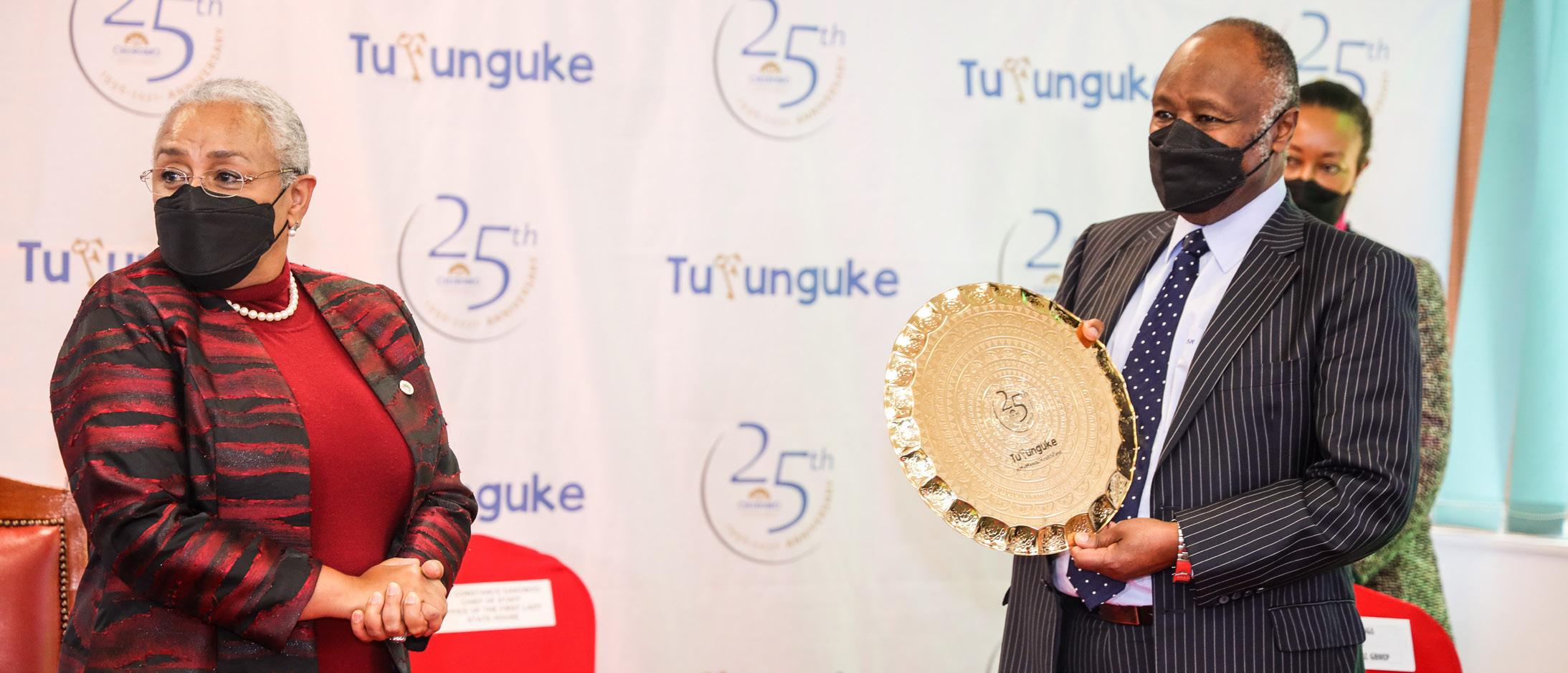
1. Low costs: Reduction in the costs of tra vel f or consultations or therapy has repor tedl y made it easier f or many individuals, cushioning the high cost of li ving.
2. Easy access to care: It takes approximatel y an hour or so f or someone to commute from one end to another, gi ven
By Gathoni Mbugua
consultations also cover a much larger geog raphical area, across counties, countries and e ven continents. Technolog y
online consultations
3. Anonymity: A lot of stigma is still pegged on mental health issues. With technolog y, someone easil y sets up an online session. Obser vabl y this has seen an increase in help seek ing beha viour especiall y among the youth.
4. Round the clock ser vice: Traditional consultations operated within daytime work ing hours, with the introduction of Toll-Free Lines such as 0800 220 000, indi viduals are able to access help anytime.
5. Information: Knowledge is power, a statement frequentl y used. Technolog y has ballooned the access to a wealth of-in f or mation. From blogs, to videos, to sharing inf or mation via Whatsapp Used cor rectl y, technolog y can be lif e changing in complimenting traditional ways of treatment.
While people are more connected today, more than e ven, tech -
indi vidual’s wellness
1. Reduced sleep: Screen time especiall y bef ore bedtime is connected to poor quality of sleep. The brain is stimulated by the exposure to the blue light emanating from digital tools, phones, tablets, computers, TVs, etc inter rupting the sleep wake c ycle.
What to do: Wind down from using any digital tool at least an hour bef ore bedtime.
2. Isolation: While online connectedness increases, studies ha ve shown that social media use contributes to lower ph-ys ical connectedness, leading to f eelings of loneliness Ph ysical connectedness is crucial f or overall wellbeing of indi viduals.
What to do: Ha ve boundaries with your digital tool, be intentional about social connections
Children who spend more than an hour a day online are more likel y to de velop problems such as anxiety, poor sleep, low academic perf or mance, exposure to adult content, low creati vity, risk f or addiction and poor social sk ills among others.
What to do: Enf orce parental controls on the de vices within the home f or children, super vise and limit consumption to an hour a day.
4. Poor Mental health: Studies ha ve linked the use of technolog y to some mental health illnesses in the long run e.g , Anxiety and depression more so among indi viduals who compared themselves against the “good lif e” por trayed on social media. The constant comparison leads to f eelings of inadequac y


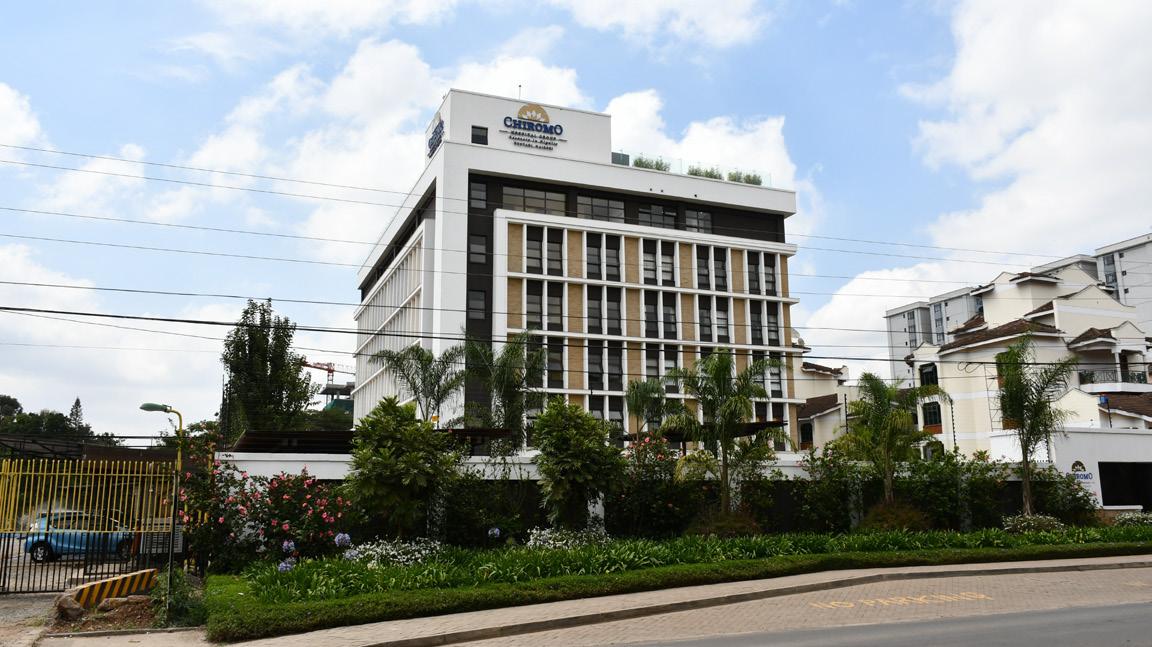

What to do: Interact positi vel y while online, be a ware of content that negati vel y triggers your emotions as well as-on line bull ying Take social media breaks or do a social media detox once e ver y 3 months.
5. Low attention: Technolog y has quick l y become a continuous source of distraction. Incoming calls, messages, aler ts, notifications are leading to loss of f ocus. This constant flow
of inf or mation becomes overwhelming and most impor tantl y takes a way from quality of being present in the moment. People are on phones while eating, on phone while dri ving, walk ing, sleeping, class, e ver ywhere e ver y moment which is unhealth y.

What to do: Be mindf ul, task yourself to be present in the moment.

Bonus Tip: Because technolog y-based gadgets in general strain the eyes, use the 20-20-20 rule: After e ver y 20 minutes spent on screen time, take a 20-seconds break and look at something that is 20 f eet a way as shown below.
In conclusion, technolog y though ha ving a lot of good things totant we all create a balance as we continue to use technolog y to its f ull ad vantage.
A constant reminder to yourself is#YourMentalHealthFirst and that it ’s okay not to be okay. Seek ing help is a sign of strength, more than a