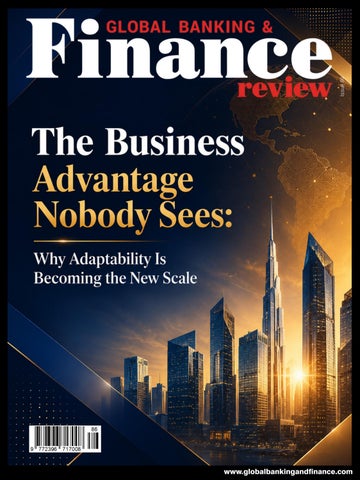
Global Banking & Finance Review Issue 86 - Business & Finance Magazine
CEO & Editor In Chief
Varun SASH
Managing Director
Mayha Das
Managing Director
Martin Murphy
Editor Barnali
email: editor@gbafmag.com
Editor Regional
Shaharban T
Project Management
Megan S | Raj G
Assistant Operations Manager
Anupama KU
Director of Operations
Babitha G
Digital Sales
Rohit D
Nominations
Adam L | Sarah F
Research
Varshitha K | Jyothi P
Video Production & Journalism
Phil Fothergill
Graphic Design
Shiva K
Advertising
Phone: +44 (0) 208 144 3511 marketing@gbafmag.com
GBAF Publications, LTD
Alpha House
100 Borough High Street London, SE1 1LB United Kingdom
Global Banking & Finance Review is the trading name of GBAF Publications LTD
Company Registration Number: 7403411
VAT Number: GB 112 5966 21 ISSN 2396-717X.
The information contained in this publication has been obtained from sources the publishers believe to be correct. The publisher wishes to stress that the information contained herein may be subject to varying international, federal, state and/or local laws or regulations.
editor
Dear Readers’
Welcome to Issue 86 of Global Banking & Finance Review.
In every period of economic change, one question quietly shapes the future: what enables some organisations to thrive while others struggle to keep pace? Increasingly, the answer lies not in size alone, but in adaptability, disciplined execution, and the ability to turn uncertainty into opportunity. In this issue, we explore how leading institutions are building resilience while embracing innovation, technology, and long-term value creation.
Our cover story, “The Business Advantage Nobody Sees: Why Adaptability Is Becoming the New Scale,” examines why agility is becoming one of the defining characteristics of modern business success. As markets evolve more rapidly than ever, organisations that combine strategic clarity with the flexibility to respond to change are best positioned for sustainable growth.
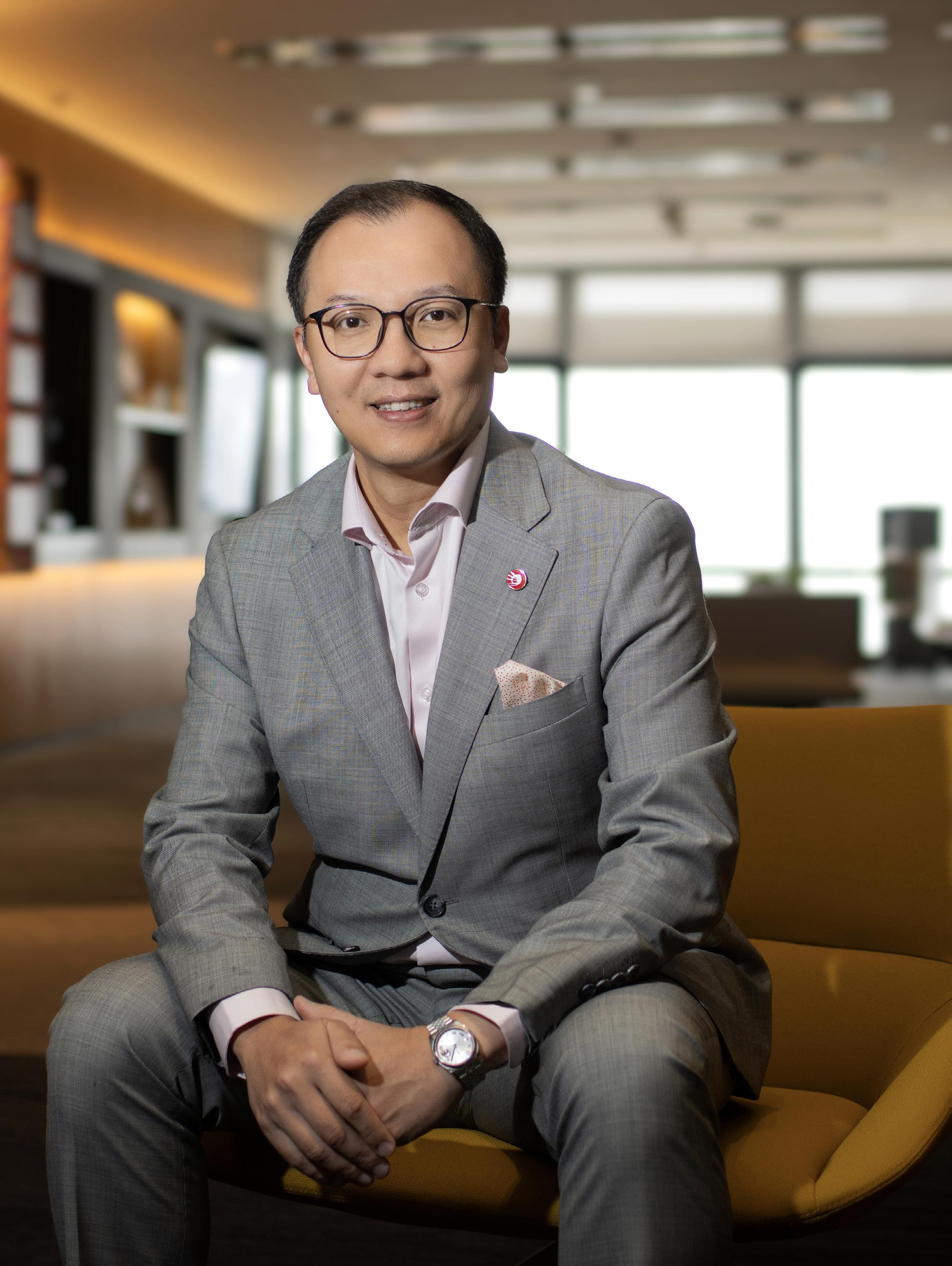
We also feature Wilson He, Managing Director of OCBC Securities, who shares how technology, research capabilities, and a client-focused ecosystem are reshaping modern brokerage services in Singapore. His insights demonstrate how digital innovation and disciplined execution can create lasting value for investors.
In our exclusive interviews, Shakaib Mahmood, Deputy CEO, and Aneesh Varghese, General Manager/Head of Operations at Al Madina Takaful, discuss the principles behind the company's continued growth and digital transformation. We also feature Helena Müller, Senior Vice President Banking—Europe of Diebold Nixdorf and Subash Sharma, Chief Digital Officer of Absa Personal and Private Banking, whose perspectives on resilience, leadership, and transformation reflect the priorities of today's financial institutions.
Complementing these conversations are features exploring the quiet forces reshaping business and finance—from capital flows and confidence-driven markets to intelligent technology, leadership, and the systems that support long-term success.
Thank you for reading. We hope Issue 86 provides valuable perspectives and practical insights as you navigate an increasingly dynamic global financial landscape.
The purchaser or reader of this publication assumes all responsibility for the use of these materials and information. However, the publisher assumes no responsibility for errors, omissions, or contrary interpretations of the subject matter contained herein no legal liability can be accepted for any errors. No part of this publication may be reproduced without the prior consent of the publisher.
Editor, Global Banking & Finance Review
Stay caught up on the latest news and trends taking place by signing up for our free email newsletter, reading us online at http://www.globalbankingandfinance.com/ and download our App for the latest digital magazine for free on Google Play and the Apple App Store
Wilson He, Managing Director, OCBC Securities
OCBC Securities Is Redefining Modern Brokerage in
The Quiet Flow of Capital: Why Money Moves Long Before Markets Make Headlines
The Financial Asset Most Companies Overlook: Why Confidence May Be More Valuable Than Capital
Helena Müller, Senior Vice President Banking – Europe, Diebold Nixdorf
The Business Advantage Nobody Sees: Why Adaptability Is Becoming the New Scale
The Companies That Last: Why Enduring Businesses Are Built Differently Than Fast-Growing Ones
The Business Advantage Hidden in How Companies Move Resources
The Silent Technology Advantage: Why the Next Business Winners Will Be Built on Systems, Not Hype
The Technology You Don't Buy: Why the Next Competitive Advantage Is Already Around You
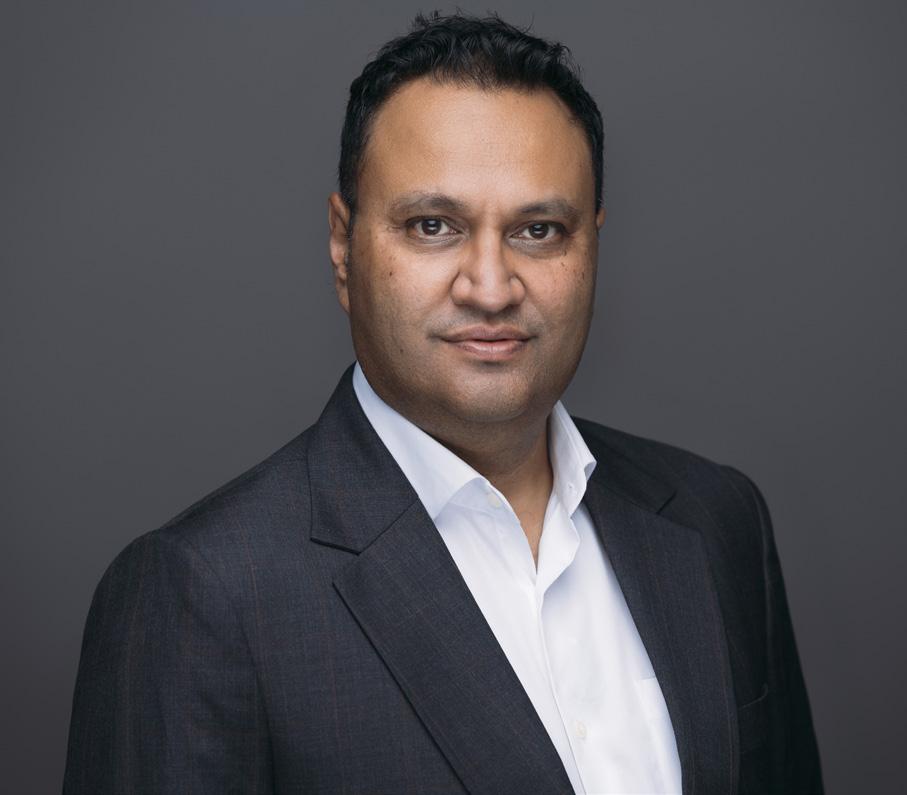
Subash Sharma, Chief Digital Officer, Absa Personal and Private Banking
Shakaib Mahmood, Deputy CEO
Aneesh Varghese, General Manager - Head of Operations
How Al Madina Takaful Became the Middle East's Best General Takaful Provider
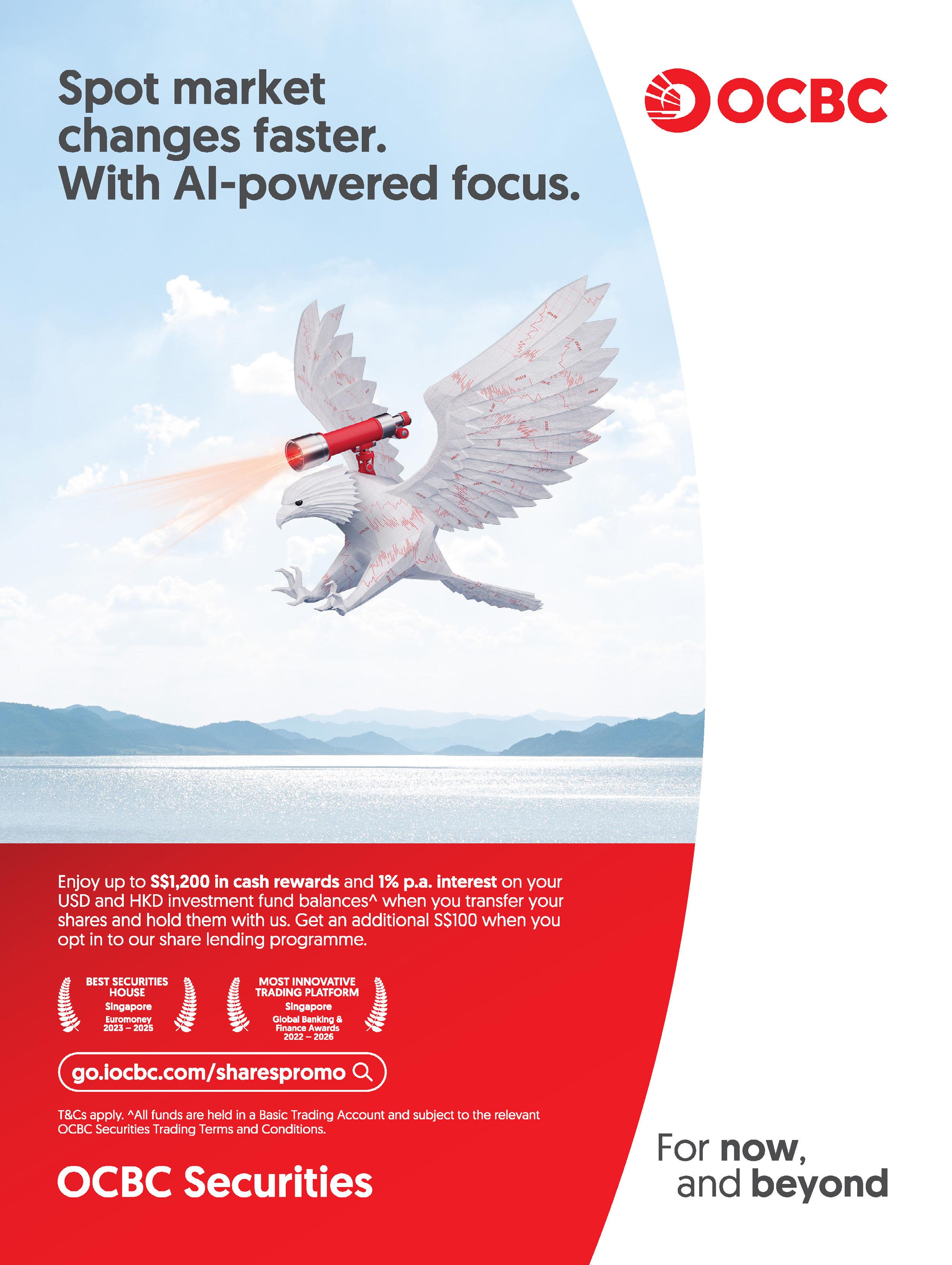
How OCBC Securities Is Redefining Modern Brokerage in Singapore
1. Over the past 40 years, what have been the most significant milestones for OCBC Securities in Singapore that demonstrate sustained excellence and market leadership?
Over the past four decades, OCBC Securities has evolved alongside Singapore’s capital markets, consistently reinforcing its position as a trusted and leading brokerage. A defining milestone has been the progressive institutional-grade enhancements of its platform— combining strong execution capabilities with research depth, risk management discipline, and client support expertise through Trading Representatives.
More recently, OCBC Securities’ integration into OCBC Group’s Global Markets franchise has been transformative. This has enabled closer alignment with institutional-grade infrastructure, capital markets expertise, and OCBC Group Research. The result is a brokerage platform that goes well beyond trade execution, offering clients access to market research, cross-asset perspectives and a broader investment ecosystem.
We have also built several partnerships for a more holistic suite of products and services for our customers. One example is the partnership with Lion Global Investors to co-launch ETFs that provide exposure to various themes such as sustainability and technology. Our partnership with Nasdaq also goes beyond providing market data to our customers; for example, our customers recently had an exclusive session with one of the industry’s thought leaders - Nasdaq’s Chief Economist, Phil Mackintosh. These exclusive market insights sessions are set to empower our customers with expert foresight and strategy needed to navigate volatile markets with greater confidence.
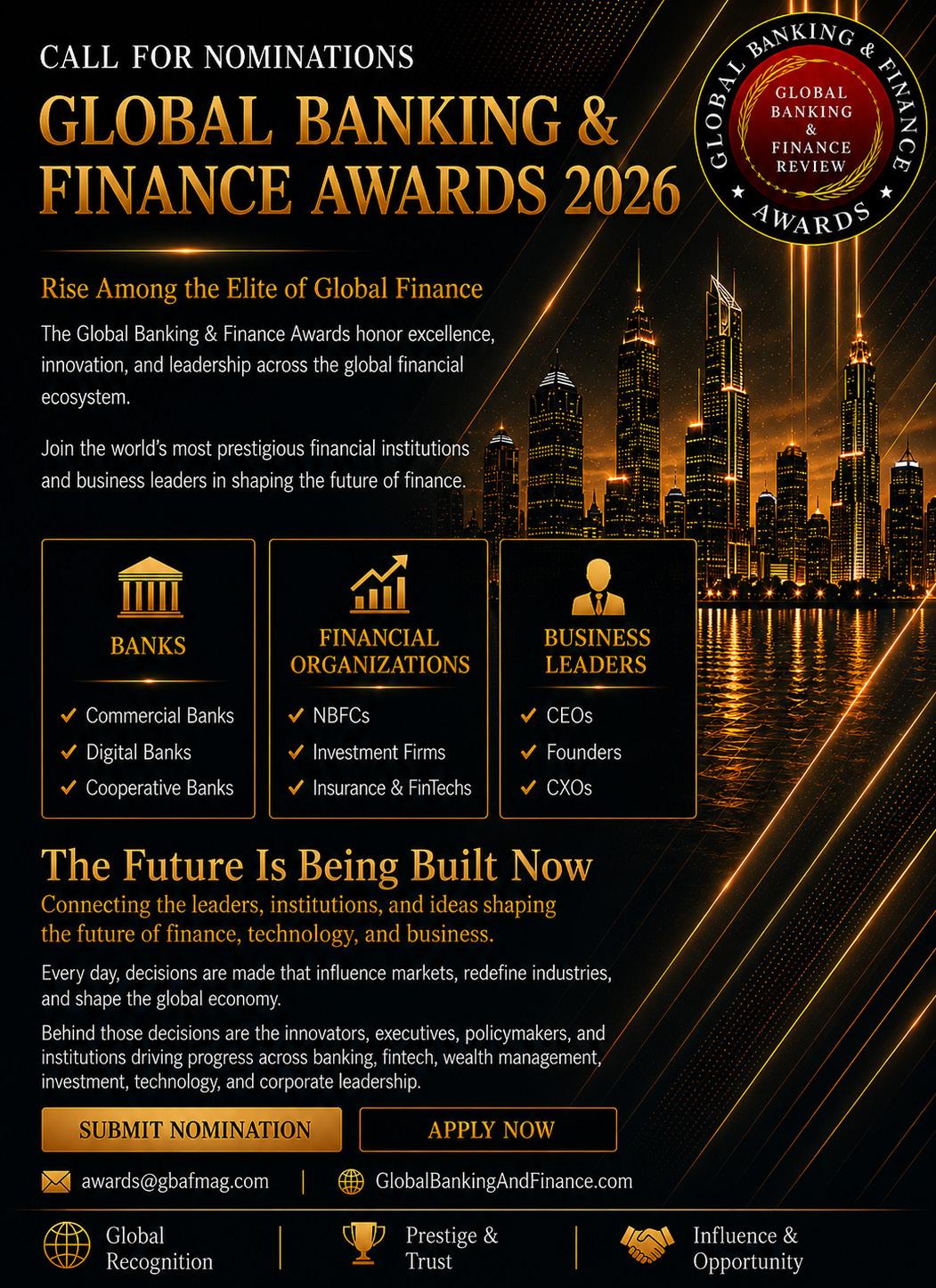
This long-term commitment to quality and innovation has been recognised by the industry, demonstrated by multiple consecutive awards from Global Banking & Finance for Best Mobile Platform and Most Innovative Trading Platform in Singapore since 2022, culminating in the 40 Years of Excellence Brokerage Singapore accolade in 2026.
2. How has OCBC Securities innovated its brokerage services (e.g., digital trading platforms, research tools, structured products) to meet evolving client needs and stay ahead of competitors?
We have focused on innovation that enables greater capital efficiency, more informed decision-making, and resilience. Our iOCBC trading platforms now integrate a multi-asset portfolio overview, advanced order execution, and AI-powered trading assistant, alongside seamless operational features such as in-app CDP share transfers.
We have also introduced solutions such as share lending, enabling investors to unlock more flexibility and additional income from assets that would otherwise remain idle. These capabilities may allow clients to realise greater compounding potential and layer possible additional returns, while being able to set robust risk controls.
Complementing these tools is A.I. Oscar, our AI-powered virtual trading assistant, which analyses a customer’s portfolio holdings, their trading history with us, and market data to surface relevant stock ideas. Importantly, we pair this technology with experienced Trading Representatives who provide expert support during volatile market conditions. It is this high-touch yet digitally integrated approach that differentiates us from purely digital platforms. In line with our commitment to staying ahead of global market shifts, we will be introducing the 24-hour US trading on iOCBC trading platforms. By anticipating the shift toward a volatile market, we aim to provide our customers with unprecedented flexibility to respond to market-moving events, ensuring they are always positioned to capture opportunities across time zones.
3. Capital efficiency has become an important theme for investors. How does OCBC Securities help clients put their assets to work more effectively?
At OCBC Securities, we believe that long-term wealth creation is driven not only by asset selection, but by how efficiently capital is deployed. Many investors hold high-quality portfolios that generate returns only through dividends or capital appreciation, which may leave potential value untapped.
Our share financing solution allows clients to unlock liquidity from existing equity holdings and redeploy that capital into new investment opportunities while maintaining prudent investment risk controls. With competitive financing rates and clearly defined haircuts and margin requirements, investors can apply disciplined leverage in line with their risk appetite.
While such strategies can enhance capital efficiency, borrowing to finance securities trading also carries real risks. If collateral values fall significantly, investors may face margin calls requiring additional deposits, or they may need to liquidate their positions to meet financing requirements. As share financing involves leverage, losses may be amplified and could exceed the initial capital invested.
Beyond financing, share lending enables clients to potentially earn additional income on shares that would otherwise remain idle, depending on market demand. When used responsibly, these tools may allow investors to increase compounding and portfolio efficiency, while being supported by timely market information from their Trading Representatives.
OCBC Securities also rolled out its share lending programme for Singapore, US and Hong Kong equities last year. Through this, investors may lend out their shares and potentially earn annual lending fees of up to 8% per annum*, depending on demand. That said, lending is not guaranteed and fees vary with market conditions.
Wilson He, Managing Director, OCBC Securities
4. How does OCBC Securities' ecosystem approach enhance investor outcomes compared to low-cost, execution-only platforms?
Low-cost digital platforms have played an important role in democratising access to markets, but as portfolios grow and markets become more complex, many investors may look for broader support. OCBC Securities provides a full-service ecosystem that seamlessly integrates technology, access to research reports by OCBC Group Research, financing and diverse product capabilities.
The brokerage industry today resembles the airline industry. Budget airlines are here to serve a purpose; they democratise travel and focus on low fares. If you want to go from point A to point B, they can get you there efficiently.
Full-service carriers, by contrast, provide a broader range of activities and bundled services such as WiFi and support during flight disruption. Both models are valuable and serve different business needs.
Similarly, different brokerages serve different types of investors. While beginners may prioritise platforms with lower fees, more sophisticated investors value access to in-depth research, advanced tools and robust institutional support, which our ecosystem provides.
5. How has technology adoption (e.g., mobile trading apps, AI-driven analytics, automated advisory) contributed to OCBC Securities’ operational efficiency and client service excellence?
Technology has powered our institutional-grade platform. Through our iOCBC trading platforms, customers can seamlessly trade, transfer shares, and monitor their multi-asset portfolios with minimal administrative friction. This digital excellence extends to trading in foreign markets, with a streamlined in-app FX conversion feature for key currencies that allows investors to capitalise on global opportunities with ease and convenience. A.I. Oscar, an AI-driven tool, provides stock ideas by identifying relevant possible opportunities based on a customer’s trading history and market data. We also believe technology is most effective when paired with human expertise. Our Trading Representatives, each averaging about a decade in the business, can help investors by providing them with timely market information and support to navigate market movements. This synergy of high-tech innovation and seasoned support ensures we deliver both operational efficiency and excellent service to our customers.
6. Looking forward, what strategic initiatives will OCBC Securities implement to maintain its leadership and excellence in the Singapore brokerage industry over the next 5-10 years?
Over the next decade, OCBC Securities will continue strengthening its role as an investment ecosystem, not just a brokerage. Key priorities include continued enhancement in product solutions similar to share financing and share lending, and expanding the breadth of products and services for accredited investors at OCBC Securities. Accredited investors can trade more sophisticated product solutions such as structured notes and also gain exclusive access to selected products such as IPO shares placements.
We will also invest further in AI, data analytics and digital resilience,
while maintaining the human touch that supports clients through market cycles. As investors’ needs grow more complex, our focus will remain on providing a holistic, well-governed platform where technology, expertise and capital markets access come together seamlessly.
Ultimately, our goal is to empower each investor to navigate their trading journey with greater confidence.
This content is sponsored by OCBC Securities Private Limited. For the full disclaimer, visit iocbc.com/disclaimer
Disclaimer
*The lending of securities is not guaranteed, and the lending fee may vary depending on market conditions. OCBC Securities will only borrow your securities based on prevailing market demand, and there may be instances where some or all of your securities are not lent out.
Trading in capital markets products and borrowing to finance transactions can be very risky, and you may lose all or more than the amount invested or deposited. Please seek advice from an independent financial adviser before committing to a trade or purchase. Regardless, you should always carefully consider the suitability of the product and any trading decision. The information provided does not consider your investment objectives, financial situation, and particular needs. For any graph, chart, formula or device, there may be limitations and difficulties in its use. Any reference to a company, financial product, asset class or figures is for illustration purposes only. For any historical information, past performance is not necessarily indicative of future performance. OCBC Securities Private Limited (“OSPL”) makes no representations or warranties in respect of any information provided herein or in your personalised AI watchlist (generated based on demographic data and your trading history with OSPL). Any information provided should not be construed as personal trading recommendations or financial advisory from OSPL. OSPL is not responsible for any loss howsoever arising, directly or indirectly, as a result of any person acting on any information provided. The information provided may not be published or circulated in whole or in part without our prior consent.
Risk Warning for Lending Securities
It is important that you fully understand the risks involved in enabling OCBC Securities Private Limited (“OSPL”) to borrow, on-lend or deliver your securities for OSPL’s discharge of OSPL’s delivery obligations of such securities to third parties. These risks include the following:(a) the borrowing and on-lending of your securities will be on a title transfer basis, which will necessarily mean that you will lose your ownership rights (including voting rights) and title to the same. In its place, you shall only have a right to request for the return of equivalent securities from OSPL; (b) where OSPL may, where relevant, have contractually agreed to use its reasonable endeavours to arrange for any voting rights to be exercised in accordance with your instructions, there is no assurance that such rights will be exercised as you wish, given that you are not entitled to personally exercise any voting rights attached to the securities lent to OSPL during the period of the loan. Therefore, where a significant corporate action or vote occurs while the securities are on loan, you may be unable to personally vote in accordance with your desired outcome or participate in the vote. Where you request for the return of the securities to you for voting, there is a risk that the securities may not be returned in time for you to exercise any voting rights; (c) your claim for the return of equivalent securities is a contractual claim against OSPL. OSPL will provide collateral to secure the obligation to return equivalent securities. Such collateral may be held by OSPL (itself or through any sub-custodian) and may be
commingled together with other clients of OSPL on an aggregated and/or omnibus basis, but your interest in such collateral may not be identifiable by separate certificates or other documents or records; (d) there is a risk that any return of equivalent securities by OSPL may not occur on time for various reasons including due to settlement failures, operational errors, or disruptions in market infrastructure. OSPL may also have the right, in certain circumstances such as in an event of your insolvency, to convert the obligation to return equivalent securities to pay you the aggregate market value of the same; and (e) insofar as you will receive manufactured dividends, you may be required to treat the entire amount as income for tax purposes.
Can transformation and resilience be growth partners?
Growth, transformation, resiliency, and efficiency are shaping how financial services organisations better serve their customers in a rapidly changing world. Growth is the ultimate goal, but this is no longer just about expanding markets and product offerings – it is about becoming an integral part of a customer’s life and making it easier and safer to manage their finances. In line with this, we are seeing the industry evolving from being product-led to people-led, ensuring services remain relevant for today’s consumer.
In order to develop and maintain this role of a trusted financial ‘partner’ for consumers, financial institutions must prioritise resiliency in an increasingly volatile world. This goes beyond regulatory considerations and should focus on operational, financial and reputational resilience, alongside the ability to manage complex ecosystems which are more connected than ever.
So, how do financial institutions manage transformation whilst driving growth and resilience without delay? As you would expect, there is no simple answer to an inherently complex question. However, there are some key areas for consideration.
The efficiency innovation challenge
When it comes to change, speed is frequently of the essence. An increasingly complex environment is driving multi-dimensional change and forcing organisations to be fast. However, many meaningful transformations are inherently not swift processes. Couple this with a need to drive growth and stay resilient and it creates an intricate operating environment.
In other words, financial institutions are often faced with an efficiency innovation challenge – with a pressure to reduce costs now whilst also investing for the future. To tackle this, a unified transformation approach must be adopted. Disconnected programs result in a disjointed entreprise architecture and limited business impact, highlighting the importance of an organisationwide culture of change.
Developing crystal clear strategic priorities and objectives will help streamline this and ensure that programs run in the most connected and fluid way possible to achieve complementary results across the organisation.
Risk is a key consideration when developing such strategic priorities, where risk management must be baked into their foundation to ensure a flexible approach to growth and change. Pairing risk with agility is not always a natural fit, with pressure to maintain resilient systems alongside the need to experiment and move fast. Moreover, most transformation is operationally disruptive, particularly within the setting of a highly regulated financial services environment, so managing risk whilst modernising must be planned for effectively.
A revenue roadmap
Whilst most financial institutions will recognise the need for developing and leading with fully integrated strategic priorities, the reality of creating objectives that will really shift the transformation dial is quite challenging. Keeping revenue front of mind is often the solution. Linking transformation programs to revenue outcomes to prioritise and maintain momentum during times of change can ensure an alignment to growth objectives.
Financial institutions need to decide what matters most to their organisation and align planned changes to revenue outcomes. Afterall, becoming simply the most efficient and resilient company alone does not create long-term business viability. These areas need to transform alongside, and in conjunction with, growth objectives – both from a revenue and customer success point of view.
Sustainable transformation
Whilst transformation is required across the industry, the most successful changes will be those which are sustainable and fit for the future. Making the best decisions can be difficult and indeed some changes will be wrong to start with. Therefore, the ability to be agile and flex as the organisation, the market and consumers shift is crucial. Change is not simply a onetime process, but an ever-changing evolution. Learning how to correct and re-align transformation programs with micro-shifts is as important as the change itself.
Implementing platform-based modernisation with a phased approach can assist with creating a sustainable model for change. Operating in this way can address the often conflicting need to invest in new technology and processes now versus the need for immediate revenue opportunities and cost savings. Half implemented change will not deliver results, and neither will innovation that is not funded or implemented correctly, so a phased and a long-term sustainable plan is more likely to create a model for success.
Creating a shared language of change
Transformation and growth both require one unequivocal factor – an effective culture of change. Change is very often internally focused, and so creating an environment conducive to evolution and an openness to embrace new ways of working can ensure that objectives are not only achieved, but that the changes are optimised both internally and externally.
Creating a shared language of change and a shared understanding of risk can assist with this. Many previous structures within the industry have created natural business silos, and now is the time for a more connected and integrated approach.
With this in mind, deciding on the type of leadership required for transformation and what skills are needed within the business is key. There is strong demand for new skills associated with digital and transformation right now. Such transferable skills create competition across multiple industries, often making it difficult to attract the right people and compete for talent.
However, filling the talent gap is only one part of the equation. Deciding on the right skill sets for effective delivery both now and for the future takes careful consideration. Deciding how to attract the best leadership and talent is a fundamental building block of transformation, as well as mapping skills from existing employees into new operating models and ways of working.
In summary, we are in a notable period of industry evolution where change is non-negotiable for future success. We are seeing unprecedented transformations which are truly shifting gears for the financial services sector. Siloed programs are no longer viable, with interconnected approaches taking the lead to deliver worthy outcomes.
Growth, transformation and resilience are all top of mind and when truly embraced at a strategic level, they can work in harmony to deliver a sustainable roadmap for the future. Transformation programs are not just about an investment of time; they require the right energy and input across the full operational cycle to truly set you apart from the competition.
Müller, Senior Vice President Banking – Europe, Diebold
Helena
Nixdorf
How Al Madina Takaful Became the Middle East's Best General Takaful Provider
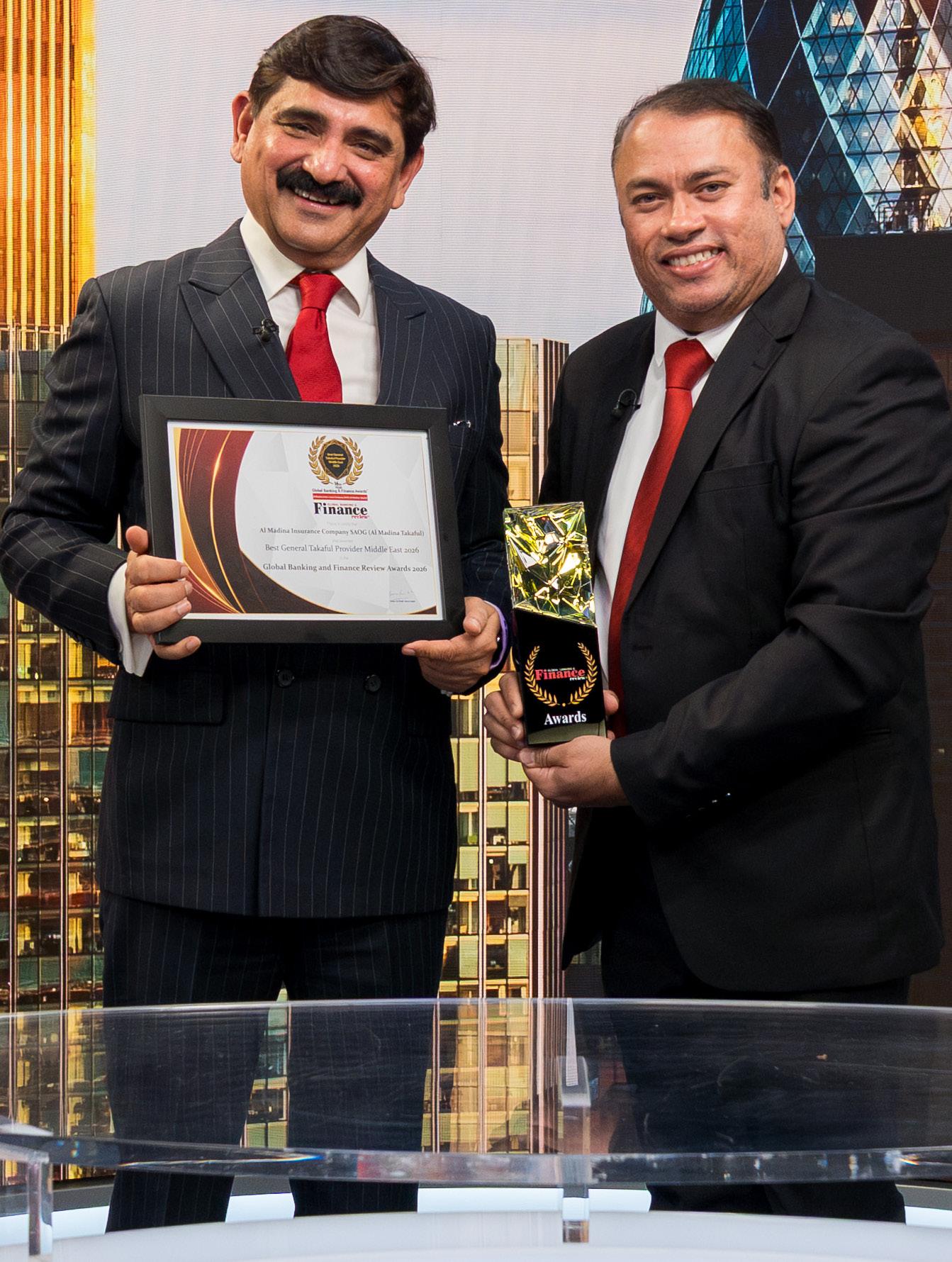
From London, Global Banking and Finance Awards highlight the innovation, achievement, strategy, progressive and inspirational changes taking place within the global financial community. The awards were created to recognise companies of all sizes who’ve excelled in particular areas of expertise and excellence within the global financial community. This time we’re glad to offer Al Madina Takaful Insurance, an award for services across Oman and the Middle East.
Al Madina offers a range of insurance services. Their high-tech operation means you can insure online in minutes and download your policy wherever you’re based. Global Banking and Finance Review is pleased to award Al Madina an award for Best General Takaful Provider, Middle East 2026.
Deputy CEO Shakaib Mahmood and General Manager/Head of Operations Aneesh Varghese came to London to collect the award and later spoke to Philip Fothergill about Al Madina’s impressive success story.
Philip Fothergill: Well, gentlemen, welcome to London and thank you for talking to us today and indeed congratulations for winning the Best General Takaful Provider, Middle East from Global Banking and Finance Review.
Shakaib Mahmood: Thank you very much, Phil.
It's been an honour for us to be receiving this award from Global Banking and Finance Review today. But I must tell you that this is our fourth this year. We have received an award for the best insurance company in Oman, the most trusted brand in Oman.
One, we have been delivering on our promises always to the shareholders and all the stakeholders. We have paid back almost 80% of the capital in dividends over the last 10 years’ time. Our staff is so happy that our turnover ratio is the lowest in the industry.
It's about five to seven percentage, whereas normally it’s 20% each year. People love to work with us. We have a depth of our underwriting bench.
So we provide all solutions to our policyholders. We take care of the policyholder as well as we are empathetic about the claim settlement. We are the company which has settled the biggest claim in the history of Oman.
This was almost 300 million dollars in just one year and without any problems. So, we keep our solvency, capital adequacy, everything in place. Having said that, I think without the team, without the board, without the management, everybody contributing into it, it wouldn’t have been possible.
Philip Fothergill: So incredible achievements there and a massive claim, as you mentioned. How would you say Al Madina Insurance is adapting your products and services to meet the evolving needs indeed of customers seeking Shariah-compliant insurance solutions?
Shakaib Mahmood: Actually, we are very careful about the needs and how people's lifestyle is changing in Oman. We are very aware of it.
We keep looking into their needs. We are also very aware of what the regulators want from us. For example, the regulator wants a compulsory medical insurance.
We have brought that into place. We have category A certification from the regulator, which is the financial service authority of Oman. We are geared up for the needs of people.
We see the lifestyle is changing. They’re not looking for only protection. They want now convenience.
And this was based on a survey done by a publication house where one million people participated. And if you assume that each one has three family members, so that means almost 50% of the population voted for us. Omani population is 6 million maximum.
So we are delighted to receive this award from you. It's probably the right time. It's a continuing success story and that’s wonderful.
Philip Fothergill: So Shakaib, can I ask you first of all, what do you think is the growth history of Al Madina and what are the key factors that you think have contributed to the company’s success in the regional takaful market? Yeah, thank you very much. The company was formed in 2006 as a conventional company. But then we decided later on to convert into a takaful.
As takaful, you know, is a Sharia-compliant Islamic insurance type of a company. And the award and the achievements are probably because of our team, the excellent team which we have. But I would say there are three major factors in there.
They want transparency and all that. We are very mindful and developing our product in such a way that they meet their entire needs as such. Well, Anish, if I can turn to you now, digital transformation, of course, a major issue in all forms of banking and insurance.
We’re all living as part of that technical world now. It’s reshaping, of course, the insurance industry globally. I understand that.
Philip Fothergill: What role would you say does technology play in Al Madina's strategy for improving customer experience and operational efficiency as well?
Aneesh Varghese: Yeah. In Al Madina, in fact, we have heavily digitally integrated all the digital solutions in all the functional parameters of an insurance industry, whether be it in an underwriting side or be it in the claim side or it in the customer service side. Everything is fully integrated with the digital solutions.
Shakaib Mahmood, Deputy CEO
Aneesh Varghese, General Manager - Head of Operations
So now any of our customers, they can complete their full policy purchase through our digital platform or even at the time of a claim, sort of a 24 by 7, they can intimate all the claim through our digital platform and the full claim processing, it can be done digitally. When it comes to customer service side as well, we have a full-fledged platform for all customer service solution. So, we are fully integrated to the digital solution in our day-to-day operation and thus it helped improve our operational efficiency and thus it played a vital role in controlling our operational expense.
Philip Fothergill: Excellent. So obviously, technology is a thing to the fore and continues to develop. If I can turn to you again, Shakaib, the Middle East sector, of course, is becoming increasingly competitive from what you were explaining earlier on.
Philip Fothergill: How does Al Madina Insurance differentiate itself from other providers, do you think?
Shakaib Mahmood: Well, competition is very healthy. I welcome competition because competition motivates you to do something different and it keeps you on your toes to always do something different and differentiate yourself. Al Madina, because we have the advantage of the first mover, we were the first company.
We were conventional, we converted, so we have gone through the tests by fire and we know exactly what to do and where to go, etc. The differentiation point is that we are very transparent in everything we do. All policy terms are explained to our policyholder in a very easily understandable way, not very minor and minute details, but they understand what they are buying.
See, in insurance, the trust is the most important thing. If you buy the trust of your customers, they will always come to you. The second thing is, nowadays the finance is moving towards clean finance.
People want to do ESG type of things, environment, social responsibility, governance. On all those counts, the takaful has inbuilt those things. The takaful has this fundamental, it is already in there.
The world is moving towards there, but the takaful already has it. So, the clean finance is there. We differentiate in that way.
We do our claim servicing very, very quickly. We are very empathetic about the claimants. We are always there.
We have the natural catastrophic claims recently, a few cyclones in Oman. We open-up our special units in those areas where people were affected. And we were not even taking any documentation; we were immediately serving them.
So, these accounts where we come, the transparency for the people, people understand, the participants know where the fund is used, how it is used, what we do with that, because you would know in takaful, the concept is that technically the policyholder can get its money back. If you are making profits, the money can be shared with the participant. It's not unlike the conventional where you just take the money, it goes in your profits.
It's the other way around. If the policyholders know where their money is going and there’s a chance that they will get some money back, the faith they have in us is tremendous. And that's how we differentiate ourselves on all those three counts.
Philip Fothergill: And as you were mentioning there, Aneesh, if I can come to you again, risk management obviously is very important within the insurance industry. I understand that. How does Al Madina ensure strong underwriting practices while maintaining sustainable growth?
Aneesh Varghese: Yeah. As you know, insurance industry is an industry which deals with risk. So, yeah, risk management plays a vital role in order to achieve its result for a company. And we have to maintain a balanced style for sustainable growth as well as the risk management.
That’s very important. So, when it comes to Al Madina, we are very careful in choosing our risk. So, I can say we will do a portfolio analysis and we are very prudent in risk selection.
Then very carefully, we will balance our portfolio mix. So, we are not heavy on any particular segment. Instead, we have diversified our business portfolio.
Maybe thirdly, to have a proper re-insurance structuring, because any insurance industry should be backed with a strong reinsurance structuring. So, that plays another important role. Maybe when it comes to another level, when it comes to the actuarial reserving or financial prudence, these are also very important in the insurance industry.
So, by maintaining a balanced strategy across all these areas, we ensure a sustainable growth by ensuring we deliver a result to all our stakeholders.
Shakaib Mahmood: I would just add on to what Aneesh said. All of that is absolutely right.
But we do not run after business. If the business is risky, we let the business go. We let it move.
We evaluate if it is going to ultimately make some profit for the policy holders and the shareholders, of course, then only we accept it. Otherwise, many instances are there, we will let the business go. So, risk management is very core of our business.
Philip Fothergill: And looking at developments, the insurance sector, of course, is evolving all the time. What opportunities do you see for the Takaful providers in the Middle East over the next few years, not just your company, but others as well?
Yeah. You see, Takaful is a concept which is pretty new to people.
Even in Oman, it is an Islamic country, people do not understand how it differentiates with the conventional, etc. So, now we are educating people. People have the knowledge about how we are different, how they are participating.
Because Takaful is based on the principle of cooperation and mutual responsibility. And at the end of the day, it's a pool which is brought together by people. And within that pool, if you use for settling the claims, anything left is for you, you will get it back.
This concept is now catching up with people. The penetration in the market is very, very low, except for Saudi where it’s quite high, because I think law requires it to be Takaful. In our country, it’s less than 20%.
And even some areas, even lesser than that. So, huge potential is there to penetrate. We are different from the conventional businesses.
So, people will be attracted to us naturally. As I said, the clean finance, meaning ESG, is already integrated into it, where the entire world is moving towards it. Our CEO Mr Usama Al Barwani is so passionate about ESG concepts that he got the company to print the first ESG Report in 2024 when it was not even mandatory to do so. I see there's a huge potential for Takaful, because one, the mandatory health insurance is coming and life insurance is catching up.
Life insurance also moving towards that. Because earlier, the Islamic concept was they didn't want life insurance. You can't insure anything against the will of god.
They used to think that. So, we, you know, the name is now family insurance. It's not your life, but your family is insured.
There you have huge potential. Then the 2040 vision of the Omani government and the Middle East, they are going to come up with various new projects, which are tourism related, or they are oil and gas, and the other industries where lots of engineering, the CAR type of opportunities will be there and the potential is huge. It's true to say, isn't it, that, you know, partnerships and innovation are now becoming increasingly important in financial services, one way or another.
Philip Fothergill: Is Al Madina exploring collaborations or new initiatives to expand its reach and capabilities?
Shakaib Mahmood: Yeah, it’s absolutely true. You cannot grow without collaborations. Any company, however old it is, however best it is, the knowledgeable people there, you cannot be masters of all.
It's very difficult. So, you have to do collaborations. Al Madina has already thought about it and that's why we are ahead in the game.
We have our bank assurance partners, the banks we have tied up with all the banks in Oman. They do our selling of the policies, etc. But we did something very unique.
We wanted a penetration into the deeper pockets of population. So, we have had an agreement with the Postal Department of Oman, the Government of Oman Postal Department. They are now selling our policies.
There is another department called Sanad, which does lots of work for the people, their visas and all that. We have tied up with them. And in going forward, we would like to do more ties up with the IT providers, the data collectors, all those sorts of things.
So, collaborations are already there and we are all for it.
Philip Fothergill: Well, that is excellent because obviously it's looking forward and let's look forward both of you, if I may actually, to what you see as being the key strategic priorities for Al Madina as it continues to strengthen its presence in Oman.
Shakaib Mahmood: Well, if I may, the strategic focus is, first of all, it has to deepen the underwriting profitability.
Because without profitability, you cannot do anything. You need money to do everything. So, we want to do that more and more.
Secondly, we have to improve our position. We are always in the top three insurance companies in Oman. We are the number one in Takaful, but now I am talking about the entire gambit of the insurance sector, which includes the conventional also.
We are always number three, number four, number two. We want to make a position where we are the leaders in that.
Thirdly, actually, we would want a knowledge base to develop.
The people should be educated. There should be a professional knowledge about Takaful. So that more and more talent is attracted into it.
And lastly, but not the least, we want to continue to be Sharia-compliant in the true sense. We want to contribute to our societies, to the environment, and our governance has to be rock solid. That's absolutely right.
Aneesh Varghese: And to deliver the results to all our stakeholders. That's our paramount objective. Excellent.
Philip Fothergill: Thank you so much for coming to the studio today. Congratulations on yet another award and may your success. Thank you very much.
Shakaib Mahmooh: Very kind of you. It was a great honour for us to be here and talking to you and receiving the support. Thank you very much.
Leading in the Age of Digital Turbulence
Why courage, values, and human-centered leadership will define the next generation of leaders
For much of modern management history, leadership has been built on a foundational assumption: that the future, while uncertain, could largely be anticipated and planned for. Strategic planning cycles, five-year roadmaps, hierarchical decision-making, and stable organizational structures reflected a world in which change occurred incrementally and predictably.
That assumption has now collapsed.
The contemporary operating environment for leaders is characterized by permanent volatility. Digital technologies reshape industries at unprecedented speed. Artificial intelligence accelerates decision-making and automation. Geopolitical tensions ripple through global supply chains. Economic shocks reverberate across markets within hours. Societal expectations of corporations are shifting rapidly, while employees increasingly demand meaning, purpose, and ethical integrity from the institutions they serve.
In this environment, leadership cannot rely on the tools and mental models of the industrial age. Modern day leaders are not simply responsible for optimizing organizations, they must guide people and institutions through sustained uncertainty.
This challenge requires a profound shift in how leadership is understood and practiced. Success will no longer depend solely on strategic intelligence or operational execution. Instead, the defining characteristics of effective leadership in the digital era will be adaptability, courage, values-driven decision-making, and the ability to cultivate resilient human systems.
In a world where technology accelerates change faster than institutions can absorb it, the central question of leadership becomes: How do leaders provide stability and direction in environments defined by disruption?
The end of predictable leadership
For much of the twentieth century, organizations operated within relatively stable competitive environments. Strategic advantages often lasted decades. Industries evolved gradually. Leadership focused on improving efficiency, scaling operations, and protecting market position.
The digital age has fundamentally altered this landscape. Continuous technological acceleration, global interdependence, and growing human uncertainty are reshaping the context in which leaders operate.
Advances in digital technologies, from cloud computing and data platforms to artificial intelligence, have dramatically reduced barriers to innovation. New entrants can scale rapidly, leveraging technology rather than physical infrastructure. Entire industries are being restructured as digital platforms reorganize how value is created and captured.
The result is shortened strategic cycles. What once constituted a durable advantage may now last only a few years. Organizations must therefore operate in a state of continuous transformation rather than episodic change.
Leadership as navigation rather than control
The traditional model of leadership assumed that organizations could operate through predictive planning and hierarchical control. Leaders gathered information, designed strategies, and cascaded decisions downward through structured processes.
That model becomes fragile in environments where the pace of change outstrips the speed of decision-making.
Modern leadership must therefore shift from control to navigation.
Navigation implies movement through uncertain terrain. The destination may be clear, but the path evolves continuously in response to new information.
Leaders must interpret emerging signals, create alignment around purpose, and cultivate organizations capable of learning faster than the environment changes.
Why values matter more in times of disruption
Periods of rapid change often weaken traditional institutional safeguards. When competitive pressure intensifies, organizations may drift toward short-term incentives that undermine ethical standards.
Digital technologies amplify this risk.
Data analytics, artificial intelligence, and algorithmic decision-making can scale both positive and negative behaviors dramatically. Leaders therefore face new ethical dilemmas involving privacy, transparency, and the societal implications of technology.
In such circumstances, values become essential navigational tools.
Values act as decision frameworks when outcomes are uncertain and rules are incomplete. They guide behavior when leaders confront dilemmas where legal compliance alone does not provide sufficient guidance.
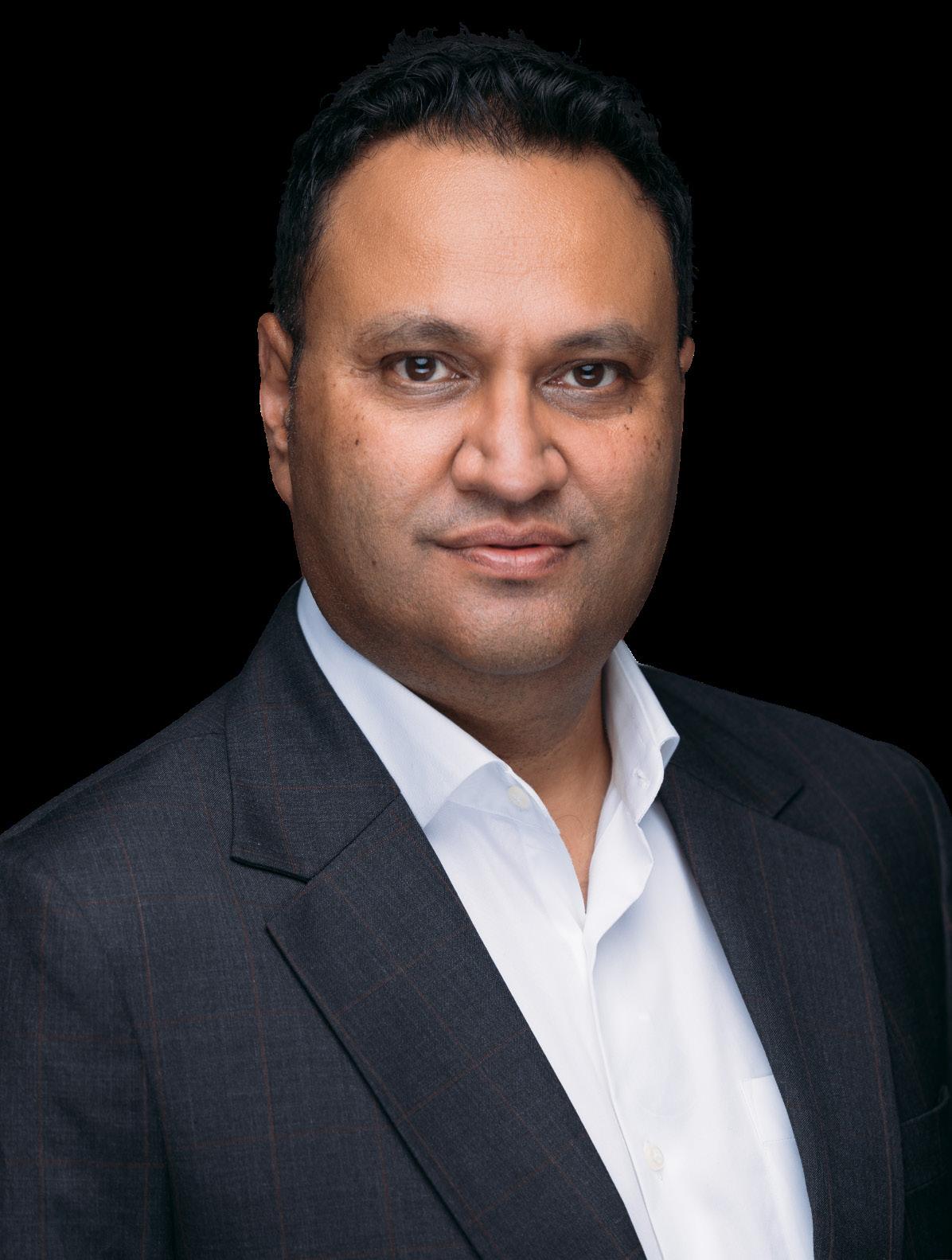
Subash Sharma, Chief Digital Officer, Absa Personal and Private Banking
Courage as the defining leadership capability
If values provide direction, courage provides the ability to act.
Leadership in turbulent environments often requires decisions that carry significant uncertainty or resistance. Transforming business models, investing in new technologies, challenging entrenched organizational practices, or defending ethical standards can provoke opposition.
Without courage, even the most thoughtful strategies remain unrealized.
Strategic courage involves the willingness to transform before circumstances force change.
Moral courage involves defending ethical principles even when doing so may create short-term disadvantages.
Personal courage involves acknowledging uncertainty, learning continuously, and inviting diverse perspectives to strengthen decision-making.
Leading people through transformation
Digital transformation is often framed as a technological initiative. In practice, its greatest impact is on people. New technologies alter roles, redefine career paths, and reshape organizational structures. For employees, transformation can create anxiety about relevance and security.
Leadership must therefore address not only operational changes but also human adaptation.
Creating psychological safety, fostering continuous learning cultures, and reinforcing purpose and meaning become essential responsibilities for leaders navigating change.
Developing the leaders of tomorrow
If leadership itself must evolve, so too must the methods used to develop future leaders.
Traditional leadership development programs often emphasize managerial competencies such as planning, budgeting, and
operational control. While these skills remain important, they insufficient for navigating complex digital environments.
Future leaders must cultivate broader capabilities including thinking, digital fluency, emotional intelligence, and ethical
Organizations must rethink how leadership talent is developed, experiential learning, mentorship, and cross-disciplinary exposure prepares individuals to lead in uncertainty.
The leader as steward of the future
Beyond strategy and operations, leadership carries a broader responsibility.
Corporations today influence economies, communities, and discourse in ways that were once reserved primarily for governments. this influence comes an obligation to act as responsible stewards and economic systems.
Institutional trust has become one of the most valuable yet organizations possess.
Leadership therefore requires balancing financial performance long-term societal impact. Organizations that maintain trust leadership not as authority but as stewardship of institutions endure beyond individual careers.
Leadership as a choice
In turbulent times, leadership becomes more visible.
History shows that periods of disruption reveal two types who retreat into short-term self-interest, and those who rise values, and vision.
The digital age will test leadership in unprecedented ways. offers the opportunity to redefine what leadership means. today is not about certainty, control, or authority, but rather confusion, courage in pressure, and humanity in the face of power.
The leaders who embrace this responsibility will not merely future; they will help create it.
they are including systems judgment.
developed, favoring exposure that
broader societal and public governments. With stewards of social yet fragile assets
performance with trust recognize institutions that must of leaders: those rise with courage, ways. But it also True leadership rather about clarity in of technological
merely navigate the
The Business Advantage Nobody Sees: Why Adaptability Is Becoming the New Scale
For decades, business success was often measured by size.
Large companies had the advantage of capital, distribution, brand recognition, supplier relationships and market reach. Scale created efficiency. Efficiency created pricing power. Pricing power created resilience. In many sectors, the bigger organisation usually had the stronger hand.
That logic has not disappeared. Scale still matters. A company with deep resources, operational discipline and broad market access can withstand pressure that would overwhelm smaller competitors.
Yet something important is changing.
In a world shaped by shifting consumer behaviour, digital acceleration, supply-chain disruption, labour-market change and economic uncertainty, size alone is no longer enough. The companies that thrive are not simply the largest. They are the ones that can adapt without losing direction.
Adaptability has become a business advantage in its own right.
It is quieter than innovation and less visible than growth. It rarely appears in quarterly headlines. It does not always produce immediate revenue. But over time, adaptability may determine which businesses merely survive change and which ones turn change into opportunity.
The World Economic Forum’s Future of Jobs Report 2025 identifies technological change, economic uncertainty, demographic shifts and geoeconomic fragmentation as major forces reshaping work and business models by 2030. For companies, the message is clear: the operating environment is changing faster than traditional planning cycles were designed to handle. World Economic Forum
The modern company needs more than a strategy. It needs the capacity to revise that strategy intelligently.
The old strength of business was stability. The new strength is intelligent movement.
Adaptability does not mean constant reinvention. That is a common misunderstanding. Companies that chase every trend usually exhaust themselves. They confuse motion with progress. They invest in fashionable technologies, reorganise too frequently and lose sight of customers in the process.
True adaptability is more disciplined.
It is the ability to notice change early, understand what matters, preserve what still works and adjust what no longer does. It is not panic. It is not disruption for its own sake. It is the quiet competence of a business that can bend without breaking.
This is why adaptability is becoming especially important for mid-sized and smaller enterprises. Large companies may have resources, but smaller businesses often have speed. They can adjust products, pricing, service models and customer relationships more quickly. The challenge is whether they have the digital tools, financial resilience and management capability to use that speed well.
The OECD has argued that SME digitalisation is central to competitiveness, particularly in areas such as artificial intelligence adoption, fintech solutions, sustainability tools and digital security. Access to digital technologies can help smaller firms innovate, reach new markets and strengthen resilience. OECD
This matters because digital capability is no longer a technology issue alone. It is a business model issue.
A restaurant that manages reservations, payments and delivery through integrated digital systems is not simply using technology. It is changing how it serves customers. A manufacturer that monitors inventory and supplier data in real time is not merely improving reporting. It is reducing operational risk. A professional services firm using automation to handle routine tasks is not just saving time. It is freeing skilled people to focus on judgment, relationships and problem-solving.
The real value of digital tools often lies in ordinary improvements. A faster invoice process. A clearer view of stock. A better customer response time. A more accurate forecast. A simpler onboarding journey. These are not dramatic breakthroughs, but they compound. Over months and years, they improve margins, strengthen loyalty and reduce waste.
Business transformation is often described in grand terms. In practice, it is usually built from hundreds of small decisions made consistently.
That is why adaptability starts with culture before it reaches technology.
A company can buy new software quickly. It cannot buy an adaptive culture overnight. Culture determines whether people share information, challenge assumptions, learn from mistakes and respond to customers. It determines whether teams treat change as a threat or a normal part of business life. This is where leadership becomes decisive.
In stable conditions, leaders can rely heavily on planning. In uncertain conditions, they must rely more on judgment. The difference is subtle but important. Planning assumes a degree of predictability. Judgment accepts uncertainty and still makes decisions.
The World Bank’s Global Economic Prospects has warned that multiple shocks and uncertainty are weighing on global growth and investment. For businesses, this environment makes rigid assumptions more dangerous. Companies cannot control global demand, policy shifts or financing conditions, but they can control how quickly they read the environment and adjust. World Bank
The businesses most exposed are often those built for one version of the future.
They depend on one supplier, one market, one customer segment, one product line or one pricing model. When conditions are favourable, focus can look efficient. When conditions change, the same focus can become fragility.
Adaptable businesses still make choices. They do not try to be everything to everyone. But they understand where their vulnerabilities are. They ask what would happen if demand shifted, if costs rose, if technology changed customer expectations, or if a new competitor entered the market.
These questions are not pessimistic. They are practical.
The companies that ask them early usually have more options than those that wait until pressure arrives.
One of the most important forms of adaptability is financial flexibility. During periods of growth, companies often focus on expansion. They hire, invest, acquire and increase capacity. These decisions may be right, but they also create obligations. When conditions soften, fixed costs can become a burden.
A financially adaptable business understands the difference between ambition and overextension. It invests in growth, but not in a way that removes all room for error. It manages cash carefully. It understands working capital. It knows which costs are essential and which can be adjusted. It has relationships with lenders and investors before it urgently needs them.
In this sense, finance is not merely a support function. It is a strategic capability.
The same is true of talent.
Businesses increasingly need employees who can learn, collaborate and move across tasks as conditions change. Technical skills matter, but learning capacity matters too. The half-life of certain skills is shortening as technology changes how work is performed. Companies that treat training as optional may find themselves carrying yesterday’s capabilities into tomorrow’s competition.
McKinsey’s 2025 research on AI in the workplace argues that companies must move boldly to harness AI for productivity and creativity, while recognising that the transformation will take time and requires people to be empowered rather than bypassed. McKinsey
That point is critical. The future of business is not simply about replacing people with technology. It is about designing work so that people and technology each do what they do best.
Machines are strong at speed, pattern recognition and repetition. People are strong at context, empathy, creativity, negotiation and judgment. The adaptable organisation does not frame technology as an enemy of employees. It frames technology as a tool that changes what employees are able to contribute. This requires trust.
Employees are more likely to embrace change when they understand why it is happening and how it affects them.
Customers are more likely to accept digital journeys when those journeys are clear, secure and useful. Investors are more likely to support transformation when management can explain how it creates value rather than simply following a trend.
Communication therefore becomes part of adaptability. A company can have the right strategy and still fail if it cannot bring people with it. Change that is imposed without explanation often creates resistance. Change that is connected to purpose can create momentum.
There is also a customer dimension that businesses cannot afford to ignore. Customers have become more fluid in their expectations. They compare experiences across industries, not just within them. A banking customer expects the convenience of an e-commerce platform. A business buyer expects the transparency of a consumer app. A patient expects healthcare systems to communicate as efficiently as travel platforms.
This cross-industry transfer of expectations is reshaping competition.
A company may believe it is competing against direct rivals. In reality, it is also competing against the best experience its customers receive anywhere.
Adaptable businesses pay attention to this. They do not assume that yesterday’s acceptable service will remain acceptable tomorrow. They observe how customer habits are changing and where frustration is building. Often, the most valuable business improvements come from removing small points of friction.
A shorter form. A faster approval. A clearer price. A more responsive support channel. A simpler return process. None of these may seem strategic in isolation. Together, they shape loyalty.
The serious business lesson is that adaptability is not always about major disruption. It is often about being attentive.
Attentive to customers. Attentive to employees. Attentive to cashflow. Attentive to technology. Attentive to signals before they become problems.
This attentiveness is especially valuable because business risk rarely arrives fully formed. It appears first as small changes. Slightly longer sales cycles. Margins narrowing. Customer complaints rising. Employee turnover increasing. Supplier delays becoming more frequent. Competitors changing pricing. These are early signals. Companies that listen have time to act.
Companies that dismiss them often discover the problem later, when the cost of response is higher.
Deloitte’s 2025 Global Human Capital Trends report highlights the tension many organisations face as they try to improve human and business outcomes while dealing with technology, AI and external pressures. The report’s central theme is that leaders must turn workplace tensions into better outcomes rather than treating them as temporary disruptions. Deloitte
This is a useful way to think about the modern business environment. Tension is not always a sign of failure. It can be a sign that the company is being asked to evolve.
There is tension between efficiency and resilience. Between automation and human judgment. Between cost control and investment. Between global reach and local relevance. Between speed and governance. Between innovation and reliability.
The best businesses do not eliminate these tensions. They manage them. That management requires maturity. It requires leaders who can avoid extremes. Cutting costs too aggressively may damage capability. Investing too freely may weaken financial discipline. Moving too slowly may lose opportunity. Moving too quickly may create operational risk.
Adaptability sits in the balance.
It is the ability to move with purpose.
Looking ahead, the businesses that perform well may not be those that predict the future perfectly. Very few will. Instead, they will be the companies that build systems for learning. They will review decisions honestly, use data intelligently and keep close contact with customers. They will invest in technology without forgetting people. They will protect cash without becoming timid. They will maintain strategy without becoming rigid.
This is why adaptability is becoming the new scale.
Traditional scale gives companies reach. Adaptability gives them relevance. Traditional scale gives companies efficiency. Adaptability gives them resilience. Traditional scale helps companies compete in known markets. Adaptability helps them survive when markets change.
The strongest businesses will need both.
But for many companies, especially in fast-moving sectors and emerging markets, adaptability may be the advantage that determines whether growth can continue.
It is not loud. It does not always look impressive from the outside. It may appear as better meetings, cleaner data, faster decisions, stronger managers, clearer customer insight and a healthier balance sheet.
That is the point.
The next era of business success may be shaped less by dramatic reinvention and more by the quiet discipline of organisations that keep learning.
In a world where change has become constant, the company that adapts well does more than respond to the future.
It earns the right to help shape it.
The Silent Technology Advantage: Why the Next Business Winners Will Be Built on Systems, Not Hype
The loudest technology stories are rarely the most important ones.
Every year, a new wave of tools arrives with the promise of transforming business. Artificial intelligence becomes the centre of boardroom conversations. Cloud platforms expand deeper into operations. Cybersecurity becomes more urgent. Automation moves from factory floors into offices. Data becomes the raw material behind decisions that once depended largely on experience.
For many companies, this creates a familiar pressure: move faster, invest more, adopt the latest system, and avoid being left behind.
Yet the companies that benefit most from technology often take a quieter route. They do not treat technology as a public relations exercise. They treat it as infrastructure. They use it to remove friction, improve discipline, reduce waste, strengthen customer relationships, and build businesses that can withstand change.
This distinction is becoming increasingly important.
Global technology investment continues to rise. Gartner forecasts worldwide IT spending to reach $5.43 trillion in 2025, a 7.9% increase from the previous year, showing that companies are still committing large amounts of capital to digital systems despite uncertainty in the wider economy. (Gartner)
But spending alone does not create advantage.
The more difficult question is whether companies are building better businesses with that spending.
Technology Is No Longer a Department
There was a time when technology could be treated as a support function. The IT team managed systems, fixed computers, maintained networks, and helped the rest of the business operate more smoothly.
That world has largely disappeared.
Today, technology sits inside almost every business decision. A retailer depends on payment systems, inventory platforms, customer data, logistics software, and digital marketing tools. A manufacturer depends on automation, sensors, supply chain visibility, and predictive maintenance. A bank depends on cybersecurity, compliance technology, mobile platforms, and real-time analytics. Even traditional service businesses now rely on digital tools to manage customers, employees, billing, and communication.
Technology has moved from the back office to the centre of strategy.
This shift is not always dramatic. In many companies, it happens gradually. A manual process becomes automated. A spreadsheet becomes a dashboard. A customer service call becomes a chatbot-supported workflow. A local system moves to the cloud. A manager who once made decisions based on instinct begins using real-time data.
None of these changes may seem revolutionary on its own. Together, they reshape how a company works.
The real technology advantage is not simply having modern tools. It is knowing how to connect them to the daily rhythm of the business.
The Companies That Win Build Better Habits
Technology is often described as a force that disrupts industries. That is true, but it is incomplete.
Technology also rewards better habits.
A company that records clean data can make better decisions. A company that tracks customer behaviour carefully can improve service. A company that uses automation wisely can reduce repetitive work. A company that protects its systems can preserve trust. A company that integrates platforms can move faster with fewer errors.
These improvements sound ordinary, but they compound.
The strongest companies are often not using technology in the most glamorous way. They are using it consistently, patiently, and with clear commercial purpose.
This is why digital transformation fails when it becomes too abstract. It cannot simply mean buying new software or announcing an innovation programme. It must mean changing how work gets done.
The OECD’s Digital Economy Outlook 2024 notes that digital technologies are reshaping economic activity and that the information and communications technology ecosystem continues to expand as a major driver of modern economies. (OECD)
For companies, the message is clear. Digital capability is no longer optional. But capability must be translated into execution.
The Hidden Cost of Poor Systems
Many businesses underestimate the cost of weak systems because the damage is rarely visible in one place.
A slow approval process delays revenue. A disconnected database creates errors.
A poor customer interface loses trust.
A weak cybersecurity posture increases risk. An outdated reporting system hides problems until they become expensive.
A lack of integration forces employees to spend time transferring information from one platform to another.
These losses may not appear as a single line item. They appear as lower productivity, weaker margins, slower growth, frustrated employees, and missed opportunities.
In strong companies, technology reduces these invisible costs. In weak companies, technology sometimes adds to them.
This is one of the great paradoxes of modern business. Digital tools are meant to simplify work, but badly implemented tools can make work more complicated. Teams may find themselves managing too many dashboards, too many platforms, too many passwords, and too many workflows that do not communicate with one another.
The problem is not technology itself.
The problem is technology without discipline.
Good technology strategy begins with a basic question: what business problem are we solving?
Without that question, companies risk confusing activity with progress.
The Rise of Practical Intelligence
Artificial intelligence has become the most visible technology story of the moment. It is easy to understand why. AI can write, analyse, summarise, predict, classify, and automate tasks that once required significant human effort.
But the most valuable use of AI may not come from spectacular demonstrations. It may come from practical intelligence embedded into normal business processes.
A finance team may use AI to detect unusual transactions. A legal team may use it to review documents faster. A sales team may use it to understand customer patterns. A logistics company may use it to improve delivery planning. A manufacturer may use it to predict equipment problems before they stop production.
These are not futuristic ideas. They are the kinds of changes that slowly alter cost structures and competitive positioning.
McKinsey’s Technology Trends Outlook 2024 identifies applied AI, cloud and edge computing, digital trust, advanced connectivity, and other technologies as central areas shaping enterprise adoption and industry change.
(McKinsey & Company)
The important point is that AI does not operate in isolation. It becomes useful when it is connected to data, workflows, governance, and human judgement.
Companies that understand this are less likely to chase AI for appearance. They are more likely to use it where it improves measurable outcomes.
Connectivity Is Becoming Economic Infrastructure
The modern company is increasingly built on connectivity.
Customers expect to interact digitally. Employees expect information to move quickly. Suppliers expect visibility. Investors expect better reporting. Regulators expect stronger compliance. Markets expect responsiveness.
This would not be possible without the expansion of digital infrastructure.
The International Telecommunication Union estimates that global internet use continues to grow, while also noting that access remains uneven across income groups and regions. (ITU)
For businesses, this creates both opportunity and responsibility. As more people come online, markets expand. Digital services can reach customers who were once difficult to serve. Small businesses can sell beyond local boundaries. Companies can build distributed teams. Financial services, education, healthcare, retail, and media can become more accessible.
At the same time, the digital divide remains a real business issue. A company designing products only for high-speed, high-income environments may miss large parts of the market. The next phase of technology growth may depend not only on advanced tools, but on making those tools usable, affordable, and reliable across different conditions.
The best companies will not merely ask what technology can do. They will ask who can actually use it.
Cybersecurity Has Become a Trust Issue
For years, cybersecurity was treated mainly as a technical concern. That view is outdated.
Cybersecurity is now a trust issue.
Customers trust companies with personal information. Employees trust companies with internal systems. Investors trust companies to manage operational risk. Partners trust companies to maintain reliable connections. A serious breach can damage more than data; it can damage reputation.
This matters because trust is one of the most valuable assets in the digital economy.
A company may spend years building a customer relationship and lose it quickly through poor data protection. As businesses become more connected, the number of risk points increases. Cloud platforms, remote work, third-party vendors, mobile applications, and AI systems all create new areas that need governance.
The strongest companies do not treat cybersecurity as an afterthought. They build it into product design, employee training, vendor selection, and leadership decisions.
In practical terms, this means technology advantage is no longer only about speed. It is also about resilience.
A company that moves fast but cannot protect itself is not truly advanced. It is exposed.
Why Small Improvements Matter More Than Big Announcements
The public often notices technology when a company announces something new. But internally, some of the most valuable changes happen through small improvements.
A faster checkout process.
A clearer customer dashboard.
A better inventory alert.
A more accurate demand forecast.
A simpler employee workflow.
A stronger backup system.
A cleaner data structure.
These improvements rarely become headlines. Yet they can shape the economics of a business.
The World Bank has emphasized that technology adoption by firms is one of the main channels through which workers gain access to higher-productivity jobs and countries move toward greater prosperity. It also notes that a technological divide still exists across firms globally. (World Bank)
This point deserves attention.
The future will not be shaped only by the companies inventing technology. It will also be shaped by the companies that adopt technology well.
A mid-sized firm that digitizes operations thoughtfully may outperform a larger competitor burdened by outdated systems. A traditional company that uses data carefully may serve customers better than a flashy startup with weak execution. A business that
trains its employees properly may get more value from technology than one that simply buys expensive tools.
Adoption is not passive. It is a capability.
The Human Factor Has Not Disappeared
One of the mistakes companies make is assuming technology reduces the importance of people.
In reality, good technology often increases the importance of human judgement.
Data can reveal patterns, but leaders must interpret them. AI can generate options, but managers must choose responsibly. Automation can remove repetitive tasks, but people must redesign work around it. Cybersecurity tools can detect threats, but employees must avoid careless behaviour. Customer platforms can provide insight, but relationships still depend on trust.
The future of technology is not purely mechanical. It is organizational. Companies need employees who are comfortable learning new systems. They need leaders who understand both commercial priorities and digital risk. They need cultures where experimentation is encouraged but not careless. They need governance that allows innovation without losing control.
The companies that build this balance will have an advantage. They will not see technology as a replacement for people. They will see it as a way to raise the quality of human work.
The Quiet Future of Business Technology
The next decade of technology may not be defined only by dramatic inventions. It may be defined by integration.
AI will become part of ordinary software. Cybersecurity will become part of ordinary governance. Automation will become part of ordinary workflows. Data analytics will become part of ordinary management. Digital payments, cloud systems, and connected platforms will become even more deeply embedded in business life.
When technology becomes truly important, it often becomes less visible. People do not think about electricity when they enter a building. They think about what the building allows them to do. In the same way, the most successful business technologies may eventually disappear into the background. They will simply make companies faster, safer, smarter, and more reliable.
That is why the technology race is not only about who adopts the latest tool first.
It is about who builds the strongest operating system for the business itself. The companies that win will not necessarily be the loudest. They may not be the ones making the most dramatic claims. They will be the ones that understand a simple truth: technology creates lasting value only when it becomes part of how a company thinks, works, serves, protects, and grows.
The future of business technology will not belong to hype.
It will belong to companies that turn systems into discipline, discipline into trust, and trust into durable advantage.
The Quiet Flow of Capital: Why Money Moves Long Before Markets Make Headlines
There is a moment that repeats itself in every economic cycle.
A market suddenly surges. An industry becomes the focus of investor attention. A company announces record growth. A new trend dominates financial news. Analysts rush to explain what happened, investors search for opportunities, and businesses attempt to understand the forces behind the shift.
By then, however, something important has already occurred.
The money moved first.
Long before headlines appear, capital begins changing direction. Investors adjust portfolios. Institutions revise strategies. Businesses increase investment. Banks alter lending priorities. Private capital explores new opportunities. Governments redirect spending. These decisions often unfold quietly, far from public attention.
When the broader market finally notices, much of the underlying movement has already taken place.
This reality sits at the heart of modern finance.
Financial markets are frequently described as mechanisms that respond to events. In practice, they often anticipate them. Capital has a tendency to flow toward expectations, opportunities, risks, and future possibilities before they become widely visible.
Understanding this process offers a deeper perspective on how economies evolve, how businesses grow, and how wealth is created over time.
Because while headlines capture outcomes, capital often reveals intentions.
Finance Is Ultimately About Confidence
At its core, finance is not simply about money. It is about confidence.
Every loan represents confidence in repayment.
Every investment reflects confidence in future value.
Every acquisition signals confidence in long-term growth. Every expansion plan reflects confidence in demand.
The movement of capital is therefore closely linked to expectations about the future.
This principle explains why financial markets can sometimes appear disconnected from current conditions.
Investors rarely focus exclusively on the present.
They focus on what comes next.
A company experiencing temporary challenges may still attract investment if markets believe its future prospects remain strong. Conversely, a company generating impressive current results may struggle to attract capital if investors doubt its ability to sustain growth.
The distinction matters because finance is inherently forward-looking. Money tends to move toward opportunity.
The challenge lies in identifying that opportunity before it becomes obvious. According to the International Monetary Fund, global economic activity continues to be influenced not only by current conditions but also by expectations surrounding growth, inflation, productivity, and investment. Financial markets often reflect these expectations well before they become visible in economic data. (Source: https://www.imf.org/en/Publications/ WEO)
This dynamic helps explain why capital flows can reveal important shifts long before broader narratives emerge.
The Hidden Signals Behind Economic Change
Most people encounter economic change through visible events. A new factory opens. A technology company expands. Housing markets strengthen. Consumer spending increases.
These developments are important, but they are often the result of decisions made months or years earlier.
Before businesses hire workers, they invest. Before industries expand, capital is allocated. Before innovation reaches consumers, funding supports development.
Finance operates behind the scenes of economic progress.
The public often notices outcomes.
Financial systems frequently reveal the preparation.
This relationship has become increasingly important as economies become more interconnected.
Capital today moves across sectors, industries, and borders with greater speed than at any previous point in history.
A decision made by investors in one market can influence growth opportunities in another.
A shift in global investment priorities can reshape entire industries.
A change in financing conditions can alter business strategies across regions.
Understanding finance therefore requires looking beyond visible transactions and examining the underlying flow of capital itself.
Why Capital Rarely Moves Randomly
One of the biggest misconceptions about finance is that markets are driven entirely by emotion.
Emotion certainly plays a role.
Fear influences decisions.
Optimism influences decisions.
Uncertainty influences decisions.
Yet large-scale capital allocation is often more disciplined than many observers assume.
Institutional investors, pension funds, sovereign wealth funds, private equity firms, insurers, and asset managers evaluate longterm risks and opportunities constantly. Their decisions influence enormous amounts of capital.
According to the OECD, institutional investors continue to play a critical role in directing capital toward productive economic activities, infrastructure projects, innovation, and long-term growth opportunities. (Source: https://www.oecd.org/finance/)
These investors are not attempting to predict headlines. They are attempting to identify structural trends.
Population changes.
Technological developments.
Energy transitions.
Infrastructure needs.
Productivity improvements.
Digital transformation.
The allocation of capital toward these themes often begins years before public awareness catches up.
This is why some of the most significant financial shifts initially appear unremarkable.
The movement begins gradually.
Only later does it become visible.
The Relationship Between Finance and Innovation
Innovation is often celebrated as a technological achievement. Less attention is given to the financial systems that make innovation possible.
Every major innovation requires capital.
Research requires funding.
Development requires investment.
Commercialization requires resources.
Scaling requires financing.
Without capital, many transformative technologies would remain concepts rather than realities.
This relationship has shaped economic progress for centuries.
Railways required investment.
Industrialization required financing.
Telecommunications required capital.
Digital infrastructure required funding.
Artificial intelligence requires investment.
Finance serves as the bridge between ideas and implementation.
The World Bank emphasizes that access to capital remains one of the most important factors influencing entrepreneurship, business expansion, innovation, and economic development across both developed and emerging markets. (Source: https://www.worldbank.org/en/topic/ financialsector)
The broader lesson is often overlooked.
Technological breakthroughs matter.
But financial systems determine how quickly those breakthroughs reach the real economy.
Why Liquidity Matters More Than Most People Realize
Liquidity is one of the most important concepts in finance. It is also one of the least discussed outside professional circles. In simple terms, liquidity refers to the ability to move capital efficiently.
When liquidity is abundant, businesses can raise funds more easily. Investors can enter and exit markets more efficiently. Credit becomes more accessible.
Economic activity tends to accelerate. When liquidity becomes constrained, the opposite often occurs. Financing becomes more selective.
Investment slows.
Expansion plans are delayed.
Economic momentum weakens.
This dynamic influences far more than financial markets. It affects hiring.
It affects infrastructure.
It affects entrepreneurship. It affects innovation.
Many economic turning points can be traced not only to changes in demand but also to changes in liquidity conditions. Finance influences what becomes possible. Liquidity determines how quickly those possibilities can be pursued.
The Rise of Alternative Capital
Traditional banking remains central to financial systems. Yet the sources of capital have become increasingly diverse. Private equity.
Venture capital.
Private credit.
Infrastructure funds.
Family offices.
Sovereign wealth funds.
These investors now play significant roles in global finance. Their growing influence reflects broader changes in how businesses access funding.
Companies today are no longer limited to a single path. Capital can come from multiple sources depending on growth stage, industry, geography, and strategic objectives. This evolution has expanded opportunities for businesses while also increasing competition for investor attention.
According to Preqin's global private markets research, private capital assets continue to represent a substantial and growing segment of the financial system, influencing investment activity across numerous sectors worldwide. (Source: https://www.preqin.com)
The significance of this trend extends beyond finance. It influences how companies grow. It influences how industries evolve. It influences where innovation occurs.
The Financial Value of Patience
Modern finance often appears obsessed with speed.
Markets react instantly.
Information travels globally.
Transactions occur in milliseconds.
Yet some of the most successful financial outcomes remain linked to patience.
Long-term investing.
Long-term business building.
Long-term capital allocation.
Long-term ownership.
These approaches continue creating significant value despite technological acceleration.
The reason is relatively simple.
Time allows productive assets to compound.
Businesses improve.
Technologies mature.
Markets expand.
Relationships strengthen.
Reputation grows.
The effects may not be visible immediately.
Over extended periods, however, they become powerful.
The UBS Global Wealth Report continues to highlight the role of longterm asset ownership and capital accumulation in wealth creation across global markets. The report demonstrates that wealth expansion often reflects sustained participation in productive economic systems rather than short-term market timing. (Source: https://www.ubs.com/global/en/ wealthmanagement/insights/global-wealth-report.html)
Patience remains one of finance's most underrated advantages. Partly because it rarely generates headlines.
Why Financial Systems Matter More Than Ever
Financial systems are sometimes viewed as separate from the broader economy.
In reality, they are deeply interconnected. Businesses rely on financing.
Consumers rely on credit.
Governments rely on capital markets.
Infrastructure relies on investment.
Innovation relies on funding.
Economic growth depends on all of these relationships functioning effectively.
As economies become increasingly digital, financial systems are evolving alongside them.
Digital payments.
Real-time transactions.
Financial technology platforms.
Alternative lending models.
Embedded finance.
These developments are improving efficiency while expanding access.
At the same time, they are reshaping expectations.
Consumers expect convenience.
Businesses expect speed.
Investors expect transparency.
Financial institutions continue adapting to meet those demands. The future of finance may ultimately be defined less by individual products and more by the infrastructure supporting economic activity itself.
The Human Side of Finance
Despite its complexity, finance remains fundamentally human. People make investment decisions.
People assess risk.
People allocate capital.
People determine priorities.
This human dimension explains why finance cannot be understood purely through numbers.
Trust matters.
Confidence matters.
Judgment matters.
Relationships matter.
The strongest financial systems are not merely efficient. They are trusted.
Trust allows capital to move.
Trust supports investment.
Trust reduces uncertainty.
Trust enables growth.
Without trust, financial systems struggle regardless of their sophistication.
This reality has remained remarkably consistent across centuries of economic development.
Technology changes.
Markets change.
Instruments change.
Trust remains essential.
Looking Beyond the Headlines
Every day, financial headlines compete for attention.
Markets rise.
Markets fall.
Currencies fluctuate.
Interest rates change.
Economic forecasts evolve.
These developments matter.
Yet some of the most important financial movements occur quietly.
Capital is allocated.
Businesses invest.
Infrastructure is funded.
Innovation is financed.
Opportunities are pursued.
Long before public attention arrives.
The companies that grow, the industries that expand, and the economies that prosper often share a common characteristic.
Someone recognized potential before it became obvious.
Someone allocated capital before certainty existed.
Someone acted before the headlines appeared.
This is the quiet flow of finance.
Not merely the movement of money, but the movement of belief, confidence, and expectation.
And while markets may dominate the news, it is often these unseen flows of capital that shape the future long before anyone realizes it has already begun.
This topic is distinct from your previous Business, Technology, and Wealth Creation pieces while remaining highly suitable for Companies Digest's Finance category and GBAF's editorial style.
The Companies That Last: Why Enduring Businesses Are Built Differently Than Fast-Growing Ones
There is a question that quietly sits at the heart of every business story.
Why do some companies endure while others disappear?
The question is not new. Business history is filled with organizations that once dominated headlines, attracted enormous investment, and appeared destined for long-term success, only to fade into irrelevance. At the same time, there are companies that rarely generate excitement but continue creating value decade after decade, navigating recessions, technological disruptions, changing consumer behavior, and shifting competitive landscapes.
The contrast is striking.
One company captures attention.
Another captures longevity.
And while attention often dominates modern business conversations, longevity remains one of the most valuable achievements in the corporate world.
The ability to endure is not merely about survival. It is about remaining relevant, profitable, trusted, and adaptable across changing economic conditions. It is about building a business that can withstand uncertainty while continuing to create value for customers, employees, shareholders, and communities.
In an era where disruption has become a business buzzword, understanding why certain companies last may be more important than understanding why others grow quickly.
Because growth can be temporary.
Endurance is earned.
The Business World Rewards Visibility. Markets Reward Value.
Modern business culture tends to celebrate momentum.
Funding announcements attract headlines. New product launches create excitement. Expansion plans generate attention. Valuation milestones dominate conversations. These developments matter, but they do not always tell the full story. The companies that endure often focus on something less visible: value creation. Value creation is rarely dramatic.
It occurs when a company consistently solves meaningful problems better than alternatives. It happens when customers return voluntarily, when employees stay longer than expected, and when stakeholders trust management to make decisions that extend beyond the next quarter.
This distinction becomes increasingly important during periods of economic uncertainty.
Companies built primarily on momentum often struggle when conditions change.
Companies built on value tend to adapt more effectively.
According to the OECD, productivity growth remains one of the most important drivers of long-term economic performance, influencing business competitiveness, wages, investment, and prosperity across industries. (Source: https://www.oecd.org/en/topics/productivity.html)
For businesses, productivity is not simply about efficiency. It is about building systems that continue generating value regardless of market conditions.
That is often where endurance begins.
Why Longevity Is a Competitive Advantage
Business discussions frequently focus on innovation, but longevity itself can become a powerful competitive asset.
Time creates advantages that cannot be replicated quickly. Long-standing companies accumulate institutional knowledge. They develop customer trust. They build relationships across industries.
They refine operational systems. They learn from mistakes.
These assets compound.
While newer competitors may move faster initially, established organizations often possess deeper capabilities that emerge during periods of disruption.
Trust is one of the clearest examples. Trust cannot be purchased. It cannot be accelerated.
It develops through consistent performance over time.
Customers may try a company because of marketing. They remain because of reliability.
This is one reason enduring businesses often continue attracting customers despite increased competition.
Trust becomes a form of capital. And like financial capital, it compounds.
Adaptability Is More Important Than Stability
One of the biggest misconceptions about long-lasting businesses is that they remain unchanged.
The opposite is usually true.
Companies that endure rarely survive by preserving old models indefinitely.
Instead, they continuously adapt while maintaining a consistent purpose. The strongest organizations understand that change is not an event. It is a process.
Technology evolves.
Customer expectations evolve.
Markets evolve.
Regulations evolve.
Business models evolve.
The companies that last recognize these shifts early and adjust accordingly.
This adaptability requires leadership that can distinguish between temporary trends and meaningful transformations.
It also requires a culture that embraces learning rather than resisting it.
The World Economic Forum has consistently emphasized that organizational adaptability, workforce development, and technological readiness are becoming increasingly important drivers of long-term competitiveness in a rapidly changing global economy. (Source: https:// www.weforum.org/reports/future-of-jobs-report-2025)
The future does not belong exclusively to the largest organizations. It often belongs to the most adaptable ones.
The Hidden Role of Culture in Business Success
Culture rarely appears on financial statements.
Yet it influences nearly every aspect of business performance.
Culture shapes decisions.
It influences behavior.
It determines how employees respond to challenges.
It affects innovation, accountability, and collaboration.
Many companies underestimate culture because its effects are difficult to measure directly.
But its consequences are visible everywhere.
A strong culture encourages employees to solve problems proactively.
A weak culture encourages avoidance.
A strong culture supports adaptability.
A weak culture resists change.
A strong culture attracts talent.
A weak culture struggles to retain it.
This matters because people remain the driving force behind most business outcomes.
Technology can improve efficiency.
Capital can support expansion.
Strategy can create direction.
But people execute.
The organizations that endure understand this reality. They invest in systems, but they also invest in people.
Why Customer Trust Outlasts Market Trends
Business trends come and go.
Customer trust tends to endure.
This principle explains why some companies remain successful even as
industries evolve around them.
Customers rarely evaluate businesses solely on price. They evaluate reliability. They evaluate consistency. They evaluate experience. They evaluate confidence.
When trust becomes established, it creates resilience. Customers are more likely to remain loyal during economic uncertainty.
Partners are more willing to collaborate. Investors are more likely to maintain confidence. This does not eliminate competitive pressures. But it strengthens a company's ability to navigate them.
Research from Edelman's Trust Barometer continues to demonstrate that trust remains one of the most important factors influencing stakeholder relationships, purchasing decisions, and organizational credibility. (Source: https://www.edelman.com/ trust/trust-barometer)
The strongest businesses recognize that trust is not a marketing asset.
It is a business asset.
The Quiet Power of Operational Excellence
Some of the most successful companies are rarely described as exciting.
They are described as reliable. Their operations work. Their processes scale. Their systems support growth. Their customers know what to expect. This consistency may seem unremarkable, but it is often difficult to achieve.
Operational excellence requires discipline. It requires measurement. It requires continuous improvement. And it requires leadership willing to prioritize execution over appearances.
The business world often rewards ambitious visions. Customers reward dependable performance. The gap between those two realities explains why operational excellence remains one of the most underrated competitive advantages.
Companies that master it create resilience. Resilience creates longevity.
Longevity creates value.
Technology Is Changing Businesses, Not Business Principles
Technology continues transforming industries at an extraordinary pace.
Artificial intelligence, cloud computing, automation, advanced analytics, and digital platforms are reshaping how organizations operate.
Yet despite these developments, the fundamental principles of business remain surprisingly stable. Customers still expect value. Employees still expect opportunity. Investors still expect returns. Partners still expect reliability. Technology changes how companies deliver on these expectations. It does not eliminate them.
McKinsey research has consistently found that organizations generating the greatest returns from digital transformation are those that align technology investments with broader strategic objectives rather than pursuing technology for its own sake. (Source: https://www.mckinsey.com/ capabilities/mckinsey-digital/our-insights)
The lesson is straightforward.
Technology is most effective when it strengthens business fundamentals. Not when it distracts from them.
The Shift From Scale to Sustainability
For many years, scale dominated business thinking. Bigger was assumed to be better.
More customers.
More markets.
More products.
More growth.
Today, many organizations are beginning to think differently.
Sustainability has become a strategic consideration.
Not only environmental sustainability, but business sustainability. Can growth be maintained?
Can profitability improve?
Can resources be allocated effectively?
Can the organization continue creating value over time?
These questions reflect a broader shift in business priorities. The strongest companies increasingly focus on durability rather than expansion alone.
Growth remains important.
But sustainable growth matters more.
This perspective is particularly relevant in an environment where economic conditions can change rapidly.
Durability becomes a competitive advantage.
The Economics of Reputation
Reputation is often discussed as a public relations concept. In reality, it is an economic asset.
A strong reputation influences customer acquisition. It affects talent recruitment. It shapes investor confidence. It influences partnerships.
And it can determine how organizations respond during periods of crisis. Building a reputation requires consistency.
Maintaining one requires discipline.
Losing one can happen quickly.
This dynamic explains why enduring businesses frequently invest significant resources in governance, ethics, transparency, and accountability.
These efforts are not merely symbolic. They protect long-term value.
In an increasingly connected world, reputation travels faster than ever before.
Organizations that understand this reality tend to make decisions differently.
They optimize not only for immediate outcomes but also for future credibility.
Why Business Success Is Becoming More Human
Technology continues advancing.
Automation continues expanding. Artificial intelligence continues evolving. Yet business success is becoming more human in several important ways.
Communication matters more.
Trust matters more.
Leadership matters more.
Adaptability matters more.
Empathy matters more.
As routine processes become increasingly automated, human capabilities become more valuable.
The ability to build relationships.
The ability to make complex judgments.
The ability to inspire teams.
The ability to navigate uncertainty. These capabilities remain difficult to automate. And they remain central to enduring business success.
Companies that recognize this reality are investing not only in technology but also in leadership development, workforce skills, and organizational culture.
The future belongs to organizations that combine technological capability with human capability. Not one or the other.
Both.
The Enduring Business Model
The search for the perfect business model often dominates entrepreneurial thinking.
Yet the companies that last rarely rely on a single breakthrough idea. Instead, they build systems capable of continuous improvement. They focus on customers.
They invest in people.
They strengthen operations.
They adapt to change.
They maintain discipline.
They create trust.
These principles may not generate headlines.
But they generate resilience.
And resilience remains one of the most valuable assets any business can possess.
According to World Bank research, firms that successfully adopt productivity-enhancing practices, improve management quality, and invest in innovation tend to achieve stronger long-term performance and competitiveness. (Source: https://www.worldbank.org/en/topic/ competitiveness)
The implication is clear.
Enduring businesses are not necessarily the fastest-growing. They are often the most disciplined.
The most adaptable.
The most trusted.
And the most committed to creating value over time.
In a world increasingly fascinated by disruption, that may be the most important business lesson of all.
The companies that last are rarely chasing attention. They are building foundations.
And long after the excitement fades, those foundations continue creating value.
The Technology You Don't Buy: Why the Next Competitive Advantage Is Already Around You
Most business leaders think about technology in terms of acquisition.
A new software platform. A more powerful analytics tool. A sophisticated AI solution. A cloud migration project. The assumption is straightforward: technological progress arrives through something new that must be purchased, implemented and managed.
Yet one of the most important shifts taking place in business today is challenging that idea.
The next competitive advantage may not come from a technology companies buy. It may come from technologies they already possess but have not fully connected, integrated or understood.
Across industries, organizations are discovering that the greatest opportunities for innovation are increasingly found not in adding more tools but in making existing technologies work together more intelligently.
This represents a significant departure from the technology strategies that defined much of the past two decades.
For years, businesses focused on adoption. Today, the focus is shifting toward orchestration.
The difference may sound subtle. In reality, it could reshape how companies think about growth, productivity and long-term competitiveness.
The Age of Technology Accumulation
Modern organizations possess more technology than ever before. Customer relationship management systems manage client interactions. Enterprise platforms support operations. Analytics tools generate insights. Collaboration software connects teams. Cybersecurity systems protect digital assets. Cloud infrastructure powers applications and services.
Each system often performs its intended role effectively.
The challenge emerges when organizations step back and view the broader picture.
Many businesses have accumulated technology over time rather than designing integrated digital ecosystems from the beginning. New solutions were added to solve specific problems, support growth initiatives or address changing market conditions.
As a result, companies frequently find themselves operating dozens or even hundreds of separate applications.
Research from Gartner suggests that successful digital transformation increasingly depends on connecting technologies across the enterprise rather than implementing isolated solutions.
This evolution is important because disconnected technology creates friction. Information becomes fragmented.
Processes become slower.
Teams operate in silos.
Opportunities become harder to identify.
The issue is rarely a lack of technology.
More often, it is a lack of connection.
Why Integration Is Becoming Innovation
For many years, innovation was associated with invention.
Companies sought breakthrough products, revolutionary software and disruptive business models.
While invention remains important, another form of innovation is becoming increasingly valuable.
Integration.
When technologies communicate effectively, entirely new capabilities emerge. Customer data becomes more useful when connected to operational systems. Supply chain information becomes more valuable when linked with forecasting tools. Financial data becomes more actionable when integrated with real-time business intelligence platforms.
The result is not merely efficiency.
It is visibility.
Organizations gain a clearer understanding of how decisions in one area affect outcomes elsewhere.
According to McKinsey's research on digital and AI adoption, companies generating the greatest value from technology increasingly focus on embedding capabilities throughout the organization rather than confining them to individual departments.
This approach transforms technology from a collection of tools into a coordinated operating system for the business. And that distinction matters.
Because businesses do not compete through software alone. They compete through how effectively they use it.
The Quiet Rise of Invisible Technology
Some of the most influential technologies today are almost invisible. Cloud computing offers a useful example.
Most users never think about the infrastructure supporting their applications. They simply expect systems to work.
The same principle increasingly applies to artificial intelligence, automation and advanced analytics.
The most successful implementations are often those that disappear into the background.
A customer receives faster service. An employee spends less time on repetitive tasks. A manager gains access to clearer insights. The technology remains largely unnoticed. The benefit becomes obvious.
This trend reflects a broader shift toward what many experts describe as ambient technology—systems that support decision-making and
productivity without constantly demanding attention.
Research from Accenture's Technology Vision suggests that businesses are increasingly seeking technologies that amplify human capabilities rather than simply automate processes.
This distinction is significant.
Technology becomes most powerful when it feels natural. Not because it disappears entirely, but because it becomes seamlessly integrated into everyday work.
Why Complexity Has Become the New Risk
Technology was once viewed primarily as a solution.
Today, unmanaged complexity has become a risk in its own right. As organizations expand their digital footprints, complexity increases. More systems mean more data sources. More data sources mean more integrations.
More integrations create additional security, governance and operational challenges.
The result can be an environment where technology intended to simplify business begins creating new layers of complexity.
This challenge affects organizations of all sizes.
Large enterprises may struggle with legacy systems accumulated over decades.
Growing businesses may face difficulties managing rapidly expanding technology stacks.
Even digital-native companies encounter challenges as they scale.
The World Economic Forum's work on digital transformation and business resilience highlights the growing importance of building technology ecosystems that remain adaptable, secure and manageable as organizations evolve (Source: https://www.weforum.org/agenda/archive/ digital-transformation/).
Complexity is not inherently negative. The problem arises when complexity exceeds visibility.
When leaders can no longer clearly understand how systems interact, decision-making becomes more difficult. And uncertainty often carries a cost. The New Value of Digital Fluency
As technology becomes embedded across business functions, digital fluency is emerging as a critical leadership capability. This does not mean every executive must become a software engineer.
It means understanding how technology influences business outcomes.
Historically, technology decisions were often delegated to specialist teams.
Today, technology shapes strategy, customer experience, operations, talent management and competitive positioning. As a result, technology literacy is becoming increasingly relevant far beyond IT departments.
Business leaders are expected to evaluate technology investments, understand digital risks and identify opportunities created by emerging tools.
The OECD has emphasized the growing importance of digital skills and organizational readiness as key drivers of economic competitiveness in the digital age (Source: https://www.oecd.org/ digital/).
The organizations that thrive may not be those with the most advanced technologies.
They may be those whose leaders best understand how technology creates value.
Artificial Intelligence Is Changing Expectations
Few technologies have generated as much attention as artificial intelligence.
The conversation often focuses on future possibilities. What is equally important, however, is how AI is changing present-day expectations.
Customers increasingly expect faster responses.
Employees expect more intuitive tools.
Investors expect greater operational efficiency.
Organizations are being challenged not only to adopt AI but also to rethink how work is performed.
The opportunity extends beyond automation.
AI has the potential to enhance decision-making, uncover patterns within large datasets and support more informed business strategies.
Yet the organizations deriving the greatest benefit are often those that integrate AI thoughtfully into existing workflows rather than treating it as a standalone initiative.
Technology creates value when it solves real problems.
The same principle applies to artificial intelligence. Its success ultimately depends on relevance rather than novelty.
Technology as a Competitive Ecosystem
Competition is increasingly occurring between ecosystems rather than individual products.
Customers interact with multiple systems simultaneously. They move between websites, applications, payment platforms, customer service channels and digital marketplaces.
They rarely distinguish between individual technologies. They judge the experience as a whole. This shift has important implications for businesses. Technology investments can no longer be evaluated solely on standalone performance.
They must be assessed according to how they contribute to the broader customer and operational ecosystem.
The most effective organizations increasingly focus on interoperability, scalability and integration.
They understand that technology generates greater value when it functions as part of a connected environment.
The future belongs not necessarily to companies with the most technology.
It belongs to those with the most effective technology ecosystems.
Looking Beyond the Next Tool
The pace of innovation ensures that new technologies will continue emerging.
New applications will be launched. New platforms will gain attention. New trends will dominate headlines. Businesses should remain aware of these developments. However, they should also ask a different question. Are we fully utilizing the technologies we already have? In many cases, the answer is no.
The pursuit of new tools can sometimes distract organizations from optimizing existing capabilities.
Yet substantial value often remains hidden within current systems, data assets and workflows.
Unlocking that value requires curiosity, discipline and strategic thinking. It requires viewing technology not as a collection of products but as an interconnected business capability.
The Competitive Advantage Hidden in Plain Sight
Business history is filled with examples of organizations seeking advantage through expansion.
More products.
More services.
More markets.
More technology.
The next phase of digital transformation may involve a different approach. Not necessarily more.
Better connected.
The organizations that succeed in the coming decade may not be those investing most aggressively in every new technology trend.
They may be those capable of creating coherence from complexity. Those able to connect systems, data, people and processes into a unified environment.
Those able to transform technology from a collection of tools into a platform for better decisions.
That opportunity is particularly compelling because it already exists. Unlike future innovations still under development, it is available today. In many cases, the technology is already inside the organization. The challenge is recognizing its potential.
And that may prove to be one of the most valuable competitive advantages of all.
The Financial Asset Most Companies Overlook: Why Confidence May Be More Valuable Than Capital
Every business understands the importance of capital.
Capital funds growth. It supports expansion. It finances innovation, acquisitions and operational improvements. Without adequate capital, even the most promising business models can struggle to achieve their potential.
Yet there is another asset that influences business success just as profoundly.
Unlike capital, it does not appear on a balance sheet.
It cannot be measured precisely.
It is not listed among cash reserves, investments or tangible assets.
And despite its importance, many organizations underestimate its value.
That asset is confidence.
Not confidence in the motivational sense often discussed in leadership seminars. Rather, confidence as an economic force. The confidence of investors. The confidence of customers. The confidence of employees. The confidence of suppliers, lenders and business partners.
Confidence influences decisions long before money changes hands.
It affects whether investors commit capital, whether customers make purchases, whether employees remain engaged and whether businesses choose to expand.
In many respects, confidence functions as the invisible infrastructure supporting economic activity.
And in today's increasingly interconnected economy, understanding its role may be more important than ever.
The Hidden Driver of Economic Activity
Finance is often presented as a discipline driven by numbers.
Interest rates, valuations, earnings, cash flows, margins and returns dominate financial discussions. These metrics are essential because they help organizations measure performance and allocate resources effectively.
Yet behind every financial transaction lies a human decision.
A lender decides to extend credit.
An investor decides to buy shares.
A consumer decides to make a purchase.
A business decides to invest in future growth.
Each decision involves a judgment about the future.
And that judgment is heavily influenced by confidence.
Economists have long recognized that confidence plays a central role in economic activity. The Organisation for Economic Co-operation and Development regularly tracks business and consumer confidence indicators because they provide insights into future economic behaviour and investment decisions (Source: https://www.oecd.org/en/topics/business-confidence.html). The reason is straightforward.
People rarely make significant financial commitments when confidence is weak. Confidence encourages participation.
The relationship may not always be visible, but it remains remarkably powerful.
Why Financial Decisions Are Rarely Purely Financial
Business leaders often describe decision-making as rational and data-driven. In practice, financial decisions frequently involve a blend of analysis and judgment.
Consider a company evaluating a major expansion.
The financial projections may appear attractive. The market opportunity may be substantial. The capital may be available.
Yet leadership still faces uncertainty.
Will demand remain strong?
Will market conditions change?
Will the investment achieve expected returns?
The final decision depends not only on calculations but also on confidence in those calculations.
This dynamic exists across financial markets.
Investors review earnings reports and economic data. They assess risks and opportunities. But ultimately, they must decide whether conditions justify action.
Research from the International Monetary Fund has repeatedly highlighted how confidence influences investment activity, financial conditions and economic resilience, particularly during periods of uncertainty (Source: https://www.imf.org/en/Publications/WEO).
The implication is important.
Financial outcomes are often shaped before capital is deployed. They are shaped by the willingness to deploy it in the first place.
The Relationship Between Trust and Finance
Confidence and trust are closely connected.
In many respects, modern finance operates on trust.
Depositors trust financial institutions.
Investors trust management teams.
Shareholders trust corporate disclosures.
Credit markets rely on trust in repayment obligations.
Business partnerships depend on trust that commitments will be honored. Without trust, financial transactions become slower, more expensive and more difficult.
This relationship becomes particularly visible during periods of market uncertainty.
When trust weakens, caution increases.
Investors demand higher returns for risk. Lenders become more selective.
Economic activity accelerates because participants feel more comfortable making long-term commitments.
The World Bank has emphasized the importance of institutional trust and financial stability in supporting sustainable economic development and investment (Source: https://www.worldbank. org/en/topic/financialsector).
Trust therefore functions as more than a social concept. It becomes a financial asset.
Why Perception Matters More Than Many Realize
One of the most fascinating aspects of finance is that perception often influences reality.
If consumers believe economic conditions are improving, spending may increase.
If businesses believe opportunities are expanding, investment may rise.
If investors believe growth prospects are strengthening, capital markets may respond positively.
Perception does not replace fundamentals. Strong businesses still require sound financial management. Profitable growth remains essential. Cash flow continues to matter. However, perception influences how participants interpret those fundamentals.
Financial markets provide countless examples. Companies with similar financial profiles can receive dramatically different valuations based on investor expectations.
Industries experiencing positive sentiment often attract capital more easily than sectors facing uncertainty.
This does not mean perception is irrational.
Rather, it reflects the fact that finance is inherently forward-looking.
Participants continually attempt to estimate future outcomes. Confidence helps bridge the gap between present information and future expectations.
The Corporate Value of Financial Confidence
For businesses, confidence creates tangible advantages.
Organizations that inspire confidence often attract capital more efficiently. They may secure financing under more favorable terms.
They may attract higher-quality talent.
They may enjoy stronger customer loyalty.
Investors frequently reward companies that demonstrate consistent execution and transparent communication.
These benefits can compound over time.
Confidence reduces friction. It lowers perceived risk.
It increases flexibility.
The result is often a stronger competitive position.
According to research from McKinsey & Company, organizations that maintain clear strategic direction and strong stakeholder relationships are generally better positioned to navigate uncertainty and sustain long-term growth (Source: https://www.mckinsey.com/capabilities/strategy-andcorporate-finance).
Importantly, confidence cannot be manufactured overnight. It is built gradually through consistent actions.
The Cost of Uncertainty
If confidence acts as an economic accelerator, uncertainty often functions as a brake.
Uncertainty encourages hesitation. Businesses delay investments. Consumers postpone purchases. Investors adopt defensive strategies. This behaviour is entirely rational.
When future conditions become less predictable, preserving flexibility becomes more valuable.
The challenge is that prolonged uncertainty can reduce economic momentum.
Growth opportunities remain unrealized. Capital remains on the sidelines.
Innovation progresses more slowly. Financial markets regularly experience cycles of optimism and caution. These shifts often occur even when underlying economic conditions change only modestly.
The difference lies in expectations. And expectations are heavily influenced by confidence. This explains why communication matters so much during periods of uncertainty.
Clarity can restore confidence.
Transparency can reduce hesitation. Trustworthy leadership can help stabilize expectations.
The Confidence Dividend
Businesses frequently focus on financial returns generated by investments.
Less attention is paid to what might be called the confidence dividend. This refers to the benefits organizations receive when stakeholders believe in their future.
Customers become more loyal. Employees become more engaged. Investors become more patient. Partners become more collaborative. These outcomes create economic value even though they do not appear directly within financial statements.
The Edelman Trust Barometer consistently finds that trust influences stakeholder behaviour across multiple dimensions, including purchasing decisions, investment preferences and employment choices (Source: https://www.edelman.com/trust/trust-barometer).
This reinforces a powerful idea. Trust and confidence are not merely reputational considerations. They are strategic resources.
Organizations that cultivate them effectively often enjoy advantages that extend far beyond traditional financial metrics.
These developments are reshaping finance in important ways.
Yet they have not removed the human element.
People still make decisions.
People still assess risk.
People still respond to confidence and uncertainty. In some respects, technology has increased the importance of trust because information now travels faster and reaches broader audiences.
Reputation can strengthen quickly. It can also deteriorate rapidly.
As financial ecosystems become more connected, confidence becomes both more valuable and more fragile. Organizations must therefore balance technological advancement with relationship management. Success increasingly depends on both.
Looking Beyond Capital
Business leaders naturally devote significant attention to capital management.
They monitor liquidity, profitability, leverage and investment performance.
These activities remain fundamental. However, focusing exclusively on financial resources can overlook an equally important dimension.
Confidence influences whether capital becomes productive. Capital sitting idle creates limited value.
Capital deployed with conviction supports growth, innovation and expansion.
This distinction matters because organizations often spend years building financial resources while underestimating the importance of stakeholder confidence.
The strongest businesses understand both dimensions. They manage money effectively. They manage trust equally well.
The Asset That Compounds Quietly
Many financial assets compound over time.
Investments generate returns.
Businesses expand.
Cash flows grow.
Confidence behaves similarly.
Every fulfilled commitment strengthens credibility.
Every transparent communication reinforces trust.
Every consistent decision contributes to reputation.
These effects may appear modest individually.
Collectively, they become significant.
Organizations that maintain stakeholder confidence frequently discover that opportunities emerge more easily.
Investors listen.
Customers remain loyal.
Employees stay engaged.
Partners become supportive.
Confidence compounds quietly. But its impact can be profound.
The Invisible Foundation of Growth
Economic growth is often measured through visible indicators. Revenue increases.
Investment activity. Employment growth. Market performance. These metrics matter because they provide evidence of progress. Yet beneath each of them lies something less tangible. A belief that future outcomes justify present action. That belief is confidence.
Without it, economic activity slows. With it, opportunities expand. This reality explains why confidence remains one of the most important yet least appreciated forces in finance. It does not replace capital. It amplifies it.
It does not eliminate risk. It makes risk more manageable.
And while it may never appear on a balance sheet, its influence can often be found behind the most important financial decisions businesses make.
In the end, the strongest organizations are rarely those with the largest resources alone.
They are often those capable of earning and maintaining the confidence of the people who matter most.
Because capital may fund growth.
But confidence is what makes growth possible.
The Business Advantage Hidden in How Companies Move Resources
Every company talks about growth.
Fewer talk honestly about movement.
Not market movement, or share-price movement, or the movement of competitors. The more important question is often internal: how quickly can a company move its capital, people, attention, technology, and leadership focus toward the opportunities that matter most?
This is becoming one of the defining business questions of the decade.
For years, companies were rewarded for building stable structures. Departments had fixed budgets. Teams operated around annual plans. Investment cycles moved slowly. Strategy was reviewed periodically, often with the assumption that the external environment would change at a manageable pace.
That assumption is becoming harder to defend.
Markets are shifting quickly. Technology is changing how work is done. Customer expectations are evolving. Supply chains remain exposed to disruption. Skills requirements are changing faster than many organizations can retrain their people. In this environment, the ability to reallocate resources with discipline may become one of the most important indicators of business strength.
This does not mean constantly changing direction.
It means knowing when to act, what to move, and what to leave behind.
The next competitive advantage may not belong to companies that simply have the most resources. It may belong to companies that can move them best.
Why Static Planning Is Losing Power
Traditional planning still has value. Companies need budgets, forecasts, and long-term priorities. Without structure, decisionmaking becomes reactive.
But the problem with rigid planning is that it can create a false sense of control. A company may set priorities in January and discover by June that customer demand has shifted, input costs have changed, a competitor has introduced a new model, or a new technology has altered what is possible. The plan may still look orderly on paper, but the market has already moved.
This is why modern business strategy increasingly depends on resource mobility.
PwC's Global CEO Survey has highlighted that business reinvention is becoming a central concern for leaders, with many CEOs recognizing the need to adapt business models as long-term forces reshape markets and industries (https:// www.pwc.com/gx/en/issues/c-suite-insights/ceo-survey.html).
The issue is not whether leaders understand change is happening. Most do.
The harder question is whether their organizations are built to respond.
In many companies, money, talent, and management attention remain tied to legacy priorities long after the strategic case has weakened. Projects continue because they have sponsors. Budgets renew because they existed last year. Teams remain focused on established processes because changing them feels disruptive.
This creates a quiet drag on performance.
The companies that improve fastest are often those willing to ask difficult questions about where resources are truly creating value.
The Cost of Keeping Resources in the Wrong Place
Resource allocation is not only about growth. It is also about opportunity cost. Every dollar tied to a low-return initiative is unavailable for a higher-return one. Every talented employee assigned to a declining project is unavailable for a more strategic priority. Every leadership meeting spent reviewing old processes is time not spent examining emerging risks or opportunities.
This is how companies lose momentum without realizing it.
The decline is rarely dramatic at first. The organization still operates. Revenue may still grow modestly. Customers may still be served. But gradually, the business becomes less responsive.
It becomes harder to launch new initiatives.
Harder to improve productivity.
Harder to attract ambitious talent.
Harder to compete with organizations that move with greater focus.
The OECD has noted that productivity and business dynamism are important drivers of economic growth, while many advanced economies have experienced a slowdown in productivity growth over recent decades (https://www.oecd.org/en/topics/productivity-and-businessdynamism.html). At company level, the same principle applies: growth depends not only on resources , but on whether resources are directed toward their most productive use.
This is why internal movement matters.
A business that cannot reallocate effectively may become trapped by its own history.
Decision-Making Is the Real Bottleneck
When companies struggle to move resources, the issue is often not a lack of ideas.
It is decision-making.
Most large organizations generate more proposals than they can execute. Teams identify efficiencies. Managers see market opportunities. Employees understand where processes are broken. Customers provide signals about unmet needs.
But turning those signals into action requires decisions.
And decisions are frequently slowed by unclear ownership, excessive approvals, internal politics, and fear of making the wrong move.
McKinsey research has found that executives spend a significant share of their time making decisions and often believe much of that time is poorly used (https://www.mckinsey.com/capabilities/peopleand-organizational-performance/our-insights/make-faster-betterdecisions).
That finding captures a central business problem.
Companies do not only compete on strategy. They compete on the quality and speed of their decisions.
A slow decision can be more expensive than a wrong one, particularly when it prevents a company from responding to changing conditions. A delayed product investment, postponed technology upgrade, or late market entry can create gaps that competitors exploit.
Good resource movement depends on decision clarity.
Who has authority?
What data matters?
What level of risk is acceptable?
When should an initiative be stopped?
When should capital be redirected?
These questions are not administrative. They are strategic.
Talent Mobility Is Becoming as Important as Capital Mobility
For many businesses, the most important resource is no longer physical capital.
It is capability.
The ability to deploy talent quickly toward emerging priorities is becoming essential. A company may have strong employees, but if those employees remain locked into outdated structures, the organization may still struggle to adapt.
This is particularly important as technology changes job requirements. The World Economic Forum's Future of Jobs Report 2025 found that employers expect significant skill disruption by 2030, with analytical thinking, resilience, flexibility, agility, and technological literacy remaining central to the future workforce (https://www.weforum.org/publications/thefuture-of-jobs-report-2025/digest/)
For companies, this creates a practical challenge.
It is not enough to hire skilled people.
Businesses need systems that allow skills to move where they are needed.
That may mean creating cross-functional teams, investing in internal mobility, retraining employees for new roles, or redesigning career paths around capabilities rather than job titles.
In the past, talent management often focused on filling vacancies.
The future may require something more dynamic: continuously matching people to the highest-value work.
That is easy to say and difficult to execute.
It requires leaders to know what skills exist inside the organization. It requires managers to release talent rather than protect headcount. It requires employees to trust that movement creates opportunity rather than instability.
When done well, talent mobility can become a powerful business advantage.
The Role of Technology in Resource Movement
Technology can make resource allocation more intelligent, but it cannot make it automatic.
Data systems can show which products are growing, which customer segments are becoming more valuable, which processes consume the most time, and which projects are underperforming. Artificial intelligence can help identify patterns earlier. Collaboration tools can make cross-functional work easier.
But the final challenge remains human. Leaders must decide what the information means. They must decide whether to act. They must decide what trade-offs are acceptable. Technology improves visibility. It does not remove judgment.
This distinction matters because many companies invest in digital tools expecting them to solve organizational problems. They rarely do so alone.
A dashboard may reveal inefficiency, but it cannot force a company to close an underperforming project. Analytics may identify an opportunity, but they cannot guarantee that capital will be redirected. AI may help forecast demand, but it cannot resolve internal disagreements over strategy.
The organizations that benefit most from technology are those that combine better information with stronger decision processes.
Why Resilience Depends on Flexibility
Resource movement is also central to resilience.
When disruption occurs, companies need the ability to shift quickly. Capital may need to move toward liquidity protection. Employees may need to be reassigned to customer support, risk management, or operational recovery. Supply chains may need to be redesigned. Technology priorities may need to change.
Resilient organizations are not simply those that survive shocks.
They are those that adjust while continuing to serve customers, protect employees, and preserve long-term value.
Deloitte's work on business resilience emphasizes that organizations increasingly need proactive, forward-looking approaches that allow them to adapt and continue meeting stakeholder expectations under changing conditions (https://www.deloitte.com/uk/en/services/consulting-risk/ research/global-resilience-report.html).
That is the essence of resource mobility.
A company that can move resources quickly and responsibly is better prepared for uncertainty.
A company that cannot may find itself overexposed to old assumptions. The lesson of recent years is clear. Resilience is not built only through contingency plans. It is built through organizational flexibility.
The Discipline of Stopping
One of the hardest parts of resource allocation is stopping.
Starting new initiatives is often easier. It feels positive. It signals ambition. It gives teams something to rally around.
Stopping requires a different kind of discipline.
It may mean admitting that a project has not worked. It may involve disappointing internal champions. It may require writing off sunk costs. It may force leaders to explain why a previous priority is no longer the right one.
Yet without the ability to stop, companies cannot truly reallocate. They only add.
Over time, this creates organizational clutter. Too many initiatives. Too many meetings. Too many systems. Too many priorities described as urgent.
When everything is important, movement becomes impossible. Strong companies develop the habit of reviewing not only what they should begin, but what they should end.
This does not require harsh short-termism. It requires honesty.
Some projects need more time. Some investments are strategic even if returns are delayed. But others continue simply because no one has created a process to challenge them.
The ability to stop low-value activity may be one of the most underrated drivers of business performance.
Resource Allocation as a Cultural Signal
How a company allocates resources tells employees what truly matters.
A business may say innovation is important, but if all capital remains tied to legacy operations, employees understand the real message.
A company may say customers come first, but if customer-facing teams remain under-resourced, the statement loses credibility.
A leadership team may say speed matters, but if decisions require endless approval, people learn to wait.
Resource movement is therefore not only a financial process. It is a cultural signal.
Employees watch where attention goes. They notice which projects receive support. They see whether underperforming initiatives are challenged or protected. They learn whether the organization rewards learning, ownership, and intelligent risk-taking.
This is why resource allocation should not be left entirely to annual budgeting cycles.
It should be part of how leaders communicate strategy.
A company becomes what it funds, what it staffs, and what it measures.
The New Measure of Business Agility
Business agility is often misunderstood as speed. But true agility is not about moving constantly. It is about moving appropriately.
A company that changes direction every few months is not agile. It is unstable. A company that refuses to change despite clear evidence is not disciplined. It is rigid.
The most effective businesses combine consistency of purpose with flexibility of execution.
They know what they stand for, but they are willing to change how they deliver it.
They maintain long-term ambition while adjusting short-term resource allocation.
They treat strategy as a living process rather than a document completed once a year.
This balance is difficult. It requires patience and urgency at the same time. It requires confidence and humility. It requires leaders to protect the core business while building the next one.
But this is increasingly where performance is created.
The
Advantage Hidden Inside the Organization
Many companies search for advantage outside the organization.
A new market.
A new acquisition.
A new technology.
A new product line.
These opportunities matter. But sometimes the greatest opportunity already exists inside the business. It sits in misallocated resources, slow decisions, underused talent, outdated projects, fragmented systems, and leadership attention spread too thin.
Unlocking that opportunity does not always require dramatic transformation.
It requires better movement.
Capital moving toward higher-value work.
Talent moving toward strategic priorities.
Data moving toward decision-makers.
Leadership attention moving toward the issues that matter most.
This may not create headlines in the same way as a major acquisition or product launch. But over time, it can create a stronger, more responsive, more resilient company.
In the next era of business, the winners may not be the companies with the largest resource base.
They may be the companies that understand something more powerful. Resources only create advantage when they are in the right place.
And the ability to put them there, again and again, may become one of the most important business capabilities of all.