100 Borough High Street London, SE1 1LB United Kingdom
Global Banking & Finance Review is the trading name of GBAF Publications LTD
Company Registration Number: 7403411
VAT Number: GB 112 5966 21 ISSN 2396-717X.
The information contained in this publication has been obtained from sources the publishers believe to be correct. The publisher wishes to stress that the information contained herein may be subject to varying international, federal, state and/or local laws or regulations.
editor
Dear Readers’
Welcome to Issue 84 of Global Banking & Finance Review.
In an era defined by rapid transformation and growing complexity, this edition explores how financial institutions are redefining infrastructure, strategy, and value creation. As the industry evolves, resilience, precision, and innovation are no longer differentiators—they are essential to sustaining long-term success.
In this issue, Andy Zosel, EVP and Chief Product & Technology Officer at Diebold Nixdorf, offers valuable insights into the future of payments. He outlines how unified platforms and transaction orchestration are enabling institutions to streamline operations, strengthen resilience, and deliver seamless, integrated experiences across channels.
We also highlight digital banking excellence through Xavier Cornella, CEO of Creand, whose perspective underscores the power of combining innovation with a deeply client-centric approach. His insights demonstrate how trust, personalisation, and continuous digital evolution are reshaping customer relationships in modern banking.
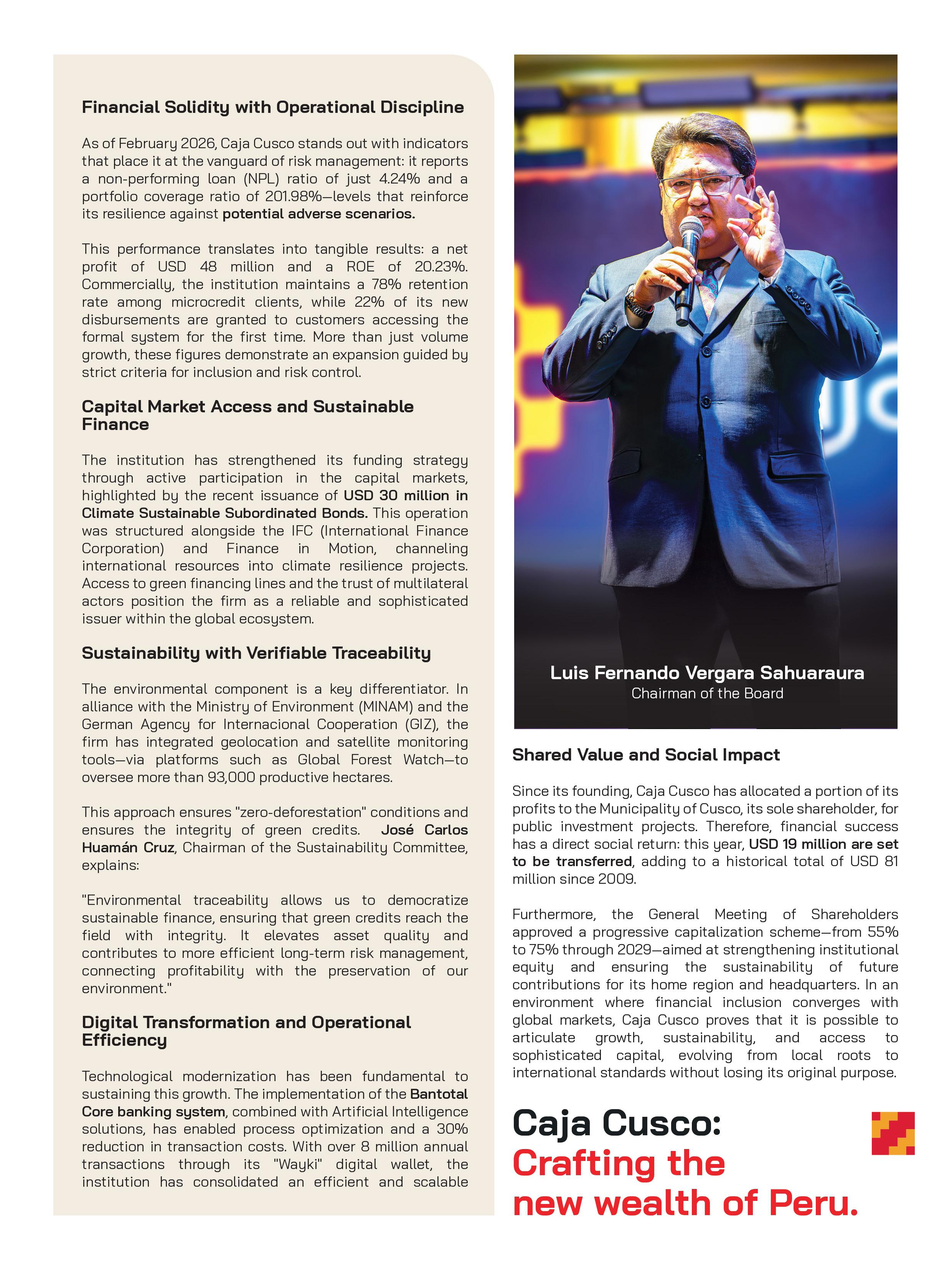
Alongside these features, leadership perspectives from Luis Fernando Vergara Sahuaraura, Chairman of the Board of Caja Cusco and Mr. Hasan Asadullozoda, Chairman of OJSC Oriyonbonk, Tajikistan reflect the enduring importance of financial discipline, strong governance, and measured transformation—key pillars for achieving stability and sustainable growth in today’s dynamic environment.
Across this issue, we examine the forces redefining business and finance—from the growing significance of intangible assets and the rise of the trust economy to the resilience premium and the shift toward precision-driven strategies. Together, these themes highlight a broader transition in how organisations create, measure, and sustain value.
Thank you for reading, and we hope you enjoy this issue.
The purchaser or reader of this publication assumes all responsibility for the use of these materials and information. However, the publisher assumes no responsibility for errors, omissions, or contrary interpretations of the subject matter contained herein no legal liability can be accepted for any errors. No part of this publication may be reproduced without the prior consent of the publisher.
Editor, Global Banking & Finance Review
Stay caught up on the latest news and trends taking place by signing up for our free email newsletter, reading us online at http://www.globalbankingandfinance.com/ and download our App for the latest digital magazine for free on Google Play and the Apple App Store
Rewiring Payments: How Diebold Nixdorf Is Unifying the Future of Banking and Retail Transactions
Rewiring Payments: How Diebold Nixdorf Is Unifying the Future of Banking and Retail Transactions
Our 2026 Excellence in Innovation Payment Technology Solutions for Europe award was recently granted to Diebold Nixdorf. This allowed us to meet with Andy Zosel, EVP, Chief Product & Technology Officer at Diebold Nixdorf. We spoke about how banks and retailers can simplify payments across every channel and introduce a shared transaction orchestration layer that improves resilience, security, and speed-to-market through phased modernization.
Q1: What’s driving banks and retailers to rethink payments and self-service together—and where are the biggest gaps?
What’s changed is the expectation that the same reliability and consistency extend across every payment touchpoint: POS, mobile, online, branch and ATM. At the same time, fraud pressure, compliance mandates, customer demands, and integration complexity have all increased.
The biggest gaps typically come from fragmentation—separate stacks by channel, duplicated business rules, and inconsistent controls that slow change and add risk. The opportunity is to unify the foundation so banks can build capabilities once—journeys, routing, and controls—and reuse them everywhere. For decades, Diebold Nixdorf (DN) has processed billions of secure transactions in mission-critical environments. Today, we’ve extended that same reliability, security, and orchestration capability across all payment channels — ATM, digital, mobile, web, kiosk, and real-time payment networks.
Q2: Given those gaps, what architectural approach should banks take to simplify and move faster—without increasing risk?
The pattern I see work is separating the channel experience from the transaction “plumbing”. When routing, transformation, controls, and audit live in a shared layer, you stop rebuilding the same logic in every channel—and you get consistency by design instead of by policy.
That’s the bridge between identifying gaps and delivering a solution: a platform approach that’s modular, standards-driven, and operable at scale—so institutions can modernize incrementally while improving resilience and control. The real question is really about what that shared layer looks like in practice.
Q3: DN has this shared layer, tell us about it—and what principles guided how you designed it?
Vynamic® Transaction Middleware, DN’s platform, is a transaction processing and orchestration layer between channels and back-end systems. It’s where you centralize reusable services—routing and orchestration, message transformation across legacy and modern standards (including ISO 20022), policy enforcement, security controls, auditability, and reconciliation—so institutions don’t rebuild the same “plumbing” separately for e-commerce, mobile, POS, branch, and ATM.
From a software standpoint, the principles are simple: API-first integration, cloud-native/containerized microservices for resilience and scale, and security-by-design. Just as importantly, it’s built for continuous evolution— so adding a new payment method, partner, or channel doesn’t require a disruptive replacement cycle.
Q4: How can banks adopt this without risking availability—and can you share what that looks like in practice?
Banks rarely have the luxury of a “big bang”—and they shouldn’t take that risk. The pragmatic approach is coexistence and phased migration: introduce the platform layer where it creates leverage, run in parallel where required, and expand channel by channel and function by function with clear rollback paths. A good example is Bankart, a leading payments processor in Slovenia that processes transactions for more than 20 banks across six different countries, where the focus was multi-channel enablement and a controlled migration away from legacy components. Implementation proved stability in a contained scope first, then we scaled across additional transaction types and channels.
Most institutions often start where they can prove value quickly—using APIs to modernize specific journeys—then extend to additional transaction types and channels over time. The key is incremental modernization that improves capability while protecting the “always-on” expectation.
Q5: What are the non-negotiables in the critical path—and what proof points matter?
If you’re in the critical path, there are no compromises: resilience, predictable low latency, horizontal scalability, and security and compliance by design. Banks also need auditability and operational transparency—clear evidence of what happened, why it happened, and how controls were enforced.
That’s why scale and production history matter. Vynamic Transaction Middleware processes 20B+ transactions annually, and is used by 80+ financial institutions, including deployments of 50,000 terminals in a single implementation. And on the architecture side, active-active designs proven at around 3,000 TPS help support continuous availability.
Q6: Where should a central policy and decisioning layer live—and how does modern architecture help apply consistent controls without adding friction?
Threats don’t respect channel boundaries anymore, and neither should controls. In a modern architecture, a central policy and decisioning layer—policy, decisioning, and enforcement—needs to be applied consistently across channels, not re-implemented as point solutions for POS, online, mobile, and ATM.
Vynamic® Transaction Middleware gives you a practical place to enforce controls—limits, authentication signals, fraud rules, and screening—while still letting each channel optimize the customer experience. The goal is smarter controls: more consistent risk management with less unnecessary friction.
Q7: What cloud-to-edge architecture and operating model works best for global banks—and what slows adoption?
Global banks operate in a hybrid reality, and the ATM channel makes edge a primary requirement. The architecture that works is cloudnative at the core with portable deployment options—cloud, onprem, private cloud, or hybrid—so institutions can meet regulatory and data-residency requirements without fragmenting the platform.
The real barriers are often operating-model related: security and risk approval cycles, legacy release governance, and the shift to CI/CD and microservices operations. When teams pair phased rollout with strong observability, the risk becomes manageable—and adoption speeds up.
Q8: How does DN reduce integration complexity and speed time-to-value with interoperability?
Interoperability must be designed in because it’s where many transformations stall. With Vynamic® Transaction Middleware, DN focuses on standards support—including ISO 8583 and ISO 20022—plus API-driven integration, certification discipline, and a partner ecosystem that reduces one-off custom work.
The objective is straightforward: fewer bespoke integrations, faster onboarding of new partners and rails, and a platform that can evolve as the ecosystem changes—without forcing a re-architecture every time.
Q9: What differentiates DN in a crowded payments technology market— and where do clients see ROI?
DN’s advantage is that we combine platform engineering with decades of “always-on” self-service operations. That operational discipline—resilience, lifecycle rigor, and managing heterogeneous estates—shows up directly in how we build and run software.
Clients see ROI when they reduce duplication and complexity: implement core transaction services once, apply them consistently across channels, and speed up delivery of new capabilities. That typically translates into lower cost-to-change, fewer integration failures, improved reliability, and faster time-to-market.
One clear example of DN’s involvement and impact is the Digital Euro initiative. DN is actively navigating the substantial complexity and elevated cost structures that arise from legacy payment systems—many of which were originally designed for card and PIN-based transactions. DN’s platform enables banks to modernize systems, increase flexibility, and rapidly launch new payment solutions like the Digital Euro. This demonstrates how DN delivers tangible ROI: supporting banks in adapting quickly and efficiently to major industry shifts while minimizing disruption and cost.
Q10: What separates successful multi-channel modernization programs—and how can banks scale with confidence?
The programs that succeed typically do three things well: they simplify integration rather than add to it, they make controls consistent across channels, and they treat operations readiness as a principal deliverable—not an afterthought at cutover. The “watchouts” are the flip side of that: integration sprawl, uneven control coverage, and reconciliation or data breaks that only surface once volume ramps.
Scaling with confidence comes from disciplined governance, rigorous testing, and strong observability—logs, traces, and audit trails that make system behavior explainable. The best teams prove stability in a contained scope, build repeatable rollout patterns, and then expand predictably—so each wave is less risky than the last.
Q11: For Global Banking & Finance readers, what should banks be doing in the next 6–12 months to advance a multi-channel payments modernization agenda?
Over the next 6–12 months, banks should focus on creating momentum through a few concrete moves: standardize how channels integrate (APIfirst where possible), centralize shared transaction services and controls so they’re consistent by design, and invest in observability so operations teams can run changes safely. The goal is to shift from bespoke, channel-bychannel delivery to reusable services and repeatable deployment patterns.
On a global scale, success is a platform that runs 24/7/365 with consistent performance, enforces policies uniformly, and can evolve continuously—so new payment types, rails, and experiences can be introduced without multiyear reinvention cycles.
Creand Crèdit Andorrà - Best Digital Bank Andorra 2026 Global Banking & Finance Review
1. Winning Best Digital Bank Andorra 2026 is a significant achievement. What key elements of your digital transformation strategy do you believe were most instrumental in earning this recognition?
This recognition reflects a long-term commitment to digital transformation, a process that goes beyond technology itself. The true differentiating factor lies in the extent to which this transformation improves the client relationship in a meaningful way. At Creand, we have focused on three key pillars: a clientcentric experience, aimed at simplifying processes and making day-to-day banking easier; a robust technological infrastructure, designed to enhance efficiency, scalability and security; and continuous innovation, with a strong focus on incorporating functionalities that deliver real value and address specific needs.
At Creand, we view digitalisation as an ongoing process of evolution. It is precisely this combination of long-term investment in technology, strong execution capabilities and a clear client focus that, in our view, has been fundamental to achieving this recognition.
2. How has Creand enhanced its digital customer journey over the past year, particularly in terms of onboarding, user experience, and omnichannel integration?
Over the past year, we have consolidated the launch of a new online banking platform with a redefined, frictionless client experience that responds to current market expectations and positions us as a benchmark in Andorra. One of the most visible advances has been the optimisation of the onboarding process for new clients, with digital identification systems and automated verification. We have also improved efficiency by facilitating the remediation and updating of client documentation through digital channels.
At the same time, we have continued to evolve our online and mobile platforms with a clear focus on improving usability, strengthening security and adding new functionalities that simplify day-to-day banking operations and enhance transaction efficiency. This continuous improvement in usability and functionality enables us to respond to growing demand for immediacy, autonomy and convenience.
All of this forms part of a multichannel approach that we consider essential. Our aim is for clients to interact with Creand in a natural way, whether through digital channels or with the support of their relationship manager. Technology should make the relationship with the bank easier, while preserving the closeness and quality of service.
3. As digital banking expands, cybersecurity becomes increasingly critical. What investments or frameworks has
Creand implemented to ensure data protection and client trust?
Trust is a fundamental asset in banking and, in a digital environment, that trust necessarily depends on cybersecurity and rigorous data management. At Creand, we address this challenge from a holistic perspective that combines technology, processes, governance and internal culture.
In recent years, we have continuously strengthened the security of our digital channels by incorporating advanced capabilities for prevention, monitoring and incident response. This effort translates into greater protection of information, ensures operational continuity and enhances service resilience in an increasingly demanding environment.
However, security does not depend on technology alone. That is why we operate within particularly rigorous control and compliance frameworks, supported by the continuous training of our teams. Our objective is clear: to ensure that every digital advancement reinforces, and never compromises, the trust that clients place in Creand.
4. Digital banking often risks losing the human touch. How does Creand balance technological efficiency with personalized advisory services?
We believe that the future of banking will be shaped by digital operations combined with value-added, in-person advisory and client service.
Today, technology enables the evolution of the channel, allowing us to offer differentiated, value-added functionalities. It transforms the digital channel into an additional commercial channel, improves the execution of certain processes and provides relationship managers with new tools to continue delivering an optimal service to their clients through remote channels.
This balance between technological efficiency and human proximity is an integral part of Creand’s identity.
5. Operating within a regulated financial environment requires strong compliance structures. How has Creand ensured that its digital innovation aligns with evolving regulatory standards?
In an activity such as banking, innovation is only robust if it develops within a highly rigorous compliance framework. This means incorporating the regulatory perspective from the earliest stages and strengthening coordination between business, technology, risk, security and compliance functions.
In our case, we also maintain very demanding standards in areas such as data protection, operational traceability and process oversight.
6. Have there been any recent digital products, features, or technological enhancements that you consider particularly transformative for your clients?
One of the most notable developments has been the incorporation of a cryptoasset trading and custody platform within our online banking
Xavier Cornella, CEO of Creand
environment. This solution enables clients to manage their wealth, investment portfolio and now also their cryptoassets from a single space, offering a more integrated experience backed by the guarantees of an established financial institution.
We have also further developed our digital payments ecosystem, with the launch of Apple Pay in Andorra and new solutions on the merchant acquiring side, including Bizum Empresas, Google Pay and Apple Pay for businesses. In addition, we have expanded our API-based services for corporate clients, enabling them to integrate relevant financial data directly into their management tools.
7. Looking ahead to 2026 and beyond, what are Creand’s priorities in continuing to strengthen its digital banking leadership in Andorra and internationally?
Looking ahead, our priorities are clear. Firstly, to continue placing the client at the centre and to offer a personalised experience based on their profile, with new value-added functionalities that meet their needs. Secondly, to continue investing in technology to strengthen efficiency, scalability and security. And finally, to further develop new payment services and increase commercial activity through digital channels.
We aim to continue progressing towards a truly omnichannel model. Our ambition is for online banking not only to serve as an operational channel, but also to become a leading relational channel, capable of complementing and strengthening the relationship between the client and their manager.
Creand’s strategy is centred on combining technological innovation with personalised advisory services. We see digital banking as an ally that complements and enhances the capabilities of traditional channels, making them more effective.
8. How do you see digital banking evolving in smaller yet sophisticated financial markets like Andorra, and what role does Creand intend to play in shaping that future?
Digital banking will continue to evolve by offering genuinely relevant functionalities, and not only as a channel for lower-value transactions. It will continue to place the client and their needs at the centre, moving towards greater personalisation, enhanced security and more seamless services. It will also become further established as a tool to improve efficiency and facilitate process management.
In addition, it will consolidate its role as a key channel in the client’s relationship with the bank, serving as a support tool for relationship managers in the remote management of clients, within a secure environment.
Ultimately, it is, and will remain, at the core of the bank’s omnichannel strategy.
Oriyonbonk: Leadership and the Architecture of Change in Tajik Banking
In Tajikistan’s financial sector, where continuity often carries as much weight as reform, meaningful change tends to occur not through dramatic overhauls but through careful recalibration. One of the institutions navigating this terrain is OJSC Oriyonbonk, a bank whose modern trajectory has been closely tied to the leadership of its long-serving chairman, Hasan Asadullozoda
The bank’s recent evolution offers insight into how leadership can influence institutional direction in an environment shaped by regulatory caution, market constraints, and rising public expectations.
An Institution Shaped by Time—and Direction
Oriyonbonk’s long history places it among the most established financial institutions in Tajikistan. Such longevity presents both advantage and risk: inherited trust on one hand, and the danger of institutional inertia on the other.
Under Hasan Asadullozoda’s stewardship, the bank has sought to resolve this tension by preserving core stability while gradually reorienting operations toward modern banking standards. Rather than pursuing abrupt transformation, leadership has focused on reinforcing structures—risk governance, compliance practices, and service delivery—seen as prerequisites for sustainable adaptation.
This approach reflects a pragmatic leadership philosophy: reform that aligns with institutional capacity rather than ambitions detached from local realities.
Leadership in the Age of Digital Expectation
Digitalisation has become the most visible symbol of Oriyonbonk’s transformation, and it is here that leadership intent has translated most clearly into operational change. The expansion of mobile and internet banking platforms has been framed not as innovation for its own sake, but as a response to structural constraints—geography, access, and cost efficiency.
Asadullozoda’s leadership has emphasised technology as infrastructure rather than marketing: digital systems that support reliability, transparency, and customer autonomy. In a country where physical banking access remains uneven, this prioritisation carries strategic weight.
Importantly, digital growth has been paired with controls—reflecting leadership awareness that technological expansion without governance can erode trust just as quickly as it builds convenience.
Managing Growth Without Overreach
Oriyonbonk’s development across retail, SME, and corporate lending has unfolded under careful management. Leadership decisions have consistently highlighted balance—expansion tempered by capital discipline and risk assessment.
For Asadullozoda, this balance appears rooted in a long-term view of institutional credibility. In financial systems marked by volatility, leadership that prioritises resilience over short-term scale can shape not only performance outcomes, but public confidence in the sector.
This measured strategy has helped Oriyonbonk maintain its market position while avoiding the destabilising cycles that have affected banks elsewhere in comparable economies.
The Human Dimension of Institutional Leadership
Beyond strategy and technology, Asadullozoda’s influence is visible in organisational culture. Investment in professional development, internal training, and managerial continuity has reinforced internal capacity—often an overlooked element of banking reform.
Leadership here operates less through personal visibility and more through institutional tone: an emphasis on process, accountability, and professionalisation. In systems where governance credibility is scrutinised, these internal dynamics matter as much as external performance indicators.
Economic Role and Leadership Responsibility
Oriyonbonk’s leadership has consistently framed the bank’s mission in economic—not merely commercial—terms. Support for businesses, facilitation of payments, and expansion of financial access link the bank’s fortunes to broader economic stability.
For leadership, this creates a dual responsibility: ensuring commercial viability while acknowledging the bank’s systemic role. Such framing positions Oriyonbonk not simply as a market actor, but as a contributor to national economic infrastructure—an expectation often placed on large legacy institutions.
Recognition as Reflection, Not Objective
Recent acknowledgements of Oriyonbonk’s performance and leadership have drawn public attention, but within the bank’s narrative these are treated as reflective rather than determinative. Awards and recognition function as signals of alignment with international standards, not as end points.
For Asadullozoda, such recognition appears to reinforce rather than redefine strategy—supporting continuity rather than prompting redirection.
Dushanbe
Leadership and the Road Ahead
As Tajikistan’s financial sector continues to evolve, Oriyonbonk’s future will depend less on headline innovation than on leadership’s capacity to manage transition over time. In this respect, Hasan Asadullozoda’s enduring role offers a window into how individual leadership, when exercised through institutions rather than personalities, can shape outcomes quietly yet decisively.
In a banking environment where trust is cumulative and fragile, the most consequential changes are often those least visibly dramatic. Oriyonbonk’s experience suggests that leadership, exercised with restraint and strategic clarity, remains one of the sector’s most underappreciated instruments of reform.
Mr. Hasan Asadullozoda Chairman, OJSC Oriyonbonk
The Value Shift: Why Intangible Assets Now Define Business Worth
For much of modern economic history, the value of a business was measured in tangible terms. Factories, machinery, inventory, and physical infrastructure formed the backbone of corporate balance sheets. The more assets a company owned, the stronger its perceived value.
Today, that equation has fundamentally changed. The most valuable companies in the world are no longer defined by what they own physically, but by what they control intellectually. Data, brand equity, intellectual property, software, customer relationships, and organisational know-how have become the primary drivers of value.
This transformation—often described as the “value shift”—is not incremental. It represents a structural redefinition of how businesses are built, evaluated, and sustained. In the modern economy, intangible assets are no longer supplementary. They are central.
The Rise of the Intangible Economy
The scale of this shift is striking. According to recent global analysis, the total value of corporate intangible assets approached $100 trillion in 2025, representing a dramatic expansion in their economic significance (WIPO). Over the past decade, intangible assets have accounted for roughly two-thirds of global GDP, underscoring their central role in economic activity (WIPO).
This growth is not new, but it has accelerated in recent years. In the United States, for example, intangible assets now account for approximately 90% of the market value of S&P 500 companies, compared with just 17% in 1975 (Forbes). What was once a marginal component of valuation has become dominant.
The implication is clear: the foundations of business value have shifted from the physical to the intangible.
What Are Intangible Assets?
Intangible assets are non-physical resources that generate economic value. These include intellectual property (such as patents and trademarks), brand reputation, proprietary data, software, organisational processes, and human capital (Business Valuation Solutions).
Unlike tangible assets, which are visible and easily measured, intangible assets are often difficult to quantify. They may not appear on balance sheets unless acquired externally, yet they play a decisive role in shaping performance and valuation.
This disconnect between accounting frameworks and economic reality is one of the defining challenges of the intangible economy. As the International Trademark Association notes, many internally developed assets—such as brand value—are often underrepresented or excluded entirely from financial reporting (International Trademark Association). Despite this, investors, analysts, and markets increasingly recognise their importance.
Why Intangibles Are Driving Value
The growing importance of intangible assets reflects deeper changes in how businesses create value.
1. The Shift to Knowledge-Based Economies
Modern economies are increasingly driven by knowledge rather than production. Innovation, information, and expertise are now the primary sources of competitive advantage.
Intangible assets such as intellectual capital and organisational knowledge are becoming essential for growth and differentiation across industries (Deloitte). Companies that can generate and apply knowledge effectively are better positioned to innovate and adapt.
2. The Power of Data
Data has emerged as one of the most valuable intangible assets. It underpins decision-making, personalisation, automation, and innovation.
Unlike physical resources, data increases in value as it is collected and analysed. It enables businesses to understand customers, optimise operations, and develop new products and services.
As one industry analysis notes, in the digital economy, value is increasingly created “not by what organisations own physically, but by what they control intellectually,” particularly through data and intellectual property (mandalorepartners.com).
3. Brand as a Strategic Asset
Brand is another critical intangible asset. It represents trust, recognition, and emotional connection—factors that influence customer behaviour and pricing power.
Strong brands can command premium prices, reduce customer acquisition costs, and enhance loyalty. They also serve as a barrier to entry, making it more difficult for competitors to replicate success.
In many cases, brand value constitutes a significant portion of a company’s overall valuation, particularly in consumer-facing industries.
4. Intellectual Property and Innovation
Intellectual property (IP)—including patents, trademarks, and proprietary technologies—provides legal protection and competitive advantage.
IP enables companies to monetise innovation, secure market positions, and create barriers to competition. It also plays a critical role in mergers, acquisitions, and licensing arrangements.
The value of IP is derived not only from its legal protection but also from its ability to generate future economic benefits, such as revenue growth and market expansion (Wikipedia).
Intangibles and Competitive Advantage
The rise of intangible assets is closely linked to the nature of competition in the modern economy.
In traditional industries, competitive advantage was often based on scale and efficiency. Companies with larger factories or more resources could produce goods more cheaply and dominate markets.
Today, advantage is increasingly based on differentiation—offering unique products, experiences, or capabilities that cannot be easily replicated.
Intangible assets play a central role in this differentiation. They enable businesses to create unique value propositions, build customer relationships, and innovate continuously.
Research shows that companies with strong intangible assets are more likely to achieve sustained competitive advantage and longterm profitability (All about Stock and ETF).
The Valuation Challenge
Despite their importance, intangible assets present significant challenges for valuation.
Traditional accounting systems are designed to measure physical assets, which have clear costs and lifespans. Intangible assets, by contrast, are often internally generated, evolving, and difficult to quantify.
This creates a gap between book value and market value. Companies may appear undervalued on their balance sheets because their most important assets are not fully recognised.
For example, internally developed brand value or proprietary data may not be recorded, even though they contribute significantly to future earnings.
As a result, investors increasingly rely on alternative metrics—such as growth potential, customer engagement, and innovation capacity—to assess value.
The Strategic Implications
The value shift has profound implications for how businesses are managed and governed.
1. Managing Intangibles as Core Assets
Businesses must treat intangible assets as core strategic resources. This involves identifying, protecting, and leveraging these assets to drive growth. Deloitte highlights that many organisations lack formal processes for managing intangible assets, suggesting a significant opportunity for improvement (Deloitte).
2. Investing in Capability, Not Just Infrastructure
In the intangible economy, investment priorities are shifting. Companies are allocating more resources to research and development, data infrastructure, and talent development.
These investments may not yield immediate returns, but they create the foundation for long-term value.
3. Rethinking Risk and Resilience
Intangible assets introduce new types of risk. Data breaches, reputational damage, and intellectual property disputes can have significant financial and operational consequences.
At the same time, strong intangible assets can enhance resilience. Companies with strong brands and customer relationships are better able to withstand market disruptions.
The Role of Technology
Technology is both a driver and an enabler of the value shift. Digital platforms, cloud computing, and artificial intelligence allow businesses to create, manage, and scale intangible assets more effectively.
For example, software and algorithms can be replicated at low cost, enabling rapid growth without proportional increases in physical resources. Data analytics can enhance decision-making and personalise customer experiences.
However, technology also increases competition. As barriers to entry are lowered, businesses must continuously innovate to maintain their advantage.
Intangibles and the Future of Work
The value shift also has implications for the workforce. Human capital— skills, knowledge, and creativity—is itself a critical intangible asset.
Employees are no longer just contributors to production; they are creators of value. Their ability to innovate, solve problems, and build relationships directly impacts organisational performance.
This places greater emphasis on talent management, organisational culture, and continuous learning.
A New Framework for Value
The rise of intangible assets requires a new framework for understanding business value.
Traditional metrics such as revenue, profit, and asset ownership remain important, but they are no longer sufficient. Businesses must also consider factors such as innovation capacity, brand strength, data assets, and customer relationships.
These elements are more difficult to measure, but they are essential for understanding long-term performance.
Conclusion: The Invisible Drivers of Value
The shift toward intangible assets represents one of the most significant transformations in modern business. It reflects a broader transition from an industrial economy to a knowledge-based, digital economy.
In this new landscape, value is no longer defined by physical assets alone. It is shaped by ideas, relationships, data, and innovation.
Companies that recognise and embrace this shift are better positioned to compete, grow, and create sustainable value. Those that do not risk being left behind, regardless of their physical scale or resources.
The value shift is not always visible. It does not appear on factory floors or balance sheets. But it is quietly redefining what it means to build a successful business.
And increasingly, the most valuable assets are the ones you cannot see.
The Speed Illusion: Why Faster Decisions Don’t Always Win
In the modern business environment, speed has become a defining virtue. Organisations pride themselves on agility, responsiveness, and the ability to act faster than competitors. Decision-making, once seen as a deliberative process, is now often framed as a race— where the fastest mover is assumed to gain the advantage.
This belief has been reinforced by digital transformation. Advances in data analytics, artificial intelligence, and real-time communication have dramatically reduced the time required to gather information, assess options, and execute decisions. What once took weeks can now be done in hours—or even seconds.
Yet beneath this acceleration lies a more complex reality. Speed, while valuable, does not inherently lead to better outcomes. In many cases, the pursuit of speed can compromise decision quality, distort priorities, and introduce new forms of risk. The assumption that faster decisions always produce better results—the “speed illusion”— is increasingly being questioned.
The Rise of Speed as a Business Imperative
The emphasis on speed is not without reason. In fast-moving markets, the ability to respond quickly to changes in demand, competition, or external conditions can provide a significant advantage. Delayed decisions can result in missed opportunities, lost revenue, or diminished market relevance.
McKinsey research shows that executives spend nearly 40 percent of their time making decisions, and many believe that time is often used inefficiently, reinforcing the desire to accelerate decision processes (McKinsey & Company). In this context, improving
decision speed is often seen as a way to enhance productivity and competitiveness.
The rise of agile methodologies has further reinforced this mindset. Organisations are encouraged to iterate quickly, test ideas, and adapt in real time. Speed becomes synonymous with innovation, while slower, more deliberate processes are often viewed as outdated or inefficient.
However, this focus on speed can obscure a critical distinction: the difference between making decisions quickly and making decisions well.
The Trade-Off Between Speed and Quality
At the heart of the speed illusion lies a fundamental tension between speed and quality. While it is possible to make fast decisions, the quality of those decisions depends on the information available, the process used, and the context in which they are made.
Decision quality, as defined in management theory, is determined not by the outcome alone but by the strength of the decision-making process at the time the decision is made. It depends on factors such as the availability of reliable information, the consideration of alternatives, and the clarity of objectives (Wikipedia).
When decisions are rushed, these elements can be compromised. Incomplete data, limited analysis, and insufficient stakeholder input can lead to suboptimal outcomes. While speed may create the appearance of efficiency, it can introduce hidden costs that only become apparent over time.
Interestingly, research also suggests that the relationship between speed and quality is more nuanced than a simple trade-off. McKinsey notes that organisations with strong decision-making processes can achieve both speed and quality, as effective systems enable faster yet well-informed decisions (McKinsey & Company). This indicates that the issue is not speed itself, but how speed is achieved.
The Risks of Accelerated Decision-Making
The pursuit of speed can introduce several risks, particularly in complex or high-stakes environments. One of the most significant is the potential for cognitive bias. When decisions are made quickly, individuals are more likely to rely on heuristics or mental shortcuts, which can lead to systematic errors in judgment.
Biases such as overconfidence, anchoring, and confirmation bias can distort decision-making, particularly when time constraints limit the ability to critically evaluate information. Research in behavioural science highlights how these biases can influence both human and AI-assisted decisions, particularly under time pressure (arXiv).
Another risk is the oversimplification of complex problems. Fast decisions often require reducing complexity, which can lead to incomplete or inaccurate representations of the issue at hand. This is particularly problematic in strategic decisions, where long-term implications may not be immediately apparent.
In addition, rapid decision-making can lead to misalignment within organisations. When decisions are made without sufficient consultation or communication, they may lack buy-in from key stakeholders, reducing the likelihood of effective implementation.
Deloitte’s research underscores the importance of clarity in decisionmaking processes, noting that ambiguity who makes decisions and how they are made can negatively impact both speed and quality (Deloitte). Without clear structures, attempts to accelerate decisionmaking may create confusion rather than efficiency.
Speed Versus Strategic Thinking
One of the most important distinctions in understanding the speed illusion is the difference between operational and strategic decisions.
Operational decisions are often routine, repeatable, and timesensitive. In these cases, speed is essential and can be supported by automation and data-driven systems.
Strategic decisions, by contrast, are complex, infrequent, and highimpact. They involve significant uncertainty and require careful consideration of multiple factors. Attempting to accelerate these decisions can lead to poor outcomes.
Decision management frameworks highlight this distinction, noting that operational decisions are well-suited to automation and rapid execution, while strategic decisions require deeper analysis and human judgment (Wikipedia).
In the age of artificial intelligence, this distinction is becoming even more critical. While AI can process data and generate insights unprecedented, it cannot fully replace human judgment in areas such as strategy, ethics, and long-term planning.
Recent industry analysis reinforces this point, emphasising that while AI can accelerate decision-making, “speed alone is not a substitute for strategic thinking and human judgment” (TechRadar).
The Role of Organisational Design
The ability to balance speed and quality in decision-making is closely linked to organisational design. Companies that excel in decision-making often have clear structures, defined roles, and wellestablished processes.
Deloitte’s research shows that organisations with strong decisionmaking frameworks—where decision rights are clearly defined and aligned with strategy—achieve better business outcomes, including higher revenue growth and improved financial performance (Deloitte).
These organisations do not simply aim to make decisions faster. Instead, they focus on making decisions at the right level, with the right information, and in alignment with broader objectives.
Decentralisation is often a key component of this approach. By empowering employees closer to the front lines, organisations can respond more quickly to local conditions while maintaining overall strategic coherence.
However, decentralisation must be balanced with coordination. Without alignment, rapid decision-making at different levels can lead to inconsistency and fragmentation.
Technology and the Acceleration of Decisions
Technology has played a central role in accelerating decision-making. Advanced analytics, real-time data, and AI-driven tools enable organisations to process information unprecedented, supporting faster responses to changing conditions.
McKinsey’s research highlights how integrating AI into business processes can enhance decision-making and drive productivity, provided it is aligned with organisational goals (McKinsey & Company).
However, the availability of faster tools does not automatically lead to better decisions. Technology can provide insights, but it cannot replace the need for critical thinking and contextual understanding.
In some cases, the abundance of data can even slow decision-making, as organisations struggle to process and interpret large volumes of information. Alternatively, it can lead to overreliance on automated systems, reducing human oversight and increasing the risk of errors.
The challenge, therefore, is not simply to adopt technology, but to integrate it effectively into decision-making processes. This requires a clear understanding of when to rely on automation and when to involve human judgment.
The Culture of Urgency
The speed illusion is also driven by cultural factors. In many organisations, speed is celebrated as a sign of competence and decisiveness. Leaders who act quickly are often perceived as more effective, while those who take time to deliberate may be seen as indecisive.
This culture of urgency can create pressure to make decisions before sufficient information is available. It can also discourage critical thinking, as individuals may prioritise speed over thorough analysis.
Over time, this can lead to a cycle where rapid decisions become the norm, even when they are not appropriate. The result is not necessarily greater efficiency, but increased volatility and inconsistency.
To address this issue, organisations must redefine what effective decision-making looks like. Speed should be seen as one dimension of performance, not the sole objective. Quality, alignment, and sustainability must also be considered.
Balancing Speed and Effectiveness
The key to overcoming the speed illusion lies in balancing speed with effectiveness. This requires a more nuanced approach to decision-making, where the appropriate level of speed is determined by the context of the decision.
For routine, low-risk decisions, speed can be prioritised. Automation and standardised processes can enable rapid execution without compromising quality.
For complex, high-impact decisions, a more deliberate approach is necessary. This involves gathering relevant information, considering multiple perspectives, and evaluating potential outcomes.
McKinsey identifies several practices that support both speed and quality in decision-making, including clear processes, high-quality debate, and alignment with strategic objectives (McKinsey & Company). These practices enable organisations to make informed decisions quickly, rather than simply making decisions quickly.
The Future of Decision-Making
As businesses continue to evolve, the role of decision-making will become even more critical. The increasing complexity of the global economy, combined with rapid technological change, will require organisations to make more decisions, more frequently, and under greater uncertainty. In this environment, the ability to balance speed and quality will be a key competitive advantage. Organisations that can make informed decisions ب appropriate—not just ب maximum—will be better positioned to succeed.
This will require a combination of technology, organisational design, and cultural change. Businesses must invest in data and analytics, clarify decision-making processes, and foster a culture that values both speed and thoughtful analysis.
Rethinking the Value of Speed
The speed illusion reflects a broader misunderstanding of what drives business success. While speed can provide advantages, it is not a substitute for quality, strategy, or judgment.
Faster decisions do not always win. In many cases, they can lead to errors, inefficiencies, and missed opportunities. What matters is not how quickly decisions are made, but how well they are made.
In the end, effective decision-making is not about choosing between speed and quality. It is about integrating the two—ensuring that decisions are made appropriate, with the insight and alignment needed to create lasting value.
In a world that increasingly rewards speed, the real advantage may lie in knowing when to slow down.
The Resilience Premium:
Why Stability Is Becoming More Valuable Than Growth
For much of modern business history, growth has been the dominant narrative. Expansion—whether measured in revenue, market share, or geographic reach—has long been viewed as the clearest indicator of success. Companies that grew faster were seen as stronger, more competitive, and better positioned for the future.
Today, however, a quiet but profound shift is underway. Stability— once considered a byproduct of success—is becoming a primary objective in its own right. In an increasingly volatile, uncertain, and interconnected global economy, resilience is no longer simply a defensive capability. It is a source of competitive advantage.
This shift is giving rise to what can be described as the “resilience premium”—the growing recognition that businesses capable of withstanding shocks, adapting to disruption, and maintaining continuity are often more valuable than those focused solely on rapid growth.
From Growth Obsession to Stability Awareness
The emphasis on growth has deep roots in economic theory and corporate practice. Growth drives employment, innovation, and shareholder returns. It signals opportunity and progress. Yet, it also assumes a relatively stable environment—one in which expansion can be planned, executed, and sustained with a degree of predictability.
That assumption is increasingly under strain.
Global markets today are characterised by persistent volatility. Economic cycles are less predictable, supply chains are more fragile, and geopolitical risks are more pronounced. Digital transformation, while enabling new opportunities, has also introduced new vulnerabilities.
In this environment, the ability to grow is no longer sufficient. Businesses must also be able to endure
Research underscores this shift. Studies in business resilience highlight that organisations are moving from a traditional “quest for profits” toward a “quest for resilience,” reflecting the need to prioritise stability in uncertain conditions (ScienceDirect). This does not imply that growth is unimportant— but it suggests that growth without resilience may be unsustainable.
Understanding Resilience as a Strategic Capability
Resilience is often misunderstood as the ability to recover from crises. In reality, it is broader and more dynamic. It encompasses the capacity to anticipate, absorb, adapt, and evolve in response to disruption.
Organisational resilience involves maintaining operational continuity while responding effectively to external shocks. It requires both stability—ensuring that core functions remain intact—and adaptability—enabling change when conditions demand it.
According to Deloitte, resilience today requires organisations to balance short-term responses to risks with long-term strategic goals, highlighting the need for integrated approaches to uncertainty (Deloitte). This dual focus reflects the complexity of modern business environments, where immediate
challenges must be managed without compromising future growth. Importantly, resilience is not a passive state. It is an active capability, built through deliberate investment in systems, processes, and culture.
The Economics of Stability
At first glance, prioritising stability over growth may seem counterintuitive. Growth generates revenue, attracts investment, and drives market visibility. Stability, by contrast, is often associated with caution or conservatism.
However, the economic value of stability becomes clear in periods of disruption. Companies that can maintain operations, preserve cash flow, and adapt quickly are better positioned to protect value and recover faster.
Financial stability, for example, is defined by the ability of systems to absorb shocks and continue functioning effectively, even during adverse events (Wikipedia). At the firm level, this translates into stronger balance sheets, diversified revenue streams, and robust risk management.
Research from Accenture, cited in Ivey Business Journal, shows that resilience is closely linked to long-term profitable growth, indicating that stability and performance are not mutually exclusive but mutually reinforcing (iveybusinessjournal.com).
In this sense, resilience does not replace growth—it enhances it. Stable organisations are better able to pursue opportunities because they are less constrained by volatility and uncertainty.
Volatility as the New Normal
The increasing importance of resilience is closely tied to the nature of modern volatility. Unlike previous periods of disruption, today’s challenges are not isolated events. They are interconnected, continuous, and often unpredictable.
Economic uncertainty affects market demand, investment decisions, and consumer confidence. Supply chain disruptions can ripple across industries, affecting production and delivery. Technological change introduces both opportunities and risks, requiring constant adaptation.
Academic research highlights that businesses must develop resilience to withstand financial downturns, regulatory shifts, and operational disruptions, as these factors increasingly influence longterm growth strategies (Allied Business Academies).
This environment demands a different approach to strategy—one that prioritises flexibility and preparedness over rigid planning.
The Trade-Off Between Efficiency and Resilience
One of the central challenges in building resilience is balancing it with efficiency. Traditional business models have emphasised optimisation—reducing costs, eliminating redundancies, and maximising productivity.
While efficient systems are valuable, they can also be fragile. Highly optimised supply chains, for example, may lack the flexibility to respond to disruptions. Lean operations may struggle to absorb unexpected shocks.
McKinsey notes that companies must address the long-standing trade-off between efficiency and resilience, particularly in areas such as supply chain management and operations (McKinsey & Company). The goal is not to abandon efficiency, but to design systems that are both efficient and adaptable.
This often involves introducing redundancies, diversifying suppliers, and investing in digital capabilities that enhance visibility and responsiveness.
Resilience as a Driver of Competitive Advantage
Far from being a defensive strategy, resilience can be a source of competitive advantage. Companies that are able to navigate disruptions effectively often gain market share, as less resilient competitors struggle to keep up.
During periods of crisis, resilient organisations can continue to serve customers, maintain relationships, and capitalise on emerging opportunities. This ability to operate under pressure enhances their reputation and strengthens their position in the market.
Research shows that innovation and resilience together act as key dynamic capabilities, enabling organisations to adapt and remain competitive in changing environments (ScienceDirect). This highlights the proactive nature of resilience—it is not just about surviving disruption, but about leveraging it.
The Role of Leadership and Culture
Building resilience is not solely a matter of systems and processes—it also requires a shift in leadership and organisational culture.
Leaders must adopt a long-term perspective, recognising that short-term gains achieved through aggressive growth strategies may come at the expense of long-term stability. This requires a willingness to make tradeoffs, prioritising sustainability over immediate returns.
Culturally, organisations must foster adaptability, collaboration, and learning. Employees should be empowered to respond to change, experiment with new approaches, and share insights across the organisation.
Research on organisational resilience identifies key pillars such as preparedness, responsiveness, adaptability, and learning as essential to navigating disruption (Taylor & Francis Online). These elements reflect the importance of both structure and mindset in building resilience.
Technology and the Future of Resilience
Technology plays a critical role in enabling resilience. Digital tools provide real-time data, predictive analytics, and automation capabilities that enhance decision-making and operational efficiency.
For example, advanced analytics can identify potential risks before they materialise, allowing organisations to take preventive action. Automation
can ensure continuity in critical processes, reducing reliance on manual intervention.
However, technology also introduces new risks, particularly in areas such as cybersecurity and system reliability. Resilient organisations must therefore balance the benefits of digital transformation with robust risk management.
Resilience and Sustainable Growth
Perhaps the most important insight in the resilience premium is that stability and growth are not opposing forces. Instead, they are complementary.
Resilient organisations are better positioned to achieve sustainable growth because they can navigate uncertainty more effectively. They are less likely to be disrupted by external shocks and more capable of adapting to changing conditions.
Studies confirm that organisational resilience can positively influence firm growth, particularly in uncertain environments where adaptability becomes a key determinant of success (ScienceDirect).
This suggests that the most successful businesses of the future will not be those that grow the fastest, but those that grow the most sustainably.
Redefining Success in Business
The rise of the resilience premium reflects a broader redefinition of success in business. Growth remains important, but it is no longer the sole measure of performance.
Stability, adaptability, and sustainability are becoming equally important indicators. Businesses are increasingly evaluated based on their ability to withstand disruption, manage risk, and create longterm value.
Economic stability itself is defined by the absence of excessive fluctuations and the ability to maintain consistent performance over time (Wikipedia). At the organisational level, this translates into steady growth, reliable operations, and robust risk management.
Conclusion: The Value of Endurance
The resilience premium is not about abandoning growth. It is about recognising that growth without stability is fragile—and that in a volatile world, fragility is a liability.
Businesses must move beyond the traditional focus on expansion and embrace a more balanced approach that prioritises both growth and resilience. This requires investment, discipline, and a willingness to rethink established assumptions.
In the end, the most valuable organisations will not be those that grow the fastest, but those that endure—those that can navigate uncertainty, adapt to change, and continue creating value over time.
In a world defined by disruption, stability is no longer a constraint. It is a competitive advantage.
The Profit Paradox: Why Growth No Longer Guarantees Value
For decades, growth has been the defining measure of business success. Revenue expansion, market share gains, and geographic reach have traditionally served as the clearest indicators of a company’s strength and potential. From boardrooms to investor presentations, the narrative has been consistent: growth signals momentum, and momentum signals value.
Yet in today’s increasingly complex and competitive global economy, this long-standing assumption is quietly being challenged. Growth, while still important, no longer guarantees value. In many cases, it may even obscure deeper inefficiencies, structural weaknesses, or unsustainable strategies. This evolving reality—often referred to as the “profit paradox”—is forcing businesses, investors, and policymakers to rethink what success truly looks like.
The Illusion of Growth
At its simplest, growth refers to the increase in a company’s revenues, customer base, or market presence. It is a visible and easily quantifiable metric, which is why it has long been favoured by executives and investors alike. However, growth does not inherently reflect the quality or sustainability of a business model.
A company can grow rapidly while generating little or no profit. It can expand into new markets while accumulating inefficiencies. It can increase sales while eroding margins. In such cases, growth becomes an illusion—masking underlying issues rather than resolving them.
This disconnect is not theoretical. According to McKinsey’s analysis of global industries, many companies have experienced revenue growth without a corresponding improvement in economic profit, highlighting a widening gap between expansion and value creation (mckinsey.com). This trend is particularly evident in sectors characterised by intense competition and rapid technological change.
The Cost of Chasing Scale
One of the primary drivers of the profit paradox is the pursuit of scale. For decades, businesses have sought to grow as quickly as possible, driven by the belief that larger size confers competitive advantage. Economies of scale—where costs decrease as production increases—have historically justified this approach.
However, in many modern industries, the relationship between scale and efficiency is no longer straightforward. As organisations grow, they often encounter diminishing returns. Operational complexity increases, coordination becomes more difficult, and decision-making slows down. These factors can offset the benefits of scale, reducing overall efficiency.
Moreover, growth often requires significant investment. Expanding into new markets, acquiring customers, and developing new products all come with costs. If these investments do not generate sufficient returns, growth can become financially unsustainable.
The rise of digital business models has further complicated this dynamic. While technology enables rapid expansion, it also lowers barriers to entry, intensifying competition. New entrants can scale quickly without the
legacy costs associated with traditional businesses, forcing established companies to spend heavily just to maintain their position.
This creates a paradoxical situation: the more a company grows, the more it may need to spend to sustain that growth, potentially eroding profitability in the process.
Shifting Investor Expectations
Investor attitudes toward growth are also evolving. In the past, markets often rewarded companies for their growth potential, even if they were not yet profitable. The assumption was that profitability would follow once scale was achieved.
Today, however, there is a growing emphasis on capital efficiency—the ability to generate returns relative to the resources invested. Investors are increasingly scrutinising not just how fast companies grow, but how effectively they convert growth into sustainable profits.
This shift is reflected in the increasing focus on metrics such as return on invested capital (ROIC) and free cash flow. These measures provide a
more comprehensive view of value creation, capturing both the scale and quality of a company’s performance.
According to a report by Boston Consulting Group, companies that prioritise value creation over pure growth consistently outperform their peers in terms of long-term shareholder returns (bcg.com). This underscores the importance of aligning growth strategies with financial discipline.
The Rise of Unit Economics
One of the most significant responses to the profit paradox has been the growing emphasis on unit economics—the profitability of individual transactions or customers. Rather than focusing solely on aggregate growth, businesses are analysing the economics of their operations at a granular level.
This approach provides valuable insights into whether growth is sustainable. If the cost of acquiring and serving a customer exceeds the revenue generated, scaling the business will only amplify losses. Conversely, if unit economics are strong, growth can enhance profitability.
Unit economics has become particularly important in industries such as e-commerce, fintech, and software-as-a-service (SaaS), where customer acquisition costs can be high and revenue streams may be spread over time. By focusing on metrics such as customer lifetime value (CLV) and customer acquisition cost (CAC), businesses can make more informed decisions about where and how to grow.
Technology as Both Enabler and Challenge
Technology plays a dual role in the profit paradox. On one hand, it enables growth by providing tools for scaling operations, reaching new customers, and improving efficiency. On the other hand, it introduces new challenges that can complicate value creation.
For example, digital platforms allow businesses to expand rapidly across geographies without significant physical infrastructure. However, they also expose companies to global competition, where price pressures and customer expectations are higher.
Artificial intelligence and advanced analytics offer powerful capabilities for optimising operations and enhancing decisionmaking. Yet, implementing these technologies requires substantial investment, and the returns are not always immediate or guaranteed.
McKinsey’s research on digital transformation highlights that while most companies are investing in technology, only a small proportion are successfully capturing its full value, often due to misalignment between strategy and execution (mckinsey.com). This reinforces the idea that growth driven by technology must be carefully managed to ensure it translates into value.
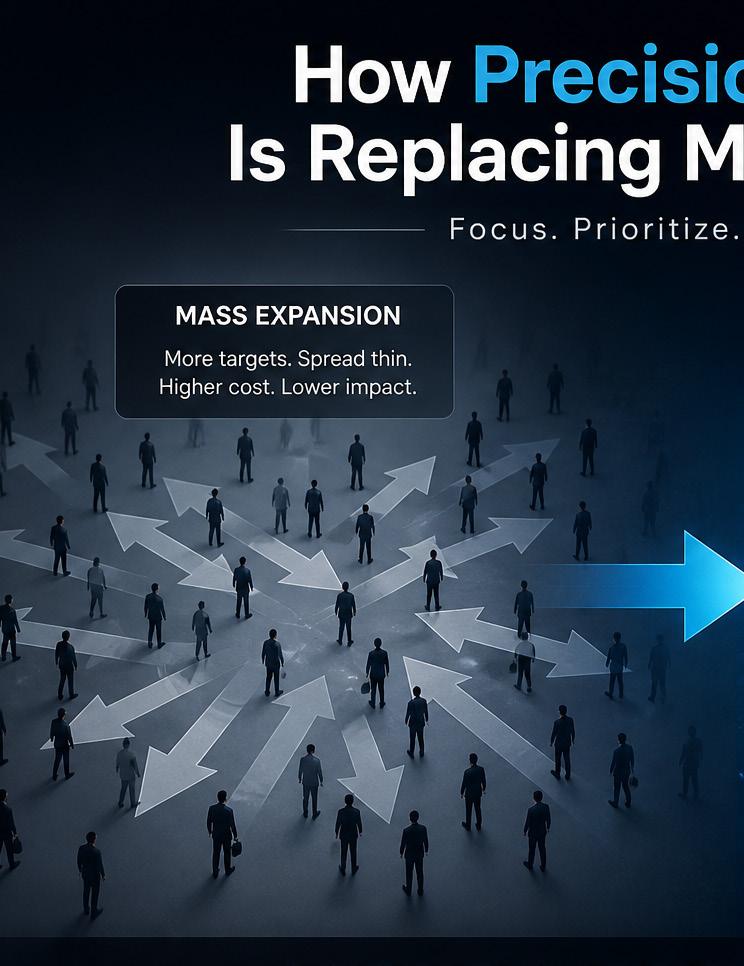
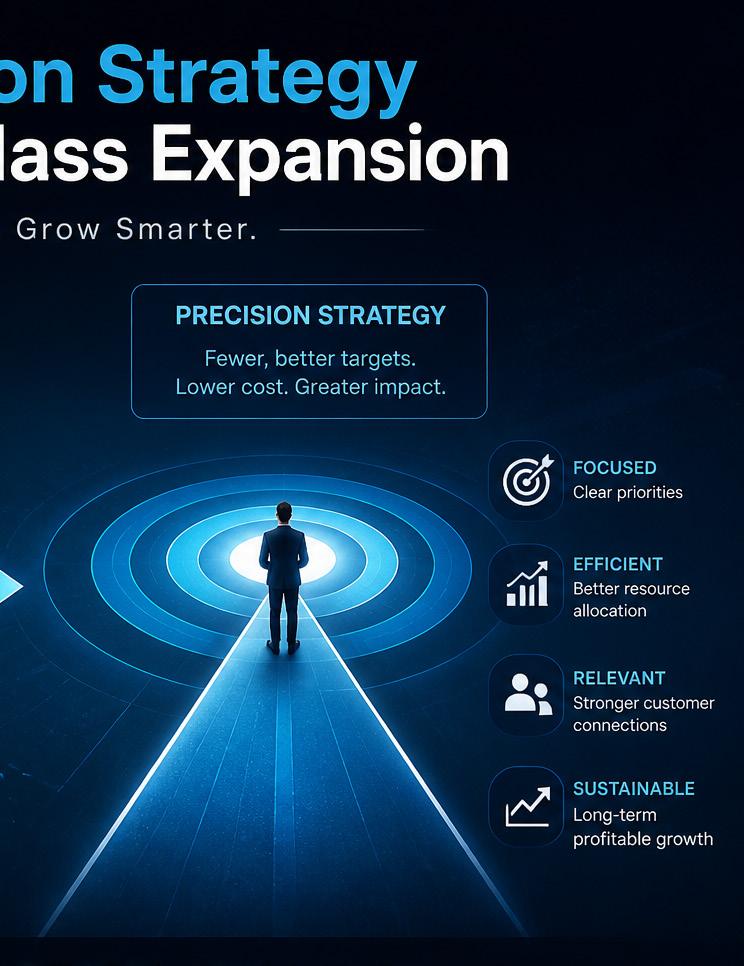
Rethinking Growth: From Scale to Precision
In response to these challenges, many organisations are rethinking their approach to growth. Rather than pursuing expansion for its own sake, they are adopting more targeted strategies that prioritise value over volume.
This shift toward precision growth involves focusing on specific markets, customer segments, or products where the potential for profitability is highest. By concentrating resources in areas of strength, businesses can achieve better returns while minimising risk.
Precision growth also emphasises efficiency. Companies are seeking to optimise their operations, reduce waste, and improve productivity, ensuring that growth is supported by strong fundamentals.
Deloitte’s insights into business transformation highlight the importance of aligning growth strategies with operational capabilities, noting that organisations that integrate strategy, technology, and culture are more likely to achieve sustainable outcomes (deloitte.com).
The Role of Organisational Culture
Addressing the profit paradox is not solely a matter of strategy or technology—it also requires a shift in organisational culture. Businesses that prioritise growth at all costs often develop behaviours that undermine longterm value creation.
For example, teams may focus on short-term targets rather than sustainable performance. Incentives may be aligned with revenue growth rather than profitability. Decision-making may prioritise speed over quality.
To overcome these challenges, organisations must foster a culture that emphasises accountability, discipline, and long-term thinking. This involves aligning incentives with value creation, encouraging critical evaluation of growth initiatives, and promoting transparency in decision-making.
Leadership plays a crucial role in this process. Executives must set the tone, ensuring that growth is pursued responsibly and that value creation remains the ultimate objective.
Balancing Growth and Resilience
Another important dimension of the profit paradox is the relationship between growth and resilience. Rapid expansion can make businesses more vulnerable to external shocks, particularly if it is accompanied by high levels of debt or operational complexity.
The COVID-19 pandemic highlighted the importance of resilience, as companies with strong financial positions and flexible operations were better able to navigate uncertainty. This has led to a greater emphasis on risk management and sustainability in growth strategies.
Resilience involves not only financial stability but also operational agility—the ability to adapt to changing conditions. Businesses must therefore balance the pursuit of growth with the need to maintain flexibility and robustness.
Redefining Value in a Changing World
Ultimately, the profit paradox reflects a broader shift in how value is defined. In the past, value was often equated with size or market dominance. Today, it is increasingly associated with efficiency, sustainability, and long-term performance.
This shift is influencing how businesses measure success. Traditional metrics such as revenue growth and market share are being supplemented by indicators that capture the quality of growth, such as profitability, cash flow, and return on capital.
At the same time, there is growing recognition of the importance of intangible factors, such as brand reputation, customer trust, and employee engagement. These elements, while harder to quantify, play a critical role in driving long-term value.
The Road Ahead
The profit paradox is not a temporary phenomenon—it is a reflection of deeper changes in the global business environment. As markets become more competitive and complex, the ability to generate sustainable value will become increasingly important.
For businesses, this means rethinking traditional approaches to growth. It requires a shift from scale to precision, from speed to discipline, and from short-term gains to long-term sustainability.
For investors, it means evaluating companies based on a broader set of criteria, considering not just how fast they grow, but how effectively they create value.
And for leaders, it means navigating a more nuanced landscape, where success is defined not by how much a company grows, but by how well it converts growth into lasting impact.
Growth Reimagined
Growth is not obsolete. It remains a vital component of business success. However, its meaning is evolving. In a world defined by complexity and uncertainty, growth must be accompanied by discipline, efficiency, and resilience.
The profit paradox serves as a reminder that bigger is not always better. What matters is not the pace of expansion, but the quality of that expansion. Businesses that recognise this distinction—and adapt their strategies accordingly—will be better positioned to thrive in the years ahead.
The question is no longer whether a company can grow. It is whether it can grow in a way that creates real, sustainable value.
The Experience Gap: Why Customer Satisfaction Is No Longer Enough
For decades, customer satisfaction has been the cornerstone of business strategy. Organisations have invested heavily in surveys, feedback loops, and performance metrics designed to ensure that customers are “satisfied.” Satisfaction scores became a proxy for loyalty, retention, and ultimately, growth.
But in today’s hyper-connected, digitally driven economy, this assumption is beginning to fracture. Businesses are discovering a widening gap between satisfied customers and truly loyal ones—a disconnect that challenges one of the most deeply held beliefs in modern management.
This is the “experience gap”: the growing realisation that satisfaction alone is no longer sufficient to drive competitive advantage. What matters now is not just whether customers are satisfied, but how they feel across the entire journey—before, during, and long after a transaction.
The Limits of Satisfaction as a Metric
Customer satisfaction, by definition, measures whether a product or service meets or exceeds expectations (Wikipedia). It is inherently transactional, focused on specific interactions or outcomes. While useful, this narrow lens fails to capture the broader context in which customer relationships are formed.
One of the key limitations of satisfaction is that it is retrospective. It reflects how customers perceive a past interaction, rather than how they anticipate future experiences. In a world where expectations are constantly evolving, this backward-looking perspective can be misleading.
Moreover, satisfaction is often a baseline expectation rather than a differentiator. In competitive markets, most companies achieve a similar level of satisfaction. Customers expect products to work, services to be delivered on time, and issues to be resolved efficiently. Meeting these expectations does not create loyalty—it merely prevents dissatisfaction.
Research reinforces this point. Studies show that while customer satisfaction is linked to purchase intent, it does not fully explain customer loyalty or advocacy (Wikipedia). In other words, a satisfied customer is not necessarily a committed one.
The Rise of the Experience Economy
To understand why satisfaction is no longer enough, it is essential to recognise the shift toward the experience economy. Businesses are no longer competing solely on products or services—they are competing on the quality of experiences they deliver.
Customer experience (CX) encompasses the entire set of interactions a customer has with a brand, including emotional, cognitive, and behavioural responses across all touchpoints (Wikipedia). It is holistic rather than transactional, continuous rather than episodic.
This shift has profound implications. In the experience economy, value is created not just through what a company delivers, but how it delivers it. The process becomes as important as the outcome.
McKinsey highlights that customer experience is now a critical driver of business value, influencing growth, retention, and operational efficiency (McKinsey & Company). Companies that excel in delivering seamless,
meaningful experiences are better positioned to differentiate themselves in crowded markets.
Why Satisfaction Falls Short
The gap between satisfaction and experience becomes particularly evident when examining customer journeys. A customer may report high satisfaction with individual interactions—such as a helpful support agent or a smooth checkout process—yet still feel frustrated with the overall experience.
In many cases, satisfaction reflects the absence of negative experiences rather than the presence of positive ones. It is a minimum standard, not a competitive advantage.
McKinsey’s research shows that customer journeys, rather than individual touchpoints, are significantly more predictive of business outcomes (McKinsey & Company). This means that even if each interaction is satisfactory, the overall experience can still fall short.
This phenomenon explains why companies with high satisfaction scores can still struggle with customer retention. Satisfaction measures isolated moments, while experience captures the continuity and coherence of those moments.
Another limitation of satisfaction is its inability to capture emotional engagement. Customers do not form lasting relationships with brands based solely on functional performance. Emotions—such as trust, excitement, and confidence—play a critical role in shaping behaviour.
The Role of Personalisation and Expectation
One of the key drivers of the experience gap is the rapid evolution of customer expectations. Digital platforms have transformed how customers interact with businesses, raising the bar for speed, convenience, and personalisation.
Customers now expect seamless experiences across channels, realtime responsiveness, and offerings tailored to their individual needs. These expectations are shaped not only by direct competitors but by leading companies across industries.
PwC notes that customers increasingly demand experiences that combine speed, convenience, and personal relevance, highlighting the importance of integrating technology with human interaction (PwC).
BUSINESS
Satisfaction metrics, however, are often ill-equipped to capture these dynamic expectations. They provide a snapshot of performance at a given moment, but fail to account for how expectations evolve over time.
As a result, businesses may believe they are performing well based on satisfaction scores, even as customers quietly reassess their expectations and explore alternatives.
The Economic Value of Experience
The shift from satisfaction to experience is not merely conceptual—it has tangible economic implications. Customer experience directly influences key business metrics, including revenue growth, cost efficiency, and customer lifetime value.
Deloitte’s research indicates that effective customer experience strategies can reduce service costs while increasing revenue, demonstrating that CX is not just a cost centre but a source of value (Deloitte).
Similarly, McKinsey emphasises that companies investing in experience-led growth can achieve both higher revenues and lower operational costs by optimising customer journeys (McKinsey & Company).
This dual impact reflects the efficiency gains associated with better experiences. When customers encounter fewer friction points, they require less support, make fewer complaints, and are more likely to complete transactions successfully.
At the same time, positive experiences enhance loyalty and advocacy, leading to increased repeat business and word-of-mouth referrals.
The Complexity of Delivering Experience
While the importance of customer experience is widely recognised, delivering it consistently is a complex challenge. Unlike satisfaction, which can be measured at specific points, experience spans multiple functions, channels, and interactions.
McKinsey notes that many organisations underestimate the internal cultural and organisational changes required to deliver effective customer experiences (McKinsey & Company). Achieving excellence in CX requires alignment across departments, from marketing and sales to operations and customer service.
This cross-functional nature makes experience management inherently complex. It requires not only technological capabilities but also organisational coordination and cultural transformation.
Companies must move beyond siloed approaches, where each department optimises its own performance, and instead adopt a holistic perspective that prioritises the end-to-end customer journey.
The Experience Gap in Practice
The experience gap is not merely theoretical—it is evident in real-world outcomes. Many organisations report high satisfaction scores while simultaneously facing declining customer loyalty or engagement.
Recent data suggests that customer experience quality has stagnated or even declined in some markets, despite increased investment in digital tools and services (The Wall Street Journal). This highlights the challenge of translating technological capabilities into meaningful improvements in experience.
In many cases, businesses focus on improving individual touchpoints— such as faster response times or better interfaces—without addressing the underlying journey. As a result, customers may notice incremental improvements without experiencing a fundamentally better relationship.
This disconnect underscores the need for a more comprehensive approach to customer experience.
From Satisfaction to Experience-Led Strategy
To close the experience gap, businesses must move beyond satisfaction as a primary metric and adopt a more holistic approach to customer value. This involves rethinking how experiences are designed, delivered, and measured.
Experience-led strategies focus on understanding the entire customer journey, identifying moments that matter, and optimising interactions across all touchpoints. McKinsey describes this approach as linking customer experience directly to value creation, ensuring that improvements translate into measurable outcomes (McKinsey & Company).
This requires a shift in mindset. Instead of asking, “Are customers satisfied?” organisations must ask, “How do customers experience us—and how can we improve that experience?”
It also requires new capabilities. Advanced analytics, customer journey mapping, and real-time feedback systems enable businesses to gain deeper insights into customer behaviour and preferences.
However, technology alone is not sufficient. Delivering exceptional experiences requires a culture that prioritises customer-centricity, where employees are empowered to make decisions that enhance the customer journey.
The Human Dimension of Experience
Despite the increasing role of technology, the human element remains central to customer experience. While digital tools can enhance efficiency and personalisation, they cannot fully replace the emotional connection that underpins strong relationships.
Customers value empathy, understanding, and authenticity—qualities that cannot be fully automated. Businesses must therefore strike a balance between technology and human interaction, ensuring that efficiency does not come at the expense of connection.
PwC emphasises the importance of aligning employee experience with customer experience, noting that empowered employees are critical to delivering high-quality interactions (PwC). This highlights the interconnected nature of experience within organisations.
The Future of Customer-Centric Business
As competition intensifies and customer expectations continue to evolve, the importance of customer experience will only increase. Businesses that fail to address the experience gap risk losing relevance in a market where
differentiation is increasingly based on how customers feel, not just what they receive.
The future of customer-centric business lies in integrating satisfaction, experience, and value into a unified strategy. This involves recognising that satisfaction is a necessary but insufficient condition for success.
Companies must go beyond meeting expectations to shaping them—creating experiences that are not only efficient but meaningful, memorable, and aligned with customer needs.
Conclusion: Beyond Satisfaction
The experience gap represents a fundamental shift in how businesses must think about their customers. Satisfaction, once the gold standard, is now merely the starting point.
In a world defined by choice, connectivity, and rising expectations, customers are no longer content with being satisfied. They seek experiences that resonate, that simplify, and that add value beyond the transaction.
For businesses, this means reimagining their approach to customer relationships. It requires moving from a transactional mindset to a relational one, where every interaction contributes to a broader narrative.
Ultimately, the companies that succeed will not be those that satisfy their customers, but those that understand them—designing experiences that build trust, foster loyalty, and create lasting value.
And in that shift, the real competitive advantage lies.
The Hidden Edge Driving Business Success
In the modern business narrative, transformation is often framed in bold terms—artificial intelligence breakthroughs, digital disruption, and global competition. Yet, the most consequential changes are not always visible. They unfold quietly, embedded within the structures, systems, and behaviours that define how organisations operate. This silent transformation is less about isolated innovation and more about a fundamental reconfiguration of business itself.
At its core, this shift is driven by a convergence of forces: the centrality of data, the maturation of technology into infrastructure, the rise of ecosystem-based competition, and the redefinition of customer expectations. Together, these forces are reshaping the architecture of business—not through dramatic disruption alone, but through continuous, often imperceptible evolution.
The End of Predictability in Business Models
For much of the twentieth century, business strategy relied on stability. Companies operated within clearly defined industries, value chains were linear, and competitive advantage could be sustained through scale, efficiency, and control. Today, that predictability has eroded.
Businesses now operate in environments characterised by constant change. Industry boundaries are dissolving, competition is emerging from unexpected directions, and customer behaviour is increasingly fluid. Digital transformation has accelerated this shift, enabling organisations to expand beyond traditional domains and compete across sectors.
This transformation is not merely operational; it is structural. McKinsey’s research highlights how digitalisation is reorganising industries around customer needs rather than traditional sector definitions, creating a more dynamic and interconnected economic landscape. (McKinsey & Company)
In this environment, static strategies are no longer sufficient. Organisations must adopt adaptive models that allow them to respond to change in real time. Competitive advantage is no longer something to be achieved and maintained—it is something to be continuously rebuilt.
Data as the Foundation of Modern Enterprise
At the centre of this transformation lies data. Once treated as a byproduct of business operations, data has become the primary driver of decisionmaking, innovation, and value creation.
The modern enterprise is increasingly defined by its ability to integrate data into every aspect of its operations. McKinsey describes this shift as one where data is embedded in “every decision, interaction, and process,” enabling organisations to operate with unprecedented speed and precision. (McKinsey & Company)
This integration allows businesses to move beyond reactive models. Instead of responding to events after they occur, organisations can anticipate trends, predict outcomes, and act proactively. Data-driven decision-making also enables automation, freeing human resources to focus on higher-value tasks such as strategic thinking and innovation.
However, the transition to a data-centric model is not purely technological. It requires a cultural transformation. Employees must develop data literacy, organisations must invest in governance frameworks, and leadership must prioritise data as a strategic asset.
At the same time, data introduces new challenges. Privacy, security, and ethical use are becoming increasingly complex, particularly as data flows across organisational and geographic boundaries. Trust, therefore, becomes a critical component of data strategy—one that can determine whether businesses succeed in leveraging their data effectively.
Technology as Embedded Infrastructure
Technology has long been associated with business transformation, but its role is evolving. It is no longer viewed as a set of tools or solutions; it has become the foundational infrastructure upon which modern business operates.
Cloud computing, artificial intelligence, and advanced connectivity are now embedded in core business processes. These technologies enable scalability, flexibility, and efficiency, while also creating new opportunities for innovation.
Yet, the widespread adoption of technology has revealed a critical paradox. While organisations are investing heavily in digital capabilities, many struggle to realise their full value. McKinsey research indicates that nearly all companies are investing in AI, but only a small fraction consider themselves mature in its deployment. (McKinsey & Company)
This gap underscores a key insight: technology alone does not create value. Its impact depends on how effectively it is integrated into business models and aligned with strategic objectives.
Deloitte’s latest insights reinforce this point, noting that many existing systems and processes were designed for earlier technological paradigms and must now be rebuilt to support the demands of modern, AI-driven operations. (Deloitte)
In this sense, technology is less about innovation and more about infrastructure. It is the platform that enables continuous transformation, rather than a standalone solution.
The Rise of Ecosystem-Based Competition
One of the most significant shifts in modern business is the move from standalone organisations to interconnected ecosystems. In these
ecosystems, value is created collaboratively through networks of companies rather than independently within a single entity.
Digital ecosystems are reshaping industries by enabling organisations to deliver integrated solutions that address complex customer needs. McKinsey estimates that by 2025, as much as $60 trillion in annual revenue could be redistributed through ecosystem-driven models, highlighting their growing importance in the global economy. (McKinsey & Company)
These ecosystems are characterised by shared data, open platforms, and collaborative partnerships. Companies extend their offerings beyond traditional boundaries, often working with competitors to create complementary services.
However, ecosystems also introduce new complexities. Organisations must navigate relationships with multiple stakeholders, manage shared resources, and maintain control over customer interactions. Trust becomes a critical factor, as businesses rely on partners while safeguarding their own interests.
In this new competitive landscape, advantage is no longer defined solely by internal capabilities. It is determined by an organisation’s ability to participate in—and orchestrate—ecosystems.
Customer Expectations in the Experience Economy
As business models evolve, so too do customer expectations. Today’s consumers are more informed, more connected, and more demanding than ever before. They expect seamless, personalised, and immediate experiences across all touchpoints.
This shift has given rise to the experience economy, where value is defined not just by products or services, but by the quality of interactions. Customer experience has become a central driver of business success, influencing loyalty, revenue, and long-term growth.
Artificial intelligence is playing a key role in enabling this transformation. AI-driven systems can analyse customer behaviour, predict preferences, and deliver personalised interactions at scale. At the same time, they allow businesses to operate more efficiently, responding to customer needs in real time.
However, this emphasis on personalisation also raises important questions about privacy and trust. Customers are increasingly aware of how their data is used and expect transparency from organisations. Businesses must therefore strike a delicate balance between leveraging data for personalisation and maintaining trust.
Customer behaviour itself is also becoming less predictable. Traditional segmentation models are giving way to more dynamic approaches, as organisations seek to understand and respond to rapidly changing preferences.
Navigating Complexity and Risk
The modern business environment is characterised by increasing complexity. Globalisation, technological advancement, and regulatory change have created a landscape that is both dynamic and interconnected.
This interconnectedness amplifies risk. Cybersecurity threats, supply chain disruptions, and regulatory challenges can have cascading effects across entire ecosystems. As organisations become more reliant on digital infrastructure, vulnerabilities become more pronounced.
At the same time, the pace of change is accelerating. Businesses must be able to respond quickly to emerging risks and opportunities, requiring a level of agility that traditional structures often cannot support.
Risk management is therefore evolving from a reactive function to a strategic capability. Organisations must integrate risk considerations into their decision-making processes, building resilience into their operations and fostering a culture of adaptability.
Resilience, in this context, is not merely about withstanding disruptions. It is about adapting to change and emerging stronger. Businesses that can anticipate and respond to uncertainty are better positioned to sustain long-term success.
The Human Dimension of Transformation
Despite the increasing role of technology, the human element remains central to business success. In fact, as automation takes over routine tasks, the importance of uniquely human skills—such as creativity, empathy, and critical thinking—becomes even more pronounced.
The integration of AI into the workplace is reshaping roles and responsibilities. According to McKinsey, AI has the potential to generate up to $4.4 trillion in productivity gains, but its success depends on how effectively organisations integrate it with human capabilities. (McKinsey & Company)
The nature of work is also changing. Employees are expected to adapt to new technologies, acquire new skills, and collaborate across functions. Organisations are investing in continuous learning and development, recognising that human capital is a key driver of competitive advantage.
Leadership plays a critical role in this transformation. Leaders must guide their organisations through change, foster a culture of innovation, and align technology with human values. They must also ensure that digital transformation enhances, rather than diminishes, the human experience.
Redefining Growth and Value Creation
Growth has traditionally been measured in terms of revenue, market share, and profitability. While these metrics remain important, they are increasingly complemented by broader indicators of value.
Modern businesses are focusing on sustainability, resilience, and stakeholder engagement as key drivers of long-term success. They recognise that growth must be balanced with social and environmental considerations, reflecting a more holistic approach to value creation.
At the same time, the digital economy is creating new opportunities for growth. Advances in technology are enabling businesses to develop innovative products, reach global markets, and create entirely new business models.
However, these opportunities are accompanied by increased competition. The democratisation of technology has lowered barriers to entry, enabling new players to challenge established organisations. As a result, competitive advantage is becoming more dynamic and must be continuously renewed.
Continuous Reinvention as a Strategic Imperative
Perhaps the most defining characteristic of modern business is its capacity for continuous reinvention. Unlike previous eras, where change occurred in distinct phases, today’s transformation is ongoing and iterative.
Organisations must adopt a mindset of constant adaptation. They must be willing to experiment, learn, and evolve in response to changing conditions. This requires a departure from traditional approaches, embracing uncertainty as an inherent aspect of the business environment.
McKinsey’s latest insights on AI transformation emphasise that leading companies do not simply adopt technology—they rewire their entire organisations to integrate it into products, processes, and decision-making systems. (McKinsey & Company)
This shift underscores the importance of agility. Businesses that can adapt quickly, leverage data effectively, and build strong ecosystems are better positioned to succeed. They can respond to changing customer needs, capitalise on emerging trends, and create sustainable value.
The Quiet Reality of Business Transformation
The transformation of modern business is not always visible. It does not manifest in dramatic disruptions or headline-grabbing innovations. Instead, it unfolds gradually, through a series of interconnected changes that collectively reshape how organisations operate.
Data becomes the foundation of decision-making. Technology evolves into infrastructure. Ecosystems redefine competition. Customer expectations drive innovation. And human capabilities remain at the core of value creation.
This is the invisible advantage—the hidden architecture that is quietly shaping the future of business.
For organisations that recognise and embrace this transformation, the opportunities are immense. They can unlock new sources of value, build stronger relationships with customers, and create more resilient and adaptable operating models.
For those that do not, the risks are equally significant. In a world defined by continuous change, the ability to evolve is not just an advantage—it is a necessity.
The real story of modern business is not written in bold headlines. It is written in the subtle, continuous shifts that redefine how value is created. And for those who understand this, the future is not uncertain—it is already taking shape.
The Trust Economy : Why Reputation Is Becoming the Ultimate Currency
In the evolving landscape of global business, traditional assets— capital, infrastructure, and even technology—are no longer the sole determinants of success. Increasingly, a less tangible yet profoundly influential factor is shaping outcomes across industries: trust. Once considered a byproduct of good business practices, trust has emerged as a primary driver of value creation. In what can now be described as the “trust economy,” reputation is not merely an advantage—it is becoming the ultimate currency.
This transformation is neither sudden nor superficial. It reflects deeper structural changes in how businesses interact with customers, investors, regulators, and society at large. In an era defined by digital transparency, rapid information flow, and heightened stakeholder expectations, trust is no longer optional. It is foundational.
The Rise of Trust as a Strategic Asset
Historically, trust played an implicit role in business relationships. Companies built reputations over time through consistent performance, reliable products, and ethical conduct. However, the scale and speed of today’s business environment have elevated trust from a passive outcome to an active strategic priority.
According to Edelman’s Trust Barometer, trust has become a key determinant of consumer choice, with a majority of respondents indicating that they are more likely to buy from, advocate for, and remain loyal to brands they trust (edelman.com). This underscores a fundamental shift: trust is no longer a soft, intangible concept—it is directly linked to measurable business outcomes.
This shift is particularly significant in sectors such as banking and finance, where trust has always been central. Financial institutions are entrusted with sensitive data, capital, and long-term relationships. In this context, even minor breaches of trust can have disproportionate consequences, affecting not only individual organisations but broader market stability.
Digital Transformation and the Trust Imperative
The digitalisation of business has amplified the importance of trust. As organisations collect, store, and analyse vast amounts of data, they assume greater responsibility for its protection and ethical use. Customers are increasingly aware of how their data is handled and are demanding greater transparency.
This dynamic has created a paradox. On one hand, data enables businesses to deliver highly personalised and efficient services. On the other hand, it introduces new risks related to privacy and security. A single data breach or misuse of information can undermine years of reputation-building.
Regulatory frameworks such as the General Data Protection Regulation (GDPR) in Europe reflect this growing emphasis on
accountability. These regulations not only enforce compliance but also signal a broader societal expectation that businesses must act as responsible stewards of data.
Deloitte’s research highlights that organisations prioritising data ethics and transparency are more likely to build sustainable customer relationships, as trust becomes a differentiator in increasingly competitive markets (deloitte. com).
Trust and the Economics of Customer Relationships
In the trust economy, customer relationships are being redefined. Traditional models focused on transactions—selling products or services at a competitive price. Today, the emphasis has shifted toward long-term engagement, where trust plays a central role.
Trust reduces friction in customer interactions. When customers trust a brand, they are more willing to share data, try new products, and maintain long-term relationships. This translates into higher customer lifetime value, reduced acquisition costs, and greater resilience during periods of uncertainty.
Conversely, the absence of trust can be costly. Negative experiences, perceived dishonesty, or lack of transparency can lead to customer attrition, reputational damage, and financial loss. In a connected world where information spreads rapidly, the impact of trust-related failures can be amplified.
McKinsey’s research on customer experience indicates that companies leading in customer trust and satisfaction outperform their peers in terms of revenue growth and profitability, highlighting the direct link between trust and financial performance (mckinsey.com).
Reputation in the Age of Transparency
One of the defining characteristics of the modern business environment is transparency. Digital platforms, social media, and real-time communication have made it easier for stakeholders to access information and share opinions. This has fundamentally changed how reputations are built and maintained.
In the past, companies could manage their image through controlled communication channels. Today, reputation is shaped by a broader ecosystem of voices, including customers, employees, and the public. This decentralisation of influence makes trust both more valuable and more vulnerable.
A single incident—whether related to product quality, data security, or corporate conduct—can quickly escalate into a reputational crisis. Conversely, positive actions, such as ethical practices or social contributions, can enhance trust and strengthen brand equity.
The speed at which information travels means that businesses must adopt a proactive approach to reputation management. This involves not only
responding to issues as they arise but also anticipating potential risks and addressing them before they escalate.
The Role of ESG in Building Trust
Environmental, social, and governance (ESG) factors have become central to the trust economy. Stakeholders are increasingly evaluating companies based on their broader impact on society, rather than financial performance alone.
Investors, in particular, are placing greater emphasis on ESG criteria. According to a report by the Global Sustainable Investment Alliance, sustainable investment now represents a significant and growing portion of global assets under management, reflecting the importance of responsible business practices in driving long-term value (gsi-alliance.org).
This shift is not merely driven by ethical considerations. There is growing evidence that companies with strong ESG performance are better positioned to manage risk, attract investment, and achieve sustainable growth. Deloitte’s analysis suggests that organisations integrating ESG into their strategies are more resilient and better aligned with stakeholder expectations (deloitte.com).
For businesses, this means that trust is no longer confined to customer relationships. It extends to investors, employees, regulators, and society at large. Building trust requires a holistic approach that considers the impact of business activities across all these dimensions.
Trust Within Organisations
While much of the discussion trust focuses on external stakeholders, internal trust is equally important. Employees are a critical component of the trust economy, influencing how organisations operate and how they are perceived externally.
A culture of trust within an organisation fosters collaboration, innovation, and engagement. Employees who trust their leaders and colleagues are more likely to contribute ideas, take initiative, and align with organisational goals. This, in turn, enhances overall performance.
Conversely, a lack of internal trust can lead to disengagement, inefficiency, and high turnover. In an environment where talent is a key competitive advantage, maintaining trust within the workforce is essential.
Leadership plays a crucial role in building internal trust. Transparent communication, ethical behaviour, and consistent decision-making are key factors in establishing credibility and fostering a positive organisational culture.
The Financial Value of Trust
One of the most compelling aspects of the trust economy is its direct impact on financial performance. While trust is intangible, its effects are measurable.
Companies with strong reputations tend to enjoy higher customer loyalty, lower cost of capital, and greater resilience during economic downturns. Trust can also act as a buffer during crises, allowing organisations to recover more quickly from setbacks.
Research by PwC indicates that a majority of consumers consider trust a key factor in their purchasing decisions, and many are willing to pay a premium for products and services from trusted brands (pwc.com). This demonstrates that trust not only influences behaviour but also contributes to revenue generation.
In capital markets, trust affects investor confidence and valuation. Companies perceived as trustworthy are more likely to attract investment and achieve favourable financing conditions. This reinforces the idea that reputation is a form of capital—one that can enhance or diminish a company’s financial position.
Navigating Challenges in the Trust Economy
Despite its importance, building and maintaining trust is not without challenges. The very factors that make trust valuable—transparency, connectivity, and stakeholder expectations—also make it difficult to manage.
Businesses must navigate a complex landscape where multiple stakeholders have diverse and sometimes conflicting expectations. Balancing these expectations requires careful judgment and strategic alignment.
Moreover, trust is inherently fragile. It takes time to build but can be lost quickly. This asymmetry means that businesses must remain vigilant, continuously monitoring and managing their reputation.
Technology can support this process by providing tools for data analysis, risk assessment, and communication. However, it cannot replace the human elements of trust—integrity, empathy, and accountability.
The Future of the Trust Economy
As the global business environment continues to evolve, the importance of trust is likely to increase. Advances in technology, particularly in areas such as artificial intelligence and blockchain, will create new opportunities and challenges for building trust.
For example, AI can enhance transparency and efficiency but also raises concerns about bias and accountability. Blockchain offers the potential for secure and transparent transactions but requires widespread adoption to be effective.
In this context, businesses must adopt a forward-looking approach to trust. They must anticipate how emerging technologies and societal trends will shape stakeholder expectations and adapt accordingly.
Conclusion: Trust as the New Currency
The trust economy represents a fundamental shift in how business value is created and sustained. Reputation, once considered a secondary factor, has become a primary driver of success. In a world defined by transparency and connectivity, trust is not just an asset—it is the currency that underpins all others.
For organisations, this means that building trust must be a strategic priority. It requires a commitment to transparency, ethical behaviour, and stakeholder engagement. It also demands a recognition that trust is not static; it must be continuously earned and maintained.
The implications are clear. Companies that prioritise trust are better positioned to build lasting relationships, navigate uncertainty, and achieve sustainable growth. Those that neglect it risk not only reputational damage but also long-term decline.
In the end, the trust economy is not about replacing traditional measures of success. It is about redefining them. Financial performance, technological capability, and market position all remain important—but they are increasingly shaped by an underlying factor that cannot be ignored.
Trust, once invisible, is now at the centre of business. And in this new reality, it may well be the most valuable currency of all.
Beyond Scale: How Precision Strategy Is Replacing Mass Expansion
For decades, scale has been the defining principle of business success. The logic was simple and widely accepted: larger organisations benefit from economies of scale, stronger bargaining power, broader market access, and increased brand visibility. Growth—measured in size, reach, and revenue—became the central objective of corporate strategy.
Today, however, this assumption is being quietly but decisively reevaluated. While scale remains relevant, it is no longer sufficient. In an increasingly complex and competitive global economy, size alone does not guarantee performance, resilience, or profitability. Instead, a new paradigm is emerging—one that prioritises precision over expansion, focus over breadth, and efficiency over sheer volume.
This shift toward precision strategy reflects a deeper transformation in how businesses create value. It signals a move away from indiscriminate growth toward targeted, data-driven decision-making that aligns resources with the most meaningful opportunities.
The Limits of Scale in a Fragmented Market
The advantages of scale are well documented. Larger organisations can spread fixed costs across higher output, negotiate favourable supplier contracts, and invest heavily in innovation. However, these benefits are increasingly offset by the challenges associated with size.
As organisations expand, they often encounter diminishing returns. Complexity increases, coordination becomes more difficult, and decision-making slows. Large-scale operations require intricate systems and layers of management, which can reduce agility—an increasingly critical capability in fast-changing markets.
McKinsey has noted that while scale can drive cost advantages, it often introduces operational inefficiencies that undermine performance if not carefully managed (https://www.mckinsey.com/capabilities/strategy-andcorporate-finance/our-insights/the-illusion-of-scale).
Furthermore, expansion often leads to strategic dilution. Companies entering multiple markets or product categories may lose clarity in their value proposition. This can weaken brand identity and reduce the effectiveness of customer engagement.
In today’s fragmented markets—where customer preferences vary widely and competition is intense—broad, undifferentiated strategies are increasingly ineffective. Businesses must be more selective in where and how they grow.
The Emergence of Precision Strategy
Precision strategy represents a fundamental shift in how organisations approach growth. Rather than pursuing expansion for its own sake, companies are focusing on specific areas where they can achieve the highest impact.
This involves making deliberate choices about target markets, customer segments, and product offerings. It requires businesses to align their resources with their core strengths and prioritise opportunities that offer the greatest potential for value creation.
Boston Consulting Group highlights that companies with focused growth strategies consistently outperform those pursuing broad expansion, particularly when resources are allocated based on clear strategic priorities (https://www.bcg.com/publications/2023/value-creators-report).
Precision strategy is not about limiting ambition—it is about refining it. By concentrating efforts on high-value opportunities, organisations can achieve better outcomes with fewer resources.
Data as the Engine of Precision
The rise of precision strategy is closely linked to advances in data and analytics. Modern businesses have access to unprecedented amounts of information about customer behaviour, market trends, and operational performance.
This data enables organisations to move beyond intuition and make evidence-based decisions. Companies can identify which customers are most valuable, which products generate the highest margins, and which markets offer the greatest growth potential.
McKinsey’s research on data-driven enterprises shows that organisations leveraging advanced analytics are significantly more likely to outperform their peers in profitability and efficiency (https://www.mckinsey.com/ capabilities/quantumblack/our-insights/the-data-driven-enterpriseof-2025).
One of the most powerful applications of data in precision strategy is micro-segmentation. Rather than targeting broad customer groups, businesses can divide their audience into smaller, more specific segments based on behaviour, preferences, and value potential. This allows for highly targeted marketing, personalised experiences, and more efficient resource allocation.
Data also enhances operational efficiency. Advanced analytics can optimise supply chains, improve pricing strategies, and identify inefficiencies that would otherwise go unnoticed.
However, the effective use of data requires more than technology. It demands organisational alignment, data literacy, and a culture that prioritises evidence-based decision-making.
Changing Competitive Dynamics
The shift from scale to precision is reshaping competition across industries. In the past, large organisations often dominated markets by leveraging their size and resources. Today, smaller and more agile competitors are able to challenge incumbents by focusing on specific niches.
Technology has lowered barriers to entry, enabling new players to enter markets with relatively low capital investment. These companies often adopt precision strategies from the outset, targeting underserved segments and delivering highly specialised offerings.
This dynamic is particularly evident in sectors such as fintech, e-commerce, and digital services, where niche players can scale rapidly by focusing on specific customer needs.
Deloitte’s research on digital transformation highlights that agility and focus are becoming more important than size in determining competitive advantage (https://www.deloitte.com/global/en/insights/ topics/digital-transformation.html).
As a result, established organisations are being forced to rethink their strategies. Competing on scale alone is no longer sufficient; businesses must differentiate themselves through precision, innovation, and customer-centricity.
Customer Expectations and Personalisation
The evolution of customer expectations is another key driver of precision strategy. Today’s consumers expect personalised experiences that reflect their individual preferences and needs.
Generic, one-size-fits-all offerings are no longer sufficient. Customers want products and services that are tailored to their specific circumstances, delivered seamlessly across multiple channels.
McKinsey’s research indicates that companies excelling in personalisation generate significantly higher revenue growth compared to their peers (https://www.mckinsey.com/capabilities/ growth-marketing-and-sales/our-insights/the-value-of-gettingpersonalization-right-or-wrong-is-multiplying).
Precision strategy enables businesses to meet these expectations. By leveraging data and analytics, companies can deliver personalised experiences at scale, enhancing customer satisfaction and loyalty.
However, personalisation also introduces challenges. It requires robust data management, advanced analytics capabilities, and careful consideration of privacy concerns. Businesses must balance the benefits of personalisation with the need to maintain trust and transparency.
Efficiency and Capital Discipline
One of the most significant advantages of precision strategy is its emphasis on efficiency. By focusing on high-value opportunities, businesses can allocate resources more effectively, reducing waste and improving returns.
This approach aligns with the growing emphasis on capital discipline among investors. Companies are increasingly evaluated based on their ability to generate returns relative to the resources invested, rather than simply their growth rate.
Metrics such as return on invested capital (ROIC) and free cash flow are becoming more important indicators of performance. These measures provide insights into the quality of growth, highlighting whether expansion is translating into sustainable value.
According to BCG, companies that prioritise value creation and capital efficiency consistently deliver superior shareholder returns over the long term (https://www.bcg.com/publications/2023/valuecreators-report).
Precision strategy supports this shift by ensuring that growth initiatives are aligned with financial performance and strategic objectives.
Organisational Transformation
The move toward precision strategy has significant implications for organisational structure and culture. Traditional hierarchical models, which are often associated with large-scale operations, may not be well suited to the demands of precision.
Instead, organisations are adopting more flexible and decentralised structures. These structures enable faster decision-making, greater responsiveness, and improved alignment with customer needs. Leadership plays a critical role in this transformation. Executives
must be willing to make difficult trade-offs, prioritising certain opportunities while abandoning others. This requires a clear strategic vision and strong analytical capabilities.
Culturally, organisations must embrace experimentation and continuous learning. Precision strategy often involves testing new approaches, analysing outcomes, and refining strategies based on insights. This iterative process requires a mindset that values adaptability and innovation.
Balancing Scale and Precision
While precision strategy is gaining prominence, it does not imply the abandonment of scale. Instead, the challenge for businesses is to balance the benefits of scale with the advantages of precision.
Scale can still provide cost efficiencies and market reach, particularly in core operations. However, these benefits must be complemented by targeted strategies that ensure resources are used effectively.
For example, a company may maintain large-scale production capabilities while applying precision in areas such as marketing, customer engagement, and product development. This hybrid approach allows organisations to leverage scale while maintaining agility and focus.
The Future of Business Strategy
As the business environment continues to evolve, the importance of precision strategy is likely to increase. Advances in artificial intelligence and
machine learning will further enhance the ability of organisations to analyse data and make informed decisions. At the same time, competition will continue to intensify, and customer expectations will become even more sophisticated. Businesses will need to remain agile, adapting their strategies to meet changing conditions.
In this context, the ability to combine scale with precision will be a key determinant of success. Organisations that can leverage data, align resources effectively, and deliver personalised experiences will be better positioned to thrive.
A New Definition of Growth
The shift from mass expansion to precision strategy represents a fundamental change in how businesses approach growth. It reflects a recognition that size alone is not enough—that success depends on focus, efficiency, and adaptability.
In a world characterised by complexity and competition, precision offers a more sustainable path forward. It enables businesses to concentrate on what matters most, optimise their operations, and build stronger relationships with their customers.
Growth is no longer about doing more. It is about doing the right things, in the right places, with the right resources.
Beyond scale lies a new competitive frontier—one where precision, not size, defines success.
The Silent Engine of Business: What Really Drives Growth in Modern Markets
In contemporary business discourse, growth is often associated with visible indicators—revenue expansion, market share gains, mergers and acquisitions, and technological innovation. These metrics dominate executive conversations and investor expectations, forming the basis of how success is measured and communicated. Yet, beneath these visible markers lies a deeper, less immediately apparent force that shapes long-term performance.
This force is not a single factor but a system—an interconnected framework of financial discipline, strategic decision-making, adaptability, and operational alignment. It functions quietly, often unnoticed in day-to-day business activity, yet it determines whether organisations sustain growth or experience stagnation.
Understanding this “silent engine” of business requires a shift in perspective, from focusing solely on outcomes to examining the underlying processes that produce them.
The Evolving Context of Global Business
The global business environment is undergoing a period of significant transformation. Economic volatility, geopolitical uncertainty, and rapid technological change have created conditions in which traditional models of growth are being challenged.
Recent insights from S&P Global highlight that corporate activity in 2025 is shaped by a combination of macroeconomic factors, including fluctuating interest rates, evolving credit conditions, and shifting capital markets dynamics. (S&P Global) These factors influence not only access to capital but also the strategic decisions businesses make regarding investment, expansion, and risk management.
At the same time, the World Economic Forum notes that financial systems are increasingly affected by geopolitical fragmentation and
changing trade relationships, which are reshaping global capital flows and business strategies. (World Economic Forum)
This evolving context underscores an important reality: growth is no longer driven solely by external opportunities. It depends increasingly on how effectively organisations navigate complexity and uncertainty.
Financial Discipline as a Strategic Foundation
At the core of sustainable business performance lies financial discipline. While revenue growth is often the most visible metric, it is the management of costs, capital, and risk that determines long-term viability.
Modern finance functions are evolving to play a more strategic role within organisations. According to Deloitte, finance teams are increasingly leveraging data, automation, and predictive analytics to inform decisionmaking and improve forecasting accuracy. (Deloitte Italia)
This shift reflects a broader transformation in how finance is perceived. Rather than functioning solely as a reporting mechanism, it is becoming an active driver of strategy, providing insights that guide resource allocation and operational priorities.
The importance of financial discipline is particularly evident in periods of economic uncertainty. Businesses that maintain strong balance sheets, manage cash flow effectively, and align investments with strategic objectives are better positioned to withstand external shocks and capitalise on emerging opportunities.
Decision-Making in an Era of Complexity
Decision-making has become one of the most critical—and challenging— aspects of modern business. Organisations operate in environments characterised by rapid change, abundant data, and multiple competing priorities.
Research indicates that finance leaders are prioritising agile decisionmaking frameworks, supported by real-time data and cross-functional collaboration, to navigate this complexity. (Protiviti)
This emphasis on agility reflects a shift away from traditional, linear decision-making processes. Instead, businesses are adopting more dynamic approaches that allow for continuous adjustment and adaptation.
However, the effectiveness of these approaches depends not only on the availability of data but also on the ability to interpret it. Data alone does not create insight; it requires context, judgment, and alignment with strategic objectives.
This interplay between data and decision-making highlights a key aspect of the silent engine: the quality of decisions, rather than the quantity of information, determines outcomes.
The Growing Importance of Data as an Asset
Data has emerged as one of the most valuable assets in modern business. It informs decisions, drives innovation, and enables organisations to respond more effectively to changing market conditions.
Economic research increasingly treats data as a core input in production, capable of reducing uncertainty and creating feedback loops that enhance business performance. (Wikipedia)
This perspective reflects a fundamental shift in how value is created. In traditional models, value was derived primarily from physical assets and labour. Today, it is increasingly driven by information—how it is collected, analysed, and applied.
The integration of data into business processes is transforming
industries, from finance and healthcare to retail and manufacturing. Companies that effectively leverage data can optimise operations, personalise customer experiences, and identify new opportunities for growth.
However, the growing reliance on data also introduces challenges. Issues related to data governance, privacy, and security require careful management, particularly in a regulatory environment that is becoming more complex.
Technology as an Enabler, Not a Driver
Technology plays a central role in modern business, but its impact is often misunderstood. While technological innovation can create new opportunities, it is not, in itself, a guarantee of success.
Industry reports emphasise that the value of technology lies in how it is integrated into business processes and aligned with strategic objectives. (IBM)
For example, artificial intelligence is increasingly being used to enhance decision-making, automate processes, and improve efficiency. However, its effectiveness depends on the quality of data, the design of algorithms, and the ability of organisations to incorporate insights into their operations.
Similarly, digital platforms and cloud infrastructure enable greater flexibility and scalability, but they require careful implementation and management to deliver tangible benefits.
This highlights a critical point: technology is an enabler of the silent engine, not the engine itself. Its impact is determined by how it is used, rather than its inherent capabilities.
The Changing Nature of Risk
Risk is an inherent aspect of business, but its nature is evolving. Traditional risks, such as market fluctuations and credit exposure, are now complemented by new challenges, including technological vulnerabilities, regulatory changes, and geopolitical uncertainty.
The integration of digital systems into business operations has introduced new forms of risk, particularly in areas such as cybersecurity and data protection. At the same time, the increasing complexity of global markets has made it more difficult to anticipate and manage risks effectively.
Businesses are responding by adopting more comprehensive risk management frameworks, integrating data analytics, scenario planning, and real-time monitoring. These approaches enable organisations to identify potential threats and respond more proactively.
However, as with other aspects of the silent engine, the effectiveness of risk management depends on execution. Frameworks and tools provide structure, but their impact is determined by how consistently they are applied.
The Role of Adaptability in Sustained Growth
Adaptability has become a defining characteristic of successful organisations. In a rapidly changing environment, the ability to adjust strategies, processes, and structures is essential for maintaining competitiveness.
This adaptability is not limited to responding to external changes. It also involves internal transformation, including organisational culture, leadership approaches, and workforce capabilities.
Research highlights that businesses are increasingly focusing on flexibility and resilience, recognising that static models are no longer sufficient in dynamic markets. (BCG Global)
Adaptability is closely linked to the silent engine, as it reflects the ability of an organisation to align its internal processes with external conditions. It enables businesses to navigate uncertainty, capitalise on opportunities, and sustain growth over time.
The Interconnected Nature of Modern Business
One of the most significant changes in the business landscape is the increasing interconnectedness of systems and markets. Financial institutions, technology platforms, supply chains, and regulatory frameworks are becoming more integrated, creating a complex network of relationships.
This interconnectedness has both advantages and challenges. On one hand, it enables greater efficiency, collaboration, and access to resources. On the other, it increases the potential for systemic risk, as disruptions in one area can have cascading effects across the network.
Understanding this interconnected environment is essential for effective decision-making. It requires a holistic perspective, considering not only individual components but also their interactions and dependencies.
The Compounding Effect of Incremental Improvements
A defining feature of the silent engine is its cumulative nature. Unlike major strategic initiatives, which may produce immediate and visible results, the factors that drive long-term success often operate gradually.
Small improvements in decision-making, financial discipline, and operational efficiency can compound over time, leading to significant differences in performance. Conversely, small inefficiencies or inconsistencies can accumulate, creating challenges that may not be immediately apparent.
This compounding effect underscores the importance of long-term thinking. Businesses that focus solely on short-term outcomes may overlook the gradual development of underlying strengths or weaknesses.
The Power of What Goes Unseen
The most important drivers of business success are not always the most visible. While strategy, technology, and market conditions play critical roles, it is the underlying system—the silent engine—that determines how effectively these elements are translated into outcomes.
Financial discipline, decision quality, adaptability, and operational alignment work together to create a foundation for sustainable growth. These factors
do not attract the same attention as headline achievements, but they shape performance in profound and lasting ways.
As the business environment continues to evolve, organisations that recognise and cultivate this silent engine will be better positioned to navigate complexity and achieve long-term success.
Because in modern business, what drives growth is not always what is seen—but what works quietly in the background, shaping every decision and every outcome.