5 minute read
Cross-Border ATFM in APAC

Sugoon Fucharoen, ATM Network Assistant Manager, AEROTHAI, explains the journey
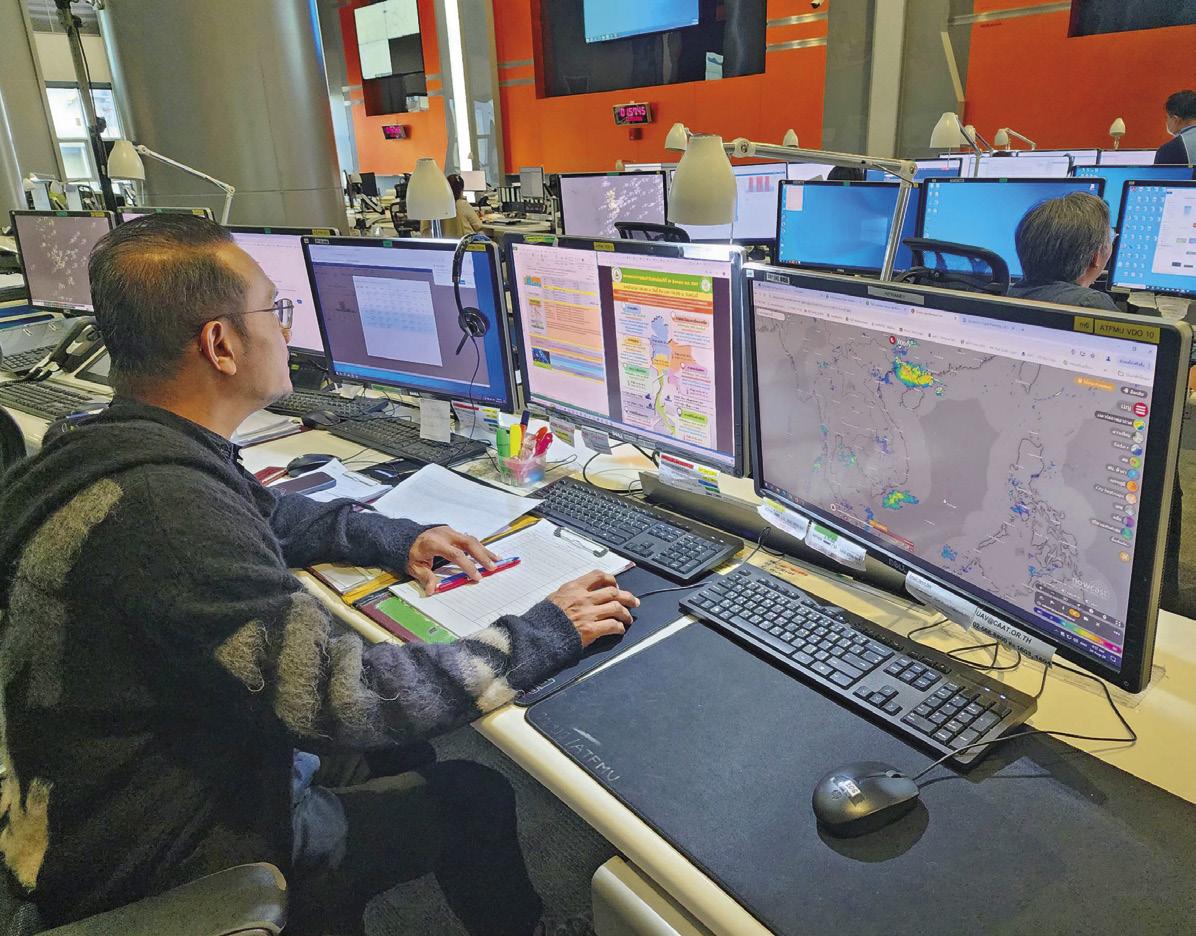
The Asia Pacific (APAC) region is characterised by having many small Flight Information Regions (FIRs), requiring flights to transit areas serviced by different Air Navigation Service Providers (ANSPs). This feature, coupled with rapid traffic growth, prompted a group of ANSPs, with support from CANSO, to launch the Whole-of-Flight Collaborative Decision Making (CDM) Project trialling the expanded exchange of flight data and seeding the development of the Distributed Multi-Nodal Air Traffic Flow Management (ATFM) Network concept. It enables ANSPs to include international traffic in demandcapacity balancing through common ATFM procedures and efficient, timely information sharing, without a centralised ATFM unit.
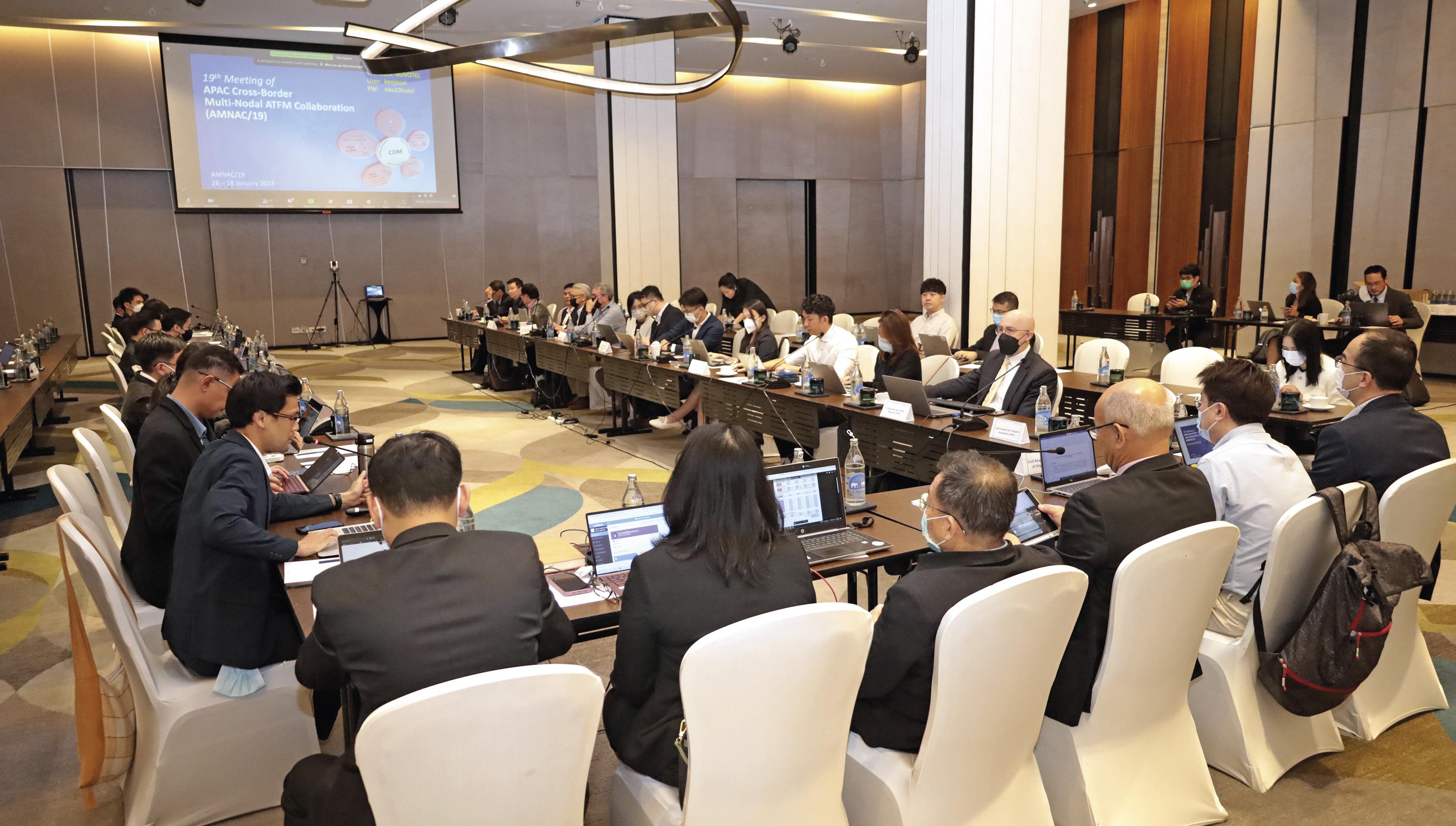
To operationalise the concept, the Asia-Pacific CrossBorder Multi-Nodal ATFM Collaboration (AMNAC) project was launched in 2014. Through this initiative, ANSPs have been able to participate in the ATFM network at levels matching their readiness. Procedures have been developed that support regular cross-border ATFM planning online conferences, the sharing of ATFM Daily Plans (ADPs), and the implementation of ATFM measures covering local and regional traffic.
Coordination challenges
Despite progress, gaps remain. Participation is still limited, with some areas in the region remaining outside the ATFM network. Consequently, reactive flow control measures are sometimes imposed, creating knock-on effects within the ATFM network. The “semimanual” nature of the current information exchanges, for example ADPs sent via e-mail attachments or ATFM messages transmitted via Air Traffic Services Message Handling System (AMHS), limit the scope of information that can be shared.
As the network grows and ATFM measures are used more frequently, overlapping and conflicting ATFM measures imposed by different ANSPs have become problematic. A measure resolving imbalance in one FIR may create issues in another FIR or conflict with another ATFM measure. Resolving such conflicts often implies phone calls and manual intervention, a solution that is not always timely or optimal.
Addressing the challenges
Given the region’s diversity, and the operating environment at the time, APAC pursued the distributed ATFM network concept as the initial foundation for cross-border ATFM. The concept and its associated implementation initiatives have laid the groundwork for today’s operation.
Widening the scope of information exchange to support a common regional view for ANSPs to identify and reconcile potential overlaps is one way to tackle these challenges. To that end, initiatives have been created to develop seamless, automated information exchange. These include regional Interface Control Documents (ICD) for Aeronautical Fixed Telecommunication Network (AFTN)/ AMHS-based ATFM messages and regional ADP exchange procedure. Moreover, the work is ongoing on information exchange models supporting ATFM, Airport Collaborative Decision Making (A-CDM), ATFM/A-CDM integration, and Flight & Flow Information for a Collaborative Environment (FF-ICE) process based on the System-Wide Information Management (SWIM) concept.
What could help forming the foundation for future solutions, would be creating and sharing a timely regional view of bottlenecks and demand-capacity hotspots, providing a common picture for ANSPs to identify and reconcile potential overlaps collaboratively.
The Asia-Pacific ATFM Steering Group – a contributory body to the Asia-Pacific Air Navigation Planning and Implementation Regional Group (APANPIRG) – has commissioned an ATFM Concept Design Ad-Hoc Group to review the regional ATFM concept of operations, drawing on operational experience to date. The group is expected to deliver a new regional ATFM concept addressing current challenges while leveraging advanced technologies to optimise regional traffic management.
Quick wins for ATFM improvement
Initiatives enhancing the information exchange and better collaboration have already been leveraged by regional ANSPs. Some ANSPs are integrating ATFM slot information – obtained through standardised AFTN / AMHS messages – into the controller working position and integrating with the A-CDM process. Others are developing web applications to display ADPs for a regional view. Prototypes are also being developed by ANSPs to target SWIM-based ATFM exchanges by 2026.
Several ANSPs have experimented with combining ATFM requirements from different locations, like enroute congestion in one FIR and weather at an aerodrome in another, into a single ATFM measure applied to the relevant traffic flow to avoid conflicting measures.
The Trajectory Ahead For APAC
While the regional ATFM network has been validated through years of operations, recent challenges have been highlighted. This is why the region is revisiting the concept written a decade ago, considering both operational lessons and new enablers such as SWIM and FF-ICE.
Integrating ATFM with the FF-ICE process is especially interesting. FF-ICE expands the sharing of trajectory information beyond the FPL2012 format and allows ATM service providers (eASP) to share constraints and negotiate trajectories with airspace users (eAU). This trajectory exchange and negotiation could fundamentally change how ATFM requirements are managed.
The Asia-Pacific region is exploring this through several regional working groups such as the FF-ICE Ad-Hoc Group and the ATFM Concept Design Ad-Hoc Group, both commissioned by the regional ICAO contributory bodies, paving the way toward more modernised, automated, and efficient ATFM and ATM operations in the future.

SUGOON (KIN) FUCHAROEN
Sugoon (Kin) Fucharoen is an Air Traffic Management Network Assistant Manager with AEROTHAI. He supports the development of ATFM strategies, manages the Bangkok ATFM Unit operations, and serves in regional and global roles with CANSO, ICAO, and Asia-Pacific ATFM initiatives.
