4 minute read
Integrating stratospheric aviation into Europe's airspace

Juan José Sola, Director of Regulatory Affairs and Commercial
High-Altitude Operations (HAO) are no longer a distant concept. Stratospheric platforms capable of providing resilient communications, environmental monitoring, and aerospace services are already being tested in European skies. Their potential is vast, but so are the challenges of integrating them into airspace safely, efficiently, and with public trust.
A first in Europe
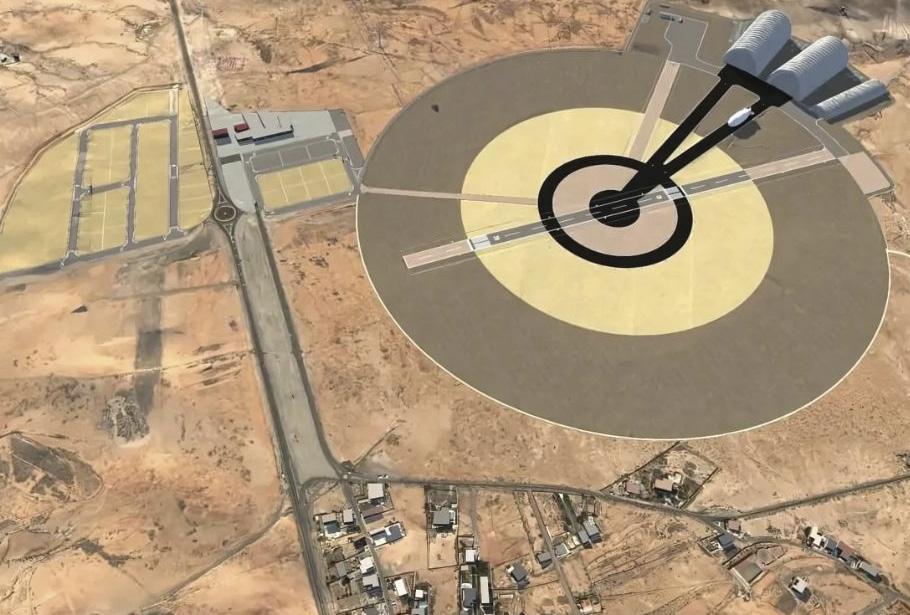
Nowhere is this opportunity clearer than in Fuerteventura, Spain, where the CanariasStratoport for HAPS & UAS, developed in the Fuerteventura Technology Park, has become Europe’s first dedicated facility for real-world uncrewed and stratospheric operations.
More than a test site, it is an infrastructure project designed to centralise long-distance operations for unmanned aircraft systems (UAS) and high-altitude platform systems (HAPS) at low, medium, and high altitudes, all conducted beyond visual line of sight (BVLOS). Its ambition is to establish itself as Europe’s leading hub for aerospace operations in the stratosphere.
Unlike traditional demonstration centres, the Stratoport is equipped for live missions. It offers purpose-built hangars for drones, advanced systems for high-altitude monitoring, and the operational facilities needed to support complex flights.
As prime contractor, Murzilli Consulting is leading the regulatory and operational framework behind this innovative project, leading a consortium of aerospace companies including the Andalusian Foundation for Aerospace Development (FADA) and Navya Solutions.
The aviation consultancy’s work has included the delivery of the first phase of Spain’s first U-space Airspace Risk Assessment (ARA) carried out by a private company, the design of permanent airspace structures, procedures and flight corridors for stratospheric testing, and the coordination of regulators, air navigation service providers (ANSPs), aerospace prime contractors, and regional authorities.
This initiative demonstrates how structured collaboration can turn policy into practice. Europe can create a permanent foundation for HAO that is not only technically viable but also scalable across different national contexts.
From very low-level to the stratosphere
The integration of high-altitude platforms cannot be done in isolation. Airspace must be managed as a continuum, with each altitude band carefully linked to the next. At the very low-level, drones and urban air mobility (UAM) vehicles are beginning to operate at scale in cities. At medium altitudes, larger unmanned aircraft and regional air mobility services are emerging, often in controlled environments. At the highest levels, stratospheric platforms are entering airspace that has traditionally been reserved for commercial aircraft and other high-altitude vehicles.
Each of these domains presents distinct challenges, yet they are interconnected. Solutions that are devised for low-level drone traffic management must be compatible with those enabling HAO, otherwise the risk of fragmentation and inefficiency becomes too high.
Social acceptance
Technological success in aerospace depends on public trust. For that reason, the Canarias Stratoport is also hosting the world’s first social acceptance study for HAPS, ensuring that communities are involved from the very beginning. The study investigates how local populations perceive persistent aerial platforms above their towns and cities, what forms of engagement help to build trust, and how the benefits of these platforms can be communicated effectively.
The results are already demonstrating that transparency and early dialogue can significantly increase public confidence, turning potential resistance into active support.
Building a regulatory blueprint
The work being carried out in Spain is offering practical lessons for regulators and the industry across Europe. It shows the value of collaboration between international and national authorities, with ICAO, EASA, the Joint Authorities for Rulemaking on Unmanned Systems (JARUS), and local civil aviation authorities all playing essential roles. It highlights the need for digital airspace management to evolve, so that Europe’s U-space framework can expand seamlessly from drone operations at very low-level to higher altitude layers. It also demonstrates that regulation must be flexible enough to accommodate rapid technological change while still giving investors and operators the legal certainty they need to scale. And it emphasises the importance of making integration cost-effective, so that new aerospace services are commercially sustainable as well as operationally safe.
Europe’s opportunity to lead
The emergence of HAO represents Europe’s ability to pioneer new models of airspace integration. By combining rigorous regulation, effective stakeholder collaboration, and proactive community engagement, Europe can establish itself as the world leader in stratospheric aviation.
These pioneering developments require a gradual implementation to ensure that HAO are consistently carried out within the acceptable levels of safety demanded by aviation. At the same time, they must be integrated in a way that is fully compatible with other types of operations, leading to a seamless incorporation into the broader ecosystem.

Juan Jos Sola
Juan José Sola was the former head of the UAS Division of the Spanish CAA (AESA), their ATM/ AIS Oversight Inspector and ATC Training Manager. He has been a part of the ICAO RPAS Panel, JARUS, and EASA’s UAS Focal Point.
