6 minute read
A bird’s-eye view of Advanced Air Mobility

Claudia Bacco considers global rule-making and APAC innovation
Advanced Air Mobility (AAM) continues to hover in our future as something of a holy grail for a different form of mobility. Like any new type of mobility, AAM is not straightforward. Regulation, technology development, collaboration and economic outlook are just a few of the considerations to be addressed. This takes time, especially in a safetycritical industry. According to NASA, the concept of AAM was first discussed in the early 2000s, so we are already more than 20 years in.
Regulation and rule-making is a high priority for bringing any new form of transportation to market, especially in the air. We review these activities from two key industry players and highlight some progress in the Asia Pacific (APAC) region that moves beyond concepts on paper or in laboratories.
ICAO takes a leadership role
The importance of the International Civil Aviation Organization (ICAO) to aviation cannot be understated. In September, 2024 ICAO held its first Advanced Air Mobility Symposium (AAM 2024) with the theme of global harmonisation and interoperability challenges and opportunities. The symposium concentrated on concepts for AAM, electric vertical take-off and landing (eVTOL) aircraft, vertiports, automation, trust frameworks and airspace integration. The event drew a record-breaking 1,300 participants, including 400 highlevel government officials from 75 countries, aviation industry leaders and innovators.
At the event, Mr. Salvatore Sciacchitano, ICAO Council President, said AAM represents more than a collection of new technologies. “It embodies a paradigm shift in how we conceive of aviation and urban transportation. This shift is characterised by a fundamental rethinking of airspace use, vehicle design and traffic management, moving towards more flexible, sustainable and integrated transportation systems.”
A call to action was initiated for the attendees/industry to address the following challenges/opportunities:
• Engage in comprehensive data collection, research and solution development to balance AAM’s potential and challenges and identify stakeholder roles.
• Work on developing affordable and scalable physical and digital infrastructure to support AAM systems worldwide.
• Cooperate in the establishment of adaptive, flexible and harmonised regulatory frameworks embracing innovation and compatible with current aviation frameworks.
While providing basic building blocks for the industry, the calls to action lack specifics to move AAM to the next level of deployment. They still feel very ‘researchoriented’. You have to start somewhere, let’s see where this goes.
The expectation is for results from these calls to action to be reported at the next meeting of the ICAO Advanced Air Mobility Symposium (AAM 2026). The theme of AAM 2026, to be held 30 November - 4 December, 2026 in Bangkok, is “From Vision to Implementation: Enabling the AAM Ecosystem”. Participants will also share analyses and insights on the evolving role of humans in the context of increasing levels of automation and autonomy, exploring workforce development strategies and the infrastructure requirements necessary to support seamless global integration of AAM operations. It’s great to see ICAO taking a leadership role for AAM, but it still feels like more research and analysis than implementation actions.
Mr Han Kok Juan, Director-General, Civil Aviation Authority of Singapore:
“AAM has tremendous potential to transform the way we work, move and live, and be another engine of growth. The Asia-Pacific region will be a key market for AAM development. The launch of the Reference Materials is a significant move forward for more widespread use of drones and to make air taxi operations a reality. It is a good example of how collaboration amongst regulators, and with industry, is key to unlocking the full potential of technology to benefit our economies and society.”
APAC adopts regulation reference materials
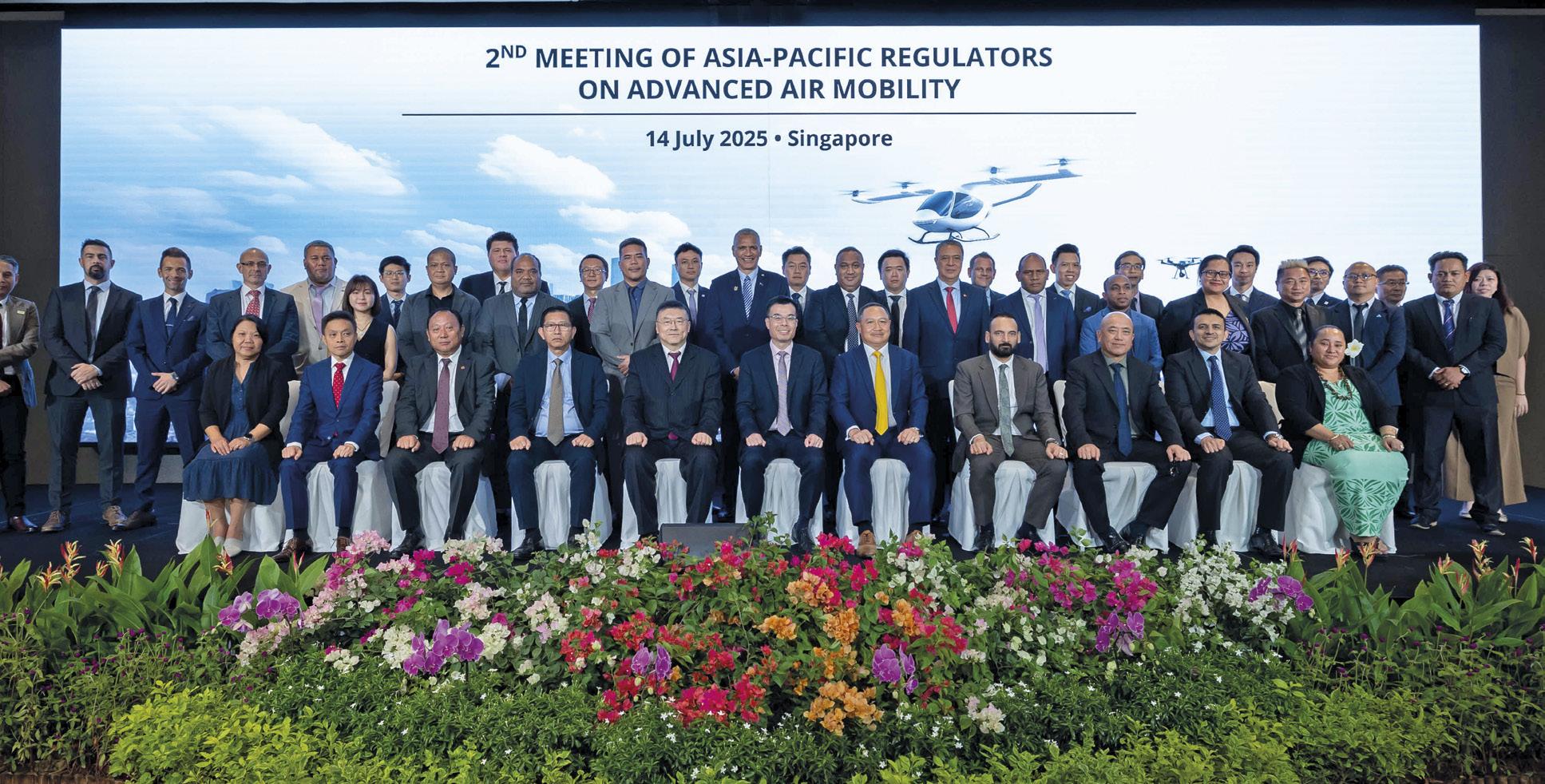
On 14 July 2025, civil aviation authorities from the Asia-Pacific region launched the “Reference Materials for Regulators to Facilitate the Regulation of Advanced Air Mobility (AAM) Operations” at the Second Meeting of Asia-Pacific Regulators on AAM at the High-Level Aviation Week in Singapore. The Reference Materials, jointly developed by 24 Asia-Pacific States and Administrations, will help support industry development, accelerate safe adoption and reduce regulatory risk and cost.
The meeting was attended by 20 Asia-Pacific regulators as well as senior representatives from 21 AAM companies. They discussed plans for increased use of drones, the launch of air taxi operations over the next five years and global cooperation. Primary uses of AAM include UAS operations to improve productivity and enable rapid service delivery, and eVTOL aircraft as an alternative transport solution.
The APAC and Middle East regions seem to be leading the way in bringing AAM to market. According to market research firm, Grand View Horizon research, the AAM market in APAC alone is projected to reach revenue of $37,706.1 million by 2035. A compound annual growth rate of 27% is expected from 2025 to 2035. In 2024, APAC represented 23.9% of the global AAM market.
The following examples illustrate that the driving force is often not the aviation community, or more specifically air navigation service providers (ANSPs), and in some cases they are not even providing the traffic management solution.
Japan - on the world stage
Intent Exchange, Inc., NEC Corporation and NTT DATA Japan Corporation deployed an Unmanned Traffic Management (UTM) system at Expo 2025 Osaka. The system provided unified monitoring of drone and AAM operations within and around the Expo site. The pilot operation was conducted from August 16 to October 13, 2025, validating usability from an operator’s perspective and defining functional requirements for future UTM.
South Korea – government-driven
In 2023, South Korea launched its “Special Act on the Promotion of Urban Air Mobility Commercialization”. The legislation removes regulatory hurdles to allow for the commercialisation of Urban Air Mobility (UAM). With a focus on economic development, the region is able to bypass existing aviation laws, enable pilot projects, and develop the necessary infrastructure, including vertiports and air traffic management systems.
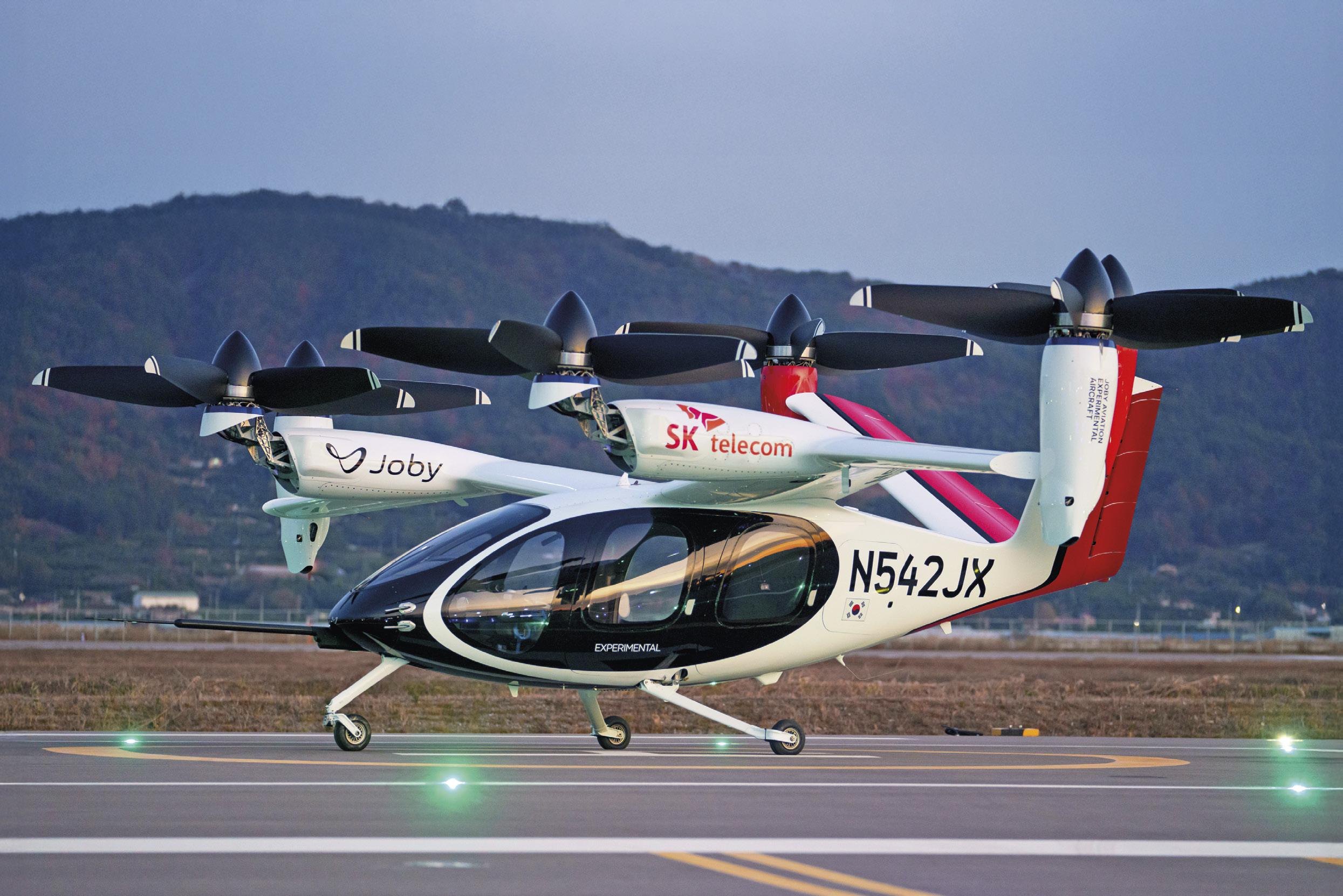
Commercialisation is driving this region. Korea Telecom has already developed and tested specialised antennas that work at altitudes up to 600 metres and cover widths of 100 metres. SK Telecom invested $100M in Joby Aviation in 2023 and has signed an MoU for collaboration in 2024 to support the commercialisation of UAM in South Korea.
China – all about the ecosystem
China by far leads the AAM activity in the APAC region. Shanghai’s inaugural International Advanced Air Mobility Expo in July 2025 showcased the Low Altitude Economy meeting commercial reality. The event hosted 300 exhibitors and 44 debut products.
Shanghai’s ambitions focus on creating a low-altitude economy. The city has developed a comprehensive action plan running through 2027, targeting a core industrial value of 50 billion yuan ($6.9 billion). By 2027, the goal is to establish at least 400 low-altitude flight routes and implement over 100 low-altitude flight service applications across urban passenger transport, logistics and emergency services.