
4 minute read
Exploring sustainability from a multinational ANSP’s perspective

Peggy Devestel, Director, MUAC explains their journey
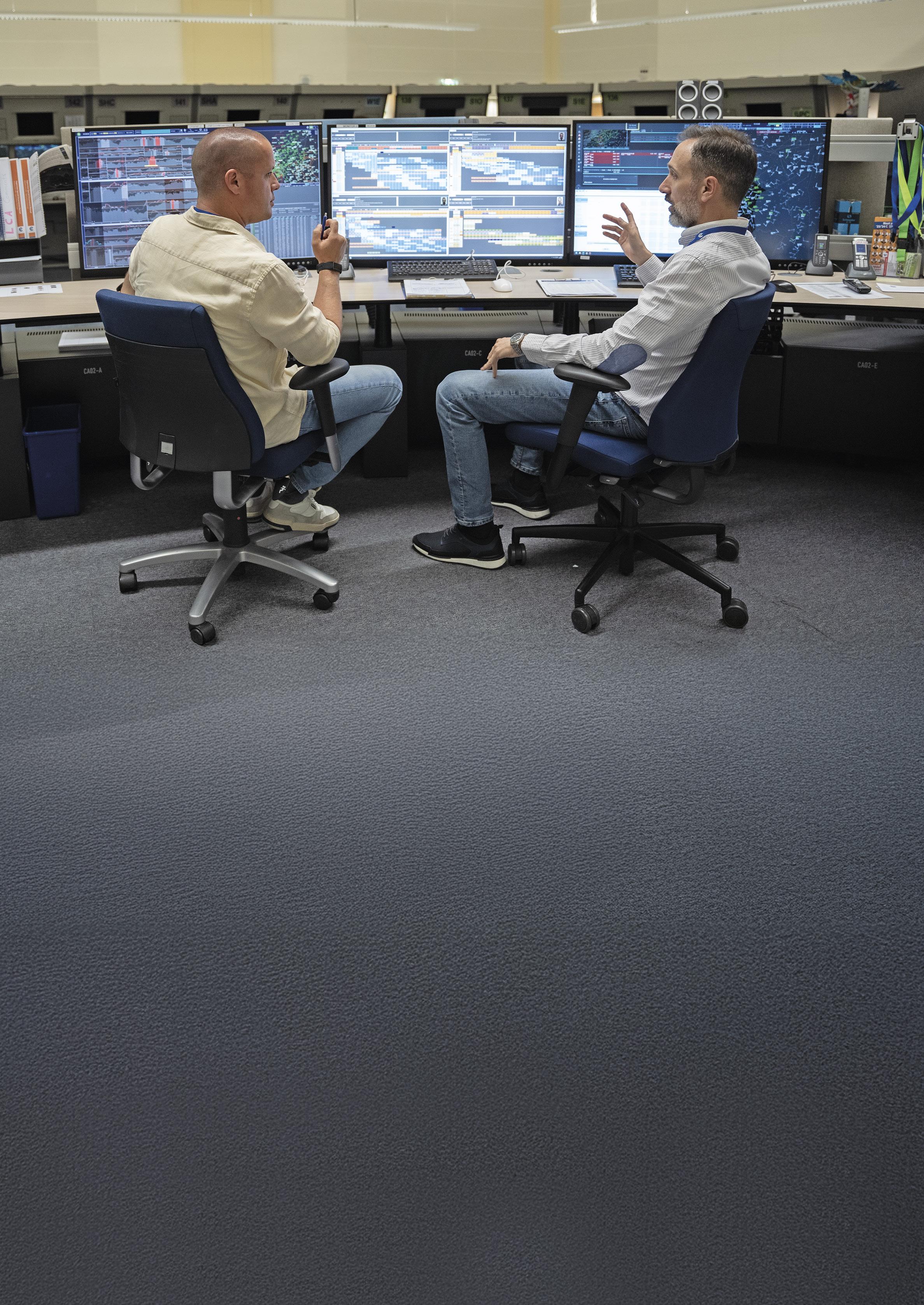
The EUROCONTROL Maastricht Upper Area Control Centre (MUAC) is unlike any other Air Navigation Service Provider (ANSP) in Europe. Operating in the upper airspace across Belgium, the Netherlands, Luxembourg, and north-west Germany, MUAC manages one of the busiest and most complex pieces of airspace on the continent. One of the things that sets MUAC apart is its ability to design and manage its airspace based on traffic flows rather than national borders; a principle that naturally aligns with sustainability. In addition, the deeply rooted culture of innovation in the Centre allows MUAC to trial new approaches in a live environment.
Reducing aviation’s climate impact
MUAC’s sustainability strategy is built on a clear goal: reduce the climate impact of aviation. This goes beyond helping airlines minimise their CO2 emissions. Scientific research increasingly highlights the role of non-CO2 effects - particularly contrails - in aviation’s climate footprint. MUAC is actively exploring how operational decisions, such as altitude and routing adjustments, can help mitigate these effects.
One example is MUAC’s collaboration with airlines, research institutions and global companies (e.g. DLR, Google, Breakthrough Energy) to trial contrail avoidance strategies. By adjusting flight levels based on humidity and temperature data, controllers can help aircraft avoid forming persistent contrails, which have been shown to have a warming effect, particularly at night. These trials are already at an advanced stage compared with other initiatives in the field, and they demonstrate both strong progress and tangible realworld application.
They not only advance scientific understanding but also showcase MUAC’s commitment to evidence-based innovation and to assessing the operational impact of such measures.
The journey to net-zero
MUAC’s ambition to become a net-zero centre is not just aspirational, it’s operational. The journey began with a comprehensive carbon audit, identifying emissions from energy use, commuting, procurement, and more. From there, MUAC is implementing a multi-pronged approach including:
• Energy efficiency: The centre has upgraded its infrastructure with LED lighting, smart HVAC systems and energy-efficient servers
• Renewable energy: MUAC sources electricity from certified green providers and is exploring on-site solar generation
• Sustainable mobility: Employees are encouraged to use public transport, carpooling, and electric vehicles. Charging stations have been installed on site.
The goal is to reach net-zero by 2030, and progress is tracked annually.
Integrating sustainability into operations
At MUAC, sustainability is not treated as a stand-alone initiative; it is embedded into many aspects of the dayto-day operations. This integrated approach is guided by MUAC’s environmental mission to make its own operations climate neutral while supporting airspace users in reducing their climate impact.
The strategy rests on several foundational pillars:
• Operational excellence with environmental targets: MUAC’s air traffic management (ATM) services are designed to meet ambitious environmental performance targets aligned with EU mandates. These include improving horizontal and vertical flight efficiency, reducing fuel burn, and minimising non-CO2 impacts such as contrails.
• Collaborative innovation: MUAC actively trials new concepts in partnership with airspace users, research institutes, and other ANSPs. Initiatives like contrail avoidance, green trajectory planning, and SESAR projects are examples of how MUAC leverages its expertise to help reduce aviation’s climate footprint.
• Corporate footprint management: Sustainability extends beyond operations. MUAC is committed to reducing its corporate emissions through energysaving measures, waste management, bio-diversity conservation, and sustainable commuting.
• Staff engagement and training: MUAC recognises that its people are key to achieving environmental goals. All employees are contributors to the ecojourney, supported by awareness campaigns and targeted training for both operational and support roles.
• Performance monitoring: Progress is tracked using internal indicators for CO2 and non-CO2 emissions, corporate footprint and staff engagement. These metrics help MUAC monitor its transformation and ensure accountability.
This holistic and agile strategy enables MUAC to adapt to a fast-evolving regulatory and environmental landscape while maintaining operational excellence. It reflects a deep understanding that sustainability in ATM is not just about technology - it’s about culture, collaboration, and continuous improvement.
Looking forward
Achieving the Centre’s sustainability goals will be a journey. For MUAC, that journey is guided by a clear vision: to be a responsible, innovative, and collaborative ANSP that recognises that environmental performance is a key part of the mandate.
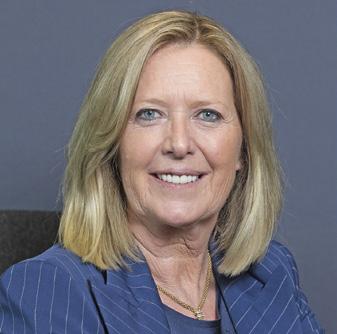
PEGGY DEVESTEL
Peggy Devestel is Director for MUAC, unique in being Europe’s only cross-border, civil-military ANSP, managing the busy and complex upper airspace over Belgium, the Netherlands, Luxembourg and north-west Germany.
