4 minute read
High ambitions for a growth region

Patrick Ky, CEO, ICAI and Marita Lintener discuss APAC innovation
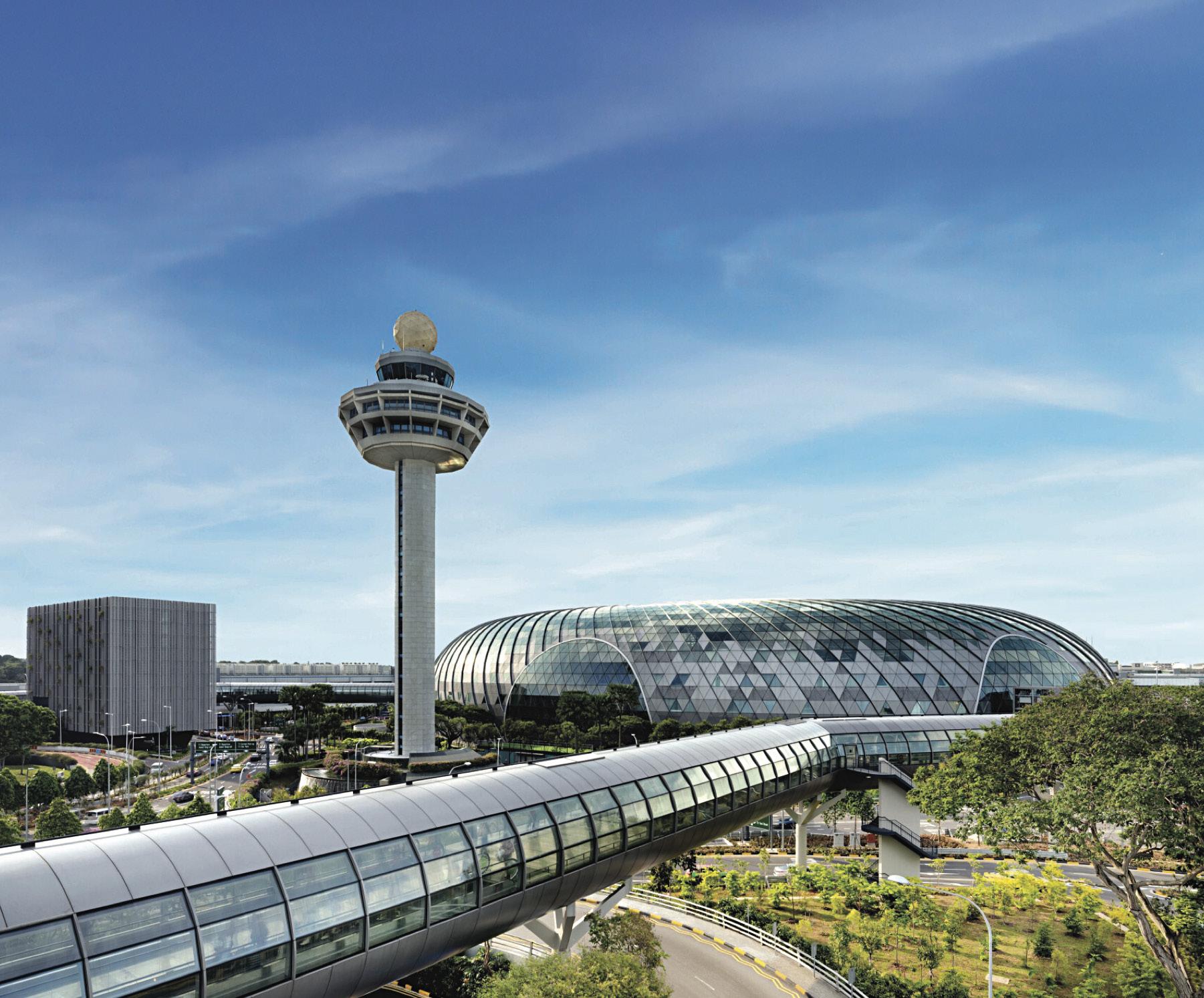
Based in Singapore, the International Centre for Aviation Innovation (ICAI) partners with regional governments, industry and research institutes to pool resources and co-develop solutions. Launched in January 2024 by the Civil Aviation Authority of Singapore (CAAS), ICAI will facilitate the development and adoption of technologies for the aviation sector.
APAC is different
The region requires tailored solutions due to varying regulatory environments and market dynamics with air travel demand expected to grow robustly over the coming decades. “The Asia Pacific (APAC) region is marked by vast cultural and regulatory diversity,” Ky explained. “Each state enforces its own legislation, with minimal external pressure or incentive for harmonisation across borders. There is currently no international entity looking at this area, and ICAI was created as a first-of-its-kind entity in APAC to look into this”.
ICAI’s research and development (R&D) projects focus on three key areas: next generation air navigation services, automated and smart airports, and enhancing capacity and safety through weather-resilient operations. The aim is to translate developments into operations, seamlessly and as fast as possible.
Our conversation delved deeper into a key operational issue: weather. Weather is not only a strong constraint for air traffic management (ATM) but for airport operations as well. “Grounded staff due to bad weather affects airport operations.” Ky said. “If airports cannot cope with the passenger load, they will become a bottleneck to increasing air traffic capacity”.
A challenge and a chance
When considering whether the region needs to be tackled differently than Europe or the US, Ky said it is important to understand the current diversity in regulatory frameworks and the limited cross-border coordination present both a challenge and an opportunity.
“For commercial suppliers, it is crucial to acknowledge these differences; ignoring the region’s unique priorities would be a mistake. For Europe and the US there are mandates for avionics, in APAC, ICAO regulations are the only common base line. ICAI addresses these challenges by creating a new ecosystem for cooperation”.
Leveraging decades of strong global networks, ICAI is positioned to unlock silos and secure participation from global technology providers and original equipment manufacturers (OEMs). In addition, working with small and medium-sized enterprises (SMEs) is essential to bridge the gap between research and deployment. “We use them as intermediaries to develop prototypes that can be transferred to OEMs,” Ky explained. “For example, we work on a promising risk assessment tool for drone operations, developed by research institutes, that an SME will step into to scale”.
This setting is enforcing a different form of cooperation. An example is the ICAI platform for Trajectory Based Operation (TBO) trials where ICAI provides the platforms to test. Ky said the aim is to build meaningful partnerships, and great progress has already been made in this area. “If stakeholders are convinced, they implement - without regulatory obligation”. This concept becomes a recipe for success.
Cooperation is key
The Memorandum of Cooperation (MoC) with CANSO, signed July 2025, provides ICAI with a framework for discussion and access to working groups with stakeholders from the whole aviation ecosystem. This structure will facilitate collaboration for ICAI. “We count on high participation from the region, to intensify our collaboration,” Ky said. “We want to team up in APAC, including Australia and New-Zealand.”
Personal dedication is vital for the framework’s success. “It is very exciting to build something new from scratch. Singapore is a fascinating professional environment and a hub reaching out into the region, and it is exciting to do things in a form which is completely different from the way I worked before.”
Overcoming the staffing issue
Feeding the talent pipeline is a topic which is close to both of our hearts and we spend some time debating this. With the support of Artificial Intelligence (AI) tools, Ky is confident that the aviation industry will continue to evolve, notwithstanding the global challenges in recruiting controllers and engineers in the short term.

Singapore has unique assets: its aviation industry is attractive to students and professionals, due to its career opportunities and the public perception of aviation as a forward-thinking sector. “ICAI cooperates closely with universities. We are getting a good number of applications from PhD graduates who want to work with us on robotics and AI.”
A strong future for aviation in APAC
ICAI is spearheading aviation’s growth in the region. Ky noted that there is a high alignment from political parties on the importance of air connectivity for economic development and regional connectivity. “This region sees a promising future for aviation and ICAI is proud to contribute and bring it to a new level.
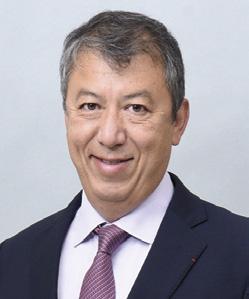
Patrick Ky
Patrick Ky is Chief Executive Officer of ICAI since its creation in 2024. He was formerly Executive Director of the European Union Aviation Safety Agency (EASA).
