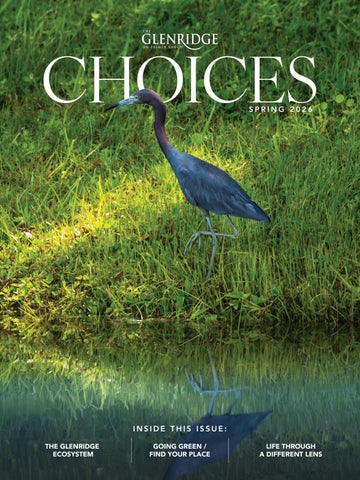
THE GLENRIDGE ECOSYSTEM
INSIDE THIS ISSUE:
GOING GREEN / FIND YOUR PLACE
LIFE THROUGH A DIFFERENT LENS

THE GLENRIDGE ECOSYSTEM
INSIDE THIS ISSUE:
GOING GREEN / FIND YOUR PLACE
LIFE THROUGH A DIFFERENT LENS
Colorful flowers, fresh vegetables, and butterflies spreading their wings … no matter where you look, The Glenridge’s 150-acre campus is alive with vibrant flora and fauna. For our nature-loving members, it’s an ecosystem that offers myriad ways to flourish – indoors and out.
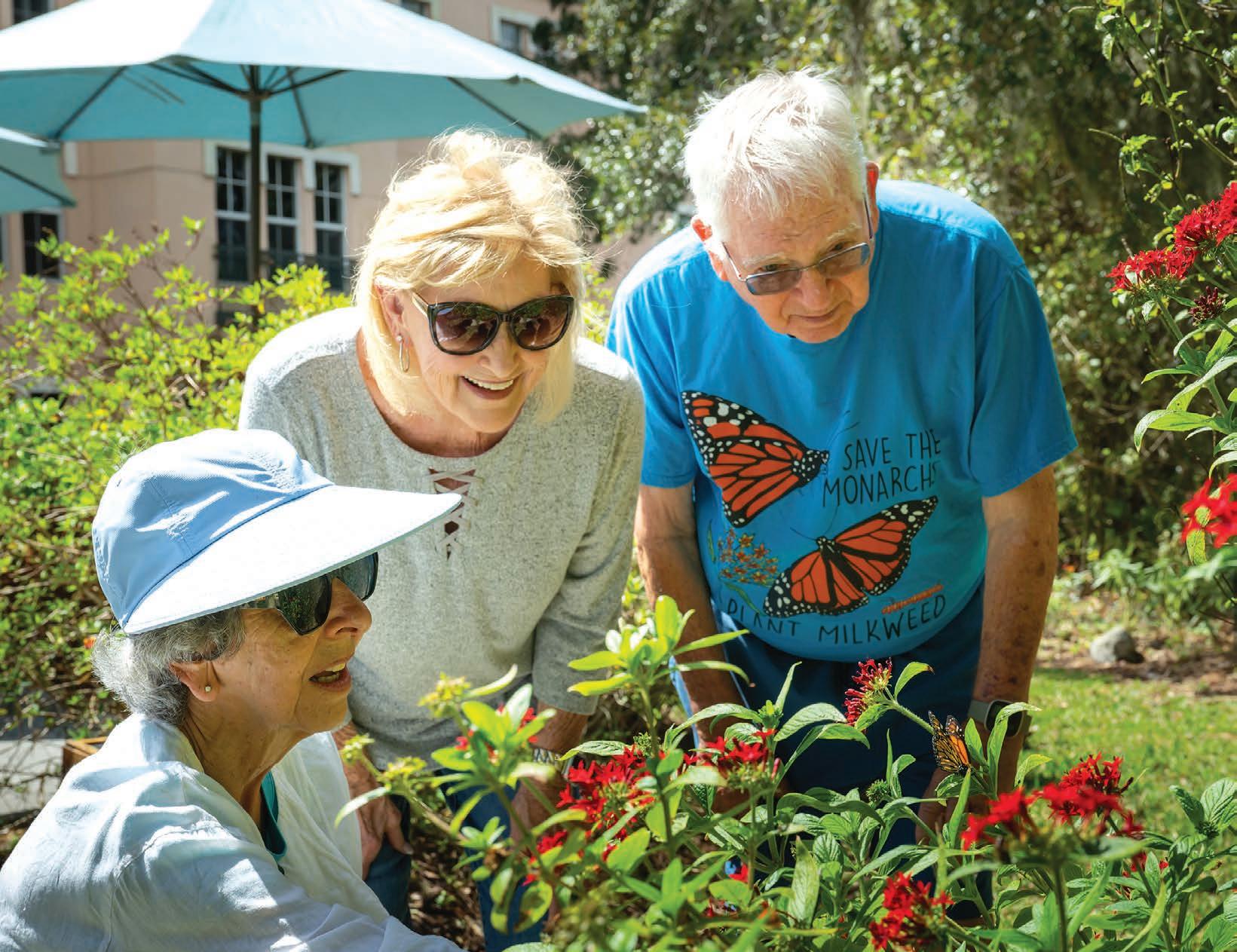
About 25 years ago, Russ Delaney got the “bug” for butterfly conservation as a volunteer with Oscar Scherer State Park, where he raised Monarch caterpillars and showed children how to release them into the wild. Now, he’s sharing his passion for nature with fellow members as a leading member of the Glenridge Butterfly Garden.
“Turns out, there’s not much difference between releasing butterflies with sevenand eight-year-olds and releasing butterflies with 70- and 80-year-olds,” he says. “When you put a butterfly into someone’s hand and let them release it, that’s something really special.”
For many years, Russ used a custommade cage stocked with milkweed to raise Monarch caterpillars found in the wild. When he invited other members to join his butterfly releases, interest soon spread. “People started saying, ‘How can I get involved? What can I do to help?’” he recalls. “The only thing I needed was milkweed – and all of a sudden, I had tons of it and needed a place to put it. So we set up a garden.”
In the program’s first year, member volunteers raised and released more than 350 butterflies of several
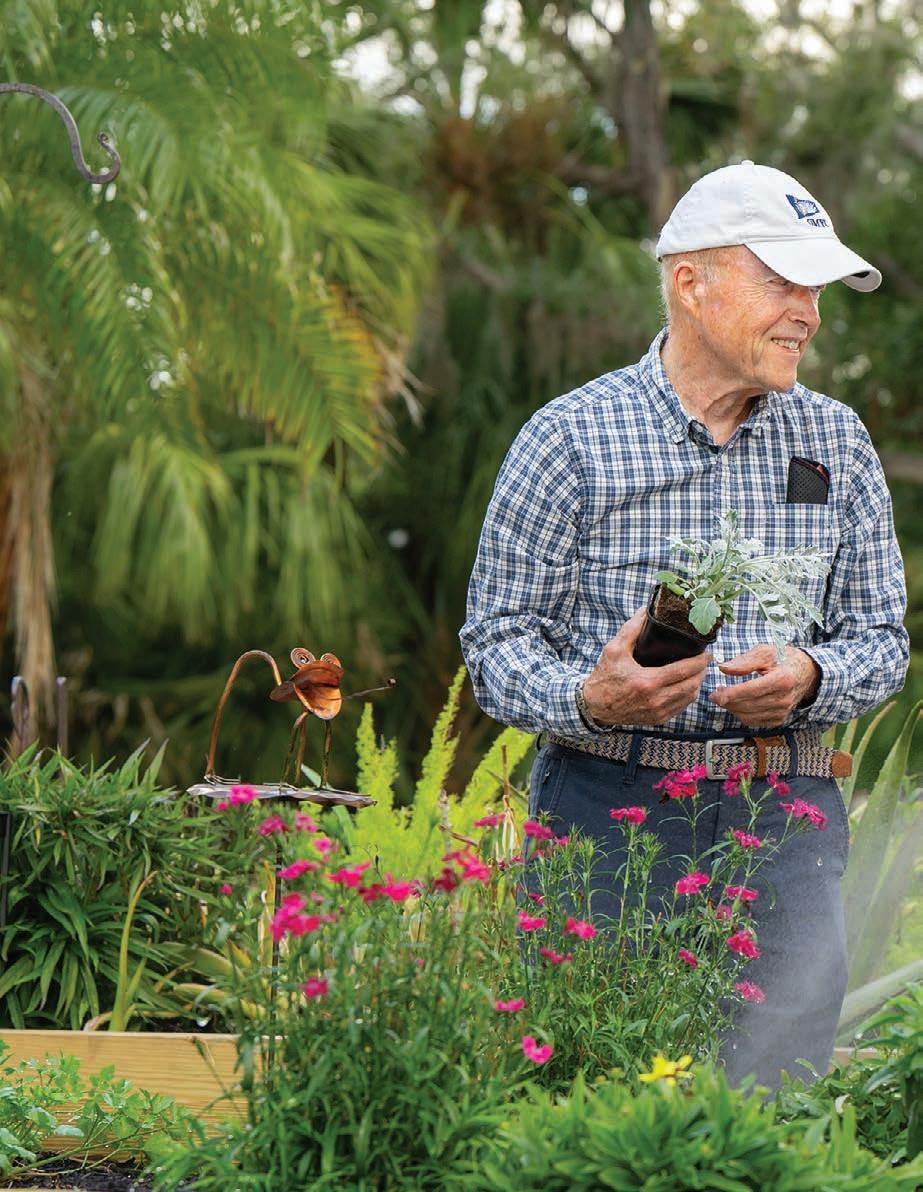
Whether they’re harvesting fresh broccoli or blooming zinnias, members like Mary Nell Hill and Dan Long are in their element at The Glenridge’s community garden.
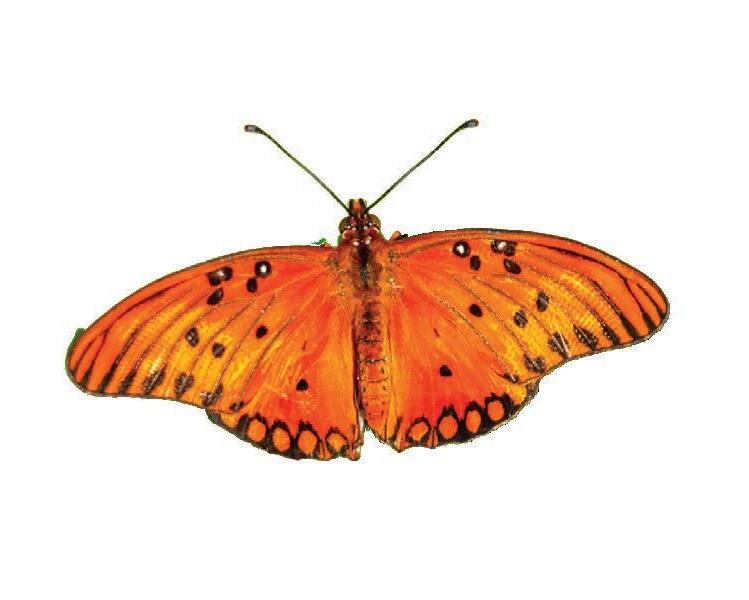
different species, and many visiting butterflies have been spotted in the area, including Zebra Longwings, Gulf Fritillaries, and Cloudless Sulphurs. “It really was a case of ‘if you build it, they will come,’” says Russ. “We already have gardens where members grow flowers, vegetables, and orchids –and my hope is that the butterfly garden becomes a beautiful, self-sustaining place here at The Glenridge.”
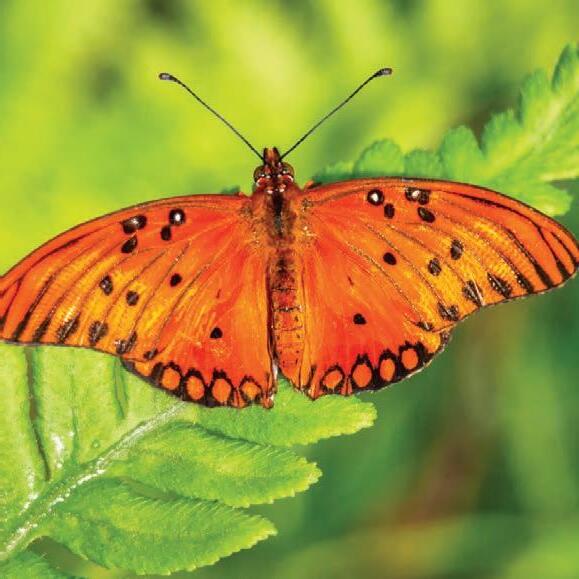

Although they’re not as prolific or efficient as bees, butterflies are pollinators, too
When they gracefully flit around the garden and feed on nectar, they collect pollen on their bodies and carry it to other plants, doing their part to generate seed and fruit production. Other butterfly benefits: They’re beautiful to watch, and they don’t sting!
Oh, by the way, the North American Butterfly Association (NABA) has certified the Glenridge Butterfly Garden as a resource that increases the world's population of butterflies.
Known as The Glenridge’s “go-to guy” for all things
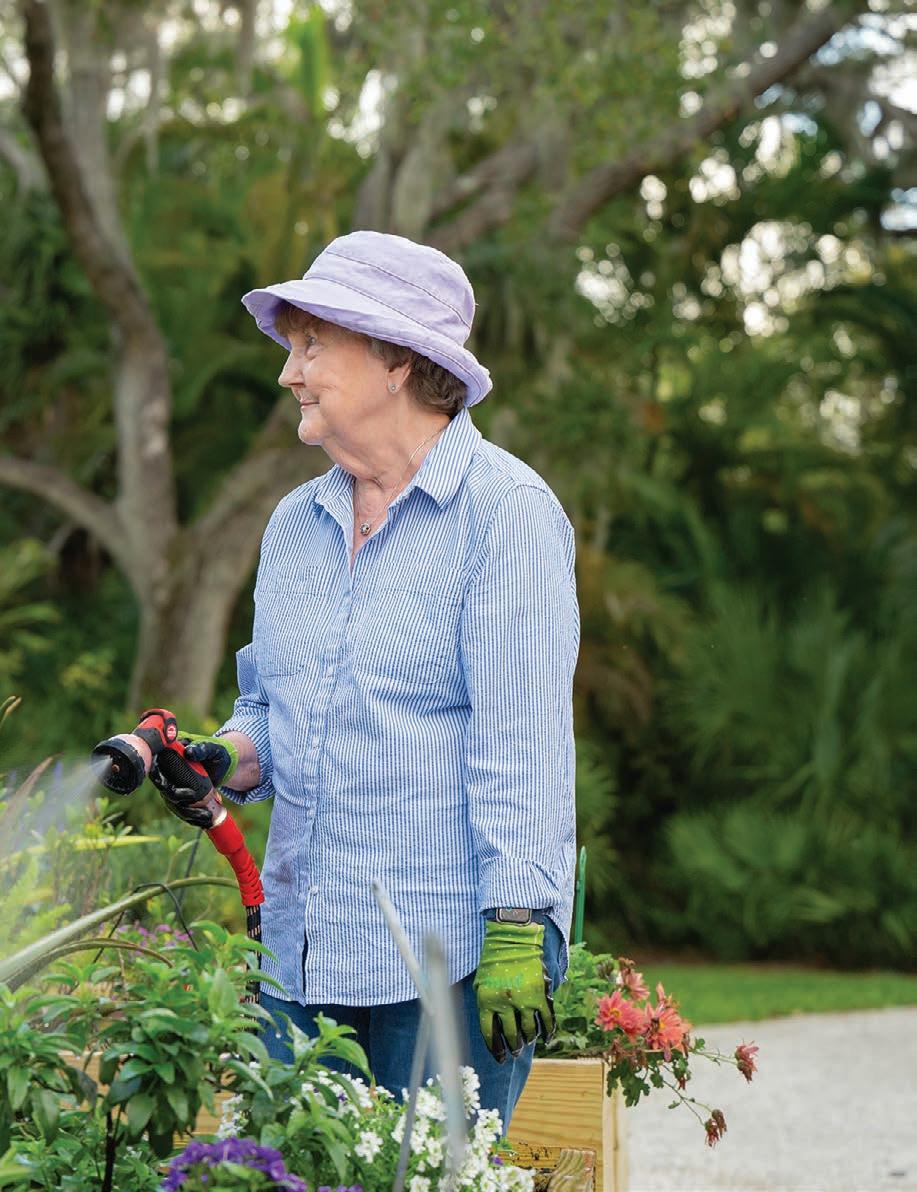
“I just like being outside, digging in the dirt!” That’s how Mary Nell Hill sums up her longtime love of tending plants, and it’s a sentiment shared by many fellow Glenridge members at the community garden.
From eggplant, broccoli, parsley, and fresh tomatoes off the vine … to zinnias, pentas, glorias and sunflowers, the variety of fresh vegetables and flowers in the 20 raised-bed plots is a reflection of the gardeners who tend them. Each plot is allocated to one member to maintain, with a small waiting list. Mary Nell, who studied horticulture at the University of Delaware, says she enjoys growing cut flowers: “Right now, it’s cosmos and coreopsis.”
Beyond the garden itself, the club hosts informative monthly meetings to share tips and advice for raising healthy plants – and in The Piper, a monthly community newsletter, member Sue Scully catalogues different plant species found around campus, from the bald cypress to the Bismarck palm.
“Especially these days, we spend so much time inside, looking at screens –so it’s great to remember that we can get out and enjoy nature,” says Mary Nell. “Most of the members here like to stay active. They like to be outdoors birdwatching, walking, gardening … it’s part of the culture.”
Flowers
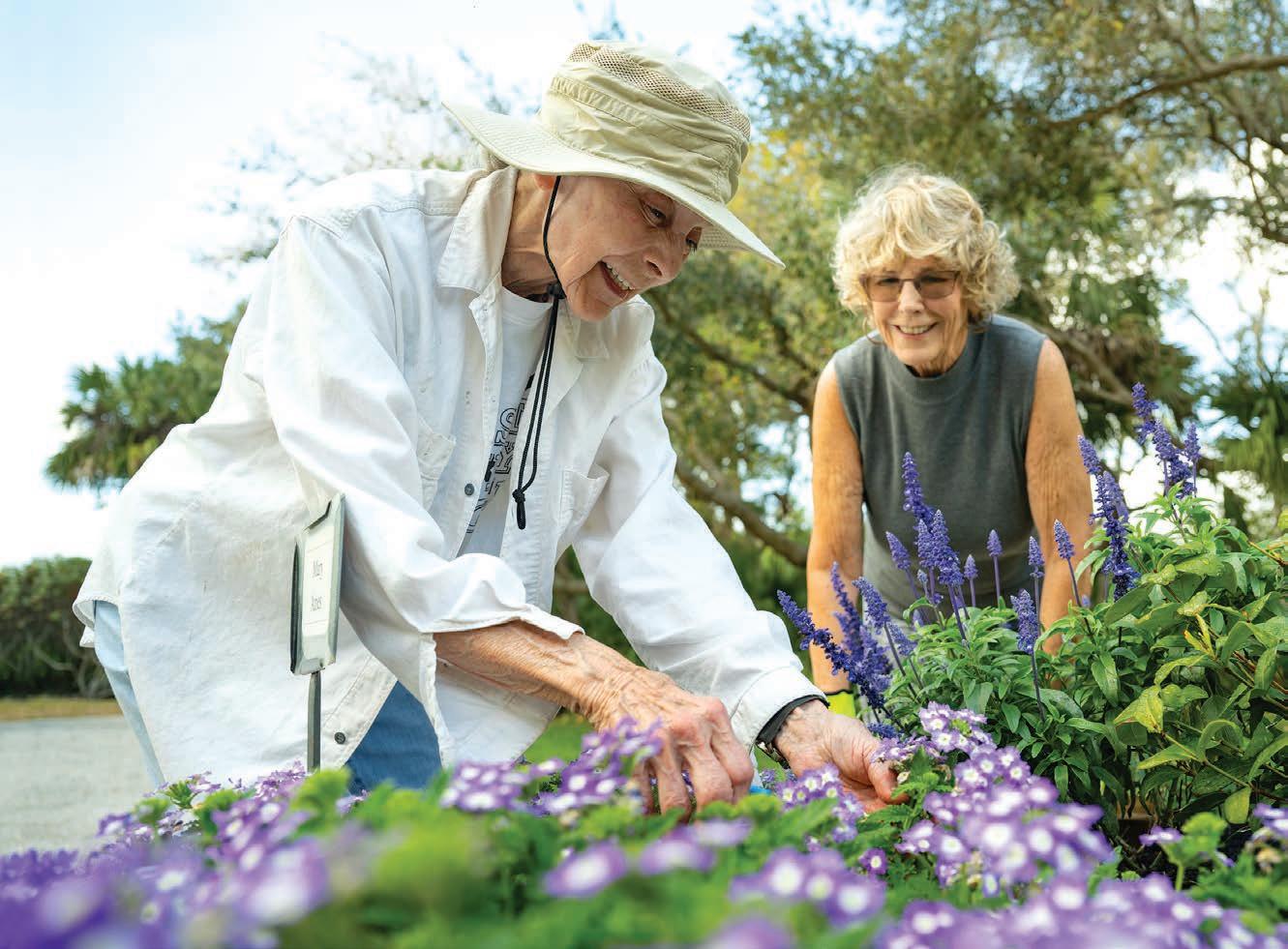
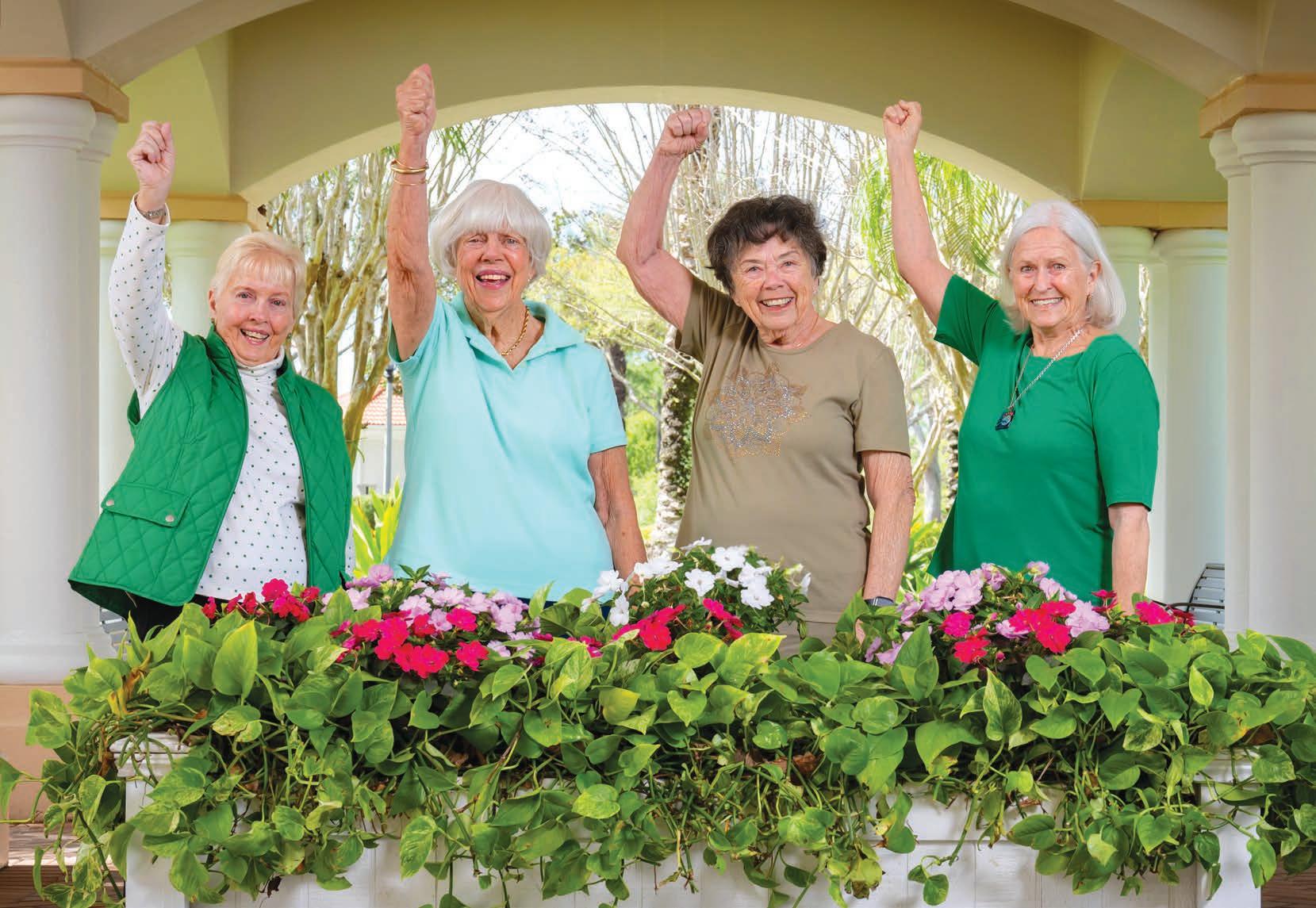
Why are these Glenridge members smiling? Maybe it’s because they’ve learned a secret to good health: that gardening is good. Good for the body, good for the mind, and good for the soul. Research from sources ranging from Mayo Clinic and Harvard Health to AARP and the National Institutes of Health concurs that “nurturing nature” pays big dividends when it comes to overall wellness. Here are just a few of the benefits ascribed to gardening:
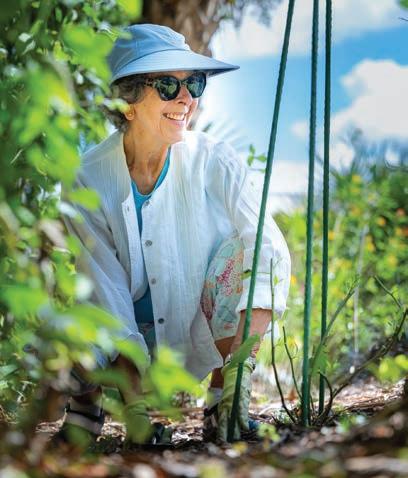
• It’s a form of fitness. All that digging, planting, weeding and watering can improve your cardiovascular health, muscle strength and flexibility, immune function, and balance. According to Mayo Clinic, you may burn as many calories gardening as you would working out in the gym. For example, when you’re weeding, you’re doing squats and lunges — and you’re working large muscle groups while carrying supplies, digging or raking.
• It benefits cognitive health. Anyone who’s cared for a garden knows that it takes focus, patience and discipline — and that may benefit your cognitive health over time. According to one long-term study, daily gardening can reduce the incidence of dementia by 36%.
• It boosts emotional wellness. Gardening can reduce stress and anxiety. Tending plants fosters mindfulness and creates a sense of accomplishment — especially when you see what your garden grows. It can be calming, too: The smell of fresh herbs and the warmth of the sun add a sensory component that promotes physical and emotional well-being and also helps to improve sleep quality and alleviate pain.
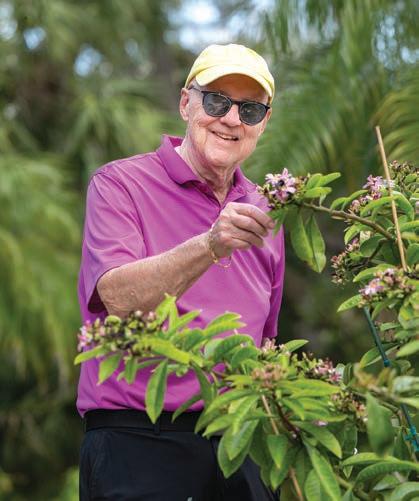

• It’s a healthy way to connect with others. Community gardens like those at The Glenridge bring people together over shared green spaces. According to research, this helps people “appreciate interconnectedness and underscores the importance of healthy environments for all.”
Ever wanted to know more about the honeybee or explore the fascinating history of a newly discovered whale species? How about protecting our waterways or learning more about adaptation strategies for global warming? If so, you’d be right at home at the Green Team’s informative speaker programs, where conservation meets education.

Amember-driven initiative launched in 2014, the Green Team’s mission is to preserve and protect the natural environment through education and outreach. Over the years, the program has hosted influential experts ranging from beekeepers to marine biologists to research geneticists hailing from organizations like the Florida Fish and Wildlife Commission, the National Oceanic and Atmospheric Administration (NOAA), Mote Marine, Suncoast Waterkeeper, and the Climate Adaptation Center, among others.
This year, The Glenridge will host speakers from the Audubon Society, Big Waters Land Trust and University of Florida Institute of Food and Agricultural Sciences. Programs are open to all Glenridge members and to other Palmer Ranch residents by calling (941) 552-5325.
In addition to adding an educational perspective to the Glenridge’s commitment to sustainability, the Green Team leads by example and encourages community members to follow the three Rs: Reduce (do and use less to diminish negative effects on the environment), Renew (give products a “second life”) and Recycle (transform waste into usable materials).
For her part, Glenridge member Judy White chooses to ride her bike to the Fitness Center and dining
areas rather than take the shuttle or driving her car. Fellow member Linda Poulin, along with other neighbors, tends an on-campus garden to help reduce transportation emissions, chemical fertilizers and pesticides. When she goes out to dinner, Pat Chapman brings a reusable food container for take-home or her own travel mug for coffee. As a group, the Green Team sponsors annual Earth Day celebrations, which have included tree-planting events, tours of Glenridge gardens, and ecological displays.
“All of us on the Green Team are like-minded when it comes to the environment and making a difference,” says Pat Chapman. “Even though we’re just coordinating a handful of speakers, the topics have meaningful impact and the ripple effect can be great.”
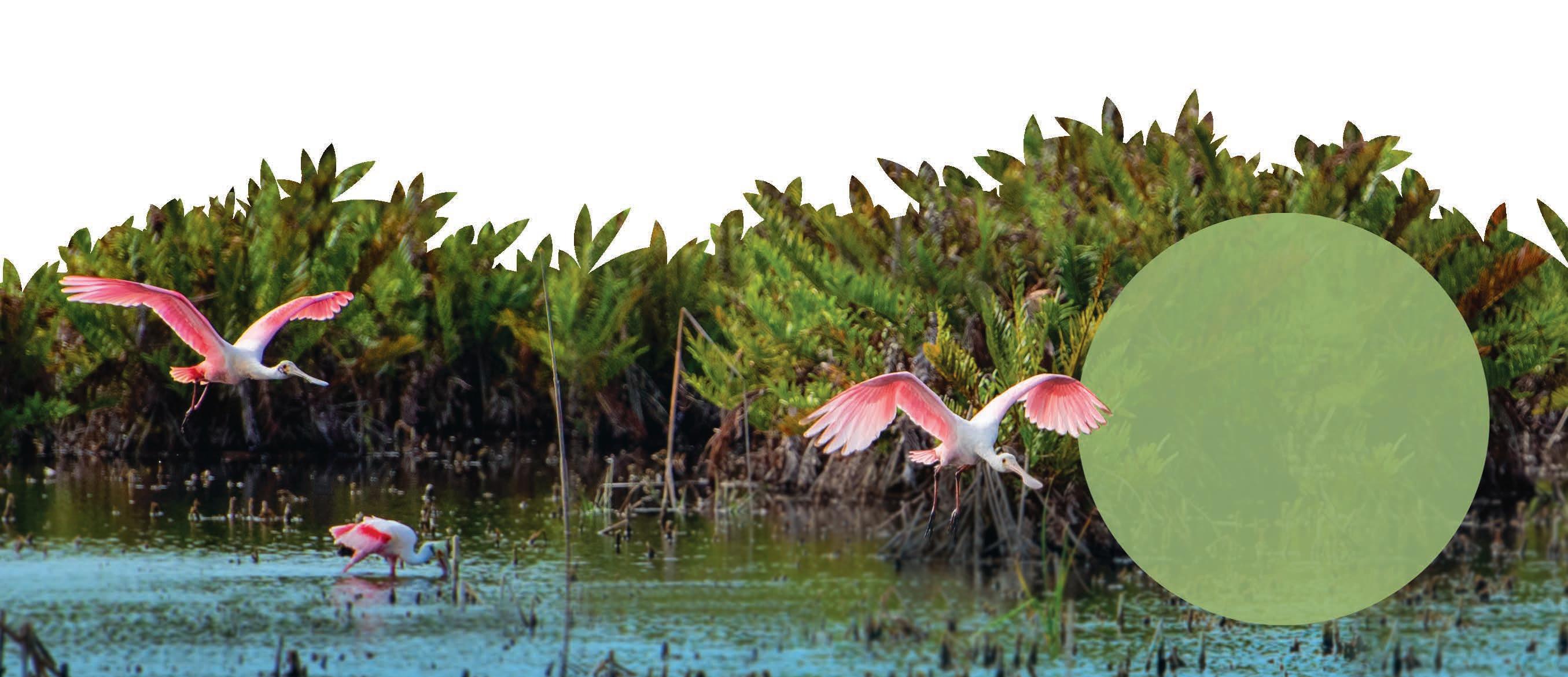
A nature-focused Life Fulfilling Community® ,
The Glenridge emphasizes sustainability through its natural design that incorporates 30 acres of upland preserves and 20 acres of lakes, pet-friendly walking trails and lush landscaping — all of which foster a healthy, active, and environmentally connected lifestyle.
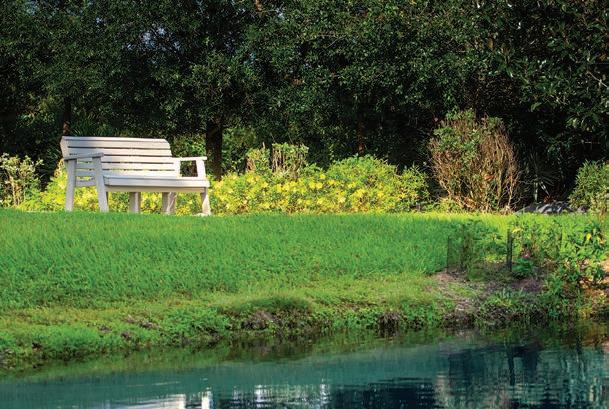
Whether you’re meditating, practicing mindfulness, reading, knitting, sketching –or simply taking in a little sunshine and fresh air, you’ll find perfect spots for “quiet time” all around the Glenridge campus.
From the moment you enter
The Glenridge, you can see that it’s a breathtakingly beautiful place to live. With 150 acres of lush landscaping, towering palms, upland preserves, sparkling lakes and winding trails, the community blends seamlessly into the natural environment. It’s magnificent on a grand scale. But on a micro level, it can also be very private and personal – with dozens of restful, serene places to relax, wind down and escape into nature.
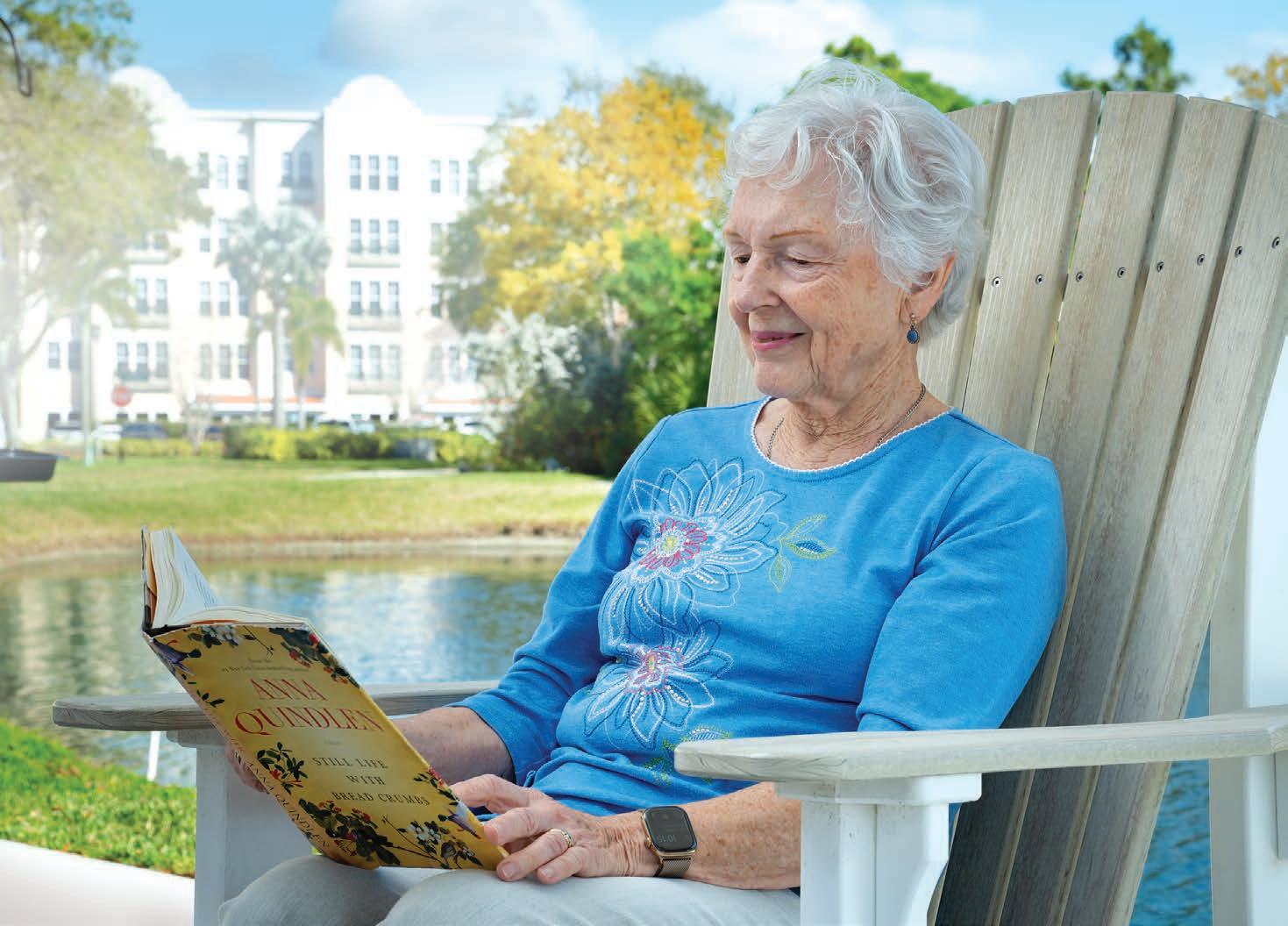
Quiet time can be “medicine for your mind.” In fact, when it comes to your health, silence really is golden – reducing stress, improving cognitive function and boosting memory, among other benefits. According to Psychology Today, daily “quiet time” is essential for older adults for many reasons. A recent study found
that tranquil environments trigger the growth of new brain cells. When the brain is free from constant noise, it actually rewires itself by strengthening neural pathways and repairing/ regenerating the hippocampus. Even just 10-15 minutes of intentional silence can improve memory recall. Additionally, because calm environments decrease stress hormones, they lower anxiety and promote emotional stability. Your physical health benefits, too. Cleveland Clinic Health Essentials notes that reduced noise levels decrease heart rates, lower blood pressure and cortisol levels, reduce muscle tension, improve circulation, and help you sleep.
Pat Lawrence is one of many Glenridge members who enjoy the community’s peaceful, relaxing environment.
Silence, as it turns out, speaks volumes, and you can boost its positive effects with a few simple enhancements:
• Take a solo nature walk and enjoy the many benefits of greenspace.
• Leave your devices at home. Quiet time should be just that — free from the incessant noise of news and social media.
• Breathe. Add mindfulness or yoga exercises to enhance your presence in the moment.
• Tap into your spirituality. Prayer and meditation in an outdoor setting can provide clarity and connectedness with nature.
• Incorporate a relaxing activity. Read a good book, listen to music, or journal.
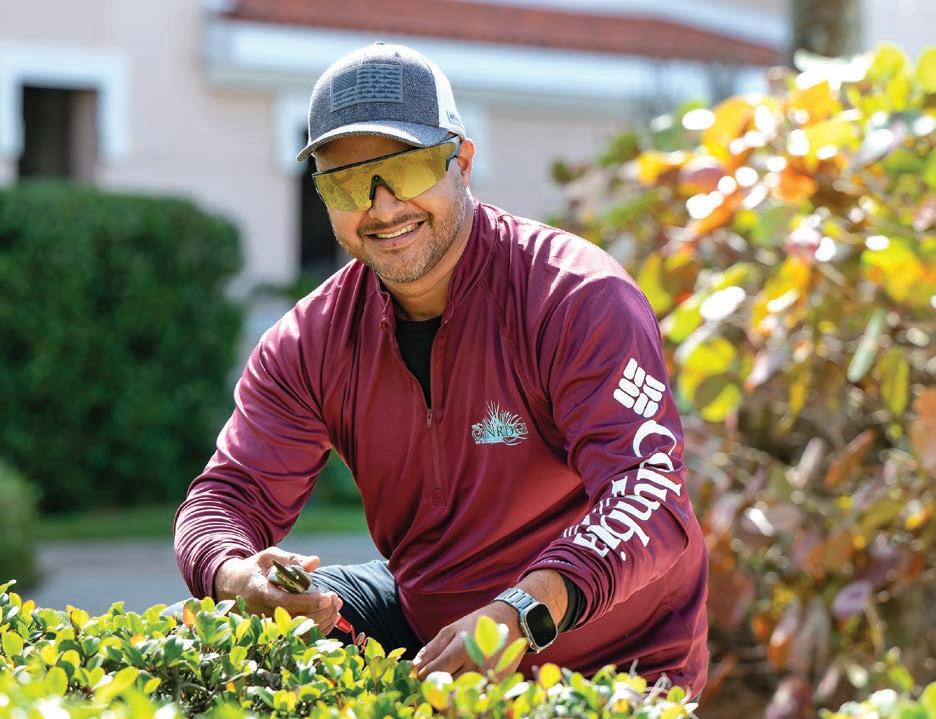
When members and guests arrive at The Glenridge, they’re greeted by a stunning first impression — thanks to the hard work of groundskeepers like Aldo Martinez, who’s been keeping the campus in tip-top condition for almost 15 years.
That’s no small task — but it’s made rewarding by the deep appreciation Glenridge members have for the natural environment, Aldo says: “It gives me a lot of satisfaction to know that the members care about the beautiful flowers, the butterflies in the plants, and the little things we do.”
From the spotless sidewalks and athletic courts to the neatly trimmed trees and thriving plant life, Aldo and his team go the extra mile to ensure everything meets a five-star standard. "Working outside in nature is what I love to do,” he adds. “It’s a way to make a difference in people’s lives. We keep everything clean, blooming and flourishing, so members can enjoy their retirement in a place where nature is beautiful and peaceful — and I think that really adds to their happiness.”

At The Glenridge, we have a unique perspective on living well, and so do our members. They’re continuing to learn, exploring new outlets for growth, and looking at life through a different lens – in an environment where curiosity and creativity pave the way for unexpected possibilities.

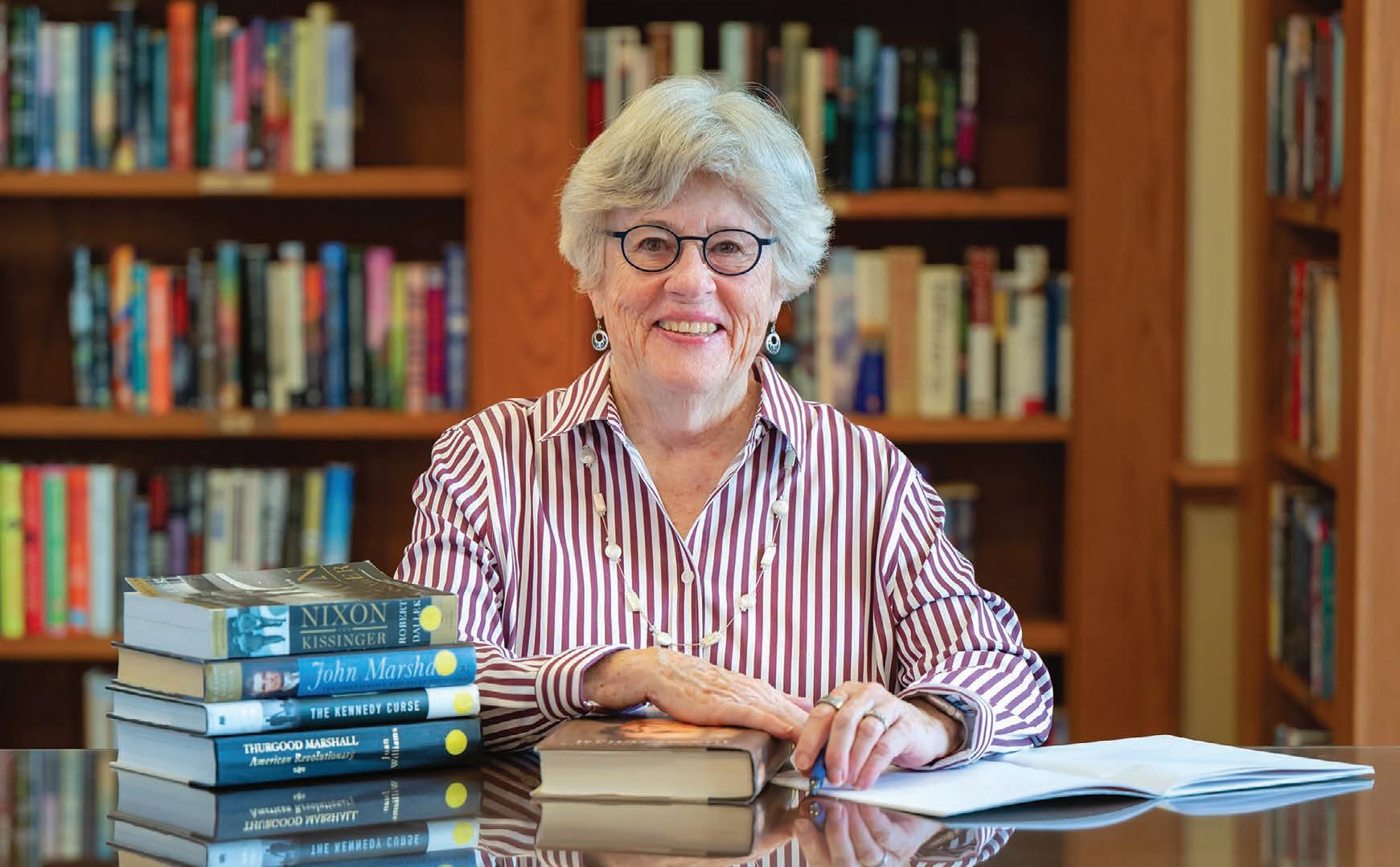
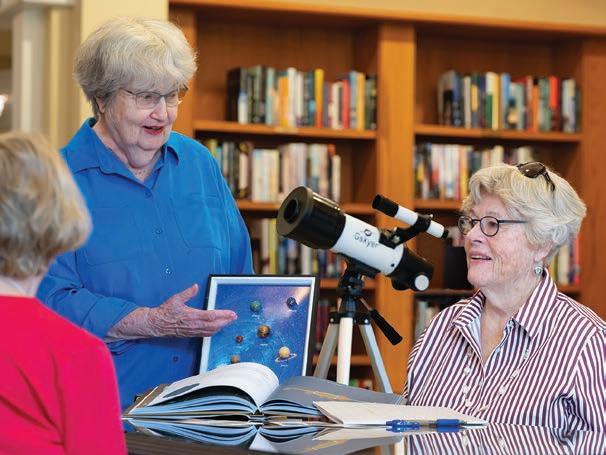
roughly 25 to 30 courses every season. Curriculum choices are based on member interest surveys, and include classes taught by members themselves.
“One member who worked with NASA taught about exoplanets and the Webb Telescope,” Mary Ellen recalls. “Another who was a doctor and pharmaceutical researcher taught a class on cancer and is about to teach another on GLPs.”
“For perpetual students, learning has no end,” wrote Michael S. Roth in an article for The New York Times “As they reach the end of one path of inquiry, they find themselves already on another.”
Glenridge members believe and practice that. Here, there’s no age limit on learning, and the benefits last a lifetime. In fact, experts say that curiosity is a key factor in overall wellbeing. Adults with a higher degree of “openness to experience” tend to be more adventurous, inquisitive and imaginative – and studies show that those qualities are associated with higher intelligence and creativity. In other words, living well starts with learning to see things differently, and you’ll see that outlook in action –all across our campus.
What does it take to see the world through different eyes? How can we explore our assumptions about life – and develop more nuanced insight into art, history, and current events?
If you ask Mary Ellen Jehn, Dean of the Glenridge Academy, it starts with curiosity. “A lot of us have set ideas of how the world is – a frame of reference that guides the way we think about life, whether that’s sports or politics,” she says. “But lifelong learning can inject new information into those set ideas, resulting in ‘aha’ moments or just a casual shift in thinking.”
That’s especially true at the Glenridge Academy, where classes run the gamut from AI technology and astronomy to the histories of Tsarist Russia, Motown, and The Beatles – spanning
Lifelong learning plays a well-documented role in intellectual health, physical well-being, and even longevity, and Academy classes are no exception. In fact, evidence suggests that learning in a group setting can be even more beneficial for physical well-being than self-guided study. “Learning keeps us alive – that’s the bottom line,” says Mary Ellen. “More knowledge is never a bad thing. It helps us stay engaged, gives us a reason to get up in the morning, and allows us to get more meaning out of everything we do in life.”


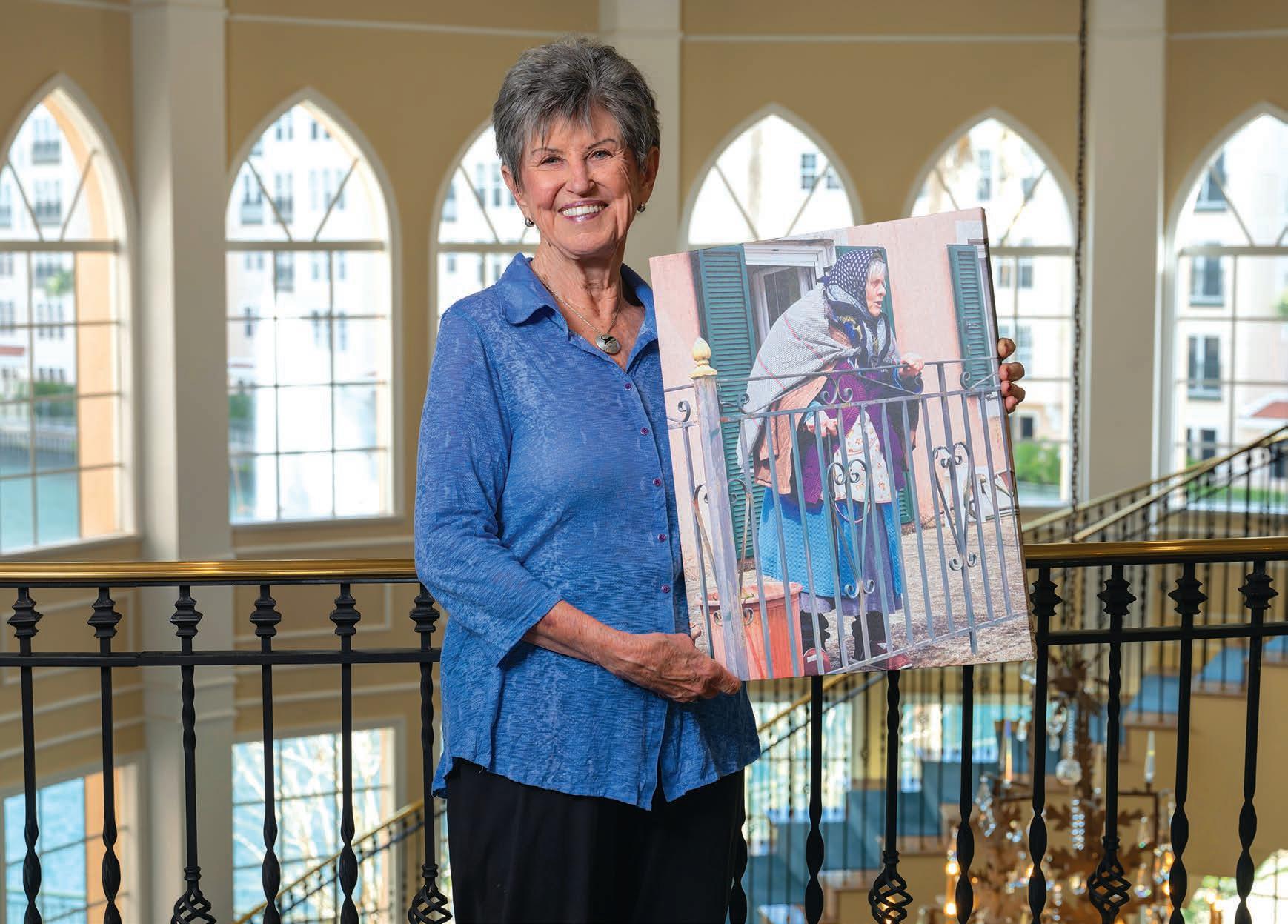

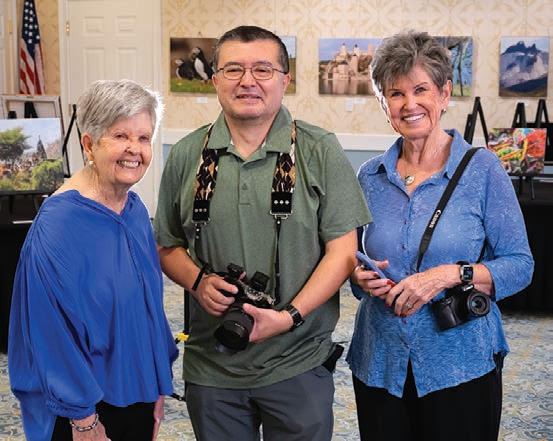
The best snapshots tell a story –and over the course of Carlotta Parsons’ involvement in the Glenridge Photography Show, she’s seen (and submitted) plenty of picture-perfect examples.
Her latest entry, titled Village Gossip, is an evocative candid photo of a shawl-wrapped woman in Corfu as she leans over her balcony to call out to a neighbor. “When I take photos, it’s usually on the spur of the moment,” says Carlotta. “So I saw this amazing woman, with her eight layers of clothing on, and thought, ‘I need to capture that!’”












According to research …
cognitive learning that demands skills as we age (such as quilting or digital photography) can improve memory, brain health and well-being. Older adults engaged in activities they enjoy live longer, happier lives and develop fewer diseases, according to the National Institutes for Health.





























tell you, life does, indeed, look better here. In their own words:
“Since moving to The Glenridge, I’ve started to do so many things I would have put off — even things I never dreamed I would ever get involved in. Before, I had to seek out opportunities for art, creativity, and learning. But here, I’m surrounded by them.”
— Jo Newberry
Now visitors to The Glenridge can admire that moment too: Village Gossip (shown above) was one of several pieces selected for recognition and will be exhibited with other honorees until next spring. “There are so many elements to good photography – framing, cropping, angles – but once you master the basic principles, if you have an eye for it, you can learn very easily,” Carlotta observes. “We have so much talent here at The Glenridge –and seeing that creativity has moved a lot of people to take an interest in the wonderful art programs on campus.”

“We wanted to plan things for the future, and at The Glenridge we’re in an environment where we can continue to grow as we age. There’s a sense of commitment and connection here — that we’re all creating community together.”
— Anne and Ernie Nagy
“Life is more full here. More friends, so much more to do — and so many things to be involved in, that you could be busy every day! If I had just stayed in my house by myself, it would be a very different life. It’s a total change.”
— Mary Nell Hill
“The Glenridge is always evolving, always changing, always adapting to people’s interests — and that’s what makes it so special. They say it’s where you flourish — and I’ll tell you something: We are healthier and probably happier here than we’ve ever been! Every year, we’re happier!”
— Mort and Linda Lichtman
“At The Glenridge, the opportunities are endless. It’s a place where people keep growing and keep gaining new interests. It’s wonderful for people to try new things, and discover, ‘Wow, I never knew I had that talent before!’”
— Carlotta Parsons