



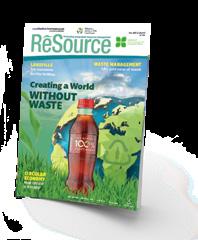
Promoting integrated resources management The official journal of the is printed on 100% recycled paper LANDFILLS WASTE MANAGEMENT Top legislation, terrible facilities SA’s gold mine of waste Creating a World ISSN 1680-4902 • R55.00 (incl. VAT) • Vol. 25 No. 01 • February 2023 CIRCULAR ECONOMY
How circular is it really? WITHOUT WASTE


ON THE COVER
Like many companies that make products we all love, Coca-Cola’s packaging has contributed to the global packaging problem; however, the beverage multinational is taking bold action to help solve this challenge. P6


CONTENTS February 2023 30 24 06 ORGANIC WASTE CIRCULAR ECONOMY SPECIAL FEATURE Vol. 25, No. 01, February 2023 10
REGULARS Editor’s comment 3 President’s comment 5 News round-up 8 Events 36 Index to advertisers 36 SPECIAL FEATURE Creating a world without waste 6 LANDFILL Great legislation, terrible landfills 10 WASTE MANAGEMENT Towards sustainable future 12 MUNICIPAL FEATURE Tackling sanitary waste with dignity 14 PIPES Putting rigorous quality control measures for plastic piping industry 16 RECYCLING Khayelitsha tackles waste through art 18 Mainstreaming the informal waste sector 20 Unpacking the paper recycling process 22 CLEANER PRODUCTION Limpopo champions recycling efforts 23 CIRCULAR ECONOMY How circular is the circular economy really? 24 PLASTICS KZN beach litter signs of wider problem 27 SA Plastics Pact reaches ambitious goals 28 ORGANIC WASTE A review of organic waste management in 2022 30 RENEWABLE ENERGY Accelerating energy infrastructure development in Africa 32 A gold mine of untapped energy 34 www.infrastructurenews.co.za LANDFILL


Formerly CONNECT. INSPIRE. EVOLVE. CPD Accredited by Created by 16 - 18 MAY 2023 CTICC, CAPE TOWN, SOUTH AFRICA Host city Host utility Host ministry CONTACT US TO ENQUIRE ABOUT REGISTRATION AND SPONSORSHIP OPPORTUNITIES WWW.ENLIT-AFRICA.COM | +27 21 700 3500 More than just knowledge More than just networking More than just products & solutions More than just an energy event @Enlit_Africa EnlitAfrica Enlit-Africa enlitafrica SCAN TO REGISTER YOUR INCLUSIVE GUIDE TO AFRICA’S ENERGY TRANSITION
Editor Nombulelo Manyana
Managing editor Alastair Currie
Editorial coordinator Ziyanda Majodina
Head of design Beren Bauermeister
Chief sub-editor Tristan Snijders
Contributors Alastair Currie, Mpendulo
Ginindza, Nick Mannie
Production & client liaison manager
Antois-Leigh Nepgen
Group sales manager Chilomia Van Wijk
Distribution manager Nomsa Masina

Distribution coordinator Asha Pursotham
Advertising sales Joanne Lawrie
Cell +27 (0)82 346 5338 joanne.lawrie@3smedia.co.za
greener GOING EVEN
In the broadest sense, sustainability is defined as the ability to maintain or support a process continuously over a long period of time. In business, sustainability refers to operating in a way that it doesn’t negatively impact the environment, community, or society as a whole.
Publisher Jacques Breytenbach
3S Media
Production Park, 83 Heidelberg Road, City Deep, Johannesburg South, 2136 PO Box 92026, Norwood 2117
Tel +27 (0)11 233 2600
Fax +27 (0)11 234 7274/5 www.3smedia.co.za

Annual subscription subs@3smedia.co.za
R200.00 (incl VAT) South Africa
ISSN 1680-4902
Institute of Waste Management of Southern Africa
Tel +27 (0)11 675 3462
Email iwmsa@iwmsa.co.za
All material herein is copyright protected and may not be reproduced either in whole or in part without the prior written permission of the publisher. The views and opinions of authors expressed in the magazine do not necessarily reflect those of the publisher, editor or the Institute of Waste Management of Southern Africa.
© Copyright 2023. All rights reserved. Novus Holdings is a Level 2 Broad-Based Black Economic Empowerment (BBBEE) Contributor, with 125% recognised procurement recognition. View our BBBEE scorecard here: https://novus.holdings/ sustainability/transformation
In the environmental sense, sustainability seeks to prevent the depletion of natural resources, so that they will remain available for the long term. Many businesses and governments have committed to the UN’s Sustainable Development Goals (SDGs), such as reducing their environmental footprints and conserving resources like water. Some investors have even started actively embracing sustainability investments, known as green bonds.
At a household level, a lot more people are ‘going green’, which basically means that they pursue practices that can lead to more environmentally friendly and ecologically responsible lifestyles.
So what does sustainability look like in 2023? What are some of the key sustainability trends that will drive decision-making?
Climate change conversation continues
The UN Climate Change Conference (COP27) in 2022 made a bold decision and committed to provide loss and damage funding to countries most affected by climate disasters. The UN’s Intergovernmental Panel on Climate Change’s report revealed that climate change poses major threats to people and ecosystems and around the world, and indicated that CO2 emissions needed to be cut 45% by 2030.
Bold and innovative action is needed to tackle the threat that climate change poses. In 2023, we will see greater focus on finding credible measures to mitigate the impact of climate change on rising greenhouse gas emissions.
More investment in sustainability
more financial institutions investing in environmental or climate-related projects. This increase in investments will likely be fueled by more companies realising how investing in sustainability can be a vehicle to future-proof their operations.
Focus on circularity
According to the Ellen MacArthur Foundation, plastic waste generation will more than double by 2040. Plastic leakage into the ocean will nearly triple, and plastic stock in the ocean nearly quadruple.
Tackling plastic pollution will become increasingly important. This will require multi-stakeholder partnerships between the public and private sectors, as well as among scientists, communities and consumers.
In 2023, we will see the industry building on the agreements made in 2022, which aim to end plastic pollution.
In conclusion
Sustainable living will not be a choice, instead it will become a way of life. As consumers become more environmentally conscious, more companies and businesses will try to find ways to reduce their impacts on the environment.

circulation
We are likely to see an increase in investment in sustainability throughout 2023, with
The ABC logo is a valued stamp of measurement and trust, providing accurate and comparable
figures that protect the way advertising is traded. ReSource is ABC audited and certified. Nombulelo
EDITOR’S COMMENT
FEBRUARY 2023 | ReSource 3


A LOT STILL NEEDS DOING Dear Members,

Fortunately, there is still enough time to adjust and position ourselves to tackle the challenges and opportunities that lie ahead of us. There is still a lot that needs to be done to address the impacts of irresponsible resource usage and poor waste management on livelihoods. It is critical for all stakeholders, governments, industry, civil society and consumers to come together and create the future we want in the green economy.
I believe the IWMSA is a powerful vehicle for advocacy and change. I urge our members to become involved, help us make the change and advance our mission.
LaWTIG 2023
This year I am particularly looking forward to the Landfill and Waste Treatment Interest Group (LaWTIG) Conference 2023, which will be hosted by the Western Cape branch. If you are not aware, we have two active LaWTIGs in KwaZulu-Natal and the Western Cape. The tone was set already at WasteCon 2022 by Professor Raffaello Cossu from the University of Padova, Italy, who stated, “Landfill has a big role to play in the circular economy. It still counts for about 20% of waste disposal even in the most developed countries. Final sink waste must , however, be treated appropriately before it goes to landfill.”

South Africa still has its challenges when it comes to the management of landfill sites, with Afriforum’s Municipal Landfill Audit Report 2021 noting that about 83% municipal landfill sites do not meet the minimum requirements. The IWMSA’s interest groups and branches engage with these and other issues throughout the year. Preparations for LaWTIG Conference 2023 are already underway – and from what I have seen so far, this will be an event not to be missed.
I would like to congratulate the winners of the KZN Waste Management Awards 2022, held in November. We should not take any of these recognitions for granted. After a tough two years, due to the pandemic, it was encouraging to see 2022’s calibre of entrants. They all highlighted attempts to cut down on energy, water use and waste production. The majority of entrants took part for the first time. The winners were honoured for their contribution to the waste industry after a rigorous judging process, including site visits and audits.


In memoriam
We at the Institute of Waste Management of Southern Africa are deeply saddened by the news of Koos Richter’s passing. Koos was a dedicated and visionary member of our organisation, who made immense contributions to the field of waste management and environmental protection. His unwavering commitment and passion for a sustainable future will always be remembered and deeply missed. Our thoughts and condolences go out
to his family during this difficult time. Koos’s legacy will continue to inspire and guide us as we strive to make the world a better place. May his memory bring you comfort and peace.
FEBRUARY 2023 | ReSource 5 FOR MORE INFORMATION ABOUT THE IWMSA, VISIT OUR WEBSITE Mpendulo Ginindza, President, IWMSA PRESIDENT’S COMMENT
My wish is that we have a good, healthy and productive 2023. However, we all know that it takes more than a wish to realise the change you want. These first few months already give an indication of the pace that has been set to achieve the goals for the year.
IWMSA PATRON MEMBERS
Creating a World WITHOUT WASTE
Like many companies that make products we all love, Coca-Cola’s packaging has contributed to the global packaging problem; however, the beverage multinational is taking bold action to help solve this challenge.
Recognising that packaging accounted for 30% of its overall carbon footprint, Coca-Cola was determined to incorporate more recycled and renewable material into its production. The company also set out
to increase its use of reusable packaging and invest in local recycling programmes.
In 2018, The Coca - Cola Company announced its World Without Waste vision, which committed to an ambitious goal: to collect and recycle the equivalent of a bottle or can for every one sold by 2030, reaching a 100% collection and recycling rate of all its packaging. The vision also includes ensuring all packaging is 100% recyclable by 2025 and that its PET bottles are made with an average of 50% recycled content.
Coca-Cola’s global goal is to be a netzero carbon entity by 2050.
In 2022, the company announced a new global reusable packaging goal. By 2030, it aims to have at least 25% of its beverages sold by volume worldwide in refillable/returnable glass or plastic bottles or fountain dispensers with reusable packaging.

This could result in approximately 20% less virgin plastic derived from fossil fuels worldwide than today – depending on business growth.
So, how is Coca-Cola planning to bring its World Without Waste vision into fruition? Simply put: by investing in new recycling technologies; packaging improvements such as lightweighting; different business models such as refillable, dispensed and fountain systems; and the development of new, renewable materials.
Creating sustainable collection and recycling model
In Africa, Coca-Cola has had much success with a voluntary end-producer responsibility model, where the beverage and packaging industries come together to promote and finance the recycling of PET plastic, taking responsibility for recovering and recycling the material.
This is driven through the PET Recycling Company (PETCO), funded by industry through a levy on PET resin and in-aid grants. The PETCO model has proved so successful that Coca-Cola is now replicating it across Africa and other parts of the world.
In South Africa, PETCO has driven the incountry recycling of PET plastic bottles up

SPECIAL FEATURE
from 14% in 2005 to over 65% of beverage PET bottles in 2018. This has put South Africa ahead of developed markets, such as the EU (2016: 60%) and US (2016: 28.4%) when it comes to PET collection and recycling rates.
A direct consequence of the financial stimulus provided by Coca-Cola, together with industry, over the past decade, the recycling ecosystem in South Africa has grown into a thriving R250 million/annum industry, providing income opportunities for more than 64 000 people, and creating small, entrepreneurial waste collection businesses along the value chain.
Building on this experience in South Africa, The Coca - Cola Company, its bottling partners, the Kenya Association of Manufacturers and other industry players, launched PETCO in Kenya, as a voluntary industry extended producer responsibility scheme in June 2018. This scheme has now also been introduced in Ethiopia. In Tanzania, Namibia, Mozambique, Zambia and Botswana, external recyclers have been contracted to buy post-consumer PET bottles and incentivise local collectors to recover their packaging.
The strength of the PETCO model is that PET that is collected is recycled in the same country – and not exported.
Voluntary systems such as these require ongoing financial support from all industry players to remain sustainable. The Coca - Cola Company provides support in the form of a recycling fee and an annual grant paid to PETCO. Partnerships such as PETCO help create a closed-loop system that benefits the environment, serves communities and begins charting a path of shared opportunity for future generations.
Creating a true circular economy
Whether it’s using more recycled content, reducing the amount of plastic in bottles through lightweighting, developing plant-based resins, or experimenting with ways to eliminate packaging altogether, Coca-Cola is investing in its packaging to design better bottles.
Its innovation labs are looking for ways to ensure that every bottle has the opportunity of more than one life – whether the materials are used to make another bottle, a t-shirt, a carpet or furniture.
In South Africa, Coca-Cola has made remarkable progress so far, with steps including:
• A 2 ℓ reusable PET bottle that is available in various regions.
When returned, these bottles go through Coca-Cola’s stringent cleansing requirements
and are refilled to start their following life cycle. Once the bottle reaches the end of its useable life cycle, it is repurposed into another PET bottle.
• 300 m ℓ and 1.25 ℓ returnable glass bottles (RGBs) are available across South Africa – Cappy is now packaged in returnable glass.

• A 500 m ℓ Bonaqua bottle is made entirely from recycled plastics.
• Sprite’s iconic green bottle is now in clear bottles to allow for greater recyclability.

Partnering across all sectors
Coca-Cola believes that no one organisation alone can solve the world’s plastic problems –hence it works with various bottling partners, governments, NGOS and communities to address the wider issue of plastics and pollution.
Through programmes like regular beach and river clean-ups and other ongoing local activities, the company supports collection and recycling efforts at a local level. Across Africa, Coca-Cola has partnered with organisations that cover the entire life cycle of the package – from suppliers to innovators, collectors, recyclers, NGOs and governments. It partners with organisations such as The Ocean Conservancy, World Wide Fund for Nature (WWF) and even its competitors in an effort to support ongoing sustainability efforts.
With the leadership of bottling partner Coca - Cola Beverages Africa (CCBSA), The Coca-Cola Company launched the African Plastics Recycling Alliance with Diageo, Nestlé and Unilever to transform plastics recycling infrastructure across sub-Saharan Africa. Through the Alliance, companies will facilitate and support their local subsidiaries to engage in market-level public-private partnerships (PPPs) and industry collaborations. The Alliance will promote innovation and collaborate on technical solutions to local initiatives that will improve plastics collection and recycling. Companies will also engage with the investment community and policymakers to accelerate the development and financing of waste management infrastructure and systems, which in turn is expected to create jobs and commercial activity.
Making collection more accessible
Coca-Cola believes that an essential part of improving recycling rates is taking
the consumer along on the journey. This means educating people about the best ways to collect their packaging.
The company has started the process of applying its marketing expertise and assets, as well as media relationships, to drive behaviour change and change people’s waste habits –from anti-littering to separating recyclables from organic waste at their homes.
It also partners with schools to develop a new generation of eco-champions to drive collection in their communities.
CCBSA also drives a successful Schools Collection for Recycling Programme, which saw 866 schools collecting and creating a revenue steam from waste materials such as PET bottles, paper, plastic and cans by selling them on to be recycled. During 2018, 2 324 t of recyclable waste was collected, benefiting 700 000 learners.
As part of the programme, 12 990 educators were involved in teaching learners about recycling so that they could take this recycling message home to their communities, building a culture of environmental stewardship.
Sharing expertise
Coca-Cola believes that the strength of the World Without Waste strategy is that it centres on partnership – bringing people together to help turn waste into worth. As such, it is applying its convening power to bring the right partners to the table to find solutions to this global problem, through sharing expertise, resources and technology.
The World Without Waste vision charts a way forward to a more sustainable world, where public, private and civic organisations work together to solve the packaging problem and turn waste into worth for future generations of Africans.
FEBRUARY 2023 | ReSource 7 SPECIAL FEATURE
SUSTAINABILITY NEWS FROM AROUND THE WORLD

Tetra Pak partners with PETCO to improve recycling of liquid board packaging
JV to build green
battery recycling facilities in SA

Local investment firm Tabono Investments has signed a partnership agreement with battery recycling platform ACE Green Recycling to build two environmentally sustainable battery recycling facilities in South Africa.
Through this joint venture (JV), the companies aim to bring radical change to the management of South Africa’s battery waste. According to the companies, the green energy facilities will separately process and recycle lead-acid and lithium-ion batteries, utilising ACE’s proprietary technology
that creates zero scope-one emissions by operating without fossil-fuel-based heating. Both recycling facilities will be greenfield projects to be developed and operated through the joint venture. Under the new structure, ACE will own 51% of the recycling facilities and Tabono will own 49%, according to the companies.
“Green energy is on the rise in South Africa and, with it, lead-acid and lithium-ion battery usage,” says Liran Assness, co-founder at Tabono.
Plastics agreement to accelerate circularity
Members of the International Council of Chemical Associations (ICCA) joined delegates in Punta Del Este, Uruguay, late last year for the first meeting of the International Negotiation Committee (INC-1), which is charged with creating a global agreement on plastics.
ICCA remains supportive of a legally binding agreement to eliminate plastic waste in the environment and is optimistic of the direction of negotiations towards achieving this goal as INC-1 concludes. Several common themes and desired actions emerged from the INC-1 meeting. Specifically:
• scaling up a circular economy for plastics, where used plastics are captured and remade into new plastics

• designing products for circularity
• enabling partnerships between the private sector and governments to unlock financing to improve waste management, which
serves as the foundation of a circular economy
• enhancing transparency on chemical additives.
ICCA and plastics producers support these actions and remain constructively engaged to advance solutions, provide industry data where appropriate, and foster a bold agreement that helps eliminate plastic waste in the environment.

Plastics producers around the globe are already transitioning towards a circular economy by investing billions
In an increased effort to drive the collection and recycling of liquid board packaging (LBP) in South Africa, Tetra Pak South Africa has joined the PET Recycling Company NPC (PETCO), a wellestablished producer responsibility organisation.
Tetra Pak’s membership commenced on 1 January 2023.
The decision for Tetra Pak to join PETCO was driven by the need for greater collaboration to improve the collection and recycling of LBP in South Africa.
As the first member to join PETCO’s LBP EPR scheme, Tetra Pak South Africa is taking an exciting first step with this new partnership with PETCO. In time, the expectation is that other LBP converters and brand owners will join this scheme for a greater impact.
in recycling infrastructure and designing plastic products for increased recycling.
This global agreement presents a significant opportunity to accelerate those efforts by fostering public-private partnerships, aligning private investment with country goals and actions, and reducing barriers to technology and expertise necessary for an equitable transition to circularity.

NEWS ROUND-UP
8 FEBRUARY 2023 | ReSource
R26 million solar plant launched in Cape Town
Ener-G-Africa, a multifaceted African company tackling climate change challenges, has launched its new woman-led solar panel assembly plant in Cape Town. The new solar PV assembly plant is housed on the energy company’s premises in Ndabeni.

Ener-G-Africa is an African company tackling the challenges of climate change through research, development and the manufacturing of clean energy products. The company has two manufacturing facilities – one in Cape Town and another in Lilongwe, Malawi. Starting as a wholesale solar company in Malawi in 2017, it has been producing biomass stoves since 2018 to provide a cleaner and healthier option for rural communities in sub-Saharan Africa.
The company’s intention with this new facility is to focus on making smaller solar panels to serve low-income households across subSaharan Africa.
Run by an all-female team, the R26 million plant, with a maximum capacity of 15 MW per annum, can produce some 20 000 solar panels each month, has created 53 jobs and will operate 24 hours a day, five days a week.
Regarding the plant demographics, Andre Moolman, CEO, Ener-G-Africa, says that because most factory workers across sectors are predominantly male, his company wanted to provide this employment opportunity to women from previously disadvantaged communities.
Coal
to remain part of SA’s energy mix into 2040
Coal will remain part of South Africa’s energy mix into the 2040s and improving the energy availability factor of the current power stations is a pressing matter. Those are the sentiments of the Minster of Forestry, Fisheries and the Environment, Barbara Creecy.

Creecy was speaking at the Mining Indaba in Cape Town, which took place between 6 and 9 February 2023. She stressed that understanding the physical and economic risks was essential to approaching the complex question of balancing energy security in the context of the climate transition.
“Our government has never advocated a sudden or precipitous move away from either coal-fired generation or towards a low-carbon economy. The National Development Plan and Eskom have talked about attaining net-zero emissions by mid-century, nearly 30 years from now.
“Building a low-carbon economy and a climate-resilient society will not happen overnight. It requires wide reaching technological, economic and societal changes,” Creecy said.
Cape Town encourages formation of recycling start-ups

With the implementation of the Extended Producer Responsibility (EPR) Regulations, and the imposition of bold targets for the diversion of waste from landfill, society’s demand for recycling services is increasing.
The City of Cape Town is encouraging residents to take advantage of this emerging need to uplift their communities, by establishing
small recycling businesses and registering these with the City for inclusion on the Waste Recyclers Map.
Alderman Grant Twigg, MMC: Urban Waste Management, City of Cape Town, is calling on residents who are looking for work to consider starting small businesses in recycling. Recycling has significant potential to create jobs
as well as to preserve our precious natural environment. For this reason, residents are being encouraged to establish their own small recycling businesses.
However, all those who wish to explore opportunities in this sector should also be aware that they must get accreditation from the City to legally operate. Accredited businesses may also qualify to apply for recycling tenders in coming years as recycling services are expanded throughout the municipality. Furthermore, the City can help promote these businesses via the Waste Recyclers Map – an interactive tool for residents that shows the recycling businesses operating in each area, and what recyclables they accept.

FEBRUARY 2023 | ReSource 9
GREAT LEGISLATION
terrible landfills
According to the latest statistics, South Africa generates roughly 122 million tonnes of waste per year. Of this waste, a maximum of only 10% is recycled or recovered for other uses, while at least 90% is still landfilled or dumped illegally.

The South African waste management industry plays a vital role in keeping our environment clean and, according to experts, South Africa has some of the best waste management legislation in the world. However, as Leon Grobbelaar, director at Raalebborg Environmental and former president of the Institute of Waste Management of Southern Africa (IWMSA), states, South Africa has some of the worst landfills. He warns that if we continue at this pace, there will be no unpolluted resources left for the next generation to utilise.
“Our people on the ground experience and witness this every day, we see the mess and the bigger picture with regard to what is really happening. And however grim the truth may seem, we must face the fact that we are running out of landfill airspace – and quickly.
“South African landfills are in a terrible state; the worst they have been in decades,” emphasises Grobbelaar.
“According to my knowledge and my views, Gauteng has never been so dirty. There is an increase in illegal dumping because people just don’t know what to do with their waste, which is not being collected by the municipalities, and our landfill sites have become hiding places for criminals. It has become dangerous for the public to visit landfills for disposal.”
Grobbelaar has 34 years of experience working within the waste management industry, with a special focus on landfill management, construction and rehabilitation.
The Directors of Raalebborg do have four decades of experience of experience within the waste management industry and is dedicated to delivering innovative waste solutions that are environmentally responsible, effective and economically viable.
State of SA landfills
Landfills nationwide are filling up at an alarming rate, especially in Gauteng, says Grobbelaar.
Leon Grobbelaar, director at Raalebborg Environmental and former president of the Institute of Waste Management of Southern Africa

He states that the City of Johannesburg (CoJ) has a maximum of three years left until its landfills reach capacity – with the City of Tshwane (CoT) and the City of Ekurhuleni (CoE) not far behind.
Grobbelaar asserts the problem mainly lies in Gauteng because the City of Cape Town was able to recognise 15 years ago that it has an airspace crisis as well as the need for alternative materials recovery sites and progressive legislature. It then went on a drive to promote the recycling and reuse of materials.
All this resulted in waste being diverted away from landfills.
“The Western Cape is 5-10 years ahead of us here in Gauteng. Upon realisation that they are running out of airspace, the Western Cape Government started raising their disposal
10 FEBRUARY 2023 | ReSource LANDFILL
Landfills
nationwide are filling up at an alarming rate. South Africa is running out of landfill airspace, and industry experts have warned that the country is on the verge of a waste crisis.
fees by 15% every year, and this started almost 15 years ago. The current disposal costs are around R650/tonne compared to around R280/tonne in Gauteng, and what that has essentially done is force industry to find alternative waste treatment options, so that they don’t have to take their waste to landfill,” says Grobbelaar.
He adds that engineered landfill facilities are also extremely expensive to construct versus open dumps.
An increase in the cost of landfilling has proved to be effective in steering industry away from landfilling and making alternative treatment options more attractive and to encourage municipalities and industry to explore alternative waste management options towards saving landfill airspace for residual waste.
The Western Cape Government also instituted a 50% reduction of organic waste to landfill by 2022, with the aim of implementing a full ban by 2027. Through this, the City of Cape Town has seen an increase in investment in composting facilities and materials recovery facilities. The City actively promotes various recycling initiatives and supports communitybased recycling programmes, which have helped to extend the life of their landfills.
When looking at the three biggest aforementioned municipalities in Gauteng, Grobbelaar says that these metros generate an estimated 6 million tonnes of municipal solid waste annually. This includes biomass, building rubble and municipal solid waste
CoE owns five landfill sites – namely, Rietfontein, Rooikraal, Simmer and Jack, Platkop, and Weltevreden. Four of the sites are classified as GLB-, while Rietfontein is GLB+. This means that all the landfill sites accept domestic waste, non-hazardous business waste, non-infected carcasses, garden greens and builders’ rubble. All of these facilities are located in the central or southern side of Ekurhuleni and no facilities towards the northern suburbs.
Out of 12 landfill sites in Tshwane, only 4 are still active. There are Hatherley (GLB-), Ga-Rankuwa (GMB-), Bronkhorstspruit (GSB-), and Soshanguve (GSB-), which are located in the east and northern suburbs of Tshwane, with no operating facilities towards the south. There are also four landfill sites operating in CoJ currently, namely Goudkoppies, Marie Louise, Ennerdale and Robinson, which are all in the south and south-west of Johannesburg.
“The reality is that all these sites are either not operated properly, closed or are quickly running out of airspace. For example, should CoJ not urgently divert at least 50% of its waste volumes – namely garden greens and builders’ rubble – they will literally only have 18 months left on all four of their existing facilities. However, if they implement this, they
will be able to extend the life of their landfills by 30 more months,” emphasises Grobbelaar.

“CoE has ample airspace on some of their facilities – meaning they can last between 15 to 20 years – but their facilities are poorly operated and maintained or closed due to non-awards of contracts to operate and maintain them.”
In CoT, Grobbelaar says most of these landfill facilities have never been equipped with containment barriers as prescribed and are basically non-compliant to legislature. Legislation for norms and standards for the construction of a landfill site only came into effect in 2014 and all new cell developments needed to be constructed according to the norms and standards guidelines, which is not the case in Tshwane.
“None the sites within the province comply with current legislature, in one way or another.”
So, what do we do with our waste?
According to Grobbelaar, the solution doesn’t lie in the construction and licensing of additional landfill facilities; the focus should rather shift to waste minimisation through the promotion of waste separation, recycling and waste beneficiation.
“It will take at least four to five years to get a landfill facility licensed and up and running, considering the licensing approvals and construction needed to develop a sustainable and compliant site. So, even if CoJ starts now, they will not have enough airspace available in time for when the current ones are running out,” stresses Grobbelaar.
Grobbelaar makes the following suggestions: 01
Prioritise separating waste streams at the point of generation: Grobbelaar suggests that we need to start extending the life of our current landfills by diverting organic waste, builders’ rubble and garden waste to alternative treatment facilities – where this can be beneficiated and put into the secondary market, thus creating a circular economy, with a cradle-to-cradle instead of cradle-to-grave approach.
a key driver of innovation in the waste management industry. However, Grobbelaar believes that support structures need to be put in place to ensure that there is adherence to legislature and that there are consequences for non-compliance through all spheres of life, public and private sector.
03 Greater investment in infrastructure: Grobbelaar asserts that there are not enough materials recovery facilities that are currently operating and available. He calls for greater collaboration and partnerships between government and private sector, to get these commodities processed and put into secondary markets.
04
Raise disposal fees: This may ensure that there are enough funds to design and construct proper engineered landfills and then to operate these facilities to the required standards. Landfill management is a science and discipline that needs to be practised 365 days of the year, year on year, and not as and when required.
05
Properly educate officials about the business of waste: Grobbelaar believes that municipal officials are not well versed on the science and know-how to operate a landfill during all seasons of the year. “It is a complex operation and skilled staff, as well as the correct equipment, are key to success,” he says. Proper education and skills development are essential for the officials and decision-makers in the waste industry.
06 Curb illegal dumping: Separation at source and investing in public awareness campaigns need to be undertaken.
Partnership
In conclusion, Grobbelaar asserts that this waste issue is bigger than just one entity; he believes that, by prioritising collaboration and partnerships, the industry can begin to come up with sustainable solutions to a growing problem.
02
There needs to be enforcement and compliance: South Africa’s waste legislation is among the best worldwide and is
“I don’t think there is one waste management company in South Africa that can handle the influx of waste produced daily. This requires us as an industry to come together, invest in the right infrastructure and divert as much as we can away from landfill.”
FEBRUARY 2023 | ReSource 11 LANDFILL
future Towards a sustainable
recyclables, inaccessible facilities and a minimal understanding of how to separate waste as major barriers to recycling.
Education is crucial for driving consumer participation in national recycling programmes. Consumers need a better understanding of which materials they can and can’t recycle, where to take them, and tips for collecting them neatly.
Most of the world’s waste goes to landfills or open dump sites, even though 20-68% of it contains recyclable materials, depending on the region. As the severity and awareness of the global waste crisis increase, many nations are proposing more sustainable waste management systems that protect the natural environment and preserve scarce resources.
Many of these systems include diverting dry waste from landfills to repurpose, recycle or refurbish consumer products at the end of their life cycle.
While understanding the problem is a promising start, there are still many barriers to establishing a truly circular economy. As income levels and subsequent waste generation levels rise in developing countries, consumers, governments and product manufacturers will need to work together to manage waste more responsibly.

The EPR Waste Association of South Africa (eWASA) explores the barriers to recycling, the right to repair, green design and how the public sectors need to step up.
Adopting a more sustainable waste management system
Landfills are the oldest and most common method of managing solid waste; the first
known landfill sites date back to 3000 BC. Although burying garbage is an ancient concept, it was not widely adopted until the late 1800s, when various European cities connected open dumping with the spread of disease.
Modern sanitary landfill systems emerged in 1937 as a solution to toxic leachate polluting the soil and groundwater near dumpsites.
The South African Waste Information System facilitates waste management in South Africa, governed by the National Environmental Management: Waste Act (No. 59 of 2008, NEMWA). Although the NEMWA outlines various long-term recycling goals, landfilling is still the dominant waste disposal method used for 90% of the country’s waste.
With many of South Africa’s landfills set to reach full capacity within the next five years, we must drastically and urgently increase our collective recycling efforts to prevent an environmental disaster.
Barriers to recycling in South Africa I. Consumers
According to a 2018 survey conducted by PETCO, 25% of South Africans do not recycle at all. The study uncovered a generally apathetic attitude towards recycling that prevents people from separating their household waste at source. In a separate study, consumers cited having insufficient space to store their
II. Private sector
South Africa’s new EPR (Extended Producer Responsibility) Regulations require manufacturers and importers of various consumer products to take responsibility for them at their end-of-life phase to encourage recycling within the private sector. Even if organisations comply with the EPR laws, some actively encourage overconsumption of their products, which leads to excessive waste generation.
Electronics producers implement planned obsolescence and enforced upgrade schemes that make their products unusable after a specific period, ultimately forcing consumers to replace them. Furthermore, many appliance manufacturers offer limited warranties that deter people from repairing faulty goods and encourage replacements.
Developing a more profitable market for recycled goods and recovered parts could make end-of-life product take-back programmes more beneficial for private companies and encourage recycling.
III. Public sector
National, provincial and local government collaboration is essential if we hope to develop a centralised recycling system in South Africa. While the NEMWA outlines many sustainable waste management strategies,
12 FEBRUARY 2023 | ReSource WASTE MANAGEMENT
The world discards over 2 billion metric tonnes of waste in a single year – a figure that far outweighs the heaviest structures humankind has ever built.
unlicensed landfills, illegal dumping and a lack of infrastructure to support large-scale recycling threaten their efficacy.

The public sector may benefit from upgrading existing waste collection services to facilitate waste separation at source before investing in brand-new systems. Establishing more autonomous regulatory bodies could provide more effective monitoring and auditing services for public recycling operations.
eWASA is a registered producer responsibility organisation (PRO) for the lighting, electrical and electronic equipment, and paper and packaging industries.
It works with manufacturers, vendors and distributors to develop and manage e-waste recycling schemes, take-back programmes, and other sustainable waste management strategies.
The organisation details four strategies for reducing waste to landfill.


Increasing product recyclability


Making consumer products and their packaging easier to recycle could make separation at source much simpler and more convenient. Products should be easy to disassemble to encourage people to take them apart and recycle them at their end-of-life stage.

Avoiding plastic coatings, glues and components made from multiple materials allows manufacturers to offer 100% recyclable products.
Manufacturers can partner with private recycling centres to provide collection services or offer incentives for consumers to return end-of-life products. Making everyday goods easy to recycle is the first step to engaging consumers in a sustainable waste management system.
Implementing right-to-repair policy
The right-to-repair movement is centred around allowing end-users to repair products like vehicles and electronics without breaching the manufacturer’s warranty. These industries typically restrict access to genuine spare parts, making them unavailable to the general public and forcing people to use approved repair centres at higher prices.
The obstacles to repairing a defective device have created a ‘throwaway culture’ around
outdated electronics, exacerbating the growing e-waste problem.
Many countries have implemented rightto-repair policies that allow consumers to restore specific products through independent vendors. The Motor Industry Workshop Association founded Right to Repair SA to champion its campaign for autonomous maintenance, repair and servicing of in-warranty motor vehicles in South Africa.
Supporting green design
Green design is an umbrella term that refers to minimising the environmental impact of an end product through careful design considerations. Green design exists in construction, engineering, product design, automotive design and packaging.
This approach prioritises using renewable resources and re- or upcycled materials to build new products. It also focuses on minimising waste by building with fewer fasteners, joints and seams, leaving no surplus materials, and using biodegradable or compostable components where possible.
Incentivising and supporting green design programmes feed the recycled materials market and help divert recyclables away from landfills.
Establishing EPR
EPR calls on manufacturers to take accountability for the waste their products generate. Many countries have implemented national EPR schemes that force manufacturers to take an active role in the collection, recycling and refurbishment of post-consumer goods.
The South African government gazetted EPR regulations for the electrical and electronic equipment, lighting, paper and packaging industries in May 2021.
Enforcing EPR regulations encourages the private sector to invest in waste management – boosting small recycling businesses and supporting informal waste pickers. Growth in the recycling sector is essential to increasing the amount of recyclable waste that can be recovered from landfills.
Landfilling has become an unsustainable waste management strategy that does not support the high volume of waste a growing population generates.
Diverting reusable materials away from landfill to be recycled or refurbished will reduce the demand for non-renewable resources, such as crude oil, in manufacturing. Establishing a sustainable waste management system requires collaboration across the public and private sectors and consumer education, engagement and participation.
Single-use menstrual products such as tampons and pads are a significant contributor globally to single-use plastic waste. They can contain up to 90% plastic.
Sanitary products have become essential for making personal hygiene more accessible and convenient in daily life; however, without proper collection and disposal, these can add a significant amount of waste to the environment.
Sanitary waste has hazardous effects – not only on global warming but also on human health and our water resources. Studies have estimated that approximately 121 million women dispose of around eight sanitary pads per menstrual cycle. Meaning that around 12.3 billion disposable pads are added to landfills annually.

The varied composition of single-use menstrual products, together with the presence of organic matter after use, makes their recycling technically and economically expensive. As a result, the vast majority of these products are landfilled or incinerated. To tackle this issue, there needs to be a system in place to properly dispose of menstruation waste, especially used sanitary plastic pads.
In South Africa, sanitary waste disposal is regulated and governed by the following key pieces of legislation:

Tackling sanitary waste with dignity
• Occupational Health and Safety Act (No. 85 of 1993)
• National Environmental Management: Waste Act (No. 59 of 2008, NEMWA)
• Draft National Regulations on Healthcare Risk Waste (NEMWA).
The Western Cape utilises the Western Cape’s Health Care Risk Waste Management Regulations (2013) and the Sanitary Dignity Implementation Framework policy that is meant to guide these issues.
Significant contributor to single-use plastic waste
In November 2022, the Branch Committee for the Western Cape Department of Environmental Affairs and Development Planning hosted an event titled ‘Tackling waste and dignity: What can we do about sanitary waste?’. This event attracted nearly 50 attendees and focused on the issue of sanitary waste and the alternatives that can reduce this waste stream, while also offering dignity and empowerment.
Bonté Edwards, from Circular Vision, started the evening off with a comprehensive overview of the sanitary waste issue. The problems highlighted included the fact that sanitary wear
(feminine hygiene products, nappies and adult incontinence products) are single-use items that contain 90% plastic.
These products are generally individually wrapped in plastic and tend to become environmentally challenging when they are not disposed of properly. Edwards added that this waste stream poses management challenges at landfills and wastewater treatment works.
“We need to move away from a linear ‘take-make-dispose’ economy, to one that is more circular and enables resources to be kept in use and made to last.”
Zooming in on menstrual products, Edwards referenced a 2021 UNEP study – titled ‘Single-use menstrual products and their alternatives’ – which makes recommendations based on lifecycle assessments and found that, in all circumstances, reusable menstrual products, such as menstrual cups and reusable pads, had substantially lower environmental impacts than commonly available single-use options.
A reusable pad
With millions of girls missing three to five days of school each month during their
MUNICIPAL FEATURE
14 FEBRUARY 2023 | ReSource
period due to a lack of sanitary pads, Shérie de Wet, founder and CEO of Palesa Pads, and her team were determined to find a solution.
In 2017, they started manufacturing and distributing high-quality reusable sanitary pads that can be washed and reused each month. The pads can be used for at least five years, replacing the need for 200-300 disposable pads, and allowing girls to stay in school.
The stain-resistant fabric is absorbent and waterproof, ensuring no leaks, no stains and no smells. This product offers an alternative option and was lauded for the impact it has on young girls’ lives. Although their focus is on schools, these products can be used by women of all ages. De Wet’s revolutionary product isn’t only a great alternative but is comfortable and effective, while also reducing the impact on the environment.


This product can be found online and at Ackermans.

Medical-grade alternatives
The UNEP study found that reusable menstrual products have a substantially lower environmental impact than
Studies have estimated that approximately 121 million women dispose of around eight sanitary pads per menstrual cycle. Meaning that around 12.3 billion disposable pads are added to landfills annually
commonly available single-use options.
The menstrual cup, in particular, has consistently lower impacts than the other product options, both single-use and reusable, making it a clear choice for consumers and policymakers.
Zaakira Mahomed, founder of the Mina Foundation, who was also present at the event, introduced the audience to the Mina menstrual cup – a medical-grade silicone cup that gets inserted into the vagina to collect, rather than absorb, menstrual flow.
The cup offers a comfortable, leak-free period and can be worn for up to 12 hours. It too can last up to five years and is a great replacement for pads and tampons. Mahomed highlighted the work they do with schools, educating young girls on their bodies and their cycles, and providing them with menstrual cups to ensure that they have a stress-free period.


Their product can also be found online and at many Clicks stores. For every cup that is purchased, another is donated to a female in need.
Conclusion
The audience was intrigued by both alternatives and excited to know that
there are options that provide a long-term sustainable solution and reduce sanitary waste. Both organisations do amazing work to bring awareness to period poverty and aim to continue ensuring that their products help keep girls in school.
These products also offer greater dignity, as reusable options mean that those in need no longer have to rely on continuous donations of pads or make a choice between sanitary wear and other basic needs.
These reusables also reduce the many problems associated with single-use products and are a great way to minimise waste. The Branch Committee believes that this event started an important conversation, and it hopes that the conversation will continue and inspire great change.

FEBRUARY 2023 | ReSource 15
MUNICIPAL FEATURE
Around 150 000 tonnes of pipe (PVC and HDPE) is produced annually in South Africa, representing many thousands of kilometres.
Plastic piping networks form an integral, expensive, long-term and extremely important part of the infrastructure of this country.
Putting rigorous quality control measures for plastic piping industry
In a country where poor service delivery, failing infrastructure and interrupted power supply have become the norm, it has become important to create a space of unwavering trust within the plastics and piping industry.
There is a need to ensure that the plastic pipes used to provide critical infrastructure to our nation – i.e. water and sanitation, gas and electricity – meet and even surpass global standards, in order for them to last for at least 50 years (their minimum expected lifespan) before needing to be replaced or repaired.
The Southern African Plastic Pipe Manufacturers Association (SAPPMA) and its members are doing everything in their power to ensure that end-users and ordinary citizens have a consistent water supply.
SAPPMA’s role
SAPPMA is a non-profit, self-regulatory, voluntary organisation that speaks for the producers of plastic pipes and other industry participants. SAPPMA's goals are to instil complete customer confidence in the plastic pipe industry and to

guarantee the long-term viability of the sector with the use of premium piping systems.
Since its inception in 2004, SAPPMA has developed into a brand that is well known and recognised by design engineers and customers as an additional safeguard against subpar products, thanks to a firm focus on its mission and the significance of the task at hand.
Because communities all over the country rely on plastic pipes to provide necessary infrastructure and services like water, sanitation and gas, Jan Venter, CEO of SAPPMA, emphasises the need to put rigorous quality control measures in place.
“Our Articles of Association and Code of Conduct stipulate that all members must abide by extremely strict standards. This enables the association to carefully monitor every step of the manufacturing process for the plastic pipes that will have direct contact with people’s drinking water,” he says.
Another key area of focus for SAPPMA’s activities is providing the industry with current and highly technical training and educating specifiers, municipalities and end-users about
the significance of high-quality pipes that bear the SAPPMA logo.
Key quality questions
Because of this, the association has emphasised a few of the crucial inquiries that buyers of plastic pipes ought to make, namely:
• Are the plastic pipes or pipe fittings I am specifying, selling or about to buy certified by a SANAS-accredited authority and do they bear the relevant mark?
• Is the manufacturer able to provide support documentation upon request, such as a certificate of conformance of all materials, a quality management plan and an undertaking not to use any bought-in recycled material?
• Has the manufacturer of the plastic pipe been subjected to (and passed) unannounced inspections during production?
• Is the quoted price of the plastic pipe or pipe fittings realistic in terms of current polymer prices?
• Is the supplier/manufacturer accredited by SAPPMA and does the pipe display the SAPPMA logo?
16 FEBRUARY 2023 | ReSource
PIPES
“When you consider that pipes form the bedrock of any community and the vitally important role they play in society, it is important that the quality of piping is not compromised. To ensure that quality is maintained across the board by all our members, SAPPMA carries out independent sampling and testing on all plastic pipes produced by our members to ensure they meet NSF’s internationally recognised ANSI 61 standard for health effects of the components, including piping systems. Additionally, SAPPMA ensures that all members meet the regulatory ISO/SANS quality assurance as a guarantee of the
quality of the product that is being supplied,” Venter explains.


A mark of excellence
The strict quality controls and high standards that have been enforced have increased competition within the plastic pipe industry and helped to distinguish SAPPMA members from non-members.


Venter points out that only a few manufacturers are still operating today who are not SAPPMA members – mostly because they failed to follow their established quality standards. As a result, the mere fact that a product bears the SAPPMA
Specialist Waste Management Consultants


seal of approval suffices as proof that it lives up to the extraordinarily high standards to which the industry has grown accustomed.
“Therefore, it should go without saying that a pipe that does not bear the SAPPMA logo is very likely to be of poor quality and runs the risk of failing within a short period of time. For this reason, we stand firm on our belief that there is no room for compromises or taking shortcuts – despite the industry’s fierce competition and narrow profit margins. Our message continues to be: before purchasing, installing or specifying any plastic pipe, make sure you insist it bears the SAPPMA logo,” he concludes.
PIPES T: +27 (0)21 982 6570 F: +27 (0)21 981 0868 60 Bracken Street, Protea Heights Brackenfell, South Africa, 7560 P O Box 931, Brackenfell, 7561 • Waste Collection Optimisation • Transfer Station Design • Material Recovery Facility Design • General Waste Landfill Design • Hazardous Waste Landfill Design • Landfill Closure and Rehabilitation Design • External Auditing of Waste Facilities • Regional Waste Studies • PPP Involvement in Waste Management • Alternative Technologies for Waste Diversion • Integrated Waste Management Plans • Closure/Rehabilitation Cost Provisions
www.jpce.co.za
KHAYELITSHA TACKLES WASTE
through art
Indawo, Abantu, Injongo eKhayelitsha (Place, People, Purpose in Khayelitsha) is a community project run by a group of women in the Griffiths Mxenge section of Khayelitsha, Cape Town. The project incorporates waste removal, transformational art and green space creation, forming a watersensitive rain garden design that protects ground- and surface water systems, while promoting community engagement.
This community initiative, supported by The Umvoto Foundation (TUF), recently scooped
three awards in the inaugural #cocreate Blue-Green Cities Design Awards. It not only won the Community-based Project category, but also the Most Valued Water-sensitive Innovation, and Most Valued Project: Water Champion prizes.
Where it all began
The #cocreate Blue-Green Cities Design Awards were announced on 27 October 2022 in Cape Town. They were aligned with the #cocreate DESIGN FESTIVAL, an initiative of the Mission Network of the Kingdom of the Netherlands in South Africa.

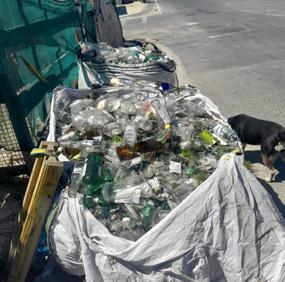
Illegally dumped waste – consisting of singleuse plastics, building rubble, medication, expired food and used sanitary items – has
WINNER – Best Community-based Project, Most Valued Water-sensitive Innovation, and Most Valued Project Water Champion (L-R): Hélène Rekkers, Consul General of the Netherlands in Cape Town; Busiswa Nomyayi, representing Indawo, Abantu, Injongo eKhayelitsha; Fahad Aziz, representing The Umvoto Foundation; Ian Neilson, portfolio committee chair: Water and Sanitation, City of Cape Town
been a continuous issue for Busiswa Nomyayi’s community in Griffiths Mxenge, Khayelitsha. When it rains, sidewalk waste is mobilised and discharged into the stormwater system, impacting waterbodies and the underlying Cape Flats Aquifer (CFA).
Busiswa and a group of women in the community formed Indawo, Abantu, Injongo eKhayelitsha with the support of TUF, to transform and beautify their community.
TUF is a registered Section 18A non-profit company that supports the development of community capacity to achieve clean and healthy ecosystems.
Creating art from waste

The festival was organised in collaboration with the Craft and Design Institute and curated in partnership with the University of Cape Town’s Future Water Institute, the City of Cape Town and the Institute for Landscape Architecture in South Africa. Photos supplied
TUF hosted a water stewardship training course on how the earth, water and science interact. Busiswa attended this course and learned about the connection between stormwater and waste impacts. The group began doing regular clean-ups on their street, removing about 60-80 bags of waste each time.
18 FEBRUARY 2023 | ReSource
RECYCLING
The Indawo, Abantu, Injongo eKhayelitsha initiative has transformed a neglected Khayelitsha street into a beautified, water-sensitive design feature supported by the local community.
by The Umvoto Foundation
Art mural painted by a local artist with the name of the project displayed in the design – Indawo, Abantu, Injongo eKhayelitsha
Removing building rubble was the biggest challenge, proving both difficult and expensive. With TUF’s assistance, the group developed an innovative design to repurpose the rubble to create mosaicked concrete benches. TUF also collaborated with the City of Cape Town to host a training workshop on recycling material collected during clean-ups.
Art is a key design component of this initiative and an effective way to engage with communities to raise awareness of the importance of the environment and water systems. This was achieved through culturally appropriate designs of murals and mosaicked benches.


A rain garden was also constructed along the sidewalk where waste was often dumped illegally. This garden consists of colourful indigenous plants and vegetables, with plans to further extend it. TUF and the group are also developing a vegetable garden at the adjacent primary school.
Reducing water pollution
Clean-ups undertaken by Indawo, Abantu, Injongo eKhayelitsha have resulted in less waste being transferred into water systems, ultimately protecting receiving water bodies (including False Bay) and the underlying aquifer.

The creation of the rain garden has increased the permeability of the sidewalk, resulting in increased aquifer recharge and improved flood retention. The garden vegetation improves stormwater quality by assisting with nutrient assimilation from sources of pollution.
Furthermore, the rain garden has improved the biodiversity of what was a barren street, with sightings of various insects, bees and birds. Brightly coloured murals, benches and garden flowers have brought colour to the street.
Art has been an effective way to educate the community on complex environmental issues – Busiswa notes how one local
child made the connection between the birds and insects shown on the murals/mosaics and the presence of birds and insects in the garden, which were not commonly observed before.
Partnerships and collaborations
The project has depended strongly on partnerships from inception.
Labour costs for artwork (mosaicked benches and murals) were covered by TUF, along with other minor costs. Riyaad Ajouhaar, a building contractor, assisted with recycling the building rubble and constructing benches.
TUF and the group also partnered with local artists such as SethOne and Regan Rubain to design and undertake the art mural and mosaicked benches, respectively. In both cases, Busiswa collaborated with these artists to develop the designs. Given a close relationship between Busiswa and the adjacent primary school, the school gave permission for the benches to be built and stored on their property.
The vegetable garden within the school property has received donations such as building material from Ajouhaar and plants from Christoph Reinhold, an architectural consultant.
Generous donations also came from Creative Space Clovelly and React Group in the form of tiles for designing the bench mosaics. Lastly, engagement and collaboration with the City of Cape Town resulted in a recycling training workshop hosted by the City to further upskill the group.
This project is a blueprint for community empowerment and community self-reliance for other parts of Khayelitsha and the rest of South Africa. The initiative advocates bottom-up approaches that illustrate the importance of community-led projects and strong partnerships with a wide range of collaborators, including scientists, engineers and artists.
The project team undertaking their weekly clean-ups
RECYCLING
FEBRUARY 2023 | ReSource 19
Mainstreaming the informal waste sector
Over 90 000 reclaimers are estimated to work in South Africa’s informal waste economy. They play a significant role in the country’s recycling economy, recovering mostly paper and packaging waste from households and businesses.

Data published by the packaging sector estimates that waste reclaimers collect 80-90% of post-consumer paper and packaging for recycling. Over the past year, the WWF has been engaging with reclaimers in South Africa and informal waste sector representatives from Ghana, Kenya, Nigeria and Uganda to find ways to include them as key stakeholders in the shift towards a more inclusive circular economy.
In late 2022, the WWF released a report titled Mainstreaming the informal waste sector: Towards an inclusive circular economy in African cities. This article explores some of the key findings from the study.

The plight of reclaimers
Reclaimers collect materials such as plastic, cardboard, paper, e-waste and metal from various spaces, including landfills and illegal dumps. These are then reintroduced as secondary raw materials into the economy.
For most reclaimers, this is their entire livelihood. Limited employment opportunities, which worsened with the Covid-19 pandemic, have seen many residents resort to reclaiming post-consumer products in exchange for income. In the third quarter of 2022, the unemployment rate in South Africa reached 27.9% among workers aged 35 to 44 years.
Even though studies have shown the important work that reclaimers do and their contribution to the economy – saving the government roughly R750 million in landfill costs – they are not recognised by formal stakeholders in the waste sector, and their activities are limited to the end-of-life stage in material value chains.
According to the WWF report, reclaimers have unique knowledge, understanding and experience of waste management and their work fills a widening gap between the formal waste management system and public and private recycling services.
Yet, in many parts of Africa, they are currently subject to poor working conditions for little return and remain largely unacknowledged and unrecognised in policy and local mandates. They are also among the most vulnerable members of society.
Additionally, the current linear economic model focuses on end-of-life treatment methods such as landfilling and recycling, which limits reclaimers’ involvement in more circular initiatives.
Circular economy calls for inclusion
The need to shift towards a circular economy has intensified globally. This has been echoed in South Africa. The circular economy approach encourages the innovative design of products to eliminate waste and pollution. In this economic model, materials are retained in the economy for longer, while local natural systems are regenerated.
The report states that, with the transition to a circular economy, it will be necessary to prioritise the inclusion of individuals in the informal waste sector into the overall waste management value chain.
“An inclusive circular economy should start with recognising the important role played by informal reclaimers in diverting materials, which would otherwise end up in landfills
RECYCLING
Over the past year, the World Wide Fund for Nature (WWF) has been engaging with reclaimers who have valuable lessons to share.
20 FEBRUARY 2023 | ReSource
DIFFERENT TYPES OF RECLAIMERS
Reclaimers come from a diverse spectrum of age, ethnicity, race and level of education. According to the WWF report, most reclaimers are unskilled and illiterate, with only a few possessing a formal education or some formal industrial work experience. There are six types of reclaimers:
DOORSTEP/KERBSIDE RECLAIMERS
Reclaimers collecting waste outside people’s homes and from dustbins along the side of the road on municipal waste collection days.
ITINERANT BUYERS
Individuals who collect recyclables from households or businesses in exchange for payment or who barter from households, buyers, buy-back centres or recyclers.
LANDFILL RECLAIMERS
Individuals or groups who reclaim and sell recyclables from landfill sites or illegal dumpsites.
ON-ROUTE/TRUCK RECLAIMERS
Collection groups (predominantly formal) who segregate recyclables from household waste as a supplement to their salaries.
Individuals who select and sort recyclables by type from conveyor belts or manually (at small recycling plants).
STREET RECLAIMERS
Individuals who reclaim recyclables from mixed waste disposed in garbage bags and bins on streets or in dumpsters.
or as pollution in nature. Then, African cities should explore ways to involve reclaimers in earlier stages of the product life cycle rather than only at the end-of-life stage,” states the report.
Barriers
Various barriers to inclusion are identified, namely:
interventions to support the circular economy would improve participation in and co-design of initiatives suited to an inclusive and sustainable mainstream economy.
01
Informal reclaimers have historically been – and continue to be – exposed to unfavourable perceptions from the formal waste sector and society at large. They are frequently subjected to negative or derogatory remarks.
02
There are also instances of criminals posing as informal reclaimers and committing unlawful acts in communities. Some secondary materials, such as scrap copper, often come from stolen electric wiring. At landfills, some reclaimers are forced to pay a portion of their earnings to gang members operating in surrounding areas.


• Improve the working conditions of reclaimers: Partnerships between the public and private sectors that invest in robust workspace health and safety training along with social benefits for reclaimers are key in addressing the risky environment in which the informal waste sector operates. Improved working conditions for reclaimers will translate into their protection from social injustices, empowerment and creating an enabling working environment in which to conduct their work more efficiently.
03
Reclaimers physically search through rubbish bins or bags for recyclable materials without even the minimum personal protective gear. This maximises their exposure to hazardous and toxic liquids and fumes, and puts them at high risk of infections, injuries and long-term health problems.
04 Reclaimers are unfairly compensated and overexploited by middlemen and are at the mercy of unstable and complex material value chain markets.
Key recommendations
The report suggests that the transition from the linear economy status quo to an inclusive circular economy can be made by implementing the following regarding the informal waste sector:
• Include reclaimers in key policy and industry discussions about circularity: Including reclaimers in policy and private
• Promote reclaimer integration: Regulatory frameworks that legitimately recognise the highly proactive informal waste sector are needed. Integrating reclaimers in formal waste management systems will benefit collection services to unserved areas in many African cities while alleviating pollution and improving reclaimers’ ability to earn a living.
• Ensure fair compensation for the materials reclaimers sell and the service they provide: Regulatory measures guiding fair compensation for postconsumer material collected by reclaimers and the overall collection service would lessen recycling market volatility and price manipulation by buyers while safeguarding reclaimers’ livelihoods.
In conclusion, mandatory and inclusive policy interventions such as extended producer responsibility, complementary depositreturn schemes, as well as reuse/refill and separation-at-source initiatives can strengthen the role of informal reclaimers. This will retain products and packaging in the economy and prevent them from becoming waste and pollution, while simultaneously improving sustainability and livelihoods.
RECYCLING
FEBRUARY 2023 | ReSource 21
UNPACKING THE PAPER RECYCLING PROCESS
A repulper contains the waste paper, water, de-inking agents and chemicals, and softens paper fibres into a slurry
Paper recycling is a complex activity involving citizens, informal waste collectors, small businesses, buy-back centres and paper recycling mills. Here’s how it works...
Separation at source
This is the separation of general waste from recyclables at the ‘source’ of consumption: homes, offices, schools, retailers, factories, etc. It is one of the most important steps in recycling, as it ensures that paper and paper packaging is kept dry and uncontaminiated by wet waste.
Unfortunately, only a small percentage of South Africans separate at source, which means a lot of useful paper gets contaminated in refuse bins, reducing its suitability and availability for recycling. Paper products need to be clean and dry to retain the structure and integrity of the fibres.

Waste paper as a raw material has value. This has led to the rise in the number of informal collectors (waste pickers) who weave their way through cities, suburbs and communities to reclaim saleable material.
Collection
The collection of recyclables entails several avenues before reaching a mill. It is often facilitated by waste pickers, small to mediumsize enterprises, or waste merchants. Waste management companies also have agreements with large businesses to collect their recyclables. At a buy-back centre, collectors and traders sell the recyclables per kilogram. The price is variable, depending on market conditions such as supply and demand.
Sorting and baling
Different paper types are sorted and baled into their categories, largely guided by the South African Standard Grade Definitions of Recovered Paper and Board. Recycled paper calls for specific ingredients depending on the required function of the new material.
Once sorted, the sorted grades are fed onto a conveyor and into a baling machine. These bales will be loaded onto a truck or conveyor, destined for a recycling mill.
KNOW THE DIFFERENCE
RECYCLABLE
This means it can be reused as a raw material in a new product. Even if something is recyclable, it does not mean that it can be collected efficiently or recycled locally. Things like little sugar sachets and straw paper coverings are fully recyclable but difficult to collect and bale due to their size. Something might be recyclable, but not easily or locally, requiring special technology to extract the raw material, such as paper fibre in milk and juice cartons, or liquid board packaging. Furthermore, waste reclaimers and traders may not take certain items as they are deemed low value for them, considering the distances they need to travel and the volumes they are carrying.

LOCALLY RECYCLED
This means that a product is being recycled locally in South Africa using available technology and capacity. Recycling – whether paper, plastic, glass or tin – is a volume-driven exercise. For a product to be recycled, it needs to be commercially viable.
This means large volumes of the same paper grade or type need to be processed to ensure economies of scale.
Repulping
Bales are fed into a repulper. Water, de-inking agents and chemicals are added to soften paper fibres into a slurry.

Once the waste paper has been pulped, it is put through a series of screens to extract contaminants such as staples, sand, glues and tape. Once clean, the pulp is sent to the paper machine for forming and drying.
The end products of this process are jumbo reels of paper. These reels will be used to convert into various products depending on the paper type: linerboard, fluting, paper bags, cardboard boxes of various kinds and tissue products.
Conversion
Some mills may sell the reels to converters; others are integrated and will do the converting on-site.
Brown kraft paper can made into paper bags, linerboard and fluting in cardboard boxes. Jumbo reels of tissue paper are cut and wound into smaller toilet rolls or boxed as facial tissue for retail.
Some paper products make their way to factories to be filled and shipped to supermarkets, for use in our homes, offices or schools.. And the process starts all over again. Except toilet paper of course, which cannot be collected due to its form of disposal, that is down the toilet.

RECYCLING
Paper recycling is the process of collecting waste paper and processing it mechanically and chemically for use in new products such as packaging and tissue.
22 FEBRUARY 2023 | ReSource
www.fibrecircle.co.za
Credit: Mpact
Limpopo champions recycling efforts
The Limpopo Department of Economic Development, Environment and Tourism – in collaboration with the National Cleaner Production Centre South Africa (NCPC-SA) – hosted an event to share the impact that has been made in the past three years through a waste minimisation programme in the province.
The event – which took place on Tuesday, 7 February 2023 at Meropa Casino and Entertainment World in Polokwane – shared results and future opportunities through the Limpopo ISP (LIM-ISP), which has been running in the province since 2019.

The ISP has been a successful partnership project in many provinces that aims to reduce waste to landfill by facilitating waste or resource exchanges.
The programme has successfully diverted 49 518 tonnes of waste from landfills, saving 181 370 tonnes in CO2 emissions and creating eight permanent and 12 temporary jobs in the province.
The workshop on 7 February highlighted how these savings were achieved and plans to continue the positive impact in the province.
The NCPC-SA also demonstrate how companies can get involved and benefit from the programme, while local beneficiaries shared their case studies and experiences. Victor Manavhela, senior manager, NCPC-SA, says that the workshop proved to be very helpful to small businesses.
“ISP synergies not only benefit small businesses by providing waste solutions but also offer large industries a platform to circulate unused or wasted resources – preventing them from disposing [of] the waste to landfill, saving money and valuable landfill space.”
National programme, local impact
Only one year after establishing an ISP partnership, Dziphathutshedzo Green Surfacing and PWK Waste Management Recycling diverted 11 tonnes of waste from landfill.

Dziphathutshedzo Green Surfacing recycled HDPE plastic, which was collected and stockpiled by PWK Waste Management, and manufactured it into eco-friendly and durable paving bricks and stepping stones.
Ngwaabe Waste Management and Projects, a local solutions provider, requested LIM-ISP’s assistance to tap into a waste stream that predominantly favours Gauteng-based solutions providers within Limpopo.

Accordingly, LIM-ISP facilitated Two Rivers Platinum Mine to exchange their scrap steel with Ngwaabe Waste Management and Projects, resulting in 88 tonnes of waste diverted from landfill. These are just 2 of the 40 ISP success stories that were celebrated at the LIM-ISP impact and information-sharing workshop. Each demonstrates how LIM-ISP assists industry in Limpopo to recover and redirect residual resources for reuse by employing industrial symbiosis principles.
The ISP is a free facilitation service that promotes the exchange of residual resources (material, energy, water, waste, assets, logistics, expertise, etc.) of one company with another that can use it. Beyond Limpopo, the NCPC-SA implements ISPs in Gauteng, KwaZulu-Natal, Mpumalanga and the Free State.
NCPC-SA
The NCPC-SA is a national industry support programme managed by the CSIR on behalf of the Department of Trade, Industry and Competition. The NCPC-SA’s mission is to drive renewable energy and cleaner production in industrial and selected commercial and public sectors by equipping entities to operate in an efficient, sustainable and competitive manner.
Services and focus areas include industry and sector knowledge-sharing, company technical support, green skills development, as well as advocacy and awareness-raising.
FEBRUARY 2023 | ReSource 23 CLEANER PRODUCTION
Industrial symbiosis is a resource-efficient approach, where unused or residual resources of one company are used by another. The NCPC-SA is the custodian of Industrial Symbiosis Programmes (ISPs) in various South African provinces.
The NCPC-SA team responsible for the successful Limpopo Industrial Symbiosis event (L-R): Victor Manavhela, senior manager; Annah Mothapo, senior project coordinator; and Matimaba Makhanya, project coordinator
The circular economy: a silver bullet to address all sustainability challenges and ESG commitments, or just a fallacy that will fail to materialise in the future?
By Nick Mannie*
HOW CIRCULAR IS THE CIRCULAR ECONOMY REALLY?
While the burning issues of carbon footprinting and emissions capture headlines globally, the current ‘business as usual’ industrial practices continue unabated in many instances. The circular economy is a decoupler of material use and environmental impact from economic growth (Lazarevic & Valve, 2017).
The Ellen MacArthur Foundation describes the circular economy as “looking beyond the current ‘take, make and dispose’ extractive industrial model, to a model that is restorative and regenerative by design. Relying on systemwide innovation, it aims to redefine products and services to design waste out, while minimising the negative impacts. This is underpinned by a transition to renewable energy sources, the circular model builds economic, natural and social capital.”
So, the question remains: does the circular economy really take sustainability into account, and can we truly create sustainable practices all round? Blum et al. (2020) state that “sustainable practices must be assessed for circularity before being implemented.”
How certain are the designers, manufacturers, developers and all other stakeholders involved in so-called circular economy solutions that they are addressing the Sustainable Development Goals (SDGs) as set out by the United Nations in 2015?

(See Figure 1.)
What is preventing stakeholders from achieving genuine circularity?
Is it policies, guidelines, KPIs, executive decisionmakers, stakeholder input, lack of financial support, society or technology? When looking at the circular economy from an industrial point of view and its ecosystem, a question arises: can industrial players rearrange their activities and their processes in order to achieve the ideal of a real circular economy?
By continuing to reflect on these questions, some literature points to the introduction of the 3Rs (reduce, reuse, recycle) as the start of the circular economy journey back in the 1970s. Presently, it reflects a lot of hope
for transformation in policy, material flow, sustainability and an overall win-win outcome. As with this progressive implementation, there will be improvements and changes to the policies and measures put in place over time. However, has there been critical assessment of the success of all these policies and measures implemented? In other words, where or what are the notable improvements and what has hindered the circular economy from being circular?
There are many arguments around a singular question – whether enough has been done to unleash the circular economy impact globally, with both yes and no answers being correct.
It is highly dependent on the uptake by industry, communities, various stakeholders and governments.

While ideation and innovation can certainly pave the way for a circular economy, the commitment to invest in innovation and transforming the materials and product landscape by industrialists

24 FEBRUARY 2023 | ReSource CIRCULAR ECONOMY
FIGURE 1 UN
Sustainable Development Goals (Source: https://www.un.org/sustainabledevelopment)
Useful application of materials
R0 Refuse
Make product redundant by abandoning its function or by offering the same function with a radically different product
R1 Rethink Make product use more intensive (e.g. by sharing product)
R2 Reduce Increase efficiency in product manufacture or use by consuming fewer natural resources and materials
R3 Reuse Reuse by another consumer of discarded product which is still in good condition and fulfils its original function
R4 Repair Repair and maintenance of defective product so it can be used with its original function
R5 Refurbish Restore an old product and bring it up to date
R6 Remanufacture Use parts of discarded product in a new product with the same function
R7 Repurpose Use discarded product or its parts in a new product with different function
R8 Recycle Process materials to obtain the same (high grade) or lower (low grade) quality
R9 Recover Incineration of material with energy recovery
is key. Manufacturing, packaging, mining, FMCG and others need to rethink their design of products and use of virgin materials to reduce impact and carbon footprint. Industry should embrace the 9Rs as per Figure 2.
Fulfilling our consumption needs and patterns, are these changing for the better or worse?
Can we make do with fewer materials of a ‘virgin’ nature and substitute those materials, or are we too far absorbed in the way we design our products to satiate our need for more?
As per the Circularity Gap Report 2022 (CGR 2022), we are only recycling 8.6% of materials; this clearly shows we are still very much a linear society. We have regressed in our circularity from 9.1% in 2018 to 8.6% in 2020. Some even say that the circular and linear economy will co-exist – that it is not possible to solely have a circular economy.
Getting to know the source
So where do we start in our own cycles to reduce the carbon footprint? It starts with knowing the source. As a greater society, we have to pay closer attention to being regenerative rather than allowing our lives to be shaped by ‘materials’ and consumerism. Almost everything we require or use is in some form of material and most often these products have a short lifespan.
The circular economy approach has long been in existence, as an example, feeding food waste to animals and turning food waste into compost and much more. The challenges we are faced with currently are as a result of the number of complex products that are produced almost daily, and the number of synthetic materials used in their make-up. These synthetic materials are difficult to recycle or reuse.
For example, computer motherboards have almost all components glued together as opposed to being standalone components. It takes several processes to separate these components, which is accompanied by the additional use of energy and other resources. One would find that the multiple processes involved will only yield a minor amount of recyclable material. The same argument applies to the use of renewable energy. It also makes use of materials, energy and related infrastructure that are difficult to recycle. Presently, there are innovative approaches and ideas being explored around the recycling of solar panels, wind turbine blades and lithiumion batteries. These components are built from complex materials and the process to recycle them is
quite challenging. It’s a starting point – one that should be explored in all other areas too.
As country populations start to balloon and we see a global growth rate explosion (in the year 2000, global population was estimated at 6.1 billion; in 2020, it was estimated at 7.7 billion). These alarming growth rates highlight the demand for materials that are going to be required for things like construction of homes, buildings, provision of renewable energy, and the like.
At the onset of the Industrial Revolution, the linear model was followed by industry (take, make and dump). At this juncture, no fear of material scarcity, overexploitation or -extraction, pollution or environmental damage was given the necessary attention. The rise in climate change, population growth, increase in consumption patterns, alarming rates of food waste, illegal dumping, material shortages, as well as the lack of education around sustainability and duty of care towards the environment and natural resources have somewhat highlighted the fears.
As per Yong (2007) and Yuan et al. (2008), the circular economy focuses on the macro level (regions, cities), meso level (eco-industrial networks) and micro level (looking at a particular organisation to improve environmental performance, like reducing waste discharges). It is clear then that for the circular economy to be effective, it requires support from civilians, corporate/industry and the public sector.
In order for role players at the different levels to get the circularity active in the circular economy, there are some areas that require focus (CGR 2022):
Six societal needs and wants
• Housing: The largest emissions footprint for residential homes especially in low-income countries. More use of circular-type materials in construction and more resource-efficient construction.
• Nutrition: Society’s nutritional needs are reliant on livestock and agricultural products such as crops. Use food waste for animal feed, reduce and replace packaging.
• Healthcare: Relook at design of medical equipment, recycling of some of the medical waste, and substituting single-use medical items with reusable ones.


• Mobility: Recycle used vehicles at end of life, use metals and plastics for new vehicles as recycled materials.
• Communication: More focus on the manufacture of smaller electronic items, more digital applications.
• Consumables: More use of bioplastics, recycling of furniture, closed-loop recycling of synthetic materials.
FEBRUARY 2023 | ReSource 25 CIRCULAR ECONOMY
*Nick Mannie, Managing Director at Dolphin Coast Landfill Management (DCLM), Operated by Veolia.
Smarter product use and manufacture
FIGURE 2 The 9Rs (Source: Potting et al., 2017)
Extend lifespan of product and its parts
Strategies Circular economy Linear economy Increasing circularity


KZN beach litter signs of wider problem

It’s essential that we work with public and private stakeholders to reduce the volume of plastic waste to landfill. We also need to combat widespread incidences of illegal dumping and littering, which clearly pose a major environmental threat,” explains Douw Steyn, sustainability director at Plastics SA.
The raging floods in eThekwini during 2022 serve as a prime example. A massive deluge of litter and debris swept down rivers and ended up on various pristine KwaZulu-Natal (KZN) beaches, in the process clogging stormwater systems and damaging infrastructure.
“Research has shown that 80% of litter on beaches and in the oceans consists of landbased waste. For this reason, Plastics SA has partnered with various initiatives geared towards keeping South Africa’s river catchment areas clean,” Steyn continues.

These partnerships include Plastics SA’s involvement in KZN’s Inkwazi Isu (Fish Eagle) project, which has been instrumental in tackling the issue of waste in the environment. Members include Plastics SA, Association of Clean Communities, SA Healthcare Foundation, CocaCola Beverages South Africa, Dow Chemicals,
Petco, Polyco, Expanded Polystyrene Association of Southern Africa, and Sasol.
In the wake of the 2022 eThekwini floods, Plastics SA helped spearhead a plan of action to solve the waste crisis. Clean-up programmes were coordinated by Clean Surf Project (Fish Eagle Project South Coast River Catchment), TriEco Travel and Tours (Durban North areas) and Durban Solid Waste.

A key success factor has been the generous donations made by plastics industry leaders such as Polyco, Petco and Safripol in terms of donating funds for the provision of the necessary equipment, such as litter bags, chainsaws, rakes, gloves and boots. Alongside the work of volunteers, waste collectors also received a daily allowance.
A clean-up alliance
Plastics SA has been supporting river catchment projects in KZN for several years now, either directly or via initiatives led by Inkwazi Isu project members. Interventions include education programmes aimed at local communities, recycling infrastructure, litter booms and cleanup campaigns to save the marine environment. These projects recently received a welcome
financial boost thanks to funding provided by the Alliance to End Plastic Waste (Alliance), a global non-profit organisation, as part of a four-year collaboration agreement. Sasol`s financial support has also enabled Inkwazi Isu and its stakeholder partners to conduct a baseline study on the current state of waste management infrastructure.
Another exciting development has been the identification of 13 garden sites within eThekwini Municipality, which have been earmarked for conversion into buy-back centres and drop-off sites. Two of these sites have already been completed.
As an Alliance member, Sasol covered the cost of upgrading two materials recovery facilities (MRFs) geared up to process some 2 400 tonnes of plastic waste annually. A further 10 Alliance-funded MRFs are in the pipeline for eThekwini.
“Part of combatting plastic waste is the recognition of its value – in most instances – as a recyclable material. From Plastics SA’s perspective, we are firmly committed to working with communities, organisations and municipalities like eThekwini to find innovative responses,” Steyn concludes.
FEBRUARY 2023 | ReSource 27
PLASTICS
Working nationally, Plastics SA promotes the interests of its multifaceted industry, with a key emphasis on facilitating the circular economy. That includes driving programmes that encourage responsible disposal, with a major emphasis on recycling.
Douw Steyn, sustainability director, Plastics SA
The South African Plastics Pact (SAPP) has followed the publication of its baseline report, with the publication of its 2021 annual report, providing a first comparative report that allows the initiative to collectively reflect on the developments and impact made towards achieving its 2025 targets.
The SAPP is part of a global network of 12 Pacts, spearheaded by the Ellen MacArthur Foundation. It is a collaboration of organisations, representing key role players right across the plastic packaging value chain, which are working towards a circular economy for plastics in the country.
The members are leading the journey to optimise plastic packaging and products, circulating plastics within the economy, keeping plastics out of landfill and the environment, and creating new jobs.
Although each Pact sets out its own unique goal, the global grouping has collective targets that cover five key areas:
• eliminating unnecessary and problematic singleuse plastic packaging
• making sure all plastic packaging is reusable, recyclable or compostable
• significantly increasing the collection and recycling of plastic packaging
• increasing recycled content in plastic packaging to drive demand for recycled material
• becoming members of relevant PROs.
Being the first of its kind in Africa, the SAPP is committed to reducing plastics usage by making all plastic packaging reusable, recyclable or compostable by 2025. Solutions to drive circularity are South Africa-specific and delivered in an approach that intentionally designs South African needs into our circular economy for plastic packaging.
“We celebrate the sustained commitment of SAPP members during the global Covid-19 pandemic, which dramatically constrained our economy. Nonetheless, our members have remained committed in their pursuit of our 2025 targets and continue to trailblaze the path towards a circular economy for plastics. And as secretariat of the Pact, GreenCape salutes all members for their collaboration and commitment to our shared goal”, said Wade de Kock, circular economy analyst at GreenCape, during a recent SAPP member conference.
SA PLASTICS PACT REACHES AMBITIOUS GOALS

The members are demonstrating strong leadership, by convening through the Pact to navigate this complicated transition towards measurable, meaningful targets that represent an economically viable pace for transition. Using collaborative action groups, members are making demonstrable progress towards the targets.
This report, which builds on the baseline report, unpacks the progress made, demonstrating that this collaboration can serve as the pacemaker for a transition to circularity through implementing proactive industry self-regulation principles.
The targets
SAPP members are required to report on progress for the full calendar year of 2021, as well as highlight priority actions in 2022. Brand owner and retailer members account for 27.9% of plastic packaging placed on the market in South Africa.
Converter members account for 30.1% of plastic packaging placed on the market in South Africa. The targets as set out in the baseline report are as follows:
• eliminate problematic or unnecessary packaging through redesign, innovation or alternative (reuse) delivery models
• 100% of plastic packaging effectively recycled or composted
• 70% of plastic packaging to be reusable, recyclable or compostable
• 30% average recycled content across all plastic packaging.
PLASTICS 28 FEBRUARY 2023 | ReSource
The South African Plastics Pact ensured that there are 34.7 million fewer problematic or unnecessary plastic packaging items on the market in 2021.
Progress made
To date, the Pact has made considerable steps towards achieving its 2025 targets:
- Towards Target 1: Members were able to eliminate 34.7 million items of problematic and unnecessary plastic packaging or substituted with more recyclable formats by end 2021. This is in comparison to the 108 million problematic or unnecessary items that were sold by members in 2020. Of the 96.3 million problematic or unnecessary items sold by members, PET/PVC shrink sleeves on PET bottles contribute most, at 475 tonnes.
- Towards Target 2: 81.2% of plastic packaging placed on the market by Pact members is currently adequately recycled in South Africa.

- Towards Target 3: Members have taken initiative in projects that aim at increasing the nationwide input recycling rate. In addition, many of these projects also show collaboration among members.
- Towards Target 4: Members have increased recycled content in their consumer/primary packaging to 11.7% in 2021 and are looking to increase this even further. This commitment to driving demand for recycled content is key to increasing collection and recycling of plastics in the country.
Looking forward
The SAPP members are working collaboratively on a range of exciting projects, including:
• transitioning problematic flexible packaging to recyclable packaging
• design for circularity guidance, including communication tailored to marketing and procurement teams
• developing pilots for reuse-refill models to replace barrier bags used for weighing loose fruit and vegetables
• an action group is working on refill stations in low-income retail settings, where products can be delivered more affordably to the customer, as the packaging is only paid for on the first purchase
• increasing recycled content in packaging through planned collaborative trials.
Furthermore, members are developing individual action plans with the GreenCape team, which allows for the identification of additional collaborative projects to address specific topics.
Secure and simple wireless device operation without process interruption
OPTIMASS X400 series – Coriolis mass flowmeters with Bluetooth® communication
• The outstanding features of OPTIMASS flowmeters, such as continuous operation even with entrained gas of up to 100%, have now been extended by easy wireless operation
• Using the OPTICHECK Flow Mobile app commissioning, parametrisation, verification, performance monitoring and application parameters can be managed on-site via a secure Bluetooth® connection (<20 m/65.6 ft) –ideal for devices installed in inaccessible ares or EX Zone 1

• The only SIL certified mass flowmeters on the market allowing Bluetooth® communication


• krohne.com/optimassmeters

Free OPTICHECK Flow Mobile app for iOS and Android: krohne.link/opticheck-mobile
products solutions services
A review of
organic waste management in 2022

South Africa sees an estimated 10 million tonnes of food go to waste annually – which equates to about a third of the food produced each year. An audit by the CSIR found that 40% of all waste that ends up in landfills in South Africa is organic or biodegradable.

In 2022, we saw more attention on a national, regional and local level being given to different alternative waste treatment (AWT) technologies and processes that can divert organic waste and process it into a resource.
According to Brian Küsel, director of BiobiN South Africa, 2022 saw some important milestones reached within the organic waste industry.
Western Cape organic waste landfill ban
“The big one that we were all watching was the Western Cape’s proposed 50% organic waste reduction requirement.”
In 2017, the Western Cape Government made a policy decision to restrict 50% of organics being sent to landfill by 2022 and the prohibition of all organics to landfill by 2027. The landfill restriction and prohibition on organics will ensure that national waste diversion targets are met. In the Western Cape, 40% of all waste delivered to landfill is organic waste, estimated at more than 3 million tonnes annually.
Significant shifts have been seen over the past year, but Küsel asserts that there needs to be more monitoring and waste data collected on-site, in order to understand where the province is in terms of the percentage that industry diverts using technologies like composting units.
“The Western Cape is a good region to keep our eyes on with a complete organic waste diversion target on the cards by 2027.”

Voluntary food loss and waste agreement
As stated above, 10.3 million tonnes of food and beverages are wasted per year in South Africa, yet 9.34 million people in the country suffer from acute food insecurity and almost 20% of its households have inadequate access to food.
Specific to the retail sector, the Food Loss and Waste Voluntary Agreement sets
30 FEBRUARY 2023 | ReSource ORGANIC WASTE
Every year there seems to be a greater emphasis placed on addressing waste as a resource and creating a circular economy with different waste streams – this includes food and organic waste.
out to respond to this challenge through a public and collaborative declaration of intent, to reduce food and beverage waste, redistribute the edible food surplus and process the non-edible food stream to become a secondary resource that can be used on-site or sold locally.
This agreement works between the Consumer Goods Council of South Africa; the Department of Trade, Industry and Competition; and the Department of Forestry, Fisheries and the Environment.
“Many big retail groups committed to this agreement and have also started reporting on their organic waste processing initiatives,” says Küsel.
Consumer support for organic waste circularity
“In 2022, we have also seen more consumers increasing their home composting efforts. The City of Cape Town rolled out home composting bins in some areas and this came with an increased level of awareness towards the importance of composting and why it should be done on a larger scale within retail, agriculture and hospitality.”

With regard to consumer environmental awareness, a study published in 2021 – with data from across 24 countries – revealed that 58% of adults are more mindful of their impact on the environment, and 85% said they’re willing to take personal action to combat environmental and sustainability challenges.
Increased on-site composting
With an increased level of consumer awareness, tightening waste regulations and the economic benefits of composting, more businesses started to commission on-site composting projects, from enclosed units like BiobiN to windrows.


“The most efficient and odour-free way of composting food and organic waste is within a contained unit that is aerated and uses filters to avoid leachate build-up that can cause bad odours,” stresses Küsel.
On-site composting reduces waste landfilling tariffs and transport costs, while creating a valuable resource that can be used on-site or at a local community food garden. Many big food retailers opted to support local food initiatives with the compost streams that are produced from food and organic waste.
Looking ahead
With an increased amount of organic waste now being processed via on-site units, there is a need for more regional composting businesses for the intake of this stream.
“We have seen a lot more big retailers and businesses diverting and processing huge
volumes of organic waste and, because of this, there is a huge economic opportunity for more composting businesses to start up and join the food and organic waste value chain,” says Küsel.
South African waste management regulations, specific to organic waste composting, support and encourage more regional on-site composting solutions. BiobiN South Africa has seen its most successful year yet, with a total of 3 500 tonnes of food and organic waste diverted from landfill and processed via its on-site composting units.
Küsel asserts that there will also be increased organic waste repurposing across multiple sectors.
“Retail, hospitality and agriculture all saw the rapid adoption of circular and organic waste repurposing systems, like composting units. This can be attributed to regulatory pressure with landfill diversion targets and the voluntary food-loss and waste agreement aimed at redistributing the edible food supply. As a result, on-site composting has proven to be a working model for these sectors,” says Küsel.
Given the success of this model, other sectors are likely to adopt circular waste management models for processing organic waste.

“One industry in which we predict this will likely happen quite rapidly in 2023 is the property market,” says Küsel.
“Green housing estates that give residents the opportunity at a more sustainable living situation are becoming increasingly popular in many parts of the country. A typical green housing estate boasts large gardens, green open spaces and detailed landscaping. To support this type of estate design, an on-site composting solution not only provides residents with a more sustainable way to discard their food waste but also provides the estate with all its compost for the gardens.”
In addition to that, Küsel predicts that South Africa will see more centralised waste processing management and hubs.
“We have seen community waste depots and recycling buy-back centres for solid recyclables, and we will see more central organic waste processing plants, especially enclosed composting units.
“Whether it be in an estate, university, office park or retail distribution centre, having one central point to bring organic waste to is a great way for a number of businesses to collaborate and save costs associated with landfill disposal and transporting waste.”
More business-to-business collaboration and centralised waste management systems will result in more organic waste diverted and a significant secondary resource injection into a local circular economy.
FEBRUARY 2023 | ReSource 31
ORGANIC WASTE
Accelerating energy infrastructure development in Africa
Tapping into the continent’s abundant energy resources necessitates a significant financial commitment; however, the opportunities for investors are attractive, and many are taking note.
As carbon-neutral initiatives and environmental protection are top priorities for many African governments, harnessing the continent’s capacity to produce renewable energy will catalyse critical improvements that help to transform Africa into a competitive, industrialised global player.
Attracting corporate investment to Africa
According to the World Economic Forum, clean energy investments in emerging markets and developing economies need to increase sevenfold by 2030 for climate change commitments to be met and the goal of netzero emissions to be achieved by 2050.
There has been a marked corporate commitment to transitioning to 100% renewable energy procurement throughout the UK, US and Europe. This trend is set to continue across all business and industrial sectors, with

recent large-scale investments from European countries into African renewable energy projects serving as evidence.
Developing infrastructure: CPPAs are key
Corporate power purchase agreements (CPPAs) will play a critical role in helping to develop energy infrastructure in Africa.
A CPPA is a long-term power purchasing mechanism between electricity generators and corporate customers that allows customers to buy renewable energy. The outcome is a more

32 FEBRUARY 2023 | ReSource RENEWABLE ENERGY
By 2050, it’s expected that Africa will be home to 2 billion people. To secure the necessary socio-economic development of such a large population, the focus of the next few decades must be infrastructural transformation.
certain wholesale price and reassurance for the generator that a predictable energy stream exists, helping to diversify risks and ease access to capital.
More importantly, developers are then incentivised to construct new renewable energy infrastructure without leaning on government tariffs. Of course, for CPPA solutions to take effect in Africa, certain barriers typical of emerging markets need to be tackled, for example:
• heavy regulation of power markets
• gating the wheeling of power through open grid access

• lack of transparency in issuing, tracking and certifying renewable energy certificates


• availability of local developers that can execute PPA transactions. The wider economic benefits of CPPAs are indisputable, and many African governments are open to and welcoming of such partnerships. This is because they recognise that increased deployment of renewable energy and security of supply creates more favourable conditions for trade and industry.
A stable energy environment will help the African corporate sector to meet global business standards and integrate with digital supply chains – all of which reinforce investor confidence.


Africa is breaking away from stereotypes
Dr Akinwumi Adesina, president, African Development Bank, made several important remarks at a recent international conference, highlighting that the African region has the lowest cumulative debt default rate, second to the Middle East.
This serves as evidence that infrastructure as an asset class in Africa is, in fact, not only secure but also profitable.
While the task of accelerating energy infrastructure development in Africa is a mammoth undertaking, with the combined efforts of investors, governments and local communities, Africa’s future is certainly a bright one.
The upcoming Africa Energy Indaba is set to empower attendees with insights to leverage significant opportunities that will ultimately accelerate Africa’s energy infrastructure, subsequently transforming the continent into a competitive, industrialised global player.


Africa Energy Indaba
The Africa Energy Indaba is the continent’s definitive energy event, providing an agenda that influences energy policy for Africa. Attended by government ministers and private sector decisionmakers, the prestigious event serves as the ideal platform for achieving Africa’s energy vision for a sustainable energy future and keeping abreast of global energy competitors in this dynamic landscape.
The Africa Energy Indaba 2023 will be a physical in-person event, with all conference sessions, side events and the exhibition taking place at the Cape Town International Convention Centre from 7 to 9 March.
The event has proven its success year on year, demonstrating extreme efficaciousness in addressing key issues impacting the African energy sector while devising solutions to best mitigate these pressing concerns.
Strategic partnerships with the African Union Development Agency and many leading African industry associations ensure the event is backed by leading energy drivers. The symposium provides invaluable business growth opportunities for the continent’s energy realm, subsequently inspiring much-needed transformation within the sector.
A gold mine of untapped energy
Okudoh, associate professor: Biotechnology at the Department of Biotechnology & Consumer Sciences, Cape Peninsula University of Technology, asserts that biogas – which has been successfully tested and used for decades – is a safe, environmentally friendly and affordable source of power that is growing in use around the world.
Biogas is obtained through a biochemical process known as anaerobic digestion.
This process involves the breakdown of organic wastes by methanogenic bacteria to produce mostly CH4 and CO2, plus other trace gases such as H2S and NH3. Since H2S is a smelly gas, research has been done to scrub it off from the mixture, as well as CO2, thereby leaving what is termed an upgraded biomethane.
“Any concerns about possible risk or smell have been disproven or addressed, and biogas is now proving to be a win-win-win proposition for investors, waste producers and consumers,” Okudoh says.

He explains that biogas plants are now attractive and easy-to-use facilities that could be installed in urban environments, at individual homes and shared by
communities and residential complexes as a source of power.
Scaling principles
“I’m proposing and working on automated, self-contained home biogas systems, where homeowners can dump all their food waste and benefit from their own power. Making it more consumer-friendly and attractive will put it within reach of anyone, and we hope to see more African venture capitalists moving to produce these.”
Since 2014, Okudoh has been proposing the adoption of cassava biomass for sub-Saharan African biogas kick-off and has presented this in various global conferences. They are also looking at biological pre-treatment strategies for the recalcitrant lignocellulosic biomass.
“The original idea of anaerobic digestion started with cows, where it was determined that manure from one cow would be enough to light a house and cook meals,” he says. However, the same principle applies to all organic waste such as grasses, residues and
34 FEBRUARY 2023 | ReSource
RENEWABLE ENERGY
Africa’s household and
agricultural waste is a valuable resource that can be deployed to bring clean energy to communities at a lower cost and faster return on investment than solar, insists industrial microbiology expert Professor Vincent Okudoh.
wasted food. Just 5 kg of food waste and other organic matter that would previously have ended up in landfill can produce enough gas to cook a meal, boil a kettle and keep lights on.
“Contextually, an average cow yields about 10 kg of dung per day, which corresponds to 1 000 ℓ biogas, equivalent to 2.14 kWh (electricity), while 1 000 ℓ of biomethane equals 10 kWh (electricity). In South Africa, the average household uses about 9.4 kWh of electricity per day. We have researched the use of nanotechnology that acts as a catalyst to speed up the process and triple biogas production.”
Okudoh believes Africa is lagging the world in embracing this source of virtually free power.
Realising the future now
“Smart people will start investing in it now. India and China are going big on these smallscale bioenergy plants, which are delivering a return on investment in less than five years. The digested effluent (digestate) after the whole process is completed is proving almost more valuable than the power itself, with protein for pet foods and the digestate touted as better quality than commercial fertiliser – so these present new business opportunities for biogas entrepreneurs,” he says.
“So, the whole loop is complete. If you invest the money in bioenergy generation, you’ll get it back. Soon, even waste itself will become a source of revenue. If consumers don’t have enough waste available to generate the power
they need, they will start buying waste and the price of waste will rise. For farmers, the sale of waste, or moving into biogas production themselves, offers opportunities to lower their production costs, reduce waste and generate additional revenue.”

This is decentralised energy power production that is a boon for every stakeholder, he says.
“If each village or community puts waste together to generate power, they will also be cleaning the area, avoiding diseases and vermin, and saving the planet. I believe this is the future for communities across Africa.”
Okudoh contributed to the technical report on The State of Waste to Energy Research in South Africa in 2014, which was published by the South African Department of Energy’s Renewable Energy Centre for Research and Development, and in 2015 he published a book titled Biogas Production in Africa: Benefit Potentials of Cassava Biomass
Research drives innovation
Speaking on the importance of credible
research information, he says that it is critical to his survival as an academic.
“It allows me to compare and evaluate published data to gain a full understanding of my research area and the biotech industry. It also helps me to prepare for all potential risks that might occur in my planned future research. Good research information improves my decision-making, enhances my efficiency and provides me with a competitive edge over my peers.”
Lucia Franco, publishing director: Environmental Sciences at Elsevier, says that Okudoh’s work, and that of others working in the waste-to-energy space, is encouraging.
Credible research, with rigorous controls and standards in place, is the foundation for innovative thinking and progress.
In a new series of thought leadership content, Elsevier has engaged some of South Africa’s most noteworthy scientists and academics to explore their latest work to help address the biggest challenges facing the country.
RENEWABLE ENERGY
FEBRUARY 2023 | ReSource 35
I’m proposing and working on automated, selfcontained home biogas systems, where homeowners can dump all their food waste and benefit from their own power. Making it more consumer-friendly and attractive will put it within reach of anyone, and we hope to see more African venture capitalists moving to produce these.”
The original idea of anaerobic digestion started with cows, where it was determined that manure from one cow would be enough to light a house and cook meals.”
Upcoming EVENTS 2023
Venue: CTICC, Cape Town
Date: 7 to 9 March 2023
Website: africaenergyindaba.com

The 15th Africa Energy Indaba Conference – taking place from 7 to 9 March 2023 –will debate and seek solutions to enable adequate energy generation across Africa. A diverse group of luminaries and high-profile speakers will share their real-world insights about the changing energy landscape in Africa. The Africa Energy Indaba is the definitive energy conference for Africa, providing an annual programme that shapes energy policy for the African continent.
Learn more about energy policy and the role of government, energy funding, green hydrogen, grid technologies, renewable and cleaner energy, energy storage and energy efficiency.
What will be discussed?
• Explore what is needed to meet the rapidly growing need for energy access in Africa in the next 25 years.
• Learn more about energy policy and the role of government, energy funding and green hydrogen.
• Learn about disruptive business models, the need for innovative financing solutions and the impact of Industry 4.0 in the energy sector.
• Hear more about evolving grid technologies, renewable and cleaner energy, energy storage and energy efficiency.
Venue: CTICC, Cape Town
Date: 16 to 18 May 2023
Website: enlit-africa.com
Enlit Africa hosts Africa’s entire power and energy industry in this premier conference and exhibition space. As the leading platform, the conference gathers Africa’s energy community for three days to meet and inspire each other in Cape Town from 16 to 18 May 2023.

Enlit Africa includes live and digital events, exhibitions and exclusive one-on-one interviews with leaders in the energy sector.

The event’s host publication, ESI Africa , supplies compelling energy news and media content. In addition, there are product launches, innovative technology showcases and more. Enlit Africa will focus on four conference themes, each linked to the management and operation of the power sector:
• Track 1: Strategic management, finance and investment.
• Track 2: Smart energy, as well as its transmission, distribution and beyond.
• Track 3: Energy storage and alternative solutions.

• Track 4: Generation. Enlit Africa is now open for preregistration. Enquire online for ticket or branding information.
Venue: V&A Waterfront, Cape Town
Date: 16 to 18 October 2023
Website: aecweek.com
African Energy Week (AEW) is the African Energy Chamber’s annual event, uniting African energy leaders, global investors and executives from across the public and private sector for three days of intense dialogue on the future of the African energy industry.

An interactive conference, exhibition and networking event, AEW was established in 2021 under the premise to make energy poverty history by 2030. It will host panel discussions, investor forums, industry summits and drive the discussions that will reshape the trajectory of the continent’s energy development.
This year's AEW programme will focus on investing profitably in traditional and new energy sources, driven by the latest developments from key stakeholders in the continent, and sharing knowledge from the world's most renowned experts and dealmakers in energy.
36 FEBRUARY 2023 | ReSource EVENTS INDEX TO ADVERTISERS
AKS Lining Systems IFC CSIR OBC Envitech Solutions 13 JPCE 17 Krohne 29 PAMDEV t/a Fibre Circle 22 Plastics SA 26 Siyenza Management/Africa Energy Indaba 33 Vuka Group/Enlit 2


Promoting integrated resource management The official magazine of the Institute of Waste Management of South Africa OUR READERS ARE YOUR BUYERS Advertise with us and ensure your products and services receive optimal multi-platform exposure to your target market. TO ADVERTISE Joanne Lawrie +27 (0)82 346 5338 joanne.lawrie@3smedia.co.za TO SUBSCRIBE +27 (0)11 233 2600 subs@3smedia.co.za INTEGRATED RESOURCE MANAGEMENT & CLEANER PRODUCTION INDUSTRIES ReSource, weekly newsletters, social media posts and www.infrastructurenews.co.za are the platforms used by your target audience for information on integrated resources management, waste management and cleaner production. infrastructurenews infrastructure4 infrastructure-news 3SMediaOnline SCAN FOR FREE NEWSLETTER SUBSCRIPTION www.iwmsa.co.za


