VOICE S 9
Mia Smith
Coursebook
Ryan Jurison






Unit 1 ▶ ME, MYSELF AND US
Get Talking!
1. What are your names, and what’s the story behind them?
2. Do you think that it’s important to belong to a group? Explain your answer.
3. Which groups do you yourself belong to?
4. Some people move a lot. If you meet your friends again in twenty years, which place do you think you will call home then?
5. Is identity something you discover, or something you create? Explain your answer.
6. Write down three things about yourself: two truths and a lie. Share them with your group. The group has to guess which one is a lie.
Unit Starter
This unit is all about identity! To start you off, here are some questions to discuss with your classmates.
1A
Before you read the text
→ Think about a few people you feel comfortable around. How did you get to know them?
→ What can you do to find new friends or get to know new people?
→ What can you do to make someone new in a group or place, for example in school, feel welcome?
→ Look at the word list. Are any of the words new to you?
Text type
• dialogue
Language
• basic level
• informal register
• Australian English
head home bege sig hemåt connect koppla upp, få kontakt
expect förvänta sig a bit of a day en (rätt) jobbig dag timetable schema chemistry kemi hard to tell svårt att avgöra Why the long face? Varför ser du så ledsen ut? heaps massor end up bli till slut toss up vela mellan tight sammansvetsad, nära down the street på samma gata band orkester choice val hesitate tveka introduce oneself presentera sig
Where Do I Belong?
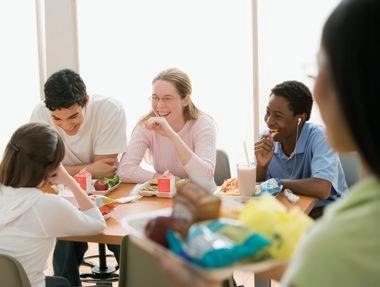
The first day of the new school year has passed, and Maeve heads straight home to call her best friend Ivy. Ivy moved from Melbourne to Brisbane during summer break. She is starting a new school next week. Maeve throws herself onto her bed as the video call connects.
Ivy Hey, you! That’s not the smiling face I was expecting!
Maeve Sorry, but it’s been a bit of a day.
Ivy Tell me! How was school? Did you get a good timetable this year?
Maeve It was alright. I’ve got Mr Steele in English again, so that’s cool. There’s a new science teacher as well; I’m in his chemistry class. I’m not sure about him yet, though.
Ivy It’s hard to tell. But why the long face?
Maeve Like ... It’s weird without you! We used to hang out heaps during breaks and stuff. Lunchtime was especially hard.
Ivy I can imagine. Who did you end up sitting with?
Maeve Well, I saw a group of girls from my art class. I was tossing up whether to sit with them, but they seemed so tight already. Then there were a few from the swim team, but I don’t really know them that well. Lizzie, who lives down the street, was there, but there were no empty seats near her. This guy I knew from band was also there, with an empty seat near him.
Ivy Lots of choices ...
Maeve Yup. But as I was hesitating, this girl came up to me and introduced herself. Her name was Myla. She’s from Sydney and just moved here. She’s in my English too, but I didn’t see her there. We ended up sitting with the girls from art. They were really lovely.
Ivy That sounds awesome. Is she going to replace me as your best friend?
Maeve Never, Ives! No one can replace you! But I think we might have a new little group at least. It was nice to feel like I belonged.
Ivy Of course. It’s kind of obvious that you had quite a few choices, though. Keep an open mind!
Maeve You’re right. New school year, new routines, new friendships. Ivy And you can have more than just one friend. Adding people to your social circle can be kind of cool.
Maeve Speaking of ... How is Brisbane treating you?
Ivy It’s so much warmer here. I’ve spent lots of time on the beach. People seem more laid back here, though. Even the clothes tell me this city has a different feel to it. Even if it is a large city, it feels smaller.
Maeve How are you feeling about your new school year? Have you met any friends yet?
Ivy Not really. I talked to this girl who lives on my street, but she goes to another school. I guess next Monday will be my challenge. Get ready for my panic call after school.
Maeve Good thing we’re only one time zone away! But hopefully you’ll be too busy hanging out with your new friends to call me, right?
Ivy I’ll always make time to call you, even if I hope to make new friends here too.
Maeve Of course! You’re going to make so many friends. Have you decided what you’re going to sign up for?
Ivy Not yet. I’m hoping to join drama, since I’ve been doing that for a few years now. I’ll see what there is to choose from, I guess.
replace ersätta at least åtminstone belong tillhöra, höra hemma obvious uppenbart keep an open mind ha ett öppet sinne
routine rutin, vana social circle umgängeskrets How is X treating you? hur trivs du i X? laid back avslappnad, chill feel känsla, stämning challenge utmaning time zone tidszon hopefully förhoppningsvis busy upptagen make (made, made) time for ta sig tid för, prioritera make friends skaffa vänner decide bestämma sig för sign up for anmäla sig till join gå med i drama teatergrupp
Since Australia is such a large country, it is divided into three main time zones. However, some states and territories choose to use daylight saving time (DST). This means that Australia has five different time zones for part oft he year.

Did you get it?
Paddle
Choose the correct answer.
1. Who lives in Brisbane?
a) Maeve b) Ivy c) Myla
2. Who is at the same school as last year?
a) Maeve b) Ivy c) Myla
3. Who has played in band?
a) Maeve b) Ivy c) Myla
4. Who will not be in Mr Steele’s English class?
a) Maeve b) Ivy c) Myla
5. Who has moved from Melbourne?
a) Maeve b) Ivy c) Myla
6. Who has not started school yet?
a) Maeve b) Ivy c) Myla
Swim
Answer the questions. Use details from the text to support your answers.
7. What can we understand about Myla’s personality from the way she approaches Maeve at lunch?
8. What do Maeve’s comments and actions at lunchtime show about how she feels without Ivy on the first day?
9. What does Maeve’s reaction to Ivy's joke about being replaced as her best friend tell us about their friendship?
10. What does Ivy’s interest in joining drama suggest about how she wants her new life to be?
Dive
Discuss in pairs or small groups.
11. In some countries, extracurricular activities are arranged by the school. In other countries, these activities are arranged by clubs or organisations. Which extracurricular activities can you find in the text? Discuss which of them you have tried or would like to try. Which other extracurricular activities have you heard about?
12. Maeve tries to find new friends based on things that she knows they have in common. Is it important for you that you and your friends have the same hobbies and interests? Why or why not?
Language work
Useful chunks
Here are some good-to-know phrases from the text. Answer the questions with a classmate. Can you think of other ways to use the useful chunks?
head straight home What reasons could there be for you to head straight home after school?
end up doing
down the street
keep an open mind
Why did you end up doing the hobbies you do?
How many people who live down the street from your home do you think you’ll remember in ten years?
In which situations is it important to keep an open mind?
How is X treating you? How is life as a student treating you?
get ready for
How do you get ready for a phone call to a stranger? make time to
Are there things in life you find it hard to make time to do? Which are they?
sign up for Which activities do you want to sign up for next year?
Q&A
Match up the two parts of each question. Answer the questions or discuss them with a classmate.
1 How do you usually A a good school timetable?
2 Do you prefer a challenge B or being spontaneous?
3 How do you make friends C to sign up for the same activities as you?
4 Do you prefer to stay busy D introduce yourself to a stranger?
5 What makes E how do you decide on an activity?
6 Do you prefer strict routines F when you are in a new place?
7 Do you expect your friends G or a more laid back task?
8 If it’s hard to tell what everyone wants to do H or to have a weekend with no plans?

1 on its last legs
2 find one’s feet
3 come to a head
4 an old hand
5 face the fact
Body idioms
Idioms are phrases that don’t mean exactly what the words say. Instead, they have a different meaning. Every language has its own idioms.
1. Match these body idioms with their meanings.
2. Is there a similar saying in your own language?
3. Write five sentences using five of these idioms.
A when a problem or situation gets so serious that you must deal with it
B talk about something that has made you upset or unhappy
C accept something difficult
D very old, likely to break down soon
E someone with a lot of experience
6 get something off one’s chest F very expensive
7 cost an arm and a leg
8 a pain in the neck
True or false?
G someone or something difficult or annoying
H new to a situation and not yet comfortable
Are the following sentences true or false? If a sentence is false, rewrite it to make it correct.
1. If you have heaps of something, you have large amounts of it.
2. If something works perfectly fine, you need to replace it.
3. If someone says ‘I will hopefully get the job’, they have already got the job.
4. Something that belongs to you is yours.
5. If something is obvious, nobody knows about it.
6. The people in a tight friend group usually know each other well.
7. If you make a choice, you decide something.
8. If something costs at least five dollars, it can cost less than five dollars.
9. If something is hard to tell, it is difficult to know the answer.
10. If a teacher says there will be a test tomorrow, students may expect a test.
Speak
Discuss in pairs or small groups.
• Which of the categories below are more or less important for a friendship?
• How much do friends need to have in common?
• Give examples, from your own life and from friendships you know.
QUALITIES kind, honest, funny, etc.
HOBBIES scouts, drawing, basketball, playing the trumpet, cheerleading, etc.
Write
Finding my tribe
LIKES AND DISLIKES music, sports teams, movies, books, etc.
CIRCUMSTANCES living in the same area, being in the same class, your parents being close friends, etc.
Write a short personal reflection about a group where you feel you belong, your ‘tribe’. If you don’t feel that you have a tribe yet, write about the kind of tribe you would like to find.
Explain:
• Who is in your tribe?
• What do you have in common?
• Why do you feel you belong there?
Listen
How was your day?
Listen to the conversation between Myla and her father, Jay. Read the questions before you listen. Feel free to listen more than once if needed.
1. How does Myla feel about her first day at school? Choose the best alternative.
a) She didn’t enjoy it and felt worried.
b) It was neither good nor bad.
c) It went well, and she feels mostly positive.
2. What does Myla say about the teachers at her new school? Write one or two things she mentions.
3. What does Myla say about meeting new people at lunch?
4. What does Jay mean when he says: ‘That’s brave of you’?
a) He admires her for reaching out despite feeling unsure.
b) He thinks she shouldn’t talk to strangers.
c) He thinks it took courage to talk to someone who looked angry.
5. Which activity does Myla want to continue at her new school?
6. What does Myla find out she has in common with one of the girls at lunch?
7. The conversation finished with a meal plan. What is the family having for dinner?

Before you read the text
→ Which places have been important in your life?
→ Is one of these more important to you than others? Why?
→ Some people find the question ‘Where are you from?’ easy. For others, it is more complicated. How would you answer that question?
→ Look at the word list. Are any of the words new to you?
Where Are You From?
The question Where are you from? might seem simple enough. Maybe it is, if your entire family comes from the same place, and you also live there. But how do you answer such a question if your family has roots in several places? Or if your home has been in many different locations during your own lifetime? Listen to four young people discussing their own heritage.
Gabriel, 17
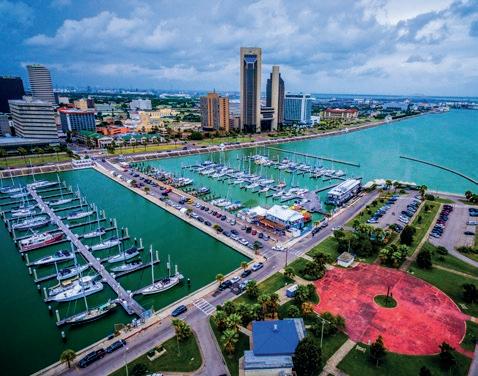
Lives in: Corpus Christi, Texas Family from: Mexico, Texas, and Massachusetts
My name is Gabriel, and it can be pronounced in two very different ways. My mom is typically American and says “Gay-bri-el”. My dad, however, is Mexican. Even though he has lived in the USA for most of his life, there’s a touch of Spanish when he says my name or when someone from his side of the family does. When my abuela says it, the rolling r-sounds make my heritage very clear: “Gabri-el”, stressing the last syllable. I love my abuela, and I love speaking Spanish with her while learning how to cook all those classic Mexican dishes. You haven’t really tried Mexican food until you’ve tried my abuela’s mole!
I’ve noticed that people look at me differently based on a few things. Things like how I style my hair and how I dress seem to matter. If I tame the locks and wear my Dallas Cowboys jersey when I’m out
Text type
• personal account
Language
• standard level
• informal register
• American English
• New Zealand English
entire hela roots ursprung, rötter several flera location plats heritage arv, kulturarv
pronounce uttala however däremot, å andra sidan a touch of ett inslag av abuela (Spanish) mormor/farmor
dish maträtt
mole traditionell mexikansk sås differently annorlunda, på olika sätt tame tämja jersey (sport-)tröja
doubt tvivla på company företag continent kontinent, världsdel attend gå i (skola) language of instruction undervisningsspråk decent skaplig, hygglig confusing förvirrande
matter spela roll maintain upprätthålla keep (kept, kept) in touch hålla kontakten a sense of belonging känsla av samhörighet crucial avgörande
curl lock patterned mönstrad seem to verka consider someone se/betrakta någon som Kiwi nyzeeländare born and raised född och uppvuxen introduce oneself presentera sig mate kompis sibling syskon whānau (Māori) familj more or less mer eller mindre
with my mom, people see me as an American. If I let the curls go wild and dress in a patterned shirt, going out with my dad, people seem to consider me Mexican. Can I be both?
August, 16
Lives in: Lyon, France, but will soon move to Hong Kong Family from: Sweden, the USA and Denmark
As a kid, I lived in Sweden, and I think my mom would say that she’s Swedish, even though her dad is from Denmark. My dad is American, but he moved to Sweden when he met my mom. Although he lived there for about six years, I doubt that he’d say that he’s Swedish.
My dad works for a company with offices in many countries. So far, I have called four cities on three continents home. I’ve always attended international schools, where English is the language of instruction. We’ve lived in Lyon for three years now, and my French is pretty decent. In a few months, we’re moving again, though. Next stop: Hong Kong. Can you understand why the question “Where are you from?” is confusing to me?
For me, quite a few places feel like home, but friendships are what really matter. It takes work to maintain relationships. Many of my friends have also moved around, and for us, keeping in touch online is important. It gives us a sense of belonging to stay updated on each other’s lives and to try to visit each other when possible. Being able to do video calls has been crucial to us. To me, home is a feeling rather than a place.
Mika, 15
Lives in: Rotorua, New Zealand Family from: the Philippines
I’m a Kiwi, born and raised in Rotorua, New Zealand. My parents were also born here, but my grandparents came over from the Philippines. My mum would probably introduce herself as Filipino, but for me, Aotearoa is home.
My best mate, Manaia, and I have basically grown up like siblings. Her whānau is Māori, but I honestly don’t think that makes either of us more or less Kiwi. I’ve joined her family for things like Matariki,

the Māori New Year, and I always tag along to local kapa haka comps when she performs. Manaia has had plenty of Asian style meals at our place, too.
My mum’s adobo – a Filipino chicken dish – makes all my mates feel right at home. We both just feel Kiwi.
For me, being a Kiwi means loving the outdoors. We are always tramping, and sometimes our families get together for a hāngi, which is just the best. A hāngi is a traditional Māori feast, where the food is cooked in the ground on hot rocks. Usually there is lamb, chicken, and heaps of veges – potatoes, pumpkin, taro, cabbage, the lot. Kiwis are generally pretty friendly and super laid-back, and everyone is welcome to join. If you don’t find me at home, I’m probably down at the lake with my mates, and you’re welcome to come along.
Biret, 16
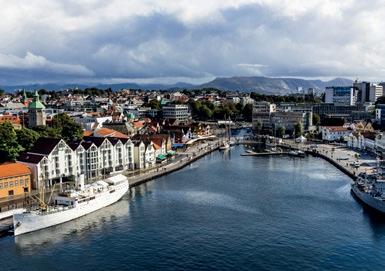
Lives in: Stavanger, Norway
Family from: all over Norway, the Netherlands, and France
My identity is quite a mix, but there is no doubt that I call myself Norwegian. I live in Norway and have lived here all my life. My mom’s family is also Norwegian, and we’re Sámi on my grandma’s side. My dad was born here, too, but his family is from the Netherlands and France. My mom made sure I learned North Sámi as well as Norwegian. It felt important, since it’s a language that has been on the brink of extinction. I try to stick to Sámi when I’m alone with áhkku, my maternal grandmother. It’s hard, but she is very patient, and I love that we share this language. Sometimes she teaches me embroidery for my regalia, and then there really are no Norwegian words to explain what we’re doing.
At school, only a few students study Sámi. When we hang out with other friends, we speak Norwegian, of course, but we’ve actually tried texting a bit in Sámi. At times, there are no words for exactly what we want to say, but we try to be creative, and our teacher helps us. Sometimes we use social media to discuss with other Sámi speakers what to call modern things, like cell phones and smart watches.
tag along haka på, hänga med kapa haka traditionell dans från māori-kulturen comp (competition) tävling perform framträda, uppträda Asian asiatisk tramping vandra feast festmåltid heated uppvärmd veges grönsaker taro taro (rotfrukt) cabbage kål the lot rubbet, allt generally generellt, i allmänhet laid-back avslappnad come along följa med
mix blandning no doubt utan tvekan Norwegian norsk
Sámi samisk on the brink of på gränsen till extinction utrotning stick (stuck, stuck) to hålla sig till áhkku (Northern Sámi) mormor/farmor patient tålmodig embroidery broderi regalia kolt, samisk högtidsdräkt at times ibland
Did you get it?
Paddle
Who is the statement about? Sometimes there is more than one correct answer.
1. They mention a close friend with a different cultural background.
2. Their parents come from two different continents.
3. They are a part of the Indigenous population of their country.
4. They mention speaking a different language with one of their grandparents.
5. They are soon going to move to another country.
6. They have families from at least three different countries.
7. They mention food as an important part of their heritage.
8. They have friends who live in different places around the world.
Swim
Answer the questions. Use details from the text to support your answers.
9. What challenges does Biret mention regarding using the Sámi language?
10. How does August handle the challenges that come with moving around?
11. What are Mika’s and Manaia’s views on where they’re from?
12. Why is Gabriel’s name important?
Dive
Discuss in pairs or small groups.
13. Would you want to live in another country at some point in your life? Why or why not?
14. Thinking about the people in the text and in real life, what reasons could there be to move to a new place?
15. If you were to move to another part of the world, which parts of your culture would you bring with you?
Language work
Useful chunks
Here are some good-to-know phrases from the text. Answer the questions with a classmate. Can you think of other ways to use the useful chunks?
a touch of
If you were to cook something with a touch of Sweden, what would you add?
there is no doubt In which situation is there no doubt that you would help a stranger?
on the brink of Which animal or plant species on the brink of extinction do you think are important to save? Why? (Search online for examples if you are unsure.)
stick to In what kinds of situations is it important to stick to your plan?
tag along
call a place home
If someone you barely know asked you to tag along to an event that you really want to attend, would you? Why or why not?
If you move to a new place, how long do you think it will take for you to call that place home?
be any more or less Are you any more or less confident using English now than you were last year? Why or why not?
keep in touch
a sense of belonging
rather than
What can you do to keep in touch with friends who move away or go to a different school?
What gives you a sense of belonging in a place right now?
Would you like to travel during the winter holidays rather than stay at home? Why or why not?
Antonyms
An antonym is the opposite of a word. Can you find the antonyms for these words? They are all in the word list.
1. survival
2. partial
3. give up
4. rarely
Which word?
5. unleash
6. questionably
7. unimportant
8. nothing
Match the descriptions with the words in the box. Write sentences using the words.
sibling location pronounce at times tag along feast matter Sámi keep in touch consider someone
1. when you say a word out loud
2. a person that you share at least one parent with
3. a gathering of people with lots of food
4. when a person goes somewhere and the other person joins them.
5. a person belonging to the Indigenous people of Norway, Sweden, Finland, or Russia
6. sometimes/now and then
7. a place where something happens
8. when you make an effort to stay connected to someone
9. to be important or relevant
10. when you think of a person in a certain way
Spelling
Find at least five words from the text that have five or more letters. Say the words to a classmate. Can they spell the words correctly? Can they tell you what the words mean?
Speak
In pairs or small groups, read the quotes. Choose one or two. For each quote you choose, discuss:
• What do you think it means, in your own words?
• Do you agree with it? Why or why not?
• Can you connect it to any of the people in the text or to your own life? Explain.
‘The beauty of the world lies in the diversity of its people.’
– Unknown
‘Cultural differences should not separate us from each other, but rather cultural diversity brings a collective strength that can benefit all of humanity.’
– Robert Alan
‘Strength lies in differences, not in similarities.’
– Stephen R. Covey
‘Never judge someone by the way he looks or a book by the way it’s covered; For inside those tattered pages, there’s a lot to be discovered.’
– Stephen Cosgrove
‘A nation’s culture resides in the hearts and in the soul of its people.’
– Mahatma Gandhi
Write
Where am I from?
‘We may have different religions, different languages, different colored skin, but we all belong to one human race.'
– Kofi Annan
Write a short text about where you are from. Try to include ideas and vocabulary from the text. If the topic is sensitive or complex, feel free to keep some things private or make the story simpler.
1C
Before you read the text
→ What world issues do you care about? Why?
→ What or who do you think influences young people’s point of view the most? Is it friends, family, school, or social media?
→ Do you think technology, equality, or the environment will be more important in the future? Why?
→ Look at the word list. Are any of the words new to you?
Text type
• broadcast news report
• reading stamina practice
Language
• standard level
• neutral register
• American English
host vara värd för annual årlig bring (brought, brought) together samla, föra samman belief system livsåskådning prepare förbereda sig the days ahead de kommande dagarna event evenemang convention center mässhall
Youth Forum on Ideas
Sam Good evening. This week, the city of Sacramento is proud to host the Youth Forum on Ideas, an annual event that brings together students, teachers, and local thinkers to talk about belief systems and the important questions in life.
Maureen That’s right, Sam. The organizers of this year’s conference are busy preparing for the days ahead. We have our reporter, Mel Stinson, on the scene outside the Convention Center to see what local teens have to say about the event. How are things looking out there, Mel?
Mel Thanks, Sam and Maureen! Right now, I’m standing here outside the Sacramento City Convention Center with three local teenagers, Scott Baker, Toni Adams, and Amanda Duffy, all of whom are interested in different belief systems. Tell me, what is it you’re looking forward to most this year?
gender kön, genus deal with hantera
Toni As a feminist, I’m interested in most of the discussions. Feminism, which is the belief that all genders should be equal, is an important part of most things people deal with



in real life. Like school, work, and pretty much everything else. In all of these areas, we should have the same rights to do the same jobs for the same pay and have access to the same opportunities.
Mel Of course.
Scott Yeah, and I, I would say I’m a feminist, too, by the way, but I’m really interested in Transhumanism, which is the idea of using computers and technology to improve human capabilities. It’s things like using bionic implants to give us more strength or stability, or increase our running speed.
Mel Oh, interesting!
Amanda Well, those are interesting, and of course, equality is important, but my biggest interest has always been in the environment. I’m hyped up for the discussions about Ecosophy, the idea that people are part of nature and not something separate from it. It really puts all of the others into context, if you ask me.
Mel What do you mean by that?
Amanda I just mean that of course people of all genders should be equal no matter what, but our biggest priority should be taking care of the planet and accepting the responsibility that we have to clean it up. If we don’t, we might not be around anymore. I think we should be looking for ways to work with nature, not against it.
Mel I see what you mean!
Toni I get it, but isn’t that more of a problem for the future?
Scott Sort of, but I get what Amanda’s saying, too. The planet is super important, and we have to do what we can to help it, but maybe Transhumanism could help us find the answers.
Mel How do you mean, Scott?
Scott Well, we’ve been working on the environment for ages. It doesn’t seem like we’re getting anywhere. Maybe if we use the latest technology, like AI and computer modeling, we could finally solve it!
rights rättigheter
access tillgång opportunity möjlighet
improve förbättra capability förmåga strength styrka increase öka equality jämställdhet environment miljö hyped up uppspelt
biggest priority högsta prioritet responsibility ansvar be around finnas kvar
finally äntligen solve lösa
basically i princip what if tänk om suggest föreslå force tvinga develop utveckla
Amanda You mean like using technology to change how we live, not just how we think about nature?
Scott Yeah, exactly. If we can use tech to help us make better decisions, or even improve how our bodies or brains work, why not?
Toni Maybe, but … don’t you think it would be weird to have like a microchip implanted in your brain?
Scott Not at all! We’re basically there already. We already do everything with our phones, so what’s the difference?
Mel Are all teenagers this excited about technology, do you think?
Amanda No! I mean, it’s one thing to have a phone or a tablet with AI, and a different thing to have it inside your skull …
Toni And what if people don’t want one?
Scott I don’t think anyone is suggesting that we force people to get one. Transhumanists like me are just saying we should develop the technology, and if we can use it, then people who want to should be allowed to.
Mel I see, that makes more sense.
unfair orättvis advantage fördel available tillgänglig impact inverkan, effekt mine utvinna, bryta (i gruva) tech habits teknikvanor
mind ha något emot audience publik
lawyer advokat approve samtycka, gå med på decision beslut
Toni But won’t that give some people an unfair advantage?
Scott Maybe, but if it’s available to everybody, then it’s a choice.
Amanda What about the environmental impact of mining all the materials to make the microchips and all that? People’s tech habits already have a huge negative impact on the world.
Scott Well, now we’re just going in circles, but you’re right … I hadn’t thought about the materials.
Mel Yes, well, moving on … what was it that interested you in these philosophies to begin with, if you don’t mind telling our audience?
Toni I have always been a feminist. It doesn’t make sense to me that there ever was discrimination based on gender to begin with. I mean, my grandma was smart and could have been anything she wanted to be. I asked her once why she didn’t become a doctor or a lawyer, and she just said she felt like she didn’t really have that choice when she was young. She said her parents wouldn’t have approved. She wanted my mom to have it better than she did, though, so my mom went to college. After college, she has had a really successful career. So I would say they’re sort of my inspiration, I guess, but I don’t understand how it could have ever been any other way.
Mel Of course. They sound like great people, your mom and grandmother ...
Toni They are! Really, millions of women just like them have fought to be heard, and so I’m proud of that and want to be part of that and help carry on the tradition, you know?
Scott Yeah, I’ve met both of them, too. They’re really cool, actually.
Mel And Scott, what is it that got you interested in transhumanism?
Scott Oh yeah, well … I always liked gadgets and computers and stuff. I’m sort of a proud tech nerd, and I just think science has done so much amazing work, and we already use it to make our lives better. Even just with medicine, we’ve been able to do things that are incredible, so I’m excited to see what more we can do.
Mel And you’re not worried about side effects or things like that?
Scott Not really. I mean, things need to be tested, and they have to be safe, but that’s what humans have always done.
Mel I see. And what about you, Amanda? Were you always interested in the environment?
Amanda Haha … yeah, I think so. I don’t remember it so much, but my mom said I yelled at my kindergarten teacher once for putting her yogurt cup in the trash can instead of recycling it.
Mel Haha. So even then, you were an eco-warrior?
Amanda I guess so … I just think the Earth is the most important thing we have, and we have to do our part to see that it’s around forever, you know?
Mel Of course. Well, there you have it, Sam and Maureen, the voices of the future. These three students show how different ideas – feminism, transhumanism, and ecosophy – all shape the way young people think about life and the world around them. The Youth Forum on Ideas will be held all week at the Sacramento City Convention Center, with discussions and lectures throughout the day. You can check the city of Sacramento’s homepage for the full schedule of events. Now back to you in the studio!
Sam Thanks, Mel! It’s inspiring to hear how much today’s teens care about ideas and about the world they live in.
Maureen Absolutely. Sacramento’s future seems to be in good hands. Now, will you be needing an umbrella if you’re heading out to the conference this week? Let’s send it over to Katie in our weather studio.
kindergarten teacher förskollärare cup bägare recycle återvinna warrior kämpe lecture föreläsning
Did you get it?
Paddle
Answer the questions.
1. What is feminism, according to the text?
2. Which teenagers identify as feminists?
3. What is transhumanism, according to the text?
4. Which teenager identifies as a transhumanist?
5. What is ecosophy according to the text?
6. Which teenager is interested in ecosophy?
Swim
Answer the questions. Use details from the text to support your answers.
7. What does Amanda want Scott to understand about new technology?
8. In what ways do the teenagers’ ideas connect or conflict with each other?
9. What do the reporters and news anchors think about young people attending the Youth Forum on Ideas?
Dive
Discuss in pairs or small groups.
10. Which idea in the text do you personally find most interesting, and why?
11. Which do you think young people would agree with and why?
12. Do you think schools should give students more chances to talk about different ideas and belief systems? Why or why not?
Language work
Useful chunks
Here are some good-to-know phrases from the text. Answer the questions with a classmate. Can you think of other ways to use the useful chunks?
have access to What would you do if you didn’t have access to the internet for a full week?
our biggest priority What do you think should be our biggest priority at this school? what if What if gender stereotypes were reversed? What would you dislike the most?
be allowed to Should people be allowed to choose whether they recycle or not? make sense Does it make sense to you that laws are different in different countries? Why or why not?
an unfair advantage What is an unfair advantage in sports competitions? available to Is it important that education is available to everyone for free? go in circles How can you change the direction of a discussion that goes in circles?
be in good hands When do you feel you are in good hands? Give one example. throughout the day Which adults do you usually meet throughout the day?

Which word?
Match the descriptions with the words in the box. Write sentences using the words.
force develop advantage impact mind audience gadget recycle warrior lecture
1. the people who attend, watch, and/or listen to a performance
2. have an effect or influence on
3. to work to advance or improve something
4. a talk, normally given by a teacher or professor, for students
5. an object that performs a task
6. to reuse or repurpose something so that it can be used again
7. to be against or put off by
8. a benefit, something that gives an edge
9. to make someone do something against their will
10. a person who fights for a cause
True or false?
Are the following sentences true or false? If a sentence is false, rewrite it to make it correct.
1. To host means to be responsible for an event and see that it runs smoothly.
2. Two things that are basically the same have many similarities.
3. If you have the capability to do something, it means you cannot do it.
4. An annual event happens once a month.
5. If you bring together a group of people, it means that you gather them.
6. If you are asked to suggest something, the person asking is not interested in your personal opinion.
7. A person with no responsibility will have to answer questions if something goes wrong.
8. If you solve a problem, it means that the problem no longer exists.
9. If you have to deal with something, it means you need to work on or take care of it.
10. A belief system is an organised set of thoughts about a larger subject, such as the meaning or purpose of life.
Speak
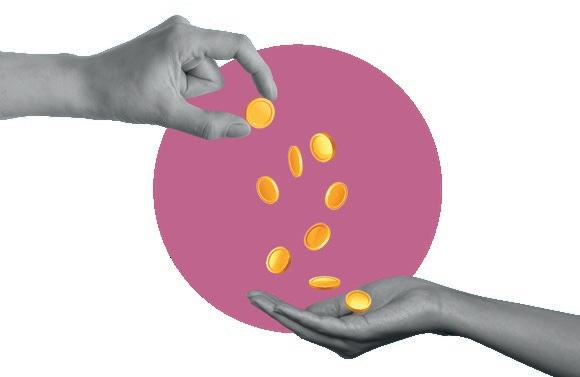
You have been put in charge of a charity that donates money to research in areas that will help people understand their lives better. You have been given 10,000 Swedish crowns that you can give to one or more groups. You can decide to split the money in any way that you choose. Read the descriptions of the groups that are accepting donations and what they plan to do with the money. After reading, discuss the groups with a partner and talk about how you would divide the money.
Stoics in Action
We are a group of people who believe stoicism offers people a great way to look at the world, one that can truly help them in their daily lives. We offer lectures and one-to-one discussions with people who help them see how this philosophy can improve their daily lives. We would love a donation that could help us build a library of books on stoicism that we could let people borrow!
Ecosophers for Tomorrow
The planet needs our help! We’re a dedicated group of scientists, teachers, and community members that are not going to let the environment be destroyed without a fight! Much of our time is spent educating others. We would use the donation in order to set up more school visits to help teach kids about how our choices impact the
The Feminist Initiative
Many young people today are interested in feminism, but there are still many who do not know what it really means. We believe that there is still a lot of work to be done, and we are dedicated to seeing the rights of women protected worldwide. We would like to use your donations to sponsor scholarships for promising young women all over the world so they can continue their education.
Transhumanists for Progress
We believe that the future of humanity will be better than its past, and technology is the way to achieve a world that is better for everyone. There have been so many medical breakthroughs that have greatly improved our quality of life. We would use your donation to research biomedical problems that can be solved with new and exciting tech!
Write
Email a friend
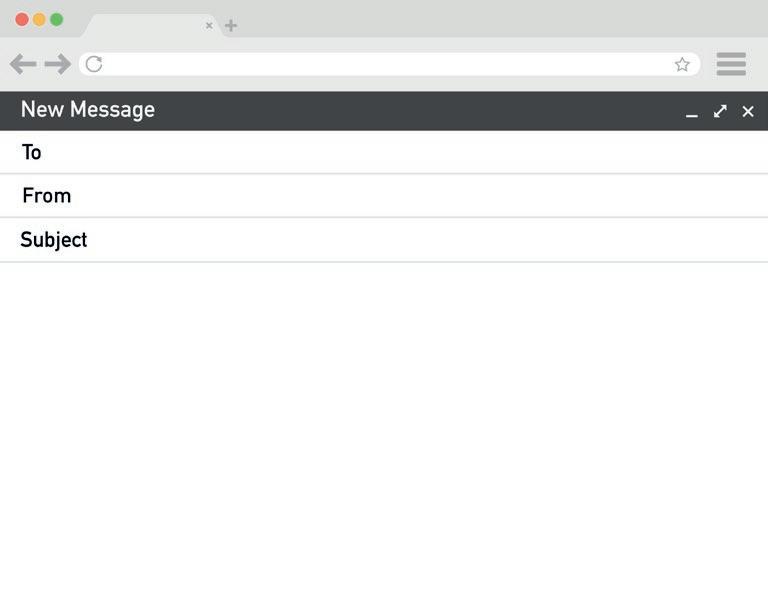
Your classmate has been sick this past week and has written you an email asking about what you have learned at school. They are also interested in hearing what you think about the things you have learned. Read their email below:
Hi!
How are you doing? I’ve been sick all week with a really bad flu. I know we were going to learn about different philosophies and things in school, and I thought they sounded interesting. Could you tell me a little about the things we’ve studied? And what do you think about them, anyway? I don’t want to fall behind, but I also want to know what you think … I have so many questions and not many answers, so it would be fun to discuss them when I get back!
See you later!
Now, write a response to your classmate’s email, including information about the philosophies that you have learned about in this unit (stoicism, feminism, transhumanism, and ecosophy). Remember to include what you think about them as well!
Listen
An ancient outlook in the modern world
Listen to the talk with Dr Laurie Widener at the Youth Forum on Ideas. Read the questions before listening. Feel free to listen more than once if needed.
1. What is the main purpose of Dr Widener's talk?
a) to teach people how to become philosophers
b) to explain the basic ideas of stoicism
c) to compare different religions
d) to talk about Roman history
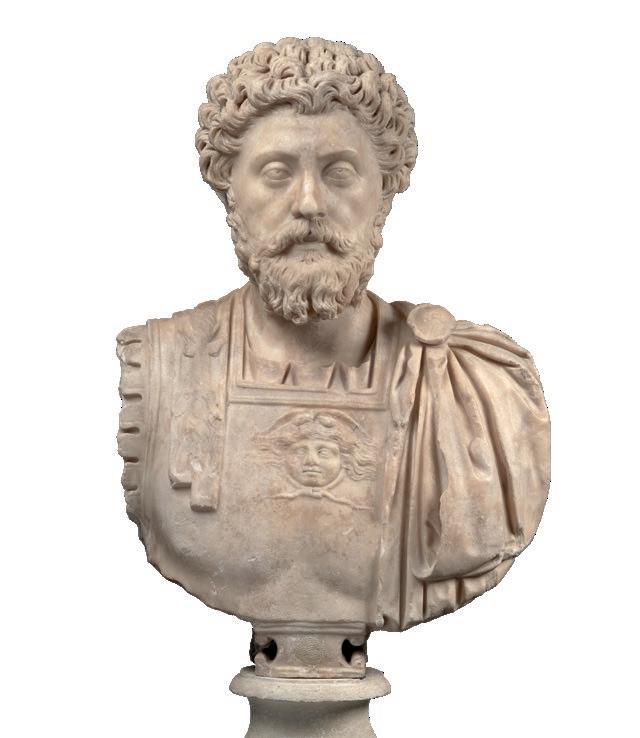
2. Who wrote the book of stoic philosophy, Meditations?
a) Marcus Aurelius
b) Nero
c) Julius Caesar
d) Augustus
3. What is not an important idea in stoicism?
a) being strong and resilient
b) never showing any emotions at all
c) mastering your emotions
d) being logical and reasonable
e) acting in an ethical way
f) becoming rich and powerful
4. In everyday English, a ‘stoic’ person is someone who …
a) cries easily
b) doesn't show much emotion
c) talks a lot
d) laughs constantly
5. Why has stoicism become so popular? Give two reasons.
I wrote Meditations.
IN FOCUS
Language and Identity
The way we use language gives others clues about who we are, where we are from, our age, and even the groups we belong to.
In school, we often learn a 'standard' form of English, the kind that is easily recognised and useful in many situations. But in everyday life, people do not always speak or write in this way. The language people use in everyday situations is often called the vernacular.
Dialects – Language and Place
The way that a large group of people uses a language that sets it apart from the standard form is referred to as a dialect. There are typically small, recognisable changes in grammar, vocabulary, and pronunciation that set a dialect apart from the standard form of the language.
standard English dialect
I am tired. I be tired. (West country)
The car needs washing. The car needs washed. (Scotland)
got a wee bairn
Those are my shoes. Them are my shoes. (Midlands, Northern England)
Vocabulary
standard English dialect
I’ve got nothing to do. I’ve got nowt to do. (Yorkshire)
I’ll have a bread roll, please. I’ll have a cob, please. (Midlands)
She’s got a young child She’s got a wee bairn. (Scotland)
Pronunciation
standard British English dialect
A bottle of water. (/t/ is pronounced) a bo’le of wa’er (/t/ is often a glottal stop (Estuary English)
I am taking a bath. (long a-sound)
I am taking the car. (r is not pronounced)
I am taking a bath. (short a-sound) (Northern England)
I am taking the car. (r is pronounced) (Scotland and West country)
Grammar
Sociolects
– Languages and Social Groups
When we listen to someone speak English, we often make assumptions about them. We might guess their age, where they are from, or the kind of education they have. Sometimes, these guesses are based on accent, but often they come from word choice, grammar, and speaking style. Language that gives clues about a speaker’s social group or background is called a sociolect. If someone uses very formal and complex language, people may think that this person is highly educated or has a high-status job. If someone speaks more informally, uses slang, or non-standard grammar, others may think that this person is less educated, even though this is not necessarily true.
standard English example sociolect
I don’t have any money. Man’s broke. Multicultural London English
I’m a bit short at the moment. Middle-class professional workplace
I ain’t got no money. Working-class vernacular
Try it out
1. Choose one situation below.
Write three versions of what you would say to:
• a close friend
• a teacher
• a stranger
Situation 1
You need help with an assignment you don’t understand.
Code Switching – Changing How We Speak
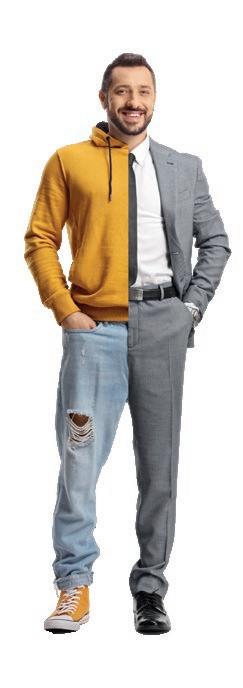
Many people use one style of language in informal settings – for example, chatting with friends in a group chat or at a football match. In formal situations, such as workplace meetings or speaking to a teacher in school, they use a more polite, careful style. Changing the way you speak depending on the situation and audience is called code switching.
neutral informal
That dress is nice. That dress is so cute! That dress is very elegant.
The food is good.
These were some good eats! What a delightful dish!
I don’t understand. Huh? I don’t get it. I’m sorry, I don’t quite understand.
2. Compare your three versions with a classmate. Can you find similarities/ differences and draw anyc onclusions from your findings?
Situation 2
You want to borrow a phone charger.
Situation 3
You are late and need to explain why.
Text type
• article
Language
• challenging level
• neutral register
• British English
replace ersätta nickname smeknamn invent hitta på, skapa adopt ta sig, börja använda pseudonym pseudonym, påhittat namn fictitious påhittad, fiktiv present oneself framställa sig som differently annorlunda explore undersöka influence påverka
public figure offentlig person brand varumärke stage scen entirely helt och hållet acting industry skådespelarbranschen martial arts kampsport dictate styra, bestämma labour union fackförening rule fastställa, bestämma avoid undvika confusion förvirring maiden name flicknamn, kvinnas namn som ogift
Before you read the text
→ Which nicknames have you had in your life. Do you like them?
→ What do people assume about you when they read or hear your name?
→ If you could choose a stage name, what would it be and why?
→ Look at the word list. Are any of the words new to you?
What’s in a Name?
Your name is usually given to you at birth. That name might later be changed or replaced by a nickname. Sometimes, people invent completely new names. Writers, actors, and musicians often adopt pseudonyms –fictitious names – to present themselves differently. This text explores the many reasons why people use different names and how those choices can influence how we see ourselves and how others see us.
Creating a Brand
When becoming a public figure, your personal brand is very important. You want to make sure that people recognise you and remember you. The way you look, the way you dress, and your name are all parts of that brand. On stages around the world, you might listen to singers and musicians who use stage names that are either versions of their official names or entirely different. Bono, 50 Cent, and Young Thug all had completely different names growing up. The same goes for the acting industry, where many names have been changed over time. In the world of wrestling, boxing, and martial arts, athletes such as The Rock and Hulk Hogan became famous under ring names. There are also union rules that dictate possible stage names. The American labour union SAG-AFTRA has ruled that no two members may use the same name. This is done to avoid confusion. When Katheryn Hudson started making a name as a singer, the name was already taken by the actress Kate Hudson. She then decided to use her mother’s maiden name and is today famous worldwide as Katy Perry.
SAG-AFTRA
(the Screen Actors Guild and the American Federation of Television and Radio Artists) is a labour union for actors and musicians. They make sure their members work under fair conditions.
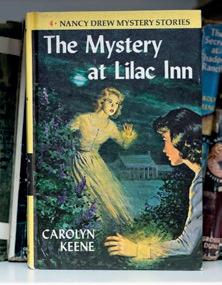
Another way of creating a brand is using a house name, where one pen name is used for texts written by several different people. Many generations have read the books about Nancy Drew, a young detective. 175 novels were published from 1930 to 2003, so one can easily come to the conclusion that a single author could not possibly be behind the name Carolyn Keene. The same strategy has been used more recently in the Warriors series, where four different authors use the shared pen name Erin Hunter.
Staying Private
Though creating a strong brand is important for some, not everyone seeks a life of fame. Some people want a creative career without being recognised whenever they leave the comfort of their home. Several authors and other celebrities have chosen pseudonyms to separate their official personas from their private ones. Some celebrities stay anonymous for a longer time. The British artist Banksy has managed to keep his identity hidden for many years, despite constant speculation about his true identity. The country singer Orville Peck managed to keep his identity a secret for a few years before it was revealed.
In recent decades, it has become increasingly popular to hide behind masks. When Lordi managed to win the Eurovision Song Contest for Finland in 2006, they kept their masks on even during interviews. The Australian singer Sia Furler has admitted to disliking the attention that comes with fame. When her music career took off, she decided not to show her face when performing, instead covering it with creative wigs.
Others choose different names to distance themselves from family members already in the business. Actor Nicolas Coppola wanted to make it on his own, not because of his uncle, the famous director Francis Ford Coppola, and managed quite well under the name Nicolas Cage. The same might be said about writer Joe Hill, who avoided using his full name, Joseph Hillström King, to ensure no one would know that he was the son of famous author Stephen King. When his true identity was revealed in 2007, he had already made a name for himself.
Nancy Drew has been loved by generations of readers, but her name has shifted. In Sweden her name is Kitty, in Finland she goes by Paula and in France she is called Alice Roy.
pen name (författar) pseudonym novel roman publish publicera, ge ut conclusion slutsats recently nyligen though även om comfort trygghet, bekvämlighet celebrity kändis artist konstnär manage lyckas despite trots constant konstant, ständigt speculation spekulation, fundering reveal avslöja in recent decades de senaste årtiondena increasingly mer och mer even även, till och med admit erkänna dislike ogilla attention uppmärksamhet take (took, taken) off ta fart wig peruk in the business i branschen make (made, made) it lyckas director regissör
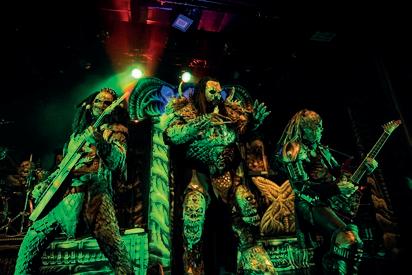
ensure säkerställa make (made, made) a name for oneself skapa sig ett eget namn Lordi, a rock band from Finland.
protect skydda prejudice fördom wonder undra successful framgångsrik keep (kept, kept) behålla
Avoiding Prejudice
While some people change their names to protect their private lives, others do it to avoid prejudice. Many actors, directors, and musicians have changed their names when moving to Hollywood in order to work more freely, if their original names clearly show their cultural or religious backgrounds. Actor Winona Ryder was born Winona Horowitz. The lead singer of the legendary rock band Queen, Freddie Mercury, was born Farrokh Bulsara, and actor Kal Penn’s real name is Kalpen Suresh Modi. These examples make us wonder: would they have become just as successful if they had kept their original names?
female kvinnlig male manlig be supposed to förväntas especially särskilt common vanlig the 19th century 1800-talet how lucky vilken tur otherwise annars classic klassiker Wuthering Heights Svindlande höjder continue fortsätta
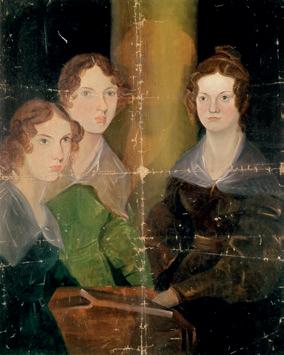
For female writers, using a male pen name was often the only way to have their texts published in a world where women were not supposed to work. This was especially common in the 19th century, when, for example, the Brontë sisters published their novels under the names Currer, Ellis, and Acton Bell. And how lucky that they managed to find a way to publish their work. The world would otherwise not have known classics such as Jane Eyre and Wuthering Heights. The tradition has continued, and some female authors still publish their works under pen names today.
Forming Your Own Identity
apply to gälla dress klä sig shape forma, skapa perceive uppfatta persona roll, profil username användarnamn option valmöjlighet alias alias, antaget namn
label etikett raise questions väcka frågor believe tro
It is not only celebrities who need to make choices about how they present themselves. The same choices apply to us all in some way. The way you dress and the way you present yourself to others say something about you. These choices are all made to shape your identity and how others perceive you. In the digital world, identity becomes even more flexible, allowing you to try out new names and personas online. You often need to choose a username, and there might not even be an option to use your real name. When logging into your favourite online game, your friends there might know you only by your alias, not by your real name.
All these examples show that a name is never just a label. It is part of your identity, shaping how you see yourself and how others see you and raising questions about who you are allowed to be. So, who are you? Who do you want others to believe that you are? And, in the end, what’s really in a name?
Did you get it?
Paddle
True or false? Correct the false sentences.
1. A pseudonym is the name you are given at birth.
2. There are several Hollywood actors with identical names in films.
3. Katy Perry’s real name is Katheryn Hudson.
4. Nancy Drew was an author using a pseudonym.
5. Some people use pseudonyms to stay private.
6. Joe Hill used a pseudonym to avoid the connection to his mother.
7. Prejudice means you treat someone worse because of their background.
8. Lots of female authors have used male names to get published.
Swim
Answer the questions. Use details from the text to support your answers.
9. What do Carolyn Keene and Erin Hunter have in common?
10. What do Nicolas Cage and Joe Hill have in common?
11. What do Banksy, Lordi, and Sia have in common?
12. What do the Brontë sisters and Freddie Mercury have in common?
Dive
Discuss in pairs or small groups.
13. The following names are mentioned in the text. Which ones have you heard of before? Look them up online if nobody in the group knows who they are.
Bono
50 Cent
Young Thug
The Rock
Hulk Hogan
Kate Hudson
Katy Perry
Nancy Drew
Carolyn Keene
Erin Hunter
Banksy
Orville Peck
Lordi
Sia Furler
Francis Ford Coppola
Nicolas Cage
Joe Hill
Stephen King
Winona Ryder
Freddie Mercury
Kal Penn the Brontë sisters
14. Your online profile may contain several different usernames and aliases. Which ones did you choose yourself, and which ones were given to you? If you were to change them today, what would they be?
15. When you create an online avatar, do you make it as similar to your own appearance as possible, or do you change it? Explain your choices.
Language work
Useful chunks
Here are some good-to-know phrases from the text. Answer the questions with a classmate. Can you think of other ways to use the useful chunks?
make a name for oneself
If you want to make a name for yourself, in which field would you like to do so?
come to a conclusion How can listening to other people’s arguments help you come to a better conclusion?
a life of fame Would you like a life of fame? Why or why not?
the comfort of one’s home
What is your favourite thing to do in the comfort of your home?
find a way When a task feels too difficult, how do you usually find a way to continue?
apply to What is a rule in your house that does not apply to everyone?
be an option Would it be an option to change your name in the future? Why or why not? take off Can you think of a trend that suddenly took off? What do you think made it so popular?
Antonyms
An antonym is the opposite of a word. Can you find the antonyms for these words? They are all in the word list.
1. enjoy 2. real
clarity
beginning
Verbs and nouns
A few of the words in the text can be both a verb (an action word like ‘jump’ or ‘write’) and a noun (a thing, like ‘book’ or ‘bicycle’).
Look at the words in the box below and write two sentences for each one.
• In the first sentence, use the word as a noun.
• In the second sentence, use the word as a verb.
Example: cover
noun: Did you see Taylor on the cover of that magazine last week? verb: You should cover your shoulders, the sun is really strong and you don’t want to burn your skin.
Which word?
Match the descriptions with the words in the box. Write sentences using the words.
comfort label brand dislike otherwise brand label prejudice apply to be supposed to reveal comfort perceive novel
1. to see/understand something in a particular way
2. to make something known that was hidden or secret before
3. a negative opinion about a person or group that is formed without knowing them well
4. the name or symbol that shows which company a product comes from
5. if not; in a different situation
6. a long written story about people and events, usually imaginary
7. to be relevant to; to be true for
8. to be expected or believed to be true, often because of rules or plans
9. a feeling of safety, ease, or relief
10. a word, name, or sign used to describe or classify someone or something
Speak
In pairs or small groups, discuss the situations described. Do you recognise the situations? How would you have acted if you encountered something similar?
Jenny plays her favourite online game using a name that suggests that she is a boy. She used to have a more feminine name, but she received unwanted comments and was treated as if she were less skilled than the other players. To avoid this, she changed her username.
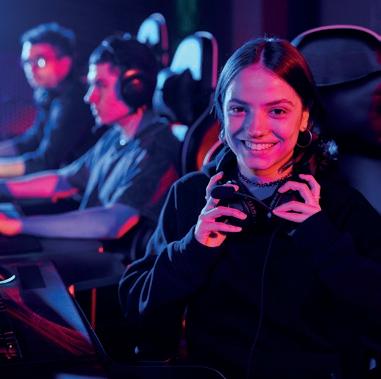
Fajar had been looking for a job for almost a year but had not been invited to any interviews. After changing his name to Fabian, he has suddenly got two interview offers in three weeks.
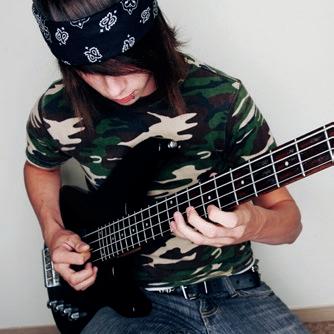
Tom’s teachers would describe him as very shy. What they don’t know is that he is totally different in other settings. He plays bass in a punk band where the members wear masks and use stage names. He loves having these two different identities.
Min-jun has created an avatar that looks nothing like him: a blonde boy with blue eyes. Along with it, he has chosen a very plain username that doesn’t reveal his identity. He was tired of being the only person with Asian heritage in his friend group, so he chose an avatar that looked more like his friends.
When Judy has some time to herself, she loves writing fan fiction and posting it online. She never tells her friends and keeps her true identity hidden. She is proud of her work and her progress as a writer, but this is a secret space that she shares only with online friends.
Write
Name poems
Below are two different poems about names. Choose one of the tasks or do both.
Option 1 – Rewrite the poem
1. Read the poem below.
2. Find the words that rhyme.
3. Clap or tap the rhythm when you read it aloud.
4. Write your own version of the poem.
• Change the names for your own. You can make up nicknames if you don’t have any real ones.
• Exchange underlined words for other people in your life. If you want, you can change more words as well, but try to keep the same rhyming pattern.
The Name in My Heart
My parents said this one’s a Joseph, they looked at my face with a smile.
My grandma claimed I am a Joey, a name that would stick a long while.
My cousin would try to say Jo-Jo, the sounds were so tricky to her.
My friends at school call me J-man, but that’s not the one I prefer.
There’s one name that really is special That has its own place in my heart.
It’s a name that I’ll always remember, it’s the one that I got from the start.
Option 2 – Acrostic poem
1. Write your first name vertically.
2. For each letter, write one adjective or short phrase that describes who you are as a person. Choose words that are true about you, or things you would like to be true about you in the future.
M – morning person
A – artistic
R – reliable
I – intelligent
L – lazy
PROJECT
Your Hero’s Journey
‘You are the hero of your own life story.’
People are natural storytellers. There is something in our nature that loves a great story, and some of our favourites are adventures featuring a hero. The idea that ‘the hero’s journey’ is one of the main types of stories was popularised by Joseph Campbell. Many studies have shown that learning to think of yourself as the hero of your own life, on your very own hero’s journey, is linked to better mental health, more resilience, and a greater sense of meaning in life. We are the main characters in our own lives, so visualising the road to our hopes, goals, and dreams will help us reach them and live with intention.
The Hero’s Journey
What are the most important parts of a hero’s journey?
Origin
The hero begins as who they are, equipped with whatever skills, talents, and passions that they have.
Return
The hero returns to where the journey began. They are no longer the same but a better version of themselves.
The call to action
Something happens, and the hero must begin their journey.
Transformation
The hero overcomes the challenges but is changed by the experience. They often learn something new about themselves.
Challenges to overcome
The hero faces challenges on their journey.
A symbolic death and rebirth
The journey does not go as planned, and the hero faces a deep crisis.
Step 1: Storyboard
Create a poster with two sections by drawing a line down the middle.

Section 1: Fill this area of the poster with details about yourself. Answer the following:
• Who am I?
• What is important to me right now?
• What are my likes and dislikes? What can I not live without?
You can also ask friends and family for their thoughts about who you are. Create a collage of the things that make you who you are.
Section 2: Draw six boxes and label each one with a step from the hero’s journey (Origin, Call to action, Challenges, Death/rebirth, Transformation, and Return). Fill in the boxes with how you imagine your life will go. Consider the following:
• Who will I become?
• What are my goals and dreams for the future?
• What will my life be like in twenty years? Present your storyboard to your teacher, explaining why you chose the things you chose. After the presentation, move on to Step 2.
Step 2: Writing Task
Using the hero’s journey model and your storyboard poster, write a short story featuring yourself as the hero. Using your own beliefs and ideas about yourself and the world, imagine where the journey of your life will take you over the next twenty years.
Begin with who you are today. As a teenager, you are faced with many important life decisions, and the road to your dreams may be long and difficult, but life is calling you to action. It’s waiting for you to do what you will do.
Write about your journey to the version of you that you described on your storyboard.
What challenges will you face? Who will be with you on the way? What obstacles will you overcome? And finally, how will your journey have a happy ending? Remember, you are the hero of your own story.
Write 200–500 words.
Use the writing strategies in the Bonus section to help you plan and revise your writing.
GRAMMAR
Plural Nouns – Substantiv i plural
Plural betyder flertal. I de flesta fall lägger man till -s för att markera plural, men det finns också en rad undantag.
singular plural
substantiv som slutar på konsonant + y → -ies country countries
vissa substantiv som slutar på o → -es potato potatoes
substantiv som slutar med s-ljud: s/sh/ch/x/z → -es kiss peach kisses peaches
Det finns också substantiv som ändras på andra sätt. Dessa kallas oregelbundna. Här är några av de vanligaste exemplen, men det finns fler.
vissa substantiv som slutar på f eller fe → -ves
OBS! De flesta ord som slutar på f eller fe har regelbunden plural: roofs, safes elf elves
substantiv som byter vokal foot feet
substantiv som behåller samma form deer deer
substantiv som ändras på andra sätt person people
Note that fish has two plural forms with two different meanings
Three fish
Three fishes
Uncountable Nouns – Oräknebara substantiv
Vissa substantiv kan inte böjas i plural. De kallas oräknebara substantiv. Verbet böjs i singular, som ordet it.
Några av dessa substantiv är räknebara på svenska, men oräknebara på engelska.
advice The teacher’s advice is always useful.
homework Is your homework already finished?
furniture The furniture in the castle is centuries old.
information Unfortunately, the information in the letter is useless.
money Oh, no! The money is gone!
Om man vill prata om olika mängder använder man inte a eller an, utan fraser som some, much, a little eller a lot of.
advice a piece of advice
homework a lot of homework
furniture a piece of furniture
information a bit of information
money some money
Collective Nouns – Kollektiva substantiv
Kollektiva substantiv är ord som familj eller grupp. De betecknar en grupp människor, djur eller saker. När de syftar på gruppen som helhet böjs verbet i singular. När man refererar till individerna i gruppen böjs verbet i plural. Se exemplen nedan. I amerikansk engelska används ofta singular i båda fallen.
My family is from Chile. My family are fighting over the remote control.
The band is really famous in their home country.
The band all want to eat dinner after the show.
The class is already inside. The class are upset that their test was disturbed by the fire alarm.
It looks like our team is winning. The team are doing their best to defend the goal.
Några andra kollektiva substantiv är: group, staff, crew, audience, company, crowd, government
Nouns Only in Plural – Substantiv endast i plural
Det finns substantiv som på svenska är i singular men på engelska alltid står i plural. Om man vill förtydliga att det handlar om en kan man lägga till a pair of.
Where are the scissors?
Where are my tweezers?
The tongs for the barbecue are on the table. Could you grab them?
We need pliers to fix this part of the machine. Could you get them, please?
Var är saxen?
Var är min pincett?
Grilltången ligger på bordet. Kan du ge mig den?
Vi behöver en tång för att laga den här delen av motorn. Kan du hämta den, tack?
He bought a new pair of trousers for the job interview. Han köpte ett par nya byxor inför anställningsintervjun.
Where are the scissors?
Unit 2 ▶ FROM PASSION TO PAYCHECK


How important do you think a job or career is in a person's life?
Should people choose careers based on money or on what they’re passionate about? Why?
Why do you think jobs and careers can affect a person’s social status or how others see them?
What alternatives are there to traditional work today (for example: working remotely, starting a business, or online jobs)?
Work with a classmate. Together, choose three things that you think are important when choosing a job or career.
Brainstorm jobs that match them
Choose one job that best fits your priorities
Unit Starter
This unit is all about interests and careers, and how people make the choices that impact their working lives. To start you off, here are some questions to discuss with your classmates.
Unit 1
▶ ME, MYSELF AND US
Text type
• article
Language
• advanced level
• formal register
• British English
ink bläck widespread utbredd precious värdefull, betydelsefull alter förändra appearance utseende
claim påstå phenomenon fenomen glacier glaciär
corpse lik, död kropp recover hämta fram, gräva fram analysis (pl. analyses) analys
BCE (before common era) f.v.t. (före vår tideräkning) hike vandring arrow pil modification förändring therapeutic terapeutisk, läkande acupuncture akupunktur, behandling med nålar intend ha för avsikt reduce minska
chisel stämjärn, mejsel soot sot chin haka pattern mönster
Before you read the text
→ Do you know anybody with a tattoo? What do their tattoos symbolise?
→ Would you consider getting a tattoo? Why or why not?
→ If you were to get a tattoo, what would it be and why?
→ Look at the word list. Are any of the words new to you?
More Than Skin Deep
Looking around you, have you ever noticed someone with ink on their skin? Tattoos used to be associated with a small group of people who wore them to tell a story. Today, they are more widespread, but they remain precious to those who wear them. Let’s have a look at the history of tattoos and the reasons people choose to alter their appearance through ink.
Ötzi – A Marked Man
If someone were to claim that tattoos and piercings are modern phenomena, one should tell them about Ötzi. In 1991, a mummified body was found in a glacier in the Alps. As the corpse was recovered, analyses showed that the man lived around the year 3300 BCE. There are many interesting stories about Ötzi, about his hike over the Alps, and how he was murdered with an arrow. But did you know that he not only had pierced ears, but also 61 tattoos? This discovery shows that body modifications have been practised for more than 5,000 years. Ötzi cannot tell us his stories, but his tattoos seem to be located where he was injured. Researchers believe this means that they were done for therapeutic reasons. Perhaps this method was similar to acupuncture, intended to reduce pain with needles.
Tā Moko – Māori Tattoos
Just as Ötzi’s body reveals early tattooing practices in Europe, the Māori of New Zealand developed their own tattoo traditions. Tā moko is the tradition of tattoos in the Māori culture, a tradition that is centuries old. The Māori used bone chisels and ink based on soot and materials from nature to create these markings. A moko is personal, and there are no two alike. Many women carry a moko kauae, where the chin has a personal pattern, while men can have a tattoo that covers the entire face. The moko carries tradition and tells the story of the person
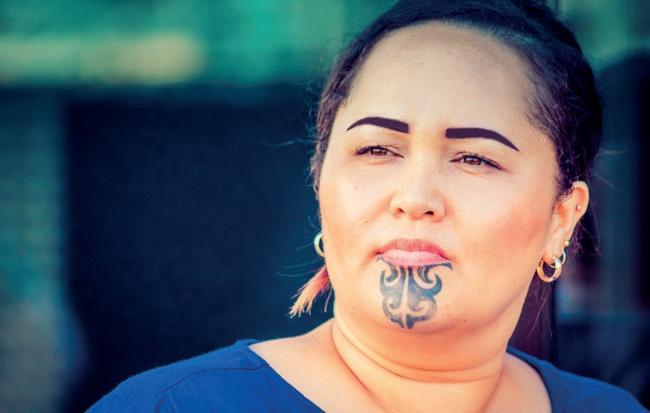
carrying it. There are patterns describing which tribe a person comes from, their rank within the tribe, their profession, details about their family, and much more. A pākehā, a person of European descent, cannot get a moko, as the tradition is reserved for the Māori people.
Inked Sailors
The tradition of marking your skin with ink mainly originates from countries around the Pacific Ocean, the same area that the Māori people came from when they arrived in New Zealand. Among the first Europeans to get tattoos were sailors on expeditions around the globe. The word tattoo itself is said to have been coined during one of James Cook’s voyages in the area, and the first tattoo artists in Europe were former sailors who had learned the skill during their travels. Some sailors got tattoos as talismans, which they believed would protect them in times of need. A pig or a hen would protect them from drowning, and a compass rose would make sure they would always return home. Other symbols were added to tell stories of accomplishments. A swallow on a sailor’s chest is a sign of having sailed 5,000 nautical miles, and a full-rigged ship means you have successfully rounded Cape Horn, the southern tip of South America.
Marks of Punishment or Slavery
Throughout history, tattoos were not always chosen freely. In ancient Rome, tattoos were used to show that someone was a slave or a convicted criminal, and similar practices were common in feudal Japan. In more recent times, the practice of branding someone’s skin to show that they were not free continued.
tribe stam, grupp av människor rank rang, ställning (i en grupp) descent ursprung originate härstamma från the Pacific Ocean Stilla havet expedition expedition, forskningsresa coin mynta (ett ord/uttryck) voyage sjöresa former tidigare talisman talisman, amulett compass rose kompassros accomplishment prestation, bedrift swallow svala (fågel) nautical mile sjömil (1852 m) full-rigged ship fullriggatt skepp
ancient Rome antika Rom convicted criminal dömd brottsling practice sed, bruk feudal feodal brand brännmärka
assign tilldela escape flykt above all framför allt dehumanise avhumanisera the Holocaust förintelsen survivor överlevare
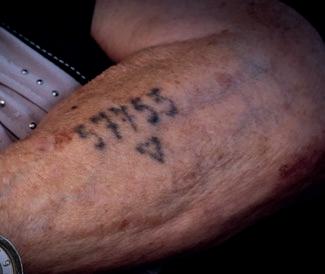
From 1941, some prisoners arriving at the Auschwitz concentration camp were assigned prisoner numbers that were not only marked on their clothing, but also on their skin. Not all prisoners were given tattoos, but these inked numbers tell stories of horror. They were used to organise and identify the prisoners, and to make escape more difficult. Above all, tattoos dehumanised the prisoners. When they no longer had names, they were only numbers. The branded numbers on the arms of Holocaust survivors remain powerful symbols of horror.
Your Story in Ink
neither ... nor varken ... eller purely enbart aesthetic estetisk, konstnärlig
commemorate hedra minnet av spouse make, maka trauma trauma, traumatisk händelse celebrate fira abroad utomlands the odd någon enstaka floral blomsterformad surgical scar operationsärr quite a few ganska många participate delta
Today, tattoos are seen on people who are neither Māori, sailors, nor former prisoners. Some people choose to decorate their skin for purely aesthetic reasons, because they like the way it looks. Others choose to do it to commemorate people in their lives, either children, spouses, or loved ones who have passed away. Grieving the loss of someone close to you can be hard, and to some people, a tattoo can be a way to find closure.
Some people decide on a tattoo to commemorate an important life event. A picture or a few words can be a way to deal with trauma or to celebrate the joys of life. The birth dates of children cover many parents’ bodies, as do symbols of travels around the world, studies abroad, and perhaps the odd picture that seemed like a good idea in one’s youth. A decorative floral tattoo can cover a surgical scar from a breast lost to cancer. You may also notice that quite a few athletes have chosen to show that they have participated in the Olympics by getting a tattoo of the Olympic rings.
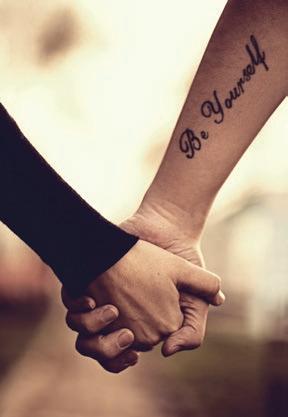
ʻI got my first tattoo on my 18th birthday. I wanted to show my parents that I was an adult now, that I had the right to make my own decisions. It was probably more important to me at the time than I wanted to admit.ʼ
Symbols of Unity
ʻOn my left arm I have a small sun. It's a copy of a necklace that I got from my grandmother. It's a way to keep her with me.ʼ
Using tattoos to show where you are from is still common. Names of locations, flags, or symbols of your home region are popular choices. But tattoos can also express belonging in a broader sense. Many sports fans have shown their love for their favourite team by making a permanent mark on their bodies. Meeting someone with a similar tattoo signals that you belong to the same group, the same tribe, in a modern sense. Members of criminal gangs sometimes use tattoos to mark their identities and their affiliation with certain groups. This is, of course, a rather extreme expression of group belonging, one which can lead to trouble in the wrong company. A classic symbol in modern times is the teardrop, noting that the person has killed someone or is mourning the loss of someone.
ʻWhen I was a teenager, I was a very angry activist. This made me tattoo a black star on my arm. It's still there, but today I have more tattoos and it's not very prominent.ʼ
From Ötzi’s therapeutic markings to modern tattoos covering surgical scars, from Māori heritage to sibling tattoos, from sailors marking their crossings of the equator to athletes celebrating victories, tattoos have always carried meaning. Whether chosen for personal expression or as a sign of community, all tattoos tell stories. Asking someone about their ink may help you get to know them a little better. In that sense, tattoos are truly more than skin deep.
Work with the text
1. Find at least three historical contexts in which tattoos have been used. Explain how tattoos were used in each context.
2. Find at least three modern reasons for getting a tattoo.
3. Summarise the text in five sentences.
unity sammanhållning location plats belonging samhörighet
affiliation tillhörighet, koppling mourn sörja prominent iögonfallande loss förlust
carry meaning bära på ett budskap, ha en innebörd whether oavsett om community gemenskap
4. Pick ten new words and use them in sentences to show you understand their meaning.
Language work
Useful chunks
Here are some good-to-know phrases from the text. Write down an answer to each question. Write at least one full sentence for each question. For the last two chunks, there are no questions. Write questions of your own using the phrases.
be associated with How do you feel about being associated with your family? arrive in
What is the first thing you do when you arrive in a new city? in times of need
How can you help others in times of need? in recent times
What is an invention that has been made in recent times?
neither – nor If you could spend New Year's Eve with neither your family nor your friends, how would you spend it? for X reasons Is it ever okay to lie for personal reasons? find closure
When a relationship has ended, how can you find closure and move on? lead to trouble carry meaning
Pair up
Match each sentence beginning with the correct ending to form a complete sentence.
1 Tattoos became widespread A after the surgical scar healed.
2 The ring was considered precious B the victims of the Holocaust
3 Her appearance changed noticeably C and used a chisel to shape the stone.
4 The artist picked up a hammer D and the traditions passed down through generations.
5 After the fire, the ceiling was blackened E and showed affiliation with the group.
6 She was proud of her descent F in many cultures around the world
7 The memorial was built to commemorate G because it had been passed down through generations.
8 Wearing the same symbol created unity H with thick layers of soot.
Language register
Adapting the style of the language to the context is important in many situations. The text below, about piercings, is very informal. Try to rewrite it in a style that matches the main text, More Than Skin Deep. When you are done, ask your teacher to read your text.
Honestly, getting your ears pierced is no big deal at all anymore – you see earrings everywhere and nobody really cares. But piercings definitely aren’t some new trend. People were doing this stuff thousands of years ago, like way back in ancient cities such as Ur, and in places like India and ancient Greece. Nose piercings have also been around
forever and even show up in old religious texts and traditions. And then there are lip piercings, which today seem pretty normal, but in some cultures people actually stretched their lips with plates or plugs – sometimes to seriously huge sizes. So yeah, body piercings might feel modern, but humans have clearly been into them for a very long time.
Write
What the ink tells us
Choose a tattoo on someone you know or on a famous person. Describe the tattoo and explain what you think it suggests about the person. Discuss how this detail influences your impression of them – and how reliable that impression might be.
Phrases to help you:
Making careful interpretations
It might suggest ... It seems to imply ...
It could indicate that ...
It may reflect ...
It appears to represent ...
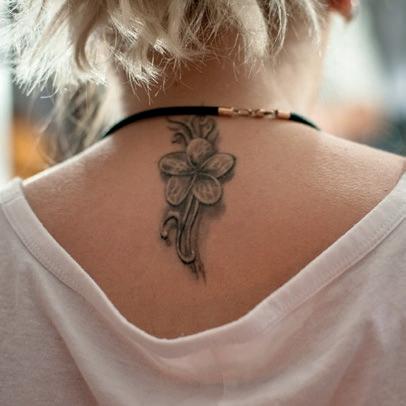
Expressing uncertainty Linking the tattoo to your impression of the person
I might be wrong, but ...
This is only an assumption, but ... It is difficult to know for certain ... Without knowing the full story, it’s hard to say if ...
This affects how I see the person, because ...
It gives the impression that ...
It makes the person seem ... It changes my opinion of the person because ...
VOICE S – ger alla en röst!
VOICES 7–9 är ett basläromedel för högstadiet, som hjälper alla elever att utveckla sina kunskaper i engelska språket. Innehållet har en tydlig struktur, är inkluderande och lätt att anpassa.
I VOICES får vi lyssna på andras röster genom att läsa, lyssna på och lära känna människor från olika delar av världen. Vi lär oss också att använda våra egna röster för att diskutera olika ämnen och åsikter, dela berättelser, ställa frågor och stärka det engelska språket.
Årskurs 7 fokuserar på Storbritannien och Irland, i årskurs 8 besöker vi olika delar av Nord- och Centralamerika, och i årskurs 9 öppnar vi upp för resten av den engelskspråkiga världen.
Varje årskurs av VOICES består av
• Coursebook – texter och övningar som täcker hela kursplanen.
• Workbook – digital elevträning, mängdträning i engelska och extra hörövningar.
• Digitalt lärarstöd – färdighetsprov, hörövningar, individanpassade uppgifter och lekfulla aktiviteter.