Celebrating 40 years of the Great Glebe Garage Sale!
By Sam Woods
Spring is in the air, and that means it’s almost time for one of Ottawa’s most beloved events, the Great Glebe Garage Sale. And while City officials have refused to issue a permit this year because of safety concerns (more on that later), do not fear, the event will go ahead as usual!
So, mark your calendars for Saturday, May 23, from 8 a.m. to 2 p.m. A community staple since its creation in 1986 by the Glebe Community Association, this neighbourhood-wide event has grown into a much-anticipated tradition for residents and visitors alike that transforms the Glebe into a bustling hub of treasure hunters, bargain seekers and community spirit!
Whether you’re a first-time visitor or a seasoned veteran, the Great Glebe Garage Sale (together with the Bank Street sidewalk sale) has something for everyone. This annual event invites residents throughout the Glebe to set up garage sales on their properties, creating a sprawling, sidewalk-adjacent marketplace filled with everything from vintage furniture and retro clothes to books, children’s toys, kitchen gadgets and hidden trinkets you didn’t know you needed!
As coordinator (aka Mayor) of this cherished event, I’m thrilled to see the community come together once again for a day of fun, reuse and fundraising. Not only is it a fantastic opportunity to declutter your space and find bargains, it also supports a great cause. Participants are encouraged to donate a portion of their proceeds (10 per cent) to the Ottawa Food Bank, using garage sale earnings to give back to those in need.
Now, for those who enjoy a bit of drama and intrigue (I know I do), here’s something for you. For the past two years, I have engaged in friendly sparring with the City of Ottawa to try to obtain a permit for the event to make it as safe as possible. Traffic Management has been a consistent roadblock in this process. Their stance is that our event is fundamentally unsafe due to the high volume of attendees on foot, bike and in vehicles, all interacting at once.
Last year, they concocted a parking-ban plan to try to mitigate vehicle/pedestrian interactions, but what was enacted on the day was very different from what had been communicated, and the last-minute switch made it impossible for me to communicate the plan to Glebe residents. This year, after months of work and a boatload of emails trying to find a workable compromise that would quell Traffic
Management’s concerns while maintaining the integrity of the event, Traffic Management rejected my engagement, and the Great Glebe Garage Sale was not issued a permit for 2026. Surprisingly, this changes nothing about our community’s ability to host the event as usual. The removal of the Glebe Community Association from the discussion disappointingly means that we have lost our agency to advocate on behalf of residents about potential parking restrictions. Moments before this issue of the Glebe Report went to print, I received the City’s traffic plan thanks to the help of the Councillor’s office. The current plan is that Second and Fourth avenues will be closed during the event between Lyon and O’Connor, and that Glebe, First and Third avenues may be closed in response to traffic on the day of. There will also be sweeping parking restrictions throughout the Glebe. The GCA will provide more details via our e-newsletter, which you can sign up for at glebeca.ca. In the meantime, however, here are a few tips and guidelines:
1. Private Property Only, Please.
To keep the event safe, orderly and respectful of our public spaces, all sales must be held exclusively on private property. That means in front yards, driveways and garages, but no selling on the sidewalks or streets. This helps ensure pedestrian safety and prevents congestion that could interfere with emergency access to the neighbourhood.
2. Thinking of Selling Food? Get a Permit First!
If you’re planning to sell any type of food or drink, you must obtain a food
vendor permit from the City of Ottawa. This ensures public health standards are met and keeps everyone safe while enjoying their snacks.
3. Plan Ahead for Cleanup
After the hustle and bustle of sale day, it’s up to residents to dispose responsibly of any unsold items. We encourage everyone to plan ahead – donate reusable goods to local charities, post leftovers in the Buy Nothing Facebook group or save items for next year’s sale. Let’s keep the Glebe clean and clutter-free and reduce landfill waste while we’re at it.
Year after year, we’ve seen people of all ages, backgrounds and neighbourhoods come together for a day that promotes sustainability through reuse, supports local causes like the Ottawa Food Bank and builds lasting connections through friendly exchange and the exhilaration of snagging a deal.
If you’re new to the Glebe, this is the perfect day to get to know your neighbours. And, if you’ve lived here for years, it’s a chance to celebrate what makes the Glebe such a special place to call home.
On behalf of the Glebe Community Association, thank you for helping make the Great Glebe Garage Sale a continued success and a highlight of our year. I can’t wait to see what treasures await us all this year and will see you out there, rain or shine! I’ll be the one in the “Garage Sale Mayor” sash.
Sam Woods is the coordinator of the Great Glebe Garage Sale on behalf of the Glebe Community Association. He is a little miffed at Traffic Management right now but will cool off eventually.
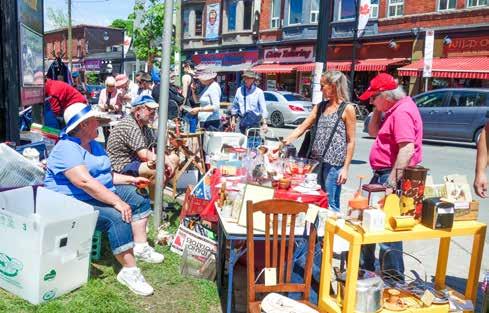
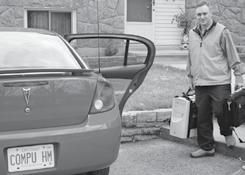
The Great Glebe Garage Sale is a perfect opportunity to meet neighbours, hunt bargains and be environmentally virtuous, all in one go! This year’s garage sale celebrates 40 years on May 23!
PHOTO: ED KUCERAK
CKCU to broadcast from the Great Glebe Garage on May 23
By Chris White
The volunteers and staff at CKCU-FM are gearing up to broadcast live on radio and video from the Great Glebe Garage Sale on Saturday, May 23. Bargain hunters passing by Fourth Avenue Baptist Church will have the opportunity to see and hear performances and interviews featured on three much-loved CKCU programs: Canadian Spaces, The Back 40 and The Groove
Founded by the late Chopper McKinnon in 1980, Canadian Spaces is Canada’s longest-running folk/roots radio program. McKinnon was a Glebe resident who lived in an apartment above the Wild Oat for many years. When he started the radio show and announced that it would feature Canadian music almost exclusively, many people told him with great authority that he would run out of music within three months. It turns out that they were wrong! More than 45 years later, the show is going strong and is in no danger of running out of amazing music created by musicians locally, regionally and nationally. Countless musicians have been featured on the show over the years, and many have cited the show as a key factor in their career development, including Stan Rogers, Jane Siberry, Laura Smith, Stephen Fearing, Lynn Miles and Lynne Hanson.
Year after year, the show’s loyal listeners, known as the Space Cadets, have made Canadian Spaces the top money earner in CKCU’s annual funding drive. In 1993, the strength of that support motivated CKCU station manager Max Wallace and me to create the Ottawa Folk Festival, a beautiful
community-oriented event that is remembered with great fondness by those who attended it. McKinnon was very supportive of the festival from the outset and was one of the main-stage hosts for many years.
McKinnon received citations from the Prime Minister, the Governor General and the Province of Ontario for his work on the show, and he received the Helen Verger Award in 1999 in recognition of his “significant, sustained contributions to folk/roots music in Canada.” In 2000 and again 2012, the City of Ottawa officially proclaimed Chopper McKinnon Day in his honour. When McKinnon passed away in 2013, I began producing and hosting the show. A few years ago, I invited several other CKCU volunteers to share the duties, and the Canadian Spaces Hosting Collective was born. The Folk Alliance International organization inducted McKinnon into the Folk Radio Hall of Fame posthumously in 2021.
The live broadcast from the Great Glebe Garage and sidewalk sale is being supported by the Glebe BIA and a number of CKCU volunteers, both on stage and behind the scenes. Drop by the performance tent at Bank and Fourth on May 23 between 10 a.m. and 3 p.m. to hear some excellent live music, pick up some CKCU goodies and say hello to some of your favourite CKCU personalities. If you can’t be there in person, you can listen to the broadcast on CKCU FM 93.1 and www.ckcufm.com or watch the videostream live or later on CKCU’s YouTube channel.
Glebe resident Chris White is a producer, host and co-op student supervisor at CKCU.
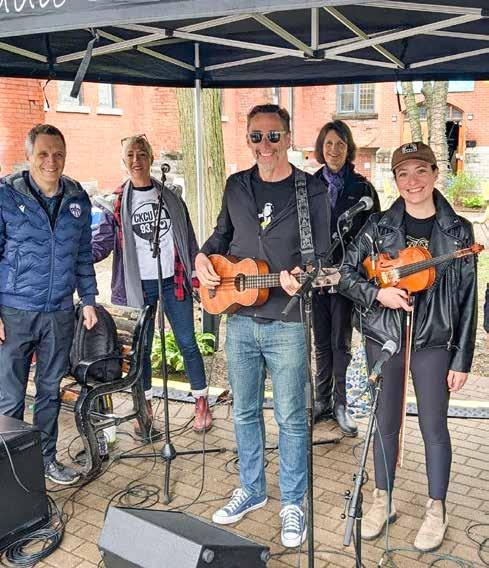
CKCU broadcast from Glebe Garage Sale in 2025. From left, Mark Sutcliffe, Anne-Marie Brugger, Jason Matte, Carolyn Sutherland, Natalie Cross PHOTO: CHRIS WHITE
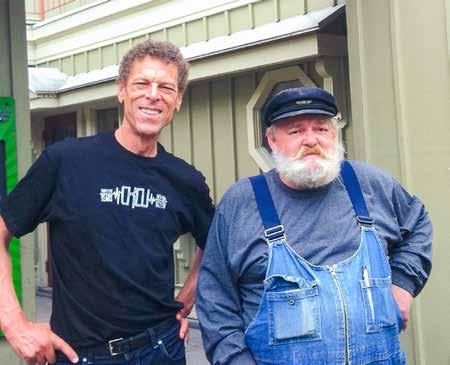
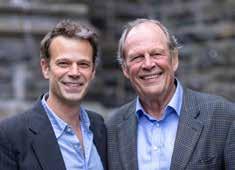
Author Chris White (left) and Chopper McKinnon at Irene’s Pub in 2011
The Youngest entrepreneurs in the Glebe are open for business
By Leslie Siu
A young entrepreneur’s lab attracts a certain kind of kid.
On Day One, I asked every kid the same question: “Why are you here?” Not to break the ice, but to find out if they already knew what problem they wanted to solve. They did.
What struck me wasn’t just that they had ideas; it was how closely they were paying attention to their neighbourhood, community and the small gaps and unmet needs hiding in plain sight on Glebe streets. The businesses they built didn’t come from a textbook; they came from looking around and thinking someone should do something about that. Why not me?
This spring, five of them are about to find out if they were right.
Young Entrepreneurs Lab is a 14-week program run through GNAG (Glebe Neighbourhood Activities Group), where students in grades 6 through 9 build real businesses from scratch. We run through ideation, brand, prototype, pitch, marketing and launch. The course wraps with a community pitch event in front of local leaders and on May 23, all five businesses sell to the public for the first time at the Great Glebe Garage Sale. Special thanks to GNAG’s Erica Nowlan, youth programs manager, and Paul O’Donnell, director of recreation, for their support in making this program possible.
Trapdoor Comic Books – Henry and Harison, Grade 6, Mutchmor
Henry and Harison didn’t just want to sell comic books, they wanted to curate them. Two self-described afficionados who grew up loving the medium, they spent weeks handpicking what they thought the Glebe neighbourhood would want to read. The business idea came from something simpler though – kids their age glued to screens. Comic books, they figured, were the perfect fix. Something you hold in your hands, something that pulls you in without a battery. Trapdoor Comic Books was born from that conviction.
YouTube @bigbeaver
Mermaid Tears – Parker, Grade 6, Mutchmor
Did you know that sea glass is sometimes called mermaid tears? The ocean takes a broken piece of glass, tumbles it until it is smooth and frosted, then washes it onto the beach as something beautiful. No two pieces are the same – different colours, shapes and sizes, each one carrying its own quiet history. Parker’s jewellery line, Mermaid Tears, is built around that idea. Every piece is unique, and every piece is meant to make the person wearing it feel connected to the ocean, like they are carrying a small piece of it with them.
glebemermaidtears@gmail.com
Cloud Candy – Ella, Grade 9, Lisgar
Cotton candy has been around since the late 1800s, spun fresh at fairs and handed to you on the spot. Ella noticed that somewhere along the way, that magic got lost, replaced by stale puffs in plastic tubs sitting on store shelves for months. But she also noticed something else: the
look on a child’s face when they watch it being made in front of them. That wonder, she says, is exactly what it must have felt like the first time, a century ago in 1897. Cloud Candy brings that back, with fresh spun flavours like candy cane, maple syrup and seasonal combinations Ella has been quietly perfecting all winter. Her sights are already set beyond the Garage Sale, looking towards birthdays, festivals and other events. Cotton candy, the way it was always meant to be but with a fresh and unique twist.
@cloudcandyottawa cloudcandyottawa@gmail.com
Yard Rats – Patrick and Nicolas, Grade 6, Mutchmor
Patrick and Nico have been doing yard work for friends and family for a while now. This winter they decided to make it official. Yard Rats offers seasonal yard services to neighbours across the Glebe, and their pitch is straightforward: reliable, community-minded, run by two kids who want to do good work. They’re also honest about the other motivation. Last summer they were bored as they’re getting a little old for most camps, so they wanted their first real job to mean something to the neighbourhood they grew up in.
To book Yard Rats: glebeyardrats@gmail.com
Helping Hands — Kempton, Grade 8
If you’ve met Kempton, you understand why he started a non-profit. He is the kind of person who holds the door open without thinking about it, who makes every conversation feel like the most interesting one you’ve had all day. He looked around his neighbourhood and saw two groups of people who needed each other: on one hand, residents and local charities who needed volunteers; on the other, high school students looking to complete their mandatory 40 hours of community service. Helping Hands connects them. It’s a free service that matches neighbours and organizations in need with local volunteers who want to give back.
To connect with Helping Hands: kempton.rd.leslie@gmail.com or linkedin.com/in/kempton-leslie-79b069402
What struck me most wasn’t the businesses, it was the kids themselves. They showed up every week laughing, debating, pushing each other’s ideas further. One of my favourite things about the Glebe is how it shows up for itself. What I watched this winter was that same spirit, just smaller and louder and funnier. Seven kids who looked at their neighbourhood and decided it needed a comic book shop, a jewellery line, fresh cotton candy, a yard service and a nonprofit. Glebe kids, rooting for Glebe kids. Feels like the neighbourhood is going to be just fine.
Leslie Siu is a Clio award-winning chief marketing officer and serial entrepreneur who calls the Glebe home after living in New York for two decades. She runs Young Entrepreneurs Lab through GNAG, where she wanted to invest in the community she moved back for.
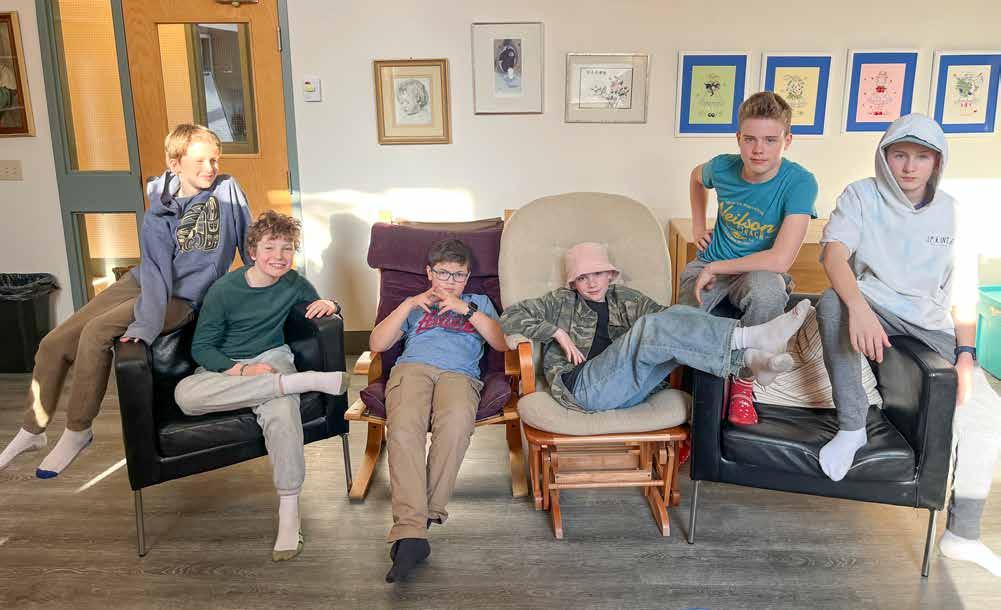
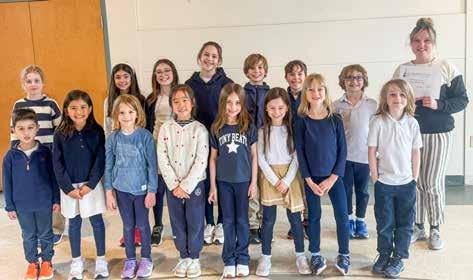
Look for these young entrepreneurs selling their wares at the Great Glebe Garage Sale on May 23. From left: Patrick, Parker, Harison, Henry, Kempton and Nicolas. Missing: Ella. PHOTO: LESLIE SIU
A Glimpse of the Glebe
Contributors this month Editorial
CHRISTINA ANASTASSOPOULOS
IVA APOSTOLOVA
JOHN ANDERSON
LUCY BOTTOMLEY
MARY LEE BRAGG
ROB BRANDON
CLIVE BRANSON
ANNA CHERNUSHENKO
DAVID CHERNUSHENKO
LESLIE COLE
JUNE CREELMAN
JOHN CRUMP
JOHN DANCE
CLIVE DOUCET
ELLYN DUKE WATSON
CHRISTINE EDMONDS
JIIRE FOWLER
GUILLAUME GAILLARD
TAMARA GLAVINOVIC
CHARLOTTE HALSTEAD
JULIE IRETON
MAUREEN KORP
ED KUCERAK
COOPER LOVE
CATHERINE MCKENNEY
SHAWN MENARD
SARA MIZZANOJEHDEHI
ANANT NAGPUR
YASIR NAQVI
SAVANNAH PATTERSON
MATTHEW PEARSON
NICOLE PENNER
BIANCA PICCIANO NICOLETTE PILYPAITIS
GENNY PUGH
JOSH RACHLIS
SUE REIVE
MARISA ROMANO
SARAH ROUTLIFFE
STEPH SCHINKEL
LESLIE SIU
PETER SIMPSON
SUE STEFKO
BEN SYPOSZ
JOHN SACZEPANIAK
KYLIE TAGGART
ELSPETH TORY
CHRIS WHITE
CECILE WILSON
TONY WOHLFARTH
SAM WOODS
ZEUS
The summer of ’26
It’s all beginning again – spring leads to summer, a long magical interlude of easy times, flourishing gardens, a distinct lack of snow boots and coats and, of course, an always-needed break from work and school.
With the coming of spring, optimism returns. We are able to reconnect with nature without donning our armour of winter gear and exposing ourselves to elemental dangers and discomforts. The feeling of release is palpable.
In these times of global disarray and economic threats, when all the old certainties seem to have disappeared, it is a relief to realize that nature renews itself just as it always has. Yes, there may be fewer birds, fewer bats, some invasive species encroaching, but on
the whole, the earth has survived. And we with it.
The Glebe is endowed with leafy, shaded streets and bountiful gardens, and it is surrounded by water – Dow’s Lake, the Canal, Brown’s Inlet, Patterson’s Creek. One could almost say a paradise on earth. Let us take it all in, soak it up as best we can. Go out into the sunshine and the rain, smell the flowers, smell the Farm. Greet our neighbours after our long, cold seclusion. Will we look back on the summer of 2026 as a golden summer? Like Bryan Adams, will we sing “those were the best days of my life?”
It could be thus. Let optimism reign.
–Liz McKeen
Established in 1973, the Glebe Report, published by the Glebe Report Association, is a monthly not-forprofit community newspaper with a circulation of 7,500 copies It is delivered free to Glebe homes and businesses Advertising from merchants in the Glebe and elsewhere pays all its costs, and the paper receives no government grants or direct subsidies The Glebe Report is made available at select locations such as the Glebe Community Centre, the Old Ottawa South Community Centre and Brewer Pool, and is printed by Transcontinental Printing www.glebereport.ca
PROOFREADERS................ Martha Bowers, Jennifer D’Costa
AREA CAPTAINS................. Martha Bowers, Bob Brocklebank, Judy Field, Deb Hogan & Dave Yurach, Lynn & Dave Johnston, Elena Kastritsa, Brenda Perras, Julie Stephens, Della Wilkinson
The Glebe Report strives to be inclusive and to represent the full diversity of the community we serve.
Ackerman-Katz Family, Jennie Aliman, Lawrence Ambler, Nico Arabackyj, Aubry family, Alessandra & Stefania Bartucci, Selena Beattie, Adrian Becklumb, Joanne Benoit, Carolyn Best, Daisy & Nettie Bonsall, Martha Bowers, Bowie family, Bridgett family, Bob Brocklebank, Ben and Oliver Campbell-Rosser, Nico Cauchi, Bill Congdon, Chiu-Panczyk Family, Sebastian, Cameron & Anna Cino, Henry, Abigail and Matthew Campbell, Claypool Family, JJ Comptois, June Creelman, Marni Crossley, Olivia, Maisy and Mark Dance, Dawson family, Richard DesRochers, Davies Family, Roslyn Demarsh, Marilyn Deschamps, Diekmeyer-Bastianon family, Dingle family, Delia Elkin, Patrick Farley, James & Oliver Frank, Judy Field, Federico Family, The Foo Family, Liane Gallop, Joann Garbig, Gleeson Family, Camilo Velez Gorman, Barbara Greenwood, Marjolein Groenevelt, Ryleigh and Hayden Hendy, Oliver, Martin, Sarah & Simon Hicks, Cheryle Hothersall, Jennifer Humphries, Sandiso Johnston, Tani, Pete & Bryce Nisbet-Jones, Jungclaus Family, Elena Kastritsa, Harrow and Rhodes Kelterborn, Michael Khare, Lambert family, Lisa, Fenton & Cora Hui Litster, Leith and Lulu Lambert, Kathleen Larocque, Brams and Jane Leswick, Alison Lobsinger, Aanika, Jaiden and Vinay Lodha, Andy Lunney, Vanessa Lyon, Pat Marshall, Catherine McArthur, Ian McKercher, John and Helen Marsland, Matthew McLinton, Josephine & Elise Meloche, Julie Monaghan, Vivian Moulds, Karen Mount, Diane Munier, Benjamin MunterRecto, Rafi & Ellie Naqvi, Imogen & Maddy North, Xavier and Heath Nuss, Sachiko Okuda, Nicholas & Reuben Ott, Matteo and Adriano Padoin-Castillo, Finn Pedersen, Miles PersohnHough, Brenda Perras, Brenda Quinlan, Annabel and Joseph Quon, Kalia and Elijah Quon, Beatrice Raffoul, Frederick and Kasper Raji Kermany, Bruce Rayfuse, Kate Reekie, Thomas Reevely, Mary & Steve Reid, Jacqueline Reilly-King, Benny and Toby Rivers, Anna Roper, Frank Schreiner, Short family, Cathy Simons, Andrew Soares, Heidi Stelzl, Stephenson family, Elsie Sutherland, Cameron & Quinn Swords, Ruth Swyers, Tomlin Boys, John & Maggie Thomson, Tom Trottier, Trudeau family, Will, Georgie & Blaire Turner, Zosia Vanderveen, Carina and Matteo Vella, Nick Walker, Vanessa Wen, Paul Wernick, Hope, Jax and Ash Wilson, Howard & Elizabeth Wong, Berkan Yazici, Martin Zak.
WELCOME TO:
Gleeson Family Benny and Toby Rivers
Tulips at Lansdowne last year (2025) PHOTO: LUCY BOTTOMLEY
Lansdowne lament from afar
Editor, Glebe Report
How sad I was to read that Lansdowne 2.0 has been approved. It has taken the developers a long time to get what they wanted, a commercial development instead of a city park, but they have finally got it, with the added bonus of the city wrapping the whole deal up with even more gold than Lansdowne 1.0 got.
Does anyone besides me remember “revenue neutral?” At the time, the developers said they regarded taking over Lansdowne as a public service. All they wanted was a small eight-percent profit. They were kindly offering to take the park off the city’s hands and give it back a secure revenue stream from mall rents, residences and sport teams. No more unbearable costs for the city. As I recall, at the time, when it was still a public park, it cost the city about a million dollars a year for everything. According to the city auditor, the “revenue neutral” deal for Lansdowne 1.0 cost the city about $300 million. Lansdowne 2.0 will cost $160 million for a smaller rink than is there now. This is about three times the cost of comparable rinks built in Canada. In its entirety, Lansdowne 2.0 will be 10 years of pure gold for the developers, costing Ottawa’s residents upwards of half a billion. In return, Ottawa loses once and for all the only Exhibition Park it ever had – dating back to 1868. I may be far away, but it still makes me sick to my stomach.
Clive Doucet Cape Breton, Nova Scotia Former councillor, Capital Ward, 1997-2010
Parking counterpoint
Editor, Glebe Report
Re: “Parking predicament,” Glebe Report, April 2026
I just read your “Parking predicament,” and I was struck by the second paragraph, where you write that many Bank Street businesses believe many of their customers come by car. The Glebe BIA actually commissioned a Retail Market and Gap Analysis study last year, which showed that 14 per cent of their customers drove there, but businesses assumed 94 per cent did. Those figures certainly provide an interesting, more grounded-in-facts counterpoint to the BIA’s opinion!
Guillaume Gaillard
Sincere gratitude to the Lansdowne defenders
Editor, Glebe Report
It’s now been six months since the halfa-billion-dollar Lansdowne 2.0 plan was approved by suburban and rural councillors, and it’s way past time to thank those community volunteers who fought very hard for a better Lansdowne, rather than one that simply satisfies the Ottawa Sports and Entertainment Group.
To that end, I want to extend great appreciation to the Glebe residents (June Creelman, Carolyn Mackenzie, Neil Saravanamuttoo and Bob Brocklebank) and the Old Ottawa East and South leads (Alexandra Gruca-Macaulay and Susan Neill) who – with many other residents of the three communities and elsewhere –worked incredibly hard to try to persuade councillors to spend less but have a better Lansdowne without such features as 40-storey towers beside the Aberdeen Pavilion, one of Ottawa’s most important heritage structures. In the end, as we all know, they were not successful, but it sure wasn’t for lack of effort and compelling argument. Now, much of Lansdowne Park
Salute to Light of India
Editor, Glebe Report
Re: “Light of India’s key to success is family – and flavour!” Glebe Report, April 2026.
Great writing about Light of India! I have been going there since it opened. I have brought visitors from India, California, Virginia, Illinois and Florida. I have recommended it to the Carleton University president, the librarian, the staff and students. Whenever a friend of mine visits from Calgary, we always dine there as it’s her favourite Indian restaurant.
I suggested to Alok that he serve Andres Golden Cream sherry, and I gave him a bottle. He now includes it on the restaurant’s drinks list.
I would like to say a sincere thank you to them for years of treating us, their fans, to the best Indian food in Ottawa and for keeping it going as a family tradition.
Three cheers to them!
Anant Nagpur
is a massive construction site, and it is likely to remain so for almost a decade. The toboggan hill and the public art are now gone, to be replaced with more traffic, chaos and commercialization. Meanwhile, it seems the Ottawa Charge will be leaving Lansdowne once the new, smaller arena is built. Such irony that the Glebe BIA supported Lansdowne 2.0, yet the new development is driving off the most important new franchise, one that really would support businesses.
Another note of great appreciation: Councillor Shawn Menard, with the support of most of the other urban councillors, made every effort possible to save our communities and all Ottawa taxpayers from the continuing financial disaster and park degradation that Lansdowne 2.0 will aggravate. Full disclosure: I had the great privilege of working with the Lansdowne core community team, Councillor Menard and his excellent staff.
John Dance, Old Ottawa East
Plastic bags can now go in the blue bin
Editor, Glebe Report
Re: “Metro’s role in recycling bags,” Glebe Report, April 2026
Like the writer, I have for years used the Metro’s plastic bag recycling. With the recent switch to Miller Waste for Ottawa blue-bin pick up, their curbside recycling includes flexible plastics every two weeks with other containers. Their website is circularmaterials.ca. This eliminates the need for Metro to offer this service.
Ben Syposz
Viens Avec Moi will close its doors at 797 Bank Street on May 16 to move into a new phase. “As we grow, we’ll be expanding into a new showroom, a more intimate space . . . The next chapter will focus on online shopping, private shopping appointments, intimate events, focus groups.” (Facebook)
Like Butter is now open at 593 Bank Street. “A vintage boutique & creative studio.”
Physiotherapy IQ Sports Clinic is now open at 117 Glebe Avenue, Unit 2. “Injury clinical diagnosis, rehabilitation and prevention” (physiotherapyiq.ca)
Join us at the Glebe Report AGM
Building community together
At the heart of every thriving neighbourhood lies connection – a shared sense of belonging, a platform for voices and a space where ideas meet action. This is precisely what the Glebe Report has been over the years: a bridge linking neighbours, stories and aspirations.
We are delighted to invite all friends and neighbours to our Annual General Meeting on Wednesday, May 13 at 7 p.m. at the Glebe Community Centre. It will be a celebration of community as well as a chance to reflect on the past year and to help shape the future of a publication that belongs to all of us.
We will be electing a new board of directors, and your participation is vital to guide the newspaper’s direction, mission and financial health. Non-profit community newspapers do more than report – they connect. They highlight the triumphs and challenges of our neighbours, spark dialogue and strengthen the shared identity that makes a community resilient. Every article, photograph and letter in the Glebe Report represents a piece of our collective life. Join us – because the strength of a community lies not in its buildings or streets but in the people who show up and engage. Let’s shape the next chapter of our community story together.
May 13, 7 p.m.
Community Centre
Key community leaders in the campaign to make Lansdowne changes better and affordable were, from left, Sue Neill, Neil Saravanamuttoo, June Creelman, Bob Brocklebank, Alexandra GrucaMacaulay and Carolyn Mackenzie. PHOTO: JOHN DANCE
Evermore Books opens for romance lovers
By Savannah Patterson
Romance readers are excited! Just in time for spring, the Glebe welcomes a new business to the community: Evermore Books at 857B Bank Street, Ottawa’s first romance-only bookstore!
Evermore Books opened on March 21 with its sole focus on the romance genre. Owner Amanda Holmes is hoping to share her love of reading romance books with a larger audience.
“Romance is my favourite genre – it’s what I read exclusively,” she said in an interview. “That level of focus has allowed me to build a deep, nuanced understanding of the genre.” The store offers a wide range of romance books, from the increasingly popular fantasy novels to more traditional romance tropes.
The passion that drove Holmes to open Evermore stems from the lack of romance-only bookstores in Ottawa, leaving her to take things into her own hands. “Last year I was looking for a romance-only bookstore, and when I discovered it did not exist, I started thinking about opening my own.”
Holmes says part of her goal is to give romance readers a “judgment-free environment. Romance readers don’t always feel comfortable sharing their interests in more traditional book spaces, and I’m intentional about making sure they feel seen and supported here.”
Evermore offers a welcoming space for both experienced romance readers and newcomers to the genre.
The store’s location has also played a large role in the support Holmes has been feeling from the community, which is heavy with foot traffic from locals and visitors.
Holmes says that “because of the neighbourhood’s strong sense of community and its culture of supporting local businesses,” both local residents and visitors have been very supportive of the store.
“The steady foot traffic along Bank Street creates a natural flow of both intentional and spontaneous visitors: people who may come specifically to seek out the store, as well as those who discover it by chance while strolling through the area.”
The surrounding environment also fuels Holmes’ customer base, as the “existing ecosystem of cafés, boutiques and local businesses helps position the
store as part of a broader experience. Customers aren’t just making a single stop, they’re spending time in the neighbourhood and supporting several local businesses.”
“I’ve also learned that community is everything,” she adds. “The support from customers and the surrounding neighbourhood isn’t just encouraging, it’s foundational. People aren’t only buying books; they’re buying into the space, the experience and what the store represents.”
Holmes has also gained new insights into what it means to run a business, describing it as “both energizing and eye-opening.”
“One of the biggest takeaways is just how quickly reality moves compared to planning. No matter how prepared you think you are, the day-to-day demands, especially when things are going well, can outpace even the most thoughtful expectations.”
She feels the intimacy of the store encourages people to choose a local, smaller business. “I frequently hear from customers that they’re intentionally choosing to shift their romance novel purchasing habits, moving away from large commercial retailers in favour of supporting Evermore Books. That kind of conscious support speaks not only to the strength of the community, but also to the demand for a space like this.”
Holmes wants to ensure the store is not just a place to buy books but also a place to gather and share. “The store is intentionally being shaped as a community hub: one where romance readers feel genuinely welcome, seen and comfortable. It’s a space where people can openly celebrate the genre, share recommendations without hesitation and connect over the stories they love.”
The store will host events both to provide fun and to encourage reading among a larger audience, says Holmes, “both during regular hours and in more intimate after-hours settings, designed to bring romance readers together in meaningful ways” and to connect people “with stories beyond the page” of the books. Customers can look forward to author book-signings, themed discussions, bookish craft workshops and readings.
The store is open six days a week: Tuesday to Friday, 10 a.m. to 6 p.m.; Saturday, 10 a.m. to 5 p.m.; and Sunday, 11 a.m. to 5 p.m.
Savannah Patterson is a student at Carleton University with a degree in English and history and a minor in political science. She is also interested in journalism.
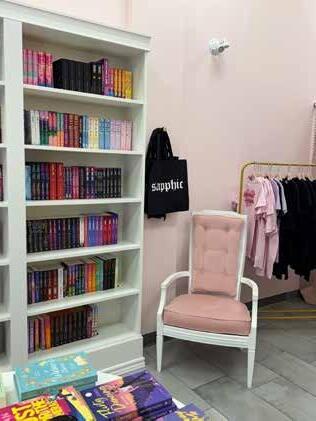
Evermore Books offers a welcoming and comfy ambiance to peruse the many facets of romance or to meet up with other romantics! PHOTOS: SAVANNAH PATTERSON
Major transformation for Glebe Annex
299 Carling
By Sue Stefko
After three and a half years on the market, the 3.4acre parking lot on Carling Avenue between Bell Street South and Lebreton Street South has been purchased by the Turn Group for a reported $21 million. The project is poised to become the most transformative development in the Glebe Annex in living memory, featuring four towers with more than 750 residential units and more than 600,000 square feet of mixeduse space.
One of the most anticipated elements is a long-awaited grocery store. The developer has signed a memorandum of understanding with an unnamed grocer for a 25,000 squarefoot store located in the large podium along Carling. For comparison, this is similar in size to the Food Basics on Queen Street (22,000 sq. ft.), the Farm Boy on Metcalfe (28,000 sq. ft.) and the Loblaws on Isabella (just over 27,000 sq. ft.). A grocery store was previously proposed for Arnon’s 450 Rochester project, but that plan has since been abandoned, dashing the neighbourhood’s hopes of a nearby grocery store – until now!
Beyond the grocery store, the podium will include smaller retail units and a significant medical hub designed to complement the new Civic Hospital campus. Plans include family doctors, pharmacies, specialists and diagnostic services.
The site layout features three towers rising from a single podium along Carling, with a fourth 13-storey residential
tower at the north end of the property, adjacent to the new public parkette that Canada Lands Company (CLC) expects to begin building later this summer.
The project, with Arcadis as lead architect, represents a significant increase in height and density from earlier concepts, which envisioned buildings of eight to 20 storeys and roughly 600 units. CLC explains that the City’s updated zoning bylaw now permits greater heights in transit-oriented areas and emphasizes that the earlier concept “was not an approved or fixed development plan, but rather a conceptual representation intended to support the zoning application.”
Turn Group also plans to partner with an operator to create a wellness-focused 55+ residence in one of the towers. While Katasa’s seniors’ residence at the Clemow has struggled with vacancies, Jan Steingahs, Living Practice Group Manager at Arcadis, seems undaunted, noting that “the 55+ and seniors’ market …is a quickly growing market that will continue to require facilities, from housing to recreation and healthcare.”
Another tower is expected to include 135 affordable units, meeting CLC’s requirement that 15 per cent of units be affordable. Most of the development appears to be purpose-built rental – the two tallest towers are planned as rentals, and the affordable housing tower will likely be rental as well, depending on the operator.
Parking for Natural Resources Canada employees will end once soil remediation begins, probably this fall. Construction is planned to start in 2027. The podium will be built first, followed
by the tallest tower above it. The full buildout is expected to take five to seven years, placing completion around 2034. The commitment to green space in the development is a welcome feature. The
podium roofs will include landscaped areas for residents, and the design will incorporate living facades. The development will connect the northern-most 13-storey tower to the new city parkette through a publicly accessible courtyard and landscaped pathways. The development is set to take advantage of the site’s prime location overlooking Commissioner’s Park and Dow’s Lake, with Arcadis noting the “sweeping lake views.”
Turn Group is a relatively new developer, founded less than a year ago but already building $1.5 billion worth of projects in Ottawa, Calgary and Edmonton. Led by CEO Ash Mahmoud, the company has moved quickly to establish itself as a major player in large-scale, mixed-use development. In Ottawa, the company is also developing a ninestorey, 131-unit rental building with groundfloor retail at 255 Richmond Road in Westboro.
299 Carling is one of several major projects reshaping the Carling corridor into a dense urban district. Although not stated outright, the Turn Group appears to be hinting at interest in yet another property in the area – the nearby Booth Street complex, another long-vacant site. With its collection of historic federal buildings and distinctive architecture, the complex has often been compared to Toronto’s Distillery District. Its redevelopment has been much anticipated, and seeing movement on both sites would mark an even more dramatic transformation for the area.
Sue Stefko is vice president of the Glebe Annex Community Association.
A rendering showing how the 299 Carling Avenue development will fit next to the proposed city parkette. Hasenack Place is shown at the left, with Dow’s Lake Towers shown in the background. SOURCE – ARCADIS
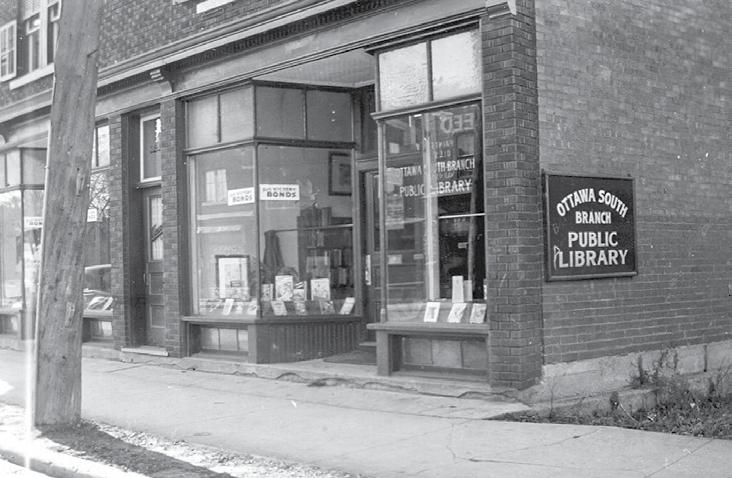
In 1906, Lawrence Burpee, chief librarian of the Ottawa Public Library (OPL) called for a library branch to be erected in Old Ottawa South. It would take several more calls to action before a small book depot was opened inside Hopewell Avenue Public School in the fall of 1911. The depot had about 500 books in its collection and was open sporadically a few evenings a week.
Ottawa South Branch at 1208 Bank Street, ca 1923-1950
As time went on, membership and circulation outgrew available space at Hopewell. In 1923, the branch moved into a storefront space at 1208 Bank Street, now the current location of Vertigo Records. By 1931, a 10-year retrospective report from the Library Board recommended that a proper home for the branch be established, at an estimated cost of $25,000 to $30,000. At the time, annual rent amounted to $100 a year (approximately $1900 in 2026 dollars). Growing concern from local residents created mounting pressure on they OPL to commission a new library for Ottawa South. They wished to see a facility that was built to the likes of Rideau and Rosemount branches.
The Current Location
1049 Bank Street
In January 1951, this wish was granted when the newly constructed Ottawa South Branch opened its doors at 1049 Bank Street. Between 1951 and 1952, the number of registered borrowers doubled from 1051 to 2076, with circulation numbers totaling around 57,000 books.
In 1985, the branch underwent a major renovation to expand the building and reconfigure the garage to allow for Bookmobile service. The children’s department was moved to the basement, creating a separate children’s library. At the beginning of 2001, the new City of Ottawa was created after the amalgamation of numerous municipalities and townships. As a result, the Ottawa South branch was no longer located at the south end of the city and was subsequently renamed as Sunnyside Branch.
Saving Sunnyside
Three years later, in 2004, when the
city proposed closing the branch as a cost-cutting measure, passionate residents gathered to protest, creating a temporary closure of Bank Street. Said June Creelman in the April 2004 Glebe Report, “Wow! That’s all we can say about the huge community response to the proposal to close the Sunnyside and other community libraries. Never have we seen so many people mobilized about an issue in such a short time. In less than two weeks, we organized two major rallies, got 25,000 signatures on a petition, made presentations at three public hearings, and succeeded in persuading the Ottawa Library Board to rescind its recommendations on library closures.”
The branch underwent renovations in 2014 to incorporate the RFID (Radio Frequency Identification) technology that was being rolled out across OPL’s system to track, sort and check out library books. As the building continues to age, plans are being made for future improvements, including window and roof replacements.
Celebration
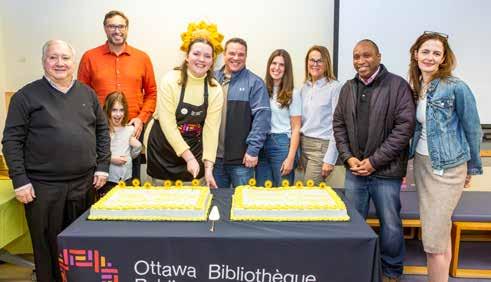
For over 75 years, the Sunnyside Branch has been a gathering place for readers, learners, and neighbours. We celebrate this milestone with the community that has supported this branch for generations. On March 28, the branch hosted a 75th anniversary party marking the anniversary of the branch’s
relocation to 1049 Bank Street. The event was an overwhelming success, with over 1,700 people in attendance throughout the day. A typical Saturday gate count at our branch is around 800 people, for reference. In the morning, attendees witnessed the magic of John Pert, a local magician, followed by face painting and button making. Ottawa Centre’s MP Yasir Naqvi stopped by to drop off a commemorative scroll to mark the occasion.
In the afternoon, we heard remarks from Capital Ward’s Councillor Shawn Menard, OPL Board Chair Matt Luloff and Chief Librarian and CEO Sonia Bebington. Members of the library board were in attendance, as well as former staff and longtime clients, one of whom was a participant in the 2004 protest to
save the Sunnyside Branch. Attendees enjoyed cake and refreshments and took time to browse the curated displays of the branch’s history. We finished the day with an interactive visit from the Zoo Crew, where attendees learned more about ferrets, sugar gliders, tortoises, chinchilla and other small mammals and reptiles. It was a pleasure to participate in this event, and I feel fortunate to have been a part of such a big milestone for Sunnyside Branch. Clients shared many anecdotes about the importance of the library in their community and daily lives. We look forward to remaining a fixture in Old Ottawa South, the Glebe and Old Ottawa East neighbourhoods for years to come.
Charlotte Halstead is a librarian and the branch coordinator at OPL’s Sunnyside Branch.
Cake cutting to celebrate the OPL Sunnyside Branch’s 75th anniversary
In 1923, the Ottawa South Branch of the Ottawa Public Library was housed in a storefront location at 1208 Bank Street.
The Ottawa South Branch of the Ottawa Public Library moved to its current location in 1951. In 2001, it was renamed the Sunnyside Branch.
In 2004 when the city was about to close the Sunnyside Branch, thousands of protesters filled the street and succeeded in saving it.
Ottawa Fish School in the Glebe
By John Anderson
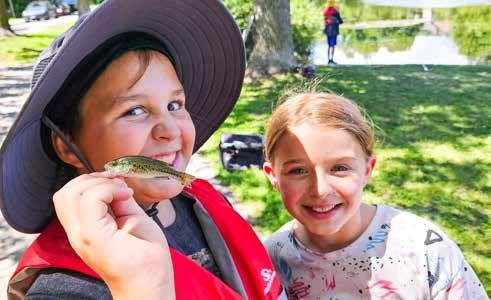
Taking a child fishing is one of the most fun things you can do, both for them and for you. Every week during the summer, we take 18 or more of them fishing with the Ottawa Fish School (OFS).
The program was originally organized through Dovercourt Recreation Association, and it has been the first camp to sell out in January when camps go on sale. This year marks the sixth year of the Ottawa Fish School program. We have hosted over 500 students, and this year will be our biggest class ever with more than 200 students. It is being offered for the first time through Glebe Neighbourhood Activities Group (GNAG). Fun and learning abound!
The initial plan was to go to five different locations around the city to experience different water and conditions. We fished from Britannia to Black’s Rapids to the downtown Rideau River to Petrie Island. We have devolved to mostly fishing out of the canal and Dow’s Lake, both because it offers easy, safe access for our students and because the fishing is good. Our best days see us catch and release more than 200 fish, with the biggest ranging from 10 to 20 pounds or more. The neat thing is that the size of the fish and the size of the smile are not related – the smallest fish can create the biggest smiles.
The team behind OFS is incredible. As we marched from one location to another with our posse in week one last summer, our train was 31 people – two professional fishing guides, two Muskies Canada Hall of Famers, the guy who originated the urban fishing program in Chicago, a lifeguard, a med student, other volunteers, Dovercourt
counsellors and one-on-one counsellors for students with special needs. We are also supported by some amazing people – like Cook Labs profs, students from Carleton University and Blue Fish Canada – who have provided lectures on sustainable fishing practices and best-practice equipment like leadfree weights and circle or barbless hooks which are better for the fish. Spencer Landsman started the urban fishing program in Chicago some 25 years ago, and Hedrik Wachelka is the most successful urban musky angler in Canadian history with over 1,000 muskies caught and logged from the shores of downtown Ottawa. We are a diverse and highly experienced team.
Friday is the big day of the week at OFS. We take the kids out to Petrie Island where Oziles Marina hosts us, and the kids go out in boats on the Ottawa River to fish some big water. Some kids have
never been in a boat before, and that experience alone makes the day, never mind the monster channel cats they catch. Everyone usually catches fish,
and we end up with eight or nine species, including some ‘exotics’ like mooneyes or freshwater drum. The energy going back to Petrie is palpable, and we often hear “this was the best day of my summer.”
Learning is a big part of this camp, with the goal of helping the kids become self-sufficien as anglers. Shimano has donated over $50,000 worth of rods and reels to support this grass roots project, and Sail has helped us build the tackle boxes that every student gets. Learning to assemble and take down your equipment, tie knots, put on worms, choose a good presentation, handle and release a fish well and take care of the water and land are all important parts of the curriculum.
There are still a few spots available for the 2026 program through GNAG. You can reach out to them at gnag.ca.
Please stop and share a smile with us along the canal this summer. We make new smiles every couple of minutes.
John Anderson founded and operates the Ottawa Fish School, an educational program that teaches kids how to catch fish, use fishing equipment, handle and release fish using best practices.
(ottawafishschool.com)
g l e b e
s a l e MAY 23 | 8AM - 2PM SATURDAY
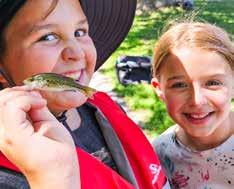
Kids love the thrill of catching a fish! You may catch sight of them at Dow’s Lake, the Canal or the Ottawa River this summer.
GNAG offers simple joys of fun and connection
What constitutes adulthood? Lately, I’ve been reflecting on how adulthood is portrayed in popular culture – often as a cycle of routines culminating in that ever-present daily question: What are we making for dinner?
When we are very young, there are many moments of freedom and lightness. It often comes naturally to laugh with friends, chase new experiences or find ways to stretch out time before responsibilities settle in. As life becomes more structured, work, responsibilities, family obligations and the steady pace of daily demands can begin to take up more space in our thinking.
Over the years, I have tried to challenge that narrative through spontaneous evenings with friends and family, trying new hobbies or sharing those silly moments at work where everyone breaks into loud (probably slightly obnoxious) laughter.
Seeing this year’s production of Something Rotten! at GNAG brought these reflections into focus. Beyond the dazzling performances, music and costumes, I watched my mom and aunt completely lose themselves in laughter during one particularly ridiculous Shakespearean scene.
It was a reminder that adulthood does not need to be narrowly defined. There is space for creativity, connection and the rediscovery of simple joys too easily forgotten.
Sarah Routliffe GNAG Executive Director
Our theatre production cast ranged in age from eight to almost 80. People came together to learn, to perform, to connect across generations and to be a part of something bigger than themselves. These shared experiences are built not just on talent but on time, commitment and the generosity of volunteers, families and staff who make them possible.
Thank you to our director Eleanor Crowder for bringing this fantastic show to life with such heart and imagination. Lauren Saindon’s live piano accompaniment added depth and emotion to every moment, and Mary Tsai’s choreography brought real magic to the stage.
Special thanks to Monty Rogers (company stage manager) and Luc Asselin (production stage manager and props master). Jennifer Ford’s set design was stunning (built by Chris Joselin), paired beautifully with David Magladry’s brilliant lighting. Mellisa Boicey and her costume team created wonderfully detailed costumes. A special thanks to Paul O’Donnell’s production management that was instrumental to the show’s success.
Thank you as well to Clare Davidson Rogers for leading front of house, promotions with Carol Martin and administration, and thanks as well to the many volunteers who brought energy and warmth to every performance, including those who stayed late for set strike.
Teskey - Cartwright -
It was an honour to represent the sale of this long-loved home. We first connected over 40 years ago. A meaningful opportunity to bring this property to market and ensure it was appreciated for exactly what it is — a home filled with charm, character, and history.
The response was incredible, resulting in multiple offers and a wonderful outcome for the estate. We are especially grateful to everyone involved-making this a respectful ending and a great new beginnings
Financial Assistance
As we move further into our spring session at GNAG, we are seeing the meaningful impact of our support services. This year, the board approved an increase to our financial assistance budget, allowing us to invest just over $14,200 in support of local families. We also increased the amount of financial assistance available per family this summer, enabling 14 children to attend summer camp. Funding remains for families who qualify. For more information, please contact tanis@gnag.ca, and she will be happy to help.
GNAG’s Perennial Exchange
Thursday, May 14 from 6:30 to 8 p.m. Second Avenue Steps, Glebe Community Centre
All gardeners are welcome to join our Perennial Exchange. Bring extra plants, seeds, compost and gardening ideas to share. Even if you don’t have anything to exchange this time, there is always plenty to go around.
GNAG Arts Exhibition
GNAG has once again been transformed into a community art gallery showcasing work by emerging and local artists throughout the space. The exhibition runs until June 19. Visitors are welcome to drop in during GNAG hours to view the artwork, all of which is available for purchase, with 100 per cent of proceeds going directly to the artists.
A Shakespearean scene from SomethingRotten! PHOTO: ADAM SCOTTI
GCA membership – a real bargain
May is a busy month for the Glebe Community Association as a small army of block reps and other volunteers come knocking to renew or sign up new members. Membership is just $10 per person per year and runs starting June 1.
In the last year, the GCA has:
• Worked with the City to bring an affordable housing project to the Glebe
• Co-organized a Community Conversation on Homelessness
• Provided input to the Bank Street Active Transportation and Transit Priority Study
• Advocated for improvements to Lansdowne 2.0
• Reviewed site plans for new developments and submitted comments to the City
• Organized park clean ups and supported the Garden Angels who maintain our planters
• Pushed for creation of new green space when Chamberlain is realigned
• Organized climate and your cash workshops
• Run monthly bottle recycling events
• Worked with our Councillor to find a new location for an outdoor boarded rink
• Advocated for review of the noise by-law after issues with noise from The Clemow
• Organized the Great Glebe Garage Sale
• Prepared heritage information panels displayed during the garage sale
• And this fall, we look forward to sponsoring candidates’ debates for the municipal election.
While the GCA is a volunteer organization, there is a cost – and we can only do this work with the support of residents. Besides $10, volunteers will gather the email of every person who becomes a member—even if they are at the same address. That’s because Ontario law requires us to inform every member of the Annual General Meeting. We add members to our database so community updates can be forwarded from time to time. Emails are used for no other purpose and are never given to other parties. All information gathered is kept confidential.
So, please join or renew today at glebeca.ca/membership.
40th Great Glebe Garage Sale
It started as a small neighbourhood event, but it has grown over the years. Throughout this time, one thing has remained constant – the garage sale is an important fundraising event for the Ottawa Food Bank.
Every year, the Food Bank produces a report on the state of hunger in our city. Its 2025 report, Food Insecurity in a Broken System, is stark. In 2017, one in 15 Ottawa households were considered food insecure; in 2023, it was one in four. That’s one quarter of Ottawa’s population.
John Crump President, Glebe Community Association www.glebeca.ca
On the front page of this Glebe Report, you will find an article by Sam Woods, the GCA’s GGGS coordinator. It is full of useful “need-to-know” information to help make the day a success for everyone involved.
I would like to emphasize a key point in his article: The Great Glebe Garage sale is an opportunity to provide much needed support to people who are struggling to put food on the table. The garage sale isn’t just a feel-good event – it shows what a community can do to help an important cause. You can give online or via the collection tins that will be circulating with volunteers throughout the day.
Transportation
City Council has now approved the Bank Street Active Transportation and Transit Priority Feasibility Study. Starting in 2027, this pilot project will bring some changes on Bank Street, including 24-hour bus lane segments, bus-only outer lanes during peak hours and some pedestrian and cycling improvements. The GCA presented its position on the study to the City’s Public Works and Infrastructure Committee, and Council has directed that the GCA be involved in the assessment of the pilot.
The GCA has requested a meeting with the NCC about plans for Queen Elizabeth Driveway this summer. With the planned new northbound bicycle lane on QED and construction scheduled for Pretoria (Bank to Metcalfe), we are seeking information on plans for closing the Driveway to cars this summer, detour routes and how to minimize negative traffic impacts on nearby residential streets. The meeting has not been scheduled yet.
Community survey results in
In early April, the GCA launched a survey of subscribers to the association’s email list. Of 2877 recipients, 679 responded, an impressive rate of return. There is much interesting data in the survey, and the communications committee will be reviewing it. Some priorities standout:
1. Traffic, parking and transportation
2. Managing development and Lansdowne impacts
3. Revitalizing Bank Street and supporting local businesses
4. Preserving community character and heritage
5. Strengthening safety, cleanliness, and livability
None of these is terribly surprising, but these broad categories underscore the importance of strengthening the GCA to ensure that it is able to advocate on behalf of the community. This brings me back to the beginning of this column. Please remember to sign up or renew your membership.
Next meeting
The GCA Board meets again on Tuesday, May 26 at 7 p.m. in at the Glebe Community Centre.
Discover elevated retirement living at Villagia in the Glebe—where exceptional dining, vibrant community, and refined comfort come together. Tour our spacious suites with full kitchens and discover a lifestyle where comfort, connection, and exceptional care come together.
By June Creelman
Every year at this time, the Glebe Community Association (GCA) asks you to support your neighbourhood by becoming a member. The request may be made by a neighbour who comes to your door or here in the Glebe Report, or you can join online at glebeca.ca.
You may wonder why you should pay $10 to become a member of the GCA. The main reasons are to build community and make our neighbourhood better. More specifically, a strong membership base gives us credibility when we advocate for change, it funds our work, and it is a requirement for us to be a non-profit corporation in Ontario.
What value do you get from the Glebe Community Association? This year, we’ve run monthly bottle drives, organized park clean ups and planter gardens, coordinated sessions on homelessness and climate-conscious investing and advocated on issues such as noise, Bank Street traffic and, of course, Lansdowne. Our biggest community event is the Great Glebe Garage Sale which we initiated 40 years ago.
But perhaps the best way to understand the real value of the GCA is to look back over time. Since its creation in 1967, GCA volunteers have worked
tirelessly to protect and improve our neighbourhood. We stopped Carling being extended onto Glebe Avenue, stopping cut-through traffic from Queen Elizabeth Drive and Bronson. We’ve worked with others to protect community institutions that were threatened with closure – including the Glebe Community Centre, Mutchmor School and the Sunnyside library. We’ve played a key role in saving heritage buildings like the Aberdeen Pavilion and worked for heritage designations of individual buildings and heritage conservation districts. We’ve pushed for new parks (like Exploration Park) and cleaned up and improved those we have. We’ve planted trees, fought pesticide use and organized events like coffee houses on sustainability.
We’ve been involved in multiple planning issues – not just big ones like Lansdowne but also countless rezoning and site plan applications where we’ve often succeeded in making positive change. Without the GCA’s work, you’d see a wall of high-rises along the Canal. Recently, our work on the Bank Street Height and Character Study resulted in protections to the heart of the Glebe. And don’t forget all the candidates’ debates, public open houses and community workshops we’ve staged.
The GCA works closely with our partners – GNAG, the Glebe BIA and the Glebe Report – to keep a finger on the pulse of the neighbourhood. You can count on our monthly column and our emailed updates to tell you what is going on in our community.
The GCA is entirely volunteer run. We have no paid staff, but we do have costs. Printing, a website, insurance, renting rooms for events, applying for permits – it all costs money. Our $10 membership fee is modest – about three cups of coffee or one soy latte. We haven’t raised our fees for well over a decade. What has changed is that our fees are now per person rather than per household or group memberships for condo buildings. This is a requirement of the province – each member has to sign up in their own name.
This month, about 200 Glebe residents will volunteer their time to knock at your door to ask you to become a member. You will be able to recognize them by the button with our logo. If you’re not home, they will leave a postcard with information on how to sign up online. Or you can always drop off a cheque made out to the Glebe Community Association at the Glebe Community Centre.
The GCA makes a difference, and we hope you will become a member or renew your membership if you already have one. And if you want to get more involved as a committee member, volunteer or board member, please reach out to us at glebeca.ca.
June Creelman is a vice-president of the Glebe Community Association.
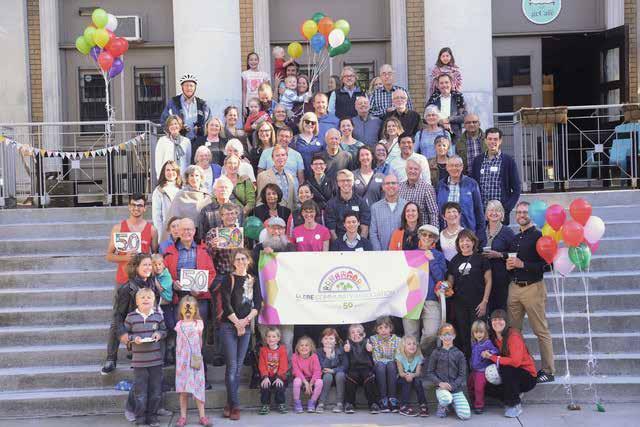
The Glebe Community Association celebrated its 50th anniversary in 2017 and continues to work for a better Glebe.
Bike share, noise bylaw, Confederation Heights, ZEBs, and tax fairness for renters
City Bike Share Report
We miss having a bike share program in the city. Other cities throughout Canada and North America have successful programs, and there’s no reason we can’t get one up and running in Ottawa. The previous program failed because it relied entirely on the private sector and was geared towards tourists, rather than residents of Ottawa and connectivity to events and transit.
In April, the City released a report on the feasibility of bringing back a bike share program. This stems from a motion we brought to council during its last term, and it serves as an important step towards realizing a new bike share program.
If you are interested in reading the reports, they can be found on our website, www.shawnmenard.ca.
We will continue working with City staff and fellow councillors as well as with Envirocentre and Ottawa Climate Action Fund to make this happen.
Noise Bylaw Review
At the end of March, Councillor Sean Devine submitted notice for a motion on my behalf to the Emergency Prepared and Protective Services Committee regarding the City’s noise bylaw. Currently, there is a gap in City enforcement of noise regulations. Developments are supposed to adhere to both the municipal noise bylaw and the province’s Environmental Noise Guideline (NPC 300). However, Ottawa’s By-law Services has only been given an enforcement framework for the municipal bylaw, not the provincial guideline. This enforcement gap has led to issues
Shawn Menard
Councillor, Capital Ward N 613-580-2487 www.shawnmenard.ca
with new developments in Capital Ward, River Ward and elsewhere in the city, potentially violating NPC 300 without any method of recourse for residents.
We feel this enforcement gap needs to be addressed, and the city should investigate harmonizing our noise bylaw with the provincial Environmental Noise Guideline. Our motion directs City staff to include a review of the noise bylaw for consideration as part of the next term of council’s bylaw review workplan.
The motion will be heard at committee at the end of April.
Tax Fairness for Renters
This week, the Finance and Corporate Services Committee and City Council passed a further reduction to the multi-residential tax rate for buildings built before 2001, where the majority of renters live. For years, the multi-residential rate for older buildings was much higher than for newer buildings. This will mean automatic rent reductions of about $168/year. It is one of the most direct ways council can assist with affordability.
This comes after a Direction put forward by my team. Though a relatively small annual amount, there is a significant cumulative effect over four years, saving tenants an average of $1900 over that period.
Zero-Emission Buses
Last term of council, our office helped put in motion the City’s Zero-Emission Bus (ZEB) program. The ZEB program allows us to switch over to electric buses, in partnership with the federal government, to reduce OC Transpo’s carbon footprint and the cost to maintain these buses.
In April, we received an update: Ottawa now has 109 ZEBs,which make less noise and save on fuel costs; there are 68 charging stations available, with 36 more in commissioning.
Confederation Heights Update
For the past few years, the Canada Lands Corporation (CLC) has been looking into how to convert the federal government’s Confederation Heights campus into a vibrant urban neighbourhood. Confederation Heights is home to a number of federal office buildings with associated greenspace and parking lots. It is located around Heron Road near Riverside Drive and Bronson Avenue.
Public engagement began in 2021, and
there have been many good discussions between the CLC, residents, stakeholders and our office.
In January, CLC and the City of Ottawa hosted an open house to review the Final Draft Master Plan.
There have been a lot of great ideas proposed for Confederation Heights, including a recommendation by Village Canada to include dedicated affordable housing for older adults and international living. Creating a neighbourhood that can be home to people across demographics and income levels is a great way to create a vibrant, accessible and inclusive neighbourhood, and we are encouraged by the advocacy we have seen for the future of Confederation Heights.
Confederation Heights is next door to the RA Centre, and recently discussions have begun between CLC and the RA Centre to see how a re-development of the RA Centre lands and facilities could work alongside Confederation Heights. You can learn more at the CLC website, www.clc-sic.ca.
Ottawa — Vancouver — Montréal
Abbotsford Garden Tour, 2026 edition
By Julie Ireton
Christine Edmonds’ Westboro garden is naturalistic, but that doesn’t mean she’s just letting meadow weeds grow wild. Her plot is well curated and maintained to attract birds, bees and the envious novice gardeners taking part in Abbotsford at the Glebe Centre’s annual garden tour.
This year’s tour is set for Saturday, June 20, and will feature a dozen private gardens in the Glebe and Westboro, with proceeds from the $35 tickets going to programs for seniors at Abbotsford, the old, stone farmhouse across from Lansdowne Park.
“The tour is self-guided and ticket holders are provided with the garden addresses and may visit them in any order and at their own pace during tour hours,” said Pat Goyeche, Abbotsford’s coordinator of community programs. “Volunteers and garden hosts will be in each garden to welcome visitors and answer questions.”
For Edmonds, it’s an opportunity to showcase the hard work, care and research that went into developing her outdoor space. Her large corner lot went through its metamorphosis after construction on her street in 2020.
“Esthetics were important to me,” said Edmonds. “It’s reminiscent of a meadow, but the edges are tidy, good geometrics around the garden.”
Her goal of a garden that supports pollinators without looking “wild” was recognized by the Ottawa Horticultural Society and its pollinator garden award.
On June 20, she plans to be outside all day to answer questions.
The garden tour tickets include a printed guide and map, opportunities to learn from knowledgeable gardeners at each site, a plantable wildflower seed paper wristband for garden entry and complimentary refreshments at sponsor locations.
John Szczepaniak, an Ottawa landscape architect, is also offering a
complimentary garden design consultation to a lucky Garden Tour ticketholder who wins the draw.
For Szczepaniak, the tour will highlight his design work in a Westboro client’s backyard.
“It’s a beautiful pocket garden,” said Szczepaniak. “Property sizes and gardens keep getting smaller, and this shows that even with small spaces you can create something beautiful.”
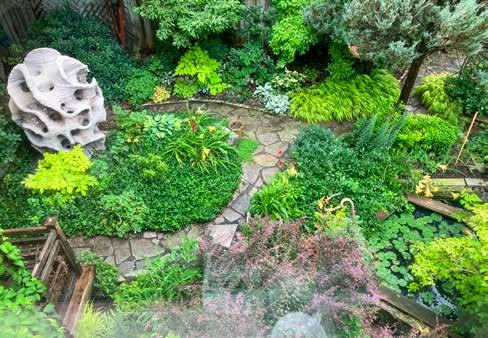
Since 1993, Rob and Laura Brandon have been cultivating their uniquely large lot in the Glebe. The Brandons’s garden has been influenced by visits to Europe and Japan and features a small pond with water lilies. With a large maple at the back of their space, shade plants thrive. But the most notable addition is a large, Italian sculpture.
“It was 3D printed from marble dust,” said Rob. “It was made in Italy, flown to Vancouver…and was brought to Ottawa on a truck and set on a foundation in our garden.”
Tickets for the Abbotsford Garden Tour are on sale now. Do a search for Abbotsford Garden Tour or the Glebe Centre website: glebecentre.ca/ programs/abbotsford-garden-tour. This event is made possible through the work of many volunteers and the support of community members and business sponsors.
Abbotsford is your seniors active living centre for adults 55+. It houses the community programs and services of The Glebe Centre Inc., a charitable, notfor-profit organization which includes a 254-bed long term care home. Find out more about our services by dropping by 950 Bank Street (the old stone house) Monday to Friday 9 a.m. to 4 p.m., phoning 613-230-5730 or by checking out all The Glebe Centre facilities, community programs and services on our website at www.glebecentre.ca.
Julie Ireton is a print and broadcast journalist who writes occasionally for the Glebe Report about Abbotsford.
Rob and Laura Brandon’s garden features an Italian marble 3D-printed sculpture. PHOTO: ROB BRANDON
Steve Buchko and John Szczepaniak’s garden is featured on the Abbotsford Garden Tour on June 20. PHOTO: JOHN SZCZEPANIAK,
The head, heart and hands of climate action
By Cecile Wilson
As climate change becomes a lower priority for many governments, a prominent Canadian climate scientist says it’s a widespread misconception that most citizens don’t care about or aren’t worried about the issue.
Toronto-born Katharine Hayhoe, now a professor at Texas Tech University and chief scientist for the Nature Conservancy, says recent data shows between 70 and 80 per cent of Canadians are “somewhat” or “very worried about climate change.
In her keynote Zoom address in late March to Community Action for Environmental Sustainability (CAFES), Hayhoe argued that those numbers should encourage advocates to keep up the fight.
The first thing you need to know, she told about 290 listeners, is that if you are concerned about climate change, you are not alone.
Hayhoe is regarded as a positive and effective communicator of climate solutions. She also does climate projections for cities to use in “resilience planning,” such as protecting sewer systems, water and energy supply and public health in the face of extreme heat, storms and floods brought on by climate change or, as she likes to call it, “global weirding.”
Mind the Gap
She was asked why, if so many people are worried, are so few actively engaged in climate action? Hayhoe responded with her “head, heart and hands” model.
She said the “head” part is our need to know the facts to solve the problem. But
our mistake, she says, is to load up our “scary wheelbarrow of science facts and dump it on people every day,” overload that paralyzes them.
To avoid paralysis, she continued, we must overcome the “head” to “heart” gap – instead of “psychological distance” from the problem, we must cultivate “psychological proximity,” where people see the problem as concrete, immediate and relevant to their “primary concerns.”
When what matters to people connects with climate change, we are engaging the “heart” of the equation. Hayhoe asserts that climate change is a “threat multiplier” for just about any problem: the price and availability of food and energy; our health; the safety of roads, bridges and buildings; equitable access to services for all; the resilience of natural habitats, and more.
Once it matters to people, it is critical to provide ways they can act. This is the “hands” part, according to Hayhoe, the most critical part, where people understand the threat and what to do to
counter it.
One thing we often fail to do, Hayhoe says, is to point out that climate solutions have many positive results –cleaner air and water, better physical and mental health, fewer storms, fires and floods, healthier ecosystems and foodscapes, less inequality. Altogether, they give us a more stability.
Collaborating on solutions through a card game
Across Ottawa, hundreds of people have been participating in a workshop designed to engage their heads, hearts and hands. Known as the “Climate Fresk” (derived from “fresco”), small groups work collaboratively with a facilitator to explore cause-and-effect relationships between cards depicting scientific facts about climate change. Participants discuss what they have learned and what solutions they can implement in their own lives.
Facilitator Don Sproule has led over 75 workshops for individuals, schools and institutions, such as the Bank of Canada,
the McGill School of Management and the Ottawa Airport. He says demand for facilitators to offer Climate Fresk in schools is greater than the supply.
Glebite Karen Mount was motivated to attend one of Sproule’s workshops because she wanted to meet more likeminded people and to expand her knowledge of climate solutions. Despite being well-informed about the issue, she said she learned a lot from the experience and really enjoyed the opportunity to work collaboratively with others. She plans to do another Fresk.
What you can do
Talk: at home, work, school, the playground or sports field, church, shopping, wherever you are!
Watch Katharine Hayhoe’s address to CAFE’s AGM. Go to cafesottawa.ca/ news/ and click on CAFES Ottawa 2026 AGM. The note contains a direct link to Hayhoe’s keynote address.
Sign up for Hayhoe’s newsletter at talkingclimate.ca. Each newsletter provides, as she puts it, some good news about our climate situation, some notso-good news about how it is affecting us personally and what we can do to make a difference.
Join a Climate Fresk. Upcoming dates: Tuesday, May 19 and Wednesday, June 10, both at 5:30 p.m. at Dovercourt. Contact Donald.sproule@gmail.com for more information.
The GCA Environment Committee is planning to host a Climate Fresk in the fall. If you are interested in helping with the planning or in participating in the Fresk, contact environment@ glebeca.ca.
Cecile Wilson has lived in the Glebe for over twenty years and is a member of the GCA Environment Committee.
Katharine Hayhoe, renowned Canadian climate scientist, proposes an action model of head, heart and hands to address the climate crisis.
Are you a small or m edium-sized busin ess in
th e National Capital
Region?
Join the Ottawa Board of Trade and unlock exclusive programs that enable you to access big business benef its while saving on costs
PROGRAMS INCLUDE:
Chambers of Commerce Group
Insurance Plan: Retain top talent with affordable group benef its
TD Insurance: Insurance coverage and savings to help you
Esso: Fuel savings to keep your business moving
Chambers Shipping Program: Deliver more, spend less
Net2phone: Stay connected with enterprise-quality communications tools
Rogers Preferred Program: Keep your team connected and save big.
Fellow: Improve collaboration and make ever y meeting more productive with an AI meeting notetaker
Attract and retain top talent while lowering your operating expenses.
Become a member today: OTTAWABOT.CA
The Allure of the tulip
By Clive Branson
For 18 days each May, the city is transformed into a kaleidoscope of colour during the Tulip Festival. Record numbers of visitors converge to admire the radiance and variety on display.
In 1945, the people of Holland presented Ottawa with more than 100,000 tulip bulbs to thank Canada for harbouring the Dutch royal family during the Second World War and for helping to liberate their country from the Germans. The tulips also honoured the birth of the Dutch Princess Margriet Francisca at the Ottawa Civic Hospital. Princess Margriet is the only monarch to be born in North America.
Today, those original tulips have – excuse the pun –blossomed into the Canadian Tulip Festival, Ottawa’s largest attended and longest running (74 years) free public festival. The National Capital Commission (NCC), Ottawa’s official gardener since 1953, purchases 400,000 tulip bulbs from Holland annually, with phantasmagorical names like Blushing Apeldoorn, Christmas Dream, Golden Emperor, Black Parrot, Persian Pearl and Queen of the Night (the “black” tulip), to name a few. Up to 60 different varieties are on display in beds decorating Parliament Hill, Confederation Boulevard, along the Rideau Canal, pathways, parkways and en masse at Commissioner’s Park beside Dow’s Lake.
The Story of the Tulip
But why does the tulip have such a contagious appeal around the world?
One reason is they can be easily transported when they are dormant, which is how tulips have become ubiquitous worldwide. The tulip is a hearty perennial. As it hibernates underground, swollen leaf bases surround the bulb and develop into the stem, leaves and flower once the autumn rains bring the tulip back to life. Tulips produce stolons, growths that extend from the bulb to produce a new bulb a short distance from the mother plant, enabling a tulip to spread naturally without having to flower. Remarkably, they can grow in any terrain – in the wild, in containers, in flower beds, in the shade, in sunshine, in rock and gravel gardens, in meadows or woodlands.
During the Ottoman Empire, the Turks treasured this unique flower for its diversity of colour and shape. From the 10th to the 16th century, Persians and Turks cultivated the tulip as a symbol of power and paradise. Its expansion and prosperity came to stand for the Empire’s “golden era.” Along with spices and silk, the tulip also became a favourable trade.
The flower was brilliant in colour, exotic in shape and utterly unfamiliar to foreigners. The name tulip originated from the Persian word “delband,” meaning turban, based on the flower’s turban shape. When the Dutch acquired the bulbs in the late 1500s, the tulip remained exclusive in numbers. Bulbs were valued like blue-chip shares. Breeders didn’t realize that the popular “striped” tulip was caused by a virus carried by the peach/potato aphid. The Dutch experimented and tried breed ing, grafting and co-planting inflected plants. Surprisingly, the results were spectacular. With the tulips ability to multiply by division, they became popular with the affluent.
Through word-of-mouth, the flower was parlayed into a symbol of wealth and status, making it one of the most coveted and most expen sive luxury items. Certain extrava gant tulips were almost impossible to find because breeders didn’t want to sell them. There was one tulip, the red and white striped Siemper Augustus, that was deemed more valuable than a mansion. It wasn’t unusual to spend $300,000 on a single bulb! The tulip became a speculative commodity. At its height, people were so eager to own one that they were willing to pay a promissory note to acquire a tulip. This was called a “wind trade,” for a so-called provisional item that didn’t yet exist. The note could be sold and re-sold, inflating the value, fueling a frenzy of greed.
like dot.com shares at the turn of this century. The bulbs became worthless, and families lost everything, devastating the Dutch economy. The allure of the tulip did remain intact, but at reasonable prices. By the 1800s, with innovative breeding, the Dutch mastered the art of commercial production. The tulip went from being solely a rich man’s folly to everyone’s favourite garden flower, bestowing on Holland the name “the flower shop of the world.”
The tulip represents spring and renewal. No other garden plant, including the rose, has aroused more passion. The tulip has between 15 and 21 distinct categories (shape, size, vigour, blossom time) with 3,000 registered varieties in every conceivable iridescent hue except true blue and the coveted black.
Unfortunately, tulips will only bloom naturally for a week; however, if you trim the stems of your freshly cut tulips, they will continue to grow in your vase.
Eventually reason set in, and the tulip market crashed,
Clive Branson is a freelance writer and photographer.
American Dream tulip
Pierter de Leur tulip
Send Help a small masterpiece
(US, 2026)
Director: Sam Raimi
Review by Iva Apostolova
I did not know just how much I missed the ultra-talented Canadian Rachel McAdams until I saw the trailer for Send Help. The movie is directed and produced by the innovative writer-director Sam Raimi whom audiences might know from The Evil Dead and its sequel, Oz the Great and Powerful, and of course the Spider Man trilogy. As his previous oeuvres hint, the viewer can expect the same mixture of whimsical, magical, super-natural, horror-esque and psychological thriller vibe from Send Help. And when you add two powerhouse performances by Rachel McAdams, who needs no introduction, and Dylan O’Brian, whom the viewer may recognize from The Maze Runner, Deepwater Horizon, American Assassin and Teen Wolf, you end up with a small masterpiece.
ams), your typical lonely, frumpy-look ing, bird-loving, yet indispensable employee in a corporation that Brad ley (O’Brian), a young, vain but clueless hot shot, has just inherited from his dad. Bradley, in his Ivy League haze, is mildly disgusted with Linda’s appearance and overall demeanor.
a business trip to Thailand, the private
jet carrying several of the company’s employees crashes in the Pacific, with Bradley and Linda being the only survivors. Washed up on a small tropical island, Bradley, whose leg is seriously injured in the crash, ends up being completely dependent on Linda’s killer instincts and superior survivor skills. While being treated to a few, properly unexpected plot twists, the viewer will keep asking the same question: Will Bradley and Linda remain on opposite sides of the social and class spectrum, or will they be transformed and become close friends? Or perhaps even something more?
But unlike other psychological thriller-horrors, where realism reigns supreme, Send Help leans slightly toward surrealism. The viewer will be treated to overly dramatic music accompanying wide shots in the style of Golden Era Hollywood, exaggerated acting style that conveys the irony in each situation, camera closeups and plot twists that give serious vibes of Coralie Fargeot’s cinematic phenomenon The Substance (which won both a BAFTA and an Oscar in 2025) and of the visionary 2022 Triangle of Sadness by Ruben Ostlund. I guarantee that both your senses and mind will tingle with anticipation and cine-
The Art of Adventure tells the story of artist Robert Bateman
(Canada, 2026)
By Tony Wohlfarth
Robert Bateman is one of Canada’s most renowned naturalist artists. At age 95, he lives with his partner Birgit on scenic Salt Spring Island off Vancouver Island in British Columbia.
Bateman’s life story is told in brilliant colour in the documentary The Art of Adventure, recently screened at the ByTowne Cinema.
In 1957, Bateman and his best friend Bristol Foster set off on an epic journey. They bought a Land Rover, complete with two beds, in the UK and thus began their environmental love letter. The duo named their vehicle Grizzly Torque and drove it across Africa. Enroute, they survived wars in the Belgian Congo, unimaginable road conditions and
collector, saw a photo of it in a story about the Bateman-Foster trip and thought it looked similar to the rusted hulk he had bought years before with his fellow collector Allan Simpson and stored on a farm 80 kilometres northwest of Merrit, B.C. Foster came up and confirmed right away that it was the Grizzly Torque, after he saw the plexiglass driver’s side window that they’d put in after the original was blown out in a rollover.
Then began a massive restoration project. Parts came from all over the world – Malaysia, Australia, India, many from England, brand new in their original packaging – and an army of car craftsmen recruited by Simpson went to work to get it back to its original state.
While the vehicle comes alive again in the film, you can also read about it here: www.merrittherald.com/ the-return-of-the-grizzly-torque/ Bateman, a renowned wildlife and nature artist, continues to paint. Foster, now 93, had an outstanding career as a biologist and naturalist.
The Art of Adventure answers one of the most delicate issues of all: Why is it that none of Bateman’s art is on display in the National Gallery of Canada? While some critics and curators have been hard on his realistic style, the film contends the main reason for his rejection is that his art is deemed too commercial because he sells so many reproductions. However, Bateman’s work is displayed at other major galleries, including the McMichael Canadian Art Collection in Kleinburg, Ontario, the Smithsonian in Washington, and the National Museum of Wildlife Art in Jackson Hole, Wyoming.
The film is directed by Alison Reid. A renowned documentary filmmaker, Reid is best known for directing The Woman Who Loves Giraffes (2018), which won best film awards at the Sonoma and Sebastopol international film festivals.
The story of the duo’s travel is also told in a new book by Ottawa author Paul Gilbert called The Rover Boys: The true story of two great Canadians, Bristol Foster and Robert Bateman. It is available as an e-publication on both Kobo and Kindle; hard copies will be available in the summer.
Running time: 1 hr 30 mins
Tony Wohlifarth is a Glebe resident and freelance film writer. He screened The Art of Adventure virtually and recommends it.
Director: Alison Reid
Robert Bateman (left) and Bristol Foster, lifelong friends PHOTO: NICOLA PENDER
Ginger cookies to celebrate books and literacy
By Marisa Romano
The first time Joan Foster-Jones sat at a meeting of the Adult Book Club of the Sunnyside Branch of the Ottawa Public Library was when she moved into the branch’s catchment area. That was her way to meet her new community and share with others her love for books and literacy. A few years later, she became the volunteer coordinator of that book club.
For nine years now, she has been gathering people on the last Friday of each month for stimulating discussions on titles selected by the group. This is not the only book club Foster-Jones belongs to, but she underlines “this book club is really special.” Others among the 15 or so attending the March meeting agree. The Sunnyside Adult Book Club includes men and women, people from different countries with very different backgrounds and life stories; everyone looks at issues with different eyes and critical thinking, and that is what makes this group special.
Charlene Jackson, the book lover who compiles for the Glebe Report the titles discussed by various local reading groups, is also a regular participant in the Sunnyside Adult Book Club. Her other book group is made of old friends. “You meet there for your friends first; here you come for the books and interesting dialogues,” she says. “People here are outspoken and articulate.”
Surprisingly, the best discussions, Foster-Jones and Jackson agree, are around the least-loved books; they stimulate animated political and social conversations.
COVID did not stop book reading, and Foster-Jones organized the meetings via conference call back then. Since face-to-face meetings restarted, the club has been welcoming new readers. Some people come and go; others have attended only to discuss particular books. Everybody is welcome to bring their point of view, enriching the reading experience for all. The club is now approaching its summer break; time for Foster-Jones to organize the traditional final gathering with a celebration of books and literacy.
Our public libraries are not only collections of books that satisfy curiosities; they are community hubs where people of all ages meet to learn together, socialize and share ideas. Free adult programs offered at the Sunnyside Branch welcome knitters, science buffs, movie enthusiasts and creative story tellers while also offering a space where book lovers can share viewpoints. Many of the programs accessible here are run by volunteers like Foster-Jones, people who donate their time
to encourage reading, literacy and connection with the community.
But our welcoming public libraries are only recent phenomena, and Ottawa has certainly not been at the forefront of the Free Library Movement that in the 19th century advocated for universal access to information. It was thanks to the Ottawa Council of Women, who lobbied for a free public library in Canada’s capital, and money from Andrew Carnegie, the industrialist who had already funded libraries throughout North America and Britain, that the Ottawa Public Library finally opened its doors in April 1906. That was when Ottawa citizens gained free access to books and the opportunity to learn, a privilege once reserved only for wealthy private citizens.
The original public library building,
known as the Carnegie Library, was located at the corner of Metcalfe and Laurier, the same location as the current main library that replaced the original building in 1974. The stained-glass window on the Metcalfe side of the current library is the only remnant of the original; it’s a reminder of the freedom of literacy acquired by common citizens when the Carnegie opened. Soon that stained-glass window will be salvaged again and relocated to Ādisōke, the new facility expected to open next year, and once again it will remind all entering the new space of the fundamental human right to literacy.
Marisa Romano is a Glebe resident who loves food and the people who make and share it.
Ginger Cookies
Joan Foster-Jones shares her mom’s recipe for ginger cookies in celebration of all who volunteer their time to spread love for books and advocate for literacy. This is her go-to recipe, the one she prepares and brings to gatherings with friends.
Ingredients
1 cup sugar (plus some for rolling)
½ cup shortening
1 egg
½ cup molasses
2 cups flour
Pinch salt
1 tsp baking soda
1 tsp ginger
1 tsp cinnamon
Directions
Preheat the oven to 375F. Cream together sugar and shortening.
Add egg and molasses.
Sift dry ingredients then mix them into the creamed mixture.
Roll dough balls in sugar and bake on greased cookie sheets for 8 to 10 minutes.
Joan Foster-Jones coordinates meetings of the Sunnyside Branch library book club, and offers her mother’s recipe for ginger cookies.
Ginger cookies and books, a perfect pairing! PHOTO: MARISA ROMANO
By Peter Simpson
A recent Glebe Report column was all about non-alcoholic drinks that are available in local bars and restaurants. This time we’re all about drinks that are all about the alcohol – and the creative embellishments created by local mixologists.
Cocktails are classic and seem to be enduringly popular. They are also a canvas for mixologists to conceive of inspired flavours and blends. Examples of imaginative libations can be found in many bars and restaurants in and around the Glebe, and these places need not be fancy. For example, the Glebe Central Pub, that homey home to pints of beer and English football, offers a Spiced Hot Toddy, with spiced rum, lemon juice, honey, hot water and cinnamon. As someone who grew up next to the Atlantic Ocean, I can tell you that that spicy concoction will cure what ails ya.
Elsewhere in the neighbourhood, the cocktail choices range from the esoteric (House of Targ’s Romulan Ale – a highly intoxicating alcoholic beverage of Romulan origin with a characteristic blue colour) to the sublime (Cantina Gia’s Where We Met, with pink peppercorn and hibiscus-infused tequila, Soho Lychee liquor, Ginger Canton liquor, lime and saline).
There are seasonal hints in Med Supper Club’s Partridge in a Pear Tree, with Belvedere, Grey Goose La Poire, jasmine and lemon juice. The flavours seem to be intriguingly more rustic at Thr33’s Co, where the Peanut Butter Old Fashioned has Wiser’s whiskey, bitters, PB syrup and orange twist.
There’s another take on that timeless drink at Flora Hall Brewing, where cocktails were recently added to its list of wines, spirits, ciders and award-winning craft beers. The recipes were created by head chef Tim O’Connor. The Hazelnut
Old Fashioned uses Frangelico hazelnut liquor instead of a typical sweetener. Others include the Fresh Take, with gin, cucumber, grapefruit, mint, lime and soda and The Spicy Lemonade which uses Canadian Barnburner “bourbon,” house-infused spicy brandy and fresh spicy lemonade to make a summer staple with a kick.
CreativeCocktails Hello, Sunshine
Depending on how widely you want to define cocktails, Flora’s weekly Sunday Smoothie, created by brewer Nate, could qualify. Recent examples include the Orange Vanilla Beermosa, with pilsner, Dry Hopped Sour, vanilla, and orange juice” and another with grilled pineapple, brown sugar and hibiscus pale ale.
Making cocktails at home is also an option, and last spring I accidentally created one that has now been tried by five bartenders who had never heard of the mix and pronounced it delicious. (Perhaps the drink exists somewhere? I haven’t done a deep search, to protect my fantasy.) It started when I had a bottle of reposado tequila – not the Casa Amigos that I usually buy but a cheaper bottle. I usually drink it straight with a big ice cube, but this cheap reposado had bit of a rough edge that called for help. The only potential mix I had on hand was Fever Tree ginger beer, so I put two ounces of reposado in four ounces of ginger beer with a big ice cube and lime wedge. It was glorious. The vanilla essence of the reposado and the soft ginger of the Fever Tree were perfect together. I call it Pete’s Ginger Cat, inspired by our own cat, Mr. Bonkers.
If you decide on cocktails at home, you can find equipment at JD Adam Kitchen on Bank and at Home Hardware. That’s special, because buying a shaker at a hardware store means you can consider your cocktails a home-improvement project. Cheers!
Peter Simpson is part of the team at Flora Hall Brewing. florahallbrewing.ca
Spring styles for every activity –brunch, canal walks, and market strolls. Let’s meet up.
Verbal fireworks abound in The Age of Reason
The Age of Reason
Available to order from
Review by Mary Lee Bragg
Glebe author Dorothy Speak’s sixth book, The Age of Reason, gives us a panorama of irrational human beings acting irrationally. The 14 stories in this collection present a seven-year-old preparing for his First Communion, a retiree deciding to leave his wife and her collection of rescue dogs, a carpenter whose most devout wish is to avoid the politics of the art gallery where he works and a woman whose inherited business is failing thanks to her larcenous uncle.
Speak cites Alice Munro as an inspiration and influence, and this shows in the wry depictions of her characters. In “The Chosen,” we learn about a counter-cultural homeowner in the Gatineau Hills:
“She’d built the place with her own hands, extending a cabin she bought for a song. She was handy with the hammer, the saw, the drill. Not so enthusiastic with the plumb bob, the level, the hand plane, the sander. The walls were cold to the touch, the floors raw, uneven pine, giving off splinters, the doors and windows frameless, admitting drafts.”
The narrator of the first story, “Can’t Wait to See You,” describes her smalltown acquaintance: “a few times, we did meet at a café, her breasts resting like pets on the table, across from me.”
The verbal brilliance does a lot of work in this collection. Most of the stories end with sadness or disappointment. If the title hadn’t already been taken, I would have suggested calling it Fifty Ways to Leave Your Lover. Every marriage feels doomed, every relationship jinxed, parents and children are at odds. One
exception is the narrator of “Mainprize,” a student working as a clerk in a longterm care hospital ward for the summer. She recognizes what her mother has achieved, sewing her a wardrobe for her first year at university:
“My mother had set out all the clothes she’d made for me through the summer, the Singer whirring at all hours in a corner of their bedroom. She’d displayed the finished garments across the living room couch and the chairs, like an exhibition…My mother was a master sewer, exceptionally skilled at the perfectly finished seam, the faced buttonholes, the elegant piping, the flawless top stitching. She was visibly pleased with her workmanship and happy for me.”
The narrator goes on to tell us:
“But I saw how she was, in fact, just like Hogg and Slogan (nurses at the hospital): trapped by her gender, under-employed, underpaid, locked in the woman’s role of caring, of performing in the background or behind closed doors, and how her pride in her sewing was, in the end, pitiful and sad.”
The words pitiful and sad are put into the mouth of a character and are perhaps intended to tell us as much about her as about her mother, but it is nevertheless jarring to be instructed so definitely what to think.
And yet, the verbal fireworks are just so satisfying. “Little Red Wagon” opens with the narrator musing about his apartment building: “It seems like once a month some old woman from our building gets killed crossing the six-lane road between us and No Frills.
A few of these old ladies I think I might have said hello to in the elevator, I can’t be sure. They all look the same to me. At the scene of the accident, someone will gather up the groceries scattered across the road. Oranges, potatoes, carrots, onions, oatmeal, a bag of toffee, if we’re lucky. Leave them in a basket in our dim lobby for people to help themselves, with a sign saying R.I.P. This is what the old lady would have wanted, the scavengers claim: to share. Word flies from apartment to apartment and everything is gone in fifteen minutes. People hear about the food before they hear about the death.”
The story of office politics and a crumbling marriage goes on in the foreground, while the narrator keeps observing:
“December came. On Saturdays, I left the apartment and made my way over to the river. Sometimes it was on a day when one of the old ladies got killed, thrown by a car into a snowbank. The paramedics arrived to pick up the body, while people from our building chased the Christmas oranges rolling festively down the road. Somehow, we never ran out of old ladies in the building. There was always a new one checking in to wait her turn.”
The old ladies are not the centre of the narrative, simply a resonant reminder of the complexity that Speak includes in all her stories.
Mary Lee Bragg is a former public servant, poet, novelist and short-story writer in Old Ottawa South.
Review by Kylie Taggart
The Winter Witch, a debut novel by local author Jennifer Chevalier, starts on the shores of one body of water but given its subject matter, we know it will end on another. The book centres on the story of Élisabeth Jossard, a teenager who travels with her sister Marthe to Ville Marie (Montreal) in 1663. They’re Filles du Roi, making the journey to start a new life and leave bad memories behind in their village in Normandy.
As they’re about to board the ship that will take them across the Atlantic, they overhear an agitated priest who suspects a witch snuck aboard. His concerns are based on recent events: witches that were condemned to burn had their sentences transmuted to banishment by King Louis himself. The priest is convinced a powerful witch is hiding amongst the Filles du Roi, intent on using her magic for evildoing.
The idea of a witch is unsettling for Élisabeth, who clutches at a mix of superstition, mythology and religion to make sense of her situation. In the first chapter alone, her thoughts flit between sea monsters, the symbolism of different flowers, the rosary and holy water. Her younger sister Marthe, 15, is the pragmatic one, embracing her new surroundings and fellow Filles du Roi in measured stride, determined to take steps to ensure herself a comfortable life. She thinks a witch could help heal Élisabeth.
Once they arrive in New France, they’ll have to find husbands, of course. Who will marry whom? Chevalier doesn’t forget that they’re teenagers, a group of brave 15- to-18-year-olds boisterously discussing matters of the heart as they braid each other’s hair. Élisabeth’s incessant hand-wringing and steadfast belief that she’s cursed is tiresome amongst the good humour, even if the reader (and her sister Marthe) recognizes it’s Élisabeth’s way of coping.
If you have Instagram or Tik Tok, be sure to catch Chevalier’s history lessons (@jchevalierauthor), tackling questions like why there was no witch craze in New France or why so many women were “possessed” by demons in the 17th century. She prefaces many of her posts with “I’m not a historian, but…,” which suggests she takes history seriously. The genre of
historical fiction is awash with poorly researched flotsam and jetsam; this is not one of those. It is anchored in research, historically accurate phraseology and an incorporation of Indigenous peoples and ways of knowing. The excellent detail doesn’t weigh down the story; the pages still fly by as the reader learns more about the Winter Witch and Élisabeth and Marthe’s past.
Unlike some historical novels, this is not a quaint or nostalgic view of the past but a mud-strewn one where people work hard, drink too much, hog the spot by the fire and feel very real emotions. The novel touches on many things – mystery, romance, sisterhood, rebellion.
At her Ottawa book launch in January, Chevalier spoke about witnessing the battle over COVID-19 vaccines between those who felt they did harm and those who understood their importance. Both sides considered the debate over their positions to be a battle for the soul, just like in the witch hunts, Chevalier said. After all, it is hard to change deep beliefs when the soul is at stake. Like some anti-vaxxers, Élisabeth’s fear of witchcraft and possession is stoked by another believer, who feeds her misinformation, adding to her suspicions and superstitions. There are more similarities between recent events and Elisabeth’s world as the story progresses.
There’s a wood and plexiglass family tree in the Canadian Museum of History that shows the hundreds of descendants of one woman in Quebec. That woman came to New France as a Fille du Roi. But for all her genealogical importance, she must have begun as a courageous girl who made a long journey on a ship to a new, unknown life. Now, imagine if there was a witch on board with her, ready to perform good or evil.
The Winter Witch is published by Simon & Shuster. It is available at Octopus Books and at other booksellers. Kylie Taggart is a Glebe resident who likes books.
Yes, another book tour
By David Chernushenko
The ink is barely dry on my new book Standing with Underdogs, and I am gearing up to head out on the road – again! Just the thought gets the heart racing. What I feel is a mix of anticipation and self-doubt. Will people come? Will they buy my book? Also, and weirdly, what if I run out of books just outside of Wawa? If you have done such a tour before, you know there will be times when the room is filled and the delight of attendees is palpable. But there will also be some underwhelming audiences, when all that your hours of driving and frenzied social media get you is four people (including your host!). You will have to dig deep to project the enthusiasm everyone deserves and which you want to feel yourself. Fortunately the tiny audiences can turn out to be the most enthusiastic, each person leaving with a signed copy and offering effusive thanks for coming “all the way to Nelson.”
No matter the event size and sales totals, you will finish your tour knowing so much more about your country and its people. Then you will write another book and begin planning another tour, recalling above all your conversations with the people who read your words. For as much as you enjoy the creative process, you understand that you would never have started this latest project without the anticipation of seeing how people respond.
My first tour in the summer of 2019 was a hybrid project. I was promoting my eco-political thriller Burning Souls while also exploring (and blogging about) how it was to cross Canada in an EV, at a time when this was very new. My Electric Burning Souls Road Trip, as I dubbed it, acquired quite a following and ended up reassuring hundreds of readers that such a trip was viable.
This summer, while a great deal has changed in terms of EV trekking (more chargers and plenty of fast ones), nothing much has on the book promotion side. Again I do not have a publisher to do some of the work for me and no publicist either because, well, money. I can confirm there is very little to be made as an indie writer. Or as a writer, period!
So I’ll be shoe-stringing it once more: calling on friends, contacts and groups with an interest in my topic and message. With Burning Souls, I connected in advance with climate advocacy groups
across the country and also with Unitarian Universalist congregations, as I am a member here in Ottawa. And local bookstores, naturally – where they existed and had the energy to host a visitor.
This time I will replace environmental groups with Ukrainian community ones. Standing with Underdogs focuses on my exploration of my Ukrainian family roots (on my father’s side) and how these have played a role in my life, career and character as a supporter of underdog causes and people. I will target communities with significant Ukrainian-Canadian populations – of which there is no shortage in the Prairies – but not just those places, because the book is about much more: weakening democracy, disinformation, displacement, bullies, grandmothers and especially food. Did I say grandmothers?
I will visit new places and some of the same ones. Perhaps I’ll stay at the same lakeside motel in Blind River, Ontario and eat at the memorable diner in Steinbach, Manitoba (sauerkraut soup and perogies, yum!)
I will avoid book stores in big cities where I’m not known but aim for ones in smaller places where having “the author” visit and speak is a bigger deal.
I will roll with bad weather and against headwinds, have more chance conversations at roadside stops (and sell a few books) and accept offers of a bed from event hosts.
I will again do a performers night talk at the Rock Island Lodge, on a promontory into Lake Superior near Wawa (there it is again). I had a lovely event there in 2019.
I will go gravel biking with my son Eric at some neutral ground between Calgary and his home in Squamish. I always bring my bike.
Of course I will go to Calgary and Lethbridge, because that’s where a new life in a new country began for my father, aunt and grandparents, and Cardston, because that’s where my mother comes from.
Some things will change on the fly, for better or worse, and you won’t always know which until they happen or have happened, and you see what your ripples have brought you and your audiences.
I expect to roll back into Ottawa just in time for Art in the Park in Windsor Park on June 28. Come visit. I will have stories as well as books.
David Chernushenko lives in Old Ottawa South. Standing with Underdogs can be found locally at Octopus Books and Black Squirrel. Learn more about his books and events at Davidc.ca.
David Chernushenko getting ready to head off into the unknown – well, Western Canada – to promote his new book, Standing with Underdogs, and to connect with his Ukrainian heritage
PHOTO: ANNA CHERNUSHENKO
All the colours of the spectrum
Colour dictates what we perceive and feel. It is the lens we use to explore and understand our world. We perceive a warning in the scarlet of a berry, feel peace in the emerald of a forest canopy or wonder at the light of a star-drenched sky.
The Glebe Report asked you to write poems inspired by colour, the silent animator of our environment – poems reflecting the complexity of the human experience of colour. We thank all of you who put pen to paper, or finger to keyboard, and unleashed your creativity in poetic form. Here is a selection of your poems.
The Glebe Report’s Poetry Quarter is curated by Deborah-Anne Tunney.
The Colours of Waiting
Winter — Ivory
The ivory garden, radiant in white, Awaits your steps so quick and elastic; It trembles softly in the frozen light And shimmers, immaculate and prismic.
Spring — Emerald
The emerald garden, lush with shining green, Awaits your steps, vibrant and swift; While lilies and violets, bathed in silver sheen, Exhale their fragrance like a precious gift.
Summer — Amber
The amber garden, heavy in the heat Awaits your steps, melancholy and slow; It folds within itself in muted retreat Beneath the russet vapours’ discreet glow.
Autumn — Copper
The copper close, thick with burnished trees, Awaits your steps, sudden in crisp, fresh air; Carved by the wind, it sways, stirred by the breeze And lifts bronze branches, polished, dark and fair.
Marie-France Richards
PRISM
A crepuscular time with dark shades in between sun being harnessed-a display of green, ochre, mystery once again.
Looking around, insides turned out, vermilion & russet hues, a body pouring out-this moment
when all else is happening, eyes, hands & feet, blinking, somersaulting shadows & with our salted brows
the body turning, a sulphurous sun in our midst, beating down from the mirage of sea and sky.
Cyril Dabydeen Ottawa Poet Laureate Emeritus
Harmonies of Green
When the pond grows rounded, green and gold
At dusk – a moment tender, bright, and bold; The foaming water wanders, glides, enchants, Eroded banks, forsaken boats on slants; It feasts upon the awakened, eager sight, With its verdant sheet – soft and light.
Far from feelings tumultuous and confused, Leaves with mint-like freshness, bare, diffused Soothe, calm, and gently steep the view, infused.
The dwelling – passing from sunlight into shade –Opens jade-painted shutters on its façade, With scents of roses drifting in the parade.
Marie-France Richards
The Northern Lights
Blue-yellow-green—silken swirls floating across the night sky. Later she would tell her friends it looked like “a celestial lava lamp.” But, in the moment, she was too amazed to think in similes. In the moment she just stood there, enjoying the breath-taking improbability of observing the Aurora Borealis in her own back yard.
Ronnie R. Brown
Primary Desire
Sunflower may I touch your petals with my fingers
I want to experience first-hand the chromatic feeling of yellow
Lainie Towell
Sciurus carolinensis
Brindle Brown and Cinnamon
Fur
Our arboreal acrobats
Coats
Often Black, seldom White
Hair
Five Shades of Grey
Squirrel
Gray Collette
Question for the Wizard
How, she wonders, did Dorothy see that rainbow, living, as she did, in a world without colour. And, having dropped from the sky into a magical land filled with yellow brick roads, fields of orange poppies, and bubble-riding pink witches, why did she so eagerly agree to click the heels of her sparkly, ruby slippers to return to black and white?
Ronnie R. Brown
Colour Reflection
Scarlet auburn gamboge flaring in the trees clinging hard in the breeze shimmer of leaves flapping trees clapping October lingering warm and dry.
A chill, a sudden rain and all is wet ruddy-brown leaves spilling splattering across grey roads.
Early morning snow cover obscuring everything save a few bold blossoms and buds the fall-hardy roses mums asters shooting defiantly through the white.
Late season splendour these blossoms preening still this late October morning one last bow a nod of kinship to the showy leaves in trees overhead clinging still scarlet auburn gamboge.
Lori Gandy
Art in Fashion
Phthalo Blue
Yellow Ochre
Cadmium Red
And Ivory Black…
It’s not a verdant mountain landscape, Nor rainbow paint tubes in a stack.
Neither a stunning portrait, But instead, a magnificent abstract.
Pigments splashed by chance, Are there haphazardly.
Like tossing waves on my old painting shirt, Spread out for all to see.
Louise Rachlis
Windowpane Cyclamen
Shyly opens her fuchsia petals
Shrugging her stems
Supplicant in her cache pot
Her verdant outstretched
Lily pad shaped leaves
Embrace each feeble spring sunbeam
Paige Raymond
My Colours
Colours around the vanity—
How they feel right
When white sincerity stands in front of me, Under a pale, unfiltered light. Who threw the insecurity—
That ashen grey that clings to skin? Was it you, to win, Or was it me, for safety?
You can make me stop or go, Shine like gold—or fade to blue, Feel joy or sorrow,
Then erase it with something new—
Like the moon pulling silver tides through phases. I drive through your favourite signs of love, Neon reds and flickering roses, Wearing every colour I’m made of.
I’d die for these shades—They evolve, They don’t fade. Give me more colours to dissolve— Untamed, vivid, not black and hollow, Free in the wind—see me from below.
I’ve walked through indigo doubt.
Proud to be up there, Even when your colourless stare Tries to pull me out. These are my colours.
This is my flag—and I stand with it, even in departures.
Steve Lacasse
The Cloisonné Urns for Mother’s Remains.
We found them in Singapore’s Chinatown; not straight-up urns in grey, white, or brown commonly seen in funeral parlours everywhere. But here lie three exquisite Cloisonné vases; in Vintage Floral Enamel Chinese Cloisonné, each round and sized: the Large for my brother; Medium for my younger sister; and for me, Small. With lids and lacquered wood bases intact. Mother was, in life, a jolly, most colourful soul, yet superstitiously fenced from shades of black, even for funerals, suffice an armband or patch. But these, she would admire their vintage glister, gilded tones, floral feast of cobalt blue and pink chrysanthemums in white, pink, and muted blue; their emerald-green leaves interlaced with another and with squiggly patterns from lid to wood base. While filling Mother’s hot remains into our urn-vases, Someone said they were Chinese Cloisonné Ginger jars!
We hired bumboats at Changi Creek to the nautical mile over the swell. Well out to sea, we lifted the urn lids, reached over the boat, released Mother’s fine dust; fast! Fast into the wind and water. The boatmen yell “Hurry!” Fearing Marine Police or foreign pirates come after us.
Betty Warrington-Kearsley
Cardinal
I am lying on my bed
staring out the window
like a teenager...
My friend would ask at school on Monday
“What did you do on the weekend?”
And I would reply “Lay on my bed and stared out the window.”
And now I see a bird
A large red bird
Is it a cardinal?
Falling from the sky
It screams It is my husband
In his bright red jacket
The boy/man I have loved
On and off and on again
For over fifty years.
I thought I had hidden the ladders
Like the King hid all the spinning wheels
But he has found one
He wanted to fill the birdfeeder
And climbed and fell
Like a bird from the sky
I fear his wing is broken.
Mary Kathryn Dunlop
Dog Palette
Apricot poodle doodling in green at the community garden Glossing over violets and marigolds with a cool black snout as a human calls out to leave some blueberries for the red squirrels
Lainie Towell
The Hues of Resilience
Forgiveness
Vibrant window designs express
Faith and joy and reverence
Shattered by stones thrown
Attacks at night spray shards
Sparkling crystals along the floor
Create new ugly patterns
Lead borders hold strong
Unbent once again hold firm
Multihued glass fragments
Resilience prompts us to Be faithful, joyful and honour
Our promise to forgive
Christine Beelen
2. The Octopus and Its Technicolour Wardrobe
Sartorialism made the octopus super keen
As he yearned to mingle on the ocean social scene
“Should I wear green?
“Or aquamarine?”
He’s the best-dressed mollusk that couldn’t be seen
Tom Roberts
She walked along the still, pearly-white river with a hurried heart, The weight of her insecurities and worries, pulling her apart. She paused under the shadow of the bare brown trees and asked woefully, How do you find the strength to endure life’s grey, frosty seasons, without feeling lost and gloomy?
A wise old tree smiled and responded gently, My dear, I hear you, your self-doubt and melancholy. Monochromatic seasons of life may seem stagnant and dull one’s spirits, During such times, I turn inwards, reminding myself of my merits.
I accept and embrace the canvas of the pause— The snowy-white blankets and the faded blue-grey sky, The stillness of the river that had once swiftly flowed by. The silence of the morning air and the roaring of the evening wind, The humble brown and the reverent emerald of my earthly kin.
I offer myself peace by letting go of my previous ensemble— My deep green robes embellished with fragrant pink flowers, My cherished red fruity ornaments—some sweet, others sour.
I stand tall in a quiet knowing— Who I am is defined by the dignity with which I hold myself on dark days of gloom, Not by the weight of my crimson harvest, nor by an eternal soft-pink bloom.
I channelise my resources inwards to best hold my ground, I wait patiently, trusting that all of life’s colourful wilderness will soon be found. I sprout under the yellow summer sun with grace, and pause on blue winter days with reverence, Dancing to the seasons’ rhythms, I nurture the rainbow hues of my resilience.
Malvika R Chandnani
Call for submissions for August 2026
What if?
What if I had not said what I did? What if he had turned and looked at me that day in the rain? If only I hadn’t seen her across the street, with him. What if I had shared my windfall?
If only the plane had not taken off in the storm. What would the world, my world, be like if things had gone differently? Would I forever regret the road not taken?
Follow your train of thought until it derails and brings you a whole new scenario – then write a poem about it!
As usual, poems should be:
• Original and unpublished in any medium (no poems submitted elsewhere, please);
• No more than 30 lines each;
• On any aspect of the theme within the bounds of public discourse; and
• Submitted on or before Monday, July 27, 2026.
Poets in the National Capital Region of all ages welcome (school-age poets, please indicate your grade and school). Please send your entries (up to five poems that meet the criteria) to editor@glebereport.ca
Remember to send us your contact information and your grade and school if you are in school.
Deadline: Monday, July 27, 2026
By Steph Schinkel
Get ready, Ottawa! This is not your average afternoon out in the Glebe.
Hosted at our very own Irene’s Pub, the CAPO All-Star Matinee Fundraiser is shaping up to be one of the most feelgood, community-powered events of the season. On Saturday, May 30 from 3 to 5:30 p.m., you’re invited to join us at Irene’s Pub to experience an unforgettable mix of live music, local talent and meaningful impact in support of Ottawa Blues for Youth (OBFY).
Organized by Ted Carty, a friend and supporter of OBFY, the CAPO All-Star Matinee Fundraiser is a special event that brings together an inspiring mix of talent from across Ottawa’s business community. At the heart of it all is Capital’s Professional Open Mic (CAPO), but this is no ordinary open mic. By day, CAPO’s performers are administrators, consultants, executives and skilled tradespeople, but when the workday ends, they transform into singers, instrumentalists, songwriters and performers, and the CAPO stage becomes a space where passion takes centre stage.
This year’s all-star lineup is absolutely stacked, featuring live performances from Jim Harmon, Matt DiCintio and Elle Sherlock, each bringing their own unique vibe to the stage. The Goods from the Ottawa Food Bank will add their signature collaborative energy, while teen blues sensation Mason Hartwick returns as a fan favourite showcasing stringshredding skills far beyond his years. And of course, Faux Confessions will be there to close the show with one of their famously high-energy, crowd-pleasing sets.
But the fun doesn’t stop at the music. This year, your ticket directly supports Ottawa Blues for Youth, an organization
CAPO All- Star Matinee
Pub
doing life-changing work for our youth in our community.
Throughout the afternoon, you’ll also have chances to win great door prizes, buy tickets for a 50/50 draw and try your luck in a raffle with a very cool twist – the winner’s name will appear in a future Hunter/Tate mystery novel by local author Brenda Chapman! It’s all part of the lively, welcoming atmosphere that makes this event so special, and it’s all in support of Ottawa Blues for Youth.
The annual fundraiser that was
started by long-time Glebe resident Anita Manley, OBFY plays a vital role in supporting the Youth Nominated Support Team (YNST) program through the Royal Ottawa Hospital. The YNST program is designed to provide life-saving intervention for young people aged 15 to
25 who are at risk of suicide. At the heart of the initiative is a simple yet powerful idea: community is care. Participants in the program are invited to identify three or four trusted adults within their existing network, such as a parent, grandparent, older sibling, coach, teacher or another supportive figure, to stand alongside them during a 12-week period. These chosen individuals are then equipped with specialized training to better understand and respond to the needs of the youth, with a commitment to spend at least one hour each week offering guidance, connection and support. Grounded in research and real-world outcomes, the program has demonstrated measurable success in reducing suicide risk and saving young lives. Its continued impact is made possible in large part through the dedicated funding provided by Ottawa Blues for Youth.
So yes, you’ll hear great music, you’ll meet amazing people and you might even win a prize. But most importantly, you’ll be part of something that truly matters.
Whether you come with friends or colleagues or fly solo, you’ll find yourself right at home at this year’s CAPO All Star Matinee Fundraiser on May 30 at Irene’s. CAPO events are known for their relaxed, friendly vibe, making them the perfect community hub for meeting new people, strengthening connections and sharing a few laughs along the way. So, grab your tickets, bring your crew, and be part of an afternoon that hits all the right notes. We’ll see you there!
Steph Schinkel is a volunteer at Ottawa Blues for Youth and a graduate student studying Health Communications at uOttawa.
Glebe Montessori Choir
The Glebe Montessori School Choir participated in the 2026 Kiwanis Festival and won silver!
Capella Regalis comes to St. Matthew’s in the Glebe
By Genny Pugh
A connection with Ottawa dating back to the 1960s will make it all the more special when Capella Regalis choir from Halifax comes to the Glebe for a concert in late May.
Celebrated Canadian composer and keyboardist Paul Halley is the father of Nick Halley, the founder and artistic director of Capella Regalis. Paul grew up in the Glebe, the son of working-class immigrants from England, and sang as a boy chorister in the Men and Boys Choir of St. Matthew’s Anglican Church.
Paul received his early musical training there, first under director of music Gerald Wheeler and then Brian Law, and he was made head boy. Paul’s interest in organ began at age nine and by the time he was 14, he was the assistant organist at St. Matthew’s.
His talent led him to the Royal Conservatory of Toronto and to Trinity College, Cambridge, then he spent 12 years at the Cathedral of St. John the Divine in New York City. While there, collaboration with the Paul Winter Consort led to multiple Grammy award-winning albums.
In 2007, Paul and his family relocated to Halifax, where they’ve been influencing music and culture at the highest levels for the past two decades. The Halley family eagerly anticipates the opportunity to reconnect with Ottawa friends and the Glebe community in particular.
“It’s a bold adventure for us and we love carrying the Nova Scotia spirit to new audiences,” says Nick Halley, who founded Capella Regalis in 2010 and is also a renowned drummer and percussionist who plays regularly with American icon James Taylor. “We are honoured by the invitations we’ve received in Quebec and Ontario, and it’s
a total community effort to get us there, including donations from many supporters – all very emotional.”
It’s the choir’s first-ever tour through Ontario and Quebec. It will perform a concert presented by Music and Beyond at St. Matthew’s at 7:30 p.m. on May 25, one of three performances in Ottawa. Other tour stops include Montreal, Kingston and Toronto.
A Canadian charity, Capella Regalis is dedicated to training young singers in a centuries-old choral tradition and to presenting choral music performances.
A key part of its mentorship-based education program is providing its young singers the opportunity to sing alongside professional musicians from around the world in major performances such as J.S. Bach’s St John Passion and Mozart’s Requiem. The organization seeks to be open to all by not charging participation fees and currently has over 125 children enrolled in its free weekly programs in Halifax and Lunenburg.
Former Nova Scotia Lieutenant Governor Mayann Francis notes the importance of this tour. “It’s a proud moment for the province and the next step in national recognition for a unique musical organization,” she said.
Nova Scotian music legend Anne Murray also supports the choir. “There is no better experience than group singing. I heartily support Capella Regalis and all that they do.”
The tour will bring the sound of Nova Scotia to music festivals and other venues in Ontario and Quebec with a select group of 26 Capella Regalis choristers from eight years old to professional adults. Their Sea Songs and Sacred Anthems tour program is a mix of classical and distinctly Maritime music reflecting the deep ties of Maritime communities to the sea, drawing on themes of fishing expeditions, historical events
and folklore.
Pieces unique to Capella Regalis include new arrangements for choir, piano, organ and percussion by Nick’s father Paul, who will join his children Nick and Vanessa (directors of the choirs) and the tour ensemble as keyboard accompanist.
“This is the choir’s first tour outside of the Maritimes,” said board chair Barbara Butler, a Nova Scotian musician and member of the Order of Canada. “We love visiting our Maritime communities, and this is an exciting opportunity for the choir to experience performing in major urban centres, as well as being on the road together in less familiar territory.”
Glebe residents can hear Capella Regalis in the Glebe on May 24 at 6 p.m. for Choral Evensong sung with Caelis Academy Ensemble at St. Matthew’s Church and on May 25 at 7:30 p.m. for the
concert Sea Songs and Sacred Anthems at St. Matthew’s. The choir will also sing Evensong at Christ Church Cathedral with their Men and Boys Choir on May 26 at 6:15 p.m.
For more information about the choirs or for concert tickets, visit www.capellaregalis.com.
Genny Pugh is an enthusiastic Capella Regalis volunteer who is also a full-time studio ceramic artist on the La Have
Capella Regalis choir from Halifax is dedicated to training young singers in a centuries-old choral tradition and to presenting choral music performances. The choir will perform its Sea Songs and Sacred Anthems program on May 25 at St. Matthew’s.
Paul Halley, who has strong ties to the Glebe, and son Nick Halley, founder and artistic director of the choir
Springtime and the Ottawa Art Gallery: Two new exhibitions
By Maureen Korp
Two new exhibitions at the Ottawa Art Gallery are interrelated cultivated walkabouts: Leah Decter’s “becoming/un/ becoming: deepening relations” and “Faith Fyles: In Full Bloom.”
Leah Decter
“becoming/un/becoming: deepening relations,” Decter’s tapestry, sculpture and documented performance art, is slow-moving, meditative. “Imprint,” 2008, for example, is a quiet film of less than seven minutes that records the walk of one or two people in a snowy field, wind blowing hard. They walk a path, tracing footsteps, almost erased. Someone carries a heavy stone uphill to add it carefully to a small heap of similar stones. Is this an Inukshuk? No. These are stones of memory and mourning for those of another time and place. The snow stops. We see new growth, green ferns at the edge of a lake.
Nearby, a series of seven light boxes, entitled “natural heritage,” 2025, presents photographs of a contaminated coal mining site in Treaty One territory in Manitoba. A sign warns: “Do not pick or eat vegetation.”
“(through) line (age) 1779–1926–2013,” 2013, a large tapestry of three panels in white and charcoal grey, marks three names in its stitching. Aron Gottsweld, age 28, for example, was a Jew from Romania. What happened to him?
“Spill (after Tom Thomson’s The Canoe),” 2022, is a tapestry made of shredded Hudson Bay blankets. It depicts a large canoe turned upsidedown, suspended over a waterfall of blues, oranges and greens spilling onto the gallery’s floor. Thomson died on a canoe trip in 1917. He had painted “The
Canoe,” empty, five years earlier.
“unbecoming,” 2017, a 10-minute film documents three days at Thousand Islands National Park as Decter covers a birchbark canoe in “gold leaf.” The winds were strong. When she finished embalming the canoe in gold, she oiled her own body, sitting landlocked in the canoe.
For what will any of us be remembered? That question might be asked of “shoot /shot,” 2026, (after A.Y. Jackson’s The Red Maple), an immersive installation of two facing walls with a bench in between. On one wall is a projection of empty landscapes. No animals, people or vehicles can be seen. The scenes are fixed within one viewpoint: a large circle, backed by a mesmerizing, timed, soft click-click. What is this? A gunsight and a rapid-fire pistol unseen. All credited to the Shooting Federation of Canada. Is Jackson’s painting part of the firing range? The bench is in the line of fire. So are we all.
The dialogue that Decter addresses in her work is one of location, relations, of then and now. Who sees what? Why? And how is that made known to others?
Faith Fyles
The exhibition draws on many materials from Ingenium – Canada’s Museums of Science and Innovation. It is an overview of the work of Faith Fyles (1875-1961), respected botanist and artist. She contributed much to settler knowledge in her years at the Central Experimental Farm and elsewhere. In her sketchbooks, paintings and drawings, the tools of her trade, there is an elegance of line, colour, certainty. Fyles knew what she was seeing.
This is wonderfully evident in the 18 framed watercolours of 18 apples, each
a different species, each one seen whole, halved and named. Not one the same as another. Their orderly rows open our eyes to variance of line and colour not unlike the way Andy Warhol’s oil painting of 112 bottles, “Green CocaCola Bottles,” 1962, opened our eyes to grocery shelf arrangements and more.
The earth-centred work of several Ottawa artists is also part of the exhibition. Susan Geraldine Taylor’s many walks along the straight lines of Ottawa’s Experimental Farm pathways produced an insightfully ironic series, “Ode to the Grand Central Experimental Farm of Canada: The Arboretum, 1987.”
Barbara Brown’s panoramic collage entitled, “ Sowing the Future: Tending Kin,” 2023, documents the work of women tending the fields of BeetBox Co-op Farm in Nepean and the gardens of Jambican Studio in Manotick. Hand-beaded pow-wow regalia of the Algonquin tradition by Stephanie Tenasco gathers the delights and energies of blue jay and fox, strawberry and flower in “Ninim: I Dance,” 2023. Those energies are also visible in the glow of Marie-Jeanne Musiol’s Kirlian plant photography. The grace and line of “Plant Cosmos no.1, (Foxtail), 2018, is very like a Faith Fyles drawing. Go see for yourself. Walk slowly to see more.
Maureen Korp is a writer, historian, author of many studies of earth-centred art, including Sacred Art of the Earth, New York, 1997. There and Here, a small collection of poetry, her most recent book, is available in Ottawa bookstores.
CONTINUING EXHIBITIONS
Until August
Ho, William Knight, Cindy Stelmackowich Until September 27
OTTAWA ART GALLERY
50 Mackenzie King Bridge
“becoming / un /becoming: deepening relations,” solo exhibition of work by Leah Decter, curated by Rachelle Dickenson, Carla Taunton
23
“Faith Fyles: In Full Bloom,” curated by Rebecca Basciano, Meghan
Leah Decter, spill (after Tom Thomson’s “The Canoe”), 2022 PHOTO: RACHEL TOPHAM
Faith Fyles, Vasculum, c.1900, Metal, leather and Plant press, c.1920, Wood, leather, paper
Art Lending of Ottawa spring show
By Nicolette Pilypaitis
The spring 2026 Art Lending of Ottawa (ALO) show will take place on Saturday, May 30, at the Jim Durrell Recreation Centre at 1265 Walkley Road. Admission and parking are free.
ALO is a not-for-profit collective of approximately 40 professional local artists. Collectors can view, purchase, lease or rent-to-own any piece on display at each show. This flexible system means that high-quality original art is accessible to all, on a temporary or permanent basis. Not sure whether an artwork will work in your space? Take it home on a trial basis. If it works, you can buy it outright, or you can continue to lease in three-month increments. If it doesn’t work, simply return it at the next ALO show.
If you are interested in the creative process itself, Art Lending of Ottawa also features live art demos at each show. The demo artist for the this month’s show,
is Tamara Campbell, a mixed media impressionist and abstract artist. Her paintings are bold, colourful and full of detail. She is inspired by nature with its abundance of colours, textures and forms; these details emerge through the many layers that build upon each other as she paints.
In her home studio outside Burnstown, about an hour west of Ottawa, Campbell uses acrylic paints, mediums, inks, charcoal, pencils and collage to create her paintings. She enjoys how each step of this process engages different thought processes and a variety of physical movements. Campbell’s life experiences, both wonderful and difficult, inform her perspective. She uses art to search for peace, happiness and healing within herself. Her goal as an artist is to create art that provides a visual escape for her viewers – a place to get happily lost in the details.
Come see Tamara Campbell create, and support your local art community by viewing the art on display. You may decide to purchase a one-of-a-kind piece of art as a gift or borrow a piece to brighten your home or office space. Be sure to ask ALO volunteers about the unique art lending program.
Nicolette Pilypaitis is an artist and Art Lending of Ottawa member.
Doug Ford gets an F for failing Ontarians in budget
With the Ontario Legislature finally returning to work after a longer than usual winter recess, I’m back at Queen’s Park debating the important issues impacting our community. First order of business: Doug Ford’s budget for the 2026-27 fiscal year.
I know many of you were hoping that our provincial government would table a budget that made life more affordable. One that delivered better care faster and created good opportunities so that families and young people could finally get ahead.
Unfortunately, the government’s budget does the opposite.
$147.9 million cut in education. $56.3 million cut in infrastructure. $69.2 million cut in post-secondary education (after underspending by $385 million in this sector last year). $344.7 million cut in municipal affairs and housing.
Budgets are about choices. Conservatives are choosing to make cuts to our schools, to slash OSAP grants, to ignore struggling families and to cut support to our most marginalized neighbours.
When it comes to housing, Ontario is in last place.
Ontario’s Financial Accountability Office (FAO) recently released a report on the province’s subsidized housing programs. The FAO projects that the number of households receiving rentgeared-to-income and financial assistance continues to drop, at a time when housing has never been more unaffordable. Ontarians are struggling to keep a roof over their heads while the province builds housing at historic lows, and the federal government fails to fill the gaps.
This budget includes:
No increased funding for affordable housing or rent relief.
Catherine McKenney MPP, Ottawa Centre
N 613-722-6414
CMcKenney-CO@ndp.on.ca
E
No plan to renew federal-provincial housing funding agreements under the National Housing Strategy, which expires in 2028
No plan for a new provincial-municipal fiscal partnership, such as the New Deal for Municipalities that my Official Opposition NDP colleagues have long called for
No plan to legalize more affordable “missing middle” housing options in all neighbourhoods as recommended by the province’s Housing Affordability Task Force
No plan to bring back real rent controls or vacancy control
Housing starts expected to fall further in 2026, from 65,400 in 2025 to 64,800 this year.
We also know that this budget won’t continue funding for the remaining consumption and treatment service sites (CTS) in the province, a move that experts are warning will see public drug use skyrocket and even more of our neighbours die from toxic opioid use. These cuts will be devastating for our community. In the absence of funding for these critical CTS sites, I’ll be continuing my call to the government to increase access to injectable opioid agonist treatment in Ontario, so that people with severe opioid use disorder still have access to evidence-based treatment.
If you have any questions or concerns about the budget and its impact on our local community, please do not hesitate to reach out to our community office. We are happy to support you in whatever way possible.
Canada’s strategy to protect nature
Nature has always been part of Canada’s identity and will be for generations to come. Locally, from the Ottawa and Rideau rivers to the NCC Greenbelt and Gatineau Park, to our tree-lined streets and the Rideau Canal, nature shapes our everyday lives. But it is increasingly under threat from climate change, with real consequences for our communities and our economy. Protecting it is both a responsibility and a necessity. That’s why the federal government has introduced a renewed Nature Strategy to help safeguard our environment and meet our commitment to protect 30 per cent of our land and water by 2030.
This effort is part of a global push. In 2022, at the United Nations Biodiversity Conference in Montreal, Canada joined 195 countries in pledging to protect 30 per cent of the world’s land and water by 2030. This is crucial because nature is disappearing globally, taking with it the natural systems that help shield us from the impacts of climate change. Scientists agree that protecting at least 30 per cent of land, freshwater, and oceans by 2030 is essential to tackle both biodiversity loss and climate change.
Last month, Prime Minister Mark Carney launched a new nature strategy to protect Canada’s natural environment. The strategy, “A Force of Nature: Canada’s Strategy to Protect Nature,” will invest $3.8 billion to protect and restore critical habitats, ensure industrial strategies complement our conservation efforts and mobilize new capital for nature.
Protecting Nature in Canada
The first component of the strategy focuses on protecting nature here at home. Over $1.6 billion will support land and freshwater conservation, and $444 million will protect marine areas, safeguarding more than 1.6 million square kilometres – that is, over six times the size of the United Kingdom. In partnership with Parks Canada, we will create at least 10 new marine protected areas, 10 new national parks and freshwater conservation areas and 15 new urban parks. We will also support Indigenous-led conservation with over $230 million for Guardian Programs, helping
to create meaningful local jobs. These efforts will raise terrestrial conservation from 14 per cent to 30 per cent and marine protection from 15 per cent to 28 per cent by 2030.
Building Canada Well
The second component of our Nature Strategy focuses on building Canada sustainably, because we cannot protect our economy without protecting nature. By mapping carbon- and biodiversity-rich landscapes, we can take a smarter approach to conservation and project planning, giving investors and regulators the tools they need to reduce environmental impacts, avoid delays, and promote responsible development. To protect fish and their habitats, we are investing over $326 million to offset development impacts, along with $283 million to identify priority habitats and help species at risk recover. The Canada Water Agency will work with Indigenous, provincial and territorial partners to create Canada’s first National Water Security Strategy, protecting freshwater for our communities’ prosperity and security.
Valuing Nature and Mobilizing Capital
Building on these efforts at home, the final component of the strategy focuses on valuing and mobilizing capital for nature. Public-private collaboration is essential to attract investment, and innovative financing models in Canada are helping close the gap. An expert taskforce will recommend ways to boost private investment and integrate nature’s value into decision-making. Already, at least $1.5 billion in private funding has been leveraged. Mobilizing these investments is crucial to protecting ecosystems and securing a prosperous future for generations to come.
Local Action to Protect Nature
A strong national strategy works best when we lift up local voices, especially the young people who will inherit our planet. That’s why locally, as your MP, my team and I are excited to have launched our first Ottawa Centre Environmental Youth Council. Young people will disproportionately feel the impacts of climate change in their lifetime and deserve a platform to engage with policymakers and help make a real difference in our community. If you live or go to school in Ottawa Centre and would like to get involved, we would love to hear from you.
Protecting nature benefits Canadians today and our youth for future generations, yet we are not doing this for ourselves alone. As one of the most nature-rich countries on Earth, our actions at home have global consequences. By upholding our commitment to protect 30 per cent of our land and waters by 2030, we help preserve a significant share of the planet’s remaining intact ecosystems. In a fragmented world, we are bridging divides and inspiring other countries to follow our lead, showing that pragmatic, partnership-based conservation can meet the urgency of the moment.
Common running knee injuries
By Sue Reive
As spring approaches, runners are training hard for Ottawa Race Weekend and other events. Unfortunately, some would-be competitors will be sidelined by injury. And for many, the problem will be pain in their knees – patellofemoral pain syndrome (PFPS) and iliotibial band syndrome (ITB syndrome) are two of the most common injuries.
The patellofemoral joint is the joint between the kneecap (patella) and the thigh bone (femur). The patella slides in a groove on the femur. The quadriceps muscle on the front of the thigh consists of four muscle bellies which join to form the quadriceps tendon and continue as the patellar tendon before inserting in the lower leg bone (tibia). The medial and lateral quadricep muscles help to keep the patella gliding correctly in the femoral groove. If the lateral quadricep muscle is tight or the medial quadriceps muscle is weak, then the patella can be pulled laterally, causing increased compression and pain in the soft tissues. Sometimes the cartilage on the undersurface of the patella breaks (chondromalacia patella) and causes pain due to the irritation of the underlying bone.
Symptoms of PFPS include an aching pain around the patella which increases with running, jumping, climbing or descending stairs, squatting and prolonged sitting (“movie sign” or moviegoers’ knee). Patients report that the knee feels like it is going to give out. Examinations often reveal pain on end-range active range of motion and pain on weight-bearing dips and step ups. Sometimes there is stiffness and pain on passive patellar movement, and often there is weakness in the quadriceps, particularly medial quadriceps, and hip abductor (gluteal) muscles. Note that strong hip gluteal muscles are essential to keep the pelvis stable. Weakness in the gluteal muscles can cause a hip drop leading to increased torsion strain in the knee and poor tracking of the patella. This is a major cause of PFPS.
Treatment of PFPS focuses on correcting the muscle imbalances by strengthening the weak muscles and
stretching the tight muscles to allow for better patellar tracking. Taping can help with tracking by increasing proprioception. It is important to address any training issues and ensure that shoes are supportive and prevent overpronation (when the foot rolls inward), which increases stress on the PFJ.
Iliotibial band syndrome is another injury that plagues runners’ knees. The ITB is a strong fibrous band that runs from the lateral hip to below the knee (tibia) along the outside of the thigh. It also attaches to the patella. The tensor fascia lata muscle, the gluteus maximus muscle and the fascia of the gluteus medius muscle insert onto the ITB in the hip area. Tightness and weakness in any of these muscles can affect the tension in the ITB. Just above the patella and directly under the ITB lies a bursa (sac of fluid) that functions to reduce friction during movement of the knee. A tight ITB can press on the bursa and cause inflammation and pain. This pain is often intense and will literally stop a runner. Symptoms include pain on the outside of the knee with running, climbing stairs and even walking. There is often tightness in the ITB and associated muscles plus weakness in the hip gluteal muscles. There is pain on palpation of the ITB and bursa at the knee and sometimes swelling as well. Treatment includes stretching tight muscles, strengthening weak muscles, correcting any training errors and using physio modalities to help the healing process.
Sue Reive is a physiotherapist at Ottawa Physiotherapy and Sport Clinics Glebe.
Win $2,000 for YOUR RRSP or TFSA
YOUR Credit Union wants to contribute to YOUR future with $2,000 in contributions to either your Registered Retirement Savings Plan (RRSP) or Tax-Free Savings Account (TFSA).
ENTERING IS EASY
Just establish an RRSP or TFSA at YCU with a recurring monthly deposit of $25 or more before September 1, 2026, and you are eligible to win the grand prize of a $2,000 contribution to your account. OR transfer your existing RRSP or TFSA to YCU and maintain the minimum monthly contribution to be entered.
Visit any YCU branch or call 1-800-379-7757 to book an appointment.
Finding comfort and community at the Grief Café
New zine explores heartache –and healing
By Matthew Pearson
“Grief, I say, come in, sit down. I have tea, there is honey. This will take as long as it takes.”
My nine-year-old saw this quote at a friend’s house and wrote it out for me in swirling purple cursive, lending a whimsical feel to a line about one of life’s hardest chapters.
It was a reminder to me that both my children have witnessed me in grief these past months, as I have moved through the early stages of accepting the death of my Mom and, nine weeks later, my partner’s 18-year-old niece.
These losses – and the efforts I’ve undertaken to rebuild my daily routine – were the inspiration for Grief Café: A hands-on guide for heartache and healing. The 28-page zine (or booklet) offers a gentle framework for the bereaved. It emphasizes nourishing your body, mind and soul, as well as drawing on key people in your life who can provide comfort and support.
Copies of the zine are available for purchase at Octopus Books on Third Avenue.
This all began last year when I went back to my hometown in southern Ontario on Mother’s Day to visit my mother in hospital. Here I was joining the so-called sandwich generation, torn between caring for an ill parent and two children under 10. I am grateful to have co-parents in Ottawa who could take on the added burden caused by my prolonged absence so I could be there for my mom.
Initially, I framed my daily tasks under the broad umbrella of nursing, but it wasn’t long before my sister remarked that I was actually providing end-oflife care. My mom had been diagnosed
with advanced ovarian cancer that had metastasized throughout her body and was immediately referred to palliative care.
She died the day before Father’s Day, five weeks after I arrived.
Driving back to Ottawa a few days after the funeral, a question arose in my mind: What was I going to do with myself? How was I going to bring some kind of order to my days when, for the past number of weeks, they had been organized around the care of my mother and the arrangements we needed to make following her death? I felt totally lost.
I pulled out my phone, opened the Notes app and wrote the words “the next few weeks.” And then I wrote the headings Body, Mind, Soul and People. Under each heading, I listed a few things I could choose from to help plan each day, particularly on the mornings when
I wasn’t sure where to start.
This note to myself was the seed that ultimately grew into the Grief Café zine.
There are so many books about grief out there. I’ve read some and rolled my eyes at others. What’s different about what I’ve created in collaboration with Montreal-based illustrator Sara Mizannojehdehi is that it’s interactive – there are blank pages throughout the zine where readers can jot down their own reflections about taking care of themselves in the face of tremendous loss.
A few days before Christmas, Sara and I met at the Happy Goat on Bank Street in Old Ottawa South to talk about the project and how it might come together. The idea of a café was appealing because the four realms we wanted to explore –body, mind, soul and people – felt like a four-course menu for self-care.
Cafés are such a key part of our urban life – a place where we can sit alone but not be alone; where we can people watch, sit with an old friend or meet someone new; where we can return to again and again. Because grief is something most of us will experience at some point in our lives, the sign on our café door says, “We are always open.”
Sara’s illustrations have a seasonal feel – from the wintry depths of grief to the gentler breezes of summer – and also tie in the life cycle of a magnolia tree.
I’ve spent most of my working life as a journalist and journalism instructor at Carleton University, so fact-based non-fiction is my natural habitat. Here, however, I’ve stretched into poetry
and prose. I hope others might find the zine helpful or instructive as they traverse their own thorny path of pain and sorrow.
Matthew Pearson is a journalist and associate professor in the School of Journalism and Communication at Carleton University.
The cover of Grief Café. Because most people will experience grief at some point in their lives, the sign on the café door says, “We are always open.” ILLUSTRATION: SARA MIZANNOJEHDEHI
An image from Grief Café. ILLUSTRATION: SARA MIZANNOJEHDEHI
Matthew Pearson, left, and Sara Mizannojehdehi are the creators of Grief Café, a hands-on guide for heartache and healing. The zine offers a gentle framework for the bereaved. Copies are available for sale at Octopus Books on Third Avenue.
Surviving your shift: Invisible grief and loss in healthcare workers
By Bianca Picciano
If you work in healthcare, congratulations – you’re basically a superhero in a scrub cape that’s seen better days. Chaos, heartbreak and moral dilemmas are your daily sidekicks, yet somehow you keep showing up. But even superheroes need a pause to ask: Did anyone else notice my soul is bruised today? And no, we’re not talking about the patient who called you “the best nurse ever.” We’re talking about grief –the invisible, unannounced, “oh look, another ethical dilemma or sudden loss” kind that sneaks in while you’re charting at 2:37 a.m.
Grief Without a Funeral
Health-care grief doesn’t come with flowers, sympathy cards or slideshows. It shows up messy, subtle and cumulative:
• A diagnosis that upends a life in seconds.
• Systemic compromises – moral, ethical or exhausting.
• Ongoing, because tomorrow brings more of the same.
• Ambiguous, with losses rarely neatly labeled
• Unritualized, since nobody gives a program for losing dignity autonomy,or future plans
Sneaky as it is, grief often hides behind irritability, cynicism or break-room sarcasm. While your body clocks out, grief may stay behind doing mandatory overtime. Left unchecked, it weighs on emotional bandwidth and professional purpose. Recognizing it is the first step in surviving – not just your shift, but yourself.
Step 1: Witness Your Own Heroism
Before trying to “fix” anything, pause. Ask yourself:
• What did I quietly grieve today?
• What part of me refused to disappear under all this?
Science shows that externalizing grief – writing it, saying it or even just noticing it – reduces cognitive load, eases stress and prevents emotional saturation. Jot it down, speak it aloud or sit quietly with it. This is self-compassion in action: empathy plus response. You acknowledge your suffering and give yourself a small act of care.
Step 2: Micro-Rituals Matter
Micro-rituals create structure for grief, letting it exist safely without spilling into burnout:
• Handwashing as a ceremonial goodbye: Treat your final scrub-sink wash as a symbolic shift-complete moment. As you feel the water, acknowledge the day’s emotional weight and tell your brain, “I see this grief – it’s real, but it stays here at work.”
• Shift closure beverage: Brew coffee, tea or even a water bottle and sip mindfully for 30 to 60 seconds – no charting, no phone, just pause and acknowledge surviving the day.
• Two-line grief log: Note one thing that hurt and one thing you did well. For example: “Patient lost to sepsis despite aggressive care. Stayed present and explained everything to family.” No editing, no judgment, just acknowledgment.
These tiny gestures hold grief at work, giving it a contained space while protecting your emotional bandwidth. Think of it as daily boundary-setting for your well-being.
Step 3: Sneaky Micro-Decompression
• Micro-decompression helps release stress and reset between or after tasks:
• Environmental exit cues: Change clothes, swap shoes, step outside, flip your ID badge – tiny acts that tell your brain “My work, my effort stays here.”
• Gratitude on the sly: Recall one absurd or funny moment, like the patient who called you “the doctor of doom.” Positive reflection rewires the brain for resilience.
• Relational acknowledgment: Share your load with a colleague for 60 seconds. Social witnessing integrates grief and reduces isolation, buffering against burnout.
Step 4: Give Your Values a Hug
Much healthcare grief is moral – arising when ideals clash with reality. You may not have fixed every problem or honoured every principle perfectly. Recognize this without blame:
• Name moral compromises and their impact.
• Witness your integrity in action, however small.
• Understand moral repair is about noticing what’s injured, not erasing it.
Acknowledging this protects against moral injury and reinforces professional identity, even when the system feels stacked against you.
Step 5: Remember, You’re Human
Not every loss can be fixed. Not every grief needs a solution. Sometimes simply allowing it to exist and giving yourself a little grace is its own heroism.
Health-care work is demanding, exhausting and sometimes painfully funny. By noticing grief, creating rituals of closure and intentionally decompressing, you protect your resilience while honouring the deeply human part of yourself that cares so much.
You did enough today. Go home, hug a pillow and let your inner hero rest (cape optional).
Grief is hard. You don’t have to navigate it alone.
Bianca Picciano is a registered psychotherapist and clinical/hospital chaplain at The Ottawa Hospital and Queensway Carleton Hospital. With three Masters degrees – in Counselling and Spirituality, Theology and Divinity– she works with adults experiencing grief, trauma, life transition and more, offering evidence-based, holistic and trauma-informed care at Cup of Tea Psychotherapy, 150 Isabella Street, Suite 215. @cupofteapsychotherapy
Not all grief in healthcare is visible or resolved. Sometimes healing begins simply by noticing what the shift asked of you and what it cost you.
By Ellyn Duke Watson & Cooper Love
Crossword answers: Page
Across
1 Summertime pitcher drink (8)
5 Fasten with a twist (5)
9 NBA player Anunoby (2)
10 Black-and-white odour emitter (5)
11 Capital of Kenya (7)
13 Homonym of a pirate’s acknowledgement (2)
14 Slippery, snake-like fish (3)
16 Internet address, abbr. (2)
17 UFC-style combat sport, abbr. (3)
19 Canadian conversational filler (2)
21 Conductive brown metal element (6)
23 Latin urban music wgenre with Caribbean beats (9)
26 Name of animated panda voiced by Jack Black (2)
28 Motion-activated musical pet toy from the early 2000s (4)
30 Contrary to natural inclination (7,3,5)
32 Selfish pronoun (2)
33 Genetic messenger molecule, abbr. (3)
34 Layer above the troposphere (12)
39 Sales agent, informally (3)
40 Pharaoh’s resting place (4)
42 Boggy marshland (3)
43 Rotating engine shaft piece (3)
45 Of Spain or Portugal (7)
49 “Quiet!” sound (2)
50 Silly (9)
52 Edgar Allan Poe’s ominous bird (5)
53 Villain’s hideout (4)
54 Pistol or rifle (3)
55 Anne who was Henry VIII’s second queen (6)
56 Pale, as in skin complexion (5) Down
1 Early 90s hit by The Cranberries (6)
2 French for 32-Across (3)
3 What Fiona transforms into in the movie Shrek (4)
4 Slow leaky tap sound (4)
5 Cut corners on spending (5)
6 Chemical symbol for 21-Across (2)
7 Slang for present tense over text (2)
8 Barely manage, with “out” (3)
10 Famous singer/songwriter Paul (5)
12 Arm-flexing muscles (6)
15 Layered Italian pasta bake (7)
18 Gorilla or chimp (3)
20 Measurement from base to top (6)
21 Company abbreviation (2)
22 This word was originally an acronym for ‘radio detection and ranging’ (5)
24 Jimi Hendrix’s weapon of choice (6)
25 Small child or fried potato (3)
27 Keep in mind (8)
28 A spot on the roster for injured players, abbr. (2)
29 Pig’s utterance (4)
31 Baby food brand (6)
34 Parc Omega adopts this style of a drive-thru zoo (6)
35 Electronic dance music genre (6)
36 Greek word for grandpa (3)
37 __ Cruiser, one of Chrysler’s more interesting car models of the 2000s (2)
38 Sweet Chinese dipping sauce (6)
41 Devoutly religious (5)
44 Stubborn pack animal (4)
46 Capital of Latvia (4)
47 Parent’s sister (4)
48 Eastern province with a flag similar to Scotland, abbr. (2)
49 Nickname for Sebastian (3)
51 Voting “no” (3)
The Glebe according to Zeus
GiddyPoops stocks soar as inter-neighbourhood conflict continues!
As conflict continues to rage across neighbourhoods, inflicting irreparable strife and economic hardship on pigizens, the stock market often tells a different story. The recent blockade of the Rideau Canal by Ottawa South and closure of the Bank Street Bridge have raised serious concerns for the global supply chain. Many rodent elites are watching their portfolios ping-pong but in an upward trajectory.
Take the price of poopash, for example, newly exported under GiddyPoops.com, a subsidiary of GiddyPigs.com.
“While we had focused in the past on lawn care and maintenance, I found that our natural poopash is an excellent crop fertilizer now very much in demand due to the shortages,” explained Zeus from his large, three-storey brick hutch on Clemow, with carriage house.
Zeus also scored a lucrative and much-coveted local contract, dominating both domestic and inter-neighbour trade.
Nobi Tussbaum, CEO of the Neighbourhood Capital Commission (NCC) confirmed the contract. “The GiddyPoops bid was the lowest, and they included not just fertilizing but free lawn mowing.” Tussbaum added that the worker pigs are unexpectedly more popular than the tulips, with people lining up to take photos and selfies.
But who really pays for stock portfolio profits? Where does
In the Glebe
By Josh Rachlis | SparkTheGenius.com
the money come from? “I paid $112 for a cucumber! A mini cucumber!” explained Floof. “And I work at GiddyPoops!”
When contacted for a response, Zeus claimed that his worker pigs don’t need to buy cucumbers because they get free grass at work, in particular to maximize fertilizer production. “I don’t know why others like Floof aren’t making as much money as I am, though. I can afford cucumbers. Maybe Floof is low IQ. I don’t know. I’ll probably receive the 2026 BIG PIG Innovation Award this year for my fertilizer innovations. And if I don’t, I should.”
To order your poopash today, contact Floof at 1-800-PIGPOOP. **All payments must be in bold bullion.
Greening First Avenue Public School
By Leslie Cole
Elementary school playgrounds of the past were often expanses of cement or asphalt and pounded dirt. But three schoolgrounds in the Glebe have developed outdoor classrooms in the past few years. And this year, one will plant a Tiny Forest to further the process of greening their schoolyard.
First Avenue Public School Council has partnered with the Glebe Community Association’s Environment Committee to develop a small forest plot on 16 square metres in an unused corner of the junior yard at the First Avenue school.
The Tiny Forest concept is one pioneered in Japan where botanist Akira Miyowaki created small green spaces with trees and shrubs beside sidewalks in the middle of Tokyo. The fast-growing miniature forests were helped by a special mix of ingredients to enrich the soil and created welcome oases in the urban core. The Tiny Forest at First Avenue will be the first in the Glebe.
The joint endeavour was born at a GCA Sustainable Coffeehouse in 2024 when First Avenue parent Tara Beauchamp and GCA Environment Committee member Joan Freeman were on a panel about Greenspace and Water. The school council had received a Community Environmental Projects Grant from the City to enhance its outdoor classroom by planting native shrubs and trees in the surrounding area. The GCA had a small amount of money from admission to its Climate and Your Cash presentations. By pooling their resour-
Menard and an anonymous donor to assure the budget of approximately $3,000 could be met.
“What really excites me is that it is a collaboration between young parents and older GCA members with opportunities for neighbourhood volunteers to get involved,” says Della Wilkinson, chair of the GCA Environment Committee.
The school council has called on support from the school principal and the OCDSB Facilities Department to grind up an old tree stump in the plot and approve which plants and trees will be put there.
The GCA environment group has asked the non-profit Forêt Capitale Forest for advice to determine what “amendments” are needed in the corner patch of pounded earth. Forêt Capitale Forest has a mission to mitigate climate change by planting trees in the capital region and provides detailed instructions on its website about how to create a Tiny Forest. It has helped several community groups create tiny forests in Ottawa often on NCC land or in schoolyards.
The process will involve several steps. After the stump is removed and the soil is tested this spring, a list of inputs will be drawn up to “amend” the soil. This may include layers of straw, leaf mulch, compost, manure, vermiculite or gypsum. The 4x4 metre area will be dug to a depth of a metre and existing soil will be replaced with specially calculated additions. The newly prepared area must rest for a few months before planting – hopefully in the fall. Trees and shrubs planted will grow
and shrubs will grow enough to offer shade for students and shelter and food for birds, insects and small animals. While it grows, it will offer opportunities for outdoor science lessons to measure growth of the trees, snowfall and rainfall and to identify bugs, birds and plants.
“A Tiny Forest has great impact for its local environment and the entire community can watch it grow and transform over the next few years. We are really excited to bring this project to life and are so happy that the community has become a part of this project.” says Christina Anastassopoulos, chair of the First Avenue Parents Council.
The Tiny Forest team is looking for volunteers to help with adding inputs to prepare the soil later this spring and planting the forest in September or October. They also need volunteers to water the native plant gardens in the Junior yard through the summer. Anyone interested in helping develop the Glebe’s Tiny Forest please contact: environment@glebeca.ca
Leslie Cole is a member of the GCA Environment Committee. She has lived in the Glebe for more than 25 years, and her three daughters all attended First Avenue Public School.
A rendering of the proposed Tiny Forest at First Avenue Public School, by Christina Anastassopoulos, chair of the First Avenue Parents Council.
Many ways to thrive: What parents value about Glebe Collegiate
By Elspeth Tory
With the end of the school year approaching, many families, including my own, are making course selections and preparing to send a child to high school. The question often comes up: What kind of experience will my teen have there? With my eldest already in Grade 11 at Glebe Collegiate, I thought it was worth asking some fellow parents and caregivers what they most value about GCI. Their answers weren’t identical, but the themes were remarkably consistent. What families seem to appreciate most is strong academics, engaged teachers, lots of opportunities beyond the classroom and a real sense of community.
One parent described GCI as having “the perfect blend of academic excellence and athletic offerings,” which felt like a pretty good place to start. Families want their children to be challenged academically, obviously, but they also want them to feel connected to school, to have chances to get involved,and to find something that excites them outside of class. For many, Glebe seems to offer that balance.
Another parent pointed to the teachers, and this came up more than once. Not just as classroom teachers, but as people who are deeply invested in the life of the
News from Glebe Collegiate Institute
school. They mentioned how many teachers coach teams, support clubs and give their time to extracurriculars. That kind of involvement matters. It helps create a school culture where students feel encouraged to participate, not just attend.
And that piece, the sense of belonging, is a big one. High school can be wonderful, but it can also be awkward, overwhelming and not always easy. What many families hope for, more than anything, is that their child finds their footing. That they find their people, their interests and a place where they feel comfortable being themselves. Glebe seems to offer lots of different ways that school life, whether through sports, clubs, student leadership, the arts or other activities help students feel connected.
Its location came up too. One parent described Glebe as being in a wonderful walkable neighbourhood, while another said maybe the better word was simply “community.” That felt right to me. Glebe Collegiate is very much part of the fabric of the neighbourhood, and I think that connection matters to families. There is something reassuring about a school that feels rooted in the community around it. Students walk there, many families know one another, and the school does not feel separate
Glebe Coop Nursery School welcomes spring!
By Tamara Glavinovic
Spring is in full bloom at Glebe Cooperative Nursery School (GCNS), bringing fresh energy and excitement to both the toddler and preschool classrooms. As the neighbourhood comes alive with greenery and families reconnect after the long winter months, the children are also embracing opportunities to discover and connect with the natural world around them. Like the bears waking from hibernation, everyone is ready for a new season of activity and adventure.
April brought fantastic musical visitors to the school, filling the classrooms with rhythm, movement and joy. The toddler group welcomed the lively team from Monkey Rock Music, which led a session featuring drums, maracas and plenty of opportunities to dance and sing along. In the preschool room, the children enjoyed a visit from The Rhythm Room, which arrived with an exciting collection of percussion instruments for everyone to try. From tapping beats to shaking tambourines, the children had a wonderful time exploring sound and music through hands-on play. Both classrooms have been focusing on themes of growth, nature and discovery. Through such activities as observing insects, learning about flowers and bees, discussing baby animals and participating in sensory play, the children are developing a greater understanding of
seasonal change and the world around them. These experiences encourage curiosity, build early science skills and create opportunities for conversation and imagination.
The arrival of warmer weather has also meant more time outdoors, which has been eagerly welcomed by all. The playground and outdoor spaces have been full of movement, laughter and exploration. With spring rain arriving regularly, there have also been delightful puddles to splash in, jump over and investigate. For young children, even a rainy day can become an exciting adventure.
There were photo days for both classrooms, always a memorable milestone in the school year. The children had the chance to pose with rocking dinosaurs, colourful ribbons and hairbands while the photographers did their best to capture those elusive smiles. Parents are now eagerly awaiting the finished photographs, which are sure to become treasured keepsakes.
As we move toward the final months of the school year, attention is turning toward important transitions ahead. For some children, this means moving into the next classroom at the nursery school. For others, it means preparing for entirely new environments, including kindergarten and other school settings. Educators are working closely with each child to build confidence, independence and readiness for the next stage of their journey. Through
from the neighbourhood, it feels like part of it. Students also seem to appreciate having plenty of good lunch options within walking distance.
Families also appreciate that Glebe offers students a wide range of pathways and experiences. Alongside strong academics and extracurriculars, the school offers programs that reflect the fact that students learn in different ways and thrive in different environments. Glebe’s special programs include Gifted French Immersion, Specialist High Skills Major programs in Sports and Non-Profit, and the Developmental Disabilities Program (DDP). Together, they add to that broader sense that students with different strengths, needs and interests can find meaningful opportunities. Our own teen was able to participate in the peer tutoring program in the DDP class last semester, which was an incredible experience that built empathy, connection, confidence and a stronger sense of what
thoughtful support and encouragement, these transitions are approached with care and positivity.
Glebe Cooperative Nursery School remains deeply rooted in its community, and we are grateful for the continued support and involvement of our families. Looking ahead, spring will also bring the much-anticipated GCNS Spring Fling, a
community can look like in practice. What came through most clearly in the responses I received was that families value breadth. Glebe is a school with strong academics, yes, but also one that gives students room to get involved, try things and grow in different directions. No school is perfect, and no two students will experience it exactly the same way, but GCI seems to offer many possible ways to thrive.
More than anything, that is what I kept hearing. Glebe is not just a place where students show up for class. It is a place where many of them find community, discover strengths they did not know they had and start to imagine who they want to become. As a parent, that feels like a pretty meaningful thing to be able to say about a school.
Elspeth Tory has one child in Grade 11 at Glebe Collegiate and another one starting Grade 9 in September.
lovely event where parents, children and staff can gather to celebrate the season and connect with one another. The event is planned for the end of May, so please stay tuned for more details.
Tamara Glavinovic is responsible for communications at the Glebe Coop Nursery School.
Glebe Collegiate Institute offers not only academic excellence, but breadth of opportunities to thrive.
This space is a free community bulletin board for Glebe residents Send your GRAPEVINE message and your
Messages without complete information will not be accepted. FOR SALE items must be less than
advise readers to exercise due caution and best judgment when responding to the notices
COMMUNITY CONNECTIONS
ABBOTSFORD SALE AT THE GGGS Abbotsford House (950 Bank Street – the old stone house across from Lansdowne) will be running its own sale indoors and outdoors during the Great Glebe Garage Sale on Sat May 23, 9 a m –2 p m Featuring art, elegant treasures, household items, jewellery, women’s clothing, books, flea market items and more No cover charge Bring cash, debit or credit All proceeds support Abbotsford Seniors Centre
ABBOTSFORD SPEAKERS’ SERIES Abbotsford Seniors Active Living Centre (950 Bank St ) presents a free Wednesday lecture series, open to the public Seating is limited, advance registration required All sessions run 1–2:30 p m Tea, coffee and treats available for purchase Upcoming May talks May 13: Micheline LePage of Bereaved Families of Ottawa on grief, loss and BFO support programs May 20: Carrie Hartwick of the Canadian Hard of Hearing Association presents “Hearing Loss Later in Life” (live and on Zoom) May 27: Mora Lyons of Dignity Memorial on the benefits of pre-planning your final arrangements To register, call 613-230-5730
CANADIAN TULIP FESTIVAL Ottawa’s most beloved spring tradition is back Over one million tulips bloom across the city May 8-18, with the main display at Commissioners Park along Dow’s Lake Enjoy 300,000 tulips across 26 gardens, the Dutch and Korean Pavilions, the Tulip Market,and a free self-guided Legacy Tour New this year: the Tulip Trail and CIBC Tulip Trek, each $5 per person General admission is free tulipfestival ca
CORPUS CHRISTI VENDOR SITES AT THE GGGS Corpus Christi Elementary School (798 Lyon St ) is renting out vendor sites in the heart of the Great Glebe Garage Sale on Sat May 23 All sites are fully paved; some include parking Contact corpusparking@gmail com for details
FRIENDS OF THE FARM PLANT SALE Find everything you need for your garden at this popular annual plant sale, with many of the region’s top specialty growers and nursery vendors, as well as selected makers of garden art, all assembled in one location Master Gardeners of Ottawa-Carleton will be on hand to answer your gardening questions New and used gardening books will also be available Sun May 10, 8:30 a m –1 p m , rain or shine, in the parking lot east of the K W Neatby Building, 960 Carling Ave More information at friendsofthefarm ca
GLEBE CO-OPERATIVE NURSERY SCHOOL SPRING FLING The Glebe Co-operative Nursery School invites the community to its annual Spring Fling celebration on Sun May 31, 10 a m –noon outdoors at Third Avenue & Lyon Street Enjoy kids’ games and activities, live music by Monkey Rock Music, a silent auction with local prizes, snacks and refreshments,and a special Marvel character appearance Tickets $10 per person or $25 per family (2 adults and 4 children) Cash or e-transfer accepted All proceeds support the GCNS non-profit nursery school For more information contact fundraising@glebepreschool com
GLEBE REPORT AGM Wed, May 13 at 7 p m Glebe Community Centre Please join us for the Annual General Meeting of the Glebe Report, your community newspaper
GNAG ARTS – VERNISSAGE & EXHIBITION The Glebe Community Centre is proud to showcase
local emerging artists in the annual GNAG Arts Show & Sale at the Glebe Community Centre, 175 Third Ave The exhibition runs through June 19 Drop in anytime during CC hours to view and purchase works 100% of all sales go directly to the artist Free to attend gnag ca
GNAG CRAFT & ARTISAN FAIR – CALL FOR VENDORS For over 45 years, GNAG has hosted the Glebe Craft & Artisan Fair, celebrating the highest quality locally made merchandise Applications to participate as a vendor are open now and close Monday, June 1 Apply at gnag ca
GNAG PERENNIAL EXCHANGE All gardeners great and small are welcome to the 31st annual Perennial Exchange on Thu May 14, 6:30 p m –8 p m on the Second Avenue steps of the Glebe Community Centre, 175 Third Ave Bring your extra plants, seeds and compost to swap, as well as your ideas No plants to share? Come anyway — there is always extra to go around Free Facilitated by Clare Davidson Rogers gnag ca
GREAT GLEBE GARAGE SALE This neighbourhood institution returns for another year on Sat May 23, 8 a m –2 p m Residents sell from front lawns, driveways and porches while Bank Street merchants hold their annual sidewalk sale Rain or shine Vendors are encouraged to donate 10 per cent of proceeds to the Ottawa Food Bank; a donation tent will be set up outside the Bank St Metro until 2 p m (tax receipts available) For more information visit glebeca ca
KNIFEWEAR SPRING GARAGE SALE The most exciting week of the year for chefs and knife enthusiasts – Knifewear’s legendary annual Garage Sale runs May 9-15 at 800 Bank Street Every year the team visits Japan to bring back the hottest new knives and best deals Free to browse
OTTAWA BLACKJACKS AT TD PLACE The Ottawa BlackJacks are back for summer basketball at TD Place (1015 Bank Street)! Catch them at home throughout May: vs Calgary Surge, Tue May 12 at 7:30; vs Niagara River Lions (Victoria Day showdown), Mon May 18 at 7; vs Brampton Honey Badgers (CHEO Night); Thu May 21 at 7:30; and vs Montreal Alliance, Sat May 23 at 7 Doors open 30–60 minutes before tip-off Tickets from $25 ottawablackjacks com
OTTAWA BLUES FOR YOUTH – BAKE SALE & FACE
PAINTING Support youth mental health at this bake sale and face painting fundraiser, running during the Great Glebe Garage Sale on Sat May 23, 6:30 a m –1 p m at 584 O’Connor St All proceeds go to youth suicide prevention through The Royal Ottawa Treats $5, coffee $3, combo $7 50 Coffee donated by Bridgehead Face painting for all ages by donation ottawabluesforyouth com
OTTAWA FARMERS’ MARKET AT LANSDOWNE The outdoor season is back every Sunday throughout May, 9 a m –3 p m at Aberdeen Square, Lansdowne Park Shop over 85 local producers from within 100km of Ottawa ottawafarmersmarket ca
PERENNIAL PLANT SALE FOR CHARITY Just over the bridge in Old Ottawa South, a neighbourhood charity plant sale returns to 126 Fentiman Ave on Sat May 23 at 1pm (If it rains Saturday, the sale continues Sunday starting at 1pm ) Approximately 60 species of perennials, including natives and some unusual varieties Large pots available; most plants under $12 Includes shrubs, ground covers, and plants for deep shade and full sun All
ITEMS FOR SALE
- Powered electric hospital bed and mattress
- Antique oak furniture, early 1900
- Vintage Church Electric Organ: 3 keyboards and full foot pedalboard
- 1909 Heintzman Roller Player walnut piano and music rolls
- 1920 Ukelin
C ontact: Helene.Desrosiers-Gregoire@outlook.com
email
proceeds go to FLAP Canada, which helps protect migratory birds For a full plant list, email plants for charity@outlook com
PROBUS OTTAWA welcomes new members from the Glebe and environs Join fellow retirees, near-retirees and want-to-be retirees for interesting speakers, lively discussion and relaxed socializing The May meeting will be held Wed May 27, 9:30 a m –11:30 a m at Gloucester Presbyterian Church, 91 Pike Street Guest speaker Dr R Tim Patterson from Carleton University’s Department of Earth Sciences will discuss Crawford Lake as the global example marking the beginning of the Anthropocene — the epoch when humans began irrevocably shaping the planet’s fate New members welcome! See probusoav ca for more information
SEVENTEEN VOYCES — SEASON FINALE Ottawa’s celebrated chamber choir presents the finale of their 2025–26 season on Sun May 17 at 4 p m at St Matthew’s Church (130 Glebe Ave ) The program features favourite motets and anthems spanning four centuries, accompanied by piano and organ Tickets available at seventeenvoyces ca
TAMARACK OTTAWA RACE WEEKEND Runners take over the Glebe on the weekend of May 23–24 for Ottawa’s beloved annual race festival The marathon, half-marathon, 10K, 5K and kids’ races wind through the neighbourhood along the Rideau Canal and Dow’s Lake Please note that Bank Street parking will be unavailable from 5 a m – 4 p m on Saturday May 23, and several bus stops along Bank Street will be temporarily out of service Plan ahead if you’re coming to the Great Glebe Garage Sale — and consider cheering on the runners while you’re at it! Full road closure details at runottawa ca
THE URBAN POTAGE — FROM FIELD TO TABLE
Master Gardener Odette McIntyre will show you how to blend vegetables, herbs and ornamentals into a beautiful small-space garden paradise Topics include vertical gardening, space-saving planters, the best plants for beauty and flavour, and design tips to impress your guests Tues May 12, 7 p m – 9 p m at the Old Ottawa South Community Centre (The Old Firehall), 260 Sunnyside Ave
HELP AVAILABLE
HOUSEKEEPING AVAILABLE Independent housekeeper now accepting new clients in the Glebe and Old Ottawa East Wide variety of services available Note: unable to work in homes with cats Contact Celeste for details Celeste larocque13@gmail com, 613-850-8452
SPRING CLEANING, HOUSEKEEPING & YARD MAINTENANCE Full house cleaning including kitchen, bathroom, surfaces, floors, laundry, dishes and other organizational tasks Garden maintenance also available: raking, weeding, pruning, planting, and other garden projects References available Call or text Janna at 613-293-6883
SEEKING APARTMENT
SEEKING APARTMENT Long-time resident of the Glebe, currently downsizing, is seeking ground floor, two-bedroom apartment in Glebe house, with garden access and at least one window with south exposure No rush! Latest for October 2026 Please contact LVONFLOTOW@gmail com