Great Glebe Garage Sale a truly great day!
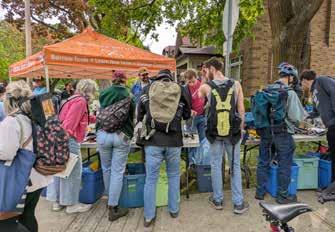
The 40th Great Glebe Garage Sale was, by all accounts, a resounding success! It took place on a cool and somewhat cloudy May 23, with a temperature comfortable for walking, browsing and bargaining – a relief from previous years of sweltering, mind-numbing heat.
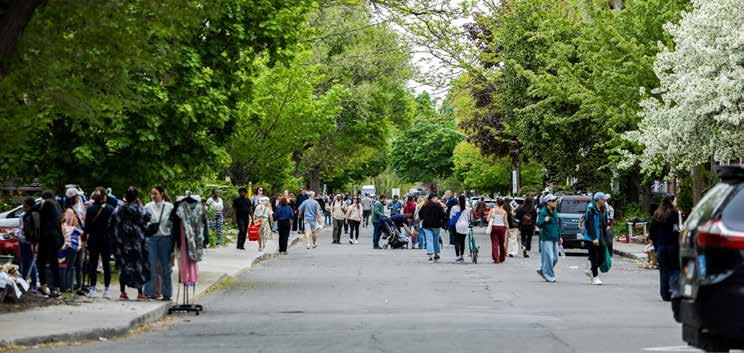
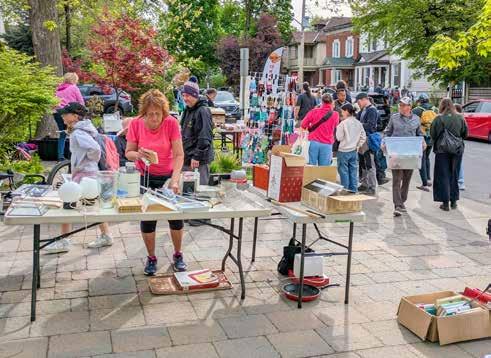
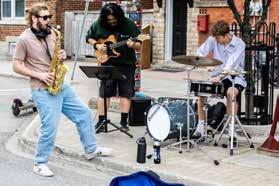
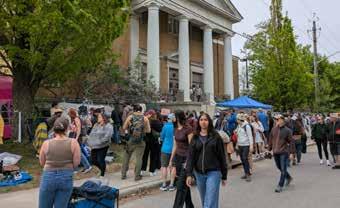
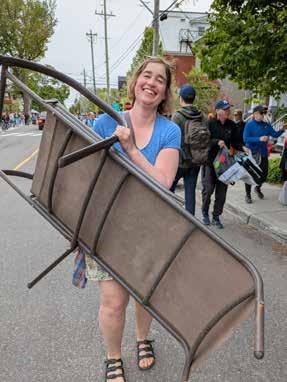
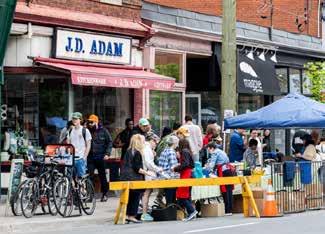
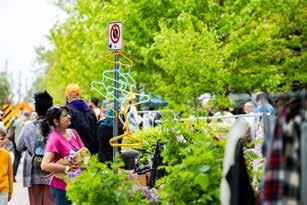
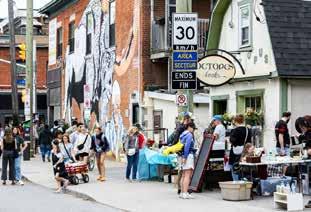
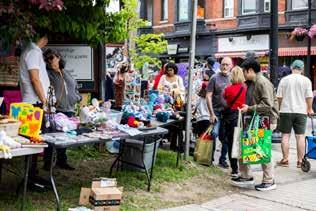
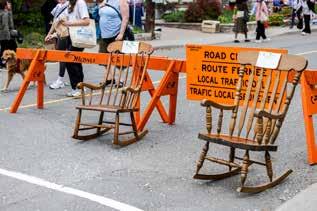
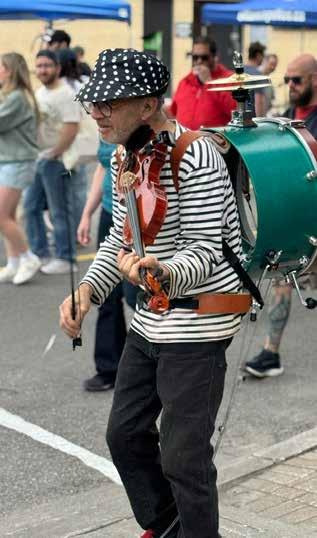
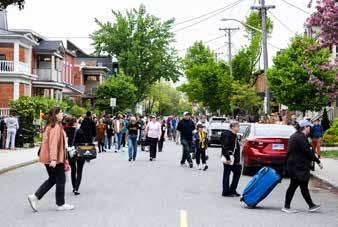
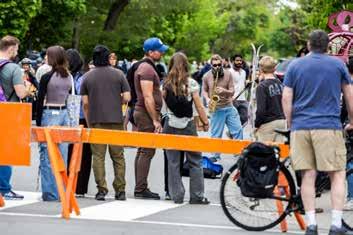
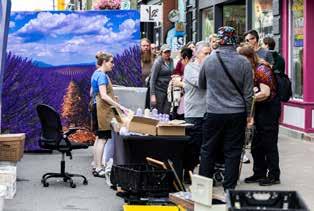
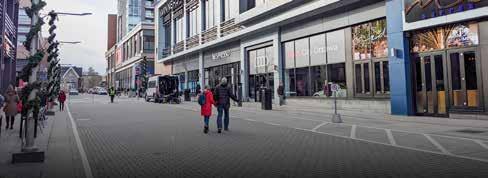
This year for the first time, some streets were closed to traffic, and there were temporary parking restrictions, which may have contributed to an overall sense of safety and calm in the streets. Despite the vast crowds of people busy searching out bargains, chatting with neighbours, navigating around dogs, children, bikes, wagons, buskers, food stalls, sidewalk sales – indeed, all the attributes of a great garage sale – the feeling was largely one of spaciousness and ease of movement on the closed streets (Glebe, First, Second, Third and Fourth avenues on both sides of Bank Street).
“We were extremely pleased with the results of the traffic-calming measures implemented this year,” said Sam Woods, chief organizer of the garage sale for the Glebe Community Association. “Feedback from the community has been overwhelmingly positive, with many reporting a significant safety increase for both pedestrians and vehicles alike. The GCA looks forward to continuing collaborations with the City of Ottawa to ensure the Great Glebe Garage Sale remains a safe and successful community event for years to come.”
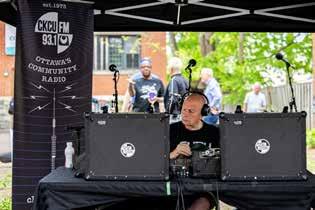
The day was filled with neighbours meeting neighbours, conversation, laughter, serendipitous discoveries and a joyful sense of rediscovering the neighbourhood after a long winter indoors. The feeling of community was palpable.

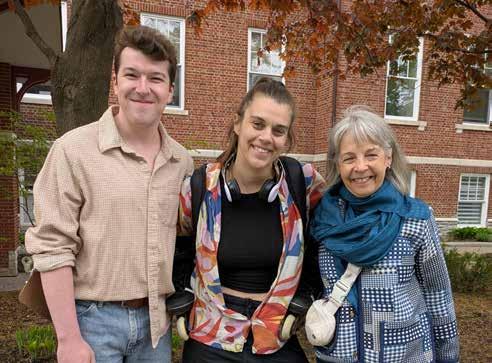














From left, Sam Woods, Glebe Community Association board member and coordinator of the Great Glebe Garage Sale, Michelle McElligott, City of Ottawa’s traffic manager for special events, and June Creelman, GCA vice president, on a Great Glebe Garage Sale walkabout to survey the scene and assess the impact of the city’s road closures. PHOTO: LIZ MCKEEN




Great Glebe Garage Sale
Photos by Lucy Bottomley, Erik Stolpmann and Liz McKeen
Coming soon: Community bonds to help fund Glebe affordable rentals
By Sarah Button
At the corner of Bank Street and Chamberlain Avenue, a parking lot could soon become something far more valuable: the Glebe’s first purpose-built, mixed-income, affordable apartment building.
The proposed development, led by Centretown Citizens Ottawa Corporation (CCOC), will create almost 100 new homes in one of Ottawa’s most connected and desirable urban neighbourhoods. Also, for the first time, CCOC is inviting the community to help make this project a reality by investing in Housing Forever Bonds.
CCOC has a strong track record of creating, maintaining and promoting housing for low- and moderate-income households for more than 50 years. Founded in 1974, CCOC has grown into one of Canada’s largest community-based, non-profit housing providers with over 1,700 homes in 54 properties across Ottawa. CCOC is already active in Hintonburg, Westboro and Overbrook –Bank and Chamberlain will be CCOC’s first building in the Glebe!
The project is in the early stages but aims to include about 90 new rental homes in a nine-storey building owned and operated by CCOC. CCOC’s mixed-income model means the project will have a range of rent levels. The building will include smaller units that are affordable for individuals with an annual income of about $48,000 and family-sized

units affordable for households with an annual income of about $60,000, alongside rents that are affordable for households earning a bit more. Because the property is zoned as a Traditional Mainstreet (TM), the project will also include ground-floor commercial rental space, helping maintain Bank Street’s liveliness and walkability.
Non-profit housing projects like those developed by CCOC often depend on government funding. However, that funding is typically only available once a project is “shovel-ready” – in other words, only after planning, detailed design, completed approvals approvals and CCOC is ready to build.
But getting to that stage can cost more than $1.5 million. For CCOC, covering those upfront costs through regular revenues can strain operations and slow down projects at a time when affordable housing is increasingly urgent.
To help bridge that gap, CCOC and the Ottawa Community Land Trust launched the Housing Forever Bond campaign. The initiative allows residents, businesses, institutions and community organizations to invest directly in affordable housing projects while earning a financial return.
The bonds provide CCOC with early-stage capital that helps projects advance more quickly toward construction. They also reduce reliance on higher-interest conventional financing, helping lower overall project costs and







support long-term affordability.
The bond campaign was created in response to mounting pressure on Ottawa’s rental market, where lower-cost housing is increasingly being lost and public funding alone is not keeping pace with demand. CCOC’s mixed-income housing model, combined with community investment through Housing Forever Bonds, is one way to expand affordable housing supply while keeping it permanently affordable for future residents.
The Bank and Chamberlain project will help protect affordability in Ottawa at a time when many low- and moderate-income residents are being pushed further away from transit, services and community networks. CCOC’s long history shows the incredible impact of community-based, non-profit housing. The average tenancy length with


CCOC is about 10 years, a testament to the well-located, accessible, energy-efficient and well-designed buildings CCOC is known for.
Venassa is a CCOC tenant who described why affordable housing in the heart of the city is so important to her.
“I was renovicted from my old apartment, but I didn’t want to leave Ottawa because I had a job opportunity,” she said, adding that her new CCOC new rental is just five minutes from her work, a grocery store and her best friend.
“I’m so fortunate that the community here at CCOC is so great. There are community wide events, volunteering opportunities, and my neighbours are so nice. I walk on Bank Street every Monday, and I see so many people not doing well.
“We need affordable housing and until the City of Ottawa and the Ontario government want to make this a priority, I’m going to continue supporting nonprofit organizations like CCOC who are working to alleviate (the housing crisis) as fast as they can.”
CCOC strives to build community alongside housing, and we are looking forward to getting to know the Glebe. Our team will have more to share about the Bank and Chamberlain project as we get started. Look for us out and about promoting the Housing Forever Bonds. If (and hopefully when!) you choose to invest, you’ll be helping CCOC move the project forward more quickly and supporting a locally grown solution to the housing crisis.
Sarah Button is the executive director of Centretown Citizens Ottawa Corporation (CCOC).
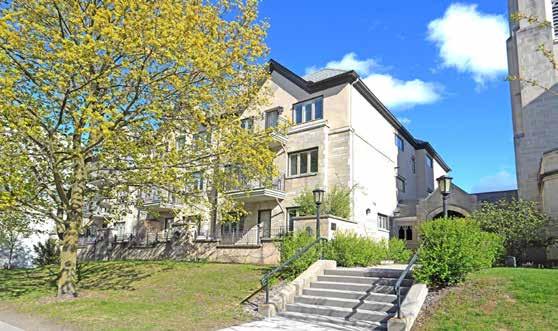



A concept sketch of CCOC’s proposed affordable-housing, nine-storey building at the corner of Bank and Chamberlain.
COURTESY OF CCOC
GCA looks ahead after a Great Glebe Garage Sale
This month by June Creelman, GCA
vice-president
Great Glebe Garage Sale
May was a super busy month in the Glebe. With the Tulip Festival, Great Glebe Garage Sale, Ottawa Race Weekend and sporting events, our neighbourhood has been hopping.
This was the 40th anniversary of the Great Glebe Garage Sale, and once again it was a great success. This year saw the introduction of new traffic and parking restrictions, and I think most agree that these made the event safer and even more enjoyable.
You may have seen the GCA’s communications calling out the city for imposing these restrictions without consultation. The key phrase here was “without consultation.” There was a worrying breakdown of collaboration and communication with City staff about the event and traffic management plans.
Some residents have expressed concern about the GCA’s public statements. The good news is they triggered a very quick and constructive response from the City. On the day of the garage sale, City staff and GCA board members spent several hours walking around the sale together and discussing what worked well and what could be further
improved. We have a debrief planned with all stakeholders and are confident that we are now on a positive road forward.
We want to thank Councillor Shawn Menard and the Glebe BIA for their ongoing collaboration and support for the biggest GCA event of the year. We also want to thank everyone who participated, whether selling, buying or just enjoying the spectacle. Since the GCA started the Garage Sale in 1986, it has always been a fundraiser for the Ottawa Food Bank, and we encourage everyone who made a little extra money to donate 10 per cent of the proceeds to donate.ottawafoodbank.ca. Please note in the comments that this relates to the Great Glebe Garage Sale.
Traffic and Transportation
The GCA’s recent membership survey revealed that transportation and traffic are among the top concerns of Glebe residents. This is especially true in the summer when the weekend closure of the Queen Elizabeth Driveway and various construction projects create traffic chaos in parts of the Glebe.
The GCA has set up a meeting with the NCC and City staff to discuss ways to mitigate traffic impacts. We know it is very difficult to balance competing interests

but, in our view, better advance communications and detour signage could be part of the solution. We are also seeking traffic count data that would help all stakeholders better understand traffic flows and potential adjustments that could be made to improve the situation.
A particular transportation issue raised to the GCA recently is the need for additional drop-off and loading zones on Monk Street near Abbotsford House and the Glebe Centre. Some seniors need to be accompanied in and out of these facilities and the lack of stopping places hinders access. The GCA board voted to ask the City to investigate adding short-term loading zones near Abbotsford House.
Become a Member and Get Involved
The GCA’s annual membership drive is wrapping up soon. We hope you will join the GCA to support a strong community. We rely on your membership for financial support and to give us credibility in our advocacy work. Membership is $10/person and is open to anyone who
lives or works in the Glebe. Join online at glebeca.ca or say “yes” when a neighbour knocks at your door and asks you to join or renew your membership.
If you are interested in helping to build community in real life and where you live, then we also invite you to get actively involved in the GCA. We are looking for people to join our board of directors. Please check glebeca.ca for more information or reach out to secretary@glebeca.ca. We’d be happy to tell you more.
We are also seeking volunteers to help with various initiatives: would you like to help organize municipal candidate’ debates or next year’s garage sale, assist with social media or website content, help with membership data entry or join a committee? We’d welcome your involvement. High school students – we can help you fulfil your volunteer-hour requirements.
Our next board meeting is on Tuesday, June 23 at 7 p.m. at the Glebe Community Centre. Please join us!

Spring and summer updates for Capital Ward
Three-Stream Waste Bins
As chair of the Environment and Climate Change Committee, I have been pushing the city to expand its three-stream waste-diversion program in parks. This summer, Springhurst Park and Sylvia Holden Park will be two of the 48 additional parks to receive three-stream bins across the city. Three-stream bins allow residents to separate their waste between garbage, recycling and composting options. In previous years, we added Windsor Park, Brewer Park and Brantwood Park.
In future years, we will look to continue expanding this program to more parks throughout Capital Ward such as Glebe Memorial, Central, Kaladar, Heron and Brown’s Inlet.
Wading Pools Opening Soon!
It’s wading pool season in Ottawa, and we’re lucky to have four wading pools in Capital Ward. The wading pools at Sylvia Holden Park and Brantwood Park will be open from June 20 to August 23 (closed Mondays). At Windsor Park and Heron Park, the wading pools will be open from June 29 to August 23 (Windsor Park will be closed on Tuesdays and Heron Park will be closed on Fridays).
For times and schedules, you can visit our website at www.ShawnMenard.ca/ WadingPools2026.
Patio Fees Waived
With the warm weather comes patio season, and that means we’ll see more patios and café seating along our sidewalks and rights-of-way. This is a great contribution to the liveliness of our streets. In May, I was happy to second a motion from the mayor to waive patio fees this season, making it easier for more establishments to set up patios and for residents to enjoy them.
18 and Under Free Transit
Free Youth Transit starts July 1. Riders 18 years of age and younger will be able to ride OC Transpo free all day throughout the summer. During the fall, youth will ride free on evenings (after 5 p.m.), holidays and weekends. This will be a big help for youth and families and is a significant achievement for our team in Capital Ward that ushered it in.
Zero Emission Buses
More zero-emission buses have been added to OC Transpo’s fleet. We have received a total of 127, with 111 currently operating – the remainder are being prepped for service and will be operating soon. Zero-emission buses provide smoother, quieter rides, while lowering emissions and OC Transpo’s operating costs.
Riverside Traffic Update
Lane closures began on Riverside
Pro Coro Canada



Drive at Bank Street on May 19 (now one lane in each direction). These temporary closures, which are disruptive, are expected to last until August 31 and are necessary to replace aging underground infrastructure, including sanitary and storm sewers and watermains, as part of Phase 1 of the Bank Street Renewal Project.
For more information, please visit the city’s website at www.ottawa.ca/ bankstreetrenewal.
Bellwood Boulder
We started the month of May with the installation of a plaque commemorating the Bellwood Boulder, a large glacial erratic that was unearthed during road construction on Bellwood Avenue during the pandemic in 2021. People came outdoors to explore the boulder during a very difficult time – it’s been here for thousands of years and now sits at the entrance to Windsor Park.
Alta-Vista Transportation Corridor Finally Removed in Capital Ward
We recently had a barbecue at Lees Field to celebrate the removal of the northern section of the proposed Alta Vista Transportation Corridor (AVTC) from the city’s Transportation Master
Plan. This section of the AVTC would have cost $200 million for a four-lane freeway running over the Rideau River and through this valuable greenspace without any noticeable reduction in congestion, according to City staff.
Great Glebe Garage Sale
I attended the Great Glebe Garage Sale, meeting with folks and chatting about everything that’s happening in the ward and the city – and sneaking away to find some really great deals! The Garage Sale is always such a fun event for the community, and I appreciate all our neighbours, as well as the Glebe Community Association, for all the work they do to make it happen.
New Heron Park Community Building – Grand Opening
We closed May with the official opening of the new Heron Park Community Building. This is a great new facility that replaces the old, well-used field house and has been a significant commitment of our team since Day 1. The larger facility has accessible bathrooms, new City programming, wide-open meeting spaces, rink change space and a new kitchen.
Charge Avenue
The Charge had a great run for the PWHL Walter Cup. Like last year, I was happy to participate in the ceremonial re-naming of Bank Street to Charge Avenue. A huge congratulations to the players, personnel and fans who have supported this team.

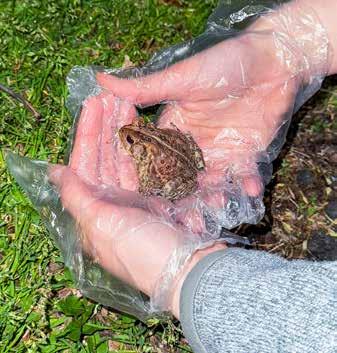
Helping toads cross the roads
By Emma Cantlon
Growing up near many ponds, I always looked forward to spring, when animals would return and bring life back to the once-frozen water. It’s impossible to choose a favourite, but toads have always fascinated me with their adaptability.
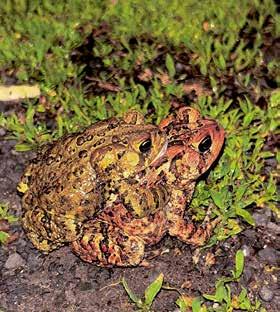
Toads hibernate in the winter, digging deep under the frost line to survive, sometimes as deep as 50 centimetres underground. Come spring, the warming soil is their cue to dig back up to the surface and face their next challenge: returning to their mating grounds. The toads must travel from their burrows to warm, shallow ponds, streams and even ditches to breed. In the Glebe, dozens of toads can be seen each night in May, travelling to and from Brown’s Inlet Park in search of a mate. After mating, female toads can lay thousands of eggs in the water – they hatch in less than a week!
While their migration is an impressive sight, the toads must cross many roads to get to and from their mating grounds. Living near Brown’s Inlet Park, I have seen many toads run over by cars, especially toads that have latched onto each other. Male toads will climb onto a bigger female toad’s back to fertilize the eggs once she lays them in the water. Imagine how much harder it is to get around with a man on your back! Such small and gentle creatures are no match against traffic.
To give these toads a fighting chance, I assembled a group of dedicated volunteers to help the toads cross the roads around the park. We experienced our first warm nights over the long weekend, and the Glebe Toad Patrol has so far helped almost 50 toads safely across to the park. As the weather continues to get warmer, we hope to help many more! Volunteers wear latex-free disposable gloves when handling toads to help protect both the toad and the person from harmful chemicals and bacteria. Just as our sunscreen and lotion can irritate the toad’s






sensitive, absorbent skin, the toad can release small amounts of toxins when stressed, which can irritate our skin as well. Gloves are a very important layer of protection to keep both sides safe and comfortable! We also wet the gloves in pond water to prevent them from absorbing moisture from the toad’s skin. A toad’s wet exterior is an important immune defence for them.
The last thing we want to do is interfere with nature or bother the toads, so volunteers are encouraged to handle them as little as possible when removing them from the roads. Whichever direction the toads are going, we gently cup them between both hands and place them gently on the other side of the street so they can continue their journey –like a toad taxi!
The biggest challenge is often spotting them. Since toads are most active after sundown, a common question is, “Is that a toad or a leaf?” It’s no wonder these little creatures succumb to passing cars. I quickly learned that flashlights are necessary not only to find toads on the roads but also when walking anywhere near the pond. The last thing we want when patrolling is to accidentally step on a toad, so I’ve provided a few flashlights and encourage people to bring their own to avoid this. Low visibility can be dangerous, and I provide high-visibility vests to anyone who wants one – safety comes first! If you’re interested in helping toads this spring or in the future, I highly encourage you to start a patrol group of your own or join ours! The positive response I’ve gotten from my community has been an amazing experience, and the Glebe Toad Patrol is always welcoming new volunteers. Follow our Facebook account @GlebeToadPatrol to sign up and stay up to date on shifts. With over 20 members and counting, the more the merrier!
Emma Cantlon is a Carleton University graduate in political science and environmental humanities. She has a passion for nature and the environment, and she enjoys birdwatching, exploring the natural world and finding ways to make a meaningful difference in her community. Contact Emma for more information at emccantlon@gmail.com




The Glebe Toad Patrol has helped 50 toads and counting cross the road on their way to Brown’s Inlet.
Drainage pipe at Brown’s Inlet
By Dick Peacocke
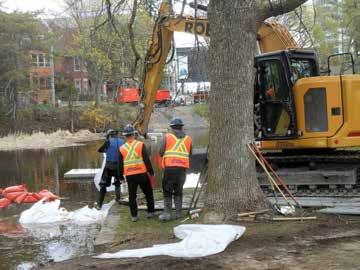
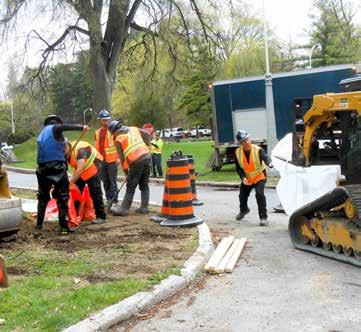
If you walked past Brown’s Inlet recently, you may have wondered what on earth was happening.
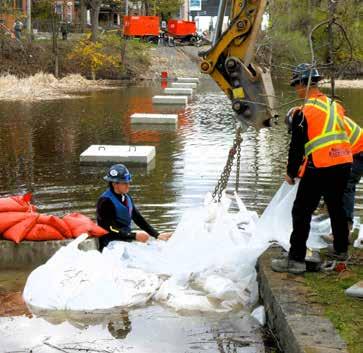
The drainage pipe that crosses it had been replaced when there was no water in the pond, but when the inlet was refilled, a considerable segment of the pipe rose well above the surface of the water. It seems that the buoyancy force which was exerted – Archimedes’ Principle – pulled the pipe away from its anchoring. The anchoring was not strong enough and needs to be redesigned.
Beginning on May 5, there was an extensive (and presumably expensive) operation to push the pipe down and hold it underwater. This involved erecting a giant crane, lowering concrete blocks onto the pipe, and building a small dam for pumping out water around the edge of the pond so that the pipe could be inspected. The work took just over a week and often involved a good number of engineers and work crew.
The concrete blocks (not to be mistaken for stepping stones) are to hold the pipe down until the replacement anchoring can be installed. This will be when the inlet is emptied in the fall. Then I expect we will see the giant crane back again!
Dick Peacocke is an observant Glebe resident. He is a mathematician, computer scientist, and past president of the Canadian AI Society.


Garden Sorceress
Protector of Petals

It’s hard to keep a good drain pipe down, especially with Archimedes getting his principles in a twist! PHOTOS: DICK PEACOCKE
City of neglect or a city for all?
By Rianne Mahon
The start of the 2026 municipal election campaign is a good moment to reflect on the city we have, the one we want and what we need to do to realize it.
Do we want a city that primarily benefits corporate landlords, car dealerships and stadium owners, or do we want a city where housing, transit and other services are of such good quality that everyone wants to use them?
Step out the door, and it is not hard to see the cracks in the city. Too often, we look around our city and wonder what our tax dollars are actually being spent on.
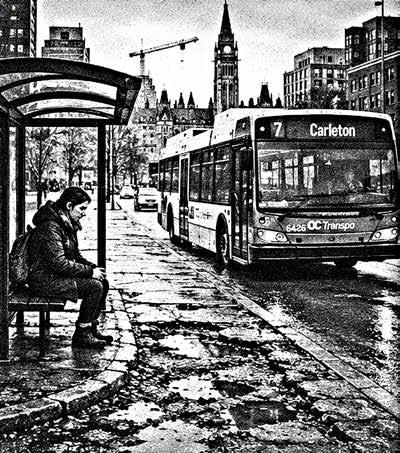
Public transit is unreliable and downright unusable for most people. The LRT? What LRT? When buses aren’t cancelled due to mechanical failures, they are often late, with the shortage of shelters leaving riders exposed to the elements.
The streets are full of potholes, and many sidewalks are so uneven they aren’t useable. Basic services like snow removal are dangerously inadequate. Beaches and wading pools are often closed through want of supervision. Without good public facilities, recreational and cultural participation remain unaffordable for large segments of Ottawa’s residents. Even more pressing, some 20,000 people languish on waiting lists for social housing, and much of what we have is badly in need of repair. A growing number of people are living (even dying) on the street. with many more struggling to find adequate housing.
Responsibility for this sorry state of affairs lies with our mayor and city councillors, who have chosen to keep tax increases below the rate of inflation in
the average renter spending $1,900 a month for a one bedroom and $2,400 a month for a two bedroom. In addition to affordable housing, we
the name of “affordability.” Poor services cost us far more. Every one-per-cent tax increase deferred saves ratepayers only $45 a year on average. By contrast, lousy bus service compels people to spend $16,000 a year in car payments while a lack of affordable housing has
need a functional transit network. With the Glebe’s population and traffic on Bank Street set to grow exponentially due to Lansdowne 2.0, we urgently need more buses, dedicated lanes to keep them out of traffic and fare relief to get people riding again.
No candidate for mayor or council should be taken seriously if they don’t call for a five- or six-per-cent property-tax increase, a realignment of spending priorities and strong public services that meet the needs of the average person. A six-per-cent tax increase would only cost the average household an extra $275 a year.
Of course, progressive taxation must be the backbone, but we can raise revenues in other ways too. Substantial revenue could be gained by increasing Ottawa’s parking rates, which are among the lowest of any major Canadian city, and parking is free in huge swaths of the city. Development fees on new single-family dwellings could be increased, discouraging urban sprawl with its attendant increase in car-dependent communities.
Measures to increase revenues ought to be accompanied by others that reallocate current or planned expenditures away from unproductive uses. Spending $50 million a year to widen roads may reduce congestion but it also attracts more cars. The $484-million police budget does not address the homelessness and despair that make parts of the city chaotic, and spending on quasi-military police gear only duplicates resources available through the OPP.
It is possible to make Ottawa a city for all. We just need a mayor and councillors with the political will to do so.
Rianne Mahon is a long-time Glebe resident, supporter of Free Transit Ottawa – and of course the Charge!

By Jake Morrison
Lansdowne 2.0 will probably be relitigated forever. I certainly consider it a poor use of the City’s resources, but I’m less interested at this point in revisiting the decision than in understanding the lessons Ottawa should learn from it. My focus is making sure we do better next time.
Lansdowne Park is not just another development site. It is one of Ottawa’s civic gems, a major public asset that belongs to the whole city. Decisions about Lansdowne will affect Ottawa residents financially, culturally and politically for decades.
Given that context, the process has always felt wrong.
From the original sole-source arrangement with Ottawa Sports and Entertainment Group to the recent Lansdowne 2.0 extension of that model, the City appeared to move quickly toward a preferred solution rather than openly exploring options with residents first.
During Lansdowne 1.0, a major alternative proposal existed, but the process never seriously allowed Council or the public to compare it. The same basic pattern repeated itself with Lansdowne 2.0.
The central problem was not simply the plan itself. It was how the conversation was structured.
Residents were asked to react to a highly developed proposal carrying enormous institutional momentum. By the time the public became deeply engaged, the financial structure, partnership model and overall direction were already largely set. The conversation became narrower: not “What should Lansdowne become?” but “Do you support this version of what it will become?”
That is not meaningful engagement for such an important civic asset.
One of the clearest lessons from Lansdowne is that residents need to be involved before solutions harden. Back in 2008, the City could have engaged residents around the basic problem itself: what should happen to a deteriorating stadium and a sea of asphalt in the middle of the city? That process could have identified what residents actually wanted from Lansdowne and generated a broader range of possible solutions before the City became committed to one path.
Instead, the City of Ottawa treated public engagement as something that happens after the important decisions are already mostly made. That same process was repeated for Lansdowne 2.0.
Another major lesson is that large civic projects require genuinely distinct options. Not variations of the same concept, but real alternatives with clear trade-offs. Once a sole-source proposal dominates the process, the City’s negotiating flexibility shrinks, and public debate becomes constrained. The public begins debating details inside a framework that has already been chosen for them.
Transparency was also a major issue. Lansdowne 2.0 was always going to involve complicated financial arrangements and long-term governance commitments. Selling a complex plan
honestly requires neutral explanation, plain language and visible independent scrutiny. Too often, residents were left trying to decode competing narratives, optimistic projections and partial information. That erodes trust quickly.
But the largest lesson may be broader than Lansdowne itself.
Large public projects increasingly require democratic legitimacy, not merely legal approval.
The City can satisfy every procedural requirement, hold every legally required meeting, and still leave residents feeling shut out of the actual decision-making process. A legally compliant process is not automatically a publicly trusted one.
Many residents did not simply oppose Lansdowne 2.0 because they disliked redevelopment or wanted “no change.” Many felt the process itself lacked openness. They felt key assumptions were established too early, alternatives were constrained too quickly, and public participation had limited ability to influence outcomes. Even residents who supported redevelopment often questioned whether the City had genuinely opened the conversation widely enough before moving toward a preferred solution.
That erosion of trust has consequences beyond Lansdowne.
When residents believe major decisions are effectively settled before consultation begins, public cynicism grows. People stop believing engagement matters. Consultation starts to feel performative rather than democratic. Over time, that weakens confidence not just in one project, but in municipal governance itself.
Cities today operate in a very different environment than they did twenty or thirty years ago. Residents are more informed, more connected and more skeptical of institutional decision-making. They expect major civic projects to be openly debated, independently analyzed and meaningfully shaped by the public before political momentum becomes irreversible.
That does not mean every project requires consensus. Lansdowne proves consensus is often impossible. But legitimacy comes from residents believing the process was fair, open, understandable and influenceable, even if they disagree with the final outcome.
Finally, projects of citywide significance require citywide engagement. Lansdowne is physically local, but politically and financially it belongs to all Ottawa residents. Major civic assets should trigger major public engagement processes automatically, potentially including residents’ assemblies or deliberative panels early in the process, before momentum builds around a preferred outcome.
The City’s responsibility is not simply to make decisions. It is to make them in a way residents understand, influence, and trust.
That may be the most important lesson Lansdowne has to offer Ottawa. Jake Morrison is convenor of the Ottawa
Engagement Group, an emerging


Neighbours in action: the team behind the Glebe House Tour
By Caroline Warburton
For more than 20 years, the Glebe House Tour has been one of the community’s most beloved annual events. Each fall, residents open their doors to neighbours and visitors for an afternoon of architecture, design inspiration and community connection. And it’s all in support of an important cause – every dollar raised helps provide access to GNAG programming for families with children who have special needs, ensuring programs remain inclusive and accessible.
This event is run entirely by volunteers, a dedicated group of neighbours who generously give their time and expertise. Also key to the tour’s success is the support of local businesses, sponsors and homeowners who welcome visitors into their homes for one special afternoon.
Planning for this year’s tour is already underway. At our initial meeting, we selected the date – Sunday, September 20 from 1 to 4 p.m. – and reviewed a list of potential homes. Committee members divided up the work of contacting homeowners and discussed sponsorship opportunities. Follow-up meetings continue with updates on homes and sponsors; at our final wrap-up meeting, we discuss feedback and how it might be incorporated into future tours.
The organizing committee is made up of 16 volunteers, each bringing different skills and experience to the table. Some members have been involved for many years, while others are newer volunteers bringing fresh ideas and perspectives.
Among the committee members are our chairperson, who has led the tour since 2024, a liaison with GNAG, a liaison with the GNAG board and a sponsorship lead who works closely with local businesses and community partners. One especially dedicated volunteer has been involved since the tour’s inception, serving over the years as house leader, committee chair and longtime event photographer. The committee also benefits from the support and expertise of Virginia Vince of Bloomfields. Virginia generously provides the floral
arrangements displayed in each home and is also a valuable source of potential homes and community connections.
Another essential part of the event is the team of house leaders. Before the tour, each house leader visits their assigned home to meet with the homeowner, gather information about the house and plan how visitors will move through it. On the day of the event, additional volunteers are stationed throughout each house to welcome guests, answer questions and help protect the homes. Many have returned year after year because of their love for the tour and its community spirit.
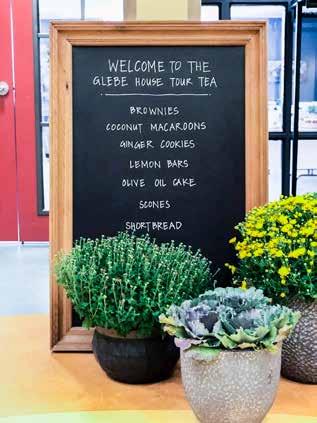
The popular tearoom at the Glebe Community Centre
Discover what’s possible this season A fresh OPPORTUNITY FOR SPRING
At Amica, thoughtfully designed experiences—from engaging social programs to exceptional cuisine and dedicated, professional care —come together to support a lifestyle that feels full, enriching and truly your own.
For a limited number of upcoming move-ins this season, enjoy an exclusive move-in credit toward a beautifully furnished suite, along with personalized consultation and design support from our professional team, so your new space feels inspiring, comfortable and uniquely yours.
*Offer subject to availability and applicable conditions.
This opportunity is available for a limited time. Connect with Glenese or Michele at 613-233-6363 to learn more.
is another highlight of the afternoon. Three committee members and their volunteers oversee this welcoming space, where visitors can relax between homes while enjoying tea, cucumber water and home-baked treats. A local artist also displays work each year, adding another layer of creativity and community involvement. Last year, the committee welcomed two new members. One assists with marketing and promotion, while the other brings the perspective of younger Glebe families, helping ensure the tour continues to evolve alongside the community.
I joined the committee two years ago as communications lead and have taken on an additional role this year as assistant to the chair. My connection to the tour became even more personal when my own home was featured in the 2024 event. Opening my home to the community was rewarding and a meaningful way to give back to the neighbourhood we love.
The committee also works hard to thank participating homeowners. About a week before the event, homeowners are invited to a private wine-and-cheese reception at Bloomfields. As a further thank-you, each homeowner receives two tickets to A Taste in the Glebe, affectionately known as the best cocktail party in the city.
One of the committee’s biggest ongoing challenges is finding homes for the tour. Featured homes do not need to be large or extravagant; what makes the tour special is the variety of styles, histories, renovations and personal touches that reflect life in the Glebe.
Would you consider opening your home for this year’s tour? Or perhaps you are a local business interested in becoming a sponsor? In either case, the committee would love to hear from you. Please contact Clare at clare@gnag.ca for more information. Tickets for the 2026 Glebe House Tour will be available soon online and at the Glebe Community Centre.
Caroline Warburton has lived in the Glebe for 26 years and is the volunteer responsible for communications for the Glebe House Tour.


Abbotsford Garden Tour returns for a third year!
By David O’Neill
The third annual Abbotsford Garden Tour is slated for June 20, and it is once again shaping up to be a wonderful celebration of gardens, community, volunteerism and local support.
Hosted in support of Glebe Centre Community Programs at Abbotsford, the Garden Tour has quickly become one of our most important annual fundraising events. While Abbotsford is well known as a welcoming community hub for older adults, many people may not realize that our programs and services are not fully funded. Fundraising events like the Garden Tour help ensure we can continue offering meaningful, accessible and engaging programs that support older adults in remaining active, connected and living well in the community.
Last year, the Garden Tour raised close to $30,000. This year, thanks to the dedication of staff, volunteers, sponsors and community members, we are on track to surpass that total, and we are hopeful we can reach $40,000.
None of this would be possible without the incredible hard work of our dedicated volunteers. From organizing gardens and welcoming guests, to promoting the event and connecting with local partners, volunteers are at the heart of the Garden Tour’s success. Their
energy, creativity and commitment reflect the very best of what Abbotsford represents: neighbours supporting neighbours.
We are also deeply grateful for the generous support of our community partners and sponsors. One longtime supporter is Renu Pillay of Whole Health Compounding Pharmacy, who has supported the Abbotsford Garden Tour for three years running. As a private pharmacy located in the Glebe, Renu’s continued commitment is a wonderful example of local businesses investing directly in the wellbeing of their community.

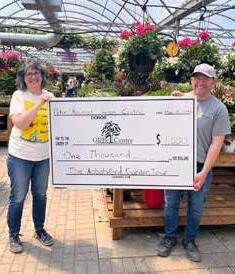
This year, we are excited to welcome a new sponsor, Peter Knippel Garden Centre. In addition to supporting the Garden Tour through sponsorship, Peter Knippel Garden Centre will host a pop-up plant sale in the parking lot of the Abbotsford Seniors Centre at 950 Bank Street across from Lansdowne from 9 a.m. to 4:30 p.m. Visitors can shop a beautiful selection of annuals,



ABBOTSFORD GARDEN TOUR
Saturday, June 20, 2026
10 a.m.–4 p.m. Rain or Shine
12 Inspiring gardens
The Glebe & Westboro
Tickets $35 glebecentre.ca/programs/ abbotsford-garden-tour
perennials and flowering baskets while enjoying the garden tour. Be sure to stop by and take home something special for your garden or patio.
The Abbotsford Garden Tour is more than a fundraiser. It is a reminder of what can happen when staff, volunteers, local businesses and community members come together around a shared purpose. Every ticket purchased, every sponsorship received and every hour volunteered helps strengthen the programs and services that support older adults in our community.
We are grateful to everyone who continues to make this event possible and look forward to welcoming the community to another beautiful and inspiring
Garden Tour.
Tickets are $35 and include access to all 12 gardens. Advance purchase is recommended. Check out the website and buy a ticket or two: glebecentre.ca/ programs/abbotsford-garden-tour/.
Abbotsford is your seniors active living centre for adults 55+. It houses the community programs and services of The Glebe Centre Inc., a charitable, notfor-profit organization which includes a 254-bed long-term care home. Find out more about our services by dropping by 950 Bank Street (the old stone house) Monday to Friday 9 a.m. to 4 p.m., phoning 613-230-5730 or by checking out all The Glebe Centre facilities, community programs and services on our website at www.glebecentre.ca.
David O’Neill is director of community programming at Abbotsford.

Carol Macleod, long-time volunteer gardener at Abbotsford, picking out plants for the garden this year. PHOTO: PAT GOYECHE
Pat Goyeche with Kennedy Johnston, owner of Peter Knippel Garden Centre in Gloucester, a new sponsor this year for the Abbotsford Garden Tour. PHOTO: DANIA LAPIERRE
By Cecile Wilson
A lot is going on in the climate and environment scene in Ottawa.
Mixing tradition and innovation
Former Centretown resident, Bruce Fanjoy, the current MP for Carleton, drew a crowd of about 70 people to The Prescott to talk about his energy efficient home on the Rideau River.
Known as the Millview House, it sits adjacent to Manotick’s historic mill. Although some locals were initially concerned about how his construction might fit with the heritage property, Fanjoy says now, “They love it!”
Other than the 33 solar panels on the roof, the dwelling looks like a traditional home – Fanjoy says a cube with a gabled roof is a very energy-efficient design. The wood-panelled home has exterior walls with a 1.5-foot cavity packed with cellulose insulation. All seams in the walls have been taped to prevent leakage.
The house is so well-insulated that Fanjoy installed an Energy Recovery Ventilator (ERV) to make sure that the air quality inside remains healthy. An ERV exchanges both heat and moisture to ensure that a home retains a comfortable amount of heat and humidity in both summer and winter.
Letting nature lead
Fanjoy says his construction emphasizes balance and letting nature lead. Although the most efficient orientation for passive solar heating would be due south, the house sits approximately 35
degrees off a true-south orientation. That was to take advantage of views of the river and the mill. Nonetheless, he says that the home’s heating needs are covered by its air source heat pump and passive solar heating through triple-glazed windows. There is an electric furnace that is needed only on the coldest days.
Another concession to balance was the inclusion of a wood stove. Fanjoy emphasized that the stove is not needed to keep the house warm; it was chosen for its aesthetic appeal and to provide backup heat in case of an electrical grid failure. He feeds the excess power he generates to Hydro One’s electrical grid in the summer and receives a credit towards his winter energy expenses.
You can see a video about Fanjoy’s netzero house – look for the Canadian Association for the Club of Rome on YouTube.
Getting the balance right
When the home was completed, Fanjoy wondered how he could do more for the environment. He had never considered politics, but that’s where he ended up – he won Carleton in the 2025 election with a stunning upset of the sitting MP, Conservative leader Pierre Poilievre.
He sits on the Standing Committee on Environment and Sustainable Development and thinks much can be done to meet the dual challenges of affordability and climate change. “We need to get people off fossil fuels,” he says.
While Fanjoy promotes the benefits of retrofitting homes to make them more energy efficient, he acknowledged that the cost can be prohibitive for many. He supports a retrofit program that would be accessible to more people.
Canal Woods Terrace greenspace put on the chopping block by NCC
Unfortunately, an example of the tendency to create a false dichotomy between climate action and economic or affordability issues has cropped up around the Canal Woods Terrace



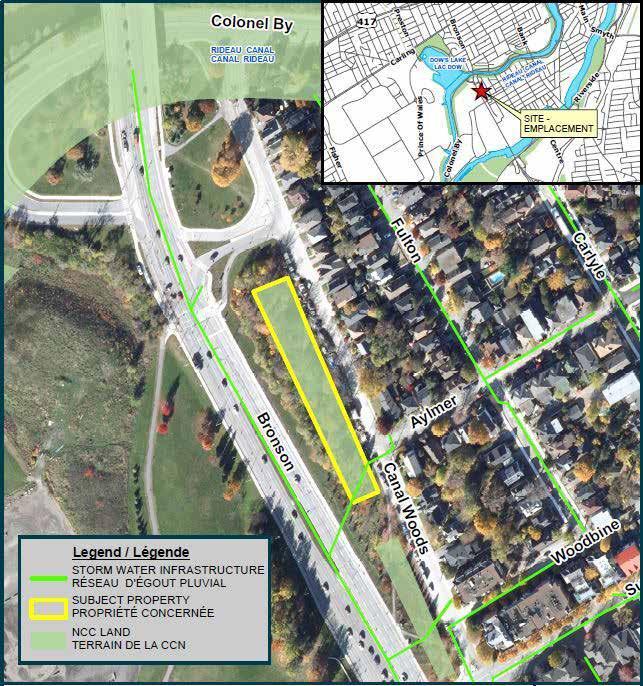
greenspace just south of the Bronson Avenue bridge. The National Capital Commission (NCC) has offered the land for affordable housing at “low to no cost,” despite previous commitments by both the NCC and the City to the importance of the urban tree canopy.
According to opponents of the move, development on that land would require permission from the Conservation Authority and rezoning by the City because the south end of the property is on a flood plain. Removing the forest would increase the risk of flooding and the levels of noise and air pollution while decreasing carbon absorption and diversity of plants and animals.
Defenders of the forest say they are not against affordable housing but say intensification is intended to “redevelop underused lots already built on.”
What you can do
Read:
The Canal Woods Terrace Forest flyer from the Old Ottawa South Enviro Crew and the Campaign to Save Canal Woods
Terrace Forest on the cafesottawa.ca website. Click on “News.”
Write to:
Tobi Nussbaum, CEO of the NCC; MP Joël Lightbound; MP Yasir Naqvi; Councillor Shawn Menard; Rideau Valley Conservation Authority.
Attend:
Green Drinks, June 11, 5:30-7 p.m. at The Prescott, 379 Preston Street. The speaker will be former federal environment minister Steven Guilbeault. Register on Eventbrite.
Green Fair Ottawa: Innovation and Electric Vehicle Showcase, June 13, 10 a.m.- 4 p.m., Ottawa Conference and Events Centre, 200 Coventry Road. More than 40 vendors will provide a onestop opportunity to check out sustainability options. The fair is free and will offer workshops, cooking demos and a chance to test drive an EV!
Cecile Wilson is a resident of the Glebe and a member of the Glebe Community Association Environment Committee.




Canal Woods Terrace forest at NCC site
By Ellyn Duke Watson & Cooper Love
(3)
41 Soup-serving scoop (5)
44 Toyota RAV4, for one (3)
45 Pedal-assist two-wheeler, informally (5)
46 Mexican street food in a folded tortilla (4)
47 Musical syllable after “sol” (2)
48 Thighbone (5)
49 Mavericks sharpshooter Thompson (4)
Down
2 Apply a protective plastic coating to (8)
3 Algonquin greeting (3)
4 Cry out sharply (4)
6 Newly established restaurant in the Glebe serving Thai fare (11)
7 Advanced high school class (2)
8 Personal written account of a period of one’s life (6)
9 Cooling system, abbr. (2)
10 Hockey legend Bobby (3)
12 Night before (3)
14 Hesitant sound (2)
15 Rehab for the body, abbr. (2)
16 Seasonal wetlands that form in spring (6,5)
17 Historical period (3)
21 Moves quickly (5,5)
22 You might do this to your steps when you lose something (7)
23 Style guide for academic writing, abbr. (3)
26 International peacekeeping body formed after WWII (2)
28 Anise-flavoured herb used in Italian cooking (6)
30 Relating to the Middle Ages (8)
31 Single-serving frosted baked treat (7)
33 Auto giant, abbr. (2)
34 ChatGPT is an example of this (2)
35 Agriculture, abbr. (2)
37 Crunchy stalk often served with dip (6)
40 Brood silently (4)
41 Magazine founded in 1936, or a board game (4)
42 First name of the singer who is cool for the summer (4)
43 British nobleman ranking below a marquess (4)

By Peter Simpson
Some of the tastiest things come from whatever happens to be in the fridge, like the bites we created recently.
I say “we” because I was with my friend, whom I’ll call “the Kiwi,” because he is from New Zealand and doesn’t want me to use his name. (No problem, Matt!) The Kiwi had a day-old baguette and a small jar of white anchovies, and earlier that day he had picked up fresh ground cherries, also known as cape gooseberries.
We put the ground cherries on top of the white anchovies on top of the baguette, because that’s what we had on hand, and it was tasty. I wondered if it could be even better.
I went to the store and found more ground cherries, which are both tart and sweet and practically burst with flavour. They can be a challenge to find, so I also wanted options that are more readily available, which led me to seedless green grapes and to tiny “Sugar Bomb” cherry tomatoes, which I thought might work, as tomatoes and ground cherries are in the same family.
White anchovies are different from the more common salt-cured anchovies and may show up in tapas as boquerones. They are marinated in vinegar, for a milder but tangy flavour compared to anchovies that have been cured in salt. White anchovies taste fresher and more citrusy. You can find them in small jars, though the better white anchovies come in small, sealed plastic trays. I found them at Nicastro for $4.99, an excellent price. They’re also available at Pelican Seafood, south of the Glebe.
Baguettes are widely available, of course. Metro has fresh “French” and “Parisian” styles. As far as I can tell, the only difference is the Parisian is slightly

Ichibon Bakery. You need a quality olive oil (ask at Nicastro), garlic and black pepper. We used an air fryer set at five to seven minutes (from a cold start). Air fryers vary significantly in my experience, so start at the shorter time and add more as needed. You can use an oven if you’d rather.
I use the word “toastini” deliberately, as I like mine with a bit of thickness and a bit of softness on the bottom. This way the bread still gives a bit, which I find more appealing than the emphatic crunch of a crostini.
Drink recommendation: For beer, a crisp pilsner is an excellent match or a Belgian witbier. For wine, a crisp white

will a dry bubbly. We enjoyed our toastinis with an excellent bottle of Brut cremate de Limoux.
Tasty Toastinis
Cut baguette into slices approximately one-third of an inch thick, lay flat in a cool air fryer basket or oven pan.
Mix a good quality olive oil in a bowl with garlic (powdered works in this case, as raw garlic will be too raw in this brief bit of cooking). Brush the oil mix onto bread generously, so oil soaks in. Sprinkle with coarse ground black pepper.
Put tray into unheated air fryer and engage at 400F for five minutes. If your
air fryer has a roast or bake setting, with the heat only on top, try it. You want the tops crisp but the bottoms still soft. Put them back in for a minute if necessary. (If using a pre-heated oven, try 400F for four minutes.)
Slice ground cherries, grapes and tomatoes in half, put in separate bowls and set aside.
Remove toastinis from pan and arrange crispy side up on a plate. Place one white anchovy fillet on each piece. From the bowls, top with a ground cherry, grape or tomato or any combination thereof. That ground cherrygreen grape combo, boy howdy, that’s good.
Peter Simpson is part of the team at Flora Hall Brewing, florahallbrewing.ca


larger. Excellent and smaller baguettes can also be found across Bank Street at
Toastinis with white anchovy, ground cherries, green grapes and sweet tomatoes – or other flavourful finds from the fridge. PHOTO: PETER SIMPSON
such as Albariño or Sauvignon Blanc will work, as
A MODEST PROPOSAL: A WEALTH TAX
Review by John Crump
If a monkey hoarded more bananas than it could eat, scientists would study that monkey to figure out what the heck was wrong with it. When humans do it, we put them on the cover of Forbes.
(Nathalie Robin Justice, quoted in Cancelling Billionaires)
This quote made the rounds on the Internet in early 2025 and is found in a recent book, Cancelling Billionaires Before They Cancel Us, by Linda McQuaig and Neil Brooks. The book argues there is something profoundly wrong in a world where the top one per cent control a huge chunk of global wealth. It recommends a wealth tax to get some of the billions back into government coffers to fund social and physical infrastructure that is falling apart.
The moral and financial injustice underlying the need for a wealth tax found a receptive audience when McQuaig, an award-winning investigative journalist, Toronto Star columnist and author of eight non-fiction best sellers (and one recent novel), came to speak at Abbotsford this spring.
In 1987, Forbes magazine produced the first serious global inventory of 140 billionaires whose collective worth was then U.S. $295 billion, or 1.7 per cent of the global GDP. In 2025, that list had grown to 3,028 billionaires controlling U.S. $16.1 trillion dollars, or 14 per cent of global GDP. According to the authors, this makes these billionaires equivalent to the third richest country in the world. At the current rate, they will be wealthier than the U.S. and China by 2038.
South of the border, billionaires send rockets into space, buy politicians, take

chainsaws to programs for the poor and control television, newspaper and social media platforms. Here in Canada, McQuaig and Brooks remind us, we have our own homegrown billionaires. While they aren’t as flamboyant or in-your-face as their American counterparts, a report by the federal Parliamentary Budget Officer (PBO) concluded that between 1999 and 2019, “the share of wealth owned by the top one per cent of Canadians increased from 19.4 per cent to 24.8 per cent.” In 2019, “one hundred billionaire families owned 1.6 per cent of Canada’s total wealth” – more than the bottom 40 per cent.
One billion dollars is equal to 1000 x 1 million dollars. That means someone making $100,000 a year would need to work for 10,000 years to earn a billion dollars. And this is only one billion. Currently, the world’s billionaires have trillions.
In calling for a tax on wealth, the authors stress a key point: billionaires don’t pay income taxes or are able to dramatically reduce their taxes through the efforts of expensive accountants. They can pay capital gains at half the rate that most middle-class taxpayers pay. Or they earn through stock portfolios and other financial devices not available to the average person.
The authors point out the general
shorthand for the rich – the “top one per cent” clouds the issue. “We are talking about the top 0.1 per cent, which is the top one-tenth of the top one per cent.”
The wealth tax would apply to 19,500 families with a net worth of more than $25 million, and it would apply only to wealth above that level. Their proposed tax rate curves progressively upwards, starting at one per cent for wealth between $25 and $50 million and rising to 8 per cent at $1 billion and up. The PBO report calculated this would have meant an additional $40 billion in federal coffers in 2025.

The authors marshal non-economic arguments in favour of the tax, including research that points to the billionaire class’s disproportionate responsibility through investment and lifestyle for the greenhouse gas emissions that are changing our planet. The tax would also reduce their ability to influence financially the democratic process in their favour and help reduce extreme inequality in our society. For example, the authors say, 700,000 Canadians could be lifted out of poverty by putting $10 billion a year into federal child, income and disability benefits. Homelessness could be cut in half with $3.5 billion. Another $10 billion could “support measures that could be undertaken to forestall climate disaster.”
Finally, the case for a wealth tax is in keeping with the public will: a 2021 Abacus poll found 88 per cent of Canadians support the idea.
The authors challenge the various arguments against a wealth tax. Countries like Norway, Spain and Switzerland have them. “Since the rise of Thatcher and Reagan, the Anglo-American countries have been in the grip of an anti-tax mania, peddled by billionaires and their acolytes.” In the end, the authors argue, it’s a policy choice.
“In our assessment, the case for a wealth tax is much stronger than the case against it . . . In a rational world, the choice is obvious.”
John Crump is a Glebe resident and current president of the Glebe Community Association with a background in journalism and policy.


Linda McQuaig and Neil Brooks, Cancelling Billionaires Before They Cancel Us Toronto, Dundurn Press, 2026 (253 pages)

Small press and anarchist book fairs in the Glebe!
By Greg Macdougall
On Saturday June 20, the ottawa small press book fair (OSPBF) will be held at the Glebe Community Centre, from noon until 5 p.m. Then a week later, on June 27, the Ottawa Anarchist Bookfair is also being hosted there.
This may be a unique opportunity! The long-running, twice-annual, small press fair is only temporarily at the GCC while Tom Brown Arena is being renovated. Both fairs are free admission.
The following is an abridged interview with OSPBF organizer rob mclennan.
Q: So, what is meant by “small press,” exactly?
Predominantly, a small literary publisher, whether of a journal or chapbook-sized magazine or publisher of small single-author collections . . . Zine is a small magazine, whatever that entails. Small press is a press who publishes small-run publications, whether photocopied, letterpress, hand-printed, hand-sewn, stapled, whatever.
[The tables at the fair are] predominantly literary: poetry and fiction, but also some comics, non-fiction.
Q: How does OSPBF fit into the literary distribution ecosystem?
Some of these publications are
hand-sewn or stapled, so will never see the inside of a bookstore, certainly aren’t distributed through an actual distributor. Hand sales are where such publications live and even thrive. As bpNichol termed it, the gift economy. Those of us that make such purposely small publications share and trade and exchange and keep that conversation going, whether across years or kilometres or even across languages. Even the small presses that do have [relatively] larger businesses hold such a small footprint compared to the big five (i.e., the multinational literary publishers), with books that might win readers and awards but aren’t selling in the thousands.
This event is for those books under the radar, often purposely so. Do you think something hand-sewn or hand-printed in a run of 50 copies will ever see the inside of a chain bookstore?
Q: 32 (?!) years of the OSPBF! Tell us some history, and why you do it.
The first fair was fall 1994, with the second in fall 1995. By spring 1996, it landed twice a year, with the only exceptions during the COVID era, twice a year run by me. James Spyker and I founded the first one, a fair modelled on the Toronto Small Press Book Fair founded in 1987, an extension of the original Meet the Presses fairs in Toronto, which now
run annually.
These books and writers and publications are easily and quickly overlooked but exist as the foundation of any literature. This is where many writers begin and where a handful even choose to live entirely. Some writers remain with a foot here, whether as reader or writer or publisher or editor or some combination thereof their whole careers, whatever engagement they might have with presses such as Penguin Random House. This is literature, quite literally, at the ground level.
What I’ve personally enjoyed is seeing certain writers or presses emerge and flourish across years. Some publishers use our event as a target for new publications, with the presumption that without our event, certain titles might not have been published, which is pretty cool. Look at what Cameron Anstee’s Apt 9 Press has achieved over the years or Amanda Earl through her writing and publishing. There is a remarkable array of talent in this town, which requires support to be able to flourish. I hope that the ottawa small press fair can be one of those supports.
Q: Yourself having been writing and publishing (above/ground press) for quite some time now, what advice do you have for young/aspiring/early-career writers?
Not terribly complicated, really. Keep going, read everything, don’t give up. Find your people.
Q: One of the things you’re known for is the “12 or 20 Questions” interviews you do with other writers. What question would you want to ask yourself now, to wrap things up?
Why do you take on so much? is a good one, although I haven’t specifically an answer for that one.

Ottawa Anarchist Bookfair
The Ottawa Anarchist Bookfair, in its second year, will take place on June 27 from 10 a.m. to 3 p.m. at the Glebe Community Centre.
The fair is for those who identify as anarchist, those whose political orientations overlap with some elements of anarchism, and those who are still exploring what anarchism is all about (the “anarcho-curious”). Anarchist bookfairs distribute information and teach people skills that are actively antagonistic to colonial state apparatuses.
The fair will have a mixture of literature (books, zines) relevant to anarchism, anti-oppression organizing, community-run workshops and tables from autonomous community groups and organizers. The organizers hope to connect isolated people, inspire others to organize and take action against capitalism, imperialism and colonialism and provide a little joy and respite to those caught in the gears of the war machine. The event is free, as is the food and some of the literature. If you’re thinking of going, please read the website in advance. Masking is required, free masks will be given out, and there will be DIY air purifiers (Corsi-Rosenthal boxes) to help filter out viruses. Children’s activities and childminding will be offered. The website at ottanarchistbookfair.noblogs.org. includes a list of vendors and sessions being offered.

I learned notions of community and communal responsibility through the example of my farmer-father and how he engaged with the people around him. What one can do, one does for others, in the ways that one can. He set a high bar.
The ottawa small press book fair website is at smallpressbookfair.blogspot.com.
A pre-fair reading will take place Friday, June 19, 7 p.m. at Anina’s Cafe in Vanier – it’s also free to attend.
Greg Macdougall is a communications specialist and an activist for social justice and social change.
Our focus is SMALL PROJECTS DONE RIGHT –projects that larger contractors do not consider.
We do everything from landscaping, interlock, fencing, retaining
and
Clients
The spirit of Art in the Park
By Bhat Boy
Enjoy art without the attitude. Released from the gallery walls, it runs wild in the park for just one weekend a year. Art in the Park showcases more artists than any other event in the National Capital Region, and we have something for everyone, I promise, or your money back. Oh, and its free.
Art in the Park started as an idea. It was to be an opportunity for artists to meet artists to help us escape isolation in a place of tranquility. This was the spirit of the idea, but it seemed very oblique as a graphic, so I created the Art in the Park dragon to embody the idea. The dragon came to embody the festival and has appeared many times in our posters over the past four decades. The dragon represents the excitement of the visitors, but also the experiences of the artists themselves. Just add a little bit of Bhat Boy’s ego, and poof, the dragon appears.
The dragon lives on in all of us in the thrill we feel at the park each year. It is the people who come to the festival every year that make it such a success, and we want our festival to be part of your experience too. No one is too young for art. I am not sure what dogs get out of art, but at a minimum, they seem unharmed by it. They definitely like the food stalls.
Two of our food vendors:
Berries on Wheels – Whether you’re in the mood for our fluffy mini pancakes draped in seasonal fruits and a luscious Belgian chocolate drizzle, delightful chocolate-covered strawberry cups or refreshing 100-per-cent-fruit smoothies, each bite is a celebration of hard work and sweet rewards.
Mobile Bites (Mexican) – Owner Viola Cortez prepares and offers 100 per cent Mexican appetizers such as tacos, quesadillas, nachos, burritos. Authentic food prepared fresh in front of you, that forms a large part of Mexican culture.


We look forward to seeing you all at the 34th annual Art in the Park, on Saturday and Sunday, June 13 and 14, from 10 a.m. to 5 p.m. in Central Park. Whether you come by bus, bike or foot, I will see you there.
Bhat Boy is a well-known local artist and a principal founder of Art in the Park.
3
1. Bhat Boy can be seen holding onto the dragon’s ear, in the driver’s
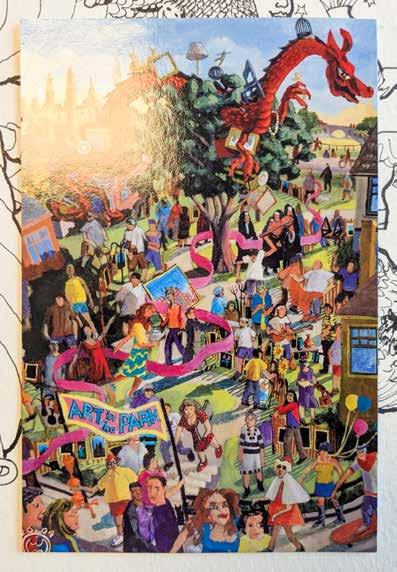
2. Art in the Park postcard from the early 2000s. The silver maple,
the Park for so many years, was struck by lightning shortly thereafter and had
3. This 2003 Art in the Park dragon was out



2026
which
the festival.
By Martha Bowers
One of the most popular Glebe events of the early summer is coming soon.
The 2026 Glebe Art in the Garden Tour will be held on July 4 and 5 from 10 a.m. to 4 p.m., rain or shine.
The Glebe Art Tour is an opportunity to support local established and up-and-coming artists and provide them with the opportunity to exhibit their work in a friendly environment. A variety of art from painting to pottery to photography to fabric art will be displayed for purchase in lovely gardens throughout the neighbourhood. There will be 26 artists on 18 sites conveniently located in clusters that make it easy to visit several artists at the same time.
Once again this year there are prizes! Pick up a ballot at any site and deposit it in the box. The more sites you visit, the more chances you will have to win a voucher towards the purchase of a work of art from any participating artist! An original work of art can brighten your home and bring you pleasure for many years.
As one artist said about previous tours, “This is such a great opportunity to connect with people about my work, and I had some beautiful heart-filled conversations.”
Bring your family and friends to enjoy a leisurely walk, cycle or drive on a summer weekend. Take your time and move along at your own pace. And don’t forget it is free! No need to purchase a ticket.
Brochures and maps with the list of artists are available in shops and at the community centre, scan the QR code or visit our website www.glebearttour.ca.


We look forward to seeing you.
Martha Bowers is a long-time organizer of the Glebe Art in the Garden Tour.

seat of this dragon.
pictured with the dragon in the centre,
anchored Art in
to be removed.
shopping. This simple drawing embodies the character of
ART BY BHAT BOY
Knots of light and shadow: two exhibitions
By Maureen Korp
Twists and turns of light and shadow in the work of John Healey and Judy Nakagawa provide us with much to see, what once was and is still here.
John Healey
John Healey: Triple Point: It’s Only Water is a site-specific photographic installation of three triptychs located in a series of display windows. Three is the thematic key to Healey’s work, and water its metaphor. Why? Because water, the artist notes, at 0.01C and 611.73Pa exists simultaneously in three states –liquid, solid and gas. Next winter, look a bit longer at the windowpane frost. Healey’s triptychs are entitled with stories the artist has drawn from myth, history and the everyday.
Two of the three 2025 triptychs are hung as separated panels of imagery in two of the display windows – “Macbeth, Brigid, and Strepsiades” at one end and “Keyhole, Chaerephon and Polo” at the other. The imagery and titles of both move back and forth, from past to present day, through stories of betrayal, loyalties. The middle window, however, is different.
At first, “Isolation, Chorus, and Lir” appears to be but one panel. It is, however, three folded into one. Thin vertical slats are the agents of change, of one view overreaching another. For example, while walking down the corridor, the image one sees first is “Isolation.” Walk up the corridor, “Lir” comes into view from the other side. “Chorus” is centred. Stand still. Here is what lies behind all.
The dark figure of “Isolation” is nearly formless. Within its darkness, there
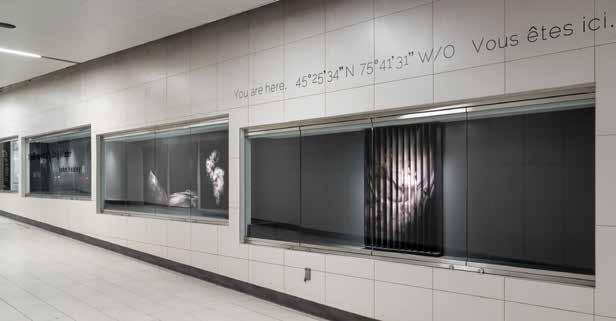
could be an eye, a bellybutton, some point of origin, but nothing is clearly known. In the dark of “Chorus,” however, it is possible to discern a blurred profile, someone listening, holding a cigarette. “Lir” is calling, wide open, that expanse of soft motion, near and far, the seawaters called “Lir” by the Irish.
Healey’s triptychs are currently installed in the windows of Corridor 45/75. Where is that? The O-Train Rideau station stop, in the Rideau Centre, Level 2, West Concourse, O-Train Line 1, down a hallway, down a memorable escalator.
Judy Nakagawa
Over in the City Hall Art Gallery, Complicated Heart, a solo exhibition of sculptural work by Judy Nakagawa, presents more inter-weavings of insight, history and storyline.
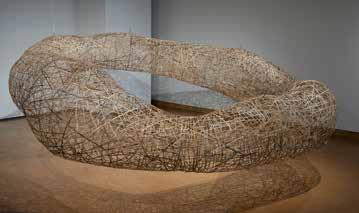
The first work one sees is “Failure to Contain.” It is a large, open sculpture, almost doughnut-shaped, woven of bamboo strips, twine, bits of printed text. You will see shards of words –Japanese, English –tangled shadows among the inter-twinings. Here are thoughts lost to the world surrounding. Suspended against two walls, the net of “Neural Navigation” pulls us up into its weavings of fibre, wire, vegetal kozo hemp. Are we fish in the sea? Are we caught in a summertime brown, or starry sky? How do we learn to be human? To hold water in our hands, to open a door for another, to speak any language? The “neural navigation” between mental and corporeal selves is not easy.
Against a dark red wall hang eight small, knotted sculptures, icons of white wool, wire, paper and fabric, tied and hung off wooden sticks. Looking at them, we sense knotted tensions, pain. The eight comprise a series entitled, “Moments of Anxiety, 1-8.”
We see more of these tensions in the archival pieces of paper and tangled wires forming “Learning English.”
The bits of paper used in this remarkable sculpture were drawn by the artist from the pages of an English-Japanese dictionary, the very one her father had

three
carried in his bag when he came to Canada, all alone, at age 17, not knowing any English.
Nakagawa has sourced her family’s stories of being issei, nisei, sansei Japanese in Canada to create an art that speaks to all. A good many of us know these tensions intimately.
The perspectives we see in the works of Nakagawa and Healey are well sourced. In both exhibitions, the artists have given us stories of then, now and what may be true tomorrow. Both exhibitions are courtesy the City’s Public Arts Program.
Maureen Korp is a writer, historian and scholar. She has lived and worked in several countries, including Japan as a child. Her most recent book, THERE and HERE, a small collection of poetry, is available in Ottawa bookstores.
Continuing Exhibitions
John Healey: Triple Point: It’s Only Water
Continuing until June 28 Corridor 45/75, Rideau Station O-Train Line 1 West Concourse, Level 2 Open daily Free Accessible by elevator and escalator CF Rideau Centre
Judy Nakagawa: Complicated Heart/Un coeur compliqué
Continuing until August 2 City Hall Art Gallery Ottawa City Hall Open daily: 9 a m to 5 p m Free Wheelchair Accessible

At Elmwood, intention starts early. Our specialist teachers bring subjects like French, art and music to life with passion and expertise. They create engaging classrooms that go beyond the basics, helping her uncover strengths, spark new interests, and build lasting confidence.
Judy Nakagawa, “Failure to Contain”. Bamboo strips, printed text, twine. PHOTOS: D. BARBOUR
John Healey, “Isolation, Chorus and Lir”,
pieces in the photographic triptych Triple Point

GNAG artists’ works at Irene’s
By Louise Rachlis
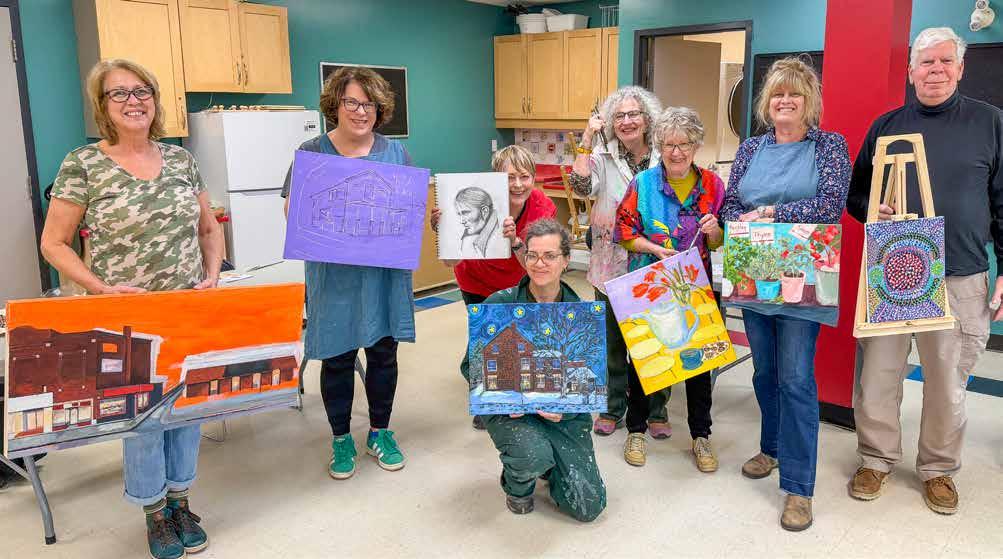
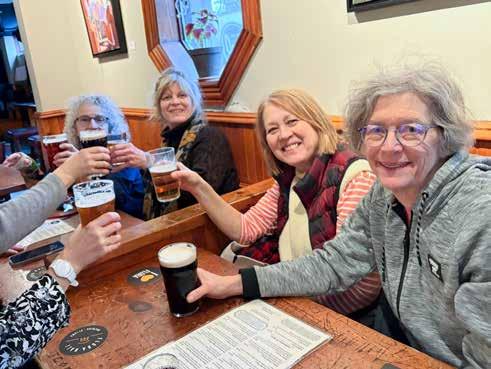
For many years, artists from Bhat Boy’s Glebe Community Centre art classes were exhibitors on the walls of the Life of Pie bakery in Old Ottawa South.
Pub has stepped up to give those artists another opportunity to show and sell their work.
Fournier have already had art shows at
Irene’s, and now they’ve arranged for their fellow GNAG artists from any class to show their work on Irene’s walls for the month of June.
“This show at Irene’s is an excellent opportunity to share our work with the community,” says Lucianne Poole, who has been taking Bhat Boy’s painting class since 2022. “For me, as an emerg-








Art class participants from the Glebe Community Centre will be showing their works at Irene’s Pub during the month of June. Here they are showing off some works in progress.
Glebe resident directs a charming comedy for Odyssey Theatre
By Katelyn Luoma
This summer, Ottawa audiences are invited to celebrate a major milestone in the city’s cultural life as Odyssey Theatre launches its 40th season of Theatre Under the Stars with a lively new production of Mirandolina, adapted and directed by Glebe resident and long-time Odyssey artist Eleanor Crowder.
Running July 23 to August 16 in Strathcona Park, Mirandolina promises audiences a joyful evening of outdoor theatre filled with physical comedy, masked performance, flirtation and razor-sharp wit. Adapted from Carlo Goldoni’s classic Italian comedy The Mistress of the Inn, the production continues Odyssey’s long tradition of bringing imaginative, movement-based theatre to Ottawa under the summer sky.
For four decades, Odyssey Theatre has carved out a unique place in Ottawa’s arts scene, becoming nationally recognized for its visually inventive productions rooted in the traditions of Commedia dell’Arte, mask work, clown and physical storytelling. Since its inaugural season in 1986, thousands have made the journey to Strathcona Park, turning Theatre Under the Stars into a cherished local tradition.
This anniversary season carries particular significance for Crowder, whose history with Odyssey stretches back many years. A celebrated local director, writer and performer, Crowder developed a reputation for bold visual storytelling and inventive theatricality and her work has taken her across Canada and abroad.
Glebe residents may recognize Crowder from her work with GNAG Theatre, where she directed Something Rotten, which enjoyed a highly successful run in April. She is also known for her many years of leadership of Odyssey’s Youth Apprenticeship Program, through which she mentored emerging artists in the company’s distinctive physical theatre style.
Now, Crowder steps into the spotlight to helm Odyssey’s landmark 40th anniversary production, returning to her love of outdoor summer theatre and Commedia dell’Arte. With Mirandolina, audiences will be “transported to a picturesque Italian Inn under the stars for the banter and giddy action of pure Goldoni,” says Crowder.
At the centre of the play is Mirandolina, a fiercely intelligent and independent innkeeper who has no intention of surrendering her freedom simply because wealthy men compete for her affection. Skilled at reading people and always several steps ahead, she expertly charms and manipulates the guests at her inn while maintaining complete control of the game.
When one aristocratic visitor proudly announces his disdain for women and claims himself immune to feminine influence, Mirandolina takes his arrogance as a personal challenge. What follows is a whirlwind of flirtation, deception, emotional warfare and comic reversals as she sets out to dismantle his confidence piece by piece.
Though written in the 18th century, Mirandolina still feels remarkably contemporary in its exploration of power, gender, performance and independence. Crowder’s adaptation leans fully into the playful theatricality of the piece while keeping the central character’s intelligence and agency at the forefront.
“My work on this script has been to match Goldoni’s world to our own
idiom,” says Crowder. “How do we decode class and status understanding from 18th-century Italy to our own experience? The result is a fresh take on a very up to date story. What will Mirandolina decide? Join us for an entertaining romp as we find out!”
The production features a dynamic ensemble of Odyssey veterans and exciting newcomers. Returning performers include Chandel Gambles, Marlow Stainfield, Scott McCulloch and William Beddoe. Joining Theatre Under the Stars for the first time are Jacqui du Toit and Jeremie Huot. Together, the six actors form a highly physical ensemble of expert Commedia players, bringing the production’s fast-paced humour and larger-than-life characters vividly to life.
For Odyssey Theatre, Mirandolina is more than a summer comedy. It is both a celebration of the company’s past and a reflection of its future, honouring forty years of artistic innovation and evolution as it continues to introduce new audiences to the possibilities of outdoor theatre.
In a city where summer festivals and outdoor events define the season, Theatre Under the Stars remains one of Ottawa’s most distinctive theatrical experiences – an evening of live performance beneath the open sky along the beautiful Rideau River.
Performances run July 23 to August 16, Tuesdays through Sundays at 8 p.m., with Sunday matinees at 2 p.m. Tickets and additional information are available at odysseytheatre.ca, where you can find Odyssey’s new online box office.
Katelyn Luoma is a theatre lover and arts enthusiast with a passion for writing.

Aisling Boomgaardt and Bram Boomgaardt Telephone: 613-746-2367
Email: GreentreeCo@sympatico.ca www.GreentreeOttawaRentals.ca


901 Bank St. Floor 2
info@glebewellness.com glebewellness.com
613-739-7999



Follow Up Between Appointments
Realistic Plans For Your Needs
Ergonomic Solutions For Lasting Change
Odyssey Theatre past production of Marlow Stainfield, Scott McCulloch, Erin Loretta Mackey, Chandel Gambles, Nicholas Koy Santillo, Bruce Spinney

Catherine
McKenney MPP, Ottawa Centre
N 613-722-6414
E CMcKenney-CO@ndp.on.ca
Keeping cool and freezing the rent!
Summer is just around the corner in Ottawa. With it comes fields of tulips, epic festivals, weekends at the beach and, of course, blistering summer heats. For renters without access to air conditioning or cool spaces in their apartments, summer heat can range from uncomfortable to downright dangerous. Thankfully, Doug Ford is finally bringing into effect provincial rules passed three years ago that allow tenants to install window air conditioning units without unnecessary restrictions – something I’ve been grilling him to do since I was first elected last February.
Allowing tenants to install window air conditioning units is an important and long-overdue step that will help keep people safe during our increasingly dangerous summer heatwaves. This change is a massive win for tenants and housing advocates who have been pushing for basic protections for years, but there is still more work to do. No one should be forced to endure unsafe temperatures in their home.
That’s why before the Legislature rises for the summer, I will table a maximum temperature law to further protect tenants from extreme heat and ensure every renter can live safely and with dignity. Stay tuned for more information on that.
The government also recently announced the date in which Bill 60’s changes to the Residential Tenancies Act will come into effect – this September 21. These changes will make it easier for landlords to evict tenants and harder for struggling renters to get ahead.
With rent in Ontario having increased by over 50 per cent in the past decade, far outpacing wages and inflation, many households are struggling to afford basic necessities. Many of our neighbours are having to buy fewer groceries and work longer hours just to make ends meet.
Taking all that into consideration, my MPP colleague Jessica Bell introduced a motion in the legislature during the first week of May to freeze rent for 2027 and 2028 on all rent-controlled homes. This rent freeze would have provided immediate relief and stability for renters across Ontario in a time of incredible need, and I was happy to support it. Unfortunately, Doug Ford was not.
Conservative support or not, we won’t stop fighting for a rent freeze and for better protections for tenants across Ontario.
How are rising rents impacting your life? Are you having to make tough decisions because of the cost of your housing? If you have a story to share, I want to hear from you. Send me an email at CMcKenney-CO@ndp.on.ca, and a member of my team will reach out.
Managing Fine Ottawa Homes Since 1996!


Creating opportunities for young people in our community
One of the things I look forward to most in my role as your Member of Parliament is meeting smart and passionate young people in our community. It is always one of the most meaningful parts of my work, hearing their bold ideas and ambitions for making Canada a better place. But just as importantly, I also listen to the worries and struggles that many youths in our community are facing today.
From a global pandemic to very real threats to our sovereignty, uncertainty has become something every young Canadian knows all too well. In March of this year, youth unemployment sat at 13.8 per cent. Across the country, young people are struggling to land their first job, all while trying to keep up with the rising cost of living and holding onto the dream of an education, a career and a home of their own.
That is why, in the Spring Economic Update, the federal government introduced real, concrete measures to support young Canadians. These actions will support apprentices, make it easier to own a home and build thriving lives through sports.
Supporting Workers and Young People
One of the main focuses of the government’s Spring Economic Update is supporting young Canadians and workers across the country. Central to this is Team Canada Strong, a $6-billion investment to recruit, train and hire up to 100,000 new Red Seal skilled trades workers by 2030-31. This initiative gives young Canadians and those struggling to find employment a paid pathway into good, long-term careers.
In addition, to help ease the financial pressures on post-secondary education, we are increasing Canada Student Grants from $3,000 to $4,200 a year and raising weekly student loans from $210 to $300, while keeping federal student loans interest-free.
Canada’s Own Sovereign Wealth Fund
We are establishing the Canada Strong Fund, a new national investment fund designed to ensure that the benefits of major national projects are shared with all Canadians, not just large corporations and private investors. Seeded with $25 billion, the fund will invest in major Canadian projects across energy, infrastructure and manufacturing, ensuring that as Canada builds and grows, all Canadians share in that success. Our government believes that building a stronger, more independent Canada means one where everyone can take part and benefit.

Making Life More Affordable
The Spring Economic Update also introduces important measures to help Canadians afford everyday essentials and a place to call home. The new Canada Groceries and Essentials Benefit will provide $11.7 billion in support over six years to more than 12 million Canadians, helping ease the rising cost of groceries and day-to-day essentials. Changes to the Disability Tax Credit will make it easier to access, providing an estimated $345 million in additional tax relief for Canadians with disabilities and their families.
On housing, the government is investing over $140 billion over five years to build more homes faster, eliminating the GST for first-time home buyers on new homes up to $1 million. In Ontario specifically, a new federal-provincial partnership will reduce taxes and fees on new homes by up to $200,000, a significant step toward making homeownership more attainable for Canadians across the province.
Stronger and Safer Communities
The Spring Economic Update makes significant investments to build stronger and safer communities across Canada. A $755-million investment over five years will support Canada’s sport system, increasing participation and bringing world-class sporting events to Canada. Indigenous communities will also see an additional $2.1 billion invested in education, health care and family services to support First Nations, Inuit and Métis individuals to fully participate in community life. We plan to support our children and youth from playground to podium.
To help keep communities safe, a new Financial Crimes Agency will be established to investigate money laundering, fraud and other serious financial crimes, while a new National Anti-Fraud Strategy will better protect Canadians across the financial, telecommunications and digital sectors. Finally, $75 million over five years will support the Canada Community Security Program, helping communities at risk respond to rising hate-related crimes.
Canada Summer Jobs
The Canada Summer Jobs (CSJ) program is a concrete measure to help young Canadians. I remain firmly committed to keep working hard for the people of Ottawa Centre each and every day, especially for youth in our community. The decisions we make today will shape the future they inherit tomorrow. This year, our program has supported 193 projects and 583 jobs, for $3,061,923. Youth can apply through the CSJ website: jobank. gc.ca/youth.

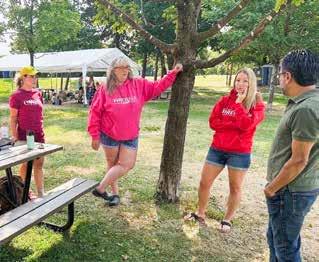
Yasir Naqvi with summer camp counsellors in the Canada Summer Jobs program in 2025


Celebrating Father’s Day: Why more is better
Some Glebe rodents struggle on Father’s Day, wondering if they are fulfilled or not and whether their life has meaning. “Every father at some point faces existential questions,” provided Rippeyoung, renowned rodentologist. “Surprisingly, new studies have found that fulfillment and happiness are linked to the number of offspring one has.”
Indeed, Zeus, CEO, CFO and POO of GiddyPigs.com is said to have more than 243 children and counting, and most of them (except for one) adore him. “I’m very happy. Very fulfilled. I never think of the meaning of life,” offered Zeus from his summer place at Lac Blue Sea.
Also, a significant proportion of lesswealthy guinea pigs have at least dozens of offspring, and there may be something to learn from them. Take Mucho Fertile, a Glebe resident with Peruvian roots. “Of course, a few might get lost or eaten, but if you have a lot, you assure yourself of success,” explained the rotund rodent, as he picnicked near the canal with some of his prodigy.
In the Glebe
By Josh Rachlis | SparkTheGenius.com
A recent Pigsos Feed Survey also found that there was a positive correlation between fecundity and corpulence, a desired aesthetic trait for rodents. “Fathers of very large families worry less compared to those with the standard 2.9 children. They eat and sleep more, digest better, and that helps them gain weight to achieve that desired rotund look,” explained Rippeyoung.
Even economists are supportive. “With our population dwindling inter-neighbourhoodly, we need more children who grow into more workers – in particular in the trades!” provided PM Chile Con Carne. “To Build Canada Strong, we encourage everyone to procreate, propagate and proliferate! We are also offering a grant to encourage it!”
So, if you or a rodent you know are questioning whether to have more offspring, it seems it should be a resounding “yes”! You’ll gain weight, cease to question your existence and secure workers for your future old age.
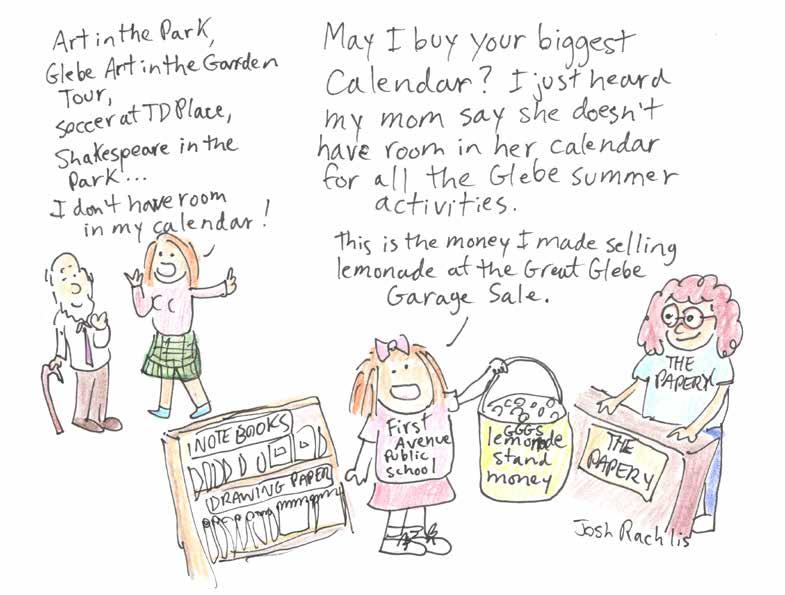











Travelling Canada
By Anant Nagpur
It’s hard to imagine, but I can say that I have seen the whole of Canada from coast to coast, all 10 provinces and three territories. I never thought it would happen, coming from Bombay, India, that one day I would write those words. I first landed in Winnipeg, Manitoba a long time ago. I was unable to see all of India, just a few states. I lived in the U.S. for about two years and saw about a dozen states. But Canada, the second-largest country in the world, is the only one I can honestly say that I have seen it all, from the Arctic to the Atlantic Ocean.
If I were asked which one province, territory or city I liked the most, I would say “each one in its own way was unforgettable – but Ottawa would be my choice.” I have been here the longest. Graduating from Carleton University and Algonquin College and working here makes it home. I have seen mile “zero” in Victoria, B.C. and in St. John’s, Newfoundland. I have seen the whole country – many friends have said to me that it is a remarkable story that not many can tell.
Most of the people I met in my travels were taxi drivers, whether it was in Inuvik, Whitehorse, Yellowknife, Iqaluit or Regina. They know what is going on in their town, and they have stories to share.
Ali, from Somalia, I met in Whitehorse. He had been in Whitehorse for more than 20 years and loved it. Ahmed, from Ethiopia, I met in Yellowknife. He told me he goes to Edmonton for two months to see his family and then back to Yellowknife for the rest of the time.
Azim, from Sudan, I met in Inuvik. He had an amazing family story to share. They settled in Inuvik, where he drove tourists like me to see the Arctic Ocean and others to see the Arctic Circle.
Another gentleman I met in Regina, who was from Pakistan, told me how hard it was to get used to the cold weather. He said he enjoys driving taxi. He did not know much about iconic Canadian TV shows like Corner Gas and Little Mosque on the Prairie, and once I had told him about them, he said he would take tourists to the shows’ shooting locations, Rouleau and Indian Head, made famous in part by those two shows.
Henry got tired of the always-onthe-go life in Montreal and moved to Iqaluit where he became a taxi driver, tour guide and bartender (when needed). He lives in Apex, and says he is happy, no more city stress.
I also learned what it is like living in
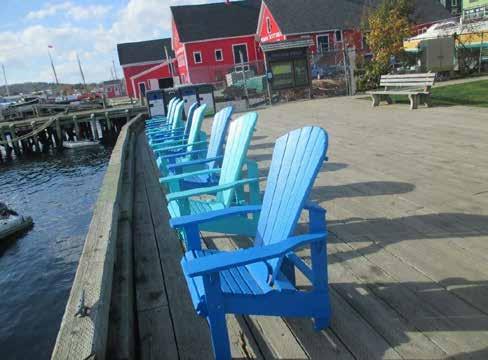

24-hour darkness and daylight by visiting these places at two different times. It is amazing when you realize what kind of frame of mind and willpower one needs to carry on. I spoke to a family from Kerala, India, running a hotel in
Years Ago in the Glebe Report

by Ian McKercher
Inuvik. They said it is the only place they can get permanent status in Canada, which reflects how resilient immigrants are. I respect them for that.
I must say that Quebec City is a little bit of Europe in Canada, and
Mont-Tremblant, in both summer and winter, the most romantic town in all of Canada. But all the provinces and territories have their own stories to tell.
Colleagues of mine have asked for my suggestion as to where to start when visiting the north, and I said Whitehorse. The best part is that between May and September one can make a day trip to Skagway, Alaska from Whitehorse by bus and train. You pass through the smallest desert on earth, Carcross Desert, one square mile.
When I was asked when I had time for all these trips, my answer borrowed from a 1995 romantic movie – “While you were sleeping.”
All in all, Canada is a great country, and I am fortunate that I got to see the whole country from coast to coast. It makes you wonder at the beauty of Canada.
Anant Nagpur is an Old Ottawa South resident and inveterate traveller, sharing some of his travels in the Glebe Report
CONTEMPT FOR COMMUNITY CONSULTATION
On May 2, Suzanne McGlasham, Commissioner of Community Services for the City of Ottawa, announced a draft recommendation to City Council supporting closing the Glebe Community Centre and the Old Ottawa South Community Centre. Their functions would be combined in a new building at Brewer Park costing $3.5 million. The proposal “would provide much improved recreational space and result in a cost savings to the City of $270,000 annually and $1.4 million capital savings over the next 25 years.”
Nine articles in the June 7, 1996, Glebe Report responded to this recommendation. All rejected the idea.
For years while the building deteriorated, the Glebe Community Centre had been working its way up the city’s renovation priority list.
A committee representing the Glebe Neighbourhood Activities Group (GNAG) and the Glebe Community Association (GCA) had been meeting regularly with city staff to develop options for the renovation. In May 1995, the
option of closing the building and investigating satellite sites was eliminated by the City. This left three renovation options to consider: minimum, medium and maximum. The Brewer Park solution, which no one from the Glebe or Ottawa South supported, shocked everyone.
In their front-page article, Jennie Aliman and Elizabeth Friesen stated that “to recommend a proposal that was never even an option was a blatant abuse of the consulting partnership and an act of bad faith, indicating contempt for both communities.” They felt that the Brewer Park recommendation would not meet the Glebe community’s recreational and cultural needs, would not foster community involvement and would not enhance services.
LOEB GLEBE REOPENS AFTER FIRE
After sustaining considerable damage from fire and smoke on May 26, McKeen’s Loeb Glebe and the neighbouring Glebe Apothecary reopened on June 4 to the relief of many Glebe residents who feared a longer loss of services.
Zwicker Wharf, Lunenburg, Nova Scotia PHOTOS: ANANT NAGPUR
Controversial public art representing Indian Head, Saskatchewan
Don’t be scared, be prepared
Coping with ticks
By Jennifer Humphries
Ticks are surging in Ontario this year – experts say over 40 per cent more Lyme-disease carrying ticks have been reported in 2026 compared to this time last year.
So, should you increase efforts to prevent being bitten? The answer is a resounding Yes, based on recent data and on my own family experience.
Last summer, my daughter Rebecca did her usual biking and hiking in the woods but began feeling weak and struggled to recover from even light exercise. Through the autumn, she experienced a range of symptoms including leg and arm spasms, numbness in legs and face, dry mouth and eyes and left chest pain that radiated down her arm. It was eventually diagnosed as Lyme disease, but it was a long process. But more on that later; first, a look at why the risk of having problems like Rebecca is getting higher every year.
Scientists warn that due to climate change, ticks are advancing north from the U.S. at a rate of 50 km a year. The worry used to be almost exclusively Lyme disease, but ticks carry many more pathogens. The lone-star tick, for example, carries an infection which produces a severe allergy to meat (Alpha-Gal syndrome), and it is increasingly seen in eastern Ontario.
Some sufferers have co-infections – that is, Lyme plus other pathogens. Ontario Public Health tracks confirmed cases of a few tick-borne diseases (Lyme, babesiosis, anaplasmosis and Powassan virus). However, the testing in the province fails to detect many cases, so the true numbers are likely substantially higher.
To lower your risk, see my tips in the accompanying box, and beware of myths about ticks:
1. “Everybody gets a red bull’s-eye around a bite.” No. That happens only about half the time.
2. “Everyone sees the tick that bites them.” No. A tick can attach to an area that’s not easy to see, and some tick nymphs are the size of a sesame seed.
3. “Ticks are only found in the deep woods.” No. There are ticks in cities, possibly in your lawns and gardens.
What happens if you are bitten?
If you find a tick that you suspect has been attached for
24 hours or more, remove it and take it in a sealed con tainer to a pharmacist or doctor and get a dose of Doxy cycline. The time it takes to get infected is usually said to be 36 to 48 hours, but it is now believed to be as little as 15 minutes.
If you haven’t found a tick but suspect a bite based on symptoms, get a blood test. However, a negative test is not conclusive. Current testing in all provinces is understood to be accurate only half the time, and it doesn’t cover all possible pathogens. If you believe you are positive despite a negative result, you could ask your doctor for another test and 10 days of antibiotics.
Lived experience
When my daughter was first tested for Lyme, the result was negative. Through networking, we found Jennifer Kelly who had experienced similar symptoms. She strongly recommended that Rebecca have testing done internationally at a specialized lab. She did so, and the diagnosis came back positive for Ehrlichiosis, a known Lyme co-infection.

Tick Bite Prevention Tips
Use repellent, like DEET or Icardin. Some essential oil blends also help.
Kelly had her own struggle with Lyme disease. It took two years for her to obtain a diagnosis following a suspected tick bite while she was working in the UK in 2019. Back in the Ottawa Valley, she struggled to find medical professionals who took her symptoms seriously. She eventually had her blood tested for Lyme at a lab in Germany. The result was positive, but she still faced major hurdles finding an Ontario doctor who would treat her. After two years, her symptoms progressed to the point she needed high doses of antibiotics. She still has flare-ups.
We also found Sarah Young, a Glebe resident whose partner runs the Centre for Health Innovation in Centretown, where they work with Lyme patients. While she notes that the medical system has not caught up with tick-borne illnesses, some Lyme-aware naturopaths and doctors can provide treatment and coping strategies. Thanks to Young, Rebecca is seeing a doctor knowledgeable about Lyme and related illnesses and is on a good path to health.
Until the medical community becomes more aware and until a vaccine is developed, don’t stop getting out into nature, just be careful.
Jennifer Humphries is a member of the Glebe Community Association and its Environment Committee, and a believer in getting out into nature, with appropriate health measures.
Stay on paths, avoid long grass and undergrowth.
Wear long pants and tuck them into your socks. Light-coloured clothing helps you see ticks and flick them off before they bite.
Putting clothes into the dryer for 10 minutes kills ticks.
If you find a tick that has not attached, flick it off.
Do a daily inspection of any pet that spends time outdoors. Your dog can be vaccinated or take preventive medicine against Lyme disease, but a tick on it could find its way to you.
Do a “tick check” after hiking or biking, even after gardening.
If you find a tick attached to your body, follow removal steps on many websites, like Health Canada. Our family has found tweezers work better than a tick key.
Check Health Canada for more ways to stay safe while enjoying nature.

From vertigo to the Villagia: my long journey home
By Rochelle Handelman
More than six million Canadians experience vestibular problems, and I became one of them.
The vestibular system, located in the inner ear, is responsible for balance, spatial orientation and coordinating head and eye movements. When it is disrupted, symptoms can include vertigo (a spinning sensation), dizziness, imbalance and nausea.
I suffered all those symptoms and spent nearly three weeks in the Civic Hospital while doctors tried to diagnose and treat my condition. After being dis-
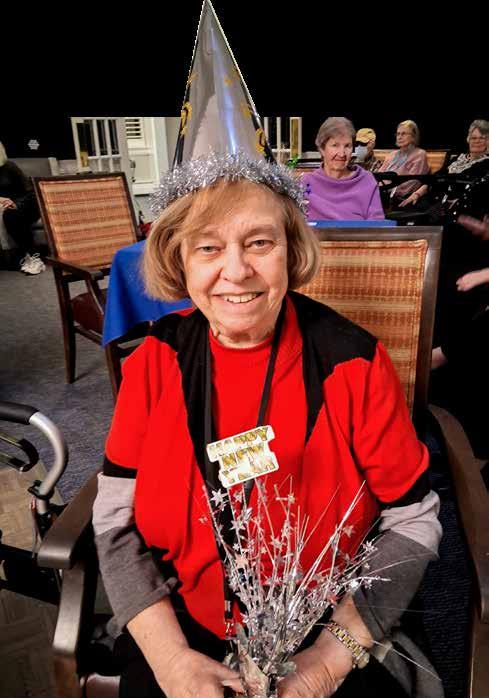


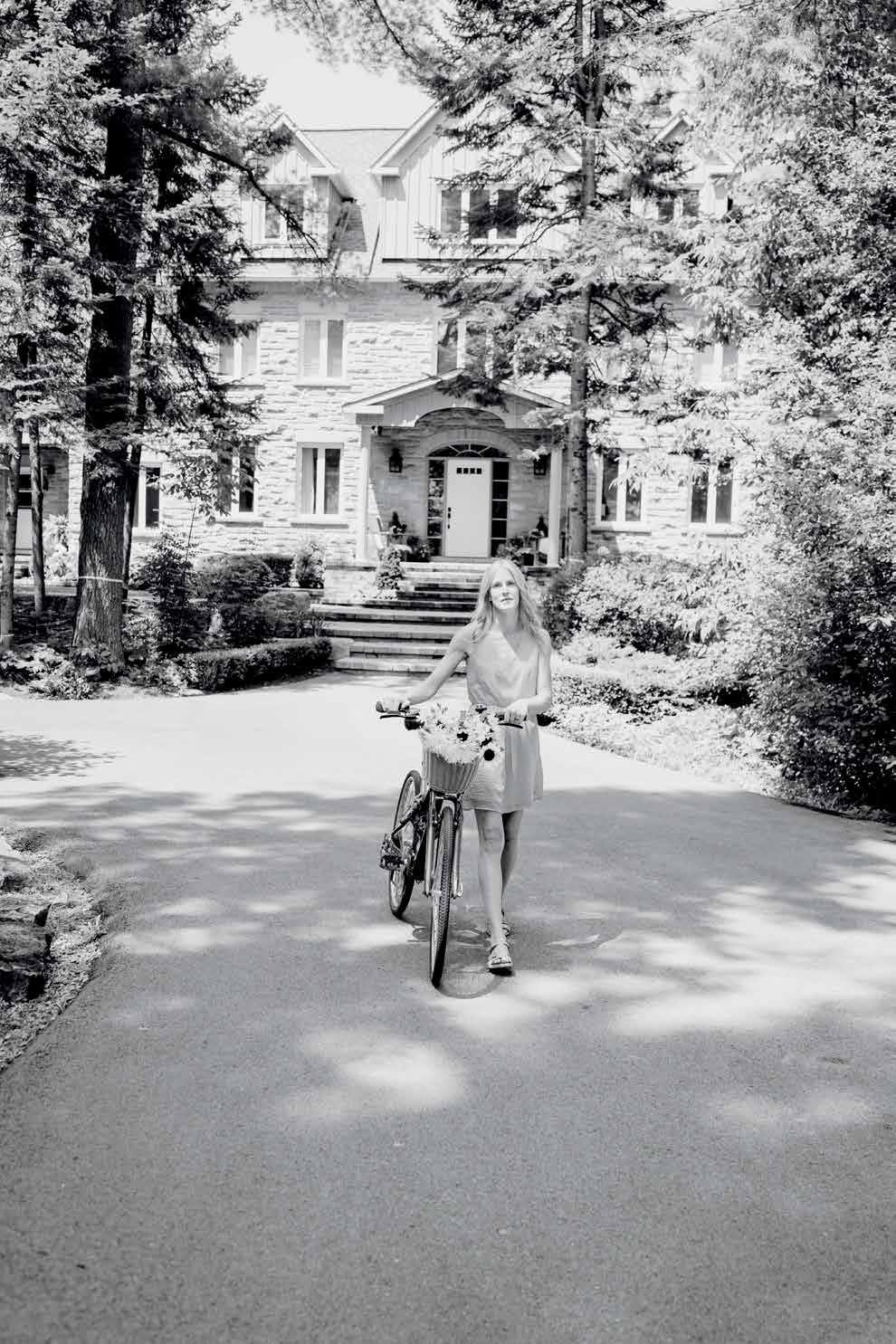

a three-storey home in the Glebe and could not manage stairs.
A hospital occupational therapist helped arrange the rental of a walker. On December 5, I was transported to the Villagia by the Carefor Going Home Program, a free service for seniors leaving hospital.
I contacted the dizziness clinic – only to be told no referral had been received. Fortunately, the clinic located the lost paperwork and scheduled me for a consult in January.
no improvement, BPPV was ruled out. Doctors then considered Ménière’s disease, prescribing SERC (betahistine), a medication used to treat it. When that had no effect, this diagnosis was also
To rule out other causes, I underwent
– I was transferred to the Geriatric Unit where I was diagnosed with uncompensated vestibular neuritis, an inner ear disorder affecting balance. Unlike the earlier assumption of a problem in both ears, it was determined that only my right inner ear was affected. – The primary treatment for this condition is vestibular rehabilitation therapy (VRT) —a specialized form of physiotherapy that retrains the brain to better process signals from the inner ear, eyes and body. Unfortunately, this therapy was not available to hospital inpatients. I also did not qualify for rehabilitation services at
Despite still being unable to walk independently, I had reached the limit of what the hospital could offer me as an inpatient. They said that they would refer me as an outpatient to the Civic
– Before discharge, I met with the hospital social worker who helped me secure a recuperation stay at a local retirement residence, Villagia in The Glebe. I live in
Rehabilitation, But Not the Right Kind – I started in-home physiotherapy paid by Ontario Health at Home. The therapist was excellent, but the exercises did not meaningfully improve my condition. At my January appointment, I learned why: the therapy I had been receiving was not the specialized vestibular rehabilitation I needed.
I was then given a list of qualified therapists, one of whom was my former physiotherapist from Glebe Physiotherapy. Although she was not accepting new patients, she agreed to see former ones – including me. With the right therapy, I finally began to improve.
A Second Diagnosis – In February, I was diagnosed with yet another condition: cervicogenic dizziness, possibly caused by delayed whiplash. This condition creates a mismatch between signals from the neck, eyes and inner ear, leading to dizziness and unsteadiness. It may have originated from a fall I had last October, when my head hit the floor during exercise class.
Continuing Effects – Although I have made significant progress, I still experience episodes of tinnitus. I am now seeking treatment for this as well.
This article is dedicated to the health care providers at the Ottawa Hospital Civic Campus and the people at Villagia.
Rochelle Handelman is a Glebe resident and a retired population analyst from Statistics Canada. She holds an Honours B.A. in Human Geography.

The author in the Ottawa Hospital Civic Campus
PHOTO: PAUL BECKWITH
How mindful self-compassion can transform anxiety and self-criticism
By Annika Whitford
What if I told you anxiety isn’t a personal failure, but a deeply human response?
Anxiety is one of the most common mental health experiences. It can show up before a presentation, a first date or in the quiet moments just before bed. Most of us know what it feels like to become tense and uncomfortable as our minds spiral into cycles of overthinking, worry and self-doubt.
Research shows that anxiety and self-criticism often reinforce each other. When anxiety is high, our thinking tends to narrow, often bringing with it a familiar inner voice that’s critical, questioning and rarely kind.
Mindful self-compassion doesn’t erase anxiety, but it changes how we relate to it and to ourselves. Rather than turning against ourselves, we begin to soften our inner critic, which can make things feel more manageable.
And the best part? It’s not complicated. Mindful self-compassion is something anyone can practise at any time.
Elements of Self-Compassion
Self-compassion is the ability to be present with our struggles and respond with basic kindness, understanding and care. Although some worry it may be selfish, self-indulgent or demotivating, research suggests it can support emotional resilience, broaden perspective-taking and improve coping, learning and growth.
Dr. Kristin Neff, a leading researcher and teacher of self-compassion, describes three key elements.
Self-Kindness – Many of us can offer compassion to others, but struggle to
PHOTO: LAURA KELLY

give it to ourselves. Self-kindness invites a simple question: “What would it be like to turn some of that care inward?”
When we treat ourselves with the same care we’d offer a friend, we create space to meet challenges with greater clarity and resilience.
Common Humanity – Self-compassion involves accepting our “humanness.” When things feel difficult, it’s easy to think, “something is wrong with me.” The truth is vulnerability and imperfection are part of being human. While selfpity isolates, compassion connects us. Mindfulness – Mindfulness is the ability to pause and notice what we’re feeling without getting completely swept away by it. Instead of becoming the anxiety, we learn to observe it: “This is a difficult moment,” rather than “This is who I am.” A balanced awareness helps us acknowledge our feelings without letting them define us or take over our sense of self.


What Is Mindful Self-Compassion?
Mindful Self-Compassion (MSC) combines mindfulness with self-compassion practices that support people in coping with emotional pain. This includes formal practices, such as guided meditations and written exercises, as well as informal practices like placing a hand on your heart and acknowledging, “This is a hard moment.”
MSC invites us to approach our experience with curiosity and care, asking questions like: “How do I pay attention to my suffering?” and “Am I open to receiving compassion?” When we respond with greater self-compassion, we create the emotional clarity needed to move forward and support our overall well-being.
Practising Mindful Self-Compassion
Mindful self-compassion is a practice that takes patience, repetition and self-acceptance. It can begin in small
ways: making a cup of tea, pausing to take a breath when you notice you’re spiralling or offering yourself a moment of loving kindness on a difficult day. Mindful journalling can also help us notice our inner critic and reconnect with a more compassionate voice. One practice is writing a letter to yourself from the perspective of a compassionate friend. Begin by naming something that felt difficult or brought up self-criticism, then respond as you would to a close friend, with acceptance, kindness and care. Imagine what a compassionate friend might say to you about your “flaw.”
While these practices can be therapeutic, they’re not a replacement for therapy. They’re simple, research-informed tools that can gradually shift how we relate to ourselves, helping to soften self-criticism and ease anxiety. When emotions feel too heavy, it’s okay to step back.
A Gentle Way Forward
Self-compassion isn’t simply about “thinking positive.” It’s about meeting yourself with honesty and care, rather than turning every struggle into a personal judgment. Why add unnecessary suffering to what we’re already experiencing? As the anxious inner critic softens, a stronger, kinder more compassionate sense of self can begin to grow.
Annika Whitford is a Glebe resident and marketing specialist at Cup of Tea Psychotherapy, 150 Isabella Street, Suite 215. Founded by registered psychotherapist and clinical director Chantal Riel, the team offers evidence-based, holistic and traumainformed care for teens and adults.
















The Couch debate!
By Sue Reive
What is the best ergonomic design for a couch? My partner and I have had this discussion more than once. He loves his expensive leather recliner couch; me, not so much! I feel like I am sitting in a spoon. The seat angles down toward the back like a sports car seat. The head rest pushes my head forward, straining my neck. And my feet do not touch the floor. I have tried using various pillows and cushions to make it more comfortable, but nothing helps. I get up off the couch feeling stiff and sore. So now I am on a mission to find out what features of a couch make it the best ergonomically. The spine is comprised of 33 vertebrae, 24 of which allow movement. There are 7 cervical (neck), 12 thoracic (mid spine) and 5 lumbar (lower back) which form an S curve when viewed from the side. The cervical and lumbar curves are called a lordosis. The vertebrae are separated by a disc and held together by soft tissues
and overlying muscles. The muscles and discs help to absorb and transmit the compression forces of daily lifting. The S curve of the spine also serves to transmit the force of gravity more efficiently, reducing the stress and strain on the spine.
With proper standing posture, the line of gravity should fall:
• through the ear lobe
• through the shoulder joint
• midway through the body
• through the hip joint
• just in front of the knee and ankle joint
When seated on a chair or couch, the hips should be in line with the knees, so the seat needs to be firm or flat (not tilted or angled backwards). If the cushion is too soft, the knees will be higher than the hips, increasing the strain on the back. The feet should be flat on the floor, and there should be about a fist behind the knee to the edge of the couch or chair. This follows the 90-90-90 ergonomics rule: having a 90-degree angle
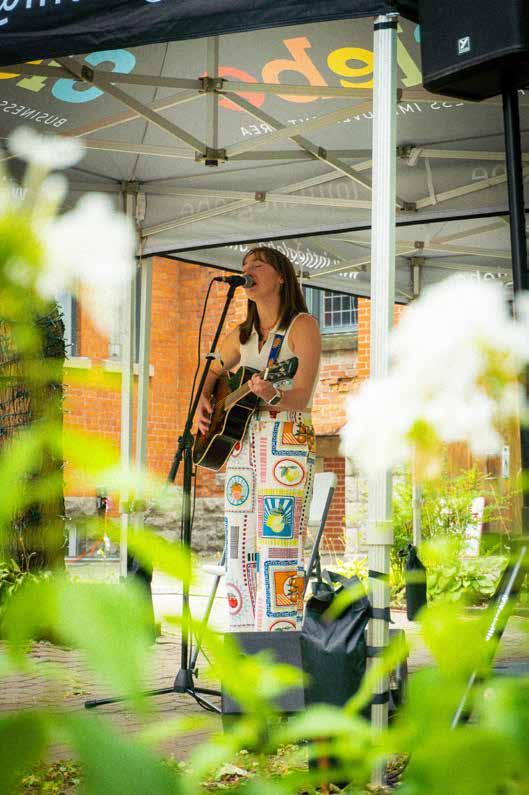

at the hips to the spine, a 90-degree angle at the knees with the elbows bent at 90 degrees and ideally supported by arm rests. Maintaining the S curve of the spine is essential to reduce strain. The couch or chair seat height should be 18 to 19 inches from the floor, and the depth should be about 20 to 22 inches. A cushion behind the back can help reduce the depth if you are short. The back of seat should be around 105 degrees from the seat; the option to recline the seat to 120 to 135 degrees is a nice feature as it can lessen the load on the spine. However, be mindful of having your legs out straight for too long when reclining, as this puts the sciatic nerve on stretch.
So now, a closer look at my partner’s couch. The couch meets the seat height and depth requirements. The normal backrest angle is about 120 degrees. The biggest issue is the seat cushion. It is not flat and sinks towards the back of the seat, forcing the knees to be higher than the hips. That means one cannot maintain the lumbar lordosis, and the spine is
flexed. The neck cushion is not an issue if you are tall, but it is an issue if you are short like me, as it forces my head forward and strains my neck. So, for me, my partner’s couch is like sitting in a spoon. My back and neck are screaming “Get off this couch.”
My daughter recently visited and tried out “the couch.” She immediately reclined and gushed, “Oh, this couch is amazing, it’s so comfortable, and the leather smells so good!” So now I am wondering, am I ultra-sensitive? Likely! My partner did remind me that we had to place a piece of plywood under my previous couch cushions to firm it up because I found it too soft.
Anyway, I have a great chair that fits me perfectly and is now considered “my chair.” My partner and daughters can recline on the lovely leather reclining couch. I do wonder though – is my partner’s aching back from the couch?
Sue Reive is a physiotherapist at Ottawa Physiotherapy and Sport Clinics Glebe.





Cancer screening: what is it, and how do I get screened?
By Anna Wilkinson
We have all been touched by cancer in one way or another. With one in two people expected to be diagnosed with cancer over their lifetime, and one in four expected to die from it, the odds seem stacked against us.
That’s where cancer screening comes in. Cancer screening finds cancers before anyone knows they are there – if you already have symptoms, it’s too late for screening. Most cancers develop gradually over time, with cells becoming progressively more and more abnormal. If we can find changes early in this trajectory, then we can intervene before there is an insurmountable problem. An ounce of prevention really is worth a pound of cure.
Besides screening, there are other things that can be done to prevent cancers: embracing a healthy lifestyle, exercising, not smoking, minimizing alcohol and UV exposure and getting vaccinated for the HPV virus which is a causative agent for cervical cancer.
We don’t screen for all cancers; in fact, there are very few that we do screen for. It only makes sense to screen for a cancer if it is common enough, if there is a good test to find it and if the trajectory of the cancer affords enough time to intervene and change the outcome. By finding pre-cancers or earlier stage cancers, screening leads to improved survival, less intensive treatments and less cost to our health care system. We’ve seen cancer mortality drop significantly since screening was adopted: by about 40 per cent for breast cancer, 62 per cent for colon cancer, 24 per cent for lung cancer and up to 92 per cent for cervical cancer. Finding cancers earlier also means costs savings for our health care system. A mammogram for breast cancer, for example, costs about $80, while the cost to treat breast cancer is about $30,000 for stage I, $150,000 for stage III and over $500,000 for stage IV. These benefits, of course, must be weighed against the potential harms of screening – inconclusive tests and additional investigations can cause anxiety, and no test is perfect so actual cancers could be missed. If you have
other medical issues which are more pressing, screening may not make sense. Screening is a personal decision for each one of us, requiring us to weigh benefits against harms in our own individual context.

Ontario has screening programs for four cancers –breast, colon, cervical and lung. Prostate cancer screening is covered if you have a first-degree relative who has had prostate cancer.
Colon cancer screening involves a do-at-home FIT test which looks for microscopic amounts of blood in your stool that can signal the presence of pre-cancerous polyps or cancers. As of July 1, colon cancer screening starts at age 45 and runs to age 74, although you can keep screening until age 85 if you request. If you have a first-degree relative who has had colon cancer before the age of 60, your screening should start earlier and should be done with a colonoscopy (a camera that looks inside the bowels) instead of the FIT poop test.
Cervical screening starts at age 25 and involves an HPV test, where a provider will take a sample of cells from your cervix to look for the presence of the HPV virus.
Breast screening uses mammograms, an Xray of the breast, which can find cancers as small as two millimeters in size. If you have dense breasts, mammograms


may be less able to find cancers, and so women with such breasts are advised to get yearly mammograms and can consider supplemental screening with ultrasound or MRI. If you have a strong family history of breast cancer, you may qualify for the high-risk breast screening program – ask your provider. You can call up and book your mammogram yourself at: 1-800-4656226. Breast screening can continue if you are healthy, but you will need to ask a provider if you want to continue beyond age 75.
Lung cancer screening is only for people who have smoked. It consists of a yearly low dose CT scan of the chest. If you have smoked for 20 years at any point in your life and are older than 55, ask your provider if you might qualify.
If you don’t have a primary-care provider, you can still get screened. The Champlain Screening Outreach NP Superscreener does virtual consults to find out what screening is right for you and orders and follows up on your tests. You can book online with the Superscreener at: www.ottawahospital.on.ca/en/cancerscreening, scan the QR code below,or call 1-833-551-4125. Let’s get screening!
Anna Wilkinson is a family doctor, GP oncologist and the Regional Cancer Primary Care Lead for Champlain Region. She lives in the Glebe with her husband and four daughters.

Scan to sign up for















Champlain Screening Outreach
29 Mount Pleasant Avenue - Old Ottawa East
Fourth Avenue - The Glebe
43 Willard Street - Old Ottawa South
Hearts of gold (and blue) – Glebe Athletics

News from Glebe Collegiate Institute
By Annika Scrivens
Glebe Collegiate’s diverse sports programs, leadership opportunities and culture of inclusion are the cornerstones of its athletics department. This school year, an astounding 500 Glebe students participated in school sports – that translates to roughly 40 per cent of the school’s population.
Throughout the 2025-26 school year, Glebe lived up to its reputation as a high-performing school across many sports. As of this writing, five teams and 66 athletes had qualified so far for OFSAA (Ontario Federation of School Athletics Associations) provincial championships.
The cross-country novice and junior girls’ teams finished fourth and fifth in the province, respectively.
The girls’ badminton team placed fifth overall.
The Nordic ski team brought home seven medals, including an individual gold medal for Madeleine Beauregard.
And the Ultimate team finished 4th at the 2026 Ultimate Canada High School Invitational Nationals tournament.
Glebe was hoping for up to 100 more OFSAA berths this spring as the rugby, soccer, baseball and track and field teams are looking strong in sports that continued into late May and June.
Behind all of Glebe’s sports successes are over 50 adult volunteers, including staff, community and at least 20 students who help to run the teams.
“Our staff has a culture of giving back and volunteering for extracurricular activities because they see the benefit to the overall student experience,” says Emily Grant, head of the health

and physical education department, adding that the help from community, parent and student volunteers creates a better experience for participants.
“That’s what makes our school and athletics program so special. Everyone has this vision for young people to grow and develop through participation in sport.”
What is also unique about Glebe is the countless leadership opportunities it offers. Glebe’s Athletic Council comprises more than 40 students who organize school-wide events such as dodgeball tournaments and intramural sports. This month, the Athletic Coun cil will organize and host its annual athletic banquet to celebrate the year’s achievements.
In response to the tremendous number of students interested in leadership
opportunities, a new Athletic Leadership Specialist High Skills Major (SHSM) was introduced this year. Athletic Leadership SHSM students graduate with a special red seal on their diploma by taking a set of school courses, certifications and work experience in the field of athletic leadership.
There are also leadership opportunities within Glebe’s sports programs.
“In varsity teams, seniors usually take on more responsibility and leadership roles working with juniors,” explains Adam Gordon, Glebe’s athletic director.
new, very inclusive sports such as sitting volleyball, sledge hockey and wheelchair basketball,” says Grant, noting that Glebe continually tries to seek out opportunities for those who have not traditionally had access to sports. Glebe has also been recognized for having one of the top Unified Sports programs in Ontario. Unified Sports pairs those with and without mild intellectual disabilities to come together and play sports in a fun and inclusive environment. This program provides even more opportunities for youth coaching and



This school year, some 500 Glebe Collegiate students, approximately 40 per cent of the school population, have participated in school sports.
PHOTO: JOCELYN CHANDLER

Glebe Coop Nursery School experiences spring
By Tamara Glavinovic
With the arrival of spring, classrooms at the nursery school have been filled with creativity and discovery as both preschool and toddler programs embrace the changing season through imaginative play, outdoor exploration, music and art.
In the preschool classroom, springthemed programming encouraged children to engage in collaborative and imaginative play. One of the most popular additions this month was the dramatic play centre, designed with a kitchen, dolls, pets and a gardening area. Children had a great time in role-playing activities such as caring for
babies, walking dogs, planting gardens and preparing meals for classmates.
The warmer weather also brought the excitement of playing outside. The reopening of the playground slide and the return of the sandbox provided children with many ways to have fun, and the sandbox quickly became a hub for imaginative projects, including sandcastle construction, truck pathways and even volcano creations.
When spring showers occasionally limited access to outdoor spaces, the groups turned to indoor group activities. Preschoolers particularly enjoyed parachute games, scarf dancing and cooperative activities such as “The Honey Pot.” Language learning also remained an important part of the preschool experience through the continued success of the monthly “French Circle.” During April’s session, children were introduced to French names of fruit, including pomme , banane and orange Small groups focused on sea sonal changes, music and emotional
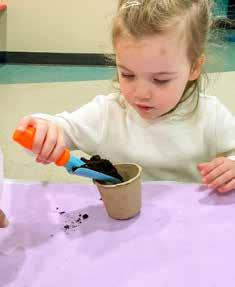
development. Children demonstrated impressive listening and memory skills while participating in activities where they identified familiar songs played only in instrumental form. Educators also continued to emphasize kindness, emotional awareness and positive classroom relationships through books, discussions and interactive activities. A featured story this month was Big Feelings by Alexandra Penfold and Suzanne Kaufman, which inspired thoughtful conversations about emotions and healthy ways to express and manage these tough feelings.
The toddler classroom also embraced the season with enthusiasm and hands-on learning opportunities designed to support curiosity and engagement. Spring-inspired art activities included a rainy-day painting project where children used potato mashers to create textured artwork. These creative experiences encouraged sensory exploration while allowing children to
of the toddlers’ daily routine. The teachers introduced a variety of felt stories, songs and books that supported language development, participation and imaginative play. The children explored the lifecycle of butterflies through interactive stories and music. Toddlers especially enjoyed dancing around the classroom with felt butterflies while listening to “The Butterfly Song” by The Kiboomers, bringing movement and music together in a joyful learning experience.
A new felt story titled “Tiny Tim” quickly became a classroom favourite, delighting children with its playful storytelling and bubble-blowing finale. Activities such as these continue to strengthen attention, participation and social engagement among the toddler group.
The little ones have grown in many ways over the last year. From increased participation during circle time to growing confidence in social interactions, both toddler and preschool students continue to demonstrate enthusiasm for learning and strong connections with their peers and educators.
We look forward in the final weeks of the school year to providing enriching experiences that support creativity, exploration and social-emotional growth for the little ones. June 23 is the last day for the toddler class, and June 24 is the last day for preschoolers. Summertime awaits.
Tamara Glavinovic is responsible for


Messy hand art and gardening are two of the pleasures of experiential learning.

COMMUNITY CONNECTIONS
ABBOTSFORD GARDEN TOUR, Sat June 20: A selfguided tour of 12 private gardens in the Glebe and Westboro, 10 a m -4 p m Gardens range in size and style, with native plantings, water features, perennial beds and garden hosts on site to answer questions Ticket holders enjoy complimentary refreshments at sponsor locations and access to a plant sale and the Abbotsford café Proceeds support seniors’ programs at Abbotsford House (950 Bank St ) Tickets at $35 are available at glebecentre ca or call 613-230-5730
ART IN THE PARK, Sat -Sun , June 13-14: Ottawa’s longest-running juried outdoor art festival returns to Central Park (19 Clemow Ave ) for its 34th year, 10 a m -5 p m Browse original work by 150-200 artists including painters, sculptors, ceramicists, jewellers and photographers, all set along the creek Free admission, rain or shine artintheparkottawa com
ART IN THE PARK – WINDSOR PARK, Sun June 28: OSCA welcomes back Art in the Park after a six-year hiatus Set against the backdrop of Windsor Park (1 Windsor Ave ), this community event brings together local artists and artisans showcasing and selling handcrafted creations on Sun June 28, 10 a m -4 p m Free admission
CITY SOUNDS LIVE, Thursdays and Saturdays through June 13: The Glebe BIA presents free outdoor live music in the courtyard of Fourth Avenue Baptist Church (816 Bank St ), in partnership with the Ottawa Music Industry Coalition Emerging local artists perform on Thursdays, 4-6 p m (June 4 and 11) and Saturdays, 10:30 a m2:30 p m (June 6 and 13) Free, family-friendly, all ages intheglebe ca/city-sounds-live/ DARKNESS AND LIGHT, Sat June 20: Nancy O’Rourke, a former Glebe resident and human rights worker, reads from three personal essays drawn from her experiences abroad: her first journey overseas, the challenges of working internationally and life in conflict zones Hosted by Cindy Weeks, with a conversation about storytelling and audience Q&A to follow Sat June 20 at 2 p m , Sunnyside Library, 1049 Bank St , Program Room 1A Supported by the Canada Council for the Arts through The Writers’ Union of Canada Register at booking biblioottawalibrary ca
DOORS OPEN OTTAWA, Sat -Sun June 6-7: Explore Ottawa’s history, culture and architecture at the city’s annual free heritage event, 10 a m -4 p m This year’s theme, “Doors to the Past,” marks Ottawa’s bicentennial with 89 buildings open across the city Glebe residents will want to note that Abbotsford House (950 Bank St ) is among the participating sites, open Sun June 7 only No registration required at most sites Full list at ottawa ca/doorsopen
DOORS OPEN FOR MUSIC AT SOUTHMINSTER Wednesdays through June 24: The beloved Wednesday noon concert series at Southminster United Church (15 Aylmer Ave ) continues through the end of June Free admission, freewill offering Upcoming concerts: June 10, Beats N’ Keys with saxophonist Petr Cancura (soul, blues, and rock-infused grooves); June 17, the Maple Leaf Horn Quartet (classical and contemporary works for horn ensemble); June 24, the Capital Youth Jazz Orchestra (the golden age of big band) All concerts begin at 12 p m doms613 com
FAURÉ REQUIEM, Fri June 5: The St Matthew’s Anglican Church choir presents Gabriel Fauré’s Requiem, scored for soprano and baritone soloists, choir and organ Several choral anthems by Stopford, Purcell and Parry will also be performed, along with well-known British hymns Fri June 5 at 7 p m , 130 Glebe Ave Freewill offering Barbara Hallam-Price, conductor; Matthew Larkin, organ
GLEBE ART IN THE GARDEN TOUR, JULY 4- 5, 10 a m – 4 p m Look at the map to plan your tour Start where you like Take time to chat with the artists Glebearttour ca
GLEBE COLLEGIATE COMMENCEMENT, Thu June
25: Congratulations to the Glebe CI Class of 2026 The ceremony will also be live streamed to the GCI library for those without guest tickets glebe ocdsb ca

GNAG SUMMER CAMP, June 30-Aug 31: GNAG Summer Camp returns for another season at the Glebe Community Centre, 175 Third Ave Recreational and specialty camps are available for children aged 4 years to Grade 8 Registration is ongoing gnag ca
GNAG YOUTH DANCE, Fri June 12: Grades 5-8 are invited to the end-of-year bash on Fri June 12, 7-10 p m at the Glebe Community Centre An evening of dancing, games and prizes gnag ca
LABYRINTH WALK, Sun June 21: Come and find your quiet centre at the monthly Labyrinth Walk at Glebe-St James United Church, 650 Lyon St S , Sun June 21, 3-5 p m Open to all glebestjames ca
ORKIDSTRA END-OF-YEAR CONCERT, Tue June 9: More than 150 young musicians take the stage for OrKidstra’s Centre Hub End-of-Year Concert at 6:30 p m at Carleton Dominion-Chalmers Centre, 290 Lisgar St The 75-minute family-friendly performance features classical, jazz, pop and world music Free admission, no RSVP required A livestream option is also available via OrKidstra’s YouTube channel orkidstra ca
OTTAWA ANARCHIST BOOKFAIR, Sat June 27: The Ottawa Anarchist Bookfair returns to the Glebe Community Centre on Sat June 27, 10 a m -3 p m Browse books, zines and resources from independent publishers and community organizations Free admission ottanarchistbookfair noblogs org
OTTAWA BLACKJACKS, June and July: The Ottawa BlackJacks bring Canadian Elite Basketball League action to The Arena at TD Place, Lansdowne Park June home games: Sun June 21 at 7 p m , Tue June 23 at 7:30 p m , Sun June 28 at 1 p m July home games: Wed July 8 at 7:30 p m , Sun July 12 at 4 p m Tickets at theblackjacks ca
OTTAWA FARMERS’ MARKET, Sundays through Oct 25: The Ottawa Farmers’ Market outdoor season is underway at Aberdeen Square, Lansdowne Park Shop local every Sunday, 9 a m -3 p m through Oct 25 Fresh produce, baked goods, meat, cheese, flowers and more from local farmers and producers A 20th anniversary celebration is also coming up this season ottawafarmersmarket ca
OTTAWA MULTICULTURAL SUMMER FAIR, FriSun , June 19-21: A free three-day community festival at Lansdowne Park Food, artisan vendors, live performances and community celebrations from cultures across Ottawa Aberdeen Square, 1000 Exhibition Way
OTTAWA RAPID FC, Catch Ottawa’s professional women’s soccer team at TD Place Stadium, Lansdowne Park Home game on Sun June 21 at noon vs AFC Toronto rapidfc ca
OTTAWA REDBLACKS, The Ottawa REDBLACKS kick off their CFL home season at TD Place, Lansdowne Park on Sat June 6 at 7 p m vs the Edmonton Elks, with a second home game on Sat June 20 at 1 p m vs the Toronto Argonauts Tickets at redblacks com
OTTAWA SMALL PRESS BOOK FAIR, Sat June 20: Browse independently published zines, comics, chapbooks and more at the Ottawa Small Press Book Fair on Sat June 20, noon-5 p m at the Glebe Community Centre Free admission smallpressbookfair blogspot com
PROBUS OTTAWA, Wed June 24: PROBUS Ottawa welcomes new members from the Glebe and environs Join fellow retirees, near-retirees and want-to-be retirees for interesting speakers, lively discussion and relaxed socializing The June meeting will be held Wed June 24 at 10 a m at Gloucester Presbyterian Church, 91 Pike Street Guest speaker Claire Smith, a 1996 Olympic equestrian, will speak about her life-altering brain injury following a fall at the 1997 European Championships and her work as an advocate for people with disabilities New members welcome probusoav ca
PROBUS OTTAWA — ANNUAL PICNIC, Wed July 22: The July meeting of PROBUS Ottawa takes a special format: three members present on topics from their own lives and areas of expertise – past talks have covered travel, local history, hobbies, and volunteering Presentations are 10-15 minutes each Following the presentations, members gather for the annual summer picnic Bring your lunch, a lawn chair and a beverage (no alcohol, please) Wed July 22 at 10 a m at Gloucester Presbyterian Church, 91 Pike Street New members always welcome probusoav ca FOR SALE
OLDER YAMAHA PIANO: Pristine condition Size: 43”/21”/59” Brown cherry colour and satin finish Regularly professionally inspected and tuned 613-233-5943 (evenings)

Vintage autos on O’Connor St. PHOTO: JOCK SMITH











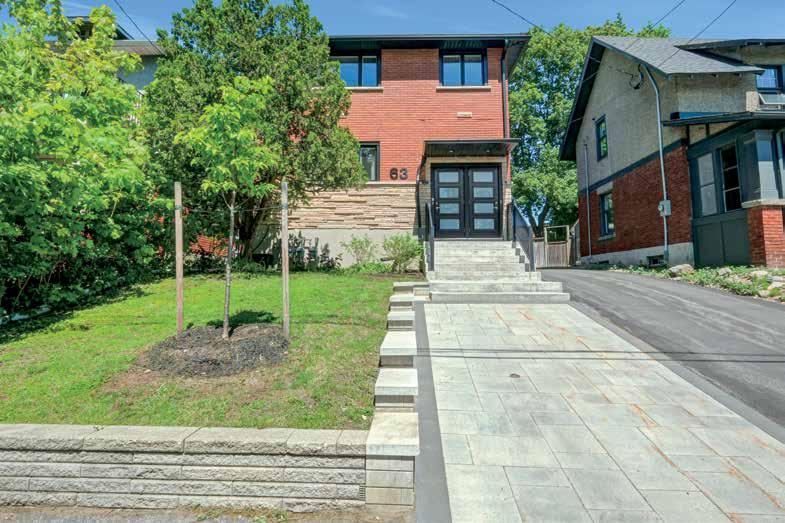












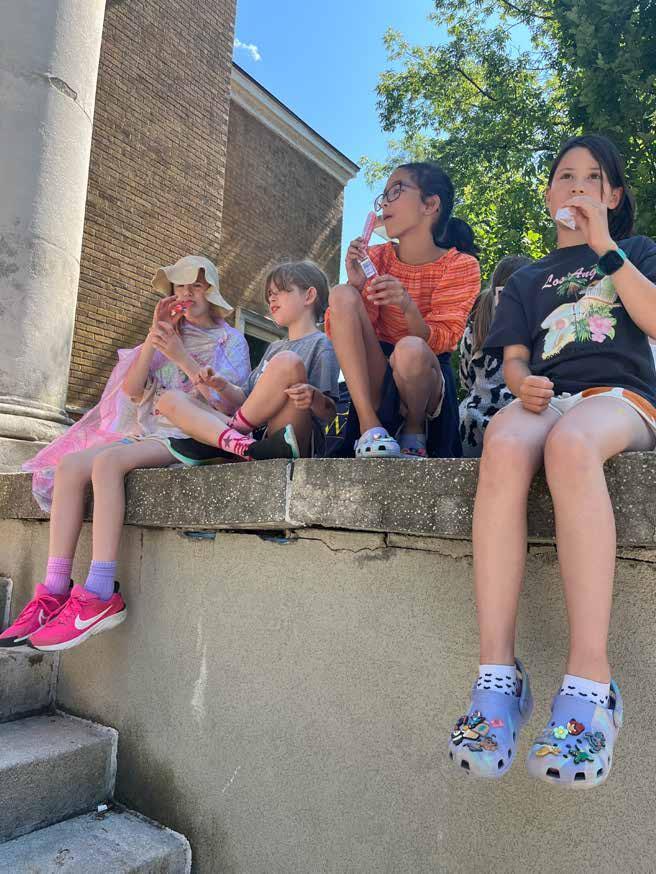


Painting by
Gerd Schneider