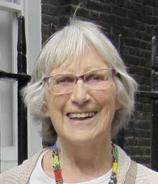
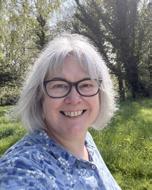
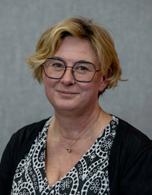
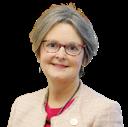
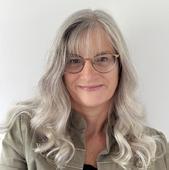
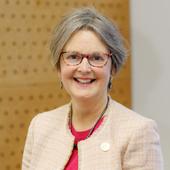
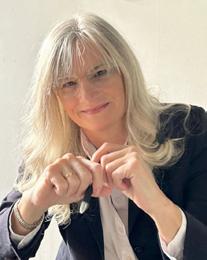
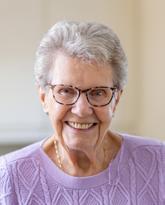
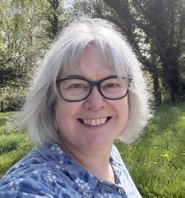
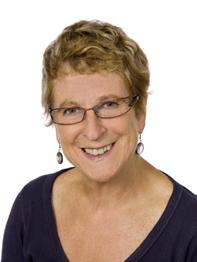
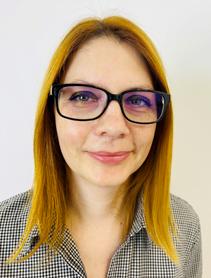
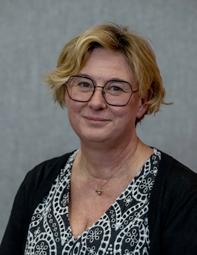
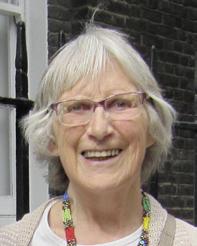
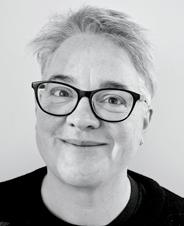
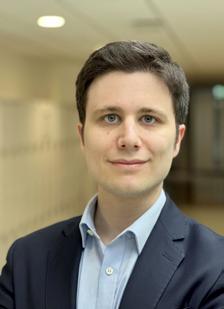
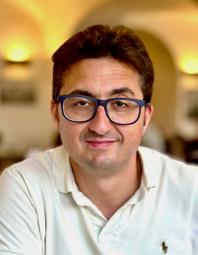
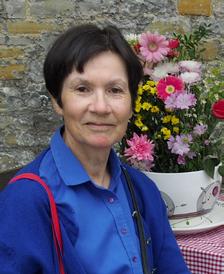
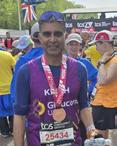
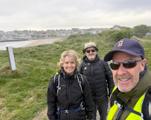
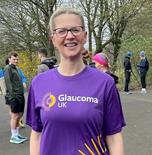
Cecilia Fenerty Glaucoma UK Chair and guest editor
I was delighted to be asked to guest edit this edition of Inspire. Its focus on listening to patients and sharing lived experience is something I care deeply about.
Listening has always been a key part of what Glaucoma UK does, and now – more than ever – we need to make sure no one is left out of the conversation as decisions about care are made and services evolve.
We’ve just launched our National Patient Voices Survey, which you can read more about on page 7. It sits at the heart of our work right now and is about building a clear picture of people’s experiences of glaucoma and the care they receive.
Taking part in this survey isn’t about doing something for the charity. It’s about using your expertise as a patient to help bring about real change. Your experiences can help show what’s working, where things need to improve, and what better care should look like in the future. There are no right or wrong answers — we simply want to hear from you.
Patient-centred care has been at the heart of my career, so stepping into the role of Chair of the Board of Trustees at this time feels especially meaningful. I was honoured to take over from Professor Anthony King at our AGM in March, and I want to thank him sincerely for his leadership, care and commitment to this community over many years.
As I take on the mantle, I want to ensure that listening to you and acting on what you tell us remains central to everything the charity does. By taking part in the survey, you can help shape how care develops in the years ahead — not just for yourself, but for others too.
Listening in: a conversation between our CEO and Chair
Glaucoma UK is committed to listening to people living with glaucoma and ensuring their voices are heard at every level of care and decision-making. This is guided by the charity’s leadership — with Chief Executive Joanne Creighton and new Chair Professor Cecilia Fenerty working closely together to champion patient focused support, research and advocacy.
I’ve seen firsthand the support the charity provides to people living with glaucoma, and the difference that makes
As Glaucoma UK enters an important new phase, with growing influence and ambition, Joanne and Cecilia sat down to talk about leadership, lived experience, and why listening well is more important than ever.
Joanne: Cecilia, many of our members will already know your name from your time as a Trustee or from your long clinical career, but now we are delighted to welcome you as our Chair. What inspired you to take on the role, and how are you feeling as you step into it?
Cecilia: I feel proud, and very grateful. Glaucoma UK has been such an important part of my professional life for many years. As a Consultant Ophthalmologist with over 20 years’ experience, I’ve seen firsthand the support the charity provides to people living with glaucoma, and the difference that makes to patients.
Early in my career, Glaucoma UK (or the IGA as it was then) also supported my own development with a grant that enabled me to carry out research into visual field testing. That support stayed with me and becoming a Trustee four years ago felt like a way of giving something back.
Now that I’ve retired from clinical practice, I have the time to devote even more energy to the charity. Stepping into the role of Chair feels like a natural next step, and a real privilege, especially at such an important moment for glaucoma care.
Joanne: You spent much of your career at Manchester Royal Eye Hospital, including time as Clinical Lead for Glaucoma and later Medical Director. You’ve also worked nationally, contributing to National Institute for Health and Care Excellence (NICE) guidance, advising the Medicines and Healthcare products Regulatory Agency and the Healthcare Ombudsman, and examining for the College of Optometrists’ Glaucoma Diploma for more than 20 years. You hold an Honorary Chair at Manchester University and were also recently made an Honorary Fellow of the College of Optometrists. That’s an extremely impressive list! When you look back on all your work, what shaped your approach most?
Cecilia: Working directly with patients and really listening to them. I’ve always believed that glaucoma services work best when they’re developed with patients, not just for them. At Manchester, that belief underpinned a lot of the innovation we introduced.
Joanne: You were involved in developing some services that are now seen as real milestones in glaucoma care. Can you tell us a little about that?
I’ve always believed that glaucoma services work best when they’re developed with patients, not just for them
Cecilia: Of course. I was fortunate to work with brilliant teams who were open to doing things differently. Together, we helped set up one of the country’s first optometrist-led glaucoma assessment clinics, alongside a virtual glaucoma assessment clinic. Both were designed to increase capacity, reduce waits, and make sure more patients could be seen safely and promptly.
We also developed specialist glaucoma nursing roles, focusing on patient education, medicine adherence and ongoing support because we could see how much difference continuity and reassurance made to people living with glaucoma.
Joanne: It’s something we regularly hear from our members — that good care is about more than just medical treatment. And knowing how strongly you also believe that is one of the many reasons I am so excited to be working with you.
Cecilia: I really do believe it, because clinicians understand disease, but patients understand impact. Only people living with glaucoma can tell us how treatments fit into daily life, how information feels at diagnosis, or what support really helps when fear or uncertainty kicks in. When clinicians and charities listen carefully, care becomes more person-centred and ultimately more effective.
Joanne: I know from the discussions we have had since you took up your new role that you also share my belief in the power of partnership. What drives that?
Cecilia: Partnerships are essential because no single profession, and no single perspective, has all the answers. Optometrists, nurses, ophthalmologists, and patients themselves each bring something vital. For services to be truly resilient and responsive, they have to be built collaboratively.
Joanne: One of the things that has really struck me since I joined Glaucoma UK in 2022 is how rapidly glaucoma care is changing. From your perspective, what does that mean for people living with glaucoma today?
Cecilia: Glaucoma care is now delivered across hospitals, community diagnostic hubs, independent providers and high street optometry. That creates opportunity, but it also creates complexity. From a patient’s point of view, it can feel fragmented or confusing. That’s why it’s so important that the patient voice isn’t lost as systems evolve.
Joanne: As Chair, what are your priorities as Glaucoma UK moves forward? And what will you be grilling me about in my next appraisal?
Cecilia: Advocacy. I want us to ensure people living with glaucoma and their
carers are represented wherever decisions are made. Glaucoma UK already has a strong and respected voice. My priority is helping ensure that voice is always grounded in real, diverse patient experiences. I am delighted that, with the launch of the National Glaucoma Patient Voices Survey, we are already well on the way to achieving that goal. (So, your appraisal might not be too bad after all!)
Joanne: From my side, the most powerful thing about this charity is our wonderful community of members. I am constantly humbled by their generosity, honesty, and willingness to share their experiences. What would you like our members to take away from this edition of Inspire?
Cecilia: Confidence. Confidence that Glaucoma UK is led by people who listen, who value lived experience, and who are committed to patient centred care. And I also hope they might feel pride in being part of a charity that is genuinely shaped by its community.
Joanne: Finally, when you’re not immersed in glaucoma care and charity leadership, what helps you switch off?
Cecilia: Family always comes first. I also love orienteering — running with a map and finding your way — as well as gardening and watercolour painting. They remind me to slow down and keep perspective, which is never a bad thing in leadership.
Joanne: Well, I am very happy to leave you to that. Running and reading maps are two things that fill me with horror and dread. Cecilia, thank you for sharing your reflections and for all you are doing to support Glaucoma UK. Here’s to some exciting times leading this very special charity in the years ahead.
This national survey isn’t just an exercise in listening. It’s about impact. It’s about influence. It’s about making sure no one living with glaucoma is left out of the conversation. Your voice is already helping us build a clearer picture of what living with glaucoma is really like. And the more people who take part, the clearer the picture becomes.
Joanne Creighton, Chief Executive Officer at Glaucoma UK
Your voice matters: join the conversation
Last year, 2,000 of you answered a small questionnaire to tell us what matters most to you about living with glaucoma.
You were honest about the difficult moments – the worry about your sight, the frustration of long waits, the confusion that can come with letters and delayed appointments. But you also told us what good care feels like, and what makes a real difference day to day. And we didn’t just read what you shared — we really listened. And everything you told us has helped shape something much bigger.
We’ve now launched our Glaucoma UK National Patient Voices Survey, the largest ever of its kind in the UK. It’s your chance to tell the full story of what living with glaucoma is like for you and to build the evidence we need to shape better care.
And if everyone reading this Inspire magazine takes part… that becomes something incredibly powerful. Why this matters right now
As you know only too well, glaucoma care is changing across the UK. Services are being redesigned, new technologies are being introduced, and more care is moving into community settings. The changes
are happening fast and often look very different depending on where you live.
A lot of this is positive. But when change happens at pace, there’s always a risk that something important gets lost. And that something is the reality of living with glaucoma. Clinicians understand the disease. But only you know what it’s like to live with glaucoma every day. Whether you’re seen in NHS or private care, we want to hear from you.
Only you can tell us:
• what diagnosis really feels like
• how treatment affects your daily life
• what makes care reassuring
• where things fall short
• what needs to improve
That’s why this survey matters so much. Because if thousands of people speak up together, those experiences will be much harder to overlook.
Turning your story into real change
We’re aiming to hear from around 10,000 people across the UK — people who are living with glaucoma now, or being monitored for it.
That matters because not everyone gets heard equally. We want to reach people whose experiences are often missing from conversations about care, including those who don’t always feel connected to services, or who may find it harder to take part.
We’re also making sure we hear from every part of the UK, so the picture we build reflects real lives in all four nations, not just a few places or perspectives.
Built by people who understand This survey hasn’t been created in isolation.
Crucially, it has been shaped by people with glaucoma from the very start. Insights from our questionnaire last summer helped lay the groundwork. Some members chose to stay involved, taking part in roundtable discussions to shape the survey’s themes, questions and design.
One of those people was Fiona Millar; for her, taking part is about being honest about the realities of living with glaucoma.
“My glaucoma is well treated, but the everyday realities – like why lights feel too bright or why my vision is blurred –are rarely discussed,” she explains. “This survey gives us the chance to be honest about those gaps and help build better services for the future.”
That honesty is what will make the difference.
This survey gives us the chance to be honest about those gaps and help build better services for the future
Fiona Millar
A small step that could have a big impact
Here’s the really exciting part.
If everyone reading this article completes the survey, we’d already be a long way towards our goal, just through this community alone.
No fanfare. No media headlines.
Just people like you, being willing to share what life with glaucoma is really like.
The survey only takes about 20 minutes to complete — but what you tell us could help shape glaucoma care for years to come.
Over to you
We’ve done everything we can to make this survey count.
Now the most important part is hearing from you.
If you’ve ever thought:
• “I wish someone understood what this is really like”
• “Things could be better than this”
• or “I wish I’d known this earlier”
…this is your moment to say it.
What
happens next
What you share won’t just sit on a shelf.
Your responses will be analysed by The Picker Institute, an independent research team helping us build one of the clearest and most reliable pictures we’ve ever had of glaucoma care in the UK.
We’ll use this crucial evidence to advocate for improvements across glaucoma care, working with NHS leaders, policy and decision makers, professional bodies, pharmaceutical and medical device companies, and the healthcare professionals who deliver glaucoma care every
This is your moment to say it
day. Your voices have the power to inform, influence and challenge the system to do better.
So, this isn’t just about being heard. It’s about making sure your experience helps shape what happens next.
Please take part today before you forget! With glaucoma care changing so fast, we have a small window of time this summer to collect as many survey responses as we can.
Please add your voice today by visiting our website: glaucoma.uk/voice
Or use your phone to scan this QR code
The survey is being hosted online to keep down costs, but we understand that some people may need or prefer to complete it by hand. Every voice counts, so please call us on 01233 557 207 to request a paper copy if you need one.
And if you can, please pass the details on to a friend, a family member, or anyone you know living with glaucoma. If everyone reading this completes the survey and encourages two others to take part, we’ve hit our goal of 10,000 voices.
And that many voices will be very hard to ignore.
Supporting this work
The next phase of this work will focus on getting your voices in front of policy makers and those who shape future care, so the findings can help inform real change in glaucoma services.
Delivering a project on this scale takes more than goodwill alone. We are grateful to those of you who contributed towards the project last year, and to our industry partners, whose support has helped fund the specialist research and analysis behind this work. We’ve also invested our charitable funds to make the survey as accessible and far-reaching as possible.
To help make sure these findings reach the right people in the most effective way, we will also be commissioning specialist support to help share and present the results more widely.
If you would like to help us take these voices even further, a small gift such as £10 will help bring these experiences to more of the people shaping future glaucoma care.
You can donate by calling us on 01233 648 164 or visiting our website at glaucoma.uk/ patient-voice-appeal
I was diagnosed with glaucoma four years ago, but the signs were there long before anyone recognised them. If only there had been greater awareness of what these symptoms meant! My treatment journey is still evolving, and that’s why research and progress matter so much. I’m taking part in this survey because our experiences can help shape better care and treatments for the future. I hope as many people as possible will add their voice.
Bridget Stevens, Glaucoma UK Member
professionals in developing our national survey
At Glaucoma UK, everything we do starts with people living with glaucoma. But we also know that real change only happens when the professionals delivering care, designing systems and developing treatments are part of the journey too.
That’s why we involved glaucoma professionals from the very beginning. Their insight has helped us shape a survey grounded in real-world care, making sure the findings lead to changes that are practical, credible, and genuinely achievable. The response has been incredibly encouraging.
We used your feedback to bring together small roundtable discussions with professionals from across the UK, including ophthalmologists, optometrists, nurses, researchers and others involved in glaucoma care and treatments
Last summer, many of you shared your experiences through a short survey. We used your feedback to bring together small roundtable discussions with professionals from across the UK, including ophthalmologists, optometrists, nurses, researchers and others involved in glaucoma care and treatments. Clinicians and professionals who took part spoke openly about the expertise they bring to glaucoma care and treatment. At the same time, there was a clear recognition that this only tells part of the story. Only people living with glaucoma can describe what it really feels like day to day, and that perspective was central to shaping this work.
What stayed with us was the willingness to listen. Interest in taking part was high — we could easily have filled the sessions twice over — and those who joined brought openness, curiosity and a genuine
The result is a survey shaped by both clinical knowledge and lived experience, designed to capture a fuller picture of what glaucoma care looks like across the UK today
commitment to improving care. Many told us that hearing people talk about the day-to-day reality of glaucoma, not just the clinical picture, added an important new layer to their understanding.
Together, they reflected on what you told us and helped us understand how those real life experiences could be captured in a meaningful way to help them improve care. Crucially, they helped ensure the survey explores areas where meaningful change is possible.
The result is a survey shaped by both clinical knowledge and lived experience, designed to capture a fuller picture of what glaucoma care looks like across the UK today. This means that when we share the results, they won’t just describe people’s experiences, they’ll point towards improvements that professionals are ready to support.
Professionals are already listening, and they want to turn what you share into real change.
Once you’ve completed the survey, if you can, please also encourage others with glaucoma to take part. And if you’re visiting a clinic, opticians or pharmacy in the coming weeks, you could ask whether they’re involved. If not, please point them our way, so we can help them get on board.
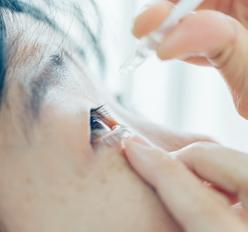
For many people, eye drops are a key part of glaucoma care — and understanding how treatments work in real life really matters. Improving glaucoma treatment isn’t just about developing medicines; it’s about learning from people’s everyday experiences. This survey gives us the insight we need to improve eye drops and ensure healthcare professionals are better trained to support people.
Irina Manoliu, Pharmaceutical representative
Every mile along the coast is a reminder of the long journey many people face with this condition”
Angela Knox
Putting patients first every step of the way
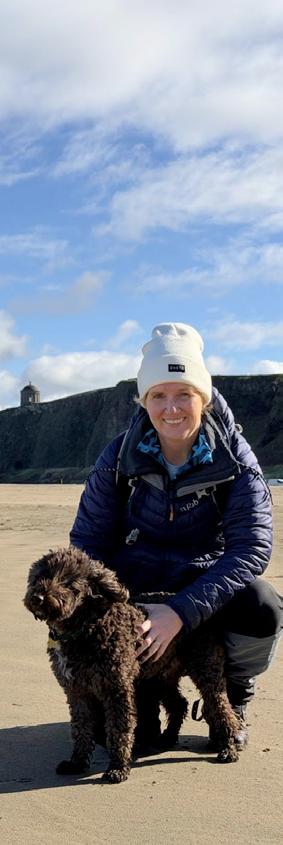
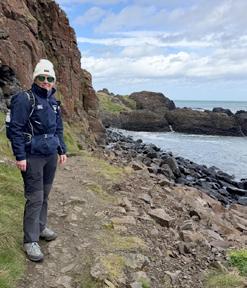
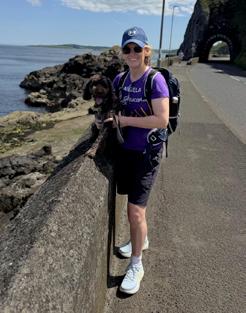
Starting a few weeks ago, Angela Knox, NHS Consultant and former Clinical Lead for glaucoma at the Belfast Trust, took to walking the circumference of Northern Ireland’s coastlines in support of Glaucoma UK and our Patient Voice Survey.
Angela has a long history of commitment to Glaucoma care.
During the COVID-19 pandemic, alongside volunteering on the COVID wards, Angela led a review of thousands of patient notes to prioritise those who needed to be seen under severe restrictions. She made national headlines in May 2020 when this review led her team to designing a drive-through that checked patients’ pressures while complying with restrictions, the first of its kind in the UK.
Angela has been right at the forefront of Northern Ireland’s transformative glaucoma care. The Belfast Trust glaucoma unit and its outlying clinics, where Angela was Clinical Lead for 13 years, are busy with more than 15,000 glaucoma patients attending. Hearing her patients’ concerns over being seen in a hectic hospital environment, she
facilitated the unit’s strategic move to a modern community building in 2013 affording patients an efficient, friendly and accessible service. At that time, she secured the most modern and innovative equipment and software to enable electronic networking of imaging devices across the glaucoma clinics long before paper-free notes became common practice.
Her efforts to improve access to appointments go hand-in-hand with her desire to tackle obstacles to care patients may experience that clinicians aren’t aware of; “As a glaucoma consultant I see firsthand the effects of glaucoma on our patients, but I also know that clinic appointments only tell part of the story.”
Upon hearing about Glaucoma UK’s patient voice survey, and its promise to help shape the future of glaucoma care, Angela wanted a novel challenge to encourage her patients to complete our survey. “That is why I am so excited about the National Patient Voice survey from Glaucoma UK as it is a unique and powerful opportunity for patients to share what life with glaucoma truly feels like; your challenges, your experiences and what matters most to you.”
What better way to get the news coast to coast, than to hand-deliver it? That’s how she arrived at walking the entire Northern Irish coastline.
On Saturday 14 March, the weather cleared and she was able to complete her first day of walking, starting at Magilligan Point before making her way to Castlerock, being rewarded with beautiful blue skies when she arrived. Since then, Day two saw her trek from the Bann at Portstewart Strand to Portballintrae. Day three began with passing Giant’s Causeway, along to
As a glaucoma consultant I see firsthand the effects of glaucoma on our patients, but I also know that clinic appointments only tell part of the story
Whitepark Bay beach onto Carrick-aRede rope bridge, a beautiful stretch of coastline, and one of her favourites she was delighted to visit again.
On Day four she walked the beautiful Ballycastle beach to Torr Head. Day five saw her progress from Torr Head to Cushendall, where she managed a peek at Scotland across the Irish Sea before the rain picked up.
Having completed the North Coast, she’ll next be turning the corner along the East Coast, from Galboly onto Whitepark. She’s got a long way to go yet, past historical Carrickfergus Castle, navigating Belfast’s busy ports, onto Bangor, Ballywalter and Kearney to arrive at the south-east coast where she’ll eventually end her journey past Dunnaval looking out at Haulbowline Lighthouse.
By
sharing your personal experiences, you have the opportunity to turn your individual journey into a collective force
Angela says she’s learnt perseverance from her patients, and that will help keep her going. “Every mile along the coast is a reminder of the long journey many people face with this condition”, she says. “I am often inspired by the courage and determination of patients with glaucoma — people who adapt, persevere and get on with life despite the uncertainty about their vision. This walk, in a small way, is for them.”
Angela invites her patients and anyone living with glaucoma to complete our Patient Voice Survey; “By sharing your personal experiences, you have the opportunity to turn your individual journey into a collective force that could help to shape the future of glaucoma management and support services. I’d really encourage you to take a few minutes to contribute; your perspective is the most powerful tool we have for reform.”
We wish Angela fantastic luck as she walks the remaining Northern Irish coastline and we are enormously grateful to her; for taking on this challenge and for a lifetime spent putting patients first.
Angela posts frequent updates about her progress on recent walks on her JustGiving page: justgiving.com/page/ angela-knox
We’re working to shape the future of glaucoma services, including improving care pathways across Wales. But there’s no point redesigning services unless they’re built around what actually works for individuals. This survey is essential because it tells us, directly from patients, where care works well — and where it doesn’t — and that insight must be at the heart of any meaningful improvement
Professor Barbara Ryan MBE, Optometrist Aneurin Bevan Health Board and Director of the Centre for Vision Services Research, Cardiff University
Marine’s story
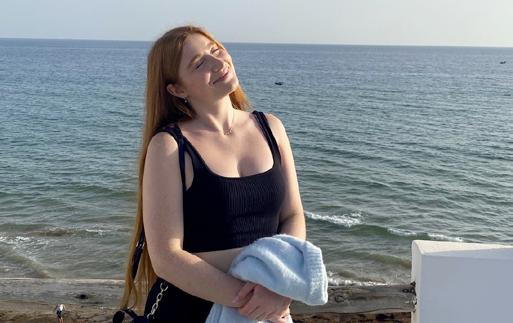
Marine was diagnosed at 24 and has often felt like the youngest person in every hospital waiting room which made the experience even more isolating. Starting treatment was difficult, but when she was given a Glaucoma UK leaflet with clear instructions on how to use her eye drops, she found it helpful at a time when she needed support the most.
They first identified that I had high eye pressure in 2023, during a routine eye test. I was 24 years old. The specialist who confirmed the diagnosis warned that my optic nerve could suffer damage within five years if left untreated. Being told that felt like an earthquake. I didn’t fully understand what was happening, but I knew it wasn’t good.
In June 2024, I began experiencing increasingly severe headaches and decided to go to the eye hospital urgently. There, doctors confirmed my eye pressures had
reached 35 mmHg. A few months later, a follow-up showed they were still very high. At that point, aged 26, I was prescribed Dorzolamide eye drops for the first time. My doctor carefully considered the treatment options, choosing one with the least risk of side effects.
Dorzolamide turned out to be ineffective so, after trying beta-blocker drops, the doctors recommended selective laser trabeculoplasty (SLT). I had SLT last March, which lowered my eye pressure to 25 mmHg. While that’s still higher than
ideal, my doctors are pleased with the progress since the pressure has come down significantly.
At present, my optic nerve appears healthy, and glaucoma hasn’t developed yet. But due to the consistently high pressure and my age, doctors have warned there's a real risk of optic nerve damage, which could eventually lead to vision loss. I understand it’s a delicate balance, but I’m keeping up with my regular appointments. Starting treatment was the hardest part. It suddenly made everything feel very real. I never imagined I’d need eye drops at my age, especially knowing the potential side effects. The first week was particularly tough. I had to apply the drops three times a day, which was not only physically uncomfortable but mentally exhausting. It was a constant reminder that my sight was at risk. I felt incredibly alone.
Glaucoma UK was especially helpful at that point. As I was leaving the ophthalmologist’s office, I picked up a leaflet explaining how to apply the drops properly. That small bit of information made a big difference. Before seeing a specialist, I hadn’t known much about glaucoma, and I struggled to find reliable information online.
One of the biggest challenges I faced was simply getting to see an ophthalmologist. Initially, I was sent to a diagnostic centre instead of directly to a specialist. For a long time, I was given very little information about my condition, the risks, or the treatment options available. It wasn’t until my eye pressure worsened that I finally received clear medical advice.
At each appointment, I’ve also been the youngest person in the waiting room. That’s made the whole experience feel even more frightening and isolating.
I picked up a leaflet explaining how to apply the drops properly.
That small bit of information made a big difference
My mum was diagnosed with high eye pressure a few years ago. I’ve told my brother several times to get his eyes checked and I also remind my friends from time to time even when they don’t present any risk factors.
As heavy as this has all been, I also see it as one of the biggest blessings I’ve received. Many of us, especially in our youth, don’t realise how lucky we are to enjoy life’s little moments. We’re so focused on the future that we forget to appreciate the present. Since my diagnosis, everything in my life has changed. A year ago, I was deeply unhappy. But now, I’ve learnt to fully appreciate every moment and to focus on what’s important. Whether it’s a beautiful sunset, a clear blue sky or time spent with loved ones. I want to keep exploring the world, travelling, and experiencing as many beautiful places as I can, because none of us know what the future holds.
All change: why your glaucoma treatment can change over time
You may be living with glaucoma and its treatment for years or decades. Over time, your treatment may change. Why?
One of our members recently asked us why treatments need to change. Do eye drops stop working? Does your body build up a resistance? Do eye drops only work so many times, like a battery can only be recharged so many times?
Glaucoma changes over time
Glaucoma usually gets worse slowly over time. Treatment helps to slow this down, but it does not fix the cause or stop it completely.
As your glaucoma changes, one treatment may no longer be enough. You might need another treatment that can work harder to keep your worsening glaucoma under control.
Think of it like the weather changing from summer to winter. At first, a thin jumper is enough to keep you warm. As it gets colder, you might add more layers, central heating, a blanket, and a hot water bottle. As the weather gets worse, your thin jumper still helps to keep you warm, but it’s not enough by itself.
As your glaucoma changes, one treatment may no longer be enough
Everyone’s glaucoma is different
Your eye doctor learns about your glaucoma
Everyone’s glaucoma is different. Over time, as you repeat tests at each appointment, your eye doctor learns more about your glaucoma and the rate it changes.
This might lead them to suggest a treatment better suited to your glaucoma.
Always tell your eye doctor about any side effects you experience
Never suffer in silence
There are lots of glaucoma treatment options.
If you get side effects from one treatment, another treatment might be better for you.
Always tell your eye doctor about any side effects you experience. A change in treatment might help.
Eye drops need to go in
Eye drops will usually keep working as long as you use them as prescribed.
To work, eye drops need to be absorbed through the wall of your eye to reach the inside of your eye.
Using glaucoma eye drops for a long time can slowly damage the surface of your eye. If this damage is severe, it’s possible that it could affect the absorption of eye drops. But there is little research on this.
For most people, eye drops will always be absorbed well enough.
Eye drops do not stop working. Your body does not become resistant to them, and they do not only work a fixed number of times.
In general, if you need to change your eye drops, it’s because of a change in your glaucoma or because you’re struggling with side effects.
Change is a normal part of treatment
As your glaucoma changes, your treatment may change too. It’s a normal part of managing a long-term, progressive disease.
If you have questions about your treatment and why it’s changing, speak to your eyecare professional.
Repairs may only last so long
If your kitchen sink has a blocked drain, you can unblock it. But that will not stop the drain from getting blocked again.
The same thing can happen with some glaucoma treatments.
For example, selective laser trabeculoplasty (SLT) is a common laser treatment for primary open angle glaucoma. SLT triggers your immune system to repair part of your eye’s drainage system, called the trabecular meshwork.
Over a few years, the effects of SLT can wear off.
If the effects of SLT wear off, you can usually have SLT again.
In general, if you need to change your eye drops, it’s because of a change in your glaucoma or because you’re struggling with side effects
I have lived with glaucoma for 45 years and have seen just how much care has changed. Now that change is happening at speed, it is more important than ever that patients help shape what comes next. I would encourage everyone to take part in this survey and add their voice.
Wendy Jones, Patient Roundtable Participant
Celebrating outstanding glaucoma care across the UK
This year, you shared so many inspiring nominations for the Glaucoma UK Excellence in Glaucoma Care Awards, recognising practitioners who go above and beyond in the care and support they provide. These awards celebrate individuals and teams who are making a real difference to glaucoma care across the UK.
Our judges – two trustees and two lay members – had a very difficult task. The standard was so high that, for the individual award, we named two joint winners.
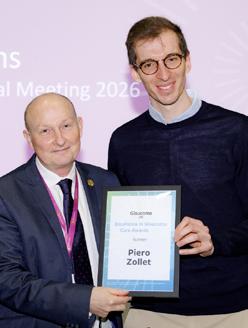
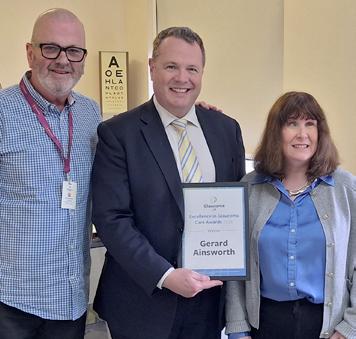
Our joint winners are Dr Piero Zollet, Glaucoma Fellow at Cardiff and Vale University Health Board, and Mr Gerard Ainsworth, Consultant Ophthalmologist at North Cumbria Integrated Care NHS Foundation Trust.
Piero was nominated by one of his patients, who spoke warmly about his exceptional care and kindness. They highlighted his willingness to see them at short notice and described him as “what we all need”.
Gerard was also nominated by one of his patients, who shared how he supported them every step of the way – listening carefully, giving time to discuss concerns and helping them regain confidence at work.
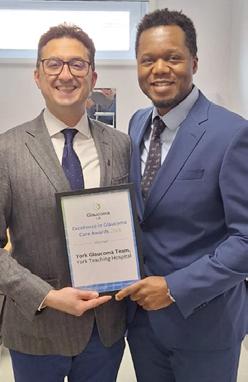
The team award was awarded to the glaucoma team at York and Scarborough Hospitals NHS Foundation Trust.
Over the past year, the team has achieved remarkable improvements. They reduced follow-up waiting times from 24 weeks to 6 weeks, cut new patient referral waits from 30 weeks to 8 weeks, and reduced glaucoma surgery waiting times to just 4 weeks. They also place a strong focus on clear, timely communication within their department and with patients.
Responding to his award, Gerard said: ‘I am truly humbled by this award as I do not think I do anything different from any other doctor. I do feel it is important to listen to patients and be their advocate. We have to realise the trust that patients
have in us is a huge responsibility, and we must honour this.’
All of this year’s recipients were honoured to receive their awards and that is thanks to you, our supporters. By sharing your experiences and nominating those who have made a difference, you help shine a light on what great care looks like and what matters most to people living with glaucoma.
We are now looking ahead to the 2027 awards. If you know an individual or team who deserves recognition, please consider submitting a nomination. With your permission, we will also let nominees know they have been recognised.
You can complete the nomination form at glaucoma.uk/glaucoma-care-awards, or contact us to request a paper copy.
If you would like further information, please email professionals@glaucoma.uk
We have to realise the trust that patients have in us is a huge responsibility, and we must honour this.
Gerard Ainsworth
A helpline you can trust and a team that’s here for you
Glaucoma UK’s helpline has been awarded the Helplines Standard accreditation, a nationally recognised mark of quality, safety and compassion.
Sometimes questions and worries don’t arrive neatly in a clinic appointment. They come at moments of uncertainty, when you just need to talk things through with someone who understands.
Awarded by the Helplines Partnership, the Helplines Standard is the nationally recognised quality mark for helpline services. It recognises services that offer safe, effective and person-centred support. And it gives added confidence to anyone thinking about picking up the phone or sending an email to our helpline.
To achieve the standard, our helpline went through a rigorous assessment that looked closely at how the service is run, how conversations are handled, and how well it meets the real needs of the people who get in touch. The assessors described a strong commitment to high-quality support and noted the team’s passion, care and dedication to the people they speak to every day.
Just as importantly, the assessment highlighted the helpline team’s focus on listening, learning and continually improving — helping to ensure the service reflects the lived experiences, concerns and questions of people affected by glaucoma.
Shelley Shocolinsky-Dwyer, Glaucoma UK’s Helpline Manager, says, “Our team cares deeply about the people who contact us. This accreditation reflects both that passion and our commitment to providing clear, compassionate and trusted support. We want everyone to feel reassured and confident when they reach out for help.”
Joanne Creighton, Chief Executive of Glaucoma UK, added, “The Helpline is a vital service, and I’m incredibly proud of the care and professionalism the team brings to their work. This recognition
Shelley ShocolinskyDwyer
Our team cares deeply about the people who contact us. This accreditation reflects both that passion and our commitment to providing clear, compassionate and trusted support
reflects the difference it makes for people when they need support most.”
Every week, people contact the helpline at moments of worry, confusion or uncertainty. For example, after a diagnosis, while waiting for appointments, or when they just want to talk something through. Whether it’s practical information, emotional reassurance, or simply the comfort of being listened to, the helpline is here for you.
You can contact our helpline on 01233 648 170, Monday to Friday, 9.30am – 5.00pm, or email us at helpline@glaucoma.uk.
Managing anxiety and protecting your wellbeing with glaucoma
When Glaucoma UK asked members last summer about their experiences of living with glaucoma, one feeling came up again and again: worry.
You shared how anxiety can surface at diagnosis, around hospital appointments, while waiting for results, and when thinking about what the future might hold. These honest reflections helped shape the questions included in the National Patient Voices Survey, now open (find out more on page 7). They also led to a recent Digital Glaucoma Support Group exploring anxiety and wellbeing.
The session was led by Gemma Ryder, a Counselor and Psychotherapist who works for Kent Association for the Blind, and Kesh Patel, who has lived with glaucoma for 25 years and now works as a Glaucoma UK helpline advisor.
This article shares some of the ideas and reflections from that session, in the hope they provide support to anyone who feels anxious about their glaucoma.
Living with glaucoma isn’t just a medical journey, it’s an emotional one too
Anxiety can surface at diagnosis, around hospital appointments, while waiting for results, and when thinking about what the future might hold
Why glaucoma affects mental health even before vision changes
Living with glaucoma isn’t just a medical journey, it’s an emotional one too. Whether you’re newly diagnosed or you’ve been navigating appointments and eye drops for years, it’s completely normal to feel a ripple (or sometimes a wave) of anxiety along the way.
As Gemma explained, anxiety often begins right at diagnosis (although for many, it starts before that if no clear diagnosis is made, or they are waiting for a referral from a high-street opticians to a hospital). This is usually whilst there are no symptoms yet. Suddenly you’re faced with medical jargon, unfamiliar treatments, and the weight of the word “glaucoma”. It’s a lot.
Uncertainty is uncomfortable for anyone, and glaucoma comes with plenty of it. Questions bubble up fast like:
What does this mean for my future?
Will my sight get worse?
How will treatment fit into my life?
Kesh remembers sitting in a consultant’s office at 27, hearing the word “glaucoma” for the first time and feeling anger, confusion and fear. Only years later did he realise these feelings were completely normal.
And then, of course, there are hospitals. Busy waiting rooms, long delays, past memories, they can all dial up stress before you even sit down for your appointment.
Managing hospital stress
Kesh shared practical strategies that have helped him through 25 years of clinic visits. He talks about creating calm through routine. For him, managing anxiety begins before he even walks in the door:
• Take slow, deep breaths — ideally a skill practised when you’re not anxious, so you can access it when you need it most.
• Bring soothing music — bone conduction headphones let him listen while staying aware of announcements.
• Ask for help — whether it’s navigating check-in screens or finding the best seat, so you don’t miss your name being called.
• Come prepared — phone charged, playlist ready, plan for how you’ll get to and from the appointment.
As Gemma points out, these are small things that together genuinely lighten the emotional load.
Take slow, deep breaths
Get the most out of your appointment
A few simple habits can make appointments less overwhelming:
• Write down your questions.
• Ask if you can record the conversation.
• Bring someone with you.
Remember, you deserve clear, understandable information
• Reach out to an Eye Clinic Liaison Officer (ECLO), if your hospital has one.
Remember, you deserve clear, understandable information.
Eye drops - why they matter and how to make them easier
Glaucoma is often called the “silent thief of sight”, and because you may not experience symptoms, eye drops can feel unnecessary or frustrating, especially at first. As Kesh explained, drops are a common treatment used to control eye pressure, and sticking to them really matters. He gave some tips that help drops become part of daily life:
• Build them into an existing habit — brushing teeth, breakfast, bedtime.
• Use aids if you struggle getting the drop in — Glaucoma UK helpline, pharmacists and ECLOs can help.
• Don’t panic if you miss a dose or two - but try to reset your routine.
Sticking to [your drops] really matters
Reducing everyday stress through movement, breathing and mindset
Anxiety isn’t just a hospital day issue. Both speakers emphasised the importance of lowering background stress throughout the week. Some ways include:
• Try gentle movement — you don’t need a gym membership; walking, stretching, yoga (avoiding upside down poses), or simply stepping outside for fresh air can lift mood.
• Breathing techniques that help calm your nervous system — Gemma shared two that work. She recommended practising when you’re calm, so your body recognises it as soothing.
» Box breathing: inhale 6, hold 6, exhale 6, hold 6.
» 4–6 breathing: inhale 4, exhale 6 — a longer out breath signals your body to calm down.
• Shift your state — a change of room, a drink of water, opening a window. Simple actions can interrupt the “spiral” of anxiety.
Therapy would offer... a safe, neutral person to talk to
When anxiety becomes overwhelming
Many people feel pressure to “cope on their own,” but Gemma stressed that therapy would offer:
• A safe, neutral person to talk to.
• Someone who understands vision related challenges.
• Support with lifestyle changes, difficult memories, or emotional overwhelm. Kesh shared openly how asking for help was difficult for him, but how transformative it was once he took the
step. Therapy didn’t make anxiety vanish, but it made it manageable.
Depending on where you live you can get support through:
• NHS Talking Therapies — you can self refer.
• RNIB — offers vision loss counselling.
• Local vision impairment organisations — many offer emotional health support.
• Private therapists — including low cost options.
Life changes like giving up driving
Losing the ability to drive can feel like losing independence. Kesh described it as one of the biggest life changes he faced.
His advice?
• Allow yourself to feel the loss — it’s real.
• Focus on what you can do, not only what you can’t.
• Create new routines: walking, public transport, planning ahead.
Ask for help, even if it’s hard. People often want to support you more than you think.
Considering surgery?
You’re not alone
Feeling anxious about surgery is completely normal. Kesh, who has undergone multiple procedures, found that:
• Understanding why the surgery is recommended helps reduce fear.
• Asking lots of questions builds confidence.
• The anticipation is usually worse than the procedure itself.
Glaucoma UK has a Buddy Scheme, where volunteers who’ve been through the same operations can talk you through what to expect.
A reminder - you don’t have to manage glaucoma alone.
If one message came through clearly from both speakers, it was this: ask for help. Glaucoma affects more than your eyes. It affects your day, your routines, your emotions, and your confidence. But support is available, and you deserve it.
For questions, emotional support, or practical guidance, Glaucoma UK’s helpline is here for you. You can speak to the team on 01233 648 170 or by email at helpline@glaucoma.uk
Glaucoma affects more than your eyes. It affects your day, your routines, your emotions, and your confidence. But support is available, and you deserve it
We’d love to welcome you to our next digital glaucoma support group:
Glaucoma Q&A
Wednesday 23 September 2026, 7.00pm–8.00pm
This is an open session where you can ask questions about glaucoma management and treatment options.
Joining us are:
Mr Ahmad Elsahn, Head of Service for Ophthalmology, Mansfield Hospital Imogen Hawthorne, Deputy Clinical Lead for Ophthalmology, Modality LLP
They will be there to answer your questions and share their expertise.
Digital twins and personalised medicine: A peek into the future of healthcare
We previously introduced Dr Giovanni Montesano, the recipient of our first ever Pitts Crick Career Development Fellowship. He spoke at a recent digital glaucoma support group, describing his research and the difference it might make to glaucoma care. It was a fascinating session, so we thought we’d write up a summary of the key points covered.
Giovanni is a glaucoma consultant at Moorfields Eye Hospital with a strong research background. He began his medical training in Italy, but moved to the UK to complete his PhD and specialist clinical and surgical training. His main research interests are finding and building better ways to predict glaucoma change over time and how patients respond to different treatments.
We’ve supported Giovanni with two grants so far. In 2023 we awarded him a Royal College of Ophthalmologists project grant (worth just under £100,000), called A path to personalised glaucoma care: mapping clinical trial and real-world outcomes to individuals.
It pulls together your own test results—like visual field tests, scans and clinic information—and combines that with what scientists know about how glaucoma works. The goal is to use that mix to make sensible predictions about what might happen next, and what different treatment choices could mean for you
And in 2024, he became the first recipient of our Pitts Crick Career Development Fellowship. The aim of that grant, worth £425,000 over three years, is to support him to build his research team and tools needed to take this work forward. His project is called Digital Twins in Glaucoma: advanced modelling for personalised medicine.
A virtual you
Think of a digital twin as a really detailed “virtual version” of you (or your eye) on a computer. It pulls together your own test results — like visual field tests, scans and clinic information — and combines that with what scientists know about how glaucoma works. The goal is to use that mix to make sensible predictions about what might happen next, and what different treatment choices could mean for you.
In a typical glaucoma appointment, the advice given to you has to be based on the best available evidence, which is currently based on what happens, on average, in big clinical studies. A digital twin could
help make that conversation much more personal. For example, it could help you explore questions like:
• “What if I don’t have any treatment for now?”
• “What if I start drops?”
• “What if I choose laser or surgery?”
It could also help with practical things like how often you might need your appointments, based on how likely you are to lose vision. And because it can learn from what actually happens over time, it could become more accurate as your glaucoma journey continues. It wouldn’t replace the consultation with your specialist, but it would help them give more personalised advice and answers to your questions.
The two projects we’re funding have significant overlaps, and some of Giovanni’s findings from the first grant are being fed directly into the development of digital twin models, as well as generating significant interest in their own right.
Some highlights are:
• The relationship between eye pressure and glaucoma getting worse isn’t a linear one. The risk of losing vision doubles for every 10 mmHg increase in pressure. What that means is decreasing someone’s eye pressure from 40 mmHg to 30 mmHg has four times the benefit compared to reducing from 20 mmHg to 10 mmHg.
• Different treatments appear to protect vision differently, even when they end up with similar pressures.
» The LiGHT trial investigated whether laser treatment or eye drops were better as a first treatment for glaucoma. The original findings showed that they both resulted in similar eye pressures and quality of life. However, vision loss was almost 30% slower on average in the group who received laser treatment, compared to the group who used eye drops.
» The TAGS trial investigated whether eye drops or trabeculectomy (surgery) were better for people
newly diagnosed with advanced glaucoma. Even though both groups attained the same eye pressure, people who had surgery lost vision almost 40% more slowly than people using drops.
• The reason for these findings is still being investigated, but it may be that non-drop treatments provide more consistent pressure lowering compared to eye drops. This reduces fluctuations in eye pressure, which may protect the optic nerve.
• Treatments for other diseases might also be having an effect on glaucoma. For example, real-world clinic data from over 14,000 patients suggest that patients taking calcium channel blockers (a blood pressure medicine) may show slower progression of their glaucoma. This is surprising, as previous findings suggested the opposite – that there may be a link between calcium channel blockers and a higher risk of developing glaucoma. Digital twin models might help investigate these discrepancies.
• These findings show why “one-size-fits-all” glaucoma care doesn’t work well for everyone. Some people don’t get worse for a long time, even without treatment, while others can still progress despite treatment. It also suggests that it’s not just about one pressure reading. Things like how pressure changes during the day and night, how consistent the pressure control is, the type of treatment, and other health factors (including other medicines) may all matter. A digital twin is a way of bringing all those pieces together, so care and monitoring can be more tailored to the individual.
Giovanni told us that since starting his project, he has got even more enthusiastic about digital twins. “There are challenges in tackling such a complex project. But we’re building it in a modular way, adding components and data as we go. That helps keep the momentum and the motivation because we are getting exciting results each step of the way. I am really looking forward to seeing the first implementations being tested.”
Giovanni’s research is very exciting. His findings are already having an impact, and we believe digital twins could improve your glaucoma care in future. However, this kind of research is based on clinical data, such as eye pressures and visual field test results. Currently, we don’t capture enough data on your experiences, and how it feels to navigate the glaucoma care system. That’s the gap we’re working to fill through the Glaucoma UK National Patient Voices Survey. By gathering experiences at scale, we can give researchers, decision makers and care providers the insight they need to help build a glaucoma care system that works better for you. We hope you’ll take part.
This work is still in the research stage. A “digital twin” isn’t something that’s used in routine glaucoma clinics yet, and it will only support, not replace, your clinician’s advice. The examples shared here are from research studies and large datasets and need further testing before they can guide individual care. It’s likely to be at least 10 years until digital twins might be used in routine glaucoma appointments.
There are challenges in tackling such a complex project. But we’re building it in a modular way, adding components and data as we go. That helps keep the momentum and the motivation because we are getting exciting results each step of the way.”
Giovanni Montesano
Optometrists often see first‑hand how glaucoma affects people’s everyday lives. This national survey will help ensure those experiences inform how services are planned and delivered across Scotland and the UK.
Dr Lesley Rousselet, Associate Director of Optometry, NHS Education for Scotland
Empowering eye care professionals to support people living well with glaucoma
One of the most powerful ways we can support people to live well with glaucoma is to equip eye care professionals (ECPs) with the knowledge, confidence, and tools they need to truly support their patients.
For many years, Glaucoma UK has delivered specialist training to ECPs, who work directly with people with glaucoma. Following a recent comprehensive review, we are proud to relaunch our updated training programme under a new name: ‘Empowering self-management in glaucoma treatment.’
This refreshed course reflects the needs, voices, and real-life experiences of people living with glaucoma today.
Evidence of impact and trust
In the last year alone, over 150 ECPs have taken part in our training. This not only demonstrates our credibility as a trusted
source of glaucoma expertise but also shows the appetite among professionals to learn directly from Glaucoma UK, and crucially, from people with lived experience of the condition.
What’s new?
The updated three-hour interactive training package places even greater emphasis on lived experience. It includes practical case studies, discussionbased learning, and opportunities for professionals to explore real-world challenges faced by patients.
As part of the review process, we invited people with glaucoma and previous course participants to attend practice sessions and share honest feedback. Their insights played a vital role in shaping the course into what it is today, ensuring that the training is grounded in everyday reality and focusing on genuine challenges that people are experiencing.
Learning outcomes
The new training has four main outcomes for the professionals who attend. The course covers:
• Greater awareness of support available, including a full overview of Glaucoma UK’s services and how to signpost patients effectively.
• A clear understanding of glaucoma and risk factors, with practical guidance on how to explain the condition confidently and compassionately in plain language.
• Skills to identify and troubleshoot adherence challenges, particularly around using eye drops, alongside exploring solutions and support options.
• Knowledge of alternative treatment approaches, helping professionals to better support patients when drops are not effective or suitable.
What participants are saying
We’ve received incredibly positive feedback from Glaucoma UK members who attended the practice sessions. One participant shared:
“The best part of the course was the energy and enthusiasm of the trainers. You can tell they are genuinely passionate about their work, and the whole team clearly puts a lot of effort into revamping the course.
Peter, Conchita, and Helen did a great job delivering it in a way that was accessible to everyone. I really liked the balance between presented content and the interactive breakout sessions. It didn’t feel like a typical training session, which was great.
I can’t remember the last time I left a course feeling both inspired and able to recall so much of what was covered. The new course title is a nice touch, and I loved the focus on putting control back into the hands of the patient. The case studies were a fantastic way to put learning into practice. Thank you all.”
Why this matters to our members
I loved the focus on putting control back into the hands of the patient
By helping professionals to understand, explain, and support glaucoma selfmanagement, this training has a direct impact on patient experiences. Our members’ voices are helping shape better conversations in clinics, empowering people with glaucoma to feel informed, supported, and more in control of their condition.
The glaucoma care in the modern era offers more therapeutic options than ever before; but understanding how these treatments affect people’s daily lives is just as crucial as the science behind them. This survey enables patients to voice their concerns. They can share their experiences to help clinicians like me deliver the care that truly reflects what matters the most to people living with glaucoma.
Professor Pouya Alaghband, Consultant Ophthalmic Surgeon, Fellow of
the Royal College of Ophthalmologists and 2026 Excellence in Glaucoma Care Award Winner
130 miles for patient representation
In 2003, a routine eye test changed my life. I was diagnosed with glaucoma, and suddenly I found myself asking questions I’d never imagined I might have to ask: would I lose my sight? Would my children inherit the condition? Would I ever fly again?
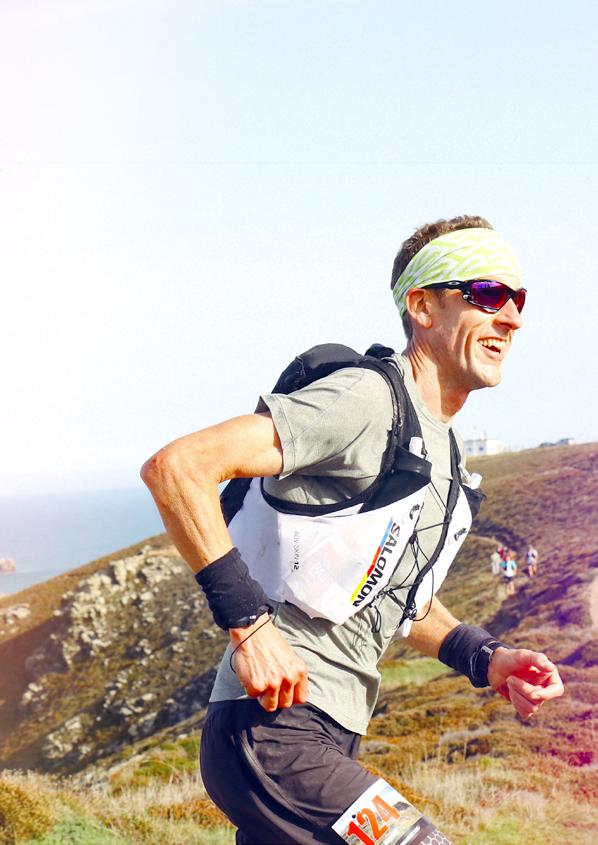
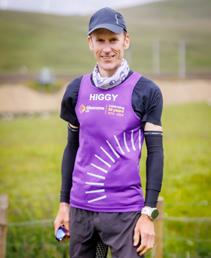
By Martin “Higgy” Higgins, Glaucoma UK member and fundraiser
At the time, I was serving as a pilot with the Red Arrows, so glaucoma felt like a full stop on everything I’d worked towards. Thankfully, due to advances in research and effective treatment, the procedures I underwent stabilised my eye pressure and helped save my vision.
Today, I manage my glaucoma with daily eye drops. It’s part of my routine now but it’s also a daily reminder of how important early diagnosis, research and good ongoing care really are.
Living with glaucoma has changed how I think about many things, including how I want to give something back.
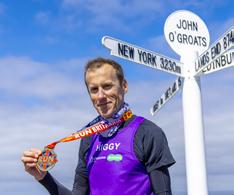
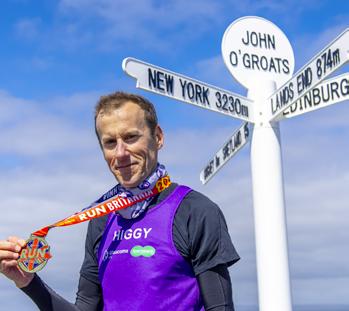
When I first learned about Glaucoma UK and the difference the charity makes for people living with glaucoma, I knew I wanted to support that work in a way that felt meaningful to me. For me, that usually involves some kind of endurance challenge. In 2024, I ran 1,000 miles from Land’s End to John O’Groats. It was tough – physically
and mentally – with long days, difficult terrain, unpredictable weather, and more than a few injuries along the way. But it was also incredibly rewarding. Together, we raised around £20,000, which helped to fund the Pitts Crick Research Fellowship and to support Dr Giovanni Montesano’s digital twin research (which you can read more about on page 20). Knowing that effort translated into real progress has made every mile worthwhile.
When I heard about the Glaucoma UK National Patient Voices Survey, I felt that same pull again. This was something I wanted to be part of.
Living with glaucoma isn’t just about appointments, test results, or treatment plans. It’s about the long waits in clinic; the frustration when eye drops don’t quite land where they should; the quiet worry about what might be happening inside your eyes, even when nothing feels different day to day. Those experiences don’t always show up in medical records, but they shape our lives, and they matter.
Living with glaucoma has changed how I think about many things, including how I want to give something back.
The real impact will come from people taking part in the survey and sharing it.
The Glaucoma UK National Patient Voices Survey is about capturing those everyday realities from as many people as possible, so they can help improve glaucoma care now and in the future. That’s why I’ve decided to take on another challenge alongside the survey.
From Friday 4 September to Sunday 6 September, I’ll be attempting the Ring O’Fire 130, a 130-mile ultramarathon around the Isle of Anglesey, which I’ll need to complete within 55 hours. I’ll set off from Breakwater Country Park in Holyhead and follow the coastal path clockwise around the island, taking in rugged coves, sweeping dunes, farmland and forests — and even a climb up Holyhead Mountain — before finishing where I started.
I’ll be putting in the miles, but I’m really hoping others will put in their time and experiences and encourage someone else to do the same.
By taking on something as demanding as this, my hope is that we can reach people affected by glaucoma who may not yet know about Glaucoma UK or realise how important their voice is. Coverage of the challenge helps spread the word beyond the usual channels, and the money raised will support the project now as well as future work to ensure patient experiences continue to shape care, services and policy.
But the real impact will come from people taking part in the survey and sharing it.
If you’re living with glaucoma, or being monitored for raised eye pressure, your experience matters. And if you have friends, family members or others in your life who might be eligible, I’d really encourage you to pass the survey on to them too. The more voices that are included, the stronger and more representative the picture becomes.
I’ll be completing the Glaucoma UK National Patient Voices Survey myself, and I genuinely hope you’ll join me and help bring as many voices as possible with you before the survey closes.
If you’d like to follow my progress or offer some encouragement during the Ring O’Fire 130, you can find updates on my JustGiving page: justgiving.com/page/higgy-130
Thank you for taking part and for helping ensure we are all heard and represented.
Jeanette Redman, Glaucoma UK Member
Keith has now raised more than £200,000 for Glaucoma UK through his fundraising efforts.
Going the distance for glaucoma care
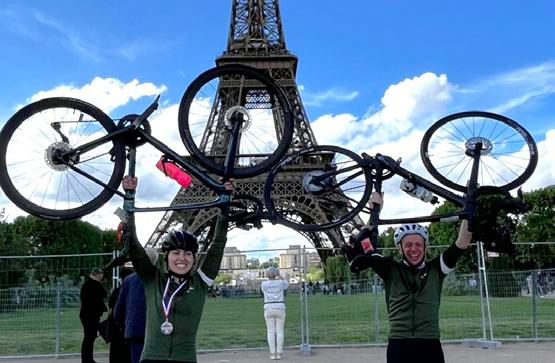
In early May, Dr Keith Barton took on an incredible challenge a 24-hour cycle from London to Paris.
Keith, a long-standing supporter of Glaucoma UK, former Chair of the Board and leading glaucoma specialist, was joined by Dr Carla Arocha, who travelled from Mexico to take part. While Keith knows the route well — this was his seventh time — it was Carla’s first attempt at the 300km route, having been inspired for years to take on the challenge herself.
The ride wasn’t easy. They set off in sunshine, only to be met with rain for much of the journey, and a torrential downpour towards the end. There was even
a puncture along the way — Keith’s first in all the years he has taken on this challenge — with fellow cyclists gathering round to help fix it, in a moment Carla likened to surgeons working together in an operating theatre.
After 25 hours, they arrived in Paris cold, wet and muddy but overjoyed to have completed the journey.
Keith has now raised more than £200,000 for Glaucoma UK through his fundraising efforts. His commitment has helped support sight-saving research and vital services for people living with glaucoma, something he champions both in his professional life and through challenges like this.
And it’s not just seasoned cyclists going the distance.
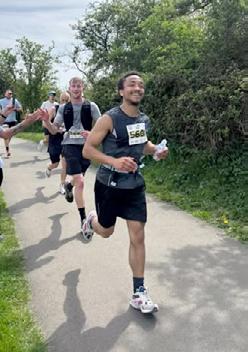
In April, Ben and Kobe took on the Stratford Marathon to support Glaucoma UK. For Ben, the motivation was personal, inspired by the strength of his brother, who lives with glaucoma. After months of training, Ben completed his first marathon in an impressive time of 04:06:13.
They originally set out to raise £250, but quickly reached their target and increased it to £500. In the end, they raised an incredible £706 for people living with glaucoma. Reflecting on their achievement, Ben said: “I never thought I’d manage to raise this much.”
In April, Ben and Kobe took on the Stratford Marathon to support Glaucoma UK.
These stories are part of something bigger. Every year, we’re inspired by the incredible people who support Glaucoma UK. Many have been personally touched by glaucoma, and go on to challenge themselves in ways they never imagined, all while raising funds for a cause close to their hearts.
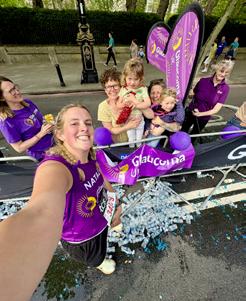
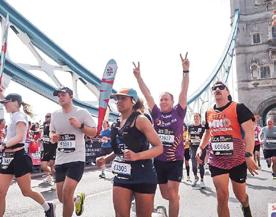
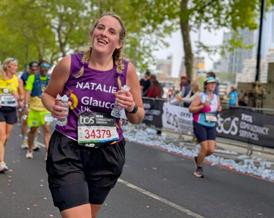
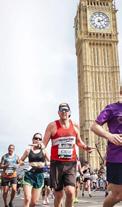
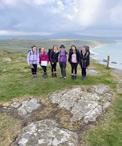
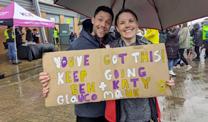
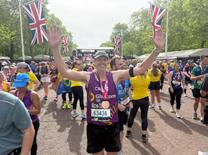
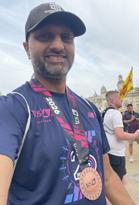
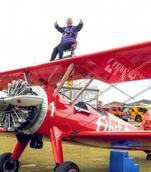
This year is no exception. From our nine London Marathon runners, who trained for months to reach the finish line, to Debbie Page, who quite literally took fundraising to new heights with a wing walk, we are enormously grateful.
Whether it’s hosting events in their local community, encouraging donations to support our services, or starting conversations that could lead to someone having their eyes checked, every single fundraiser is making a difference.
This collection of photographs celebrates their determination and compassion, with a heartfelt thank you from all of us at Glaucoma UK.
These stories are part of something bigger
If you’ve ever thought about taking on a fundraising challenge, we would love to support you –whatever that might look like. If running is your thing, you can find more information about upcoming events at runforcharity.com/ charity/glaucoma-uk And if a fundraising challenge isn’t for you, don’t underestimate the impact you have by sharing your experiences. Our National Patient Voices Survey is open now and we need your help to shape future glaucoma care – find out how to take part on page 7.
We are forever grateful to those who show kindness for others living with glaucoma by leaving a gift in their will. Gifts in wills help keep our services open to those who need them most, and give hope to our community by funding research that could one day lead to a cure for glaucoma.
To learn more about the power of gifts in wills, or to use our free wills service, please visit our legacy webpage at glaucoma.uk/leave-a-gift
Glaucoma UK
Kent House, 81 Station Road, Ashford, Kent TN23 1PP