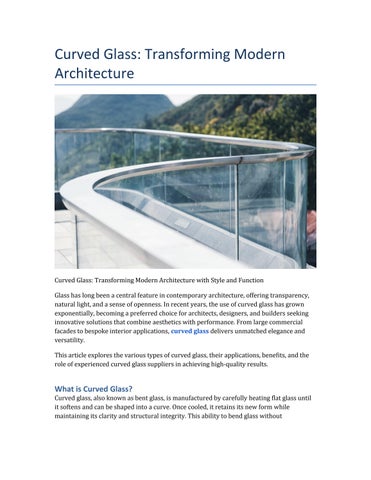
Curved Glass: Transforming Modern Architecture
Curved Glass: Transforming Modern Architecture with Style and Function Glass has long been a central feature in contemporary architecture, offering transparency, natural light, and a sense of openness. In recent years, the use of curved glass has grown exponentially, becoming a preferred choice for architects, designers, and builders seeking innovative solutions that combine aesthetics with performance. From large commercial facades to bespoke interior applications, curved glass delivers unmatched elegance and versatility. This article explores the various types of curved glass, their applications, benefits, and the role of experienced curved glass suppliers in achieving high-quality results.
What is Curved Glass?
Curved glass, also known as bent glass, is manufactured by carefully heating flat glass until it softens and can be shaped into a curve. Once cooled, it retains its new form while maintaining its clarity and structural integrity. This ability to bend glass without
compromising strength opens up numerous possibilities in both residential and commercial architecture. Unlike flat panels, curved glass adds a dynamic, flowing aesthetic that can transform a building’s visual identity. It is commonly used in external facades, internal partitions, balustrades, and even furniture.
Custom Curved Glass: Tailored Design Solutions
One of the key advantages of custom curved glass is its flexibility. Architects and designers can specify the exact radius, thickness, and finish required to meet their vision. Custom solutions are especially useful for projects where standard panels cannot achieve the desired aesthetic or functional result.
Applications of custom curved glass include: - Curved windows and doors - Skylights and roof panels - Staircase balustrades and handrails - Feature walls and room partitions - High-end furniture, such as tables and display counters
By choosing custom curved glass, designers can ensure a seamless integration with other architectural elements while maintaining the required safety and structural performance.
Curved Toughened Glass: Strength Meets Safety
Safety is a critical consideration in modern construction. Curved toughened glass is produced by heating glass to high temperatures, bending it, and then cooling it rapidly. This process makes the glass up to five times stronger than regular float glass.
Key benefits of curved toughened glass include: - Durability: Withstands wind loads, impact, and thermal stress. - Safety: Breaks into small, blunt fragments instead of sharp shards. - Versatility: Suitable for both indoor and outdoor applications. - Aesthetic appeal: Provides a sleek, modern look without compromising strength.
Typical uses include balustrades, shower screens, display cases, partitions, and facades where safety and longevity are priorities.
Rounded Glass: Elegant and Functional Design
Rounded glass is a form of curved glass that emphasises soft edges and smooth contours. Its primary appeal lies in combining aesthetic beauty with practical safety. Rounded edges reduce sharp corners, making it ideal for high-traffic areas, children’s environments, and public spaces.
Common applications of rounded glass include: - Handrails and balcony enclosures - Shower screens and bathroom partitions - Retail displays and furniture - Decorative interior features
Rounded glass adds a subtle, elegant touch to architectural projects while ensuring user safety.
Architectural Glass: Enhancing Function and Design
Modern buildings increasingly demand architectural glass that meets both aesthetic and functional needs. Architectural glass is not limited to flat panels; it includes curved, laminated, toughened, and double-glazed options designed to perform under various conditions. Benefits of architectural glass include: - Thermal performance: Reduces heat gain and energy costs. - Acoustic insulation: Minimises noise pollution in busy urban areas. - Safety compliance: Meets building codes and safety standards. - Design flexibility: Supports unique facades, skylights, and interior features When combined with curved or custom shapes, architectural glass enables innovative designs that maximize natural light and create visually striking spaces.
Choosing the Right Curved Glass Suppliers
The success of a curved glass project depends on the expertise of curved glass suppliers. Not all glass manufacturers have the technology or experience to deliver high-quality curved solutions. Selecting the right supplier ensures precision, safety, and reliable support throughout the project. Factors to consider when choosing curved glass suppliers include: - Experience with large-scale and custom projects - Advanced bending, toughening, and finishing technology - Capability to provide a range of products, including curved toughened glass, rounded glass, and architectural glass - Compliance with Australian and international standards - Reliable delivery, installation support, and after-sales service Working with trusted suppliers ensures that your design vision is realised while maintaining structural integrity and safety.
Applications of Curved Glass Across Architecture
Curved glass is used in a variety of settings, both commercial and residential: - Commercial buildings: Facades, atriums, and entrance lobbies
- Residential properties: Windows, doors, skylights, and balustrades - Retail spaces: Display cases, shopfronts, and feature partitions - Hospitality and public venues: Restaurants, hotels, galleries, and offices Its versatility makes curved glass a preferred choice for projects that require a combination of beauty, function, and safety.
Conclusion
Curved glass, whether in the form of curved toughened glass, custom curved glass, or rounded glass, is revolutionising modern architecture. Paired with high-performance architectural glass and delivered by reputable curved glass suppliers, these solutions offer designers the flexibility to create visually striking, safe, and durable spaces. From residential homes to large-scale commercial projects, curved glass is not just a material — it is a design innovation that balances style, strength, and functionality, making it an indispensable component of contemporary construction.