


TRENDS is published twice times a year by Great Lakes Association of College and University Housing Officers (GLACUHO) for members of the association.
GLACUHO is a non-profit organization that strives to:
Better prepare housing officers to meet the diverse and changing needs of those we serve with primary concern for students.
Contribute to the improvement of dining services, residential life, residential services, and residential facilities provided by housing officers.
Sponsor activities and services which assist housing officers in the exchange and distribution of information and ideas.
Support the goals and purposes of the Association of College and University Housing Officers International (ACUHO-I)
Provide opportunities for the education and professional development of housing officers.
Advance and communicate professional knowledge and standards in the field of housing.
JaCarlaAnderson UniversityofCincinnati
EvanBonello
GrandValleyStateUniversity
AmarahByakweli
MiamiUniversity
Carley Eichhorn
University of Michigan
Cassie Govert
Indiana University Indianapolis
TravisHill
FerrisStateUniversity
LizHornyak
OhioUniversity
HaileyKowalski
BowlingGreenStateUniversity
EvanMiller
WesternMichiganUniversity
AmandaNagy
WesternMichiganUniversity
President ZacBirch,Ed.D.
UniversityofIllinoisChicago
PastPresident
VickaBell-Robinson,Ph.D.
IndianaUniversityBloomington
President-Elect
RodWaters
DePaulUniversity
Secretary AmyBrown UniversityofCincinnati
Treasurer
LaurenTeso,Ed.D.
NorthernIllinoisUniversity
CommitteeChairDelegate
AlisonSinadinos
MichiganStateUniversity
DirectorofOutreach&Messaging
DexterEarney
GrandValleyStateUniversity
DirectorofOperations
NickSchiller
UniversityofIllinois-Chicago
TechnologyCoordinator
TimNickels
EasternMichiganUniversity
ExhibitorLiaison
KandiceMartin
MiamiUniversity
ConferenceHostChair
JocelynMaul
IndianaUniversityBloomington
ConferenceHostAssistantChair
RyanHawkins
PurdueUniversityFortWayne
ProfessionalFoundationsChair
KellyWinters
NorthernIllinoisUniversity
Health and Wellness Chair
Catie Danner-Witt
Eastern Illionis University
CampusSafety&CrisisManagement
Chair
CarolineMurray
MichiganStateUniversity
CommunityEngagement&
BelongingChair
DimitriBoveroux-Heath
IndianaUniversityBloomington
ContemporaryIssuesChair
JackieCharette
MichiganStateUniversity
CaitlinSpicer
IndianaUniversityBloomington
Klarque-AzanaStemley
UniversityofIllinoisChicago
MarwanWynnJr.
EasternMichiganUniversity
KelleeSteffen
IndianaUniversityBloomington
Director of Winter Meeting
Dave Arnold
University of Illinois Urbana-Champaign
MichiganDelegate
JeffFabus
EasternMichiganUniversity
OhioDelegate
OctaviaHubert
MiamiUniveristy
IllinoisDelegate
JakeMcLean
KnoxCollege
IndianaDelegate
AngelThornsbury
IndianaUniversityBloomington
Facilities&OperationsChair
JimSteingreaber
MichiganStateUniversity
Communications&Marketing Chair
KelleeSteffen
IndianaUniversityBloomington
StudentLearningChair
JosiePalitzsch
SouthernIllinoisUniversity
Edwardsville
As I am writing this message, the weather is beginning to shift–more sunshine, slightly warmer temperatures, and longer days.This is one of my favorite times of the year.There is something powerful about watching people starting to come out of their winter routines and seeing communities coming to life again.As the snow melts away and the grass becomes green once again, hope fills the air. After the long, dark stretch of January and February in the academic year, I welcome the feelings of change, hope, and renewal.
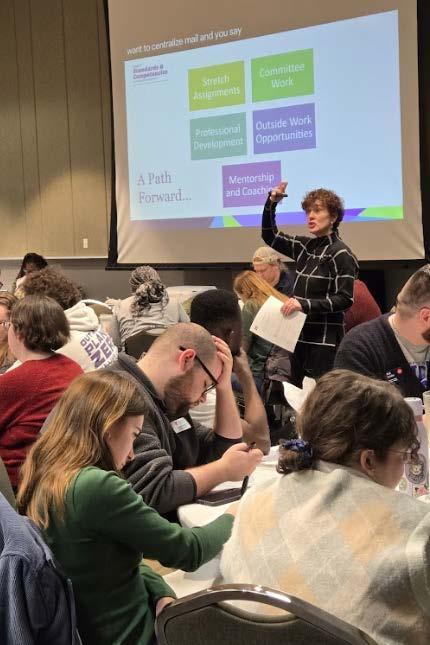
In that sense of renewal, a few weeks ago, we held our first Winter Meeting with a new format at the Grand Wayne Convention Center in Fort Wayne, Indiana. This refreshed format created intentional space for professionals to connect, explore and plan for the work of the committees, and invest in their own development.This included the 24 participants who participated in the Professional Development Institute, learning and growing together under the guidance of our five fantastic faculty members.
We are grateful to Dr.Amanda Knerr (Ball State University), who guided us through the updatedACUHO-I Standards and Competencies and challenged us to them in our work–whether we are Graduate Students, Senior Housing Officers, or any professional level in between.
Committee members engaged in professional development sessions around assessment, leadership, and functional area expertise.They mapped out their committee involvement including writing forTRENDS, producing resources for the region, and creating programs and initiatives for the November Conference.
Encouragingly, the data we collected from participants at Winter Meeting showed overwhelmingly positive contributions to the association and to individuals’growth. I want to thank the Winter MeetingTaskforce, led by our inaugural Director for Winter Meeting, DaveArnold (University of Illinois Urbana Champaign), for their commitment and work to reimagine and refresh this time together.
While committee members were learning and planning, the LeadershipTeam leaned into meaningful work toward our strategic goals. We spent time reflecting on the mission, vision, and values of the association, asking ourselves whether they fully reflect who GLACUHO is today and what makes our region unique.Through this conversation, I called a taskforce to examine, explore, and make recommendations about how we can thoughtfully refresh these foundational statements.This group is chaired by Secretary Amy Brown (University of Cincinnati) and Director of Operations Nick Schiller (University of Illinois Chicago) and consists of members from all four states who are representative of our region. I am excited to see what this team will create and help the association move forward.
In the same spirit of growth, investment, and access, ourACUHO-I Foundation Representative Sarah Meaney (Miami University) helped us create new ways for members to request funding for allACUHO-I in-person learning opportunities through the GLACUHO Endowment.The goal is simple: we want to use the endowment to its fullest extent each year. More directly, we want to help fund you. If financial support could help you engage with these professional development opportunities, please submit requests via the GLACUHO website. Investing in you is investing in the future of our association.
Spring invites us to reflect, grow, and step into change. Our time in Fort Wayne reminds me that GLACUHO is filled with thoughtful leaders, caring professionals, and dedicated volunteers who care deeply for our association, their campuses, their students, and one another. I am hopeful for the year, not only because the season is changing, but because of what I saw in our time together and how we can continue to be in community.Together, we are building meaningful connections, relationships, and opportunities for professional growth. I am excited to see what we were able to accomplish throughout this year.
With GLACUHO pride,

-Zac Birch GLACUHO President
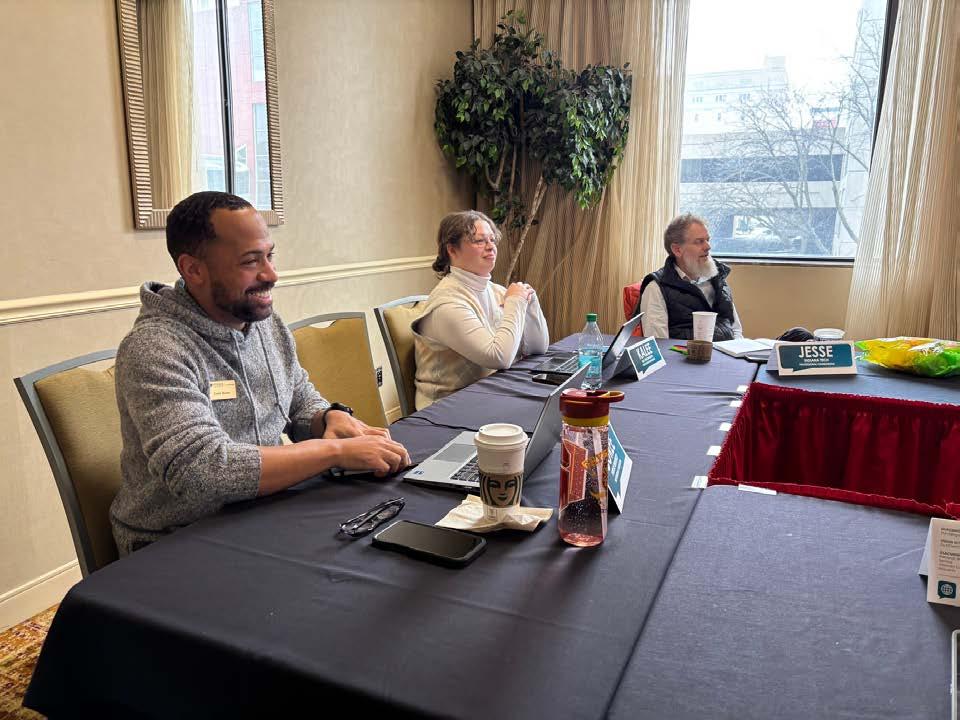
We are excited to announce a new initiative for MidLevel professionals.The Mid-Level Collective is an opportunity to engage with professionals in similar positions across the region.
Each meeting of the Collective will be held on Google
Meets on the third Friday of each month at 12:00 pm Eastern/11:00 am Central. Meetings will alternate monthly between open forum discussions and intentionally planned developmental presentations.
The next open forum meeting will be on Friday, May 15th. We look forward to seeing you there! If there are any questions, please reach out to Jeff Fabus at jeff.fabus@glaucho.org.
Jake McLean, Illinois State Delegate
Angel Thornsbury, Indiana State Delegate
Jeff Fabus, Michigan State Delegate
Octavia Hubert, Ohio State Delegate

The State Delegates are excited to announce our Quarterly Connections initiative. These connections are designed to allow members of our states to come together and engage with their colleagues on current topics and trends related to the work they are doing at their institutions. These connections are designed to host professionals at various levels (Graduate Students, Entry Level, Mid-Level, and Senior Housing Officers) throughout the year.
Each State Delegate has chosen the time that their state will host these connections and will have Google Meet links prepared for each meeting. Below are the days of each month that each state will be hosting their connections.
Illinois Connections - Hosted by Jake McLean - Fourth Thursday of each month at 12:00 pm Central
Indiana Connections - Hosted by Angel Thornsbury - Fourth Thursday of each month at 1:00 pm Eastern
Michigan Connections - Hosted by Jeff Fabus - Fourth Tuesday of each month at 1:00 pm Eastern
Ohio Connections - Hosted by Octavia Hubert - Second Thursday of each month at 12:00 pm Eastern
The State Delegates have prepared the rotation of professional levels that we will follow throughout the year. Below is the schedule prepared for the upcoming connections so individuals can plan for their connection points.
April 2026 Graduate Students
May 2026
June 2026
July 2026
August 2026
Entry Level Professionals
Mid-Level Professionals
Senior Housing Officers
State Delegates will be taking a break during this month to allow for training and move-in.
September 2026 Graduate Students
October 2026
November 2026
December 2026
Entry Level Professionals
Mid-Level Professionals
Senior Housing Officers
We look forward to engaging with members of our state as we embark on this new initiative together. Links and reminders will be sent out through the association newsletters!

The Student Learning Committee wants to hear from YOU! Please consider filling out the link and letting us know your book recommendations for a GLACUHO TBR (to be read) List and if you would be interested in participating in a book club!

Link to Google Form: https://docs.google.com/forms/d/1td3uHu8RB7OjS
BaLhlistM8hBq2X8gkinCOygo7Jh4M/edit
Corey Friedrich Keiara Venable-Franklin

Motivational interviewing is a collaborative conversation style that strengthens the internal motivation to change a person’s behavior. In the 1980s, William R. Miller and Stephen Rollnick developed this idea to support patients with substance abuse disorders. It is now used in parenting, sports, education, public health, medical care, and conflict management. It is a short-term, pragmatic, sympathetic approach that recognizes the challenges of making adjustments in one's life.
In this article we will discuss the reasons why we use motivational interviewing, the importance of motivation, change talk, and how motivational interviewing can be applied.
Keiara Venable-Franklin Corey Friedrich
Motivational interviewing is not persuasive or forceful. Instead, this strategy should build a compassionate partnership between you and the student. Motivational interviewing is collaborative and encourages the student to reach conclusions about their behavior and their best steps moving forward; this process is gently guided by questions and affirmation from you or someone on your staff. This approach is done “with” the student, not “to” them.
We (Keiara and Corey) are both relatively new to this technique but believe that it can be incredibly useful as a guide to use in conversations for students who are ambivalent about changing their behavior.
This technique strengthens a student’s intrinsic motivation for change. Intrinsic motivation intensifies engagement and propels sustainable, long-term performance. It is also likely that students will make other positive life changes once motivational interviewing has been utilized. Student affairs professionals help guide students’ approach to life, and motivational interviewing allows us, in the role of the “helper,” to see continued growth and development in our students. Motivational interviewing is applicable during conduct meetings, roommate mediations, and with students dealing with substance abuse.
“Motivation can be understood not as something that one has but rather as something that one does. It involves recognizing a problem, searching for a way to change, and then beginning and sticking with that change strategy.” Miller, 1995

Keiara Venable-Franklin Corey Friedrich
Motivation is the key to change. It is dynamic and fluctuating. Motivational interviewing is influenced by social interaction and the helper’s style. It can be changed and modified. The relationship between the helper and student should be viewed as a partnership. The helper should not direct, but guide. The openness to change depends on interpersonal interaction.
It is built upon belief of free choice and change
The person being helped should do most of the talking
Resistance to change is viewed as being evoked by environmental and relational conditions
Self-efficacy is key
The person being helped is responsible for the progress
The helper does not prescribe specifics
Utilize reflective listening and empathy (when appropriate)
Help discover discrepancies between the students’ goals/values and their current behavior
Avoid confrontation and arguments
Roll with resistance
Support self-efficacy and optimism
Change talk is communication that favors movement towards the student’s goal or change in behavior. The more the student uses change talk, the more likely they are to enact change. The more the helper uses change talk, the less likely change is to occur.
The following are examples of change talk to look out for during a conversation with a student.
Desire: Why would you want to make this change?
Ability: What will you do to successfully make this change?
Reason: What are the three best reasons you need to enact change?
Need: How important is it for you to make this change and why?
Commitment: What will you do?
Motivational interviewing can be an effective technique when you or your staff encounter students who might be ambivalent about, or open to, changing their behavior. Students may be interested in making changes related to their:
Interpersonal skills
Self-care
Study strategies
Time management
Alcohol or drug use
Anxiety management
Engaging
This is where the helper and student get to know each.
The helper and student building a connection through rapport building and trust among one another. The helper will see where the student’s level of commitment lies.
The helper should assist with the student’s perspective. The helper should want the student to feel positive and hopeful about the experience. The main focus should not be the goal. The helper does not want to rush into goal attainment.
Keiara Venable-Franklin Corey Friedrich
The helper should focus on the change the student would like to make. The helper will direct the conversation.
Here is where everything comes together and the student begins to envision the change.
The helper should:
Continue to build trust and rapport. Avoid arguments and remember they are here to guide. Recognize ambivalence as common and part of the process. Recognize change talk and sustain talk (language that indicates an unwillingness to change). Use open ended questions to query change talk. Reflect with the student and affirm change talk.
Help the student quantify their readiness and belief of change (on a scale of 1 to 10).
This stage helps students determine the path to move forward. Here are some steps for working with a student to develop concrete solutions and goals at this point in the conversation.
The helper should: Avoid rushing the process. Refrain from suggesting solutions to the student at this point. Ask open-ended questions that help students generate specific solutions for the problem they are facing.
Summarize the options the student brainstormed. If the helper feels like the student is not considering a strong option, the helper should ask for permission to suggest it, state it to them, and ask them what they think about this choice.
Ask about their readiness to implement one or more strategies (on a scale of 1 to 10). Ask them why their answer is not one number lower; this encourages change talk.
Evoke commitment from the student. Ask them: “how will you know you have succeeded?” and “what strengths of yours will help you succeed?”
Help students anticipate barriers. Offer support and ask what support from you could look like.
A student is meeting with you because they are experiencing difficulties with their roommate. In an email to you requesting a meeting, this student reported that they are upset because their roommate frequently has guests in the room and doesn’t always do their part in keeping the space clean. The opportunity to implement motivational interviewing begins when the student enters your office for the meeting.
Engaging: Build rapport with the student. Ask them how their semester is going and learn more about them before diving into the roommate conflict. Their classes are going well, and they are involved in a few organizations that have allowed them to make new friends.
Keiara Venable-Franklin Corey Friedrich
Focusing: Direct the conversation to the roommate issue. Gain more context about the situation through questions. You find out that the student has not talked to their roommate about any of these concerns because they experience a great deal of anxiety about confrontation. The student says that their relationship with their roommate is especially strained because frustration has built up in both parties over the last several weeks. Through open-ended questions rather than suggestions of your own, you are able to help the student realize that the next step in addressing this conflict is for them to talk to their roommate. At this point, you are ready to find out whether they are open to improving their ability to speak assertively when confronted with a conflict.
Evoking: Listen for change talk from the student; do they seem willing to dedicate themselves to become more assertive? You learn that they see the value in making this change - in this situation and in their life - but are a bit uncertain about how to make it happen. Lead them gently toward more change talk through questions such as, “How would your life be different if you became more assertive?” Paraphrase statements from the student that show a willingness to change. An example of this is, “It sounds to me like you’d like to make some changes to become more confident with confrontation.” After this part of your conversation, this student still seems a bit unsure but interested in talking through the specifics of making this change.
Planning: Ask the student for ideas about how they might be able to avoid the consequences that come from not quickly and directly addressing conflict. The student responds by saying that when someone says or does something that causes them to react negatively, they will plan to address the situation by setting up a time to meet in person with the other party and prepare notes for their talking points if necessary, and that they will do that with their roommate tomorrow. Affirm this idea and encourage the student to come up with other strategies as well. Summarize the options they have suggested, so the student can choose which strategies they would like to implement. Ask the student to rate the importance of making this change in their life on a scale from 1 to 10. The student says 5, which is a bit lower than what you were expecting. Stay positive and ask, “Why a 5 and not a 4?” to gently remind them why this change would be useful to them. Talk the student through ways to assess whether this change is working and have them name any barriers they expect to encounter moving forward. The student establishes that they will measure success by the number of difficult conversations they have, and whether the relationship is preserved with the other person afterward. Potential barriers include uncertainty about the need for the conversation and fear of stumbling over their words or growing emotional in the moment. The student is not completely confident they will always overcome these challenges, but you encourage them to be open to talking this through with you, their RA, or a close friend or family member. The student departs.
Keiara Venable-Franklin Corey Friedrich
You have successfully implemented motivational interviewing with this student!
Conclusion
The beauty of motivational interviewing is that it builds on strategies and talking points that many housing professionals already use when encouraging student development. This framework places an emphasis on the student generating the solutions; the helper’s role is to gently guide them through the conversation. Motivational interviewing is not a magic wand for student development, but done well, it can draw from the student’s own abilities and resourcefulness to brainstorm and implement solutions to the challenges they are currently facing. Motivational interviewing is compassionate, respectful, realistic, and aligned with the belief that students are often capable and willing to make positive changes in their lives.
References
Rollnick, S., & Miller, W. R. (1995). What is motivational interviewing? Behavioural and Cognitive Psychotherapy, 23(4), 325–334. https://doi.org/10.1017/ S135246580001643X



By: Erin Cleary - Assistant Director/Area Coordinator, University of Michigan
I wish a guide like this wasn’t necessary. For a long time, I thought about grief and loss in an abstract sense. Something that surfaced when a story popped up on social media or when a celebrity passed away. That was the before. Before my life shifted. Before my mom died nine years ago. Before I became an adult orphan in my 30s, when my dad died last year and suddenly both of my parents were gone. Now my life is underlined in grief. Through it all, the world kept spinning. Life went on, even when my world stopped.
I’m writing this now because I’m at a place where my grief no longer feels suffocating. I can talk about my parents, show empathy to someone who has also experienced loss (even when I’m wrestling with jealousy) and share what I’ve learned so others don’t have to guess their way through it.


The reality is that, at some point in your career, you’ll likely supervise an employee who loses a loved one (if you haven’t already). This guide is not meant to offer a one-size-fits-all approach to supporting a grieving staff member because there is not one “correct” way to grieve and different people will have unique needs. Instead, think of this as a starting point for those moments when you’re not sure what to say or do, and a call to action to think about how you can support someone when the time inevitably comes.
1.
Practice empathy first. When your supervisee shares with you that someone they know has died, lead with empathy. Work culture often trains us to prioritize productivity over emotions so it’s easy to spiral into: What does this mean for me? For the presentation tomorrow? For my workload that I am already struggling with?
Fight against those impulses and practice empathy. Center your supervisee and their immediate needs. Work can wait. I know that you know this and still it needs to be said. Most grocery stores have a generic sympathy card section but if you’re looking for something more, explore Em & Friends for their authentic empathy cards.
2.
Recognize that there are no correct words. Nothing you can say will make it better. However, saying nothing will also not make it better and the silence will be remembered.
Phrases you could use:
This sucks. I am so sorry. No need to respond. Thinking of you right now. I have always loved hearing you talk about [insert person].
Phrases to avoid:
They’re in a better place. I don’t think I would survive losing [insert person].
I know how you feel...
Bonus: Avoid the over-used “let me know if you need anything!” Many grieving people do not know what they need and cannot or do not want the emotional labor of delegating tasks. Instead of asking what someone needs, take on the work yourself. When I was a Hall Director and my mom died, I returned to an RA staff and an incredibly thoughtful graduate assistant who had made five easy dinners I could thaw and microwave. That kind of specific support mattered.
3.
Know the resources (ideally before you need them):
In the U.S., there is no federal law requiring bereavement leave, and many workplaces offer only a few days. Only five states have enacted laws protecting bereavement leave and none of those states are in GLACUHO. With the national average of bereavement time at 2-5 days, people are often expected to return to work quickly, even when their lives have changed overnight. The least we can do as supervisors is know what support exists.
Learn your institution’s bereavement policy and how to code/report time off.
Know your Employee Assistance Program (EAP) and how to access it.
Identify local grief support groups (and whether they’re free/low-cost).
Do your own learning: grief-informed podcasts, books, apps, and credible educators. Some of my favorites include: Modern Loss, The Smell of Rain on Dust: Grief and Praise by Martín Prechtel and Shapes of Grief Podcast
4.
Be flexible:
Some hard days are predictable: anniversaries, holidays, Mother’s Day/Father’s Day, birthdays. (I never noticed how many Mother’s Day emails I received until after my mom died but wow, it’s a lot.)
4.
What people cannot plan for is the random memory that pops up or a passing comment. One day at work someone mentioned an upcoming storm and I immediately thought of how my dad loved storms. I ended up leaving because I started crying. I couldn’t have planned for this but I work in a flexible environment and am able to do what I need to do to care for myself.
When your staff member returns to work, review a transition plan and ask them what they need or if the plan is feasible. They may need:
5. Be flexible continued:
Lighter deadlines or more reminders.
Lunch during “off hours” so they can handle calls, errands and paperwork related to the death.
Space to step away when grief hits unexpectedly.
When you can change something, change it:
Last year, one of my staff members asked for one day off for a funeral. One day. They didn’t share details and I didn’t ask. I focused on how they were doing and trusted that they would share if they wanted to. Later, after I approved payroll with the appropriate code, I was asked by someone in Payroll if the person who died was an “immediate family member” and was sent the Standard Operating Guides (SPG) definition for funeral time. It felt gross. I understand the person who sent me the SPG was trying to do their job however, policing one day of funeral time or asking for obituaries as proof does not have to be the norm.
Most of us probably do not have the ability to change a campus-wide policy of that magnitude. Maybe not today and maybe never. However, I implore you to make changes where we can:
Remember anniversaries and send a check in message saying, “I’m thinking of you today”.
Create a committee who acknowledges difficult times as well as celebrations. Normalize using/approving leave without requiring personal details or “proof”.
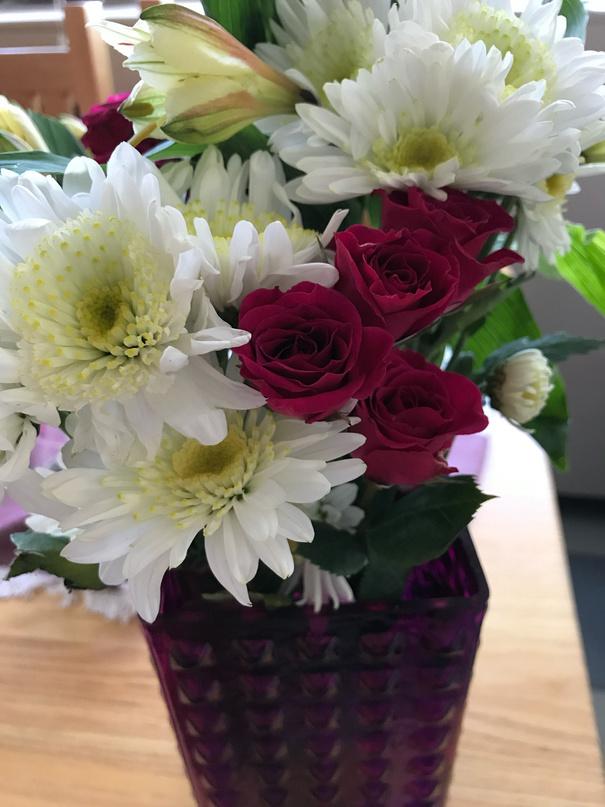
On the one-year anniversary of my mom’s death, my supervisor at the time sent me flowers. Besides my immediate family and my best friend, she was the only person who remembered and that made all the difference.
I wish we didn’t need a guide for something so human, but loss and grief are inevitable, and the way you respond matters. You don’t have to be perfect. You don’t have to be eloquent. You can’t take away the grief, but you can make sure work doesn’t add to the pain.

JosiePalitzch,AssistantDirector,SouthernIllinoisUniversityEdwardsville
BetsieWilliams,HallDirector,FerrisStateUniversity
MaddieHagg,HallResidentDirector,NorthernMichiganUniversity
ReaganFernando,AreaCoordinator,MarianUniversity
JenniferImel,AssistantDirector/AreaCoordinator,UniversityofMichigan
When a student moves into a residence hall for the first time, they are often legally an adult, however, they may not yet be a “grown-up”. Adulthood is a milestone people reach at age 18 marked by the right to vote, sign a lease, and be held legally accountable for one's actions. Being a grown-up is something altogether different. It is earned gradually through the development of life skills, emotional regulation, and personal responsibility. It’s the kind of quiet maturity that comes from navigating real-world challenges with intention. The gap between these two definitions is precisely where Residence Life professionals live and work every single day.
This distinction creates both a challenge and an opportunity for Housing and Residence Life professionals. Students arrive on campus carrying a wide range of experiences and skill levels. This means that what feels like common sense to one student, may be entirely new territory for another. This gap has only widened in recent years. The COVID-19 pandemic disrupted students' social and emotional development, and the increased isolation has contributed to higher levels of anxiety and depression. Beyond emotional wellbeing, professors have reported higher rates of missed assignments and students who are more hesitant to engage in classroom discussions post-pandemic showing that the ripple effects of pandemic learning loss are arriving with students directly onto our campuses (The Annie E. Casey Foundation). As a result, institutions need to be more intentional than ever in supporting the development of "grown-up" behaviors while still respecting students' as adults.
Luckily, Housing and Residence Life departments are uniquely positioned to meet students at this intersection. We welcome them in the earliest days of their adulthood, often before they have ever done their own laundry, managed a budget, or resolved a conflict without a parent in the next room.
By recognizing that students embody both identities at once, housing professionals can more effectively design strategies, interventions, and learning opportunities that foster growth, accountability, and lifelong success. The following will explore the landscape of life skills education in Residence Life, from the topics that surface most frequently in our communities, to the proactive and reactive tools available to our staff and the best practices being implemented at institutions nationwide, because at the end of the day, one of our greatest privileges as housing professionals is not simply managing the adults in our buildings but helping to shape them into grown-ups.
Many faculty and staff members who work closely with students have noticed a trend with different life skills that they don’t understand when coming to college. Students enter college between the ages of 17-18 years with the understanding that they have all the skills necessary to be a successful student. The realization of completing everyday tasks doesn’t register with them until they are already settled in on-campus housing. Many students have difficulty with different life skills that they will encounter in their time as a college student. These skills include laundry basics, cleaning hacks, conflict resolution and time management. To understand what students are struggling with in these different topics, a Google form was sent to some colleagues to see if they also observe a trend of students' struggles.
Generally, students don’t understand basic cleaning practices like washing dirty clothes and kitchen hacks/cleaning. In on-campus housing, laundry rooms and kitchens are provided for them, but they might not understand specific guidelines. Many students tend to overload the washing machines and they don’t know that by doing so, it causes damage to the machines. If students want to make food in their spaces, they don’t know that cooking creates smoke. The smoke then builds up in their space, causing the fire alarm to go off. Students don’t know how to open windows and the overhead fan on the oven helps dissipate the smoke buildup. After cooking in a space, residue can be left behind and dishes start to pile up. Reasons for the dirty dishes left in the sink for long periods of time might be because they don’t know how to clean or that a sponge is needed to scrub the food off the dishes.
Basic cleaning practices are just one section of life skills that students struggle when coming to college. Another area of concern is time management and conflict resolution. When students enter college, there are many extracurricular activities on campus that students can join including clubs, leadership programs, and sports programs. Students begin to join many programs while balancing school and sometimes working a full time job. Sometimes it takes time for students to build a routine around all of their priorities. Many times students will procrastinate and don’t utilize planners or calendars to help them stay on track. This leads to falling behind in classes and not staying motivated to accomplish their goals.
When students are struggling with finding routines, they don’t know how to effectively communicate with others that they are struggling. Students that live on-campus usually live with a roommate they have never met before. Confrontation and conflict can arise when living with a stranger. So many times we see that students are unwilling to compromise or have a simple conversation about boundaries. Students think the conversation isn’t going to go well or they don’t know how to efficiently communicate how they feel.
As faculty and staff, we have a direct impact on students and have the ability to teach these skills. Our role in this development is to figure out the best tools for students to be successful, not only on the collegiate level, but also to be able to carry over those skills into their grown-up phase of life.
The question is, how does one actually teach students these necessary life skills? There are a variety of tools available to assist with teaching life skills. Some tools are proactive, assisting with the learning before the problem arises, while others are reactive, assisting with learning after a problem is recognized. Both types are valuable and can lead to vital life skills being taught to students, if the tool is used to its fullest potential.
There are numerous strategies to help students learn life skills without the student having to struggle to learn it on their own. A few examples would be roommate agreements, SMART goals, health and safety inspections, and staff training. Roommate agreements presented to students at the beginning of the year, especially the first week, provide them with an extra tool during disagreements to reference and assist them through difficult conversations. This is one of the most common tools used to teach students life skills among colleges and universities nation-wide. Paul Brown with RoomPact discovered a 63% completion rate for roommate agreements amongst institutions that use their system, while also emphasizing that the quality of the conversation is much more important than the quantity that completes the agreement (Brown). It is vital to note that any goals of the contract should be specific, measurable, achievable, relevant, and timebound, which brings in another well-known tool for universities: SMART goals. Health and Safety inspections are a unique tool, in the way that they can assist with the learning process before and after a student experiences a problem. Used proactively, healthandsafetyinspections can rid a space of potential fire hazards, illegal substances, and other prohibited items from a residential space and allow the student a teaching moment with their Resident Director in a 1-on-1 format. One final example is the use of staff training to proactively teach life skills. Including a section into your RA or Professional Staff training that explores the typical life skills needed for college is not only an opportunity for your staff to assist others, but could also be a moment for them to learn a new skill.
Teaching your staff proper life skills empowers them to confidently teach others these same skills. This training segment also serves as an opportunity to remind Resident Assistants that their students come from a variety of backgrounds with different skillsets. What may seem as a “basic life skill” to some may be a barrier for another student who is afraid to ask for help. Empowering our staff encourages them to share their knowledge with their residents.
When students across campus struggle with similar life skills, how can the university respond to these issues and assist students through the learning process? By using some of the reactive tools available, colleges and universities nationwide can provide opportunities for growth for our students. Some examples of these tools include programming, conduct meetings and action plans. Programming is an excellent way to engage and collaborate with campus partners with the goal of teaching the students that you serve together. This can be a casual reactive tool by looking for common problems that students are struggling with on campus and using an event to gamify their learning process. A more formal approach to reactive learning would be conduct meetings, as the sole purpose of a conduct meeting should be student learning. Conduct meetings are an opportunity to identify a problem and come up with a solution with a student, while also teaching them skills they need to be successful in the remainder of their college journey. For example, if a student is consistently setting off fire alarms in their room or in the lobby kitchen, their conduct meeting would be a perfect opportunity to teach them about the fan feature on the oven or which materials can be put in a microwave. Because these meetings are typically one-on-one conversations between a housing officer and the student in need of assistance, these meetings are extremely valuable for student learning. Working with a student to create an action plan that is encouraging and attainable for them will ultimately lead to that student’s growth. This plan should identify the original problem and highlight how their future actions will not only reconcile the harm done, but also create an opportunity to react differently in the future.
After these tools are put to use, the housing officer should assess the effectiveness of the tool used. One way to do this is to consider the ACUHO-I Competencies and a Project-Based Learning approach.
A popular technique of teaching life skills is using Project Based Learning (PBL). Project-based Learning allows students to solve real-world problems (Vega, 2015). Keys for successful ProjectBased Learning include using realistic problems, structuring group work to 3-4 students in a group with different skill levels, giving feedback in multiple forms, and a learning network where students can reflect on their experiences (Vega, 2015). Oftentimes when measuring the learning of life skills, you may see the use of a pre-test and a post-test after a lesson wherein if a student rates their competence higher on the post-test it signifies learning.
Other considerations include accessibility and inclusiveness. Consider different types of learning and how to cater to different learning styles. Additionally, college students have busy schedules, so staff could consider ways to adjust to learn as you go, asynchronous, or virtual learning as long as accessibility is taken into consideration.There are generational differences to be mindful of and more recently there have been studies on Pandemic Learning Loss (Nagelhaut, 2025) from the Covid 19 Pandemic and virtual learning associated with it.
As with any initiative, assessment is vital to understanding how our work affects student learning. The effort and thought we put into our programming, outreach, and educational initiatives need to be guided in data driven best practice and evaluated using both formal and informal assessment. Some things to consider when thinking about planning an educational initiative or event that focuses on skill building or life skills may include identification of frequently misused resources in the community (ie laundry rooms, trash rooms, restrooms), opportunities to educate on skills residents may not learn in their classes (ie financial literacy and planning, conflict resolution, wellbeing), and resident identified knowledge gaps. Some tools to utilize when identifying these areas could be duty logs, facilities reports, frequent conduct violations, resident surveys, and previous data from programming.
Additionally, assessment after our initiatives helps us shape future endeavors with our communities. It is crucial to know what is and what is not successful, what landed with the audience and what missed the mark. We need to have both satisfaction and learning collide in our programs to find the secret to success with student learning and engagement. To do this well, we need to rely on formal and informal assessment. Some options to try include an exit survey, a longitudinal survey to see how information shared impacts resident behavior (ie lower conduct, less concerns with misused facilities), and informal check-ins during intentional interactions with residents.
Some universities are currently doing great work in teaching their residents life skills through skill based learning initiatives. For example, at Rose-Holeman Institute of Technology, they have implemented a Senior Week programming effort that looks to educate students on those first crucial steps after graduation. Outreach and programming include:
At DePauw University, the implemented a series called Lifeskills 101 that actively engaged residents around skills such as cooking, laundry, budgeting, time management, fire safety, and healthy habits through programming and 1:1 mentorship.
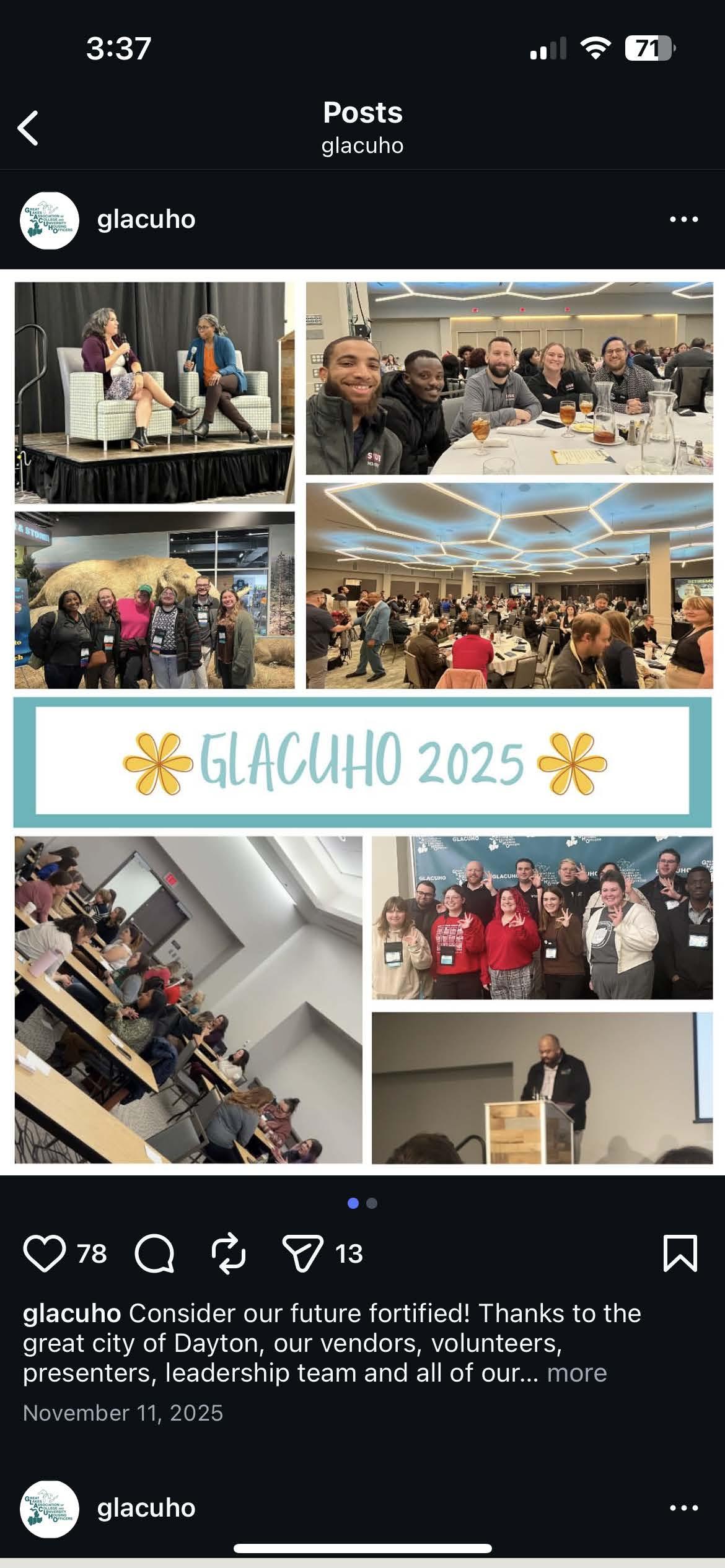
As Depauw’s presentation at GLACUHO 2025 highlighted, these initiatives often contribute to the overall University strategic plan or values around wellbeing and lifelong learning.
Within our initiatives it is also important to recognize that we are not alone in student learning on campus! We all have wonderful campus partners and programs that will allow us to enhance our programming and engage students more effectively around life skills and more. Every campus is different and community resources can vary as well, but as you are thinking about the best approach, presenter, or subject matter expert, we challenge you to think of your partners in student learning and success on campus.
Brown, P. “What Is a Good Roommate Agreement Completion Rate for Residence Life Departments?” Roompact Blog, 6 Apr. 2021, https://blog.roompact.com/2021/04/what-is-agood-roommate-agreement-completion-rate-for-residence-life-departments/.
Nagelhout, R. (2025, December 5). Some school districts saw more learning loss during the pandemic. researchers want to know why. Harvard Graduate School of Education. https://www.gse.harvard.edu/ideas/news/25/12/some-school-districts-saw-more-learning -loss-during-pandemic-researchers-want-know
The Annie E. Casey Foundation. “Pandemic Learning Loss and COVID-19: Education Impacts.”
The Annie E. Casey Foundation, 10 June 2024, www.aecf.org/blog/pandemic-learning-lossimpacting-young-peoples-futures.
Vega, V. (2015, December 1). Project-Based Learning Research Review. E
Author: Michelle D. Sujka Associate Director of Housing, Facility Operations
University of Cincinnati
Michelle.Sujka@uc.edu

We’ve all been there. Someone—often a woman—enters a meeting a few minutes late and immediately says, “Sorry I’m late.” Or during a discussion, a colleague offers, “This might not be a great idea, but…” before sharing a thoughtful, welldeveloped solution.
These apologizing behaviors are habits many women have been socialized to carry into both personal and professional spaces. As a woman in facility operations, I see this play out frequently —especially in male-dominated environments where speaking up already requires a level of navigation.
It’s led me to a question I’ve been asking for years: Why are so many of us apologizing when we’re not wrong?
Apologizing language shows up in subtle but consistent ways. It often sounds like:
Softening statements: “I just want to make sure I understand…”
Over-qualifying ideas: “This might not make sense, and I could be wrong, but…”
Minimizing authority: “I know I’m only new here, but…”
While these phrases can be interpreted as polite or collaborative, they are also reflective of deeper social conditioning. From an early age, many women are taught—explicitly and implicitly—to be agreeable, accommodating, and non-disruptive. Over time, that conditioning shows up in how we communicate, especially in professional spaces where authority and confidence are constantly being assessed.
This isn’t just about word choice. It’s about how credibility is established—or quietly undermined.
It’s easy to assume this dynamic exists elsewhere—but not in housing and residence life. After all, our field is rooted in care, connection, and relationship-building.
But if you pause and reflect, these patterns are everywhere.
Our profession carries strong relational expectations. We are trained to be approachable, supportive, and responsive—to students, staff, and campus partners. In many areas, our workforce is majority women. Yet, when you look more closely at senior leadership or facilities and operations roles, the gender dynamics often shift.
In those spaces, communication tends to be more direct, fast-paced, and outcome-driven. For women navigating both relational expectations and environments that reward decisiveness, there can be tension in how we show up. Apologizing language becomes a bridge—one that attempts to maintain likability while stepping into authority.
The impact of apologizing language shows up on both an individual and organizational level.
Individually, it can:
Undermine perceived confidence and credibility
Lead to over-explaining and second-guessing
Reinforce feelings of imposter syndrome
Even when you are the subject matter expert, how you communicate can influence whether others fully trust your expertise.
Organizationally, the effects are just as significant:
Slower decision-making
Less clarity in direction
A culture where leadership is questioned rather than trusted
What may seem like a small habit—adding a “sorry” or softening a statement—can shape how teams interpret authority, direction, and confidence.
Shifting how we communicate doesn’t happen overnight. It takes awareness, practice, and intentionality. It also requires reframing what effective communication looks like.
Clear is not harsh
Direct is not unkind
Authority is not arrogance
With those reframes in mind, here are a few practical ways to begin:
Use “thank you” instead of “sorry.”
Instead of: “Sorry for the delay in responding…”
Try: “Thank you for your patience.”
This maintains accountability without diminishing your time or authority.
Make recommendations, not suggestions.
Instead of: “I just think maybe we could…”
Try: “I recommend we…”
This signals confidence and clarity in your thinking.
Let your statements stand.
Avoid the urge to immediately backtrack, over-explain, or dilute your point after speaking in meetings. Say it once—clearly—and allow space for it to land.
If this feels uncomfortable, you’re not alone. Consider inviting a trusted colleague to help you identify patterns and practice more direct language in low-stakes settings.
As you begin to shift your communication style, it’s important to acknowledge a very real tension: women are often judged differently for the same behaviors.
Directness in men may be perceived as confidence. The same directness in women can be labeled as harsh, unapproachable, or aggressive. Naming that reality matters. But it doesn’t mean we abandon growth.
This shift is not about becoming someone you’re not. It’s about aligning how you communicate with the authority you already hold. It’s about being intentional—not performative—in how you show up as a leader.
If you’re not sure where to begin, start small:
Pausebeforespeaking. Ask yourself: Is an apology necessary?
Eliminate “just” from your emails. Tools like Grammarly or “Just Not Sorry” can help identify patterns
Replaceonedefaultphrase. Start with a simple shift and build from there
Askforfeedback. A trusted colleague can help you notice habits you may not see Prioritize clarity over tone softening. Challenge yourself to reduce unnecessary qualifiers and exclamation points
There is no requirement to apologize to lead.
And yet, many women continue to carry that expectation—quietly, consistently, and often unconsciously.
Confident communication is not about volume or dominance. It’s about presence. And when women stop apologizing for taking up space, the impact is felt far beyond a single meeting—it shifts the culture of leadership itself.
Michelle Sujka is an Associate Director of Housing, Facility Operations, at the University of Cincinnati. She is also the host of the podcast, I’m Done Apologizing, a women’s empowerment podcast that strives to create a community of women who advocate and empower.
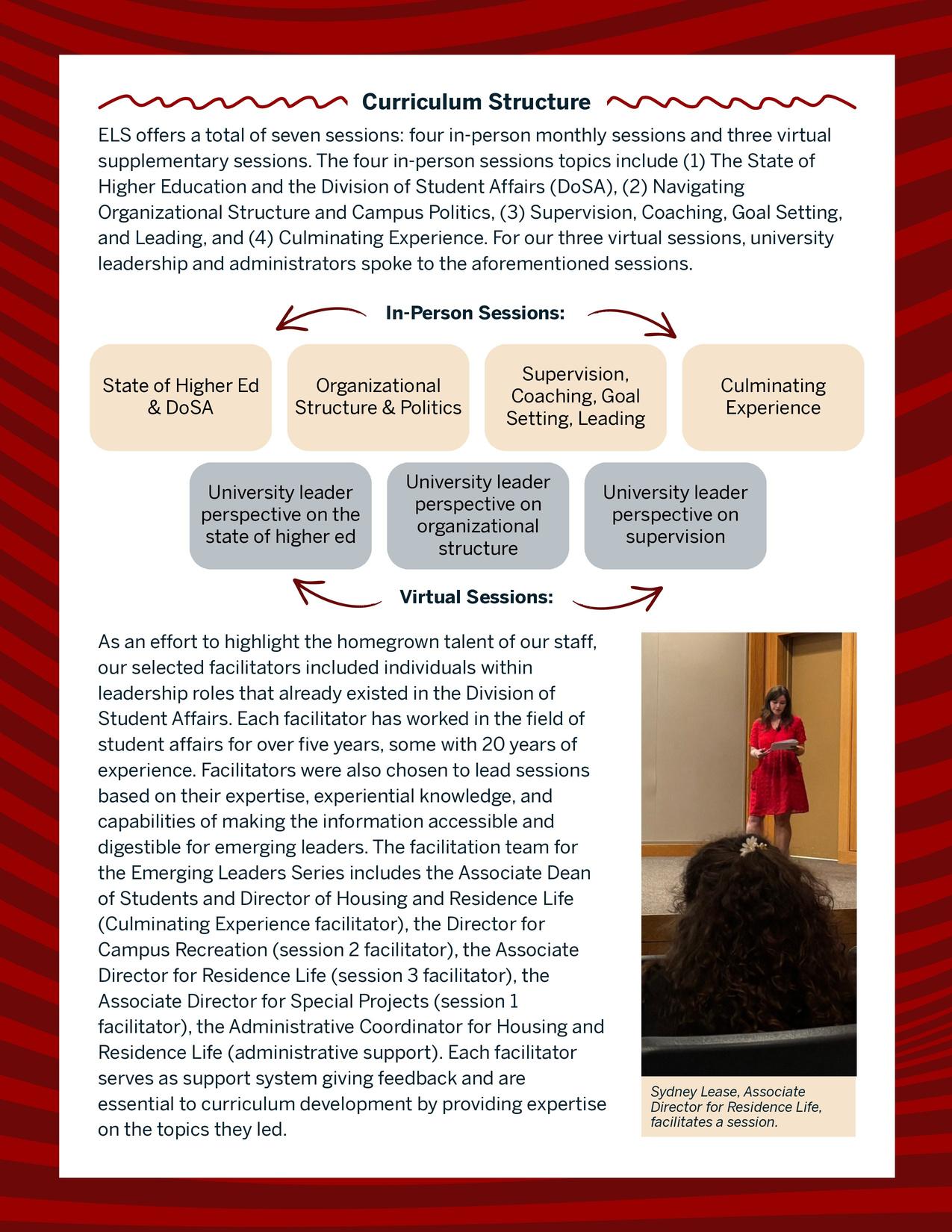
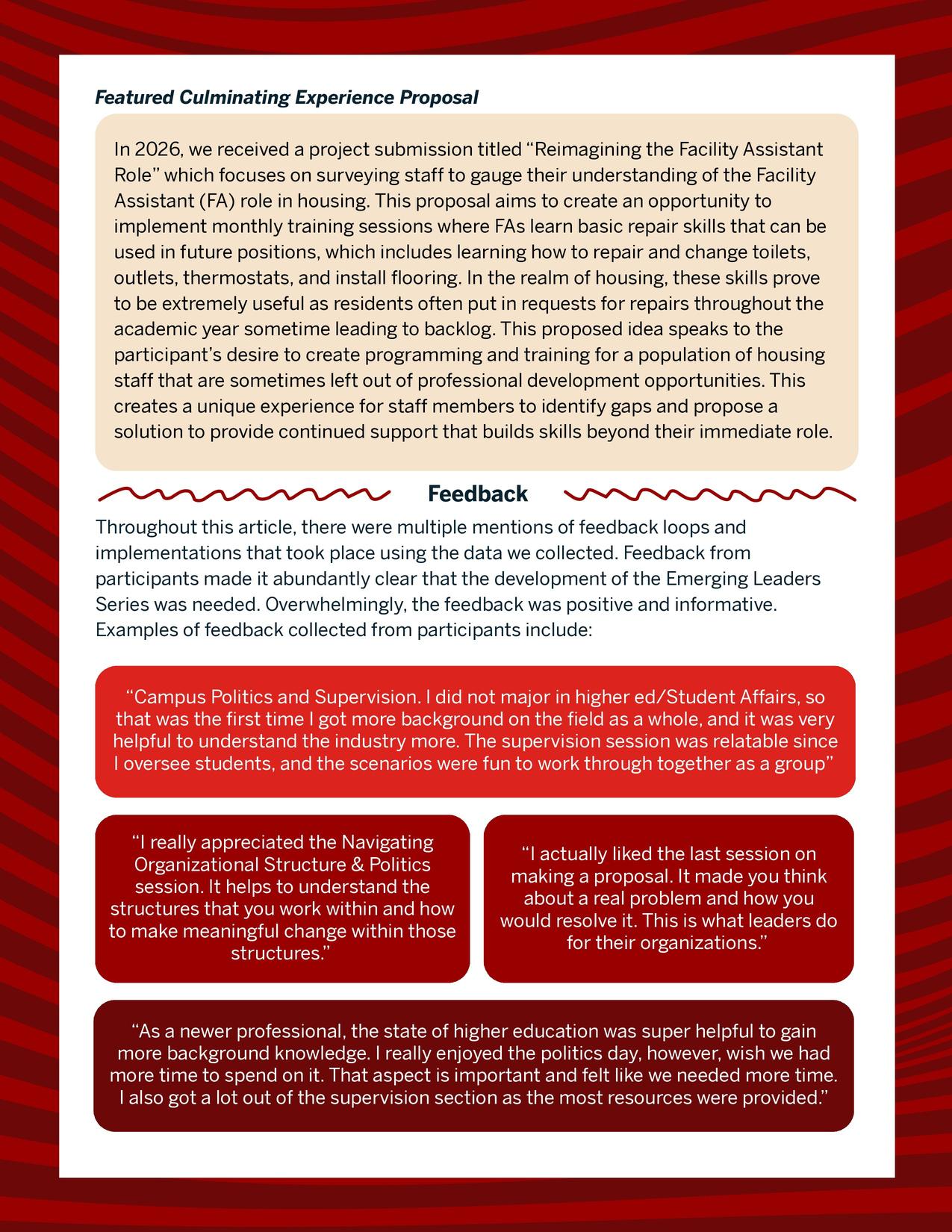
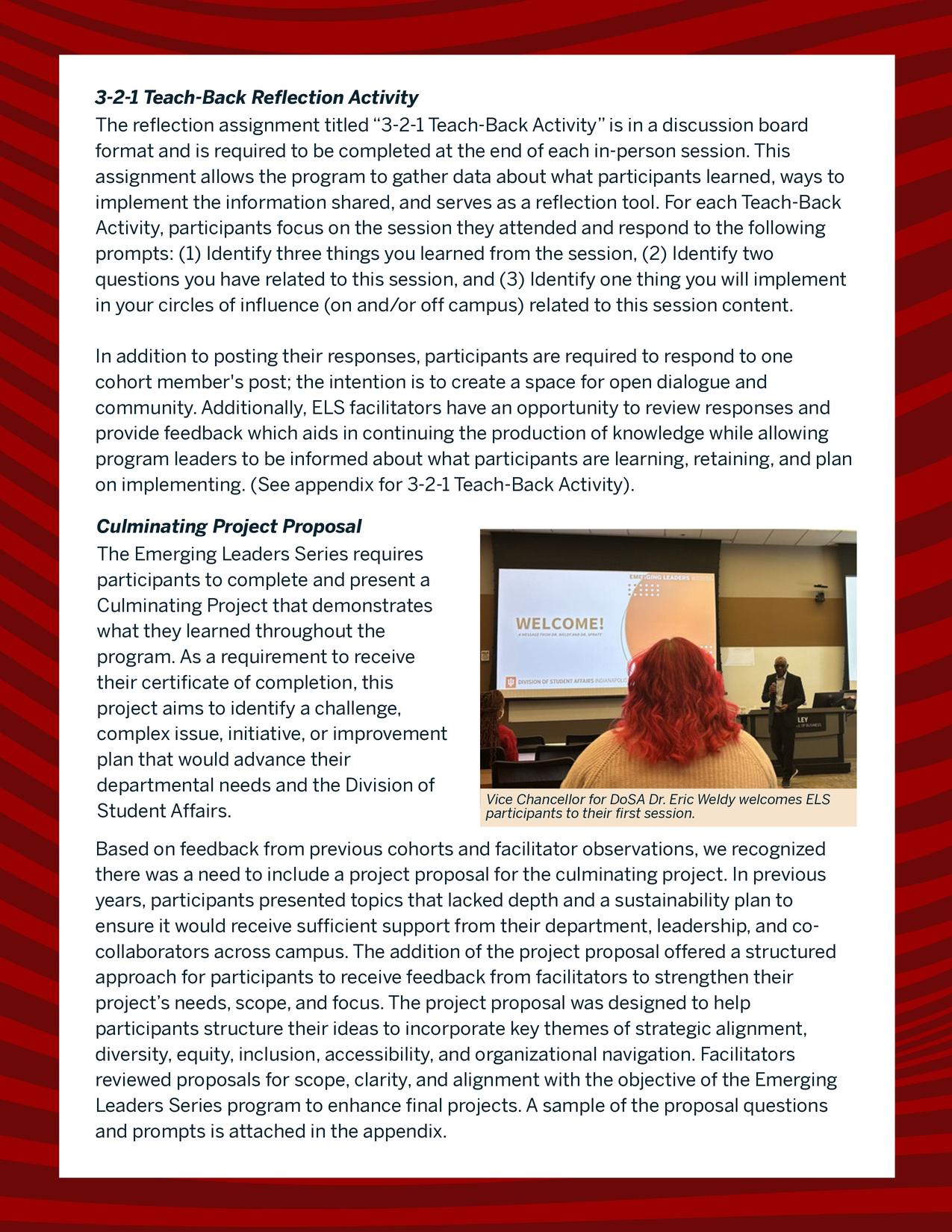
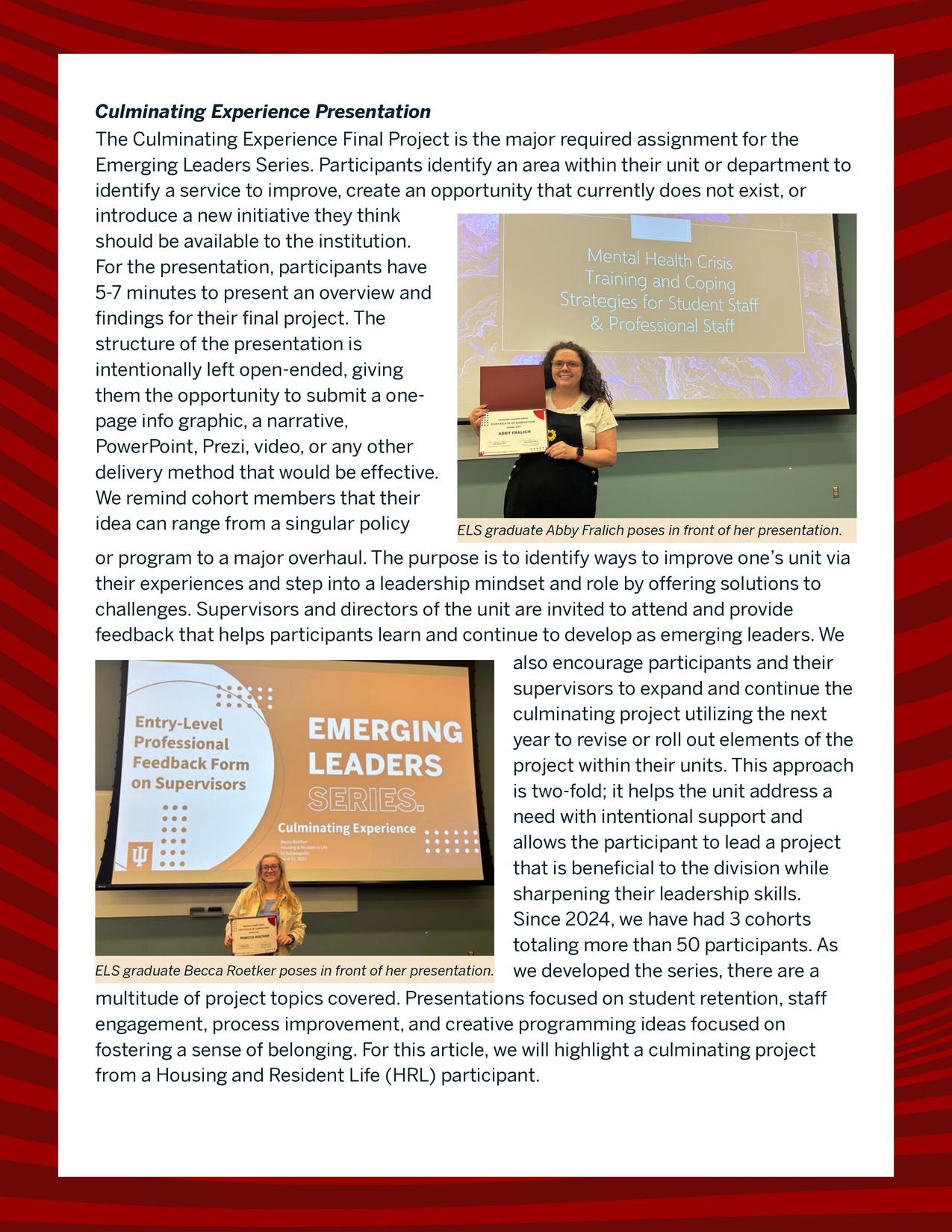
Dani Penner (she/her) Dani Penner (she/her)
DEIA in Higher Education: The Impacts on Campus Culture and Sense of Belonging Overview
Diversity, Equity, Inclusion, and Accessibility (DEIA) is defined by the American Civil Liberties Union as “a framework for building institutions where everyone belongs and is able to thrive, while addressing systemic barriers that have historically excluded marginalized communities.” DEIA has been an integral component of higher education in the United States (U.S.) since the Civil Rights Movement of the 1960s, which laid the groundwork for the Civil Rights Act of 1964, outlawing discrimination based on race, color, religion, sex, or national origin. Compared to other countries, the U.S. has historically pioneered wide-ranging initiatives to establish DEIA policies and programs offices at universities across the country. Currently, however, DEIA in the United States has been under attack, leading many universities to roll back or completely dismantle their DEIA policies and departments. These rollbacks and dismantlements have the potential to cause devastating effects on students across the nation as universities fall into compliance to maintain their federal funding. This leaves us with many questions; the most common ones that I hear are: “Okay, so what? Where do we go from here? Why does DEIA matter in higher education?” So let’s talk about them. Implementing DEIA is more than just hosting a program or starting an initiative; Cultivating DEIA spaces and policies on college campuses creates a sense of belonging, increases student success, and fosters a welcoming environment for students and faculty alike.
Sense of Belonging: When a campus has DEIA elements ingrained in their community culture, it has been shown to increase students' sense of belonging. A sense of belonging represents the way that students feel they are valued and respected in all of their identities on their campus, somewhere that students feel they fit in and are welcomed. A strong sense of belonging felt on college campuses produces:
Increased academic achievement
Increased overall university retention rates
Growth of student resilience
Reductions in student stress levels
Increases in student self-esteem
College campuses that lack a sense of belonging that the student body can feel impact more than just student academics. Not only do their academics begin to suffer, but their campus experiences are negatively impacted as well. Without a strong sense of belonging on campus, students are more likely to lose interest and engage less with everyday activities that they once enjoyed. Additionally, without the communal aspects created by a sense of belonging, students can begin to experience a higher degree of loneliness and feelings of disconnection, which often leads to increased rates of depression.
Student Success: Similarly to a sense of belonging, when there are DEIA initiatives present on college campuses, there is a clear increase in student success rates. Numerous factors contribute to student success, such as:
Academic Achievement
Professional Development
Personal and Emotional Development
Social Relationships
It’s clear that in order for a student to succeed, they need more than just good grades and high test scores; they need to feel that they belong, they need to feel welcome, and they need to feel heard. When students feel that all aspects of their identities are being supported, they are more likely to succeed in college and in ways that they feel benefit them outside of academics and in their careers. By engaging with DEIA programming and initiatives, students are able to get the support they need, which hears, sees, and cares for all aspects of who they are. Having these initiatives embedded in university policy removes barriers that have historically kept members of marginalized communities from accessing the resources they need to succeed in college. When students believe that they matter to their institutions, they are more likely to engage in the steps that lead to their success. When students can go to DEIA offices or programs and get the resources they need to develop professionally, personally, academically, and emotionally, they are being supported holistically as people and by people who they feel hear their voices.
Positive Campus Culture: Lastly, DEIA initiatives help to foster positive campus culture by creating a welcoming environment where students are able to thrive. When a university has a welcoming environment, it:
Increases retention of students currently enrolled
Draws in prospective students to the university
Gives students a place where they can feel safe and supported
Supports student success after graduation
Providing DEIA initiatives on college campuses creates a safe environment that students want to be a part of and want to help cultivate. When students feel safe and welcome, they feel like they belong. When they feel like they belong, they have higher rates of success and a more positive attachment to their college experience. When they feel like they are succeeding on campus, they have a positive attitude towards the university, contributing to the campus culture.
DEIA is crucial to higher education and creating a long-lasting impact on the generations of students to come. However, due to recent state and federal laws and orders, many universities had to rollback or remove their DEIA programs and initiatives. It’s okay if your university isn’t able to adopt these policies during these times; all it takes is ONE staff member to make a student feel like they are valued. Be open-minded, provide students a safe space, respect their identities, and make sure to support them however you can. We can see the numerous benefits that these initiatives and programs have on our students; we must keep pushing forward even during these tough times to put our students first.
Brown, T. M. (2023). Radical reimagining for student success in Higher Education (J. Arney, T. M. Dale, G. Davis, & J. Kinzie, Eds.). Routledge, Taylor & Francis Group.
Claville, M. (2024). DEI as a Transformational Catalyst for Higher Education and Public Good. Change: The Magazine of Higher Learning, 56(2), 39–47. https://doi.org/10.1080/00091383.2024.2325838
“College-Bound Students on DEI: Values, Expectations, and Beliefs: Volume 18: Issue 3: October 2025.” Art & Science Group, October 2025. https://www.artsci.com/student-poll/studentpoll-volume-18-issue3. Conway, Kim, Ricardo Mimbela, and Kellen Zeng. “Dei and Accessibility, Explained: ACLU.” American Civil Liberties Union, February 27, 2025. https://www.aclu.org/news/racial-justice/dei-and-accessibilityexplained.
Criado-Perez, C. (2021). INVISIBLE WOMEN: Data bias in a world designed for men. Abrams Press. Cupid, S., & Tomlin, A. D. (Eds.). (2023). Voices of the field: DEIA Champions in higher education Information Age Publishing Inc.
“Global Gender Gap Report 2025.” weforum, June 2025. https://reports.weforum.org/docs/ WEF_GGGR_2025.pdf.
Haber-Curran, P., Dean Scott, S. R., & Moreno, T. D. (2025). It is on Us: The Ethical Responsibility of Student Affairs Faculty in Anti-Diversity, Equity, and Inclusion (DEI) Legislative Climates. Journal of College and Character, 26(1), 26–37. https://doi.org/10.1080/2194587X.2024.2447858
Hallett, Ronald E, Adrianna Kezar, Joseph A Kitchen, and Rosemary J Perez. “Introduction.” Essay. In Creating a Campus-Wide Culture of Student Success, 1–17. Abingdon, United Kingdom: Routledge, 2023. Harper, S., Chang, M. J., Cole, E. R., Patton Davis, L., Garces, L. M., Gaston Gayles, J., Jenkins, T. S., Kimbrough, W. M., Park, J. J., Saenz, V. B., Smith, S. M., & Wolf-Wendel, L. (2024). Truths about DEI on college campuses - USC race and Equity Center. Harper, S., & Associates. https://race.usc.edu/wpcontent/uploads/2024/03/Harper-and-Associates-DEI-Truths-Report.pdf
King, C. (2023). Invisible the story of Diversity, equity, and inclusion in the United States. Phd, Caroline King. AuthorHouse.
Mishkin, Cori, and Jeffrey M Weimer. “Department of Education Dear Colleague Letter Foreshadows Title VI Enforcement Priorities.” Department of Education Dear Colleague letter foreshadows..., February 10, 2026. https://www.reedsmith.com/articles/education-dear-colleague-letter-foreshadows-title-vienforcement-priorities/.
Smith, D. G. (2024). Diversity’s promise for higher education: Making it work (Fourth). Johns Hopkins University Press.
Strayhorn, Terrell L. College students’ sense of belonging: A key to educational success for all students. Abingdon, United Kingdom: Routledge, 2019. Wilczyńska, Agnieszka, Maciej Januszek, and Kamilla Bargiel-Matusiewicz. “The Need of Belonging and Sense of Belonging versus Effectiveness of Coping.” Polish Psychological Bulletin 46, no. 1 (March 1, 2015): 72–81. https://doi.org/10.1515/ppb-2015-0008.
Woods, Zuleka. “Diversity, Equity, Inclusion (DEI) in the Context of European Universities – Global Perspectives.” Graduate School Virginia Tech. Accessed February 15, 2026. https:// webapps.graduateschool.vt.edu/globalperspectives/diversity-equity-inclusion-dei-in-the-context-ofeuropean-universities/.
Yang, John, Ali Rogin, Kaisha Young, and Zoie Lambert. “The History of Diversity, Equity and Inclusion Efforts in America.” PBS, February 8, 2025. https://www.pbs.org/newshour/show/the-history-of-diversityequity-and-inclusion-efforts-in-america.
JesseM.Brown,PhD
IndianaTech
DirectorofResidenceLife
Studentaffairsprofessionalsarewellpracticedat supportingtheholisticdevelopmentofstudents, yet many struggle to apply that same intentionalitytotheirownlives.DevelopingaRule ofLifeoffersapracticalframeworkforincreasing personalwellness,mindfulness,andsustainability indemandinghighereducationroles.
ARuleofLifeisasetofintentionalrhythmsand commitments that guide daily living, shaped by reflection, personal commitments, and seasons oflife.Ratherthanarigidchecklist,itservesasa flexible lattice for growth—helping individuals align values, purpose, and practices across seasonsoflifeandwork.Instudentaffairs,where emotional labor, crisis response, and long hours are common, such a framework can be especiallygrounding.

The first step in developing a Rule of Life is reflection: When I am at my best, I am… This question invites professionals to imagine their healthiest and most fully present selves. Reflect on this question not as a “productive professional”butasagiftedhuman.Fromthere, reflection shifts toward discernment: What practices are present when I am at my best? Identifying patterns—such as adequate rest, meaningful connection, regular movement, or creative expression—reveals what already supports well-being and what may need reinforcement. It is recommended to spend focused time reflecting on the questions above. As student affairs professionals, we know the “right answers,” but it is critical to honestly and slowlyreflectonwhatisbestforourfullypresent selves.
Most Rules of Life include commitments across multiple domains: mental and emotional health, physical wellness, relationships, vocation, spirituality,identity,andseasonality.Practically,a Rule of Life may include journaling, therapy, exercise, recreation (activities that “re-create” us), nutrition, adequate sleep, hospitality, mentoring, creative pursuits, solitude, prayer, sacred readings and gatherings, movement, intimacy,andlaughter.
Higher education professions exist within an academic rhythm: preparation, ramp up, orientation, traditions, winter break, spring break, graduation, closure, let down, and assessment throughout. We are seasonal people. Where do weekly, monthly, quarterly, semesterly, or annual rhythmsalreadyexist?IntheMidwest,whereIam located, weather and darkness set patterns of light and dark, inside and outside activities. Biological rhythms exist, as well, such as hunger andthirst,menstruation,andrestandactivity.A healthyRuleofLifeiscontextualwithintheswells andtroughsoflife.
In addition to the seasons of life, meaningful change requires both engagement and abstention—adding nourishing behaviors while thoughtfully limiting or eliminating those that deplete energy or focus. For example, if you wantedtofocusonnutrition,engaginginhealthy patterns (meal service subscription, drinking morewater,ordiscerningwhenyoufeelsatiated) isjustasimportantasabstainingfromunhealthy patterns(lessfastfoodandcaffeine,lesssodium, or portion management). A well-crafted Rule of Life offers a compassionate structure—planting seeds, pulling weeds, and creating space for growth—so professionals can flourish personally whilecontinuingtoservestudentswell.
Ultimately, a Rule of Life helps professionals discernwhentosay“yes”andwhentosay“no.”It provides stability when life is difficult and clarity when opportunities compete for attention. By tendingtopersonalwellnesswiththesamecare we extend to students, student affairs professionalscansustaintheirworkwithgreater presence, resilience, and integrity. Hopefully, the guidance above can remind/persuade/encourage you to consider how you can better discern and cultivate your humanbeingexpressedinyourhumandoing.
JesseM.Brown,PhD IndianaTech DirectorofResidenceLife jmbrown@indianatech.edu
Justus Lopresto-Jackson
Walking across the stage and grabbing your diploma and saying, “I’m done, now what?” while working within a crisis-response orientated role in housing can feel disorienting. After semesters (or years) of being on call, managing emergencies, navigating day-to-day conflicts, and supporting your fellow peers, the transition out can leave you asking: Who am I professionally outside of crisis response? As a Resident Assistant supervisor, I’ve experienced and learned how to have these conversations, and this is what I feel is helpful to make sure RAs are ready for the next step within their career. One big takeaway that I realized resident assistants do not notice is that you are doing far more than “living in the building” you were building a professional skill set that employers across many industries seek! Supporting yourself after a crisis-based role begins with three key steps.
1.Identifying at least 3 transferable skills gained through the position that are applicable to postgraduate careers
2.How to effectively articulate your experience on a resume and during interviews
3 Recognizing career fields and graduate programs that value and align with your experience.
Crisis-response roles demand a high level of responsibility and trust. The key to transitioning these skills successfully is translating your experience into proper language employers can take away from. These core transferable skills can include:
Leadership & Teamwork: Collaborating with other RAs and campus resources such as academic success center, Health Education Resource Center, TRIO, etc. for campus events.
Problem-solving under pressure: Responding to crisis situations (alcohol incapacitation) and being able to quickly assess the situation and follow proper protocol.
Community engagement awareness: Supporting a diverse residence hall community and how to build relationships across different backgrounds
Communication (Written & Verbal): Documenting incidents, communicating policies, and facilitating conversations with residents and staff.
Emotional intelligence: Supporting residents during stressful or personal situations, active listening skills and emotional awareness. Can also foster positive professional relationships
Time management and organization: Balancing academic responsibilities with RA duties (and other extracurricular activities) Prioritize task, manage deadlines.
Event planning: Educational events, promoting/advertising, and evaluating outcomes. Ras Can gain project planning and event coordination skills.
One of the most common mistakes I’ve seen as a supervisor and peer reviewing resumes is minimizing their experience. The main goal is to avoid underselling your role on a resume. Instead of writing:
“Provides real-life experience in working with and helping others, conflict resolution, team building, and many others.”
“Student peer leader responsible for Living Learning Communities in university housing”
You can reframe the state as:
“Student leader managing a residential community of X students, serving a daily on-call rotation, responding to crisis issues and student concerns for a community.”
“Planned and executed educational programs within Business and Technology Living Learning Community with measurable engagement”
You can reframe the statement to sympathize with your leadership experience, demonstrate professionalism, and highlight measurable impact within your organization.

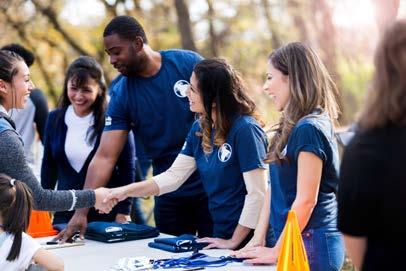


Transitioning out of crisis response means preparing to talk about high-pressure experiences with clarity and confidence. The STAR method provides that structure. An interviewer could ask “Tell me about a time you handled conflict?” One example could be if residents are experiencing excessive alcohol use. You can use this method to help answer the question!
S: Situation
Set the context!
“Where were you? Who was involved?
T: Task
What was your responsibility?
What were you expected to do? What were the protocols?
A: Action
What did you do?
Focus on your skills and decisions throughout the process.
R: Result:
What happened because of your action?
Include outcomes, lessons, or improvement
All in the end the big part of this process is self-reflection. You need to ask yourself
“What skills do I want to keep using?”
“What type of work environment helps me thrive?”
“What impact do I want my work to have?”
“Do I value structure or flexibility?”
“What responsibilities energized me rather than drained me?”
Your skills are highly transferable, you are more prepared than you think, and confidence comes from selfreflection and practice! Stay connected with your supervisors, and career services to help you with advice, mock interviews, and networking opportunities!


By:AngelThornsbury
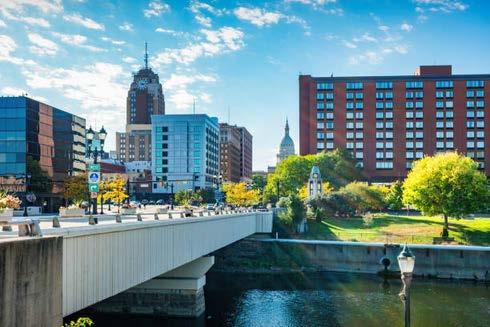
Preparations are steadily underway for the 2026 GLACUHO Annual Conference in Lansing, MI. As we look toward the future, it is important to reflect on our past experiences and what brought us to where we are today. In the spirit of that, the State Delegates thought it prudent to reflect on how opportunities through the association, such as scholarships, contribute to the overall meaning makingthatourmembershiphas.
This past year, the State Delegate team decided to completely reimagine the scholarship application processfortheannualconference.Previously,there were categories for different types of members, such as returning delegates. Although this system served our association for several years, we decided it was time for a new approach. Recognizing the impact that budgetary restrictions are having on our home campuses, we concluded that scholarship opportunities should be open to as many of our members as possible. Thus, a new approach was born; instead of categorizing our membership for scholarships, why not have an open pool of opportunities for the entire association?
Through this, we developed a scholarship application that spoke to a few factors. We opened the scholarshiptoanyhousingorresidencelifeprofessionalorgraduatestudentintheGLACUHOregion. Ourapplicationaskedthefollowingquestions:
WhatbarriersexistthatmakeitdifficultforyoutoattendtheGLACUHOAnnualConference withoutfinancialsupport?
Howwillattendingthisconferencecontributetoyourprofessionalgrowth,yourdepartment,or yourinstitution?
Sharehowyouplantocontributetoorstayinvolvedwiththeassociationbeyondtheconference.
These questions were aimed at gauging the need for our membership, goals of applications, and how GLACUHO will continue to be part of the scholarship awardees’ professional development journey. The results? We had more applications for scholarships than we have had in recent years. We were able to award 13 scholarships in total to go towards theAnnual Conference registration, 3 full scholarships, and 10 half scholarships. These scholarships went to professionals, both full-time and graduate,toall4ofourmemberstates.
Scholarship recipients, to be awarded, had a few requirements. These requirements were designed to bolster the experience of each recipient who attended the conference, including volunteering during at least one shift, attending a brief pre-conference virtual orientation, and submitting a brief reflection after the conference. Overall, the scholarship recipients were given the opportunity to broaden their horizons at the annual conference, which was shown in what they wrote in their reflections.
So, what did our scholarship recipients get from this experience?Weaskedmemberstoshareabriefreflection after the Annual Conference about their experience and how the scholarship supported their professional development. Let’s hear directly from those who benefitedfromthisopportunity:

AComplexDirectorfromIllinoiswrotethefollowing:
“At this conference, I had many great experiences from meeting new professional staff members, going to great sessions, and exploring the late night entertainment. I think that all parts of this conference were great, especially being a part of the Inclusion and Equity Committee, now the Community Engagement and Belonging Committee. I am thankful that I was given the scholarship to support myself in professional development and my university’s funding of sending staff members to the conference. I will forever cherish the moments at this conference, and the experience that I had one on one with individuals, in group settings, and in debriefs during the sessions.
The relationships that these conferences have allowed me to build have been very meaningful to me. I really loved the BLK SAP Lunch and the passion that I saw from individuals throughout the conference. I liked to see and hear about individual stories during the signature session, and the thingsthatpeoplearefacing,andthethingsthatpeoplearegoingthroughattheirownuniversity.
ButIcansay,I’mverythankfulforalloftheexhibitorsthattimetheseconferencesitisjustajoyto see professionals within the field, professionals assisting those in the field, and professionals on the outside looking in. I know that I’ve made a mark, but all in all I love the ducks in the joy that theybringmeandIlovethatIgettosharethatwithotherssuchasexhibitors(attheconference). Thankyouagainforprovidingmethisfinancialsupporttoattendtheconference.”
AnAssociateDirectorofResidenceLifeinOhiosharedwhat
theytookawayfromtheexperienceaswell:
“HavingstartedaschoolintheGLACUHOregiononlyafew months ago, the annual conference scholarship provided me with a tremendous opportunity to engage with new colleagues in the region. From attending several very interesting program sessions to engaging with others through my own program session to having great dialogues with other mid-level professionals, I enjoyed jumping head-first into GLACUHO and the people who make up the region. The opportunities to volunteer at the conference allowed me to be engaged in areas that I normally would not have found myself involved with, including meeting and checking in several vendors in attendance at the conference. I greatly appreciated the opportunities to “gamify” the various elements of the conference experience, and will always have a story to tell about the pink duck that will be sitting on a shelf in my office. The one thing about GLACUHO that stood out the most compared to the other regional conferences I have attended in my career was the care everyone demonstrated for colleagues in the region and how quickly people acted to support others when they were in need. Having seen the GLACUHO region in action gave me faith and confidence in myself and others that we can continue to do great things for everyone in the region, and will enhance my ability to foster my own development and support others in their development.”

Wealsogottolearnmoreabouttheexperiencefromthegraduate perspective,includingaGraduateAssistantfromIndiana:
“I had a great time at the conference, so much so that I applied for a committee for the upcoming year! I had a great time getting to know other graduate assistants from other universities and getting to share what my experience has been like, especially because my degree is not for Student Affairs or Housing. The conference and the sessions were eye-opening to what the profession of working in Student Affairs is truly like, especially attending sessions such as the one on self-care, and getting to see what expectations and boundaries are set at other universities and institutions. Also,thevolunteeringopportunityallowedmetomakeanewconnectionwith an entry-level professional and we got to exchange about what her program was like to how my experience has been so far, it was a great connection to make!”
Finally,wealsoheardfromsomecolleaguesinMichiganaswell,includingaGraduateAssistant forLeadershipandProgramming:
“I had a wonderful Annual Conference experience. I presented for the first time, which I deeply enjoyed. The scholarship allowed me to have the remaining of my expenses covered by the institution. Without this additional funding, I would not have had the opportunity to attend the conference this year. I attended numerous professional development sessions that helped me grow my skills, connect with others, and learn new things. I was also able to participate in a committeethisyear,helpingtoorganizetheCARESinitiativeandMCingtheAffinitySocials.Being able to meet and connect with my committee in person was very nice after only seeing them virtuallyforthepastyear.
PresentingwasthethingthatIwasmostexcitedaboutforthisconference.Iwasabletopresenton theimportanceofDiversity,Equity,andInclusioninhighereducation,includinginHousingspaces.
This was my first time presenting at a professional conference, and I am very glad that I was able to do it in such a welcoming environment. This experience taught me a lot about what goes into prepping,researching,practicing,andactuallypresentingataprofessionalconference.
This was my second GLACUHO, and the sessions throughout the conference have never disappointed. I was able to engage with numerous areas of work to grow my professional and personalskills.IenjoyedbeingabletoattendsessionsthatwentbeyondimprovinginourHousing rolesbutalsohowtosurviveoutsideofwork,suchasbudgeting.
Overall,thisscholarshipgavemeanunforgettableopportunitytoattendGLACUHOasecondtime.”
Themes of feeling belonging, enjoying the professional development opportunities, and connecting with other professionalsacrosstheregionwereallsharedinthesereflections.
TheStateDelegatesgreatlyenjoyedtheopportunitytogettoknow members of GLACUHO that may have not otherwise had the opportunitytoattendtheregionalconference.
Aswelookahead,wecontinuetothinkofwaystomakeGLACUHO more accessible for the professionals in our region. Everyone deserves the opportunity to engage in meaning making and professional development in this profession. Offerings, such as the AnnualConferencescholarship,helpmakethisareality.
Moving forward, we are excited to continue offering this scholarship opportunity to our membership. Keep an eye out for the publication of our 2026 Annual Conference scholarship opportunity,andwelookforwardtoseeingyourapplication!

By: Amanda Nagy, Western Michigan University, Evan Miller, Western Michigan University, Cassie Govert, Indiana University Indianapolis, and Carley Eichhorn, University of Michigan
As Housing professionals, we typically strive to make our communities more welcoming, inviting, and comforting. Oftentimes, we reach these efforts by turning to free and creative resources to help us make door decs, bulletin boards, fliers, newsletter, or any form of media that can help us make students feel more at home in our community. In the past few years, Canva has taken the lead in being housing professionals’ favorite marketing and design resource. Although Canva is great, there are many free resources out there that can bolster our ability to decorate our communities and make students feel welcomed by our design choices. Below, we have listed seven free resources that can help you and your staff members channel some more creativity, and implement fun design choices in your community.
GIMP is a free and open-source software created by a community of volunteer authors and contributors under the GNU General Public License that can be used commercially. The program was created to provide tools like photo manipulation, digital artwork design, customizable programming algorithms, and design elements to assist graphic designers, photographers, illustrators, and others with their digital projects. Admittedly, the program contains a multitude of tools, so the developers (and us!) recommend watching tutorials and researching how others use the tool in preparation. A good way to practice is to have a tutorial pulled up and follow along, pausing as you go so that you can understand the new function that you are learning.
For Housing and Residence Life professionals, GIMP would most likely be used to edit photos, create flyers, design intricate graphics, and much more. This would be a great tool to craft brand new marketing materials, custom graphics, etc. It’s a tool that can do as much as you can, so we recommend that you take time to explore all of the features and see what it can do for you. You can check out Gimp at Gimp.org
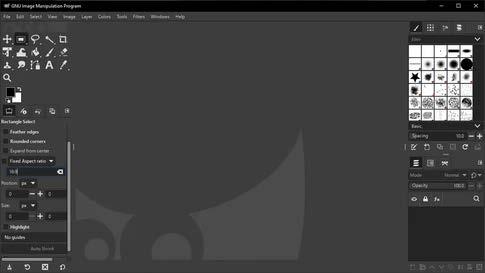
Google image searches can be intimidating to utilize due to licensing issues and attribution of graphics and elements, but there is a way to specifically filter to only show free commercial use images and graphics. We search for an item (like “horses” in the image below) > click on images > click on tools > click on usage rights > select a preferred option! We can also choose a specific color for advertisements if we are using a theme or template, along with filtering for specifically clip art or GIFs.
It’s a simpler method of finding images, and there still can be roaming artificially made content, but if we are looking for a vast array of free images, graphics, or designs to use in our advertisements, all of these items are (literally) a Google search away! You can use Google Search by visiting: https://images.google.com/
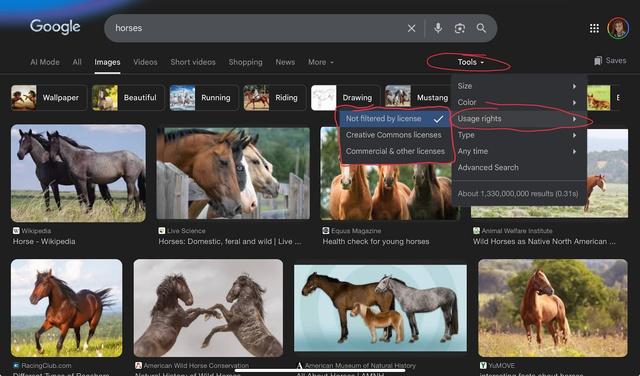
Kittl is a website that is focused on designing fun texts and fonts! Although there is a paid option, there are lots of free features, including tutorials on how to edit fonts, or creative cohesive design and brand. Kittl could be a great resource if you wanted to design community apparel, or make a series of designs that had all the same aesthetic. You can check out Kittl here: Kittl.com
Pixabay is a free online image website that has a vast library of visual and audio content, including photos, illustrations, graphics, videos, and music. All of the content that is released on Pixabay is released under a permissive license, which means that people who make an account can download, modify, and use all of the materials without needing attribution (in most cases). It also has a built-in Canva integration so you can find elements and link them directly to your Canva presentation or flyer, allowing you to use a wide array of designs instead of having to pay for Canva’s premium subscription. Our personal favorite aspect of this site is that it allows you to filter out AI generated content and search for authentic content instead, shown in the picture below.
Overall, Pixabay supports Housing and Residence Life workers by helping us save time on making appealing promotions, reducing costs spent on advertising allowing it to be used elsewhere, and enhancing communication throughout our campuses. You can use Pixabay by visiting: https://pixabay.com/
Poster My Wall
Poster My Wall has many free, and pre-made templates that are excellent for creating fliers, social media posts, and other marketing graphics. If you are someone who does not necessarily find joy in creating graphics, but wants marketing materials to look readable and cohesive, Poster My Wall may be an excellent resource for you to check out! Many of the free templates have easy to edit text options, but limited ways you can change around the pre-set design. With their pre-made and ready-to-go options, Poster My Wall eliminates the stress that comes with decision fatigue and choosing from thousands of design options. Also, Poster My Wall could be a great resource to share with student staff members who want a quick and easy way to make advertisements for their programs! To start using these free templates, you can visit the Poster My Wall website at: https://www.postermywall.com/
The Rasterbator is a free wall art generator that enlarges any pre-created image into a large multi-page poster. Rasterbation is the act of generating giant posters from low-resolution images by converting them into dots that, from farther away, look like the original image because of the visual perception. The tool allows you to resize your image or keep it original when it converts it to a larger size determined by your needs. You are able to select the size of your new poster as shown below.
The Rasterbator is typically used to create large wall decorations or bulletin board pieces that make the board stand out or command attention. The key to using this tool is having clear source material if intending to only increase the size of the item, but if you intend to rasterbate it, then any source image should work. We recommend using this tool after creating your flyer or image in another tool as this cannot create but instead enhance an already developed file. You can use The Rasterbator by visiting: https://rasterbator.net/
If you are ever looking for a new site to endlessly scroll on, Unsplash just might be for you! Filled with copyright-free images, Unsplash has thousands of photos for you to look through, download, and use. Unsplash is a great resource if you are looking to make a bulletin board, flier, or any type of advertisement using real photography, instead of cartoon elements. Bonus: if you are looking for a new screen saver to brighten up your workday, Unsplash has a “wallpaper tab” that you can use to find a new and colorful way to switch up your screen time! You can visit Usplash by using this link: https://unsplash.com/
For Housing and Residence Life professionals, visual content plays a role in almost everything we do and create. From attention-grabbing program flyers to thorough training presentations for student employees, being able to find professional-looking images without using our already limited budgets is critical. While Canva’s free templates are well-made, the same templates are often retooled over and over again for various programs, which often leads to residents and students becoming numb to the advertisement and paying it little mind. Introducing something new and encouraging creatively made advertisements, policy posters, and other materials will improve resident and student attentiveness and will further foster fun and engaged communities. Whether you are making fliers, door decs, bulletin boards, or social media posts, we hope that one (or even a few) of these resources are beneficial to you and your community.
Sources:
https://www.instagram.com/p/DNbcqfdSWqh/?img_index=11
https://www.tomshardware.com/software/free-open-source-photoshopalternative-finally-enters-release-candidate-testing-after-20-years-thetransition-from-gimp-2-x-to-gimp-3-0-took-two-decades
Gimp.org
Google Search
Kittl.com
https://pixabay.com/
https://www.postermywall.com/
https://rasterbator.net/
https://unsplash.com/

By Eva Steepe, Central Michigan University
Some of the most challenging situations that housing professionals address include supporting residents and paraprofessionals through crises related to mental health.
While self-care continues to be a buzzword and can sometimes lack context and meaning as a result, the goal of this TRENDS article is to offer supervisors tangible recommendations for supervisee and self-support after crises. The following recommendations are split into proactive and reactive approaches that may be helpful to incorporate into daily practice to best support both yourself and your supervisee(s).
Encourage your staff to intentionally reflect on things that fill their buckets and make them feel most themselves. Taking the time to reflect on what possible options are available to recharge folks can be helpful, especially in the context of challenging mental health response. Separating out the amount of time required for each activity and encouraging staff to build time into their schedules to do things proactively before their mental health (particularly before busier seasons for jobrelated responsibilities, such as on-call weekends or interview seasons).
Encourage strong connections between your supervisee and yourself. Work to build your relationship with your supervisee to develop a better understanding of what they need, professionally and personally. According to Hiebler-Ragger et al. (2020), strong supervisory relationships positively contribute to supervisee wellbeing and performance. This is particularly important in the context of caring fields, such as residence life. Supervisees can only pour into others as much as they are poured into by those who supervise them.
Build a culture of gratitude. According to the Anxiety and Depression Association of America, gratitude can increase happiness, well-being and life satisfaction (2023). Add a moment of gratitude and reflection into staff one-on-ones or staff meetings to begin a reflection on what staff is grateful for. While small, gratitude built into the way a staff team functions allows for a higher level of appreciation of when the workload is lighter.
What can be taken off of your staff’s plates?
Encourage your staff to take time to support themselves wherever it is possible to do so. Having their proactively planned list can help with this to allow yourself to have tangible knowledge about what options for specific staff might be for their own individual self-care. Check in with your staff to do everything you can to support them after challenging resident situation response. Offering your time can mean so much to those struggling to process through challenging situations they were involved in. Recognize that your supervisee may need more support than you are able to give and offer them available additional mental health support available to them. Whether this be counseling services related to your institution or not, reminding folks that additional mental health support can be a useful tool is essential in response to challenging situations.
Model consistency in your own bucket-filling activities and intentionality in doing things that fill up your bucket. While cliché, you cannot hope to roll with challenging mental health response without being the most complete version of yourself you can be. Remind yourself that you also have a supervisor and other people who you can depend on serving as a support of you. Cultivating these relationships is key to weathering the ups and downs of crisis support and response.
Separation of personal and professional life. It can be hard to cultivate an identity outside of work, especially in live-on roles. Doing what you can to develop concrete hobbies and dedicated activities for yourself that are unrelated to work can help you strengthen your ability to rely on external sources of joy outside of your full-time role.
Take a step back (to whatever degree possible for you in your current role). Do what you can to build in time to do things just for you. Recognize you may need more support than just time to do what you need to. Dedicating time for counseling or a psychiatry appointment can be the difference between surviving and thriving after challenging mental health response in your role.
Doing what you can to support your supervisees and yourself as much as you support your residents is one key step to making residence life roles sustainable careers. Creating a systemic approach to the active process of taking care of yourself and your staff allows for self-care to not just be a one-time approach and instead a practice.
Smith, A. (2023, November 22). Gratitude - A Mental Health Game Changer. Adaa.org. https://adaa.org/learn-from-us/from-the-experts/blogposts/consumer/gratitude-mental-health-game-changer Hiebler‐Ragger, M., Nausner, L., Blaha, A., Grimmer, K., Korlath, S., Mernyi, M., & Unterrainer, H. F. (2020). The supervisory relationship from an attachment perspective: Connections to burnout and sense of coherence in health professionals. Clinical Psychology & Psychotherapy, 28(1), 124–136. https://doi.org/10.1002/cpp.2494
Photo credit: "Lets talk about mental health" by The People Speak is licensed under CC BY-NC 2.0
By: Eric Juzkiw, Lake Michigan College
t (Ideat
, Maximizer, Strategic, Communication, Competition). Or maybe know your Myers-Briggs personality identity and the wide range of people you overlap with (INTP-T, Tina Fey and Bo Burnham). The goal is to see new ways that you can utilize these various forms of personalized assessment data to help inform your decisions, both personally and professionally. We will be speaking primarily through the lens focused on StrengthsQuest, but you can apply these concepts and ideas to any of these personality assessments.
StrengthsQuest is a personality assessment that features 34 themes that relate to specific strengths. Each strength is categorized into 4 different domains: Executing, Influencing, Relationship Building, and Strategic Thinking. After taking the assessment, you are given your top 5 strengths, which represent specific skills that come more naturally to you.
My top 5 are:
Ideation - generating creative solutions to problems
Maximizer - optimizing situations or environments to provide as much impact as possible
Strategic - identifying patterns and seeking out alternate route to the solution
Communication - having confidence in putting thoughts into words
Competition - measuring success against others with a drive to be or greater than them
There are also some skills that do not sit within my top 5 that are relevant to this conversation.
Focus - directing energy towards specific goals
Empathy - being able to understand how others are feeling
Restorative - rejuvenating others after difficult moments
Arranger - organizing tasks or objects into a logical order
I first took the StrengthsQuest assessment at 19. I was a second-year student at Bowling
Green State University and a member of the officer core of a student organization named Vanguard This group utilized a wide range of life coaching to help male-identifying students become better people In line with this, our officer core members took the StrengthsQuest assessment. At that time, my top 5 strengths were Ideation, Futuristic, Focus, Strategic, and Command These do not completely align with my current StrengthsQuest Top 5. Futuristic, Focus, and Command are all gone from my top 5 while I have gained Maximizer, Communication, and Competition At first, I was surprised to see such a stark difference between the two. What did not surprise me, though, was that Ideation remained at the top of my strengths. This got me thinking about the concept of Ideation and how I can utilize this strength and maximize my potential with this strength.
Within the Ideation section of Clifton StrengthsQuest, this quote stuck with me. “Your limitless thoughts and ideas can sometimes overwhelm and confuse people Consider refining your ideas and sharing only the best so others won’t reject them simply because they cannot follow your abstract thinking ” When I read that, nothing had ever resonated with me so deeply. In all areas of my life, I had been told that I would over explain concepts or that my thought for completing a task was over complicated This is where, I believe, that Communication found its way into my top 5 strengths. Through enhancing my ability to explain my ideas crisply and concisely, I was able to enhance my communication skills in general, becoming more confident in my ability to speak in front of others and showing more ability to explain my abstract thoughts in a simpler manner.
This is only one example of how I have utilized the knowledge from StrengthsQuest in my own professional development. StrengthsQuest identifies your top 5 but that does not mean that you are weak at the other 29 strengths. It draws attention to areas where you can utilize your strengths to bridge the gaps in your development. The first time I took the assessment, Empathy was my lowest strength, number 34. I can struggle to understand other people’s emotions and I struggle to know what they are thinking or feeling without them specifically communicating that to me By communicating this struggle and thinking strategically I have been able to talk with people about making sure about


I hese addi uest for my personal growth is in using it to
decide what projects I take on. While at Bowling Green State University, I spent most of my time as a member of the residence life training committee. A large charge of this work was creatively identifying ways to better teach the skills required for our student staff. This work came very naturally for me, thanks in large part to Ideation, Strategic, and Communication.
Heading into my final year at Bowling Green State University, I switched to our recruitment and selection committee While my natural strengths still saw some use, the group heavily leaned into skills that were not as natural for me
Focus and Arranger, which are numbers 19 and 22 respectively as of my most recent assessment, were both used very heavily on this committee Much of the time, we are on a very specific time crunch, and we need to find a way to take all our ideas and focus them on completion Oddly, Focus was a skill that I had originally had in my top 5 but saw a decline I think, because of becoming more adept at communicating my ideas, I sometimes lose sight of making the idea happen. By working on the recruitment and selection committee, I was able to tie back into that skill, in addition to Arranger.
When thinking about utilizing StrengthsQuest and other assessments as a tool for datadriven decision making, we can make informed decisions for our own personal growth and development. What committees or projects should we serve on? What institutions should we work at? What student organizations should we advise?
I encourage each of you, regardle
personal decision making as yo
I think back to my conversations with my
evious supervisor. She knew that I had aspirations to move up within residence life She also knew very well what areas I needed to improve My supervisor was able to identify ways that I could build my skills in areas like Focus, Restorative, and Arranger She not only provided me with specific opportunities to gain experience, but she also gave me a space where I could engage in reflection about my growth and development. While working on those areas for improvement, my supervisor gave me tasks that connected back to my top 5 strengths, tasking me with some strategic planning for our communities (Strategic) and idea generation for ways we can execute our engagement model (Ideation).
This was a pivotal piece of my development during my time at Bowling Green State University. Without her additional investment in my professional development, I know that I would still need development in those areas. The person having those conversations with you doesn’t need to be a supervisor, but it is pivotal to have someone who can talk through your strengths and areas for improvement constructively. Regardless of your current level, there is always relevance to using assessments such as StrengthsQuest to better understand where you may want to focus your energy.
I recently moved to a new institution for the first time One of the first items that my current supervisor asked me to do was to retake my StrengthsQuest. I used this as a potential for me to see where I was falling on those areas that I took specific actions to improve on, such as Focus, Restorative, and Arranger While Focus fell from 19 to 23, I saw growth in Arranger, moving from 22 to 16, and immense growth in Restorative, going from 34 to 13. It is a perfect example of how you can utilize an assessment such as this to identify areas where you can improve and, with strategic decision making, you can utilize your strengths effectively to make other skills simpler and more natural.
Gallup Inc (2019) What Are the Four Domains of CliftonStrengths? Gallup.com https://www.gallup.com/cliftonstrengths/en/253736/cliftonstrengths-domains.aspx
Gallup Inc (2019) What Are the 34 Cliftonstrengths themes? Gallup. https://www.gallup.com/cliftonstrengths/en/253715/34-cliftonstrengths-themes.aspx
Shavonn Nowlin | Director of Residence Life | University Center Chicago
By:
Carolyn “Lynn” Slaughter | Area Coordinator | University of Illinois Chicago
Jailyn Stevenson | Assistant Director | Governors State University
The Professional Development Institute (PDI) was established in 2009 to provide professional development within the GLACUHO region. Over the years, it has expanded from two to three days, and over 175 professionals have participated in the institute. The institute is geared towards professionals with at least 1 year of full-time experience who typically supervise paraprofessional and/or graduate staff members. PDI is recommended for professionals seeking to develop the skills necessary to persist in student affairs, explore their potential niches, or move into a position of greater responsibility within housing and/or student affairs. PDI allows participants to engage in informal small-group interactions as well as faculty-led sessions.
The 2026 Professional Development Institute took place in February 2026, bringing together 25 entry-level and early-career housing professionals from across Ohio, Illinois, Indiana, and Michigan. Participants gathered to engage with faculty-led sessions, connect with peers from across the region, and sharpen the professional skills needed to grow and sustain a meaningful career in student affairs and housing. Following the institute, the Professional Foundations Committee gathered reflections from participants and faculty to capture the spirit and impact of this year's cohort experience.
Liz shared that PDI came at exactly the right moment in her professional journey. Especially for those who find themselves consumed by day-to-day responsibilities, she viewed PDI as a meaningful opportunity to step back and realign with future career goals. Whether or not one stays in housing long-term, the lessons from PDI carry value well beyond the functional area.
VISIT PAGE
Sign up for exclusive security tips and subscribe to our newsletter
Dave came to PDI with a focus on building meaningful relationships with colleagues and expanding his approach to professional development beyond conference attendance. He was drawn to the opportunity to think about how to learn, grow, and elevate through the work and opportunities available at his institution.
VISIT PAGE
Corey applied to PDI with a desire to think more strategically about the profession, build connections with peers and faculty, and step away from the day-to-day environment long enough to reflect on career desires and goals. PDI offered the structure and community to do exactly that.

Participant
For Liz, two takeaways stood out. First, she came away with a sharper awareness of the importance of knowing what keeps her supervisor and her supervisor's supervisor up at night. She now pays closer attention in team meetings to what has been elevated to central staff conversations. Second, she reflected on the value of setting work-life boundaries now, before additional personal commitments make it harder to do so. She has since made a more deliberate effort to be either fully on or fully off, rather than stuck in the space in between.
Corey Friedrich | Participant, Miami University
Corey left PDI with three meaningful takeaways. The first was a renewed sense of personal ownership over professional development. The reminder that growth in this field is self-directed is something he is already acting on through his GLACUHO involvement and by more intentionally advocating for himself as he seeks new skills. His second takeaway was a deeper understanding of the bigger picture. He came to appreciate that housing decisions affect multiple stakeholders and that both internal and external factors must be considered. Finally, Corey gained a better appreciation for the professional development resources available through Human Resources and has begun exploring those opportunities for the summer months ahead.
VISIT PAGE
Klarque-Azana Stemley | Participant, University of Illinois Chicago
Klarque left feeling encouraged and empowered. Entry-level professionals are the first-line of service for many students, they have a knowledge base like no other and can heavily influence change by sharing the stories of our students. She was inspired to not only seek opportunities for development but to be innovative and create opportunities, if necessary.
“One of the biggest takeaways I gained from PDI is the importance of perspective. I think that oftentimes entry-level professionals can become fixated on the years of experience, titles, and accomplishments of their peers and supervisors in ways that limit their own understanding of what is possible. It can be easy to hesitate when pursuing new opportunities until there is a sense of certainty about readiness for the next step. However, this limited perspective can prevent professionals from seeking out, or even creating opportunities for their own growth and advancement.”
Dave Arnold | Faculty for Human Resources, University of Illinois Urbana-Champaign
Dave left PDI with a stronger conviction around two priorities: the importance of building meaningful relationships with colleagues and the need to expand professional development beyond conference attendance. He returned to his institution with a clearer lens for identifying how learning, growth, and elevation can happen through the everyday work and opportunities already available to him.
VISIT PAGE
It was not only the participants who came away with meaningful reflections. Faculty members noted that the energy and commitment of the 2026 cohort reinforced their belief in the profession's strength and future. The quality of conversation, the participants' willingness to engage deeply, and the genuine connections formed in just a few days served as a powerful reminder of why this work matters.
Dave Arnold | Faculty for Human Resources, University of Illinois Urbana-Champaign

Miracle
Joy Faller | Participant
, Valparaiso University
It is a great opportunity to really reflect on the work you have been doing and a supportive space that has given me more confidence in my career.
Joy Faller | Participant, Valparaiso University
Klarque-Azana Stemley | Participant, University of Illinois Chicago
“I would tell someone who's hesitant to apply to PDI, to just do it. It sounds silly and simple, but that's exactly what I did. I applied with only the encouragement of others as my main reason for giving it a shot. I didn't know much about it or what to expect to get out of it, but I applied and went anyway. And I am so glad that I did. I think that it has changed my outlook on my role and what is possible within it for the better. Additionally, I would also encourage them to keep an open mind. It is so important to be open to leaning in and learning from the experience. There is so much knowledge in each session, from the faculty, facilitators and your cohort. So just apply and be open to the experience.”
VISIT PAGE
Klarque-Azana Stemley | Participant, University of Illinois Chicago
PDI has traditionally been hosted biennially by GLACUHO's Professional Foundations Committee. The next PDI experience will be in February 2028. The Winter Meeting and Institute Planning Committee will now be responsible for the planning and execution of all professional institutes as of Fall 2026 elections. In the meantime, the Professional Foundations Committee will host MLI 2027. If you are interested in participating in future GLACUHO institutes as a faculty member or attendee, please visit the Professional Foundations Committee page on the GLACUHO website or email ProFound@glacuho.org.
AUTHORS:
Brittany Webb, John Carroll University
Rileigh Thompson, Michigan State University

Student affairs professionals, particularly those in Residence Life, navigate work that is deeply relational, emotionally demanding, and shaped by constant change. In environments where staff live and work alongside students, they are often the first to respond to crisis, conflict, and the impact of broader social and political events. These moments are not distant or abstract—they directly affect students’ and professionals’ sense ofidentity,safety,andbelonging.
At the same time, professionals are frequently expected to remain composed and neutral, even when they are personally impacted by the same issues they are helping students process. Over time, this tension can lead to stress, burnout, and compassion fatigue that are difficult to fully acknowledge or address.
Thispaperexploresthatdynamicbyreframingburnoutthrough Mimi Khúc’s concept of a pedagogy of unwellness, which positions stress as a response to larger systems rather than an individual shortcoming. It then introduces the Spartan Resilience Framework as a practical tool for navigating stress and considers how workplace environments can better support sustainablecareforprofessionals.
Current Events
The Myth of Neutrality
Student affairs professionals are navigating an increasingly complex professional landscape marked by sustained emotional, cognitive, and relational labor. Nowhere is this more visible than in Residence Life, where practitioners live and work in close proximity to students, often servingasfirstresponderstocrisis,conflict,andcommunitydisruption. Inthiscontext,nationalandglobaleventsarenotdistantheadlines;they are lived realities that enter residence halls through conversations, socialmediafeeds,communitymeetings,andcrisisresponseprotocols.

Institutions frequently frame current events as “political topics” external to the educational mission, issues that can be managed through carefully worded campus statements or temporary programming adjustments. This framing suggests that such events are disruptions to campus life ratherthanintegraltoit.Yetformanyprofessionalsandstudents,theseeventsaredeeplypersonal.
Policies, elections, wars, court rulings, and highly publicized incidents of violence or discrimination are not abstract debates; they shape questions of belonging, safety, and legitimacy within the campuscommunity.
The expectation of neutrality compounds this tension. Student affairs educators are often encouraged, explicitly or implicitly, to maintain a posture of institutional impartiality. However, neutrality is rarely neutral. For professionals whose identities are directly implicated in public discourse the call to remain “objective” can function as a demand for emotional suppression. In residence halls, where students process fear, anger, grief, and confusion in real time, Residence Life staff are asked to facilitate dialogue, mediate conflict, and provide reassurance, even when they themselves are impacted by the same events. The labor of appearing steady, composed, and institutionally aligned, while internally navigating personal responses, creates an invisible but significantstrain.
Student affairs professionals often have an embedded ethic of care in their personal value system that translates into their daily professional practice. Care in this context is not a procedural task; it is relational and identity-infused. Professionals bring their histories, communities, commitments, and vulnerabilities into their work. The notion that one can leave identity at the door of the residence hall is both unrealistic and misaligned with the very foundations of student development practice.
Current events are experienced through identity. A Supreme Court ruling on reproductive rights, legislation targeting LGBTQ+ communities, acts of racialized violence, or geopolitical conflict affecting international students reverberate through residence halls not as theoretical controversies,butasimmediatethreatsoraffirmationsofpersonhood.Forstaffmemberswhoshare those identities, the impact is layered: they are both support providers and community members navigatingtheirownemotionalrealities.

The university becomes a site where these tensions surface. Residence halls, in particular, function as microcosms of broader society. Conversations unfold in lounges at midnight. Students knock on doors seeking reassurance. Social media posts spark floor-wide debates. In these moments, educators are often expected to absorb, translate, and stabilize. They hold space for dialogue, validate student experiences, interpret institutional messaging, and manage potential conflict—all while regulating their own reactions. Student affairs professionals regularly work with students who are still developing an understanding of the impact of their actions, including behaviors that may cause harm to others. Facilitating accountability conversations, mediating roommate conflicts, addressing bias incidents, and guiding students through restorative processes require patience, emotionalregulation,andsustainedengagement.
This reframing is particularly resonant for student affairs professionals. If we understand unwellness as structural, then burnout, compassion fatigue, and chronic stress are not merely signs of poor time management or insufficient resilience. They may instead be rational responses to environments shaped by identity-based harm, moral tension, constant crisis response, and productivity-driven evaluation systems. Prioritizing self-care, then, is not simply about stress reduction. It is a quiet refusal of the idea that one’s value is measured solely by availability, composure, and output. It is an acknowledgment that unwellness is shaped by structures and that sustainable care for students requires confronting, rather than masking, the conditions that make professionalsunwellinthefirstplace.
Introducing: A Pedagogy of Unwellness
If student affairs—and especially Residence Life—centers care in its work, but at the same time expectconstantresponsiveness,composure,andproductivity,itraisesanimportantquestion:what are we actually teaching about wellness through our professional culture? When exhaustion becomes normal and stress is expected, it’s worth pausing to consider what messages we are reinforcing,bothforourselvesandforthestudentswesupport.
One way to better understand this dynamic is through Mimi Khúc’s concept of a pedagogy of unwellness.InDearElia:LettersfromtheAsianAmericanAbyss,Khúcoffersaframeworkthathelps shift how we think about wellness and struggle. She describes a pedagogy of unwellness as the idea that people experience unwellness differently, at different times, and in response to the environmentsandsystemsaroundthem.Ratherthanseeingstress,burnout,oremotionalfatigueas personal shortcomings, this framework encourages us to look at the larger context shaping those experiences.
In practice, this means recognizing that unwellness is not just about individual coping skills or resilience. It is also influenced by workplace expectations, social and political realities, and institutional structures. For student affairs professionals, this can look like navigating identitybased harm, responding to ongoing crises, managing high emotional demands, and working within

From this perspective, burnout and compassion fatigue are not simply signs that someone needs to “try harder” to take care of themselves. Instead, they can be understood as reasonable responses to environments that require constant output, emotional regulation, and availability. This shift in thinking can be both validating and challenging—it acknowledges that the problem is not just the
This is where self-care starts to take on a different meaning. Rather than being another task to add to an already full schedule, it becomes a way of setting boundaries and recognizing personal limits within systems that do not always make space for them. It is less about “fixing” stress and more aboutpayingattentiontowhatfeelsunsustainableandaskingwhy.
A pedagogy of unwellness also invites reflection. What is causing harm? What support is missing? What would it look like to respond to these challenges in ways that are more honest and sustainable?Forstudentaffairsprofessionals,engagingwiththesequestionscanhelpshiftthefocus from simply managing stress to understanding and addressing the conditions that create it in the firstplace.
If a pedagogy of unwellness invites us to name how institutions produce differential strain, then the question becomes: how do professionals interrupt these cycles in their daily practice? One practical model that offers language and tools for this interruption is the Spartan Resilience Framework developedatMichiganStateUniversity.
Originally designed to support community well-being in the wake of campus crisis, the Spartan Resilience Framework provides an accessible structure for understanding stress responses, reframingemotionalexperiences,andintentionallyprocessingactivationratherthansuppressingit. The framework offers not a denial of unwellness, but a way to move through it with greater awarenessandsustainability.

Central to the Spartan Resilience Framework is the recognition that stress operates in cycles. When individuals encounter perceived threat—whether physical, emotional, or relational—the body activates protective responses. In Residence Life contexts, these activations may be triggered by late-night crisis calls, conflict mediation, bias incidents, policy enforcement, or even reading news thatdirectlyimpactsone’sidentity.
Importantly, the framework emphasizes that stress responses are not signs of weakness or incompetence. They are physiological and psychological adaptations designed for survival. The challenge arises when activation becomes chronic. When professionals move from one crisis to another without adequate processing time, the stress cycle remains incomplete. Over time, this can manifest as irritability, emotional numbing, difficulty concentrating, sleep disruption, or compassionfatigue.
Connectingthistoapedagogyofunwellness,chronicactivationisnotmerelyanindividualfailureto cope. It is often the predictable outcome of systems that reward constant availability and rapid response while leaving little space for recovery. The framework helps normalize stress as a bodily process rather than a personal flaw, shifting the narrative from “Why can’t I handle this?” to “What doesmynervoussystemneedtocompletethiscycle?
ItbeginswithAcknowledge—namingthetruthofthesituationplainlyandwithoutdistortion:What happened? What is happening? What feels right, wrong, good, or bad? From there, we Honor the emotional reality that follows, making space for the full range of feelings that surface—often more than one at a time—and choosing intentional ways to validate those emotions, whether through conversation, creative expression, journaling, or physical movement. Release asks whether our current processing is serving us over time: Are we grounded? Are we aligned with our core values? What story might we be “making up” in this activated state? This step often involves granting ourselves explicit permission to let go of rumination, self-blame, or outcomes we cannot control. Relax then focuses on regulating the body and nervous system through grounding practices, mindfulness, rest, self-empathy, and connection with others—actively noticing shifts in tension or perspective.Onceregulated,weReflect:WhatisthemostlovingthingIcandoformyself?WhodoI want to be in this situation? What values matter most here? Finally, we Resolve by identifying value-guided action—choosing a next step that aligns with our core commitments while releasing attachment to how others may respond. Importantly, the framework is iterative. Professionals may move through the steps multiple times, recognizing that resilience is not about bypassing distress, butaboutengagingitwithhonesty,care,andintentionalaction.
Trying to figure out how to build a community of care for the workplace can be difficult. What is important? Are there areas that my community is lacking? Where do I start? These are the kind of questions you may be asking yourself when going through this process. The U.S. Surgeon General has created a framework based on decades of research in public health, economic, sociological, and organizational psychology (Murthy, 2022, p.11). Within this framework, there are five main essentials that break down the needs of workers in order to feel supported in their mental health and wellbeing. Each section of the framework is broken down into components to highlight the most important needs in a supportive work environment.

Essential1:ProtectionfromHarm. Thissectionoftheframeworkcentersaroundtheneedsofsafety and security. In the workplace the emphasis on physical and psychological safety, as well as the normalizationandsupportofmentalhealtharetopcontributingcomponentstoworkerswellbeing. Whenworkersfeelpsychologicallysafe,theyspeakupwithouttheriskofbeingpunished,retaliated against or humiliated (Murthy, 2022, p.13). It is important for leaders to consider if there are roadblocks keeping workers from feeling psychologically safe. Organizations responsibility to ensure a psychologically safe environment also includes the normalization and support of mental health. Some examples of ways to destigmatize these needs are by creating a culture that includes modeling,communicating,regularlypromotingandsupportingworkers'accesstoservices(Murthy, 2022, p.14). It is also important to have education on on-call services such as workplace Employee AssistancePrograms(EAP).
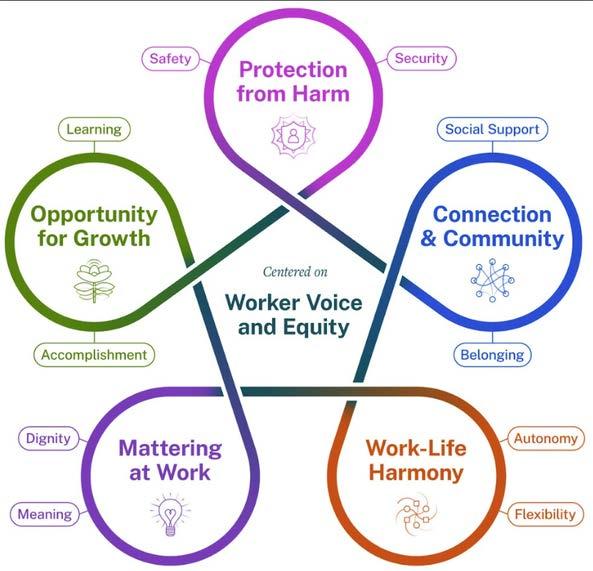
Essential 2: Connection and Community. This section of the framework centers around the needs of social support and belonging. As humans, we crave connection, in all aspects of our lives including the workplace. Fostering a sense of belonging and connection within the broader communities we are a part of has the potential to improve the health and well-being of workers and communities, and the prosperity of organizations themselves (Murthy, 2022, p.17). Creating cultures of inclusion and belonging, cultivating trusted relationships, and fostering collaboration and teamwork are the components that contribute to connectionandcommunitywell-
being in the workplace. Firstly, in order to have cultures of inclusion and belonging, the basis of these cultures must rest upon promoting a powerful protective force against bias, discrimination andexclusionintheworkplace(Murthy,2022,p.18).Socialconnectionismorewelcomedincultures where there is protection against bias, discrimination and exclusion. Secondly, the cultivation of trusted relationships in the workplace allows people to view their colleagues and themselves as whole individuals rather than skill sets (Murthy, 2022, p.18). Building trust within the workplace comes from having clear and consistent communication between workers and leaders within an organization. A first step to building that trust is listening to worker concerns and explaining why key decisions are being made (Murthy, 2022, p.18). The final component of building connection and community in the workplace is collaboration and teamwork. Building teams intentionally has becomeastrongneedintheworkplacewiththeriseofremoteandhybridwork.Withthesechanges in the workforce encouragement and modeling of regular communication, and providing teams witheffectivecollaborationtoolsisneededfromleaders.
Essential3:Work-LifeHarmony. This section of the framework centers on the needs of autonomy and flexibility. As stated previously, organizations must see workers not only for their work roles andskills,butaswholepeople.InarecentsurveybytheSocietyforHumanResourceManagement, many human resource professionals reported that they recognize the importance of workplace mental health and well-being but some feel they lack the resources to meet the needs of workers, and others are unsure of which benefits to provide (Murthy, 2022, p.21). The component that stands outthemostwhenitcomestotheneedsofautonomyandflexibilityintheworkplace,istherespect ofboundariesbetweenworkandnon-worktime.Onestudyamong2,000facultyandstaffacross40 public universities in Australia from June to November 2020 found that staff who had supervisors that expected them to respond to messages after work, reported higher levels of psychological distressandemotionalexhaustion,comparedtogroupswhodidnot(Murthy,2022,p.23).Respecting theboundariesoftimeonandoffthejobiscriticaltoworkershealthandwellbeing.
Essential 4: Mattering at Work. This section of the framework centers on the needs of dignity and meaning. The components that support the needs of dignity and meaning in the workplace are engaging workers in workplace decisions and connecting individual work with the organizational mission. Engaging in workplace decisions allows workers to feel empowered and connected with and within the organization. Organizational leaders can involve workers in developing the organizational mission statements, values, goals and objectives to bring a stronger sense of meaning,connectionandpridetotheirwork(Murthy,2022,p.25).
Essential5:OpportunityforGrowth. Thissectionoftheframeworkcentersontheneedsoflearning and accomplishment. The components to support these needs include, offering quality training, education and mentoring, as well as ensuring relevant, reciprocal feedback. Training to increase skills and providing education outside of workers roles creates opportunities for growth. Organizational leaders can informally promote these growth opportunities by showing genuine interest in workers through personal encouragement, coaching and mentorship. The second component of ensuring relevant feedback includes equipping all leaders with supportive training, toolsandresourcestheyneedtoengage,manage,leadandcoachothers(Murthy,2022,p.29).
Since we have now taken a deeper dive into the Framework for Workplace Mental Health and Wellbeing, how can we apply this information and thesecomponentsintoourworkinhighereducation and housing? This next section will be focused on giving examples and ideas in applying the informationsoitmakessenseinourlineofwork.

ProtectionfromHarm: Thekeycomponentsofthissectionare;prioritizingworkplacephysicaland psychological safety as well as normalization and support of mental health. Kent State University (KSU) Leadership committed to addressing employee wellbeing, work-life balance and mental health. One of the actions to support these issues were hosting workshops for supervisors to help identify and respond to signs of depression among the staff. KSU also improved their EAP program based on the needs of the staff, including support with stress, anxiety, depression, child and older adult caregiver needs as well as assistance with financial, legal or identity theft (Murthy, 2022, p.32).
Connection to Community: The key components of this section are; creating cultures of inclusion and belonging, cultivating trusting relationships, and fostering collaboration and teamwork. In higher education the word ‘belonging’ is everywhere, particularly in areas that had to adjust based on Federal regulations. We take a lot of time talking about the importance of belonging to our students and helping them find what it means for them to belong on their campus. But the easiest way to encourage a community of belonging is by fostering it within staff and faculty. The more we strive to help each other feel we belong, the easier it is for our students to feel the same. One example of cultivating cultures of inclusion and belonging is with KSU. Leadership focused on increasing time and opportunities for connection with implementing ‘walk and talks’, which gave workersopportunitiestobetogether,bephysicallyactiveandfindpeersupport.Anotherexampleis at John Carroll University (JCU). Within the division of experience and belonging, the leadership createdmonthlygettogetherscalled‘XBConnect’foreveryoneinthedivision.Aportionofthetime for these connections was dedicated to being social, and the rest of the time was dedicated to providing updates on initiatives, and ongoing efforts to keep everyone updated on what was happeningwithineachoffice,allowingforthestafftosupporteachother.

Work-Life Harmony: The key component of this section is; respecting boundaries between work and non-work time. This section might feel the most difficult sometimes within higher education and especially within housing. Live-on staff might feel there is no separation between work and home because they work where they live and live where they work. But for theseprofessionalsitisimportanttorecognizeitisokaytoset boundaries and have time away from work. One entry level professionalfromJCUdoesthefollowingtotryandkeepsome balance.“Iturn‘work’modeon,onmyphonethatsilencesany notifications from my email after 5pm so I don’t feel obligated toresponduntilIgobackintotheofficethenextmorning.”
Mattering at Work: The key components of this section are; engaging workers in workplace decisions and connecting individual work with organizational mission. In regards to engaging in workplace decisions, there are often times in our line of work a decision is being told to us and we often have to pivot or adjust without a lot of forewarning. This can be frustrating, but there are still opportunities for you to collaborate in the process. Ask questions, get clarification. If the decision is something that your whole office has to adjust to, have a meeting to collaborate with each other to discuss what it means and what steps need to be taken. When it comes to connecting to the organizational mission this section can get a little tricky when it comes to housing. Our jobs center around ensuring students' basic need for shelter is met. But we also have to spend a lot of time encouraging students to build relationships with others, teaching them how to handle conflict, having to support students through crises and following up with care. If you look at any number of institutions' mission statements, they are student focused and contain a litany of phrases that focus on ‘academic excellence’, ‘real world experience’, ‘leadership’, ‘life-long learning’ etc. These statements are what our job is based around. When the busy seasons of housing come around it’s importanttokeepthosemessagesinmind.Wearen’tjustplacingstudentsinadorm,we’rebringing them into a new environment to help them grow. Programs put on for residents aren’t just about ‘gettingthenumbers’it’saboutcreatinglearningopportunitiesdisguisedasfunevents.
Opportunity for Growth: The key components of this section are; offering quality training, education and mentoring, and ensuring relevant, reciprocal feedback. We can use this section to thinkaboutwaystorethinkorimprovehowweapproachsupervisorsupport.Onekeyareathatthis could occur is during weekly check ins and one on ones. One on ones are designed to help build relationships between you and your supervisor but they are also a time when you can get feedback on projects or bounce ideas off someone. One way to utilize this time is by creating an agenda for one on ones. Having an agenda helps with the structure of the meeting, customizing it to fit needs allows collaboration. Another suggestion is to think about the following questions before the meeting;‘WhatisoneoutcomeIwantoutofthisoneonone?’‘IsthereanythingI’mworriedabout?’ ‘What do I want to make sure we focus on?’. Thinking through these questions allows you to focus on the important aspects needed for the meeting. Both supervisors and supervisees can think of questions to ask and discuss during one on one’s, the point is to collaborate with each other. Using that time to collaborate allows for opportunities to give and receive feedback to encourage growth (TheManagementCenter,2021).
This article has delved into many topics surrounding wellness and how it relates to higher education professionals. The goal of this article is not to just spout more information about what you should or should not be doing, but to encourage individuals and communities to embrace wellness in its entirety. Without the support of communities in our lives, both at work andinourpersonallives;itismuchmoredifficult for the individual to maintain healthy habits and expectations when it comes to mental health and wellbeing. Working in residence life and housing can be taxing, and we tend to just push until there’s nothing left. Our hope is for this article to serve as your call to action to make changes in your life and in the workplace. Make changes to ensure your cup is filled. The work you do matters,andsodoyou.
References
Khúc, M. (2024). A pedagogy of unwellness. In Dear Elia: Letters from the Asian American abyss (pp. 3–27).DukeUniversityPress.
Michigan State University University Health and Wellbeing. (n.d.). Spartan resilience. https://uhw.msu.edu/health-and-wellbeing-services/health-promotion/spartan-resilience Murthy, V. H. (2022). The U.S. Surgeon General’s Framework for Workplace Mental Health and WellBeing,1–38.
The Management Center. (2021). 7 Tips for Making the Most of Your Check-ins. The Management Center.
Considering the complicated relationship between law enforcement and community engagement in university housing settings, housing professionals are learning more every day about navigating interactions involving students, staff members, and campus departments. During these interactions, housing professionals are noticing how the imbalance of power between students and staff, conversation tactics, and intensity often leads to unintended, unnecessary, and unresolved conclusions. Colleges and universities that receive federal funding are required to publish annual reports in accordance with the Jeanne Clery Act, and this data is used to inform the conversation in this article. Throughout this article, we will explore the differences between staff and student interactions, ideal versions of how these interactions can go, data around campus safety reports and ideas around how to better prepareourcommunitiestonavigatethesetoughsituations.
Alyssa Frizzo is currently working as a Residence Hall Coordinator at Illinois State University, a large public university in Illinois. She has previously worked as a Resident Director at a small public university in rural New York State and as a Resident Advisor at a large public universityinMichigan.
Curtis Pointer currently works as a Community Director at Southern Illinois University, a medium-sized public institution in Illinois. He has previously worked as an Assistant Complex Director at another medium-sized institution in Illinois.

Housing professionals frequently interact with campus police and have the benefit of seeing them as campus partners and as peers. Housing professionals interact with the police as part oftheirroleasanon-callstaffmember.Manyhousingstaffmembersknowtheircampuspolice officers by name, and the campus police officers know the housing staff by name. Housing professionals have the benefit of showing up to an incident and seeing a familiar face and knowing how each police officer is likely to address the concern. They know which officers are likely to lean on their expertise and which officers prefer to have housing staff be less involved in the interaction. And most of all, housing staff members know that they are going to receive the benefit of the doubt from the police officer(s) and that if they don’t like how the interactiongoes,Ihaveawayofaddressingthatconcern.
In contrast, when a student shows up to an interaction with the police, they know very little about what that interaction might look like. If they are making a report, they may have some idea of the information they will be asked, and they may have spoken with a housing staff member who referred them to the campus police for this specific concern. Ideally, they would have spoken with a housing staff member who used their experience to provide context to the student and who assured them that housing staff will be present throughout the entire conversation. However, when police interactions become normalized for staff members, it can be easy to refer students to campus police casually and without fully considering how the student might feel about that referral.


Campus police officers sometimes have a great deal of autonomy in how they decide to respond to situations: they may decide to address things through traditional legal routes, or they may refer students through the student conduct process on campus. Referral through student conduct processes can be a positive factor, as it allows campuses to respond through an educational lens instead of escalating in a way that can end in life-long consequences. However, any system with high autonomy also introduces the possibility of bias. It’s important for campuses to engage in reflection and analysis of these trends and whether the ratio between arrests and student conduct referrals is similar across student groups, or whether studentsofdifferentbackgroundsarebeingdisproportionatelyarrestedwhentheirpeersmay have been referred through student conduct instead. And many students are not aware that campus police can address issues at the university level and believe that “getting in trouble” with campus police would always result in legal consequences. As always, education and experiencearebigfactorsinstudents’comfortlevels.



For some students, they would rather let their concern go unaddressed than make a police report or speak directly with the police. Their uncertainty about what it looks like to make a police report may also impede their willingness to follow through on a referral from housing staff. Some students may be scared about having a conversation with a police officer, and some students may be unwilling to make a report that leads to another person getting arrested. It is essential that housing staff can talk through these concerns neutrally and provide information to students that allows them to make informed decisions about how to proceed. The goal should not necessarily be to encourage students to go to the police but to allow them to fully understand why the referral is being made and to decide for themselves whatwouldbestservetheirneeds.

It’sessentialthathousingstaffmemberstakethetimetoslowdownandtotalkthroughthese fears and hesitations with students. What is the “why” behind the referral to campus police? Is it because they are the only department with the ability to access a specific resource such as camera footage? Is it because reporting obligations require staff to involve the police for specific types of incidents? Housing professionals should make sure that students understand the difference between making a report to the police and making a report through housing channels, and how the end result might change. Housing professionals should share that making a police report does not mean that the student must press charges, and that having a policereportinplacehelpsifthestudentchangestheirmindandwantstopresschargeslater.
It’s also important to take the time and consider whether staff are referring a student to campus police as a way to take that situation off their plate and make it someone else’s responsibility. If a situation feels big and difficult to manage or if a student says that they feel unsafe, it can be easy to tell them to contact campus police rather than working through the feelings that the student has and addressing them directly. There’s a big difference between sending a student a reply that says, “if you feel unsafe, contact campus police,” and a reply that says, “I would be happy to meet with you and discuss this situation and the options and timeline for addressing it. If anything escalates before we are able to meet or if you feel physically unsafe, please call campus police or 911.” Balancing supportive measures and using campus police as a tool alongside these measures can make a significant difference in the student’s perception of a staff member’s response and can help them feel supported rather thanscared.



How often do campus police interact with students?
Housingstaff,bothprofessionalandparaprofessional,interactwithlawenforcementoften.The reasoning can vary, but most concepts of these interactions usually start and/or end with students. On duty calls, for example, anything that would involve contacting law enforcement usually means the situation is beyond the scope of residence life staff. Some common examples may include alcohol and drug, theft, Title IX incidents, mental health, and disorderly conductsituations.
Please see the attached graph that highlights the number of violations per category that selected institutions have data on per their 2025 Annual Security and Fire Safety Report. This graph contains data from eight (8) institutions, two (2) from each GLACUHO state varying between large public and private, small public and private, and religious based; this can also be compared with student population per institution (estimated). Student population and institution type play a major factor in how often some of these violations can occur, which shows the quantity of law enforcement interactions students may have. An example would be a large public institution in West Lafayette, Indiana having the highest number of students in this sample and having the most violations in two of three sections. Comparatively, a small private university in Grand Rapids, Michigan had some of the lowest number of violations despitebeinglocatedinamuchlargermetropolitanarea.
Disclaimer: Graphs mentions data around drugs, alcohol, theft and Title IX including rape, assaults,andstalking
Housing staff usually serve as a middle ground between law enforcement, policy, and student compliance. This is due to staff members’ ability to provide empathetic connection during tense interactions. This means they must be intentional and aware of how and why law enforcementagenciesareinteractingwiththestudentbodies.Understandingthisiscriticalfor two facts: law enforcement is typically focused on finding a resolution while housing staff can focus on the problem-solving process as an opportunity to connect with students. Both of thosetacticsoperatingatthesametimecande-escalateandresolvecrisissituations.
To prepare staff and students for these interactions, start with training and language use. With housing staff acting as mediators, staff have the ability to show how some situations can be viewed from the student’s perspective. Understanding conversation flow or “art of finesse” is a key factor in how to manage interactions. The “art of finesse” is the cleverness of handling situations through strategic approaches. To do this, staff need to understand what the ask is and reconvey that in awaytheotherpartycanunderstand.Changingwording such as “problem” to “misunderstanding,” or changing words like “citation and arrest” to “safety concerns.” Using a sentence such as, “there seems to be a misunderstanding, how can we help so there are no safety concerns,” sounds much better to a student than, “is there a problem? If this continues, you can be arrested.” Framing statements into thoughtful questions, using empowerment wording and intentional language use will help prepare both staff and students for interactionswithlawenforcement.
Student and staff interactions with campus police differ significantly due to familiarity, power dynamics, and level of understanding in the heat of the moment. Housing professionals play a critical role in bridging this gap by providing context, support, and education to students navigating these situations. This allows for balance in conversation and tone. By being intentional in communication, transparent in policy vs perception, and proactive in training, staff can help reduce fear, minimize bias, and promote more constructive engagements between students, staff and law enforcement. Equipped with data, intentionality, and emotionalintelligence,thegoalistocreateasupportiveenvironmenttohowourstudentsand staffinteractwithlawenforcement.








Our field has a complex relationship with the definition of support. This concept is at the core of all of our practices, and yet many of us may find ourselves working with a version of this idea that actually goes against our vocation’s mission.


Let me explain. In my role, I supervise a team of three graduate students who each supervise a team of resident assistants (RAs). This past spring training, we engaged in a dynamic conversation about the concept of “support vs. endorsement.” As my grads were developing connections with their RAs, I was noticing that some of the RA’s perspectives were going unchallenged, leading to fixed mindsets and a refusal to take ownership of the issues they were navigating. For example, an RA who was struggling to get along with her peer RAs was being supported in several different ways, such as our team creating assigned seats during staff meetings and intentionally placing them in discussion groups with co-RAs they favored. For the most part, this was an intentional and caring response from an exceptional graduate student supervisor who wanted this RA to feel like they could open up in team spaces.
What was missing from this response was a conversation on the role that this RA plays in shaping their own social landscape. This RA would often sit alone in team meetings, not speak up in group spaces, and cast assumptions about the perspectives of her peers. If the RA were to alter these actions, it could have supported them in addressing their concerns, perhaps even leading to the connections they were seeking.


My grads are wonderful, incredibly student-centered, and immensely capable of difficult accountability conversations. This mindset wasn’t the fault of my team, but rather due to how we trained them to view the role of a supporter.





The mission of residence life is to cultivate a safe and inclusive living environment where students can learn and grow. It is meant to be a space that provides challenges that spark development - like living with a roommate who has a differing definition of cleanliness, or learning how to make friends outside of the classroom. Our role as supporters is to affirm the impact of these challenges, and provide the tools, resources, and reflections that assist the student in navigating these challenges.
Somewhere down the road, I realized that my understanding of this role had been conflated with customer service. When a student was clearly mishandling a roommate conflict (calling their roommate unkind names), I was so focused on assisting them witharesolution that I didn't center holding them accountable for their role in preventing said resolution. When an RA would say they were too busy to be present on their floor, I would worry about their potential burnout without also challenging them to make hard decisions about what they were putting on their plate. When students would send me hurtful emails because they didn’t get the outcome they wanted in a mediation, I would prioritize an apology rather than holding the student accountable for their silence in the discussion.
I don’t think this mindset shift came from an inherent softness or refusal to have hard conversations - because I certainly have no shortage of performance management discussions to refer to. Over time, it may have been shaped by a few things. First, we have a baseline empathy-first approach for the student experience. We know our students are navigating a plethora of changes and challenges in a time where their mental health is not often in the best shape. We seldom want to be something that adds to a student’s stress. It’s easier, and sometimes more gratifying, to be the person who fixes things instead. Second, being the fixer often yields faster results than being the educator. It’s quicker for me to rearrange the seating chart at staff meetings than it is to coax the anxious RA to talk to someone they’re uneasy about. In a time where residence life professionals have more and more fires (literal and metaphorical) to put out, there is appeal in pursuing efficiency over effectiveness.
Lastly, we are often subject to, and made to answer for, our residents’ own definition of support. In times where I have challenged residents in conflict to seek compromise, I have often been rewarded with an email from one of their parents afterwards stating that their student felt unsupported because I didn’t take a side. Our students think support is endorsement, so anything less is perceived to be abandonment.
Additionally, this concept isn’t something that feels super “student affairsy.” I remember sitting with a colleague as I was seeking advice about a long-standing performance management issue I was struggling with. After sharing how much difficulty I was facing in helping my student see the impact of their actions, my colleague looked at me and said “I think sometimes, we are so focused on being developmental with our students, that we don’t often enough tell them that they’re wrong.”
This quote came to me again a few months ago when I was leaving work and my office phone rang. On the other end of the line was a student who had not attended their in-hall conduct meeting. When our system shows that a student read their email inviting them to the conduct meeting and they still do not attend (with no effort to reschedule), the case receives a “decision in absence” where we assign a provision without the student. This was the case for the student calling me, who had received the letter stating he had been assigned a provision of a policy review.
To say the student was upset would be an understatement. The conduct case was for a repeated marijuana concern, and the student was verbally tearing into me, accusing me of trying to set him up. “Come check my room right now! Do it! Do it! Come here now and tell me I have weed in my room! I don’t!” The student continued to express anger that the decision had been made without his input (which he forfeited by refusing to attend the meeting). As I tried to explain the process to the student and how he could resolve his concerns, he continuously cut me off to accuse me of trying to ruin his life. At one point, I simply stated: , “I cannot continue to have this conversation with you if you’re interrupting me. You’re not letting me help you, and you’re not treating me fairly, so I will hang up.” After that, he paused.
I was able to walk him through the process and explain why a decision was made without him. I shared with him that he would need to email our conduct team to request a meeting reschedule if he wanted to challenge the provision. In sharing that action plan, I stated “I’m not going to allow you to speak to my conduct team if you’re going to treat them like you’ve treated me though.”
“Oh.”
After that, we had a solid conversation. He shared that he hadn’t been the best at keeping track of deadlines and emails lately, and was mostly frustrated and embarrassed that he missed the meeting. He even apologized for yelling at me. I shared with him how he could resolve his concerns, and gave him feedback on how he could be more effective when speaking to staff. He was able to reach out to the conduct team and get a rescheduled meeting. What I am most proud of in that conversation is that I took time to explain the impact of his approach and how it was harmful to someone who was trying to help him. I could have just ended the conversation after his apology to move on with my day, but the restorative component was important to me, and resulted in a kinder email to my conduct team than they potentially could have gotten earlier.
To me, this is an example of the kind of pushback that can be helpful in our field. Still helping the student meet their goals, but without neglecting the challenge that yields growth.
I want to re-center this concept in supervision, specifically supervision of student staff. In my conversation with my grads earlier this year, we discussed three main ways to navigate the concept of “support without endorsement:”
Presenting empathy over agreement
Pushing back without breaking rapport
Leaning on a coaching mindset.
We can support our RAs through their feelings and the impacts of their role without agreeing with them. We sometimes confuse empathy with agreement, which can lead to complications later when we need to hold RAs to certain standards and expectations. For example, when we are quick to agree with an RA on their feelings regarding a policy they dislike (because to them, that feels supportive), it can be hard to turn around and hold the RA accountable for actually enforcing that policy. We can still support that RA by empathizing with why they have feelings about that policy. Here are some examples of ways you can shape your language to lean more on the side of empathy rather than agreement:
Empathy Response Agreement Response
“I can see why this feels hard”
“That reaction makes sense”
“This role puts too much on you”
“That policy is unfair anyway”
“Let’s talk through options”
“I can tell this is frustrating for you, how do you think you can address that?”
“I understand how you’re feeling, and I still want to talk about expectations”
“Your feelings are valid—I wonder though how we can adjust your approach”
“There’s nothing you could have done differently”
“The other RAs need to step up and do better”
“Listen, I gotta just do my job and talk to you about this”
“Sometimes residents are just unreachable”
This isn’t a “one size fits all” approach, and there are certainly times when agreement is warranted. My hope is that we can see support as something that can still exist without agreement.
Sometimes, perspectives need to be challenged. An example I can remember with this goes back to a time our team was discussing how to support team dynamics. One of our RAs had given feedback that they wanted us to cut off our 2-hour staff meetings 30 minutes early to give time for the RAs to socialize in an effort to better support team connection development. The grads’ initial responses were a discussion on how they would implement this. I put the brakes on, sharing that we didn’t need to immediately apply that feedback. I reframed it for them: the RAs have the entire week to find time to socialize. We only have 2 hours each week with them for training and development. We can’t give up a quarter of the meeting just because an RA asked us to. Instead, we looked at it from a different perspective. What was this feedback really telling us? The RAs wanted connection. What were ways that we could provide that without just cutting meetings off early? The team ideated, and a structure of connection-oriented traditions was established, such as community share-out sessions and a rotation of team-led connection activities at the start of each meeting.
Oftentimes, our roles feel like we need to receive critique/feedback and immediately apply it or advocate for it. In reality, the ability to filter through feedback is essential. When an RA (or really any student) shares a perspective, you can use a structure of "acknowledge, reframe, challenge” to push back on the perspective in a way that doesn’t harm the rapport and connection you’ve developed.
Acknowledge
“I hear that you’re frustrated with residents not engaging.”
“I can see that you are wanting a better relationship with the team”
“I want to name that this semester has been very busy - and that is challenging for you.”
“At the same time, part of the RA role is adapting our approach when things don’t land.”
“Team dynamics are a shared responsibility - and rely on everyone’s efforts”
“What are the expectations of the RA role, knowing that these expectations don’t change because we are b?”
“What role do you play on this floor, even when residents are not engaging?”
“What responsibility do you think you have in shifting this dynamic?”
“What do you need to adjust in order to maintain a positive standing in this position?
It is easy to become the “Google” of the RA world. Being a supervisor means more than answering questions as they arise - but challenging our RAs to be critical and independent thinkers. By leading with a coaching mindset, where you center motivational interviewing, ideation, and self-authorship, you are helping RAs develop thought strategies that will assist them long after their time in the role. Sometimes, it can be easy to be prescriptive when an RA comes to us with a concern. After all, we likely have handled that concern before and have knowledge we’re excited to share! It’s important to first place the problem-solving back on the RA to assess how they tackle issues and support their confidence. Here are some examples:

"Here are my recommended steps"
"Ihavea roommate conflict"
"Whatdoyouthink yournextsteps shouldbe?"
"I'm so tired all the time"
"Youneedtosleep more.Let'smakea planforyou"
"I'msorrytohear that.Whatimpactis thathavingonyou? Howhaveyou thoughtabout addressingthat?"
RA follows prescribed actions, may begin to rely on a “validation mindset” where they need approcal to move forward in actions.
RA has to ideate what should happen next, showing that they can lean on their training and wisdom
While supported, IRA may struggle to take ownership of their wellbeiing, having an expectation that supervisors are the holder of their care
RA sees it is their responsibility to manage their wellbeing, while acknowledging that is is a concern that needs to be addressed
I want to acknowledge that, even if employing these strategies, the initial challenges I discussed may still be present. It may be stressful for a student to grapple with the role they play in making their own connections on a team. It takes time to help an RA see why holding a multiplicity of club leadership positions may not be supporting their floor presence. You will likely have a student walk away from a conversation feeling like you not immediately taking their side was a disappointment for them.
When I find myself struggling with this concept, I try to center the mission of my work and trust that the learning is the biggest support I can give a student (even if it doesn’t always feel great). I’d love to see our field begin to lean less into the concept of customer service, and instead use these tools to see that we can craft our own definition of support that creates sustained development for the students we seek to serve.
By: Cara Jackson - Facilities Supervisor, Michigan State University
When most people picture a Facilities Supervisor, they see a specific image: the older, seasoned male with a ring of keys and decades of experience. For a woman entering that same role, the "keys" don't always open those same doors. Even in 2026, female supervisors often find themselves starting at a credibility disadvantage, forced to prove their technical worth repeatedly even while sometimes holding the most important information in the room.
As of 2025/2026, women make up approximately 23.4% of the facility management workforce, but only 15% hold senior-level or positions.This uphill battle has created a new kind of leadership. Because women have had to navigate the field differently, they are the ones now establishing the two most important shifts in modern facilities: Empathetic Maintenance and Contingency Staffing.
23.4% 15% of the facility management workforce are women of senior-level facility managers are women
From the “proving ground” to the “empathy engine”
For years, female supervisors have had to be "twice as good to get half the credit." When you are the only woman in a room full of veterans who measure competence by your ability and understanding of how to make a continuously flushing toilet stop flushing, you often learn to look for the things that have been overlooked.
I’ve even had moments where, despite being in the middle of a facilities crisis or even wearing our facilities logo shirt, I was told I 'looked more like a Residence Education person' than a facilities person.The implication is clear: if you don’t fit the visual mold of the 'warrior' with the tool belt, your technical expertise is secondary to your perceived role as a 'social' or 'administrative' presence.This bias forces us to lead with a different kind of strength, one that isn't just about the tools we carry, but the systems we understand.This is when you start to see that a building isn't just a building but it's a living environment for people.
Aaron Minnis, Facilities Manager at Michigan State University, has witnessed this evolution firsthand over a 20-year career. He recalls a time when the 'old guard' of seasoned veterans, almost exclusively older men, consistently disregarded the input of younger members (himself included) and overlooked the few women on the team. Minnis has seen a transition as that "old guard" has retired and the department has committed to diversifying leadership.
“It has been so refreshing to see many more women on our Facilities Management team. I have personally noticed an overwhelmingly positive culture shift... no longer is the focus solely on the "bricks and mortar" of our buildings; it has shifted to focus on the experience of the people who live and work in those buildings. Our department now values work-life balance and values our staff as a holistic person. I look forward to the continued influence and evolution that women will bring to not only my Facilities Management team but the industry as a whole."
Aaron Minnis - Facilities Manager, Michigan State University
The traditional approach to facilities is reactive: If it’s not broken, don’t touch it. The female supervisor’s approach is anticipatory and proactive: If the occupant is frustrated, the building is failing. Consider a basement laundry room during a Michigan winter break, when temperatures drop well below zero.The traditional fix is to check the sensors remotely; if the pipes aren't bursting and the heat is 'on,' the system technically isn't failing. But the empathetic maintenance fix involves actually stepping into that room and realizing that for a student, it feels like stepping right back outside. It’s recognizing that while the mechanicals are safe, the “human data”, the shivering student trying to do a basic chore says the building is falling short. By walking the floor and feeling the draft that a remote sensor can’t detect, the female supervisor identifies that something else is going on and needs to be addressed. She isn't just protecting the pipes; she’s protecting the students’ sense of home.
While empathetic maintenance fixes the student and staff experience, contingency staffing fixes the talent crisis. For decades, the Facilities Supervisor role was built on a "warrior" culture: you’re on call 24/7, you don't miss shifts for family, and you power through burnout until you retire.That model was built for a world that no longer exists, and today, that rigid expectation is a primary reason the industry is losing talent.
The facilities industry is currently facing a "silver tsunami," with 40% of the current workforce reaching retirement age by 2026, creating a massive demand for new, diverse leadership styles to attract Gen Z and Millennial talent.
of the facilities industry workforce are reaching retirement age by 2026 40%
Female supervisors are uniquely positioned to dismantle the idea of the “warrior culture”.
Because many women in this field have spent their careers balancing "the invisible load": managing households, childcare, or elderly family members alongside their work.They understand that a worker who is distracted by a personal crisis could potentially be a safety risk and a burnout candidate.
This understanding is precisely why collective spaces like the Michigan State University Women in Facilities Employee Resource Group are so vital. It’s where the 'invisible load' is made visible, allowing not only supervisors but all women in the field, to share strategies for navigating a rigid industry while building a support network that prevents the very burnout we are trying to fix for our teams.
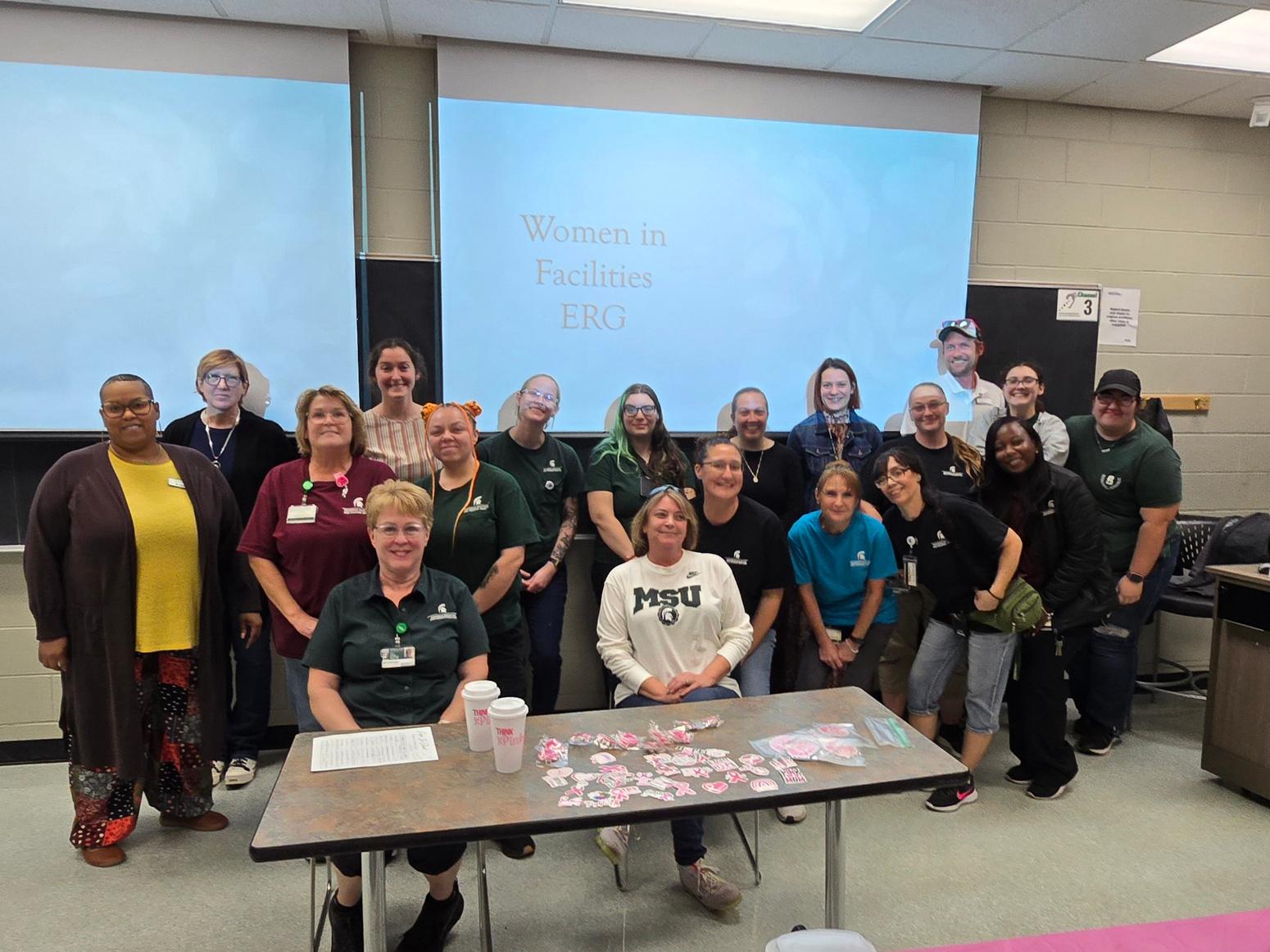
Instead of demanding a 1950s-style commitment from their teams, female supervisors are implementing contingency staffing models that treat flexibility as a tool for reliability, not a sign of weakness.
Skill Redundancy: By prioritizing cross-training, these supervisors ensure that no single person is a "point of failure." If a team member needs to leave for an emergency, the building doesn't suffer because the rest of the team has been empowered to step in.
The Retention Advantage: In a market where skilled trades are increasingly hard to find, this empathy is a competitive edge.When a supervisor creates a culture where life and work can coexist, they don't just get a worker; they get a loyal, high-performing team member.
My own Facilities Manager, Mose Holmes III, views this approach as essential to the trade, noting that, “Facilities Management is like having a multi-tool with many attachments, and empathy is one of those valuable tools.” Mose noted that his personal experience in facing various challenges has shaped how he wants to lead a team. He talked about how when a leader has 'walked in their shoes,' the path forward stays within reach.

“When you have walked in their shoes you are more able to provide tools and guidance through challenges.Whether it be facing job performance issues, feeling frustrated with the job, or looking for advancement. I have had past and current employees that I have supervised tell me that because I have walked in their shoes you can empathize more and understand where we are coming from.”
Through initiatives like our Women in Facilities group, we are formalizing this culture of retention. By providing a dedicated space for mentorship and advocacy, as well as a space to not feel alone, we ensure that the diverse talent we recruit today wants to stay in facilities and could possibly become the facilities supervisor of tomorrow.
the new standard
The "older male with the ring of keys" archetype isn't going away, but it is no longer the only way to lead. Female supervisors who have had to fight for their seat at the table are now the ones equipped to save the industry from problems that may not have been a forefront thought.
By the time a woman in facilities proves she can fix the flushing toilet, she’s usually already found three other ways to make her department or scope of responsibility run better. She isn't just opening doors with those keys, she’s redesigning the entire building, and the culture within it, to be more resilient, more empathetic, and ultimately, more successful.
The industry may have started with a "credibility disadvantage" for women, but in 2026, the verdict is in: Empathy isn't a soft skill, it's the most durable tool in the box.
At a university as large as MSU, our buildings are the backbone of the student experience and the primary reason we show up every day. Leading with empathy ensures our backbone stays strong. By championing programs like the Women in Facilities Employee Resource Group, our leadership team and seasoned veterans aren't just checking a box they are ensuring that Michigan State remains a leader in the next era of facilities management and taking the next steps forward in the right direction.
sources
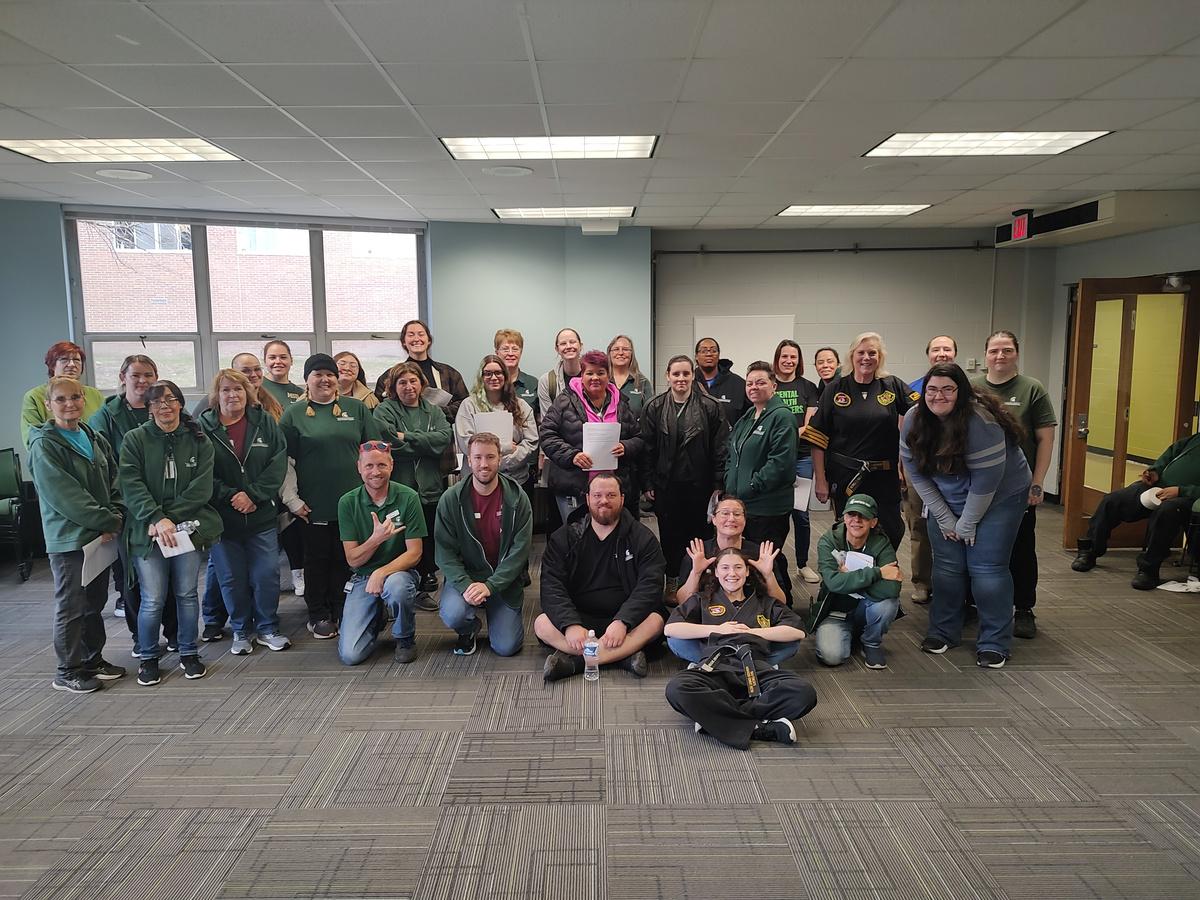
Sproles, K. (2023, March 29).Women in FM:Trends in the Workplace. Ifma.org; IFMA. https://blog.ifma.org/women-in-fm-trends-in-the-workplace Lightcast. (2021).The Rising Storm, a Lightcast Demographic Drought ... Lightcast. https://lightcast.io/resources/research/the-rising-storm Industry and occupational employment projections overview and highlights, 2024–34 : Monthly Labor Review : U.S. Bureau of Labor Statistics. (2024). Bureau of Labor Statistics. https://www.bls.gov/opub/mlr/2026/article/industry-andoccupational-employment-projections-overview.html
Special thanks to Aaron Minnis and Mose Holmes III for their leadership and for providing the institutional perspective that made this article possible.

Baldwin Wallace University
Iwasluckyenoughtobe assignedtotwodifferentnewer SHOsthroughtheprogram.I viewedthisopportunityasa partnership,realizingthatboth landedintheirroleswithtonsof experienceandknowledge.I cameintotheexperiencewith thenotionthattheylikelydidnot needtolearnanythingnew;it wasanopportunitytoreflect, vent,andbreathe.Servingasa mentorinGLACUHO’smentor/ menteeprogramwasthe greatestprofessional developmentexperienceIhave beeninvolvedinduringmy27 yearsworkinginresidencelife. Thiswasanopportunityforme togivebacktotheprofession anddosoinawaythatwas meaningfultome.Althoughit wasmentorshipinname,Iknow thatitwas,andis,apartnership.
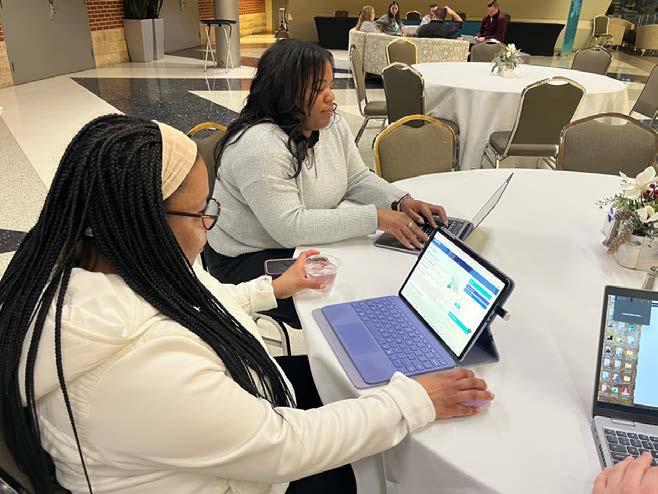


1) Authenticity–GettoknowtheSHOasaperson.Thisistheperfect timetoexhibithonestcommunication,avoidingperformative tendencies.Withinthis,SHOscanhighlightstrengthsandblind spots.Askpermissionbeforegivingfeedback.
2) Support–Determinewhatsupportfromafarlookslike.Howoften willyoumeetorcheck-in?Thisisatrueinvestmentinthe partnership,reachingoutonarandomTuesdaymorningtosee howyourSHOpartnerisdoing.
3) Safety–Developandmaintainanenvironmentfor nonjudgmentalquestionsanddiscussions,talkingaboutmistakes andallowingforprofessionalventing.
4) Askquestions-Talkthroughoptionstoconsiderwhenreviewing asituation(askquestions;trytoavoidjustgivinganswers).Offer perspectivesandsharerelevantexperiences.
5) Growthandlearning-AcknowledgethattheSHOposition,like anyothers,isatimeforgrowth,learning,andmistakes.Share differentopportunitiesfortheSHOtogetinvolved.
6) Resources–Sharerelevantarticles,annualreports,assessment, andmore. AlthoughAIcanbeanextremelyhelpfultool,itisnot goingtoreplacetheanecdotesthatcomealongwiththe information.
OneSHOservinginthementeeroleshared,“Iappreciated havingamentorwhohandledsimilarsituationsasaSHOasI transitionedintotherole.AsanewSHO,Ihadtorenegotiate relationships,understandtheinstitutionalorganizationalstructures, andthereasonsbehindthepoliciesandproceduresinplace.It helpedtohearmymentor'sperspectivesonwhysomethingisdone acertainwayattheirinstitutionandwhatmistakestoavoid.The mentoralsoprovidedtheemotionalsupportandencouragement whenIreallyneededit!”
ItistheresponsibilityofestablishedSHOstoidentifyandcultivate relationshipswiththosewhoarenewtotherole.Weworkinacaring professionandthefuturedependsonpreparingothersto successfullynavigatetheSHOexperience.Theskillsetisthere,but moreandmorepeopleareleavingthefieldduetoearlyburnout. Weneedtohelpbypromotingwell-beingacrosstheSHOcohortso leadershipinresidencelifeandhousingcanthrive.

HellofromtheStewardshipSubcommittee!
We are the subcommittee responsible for conference initiatives like Duck in a Bag andtheSilentAuction.Thethreeofusfeltitwasimportantforyou,theassociation, tounderstandwhystewardshipandgivingisimportanttoeachofus.
Meg
In 2015, I was a Senior at Central Michigan University (CMU) studying business. I knew I wanted to go into Higher Education at this point, and was planning to attend theOshkoshPlacementExchange(OPE),andfindagraduateschoolformyMaster's.
The Residence Life Department gave me and 3 otherstudentswhowere interested in Higher Education the opportunity to go to the GLACUHO Conference in Flint, Michigan that year, since it was only about an hour and a half away. (Back then, registrationwasonly$190).
Attending this conference was the first time I was connected to Residence Life ProfessionalsoutsideofCMU.IwasblownawaybythepresentationsIattendedand how welcoming everyone was. Even though I was still in undergrad, everyone I met wanted to hear engage with me, and treated me like my thoughts and opinions mattered.Further,wetookaphotoofalltheCMUalumniwhoremainedintheregion, whichshowedmehowmanyCMUpeoplefoundahomeinGLACUHO.
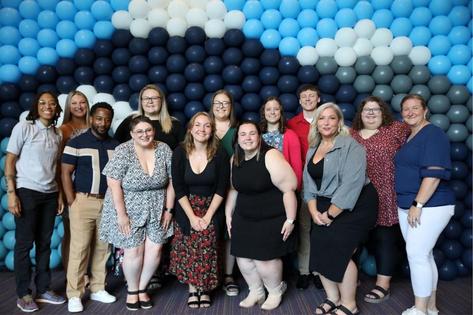
2025 was not only my first year attending GLACUHO, but was my first year as a graduate student in Western Illinois University's (WIU) College Student Personnel Master’s Program. I fell head over heels for Residence Life in 2022 during my sophomore year as an undergraduate student. I was selected to be a Resident Assistant,butevenmoreso,toleadtheGenderInclusiveHousinginitiativeoncampus that had been overshadowed in previous years. Being able to oversee a housing community connected by theiridentities and serve as thewelcoming presence on the floorswasanamazingexperiencethatallowedmetogivebacktothosestudentswho leanedonme,butalsotogivebacktomyuniversityasawhole.
Attending GLACUHO after serving as an Assistant Complex Director for almost a semestergavemeasimilarfeelingofwelcomeandcommunity,butinsomeevenmore personableways.IwastherecipientofaFirstTimeAttendeeScholarshiptoattendthe conference in Dayton, Ohio, and I could not have been more grateful. Being able to attendonascholarshipallowedmetotakeinquiteabitmoreattheconferencethanI normally would have, serving as a moderator and taking notes the entire conference formyreflectionessay.
I give to GLACUHO because it allows individuals like myself to experience professional development and be a part of a community that uplifts and embraces. Providing housing officers with a chance to blossom and grow sets up success for both the professionals and students within all corners of Residence Life and Housing. I give because I know what it is like to be on the receiving end, and I hope many others can feelthesenseofbelongingthatIhadduringmyfirstGLACUHO.
Ilefttheregionforgraduateschoolandformyfirstfull-timejob.ButwhenIgothired atIndianaUniversityBloomingtonin2020,IknewIwantedtojoinGLACUHOassoon as I had the chance. The opportunity came quickly when a coworker of mine, who was also the Indiana State Delegate, left higher education. I felt called to apply for therole,andwaselatedwhenthePastPresidentcalledmetooffermetheposition.
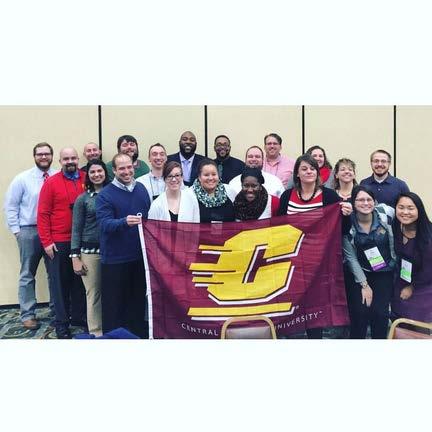
I give to GLACUHO because of the opportunities it has afforded me. I have seen firsthandhowtheorganizationprovidespractitionerswiththeopportunitytocreate and join spaces that meet their own needs. I truly believe that anyone can find their homeinGLACUHO.Allittakesistakingthefirststep.

Asamid-levelprofessional,IbudgettogiveateveryGLACUHOeventIattendtoshow mythankstothemanywhohavedonatedbeforeme.Inmy7yearsatGLACUHO,Ihave workedmostlyatsmallinstitutionswithdwindlingprofessionaldevelopmentbudgets. Ihavebeenthankfulenoughtoreceiveaconferencescholarshipinmyearlyyearsand a scholarship to attend ACUHO-i's National Housing Training Institute (NHTI). Given that the institute was in Seattle, far from the Midwest, my institution could not sponsormyattendanceandtravel.DespiteNHTIbeingsofarfromourregion,wehada greatrepresentation(seepicturebelow),andIwasabletoconnectwithprofessionals throughout the country and my own region. One of my favorite things about housing and residence life is the passion and support that is poured into our professionals acrosscampuses.Whilesomeotherfieldswouldviewusascompetitors,thecareand support our professionals provide each other is a huge reason I love my job. NHTI and GLACUHO are two examples of the connections possible through our field that our donations support. No matter what experience level, there is always a mentor, colleague,orfriendwhoisreadytoconnectatanACUHO-ieventandhelpusreachour fullpotential.
Through both of these experiences, I have met many amazing friends who have given me advice, support, guidance, and ideas through our work. As the years go on, I have found a need to be more creative through navigating challenging situations, and I am thankfulformynetworktohelpguideme.
I want to say thank you to all of the readers who have taken the time to donate to GLACUHO already, no matter how small the donation. I hope you see the positive impact you have on the region. And to hopeful future donors, I hope you see these stories above as a small snapshot of the impact your donation can ripple through the region.