>>>
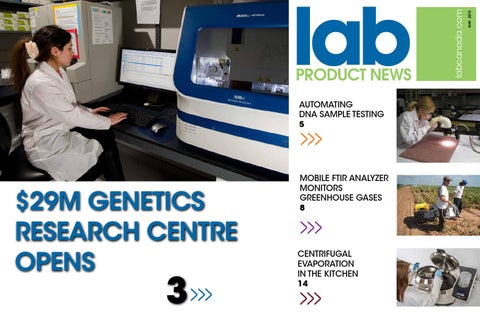
$29M genetics research centre opens 3 >>>
Mobile FTIR analyzer monitors greenhouse gases 8
>>>
Centrifugal evaporation in the kitchen 14
>>>
MAY 2015
labcanada.com Automating DNA sample testing 5
Quality
in product
precision in process
strength in people
• Extensive application experience. • Laboratory layout, design and planning capabilities. • Excellent on time delivery performance. • Extensive line of high quality flexible, mobile & fixed laboratory furniture systems. • Standard, “high performance” & custom fume hoods all designed for wide variety of laboratory applications. • Ability to meet customers’ exact needs including special requirements. • Canada wide coverage. mADE IN CANADA
...more than just laboratory furniture
So when you require a solution to your laboratory needs ... think of... 5230 south service road, Burlington on l7l 5K2 phone: (905) 331-1877 3110 avenue Francis-hughes, laval, Quebec h7l 5a7 phone: (450) 663-2525
www.mottlab.com
In This Issue 3
Industry News
>>> >>> >>> >>> >>> >>>
5 lab automation
8 Portable instruments 12
spectroscopy
14
INSTRUMENTS & EQUIPMENT
16
new products
www.goodfellow.com
Metals and materials for research 70 000 PRODUCTS
SMALL QUANTITIES
Goodfellow Cambridge Limited Ermine Business Park Huntingdon PE29 6WR UK Tel: 0800 731 4653 or +44 1480 424 800 Fax: 0800 328 7689 or +44 1480 424 900 info@goodfellow.com
FAST DELIVERY
CUSTOM FABRICATION
ON-LINE CATALOGUE
page 3
Industry News
From left: Dr. Gary Kachanoski, president and vice-chancellor, Memorial University; Premier Paul Davis; Dr. Bridget Fernandez, chair, Discipline of Genetics and director, Provincial Medical Genetics Program, Newfoundland and Labrador; Dr. James Rourke, dean, Faculty of Medicine and Dr. Elizabeth Dicks, director, Centre for Health Informatics and Analytics (CHIA). Photo courtesy of Faculty of Medicine, Memorial University.
$29M genetics research centre opens
A
new $29-million genetics research centre, the Craig L. Dobbin Genetics Research Centre, celebrated its official opening in early May with dignitaries including the premier of the province,
Paul Davis. Located at Memorial University in St John’s, the centre − Visit us on line www.labcanada.com Index
industry news
lab automation
portable instruments
>>>
May 2015 spectroscopy
Instruments & Equipment
products
>>>
Industry News Industry News
From left: Paul Davis, premier, Newfoundland and Labrador, and Mitch Sturge, systems officer, CHIA. Mr. Sturge is showing the IBM high performance computing environment to the premier in the Craig L. Dobbin Genetics Centre. Photo courtesy of Faculty of Medicine, Memorial University.
a collaboration between Memorial and Eastern Health − received $29.1 million in funding from the Government of Newfoundland and Labrador and the Canada Foundation for Innovation. Current research areas include both wet lab and dry lab space that will be used by researchers and staff from both Memorial University and Eastern Health. Staff and researchers from Memorial University have already moved in and the labs are now coming on line. Visit us online www.labcanada.com Index
industry news
lab automation
portable instruments
spectroscopy
Instruments & Equipment
products
>>>
page 4
The centre’s high-performance computing system is the same one that is funded under the university’s $50-million Translational and Personalized Medicine Initiative (TPMI), which was announced late last year and was developed in partnership with IBM. According to Faculty of Medicine spokesperson Virginia Middleton, the computer system has 6 petabytes of storage, 1,900 cores of compute capacity including 45 teraflops of intel compute capacity and 200 cores of IBM Power 8 compute capacity, making it one of the fastest HPC research facilities in Atlantic Canada. Researchers also have access to instruments including Ion Torrent nextgeneration sequencers (Proton and PGM), a Sequenom MassArray system, Agilent microarray technology, as well as Sanger sequencers (3500 and 3130) and a real-time PCR. The centre is named in honour of the late Craig L. Dobbin, a successful Newfoundland businessman and philanthropist. On a tour of the facility at the official opening, Paul Davis, premier of Newfoundland and Labrador, said that the impact of research done at the new centre will be profound.“The research performed here will help to create a better understanding of the genetic causes of diseases and disorders, which we expect will lend to improved treatments and prevention methods and ultimately a cure,” he said.
May 2015
>>>
Lab Automation
Analyst examines a microscope slide for the presence of sperm. Image courtesy of the Kansas City, MO, Police Department Forensic Laboratory.
Automating DNA sample testing Fine-tuning DNA sample testing with automation can improve efficiency, boost productivity, and reduce backlogs in busy forensic laboratories. By Robert Galvin, an Oregon-based writer who writes on evidence technology topics. He can be reached at rsgpr@msn.com.
Visit us online www.labcanada.com Index
industry news
lab automation
portable instruments
spectroscopy
Instruments & Equipment
products
>>>
page 5
A
utomation is playing an increasingly important role in today’s demanding laboratory environment. And in forensic laboratories, automation is particularly crucial for the DNA units which are struggling to reduce sample backlogs and eliminate human errors that can hinder criminal convictions. Effectively completing cases means there must be efficient work flow and laboratory operations so processing time, backlogs, sample tracking, throughput and reports can be improved. Automation can streamline all of these operations. Most laboratories today are automated to some degree. For many forensic labs, a specialized Laboratory Information Management System (LIMS) handles the general requirements of >>> laboratory evidence
Screenshots from the LIMS-Plus System. images courtesy of JusticeTrax.
May 2015
>>>
Lab Automation
Analyst examines evidence for biological fluid using UV light technology. Image courtesy of the Kansas City, MO, Police Department Forensic Laboratory.
processing. The LIMS can solidify the chain of custody of evidence, eliminate transcription errors, shorten the data path between instruments generating analytical results, streamline data evaluation by scientists, and facilitate the reporting of results, which are so crucial to a forensic laboratory’s operation. Also, it is important that a LIMS provide a central repository of analytical data to help scientists perform historical trends analysis. The LIMS-Plus software from Mesa, Arizona-based JusticeTrax addresses these needs. Its features include tracking of requests for analysis; laboratory configured analytical modules; evidence barcoding; professional communications via tailored report templates defined by each laboratory; quality management via uniformity of information (recording use of test methods, training records, instrument validation, and other facets); and improved docVisit us online www.labcanada.com Index
industry news
lab automation
portable instruments
spectroscopy
Instruments & Equipment
products
>>>
page 6
umentation of physical evidence. Automation through a LIMS is equally necessary for DNA sample testing. Robotics used for DNA testing perform many needed steps. However, a more defined solution, which can integrate with a LIMS, can overcome challenges including: • problematic error checking; • an inability to track samples; • cumbersome documentation; • an inability to prevent, track, and correct transcription errors; • the managing of multiple data entries; and • the complicated peer review process. In 2014, JusticeTrax introduced a standalone solution called LIMS-Plus DNA. This software is designed to reduce DNA backlogs by automating forensic sample data processing for case work and databanks as well as automating the delivery of DNA profiles to local, state/provincial, and national databanks. After a forensic laboratory installs a LIMS and its scientists and analysts become comfortable with its use, acquiring a standalone DNA automated solution is a natural next step. Jay Henry, lab director with the Utah Department of Public Safety, and immediate past president of the American Society of Crime Lab Directors (ASCLD), agrees that automating DNA sample testing is a necessity. “We’re seeing a big change across the whole scope of forensic science,” he said.“Laboratories are upgrading DNA automation, and already, robotics put in place have increased the sample testing capacity tremendously.” >>> Henry said automation can be particularly useful for this kind of testMay 2015
>>>
Lab Automation
ing so samples can move seamlessly from instrument to instrument, hands-free. “This way, analysts can sit at a computer and analyze all of the genetic data that’s coming off the instruments,” he added.“And an automated software program handling this can also analyze the data.” DNA analysis requires more steps that laboratory personnel need to watch and track. With more rules and requirements to follow, a separate DNA sample management solution is a growing priority among forensic laboratories. “A separate system is the only way we’re going to electronically meet our DNA documentation needs,” said Jenna Oakes-Smith, LIMS administrator at the St. Louis, MO, Metropolitan Police Department. The St. Louis PD’s forensic laboratory has been using the JusticeTrax LIMS-Plus program for several years, and this spring it expects to go online with the company’s LIMS-Plus DNA product. “This software seems to address workflow well,” Oakes-Smith added.“Each stage of the [DNA sample] analysis has a place for all the necessary information. Yet it has flexibility so that we could still have and perform our own procedures.” The ability to add information and notes as the software proceeds through testing steps is another advantage. Such an open platform enables St. Louis PD’s laboratory to create its own reports and collect statistical data. The LIMS-Plus DNA software assures sample integrity by tracking each sample throughout the entire testing process. The software allows users to add electronic signatures to verify and witness certain critical steps defined by each Visit us online www.labcanada.com Index
industry news
lab automation
portable instruments
spectroscopy
Instruments & Equipment
products
>>>
page 7
laboratory during the sample processing. Oakes-Smith considers user interaction while deploying LIMS-Plus DNA to be paramount, noting that she feels the software is intuitive with fill-in-thebox and drag-and-drop prompts.“How easy it is for the analyst to see the value of the software is important to us,” she said.“We will look at turnaround time to see if the software helps us get reports out faster and the number of reports released to determine the impact on our production.” The LIMS-Plus DNA software enables transfer of DNA sample data to any LIMS and vice versa. This was one of the aims in mind as the software was being developed. According to Simon Key, president of JusticeTrax, the goal of any DNA sample management solution should be all about samples. “We came up with a simple [software] design to both build the work list, what happens to a particular sample, and provide a lot of flexibility,” he said. “We’ve also given the ability to configure methods so that for each of the steps in the DNA sample testing process you can really control what sort of plate layout is going to come up, what reagents are used in a particular method, who can perform these methods, and what sort of review steps are going to be required.” Oakes-Smith feels confident the new automated DNA solution her laboratory will deploy will provide efficiencies not previously attained. She anticipates it will boost sample processing, as well as kick out reports faster. In addition, she said,“It will increase our documentation and administration efficiency, which we hope will impact the [DNA] backlog.” LPN
>>> May 2015
>>>
Portable instruments
Researchers transport the 12kg portable FTIR in a special wheeled cart when conducting field trials.
Mobile FTIR analyzer monitors
greenhouse gases
G
lobal issues such as climate change and energy security have driven rapid growth in renewable energy production – wind, solar, tidal, geothermal, hydro and biofuels, for example. However, logically, each of these methods should deliver a net benefit in terms of Visit us online www.labcanada.com Index
industry news
lab automation
portable instruments
spectroscopy
Instruments & Equipment
products
>>>
page 8
greenhouse gas (GHG) reduction, so researchers in the United States have employed portable FTIR analyzers to study the GHG emissions of biomass production processes. “It would be futile to manufacture biofuels in an attempt to mitigate climate change if the production process created more GHGs than were saved by using biofuels instead of fossil fuels,” said Dr. Joe Storlien from the Texas A&M University’s Department of Soil & Crop Sciences. During the production of bioenergy crops, GHGs such as carbon dioxide, nitrous oxide and methane are lost from the soil through both natural and managed biogeochemical processes, and the researchers were able to measure these gases by installing collars within field study plots. Chambers of known volume were then fixed to the collars, and tubing connected the chambers to a Gasmet DX4030 multiparameter FTIR analyzer which measured increases in gas concentrations inside the chambers’ headspaces over time (GHG diffusing out of the soil). The research team included Drs. Joseph Storlien, Frank Hons, Jason Wight and James Heilman. Background The research formed part of a major initiative to identify suitable crops for biofuel production; particularly cellulosic crops which produce large yields and can be harvested and converted into advanced biofuels such as cellulosic biofuel. Bioenergy sorghum is one such feedstock which has shown great promise as a future bioenergy crop – it is not utilized as >>> a food source, is an annual crop (single year land commitment for May 2015
>>>
Portable instruments
production), can produce large yields (more than 10-15 dry tons per acre) which minimizes land use requirements, has suitable biomass chemical compositional properties for fuel conversion, and requires relatively fewer inputs than many other bioenergy crops. In the United States, biofuels must meet certain GHG reduction targets according to a federal mandate (Energy Independence and Security Act of 2007). In accordance with the mandate, cellulosic biofuels need to meet a 60% reduction in lifecycle GHG emissions in comparison with a petroleum standard. Biofuel GHG research project Agronomic management practices (fertilization, crop rotation, organic residue management, etc.) can affect the amount and type of GHG emissions that are lost from the soil. Researchers at the Texas A&M Agrilife Research Farm therefore studied the management production scenarios that are employed to produce bioenergy crops in order to determine which scenarios provide the greatest sustainable long-term yields and simultaneously minimize GHG emissions. The study analyzed both direct GHG emissions (arising from the field trial itself) and indirect GHG emissions (arising from the production and delivery of trial inputs – such as tillage, planting, fertilization, irrigation etc.), soil carbon sequestration to a 3-foot depth, and theoretical biofuel yield from eight different sorghum production scenarios. The highest CO2 and N2O fluxes were observed during the growing season and usually followed nitrogen fertilization and/or precipitation/irrigation events. However, crop rotation did not significantly influence cumulaVisit us online www.labcanada.com Index
industry news
lab automation
portable instruments
spectroscopy
Instruments & Equipment
products
>>>
page 9
tive CO2 or N2O emissions, whereas the retention of half of the bioenergy sorghum biomass on the field as an organic supplement consistently increased CO2 emissions. Although residue return and nitrogen fertilization offered the least GHG emission reduction, the researchers have suggested that these may be necessary management practices to sustain both long-term economic yield and soil quality. Additional research is therefore required to evaluate optimal nitrogen and biomass residue application rates to minimize GHG emissions while sustaining long-term yields. Summarizing the conclusions that have been drawn so far, Dr. Storlien said:“Unfertilized, monoculture sorghum with half the yield returned to the field to provide nutrients and organic matter had the greatest overall biofuel production efficiency based on net greenhouse gas emissions savings. However, crop rotation and fertilization would be recommended to minimize pest pressure and sustain long-term crop yield.� FTIR gas analysis In the early stages of the project, a gas detection technology with a more limited number of measurands was employed. However, following the acquisition of an FTIR (Fourier Transform InfraRed) analyzer, it became possible to measure almost any parameter simultaneously. For example, ammonia was added to the list of measured compounds, which provided greater insight into the nitrogen cycle. The FTIR analyzer that was chosen for this work was a portable battery-powered instrument; the DX4030, manufactured and >>> supplied by Gasmet Technologies. May 2015
>>>
Portable instruments
Portable FTIR analyzer measures the effects of nitrification inhibitor in soil.
Describing the gas monitoring methodology, Dr. Storlien said:“We use the data from the DX4030 to measure the ‘flux’ of GHGs from the soil over time (plotting rate of change over time). We measure fluxes of GHGs in the field approximately weekly during the growing season and then at a reduced rate (every 2-3 weeks) during the fallow season. At the end of each year, we determine the individual and cumulative mass of GHGs lost from each plot. “All individual GHG measurements are converted to CO2-equivalents (e.g. N2O is multiplied by 298; its global warming potential compared to CO2), so Visit us online www.labcanada.com Index
industry news
lab automation
portable instruments
spectroscopy
Instruments & Equipment
products
>>>
page 10
that we are performing an equal evaluation of the total global warming potential for each field plot. We are then able to divide the crop yield data by the total GHG emissions (direct + indirect) in order to compare and evaluate the different production scenarios.“In addition to the GHG/sustainability measure, the emissions data from the FTIR analyzer also helps us to better understand the carbon and nitrogen cycles within the cropping systems.” The Gasmet DX4030 employs an FTIR spectrometer to obtain infrared spectra from each gas sample by first collecting an ‘interferogram’ of the sample signal with an interferometer, which measures all infrared frequencies simultaneously to produce a spectrum from which qualitative and quantitative data are produced. Over a number of years, Gasmet has established a vast library of FTIR reference spectra. This means that users of the Gasmet FTIR analyzers are able to specify those compounds that they wish to monitor, so that the instrument can be configured to provide simultaneous almost real-time readings. It is also possible to re-analyze produced spectra with the instrument’s PC-based software (Calcmet) and thereby to identify unknown gases. Other GHG research applications for FTIR The flexibility of the DX4030 has been a major advantage to Dr. Storlien and his colleagues, and as a result, the instrument has also been employed on two other bioenergy-related projects, both of which utilized the FTIR to measure GHGs from soils in greenhouse experiments. In a project involving algae-biofuel production (extracting lipids from >>> aquaculture-farmed algae to produce liquid biofuels) researchers at May 2015
>>>
Portable instruments
Texas A&M University are looking at ways to utilize the leftover co-product as organic fertilizer, because the dry algae co-product still contains valuable nutrients. A part of the project involved a greenhouse experiment using PVC soil columns mixed with selected rates of the algae co-product and wheat straw. In this application, the researchers utilized the DX4030 to evaluate how the addition of the co-product influenced GHG emissions over time. The DX4030 has also been utilized in a project to determine whether a commercial nitrification inhibitor (thought to reduce N2O emissions) could reduce GHG emissions in bioenergy sorghum crops. A greenhouse study (similar to the algae study) was used to test the nitrification inhibitor with soils amended with nitrogen fertilizer and sorghum residue. Advantages of field-use instruments With extensive field experience, Dr. Storlien believes that there are many advantages to be gained from portable battery-powered instruments such as the DX4030. The ability to monitor a range of compounds simultaneously is a major advantage, and one that appeals to a broad section of the research community. Access to live readings provides an opportunity to check that the monitoring is proceeding correctly and in the case of the DX4030 data can be viewed and logged on a PDA that connects wirelessly with the instrument via Bluetooth, and/or the instrument can be connected to a laptop computer.
Visit us online www.labcanada.com Index
industry news
lab automation
portable instruments
spectroscopy
Instruments & Equipment
products
>>>
page 11
Ideally, field-use instruments should be small and lightweight. However, while the DX4030 is almost 12kg, the researchers in Texas built a wheeled cart to further improve transportation in the field. The greenhouse studies also showcased how the instrument could be left on a bench-top and connected to mains power for laboratory studies. In Texas only one person was necessary for gas monitoring where two people had previously been necessary. In-field/instant results can mean that there are no concerns about collecting samples and transportation to a laboratory for further analysis. The Texas researchers, for example, obtained a new measurement every 20 seconds which halved the deployment time and saved substantial costs. Sensitivity and accuracy are obviously important in gas studies, and these have to be weighed against instrument cost. The Texas workers found that the move to FTIR was advantageous in terms of both performance and cost. The deployment of a portable FTIR instrument has been a significant benefit to the project team in Texas. Summarizing, Dr. Storlien said:“Due to the versatility of the Gasmet FTIR, we believe there will be numerous projects in the future that will benefit from this technology. I really think that mobile-FTIR could become very popular with researchers, because it does a great job measuring GHGs and helps us understand how humans impact the drivers of global climate change, which is extremely important and a booming area of research.� LPN
May 2015
>>>
Spectroscopy
The mass spec team, from left to right: Masaaki Ubukata, Ph.D., mass spec applications chemist; Robert B. Cody, Ph.D., mass spec product manager; and John Dane, Ph.D., mass spec applications chemist.
From DUST to DATA
In a recent collaboration, Ontario’s Ministry of the Environment and Climate Change recently collaborated with JEOL USA to identify pollutants found in electronics waste recycling using new analytical methods.
By Pamela J. Mansfield, JEOL USA Inc
D
ust created by recycling electronics waste is known to emit pollutants that can find their way into the environment and contaminate air, land, and water. These pollutants are composed of complex compounds, many of which contain chlorine and bromine, elements found in the most persistent organic pollutants (POPs). Among these are soVisit us online www.labcanada.com Index
industry news
lab automation
portable instruments
spectroscopy
Instruments & Equipment
products
>>>
page 12
called legacy contaminants such as polychlorinated biphenyls (PCBs), and polychlorinated terphenyls (PCTs), as well as brominated flame retardants such as polybrominated diphenyl ethers (PBDEs) and other emerging environmental contaminants. The Ontario Ministry of the Environment and Climate Change (Ontario MOE) recently collaborated with JEOL USA, a supplier of analytical instruments including mass spectrometers, electron microscopes, and NMR spectrometers, to analyze the complex composition of the dust swept from the floor of an electronics recycling facility in Canada. Such a collaboration falls within the Ontario MOE’s mandate which includes using science and research to develop policies, legislation, regulations and stan>>>
FreeStyle ( Bee Free! ) Let FreeStyle Automated Sample Clean-up system do all the busy work. SPE, GPC, Immunoaffinity Columns, Concentration & Fractionation. Flexibility in the lab that frees-up time for you! www.pickeringlabs.com
CATALYST FOR SUCCESS
May 2015
>>>
Spectroscopy
dards, along with enforcing compliance with the province’s environmental laws and tracking environmental progress over time. The collaboration with JEOL grew out of informal discussions at the 5th Multidimensional Chromatography Workshop held at the Ontario MOE in January 2014. Researchers at the MOE had previously applied a data-processing method called a Kendrick Mass Defect (KMD) Plot to identify families of pollutants in high-resolution mass spectra. Because the JEOL AccuTOF-GCV combines comprehensive two-dimensional gas chromatography (GCxGC) with high-resolution mass spectrometry (HRMS), it seemed possible that the KMD approach could be extended to GCxGC/HRMS data. KMD Plots were originally developed in the 1960s by Edward Kendrick at Esso Research and Engineering Company in New Jersey to apply a simple data transformation technique to interpret high-resolution mass spectra of complex petroleum samples. HRMS data can be represented graphically by constructing a KMD Plot, which can then be used to guide the interpretation of high-resolution mass spectra for highly complex mixtures. The traditional KMD Plot is used to find families of compounds that have the same core composition, but differ only by the degree of alkylation (that is, the number of CH2 substitutions). ‘Non-traditional’ KMD Plots can also be applied to find other families of compounds, for example those that differ by the number of chlorines, bromines, or hydroxyl groups. To date, only a few publications (all from JEOL customers) have appeared in the literature combining GCxGC analysis with high-resolution mass spectra. The Ontario MOE provided the dust sample for analysis, and JEOL analyzed the samples with the objective of finding polyhalogenated contamiVisit us online www.labcanada.com Index
industry news
lab automation
portable instruments
spectroscopy
Instruments & Equipment
products
>>>
page 13
nants. A GC system Figure 1. Non-targeted Analysis for Dust from Electronics Recycling Facility with GCxGC/EI and Nontraditional combined with a ZX2 Dendrick Mass Defect Plot GCxGC thermal modulator from Zoex Corporation and the JEOL AccuTOF-GCv 4G highresolution time-offlight mass spectrometer were used for the analyses. The testing yielded enormous data sets detailing the many compounds present in these samples. The number of compounds revealed in just a single GCxGC/HRMS analysis made identification and interpretation a challenge for any lab. New software capabilities were needed to assist in the interpretation of the huge volume of data. Consequently, JEOL worked closely with GC Image and the University of Nebraska-Lincoln on a new software tool for the special KMD analysis. GC Image developed the new software tools, which were used to identify families of polyhalogenated contaminants in the mass spectra of the dust that were then mapped back onto the 2D chromatogram for further analysis and interpretation. This approach allows researchers to find the proverbial “needle-in-thehaystack� contaminants in complex mixtures and paves the way for discovery of new or unexpected polyhalogenated compounds that may be >>> widely distributed in the environment. As an example, a compound May 2015
>>>
Spectroscopy
with the elemental composition C11H7NO2Cl5+ was identified from its electron ionization (EI) mass spectrum. Its origin and purpose is not yet known, but its structure is similar to the Dechlorane family of flame retardants. Being a composite of dust from a consumer electronics recycling facility, it may be widely distributed in the environment. The solution for making sense of all this data was found in this combination of new techniques and reported in a collaborative publication by JEOL USA, the Ontario MOE, GC Image, and the Zoex Corporation. The paper has been accepted for publication in the Journal of Chromatography A. The forthcoming article is entitled “Analysis of electronics waste by GCxGC combined with high-resolution mass spectrometry: using accurate mass information and mass defect analysis to explore the data�, and is authored by Masaaki Ubukata, Karl J. Jobst, Eric J. Reiner, Stephen E. Reichenbach, Qingping Tao, Jiliang Hang, Zhanpin Wu, A. John Dane, and Robert B. Cody (doi:10.1016/j.chroma.2015.03.050). Conclusion New software tools were developed to interpret the large data sets obtained from comprehensive two-dimensional gas chromatography (GCxGC) combined with high-resolution mass spectrometry (HRMS). The software borrows and updates an old technique (Kendrick mass defects) from the petroleum industry and applies it to identifying environmental contaminants in GCxGC/HRMS data. Furthermore, this updated technique can be adapted for possible applications to many other problems. LPN Visit us online www.labcanada.com Index
industry news
lab automation
portable instruments
spectroscopy
Instruments & Equipment
products
>>>
Instruments & Equipment
page 14
Centrifugal evaporation in the kitchen
A
t the renowned Midsummer House Restaurant in Cambridge, UK, the chefs have been experimenting with centrifugal evaporation, using the Genevac Rocket evaporator. With the centrifugal evaporation technique, Midsummer House chefs >>> are taking large volumes of liquid and concentrating them down. May 2015
>>>
Instruments & Equipment
These concentrates can be used to increase the depth of flavour of sauces or stocks or to create unique flavour combinations. Centrifugal evaporation is predominantly used in analytical laboratories, where the quality of the final product is absolutely vital – just as it is in the kitchen. At Midsummer House, head chef Daniel Clifford’s cooking has a modern focus, which is underpinned by classical French technique. Top-quality ingredients, advanced technique and technical prowess add a wow-factor to the menus. It is increasingly common to find scientific equipment in the Visit us online www.labcanada.com Index
industry news
lab automation
portable instruments
spectroscopy
Instruments & Equipment
products
>>>
page 15
kitchens of Michelin-starred restaurants: liquid nitrogen, water baths, dehydration and freeze dryers enable modern chefs to experiment with taste and texture in ways that were previously impossible. But while technological theatre can make a meal into a show-stopper, the success of every dish ultimately depends on its flavours. “We are still learning with the Rocket evaporator and testing lots of products on it,” commented Chef Clifford.“It really is so much fun for our chefs to taste the clarity of ingredients and see how pure we can make the flavours.” At Midsummer House the centrifugal evaporation technique is already used with a wide range of components, including a quail consommé (for ravioli), celery juice (incorporated into sorbet) and crab stock (to be made into crab butter). Centrifugal evaporation does not need high temperatures to work so in contrast to other methods, for example reducing a sauce down on the stove, the flavours are not affected. This is especially important with subtle flavours such as cucumber or beetroot. Most evaporators are designed for use with small amounts of liquid, often just a few centilitres. Making enough concentrate for a single serving of sauce might take days. The Rocket, however, is able to transform litres of liquid rapidly into millilitres of concentrate. By using an innovative lowtemperature steam system this can be achieved in just a few hours. “We are always striving to better our techniques to offer the best food in the industry,” said Chef Clifford.“There is no other evaporator that can achieve these goals. The Genevac Rocket is unique.” LPN May 2015
>>>
products
Multichannel pipette accelerates sample screening
In a new video from the Institute of Clinical Chemistry research group at the Technical University of Munich (TUM), researcher Christina Thomas reviews how the Voyager multichannel pipette has accelerated their sample screening and genotyping assays. As laboratories need to process more and more samples per day, they must increase their throughput efficiently and economically. This particularly applies to screening applications that require handling and manipulating many samples between different formats. In many of TUM’s laboratories, genotyping biological samples using PCR is a standard practice. Traditionally, TUM’s scientists have used single-channel pipettes to interchange samples between PCR gels, 96-well microplates and microcentrifuge tubes – a slow, labour-intensive process. By switching to the Voyager multichannel pipette with variable tip spacing through the entire assay, researchers have benefited from being able to change the distance between the tips quickly to match different PCR gel pockets. With this useful facility, TUM scientists find it easy to transfer the reaction mix from tubes or from a plate directly onto the gel. As a result, they are able to process samples much faster than with a single channel pipette. Integra Biosciences Video link: www.integra-biosciences.com/sites/video/voyager_tum.html
Visit us online www.labcanada.com Index
industry news
lab automation
portable instruments
spectroscopy
Instruments & Equipment
products
>>>
page 16
Lab safety training series is expanded
The Laboratory Safety Training series provides lab staff with the training required to perform their jobs safely. A GHS Safety Data Sheets Training Course has now been added to the series. The program reviews the composition of GHS Safety Data Sheets, the information contained in each section and how SDSs differ from Material Safety Data Sheets. Global Training Solutions Inc. www.globaltrainingsolutions.ca
Elemental spectrometer combines x-ray technologies
A new elemental spectrometer combines up to three complementary technologies on one multi-functional XRF platform. The Zetium spectrometer’s measurement platform holds both wavelength dispersive (WD) and energy dispersive (ED) cores integrated by SumXcore technology. The instrument is available in specific industry editions: cement, polymers, petro, metals and minerals, along with an ‘ultimate’ edition. PANalytical www.panalytical.com/zetium May 2015
>>>
products
Pump takes giant leap in vacuum performance
TURBOVAC i/X turbomolecular pumps from Oerlikon Leybold Vacuum allow users to optimize pump down times and consistently hit pressure and gas flow targets. Designed to offer top performance/size ratio in the ISO 100 and 160 size range. Cutting-edge rotor and drag stage design results in high performance and speed, especially for light gases. Suitable for UHV applications and compact pump system solutions. Intlvac http://www.intlvac.ca/
PCR plates are compatible with robotic systems
Fully compatible with robotic systems, DNase/ RNase- and pyrogen-free polypropylene PCR plates feature high rigidity to minimize distortion before and after thermal cycling. Produced in Class 10,000 clean room conditions, the PCR plates are certified free of pyrogens as well as DNAse and RNAse enzyme activity, enabling routine achievement of excellent PCR results. Porvair Sciences www.porvair-sciences.com/ Visit us online www.labcanada.com Index
industry news
lab automation
portable instruments
spectroscopy
Instruments & Equipment
products
>>>
page 17
Raman analyzer brings analysis to the sample Hand-held Raman analyzer handles identification, screening and confirmation measurements through a special blend of optical sampling configurations. The Mira analyzer eliminates the need for sample transfer and measurement in the lab and offers a substantial productivity increase when compared to lab-based analysis. Sampling accessories with built-in system intelligence and search techniques make the instrument usable by operators with limited spectroscopy experience. Metrohm www.metrohmusa.com
Easy-to-use refractometer has huge storage capacity
Peltier temperature-controlled bench-top refractometer delivers thermally stable results across a wide refractive index range: 1.30 to 1.70 RI and four decimal place resolution. The model RFM960-C refractometer has a large, 4-in high-definition colour display. Over 4,000 results can be saved or exported as secure PDF files via USB or Ethernet connection. Bellingham & Stanley www.bellinghamandstanley.com May 2015
>>>
products
Powerful label-free analysis of molecular interactions
OpenSPR, a compact, easy-to-use surface plasmon resonance instrument for label-free analysis of molecular interactions, can analyze a wide range of molecule interactions in real time, such as proteins, antibodies, DNA, RNA, peptides, polymers, and small molecules. Using nanoparticle-based technology to produce localized surface plasmon resonance (LSPR), it can be used to determine kinetics, develop novel assays, examine surface reactions, and more. Nicoya Lifesciences www.nicoyalife.com
Microporous copper foam is a powerful heat sink
Copper foam has pore sizes between 300 and 600 Âľm and a relative density of around 37%, providing a much higher surface area than traditional copper foams. The structure is regular and uniform throughout; its rigid, highly porous and permeable structure has a controlled density of metal per unit volume. Applications include liquid cooling, air cooling, heat exchangers, board-level electronics cooling, power electronics, and EMI shielding. Goodfellow www.goodfellow.com/ Visit us online www.labcanada.com Index
industry news
lab automation
portable instruments
spectroscopy
Instruments & Equipment
products
>>>
page 17
One-way sampling valve is needleless, swabbable
Needleless swabbable one-way sampling valve (#90403) is suitable for liquid sampling procedures. When accessed by the male luer lock or slip syringe, the internal duckbill check valve allows fluid samples to be taken. The valve prevents accidental injection through the connector and will seal against any back pressure upon disconnection of the syringe. Qosina www.qosina.com
Sample prep station tests for content uniformity
PrepEngine 10-station Sample Prep Station for Content Uniformity prepares content uniformity samples up to 90% faster than traditional methods. A compact bench-top design incorporates 10 high-speed PrepTube stations with adjustable speed from 100 to 6000 rpm and run times from 5 seconds to 30 minutes. The user simply inserts and twists a prepared tube to start the test. Distek, Inc. www.distekinc.com May 2015
>>>
products industry news & events
Bench-top NMR spectrometer is more sensitive
The NMReady 60 Pro bench-top nuclear magnetic resonance (NMR) spectrometer offers multi-nuclear capability and increased sensitivity. The instrument analyzes proton, fluorine, phosphorus, boron, lithium, and carbon nuclei, and offers a sub 1 Hz resolution, hetero-nuclear 2D experiments, and sensitivity of 100:1 (single scan, 1% EtB). The instrument has an integrated 10-inch touch-screen display and uses standard 5mm NMR tubes. Nanalysis Corp http://nanalysis.com/nmready60pro.html
TOF system offers enhanced resolution, speed
The rugged AccuTOF-DART 4G mass spectrometer offers new performance capabilities including enhanced resolution, speed, and accuracy. Not only can the user rapidly acquire data for mixtures and complete unknowns without sample carryover, but the resulting spectra yield unambiguous assignments, isotopic ratios and elemental compositions. JEOL www.jeolusa.com Visit us on line www.labcanada.com Index
industry news
lab automation
portable instruments
spectroscopy
Instruments & Equipment
products
>>>
page 18
Chemistry analyzer runs multiple methods
Automated continuous flow chemistry analyzer with modular hardware allows FIA, SFA, iSFA, and SFIA methods to be run on the same unit. Monitoring and measuring a large assortment of analytes, the FS 3700 analyzer is suitable for environmental, pharmaceutical, food and beverage, and wastewater applications. Highly accurate, its modular design increases flexibility and ease of use. OI Analytical www.oianalytical.com
Publisher/EDITOR
Leslie Burt lburt@labcanada.com
LAB PRODUCT NEWS is published by Annex-Newcom L.P. CHANGE OF ADDRESS/EMAIL: Please call (416) 442-5600, ext 3548 or email mmarasigan@annexnewcom.ca for changes and updates to your subscription. Lab Product News assumes no responsibility for validity of claims in items reported.
ART DIRECTOR
Sandy MacIssac CIRCULATION MANAGER
Anita Madden President
Alex Papanou 80 Valleybrook Drive, Toronto, ON M3B 2S9 Fax (416) 510-5140 Telephone direct (416) 510-6835
From time to time we make our subscription list available to select companies and organizations whose products or services may interest you. If you do not wish your contact information to be made available, please contact us via one of the following methods: Phone: 1-800-668-2374; Fax: 416-442-2191; E-Mail: privacyofficer@businessinformationgroup.ca; Mail to: Privacy Officer, Annex-Newcom L.P., 80 Valleybrook Drive, Toronto, ON M3B 2S9 Produced in Canada. Digital edition:
ISSN 1923-3043
Member of the Member/Canadian Canadian Business Business Press Press
May 2015
>>>