


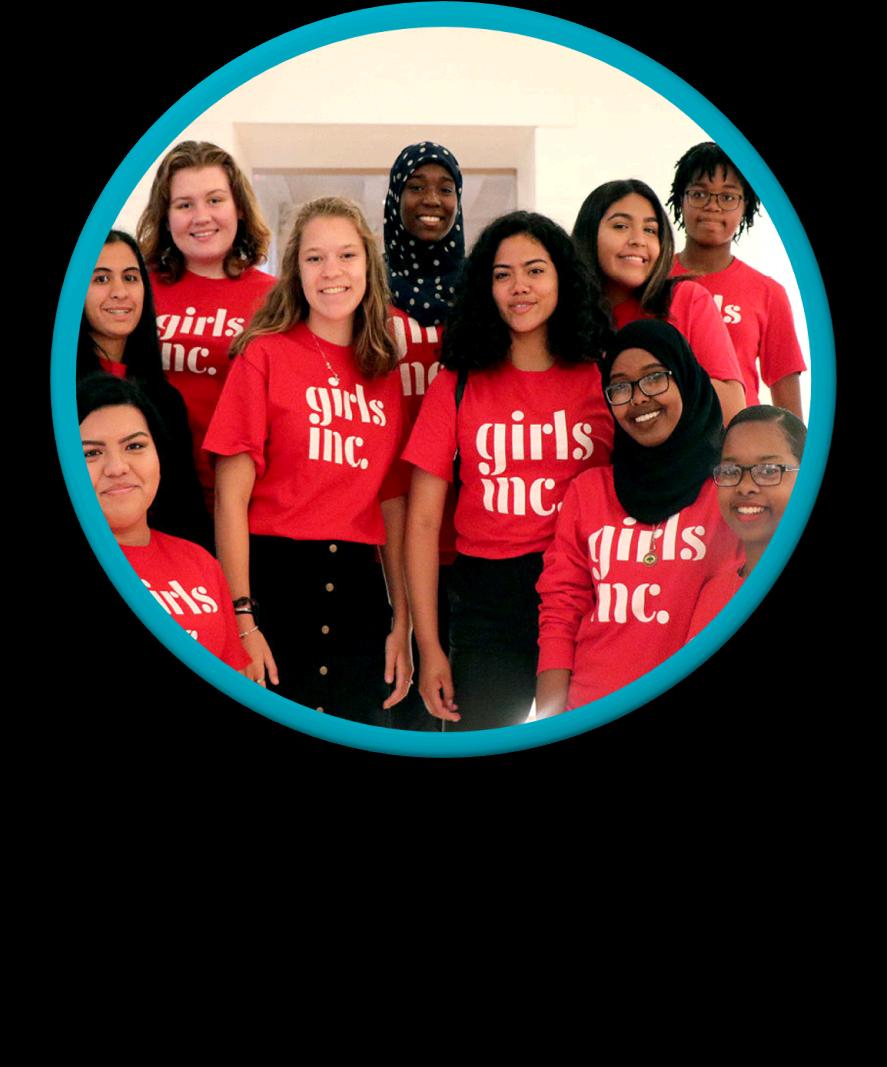



Girls Inc of Durham plays a critical role in addressing challenges experienced by girls and young women across Durham Region’s priority neighbourhoods Since 1984 we have empowered girls experiencing vulnerabilities and marginalization to believe in themselves and reach their full potential. Our vision is: “Empowered girls living in an equitable society” and our mission is “to inspire all girls to be strong, smart, and bold through advocacy, education and programs”. We specialize in research-based programming for girls in high need communities facing intersecting vulnerabilities, including programming designed specifically to empower black, Indigenous and girls of colour, girls and young women who identify as LGBTQ2S+, and girls and young women experiencing low-income, poverty, and / or violence. Our programs focus on empowering girls to navigate gender, economic, and social barriers, enabling them to grow into healthy, educated, and independent women
Like many non-profit organizations, recruiting and retaining volunteers has been a challenge This includes volunteer board members and program support volunteers Across the non-profit sector, key areas of volunteer-related difficulties have included: finding individuals with the necessary skills and expertise; balancing time commitments with candidates' availability; ensuring diversity and representation; managing expectations and responsibilities; attracting candidates committed to the organization's mission; and balancing continuity with fresh perspectives (Charity Insights Canada Project, 2024)
Girls Inc of Durham is no exception During the COVID-19 pandemic, our volunteer Board of Directors decreased from 21 members in 2019 to 1 member in 2021 At the same time, our organization experienced a nearly 50% reduction in our pool of program volunteers, from 220 prior to the pandemic, to 117 post-pandemic, as volunteers’ focus turned to supporting their own families and their own health and wellness As a volunteer-based organization, this presented an urgent need to develop a comprehensive Board and volunteer strategy to enhance our capacity to support at-risk young women across Durham Region
Over the course of 24 months, from April 2024 through March 31 2026, this project focused on the development of a strategic Board and volunteer recruitment and retention plan. As a key component of our post-covid recovery, this project supported our organization to modernize and adapt by harnessing the collective experience of our current volunteers and build a new strategic pipeline of future volunteers.
Our methodology was designed to provide a structured framework for conducting a thorough analysis of our volunteer engagement opportunities. By combining literature review, case studies, data collection, and analysis, we aimed to gain comprehensive insights into the feasibility and effectiveness of increasing volunteer engagement to ensure a sustainable pool of volunteers are available to support programming for girls and young women across Durham’s priority neighbourhoods.
A comprehensive review of existing literature on volunteer engagement in urban areas was conducted to understand the current state of research and identify key challenges and opportunities.
Several case studies from around the world were analyzed to examine successful implementations of volunteer engagement solutions in urban settings.
Data on volunteer engagement, infrastructure characteristics, and environmental factors were collected from urban areas to facilitate a thorough analysis of volunteer engagement in the not for profit sector post COVID and new trends.This included gathering insights and feedback from volunteer Board Members and program volunteers.
Utilizing collected data and insights from the literature review and case studies, a detailed analysis was performed to evaluate the state of volunteer engagement and sustainability post COVID. This informed a new Board and program volunteer strategy, and onboarding and education training pathways.
This initiative was led by a Project Team comprised of Girls Inc of Durham’s Volunteer Coordinator (Project Lead), 2 staff members, 2 Board members, and 5 volunteers (including youth graduates and student interns from Girls Inc programs) Project oversight was provided by Girls Inc of Durham’s CEO/Executive Director The Project Team met remotely once each month over the term of this project to plan, inform and coordinate project activities
Key project deliverables included a Board and program volunteer strategy, and renewed Board and volunteer onboarding and education training pathways. These deliverables, co-produced by organizational staff, Board members, and volunteers including youth graduates of Girls Inc of Durham’s programs, resulted in increased Board membership, and a larger pool of 89 new volunteers. This project also provided a strategy and ongoing training opportunities that will be sustained and replicated in the future to maintain Board and volunteer engagement and annually recruit new volunteers.
In the early stages of the work, the Project Team gathered insights and feedback from volunteer Board Members and program volunteers surrounding their lived experiences with our organization and their recommendations to increase volunteer recruitment, engagement and retention.
Key themes and recommendations included greater outreach across Durham’s diverse communities, stronger onboarding assistance, additional support, education and training and guidance for new volunteers, with frequent communication to keep all volunteers appraised of programming and community activities These insights were used to inform and guide planning and development of a Board and Volunteer Strategy Key areas of focus included: 1) outreach and recruitment; 2) onboarding and education; and 3) engagement and retention.

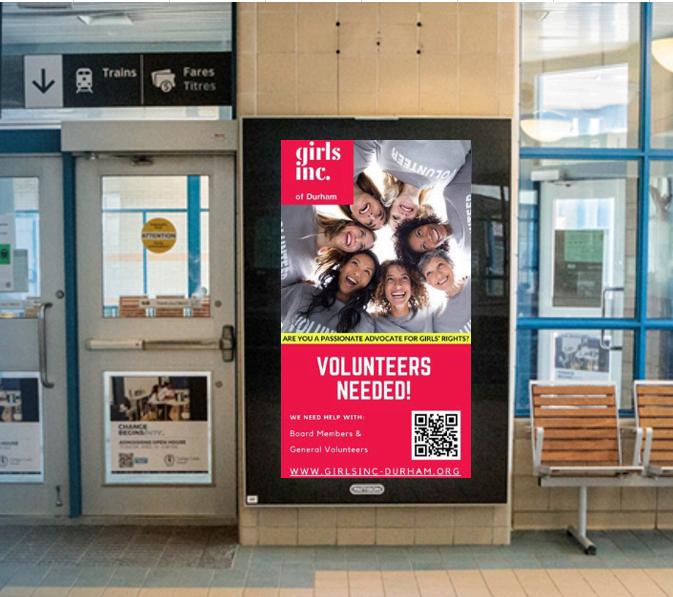
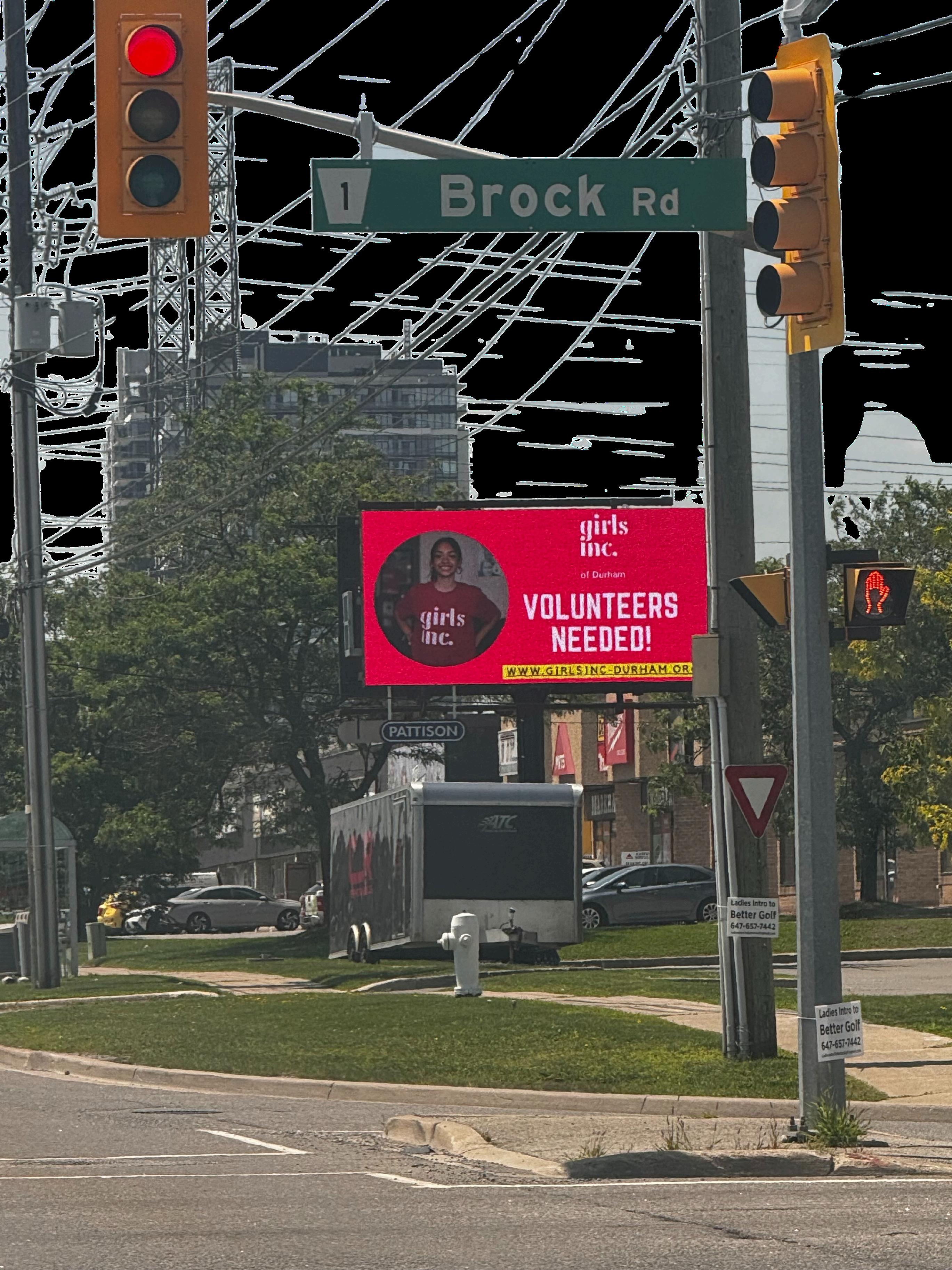
The Project Team prepared updated recruitment materials, advertisements and researched new platforms and tools to support outreach. Materials and Advertisements were disseminated through print and social media, and through Girls Inc of Durham’s local and Regional networks, partners, and at community events At the same time, the Project Team coordinated the engagement of current Board members and program volunteers as outreach ambassadors to provide community presentations and host information sessions on volunteering and engagement Annually, these updated recruitment materials are disseminated through outreach events held twice each year (i.e., winter and spring) to ensure new volunteers are continuously joining the organization and aligned with the newly developed Evergreen Board Recruitment Life Cycle (See Appendix A).
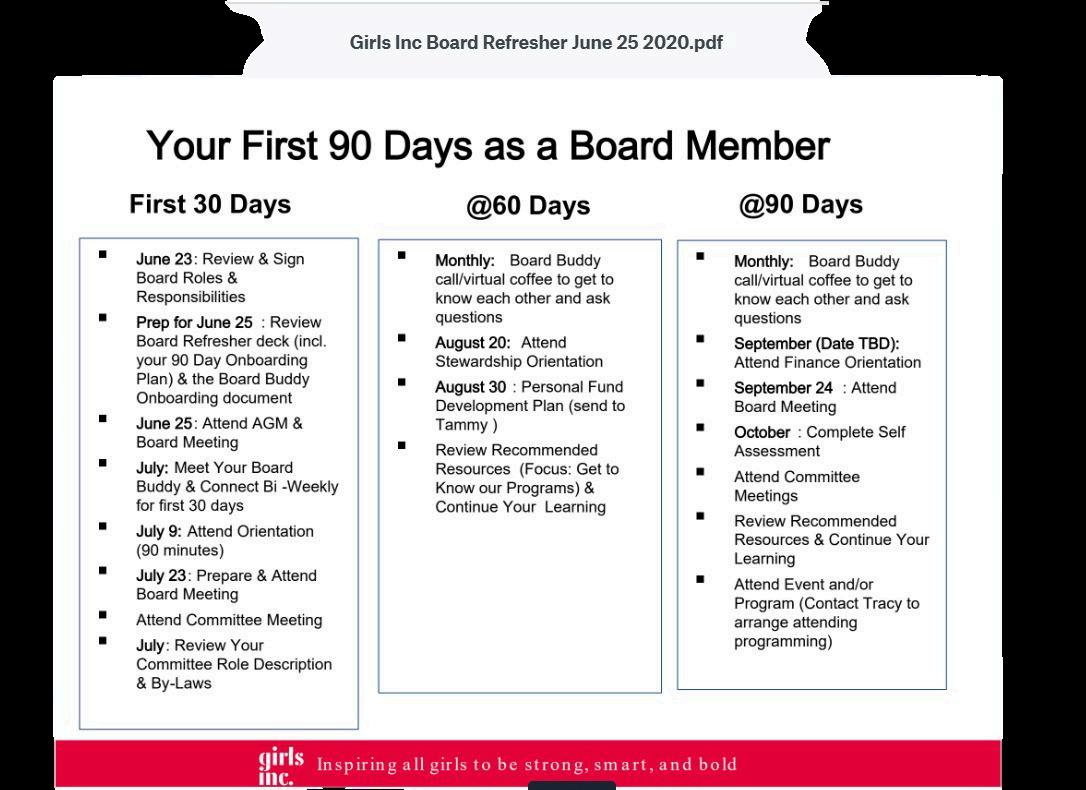
The Project Team developed renewed volunteer onboarding and education training pathways for Volunteer Board Members and program volunteers.
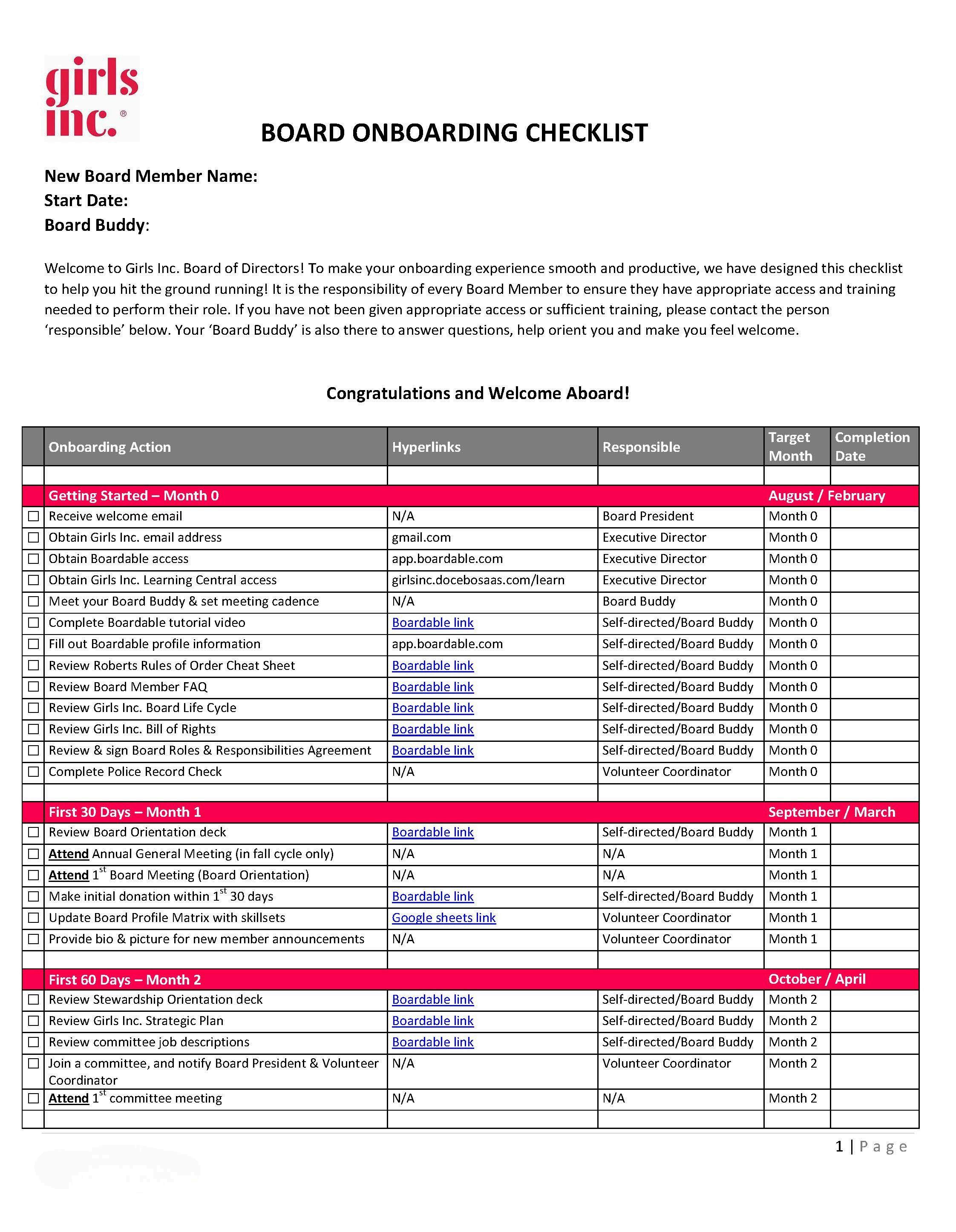
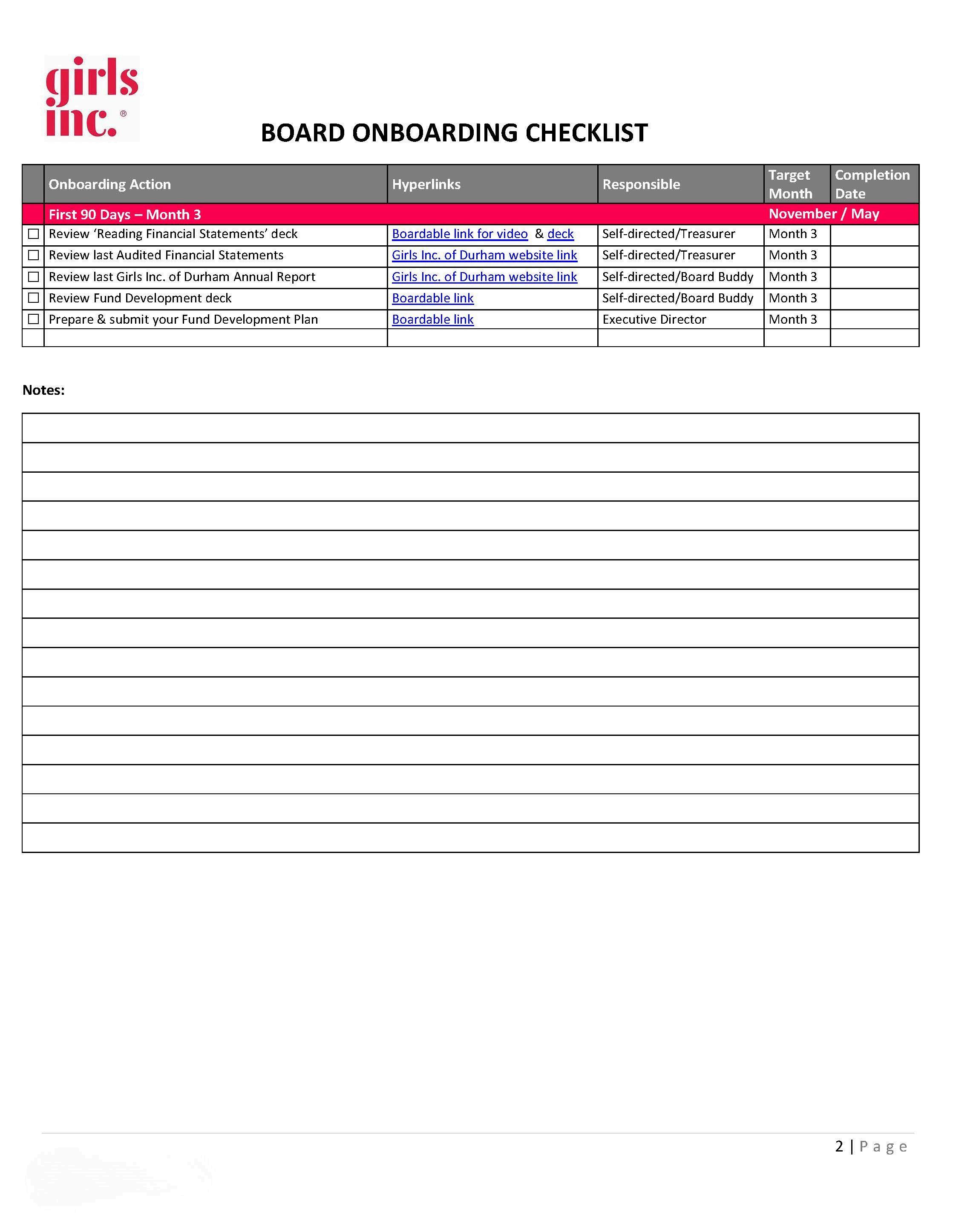
The Board Member pathway comprises: a three-month self-directed onboarding education program; a “Board Buddy” mentorship process; access to an online centralized repository of resources through an onboarding checklist with embedded hyperlinks; and the use of new Boardable software, OWL3 and ZOOM technology Examples of self-directed education topics include board orientation and responsibilities; history of the organization; mission, vision, values; organizational structure; policies and procedures; diversity, equity and inclusion; governance; financial management; fundraising; fund development; risk management; succession planning; and meeting facilitation. The Boardable platform provides potential Board volunteers easy access to a repository of documents, training links and resources to support their knowledge, development and Board activities, as well as streamlined approval and communication processes.
The program volunteer pathway comprises: a one-month self-directed on-boarding program; a “volunteer buddy” mentorship program; and access to an online centralized repository of resources through an onboarding checklist with embedded hyperlinks Examples of self-directed education topics include history of the organization; mission support
Refer to pathwa
The Project Team developed semi-annual volunteer touchpoints. During the year, volunteers are invited to complete a brief electronic survey. This survey is an opportunity for volunteers to identify their specialized experience and expertise, note activities they would like to participate in and/or exercise a leadership role in, share about their experience with the organization, and highlight ideas for continuous improvement of the volunteer experience and program delivery Two surveys were distributed twice each year, one for Board Members, and one for program volunteers
This semi-annual survey is also an opportunity to gather positive impact and experience stories from volunteers, and have these stories featured on Girls Inc of Durham’s website and social media channels for future recruitment. Once each year, a hybrid (in-person and virtual) volunteer appreciation event was held to acknowledge the contributions of our volunteers. At this event, volunteers were provided with individual letters of appreciation from the Girls Inc of Durham Leadership Team
In alignment with the intended purpose and aim of this project, this work resulted in a strategic and streamlined board and volunteer process that can be replicated annually and is sustainable for the years ahead
In addition to renewed volunteer outreach, onboarding and retention materials and processes, this project advanced our adoption of coproduction as an innovative 21st century engagement and shared leadership model guided by the needs and aspirations of those we serve. In the years ahead, we will continue to mobilize and scale this leadership model across our organization as we continue to cultivate equal and reciprocal partnerships and leadership opportunities with girls and young women across our diverse communities to guide organizational and programming priorities
This project also aligned and advanced onboarding, education, training and engagement pathways for our current volunteer Board Members, and our program volunteers to build retention.
Before delineating our recommendations, it is essential to underscore the guiding principles that underpin our approach. Our recommendations are grounded in the principles of sustainability, equity, resilience, and innovation. We recognize that successful volunteer engagement requires a multifaceted approach that addresses community engagement opportunities, use of technological innovation, and capacity building for a sustainable future.
We recommend the development of robust community engagement strategies that prioritize transparency, inclusivity, and participatory decision making.
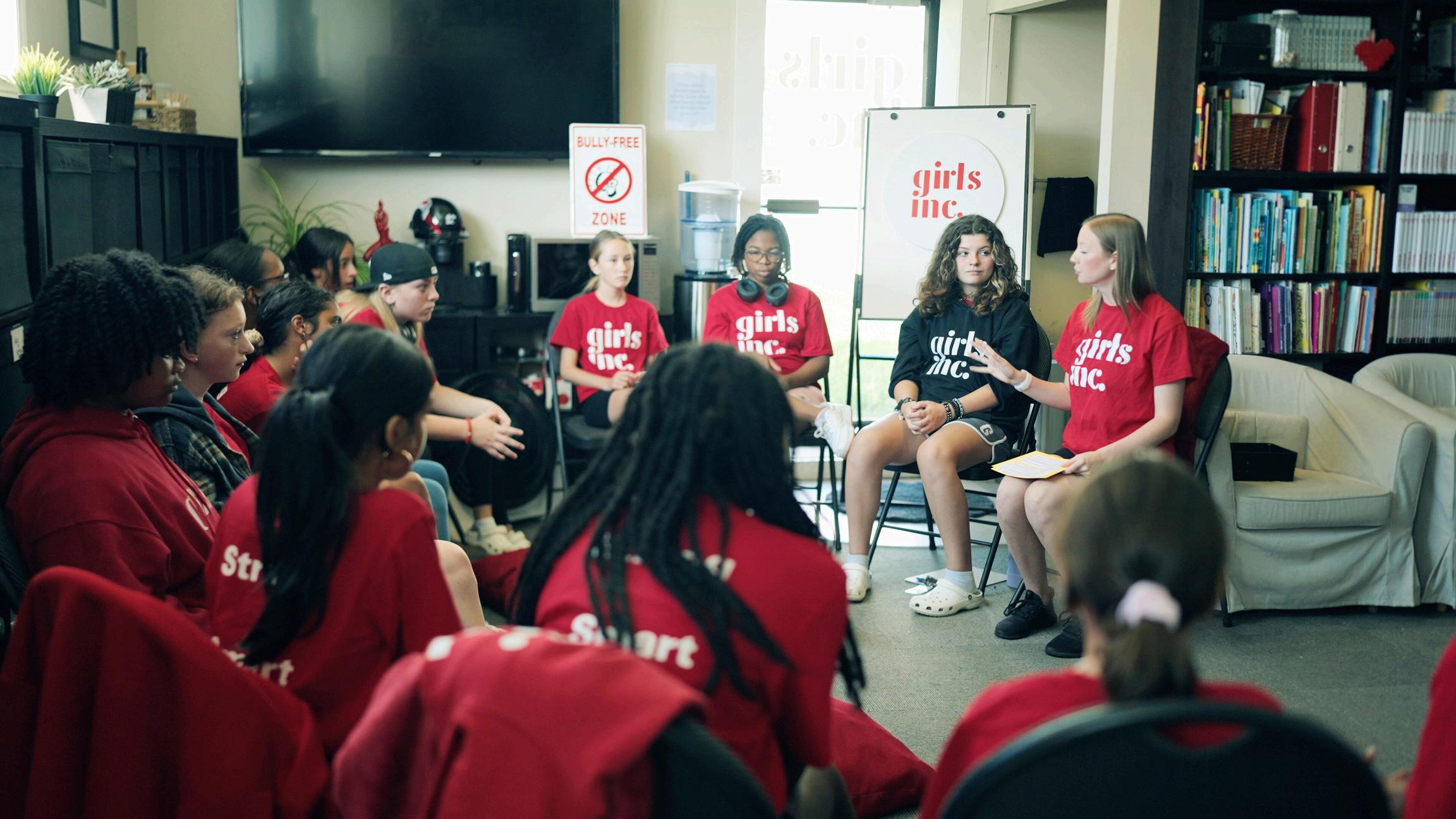
Continued investment in research, development, and innovation is essential to drive advancements in Volunteer Management. Technologies can be used as a tool to enhance volunteer engagement.
By nurturing and supporting a volunteer base that fosters a diverse culture of innovation, support and engagement, we can unlock the full potential of the volunteer sector.
In conclusion, our recommendations are intended to serve as a roadmap for not for profit agencies, and stakeholders committed to advancing volunteer engagement and sustainability post COVID 19 and new challenging economic relatities. By adopting a holistic and integrated approach that addresses new community engagement trends, technological innovation, and capacity building, organizations can realize the transformative potential of volunteer engagement to create more resilient, and more inclusive volunteer environments for current and future volunteer candidates.
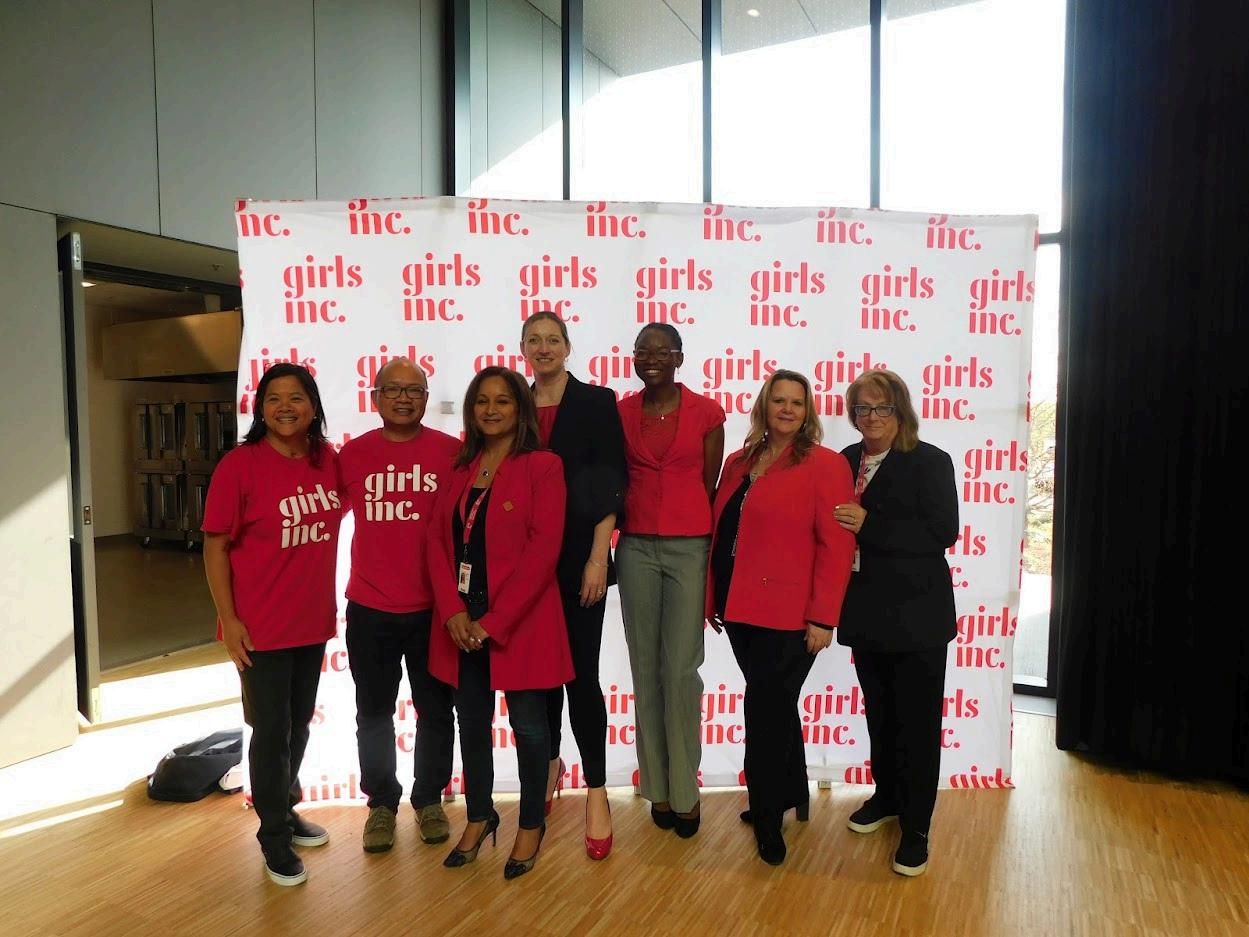
Our efforts to formalize, standardize, and extend this program for both volunteer Board Members and program volunteers ensures new volunteers have a peer support system not only during their onboarding process, but also throughout their term with our organization. This process enriches positive relationships among volunteers, enhances and cultivates a learning environment (as volunteers learn from each other), increases volunteer satisfaction, engagement, and enhances the overall volunteer experience Voluteers are eager to become peer mentors for others, thus enriching and continuing the cycle of board support
Our efforts to formalize and standardize an onboarding pathway for Board Members and program volunteers, complete with easily accessible online repositories of resources and educational materials, ensures all new volunteers can quickly find information to support their involvement with our organization As well, the graduated organization of these materials, organized into a step-by-step process and key areas of focus that build on one another, ensures that new volunteers are gradually exposed (and have time to review and digest) key information without being overwhelmed by a flood of information all at once As well, following their onboarding process, volunteers can access the online repository of resources at any time to refer to key pieces of information (e g , organizational policies and practices)
In combination, these key areas of achievement ensure a highly structured, systematic, well-organized and supportive volunteer pathway that brings clarity and understanding surrounding our mission, organizational policies and practices, and our intentional and compensatory programming.
This pathway also provides regular touchpoints with peers (as mentors) and organizational staff, along with opportunities for volunteers to repeatedly share feedback about their experience, bring forward ideas to improve the volunteer training needs, experience, and be involved in co-creating their own meaningful involvement. Additionally, our annual volunteer survey provides a baseline to measure against as we capture and analyze year over year trends and use this data to inform and guide continuous improvement.
This project builds critical organizational capacity to navigate post-pandemic realities and challenges.
Feedback and insights from staff and volunteers revealed a consistent concern about mental health challenges they are facing. This is aligned with concerns expressed by nonprofit organizations across Ontario, with many organizations reporting they are investing more time and resources in mental health initiatives while struggling with declining volunteer engagement. 62% of 1,500 non-profit organizations surveyed reported losing volunteers, more than 50% are struggling to recruit new volunteers, and 40% are having trouble encouraging former volunteers to return (Ontario Nonprofit Network, 2023; Charity Insights Canada, 2024). For our organization, this concerning downward trend continues to pose challenges with recruitment, engagement, and retention of volunteer Board Members and program volunteers (e.g., volunteers taking time away due to personal mental health challenges and/or only able to participate at a reduced capacity).
In the context of these sector-wide challenges, the achievements of this project are particularly noteworthy. At a time when many nonprofit organizations continue to experience decreasing numbers of volunteers, our Project Team, with funding from the Ontario Trillium Foundation, were able to stop our declining rate of volunteer recruitment and retention and facilitate an upwards trend. This resulted in an increase in 89 new volunteers; growing our Board membership (i.e., 10 new candidates), and a larger pool of program volunteers (i.e., 30 new), promising initial emerging outcomes.
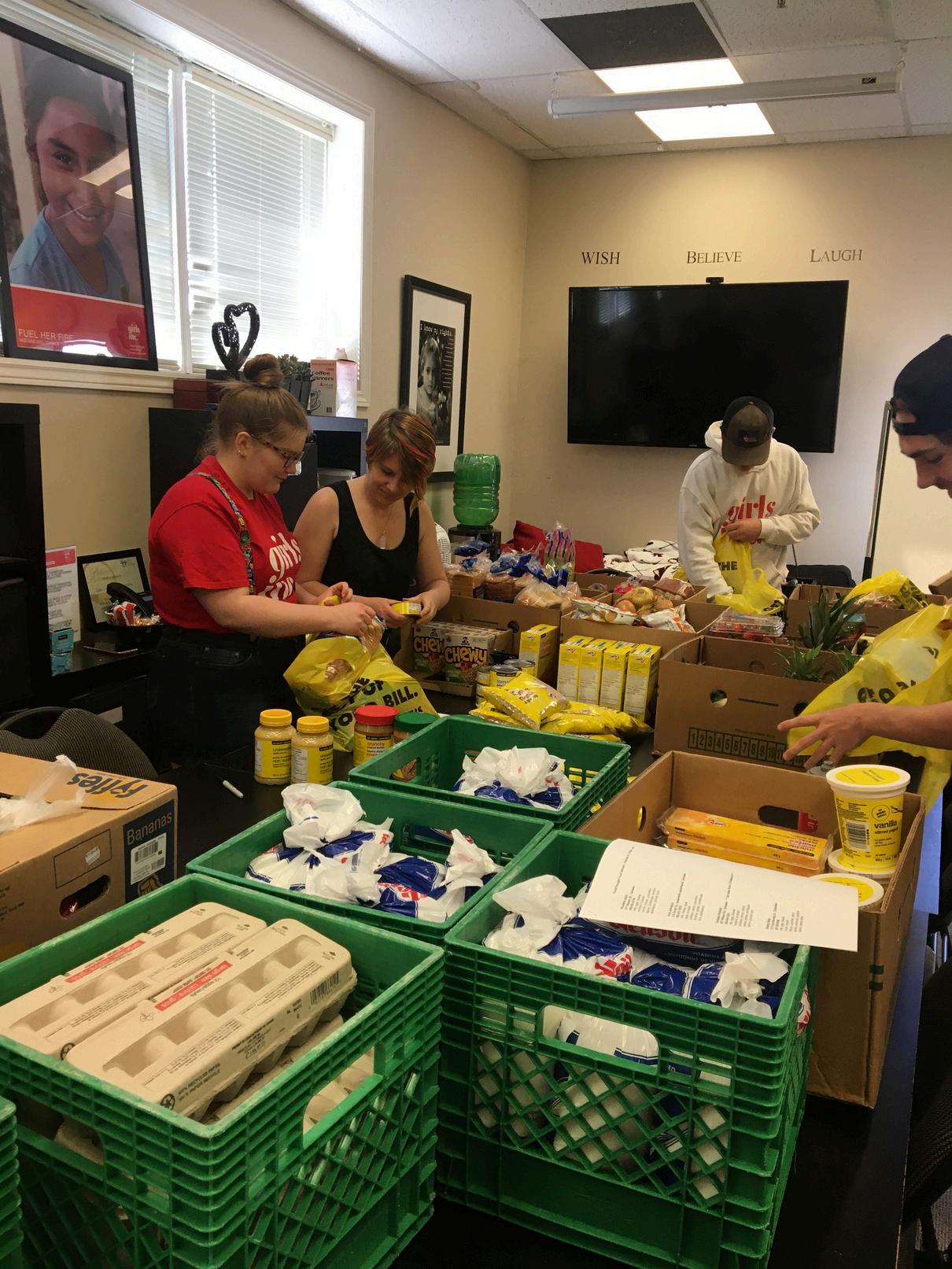
As a volunteer-driven organization, volunteers contribute at all levels of our organization including as Board Members, community outreach, fundraising, advocacy, event planning, office administration, social media, graphic design, and data entry. As we continued our recovery from the pandemic, we are experiencing increasing demand for our programs from at-risk girls across Durham’s priority neighbourhoods. To effectively deliver on our mission, there is a critical need for our organization to maintain a volunteer Board of Directors with the knowledge and skills to provide oversight and guidance to our organization, and a large pool of program volunteers able to support program delivery across Durham’s communities. By using technology and new volunteer platforms it has allowed our organization to meet volunteers growing needs. The use of technology has aided in self-paced onboarding, training and creating a supporting hybrid environment that supports many busy volunteer schedules.
Spring is one of the busiest seasons for community events, festivals, and programming, and for many organizations like ours, it is also the season where volunteer recruitment can fall behind. The pattern was familiar: event planning takes priority, recruitment gets pushed to the last minute, and suddenly our events are two weeks out with roles still unfilled.
We have shifted to become proactive and utilize spring as a peak period for volunteer interest People are looking for ways to get involved, students will be seeking hours, and community engagement is high. This is our opportunity to ensure that our needs are visible to the right audiences before that window closes.
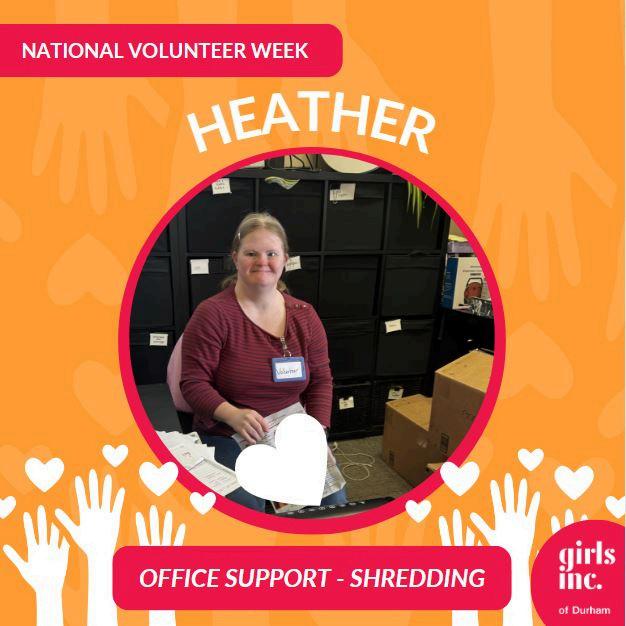
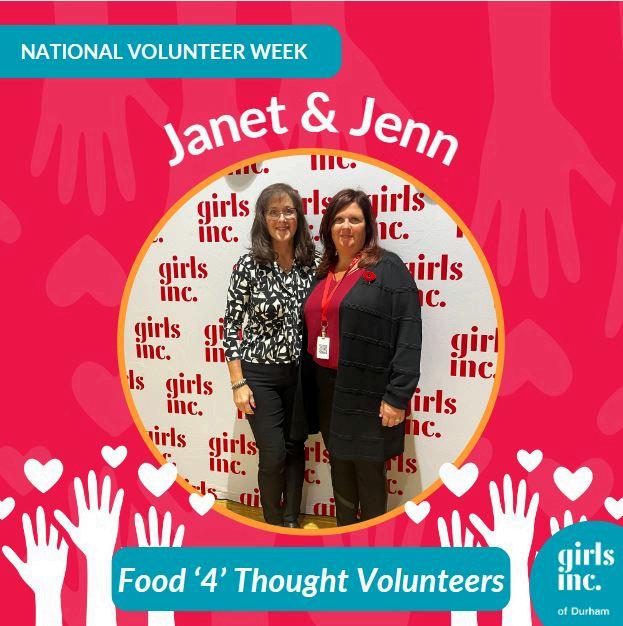
We know that National Volunteer Week runs around the 2nd week in April, it is a moment to pause and say thank you and leverage this time as a significant opportunity to fully capitalize on. People are more aware of volunteering, more open to getting involved, and more emotionally receptive to outreach than at almost any other point in the year. That is a window worth using intentionally and an entry point to start by reactivating the volunteers we already have a relationship with and thinking about the people who volunteered with our organization six months ago, a year ago, or even longer. We know that life gets busy and people drift away, but that does not mean they have lost interest in our mission National Volunteer Week is the perfect moment to reach back out because the timing feels natural rather than out of the blue Sending out a short personal message acknowledging their past contribution and letting them know there is a place for them again can be surprisingly effective. People respond to being remembered
We are utilizing this momentum to attract new volunteers.
Reach out personally to our lapsed volunteers and invite them back. Simple monthly coffee connections on the weekend.
Post or refresh all our current opportunities on Volunteer Success platform and our website so they are visible and compelling
Share a volunteer story on social media and tag our organization so new audiences can find us.
Adding a clear call to action to any recognition content we post, make it is easy for inspired people to sign up with a QR code or embedded link.
Lessons learned from feedback: When most organizations sit down to write a volunteer listing, they write it for everyone Generic language, broad appeals, vague descriptions of impact. The thinking is that casting a wide net will bring in more people In practice, it usually brings in fewer, because a listing that tries to speak to everyone often connects with no one in particular.
The student or early career volunteer is often motivated by skill building, resume experience, and having something tangible to show for their time. They want to know what they will learn, what they will be able to say they did, and whether the role will help them professionally. If our opportunity offers hands-on experience in communications, event management, community outreach, or any other transferable skill, make sure we list it explicitly This is often what gets them to apply
The career professional or skilled volunteer wants to use their expertise in a meaningful way They are not looking for a task to fill time; they want to contribute at a level that matches their abilities If we are looking for someone with marketing, legal, financial, or technical skills, we need to speak to that directly Telling them what problem they will be solving and why their specific expertise matters to our mission
The community-oriented volunteer is driven by connection and belonging They want to be part of something, to meet people who share their values, and to feel like they are contributing to the place where they live. For this person, the social environment of the role matters as much as the task itself. Describing our team, our culture, and what it feels like to be part of our organization is what we will be their draw to volunteer.
The impact-driven volunteer needs to know that their time is making a real difference. They want specifics on how many people will they help? What changes because of their contribution? A single concrete impact statement in our listing can be the thing that converts this volunteer from interested to committed
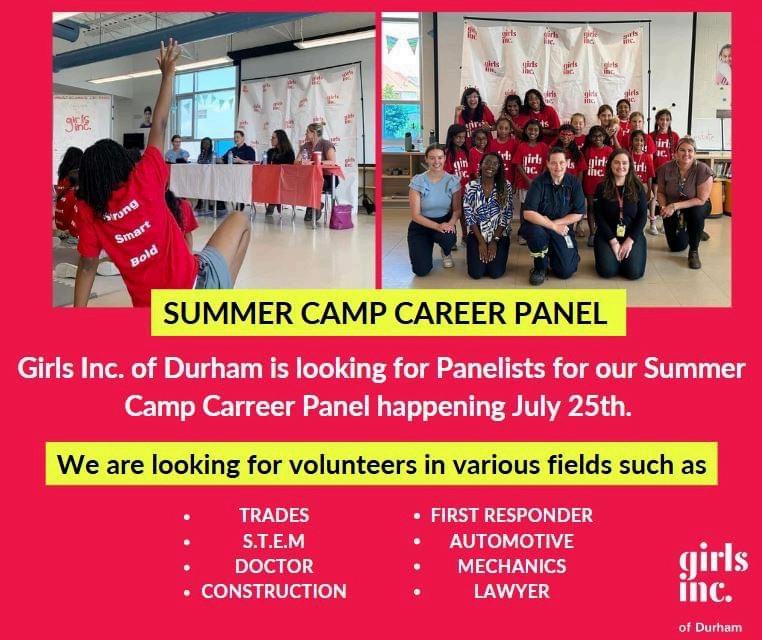
Rather than waiting for these different types of volunteers to find our listings, we utilise Volunteer Success platforms and browse volunteers who have already posted their own offers based on their skills and interests Skilled professionals, community-minded individuals, students looking for experience can connect with our mission and vision They are already on the Volunteer platform, telling us exactly what skills they have to give. Reaching out to them directly with an opportunity that matches what they are looking for is one of the most effective recruitments approaches we have implemented. https://volunteersuccess.com/organizations/girls-inc-of-durham
The structured, systematic, well-organized and highly supportive volunteer strategy developed through this project supports the mental health and wellness of volunteers, and in doing so ensures a sustainable pool of volunteers are available to support programming for girls and young women across Durham’s priority neighbourhoods This volunteer strategy is a key priority as our organization strives to uphold and deliver on our mission while navigating post-pandemic and economic realities marked by uncertainty and increasingly complex community needs
In conclusion, our recommendations are intended to serve as a roadmap for other not for profit agencies, and stakeholders committed to advancing the transition and engagement of volunteers postCOVID. By adopting a holistic and integrated approach that addresses community engagement, technology and capacity building, agencies can realize the transformative potential of their volunteer pool.

Girls Inc of Durham RF133287 - Budget Update March 31 2026
OTF Budget Request
Had staff turn over and cross training of role for sustainability Volunteer coordinator left July 10th required additional staff trained for shadowing and training to take over during project
Purchased of Boardables online training platform $7829 enabling volunteers and youth to access online training materials and facilitation in hybrid and self learning modules
Request to remove $5000 from Travel line to Workshops,Meetings as volunteer requested access to more training instead of honoraria (i e volunteers requested desire for Ontario Shores Mental Health
Digital Advertising volunteer recruitment Request $1300 to move from Travel to Supplies and Materials to address overspending i li training.
$2599.81 mileage $800 Gas cards stipend** Request to remove $6300 from Travel to $5000to Workshops,Meetings and request $1300 to move to Supplies and Materials
$1500 Consultant administered surveys; $627 Better Impact Volunteer Impact standard ed. Platform ; $192 ZOOM evaluation ; $1181 evaluation report
$704 provided inkind to offset over budget in purchase of service
January
Evergreen recruitment of committee members
Attend Board meeting
February
March

Set Fund Development goals & sign Fund Development Plan (input into annual budget)
Interview Board candidates from a pool of committee members for the February Intake
Conduct Board Roles & Responsibilities Session for Board candidates
Evergreen recruitment of committee members
Attend Board meeting
Approve annual budget before March fiscal year-end
Vote in new Board candidates
Self-directed onboarding for new members
Review feedback from December surveys
Update Board Profile to identify skill set gaps & upcoming vacancies for August Intake
Evergreen recruitment of committee members
Attend Board meeting
Self-directed onboarding for new members
Board Buddy check-in
April
Evergreen recruitment of committee members
Attend Board meeting
May
Evergreen recruitment of committee members
Attend Board Meeting
Conduct (optional) “How to be a Board Buddy” training
Participate in Signature Event: Spirit of Girls Breakfast Participate in Girls
Inc. Event: Girls Rights Week
June
Evergreen recruitment of committee members
Attend Board meeting
Board Buddy check-in
Conduct “Fund Development Training”
Complete Board evaluation survey
Complete self-assessment survey
Evergreen recruitment of committee members
Attend Board Meeting
July
August
September
October
November
Interview Board candidates from pool of committee members for the August Intake
Conduct “Board Roles & Responsibilities” training for Board candidates
Conduct “How to Read Financial Statements” Training
Approve audited financial statements
Evergreen recruitment of committee members
Attend Board meeting (truncated)
Vote in new Board candidates
Self-directed onboarding for new member
Review feedback from June surveys
Update Board Profile to identify skill set gaps & upcoming vacancies for February Intake
Participate in Girls Inc. Event: Summer Camp Carnival
Evergreen recruitment of committee members
Self-directed onboarding for new members
Board Buddy check-in
Attend Annual General Meeting (AGM)
Present new Board members at AGM
Present audited financial statements at AGM Attend Board meeting (right after AGM)
December
Evergreen recruitment of committee members
Attend Board Meeting
Participate in Strategic Planning workshop
Participate in Durham Event: Walk For Your Cause
Participate in Durham Event: Philanthropy Forum
Evergreen recruitment of committee members
Attend Board Meeting Conduct (optional)
Board Buddy training
Participate in Signature Event: Power of the Purse
Evergreen recruitment of committee members
Complete Board evaluation survey
Complete self-assessment survey
Board Buddy check-in
“The greatness of a community is most accurately measured by the compassionate actions of its members”
Coretta Scott King
Girls Inc. of Durham, we are striving to create that community.