



May ©2024
Unless otherwise credited, images are courtesy of WISDOM's Noster, Burgess, Tinant and Doyle families.


By Joyce Sehn
lanning is an area which involves struggles. Whether there is one student or many, an extremely full schedule or a very simple one, packaged curriculum or a more natural approach, there seems to be something difficult about planning!
Everyone has plans in mind for their children. Sometimes, however, there is a gap between these mental plans and the written education program plan that's required to home educate in Alberta. Let's look at some reasons planning may be a struggle, why plans are necessary and useful, and some practical help to make it easier and even enjoyable!
• If you are a beginner, do you wonder where to start?
• Does procrastination hold you back?
• Do perfectionist tendencies, or a lack of time, make it difficult?
• Is the value (to the student and the parent) of a written plan understood?
• Is a mental plan perhaps considered sufficient?
• Is it understood why a plan is required by the government?
It is required by law. We have the freedom to decide what, when, and where to educate our children. We exercise this freedom and show we are capable by formulating a plan, implementing it, and evaluating our success. In fact, if you do not submit a plan for home education, it is assumed you are following the Alberta programs of study (teaching the same outcomes and using the same curriculum as the classroom). You may feel that what your family does is none of the government's business and there is certainly some truth in this. Your family's over-arching vision and spiritual goals do not need to be sent to the office. Discussing and putting them on paper, however, is invaluable for your own use.
You've likely heard the expression, "If you fail to plan, you plan to fail". As with everything in life, serious thought and preparation aids success. We may have a mental plan, but it can easily remain vague. Articulating ideas in written form helps to clarify them. Planning provides
us with direction, purpose, structure, and clarity.
It is encouraging to refer back to plans and goals. Progress can be much like physical growth - we don't see how our children have grown from day to day, but looking back to where they were six months or a year ago, it is obvious. Reviewing our plan, lists of activities and books read, we can see if we are on the right track, if we are doing what we set out to do, and where we need to improve.
Lastly, a plan assists us in evaluation. Facilitator assessments are based on your plan. You know what your child is capable of achieving and whether or not your expectations are being met. Students are not being compared with others their age and grade, but relative to what you planned for them.
Due to all the differences between families and individuals, plans will not - and should not - all look the same. YOU are the best judge of what is most appropriate for your child. Though the facilitator will be available to help, it must be your plan, not the facilitator's.
Ideally, planning should start with your family's vision. With this end in mind, identify long range and then short term goals (or outcomes) to be achieved. Then, list the resources you will use to achieve those goals and, lastly, how you will evaluate. This may seem overwhelming, but consider it a work in progress. Start simply. Details can be added later.
One of my dad's favourite expressions was, "A start is half done". It's true! Sometimes we just need to begin and the rest flows from there. So, take the first step now for next school year. Get the easy stuff on paper. When new or better ideas come to mind, changes or additions can be made, but you will have started. You will be half done, in fact! Put this in, to start:
• A title -Education Program Plan
• The student's first name, last name and grade, and parents' names. The school year for which the plan applies. Contact info.
• Headings, such as:
• Family vision
• Strengths, gifts, talents
• Weaknesses (or call them areas needing improvement, or learning challenges)
• General goals, such as character goals
• Specific subject areas. For each subject area:
• Goals or objectives or outcomes
• Instructional methods you will use (eg. reading, or audio books, or games, or direct instruction...)
• Resources you plan to use (encyclopedia, or specific curriculum, or websites...)
• Evaluation or assessment methods to be used, and the timing of those assessments (weekly, as needed, etc.)
Remember SAM: an acronym to guide your plan:
. Before going into more detail, I would like to emphasize that what needs to be submitted is quite simple. If you are just beginning homeschooling or have struggled with writing a plan, don't let the details be a roadblock. Keep your plan concise and to the point. Work on the basic outline and let the finer points evolve.
Look at some sample program plans on the WISDOM website for ideas (under Forms). If using a ready-made form is helpful for you, use one. A blank piece of paper will give you the most flexibility, but you can always start with a template and expand on your ideas the next time around.
. Be realistic. Challenge the student without expecting too much of yourself or your child. Give the child (especially an older one) some input into designing the plan, giving them some ownership of the process and the results. A plan should be an organic document which shows your intention but allows for the dynamic nature of family life and learning. Due to circumstances such as health or relationship issues, deaths and births, the original plan may no longer be appropriate. Be flexible.
Goals must be specific in order to be measured. For example, if you have a goal for your child to "read more", or perhaps to "read at a higher level", how will you know if that has been accomplished? If, however, you state that you plan for your child to be able to read a specific book or a certain
number of books by the year end, you will know if that goal has been reached.
Now, for those who are ready to step beyond a basic plan, some suggestions:
Family Vision:
Pray and discuss together as a couple and as a family. Ask:
• Why are we on earth?
• What is our family's purpose and its ultimate goal?
• Who do we want our children to be as adults? At the end of their lives?
• What do we hope to accomplish?
• What are our family's unique characteristics and charisms?
From this, develop a family vision, a motto, or a mission statement. This will direct everything your family does and how you live.
Ask yourself each year: Why are we home schooling? This can help focus attention on what is most important. Things such as finishing house renovations, expecting a new baby, getting out of debt, taking a family trip, or working on manners can affect what is planned for the year.
Next look at long term goals. We will have similar expectations for each of our children. Some examples are:
• To love learning and become lifelong learners.
• To develop a love for reading and observation; develop curiosity.
• To recognize excellence in art, music, literature.
• To grow in virtue and character.
• To communicate well with others, verbally and in writing.
Individual Children:
Within the family, each child has his or her own traits. Ask:
• What is the child's learning style?
• What are each child's special strengths and gifts?
• In what areas are improvements needed?
• What barriers to learning and growth (physical or mental limitations) are present?
Using these questions, you may want to choose one specific educational and one character goal for each child for the year. This forces you to prioritize. For instance, if you have a child lacking obedience or respect, that needs to be addressed before any other goals can be met. You may have to put other things
aside until this is in place.
These can be typical school categories or more general (for younger students):
• Math or Numeracy
• Language Arts (Spelling, Writing, Grammar, Reading) or Literacy
• Science or Nature Studies
• Life Skills, Character Development
• Religious Studies, Bible, Community Service, Spiritual Growth
• History, Geography, or Social Studies
• Fine Arts: Music, Art, Dance
• Physical Education, Health
• Work Experience
• Second Language
• Home Economics or Household Responsibilities
• Anything else your family deems important (animal care, carpentry, etc.)
Resources, Instructional Methods & Short Term Goals:

List the books and curricula for each subject. Indicate what you will use and how. Don't be afraid to drop what doesn't work and try something else. Resources may also include the library, videos, sports teams, community activities and such.
State the name of the person instructing the student, if not the parents (applicable only if the parents are not the main instructors). Outside teachers for special subjects (music, second languages, or sports, for instance) can be also be utilized. Specify intended instructional methods - direct instruction, student directed study, projects, debates, etc.
This is also where details which make your goals measurable should be included. The clearer the expectations, the easier it will be to determine if you have achieved your objectives.
The Schedule of Learning Outcomes should be referenced. In other words, list the outcomes to be achieved, such as learn to read, or identify bird species, or anything else you want the student to learn. The schedule is a list of 20 outcomes, listed from A to T (and therefore sometimes called the A to T list). Not everything on the list must be
covered every year; it is simply a list of what should be achieved by the time a student finishes schooling. This is where long-range planning comes into play, as you will need to keep track from year to year to ensure all outcomes are included at some point.
This is the area most often missed, but it is a required component of an EPP. Each subject area should have some means and timing of assessment/evaluation noted. Examples of this are:
• Physical Education: Assessment will be based on general fitness level, willingness to engage in physical activity, and initiative in keeping active. Journal notes, weekly.
• Reading: Evaluation will be based on progress in reading level, enjoyment of reading and selfmotivation to read books regularly for information and enjoyment. Parental observation, daily.
Journals, portfolio of student work, unit tests, projects, outside instructors' feedback, etc, are all sources of evaluation.


Again, if you are new at writing plans and feeling overwhelmed, save this for next year. Instead of a separate method of evaluating each subject, simply state, usually at the end of the plan, how the student will be assessed and by whom. You may say: "Assessment will be based on parental observation, assignments and tests associated with the resources used, outside instructors, and portfolio review by parents and facilitator." Portfolio review by the facilitator is mandatory in Alberta – you can talk to your facilitator about what this specifically entails.
Ongoing evaluation is helpful. Sometimes the most thorough and ambitious plans are not adequately implemented. It is useful to check regularly to see how the plan is being fulfilled. Keep it handy.
• Make a separate plan for each child, to be filed individually. Anything common to all plans, such as family philosophy, should be included on each.
• If you re-use a template from year to year, double-check that the year and grade are changed.
• Send your plan to your facilitator - who will review it, make suggestions for improvement, or
approve it as it is, and send it on to the office. The best way to send in your plan is via email, as digital copies are easiest to work with. If you do not have email access, mail or fax will do.
• If you write by hand, be sure to use a dark pen.
• If mailing your plan, avoid staples - they need to be removed for copying or scanning at the office. Paperclips are best.
Finally, we must always remind ourselves Who is really in charge. In the letter of James (4:14-15), we are taught to leave all of our plans in His hands. We are reminded that "you do not know about tomorrow. What is your life? For you are a mist that appears for a little time and then vanishes. Instead you ought to say 'If the Lord wills, we shall live and we shall do this or that'."
Joyce is the wife of WISDOM retired facilitator Louis Sehn. She finds it quite amusing that her articles are sometimes posted under "Organization", as this is one of her most difficult challenges! She wishes to thank all the facilitators who shared suggestions for this article.

By Carmen Zayac
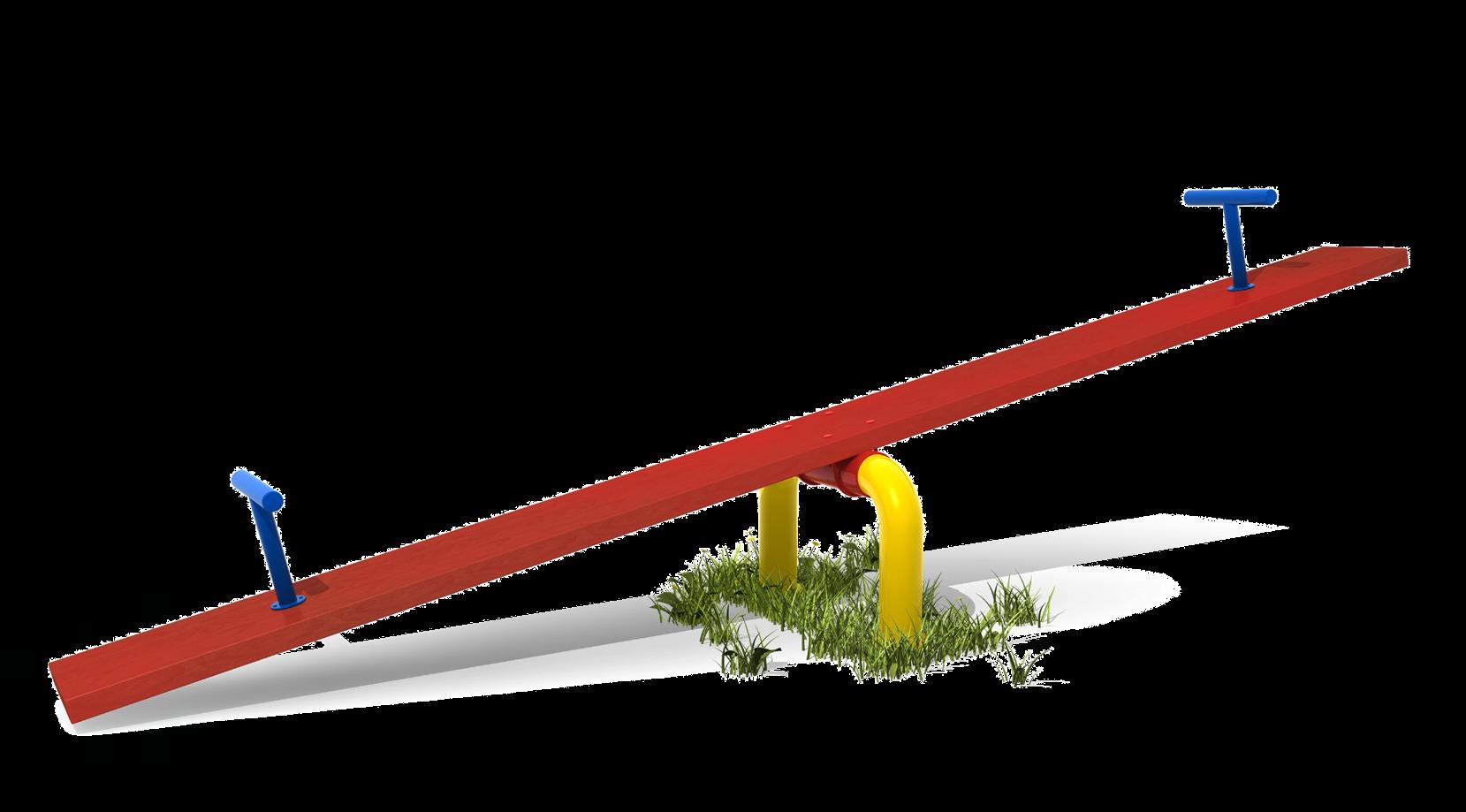
I know what balance is supposed to look like…and then I know what my life is like. Unfortunately, they are not the same thing. I see balance as a see-saw. I should be standing in the middle, keeping both sides of the piece of playground equipment off the ground. I see myself with a smile on my face, arms resting at my sides. I am content in the moment and perfectly at ease. BUT that is not the reality. In actuality, I am running furiously from one side to the other… desperately trying to keep both sides up. My face is red and sweaty, my breathing is labored, and I sometimes feel like giving up.
So, with that picture in your head, let me try to explain. In simple terms –I do too many things! There, I said it. That is the first step on the road to recovery. Next problem: I rarely take time for myself. After that, I can list things like feeling too much guilt, putting too much pressure on myself, not letting things go, taking things too
personally… my list could go on and on. And, as those of you reading this are homeschool moms as well, I’m sure your list would be long, too.
Now, let’s talk about what I am doing to combat this lack of a peaceful trip to the playground equipment. I am learning to say no… sometimes. This is a hard one for me, like – apocalypse hard. Things need to get done… I do them! That said, we cut down this year on extra-curricular activities, and I am learning to delegate. I am asking for more help from my children, and opting out of some activities (without feeling guilty… mostly). In all honesty, I have a ton of energy. I do a lot; many of my friends say they get tired just watching me. I even had one comment go something like this, “you get more done in a day, than I could think of getting done in a week.” I don’t think this will change much, but once an overachiever, always an overachiever?
As for taking time for myself – I have learned that I do NEED to do this. I get up every morning at 5:15 to exercise for an hour. That is my time… I will not give it up. Don’t get me wrong, I HATE getting up. I don’t really enjoy exercise (despise might be a good word here), but I love being strong and healthy. I lost 80 pounds, and it will never find me again! So, ‘my time’ activity number one… exercise. As for ‘my time’ number two, I quit whatever I am doing by 9:45pm at the latest. I try every night to sit and spend 15 minutes reflecting/meditating in front of my fire (nice warm spot – like a cat). Then I am in bed by 10, and I ALLOW myself to read for 20 min… then I go to sleep. (When you get up early – you must love yourself enough to go to bed on time… our bodies need at least 7 hrs). And by “allow”, I mean that I do not let the feeling of guilt creep in. Yes, there are many other things I could or should be doing from 9:45 until the middle of the night, but I let them go. I carve out this time for myself. Twice a day…for me!
As for the rest of the list, I am working on things. I try not to let other people’s opinions affect me. I remind myself: as long as I am responsible & respectful to all I meet, that their problems with me are their own. When I feel the pressure mounting, both figuratively & literally, I take a few deep breaths and relax my shoulders. Sometimes that’s all I need. When I notice myself doing the ‘negative self-talk’ thing, I stop and replace it with “I am enough, I do enough, I love me.”
Last but not least, I have found ways to choose my own happiness. If we cannot create it for ourselves, then we will not have it. I started getting my nails
done once a month. Totally frivolous I realize, but it makes me happy, so I do this one thing for me. I also love stories and there were many years when I did not give myself permission to read. As mentioned above, I have changed that. I have also found another way to enjoy stories; I listen to them. I can listen to an audiobook while doing simple chores (laundry, sweeping, cooking), while driving, and while exercising. And I’ve noticed that if it’s a really good book, I sometimes even look forward to getting up early to sweat!
Stop running back and forth! Stand tall in the middle of the see-saw, one foot firmly planted on either side, arms resting. Smile, relax, and be at ease. Find a happy, balanced place for yourself. You are worth it!
Carmen and her huband, Jason, homeschool their 3 lovely girls near Vermilion. She has been learning about this awesome education movement since she was pregnant with her first, and has been home educating since the first was born. An avid Girl Guide leader, a first aid instructor and a school bus driver - she is an extreme overachiever who is trying to relax into life more.
By Diane Hopkins

Ever feel like you are bumbling around amidst a three-ring circus in your attempts to homeschool? There is nothing like a new baby to restore a teacher/ mother’s humility in the face of her own inadequacies! For our homeschool, this chaos repeats itself every few years with the advent of a precious new “student.” I have homeschooled in my robe, nursing my baby while I have tried to teach math, correct papers and read stories:
“Mom, can’t you hold the book still? I can’t see the pictures.”
“Sorry, honey, the baby needs to be rocked.”
Guilt inevitably settles in as I imagine the public school superintendent dropping by for a surprise visit: “This is school?!”
Any of this sound familiar?
However, there is something about persevering with the matter of learning every day that convinces me that homeschooling is the right choice, even when it is far from perfection. Maybe it is not so far from perfection as we perceive it to be. What could be the perfect Unit Study if it is not watching your own mother morningsick, uncomfortable, growing, waiting, and preparing, and seeing your own father helping, praying constantly for the wellbeing of the mother and child, serving tirelessly, taking on Mother’s workload—all in the anticipation of a new family member’s arrival after a tenuous 9-month journey? Our older children were able to see their baby brother’s delivery, and what awestruck expressions they had on their faces! Even though they were only present for the last
few moments of his birth, they got a taste of the sacrifice required, the pain involved and also the joyous miracle of a new life! Then came the meals, letters, flowers, gifts, calls of concern, help of friends and neighbors: what an outpouring of love, and what an impression it made upon my children! “Lots of people care about us!” they said. It caused us all to recommit to helping people when they need us because it made such a wonderful difference to our family.
The time I spent recovering, lying in bed listening to my children, was quite a revelation! What a time to assess how well I have taught my children to be self-sufficient: to cook a meal, do the laundry, care for the little ones, be patient, etc. Here’s the real report card! If they can’t take care of dayto-day living, it really doesn’t matter very much if they know how to divide fractions, now does it? First things first.
Oh, the sweet vulnerability of babies! How dependent these little children are upon us, their parents, to teach them things of importance as they grow to the age of accountability. Seeing my little babe’s helplessness instills a great desire in my heart to carefully consider how I invest my children’s learning hours. Every homeschooler knows the frustration of “there is so much I want to teach them!” and time seems so limited. School year seems to flow into school year, and when I stop and consider what we’ve done, it doesn’t all seem as vital as I hoped it would.
So, with this new baby, I am taking the opportunity to see with new eyes what is really of value and how I can best teach it. I am setting some goals for what I want

them to know when they leave my tutelage and just how we will arrive at that envied destination. The motto, “Begin with the end in mind”, is crucial to homeschool. With every-day crises, it is very easy to just survive instead of living your plan. Yet the years keep on circling around, and the moment is lost if we are not vigilant in aligning our activities with our goals.
Here are the goals that I have prayerfully arrived at:
• Teach my children to love the Lord and to know Him as their personal Savior, their help in time of need and their model of what to grow to be like.
• Teach them to love the Constitution and their freedom more than their lives.
• Teach them that each has a gift to give to mankind and that it is their responsibility to discover their gift, their life’s mission, and to make it their life’s work to give it to the world.
• Teach them that they can be a far more useful instrument in the Lord’s hands if they are clear-thinking and articulate.
• Teach them to be self-sufficient and live providently.
It is amazing how little this sometimes feels like it has to do with square roots and diagramming sentences, although those are necessary and have their proper priority.
After mapping my goals, I search for the best books and teaching tools and try to commit myself to what I will use with each
child that year and to exactly what we hope to accomplish. Of course, this is subject to change, as are all the best of plans, but at least it points us in the right direction. Reviewing my goals regularly keeps me on track (and also helps me see how easy it is to get waylaid!).
I know one mother who is going to begin homeschooling “as soon as she gets organized and prepared.” She has been “preparing” for 6 years now! You are prepared enough if you can answer “yes” to these questions:
• Do I want to do the will of the Lord in educating my children, whatever it may be?
• Do I have my child’s best interest at heart?
• Am I teachable—willing to be learn, accept, flex, be inspired?
• Am I dedicated?
It takes time and effort to homeschool. Those hours must come from somewhere, which means less time for Mom to do what she wants.
“When you take the very first step on the road, you also take the last.” Take the time to make sure you are on the right road so when you’ve been retired from homeschooling, you can look back on your years with your children and feel confident that you’ve taught them the things that really matter!
Diane Hopkins blogs at
HappyHomeschooling.com


By Ken Noster


Thesaying goes, “fail to plan, and plan to fail.” This is strong language, and is it true or untrue?
In the circumstance of educating our children at home, it certainly does help to have a good plan, diligently followed. The best of home schooling plans, however, don’t look like the one sitting in the desk of the classroom teacher; they contain far more details of life.
The home schooling plan includes wakeup time, morning activities like making your bed, preparing breakfast and prayer. It includes meal preparations, outings, get-togethers, birthdays and holidays. This plan coordinates specific learning tasks and general learning hopes with real life. It is sensitive to the balance of learning from books and learning from experiences, and it considers the amount of time the student needs for each subject. After all, students vary significantly in how they learn best. Some do best
studying only one or two subjects all day, perhaps doing this for numerous days at a time or even weeks and months, until the subject is exhausted or fully learned. Some do better focussing on a subject for an hour or so and then moving on to something else. Either way, the plan will reflect the student’s preference or strength.
Then, there is the question of learning style, and what immediately comes to mind is the young boy who best does his math hopping on one leg at the corner of the kitchen counter. It would be necessary to plan his math for a time when his sister is not needing the kitchen for her unit on baking.
All these things and many more are initiated and carried out best when they are part of a plan. For instance, contrast the planned morning regimen with an unplanned home schooling where everyone sleeps until they roll
out and, one by one, and begin their day by gravitating to the most attractive or easiest things rather than the most important. A good plan, reasonable enough to live with yet challenging enough to promote healthy growth, draws all of us, children and parents to become more wholesome versions of ourselves. One could conclude then, that the saying, “fail to plan and plan to fail,” is true. Or is it? What about those times when a plan is more of an encumbrance than a help?
Situations that simply “come up” need to be handled immediately, without time to plan. In fact, they can be sufficiently urgent as to sideline any plans we may have. They become the anti-plan, the unplanned necessity. Especially if our plans include other people, it can be awkward and time consuming to get out of them. The best of plans need to avoid taking themselves so seriously as to neglect the need to respond to surprises. Sometimes those surprises will put school and all the rest of our regimen on hold, and sometimes surprises will take learning to a whole new level, more valuable than the initial plan had imagined. So, one could conclude that the saying, “fail to plan and plan to fail,” can, at least in some situations, be untrue.
It would seem, then, that there certainly are benefits to be gained by planning, as long as the plan is sensitive to real needs, manageable, and flexible.
The most effective plans don’t just exist in a parent’s head. They are written down for good reasons. First of all, they need to be written down in order to be accurately remembered in all their detail and rationale. Second, they need to be
accessible for the parents to use in order to effectively evaluate progress. Also, they need to be written down in order to empower the whole family to use them.
It takes a bit of practice to get used to, but the most effective plans are placed on charts and hung up so everyone can see them. Let the plan, charted clearly on a daily and weekly schedule, be the ogre, not mom or dad. It is much easier on relationships, and eventually more effective, to remind a child to check the chart in order to know what is expected next. Rather than being the person who has to tell someone it’s time to do math, let the plan tell her. Rather than having to be the one who says, “it’s your turn to clean the bathroom,” let the plan tell him. If parents don’t take the easy route of falling into just telling their children what to do next, but persevere in coaching children (and themselves) to check the chart, it will become the norm.
When children become accustomed to looking up their next task and getting to it, they develop a keener sense of ownership and independence. The ownership certainly can be enhanced by involving the whole family in the planning and charting of the plan. The more it is owned, the more easily it will be followed.
Maybe a more positive twist on the old saying would be more accurate. Perhaps something like, “plan together, follow the plan, enjoy life.” Hmm, it isn’t nearly as catchy, but it can come true.
Kenneth Noster and his wife Marlane live near Derwent, Alberta. Together, they lead WISDOM and run a certified-organic farm. Ken and Marlane home educated their 6 children through high school, and now have eighteen grandchildren.

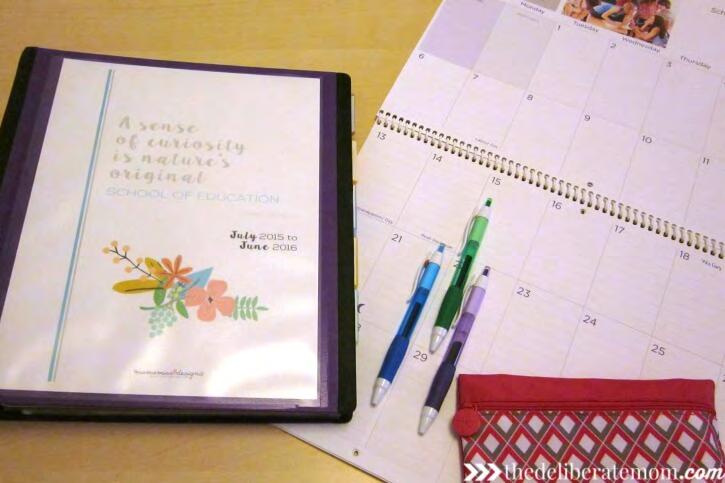
While we school year-round, some families are preparing for the upcoming homeschool year. Planning can be loads of fun but for others it can be an overwhelming task.
Have you ever considered having a homeschool planning retreat? I want to take you on a journey and give you some suggestions on how to have the best planning session ever!
Choose a day to have your homeschool planning retreat. If you can take a whole day, do it. If not, try to schedule at least 4 hours of planning time.
Arrange childcare for your children. If
By Jennifer Bly
possible, have them out of the house so that you can do the planning in the comfort of your home. Here’s why:
• Your curriculum will be at your disposal.
• You don’t have to pay for food, treats, or coffee for yourself.
• Your home (without kids) will probably have fewer distractions.
It may sound silly for you to make a plan to plan, but this is a critical step. Here are some things to consider:
• What do you want to accomplish during your planning retreat?
• How many weeks, months, etc. do
you want to plan for?
• Design a strategy to minimize distractions (i.e. let the phone go to voicemail; tell people not to call unless it’s urgent; don’t check your text messages or social media accounts while planning).
• Create an itinerary for yourself (make sure to include mini-breaks and inspiration in your day).
• Create a menu for yourself. I even suggest preparing your meals and snacks the evening before your retreat.
• What keeps you focused and motivated? Include this in your planning retreat as well. For example, if to-do lists motivate you, make a huge one and hang it in your workspace.
Before your retreat, collect all the materials you will need. Here are some things you could gather ahead of time:
• The calendar for your household.
• Your homeschool planner
• A computer or laptop with access to a printer (make sure your printer has ink).
• Some pens, highlighters, and sticky notes.
• Your children’s curriculum and workbooks.
• Some assorted snacks and treats.
• A candle or scented oil for aromatherapy purposes.
• A plant or a bouquet of flowers.
• A collection of music or your favourite playlists (if you don’t like to work in silence).
WHat to Do on your planninG retreat Day
I encourage you to start your planning in an inspiring way. I like to pray before I do my homeschool planning. I invite God to help me create a curriculum that will motivate and encourage my children. You may want to start your planning with a refreshing walk around the block or perhaps you could do a couple invigorating stretches before you sit down to work.
Start planning by looking at your calendar and noting any holidays, nonschool days, etc. Record all of those dates on your calendar.
Evaluate your learning objectives and assign a time-frame for each component
of your curriculum. For example, if you have 5 science units that you need to cover in 10 months, you can plan 2 months of in-depth study for each unit. Document these units on your calendar or in your homeschool planner.
If you’re planning for a shorter amount of time (like 6 weeks) focus on what units and curriculum you would like to cover during that time.
Repeat this process with each of your subjects.
This is a great time to take a break. Pour yourself a cup of coffee or tea, treat yourself to a snack, and relax. Don’t clean. Don’t do any other tasks. This is your break. Give yourself a solid 15 -20 minutes to recharge your brain.
Return to your planning with the task of planning your curriculum into your
days. You may prefer to do the planning for one subject all at once, or you may want to plan day by day. I personally prefer planning subject by subject, that way I’m not opening and closing various books.
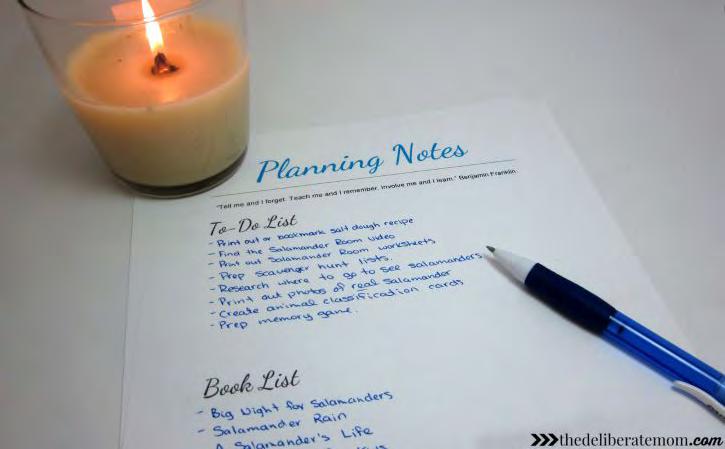
As you note specific activities, make sure you have a piece of paper nearby. I like to have three lists available while I’m planning:
• A to-do list (to track anything I need to prepare for a week’s particular activities).
• A shopping list for materials I need to buy (or gather) to carry out activities.
• A book list (to keep track of books I wish to borrow from the library, etc.).
As I plan, I note everything I will need and I keep the lists with my plans. Since I do my planning in 4-week blocks, I
take out these lists in the week prior to when I’ve scheduled the lessons and I check items off of the list as I complete them.
You may also want to place sticky notes in the pages of your textbooks so that you can quickly reference pages when you’re teaching lessons to your children.
Try to reward yourself short breaks throughout your planning retreat. Make sure to do enjoyable, relaxing, and inspiring activities. Here are some ideas for your breaks:
• Pray, meditate, and/or read your Bible.
• Go for a walk around the block.
• Paint your toenails.
• Eat a pastry while sipping a cup of tea.
• Read a book.
• Work on a crossword puzzle.
• Take a power nap.
Also, I find setting a timer for work time and a timer for break time to be effective. This way I don’t get distracted from the critical task of getting the planning done.
Once you’ve completed your plans, celebrate and do a happy dance!
Jennifer Bly is the author of My Kitchen, My Classroom: An Introduction to Homeschool and the creator of The Deliberate Mom. She loves to write about parenting, homeschooling, and her faith. Jennifer has a BAHSA with a specialization in Early Learning in Child Care and resides in Edmonton with her husband and two daughters. You can find more of her articles at thedeliberatemom.com.
By Natasha Mantler


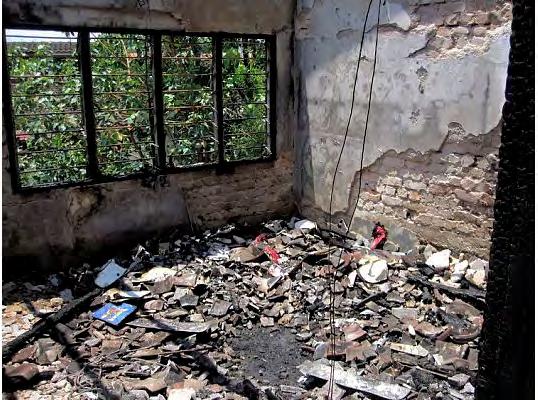
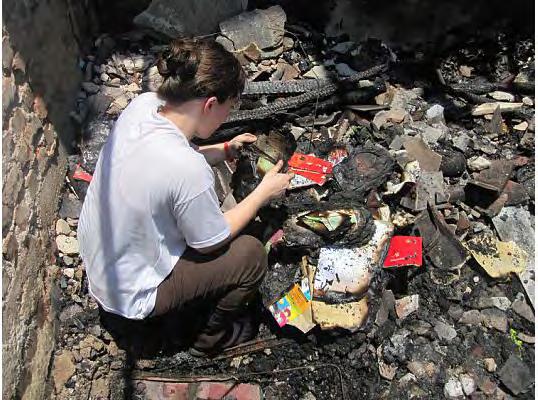
In April 2010 I experienced a house fire. At the time I was living in Malaysia doing volunteer work with an NGO. I lived in a house with 6 other girls, and I was the first one to discover the fire.
Before I left the house that day, I carefully put my purse on my bed, since I didn’t need it for this particular errand and would be gone just a couple hours. We lived in a high-crime area, where driveby bag-snatchings were very common. For this reason, I took only what I needed when I went out, especially if I was walking. On this day I had the bare minimum – my handphone and keys.
We’d been having frequent severe thunderstorms for several weeks, and this afternoon there was another huge downpour and I was delayed in my return. As I was walking down the street
I could see dark smoke coming from behind the roof and started to run – but it was too late. The fire was already out of control. We called for the bomba (fire truck), but it was rush hour and it took them 45 minutes to arrive due to the jammed traffic. I could only stand there and watch the flames consume the roof.
Many things raced through my mind during this time, but the overriding thought that kept circulating over and over was, “Don’t worry about tomorrow. You’re more important than the birds. Your Heavenly Father will take care of you.” The situation was out of my control, I had done what I could. I knew that whatever lay ahead, God wouldn’t give me more than I could handle.
The following weeks were extremely stressful as I tried to get a new passport


from the Canadian embassy. In addition, I had to make multiple trips to Immigration to apply for an extension to stay in the country, since my visa expired less than a week after the fire. It took almost 2 months to get a passport, because I had no original identification to prove who I was.
The fire (which we later found out was caused by an electrical surge from the storm) started on the 2nd floor, in my bedroom. My roommate and I lost everything. Of course I have some things in storage at my parent’s house in Alberta, so I didn’t lose ALL my worldly possessions, but it was a traumatic and unexpected experience nonetheless. Talk about a change in plans!
There are many lessons I learned from the fire and what followed.
I CAN live with less. Do I really need THAT many clothes or (fill in the blank)? No.
People are more important than things. Of course I was sad to lose almost a year’s worth of journals and photos, but I still have the memories and my friends...
Don’t wait to let people know you care. Nobody will ever see the pile of postcards I meant to write and mail – but never got around to. Good intentions don’t count. Tell somebody you love them today!
Projects and plans can be gone in a day. Decide who and what is really important to you, and spend your time on that. Sometimes we get so distracted by urgent or pressing matters, we miss out on creating special moments with the ones who really matter.
Perhaps you’ve already thought about your personal goals for this year, as well as what you’d like to achieve as a family. It’s good to make plans and dream. But stop for a minute and think about how you’ll respond if this year turns out completely different than you expected. Will you get tense and upset, or can you view the change as something positive? Often it is during the difficult times that we grow the most. Even if you don’t understand the “Why?” now, God is still in control and He has the best plans!
Natasha Mantler is a WISDOM Graduate.


By Marlane Noster

Iloveplanning. It’s one of those things that seems natural to me and always provides more gain than pain. When a new challenge or circumstance appears, the planning of solutions and processes is not far behind.
I usually look at what the complete picture of the plan should look like, in its best form; the ideal, if you wish. For example, in planning for my young children’s formation, I would imagine them much older. I would ask myself what picture came to mind for my child’s 18th or 19th year. What was the ultimate? I wanted to see a confident, intelligent, kind, generous, and resourceful person. If that was my goal, how could I begin to plan for it right now? I broke my plans into 4 categories; physical, spiritual,
emotional and intellectual growth and into 12 segments (since I only really starting writing down my plans when my children became ‘school’ age).
Physical growth was planned around the best resources we had, a farm which translated into physical chores, a garden which meant planting, weeding and growing healthy food, a kitchen that taught how to process healthy food into delicious eats and into good physical health. We planned events like barn dances and, at the appropriate ages, we invested in extras like swimming lessons. The wide, open spaces of our land created many opportunities for creative play. As interests developed individually we would try to accommodate healthy physical activity. We found that our
children became very resourceful in their various work and play activities.
Spiritual growth was a constant action in our family. We studied, we talked, and we prayed together. This was a daily, multiple times a day activity. We learned about service to others beginning at home and then out in the greater community. I wanted my children to know who they were in relation to others and I wanted to see the growth of kind and generous souls.
Emotional growth is where I realized that I was growing alongside my children. I recognized (eventually) that love forgave a multitude of failings and that if my children knew they were loved they would become confident individuals. We also invested in them individually by taking them each on dates, without any agenda, to spend time and learn more about the heart of that particular child.
What I found more difficult, especially at the beginning, was planning for intellectual growth. Could I compete with a system/school that had been in place for a century? Could I choose learning materials that would be appropriate for my children? What was a starting point? I did my research and found material I was willing to work with and so began the journey of discovery of each child’s best learning method. Having started with books brought home from school and eager to find resources better suited to home schooling, I was soon overwhelmed by the access I began to have to so very many resources. Eventually I found myself doing a ridiculous amount of screening in order to avoid attempting too much and to more carefully choose what was appropriate for each child.
Things began to fall into place for planning and measuring the success of each year for each child, and yet our most enjoyable source of intellectual growth was achieved by reading together and discussing. Eventually, WISDOM developed the online Socratic dialogue courses, with some of our children as guinea pigs, and our children began engaging in reading and discussion with a broader group. They gained a development of logic, intelligence and confidence that amazed me.
Along the way the details of my plans adapted because of challenges and passions but, essentially, the qualities I wanted to see in my children and the categories that I chose remained the same. I now delight in my grown children and am grateful to have grown alongside them.
Does this mean I am done planning? Not by a long shot. The planning of gatherings and events, both at work and in the community, has become easier with the years of benefit I experienced in planning for my children’s future. I continue to plan using the same process of looking at the end product or goal and working backwards to create the pattern and the timing of the plan.
Marlane Noster is co-founder and Events Director of WISDOM. When she's not in the office, she dedicates time to her church, community and her family, including her children and eighteen grandchildren.
Image source: kaboompics
By Paul van den Bosch

I’vebeen traveling the city streets and country roads of Alberta for more than a decade as a WISDOM facilitator. There aren’t many backroads I haven’t seen. I’ve been stuck in the snow or mud more than once. I’ve run out of gas at least once (thank you to the Bergen family for rescuing me). I have seen and photographed a wide variety of Alberta wildlife as I have traveled. I’ve been lost more than a few times. Usually the times I’ve been lost were due to my own error. But occasionally directions to a family’s house can be misleading.
Here’s one example from several years ago (name withheld to protect the guilty)...
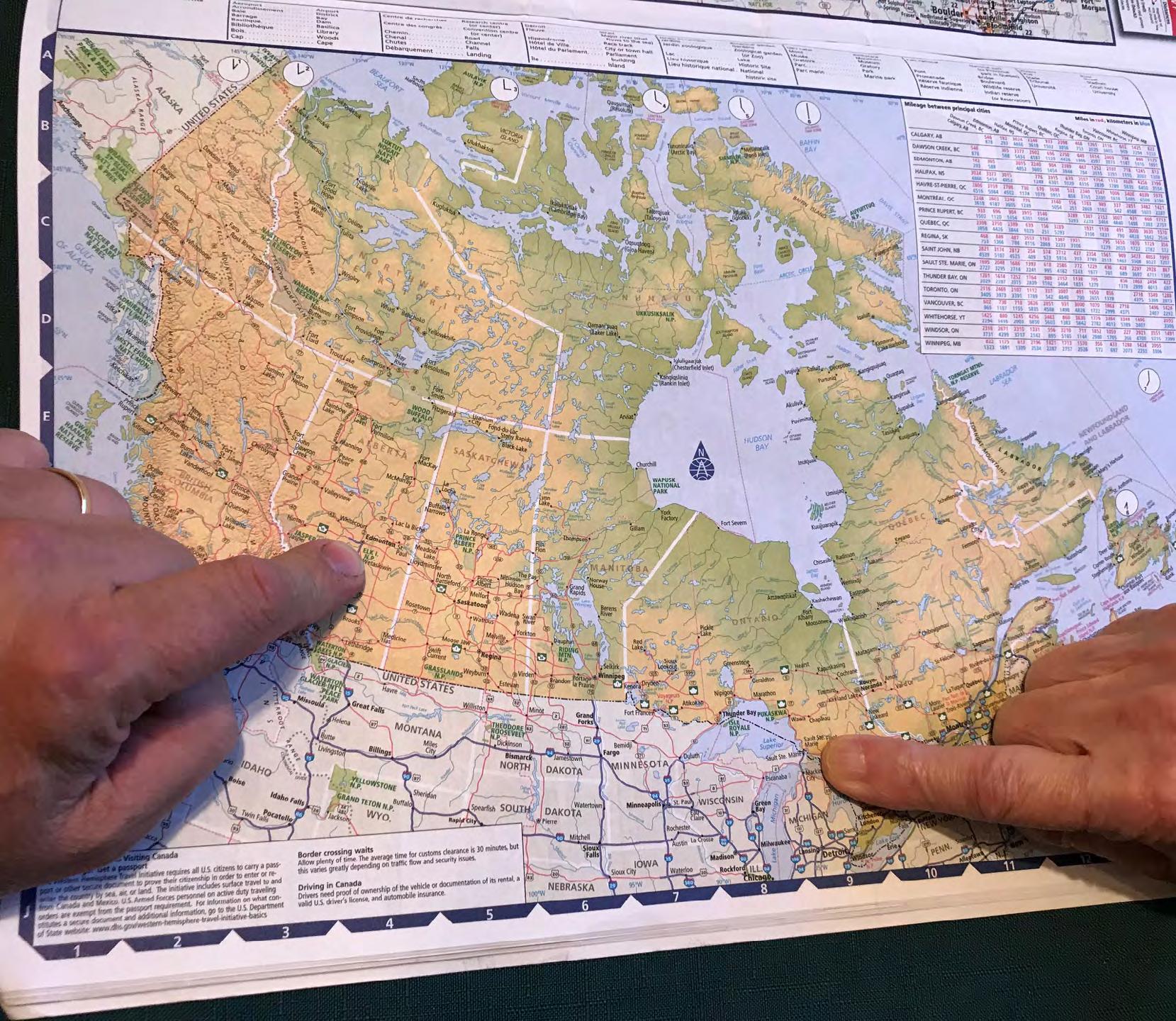
I had scheduled myself to be at the home of a family who were new to WISDOM. I was just outside one of Alberta’s larger cities so I called the family to get directions. I told the mum exactly where I was. She told me the following (and I wrote it down), “For that location, you should go about two miles on the range road, then turn right. You go about five miles down the township road and turn left. There are a couple of curves and you’ll cross two or three more township roads and then you’ll come to a T intersection. You turn left then take a quick right. Go about 10 miles.”
Since I had the number of their property

(she had previously given me the blue 911 number at the end of her driveway) I was confident I could find this house.
I quickly discovered a problem. I went two miles north on the range road, as directed, and turned right. I found that I couldn’t go five miles down the township road because I came to a dead end after only three miles. I thought: “OK, let me backtrack and see if I can figure it out.” I decided that I had turned down the wrong township road. So, returning to the scene of that supposed error, I called the mum from that last intersection.
I still recall her response: “How did you get THERE?” Since I was now starting from a different place, she gave me a slightly different set of directions and I sent out once again. This excursion didn’t end any better. I got to the place where I was supposed to take a “left turn and then a quick right” but found that there was no quick right. After traveling down that road for three or four miles I turned around and came back.
I made a third call to get an updated set of directions. Again the response: “How did you get THERE?”
My answer: “Well, I’m usually pretty good at following directions but apparently not this time.”
At the end of this set of directions – the third set of directions – she finished by saying, “OK, that should get you to that point.”
The lightbulb went on in my head.
I asked, “That should get me to WHAT point?”
“That should get you to that intersection.”
I answered, “But I’m at that intersection already.”
There was laughter at the other end of the phone as the mum realized what she had done - three times in a row, she had given me directions that were the opposite of what I needed.
She had been giving me directions from her house to where I already was.
When I finally arrived at her home –after she had given me a proper set of directions - the mum said, “I never realized I was dyslexic, but apparently I am with directions!”
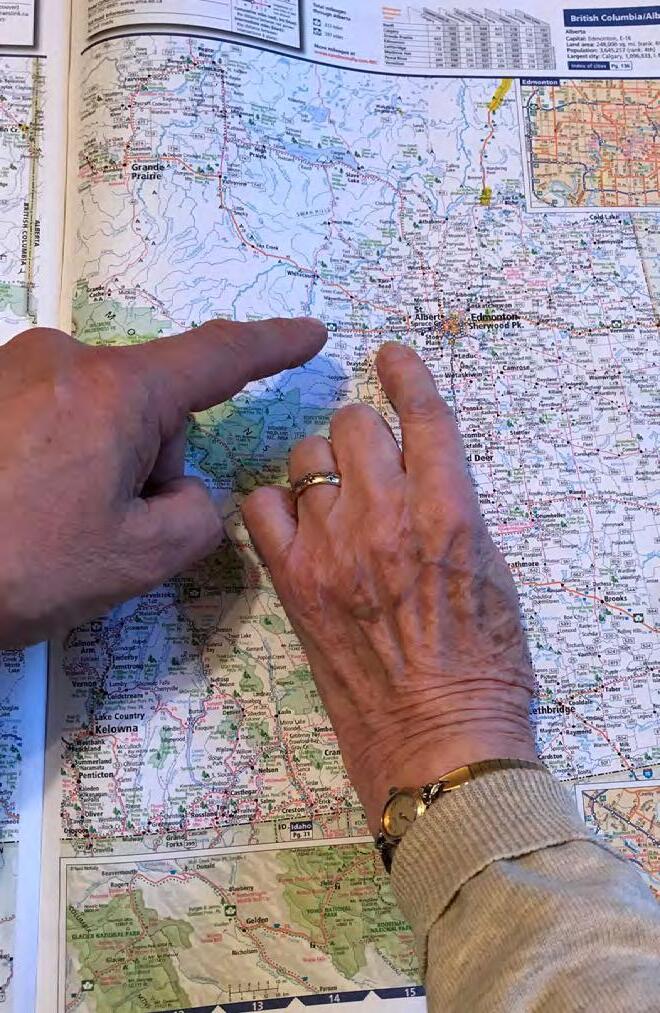
I tell that story because it seems to me that that is what we often do as home educating parents: we have a vision of where we need to go but it may not match the vision of our partner. In fact, we may have very different ideas of the direction we should head. We may not agree. We may get lost along the way. All of our planning may not get us where we want to go, so we need to communicate clearly with each other to make sure we are on the same page. Or perhaps I should say ‘on the same map’.
The other point to that story refers not so much to vision but to revision. Take a look at that word: revision. It comes from the word revise, but if you think of it in relation to the word vision - as ‘re-vision’ - you might say it means, “to see again.”
Look things over.
Review.
Recalibrate.
Update your vision.
See things in a different light.
Check your compass and start again.
Revise your plan.
Yes, making a revision means you have revised things. But it also means you have re-seen things. In the story above, I had to get a different set of directions to get where I was going. My starting point had changed each time. I had to alter my vision of the immediate future. I had to re-see the direction I was going.
We all make plans for our lives and for our children’s education [and, yes, this is a reminder to send any EPP revisions to your facilitator now as well as to write your EPPs]. We make plans for every day’s events and we need to update those plans when necessary. This happens every day, every hour, moment to moment. We need to adjust when things don’t go as we had hoped. We need to be flexible when the schedules of others conflict with ours or when others are not as punctual as we would like (or when we run late, which I never ever do as a facilitator… *wink*).
We need to allow for mistakes and then revise our plans. This happens when we are driving, and it also happens when we are learning. We’ve all seen this with our own children. We hope they will grasp a concept quickly and move on to the next one but that doesn’t always happen. We could, at that point, continue with our plan and plow ahead with what we had hoped they would be learning at that point. We could stick to our original plan. But we all know that’s a mistake. We need to adjust our plan and take more time in order to make sure they have truly learned today’s lesson before we go on to tomorrow’s. This is
one key element which home educators know: it’s OK to take an extra two days or two weeks or even two years to learn something, especially if that something is a foundational piece upon which other things are going to be built.
So we re-vision the immediate future. We re-plan and go on from there. Sounds easy, doesn’t it? I wish it were so. But dealing with the unexpected and the need for revisions brings new skills: the ability to adapt, the skill of being flexible, becoming a person who can think on his feet. Those aren’t necessarily qualities I would have chosen for myself, but the need for revision has taught me a few things.
I’ve also learned from other experiences. About a month ago, I attended a men’s conference in Traverse City, Michigan, with my oldest son. One of the speakers, Fr. Gary Caster, talked about beginning each day with prayer, specifically by offering the day to God with a morning offering. One of the things that he suggested was to say out loud, “I accept all that is expected of me today and all that is unexpected.”
He had several other suggestions and I thought they were all excellent. But wait a minute. What was that last part again? I have to accept the expected AND the unexpected? Not sure I can do that. I like to know what’s coming ahead of time. I don’t mind birthday surprises but there are some other unpleasant surprises that I would rather avoid. I want to control things. I want to know what’s expected of me in the future. I want to know what to expect. In that sense, I don’t like the unexpected. And now you’re asking me to accept it and even welcome it? Not so easy at all.
Realizing that many aspects of the unexpected are aspects that I don’t like, I had to reflect. I like some surprises but not others, right?
Why?
I see life as an adventure, and an adventure should be full of surprises, full of the unexpected. What am I resisting? Or perhaps I see life as an adventure as long as it’s an adventure that I choose. If I planned to go on a safari I would make sure that I had everything planned out safely. Going for a walk by myself on the African savanna when I hadn’t planned to do so would be more of an adventure that I would like. Providing an unexpected lunch for one of the wild animals might be enjoyable for them but not so much for me.
Some aspects of the unexpected are OK. Other aspects are not.
“I accept all that is expected of me today and all that is unexpected.” That’s a prayer I will have to work on.
Part of accepting the unexpected is maintaining an even emotional keel, staying calm, not getting angry when there’s an unpleasant surprise or when my plans have been upset. Keeping my equilibrium. I had a vision and now I have to change it. That’s not really all that difficult, is it?
True, I may not like it. But it has to be done.
So pause, reflect, revise.
I need to make a re-vision. Start again. Look carefully at where I’m at so I can replan to get where I want to go. So I have to completely change my vision then?
Not really.
I still have the same vision for the future. The same plan, the same goals. I’m still heading in the same direction. I’m just at a different starting point now. I’m on a slightly different path. Not exactly where I planned to be at this point. That’s OK. I’m here now. I can still get where I wanted to go. I can hold to my vision and I’ll still end up where I planned. My vision will guide my revisions. And God, please guide my re-vision.
Paul van den Bosch is a WISDOM Facilitator who wears bifocals. So he has vision and re-vision all at the same time.

By Nicole Barter


Yes, I believe that drinking tea is an art form and is an activity/ skill that I need more of in my life. You see, drinking tea causes someone to stop, to slow down, and to think. It can offer peace and warmth on a cool and chaotic day. So often I do not take the time to stop, slow down, and think about more than what is next on the list. The more time I have, the more I do. I think I am afraid of being still because I see it as not being productive. I am notorious for making tea and not getting to it until it is cold or, even worse as of late, I completely forget to
drink it altogether after making it.
My idea of the perfect tea is found alongside a good book and either a window seat or a wood fireplace. As my life seems to get busier and busier, sometimes with things that I enjoy but also with things that I don’t, I notice the need for more silence and simplicity. I think that tea can really help us dive into that moment. I have always thought that drinking tea was supposed to be relaxing and so, if that is the case, it can also be a tool to help us enjoy and make time for those
moments of silence and simplicity away from the chaos of the world and daily life; to find the peace that give us a boost to keep going. My goal for this year is to learn the art of drinking tea. It’s a fun way of saying that I am going to find areas to enjoy and make time for the simplicities of life, that silence that we miss and forget about, and that peace that our hearts so desperately desire. How is it that we can get so caught up in our daily lives that we miss these elements that really should have such foundation for our day?
In homeschool families, there is such a great opportunity for living out this peace and simplicity with purpose. I think it is also so much easier to get caught up in the chaos and to-do lists of the day until we get to the point where we want peace and silence and for the world to just stop spinning. I always picture those old merry-gorounds that used to be at every park in the 90’s. I stayed away from those because I got so dizzy - but that is how my life can feel like now. How do we get off of it? Sometimes, I think we don’t even know that we are on that merry-go-round until we are about to fall off from the force.
I have gotten so good at adding more and more to my plate. I don’t want to be labeled as lazy, or to get bored. I want to be productive and make people’s lives easier. Realizing how my plate has gotten full over the years, I am now in the phase of taking a step back re-evaluating and deciding what I can realistically do. What are the key
things that I need to do to live the way I feel called to live and to be the person both God and I want me to be? This is hard because I so strongly dislike leaving chores undone. I see I need balance to train my eyes to see past some chores (let’s face it, there are always things that need to get done) because other things like prayer time, playing a board game with family, reading a book, writing a story, or even drinking tea are all just as important if not more important than the mundane tasks of daily life that can sneak in and rob us of our peace.
This year I invite you to join me in drinking more tea. Find that time for silence, simplicity, and peace that our hearts so deeply desire and let’s make time for what really brings purpose to life. If that means that you don’t make it through everything on your list, then it wasn’t meant to be. I need to let go and give it to God, cross it off today's list and discern whether it is important enough to add it to tomorrow's or if it is just gone into space forever. God has blessed me with a wonderful opportunity this year to drink tea and so I think I will, and that does not mean drinking it cold. What are your goals for this year? What is important to you? Do the things you do bring you life? Enjoy your tea!
Nicole Barter is a WISDOM graduate who went on to obtain a Bachelor of Education Degree and Bachelor of Arts in Music Degree.



By Jennifer Bly


Are you in need of a homeschool hint to get your homeschool organized? Do you have great homeschooling ideas but struggle to implement them? Do you feel you have no time to create lessons, organize materials, and gather resources for your homeschool? Look no further friend – I have an ultimate homeschool hint that will BLOW YOUR MIND!
Has this ever happened to you? You sit down to do an experiment with your children and realize you

haven’t prepared the materials ahead of time. You scramble to round up the materials you need but in that short time-frame, your children have gotten distracted and lost all interest in the activity. So you spend five minutes trying to capture their attention once again.
There was a time when I would spend my evenings and weekends making plans and gathering materials for my homeschool. I knew that if I didn’t plan or organize lessons adequately, our homeschool would suffer. However, this rhythm of using my spare time to prepare for our homeschool was stealing my joy and enthusiasm. I needed rest and rejuvenation but I rarely got it when I was spending all my free time planning and organizing lessons.
I decided that I had to make a radical change to my homeschool – and friend, that change has been life-altering. Here’s what I did. I planned a Homeschool Inservice Day for every sixth week.
A homeschool inservice day is a day when the children have the day off from their homeschool lessons and I have the day off from teaching.
There are several tasks I accomplish on a homeschool inservice day such as:
• reflecting on the previous six weeks of homeschool lessons
• writing notes about my children’s growth in my homeschool planner
• planning for the next six weeks of homeschool lessons
• gathering the materials needed for the next term
• ordering required library books
• making lists of (and ordering) the supplies we need
• planning field trips
• adding photos to our homeschool yearbook
• filing projects and artwork into our homeschool documentation bins
• refreshing items in our morning time basket
• cleaning the house
Homeschool inservice days are not a free-for-all. My children have important tasks to do as well! I usually make a list of jobs that they need to accomplish during our inservice days. These tasks include activities such as:
• sharpening all the pencils and pencil crayons
• restocking the drawing paper drawer
• testing the felt markers and throwing out any that are dried up
• checking that our pencil caddy is fully stocked with pencils, crayons, scissors, hole punchers, markers, and glue
• gathering projects and materials from the previous 6 weeks to place into documentation bins
• filling binders with lined paper
• straightening out homeschool shelves and baskets
• thoroughly cleaning their rooms
I also like to include my children in a major project on our inservice days. Here are some major projects that can be completed together:
• rotate seasonal clothing in the closets (this includes laundering and packing away clothes)
• gathering books and materials to sell / donate
• cleaning and disinfecting physical education equipment
• organizing and making an inventory of the pantry (great activity to do before the Christmas season)
• declutter and organize art materials
• sorting, organizing, and taking inventory of our homeschool materials
• cataloguing our homeschool books
I always like to reward everyone for the hard work they’ve put in on inservice days. Some ideas for rewards include:
• going out for dinner (or ordering in)

• have a family movie night (complete with tickets and a concession stand full of treats)
• host a board game night
• visit an indoor playground or check out a new park in the city
• go out for ice cream
• have a spa evening (do yoga, paint toe nails, sip tea, listen to soft music)
break from their regular homeschool routine and I’m able to stay on top of our homeschool journey. I couldn’t imagine homeschooling without the ultimate homeschool hint of inservice days! It’s a special (and important) part of our homeschool.
Jennifer Bly is the author of My Kitchen, My Classroom: An Introduction to Homeschool and the creator of The Deliberate Mom. She loves to write about parenting, homeschooling, and her faith. Jennifer has a BAHSA with a specialization in