
Planning& Perseverance


Thekeytoeffectivehomeeducation depends a lot on planning. This resourceisfulloftipstohelpyouplan wellforallstagesofteachingyour children.



Planning & Perseverance
revised 2024
The key to effective home education depends a lot on planning. This resource is full of tips to help you plan well for all stages of teaching your children.
To find more, including samples, fillable templates, the planning checklist, the Schedule of Learning Outcomes and even a “How To” video, check out wisdomhomeschooling.com/forms/education-program-plan
If you get stuck at any time in your planning, please call us! We’re here to help.
Unless otherwise credited, images are courtesy of WISDOM’s Noster, Burgess, Tinant, and Doyle families

My Education Philosophy
By Patty Marler
As an 18 year veteran home educating parent of four great kids, I have had time to develop and cultivate a philosophy of education. The development of this philosophy began early as a love for my children and a desire to be with them. It grew as a desire to continue to be the primary influence in their life. It has been developed and honed as I have home educated, watched others educate their children, and seen the fruits of various forms of educational methodologies and philosophies. It is now a formed philosophy, but not yet a solid rock.
Educational Philosophy:
An educational philosophy contains several elements. The Google™ definition states that philosophy incorporates “...the nature of knowledge, reality, and existence...”
An educational philosophy is a personal statement of a teacher’s guiding principles about the “big picture” as it relates to educationrelated issues, and how the educator is involved in all this.
And thus I begin to present my own educational philosophy.
Each child is a specific creation of God, and He has a special plan for every one of them. He created them unique in their character, skills and strengths and unique in their purpose for Him. I thus believe that the purpose of education is to help the child to know that he has a distinct purpose and place in this world and that he fits in with God’s plan. My role as an educator is to help the child begin to discern how and where he fits in to the world.
A solid education will help a child to know God, know His character, know of the covenant relationship with Him, and know man’s purpose in this world. It will empower a child to be emboldened with God, and to use whatever gifts God has provided him with as a way to glorify and serve.
A good education will empower a child to discover his unique qualities, characteristics and strengths, and provide him with the courage to serve God as called. A good education will reveal to a child that their uniqueness is neither good nor bad, it simply is. What some people may see as limitations, God can use as strengths. Conversely, what some people view as strengths, God can find disabling to the individual’s unique purpose and make them less useful to Him. When children recognize that they have a special role to play in this world, they will recognize that they don’t have to be like everyone else,
and that God doesn’t want them to be like everyone else. He wants them to be the way they are.
The application of this means that kids with obvious weaknesses need to be encouraged to look at the strengths they do possess. They need to hold strong to the truth that God has a plan for them. Fruitfulness comes in many forms, and a child’s ability to be fruitful does not lie in test scores, it lies in their commitment to be the best they can be with what God has given to them. A student who works hard, but recognizes that their strengths lie not in academia may be more fruitful than the straight ‘A’ student who takes great pride in their ‘own’ accomplishments without offering their usefulness to God. In the same way that struggling students need to recognize skills beyond academia that are important to God, children with obvious strengths need to be encouraged to recognize that God is the giver of all good things, and that these gifts come from Him and are for Him.
A strong education will teach a child the skills necessary to thrive in today’s world. Of particular importance to me is helping kids to love and desire good literature... even when they can’t read. Reading is not the only way to experience good literature, and using a variety of approachesreading aloud, stories on CD and other audiobooks, picture bookswill help children fall in love with
literature. Never give up on a child’s ability to read, no matter what their age. Being committed to developing this love and skill in all children is crucial.
It is also important to me for kids to understand math basics, even if it takes a long time to learn them. Math fundamentals are essential for life, and making sure kids learn and know them is important.
A meaningful education requires engagement, and the best way to achieve this is by having the parent as the primary educator. Parents who are actively engaged in their child’s education will produce meaningful education situations, and all parties will benefit. Parentto-child educational interactions and discussions are important, not only
to the child, but to both parties. The parent is the primary decision maker in the education of a child, and it is the parent who is to raise up a child in the way they should go.
Years of experience, years of loving my children and years of discovery of what works and what doesn’t have led me to developing a much greater understanding of what it means to educate a child. My philosophy of education has evolved as I have grown - and continue to grow - in knowledge, experience and wisdom. I pray that there is some knowledge within my philosophy, but more importantly, that there is a reflection of God’s wisdom within it.
Patty Marler is a home schooling mother of 4. She is an ardent supporter and fierce defender of home education.
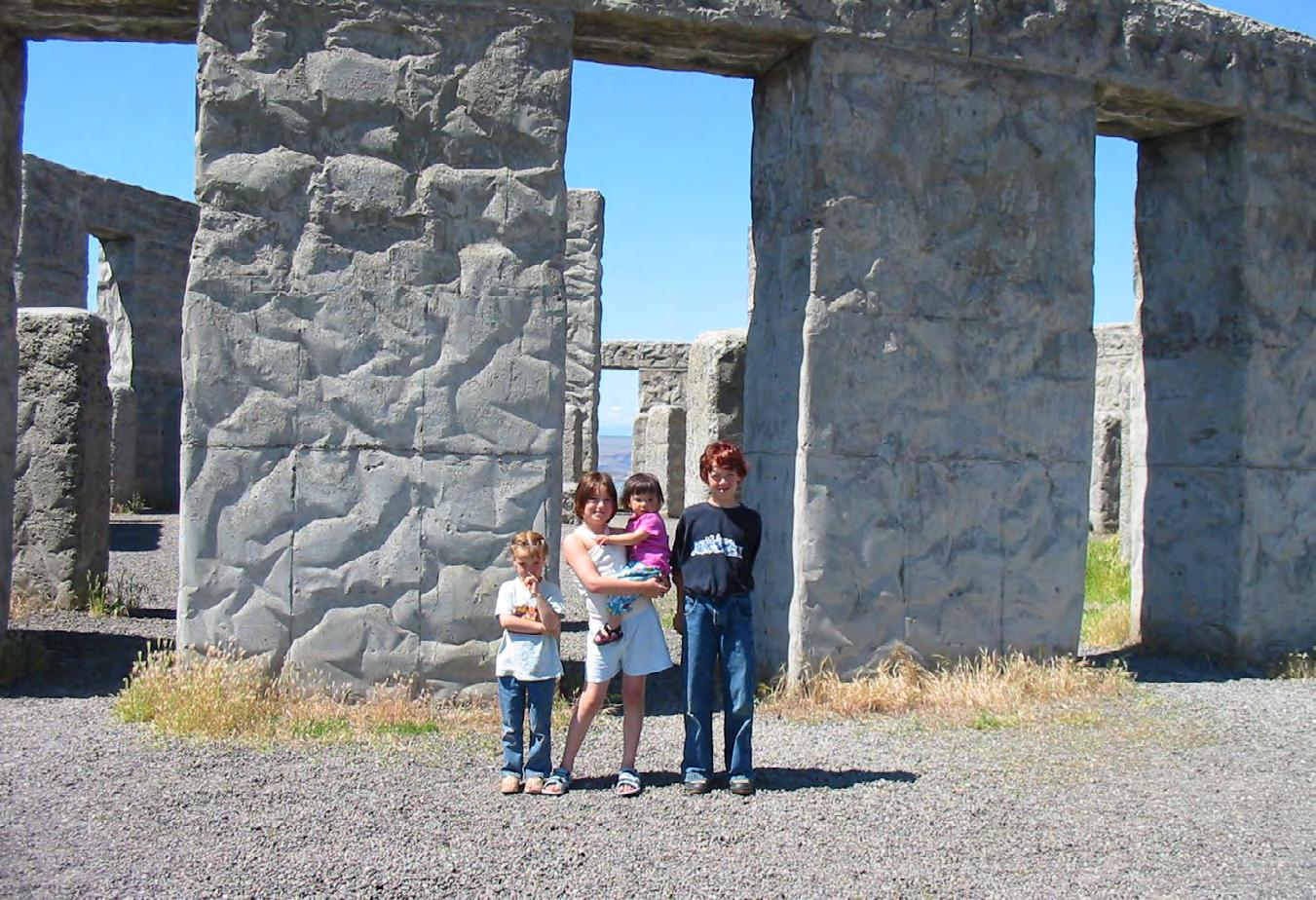
Photos courtesy of Patty Marler
I Wish I Knew Then...
By Lorraine Williams
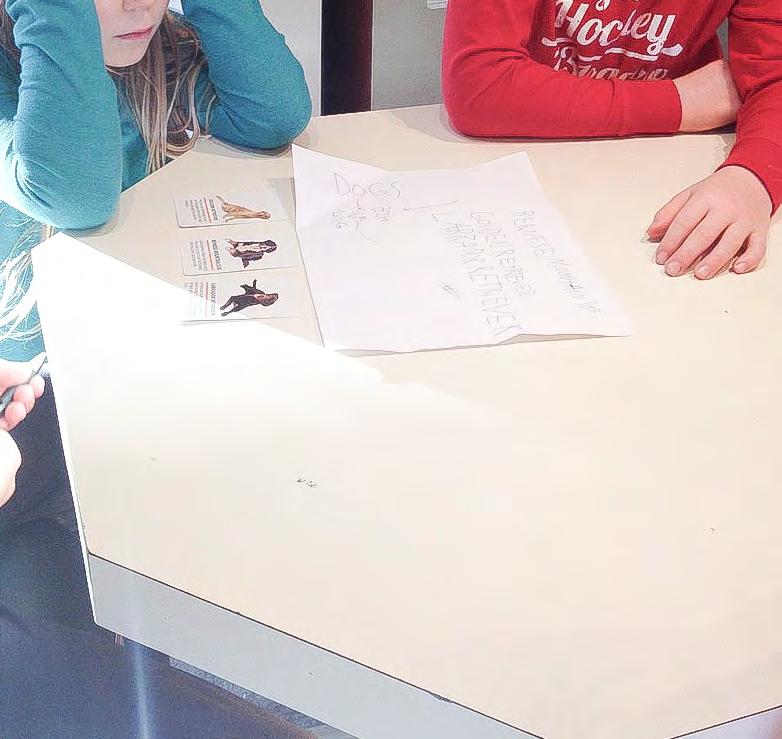
“I Wish I Knew Then What I Know Now – What Every Newbie to Home Education Should Consider” -Lorraine
Williams
Alifeboat is thrown over the side of a large, luxurious cruise ship. The mother carefully lowers her 6 children into it along with herself, releases the rope, and the boat drops into the water. The other passengers stare in disbelief and shock and, shaking their heads, turn away and leave. No matter. She picks up the oars and, smiling at her precious children, begins to row out to sea. Her destination is crystal clear. A new life of home schooling. The way there, however, is not so clear, but without a doubt, she knows she made the right decision.
That was me almost 20 years ago. I shake my head in disbelief that it has been
that long. It seems like home schooling was always my life, but it wasn’t. My two eldest attended a couple of schools before I pulled them out in grades 4 and 3. It took a year to ‘flush the system out’ of them, and for all of us to relax into the daily rhythm of schooling at home. Almost three years later, we were settled into a routine, and most of the fears I had at the beginning were gone. We did it!
In talking with other families who began this new life around the same time, I discovered a similar theme. Resources were few, the identity or character of what a typical home education family looked like was narrow, and we made many mistakes based on false assumptions of what home schooling was ‘supposed’ to look like. We have some regrets.
It was uncharted territory at that time, and as a result, our relatives were often openly opposed to it. More often than we liked, grandparents would secretly quiz our 10 year old about whether he could read at all (though he had already read the Lord of the Rings trilogy). This lack of respect did undermine our confidence in our abilities to do a good job, but never changed the resolve to continue with the life. Some families had to physically move away from the interfering relatives in order to maintain the trust of their children. It was a smart move for them; their home schooling lives flourished and matured.
At the time I jumped ship, there were not many choices in programs, curriculum, nor was there a readily available means to know what fit my children’s varied needs. It was a walk in the dark with frequent stumbles, changes of paths, and tears –of mine and my children!
In all this was the constant trust in the Lord’s providence. God did provide, God can provide, God will provide. As I spent time at various home education conferences, I met other families who were similar to mine. We shared a common ideal, and common struggles within marriages and relationships. I have to say that the socialization I did with these other mothers is what blessed my children the most. In these other families my children saw a healthy marriage, similar sibling dynamics, ages, babies, and home schooling.
Each year was different, and better than the last. A wise woman, who has since passed away, gave me sound advice many times: “You have to give it three years
to really settle in.” She was right. Too many families decide to give it a year, and after that, they quit. The first year is usually the messiest, and I don’t mean the housekeeping or laundry! I mean the routine of each day, the curriculum selection that might not work, or the ‘too much too soon’ attitude. At first, family relationships can struggle with the conflicts that come from being all together for the first time in years.
This brings me to my wish-list for newbies, based on what I did have in my own family, and what I did not.
KISS Principle: Keep It Simple, Sweetheart
Depending on the grade levels and ages of your children, and especially if they have already spent time in the school system, just teach the four Rs. Reading, ‘Riting, ‘Rithmetic, and also Religion.
Do plan your week ahead for each child. I used a planner that made it easy for each child to follow. My decisions were made on Sunday night, making it easier to balance, or rather, juggle, all the balls during the week.
A large wall calendar was taped onto the fridge. Each month could be seen by all. Weekly chores were there, music lessons, sports, feast days, etc.
Our school routine started out looking like a typical ‘school’ day, because our facilitator at the time was teaching her own children that way. Naturally, I thought that is what I should do, too. It was not until months later, suffering from severe mental exhaustion, and after
attending a home school support group’s meetings and entering into the wonderful world of home school socialization with other families, that I realized that ‘school at home’ was not working.
I modified our September to May school year to suit our needs. We began in October after the garden was out, and Fall camping came to an end. We took December off to enjoy Advent, the snow, skidooing, skiing at Rabbit Hill, fun team hockey, skating, etc, and preparing for Christmas by doing lots of crafts and socializing. Periodically, we would double up on the book-work for one week to take a whole week off the next. Instead of home schooling on Mondays, we would go to the ski hill, which was especially quiet the first Monday after Christmas break! Several times we would use nothing but paper plates, cups etc. for a whole week, to give the kids on kitchen duty a break.
The kids would have Fridays off to have friends over. It was not unusual for me to have a dozen extra kids at my acreage. By the end of May we closed the books wherever we were at, and put them away. Learning did not stop, of course, but the academics were given a break. June was spent enjoying the natural world, pursuing hobbies, going to the lake in the evenings, and camping.
There were times – more than once –when I wanted to quit, to throw away the oars and wave the white flag. Out of the blue, a word of encouragement would come from someone just at the right moment. Thanks be to God! Usually, this is an indicator that Mom needed some time away from the demands of
home education, home, etc. Too many mothers, especially of large families, neglect their mental health in the early years. As each new baby arrives in the family, their ability to cope is challenged. This is why it is so important to make sure the husband can be there for the mother. If he can’t, she will have a hard go of it. Some have had to send their children to school because of opposition from the father, and his criticism of what appears to be a ‘lack’ in the children’s education. Not every home educating family functions as smoothly as one which has the father directly involved in the teaching. It is most beneficial, of course, to have Dad right in there, sleeves rolled up, taking his turn at the oars. Those mothers who row alone deserve our utmost respect and admiration. This is an area that facilitators must be very observant of during home visits. Ask
the tough questions about the family dynamics, and make no assumptions based on their own experiences.
The new home schooling family frequently looks too far ahead and worries about high school, post-secondary entrance, etc. This never really bothered me. I could see how online education was making inroads in the USA, how post-secondary degrees were in demand from homes, and how quickly home education was changing in terms of quality of material, variety of curriculum publishers and information for parents. Getting through high school is much easier now. High school can be a blend of many approaches. It will be a different journey for each. While some may opt for summer school, night classes, online courses, diploma exams or even the local high school, they need to know that your love for them is far greater than your devotion to home education. Others
will navigate through high school at home with no real bumps in the road. There is so much support and so many options for those wanting to complete high school at home. No matter which route you take together through high school, keep the relationship with each child the top priority above any ideal for education. Some parents have lost a child due to the conflicts with home education. I am one of them.
Socialization was never an issue, either. It sure was a worry for family members and some friends though! You would think they were an official judge of quality education, the way they expressed their concerns. These negative comments did fall on deaf ears, but still hurt nevertheless. I have and do point out to them the obvious decline in healthy relationships within the school system today, the playground politics that have left the sand pits and entered the staff rooms, workplaces, post-secondary circles, as well as the anti- social and bullying behavior of young adults, so harmful in our culture today.
My vision for my children as adults is what guided me during those early years. I pulled them off that luxurious ship and into the rocky boat that eventually landed them on the shores of adulthood. Responsible, creative, generous, faithful, honest adults. They have their scars from my mistakes, from enduring the dysfunctional marriage of their parents and my own mental health issues. Those scars will hopefully remind them that they are tough and can survive in the world.
There are many problems in the school system now, way more than there were 20 years ago. But that is not why I pulled them out. I just wanted something better, and knew I could do it for them. Never did I allow them to bad-mouth public school kids, to feel that they were somehow superior because they were home schooled. The beauty of home education is the diversity within the unity.
Another mistake some newbies made was to idolize certain families because of their perceived perfection. The comparisons always resulted in a disappointment in their own journey. True, some families are out there as guideposts, but don’t ever forget the uniqueness of your own. Learn from others who have gone before you, but do not compare.
Home schooling is a privilege. It is not to be abused, nor taken for granted. Don’t neglect studies, assignments, or deadlines. I still see moms struggling with a high school aged child who is not keeping up with assignments, frequently falling behind, defaulting to gaming in free time, and not taking responsibility. We must guard against making home schooling too easy. They must struggle to take ownership of their education, and ultimately their lives. If we spoon-feed them at home, they will flounder once in university, or college, or the workplace. This life we have chosen is definitely not the easiest. Kids need to know that parents have options, otherwise we risk them becoming just another young adult with a deep sense of entitlement that somehow the world and every adult they encounter owes them. They will not shine as they should.
Character is so important and needs to be addressed early. Some excellent resources are Character Building by David Isaacs, and any of the books by James Stenson. These are full of practical tools to raise kids to adulthood with a healthy vision of what that means.
In my early years of home schooling I was also searching for a way to define who I was as a woman and mother. Too often the general public perceives that home schoolers should look like something out of Harrowsmith Magazine. It is important that when we are out in public we remember that we are ambassadors for this great life decision. We represent all home schoolers to those who have never met one. It is not an issue of fitting in, but rather of standing out. Not so much by what we wear, but rather our handshakes, our confidence, our life skills, and yes, well socialized children. The best way to socialize children is within the family context. The more time they spend with adults and other healthy families, the more mature they will be.
As far as academics are concerned, I used workbooks for elementary grades. I put maps and science/history maps onto the kitchen table (covered with an oilcloth). The kids would read and learn while they munched on a sandwich. They need to have good resource books piled up in the living room, spread on tables, and everywhere else. Their natural curiosity will be filled with the easily available information. They are like sponges and soak up their environment. Read aloud to them every day, right from birth. Keep the TV off. Keep music on and instruments available, keep board
games and cards out where they are accessible. Organized team sports helps home educated kids compete with other students within their peer group, a skill they will need when out in the postsecondary world or workplaces.
Some kids need to be alone in their room to concentrate while others do better at the kitchen table. The first few years will take some trial and error until you sense that it fits. Give yourself time to settle in to this new life, to relax, develop a weekly routine that builds character. Academics cannot be accomplished well if the will is not trained first.
As soon as you can, reach out to other families, even if it means driving a long way to find like-minded families. This helps the kids to see how others are home schooling, and gives them a sense of normalcy in their lives, especially when their cousins or neighbors are all in public school and the opposition is keenly felt.
For mothers, take time every day to be alone, to rest your mind and body. This can be done in many ways; a locked door, a long walk, or classical music on your iPod. Resist the temptation to be a martyr to home schooling. A healthy home environment depends to a large
degree on your mental health; I know from experience. It can be devastating to the children if you do not take care of yourself and of your marriage. These things are more important than the home education goals.
A word to fathers: Much has been written recently about the crucial role of fathers in the successful home schooling family life. If you cannot take on any of the teaching, I urge you to take the children on day trips, away from home. Most moms just need a few hours alone at home, in the peace and quiet. When this happened for me, it was so refreshing, and my energy was renewed. I know one mother who arrived at a women’s retreat so exhausted from preparing 3 days’ worth of meals for her brood that she slept through the entire first half of the retreat. Sometimes that is all we need. Dads, your support of Mom’s efforts, and your mentoring of your children, will be so appreciated!
I have written all of this from the perspective of a still imperfect home schooling mother of 7 children. I have home schooled for 19 years, with only one child at home today. The early years are a blur, and I wish I knew then what I know now…


By Kristine Buchholtz
Surrounded by Love Surrounded by Love
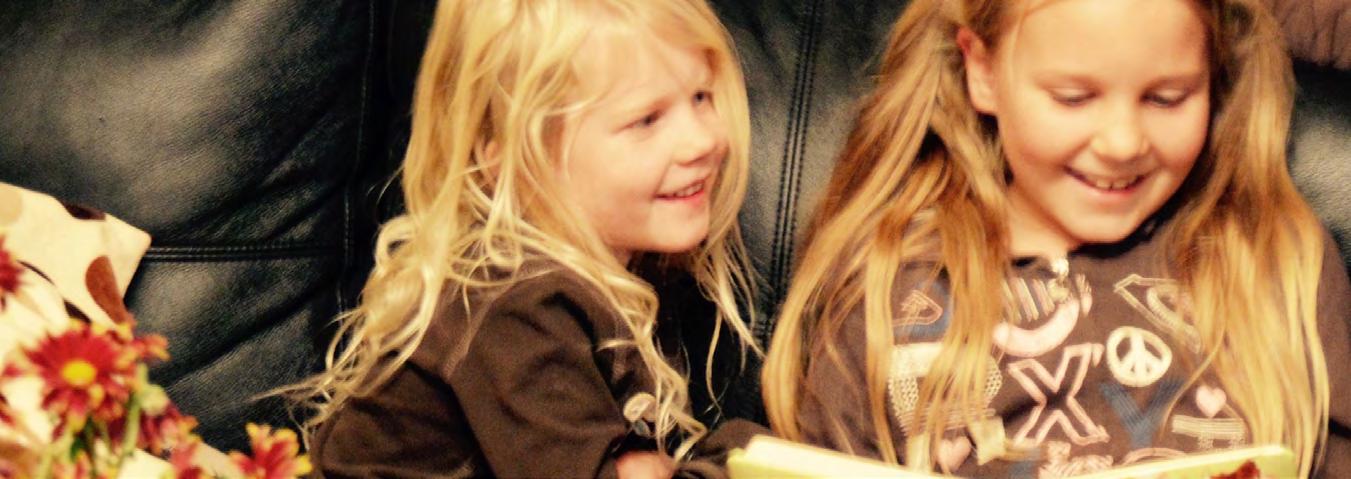
Iheldher in my arms, and my world shifted.
Looking at her precious face and her tiny hands, my heart exploded with love and I experienced the tiniest glimpse of God’s unconditional love for me.
She inspired me.
As she grew, she also filled my life with laughter and joy and challenges and frustrations, as she caused me to stretch and grow out of my selfcentered existence into greater and greater maturity, where I learned to look beyond myself, to serve, to grasp at every last bit of wisdom, to
draw on patience I didn’t know I had … or that I knew I didn’t have!
And as she was joined by brothers and sisters, I continued (and continue) to grow into the person God intends me to be, through the laughter and the rewards, through the frustrations and the challenges, through the sorrow and the joy … and through the love.
When she was very little, I would listen to other moms share their excitement and eagerness about the time their young children would grow old enough to board a yellow school bus and leave home for hours each day, and I just couldn’t relate.

And so our oldest didn’t board that bus, but instead stayed at home, and just as I had the honour of hearing her first word and watching her first step and experiencing so many other milestones, I now had the privilege of hearing her sound out her first word… her first sentence… her first book. I sat beside her as she learned about place value and about how to diagram a sentence and about animals and electricity and plants and history and geography… and the list goes on. I travelled with her and her siblings to other times and places – and even to other worlds, like Neverland and Narnia and Middle Earth – as we immersed ourselves in book after book after book.
And their learning inspired my own.
But I must also admit to growing a bit weary after a certain number of years. At some point, I misplaced the passion for home schooling that I had once known. And the fear of home schooling through high school (can that even be done, I wondered?) loomed so large that the lure of an institutional school -- for that last part of their basic education, at least --beckoned with a siren-like melody. It had been years. I’d done enough, hadn’t I? Life was hard on a single income. I was tired. Tired of home schooling. Tired of their bickering
(tired of my bickering!). Perhaps they’d do okay in a “real” school.
Perhaps.
I will never know, because I swallowed my fear and we continued on through high school, at home. I quickly realized how much we would have missed out on had they gone to school instead of continuing their education at home. For us, high school has been an exclamation point on the previous nine or ten years of each child’s education, and a time when they became largely independent in their studies… a time when our discussions could become deeper and more frank… a time when they stretched their minds as they pursued passions and worked (and yes, sometimes slogged) through material that they considered more mundane. To say that the high school years have all been apple pie and sunshine would be (cough) stretching it, of course, but I treasure those last years of home schooling just as I treasure the earlier years.
And a funny thing happened as our older three have grown into adulthood: we became friends. And they became friends with one another. Genuine friends who like to hang out with one another, and laugh and joke and tease and work
and play. And every so often, there is even a subtle gesture of appreciation from one grown child or another to us, their parents, for having home schooled them. (Will wonders never cease?)
Of all the things that have inspired me over our home schooling journey, watching our kids mature into caring adults who have continued their walk with their Lord has certainly topped the list. But next on that list are the strong relationships in our family. While I always knew that the point of parenthood was to raise children (or actually, to raise adults), I had never looked beyond that point, to what life would be like after their childhood was over. Oh, if I could package the delight that we are experiencing now and send it back in time to myself for those days (and weeks and months…) when I was so very weary and tired and close to burning out.
I can’t, of course. But perhaps I can inspire a home schooling parent who is reading this… someone who is despairing of their children ever getting along at all, much less becoming friends. Someone who is terrified at the thought of home schooling through high school. Someone who is tired of making do on a single income. Someone who
is frustrated at their kids’ apparent lack of appreciation. Someone who just isn’t sure they want to do this anymore.
Keep on, I say. Keep on.
You may not see the light at the end of the tunnel just now, but it’s there. And it’s bright and warm and beautiful. Don’t miss out on the opportunity to experience all that it offers to your family. I am so very grateful that we persevered to enjoy its wonder.
Kristine Buchholtz continues to be inspired as she and her husband enjoy spending time with both her grown and still-growing children in central Alberta.


NoPerfectMethod NoPerfectMethod
ByKristineBuchholtz

Do I have a method to my madness…I mean, to my home schooling?
Good question. Perhaps I can share with you what not to do.
I couldn’t have told you when I started home schooling exactly what my “philosophy of home schooling” was. I mean, did home schoolers even have different philosophies beyond phonics vs. sight reading? As it turns out, they do, but it took me a few years of home schooling to discern what my particular philosophy was. And that can evolve as time goes on, so don’t obsess too much over a philosophy that you may still be in the process of discovering and developing.
I remember with fondness my early days of home schooling, when I would sometimes forget to mark my daughter’s math pages…once for three months. Let me tell you, some really bad math habits can become rather deeply ingrained after 90 days of repeating them… I’m pleased (um, and relieved) to report that said daughter did eventually “re-learn” how to do that type of problem – after I got around to marking her math and realized we/she had a problem – and the entire episode doesn’t seem to have impaired her math skills too significantly.
So don’t do that: don’t forget to evaluate your students’ work on a regular basis. Mark your kids’ math pages regularly, and help them to discover where they went wrong. I

remember sharing with my kids how fortunate they were that they were home schooled, because they were able – they were commanded, actually – to do every math problem they got wrong over again, until they got it right. I told them that when I was a student, I never looked at the math problems I got wrong ever again, missing out on this glorious opportunity with which I had so graciously gifted them. (They didn’t look the least bit appreciative for some reason…)
I remember also losing the books we were using. Well, not me (at least not usually); my kids, though, were masters at losing them. Math books were a favourite. “But Mom, I can’t do my math. I don’t know where my math book is!” And then the hour (or so) long Search for the Missing Math Book would commence. Oh, the joy. By the time we found it (if we found it), Mom was no longer in an especially good mood. So don’t leave the locating of school books to chance. Of course, one would think that child-specific bins stored under the bed, or in assigned drawers or on specified shelf space would eliminate this fun activity, but alas! While these different techniques of “keeping it all together” (and easily found) helped to minimize the occurrence of searching for books, they did not eliminate it altogether, mainly because students would not always return the books to their ‘home’ each day…
I remember when I started, I thought, “Curriculum? We don’t need no stinking
curriculum. We’ll just learn naturally, organically, and all will be well.” Well, soon all was not well as my daughter (and I) floundered about (see below), and I decided, “Help! I need some curricula!” And lo, it came to pass that I (eventually) found The Curriculum. And it was good. Yea, it was Very Good. It was so good that I became almost evangelical about it with all of my home schooling friends. And that was decidedly Not Good. So do not do this: when you find something that works for you and your family, rejoice. Again I say, rejoice! Share your excitement with others, but do not foist any particular curriculum upon them continually, and do not be bitterly disappointed if they do try it and then cannot for the life of them figure out why you are so excited about it. Different strokes for different folks, friends. It’s true for home schooling philosophies, and it’s certainly at least as true for curriculum choices.
I remember the early (pre-curriculum) days of home schooling when school was “hit or miss”…when two weeks would pass and I would think, “Hmmm. We should probably do something schoolrelated…soon.” Of course, I soon swung to the opposite extreme, when I had every book scheduled out to the page for the entire year and heaven forbid we should veer from Der Schedule for any reason, whether it be sickness, appointments, or – gasp – field trips. If it didn’t get done during the day, we would be sure to finish in the evenings or on weekends, but done we would be, by golly!
So don’t do either of those things. Don’t forget about academics (obviously); it’s important to actually spend some time doing “school stuff”, but it’s not good to become so enslaved to an academic schedule that you miss sight of what’s really important in the home school equation: your kids and your relationship with them, and their love for learning.
I remember making our oldest do every. single. page … of her phonics book… of her math book… of everything. Poor girl. She looks upon her youngest sister, who doesn’t have to do nearly as much “busywork”, with a deep and abiding envy. Deep. Abiding. And Envy. So don’t do what I did: don’t force your kids to busily fill in pages and pages of stuff they already know. Just let them move on.
I remember when I had to go to the next room to get the books (history, science, Bible, novels, etc.) that I was currently reading to my kids. They would often end up staying on the floor of the living room by the couch (where we do much of our reading) at the end of the day because, after all, we’d just be using them again the next day; why go to all that extra work of transferring them from the floor of one room to the shelves of another and back again ad infinitum? The stacks of books all over the floor, however, tended to become “unstacked”, leading to a (cough) general sense of untidiness and more Lost Book Searches. And it drove my
husband a bit bonkers as well. (“Why can’t you just put the books back where they belong each day?” he would ask, kindly, every evening.) Eventually we invested in yet another book shelf (yay!) that we placed immediately adjacent to the couch. Now the books come off the shelf when we read them, and right back on the shelf when we’re done. And there is less time wasted transferring books from one room to another (and looking for books that have gone missing from what was once a stack of books on the floor…). Win-win!
I remember how easy it was (is!) to get sidetracked. The telephone, Facebook, emails, that novel you’re reading… they can all serve to distract me from what should be happening first. Don’t let your time be whittled away by distractions. Put first things first, and when we’re home schooling our kids, one of those first things is, well, home schooling. For our family, consistency is key. For many years, I tried to have the kids up and ready to start school by 9:00 AM each weekday, and it really, really helped us to focus on the academics first before moving on to (or being distracted by) other things. When the high school years arrived, my kids were learning most of their material independently of me and had more flexibility in when they started (and when they finished), as long as the work was completed each week (or month…or even year, although that sometimes meant going into the summer months).
I remember how pleased I was when I finally seemed to “have it all together” for a few weeks at the beginning of one school year – and with a new baby at that! I had spent hours – days – weeks – in prayer over the summer months, not sure at all how I was going to home school four kids while caring for a baby as well. When school started and we hit our groove almost immediately, I was amazed. And so happy. And proud. I patted myself on the back, and I stopped praying because, hey, it was all going so well.
And then it all fell apart. Pride does indeed go before the fall.
So don’t forget to pray, if prayer is a part of your life. I’m convinced that prayer has done more for any success that I’ve had with home schooling, or parenting for that matter, than anything else I’ve done. Pray as often and as regularly as you can. Pray when your home school is a mess, yes, but pray especially when it’s going well…because that’s when you’re most likely to forget to pray or to feel like you just don’t need to.
Finally, I’m pretty sure there’s no one “right” method to home schooling, just as there isn’t one “right” way to be a family, so if you try something that works really well for your home schooling friends but doesn’t work at all for your family, just let it go. As with curriculum, what works for one family will not necessarily work for another. Determine what your goals are for your home school and find the methods that will work for your family and help you reach those goals at the same time. For our family, we sought to raise our kids with a lifelong love of learning, who would enjoy strong relationships with their family members, be critical thinkers, and walk humbly with their God. As you can see, our method evolved over time (and continues to evolve) on a trial-and-error basis. Will I ever have the Perfect Method of home schooling? Not a chance. But I will continue to search for “good” and “helpful” techniques, and enjoy my non-perfect but “good and helpful” kids.

Planning Pondering & Perplexing
By Lori Lane
Most of us have at least been tempted to begin planning and pondering for the school year. Usually this planning and pondering begins with at least a small journey of “self-analysis”. I don’t mean we are all headed into the psychiatrist’s office at this time of year, although we might actually feel like we need one. What I’m referring to are all the introspective questions we are prone to ask ourselves about our lifestyles, our relationships, our mothering and of course, our home school choices. This is our annual time to ask, “Am I being successful in our homeschooling?” We even work ourselves into “analysis paralysis”, living our daily lives in fear of doing something incorrectly.
While it is a good thing to ask ourselves hard questions, I have noticed that mothers are a bit prone to over-analyzing everything. I am a mom and I have the same tendency. I can be emotionally driven, and while that is not always a bad thing, it can be totally exhausting. Over the years I’ve developed a process that begins and ends with a dependence on God’s leading and direction for each individual child within our home.
When making decisions about activities, curriculum, direction and more, these are the steps that have continually helped me not completely lose my mind.
First, I have to remind myself that “my children” do not belong to me. They are God’s children given to us for a season in which we have been entrusted to raise them to be all that God has planned for them to be. Because of this fact, the entire decision-making process has to begin, continue and end with John and I on our faces before God. We must bring the needs and concerns that we have for each of our children to God’s throne and ask for his clear guidance and for the peace that comes with knowing you are following His leading.
I then take some time to evaluate the extra-curricular activities that my child has been involved in during this current school year. I list each activity along with the weekly time requirement for each one.
I write down all the classes that my child has been taking during the current school year and write each one down along with the weekly time requirement for each one.
I also take the time to really evaluate,
study and write down the areas of giftedness and interest that my child is currently displaying.
Then, I compare the list of my child’s interest and giftedness areas with what extra-curricular activities and classes they have taken this year and I ask myself if the current list of my child’s activities and classes integrate with their natural interests and gifts? If not, what changes do I need to pray about making?
Has the time requirements of my child’s classes and activities left them any time to just “be”? Do I have them scheduled so tightly that they cannot enjoy or excel at anything?
I then make a list of the activities that I have been mentally assuming would be a part of my child’s home school next year and I write down the weekly time commitment for each.
Repeat steps 5 and 6 with my plans for the upcoming school year.
One of the most important things for me to do is to assess my own commitments outside of the home and compare them with what my child is involved in. Can I consolidate and be involved in some of the same things and thus decrease the amount of time I spend on the road? Do I need to say no to any of those commitments in order to say yes to what is needed for my family?
Do I feel a need for assistance with any areas of homeschooling? Would my child benefit from any outside assistance with homeschooling? Could I lessen my stress load without compromising our homeschooling and family priorities by being involved with outside homeschool classes or groups?
Seek God’s leading as to which direction and emphasis he would have for our
family in the upcoming year and choose curriculum and outside instruction based on that leading, your entire family’s welfare and each individual child’s needs.
Double check yourself. Are you making changes based on God’s leading? Are you being motivated by fear? Are you giving up on anything before your child has even had a chance to acclimate to it? Are you considering each of your children as an individual?
Remember….”Do not become weary in well-doing, for in due season we shall reap if we faint not.”
Remember, “He which hath begun a good work in you will complete it.”
Remember, “God has not given us the spirit of fear, but of power, and of love, and of a sound mind.”
I’m sure that many of you have your own process that you go through as you plan for each year. However, sometimes we just need to be reminded of that process before we get stuck in the quagmire of too many options and opportunities. I would highly encourage you to talk to an “older” woman before making decisions. Seek counsel. Talk to your husband. But, most of all relax and rely on God. He is the alpha and omega. He is the beginning and the end. He is the all-knowing, neverchanging God and He will lead us, if we only stop to listen and then obey.
Lori has been married to John Lane for 32 years, and they live on a small ranch in the central Rockies of Colorado. They have been home educating their four boys since the fall of 1993. Three of their four boys are homeschool graduates and their youngest son is a senior in high school. They have worked with hundreds of families and their children through church, scouting, theater productions, and home education programs relating to academics and the arts including Artios Academies.
This article was first published by heartofthematteronline.com and is reprinted with permission.
Homeschool Mom’s Survival Kit
By Angela Mills
Every mom has one of those days. You know the one I mean. The day when the toilet gets clogged, the coffee maker breaks down, and Junior discovers the sharpie markers and paints a masterpiece in the hallway. Sometimes it’s perfectly fine to have a mental health day and skip school. Snuggle on the couch with some good books, explore nature outdoors, and wait for the plumber.
But what if you’re having one of those weeks, or worse…months? What if there are no major disasters, you just have a good old-fashioned case of the blahs? It happens to even the greatest moms, and homeschoolers aren’t excluded.
For this reason, I have come up with a homeschool survival kit that every
mom should have. When I first began teaching preschool, the teacher who was training me had a bin in the cupboard with a label that read “Teacher Supplies.” I expected to find staples and scissors inside, but when she opened the lid, grinning, I saw a mountain of chocolate.
Why not have a “Teacher Supply” box of your own? We all have things on hands for our kids’ sick days, rainy days, bumps and bruises. What about your rainy days, bumps in the road…days when you look out the window as the school bus pulls away with other people’s children in it and ask yourself, what was I thinking?
Ideas for your toolbox:
• A packet of a sweet coffee mix, hot chocolate, or your favorite tea bag.
• Your favorite candy. Or two.
• A couple of cards or letters from your husband or kids. (If they haven’t made you any lately, ask them to!)
• Your version of Post-it notes. Am I the only mom obsessed with paper supplies? A fresh new pack of sticky notes would do my heart good!
• A copy of your family mission statement.
• Some of your favorite quotes, poems, or scripture verses on teaching.
• A CD of uplifting music.
• An inexpensive timer. Set it for
thirty minutes and take a welldeserved break. Usually, the days when you think you can’t afford a break are the days you need one most!
• A small journal or notebook to collect thoughts.
This simple idea might help a lot when you really need it. Why not create your Homeschool Mom’s Survival Kit this week, and stash it away for the days this year that need a little boost.
Angela tries a little bit of everything as she homeschools her two girls and is finding that she’s not as smart as she thought. This article first appeared on reallifeathome.com and is reprinted with permission.
Daily
Educational Checklist
By Daniel Louzonis
Whenunshackled from an ‘institutional education’, children and parents enjoy complete freedom – freedom to study, pursue, dabble, socialize, experiment, ponder, etc. whatever it is they decide upon.
Of course, the choices they make and the discipline, energy, and savvy they employ are CRITICAL in determining long-term outcomes. And without any authority to answer to, it’s up to the
parents to manage this process.
Here’s a rough daily checklist I try to stick to as my ideal standard. I almost never get it all done, but articulating definite priorities and ambitions really, really helps – any endeavor at that.
• Did we Google something new today?
• Did I play with my kids today?


• Did we talk about something serious or important?
• Did we read aloud to each other?
• Did each kid read at least 100 pages of a book?
• Did we do some math?
• Did they write something?
• Did they practice musical instruments, singing, and/or dancing?
• Did the kids do something artistic?
• Did the kids get vigorous exercise?
• Did they chip away at a longterm project today?
• Did we work on a progressive skill (e.g. piano, chess, juggling, foreign language…)?
• Did each kid teach, help, or explain something to someone (ideally another child)?
• Did the kids help out around the house?
Oh, I forgot to mention one home schooling perkthe wondrous freedom to travel.
Right now, instead of wallowing in cold weather up north, this month we are basking in the tropical climate of Naples, Florida.
Our ‘school’ and checklist came along for the trip. In fact, they travel very well.
The kids are all but wearing out the Yamaha keyboard in the condo, we are hitting the library every other day (as well as the beach and parks, of course), but they are also getting tons of academic work done here too. In fact, in many respects they are getting MORE done on account of being away from those dreaded ‘organized activities’ and other distractions back in New York.
Parent-directed education is not only a superior way to strengthen a family and prepare youngsters for bright futures….it’s also an exercise in ‘lifestyle design’.
Daniel Louzonis is about the biggest, craziest homeschooling advocate you’ll ever meet. He is truly passionate about helping everyone skip school and have as much success as his family is enjoying. Never miss a post – find him at homeschooldad.com where this article originally appeared. Printed with the author’s permission.


Reflections
By Joyce Sehn

Manyyears ago (in what now seems like a different lifetime), my sister phoned and said she was not putting her 5 year old into kindergarten, but would home school him instead. My first reaction was, “Really? Why?”
We had six children who had either already graduated from school or were presently in school. In fact, my husband was a teacher in the very school from which one of our daughters was about to graduate, and the two youngest girls were in a great school just across the street. On further reflection, though, things were not so great.
Elementary girls’ cliques were giving one daughter a very rough time and we certainly were not happy with what
we saw happening in the high school, either. Suffice it to say that things had not turned out as we had expected and there was a realization that they were not going to change anytime soon.
We had known only one family who didn’t send their children to public school and had never even thought of this as a possibility for our family. We were very busy, after all, and things were not terrible, were they? Upon doing a bit of research though, I discovered there was a whole new perspective on education, of which we had been virtually unaware. I became very excited and started reading everything I could get my hands on. Wow, the things you could do when you homeeducated! I started making lists of what we would read and the field trips
we could arrange, and the excitement grew. We became convinced that this was something we wanted and needed to do!
The girls were on board and had few regrets about leaving school. They maintained some friendships from school, but true to what I had learned in my reading, we quickly found our lifestyle changing quite drastically. At this same time, we started attending home school conferences and a yearly family life conference, where we met many home schooling families. All of us were surprised at what we saw: all ages interacting with each other, teenagers playing with little children, and everyone having so much fun! My husband, especially, couldn’t help but observe how different this looked from what he saw as a teacher. We wanted our children to be like this and our family to have the kind of closeness we were seeing.
We had chosen to notify with WISDOM from the beginning and were impressed with the philosophy and the people who made up the WISDOM family. Upon meeting with the whole group – facilitators, office staff, and PAC members – we were absolutely convinced that this was the perfect fit for our family and, after our first year of educating the girls at home, my husband became a WISDOM facilitator. We expressed the concern that we didn’t yet have much experience with home schooling, but other facilitators explained how none of us are experts on another’s family; we can only take the wisdom we glean from one family and pass it on to the
next. That turned out to be so true! Someone would no sooner mention a great resource or idea and the next family would be asking about that very thing. It became obvious this was a ministry to which we had been called.
Like everyone, we had our struggles. As the mother in the trenches, there were days I was tempted to say, “You’re going back to school!” In fact, I said it once, but quickly regretted it. I had come to understand that there was a commitment involved, much as there is with marriage. It was the very fact that it was not optional to quit which helped us succeed. Thinking that we’d try it out, see how it goes, let the children decide if it was what they wanted – we knew that kind of thinking would be a recipe for failure. We were the parents, we made the decision and, if that was what we were called to do, we would make it work, through the inevitable ‘good times and bad’.
Educating children can be compared to parenting. Do we ever feel we got it just right? Do we always succeed in what we set out to do? Do we have regrets? We are imperfect people, living imperfect lives, making mistakes and missing important things. But how much more would we have missed had we not brought the girls home? Our biggest regret was that we hadn’t done this with our older children, but we are happy to report they are now home educating their own little ones!
It could be said we’ve seen this from many sides now – from the perspective of watching some of our children go
through the system, as parents of girls home-educated through high school (who then went on to university), in my husband’s 16 years of teaching in a high school, and now working with hundreds of diverse families as a facilitator. Over the years, the decision to educate at home and to work with WISDOM has constantly been reinforced. Actually, we have become passionate about this lifestyle called home schooling and can’t imagine not having chosen it.
We have concluded that home education is not only the best for children, it benefits whole families and, by extension, benefits society. Of course, there are stories of failure. But how many more stories are there of those falling through the cracks of the public system? Of boredom, bullying, and even illiteracy and criminal activity?
While we haven’t been around for all of WISDOM’s years, we’ve been on this journey for more than 20 years now and are truly humbled by what we see: life-long learners, thriving children and families, career successes, incredible achievements by students with special needs (and the list could go on and on) and, most impressively, amazing dedication and tremendous sacrifice by parents.
We see many program plans far better than any we ever made, achievements of which we could only dream, and a myriad of ideas for resources and activities. How, then, can we presume to offer ideas? Well, by realizing that we all struggle together to be better
people and stronger families and all have something to offer. That being said, here is a list of some of the things we have learned over the years (many of which we wish we had known from the beginning), in no particular order:
You know and love your child better than anyone else, which makes you their best teacher. Research shows that being a trained teacher does not make your children more successful. Those with little education themselves are still effective teachers for their children.
Character development - who your child is becoming - is more important than academics. A brilliant thief is still a thief. The world needs people of integrity. Thinking of all the people we know, do we value them for what they’ve done in their academic life or for who they are? There’s a reason that the WISDOM student evaluation forms list the character traits (obedience, diligence, listening skills, discretion, initiative, and cooperation) first.
Foster a love of learning and discovery, curiosity, and creative thinking. If studying becomes drudgery, re-think your approach!
You’ll never get it all done – relax and enjoy the process. Virtually everyone thinks they’re not doing enough! To whom are we comparing ourselves and why? Chances are that the family who appears to be doing everything right is looking back and thinking the same of us.
Learn from the experts but don’t expect to be them! I’m thinking of
books like “The Well-Trained Mind” or “Designing Your Own Classical Curriculum”. These are great resources. Read them, take ideas and apply them to your own situation, but don’t feel you’re falling short if you don’t do everything they suggest.
Mid-year (which also means midwinter) is the hardest time. Realizing this makes it easier to cope with it. Keeping a record of what has been done, places visited, and books read will help to track progress and enable you to look back and realize much has happened.
The old adage, “Slow and steady wins the race”, really applies to our day-to-day life. Keep picking away at things you want to achieve; even a few minutes a day will yield great results in the long run.
Getting started is half the battle, whether it’s establishing a routine or doing a dreaded chore. Once we start, we’ll realize it’s not so bad! Perfection is impossible. If we’re waiting for the perfect time or condition, it won’t happen. Just do it!
Simplifying makes things more effective. Read Bonnie Landry’s Home Schooling Simplified series.
Home education is not something we do for a few hours a day - it is a way of life. Avoid referring to “doing school” and think of everything in life as an opportunity to learn. Don’t treat it like the work that needs to get done before doing things that are more fun. That puts the wrong spin on things and only

makes the “rewards” more appealing. Learning can and should be enjoyable and is a reward in and of itself!
Read, read, and read some more. Books open new worlds!
Don’t forget about the world around us. Go for nature hikes, travel, visit interesting people and places, and grow a garden. Learn to run a business and be politically involved and active in the world.
Teach your family practical skills. Sewing, baking, and woodworking are all valuable skills and will serve us for a lifetime.
Take life as it comes. Whether it’s a birth, a death, sickness, or a move, life happens. Embrace the lessons in each event.
Don’t hesitate to ask for help when you need it. Others are blessed by being able to offer advice and time and your turn will come to pass it on to the next person. We need each other.
If possible, take part in support group events, fall and spring picnics, and
workshops being offered. Even if we don’t need help ourselves, we can be there for others.
Start with the end in mind (to borrow a habit from Steven Covey’s 7 Habits). What is our ultimate goal? The long term goals, shorter term objectives? Work backwards to determine the next thing to do.
Involve your children in planning. Ask what they would like to learn. In later years, ask them to think ahead to the time when they will leave home – what would they like to finish or achieve by then?
Relationships within families are vitally important and strengthening these ties between all family members takes time. Home schooling provides this
essential time. When you worry that your time is not productive enough, remember that time spent nurturing those relationships is one of the most valuable things you can do for and with your family and will have lifelong impact.
Lastly, we must rely on God. When we feel inadequate, we must understand and accept that we all are inadequate and will remain so, but also that we can do all things through Him who strengthens us. Blessings on your home and family!
Joyce Sehn is a mother of six children, all of whom are grown and gone from home. She is thrilled to now have grandchildren on their home education journey and to walk alongside the second generation of home educators! She lives with her husband Louis, a WISDOM Facilitator, in Medicine Hat. She stays very involved with Louis’ WISDOM families and with her local home school community.


Photos courtesy of Paula McLaughlin